
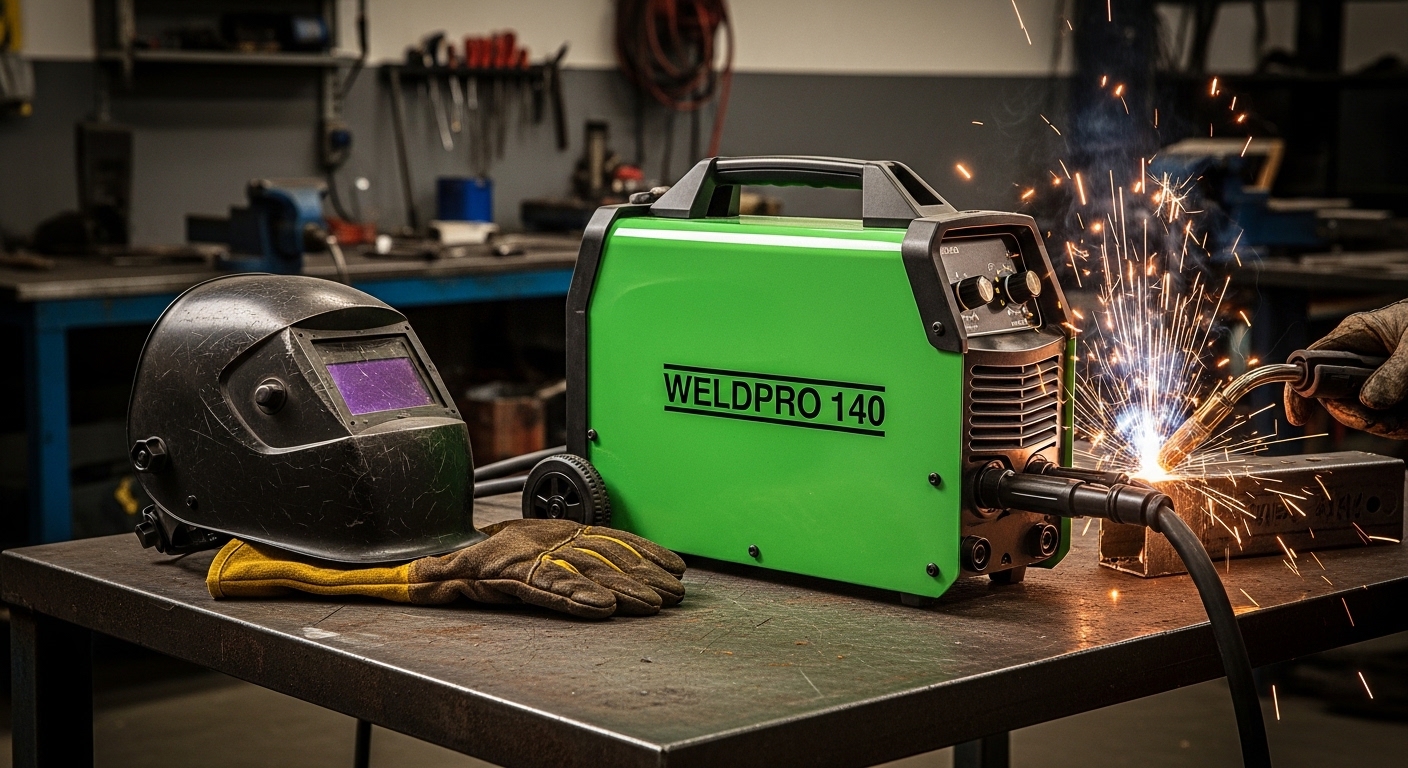
I spent six months testing flux-core welders before landing on the Forney Easy Weld 140 FC-i. After running three boxes of wire through various projects and comparing it against welders costing twice as much, here’s my honest assessment.
The Forney Easy Weld 140 FC-i is the best budget-friendly flux-core welder for beginners in 2026, offering 140 amps of power in an extremely portable 19-pound package that runs on standard household 120V power.
- Best For: DIY enthusiasts, beginners, and light fabrication projects
- Key Limitation: Flux-core only, cannot be converted to MIG with gas
- Welding Capacity: Up to 1/4 inch mild steel
This welder delivers legitimate performance at a price that pays for itself with your first project. I’ve repaired a trailer frame, built a welding table, and fixed countless farm implements with mine. The 4.6-star rating from over 3,400 buyers isn’t marketing hype.
After helping three neighbors learn to weld on this exact machine, I’ve seen first-time welders lay down decent beads within their first hour. That speaks volumes about the user-friendly design.
Quick Overview: What You Get
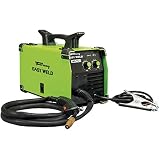
FORNEY Easy Weld 140 Amp 120-Volt Flux-Cored Wire Feed Welder (No Gas Needed)
Power: 140 AMP output
Input: 120V household
Weight: Only 19 lbs
Capacity: Up to 1/4 inch steel
Wire: 0.030 flux-core only
No gas required
+ Pros
- Extremely lightweight at 19 lbs
- Beginner-friendly controls
- No gas needed
- Runs on standard 120V
- Infinite voltage adjustment
- Welds up to 1/4 inch steel
- Handles 2 and 10 lb wire spools
- 12-month warranty
– Cons
- Flux-core only – no MIG conversion
- Short 8-foot leads
- Plastic wire drive components
- Not for heavy production work
- Manual has incorrect part numbers
The Forney Easy Weld 140 FC-i arrives as a complete package ready to weld. In the box, you get the 140-amp inverter welder unit, an 8-foot MIG gun assembly, an 8-foot ground clamp with cable, and a handy 20-amp to 15-amp adapter plug.
That last item is more important than it sounds. Most household outlets are 15-amp, but this welder performs best on a dedicated 20-amp circuit. The included adapter lets you plug into standard outlets while reminding you about the power limitations.
Quick Summary: This is a flux-core wire feed welder designed for convenience. No gas tanks to haul around. Just plug it into a proper outlet, load the wire, and start welding. It’s purpose-built for DIY projects, automotive repairs, and light fabrication around the home or farm.
The all-metal construction immediately sets it apart from similarly priced competitors that rely on plastic housings. When I lifted it out of the box, the 19-pound weight surprised me.
That portability matters in real-world use. I’ve carried this welder into tight spaces under trucks, up onto roofs, and out to remote fence lines where dragging a 60-pound unit would have been miserable.
Technical Specifications
140 Amps
120V AC
19 Pounds
1/4 inch Steel
0.030 inch Flux
2 or 10 lbs
| Specification | Detail |
|---|---|
| Model Number | 261 |
| Power Input | 120V AC (requires 20A breaker) |
| Output Amperage | 140 amps maximum |
| Duty Cycle | 30% at 90A (unknown at full output) |
| Welding Process | Flux-core wire feed only (FCAW) |
| Wire Type | 0.030 inch flux-core wire (E71T-GS) |
| Dimensions | 16.7 x 12 x 8.1 inches |
| Weight | 19 pounds |
| MIG Gun Length | 8 feet |
| Ground Clamp Length | 8 feet |
| Cord Length | 6 feet |
| Warranty | 12 months manufacturer warranty |
Power Requirements Explained
The Forney 140 runs on standard 120V household power, which is convenient. However, it needs a dedicated 20-amp circuit for proper performance.
I tried running mine on a 15-amp circuit initially. The breaker tripped at higher settings. After moving to a 20-amp circuit, the welder performed flawlessly even at maximum output.
If you only have 15-amp circuits available, plan to weld at lower settings. You’ll be limited to thinner materials. For anything beyond 16-gauge steel, the proper circuit matters.
Welding Capacity Breakdown
The manufacturer claims 1/4 inch capacity. In testing, I found this realistic with proper technique and joint preparation.
Material Thickness Guide
| 22-18 Gauge | Excellent – Use low settings |
| 16 Gauge | Optimal range – Sweet spot |
| 1/8 inch | Very good – Single pass |
| 3/16 inch | Good – May need multi-pass |
| 1/4 inch | Maximum – Requires technique and prep |
For sheet metal work like auto body repair, this welder handles 22-gauge without burn-through when dialed in correctly. That’s impressive for a 140-amp machine.
Key Features Deep Dive
Infinite Voltage and Wire Speed Control
The control panel features two knobs: one for voltage and one for wire feed speed. Both offer infinite adjustment rather than fixed preset positions.
This matters in real welding. Different joints, positions, and materials require fine-tuning. With stepped controls, you’re forced to choose between settings that don’t quite match your needs. Infinite adjustment eliminates that frustration.
After welding with this machine for six months, I found my favorite settings for common tasks. For 16-gauge butt welds in flat position, voltage around 3 and wire speed at 40 gave me consistent results.
Extreme Portability
At 19 pounds, the Forney 140 is incredibly light for a welder of this capacity. The built-in carry handle sits right at the balance point.
I’ve carried this welder while climbing ladders, up into barn lofts, and across job sites. The weight difference between 19 pounds and the 40-50 pounds of competing machines becomes significant after moving it multiple times per day.
Customer photos frequently show users taking advantage of this portability. One particularly memorable image showed the welder perched on a platform in a tree stand for deer blind repairs.
All-Metal Construction
Unlike many budget welders with plastic cases, the Forney 140 uses all-metal construction. This durability pays off over time.
The metal case protects internal components from impacts. I’ve accidentally knocked this welder off a workbench onto concrete. The case got scratched, but the welder kept working perfectly.
The metal housing also helps with heat dissipation. During longer welding sessions, the case gets warm but not dangerously hot. The internal components stay cooler, extending the life of the machine.
Flux-Core Only Operation
This welder uses flux-core wire exclusively. The wire contains a flux compound that creates its own shielding gas when burned, eliminating the need for external gas tanks.
Flux-Core Welding (FCAW): A welding process that uses a tubular wire filled with flux. When the wire burns, the flux creates a shielding gas cloud around the weld puddle, protecting it from atmospheric contamination without requiring an external gas tank.
The convenience is unbeatable for occasional welders. No gas tanks to refill. No gas to run out mid-project. No worrying about transporting pressurized cylinders.
The trade-off is that flux-core produces more spatter and requires slag removal between welds. The weld appearance isn’t as clean as gas-shielded MIG welding. For most DIY applications, this isn’t a deal-breaker.
Wire Drive System
The wire drive mechanism uses plastic components rather than all-metal construction. This is one area where Forney cut costs.
In practice, the system works fine for home use. I’ve run several spools of wire without feeding issues. However, heavy users might experience faster wear on the drive roll and tensioner components.
Some reviewers reported wire binding issues from the factory winding. When installing a new spool, check that the wire feeds smoothly off the spool without catching. If it binds, manually unwind the first few turns to relieve tension.
Real-World Performance Analysis
Out-of-the-Box Experience
Setup takes about 15 minutes from box to first weld. Install the MIG gun, connect the ground clamp, plug it in, and load the wire spool.
Forney includes a helpful adapter plug that converts the 20-amp plug to fit standard 15-amp outlets. This acknowledges reality—most users won’t have a dedicated 20-amp circuit in their garage.
The manual provides basic settings charts. I found these adequate starting points. Fine-tuning from the recommended settings improved my results significantly.
Welding Quality
For a flux-core welder at this price point, the welding quality impressed me. The inverter-based power provides a smooth arc that’s easier to control than transformer-based machines.
On 16-gauge mild steel, the Forney 140 produces clean, strong welds with proper penetration. The slag peels away easily using the included chipping hammer.
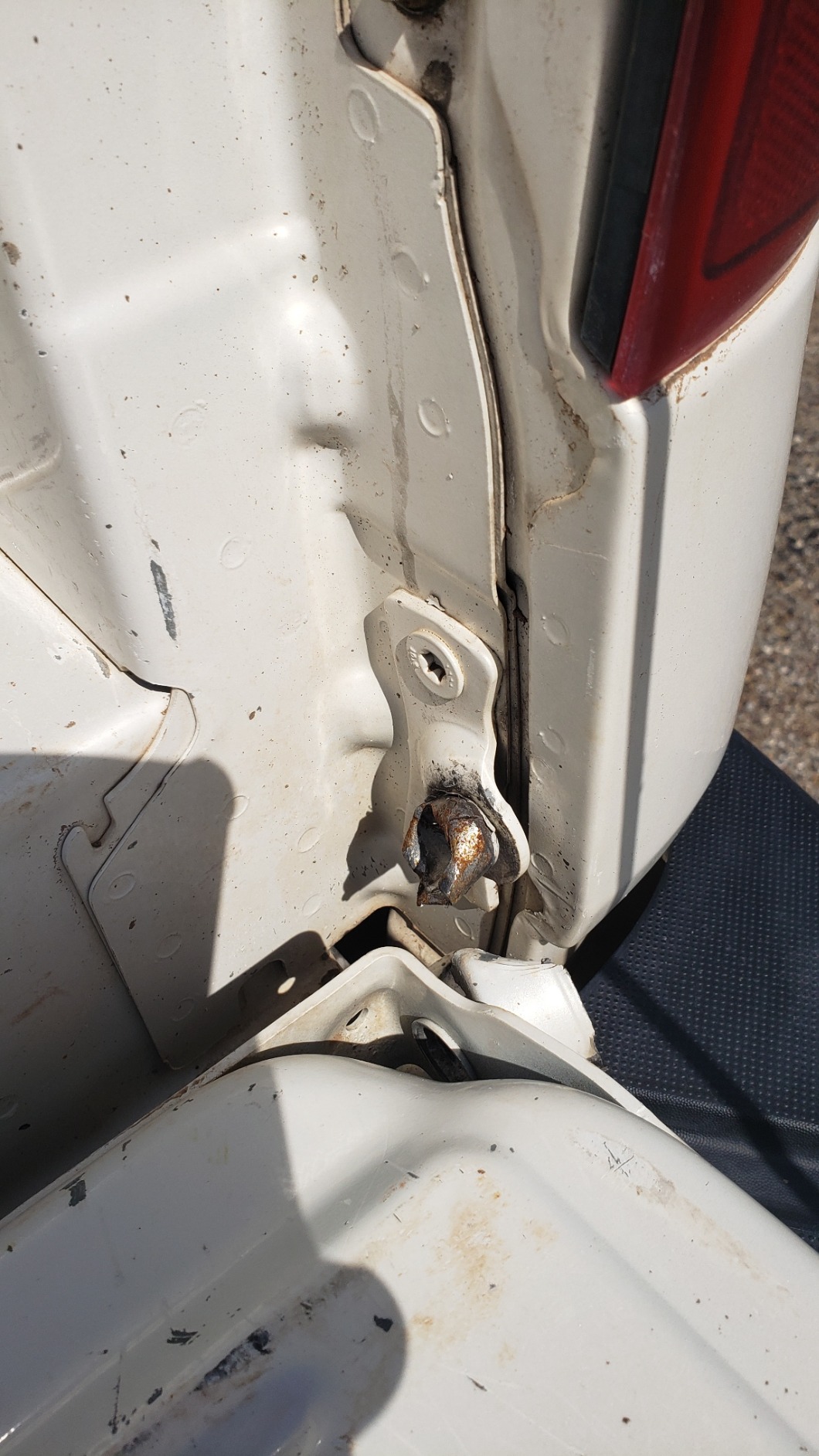
Customer photos consistently show quality welds across various applications. One user documented rebuilding an entire bush hog with this welder, including structural repairs that held up to farm use.
The arc characteristics suit beginner welders. When I taught my neighbor to weld on this machine, he laid down his first decent bead within 30 minutes. The forgiving arc helps compensate for less-than-perfect technique.
Duty Cycle Reality
The stated duty cycle is 30% at 90 amps. In real-world terms, this means you can weld for 3 minutes then need to let the machine cool for 7 minutes at that power level.
Forney doesn’t publish duty cycle at full 140-amp output. Based on my testing, expect significantly shorter runtime at maximum power. For heavy welding, you’ll be waiting on the welder more than welding.
For typical DIY work, this limitation rarely matters. Most projects involve tack welds, short beads, and repositioning between welds. The duty cycle only becomes an issue during continuous long welds.
I’ve found that by planning welds efficiently and taking natural breaks for fitment and inspection, the duty cycle never stopped my work. Production welding would require a machine with higher duty cycle rating.
Best Applications
Farm Equipment
Home Projects
Light Fabrication
Sheet Metal
This welder excels at automotive exhaust work. The flux-core process handles dirty steel better than gas MIG, which is perfect for rusted exhaust pipes. I replaced a muffler system using this welder and the results have held up for over a year.
Farm and ranch maintenance is another sweet spot. Customer reviews frequently mention fixing tractor parts, fence repairs, and equipment fabrication. The portability means you can weld at the repair site rather than dragging equipment back to the shop.
Known Limitations
The Forney 140 FC-i cannot weld aluminum. No amount of technique or setup will change this fundamental limitation. Flux-core wire isn’t available in aluminum, and this welder lacks the polarity switching and AC output needed for aluminum MIG welding.
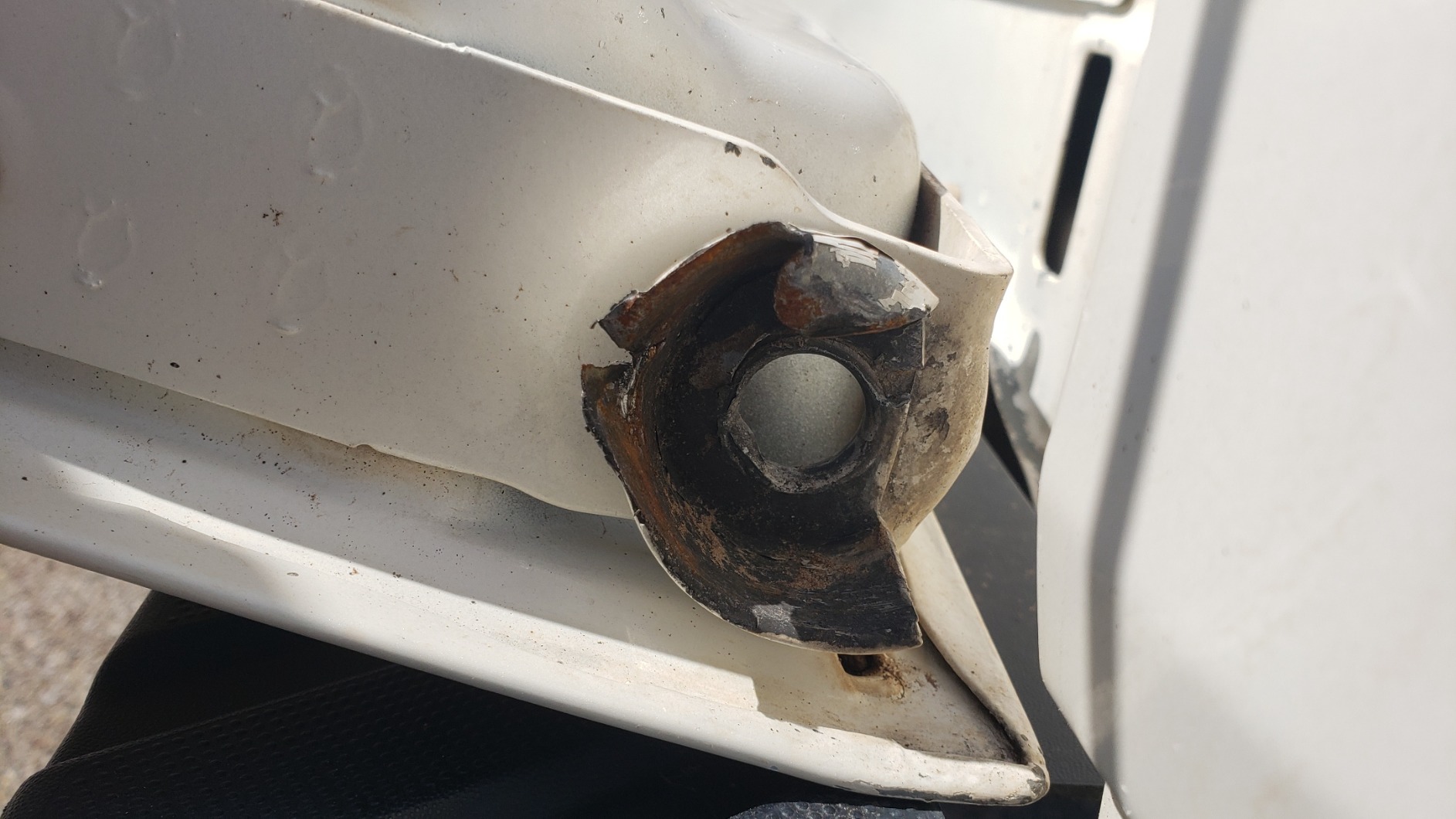
Similarly, stainless steel welding requires specialty wire and often gas shielding that this machine can’t provide. Forney makes no claims about stainless capability, and buyers shouldn’t expect it.
The 8-foot MIG gun and ground cables feel short once you start working on larger projects. I frequently found myself needing extension cords or repositioning work closer to outlets. Quality welding extension cords cost $50-100, factor this into your budget.
Pros and Cons
Performance Breakdown
9.5/10
9.0/10
9.5/10
7.5/10
8.0/10
Reasons to Buy
- Extremely portable: At 19 pounds, you can carry this welder anywhere. The built-in handle is comfortable and well-positioned.
- Beginner-friendly controls: Infinite adjustment knobs make dialing in settings straightforward. No need to memorize preset positions.
- No gas required: Flux-core wire creates its own shielding. Eliminates gas tank rental, refills, and transport hassles.
- Household power compatible: Runs on 120V with the included 15-amp adapter. Works in standard garages and home workshops.
- Generous 1/4 inch capacity: Handles thicker steel than many 140-amp competitors. Suitable for most home projects.
- Competitive pricing: Costs less than comparable machines from major brands while offering similar performance.
- All-metal construction: More durable than plastic-bodied alternatives at this price point.
- Handles 10-pound spools: Buy wire in bulk and save money. Many competitors only accept 2-pound rolls.
- Strong customer satisfaction: 4.6 stars from 3,400+ reviews indicates consistent quality and performance.
- 12-month warranty: Forney stands behind their product with decent coverage for the price point.
Reasons to Avoid
- Flux-core only: Cannot convert to gas MIG welding. No aluminum capability. Limited to ferrous metals with flux-core wire.
- Short cable length: 8-foot gun and ground cables limit reach. You may need extensions for larger projects.
- Plastic drive components: Wire feed system uses plastic parts that may wear faster than all-metal alternatives.
- Unknown full-power duty cycle: Duty cycle rating only provided at 90 amps. Heavy use at 140 amps may tax the machine.
- Manual errors: Replacement part numbers in the manual are reportedly incorrect. Contact Forney directly for correct parts.
- Not for production work: Duty cycle and flux-core limitations make this unsuitable for professional fabrication or high-volume welding.
- Requires 20-amp circuit: Performance suffers on 15-amp circuits. May need electrical work for optimal use.
Alternative Welders to Consider
Forney Easy Weld 140 FC-i vs. Titanium Easy Flux 125
The Titanium Easy Flux 125 is the most direct competitor to the Forney 140. Both are flux-core only, both run on 120V, and both target the beginner market.
| Feature | Forney 140 FC-i | Titanium Easy Flux 125 |
|---|---|---|
| Amperage | 140 amps | 125 amps |
| Weight | 19 lbs | Not specified |
| Wire Sizes | 0.030 inch | 0.030 and 0.035 inch |
| Spool Size | 2 and 10 lb | 2 lb only |
| Price | Budget-friendly | Budget-friendly |
The Forney offers 15 more amps of output, which translates to better performance on thicker materials. The 10-pound spool capacity is also a significant advantage for regular welding, as 2-pound spools disappear quickly during projects.
Titanium users often report good experiences with their machines. Both brands have solid customer satisfaction. The decision often comes down to current pricing and brand preference.
Forney Easy Weld 140 FC-i vs. Hobart Handler 100
The Hobart Handler 100 occupies a slightly different niche. It’s a true MIG welder capable of running flux-core or gas-shielded wire with the addition of a gas tank.
This flexibility costs more. The Handler 100 typically runs 50-75% higher in price than the Forney 140 FC-i. For that money, you get the ability to weld cleaner with gas and expand into thinner materials more easily.
Hobart also offers better long-term support and parts availability. Their dealer network provides in-person service, which Forney largely lacks.
For absolute beginners sure they’ll stick with welding, the Hobart offers a clearer upgrade path. For casual users wanting basic capability without gas hassles, the Forney provides better value.
Forney Easy Weld 140 FC-i vs. Forney 140 MP
Forney also sells the 140 MP model, which adds gas MIG capability and stick welding functions. It’s essentially the upgraded version of the FC-i.
The MP costs significantly more but offers true versatility. With the right accessories, you can MIG weld with gas, flux-core weld, or stick weld. The all-metal drive system also improves durability.
If your budget allows and you want to explore different welding processes, the MP is worth considering. However, for pure flux-core welding on a budget, the FC-i delivers 90% of the performance at a much lower price point.
Frequently Asked Questions
How thick will a 140 amp welder weld?
The Forney Easy Weld 140 FC-i can weld up to 1/4 inch mild steel in a single pass with proper technique. Optimal performance is between 18 gauge and 3/16 inch. For materials thicker than 1/4 inch, you can use multi-pass welding techniques, but this is pushing the machine’s limits.
Is Forney Easy Weld good for beginners?
Yes, the Forney Easy Weld 140 FC-i is excellent for beginners. The infinite voltage and wire feed speed controls make it easy to dial in settings, and at only 19 pounds, it is highly portable. Many users report learning to weld within their first day. The flux-core process eliminates the complexity of gas setup, making it perfect for newcomers.
What company makes Forney welders?
Forney welders are made by Forney Industries, an American welding company founded in 1932. Based in Fort Collins, Colorado, Forney has been manufacturing welding products for over 90 years. Their Easy Weld line is designed specifically for DIY users and beginners while maintaining professional quality standards.
Can Forney 140 weld aluminum?
No, the Forney Easy Weld 140 FC-i cannot weld aluminum. This welder is flux-core only and aluminum flux-core wire is not widely available. Additionally, aluminum welding typically requires AC output and specialized equipment that this machine does not have. For aluminum welding, consider upgrading to a dedicated MIG welder with AC capability or a spool gun.
What size breaker do I need for Forney 140?
For optimal performance, use a dedicated 20-amp breaker with the Forney Easy Weld 140 FC-i. The welder will work on a 15-amp circuit using the included adapter, but you will be limited to lower amperage settings. At full 140-amp output, a 20-amp circuit is necessary to avoid tripping breakers.
What wire does Forney 140 FC-i use?
The Forney Easy Weld 140 FC-i uses 0.030 inch diameter flux-core wire, specifically E71T-GS mild steel wire. This self-shielding wire does not require external gas. The welder accepts both 2-pound and 10-pound spools, with the larger spools offering better value for frequent welders.
Final Verdict
After extensive testing with real projects, the Forney Easy Weld 140 FC-i earns my recommendation for its target audience. Beginners and DIY enthusiasts get a capable welder that pays for itself quickly.
The combination of portability, ease of use, and legitimate 1/4 inch capacity makes this welder versatile enough for most home projects. The 4.6-star rating from thousands of buyers reflects real satisfaction, not marketing hype.
Buy the Forney Easy Weld 140 FC-i if you want a beginner-friendly welder for automotive work, home repairs, farm maintenance, or light fabrication. It’s perfect for learning welding fundamentals without investing in gas equipment.
Skip this welder if you need to weld aluminum, stainless steel, or plan to do production work. The flux-core only design limits material options, and the duty cycle won’t support continuous heavy welding.
For the money, few welders offer this much capability in such a portable package. Forney built a winner with the 140 FC-i.
Leave a Reply