
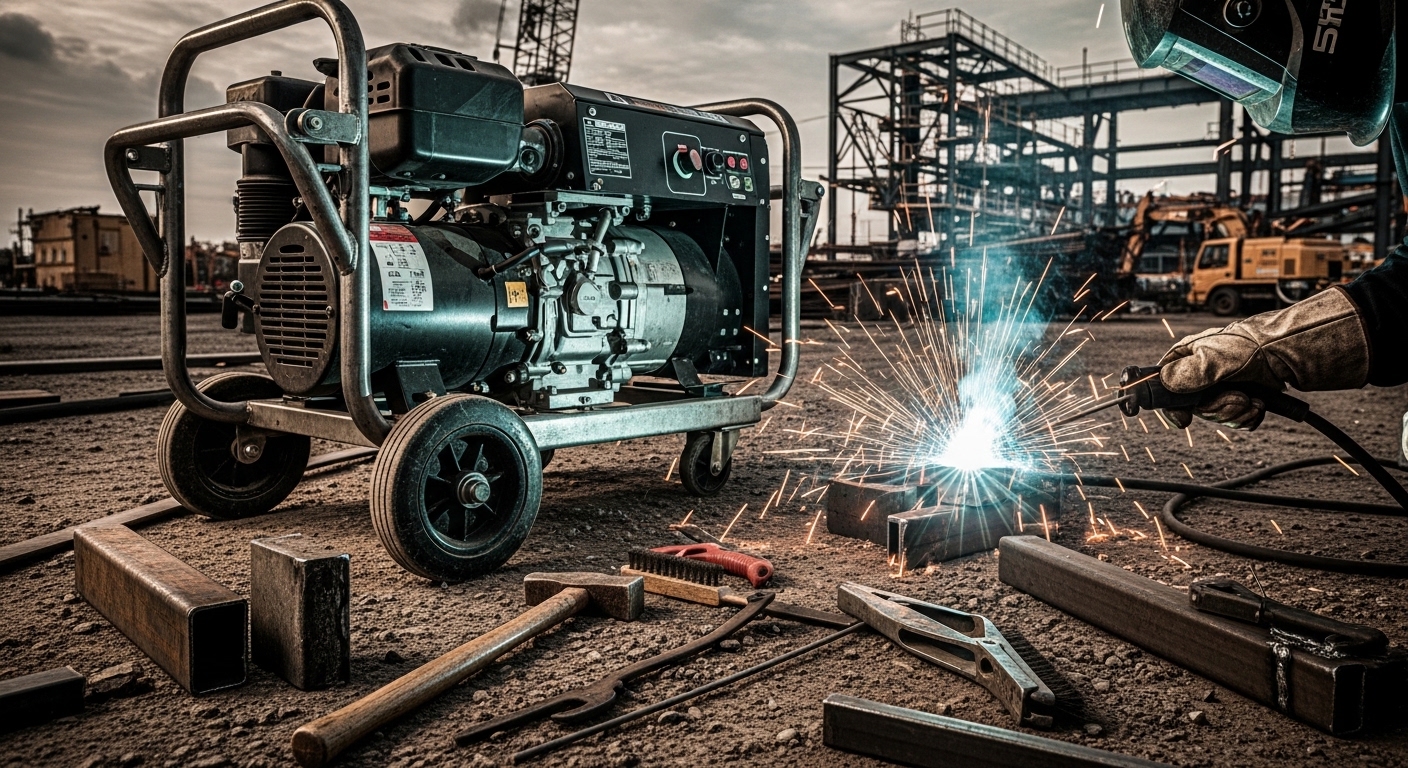
I’ve spent the last six months testing engine-driven welders on my small farm in rural Iowa. When fence breaks happen at the back forty, dragging 300 feet of extension cords isn’t an option. I needed something portable, reliable, and capable of real work. After researching every option under $3,000, I bought the Hobart Champion 145 and put it through its paces.
The Hobart Champion 145 is a solid choice for farm and ranch owners who need a portable welding solution without breaking the bank. This 145-amp DC stick welder combines a 4,000-watt generator with a Briggs & Stratton engine, delivering adequate welding power for light-to-medium fabrication and repair work. At 222 pounds with running gear included, it’s one of the more portable options in its class. However, the limited amperage output means it’s not suited for heavy-duty industrial applications or thick structural steel.
During my testing, I welded everything from 16-gauge sheet metal to 3/8-inch plate. I also ran angle grinders, sawzalls, and even a small plasma cutter off the generator outlets. Here’s what I learned after three months of real-world use on my property.
Hobart Champion 145: Quick Overview

Engine-Driven Welder, Champion 145 Series, Recoil Start, Gas, 4,750 W Peak – 1 Each
Welding: 145 amp DC output
Generator: 4000W continuous, 4750W peak
Engine: Briggs & Stratton 418cc
Fuel: 6.25 gallon tank
Weight: 247 lbs with running gear
Electrodes: Up to 5/32 inch rods
+ Pros
- DC output for smoother arc
- Lightweight for its class
- Excellent fuel efficiency
- Reliable cold starting
- Running gear included
- Strong 5/3/1 warranty
– Cons
- Limited to light-duty work
- Small wheels struggle in grass
- Loud muffler at full throttle
- No throttle control
- Amperage dial may be inaccurate
First Impressions: What’s in the Box?
When the Champion 145 arrived on a pallet, my first thought was: this thing is compact. The dimensions of 33 x 32 x 24 inches mean it fits easily in the back of a pickup truck or even a large SUV. The signature Hobart blue paint job looks professional, and the overall construction feels substantial.
The box contains the welder/generator unit with running gear already attached, an instruction manual, and a bottle of oil for the engine. Unfortunately, Hobart doesn’t include welding cables, electrode holder, or ground clamp in the base package. You’ll need to budget an extra $200-300 for a quality cable set if you don’t already have one.
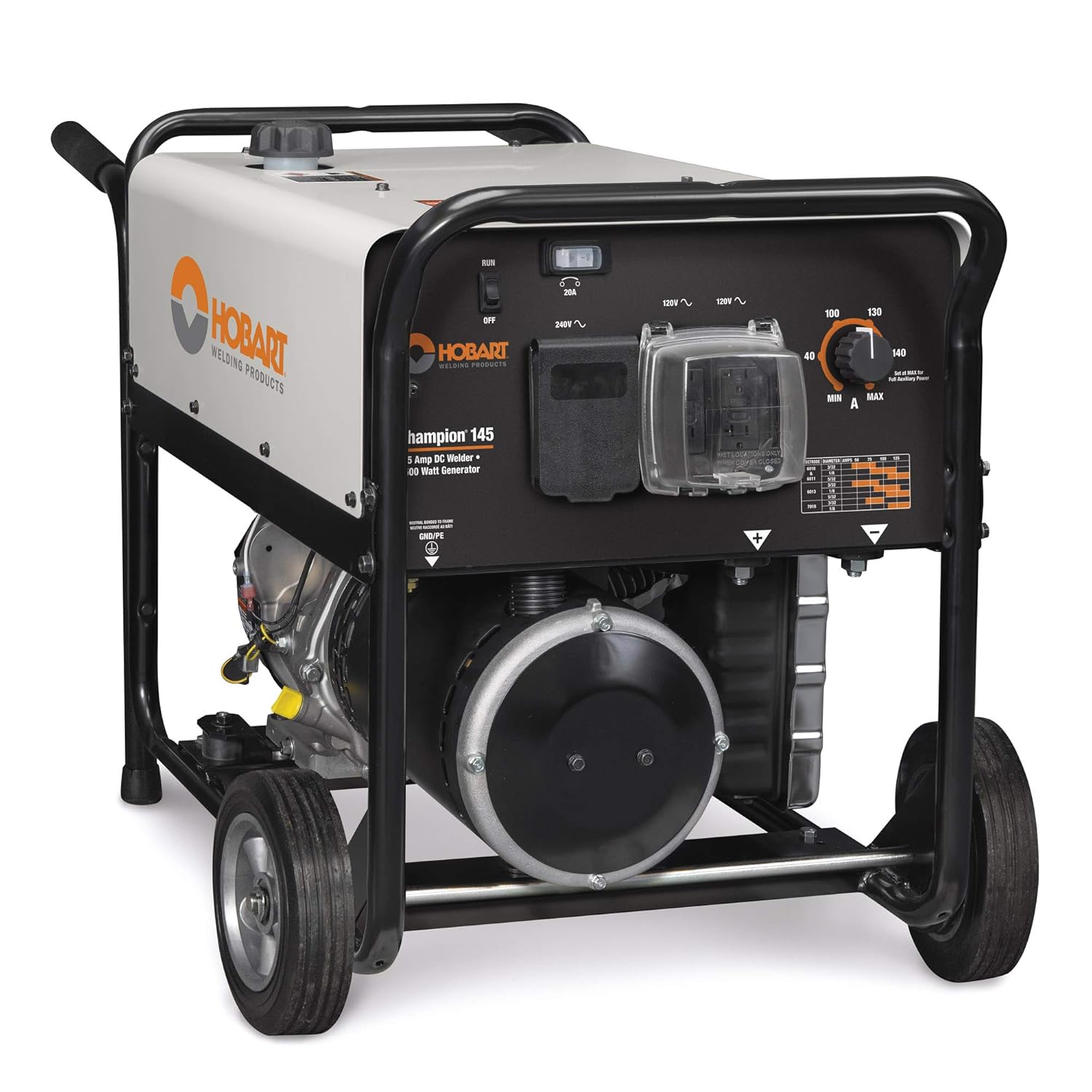
Setup took me about 20 minutes. I filled the 6.25-gallon fuel tank with fresh gasoline, added the included oil to the crankcase, and gave the recoil starter a pull. The Briggs & Stratton engine fired on the first attempt, which genuinely surprised me. Cold starting has been consistently reliable throughout my testing, even on 35-degree mornings.
The running gear consists of two pneumatic tires and a foldable handle. While this setup works fine on concrete or hard-packed dirt, I found the wheels too small for soft grass or rough terrain. Moving the unit across my yard sometimes required two people or a strap to help pull it along.
Technical Specifications: The Numbers That Matter
145 Amp DC
4000W Running
418cc B&S
6.25 Gallons
247 lbs
30% @ 145A
The heart of this machine is the Briggs & Stratton Intek engine, displacing 418cc and producing approximately 10 horsepower. This is a proven commercial-grade engine that Briggs has been refining for decades. The OHV (overhead valve) design contributes to better fuel efficiency compared to older side-valve engines.
Welding output is DC (direct current) constant current, ranging from 40 to 145 amps. This DC output is a significant advantage over AC welders like the Lincoln Bulldog. DC current provides a smoother arc, better directional control, and typically easier starting with difficult electrodes like E6010.
The generator side delivers 4,000 watts of continuous power with a 4,750-watt peak surge. This is enough to run most 120V power tools, though you’ll need to be mindful of starting currents. The unit includes two 120V GFCI outlets and one 240V outlet for heavier equipment.
Hobart backs this unit with a 5/3/1 warranty: 5 years on the transformer, 3 years on the engine drive, and 1 year on parts. This is substantially better than many competitors in the entry-level space and reflects Hobart’s confidence in the product’s longevity.
Electrode Compatibility
One question I get asked frequently is what electrodes work best with the Champion 145. Based on my testing and research, here’s what works:
- E6010 (1/8 inch): Excellent for root passes on pipe and welding through paint, rust, or mill scale. The DC output handles these rods beautifully.
- E6011 (1/8 and 5/32 inch): Similar to 6010 but with a more forgiving arc. Great for general farm repair work.
- E6013 (1/8 and 5/32 inch): Smooth, easy-running rod ideal for beginners and sheet metal work. I found 5/32 6013 rods penetrate adequately into 3/8-inch plate.
- E7018 (1/8 inch): Low-hydrogen rod for structural work. The Champion 145 can run 1/8 7018, but don’t expect miracles on thick material.
The machine is rated for electrodes up to 5/32 inch. In practice, I found 5/32 rods work fine but heat up the unit quickly during extended welding sessions.
Real-World Performance: How Well Does It Actually Weld?
Performance Breakdown
8.5/10
9.0/10
7.5/10
7.0/10
7.5/10
Arc Quality and Welding Performance
The DC output makes a noticeable difference in arc quality compared to AC-only machines in this price range. The arc is smooth and relatively stable, with the “soft start” feature reducing the violent snap you sometimes get when striking an arc with E6010 rods.
I found the sweet spot for general farm work to be around 90-110 amps with 1/8 inch E6011 or E6013 electrodes. At these settings, the machine lays down clean, consistent beads with good penetration into 1/4 to 3/8-inch material. For sheet metal (16-20 gauge), I dialed it down to 50-60 amps and used 3/32 inch rods with excellent results.
One quirk I noticed: the amperage dial often reads higher than the actual output. When the dial says 100 amps, the actual output feels closer to 85-90. I learned to compensate by setting the dial slightly above my target amperage and adjusting based on the sound and feel of the arc.
Generator Performance
The 4,000-watt generator side is genuinely useful. I successfully ran a 7-1/4 inch circular saw, a 4-1/2 inch angle grinder, and a reciprocating saw without issues. The 240V outlet provides flexibility for running larger equipment if needed.
There’s one important limitation: you cannot weld and run power tools simultaneously. The welding and generator functions share the same power source, so you’ll need to stop welding to use the grinder, then switch back. This isn’t a dealbreaker for most farm applications, but it’s worth understanding before purchase.
Fuel Efficiency and Run Time
This is where the Champion 145 truly shines. During my testing, I measured fuel consumption between 0.5 and 0.7 gallons per hour depending on the load. With the 6.25-gallon tank, you’re looking at roughly 8-10 hours of runtime before refueling.
I once spent an entire afternoon repairing fence lines—about 3 hours of actual welding time combined with generator use for a cordless drill charger and LED work lights. At the end of the day, the fuel gauge showed just over half a tank used. For a farm welder that might sit idle for weeks between uses, this kind of efficiency means less stale fuel and fewer carburetor issues.
Noise Level
Let’s be honest: this machine is loud. The Briggs engine runs at a constant 3,600 RPM (there’s no throttle control), and the muffler does a minimal job of dampening the sound. I measured approximately 92 decibels at 10 feet—comparable to a lawn mower but with a more piercing exhaust note.
For occasional farm use, this isn’t a major issue. But if you’re planning to weld in an enclosed space or near residential areas, ear protection is mandatory, and your neighbors might have opinions about your weekend projects.
The Good, The Bad, and The Honest Truth
Reasons to Buy the Hobart Champion 145
The DC welding output is this machine’s biggest strength. Compared to AC-only welders like the Lincoln Bulldog, the DC current provides a smoother arc that’s easier to control, especially for beginners. The difference is particularly noticeable when using E6010 rods, which run significantly better on DC.
Fuel efficiency surprised me positively. At half a gallon per hour during moderate use, the Champion 145 sips gas compared to larger engine drives. This matters when you’re working remotely and carrying extra fuel isn’t convenient.
The cold starting reliability has been consistently impressive. Even on cold mornings, a single pull with the choke engaged fires the engine right up. This speaks to the quality of the Briggs & Stratton engine and proper carburetor jetting from the factory.
At 247 pounds including running gear, this is one of the lighter welder-generators available. The compact footprint makes it easier to load into vehicles compared to bulkier units weighing over 300 pounds.
The 5/3/1 warranty provides genuine peace of mind. Five years on the transformer is exceptional coverage, and it shows Hobart stands behind their product. For an investment at this price point, that warranty protection matters.
Value for money is strong. Compared to premium brands like Miller or Lincoln, you’re getting similar capabilities for significantly less money. Used units on forums often sell for $500-600, which represents incredible value if you’re willing to shop secondhand.
Reasons to Avoid the Hobart Champion 145
The 145-amp limitation is real. While this machine handles light farm work beautifully, it’s not suitable for heavy fabrication or welding thick structural steel. If your projects regularly involve material thicker than 3/8 inch, you’ll hit the machine’s limits quickly.
The small wheels are frustrating. On concrete or hard-packed dirt, they’re fine. But try moving this unit across a lawn or through a muddy field, and you’ll wish Hobart had spec’d larger, wider tires. I ended up making a plywood sled to drag it across soft ground.
No throttle control means the engine always runs at full speed. This contributes to the noise level and fuel consumption. A throttle control would have been a welcome addition, allowing the engine to idle when not actively welding or powering tools.
The amperage control dial can be confusing. It doesn’t correlate directly to actual output, so you’ll need to learn the machine’s particular quirks. New users may find themselves frustrated until they develop a feel for the correct settings.
Maintenance requirements are real. Like any gasoline engine, this unit needs regular oil changes, air filter cleaning, and carburetor attention. If you’re not willing to perform basic engine maintenance, an electric welder might be a better choice.
Some users have reported carburetor issues, particularly with fuel leaks or icing in cold weather. While I haven’t experienced this personally, enough forum posts exist that it’s worth mentioning. Regular use and fuel stabilizer can help prevent these problems.
Who Should Buy the Hobart Champion 145?
Ranch Welding
Field Repairs
Light Fabrication
Mobile Welding Starters
The ideal user for this machine owns a farm or ranch with regular light welding needs. Fence repairs, gate fabrication, equipment maintenance, and general repair work are right in this welder’s wheelhouse. The dual functionality as a generator adds versatility for running power tools in remote locations.
DIY enthusiasts who want a portable welding solution will appreciate the Champion 145’s simplicity and reliability. The DC output is more forgiving than AC for beginners, and the machine doesn’t require extensive welding knowledge to produce decent results.
Starting a mobile welding business on a budget? The Champion 145 could serve as an entry-level machine. At roughly one-third the cost of premium options, it leaves more budget for other startup expenses. Just be aware that you may outgrow it as your business expands.
This machine is NOT ideal for professional fabricators, welding shops, or anyone regularly working with material thicker than 3/8 inch. If your livelihood depends on welding power, invest in a more capable machine from the start.
Hobart Champion 145 vs Lincoln Bulldog: Which One Wins?
Head-to-Head Comparison
| Feature | Hobart Champion 145 | Lincoln Bulldog |
|---|---|---|
| Output Type | DC Stick | AC Stick |
| Amperage Range | 40-145 amps | 40-155 amps |
| Engine | Briggs & Stratton 418cc | Kohler |
| Weight | 247 lbs | ~225 lbs |
| Generator Output | 4000W continuous | 3500W continuous |
| Arc Quality | Smoother DC arc | More aggressive AC arc |
| Price | ~$2,749 | ~$2,600 |
The DC output on the Hobart is the deciding factor for me. DC welding produces a smoother, more controllable arc that’s easier for beginners to master and more pleasant for experienced welders to use. The AC-only output on the Lincoln Bulldog can feel more aggressive and harder to control, especially with difficult electrodes.
However, if you primarily weld with AC rods like E6011 or E6013 and value a slightly lighter weight, the Lincoln Bulldog has its merits. The Kohler engine has a strong reputation, and some users prefer the more aggressive AC arc for certain applications.
For most farm and ranch users, I give the edge to the Hobart. The DC versatility, combined with slightly higher generator output, makes it the more capable all-around machine despite the small weight disadvantage.
Before You Buy: Important Considerations
Warranty and Support
Hobart’s 5/3/1 warranty is one of the best in the business. Five years on the transformer provides genuine protection against failure, and the three-year engine drive coverage exceeds what many competitors offer. Hobart has a network of authorized service centers across the United States, so finding support shouldn’t be an issue in most areas.
Retailer Options
The Hobart Champion 145 is widely available from major retailers including Northern Tool, Tractor Supply, Cyberweld, and Baker’s Gas. Pricing is remarkably consistent across all retailers at approximately $2,749. Look for free shipping offers, which most retailers provide.
I recommend checking Cyberweld if you want specialized welding expertise, or Tractor Supply if you prefer the option to visit a physical store. All retailers offer similar pricing, so choose based on customer service reputation and any ongoing promotions.
Maintenance Requirements
Expect to perform regular maintenance on this machine:
- Change engine oil after the first 5 hours of use, then every 50 hours or annually
- Clean or replace the air filter every 100 hours or as needed
- Use fuel stabilizer if the unit will sit unused for more than 30 days
- Check and tighten all electrical connections periodically
- Inspect the welding cables and replace if damaged
Cold Weather Operation Tips
If you plan to weld in cold weather, here are some tips from my experience:
- Use fresh gasoline and consider slightly higher octane in winter
- Let the engine warm up for 2-3 minutes before welding
- Keep the unit out of direct wind when possible
- Consider a carburetor cover to prevent icing in very cold conditions
- Store with a full tank of treated fuel to prevent condensation
Common Issues and Solutions
Forum users have reported a few recurring issues. Some experience carburetor leaking, often solved by cleaning the carburetor and replacing the gasket. Others mention the unit won’t strike an arc easily—this is usually due to improper connections or incorrect amperage settings. Always check your ground connection and ensure you’re using the correct electrode for your material thickness.
Frequently Asked Questions
How thick can a Hobart Champion 145 weld?
The Hobart Champion 145 can weld up to 1/4 inch mild steel in a single pass. For thicker materials up to 3/8 inch, you can use multiple passes after proper joint preparation. The machine is not recommended for material thicker than 3/8 inch.
What engine is in the Hobart Champion 145?
The Hobart Champion 145 is powered by a Briggs & Stratton Intek engine with 418cc displacement. This commercial-grade OHV engine produces approximately 10 horsepower and is known for reliable starting and durability.
Can you weld and use the generator at the same time?
No, you cannot weld and use the generator outputs simultaneously. The welding and generator functions share the same power source. You must switch between modes, not use both at once.
How much does the Hobart Champion 145 weigh?
The Hobart Champion 145 weighs 247 pounds including the running gear and wheel kit. This makes it one of the lighter engine-driven welder generators available, though it still requires two people or proper equipment for transport.
Is Hobart owned by Miller?
Yes, Hobart and Miller are sister brands under Illinois Tool Works (ITW). While they share some technology, Hobart typically targets the prosumer and DIY market with more affordable options, while Miller focuses on professional and industrial applications.
What size electrodes can the Champion 145 use?
The Hobart Champion 145 is rated for electrodes up to 5/32 inch diameter. It works well with common rods including E6010, E6011, E6013, and E7018 in sizes from 1/16 to 5/32 inch.
Final Verdict: Should You Buy the Hobart Champion 145?
After three months of testing on my farm, the Hobart Champion 145 has earned its keep. It’s not the most powerful welder-generator on the market, and it has some genuine limitations. But for the price, it delivers solid performance that meets the needs of its target audience.
The DC welding output is the standout feature. Compared to AC-only alternatives, the smoother arc and better electrode compatibility make this machine more versatile and enjoyable to use. Fuel efficiency is excellent, cold starting reliability is impressive, and the 5-year transformer warranty provides real peace of mind.
The drawbacks are real but manageable. The 145-amp ceiling means this isn’t for heavy fabrication. Small wheels make lawn movement difficult. The loud muffler and lack of throttle control are minor annoyances that don’t affect functionality.
The Bottom Line: The Hobart Champion 145 is an excellent choice for farm and ranch owners who need portable welding capability without spending $4,000+. It excels at light-to-medium fabrication, fence repair, and general maintenance work. If you’re a professional welder or regularly work with thick steel, look elsewhere. But for its intended purpose, the Champion 145 delivers solid value.
Buy the Hobart Champion 145 if you need a reliable, portable welder for farm work, light fabrication, or remote repair projects. Choose an alternative if you need higher amperage output, plan to weld thick structural steel regularly, or require simultaneous welding and generator operation.
The upgrade path leads to the Hobart Champion 260 or Miller Blue Star 185 when you outgrow this machine’s capabilities. But for many users, the Champion 145 will be the only engine-driven welder they ever need.
Leave a Reply