
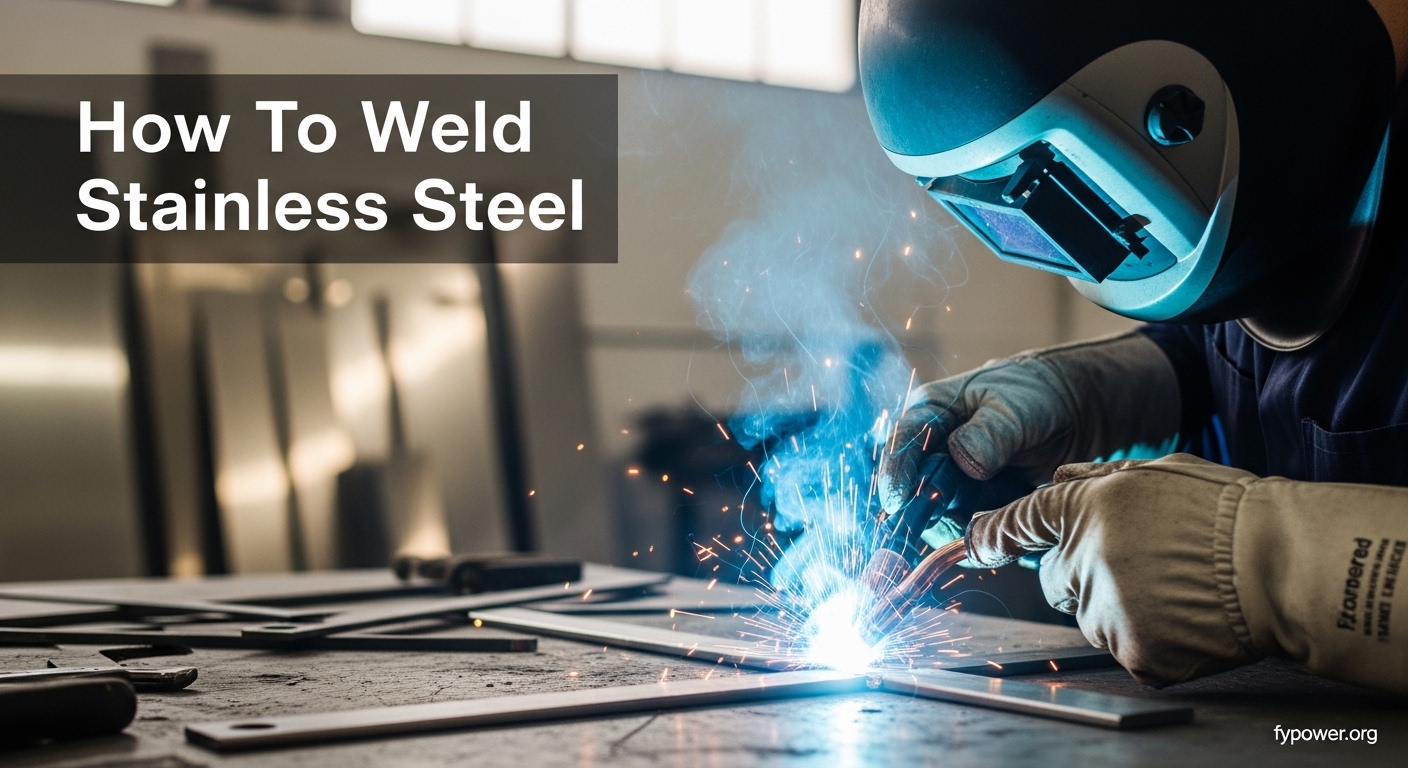
Welding stainless steel intimidates many first-time welders. The material costs more than mild steel, warps easily, and everyone warns you about “toxic fumes.”
Here’s the truth: TIG welding stainless steel is the best method for beginners because it offers the most control over heat input and produces clean, corrosion-resistant welds when proper technique is followed.
I’ve spent countless hours welding stainless in both home shops and professional settings. After destroying my fair share of expensive 304 stainless sheet, I learned that stainless steel welding follows different rules than mild steel. The key is understanding heat management, cleanliness, and gas coverage.
Can you weld stainless steel? Yes, stainless steel is weldable using TIG, MIG, or stick welding methods. TIG produces the cleanest welds and is preferred for thinner materials, while MIG works well for thicker sections. Success depends on proper heat control, thorough cleaning, and using the correct filler material and shielding gas.
This guide covers everything you need to know, including critical safety information about hexavalent chromium that most other guides skip.
Understanding Stainless Steel: Why It Welds Differently
Stainless steel behaves differently than mild steel when you apply heat. The reasons come down to its unique properties.
Stainless Steel: An alloy containing at least 10.5% chromium, which forms a protective oxide layer on the surface. The most common type for welding is 304 austenitic stainless steel (18% chromium, 8% nickel).
Stainless steel has about half the thermal conductivity of mild steel. Heat stays concentrated in the weld zone instead of spreading out. This means less amperage is needed, but it also increases warping risk.
Thermal expansion is another challenge. Stainless expands roughly 50% more than carbon steel when heated. As the weld cools, this expansion and contraction can pull joints out of alignment or cause cracking.
The chromium content that makes stainless “stainless” is also its welding weakness. Excessive heat can cause chromium to combine with carbon, forming carbides along grain boundaries. This process, called sensitization, reduces corrosion resistance in the heat-affected zone.
Quick Summary: Stainless steel requires lower amperage, faster travel speeds, and careful heat management compared to mild steel. Overheating destroys corrosion resistance.
TIG vs MIG vs Stick: Choosing Your Method
What welding technique is best for stainless steel? TIG welding is the best technique for stainless steel under 1/4 inch thick, offering superior heat control and the cleanest appearance. MIG welding works well for thicker materials and production speeds. Stick welding is possible but produces rough results and is only recommended for field repairs where equipment is limited.
| Method | Best For | Pros | Cons |
|---|---|---|---|
| TIG (GTAW) | Sheet metal, cosmetic welds, precision work | Cleanest welds, full heat control, no spatter | Slowest process, hardest to learn |
| MIG (GMAW) | Thicker materials, production welding | Faster than TIG, easier to learn | Less heat control, requires special wire/gas |
| Stick (SMAW) | Outdoor repairs, thick plate | Works outdoors, simple equipment | Rough appearance, slag removal, limited electrodes |
For beginners learning stainless steel welding, I recommend starting with TIG on thinner material (16-20 gauge). The feedback loop is immediate: you can see the weld puddle clearly and adjust heat in real-time using the foot pedal.
MIG welding stainless requires a dedicated wire feeder and stainless-specific MIG wire. You cannot use the same wire you feed mild steel. Cross-contamination from carbon steel wire will rust your stainless welds.
Equipment and Gas Setup
Before you strike your first arc, you need the right equipment. While advanced robotic welding systems used in manufacturing handle production stainless welding, manual welding requires specific gear and technique modifications.
TIG Equipment:
- DCEN (Direct Current Electrode Negative) machine with high-frequency start
- 2% thoriated or lanthanated tungsten electrode (1/16″ or 3/32″ for most work)
- Gas lens cup for better gas coverage
- Foot pedal or finger control for amperage adjustment
Shielding Gas for TIG:
- Pure argon for most stainless welding (up to 1/8″ thickness)
- Argon/helium mix (75/25 or 50/50) for thicker materials or faster travel speeds
- Tri-mix (90% helium, 7.5% argon, 2.5% CO2) for automated MIG welding
For MIG welding stainless, use 98% argon / 2% CO2 or 98% argon / 2% oxygen. Avoid straight CO2: it causes excessive spatter and poor weld appearance on stainless.
What gas do you use for stainless steel welding? Pure argon is the standard shielding gas for TIG welding stainless steel. For MIG welding stainless, use 98% argon with 2% CO2 or oxygen. Helium blends (arghelium) increase heat input for thicker materials. Never use straight CO2 with stainless: it causes excessive oxidation and poor weld quality.
In my shop, I use pure argon for 90% of stainless TIG work. The only time I break out helium blends is when welding material thicker than 1/4 inch and need more penetration without increasing amperage.
Preparation: The Most Critical Step
Cleanliness separates successful stainless welds from failed ones. Stainless is sensitive to contamination in ways mild steel isn’t.
The Golden Rule of Stainless Preparation:
- Use only stainless steel dedicated tools
- Never use a wire brush that has touched carbon steel
- Clean with acetone after grinding or brushing
- Remove all oils, paints, and surface contaminants
I learned this lesson the hard way. Early in my welding career, I used a carbon steel brush on a stainless project. The tiny particles of carbon steel embedded in the surface rusted within weeks, ruining an expensive fabrication job.
Buy stainless steel wire brushes and mark them clearly. Keep them separate from all other tools. One accidental use on carbon steel contaminates the brush permanently.
Joint preparation matters too. Stainless steel benefits from tight fit-up. Unlike mild steel where you can bridge small gaps with filler, stainless gaps can lead to burn-through or lack of fusion.
For material thinner than 16 gauge, I recommend no gap at all: butt the pieces together tightly. For thicker materials, a slight gap (1/16″ or less) helps ensure full penetration.
Step-by-Step: TIG Welding Stainless Steel
This is the core technique that produces those beautiful silver stainless welds you see on food-grade equipment.
Step 1: Set Your Amperage
Use about 2/3 the amperage you would use for comparable mild steel. For 16 gauge stainless in a T-joint, I typically start around 50-60 amps. For 1/8″ material, 75-90 amps works well.
Step 2: Position Your Torch
Hold the torch at a 70-80 degree angle from the workpiece. The tungsten should extend about 1/4″ past the cup. Use a gas lens if you have one: it provides smoother gas flow and better coverage.
Step 3: Establish the Arc
Use high-frequency start to avoid contaminating the tungsten. Bring the torch close until the arc jumps, then maintain about 1/8″ arc length. The weld puddle should appear fluid but not runaway.
Step 4: Add Filler Material
For 304 stainless, use 308L filler rod. For 316 stainless, use 316L. The “L” means low carbon, which helps prevent carbide precipitation. Use 1/16″ diameter rod for sheet metal, step up to 3/32″ for thicker work.
Is 308 or 309 better for stainless steel? Use 308 filler rod when welding 304 stainless to 304 stainless. Use 309 filler when welding stainless steel to carbon steel (dissimilar metals) or when the base metal grade is unknown. 309 has higher alloy content to compensate for dilution from carbon steel.
Step 5: Control Heat and Travel Speed
Move faster than you would with mild steel. The key phrase to remember: “weld hotter and faster, not colder and slower.” Going too slow burns the stainless and causes excessive discoloration.
Step 6: Maintain Gas Coverage After Welding
Keep the torch over the weld for 3-5 seconds after extinguishing the arc. This “post-flow” shields the cooling metal from oxidation. Set your post-flow timer to at least 5 seconds for thin material, up to 10 seconds for thicker work.
After completing a full pass, check your work before moving on. A properly welded stainless joint should have a smooth, consistent appearance with minimal discoloration.
Understanding Weld Colors: What They Mean
Stainless welds change color based on heat exposure. These colors tell you about the quality of your weld and whether corrosion resistance has been compromised.
| Color | Temperature Range | Acceptable? | Action Needed |
|---|---|---|---|
| Straw/Light Gold | 300-400°F | Yes – Excellent | None |
| Gold | 400-500°F | Yes – Good | None |
| Blue/Purple | 600-800°F | Maybe – Marginal | Pickling may be needed for corrosive environments |
| Gray/Black | Over 1000°F | No – Problematic | Pickling required; corrosion resistance reduced |
What color should a stainless weld be? A good stainless weld should appear straw-colored or light gold. These colors indicate proper heat input with preserved corrosion resistance. Blue and purple tints suggest excessive heat but may be acceptable for non-critical applications. Black or gray discoloration indicates overheating and requires pickling to restore some corrosion resistance.
For critical applications like food handling or pharmaceutical equipment, only straw to light gold is acceptable. The heat tint from blue to black indicates that chromium near the surface has oxidized, reducing corrosion resistance in that area.
Common Problems and How to Fix Them
Every stainless welder encounters problems. Here are the most common issues and their solutions, gathered from years of experience and forum discussions.
Problem 1: Warping and Distortion
Stainless steel’s high thermal expansion makes it prone to warping. The metal pulls as it cools, distorting flat sheets and pulling assemblies out of square.
Solutions:
– Use chill bars or copper backing plates to draw heat away
– Tack weld liberally before completing full welds
– Skip weld: weld short sections, let cool, weld more
– Use lower amperage and faster travel speed
– Clamp securely but allow for some movement
Problem 2: Sugaring on the Back Side
Sugaring appears as rough, granular deposits on the back of your weld. This indicates oxidation from insufficient gas coverage.
Sugaring: A rough, dross-like oxidation that forms on the back side of stainless welds when exposed to air. It indicates loss of corrosion resistance and must be removed through grinding or pickling. Proper back purging prevents sugaring entirely.
Solutions:
– Back purge pipe and tube welds with argon
– Increase shielding gas flow rate
– Use gas lens cup for better coverage
– Reduce travel speed slightly
– Check for drafts affecting gas coverage
Problem 3: Rust After Welding
Nothing’s more frustrating than seeing rust appear on “stainless” steel days or weeks after welding.
Solutions:
– Ensure no carbon steel tools touched the stainless
– Clean thoroughly with pickling paste after welding
– Use low carbon filler metals (308L, 316L)
– Avoid excessive heat that depletes chromium
– Passivate completed welds with nitric or citric acid
How do you prevent rust when welding stainless steel? To prevent rust after welding stainless steel: use dedicated stainless steel tools (never brushes used on carbon steel), control heat input to avoid chromium depletion, use low-carbon filler metals (308L/316L), clean welds with pickling paste to remove heat tint, and passivate the finished surface. Proper technique maintains the chromium oxide layer that provides corrosion resistance.
Problem 4: Cracking in the Weld
Cracks can appear immediately or days after welding. They’re serious defects that compromise structural integrity.
Solutions:
– Reduce amperage and travel speed to prevent overheating
– Use correct filler metal for your base material grade
– Avoid excessive restraint: allow some movement during cooling
– Preheat thick sections to reduce thermal stress
– Check for contamination: oil, paint, or carbon residue
Safety First: Understanding Hexavalent Chromium
Hexavalent Chromium (Cr6+): A toxic compound formed when chromium in stainless steel is vaporized during welding. It is a known carcinogen linked to lung cancer, nasal septum damage, and other serious health conditions. Proper ventilation and respiratory protection are mandatory when welding stainless steel.
This section could save your health. Most guides skip it, but welding forums are full of discussions about hexavalent chromium hazards. The Reddit r/metalworking community repeatedly warns: “Stainless steel gives off hexavalent chromium fumes when welded. And that stuff is really not good for you, like brain cancer bad.”
Health Risks:
- Lung cancer with prolonged exposure
- nasal septum ulcerations and perforation
- Asthma-like respiratory symptoms
- Skin and eye irritation
- Kidney and liver damage
Required Protection:
- Ventilation: Weld only in well-ventilated areas or use fume extraction. Outdoor welding is safest.
- Respirator: Use a NIOSH-approved respirator with P100 filters for stainless welding. A standard dust mask is NOT sufficient.
- Positioning: Position yourself upwind of the welding plume. Never put your head in the fume cloud.
- Indoor welding: Requires proper local exhaust ventilation pulling fumes away from your breathing zone.
OSHA has strict permissible exposure limits (PEL) for hexavalent chromium: 5 micrograms per cubic meter of air over an 8-hour workday. Professional environments require air monitoring to ensure compliance.
After 15 years of welding, I’ve seen welders ignore these warnings. Don’t be that person. Proper ventilation and a good respirator are non-negotiable when welding stainless steel.
304 vs 316 Stainless Steel: Which to Weld?
Is 304 or 316 better for welding? Both 304 and 316 stainless steel weld well, but they serve different applications. 304 is the most common and welds slightly easier; it’s ideal for general fabrication. 316 contains molybdenum for superior corrosion resistance, especially against salt water, making it essential for marine and food processing applications. Use the filler rod matching your base metal: 308 for 304, 316L for 316.
Understanding the difference helps you select the right filler material and anticipate welding behavior.
304 Stainless:
- Most common grade for general fabrication
- 18% chromium, 8% nickel
- Excellent weldability
- Use 308L filler rod
316 Stainless:
- Superior corrosion resistance
- Contains 2-3% molybdenum
- Essential for marine and food contact
- Use 316L filler rod
When joining 304 to 316 (dissimilar grades within the austenitic family), 309L filler provides the right chemistry. For unknown stainless grades, 309L is your safest bet.
Advanced Techniques: Back Purging and Chill Bars
As your skills improve, you’ll want techniques that produce professional-quality results.
Back Purging:
For pipe and tube welding, back purging prevents sugaring on the inside. The process involves flooding the ID of the pipe with argon gas during welding.
What is back purging in stainless welding? Back purging is the process of filling the inside (back side) of a stainless steel pipe or tube joint with inert gas (usually argon) during welding. This prevents oxidation and “sugaring” on the interior surface, maintaining corrosion resistance on both sides of the weld. Back purging is essential for sanitary applications and high-purity piping systems.
To back purge:
– Seal both ends of the pipe with tape or caps
– Insert argon hose through one seal
– Purge for 30-60 seconds before welding
– Maintain low flow during welding
– Remove purge setup after weld cools
Chill Bars and Backing Plates:
Copper or aluminum bars placed behind your weld draw heat away rapidly. This prevents burn-through on thin material and reduces distortion on all thicknesses.
I keep a set of 1/2″ copper bars in various lengths for stainless work. They’ve saved countless projects from warping and allow me to weld 20-gauge material without burn-through.
Can You Weld Stainless to Mild Steel?
Yes, but it requires specific filler metal and technique. The weld dilutes with base metal from both sides, creating an intermediate chemistry.
Use 309L filler rod for stainless-to-carbon-steel joints. Its higher chromium and nickel content compensates for dilution from the carbon steel side, preventing cracking and maintaining adequate corrosion resistance.
Be aware: the carbon steel side of the weld will rust. You’re only protecting the stainless side and the weld metal itself. The interface between carbon steel and stainless will be a weak point for corrosion.
Starting Your First Stainless Weld
Ready to try? Here’s my recommended first project approach:
- Buy 20-gauge 304 stainless sheet (2-3 square feet)
- Get 1/16″ 308L filler rod and pure argon gas
- Cut 6″ strips for practice coupons
- Practice on scrap until your welds look smooth and consistent
- Check heat color: aim for straw to light gold
- Don’t move to real projects until you’re comfortable
My first stainless attempts looked like burned bubbles. After three evenings of practice on scrap, my welds smoothed out. Practice is non-negotiable: stainless steel is expensive, and mistakes cost money.
Frequently Asked Questions
Is stainless steel welding difficult?
Stainless steel welding is more challenging than mild steel due to lower thermal conductivity and higher expansion rates. However, it is learnable with proper technique. The key differences: use about 2/3 the amperage, travel faster, maintain cleanliness, and manage heat carefully. Most beginners struggle with overheating. Start with TIG on thinner material (18-20 gauge) to develop heat control before moving to thicker sections.
What is the golden rule in welding?
The golden rule in welding stainless steel is cleanliness above all else. Never use tools that have touched carbon steel on stainless material. Dedicated stainless steel wire brushes, grinding discs, and clamps are essential. Even microscopic carbon steel particles contamination will cause rust spots on stainless welds. Clean with acetone after any mechanical preparation to remove oils and residues before welding.
Do you need special wire for stainless steel welding?
Yes, you must use stainless steel-specific filler wire or rod when welding stainless steel. For TIG welding, use 308L rod for 304 stainless, 316L for 316 stainless, or 309L for dissimilar metals. For MIG welding, use stainless MIG wire on a dedicated spool. Never use carbon steel wire on stainless: the weld will rust and have poor corrosion resistance.
Why welding of stainless steel is difficult?
Stainless steel welding presents four main challenges: (1) Lower thermal conductivity means heat concentrates in the weld zone, requiring lower amperage and faster travel speed. (2) Higher thermal expansion causes warping and distortion. (3) Chromium content can oxidize if overheated, reducing corrosion resistance. (4) Material is more expensive than mild steel, increasing the cost of mistakes. These factors combine to make stainless less forgiving of poor technique.
Can you weld stainless steel with a stick welder?
Yes, you can weld stainless steel with a stick welder (SMAW) using stainless electrodes such as E308 or E316. However, stick welding produces rougher welds with more spatter than TIG or MIG. It is suitable for outdoor repairs, thick material, and situations where equipment is limited. For cosmetic welds or thin material, stick welding is not recommended. Clean slag thoroughly after each pass to maintain corrosion resistance.
What are common mistakes when welding stainless steel?
Common stainless steel welding mistakes include: using tools contaminated with carbon steel, overheating the material (too slow or too hot), inadequate shielding gas coverage causing sugaring, using wrong filler metal for the base material grade, poor joint preparation leading to contamination, and skipping post-flow gas coverage. These mistakes cause rust, discoloration, poor appearance, and reduced corrosion resistance.
Is MIG or TIG better for stainless steel?
TIG is generally better for stainless steel welding because it provides superior heat control and produces clean, cosmetic welds with no spatter. TIG excels on thinner materials and applications where appearance matters. MIG welding works well for thicker materials (over 1/8 inch) and production environments where speed is prioritized. For beginners learning stainless welding, TIG offers better visual feedback and develops skills that transfer to MIG later.
Stainless steel welding rewards patience and practice. Start with proper safety equipment, respect the hexavalent chromium hazard, and expect to spend some quality time with scrap material before attempting important projects. The skills you develop transfer to all types of welding, making stainless an excellent teacher of heat control and cleanliness fundamentals.
Leave a Reply