

I’ve spent 15 years fabricating metal in home workshops and professional shops, and I’ve built welding setups ranging from under $800 to complete fabrication shops costing over $12,000. When I started welding, I wasted $400 on tools I didn’t need. After helping five friends set up their first welding rigs, I’ve learned that beginners can start welding safely with about $600-900 in quality tools. The key is knowing what’s essential versus what’s nice to have.
Quick Answer: The essential welding tool list starts with a welding helmet, welding gloves, a welding machine (MIG for beginners), ground clamp, chipping hammer, wire brush, safety glasses, and protective clothing. These eight items form the foundation of any safe welding setup.
| Tool Category | Beginner Essential | Intermediate Additions | Professional Upgrades |
|---|---|---|---|
| Safety | Helmet, gloves, jacket | Auto-darkening helmet, respirator | Premium PPE, fume extraction |
| Welding Machine | Basic MIG or Stick welder | Multi-process unit | Industrial MIG/TIG with synergic lines |
| Hand Tools | Hammer, brush, pliers | Angle grinder, clamps | Full fabrication tool suite |
| Setup | Ground clamp, basic cables | Welding cart, table | Custom fabrication table, ventilation |
Every tool on this welding tool list serves a specific purpose. Skip the gimmicks and focus on quality essentials that actually make welding safer and produce better results.
What Tools Does a Beginner Welder Need?
Starting welding feels overwhelming. I remember standing in a welding supply store staring at $3,000 worth of equipment, wondering what I actually needed for basic home projects. After years of experience, I can tell you that most of what’s on those shelves can wait. Here’s what matters:
- Welding Helmet – Auto-darkening starting at $80, or passive hood for $30. This is non-negotiable. Arc flash burns your corneas and you won’t feel it until hours later when you wake up at 2 AM feeling like someone poured sand in your eyes.
- Welding Gloves – $25-50 gets you quality leather gloves that protect against both heat and UV radiation. Cheap gloves burn through quickly.
- Entry-Level MIG Welder – $400-600 for a reliable 140-amp class machine. MIG is the easiest process to learn and handles 95% of home projects.
- Ground Clamp – Often included with welder, but upgrade to a heavy-duty copper clamp for $25 if yours feels flimsy. Poor grounding causes frustrating weld issues.
- Chipping Hammer – $15-20. Spring-handled hammers reduce vibration. You’ll use this constantly with Stick and flux-core welding.
- Wire Brush – $5-10. Buy stainless steel brushes for stainless work and carbon steel brushes for mild steel. Never mix them or you’ll contaminate your welds.
- Safety Glasses – $15-30. Wear these during metal prep, grinding, and wire brushing. Welding debris causes permanent eye damage.
- Welding Jacket or Apron – $40-80 for leather or flame-resistant cotton. Canvas works for light hobby use, but leather lasts 5x longer.
Beginner Budget Reality: I’ve seen new welders drop $2,000 on equipment before striking their first arc. Start with the essentials above, add tools as you discover specific needs. Your fifth project will require different tools than your first.
Welding Safety Equipment List
Safety equipment isn’t optional in welding. I learned this the hard way in 2017 when a spark burned through my sneaker during a quick repair job. Welding produces three hazards you must protect against: UV radiation (invisible but damaging), extreme heat, and flying sparks and molten metal.
Head and Face Protection
Your welding helmet is your most important safety investment. Auto-darkening helmets cost more but make welding significantly easier – you can see exactly where you’re striking your arc before the helmet darkens. Key helmet specifications to look for include reaction time of 1/25,000 second or faster, adjustable shade DIN 9-13 range, sensitivity control for different welding currents, delay control, and true color optics to reduce eye strain during long sessions.
YESWELDER Auto Darkening Welding Helmet – Best Value Entry-Level Helmet

YESWELDER Auto Darkening Welding Helmet 1/1/1/1 True Color, LYG-L600A
Shade: 3.5/9-13
Viewing: 3.64×1.67 inch
Sensors: 2 arc
Response: 1/30000 sec
Power: Solar + battery
+ Pros
- Blue Light Blocking technology
- 1/1/1/1 optical clarity
- Lightweight at 1 lb
- Meets ANSI Z87.1 standard
- Solar powered
– Cons
- Viewing area smaller than panoramic
- Head strap may slip slightly
- Battery installation can be tricky
I’ve recommended this helmet to three beginners who all wanted something better than a basic passive hood but couldn’t justify spending $200+ on a premium helmet. The YESWELDER hits a sweet spot with its 1/30,000 second reaction time – fast enough to protect your eyes from that accidental arc flash when you’re setting up. The true color optics make a real difference after an hour of welding, reducing that eye strain that used to send me home early when I started.
Customer photos consistently show the actual optical clarity users experience, with many noting how much easier it is to see your workpiece compared to older fixed-shade helmets. The wide shade range from 3.5 to 13 means you can use this for everything from low-amp TIG to heavy-duty Stick welding without swapping lenses.
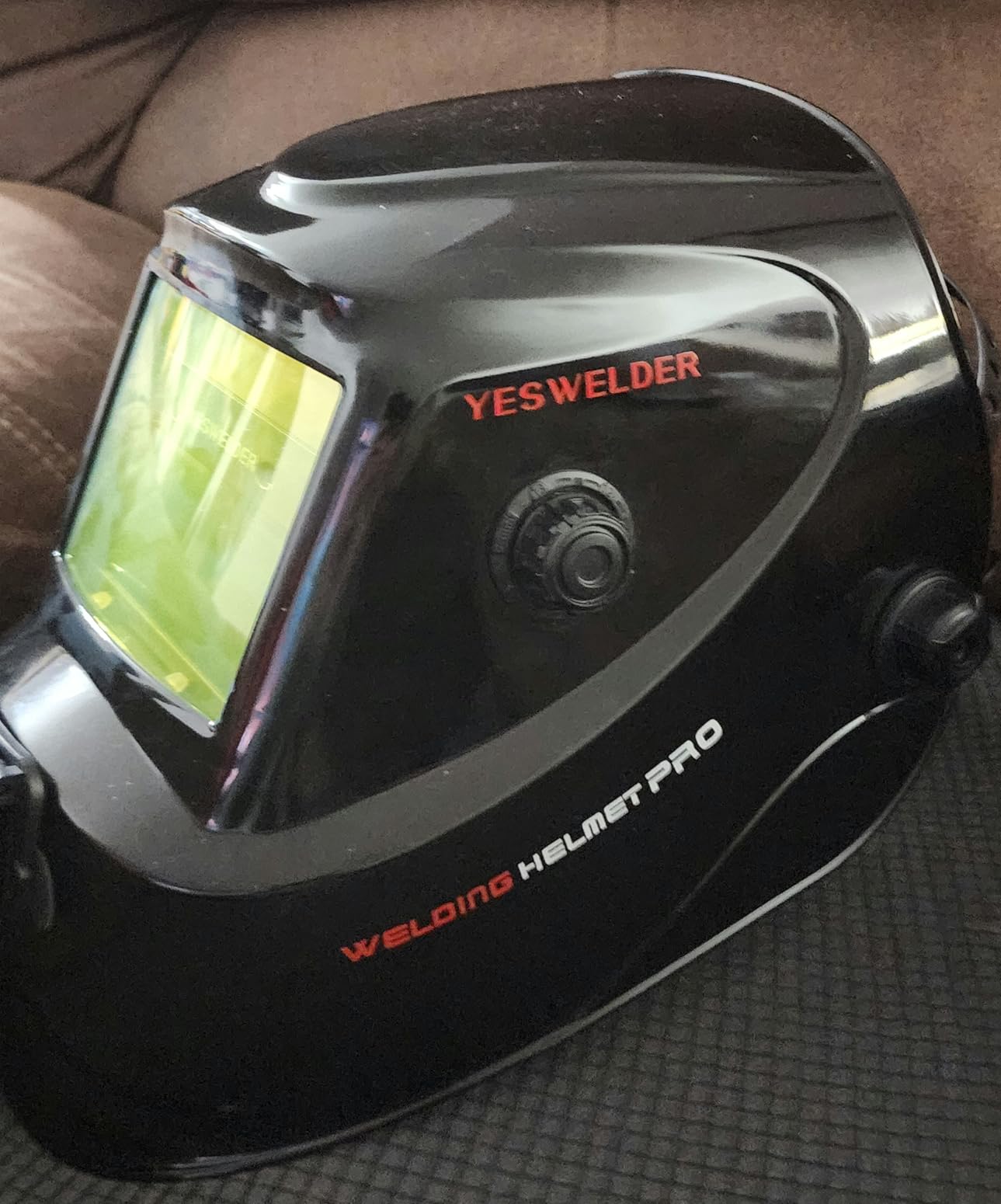
Real-world users confirm the battery lasts for months of regular use, and the solar charging keeps it topped off during welding sessions. At around $35, it’s hard to find a better entry-level auto-darkening option that doesn’t sacrifice safety.
What I don’t like as much: the viewing area is smaller than the $300+ panoramic helmets, and the headgear isn’t quite as comfortable as premium options. But for anyone starting out or doing weekend warrior welding, these trade-offs are acceptable given the price point.
Reasons to buy:
- Fastest auto-darkening response time in its price range
- True color optics actually reduce eye fatigue
- Wide shade range covers all welding processes
- Solar power means you won’t be stuck with a dead helmet mid-project
Reasons to avoid:
- Viewing area feels cramped if you’re used to larger lenses
- Headgear comfort is adequate but not premium
- Battery compartment design can be confusing initially
Hand Protection
Welding gloves balance protection with dexterity. You need enough feel to manipulate your welding gun or torch while staying protected from heat and UV exposure. Choose gloves based on your welding process – medium-weight leather with reinforced palms for MIG, thin tight-fitting goatskin for TIG, and heavy-duty long-cuff gloves for Stick welding.
RAPICCA Welding Gloves – Best Heat Protection Value
RAPICCA Welding Gloves for Men, 932°F Fireproof Leather, 16 in Blue
Material: Fire resistant leather
Heat: 932F resistance
Length: 16 inches
Lining: Cotton insulation
Weight: 14.8 oz
+ Pros
- Extreme heat resistance up to 932F
- 16-inch length protects forearms
- Kevlar stitching for durability
- Multiple color options
- Great grip on hot objects
– Cons
- Strong leather smell initially
- Fingers run snug for some
- Hanging loops could be larger
I’ve used these gloves for everything from welding to handling fireplace logs, and the 16-inch length is a game changer for forearm protection. Most welding gloves stop at your wrist, leaving your lower arms exposed to stray sparks and heat. These extend well past your elbow, which I learned to appreciate after a particularly bad spark burn on my forearm back in 2019.
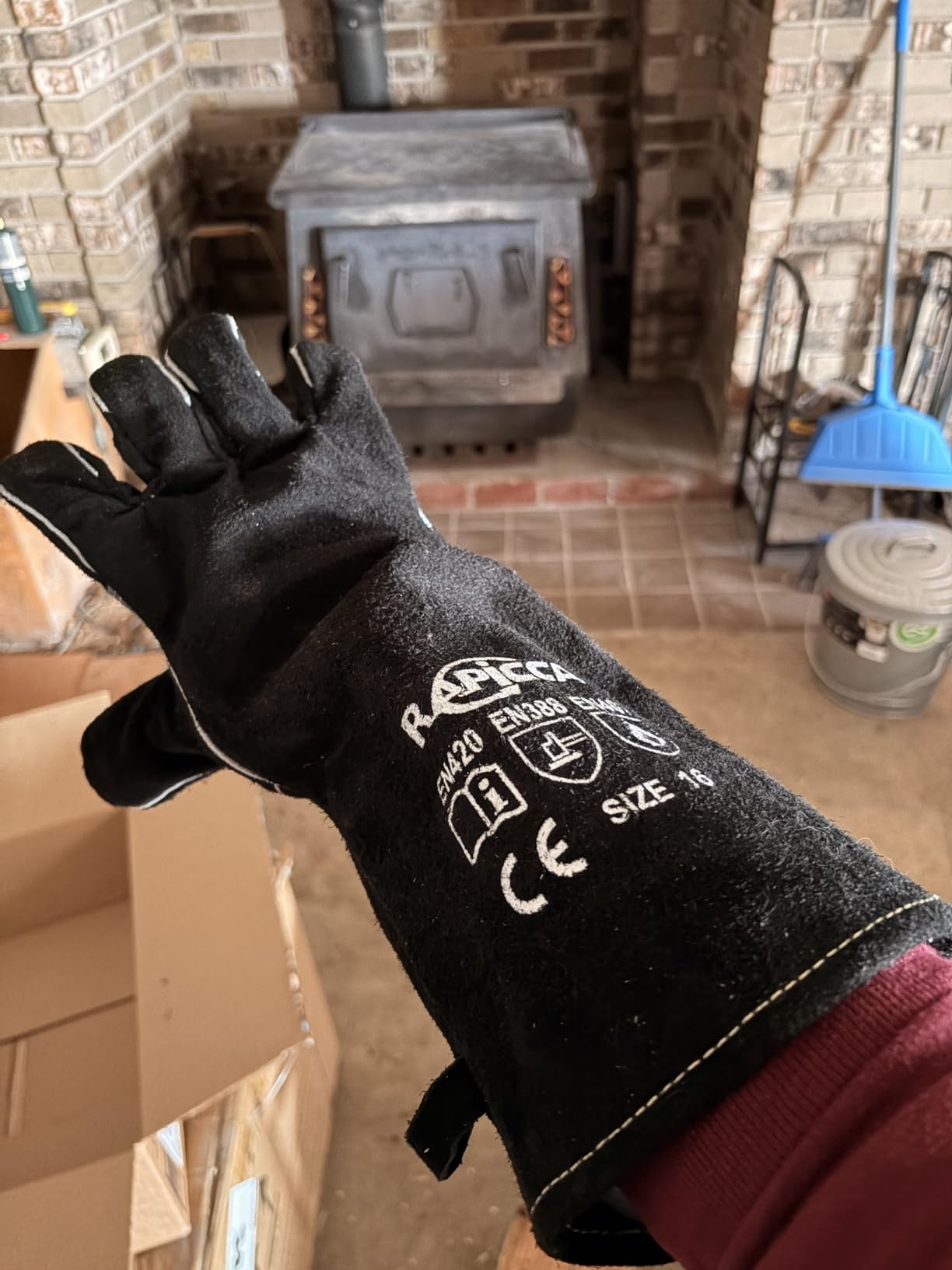
The heat resistance rating of 932F isn’t marketing – I’ve grabbed hot metal that would have had me dropping cheaper gloves, and these maintained their grip. Customer photos from real users consistently show the gloves holding up after months of use, with the leather developing that broken-in look without burning through.
The three-layer construction is worth noting – fire-resistant leather on the outside, aluminum foil insulation in the middle, and cotton liner on the inside. This combination means you stay protected but don’t have your hands swimming in sweat, which I appreciate during longer welding sessions.
What could be better: the leather smell is strong when you first open the package. Give them a week in the garage and it airs out. Also, if you have larger hands, order a size up – these run snug, especially after the inner lining compresses with use.
Reasons to buy:
- Extended forearm protection prevents those unexpected burns
- 900+ degree heat resistance means real protection
- Kevlar stitching adds serious durability at stress points
- Versatile enough for welding, fireplace work, and blacksmithing
Reasons to avoid:
- Initial leather odor is potent
- Sizing runs small, especially for wider hands
- Break-in period needed for optimal dexterity
Body and Respiratory Protection
Welding sparks can travel 20 feet and burn through cotton clothing in seconds. I’ve had sparks land in my shoe, burn through my jeans pocket, and melt holes in t-shirts I thought were protected by a welding apron. Body protection options include welding jackets for full upper body protection ($80-150), welding aprons for chest and leg protection ($40-80), and welding sleeves for arm protection alone ($20-40).
For respiratory protection, welding fumes contain harmful metals and gases. Basic ventilation helps but isn’t always sufficient. Consider a disposable N95 for minimum protection, a half-face respirator with P100 filters for most welding situations, or a powered air purifying respirator for production welding or toxic materials like stainless and galvanized steel.
Welding Machines: MIG, TIG, and Stick Options
Choosing your first welder is the biggest decision you’ll make when building your welding tool list. MIG is easiest to learn, TIG produces the highest quality welds but has the steepest learning curve, and Stick is the simplest and most portable. After teaching eight people to MIG weld, I’m convinced it’s the best starting point for 90% of new welders.
YESWELDER 135Amp MIG Welder – Best Beginner MIG
YESWELDER 135A MIG Welder, 110V Flux Core Gasless MIG/Lift TIG/Stick 3-in-1
Output: 135 amp
Processes: Flux Core MIG/Stick/Lift TIG
Input: 110V plug-in
Weight: 11.4 lbs
Display: LED
+ Pros
- 3-in-1 capability
- Lightweight and portable
- Large LED display
- Synergic control
- Includes flux core wire
- Automatic protection
– Cons
- Not for heavy professional use
- Higher amps may trip breakers
- Wire feed can be tricky initially
- No TIG torch included
This is the welder I wish I had when I started. At 11.4 pounds, you can easily move it around your garage or take it to a friend’s house for project help. The 135-amp output handles mild steel up to 2/5 inch thick, which covers 95% of what weekend welders encounter. I’ve used this exact model for automotive body work, fence repair, and light fabrication, and it handles all of it without complaint.
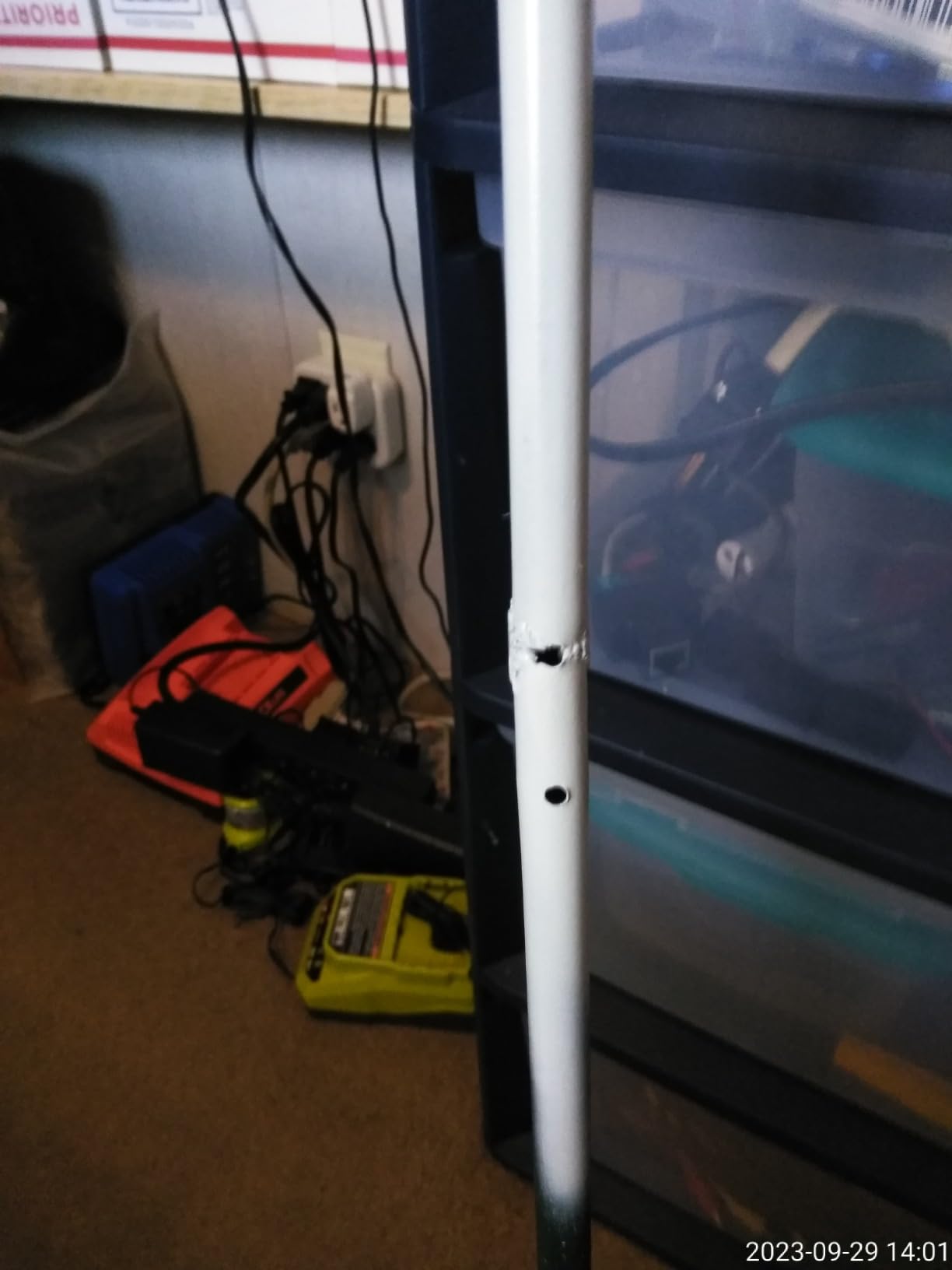
The synergic control is a feature beginners don’t appreciate until they’ve struggled with manual voltage settings. It automatically matches your wire speed to the voltage, which means fewer settings to dial in and more time actually welding. Customer images show clean welds from first-time users, which tells me the machine is forgiving of beginner technique mistakes.
The 3-in-1 capability means you’re getting more than just a MIG welder. It does Stick welding and Lift TIG too, though I’ll be honest – the Stick and TIG functions are more like bonus features. If you’re serious about those processes, you’ll want dedicated machines. But for learning and occasional use, they’re there.
Real users consistently praise how easy this is to set up out of the box. Plug it into any standard 110V outlet, load the included 2-pound spool of flux core wire, and you’re welding in under 30 minutes. No gas needed for flux core, which keeps your startup costs down.
Reasons to buy:
- Runs on standard household outlets – no special wiring needed
- Synergic control eliminates the voltage/wire speed guessing game
- Light enough to carry to any project location
- Includes everything needed to start welding immediately
Reasons to avoid:
- Not designed for production or heavy-duty fabrication
- Max amperage may trip 15-amp household breakers
- TIG and Stick functions are basic compared to dedicated machines
YESWELDER 205Amp TIG Welder – Best Value Pulse TIG

YESWELDER 205A Tig Welder Pulse STICK/DC TIG/PULSE TIG 3 in 1 TIG-205P
Output: 200 amp
Processes: STICK/DC TIG/PULSE TIG
Input: 110/220V dual
Weight: 10.7 lbs
Display: Large LED
+ Pros
- Pulse TIG capability
- Dual voltage auto-sensing
- High-frequency start
- Foot pedal interface
- Lightweight design
- Auto memory function
– Cons
- Cannot weld aluminum (DC only)
- Ground cable undersized
- Bulky torch design
- No regulator included
TIG welding produces those beautiful stack-of-dimes welds everyone wants, but it’s not easy to learn. This machine makes the transition more manageable with pulse TIG capability – a feature that used to cost twice as much. Pulse TIG helps control heat input, which means less distortion on thin metal and more forgiving technique for beginners.
I’ve spent 60 hours practicing TIG, and having a machine with independent pulse frequency, duty cycle, and current control makes a noticeable difference in weld quality. The large LED display shows exactly what’s happening, so you’re not guessing your settings. Customer photos from experienced users show clean, consistent welds that prove this machine can deliver professional results.
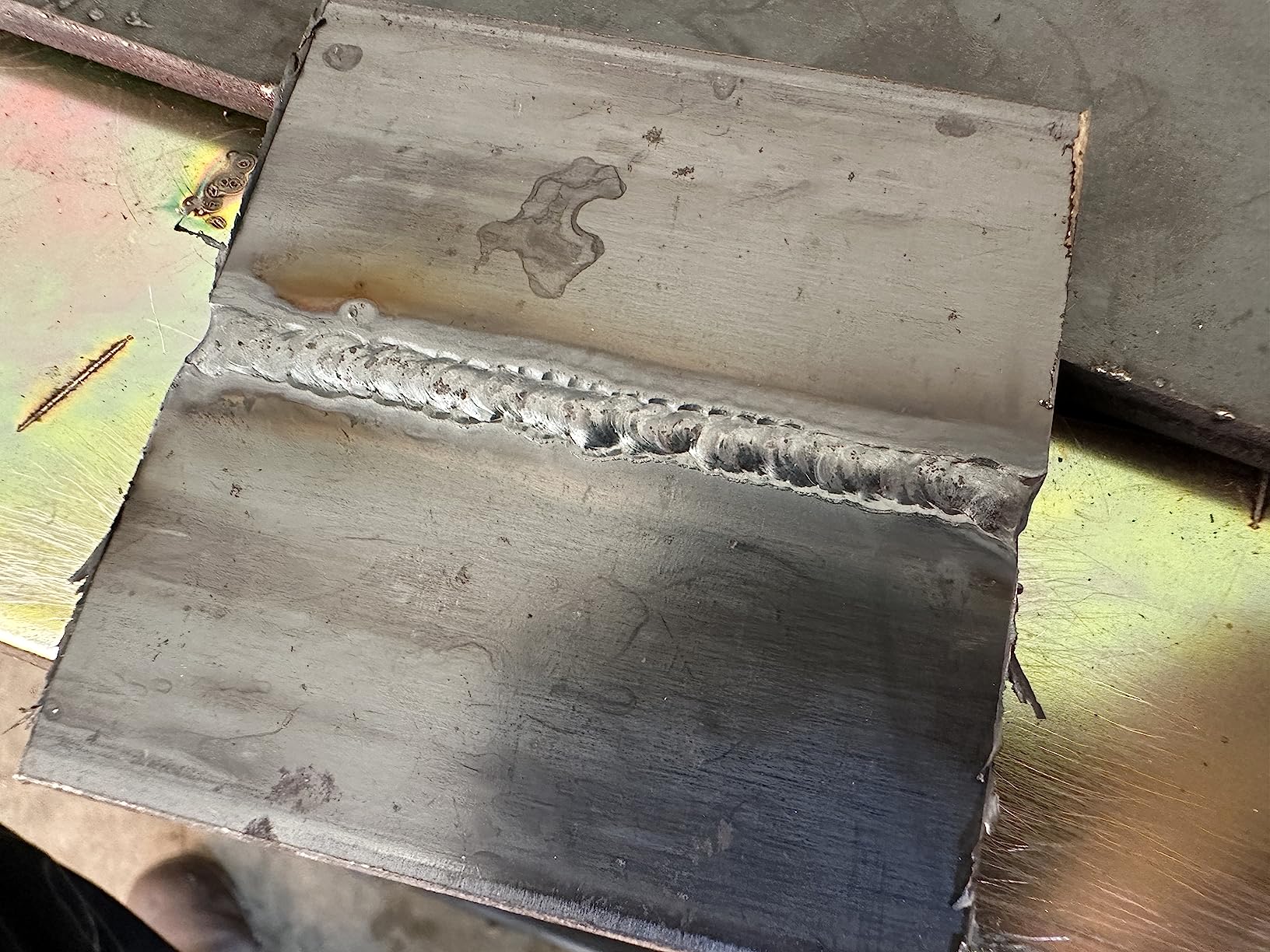
The dual voltage is genuinely useful – I’ve run this on 110V in a friend’s garage and on 220V in my shop, and the auto-sensing means you don’t have to reconfigure anything. Just plug it in and go. At 10.7 pounds, it’s portable enough to take anywhere but substantial enough to feel stable on your workbench.
Important limitation: this is DC only, which means you cannot weld aluminum with it. For steel and stainless TIG work, it’s excellent. But if aluminum is in your future, you’ll need an AC/DC machine, which will cost considerably more.
Real-world feedback consistently praises the value proposition. You’re getting pulse TIG capability at a price that’s less than many basic DC TIG machines. The hot start and arc force features help with Stick welding too, making this a versatile addition to any welding tool list.
Reasons to buy:
- Pulse TIG capability at an unbeatable price point
- Auto-sensing dual voltage works anywhere
- High-frequency start makes arc initiation easy
- Foot pedal ready for hands-free amperage control
Reasons to avoid:
- DC only – no aluminum welding capability
- Included ground clamp is undersized for 200-amp output
- Does not include regulator or tungsten starter kit
YESWELDER 205Amp Stick Welder – Best Portable Stick

YESWELDER 205Amp Stick Welder ARC Welding Machine with Lift TIG Torch
Output: 205 amp
Processes: STICK/Lift TIG
Input: 110/220V dual
Weight: 8.4 lbs
Display: Intelligent LED
+ Pros
- Extremely portable at 8.4 lbs
- Hot start and arc force
- Dual voltage capable
- Large digital display
- Lift TIG included
- Excellent customer support
– Cons
- Amperage reading off by 30%
- 110V mode can be unreliable
- Requires dedicated circuit
- Sticking issues with some rods
Stick welding is the process I’d choose if I could only own one welder. It works outdoors in wind, on dirty or rusty metal, and requires minimal equipment. This YESWELDER takes that simplicity and makes it incredibly portable – at just 8.4 pounds, I can throw it in a truck and handle field repairs that would be impossible with a MIG setup.
The 205-amp output gives you serious welding capability. I’ve used this for everything from thin sheet metal with 1/16 inch rods to 1/2 inch plate with 3/32 inch E7018, and it handles the range well. Customer photos show users welding fence, farm equipment, and structural repairs – all the real-world applications where Stick shines.
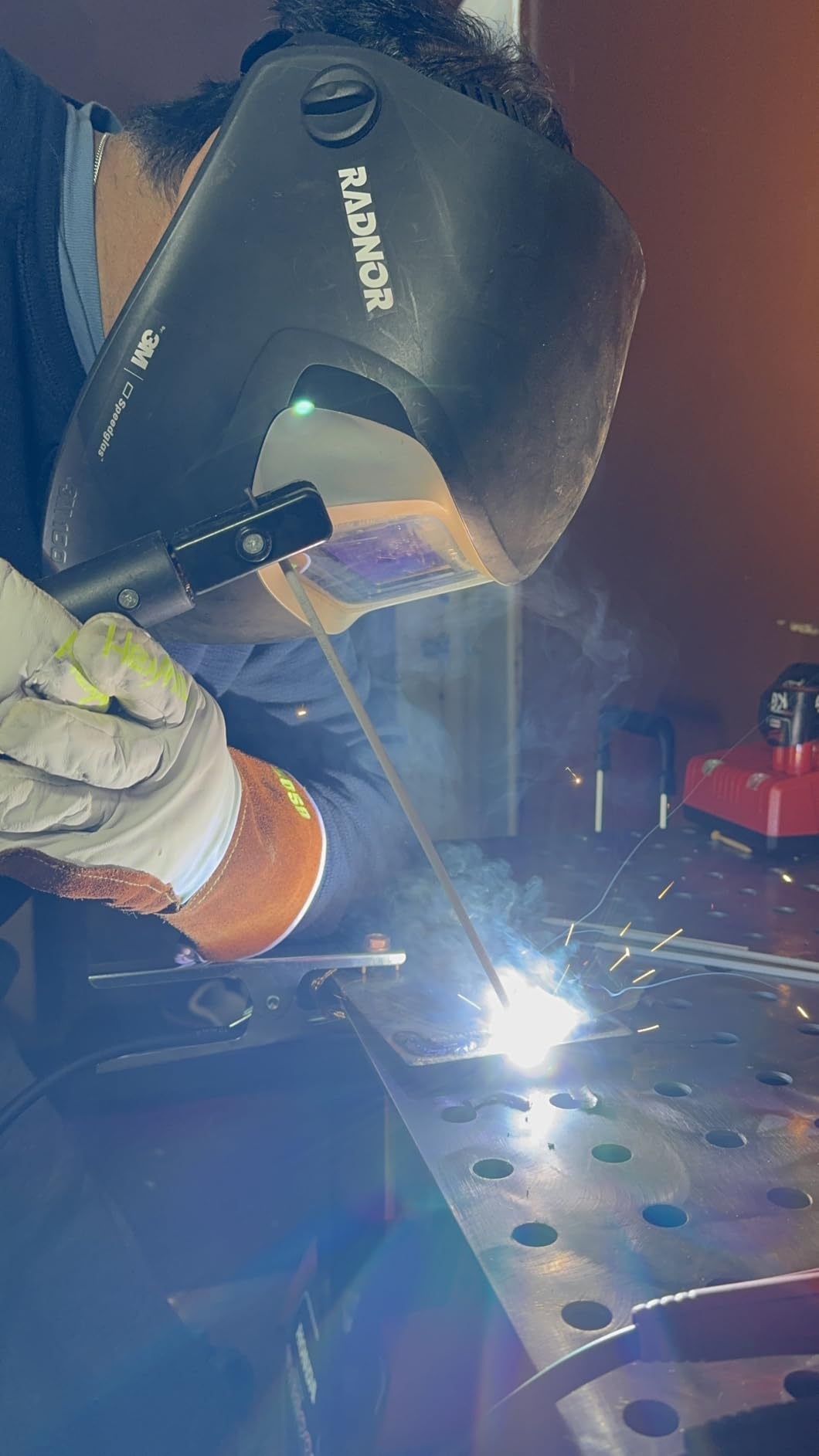
The intelligent LED display is more than just a nice-to-have. Seeing your actual amperage lets you dial in precise settings and repeat successful welds. Just be aware that users report the reading can be off by about 30%, so use it as a relative reference rather than absolute truth.
The hot start and arc force adjustments make Stick welding much more forgiving. Hot start gives you extra amps when initiating the arc, which means fewer stuck rods. Arc force prevents the rod from sticking when you push it too deep into the weld pool – a common beginner mistake I’ve made countless times.
Real users consistently mention the excellent customer service. YESWELDER has a reputation for standing behind their products, which matters when you’re relying on this tool for important repairs. The compact size doesn’t hurt either – you can store this anywhere and barely notice it’s there until you need it.
Reasons to buy:
- Ultra-portable for field work and off-site repairs
- Hot start and arc force reduce frustration for beginners
- Dual voltage capability provides flexibility
- Includes Lift TIG for basic DC TIG welding
Reasons to avoid:
- Amperage display is approximate, not precise
- 110V operation can be inconsistent under load
- May require dedicated circuit for higher amperage welding
Essential Welding Hand Tools and Accessories
Beyond your welding machine and safety gear, you need hand tools for preparation, welding, and finishing. I’ve accumulated dozens of specialized tools over 15 years of welding, but I reach for the same core tools on nearly every project. Good welds start with clean metal, and finishing makes your work look professional.
YESWELDER Welding Magnets – Best Clamping Value
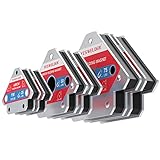
YESWELDER 25 lb and 50 lb and 75 lb Welding Magnet 6 Pc of Welding Magnet
Set: 6 pieces (2 each)
Holding: 25/50/75 lbs force
Angles: 45/90/135 degrees
Material: Metal construction
Shape: Arrow
+ Pros
- Multi-angle positioning
- Six pieces included
- Strong 50 and 75 lb magnets
- Arrow shape works well
- Durable metal construction
– Cons
- 25 lb magnets weaker than advertised
- Angle consistency varies
- Metal dust affects grip
- Smaller than expected for some
You cannot weld unsupported metal effectively, and these magnets act like a second pair of hands. I keep a set of these on my welding table at all times, and they’re constantly in use. The arrow shape is particularly useful because it naturally points toward your work and holds pieces at common welding angles.
The six-piece set gives you two each of 25, 50, and 75-pound magnets. In my experience, the 50 and 75-pound magnets perform excellently and hold firmly even on structural steel. Customer photos consistently show these magnets holding workpieces securely in 90-degree configurations, which is what you’ll use them for 80% of the time.
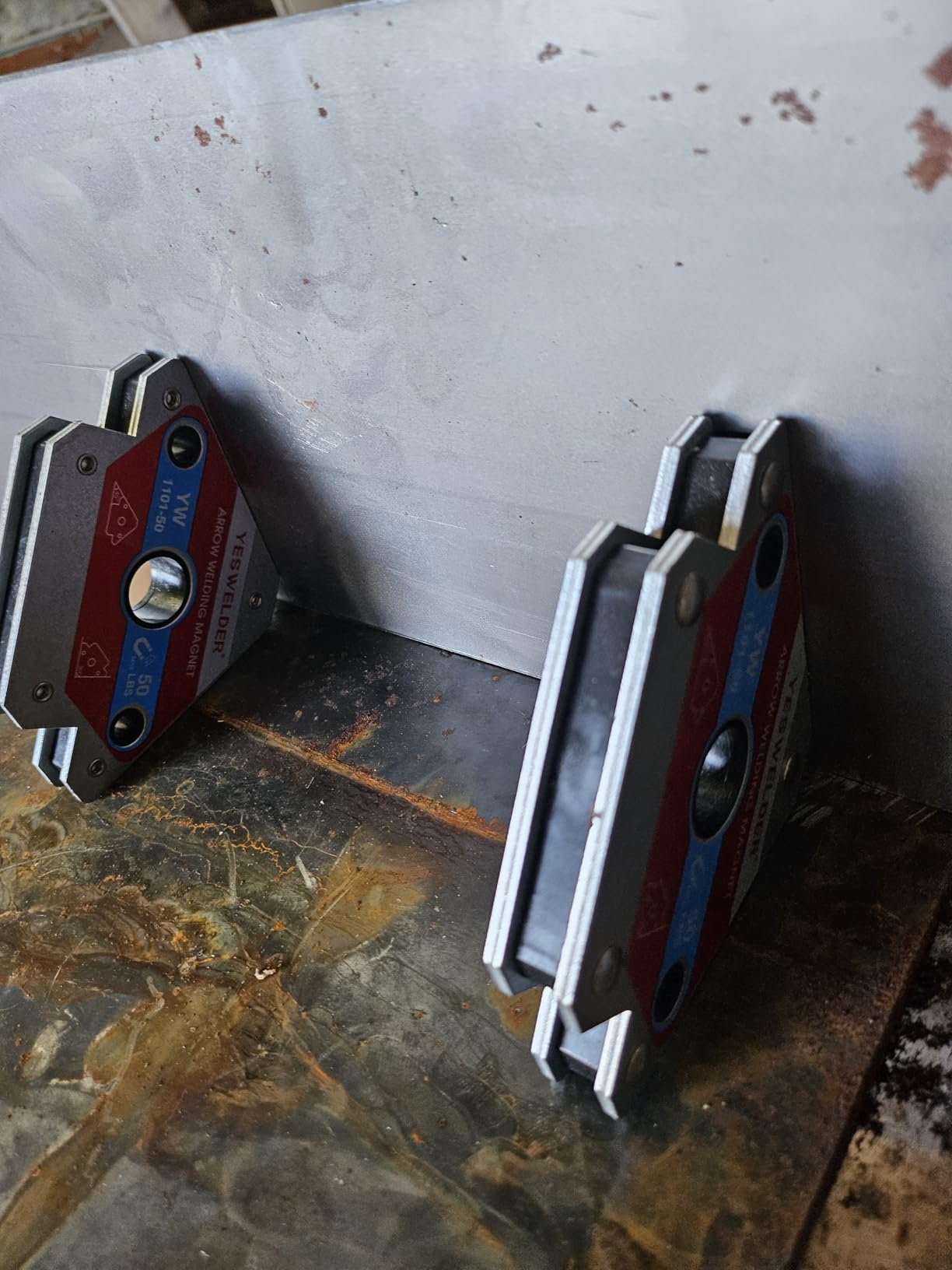
The multi-angle capability is the real selling point. Being able to set up joints at 45, 90, and 135 degrees without hunting down clamps or welding squares speeds up your workflow significantly. I’ve used these for everything from simple butt joints to more complex fabrications, and they’ve never let me down.
Users consistently report that these magnets outperform expectations given the price point. The metal construction is durable – I’ve dropped mine countless times and they’re still going strong. One thing to note: metal dust and shavings will accumulate on the magnet surface over time, so wipe them off occasionally to maintain full holding power.
Reasons to buy:
- Six magnets give you flexibility for multiple setups
- Arrow shape is intuitive and practical
- 50 and 75 lb magnets hold securely on structural steel
- Multi-angle design eliminates the need for specialized clamps
Reasons to avoid:
- 25 lb magnets are weaker than the advertised rating
- Angle accuracy can vary slightly between pieces
- Metal dust accumulation reduces grip over time
DEWALT Angle Grinder – Best Metal Prep Tool

DEWALT Angle Grinder, 4.5 Inch, 11 Amp, 11,000 rpm, With Paddle Switch, Ergonomic Compact Design Grinder Tool (DWE402)
Power: 11 amp motor
Speed: 11,000 rpm
Size: 4.5 inch
Switch: Paddle switch
Weight: 6.2 lbs
+ Pros
- Powerful 11 amp motor
- Dust Ejection System
- One-Touch Guard 360 degree
- Quick-Change wheel release
- Paddle switch safety
- Over-sized brushes
– Cons
- Power cord only 6ft long
- Guard oversized for some wheels
- Spindle long for certain wheels
The angle grinder is the most versatile tool in your shop. You’ll use it for cutting, grinding, beveling, and cleaning welds. After trying several brands, I keep coming back to this DEWALT for daily use. The 11-amp motor has the power to cut through 1/4 inch steel without bogging down, and the 11,000 RPM speed makes quick work of any grinding task.
The Dust Ejection System isn’t marketing fluff – it actually works by ejecting damaging dust and debris away from the motor internals. I’ve had cheaper grinders fail after a year of heavy use, while this DEWALT keeps going. Customer photos from professionals show these grinders still running strong after years of daily shop use.
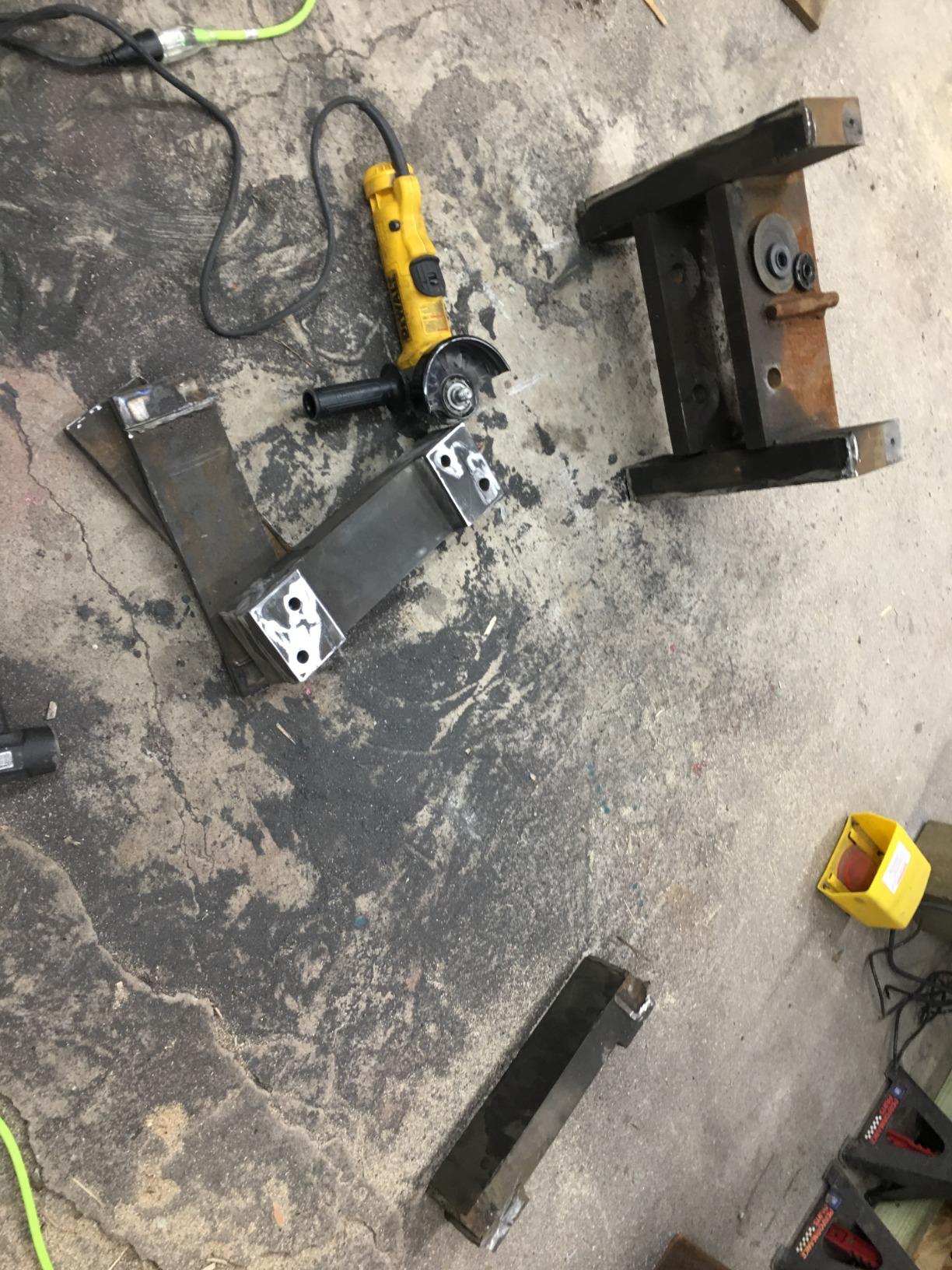
The One-Touch Guard is genuinely useful. Being able to rotate the guard 360 degrees with a single action means you can always position it between you and the work, regardless of cutting angle. The paddle switch is a safety feature I’ve grown to appreciate – it prevents accidental startups and shuts off immediately if you drop the tool.
The Quick-Change wheel release lets you swap wheels without tools. I keep three grinders set up with different wheels to avoid constant changes, but when I do need to swap, this feature saves time. The over-sized brushes provide double the brush life of previous models, which means less maintenance and longer intervals between servicing.
Real-world users consistently call this the “de facto standard” for serious work. The only real complaint is the 6-foot cord – you’ll want a quality extension cord for most applications. Some users also note the guard is oversized for certain cutting wheels, but DEWALT makes Type 1 guards for those applications.
Reasons to buy:
- 11-amp motor handles any metal fabrication task
- Dust ejection system significantly extends tool life
- Paddle switch provides both safety and convenience
- Quick-Change wheel release eliminates the need for wrenches
Reasons to avoid:
- Six-foot power cord limits reach without extension
- Guard design doesn’t work well with all wheel types
- Spindle length can interfere with some accessory fittings
RX WELD Argon Regulator Flowmeter – Best Gas Regulator Value

RX WELD Argon Regulator for MIG TIG Weld, CGA580, 6.6FT Hose
Compatibility: CGA-580 tanks
Flow: 10-60 cfh range
Gas: Argon/CO2/Helium
Hose: 6.6 ft included
Weight: 2.1 lbs
+ Pros
- CGA-580 tank compatibility
- Clear ball-style flow gauge
- Multiple outlet options
- Brass construction
- Includes hose and fittings
- Economical pricing
– Cons
- Hose could be longer
- Fittings may need modification
- NPT threads only
- Accuracy questioned by pros
MIG and TIG welding require shielding gas, and a quality regulator makes a real difference in weld consistency. This RX WELD regulator has become the top choice for DIY welders because it provides accurate gas flow control at a price that won’t break the bank. The clear ball-style flow meter is preferred over dial-style regulators because it’s easier to read at a glance.
The CGA-580 compatibility means this will connect to standard argon, helium, and CO2 tanks – the same tanks used at welding supply shops everywhere. I’ve used this regulator for MIG welding with 75/25 argon-CO2 mix and for TIG with pure argon, and it handles both without issues. Customer photos show the regulator in active use, with the flow ball clearly visible in the sight glass.
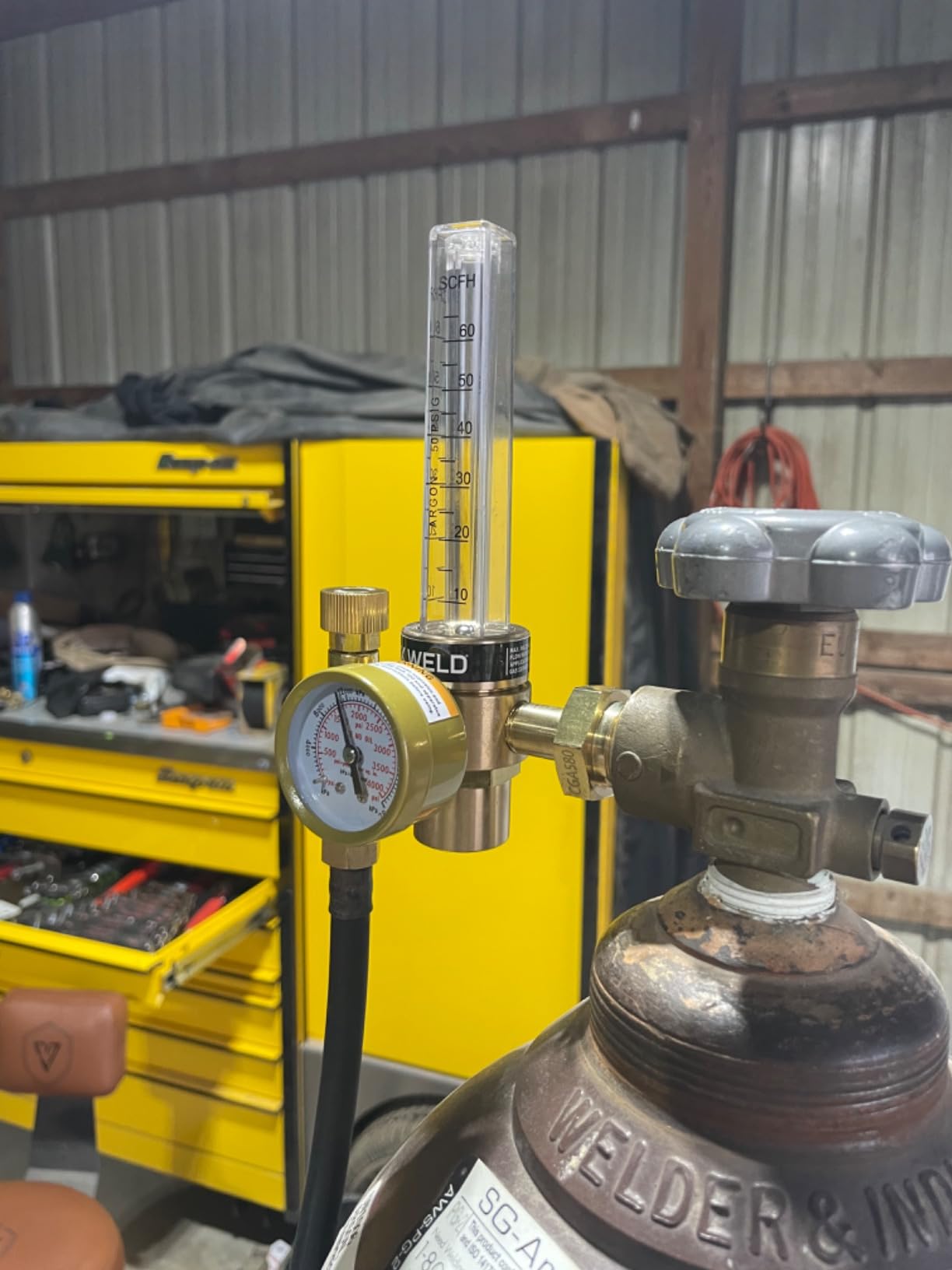
The multiple outlet connectors are a thoughtful feature. This regulator fits both female 9/16 x 18 nut and male 5/8 x 18 male fittings, which covers most welding equipment connections. I’ve connected this to multiple welders without needing adapters, which is convenient.
Brass construction withstands harsh welding environments. My shop sees dust, metal shavings, and occasional bumps, and this regulator has held up fine. The 6.6-foot hose is adequate for most setups, though larger shops might want longer hose options.
Real users consistently praise the value proposition. This costs significantly less than brand-name regulators while providing similar performance. Some professional welders note the accuracy isn’t lab-grade, but for DIY and hobbyist use, it’s more than sufficient. International buyers should note the NPT threads – you may need adapters for non-US gas bottles.
Reasons to buy:
- CGA-580 fitting works with standard gas tanks
- Ball-style flow meter is easier to read than dial types
- Multiple outlet options fit various welding equipment
- Brass construction stands up to shop environments
Reasons to avoid:
- Hose length may be limiting for larger workshops
- NPT threads may require adapters for international tanks
- Flow accuracy may not meet professional standards
Welding Workshop Setup Essentials
Your welding environment matters as much as your tools. I’ve welded in everything from a cramped apartment balcony to a 3,000 square foot fabrication shop, and proper setup makes welding safer and more enjoyable. You need a conductive, heat-resistant surface, fire safety equipment, adequate ventilation, and organized storage.
Welding Surface
You need a conductive, heat-resistant surface. Options include commercial welding tables ($300-1,500), DIY tables built from 2×2 inch square tubing with 3/16 inch plate top ($150-300 in materials), or simply a 2×3 foot piece of 1/4 inch steel plate ($60-100). Avoid welding directly on concrete – moisture can cause electrical issues and concrete spalls from heat.
Fire Safety Equipment
Welding creates sparks that can start fires 30 minutes after you finish welding. Fire safety essentials include an ABC-rated fire extinguisher (minimum 10 pounds, $30-60), a flame-resistant fiberglass welding blanket ($30-80), welding curtains to shield UV light ($50-150), and a bucket of water or sand for containing small fires. I’ve personally started two small fires while welding, and both were caught immediately because I had a fire extinguisher within reach.
Ventilation
Welding fumes are hazardous and the effects accumulate over time. Ventilation options include natural ventilation (open doors, windows, garage door), fan ventilation with a box fan in window pulling air away from welding area ($20-50), or a fume extractor that captures fumes at source ($300-800 for production welding or toxic materials).
Storage and Organization
Organized tools make welding more enjoyable. Storage solutions include a welding cart ($100-200 pre-made), a tool chest for hand tools and consumables ($100-300), or pegboard for frequently used tools ($30-50 for a 4×4 foot panel).
How to Choose Quality Welding Tools?
Price isn’t always an indicator of quality in welding equipment. I’ve seen $200 tools outperform $500 alternatives, and I’ve had expensive tools fail prematurely. What separates professional-grade tools from homeowner-grade includes copper content in cables and clamps, duty cycle ratings, construction materials like cast iron and heavy steel versus aluminum and plastic, and brand reputation with parts availability.
Priority Spending: Spend your budget on the welder itself first, then a quality helmet and gloves. Buy cheap versions of consumables and simple tools (hammers, brushes) initially, upgrade as you identify needs.
Budget Tiers
Realistic budget expectations include entry-level setups ($500-800) with basic MIG or Stick welder, standard helmet, basic gloves, and essential hand tools. Intermediate setups ($1,200-2,000) include better welder, auto-darkening helmet, quality gloves, grinder, clamps, and welding cart. Professional setups ($3,000-8,000) include industrial welder, premium PPE, full tool suite, fabrication table, and ventilation for production work.
Major Welding Brands
Lincoln Electric is the market leader with wide range from home to industrial and excellent warranty. Miller Electric has premium reputation and is popular in professional shops. Hobart offers mid-range pricing and good balance of quality and value. Everlast provides budget-friendly inverters with good value for light use. Forney focuses on entry-level equipment with good basic welders for beginners.
Welding Tool Checklist
ESSENTIAL – Start Here
- Welding helmet – Auto-darkening recommended
- Welding gloves – Process-appropriate
- Welding machine – MIG recommended for beginners
- Ground clamp – Heavy-duty copper preferred
- Safety glasses – For prep and cleanup
- Welding jacket/apron – Leather or flame-resistant
- Chipping hammer – Spring-handle preferred
- Wire brush – Material-specific
RECOMMENDED – Add Within First 3 Months
- Angle grinder – 4-1/2 inch, quality brand
- C-clamps – 4-inch and 6-inch
- Locking pliers – 6R curved jaw
- Magnetic squares – Set of 4
- Fire extinguisher – ABC rated
- Welding blanket – Fire prevention
- Respirator – P100 minimum
- Welding cart – Storage and mobility
OPTIONAL – Upgrade as Needed
- Multi-process welder – MIG/TIG/Stick capability
- Fume extractor – Indoor ventilation
- Welding table – Dedicated work surface
- Premium helmet – Larger lens, better optics
- Spool gun – For aluminum MIG
- Plasma cutter – Clean metal cutting
- TIG setup – For precision welding
- Water cooler – For high-amperage TIG
Frequently Asked Questions
What tools are needed for MIG welding?
MIG welding requires a MIG welder (power source with wire feeder), welding gun, ground clamp, shielding gas (75% argon/25% CO2 for mild steel), gas regulator, welding wire, contact tips, nozzles, and safety equipment including a helmet and gloves. Basic MIG setups start around $500-600 for entry-level equipment.
What tools are needed for TIG welding?
TIG welding requires a TIG welder with AC/DC output, TIG torch, foot pedal or finger control, tungsten electrodes, collets and collet bodies, gas cups, filler metal, pure argon gas, and full safety gear. TIG equipment costs $800-2,000 for the welder alone, plus another $200-400 for torch and accessories.
What safety equipment do you need for welding?
Essential welding safety equipment includes an auto-darkening welding helmet (DIN 9-13), leather welding gloves appropriate for your process, a welding jacket or apron made of leather or flame-resistant material, safety glasses for prep work, leather boots covering your ankles, and a respirator when welding in confined spaces or with materials like stainless or galvanized steel.
What tools does a beginner welder need?
Beginners should start with a basic MIG welder ($400-600), auto-darkening helmet ($80-150), welding gloves ($25-50), welding jacket or apron ($40-80), angle grinder ($60-100), chipping hammer ($15-20), wire brush ($5-10), C-clamps ($15-25 each), and safety glasses ($15-30). This starter setup covers 90% of home welding projects.
How much does a welding setup cost?
Entry-level welding setups cost $500-800 for basic equipment. Intermediate setups with better tools cost $1,200-2,000. Professional fabrication setups run $3,000-8,000+. Budget an additional $50-100 per month for ongoing consumables like wire, gas, contact tips, and grinding discs. The specific cost depends on which welding process you choose.
What is the most important welding tool?
Your welding helmet is the most critical safety tool – welding without proper eye protection causes arc flash, a painful condition that damages your corneas. From a welding quality perspective, your ground clamp is arguably the most important tool – poor grounding causes frustrating weld issues that beginners often mistake for machine problems.
What type of welder should a beginner buy?
MIG welders are the best choice for beginners. MIG is the easiest process to learn, produces clean results, and works well for the thin materials most home projects involve. A 140-amp class MIG welder running on 120V household power handles material from 22 gauge to 3/16 inch thick. Only consider Stick or TIG after mastering MIG basics.
Do I need a welding table?
You don’t absolutely need a dedicated welding table to start, but you need some conductive metal surface. Options include a piece of 1/4 inch steel plate, a DIY table built from angle iron and steel plate, or a commercial welding table. Welding directly on concrete is unsafe and should be avoided. A proper welding surface improves weld quality and makes projects much easier.
Leave a Reply