
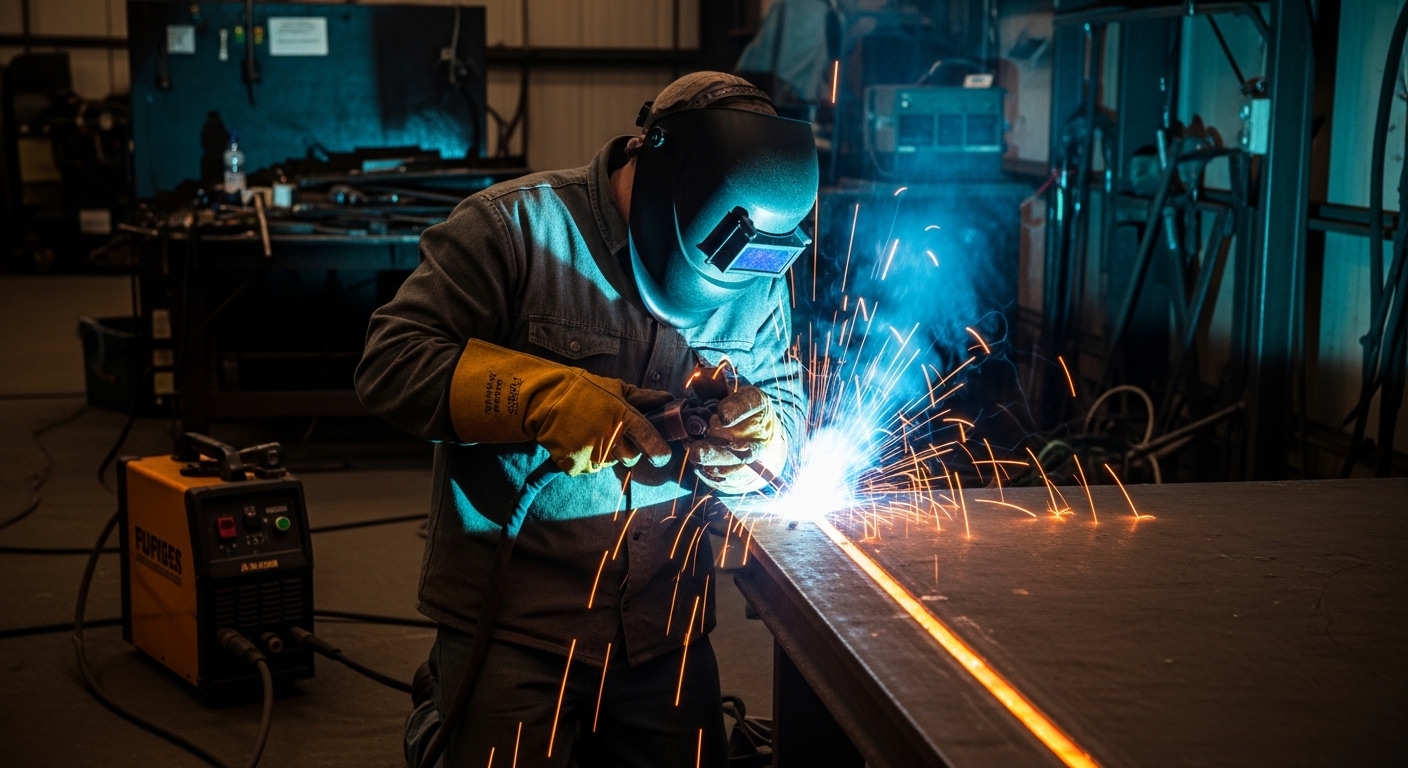
Arc welding is a metal joining process that uses electricity to create intense heat, up to 6,500 degrees Fahrenheit. Like a controlled lightning bolt between an electrode and metal, it melts the edges together to form a strong bond when cooled. Common types include stick, MIG, and TIG welding, used in everything from construction to auto repair.
When I first watched a welder lay down a perfect bead, I was hooked. The bright blue arc, the flying sparks, the molten metal fusing together. I had to learn how to do it myself. After 15 years of welding, from backyard projects to industrial fabrication, I’ve learned that arc welding is both an art and a science.
This guide covers everything you need to know about arc welding. Whether you’re a complete beginner or considering welding as a career, I’ll explain how it works, the different types, what equipment you need, and how to get started safely.
How Arc Welding Works
Arc welding works by creating an electrical circuit between the welding machine, the workpiece, and an electrode. When you strike the arc by touching the electrode to the metal and pulling back slightly, electricity flows across the gap. This generates intense heat that melts the metal.
Think of it like this: your welding machine is the power source, the electrode is one connection point, and your workpiece is the other. When these connect, electricity wants to flow. The “arc” is actually plasma, superheated gas that conducts electricity and creates the welding heat.
The Arc: The electrical discharge that forms between the electrode and base metal. Temperatures reach 6,500degF, hot enough to melt most metals. This heat zone is what makes fusion welding possible.
Here’s the basic process step by step:
- Setup the circuit: Connect the work clamp to your workpiece and insert the electrode into the holder.
- Strike the arc: Tap the electrode against the metal like a match, then lift slightly to create the gap.
- Maintain the arc: Keep a consistent gap about the thickness of a dime. The arc should sizzle smoothly.
- Move along the joint: Travel at the right speed, melting both edges of the joint together.
- Cool and inspect: Let the weld cool, then check for proper fusion and defects.
The heat from the arc melts the base metal and often adds filler material. As it cools, the metal solidifies into a single piece. A good weld is as strong as or stronger than the original metal.
Types of Arc Welding
Arc welding isn’t just one process. Several methods use the same basic principle, an electric arc, but with different equipment and techniques. Each has its strengths and best applications.
| Type | Common Name | Skill Level | Best For | Shielding |
|---|---|---|---|---|
| SMAW | Stick Welding | Moderate | Outdoor, thick metal, dirty surfaces | Flux-coated electrode |
| GMAW | MIG Welding | Easy | Thin metal, production, beginners | External gas (CO2/Argon mix) |
| GTAW | TIG Welding | Difficult | Precision work, aluminum, stainless | External gas (Argon) |
| FCAW | Flux Core | Easy-Moderate | Heavy fabrication, outdoor work | Flux inside wire (gas optional) |
Shielded Metal Arc Welding (SMAW) – Stick Welding
Stick welding is the original arc welding process. It uses a consumable electrode rod coated in flux. When you strike the arc, the flux burns off, creating a protective gas shield and a layer of slag over the weld.
I’ve welded in rain, wind, and snow with stick. The flux coating makes it forgiving of less-than-perfect conditions. You can weld through paint, rust, and dirt. That’s why it’s the go-to for construction, farm repair, and field work.
The downsides? Stick welding produces slag you must chip away. It’s slower than other processes. And mastering that consistent arc length takes practice. Most beginners struggle with the electrode sticking to the workpiece at first.
Gas Metal Arc Welding (GMAW) – MIG Welding
MIG welding uses a continuous wire electrode fed through a gun. Shielding gas flows from the same gun to protect the weld pool. It’s like using a hot glue gun, but with metal wire and serious heat.
MIG is the easiest process to learn. The wire feeds automatically, so you focus on steering and speed. It produces clean welds with minimal cleanup. Perfect for auto body work, thin sheet metal, and fabrication projects.
The catch? MIG needs clean metal and shielding gas. Wind will blow your gas away and ruin the weld. You’ll also deal with spatter, those tiny metal droplets that can be frustrating to clean up.
Gas Tungsten Arc Welding (GTAW) – TIG Welding
TIG welding uses a non-consumable tungsten electrode to create the arc. You add filler metal manually with your other hand. It’s like welding with a pencil while feeding wire with your other hand and controlling a foot pedal.
TIG produces the cleanest, most precise welds possible. You can weld exotic metals like titanium and magnesium. It’s the process of choice for aerospace, high-end fabrication, and artwork.
But it’s also the most difficult to master. Both hands are busy, plus your foot. It requires excellent technique and patience. Most welders learn stick or MIG first, then advance to TIG after years of practice.
Flux Cored Arc Welding (FCAW)
Flux core is like MIG welding’s tough cousin. It uses a tubular wire filled with flux instead of solid wire with external gas. The flux creates the shield, so you can weld without gas tanks.
Self-shielded flux core works outdoors in wind, making it popular for construction and shipyard work. Gas-shielded flux core offers even better penetration and is used in heavy fabrication.
The tradeoff is more smoke and spatter than MIG. And while it’s easier than stick, it still produces slag you need to remove.
Arc Welding Equipment Needed
Getting started with arc welding requires some essential equipment. You don’t need everything at once, but you will need the basics. I’ve seen beginners spend thousands they didn’t need to, and others try to get by with inadequate gear.
Here’s what you actually need, ranked by importance:
Essential Equipment
Quick Summary: Start with a welder, helmet, gloves, and safety gear. Add clamps, wire brush, and pliers. You can build your setup over time as your skills improve. Quality safety equipment is worth the investment.
- Welding Machine: Your power source. For stick welding, look for an AC/DC machine with at least 140 amps. MIG welders should have adjustable wire speed and voltage. Expect to spend $200-$800 for a good hobbyist machine.
- Welding Helmet: Non-negotiable safety equipment. Auto-darkening helmets make welding much easier. I recommend a variable shade helmet with at least shade #9-13. Your eyes will thank you.
- Welding Gloves: Leather gloves specifically designed for welding. They need to be heat-resistant but allow enough dexterity to feel what you’re doing.
- Safety Glasses: Wear these under your helmet. Slag and metal particles can fly under your helmet, and eye injuries are no joke.
- Fire-Resistant Jacket: Leather or heavy cotton jacket. Synthetic fabrics will melt and stick to your skin if hit by sparks. Don’t make that mistake.
- Electrode Holder (Stinger): Holds your stick electrodes. Get a heavy-duty rated for at least 300 amps.
- Ground Clamp: Completes your electrical circuit. A poor ground equals poor welds. Make sure it grips tightly.
- Welding Cables: Connect everything. Longer cables reduce power. For most home setups, 10-15 foot cables work well.
Helpful Accessories
- Clamping Tools: C-clamps, locking pliers, and magnetic squares. You can’t weld if your work keeps moving.
- Wire Brush: Clean metal welds better. Have a dedicated stainless steel brush for aluminum and carbon steel.
- Chipping Hammer: Removes slag from stick welds. A must for SMAW welding.
- Angle Grinder: Prep work and cleanup. I use mine more than my welder sometimes.
- Welding Table: A metal surface provides a good ground and stable work area. You can build your own or buy one.
What Is Arc Welding Used For
Arc welding is everywhere. Look around you right now, things held together by arc welding probably surround you. It’s the backbone of modern construction and manufacturing.
In construction, structural welders join the steel beams that frame buildings. I’ve worked on skyscrapers where every connection was welded. These joints support millions of pounds. There’s no room for error.
The automotive industry relies heavily on arc welding. Every car frame is a series of welds. Production lines use robotic MIG welders for speed and consistency. Body shops use them for repairs. Your vehicle literally holds together because of arc welding.
Pipeline welding is a specialized field. Long-distance pipelines for oil and gas are welded using stick and advanced processes. These welds must hold extreme pressure and last decades. Pipeline welders are among the highest paid in the industry.
Shipbuilding depends on arc welding. From small fishing boats to massive cargo ships, welding creates watertight joints that withstand ocean conditions. The combination of strength and reliability makes arc welding ideal for marine applications.
Home hobbyists use arc welding for countless projects. Building trailers, repairing farm equipment, making furniture, creating art. Once you learn to weld, you’ll find endless projects. I’ve built everything from gates to go-karts using my welder.
Arc Welding Safety
I’ve seen welders make mistakes. The lucky ones walked away with stories. The unlucky ones carry scars. Welding demands respect. The hazards are real, but so are the protections if you use them.
Safety Warning: Arc welding produces UV radiation, extreme heat, toxic fumes, and electrical hazards. Proper safety equipment is mandatory. Never weld without a helmet, gloves, and proper ventilation. OSHA has specific standards for welding operations that you should follow.
UV Radiation and Eye Damage
The welding arc produces intense UV radiation. Without protection, you’ll get arc flash, basically sunburn on your eyeballs. Trust me, you don’t want to experience waking up at 3 AM feeling like someone poured sand in your eyes.
A proper welding helmet is your first line of defense. Auto-darkening models make it easier to see your work position before striking the arc. And never look at an arc without protection, even from a distance. Reflections can damage your eyes.
Electrical Hazards
You’re working with electricity, often at high amperage. Water and welding don’t mix. Inspect your cables regularly for damage. Never touch the electrode and workpiece simultaneously when the machine is on.
I knew a welder who got lazy and didn’t disconnect power before changing electrodes. He’s lucky he only got a bad shock. Always treat your welder like the dangerous electrical device it is.
Fumes and Ventilation
Welding produces fumes that can be toxic. Mild steel isn’t too bad, but coated materials and certain metals produce hazardous fumes. Galvanized steel gives off zinc oxide fumes that cause metal fume fever, flu-like symptoms that are thoroughly unpleasant.
Always weld in well-ventilated areas. For indoor welding, consider exhaust fans or a fume extraction system. If you’re welding materials with unknown coatings, clean them first or move outdoors.
Fire Hazards
Sparks fly everywhere when you weld. I’ve started fires without realizing it. Sparks can travel 20 feet or more and land in unseen places. Always keep a fire extinguisher nearby. Clear flammable materials from your welding area.
Check for hidden fires after welding. I once spent 30 minutes putting out a fire that started in a cardboard box I didn’t even know was near my work area. Better safe than sorry.
Advantages and Disadvantages of Arc Welding
Every welding method has strengths and weaknesses. Understanding these helps you choose the right process for your situation. After years in the field, I’ve learned that the “best” process depends entirely on what you’re doing.
Advantages of Arc Welding
- Relatively low equipment cost
- Portable equipment available
- Works on most metals and thicknesses
- Strong, durable welds
- Versatile – indoor and outdoor use
- Fast deposition rates
- Wide range of available processes
Disadvantages of Arc Welding
- Requires skill and practice
- Produces harmful UV radiation
- Creates hazardous fumes
- Heat can warp thin materials
- Requires electricity
- Slower than some alternatives
- Equipment maintenance required
Getting Started with Arc Welding
Can you teach yourself arc welding? Yes, but be realistic about the learning curve. I’d suggest starting with MIG welding if you’re completely new. It’s more forgiving and builds confidence quickly.
For stick welding, which many consider the foundation, expect to spend 20-40 hours of practice before you’re making decent welds. Start with 6013 electrodes, they’re the most forgiving. Move to 6011 and 7018 as you improve.
Take a class if possible. Community colleges often offer welding courses. Having an instructor correct your mistakes early accelerates learning dramatically. I learned more in one semester of formal training than a year of trial and error.
Practice on scrap metal before attempting real projects. Flat position welding is easiest. Master that before moving to horizontal, vertical, and overhead positions. Each position adds difficulty.
Frequently Asked Questions
What is arc welding in simple terms?
Arc welding is a process that joins metals using electricity to create intense heat. An electrical arc forms between an electrode and the metal, melting both together. As the metal cools, it fuses into a single strong piece.
How does arc welding work step by step?
First, connect your welder’s ground clamp to the workpiece. Insert an electrode into the holder. Touch the electrode to the metal and pull back slightly to create the arc. Maintain a steady gap as you move along the joint. The arc melts the metal, which fuses together as it cools.
What are the 3 main types of arc welding?
The three main types are Stick (SMAW), MIG (GMAW), and TIG (GTAW). Stick welding uses flux-coated electrodes and works well outdoors. MIG uses continuous wire and external gas, making it beginner-friendly. TIG uses a non-consumable tungsten electrode for precision work on thin and exotic metals.
What is arc welding mostly used for?
Arc welding is used extensively in construction, automotive manufacturing, shipbuilding, pipeline construction, and metal fabrication. DIY enthusiasts use it for home projects, repairs, and artwork. It’s the most common method for joining structural steel and creating permanent metal connections.
Is arc welding easy to learn?
Arc welding has a learning curve but is teachable. MIG welding is the easiest to start with, you can make decent welds in a few hours of practice. Stick welding takes longer, about 20-40 hours of practice to become proficient. TIG welding is the most difficult, often requiring years to master.
What is the difference between MIG and arc welding?
MIG is actually a type of arc welding. When people say this, they usually mean MIG versus stick welding. MIG uses a continuous wire feed and external shielding gas. It’s cleaner, easier to learn, and works best on clean materials. Stick welding uses flux-coated electrodes, is more forgiving of dirty metal, and works better outdoors.
What are the dangers of arc welding?
The main dangers include UV radiation that can damage eyes (arc flash), electrical shock, toxic fumes from welding, fire hazards from sparks, and burns from hot metal. Proper safety equipment including a helmet, gloves, and ventilation is essential. Never weld without proper protection.
What equipment is needed for arc welding?
You need a welding machine, welding helmet with proper shade, leather welding gloves, fire-resistant clothing, safety glasses, electrode holder, ground clamp, welding cables, and clamps to hold your work. For MIG welding, you’ll also need gas cylinders and a wire feeder system.
Can I teach myself arc welding?
Yes, self-teaching is possible, especially with MIG welding. Start with instructional videos and practice extensively on scrap metal. However, formal classes are highly recommended. An instructor can correct bad habits before they become ingrained. Many community colleges offer affordable welding courses.
What type of welding is best for beginners?
MIG welding is generally considered the best for beginners. The wire feeds automatically, letting you focus on technique. It produces clean results quickly and requires less physical effort. Stick welding is a good second choice, especially if you need to weld outdoors or on dirty metal. Save TIG for after you’ve developed basic skills.
How hot is the arc in welding?
The welding arc reaches temperatures of 6,500 to 10,000 degrees Fahrenheit. This is hotter than the surface of the sun and easily melts most metals. The extreme heat is what makes fusion welding possible, but it also demands serious respect and proper safety equipment.
Do you need gas for arc welding?
It depends on the process. MIG and TIG welding require external shielding gas to protect the weld from atmospheric contamination. Stick welding uses flux-coated electrodes that create their own shielding gas when burned. Flux core welding uses wire with internal flux, so gas isn’t required for self-shielded varieties.
Leave a Reply