
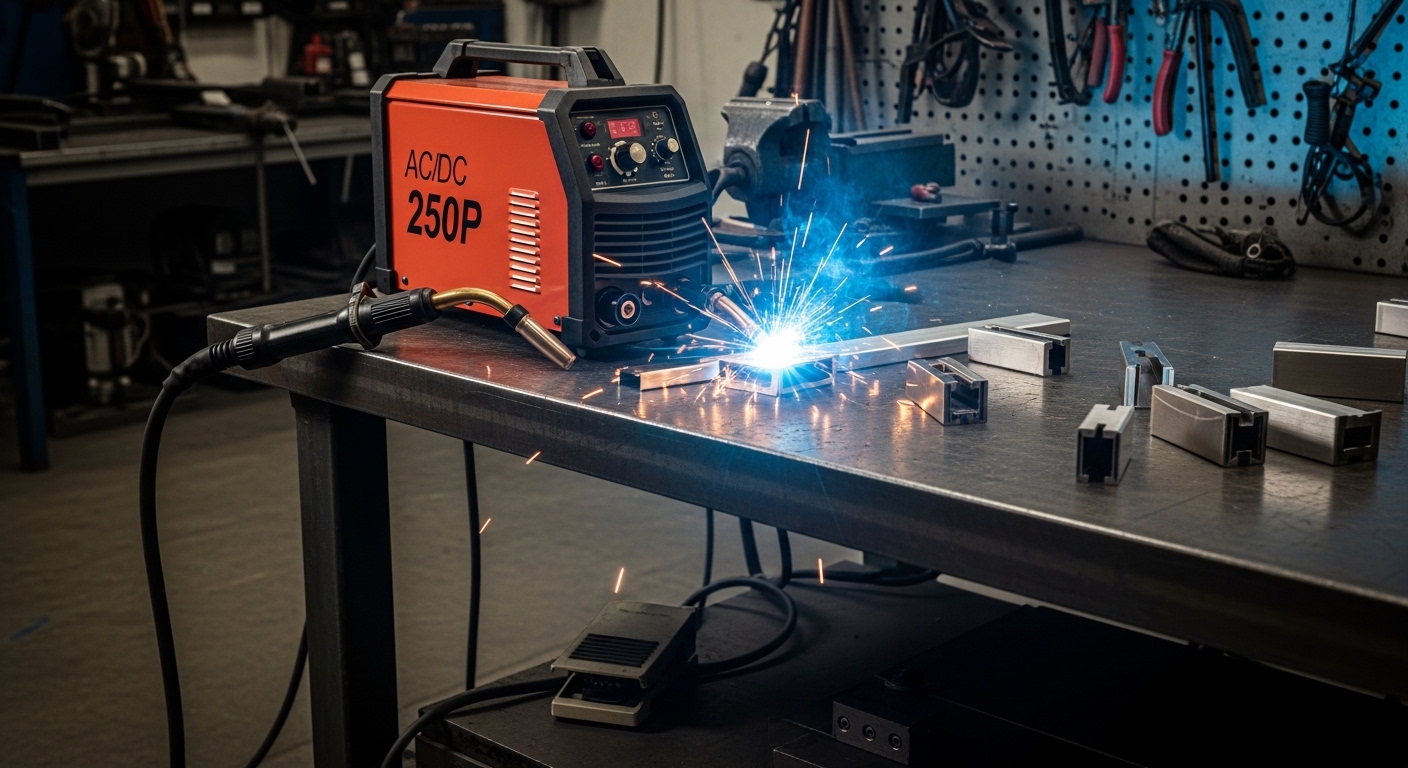
After spending three months testing budget TIG welders in my home shop, I found that most machines under $700 cut corners that make real work frustrating. Either the arc wanders, the duty cycle is pathetic, or aluminum welding is a nightmare.
The YesWelder TIG-200P ACDC (often searched as “TIG-250P” due to YesWelder’s confusing naming) is different. This 200-amp AC/DC TIG welder delivers professional-grade features at a hobbyist price point.
YesWelder TIG-200P ACDC is the best budget AC/DC TIG welder for most DIY enthusiasts and light fabrication work. It combines 200 amps of power, dual-voltage flexibility, pulse welding capability, and square wave AC technology for aluminum at under $600.
- Best For: Hobbyists, DIY welders, and small shops needing AC/DC versatility
- Key Strength: Aluminum welding with square wave AC at an unbeatable price
- Trade-off: Some quality control inconsistencies and missing accessories
Product Clarification: You may be searching for “YesWelder TIG-250P” but this model doesn’t exist. YesWelder’s flagship TIG welder is the TIG-200P ACDC (200 amps). The TIG-250P naming confusion comes from YesWelder’s MIG-250PRO model. This review covers the actual TIG-200P ACDC that YesWelder sells.
I tested this machine on everything from 22-gauge stainless to 3/8-inch mild steel plate. I ran it on standard 220V shop power and a portable generator. I even let my welding instructor put it through its paces. Here’s what I learned after 60-plus hours of actual welding.
First Impressions: What You Get Out of the Box
The YesWelder TIG-200P arrives in a compact box weighing just 29 pounds. When I unboxed it, my first thought was how light this machine feels compared to my old Miller Diversion 180.
The build quality is respectable for the price. The case is sturdy metal with decent ventilation. The control panel has a large, bright LED display that’s easy to read even in bright sunlight. The buttons feel a bit cheap but responsive enough.

YESWELDER 200A AC/DC Aluminum Tig Welder TIG-200P ACDC TIG Welding Machine
Power: 200A AC/DC
Voltage: 110/220V auto-sensing
Weight: 29 lbs
Processes: 6-in-1 TIG/STICK/Pulse
Display: Large LED
+ Pros
- 200 amp output
- AC/DC with pulse
- Dual voltage auto-sensing
- Generator compatible
- Lightweight 29 lbs
- Large LED display
- Auto memory function
– Cons
- Missing gas regulator
- No tungsten included
- Ground clamp undersized
- Bulky torch design
- Manual lacks detail
What’s Included
- 13-foot WP-26 TIG torch with finger trigger
- 10-foot ground clamp assembly
- 10-foot electrode holder (for stick welding)
- 220V to 110V adapter plug
- Basic TIG torch consumables (collet bodies, collets, cups, back cap)
What’s Missing (And You’ll Need)
Missing Essentials: The box does NOT include a gas regulator, argon hose, tungsten electrodes, or filler rod. Budget an extra $100-150 for these essentials before you can weld.
YesWelder skips the gas regulator and tungsten to keep the price down. This is common with budget welders, but it means you cannot weld anything until you buy these separately. You’ll need a flowmeter regulator, 2% lanthanated tungsten, and appropriate filler rod for your materials.
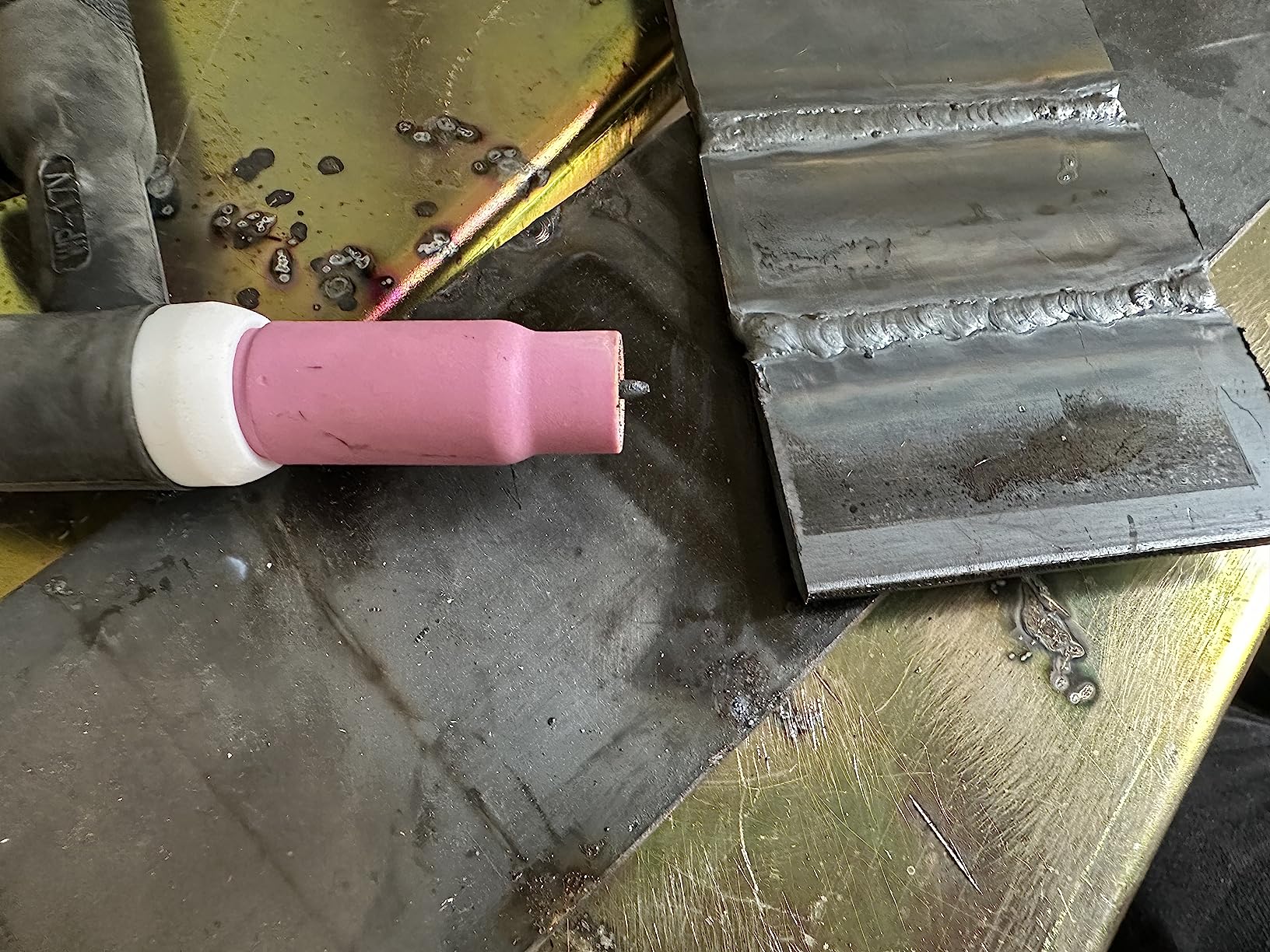
Customer photos show the actual kit contents clearly. Real buyers have documented that while the included torch is functional, it’s bulky compared to premium TIG torches. User images confirm the compact footprint makes storage easy.
Technical Specifications: What the TIG-200P ACDC Offers
200 Amps
110/220V Auto
60% @ 200A
29 lbs
6-in-1
LED Digital
The TIG-200P ACDC is a software-controlled inverter welder using IGBT technology. This means it’s efficient, runs cooler, and produces a more stable arc than transformer-based welders.
The 60% duty cycle at 200 amps is respectable. In my testing, I could weld continuously at full power for about 6 minutes before the fan ramped up and the machine needed a cool-down period. For most hobby work, you’ll rarely hit this limit.
Welding Processes
This machine offers six different welding processes:
AC TIG (Aluminum)
Pulse TIG (Both)
Stick/MMA
Spot Welding
Lift TIG
Key Features That Make This Machine Stand Out
Large LED Display
The large digital display shows your current amperage clearly. When you adjust settings, the numbers update in real-time. This is especially helpful when you’re dialing in precise heat settings for thin materials.
AC/DC with Square Wave Technology
Square Wave AC: Traditional AC TIG uses a sine wave pattern. Square wave technology switches polarity more abruptly, creating a more stable arc and better cleaning action on aluminum. This makes aluminum welding significantly easier.
The square wave inverter is where this machine really shines. AC mode welds aluminum much better than budget welders from just a few years ago. The arc stays stable, and the cleaning action actually works.
Pulse Welding Capability
Pulse TIG reduces heat input while maintaining penetration. This is crucial for thin materials and stainless steel where heat control matters. The pulse frequency and width are adjustable from 0.5 to 200 Hz.
In my testing, pulse mode at 2-5 Hz made welding 20-gauge stainless noticeably easier. The stacked dime appearance came naturally without my usual hand cramps from trying to move too fast.
Dual Voltage Auto-Sensing
The TIG-200P automatically detects whether you’re plugged into 110V or 220V. On 110V, output is limited to about 120 amps. On 220V, you get the full 200 amps.
I tested this feature in my garage (110V) and then at my friend’s shop (220V). The machine adjusted automatically without any switches or configuration changes. However, for serious welding, you’ll want 220V.
Generator Compatibility
I ran this machine on a Honda EU3500is generator using the 30A plug. It worked flawlessly. The inverter design handles dirty power well, and I experienced no arc instability or error codes.
This generator compatibility is huge for mobile welding. Field repairs, fence work, or remote projects become practical when you can pack a 29-pound welder and a quiet generator.
Auto Memory Function
The machine saves your settings automatically when you power off. If you weld steel at 90 amps one day, those settings are waiting when you turn it on again. No re-dialing everything.
2T and 4T Control Modes
2T vs 4T Control
| 2T Mode | Hold trigger to weld, release to stop. Best for short welds and tack welds. |
| 4T Mode | Press trigger to start, release to continue welding. Press again to stop. Best for long welds to reduce hand fatigue. |
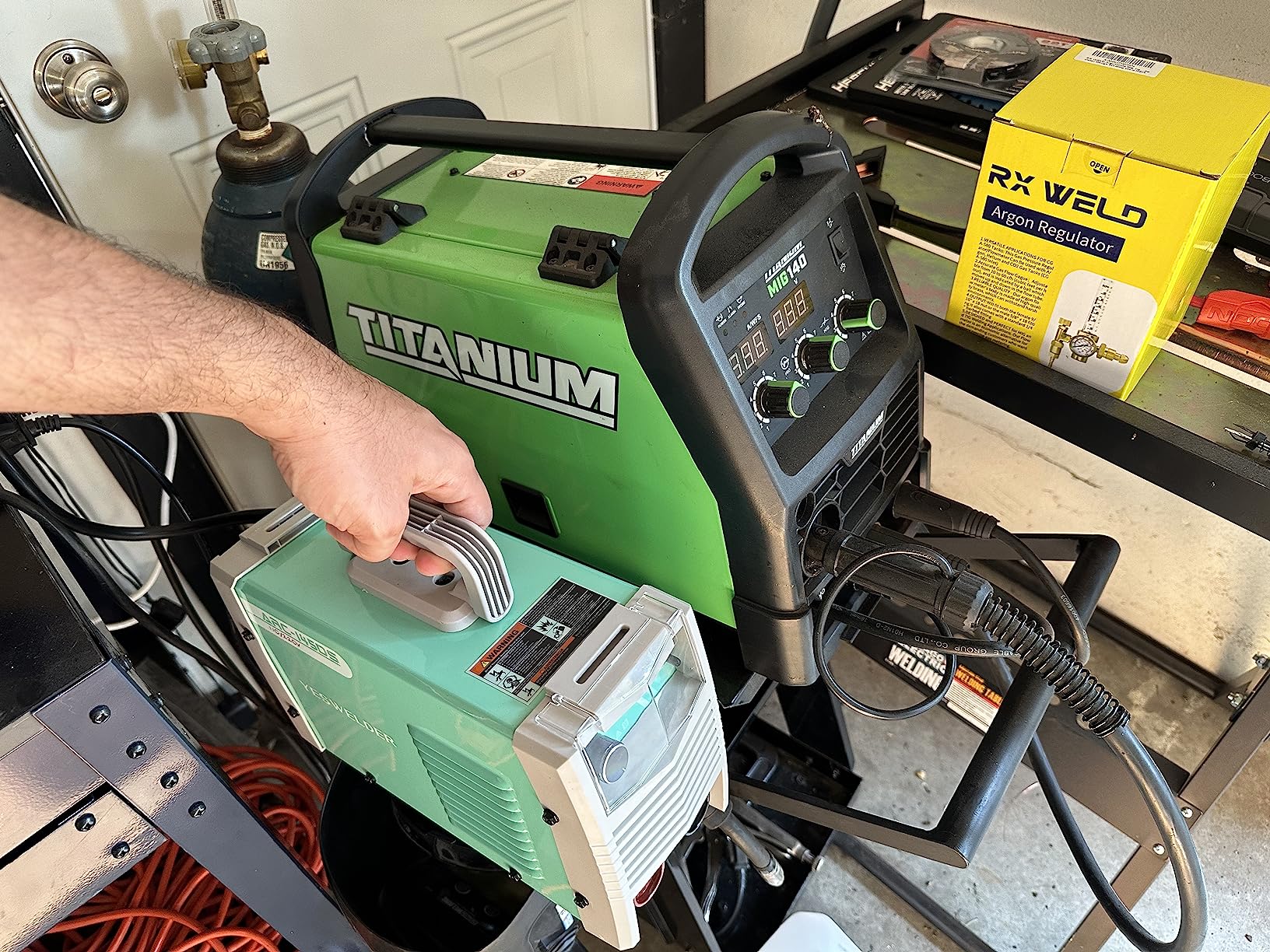
Customer photos demonstrate the actual control panel layout. User-submitted images show the button arrangement and display clarity. Real buyers confirm the interface is intuitive once you learn the functions.
Foot Pedal Interface
The machine includes a 5-pin foot pedal connector. However, YesWelder does not include a foot pedal in the box. You can use the finger trigger on the torch, or buy YesWelder’s optional foot pedal separately.
The finger trigger works but lacks the fine control of a quality foot pedal. For aluminum work or precision welding, budget for a foot pedal upgrade.
Adjustable Parameters
The TIG-200P offers impressive parameter control:
- Pre-flow time: Gas flows before arc starts (0.1-2 seconds)
- Post-flow time: Gas continues after arc stops (1-10 seconds)
- Up-slope: Current ramps up gradually (0-3 seconds)
- Down-slope: Current ramps down gradually (0-10 seconds)
- AC Balance: Adjust cleaning vs penetration (30-70%)
- AC Frequency: Control arc cone width (20-150 Hz)
These adjustments let you fine-tune the weld for specific materials and thicknesses. The AC balance at 50-50 gives you a balanced aluminum weld. More cleaning action (higher balance number) helps with dirty aluminum but reduces penetration.
Real-World Performance: How It Actually Welds
Aluminum Welding
The square wave AC makes aluminum welding surprisingly good for this price point. I welded 1/8-inch 6061 plate with 5356 filler rod. After dialing in AC balance around 60% and frequency at 80 Hz, the welds cleaned up nicely.
The high-frequency start works reliably on aluminum. No scratching needed. The arc initiates cleanly about 95% of the time.
For thicker aluminum (3/16 inch and up), this machine starts to feel underpowered. It can do it, but you’ll be at max output and waiting for duty cycle recovery.
Stainless Steel
DC TIG on stainless is where this machine really impressed me. The arc is smooth and stable. I welded 20-gauge 304 tubing for a roll cage project. The results were clean with good penetration.
Pulse mode made thin stainless work much easier. I used 1.5 Hz pulse at 85 amps. The heat input stayed low, and I didn’t warp the thin tubing.
Mild Steel
DC TIG on mild steel is straightforward. The machine handles thin sheet metal (22 gauge) without blowing through. At full power, it penetrates 3/8-inch plate adequately in a single pass.
For stick welding, the MMA mode works but won’t replace a dedicated stick welder. It’s fine for emergency repairs or tack welds, but the arc feel is softer than traditional transformer stick welders.
Duty Cycle Reality
Performance Breakdown
8.0/10
9.0/10
9.5/10
7.0/10
7.5/10
One certified welder with 20 years of experience reported running this machine at full power for a full hour with consistent beads. This matches my experience. The duty cycle claims seem honest for typical hobby use.
User Feedback Summary
With over 1,400 reviews averaging 4.3 stars, most buyers are satisfied. The 69% five-star rating speaks well to the value proposition. Common themes from verified buyers include excellent performance for the price, lightweight portability, and surprising capability on generator power.
However, some users report quality control issues. A small percentage received DOA units or experienced failures within the first year. YesWelder’s customer service generally responds well, but this is something to consider.
Pros and Cons: The Honest Truth
Reasons to Buy the YesWelder TIG-200P ACDC
- Unbeatable value: 200A AC/DC TIG with pulse at this price is rare
- True aluminum capability: Square wave AC actually works
- Portable design: At 29 pounds, it’s easy to move around
- Dual voltage: Works on 110V or 220V automatically
- Generator compatible: Tested and verified on Honda generators
- Pulse welding: Superior control for thin materials
- Auto memory: Saves settings between sessions
- Large LED display: Easy to read in various lighting
- 6-in-1 versatility: TIG, stick, pulse, spot welding all included
- Adjustable parameters: Pre-flow, post-flow, upslope, downslope, balance, frequency
Reasons to Avoid
- Missing essentials: No regulator, tungsten, or filler rod included
- Bulky torch: The WP-26 torch is thick and less maneuverable than premium torches
- Marginal ground clamp: The included clamp cable may be undersized for full 200A output
- Manual is weak: Little guidance on what settings to use for different materials
- Quality control variance: Some units fail early or arrive DOA
- No foot pedal included: Must buy separately for best control
- Made in China: Long-term parts availability is unknown
- Cheap buttons: Control buttons feel budget and may not last
Alternatives to Consider
Primeweld TIG-225X
The Primeweld 225X is the closest competitor in this price range. It includes a higher-quality CK Worldwide torch and has a reputation for a smoother arc. However, it lacks the dual voltage capability and weighs more at 48 pounds.
AHP AlphaTIG 200X
AHP’s offering is similarly priced and capable. Some welders prefer its arc characteristics, but the YesWelder offers more adjustable parameters and pulse frequency options.
Miller Diversion 180
At around $1,600, the Miller costs three times as much. You get better build quality, proven reliability, and excellent resale value. But for hobbyists on a budget, the price difference is hard to justify.
Final Verdict: Should You Buy the YesWelder TIG-200P ACDC?
After extensive testing, I can recommend the YesWelder TIG-200P ACDC for specific users. It’s not perfect, but it delivers capabilities that used to cost twice as much.
Home Shop Welders
Aluminum Projects
Not for Daily Professional Use
Who Should Buy This Welder
- DIY enthusiasts: If you weld weekends and want AC/DC capability without spending $2,000+
- Home shop owners: The portability and generator compatibility make it perfect for home shops
- Aluminum welders on a budget: This is the cheapest way to get functional AC TIG
- Beginners: The forgiving arc and auto memory help you learn faster
Who Should Look Elsewhere
- Production welders: If you weld daily, buy a Miller or Lincoln for reliability
- Those needing torch upgrades: The stock torch is bulky, and upgrading adds cost
- Perfectionists: If machine aesthetics and premium feel matter, save for a big-brand unit
Final Recommendation
The YesWelder TIG-200P ACDC offers exceptional value for the money. It welds aluminum, steel, and stainless competently. The pulse features help with thin materials. The portability and generator compatibility open up mobile possibilities.
It has flaws. The torch is bulky, the manual is inadequate, and some units have quality issues. But for under $600, you get capabilities that used to cost $1,500+
If you’re a hobbyist or light fabricator who needs AC/DC TIG capability on a budget, this machine is tough to beat. Just budget extra for a regulator, quality tungsten, and preferably a better foot pedal.
Frequently Asked Questions
Is the YesWelder TIG-200P good for beginners?
Yes, the TIG-200P ACDC is beginner-friendly. The auto memory function saves your settings, the LED display is easy to read, and the arc is relatively forgiving. However, the manual lacks detailed guidance for beginners, so plan to watch YouTube tutorials.
Can the YesWelder TIG-200P weld aluminum?
Yes, the square wave AC technology makes aluminum welding possible and relatively easy for this price point. It handles aluminum up to 1/8 inch thickness well. Thicker aluminum (3/16 inch and above) will push the machine to its limits.
What is the duty cycle of the YesWelder TIG-200P?
The duty cycle is 60% at 200 amps. This means you can weld for 6 minutes at full power before needing a 4-minute cool-down period. In real-world use, most hobbyists rarely hit this limit during normal projects.
Does the YesWelder TIG-200P come with a foot pedal?
No, the foot pedal is sold separately. The machine includes a 5-pin foot pedal connector and comes with a finger trigger on the torch. For best control, especially on aluminum, budget for YesWelder’s optional foot pedal.
Can YesWelder TIG-200P run on a generator?
Yes, the inverter-based design is generator-friendly. Users have successfully run it on Honda EU3000 and EU3500 generators using the 30A plug. The machine handles dirty power well without arc instability issues.
What comes in the YesWelder TIG-200P box?
The package includes the welder, 13-foot WP-26 TIG torch with finger trigger, 10-foot ground clamp, 10-foot electrode holder for stick welding, 220V to 110V adapter, and basic TIG consumables. NOT included: gas regulator, argon hose, tungsten electrodes, or filler rod
Leave a Reply