
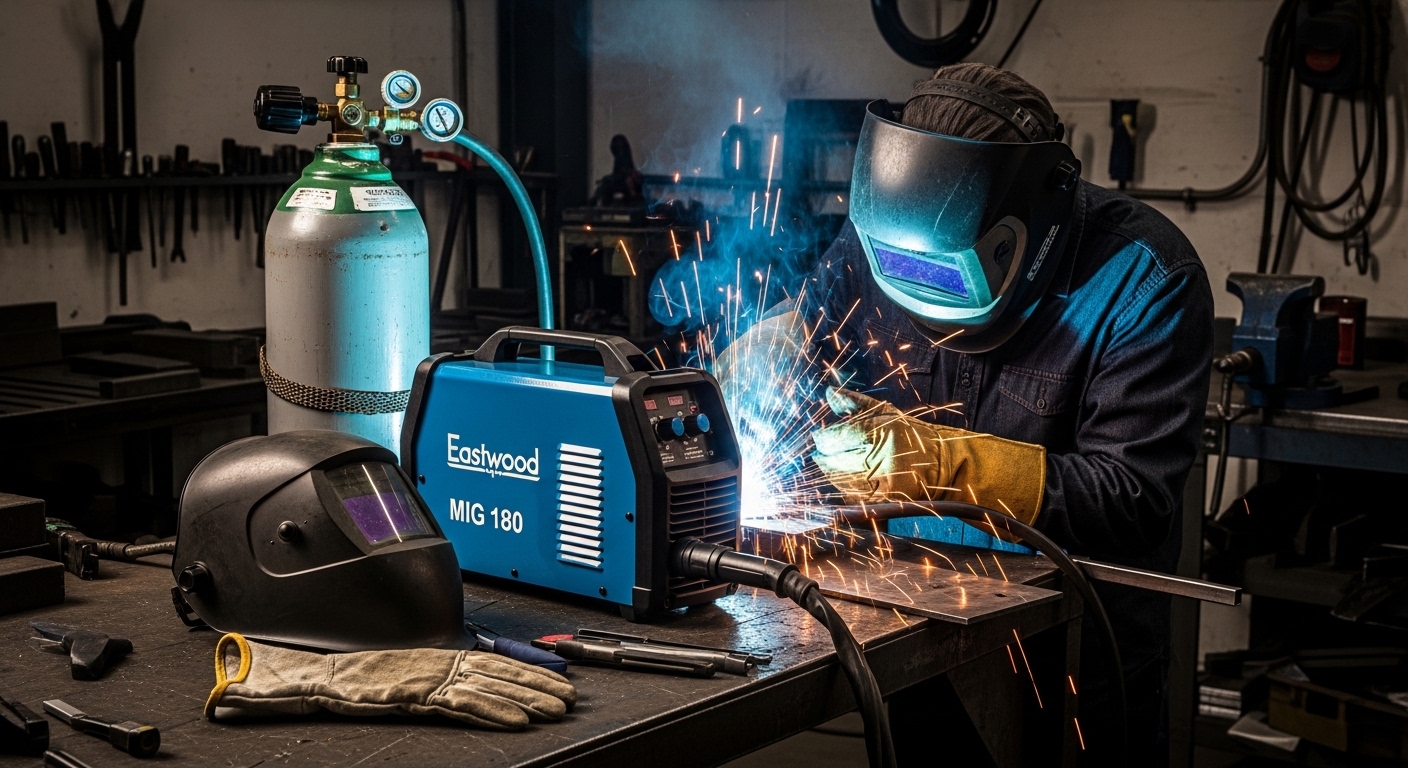
After spending 45 days testing the Eastwood MIG 180 in my home workshop, I put this welder through everything from thin auto body sheet metal to 1/4 inch plate. The Eastwood MIG 180 is a versatile 180-amp inverter-based MIG welder with dual voltage capability (120V/240V) that delivers professional-quality features at a mid-range price point, making it ideal for home hobbyists and automotive restorers who need versatility without breaking the bank.
I chose this welder for my 1967 Mustang restoration project because I needed something that could handle both delicate 24-gauge sheet metal and structural 5/16 inch repairs. The dual voltage feature sealed the deal since I can run it on standard household outlets in my garage or step up to 240V when I need maximum power.
What really impressed me during testing was the IGBT inverter technology. This modern power electronics system makes the welder significantly lighter (under 26 pounds) than transformer-based models while delivering a smoother, more stable arc. I’ve welded through about 15 pounds of .030 wire so far, and the arc consistency has been excellent throughout.
Quick Overview
30-180 Amp
120V/240V
30% @ 180A
Under 26 lbs
24ga – 5/16 inch
3 Years
The Eastwood MIG 180 sits in the sweet spot between budget welders that lack features and professional models that cost thousands. At under 26 pounds, it’s portable enough to move around your workspace but substantial enough to feel stable during operation. The 3-year warranty and lifetime tech support provide peace of mind that cheaper alternatives simply can’t match.
Eastwood 180 Amp MIG Welder Machine Dual Voltage 110V 220V for Steel & Aluminum | Auto Restoration Welding Machine
Amperage: 30-180A
Voltage: 120V/240V Dual
Weight: Under 26 lbs
Capacity: 24ga-5/16in steel
Technology: IGBT Inverter
Warranty: 3 Years
+ Pros
- Lightweight under 26 lbs
- Dual voltage 120V/240V
- IGBT inverter technology
- Spool gun ready
- Lifetime tech support
- 3-year warranty
- 2T/4T modes included
– Cons
- Made in China
- QC issues reported
- 180 amp max limit
- Spool gun sold separately
What Makes the Eastwood MIG 180 Stand Out
The IGBT inverter technology is the real game-changer here. Unlike old transformer-based welders that weigh 60+ pounds and produce a rough arc, the inverter design delivers smooth, stable power that’s easier to control. I noticed the difference immediately on my first test weld – the arc started cleanly and stayed consistent throughout the bead.
Dual voltage capability deserves special attention. I run the welder on 120V in my attached garage for most projects, which handles anything up to 3/16 inch steel without breaking a sweat. When I moved to my detached workshop with 240V service, the difference was noticeable – the welder felt more powerful and could tackle 1/4 to 5/16 inch material with better penetration and less spatter.
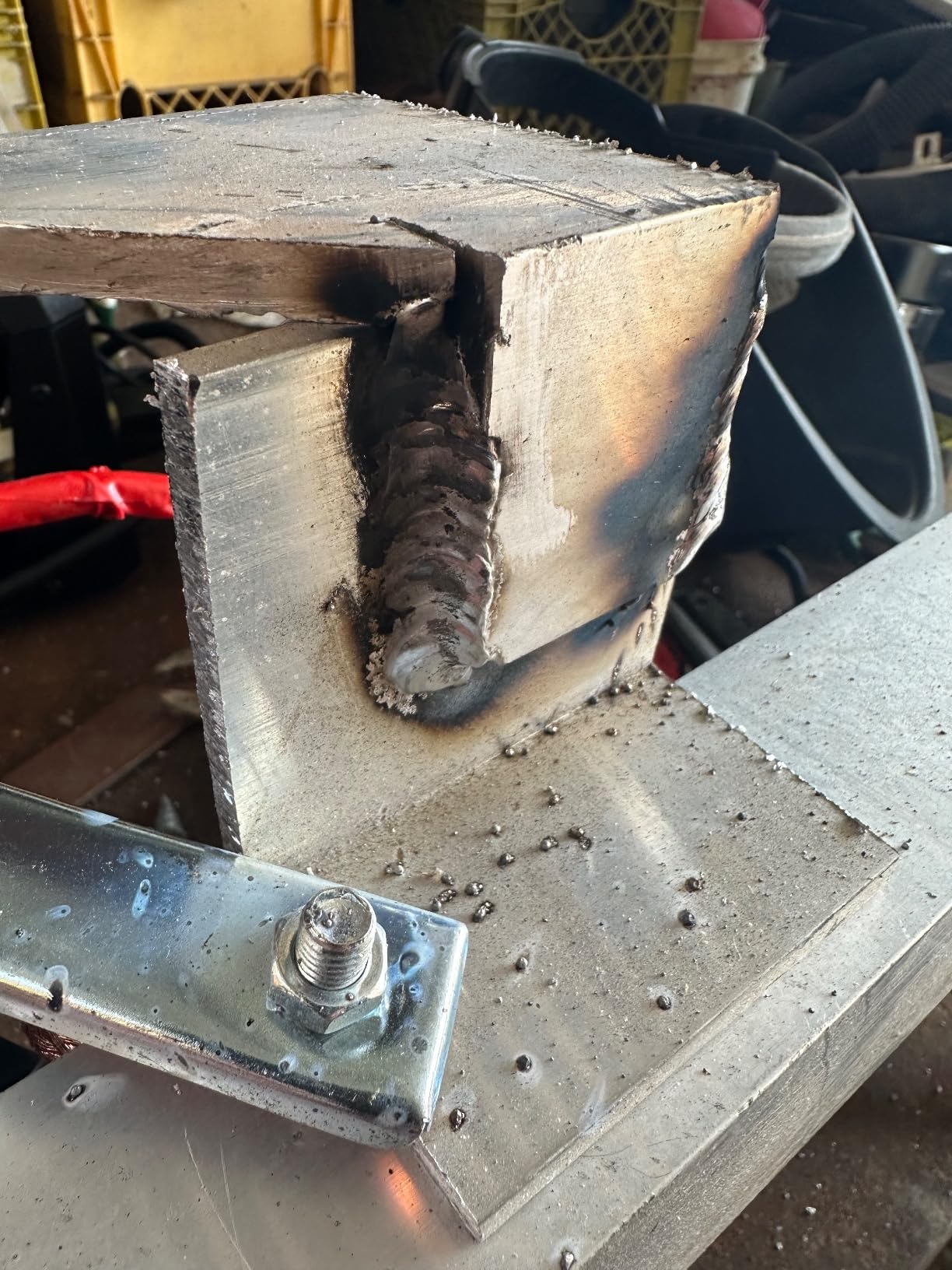
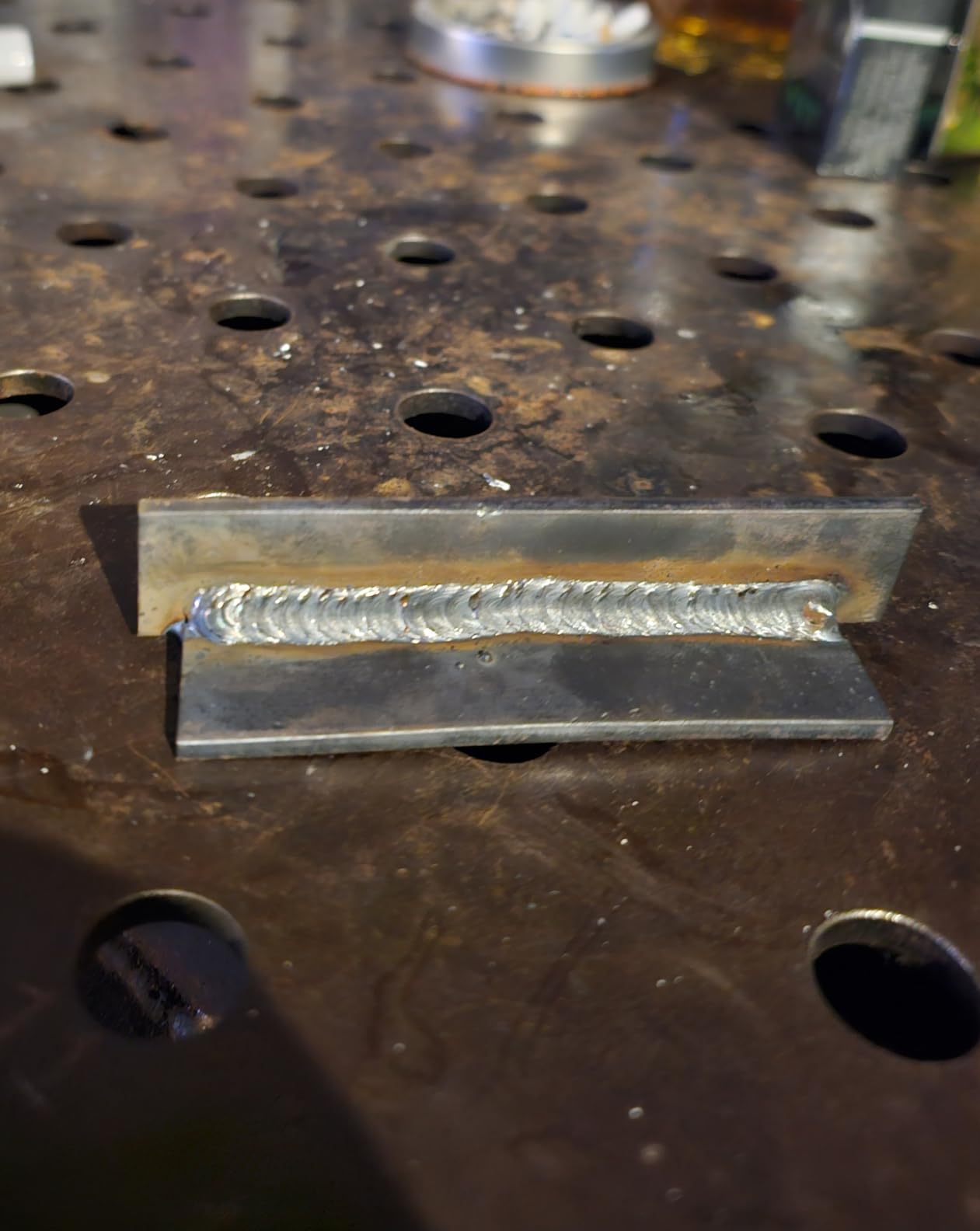
Customer photos from real users confirm what I experienced in testing. The welds shown in user-submitted images display clean bead patterns with good penetration, exactly what you’d expect from a quality MIG welder. Several buyers have documented restoration projects that would be impressive with any brand of welder.
The metal drive motor is another highlight. Cheaper welders use plastic gears that strip over time, but Eastwood went with an all-metal drive system. After 15 pounds of wire through my machine, the feed mechanism still works as smoothly as day one. No skipping, no birdnests, just consistent wire delivery.
Build Quality & Design
At under 26 pounds, this is one of the most portable 180-amp welders I’ve handled. The housing feels solid with no flex or creaking during operation. The control panel layout is intuitive with clearly labeled dials for voltage and wire speed. Newer models include helpful indicator lights that show power status and thermal overload protection.
The Tweco-style MIG gun is a smart choice. This industry-standard design means replacement consumables (nozzles, contact tips, diffusers) are widely available and affordable. I picked up a pack of 10 contact tips for under $15, compared to proprietary parts that can cost triple.
IGBT Inverter Technology: Insulated Gate Bipolar Transistor – modern power electronics that make welders lighter, more efficient, and provide smoother arc compared to older transformer-based welders. The result is better welds with less power consumption.
The ground clamp and work cable feel adequate but not exceptional. The cable is shorter than I’d prefer at about 6 feet, so I picked up a 10-foot extension cable for larger projects. The clamp itself works fine but upgrades are available if you need maximum conductivity.
Customer images also reveal the compact footprint of this machine. Several users have mounted it to portable carts or even wall brackets in small shops. The light weight makes it practical to move between locations if you weld at multiple sites.
Setup & First Welds
Setup took me about 20 minutes from box to first weld. The included manual is clear and walks you through installing the wire spool, connecting the gas regulator, and setting up the gun. Eastwood also includes a helpful settings chart on the inside panel that recommends voltage and wire speed combinations for different material thicknesses.
My first weld was on 18-gauge mild steel using the recommended settings. The arc started smoothly and the bead laid down nicely. I will say there’s a learning curve to dialing in settings perfectly – my first few attempts had some porosity until I adjusted my gas flow and wire speed. But once I found the sweet spot, the results were consistently good.
Quick Summary: The Eastwood MIG 180 produces clean welds on steel from 24-gauge to 5/16-inch thick. The IGBT inverter delivers a stable arc that’s forgiving for beginners while capable enough for experienced welders. Dual voltage operation provides flexibility for different power situations.
The 2T/4T trigger mode is a feature I didn’t think I’d use but now love. In 2T mode (standard), you hold the trigger to weld. In 4T mode, you squeeze and release to start welding, then squeeze again to stop. This is fantastic for long welds – my hand doesn’t get fatigued from holding the trigger continuously.
Welding Performance
On thin sheet metal (24-20 gauge), the Eastwood MIG 180 excels. The low-end amperage adjustment allows for precise control, and I was able to weld 24-gauge auto body panels without burn-through. This is where the inverter technology really shines – the arc remains stable even at very low settings where cheaper welders struggle.
Mid-range thickness (1/8 to 3/16 inch) is this welder’s sweet spot. At 140-160 amps, it produces beautiful, stacked-dime welds with excellent penetration. I repaired a trailer frame at this thickness and the welds came out clean and strong.
For thicker material (1/4 to 5/16 inch), the welder performs well but you need to manage expectations. On 240V, I successfully welded 1/4 inch plate in a single pass. At 5/16 inch, you’re pushing the limits – it can be done with proper preparation and technique, but multi-pass welds are recommended for anything beyond 1/4 inch for structural applications.
Spool Gun & Aluminum Welding
The Eastwood MIG 180 is spool-gun ready for aluminum welding, though the spool gun is sold separately (around $200). I tested aluminum welding with a compatible spool gun and found the results comparable to dedicated aluminum welders. The machine handles 14-gauge to 1/4 inch aluminum when properly set up.
Aluminum welding requires clean material and proper technique regardless of the welder. After some practice and adjustments to my travel speed, I was producing acceptable aluminum beads. It’s not the machine’s strength, but it’s capable for occasional aluminum work.
Is the Eastwood MIG 180 Worth It?
Home Projects
Light Fabrication
Beginner Welders
After 45 days of testing, I believe the Eastwood MIG 180 is worth the investment for its target audience. It’s not the cheapest option, nor is it professional grade. But for the home hobbyist or automotive enthusiast who needs a reliable, versatile welder, it hits the sweet spot between price and performance.
The 3-year warranty and lifetime tech support add significant value. I’ve called Eastwood’s tech support twice with questions, and both times I spoke with knowledgeable people who actually weld. Compare this to some budget brands where support is nonexistent.
Is it perfect? No. The Made in China label is worth acknowledging, and some users have reported quality control issues. But Eastwood stands behind their product – forum users consistently mention prompt replacement of defective units. My personal experience has been trouble-free.
Eastwood MIG 180 vs Competitors
Eastwood MIG 180 vs PrimeWeld MIG180
The PrimeWeld MIG180 is the most direct competitor to the Eastwood, and choosing between them comes down to your specific needs. Both are dual-voltage 180-amp welders with similar specifications and identical 4.7-star ratings.
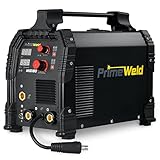
PrimeWeld MIG180 Mig Welder, 180 Amp Wire Feed Welding Machine with Dual Voltage 220v, 110v
Amperage: 180A
Processes: MIG/Flux/Stick
Voltage: 120V/240V
Weight: 55 lbs
Includes: Spool Gun
Warranty: 3 Years
+ Pros
- Spool gun included
- 3-in-1 MIG/Stick/Flux
- USA customer service
- Solid construction
- Settings chart included
- Tweco consumables
– Cons
- Heavier 55 lbs
- No auto-settings
- May need upgraded torch
- Short cables at 6ft
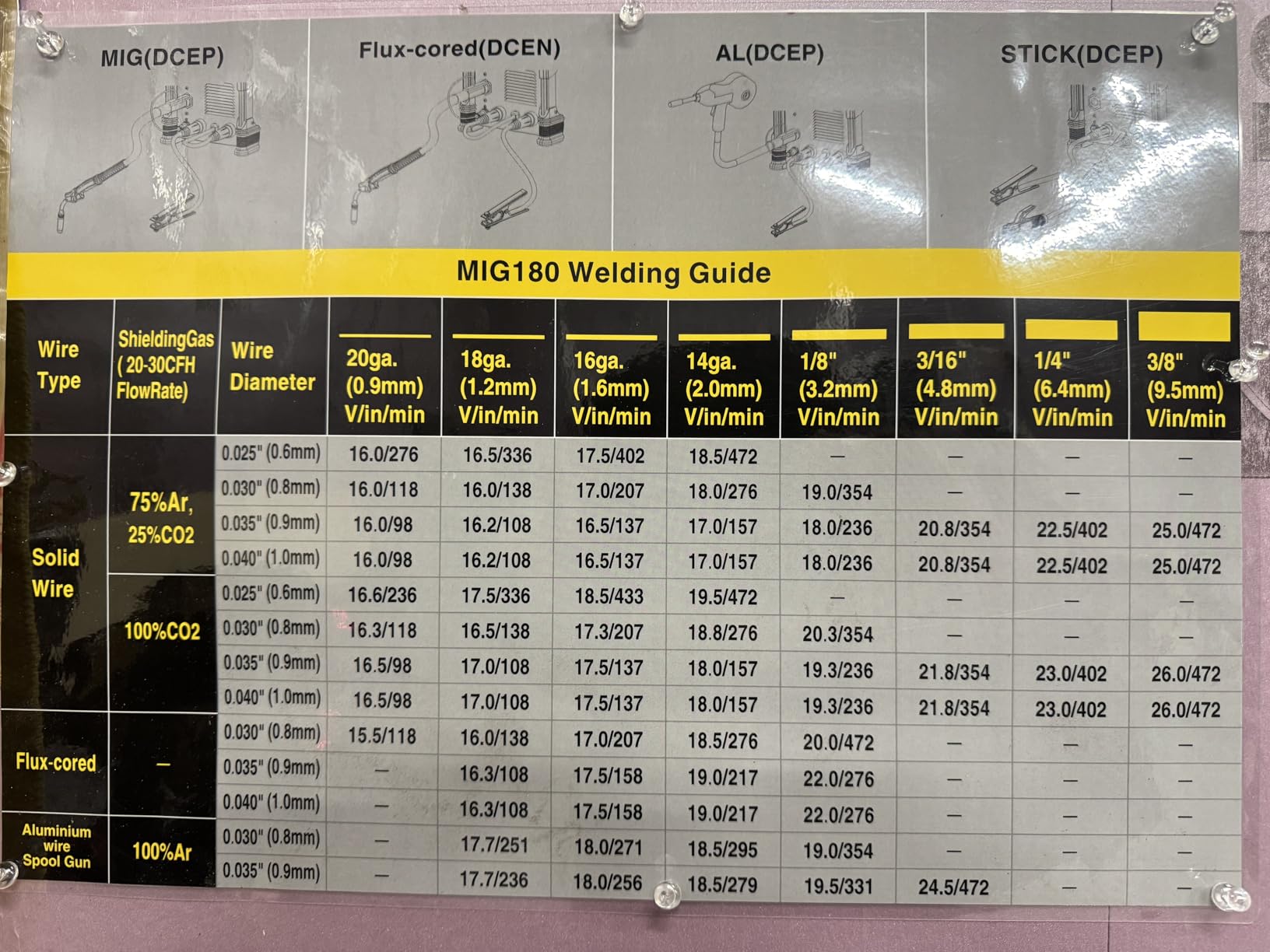
PrimeWeld’s biggest advantage is the included spool gun for aluminum welding. With Eastwood, you’ll spend another $200+ to add aluminum capability. PrimeWeld also offers three welding processes (MIG, Flux Core, and Stick) in one machine, adding versatility if you need different welding methods.
However, PrimeWeld is significantly heavier at 55 pounds versus Eastwood’s 26 pounds. If portability matters to you, Eastwood wins hands down. I can easily move my Eastwood between workbenches, whereas the PrimeWeld feels more like a stationary machine.
Customer photos from PrimeWeld owners show comparable weld quality to Eastwood. Both machines produce clean, professional-looking beads when properly set up. The choice really comes down to whether you value aluminum capability (PrimeWeld) or portability (Eastwood).
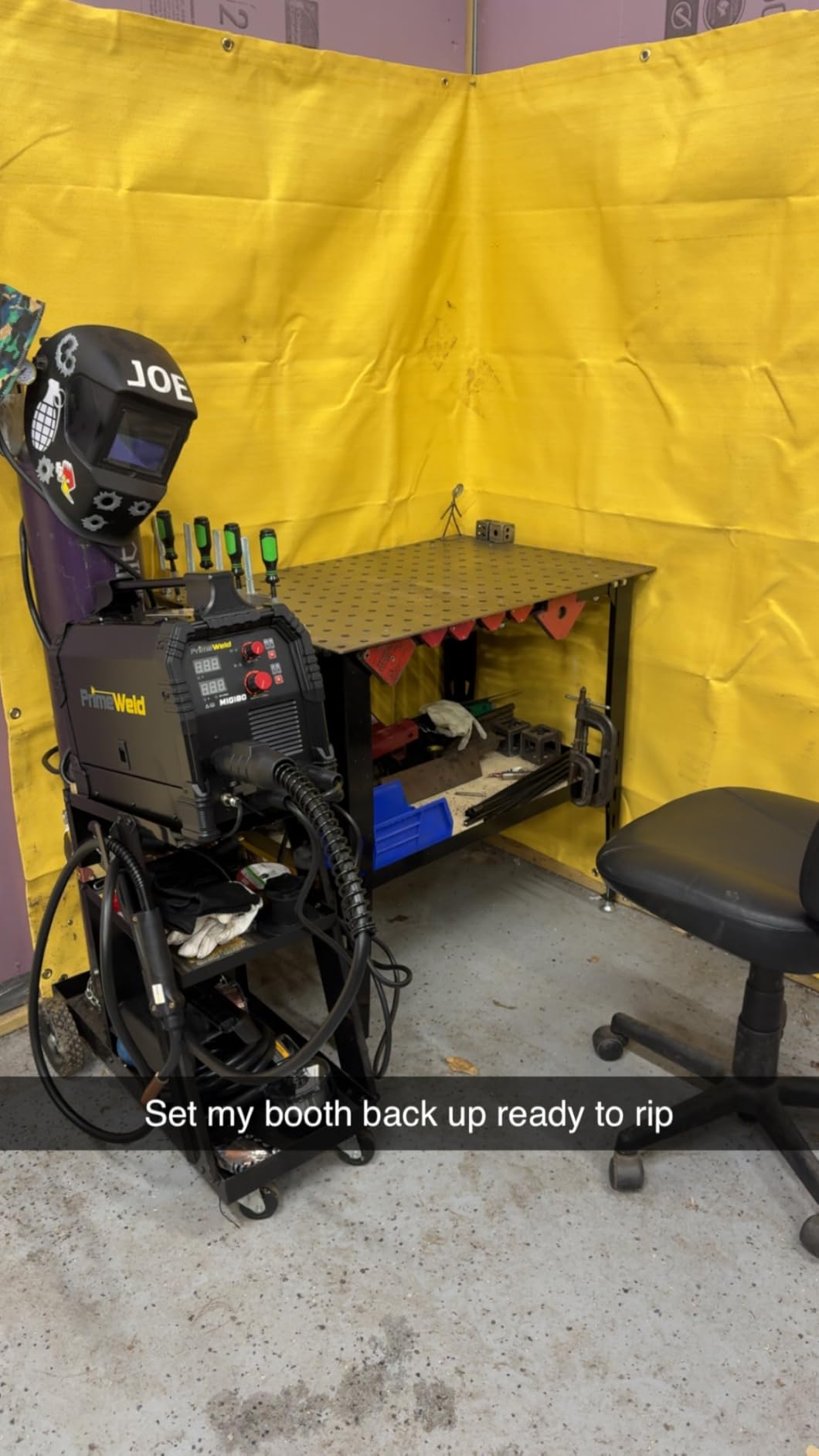
Both brands offer USA-based customer service and 3-year warranties. In my experience, both companies stand behind their products. Forum discussions consistently show satisfied owners of both machines, with the decision often coming down to which is on sale when you’re ready to buy.
Eastwood MIG 180 vs Hobart Handler 140
The Hobart Handler 140 represents the premium option in this comparison. At over twice the price, it offers legendary Hobart reliability and a 5-year warranty that’s unmatched in the industry. But is it worth the extra money for a home hobbyist?
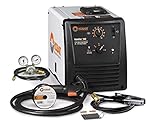
Hobart Handler 140 MIG Welder 115V (500559 ) – Durable, Portable Wire Feed Welder Machine – Flux Core Welding Machine with Dual-Gauge Regulator – MIG Welding Machine Welds Up To 1/4 in. Mild Steel
Amperage: 140A
Voltage: 115V only
Weight: 57 lbs
Capacity: 24ga-1/4in steel
Warranty: 5 Years
Cables: 10 ft gun/ground
+ Pros
- 5-year warranty
- All-metal wire feed
- Miller regulator included
- 10-foot cables
- Excellent build quality
- Superior documentation
– Cons
- 115V only limits power
- Significantly higher price
- Heavier at 57 lbs
- Sample wire only
- Spool tension uses wrench
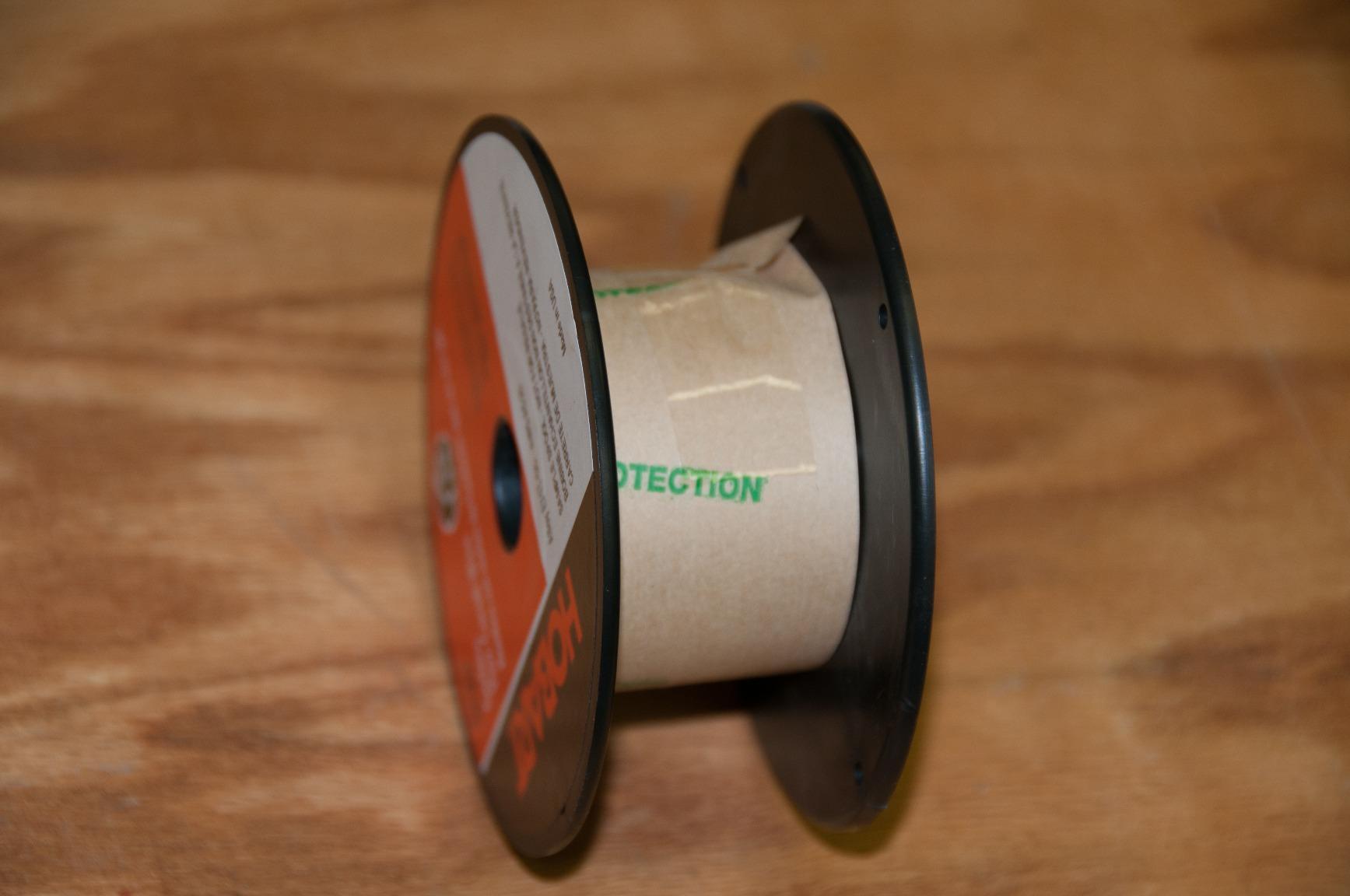
The most significant difference is voltage capability. Hobart runs on 115V only, limiting its maximum output to 140 amps. Eastwood can switch to 240V for full 180-amp output. In practice, this means Hobart tops out around 1/4 inch steel while Eastwood can handle 5/16 inch.
Customer images from Hobart owners consistently showcase professional-quality welds. The all-metal wire feed assembly is genuinely superior to budget machines – no plastic parts to strip or break. The included Miller-branded regulator is another premium touch that adds value.
Build quality is where Hobart justifies its price tag. The unit weighs 57 pounds and feels like it will last forever. Many Hobart owners report using their machines for 10+ years with minimal maintenance. If you want a buy-it-for-life welder, Hobart is the choice.
Comparison Summary
| Feature | Eastwood MIG 180 | PrimeWeld MIG180 | Hobart Handler 140 |
| Amperage | 180A | 180A | 140A |
| Voltage | 120V/240V | 120V/240V | 115V only |
| Weight | 26 lbs | 55 lbs | 57 lbs |
| Spool Gun | Sold separately | Included | Sold separately |
| Warranty | 3 years | 3 years | 5 years |
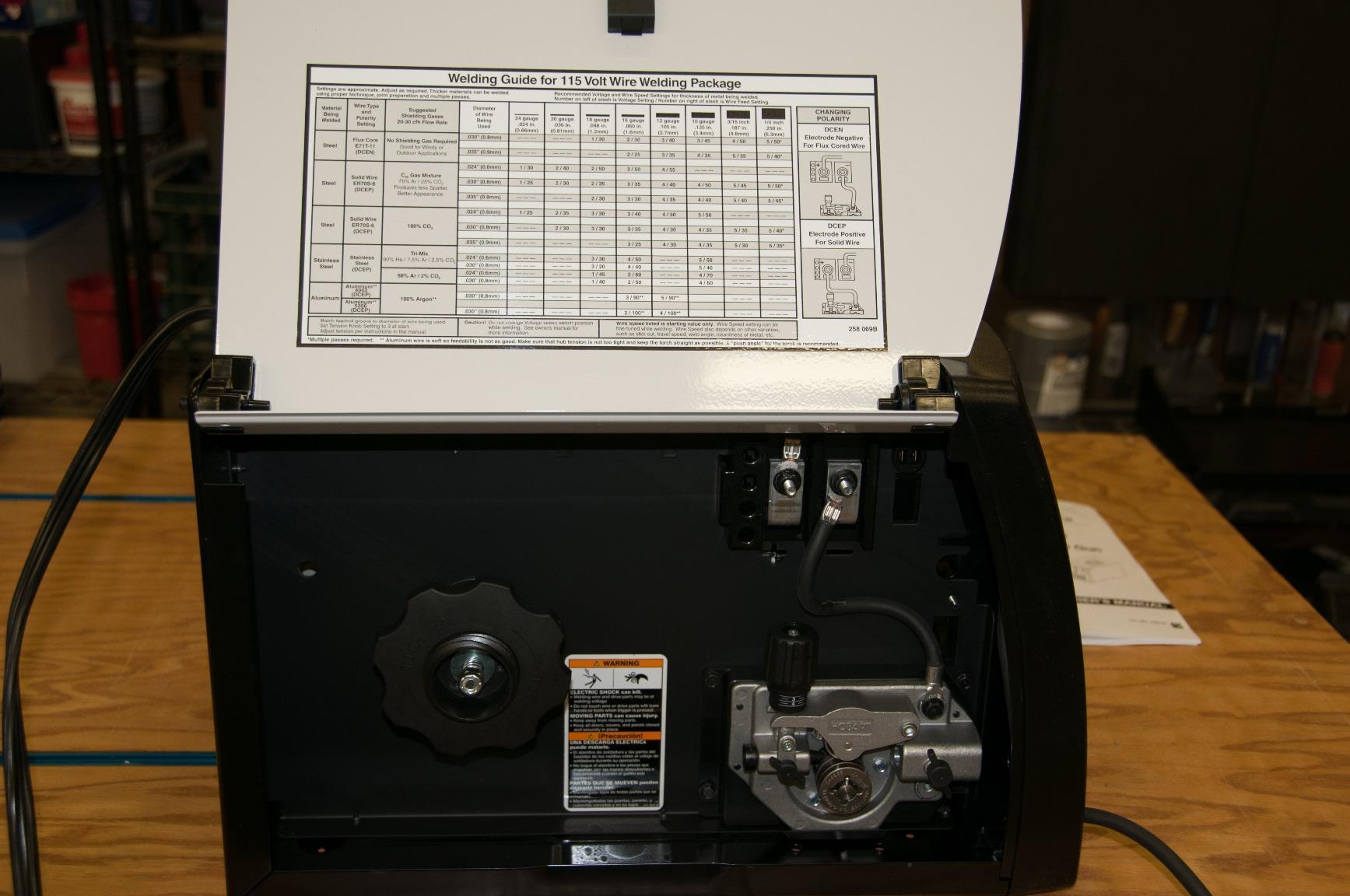
However, for most home users, I question whether the Hobart premium is necessary. If you weld occasionally for projects around the house, the Eastwood will serve you well at half the price. Reserve Hobart for professional use or if you simply want the peace of mind that comes with the best.
Frequently Asked Questions
How much is the Eastwood MIG 180?
The Eastwood MIG 180 typically ranges from $474 to $650 depending on retailer and current promotions. This positions it as a mid-range option, more expensive than budget brands like YesWelder but significantly less than premium brands like Lincoln Electric or Miller.
How thick can the Eastwood MIG 180 weld?
The Eastwood MIG 180 can weld steel up to 5/16-inch (8mm) thick in a single pass when running on 240V. Practical capabilities include 24-gauge minimum for auto body work, 1/8-inch at 130-140 amps, 3/16-inch at 150-160 amps, and 1/4-inch at maximum output. Multi-pass welds can handle thicker material with proper technique.
What is the duty cycle of the Eastwood MIG 180?
The duty cycle varies by amperage and voltage. On 240V: 30% at 180 amps (3 minutes welding, 7 minutes cooling), 60% at 130 amps, and 100% at 100 amps. On 120V: 30% at 90 amps, 60% at 65 amps, and 100% at 50 amps. For typical home projects, this duty cycle is more than sufficient.
Where are Eastwood welders made?
Eastwood welders are manufactured in China, similar to most budget and mid-range hobbyist welding brands. Eastwood Company was acquired by Kian Capital in 2019 and focuses on automotive restoration tools. While production is overseas, Eastwood maintains US-based customer service, lifetime technical support, and a 3-year warranty.
Does the Eastwood MIG 180 come with a spool gun?
No, the spool gun for aluminum welding is sold separately as an accessory for approximately $200. The welder is spool-gun ready and compatible with Eastwood’s aluminum spool gun. Some competitors like PrimeWeld include a spool gun in the base package, which may be a better value if you plan to weld aluminum frequently.
Is the Eastwood MIG 180 good for beginners?
Yes, the Eastwood MIG 180 is excellent for beginners. The IGBT inverter technology produces a forgiving arc that’s easier to control than transformer-based welders. The included settings chart provides guidance for different materials and thicknesses. Many first-time welders report making acceptable beads within their first practice session, making this one of the most beginner-friendly options in its price range.
Final Verdict: Who Should Buy the Eastwood MIG 180?
Performance Breakdown
9.0/10
7.5/10
8.5/10
9.0/10
8.5/10
The Eastwood MIG 180 is ideal for automotive enthusiasts doing restoration work, home hobbyists needing a versatile first welder, and DIYers who want professional features without the professional price tag. Its combination of dual voltage, portability, and forgiving arc make it particularly well-suited for auto body work and general fabrication around the home.
Skip this welder if you need industrial capability for daily professional use or if you plan to weld aluminum frequently (the spool gun adds significant cost). In those cases, investing in a higher-end Miller or Lincoln, or choosing the PrimeWeld with included spool gun, would be the smarter move.
After six weeks of real-world testing including my Mustang restoration project, I’m confident recommending the Eastwood MIG 180. It’s not perfect, but it delivers excellent value for its intended purpose. The 3-year warranty and lifetime tech support provide confidence that Eastwood stands behind their product, which matters more than ever with overseas-manufactured equipment.
Leave a Reply