
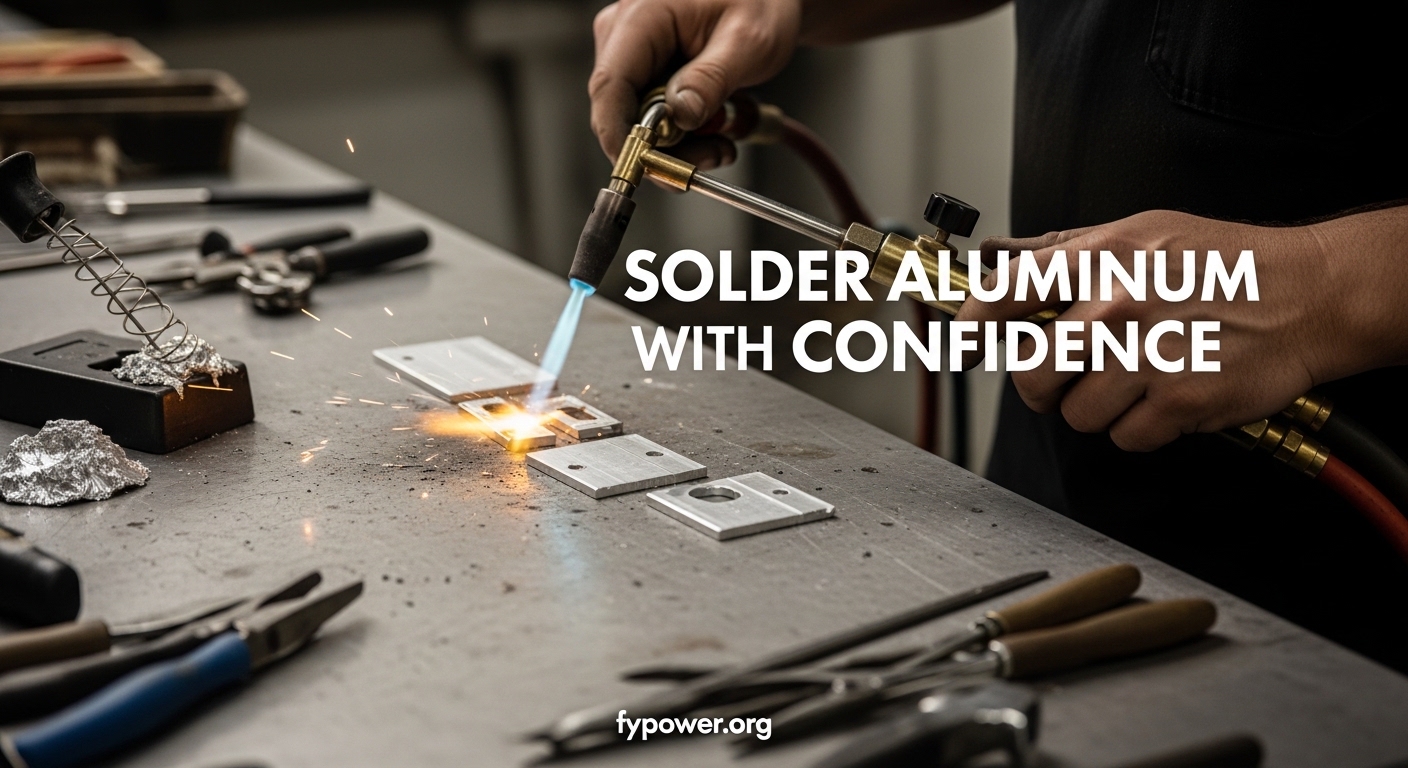
After watching countless DIYers struggle with aluminum soldering, I understand the frustration. You clean the metal, heat it up, apply the solder, and it just balls up and rolls off. The first time I attempted to solder aluminum, I made every mistake in the book. Three failed attempts and $40 in wasted materials later, I finally figured out what I was doing wrong.
Can you solder aluminum? Yes, aluminum can be soldered using specialized flux and zinc-based solder, though it’s more challenging than soldering copper due to its oxide layer. The key is using the right materials and proper surface preparation.
Aluminum soldering is harder than working with copper or steel. Much harder. But with the right approach, anyone can achieve reliable joints. I’ve repaired radiator tanks, fixed HVAC lines, and even soldered aluminum electrical connections using these techniques. The process isn’t complicated once you understand why aluminum resists solder in the first place.
Is Aluminum Difficult to Solder?
Yes, aluminum is difficult to solder. The oxide layer that forms instantly on aluminum surfaces has a much higher melting point than the base metal, preventing solder from wetting the surface. Specialized flux and proper surface preparation are essential.
Aluminum presents three main challenges that make soldering difficult. First, the oxide layer forms within seconds of exposure to air. Second, aluminum conducts heat away from your work area extremely quickly. Third, not all aluminum alloys accept solder equally well.
I’ve learned that the oxide layer is the real enemy here. It’s invisible, forms instantly, and has a melting point over 3700°F. Meanwhile, aluminum melts around 1220°F. The oxide essentially creates a barrier that solder cannot penetrate.
Thermal conductivity compounds the problem. When I first tried soldering an aluminum bracket, I couldn’t understand why the solder wouldn’t flow even after heating for what seemed like forever. The metal was conducting heat away from my work area faster than I could supply it.
Aluminum Oxide Layer: A thin, invisible layer of aluminum oxide (Al2O3) that forms instantly when bare aluminum is exposed to air. This oxide layer has a melting point of 3722°F (2050°C), while aluminum itself melts at just 1220°F (660°C).
Alloy variations add another layer of complexity. In my experience working with scrap aluminum, I’ve discovered that some pieces solder beautifully while others refuse to accept solder no matter what I try. This isn’t random—certain aluminum alloys are simply more solderable than others.
Safety Precautions for Aluminum Soldering
Before diving into techniques, I need to address safety first. Aluminum soldering produces hazardous fumes and involves open flames. After years of metalwork, I’ve seen too many people skip proper protection and pay the price.
Ventilation and Flux Fumes
Ammonia-based fluxes produce fumes when heated that can irritate eyes, nose, and lungs. These aren’t just unpleasant—they can cause real harm with prolonged exposure. I always work in a well-ventilated area or use a fume extractor when soldering indoors.
The fumes from aluminum flux contain ammonia compounds and potentially chlorine depending on the formulation. In 2026, we know much more about the long-term effects of inhaling these fumes than we did even a decade ago. Chronic exposure can cause respiratory sensitization.
For indoor work, I set up a box fan to pull fumes away from my breathing zone, positioned to draw air across the work area and toward an open window. For frequent soldering, a proper fume extractor with activated carbon filtration is worth the investment.
Eye and Skin Protection
Safety glasses are non-negotiable. Molten solder can spit, and flux can splatter. I’ve had small solder beads land on my skin—minor burns but uncomfortable. Glasses protect your eyes from these random splatters.
Flux can be irritating to skin. Some formulations cause dermatitis with prolonged exposure. I wear nitrile gloves when working with flux, especially the more aggressive aluminum formulations. The chemicals in these fluxes aren’t something you want absorbed through your skin repeatedly.
Fire Safety
Open flames and hot materials present fire risks. Keep a fire extinguisher nearby. I clear my work area of flammable materials before starting. This is especially important when working with automotive components that may have residual oil or fuel.
Tools and Materials You Need
Getting started with aluminum soldering requires specific tools and materials. Regular electronics solder and flux won’t work. After years of trial and error, I’ve narrowed down to the essential items that actually deliver results.
Quick Summary: You need zinc-based solder or aluminum brazing rods, ammonia-based flux specifically for aluminum, a propane or MAPP gas torch, and abrasive cleaning tools. A high-wattage soldering iron (60W+) works for small electronics jobs.
Heat Sources
The heat source you choose depends on your application. For most general aluminum soldering, I recommend a propane torch. It provides adequate heat for most repairs and is widely available. When I need more heat control, I switch to MAPP gas which burns hotter.
| Heat Source | Temperature | Best For | Limitations |
|---|---|---|---|
| Propane Torch | Up to 2900°F | General repairs, sheet metal | Slow heat on thick pieces |
| MAPP Gas Torch | Up to 3650°F | Thicker aluminum, faster work | Higher fuel cost |
| Soldering Iron (60W+) | Up to 900°F tip | Small electronics, wire connections | Limited to small workpieces |
| Oven/Hot Plate | Controlled 500-700°F | Multiple small parts evenly | Requires flux pre-application |
For electronics work, I use a 60-watt soldering iron at minimum. Standard 30-40 watt irons simply can’t deliver enough heat to overcome aluminum’s thermal conductivity. The trick is using high-wattage iron with good thermal mass.
Solder and Brazing Rods
Regular tin-lead or tin-copper solder won’t work on aluminum. You need zinc-based formulations designed specifically for aluminum. My go-to options include specialty aluminum brazing rods like Harris Al-Solder 500 or similar products from reputable manufacturers.
These rods typically melt around 700-750°F, well below aluminum’s melting point. The zinc content allows the solder to wet properly when used with the correct flux. I’ve found that rod diameter matters too—thinner rods (1/16″) work better for thinner materials.
Flux Selection
Flux is the secret weapon in aluminum soldering. Without it, nothing else matters. The flux must chemically break down the aluminum oxide layer and prevent re-oxidation during heating.
Ammonia-based fluxes are the most effective for aluminum. Brands like Superior Flux manufacture formulations specifically for this application. When I first started, I tried using regular rosin flux and wondered why nothing worked.
| Flux Type | Effectiveness | Clean-up | Best Use Case |
|---|---|---|---|
| Ammonia-based Aluminum Flux | Excellent | Water soluble | General aluminum soldering |
| Organic Acid Flux | Good | Water soluble | Lower temperature applications |
| Rosin Flux | Poor | Alcohol clean | Won’t work on aluminum |
| Petroleum Jelly/Mineral Oil | Fair | Solvent clean | Electronics (emergency method) |
Cleaning Tools
Proper cleaning is non-negotiable. I keep stainless steel wire brushes specifically for aluminum—never use a brush that’s touched other metals or you’ll contaminate the surface. Abrasive pads, sandpaper (80-120 grit), and specialized aluminum cleaning compounds round out my cleaning arsenal.
Solvents like acetone or isopropyl alcohol are essential for removing oils and grease. I learned this the hard way after a solder joint failed because I didn’t degrease the surface first. Even clean-looking aluminum can have invisible oil contamination from handling.
Surface Preparation: The Critical Step
Surface preparation makes or breaks aluminum soldering success. I can’t emphasize this enough—poor preparation equals failed joints every time. The oxide layer must be completely removed, and the surface must be free of any contamination.
Mechanical Cleaning
Start by mechanically removing the oxide layer. Use a stainless steel wire brush dedicated to aluminum and scrub the joint area thoroughly. The goal is to expose fresh, clean aluminum metal. I brush in multiple directions to ensure complete coverage.
For heavy oxidation or anodized aluminum, abrasive action is necessary. Sandpaper, abrasive pads, or even a wire wheel on a rotary tool can be used. When dealing with anodized parts, you must completely remove the anodized layer from the soldering area.
Chemical Cleaning
After mechanical abrasion, clean the area with solvent to remove oils and grease. Acetone works well, but isopropyl alcohol is safer and adequate for most applications. Wipe the area with a clean cloth or paper towel.
Timing is crucial here. Once cleaned, aluminum begins re-oxidizing immediately. I’ve found I have about 30-60 seconds before the oxide layer becomes problematic again. Work quickly and apply flux immediately after cleaning.
How to Solder Aluminum: Step-by-Step Guide?
This is the most reliable method for general aluminum soldering. I’ve used it successfully on automotive repairs, HVAC work, and general fabrication. Follow these steps carefully for best results.
Quick Summary: Clean the aluminum thoroughly, apply flux generously, heat evenly until the flux activates, then touch the solder rod to the heated area (not the flame). The solder should flow into the joint when the temperature is right.
Step 1: Prepare the Joint
Clean both surfaces to be joined using the mechanical and chemical cleaning methods described above. If joining two pieces, ensure good contact between them. A tight joint with minimal gap allows solder to flow more easily than wide gaps.
Step 2: Apply Flux
Apply a generous coating of aluminum-specific flux to both surfaces. Don’t be shy with the flux—better too much than too little. I apply it with a brush or directly from the container, depending on the flux type.
Work quickly after applying flux. The clock is ticking as the cleaned surface begins to re-oxidize. I prepare everything else before applying flux so I can move immediately to heating.
Step 3: Position the Parts
Position the aluminum pieces exactly where you want them. If possible, clamp or secure them so they won’t move during heating. I’ve had to start over more than once because parts shifted at a critical moment.
Step 4: Apply Heat
Begin heating the joint area with your torch. Move the flame in a circular motion to distribute heat evenly. Don’t focus the flame in one spot too long or you risk overheating and warping the aluminum.
Watch for the flux to activate. It will bubble, change color, and become clear. This indicates the temperature is rising and the flux is doing its job of breaking down the oxide layer. Most aluminum fluxes activate around 350-400°F.
Step 5: Apply Solder
Once the flux is active and the metal is heated through, touch the solder rod to the joint area—not to the flame. The heat from the aluminum should melt the solder. If the solder doesn’t melt, continue heating but be careful not to overheat.
When the temperature is right, the solder will flow into the joint by capillary action. Continue feeding solder until the joint is filled. Then remove the heat and let the joint cool naturally. Don’t quench it with water or you’ll weaken the bond.
Step 6: Clean the Joint
After cooling, clean the flux residue. Most aluminum fluxes are water-soluble and can be removed with warm water. Leftover flux can cause corrosion over time, so thorough cleaning is important.
Soldering Aluminum with a Soldering Iron
For smaller work like electronics, wire connections, or thin sheet metal, a soldering iron can work if you follow special techniques. This method has limitations but is useful for specific applications.
You need a high-wattage iron—60 watts minimum. I use an 80-watt iron for aluminum work. The higher wattage ensures the iron can maintain temperature despite aluminum’s high thermal conductivity.
The technique differs from torch soldering. I apply flux first, then use the iron to heat the work area while occasionally touching the solder to see if it flows. Patience is key here. This method takes longer and works best on small, thin pieces.
For electronics applications, some hobbyists use petroleum jelly or mineral oil as makeshift flux. This is an emergency technique and not as reliable as proper aluminum flux, but it can work in a pinch for low-stress connections.
Aluminum Alloy Solderability Guide
Not all aluminum solders equally well. The alloy composition dramatically affects solderability. After encountering mysterious failures, I learned to identify common aluminum types and adjust my expectations accordingly.
| Alloy Series | Solderability | Common Uses | Notes |
|---|---|---|---|
| 1xxx Series | Excellent | Sheet, wire, chemical equipment | Nearly pure aluminum (99%+) |
| 3xxx Series | Excellent | Cookware, heat exchangers | Manganese alloy, very workable |
| 5xxx Series | Good | Marine, automotive, structural | Magnesium alloy, still solderable |
| 6xxx Series | Good to Fair | Structural extrusions, architectural | Magnesium-silicon alloy |
| 7xxx Series | Poor | Aircraft, high-strength applications | Zinc alloy, very difficult to solder |
| Cast Aluminum | Variable | Engine parts, housings | Porosity can cause issues |
Identifying unknown aluminum can be tricky. I’ve found that soft, easily bent sheet metal is often 1xxx or 3xxx series—great for soldering. Harder structural aluminum is likely 6xxx series—still workable but more challenging. If you’re dealing with scrap or unknown material, test solder on a small area first.
Troubleshooting Common Problems
Even with proper technique, things can go wrong. I’ve encountered every problem listed below and learned how to fix each one. Use this troubleshooting guide to identify and resolve issues.
| Problem | Likely Cause | Solution |
|---|---|---|
| Solder balls up and won’t stick | Oxide layer present, insufficient flux | Clean more thoroughly, apply fresh flux |
| Joint is weak or breaks easily | Cold solder joint, insufficient heat | Apply more heat, ensure solder flows fully |
| Aluminum melts before solder flows | Heat concentrated in one spot too long | Move heat source, heat larger area evenly |
| Solder flows on one side only | Uneven heating, dirty surface on one side | Heat more evenly, reclean problem area |
| Flux turns black and crusty | Overheating, flux burned | Reduce heat, apply fresh flux and restart |
| Nothing works, solder refuses to bond | Wrong alloy (7xxx or heavily anodized) | Accept limitation, consider alternative joining method |
Weak Joints
Weak joints usually result from insufficient heat or poor surface preparation. The solder may appear to have bonded, but it’s only superficially attached. I’ve tested joints that looked good but separated with minimal pressure.
The fix is ensuring the solder fully wets the aluminum surface before cooling. The joint should have a smooth, feathered appearance where the solder meets the metal—not a abrupt boundary.
Overheating Issues
Aluminum can warp or even melt if overheated. Watch for the metal to become shiny or develop a wet appearance—this indicates it’s approaching its melting point. Back off the heat immediately if you see these signs.
Aluminum Soldering vs Other Joining Methods
Sometimes soldering isn’t the best choice. After years of aluminum work, I’ve learned to recognize when another joining method will give better results. Each method has its place depending on the application.
Brazing vs Soldering
Brazing uses higher temperatures and different filler metals than soldering. The distinction can be blurry—many “aluminum soldering” rods are technically brazing rods. Brazing typically creates stronger joints than soldering but requires more heat.
Welding
TIG and MIG welding provide the strongest aluminum joints. Welding melts the base metal, creating a fusion bond. This requires expensive equipment and significant skill, but for structural applications, welding is often the superior choice.
Mechanical Fastening
Rivets, bolts, and screws join aluminum without heat. This method avoids thermal distortion and alloy compatibility issues. For many applications, mechanical fastening is simpler and more reliable than attempting to solder difficult alloys.
Adhesives
Specialty adhesives like epoxy formulated for aluminum can create strong bonds. Modern structural adhesives are surprisingly capable. I’ve used them for applications where heat would cause problems or where appearance matters.
| Method | Strength | Equipment Cost | Skill Required |
|---|---|---|---|
| Soldering | Low to Medium | Low | Moderate |
| Brazing | Medium | Low | Moderate |
| TIG Welding | High | High | High |
| Mechanical Fasteners | High | Low | Low |
| Structural Adhesive | Medium to High | Low | Low |
Frequently Asked Questions
What kind of solder will stick to aluminum?
Zinc-based solder specifically formulated for aluminum will stick to the metal when used with proper flux. Regular tin-lead or tin-copper electronics solder will not work. Specialty aluminum brazing rods containing zinc, along with ammonia-based flux, are required for a successful bond.
Is aluminum difficult to solder?
Yes, aluminum is more difficult to solder than copper or steel due to its oxide layer that forms instantly when exposed to air. This oxide has a much higher melting point than aluminum itself and prevents solder from wetting the surface. Specialized flux and proper surface preparation are essential to overcome this challenge.
Can you solder aluminum with a soldering iron?
Yes, but with limitations. You need a high-wattage iron (60W minimum, preferably 80W+) to overcome aluminum’s thermal conductivity. This method works best for small electronics work, wire connections, or thin sheet metal. A propane torch is more effective for larger pieces and general repairs.
What is the best flux for aluminum soldering?
Ammonia-based flux specifically designed for aluminum is the most effective option. Brands like Superior Flux manufacture formulations that chemically break down the aluminum oxide layer. These fluxes are typically water-soluble for easy cleanup. Regular rosin or organic acid fluxes for electronics will not work on aluminum.
What temperature is needed to solder aluminum?
Most aluminum soldering requires heating the metal to 700-750degF for the solder to flow properly. The flux typically activates at a lower temperature around 350-400degF. It’s important not to exceed aluminum’s melting point of approximately 1220degF, or you risk damaging the workpiece.
Why won’t solder stick to aluminum?
Solder won’t stick to aluminum because of the oxide layer that forms instantly on the surface. This invisible layer has a melting point over 3700degF, far above solder’s melting temperature. The solder cannot wet or bond to oxidized aluminum. Proper flux is required to chemically break down this oxide layer and allow solder contact with clean metal.
How do you prepare aluminum for soldering?
Clean the aluminum thoroughly using a stainless steel wire brush to mechanically remove the oxide layer. Then degrease with acetone or isopropyl alcohol to remove oils. Apply aluminum-specific flux immediately after cleaning, as re-oxidation begins within seconds. Work quickly from cleaning to heating to achieve the best results.
How to join two pieces of aluminum?
You can join aluminum pieces through several methods: soldering for low-stress joints using zinc-based solder and special flux, brazing for stronger medium-temperature bonds, TIG or MIG welding for the strongest structural joints, mechanical fasteners like rivets or bolts, or structural adhesives for applications where heat would cause problems.
Leave a Reply