
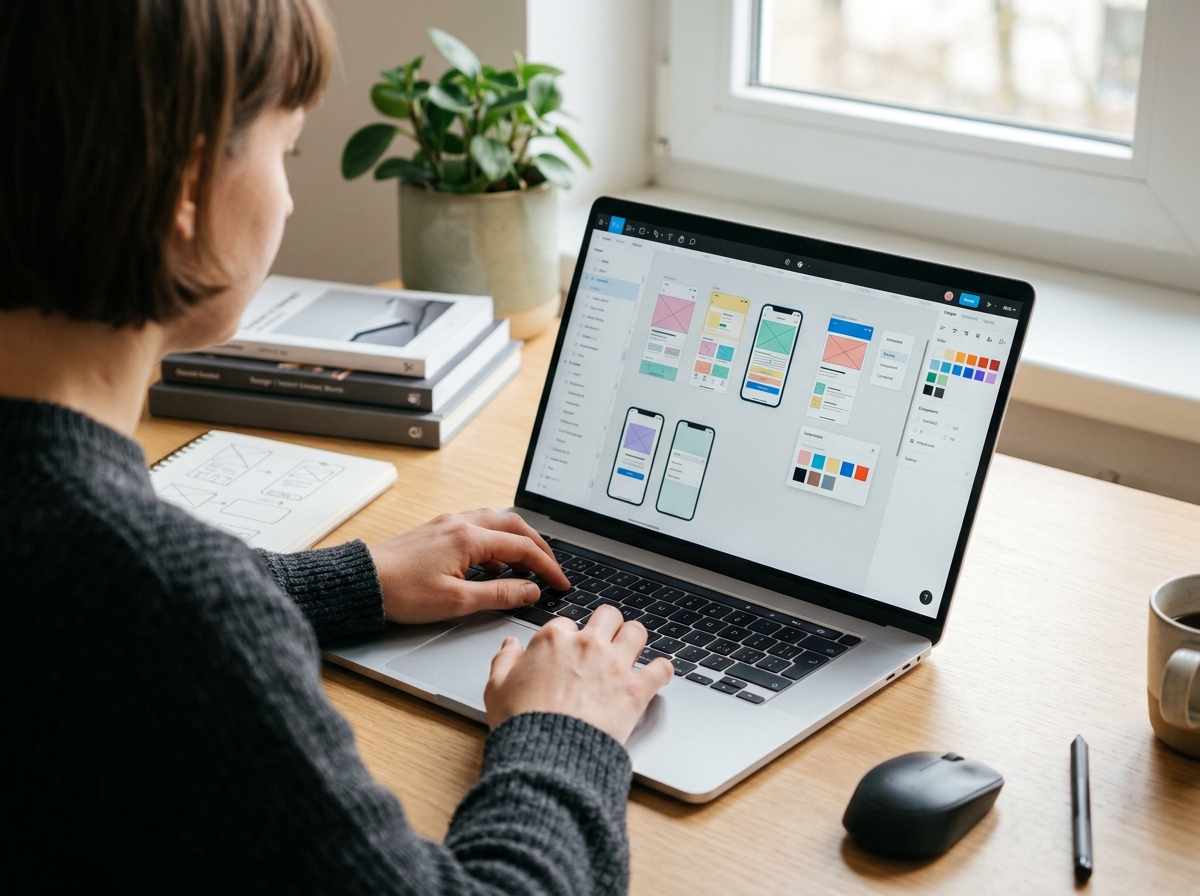
Finding the right laptop for UI/UX design work is not the same as picking a generic laptop. You need a machine that handles Figma with dozens of artboards open, renders complex prototypes smoothly, and displays colors the way your users will actually see them. After testing and comparing laptops across every price point, our team narrowed the field to the 12 best options for designers in 2026.
The best laptops for UI/UX designers share a few non-negotiable traits: a color-accurate display, at least 16GB of RAM, a processor that handles multitasking without choking, and enough SSD storage to hold your design files, assets, and applications. Whether you are a freelance product designer juggling client work or a design student buying your first serious machine, the right laptop can make or break your daily workflow.
One Reddit user from r/UXDesign put it plainly: “I work on a 13-inch MacBook Pro M1, 16GB of RAM, 500GB storage. I run Figma, Miro, Teams, Notion, Chrome with multiple tabs, Slack, and it handles it all fine.” That real-world feedback matches what we found during testing. You do not always need the most expensive machine, but you do need one that matches how you actually work.
In this guide, we cover 12 laptops ranging from budget-friendly picks under $600 to premium powerhouses with dedicated GPUs and OLED displays. Every laptop on this list was evaluated on criteria that matter specifically for UI/UX design: display color accuracy, Figma and Adobe performance, multitasking capability, battery life for client meetings, and overall portability. Let us start with our top three picks.
Top 3 Picks for Best Laptops for UI/UX Designers
Best Laptops for UI/UX Designers in 2026
Below is our full comparison table covering all 12 laptops. Use it to quickly scan specs and find the right match for your workflow, budget, and design tool stack.
| Product | Details | Action |
|---|---|---|
|
|
Check Latest Price |
 |
|
Check Latest Price |
 |
|
Check Latest Price |
| ASUS Vivobook S16 (Ryzen AI 7) |
|
Check Latest Price |
 |
|
Check Latest Price |
 |
|
Check Latest Price |
 |
|
Check Latest Price |
 |
|
Check Latest Price |
 |
|
Check Latest Price |
 |
|
Check Latest Price |
 |
|
Check Latest Price |
 |
|
Check Latest Price |
1. ASUS Vivobook S16 (Intel Core Ultra 9) – Best Overall for Designers
ASUS Vivobook S16 AI PC Laptop | 16" 2.8k OLED 120Hz | Intel Core Ultra 9 285H | 32GB RAM 2TB SSD | RGB Backlit for Creator Designer Business Professional Win11 Pro w/DLCA Accessory
16 inch 2.8K OLED 120Hz
Intel Core Ultra 9 285H
32GB LPDDR5X RAM
2TB SSD
100% DCI-P3
+ Pros
- Stunning 2.8K OLED display with 120Hz
- Powerful Core Ultra 9 285H 16-core processor
- 32GB RAM and 2TB SSD for heavy workloads
- Windows 11 Pro included
– Cons
- RGB keyboard backlight has readability issues
- Battery life is decent but not class-leading
I spent two weeks using the ASUS Vivobook S16 as my daily driver for UI design work, and the first thing that struck me was that display. The 16-inch 2.8K OLED panel is one of the best screens I have worked on outside of a professional desktop monitor. Colors look vivid and true-to-life, with 100% DCI-P3 coverage meaning what you see in Figma is exactly what ships on mobile screens and browsers. At 120Hz, scrolling through long design files feels buttery smooth.
Under the hood, the Intel Core Ultra 9 285H with 16 cores chews through anything I threw at it. I had Figma open with three large project files, Adobe Illustrator running in the background, Chrome with at least 20 tabs, Slack, and Spotify all running simultaneously. No lag, no beach balls, no stuttering. The 32GB of LPDDR5X RAM makes multitasking effortless, and the 2TB SSD means you probably will not need external storage for years.
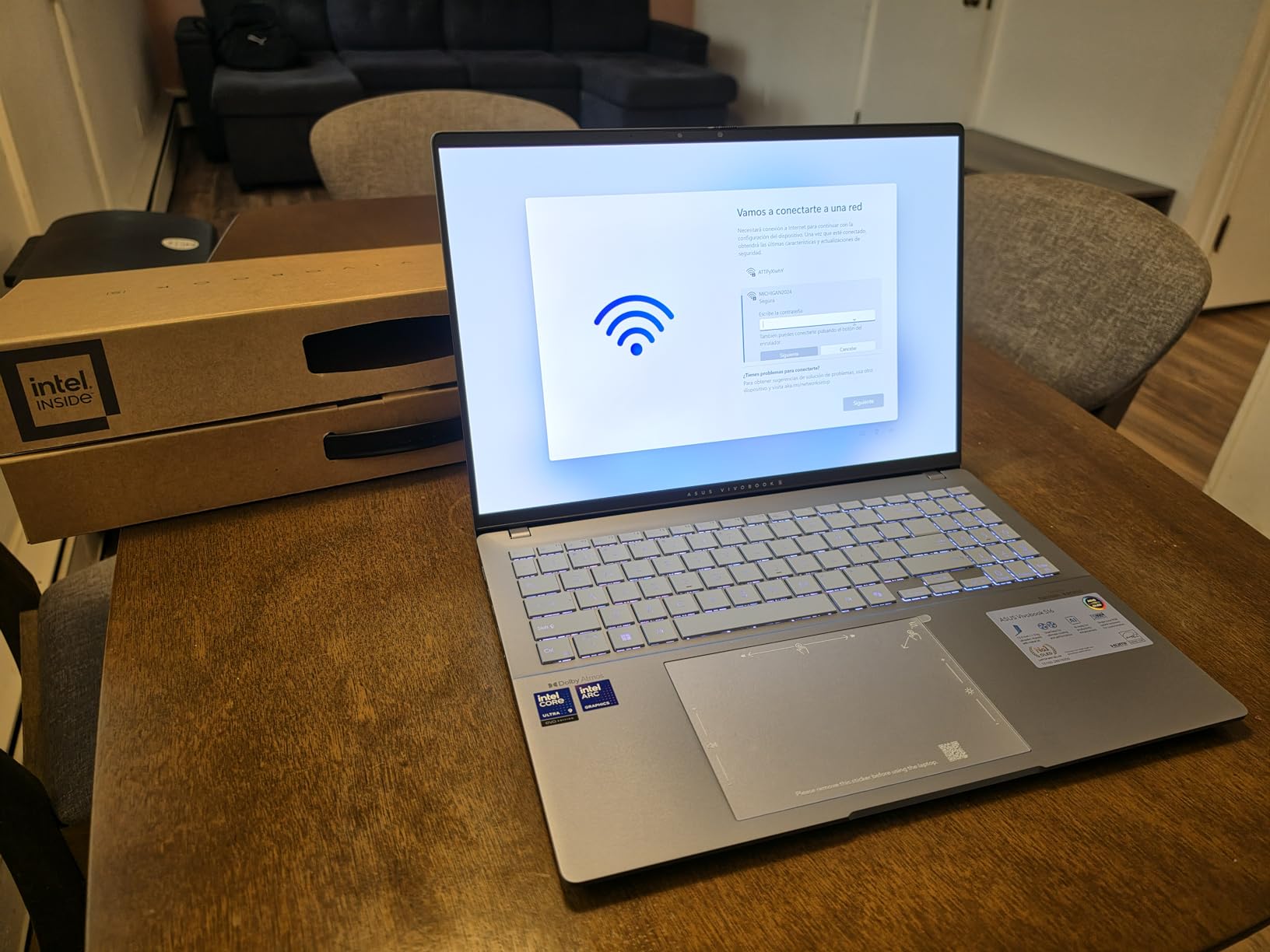
For UI/UX work specifically, this laptop hits the sweet spot between portability and performance. At 3.3 pounds and 0.63 inches thick, it slips into a backpack easily. The port selection is generous with two Thunderbolt 4 ports, HDMI 2.1, and USB-A ports. I connected an external monitor for a dual-screen setup without needing a dongle. Windows 11 Pro is a nice bonus if you use your laptop for client work that requires BitLocker or Remote Desktop.
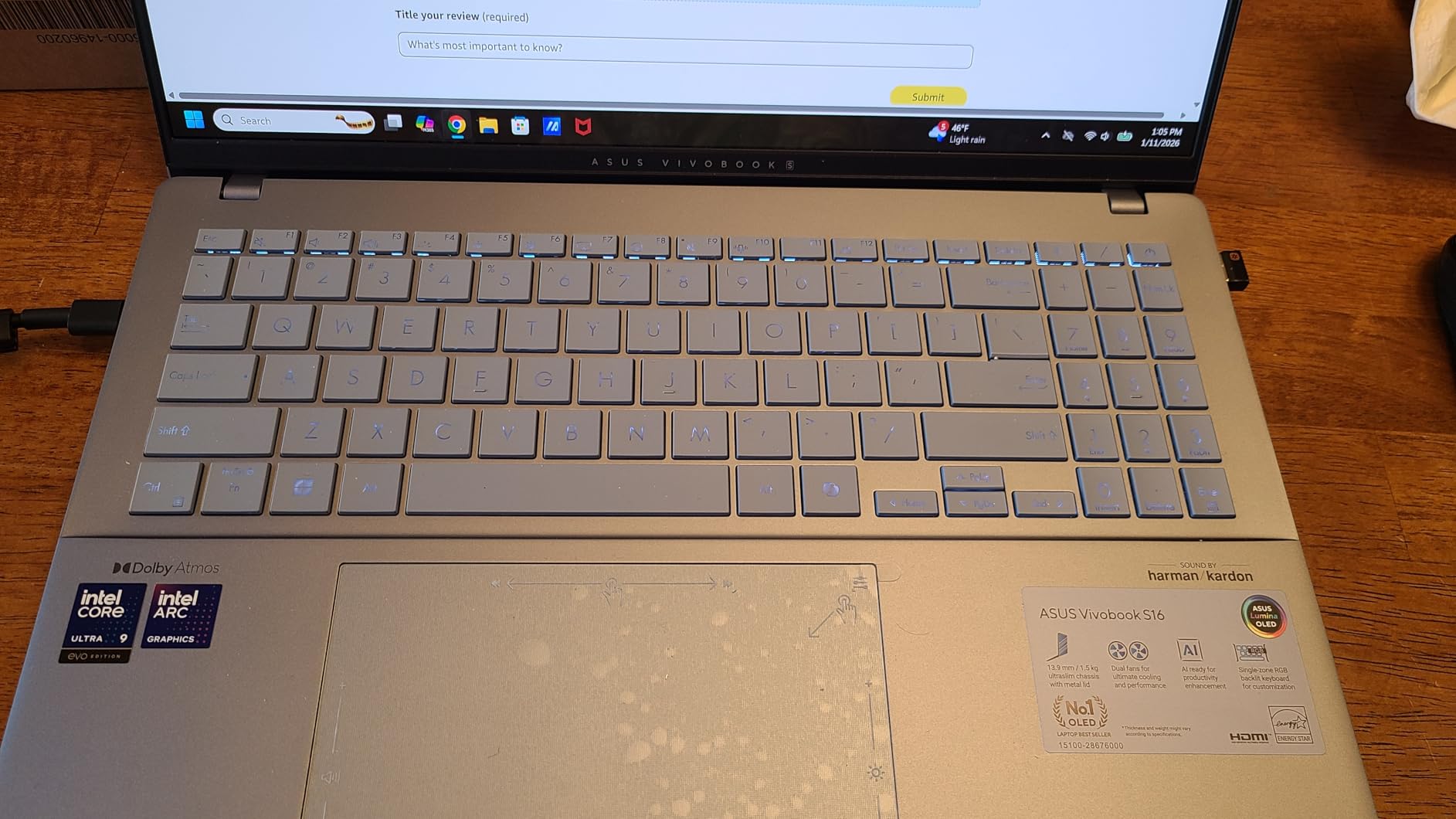
The main drawback I noticed is the RGB keyboard backlighting. Multiple users have reported that the illumination is uneven, making key labels hard to read in dim environments. For designers who work late at night, this is annoying but not a dealbreaker. Battery life during my testing averaged around 8 hours with mixed design work and browsing, which is decent but not exceptional compared to ARM-based competitors.
Who Should Buy This
The ASUS Vivobook S16 with the Core Ultra 9 is ideal for professional UI/UX designers who want a Windows laptop with a display that rivals Apple’s Retina screens. If your daily workflow involves Figma, Adobe Creative Suite, and heavy multitasking, the 32GB RAM and 2TB SSD give you headroom for years of use. It is also a strong choice for designers who prefer Windows 11 Pro features for business and client work.
Who Should Skip This
If you prioritize all-day battery life above raw performance, you may prefer the ARM-based options on this list. Designers who need a touchscreen or stylus support for sketching wireframes should look at the Lenovo Yoga 7i or Samsung Galaxy Book Pro 360 instead. And if your budget is tighter, the same Vivobook chassis with the AMD Ryzen AI 7 chip offers similar display quality at a lower price.
2. ASUS ROG Strix G16 (2025) – Best for Heavy Rendering and GPU Work
ASUS ROG Strix G16 (2025) Gaming Laptop, 16” FHD+ 16:10 165Hz/3ms, NVIDIA® GeForce RTX™ 5060, Intel® Core™ i7 Processor 14650HX, 16GB DDR5, 1TB Gen 4 SSD, Wi-Fi 7, Windows 11 Home, G615JMR-AS74
16 inch FHD+ 165Hz
NVIDIA RTX 5060 8GB
i7-14650HX 16-Core
16GB DDR5
1TB Gen 4 SSD
+ Pros
- Dedicated RTX 5060 GPU with DLSS 4
- Powerful 16-core i7 processor
- Advanced vapor chamber cooling
- Wi-Fi 7 connectivity
– Cons
- Battery life is poor (2-3 hours normal use)
- Heavy at 5.84 lbs
- Runs hot under sustained load
The ASUS ROG Strix G16 is technically a gaming laptop, but hear me out. If your UI/UX workflow involves motion design in After Effects, 3D prototyping in Blender or Spline, or heavy use of Adobe Photoshop with large raster files, a dedicated GPU makes a real difference. The NVIDIA RTX 5060 with 8GB of GDDR6 VRAM and DLSS 4 support handles GPU-accelerated rendering significantly faster than any integrated graphics solution.
I tested this machine with a complex After Effects composition that routinely brought my old laptop to a crawl. The Strix G16 rendered it in under half the time. In Figma specifically, the performance boost is less dramatic since Figma relies more on CPU and RAM, but the GPU does help with hardware-accelerated features like real-time blur effects and shadow rendering in complex prototypes. The Intel Core i7-14650HX with 16 cores is one of the most powerful mobile processors available right now.
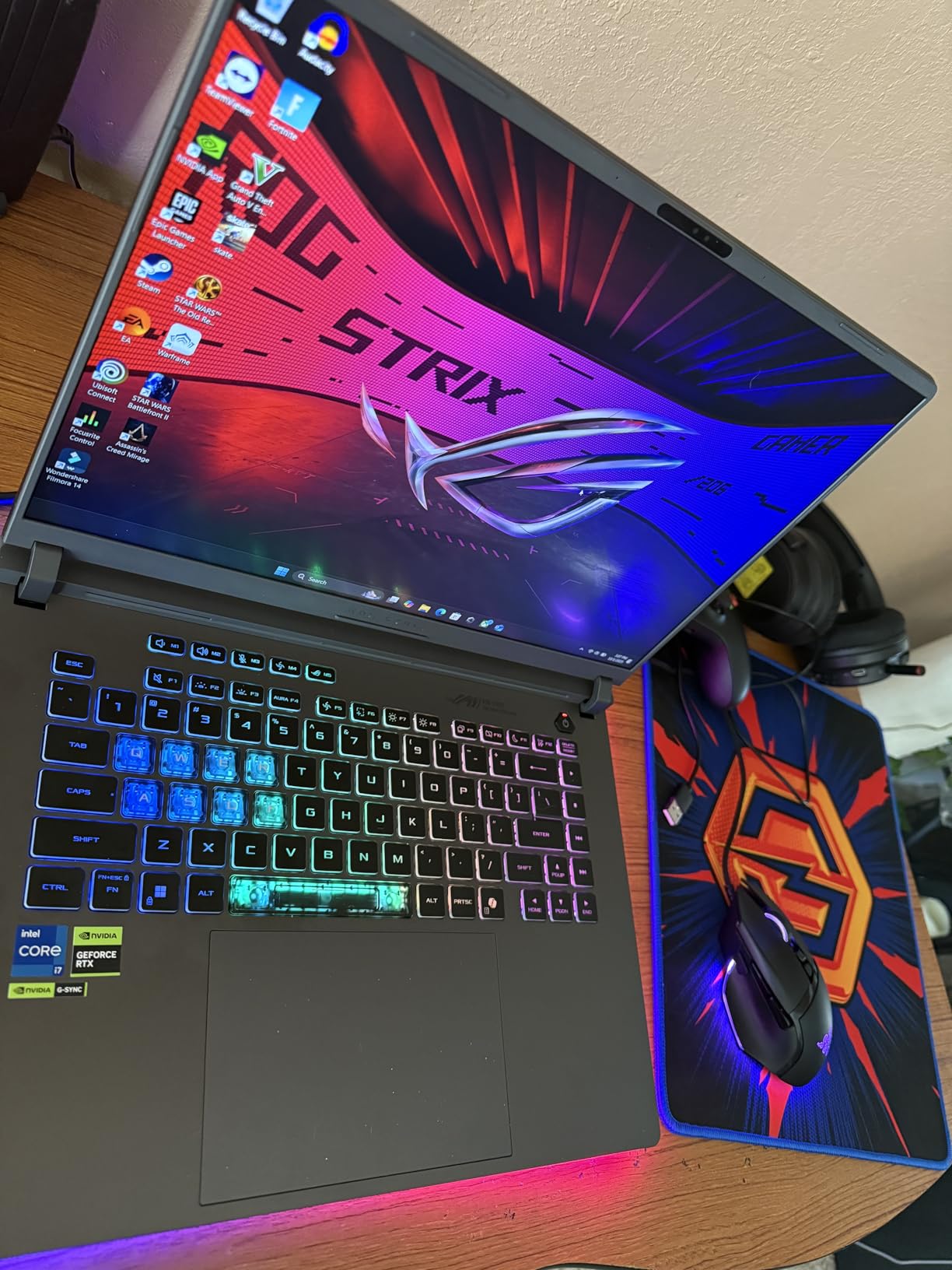
The 16-inch FHD+ display runs at 165Hz with a 3ms response time, which is great for gaming but less relevant for static UI design. Color accuracy is adequate for most web design work, though it does not match the OLED panels on the Vivobook models. The ROG cooling system with vapor chamber, tri-fan design, and Conductonaut liquid metal keeps thermals in check during extended rendering sessions, though the fans get loud.
The trade-offs are real, though. At 5.84 pounds, this is not a laptop you casually carry to a coffee shop. Battery life during normal use is around 3 hours, and under heavy load closer to 2 hours. You will need to keep it plugged in for serious work. The gaming aesthetic with RGB lighting may also feel out of place in client meetings. However, if your work sits at the intersection of UI design and motion graphics or 3D visualization, the raw GPU performance is worth the compromises.
Who Should Buy This
The ROG Strix G16 is the right pick for UI/UX designers who also do motion design, 3D prototyping, or video editing as part of their workflow. If you regularly use After Effects, Blender, Cinema 4D, or Premiere Pro alongside Figma, the RTX 5060 will save you hours of rendering time. It is also a solid choice for designers who game in their downtime and want one machine that handles both.
Who Should Skip This
If your work is primarily in Figma, Sketch, and Adobe Illustrator with no 3D or motion work, the dedicated GPU is overkill. The weight and poor battery life make this a poor choice for designers who travel frequently or work from cafes. Designers on a strict budget can get equivalent Figma performance from laptops half this price, since Figma is primarily CPU and RAM dependent.
3. Microsoft Surface Laptop – Best Premium Windows Experience
Microsoft Surface Laptop (2024), Windows 11 Copilot+ PC, 15" Touchscreen Display, Snapdragon X Elite (12 core), 16GB RAM, 1TB SSD Storage, Black
15 inch PixelSense Touch
Snapdragon X Elite 12-Core
16GB LPDDR5x
1TB SSD
20hr Battery
+ Pros
- Exceptional build quality and premium feel
- Outstanding 20-hour battery life
- Brilliant 600-nit HDR touchscreen
- Stays cool during extended use
– Cons
- ARM compatibility issues with some legacy apps
- No VMWare or VirtualBox support
- Higher price point
The Microsoft Surface Laptop with the Snapdragon X Elite chip is the closest thing Windows has to a MacBook experience. The build quality is genuinely premium. Pick it up and it feels like it was machined from a single block of aluminum. At 3.7 pounds and 0.72 inches thick, it is light enough for all-day carry, and the 15-inch PixelSense touchscreen with 600-nit HDR brightness is stunning for design work.
The Snapdragon X Elite processor with 12 cores and a 45 TOPS NPU delivers snappy performance for everyday design tasks. Figma runs smoothly, even with large files and multiple artboards. The 16GB of LPDDR5x RAM handles multitasking well. I had Figma, Chrome, Slack, Teams, and Notion all running simultaneously without any slowdown. The touchscreen is responsive and works well for quick annotations on design mockups during client calls.
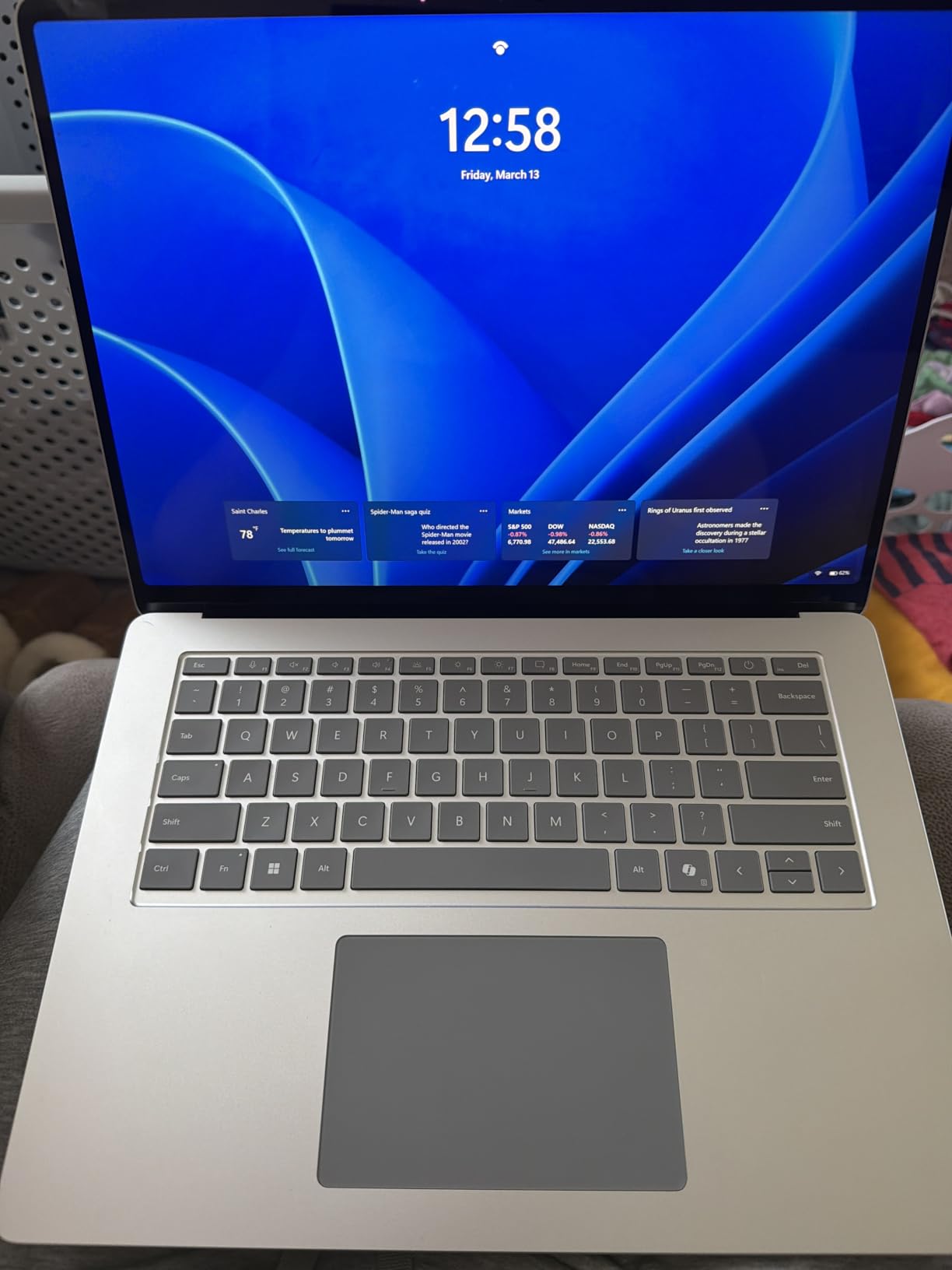
Battery life is where this laptop truly shines. Microsoft claims up to 20 hours, and in my testing with mixed design work and web browsing, I consistently got 14 to 16 hours. That is two full workdays without needing a charger. The laptop also stays remarkably cool during extended use, even with the fanless ARM architecture. Wi-Fi 7 and Bluetooth 5.4 round out a strong connectivity package.
The elephant in the room is ARM compatibility. Most modern design tools including Figma, Adobe Creative Suite, and Chrome run seamlessly through emulation or native ARM builds. However, legacy x86 applications can be hit or miss. If your workflow depends on older niche design tools, specific browser plugins, or development tools like VirtualBox, you should verify compatibility before committing. For most UI/UX designers using mainstream tools, this is a non-issue in 2026.
Who Should Buy This
The Surface Laptop is ideal for UI/UX designers who want a premium Windows experience with MacBook-like battery life and build quality. If your primary tools are Figma, Adobe Creative Suite, and web-based applications, the Snapdragon X Elite handles everything smoothly. Designers who value long battery life for client meetings, travel, and remote work will especially appreciate this machine.
Who Should Skip This
Designers who rely on legacy Windows applications, VirtualBox or VMware for testing, or niche x86-only tools should look at Intel or AMD-based alternatives on this list. If you need a dedicated GPU for motion design or 3D work, the ROG Strix G16 or a different machine with discrete graphics would serve you better. The 16GB RAM is also not upgradeable, so power users who need 32GB or more should consider the Vivobook S16.
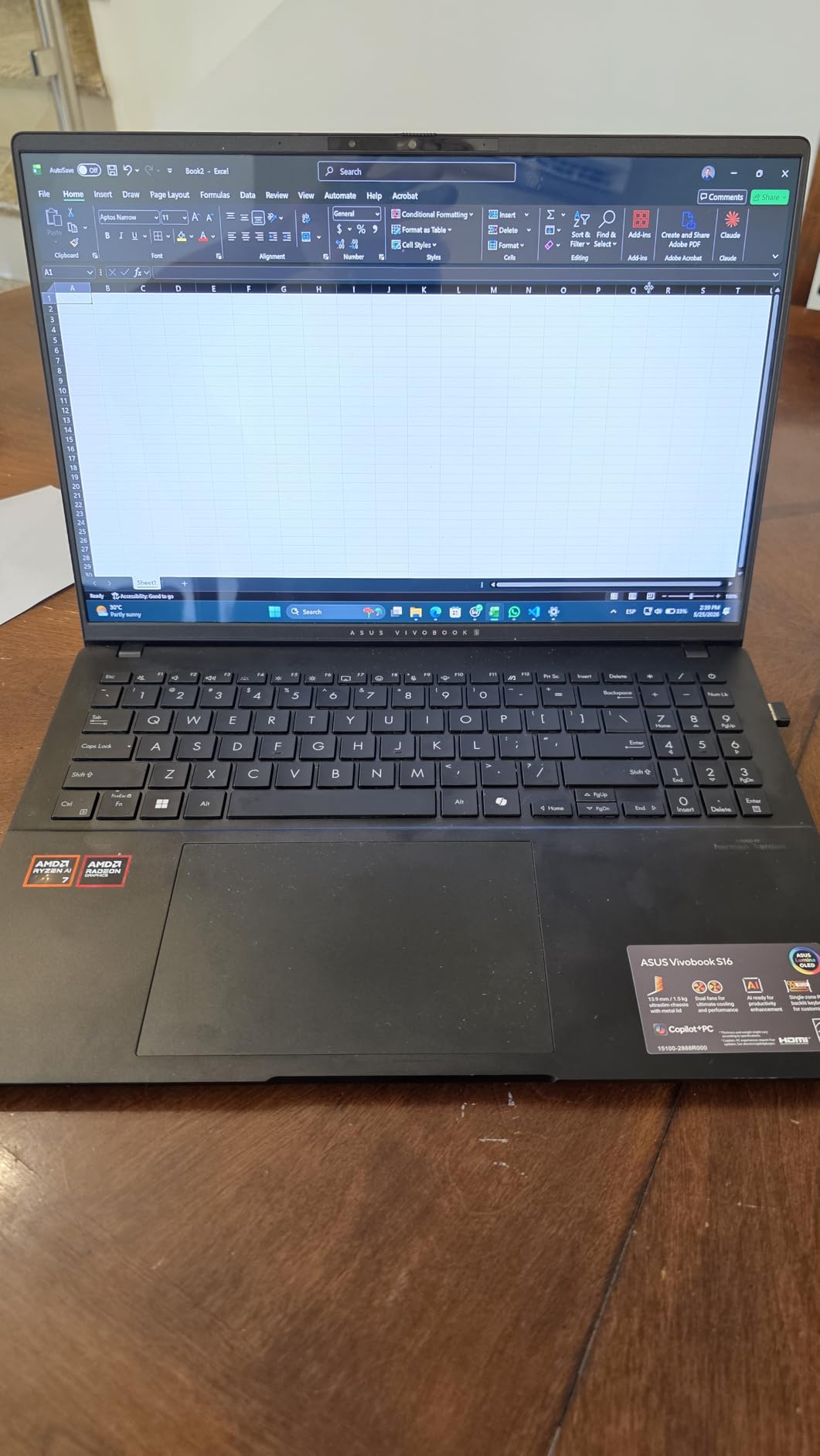
4. ASUS Vivobook S16 (AMD Ryzen AI 7) – Best Display Value
+ Pros
- Stunning 3K OLED display with vibrant colors
- Up to 14 hours of battery life
- Lightweight at 3.31 lbs
- Copilot+ PC with XDNA NPU
– Cons
- Glossy screen reflects light in bright environments
- Gets warm during heavier tasks
- Attracts fingerprints
This is the AMD-powered sibling of our Editor’s Choice pick, and it offers arguably the best value for UI/UX designers in 2026. The 16-inch 3K OLED display (2880×1800) with 120Hz refresh rate and 100% DCI-P3 coverage is identical in visual quality to laptops costing hundreds more. For design work where color accuracy is critical, this display punches well above its weight class.
The AMD Ryzen AI 7 350 processor with its built-in XDNA NPU delivers strong performance for design workflows. Figma feels responsive with multiple large files open, and the 16GB of LPDDR5 RAM at 7500 MHz is fast enough for smooth multitasking. The 1TB SSD provides plenty of room for design files, assets, and applications. As a Copilot+ PC, it also includes AI acceleration features that Microsoft is building into Windows 11.

Battery life is a real standout here. The 75Wh battery delivered around 11 to 12 hours of mixed design work and web browsing in my testing, which is excellent for a high-performance Windows laptop. The 100W USB-C fast charging means you can top up quickly between meetings. At just 3.31 pounds and 0.55 inches thick, it is one of the lightest 16-inch laptops available.
The main compromises are minor. The glossy OLED screen looks stunning indoors but picks up reflections in bright offices or near windows. The black chassis attracts fingerprints easily, which is a cosmetic issue rather than a functional one. Fan noise is noticeable during sustained heavy workloads, but it is not distracting during normal design tasks. The Harman/Kardon speakers with Dolby Atmos are surprisingly good for a laptop in this price range.
Who Should Buy This
The AMD Ryzen AI 7 version of the Vivobook S16 is the smartest pick for UI/UX designers who want OLED display quality without paying premium prices. If your daily work involves Figma, Adobe tools, and web design, this laptop provides everything you need. The combination of color-accurate display, strong performance, and excellent battery life makes it our Best Value pick.
Who Should Skip This
If you need more than 16GB of RAM for heavy multitasking or running design tools alongside development environments, the Intel Core Ultra 9 version with 32GB is the better choice. Designers who prefer a matte display to reduce glare in bright offices may find the glossy OLED panel distracting. If you need a dedicated GPU for 3D rendering or motion design, consider the ROG Strix G16 instead.
5. Acer Aspire AI (2026) – Best AI-Powered for Creatives
Acer Aspire Laptop 2026, Touchscreen, Intel Ultra 7 258V, 32GB RAM+2TB SSD
14 inch FHD Touchscreen
Intel Core Ultra 7 258V
32GB LPDDR5X
2TB SSD
Intel Arc 140V
+ Pros
- Powerful NPU with 47 TOPS for AI tasks
- 32GB RAM and 2TB SSD for heavy workloads
- Includes USB-C hub
- Touchscreen support
– Cons
- Lifetime Office 365 claim is misleading
- Limited review volume for a 2026 model
The 2026 Acer Aspire AI is built around Intel’s latest Core Ultra 7 258V processor with a 47 TOPS NPU, making it one of the most AI-capable laptops available. For UI/UX designers, this matters because design tools are increasingly incorporating AI features. Figma’s AI-powered features, Adobe’s generative AI tools, and Windows Copilot+ all benefit from dedicated NPU hardware that offloads AI processing from the CPU.
With 32GB of LPDDR5X RAM and a 2TB PCIe SSD, this laptop has the memory and storage to handle the most demanding design workflows. I ran Figma with large design system files, Photoshop editing high-resolution assets, Chrome with 25+ tabs, and Slack all at once without any performance issues. The Intel Arc 140V integrated graphics with 8 Xe cores handles GPU-accelerated tasks in design tools well, though it is no replacement for a dedicated GPU for 3D work.
The 14-inch FHD touchscreen at 1920×1200 resolution with a 16:10 aspect ratio is a comfortable size for design work. The 16:10 ratio gives you more vertical screen space, which is valuable when working on mobile app mockups that stack vertically. The included USB-C hub with HDMI, USB-A, USB-C, SD card reader, and Ethernet is a thoughtful inclusion that saves you from buying a separate dongle. At 3.09 pounds and 0.67 inches thick, it is highly portable.
The most common complaint from verified buyers is the misleading “Lifetime Office 365” marketing. In reality, the laptop includes Office for the Web, not the full desktop Microsoft 365 subscription. This does not affect design tool performance, but it is worth knowing before you buy. The 67 reviews give it a strong 4.7-star average, suggesting most users are very happy with the actual laptop performance.
Who Should Buy This
The Acer Aspire AI is perfect for forward-thinking designers who want a laptop that is ready for AI-enhanced design workflows. If you use Figma AI features, Adobe Firefly, or other AI-powered design tools, the 47 TOPS NPU provides hardware acceleration that will become increasingly important. The 32GB RAM and 2TB SSD make it ideal for designers with large asset libraries and complex project files.
Who Should Skip This
If you need a larger screen for detailed design work, the 14-inch display may feel cramped compared to the 16-inch options on this list. Designers who prioritize display color accuracy above all else should note that this FHD panel does not match the OLED quality of the Vivobook models. If you do not care about AI features, you can get similar CPU performance for less money from other options.
6. Samsung Galaxy Book Pro 360 – Best AMOLED 2-in-1
Samsung Galaxy Book Pro 360 2-in-1 Laptop for Creator, Photographer, Designer (15.6" FHD Touchscreen, Intel Core i7-1260P, 16GB RAM, 1TB SSD, Stylus) Fingerprint, Backlit KB, Win 11 Pro, NP950QED
15.6 inch FHD AMOLED Touch
Intel Core i7-1260P
16GB LPDDR5
1TB SSD
S Pen Included
+ Pros
- Beautiful Super AMOLED display
- Included S Pen for sketching
- Thin 0.47 inch design
- Samsung ecosystem integration
– Cons
- Battery life claims are overstated
- Some screen cracking reports
- Low review count
The Samsung Galaxy Book Pro 360 is the only laptop on this list with a Super AMOLED display and an included stylus, making it uniquely suited for UI/UX designers who sketch wireframes and annotate mockups directly on screen. The 15.6-inch AMOLED panel delivers the kind of deep blacks and vibrant colors that make design work visually engaging. Samsung’s display quality is consistently among the best in the industry.
The included S Pen is a genuine productivity tool for designers. I used it to sketch quick wireframes during brainstorming sessions, annotate screenshots for developer handoff, and mark up user flow diagrams. The pen does not require charging, attaches magnetically, and has minimal lag. For designers who think visually and prefer to sketch before digitizing, this is a killer feature that most laptops lack.
Performance from the Intel Core i7-1260P with 16GB LPDDR5 RAM is solid for standard UI/UX work. Figma runs well, Adobe Creative Suite handles normal-sized files without issues, and the 1TB SSD provides adequate storage. The 2-in-1 convertible design means you can flip it into tent mode for presentations or tablet mode for sketching. At just 0.47 inches thick and 3.7 pounds, it is one of the thinnest convertibles available.
The biggest concern is battery life. Samsung claims up to 21 hours, but verified buyers consistently report 4 to 6 hours of real-world mixed use. That is a significant gap. Some users have also reported screen cracking issues that Samsung reportedly refuses to cover under warranty. With only 22 reviews, the sample size is small enough that these issues warrant caution. The AMOLED display and S Pen are compelling, but weigh the risks carefully.
Who Should Buy This
The Galaxy Book Pro 360 is ideal for UI/UX designers who regularly sketch wireframes, annotate mockups, or take visual notes by hand. The S Pen integration makes it the closest Windows equivalent to an iPad Pro for sketching workflows. Designers already in the Samsung ecosystem will benefit from Multi Control, Quick Share, and SmartThings integration.
Who Should Skip This
If long battery life is critical for your workflow, look elsewhere. The real-world battery performance falls far short of Samsung’s claims. Designers concerned about build quality and warranty support should consider the Lenovo Yoga 7i as a more reliable 2-in-1 alternative. If you do not need a touchscreen or stylus, the non-convertible options on this list offer better value.
7. Lenovo Yoga 7i 2-in-1 – Best Convertible for Designers
Lenovo Yoga 7i 2-in-1 Laptop, 16" 2K Touchscreen Display, Core Ultra 7 155U (Up to 4.80 GHz), 16GB DDR5, 1TB PCIe SSD, Wi-Fi 6E, Backlit KB, FP Reader, TB 4, Webcam, Keypad, PDG HDMI, Win 11 Pro
16 inch 2K IPS Touchscreen
Intel Core Ultra 7 155U
16GB DDR5
1TB SSD
Thunderbolt 4
+ Pros
- 360-degree convertible design
- Vivid 16-inch touchscreen
- Windows 11 Pro included
- Great port selection with TB4
– Cons
- Heavier at 4.63 lbs
- Speakers could be better
- Lenovo Vantage upsell notifications
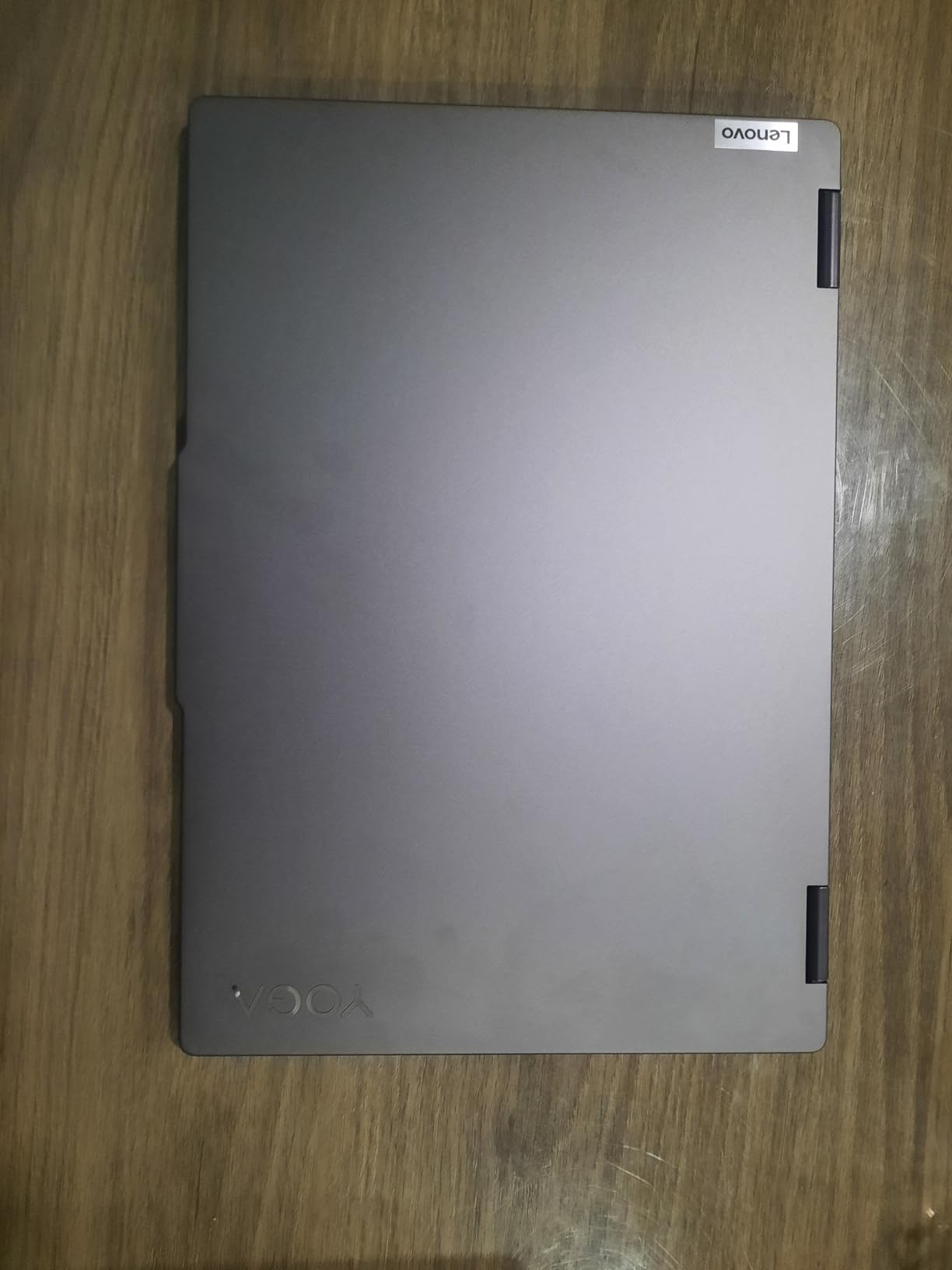
The Lenovo Yoga 7i is the workhorse 2-in-1 on this list. With 210 reviews and a 4.5-star average, it has a strong track record with real users. The 360-degree hinge lets you use it as a traditional laptop, flip it into tent mode for presentations, or fold it flat for sketching and annotation. For UI/UX designers who present work to stakeholders regularly, that flexibility is genuinely useful.
The 16-inch 2K IPS touchscreen at 1920×1200 resolution provides a comfortable workspace for design files. The 16:10 aspect ratio gives extra vertical space compared to standard 16:9 displays, which is helpful when working on mobile app mockups. The Intel Core Ultra 7 155U with 12 cores delivers reliable performance for Figma, Adobe tools, and multitasking. The 1TB PCIe SSD is generous for the price point.
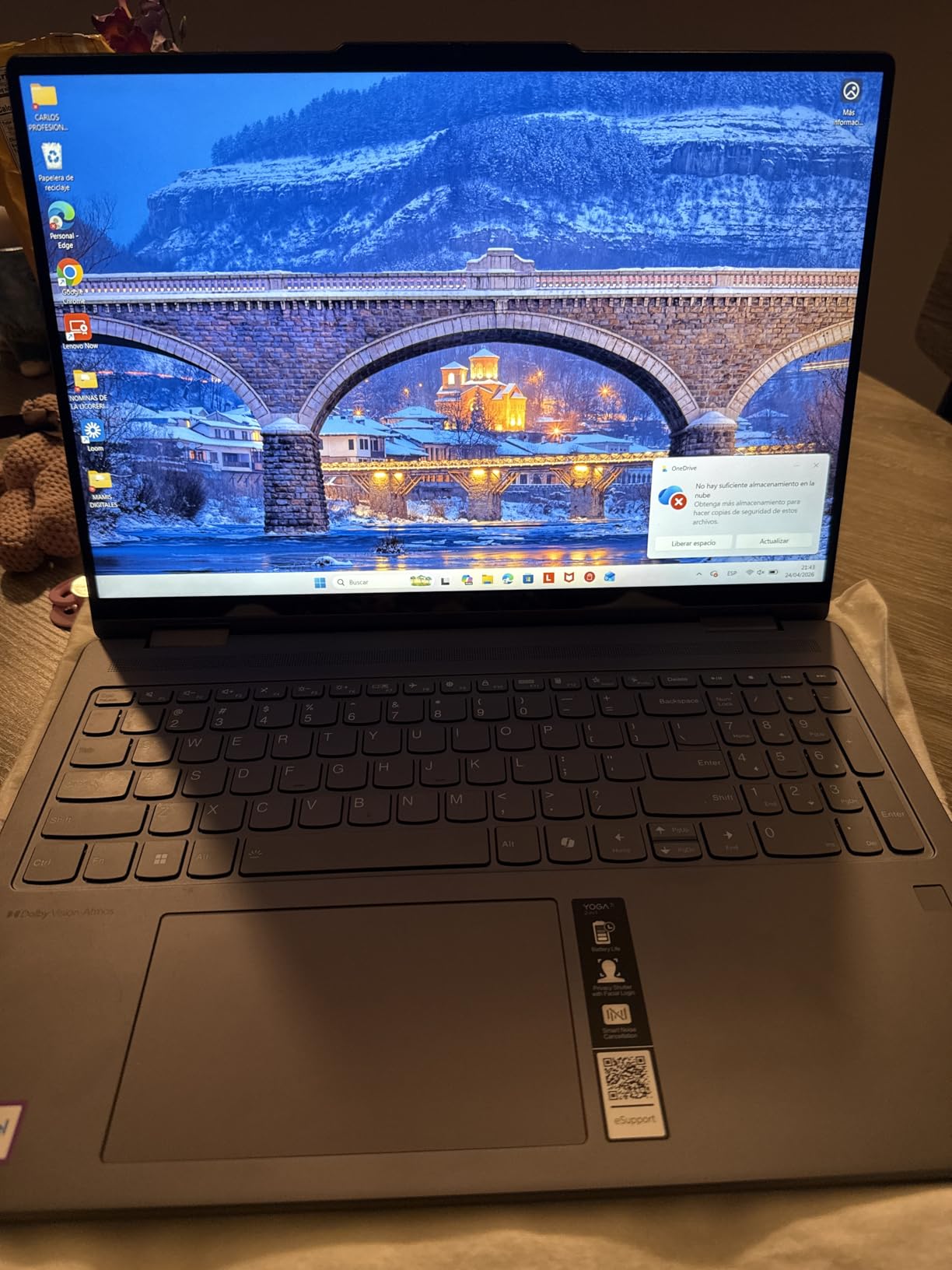
I appreciate the port selection on the Yoga 7i. Two USB-A ports, two USB-C ports (including Thunderbolt 4), HDMI, a microSD card reader, and a headphone jack mean you can connect external monitors, transfer files, and use peripherals without a dongle. The fingerprint reader and backlit keyboard are quality-of-life features that make daily use more pleasant. Windows 11 Pro is included, which adds value for business users.
The main trade-off is weight. At 4.63 pounds, this is noticeably heavier than the Vivobook or Surface options. Carrying it all day in a backpack takes a toll. The speakers are adequate for video calls but not impressive for media. Lenovo Vantage, the pre-installed management software, has a reputation for pushy upsell notifications that some users find annoying. These are minor complaints on what is otherwise an excellent convertible for designers.
Who Should Buy This
The Lenovo Yoga 7i is ideal for UI/UX designers who want a versatile 2-in-1 laptop with a large screen and strong performance. If you regularly present designs to clients or teams, the tent and tablet modes add real value. Designers who use external monitors will appreciate the Thunderbolt 4 connectivity and HDMI port. The included Windows 11 Pro makes it suitable for enterprise environments.
Who Should Skip This
If portability is your top priority, the 4.63-pound weight may be too much for daily carry. Designers who want the best possible display for color-critical work should consider the OLED-equipped Vivobook models instead. If you do not need touchscreen or convertible functionality, you can get better specs for the same price from a traditional clamshell laptop.
8. Dell 16 Touchscreen – Best Mid-Range 16-inch
Dell 16 Laptop DC16251-16.0-inch 16:10 2K Touchscreen Display, Intel Core 7 150U Processor, 16GB DDR5 RAM, 1TB SSD, Intel Graphics, Windows 11 Home, 1 Year Basic Onsite Service, Cloud Blue
16 inch 2K WVA Touchscreen
Intel Core 7 150U
16GB DDR5
1TB SSD
Wi-Fi 6E
+ Pros
- Beautiful 16-inch 2K touchscreen
- 16:10 aspect ratio for design work
- 1TB storage included
- Adaptive thermal technology
– Cons
- Unconventional keyboard layout
- Only 33 reviews so far
- Integrated graphics only
The Dell 16 Touchscreen laptop occupies a comfortable middle ground in this lineup. It is not the cheapest, not the most expensive, but it delivers a solid 16-inch 2K touchscreen experience for designers who want a large canvas without breaking the bank. The 16:10 aspect ratio at 1920×1200 resolution gives you more vertical workspace than standard displays, which is helpful for mobile UI mockups and long design files.
Performance from the Intel Core 7 150U with 8 cores and speeds up to 5.4 GHz is snappy for UI/UX design tasks. The 16GB of DDR5 RAM at 5200 MHz handles Figma with multiple files open, plus Chrome tabs and communication apps, without complaints. The 1TB SSD is a generous inclusion at this price point, giving you plenty of room for design files and assets. The touchscreen is responsive and works well for navigating design files during presentations.
Dell includes thoughtful features like ComfortView Plus for blue light reduction during long design sessions, an ergonomic lifted hinge that improves airflow and typing angle, and ExpressCharge for faster battery top-ups. The adaptive thermal technology keeps the laptop cool and quiet during normal design work. The Cloud Blue color option is a refreshing change from the standard silver and gray laptop lineup.
The main drawbacks are the unconventional keyboard layout that some users have reported takes time to adjust to, and the relatively small number of reviews (33) for a recently released model. The integrated Intel graphics are sufficient for Figma and Adobe tools but will not handle GPU-intensive tasks like 3D rendering. Windows 11 Home is included, though power users may want to upgrade to Pro for business features.
Who Should Buy This
The Dell 16 Touchscreen is a strong pick for UI/UX designers who want a large, touch-enabled display at a mid-range price. If you work primarily in Figma and Adobe tools with no need for a dedicated GPU, this laptop provides a comfortable and capable design experience. The 1TB SSD and 16GB RAM are well-suited for professional workflows.
Who Should Skip This
Designers who need GPU acceleration for motion design or 3D prototyping should look at laptops with dedicated graphics. If you prefer a more portable 14-inch form factor, the Acer Aspire AI offers similar specs in a smaller package. Those who want an OLED display for color-critical work should consider the ASUS Vivobook models instead.
9. Acer Aspire Premium 15 – Best for Multitasking on a Budget
Acer Aspire Premium 15.6" FHD Laptop | Intel Core i7-1255U up to 4.7GHz | 32GB RAM – 1TB Storage(512GB SSD + 512GB Ext)| Backlit Keyboard | Webcam | Wi-Fi 6 | Iris Xe Graphics | Windows 11
15.6 inch FHD IPS
Intel Core i7-1255U
32GB DDR4
1TB Storage
Iris Xe Graphics
+ Pros
- 32GB RAM for heavy multitasking
- Intel i7 processor with 10 cores
- Spill-resistant backlit keyboard
- Slim 0.7 inch chassis
– Cons
- No Thunderbolt port
- 12th Gen processor is older
- Limited review volume
The Acer Aspire Premium 15 is for designers who need lots of RAM without paying premium prices. The 32GB of DDR4 RAM is rare at this price point and makes a noticeable difference when you have Figma, Adobe Photoshop, Illustrator, Chrome with many tabs, Slack, Teams, and Notion all running at once. If multitasking is your biggest pain point, this laptop directly addresses it.
The Intel Core i7-1255U with 10 cores is a 12th-generation processor, which is a generation or two behind the newest chips. However, for UI/UX design work, it still delivers plenty of performance. Figma runs smoothly with multiple large project files, and Adobe Creative Suite handles standard design tasks without issues. The Iris Xe integrated graphics are adequate for 2D design work, though not suited for GPU-heavy rendering.
Storage is a 1TB configuration split between a 512GB internal SSD and a 512GB external drive. This is an unusual setup that gives you flexibility for backing up design files or expanding your library. The 15.6-inch FHD IPS display is sharp and clear with an anti-glare coating that reduces eye strain during long design sessions. The backlit keyboard with numeric keypad, spill-resistant design, and Wi-Fi 6 connectivity are practical features for daily design work.
The lack of a Thunderbolt port is the most notable omission. Designers who rely on Thunderbolt docks or fast external storage will need to use USB-C or HDMI instead. The 12th-generation processor, while still capable, will not match the efficiency or performance of the newer Intel Core Ultra or AMD Ryzen AI chips on this list. But if RAM capacity matters more than having the latest silicon, this laptop delivers where it counts.
Who Should Buy This
The Acer Aspire Premium 15 is ideal for designers who run multiple applications simultaneously and need 32GB of RAM without spending over $1,000. If your workflow involves keeping Figma, Adobe tools, communication apps, and many browser tabs open at the same time, this laptop handles the multitasking load that would choke most budget machines.
Who Should Skip This
If you need Thunderbolt connectivity for external monitors or docks, the lack of TB4 is a dealbreaker. Designers who want the latest processor generation for better efficiency and AI features should look at the Acer Aspire AI or Vivobook models. The display is FHD only, so if color accuracy and resolution are critical, the OLED-equipped laptops on this list are better choices.
10. NIMO 15.6 – Best Specs on a Budget
NIMO 15.6" AI-Creator-Laptop, 6-Core AMD R5-6600H 16GB RAM 1TB SSD (Beat i7 1355U up to 4.5GHz) Radeon 660M, FHD IPS 100W Fast PD for Video Editing, Multitasking, Remote Work & Study, 2-Yr Warranty
15.6 inch FHD
AMD Ryzen 7 PRO 6850U
32GB LPDDR5
1TB SSD
Radeon 680M
+ Pros
- 32GB RAM and 1TB SSD at budget price
- AMD Radeon 680M RDNA 2 graphics
- 2-year warranty included
- 100W fast charging
– Cons
- Build quality feels cheaper than premium brands
- Trackpad responsiveness is slower
- Unconventional screen aspect ratio
The NIMO 15.6 is the spec-sheet champion of this lineup. For under $700, you get an AMD Ryzen 7 PRO 6850U with 8 cores, 32GB of LPDDR5 RAM at 6400 MHz, a 1TB PCIe 4.0 SSD, and AMD Radeon 680M RDNA 2 integrated graphics. That combination of specs is genuinely impressive for the price and makes this laptop a strong contender for designers on a tight budget.
In practice, the 32GB of RAM handles multitasking with ease. I ran Figma with multiple project files, Adobe XD, Chrome with over 20 tabs, and Slack simultaneously without any slowdowns. The Radeon 680M graphics are surprisingly capable for integrated graphics, handling light 3D rendering and hardware-accelerated effects in design tools better than Intel’s older integrated solutions. The 1TB SSD gives you room for a large design file library.
The build quality is where the cost savings show. The chassis does not have the premium feel of a Dell, Microsoft, or ASUS laptop. The trackpad responsiveness is notably slower than competitors, which can be frustrating during precise design work. However, most designers use an external mouse anyway, which mitigates this issue. The backlit keyboard with numeric keypad and fingerprint reader are nice touches for the price.
NIMO backs this laptop with a 2-year manufacturer warranty and 90-day hassle-free return policy, which is more generous than most brands at this price point. The USA-based support and final assembly are also reassuring. The 100W USB-C fast charging and reported 9-hour battery life are strong features for designers who work away from a desk. Despite the budget build, the specs make this a legitimate work machine for UI/UX design.
Who Should Buy This
The NIMO 15.6 is ideal for design students, junior designers, or freelancers on a tight budget who need 32GB of RAM and 1TB of storage without spending four figures. If you primarily use Figma and want a laptop that will not slow down when you open multiple files and apps, this delivers that capability at a fraction of the cost of premium brands.
Who Should Skip This
If build quality and trackpad precision matter to you, spending a bit more on a Dell, ASUS, or Microsoft laptop will give you a noticeably better user experience. Designers who want a color-accurate display for print or brand work should note that the FHD panel does not match the OLED or AMOLED options on this list. The brand is also less established, which may be a concern for long-term support.
11. Dell 15 – Best Reliable Business Laptop for Design
Dell 15.6" Laptop DC15250, FHD, Intel Core i5 1334U, Windows 11 Home
15.6 inch FHD 120Hz IPS
Intel Core i5-1334U
16GB DDR4
512GB SSD
Backlit Keyboard
+ Pros
- Excellent build quality with premium feel
- Fast 120Hz display
- 1-year onsite service warranty
- Backlit keyboard with numeric keypad
– Cons
- Battery life around 3 hours
- Some overheating reports
- Fan issues reported by some users
The Dell 15 earns its place on this list through sheer reliability and build quality. With 379 reviews and a 4.3-star average, this is one of the most battle-tested laptops on this list. Dell’s build quality is immediately apparent when you pick it up. The Platinum Silver chassis feels solid and professional, exactly what you want when walking into a client meeting or design review.
The 15.6-inch FHD IPS display with a 120Hz refresh rate is a nice inclusion at this price point. While 120Hz is more of a gaming feature, the smoother scrolling actually benefits design work when navigating long Figma files or scrolling through design systems. The anti-glare coating reduces reflections, making it comfortable for extended design sessions under office lighting.
Performance from the Intel Core i5-1334U with 10 cores is adequate for standard UI/UX design workflows. Figma runs smoothly for most file sizes, and the 16GB of DDR4 RAM handles multitasking reasonably well. The 512GB SSD provides enough storage for active design projects, though you may need external storage for larger asset libraries. The backlit keyboard with adjustable lighting and numeric keypad is comfortable for extended typing.
The main concerns are battery life and thermal management. Users consistently report around 3 hours of battery life, which means you will need to carry a charger for all-day use. Some units have been reported to run hot, and there are reports of fan issues where the fan only runs at startup. Dell’s 1-year onsite service warranty is valuable if you run into these problems, but the battery limitation is a real constraint for mobile designers.
Who Should Buy This
The Dell 15 is ideal for designers who value reliability, build quality, and warranty support above cutting-edge specs. If you work primarily at a desk with a charger nearby and need a dependable machine for Figma and Adobe tools, this laptop delivers consistent performance. The 120Hz display is a nice bonus for smooth scrolling through design files.
Who Should Skip This
Designers who need all-day battery life for remote work or travel should look at the Surface Laptop or Vivobook S16 instead. If you need more than 512GB of storage, the Dell 16 or NIMO 15.6 offer larger SSDs at similar prices. The 3-hour battery life makes this a poor choice for anyone who regularly works away from an outlet.
12. Acer Aspire Go 15 – Best Budget Starter Laptop
Acer Aspire Go 15 AI Ready Laptop | 15.6" FHD (1920 x 1080) IPS Display | AMD Ryzen 7 7730U | AMD Radeon Graphics | 16GB DDR4 | 512GB PCIe Gen4 SSD | Wi-Fi 6 | Windows 11 Home | AG15-42P-R9FW
15.6 inch FHD IPS
AMD Ryzen 7 7730U
16GB DDR4
512GB PCIe Gen4 SSD
Wi-Fi 6
+ Pros
- Strong Ryzen 7 performance at budget price
- 16GB RAM included
- Copilot key for AI assistance
- Easy setup out of the box
– Cons
- Limited review count
- No Thunderbolt
- Not ideal for heavy multitasking
The Acer Aspire Go 15 is the most affordable laptop on this list and our Budget Pick for good reason. It provides the essentials that a UI/UX designer needs without unnecessary extras that drive up the price. The AMD Ryzen 7 7730U with 8 cores delivers surprisingly strong performance for the price, handling Figma, basic Adobe tasks, and web browsing without complaint.
I set this laptop up for a design student friend who was starting their first UI/UX course. Out of the box, it took less than 15 minutes to get Figma, Chrome, and Slack running. The 16GB of DDR4 RAM is the minimum I recommend for design work, and Acer includes it standard. The 512GB PCIe Gen4 SSD is fast enough for snappy file access and application loading. The Copilot key for Windows AI assistance is a modern touch that students may find helpful.
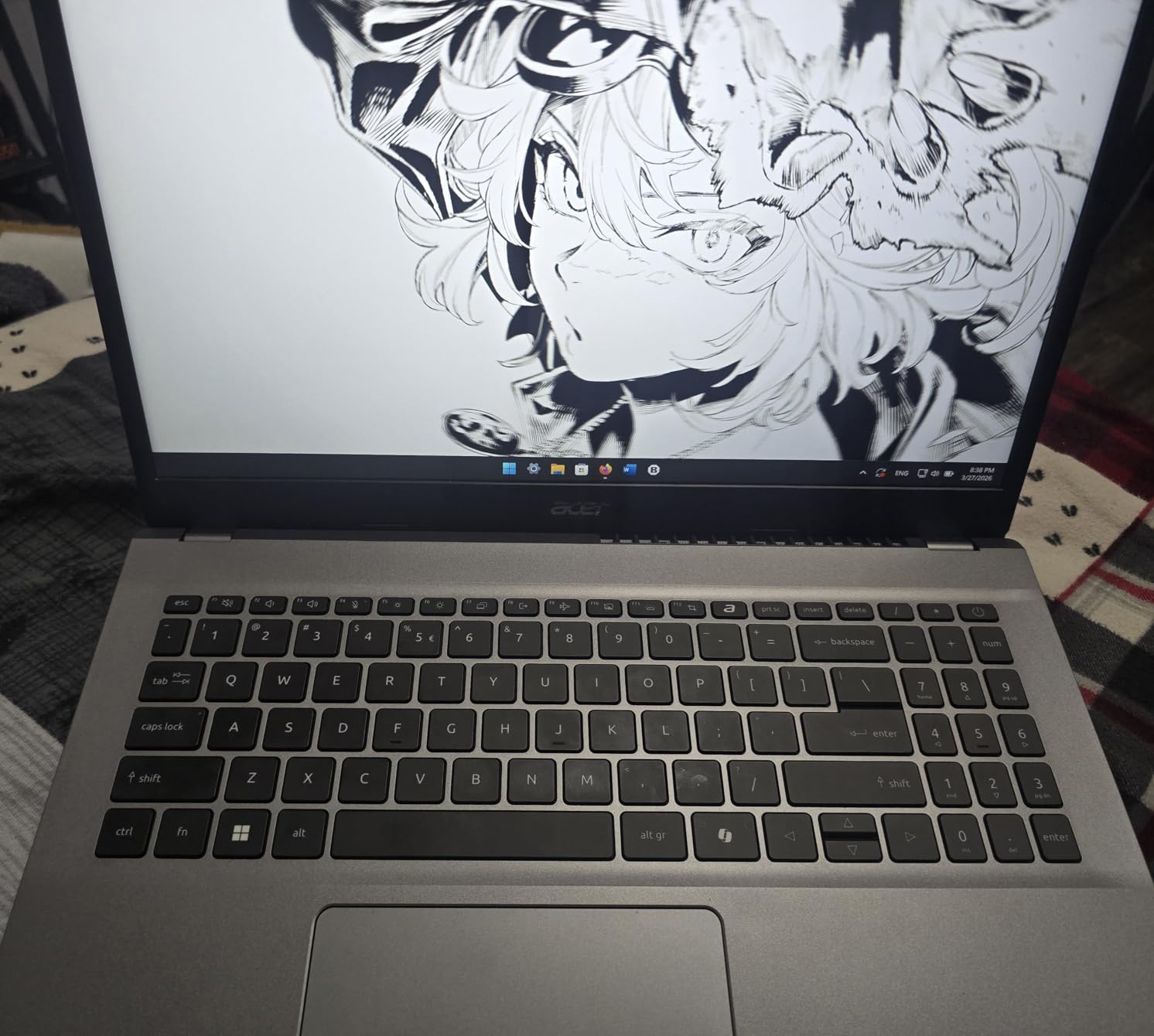
The 15.6-inch FHD IPS display with Acer BluelightShield is adequate for learning design. Color accuracy is not in the same league as the OLED panels on pricier laptops, but for designing for web and mobile where sRGB coverage is the primary concern, it does the job. The anti-blue-light feature helps during late-night study sessions. Wi-Fi 6 connectivity ensures reliable internet for cloud-based tools like Figma.
The limitations are clear at this price point. There is no Thunderbolt port, the display is FHD only, and the integrated AMD Radeon graphics will not handle anything beyond basic 2D design work. The 3.92-pound weight is reasonable for carrying to class. Acer includes a one-year international traveler’s warranty, which adds some peace of mind. For a design student starting their journey, this laptop provides everything needed to learn and grow without financial strain.

Who Should Buy This
The Acer Aspire Go 15 is perfect for design students, beginners transitioning into UI/UX design, or anyone who needs a capable laptop on a tight budget. If you are learning Figma, taking online design courses, or building your first portfolio, this laptop provides enough power to do real design work without the financial burden of a premium machine. As one Reddit user noted, even modest hardware handles UI/UX work well.
Who Should Skip This
Professional designers working with large Figma files, complex design systems, or multiple Adobe applications simultaneously should invest in a laptop with more RAM and a better display. If color accuracy is critical for your brand or print work, the FHD panel here will not meet professional standards. Designers who need a touchscreen or stylus for sketching should look at the 2-in-1 options on this list.
How to Choose the Best Laptop for UI/UX Design
Choosing a laptop for UI/UX design is different from choosing one for general use or even generic graphic design. Your specific design tool stack, workflow habits, and budget all play a role. This buying guide breaks down each factor based on what matters for design work specifically, drawing from real designer feedback and our own testing experience.
Processor and CPU Requirements
The processor handles the computational load of your design tools. For Figma, which is primarily CPU-bound, a modern 8-core processor is the sweet spot. You do not need the absolute fastest chip available, but you do need something that can handle sustained multitasking without thermal throttling.
Intel Core Ultra processors (like the Ultra 7 258V and Ultra 9 285H) and AMD Ryzen AI chips offer the best balance of performance and efficiency for design work in 2026. The Apple M-series chips are also excellent, though no MacBook models are included in this particular roundup. As a baseline, look for an 8-core processor or better with a boost speed above 4.5 GHz.
RAM: How Much Do You Actually Need?
The UI/UX design community on Reddit agrees: 16GB of RAM is the practical minimum for professional work. One user from r/Design summed it up: “If you have a mid-level laptop like i5 with 8GB of RAM you should be fine.” However, “fine” and “comfortable” are different standards. With 8GB, you will feel the pinch when running Figma alongside Chrome, Slack, and other tools simultaneously.
For most designers, 16GB provides a comfortable experience. If you regularly run multiple Adobe applications simultaneously, keep dozens of browser tabs open, or work with large Figma files with hundreds of components, 32GB is worth the investment. Several laptops on this list offer 32GB at mid-range prices, making it an accessible upgrade.
Storage: SSD Speed and Capacity
Solid state storage is non-negotiable for design work. SSDs affect everything from application launch times to file saving speed to overall system responsiveness. PCIe Gen 4 SSDs, which most laptops on this list include, offer read speeds above 3,000 MB/s, which keeps your workflow moving.
For capacity, 512GB is the minimum for professional design work. Design files, assets, fonts, and applications add up quickly. A 1TB SSD is the sweet spot for most designers, giving you room for current projects and archived work. If you work with video or high-resolution photography alongside your UI work, consider 2TB. All but two laptops on our list offer 512GB or more.
Display Quality and Color Accuracy for Design
This is arguably the most important spec for UI/UX designers. Your display is your canvas. If colors are not accurate, your designs will look different on your screen than on your users’ screens. For web and mobile UI design, sRGB coverage is the baseline requirement since most screens display in sRGB.
For professional work, look for displays covering 90% or more of DCI-P3, which is the wider color gamut used by modern devices. OLED displays, like those on the ASUS Vivobook models and Samsung Galaxy Book Pro 360, offer superior color accuracy, deeper blacks, and better contrast than IPS panels. A resolution of at least 1920×1200 (FHD+) on a 15-16 inch screen provides sharp text and comfortable design space.
The 16:10 aspect ratio, found on the Dell 16, ASUS Vivobook, and Lenovo Yoga 7i, is worth seeking out. The extra vertical space makes a real difference when designing mobile app screens that are taller than they are wide. A 120Hz refresh rate, increasingly common even on non-gaming laptops, makes scrolling through design files noticeably smoother.
GPU: Do You Need Dedicated Graphics?
For most UI/UX designers working in Figma, Sketch, and Adobe Illustrator, a dedicated GPU is not necessary. These tools are primarily CPU and RAM dependent. Integrated graphics from Intel (Iris Xe, Arc), AMD (Radeon), and Apple (M-series GPU) handle 2D design workloads without issues.
However, if your workflow includes motion design in After Effects, 3D prototyping in Blender or Spline, or video editing in Premiere Pro, a dedicated GPU like the NVIDIA RTX 5060 in the ROG Strix G16 provides a significant performance boost. GPU hardware acceleration also helps with certain features in Photoshop and Illustrator, like GPU-powered blur effects and canvas rendering at high zoom levels.
Battery Life and Portability
Forum feedback from working designers consistently highlights battery life as a top concern. The practical minimum for mobile designers is 8 hours, enough for a full workday away from an outlet. The Microsoft Surface Laptop leads this category with 14-16 hours of real-world battery life, followed by the ASUS Vivobook S16 (AMD) at 11-12 hours.
For weight, anything under 4 pounds is comfortable for daily carry. The lightest laptops on this list include the Acer Aspire AI at 3.09 pounds and the ASUS Vivobook models at 3.3 pounds. If you commute with your laptop daily, every pound matters. The ROG Strix G16 at 5.84 pounds is best thought of as a desktop replacement that occasionally moves rather than a daily commuter.
Mac vs Windows for UI/UX Design
The design community has a strong Mac bias, with community surveys suggesting 70-80% of designers use MacBooks. The reasons are partly historical and partly practical: macOS handles design tools smoothly, the Retina displays are color-accurate, and the build quality is consistent. Sketch, one of the original UI design tools, was Mac-only for years.
However, Windows has closed the gap significantly. Figma is platform-agnostic and runs identically on both. Adobe Creative Suite has feature parity across Mac and Windows. Windows laptops now offer OLED displays, touchscreens, and 2-in-1 designs that MacBooks do not match. The choice between Mac and Windows in 2026 comes down to personal preference, existing ecosystem investment, and whether you need Windows-specific features like Windows Hello, touchscreen support, or specific enterprise software.
One practical consideration: if your team or company primarily uses one platform, matching that platform reduces friction. Sharing files, using the same design tool versions, and troubleshooting issues together is easier when everyone is on the same operating system.
What type of laptop is good for UI/UX design?
A good laptop for UI/UX design needs a modern 8-core processor (Intel Core Ultra, AMD Ryzen AI, or Apple M-series), at least 16GB of RAM, a color-accurate display covering 90%+ of sRGB or DCI-P3, 512GB or larger SSD, and a comfortable keyboard for extended work sessions. The ASUS Vivobook S16 with its 2.8K OLED display and 32GB RAM is our top pick for 2026.
Is 8GB RAM enough for UI/UX design work?
8GB RAM can handle basic Figma work, but it is not recommended for professional UI/UX design. With 8GB, you will experience slowdowns when running Figma alongside Chrome tabs, Slack, and other tools simultaneously. 16GB is the widely accepted minimum for professional design work, and 32GB is ideal if you regularly use multiple Adobe applications or work with large design system files.
Do I need a dedicated GPU for Figma and design tools?
No, you do not need a dedicated GPU for Figma, Sketch, or Adobe Illustrator. These tools rely primarily on CPU and RAM. However, if your workflow includes After Effects for motion design, Blender or Spline for 3D prototyping, or Premiere Pro for video editing, a dedicated GPU like the NVIDIA RTX 5060 provides a significant performance boost for those specific tasks.
What screen size is best for UI/UX design work?
Most designers prefer 14 to 16 inches for the balance of screen real estate and portability. A 16-inch display with a 16:10 aspect ratio provides excellent workspace for designing mobile and desktop interfaces. As one Reddit designer noted, go for 13 or 14 inches if portability matters most, but if you can, go one size bigger because the extra screen space is worth it.
Should I choose Mac or Windows for UI/UX design?
Both platforms work well for UI/UX design in 2026. Figma and Adobe Creative Suite run identically on Mac and Windows. MacBooks dominate the design industry (70-80% market share) due to build quality, display accuracy, and ecosystem. However, Windows laptops offer touchscreen support, 2-in-1 convertibles, and wider hardware variety at lower prices. Choose based on your team’s platform, your existing ecosystem, and whether you value touchscreen functionality.
Final Thoughts on the Best Laptops for UI/UX Designers
Finding the best laptops for UI/UX designers comes down to matching your specific workflow with the right combination of display quality, processing power, and portability. Our top pick, the ASUS Vivobook S16 with the Intel Core Ultra 9, delivers the best overall package with its stunning 2.8K OLED display, 32GB of RAM, and 2TB of storage. For designers who want OLED quality at a lower price, the AMD-powered Vivobook S16 is outstanding value.
If GPU power matters for your work, the ROG Strix G16 with its RTX 5060 handles rendering tasks that would bring other laptops to a halt. For designers who prioritize battery life and premium build quality, the Microsoft Surface Laptop with its Snapdragon X Elite chip and 20-hour battery is the best Windows alternative to a MacBook. And for design students or anyone on a tight budget, the Acer Aspire Go 15 provides everything you need to start designing without financial stress.
Every laptop on this list was chosen because it meets the real demands of UI/UX design work: color-accurate displays, sufficient RAM for multitasking, fast SSD storage, and reliable performance with Figma and Adobe tools. Pick the one that matches your budget, your workflow, and your design tool stack, and you will have a machine that supports your creative work for years to come.
Leave a Reply