
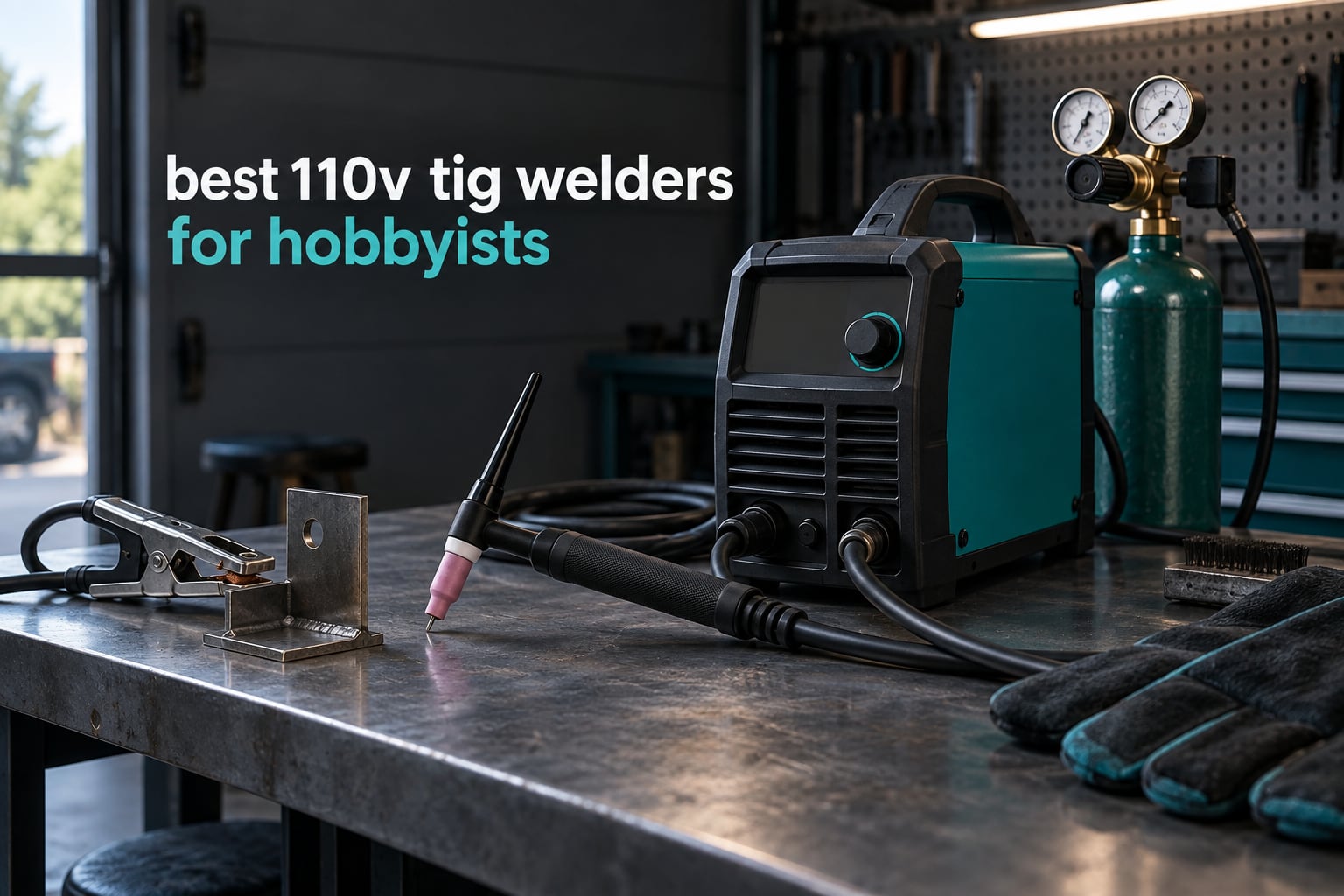
Every year, hobbyist welders search for the best 110V TIG welders for hobbyists and hit the same wall: a machine on the bench that claims 200 amps and a breaker in the panel that refuses to give it. That gap is the whole story on a 110V circuit, and almost nobody explains it before you spend money.
I’ve spent years working with home-garage welders and reading the long forum threads where hobbyists swap notes on the same machines. The pattern is consistent. A 200A TIG welder advertising 200 amps on 110V typically delivers somewhere between 90 and 140 amps on a standard 20A household circuit. That is still enough to weld exhaust tubing, brackets, thin stainless and small tube frames. It is not enough to pretend the box number is real.
Welding three things shaped this roundup. First, the derating math, so you know what your circuit can actually deliver before you buy. Second, the accessories the box leaves out, because an argon cylinder, a regulator, tungsten, contact tips and a ground clamp can add more to your bill than a budget machine costs. Third, honest pros and cons per machine, since hobbyists can smell marketing instantly.
Every machine below is a true TIG welder with a torch and gas shield. I left out lift-TIG-only MIG machines and stick-only welders that other roundups pad their lists with, because they do not give you the bead control that makes TIG worth learning. If you are still deciding between processes, our best 110V MIG welders comparison covers the MIG side.
Before the recommendations, one honest note. Argon displaces the air in a small garage faster than you expect, so ventilation matters as much as the machine. Open the door, run a fan, and secure the cylinder upright. Full safety coverage is in the buying guide.
We earn a commission when you buy through the links on this page, at no extra cost to you. That never changes which machine we recommend.
Our Top 3 110V TIG Welders for Garage Work in 2026

PRIMEWELD TIG225X
- 225A AC/DC TIG and Stick with pulse
- CK Worldwide 17 Series Superflex torch
- 200 Hz pulse and AC frequency control

S7 200A TIG and Stick
- 200A DC TIG plus stick
- 110V/220V dual voltage
- Post-gas flow timer and digital current display

Weldpro 200A AC/DC
- 5-in-1 with AC and DC pulse TIG
- Automatic 110V/220V switching
- Foot pedal
- flow meter and gas hose included
The PRIMEWELD TIG225X is the one to buy if you can only buy one. It handles steel, stainless and aluminum on a single machine, ships with a CK Worldwide 17 Series Superflex torch, and puts the settings on physical knobs rather than buried in a menu.
The S7 200A is the cheapest honest way into TIG, with a working high frequency start and a post-gas dial. The Weldpro 200A AC/DC is the pick if aluminum is on your project list and you want pulse control at both AC and DC.
All 10 Machines Compared Side by Side
| Product | Details | Action |
|---|---|---|
|
|
Check Latest Price |
|
|
Check Latest Price |
|
|
Check Latest Price |
 |
|
Check Latest Price |
 |
|
Check Latest Price |
 |
|
Check Latest Price |
 |
|
Check Latest Price |
 |
|
Check Latest Price |
 |
|
Check Latest Price |
 |
|
Check Latest Price |
Two columns decide most of these purchases. AC output separates the machines that weld aluminum from the ones that do not, and whether a foot pedal is in the box determines how quickly you learn heat control.
Everything in this table is a real TIG machine with a gas-shielded torch. The rating and review count on each listing are the marketplace totals, not ours, and they range from a 4.8 average across 1426 reviews down to a 4.3 across 489.
1. PRIMEWELD TIG225X – Best Overall 110V TIG Welder for Hobbyists
PRIMEWELD TIG225X 225 Amp IGBT AC DC Tig/Stick Welder with Pulse CK17 Flex Torch and Cable
225A AC/DC TIG and Stick with pulse
CK Worldwide 17 Series Superflex torch
200 Hz pulse and AC frequency
110/220V, 1/4 in aluminum and 3/8 in steel
+ Pros
- CK Worldwide 17 Series Superflex torch and CK DINSE connector included
- Physical knobs instead of nested digital menus
- AC side welds aluminum cleanly out of the box
- Stable arc from 1/8 in steel down to 22 gauge
- Three-year warranty with responsive post-sale support
– Cons
- Control and setting labels are hard to read in low light
- Cooling fans are loud and run without a temperature shutoff
- Included argon regulator had a pinched O-ring
The TIG225X is the machine I point people toward when they ask for one answer. At 4.8 stars across 1426 reviews it has the deepest review history of any AC/DC machine in this roundup, and the feedback clusters around arc stability rather than excitement about features.
Owners consistently report handling 1/8 inch steel down to 22 gauge with a steady arc, and welding aluminum cleanly on the AC side straight out of the box. That matters because most beginners underestimate how much a cheap torch undermines an otherwise good machine.
The control layout is the quiet reason I keep recommending it. Physical knobs for amperage, AC balance, AC frequency and pulse mean a small adjustment takes one hand movement, not four button presses. Owners who came from machines with nested digital menus mention it repeatedly as the reason the TIG225X feels faster to learn on.
AC and DC Pulse Control for Aluminum and Stainless
Both pulse TIG and AC frequency are adjustable up to 200 Hz, and the machine handles 1/4 inch aluminum and 3/8 inch mild steel across 110 and 220 volts. On 110V your realistic ceiling is lower, closer to 1/8 inch aluminum in a single pass, but for tubing, heat shields and small brackets that is plenty.
The AC side is where pulse earns its keep on aluminum. Sliding the frequency and balance down keeps the puddle tight and limits burn-through on thin gauge, and owners working on aluminum tread plate report the duty cycle held up without balking.
Torch, Manual and Control Layout Details Worth Knowing
You get a CK Worldwide 17 Series Superflex torch with a flex head and Superflex hose, plus a USA-made CK DINSE connector. That torch alone is a meaningful upgrade path, since owners who later move to a different machine routinely keep this one. One drawback: the CK17 heat shield is not stocked by aftermarket suppliers, so replacement takes a trip through the manufacturer.
The included color manual is unusually good for a machine at this level, and owners report the company following up after the sale. The physical controls are the other half of that experience. There is a 3-year warranty behind it, and support is one of the more commonly praised items in the reviews.
Who the PRIMEWELD TIG225X Suits Best
This is the right pick if you want one machine to cover steel, stainless and aluminum without learning a second power source, and if you plan to keep welding for years. It is the wrong pick if your workshop is a corner of a car park and you will move it constantly, because the listed item weight of 40823 g makes it a two-person carry.
Owners also flag hard-to-read control labels in low light and cooling fans that stay loud because they do not switch off on a temperature sensor. If you weld outdoors at night, bring a headlamp with a focused beam rather than fighting the panel.
2. S7 200A – Best Budget Entry With a Working HF Start
S7 200A TIG Welder with DC TIG and Stick Welding
200A DC TIG and Stick
110V/220V dual voltage
Digital current display
Post-gas flow timer
+ Pros
- Lowest entry cost in this roundup while still making clean welds
- High frequency start works reliably on thin-gauge work
- Compact at 18 lb and easy to move and store
- Post-gas dial sets flow time after the arc stops
- Dual voltage so it grows with a 220V outlet later
– Cons
- Instructions are poor and few tutorial videos exist
- Foot pedal and torch trigger are on/off only
- not variable
- Gas port uses a push-on nozzle rather than a screw-on fitting
The S7 200A is the answer for someone who wants to know whether they like TIG before spending real money. At 4.4 stars across 1530 reviews it has the largest review count in this roundup, and the sentiment matches a first machine: pleased with the results, disappointed by the paperwork.
It is DC only, so aluminum is off the table. What you do get is a high frequency start that owners say works reliably on thin gauge, which immediately separates it from lift-TIG machines where you have to touch the tungsten to the workpiece and contaminate the tip.
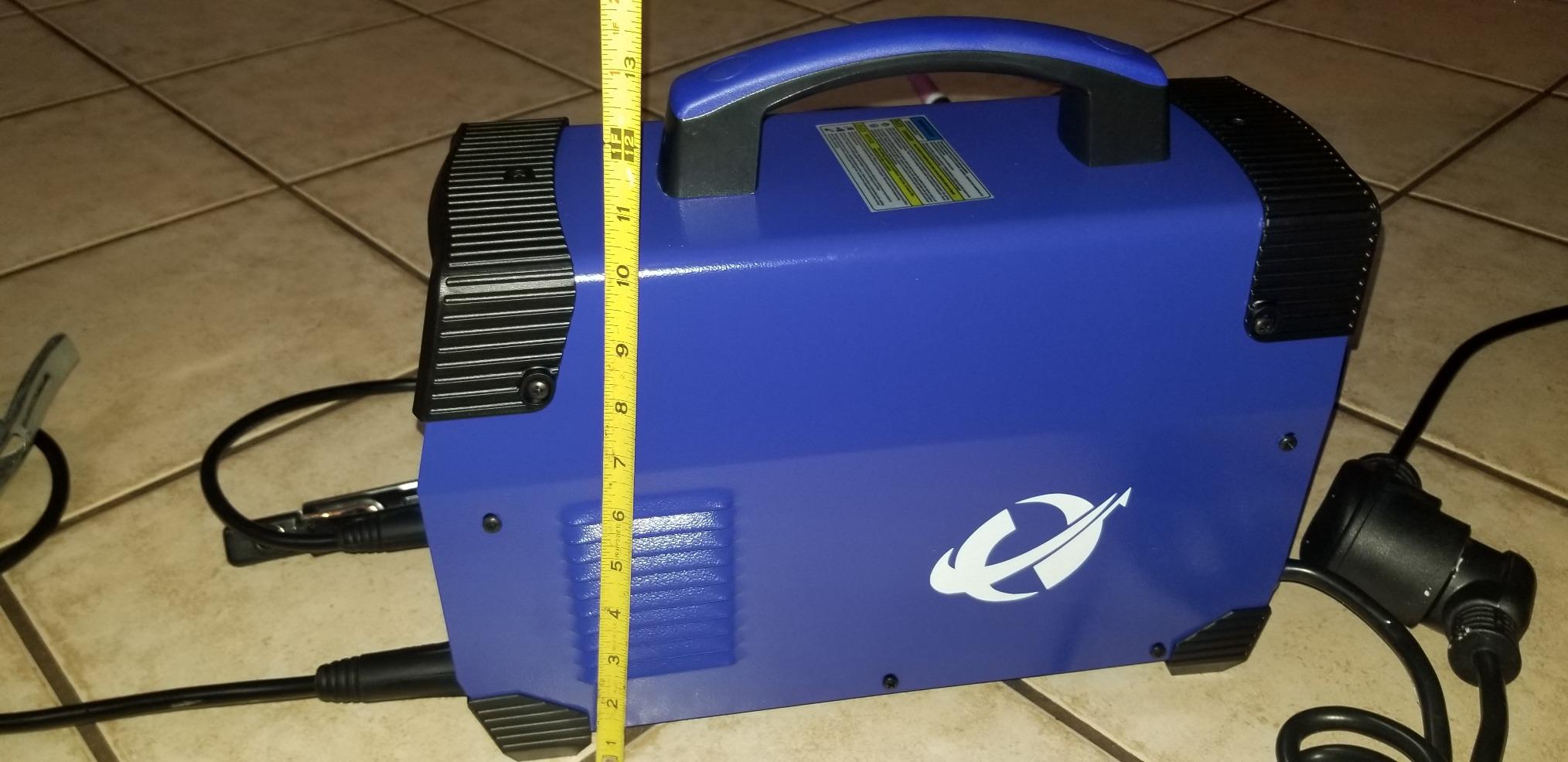
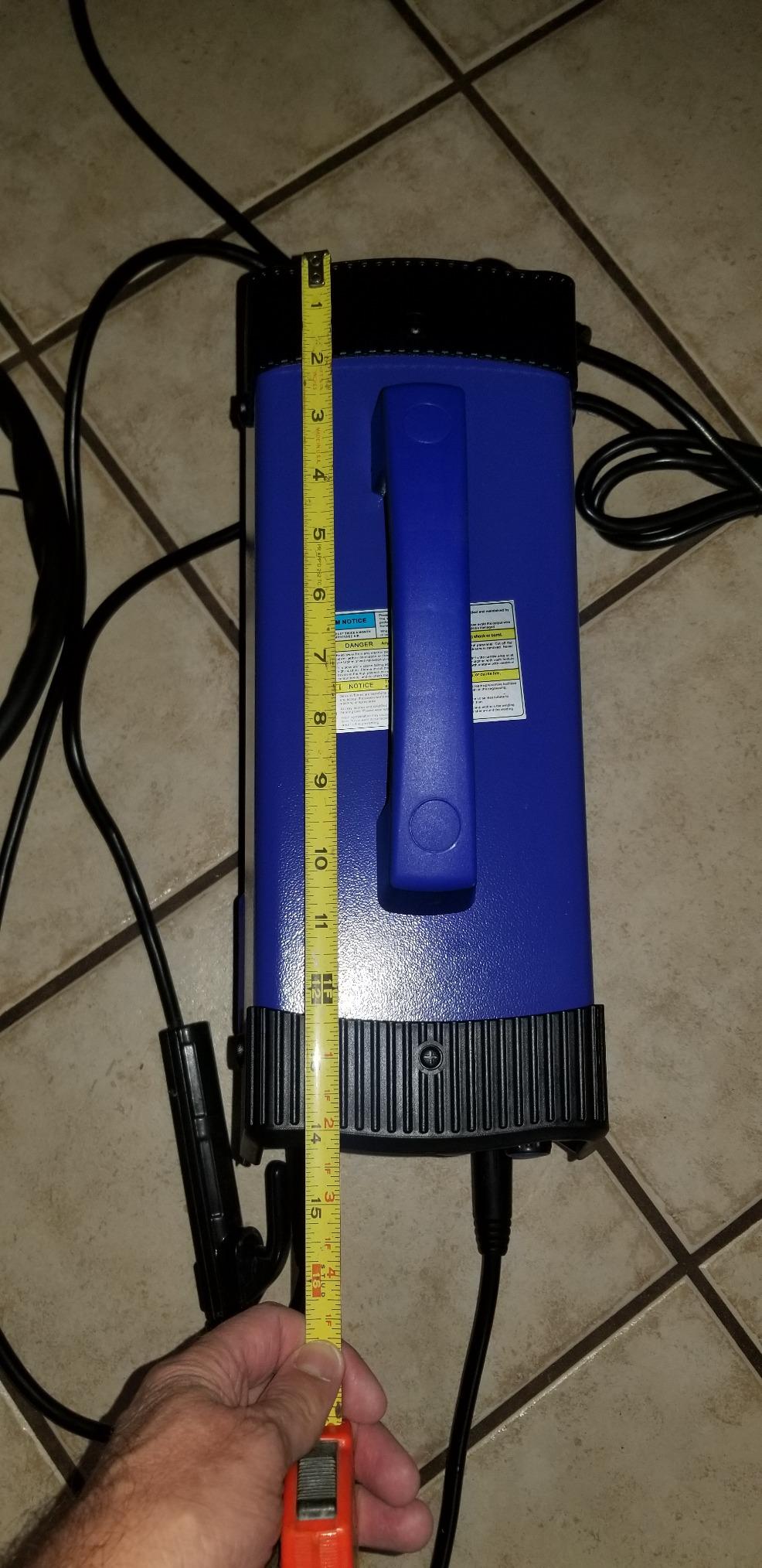
The 18-pound, 17 by 10 by 13 inch case is genuinely portable, and the digital current display keeps setup simple. One long-term owner reports running it on 220V without overheating, so the dual voltage design gives you a path if you install a 220V outlet later.
Post-Gas Control and Torch Design
The post-gas dial sets how long argon keeps flowing after the arc stops. That setting protects the hot tungsten from oxidising and it is the feature owners single out as the most useful thing on a machine this simple. Get it too short and the tip dulls fast on stainless.
The downsides are physical. The torch lead feels stiff and short when you are working around a large frame, and the gas port uses a push-on nozzle instead of a screw-on fitting, which is easier to knock loose mid-weld. Included accessories are described as mediocre, so plan on replacing the ground clamp early.
Why the Foot Pedal Limitation Matters for Beginners
The foot pedal and torch trigger on this machine are on and off only, not variable amperage. That is the single biggest reason beginners struggle: you cannot feather the heat, so you control it by trying to hold a steady hand and a steady travel speed.
You can still learn, and many people do, but if your plan is a lot of thin-gauge work, budget for a machine with real amperage control. Our Titanium TIG 200 review covers one of the simpler ways to add that capability to a setup later.
Who the S7 200A Suits Best
Buy this one if your work is thin mild steel and stainless, your budget is tight, and you want to know whether TIG is for you. Skip it if aluminum is on the list or if you are planning projects in thicker than 3/16 inch material, where a 110V DC machine will make you fight the circuit.
Poor instructions are the other warning. You will be looking up setup videos on the machine itself rather than in a booklet, so factor in a few evenings of self-teaching before your first bead.
3. Weldpro 200A AC/DC – Best for Aluminum on a Home Circuit
Weldpro 200A AC/DC TIG Welder with Pulse, 110V/220V Dual Voltage Aluminum TIG Welder, AC TIG/DC TIG/AC PULSE TIG/DC PULSE TIG/Stick 5 in 1 Multiprocess Welding Machine with TIG Torch & Foot Pedal
5-in-1: AC TIG, DC TIG, AC pulse, DC pulse, Stick
110V/220V auto-detection
0.5-200 Hz pulse
40 percent duty cycle at 200A
+ Pros
- Five processes including both AC and DC pulse TIG
- AC balance and frequency fully adjustable for aluminum
- Automatic 110V/220V switching removes rewiring
- Pulse settings cut heat input and burn-through on thin sheet
- Full kit: torch
- foot pedal
- ground clamp
- gas hose
- flow meter
– Cons
- 40 percent duty cycle at full 200A is modest
- 61.8 lb build is a two-person move for some
- Customer review text for this listing was limited
The Weldpro 200A is the machine I suggest when aluminum is not a someday project but a current one. It runs high frequency AC TIG, DC TIG, AC pulse TIG, DC pulse TIG and stick, and the AC balance and frequency controls are fully adjustable, which is the difference between welding aluminum and fighting it.
At 4.6 stars across 836 reviews it sits comfortably in the middle of the pack on satisfaction and near the top on feature completeness. The box also arrives unusually complete for a machine at this level.
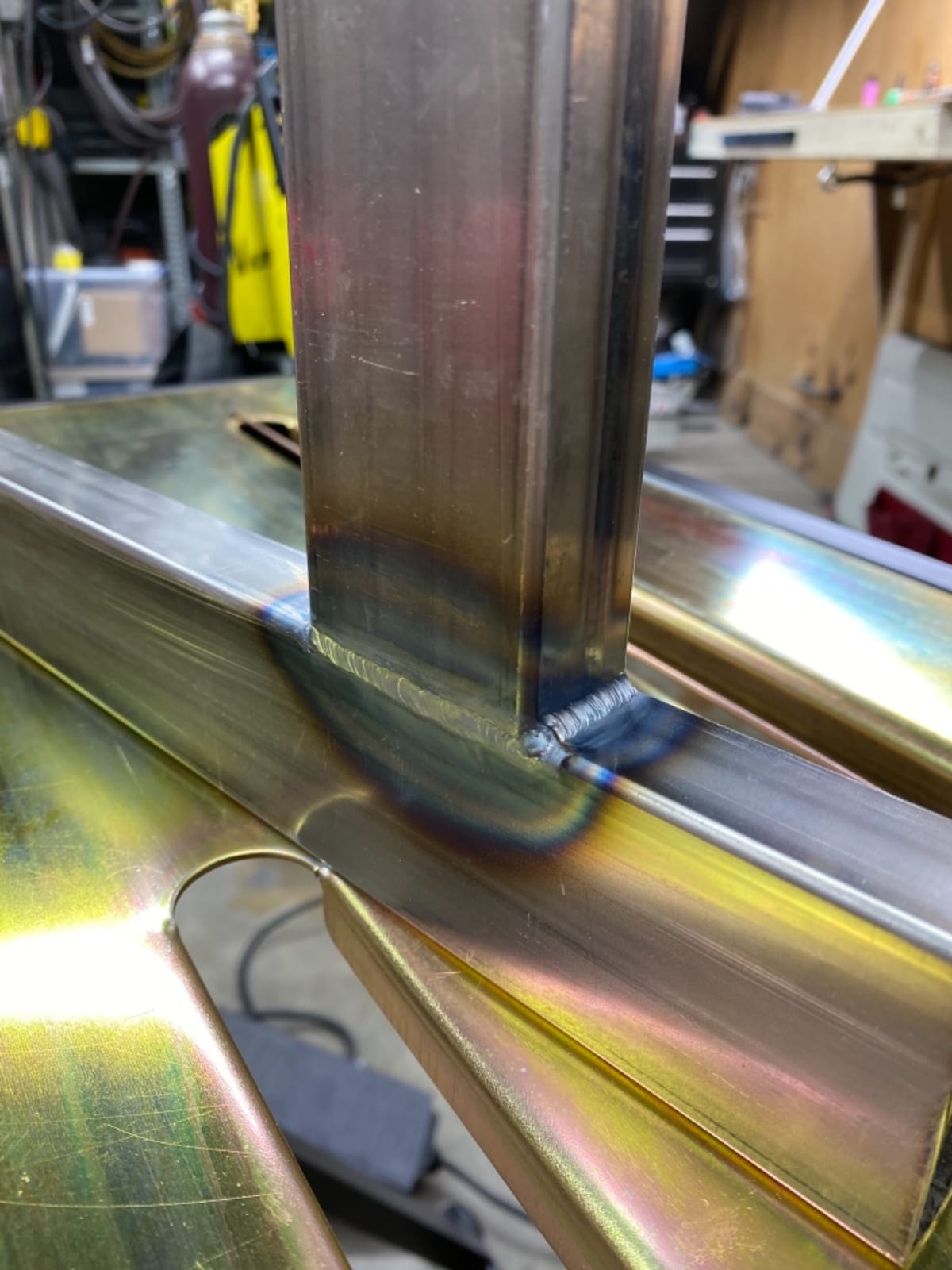
Automatic 110V and 220V detection means you never rewire the machine when you move between the garage and a shop with a 220V outlet. That is a small feature that removes a real annoyance, and it pairs well with the pulse controls for thin-gauge work where heat input decides whether the metal warps.
Pulse Control, AC Balance and What 0.5 to 200 Hz Buys You
Pulse frequency runs from 0.5 to 200 Hz with adjustable peak amperage and upslope and downslope control, plus 2T and 4T trigger modes for long continuous welds. On 18 gauge sheet, that means you can hold a short, cold, fast-moving arc instead of dwelling in one spot and burning through.
On the AC side, the balance control sets how much of each cycle cleans the aluminum oxide and how much penetrates. Beginners should start near the middle and move in small steps. The 2T mode is forgiving for short welds; 4T locks the machine on for extended passes on tubing and pipe.
The Included Foot Pedal, Flow Meter and Gas Hose
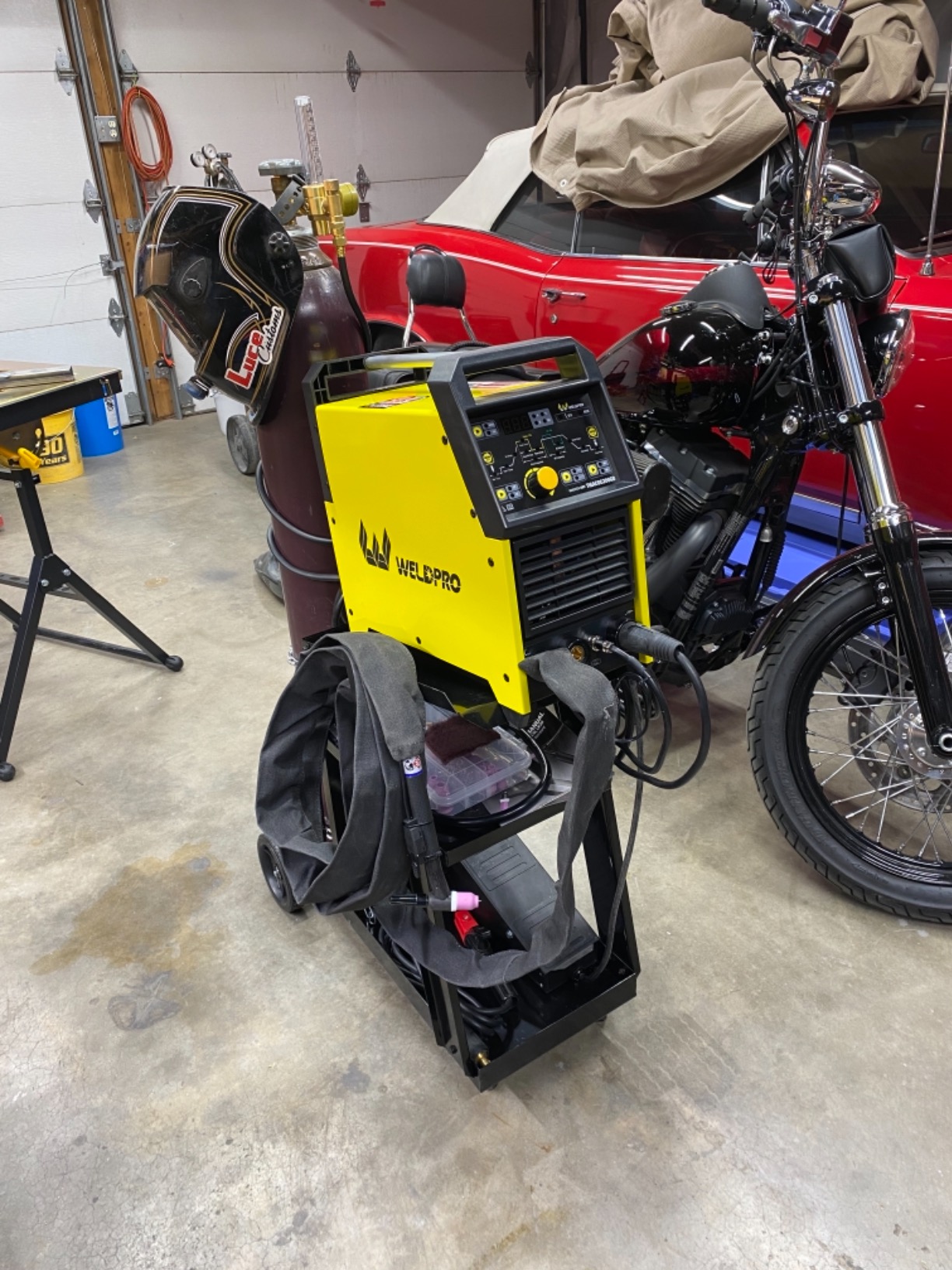
The accessory kit includes a TIG torch, a rocker foot pedal, a 300A ground clamp, an electrode holder, a gas hose, a flow meter, tungsten, nozzles, collets, back caps and a manual. Having a proper flow meter included matters more than it sounds, because cheap disposable regulators starve the torch and beginners blame the machine.
The foot pedal gives you real-time amperage control, and the LED display is readable in bright or low light. The large, high-contrast screen is one of the more repeated usability wins in the listing. A 40 percent duty cycle at full 200 amps is the honest limitation here, so plan real cooling breaks on long aluminum work.
Who the Weldpro 200A AC/DC Suits Best
This is the pick for a hobbyist who welds aluminum on a 110V circuit and wants pulse control on both AC and DC, without buying a regulator and foot pedal separately. It suits a garage with a 20A breaker, a torch lead long enough for frame work, and a plan to grow into heavier material later.
Be realistic about the 61.8-pound weight and the 40 percent duty cycle at 200 amps. If your work is constant structural fabrication, you want a machine rated for more time at high amperage. If you are fitting a variety of jobs a few hours a week, the feature set is hard to beat for this class.
4. AHP AlphaTIG 203Xi – Best for Stick Work With a 120V Adapter
NEW 2024 AHP AlphaTIG 203Xi Amp IGBT AC DC Tig/Stick Welder with PULSE 110/220v 3 YEARS WARRANTY
AC/DC TIG and Stick with pulse
60 percent duty cycle at 155 amps
HV start, solid-state simulated HF
120V adapter, regulator, foot pedal and torch included
+ Pros
- Stick mode repeatedly called the smoothest arc owners have used
- 60 percent duty cycle at 155 amps is high for this bracket
- Regulator
- Nova foot pedal and Nova Rotaflex torch included
- AHP support answered an emailed question within four hours
– Cons
- On 120V the digital readout does not match the knob and the machine is not current capped
- Minimum output of 10 amps is restrictive on very thin material
- Included ground clamp is cheaply made and its copper connection broke quickly
The AlphaTIG 203Xi is unusual in this group because owners talk about its stick mode as much as its TIG. At 4.6 stars across 603 reviews, the most common comparison is against Miller, Lincoln and Harbor Freight stick machines, and it usually wins on smoothness.
The current-generation update added HV start, an electronic solid-state simulated high frequency start with no point gap to manage. In practice you get clean ignition on thin gauge without the tungsten maintenance a true HF unit can demand.
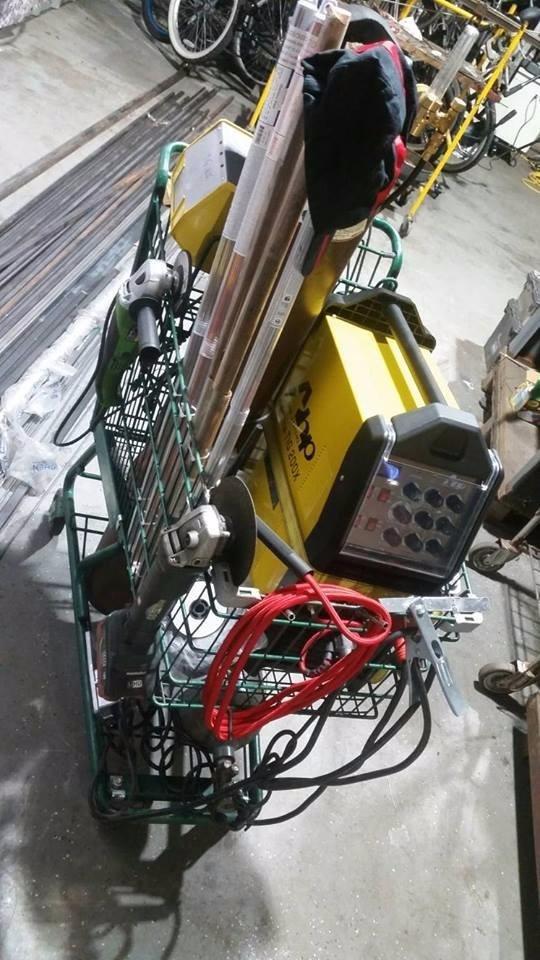
The box is genuinely full: a 240V to 120V plug adapter, a 250A electrode holder, a floating ball type brass argon regulator, a Nova foot pedal on a 25 foot cord, a Nova Rotaflex 9/17 TIG torch and a work clamp. That is a working gas-shielded setup on day one, minus the cylinder itself.
Duty Cycle, 120V Behaviour and the Adapter
A 60 percent duty cycle at 155 amps is unusually high for this price bracket and it is why owners report the torch overheating before the machine does. That is the machine working as designed, not a fault.
On 120V the behaviour is the thing to understand before you buy. Owners report no noticeable power loss through a 25 foot 12-gauge extension cord, but also that the digital readout does not match the knob setting and that the machine is not current capped, so it can trip a breaker if you run it hot. Set your expectations from the dial, not the display.
Foot Pedal, Torch and Minimum Amps for Thin Work
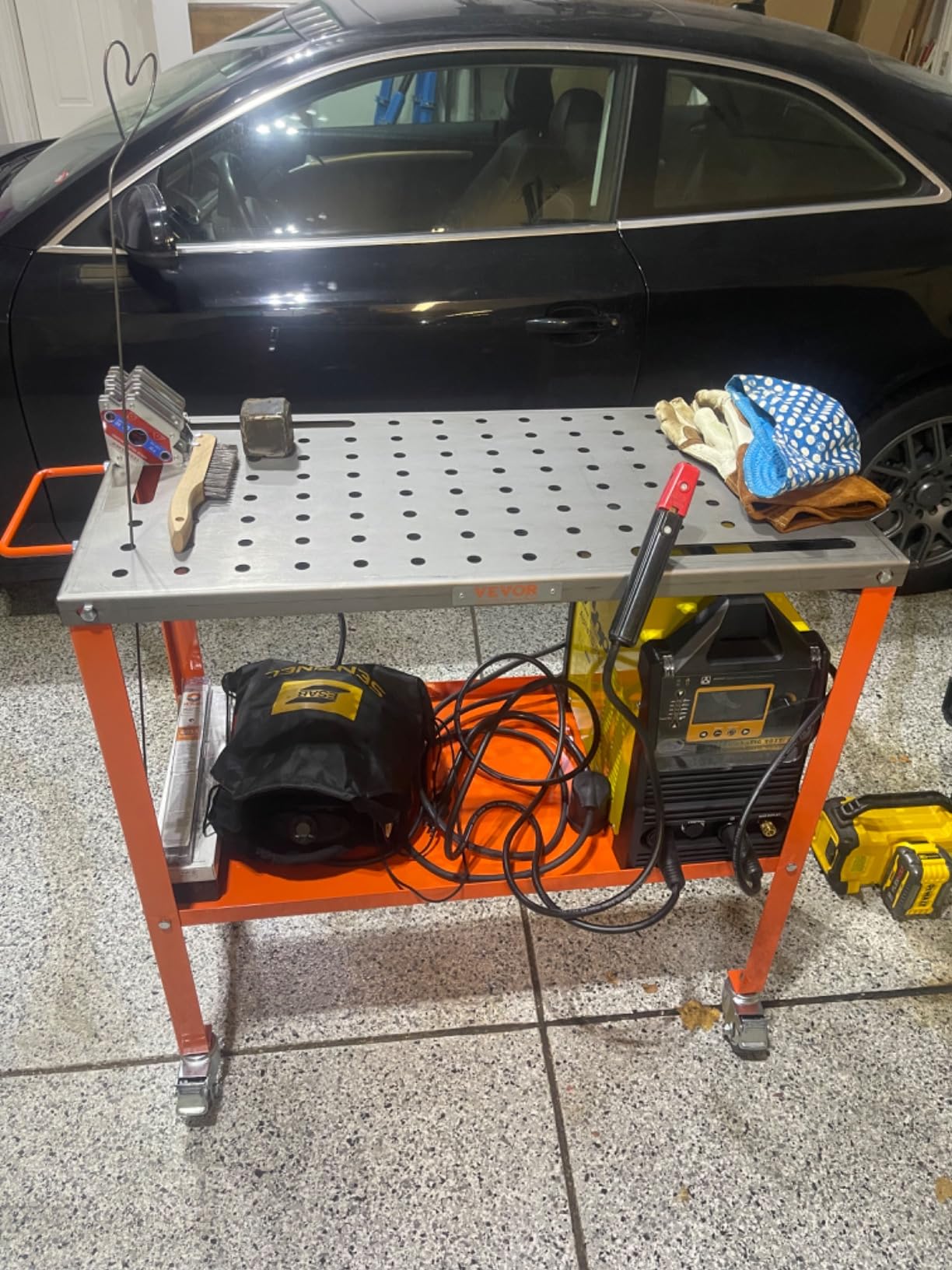
The included Nova foot pedal gives proper variable heat control, which is the single most useful accessory for a beginner, though owners describe it as heavy and prone to scooting across the floor. The Rotaflex torch hose is light and super flexible with a bendable head, and the hose is not armoured, so watch it around hot plate edges.
The 10 amp minimum output is a real limit on very thin material such as .20 mm stainless. If your work is heavy on 24 gauge and finer, look for a machine that starts lower. The instructions are also sparse and do not explain the pulse dial, another reason to plan on learning from the forums rather than the booklet.
Who the AHP AlphaTIG 203Xi Suits Best
Choose this one if you split your time between TIG and stick, want a regulator and foot pedal in the box, and value a US-based support line that answers quickly. Owners report a support answer within four hours and a replacement panel for a shipping-damaged unit, which is a different level of after-sale care from most of this list.
Pass if your work is primarily 24 gauge and thinner stainless, or if you need a machine that meters accurately at 120V. The cheap included ground clamp and heavy foot pedal are the two things to replace early.
5. Everlast PowerTIG 200DV – Best for Ultra-Thin Stainless
New Everlast PowerTIG 200DV 110/220 Dual Voltage 200amp Pulse ACDC Welder
Dual voltage 110/240V DC and AC TIG
Start as low as 5 amps on DC and 20 amps on AC
Lift start option
Pre and post flow gas control with Arc Force
+ Pros
- Start amperage as low as 5 amps on DC TIG and 20 amps on AC
- Lift start available when high frequency ignition is not wanted
- Pre and post flow gas control plus Arc Force (DIG) for spatter control
- Digital display with adjustable pulse rate
– Cons
- Smallest review base here at 116 reviews
- 60 lb is heavy for a garage machine
- No customer review text was returned for this listing during our analysis
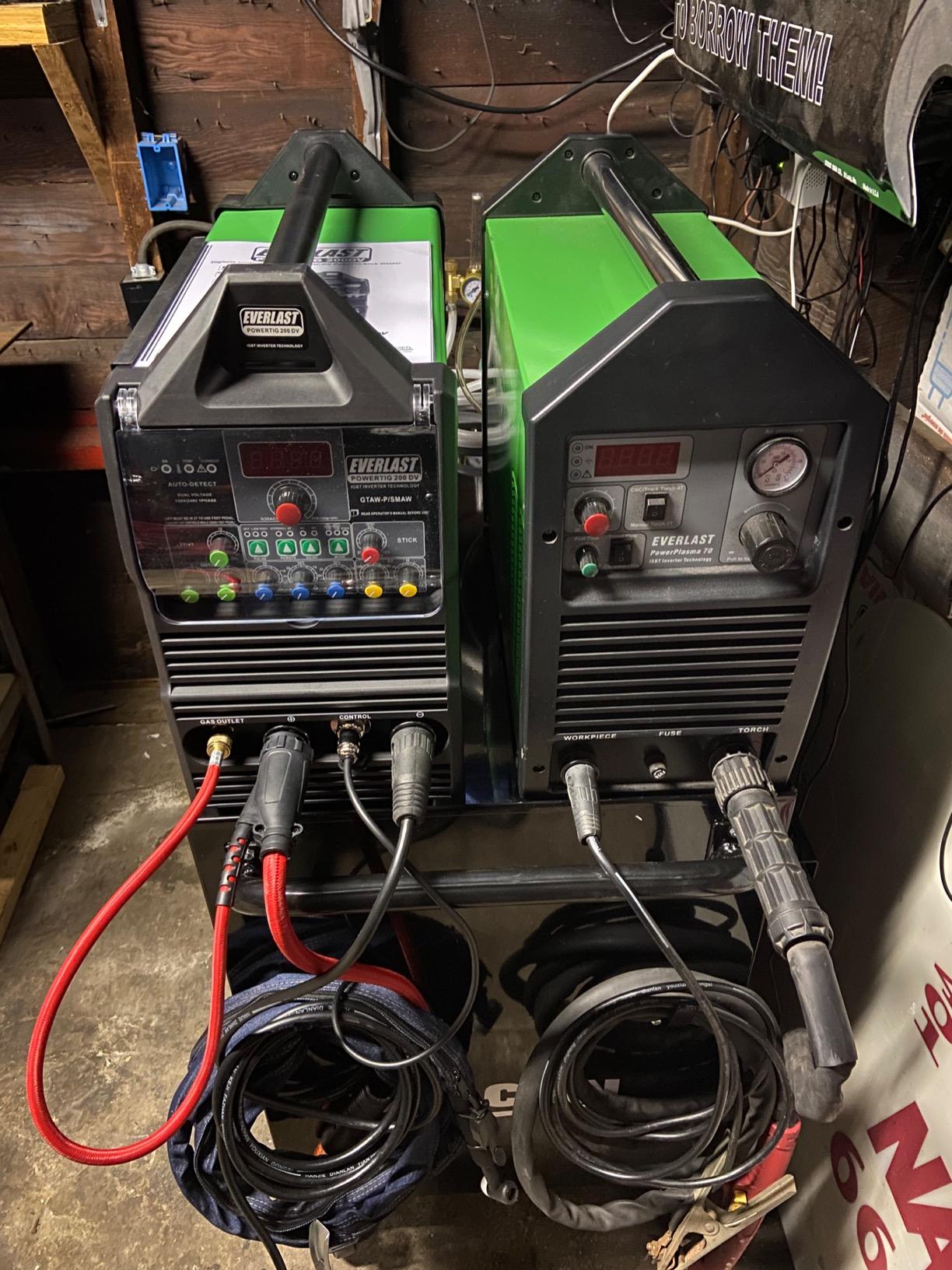
The PowerTIG 200DV is the machine to look at when the material is thinner than the machine’s minimum output on anything else here. It starts as low as 5 amps on DC TIG and 20 amps on AC, which is the spec that matters for .20 mm stainless and 24 gauge sheet.
It holds a 4.6 average with an 83 percent five-star share, but across 116 reviews. That is a much thinner feedback base than the other machines in this roundup, and no customer review text came back for this listing, so I am weighting the documented specifications more heavily than I do elsewhere.
Reliable IGBTs handle the inverter side, and 120V and 240V dual voltage means it works in a normal home outlet and in a shop circuit. The 60-pound, 9 by 24 by 17 inch case is a fixed installation more than a carry-around machine.
Arc Start Options and Gas Flow Control
The lift start function is the feature that distinguishes this machine. Lift TIG means you bring the electrode close, create a small gap, and the arc strikes mechanically without a high frequency burst. On very thin stainless or in a space where you do not want a stray starting arc, that is an advantage rather than a compromise.
Pre-flow and post-flow gas control both adjust, which protects the tungsten and the finished bead at the start and end of a weld. Arc Force (DIG) is also adjustable, and DIG is the single most useful control for reducing spatter on mild steel fill passes. Between the two, you can tune a bead rather than just set an amperage and accept the result.
Where This Machine Earns Its Keep
Think of this as a precision machine rather than a general fabrication unit. Adjustable pulse rate, low start amperage and DIG give you control over bead profile on thin work, which is where TIG already beats every other home process. On thicker material you have plenty of 200A-class machines to choose from, and most of them carry a much larger review base.
The honest tradeoff is support. A brand with fewer marketplace listings means fewer spare parts listings and less independent troubleshooting content, and that is exactly the hesitation forum users voice when weighing a less common name. If you are comfortable sourcing parts, the control set is excellent.
Who the Everlast PowerTIG 200DV Suits Best
Pick it if you weld ultra-thin stainless, precision sheet or anything where a 5 amp start matters, and you value DIG and gas flow control over raw throughput. It is also a good second machine for someone who already owns a multi-process unit and wants cleaner thin-gauge work.
Look elsewhere if you want the deepest pool of reviews and spare parts, or if you plan heavy single-pass structural work where a higher duty cycle machine serves you better. The 60-pound chassis is a consideration if you share the machine between a bench and a garage floor.
6. TOOLIOM 200A – Best for TIG Spot Welding
TOOLIOM 200A TIG Welder with Pulse, 110V/220V Dual Voltage
200A 4-in-1: stick, DC TIG, pulse TIG, TIG spot
Large digital display
HF ignition with 2T/4T/spot
Auto 110V-220V sensing
+ Pros
- TIG spot mode gives repeatable spot welds on thin material
- Large digital display shows amperage and mode in real time
- Automatic 110V-220V adaptation removes manual switching
- Thermal protection cools the unit before shutdown
– Cons
- Lowest average rating here at 4.3 with a 6 percent one-star share
- Foot pedal is not included
- only the 5-pin interface is reserved
- Only 4 percent of reviews are a top rating
The TOOLIOM 200A is the odd one out on this list, and that is why it is here. It runs four modes: stick, DC TIG, pulse TIG and TIG spot. The spot mode holds a fixed duration so you can put repeatable tacks into sheet metal without counting.
At 4.3 stars across 489 reviews it has the lowest average in the roundup, and the distribution is the reason. Only 4 percent of reviews are a top rating, and 6 percent are one star, which tells you the machine has a wider spread of outcomes than its competitors.
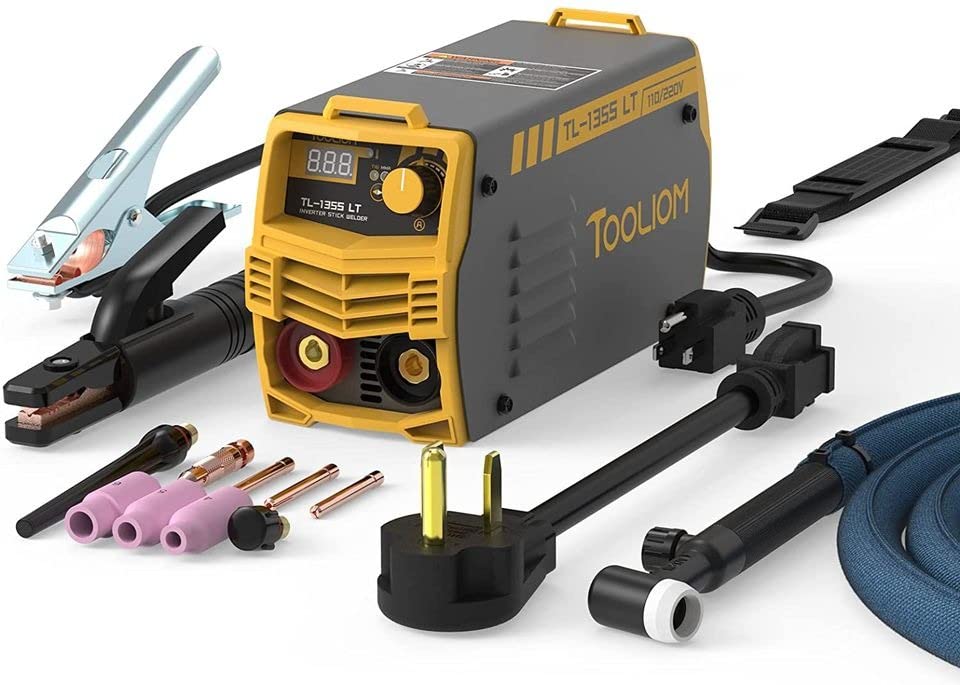
The large digital display shows amperage, mode and parameters in real time, which is a genuine advantage when you are switching between spot and pulse work. Smart sensing circuitry auto-adapts to 110V and 220V sources, so the machine moves between circuits without a switch.
Spot TIG, Pulse TIG and Independent Pulse Control
TIG spot welds in a fixed, controlled length of time. On 18 gauge body panels or two pieces of 16 gauge you want held together before a final pass, it removes the guesswork of counting seconds. That is a niche skill, and most other machines in this roundup skip it entirely.
Pulse TIG gives independent control of frequency, duty cycle and current rather than tying them together. DC TIG uses HF ignition with 2T, 4T and spot operation, and the stick mode carries hot start, arc force and anti-stick. The reserved 5-pin foot pedal interface means you can add variable amperage control later, but the pedal itself is not in the box.
Thermal Protection and Build Behaviour Over Time
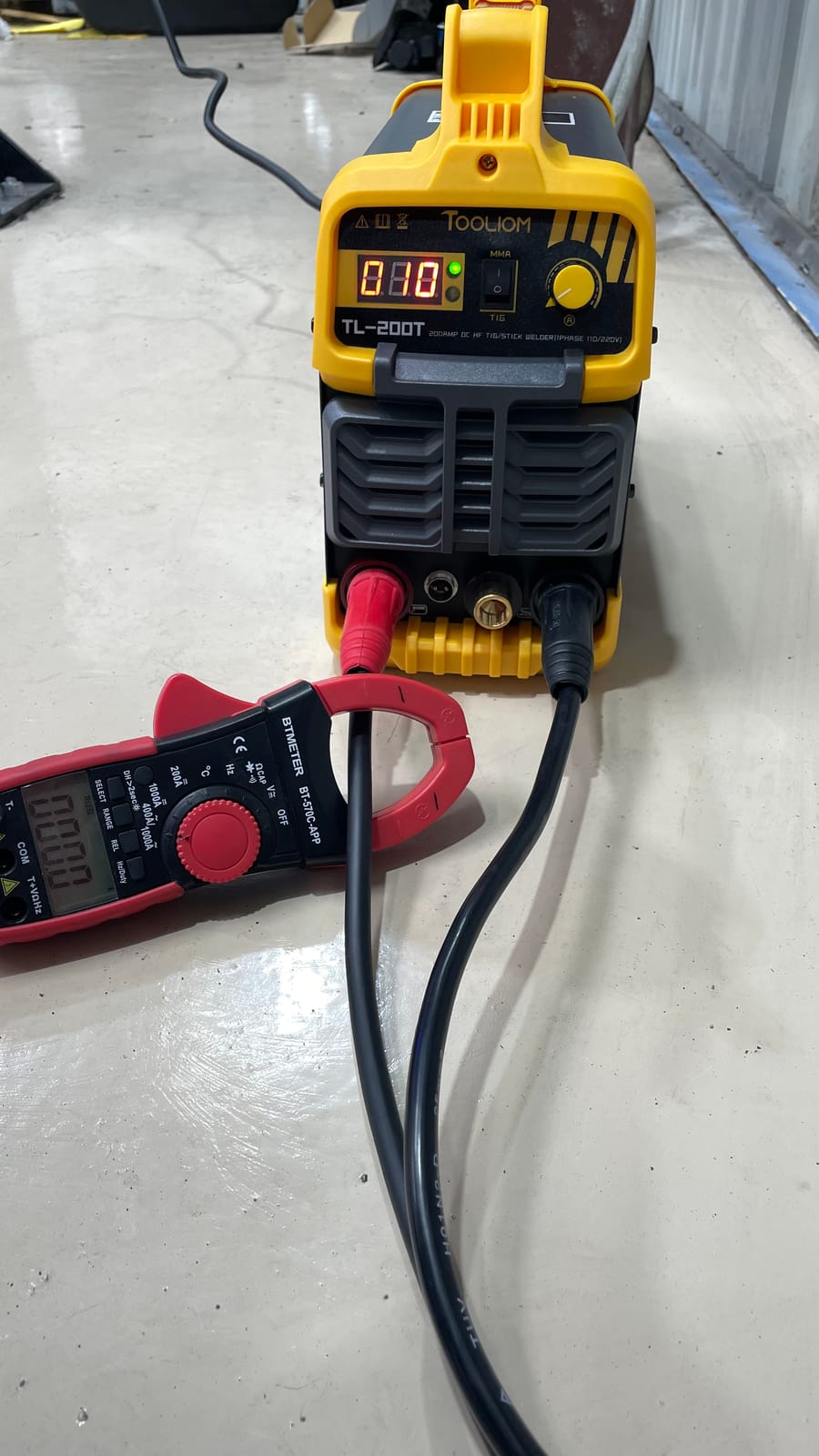
Built-in thermal protection shuts the unit down on overheat or overload while the fan keeps running to cool it, rather than cutting power dead. On a hobbyist machine that gets worked in bursts, that behaviour extends component life noticeably.
The spec sheet lists low spatter and a high arc-start success rate on stainless, alloy steel and iron. The more cautious read is that with a 4.3 average and 6 percent one-star reviews, something in the ownership experience is not landing for a noticeable slice of buyers, and no customer review text came back for this listing to tell us what.
Who the TOOLIOM 200A Suits Best
Buy it if you specifically want TIG spot capability, or if you like having four processes and a large digital readout in one package. The auto voltage sensing makes it a good companion to a generator or a mix of circuits, which is common in field repair work.
Pass if you want a track record you can read. For the same money range, several machines in this roundup carry a larger review base and a tighter rating distribution, and you will learn more from their user communities when something goes wrong.
7. YESWELDER TIG-205P – Best Portable 110V TIG Welder
YESWELDER 205A Tig Welder Pulse STICK/DC TIG/PULSE TIG 3 in 1 TIG-205P
205A 3-in-1: stick, DC TIG, pulse TIG
4.85 kg unit weight
Auto-sensing 110V/220V
HF non-touch arc start and settings memory
+ Pros
- Lightest machine in the roundup at 10.7 lb
- Auto-sensing 110V/220V input needs no manual switching
- Settings memory restores your last setup after power-off
- Best category rank here at number 18 in TIG Welding Equipment
- Pulse TIG with independent frequency
- duty and current control
– Cons
- DC output only
- so aluminum is out of reach
- Stick mode is limited compared with the AC/DC machines
- Foot pedal not included
- only a 5-pin interface reserved
The TIG-205P is the one you can load in one hand. At 4.85 kg, or 10.7 pounds, it is the lightest machine in this roundup by a wide margin, and it also posts the strongest category placement at number 18 in TIG Welding Equipment.
It delivers up to 200 amps of TIG output across stick, DC TIG and pulse TIG, with auto-sensing 110V and 220V input. If your work is scattered between a garage, a shed and a truck tailgate, the weight is the deciding factor before anything on the spec sheet.
The large LED display and the settings memory are the features that come up most in buyer feedback. Restoring your last configuration after a power cut removes one of the small frictions that make a first machine feel fiddly, and the display keeps amperage visible at a glance on a dark job.
DC Only Output and What That Rules Out
Be clear about this: the TIG-205P is DC output and cannot be used for welding aluminum. That is not a hidden limitation, it is stated in the listing. For steel and stainless on DC, the machine runs 2 percent lanthanated tungsten cleanly and gives you an accurate bead.
If aluminum is something you will want in the next two years, this is the wrong machine and you should look at an AC/DC unit such as the Weldpro above. Buying a DC-only machine to save money and then replacing it within a year is the most common budget mistake in this category.
Pulse TIG Controls and Stick Mode Limits
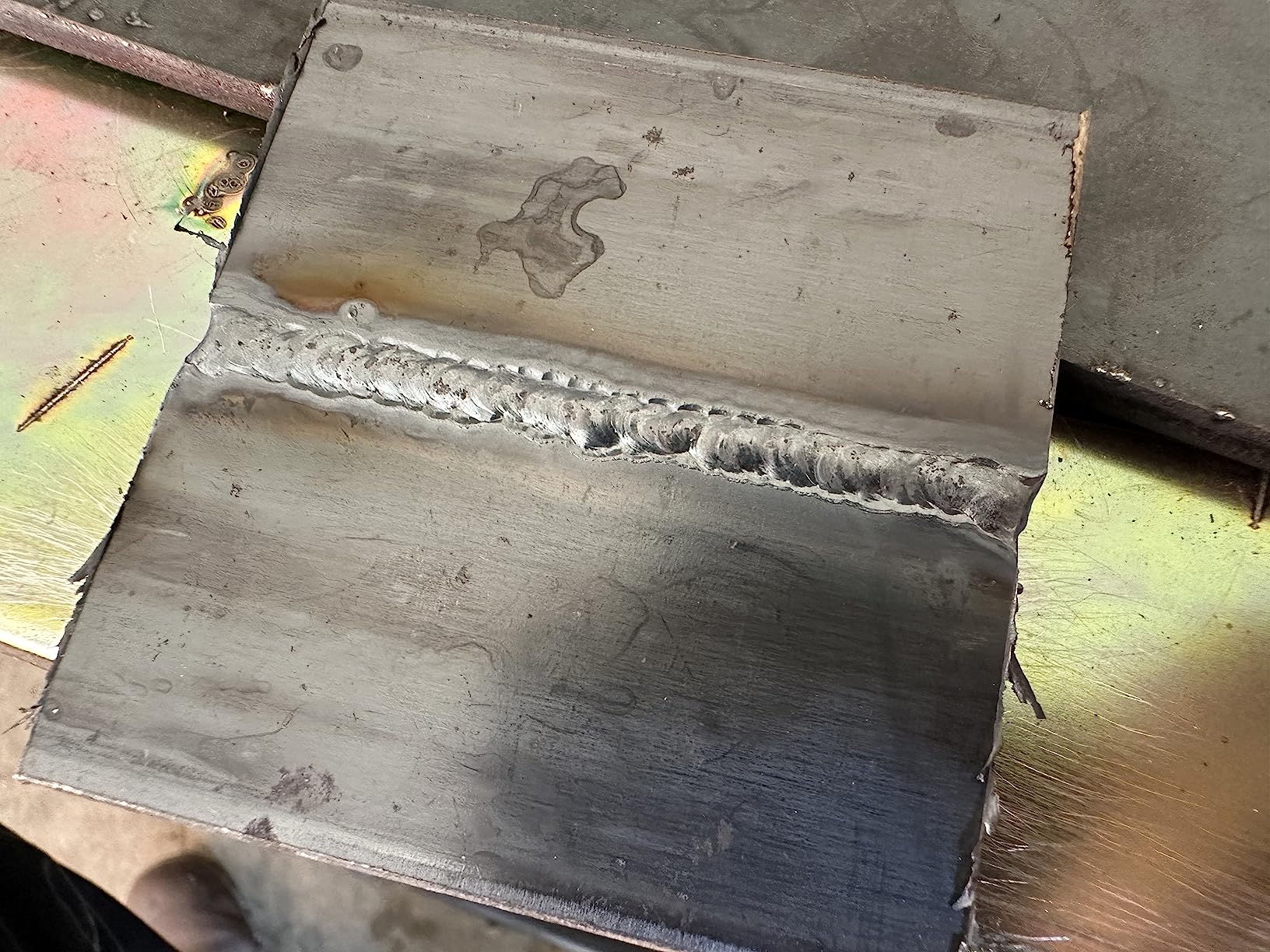
Pulse TIG gives independent control of pulse frequency, duty cycle and current, and DC TIG uses HF arc ignition with 2T, 4T and spot operation. For thin-gauge stainless and 18 to 22 gauge sheet, the pulse control is where the heat control comes from when you are not using a pedal.
Stick mode carries hot start, arc force and anti-stick, but it is limited compared with the AC/DC machines in this group, and a 6 percent one-star share is among the higher of the budget machines. The foot pedal is not included, though a 5-pin interface is reserved, so variable amperage control is an add-on rather than an expectation.
Who the YESWELDER TIG-205P Suits Best
This suits a hobbyist who welds thin stainless, mild steel and small parts, and who needs the machine to travel. Field repair off a generator, a roll-cage project that happens in two yards, or a small shop where bench space is tight all suit this design better than a 60-pound cabinet.
Skip it for aluminum, for heavy structural plate, or for anyone who wants the steadiest heat control possible from day one. If your work is a mix of TIG and stick on thicker material, the 3-in-1 compromise costs you in both processes.
8. ARCCAPTAIN TIG200 – Best Two-in-One With Real Endurance
ARCCAPTAIN 200A TIG Welder, 110V/220V TIG/Stick 2 IN 1 Welding Machine
200A 2-in-1 HF TIG and stick
Post gas 1-10s and down-slope 0-10s
2T/4T trigger modes
Under 12 lb with shoulder strap, 2-year warranty
+ Pros
- One owner ran 160 amps for nearly eight continuous hours
- Handled a 13-pass 7018 structural weld test at 125 amps on 220V
- Under 12 lb and fits under a truck back seat
- Cooling fan runs only when needed instead of constantly
- Customer service is repeatedly singled out as unmatched
– Cons
- DC only
- so aluminum needs a different machine
- Included TIG torch is heavy
- awkward and not bendable
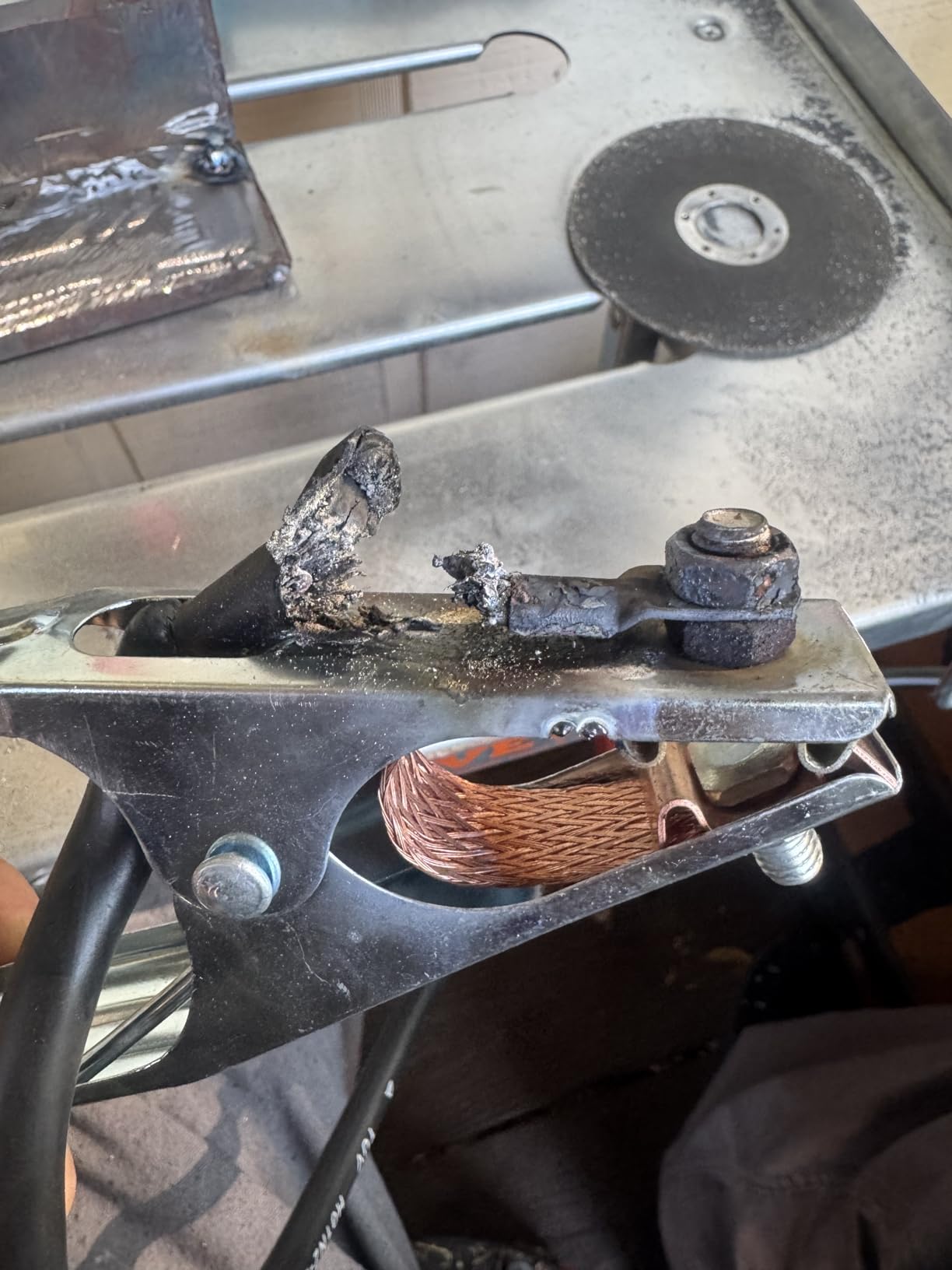
- Ground cable can melt with long continuous use
- Trips a 15A breaker above roughly 95 amps on 110V
The ARCCAPTAIN TIG200 has the most striking endurance reports of any DC machine in this roundup. At 4.5 stars across 289 reviews, one owner reported running 160 amps for nearly eight continuous hours with only torch cooldowns, and another ran it for three days off a generator well past the listed duty cycle.
That is unusual for a machine in this class, and it is the reason this one is here rather than another 200A DC unit. It is a two-in-one: high frequency TIG and stick with hot start, arc force and anti-stick, up to 200 amps.
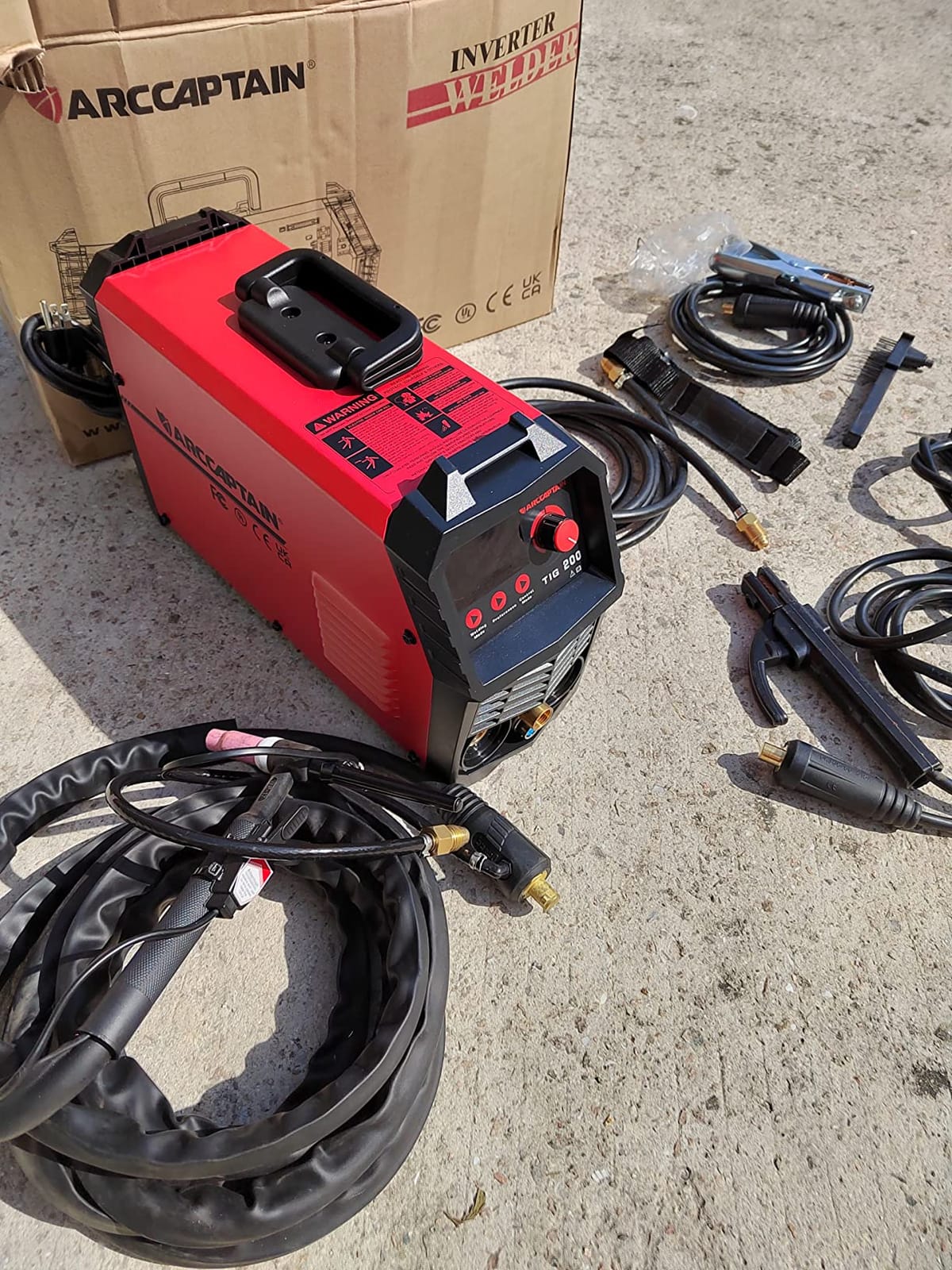
At under 12 pounds with a handle or the included shoulder strap, it fits under a truck back seat, and owners upgrading the torch report a CK Worldwide 17 torch and stubby gas lens transformed their results. That is the same upgrade path that makes many budget machines worthwhile.
Post Gas, Down-Slope and Trigger Modes
Post gas time is adjustable from 1 to 10 seconds and down-slope from 0 to 10 seconds, which gives you control over how the arc tapers off at the end of a bead. Set down-slope too fast on stainless and you crater the weld. Set it deliberately and your beads stop ending in a dimple.
Both 2T and 4T trigger modes are available, with 4T suited to long continuous welding where you want the machine to stay live without holding the button. Advanced MCU and IGBT inverter digital control handles the arc, and VRD plus over-current, over-voltage, overload and overheat protection cover the failure cases beginners create.
110V Output Limits and the Torch Weak Point
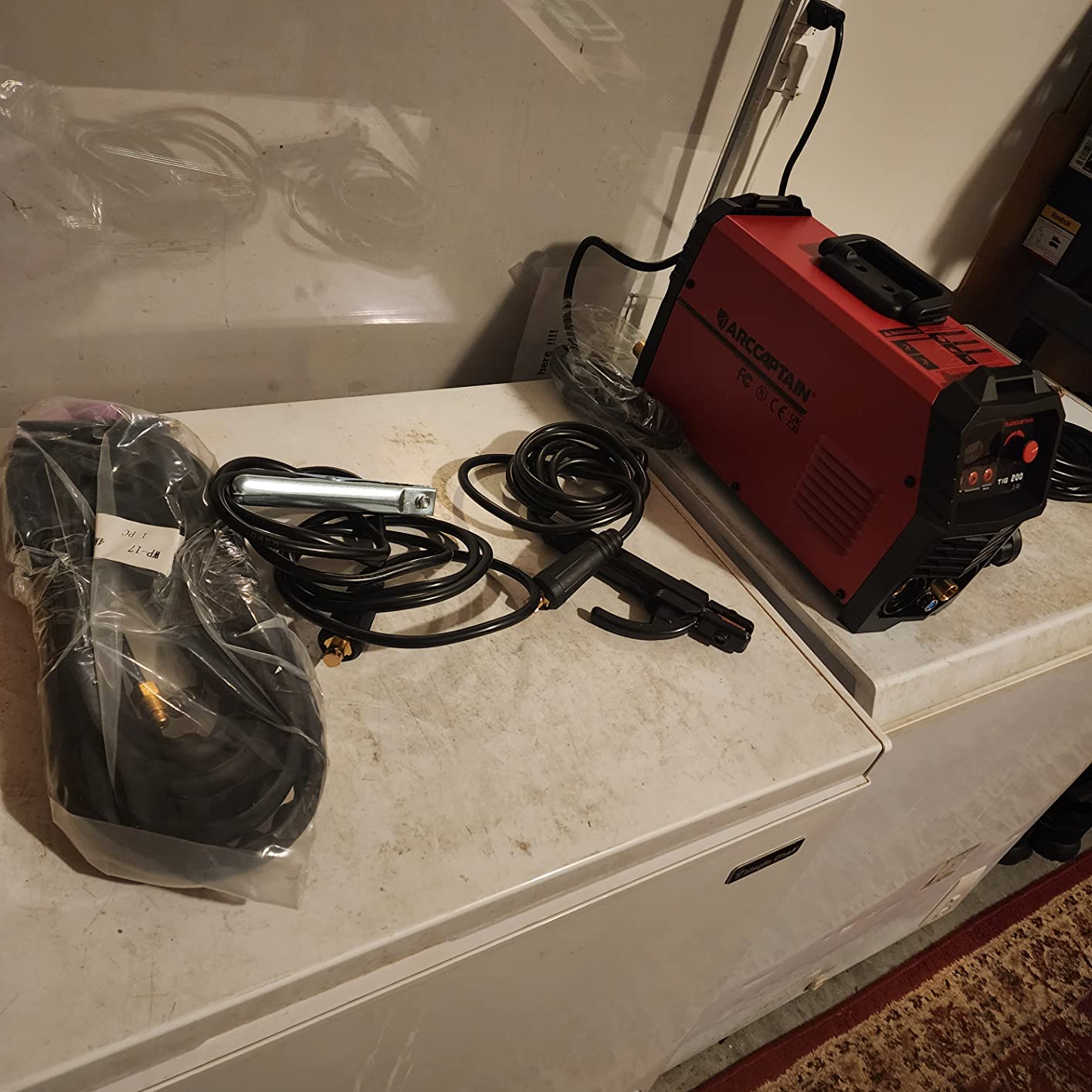
One owner reports that on 110V the output is limited enough to trip a 15A breaker above roughly 95 amps. If your only outlet is a 15A circuit, that is your real ceiling, not 200 amps. On a 20A circuit you have more headroom, and owners running structural 7018 work at 125 amps did so on 220V.
The included torch is the weak point. It is described as far too heavy and awkward, it does not bend or swivel, and the finger button is easy to trigger by accident. Several owners replaced it. The ground cable can also melt under long continuous use, so upgrade that before a big structural job rather than during it.
Who the ARCCAPTAIN TIG200 Suits Best
Pick it if you want one compact machine for TIG and stick, you will do long welding sessions, and you are willing to buy a better torch. The cooling fan that runs only when needed also makes it quieter in a small shop than machines with always-on fans.
Pass if aluminum is in your plans. Its two-year warranty is shorter than the three years offered by the AHP and the ARCCAPTAIN TIG 205 Pro, so weigh that against the endurance reports and the service reputation, which owners describe as unmatched.
9. LOTOS TIG200ACDC – Best Complete Package With Regulator Included
LOTOS TIG200ACDC 200A AC/DC Aluminum Tig Welder with DC Stick/Arc Welder, Square Wave Inverter with Foot Pedal and Argon Regulator 110/220V Dual Voltage Brown
200A AC square wave TIG and 15-200A DC stick
10-200A AC/DC TIG output
Automatic 110/120V and 220/240V
Foot pedal, argon regulator, gas hose and pigtail included
+ Pros
- AC square wave gives real aluminum capability at a mid-range price
- Foot pedal and argon regulator both ship in the box
- Converter pigtail covers 110V household outlets
- 1-year replacement and 3-year limited warranty with registration
– Cons
- Oldest design here
- on the market for over a decade
- 37 lb and 28 x 13 x 17 inches is bulky and not portable
- Highest 1-star share among the mid-priced machines at 5 percent
The LOTOS TIG200ACDC solves the problem that trips up most first-time TIG buyers: what else do I need to buy. The box includes the power supply, TIG torch, MMA clamp, foot pedal, argon regulator, a 110/220V converter pigtail, a ground clamp, a consumable set and a manual.
That is the only machine in this roundup where the gas chain from cylinder to torch is complete on arrival. At 4.4 stars across 278 reviews, with 70 percent five-star ratings, buyers are paying for AC square wave capability and a package they can use immediately.
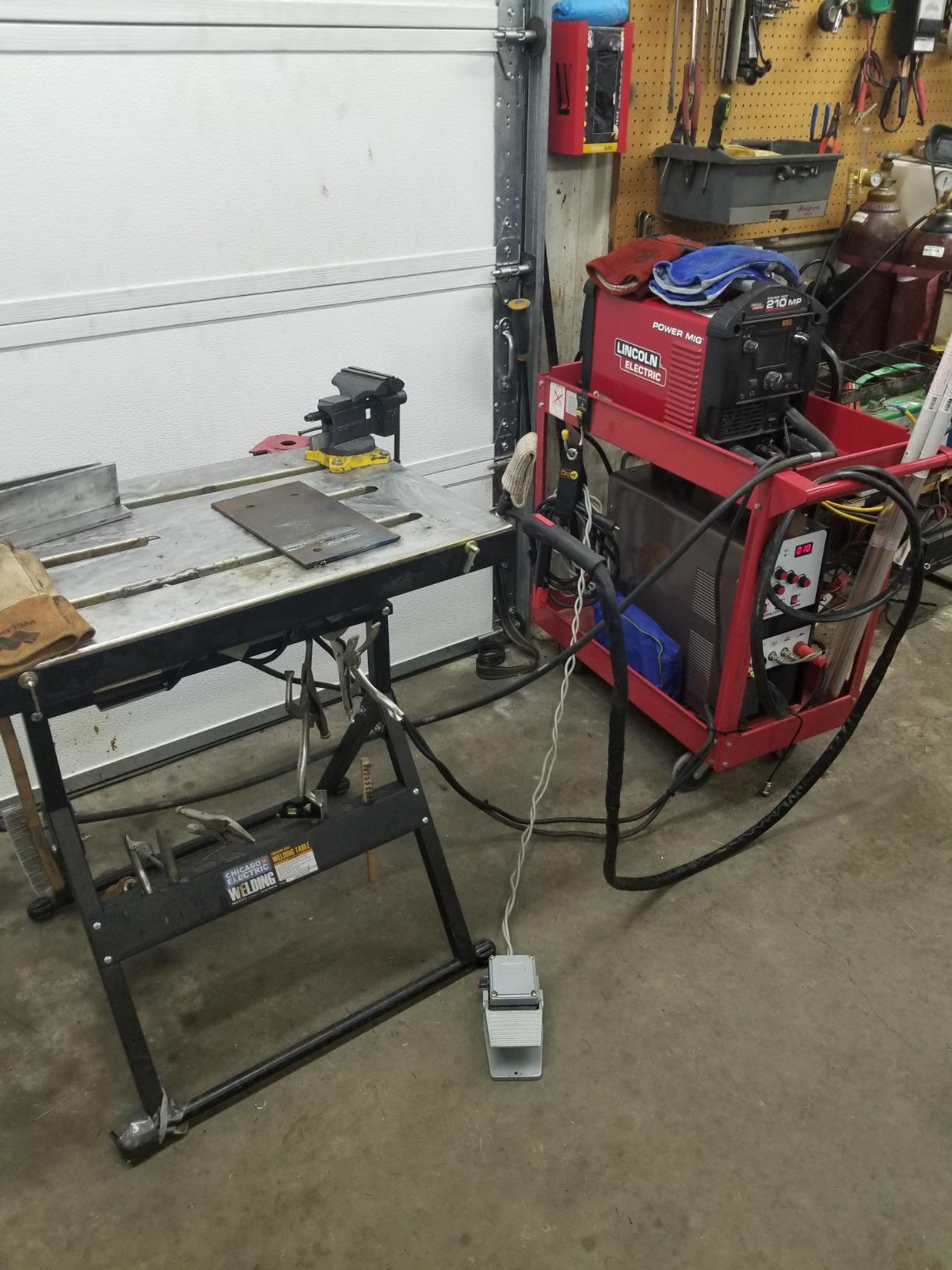
The AC output is a true square wave, which is the waveform that makes aluminum weldable. TIG current runs 10 to 200 amps on AC and DC, and stick output runs 15 to 200 amps. Adjustable hot striking arc current helps the arc start without the tungsten damage a scratch start causes.
Square Wave AC Output and What It Means for Aluminum
Square wave alternates the current cleanly between positive and negative. The positive half of each cycle burns off the aluminum oxide film, and the negative half drives penetration. A gentler balance cleans more and penetrates less, which is how you weld 1/16 inch aluminum without burning through it.
On 110V your usable aluminum ceiling is around 1/8 inch in a single pass. Anything thicker needs beveling and multiple passes, and a 20A circuit helps more than any setting change. On 220V the same machine reaches 1/4 inch, so the dual voltage path matters more here than on a DC-only unit.
Automatic Dual Voltage, Cooling and the Warranty
Automatic dual voltage and dual frequency covers 110/120V and 220/240V at 50 or 60Hz with no manual switching. The advanced cooling system is designed for stable long-term performance, and the listed power efficiency is 80 percent, which is a meaningful figure on a circuit you are trying not to trip.
Warranty terms are among the better documented here: 30-day money back, one-year replacement and a three-year limited warranty with registration. The advanced cooling system claims durable long-term performance, but note this listing has been available for well over a decade, so the design is dated next to newer LED-panel machines.
Who the LOTOS TIG200ACDC Suits Best
This is the pick if you want aluminum capability and you want to be welding the week the machine arrives rather than the week after you buy a regulator and figure out fittings. For a hobbyist who is not sure how much argon they will use, owning the regulator is a genuine advantage.
Pass if you need to move the machine regularly or want modern electronics. At 37 pounds and 28 by 13 by 17 inches it is a stationary machine, and only 16 percent of reviews are four-star, meaning sentiment clusters hard at both ends rather than sitting in the middle.
10. ARCCAPTAIN TIG 205 Pro – Best for Cold TIG and App Control
ARCCAPTAIN TIG 205 Pro Welder, 5 In 1 Welding Machine, 120/240V
205A 5-in-1: cold TIG, 4T DC TIG, cold spot TIG, 2T DC TIG, stick
App control by QR code
Large LED screen readable in a helmet
3-year warranty with lifetime support
+ Pros
- Only machine here with companion app control for parameters and error codes
- Handles stainless
- steel and chromoly including thin bodywork
- Three-year warranty plus lifetime technical support
- Custom airflow design keeps metal dust out of the control unit
– Cons
- DC output only
- so aluminum is not supported
- Foot pedal and WP-17 torch are not included
- 120V operation described by one buyer as trial and frustrating
The TIG 205 Pro is the newest design in this roundup and the only one with app control. You scan a QR code and your phone becomes the control surface for real-time status, process selection, parameter adjustment, error code analysis and the FAQ.
At 4.4 stars across 89 reviews it has the smallest review base here, but it also sits at number 44 in TIG Welding Equipment, which is strong for a listing this young. One buyer who compared three other budget DC TIG welders found this was the only one that performed to its advertised specifications.
The five modes are COLD TIG, 4T DC TIG, COLD SPOT TIG, 2T DC TIG and stick. Cold TIG is the reason to pay attention here: it lets you spot weld thin material with minimal heat and distortion, which is the single most useful mode for body panels and 20 gauge sheet.
What Cold TIG and Cold Spot Actually Do
Cold spot TIG delivers a short, controlled pulse to hold two pieces together before a final pass. On 18 to 22 gauge bodywork that means tacking a panel with minimal warping, then finishing it without having ground out a heat-affected zone. It is the mode gunsmiths and panel beaters ask for first.
MCU precision control is listed with a 99.99 percent arc initiation success rate and 400 percent faster arc start response. The large LED screen is readable without removing a welding helmet, which on a real job saves you the cycle of helmet up, helmet down, look, repeat.
App Control, Compatibility and Honest Limits
The app is a genuine differentiator for self-taught welders, because error code analysis and parameter guidance live on your phone rather than in a manual nobody opens. It is also compatible with the ARCCAPTAIN 5-pin TIG foot pedal and the WP-17 TIG torch, and with a cold welding helmet, none of which are included.
The limits are real. Output is DC only, so aluminum is not supported. One reviewer reports stick amperage appears to run below the actual readout, another found the foot pedal required extensive troubleshooting, and 120V operation is described as trial and frustrating. The unit is ANSI and FCC certified with VRD, overheat, overcurrent and undervoltage protection, and carries a 3-year warranty with lifetime technical support.
Who the ARCCAPTAIN TIG 205 Pro Suits Best
Choose it if you do thin-gauge work, you want cold spot and cold TIG, and you learn better from a phone interface than a printed manual. For sheet metal, body panels and stainless fabrication, the mode set is the most targeted in this roundup.
Wait if you want the deepest community knowledge, a foot pedal in the box, or aluminum capability. With 89 reviews, the troubleshooting knowledge you would draw on when something misbehaves is still thin, and the ARCCAPTAIN TIG200 covered earlier in this list shares the brand with a much larger user base.
What to Look For in a 110V TIG Welder Before You Buy
The four decisions that matter most are what your circuit can deliver, whether you need AC output, how you will control heat, and what the box does not contain. Get those right and the model choice is easy.
What Your 110V Circuit Will Actually Deliver
A machine rated 200A on 110V is a rating under ideal conditions, usually measured over a short cycle on a strong supply. On a 20A household breaker, expect roughly 125 to 140 amps before the machine starts tripping. On a 15A circuit, the ARCCAPTAIN owner report above is the realistic warning: around 95 amps and a tripped breaker.
That is why the amperage printed on the front panel is not a promise. If your only outlet is 15A, treat anything above about 90 amps as your ceiling and plan your thickness accordingly. If you can install a 20A circuit, you gain roughly 30 percent of your working range for very little money compared with the machine itself.
Extension cords are the other half. Use 12-gauge or heavier and keep it as short as you can, because voltage drop on a long thin cord erodes the same performance you gained by upgrading the circuit. Owners of the AHP report no noticeable power loss through a 25 foot 12-gauge cord, which sets a reasonable expectation.
The Rule of 33 and How Thick You Can Weld
The rule of 33 is the fastest way to convert amperage into thickness. For mild steel in DC TIG, multiply the thousandths of an inch by 33 to get the amperage needed for a single pass. So 1/16 inch steel, at 16 thousandths, wants about 33 times 16, which is roughly 125 amps. A 3/16 inch single pass at 48 thousandths lands near 158 amps.
Stainless runs a little hotter, closer to 40 amps per thousandth, and aluminium about 1.25 times the steel figure. Applying those numbers to the 125 amps a 20A circuit gives you is why the 110V ceiling lands near 3/16 inch steel and 1/8 inch aluminum. Anything past that needs beveling and multiple passes, and that is a normal, successful approach rather than a failure of the machine.
AC or DC, and Whether You Need Aluminum
DC TIG is the right output for mild steel, stainless and chromoly, and every machine in this roundup handles those well. Aluminum is the dividing line: the oxide film on aluminium must be broken by the positive half of an AC cycle, so a DC-only machine physically cannot weld it. The YESWELDER, ARCCAPTAIN TIG200, ARCCAPTAIN TIG 205 Pro, S7 and TOOLIOM are all DC only, and their listings say so.
AC adds cost and complexity, and it is only worth paying for if you will actually weld aluminum or magnesium. If you are unsure, buy a DC machine now and plan an AC/DC machine later rather than paying for capability you will not use. The reverse also holds: if aluminum is a regular requirement, do not plan to add it later, because a DC machine will never gain AC output.
HF Start, Lift TIG and Scratch Start
High frequency start fires a non-contact arc between the tungsten and the workpiece. It is the standard, it does not contaminate the tungsten, and every machine in this roundup except the one that offers lift start as an alternative uses it. Scratch start drags the tungsten along the work to strike the arc, which damages the electrode and leaves a mark on the workpiece.
Lift TIG strikes a small mechanical gap instead, which some fabricators prefer on very thin stainless where they do not want a starting arc at all. It is also what a MIG machine with a lift-TIG mode does, and that is why those machines do not appear in this roundup: you are still touching the electrode to the work on every start. The Everlast offers lift start as a genuine option, not a compromise.
What the Box Leaves Out
Argon, a regulator, tungsten, contact tips, a ground clamp and a decent extension cord are not in the box, with the exception of the AHP and LOTOS which include a regulator. Add a cylinder and a proper flow regulator early, because a cheap disposable regulator that starves the torch is a common reason beginners think the machine is faulty.
For tungsten, 2 percent lanthanated is the standard for DC steel, stainless and chromoly, in 3/32 inch for thinner material and 1/16 inch for heavier plate. Zirconiated is the choice for AC aluminum. Grind the taper on a dedicated wheel rather than breaking the tip on a hard surface, and never use a torch in DC mode with a zirconiated electrode on steel.
On gas flow, 10 to 20 liters per minute covers most home work. Over-argoning creates turbulence that draws air into the arc and oxidises the bead, and it is the second most common beginner mistake after a cold puddle. Watch the manometer, not the knob.
Foot Pedal, Trigger Mode and Your Skill Path
A foot pedal gives you variable amperage by toe, and forum users are blunt that beginners cannot realistically learn heat control by turning a knob. If the machine you are buying does not include one, treat it as a required purchase rather than an optional one. The AHP, Weldpro and LOTOS include a pedal; the TOOLIOM, YESWELDER and ARCCAPTAIN TIG 205 Pro reserve the interface and sell the pedal separately.
On process choice, MIG wins for thick mild steel and speed, stick wins for outdoor and repair work where you need no gas, and TIG wins on thin material, stainless, aluminum and anything where appearance matters. If your work is entirely structural mild steel, read our 110V MIG welder comparison before spending on TIG.
On progression, learn stick or flux core first if you have never welded at all. A stick machine teaches you what heat, travel speed and slag look like without any of the coordination demands of feeding filler rod. Then move to TIG with a 2-in-1 machine, and add a 220V circuit when your projects outgrow the 110V ceiling rather than before.
Ventilation, Cylinder Safety and Support
Argon is heavier than air and displaces oxygen, so a closed garage is the real risk in this hobby rather than the arc. Keep the door open, run a fan that moves air out rather than around, and never weld in a space you cannot leave quickly. Secure the cylinder upright with a chain or strap every time, including during a five-minute job.
On support, look for a named manufacturer with a service line and a warranty length you can read. AHP, PrimeWeld and Everlast all have US-based support, and owners describe PrimeWeld and AHP support as responsive. For a budget import with no review text, that support network is often the difference between a machine that gets fixed and one that gets replaced. Our best TIG welders under 1000 comparison is a useful cross-check if you want to see how these machines sit against higher-priced options.
Frequently Asked Questions
What is the best TIG welder machine for beginners?
The PRIMEWELD TIG225X is our top pick for most hobbyists. It runs AC and DC TIG with pulse, ships with a CK Worldwide 17 Series Superflex torch, and uses physical knobs that make settings changes fast. For the lowest-cost way to learn TIG on steel and stainless, the S7 200A works, but it is DC only and its foot pedal is on and off rather than variable.
How thick of metal can a 110 volt welder weld?
On a 20A circuit a 110V TIG welder typically delivers about 125 to 140 amps, which works out to roughly 3/16 inch mild steel and 1/8 inch aluminum in a single pass. On a 15A circuit expect a ceiling closer to 95 amps, or about 1/8 inch steel. Anything thicker needs beveling and multiple passes, which is a normal technique rather than a machine fault.
Can a 110v tig welder weld aluminum?
Only if it has AC output. Aluminum oxide must be broken by the positive half of an AC cycle, so DC-only machines cannot weld it at all. The PRIMEWELD TIG225X, Weldpro 200A, AHP AlphaTIG 203Xi, Everlast PowerTIG 200DV and LOTOS TIG200ACDC all output AC. The S7, TOOLIOM, YESWELDER TIG-205P, ARCCAPTAIN TIG200 and ARCCAPTAIN TIG 205 Pro are DC only.
What is the rule of 33 in TIG welding?
The rule of 33 is the amps-to-thickness shortcut: for DC TIG on mild steel, multiply the material thickness in thousandths of an inch by 33 to get the amperage for a single pass. That means 1/16 inch steel at 16 thousandths needs about 125 amps, and 3/16 inch at 48 thousandths needs about 158 amps. Stainless runs closer to 40 amps per thousandth, and aluminum about 1.25 times the steel figure.
What is the difference between HF start and lift TIG?
High frequency start fires a non-contact arc between the tungsten and the workpiece, which is the standard method and does not contaminate the electrode. Lift TIG strikes a small mechanical gap by touching and lifting the torch, which avoids a starting arc and suits very thin stainless. A MIG machine with a lift-TIG mode still requires electrode contact on every start, which is why those machines are not true TIG welders.
Do i need a special outlet for a 110v tig welder?
No. A standard NEMA 5-15 household outlet works, but a dedicated 20A circuit gives you roughly 30 percent more working range than a 15A circuit and reduces breaker trips on thicker work. If you use an extension cord, use 12-gauge or heavier and keep it short, because voltage drop erodes the performance you gained by upgrading the circuit.
What gas do i need for TIG welding?
100 percent pure argon. It is the only shielding gas that works for both steel and aluminum, and TIG cannot run without it. You will also need an argon cylinder, a regulator with a flowmeter, contact tips, a tungsten electrode and filler rod, and most budget machines ship with none of those. The AHP AlphaTIG 203Xi and the LOTOS TIG200ACDC do include a regulator in the box.
Is a foot pedal necessary for TIG welding?
For a beginner, yes. A foot pedal gives you variable amperage by toe, and you cannot realistically learn heat control by turning a knob alone. It is the most useful accessory on a TIG machine, more so than extra machine amperage. The AHP, Weldpro and LOTOS include one; the TOOLIOM, YESWELDER and ARCCAPTAIN TIG 205 Pro reserve the 5-pin interface and sell the pedal separately.
Which 110V TIG Welder Should You Buy in 2026?
If you want one machine that covers steel, stainless and aluminum and you can move it twice, the PRIMEWELD TIG225X is the choice. The CK Worldwide torch and physical controls are what separate it from cheaper machines once you are past the first few hours of learning.
If aluminum is a regular requirement, the Weldpro 200A AC/DC gives you adjustable AC balance and frequency plus pulse at both polarities, with a foot pedal and flow meter in the box. If you want the machine to be usable immediately with gas, the LOTOS TIG200ACDC is the only one here that ships the regulator.
If your budget is the deciding factor and steel and stainless are enough, the S7 200A is the lowest honest entry point, and the ARCCAPTAIN TIG200 is the one to buy instead if you want to keep the same torch and go bigger later. For thin-gauge stainless below 24 gauge, the Everlast PowerTIG 200DV starts where the others cannot.
Whichever one you choose, buy the argon cylinder, a real flow regulator, a foot pedal and a decent ground clamp in the same order, and keep a dedicated 20A circuit for the machine. Those four things decide whether your first month is rewarding or frustrating far more than the last twenty amps on the spec sheet.
Our best TIG welders under 2000 comparison covers the next step up if you decide the 110V ceiling is binding sooner than expected.
Leave a Reply