
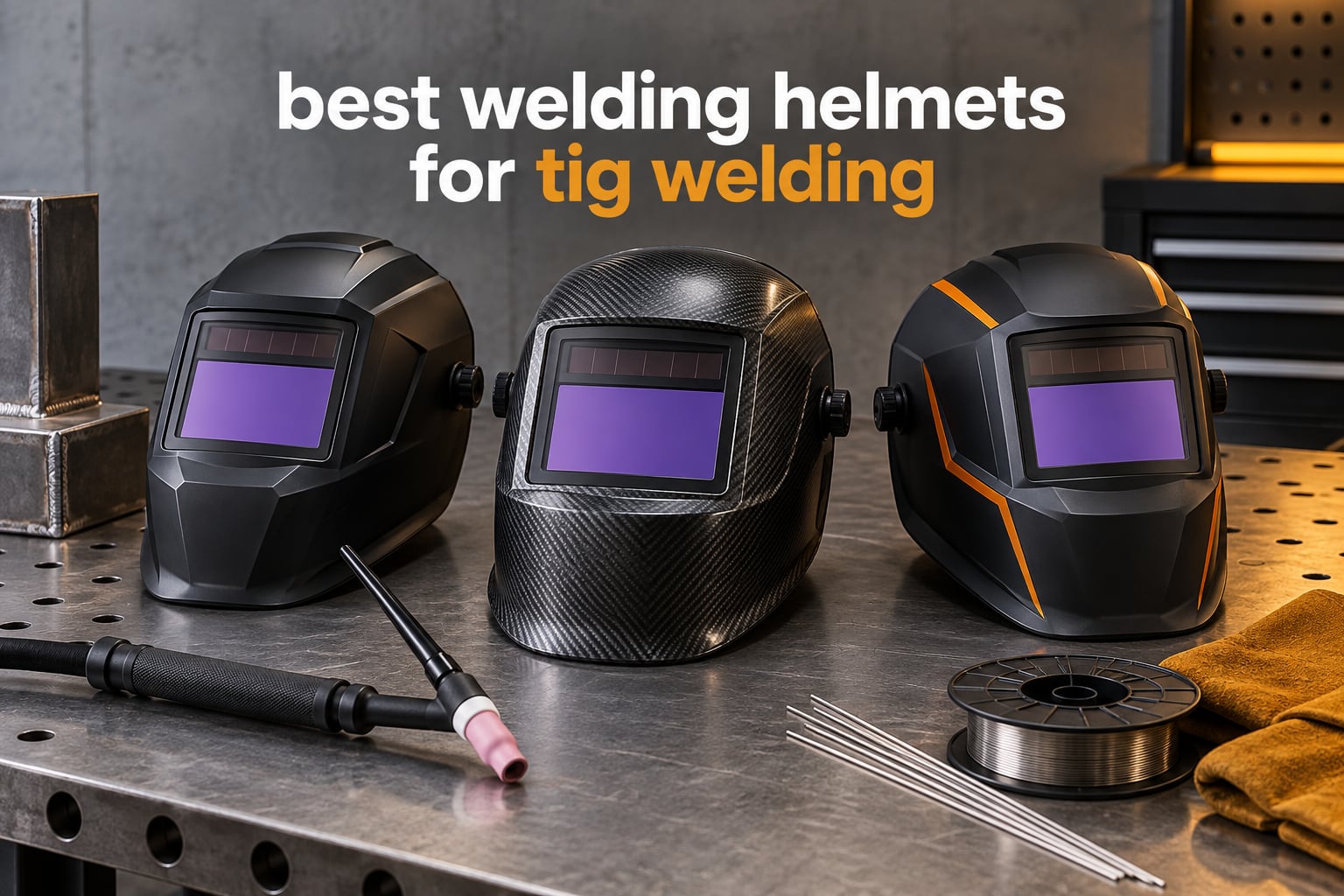
If you are searching for the best welding helmets for TIG welding, you are shopping in the one process that punishes a mediocre auto-darkening lens. TIG runs at amperages that a stick or MIG helmet rarely sees, and a lens that will not darken at 30 amps leaves you looking straight into a live arc. The spec that decides whether a helmet works here is not the brand or the colour marketing. It is how dim an arc the sensors still detect.
So we compared ten auto darkening welding helmets on the things TIG actually demands: sensor count, low-amp behaviour, shade floor, light-state brightness, viewing area and headgear balance. Some are the cheapest hoods on the market, some carry a five year warranty, and a few are simply wrong for low-current work. Our complete beginner’s guide to TIG welding covers the fundamentals, and our guide to what TIG welding is used for explains the materials that make the amperage numbers here matter.
Our Top 3 TIG Helmets for Low-Amp Work and Long Shop Days (October 2026)

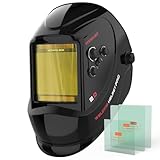
Lincoln VIKING 3350
- 4C lens technology
- 1/1/1/1 optical clarity
- 12.5 square inch view
- X6 headgear

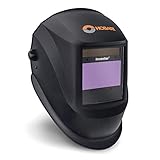
Miller Classic ClearLight
- Rated at 5 amps or below
- 6 square inch view
- 3.0 light state
- 3 year warranty
The Lincoln VIKING 3350 leads because 4C optics and a 12.5 square inch window change how you place filler rod, and owners report it holding up at low amperage where cheaper hoods flicker. The YESWELDER LYG-M800H takes the value slot on four sensors and a large window at a fraction of the cost. The Miller Classic is the most honest low-amp answer, because it is the only helmet here whose maker states a floor of five amps or below.
Comparing Every Welding Helmet in This Roundup
| Product | Details | Action |
|---|---|---|
|
|
Check Latest Price |
 |
|
Check Latest Price |
|
|
Check Latest Price |
 |
|
Check Latest Price |
 |
|
Check Latest Price |
 |
|
Check Latest Price |
|
|
Check Latest Price |
 |
|
Check Latest Price |
 |
|
Check Latest Price |
 |
|
Check Latest Price |
One caveat before you read it: sensor count and switching speed are published figures, but only one manufacturer here states a minimum amperage. Treat sensor quality and the published floor as the two columns that matter for TIG.
1. Lincoln Electric VIKING 3350 – The Clearest Optics and Widest View for TIG
Lincoln Electric K3034-4 VIKING 3350 Auto Darkening Welding Helmet with 4C Lens Technology, Matte Black, extra large
4C lens tech
1/1/1/1 optical clarity
12.5 sq in view
1.4 lb shell
+ Pros
- 4C optics with 1/1/1/1 clarity rated the clearest available
- Reliable low amperage TIG performance
- X6 headgear spreads weight for long sessions
- Five year warranty with five years of spare parts
- Five outer and two inner cover lenses included
– Cons
- Highest cost in the roundup by a wide margin
- Headgear takes practice to dial in
- Occasional reports of slow initial reaction on arc strike
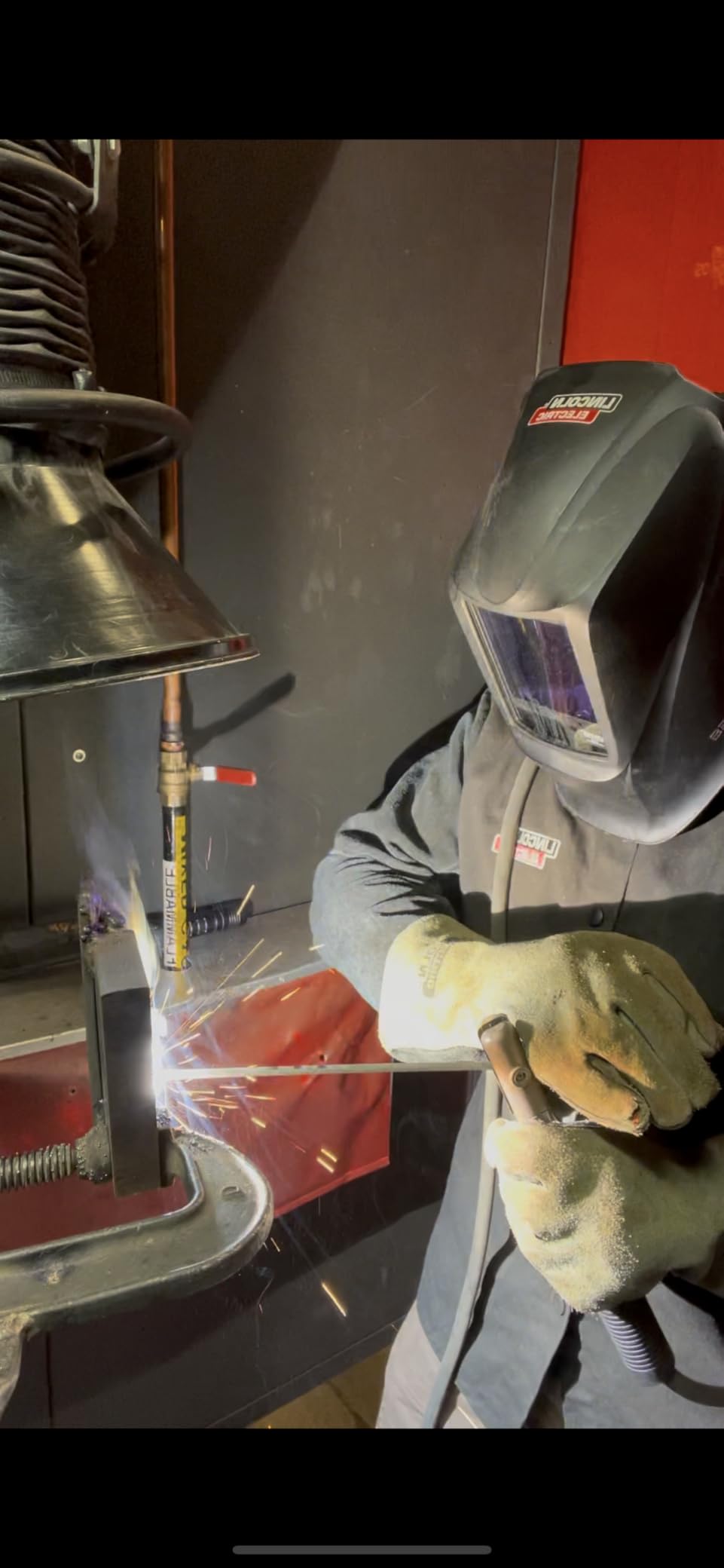
I ranked the VIKING 3350 first because on TIG the constraint is usually visual, not electrical. The 4C lens is measured for blurriness, distortion, shade consistency and angle uniformity, and on a 12.5 square inch extra large auto darkening lens that means seeing the whole joint and both sides of the bead at once.
More than 3,100 owners rate it 4.8 stars on average, with 89 percent giving five. The recurring description is a step change in puddle tracking, especially for people moving up from a budget hood. One beginner reported flawless operation at 50 amps after cheaper helmets flickered on the same job.
The cost is the tradeoff. This is the priciest helmet in the roundup, and a small number of owners report a slow first reaction on arc strike, so set the internal shade switch correctly before first use.
Low-Amperage Behaviour and the 4C Lens
There is no published minimum amperage for this helmet, so I read owner reports instead, and the consistent signal is reliable triggering in the low range. That matters when cleaning a fillet at 20 amps. The four-sided 1/1/1/1 rating also means the shade stays even as your head moves, which is exactly the movement pattern of TIG work.
Headgear Balance Over a Bench
The X6 headgear distributes weight across the crown rather than hanging it on the back of your neck, which is the difference between a comfortable hour and a sore one when you are leaning over a bench. It fits hat sizes 6 1/2 to 8 and tightens with a single ratchet knob. First-time users find the adjustment less intuitive than a simple strap, so budget ten minutes.
Consumables and Long-Term Ownership
Lincoln fits non-proprietary cover lenses and the box includes five outer and two inner spares. That is the quiet cost advantage of a premium helmet, because cover lenses are the line item that accumulates across years of TIG work. The five year warranty with five years of spare part availability is the strongest support commitment among these ten.
2. YESWELDER LYG-M800H – Four Sensors and a Big Window for the Money
YESWELDER Auto Darkening Welding Helmet, Large View, LYG-M800H
4 arc sensors
3.93 x 3.66 inch view
1/30000s switching
1/1/1/1 true color
+ Pros
- Exceptionally large view beginners credit with better welds
- 4 arc sensors with 1/30000 second response
- 1/1/1/1 true color replaces the green tint
- All controls on the outside for gloved use
- About 1.32 lb and comfortable over long sessions
– Cons
- Thin plastic shell and headband feel less robust
- Tension knobs must be cranked very tight
- Inner lens and battery are hard to remove
- Some reports of straps breaking early
This is the pick I hand to friends who want one helmet that does everything without a shop-hood budget. The 3.93 by 3.66 inch viewing area is enormous for the money, and it is the feature beginners most often credit with visibly improving their welds.
Four arc sensors with 1/30000 second switching supply the low-amp responsiveness that two-sensor budget models lack. That is what separates it from the helmet below it on thin stainless and copper.
With roughly 8,100 reviews averaging 4.4 stars, the pattern is clear: people love the optics and describe the plastic shell, headband and knobs as thin even while admitting the optics perform at a near professional level. Fair for a garage welder, wrong for a fabricator.
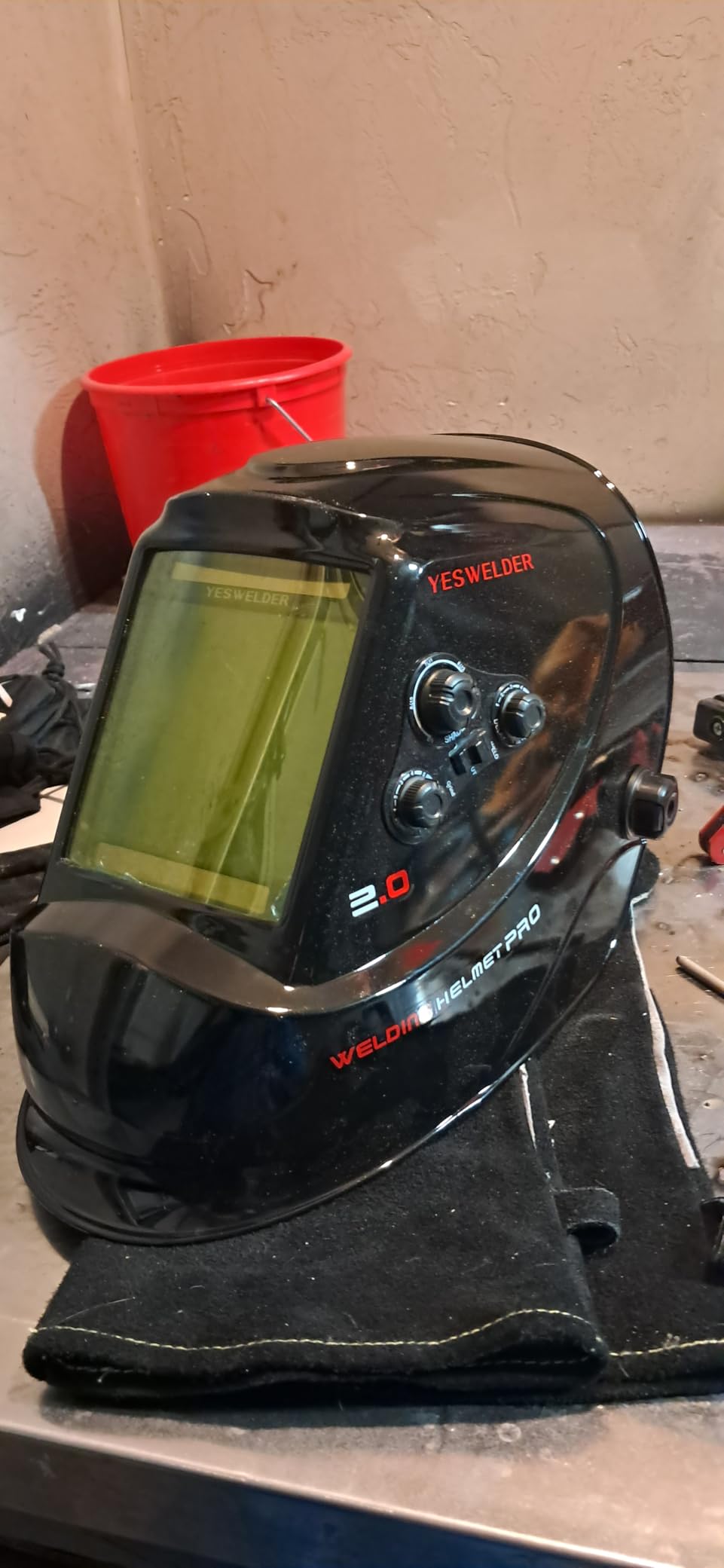
Why Four Sensors Matter for Thin Stainless
Sensor count matters most when the arc is dim, and a dim arc defines low-current TIG. Four sensors give the lens more chances to register a faint arc, which is why this helmet is more dependable on thin material than a two-sensor shell at the same optical class. DIN 3/5-9 and 9-13 shades cover TIG, MIG, stick, cut and grind from one unit.
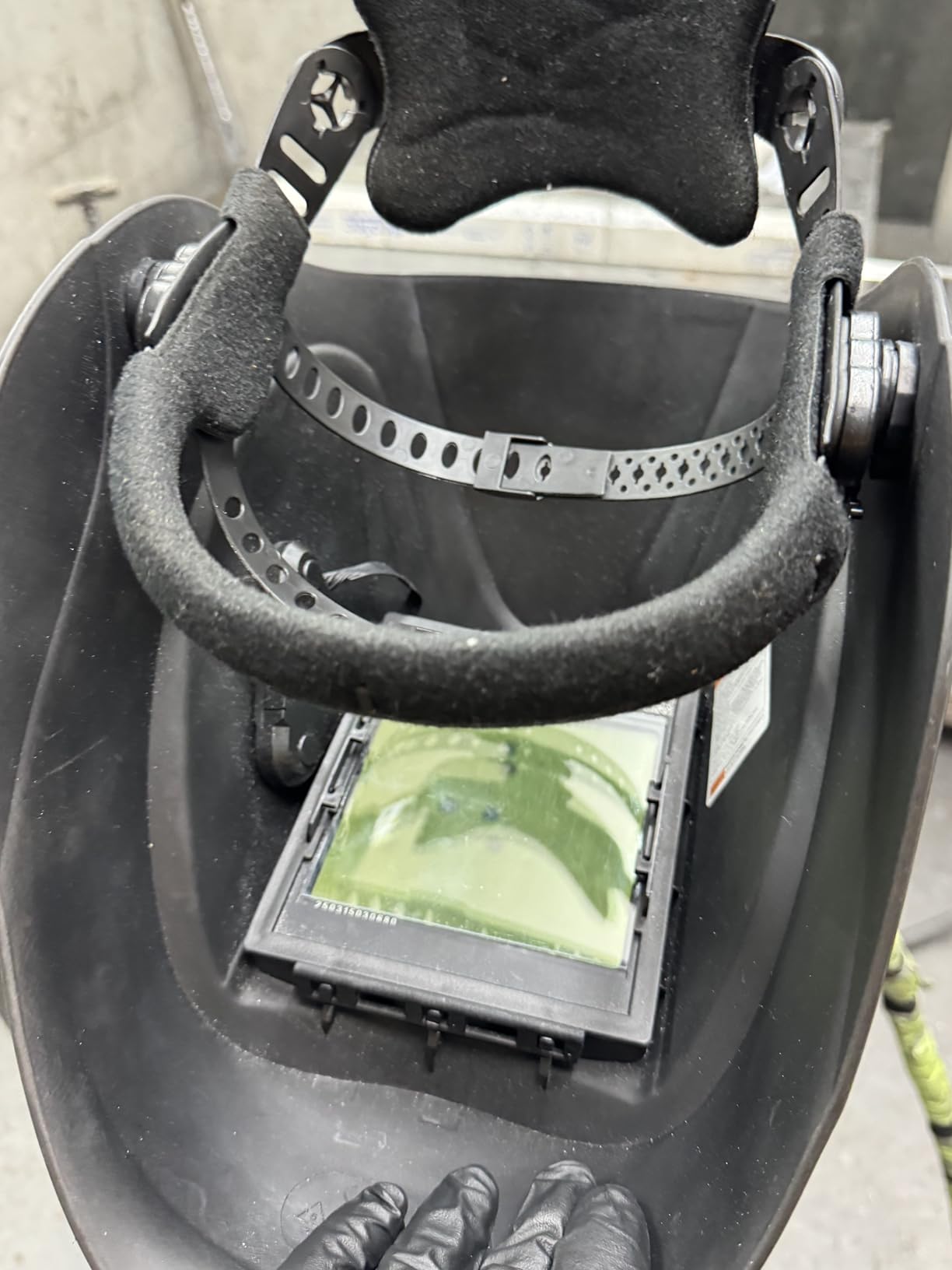
Comfort, Fit and Glasses
At about 1.32 lb this is one of the lighter shells here, and four position adjustments let you fit glasses or a respirator underneath, which matters if you already wear safety eyewear. The reinforced hinge holds up well for repeated flipping during fit-up.
Where the Hardware Falls Short
Owners report the side tension knobs must be cranked very tight and can still creep forward if set imprecisely, and a few report straps breaking within the first uses. Check the fit each time for the first few weeks while everything settles.
3. YESWELDER LYG-L600A – The Cheapest Way Into a True Color TIG Helmet
YESWELDER Auto Darkening Welding Helmet 1/1/1/1 True Color, LYG-L600A
1/1/1/1 true color
2 arc sensors
1/30000s switching
3.64 x 1.67 inch view
+ Pros
- Lowest cost in the roundup with 1/1/1/1 true color optics
- Very fast 1/30000 second darkening
- External shade knob works with gloves on
- Bundled spare lenses
- a spare battery and a storage bag
– Cons
- Only 2 arc sensors for low-amp TIG
- Small viewing area versus panoramic designs
- Light-duty headgear and straps
- Included coin cell arrived wrongly installed in some units
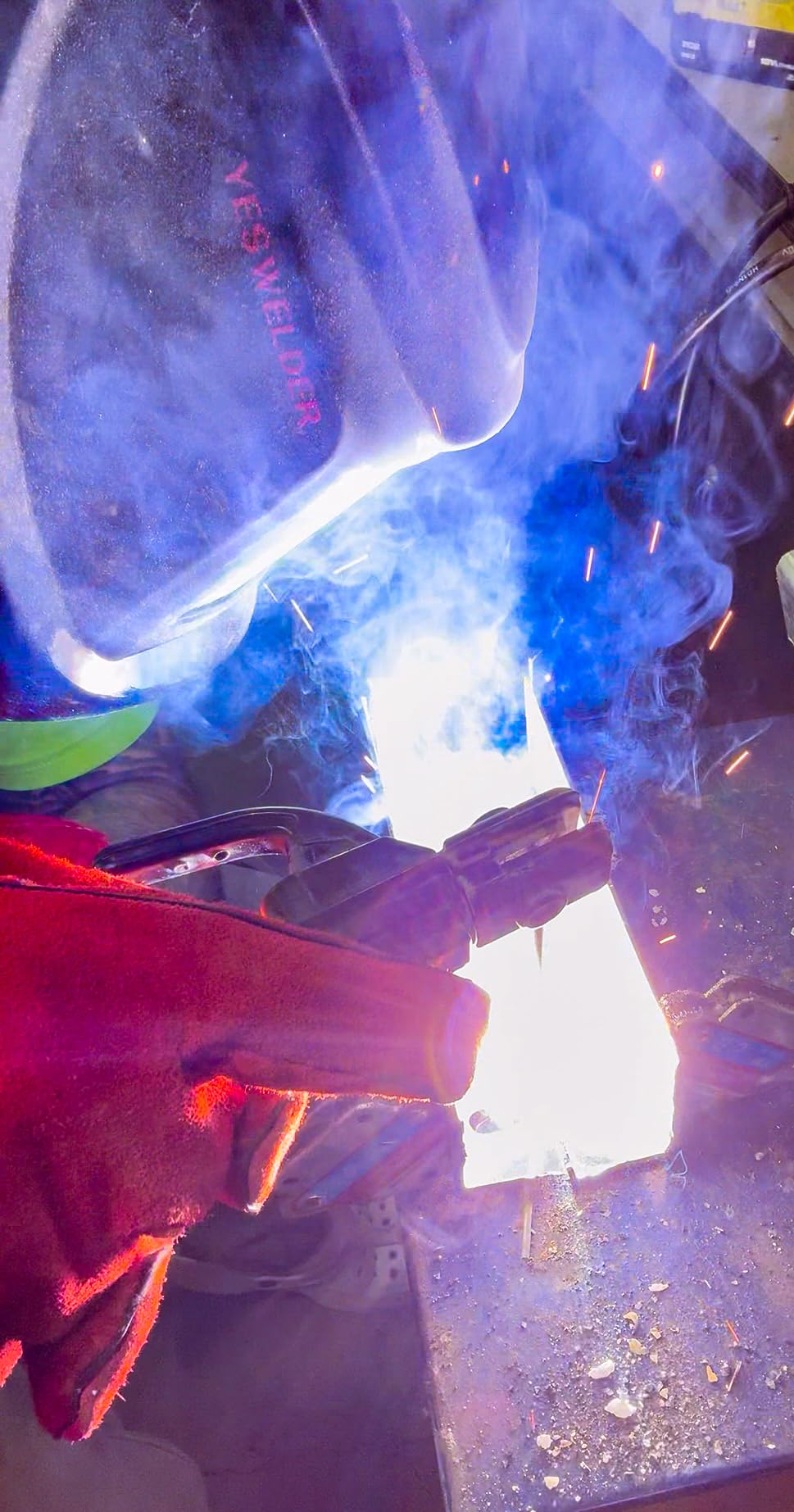
This helmet has the largest review base on the page, more than 13,900 ratings averaging 4.6 stars, and for a first TIG machine that volume matters. Owners use it for real TIG and stick work, and the true color lens removes the green cast that makes budget hoods tiring over a long session.
It sits lower in my ranking for a specific reason. Two arc sensors is a genuine limit on low-amp detection, and the 3.64 by 1.67 inch window is the smallest class here. Neither matters if your thinnest work is 3 mm plate. Both matter the moment you drop to 20 amp stainless tube.
If you are learning TIG and want out of the expensive end of this list, this is the honest starting point, with the caveat that you will outgrow it.
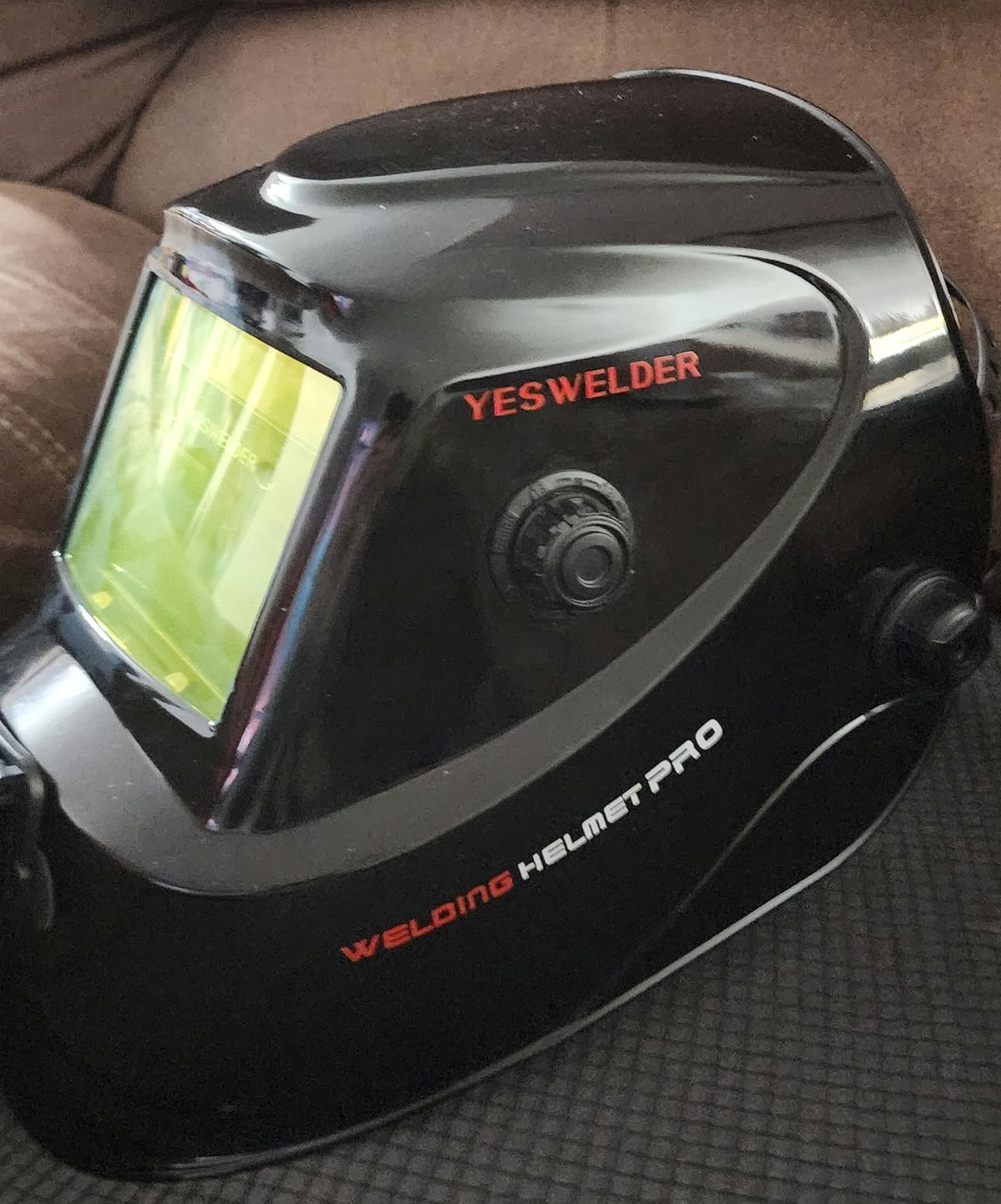
True Color Optics on a Budget
The lens is specified at 1/1/1/1 optical clarity, so the view stays even and natural instead of wavering as you move your head. Blue light blocking on the outer lens is a genuine addition at this cost, and shade 3/7 to 13 covers TIG, MIG, stick and grind. Switching speed is 1/30000 second, fast enough that a normal arc strike is not a problem.
Check the included CR2450 on arrival. Some owners found it installed backwards, which presents as a lens that never darkens. That is a two minute fix, but rule it out first if the helmet seems dead.
Shell Strength and a Clever Upgrade Path
The thickened PP shell carries impact, flame and corrosion resistance claims and the pivot headgear adjusts easily, but owners doing daily production work describe the straps as light-duty. One workaround recurs: the shell can accept an aftermarket inner auto-darkening lens from a Hobart shell with minor drilling, giving hobbyists a cheap upgrade. It also accepts magnifying lenses for very thin material.
4. ESAB Sentinel A60 – Half-Shade Increments and Nine Saved Settings
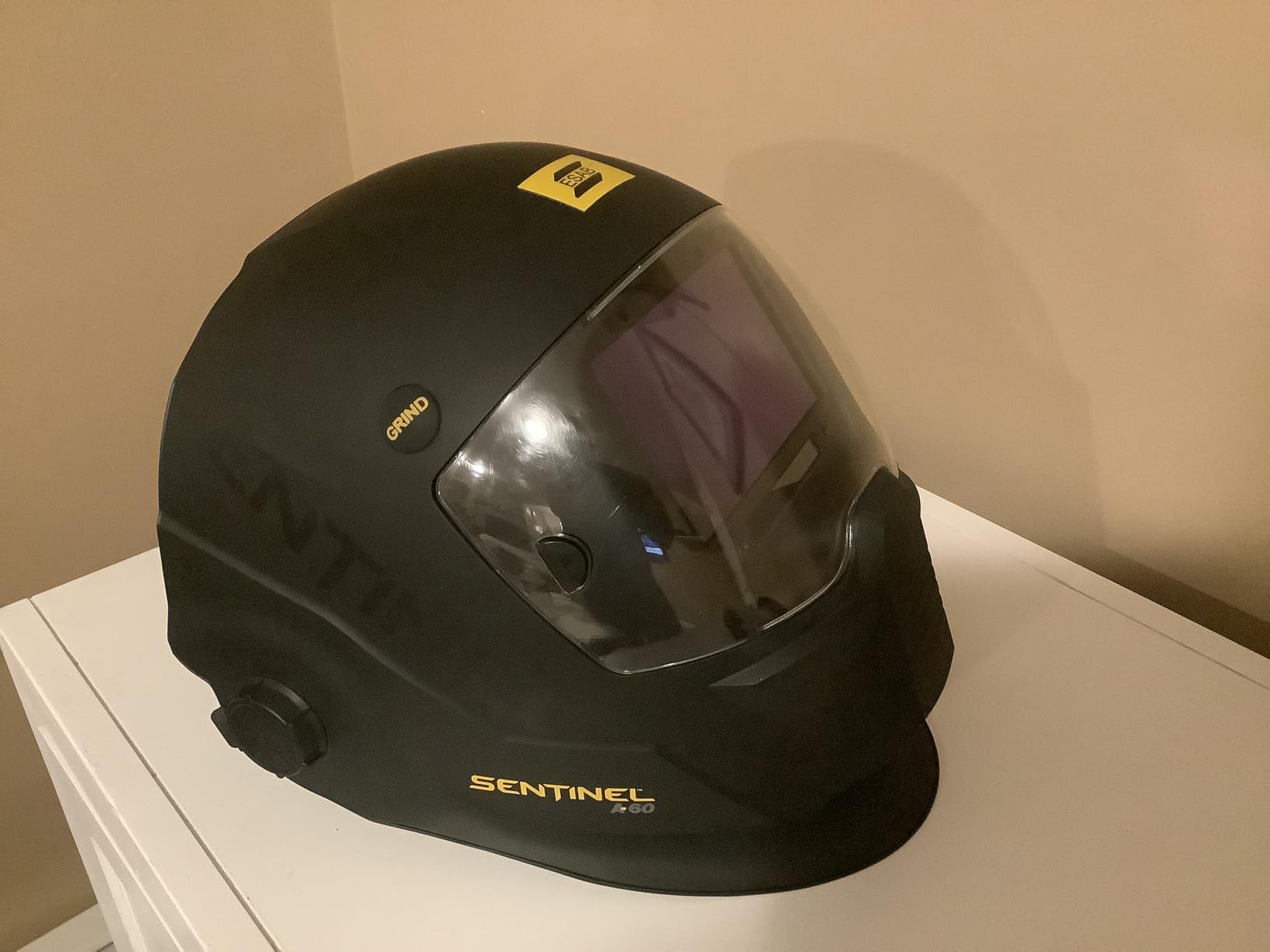
ESAB® Sentinel™ A60 Welding Helmet, Black Low-Profile Design, High Impact Resistance Nylon, Large Viewing Area 4.65 in x 2.80 in
OpTCS true color lens
DIN 3/5-13 in 0.5 steps
0.08 ms switching
9 setting memory
+ Pros
- OpTCS true color lens rated above previous Miller and Speedglas hoods
- 0.5 shade increments for fine TIG control
- 9 setting on-board memory for repeatable setups
- Light and well balanced over the crown
- Tactile internal buttons with a dedicated grind mode
– Cons
- ESAB cover lenses and accessories cost more than third-party parts
- Headgear ratchet feels cheap and needs tightening
- Cover lenses scratch easily
- Helmet will not reliably stay flipped up
The A60 is the helmet I recommend to people who change jobs constantly and are tired of rebuilding settings. Nine memory slots hold a full shade, delay and sensitivity combination, so your stainless setup, aluminium setup and grinding setup are three presses apart.
It is also the shade precision winner. The DIN 3/5-13 range adjusts in half shade increments, which matters on thin stainless where the step between shade 9 and 9.5 is the difference between a clean bead and a burnt start. Owners rate the OpTCS lens above their previous Miller and Speedglas hoods.
About 415 ratings average 4.7 stars with 87 percent five stars, the highest five-star share in this group.
Optics, Viewing Area and Switching
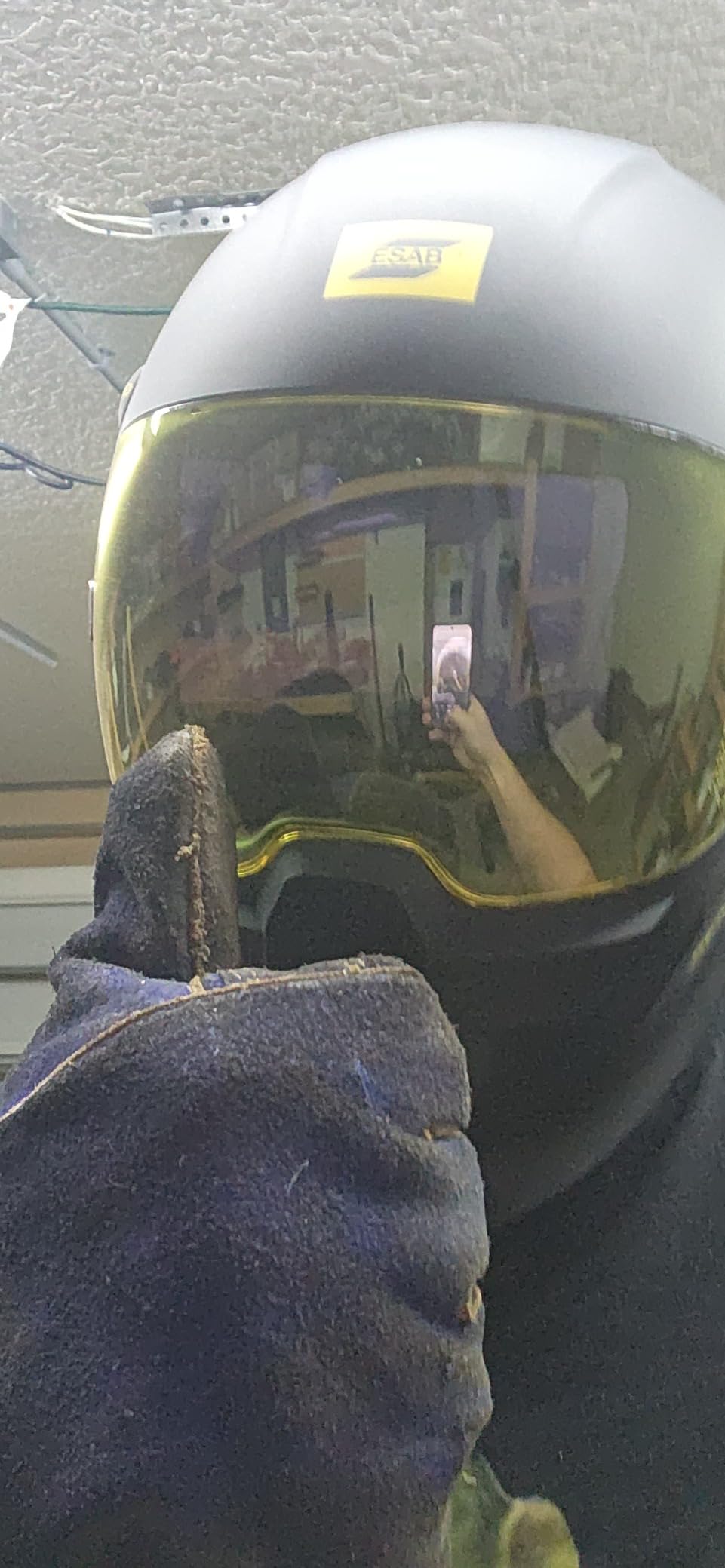
The viewing area is 4.65 by 2.80 inches with four arc sensors and a switching time of 0.08 millisecond, which puts it at the fast end of this list even though the number is less familiar than 1/23000. Low weight is the other repeated praise point: it flips down smoothly and sits neutral over the crown. The dedicated grind button is tactile rather than a touchscreen, so a sleeve cannot trigger it mid-weld.
Ownership Costs and the Flip-Up Lock
Here is the honest drawback: consumables. ESAB cover lenses and accessories cost more than third-party alternatives, and the covers scratch fairly easily if you set the helmet face down on rough surfaces. The other recurring complaint is the flip-up lock, which several owners report will not hold in the raised position even with the lock nuts tight.
Who This Suits
Neither issue affects TIG performance, but both add up in a shop where you flip the hood up constantly for fit-up. For a fabricator who values repeatable setups more than brand-new optics, the memory function carries this helmet.
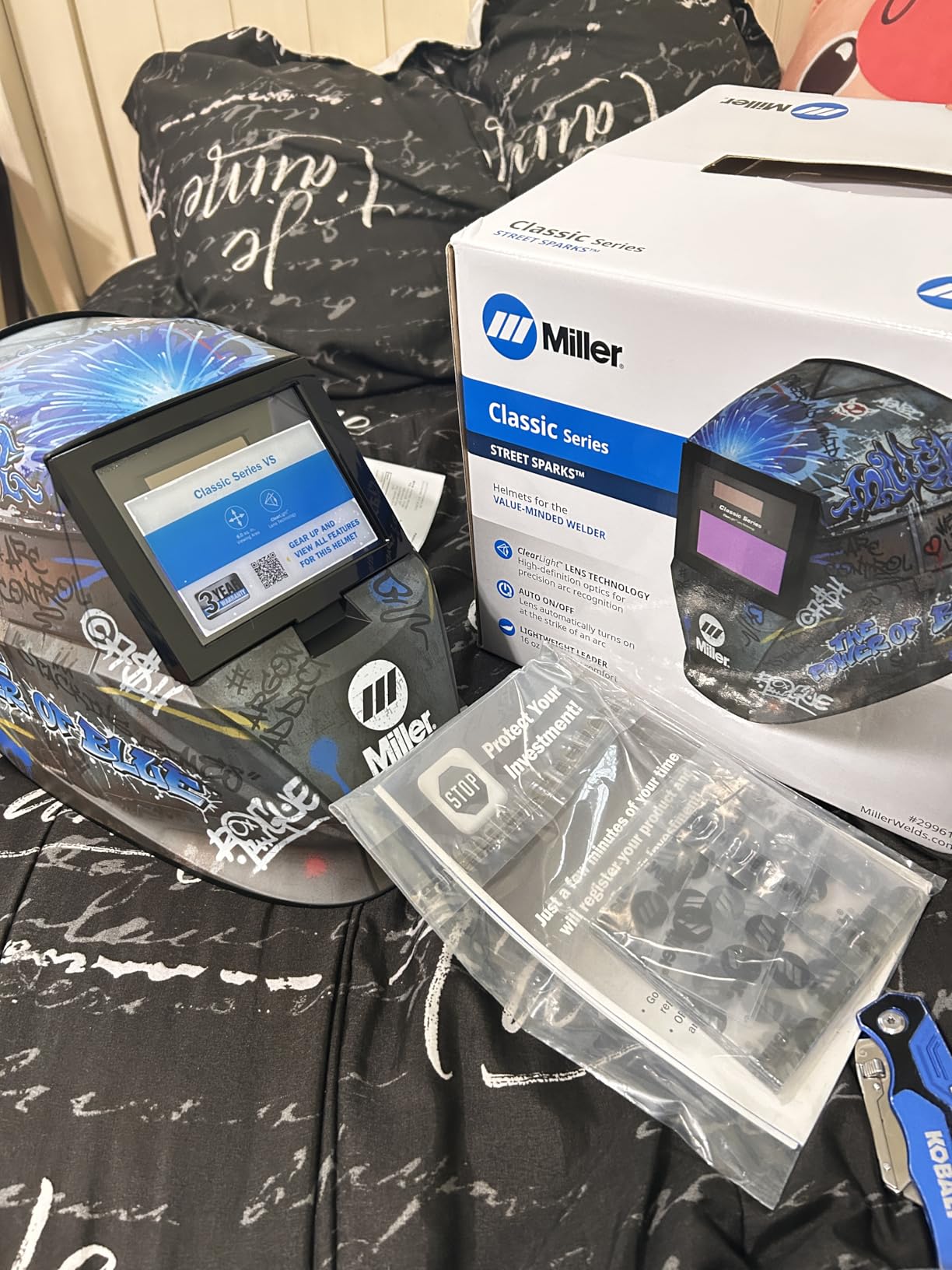
5. Miller Classic ClearLight – The Only Helmet Rated at Five Amps or Below
Miller Classic Series Welding Helmet, ClearLight™, Shade 8-13, Black
Rated at 5 amps or below
6 sq in viewing area
1/23000s switching
3.0 light state
+ Pros
- Explicitly rated for welding at five amps or below
- ClearLight high definition optics with natural colour
- Ratchet headgear gives a repeatable fit
- Digital shade
- delay and sensitivity controls
- 3 year warranty plus 3 years of spare parts
– Cons
- Only 2 arc sensors so low-amp detection is less forgiving
- Weld shade range starts at 8
- 6 square inch view is smaller than large format premium hoods
Every other helmet here leaves you inferring low-amp capability from marketing language. This one does not. The Miller Classic is rated for welding at five amps or below, and experienced TIG welders treat a stated amperage as the most trustworthy spec a manufacturer can publish.
It is also a premium-brand helmet without premium-tier complications. The nylon shell is simple, the ratchet headgear is a repeatable fit, and it meets ANSI Z87.1, CSA and CE standards with a three year warranty. Over 600 ratings average 4.7 stars with 86 percent five stars.
If your thinnest work is genuinely thin, this is where your shortlist should start.
Shade Floor, Cut Shades and the Light State
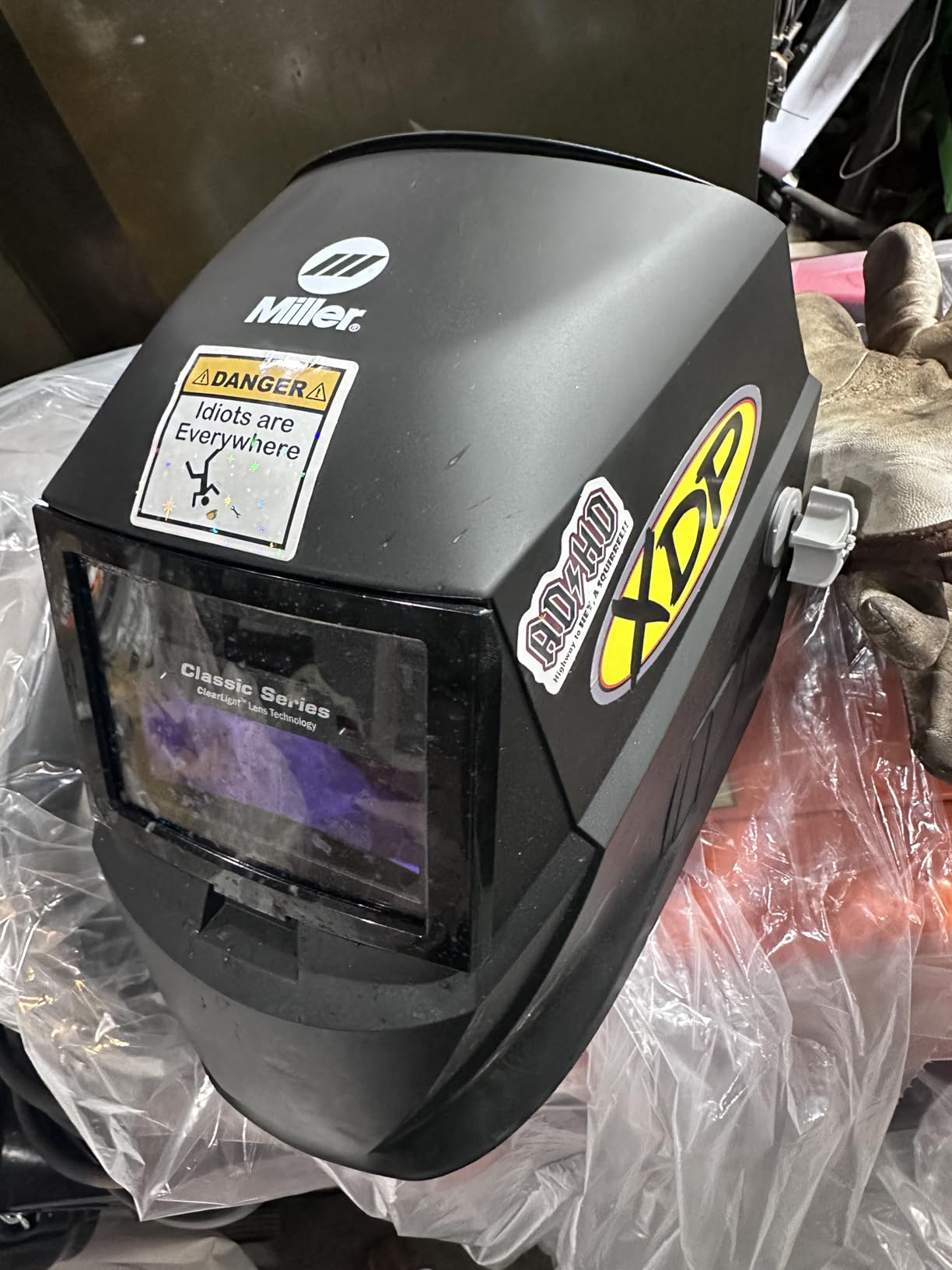
Weld shades run 8 to 13, cut shades 5 to 8 and grind mode sits at 3. That floor of 8 is the right safe starting point for gas tungsten arc work, and if you need more visibility at very low current you step into the cut shades rather than running a weld shade of 7 and accepting more eye strain. Digital shade, delay and sensitivity controls are precise, a real upgrade over analog dials at this level.
The 3.0 light state is what TIG welders notice most. It lets you keep the hood down between welds, which speeds up fit-up and tacking far more than a dark inactive filter does.
Where the Two Sensors Cost You
Two arc sensors is the compromise. Fewer detection points means less margin when the arc is faint or partially blocked, so on a very dim arc you may need sensitivity set higher than on a four-sensor shell. The 6 square inch viewing area also limits peripheral awareness of the joint edges.
Reading the Light State as Productivity
A bright inactive shade means you are not lifting and dropping the hood on every tack, and that cycle is where beginners waste the most time. Switching speed is 1/23000 second, faster than the eye perceives as a delay.
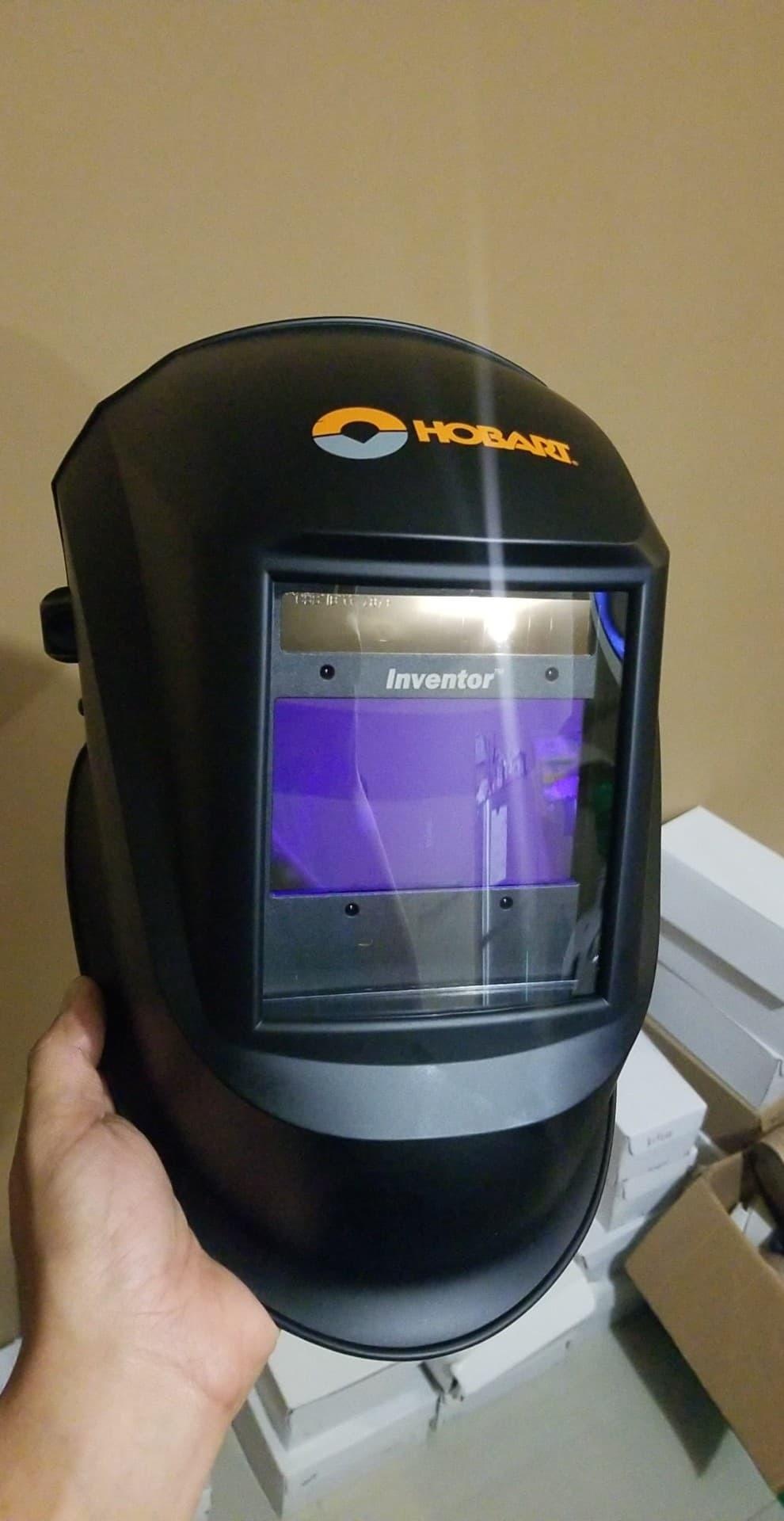
6. Hobart 770890 – A Big Widescreen View with Simple Analog Controls
Hobart 770890 Auto-Darkening Welding Helmet, Large, Black
PureColor lens
9.3 inch widescreen view
4 arc sensors
1.25 lb shell
+ Pros
- 9.3 inch widescreen area for accurate colour
- 4 independent arc sensors for quick detection
- Simple analog knobs are easy to set per job
- Lightweight at 1.25 lb
- 2 year warranty with a lens kit included
– Cons
- Less low-amp margin than dedicated premium helmets
- Analog dials are less precise than digital controls
- Spare lenses and parts cost a premium versus generic helmets
The Hobart 770890 is the odd one out in this roundup, and that is why it interests me for TIG. It uses a 9.3 inch widescreen viewing area rather than the compact window most of these share, and owners credit the PureColor lens with an accurate view of both the weld and the surrounding work area.
If your TIG involves checking joint prep and edge fit as much as watching the puddle, that width is genuinely useful. Around 880 ratings average 4.7 stars with 83 percent five stars, among the highest satisfaction rates here.
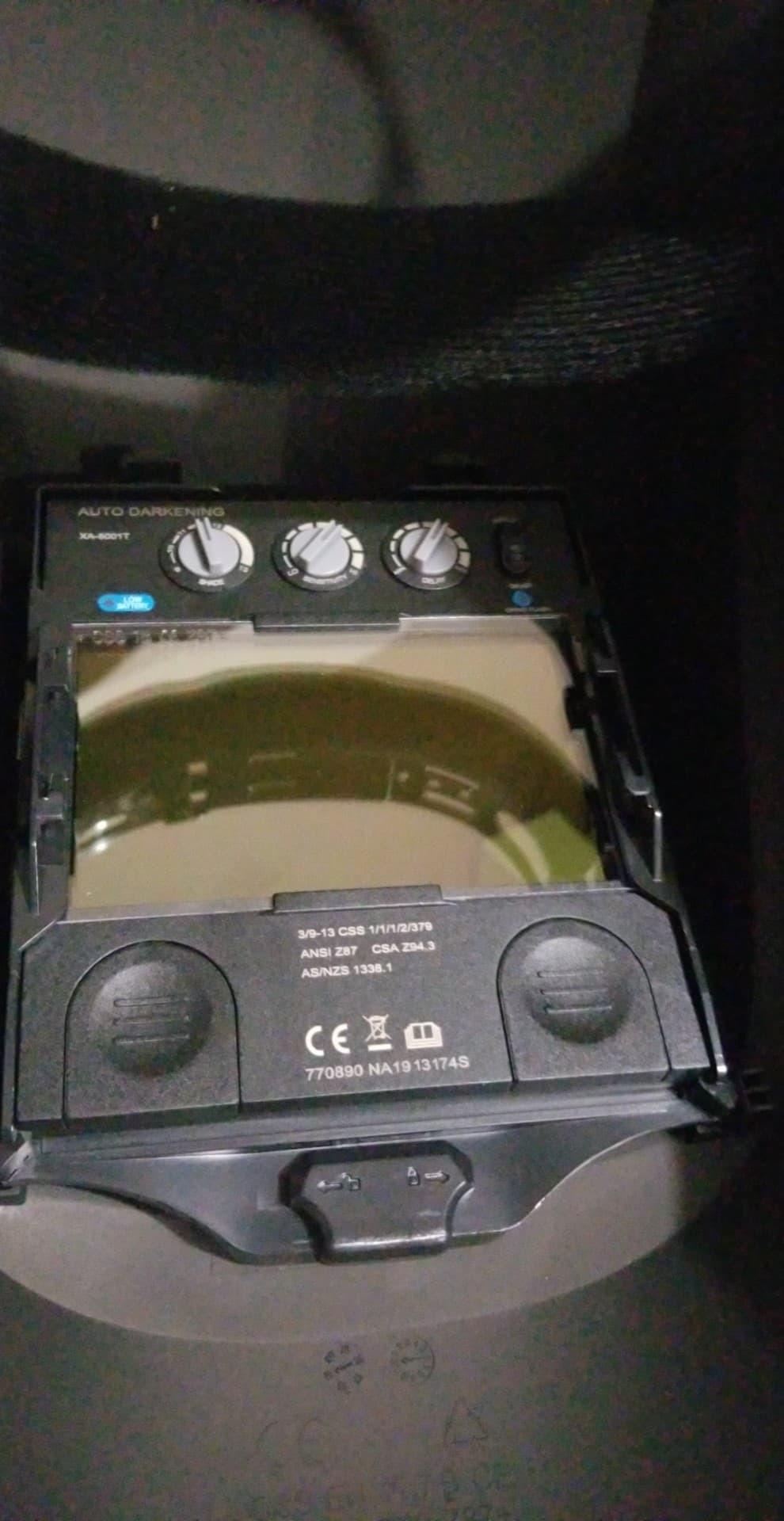
The controls are analog knobs for shade, sensitivity and delay, which some welders prefer precisely because they cannot be knocked out of position.
Sensor Geometry in a Wide Shell
There are four independent arc sensors, but the widescreen shell spreads them across a larger area, and TIG torch angles can put the arc outside that spread. That geometry matters more than raw count when you are welding an inside corner. Auto-on power control triggers the lens at the strike of an arc, so there is no on switch to forget, and continuous UV and IR protection is standard.
Weight, Warranty and Running Costs
At 1.25 lb it is one of the lighter hoods here, reducing neck load over long sessions. A limited two year warranty is included along with a protective lens kit and a CR2 lithium battery, a nicer starting package than buying covers separately. The catch is ongoing cost: spare lenses and parts carry a premium, and polyamide nylon is less forgiving of a dropped tool than a professional shell.
7. ESAB Savage A40 – Sensitivity Tuned Specifically for Low-Amp TIG
ESAB 0700000480 Black Savage A40 Welding Helmet
Low-amp TIG tuned sensitivity
4 arc sensors
delay control
true color view
+ Pros
- Sensitivity and delay controls tuned for low-amp TIG
- Four arc sensors for good response
- True color view described as HD quality
- External one-button grind mode works with gloves
- Long ownership history with one battery change reported
– Cons
- Exterior shade knob can be bumped mid-weld
- Viewing area smaller than the Lincoln VIKING 3350
- No on-board setting memory
- Shell design varies because of a Multicolor listing
The Savage A40 is ESAB’s value entry, and its selling point is unusually specific: the sensitivity control is tuned for low amp TIG and for the darker arc light in that range. That is exactly what most budget units omit, and four arc sensors back it up.
About 440 ratings average 4.6 stars with 81 percent five stars. The dominant theme in reviews is a dramatic jump in visibility after upgrading from an old hood, with students and hobbyists reporting immediately better bead control.
Owners describe the true color clarity as HD quality with a clear view of the puddle, seam and arc length. For a learner, that confidence matters more than a warranty.
Setting Sensitivity and Delay for Low Current
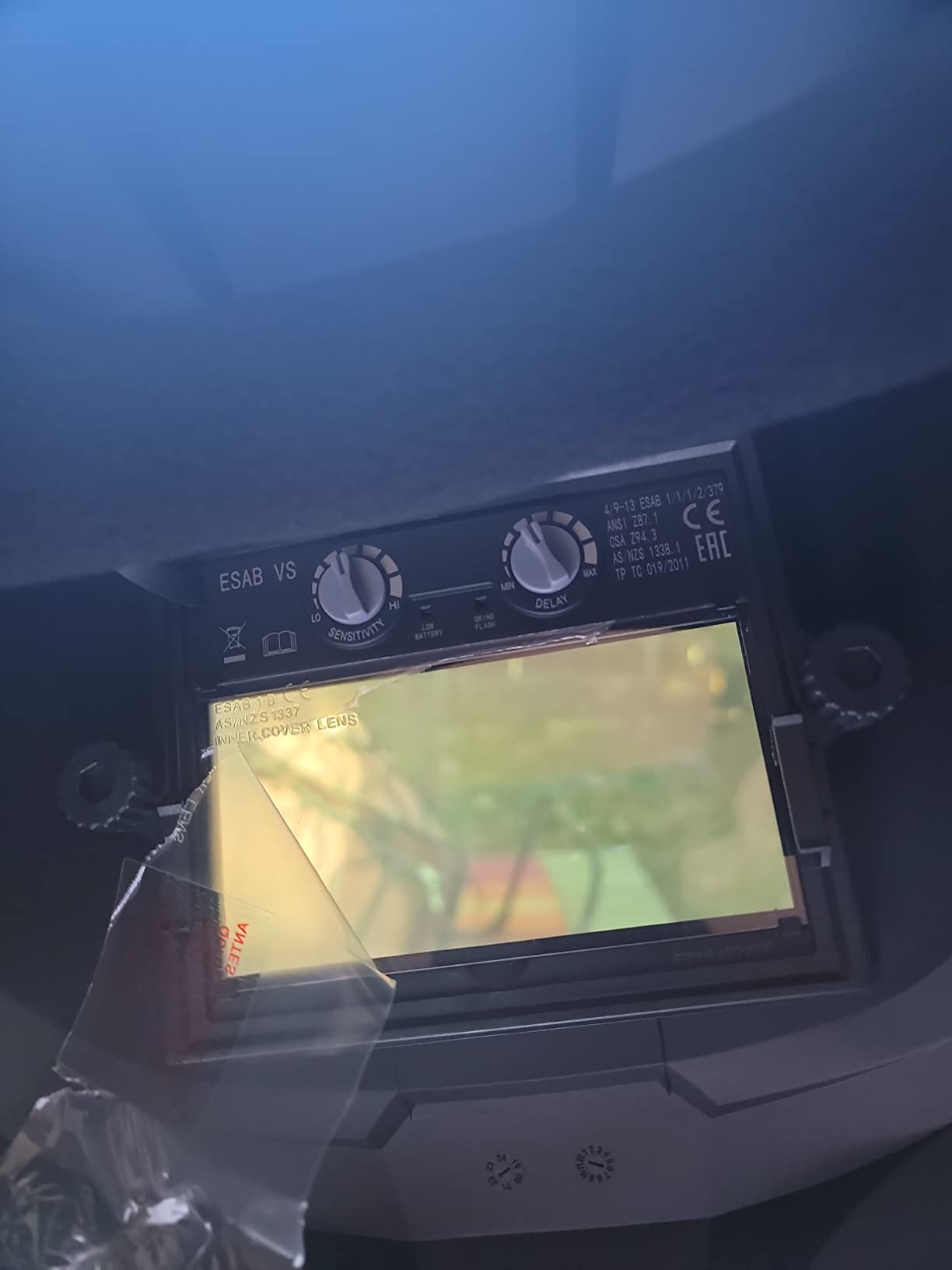
Two controls do the work. Sensitivity sets how faint an arc the lens will respond to, which decides whether a 25 amp TIG arc darkens it. Delay sets how long the lens stays dark after the arc stops, so short delay suits tacking and long delay suits higher amperage where the afterglow would otherwise flash you.
Start with sensitivity turned up and delay near a quarter second, then test on scrap at your lowest real amperage. If the lens fails to darken, raise sensitivity first. If it darkens from shop lighting, back it off.
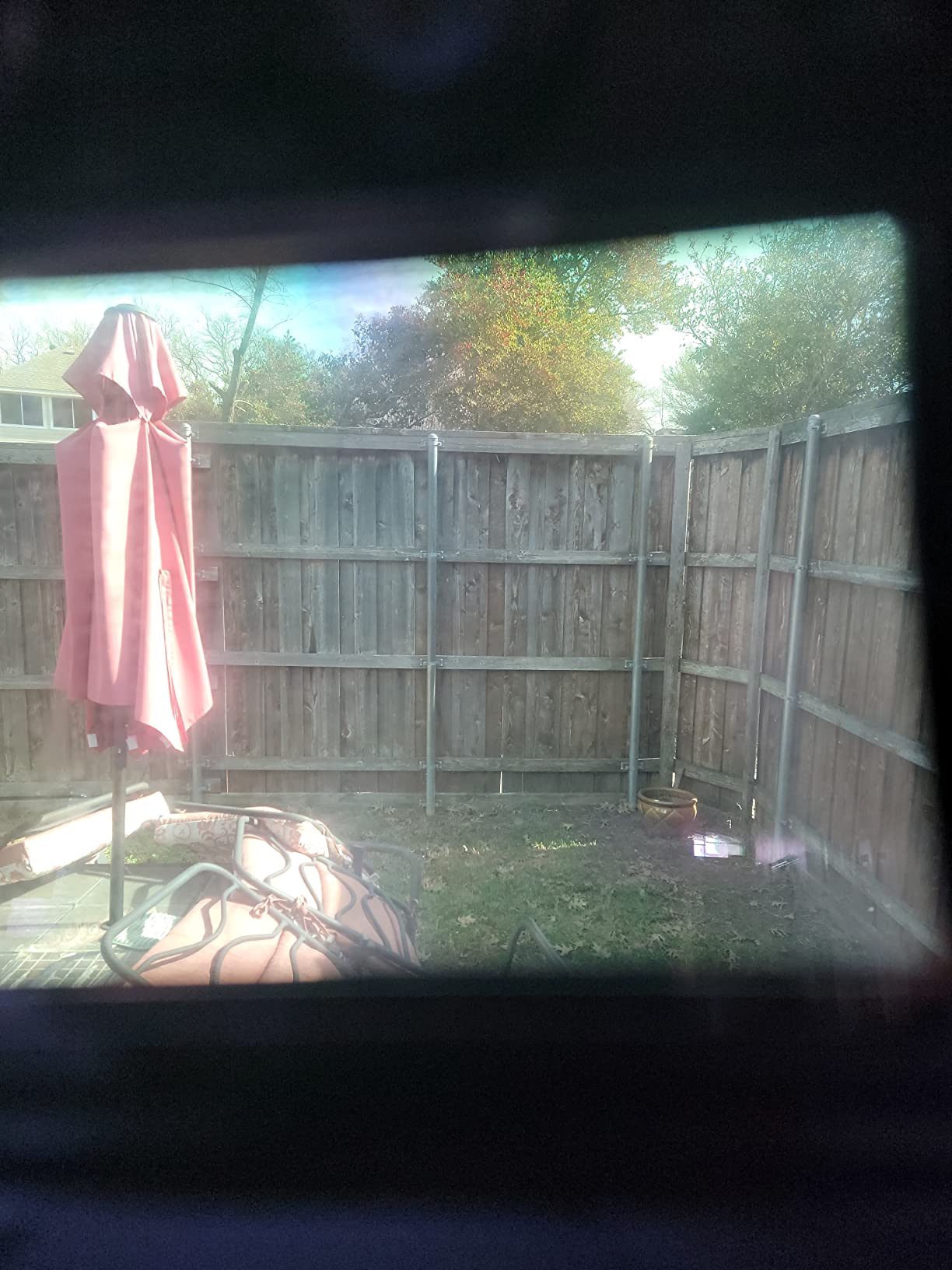
Build Details Worth Knowing Beforehand
The exterior shade knob sits on the upper left of the shell, and owners report it can be bumped in tight spaces, darkening the lens mid-weld. That is a real field concern in confined fabrication and the most common complaint about an otherwise well-regarded helmet. The viewing area is smaller than the Lincoln VIKING 3350, and there is no on-board memory.
Long-Term Reliability
Long-term owners report multi-year use with a single battery change, a good reliability signal for a plastic and nylon build. Budget for the standard battery type, since it is the one consumable this model needs most.
8. YESWELDER LYG-Q800D – Panoramic Side View for Checking Alignment
YESWELDER Auto Darkening Welding Helmet with SIDE VIEW, 180° Panoramic View, 1/1/1/1 True Color Solar Powered Welder Hood, Wide Shade 3/5-9/9-13 Welder Mask for TIG MIG ARC CUT and GRIND, LYG-Q800D
180 degree panoramic side view
3.94 x 3.23 inch main view
4 arc sensors
solar powered
+ Pros
- Only mid-priced model here with a genuine 180 degree side view
- Main lens 1/1/1/1 true color with a large viewing area
- 4 arc sensors with 1/30000 second switching
- Shade 3/5-9/9-13 across TIG
- MIG
- MMA
- cut and grind
- Reinforced PP shell with blue light blocking outer lens
– Cons
- Side view is a fixed DIN5 filter that does not auto-darken
- Heavier at 2.2 lb than other models in this brand
- Thinnest review base in the roundup
- Side filter lenses fog and scratch readily
The LYG-Q800D solves a specific TIG problem: knowing where your torch is before you strike. The main 3.94 by 3.23 inch lens is a 1/1/1/1 true color auto darkening window with four sensors, and beside it sits a fixed DIN5 filter giving roughly 180 degrees of peripheral view.
For setting up a butt joint, checking root gap or watching both sides of a T joint during fit-up, that side window removes constant head-turning. It is the reason buyers on this product give.
It is the heaviest YESWELDER here at 2.2 lb because of the wider shell. About 440 ratings average 4.5 stars with 81 percent five stars.
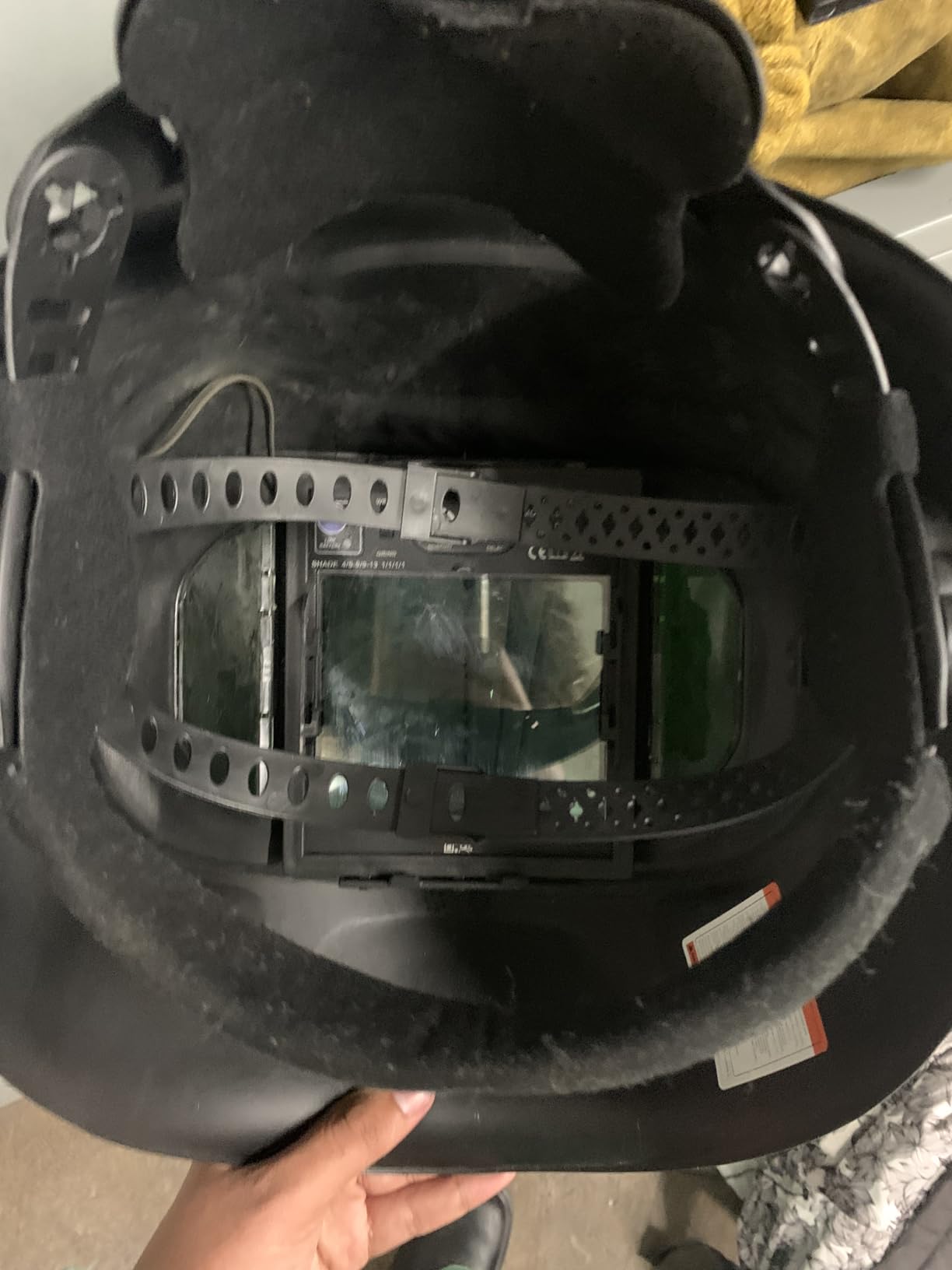
What the Side Filter Can and Cannot Do
Be clear on the limitation. The side window is a fixed DIN5 shade and does not auto-darken, so it is useless while an arc is lit and should not be treated as protection during welding. It is a fit-up and inspection aid, nothing more. If your process is 90 percent welding and 10 percent setup, buy for a different reason.
Where it shines is short, frequent TIG work: tacking a fixture, verifying electrode angle, checking both sides of a joint, then welding. The main lens handles shade 3/5-9/9-13 with adjustable sensitivity and delay, and solar power with a replaceable CR2450 removes charging from the routine.
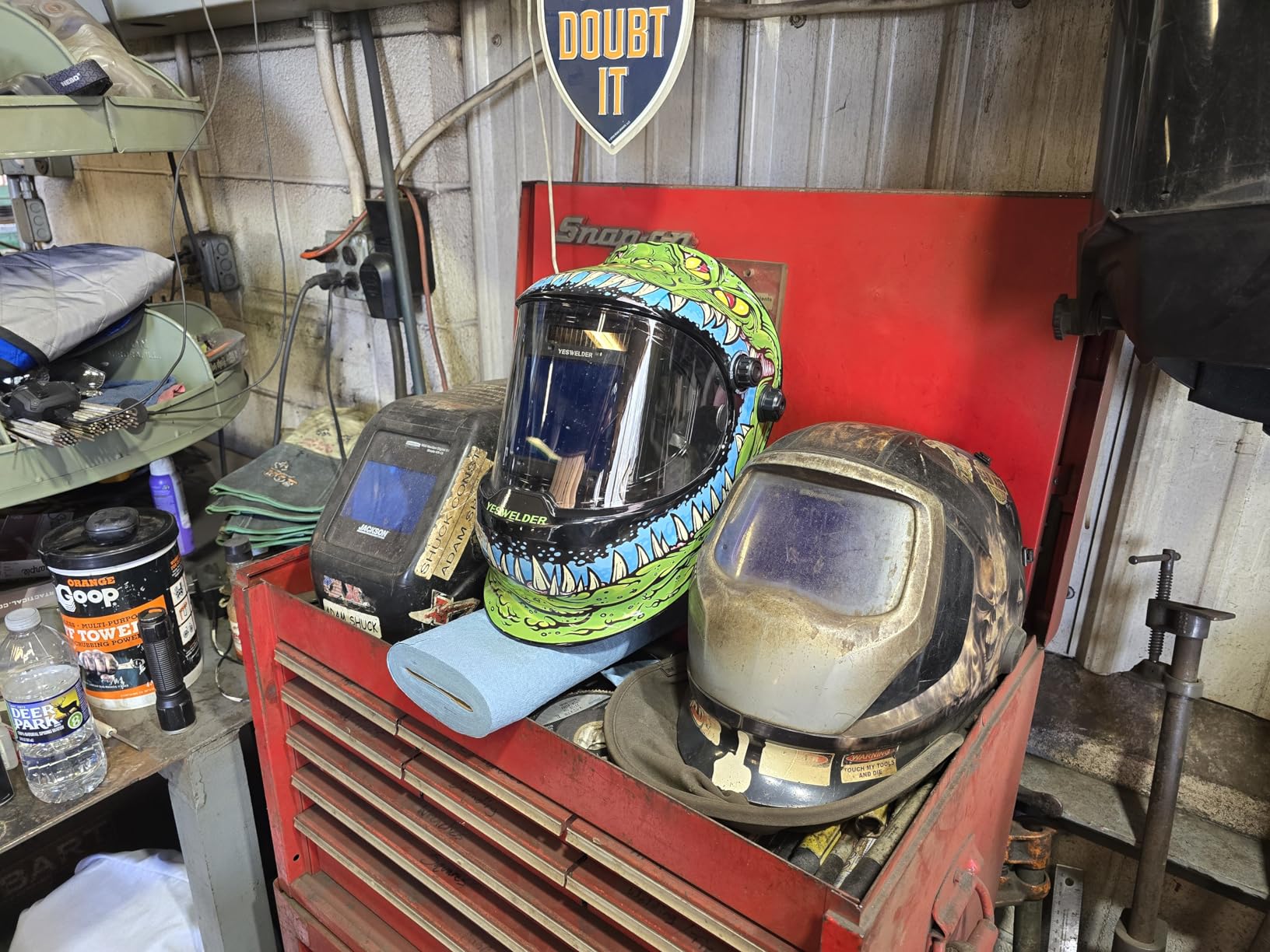
Cheater Lenses and the Weight Cost
The shell accommodates magnifying lenses, which is meaningful for TIG because fine detail work on thin material is where a cheater pays for itself. The side filter lenses are the weak point operationally: they can fog or scratch more readily than the main lens, and they add a consumable to track.
Who This Suits
This is a fit-up-heavy helmet. If you spend your TIG hours positioning and tacking rather than running long beads, the panoramic view earns its weight. If you want a wide welding view, the Lincoln VIKING 3350 at number one does the same job inside the arc.
9. TOOLIOM Blue Eagle – The Lightest Helmet for Overhead and Out-of-Position Work
TOOLIOM Auto Darkening Solar Powered Welding Helmet for TIG MIG ARC with Light
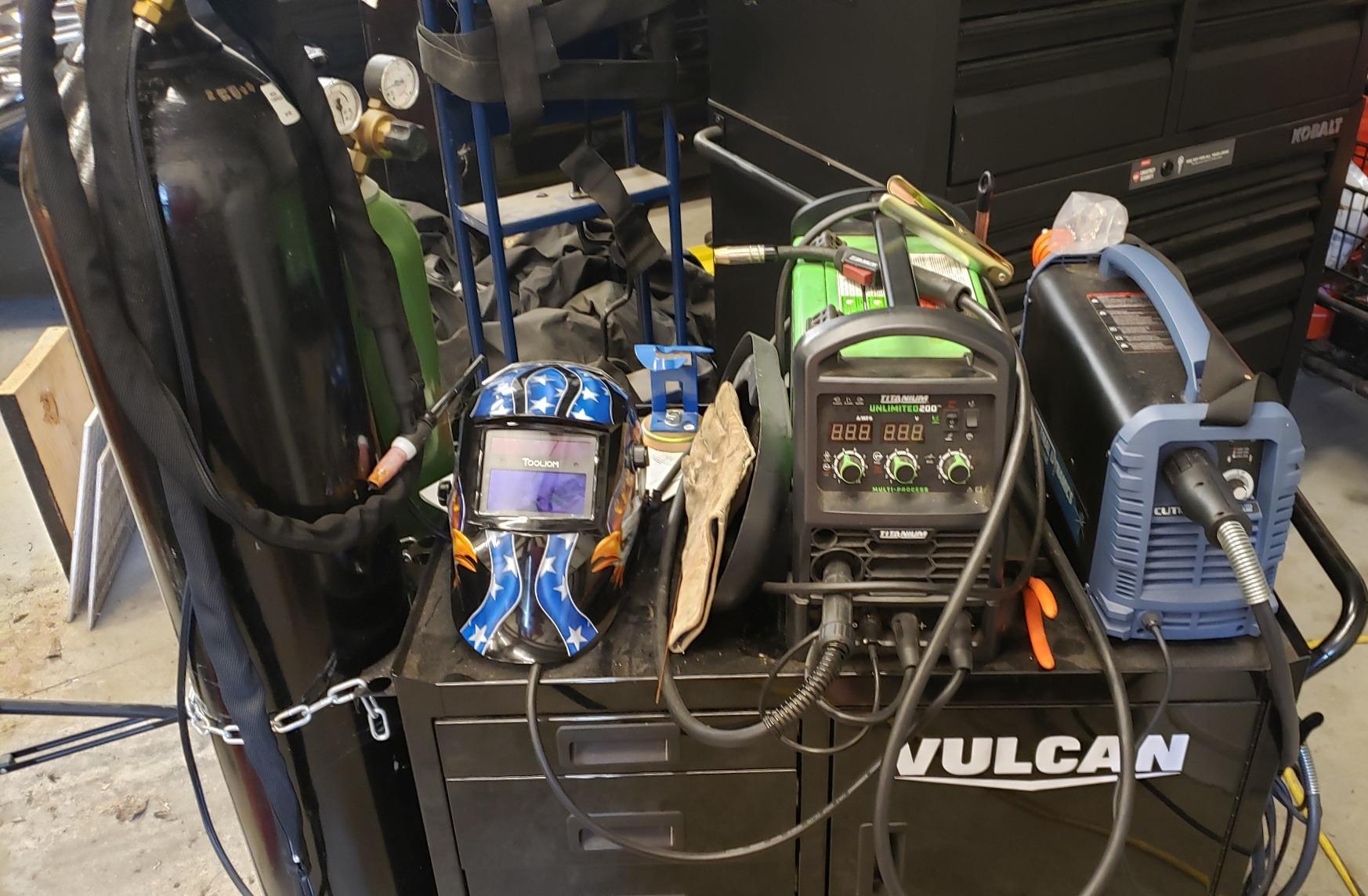
1.14 lb shell
solar powered
1/25000s response
1/1/1/1 true color
+ Pros
- Lightest shell in the roundup at 1.14 lb
- Solar powered with a replaceable battery so no charger is needed
- 1/1/1/1 true color lens with a natural view
- External knob switches to grind mode with gloves on
- Includes spare battery and three replacement lenses
– Cons
- Cheater lens holder too small for a standard magnifier
- Internal controls wear quickly and are fiddly mid-weld
- Headband padding thin for full professional shifts
- Manual omits the external knob
- Small viewing area
At 1.14 lb the TOOLIOM is the lightest helmet here, and for TIG that weight is not a vanity metric. Your neck is already loaded by holding a torch at an angle with one hand, and helmets feel heavier the longer a session runs.
This is the pick for welding out of position, under a vehicle or overhead on a stainless build, where headgear balance matters more than anything else on the spec sheet. About 1,200 ratings average 4.6 stars with 76 percent five stars.
Owners across Europe and North America describe it as solidly performing for the money, with standout marks for low weight and solar convenience.
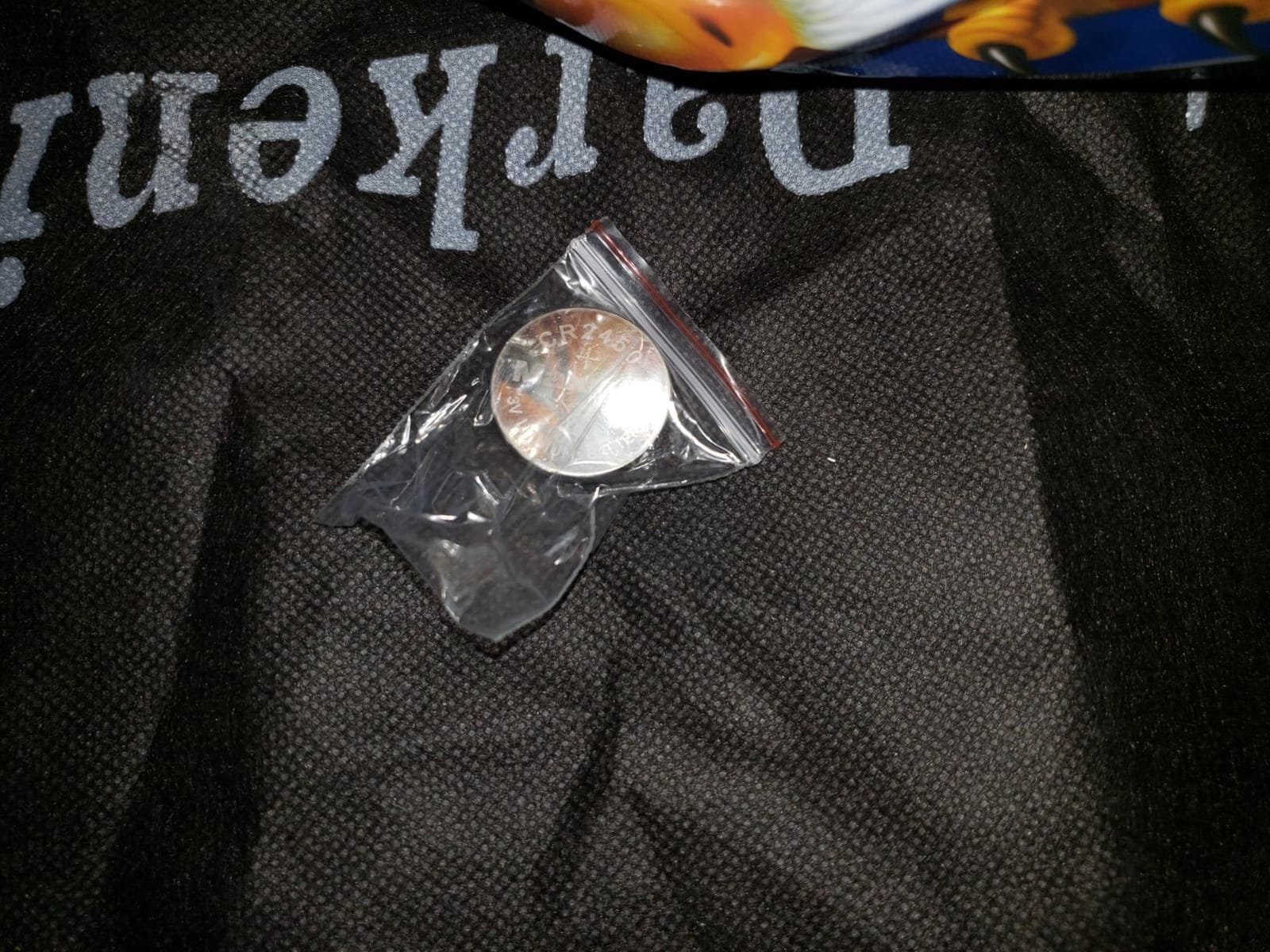
Solar Power and Battery Logic
Solar powered with a replaceable battery means no charger to manage and no lithium pack that dies mid-project. Outdoors or on an open fabrication job, that removes a real failure mode. The trade is that the panel needs arc time to top up, and the low-battery indicator is the warning you get before a failure rather than after.
The high-sensitivity sensors trigger in 1/25000 of a second with internal sensitivity and delay knobs, and the DIN 3.5/9-13 range covers TIG, MIG, MMA and plasma cutting. The external knob switches to grind mode without removing gloves.
Where the Weight Saving Costs You
Several small compromises come with the low weight. The cheater lens holder is slightly too small for a standard 4.25 inch magnifier, which is annoying for fine detail TIG. The internal lens and side darkening knob wear quickly with handling, and the rear headband padding is not enough for a full professional shift.
Also Worth Noting
The viewing area is small at 3.64 by 1.67 inches, the lenses soil quickly near the arc, and the manual omits the external on-off and darkening knob. Keep spare inner covers on hand.
10. MIGVAN H-21 – A Bright Light State for Working Between Welds
MIGVAN Welding Helmet Auto Darkening True Color Large Viewing, Welding Hood Solar/Replaceable Battery Powered, Wide Shade 4/5-13 with 4 Arc Sensor, Optical Clarity Welding Mask for TIG MIG ARC Grind
DIN4 light state
4 arc sensors
1/10000s activation
solar plus CR2450
+ Pros
- DIN4 light state keeps the view bright between welds
- 4 arc sensors activating in 1/10000 second
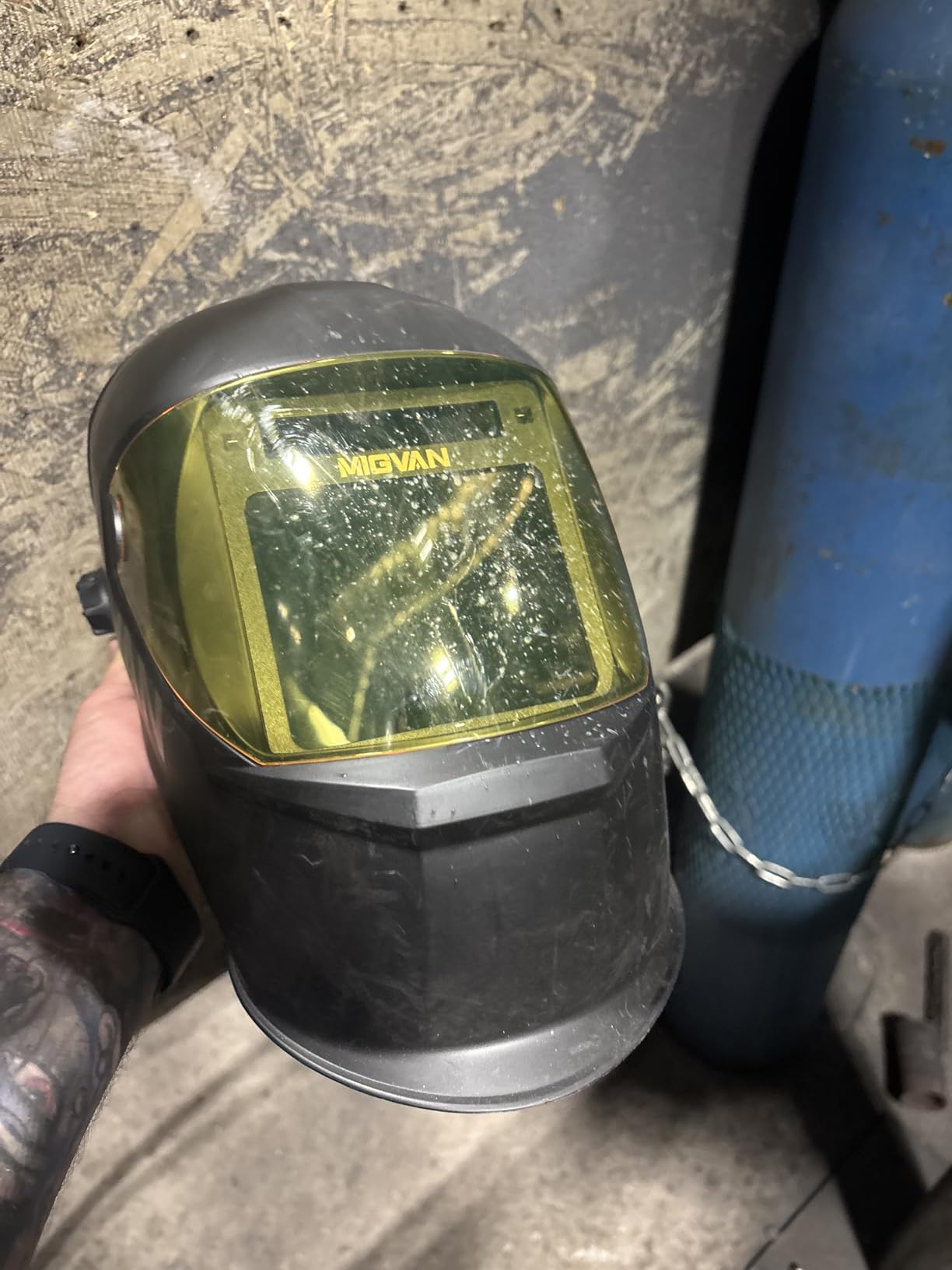
- True color golden lens cuts distortion and saturation
- Solar power plus a replaceable CR2450 battery
- Bundle includes spare inner and outer lenses and a bag
– Cons
- Golden outer lens gives a warm colour cast versus neutral lenses
- Unknown brand with a shorter field history
- Packaging lists minimal shell and headgear durability detail
The MIGVAN H-21 is the newest name in this roundup, with under 800 ratings, so treat it as a spec-led pick rather than a proven one. What matters for TIG is the light state: it switches from a DIN4 inactive state to DIN5-9 and DIN9-13 when the arc strikes, brighter between welds than most inactive shades here.
On a lot of fit-up and tacking work, that difference in cycle time is real. Four arc sensors activating in 1/10000 second handle detection, and dual solar and CR2450 power covers low-light conditions where a solar-only cell would struggle.
About 780 ratings average 4.4 stars with 74 percent five stars, with feedback centred on a clear, distortion-free view of the pool.
The Golden Lens Question
This is the spec to weigh most carefully. The golden lens is marketed as enhanced true color, and owners generally report a clear view of the pool and workpiece. The same owners note a noticeably warm colour cast compared with a neutral lens. If you judge heat tint to confirm you are on the correct side of the puddle on stainless, a warm cast is a drawback rather than a matter of taste.
Shade control is wide, running DIN4 through DIN5-13 with sensitivity adjustment across TIG, MIG, stick, cut and grind. The pivoting headgear with breathable padding is aimed at long sessions, though the brand’s short history means long-term evidence is not there yet.
Accessories and Longevity Unknowns
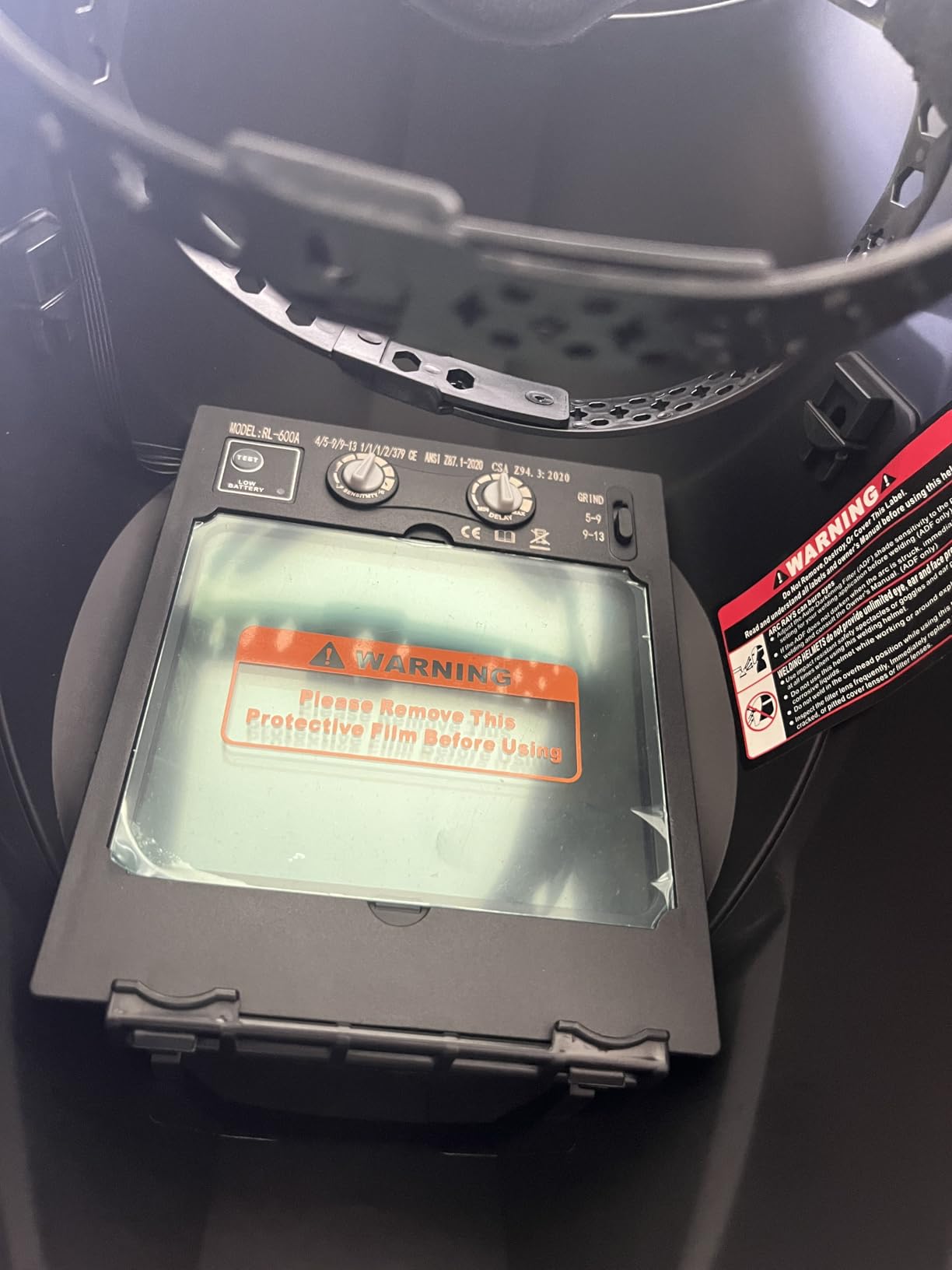
The package is generous for the tier: two inner lenses, two outer lenses, a manual and a heavy duty storage bag. Replaceable covers matter because a clouded inner cover is the most common reason a good helmet starts to feel bad.
Who This Suits
The open question is durability evidence. The packaging lists minimal detail on shell material and headgear construction, and a smaller review base means less long-term field data than an established brand gives. For a constant welder that matters. For a weekend hobbyist, the light-state brightness and accessory bundle are a fair trade.
How to Choose a Welding Helmet for TIG Welding
There is a model confusion trap in this category that costs buyers real money. A40 and A60 are different ESAB tiers, not a new and old version of one helmet. ClearLight appears across multiple Miller generations, and the VIKING 3350 has shipped with different lens configurations. Check the model number and lens technology on the label, not just the brand and the shell shape.
Match the Low-Amp Floor to Your Thinnest Material
Work out the lowest amperage you will actually run, then check the helmet against it. The Miller Classic is the only helmet here whose manufacturer states a floor, at five amps or below. Everything else must be judged on sensor count and sensitivity tuning, which is why four-sensor designs dominate this list and why the ESAB Savage A40 earns credit for a sensitivity control specified for low amp TIG.
For typical material: 0.035 inch stainless tube runs around 20 to 50 amps, thin aluminium sheet around 40 to 70 amps, and 3 mm plate roughly 60 to 90 amps. Match the helmet to your thinnest work, not your average work.
Arc Sensors: Why Four Beats Two on Thin Gauge
Sensor count is not a marketing number on TIG. A faint arc at low current gives the lens less to detect, so more sensors means more chances to register it. Four is the practical floor for thin-gauge work, which is why the four-sensor models cluster near the top here. The two-sensor helmets work well where the arc is bright enough or a published floor covers you.
Sensor placement matters as much as count. A wide shell spreads sensors wider, and TIG torch angles can put the arc outside that spread. Test any new helmet at your lowest real amperage on scrap before trusting it on a finished part.
Shade Range, Shade Selection and the Light State
For gas tungsten arc welding, start at shade 8 and work upward. Nine to 11 suits most thin stainless and aluminium, and thicker material or a hot shop pushes you higher. Do not run below shade 8 for TIG just because it looks brighter, since comfortable brightness and safe brightness diverge fast under a continuous arc.
The light state, the shade the lens sits at when no arc is present, is the most underrated TIG feature on this page. A shade 3 or 4 inactive state lets you keep the helmet down between welds, which speeds up fit-up and tacking considerably. A shade 8 or darker inactive state is noticeably slower between touches.
AC TIG on Aluminum and Magnesium Changes the Sensing Question
AC TIG on aluminium and magnesium is where sensor count alone stops being enough guidance. The AC arc extinguishes and reignites constantly as polarity shifts, so the light the sensors see is less like the steady DC arc used on stainless. A helmet that triggers reliably on DC may hesitate at the start of an AC arc, and higher sensitivity is the practical fix. A bright light state also helps, because you can see the alloy’s colour change as the cleaning action works.
None of these ten helmets publishes a specific AC TIG amperage rating or a named electromagnetic sensing mode, so I will not pretend one exists. What you can do is read the sensitivity specification, set it high, and test on a scrap piece of the same alloy before starting a job. If you weld non-ferrous regularly, budget a dedicated test session rather than finding out mid-project.
One more option forums raise constantly and roundups ignore. A passive shade glass helmet using a fixed number 9 or 10 filter costs very little, has no sensors to fail and no electronics to misfire, and is genuinely safe for low-amp TIG. The trade is that it is dark between welds, so it suits short focused passes rather than long sessions.
Headgear Balance and Lens Distance for Crouched TIG
Weight is quoted constantly, but balance is what you feel. A light shell that hangs behind your neck still hurts when you are bent over a bench for an hour, while a heavier shell with a crown-mounted harness stays neutral. The Lincoln X6 system is the clearest example, and it pays off on long crouched TIG work where your head is tipped forward.
Lens distance from your eyes matters too, since a large viewing area only helps if it sits far enough forward for peripheral awareness. If you wear prescription or safety glasses, check there is room inside the shell before you commit, and set the harness before you light the torch rather than during the first weld.
Power Source and Running Costs Over the Helmet’s Life
Solar powered helmets with a replaceable coin cell are the simplest ownership story: no charger to fail and no lithium pack to age out. The cost that accumulates quietly is cover lenses, and over five years of TIG work the difference between standard and proprietary branded lenses is substantial. Certification is also worth checking, with ANSI Z87.1 and CSA Z94.3 on several units here, ANSI Z89.1 on one and ANSI and CE marking on another.
Why Your TIG Helmet Is Not Dark Enough, and How to Fix It
This is the most common TIG helmet complaint, and in almost every case the lens is not the fault. Work through these in order before you replace anything.
1. Check the battery. A dead or wrongly installed coin cell presents as a lens that stays perfectly clear while you weld, and the LYG-L600A has owners reporting the included CR2450 arrived reversed.
2. Look at where the arc actually is. The torch, the filler rod and your own hand can sit between the sensors and the arc. Reposition so the helmet can see the arc before changing settings.
3. Turn sensitivity up. Most units ship at a mid setting. Raise it and test on scrap at your lowest real amperage, not at 100 amps where everything triggers.
4. Set delay deliberately. Set too long, the lens stays dark into the next weld, which reads as lag. Set too short, it lightens while the arc still glows.
5. Inspect the inner cover lens. A scratched or clouded inner cover does not stop the lens darkening, but it makes a working helmet look broken, and owners often misdiagnose it as a sensor fault.
6. Confirm the shade you are on. If the lens darkens correctly but the shade is too light for the current, no amount of sensitivity tuning helps. Step up to shade 9 or 10 for thin TIG.
Frequently Asked Questions
What is the best helmet setting for TIG welding?
Start at shade 8 for gas tungsten arc work and step to 9 or 10 for thin stainless and aluminium. Set sensitivity high enough that the lens darkens at your lowest real amperage, and begin with a delay around 0.2 to 0.5 seconds so the lens clears quickly between welds. Test all three settings on scrap at your lowest current before you commit to a job.
Do I need a special helmet for TIG welding?
You do not need a TIG-only helmet, but you do need one specified to trigger at low amperage. TIG routinely runs between 5 and 60 amps on thin material, where many budget auto-darkening helmets will not respond at all. Four arc sensors and a clearly stated low-amp rating are the specs that matter.
What shade number should I use for TIG welding?
Shade 8 is the safe starting point for gas tungsten arc welding, with 9 to 11 typical for thin stainless, aluminium and copper. Thicker material or a hot shop pushes the shade higher. Do not run below shade 8 for TIG just because it looks more comfortable, since a continuous arc makes brightness and safety diverge quickly.
My welding helmet isn’t dark enough. What could be the problem?
Check the battery first, then check whether the torch or filler rod is blocking the arc sensors, then turn sensitivity up. Other common causes are a delay setting that is too long, a scratched inner cover lens, and a shade number that is simply too light for your amperage. Test on scrap at your lowest real current before replacing the helmet.
What is the best welding helmet for value for money?
The YESWELDER LYG-M800H is the strongest value pick in this roundup because four arc sensors and a 3.93 by 3.66 inch 1/1/1/1 true color view usually cost far more. Its main weakness is light-duty plastic construction, so it suits garage and hobby work rather than daily production welding.
Which TIG Helmet Should You Buy?
If you are choosing among the best welding helmets for TIG welding, decide by your thinnest plate rather than your average job. For the clearest view and widest field of view, the Lincoln Electric VIKING 3350 is the pick and the helmet I put on my own head first. For a published low-amp floor and a bright light state, the Miller Classic ClearLight is the most defensible answer, because five amps or below is a stated rating rather than a marketing line.
If you switch jobs constantly, the ESAB Sentinel A60 saves time with half shade increments and nine saved settings. If you set up more joints than you strike arcs, the YESWELDER LYG-Q800D panoramic side view saves head movements. If you work overhead or under a vehicle, the TOOLIOM at 1.14 lb protects your neck. If you are learning on a budget, the YESWELDER LYG-M800H gives you four sensors and a big window, and the LYG-L600A is the cheapest sensible way to start.
Whichever you pick, set sensitivity and delay on scrap at your lowest real amperage before the job starts, and keep spare inner cover lenses on hand. That habit prevents most of the complaints we heard in this roundup. For technique and joint prep, read our TIG welding tips and techniques guide and our complete guide to TIG welding stainless steel before you light the torch in 2026.
Leave a Reply