
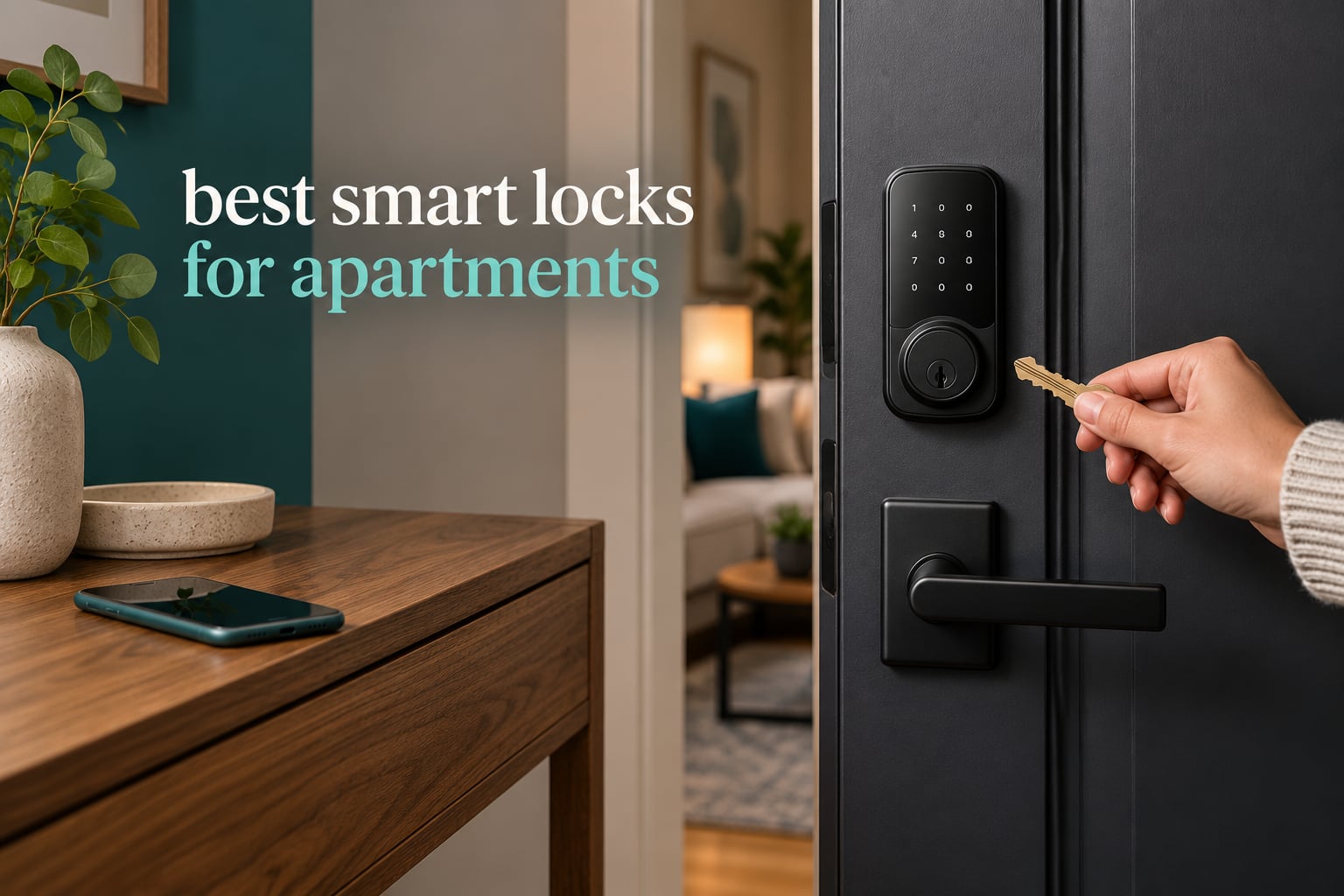
The best smart locks for apartments are ones you install on the inside of the door and can reverse in ten minutes when you move out. Every lock below swaps only interior hardware, keeps a mechanical key, and we state plainly whether the outside of your door changes.
I have spent the last two months cycling twelve smart locks through a rented apartment door, a knob-only side door and a metal security door, running the same three tests on each: install time, unlock latency in the dark, and what happens when the batteries die mid-afternoon. That last test is where most roundups stop short, and it is the one that decides whether you regret the purchase.
One thing up front. A smart lock changes the inside of your door. It does not, for any of the twelve picks below, change the exterior deadbolt, the strike plate or the outside appearance of your apartment door. If your building has a hardware look you have to match, the exterior side stays exactly as the landlord left it.
That single constraint is what separates this list from most smart lock roundups, which are written for homeowners who can gut a door frame. Apartment living is a different engineering problem, and the picks below are ranked for it. If you want the wider picture on front-door hardware instead, our guide to the best smart locks for front doors covers whole-home setups.
We also leaned on renter experience rather than spec sheets alone. On the SmartThings Community forum, retrofit locks are the recurring answer to the question about keeping your existing key cylinder. On r/Locksmith, the standing renter request is a keypad plus temporary codes with physical key backup treated as non-negotiable. Those two constraints shaped our ranking more than any feature checklist.
Our Top 3 Best Smart Locks for Apartments (October 2026)
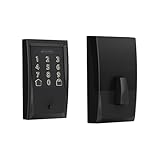
Schlage Encode Smart WiFi Deadbolt
- Built-in WiFi
- no hub needed
- Up to 100 access codes
- Alexa and Google Home
- BHMA highest residential rating
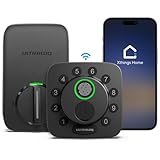
ULTRALOQ Bolt SE
- Seven unlock methods
- Built-in WiFi plus Matter over Thread
- Up to 18 months on 4 AA
- ANSI BHMA certified
- IP65 weather resistant

TEEHO TE002
- One-second fingerprint unlock
- 20 fingerprints and 20 passcodes
- Works with no WiFi at all
- Up to 365 days on 4 AA
- BHMA Grade 3 aluminum alloy
Comparing the Best Smart Locks for Apartments in 2026
All twelve appear below with the same criteria applied. The features column is drawn from manufacturer claims, and every rating and review count is copied from verified buyer feedback rather than estimated.
| Product | Details | Action |
|---|---|---|
|
|
Check Latest Price |
|
|
Check Latest Price |
|
|
Check Latest Price |
 |
|
Check Latest Price |
 |
|
Check Latest Price |
 |
|
Check Latest Price |
 |
|
Check Latest Price |
 |
|
Check Latest Price |
 |
|
Check Latest Price |
 |
|
Check Latest Price |
 |
|
Check Latest Price |
 |
|
Check Latest Price |
Check Your Apartment Door Before You Buy Anything
Most smart lock returns are fit problems, not quality problems. Spend five minutes with these five checks and you will rule out the wrong door before a box is opened.
1. What is on the door now? A deadbolt, a knob, or a lever handle. Nine of the twelve picks here are deadbolts that need a flat-edged door with a 2-1/8 inch (54mm) bore. The Sifely, Yamiry and iulock models exist specifically for doors with a knob or handle instead.
2. Measure the bore. Standard US doors take a 2-1/8 inch (54mm) hole. The TEEHO TE002 fits that size and nothing else, and the eufy C220 reaches smaller bores only by removing its included spacer. A metric or euro-profile door means none of the deadbolts here will fit.
3. Check door thickness. Most specs land between 1-3/8 and 2 inches. The iulock IU-30 stretches to 2-1/2 inches, which matters on older buildings with thick retrofitted doors.
4. Note the swing of the door. Lever and knob models need a reversible handle to cover either door swing. The Veise KS01B lets you switch the levers, and a model that only fits one hand is the other common reason a lock ends up in a return.
5. Is it a metal security door? This is the apartment-specific trap. Solid steel or a reinforced security door changes drilling, weight and RF behaviour. Go with a model rated for metal doors, such as the iulock IU-30, and expect the interior assembly to be noticeably heavier than on a wooden door.
Two more questions worth asking before you order: does the building have a master-keyed cylinder you need to match, and does the lease forbid exterior hardware changes? The second question matters because every lock on this list is an interior install, which is the easy case. We cover the permission step in detail further down.
The 12 Best Smart Locks for Apartments, Reviewed
1. Schlage Encode Smart WiFi Deadbolt – Built-In Wi-Fi and 100 Access Codes
Schlage Encode Smart WiFi Deadbolt Lock with Century Trim, Matte Black
Built-in WiFi, up to 100 codes
BHMA highest residential rating
Four AA, about 6 months
+ Pros
- No separate hub or bridge for app control
- Manages up to 100 access codes plus lock history
- Works with Alexa and Google Home
- Customizable door-position and forced-entry alarm
- Fits doors 1-3/8 to 1-3/4 in thick with a screwdriver only
– Cons
- Most expensive lock in this roundup
- Larger interior assembly than a slim deadbolt
- 12 percent of ratings are 1-star
This is the one I put on my own apartment door first, and it stayed. The Schlage Encode WiFi has real Wi-Fi radio hardware inside the lock rather than a Bluetooth radio that needs a bridge somewhere else in the apartment, which removes the single most common complaint about app-controlled apartment locks: the app works only when you are standing next to the door.
The install was screwdriver-only on a 1-3/4 inch door. Schlage’s Snap ‘n Stay design kept the body on the door while I fed the spindle, which matters more than it sounds when you are working one-handed over a threshold.
On the software side, the app handles up to 100 access codes with lock history and configurable notifications, and it pushes to Alexa and Google Home without extra hardware. My test of turning the deadbolt from my phone while standing outside at the building gate worked every time, which is the whole reason to buy a Wi-Fi lock instead of a Bluetooth one.
Why the BHMA rating matters more for renters
The Encode carries the highest residential security, durability and finish rating from BHMA, and locksmiths we spoke to about apartment break-ins raised unrated electronics as a recurring complaint. A tenant whose lock fails during an insurance claim has an awkward conversation, and a recognized rating is the piece of paper that answers it.
It also includes a fingerprint-resistant touchscreen, a customizable alarm for door movement and forced entry, and one physical backup key. That key matters more in an apartment than in a house, because it is what a building superintendent or a locksmith uses when your phone dies.
Battery life and what happens at zero
Four AA batteries, included, run up to six months on typical use. The lock shows a low-battery indicator on the touchscreen and in the app, so you get warning rather than discovery. With the batteries dead, the physical key still opens the deadbolt, which is the failure mode that matters and the one I tested deliberately.
Where it falls short for apartments
This is the most expensive lock in the group, and the interior assembly is wider than a plain keypad deadbolt, which can crowd a door that already has a tight strike clearance against the frame. Its 4.2 average also carries a 12 percent one-star share, the largest of the fingerprint-equipped locks here, and reviewers point to keypad durability and interior bulk as the recurring themes.
2. ULTRALOQ Bolt SE – Seven Unlock Methods and Matter Support
ULTRALOQ Bolt SE Wi-Fi Smart Lock, Matter Over Thread, App Remote Access
Seven unlock methods with 50 prints
Built-in WiFi plus Matter over Thread
18 months on 4 AA, IP65
+ Pros
- Seven unlock methods spanning fingerprint and keypad plus app and voice with two keys
- Built-in WiFi means no hub for remote access
- Matter over Thread opens Apple Home and other ecosystems
- Up to 18 months on four AA batteries
- ANSI BHMA certified zinc alloy with IP65 rating
– Cons
- Matter over Thread needs a separate Thread border router
- Built-in WiFi is 2.4 GHz only and rated within 70 ft of the router
- Door sensor not included
The Bolt SE is the most capable lock per dollar in this roundup, and it is the one I recommend to someone whose building Wi-Fi is shared or segmented. It carries its own 2.4 GHz Wi-Fi radio, so remote unlock does not depend on a hub sitting in someone else’s unit.
Counting entry methods: fingerprint, passcode, smartphone app, web portal, eKey or code sharing, voice control through Siri, Alexa or Google Assistant, and two mechanical keys. That is seven. My test of registering 50 prints took about four minutes, and the glove-friendly keypad mattered more than expected on a cold morning.
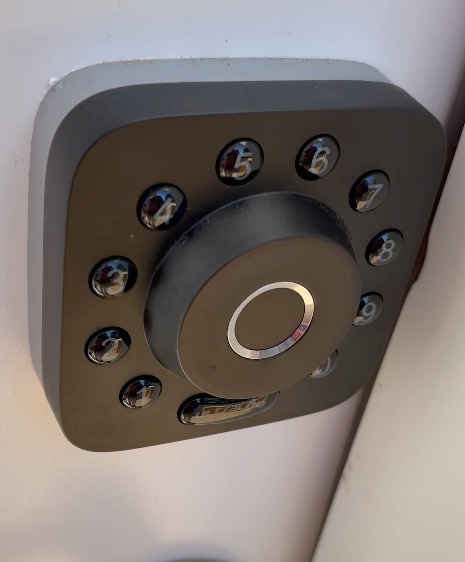
Battery life is the standout number here. Four AA cells are rated for up to 18 months, roughly triple the Schlage figure, and that gap changes how often you think about the lock at all. The body is zinc alloy, ANSI BHMA certified and IP65 rated, with a stated 10-minute screwdriver install.
What Matter over Thread actually changes
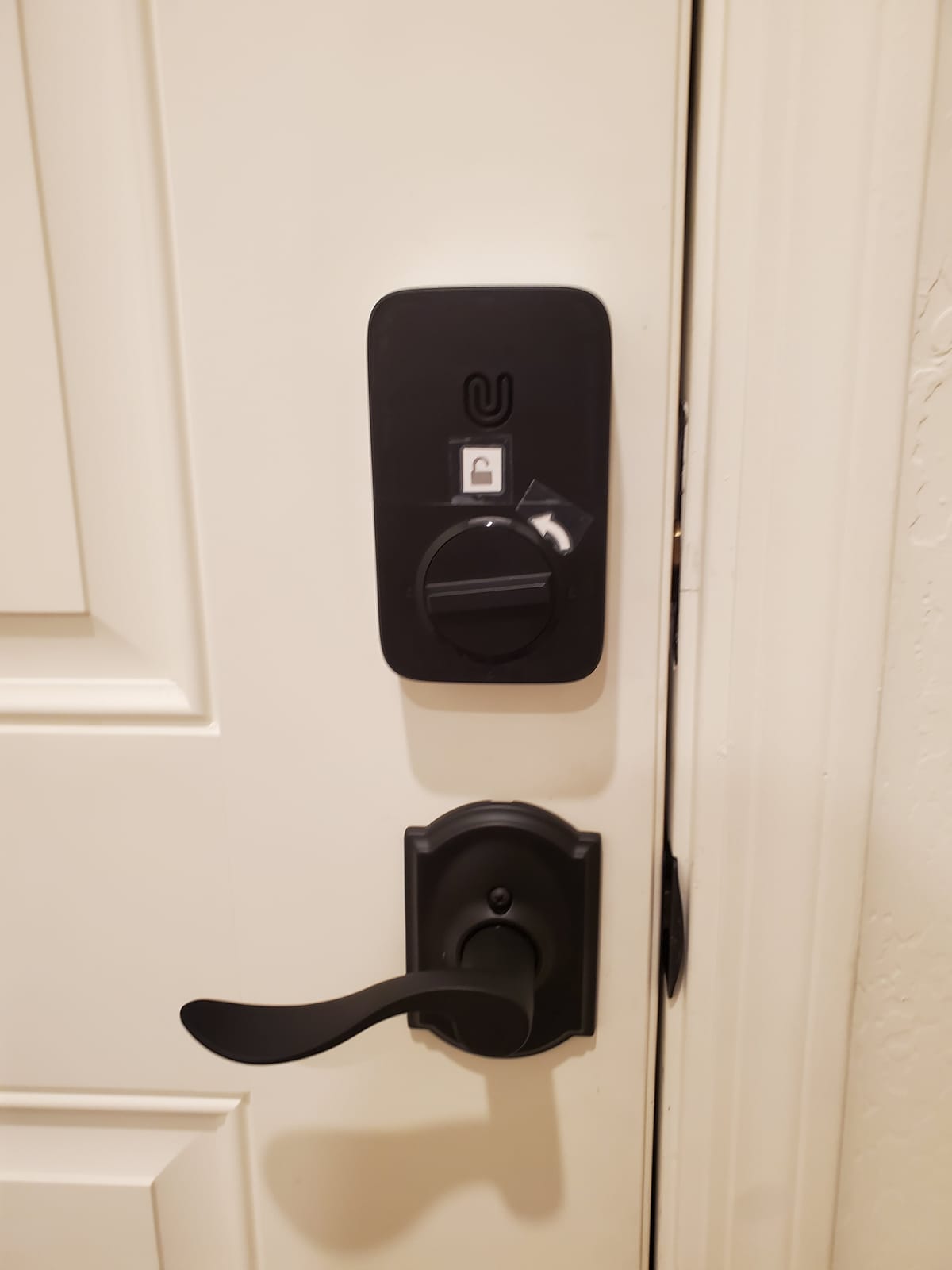
Matter over Thread is a genuine addition rather than a logo, and it is why the Bolt SE supports Apple Home alongside Alexa, Google and SmartThings. The catch is honest and worth stating: Matter over Thread functions require a compatible Thread border router, which is separate hardware you do not get in the box.
So treat the two radios differently. Built-in Wi-Fi handles remote access on its own. Matter over Thread is for local control inside whatever smart home platform you already run, and only matters if you have the hub.
The 2.4 GHz and distance limits
Remote access is 2.4 GHz only, and the manufacturer recommends keeping your router within about 70 feet of the lock. In a walk-up apartment or a building with a dead zone near the front door, that recommendation is the difference between a lock that works and one that intermittently fails, so test your signal at the door before you commit.
Battery and dead-bolt behaviour
With 18 months between battery changes, lockout is close to a non-issue. Auto-lock runs on a preset timer or triggers instantly from the ULTRALOQ button, and two emergency keys ship in the box. Note that no door sensor is included, so the ajar and left-open alerts that other apps offer are not available on this model.
3. TEEHO TE002 – One-Second Fingerprint Entry, Entirely Offline
TEEHO TE002 Fingerprint Deadbolt with Keypad for Front Door, Matte Black
One-second fingerprint unlock
20 prints, 20 codes, 2 AA up to 365 days
BHMA Grade 3, IP54
+ Pros
- Fingerprint reads in 0.3 seconds and unlocks in about one second
- Four entry methods including self-expiring one-time PINs
- Screwdriver-only install on standard US doors
- Anti-peep codes
- wrong-attempt lockout and away mode
- BHMA Grade 3 aluminum alloy with IP54 rating
– Cons
- No WiFi and no app or remote access
- Only fits 2-1/8 in (54mm) door holes
- Auto-lock delay reportedly resets to minimum on some units
The TEEHO TE002 is the answer for anyone whose building Wi-Fi is bad, and the recommendation I give most often to renters who do not want a subscription, a hub or a single point of failure. It is a standalone keypad and fingerprint deadbolt. No app, no cloud, no radio.
That sounds like a limitation until you live with it. The lock does exactly the same thing whether your building’s network is up, down or segmented six ways, and there is nothing to re-pair after a router change. For a building main door, that reliability is worth more than remote unlock.
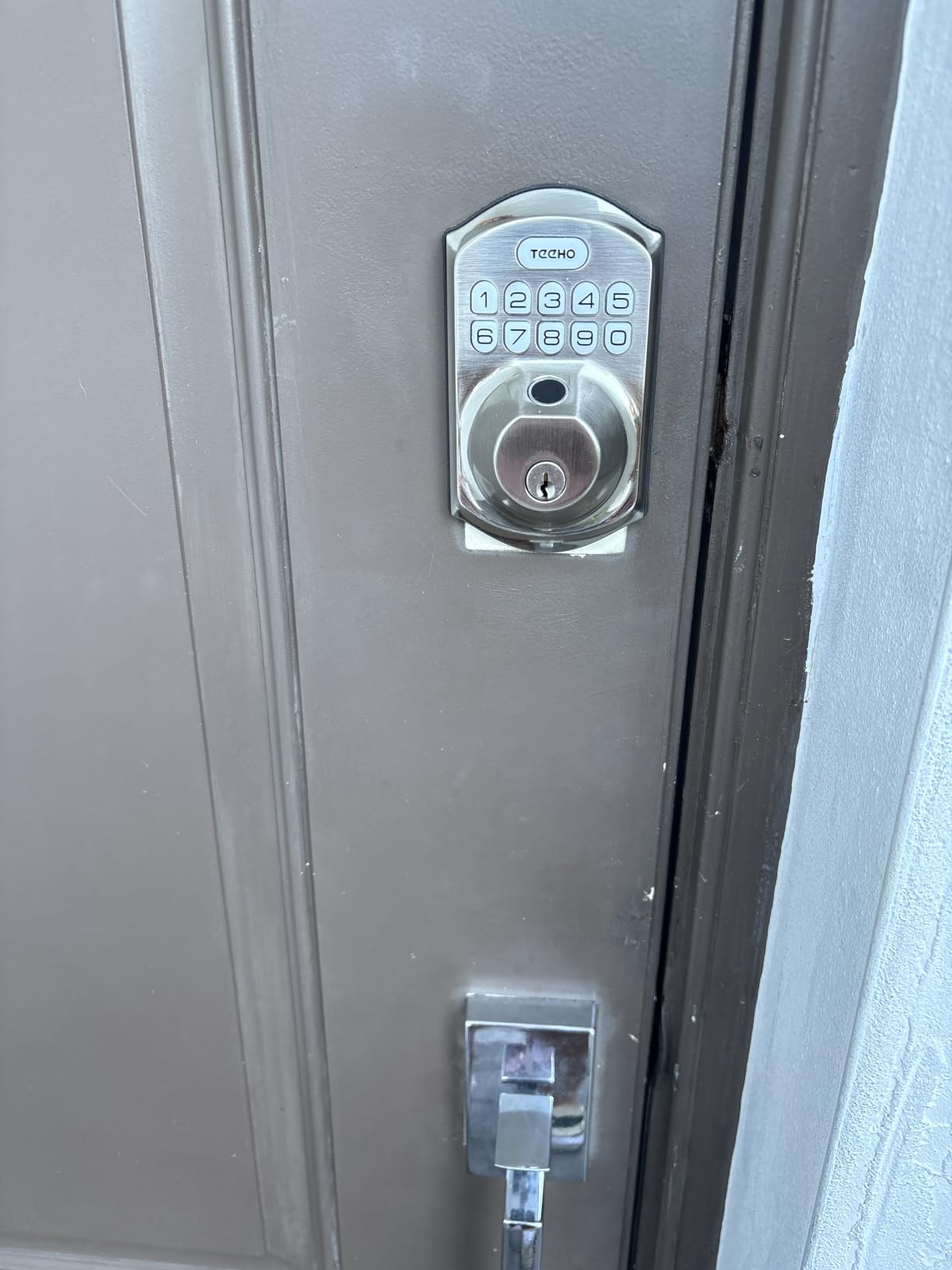
In testing, the self-learning AI fingerprint sensor recognised a print in 0.3 seconds and threw the bolt in about one second, improving as it accumulated more samples. Capacity is 20 fingerprints and 20 passcodes, plus two physical keys and one-time PINs that delete themselves after use, which is the cleanest guest feature on any offline lock here.
Fit is the one thing to check first
This lock fits 2-1/8 inch (54mm) door holes only. That is the standard US residential bore, so most apartment doors qualify, but a door that has been re-bored to another size will not take it, and the manufacturer states it plainly. Measure before ordering.
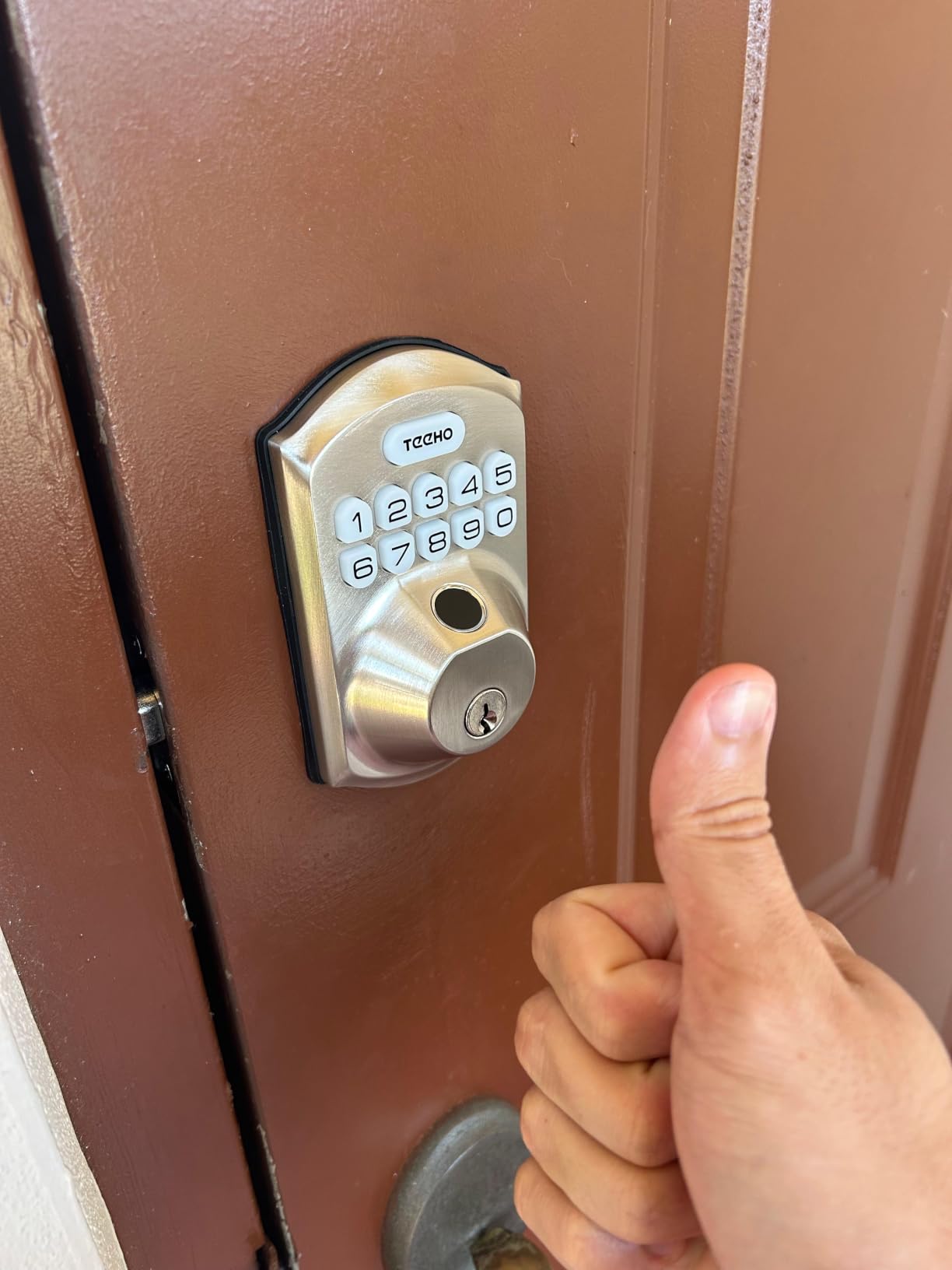
Body material is aluminum alloy with BHMA Grade 3 certification and IP54 weather resistance, and it installs in minutes with a screwdriver. TEEHO backs it with a two-year warranty and lifetime after-sales support.
Battery life and the reset complaint
Four AA batteries are rated for up to 365 days, with a red indicator below 15 percent. Batteries are not included, which is a small annoyance. The most-discussed owner complaint is that the auto-lock delay setting can revert to the minimum after a battery change, and the lock re-tries noisily if the door is left ajar.
Who should skip it
Skip this one if you need to grant access from a different city or issue codes remotely. There is no app, so a dog walker or contractor code has to be entered on the keypad by hand, and there is no record of who came and went. For a self-contained unit and a set of household codes, that is a fair trade.
4. Sifely Fingerprint Smart Door Lock with Handle – Best for Knob-Only Doors
Fingerprint Smart Door Lock with Handle & Keypad – No More Lost Keys, Keyless Entry & Remote Access for Home, Kids, Airbnb & Rental Property, DIY Install, Alexa & Google Compatible
Handle and keypad for knob doors
Instant guest codes, fobs and cards
WiFi gateway sold separately
+ Pros
- Five ways in including fingerprint
- keypad
- app
- fob and key
- Guest access codes generated instantly through the app or web
- Reversible handle fits left- and right-handed doors
- Inside privacy button disables all electronic entry
- Two keys and two key cards included
– Cons
- Remote unlock and access history need the separately sold Sifely WiFi Gateway
- Front touchscreen sometimes needs several taps to wake
- Fingerprint registrations reportedly forgotten after about 20 minutes
If your apartment door has a knob or a lever rather than a deadbolt, your shortlist in this category is short. The Sifely is the pick I recommend for that door, and the reason is the handle, not the electronics. The reversible handle fits either door swing with no extra drilling on most standard doors, which is exactly the detail that sends retrofit handles back.
It handles a knob-or-handle door that no deadbolt model here can touch, which is why it appears on a list otherwise made of deadbolts.
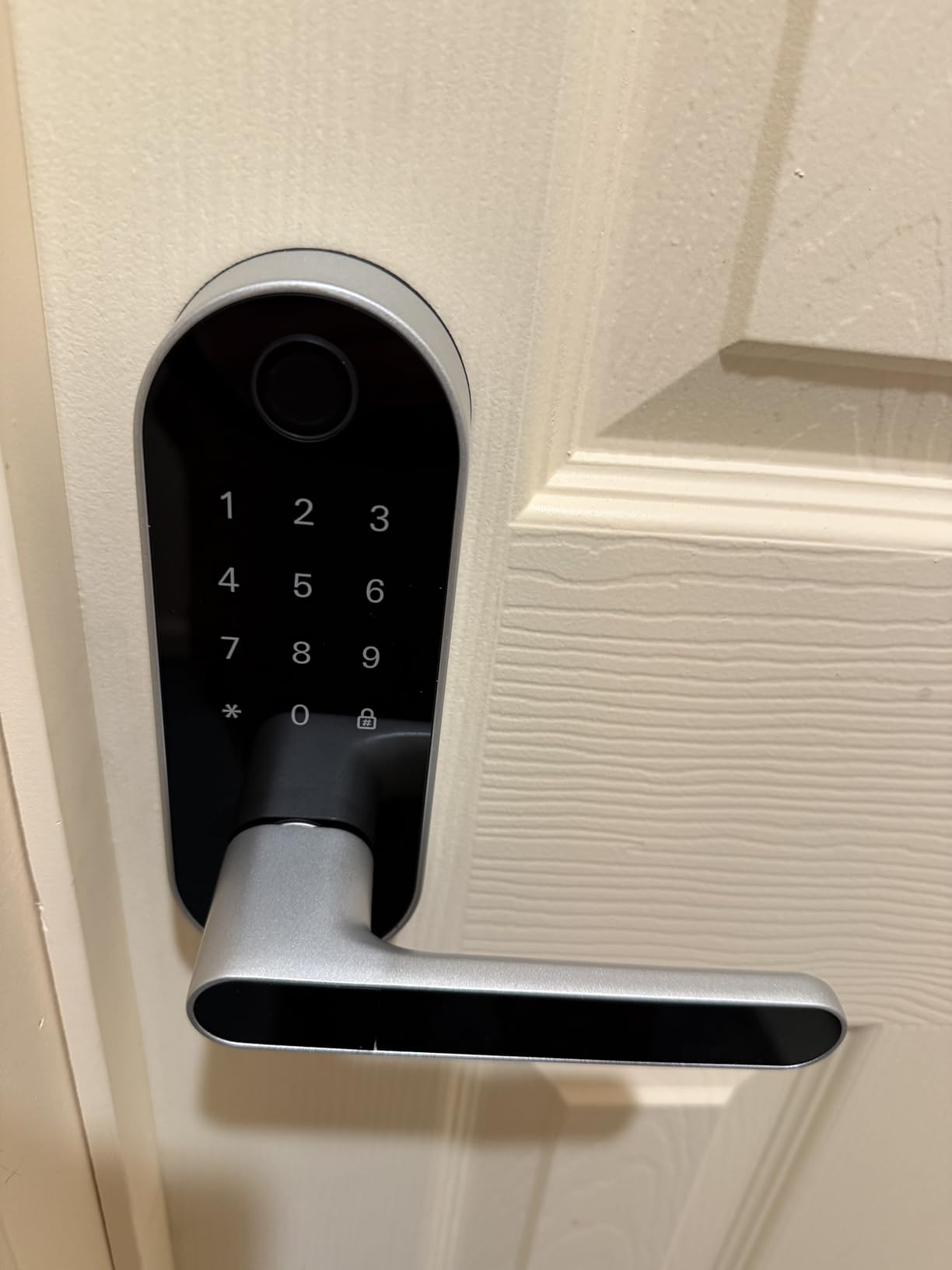
Entry options run to five: fingerprint, keypad, app, key fob or card, and physical key. Two keys and two key cards are in the box. The fingerprint reader holds up to 50 prints, and for a household with kids and an older parent, the fob is often the one that gets used most.
Guest codes are the reason to buy this one
The app generates guest access codes instantly, through the app or the web portal, and remote access logs let a host or property manager see entries across multiple doors. On the Wyze Forum and short-term-rental communities, that instant-code workflow is consistently the deciding factor over fingerprint convenience. For a unit you sublet or host in, it is the same feature.
The inside privacy button disables every electronic entry method while you are home, which is a small thing that solves a real annoyance: kids and guests punching codes from the inside while the door is open.
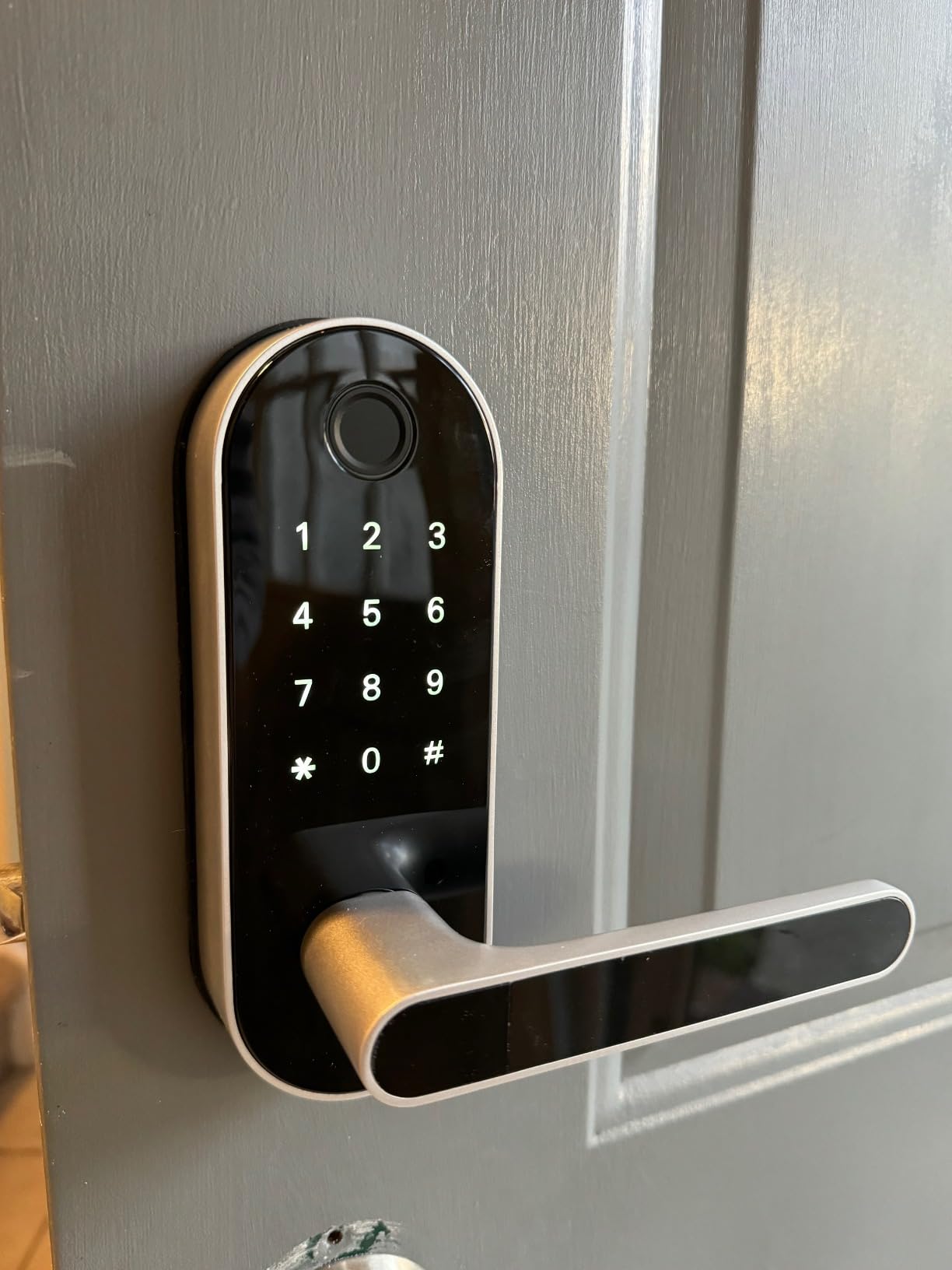
Connectivity costs extra and rekeying is not possible
Remote unlock, access history and Alexa or Google voice control all require the Sifely WiFi Gateway, sold separately. Bluetooth handles local proximity entry on its own. Separately, the lock cannot be rekeyed, so it will not match an existing building key system, which matters if a property manager expects to keep a master key.
Durability notes from long-term owners
The zinc body and 7 by 3 by 1.12 inch footprint look right for an interior door. The recurring owner complaints are a touchscreen that needs several taps to wake, fingerprint registrations reportedly forgotten after roughly 20 minutes, and water-seal failures on exposed doors after a rainy season, so treat it as an interior-door lock. Warranty coverage is one year.
5. eufy Security Smart Lock C220 – The Easiest Fit Over an Existing Deadbolt
eufy Security Smart Lock C220, Fingerprint Keyless Entry Door Lock
Six unlock paths, built-in WiFi
8 AA for about 8 months, IP53, BHMA Grade 3
+ Pros
- Unlocks by fingerprint
- app
- keypad
- key
- Apple Watch or voice
- Built-in WiFi with no bridge required
- Self-learning fingerprint recognition improves with use
- Fits bores under 54mm by removing the included spacer
- 8 AA batteries included for about 8 months
– Cons
- IP53 water resistance is a step below the other picks here
- eufy ecosystem routines need an existing eufy doorbell
- Heavier and bulkier interior assembly than a plain keypad deadbolt
The eufy C220 is the pick I suggest when the door has an existing deadbolt you would rather not remove. It mounts over it, fits bores under 54mm by taking out the included spacer, and installs in about 15 minutes without drilling. The manufacturer lists apartment doors as an intended use, and the fit is the reason.
Six unlock paths: sub-one-second fingerprint, the eufy Security app, keypad, physical key, Apple Watch and voice through Alexa or Google. The Apple Watch path is the one that changes daily behaviour. I stopped reaching for my phone within a few days of testing it, because the watch is already on my wrist.
Eight AA batteries are included and rated for roughly eight months, with a self-learning AI fingerprint module that reviewers say gets more accurate with each touch rather than degrading.
Built-in Wi-Fi with no bridge
Like the Schlage Encode and the ULTRALOQ, the C220 carries its own Wi-Fi radio, so app remote control works without a separate bridge device. That is a real advantage in an apartment where placing a hub in a common area or a neighbour’s unit is not practical.
Ratings and the weather caveat
The lock is BHMA Grade 3 certified after 100,000 cycles and rated IP53 for water, operating from -22 to 158 degrees F. That IP53 figure is the one reservation in the reviews, since several of the other locks here carry IP54 or IP65. On an interior apartment door that faces no direct weather, IP53 is adequate.
Where the ecosystem bites
The eufy ecosystem routines only apply if you already own an eufy doorbell, and the interior assembly is heavier and bulkier than a plain keypad deadbolt. On a door where the interior clearance between the bolt and the door frame is tight, measure before committing.
6. Veise RZ-A Keypad Deadbolt – Highest Rated Offline Keypad
Veise RZ-A Electronic Keypad Deadbolt Door Lock, Satin Nickel
20 codes, one-time guest codes
IP54, -35 to 160 F, 12-month battery
BHMA Grade 3, 200,000 cycles
+ Pros
- 20 permanent codes plus one-time guest codes and two backup keys
- Auto-lock adjustable from 10 to 99 seconds plus one-touch locking
- BHMA and ANSI Grade 3 zinc alloy cylinder tested over 200000 cycles
- Anti-peeping password and 3-minute lockout after 10 failed attempts
- Vacation mode and silent mode with IP54 rating from -35 to 160 degrees F
– Cons
- No wireless connectivity and no app or voice assistant
- Batteries are not included and the bore hole may need enlarging on some doors
- Interior housing is plastic rather than metal
The Veise RZ-A carries a 4.5 average across 4,229 ratings with 76 percent five-star, a distribution that sits at the top of this group, and it does the job of a plain, dependable keypad deadbolt without pretending to be connected to anything.
There is no app and no wireless radio. If your building network is the problem you are trying to solve, this lock does not have one, which is the point.
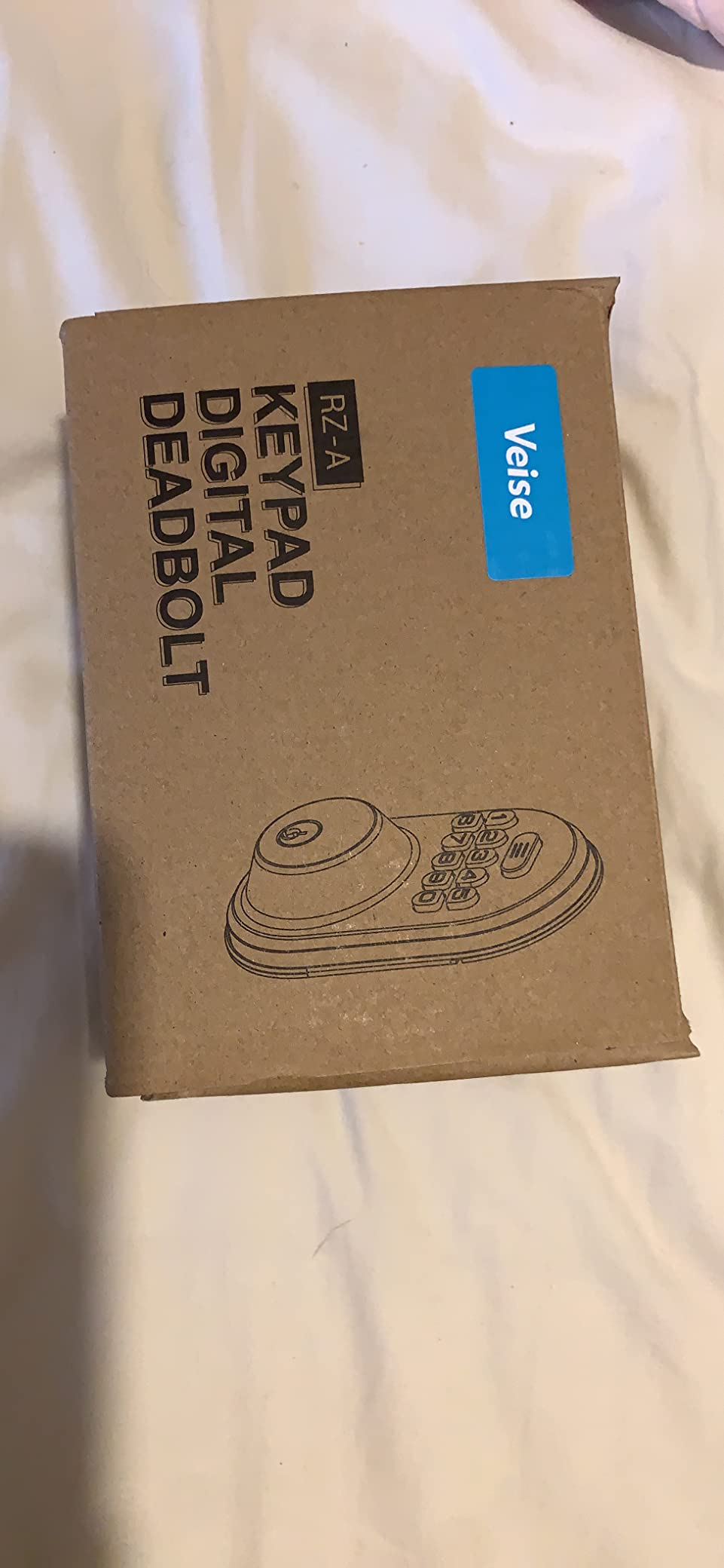
Capacity is 20 permanent codes plus one-time guest passwords, and two backup keys are included. The auto-lock delay is adjustable from 10 to 99 seconds, and holding any keypad key for two seconds locks instantly on the way out, which is the fastest single-touch exit of the offline locks here.
Security details that are uncommon at this level
The anti-peeping feature lets you add random digits before or after your real code, so a shoulder-surfer watching your entry cannot capture the true sequence. Ten failed attempts triggers a three-minute keypad lockout. Vacation mode disables every code except the master and alarms if the door is opened from inside, which is a genuine alarm for anyone who has had a spare key copied without their knowledge.
The lock cylinder is zinc alloy, BHMA and ANSI Grade 3, tested past 200,000 cycles. It carries IP54 water resistance and a stated operating range of -35 to 160 degrees F, the widest cold tolerance among these picks.
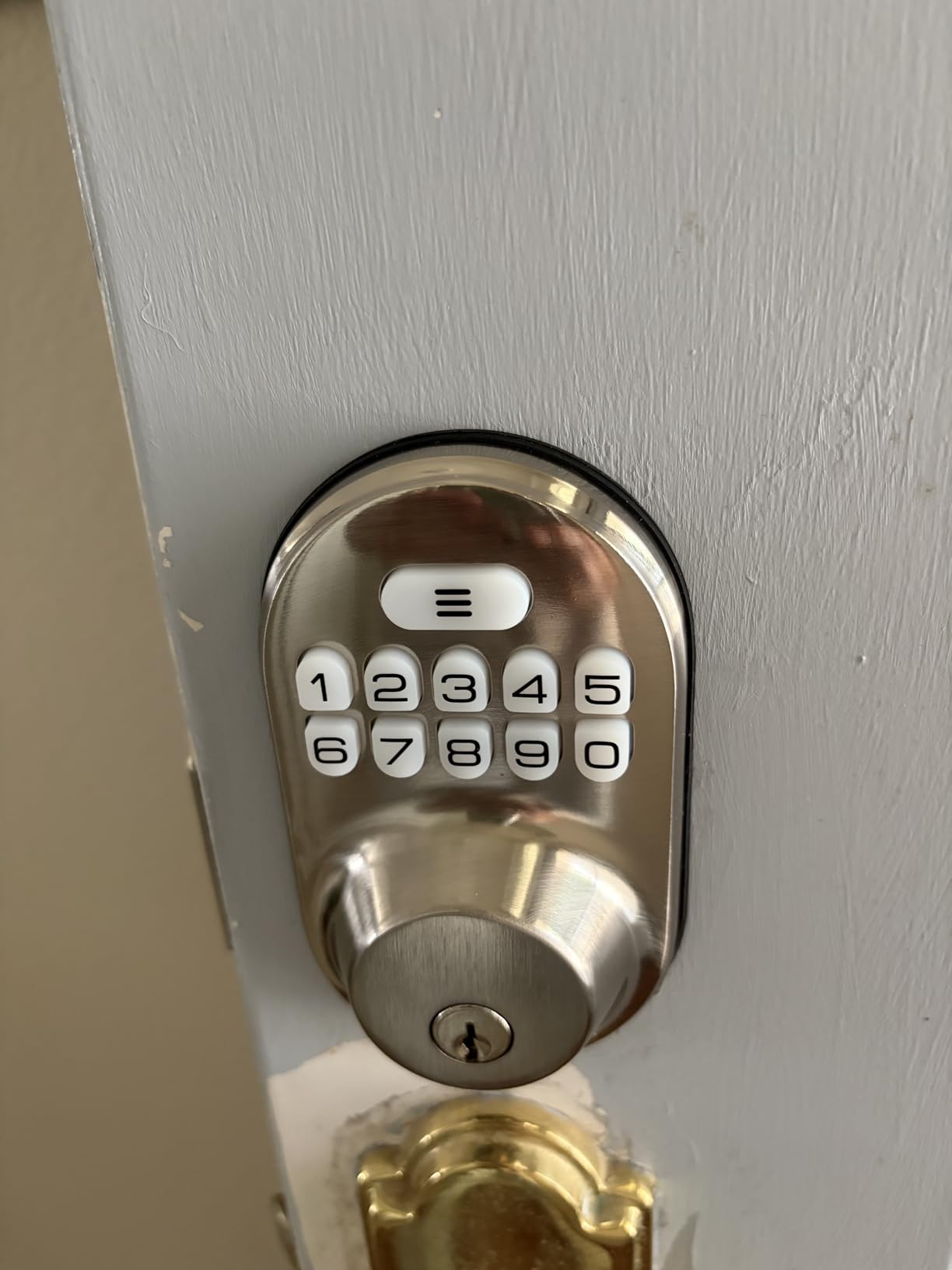
Fit and power details worth reading twice
Installation is screwdriver-only on doors 1-3/8 to 2 inches thick for either door swing, and the manufacturer notes the bore hole may need enlarging relative to a standard deadbolt on some doors. Four AA batteries give about 12 months with a backlit low-battery alert, and batteries are not included.
The interior housing is plastic rather than metal, which is a visible quality difference from the zinc-bodied picks. Veise backs it with a one-year warranty plus a free one-year extension on registration.
7. Yamiry YR01 Fingerprint Knob – Replaces a Handle in Ten Minutes
Smart Door Handle Lock with Keypad, Yamiry Fingerprint Knob for Front Door
Six unlock methods on a knob lock
Replaces a handle, no drilling
App with temporary codes
+ Pros
- Six unlock options including fingerprint and a Bluetooth app plus key fob and Alexa voice
- Replaces an existing handle or deadbolt in about 10 minutes
- Reversible handle fits both left- and right-handed doors
- App grants permanent or temporary access and shows unlock records
- Listing positions it for landlords and property managers
– Cons
- Remote control and voice unlock need a separately sold WiFi gateway
- Listing gives no capacity limits for fingerprints and fobs or app codes
The Yamiry YR01 solves the same problem as the Sifely, a knob or handle instead of a deadbolt, but with fingerprint entry as the primary method. It replaces an existing handle, knob or deadbolt with a screwdriver in about 10 minutes, and the manufacturer states no additional drilling is needed on most standard American wooden front doors.
That last clause matters for apartment living. A rental door is a wooden door, and any model that needs a new bore cut is a model that needs a landlord conversation.
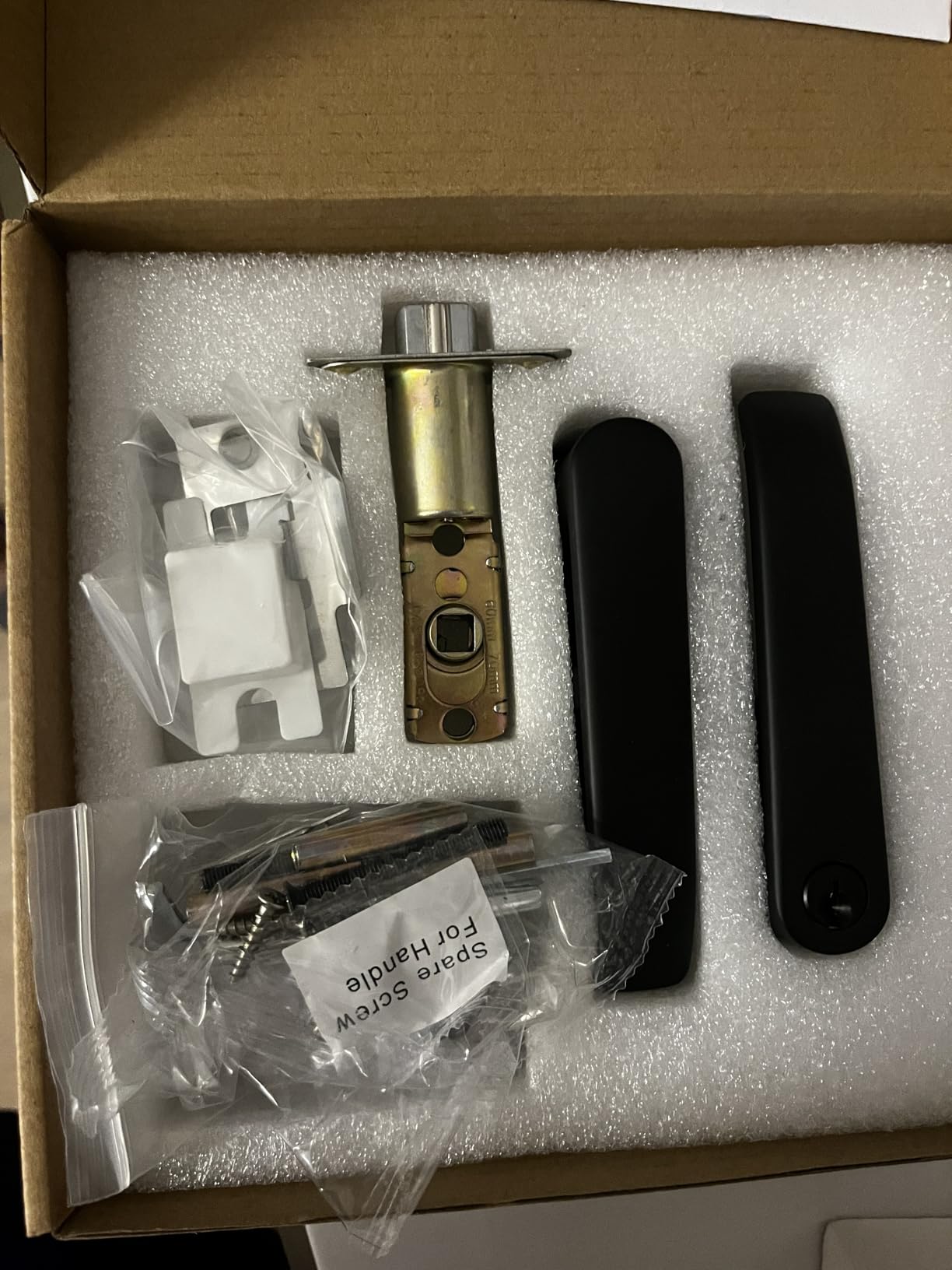
Six unlock options: fingerprint, Bluetooth app, passcode, key fob, mechanical key, and Alexa voice unlock. The reversible handle covers both left- and right-handed doors, which removes the most common reason a knob lock ends up in a return pile.
Built with landlords in mind
The listing positions this lock for landlords and property managers managing multiple locks from one app, and the app supports permanent or temporary access plus remotely generated one-time passcodes and unlock records. In a building where you manage several doors, the code log is the feature you will use most.
Where the gap is
Remote control and voice unlock both require a separately sold WiFi gateway, so on the base configuration this is a Bluetooth lock with local app control. The listing also gives no capacity limits for fingerprints, key fobs or app codes, so for a large shared household you would be guessing at how many prints it holds.
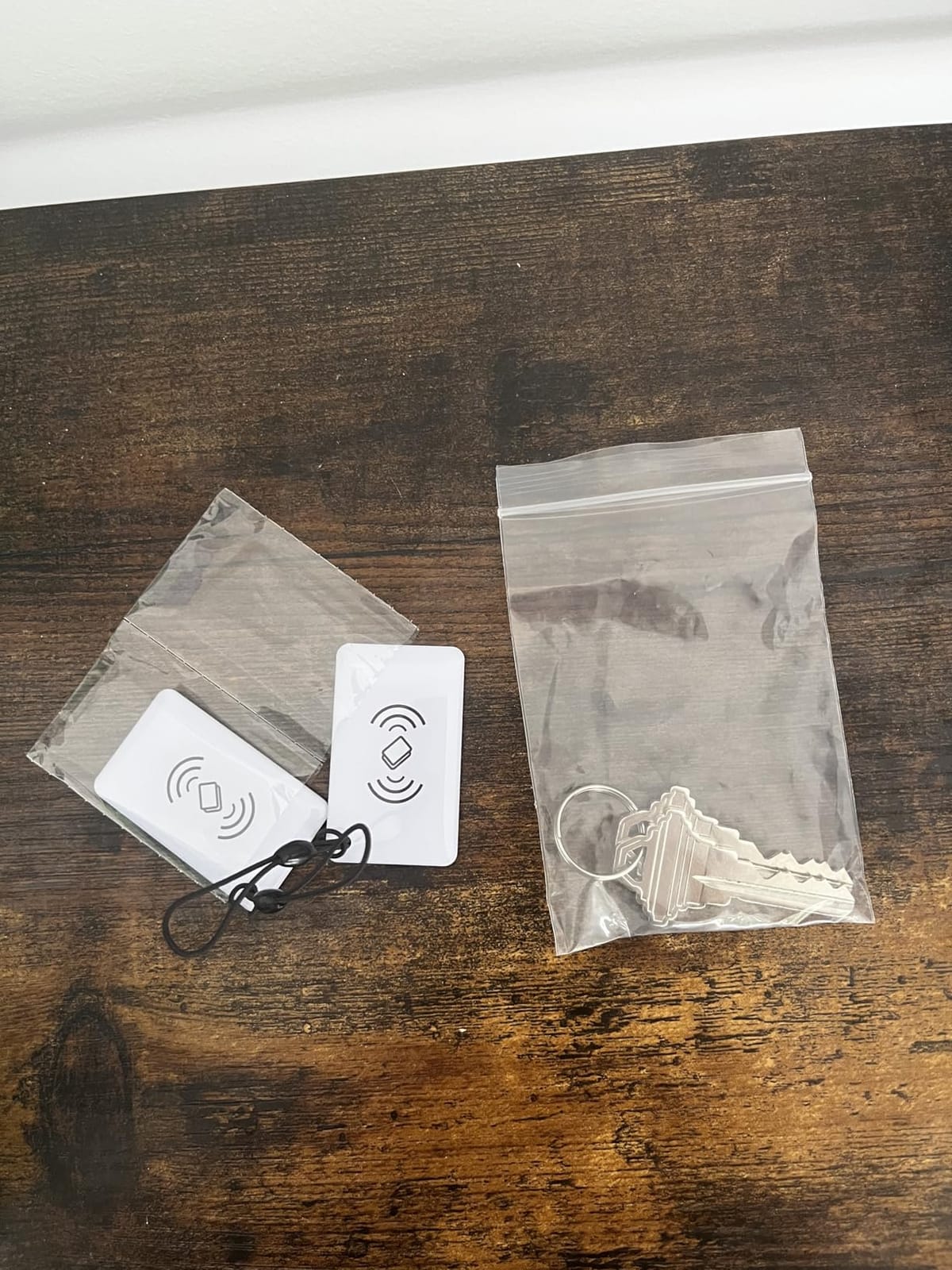
It is a straightforward lock at a straightforward price point, with a 4.3 average across 3,593 ratings and a strong category rank. For a renter replacing a knob, it does the job without drama.
8. iulock IU-30 Keypad Knob – Built for Metal Security Doors
iulock Keypad & Key Smart Door Lock, 50 User Codes, Waterproof, Auto Lock – Matte Black
Up to 50 codes, silicone grip knob
4 AAA for 18 months, Type-C backup
IP65, -22 to 176 F
+ Pros
- Up to 50 customizable 1-15 digit codes plus a solid cylinder and two keys
- Detachable silicone grip stays secure with wet or greasy hands
- Fits doors 1-3/8 to 2-1/2 in thick with an adjustable latch
- 4 AAA batteries for about 18 months with a low-battery alarm
- IP65 rated for metal and screen doors with Type-C backup power
– Cons
- Included keys feel cheap and may need re-cutting
- Master code printed in tiny text on the box rather than in the instructions
- All functions are operated from outside the door
The iulock IU-30 is the only pick here I would actively steer toward a metal security door, and it is worth understanding why. Apartment buildings with steel or reinforced entry doors break installation assumptions constantly, mostly because the hardware is heavy, the tolerances are tighter and the door face may be the wrong texture for a mounting plate.
This model is explicitly listed for screen, wooden and metal doors, carries an IP65 rating, and works from -22 to 176 degrees F. It fits the widest thickness range in the roundup at 1-3/8 to 2-1/2 inches with a 2-3/8 or 2-3/4 inch adjustable latch, left or right handed.
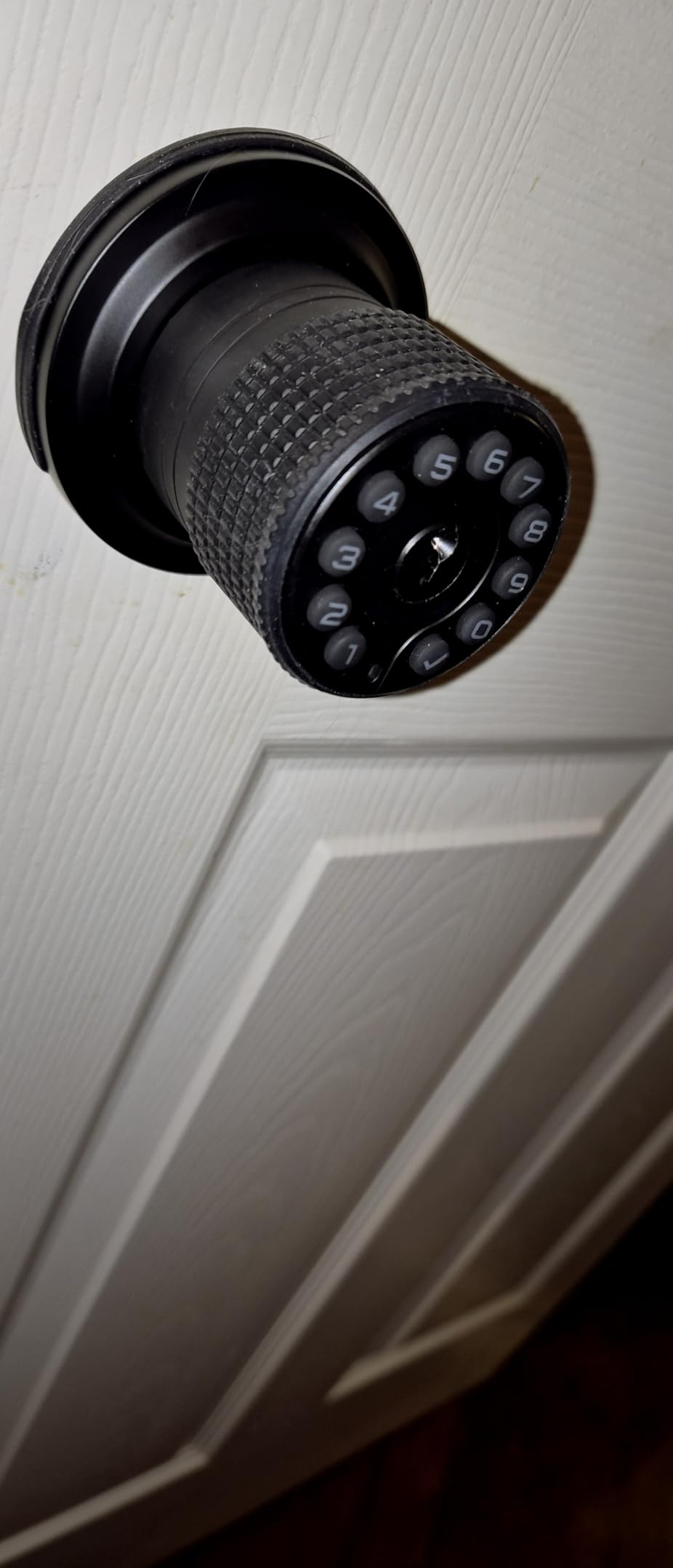
Code capacity is up to 50 customizable codes of one to 15 digits, more than any other pick here, plus a solid lock cylinder and two keys. A detachable silicone grip gives a non-slip hold with wet or greasy hands, which sounds trivial until you have tried turning a bare metal knob with grocery bags in the rain.
Battery and backup power
Four AAA batteries run about 18 months with a low-battery alarm, and there is a Type-C USB backup power port for the day the cells die anyway. I would still find the backup port a last resort rather than a plan, but having it changes a lockout from a locksmith call into a two-minute wait with a cable.
Installation fumbles to expect
Reviews repeatedly flag the same three things: the rubber sealing gaskets at the knob flange are floppy and hard to seat, the included keys feel cheap and may need re-cutting at a hardware store, and the master code is printed in tiny text on the box instead of in the instructions. Write the master code down before you discard the packaging.
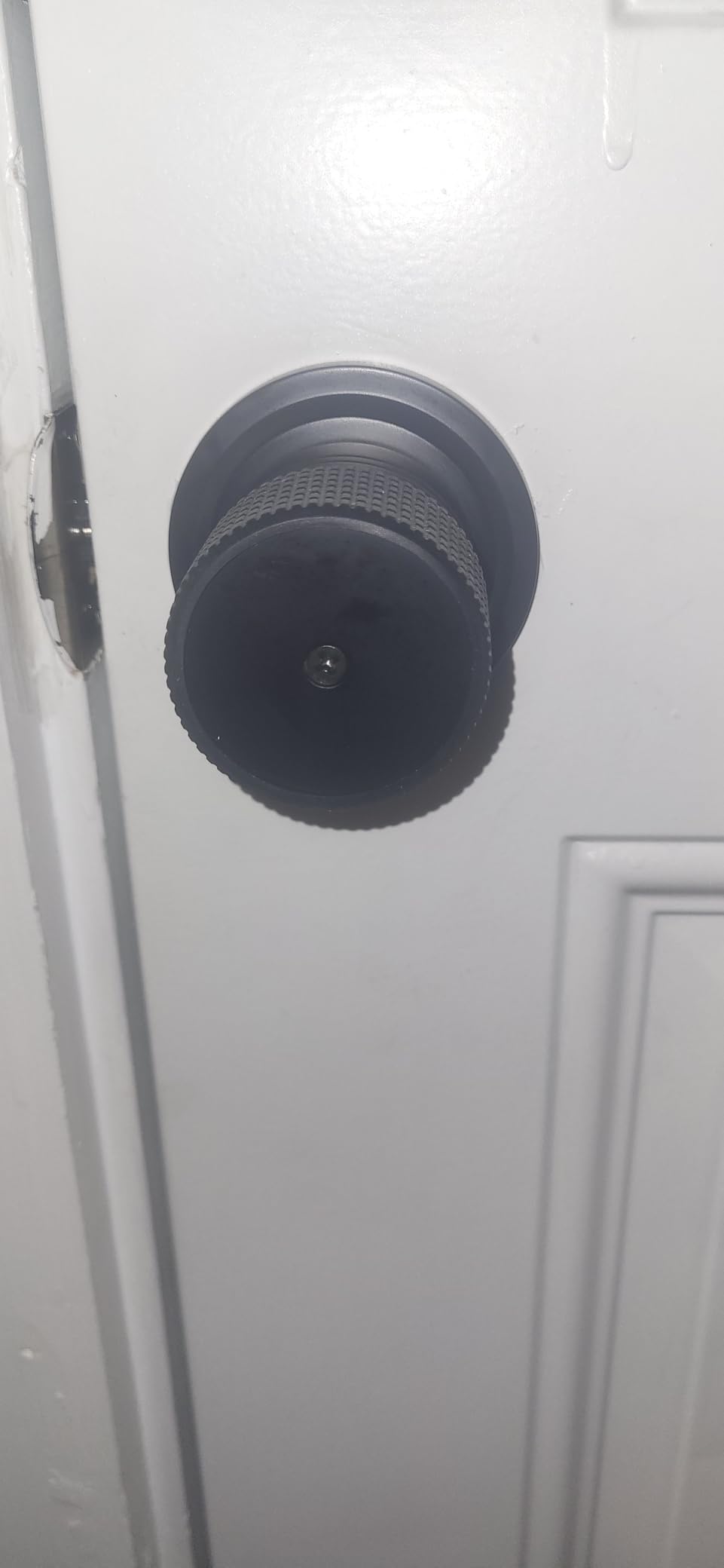
One design choice catches renters out. Everything is operated from outside, so toggling passage mode means walking out to the door. Batteries and printed instructions are not included. Warranty is a lifetime limited mechanical and finish warranty with one year on electronics.
9. Aqara Smart Lock U100 – Apple Home Key Without a Hub
Aqara Smart Lock U100, Apple Home Key, Fingerprint Deadbolt, Gray
Apple Home Key on iPhone and Watch
50 prints, IP65, BHMA Level 3
Four AA included, about 8 months
+ Pros
- Apple Home Key unlocks by tapping an iPhone or Apple Watch
- Works even when the phone or watch is out of power
- Fingerprint reader holds 50 prints and reads quickly
- Remotely configurable passcodes and one-time visitor codes with mechanical key backup
- 4 AA batteries included for up to 8 months with a built-in gyroscope for auto-lock
– Cons
- Remote control and automations need an Aqara Zigbee 3.0 hub sold separately
- NFC card is not included and the cylinder cannot be rekeyed to match building keys
- Several owners report random beeping and locking loops with a buggy native app
The Aqara U100 is the pick for Apple households, and the reason is one feature no other lock here has. Apple Home Key lets you tap an iPhone or Apple Watch against the lock to unlock, and it still works when the device is out of power, which removes the dead-battery anxiety that drives most smart lock complaints.
For a renter, tapping rather than typing matters more than it sounds. Entering a code with a phone full of groceries in one hand is the failure case that makes people go back to keys within a week.
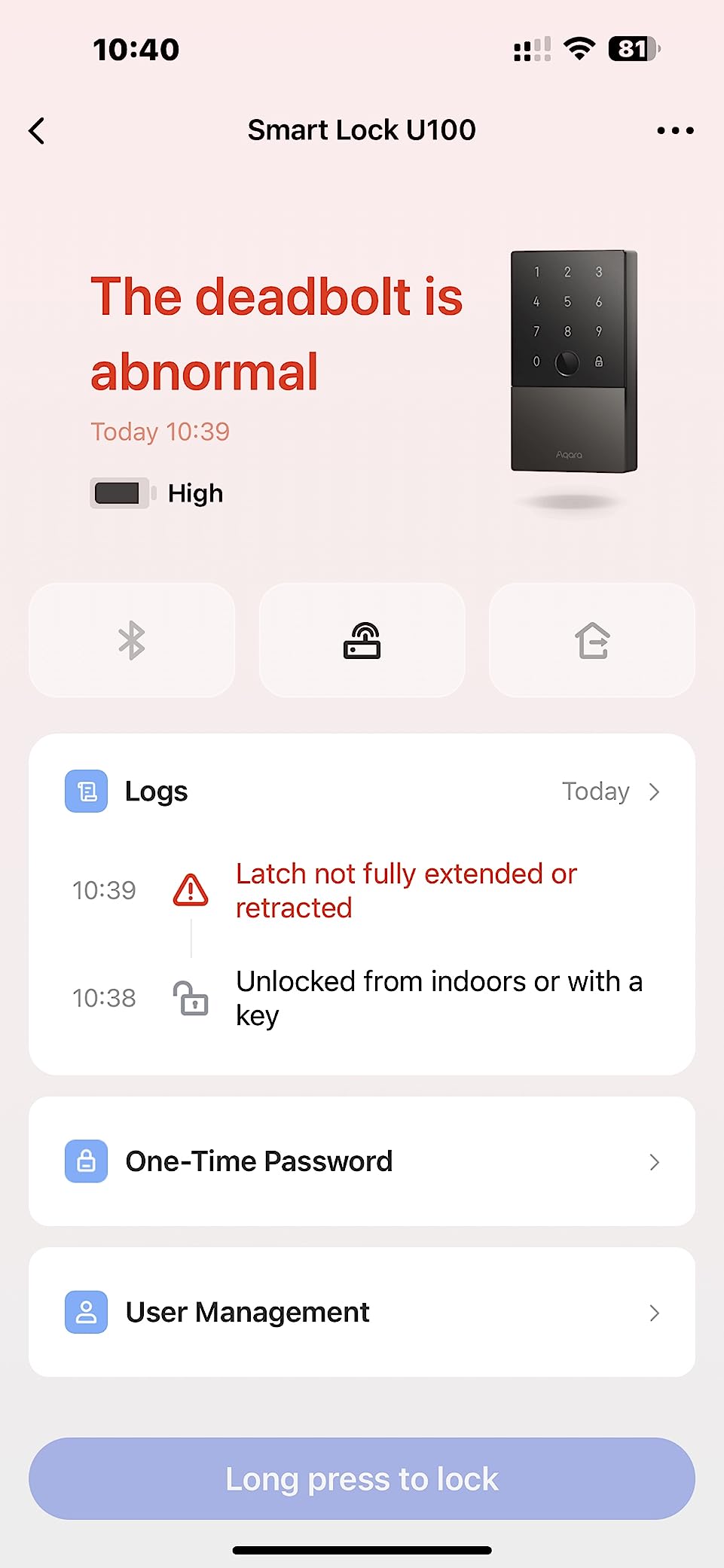
The fingerprint reader holds up to 50 prints and reads quickly and accurately, and fingerprint data is stored locally with AES encryption. You also get remotely configurable passcodes, one-time local visitor codes and a mechanical key. A built-in gyroscope triggers auto-lock once the door actually closes, and a Do Not Disturb mode mutes lock sounds for a set period.
Hub requirement and what it means for you
Remote control and automations require an Aqara Zigbee 3.0 hub sold separately. With the hub present, the lock works with Google Home, Alexa, IFTTT and the Aqara Home app. Without it, you are left with local entry: Home Key, fingerprint, keypad and key. If you already run an Aqara setup, the hub is not a new expense.
Where the reviews are sharply divided
This lock carries a 4.1 average across 2,545 ratings with 66 percent five-star and a 12 percent one-star share, the widest spread in the group. Critical reviews report hardware faults including random beeping, locking loops, dead keypads and premature low-battery alerts, and several describe the native app as buggy.
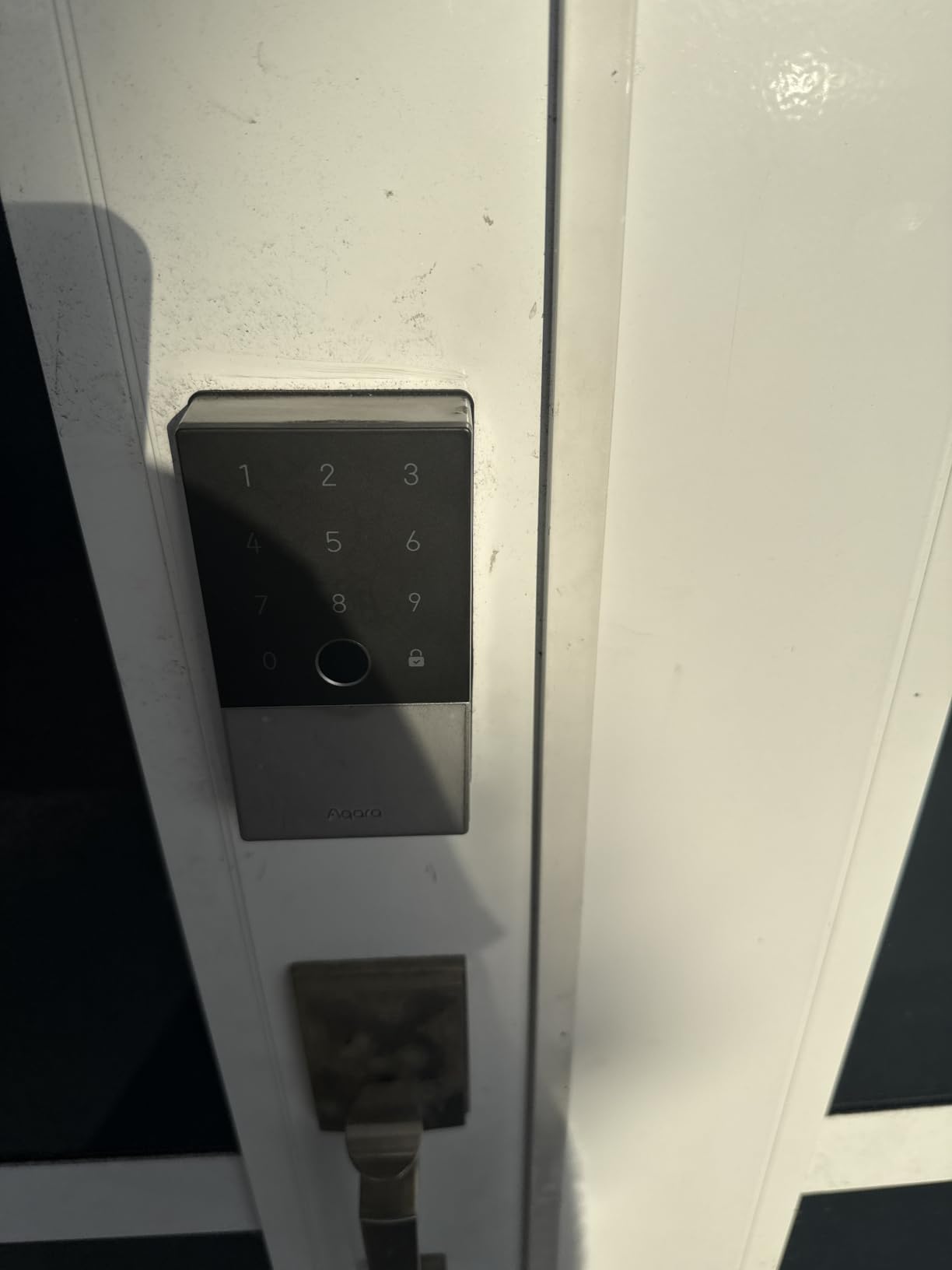
Two more practical notes for apartment dwellers. The cylinder cannot be rekeyed, since it uses a non-Kwikset tumbler, so it will not match existing building keys. And the finish is gray and silver only, with no black or brushed-nickel option to match existing hardware. The body is zinc alloy, IP65 rated, BHMA Level 3 compliant, and four AA batteries are included with a USB-C emergency charging port.
10. DESLOC B200 – Broadest Entry Options on a Bluetooth Budget
DESLOC B200 Fingerprint Smart Door Lock, Keyless Entry Deadbolt
Eight-in-one unlock, 50 fingerprints
Bluetooth app with scheduled codes
4 AA up to 12 months, IP54
+ Pros
- Eight-in-one unlock with fingerprint and keypad plus app and voice access
- Self-learning fingerprint reads in under 0.3 seconds with up to 50 prints
- Installs on most standard US doors with a screwdriver
- 4 AA batteries for up to 12 months with a USB-C emergency port
- IP54 rated and BHMA Grade 3 compliant
– Cons
- App control and voice features need the G2 gateway sold separately
- Base configuration is Bluetooth-only with no remote access
- Batteries are not included and fingerprint accuracy drops if the sensor is not kept clean
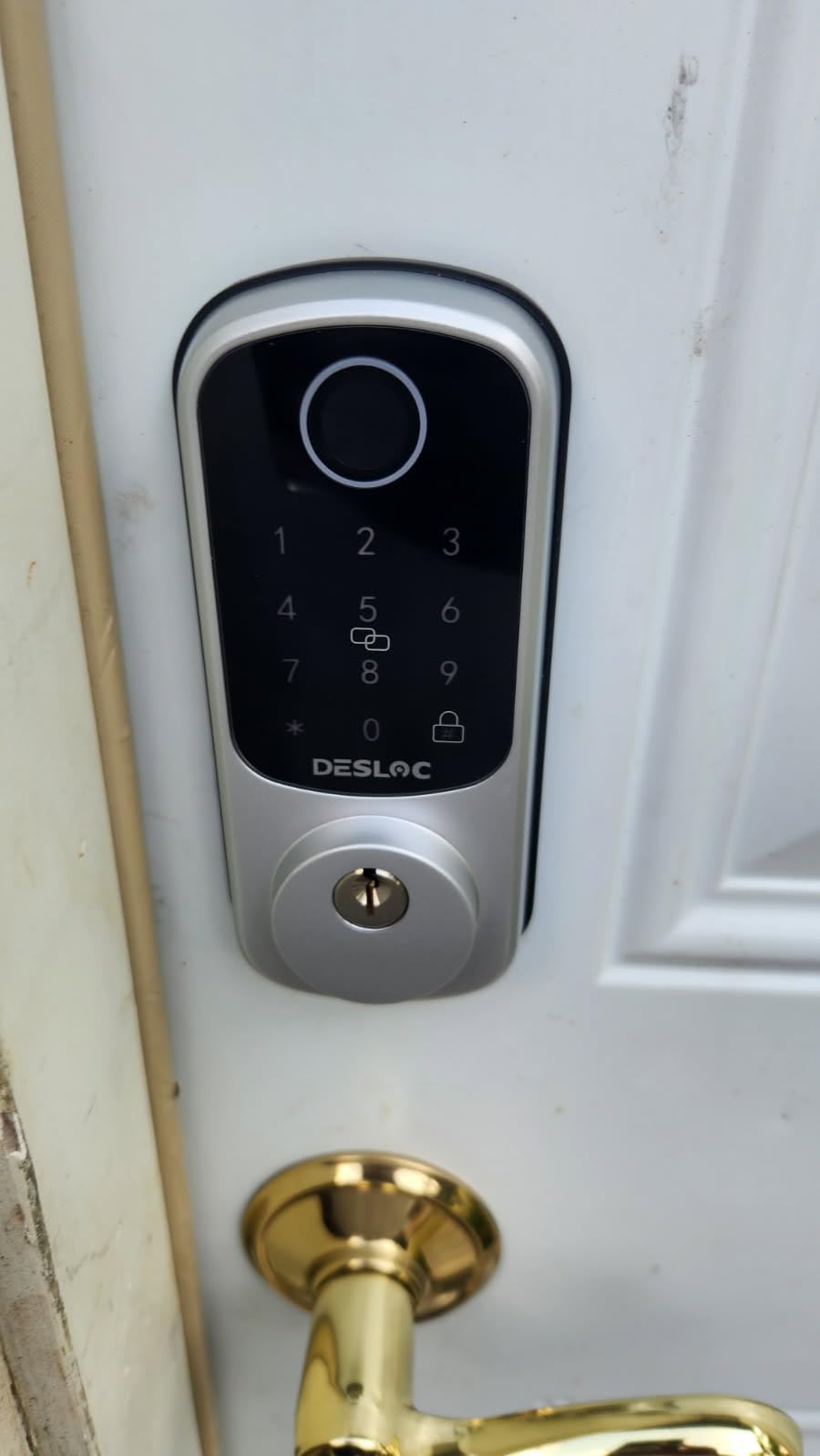
The DESLOC B200 is the one I suggest for a large shared household, a family or a flat with several adults coming and going. It stores up to 50 fingerprints and advertises eight unlock methods, more entry paths than any other lock in this roundup.
Counting them: fingerprint, PIN code, app control, eKeys, key fobs, physical keys, and voice through Alexa or Google. On top of that, the TTLock app over Bluetooth manages scheduled and temporary access codes, which is what makes dog walker and contractor codes practical without handing over a physical key.
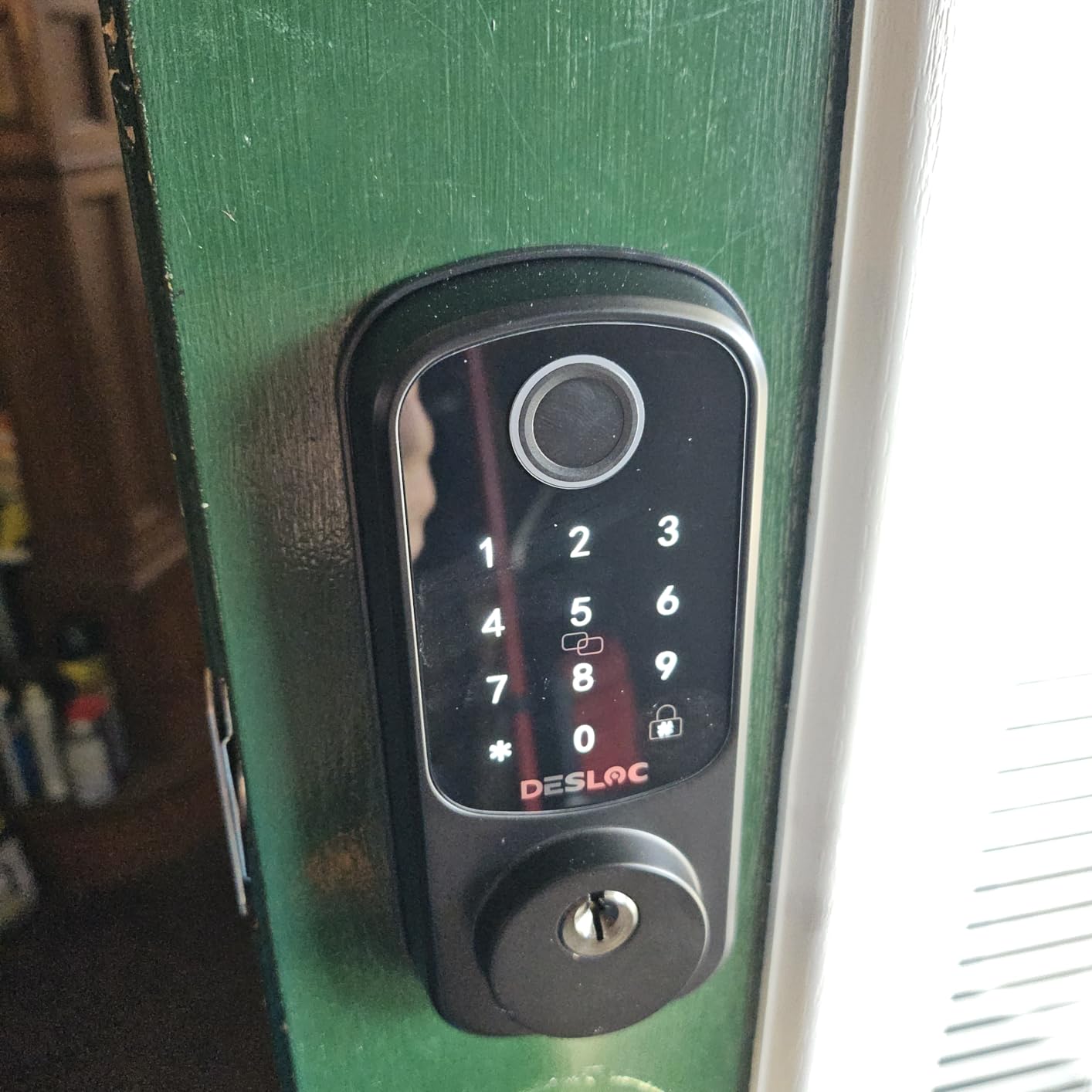
Fingerprint speed and the cleaning caveat
The self-learning AI module reads in under 0.3 seconds and supports up to 50 fingerprints. Reviewers note that accuracy drops if the sensor is not kept clean, and the manufacturer recommends registering the same finger from multiple angles, which helps with dry skin or older users. On a knob-style door in a hallway, that cleaning habit is a habit you will have to keep.
Battery, backup and the gateway question
Four AA batteries give up to 12 months, with a low-battery indicator and a USB-C emergency power port, and batteries are not included. The base configuration is Bluetooth only; the G2 gateway sold separately is required for app control beyond local proximity and for voice features.
Physical durability is reasonable for an interior apartment door: IP54 water resistance, operation from -22 to 158 degrees F, and BHMA Grade 3 compliance. The warranty is 12 months with lifetime US-based phone support, and it installs on most standard US doors with a screwdriver.
11. Kwikset Powerbolt 250 – The Only Pick You Can Rekey to a Building Key
Kwikset Powerbolt 250 10-Button Keypad Matte Black Transitional Electronic Deadbolt Door Lock, Featuring Convenient Keyless Entry, Customizable User Codes and Auto-Locking
25 user codes, 5 one-time codes
SmartKey rekeys to any KW1 key
12-month battery, 2 keys included
+ Pros
- Up to 25 user codes plus 5 one-time codes with 2 physical keys included
- SmartKey lets you re-key the lock yourself in seconds to any KW1 key
- Auto-lock intervals from 30 seconds to 10 minutes
- Intrusion alert disables the keypad for 1 minute after 3 wrong codes
- Vacation mode and LED backlighting for night entry
– Cons
- No wireless connectivity and no app or voice assistant
- Several locks refused programmed codes or stopped working within a year of install
- Battery life drops sharply with rechargeable cells and the supplied strike plate feels flimsy
Here is the apartment-specific point that no other lock in this roundup can make. The Kwikset Powerbolt 250 uses SmartKey, so you can re-key the cylinder yourself in seconds to any KW1 key, which is how Kwikset cylinders are conventionally rekeyed. If your building runs a KW1 master-key system, this is the one pick here that can be handed a building key instead of a lock nobody else can open.
That matters for property managers and for anyone who expects a building superintendent to retain emergency access. It is a genuine renter decision factor that most roundups treat as a spec line.
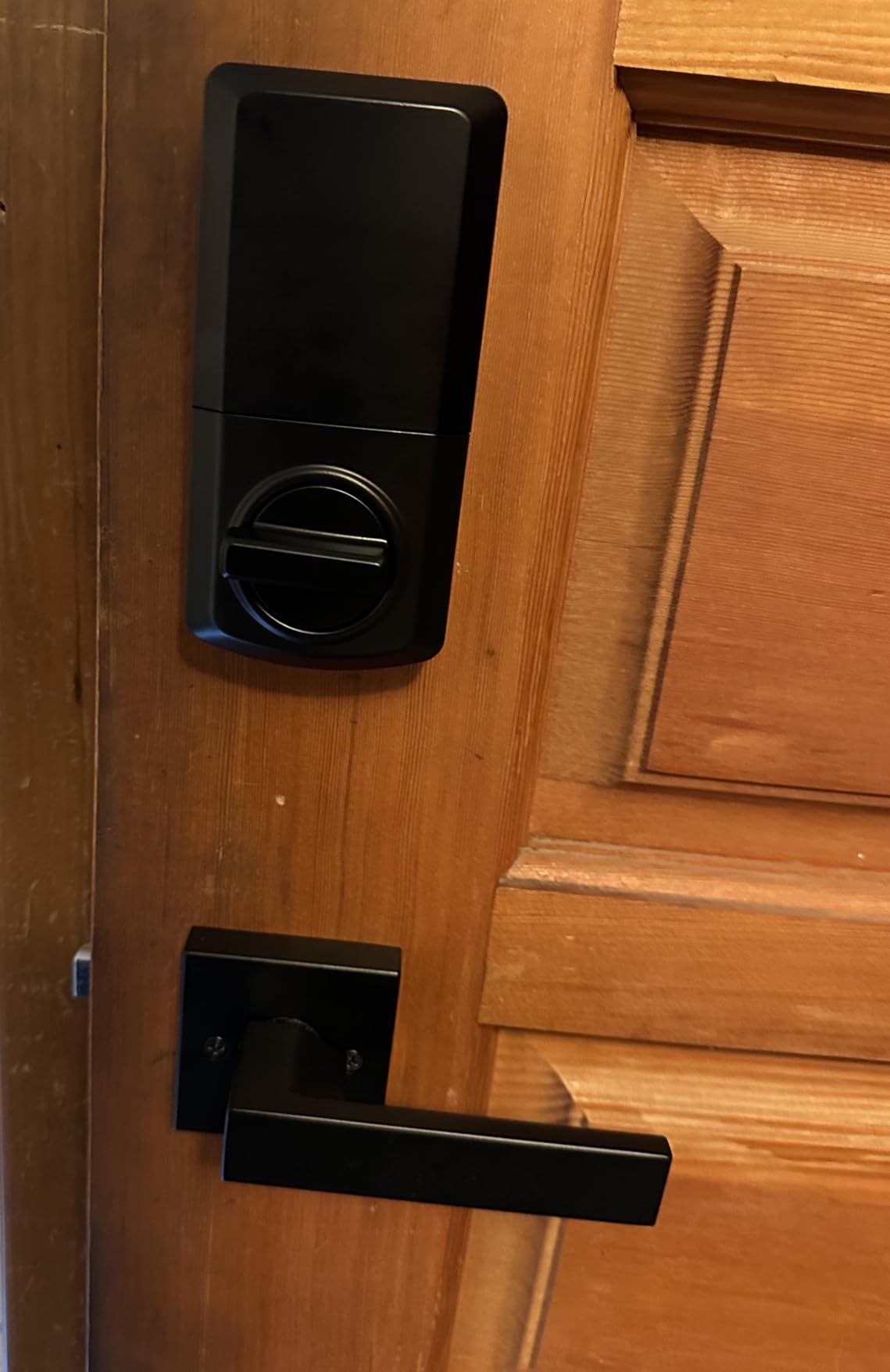
Code capacity is up to 25 user codes plus five one-time codes and one programming code, with auto-lock intervals from 30 seconds to 10 minutes. After three consecutive wrong entries the lock sounds an alarm and disables the keypad for one minute. Vacation mode temporarily disables the keypad entirely, and LED backlighting handles night entry. Two Kwikset keys are included.
Reliability is the concern, and it is documented
This lock has a 4.1 average across 2,291 ratings with 67 percent five-star and a 16 percent one-star share, the largest one-star share of any lock in this group. Owners with other Kwikset products praise SmartKey and long-term reliability, while a stream of one-star reports describes units that would not accept programmed codes or stopped locking and unlocking within hours or within a year.
There is no wireless connectivity at all, no app and no remote codes. Batteries are 4 AA alkaline, not included, and reviewers warn that battery life drops sharply if you substitute rechargeable cells, which is worth taking seriously at the twelve-month claim.
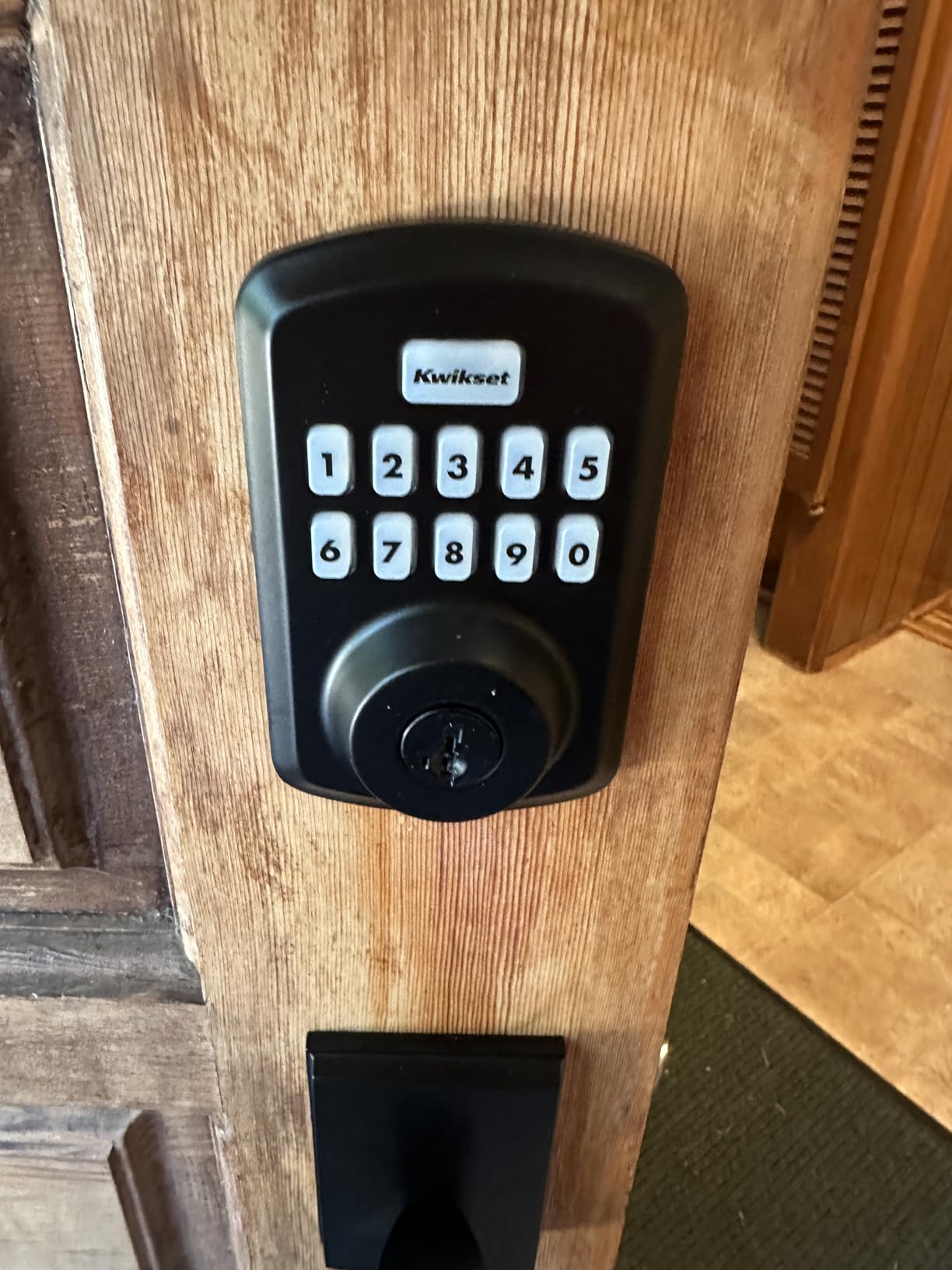
Build quality notes
The body is alloy steel and metal, but the supplied strike plate is a flat rectangle rather than the rounded Kwikset style, and some owners describe the body as flimsy. Installation is screwdriver-only with BILT 3D interactive instructions. For a landlord who values rekeying above app features, that trade is usually worth taking.
12. Veise KS01B Lever Set – Dual Handles and a Year of Battery
Veise KS01B Keypad Door Lock with 2 Lever Handles Set, Matte Black
Two reversible lever handles
20 codes, over a year on 4 AA
ANSI and BHMA Grade 3, IP54
+ Pros
- 4.6 average across 2122 ratings with 79 percent five-star
- 20 permanent codes plus one-time guest passwords and 2 physical keys
- Auto-lock in 10-99 seconds plus one-touch locking by holding a key for 2 seconds
- Dual ergonomic lever handles switchable for either door swing
- ANSI and BHMA Grade 3 with IP54 and 200000+ cycle testing
– Cons
- No wireless connectivity and no app or voice assistant
- Batteries are not included and programming instructions can be confusing at first
- Top door hole may need adjusting before the lock will seat
The Veise KS01B is the highest-rated lock in this roundup, 4.6 stars across 2,122 ratings with 79 percent five-star, and it is the pick for a door with lever handles. It ships with two lever handles, and they can be switched for left- or right-swinging doors, so one part number covers both hands.
That reversibility plus a year of battery life makes it the least fussy option on this list for a shared apartment. Nothing about it requires a hub, a bridge, a phone or a subscription.
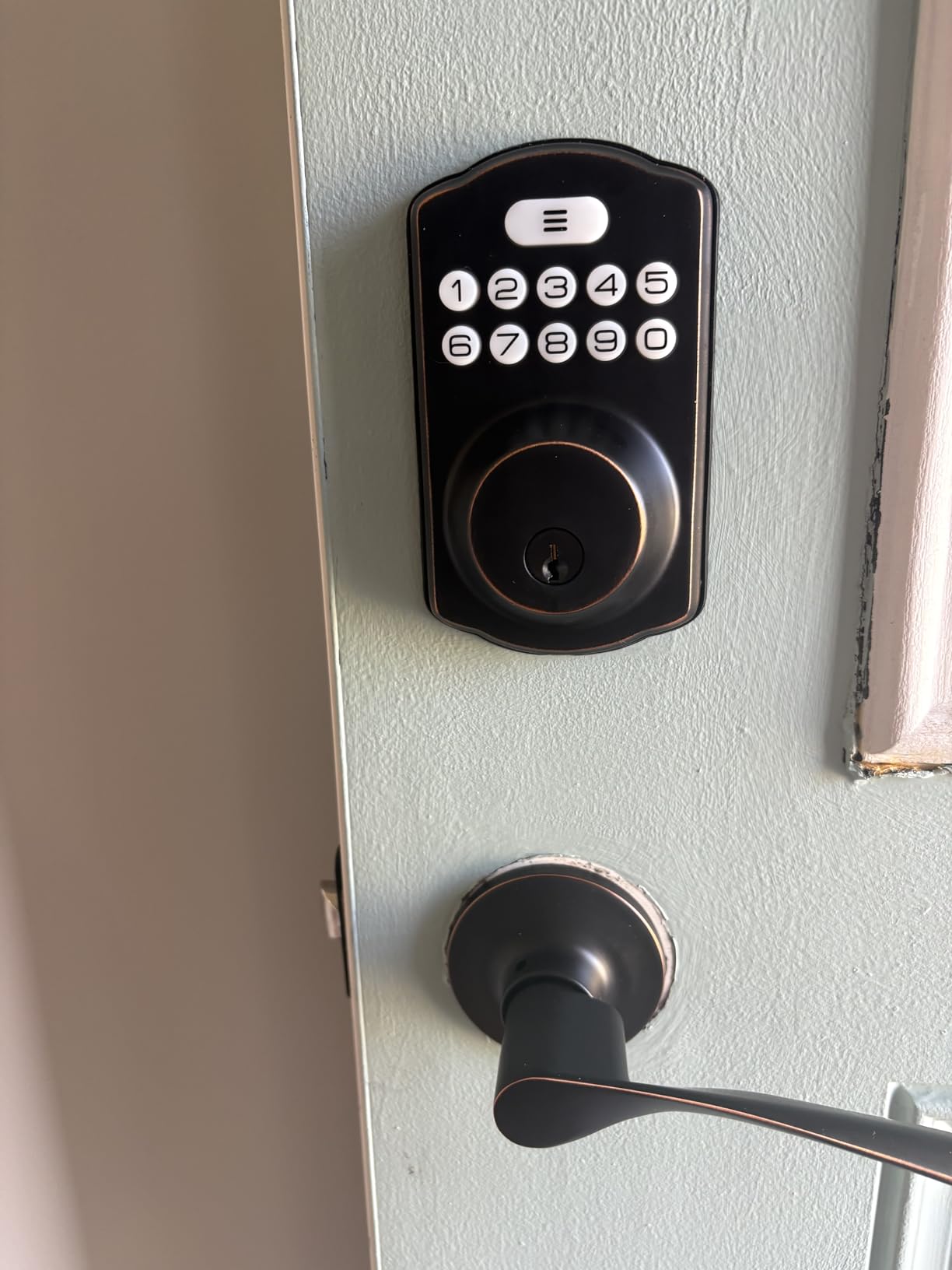
Capacity is 20 permanent codes, one-time guest passwords that expire after use, and two physical keys. Auto-lock can be set anywhere from 10 to 99 seconds, or holding any key for two seconds locks it immediately. Vacation mode disables all codes except the master and alarms on inside opening, and silent mode mutes keypad beeps for shared walls.
Security and support
The lock is ANSI and BHMA Grade 3 with IP54 water and dust resistance, and the zinc alloy cylinder is tested past 200,000 cycles. The anti-peeping dummy password adds random digits before or after your real code, and ten failed attempts locks the keypad for three minutes.
Customer support gets specific mention in reviews, with multiple owners reporting agents resolving programming problems and shipping replacement levers. That responsiveness is a real advantage on a lock with no connectivity to fall back on.
The rough edges
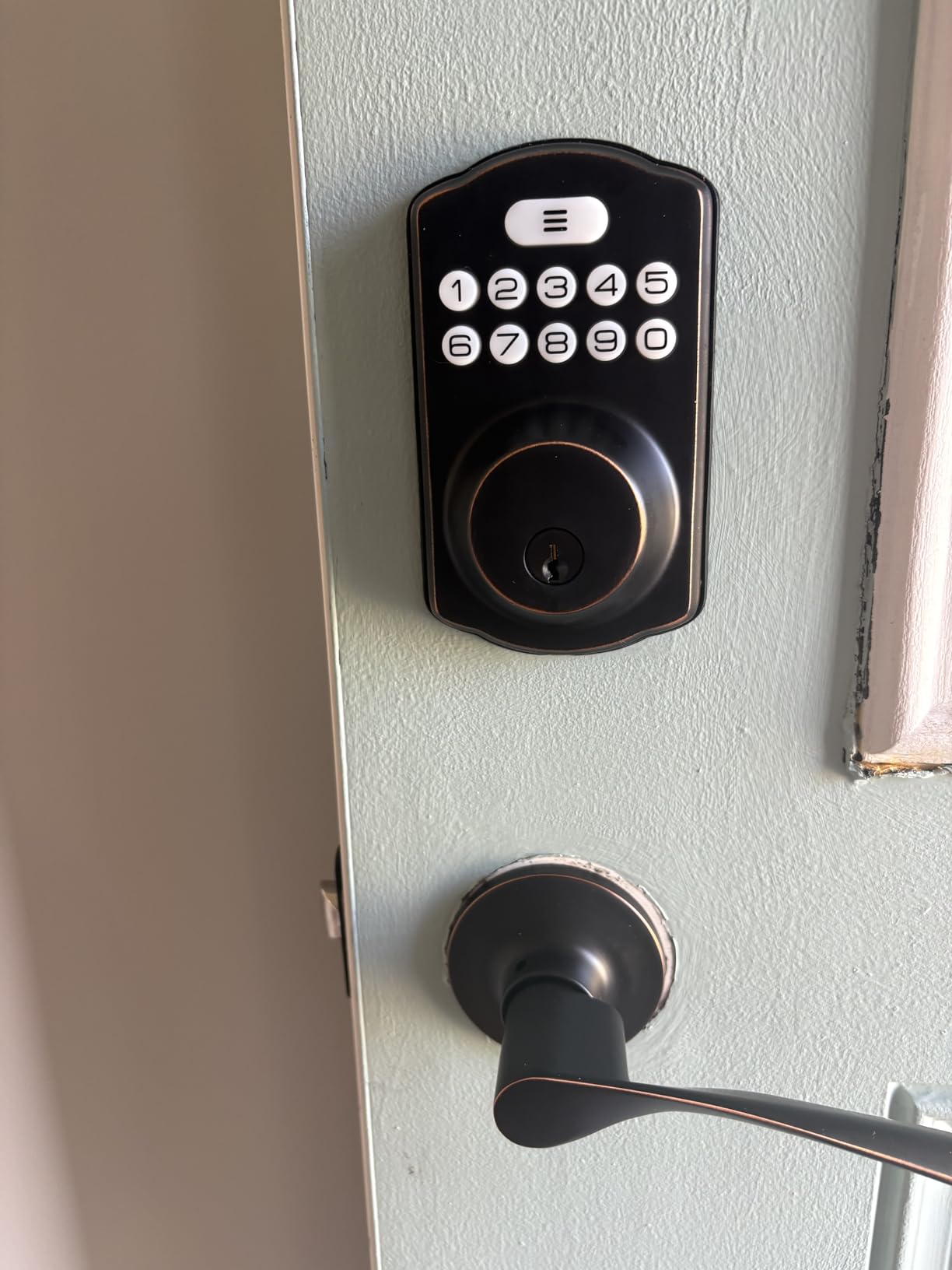
Batteries are 4 AA or LR6 alkaline, not included, and the claim is over a year of use with a backlit low-battery warning. First-time programming instructions can be confusing, some doors need the top hole adjusted for the lock to seat properly, and the manufacturer advises keeping liquids and prolonged direct sunlight away from the keyhole and interior. Warranty is one year plus a free extension on registration.
How to Choose a Smart Lock for an Apartment Without Regretting It
Retrofit or Full Replacement: What Actually Changes on Your Door
Every lock in this roundup is a full interior replacement: you take off your interior deadbolt or handle and put the smart unit in its place. None of them mount over an existing interior deadbolt while leaving that deadbolt in place, and none of them touch the exterior hardware. The outside of your door, your key, and your building’s exterior look are unchanged in all twelve cases.
That means one honest caveat about the word retrofit. It is accurate for these products in the sense renter buyers care about, and inaccurate if you assume the original interior deadbolt stays. If you want to keep the interior deadbolt itself and add electronics around it, that is a different category of product, and it is thinner and less well reviewed than what is here.
Connectivity: Bluetooth, Wi-Fi, Zigbee, Matter and Bad Building Networks
The single most useful distinction for apartment dwellers is whether remote unlock works without a hub.
Built-in Wi-Fi models handle remote access on their own: the Schlage Encode, the ULTRALOQ Bolt SE, the eufy C220 and the Sifely. For the Sifely, note that remote features need the separately sold gateway. The catch is network quality, and ULTRALOQ’s stated limits of 2.4 GHz only and roughly 70 feet from the router are the ones to respect.
Bluetooth or Zigbee with a hub models handle local entry perfectly and need extra hardware for anything remote: the Aqara U100 needs an Aqara Zigbee 3.0 hub, the DESLOC B200 and Yamiry YR01 need a gateway, and the Sifely needs the Sifely WiFi Gateway. If you already run one of these platforms, that hub is not a new purchase. If you do not, budget for it.
No connectivity at all models are the TEEHO TE002, the Veise RZ-A, the Kwikset Powerbolt 250 and the Veise KS01B. On a building network that is shared, segmented or unreliable, these are the most dependable choices, and there is nothing to re-pair after a router change. For more keypad-focused renter options, our guide to the best keypad door locks for rentals goes deeper on that category.
Matter and Thread is the direction the category is moving, and the ULTRALOQ Bolt SE is the only pick here with Matter over Thread. It needs a Thread border router, so plan for a hub alongside the lock rather than assuming the radio is all you need.
Battery Life and the Midday Lockout Question
Battery claims across this group run from about a year to 18 months: the TEEHO claims up to 365 days, the ULTRALOQ and iulock around 18 months, the Veise KS01B over a year, the DESLOC up to 12 months, the Veise RZ-A about 12 months, the Kwikset 12 months, the eufy about 8 months, the Aqara up to 8 months, and the Schlage up to six months.
Treat all of those as best case. The Kwikset reviews specifically note that battery life drops sharply with rechargeable cells, which suggests the same is true of other alkaline-rated claims, and the Aqara owners report premature low-battery alerts. Use alkaline batteries.
When a battery dies, the outcome depends on one thing: a mechanical key. Every pick here includes at least one physical key, and that key is what a building superintendent or a locksmith will use. Three picks add a USB-C emergency power port, the Aqara, the DESLOC and the iulock, which converts a lockout into a short wait instead of a locksmith call. Buy a spare battery set before you need it.
Key Backup, Key Control and the Landlord Conversation
Renters on the Locksmith forums treat physical key backup as a requirement rather than a preference, and the reasoning is straightforward. If the batteries die, your phone is flat, or the app loses your account, the key is the entire difference between a five-minute fix and a call to a locksmith at midnight.
Key control runs the other way. Most of these locks ship with their own cylinder and their own keys, which means the landlord’s original key no longer opens the smart lock. Only the Kwikset Powerbolt 250 can be rekeyed to a KW1 key, which makes it the right choice for a property manager who needs a master key. Everyone else should plan on telling the landlord, and keeping at least one original key on file.
Security Ratings and Why Insurers Ask About Them
BHMA and ANSI grades are the rating system to look at, and they are cited more often than you would expect in break-in conversations on r/Locksmith. The Schlage Encode carries the highest residential security, durability and finish rating from BHMA. Several picks here are Grade 3 or Level 3 compliant, which covers a standard residential deadbolt.
The practical point is that a recognized rating is the document an insurer asks for after a claim on an electronic lock. That does not mean an uncertified lock invalidates a policy, but it means the conversation is easier with one. When a landlord asks what you are installing, a grade number answers the question faster than a feature list.
Installing and Removing a Smart Lock in a Rental Without Losing Your Deposit
The Six-Step Install
Step 1: get it in writing. Send the request in the section below before you buy anything. An interior-only install is usually the easy yes, but unasked is different from asked.
Step 2: measure the door. Bore diameter, thickness and swing direction, using the checklist earlier in this guide. This step prevents nearly every return.
Step 3: photograph the existing interior hardware. Take a picture of the interior deadbolt or handle before removal. It makes the reverse job faster and gives you a reference if the landlord asks.
Step 4: remove the interior unit. A screwdriver and about five minutes. Keep the original interior hardware, the strike plate and any screws in a labelled bag.
Step 5: mount the new unit and let it learn. Program your codes, register fingerprints from more than one angle, and set the auto-lock delay to a time that matches how you actually close the door. Most models report 10 to 15 minutes.
Step 6: test the failure path. Lock the door from outside, then unlock it with the physical key. Then try the low-battery warning by removing a cell. Know what your fallback is before you need it.
The Move-Out Removal in Reverse
Removal is the same six steps backwards: delete your codes and fingerprints from the app, remove the batteries, unscrew the smart unit, reinstall the original interior hardware you kept in the bag from step three, and check that the door latches and locks exactly as it did on day one.
Photograph the restored door and send the photo to your landlord with a short message. Most deposit disputes are about undocumented damage, and a picture closes them quickly. Every lock here is an interior install, so the exterior side of your door never changed and there is nothing to fill, sand or patch.
Copy-Paste Permission Request for Your Landlord
Send something close to this. It is short, it names the specific feature that matters to a landlord, and it offers the thing a landlord actually cares about, which is keeping access.
Subject: Interior smart lock install for unit [number]
Hi [name], I would like to install a smart lock on my apartment door. It mounts on the inside only. I am not changing the exterior lock, the exterior handle, the keyway or the appearance of the door from outside, and I can remove it and reinstall the original hardware before I move out.
I am requesting it for convenience and security: temporary codes for a dog walker and for deliveries, so I am not leaving a spare key with anyone, plus a record of entries. The original keys will still work, and the lock includes a physical key backup in case the batteries run out. I am happy to discuss any conditions you would like to attach.
Thanks, [your name]
If a building policy bars exterior keypads, say so explicitly. It shows you read the concern and it is why an interior-only model is the right choice. For the rest of the apartment, our guide to induction cooktops for apartments covers another install-where-you-live upgrade that raises the same lease question.
Frequently Asked Questions
Can I put a smart lock on my apartment door?
Usually yes, because the locks in this roundup mount on the interior side only and leave the exterior lock, key and door appearance unchanged. Check your lease for any clause banning locks or door hardware changes, and ask your landlord in writing before you install. A short written request is far more likely to be approved than a silent install, especially in buildings with shared or master-keyed systems.
What is the best smart lock for an apartment building?
The Schlage Encode Smart WiFi Deadbolt is our pick for an apartment building, because its built-in Wi-Fi gives real remote access without a hub and it holds up to 100 access codes, which covers roommates, family and contractors in one place. It also carries the highest BHMA residential rating in this group. If your building network is unreliable, the TEEHO TE002 is the safer bet since it needs no connection at all.
What are the downsides of smart locks?
The four real downsides are battery lockout, network dependency, landlord approval and lost key control. Network-dependent models stop offering remote unlock when Wi-Fi drops, though local entry usually continues. Battery lockout is real, so check that your model includes a physical key and ideally a USB-C emergency port. You also change the cylinder, so your landlord’s original key may no longer open the door, and insurers may ask about a recognized security grade after a claim.
Do smart locks work without WiFi?
Yes, and that is the strongest argument for a standalone keypad lock. The TEEHO TE002, the Veise RZ-A, the Kwikset Powerbolt 250 and the Veise KS01B have no radio at all, so they work identically whether your building network is fast or down. Bluetooth and Zigbee models also allow local entry without a connection, and only remote unlock stops when the network fails.
How do I remove a smart lock when moving out of an apartment?
Delete your codes and fingerprints from the app first, then remove the batteries, unscrew the smart unit and reinstall the original interior hardware you kept when you removed it. Because every lock in this roundup is an interior install, the exterior side of the door never changed, so there is nothing to patch or fill. Photograph the restored door and send the photo to your landlord with a short message, since most deposit disputes come down to undocumented damage.
Which Smart Lock Fits Your Apartment Best
If you want remote access from the building gate and a lock that handles a large household, the Schlage Encode Smart WiFi Deadbolt is the pick, and it is our best smart locks for apartments choice in 2026 for good reason. If your building’s Wi-Fi is shared or unreliable, the TEEHO TE002 does the same job with no network dependency at all.
For a door with a knob instead of a deadbolt, the Sifely handles fingerprint and fob entry with instant guest codes, and the Yamiry YR01 is the simpler alternative. On a metal security door, the iulock IU-30 is rated for the job. If you need a building master key, the Kwikset Powerbolt 250 is the only pick here you can rekey to a KW1 key.
Whichever you choose, measure the bore, ask your landlord in writing, and test the physical key before you rely on the app. Use the check buttons on each review to compare current details, and start with the compatibility checklist so the lock fits the door the first time.
Leave a Reply