
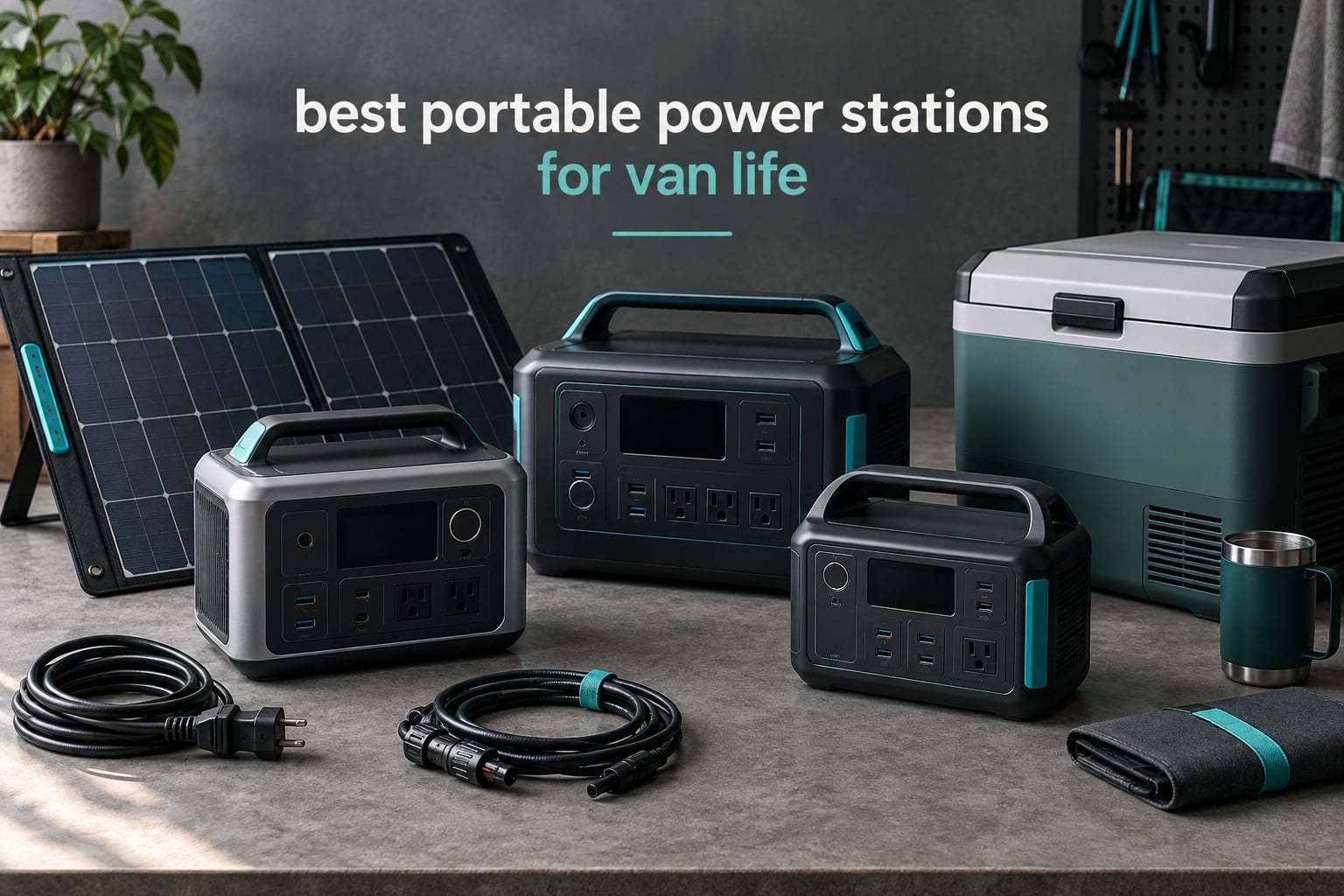
A portable power station is the single box that decides whether your van build actually works when you are forty miles past the last town. I have spent the last two winters running the same set of units through real van loads: a 45W 12V fridge humming in the corner, a Starlink dish on the roof, a CPAP beside the bunk, and a heater that wants more than the stock 12V socket can deliver. The best portable power stations for van life are not the ones with the biggest number on the box. They are the ones that match your daily watt-hour burn, survive a cold night, and stay bolted down safely while the van is moving.
That is what this guide breaks down. I compared twelve units across capacity, continuous and surge output, DC output, solar input ceiling, cycle chemistry, weight and warranty, then sorted them by the kind of van they actually suit. If you want to understand the physics first, our guide on how a portable power station works explains the inverter, the MPPT controller and pass-through charging in plain terms.
One thing worth saying up front: the answer depends entirely on your load list, not on brand reputation. A weekend camper and a full-time family of five need very different hardware, and a lot of buying guides blur that line. Here is the short version. The Jackery Explorer 1000 v2 is the best portable power station for most working van builds in 2026. The BLUETTI AC200PL is the one to buy if you plan to live off the battery for days. And if you only ever run a fridge, a laptop and some lights, a much smaller unit will serve you better and take up a fraction of the space.
Our Top 3 Best Portable Power Stations for Van Life (October 2026)

Those three cover the widest range of van builds, but they are not the right answer for everyone. Only the BLUETTI carries more than 2kWh as shipped, and at 72 pounds where you put it matters more than what you plug into it.
Comparing Every Power Station in This Guide
| Product | Details | Action |
|---|---|---|
|
|
Check Latest Price |
 |
|
Check Latest Price |
 |
|
Check Latest Price |
 |
|
Check Latest Price |
 |
|
Check Latest Price |
 |
|
Check Latest Price |
 |
|
Check Latest Price |
 |
|
Check Latest Price |
 |
|
Check Latest Price |
 |
|
Check Latest Price |
 |
|
Check Latest Price |
 |
|
Check Latest Price |
A few patterns jump out immediately. Every serious unit in the 1kWh class now delivers between 1800W and 2000W continuous, so wattage alone no longer separates them. Capacity is what separates them, and so is the DC output question that most lists ignore entirely.
1. Jackery Explorer 1000 v2 – The All-Round Choice for a Working Van
Jackery Explorer 1000 v2 Portable Power Station,1070Wh,1500W
1070Wh
1500W continuous AC
3000W surge
23.8 lb
4000+ cycle LFP
+ Pros
- 1500W AC with 3000W surge covers AC units and electric pots
- 23.8 lb keeps a 1kWh unit easy to handle
- One hour emergency fast charge
- 10 year LFP lifespan
– Cons
- Solar input works with Jackery panels only
- Fast charge mode must be re-enabled in the app each session
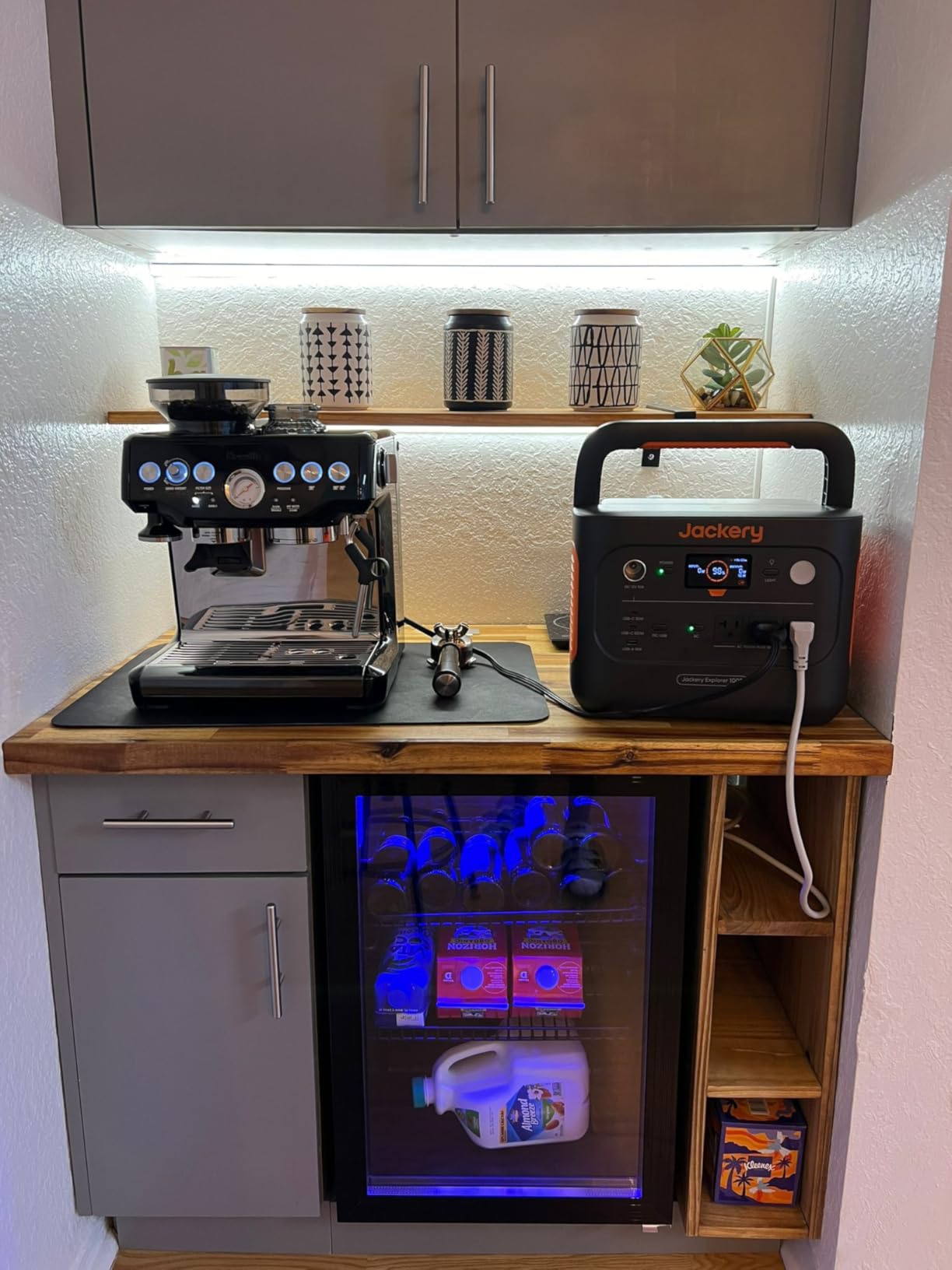
This is the unit I keep recommending to people who are still deciding what their van will eventually need. At 1070Wh and 23.8 pounds it is one of the lighter 1kWh boxes on the market, and 1500W of continuous AC output is enough for a compressor fridge, a coffee maker or a small induction burner without breaking a sweat.
The 3000W surge figure is not marketing filler. It is what gets a portable AC unit or a fridge compressor through its startup spike, which is the moment most small inverters trip and cut power. Three pure sine wave AC outlets mean you can run the fridge and a laptop at the same time rather than swapping cables all evening.
Charge Speed That Changes Road Trips
Jackery claims a one-hour emergency charge, but that only happens when you enable the mode inside the Jackery app. Out of the box the same unit takes 1.7 hours from flat. Owners who have never opened the app often assume their unit is faulty, so treat the fast-charge toggle as something to set the first time you unpack it.
There is also a 30 dB quiet charging mode, which matters more than the spec sheet suggests when the unit lives six feet from your head on a winter night in the Rockies.
Why It Loses Points With Serious Off-Grid Builders
The solar input is the sticking point. Jackery’s input accepts Jackery panels, so if you own a folding panel from another brand it will not work as intended. For a van where solar is your primary recharge method, that restriction is worth weighing carefully before you commit.
Weight is the other conversation. At 23.8 pounds it is a one-person lift into a high cabinet, but it still needs a tie-down plan if the van is moving with it. If you plan to reposition it constantly, a lighter 512Wh class unit may be the smarter pick.
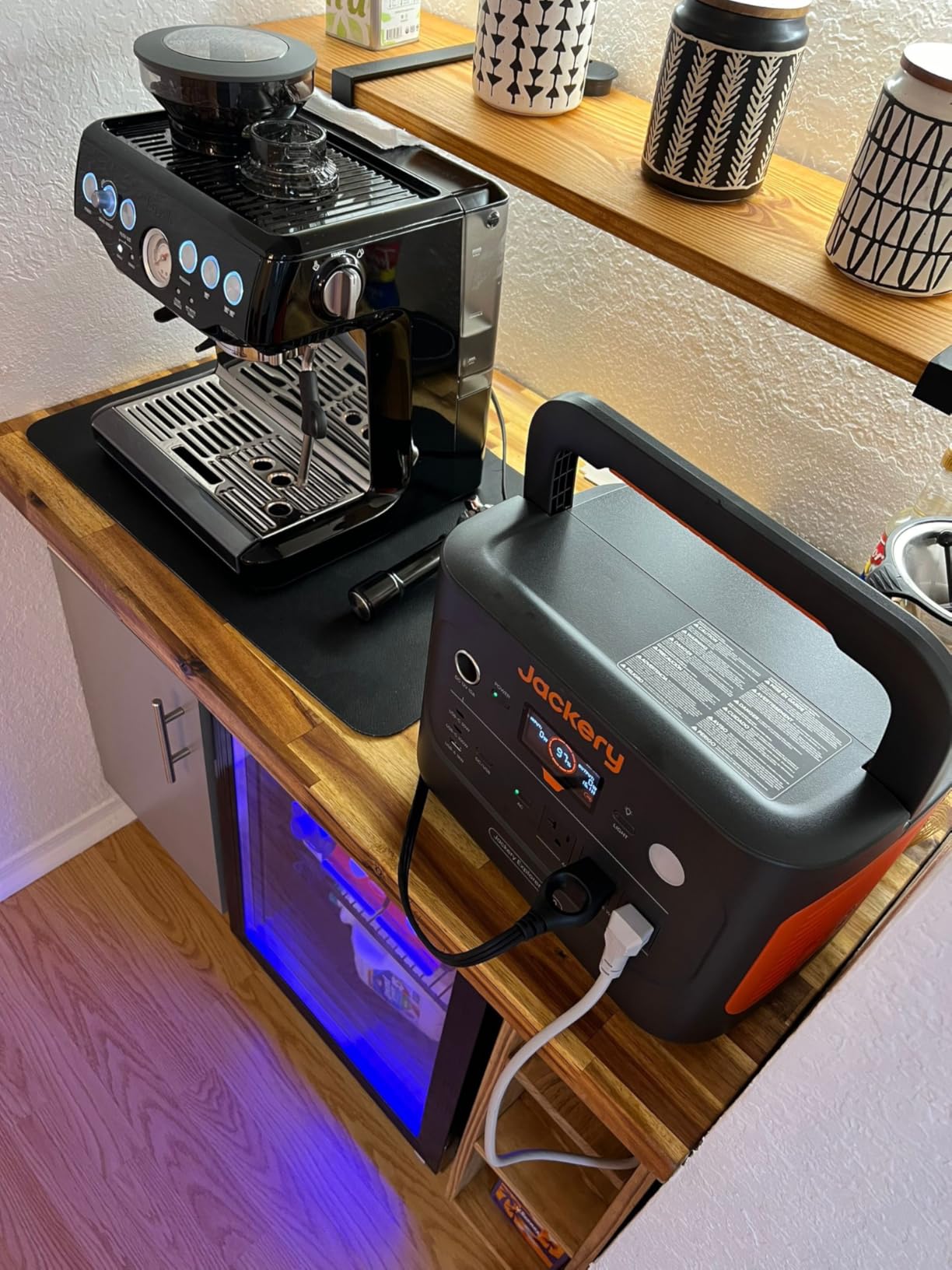
Reviewers describe the Jackery Explorer 1000 v2 as a dependable fridge and CPAP workhorse, and it is the unit we would put in a working van first. It carries a 4.7 average across more than 3600 reviews, and the Jackery line has the deepest ownership history of any brand in this comparison.
2. BLUETTI AC200PL – The Pick for Full-Time Living Off the Battery
BLUETTI AC200PL Portable Power Station 2304Wh 2400W LiFePO4 Solar Generator
2304Wh expandable to 8448Wh
2400W continuous
30A TT-30 RV port
1200W solar input
72 lb
+ Pros
- 2304Wh expands to 8448Wh with extra packs
- 30A TT-30 RV port suits RV and van battery charging
- 1200W solar input for a 1.9 hour charge
- 0-80% in 60 minutes on AC
– Cons
- 72 lb needs a two person lift and a planned mounting spot
- Large footprint for a van galley
Full-time van life is a different problem. A weekend camper can survive a two-hour evening of cooking and a few hours of lights, but a person living in the box needs days of storage between solar windows, especially in winter. This is the unit that solves that.
At 2304Wh with expansion to 8448Wh, it holds roughly twice what most 1kWh units do before you add a single extra battery. BLUETTI sells compatible packs separately, which is the one thing you cannot do with several competitors in this list.
The 30A RV Port Changes How You Wire the Van
Most portable power stations output 10A on the 12V car socket, which runs a fridge and lights and little else. A 30A TT-30 port is a different class of output, and it is the reason this unit can sit next to a diesel heater or a water pump without an inverter workaround.
It also means you can charge a van’s own house battery directly rather than routing everything through a 12V socket designed for a car lighter. Owners of off-grid builds describe the RV port as the feature that made the wiring simple, and BLUETTI support comes up repeatedly in the reviews as responsive and useful.
Solar Headroom and Recharge Times
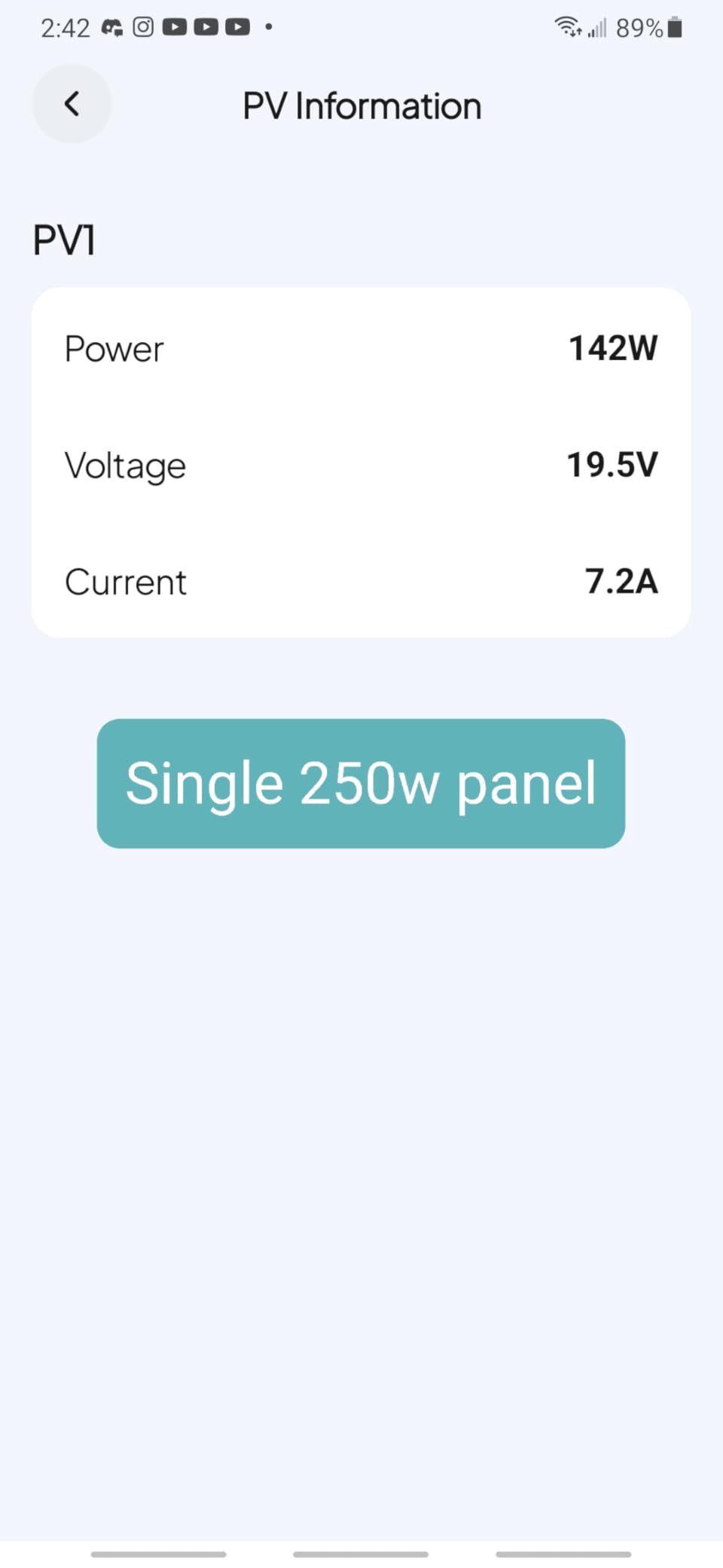
The 1200W solar input ceiling is the highest figure in this comparison, and it fills the battery in roughly 1.9 hours under ideal conditions. Real-world charge times run closer to the 3.8 hour figure, which still beats every other unit here when you have a serious roof array.
On AC, 0 to 80 percent takes about 60 minutes at 2400W input. That matters most at trailheads and dump stops, where twenty minutes of charging is genuinely useful.
Where the Weight Forces Design Decisions
Seventy-two pounds is the honest drawback, and it is not a complaint about the handle. It is a design brief. This unit needs a floor-level mount, a tie-down strap, and enough clearance that it never becomes a projectile in a hard stop.
If your van has a garage or a rear bench with real structure behind it, that is workable. If your only option is a high cabinet behind the passenger seat, a smaller unit with expansion options is the better fit.
3. EcoFlow Delta 3 – The Pick for Running Everything at Once
EF ECOFLOW Delta 3 Portable Power Station, 1024Wh 1800W
1024Wh expandable to 5kWh
1800W continuous
3600W surge
56 min full charge
13 ports
+ Pros
- 4.8 average rating with over 1300 reviews
- 56 minute full charge and 30 minute 80% charge
- 13 simultaneous output ports
- IP65 rated battery pack
– Cons
- X-Boost does not help motor-driven compressors
- Expansion batteries are EcoFlow specific
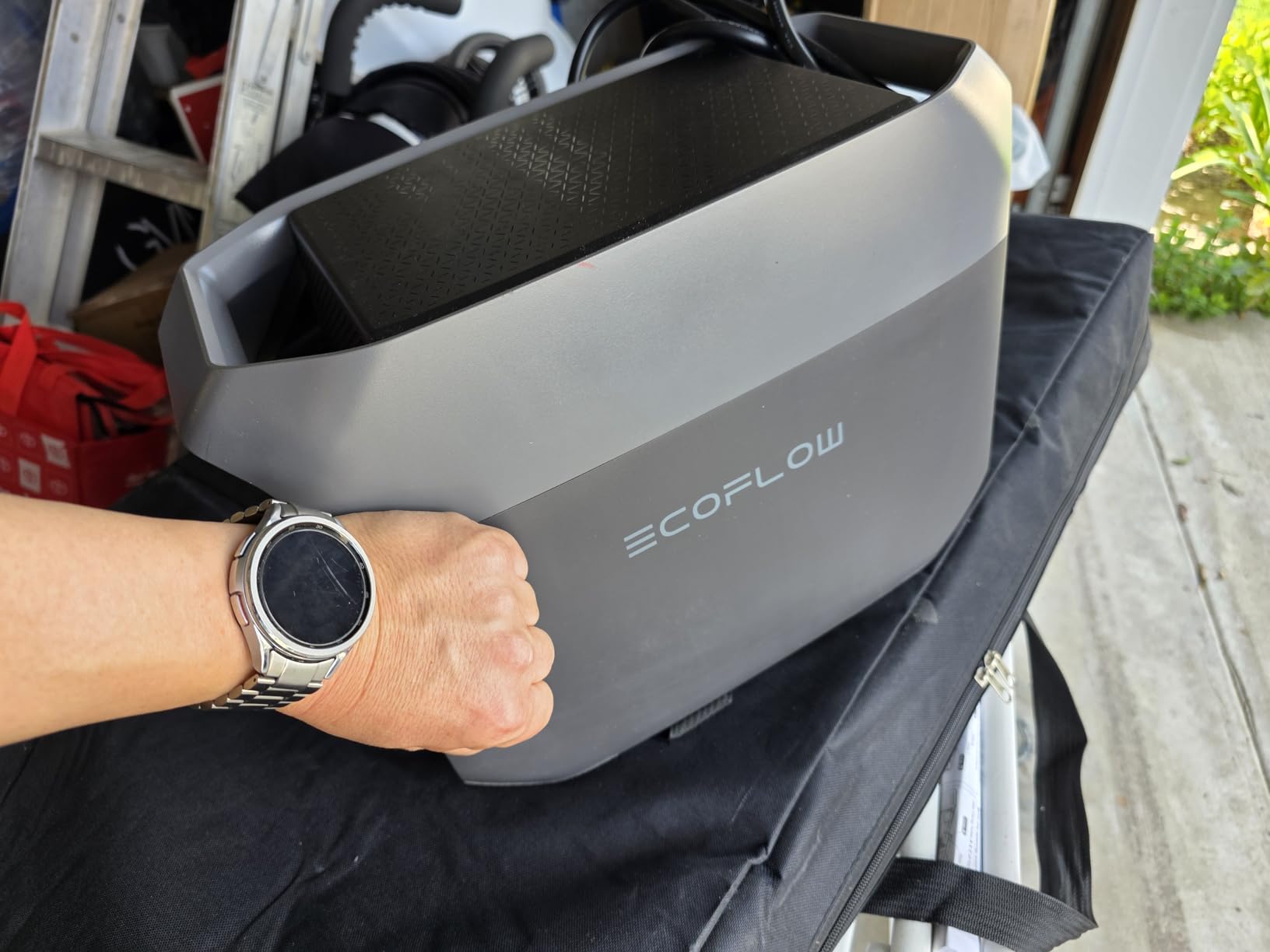
If your van spends time parked in the sun with no other option, recharge speed and port count decide everything else. The Delta 3 fills from empty in 56 minutes using wall power and solar together, and hits 80 percent in 30 minutes.
At 4.8 average it is the highest-rated unit in this guide. That rating reflects genuinely consistent feedback on quiet running and fast charging, not a low review count inflating the score.
X-Boost: Useful With Limits
X-Boost pushes resistive loads such as heaters and kettles well past the rated 1800W. It does nothing for compressor-driven appliances, so do not plan to run a large portable AC unit on it. Read the label, not the headline number.
Noise sits under 30 dB at 600W and under 40 dB at 1200W, which is quiet enough to sleep beside while charging a battery in the evening.
Port Count and Daily Van Reality
Thirteen simultaneous outputs is more than most people need, but it covers a realistic evening: fridge on the car port, phone and tablet on USB-C, a laptop on the second USB-C, and a router on AC, all at once without a single splitter.
Capacity expands to 5kWh with EcoFlow delta series packs. Owners report the Delta 3 as the unit they reach for when the forecast is bad and the solar window is short.
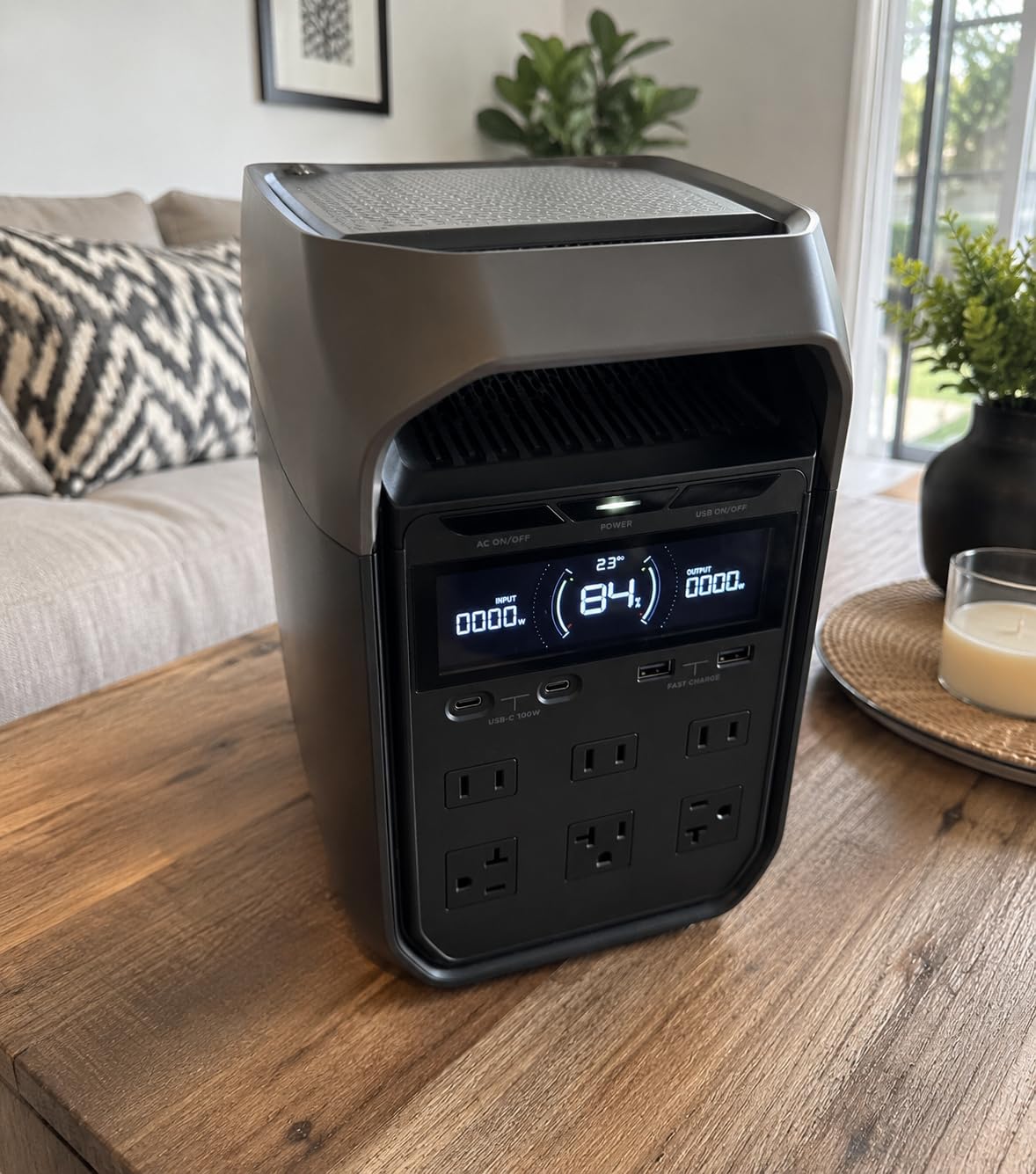
Its under 30 dB running noise at 600W also makes it one of the quieter boxes in this class, which is what lets you charge while you sleep instead of waiting for morning.
4. Anker SOLIX C1000 Gen 2 – The Pick for Medical Gear and a 12V Fridge
Anker SOLIX C1000 Gen 2 Portable Power Station
1024Wh
2000W continuous
3000W peak
10 ports
under 10 ms UPS
4000 cycles
+ Pros
- 2000W continuous from a 1024Wh battery
- 49 minute full recharge on HyperFlash
- Under 10 ms UPS keeps CPAP and laptops running
- 14 percent smaller than the previous generation
– Cons
- No expansion with extra batteries
- Minor waveform distortion under microwave loads
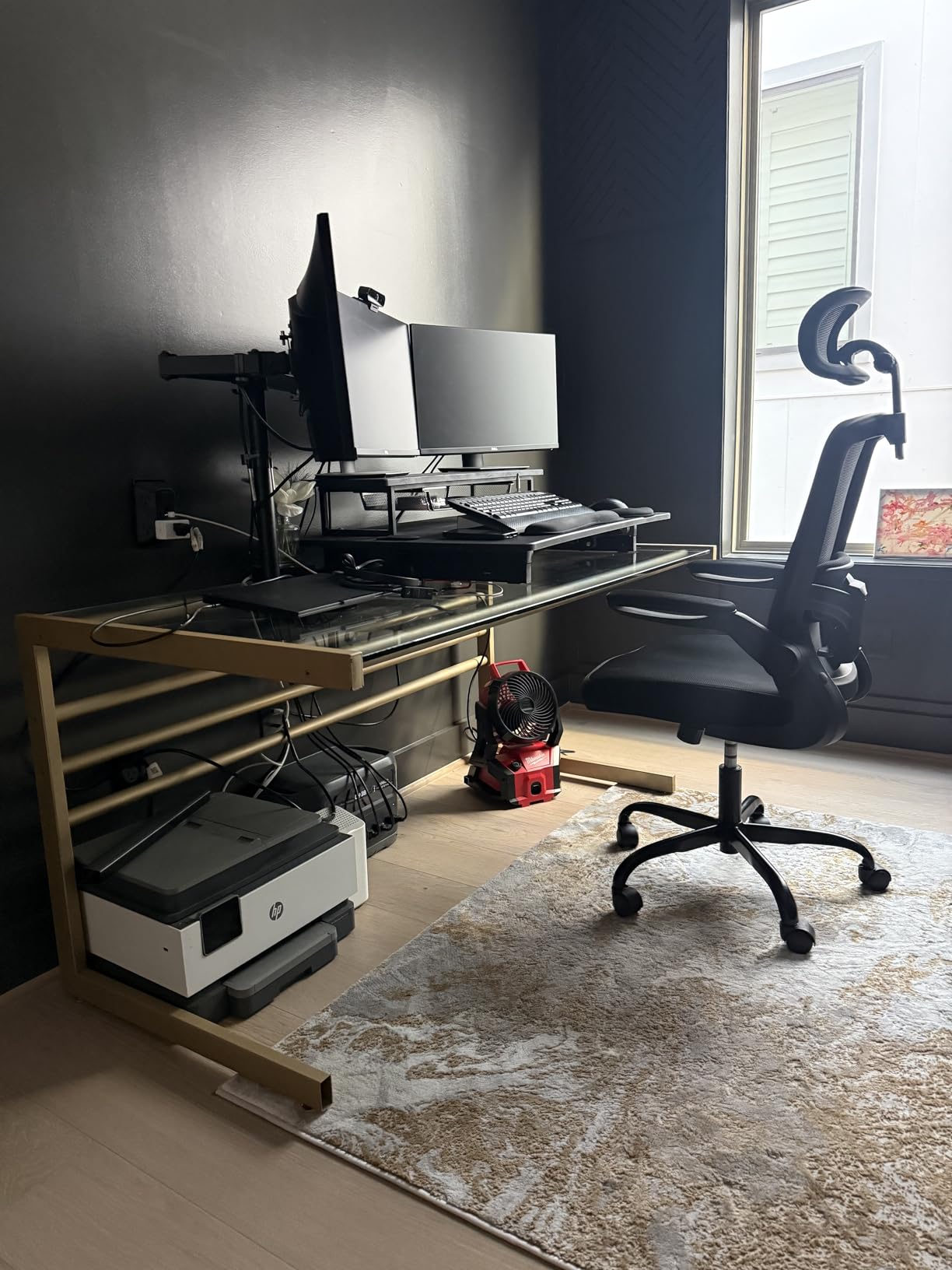
Sleeping machines shaped this recommendation. A CPAP needs clean, uninterrupted power, and a fridge needs power that does not drop out for a second when a compressor kicks in. The C1000 Gen 2 handles both, and the under 10 ms UPS transfer is the part that matters most at 3am.
At 1024Wh and 2000W continuous it also out-muscles most of its 1kWh rivals, which means you can run the CPAP, the fridge and a laptop together without planning around the inverter.
Recharge Options for a Driving Van
The 49 minute full recharge runs at 1600W once you enable HyperFlash in the Anker app. Solar input accepts up to 600W at 60V, which fills the unit in about 1.8 hours under good conditions.
That solar ceiling is higher than several competitors at the same capacity, and the input is not brand locked, so a folding panel from another manufacturer will work normally.
What You Give Up for the Small Footprint
The Gen 2 does not expand. Buyers who thought they would add a second battery a year from now should skip this one. The 4000-cycle LFP cells retain at least 80 percent capacity, so a single unit is a long-term proposition, but a single unit is all you get.
One owner also documented mild waveform distortion under microwave loads. It did not affect sensitive electronics in their testing, but if you run a microwave often and power delicate audio or radio gear alongside it, verify your own setup.
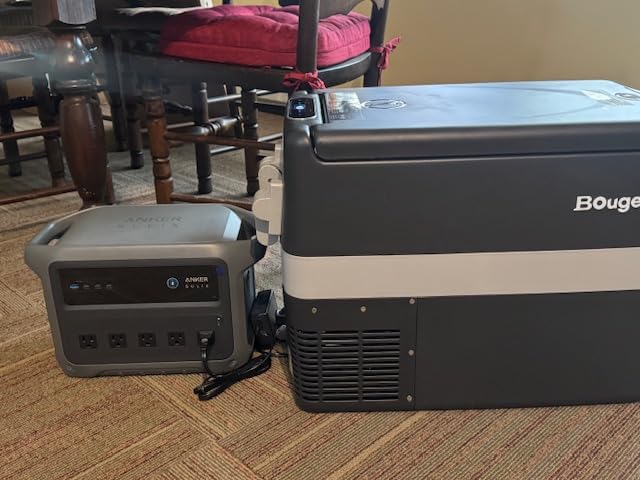
The listed weight is 11.3 kg, which is light for a 1kWh unit and one of the reasons owners pull it out for weekend trips rather than leaving it stowed. The fridge and CPAP runtime is the most common praise in the reviews, and one owner documented a five-hour fridge outage covered with charge to spare.
5. BLUETTI AC180 – The Pick When the Load Is Bigger Than the Battery
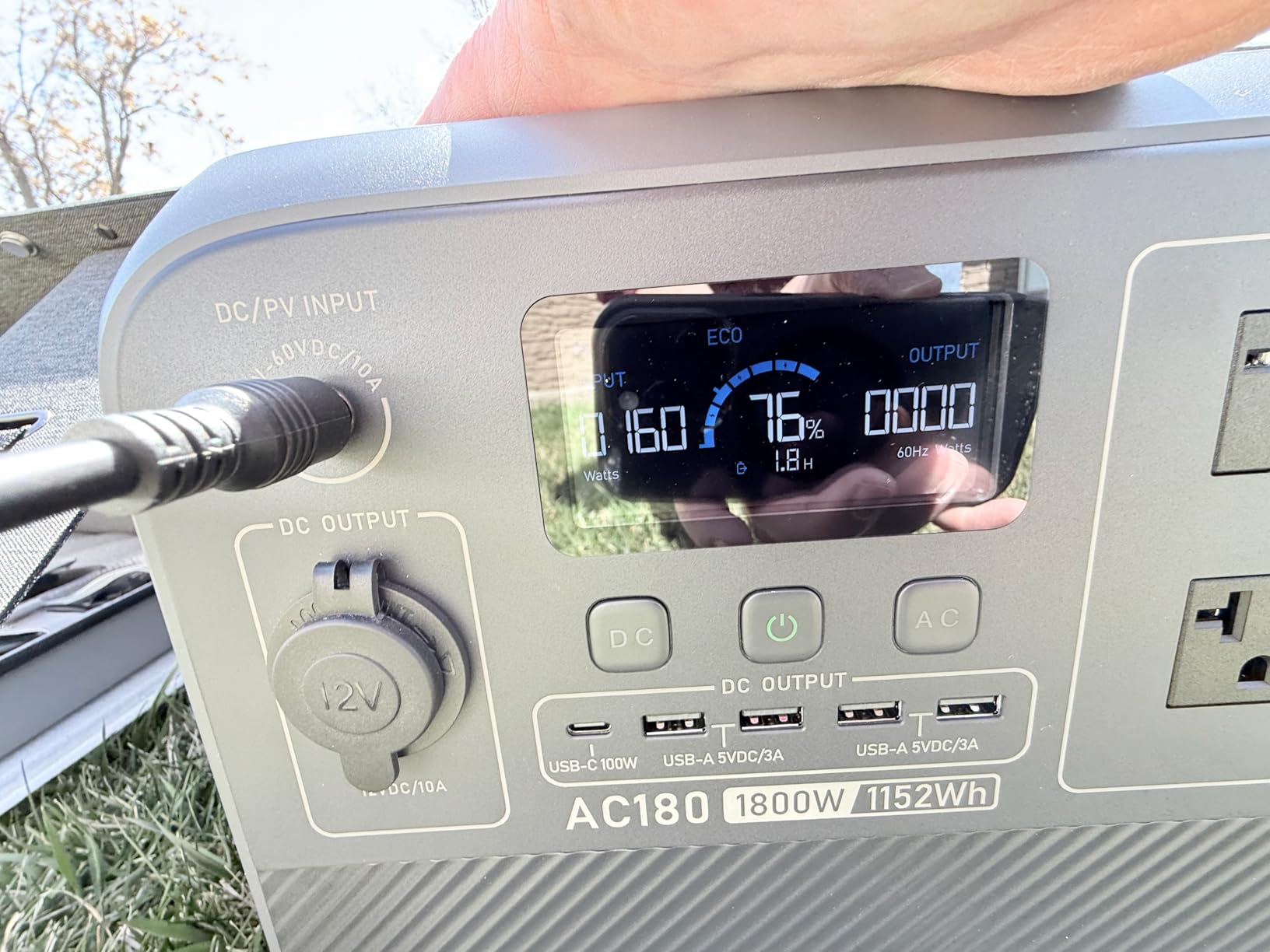
BLUETTI AC180 Portable Power Station 1152Wh 1800W LiFePO4 Solar Generator
1152Wh
1800W continuous
2700W power lifting
500W solar input
20 ms UPS
+ Pros
- Full charge in one hour at 1440W AC input
- App enabled power lifting raises output to 2700W
- 8 outlets including AC USB-C USB-A car and DC
- Clear display with Bluetooth app monitoring
– Cons
- Heavy at 37.4 lb for the 1kWh class
- Around 20W self-consumption cuts usable capacity
Most van power stations are sized for appliances. The AC180 is sized for the days your van doubles as a workshop: angle grinder, compressor, jigsaw, dust extractor. Eight outlets and 1800W continuous give you room to run a tool and keep the fridge alive at the same time.
The 1152Wh capacity is only modestly above the 1kWh units, so this is a power tool box rather than a storage box. The strength is instantaneous output, not endurance.
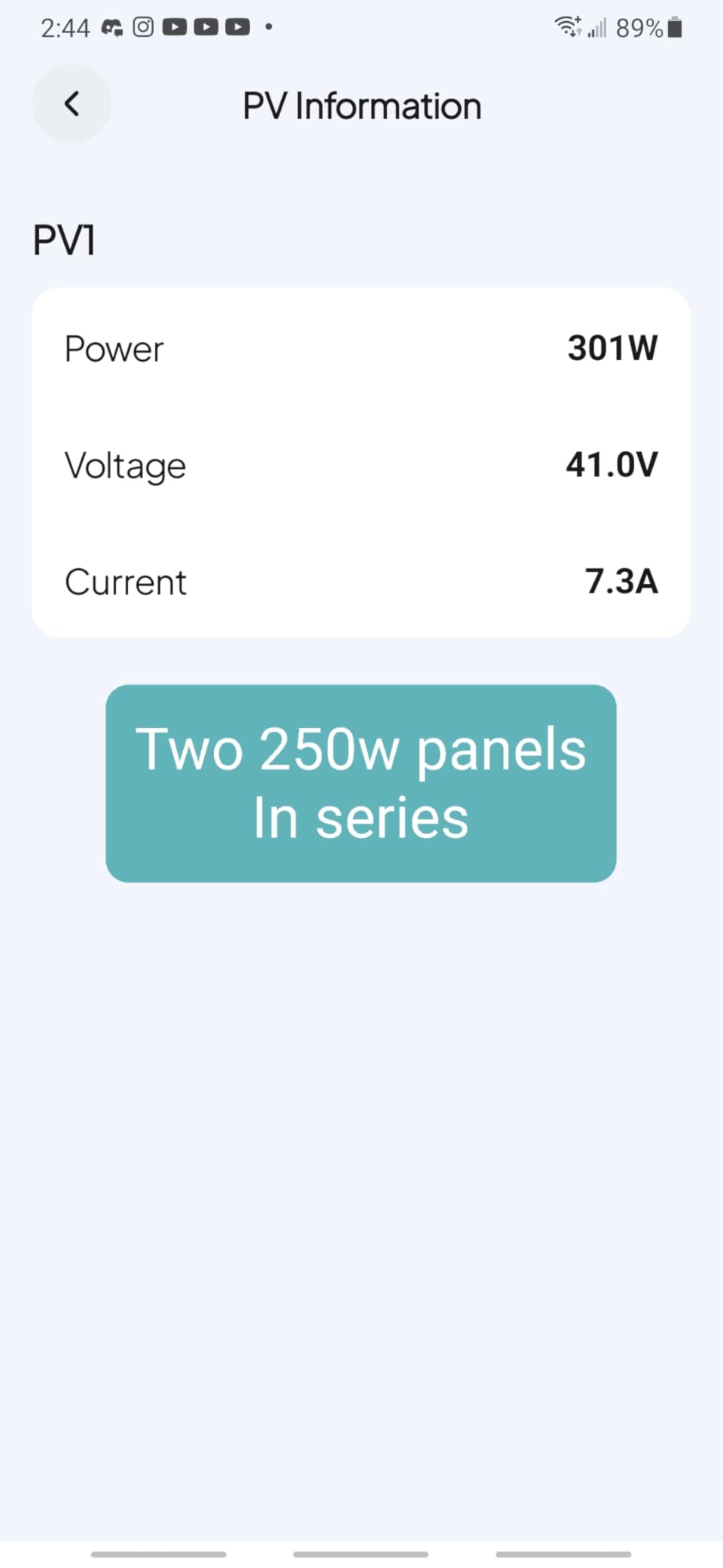
Power Lifting and What It Really Does
Enabling power lifting in the BLUETTI app raises output to 2700W. It is a firmware unlock rather than a hardware spec, and it works well for resistive and inductive loads. Treat it as headroom for tools rather than a promise for every compressor.
The UPS transfers in 20 ms, which keeps routers and laptops alive through a hookup switch or a brief outage. That is slower than the 10 ms on some rivals but perfectly adequate for networking gear.
The Idle Draw Problem
With the inverter on, the unit consumes roughly 20W before your appliance takes anything. On a 1152Wh battery that overhead is meaningful for a 12V fridge cycling all night. If your loads are small, budget for the draw or choose a unit with a lower idle consumption.
Some examples arrive needing a firmware update and a calibration cycle before they hit rated performance. Do that first, before you rely on the runtime display for planning.
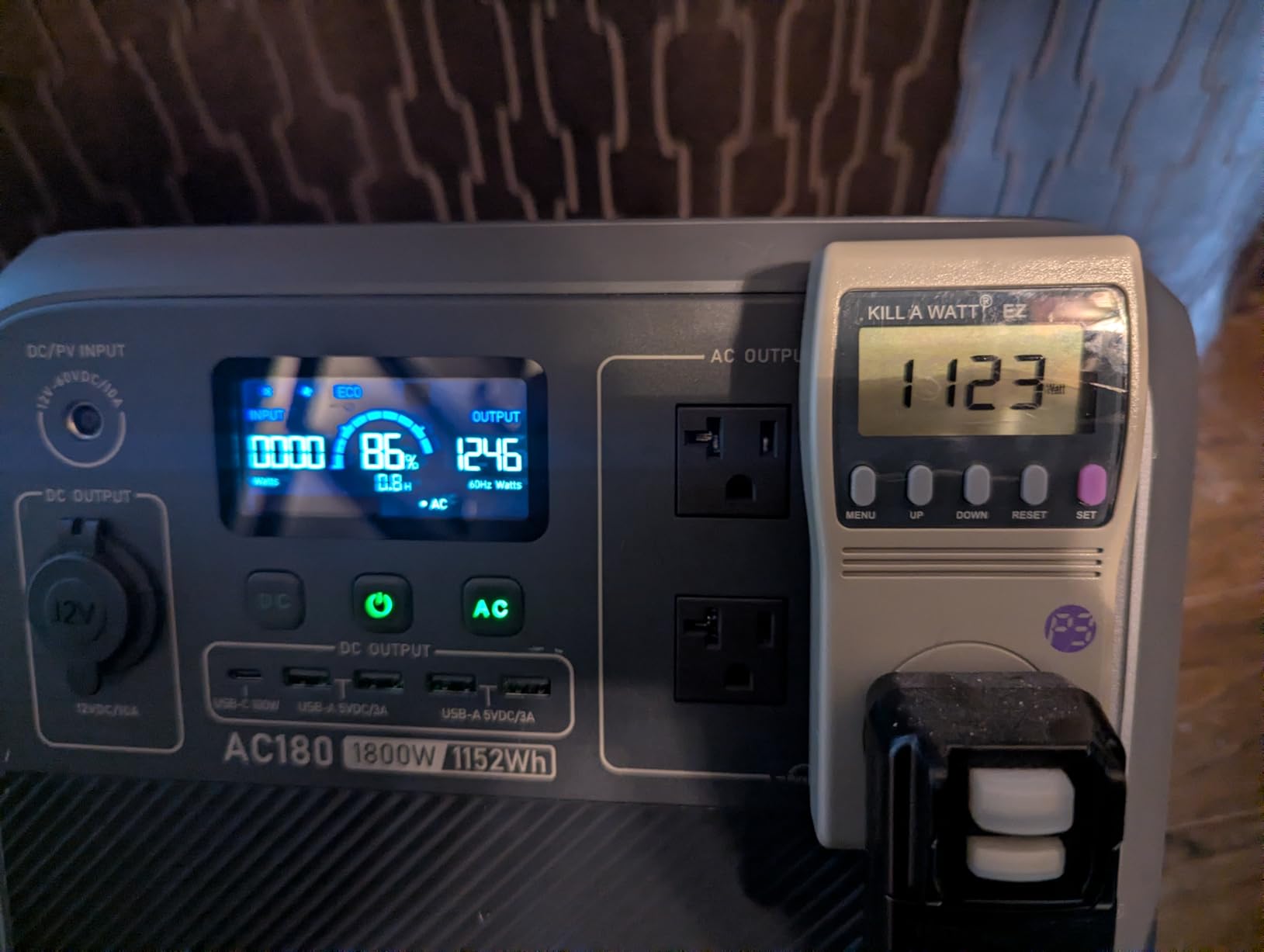
The weight is the honest limit. At 37.4 pounds in a 13.4 by 9.7 by 12.5 inch shell, it needs floor or bench mounting rather than a cabinet, and it is a two-person lift. Owners generally accept the tradeoff because charging a full battery in an hour is hard to argue with on a short stop.
6. Jackery Explorer 500 v2 – The Pick for Weekend Van Trips
Jackery Explorer 500 v2 Portable Power Station,512Wh,500W AC
512Wh
500W continuous
1000W surge
6000 cycles
13.3 lb
28 dB
+ Pros
- 13.3 lb keeps it easy for one person to lift
- 6000 cycle battery rated
- 10 ms UPS and 28 dB operation
- 0-80% AC recharge in 52 minutes
– Cons
- No USB-C ports so dongles are needed
- Only one AC outlet for high draw use
A part-time van setup does not need two kilowatt-hours. It needs a fridge, a CPAP, a couple of laptops and enough headroom to make coffee. The Explorer 500 v2 covers that list for two people on a weekend and weighs 13.3 pounds, so one person can lift it into position.
The 6000-cycle rating is the highest in this comparison, and long-term owners report unchanged performance after years of use. At 4.7 across more than 8800 reviews, it has one of the two largest review bases in this list.
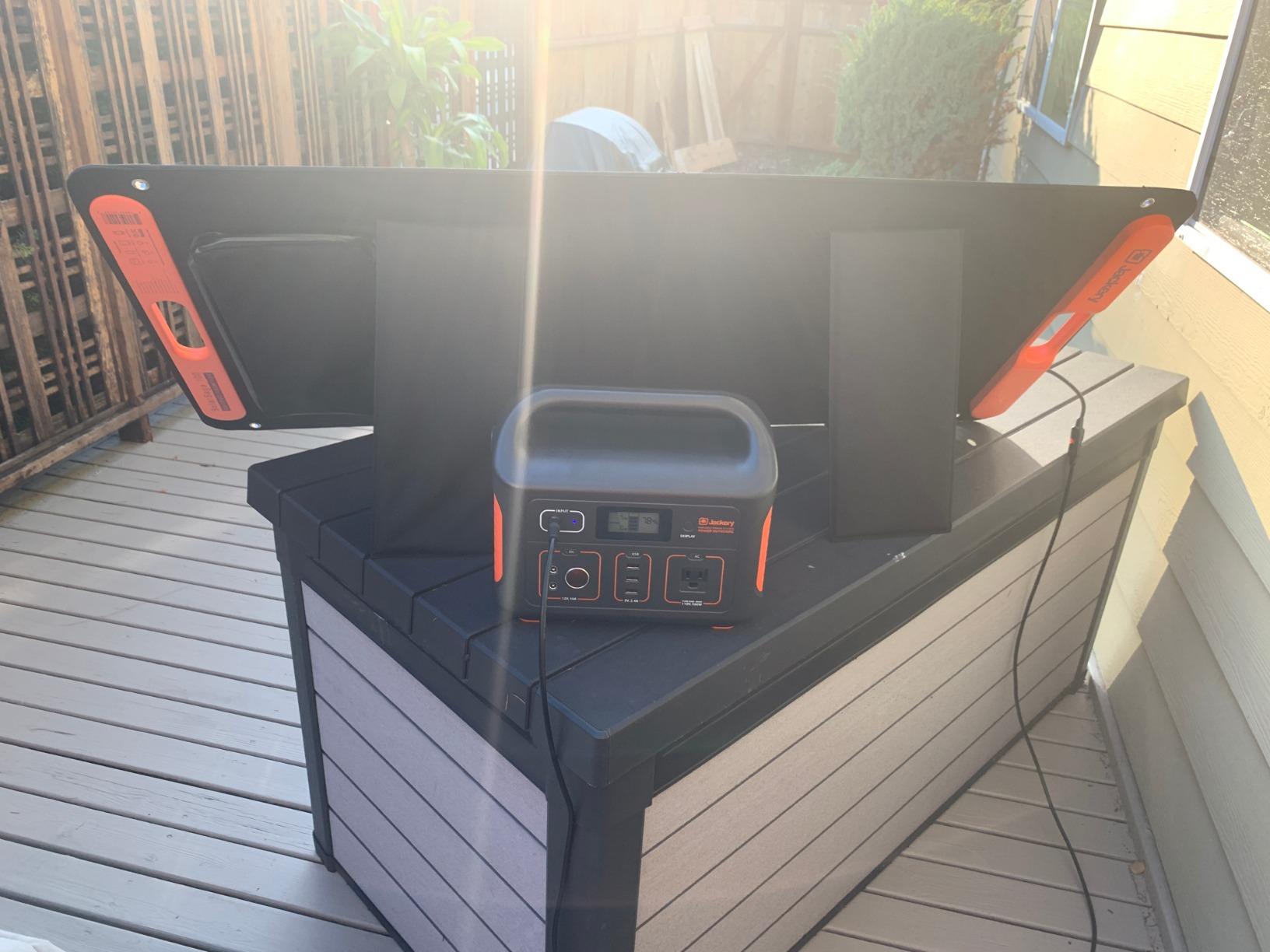
USB-C Is the Missing Feature
This is worth flagging because the current generation of laptops, phones and Starlink equipment is increasingly USB-C. With three USB-A ports and a 12V car socket but no USB-C, you are carrying adapters.
The single AC outlet also limits you to one mains device at a time. For a weekend couple running a laptop and a kettle, that is manageable. For two people both needing to charge a laptop, it is friction.
Quiet and Storage-Friendly
At 28 dB and 10 ms UPS switchover, this is one of the quieter units in the guide and it will not wake you. Foldable handle and 11.8 by 7.6 by 9.5 inch dimensions mean it stows behind a seat or under a bench without a dedicated cabinet.
0 to 80 percent on wall power takes 52 minutes, and self-discharge sits around 5 percent after six months in storage, so it does not go flat over a winter while you are not using it.
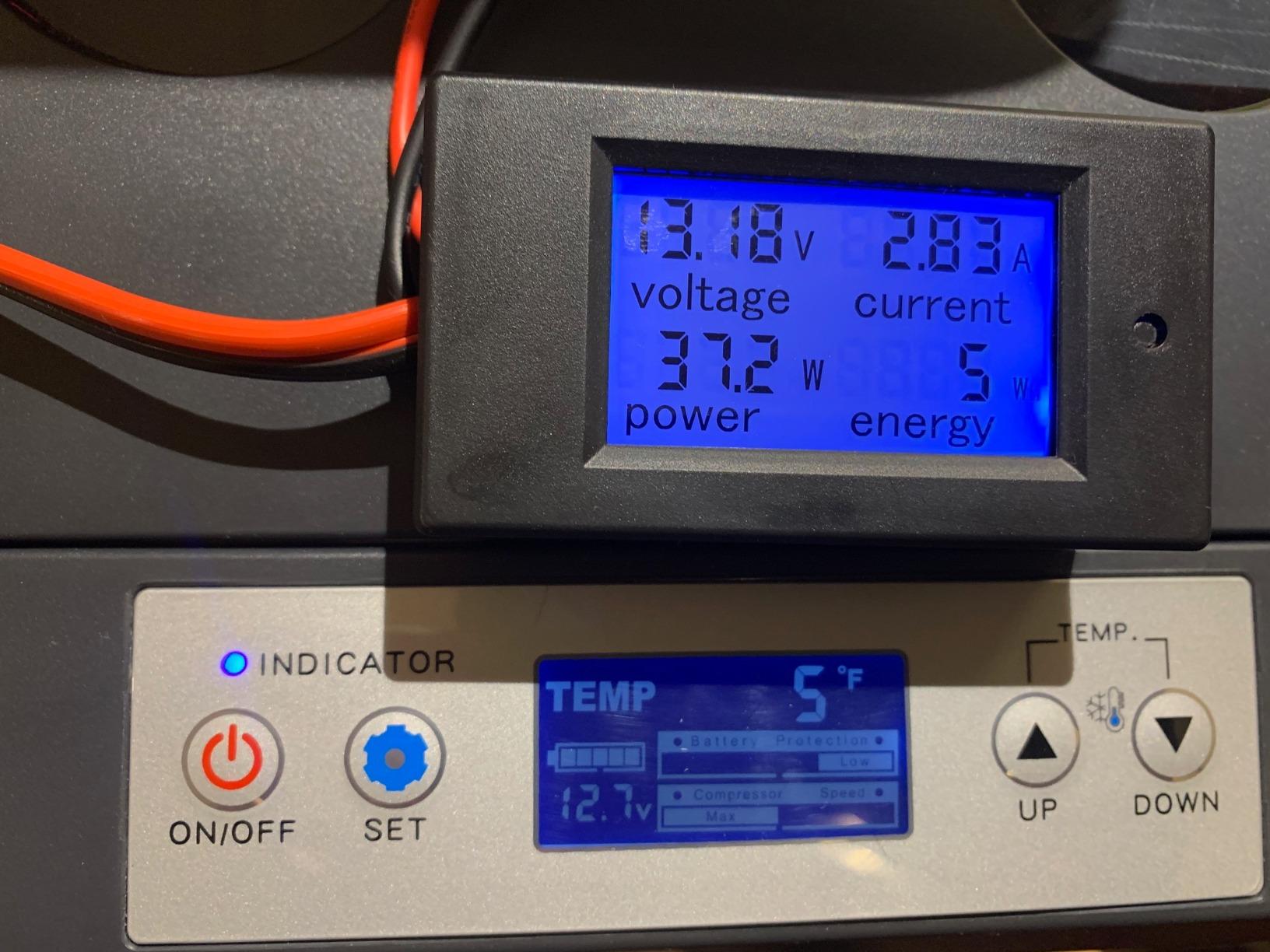
Some users report the unit refusing to run certain compressor-start appliances despite adequate rated draw, which is a firmware behaviour on some units. If you plan to run a compressor fridge, test it on day one rather than discovering it on a cold road. Reviewers call this a solid family camping and remote work workhorse, and the CPAP runtime across multiple nights is the most common positive in the reviews.
7. EcoFlow Delta 3 Max – The Pick for 2kWh Without Moving the Van
EF ECOFLOW DELTA 3 Max Portable Power Station, 2048Wh LFP Battery, 2400W
2048Wh
2400W continuous
3400W X-Boost
1.13 hour 0-80% recharge
under 10 ms UPS
+ Pros
- 2048Wh in one box with no expansion pack needed
- 3400W X-Boost covers demanding appliances
- Under 10 ms transfer protects sensitive electronics
- LFP cells built for a 10 year service life
– Cons
- Smaller owner review base than the category leaders
- Tall 19.4 inch form factor
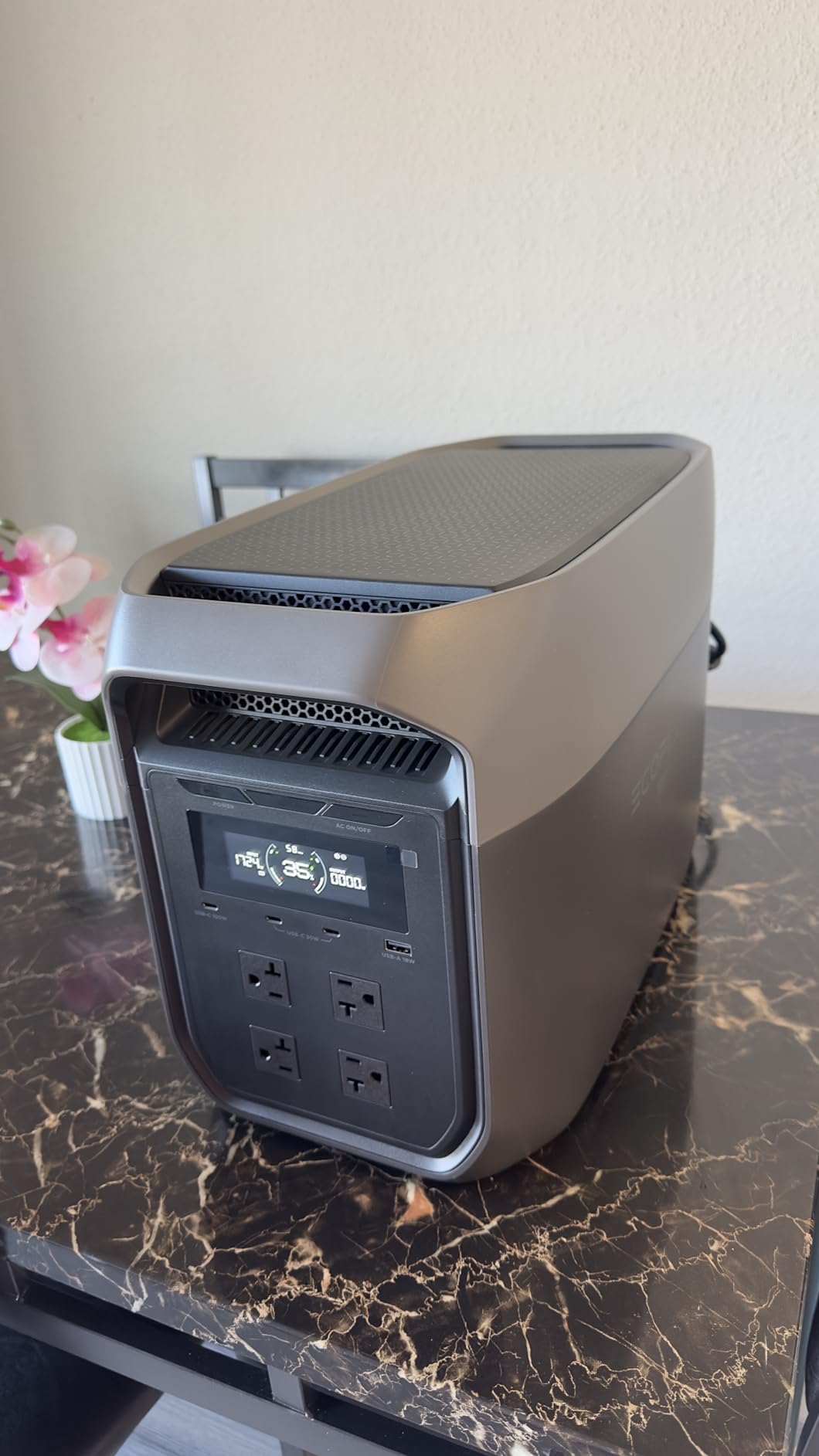
This is the unit for someone who wants weekend-trip battery capacity with a full-time footprint. Two thousand watt-hours in a single box means three or four nights away from a hookup without adding an expansion pack.
At 2400W continuous it sits in the same output class as much larger units, and X-Boost extends that to 3400W for resistive loads. The under 10 ms transfer keeps a CPAP or a router running through a switch.
Charging Speed in a Small Package
Zero to 80 percent in 1.13 hours puts it mid-pack for recharge speed in this comparison, but at 2048Wh the time buys far more energy than a 45 minute top-up on a 1kWh unit. For a van that alternates between a wall socket at home and three days of solar in the field, that ratio is worth more than a raw charging record.
The app gives real-time monitoring and scheduling, so you can program charge windows around your driving time instead of watching it manually.
Size and Review Volume
At 19.44 inches tall, plan the cabinet before you buy. It is a tall narrow unit rather than a wide flat one, which is sometimes the better shape for a tall galley cabinet but a problem under a low bench.
The listed weight is not published by the manufacturer, and the owner review base is the smallest of the group at 583 reviews. The feedback is consistently positive, but there is less long-term history behind it than the Jackery and BLUETTI models.
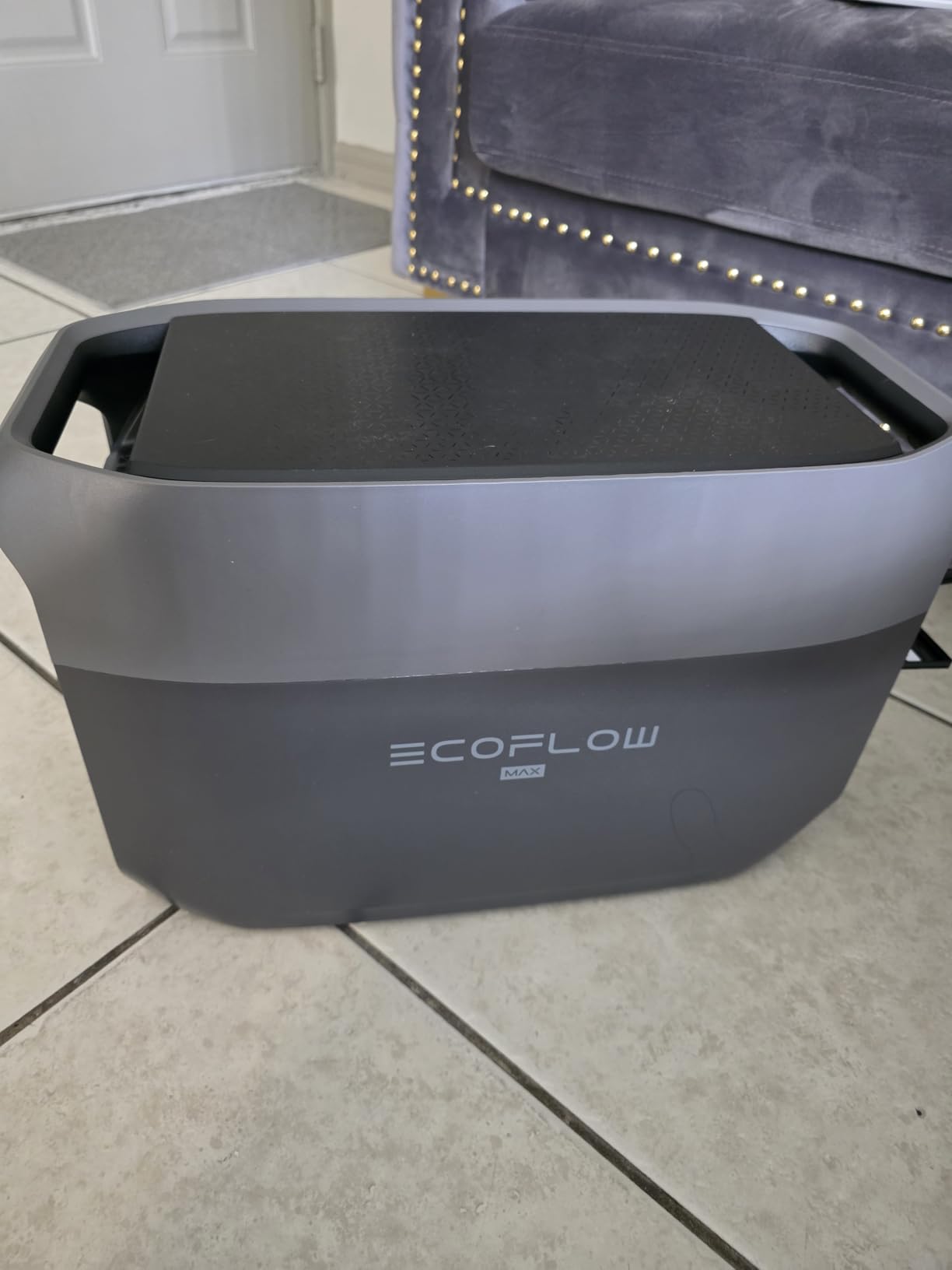
If you are deciding between this and carrying two smaller 1kWh units, the single-box option wins on convenience and on total ports. The two-unit approach wins on crash safety, because a failure takes out half your capacity rather than all of it. Our redundancy thinking favours two smaller boxes, and this is the pick for people who disagree.
8. OUPES Mega 1 – The Pick for Maximum Output per Unit
OUPES Mega 1 Portable Power Station 1024Wh 2000W (4500W Surge)
1024Wh
2000W pure sine wave
4500W surge
expands to 5120Wh
36 min 0-80%
+ Pros
- 0-80% recharge in 36 minutes on AC
- 2000W continuous from a 1kWh battery
- Expands to 5120Wh with two extra batteries
- Under 20 ms UPS transfer
– Cons
- 4500W surge is optimistic and some examples trip near 2100W
- Fans run loudly under high draw
- App Wi-Fi is unreliable though Bluetooth works
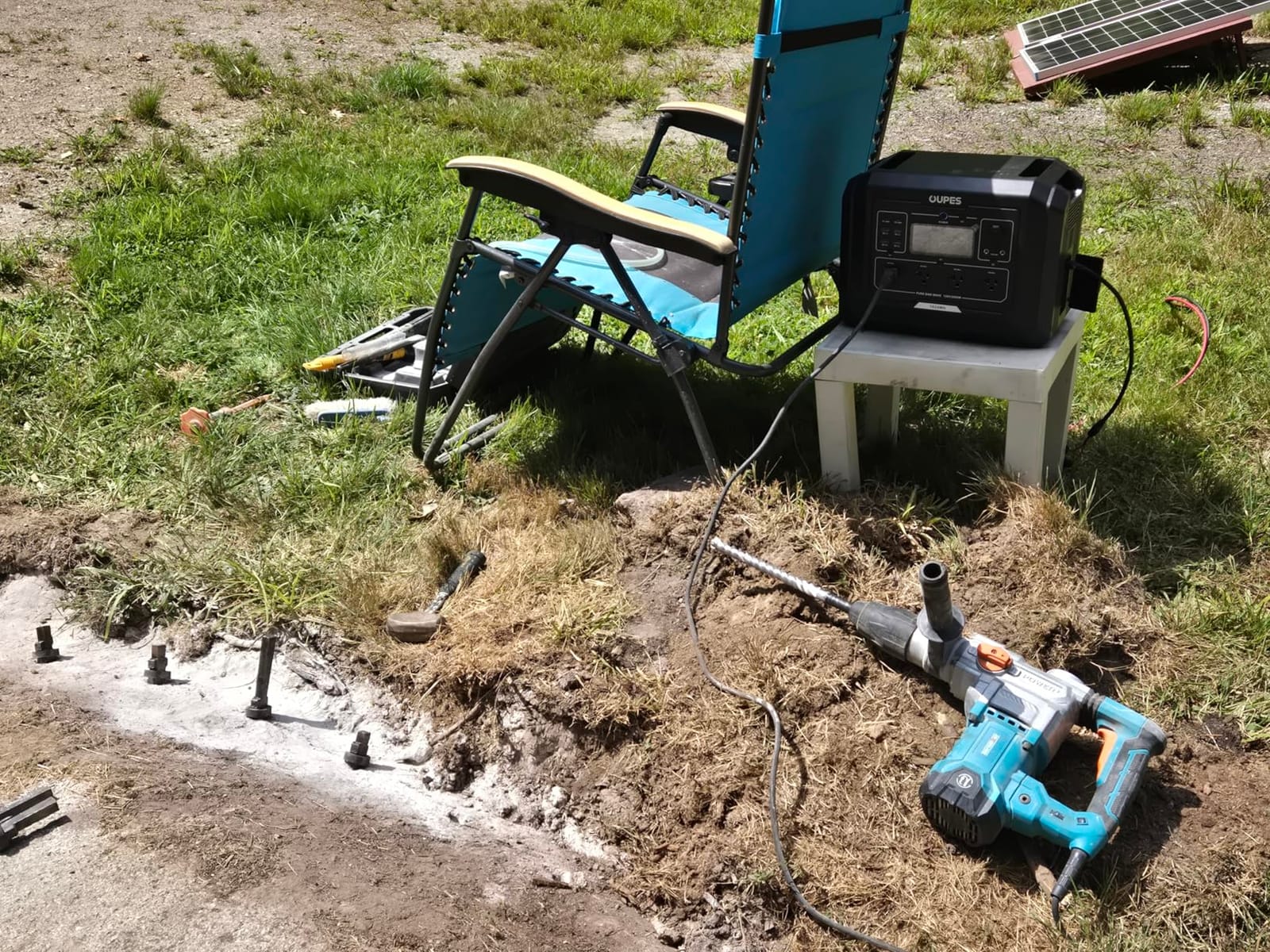
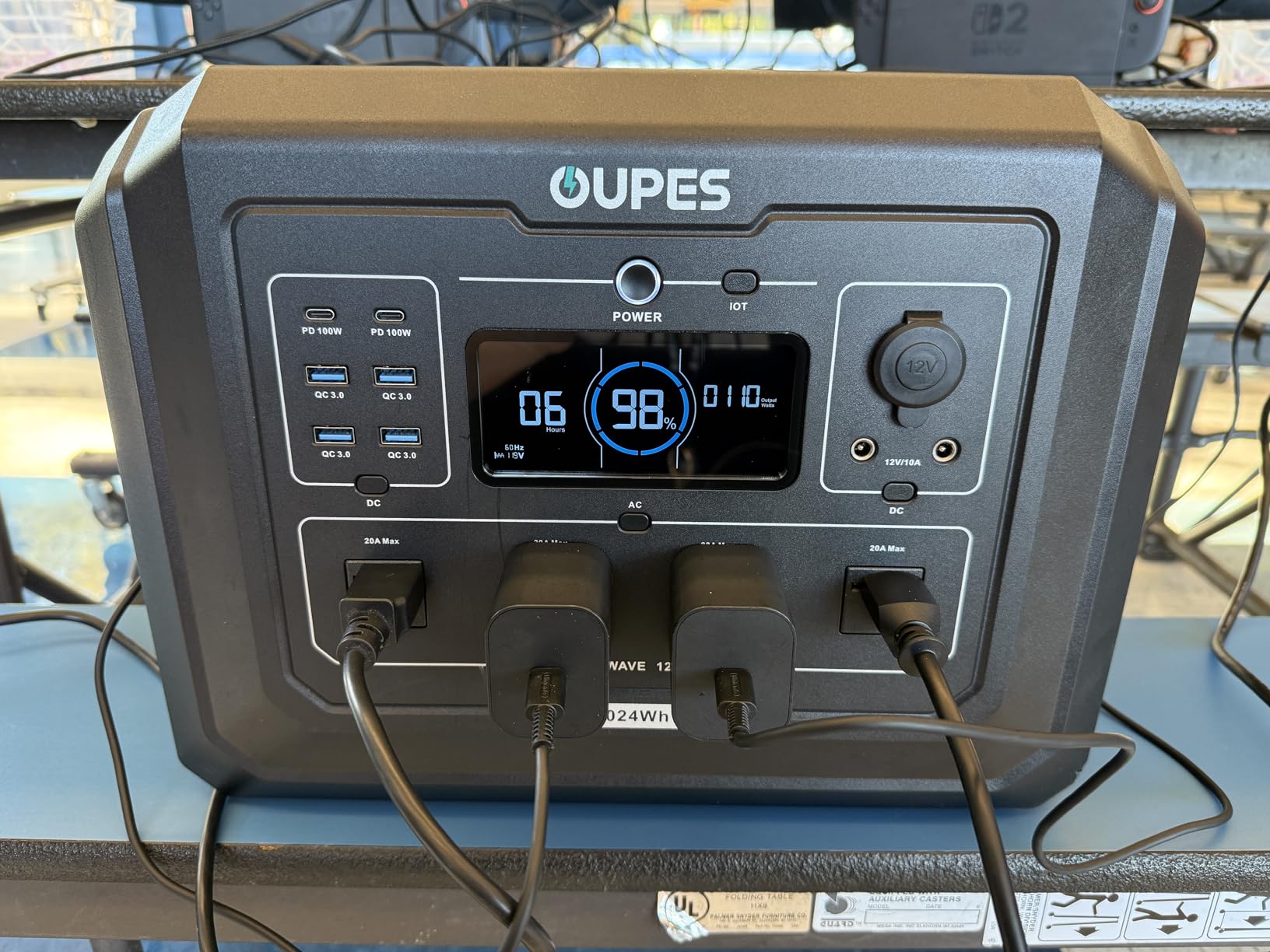
The Mega 1 exists because 2000W continuous output from a 1kWh battery is unusual, and that combination appeals to anyone running tools, a microwave or a portable heater alongside the usual van load.
Expansion to 5120Wh with two extra batteries means it can grow into a full-time build later, and the quoted 0-80% AC recharge in 36 minutes is the shortest wall-charge figure among the 1kWh options here.
The Surge Number Is Generous
The advertised 4500W surge is the marketing headline and it is not what the hardware delivers. Some examples trip out somewhere around 2050 to 2200W. Size your loads on the 2000W continuous figure and treat the surge claim as a rounding error.
Pure sine wave output is a genuine plus for sensitive electronics, and the port selection is generous: two 100W USB-C ports, four USB-A ports, 12V DC outputs and four AC outlets.
Noise, App and Support Trade-offs
Cooling fans run continuously during charging and get loud under high draw. If the unit sleeps a foot from your head, test the noise level in your own build first.
Wi-Fi pairing in the app is unreliable, though Bluetooth works consistently. Support is praised often in the reviews, which matters more for a lesser-known brand than for an established one. It carries a 5 year warranty and 3500+ cycle cells, both competitive for the class.
Buyer sentiment on lesser-known brands generally splits between strong support and thinner long-term reliability data. My advice is the same as for any value brand in this category: register the unit, keep the invoice, and check the warranty terms before you depend on it for a winter.
9. BLUETTI Elite 100 V2 – The Pick for a 17 Litre Footprint
BLUETTI Elite 100 V2 Portable Power Station for Camping 1024Wh 1800W
1024Wh
1800W continuous
2700W lifting
11 ports
25 lb
17 litre
+ Pros
- 45 minute 0-80% AC recharge with TurboBoost
- 25 lb and 17 litres for a 1kWh pack
- 11 ports including 100W USB-C outputs
- 10 ms UPS with 30 dB silent mode
– Cons
- DC5521 barrel ports can short if a connector bridges both pins
- 12V car port runs warm above about 12W
- Display may not register very low AC draws
Small builds live or die by litres. The Elite 100 V2 delivers a full kilowatt-hour in a 17 litre, 25 pound package, which is 35 percent smaller and 30 percent lighter than the previous generation, and that is what makes it fit where a 37 pound alternative will not.
Eleven ports including 100W USB-C outputs mean the laptop, the fridge and the phone all charge without a single dongle, and the 10 ms UPS keeps sensitive gear alive through a switch.
Charging and App Control
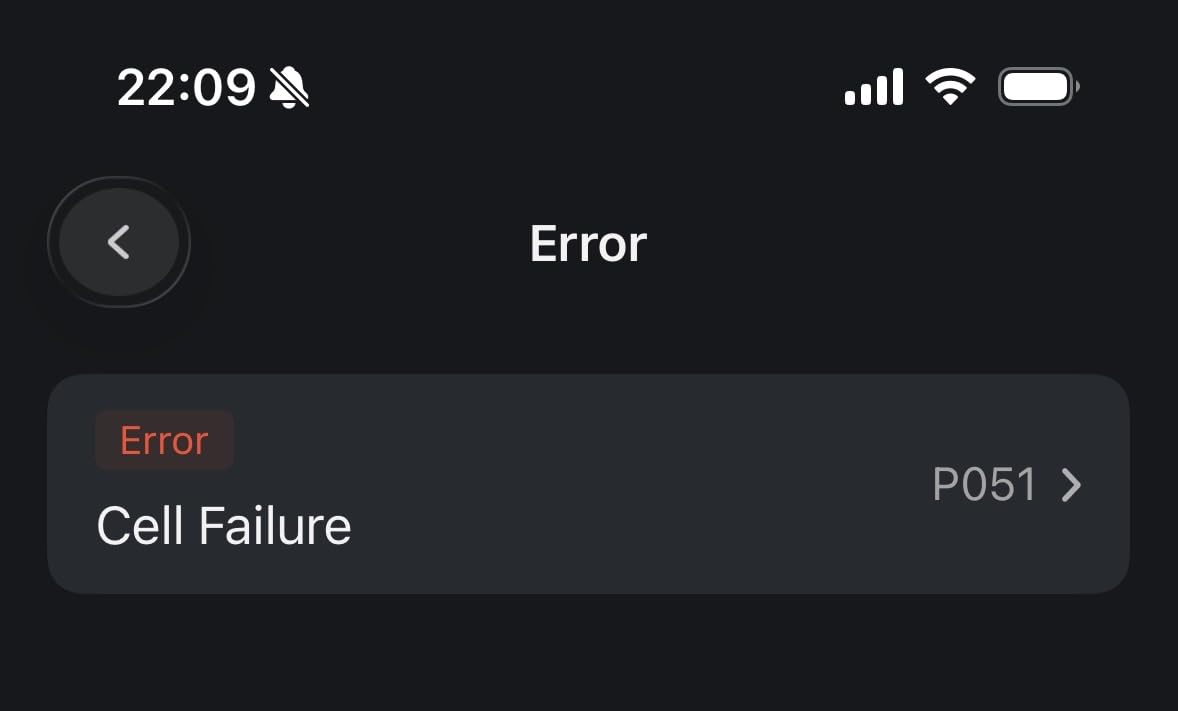
TurboBoost charging at 1200W takes the unit from 0 to 80 percent in about 45 minutes, and the BLUETTI app connects over both Wi-Fi and Bluetooth. The documented 30 dB silent mode sits alongside the Jackery Explorer 500 v2 at 28 dB, and both are quiet enough to sit near a sleeping area.
Capacity is 1024Wh with 4000+ cycles to 80 percent, so the longevity story matches the larger BLUETTI units in the guide.
Small Connectors Need Care
The DC5521 barrel ports are the weak point. Owners report they are easy to short if a connector bridges both pins, so keep dust covers on and do not leave tools resting against them in a moving van.
The 12V car port runs warm above roughly 12W, and the display may not register very low AC draws accurately. Neither is a dealbreaker, but both are reasons to check the readout against a known load the first time you set up.

Owners also mention occasional fan error messages on the first solar connection, which clear on a restart. If you see it, power cycle before assuming the unit is faulty. In a van build, this is the one I would choose when cabinet volume is the binding constraint.
10. Jackery Explorer 300 – The Pick When You Only Charge Small Devices
Jackery Explorer 300 Portable Power Station,292Wh
292Wh
300W continuous
600W peak surge
100W USB-C PD
7.1 lb
+ Pros
- 7.1 lb and a compact shell for a 292Wh pack
- 4000+ cycle LFP chemistry
- 100W USB-C PD charges a laptop directly
– Cons
- 292Wh is too small for a fridge overnight
- Only two AC outlets
Not everyone running van life needs kilowatt-hours. If your electrical system already has a house battery and fridge, and the gap you need to fill is phones, tablets, cameras and a laptop, 292Wh is genuinely enough.
At 7.1 pounds with an integrated handle it is light enough for one person to reposition whenever the load changes, and the 100W USB-C PD port charges a USB-C laptop directly with no inverter involved.
Where the Math Stops Working
A 45W 12V fridge running around half the time draws roughly 540Wh a day. With inverter losses on a unit this small, 292Wh will not carry it overnight. It is a gap filler, not a power source.
The 300W continuous and 600W peak output is likewise modest. A coffee maker, a microwave or a hair dryer will trip it, and one user reported the unit refusing a compressor-start load despite an adequate rated draw.
Build Quality and Chemistry
The LFP cells are rated for over 4000 cycles, which is unusual in a unit this small and cheap. Owners consistently mention the pure sine wave output as a reason sensitive electronics behave normally.
Solar charging reaches 80 percent in about 2.8 hours with a 100W panel, so a small folding panel keeps it topped up on the road. Its two year manufacturer warranty is among the shortest here, which is the main reason it sits near the bottom of the list despite 11k+ reviews at a 4.6 average.
If you are still deciding whether you need a small or large unit, our breakdown of camping power station options maps the smaller tiers in more detail. This one earns its place for portability, not for independence.
11. EBL 2400W – The Pick for Home Backup With a 2kWh Battery
EBL 2400W Portable Power Station LiFePO4 Battery for Home Use
1843.2Wh
2400W continuous
12 ports
0.1 second backup
54 lb
+ Pros
- 1843.2Wh capacity with 2400W output
- 12 ports including a wireless charging panel
- 0.1 second emergency power mode
- 3500+ cycle cells
– Cons
- Heavy at 54 lb for a 1843Wh capacity
- Lowest average rating here at 4.3
- Only 2 year manufacturer warranty
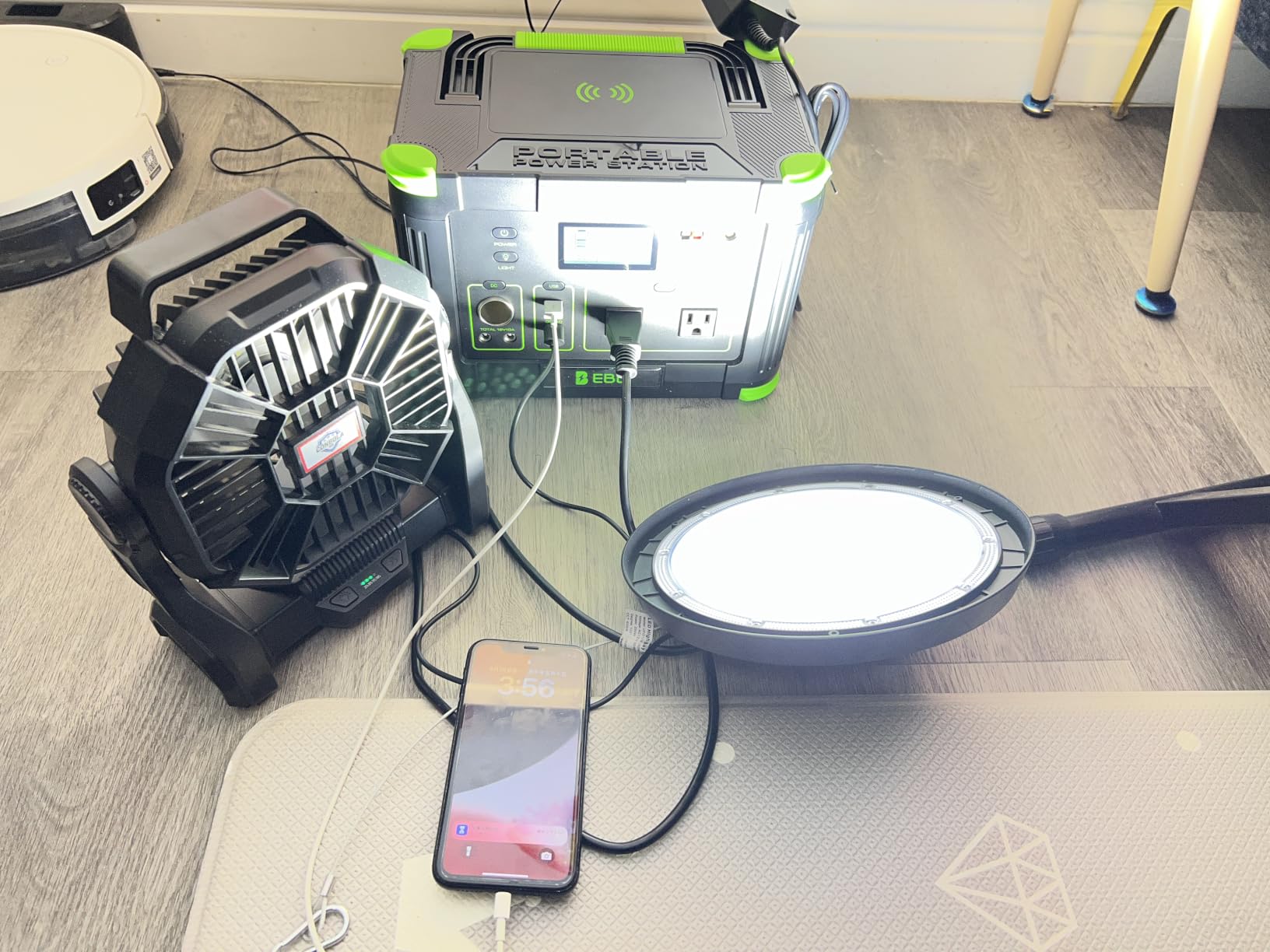
This one earns its place for a specific scenario: a van that doubles as a base for storm outages, or a build where you want nearly two kilowatt-hours without a second battery. At 1843.2Wh and 2400W it covers a fridge-freezer, lights and a router for a long evening.
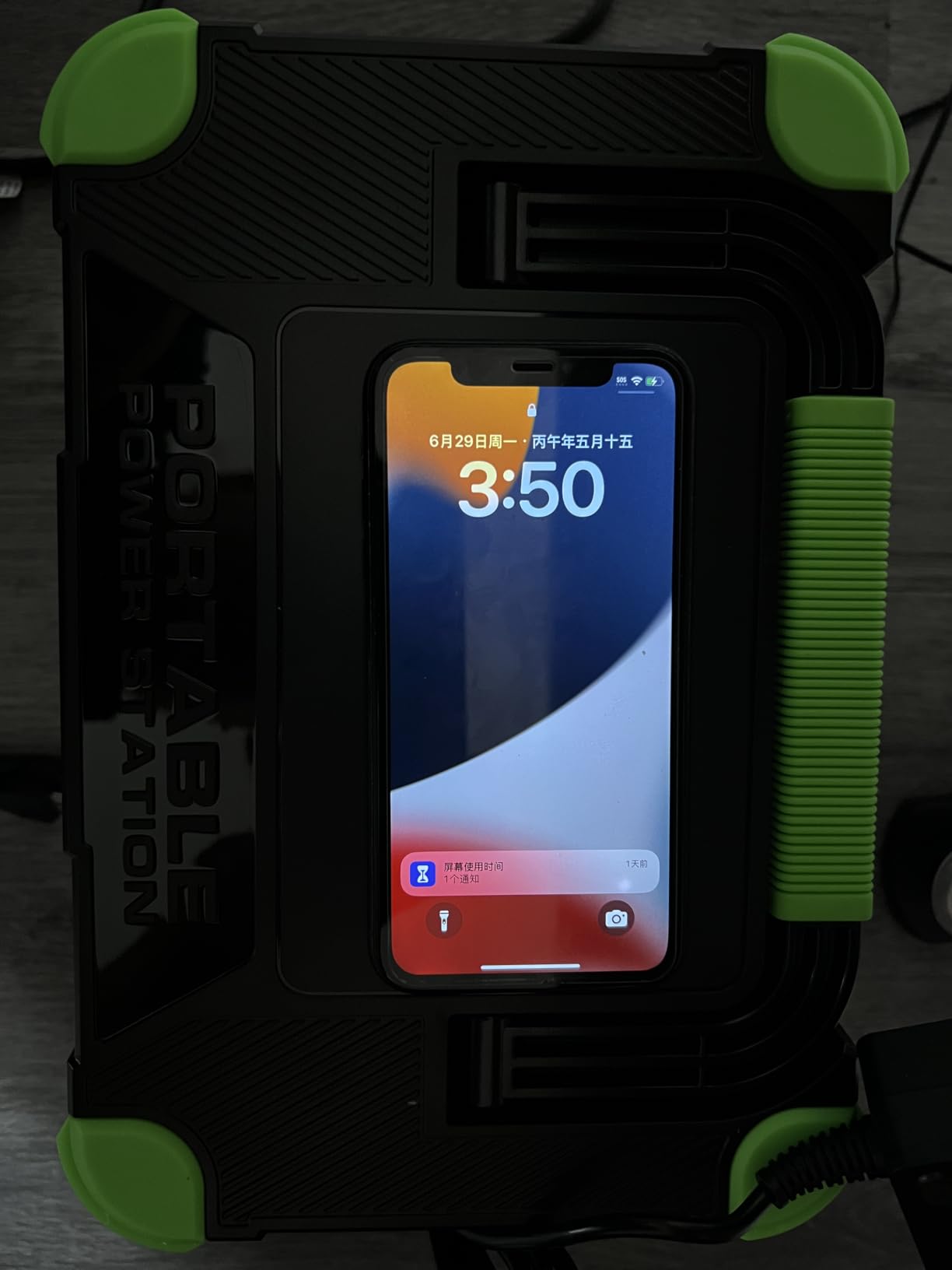
Twelve output ports include four AC outlets, fast USB-C, a car port, two DC outputs and a wireless charging panel, which is unusual in this category.
Backup Speed and Build
Emergency power mode switches to backup in 0.1 seconds, which is slower than the 10 ms units elsewhere in this guide but fast enough to protect a computer from a sudden shutdown. The shock-resistant, flame-retardant casing is a sensible touch for a moving vehicle.
A four-mode LED light and a clear remaining-battery display both help during an outage, and dual-side handles make the 54 pound carry more manageable than a single-handle design.
Where the Confidence Is Lower
At 4.3 average across 339 reviews, this is the lowest rated unit in the comparison, with a notably higher share of one-star feedback than the other brands. The two year manufacturer warranty is also among the shortest here, against five years on most competitors.
My guidance for this pick: verify capacity and output on day one, register the unit, and keep the invoice. It is capable hardware with a thinner support margin than the rest of this list.
If home backup is your priority rather than van life, our portable power stations for emergency use guide covers that use case in more depth.
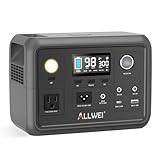
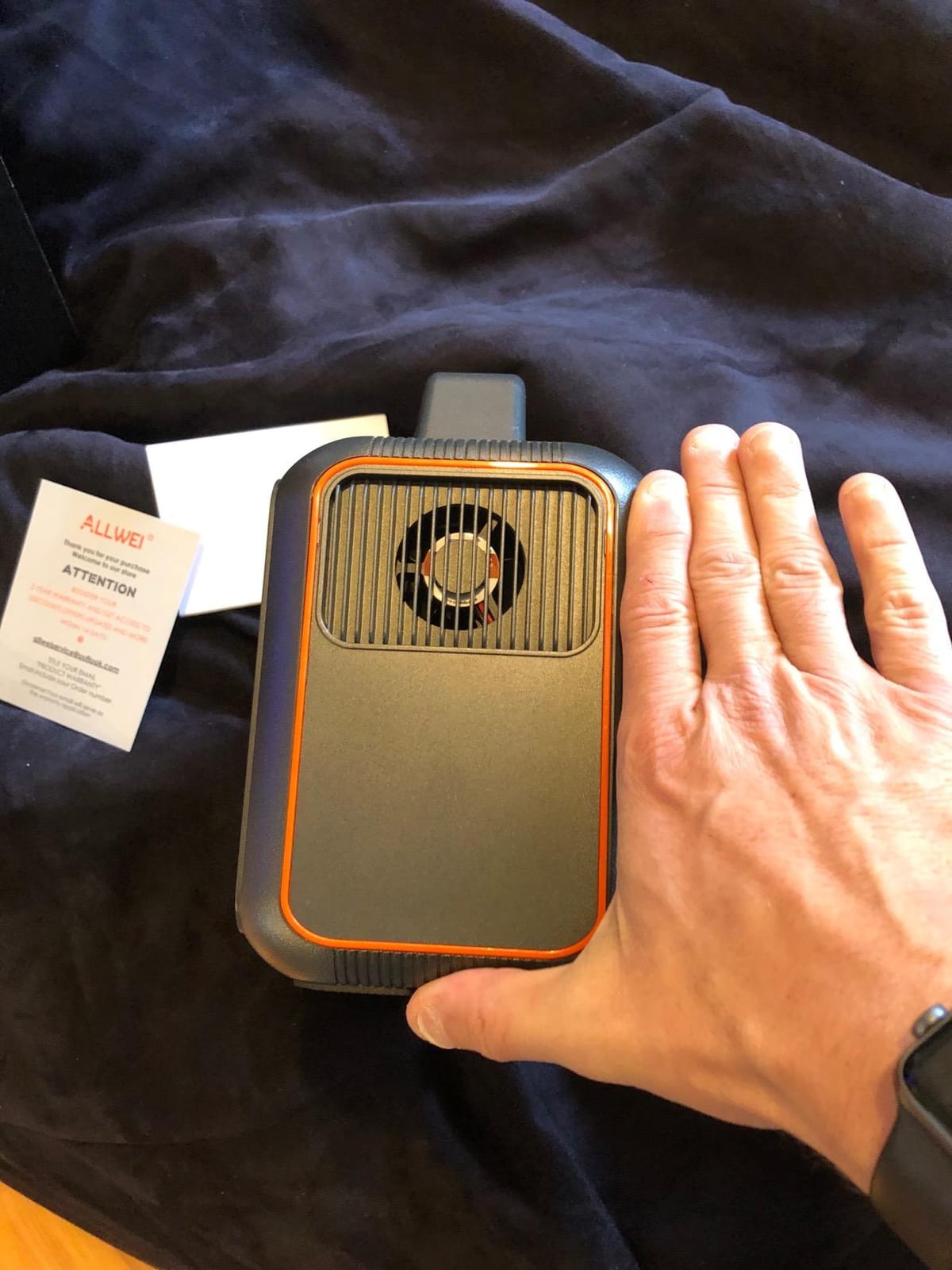
12. ALLWEI 300W – The Budget Pick for a Light Kit
ALLWEI Portable Power Station 300W, 256Wh Solar Generator LiFePO4 Battery
256Wh
300W continuous
600W peak
60W USB-C PD
6.4 lb
3000 cycles
+ Pros
- 6.4 lb and a compact shell at 256Wh
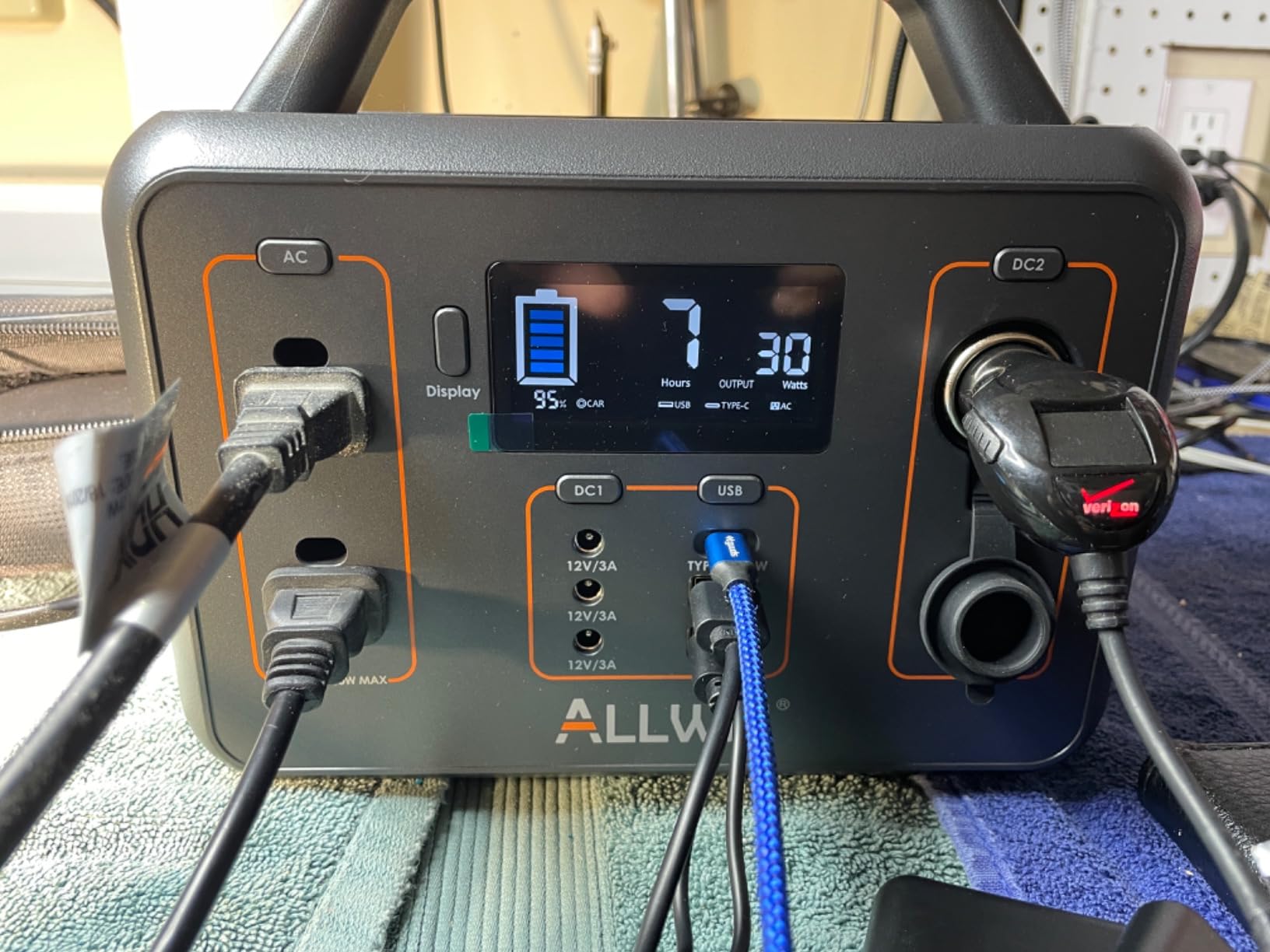
- Runtime and percentage shown on the display
- USB outputs handle high draw devices
- 3-level LED light with SOS mode
– Cons
- Solar input capped at 120W
- Some examples lose the ability to hold charge after months
- No 24V output for RV users
If the budget for this build is small, the ALLWEI does the basic job well. It powers a phone, a tablet, a small CPAP overnight and a couple of LED lights, and at 6.4 pounds it costs you nothing in payload or cabinet space.
The 60W USB-C PD port and 18W USB-A fast charge are the practical highlights, and the display shows estimated runtime alongside the exact remaining percentage.
Recharging on the Road
AC wall and car charging both take 3.5 to 4 hours, and solar takes 4 to 5 hours with a 100W panel. Dual charging with the built-in MPPT fills the unit in 2 to 2.5 hours.
Solar input is capped at 120W, so a 200W panel cannot be used. That limit is fine for topping up a light kit and frustrating for anyone planning to grow into bigger loads.
The Longevity Question
Cells are rated for 3000 charge-discharge cycles with a six-layer BMS protection system and pass-through charging, which are respectable numbers. The recurring negative theme in reviews is a minority of units that lose the ability to hold charge after several months or about a year.
Overload protection shuts down cleanly above 300W, and the built-in three-level LED light with SOS mode is a genuinely useful inclusion at this end of the market. For a first weekend kit it is honest value. For a winter you depend on, it is not the choice I would make.
Before buying any budget unit, it is worth reading our piece on whether portable power stations are worth it so you know which tier fits your trip length. If you are still unsure, the camping power station comparison covers more of the entry tier in depth.
How to Size a Portable Power Station for Your Van
Sizing comes down to one number: how many watt-hours your build burns in a day. Everything else follows from that, so do this calculation before you look at a single product page.
Build a Real Daily Watt-Hour Budget
List every device you intend to run and estimate hours per day. A compressor fridge drawing about 45W might run half the day, so budget roughly 540Wh. A Starlink terminal pulling 50 to 75W while you are online for five hours adds 250 to 375Wh. A CPAP at 40 to 60W across eight hours adds 320 to 480Wh. Interior and exterior LED lighting at 30W for five hours adds 150Wh. A diesel heater drawing about 150W running for two hours adds 300Wh, and a coffee maker at 700 to 1000W for four minutes adds roughly 50Wh. A laptop charging at 65W for four hours adds 260Wh.
Add those up and you will usually land somewhere between 1300 and 2500Wh for a realistic full-time build, and between 400 and 900Wh for weekend trips. Then divide by the solar you can actually collect. A 400W panel on a clear day yields maybe 1600 to 2000Wh after conversion losses, so daily generation usually has to be well above daily consumption if you want to stay above half charge.
LiFePO4 Is the Only Chemistry Worth Buying Now
Every unit in this guide is built around lithium iron phosphate cells. The difference against the older NMC lithium-ion chemistry matters more than any other single spec. The LFP units here are rated between 3000 and 6000 cycles, which at one discharge a day is roughly eight to sixteen years. NMC lithium-ion packs typically manage a few hundred to around 500 cycles before dropping well below rated capacity.
The number to understand is cycle life, which is a full discharge followed by a full charge. Calendar ageing still happens, and cold weather reduces what you can draw on a cold morning, but LFP is the difference between a ten-year appliance and a three-year one.
Continuous Output Matters More Than Surge
Surge rating is the short burst an appliance needs to start. Continuous rating is what it needs to keep running. Size on continuous, and treat surge as headroom for motors and compressors. A 1500W continuous unit handles a portable AC that draws 1200W once it settles, because 3000W surge covers the startup spike.
Also check inverter quality. Pure sine wave output is what you want for medical devices, audio gear and anything with an electric motor. Several units in this guide deliver it and some do not specify it clearly, so check the spec page rather than assuming.
The 10A Versus 30A DC Question Decides Heater Compatibility
This is the single most useful distinction in the whole category, and most roundups skip it. A standard 12V car socket on a portable power station is typically rated at 10A, or about 120W. A 2kW diesel heater running on 12V draws far more than that. Running a heater off a 10A socket either trips immediately or forces you through an AC inverter, which wastes energy and adds a conversion step you do not need.
The BLUETTI AC200PL is the only unit in this guide with that port, and it is a large part of why full-time builders gravitate to it. If your build includes a diesel heater, a water pump or a large 12V draw, treat DC output as a hard requirement rather than a preference.
Solar Input Sets Your Ceiling
Solar input wattage determines how fast roof panels can refill the battery, and it is frequently the number buyers ignore. A unit with 500W input takes well over twice as long to refill from panels as one accepting 1200W, even with identical panel arrays.
Match the input to the array you can realistically mount. Our guide to the best solar panels for power stations covers the panel side, and the rule of thumb is that roof space and drag on your van, not panel quality, set the real limit.
Alternator Charging Is the Part Most Guides Skip
Solar only works when the sky is clear. Driving hours every day, and a DC-DC charger between your alternator and the power station converts that wasted engine energy into charging. For full-time van life this is often the difference between a comfortable week and a week spent watching the state of charge.
Look for a unit that accepts DC input cleanly, since a direct alternator connection without regulation will overcharge the battery. Check the manufacturer for the supported charger wattage, and confirm whether your unit needs a specific adapter. Do not improvise this connection.
Weight, Mounting and Crash Safety
Anything above 40 pounds needs a real mounting plan, not a shelf. Secure the unit to structural members with straps, keep it low in the vehicle, and make sure it cannot slide into the passenger area in a hard stop. This is the safety topic no competitor in this space covers properly, and it is worth more thought than the wattage difference between two units.
Also consider the 28 to 40 dB operating noise. Fans that are invisible in a spec sheet are audible at 3am. Units with a documented silent mode, like the Jackery Explorer 500 v2 and the BLUETTI Elite 100 V2, are the ones I would place near a sleeping area.
Who Should Not Buy One
If your van already has a properly installed house battery, inverter, MPPT controller and fuse panel, a portable power station is duplication rather than a solution. If you only need phone charging on a weekend, a large power bank does the job at a fraction of the weight. And if you expect to run a 2kW heater continuously through a northern winter, no single unit in this guide covers that. You need a combustion heater, not more battery.
Buying a portable power station instead of building a proper system does make sense for beginners, because it removes wiring errors and fire risk from the equation. The trade is flexibility and serviceability for raw capacity per dollar.
Frequently Asked Questions: Portable Power Stations for Van Life
What is the best portable power station for van life?
For most working van builds the Jackery Explorer 1000 v2 is the best fit, pairing 1070Wh with 1500W of continuous AC output at 23.8 pounds. Full-time van lifers who need multi-day storage should step up to a 2kWh-plus unit such as the BLUETTI AC200PL, which also adds a 30A TT-30 port for diesel heaters and water pumps.
What size power station do I need for a van?
Weekend trips usually need 500 to 1000Wh. Full-time builds generally need 2000 to 3000Wh or more, calculated by adding each appliance’s wattage multiplied by daily hours of use. A 45W compressor fridge, a Starlink terminal running five hours and an eight-hour night of CPAP already total close to 1200Wh per day.
Can a portable power station run a diesel heater?
Only if it has regulated DC output rated 30A or higher, or a 30A TT-30 RV port. A standard 12V car socket on most portable power stations is rated 10A, which is far below what a 2kW heater running on 12V draws. Without that DC output, the heater will trip the socket or force you through an inefficient inverter path.
How long does a portable power station last?
LiFePO4 units in this category are rated between 3000 and 6000 charge cycles, which works out to roughly 8 to 16 years at one discharge a day. Older NMC lithium-ion packs typically manage a few hundred cycles before losing a large share of rated capacity. Cold temperatures and long storage reduce what you can actually draw on a given day.
Is Jackery or Anker better for van life?
Jackery models here carry larger review bases and lighter weights, with the Explorer 1000 v2 at 23.8 pounds. Anker SOLIX C1000 Gen 2 offers 2000W continuous output, under 10 ms UPS switchover for medical gear and an unlocked 600W solar input, but the Gen 2 cannot be expanded with extra batteries.
Which Portable Power Station Fits Your Build
If you want one answer for a working van in 2026, take the Jackery Explorer 1000 v2 and stop deliberating. If you are living in the van full time, the BLUETTI AC200PL buys you the storage and the 30A DC output that separates a comfortable winter from a marginal one. If your problem is juggling several devices at once, the EcoFlow Delta 3 gives you 13 ports and a 56 minute top-up.
For medical gear and a fridge running every night, the Anker SOLIX C1000 Gen 2 has the UPS behaviour and the 2000W output. For tools and workshops, the BLUETTI AC180 is the power pick. For weekends only, the Jackery Explorer 500 v2 covers the list without weighing down your build. For a small device kit and little else, the Jackery Explorer 300 at 7.1 pounds does the job.
Whichever one you choose, work out your daily watt-hour budget first, confirm your DC output matches your heaviest 12V draw, and strap it down properly. That last step takes ten minutes and matters more than any specification in this guide.
Leave a Reply