
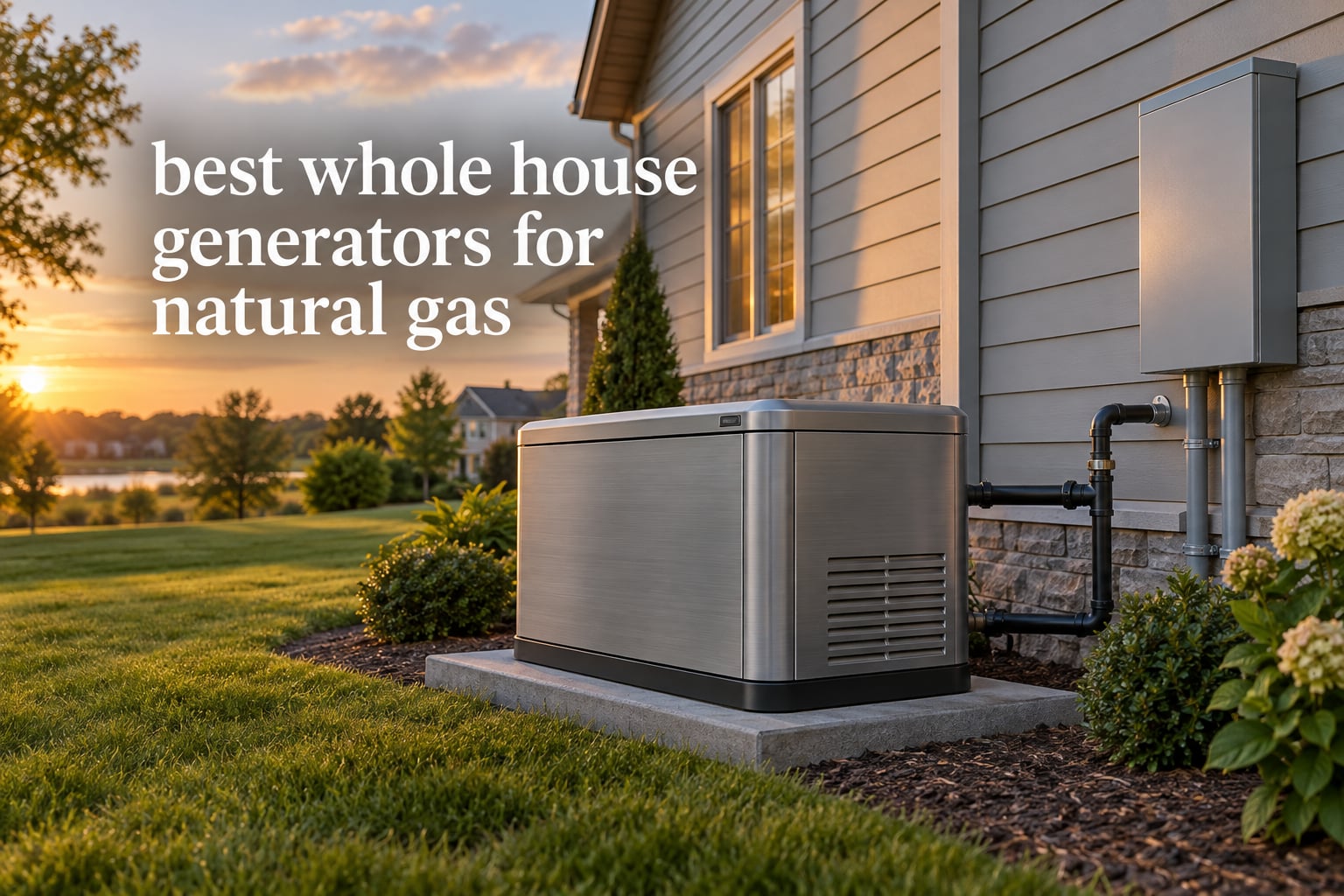
If you want the short answer: the Generac Guardian 26kW (model 7291) is the best whole house generator for natural gas in 2026 for most gas-heated homes, because it ships with a 200 Amp transfer switch and 26,000 watts of output. But size comes before brand. Work out your running load, add 20% headroom, and only then pick a model.
That ordering matters more than any badge. Homeowners routinely get quoted 20kW machines for homes that needed 14kW, and then they pay twice: once for capacity they will never use, and again later when a lightly loaded engine never reaches operating temperature. Dealers push oversize because oversize is easier to justify than a load calculation.
We spent the last several weeks reading spec sheets, warranty terms and owner reviews across six of the most capable natural gas standby systems you can buy right now, then cross-checked them against what people actually say on r/Generator, r/Homebuilding and Bogleheads once their units were installed. The goal was not a spec-sheet roundup. It was a list that tells you which machine suits which house, and which one to skip.
One thing every owner learns eventually: a natural gas generator is fed by the same utility line that serves your furnace and water heater. If gas service is shut off during an emergency, the generator has nothing to burn. That is not a flaw in any one model, it is a property of the fuel. We address it directly further down, along with what to do about it.
Before you read the picks, it is worth linking two pieces of background. Our broader whole house standby generator guide covers the equipment categories in more depth, and our propane vs gas generator comparison breaks down the fuel decision in detail if you are still weighing it.
Our Top 3 Best Whole House Generator for Natural Gas Picks (October 2026)
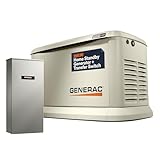
Generac Guardian 26kW
- 26kW True Power output
- 200 Amp transfer switch included
- Mobile Link Wi-Fi monitoring

Kohler 20RESCL
- 20000W air-cooled standby
- Load-shedding 200 Amp transfer switch
- Seaside-rated enclosure

Champion 100177
- 8.5kW natural gas capacity
- 50 Amp 10-circuit transfer switch
- 10 year limited warranty
Comparing the Best Natural Gas Standby Generators in 2026
Every machine below runs on natural gas and, where the manufacturer allows it, on liquid propane as well. Note that the wattage figures on the spec sheet change with fuel: a machine rated 26000 watts on propane typically delivers less on natural gas. Buy and size on the natural gas number, not the higher marketing figure.
| Product | Details | Action |
|---|---|---|
|
|
Check Latest Price |
|
|
Check Latest Price |
|
|
Check Latest Price |
 |
|
Check Latest Price |
 |
|
Check Latest Price |
 |
|
Check Latest Price |
1. Generac Guardian 26kW – Best Overall Natural Gas Standby Generator
Generac Guardian 26kW Home Generator, Transfer Switch & WiFi Monitoring
26kW air-cooled standby engine
200 Amp transfer switch included
518 pounds, 48.5 by 25.1 by 28.6 inch enclosure
5 year limited warranty
+ Pros
- Genuine 26000 watts of clean power under 5 percent harmonic distortion
- 200 Amp transfer switch bundled for whole-home coverage
- Mobile Link Wi-Fi status and maintenance alerts
- G-Force engine assembled in the USA
- Low-maintenance design rated to run quieter and use less fuel
– Cons
- Heaviest package here at 518 pounds
- Installation requires a licensed electrician which adds real cost
- Wi-Fi monitoring is tied to the Generac Mobile Link platform
Model 7291 is the one we keep coming back to because it removes the two arguments that derail most standby purchases. First, the 200 Amp transfer switch is in the box, so you are not budgeting for a second line item that appears after signing. Second, 26,000 watts gives you genuine headroom for a central air system, a gas furnace with a blower, a water heater and the usual household loads without living at the ceiling.
That headroom is what separates it from the 22kW and 18kW machines in this roundup. Owners on r/Generator with 22kW and 24kW systems describe them as hands-off through multi-day outages, but those houses tend to be gas-heated with modest cooling loads. A home running a 3-ton or larger central air compressor on a hot summer week is a different calculation, and this is the model that absorbs it.
Power quality is the other reason it scores well. Generac’s True Power Technology holds harmonic distortion under 5 percent, which matters more than the raw wattage number if you run computers, network gear or medical-adjacent equipment. One owner on bobistheoilguy.com put it plainly: Generac produced the most clean electricity.
This is also the pick with the deepest review base in the group at 58 ratings, which matters when you are committing to a five-figure installed project. The average of 4.2 is respectable rather than perfect, with 69 percent at five stars. The 13 percent one-star share is the highest negative concentration among the four-star-and-above machines here, so it is not flawless.
What the 200 Amp Transfer Switch Actually Solves
A transfer switch is the component that makes standby power automatic, and its amperage is the single biggest driver of installed cost. The 200 Amp switch included here is a service-entrance-rated device: it sits between the utility meter and your main panel, isolates the house from the grid within seconds of a failure, then routes generator power in.
Going to 200 Amp also forces a real conversation about your main panel capacity, because the generator cannot deliver more than the panel and utility service upstream of it can accept. Owners who skip that conversation end up with a generator that trips its own breaker under load.
For comparison, the Champion later in this list ships with a 50 Amp, 10-circuit switch. That is a sub-panel arrangement for essential circuits, not a whole-home installation. Both are legitimate products, but they answer different questions.
Output, Fuel Flexibility and Thermal Reality
The 7291 is dual fuel, running on natural gas or LP gas, with an electronic ignition and a 999 cubic centimeter G-Force engine. Air-cooled design means no radiator, no coolant and no freeze protection to maintain, which is why this class dominates residential standby installations.
The trade is heat. Air-cooled engines reject heat through the enclosure itself, so placement matters more than with a liquid-cooled machine. Keep it off wood chips, out of a corner where exhaust recirculates, and at the clearances the installation manual specifies.
Mobile Link Monitoring in Practice
The Wi-Fi module reports status and maintenance alerts to your phone, which is genuinely useful for a machine that sits silent at the side of the house. It also tells you when the unit exercised and whether it failed to start, which catches problems before your family needs the power.
The limitation is that it is proprietary. If you later move away from the Generac ecosystem, the module loses its function, and the subscription-free tier covers status only. Owners moving to ecobee by Generac thermostats or PWRcell storage are the ones who get the most out of it.
Who Should Skip the 26kW
If your load calculation lands under about 14kW, this machine is oversized and you would be paying for headroom you never draw. Oversized engines run at a fraction of rated output, burn fuel inefficiently and accumulate condensation, which shortens engine life over a 20-year ownership horizon.
It is also the heaviest package here at 518 pounds. That is a professional site-preparation issue rather than a homeowner one, but it means the pad has to be built properly before the delivery truck arrives.
2. Kohler 20RESCL-200SELS – Coastal-Ready Power With Load Shedding
Kohler 20RESCL-200SELS 20, 000W Air-Cooled Standby Generator with 200 Amp Whole-House, Service Entrance Rated, Load Shedding Automatic Transfer Switch
20000W air-cooled standby engine
200 Amp service entrance load-shedding transfer switch
500 pounds, 48 by 26.2 by 29 inch enclosure
5 year or 2000 hour limited warranty
+ Pros
- Power restored within about 10 seconds of an outage
- Load-shedding 200 Amp service-entrance switch manages the whole house intelligently
- Enclosure rated for harsh seaside conditions
- Owners report clean extended runs of 12 hours or more
- Installation instructions owners describe as straightforward
– Cons
- Controller software has no reconnect reset button so OnCue needs a laptop reload
- Monitoring shows only voltage and frequency with no load data
- Some local technicians decline to service retail-channel machines
If you live within a mile of salt water, the Kohler is the one to look at first. The 20RESCL ships in what the manufacturer calls a 100 percent corrosion-proof enclosure, and that rating is the entire reason it earns a place in a roundup that otherwise looks like a Generac listing. Salt air destroys the radiator fins, alternator windings and fasteners inside a standard enclosure in a decade.
Everything else about the machine is aimed at the same buyer. It is a 20,000 watt air-cooled standby unit that starts automatically on utility loss and puts power to the house in about 10 seconds, which is fast enough that most people do not notice the transition.
The 32 ratings here average 4.1, and they skew older, mostly from 2014 through 2018. That is useful context: this is a design that has been in the field long enough to have a real service history rather than a stack of launch-day reviews.
Load Shedding Is the Feature That Matters Most
Load shedding is a form of staged power management. The 200 Amp service-entrance-rated transfer switch included here can prioritise circuits, dropping lower-priority loads when the generator is working near its limit. On a house with a well pump, a sump pump and central air, that means the pump keeps running instead of the compressor tripping the whole system.
None of the other packages in this roundup include a load-shedding switch. If you have a lot of motor loads and limited headroom, that capability is worth more than an extra few kilowatts.
It also carries the same requirement as any 200 Amp switch: your main panel and utility service have to be able to accept it. Confirm that with your electrician before the equipment is ordered, not after.
The Battery and Cold-Weather Question
The Kohler needs a Group 51 battery, which is not included in the sense that matters. Budget for it explicitly, and confirm the cold-cranking rating matches your climate. A battery that is marginal in January is the most common cause of a standby unit that will not start when everything else is ready.
Because the group size is a service item rather than a hidden cost, ask your installer to put the battery on the quote as a line you can see.
Where Owners Report Friction
The recurring complaints are about service, not about the machine itself. Owners describe the monitoring software reporting only voltage and frequency, with no current or load percentage, and the controller lacking a reset button that would otherwise let you reload the OnCue connection without opening a laptop.
Several owners also report engine hunting or unstable idling that required dealer visits, and some local technicians declining to work on units bought through the retail channel. That last point is a serious consideration: check that an authorised Kohler technician serves your address before you commit.
One warranty nuance is worth reading closely. The 5-year, 2000-hour term can start counting from the factory ship date if the unit is not commissioned by an authorised dealer, so make sure commissioning is a written part of your installation contract.
Who This Suits
Coastal homes, houses with a heavy motor-load mix, and anyone whose local dealer network is strongest for Kohler rather than Generac. It is not the pick for a small house, and the 4.1 average with an older review base suggests buying it with eyes open on after-sales support.
3. Champion 100177 – Best Value Standby for Essential Circuits
Champion Power Equipment 100177 8.5-kW Home Standby Generator with 50-Amp Outdoor-Rated Automatic Transfer Switch
8.5kW standby capacity on natural gas or LPG
50 Amp 10-circuit NEMA 3R transfer switch
394.1 pounds, 50 by 30.1 by 40.2 inch enclosure
10 year limited warranty
+ Pros
- A 4.7 average with 93 percent of reviews at five stars
- 10 year limited warranty is the longest term in this group
- Sub Zero Start 24V system rated down to -22 F
- Tandem breaker capability effectively doubles usable circuits on the 50 Amp switch
- Gullwing enclosure makes installation and service straightforward
– Cons
- 8.5kW and a 50 Amp panel limit it to essential circuits rather than whole-home loads
- No connected monitoring so status must be checked at the unit
- Installation still needs a licensed electrician and gas line work
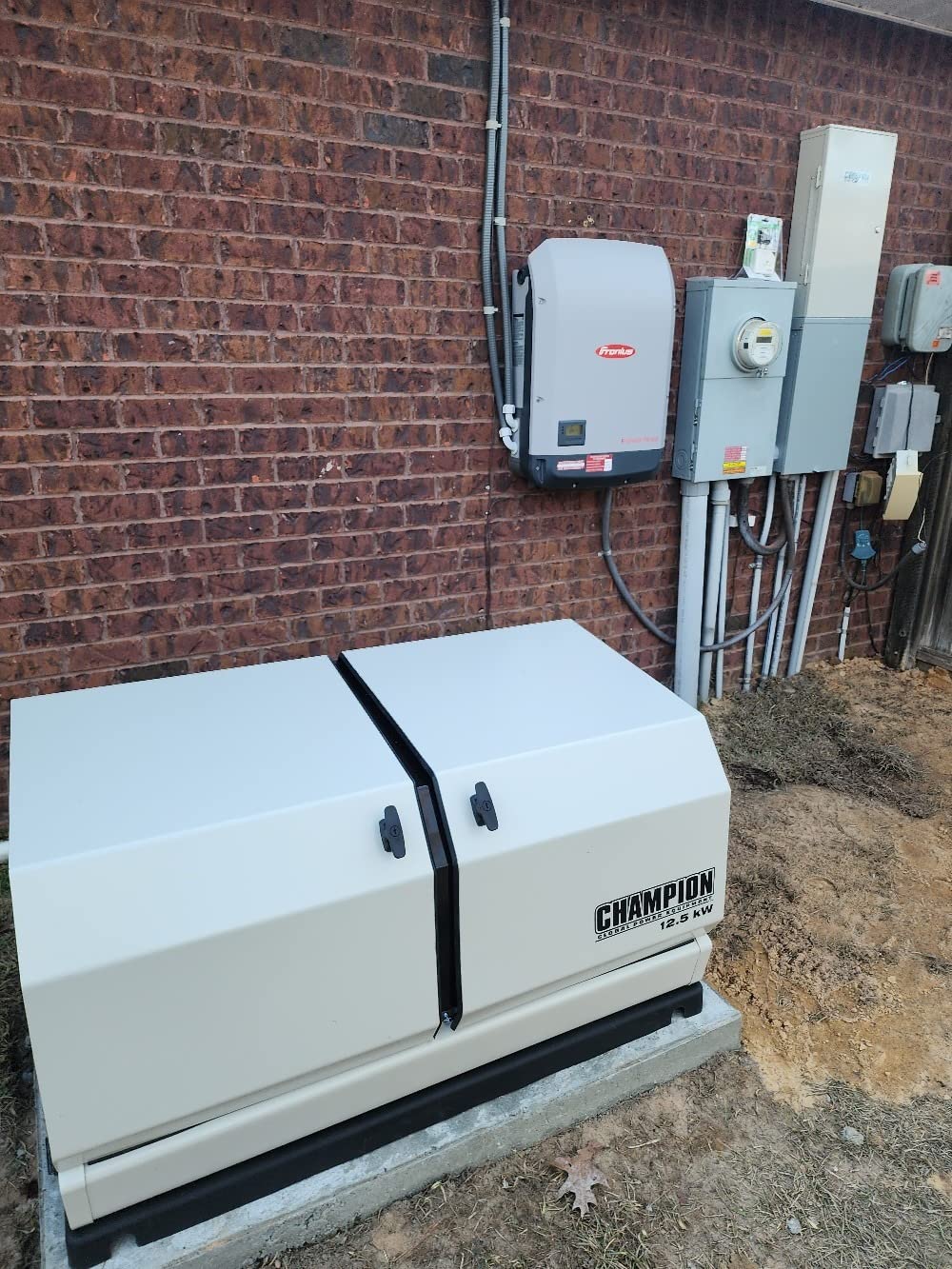
The Champion is the odd one out in this roundup and that is exactly why it is here. It is not a whole-home machine. The 8.5kW capacity and the 50 Amp, 10-circuit outdoor-rated transfer switch make it an essential-circuits standby: refrigerator, freezer, sump pump, well pump, internet and lighting, without touching central air or the water heater.
For a home that mostly wants to keep the freezer running and the sump pump alive through a storm, that is a genuinely complete answer at a fraction of the commitment. It also runs on natural gas or LPG, so it fits the same gas line as a larger machine.
What surprised us was the satisfaction level. The 21 ratings average 4.7, with 93 percent at five stars and no concentration of complaints about the machine. Owners describe clean first firing and no trouble through real outages.
Cold-Climate Starting and the Gullwing Enclosure
Sub Zero Start is a 24V starting system rated to operate down to -22 F, which is a meaningful specification in northern climates where a weak battery is the number-one cause of failed starts. It pairs well with the 10-year warranty as a durability story.
The gullwing enclosure design lifts for installation and service access, and owners consistently single that out. On a machine you will be servicing annually for 20 years, ease of access is a real feature rather than a detail.
Acoustically it uses a low-tone muffler with a sound-dampening liner aimed at residential neighbourhoods. As one r/Generator owner put the general principle, bigger is generally louder and more expensive tends to be quieter, and this machine is at the quiet end of that scale by virtue of its size.
What the 50 Amp Switch Really Covers
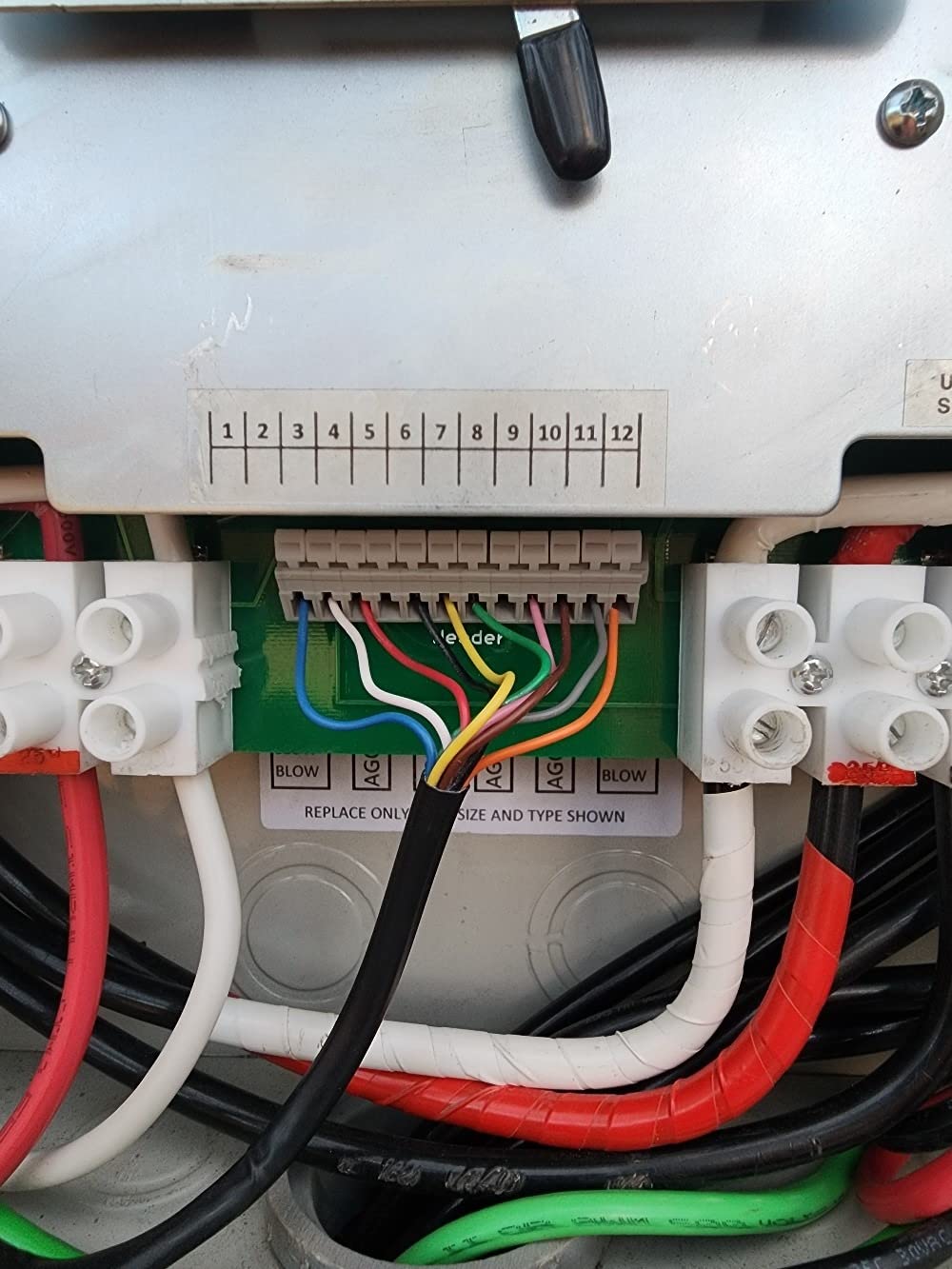
The 10-circuit switch with tandem breaker capability effectively doubles usable circuits, so a typical essential-loads plan fits. The circuit count includes things like refrigeration, one lighting circuit, sump or well pump, and a few outlets, and you still have room to add a circuit or two without replacing the panel.
What it will not do is carry a central air compressor, an electric water heater, or a workshop with a table saw. Those loads push you into a different tier entirely, and no amount of clever panel wiring changes that.
Who Should Look Elsewhere
If your goal is to keep the furnace blower, the water heater and the air conditioning running through a multi-day outage, this is the wrong machine. So is the 50 Amp switch for anyone whose electrical panel cannot host a 10-circuit sub-panel cleanly.
The absence of remote monitoring is also a genuine limitation for anyone away from home during an extended outage. You would be walking out to the unit to look at it.
4. Generac Guardian 22kW – Quietest Self-Test and Clean Power
Generac Guardian 22kW Home Standby Generator, WiFi Monitoring
22kW air-cooled Guardian Series engine
True Power output under 5 percent harmonic distortion
466 pounds, 48 by 25 by 29 inch enclosure
5 year limited warranty
+ Pros
- A 4.7 average with 81 percent five-star and no one-star ratings
- Quiet-Test self-test runs at lower RPM than competing brands
- Owners report units running continuously for days through major outages
- Mobile Link Wi-Fi gives status and maintenance alerts away from home
- Buying direct and arranging your own certified installation can cut cost
– Cons
- Transfer switch is not included and must be sourced separately
- At 466 pounds it still needs professional site preparation and installation
- Wi-Fi monitoring is locked to the Mobile Link platform
The 22kW Guardian is the mainstream answer to this question, and for many gas-heated homes between 1,800 and 2,600 square feet it is the correct one. Twenty-two thousand watts covers a gas furnace, a gas water heater, most kitchen circuits and a central air system up to about three tons, which is the configuration most buyers actually have.
The 19 ratings average 4.7, with 81 percent at five stars and no one-star reviews at all. The strongest signal in that base is longevity: owners describe Generac machines that ran non-stop for days through hurricanes and long grid outages without complaint.
Owners also highlight the financial angle of buying the machine direct and arranging certified installation yourself, rather than accepting a dealer package. That saves money but it transfers the warranty-commissioning responsibility onto you, so check the terms first.
Quiet-Test and Why the Exercise Cycle Matters
A standby generator that never runs is a standby generator that will not start when you need it. That is why the weekly exercise cycle exists, and why its noise level is not a trivial specification. A self-test that wakes the neighbourhood every week trains your neighbours to dislike you.
Quiet-Test runs the self-test at a lower RPM than competing brands, cutting both fuel use and sound during the cycle. For a machine sitting ten metres from a bedroom window, that difference is the difference between a generator you tolerate and one you resent.
Power Quality for Sensitive Electronics
True Power Technology holds total harmonic distortion under 5 percent on this model, matching the 26kW. If your household runs servers, audio equipment, medical-adjacent devices or a home office setup, that figure is worth more to you than the extra kilowatts of a bigger machine.
It is also 240 volts of alternating current at 60 hertz with electronic ignition, a conventional single-phase residential output.
The Transfer Switch Is Not Included
This is the detail to read twice. The 7042 package includes the generator only, so you will be sourcing a compatible automatic transfer switch separately and paying for it during installation. Budget for a 200 Amp service-entrance switch if you want whole-home coverage, and factor in any panel upgrade your electrician identifies.
Buyers who were quoted a transfer switch as a separate line item after signing describe it as a deal-breaker. Get it in writing before you commit, whichever machine you buy.
Who Should Skip the 22kW
Houses above roughly 2,600 square feet with a large central air system, or homes with two air-conditioning zones, will outgrow this capacity. Smaller homes that have already done a proper load calculation will find this more unit than they need.
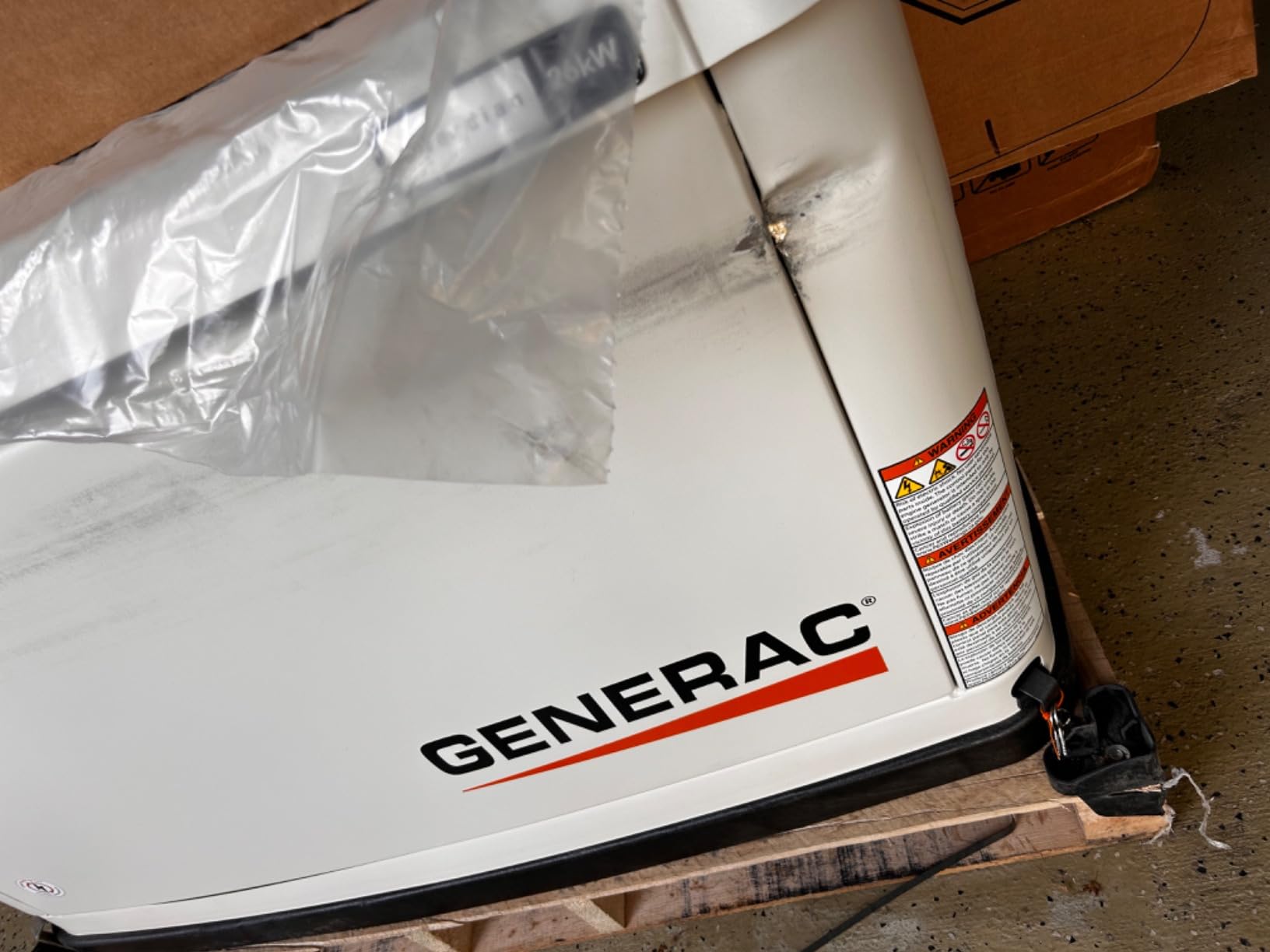
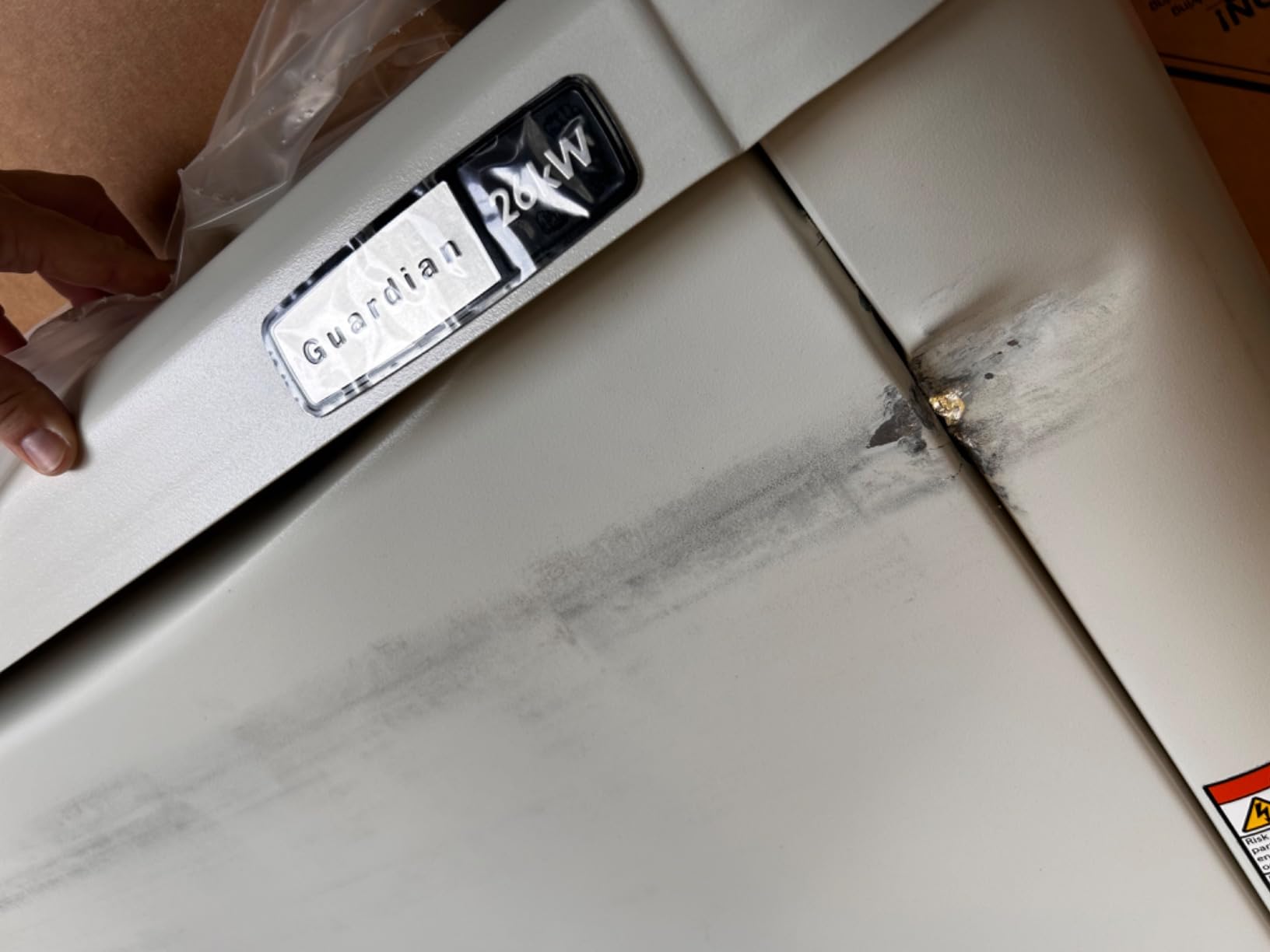
Buyers who want everything in one box should also note the missing switch before choosing, and anyone with a history of shipping damage with this brand should inspect the enclosure carefully on arrival.
5. Generac 18kW – Built for Cold Climates and Remote Homes
Generac 18kW Whole Home Generator, Cellular Capability
18kW standby capacity on natural gas or propane
Cellular monitoring through the Mobile Link app
426 pounds, 46.4 by 26.3 by 30.7 inch enclosure
5 year limited warranty
+ Pros
- Built-in cellular connectivity works where Wi-Fi is unreliable
- Sloped roof and rear intake resist ice and snow intrusion
- Oil level sensors support cold-climate readiness
- Electronic fuel and ignition control aimed at lower running cost
- Lighter and more compact than the 22kW and 26kW Guardian models
– Cons
- Cellular monitoring requires a paid Mobile Link premium subscription
- One owner reported control electronics depend on continuous power and internet
- Very thin review base of only 6 ratings
Eighteen kilowatts sits in the interesting middle of this roundup: enough for a gas furnace, water heater, refrigerator, well pump and a modest cooling load in a medium house, without the running cost of a 22kW or 26kW machine that rarely draws more than half its rating.
What separates the 7259 from the other 18kW-class choices is connectivity. It has built-in cellular monitoring rather than Wi-Fi, which matters enormously for rural homes, metal-roofed houses, long drives and any property where the router is the first thing to lose power. Status and maintenance alerts arrive on your phone over the cellular network instead of the local network.
It is also lighter and more compact than the 22kW and 26kW Guardians at 426 pounds, with a smaller footprint at 46.4 by 26.3 by 30.7 inches. Tight building sites are a real constraint in older neighbourhoods.
Cold-Climate Hardware
The sloped roof and rear intake design is specifically aimed at ice and snow intrusion, which is a genuine failure mode in northern climates. Combined with oil level sensors and improved cold-start tuning, this is the most cold-weather-focused package we reviewed.
Electronic fuel and ignition control optimises fuel use and emissions, positioned by the manufacturer as a lower total cost of ownership than the Guardian Series. The caveat is that this claim comes from the brand rather than from independent measurement, so treat it as a direction of travel rather than a number.
Monitoring and Ecosystem Integration
The Mobile Link app handles monitoring and control, with real-time updates and maintenance alerts. The subscription is worth noting: the cellular monitoring function requires a Mobile Link premium subscription, so the feature is not simply included.
This is the one machine here that ties into the wider Generac home energy ecosystem, working with ecobee by Generac thermostats and PWRcell battery storage. For households already running solar with battery backup, load-shedding behaviour between the generator and the storage system is the reason to look here.
What the Thin Review Base Means
Six ratings at a 4.1 average is not enough to judge long-term reliability, and we would not pretend otherwise. The one-star share of 11 percent is the highest of the group.
That single serious negative review raises a specific design concern about the control electronics depending on continuous mains power and internet, with the starting battery failing if the unit is left off for more than roughly two hours. That is worth asking the dealer about directly, because it cuts against the whole point of a standby system.
Also note the non-bundled configuration excludes the transfer switch and connection parts, so the true installed cost includes those components.
6. Honeywell 18kW – Simplest Install With the Transfer Switch Included
Honeywell 18kW Whole Home Standby Generator
18kW standby capacity on natural gas or propane
Whole-house transfer switch included
483 pounds, 48 by 25 by 29 inch enclosure
3 year limited warranty
+ Pros
- Bundles the whole-house transfer switch as a single purchase
- Composite mounting pad installs on soil with no concrete base
- All-weather aluminum enclosure with enhanced locks
- Multilingual LCD control panel suits non-technical owners
- Dual fuel flexibility for natural gas or propane
– Cons
- Only a single review so there is no field history to judge
- 3 year limited warranty is the shortest term among these machines
- No Wi-Fi or cellular remote monitoring
Installation is where standby generator budgets blow up, and the Honeywell 18kW attacks the two most common cost drivers directly. The whole-house transfer switch is bundled, so you are not buying the central electrical component separately, and the composite mounting pad installs directly on soil with no concrete base required.
That pad matters more than it sounds. Pouring a base is a multi-day process with its own permitting, and it is one of the line items that pushes quotes thousands of dollars apart for the same machine. Removing it shortens the install and removes a source of delay.
Eighteen kilowatts covers a typical gas-heated home on essentials plus a modest cooling load, on either natural gas or propane. The multilingual LCD control panel gives real-time status without an app, which some owners genuinely prefer over a subscription-based monitoring service.
Honeywell and Generac Are Not Separate Choices Here
Worth clarifying because it confuses buyers constantly: the listing identifies the manufacturer as Generac, and Honeywell is the brand badge. As one Bogleheads poster noted, Generac also makes Honeywell, which is a repeated and under-covered angle in online advice.
So when you are choosing between Honeywell and Generac, you are often choosing between a packaged Generac product and a bare Generac machine, not between two competing manufacturers. Judge the engine and the warranty terms, not the badge.
The Warranty Gap
The 3-year limited warranty is the shortest term among the machines in this roundup, against 5 years on the Generac units, a 5-year or 2000-hour term on the Kohler and 10 years on the Champion. Over a 20-year ownership horizon that difference is meaningful, and it is the main reason this sits sixth rather than higher.
There is also no remote monitoring of any kind, and the single rating in the data means there is effectively no field history. The 5.0 average reflects one review, not a track record.
Who This Suits
Buyers whose installer quote was inflated by a separate transfer switch line or a poured concrete pad, and households comfortable monitoring the machine locally. Anyone planning to hold the system for 20 years should weigh the short warranty carefully before committing.
How to Size a Natural Gas Standby Generator for Your Home
Size first, brand second. Every forum thread we read returned to the same theme: people do not know whether to size for essential circuits or for the whole house, and dealers are happy to resolve that ambiguity in the most expensive direction possible.
Step One: Write Down Every Load You Actually Want
Start with a blank list, not with a wattage target. Walk through your home and name each load you would run during an outage, with its nameplate running watts. Gas furnace with blower, refrigerator, freezer, well pump, sump pump, internet modem and router, televisions, lighting circuits, garage door opener, coffee maker, and a handful of selected outlets.
For the common 2,000 square foot question, a realistic essential-loads list runs somewhere in the 3,000 to 5,000 watt range, while a full whole-home list including central air, water heater and laundry runs well past 12,000. That gap is the entire decision.
Step Two: Add Motor Surge, Then Add Headroom
Compressor motors, pumps and blowers draw a large inrush for the first second or two. A common approach is to add 25 to 50 percent of the largest single motor load, or to apply a multiplier of roughly three to the running watts of each motor-based appliance in turn.
Then add 20 percent headroom to the total and round up to the next available capacity tier. The 20 percent is not padding for the dealer’s benefit. It is your allowance for a house that grows, a new well pump, a heat pump conversion, or a future EV charger on a circuit you did not think about in year one.
Owner experience is consistent on the oversizing question. Multiple buyers on r/Generator ask directly whether their quoted unit is too big, and the answer is usually yes if the calculated load is well below the nameplate. A generator running at a 20 percent load does not reach operating temperature, burns fuel inefficiently and collects condensation in the oil.
Step Three: Size the Transfer Switch and Check the Panel
There are two separate capacity questions. The first is generator output in kilowatts. The second is the transfer switch amperage, which has to match or exceed what the generator can deliver and what your main panel and utility service can accept.
Essential-circuits plans work fine with a 50 Amp, 10-circuit sub-panel arrangement like the one on the Champion. Whole-home coverage needs a 200 Amp service-entrance-rated switch, and if your existing main panel is at 150 Amp or 100 Amp, the electrical work gets substantially more involved.
Ask your electrician for the panel rating in writing before ordering equipment. It is the most common reason a quoted project price moves after the order is placed.
Step Four: Check the Dealer, Not Just the Badge
This is the most repeated piece of owner advice in every thread we read. Buy the better installer, not the better nameplate. The distance to the nearest authorised technician shows up in the Kohler reviews here, where some local technicians decline retail-channel machines entirely.
Get at least three quotes, and ask each one to itemise the same six things: the generator, the automatic transfer switch, gas line and meter work, the pad and enclosure, electrical permit and inspection, and startup and commissioning. If one quote cannot break itself down that way, you cannot compare it to another that can.
Forum reports of the same model quoted anywhere from 3,500 to more than 9,600 depending on dealer and switch amperage are not unusual. A spread beyond roughly 40 percent between installers means one of those quotes has left something out, usually the switch or the gas line.
Step Five: Place It Near the Gas, and Respect the Clearance
Owners with 22kW and 24kW systems consistently locate the unit close to the natural gas meter to shorten the black iron pipe run. Shorter runs mean lower installed cost, fewer pressure drops and fewer joints to fail, and gas line work is one of the more expensive line items on the quote.
At the same time, respect manufacturer clearances, keep exhaust away from windows and doors, and avoid placing it in a low corner where cold air and snow can collect.
Natural Gas vs Propane: The Tradeoff Nobody Explains
Most standby systems in this roundup run on both fuels, so the choice is rarely about what the machine can do. It is about fuel logistics during an outage, and about the single-point-of-failure problem that natural gas creates.
The Single Point of Failure Nobody Mentions
Here is the downside that should decide it for you. A natural gas generator is plumbed to the same utility service that heats your house. If a gas main is damaged during the same storm that knocked out your power, the utility shuts off service at the meter, and your generator has no fuel.
That is not a rare scenario. It is a common one, which is why emergency managers emphasise it. A propane standby system does not share this dependency, because the tank is on your property.
The counter-argument is that grid outages and gas outages rarely correlate, and where they do, the outage is usually short. But if the correlation is the scenario you are actually buying insurance against, propane deserves serious consideration.
Running Cost and Runtime Reality
For a 20,000 watt natural gas unit, one owner on r/Homebuilding put full-load consumption at roughly 260,000 to 310,000 BTU per hour. Natural gas is billed by the therm, and a therm is about 100,000 BTU, so that figure translates to somewhere around 2.6 to 3.1 therms per hour at full load. At typical half-load running, expect less.
Propane is billed by the gallon, and a gallon contains roughly 91,500 BTU. So the same energy per hour costs meaningfully more on propane, and the gap widens when you count delivery fees, tank leases and the logistics of refilling during a storm, when delivery is slowest and demand is highest.
On runtime, a 250 gallon propane tank at full load on a mid-size unit runs into the low teens of hours, and considerably longer at moderate load. Natural gas, supplied by pipe, runs indefinitely, which is its core argument in a long outage.
Which One Should You Choose
Choose natural gas if you are on a municipal gas line, your outage risk is grid-only, and you want the lowest cost per hour with no refuelling logistics. Choose propane if your property is off the gas grid, if your region has a history of combined gas and electric failures, or if you want the tank to be a true independent reserve.
Whichever you pick, understand that both need a licensed gas fitter. Permits, gas line pressure and local code all apply, and your municipality will have opinions about the run length and the pipe material.
Frequently Asked Questions
What is the best whole house natural gas generator?
The Generac Guardian 26kW (model 7291) is our top pick for most gas-heated homes because it bundles a 200 Amp transfer switch and delivers 26,000 watts, giving headroom for central air. The Kohler 20RESCL leads for coastal homes, and the Champion 100177 covers essential circuits on the lowest budget. Size your calculated load plus 20 percent before choosing any model.
Which is better for a whole house generator, Kohler or Generac?
Generac wins on dealer density, review volume and monitoring features. Kohler wins on its corrosion-proof coastal enclosure and its load-shedding 200 Amp service-entrance transfer switch, which no Generac package in this roundup includes. If you are not near salt water and your electrician handles the panel work, Generac is the easier purchase to service.
What are the downsides of using a natural gas generator?
The core downside is shared dependency. Your generator burns gas from the same utility line that heats your house, so if the gas service is shut off during the same emergency that caused the outage, the generator has no fuel. Other drawbacks include installation cost, permitting and gas line work, and the recurring annual service requirement.
How big of a generator to run a 2000 sq ft house?
For a 2,000 square foot gas-heated home, essential circuits typically need 3,000 to 5,000 running watts, while whole-home coverage including central air and a water heater usually needs 14kW to 22kW. Add 25 to 50 percent for motor inrush, then add 20 percent headroom and round up. A 22kW machine suits most homes of this size.
Is it cheaper to run a generator on natural gas or propane?
Natural gas is cheaper per hour of runtime. A 20,000 watt unit burns roughly 260,000 to 310,000 BTU per hour at full load, about 2.6 to 3.1 therms, while a gallon of propane holds about 91,500 BTU. Propane also adds delivery fees and refuelling logistics that get slower and pricier during storms.
What size transfer switch do I need for a whole house generator?
Whole-home coverage needs a 200 Amp service-entrance-rated automatic transfer switch, and your main panel and utility service must be able to accept that rating. Essential-circuits-only systems work with a 50 Amp, 10-circuit outdoor-rated sub-panel. Confirm your existing panel amperage with your electrician before ordering equipment.
How much does a whole house generator cost installed?
Installed cost is dominated by components rather than the machine. A sensible quote should itemise six things: the generator, the automatic transfer switch, gas line and meter work, the pad and enclosure, electrical permit and inspection, and startup and commissioning. Forum reports of the same model vary widely between dealers, so get at least three itemised quotes.
What happens if the gas goes out during a power outage?
A natural gas standby generator cannot run without gas supply, so a gas main break or utility shutoff leaves it dead while the power is also out. This is a property of the fuel rather than a fault in any model. If your region has a history of combined gas and electric failures, a propane standby system avoids the shared dependency.
Which Natural Gas Standby Generator Should You Buy?
If you want whole-home coverage with the least friction, buy the Generac Guardian 26kW. It ships with a 200 Amp transfer switch, has the deepest owner review base in this group, and gives you enough capacity that you will not have to think about your air conditioner again.
Choose the Kohler 20RESCL if you live near salt water or if load shedding across a 200 Amp service-entrance panel matters more to you than monitoring features. Choose the Generac 22kW if you are in the 1,800 to 2,600 square foot band and want the quietest weekly self-test. Choose the Generac 18kW if cellular monitoring and snow resistance matter in a rural or cold-climate setting.
Choose the Champion 100177 when essential circuits are the actual goal, and the Honeywell 18kW when the install quote was inflated by a missing transfer switch or a poured concrete pad.
Whatever you pick, do the load calculation first, get three itemised quotes, and confirm your local authorised service territory before you sign. That last step is the one people skip and regret. For more on the equipment side, our standby generator guide covers the categories in full.
Leave a Reply