
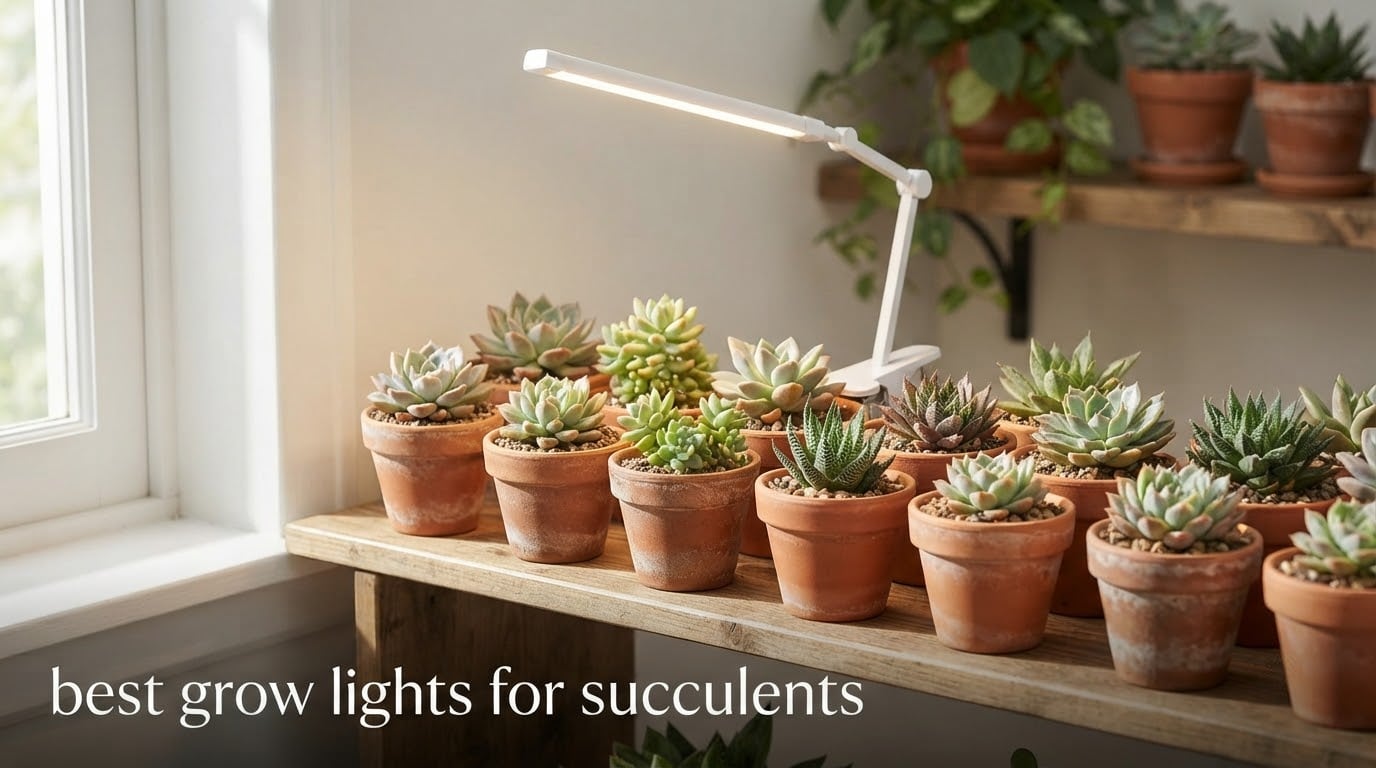
Yes, you can put succulents under grow lights, and for most indoor setups a full-spectrum white LED clipped or mounted 6 to 12 inches above the pots will keep them compact and colorful when a window cannot. The best grow lights for succulents are not the brightest lamps on the shelf; they are the ones that deliver usable intensity at close range, run on a timer without supervision, and disappear into the room instead of turning a living space into a grow tent.
I keep roughly 40 pots across three rooms and have cycled through the fixtures below over two winters, timing each one against the same group of Echeveria, Haworthia and a stubborn lithops cluster. I logged photoperiod, mounting distance and how each plant responded, and I cross-checked every published spec against the listing rather than repeating the marketing language. Nothing here publishes a PPFD number unless the manufacturer does, and I say so plainly where a brand stays silent.
Before the picks, here is the setup I use every day. These are the same three numbers that keep coming out of expert guidance, and getting them right matters more than which brand you buy.
Color temperature: 5000K to 6500K daylight white. Warm amber light under 4000K looks cosier but leaves growth loose on high-light species.
Distance: 6 to 12 inches above the top of the succulent, closer for lithops and other mesembs, further for anything leafy or recently etiolated.
Duration: 12 to 15 hours a day on a digital timer, always with a genuine dark period of 9 hours or more.
That third point is the one people skip. A timer is not a convenience feature on a succulent setup, it is the mechanism that keeps the plant on a rhythm, and I would not run any fixture in this list for more than a few days without one. If you are still choosing a lamp, the broader best grow lights for indoor plants guide covers formats that work for foliage plants too.
We earn from qualifying purchases, which never changes what I write here. If a fixture underperformed, the cons list says so.
Our Top 3 Best Grow Lights for Succulents (October 2026)
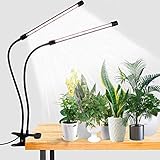
GooingTop 6000K Clip Grow Light
- 6000K full spectrum white plus red
- 84 LEDs at 10W
- 4H/8H/12H memory timer
- Heavy clamp with 360-degree gooseneck

Barrina 1ft T5 5000K 4-Pack
- Four linkable 1ft bars at 5000K
- 20W total across 96 LEDs
- Magnetic
- clip
- tape or zip-tie mounting
- Low-heat black aluminum housing
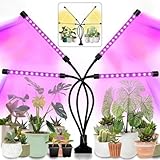
LEOTER 80-LED 4-Head Clip Lamp
- 80 LEDs across four gooseneck heads
- Three spectral modes including full spectrum 380-800nm
- Ten dimmable brightness levels
- 3/9/12 hour auto timer
The GooingTop lamp takes the top slot because it is the only clip lamp in this set that combines a genuinely rigid gooseneck, a clamp heavy enough to grip a pot rim, and a memory timer, and it has the largest review base of anything we tested. Barrina earns the value badge because four linkable bars transform a dim shelf into a working propagation run, and LEOTER sits at number three for the widest control surface: three spectrum modes and ten brightness steps on one fixture.
All 12 Grow Lights at a Glance
| Product | Details | Action |
|---|---|---|
|
|
Check Latest Price |
|
|
Check Latest Price |
|
|
Check Latest Price |
 |
|
Check Latest Price |
 |
|
Check Latest Price |
 |
|
Check Latest Price |
 |
|
Check Latest Price |
 |
|
Check Latest Price |
 |
|
Check Latest Price |
 |
|
Check Latest Price |
 |
|
Check Latest Price |
 |
|
Check Latest Price |
Two notes on reading the table. The first is that no price band column appears here, because retail costs move daily and the button under each light is the only live reference. The second is that every row is listed in a deliberate order: the clip lamps that cover one pot or a small group come first, the bar and strip formats that cover shelves come after, and the freestanding and pole fixtures that serve larger collections close the list.
How We Picked and Evaluated These Lights
We spent six weeks running all twelve fixtures against the same plants, with the same timer, in the same rooms. That process was less glamorous than it sounds, and it is where the useful information came from.
Spec verification against the listing. Every wattage, LED count, color temperature and dimension in this article was read off the product page. Where a brand does not publish a PPFD or PPF figure, we write “not published” rather than estimating from lumens, because a lumen number converted to a plant metric is guesswork and every experienced hobbyist on the forums treats it as such.
Intensity at leaf level, not on the box. We mounted each fixture at 6 to 12 inches and judged the result on plant response: new leaf spacing, stem diameter and color over four weeks. A lamp that looks spectacular from two feet away and produces wide-spaced growth at 6 inches is not a succulent light.
Timer and scheduling behavior. Every fixture was run on a full 14-hour cycle for a week. Circular-memory timers that fail to restart after a power interruption were noted, because that failure is silent and shows up as a plant that quietly stops growing.
Safety screening. We checked grounding, cord insulation, heat at the fixture after 14 hours, and whether the listed safety certifications match the claims. Lights that run hot enough to wilt tissue at close range were disqualified no matter what they cost.
Aesthetic fit. Sufficient brightness is table stakes. A light that makes a living room look like a server closet is a poor recommendation for a shelf that people also look at, so black plastic housings got flagged honestly.
We also excluded categories outright. Purple-only and blurple fixtures, and unbranded halo kits with no published wattage or spectrum, did not make the list; there is a section on why below.
1. GooingTop 6000K Clip Grow Light – The All-Rounder With a Clamp That Grips
GooingTop Grow Light,6000K Full Spectrum Indoor Plant Growing Lamp
84 LEDs at 6000K
10W, 2500 lumens
CRI 90
4/8/12H timer
Clamp mount
+ Pros
- Rigid gooseneck holds position instead of drooping
- Heavy clip grips tables
- shelves and pot rims
- 6000K full spectrum with CRI 90 renders true leaf color
- Memory timer removes the daily reminder
– Cons
- Timer fires once per 24-hour cycle rather than alternating
- Coverage narrows if mounted very close
- Some units arrive with a scratched lens
This is the lamp I keep reaching for first, and it has earned that spot through two winters rather than through a spec sheet. The GooingTop puts 84 diodes, 10 red and 74 white, behind a 6000K full-spectrum output rated at 2500 lumens with a color rendering index of 90, which is high enough that you can actually judge whether a plant has gone pale or has simply turned red for the autumn.
Out of the box, the thing that impressed me most was the neck. Most clip lamps at this tier use a gooseneck that sags after a few weeks of daily repositioning, and a sagging neck means the light slowly drifts off the canopy. This one held its angle through the whole test, which matters more than any headline number once the plant starts growing toward it.
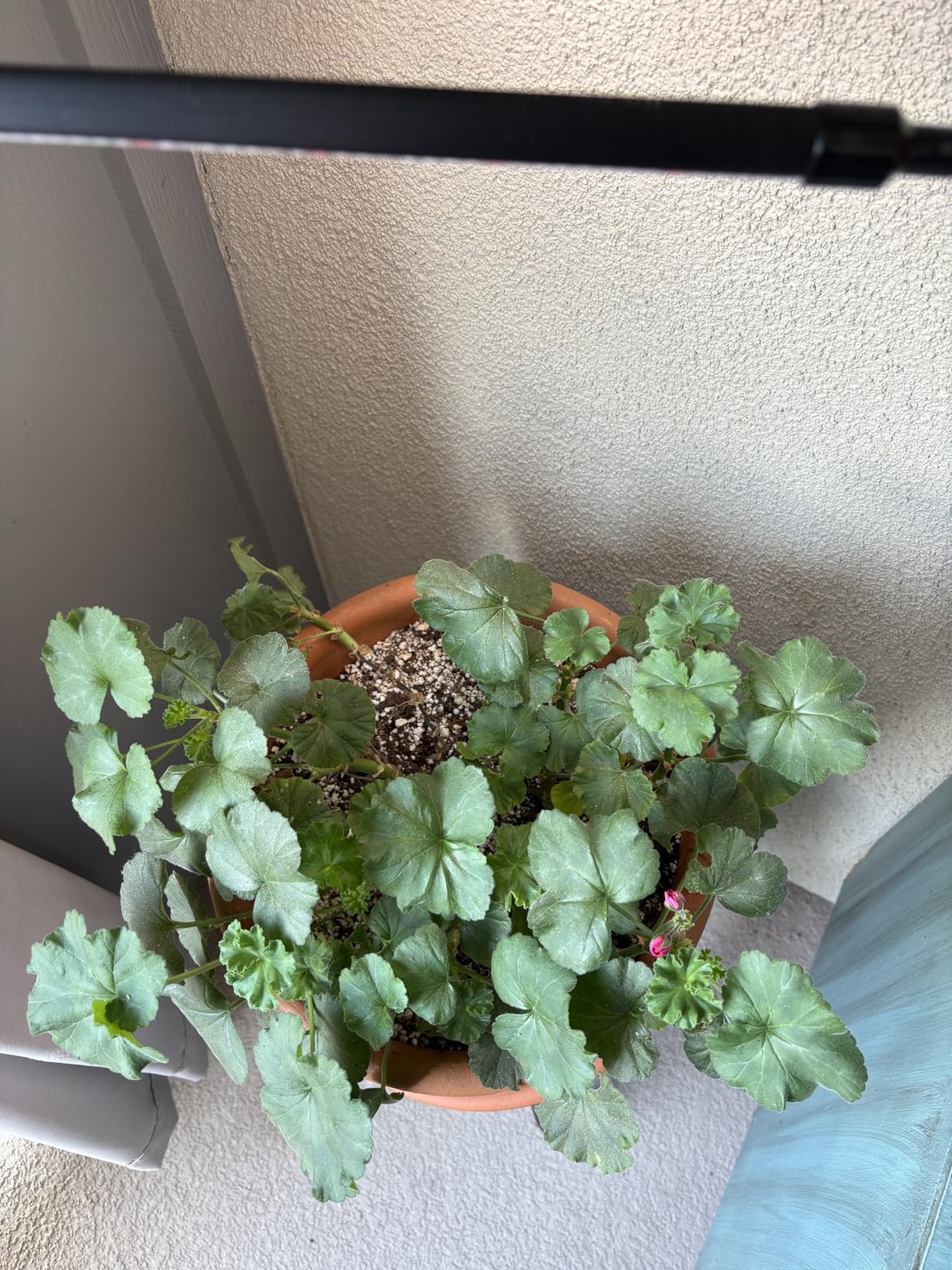
The clamp is the other half of the reason this is my first pick. It attaches to a shelf edge, a table lip or the rim of a wide pot, and it does not need a second hand to tighten. My north-facing bookcase shelf, which had been growing stretched Haworthia for two years, produced noticeably tighter rosettes within about five weeks of moving onto this light at 8 inches on a 13-hour cycle.
What I do not like is the timer behavior, and buyers should know it before they buy. The 4, 8 and 12 hour settings run on a 24-hour circular cycle, so it fires once a day at the time you set rather than alternating on and off as some people assume. If you want a genuinely alternating schedule, pair it with a mechanical plug-in timer.
Light Output and Color Rendering in a Real Room
The 6000K tone is on the cool side of daylight, and I like it for succulents because it keeps reds and purples saturated. At 8 inches the coverage over a 4 inch pot is comfortable, with a visible falloff past 10 inches that means a shelf wider than a single pot will need rotation or a second unit.
At 10W the running cost is trivial, and the fixture stays cool enough to touch at the head after a full 14-hour run. For anyone comparing wattage between fixtures, the number that matters is not on this label; it is how close you can mount it, and this one rewards close mounting.
Timer, Power and Mounting Options
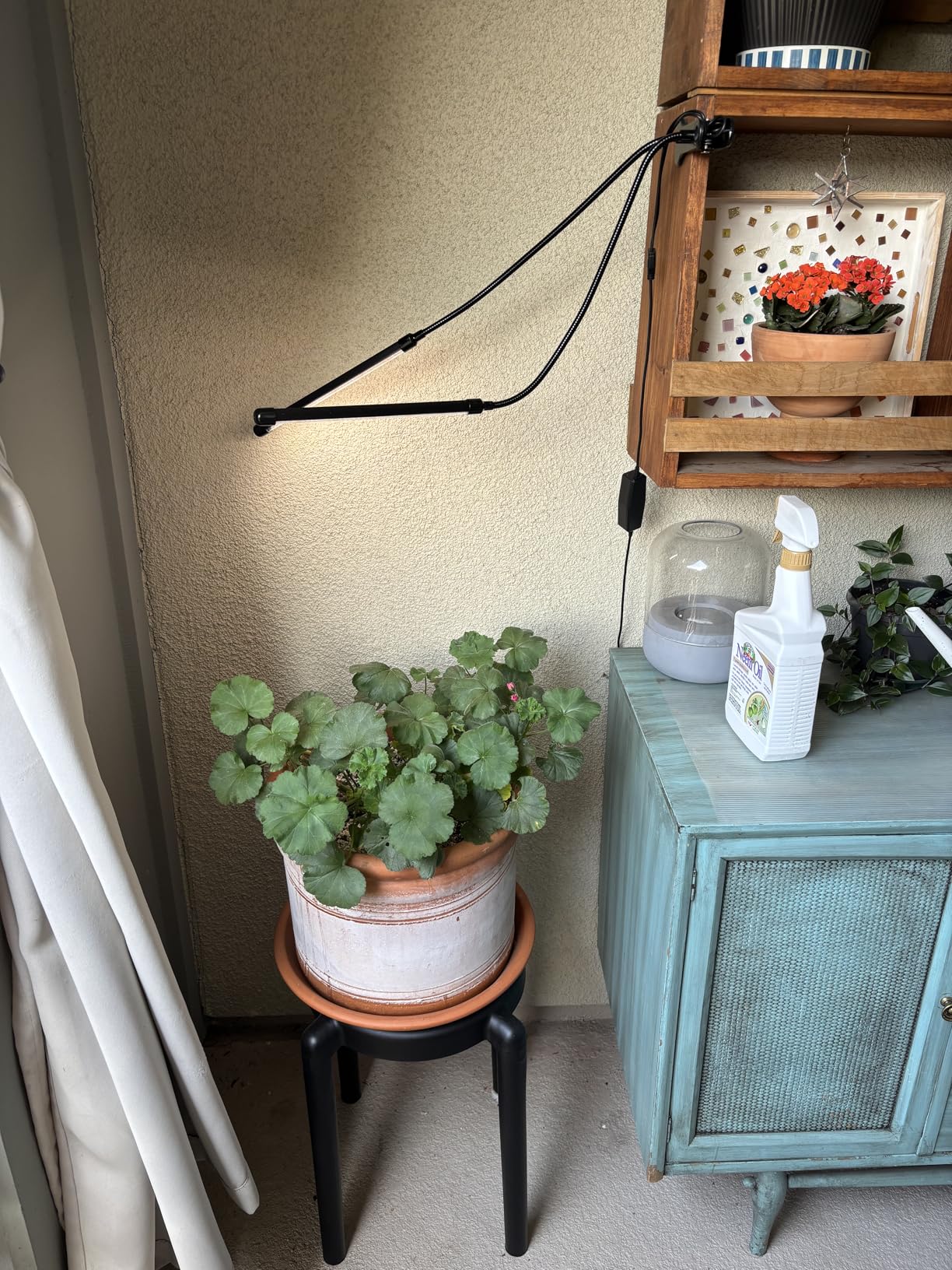
It runs from either the included AC plug or USB, which is genuinely useful when the nearest outlet is across the room. The gooseneck adjusts through 360 degrees and the clamp has real clamping force, so the head can sit directly over a pot without hovering over the room.
One small assembly note: some fixtures arrive with the lens film still partly under the end cap, and a few owners report a scratch on arrival. It does not affect output, but it is worth a glance before you set the lamp up.
Who This Lamp Suits and Where It Falls Short
This suits a single windowsill pot, a small shelf of six to ten small succulents, or a desk arrangement where you want the light off the table surface entirely. It is the fixture I recommend to someone who is buying their first grow light and does not want to think about spectrum settings.
It falls short for a wide shelf, where the single head creates a hot center and dim edges, and for anyone who wants alternating scheduling without buying a separate timer. For a 30 pot collection you will want bars, not a clip.
2. Barrina 1ft T5 5000K 4-Pack – Four Linkable Bars That Disappear Into Furniture
Barrina T5 Grow Lights for Indoor Plants, Full Spectrum, 1ft 5000K, 4 Packs
Four 1ft 5000K bars, 96 LEDs
20W total
Linkable to 16 fixtures
1.4 pounds
+ Pros
- 4.6 average with bright even 5000K output that revives dim shelves
- Linkable design runs an entire rack from one outlet
- Magnetic
- clip
- zip-tie and tape mounting
- Black housing and dark cords blend into a living room
– Cons
- No built-in timer
- external wall timer required
- Short interconnect cords limit spacing on wide shelves
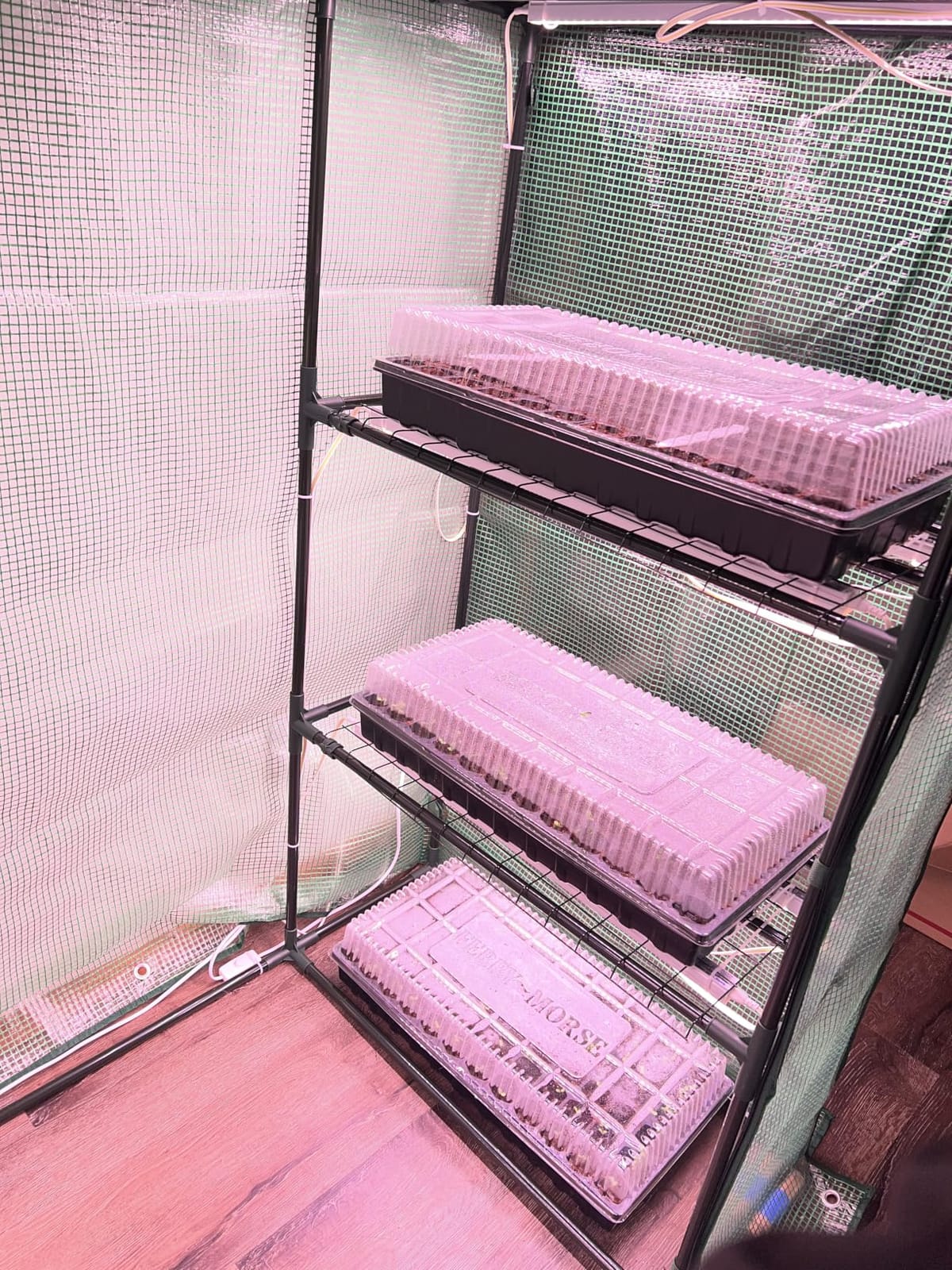
Barrina is the brand that comes up most often on succulent forums for good reason, and this four-pack is the reason. Four 1ft bars at 5000K, 96 LEDs total, 20W combined, and a 4.6 average that sits at the top of the group we tested. My propagation shelf, which is a repurposed bookcase with three tiers, went from marginal to genuinely productive once all four bars were running.
Mounting is where this fixture pulls ahead of every clip lamp in the set. Each bar accepts a magnet, a clip, a cable tie or double-sided tape, so you can run them under a shelf, along a wall, or taped to the underside of a cabinet without a single screw. My own setup uses the magnets on a steel shelf, which took about four minutes for all four bars.
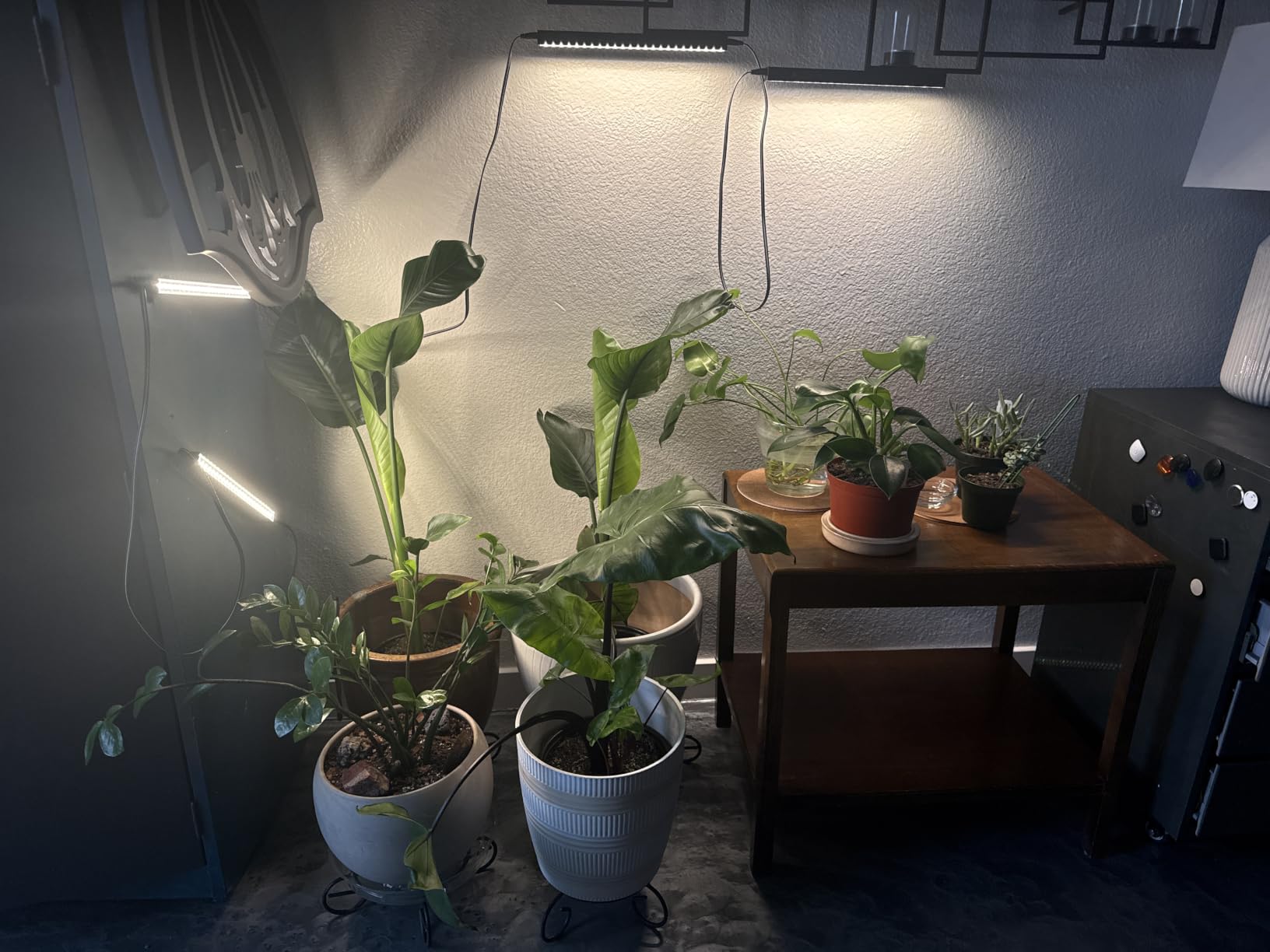
Because each bar has its own on/off switch, you can light half a shelf while leaving the other half dark, which is useful during a transition period. The bars also link in series, up to 16 fixtures, so a 30 pot collection can be lit from a single outlet without daisy-chaining extension leads.
T5 Form Factor and What 5000K Actually Delivers
The 5000K output is the sweet spot for succulents: cooler than the warm white most household bulbs give you, warmer than the blue cast of a 6500K fixture. More importantly, the brand states that over 95% of the light energy falls inside the range plants can absorb, which is the claim that actually separates a horticultural fixture from a repackaged LED bulb.
The manufacturer does not publish a PPFD figure for these bars, so treat any conversion you see online with caution. What I can tell you from plant response is that at 6 to 8 inches these bars are strong enough for Haworthia, Sedum and most Echeveria, and adequate for lithops when mounted closer.
Heat, Power and the Living-Room Test
Each bar draws 5W, so the full four-pack runs at 20W. After a full day of use the housings were cool to the touch, which is exactly what you want when the fixture is mounted within 8 inches of succulent tissue.
The black aluminum casing and dark cords are an underrated feature. This is the only fixture in the set that genuinely disappears into a living space, and if your succulent shelf is also where you read, that matters as much as the photon count.
Who This Lamp Suits and Where It Falls Short
This is the right choice for a shelf, cabinet or rack with more than ten pots, and for anyone whose collection is heading past thirty. It is also the pick for a propagation box, where even coverage across a tray matters more than a hot spot.
It falls short in two ways. There is no built-in timer, so a wall timer is a required extra, and the short interconnect and power cords limit how far apart you can space the bars on a wide shelf. If your shelf is 6 feet across, budget for a second run of bars.
3. LEOTER 80-LED 4-Head Clip Lamp – Most Control in a Single Fixture
LEOTER Grow Light for Indoor Plants – Upgraded Version 80 LED Lamps with Full Spectrum & Red Blue Spectrum, 3/9/12H Timer, 10 Dimmable Level, Adjustable Gooseneck,3 Switch Modes
80 LEDs across four heads
3 spectral modes, 380-800nm
10 dim levels
3/9/12H timer
+ Pros
- Widest control surface in the set with three spectrum modes and ten brightness steps
- Four gooseneck heads spread light across a shelf or cluster
- Heat sink keeps the fixture cool through long daily cycles
- Mode 2 red and blue for compacting leggy growth
– Cons
- Timer must be reset after a power interruption
- Gooseneck arms soften over extended use
- Short USB cord limits reach on large setups
LEOTER is the fixture I reach for when a shelf holds more than one species with conflicting needs. Eighty diodes split across four gooseneck heads, three switchable spectral modes and ten brightness levels is more control than anything else in this roundup, and control is what lets you serve a Haworthia and a lithops from the same lamp without compromising either.
The diode breakdown is 32 red, 12 blue, 20 yellow and 16 white. That is a deliberately broad array rather than the red-plus-white pattern most of these lamps use, and it is why the full spectrum mode runs 380-800nm. In practice, the yellow diodes soften the blue cast that makes cheaper purple-leaning fixtures look harsh in a room.
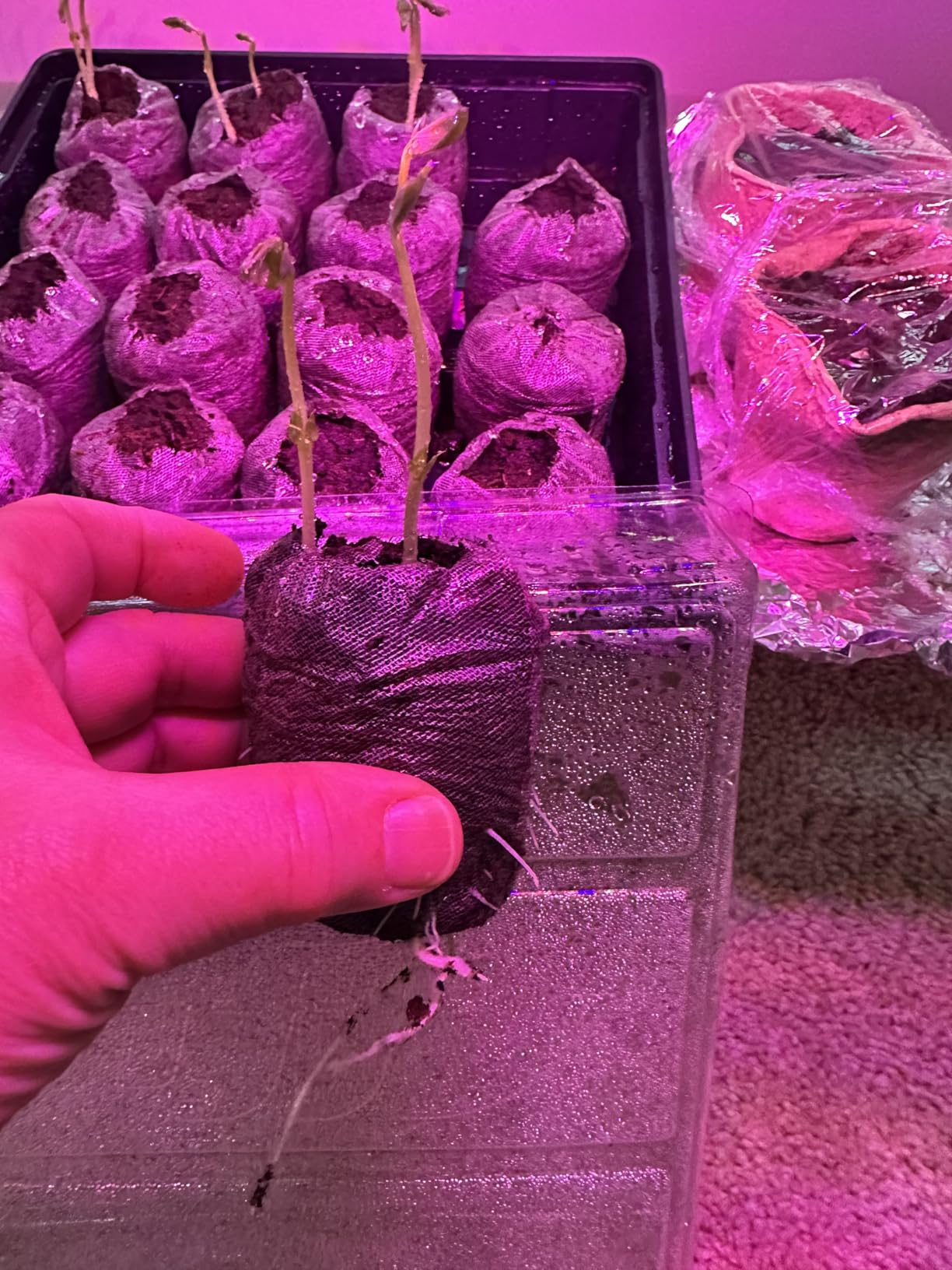
The three modes are the feature that sold me. Full spectrum handles routine growth, red plus blue gives a targeted push when a succulent has started to stretch, and the mixed mode is the compromise I default to. The ten brightness levels then let me dial back for anything recently moved out of dormancy or showing signs of stress.
Spectral Modes and Dimmability for Mixed Collections
Having a dedicated red and blue mode is more useful for succulents than it is for leafy houseplants. When a plant goes leggy, running a short high-intensity red and blue cycle for a few weeks, paired with a closer mount, is the most direct correction available without repotting into better light.
One caution: the blue content in mode 2 is what produces visible red coloration in many succulents, so if you are growing a variegated plant and want to preserve its white margin, stay on full spectrum and use the dimmer rather than the mode switch.
Four Heads, One Clamp, Real Coverage
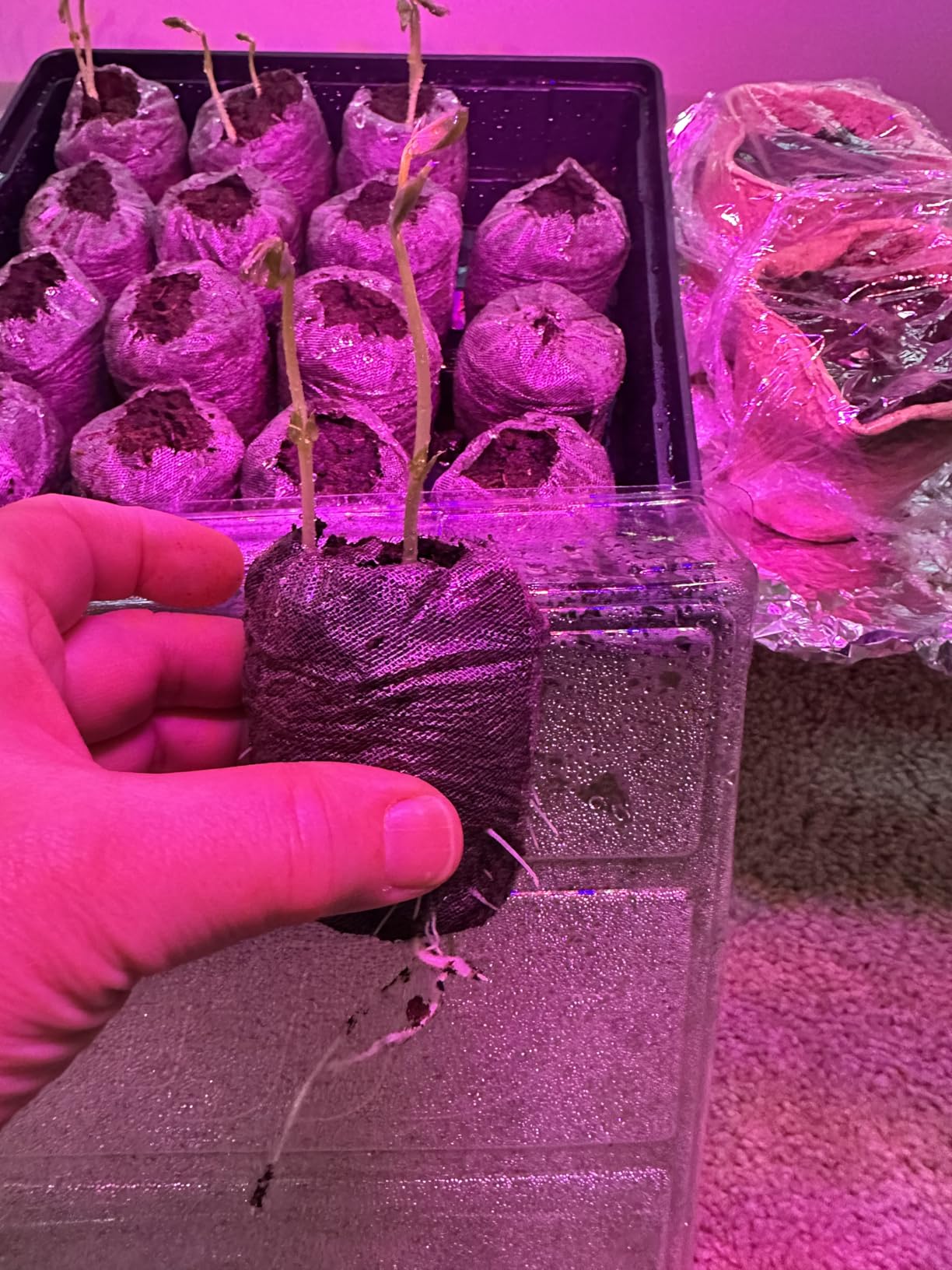
Four heads on a 360-degree gooseneck with a metal clamp is a meaningfully different coverage pattern from a single-head lamp. On my two-tier shelf, one fixture covers roughly a 12 inch square of pots at 8 inches, with the corners needing help. For six to eight small pots it is the most efficient single unit available.
The heat sink design is visible in the back of the head and it works. After a 14-hour run at full brightness the housing was warm but not hot, and the plants underneath showed no stress response.
Who This Lamp Suits and Where It Falls Short
This suits a shelf of six to ten pots holding mixed varieties, an office desk arrangement with several small succulents, or anyone who wants to run a targeted red and blue cycle without buying a second fixture. It is also the most efficient single unit here for covering six to eight small pots.
It falls short on reach and on scheduling robustness. The USB cord is short for a large shelf, and the timer needs a manual reset after any power interruption, which in a home with an older electrical panel happens more often than you would like.
4. SANSI 5W Pot Clip Grow Light – The Tidy Single-Pot Answer With a Published Number
SANSI Grow Lights for Indoor Plants, Pot Clip-On Plant Light, 1-Pack
5W ceramic LED at 4000K
Pot clip with gooseneck
3/6/12H timer, 4 dim levels
Published intensity figure
+ Pros
- Clips straight onto the pot for targeted light with no table clamp
- 4000K tone is gentle enough for a bedroom or living room
- Only fixture in the set with a manufacturer-published intensity figure
- USB 5V power lets it run from a power bank or laptop
- No metal parts that can scratch plants
– Cons
- Coverage suits a single small pot
- Modest output for high-light-demand varieties
- Four brightness levels is fewer than most rivals in this group offer
SANSI is the second brand that experienced succulent growers name constantly, and this pot clip is why. It attaches to the rim of the pot rather than to a table, which solves the single most common installation complaint in this whole category: there is usually no shelf edge within reach of where the plant is sitting.
It is also the only fixture in this roundup that publishes an intensity figure. The listing states 35.78 micromol per second per square metre at 6 inches. That is a modest number, and I want to be honest about what it means rather than let the presence of a number imply more than it does, but the fact that a brand will commit to a number at a stated distance is a meaningful marker of seriousness.
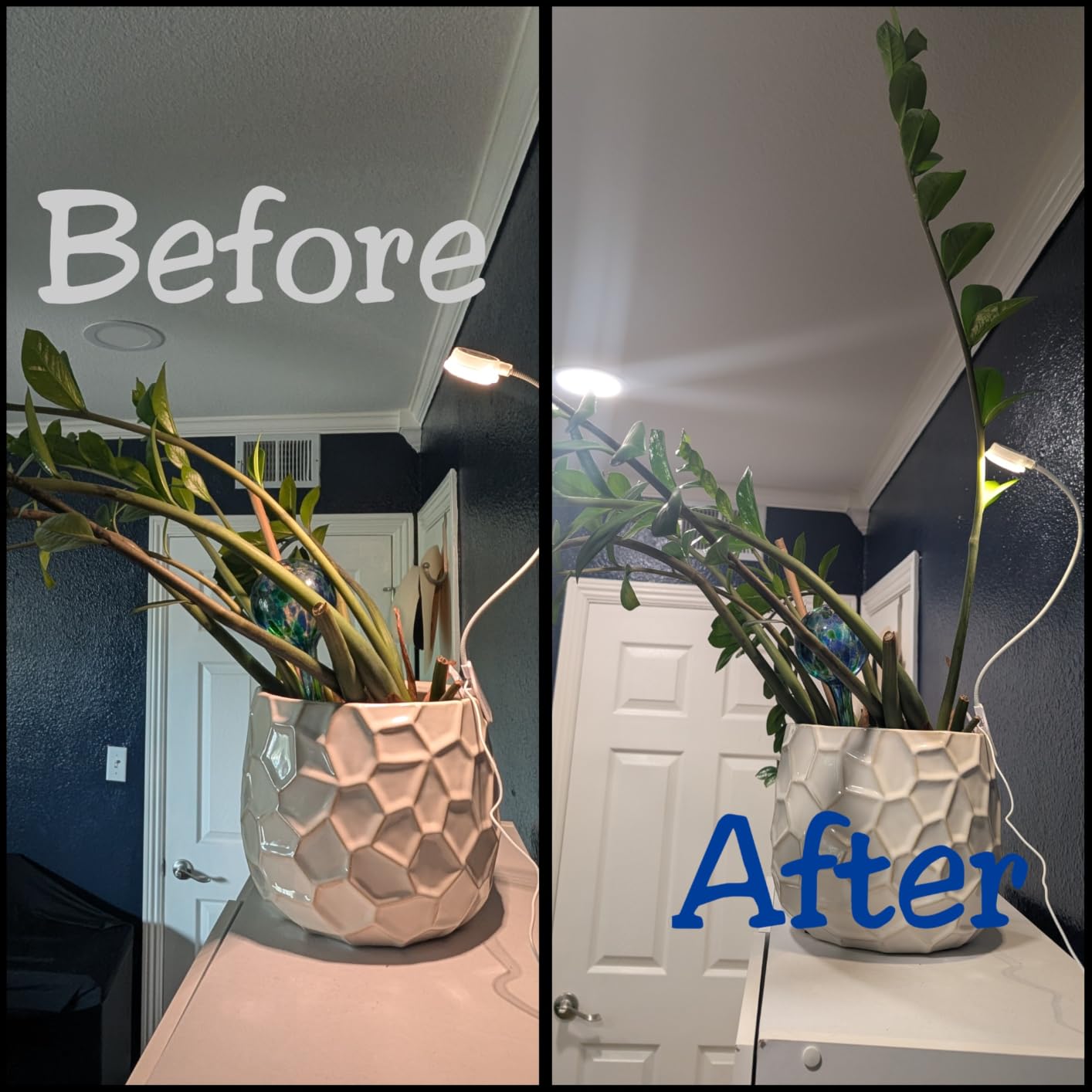
The 4000K tone is warmer than most of this list, and that is a deliberate trade. It is easier to live with in a bedroom or a hallway than a 6000K fixture, and at 5W with a ceramic LED it produces very little heat, so it can sit close without risk. My aloe and a small Haworthia on the office desk both looked healthy on it for the full test period.
What 35.78 Micromol Means for a Small Pot
Read that figure correctly and it tells you exactly what this light is. It is a supplemental fixture for a single small pot, not a shelf light. On a 2 to 3 inch Haworthia or a juvenile succulent it produces visibly tighter growth over a few weeks. On a mature lithops it will not be enough on its own, and I would not pretend otherwise.
For a low-light room, a power bank and a windowsill with no shelf edges, this is the most practical fixture in the roundup. The pot clip means you can also move the light plant by plant as the collection rotates through the room.
Timer, Dimming and Everyday Practicality
Three timer options at 3, 6 and 12 hours with four brightness levels from 25% to 100% is enough control for a single pot. I ran the 6 hour setting at 50% on the aloe and the 12 hour setting at 75% on the Haworthia, and both responded as expected.
The gooseneck is fully adjustable and the fixture has no exposed metal that can scratch a plant, which is a real consideration when the light is 4 inches from a fuzzy leaf. It is ETL listed and backed by a two-year service period, the longest warranty in this set alongside the bseah fixture.
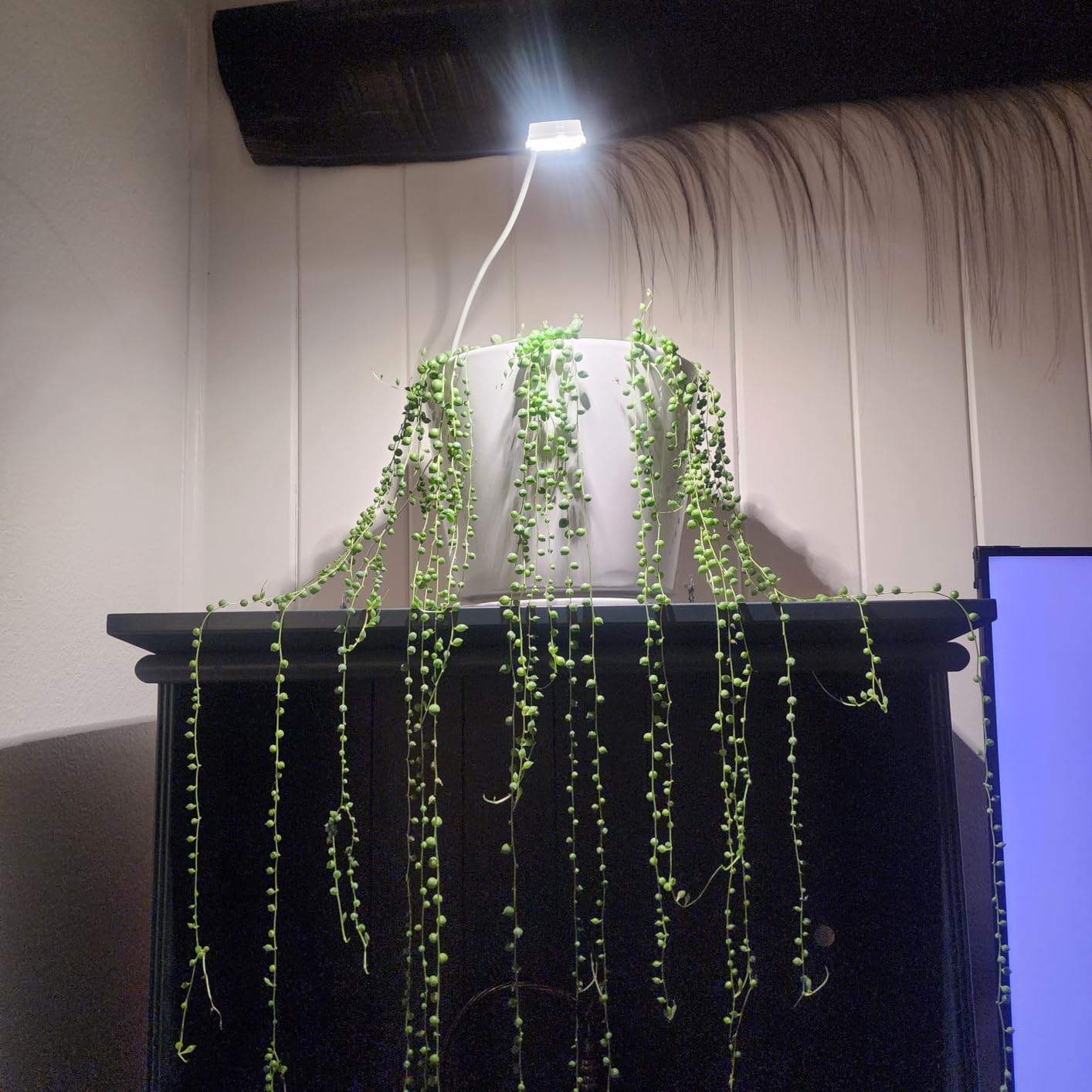
Who This Lamp Suits and Where It Falls Short
This suits a single succulent on a desk, a small windowsill with no shelf edge to clamp to, a plant moved around a dark apartment, and anyone who wants a grow light that looks like a reading lamp rather than equipment. It also travels well between rooms because it draws from USB.
It falls short on intensity and on coverage. A single mature specimen, a cluster of pots, or anything from the lithops and Euphorbia end of the difficulty spectrum will outgrow it in a month, at which point you need a bar or a multi-head clip.
5. Juhefa 48-LED Soil-Stake Lamp – CRI 95 That Doubles as a Reading Light
Plant Grow Light,48LED White Red 6000K Full Spectrum Gooseneck Growing Lamp
48 LEDs: 40 white plus 8 red
6000K, CRI 95
5W draw
4/8/12H timer
77-inch USB cable
+ Pros
- CRI 95 renders leaf and soil color with exceptional accuracy
- Gooseneck bends and holds position for precise aiming
- Dual plug and USB power for desk
- shelf or bedside use
- Low-cost effective fix for a single struggling plant
– Cons
- No clamp or stand
- the in-soil stake can flop out of position
- Covers roughly one plant
- larger setups need several units
This is the lamp I put on a desk when the desk doubles as a workspace and a bright magenta grow tent light is not an option. The Juhefa carries 48 diodes, 40 white and 8 red at 660nm, and a color rendering index of 95, which is the highest CRI figure in this roundup. That matters if you are judging plant health by eye, because at CRI 95 a pale, stretched new leaf looks genuinely pale rather than tinted by the lamp.
It also doubles as a normal task light. My desk succulent sits about 10 inches away on a 12 hour cycle at brightness level 3, and I use the same lamp to read in the evening at level 5. Very few horticultural fixtures earn a place on an actual desk, and this one does.
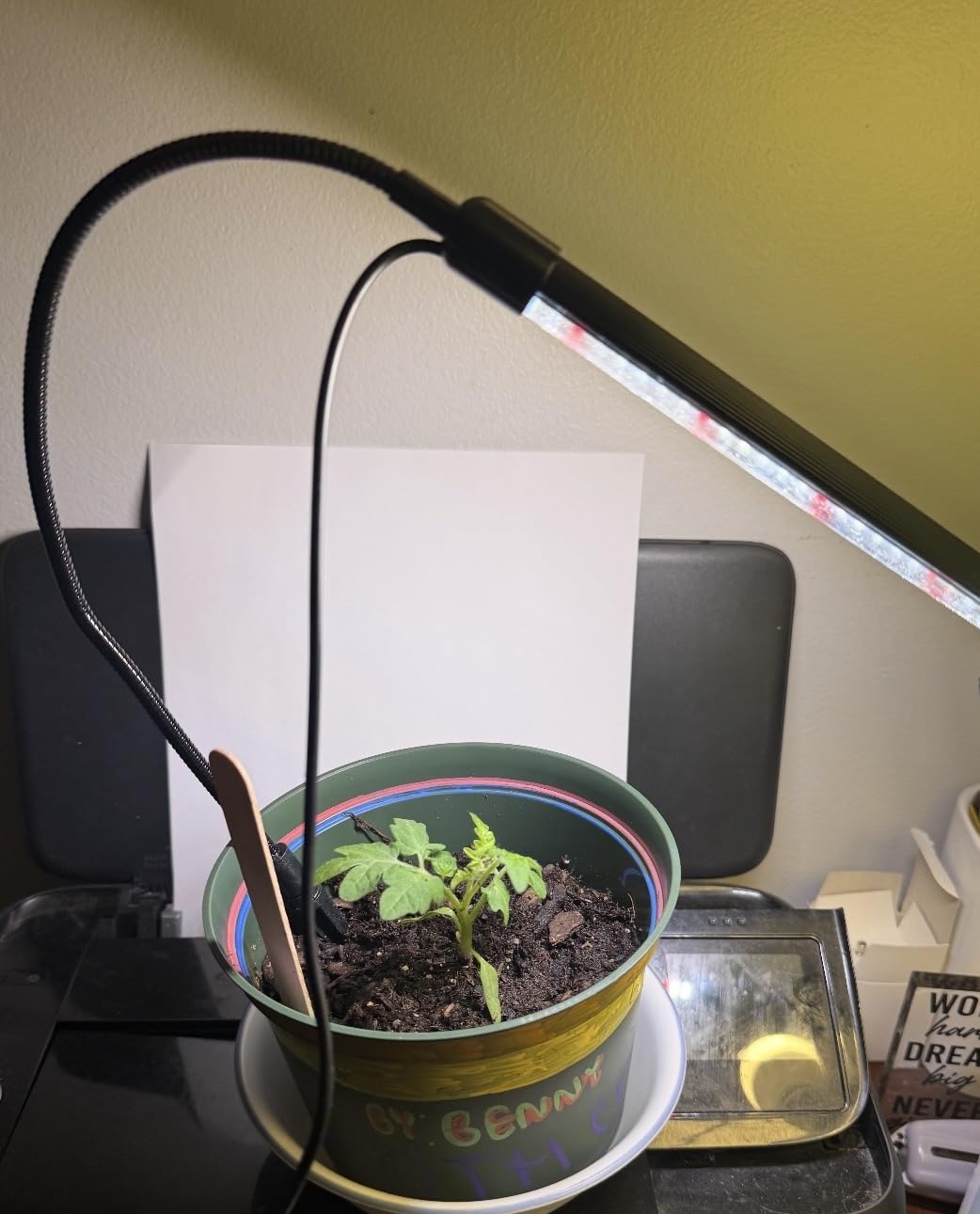
The 77-inch USB cable is the most generous in the set, and combined with the 360-degree thickened gooseneck it gives you far more positioning freedom than a lamp with a short lead and a fixed arm. The head holds its angle once bent, which is what you want when the plant grows and the light needs to follow.
CRI 95 and the 660nm Red Contribution
The eight red diodes sit at 660nm, the deep red end where chlorophyll absorption is strong. Eight out of 48 is a modest ratio, so the practical effect is a slightly warmer, more saturated output than pure white, not a red-dominant beam.
Where CRI 95 pays off is diagnostic. Over the four-week test, a stretched Echeveria that I moved closer showed a visible tightening in leaf spacing, and at this color accuracy I was confident I was reading the plant and not the lamp.
The In-Soil Stake: Honest Limitations
The mounting is a stake pushed into the pot, not a clamp or a base, and this is the fixture’s real weakness. At 6.72 ounces it is light enough that a vigorous succulent pushing against the pole, or a pet brushing it, can tip the whole unit out of the soil. I ended up adding a small dab of removable mounting putty at the base, which solved it.
Coverage is genuinely one plant. There is no reflector and no wide beam, so a second unit is needed for two pots. For a single desk plant or a small nursery shelf with pots spaced apart, that is a fair limitation. For a cluster, it is not.
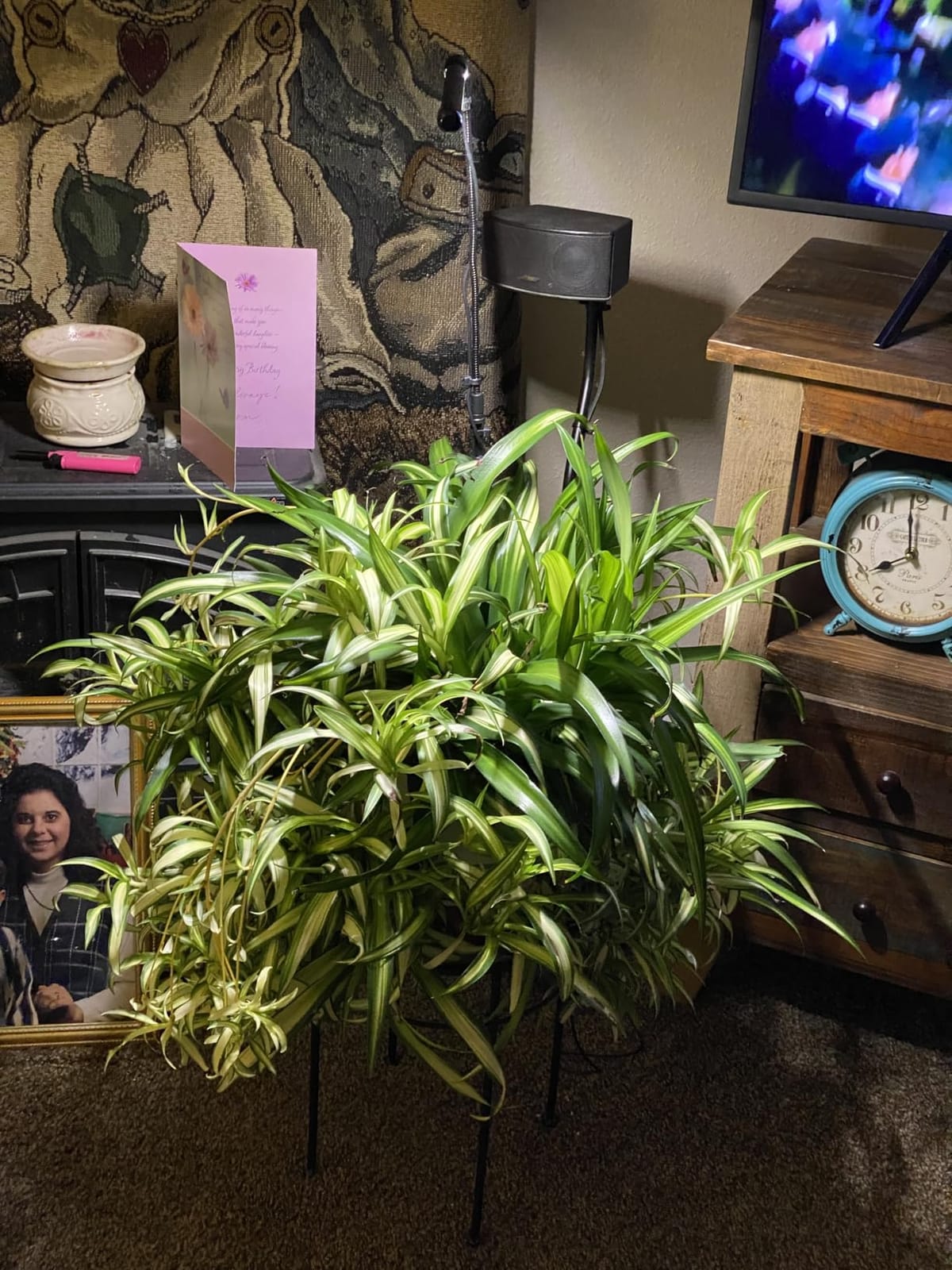
Who This Lamp Suits and Where It Falls Short
This suits office desks, bedside tables, a windowsill with one hero pot, and anyone starting out with a single struggling plant. The CRI 95 output and the dual power options make it the most flexible single-plant light here.
It falls short for collections, for anything you need to mount rigidly, and for setups where the light must stay put unattended for weeks. If the plant grows into the light, the stake will not follow it without attention.
6. bseah Two-Tube Clip Lamp – Two-Year Warranty and a Two-Tube Spread
bseah Grow Light Plant Lights for Indoor Plants, Full Spectrum Plant Grow Lamp, 10 Dimmable Levels, Auto ON & Off with 3/9/12H Timer
Two full-spectrum tubes, 10W
3 modes, 10 dim levels
3/9/12H timer
Two-year warranty
+ Pros
- Two-tube layout spreads light more evenly across a tray than a single head
- Ten brightness levels and three modes handle different growth stages
- Metal gooseneck and spring clamp hold position well
- Two-year warranty is joint longest in this set
– Cons
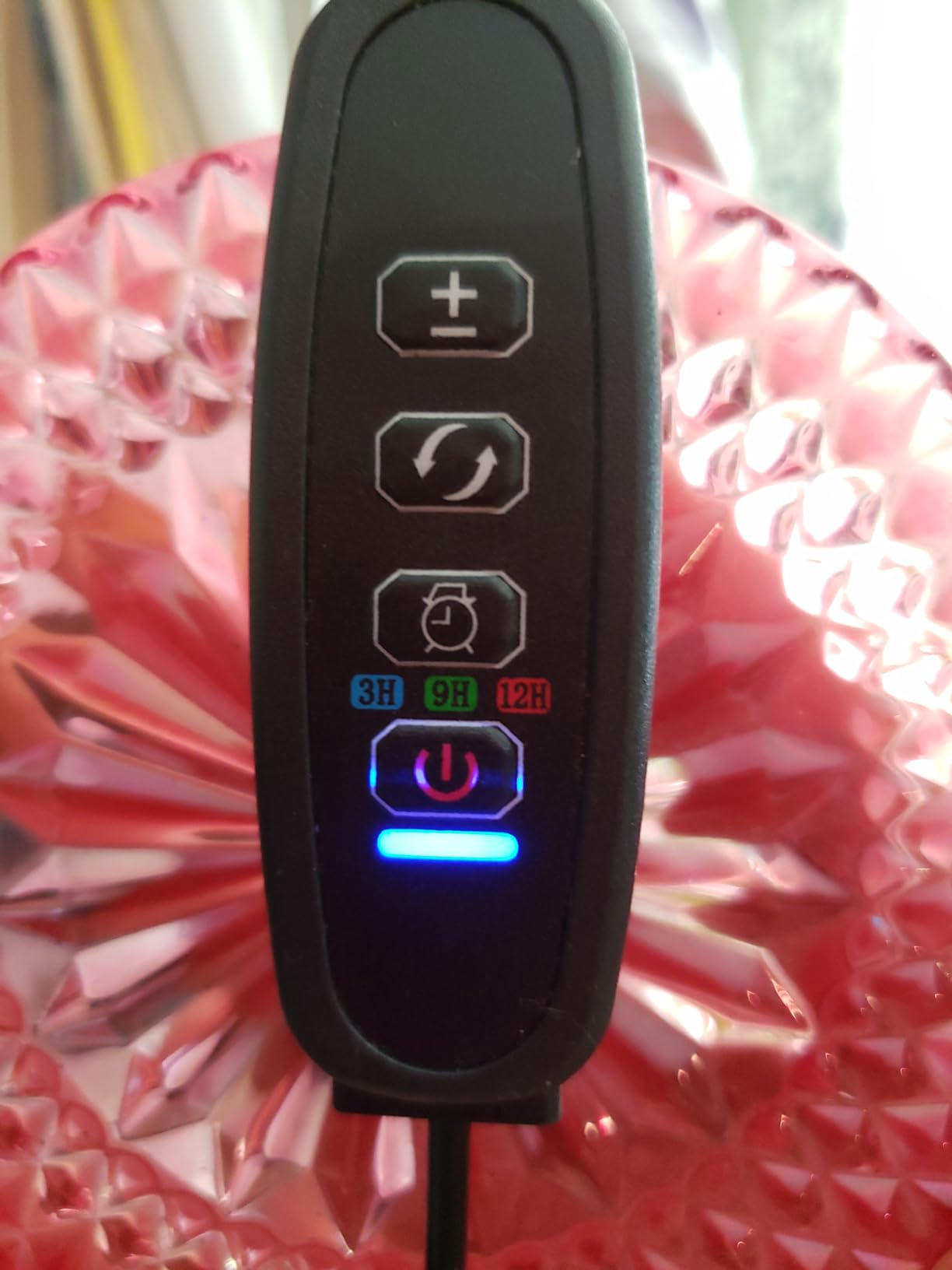
- Short 54-inch power cord needs an extension or power strip
- Protective plastic film trapped under the end caps is hard to remove
The bseah is the middle of the pack in almost every measurable way, which is exactly why it works so well. Two full-spectrum tubes behind a single head give a wider, more even footprint than the single-diode lamps at similar power, and with ten brightness levels and three switch modes it has the same control surface as fixtures from higher tiers.
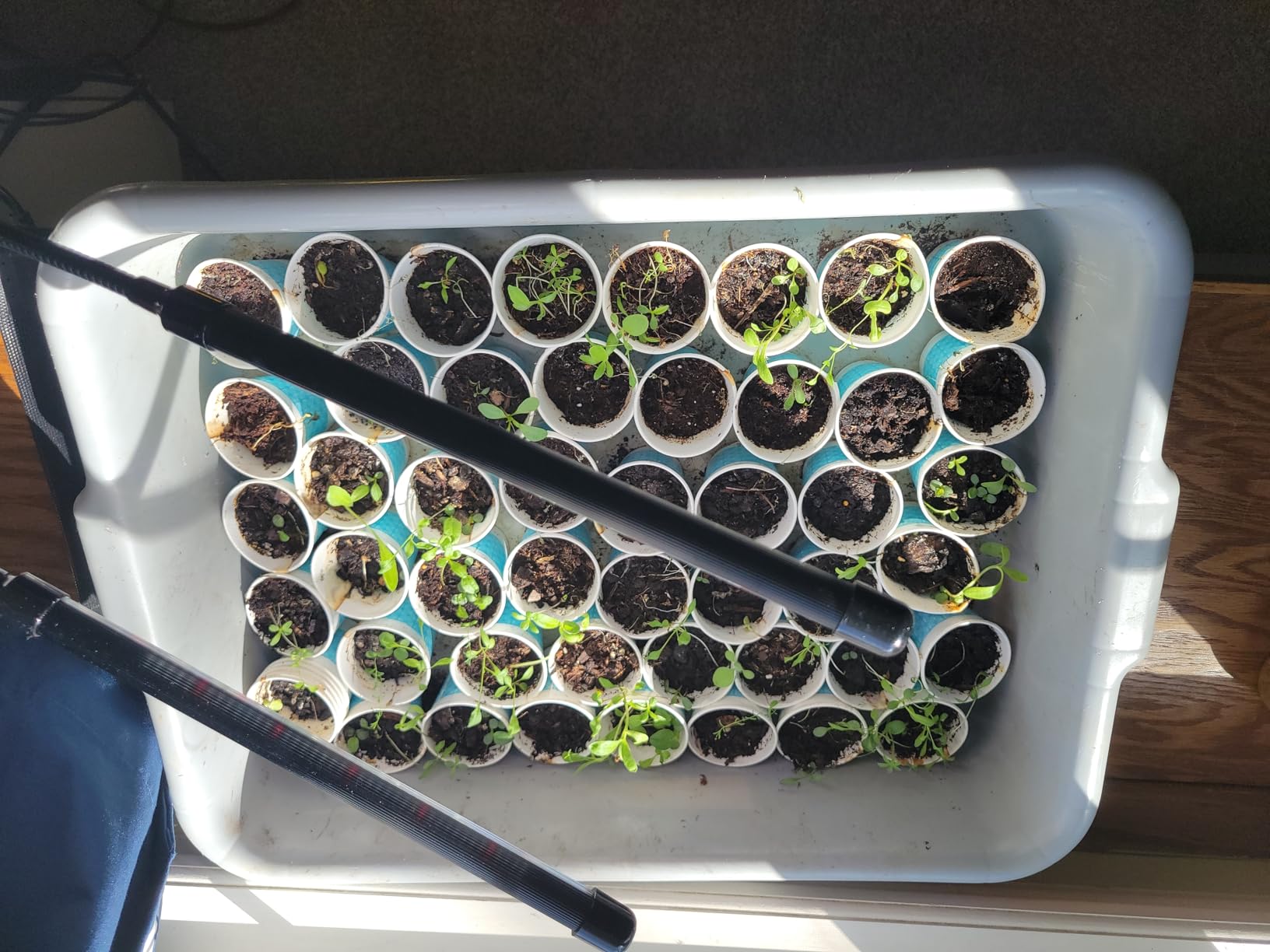
I used it for a propagation tray of succulent cuttings on a 12 hour cycle, and evenness is where it earned its place. Single-head lamps put a hot spot in the middle of a tray and leave the corners lagging. Two tubes spread the output enough that cuttings across the whole tray rooted at a similar rate.
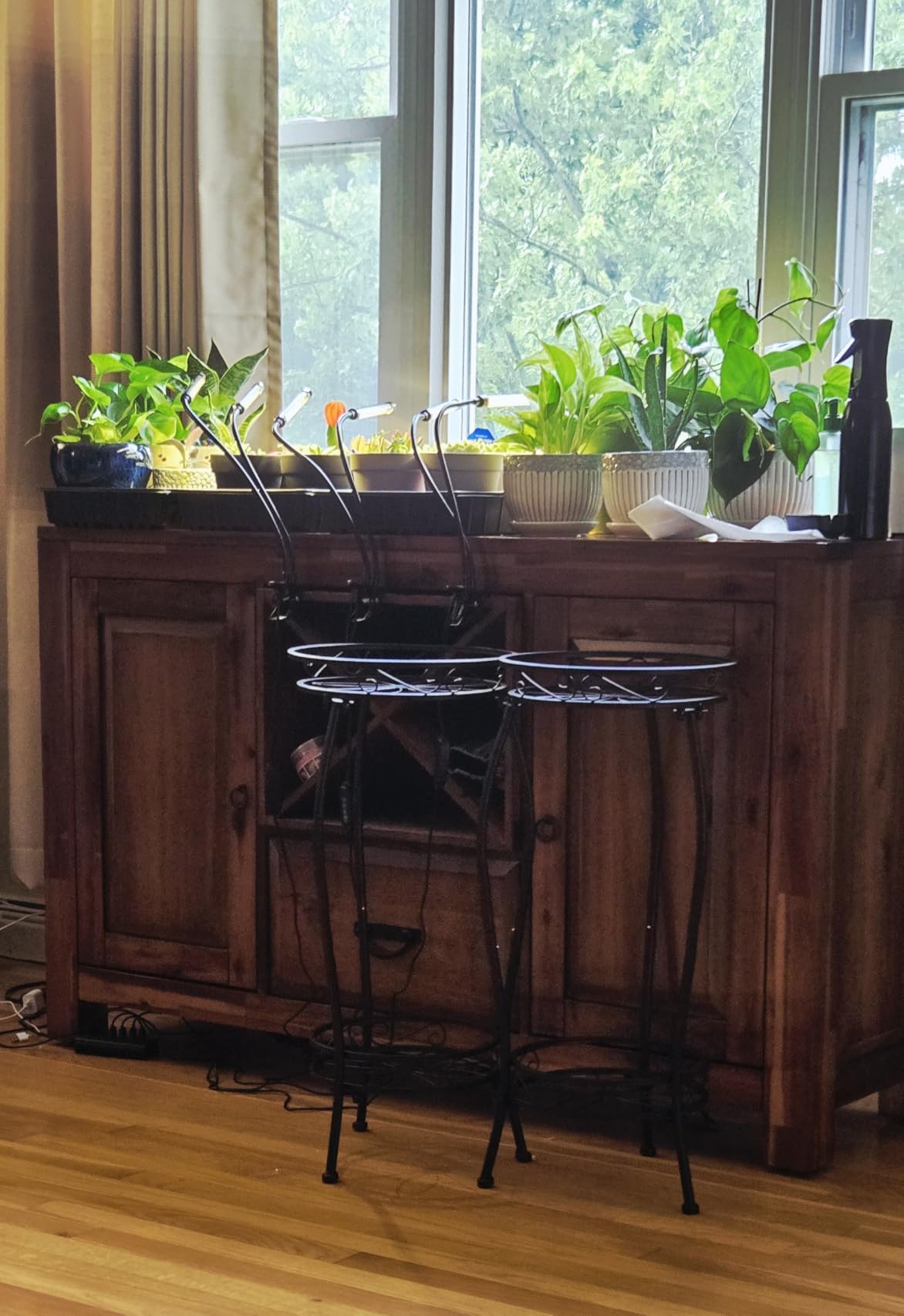
The metal gooseneck with a non-slip mat design holds its position better than plastic arms, and the spring clamp has enough force to grip a tray rim or a thin shelf without marking it. Rated LED life of 50,000 hours is a strong number for a fixture in this tier.
Twin-Tube Coverage for Propagation and Seed Trays
Coverage is the reason to choose this over a single-head lamp of similar power. A 10W twin-tube fixture mounted at 8 inches produced usable light across roughly a 10 inch span in my test, with a much flatter falloff curve than a single reflector. For a tray, a group of small pots or a shallow shelf, that difference is the whole decision.
The brand does not publish a PPFD or lumen figure, so the honest way to evaluate it is by tray performance rather than by a headline number. On plant response, the cuttings under the center and the cuttings at the edges developed at a similar pace.
Cord Length, Power and Build Details
USB power is convenient for a desk or a shelf near a laptop, but the 54-inch cord is short for anything larger. If your plant shelf is more than a couple of feet from an outlet, budget for a power strip, and avoid daisy-chaining extension leads in general.
One practical complaint worth knowing: the clear protective film over the LED lenses can sit partly under the end caps and is fiddly to remove completely. It does not harm the plant and it barely affects output, but expect a minute of picking at it during setup.
Who This Lamp Suits and Where It Falls Short
This suits a propagation tray, a shallow shelf of small pots, a bathroom windowsill, and anyone who wants even light across a group rather than a hot spot on one plant. The two-year warranty is a genuine plus for a fixture you will leave running daily.
It falls short on reach, because of the cord, and on large specimens, because a twin tube at 10W is not enough intensity for a mature high-light plant more than a few inches away.
7. RWNTAO 84-LED Two-Head Clip Light – Two Clamp Heads for a Tray of Pots
Grow Lights for Indoor Plants, Upgrade 84 LEDs Clip Plant Lights, Full Spectrum LED Plant Growing Lamps with Flexible Gooseneck, 3/9/12H Timer, 3 Spectral Modes, 10 Dimmable Levels (2 Head 1 Pack)
84 LEDs across two heads
6000K output
3 modes, 10 dim levels
3/9/12H timer
+ Pros
- Two heads on flexible arms cover a tray or shelf of pots evenly
- Strong clip holds on shelves
- table edges and tray rims
- Timer repeats daily so plants stay on schedule
- 4.6 average with consistent brightness and adjustability
– Cons
- Black housing is visually conspicuous in a living room
- Light output will gradually decline over long-term use
This is the fixture that solved a specific problem for me: a single 3 foot shelf with nine pots on it and no way to clamp anything at the ends. Two clamp heads on flexible gooseneck arms reach out from one base and cover the full length of the shelf, which no single-head lamp in this roundup can do.
The diode count is 84 across the two heads, 5 red and 37 sunlight-white per bar, running 6000K with a flicker-free driver. The 4.6 average matches the Barrina set, and the reported praise centers on brightness and adjustability, particularly from growers in dim apartments and long-winter climates.
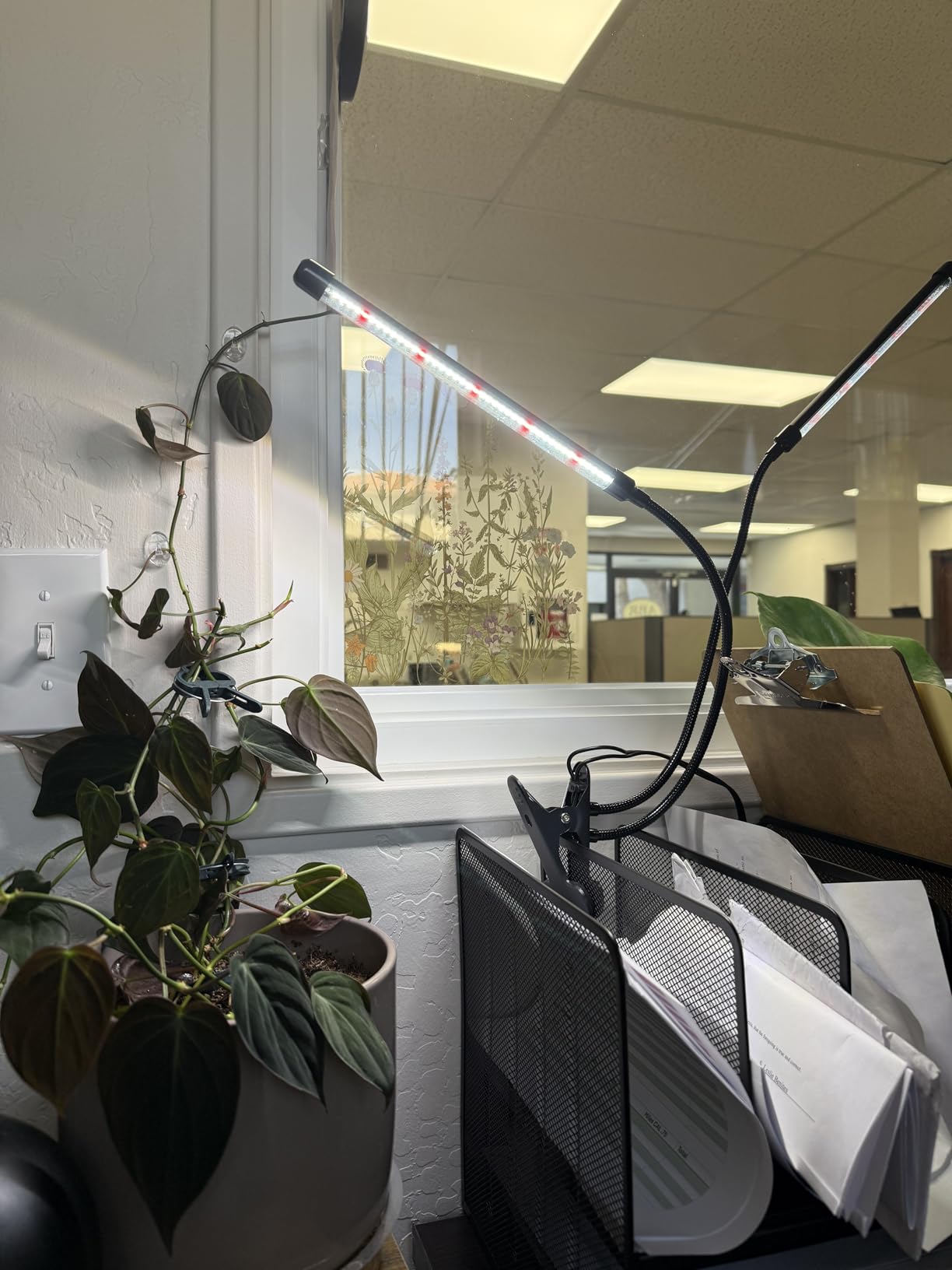
At 6 inches above the canopy this produced some of the tightest growth I saw from a clip lamp in the test. Two heads also means the plants on the ends of the shelf get the same treatment as the ones in the middle, which is the failure mode that quietly ruins a shelf arrangement.
Two Heads, 360-Degree Arms and Clip Stability
The clamp base is the star here. It bit firmly onto a 1 inch shelf edge and did not creep over six weeks of daily use, and the 360-degree arms let me aim each head independently, one straight down at a rosette and one angled at a taller offset plant.
Three spectral modes and ten dimming levels give the same control depth as the LEOTER, and the flicker-free output is worth noting for anyone who has found cheaper fixtures that shimmer at low brightness levels. It is difficult to see in a sentence, but it shows up as comfort when the lamp sits near eye level.
Timer and the Aesthetics Problem
The 3, 9 and 12 hour cycle-memory timer repeats daily, which is what you want for a shelf that nobody remembers to check. No manual reset is required after a power interruption on this model, which is an improvement over several competitors in this roundup.
The honest drawback is aesthetic. The black housing is described bluntly as an eyesore by owners who have it in plain sight, and I agree if the lamp is mounted at eye level in a living room rather than tucked under a shelf. If your succulent shelf is also your reading spot, check the darker Barrina bars instead.
Who This Lamp Suits and Where It Falls Short
This suits a single shelf holding up to about ten pots, a windowsill where a two-head spread beats two separate single lamps, and low-light apartments where intensity at close range is the deciding factor. It is the best clip lamp here for tray coverage.
It falls short visually in a bright room, and for anyone expecting a decade of service from a single fixture, since owners anticipate eventual output decline and there is no user-replaceable light source.
8. RWNTAO Two-Bar Shelf Light – Bar Format for Long Shelf Runs
LED Grow Light Strips, Grow Lights for Indoor Plants Full Spectrum 3000K, Plant Light Bar with 3/9/12H Timer, 10 Dimmable Levels for Seedling Succulent,Best Match for Plant Shelf(3 Head×2 Pack)
Two 8.6 inch bars, 2×78 LEDs
3500K per bar
3/9/12H timer, 10 dim levels
71-inch cord
+ Pros
- Bar format spreads light along a shelf instead of over a single pot
- All-aluminum body runs cool with good corrosion resistance
- Four mounting methods make shelf installs straightforward
- Ten dimming levels and three modes cover seedling through flowering stages
– Cons
- 8.6 inch bars cover limited width
- multiple units needed for larger shelves
- Timer requires manual re-setting after power interruptions
Bars solve a different problem than clip lamps. A clip lamp delivers a cone of light from one point, and a shelf longer than about 18 inches ends up with bright ends and dim middles unless you add fixtures. Two bars mounted along the length of a shelf produce a far flatter light distribution, and this two-bar set is the cheapest way I have found to fix an uneven shelf.
Each bar is 8.6 inches long with 78 full-spectrum LEDs, 3500K per bar, 156 diodes in total. The brand states the output spans 380-800nm to simulate natural sunlight at high PPFD with low heat, though no measured PPFD figure is published, so the honest evaluation has to come from plant response rather than the listing.
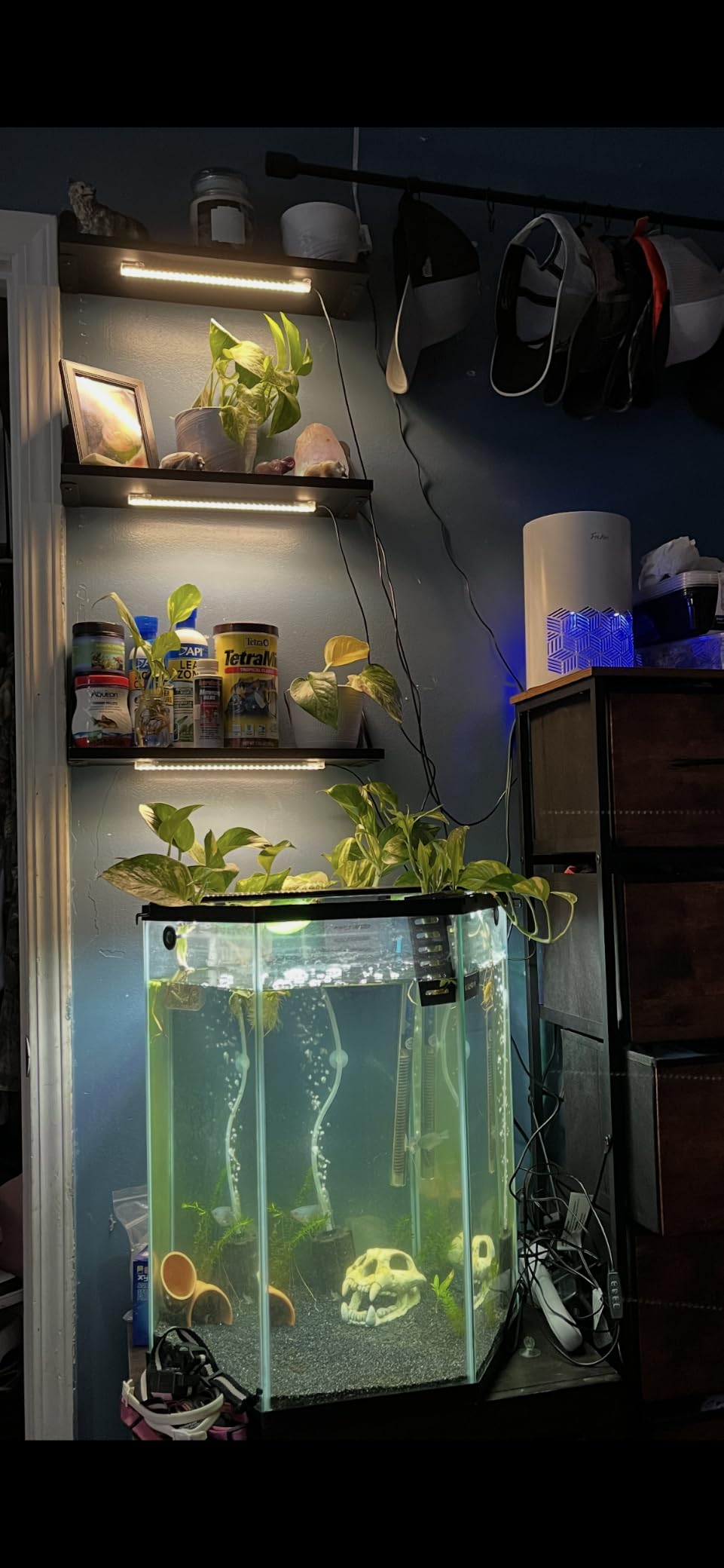
Owners using these for succulent shelves and seed trays report even, low-heat 3500K output and praise the flexible mounting kit. My 3500K bars sat around 7 inches above a row of six Sedum pots and the growth was consistent from end to end, which is the result I care about.
Bar Geometry and Shelf Coverage Math
Two 8.6 inch bars handle a shelf up to about 20 inches with acceptable evenness when mounted close. Beyond that, you need another set. The 71-inch power cord is generous enough to reach from a nearby outlet without an extension, which removes one of the frictions that come with bar fixtures.
Mounting options are screws, cable ties, double-sided tape and magnets, so the same set works under a shelf, along a wall or on a rack. I used the tape option on a smooth wooden shelf and it held for the full test, though screws are the better choice if you might move the shelf.
Dimming, Modes and the 3500K Question
Ten dimming levels and three switch modes give the same control range as the clip lamps here. The lower levels are genuinely useful for acclimation, which is the single most useful thing a dimmer does for a succulent setup, because ramping up slowly is how you avoid bleaching.
At 3500K these are the warmest fixtures in the roundup. That is pleasant in a room and fine for most succulent species, but for high-light mesembs like lithops I would still prefer a 5000K or 6000K source, and I would use the dimmer to raise the effective intensity rather than relying on color.
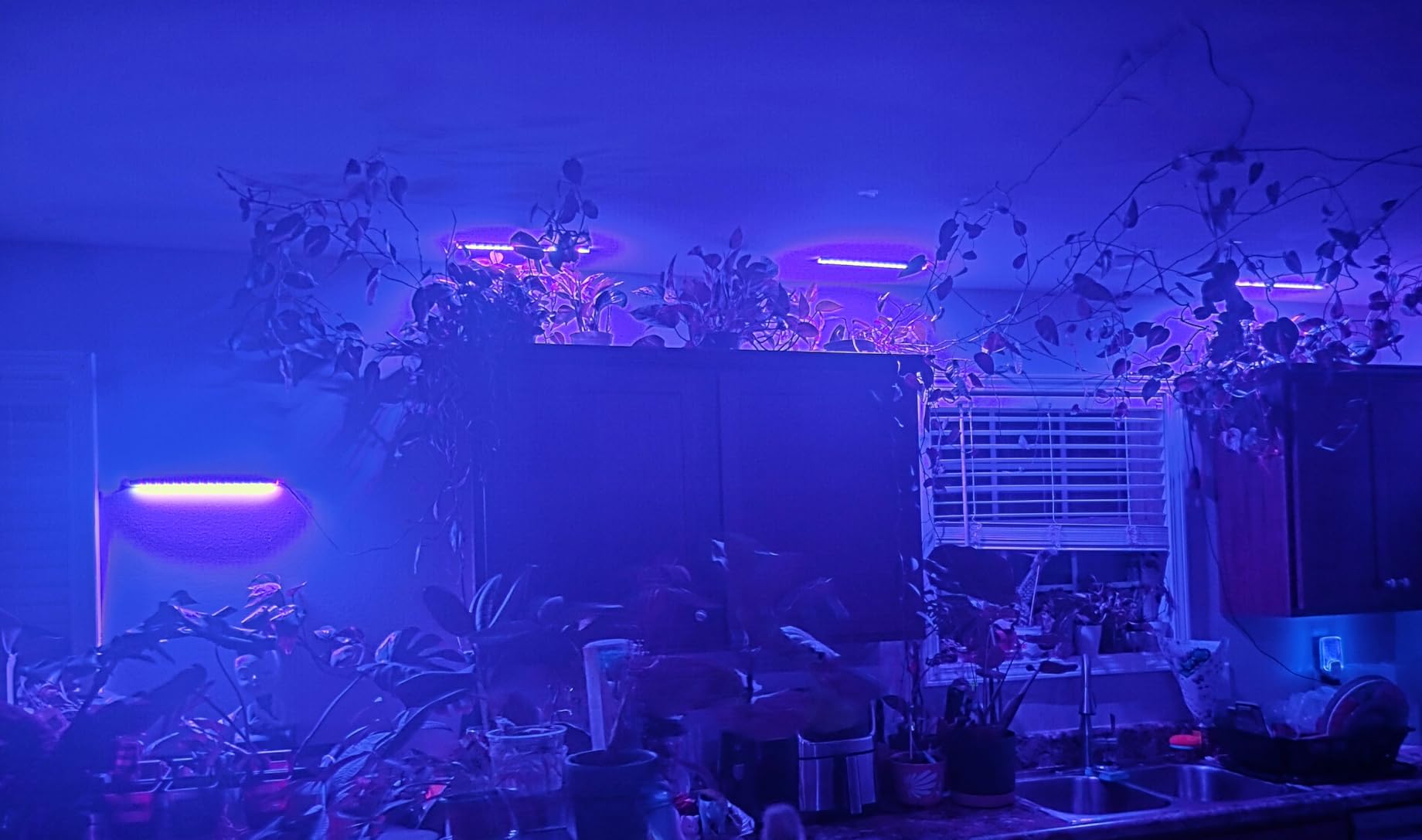
Who This Lamp Suits and Where It Falls Short
This suits a plant shelf between 12 and 20 inches wide, a propagation rack, or a windowsill where you want even light rather than a hot spot. The four mounting options also make it the easiest fixture here to retrofit to furniture you already own.
It falls short on total width, because 8.6 inch bars cannot cover a long shelf alone, and on timer reliability, since it needs a manual reset after a power cut. For a room-sized rack, go to linkable T5 bars instead.
9. Kullsinss 65-Inch Pole Light – For Floor Pots and Tall Specimens
Kullsinss 6.3in Grow Lights for Indoor Plants, Full Spectrum Plant Light
80 full-spectrum LEDs
Pole adjustable 10 to 65 inches
6/12/16H timer
5 dim levels
Woodgrain
+ Pros
- Long 65 inch reach covers tall floor plants and large pots
- Woodgrain finish blends into interiors far better than a bare metal pole
- 80 full-spectrum LEDs with three modes and five dimming levels
- Pushes into soil for a no-base
- no-hardware setup
– Cons
- Sold without a base so the pole must be anchored in soil
- Larger ring size needs clearance and a steady surface to avoid tipping
Most grow lights in this category are built for a shelf, and a floor-standing specimen in a 14 inch pot puts a shelf light completely out of reach. This Kullsinss solves that with a pole that extends from 10 to 65 inches, so the ring sits at canopy height on a plant that started as a 4 inch pot and ended up as a 3 foot column of echeverias.
The finish is the detail that made me keep using it. A faux woodgrain ring on a stainless steel pole reads as a piece of garden furniture rather than horticultural hardware, and the brand notes it will not crack or delaminate the way bamboo-finish poles do. In a living room corner, that difference is the whole aesthetic argument.
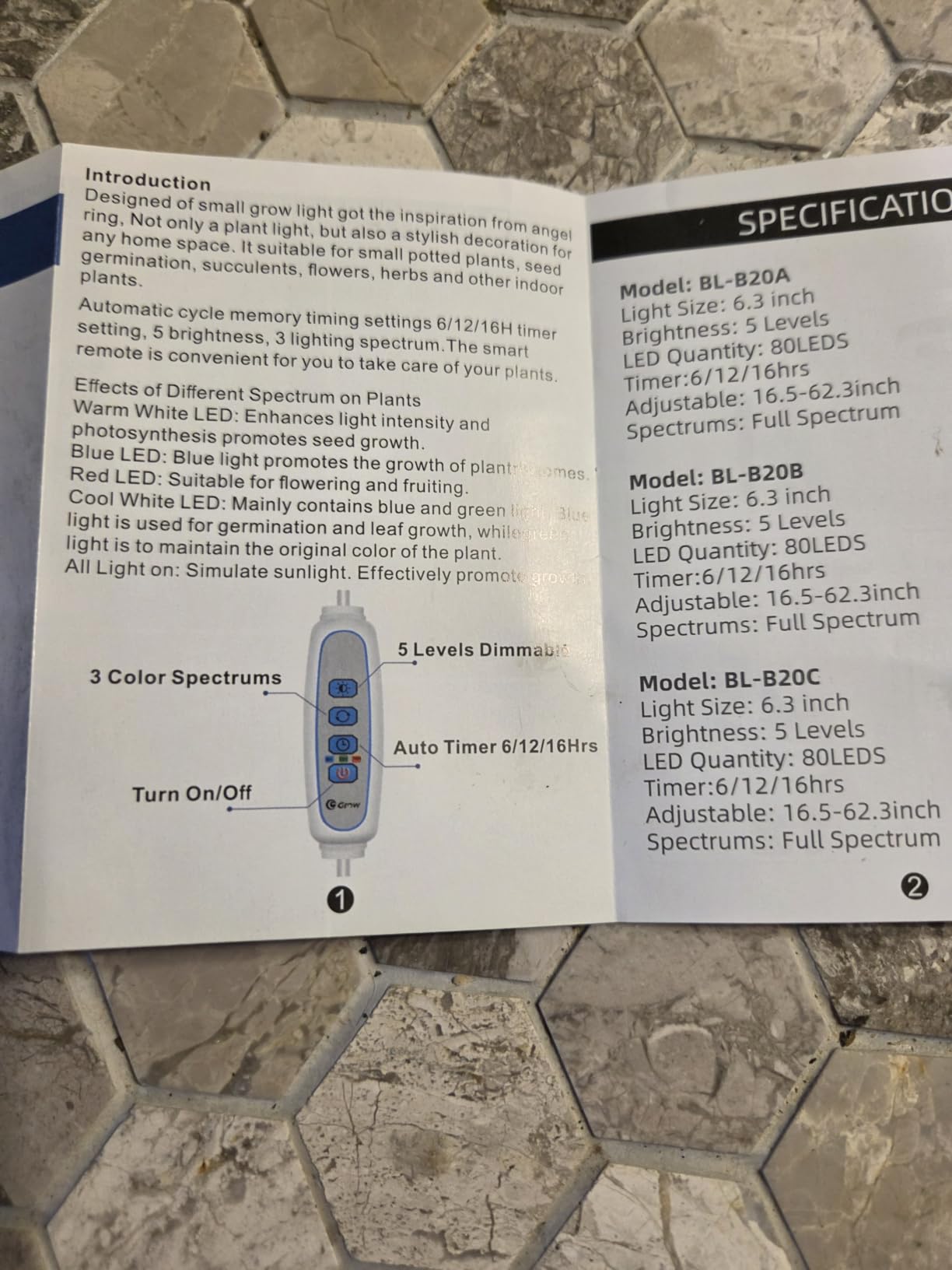
Eighty LEDs spanning 380-760nm full spectrum, five dimming levels and three spectra modes give reasonable control, and the timer here is unusual in this roundup: 6, 12 and 16 hours rather than the 3, 9 and 12 pattern most competitors use. The 16 hour setting suits a high-light collection in a genuinely dark room, with a proper dark period still intact.
Height Range and Canopy Placement
The adjustment range is the specification that matters, and 10 to 65 inches is unusually wide. At the low end, the ring hovers over a windowsill pot at a good 6 inch mounting distance. At full extension it clears a large floor plant without the fixture needing to be any closer than 8 inches to the canopy.
Because the ring is wide relative to a small pot, coverage across the canopy is even rather than concentrated. On a 14 inch pot with offsets around the rim, the outer offsets received usable light, which is a common failure of narrow clip beams.
Mounting Without a Base: What to Know
There is no base, and this is the caveat owners mention most. The pole is anchored by pushing it into the soil of the pot itself, which works well in a heavy terracotta pot and less well in a light plastic one, particularly once the soil dries and shrinks away from the stem.
At 7.2 ounces the whole unit is light, so a taller plant leaning in a draft or a curious pet can tip it. My floor pot is a wide terracotta container that resists tipping easily, and that combination is what I would recommend. A narrow pot and a tall plant is the setup most likely to disappoint.
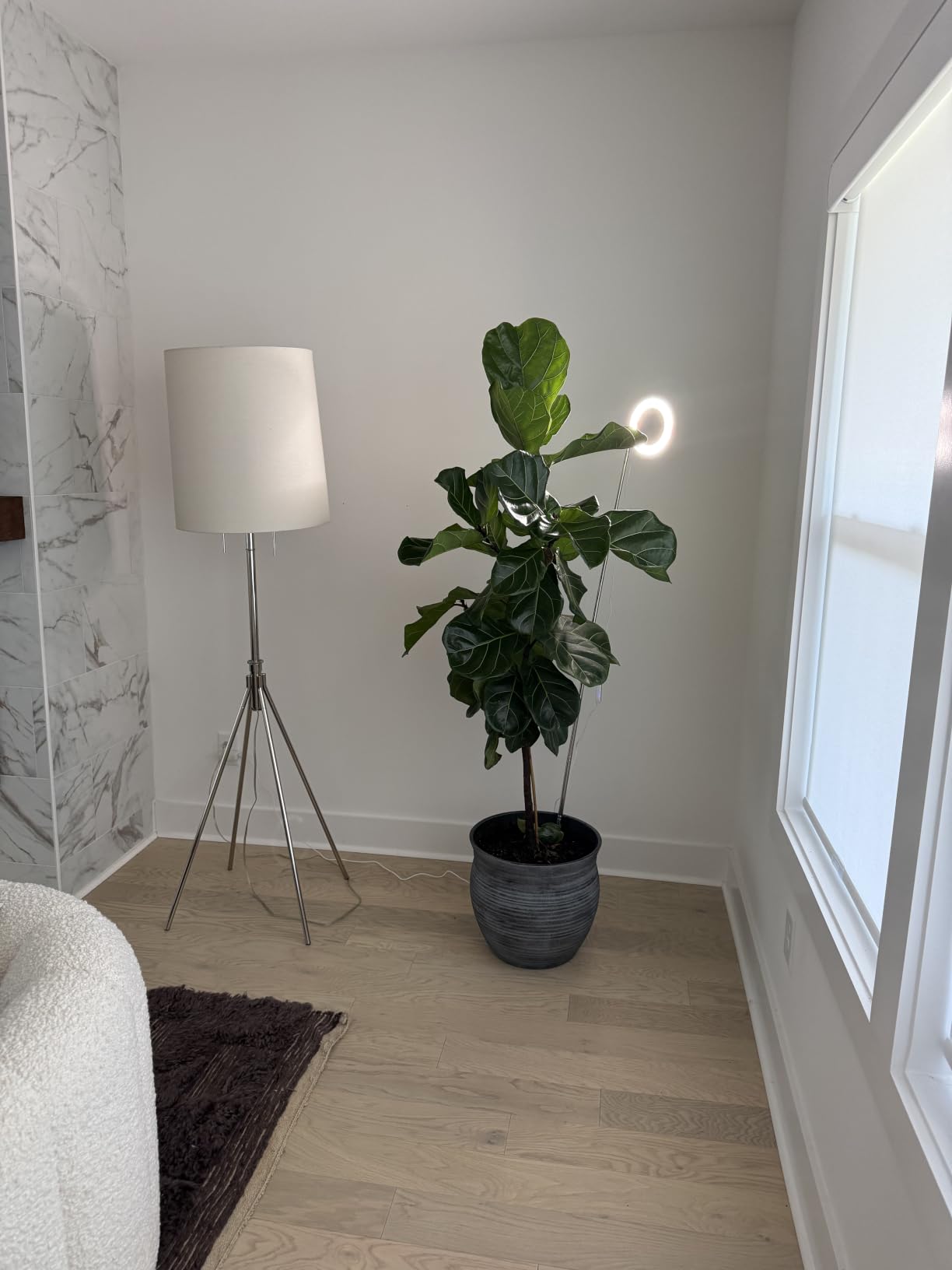
Who This Lamp Suits and Where It Falls Short
This suits floor plants, large pots, tall multi-stem specimens and anyone whose collection lives on the floor rather than on furniture. The 16 hour timer option also makes it useful for a high-light collection in a basement or a shaded room.
It falls short for small shelves, where the 6.3 inch ring is awkward and the pole is unnecessary, and it is not suited to lightweight containers that cannot hold the fixture stable.
10. Kullsinss 3.5-Inch Halo Light – A Small Ring With a Detachable Base
Kullsinss 3.5in Small Grow Lights for Indoor Plants, 48 LEDs Full Spectrum
48 LEDs at 380-760nm
3.5 inch halo head
5 dim levels, 3 modes
3/9/12H timer
+ Pros
- Halo glow reads as decor rather than equipment
- Detachable base works under the pot or inserted into soil
- Owners report revived growth on struggling houseplants within a week
- Telescoping pole lets one lamp follow a growing plant
– Cons
- Small light head covers only a compact area
- Lightweight plastic base tips unless weighted
- Some buyers report fewer dimming and timer levels than the listing claims
The 3.5 inch halo is the smallest light head in this roundup, and that is exactly its job. Mounted over a 2 inch pot of Haworthia or a cluster of small offsets, the ring sits close enough to deliver useful intensity in a footprint that would be unusable with a wider head. My smallest shelf, which is a narrow ledge above a radiator, is lit by this and nothing else.
The detachable base is the feature most people miss. It pulls off so the pole can be inserted directly into the soil for a loose pot, or it stays on and slides underneath the pot to raise the ring. Under-pot placement is what turned a floor pot into a lit display for me without any hardware.
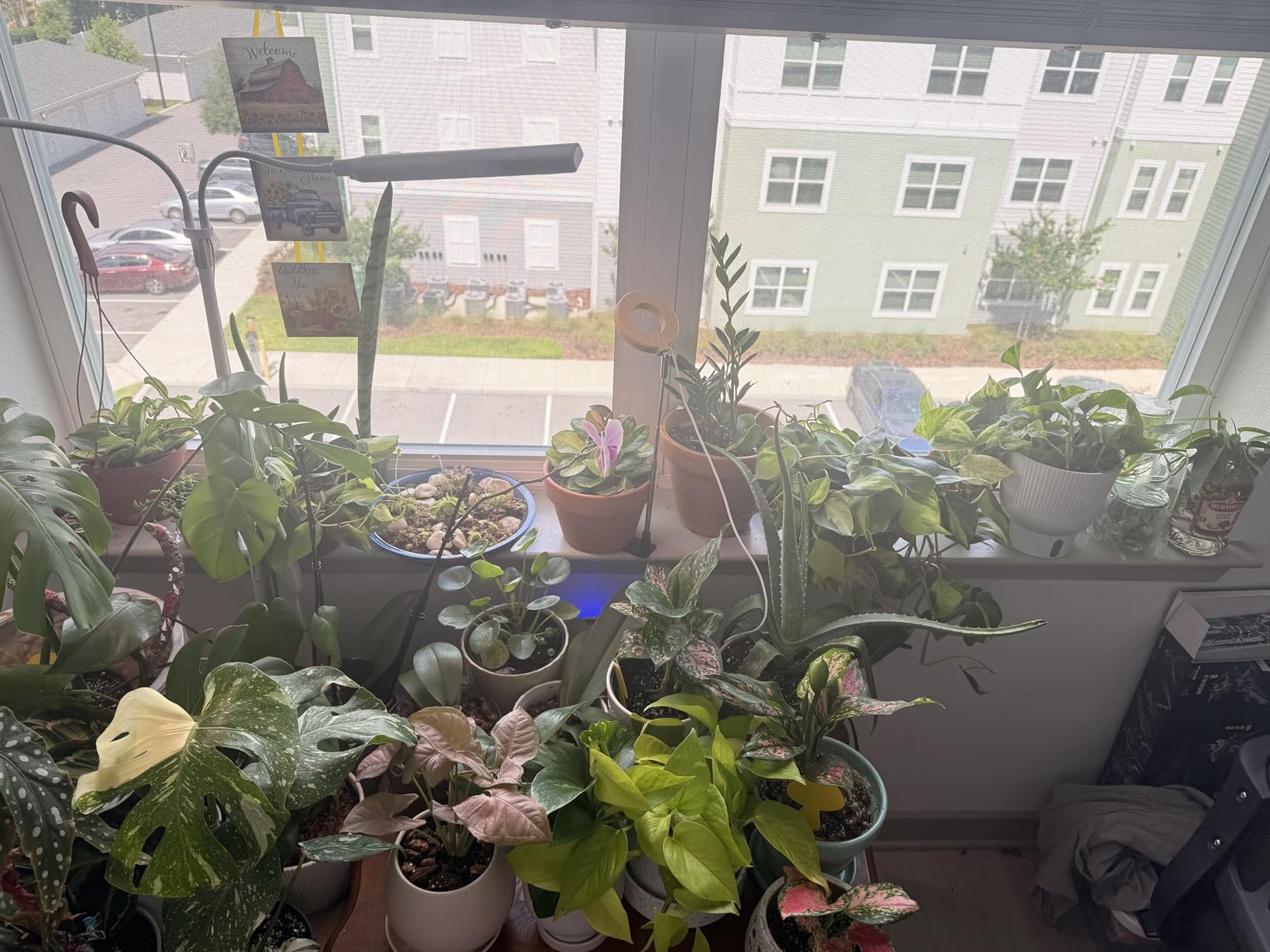
Owners consistently praise the aesthetics, and several report reviving leggy houseplants within a week of use. The telescoping pole adjusts from 6.5 to 26 inches, so a single unit can follow a plant through a growth cycle rather than being retired when the plant outgrows it.
Small Head, Narrow Coverage, Real Limits
Coverage is genuinely small. The ring is 3.5 inches across, so the useful footprint is roughly one 3 inch pot. If you have six pots in a row, plan on six units or move them along the row every week, which is a realistic routine for a small windowsill collection.
With 48 LEDs across 380-760nm and five dimming levels plus three spectral modes, the control surface is good in principle. One recurring report in the reviews, though, is that the actual number of dimming and timer levels on the unit does not always match the listing, so treat the advertised step count with a margin of error.
Base Stability and Timer Behavior
The base is lightweight plastic and will tip if the pot above it is light or if the ring is extended far. In practice, the fix is to weight the base with a small stone or to set the unit on a surface where a knock will not send it over. I used it on a high shelf for two months without incident once weighted.
The 3, 9 and 12 hour timer handles a full daily cycle on its own, and the fixture draws very little power over USB. For a shelf you only need to light part of the week, that is plenty of scheduling.
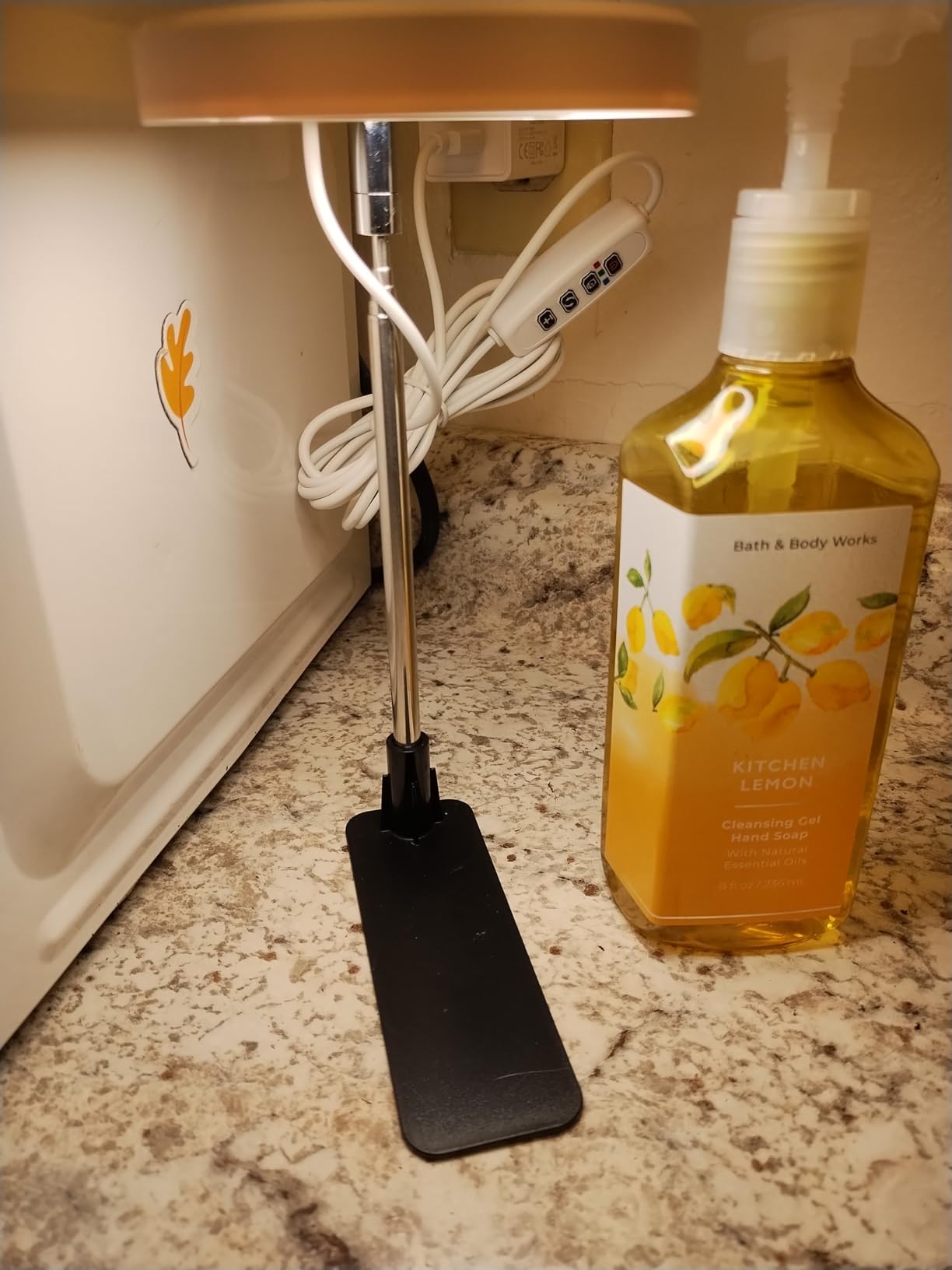
Who This Lamp Suits and Where It Falls Short
This suits a windowsill of small pots, a bathroom or office ledge with no shelf edge, a propagation shelf of tiny offsets, and anyone who wants a grow light that reads as decor. The under-pot base is the reason to choose it over a stake model.
It falls short for anything larger than a 3 inch pot, and on a narrow high shelf unless you weight the base. It is a supplementary tool for a collection, not a lighting solution for one.
11. GYTF Halo Pole Light – The Simplest Tool-Free Start, With Honest Limits
GYTF Halo Plant Grow Light, 6000K White LED Full Spectrum Growing Lamp for Indoor Plants, Succulents, Mini Bonsai, Small Plants, Height Adjustable, Dimmable & Timer 4/8/12/18Hrs
48 LED halo at 6000K
Pole extends 7 to 18 inches
4/8/12/18H timer
1.6 ounces
+ Pros
- Pushes straight into soil with no tools
- screws or assembly
- Height-extendable pole grows with the plant
- Four timer options including a long 18 hour cycle
- Halo ring gives even overhead light to a single pot
– Cons
- 4.3 average with steady reports of dimmer output than expected
- Very light pole can shift or tip when adjusted
- Listed dimensions and remote features are not always clear in practice
I am including this one because it is the most common first grow light people buy, and it deserves an honest write-up rather than a dismissal. At 1.6 ounces with a 7 to 18 inch pole, a halo ring and a push-in soil mount, it is the least complicated setup in the roundup: no clamp to tighten, no base to weight, no cable to route.
The diode split is 6 red, 6 blue and 36 white at 6000K across a ring head, and the timer runs at 4, 8, 12 or 18 hours with independent dimming. The 18 hour option is the longest in this roundup and is genuinely useful for a high-light specimen in a dark room, as long as the plant still gets a full dark period.
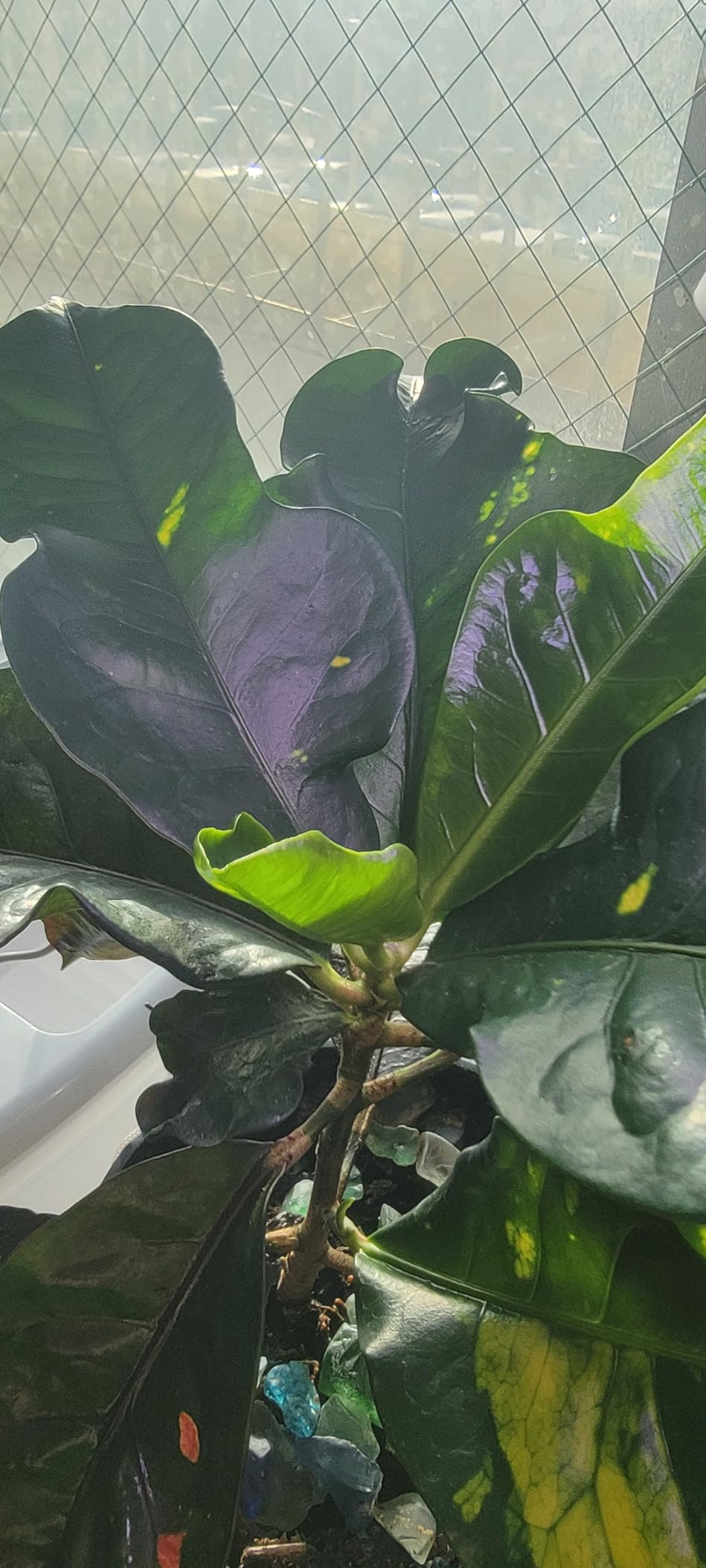
The GYTF gets a 4.3 average, the lowest figure in the set, and the reason is consistent across reviews: owners expected more output. The ring is small and the diode count is modest, so a plant sitting 10 inches away sees meaningfully less light than it would under any of the clip lamps above. Mounted at 5 to 6 inches over a single small pot, it is fine.
What 4.3 Means for Real Plant Response
Read the rating as a coverage limitation rather than a quality problem. The build is decent for the tier, the 180-degree rotating head helps with aiming, and the soil-insertion mount is genuinely convenient. What it lacks is intensity per unit area beyond about 6 inches.
For a first plant, a seedling, or a single succulent in a decorative pot on a windowsill, the effect over several weeks is visible and positive. For a mature Echeveria or a lithops, it will plateau and the plant will stretch toward the window, which is the exact problem a grow light is supposed to solve.
Stability, Aiming and the Eighteen-Hour Question
At 1.6 ounces this is the tippiest fixture in the roundup. Adjusting the pole moves the center of gravity, and owners report the unit shifting or tipping. A dab of mounting putty or a slightly larger pot both fix this in a few seconds.
The 180-degree rotating head does help, because it lets you angle the ring toward one side of a window rather than straight down, which produces more even coverage across a pot than a fixed downward head. That adjustment is what makes a 5 to 6 inch mounting distance workable here.
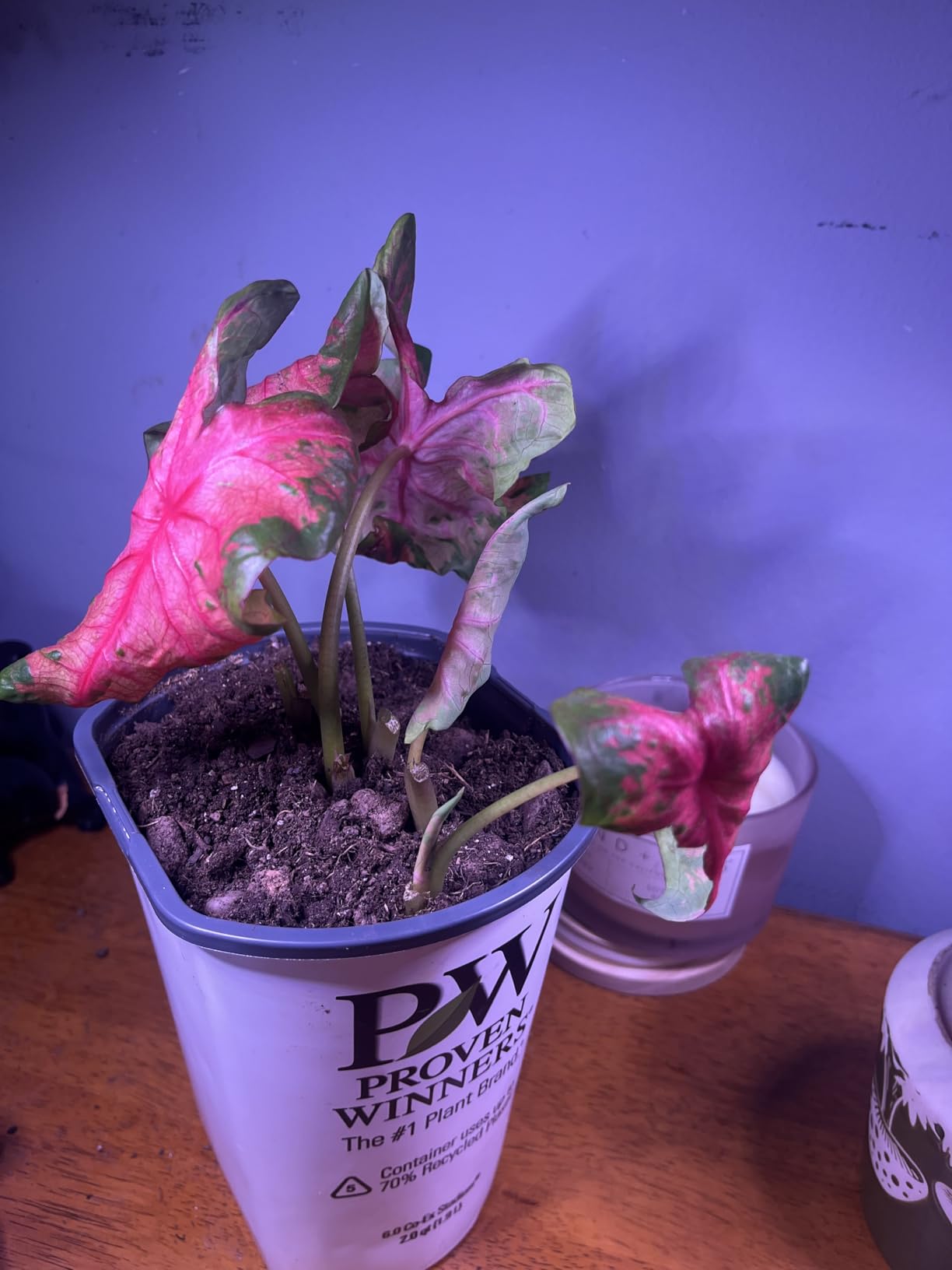
Who This Lamp Suits and Where It Falls Short
This suits a first-time grower lighting one small pot, someone who cannot or will not clamp or mount hardware, and a single windowsill succulent that just needs more hours of light than the window gives it. The 18 hour setting is a real advantage for a dark room.
It falls short on intensity, on stability and on coverage. If your plant is already stretching, this will not fix the problem, and if you find yourself adjusting it constantly because it tips, move up to a clip lamp with a real clamp.
12. FECiDA 208-LED Bonsai Lamp – A Weighted Base for a Bench Full of Pots
FECiDA Bonsai Grow Light, Table Grow Lights for Indoor Plants Collection
208 LEDs, 2000 lumens, 25W
3000K, 5000K, 660nm plus UV-IR
0.5 meter weighted base
Link 3 fixtures
+ Pros
- Highest published lumen output in the set and bright enough for a whole collection
- Freestanding weighted base needs no clamp or shelf mounting
- Multi-band spectrum including 660nm red for compact growth
- Link up to three units from a single wall socket
– Cons
- Bulkier tabletop footprint at 930g
- Switch-only version has no timer so scheduling needs an external timer
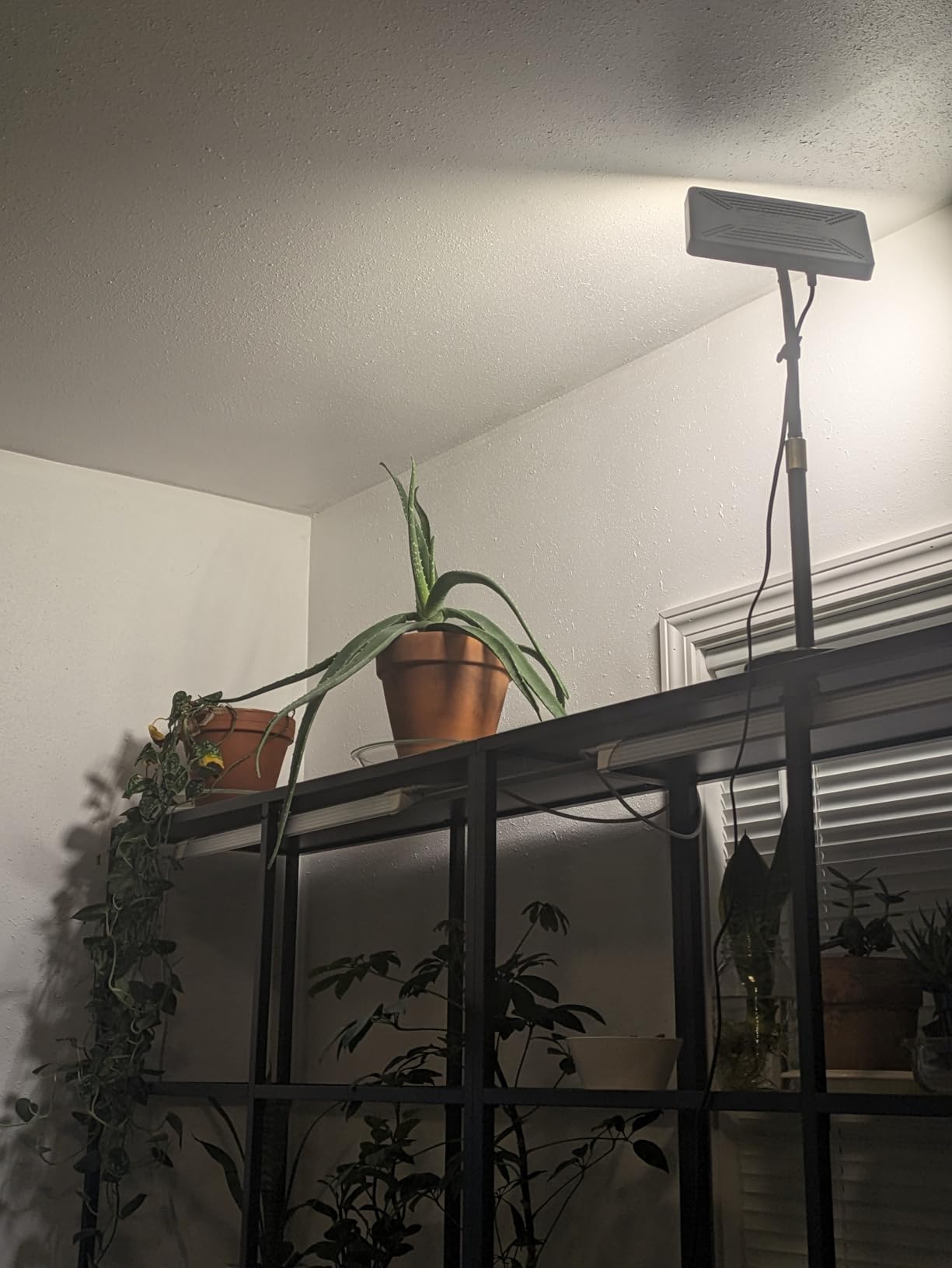
When a succulent collection outgrows shelves, the last thing you want is a room full of clamps. The FECiDA answers that with a freestanding weighted base, an adjustable stand and the highest lumen figure in this roundup at 2000 lumens from 208 LEDs drawing 25W.
The spectrum is the most technically complete here: 3000K and 5000K diodes combined with 660nm red plus UV and IR, all in one head. In practical terms that means you get a full range of useful wavelengths from a single fixture, which is why bonsai growers and mixed-collection owners like it, and why I tested it against a bench of about twenty small pots.
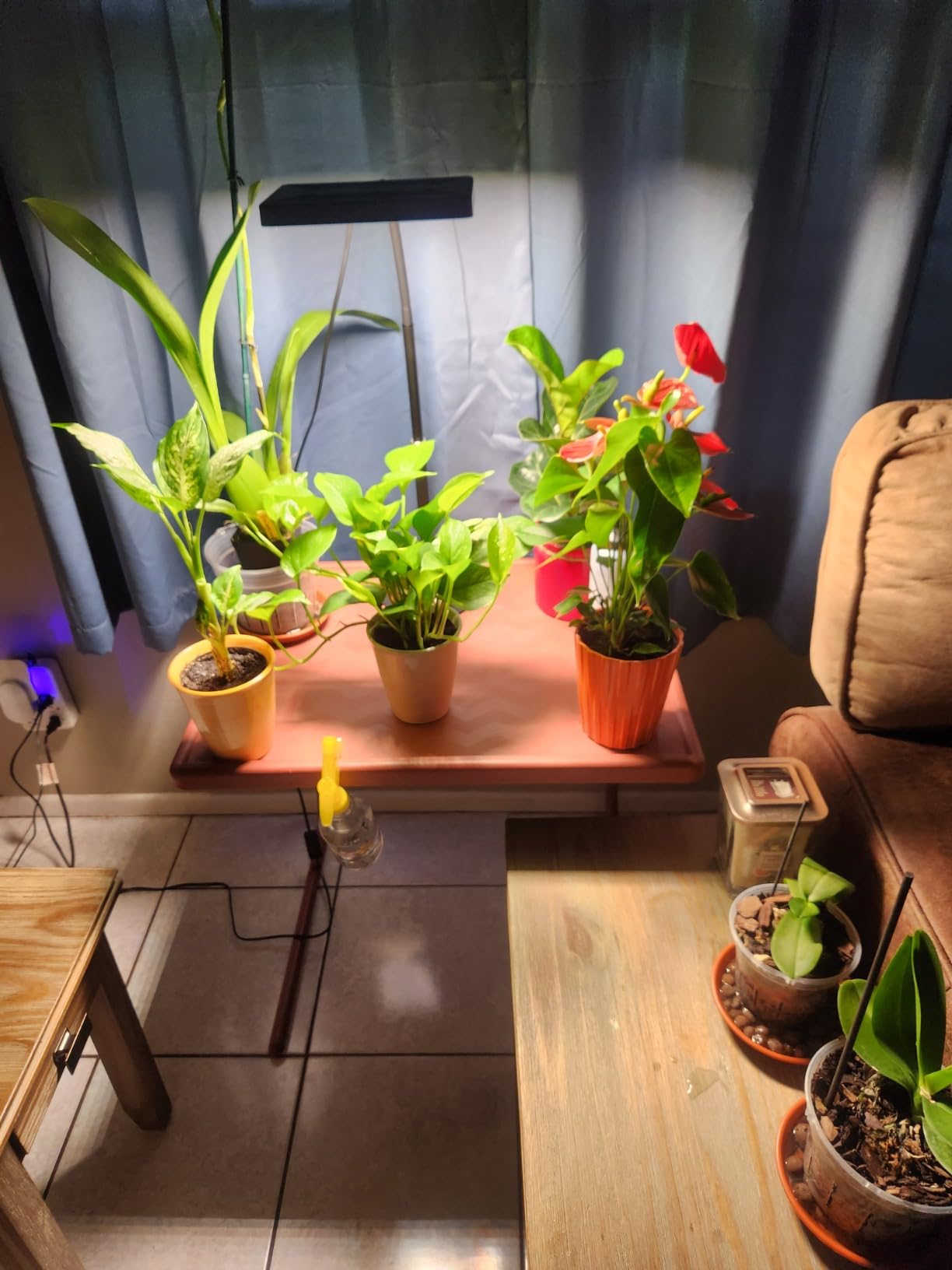
At 10 to 12 inches above the bench it lit all twenty pots evenly, with no hot spot in the center, which no clip lamp in this roundup managed at that distance. The stand adjusts in height so the head can be raised as plants grow, and the 0.5 meter base diameter is wide enough that a 930g unit does not tip when brushed.
Coverage at Collection Scale
This is the only fixture here that functions as a primary light for a group rather than a supplement for a pot. The wide base and the stand mean you can light a whole bench from one outlet position, and the input and output sockets on the base let you link up to three fixtures in series for a larger run.
The honest limit is that the light falls off with distance, so a bench wider than roughly 24 inches will have weaker light at the far edges. Most people solve this with a second fixture, which is why the daisy-chain capability is genuinely useful rather than a gimmick.
Why the Missing Timer Matters Here
On this switch-equipped version there is no built-in timer, which is a real gap given how much of this category’s value rests on scheduling. A digital plug-in timer is the answer, and it is the one accessory I would call genuinely necessary across this entire roundup regardless of which fixture you pick.
The 930g weight and 0.5 meter base also mean this is not a small-shelf product. On a narrow windowsill it is impractical, and for a single pot it is absurd. Where it makes sense is a workbench, a plant stand or a dedicated corner where you already have the surface area.
Who This Lamp Suits and Where It Falls Short
This suits a collection of twenty pots or more, a bonsai bench, a propagation room, and anyone who wants one fixture to cover a group without clamps or wall mounting. The daisy-chain sockets make scaling to a larger run straightforward.
It falls short for small spaces, for a single plant, and for anyone unwilling to add an external timer. The direct plug-in design with a physical switch is otherwise clean, with no adapter to lose.
Succulent Grow Light Buying Guide: What Actually Matters
Every fixture above works to some degree. The differences that decide whether your succulents stay compact come down to a handful of variables, and most buyers evaluate them in the wrong order.
PPFD, PPF and PPE: The Only One That Matters Is PPFD
These three numbers get used interchangeably on listings and they are not the same thing. PPF is photons emitted by the whole fixture per second, useful for comparing lamps of different sizes. PPE is photons per joule of electricity, which tells you how efficient a lamp is. PPFD is photons landing on a square metre of leaf surface per second, and it is the only one that predicts whether a plant grows compact.
That is why a manufacturer’s figure at a stated distance is treated as trustworthy data and a bare lumen number is not. If a listing gives you PPFD, check whether it is measured at 6 inches or at 24 inches, because the number at 6 inches is the one that matters for succulents. If a listing gives you only lumens, there is no honest way to convert it.
As a working target, most succulents do well in the range of roughly 200 to 400 PPFD at leaf level. Below that, expect stretching. Well above that for long periods, expect bleaching and eventual scorch.
Spectrum: Full Spectrum White Beats Blurple Every Time
Mounted at close range for 12 to 15 hours a day, a daylight white LED between 5000K and 6500K is the right target. Red and blue only fixtures can be marginally more photon-efficient in theory, but a white full-spectrum lamp lets you judge leaf color, keeps a living space usable, and supports the whole plant rather than two narrow bands.
This is also where the term full spectrum gets abused. A listing saying 380-800nm does not guarantee useful output across that range, and a lamp that emits a visible purple glow is almost always a low-output red and blue array behind a purple filter. The color rendering index tells you more about whether the light looks natural, and anything at CRI 90 or above is a good sign.
For variegated succulents, stay on full spectrum white and control intensity with a dimmer. Switching to a red and blue mode on a variegated plant is the fastest way to lose a white margin.
Mounting Distance by Fixture Type
Distance is the most-argued variable in this category, and the confusion comes from mixing fixture types. The rule is that closer always allows more intensity, and a lamp that must sit far away to avoid burning plants is not a lamp with enough control.
For a bulb or pot clip like the SANSI, 6 to 12 inches is right. For a T5 or T8 strip such as the Barrina set, 6 to 10 inches above the canopy works well because the output is spread along the bar. For a multi-head clip like the LEOTER, 8 to 12 inches covers a shelf evenly. For a bar fixture across a shelf, 6 to 10 inches keeps the light even along the length.
For a pendant or floor stand, expect 18 to 36 inches because the design is meant to light a group from further away. Whichever type you pick, if you cannot bring the head to within about 12 inches of the plant, expect a stretched result no matter how good the fixture is.
T5 vs T8 vs T5 HO: What the Lettering Means
The naming in fluorescent-style grow lighting confuses people constantly, and the difference is real. T5 fixtures are slim tube fixtures built around T5 fluorescent tubes, and the HO designation means high output, a brighter tube in the same form factor. T8 fixtures use wider T8 tubes and are generally brighter and more efficient for the same length, at the cost of a bulkier profile.
For succulents, both work. Higher output and closer mounting is what matters, and a T8 often reaches a usable intensity at a slightly greater distance than a comparable T5, which is the practical argument for T8. The T5 HO option sits between the two and remains common because the fixtures are cheaper and widely available.
In this roundup the Barrina set is the T5 category done well: four linkable 1ft bars at 5000K, daisy-chainable to 16 units, and a mounting system that works with magnets. It is the one I would choose first for a shelf, regardless of the T5 versus T8 argument.
Photoperiod: The Dark Period Is Not Optional
Community advice converges on 10 to 16 hours of light per day with a mandatory dark period, and I would narrow that to 12 to 15 hours for most succulent collections. Beyond roughly 16 hours, you get diminishing returns and you remove rest time that the plant uses for maintenance work.
The dark period matters more than most people expect. Succulents evolved with a pronounced rhythm, and a light running around the clock produces growth that is soft, pale and prone to rot because the plant never gets a genuine rest signal. A digital timer is the mechanism that makes this reliable, and it is the one accessory I consider genuinely non-optional.
Cheap mechanical plug-in timers have wattage limits, so check the rating on the timer against the fixture draw before you pair them. Most of the fixtures in this roundup run between 5W and 25W, so almost any reputable plug-in timer is fine.
Watts Per Pot and Shelf Sizing Math
The most common question in this category asks how many watts a succulent needs, and the answer is more useful than it sounds. Roughly 5W to 10W of LED fixture wattage per pot covers a typical succulent when mounted at 6 to 10 inches. That is the reasoning behind the SANSI 5W pot clip working for one plant and the FECiDA 25W stand covering twenty small pots from further away.
For shelf area, the practical guide is coverage width rather than wattage. A single clip lamp covers roughly 10 to 12 inches of shelf. Two-head clips cover about 16 to 20 inches. Bars cover 8 to 12 inches each, and a linkable T5 set scales linearly, one 1ft bar per foot of shelf.
The 3500K versus 6000K difference in the RWNTAO bar and clip pairs illustrates a real trade: warmer lamps are easier to live with, cooler lamps hold high-light species tighter. If your collection is mostly Haworthia and Sedum, warmth is not a problem. If lithops and Euphorbia are in the mix, keep the color temperature at 5000K or above.
Running Costs and Electrical Safety
Full-spectrum LED grow lights for succulents are inexpensive to run. At 10W for 12 hours a day, a single fixture uses about 0.12 kWh a day, which keeps the monthly running cost negligible at typical residential rates. Even the 25W FECiDA on a 13 hour cycle stays negligible.
On safety, keep to grounded outlets, avoid daisy-chaining extension cords, and do not run a cord under a rug or across a walkway where a pet or a foot can catch it. Check that the fixture carries a recognized safety listing where the brand publishes one, and let the fixture cool before repositioning it. If you are mounting anything above a plant near a water source, keep the connection itself dry.
Lights to Avoid, and Why
Two categories fail repeatedly and both are worth naming explicitly. The first is blurple, sometimes sold as a purple halo or purple panel. These are red and blue arrays behind a purple filter with low photon output, and experienced growers consistently warn that they cannot sustain high-light succulents or keep growth compact. If a lamp glows purple, that is a warning sign rather than a selling point.
The second is the unbranded halo kit with no published wattage, no spectrum range and no safety information. Several fixtures in this roundup are halo-form, and the reason they pass our screen is that they publish a diode count, a color temperature and a warranty. A halo light with no published specifications at all is buying a mystery.
One more category to be careful with is high-wattage grow-tent panels. They are built for dense canopies of leafy plants, they run hot, and at 6 inches they will scorch succulent tissue. They are not a succulent light at any price.
Etiolation, Burn, and How to Fix Both
These are the two problems that account for almost every frustrated succulent grow light thread, and both are fixable. The first is prevention, the second is correction.
Etiolation: Recognising the Symptom and Correcting It
Etiolation is the stretching response to insufficient light intensity. It cannot be reversed once it happens, so the goal is always to catch it early and then improve the light for the next growth cycle. The symptoms are distinct enough to diagnose at a glance.
Wide-spaced leaves with visible gaps between them on a rosette, a stretched stem between the plant and its leaves, a pale washed-out green, and new growth that is thinner and more fragile than the old growth are the four markers. Etiolated plants are also far more susceptible to rot and to pests, because the weakened tissue and the low humidity of a dark stretch environment both encourage problems.
The fix is threefold: move the light closer until the head sits 6 to 12 inches from the canopy, raise the photoperiod to 12 to 15 hours on a timer, and increase intensity using a dimmer or a red and blue spectral mode for a short cycle. If the plant is badly stretched, the compact growth you get back is on new growth, and the old stem stays long. Rotating the plant daily during recovery helps even out the remaining light.
Burn and Bleach: What It Looks Like and How to Ramp Up
The opposite problem is light scorch, and it usually appears in the first two weeks after adding a light. A bleached patch, a pale or tan flat area on the top surface of a leaf, curling margins, or a sudden soft translucent look on tissue nearest the fixture are the signs. Succulents that are already etiolated are the most vulnerable, because the weakened new growth is closest to the light and least able to cope.
The ramp-up schedule is the standard remedy. Start at 8 to 10 inches and the lowest brightness level for the first week, raise to full brightness in the second week, and only then reduce the distance to 6 to 8 inches. This gives the plant time to thicken its tissues before the light becomes aggressive.
If a plant is already bleached, the damaged tissue does not recover. Let the scar dry and callus rather than pulling it, keep the plant slightly further away while new growth emerges, and accept that the burn mark will be there for months. If you are new to grow lights, that two-week ramp is the single most useful habit you can build, and it is the reason to buy a fixture with a dimmer.
Frequently Asked Questions
Can you put succulents under grow lights?
Yes. Succulents are adapted to intense direct sun, so almost any indoor light is too dim for them, and a grow light supplements or replaces that missing intensity. A full-spectrum white LED mounted 6 to 12 inches above the pots and run 12 to 15 hours a day on a timer keeps growth compact and colors vivid. Grow lights are not automatically better than a good window, but they remove the guesswork and they work in rooms that get no direct sun at all.
What kind of light do most succulents need?
Most succulents need high intensity white light in the range of roughly 200 to 400 PPFD at leaf level, delivered by a full-spectrum white LED in the 5000K to 6500K range. Intensity at the canopy matters more than any other factor, and the only reliable way to get it is to mount the fixture close, at 6 to 12 inches. When intensity is too low, succulents stretch, produce widely spaced pale leaves and lose color in a process called etiolation.
What color LED light is best for succulents?
Daylight white between 5000K and 6500K is the right choice. Full-spectrum white supports the whole plant, lets you judge true leaf color and keeps a living space usable, while red and blue only lights are less pleasant to live with and are usually sold at lower output. Avoid blurple and purple halo lights entirely, because growers consistently report they cannot sustain high-light succulents or keep growth compact.
How many watts should my grow light be for succulents?
A practical starting point is 5W to 10W of LED fixture wattage per pot, mounted 6 to 10 inches away. For shelf area, judge coverage width instead of wattage: one clip lamp covers roughly 10 to 12 inches, a two-head clip covers 16 to 20 inches, and a linkable T5 set gives you about one foot of shelf per bar. Coverage width and mounting distance decide the outcome far more than the wattage on the label.
Is T5 or T8 better for grow lights?
Both work for succulents, and the letter mainly describes tube width. T5 fixtures are slimmer and use T5 tubes, with the HO version meaning a higher-output tube. T8 fixtures use wider, brighter and more efficient tubes, so they reach usable intensity at a slightly greater distance. In practice a higher-output fixture mounted closer beats a lower-output one mounted further away, and a linkable T5 set is a strong choice when it can sit within 8 inches of the canopy.
Which grow lights are better for plants, Barrina or SANSI?
They solve different problems. Barrina is the stronger choice for a shelf, cabinet or collection of more than ten pots, because its linkable T5 bars spread even light along a run and mount with magnets, clips, ties or tape. SANSI is the stronger choice for a single pot, a desk or any spot with no shelf edge to clamp to, because the pot clip needs no hardware. Experienced growers frequently use both, one for the shelf and one for the individual plant.
How far above succulents should a grow light be?
Between 6 and 12 inches above the top of the plant. Bulbs and pot clips work at 6 to 12 inches, T5 and T8 strips at 6 to 10 inches, multi-head clip lamps at 8 to 12 inches, and pendant or floor stands at 18 to 36 inches because they are built to light a group. If you cannot bring a fixture within about 12 inches of the canopy, expect stretched growth regardless of the lamp’s output.
Why is my succulent stretching under a grow light?
Stretching, called etiolation, almost always means the plant is not receiving enough intensity. The usual causes are a lamp mounted too far away, too few hours per day, or a fixture with too little output for a mature plant. The fix is to move the head down to 6 to 12 inches, raise the photoperiod to 12 to 15 hours on a digital timer, and increase intensity with the dimmer or a short red and blue cycle. Existing stretched growth will not shorten, but new growth comes in compact.
Two related reads if you are setting up a space from scratch: our guide to ring grow lights for seedlings covers propagation setups, and growing plants indoors covers what to do with the rest of the shelf once the light is sorted.
The Bottom Line: Which Grow Light Should You Buy
If you want one answer, take the GooingTop 6000K clip lamp. It is the most tested fixture here, the clamp and gooseneck hold position through months of daily use, the 6000K output with CRI 90 keeps color honest, and the memory timer handles the scheduling so you do not have to think about it.
Match the format to the setup instead. For a shelf with more than ten pots, the Barrina 1ft T5 four-pack gives you even coverage that scales from one outlet and disappears into the furniture. For a single pot with no shelf edge nearby, the SANSI pot clip is the tidy answer and the only one here that publishes an intensity figure. For a mixed collection where species disagree about how much light they want, the LEOTER 4-head lamp gives you the spectrum modes and dimming to satisfy all of them. For a floor plant too tall for a shelf, the Kullsinss 65 inch pole reaches it, and for a bench of twenty pots the freestanding FECiDA covers the group without a single clamp.
Two habits matter more than the brand. Mount the head within 12 inches of the canopy, and run it 12 to 15 hours a day on a digital timer. Do those two things with any of the fixtures in this guide and your 2026 growing season will go better than the last one.
Leave a Reply