
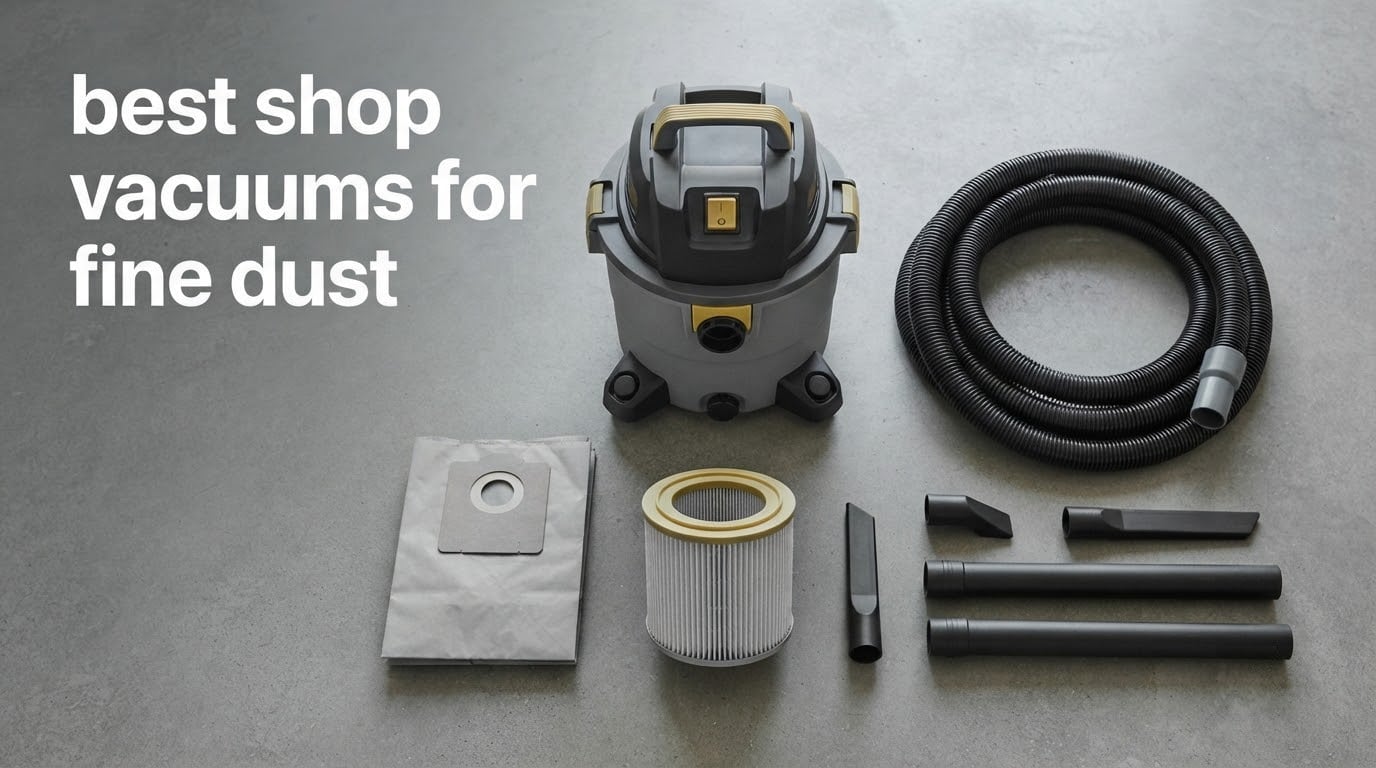
The best shop vacuums for fine dust are not the ones with the biggest motors. They are the ones that trap dust in a bag first, then run a HEPA cartridge as the second line of defense, and that keep enough airflow moving to pull drywall powder off a floor instead of aerosolizing it. We went through 10 wet dry vacs and scored them on filter media, bag-first design, airflow, filter cleaning and noise.
That distinction matters more than horsepower. A 6.5 peak HP unit with a coarse pleated paper cartridge will bury that filter in minutes and then exhale the finest particles back into the room through the blower port. A smaller unit with a 0.3-micron cartridge, a fleece bag and an automatic filter clean can stay on the same job far longer. If you also want general shop coverage, our guide to the best shop vacuums for workshops covers the wet and sawdust side of the category.
Two-stage protection is the phrase that comes up most often from people who actually run these machines. Bag first, filter second, exhaust last. Everything below is built around that order.
How We Picked Shop Vacs That Survive Fine Dust
We scored five things: the filter media rating stated by the manufacturer, whether the design forces dust into a collection bag before it reaches the filter, published airflow in CFM, whether the filter cleans itself while you work, and how much noise the motor makes. We did not put these units on our own drywall rig, so our judgement leans on published specifications and the volume of long-term owner reports behind each one.
Our Top 3 Shop Vacuums for Fine Dust
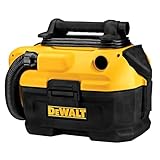
DEWALT DCV581H 2 Gal Corded/Cordless HEPA
- Cordless 20V MAX or corded
- Washable reusable HEPA filter
- 5 foot 1-1/4 inch hose

CRAFTSMAN CMXEVBE17595 16 Gallon
- 6.5 peak HP 12 amp motor
- 16 gallon tank
- 2-1/2 inch Dual-Flex hose

Bosch VAC090AH Auto-Clean Extractor
- 150 CFM airflow
- Filter cleans every 15 seconds
- 99.97 percent at 0.3 microns
Comparing 10 Best Shop Vacuums for Fine Dust Side by Side in 2026
| Product | Details | Action |
|---|---|---|
|
|
Check Latest Price |
|
|
Check Latest Price |
 |
|
Check Latest Price |
|
|
Check Latest Price |
 |
|
Check Latest Price |
 |
|
Check Latest Price |
 |
|
Check Latest Price |
 |
|
Check Latest Price |
 |
|
Check Latest Price |
 |
|
Check Latest Price |
What Fine Dust Is and Why It Beats a Standard Filter
Fine dust means particles small enough to stay suspended in air: drywall powder, joint compound, plaster, concrete silt and cold ash. Those grains slip through the media of a standard shop vac filter, load its pores, choke off airflow, and then the blower port pushes the remaining powder straight back into the room you were cleaning.
That is why filter media matters more than tank size. Sawdust is coarse and bulky, so a pleated paper cartridge handles it easily. Powder loads the same cartridge in minutes.
1. DEWALT DCV581H – Best Overall Corded and Cordless Pick for Fine Dust
DEWALT 20V MAX Shop Vacuum Wet and Dry, Shop Vac 2 Gallon, Cordless and Corded Wet Dry Vacuum Cleaner, Wide Nozzle, Hepa Filter, Tool Only (DCV581H)
20V MAX cordless or corded
200 watts and 31 feet of suction
5 foot 1-1/4 inch hose
2 gallon tank
+ Pros
- Runs on a 20V MAX battery or plug-in cord
- Compact 2 gallon tank is easy to empty
- Washable reusable filter
- On-board accessory storage
- Good fine dust pickup when paired with a sander
– Cons
- Modest suction for its size
- Filter plugs quickly on heavy fine dust
- Battery and charger sold separately
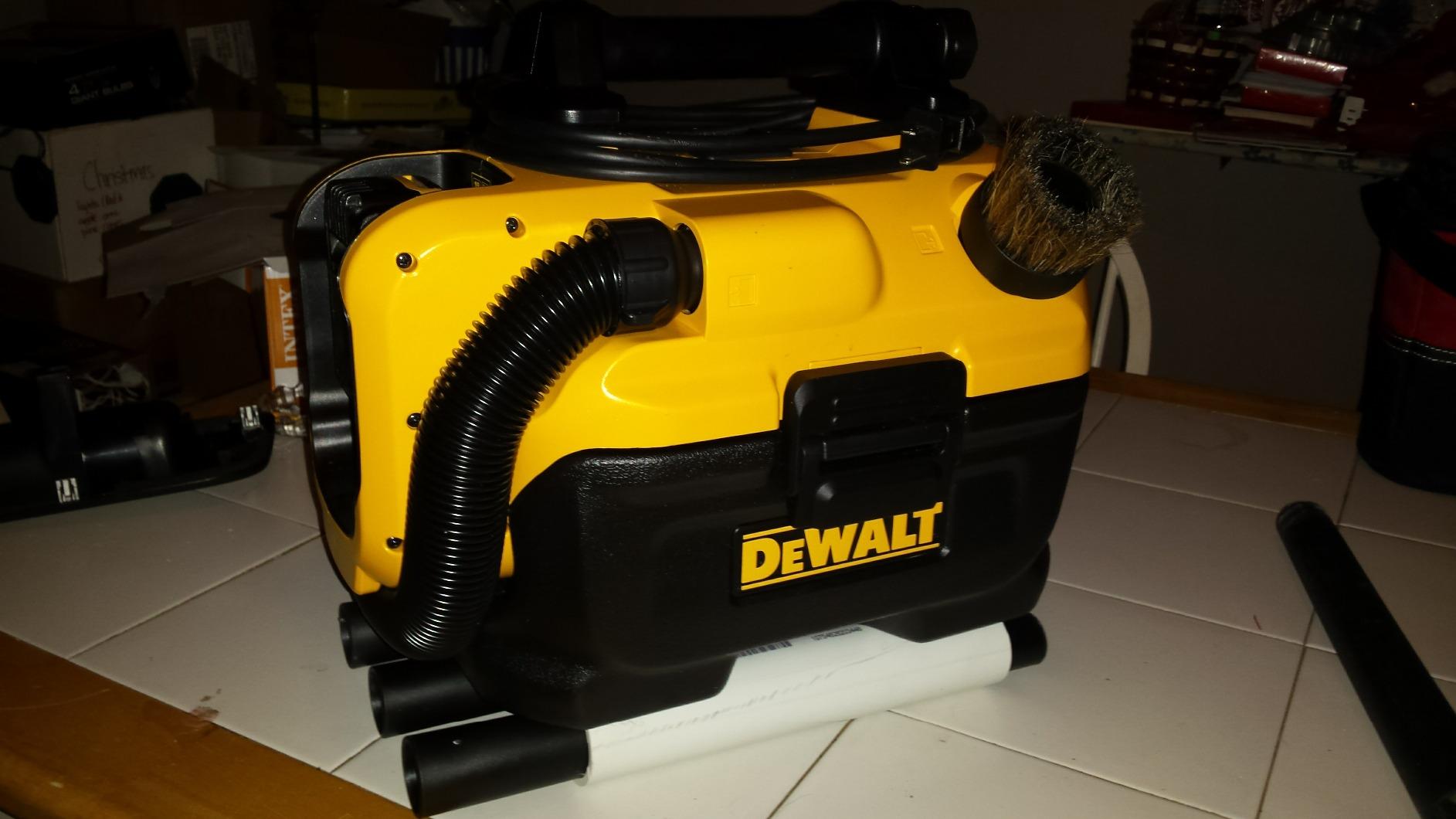
Most fine dust jobs happen in rooms with no outlet, which is where this one earns its place. It runs on a 20V MAX battery or as a plain corded unit, and owners repeatedly pair it with their own DEWALT sanders and miter saws to keep dust off the floor.
The washable reusable filter is the part that matters for fine powder. You can rinse it under running water instead of buying a fresh cartridge after every drywall session, and that alone changes the running cost of a powder-heavy week.
Power Options and Filter Media
The filter is a washable HEPA unit rated for the class of dust most people complain about. The tank holds 2 gallons, which is small, so plan on emptying it mid-task on heavy sanding days.
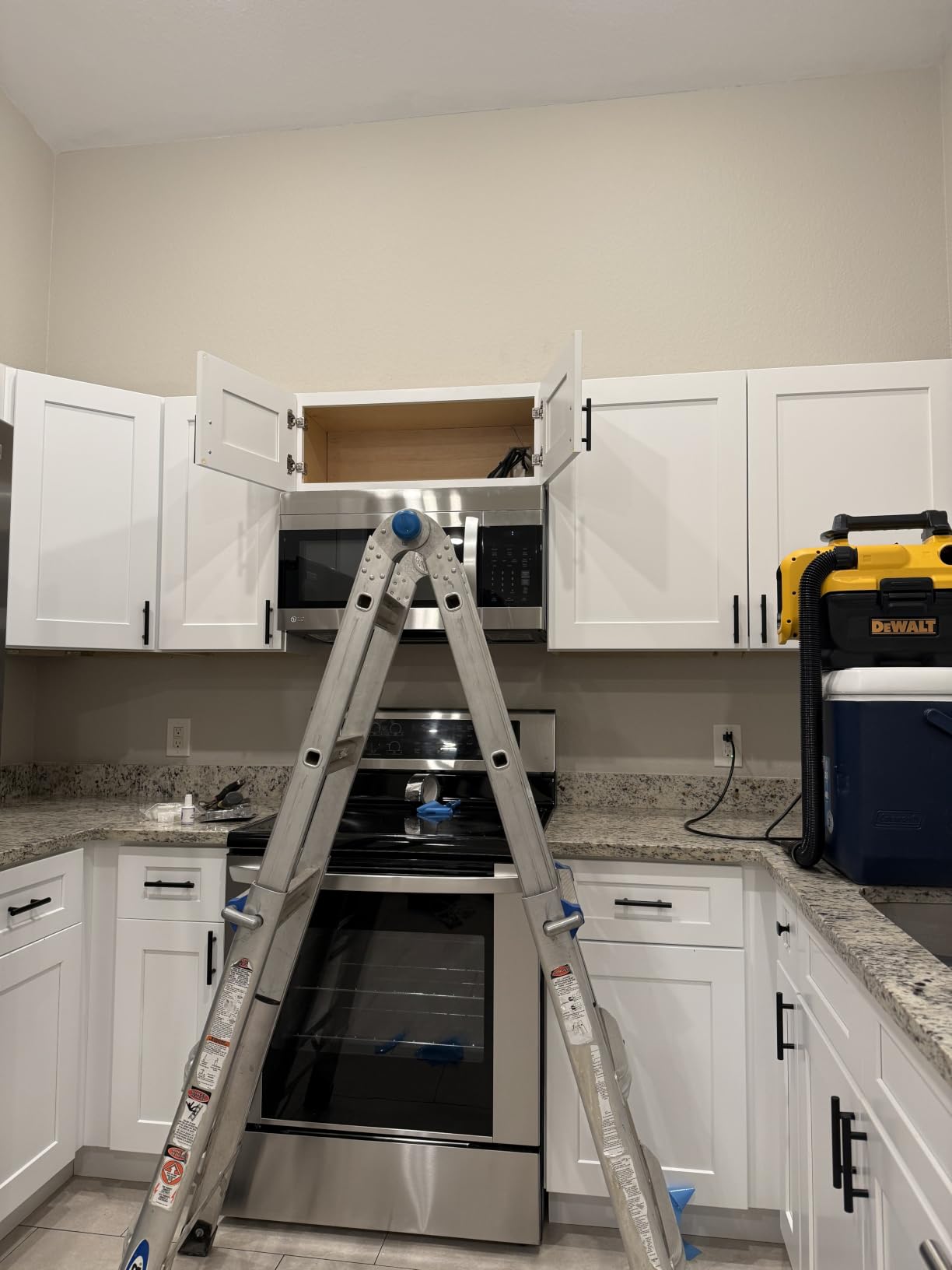
Suction is listed at 31 feet, which is modest against a 6.5 peak HP shop vac. For powder pickup the difference matters less than people expect, because powder weighs almost nothing and the filter is the limiter anyway.
Suction Reality on Fine Powder
The recurring complaint from owners is that the 2.6A motor cannot shift embedded carpet hair or heavy debris. That is not a fine dust problem. On drywall powder and fine sawdust it performs, and the ability to work with no outlet is worth more than raw lift.
Noise is listed at 80 dB, which is typical for a small universal motor. The hose is 1-1/4 inch, so it will not pair directly with a table saw dust port.
Who It Works For
Choose this one if you finish small rooms, work in rented spaces without power outlets, or want a vac you can carry up a ladder with one hand. Skip it if you are grinding concrete all day and need 150 CFM.
2. CRAFTSMAN CMXEVBE17595 – Best Tank Size for Whole-House Dust Cleanup
CRAFTSMAN CMXEVBE17595 16 Gallon 6.5 Peak HP Wet Dry Shop Vacuum
6.5 peak HP and 1440 watts
16 gallon tank
2-1/2 inch by 7 ft Dual-Flex hose
69 dB
+ Pros
- Strong 6.5 peak HP motor for big messes
- 16 gallon tank means fewer bag swaps
- Dust collection bag keeps powder off the cartridge
- Dual-Flex hose resists kinking
- Rear blower port
– Cons
- Paper cartridge is not HEPA-rated
- Bulky 26 pound body
- No automatic filter cleaning
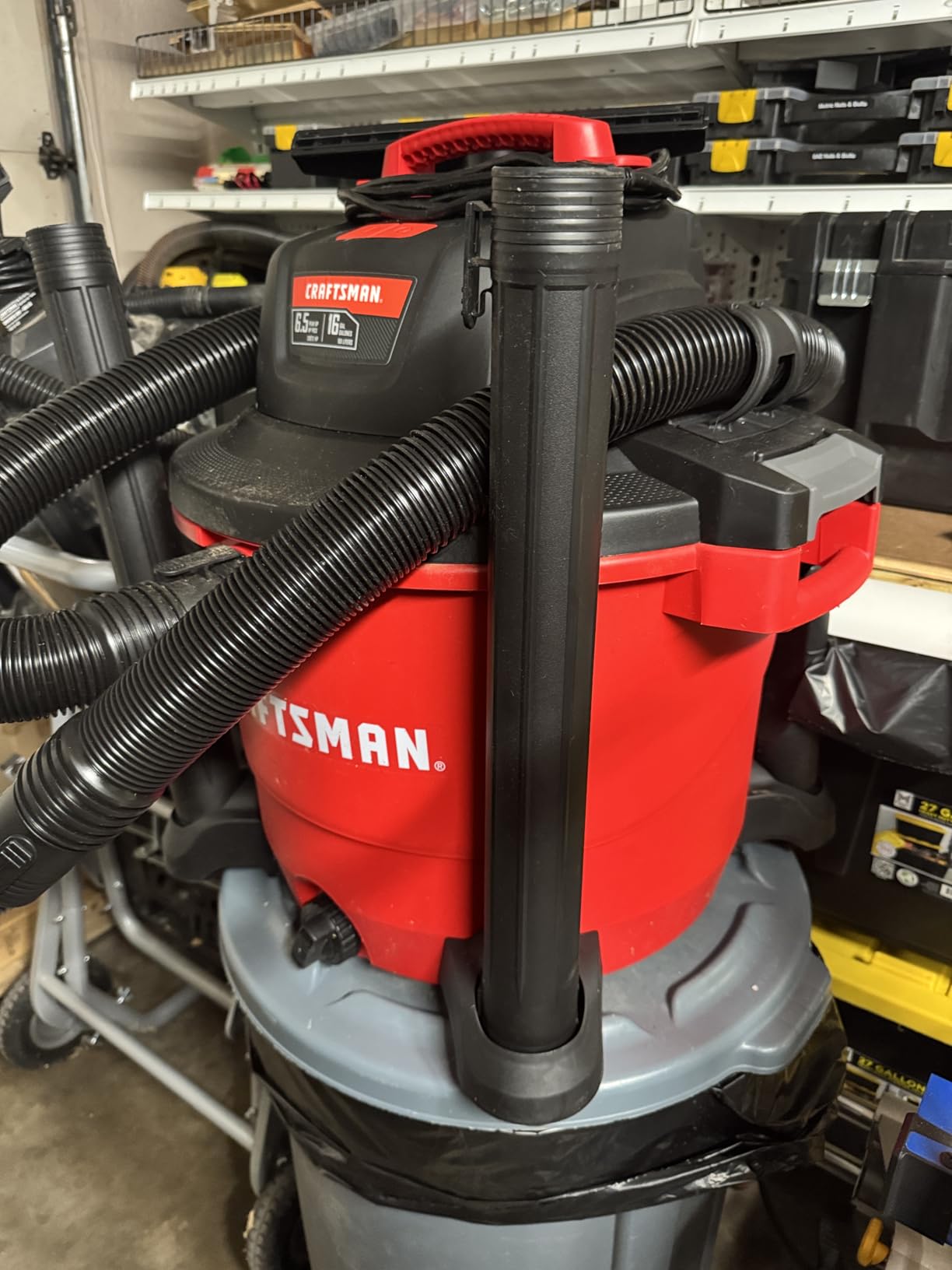
This is the whole-basement and post-renovation unit. A 16 gallon stainless steel tank, a 6.5 peak HP motor and a 2-1/2 inch hose that resists kinking at both ends add up to a machine you can leave running while you move room to room.
The included dust collection bag is what makes it a fine dust option rather than a debris hauler. With the bag fitted, most powder stays in the bag instead of loading the cartridge.
Motor Power and Airflow Reality
Peak horsepower is a marketing number, and this unit wears it well at 1440 watts and 12 amps. Maximum suction is listed at 46 inches, which is a real figure you will feel on the floor rather than a paper claim.
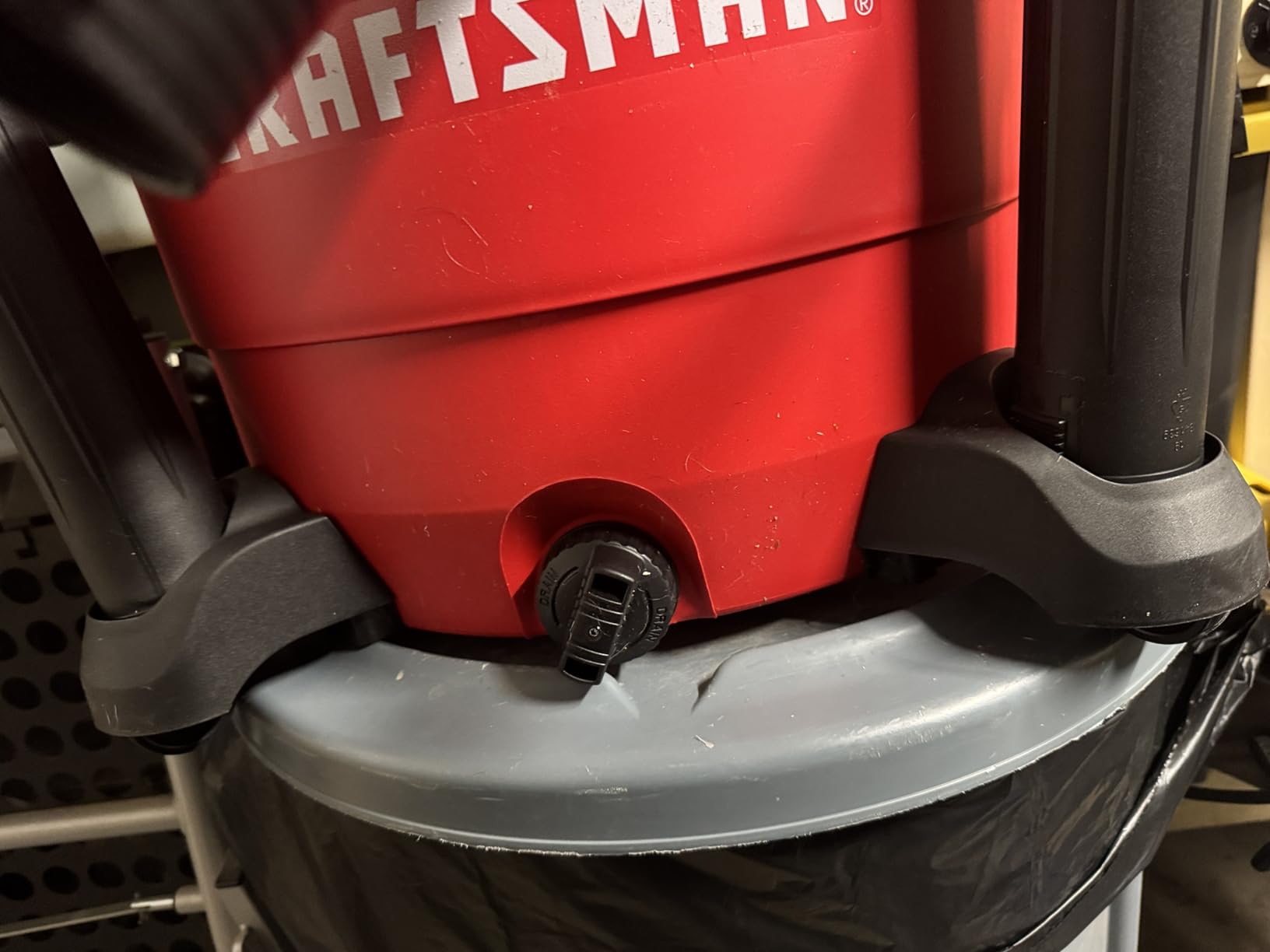
At 69 dB it is quieter than most machines of this size. Wheels are limited to two, so it is stable but not as maneuverable as a four-wheel caster layout.
The Bag-First Filtration Setup
The Qwik Lock pleated paper cartridge is not HEPA-rated. That is the single limitation that matters for this roundup, and it is why the bag is not optional here. Owners who run it bagless on drywall report filter loading within minutes.
The upside is that paper media is cheap and easy to replace. A three-year limited warranty also comes with the unit, which few competitors in this list match.
Who It Works For
Buy this if your dust is a mix: renovation debris, drywall residue, insulation debris and tool cleanup. Pair it with a pre-separator or cyclone if you intend to grind concrete in the same room.
3. WEN VC4710 – Best 0.3-Micron Filter for Indoor Fine Dust
WEN VC4710 10-Amp 5-Gallon Portable HEPA Wet/Dry Shop Vacuum and Blower with 0.3-Micron Filter, Hose, and Accessories,Orange
0.3 micron F9 HEPA filter
5 gallon tank
10 amp motor
82 dB
+ Pros
- F9 HEPA filter targets 0.3 micron particles
- Doubles as a blower
- Lightweight and compact
- Onboard attachment storage
– Cons
- No prefilter ahead of the cartridge so it clogs fast
- Extension wands slip apart
- Short power cord
This is the indoor answer. In a finished room, where a larger machine is an inconvenience and where you care most about what stays in the air rather than what lands in the tank, a 0.3-micron HEPA cartridge is the whole argument.
Owners also like that it doubles as a blower through the same hose, which is handy for pushing powder off shelves and skirting boards before you vacuum it.
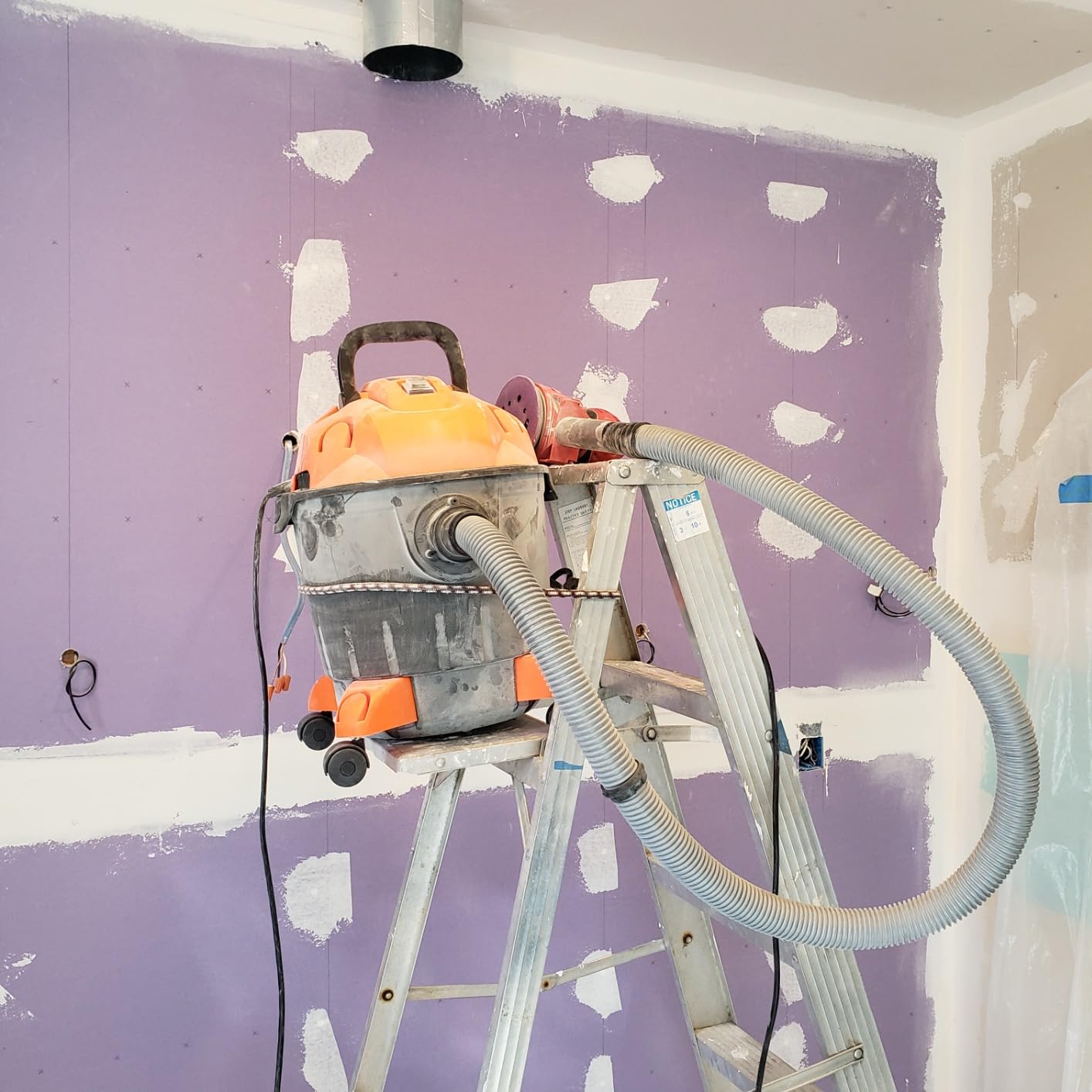
0.3-Micron HEPA Capture
The F9 filter is rated for particles as small as 0.3 microns, which covers drywall powder, plaster and dander. The 5 gallon tank is stainless steel and the 10 amp motor draws 120 watts, so it runs on a standard circuit without drama.
At 82 dB it is not quiet, and it is a single-speed unit. Suction is strong for the class, but it has no deep lift on embedded debris in car seat seams.
Where the Filter Clogs Fast
There is no prefilter ahead of the cartridge. In a genuinely dusty garage that becomes a problem quickly, and owners report cleaning the filter far more often than they expected. In a clean interior with light powder, it holds up much better.
The extension wands are the other consistent complaint. A wrap of tape at the joint solves it, and most owners do exactly that.
Who It Works For
Pick this for post-renovation cleanup in an occupied home, a bedroom renovation, or a car interior where you want fine airborne dust gone and the machine small enough to carry up stairs.
4. Bosch VAC090AH – Best Automatic Filter Cleaning for Grinder Dust
Bosch VAC090AH 9 Gallon Dust Extractor with Auto Filter for Grinder 1773AK
150 CFM airflow
97 inch static lift
Auto clean every 15 seconds
60 dB
+ Pros
- 150 CFM with a Power Broker suction dial
- Filter cleans itself every 15 seconds
- Power tool activation starts and stops it
- Fleece bag protects the cartridge
- Ships as a 60 dB unit
– Cons
- Fleece bags and parts add ongoing cost
- Accessory connections are not standardized
- One year limited warranty
Automatic filter cleaning is the feature that separates a dust extractor from a shop vac, and this unit runs the clean cycle every 15 seconds. On grinder and sander work, that is the difference between steady suction and a filter you tap out every ten minutes.
At 150 CFM it sits at the top of the airflow range in this roundup, and the Power Broker dial lets you dial suction down for a small orbital sander and back up for a floor grinder.
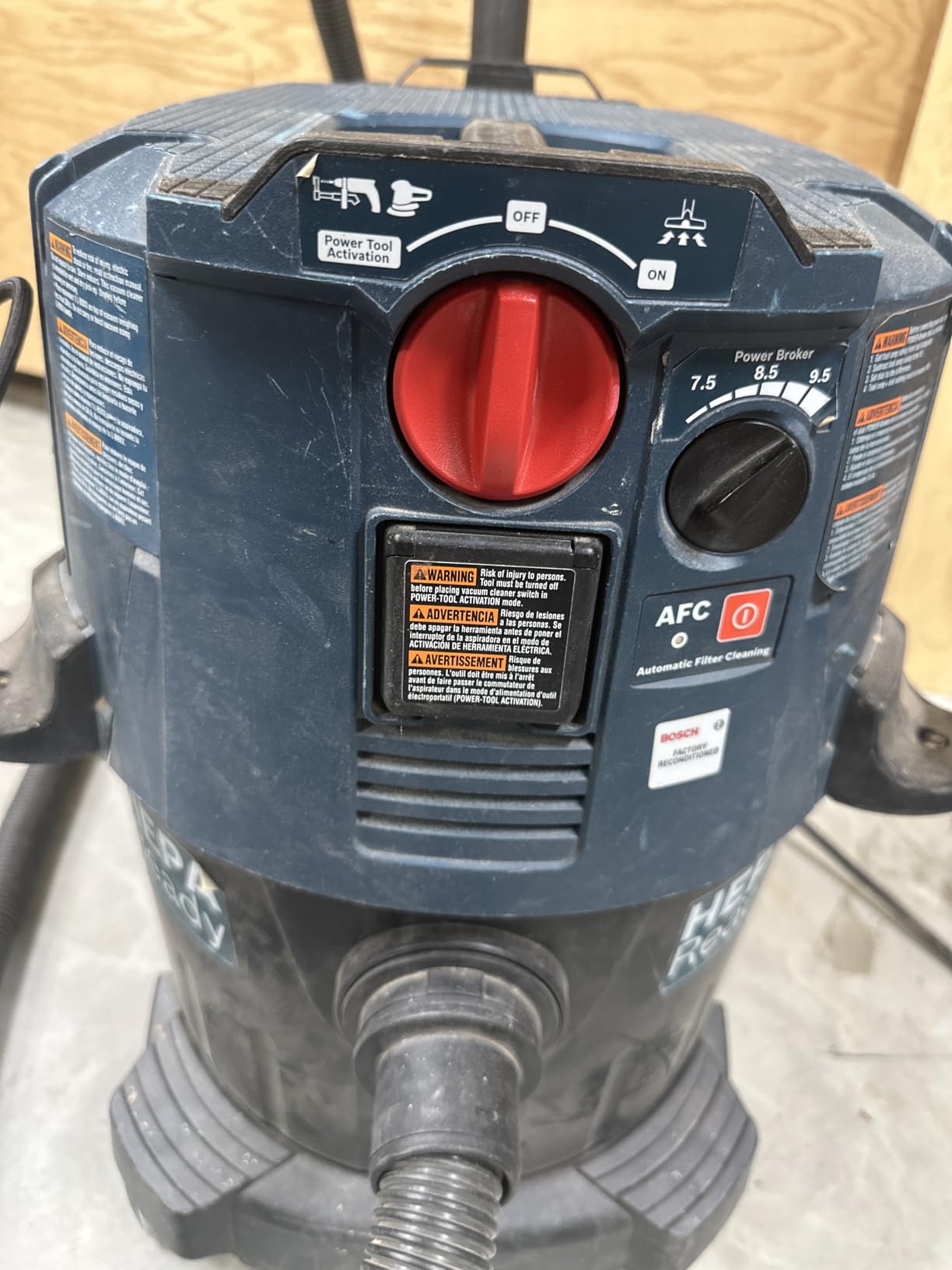
Airflow and the Power Broker Dial
Published figures are 150 CFM of airflow, up to 97 inches of static water lift and three power levels with a foot control. Maximum suction is listed at 97 inches. That is extractor territory rather than shop vac territory.
The unit weighs 28 pounds and rolls on wheels, so moving it between a table saw and a sanding station is manageable but not effortless.
Why the 15-Second Clean Cycle Matters
HEPA media captures 99.97 percent of particles at 0.3 microns and larger, but only while the pores are open. A pulse every 15 seconds keeps the pleats from matting shut, which is exactly the failure mode fine powder causes.
The fleece filter bag is included for dry dust containment and also shields the cartridge from abrasive particles. Plan for a steady supply of bags, because that is the running cost of extractor ownership.
Who It Works For
This is the right pick for plaster restoration, concrete grinding and any job where powder control matters more than wet pickup capacity. Budget for fleece bags from the start.
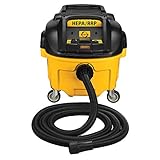
5. DEWALT DWV010 – Best 15-Foot Hose Reach for Plaster Restoration
DEWALT DWV010 HEPA Dust Extractor with Automatic Filter Cleaning, 8-Gallon
150 CFM from a 15 amp motor
Filter cleans every 30 seconds
15 foot anti-static hose
8 gallon tank
+ Pros
- Auto filter clean pulses every 30 seconds
- HEPA filtration with dual filters
- Tool actuation with hose clearing delay
- 15 foot anti-static hose with swivel connector
- 150 CFM for its class
– Cons
- Suction is lower than a plain shop vac because of HEPA media
- Heavy when full
- Stiff proprietary hose
- One year limited warranty
Restoring an old plaster ceiling is a hose problem as much as a suction problem. The 15 foot anti-static hose on this unit reaches from a scaffold to the far corner of a room without an extension, and the swivel connector rotates so the hose does not fight you.
Owners restoring old plaster or sanding fine wood dust report that the self-cleaning HEPA system keeps suction steady over long sessions and leaves the room breathable afterwards.
Filter Cleaning and HEPA Stack
The automatic clean pulses every 30 seconds rather than every 15, so the cycle is less frequent than the Bosch units but still keeps the cartridge from sealing over. HEPA filtration plus dual filters handled plaster, drywall and concrete for the owners we read.
With the appropriate filter, this unit is listed as meeting the EPA lead-related renovation rule, which is a different and much narrower claim than being safe for asbestos. Treat them as separate subjects.
Hose Length and Tool Actuation
Power tool actuation starts the vacuum with the sander and then runs a short clearing delay after you switch off, so the last of the powder in the hose goes into the tank rather than spilling onto the floor.
The trade-offs are real. At 300 watts and 80 dB it is louder and less forceful than a bare shop vac, and reviewers report hose stiffness plus a case where a cracked hose was not replaced under the one-year warranty.
Who It Works For
Choose it if you work overhead in finished rooms and the ability to clear the hose without walking over to the machine is worth the extra bulk. Weight is the complaint to plan around at 22 pounds empty.
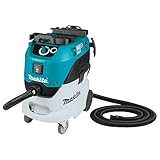
6. Makita VC4210L – Best Two-Stage Filtration for Long Dust Sessions
Makita VC4210L 11 Gallon Wet/Dry HEPA Filter Dust Extractor/Vacuum
148 CFM airflow
11 gallon tank
Two-stage filtration
60 dB
+ Pros
- Automatic filter cleaning about every 20 seconds
- Two-stage stack: flat filter then HEPA
- Two speed settings for orbital sanders
- Tool-activated outlet with a 10 second delay
- Fleece bag keeps emptying dust-free
– Cons
- Thump from the clean cycle every 20 seconds
- 1-1/4 inch hose is small for construction debris
- Instructions are mostly pictorial
- Accessories cost extra
This is the clearest example of two-stage protection in the roundup. A main flat filter captures 99.95 percent of 2-micron particles, and a HEPA stage behind it catches 99.97 percent of 0.3-micron particulate. The bulk of the powder never reaches the expensive media.
At 148 CFM and 60 dB it behaves more like a small industrial extractor than a household shop vac, which is why tradespeople rate it as a genuine step up.
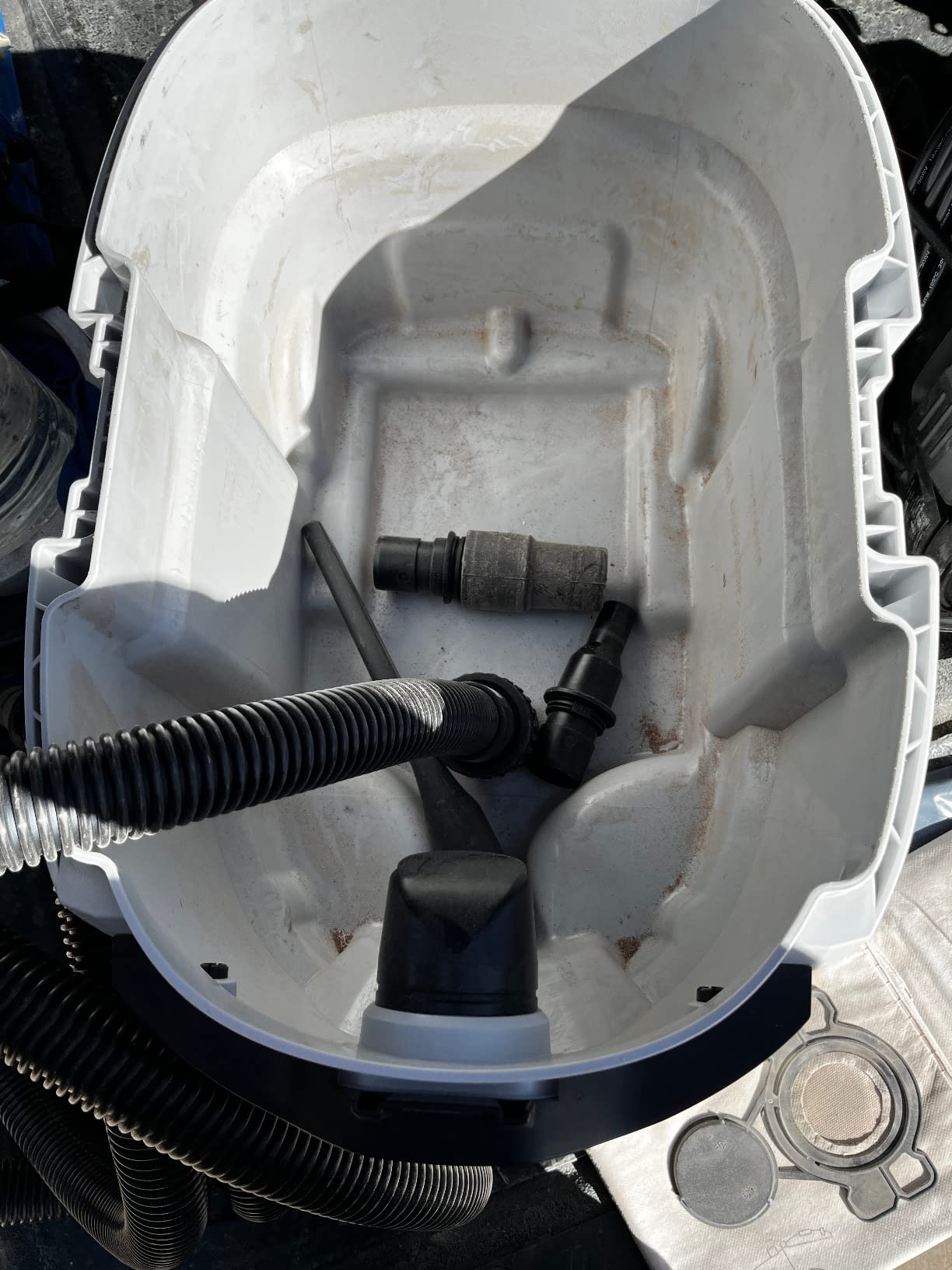
Two-Stage Filtration Stack
Two speed settings let you drop power for an orbital sander, which reduces the amount of powder pulled off the workpiece in the first place. The 11 gallon tank gives you room between bag changes on a full sanding day.
Maximum suction is listed at 148 feet, and the motor is 550 watts on a 240 volt supply. The unit itself is 35.3 pounds, which is the second heaviest here.
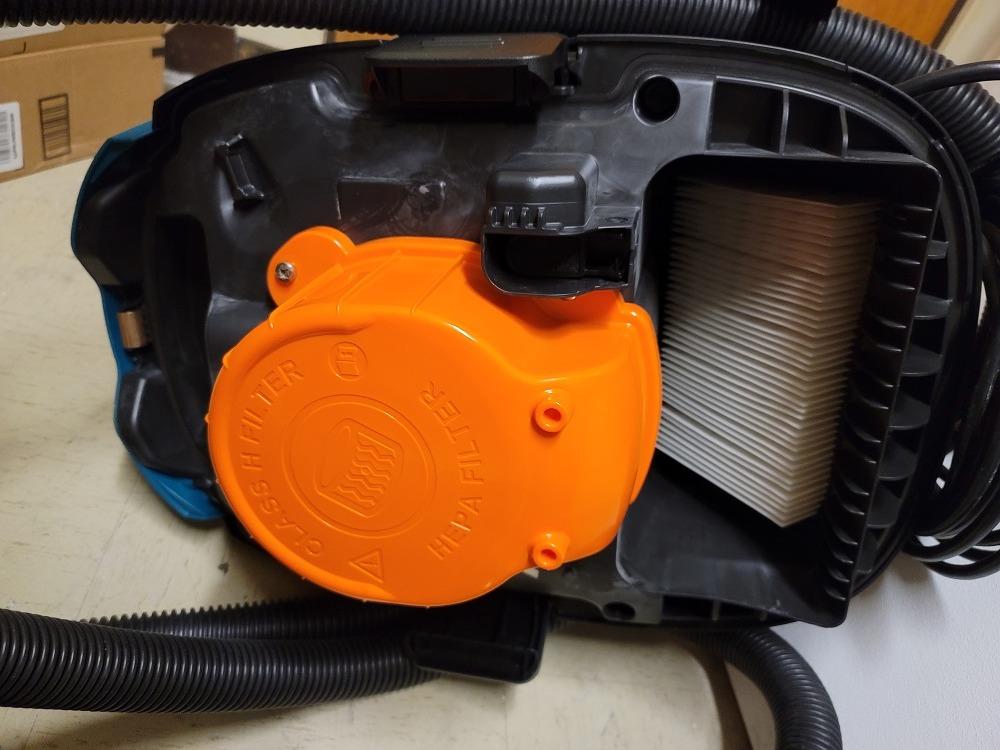
The 20-Second Auto-Clean Cycle
The clean cycle fires roughly every 20 seconds and it is audible. Several owners confirm the thump is intentional and can be switched off, which is what you want for wet pickup.
Total suction still comes in below a comparable full-size shop vac, and the 1-1/4 inch hose is too narrow for large construction debris. Only one fleece bag is included, so keep spares.
Who It Works For
Best for finish painters and woodworkers running a sander through a full day, and for anyone who wants the cleanest exhaust air in the room. It is a dedicated extractor, not a car cleaning machine.
7. DEWALT DCV585B – Best Cordless Extractor for Battery-Only Sites
DEWALT FLEXVOLT 60V MAX* Dust Extractor (DCV585B)
125 CFM cordless extraction
Wireless remote control
20 pounds
8 foot anti-static hose
+ Pros
- No cord to trip over in finished homes
- 125 CFM supports OSHA Table 1 for up to 5 inch tools
- Dual HEPA filters with automatic cleaning
- Wireless remote start and stop
- T-Stak stacking and built-in hose wrap
– Cons
- Short battery runtime on a 2.0Ah pack
- Suction dips during the clean cycle
- Small capacity fills fast
- Not a general floor vacuum
When there is no outlet at all, this is the practical answer. The 60V MAX platform means the unit carries its own power, so there is no cable across a walkway and no argument with a site that will not let you run a cord.
Owners pair it with cordless drywall sanders and grinders and report close to zero airborne dust indoors, which is the reason to buy one over a corded extractor.
125 CFM Cordless Extraction
At 125 CFM with a 2.4 meter anti-static hose and the DEWALT AIRLOCK coupler, it is listed for OSHA Table 1 solutions on tuckpointing and surfacing up to 5 inches when paired with an appropriate shroud.
The dual HEPA filters run an automatic clean cycle, so the cartridge is not left caked. Twin filters also mean more media to load before airflow drops.
Remote Control and Filter Cleaning
The included wireless remote starts and stops the unit from across the room, so you can leave it switched on between passes. T-Stak compatibility lets it stack with other DEWALT storage, and a built-in hose wrap keeps the hose tidy on the move.
Runtime is the constraint. On a 2.0Ah pack you get roughly 20 minutes, and suction dips noticeably each time the clean cycle runs.
Who It Works For
This suits battery-only work: occupied homes, upper floors, finished basements and customer vehicles. It is a dedicated tool dust extractor and performs poorly as a general floor vacuum.
8. Bosch VAC140AH – Best 14-Gallon HEPA Extractor for Grinding Days
Bosch VAC140AH Portable 14 Gallon Dust Extractor with Auto Filter Clean and HEPA Filter
14 gallon tank
150 CFM airflow
Filter cleans every 15 seconds
65 dB
+ Pros
- 14 gallon tank for long runtimes
- HEPA capture of 99.97 percent at 0.3 microns
- Auto clean every 15 seconds
- 150 CFM and 97 inch static lift
- Tool activation with a suction dial
– Cons
- Heaviest unit here at 38 pounds
- Brand-specific accessories need the right adapter
- Higher cost than similar HEPA specs
Same filter-cleaning architecture as the smaller Bosch extractor, sized for sessions that run long. The 14 gallon tank means fewer bag changes on a full day of grinding or sanding, which is where the fleece bag cost starts to add up on smaller units.
It is the heaviest machine in this roundup at 38 pounds. Plan your route before you lift it, and avoid stairs if you can.
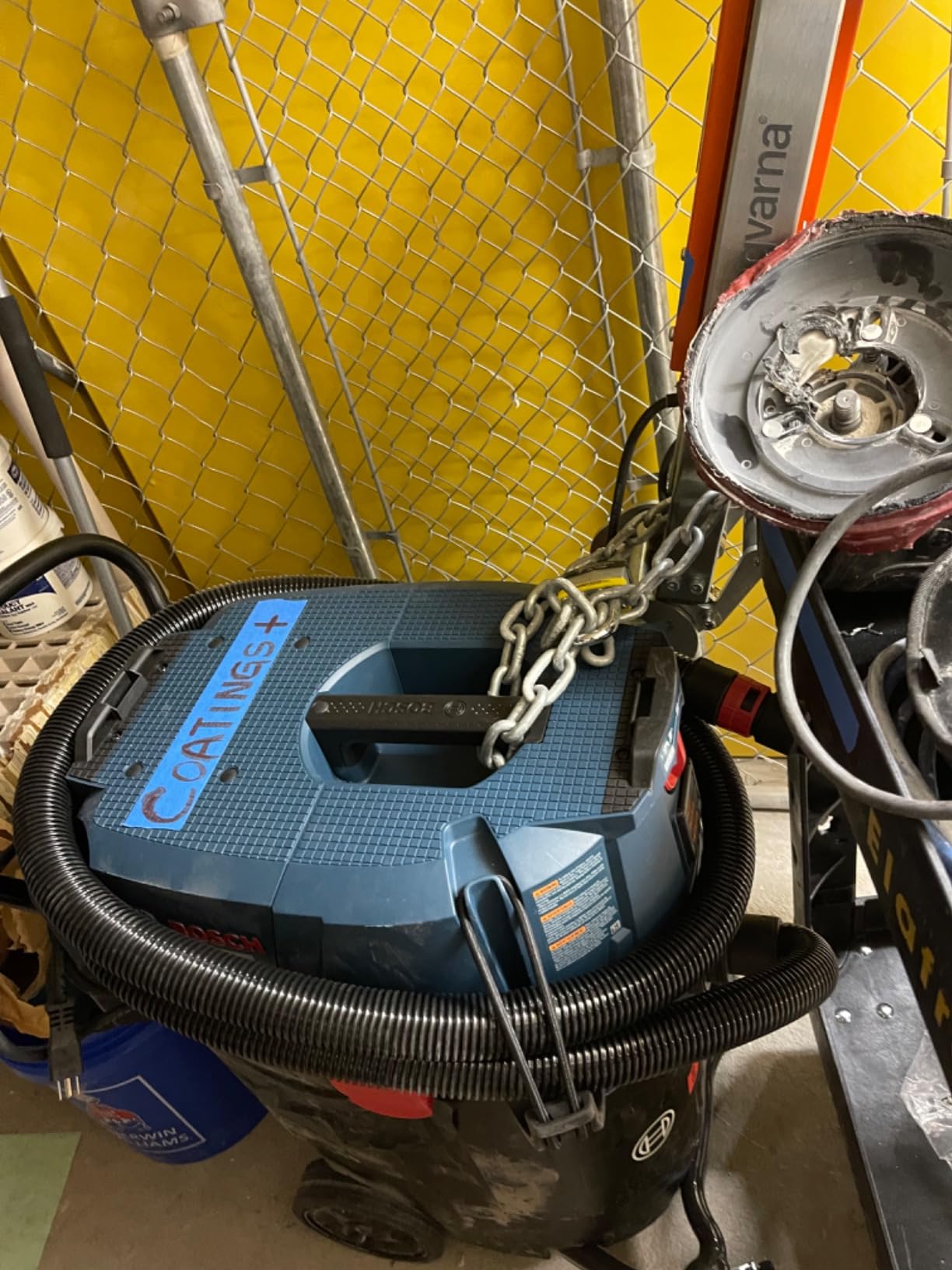
Airflow and Static Lift
Published figures are 150 CFM of airflow with 97.3 inches of static water lift, and the manufacturer describes it as OSHA compliant as part of a Bosch end-to-end collection system. At 65 dB it is one of the quieter extractors here.
Power tool activation starts it with your tool, and the Power Broker dial matches suction to the application, which is the difference between pulling powder off a surface and just stirring it.
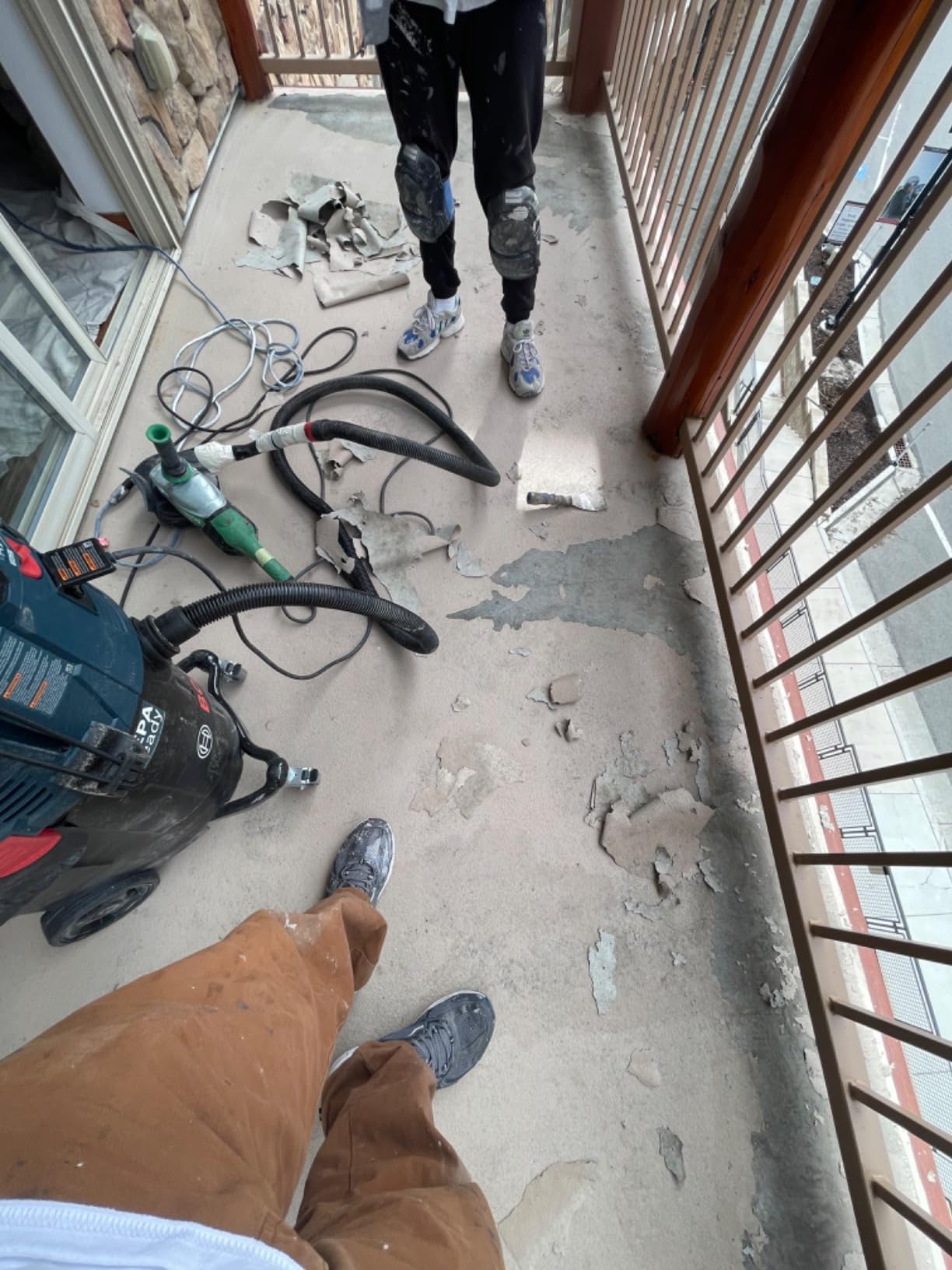
Bag-First HEPA Containment
The included fleece bag is a genuine first stage, not a token. Bag plus HEPA plus fleece means the cartridge sees far less powder than on a bagless setup, and the box includes a bend nozzle and a power tool adapter.
The 9.85 foot hose is shorter than the DeWALT 15 foot unit. Accessory connections are brand-specific, so confirm the adapter for your sander or grinder before buying.
Who It Works For
Choose it for a day of concrete grinding or a full house of sanding where you want to empty the bag rather than stop and clean filters. Pair it with air scrubbers if you are working inside an occupied home.
9. Shop-Vac 4 Gallon Ash Vacuum – Best for Fireplace and Cold Ash Dust
Shop-Vac 4 Gallon 2.0 Peak HP Ash Vacuum,7 Amps with HEPA Filter, 4040988
2.0 peak HP and 7 amps
4 gallon stainless canister
4 foot wire-wound hose
HEPA cartridge with mesh cover
+ Pros
- All-metal canister and wire hose handle warm ash
- HEPA cartridge plus mesh cover block ultra-fine ash
- Washable and replaceable filter and cover
- 2.0 peak HP suits light ash duty
- Low 7 amp draw
– Cons
- Dry pickup only
- HEPA cartridge slips off its seat
- Canister separates too easily
- Weak motor and loud for general debris
Cold ash is the nastiest household fine dust there is, and it is the one job a plastic wet dry vac handles badly. This stainless steel canister with a wire-wound hose takes warm ash below 104F without melting anything, which is exactly the failure that ruins a standard hose.
Owners report virtually no visible ash escaping into the air during use, and the HEPA cartridge with mesh cover keeps grit away from the motor.
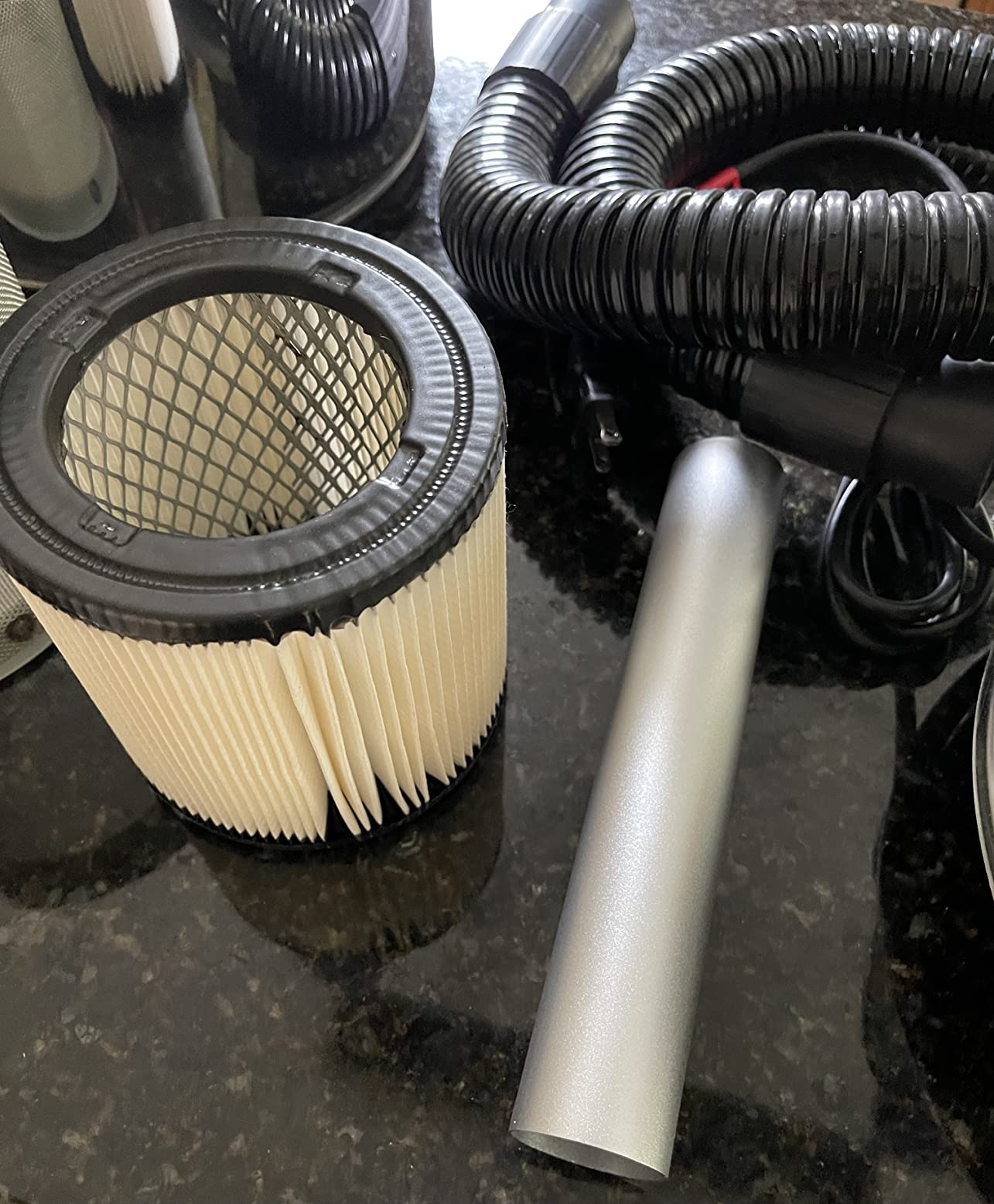
Metal Canister and Wire Hose
The 4 foot wire-wound hose and stainless tank are the reason this exists. A plastic hose softens and pinches on warm debris, and a plastic tank gets scorched. Both of those hazards are gone here.
Cleaning reach is over 10 feet in total, counting the 4 foot hose and a 6 foot cord. Four wheels make it stable on a hearth.
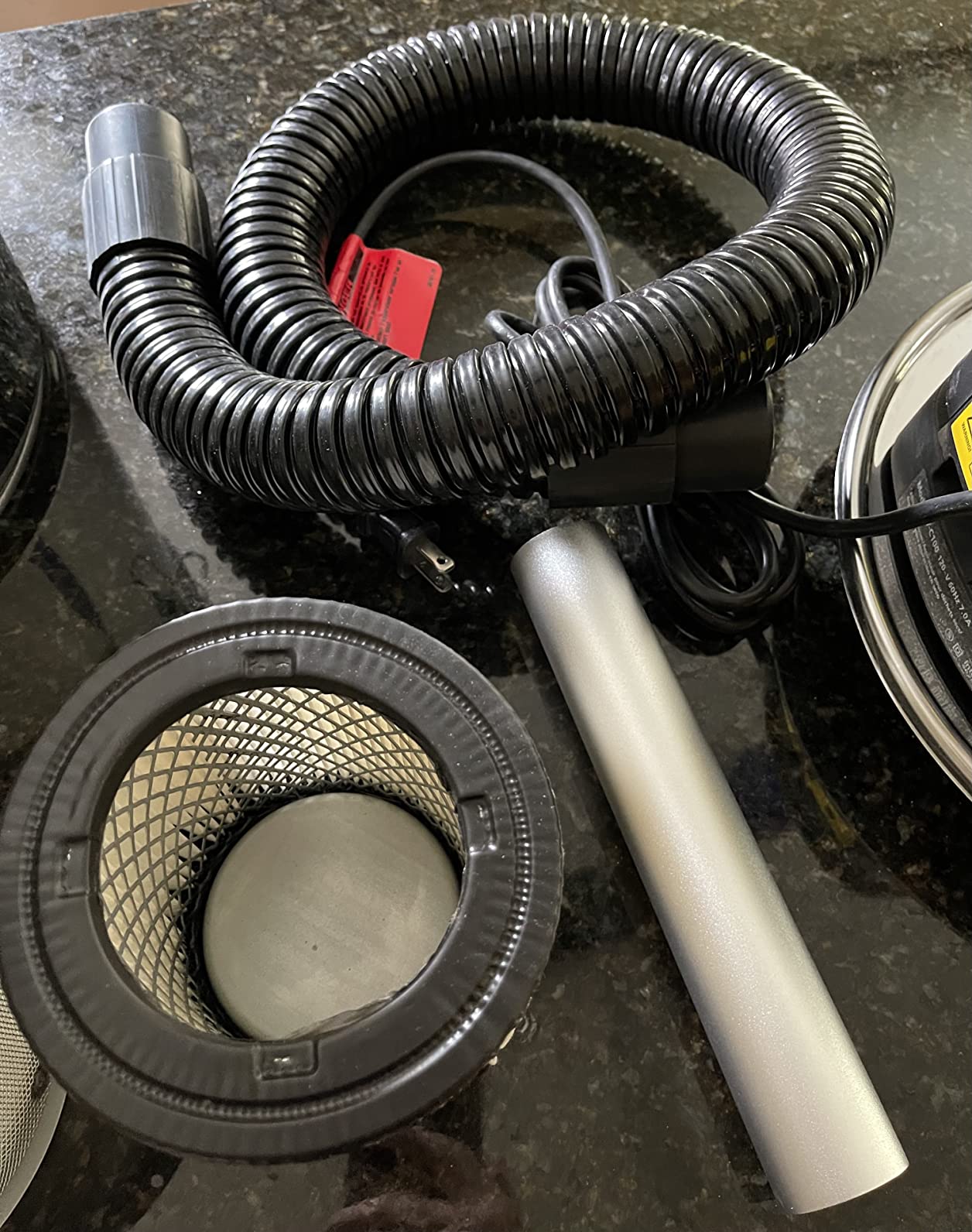
HEPA Plus Mesh Containment
Two stages sit in front of the motor: a HEPA cartridge and a mesh cover. Both are washable and replaceable, which is unusual in a machine built for ash duty and keeps ownership simple.
The recurring complaint is mechanical rather than filtration. The HEPA cartridge slips off its seat during use and the canister comes apart too easily. One owner also reported a static shock on first use.
Who It Works For
This is a fireplace, pellet stove and grill accessory rather than a workshop machine. It cannot handle any liquid at all, and the 7 amp motor is weak for general debris.
10. WECLEAN V7 – Best for Stairs and Tight-Space Jobs
WECLEAN Shop Vac 4 Gallon 5.5 Peak HP Commercial Wet Dry Vacuum Cleaner, Heavy Duty Shop Vac with Blower Function, HEPA Filter, Portable Wet Dry Vac for Garage Car Detailing Construction Cleanup
1200 watt motor at 14-18 kPa
4 gallon tank
Over 24 feet of reach
80 dB
+ Pros
- Strong suction for a 4 gallon body
- Light enough to carry up and down stairs
- Over 24 feet of total reach
- HEPA filter and storage bag included
- Wet pickup and blower function in one body
– Cons
- Rear exhaust blows dust back into the room
- Listed at 80 dB
- Crevice tool missing from some boxes
- Weak on deep carpet
Most shop vacs are too heavy to take up a flight of stairs twice in one session. This 4 gallon body is the exception, and owners compare its suction favorably against full size household vacuums for car detailing and garage work.
It also works as a blower through the same hose, so it is not a one-purpose floor machine.
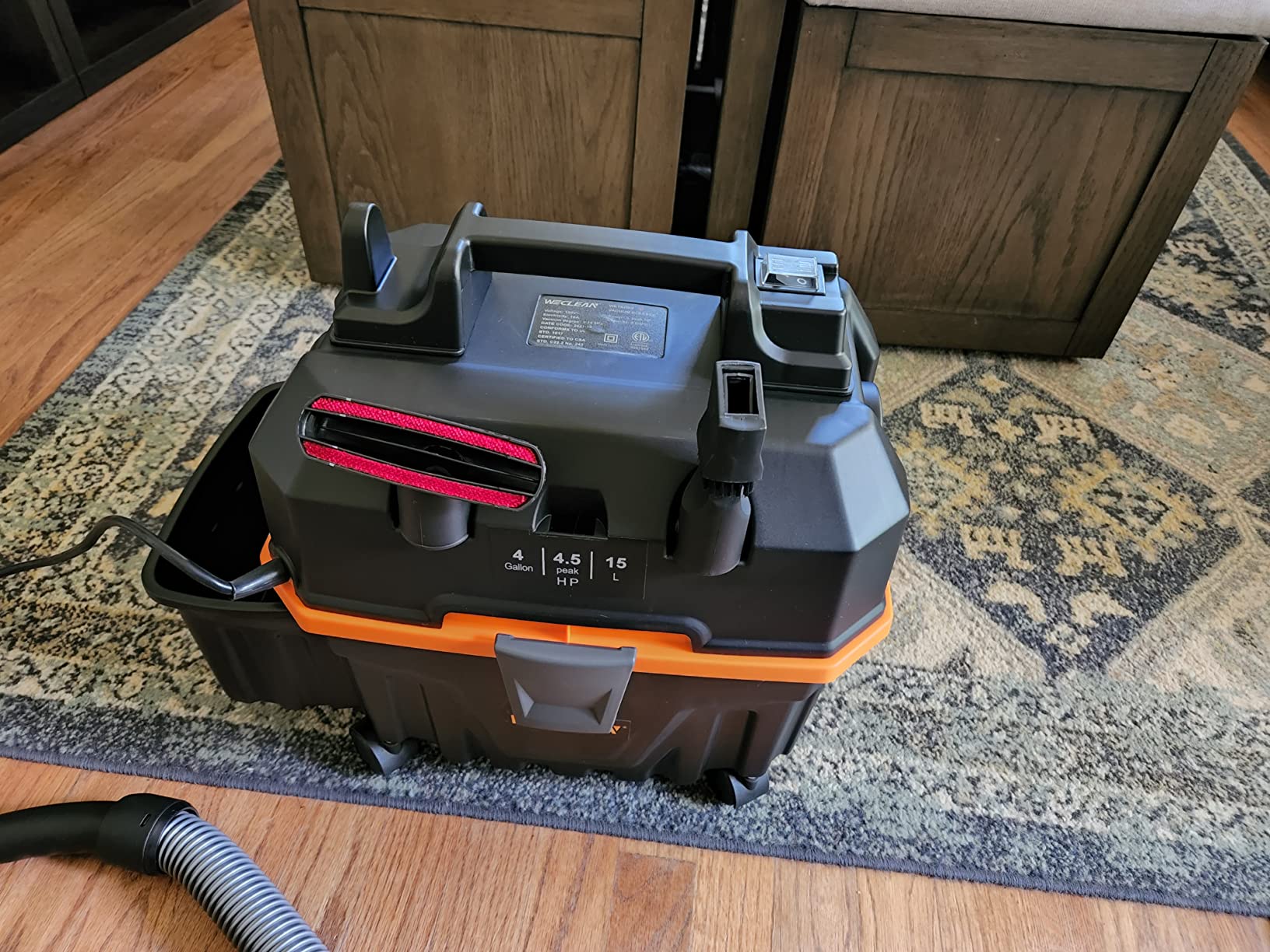
Suction for a 4-Gallon Body
The 1200 watt motor delivers 14-18 kPa of suction, which is a real number rather than a peak horsepower headline. Total reach runs past 24 feet from an 18 foot cord, a 5 foot hose and three extension wands.
It handles wet pickup as well as dry, and the HEPA filter and accessory storage bag come in the box. At 80 dB it is one of the louder units in this list.
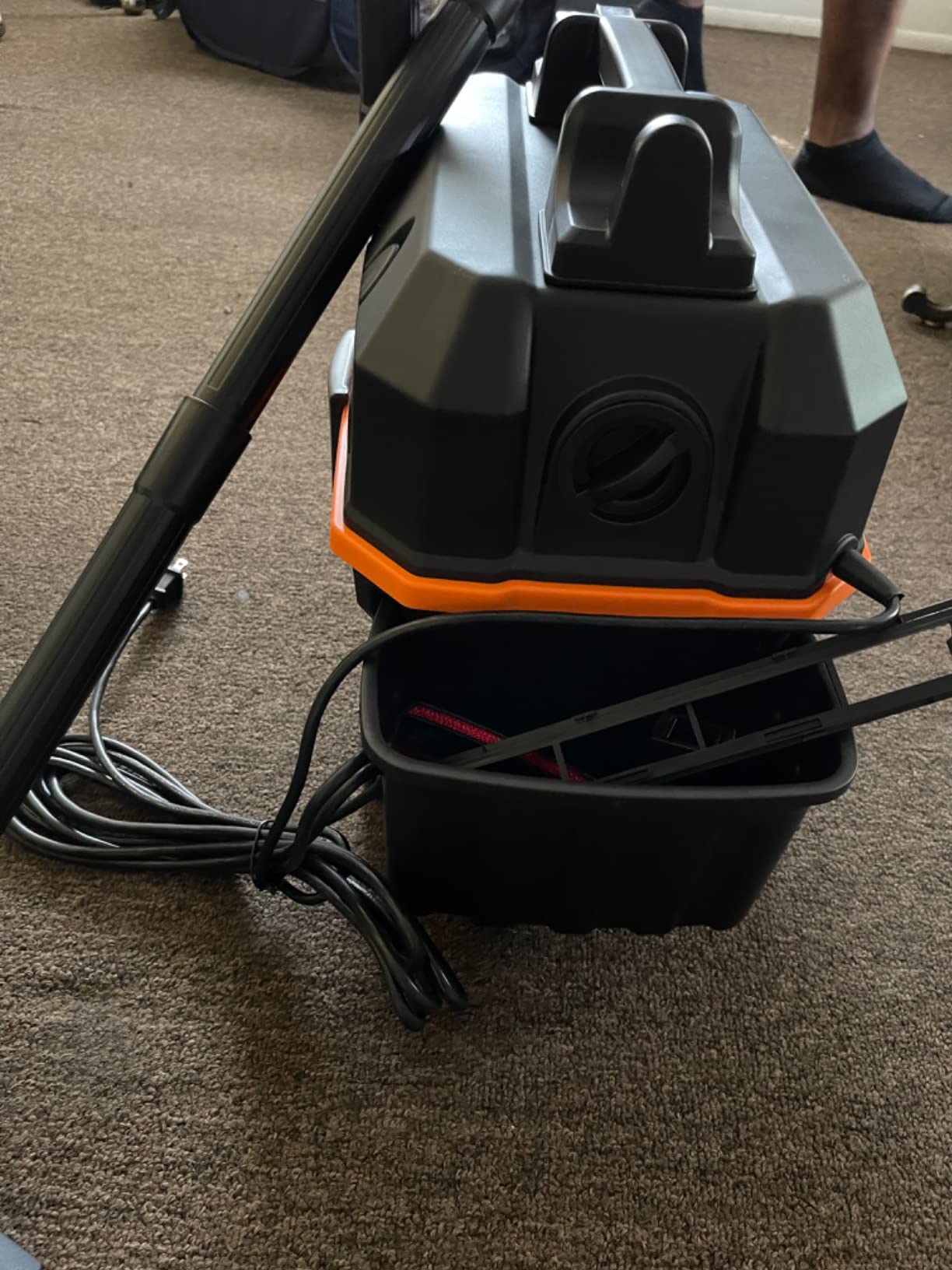
Exhaust Design and Filter Life
The rear exhaust is the real weakness. Several reviews say it blows collected dust back out and creates a bigger mess, which is the opposite of what you want in a finished room.
There is no automatic filter cleaning, and without a bag in the loop the HEPA cartridge becomes the primary dust container. If you buy this, buy disposable bags and use them.
Who It Works For
Good for apartments, stairs, vehicle interiors and small garage cleanups where weight and reach matter more than extractor class. Not the choice for a room you are trying to keep breathable while sanding.
How to Choose a Shop Vac for Fine Dust
Filter Media Decides Everything
A fine dust filter and a HEPA filter are not always the same thing, even when the boxes use similar language. Fine dust cartridges are often a denser pleated paper or synthetic blend that captures particles in the 1 to 3 micron range and is built to survive grit. A true HEPA cartridge is rated at 99.97 percent of 0.3 micron particles and is usually more expensive and more sensitive to damage.
The two disadvantages of HEPA media are the same two disadvantages people complain about: it restricts airflow, so suction drops compared with an open pleated filter, and replacement cartridges cost more. In exchange you get exhaust air that is genuinely clean.
Bag First, Filter Second
For drywall dust, always run a collection bag. Drywall powder passes straight through an ordinary bagless setup and loads the filter within minutes. A fleece or high-efficiency bag catches the bulk of the volume, and the cartridge then only handles what escapes the bag.
This is the single highest-return habit in the whole category, and it costs almost nothing compared with replacing a cartridge.
Airflow in CFM Beats Peak Horsepower
Peak horsepower is a marketing figure. CFM is the number that tells you how much air you can actually move, and for fine powder it is the number that decides whether the job takes ten minutes or an hour of filter cleaning.
Anything at 140 CFM or above with a self-cleaning cycle belongs to the extractor class. Below that, you are buying a shop vac that needs babysitting on powder work.
Hose Diameter and Tool Actuation
A 2-1/2 inch hose moves more volume for table saw and floor grinder work, which is what woodworkers recommend when attaching to a machine. A 1-1/4 inch hose gives better lift on small surfaces and fits more hand tools. Tool actuation, where the vac starts with your sander and clears the hose after you switch off, is worth paying for in an occupied home.
Accessory sizing is a real annoyance across brands. Check the inlet diameter before you commit, and buy bags by hose size rather than by brand name. If you already have a compressor setup, our shop air compressor guide covers blowing debris off workpieces instead of vacuuming it.
Why Fine Dust Clogs Your Filter (and Six Fixes)
Filters do not fail, they fill. A filter loading curve is the simplest way to describe it: airflow stays usable for a while, then drops off a cliff as the pores seal. That is why a vac can feel fine for ten minutes and then stop moving anything, and it is why a bigger motor does not solve the problem. More power moves more dust to the filter faster.
Run a bag. It is the cheapest improvement available.
Tap or brush the cartridge outdoors rather than blowing it against a hard surface, which tears the media and permanently reduces efficiency.
Never vacuum damp drywall dust. Wet powder turns filter media into sludge that cannot be restored.
Check the lid gasket and hose collar for leaks, because dust bypassing the seal goes straight to the filter.
Replace a bag the moment it is torn or full, and never run past the tank line.
Choose a self-cleaning extractor or fit a pre-separator if you grind concrete regularly.
For whole-home cleanup after a renovation, a HEPA air scrubber handles the airborne fraction that a vacuum never sees. We covered that category in our air scrubber roundup.
Safety: Never Use a Consumer Shop Vac for Lead Paint or Asbestos
No consumer wet dry vac on this list, HEPA filter included, is approved for asbestos, lead paint abatement, arsenic, barium or beryllium. Those are regulated jobs that need a certified HEPA unit rated and operated to the relevant standard, and often a licensed contractor.
Crystalline silica from concrete and masonry grinding is a separate hazard with its own requirements. If you grind concrete regularly, use a dust extractor rated for that work with the correct shroud, and follow your local rules. A worn woodworking apron is not a respirator.
Frequently Asked Questions
Is a fine dust filter the same as a HEPA filter?
No. A fine dust cartridge is a dense pleated media built to capture particles in the 1 to 3 micron range and resist grit. A true HEPA cartridge is rated to capture 99.97 percent of particles at 0.3 microns. Fine dust media is cheaper and moves more air; HEPA media cleans the exhaust more thoroughly and costs more.
Can a shop vac handle drywall dust?
Yes, if it runs a collection bag and a filter rated for fine particulate. A standard shop vac running bagless with a coarse pleated cartridge will load the filter within minutes and then exhaust powder back into the room through the blower port.
What shop vac filter should I use for drywall dust?
Use a fine dust or HEPA cartridge, and fit a fleece or high-efficiency collection bag. The bag catches the bulk of the powder so the cartridge only handles what escapes it. Replace the cartridge when airflow drops noticeably rather than cleaning it back and forth.
Is a HEPA filter worth it for a shop vac?
It is worth it in a finished room, a bedroom renovation or any cleanup where you are breathing the air. The two downsides are restricted airflow, which reduces suction compared with an open pleated filter, and higher replacement cost. In a dirty garage, a fine dust cartridge plus a bag is often the more practical pairing.
Is a shop vac good enough for dust collection?
For coarse sawdust and shop debris, yes. For fine powder, a shop vac works if it has a bag and fine dust or HEPA media, but a dedicated extractor with 140 CFM or more airflow and an automatic filter clean will run far longer between filter changes on sanding and grinding work.
Which Shop Vac Handles Fine Dust Best
If you work where there is no outlet, the DEWALT DCV581H is the pick: cordless or corded, washable HEPA media and the most owner history behind it. If you are clearing a whole renovation, the CRAFTSMAN CMXEVBE17595 gives you 16 gallons and real lift, and the bag is what keeps the powder out of the cartridge. For grinding and sanding, the Bosch VAC090AH keeps its cartridge open with a clean cycle every 15 seconds at 150 CFM.
Whichever one you choose in 2026, run a bag and pick the filter media before the tank size. Filter media decides how long your day goes, and the bag decides how much money you spend. Those two habits do more for fine dust performance than any amount of peak horsepower.
Leave a Reply