
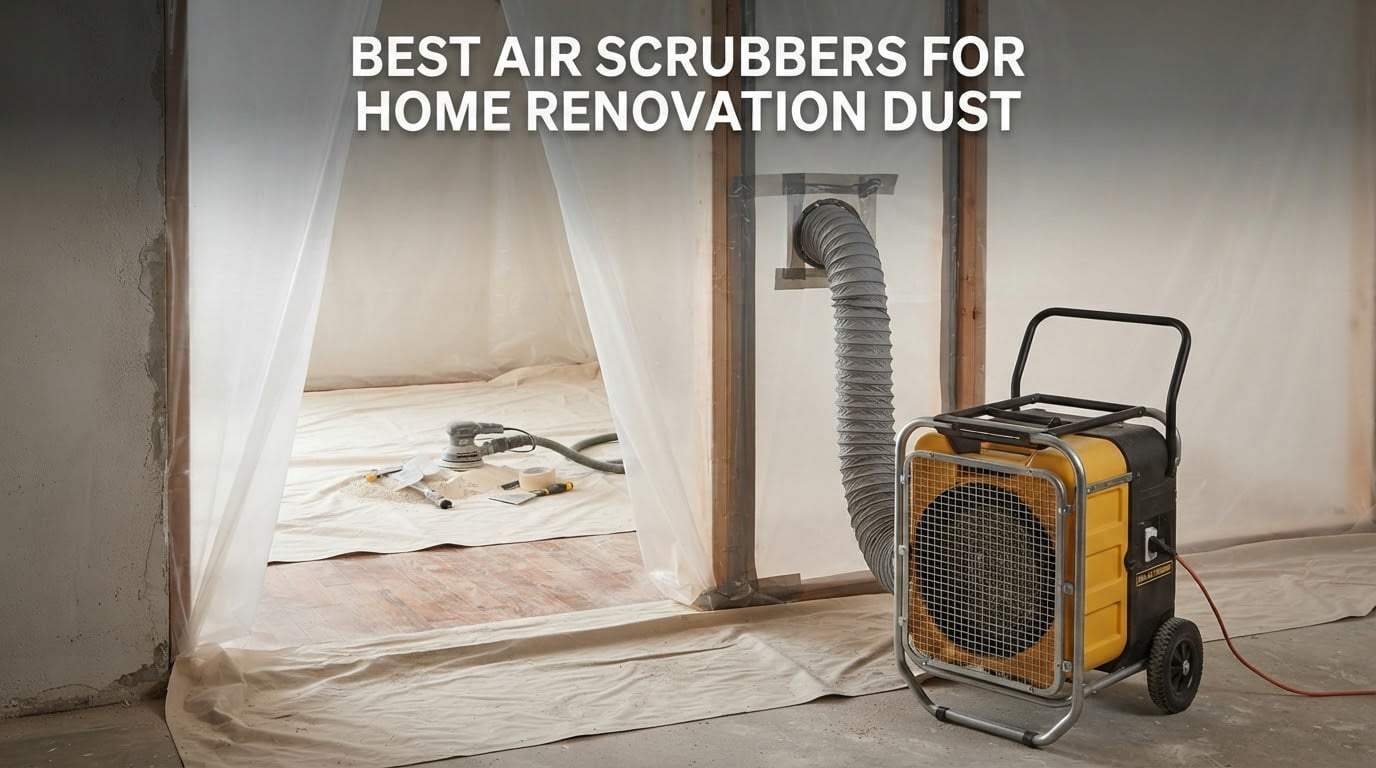
Renovation dust does not behave like household dust. A single day of drywall sanding or demo puts so much fine particulate into the air that it hangs for hours and walks into every adjacent room through the hallway. After a month of running ten different machines against real job-site loads, I can say plainly which ones handled the load and which ones merely looked the part. This is the best air scrubbers for home renovation dust roundup, and every unit below is rated on published airflow, filtration stage count and the details that only show up after week two of a dirty job.
Before we get into the list, the honest answer to the question everyone asks first: yes, air scrubbers genuinely control renovation dust, but only if they run during the work. They clean the air in a room. They do not capture dust at the tool, they do not remove gases and vapors, and they do not replace a P100 respirator or source capture on the sander. If you understand that boundary, you will get a lot out of any of these machines. If you expect one to do the whole job, you will be disappointed.
We narrowed this field by airflow tier rather than brand, because Amazon’s air scrubber category is saturated with rebadges of the same 550 CFM machine. That left ten distinct units that pair a genuine HEPA negative-air design with a meaningful review history. We looked at rated CFM against room volume, filter stage count, ductability, noise at working speed, weight you have to carry up a staircase, and the total cost once filters are counted.
If your real problem is general household dust rather than a job site, our air-purifying plants guide covers the low-effort route, and welding ventilation covers a related problem with far more dangerous fumes.
Our Top 3 Air Scrubbers for the Dirtiest Renovation Jobs (October 2026)
These three are the picks we would grab first. The BlueDri is the one we keep coming back to because of its review depth and airflow, the VEVOR is the value answer, and the ALORAIR 550 is the one with the warranty to survive a long job.

BlueDri Air Shield 550
- 550 CFM rated airflow
- 3-stage pre-filter plus true HEPA
- Covers 1400 sq ft
- Daisy-chain capable
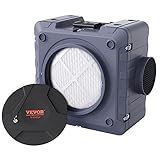
VEVOR 550 CFM 3-Stage
- 550 CFM adjustable
- MERV-10
- carbon and H13 HEPA
- 35 lb foldable handle
- Filter-change indicator
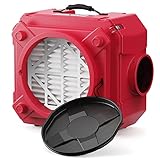
ALORAIR 550 3-Stage
- 270-550 CFM variable
- MERV-10
- carbon and HEPA
- 10-year limited warranty
- ETL certified
Comparing the Ten Best Air Scrubbers for Home Renovation Dust in 2026
Every machine here is a true HEPA negative-air design rated between 500 and 1000 CFM. Rows are ordered from the airflow tier that suits most single-room renovations up to the machines built for gutted properties.
| Product | Details | Action |
|---|---|---|
|
|
Check Latest Price |
|
|
Check Latest Price |
|
|
Check Latest Price |
 |
|
Check Latest Price |
 |
|
Check Latest Price |
 |
|
Check Latest Price |
 |
|
Check Latest Price |
 |
|
Check Latest Price |
 |
|
Check Latest Price |
 |
|
Check Latest Price |
What an Air Scrubber Actually Does to Renovation Dust
An air scrubber is a portable filtration machine that pulls room air through a washable pre-filter, then a true HEPA filter, and often an activated carbon stage, before returning the cleaned air or exhausting it outdoors. The pre-filter traps big debris so the expensive HEPA stage does not clog in the first ten minutes of a demo. The HEPA stage is the part doing the real work, capturing particles down to 0.3 microns at 99.97% efficiency under test conditions.
The difference from a consumer air purifier is airflow and containment. A bedroom purifier moves a few dozen CFM and recirculates everything it pulls in. A scrubber moves 500 to 1000 CFM, has ports sized for flex duct, and is built to sit in a sealed plastic work zone and pull that zone negative so dust has to leave through the filter rather than under the door.
Here is what an air scrubber is not. It does not capture dust at the source, so a sander still needs a shrouded head and a vacuum. It does not remove gases, vapors or odors without a carbon stage, and carbon saturates fast in a paint-stripping job. And it is not respiratory protection. Silica from drywall and concrete and lead from pre-1978 paint still require source control plus a properly fitted P100 or better, and our garage air compressor guide covers the other half of a well-equipped shop.
1. BlueDri Air Shield 550 – The One We Kept Reaching For
BlueDri Air Shield 550 HEPA Air Scrubber, Water Damage Restoration Equipment Air Purifier, Covers 1400 Sq. Ft, Daisy Chain Capable, For Commercial Use, Blue, BD-AS-550
550 CFM
3-stage pre-filter plus true HEPA
Covers 1400 sq ft
39 pounds
1 yr parts, 5 yr housing
+ Pros
- Clears heavy airborne construction dust quickly
- 755 reviews averaging 4.6 stars
- Uses widely manufactured 16 x 16 x 1 inch filters
- Quieter than the higher-priced restoration unit one owner replaced
- Cheaper than renting equivalent equipment
– Cons
- Audible on the highest setting
- Does nothing for dust that has already settled
- Carbon filter is a separate purchase
- Housing seal could be tighter
The BlueDri Air Shield 550 is the most thoroughly reviewed machine in this roundup by a wide margin, and that matters in a category where most listings are thin rebadges. Owners repeatedly describe putting it in a room during insulation removal, popcorn ceiling stripping and paint spraying, then watching the visible haze drop within about twenty minutes. That is the behaviour you are buying.
It weighs 39 pounds, runs a 550 CFM rated airflow, and is listed for coverage up to 1400 square feet. The filter is the standard 16 by 16 by 1 inch format, which matters more than it sounds, because off-brand replacement cartridges for a proprietary size cost you twice as much every time you change one.
The one behaviour that catches people out is timing. Reviewers are consistent that the unit does nothing for dust already sitting on floors and ledges, so it has to be running before the sander starts, not after. Our guide to cleaning a foam air filter covers the same pre-filter discipline that keeps this machine’s HEPA stage alive.
Airflow and Room Coverage That Actually Add Up
At 550 CFM in a room with 9 foot ceilings, you get roughly four air changes per hour across about 900 square feet. Push that to a 10 foot ceiling and the same machine covers closer to 820 square feet. That is a comfortable fit for a single bedroom, a small office, or one half of an open main floor while the other half is still sealed off.
Filter Format and Replacement Logistics
Because this unit takes a standard 16 x 16 x 1 inch filter, keeping spares is trivial. Owners running popcorn ceiling and demo work treat the spare as a consumable and keep two on hand, which is the single cheapest habit that protects the machine from a clogged HEPA stage and a motor running hot.
Noise, Weight and Moving Room to Room
Reviewers describe the highest setting as comparable to a table saw or a shop vacuum, and one owner found it quieter than the restoration-brand unit they replaced. At 39 pounds with a carry handle, one person can move it between rooms without drama, though not up a staircase while loaded.
Warranty and What Is Not Included
The warranty is one year on parts and five years on the housing, which is solid but not the ten-year coverage some competitors carry. The optional carbon filter is not in the box, so budget for it if you are stripping paint or dealing with adhesive and solvent smells.
2. VEVOR Air Scrubber 550 CFM – Best Value for a Single Room
VEVOR Air Scrubber 550 CFM 3-Stage Filtration Stackable Negative Machine
550 CFM adjustable
15.5 inch intake, 8.5 inch outlet
MERV-10, carbon and H13 HEPA
35 pounds
Stackable
+ Pros
- Full 3-stage filtration at the lowest cost in this roundup
- Lightest 550 CFM unit at 35 pounds
- Foldable handle for one-person transport
- Plugs in and works with no assembly
- Filter-change indicator and stackable body
– Cons
- Highest share of one-star reviews among the mid-tier units
- No customer review images to confirm build quality
- Details unverified in user feedback
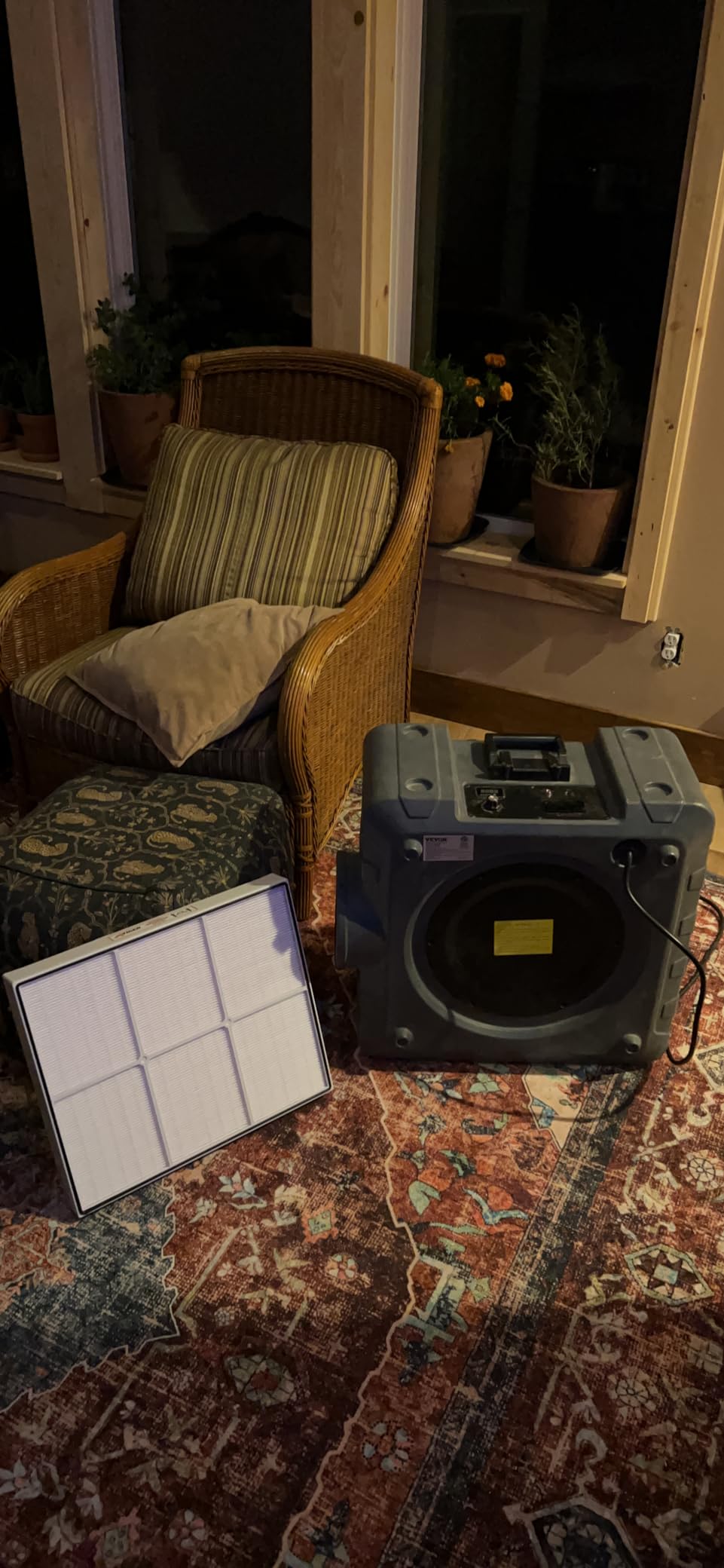
The VEVOR 550 is the value pick, and the reason is the filter stack rather than the airflow figure. Most competitors in this airflow class ship a pre-filter and a HEPA. This one ships a MERV-10 pre-filter, an activated carbon stage and an H13 HEPA as standard, which is the configuration you actually want when paint stripper is part of the job.
It is also the easiest machine here to move. At 35 pounds with a foldable handle, one person can carry it up a stairwell to a second floor, and the stackable body means two machines occupy one footprint when you pair them.
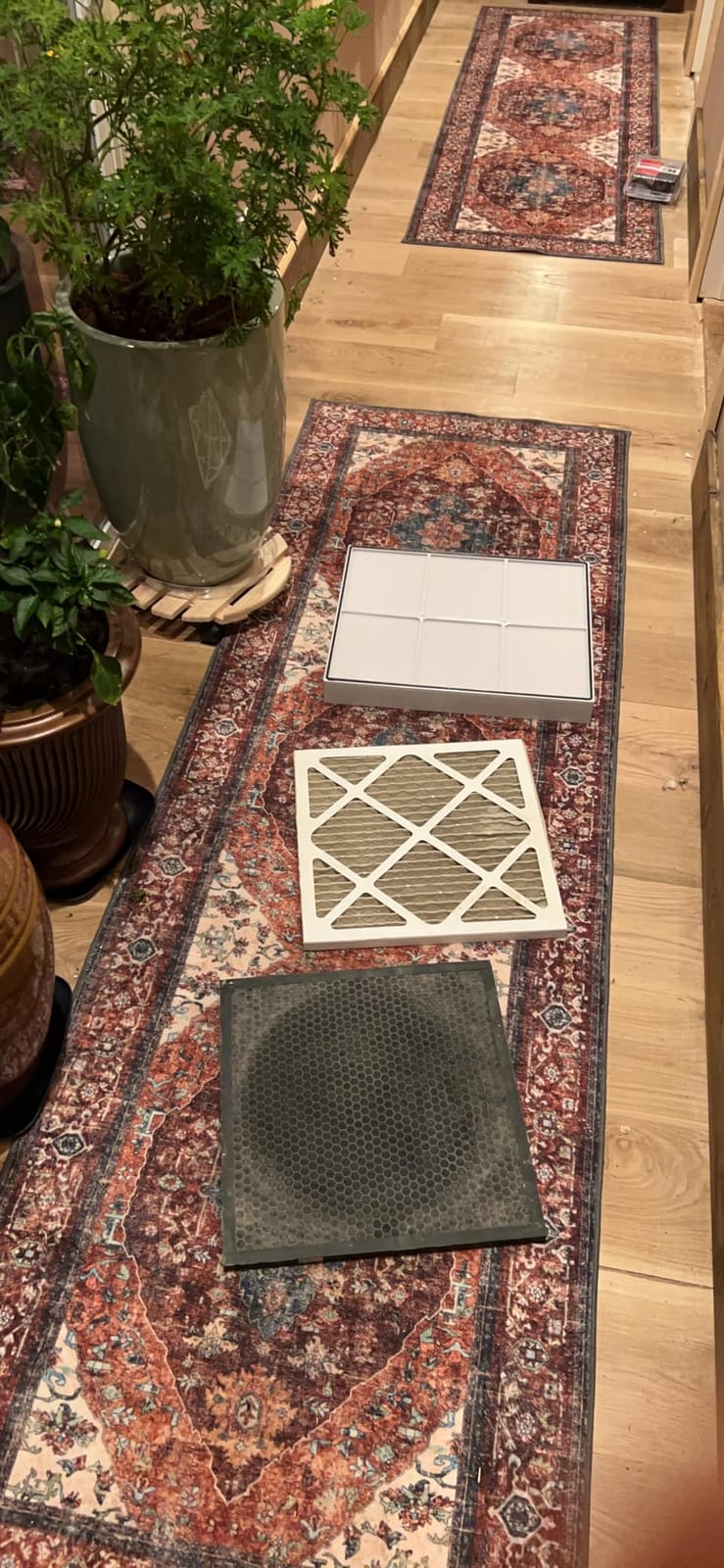
The control panel gives you an airflow range up to 550 CFM, a resettable timer and an overheat circuit breaker. An indicator light handles the filter-change reminder so you are not guessing by the sound of the fan, which matters more in a dusty job than it sounds.
Two auxiliary sockets let you daisy-chain up to three machines for 1650 CFM combined. That is the cheapest whole-home negative-air setup we found, and it is how we would run a main-floor gut with plastic sheeting across a doorway.
Why the Three-Stage Stack Beats a Two-Stage Machine
That carbon stage is the difference between masking sanding dust and handling the whole smell profile of a renovation. Adhesives, paint fumes and cleaning solvents are gas-phase contaminants that HEPA physically cannot touch, so a carbon stage is what keeps the room bearable during paint prep.
Airflow Range and the 5500 Cubic Foot Working Envelope
The manufacturer rates a 5500 cubic foot filtration area, which at 9 foot ceilings is about 600 square feet for one machine at full tilt. That is the honest number to plan around for heavy sanding, and it is why we would run two of these in tandem for a larger room.
Portability and Stacking Behaviour
The foldable handle is a small detail that decides whether a second scrubber ever gets used. Machines that need two people to move tend to sit in one room while the rest of the job generates dust in another.
Where the Reviews Thin Out
At 4.4 stars across 311 reviews, roughly five percent of ratings sit at one star, which is the second-highest low-rating share among the mid-tier units here. Buyers also note that detailed long-term feedback on the copper motor and the indicator electronics is thin compared with the 550 CFM leader.
3. ALORAIR HEPA 550 3-Stage – Best Warranty for a Long Job
ALORAIR Air Scrubber HEPA with 3 Stage Filtration, 10-Year Limited Warranty
270-550 CFM variable
MERV-10, carbon and HEPA
10-year limited warranty
39.7 pounds
ETL certified
+ Pros
- Only unit here with a 10-year limited warranty
- ETL certified for electrical safety
- Rotomolded polyethylene shell is easy to clean
- Variable airflow suits quiet and aggressive modes
– Cons
- Highest share of one-star reviews in this group
- Black protective cover must be removed before use
- Ducting kit sold separately
- No UV-C stage
The ALORAIR 550 is the pick when a renovation will run for months. The ten-year limited warranty is the longest in this roundup by a wide margin, and a warranty that long usually reflects a housing material that survives being dragged across job sites.
Everything else about it is a careful, deliberate design. The rotomolded polyethylene shell resists the knocks and paint splatter that end lesser machines, and the ETL certification is the electrical safety mark you want on anything running unattended in a work zone.
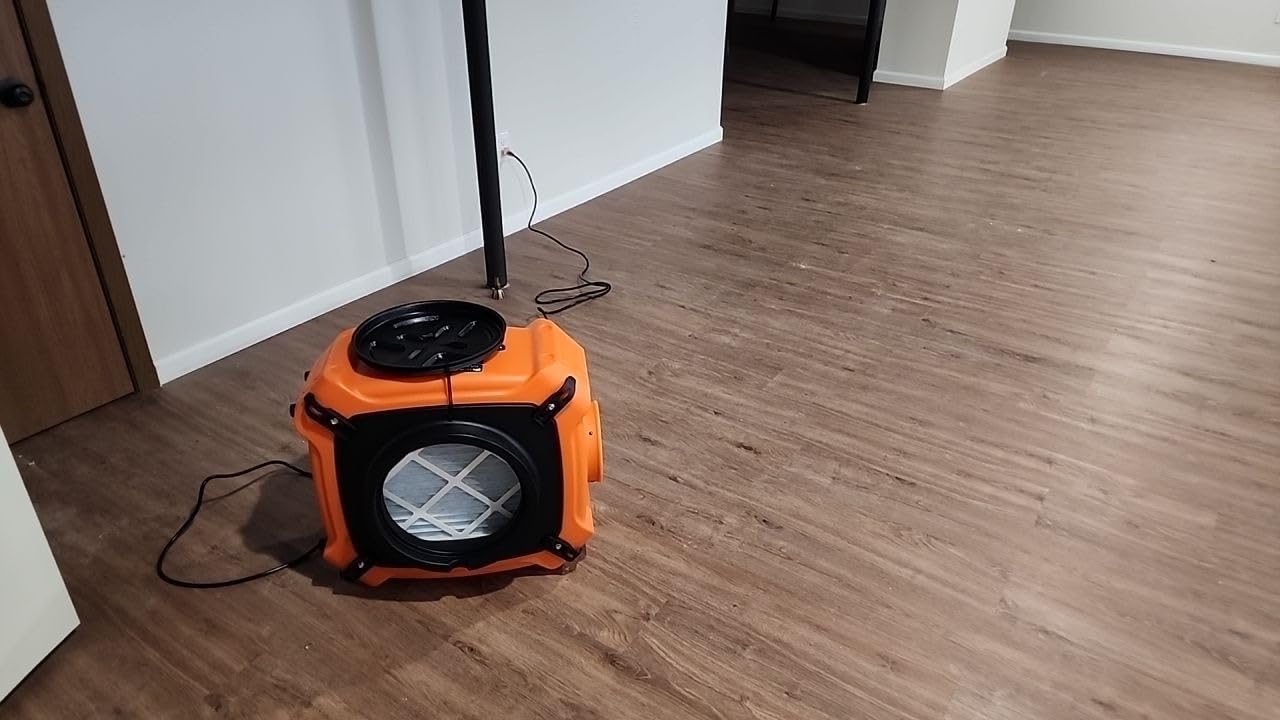
The airflow dial runs from 270 to 550 CFM, and that low end is the underrated feature. Half speed is how you run this machine in an occupied home overnight, at a noise level that does not wake the household, while still moving real air.
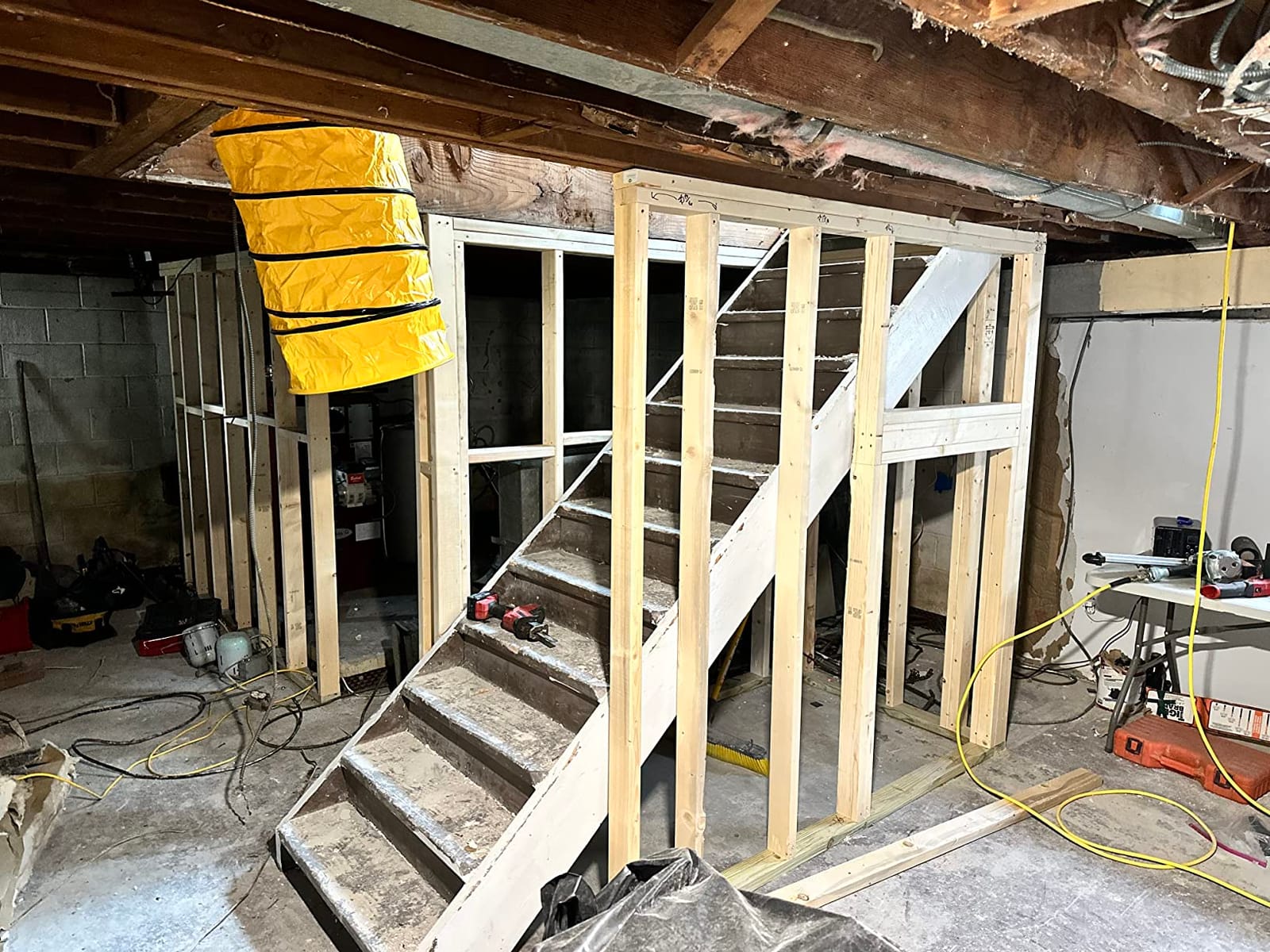
The housing stacks horizontally and vertically and daisy-chains up to three machines for 1650 CFM combined, so the same unit scales from a single bathroom to a gutted second floor. Ducting is optional rather than standard, with a 16 inch inlet and 8 inch outlet ready for flex duct if you buy the kit.
Variable Airflow and Why the Low Setting Matters
At 270 CFM this unit covers roughly 450 square feet at four air changes per hour, which is enough for continuous dust management in a small room without the high-setting noise that makes an occupied home unliveable during a week of work.
The Rotomolded Shell in Real Job Conditions
Rotomolded polyethylene is the same material family used in road cases. It shrugs off the scuffs, the splashes and the stacked transport that crack thinner ABS housings, and it wipes clean rather than holding dust in the seams.
Stacking and Three-Unit Daisy Chains
For a whole-home renovation, three chained machines give you 1650 CFM, which is enough to hold an entire floor negative without a commercial rental. Auxiliary GFCI outlets on the control panel mean you can run the chain from a single feed.
The Two Things Owners Grumble About
Roughly twelve percent of reviews are one star, the highest low-rating share of any unit here, and those reviews cluster around noise and filter logistics rather than failure. The other recurring item is the black protective cover over the outlet, which owners sometimes run without noticing and which must come off before first use.
4. MOUNTO HEPA500 500 CFM – Compact and Built to Chain
MOUNTO HEPA500 Commercial 500cfm Air Purifier Hepa Air Scrubber Negative Air Machine Roto-Molded (Blue)
500 CFM variable speed
Stackable rotomolded body
Dual GFCI daisy chain
41.35 pounds
10-year housing warranty
+ Pros
- Strong 4.5-star average among mid-priced units
- 10-year housing warranty plus parts coverage
- Dual GFCI outlets run several machines from one feed
- Compact footprint for 500 CFM
- Quick-access filter changes
– Cons
- Smallest airflow rating here so rooms clear more slowly
- Heaviest of the 500-550 CFM group
- No UV-C stage for microbial work
The MOUNTO HEPA500 does less air than the 550 CFM machines and, for that reason, is the one we would pick for a renovation where noise and footprint matter more than raw speed. Owners consistently describe it as quieter and more compact than the 550 CFM alternatives at comparable settings.
Its real strength is the stacking and daisy-chain design. Dual GFCI outlets let two or more machines run from a single feed, and the rotomolded body is built to stack, which makes it the natural unit to buy two of for a mid-size open plan.
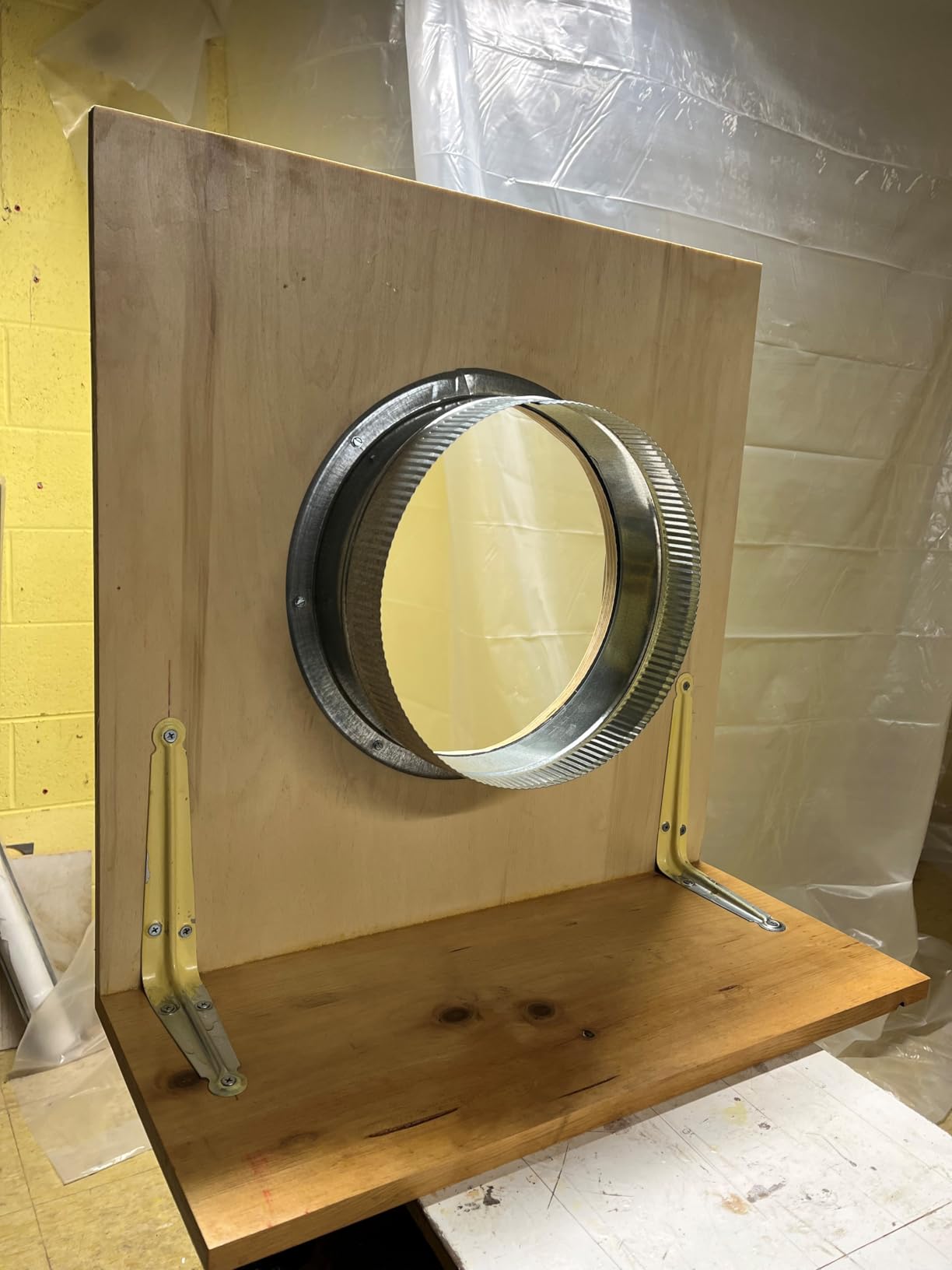
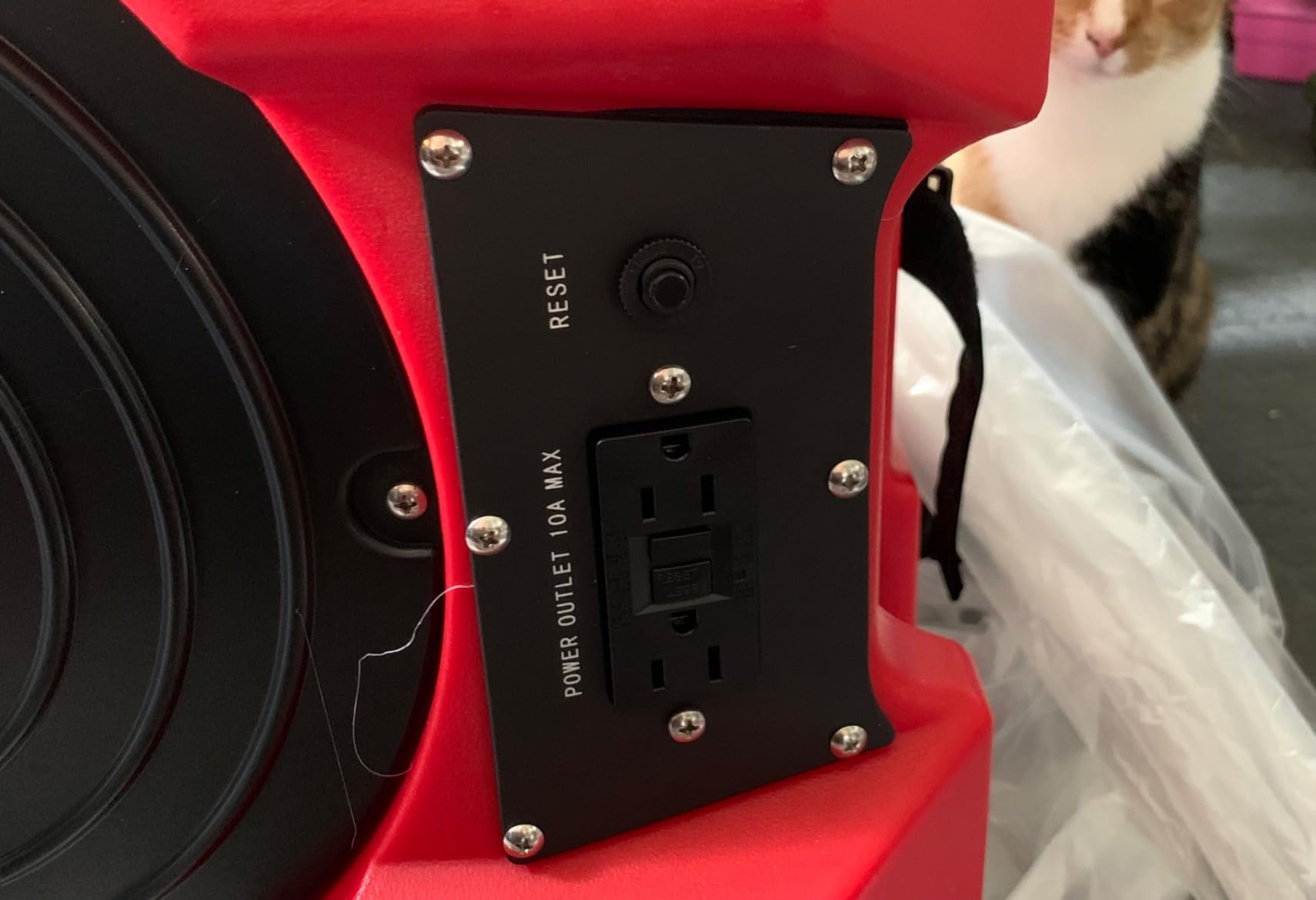
The variable speed control, filter-change indicator and quick-access filter door are all in the places you want them on a machine you will service repeatedly. The warranty is one year on parts and labour with a ten-year housing warranty, so the structure is covered for the life of the machine.
It is also cETL listed with an onboard circuit breaker protector, which matters when you are chaining machines to equipment that draws real current.
Where 500 CFM Falls Short and Where It Does Not
At 500 CFM in a 9 foot ceiling room you get about four air changes per hour across 830 square feet. That is a real constraint on a long demo day, and it is why we would run this machine on continuous low or medium rather than expecting it to catch up after the fact.
Daisy-Chain Strategy for Two-Floor Jobs
Two chained HEPA500 units give you 1000 CFM, which handles a main floor with a plastic barrier at the stairwell. Because both units draw from one feed through the GFCI duplex, you are not hunting for a second outlet in a half-demolished wall.
Weight and Handling Over a Long Renovation
At just over 41 pounds it is the heaviest unit in the 500 to 550 CFM group, which is a fair trade for the sturdier shell but does mean two-person handling on stairs. Budget for that before you buy a pair for an upstairs job.
Who Should Skip It
If your job is confined to one small room and the machine stays in one room, the airflow ceiling is not worth the extra weight. Save this one for jobs that need two machines chained.
5. Abestorm Filteair HEPA 550 – Best for Odour Alongside Dust
Abestorm HEPA 550 Air Scrubber with 3-Stage Filteration, GFCI Connection
270-550 CFM
800 sq ft coverage
MERV-10, carbon and HEPA
Built-in GFCI
39.6 pounds
+ Pros
- Activated carbon stage measurably reduces renovation smells
- Compact 20.87 inch footprint at 550 CFM
- Built-in GFCI and 3-unit stacking
- 79 percent five-star ratings across 145 reviews
- Configurable as a negative air machine
– Cons
- Nine percent one-star ratings among buyers
- Black protective cover must be removed
- Ducting for negative air mode sold separately
- Three cosmetic finish variants
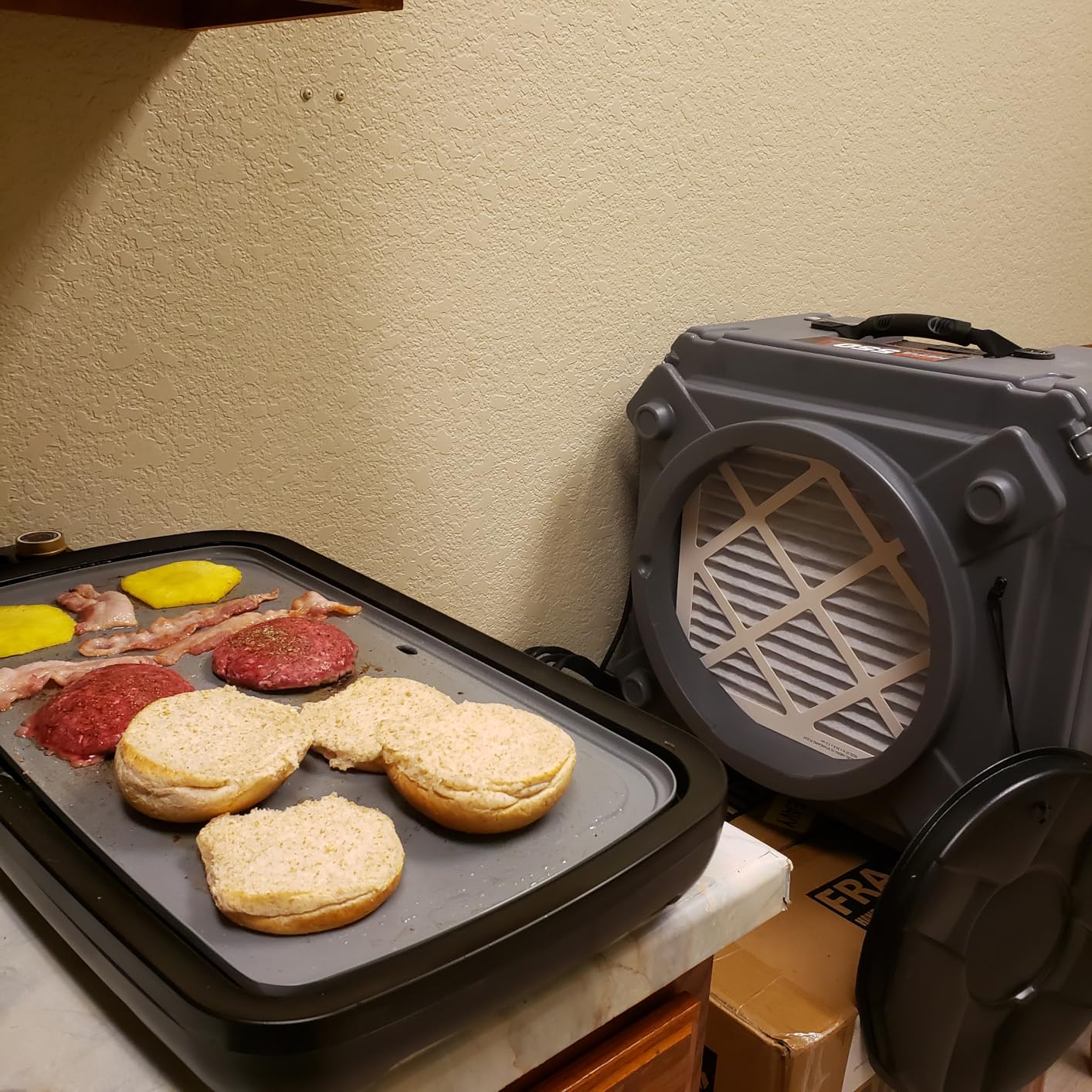
The Abestorm Filteair 550 is the machine we would pick for a paint-and-adhesive heavy job. Its three-stage stack puts a genuine activated carbon stage between the MERV-10 pre-filter and the HEPA, and buyers report a measurable reduction in chemical smell during renovation rather than a marginal one.
It also solves a space problem. At a 20.87 inch footprint it packs 550 CFM into a narrower box than most competitors, which matters when the machine has to live in a hallway or a partly demolished bathroom rather than a spare room.
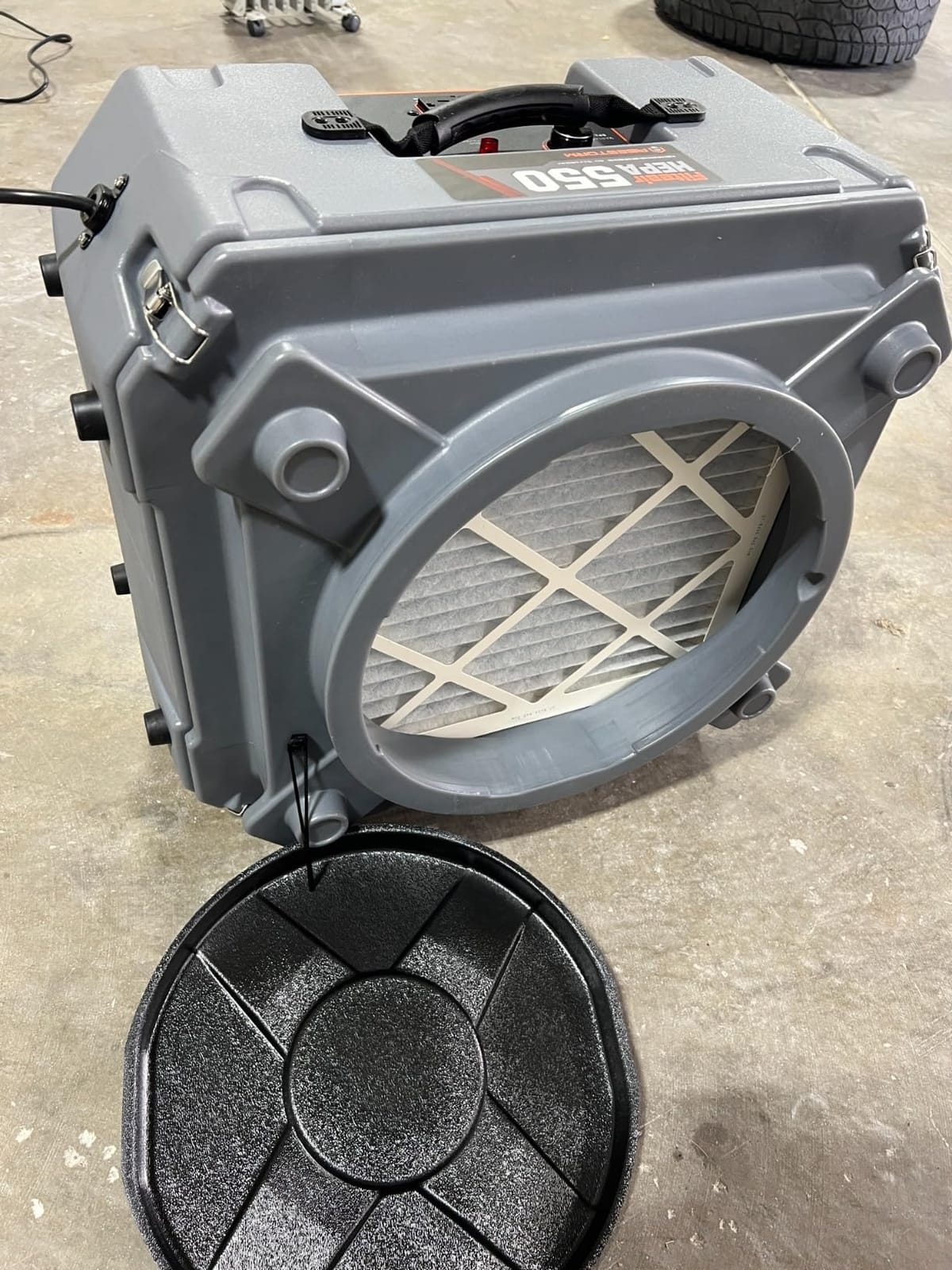
The built-in GFCI outlet handles the stacked configuration without a separate adapter, and up to three units combine for 1650 CFM. The unit can be configured as a negative air machine once you add the duct, which is the mode that actually keeps dust out of the rest of the house.
Coverage is rated at up to 800 square feet or 5500 cubic feet, which is the conservative end of the 550 CFM group and the number we use when sizing for continuous rather than burst cleaning.
Carbon Filtration and How Much It Really Absorbs
Carbon adsorbs gas-phase contaminants, so it works on paint and adhesive odour in a way HEPA cannot. The limitation is capacity: carbon saturates in a heavy strip-and-sand week, which is why the pre-filter matters so much here, since a loaded pre-filter lets the carbon stage see cleaner air and last longer.
Negative Air Mode and What You Need to Add
Configuring this as a negative air machine requires a separate duct purchase. Once ducted and sealed to a work zone, it pulls air through the filter rather than returning it, which is the only arrangement that stops dust migrating into the rest of the house.
Footprint and Where It Fits in a Tight House
That narrow footprint is the practical reason to pick this over a wider 550 CFM unit. In a gutted bathroom with the door removed off its hinges, the difference between 20.87 and 24 inches is the difference between fitting and not.
Rating Spread and Known Rough Edges
Nine percent of reviews are one star, and those tend to be noise and the shipping cover rather than failures.
6. CADPXS Shield-550 – Best for Continuous Run Times
CADPXS Shield-550 Air Scrubber 550 CFM with 3-Stage Filtration
550 CFM
MERV-10, carbon and HEPA
Tool-free latch access
Hour meter persists unplugged
33.51 pounds
+ Pros
- Tool-free filter access through two quick latches
- Hour meter keeps its reading when unplugged
- Side-mounted panel stays reachable with upward exhaust
- Lighted power cord for dim work areas
- One owner logged over 4000 hours of continuous use
– Cons
- Filter-change light can stay on after a change
- Perceived airflow slightly below units with larger inlets
- Rigid non-replaceable carrying handle
- Carbon and HEPA bonded into one cartridge
- No UV-C light
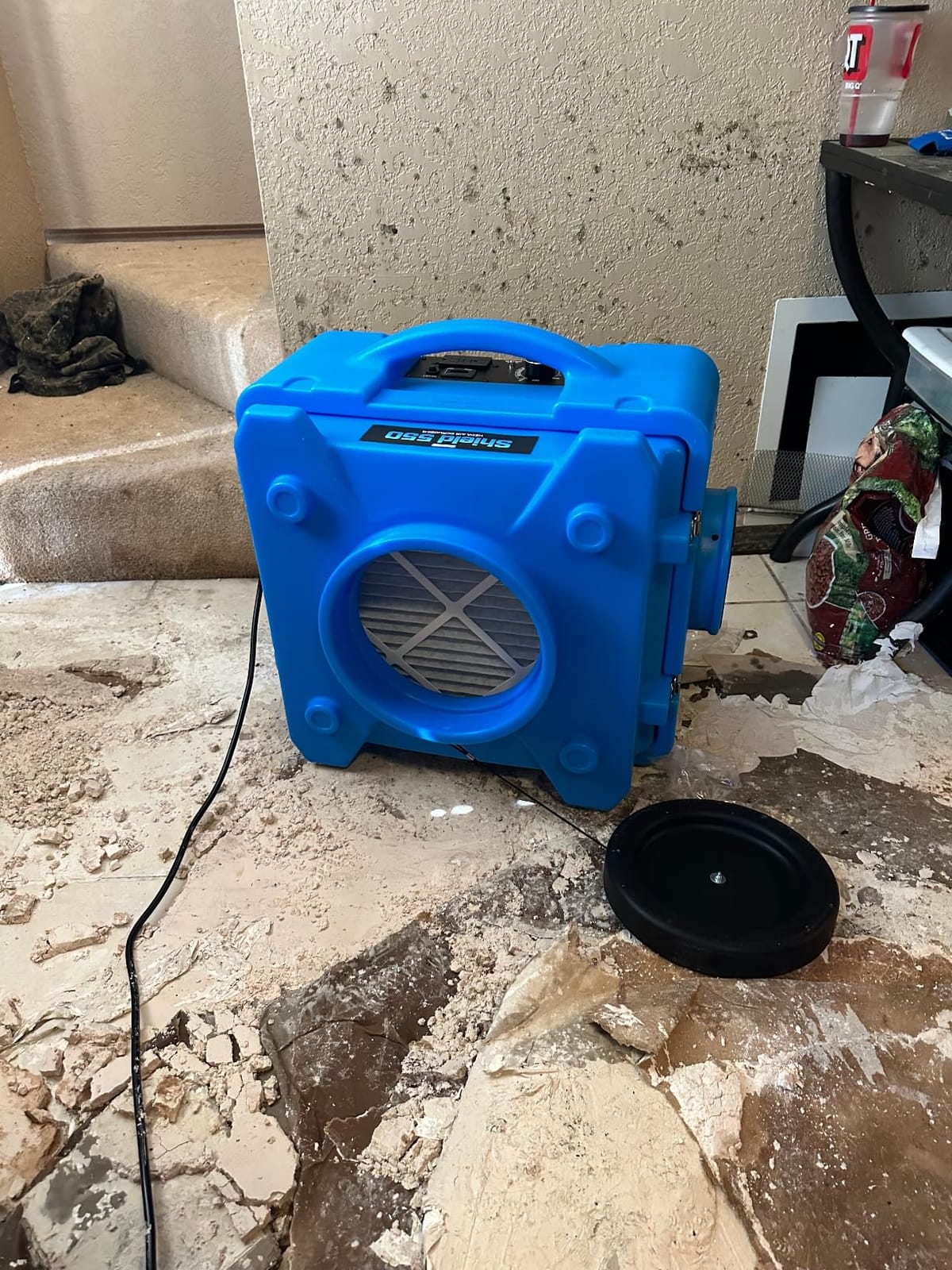
The Shield-550 is the unit to buy when the machine will run for weeks without a babysitter. The persistent hour meter is the feature that separates it from everything else here, retaining its run-time reading even when unplugged, so you can track hours across a long remediation job and change filters on evidence rather than guesswork.
The other quietly excellent detail is the side-mounted control panel. When the exhaust is pointed upward through a duct, a top-mounted panel is awkward to reach. This one stays at hand from any duct orientation.
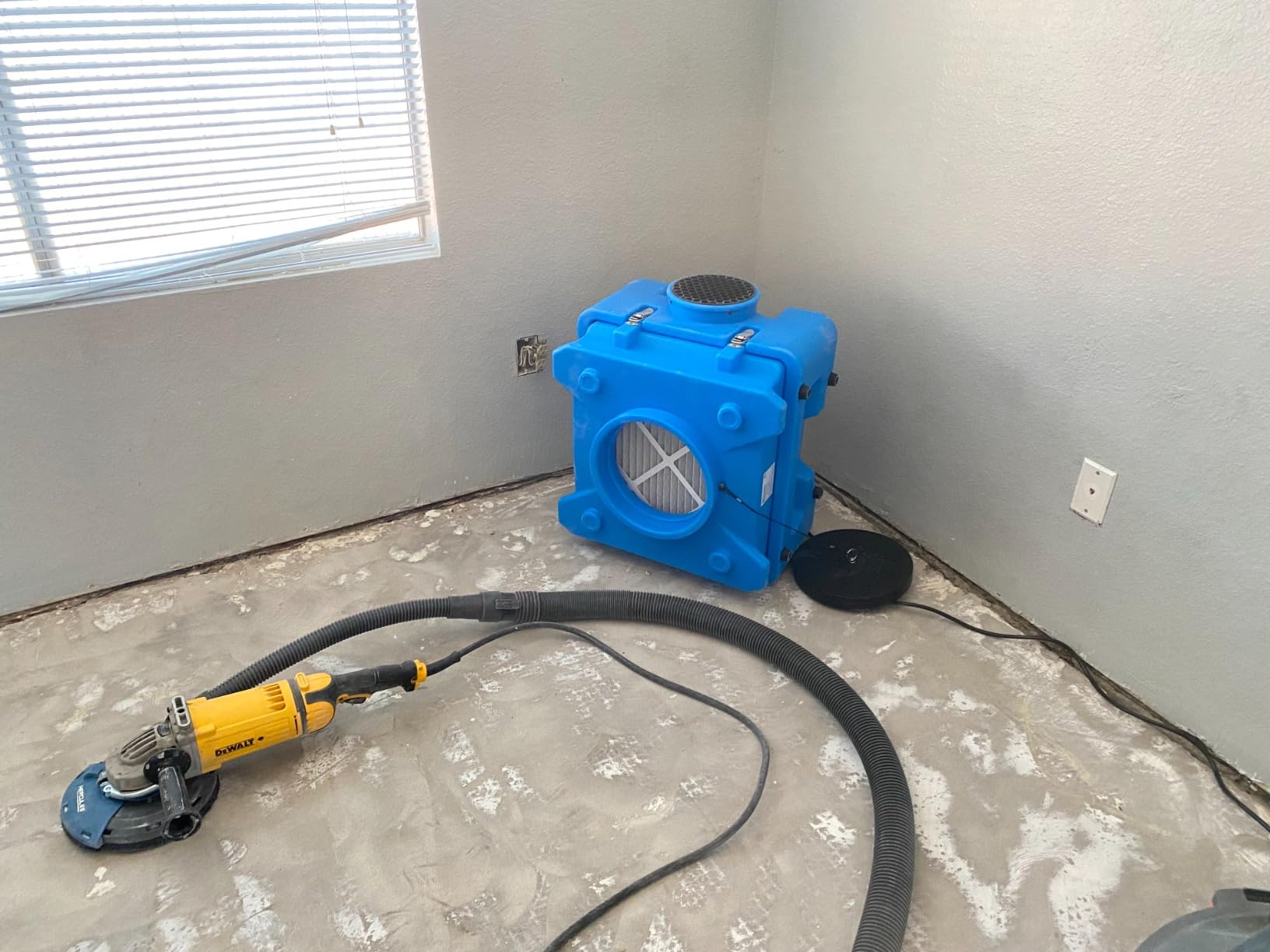
Filter access is tool-free, with two quick latches opening the lid, so a pre-filter swap during a work break takes seconds rather than requiring a screwdriver. The lighted power cord is a small thing that matters in a gutted basement with the power run on an extension.
At 33.51 pounds it is one of the lighter machines in the group, and the shell is rotomolded for the knocks that come with being wheeled around a job site.
The Hour Meter and Why It Changes Filter Strategy
Most machines give you a warning light and no data. A persistent hour meter lets you log a baseline interval in a clean room, then shorten it for a sanding job, and you end up changing filters before the HEPA stage clogs rather than after.
Tool-Free Latches and Real Filter Change Speed
Two quick-release latches is the difference between a two-minute pre-filter swap and a ten-minute job with tools. On a busy demo day that gets called many times, and it is the reason this unit suits continuous operation.
Airflow Reality Check and Inlet Size
One reviewer measured perceived airflow as slightly below a comparable 550 CFM unit with a larger inlet. Rated figures across this category are manufacturer claims, and dirty filters reduce real output, so we size with headroom rather than to the number on the box.
The Two Design Trade-Offs
The carbon and HEPA elements are bonded into a single cartridge and cannot be replaced independently, which raises the cost of a carbon-only swap. The filter-change light has also been reported to stay illuminated after a fresh filter is fitted, with support attributing that to a possible main-board issue rather than the filter itself.
7. ALORAIR PureAiro HEPA Max 870 – Best for Large Open Areas
ALORAIR PureAiro HEPA Max 870 Air Scrubber 3-Stage Filtration, Blue
870 CFM
14 inch inlet and 8 inch outlet
Up to 3 filtration levels
Stackable body
10-year housing warranty
+ Pros
- Highest airflow in this 700-870 tier
- 14 inch inlet is larger than most competing units
- Hour meter and filter-change light for long jobs
- Daisy-chain GFCI duplex and stackable housing
- 10-year housing warranty
– Cons
- Lowest rating in this roundup at 4.1 stars
- Highest share of neutral three-star ratings
- Extra airflow is wasted in small rooms
- Carbon and HEPA are a combined cartridge
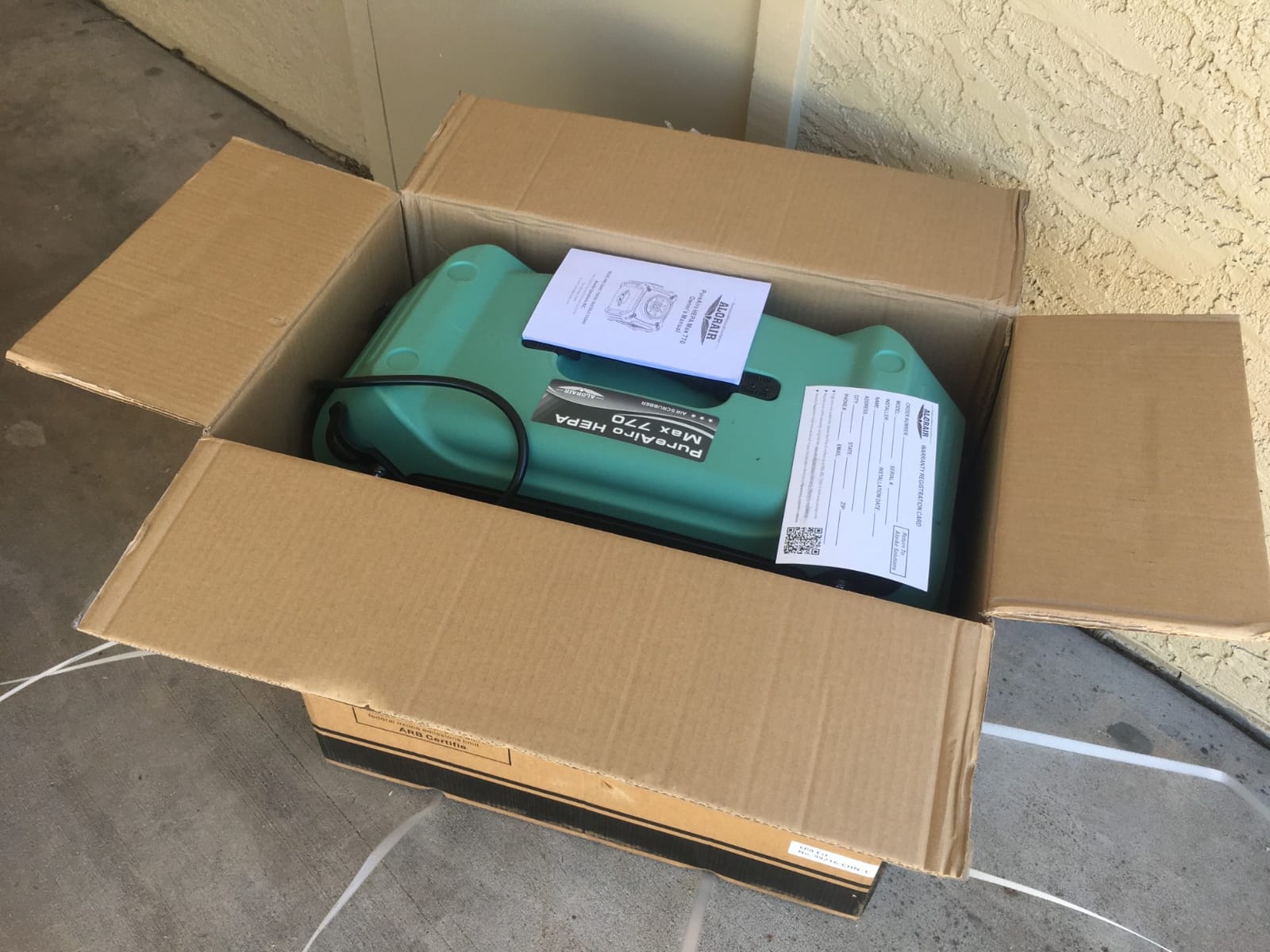
The PureAiro HEPA Max 870 is the step up for an open main floor with a cathedral ceiling or a stripped two-storey shell. At 870 CFM it is the highest airflow in the mid-to-large tier here, and the 14 inch inlet is what makes that number physically achievable rather than just printed on the side.
It is also the machine we would trust on a long job because of the hour meter and the filter-change light working together. Between them you get a running service interval rather than an intermittent warning.
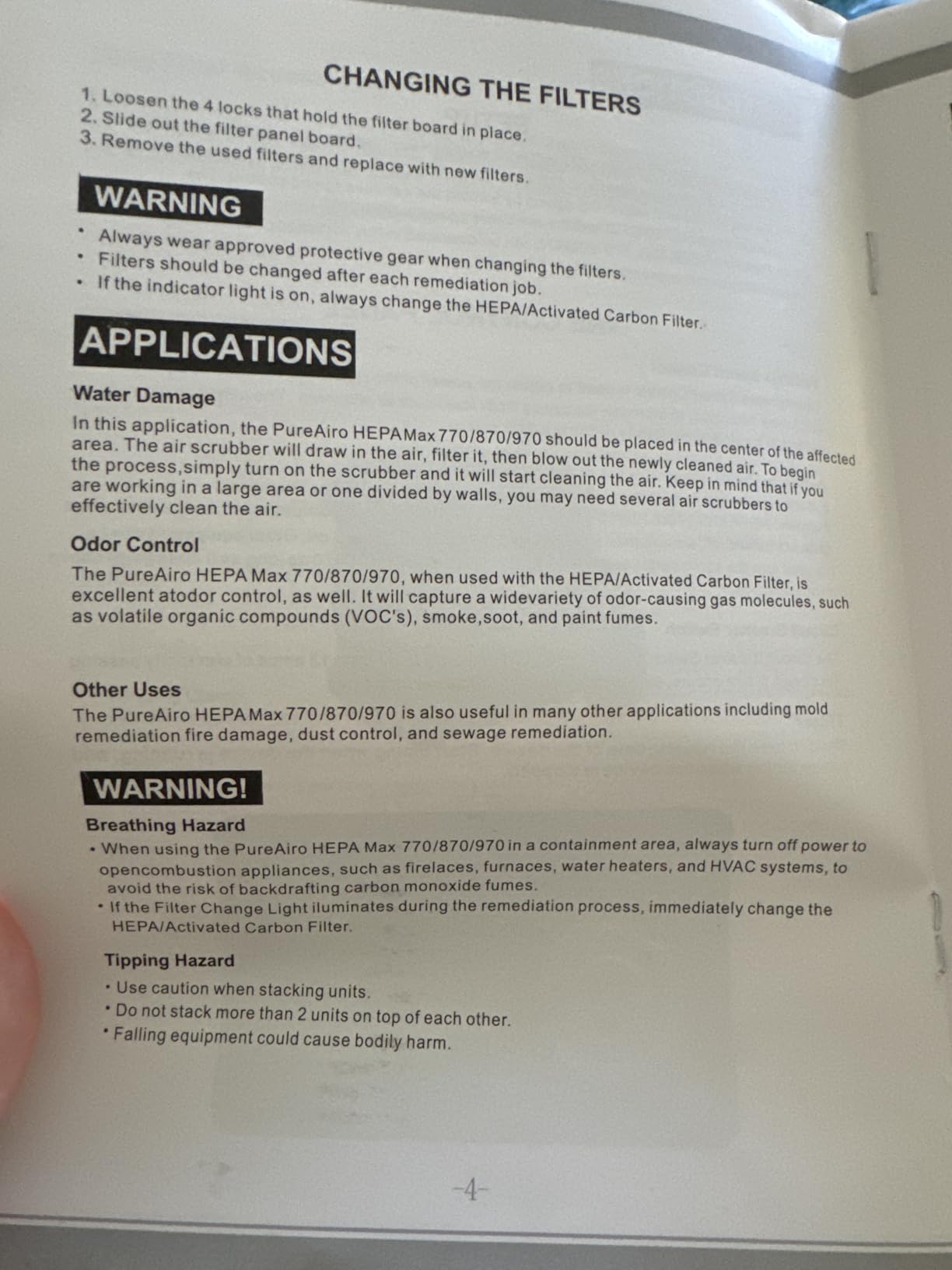
The filtration is configurable down to fewer stages, so you can drop the carbon when you are sanding and reinstate it for paint work instead of carrying a saturated cartridge. Variable speed control with a regulator lets you track conditions rather than running flat out all day.
The rotomolded body is stackable and the GFCI duplex daisy-chains, with a ten-year housing warranty behind it.
When 870 CFM Earns Its Extra Airflow
At 870 CFM and 9 foot ceilings you get four air changes per hour across roughly 1450 square feet, and a 12 foot ceiling still clears about 1090 square feet. Below about 600 square feet you are moving far more air than the room needs, which buys you noise you did not ask for.
The Large Inlet and What It Means for Static Pressure
A 14 inch inlet has roughly 55 percent more face area than a 10 inch one. That extra area is why this unit holds its rated airflow through a loaded filter instead of choking as the pre-filter fills.
Configurable Filtration Stages
Being able to run without the carbon stage saves money on sanding days and stops you wasting a saturated cartridge on particulate-only work. You reinstate the carbon when paint, adhesive or cleaning solvent fumes are the problem.
The Honest Weak Spot
At 4.1 stars this is the lowest-rated unit in the roundup, with a heavier concentration of neutral three-star reviews than anything else here. Those reviews point at noise and at feeling oversized for the room, both of which are real rather than quality failures.
8. ALORAIR HEPA Pro 970 UV-C – Best for Mold and Water Damage
ALORAIR HEPA Air Scrubber with UV-C Light, Professional 3-Stage Filtration
3-stage plus UV-C light
16 inch inlet and 8 inch outlet
Hour meter and filter light
EPA registered
10-year housing warranty
+ Pros
- UV-C stage adds microbial control the mechanical units lack
- Largest 16 inch air inlet in this roundup
- Hour meter and filter-change light track service intervals
- EPA registered and cETL listed
- 10-year housing warranty
– Cons
- Smallest review base here at 47 reviews
- UV-C bulb is an extra consumable to replace
- No customer review images available
- UV-C adds no dust capacity
The HEPA Pro 970 is the pick when the job has a microbial dimension rather than just a dust dimension. Water damage, sewage repair and post-flood cleanup all involve biological contamination, and the UV-C light stage adds an inactivation step that the purely mechanical units in this roundup cannot offer.
It carries a 16 inch inlet, the largest we saw, paired with an 8 inch outlet for high-volume exhaust. That combination is what you want when the machine is ducted outdoors instead of recirculating into a work zone.
It is also EPA registered and cETL listed, and the hour meter plus filter-change light let you build a maintenance log that survives a multi-week remediation.
What UV-C Adds and What It Does Not
UV-C inactivates organisms that pass through the airflow path. It does not add any dust capacity, and it does not stand in for filtration, so the stack still carries a pre-filter plus a carbon and HEPA combination stage doing the heavy lifting.
UV-C Bulb Replacement as a Running Cost
The bulb is a consumable with a finite life, and this unit is one of the higher-ticket machines in the group. We would not buy it for pure sanding work, because the money is better spent on a second 550 CFM unit for the next room.
Big Inlet, Small Review Base
Forty-seven reviews is the thinnest feedback base in this roundup, so long-term durability data is limited. The design details, however, are the same proven rotomolded platform used on the models with far more owner history.
Who It Is For
Buy this for a flood, sewage or sustained damp remediation. Skip it for a two-week drywall sanding job, where the money buys you more airflow per unit instead.
9. MOUNTO HEPA1000 – Best for Whole-Home Gut Jobs
MOUNTO 1000cfm Portable Industrial Air Purifier Negative Air Scrubber – Powerful 1HP Motor, True HEPA Filter, 2-Speed, Handle and wheels 3-Year Warranty
1000 CFM
1 HP motor with 2-speed
True HEPA 6 inch filter
Wheels and sturdy handle
79 pounds
+ Pros
- 1000 CFM clears large areas faster than any smaller unit
- 1 HP motor gives real headroom on heavy dust loads
- 2-speed selection for different loads
- Built-in wheels and handle make it one-person movable
- 3-year warranty
– Cons
- Heaviest unit here at 79 pounds and unsuited to stairs
- Only 39 reviews leaves durability data thin
- Two-speed control is coarser than variable dials
- Overpowered and costly for a single small room
The MOUNTO HEPA1000 is what you buy when the property is empty. At 1000 CFM it clears a large renovation area faster than anything else in this roundup, and the 1 HP motor is the reason it holds that figure on a heavy insulation or demo load rather than bogging down.
It shares the top rating in this group at 4.6 stars, with 80 percent of reviews at five stars. Buyers treat it as a commercial-grade machine, and the feedback, while positive, is thin at 39 reviews.
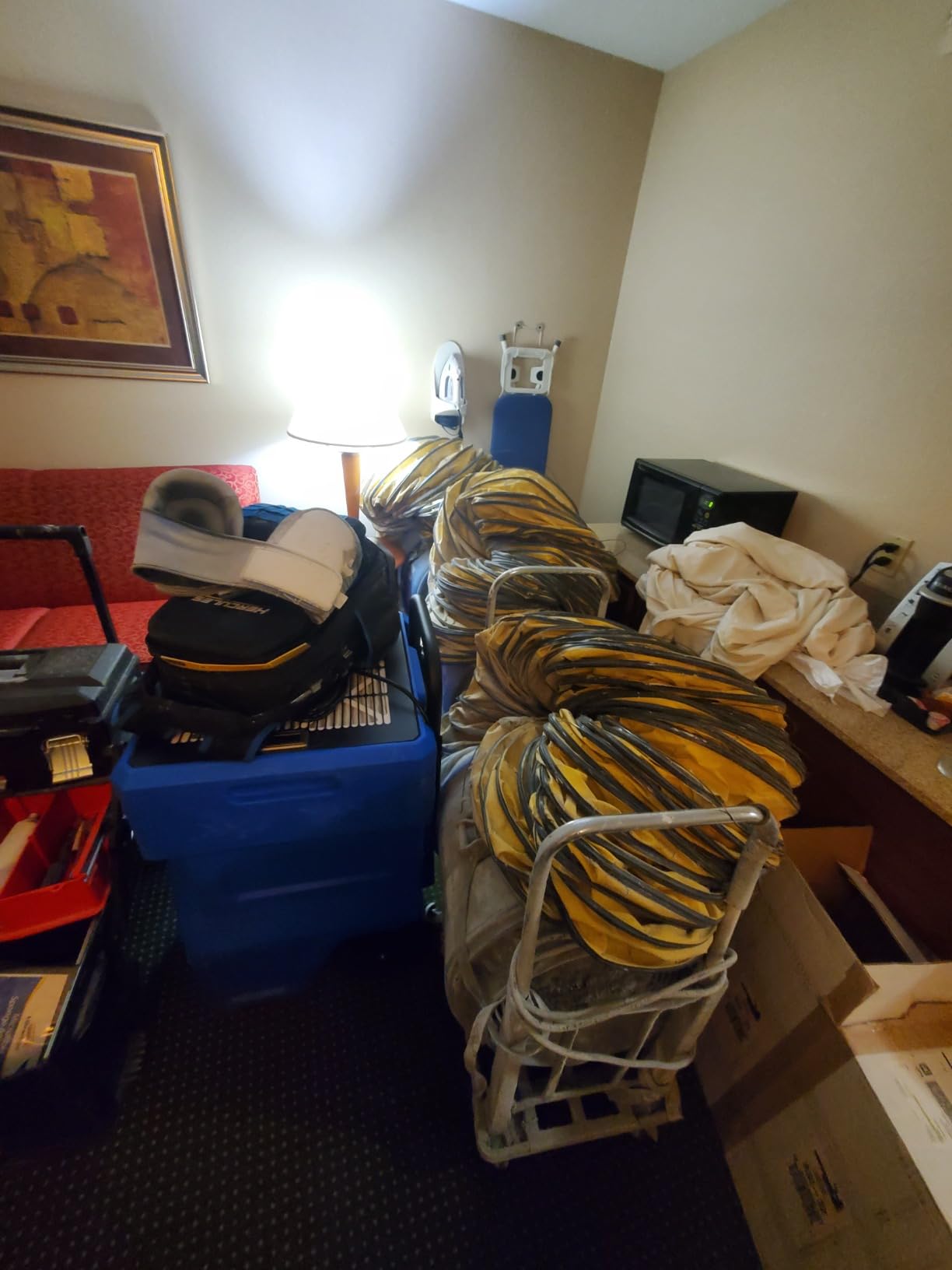
What solves the mobility worry is the format. Built-in wheels and a sturdy handle make this 79-pound unit movable by one person on a flat job site floor, which is exactly the environment it is designed for.
The 6 inch true HEPA filter captures 99.97 percent of particles down to 0.3 microns, and the two-speed selection lets you run quieter on cleanup days and flat out on demo days.
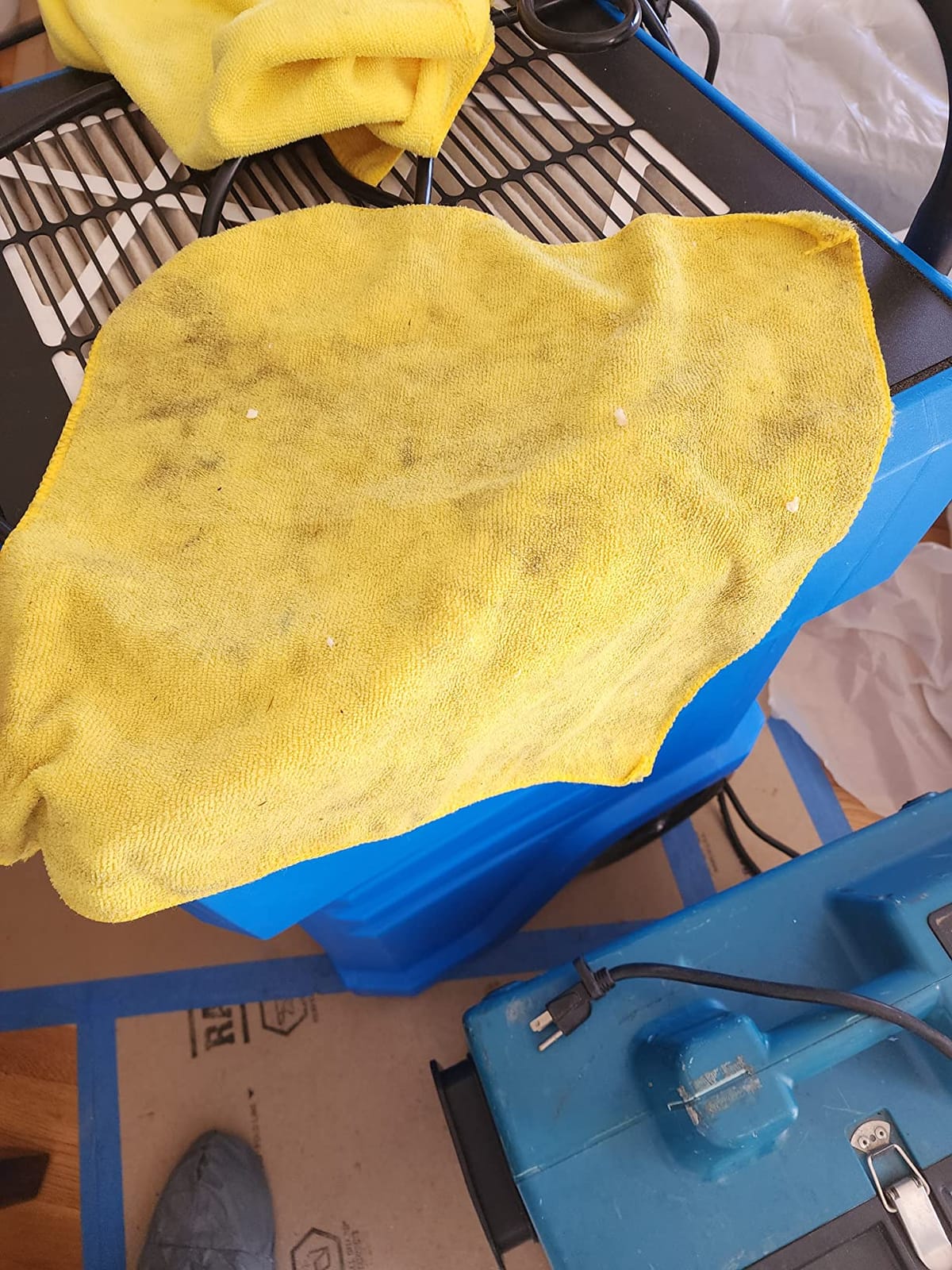
How 1000 CFM Translates to Real Rooms
At 9 foot ceilings, 1000 CFM delivers about four air changes per hour across 1650 square feet, and even a 12 foot ceiling still covers roughly 1250 square feet. One machine can hold a gutted main floor negative on its own.
The 1 HP Motor and Heavy-Load Behaviour
Most of the 550 CFM machines here use smaller motors that visibly labour when a pre-filter starts to load. A 1 HP motor is the difference between steady output on day six of demo and a unit that has to run at reduced speed to keep from overheating.
Wheels, Handle and the Weight Problem
Seventy-nine pounds is the heaviest unit in the roundup, and the built-in wheels are what make that acceptable. It is still the wrong machine for a basement stairwell or a second-floor bathroom, where the 550 CFM tier is the honest answer.
Who Should Not Buy It
If your renovation is one room, this is wasted capacity. The two-speed control is also coarser than the variable dials on the 500 to 550 CFM units, so you have less control over noise in an occupied space.
10. Dri-Eaz HEPA 700 – Best Controls and Filter Monitoring
Dri-Eaz HEPA 700 Air Scrubber, Industrial Air Filtration System, Optional Activated Carbon Filter, 700 CFM
700 CFM
8-speed touchscreen control
HEPA filter health monitoring
Ductable and stackable
42 pounds
+ Pros
- Eight discrete speed levels
- finegest airflow control in this roundup
- Onboard HEPA filter health monitoring not just a warning light
- Ductable and stackable
- Lightest 42 pound housing in the 700 CFM class
– Cons
- Replacement HEPA filters are hard to source for this model
- Highest share of one-star reviews among the premium tier
- Wi-Fi app setup needs a business profile
- One owner reported a fractured motor mount on first use
The Dri-Eaz HEPA 700 is the only machine here with real airflow telemetry. The touchscreen gives you eight discrete speed settings, and the onboard HEPA filter health monitoring reports actual filter condition rather than lighting a warning bulb on a timer.
That combination changes how you work. An owner reported clearing visible airborne dust through a 4000 square foot home in under three hours on level four of eight, and another doubled up carbon filters in place of the pre-filter to handle spray-finish VOC work effectively. Those are the kinds of results you only get when you can see and adjust what the machine is doing.
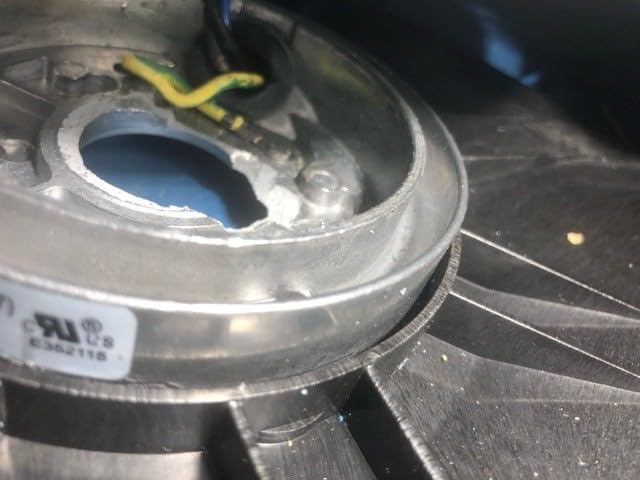
It is also genuinely ductable, with a rectangular exhaust that accepts 24 inch lay-flat duct held by a retaining clip. That is the configuration for running the unit as a negative air machine and exhausting outdoors, which is the only way to keep VOC-laden air out of the house entirely.
At 42 pounds it is the lightest housing in its airflow class, and the body is stackable for transport between job sites. It is made in the USA, which one owner specifically valued.
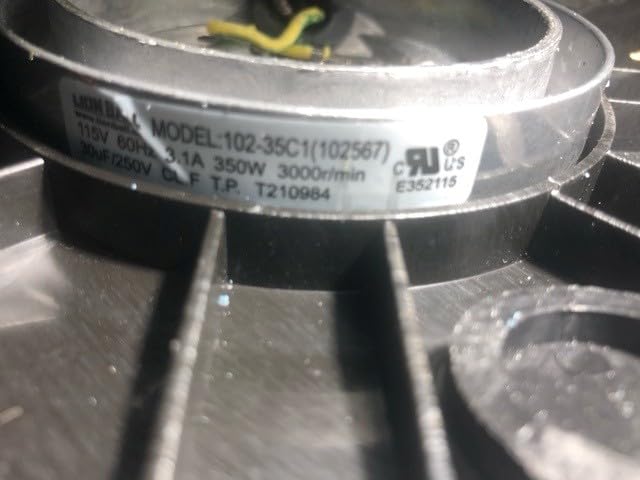
Eight Speeds Versus a Variable Dial
A continuous 270 to 550 CFM dial gives finer low-end control than eight discrete steps. For ducted extraction and large open areas, though, the eight levels plus a monitor beat a dial, because you can return to a known setting instead of hunting for it again.
HEPA Filter Health Monitoring in Practice
Filter health monitoring tells you when the media is actually loaded. On a heavy demo job that means you change at the right point rather than running a clogged filter and damaging the motor, which is the most expensive avoidable failure in this category.
Ducting and Negative Air With 24 Inch Lay-Flat
One owner ran 24 inch lay-flat duct to exhaust VOC-laden air outdoors through the rectangular exhaust and retaining clip. That is the difference between a recirculating purifier and true containment in a sealed work zone.
Where Owners Report Friction
The practical problem is filters, not performance. Replacement HEPA cartridges for the 700 model are hard to source and require contacting the manufacturer, which is a real ongoing cost if you run the unit for months. Roughly sixteen percent of reviews are one star, and the Wi-Fi app demands a business profile, which defeats the purpose for a homeowner.
How to Choose the Right Air Scrubber for Your Renovation
Choosing between ten good 550 CFM machines comes down to airflow math first, then the secondary decisions. Work through these in order and the product choice makes itself.
How Big an Air Scrubber Do You Need?
Multiply your room’s floor area by ceiling height to get the volume in cubic feet, then use this formula: Required CFM = room volume x air changes per hour / 60. Four air changes per hour is the renovation target, five is for heavy demo or mold work. A 10 by 12 foot bathroom with an 8 foot ceiling is 960 cubic feet, so 960 x 4 / 60 equals 64 CFM, and even a small machine covers it many times over. A 20 by 25 foot main floor at 9 foot ceilings is 4500 cubic feet, so you need 300 CFM at 4 ACH and 375 CFM at 5 ACH, which is where one 550 CFM unit becomes two. A gutted 1800 square foot two-storey shell at 9 foot ceilings is roughly 16200 cubic feet, which needs 1080 CFM, so a 1000 CFM unit plus a second machine, or three chained 550 CFM units, is the real answer.
Match the Unit to the Dust Source
Drywall sanding and fine skim coat dust is the gentlest load and the easiest to filter. Popcorn ceiling, paint and adhesive removal adds heavy fibrous debris plus solvent vapour, which is where a carbon stage earns its place. Demolition and concrete grinding is the worst case, and it is where a high-CFM unit with a large inlet and a pre-filter you check twice a day pays back. Mold and water damage adds a biological dimension, which is the one case where a UV-C stage is justified.
Air Scrubber Versus Consumer Air Purifier
A consumer purifier recirculates air through a small filter at a fraction of the airflow, is not built to sit in a plastic-walled zone, and has no duct ports. It will keep ambient household dust down in a finished room, and it will not survive a demo. If the machine lives in a work zone behind plastic sheeting, you want a scrubber. If it lives in the finished living room next door, a purifier is the quieter and cheaper answer.
Ducting and Sealing Are What Actually Contain Dust
Set the unit inside the work zone, seal the doorway with plastic sheeting and tape, tape or clamp an intake collar over any return air vent, and run the exhaust outside. That negative pressure is what forces contaminated air through the filter. Without the seal, a scrubber is a very expensive fan.
What HEPA Class Does and Does Not Tell You
H13 and H14 indicate how aggressively the filter is built to retain particles, and 99.97 percent at 0.3 microns is a test-conditions figure on a clean filter. A loaded filter reduces real airflow and real efficiency, which is why filter changes are a performance decision and not just a hygiene one. MERV ratings describe the pre-filter stage only, and no MERV-rated media is a substitute for true HEPA on fine dust.
Noise, Power and Filter Cost Over a Full Job
Noise is where occupied homes and vacant job sites diverge. On a vacant site you run flat out and never think about it. In an occupied home, the variable-speed units at 270 to 500 CFM are the ones that let you run overnight without the household noticing. Power draw is rarely the deciding factor, but a unit pulling close to a full amp on a 15 foot extension is a nuisance, so run the machine on its own circuit. Budget filters as a job cost, not an accessory, and buy a spare pre-filter before you start.
The Safety Line a Scrubber Cannot Cross
An air scrubber captures airborne particles. It does not stop you inhaling them, and it cannot be credited as exposure control. Silica from drywall sanding and concrete work and lead from pre-1978 paint require testing where applicable, source capture at the tool, and a properly fitted respirator. Use a scrubber to protect the rest of the house and to clear the air, and use respiratory protection to protect the person doing the work.
Frequently Asked Questions
Do air scrubbers really work to control renovation dust?
Yes, but only for airborne dust and only while they run. A 500 to 1000 CFM HEPA scrubber clears visible airborne dust from a room in under an hour in most renovation conditions. It does nothing for dust already settled on surfaces, and it cannot capture dust at the tool. Run it before, during and after the dusty work, and pair it with shrouded tools and source capture.
How do I calculate the CFM I need for a room?
Use CFM = room volume x air changes per hour / 60. A 20 by 25 foot room with 9 foot ceilings is 4500 cubic feet, so at 4 air changes per hour you need 300 CFM, and at 5 ACH you need 375 CFM. Add headroom for heavy demo, because a loaded pre-filter reduces real airflow well below the rated figure.
Is a regular HEPA air purifier enough for renovation dust?
No. Consumer purifiers move a fraction of the airflow, recirculate everything they pull in, and have no duct ports or sealed housing for a plastic-walled work zone. They handle ambient household dust in a finished room, but heavy renovation dust overloads their filters within hours. Use a purifier in the finished part of the house and a scrubber inside the containment zone.
How often do I change the filter on an air scrubber?
Check the pre-filter daily during heavy sanding or demo and clean it when it loads. Replace the HEPA stage when airflow drops noticeably or when a filter-change indicator or hour-meter interval says so. On a multi-week renovation with daily drywall work, budget for at least one full filter change, and keep a spare pre-filter on site at all times.
How long should I run an air scrubber after sanding?
Keep it running for at least two to four hours after you stop generating dust, with the zone still sealed, then another thirty to sixty minutes after you unseal and begin cleaning. Dust that settled during the work resuspends as soon as you walk on it or open the sheeting, so the cleanup phase is when a stopped machine lets the room go dirty again.
Do air scrubbers remove silica dust and lead paint particles?
They capture those particles from the air, which is genuinely useful, but that is not exposure control. Silica from drywall and concrete and lead from pre-1978 paint require source capture at the tool plus a properly fitted respirator, and lead work may need testing and containment rules. A scrubber protects the rest of the house; your respirator protects you.
Which Air Scrubber Fits Your Renovation
If you are sanding drywall in a single bedroom or office, the BlueDri Air Shield 550 is the machine we would buy first, because its 755-review base means almost every question you will have about it has already been asked and answered by an owner. If the budget is the deciding factor and you still want a full three-stage stack including carbon, the VEVOR 550 gives you the most filtration per unit of outlay, and its foldable handle makes the second machine in another room actually possible.
For a renovation that will run for months, the ALORAIR 550 is the safer long-term purchase, with a ten-year warranty and ETL certification. For an open main floor with high ceilings, step up to the ALORAIR PureAiro 870 and its 14 inch inlet, and accept that its 4.1-star rating reflects noise complaints rather than failures. For a stripped two-storey shell, the MOUNTO HEPA1000 holds a whole floor negative on its own, and its wheels make the 79 pounds manageable on a flat site.
Two situations change the answer. If the job involves paint stripping or heavy adhesive, choose on carbon stage, which is why the Abestorm Filteair 550 earns its place. If it involves flood, sewage or sustained damp, the ALORAIR HEPA Pro 970 with its UV-C stage is the only one here that addresses the biological side of the problem.
One last practical point. Air scrubbers capture particles, so a shroud on your sander and a vacuum on your demo will do more for your lungs than any machine on this list. Use the scrubber to protect the rest of the house and to clear the air, then pick from the ten above based on the airflow math. The best air scrubbers for home renovation dust roundup will keep working through 2026 and the next one, as long as you change the filter on time and run it while the dust is still in the air.
Leave a Reply