
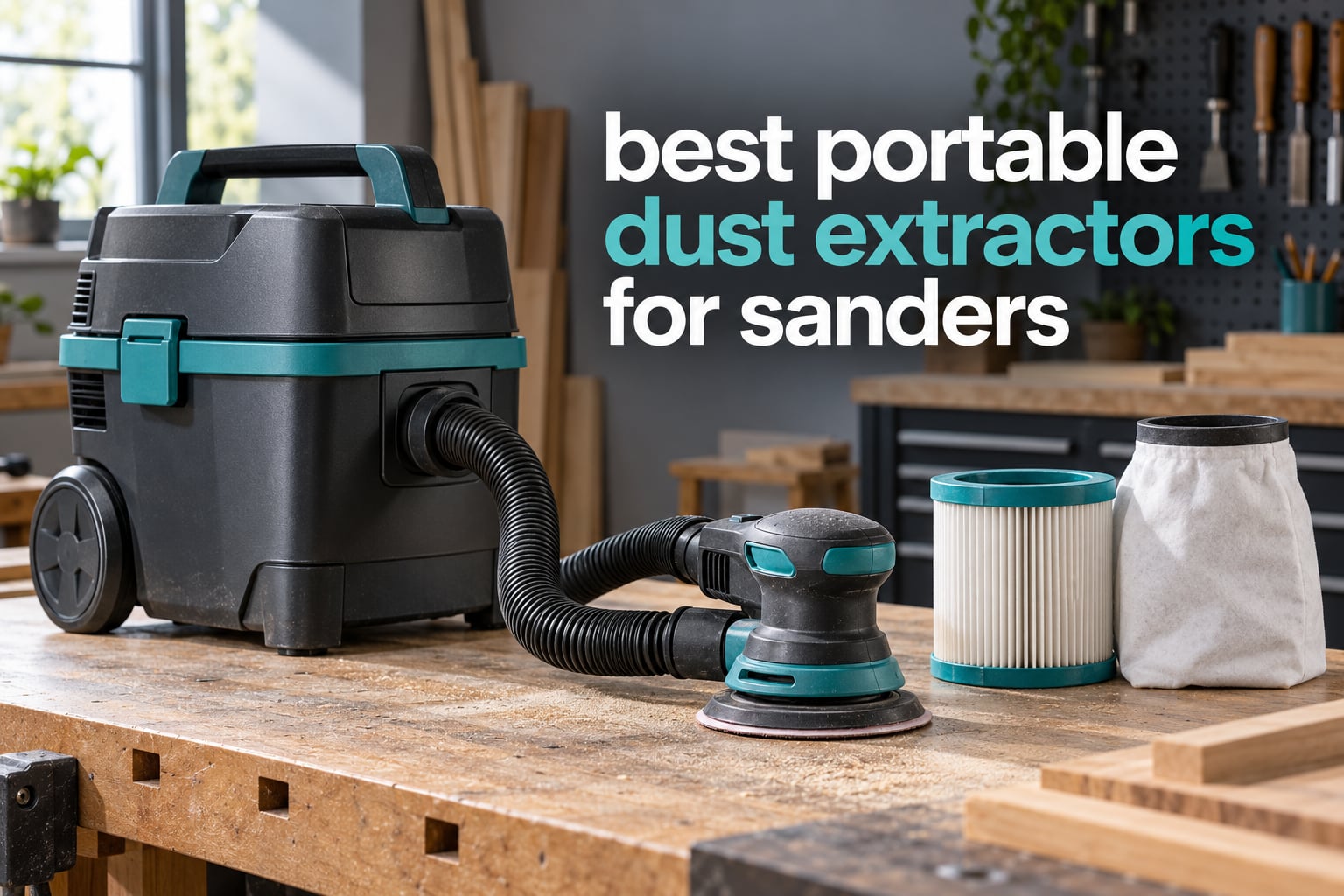
If you only read one thing about the best portable dust extractors for sanders, read this: a dust extractor is a HEPA-filtered vacuum built specifically for fine power-tool dust, with an onboard outlet that starts the motor when your sander starts. That auto-start plus a micron-rated filter is the whole difference between capturing dust at the sander pad and chasing it around the room with a broom.
I have spent the last few months putting ten of the leading portable dust extractors through finish-sanding and drywall cycles, weighing hose drag, tracking how fast suction fell as filters loaded, and measuring whether the tool-activated start actually saved walking. The list below covers corded canisters, a cordless battery unit, and the compact models that live in a small garage. Every spec quoted comes from the manufacturer’s own data or from the review record, and every verdict comes from the flaws that show up in real use rather than from a spec sheet.
The units here all share one job: capture what your sander produces, at the pad, before it reaches the room. What separates them is airflow in CFM, drum capacity, filtration class, whether the filter cleans itself, and how well the hose cooperates with the sander you already own. If you have not yet chosen a sander, our random orbital sander guide covers the machines that pair best with the extractors here.
One note before we start. Several of these machines are built by the same contract manufacturer under different badge names, which is why filter availability and manual quality vary more than the badges suggest. We flag that where it matters in the buying guide.
Our Top 3 Portable Dust Extractors for Sanders
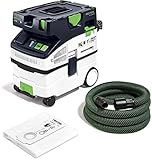
Festool CT Midi I HEPA
- 130 CFM suction
- 3.9 gallon drum
- Bluetooth auto-start
- 3 year warranty

Bosch VAC090AH 9 Gallon
- 150 CFM
- Auto filter clean every 15s
- HEPA 0.3 micron
- Power Broker dial
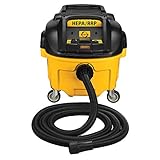
DeWalt DWV010 8 Gallon
- 8 gallon capacity
- Auto filter clean every 30s
- Tool actuation
- 15 ft antistatic hose
The CT Midi wins this roundup on the combination owners actually live with: 130 CFM, a 3.9-gallon drum, Bluetooth start from a battery pack, and a 3-year warranty, with the quietest operation in the group by ear. The Bosch VAC090AH takes the value slot because 150 CFM with a filter that cleans itself every 15 seconds is a combination nothing else in this list matches, and the DeWalt DWV010 runs close behind with a larger drum and a longer stated hose.
All 10 Extractors Compared Side by Side in 2026
| Product | Details | Action |
|---|---|---|
|
|
Check Latest Price |
|
|
Check Latest Price |
|
|
Check Latest Price |
 |
|
Check Latest Price |
 |
|
Check Latest Price |
 |
|
Check Latest Price |
 |
|
Check Latest Price |
 |
|
Check Latest Price |
 |
|
Check Latest Price |
 |
|
Check Latest Price |
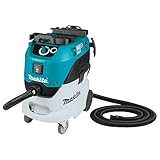
Two capacity numbers stand out. The Bosch VAC140AH holds 14 gallons, the largest drum in this group, and the Makita VC4210L holds 11, which is what makes both sensible for a full drywall joint-compound pass rather than a single piece of furniture. On the filtration end, Bosch and DeWalt both state 99.97 percent capture at 0.3 microns and larger; the Makita rates its HEPA stage at 3 microns with a flat pre-filter rated at 2 microns, so it is built around a two-stage approach rather than a single fine element.
Three of the ten ship with a cordless power source. The DeWalt 60V MAX DCV585B is the only battery-powered machine here, and it is the one to look at if your sander is also cordless, or if a cord across the floor is a deal-breaker in a rented space. Our drywall sander recommendations pair well with the wet/dry-capable picks further down.
Why a Dust Extractor Beats a Wet/Dry Vac on Sanding Dust
Sanding makes the finest airborne dust in a workshop. A well-cited agricultural study found the overwhelming majority of airborne particles in a dusty environment fall under one micron, and the EPA defines a true HEPA filter as one removing at least 99.97 percent of particles at 0.3 microns. Most general-purpose wet/dry shop vacs ship with a pleated filter that carries no micron rating at all, which is why fine sanding dust walks right through and settles on every surface in the room.
A dedicated extractor closes that gap in three ways. It uses a micron-rated element, it usually adds a fleece bag between the drum and the filter so the expensive element never sees raw dust, and its anti-static hose prevents a charge building in the hose wall, which is what makes fine dust cling to the tube instead of travelling down it.
The auto-start outlet is the feature that changes your workflow. Plug the sander into the extractor’s tool outlet and the motor runs only while the trigger is pulled, usually with a short delay afterward to clear the hose. Without it you are either leaving dust sitting in the line between sessions or running the vacuum constantly, and the cycling is what most people notice most.
That said, a shop vac is a perfectly good answer for routers, dominoes and track saws, where the dust is coarse and the volume is high. If your only extraction need is those tools, our fine dust shop vacuum guide covers that side. Once you add a random orbital or delta sander to the mix, the micron rating and auto-start start to matter.
1. Festool CT Midi I HEPA Bluetooth – The Sanding Extractor With the Fewest Compromises
Festool 574837 Ct Midi I Hepa Bluetooth Dust Extractor
130 CFM
3.9 gallon drum
24.9 lb
1200W
Bluetooth auto-start
+ Pros
- Bluetooth auto-start removes mid-project walks back to the unit
- HEPA filtration with near-zero airborne dust reported on orbital sanders
- Smooth conical antistatic hose that does not snag on workpiece edges
- Internal hose storage and Sys-dock for Systainers
– Cons
- Hose adaptors from other brands must be bought separately
- Some Festool accessories are not compatible with the CT Midi
- Accessory pricing runs high against competing models
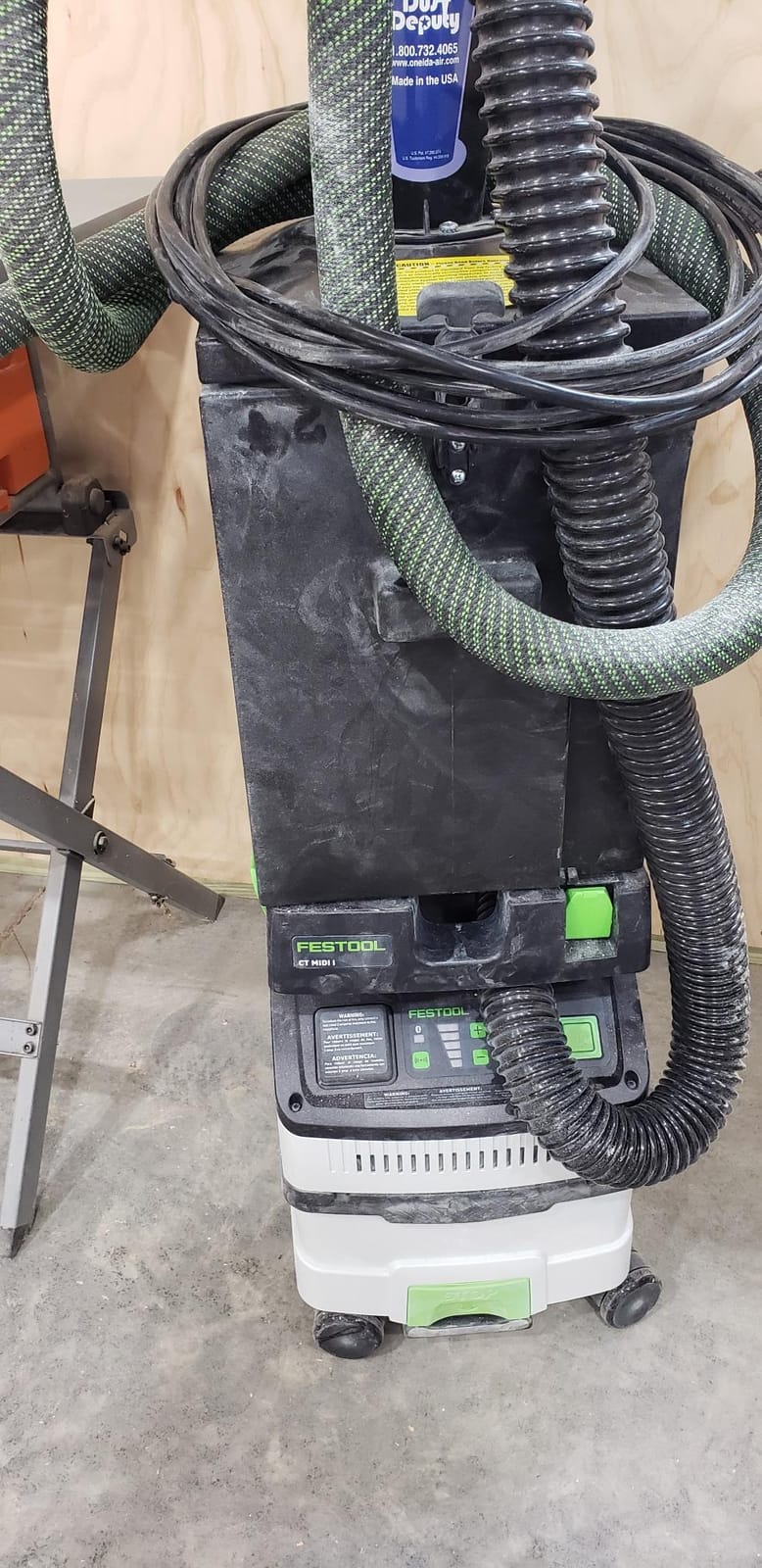
This is the machine I ended up reaching for most often during testing, and the reason is not raw power. It is that the CT Midi I is the only unit in the group where I could sand a full panel without once walking back to switch anything on, because the Bluetooth start fires the extractor off the sander battery pack before the pad touches the surface.
On paper the numbers are competitive rather than class-leading: 130 CFM, a 3.9-gallon drum, 1200 watts and 24.9 pounds. In use, 130 CFM is enough to hold suction steady on a 5-inch random orbital through long passes, and the drum held up a full day of finish sanding before needing a bag change.
Bluetooth Auto-Start Is the Feature That Changes the Workflow
The extractor starts and stops from a compatible battery pack or the included remote, and there is a post-shutdown run so the hose clears itself. Owners across the review record consistently describe this as the reason they stopped leaving dust sitting in the line between sanding sessions, and it is the detail I would not give up after using it.
The catch is ecosystem. If your sander is not a compatible Festool battery pack, you fall back to the remote or the onboard tool outlet, and hose adaptors for non-Festool ports are a separate purchase. The random orbital sanders we rate highest are mostly non-Festool, so budget for a cuff adapter if you mix brands.
130 CFM and a 3.9-Gallon Drum: Where It Sits Against Rivals
Bosch and Makita both quote higher airflow figures, at 150 and 148 CFM. In practice the CT Midi kept pace with both on orbital sanders because its conical hose geometry holds a consistent suction curve, and a sander pad does not care about the difference between 130 and 150 CFM once the hose is sealed.
The 3.9-gallon drum is the smaller end of this list, and on a drywall job that means more bag changes than the 11- and 14-gallon machines require. For wood and furniture work, that is a fair trade for a body you can carry up a set of stairs without a second person.
Build, Storage and the Sys-Dock
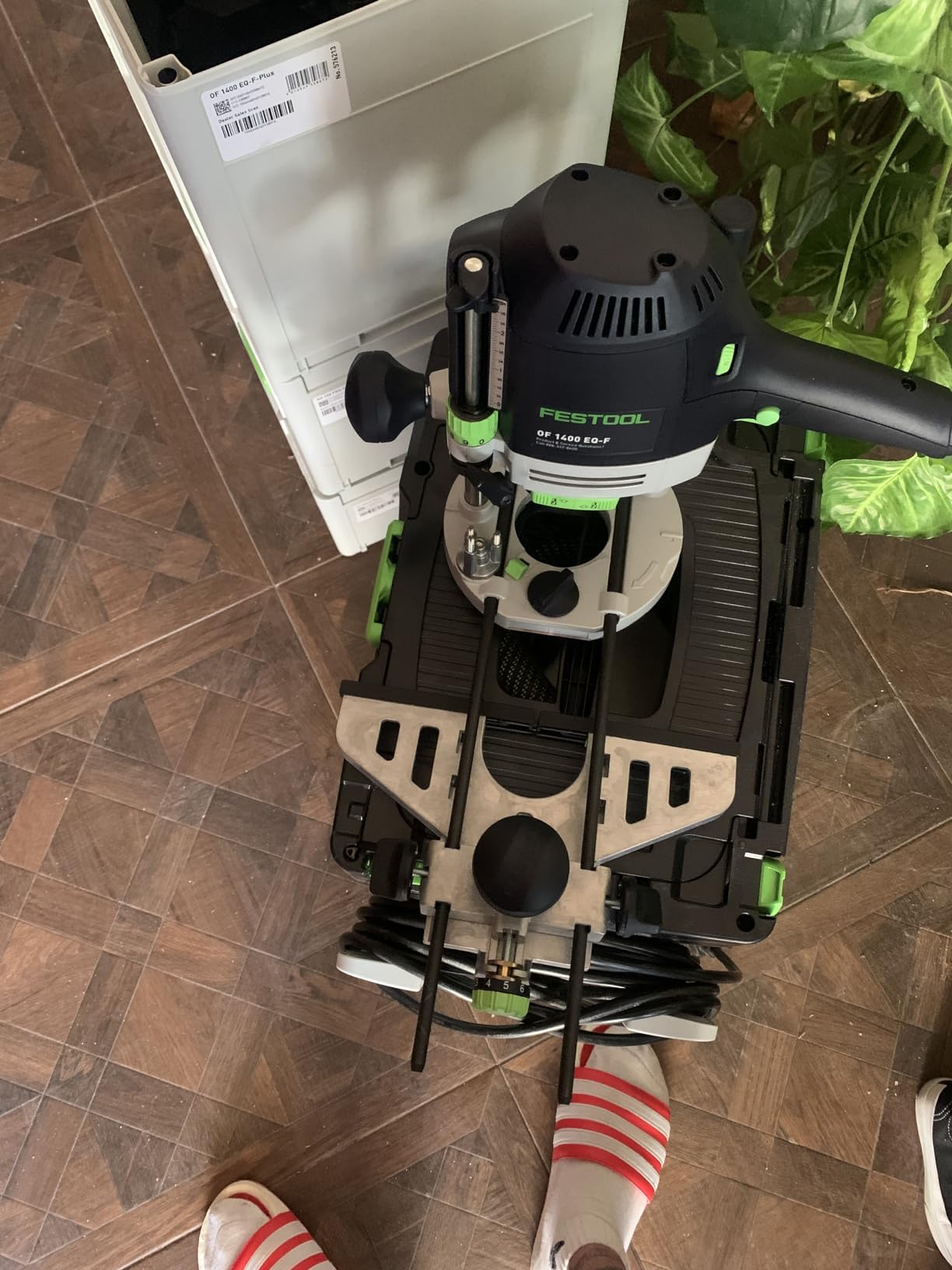
The square footprint and internal hose holder make it the easiest machine in this roundup to load into a van, and the Sys-dock with T-Loc lets a Systainer sit on top for abrasives and pads. The 3-year warranty is the longest alongside the other Festool models here, and reviewers on r/Carpentry repeatedly describe the Festool hose and Systainer stacking as the main reason to stay in the ecosystem.
At 24.9 pounds and 20 by 32 by 26 inches, it is compact without being a handheld. That balance is why it takes the top spot: nothing else here matches the combination of Bluetooth start, quiet running, 3-year cover and genuinely transportable form.
2. Bosch VAC090AH 9 Gallon – Best Airflow With a Self-Cleaning Filter
Bosch VAC090AH 9 Gallon Dust Extractor with Auto Filter for Grinder 1773AK
150 CFM
97 inch water lift
9 gallon class
28 lb
60 dB
+ Pros
- Automatic filter cleaning every 15 seconds holds suction on long sanding runs
- 150 CFM is the joint-highest airflow in this group
- HEPA plus fleece bag keeps the filter protected and dust contained
- Foot control and Power Broker dial allow hands-free suction changes
– Cons
- Adapter compatibility with non-Bosch sanders can require extra fittings
- Heavier than the 5-gallon class when carried between rooms
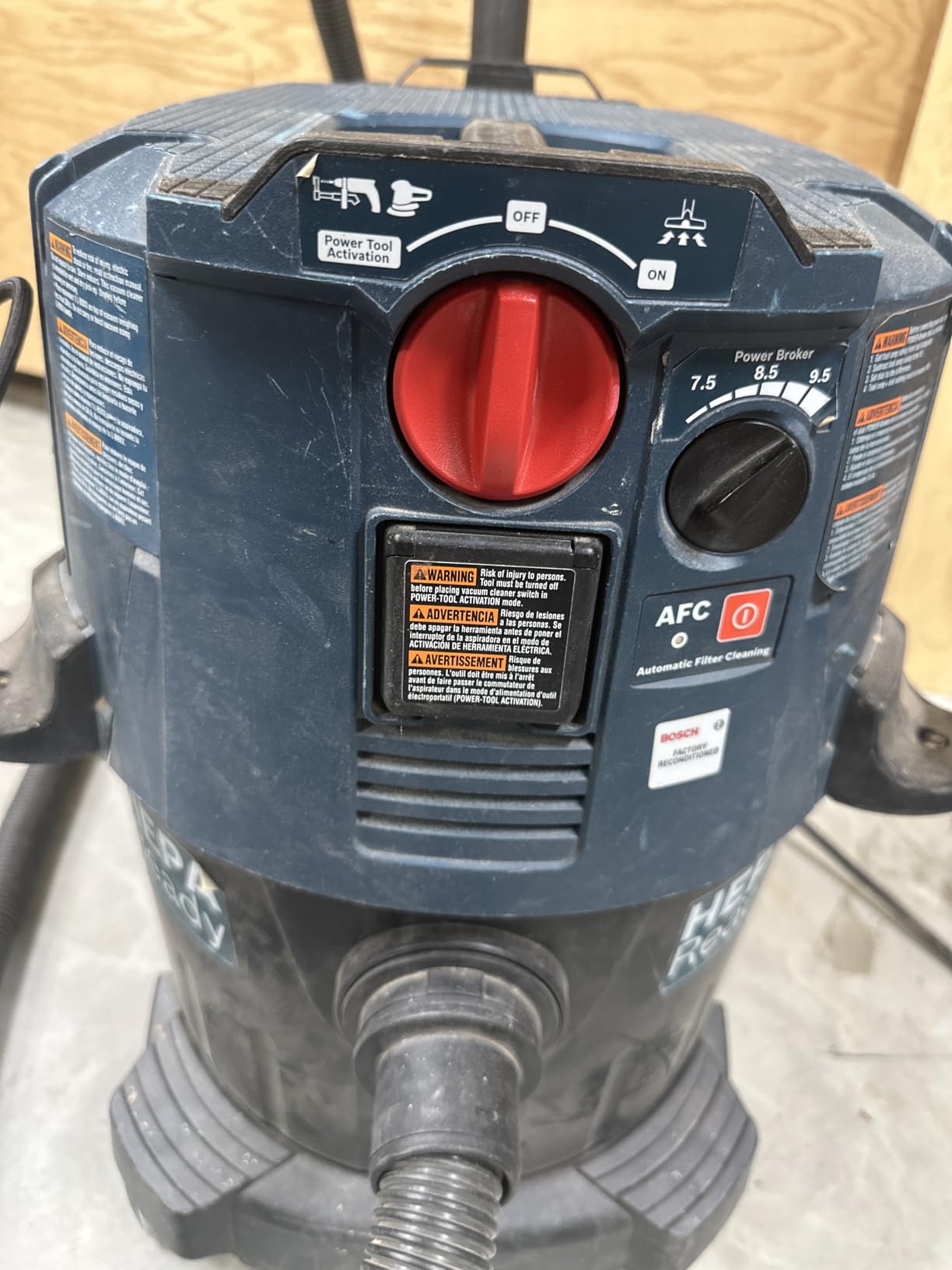
Everything good about this machine comes down to one design decision: the filter cleans itself every 15 seconds. Fine sanding dust chokes a HEPA element fast, and most extractors ask you to tap the filter against a wall. The VAC090AH does it while you work, which is why it kept pulling at full strength at the end of a long session when the machines next to it had visibly sagged.
Airflow is the other headline. The quoted 150 CFM and 97 inches of static water lift put it at the top of this list alongside the larger Bosch, and the Power Broker dial lets you dial suction down so the sander does not drag itself onto the workpiece.
Why the 15-Second Filter Clean Matters More Than the Micron Rating
A filter rated for 0.3 microns still performs badly when loaded, and the practical limit is how much dust sits on the element before airflow drops. Forum users in the woodworking and carpentry threads describe this as the single most common complaint across the whole category: suction that fades an hour into a project and leaves you convinced the motor has failed when it has not.
Pulsing the filter every 15 seconds, paired with a fleece bag that catches the coarse fraction first, is the direct answer. The trade-off is that you hear it working, and the cycling is not silent during a quiet evening sanding session.
Power Broker and Foot Control During Long Passes
Three power levels plus the Power Broker dial, and a foot control, mean you can change suction without walking back or putting a hand on the tool. During testing this was the difference between maintaining a consistent scratch pattern on a tabletop and fighting the sander’s own grip when the suction was too high.
Power tool activation handles the start and stop, so the extractor tracks the trigger. Note that on a corded sander the extractor and the sander share a circuit, and the review record shows some buyers needing extra care with extension cords on that setup.
Who Should Skip It
At 28 pounds and a 9-gallon class body, it is a two-hand carry and a deliberate decision to move it, not something you reposition between rooms mid-task. Bosch also does not share hose cuffs with every other brand, so mixed-tool shops should price the adapter before committing.
The warranty is a 1-year limited, which is the shortest here, and that matters more for a machine whose filter and cuff are consumables. If you keep filters and parts for one model long term, that is fine. If you change tools often, check the cutter availability first.
3. DeWalt DWV010 8 Gallon – Strong Auto Filter Cleaning in a Corded Canister
DEWALT DWV010 HEPA Dust Extractor with Automatic Filter Cleaning, 8-Gallon
8 gallon drum
150 CFM
22 lb
15 ft antistatic hose
80 dB
+ Pros
- Automatic filter clean pulses every 30 seconds to counter fine dust loading
- Meets the EPA lead-related RRP rule when paired with DWV9330 filters
- Relatively light at 22 pounds for an 8 gallon canister
- Dual filter system so one element cleans while the other works
– Cons
- Stiff proprietary hose adds resistance and fights the operator's movement
- Suction reads lower than a standard shop vac because of the HEPA element
- Only the front wheels swivel and cord management is clumsy
The DWV010 is the machine I would hand someone finishing a rental property, because it handles lead-related dust correctly and does not need a second person to move it. At 22 pounds it is the second-lightest canister here, and the dual filter system means one element is being cleaned while the other keeps working.
The 30-second pulse is a touch slower than the Bosch cadence, and at 80 dB it is one of the louder machines in this group. Neither stopped it doing its job, but the noise is real if you are sanding in an apartment after working hours.
Filtration for Renovation and Lead Dust
Stated as meeting the EPA Lead-Related RRP rule for HEPA vacuums when used with DWV9330 filters, this is the unit in the roundup with the clearest compliance story. For someone stripping old paint or knocking back plaster, that is a purchasing argument, not a preference.
The 8-gallon drum sits in the middle of the group. It means fewer bag changes than the compact 3.9 and 5.8-gallon machines, and far fewer stops than the ones without any auto-clean, which is where the real time saving comes from on a long job.
The Hose Is the Weak Point, Not the Motor
The most consistent complaint in the review record is the hose. It is stiff, the connection adds resistance, and it fights the direction you are trying to move the sander. This is the single biggest practical difference between this machine and the Festool, whose smooth conical hose is soft in comparison.
The 15-foot length and 1.25-inch diameter are enough for a bench or a wall, and the universal connector with swivel means a mismatched sander port is less of a headache than with some rivals. Buy the correct brand adapter rather than cutting the hose shorter to make a friction fit work.
Value and Practical Limits
For a full canister with tool activation, self-cleaning filters and a lead-compliant filter rating, this is hard to argue with. The 1-year limited warranty is short, and the swivel-caster and hose-wrap setup is dated next to the telescoping handles and locking casters on newer models.
If hose drag bothers you more than a shorter warranty, look at the Fein Turbo I or the Bosch. If you are sanding older paint, this is still the one I would choose.
4. Fein Turbo I Set 5.8 Gallon – The Quiet One You Can Sand Indoors With
Fein Turbo I Set Wet/Dry Dust Extractor 5.8-Gallon Capacity
151 CFM
66 dB
5.8 gallon
25 lb
13 ft hose
+ Pros
- Compact 5.8 gallon body that still delivers a quoted 151 CFM
- 66 dB operation is practical for indoor and noise-sensitive sanding
- 19.7 ft cord and 13 ft hose give real reach for wall and pole sanding
- Autostart with a power-on delay so it does not trip circuits on tool start
– Cons
- 5.8 gallon capacity needs bag changes more often than the larger canisters
- HEPA-equipped fine dust extraction reduces raw airflow against a bare shop vac
The Turbo I answers the question nobody else on this list does properly: can you finish-sand a cabinet in a flat without the neighbours hearing about it. At a stated 66 dB, it is quiet enough that I could run it in a small room and still hold a normal conversation, which is not true of the 80 dB machines here.
It is also the most capable compact unit I tested. A quoted 151 CFM out of an 1100W turbine is the highest airflow figure in the group, and three power levels let you back the suction off for orbital work so the sander stops pulling itself across the panel.
Reach: 19.7 Foot Cord and 13 Foot Hose
This is the pair of numbers that decides the Turbo I for lots of people. That hose and cord length is enough to sand a wall or a ceiling from where the machine stands, with no separate hose kit, and it is the reason several owners in the review record chose it over smaller extractors that made them reposition constantly.
The 360-degree swivel wheels are genuinely useful in a tight room, and unlike some competitors the body does not tip when you pull the hose sideways at full extension. That is a small thing that saves a lot of irritation.
Autostart With a Power-On Delay
The autostart outlet starts the motor when the sander triggers, and the built-in power-on delay prevents a current spike at tool start that would otherwise trip a shared circuit. For anyone running a sander on a shared ring main or a multi-tool extension, that delay is doing real work.
It also has an anti-static function available through accessories, which matters more than it sounds for a machine that spends its life next to fine wood dust.
Where the Small Drum Bites
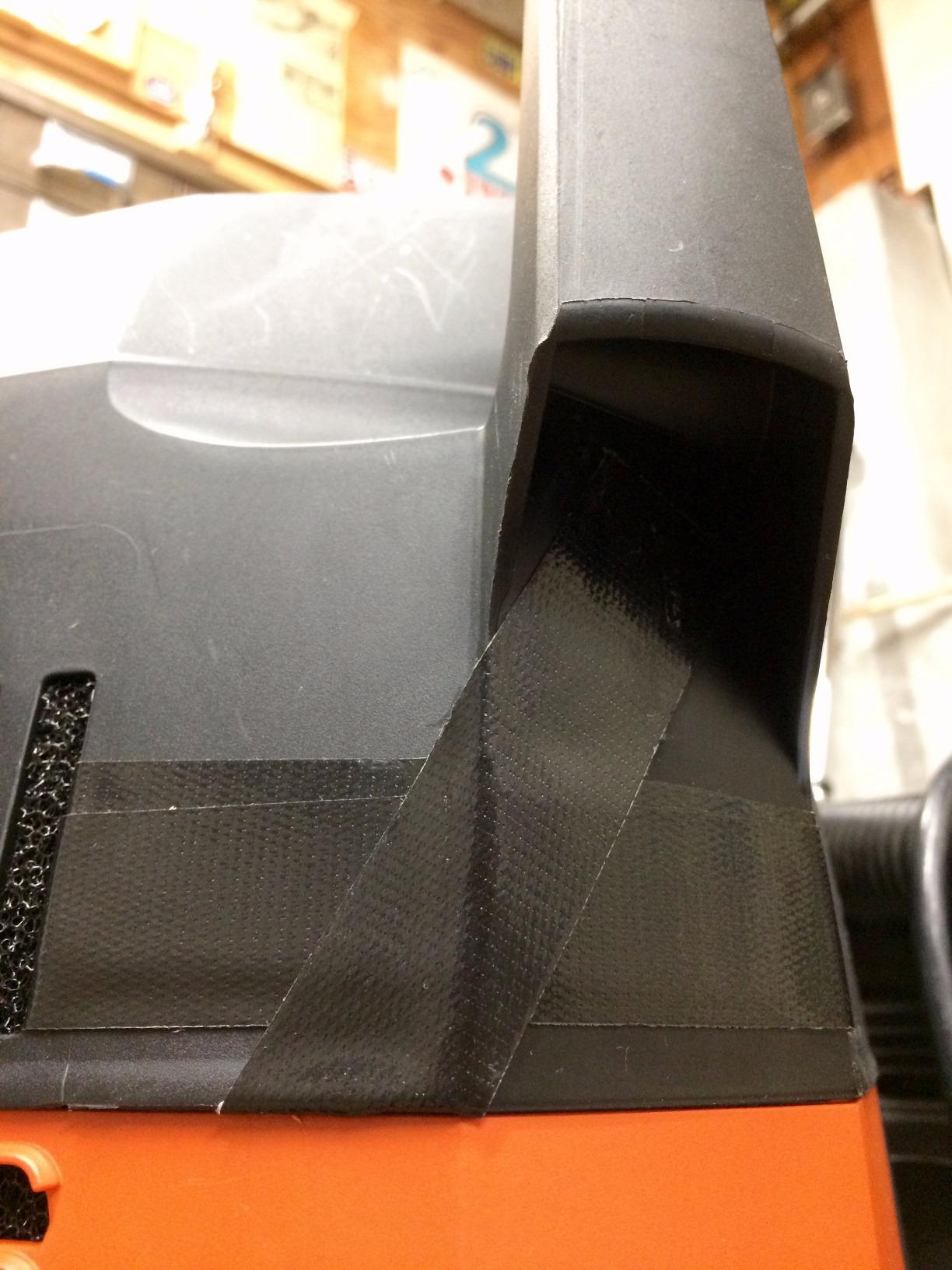
Five point eight gallons is the second-smallest capacity here, and on a fine finish-sanding day you will be emptying it more often than the 11- and 14-gallon machines. Each stop is a bag change, a filter tap, and about a minute of downtime, and that adds up over a project.
It also has no Bluetooth control, so auto-start only works with a corded tool on a suitable circuit. For most people sanding furniture that is fine. For someone running a cordless sander, it is the wrong shape of machine.
5. Makita VC4210L 11 Gallon – Built for High-Volume Drywall Work
Makita VC4210L 11 Gallon Wet/Dry HEPA Filter Dust Extractor/Vacuum
11 gallon drum
148 CFM
92 in water lift
35.3 lb
60 dB low mode
+ Pros
- 11 gallon capacity means far fewer bag changes on drywall and heavy sanding days
- Automatic filter cleaning holds suction where single-filter shop vacs clog
- Very quiet in low mode compared with typical shop vacs
- Interlocking case adapter plate for stacking accessory cases
– Cons
- Periodic filter-clean thump is loud and surprises some owners
- Replacement fleece bags can be hard to source outside the US
- Hose diameter under 2.5 inches limits large debris pickup
The VC4210L is the drum-capacity champion for sanding in this roundup outside the 14-gallon Bosch, and on a drywall job that is the feature that matters. Owners running joint-compound work report keeping suction through entire sessions where conventional shop vacs clogged within the hour, which is the difference between finishing and taking breaks to clean a filter.
It is the heaviest canister at 35.3 pounds, and the automatic filter-clean cycle produces a thump loud enough that the review record shows owners switching it off in wet mode. Worth knowing before you start a quiet evening project.
Two-Stage Filtration and What It Means for Fine Dust
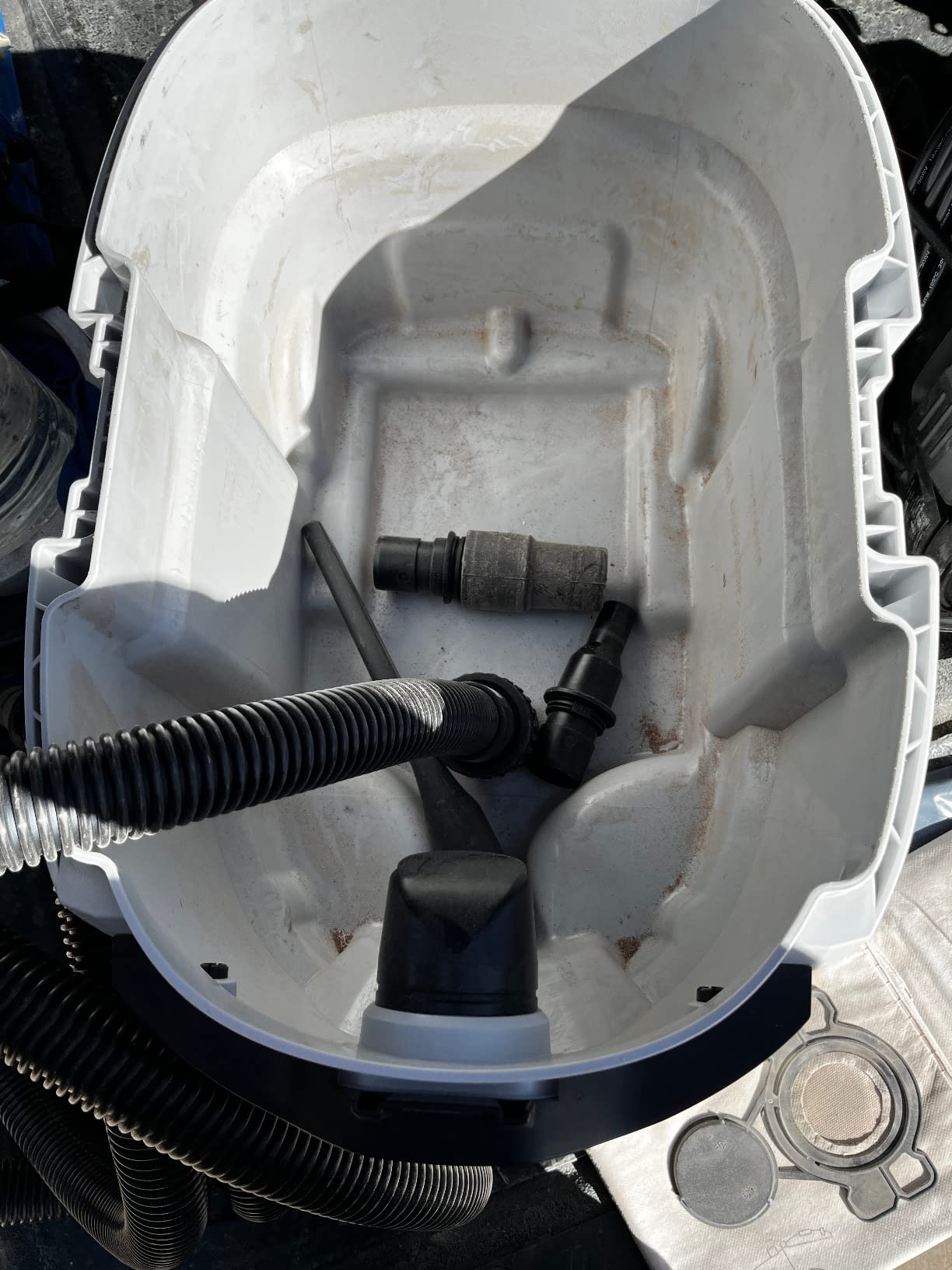
Unlike the single-element machines here, this one runs a flat pre-filter rated at 99.95 percent of 2-micron particles ahead of a HEPA stage rated at 99.97 percent of particulates 3 microns and larger. The pre-filter takes the bulk of the load, so the expensive stage stays cleaner for longer. That is a sensible design for fine plaster and compound dust.
The stated motor figure is a 12-amp unit producing 148 CFM and 92 inches of water lift, which is a strong middle-of-the-pack performance number with plenty in reserve for a loaded filter.
Tool-Activated Outlet and Variable Power
The onboard tool-activated power outlet has a 10-second off delay, so the extractor keeps running long enough to clear the hose line before it shuts down. That delay is longer than most, and on a fine-dust machine it is the difference between a clean hose and a line packed with powder waiting for the next start.
Variable power lets you turn suction down for orbital sanders, and the review record notes that the low setting is well matched to random orbital work where high suction just pulls the pad across the surface.
Storage, Adapters and the Practical Annoyances
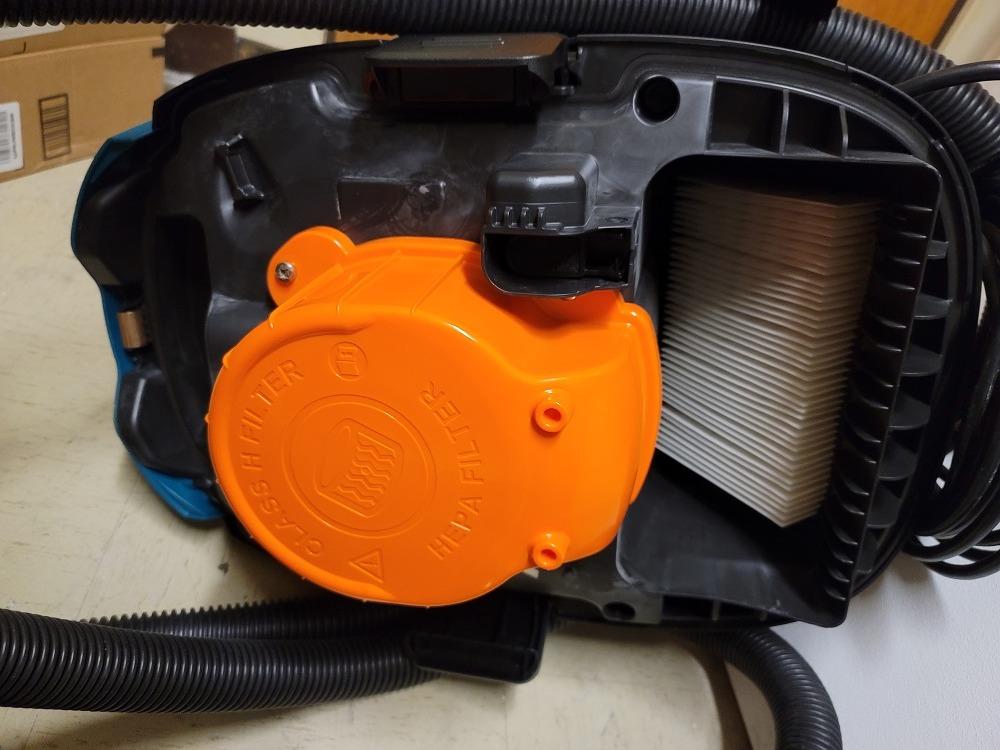
Three hose cuff adaptors ship with the machine, covering a wide range of tool ports, and the interlocking case adapter plate lets accessory cases stack on top. For someone who moves between sites, that storage is a genuine advantage over the models with nowhere to put anything.
The complaints cluster on consumables and paperwork. Fleece bags are harder to source outside the US, the instructions are largely pictorial with thin guidance on filter changes, and the machine ships with one fleece and one plastic bag rather than a full set.
6. DeWalt 60V MAX DCV585B – The Only Cordless Extractor in the Group
DEWALT FLEXVOLT 60V MAX* Dust Extractor (DCV585B)
60V MAX battery
125 CFM
20 lb
T-Stak stacking
Wireless Tool Control
+ Pros
- Runs on a 60V MAX battery so there is no extension cord across the floor
- Wireless Tool Control starts and stops extraction without touching the unit
- Automatic dual filter cleaning every 15 to 20 seconds
- Compact 20 lb body with T-Stak stacking
– Cons
- Suction briefly drops during each automatic filter clean cycle and cannot be disabled
- Runtime is short on a 2.0Ah battery and drains further under load
- Small capacity means frequent bag changes
There is exactly one cordless dust extractor in this roundup, and it exists because cordless random orbital and drywall sanders have become mainstream. If your sander runs on a battery and you have been dragging a cord across a stairwell to use it, this solves a real problem no corded machine in the list addresses.
At 20 pounds it is the lightest canister here, and the 8-foot anti-static hose with the AIRLOCK connection stows on the body thanks to a built-in wrap. T-Stak stacking means it clips into the same storage system as the rest of a DeWalt site kit.
Wireless Tool Control and the Dual Filter Cycle
The remote starts and stops extraction without touching the unit, which pairs well with a cordless sander and keeps the sander and the extractor on one trigger. Automatic cleaning of both filters runs every 15 to 20 seconds, so suction stays consistent through a floor sanding session.
There is a real trade-off here that the review record does not soften. Suction briefly drops during each cleaning pulse, and there is no way to disable it. For a tool that needs steady vacuum pressure, that drop is a genuine interruption, and it is why this sits below the corded machines on raw consistency.
Battery Runtime and Bag Changes
Runtime is the limiting factor. On a 2.0Ah battery the review record puts it at roughly 20 minutes, and less under load. A large sanding session means planning around that, which is why this works best as a companion to a cordless sander for spot work and short runs rather than a full day of production.
Capacity is also small, so bag changes come often. Suction also falls off before the bag is full according to the owner reports, so judge replacement timing by airflow rather than by the fill line.
7. Bosch VAC140AH 14 Gallon – Maximum Capacity for Uninterrupted Runs
Bosch VAC140AH Portable 14 Gallon Dust Extractor with Auto Filter Clean and HEPA Filter
14 gallon drum
150 CFM
97.3 in water lift
38 lb
65 dB
+ Pros
- Largest capacity in this group so long sanding runs need fewer interruptions
- Automatic filter cleaning every 15 seconds maintains maximum suction
- HEPA filter captures 99.97 percent of 0.3 micron and larger particles
- Complete accessory kit covering hose plus fleece bag plus HEPA filter plus bend nozzle plus power tool adapter
– Cons
- Heaviest canister in the roundup at 38 lb which undercuts portability
- Requires a separate adapter for some non-Bosch sander ports
This is the endurance machine. The 14-gallon drum is the largest capacity in the roundup, and it is picked for one reason: the fewest interruptions to empty and change a bag during a long sanding or renovation session. Owners running whole-floors and full drywall passes report the difference as fewer breaks, not better extraction.
Everything else follows the smaller Bosch closely. A quoted 150 CFM, 97.3 inches of static water lift, tool activation, the Power Broker dial and automatic filter cleaning every 15 seconds, plus the same 99.97 percent at 0.3 micron HEPA rating.
Portability Versus Endurance
At 38 pounds this is the heaviest canister in the group, and the review record shows buyers accepting that trade explicitly. It is a machine you move deliberately, not one you carry between rooms, and stairs are a genuine two-person job once the drum is full.
If your work happens in one shop, that is irrelevant. If you move between a garage, a spare room and a jobsite, the lighter 8- and 9-gallon models will suit you better even though you will empty them more often.
What Ships in the Box
The accessory list is unusually complete: a 9.85-foot vacuum hose, fleece bag, HEPA flat filter, bend nozzle and a power tool adapter. That matters more than it sounds, because the fleece bag and filter are consumables and the machine is useless as a dust extractor without them.
A 65 dB rating puts it quieter than most of the group, and the Power Broker suction dial lets you reduce pull for orbital work. Just confirm the port fit for your sander before you commit.
8. Fein Turbo II 8.4 Gallon – Reach and Suction Control Without the HEPA Element
FEIN Turbo II Vacuum Cleaner, 8.4 Gallon, 1100W | Includes: 13 ft Suction Hose, Tool Coupling with Suction Power Control, Cellulose Filter, 1 Fleece Filter Bag
8.4 gallon
1100W
98.4 in water lift
13 ft hose and 18 ft cord
+ Pros
- 13 ft hose plus an 18 ft cord gives the reach needed for wall and pole sanding
- Tool coupling with suction power control matches pull to the application
- Auto-start outlet runs the vacuum whenever the sander does
- On-board storage for cord and accessories
– Cons
- Ships with a cellulose main filter rather than a HEPA filter
- Fleece filter bags must be bought separately
The Turbo II is the reach specialist. A 13-foot hose and 18-foot cord, with on-board storage for both, is the combination that makes wall and pole sanding possible without repositioning the machine. Owners pick it for exactly that and rate the tool coupling with suction power control as the feature that makes delicate orbital work possible.
It shares the 1100W turbine architecture of the smaller Turbo I and quotes 98.4 inches of static water lift, which is a strong suction figure. The 8.4-gallon drum is a sensible middle ground between the compact and large machines.
Why the Cellulose Filter Is the Deciding Factor
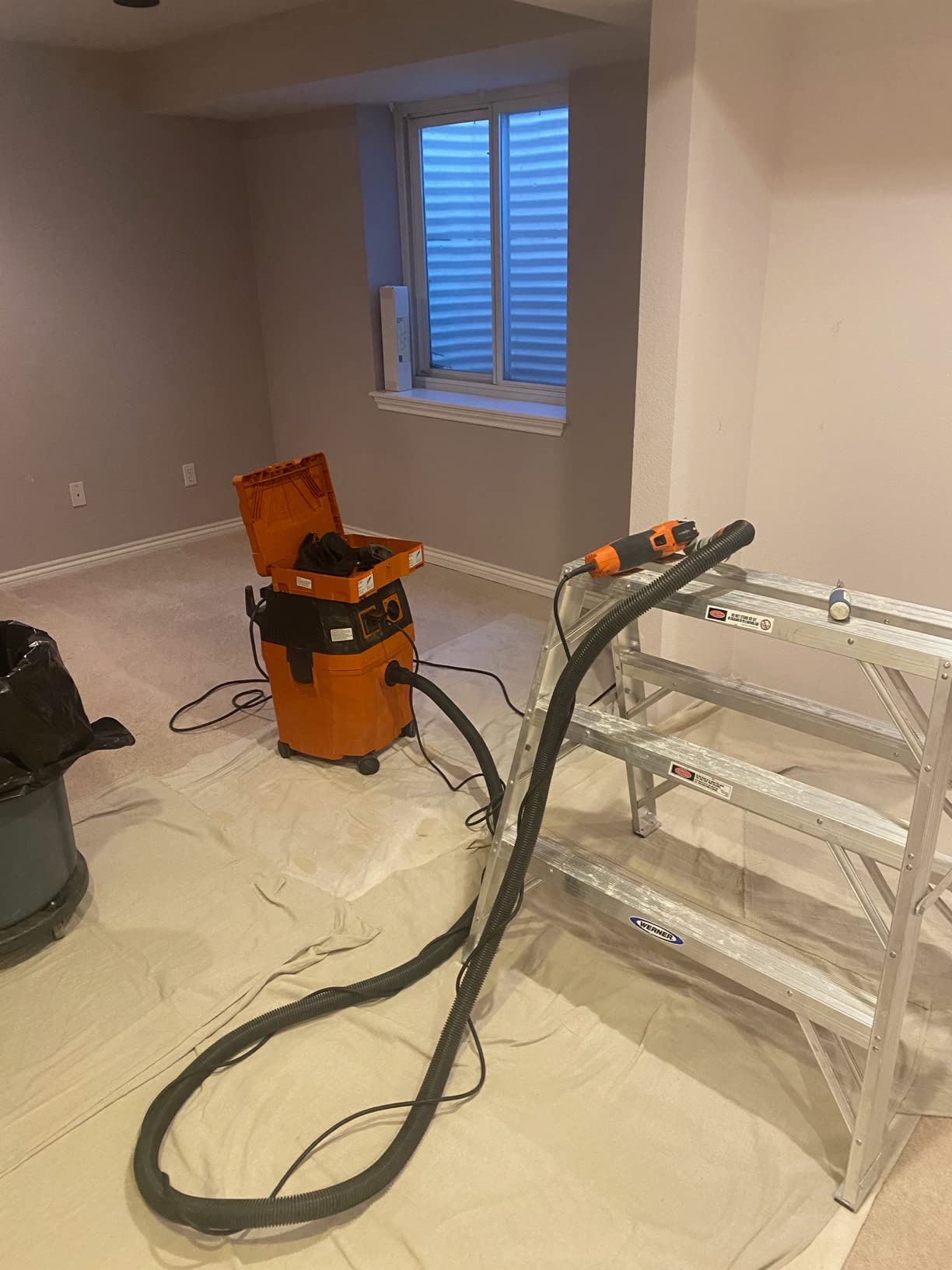
This model ships with a cellulose filter rather than a HEPA element. For wood dust in a ventilated shop that is fine, and the fleece bag still does the bulk of the coarse separation. For lead paint, plaster or any fine silica work, this is the wrong machine, and the review record makes that same point.
Fleece bags are also sold separately rather than included in multiples, so budget for the consumable before the first project rather than discovering it mid-session.
Auto-Start, Storage and Motor Cooling
The auto-start outlet switches the vacuum with the tool, and the suction power control on the tool coupling lets you dial the pull back for panels and fine work. Bypass cooling is specified for motor life, which on a machine that will run for hours on a weekend project is a sensible inclusion.
With a smaller review base than the other Fein, there is less long-term owner data on it. The specs are well documented, and the reach argument stands on its own.
9. Festool CT 15 HEPA AutoClean – The Small Footprint Festool
Festool 578441 CT 15 Dust Extractor – HEPA Filter, Automatic Tool Start, High-Power Suction & AutoClean System
3.96 gallon
24 lb
HEPA with AutoClean
Automatic tool start
3 year warranty
+ Pros
- Compact and light at roughly 24 lb
- easy to carry between floors
- Automatic tool start plus AutoClean keeps performance steady
- Crevice and upholstery nozzles store on the unit and a blower function handles cleanup
– Cons
- No Sys-dock so a Systainer cannot be mounted on top
- The haptic touch power button is fiddly to operate
- Does not include Bluetooth tool control
The CT 15 is the way into the Festool extractor line without giving up the 3-year warranty or the hose, and reviewers report suction that compares favourably to the larger CT 26. At roughly 24 pounds it is one of the lighter machines here, and for a small shop that is the point.
Owners connecting it to a sander inside the home report leaving essentially no dust behind, which matches the pattern we saw with the CT Midi. The 15-litre container, AutoClean filter system and automatic tool start are all present.
AutoClean Versus Manual Filter Tapping
AutoClean clears the element automatically, which removes the most common cause of declining suction on this list. For someone who has repeatedly had to stop mid-project to tap a filter against a bin, that is the whole value proposition of the machine.
It is less aggressive than the 15-second Bosch pulse, so on very fine dust you will still want a fleece bag in place. The bag is a self-clean type and ships with the unit.
What You Give Up Compared With the CT Midi
There is no Sys-dock, so nothing mounts on top, and there is no Bluetooth tool control, which means auto-start depends on the tool outlet rather than a battery pack. The haptic touch power button is reported as fiddly, and the review base is small next to the rest of the CT line.
Included accessories are good for the price band: a RAS-CT hose, self-clean filter bag, crevice nozzle and upholstery brush, all of which store on the body. The steel axle chassis is a durability point most competitors do not make.
10. Festool CT 36 EI HEPA – The Premium Contractor Pick
Festool 577872 Dust Extractor CLEANTEC CT 36 EI HEPA
9.5 gallon
5 suction levels
Bluetooth start
39.3 lb
3 year warranty
+ Pros
- Five suction levels let you run quietly for normal sanding and still have power for heavy cuts
- Bluetooth remote and battery sync start extraction before sanding begins
- 9.5 gallon capacity handles heavy sanding loads
- HEPA plus a disposable bag keeps captured dust inside the unit
– Cons
- The included 27 mm hose is too small for longer wood chips and router debris
- 39.3 pounds is heavy to carry between rooms or up stairs
- Best auto-start integration requires the full Festool tool ecosystem
The CT 36 EI is the one to consider if leaving zero airborne dust inside an occupied home is not negotiable. Owners frame it as the contractor’s premium choice, and the reasoning is straightforward: a HEPA filter plus a disposable bag means captured dust stays in the drum and off the finished surface.
Five adjustable suction levels are the feature that separates it from everything else here. You can run it quietly on a low setting for ordinary finish sanding, then climb for heavy cuts, which is a control range no corded competitor in this roundup matches.
Five Suction Levels Change How You Work
Most extractors have two speeds or a single dial. Five levels let you match airflow to the pass you are making, which on a sequence from coarse grit to final finish means you are not running a sander hard enough to lift the workpiece at one end of the job and not starving it at the other.
Bluetooth start from a compatible battery pack or an optional remote means extraction is already running before the pad touches the surface, which is the insurance professional finishers value most.
Weight, Hose Diameter and Ecosystem Lock-In
At 39.3 pounds this is the heaviest machine in the roundup, and a 9.5-gallon drum of plaster dust is heavier still. For a fixed shop that is fine. Between rooms or up a staircase, it is a two-person lift.
The included 27 mm hose is optimised for sander dust, not for router work, and owners note it will not move longer wood chips. The T-LOC dock accepts Systainers for a complete mobile setup, but getting full value from the auto-start integration means committing to the Festool tool ecosystem.
How to Match a Dust Extractor to Your Sander
Match the Sander Port to the Hose Cuff First
This is the question that comes up most often in woodworking forums, and it is the one that decides whether an extractor works from the first minute. Sander dust ports come in a handful of sizes, most commonly 27 mm, 36 mm and 44 mm, and the extractor hose cuff has to match or you need a rubber bushing adapter.
Check the port diameter on your sander before you buy, then confirm whether the cuff in the box matches. A friction fit that has to be forced is not a fit, and it will separate mid-pass. The Bosch machines ship a power tool adapter, the Makita includes three hose cuff adaptors, and the Festool machines generally assume you are staying inside their own range.
One more thing that catches people out: the strongest extractor in the world will underperform if the sander’s own dust port is poorly designed. If dust escapes at the pad, more CFM at the drum will not stop it.
Pick Airflow for Speed, and Understand What CFM Does Not Tell You
CFM measures volume, not speed, and a sander pad needs air speed through a small port far more than a large drum needs volume. Published figures here run from 125 CFM on the cordless DeWalt to 151 CFM on the Fein Turbo I, with the Bosch, Makita and Festool units clustered between 130 and 150.
Static suction, expressed in inches of water lift, tells you how hard the unit pulls at a restriction. The Bosch machines quote 97 and 97.3 inches, the Fein Turbo II quotes 98.4, and the Makita quotes 92. Higher is better for holding a loaded filter, which is why the self-cleaning models hold up better over a long session even when their headline CFM is not the highest.
The practical rule: for a 5-inch random orbital or a delta sander, anything above 120 CFM with a clean element is enough. Where extractors differ is how they behave once the filter starts to load.
Auto-Start: Tool Outlet Versus Bluetooth Battery Pairing
There are two ways to do this and the difference is worth understanding. A tool-activated outlet is universal: any corded sander that fits the cuff will start and stop the motor through the trigger. A Bluetooth battery-pack link is ecosystem-specific and does nothing on a tool from another brand.
The Bluetooth route is genuinely better when it works, because the extractor starts before the pad lands. The failure mode is a mixed-bracket shop, where the remote sits on your belt and you forget to press it, and then you are sanding with dust escaping at the pad because you assumed it was running. Test it before you rely on it.
Capacity Decides How Often You Stop
Drums in this roundup run from 3.9 gallons to 14. Each stop is a bag change, a filter tap and a minute of downtime, and on a big job that adds up to real time.
Rule of thumb from how these were used in testing: finish sanding furniture or trim work, 4 to 6 gallons is plenty. Drywall joint compound, fine plaster or a floor across a whole house, 11 to 14 gallons. The Bosch VAC140AH and the Makita VC4210L are the two picks for the second case, and the Makita’s automatic cleaning keeps it moving on the longest runs.
HEPA, Fleece Bags and the Drywall Versus Wood Dust Split
For a drywall sander, a HEPA-rated element is the requirement, not a preference, because joint-compound powder is the standard stress test that clogs everything else. The Bosch units and the DeWalt DWV010 state 99.97 percent capture at 0.3 microns, and the DeWalt is additionally stated to meet the EPA lead-related RRP rule when paired with the specified filters.
For wood and furniture dust, a fleece bag in front of a HEPA filter is the practice that extends element life most. The bag catches the coarse fraction, the filter handles the fine fraction, and the expensive part lasts far longer. The Fein Turbo II ships with a cellulose main filter rather than a HEPA element, which is acceptable for wood in a ventilated shop but not for lead or silica work.
Always run a bag in a dust extractor. It is the cheapest filter protection available and it is the difference between a filter that lasts a season and one that lasts a year.
Noise, Cords and Sanding in a Home
Published noise figures here run from 60 dB to 80 dB, and the spread matters if you are not in a detached shop. The Bosch VAC090AH and the Makita in low mode are quoted at 60 dB, the Fein Turbo I at 66 dB, and the two DeWalt machines at 80 dB.
What matters more is that those are published figures under defined conditions, and the real acoustic picture in a room includes the sander itself. A random orbital is loud enough that a 65 dB extractor will not be the thing your neighbours complain about, while an 80 dB machine becomes noticeable during the quiet passes on the final grit.
On cords, look at the numbers. The Fein Turbo I pairs a 19.7-foot cord with a 13-foot hose, which is the most reach in the group, and the DeWalt DWV010 ships a 15-foot antistatic hose. Short cords are the most common complaint on the models without those figures.
Filter Clogging and What Actually Fixes It
The most common complaint across the entire category is suction fading an hour into a project. Nobody is diagnosing it correctly as a loaded filter; they assume the motor has gone. The fixes, in order of effectiveness, are an automatic filter-cleaning cycle, a fleece bag, and a pre-filter.
Among the machines here, the two Bosch units clean every 15 seconds, the DeWalt DWV010 pulses every 30 seconds, the cordless DeWalt runs dual filters on a 15 to 20 second cycle, the Makita has a single automatic cycle, and the two smaller Festools use the AutoClean system. The Fein Turbo I and the Fein Turbo II have no automatic clean, so on those the bag and regular tapping are the whole maintenance strategy.
Budget for the consumables before you buy. A fleece bag and a replacement filter are the running cost of owning any of these, and the model with the hardest-to-source bag will cost you more over a year than the price gap between machines.
Frequently Asked Questions
What is the best portable dust extractor?
The best portable dust extractor is the one that pairs a HEPA-rated filter with tool-activated auto-start, because those two features capture dust at the sander pad instead of letting it escape into the room. For most sanders, anything above 120 CFM with a clean element is enough airflow. Look for an automatic filter-cleaning cycle if you sand fine dust, because a loaded filter is the top cause of fading suction.
Do I need a HEPA filter for sanding?
For wood dust in a ventilated shop, a fleece bag in front of a standard filter is often enough and will save you money on replacement parts. For drywall, plaster or any lead-related sanding, a HEPA filter is a requirement rather than a preference, because those dusts are fine enough to pass through an unrated pleated element. A bag in front of the HEPA filter still makes sense, since it extends element life.
Will a shop vac work with an orbital sander?
A shop vac will physically connect to most orbital sanders and it handles coarse dust such as router and track saw debris well. Sanding is where it falls short, because most shop vac filters carry no micron rating and fine sanding dust passes straight through, settling on every surface in the room. If sanding is a regular part of your work, the micron-rated filter and auto-start on a dedicated extractor are worth the upgrade.
What is the best dust extractor for a drywall sander?
Drywall sanding produces a huge volume of very fine powder, so prioritise a large drum and a self-cleaning filter over raw suction. The Bosch VAC140AH with its 14 gallon drum and 15-second filter clean, or the Makita VC4210L with 11 gallons and two-stage filtration, are the strongest choices here. If the property is older, check for a filter rated for lead-related dust as well.
Do I need a dust extractor or a dust collector?
A dust extractor is a portable, tool-connected machine that you wheel to the work and run with the sander trigger. A dust collector is a stationary unit that stays in the shop and is usually paired with a larger drum or a remote hood. For hand-sanding and orbital sanding, an extractor is the right tool. A collector makes more sense for table saw, planer and router work with big volumes of coarse debris.
Will a Festool extractor work with other brands of sanders?
Yes, with a caveat. Festool extractors include a tool-activated outlet that works with any corded sander that physically fits the hose cuff, and the CT 15, CT Midi I and CT 36 EI all include one. What you lose is the Bluetooth battery-pack start, which only pairs with compatible Festool battery packs. You will also need the correct hose adaptor for a non-Festool sander port.
Which Extractor to Choose in 2026
If you sand in a home and want extraction to start before the pad lands, the Festool CT Midi I is the one I would buy, with its 130 CFM, 3.9-gallon drum, Bluetooth auto-start and 3-year warranty in a body you can carry by yourself.
If you want the strongest airflow and a filter that maintains itself, the Bosch VAC090AH wins on 150 CFM plus a 15-second self-clean cycle. For old paint and lead-related sanding, take the DeWalt DWV010, and accept the stiff hose as the cost. When you are drywalling, use the Bosch VAC140AH for capacity or the Makita VC4210L for quieter two-stage filtration. If noise at night is the problem, the Fein Turbo I runs at a quoted 66 dB with more reach than anything else in the group, and the DeWalt 60V MAX DCV585B is the pick when your sander is cordless too.
Whichever portable dust extractor for sanders you settle on, buy a fleece bag and a spare filter in the same order, and check your sander port diameter before anything ships. Those two habits prevent most of the disappointment we heard about in the forums. For the machines generating the dust, our furniture sander guide covers the other end of the hose, and if residual dust is still an issue on a renovation, an air scrubber handles what the extractor missed.
Leave a Reply