
A plasma cutter only cuts as well as the air feeding it. Pick the wrong compressor and the torch drops its arc halfway through a 3/8 inch plate, the kerf goes ragged, and your tips and nozzles burn up twice as fast as they should. After comparing ten compressors across the full range of shop sizes, the best air compressors for plasma cutters come down to three numbers: CFM at the pressure your torch actually runs, tank size, and duty cycle.
I have run handheld 20-amp cutters and 65-amp CNC tables off everything from a 4.2-gallon portable unit to a 5 HP two-stage shop compressor, and the failure mode is always the same. Not enough air at pressure, and the pilot arc starves. My selection here leaned on rated CFM at rated PSI rather than peak numbers on the box, because peak CFM is measured at 40 PSI where a plasma torch is not operating.
The rule that matters more than any brand name: size your compressor’s rated SCFM 30-50% above your cutter’s CFM demand, at the PSI your cutter needs. Handheld air plasma systems typically run best at 70-80 PSI, while CNC tables and production plate work want 100-120 PSI. Below that rule, nothing else on the spec sheet rescues you.
Everything below was verified against manufacturer spec data and owner reviews in 2026, including the complaints. Each product carries a who-should-skip-it line, because a compressor that is excellent for a 30-amp handheld can be useless on a 60-amp table. If you are still picking a cutter, start with our plasma arc cutting guide, then come back here for the air end of the system.
Our Top 3 Tested Air Compressors for Plasma Cutting in 2026


Those three cover most of the market. The Makita is the most proven entry-level unit and our editor’s choice for handheld work. The Klutch adds meaningful tank volume and flow for the money. The DeWalt is the pick when you want 200 PSI from a 120V circuit.
Comparing the Best Air Compressors for Plasma Cutters in 2026
Read the CFM column against the PSI your torch runs at, not the PSI printed at the top of the box. The DeWalt and Makita both print a high maximum pressure, but their rated flow is measured at 90 PSI, which is where a handheld cutter actually sits.
| Product | Details | Action |
|---|---|---|
|
|
Check Latest Price |
|
|
Check Latest Price |
 |
|
Check Latest Price |
 |
|
Check Latest Price |
 |
|
Check Latest Price |
 |
|
Check Latest Price |
 |
|
Check Latest Price |
 |
|
Check Latest Price |
 |
|
Check Latest Price |
 |
|
Check Latest Price |
What Size Air Compressor Do You Need for a Plasma Cutter?
Multiply your cutter’s rated CFM by 1.5, match the pressure (70-90 PSI handheld, 100-120 PSI for tables and thick plate), and pick a tank of at least 20 gallons for handheld work or 60 gallons for continuous cutting. That single rule resolves most sizing questions, including ones written into the manuals of the cutters in our plasma cutter roundups.
Here is the match table we use, keyed to cutter output amperage:
- 20-30 amp handheld: roughly 3.5-4 CFM at 70-80 PSI. Compressor target 5-6 SCFM, 20-gallon tank minimum, 120V single stage is fine.
- 40-50 amp handheld: roughly 5-6 CFM at 90 PSI. Compressor target 8-9 SCFM, 30-gallon tank, oil-free or oil-lubricated both work with a filter.
- 45-65 amp CNC table: roughly 6-7 CFM at 100 PSI. Compressor target 10-12 SCFM, 60-gallon tank, two-stage strongly preferred.
- 85-105 amp production plate: 12-15 CFM at 100-120 PSI. Compressor target 18+ SCFM or a rotary screw unit, 60-gallon tank or larger, duty cycle above 75%.
The tank size line is not filler. A plasma cutter can consume the entire contents of a 20-gallon receiver in a couple of minutes on thick plate, and a small compressor cannot refill fast enough, so the torch sees a falling pressure line and eventually quits mid-cut. Forum users on PlasmaSpider put it plainly: size the compressor at roughly 150% of your CFM requirement so the pump can cycle and cool. The same community cites roughly 6 CFM for a Hypertherm Powermax 45, which lines up with the mid-tier row above.
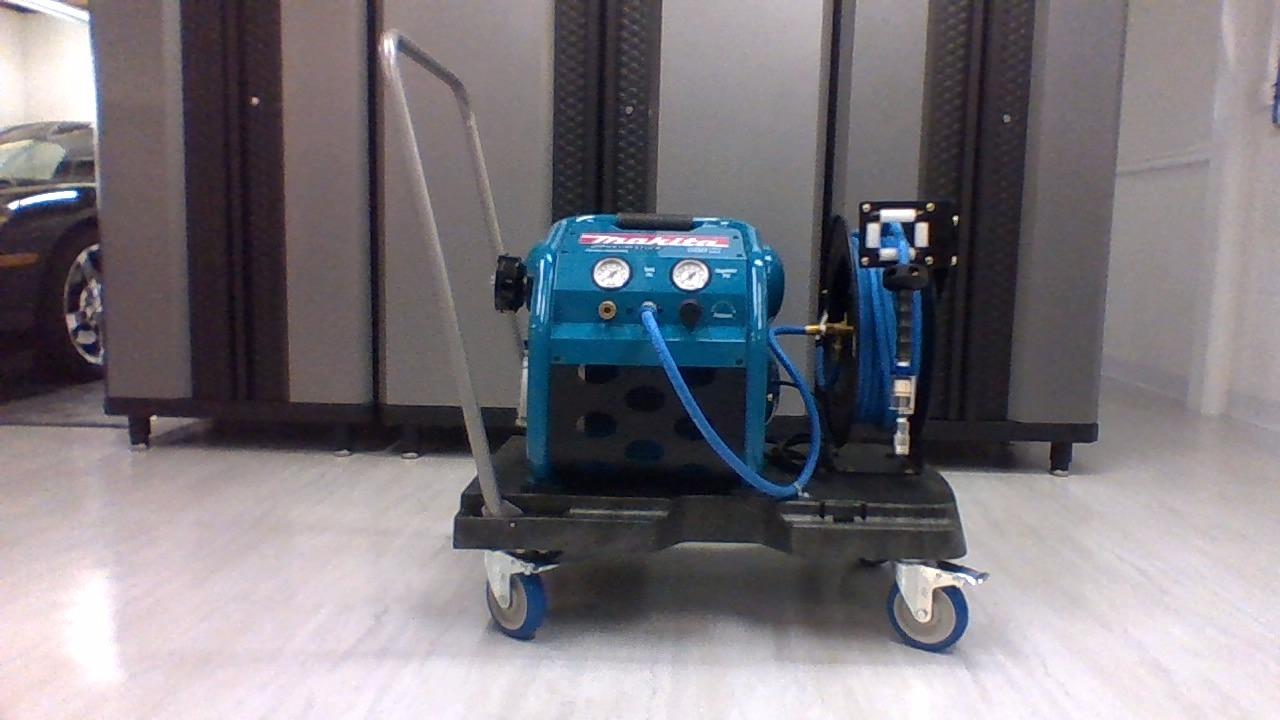
1. Makita MAC2400 – Our Most Proven Pick for 20-30 Amp Handheld Cutting
Makita MAC2400 2.5 HP* Big Bore™ Air Compressor
4.2 CFM at 90 PSI
4.2-gallon tank
2.5 HP 120V at 12.3A
79 dB cast iron pump
+ Pros
- Fast Big Bore cylinder recovery
- 4.2 CFM at 90 PSI from 2.5 HP
- Low 12.3A start draw
- Quiet 79 dB for its class
- Roll-cage pump protection
– Cons
- 4.2-gallon tank refills constantly
- Oil-lubricated pump needs oil changes
- Too little air for 45 amp and up cutters
This is the compressor I recommend most often, and the reason is not the spec sheet. It is that the Makita MAC2400 carries a 4.7 average across the largest review base in this roundup, which tells you a lot about long-term durability in a category where oil-lubricated pumps are often abandoned when they get loud.
The Big Bore cast iron cylinder and piston package is engineered for faster recovery than a typical 2.5 HP portable, and the 1730 RPM motor keeps it cooler and quieter than the 4-cylinder clatter most buyers are used to. At 79 dB it is not library-quiet, but it will not dominate a conversation in a garage either.
Where the 4.2 CFM Figure Actually Holds Up
That rating is measured at 90 PSI, which is the useful number for a handheld torch running in the 70-80 PSI range. It is enough for a 20-30 amp cutter making short passes in thin mild steel and for cleanup work with a nibbler.
It is not enough for a 45-amp cutter on a CNC table, and the 4.2-gallon tank guarantees short run time between cut starts. Think of this as the weekend hobby answer rather than the shop answer.
Why the Low 12.3A Draw Matters in a Home Shop
Most 120V compressors pull 14-15 amps, which is where tripped breakers come from when the plasma cutter and compressor land on the same circuit. The 4-pole motor at 12.3 amps leaves a little more headroom, though we still recommend a dedicated circuit for any plasma work.
The oil-lubricated pump is a real trade. It runs cooler and lasts longer than a small oil-free motor, but it needs scheduled oil changes and you should run a coalescing filter before the torch to keep oil out of your consumables.
Who Should Skip This Compressor
Anyone cutting 1/4 inch plate on a table, anyone running production work, and anyone who wants a receiver big enough to finish a long cut without the motor cycling on and off between passes. The 4.2-gallon tank is the deciding factor, not the CFM.
2. Klutch 29-Gallon – Top Rated Vertical Tank for Serious 120V Shops
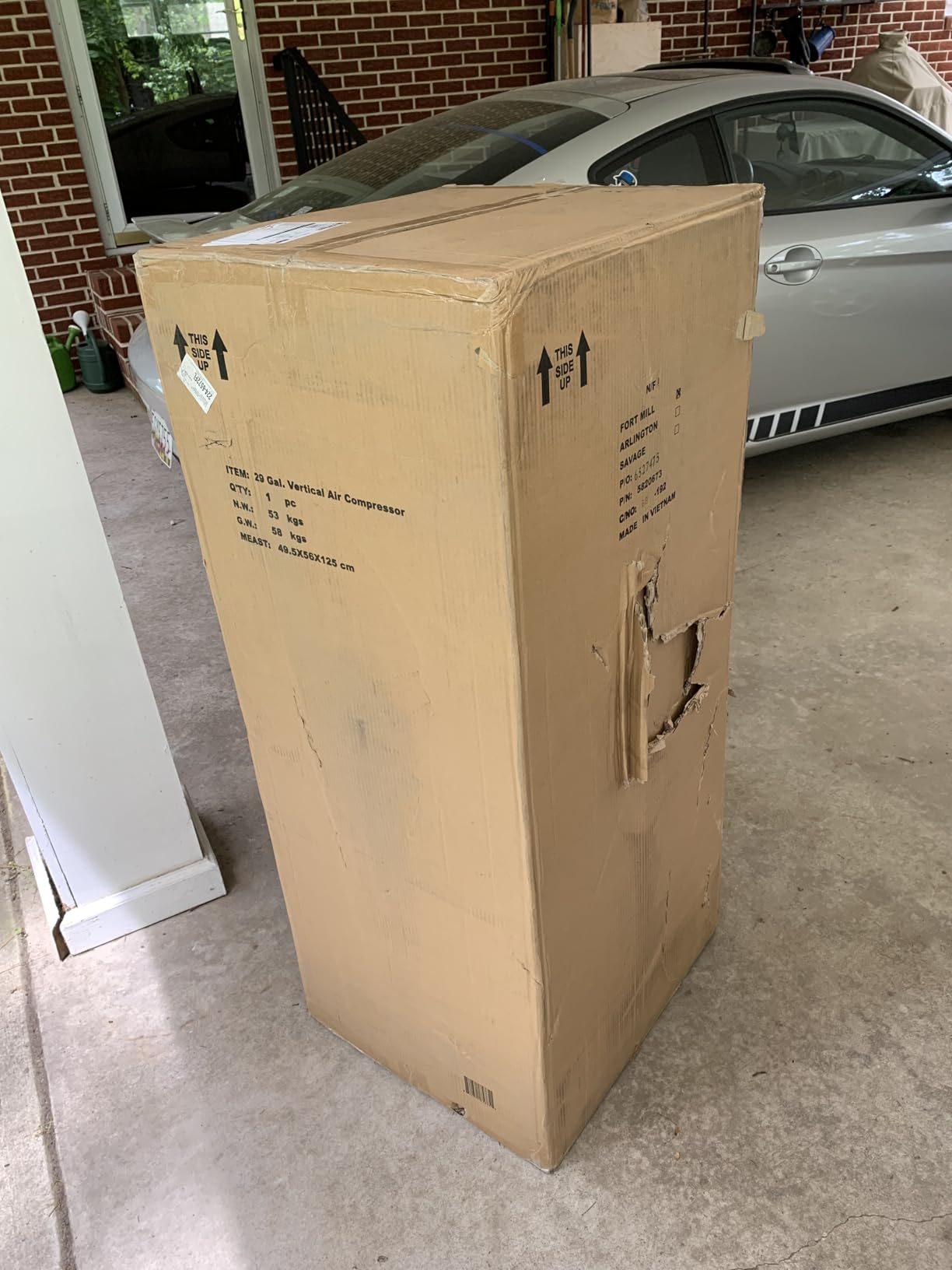
Klutch 29-Gallon Air Compressor, 2.5 HP, 120V, 175 PSI, 5.1 CFM at 90 PSI
5.1 SCFM at 90 PSI
29-gallon vertical tank
175 PSI max
2.5 HP oil-free on 120V
+ Pros
- 5.1 SCFM holds pressure on long passes
- Oil-free pump removes oil-spill risk
- 29-gallon vertical tank saves floor space
- Brass coupler and flat-free tires
- Owners report no pressure leaks
– Cons
- 81 dB is loud for a 2.5 HP model
- Large tank takes a while to reach full pressure
- Some buyers question published CFM
The Klutch 29-gallon is the one I send people to when they want a real shop compressor without moving to 240V. Seven times the receiver volume of the Makita in a vertical footprint means it holds a 120V circuit and still feeds a 40-50 amp handheld through a long cut.
The oil-free pump is the right call for plasma work, because there is no oil to carry down the line into the torch. At 5.1 SCFM it holds pressure through continuous use, and the 175 PSI ceiling gives you room to run a table-side torch at a higher working pressure than the 125 to 135 PSI units in this group.
Tank Size Is the Feature That Changes the Cutting
A 29-gallon receiver at working pressure stores far more usable air than a 20-gallon model, which means longer passes before the pump has to catch up. In practice that is the difference between a clean uninterrupted cut and a cut that stutters when the receiver runs down.
Owners do report that the larger tank takes a while to reach full pressure from empty, so plan on a few minutes before a big job rather than expecting an instant fill.
Oil-Free Versus Oil-Lubricated for Plasma Duty
Nobody in editorial content addresses this directly, so here is the practical answer. Oil-lubricated compressors can run hotter and last longer in hard service, but they require a coalescing filter and periodic oil changes to keep carryover away from your consumables. Oil-free removes that variable entirely.
Users on Reddit r/Tools specifically call out California Air Tools as a solid domestic brand for plasma duty for this reason. The same category of user notes the caution from the other side: never run an oil-lubricated compressor to a torch without filtration.
Who Should Skip This Compressor
Buy a 230V two-stage model instead if you plan to grow into CNC table work above 50 amps. At 81 dB this is also not the unit for a shop where you need to hold a conversation next to the compressor while cutting.
3. Stealth 20-Gallon Ultra Quiet – For Shops Where Noise Is the Constraint
Stealth 20 Gallon Ultra Quiet Air Compressor,1.8 HP Oil-Free Peak 150 PSI 68 Decibel, 5.5 CFM @ 40 PSI 5 CFM @ 90 PSI Silent Long Life Electric Air Compressor W/Wheel for Garage
5 CFM at 90 PSI
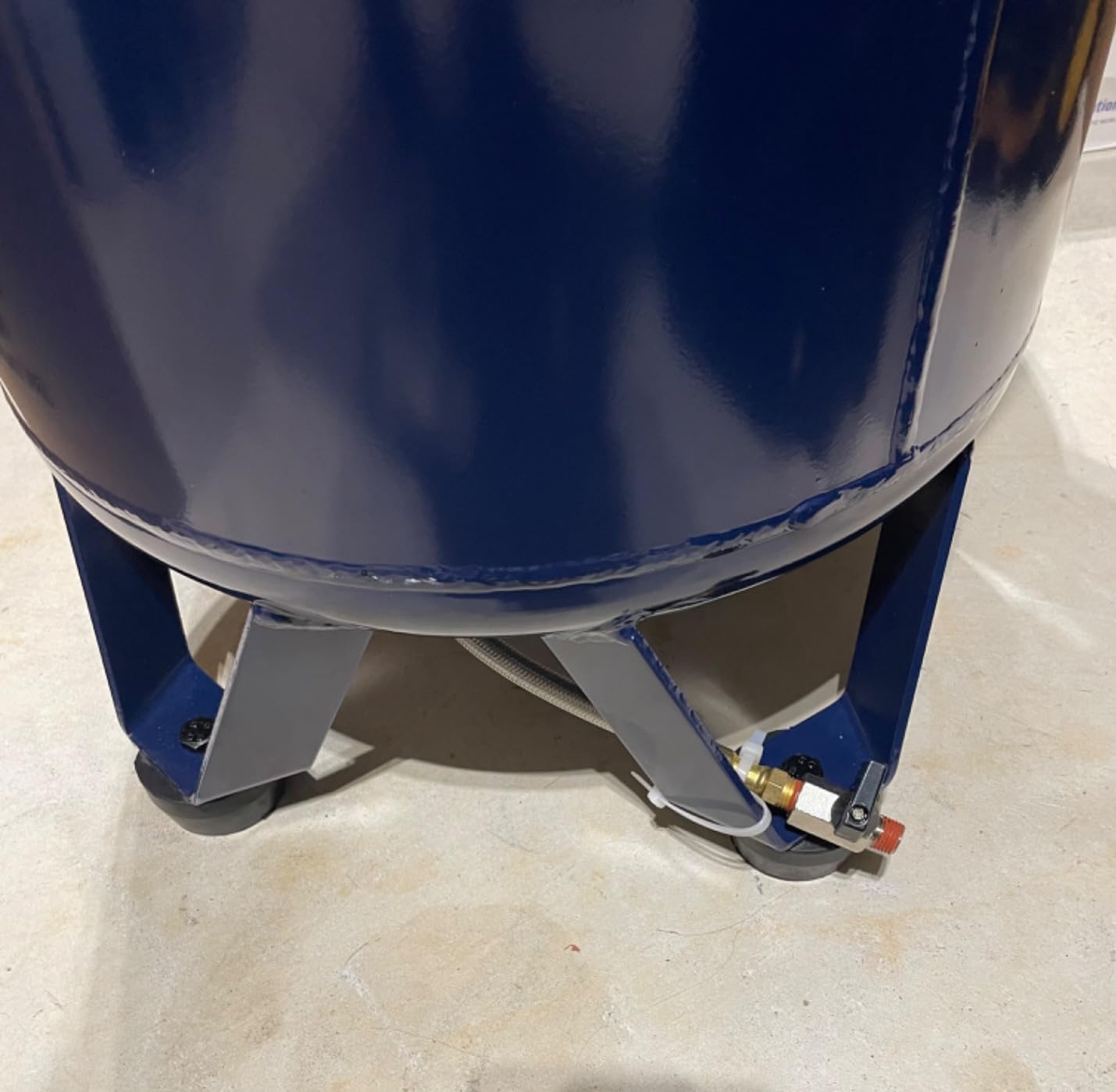
20-gallon alloy steel tank
68 dB oil-free
1.8 HP on 120V
+ Pros
- Exceptionally quiet 68 dB operation
- Oil-free motor keeps exhaust air clean
- Steel tank holds pressure with no leaks
- Two quick couplers for tool changes
- Limited lifetime warranty
– Cons
- 1.8 HP is light on sustained cutting load
- Can trip a breaker restarting a charged tank
- 20-gallon tank limits long runs
If your compressor lives in the same room as your plasma table, noise becomes a cutting-quality issue rather than an annoyance. Operators report keeping the arc on a cut more easily when they are not fighting a loud pump, and the Stealth is the quietest option in this roundup at a claimed 68 dB, with owners measuring in the mid-60s at 8-10 feet.
It also carries a limited lifetime warranty, which is unusual in this category and worth noting when you compare coverage across the list. The oil-free motor and pressure-holding alloy steel tank both draw repeated owner praise.
Where 5 CFM at 90 PSI Gets You
The 5 CFM at 90 PSI rating is enough for a 30-40 amp handheld on mild steel and for plenty of bench work, and it is a real step up from small pancake units. It is not a table compressor, and the 20-gallon tank is the first thing to run out on a long cut.
Remember that this unit also manages 5.5 CFM at 40 PSI. That headline number looks better than the one you will actually use, which is why we always match CFM to the PSI your torch runs at.
The Restart Problem and Why It Matters for Plasma
Several owners report units tripping breakers on start-up when the tank still holds pressure. On a plasma job that is more annoying than on a nail gun, because you may be mid-sequence with a plate positioned on the table.
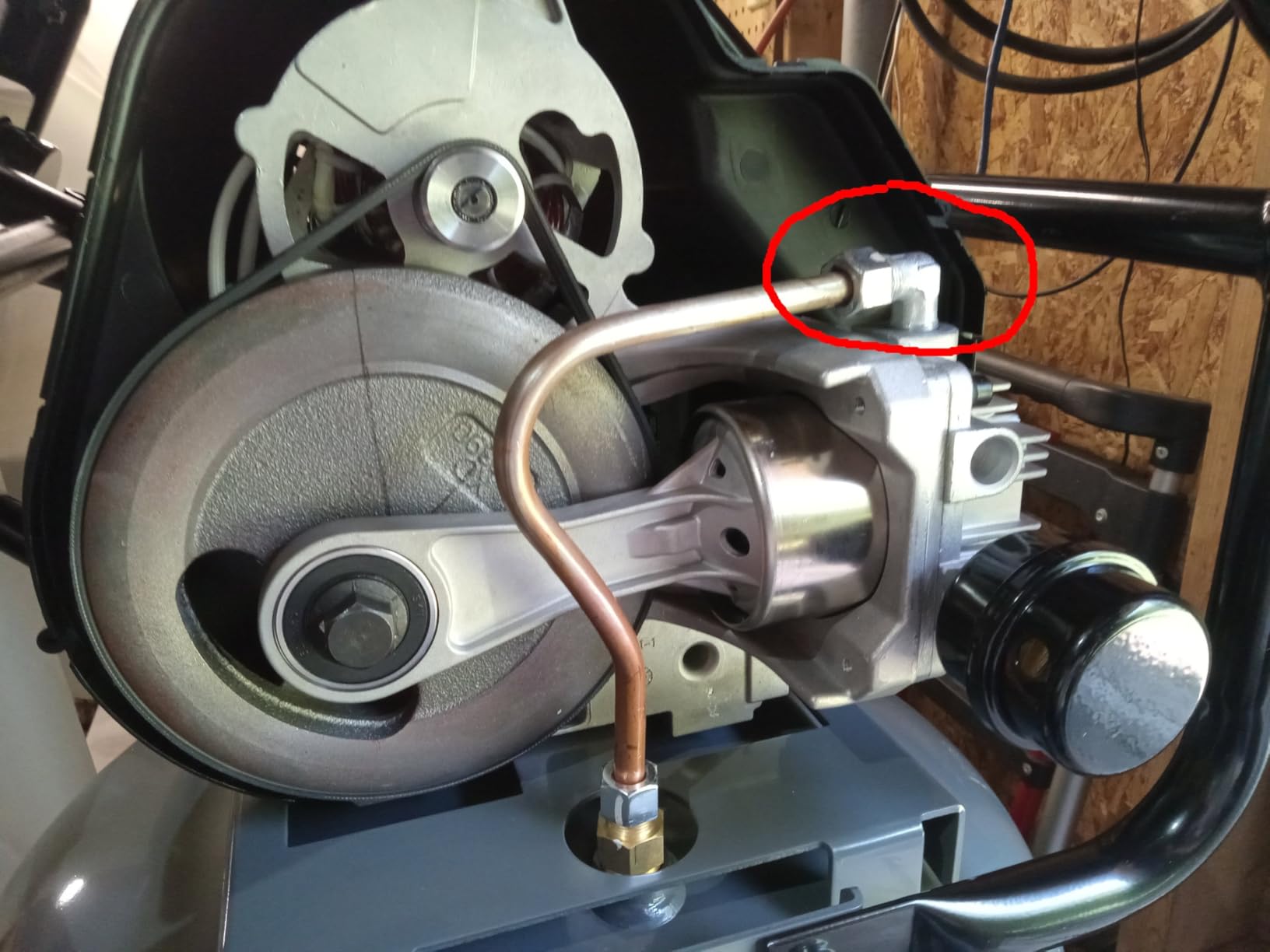
Let the tank fully vent before restarting, and keep the compressor on its own circuit. The 121-pound weight is a reminder that this is a shop machine rather than something you carry to a job site.
Who Should Skip This Compressor
Anyone cutting plate longer than a few feet, and anyone who needs more than 150 PSI. The quiet motor also has the smallest powerplant here at 1.8 HP, so sustained high-flow work is not its strength.
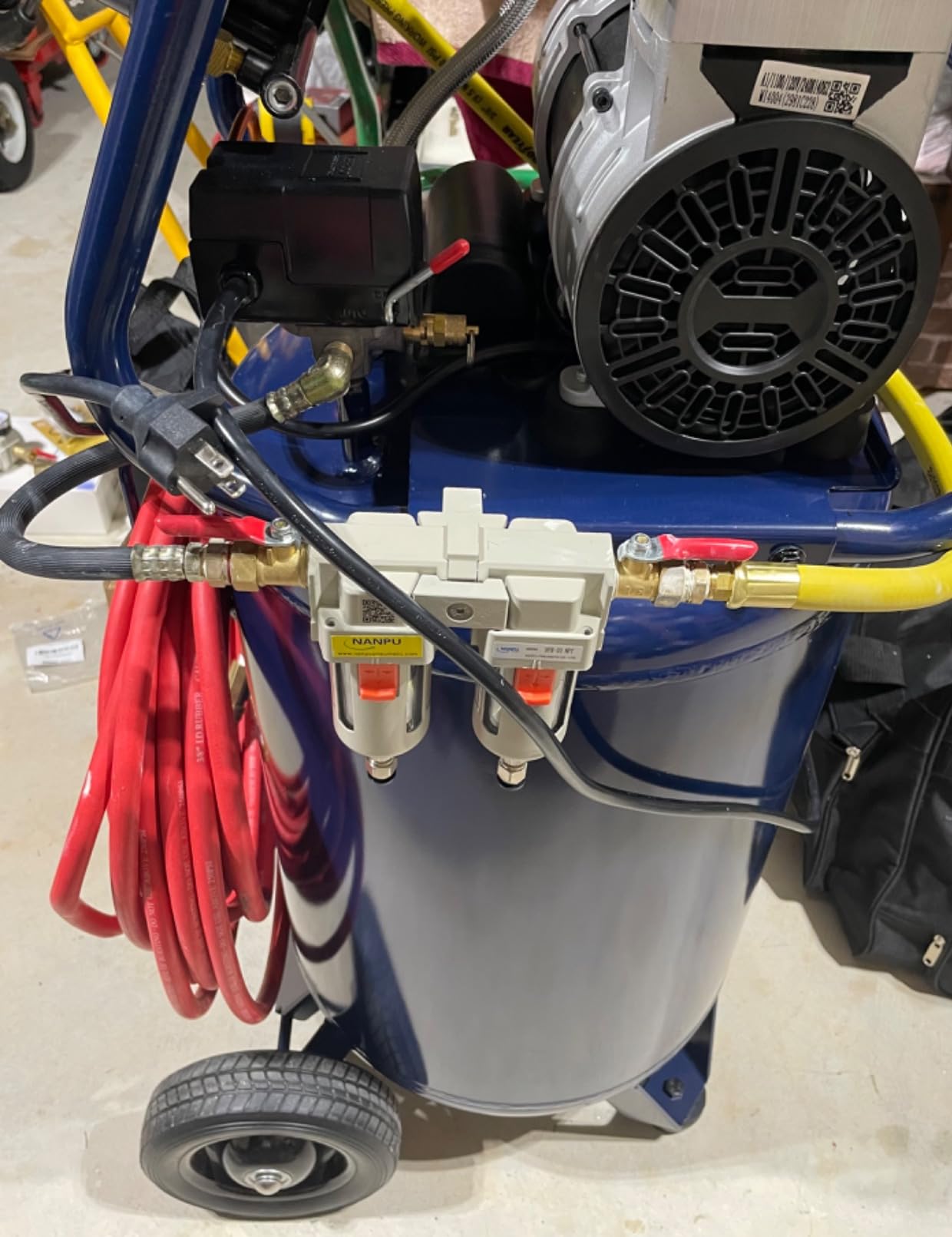
4. Craftsman 20-Gallon Oil-Free – Pressure Headroom on a Small Frame
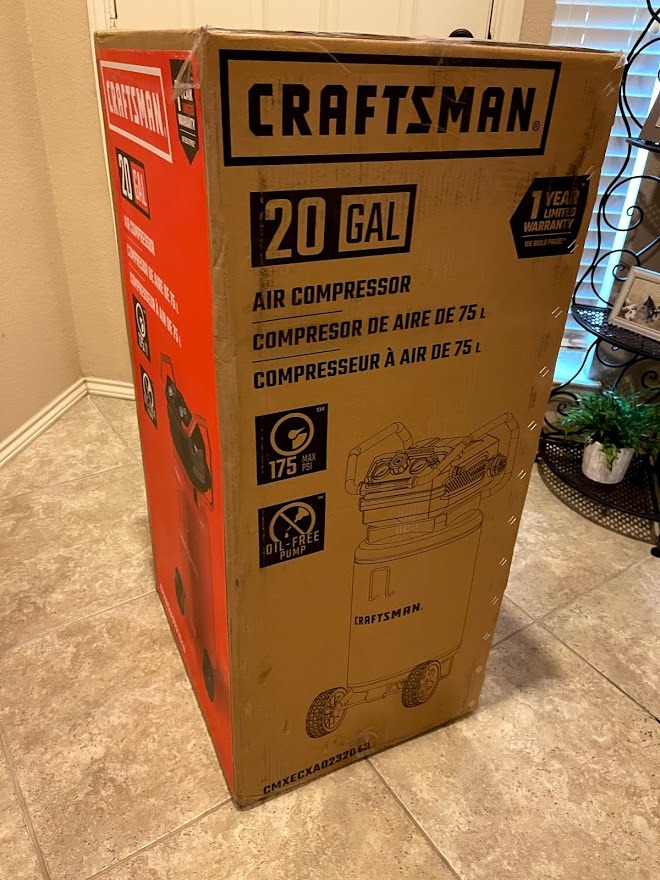
Craftsman Air Compressor, 20 Gallon Oil-Free 1.8 HP Max 175 PSI Pressure Two Quick Couplers Big Capacity, Red- CMXECXA0232043
4 SCFM at 90 PSI
20-gallon tank
175 PSI max
1.8 HP oil-free on 120V
+ Pros
- 175 PSI headroom above most 1.8 HP models
- Oil-free pump with zero maintenance
- 20-gallon tank outlasts 6-gallon models
- Two quick couplers included
- Compact vertical footprint
– Cons
- Modest 4 SCFM at 90 PSI
- 80 dB is loud in a small shop
- One-year warranty is short for the badge
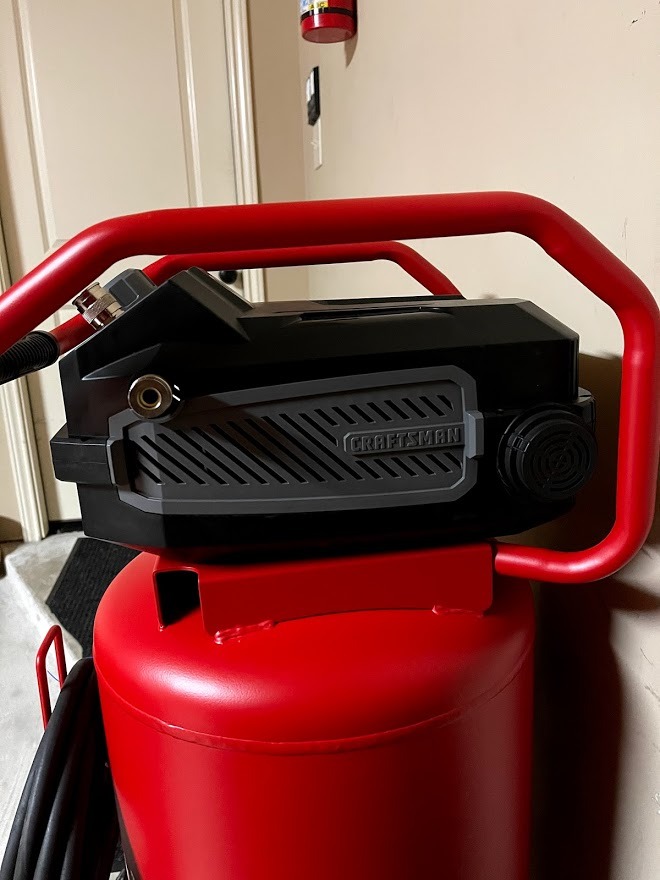
The Craftsman earns its place by doing one thing better than the other 1.8 HP oil-free compressors here: it stores air at 175 PSI. When you are feeding a plasma torch that wants a stable 90 PSI working pressure, a higher tank ceiling translates directly into steadier delivery and fewer pressure dips on the line.
For nailing, spraying and light shop duty it is more than enough. For plasma work it suits a 20-30 amp handheld on occasional jobs, and the 20-gallon vertical tank gives you meaningfully longer run time than the 6-gallon portable units it replaced in most garages.
Reading Rated CFM Against Peak CFM
This model is listed at 4 SCFM at 90 PSI. That is the honest number for your decision. A lot of cheaper compressors advertise flow at 40 PSI, where the pump is barely loaded, and printing that figure on the box tells you very little about plasma performance.
Multiply 4 by 1.5 and you land near 6 SCFM as the compressor target, which is a good match for a 30-40 amp cutter. If your torch manual lists a higher figure, move up a size rather than stretching this one.
Oil-Free Maintenance Reality
There are no oil changes, which is the entire appeal for a plasma user worried about carryover contaminating consumables. The tradeoff is a shorter pump life expectation than a comparable oil-lubricated cast iron machine under continuous load.
The included ball drain valve and plastic filter are simple parts to replace, and the two quick couplers make swapping between a torch line and a hose trivial.
Who Should Skip This Compressor
Skip it for continuous or production work, and skip it if noise is a factor in your shop. At 80 dB it is one of the louder models here, and a 4 SCFM flow rate leaves little margin above a mid-size cutter’s demand.
5. Campbell Hausfeld 60-Gallon Two-Stage – the Best Two-Stage Fit for 40-50 Amp Cutters
Campbell Hausfeld 60-Gallon 2-Stage Air Compressor, 175 PSI, 230V
7.6 SCFM at 90 PSI
6.9 SCFM at 175 PSI
60-gallon ASME tank
3.7 HP on 230V at 65 dB
+ Pros
- Two-stage cast iron pump for long life
- Holds 6.9 SCFM all the way to 175 PSI
- 60-gallon tank cuts refills to a minimum
- 3-year warranty is the longest here
- Compact 23 by 23 inch footprint
– Cons
- Needs a dedicated 230/240V circuit
- 255 pounds makes it a fixed install
- Two-stage design costs well above single-stage
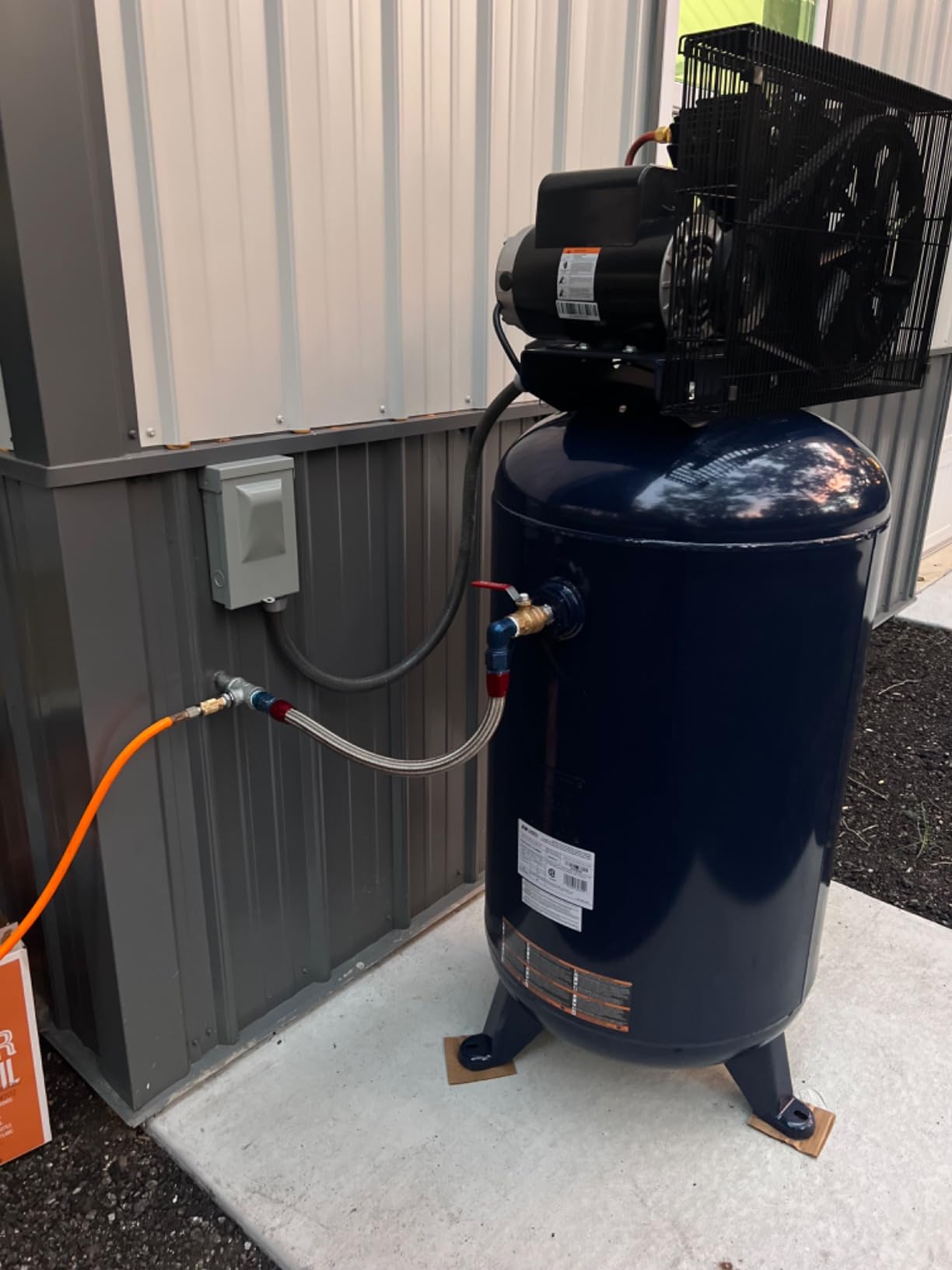
This is the unit I recommend the moment a buyer says the words CNC table or production shop. Two-stage compression is the reason it holds 6.9 SCFM at 175 PSI instead of choking near 125, and that sustained flow at pressure is exactly what a 40-50 amp torch needs when it starts a pierce through thick plate.
The 60-gallon ASME vertical tank on a 23 by 23 inch footprint is unusually space-efficient for that capacity. At 65 dB it is also the quietest compressor in this roundup, which matters when it sits near a cutting table.
Why Two-Stage Changes Cut Consistency
Single-stage pumps compress in one pass, so they lose flow as pressure climbs and they run hot doing it. Two-stage compresses twice, which means more air delivered at working pressure and much less heat in the cylinder. On a torch that demands stable pressure, that shows up as a pilot arc that starts reliably and a kerf that stays consistent across a plate.
The 3.7 running HP induction motor and the B-10 bearing rated for long service intervals are built for the kind of daily cycling a fabrication shop imposes on a machine.
The 230V Requirement Is Not Optional
This compressor requires a dedicated 230/240V single-phase supply. If your shop is 120V only, that is a wiring project before it is a purchase, and it is worth budgeting for before you commit.
On the positive side, 255 pounds and a fixed vertical format make this a permanent installation by design. It is not going anywhere, and it is not meant to.
Who Should Skip This Compressor
Skip it if you cut a few pieces a month. For occasional 20-amp handheld work, this is far more machine than the job needs. It also does not reach the air volumes a 65-amp table demands continuously.
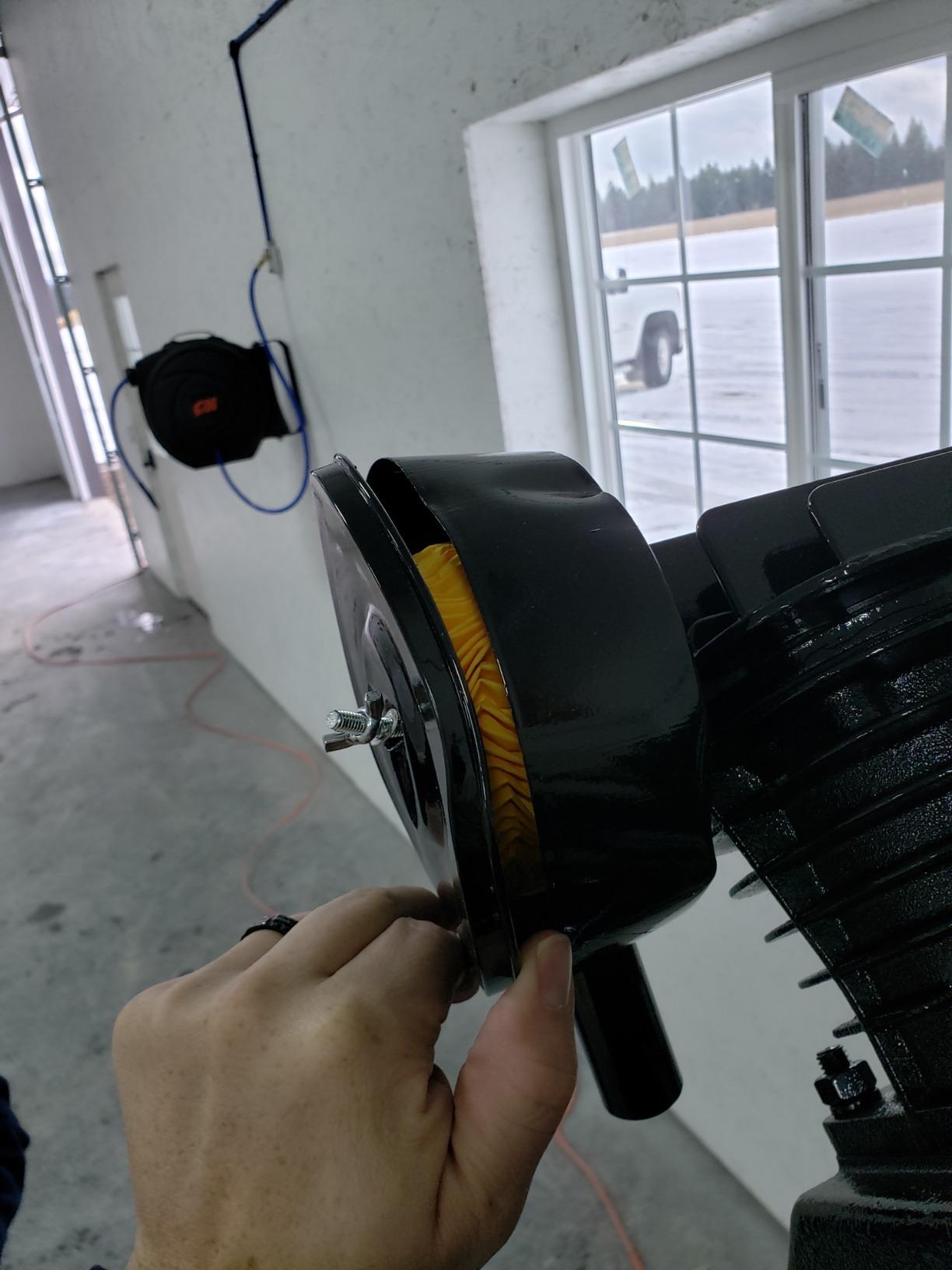
6. Industrial Air 30-Gallon Belt Driven – 7 CFM From a 120V Circuit
Industrial Air ILA1883054 30-Gallon Belt Driven Air Compressor
7 CFM at 155 PSI
30-gallon vertical tank
Dual-voltage 120V/240V motor
Belt drive cast iron pump
+ Pros
- 7 CFM from a 30-gallon footprint
- Fills from empty fast with no leaks
- Belt drive keeps vibration and noise down
- Dual-voltage motor for 120V or 240V
- Two-year warranty
– Cons
- Tank drain is hard to reach
- Light-duty regulator with a coarse gauge
- Top-heavy and awkward to move
The Industrial Air is the sleeper of this roundup. Seven CFM is real, sustained, measured flow from a 30-gallon vertical tank, and owners running it on sanding, die grinding and light cutting report it outperforming costlier oil-free machines on the same jobs.
Belt drive is the quiet choice. Isolating the motor from the pump with a belt cuts vibration and noise compared with a direct-drive oil-free unit, and long-term owners consistently describe the operation as smooth.
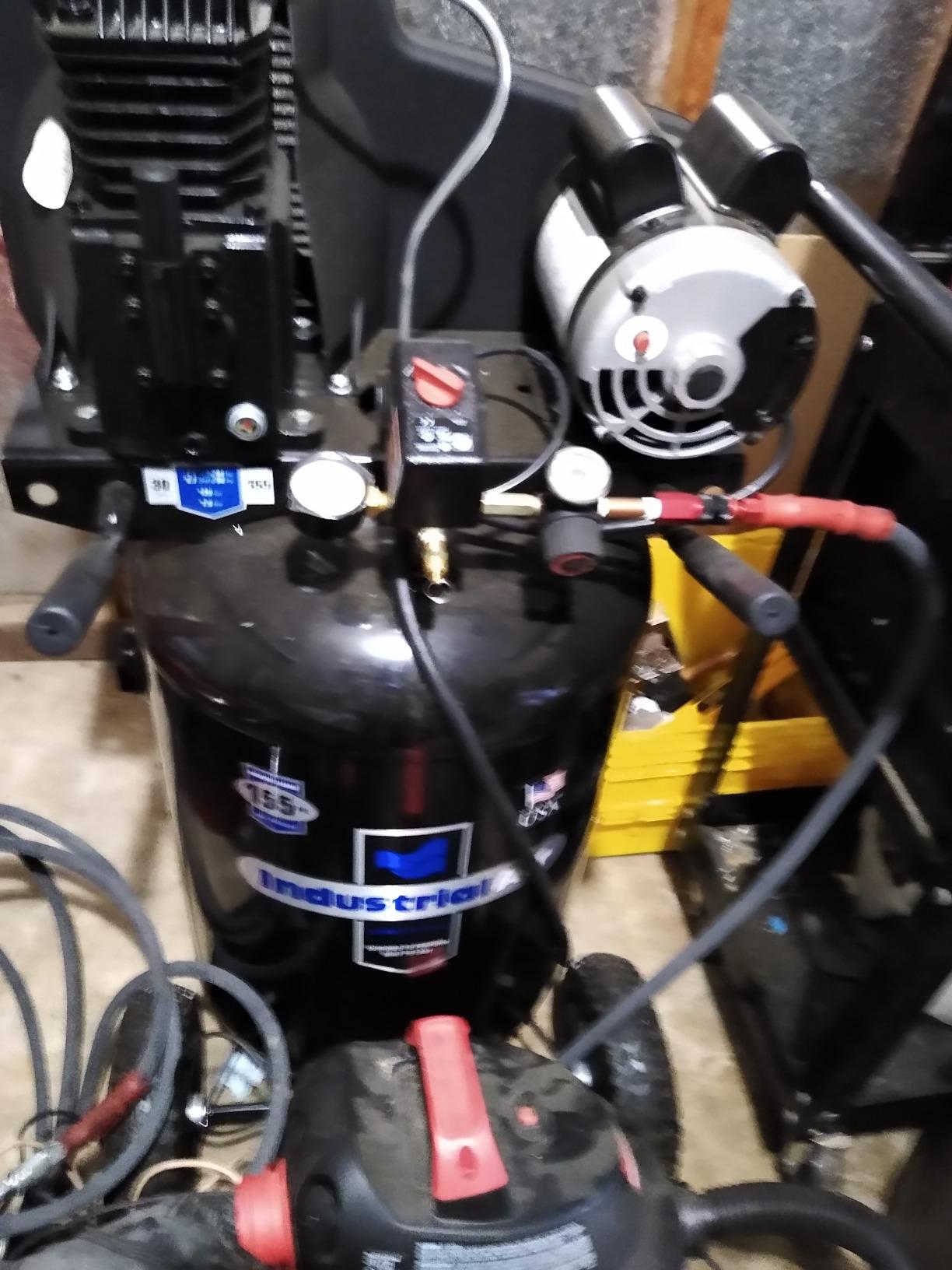
Dual Voltage Is the Feature to Plan Around
The motor arrives pre-wired for 120V and is convertible to 240V. That means you can start on an existing circuit and move to a dedicated 240V line later without replacing the compressor, which is a rare and useful flexibility in this price and size class.
At 155 PSI maximum it sits below the two-stage machines, but the flow is what matters most for a 40-50 amp handheld running at 90 PSI.
Ergonomics Are the Weak Point
The most repeated complaints are about reaching things: the tank drain valve is tucked awkwardly under the tank, the regulator is light duty with a gauge that lacks fine resolution, and the power cord is short enough that many installs need an extension.
None of that affects cut quality, but all of it affects how much you will enjoy working with the machine. Budget an afternoon and a pair of pliers if you buy it.
Who Should Skip This Compressor
Skip it for CNC table duty above 50 amps and skip it if you need 175 PSI. At 190 pounds and top-heavy on pneumatic tires, it also wants a clear floor plan rather than a corner of the garage.
7. California Air Tools 20020AD – Automatic Draining for a Clean Air Line
California Air Tools 20020AD 2.0 HP Ultra Quiet and Oil-Free Air Compressor with Wheels, 20 Gallon Tank Capacity, 70 dB Noise Level, Electric, Portable, with Automatic Drain Valve
5.3 CFM at 90 PSI
20-gallon steel tank
70 dB oil-free
2.0 HP on 110V at 14A
+ Pros
- Very quiet 70 dB operation
- Automatic drain purges moisture for you
- 1680 RPM oil-free motor runs cool
- Service sends parts even after warranty
- No leaks reported by owners
– Cons
- 125 PSI ceiling is low for plasma work
- A fitting restriction cuts usable CFM
- Auto drain purge is loud
Moisture is the quiet killer of plasma cut quality. It beads on the inside of the torch, it makes the arc wander, and it eats consumables. The California Air Tools 20020AD handles that for you with an automatic drain valve that purges the tank on a timer, so you are not remembering to drain it between jobs.
It is also the model brand names come up most often for plasma duty in shop forums, and the service experience stands out, with owners reporting free replacement parts even after the warranty period.
Where the 125 PSI Ceiling Bites
This is the one specification that rules it out for table work. At 125 PSI maximum, a torch that wants 100 PSI of working pressure has almost no margin, and any restriction downstream immediately pulls the delivered pressure below what the arc needs.
There is also a fitting bottleneck between the tank and the regulator that some owners say chokes real-world flow on high-volume tasks. For a 20-30 amp handheld on thin material, neither issue is a problem.
Quiet and Slow Is the Design Intent
The 1680 RPM oil-free motor and 70 dB rating mean this runs cooler and quieter than most of the list, which is a genuine advantage in a concrete-walled shop. The oil-free dual piston pump is rated for a 3000-plus hour life cycle.
Be aware that the automatic drain is startlingly loud when it purges, so place the unit where an occasional burst will not startle you mid-cut.
Who Should Skip This Compressor
Anyone whose torch runs above 100 PSI, and anyone cutting plate thick enough to need a long uninterrupted pass. The 20-gallon tank empties fast under a hungry torch.
8. DeWalt 27-Gallon Vertical – 200 PSI From a 120V Plug
DEWALT 27-Gallon Vertical Portable Air Compressor (DXCM271.COM)
5.1 SCFM at 90 PSI
200 PSI max
27-gallon vertical tank
1.7 HP oil-free on 120V
+ Pros
- 27-gallon tank outlasts pancake models
- 200 PSI is high for a 120V model
- Easy-start motor handles rough circuits
- Vertical body costs little floor space
- Large wheels for shop movement
– Cons
- Takes 10 to 30 minutes to fill from empty
- 136 pounds is heavy to roll
- New fittings can weep until tightened
The 200 PSI tank rating is unusual for a 1.7 HP 120V portable, and it is the reason the DeWalt shows up repeatedly in plasma conversations. A tank rated that high delivers 90 PSI working pressure without the pressure drop that wrecks a cut, and one owner in the reviews specifically reports powering a plasma cutter on 110V with this unit.
For anyone who cannot run a 230V circuit, it is the highest-pressure option in a package that still fits in a normal garage and moves on its large wheels.
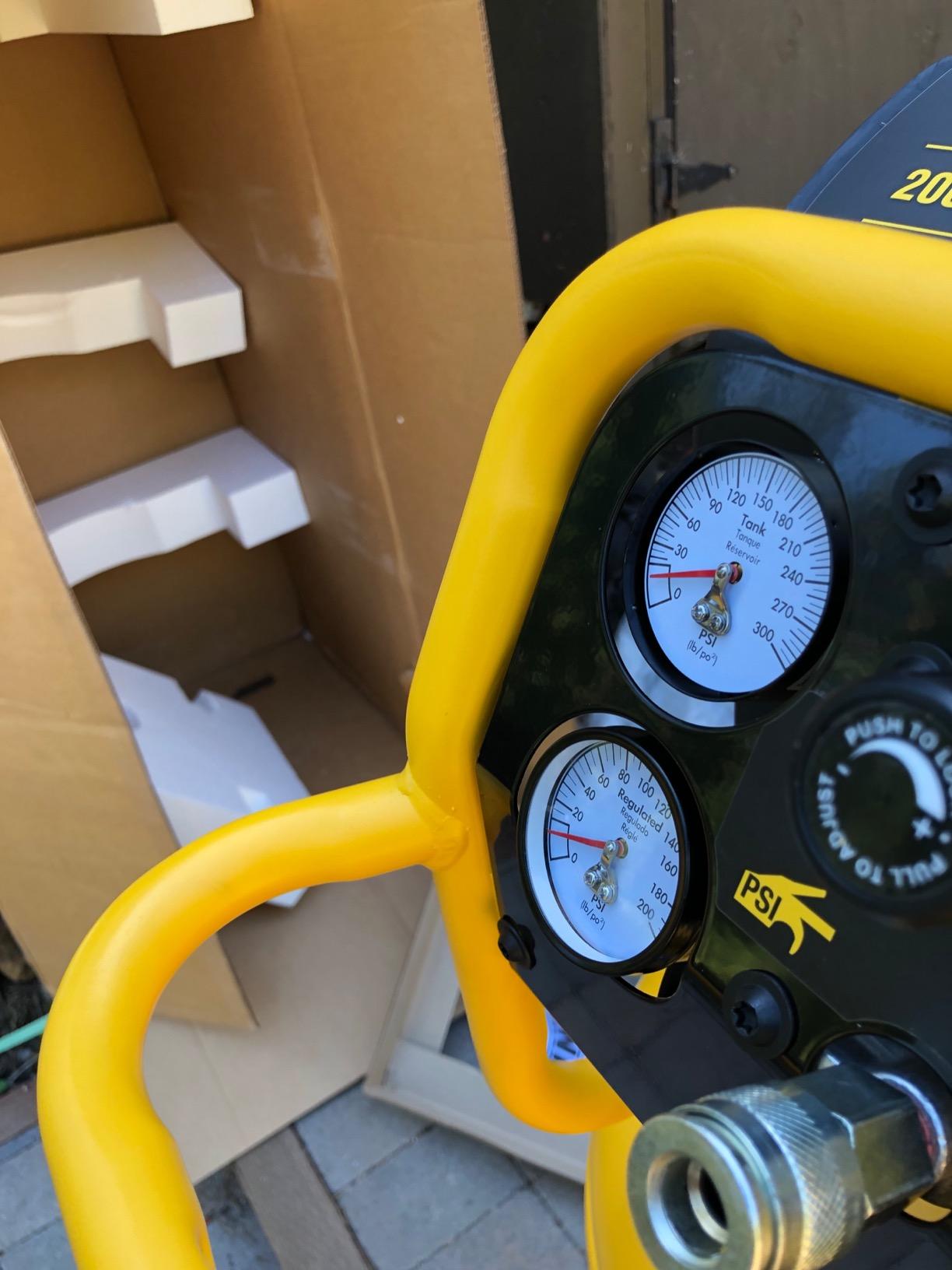
Fill Time Is the Real Trade
Owners report 10 to 30 minutes to fill from empty. That does not affect a series of short cuts, but it does mean you fill the tank before a job rather than during one. Plan a dedicated 120V circuit so you are not sharing load with the torch.
New tank fittings can weep until they are tightened with thread tape after break-in, which is a five-minute fix worth doing before the first cut.
What 5.1 SCFM at 90 PSI Covers
That figure suits a 30-40 amp handheld comfortably, and the low-voltage easy-start motor is designed to get going on challenging circuits without tripping. At 78 dBA it is quieter than the 79-81 dB machines most owners came from.
Some reviews report short run time with sanders and spray cabinets, both of which are far thirstier than a plasma torch. Take those complaints as flow limits, not failures.
Who Should Skip This Compressor
Skip it for 45-amp and higher table work, and skip it if you expect to move it between locations often. The 136-pound weight is manageable across a shop floor and unpleasant up a ramp.
9. Ingersoll Rand SS3L3 – 11.3 CFM of Continuous-Duty Air
Ingersoll Rand SS3L3 Single Stage Air Compressor, 3 HP, 60 Gal Vertical
11.3 CFM at 90 PSI
60-gallon ASME receiver
3 HP 100% continuous duty
230V single phase
+ Pros
- 11.3 CFM at 90 PSI feeds table work
- Cast iron pump rated for 5000+ hours
- 100% continuous-duty motor rating
- Compact 25 by 25 inch footprint
- Arrives assembled and pre-wired
– Cons
- 135 psig ceiling is low for thick plate
- Needs a 230V single-phase supply
- Single-stage design has less pressure reserve
When your problem is not pressure but volume, this is the answer. Eleven point three CFM at 90 PSI from a single-stage pump is a flow level most 120V portables cannot reach, and paired with a 100% continuous-duty motor it will feed a 45-65 amp CNC table without the sawtooth pressure swings that ruin a plate cut.
The cast iron pump is rated for 5000-plus hours of service, the 60-gallon ASME receiver sits on a 25 by 25 inch footprint, and the whole unit arrives fully assembled and pre-wired, which cuts installation time significantly.
When 135 PSI Is Enough and When It Is Not
A 135 psig ceiling is workable for sheet and thin-to-medium plate on a table, and plenty of shops run 45-amp torches in that range. It becomes the limiting factor the moment you push into thicker material where a higher working pressure improves pierce speed and cut angle.
Members on the Langmuir Systems forum, which is table-focused, name Ingersoll Rand alongside Quincy and Polar Air by Eaton as the compressors they actually run fab shops on. That is a brand-level signal worth weighing.
Continuous Duty Changes the Buying Decision
A 100% continuous-duty motor is a different machine than a 50% duty-cycle portable. It is designed to run long hours without thermal shutdown, and the filter, oil sight gauge and easy-fill port make routine service straightforward.
That combination is why this unit suits a shop that cuts every day and does not suit a garage that cuts a few brackets a year.
Who Should Skip This Compressor
Anyone needing 175 PSI for thick plate or high-pressure piercing, and anyone on a 120V-only circuit. A single-stage design also gives you less pressure reserve than the two-stage alternatives at similar flow.
10. Ingersoll Rand 2340L5-V – Maximum Airflow for Production Plate Work
Ingersoll Rand 2340L5-V 5 HP Type 30 Two-Stage Air Compressor
14.3 CFM at 90 PSI
175 PSI max
60-gallon vertical tank
5 HP two-stage on 230V
+ Pros
- Highest airflow in the group at 14.3 CFM
- Two-stage pump holds 175 PSI
- 100% continuous-duty cast iron design
- Throughput gains on production plate
- Serviceable individual cylinders
– Cons
- 85 dB is the loudest in this group
- 430 pounds and a fixed footprint
- Arrives without an oil charge
This is the production answer. Fourteen point three CFM at 90 PSI with a 175 PSI ceiling gives you roughly double the headroom over a 65-amp torch’s demand, which means the pump never becomes the constraint no matter how long the cut runs.
Owners running continuous high-volume work report dramatic throughput gains and a near-halving of noise compared with older single-stage machines. The individually cast cylinders, overhung crankshaft and one-piece connecting rod are built for service rather than replacement.
Set-Up Details That Catch People Out
This unit arrives without an oil charge, and manufacturer synthetic oil is required to keep the warranty intact. That is the single most common complaint and it is entirely avoidable if you read the manual before starting it.
You also need a 230V single-phase circuit and a reducer at the outlet, and the bottom drain fitting is reported as prone to leaking and cross-threading. Plan a quiet corner of the shop, since at 85 dB it is the loudest machine in this roundup.
Where It Pays for Itself
The case for this compressor is throughput. When every hour at the table is billed, a machine that never sags below working pressure and refills faster than the torch can drain pays for itself in production time rather than in parts. Owners note near-doubled cutting speed against single-stage units on abrasive or production work.
It is also the only two-stage, high-volume option here, which is why it earns a place on a list otherwise weighted toward 120V machines.
Who Should Skip This Compressor
Skip it unless you cut thick plate or run a table every day. At 430 pounds with a 24 by 33 inch footprint it is a permanent floor installation, and 1/4 inch mild steel work does not justify it.
How to Choose the Right Air Compressor for Plasma Cutting
Read SCFM at the PSI Your Torch Actually Runs
CFM is only meaningful at a stated pressure. A pump that delivers 6.8 CFM at 40 PSI may deliver 5.1 at 90 PSI, and 40 PSI is nowhere near where a torch operates. Always read the rating at or above your working pressure, then apply the 30-50% headroom rule.
If your cutter’s manual does not list a CFM figure, forum consensus is that most 45-amp machines sit near 6 CFM, which puts your compressor target around 9 SCFM.
Tank Size Decides Whether the Cut Stops Mid-Pass
Tank size is not a comfort feature. It determines how long a cut can run before pressure recovery depends entirely on pump output. At least 20 gallons for handheld work and 60 gallons for table or continuous cutting is the widely used baseline, and a table-oriented shop reference advises holding 120 PSI and never dipping below 100.
Single Stage vs Two Stage Above 100 PSI
Single-stage units are fine up to about 100 PSI and cheaper per CFM. Above that, two-stage wins decisively because it delivers more air at working pressure and runs cooler. If your torch spec sheet asks for 100-120 PSI, do not buy a single-stage pump with a high maximum PSI printed on the tank.
Oil-Free vs Oil-Lubricated for Plasma Duty
Oil-free removes the risk of carryover contaminating your torch and consumables, at the cost of pump longevity under heavy load. Oil-lubricated cast iron lasts longer and runs cooler, provided you keep the oil changed and put a coalescing filter on the outlet. Most plasma cutting problems attributed to air quality are actually solved by that filter, not by the compressor choice.
Two Small Compressors or One Large One
This comes up constantly in fabrication forums and no editorial source has settled it. The Langmuir Systems forum thread on the topic is blunt: most plasma cutters want about 6 CFM, doubling that gets the best CNC performance, and two small compressors at 4-5 CFM apiece can be combined for that total.
Our take is that two small compressors share a tank and a regulator, so the benefit is flow and redundancy, not smoothness. If you are not prepared to plumb them into a common receiver and a proper manifold, buy one larger unit.
Drying and Filtering the Air
Plasma cutting needs plenty of clean, dry, compressed air, and users on Reddit r/CNC describe dry air as non-negotiable for consistent results. Start with a moisture separator and a coalescing filter after the tank, then add a refrigerated or desiccant dryer if you cut stainless or aluminium where cosmetic finish matters.
An aftercooler is another common add-on request in compressor forums, and it pays off in a warm shop by dropping line temperature before the air reaches the dryer.
120V vs 240V and the Shared Circuit Problem
Running a compressor and a plasma cutter on one 120V circuit is a recurring tripped-breaker complaint in shop threads. Both devices draw heavily at start, and a compressor restarting against a charged tank is the most common trigger.
Give the compressor a dedicated circuit, use a dual-voltage motor where one is offered, and step up to 230 or 240V as soon as your cutter amperage passes 40 amps. A 50-amp class machine belongs on 240V.
New vs Used, and Brand Tiers Shops Trust
Used 240V compressors are a genuinely good value in this category. Users in Reddit welding threads point to a longer service life, a higher duty cycle and better resale than new 120V units of the same age. Inspect the receiver for corrosion and verify the pressure switch cycles cleanly before you commit.
For brand trust in fab work, the names that come up repeatedly in forums are Quincy, Ingersoll Rand, Polar Air by Eaton and California Air Tools. That is owner consensus rather than laboratory data, but it is a useful tiebreaker when two machines have similar specs.
Frequently Asked Questions
What size air compressor do I need for a plasma cutter?
Multiply your cutter’s rated CFM by 1.5, match the pressure, and size the tank to your duty. Handheld 20-30 amp cutters need about 5-6 SCFM at 70-90 PSI in a 20-gallon tank. A 45-65 amp CNC table wants 10-12 SCFM at 100 PSI in a 60-gallon tank.
How many CFM does it take to run a plasma cutter?
A 20-30 amp handheld typically needs 3.5-4 CFM at 70-80 PSI. A 40-50 amp handheld needs 5-6 CFM at 90 PSI, and a 60-65 amp table needs 6-7 CFM at 100 PSI. Size the compressor 30-50% above whatever figure your torch manual lists.
How many PSI should I run a plasma cutter at?
Most handheld air plasma systems perform best at 70-80 PSI, so match the compressor’s rating at that pressure. CNC tables and production plate work want 100-120 PSI, which is where a two-stage compressor or a high maximum pressure tank rating starts to matter.
Will a 20 gallon air compressor run a plasma cutter?
Yes, for a 20-30 amp handheld on thin material, provided the compressor delivers at least 5 CFM at 90 PSI. Short passes on sheet and light plate will be fine. Long cuts on thick plate or any table work will exhaust the tank faster than a small pump can refill it.
What is the best air compressor for a CNC plasma table?
A 60-gallon two-stage compressor delivering 10-12 SCFM at 100 PSI or better. The Ingersoll Rand SS3L3 for maximum airflow, the Campbell Hausfeld XC602100 for high-pressure two-stage delivery, and the Ingersoll Rand 2340L5-V for production volume are the strongest fits.
Do you have to have an air compressor to use a plasma cutter?
Every plasma cutter needs an external compressed air supply unless it has a built-in compressor. Integrated models are simpler and portable but give you less air for thicker material. A separate unit lets you choose the flow, pressure and filtration your material demands.
Final Verdict: Which Air Compressor Suits Your Plasma Cutter
If you cut occasionally with a 20-30 amp handheld and want proven long-term durability on a 120V circuit, the Makita MAC2400 is our pick, and its 4.7 rating across the largest review base here is the reason. If you want a real shop compressor without a wiring project, the Klutch 29-gallon adds the tank volume that stops mid-cut dropouts. If you need 200 PSI from a 120V plug, take the DeWalt.
For a 40-50 amp cutter running a dedicated 230V circuit, the Campbell Hausfeld 60-gallon two-stage gives you the best pressure reserve in this group, and the Industrial Air 30-gallon is the smarter 120V option. If the torch is quiet-sensitive, the Stealth and the California Air Tools cover you. Once you move to a 45-65 amp CNC table, the Ingersoll Rand SS3L3 is where we start, and the 2340L5-V answers production volume.
Whichever you pick, add a moisture separator, a coalescing filter and a dryer, and give the compressor its own circuit. For background on the cutting side of the equation, our guide to how plasma arc cutting works and our picks for the best budget plasma cutters will help you match the torch to the air. If you would rather skip the separate compressor entirely, see our roundup of plasma cutters with built-in air compressors.
These picks were verified against manufacturer spec data and owner reviews in 2026. Air quality and cut quality research is covered further in our plasma welding guide.
Leave a Reply