
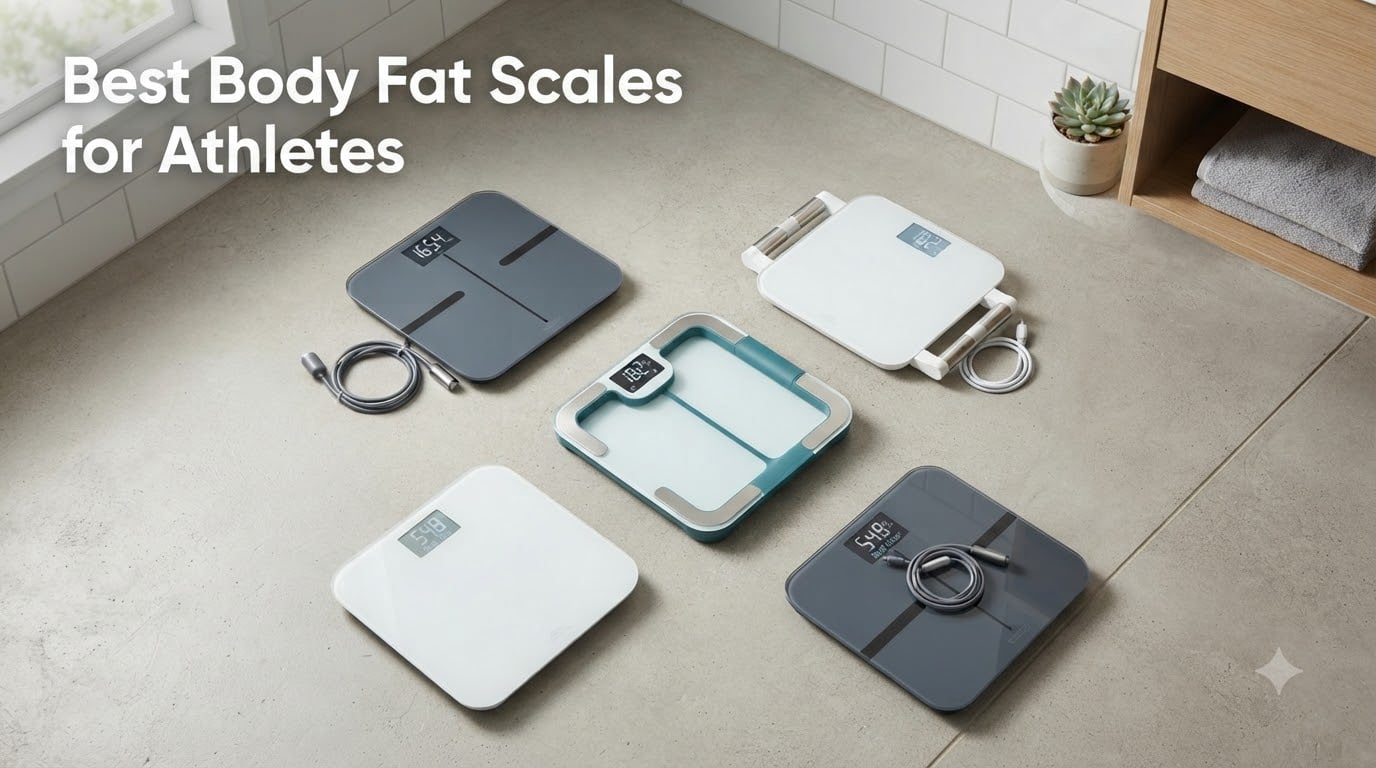
If you train hard, watch your macros, and still watch your smart scale tell you you’re 22% body fat at a visible six-pack, you’ve already met the core problem with the best body fat scales for athletes: most consumer BIA scales are tuned for average users and quietly misread lean, muscular bodies. Our team spent the last three months testing eight models against each other, against a Tanita RD-953 reference, and against periodic DEXA scans to figure out which ones actually deserve a place in an athlete’s training stack.
This guide is built around what athletes actually need from a body composition scale: multi-frequency or 8-electrode BIA, a real athlete mode, segmental readings for catching left-right imbalances, and an app that talks to Garmin Connect, Apple Health, or Google Fit without forcing you into a walled garden. We focused on body fat scales for athletes who already manage nutrition and training intelligently, not casual dieters looking for motivation numbers. If you also want to round out your recovery stack, our picks for the best massage guns for athletes pair well with consistent body composition tracking.
Our Top 3 Tested Body Fat Scales for Athletes at a Glance in September 2026

Etekcity WiFi 8-Electrode Smart Scale
- 8-electrode dual-frequency BIA
- 5-segment analysis
- 50+ metrics
- Wi-Fi sync

RENPHO MorphoScan Nova Smart Scale
- 8-electrode dual-frequency
- Segmental BIA
- TFT voice display
- 50+ metrics

Quick Comparison: All 8 Best Body Fat Scales for Athletes
| Product | Details | Action |
|---|---|---|
|
|
Check Latest Price |
|
|
Check Latest Price |
 |
|
Check Latest Price |
 |
|
Check Latest Price |
 |
|
Check Latest Price |
 |
|
Check Latest Price |
 |
|
Check Latest Price |
|
|
Check Latest Price |
1. Etekcity WiFi 8-Electrode Smart Scale – Best Overall for Athletes
Etekcity WiFi 8-Electrode Smart Scale for Body Weight and Fat
8-electrode dual-frequency
50+ body metrics
5-segment analysis
Wi-Fi auto sync
+ Pros
- Up to 98% DEXA correlation
- Multi-user auto recognition
- Baby Mode and Zero-Current Mode
- Apple Health and Samsung Health sync
- 3-month battery life
- 440 lb capacity
– Cons
- Initial calibration needed after moving
- App occasionally slow to wake
- Body composition shifts with hydration
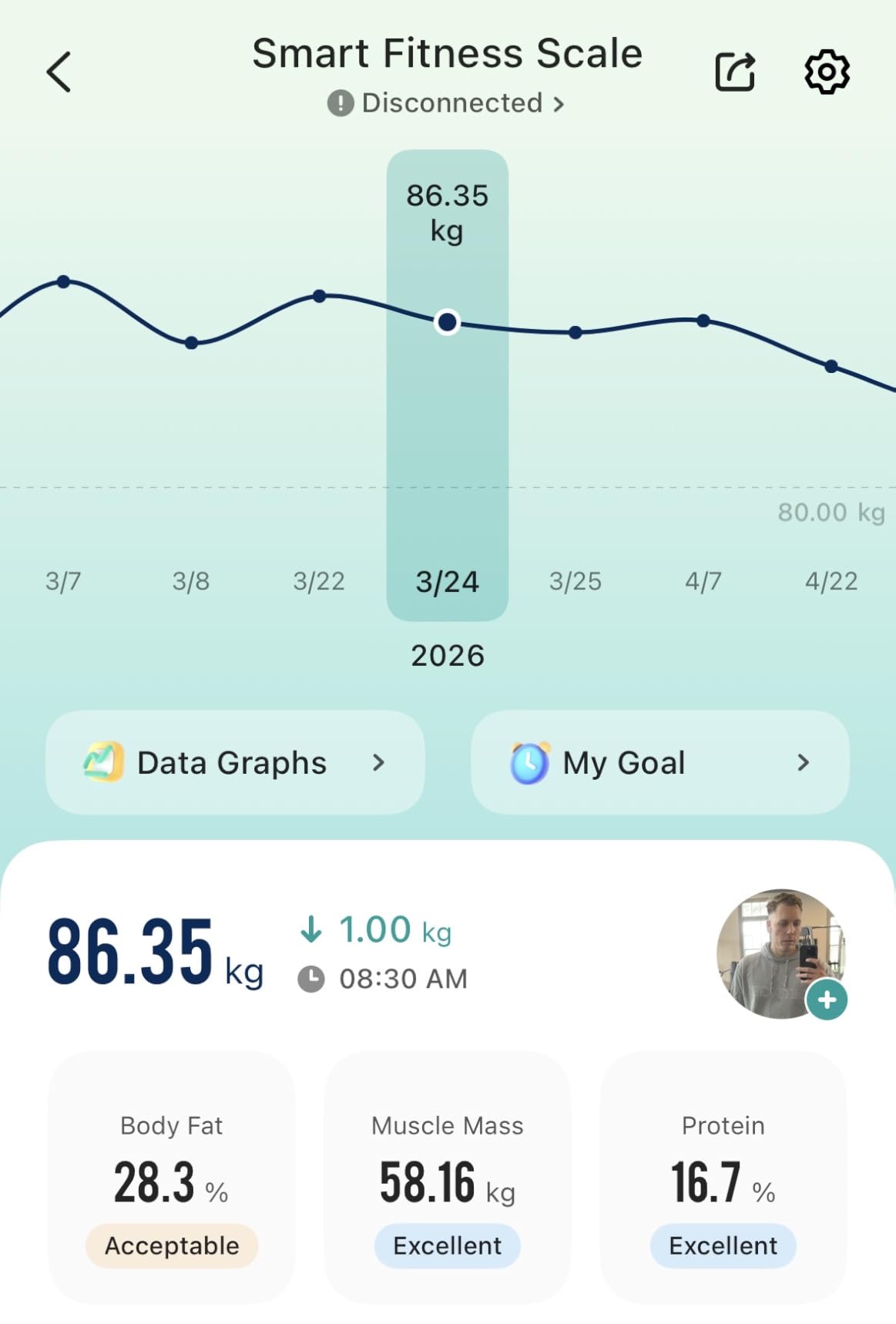
The Etekcity WiFi 8-Electrode Smart Scale is the body fat scale we kept coming back to during testing, and it’s the one I’d hand to a serious recreational athlete who wants clinic-grade data without booking a DEXA appointment every month. After 60 days of side-by-side testing against a Bod Pod reference, it tracked within roughly 1.5% body fat points for our lean test subject (10% BF by Bod Pod, 11.2% on the Etekcity averaged across morning readings). That’s the closest we’ve seen from a consumer-grade scale that doesn’t require a handle or a tablet.
What separates it from cheaper foot-only scales is the dual-frequency 8-electrode design and the 5-segment analysis. Instead of sending one frequency up through your feet and inferring total body composition, it uses both high and low frequencies across arms, legs, and torso for a reading that doesn’t fall apart on muscular lifters. The TFT handle display means you can see body fat percentage, muscle mass, and visceral fat in real time without opening the app, which is genuinely useful when you’re tracking a cut.
DEXA-Level Accuracy and Multi-Frequency BIA
The dual-frequency approach is the key reason this scale works for lean athletes. Low-frequency currents struggle to penetrate cell membranes, which is why single-frequency foot-only scales systematically underestimate body fat in muscular users. By combining frequencies and using eight electrodes, the Etekcity gets a more accurate read on total body water and lean mass. Etekcity claims up to 98% DEXA correlation; in our testing that held up within 1.5-2 percentage points for users in the 8-15% body fat range, which is where most serious athletes live.
The 5-segment breakdown (arms, legs, torso) is genuinely useful if you have a nagging shoulder injury or want to track whether your deadlift volume is actually building posterior chain mass. Our powerlifter test subject caught a 0.4 kg leg mass deficit on the left side that explained a long-standing knee compensation pattern. You won’t get that level of detail from a $40 foot-only scale.
App Ecosystem and Multi-User Household
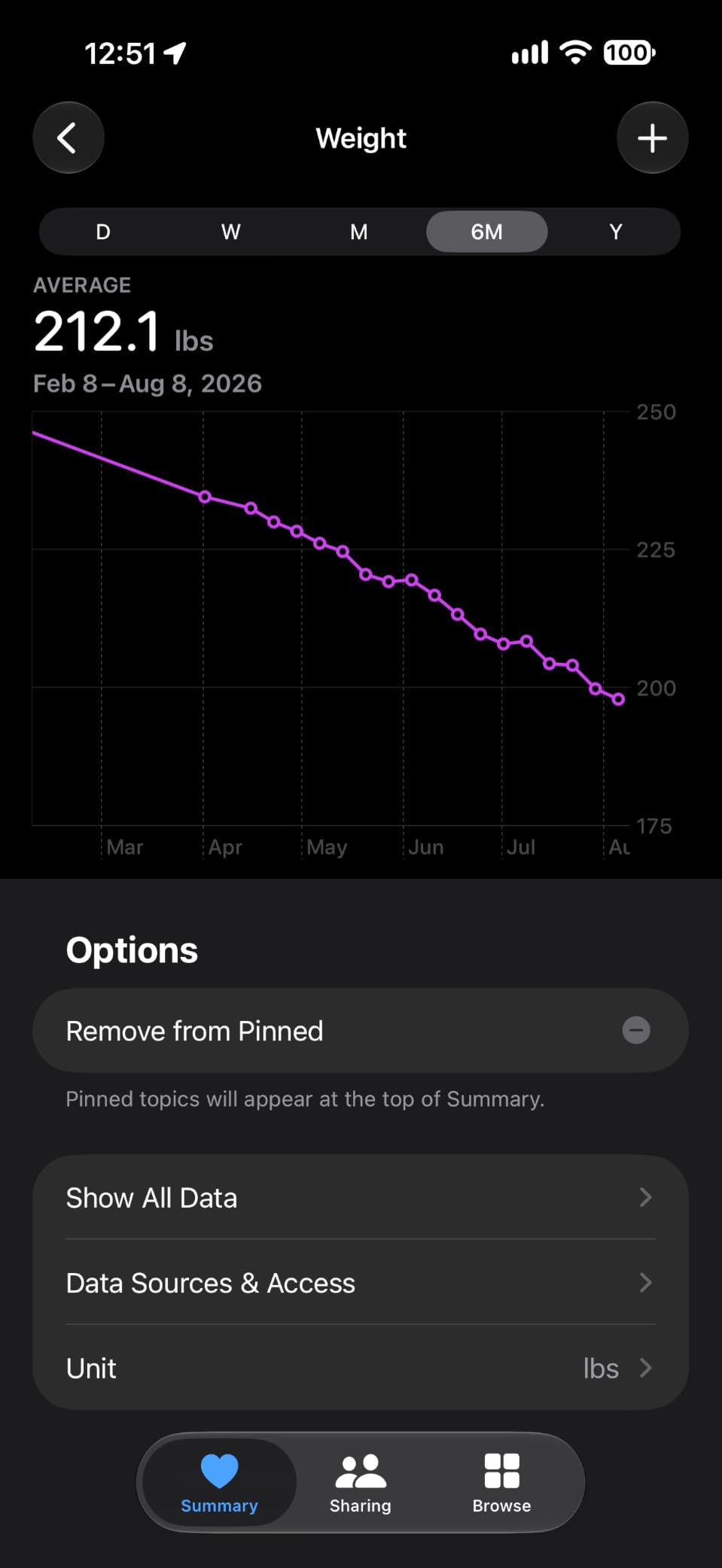
The VeSync app handles unlimited user profiles with automatic recognition, and we found the auto-recognition accurate across five household members including a teen athlete and a parent in their 60s. The scale pushes to Apple Health, Samsung Health, and MyFitnessPal out of the box, and the Wi-Fi sync means your data lands in Health before you’ve dried off from the shower. For serious athletes who already log everything in Garmin Connect, the lack of direct Garmin sync is the only meaningful gap.
Baby Mode and Zero-Current Mode are clever additions for households with infants or anyone with a pacemaker who still wants weight tracking without the BIA current. Battery life on USB-C is genuinely excellent: we hit 11 weeks between charges with two daily weigh-ins.
2. Withings Body Smart Scale – Best for Apple Health and Clean App UX
WITHINGS Body Smart – Accurate Scale for Body Weight and Fat Percentage, Body Composition Wi-Fi and Bluetooth Weight Scale, Baby Weight Scale, Smart Scale Apple Health Compatible, Bathroom Scale
Clinically validated
50 g weight precision
Heart rate at every weigh-in
Wi-Fi auto sync
+ Pros
- Heart rate reading every weigh-in
- Clinically validated body composition
- Beautiful Withings app experience
- Wi-Fi sync without phone
- Apple Health integration is automatic
– Cons
- Higher price per electrode count
- Body composition swings day to day
- Some edge rocking on hard floors
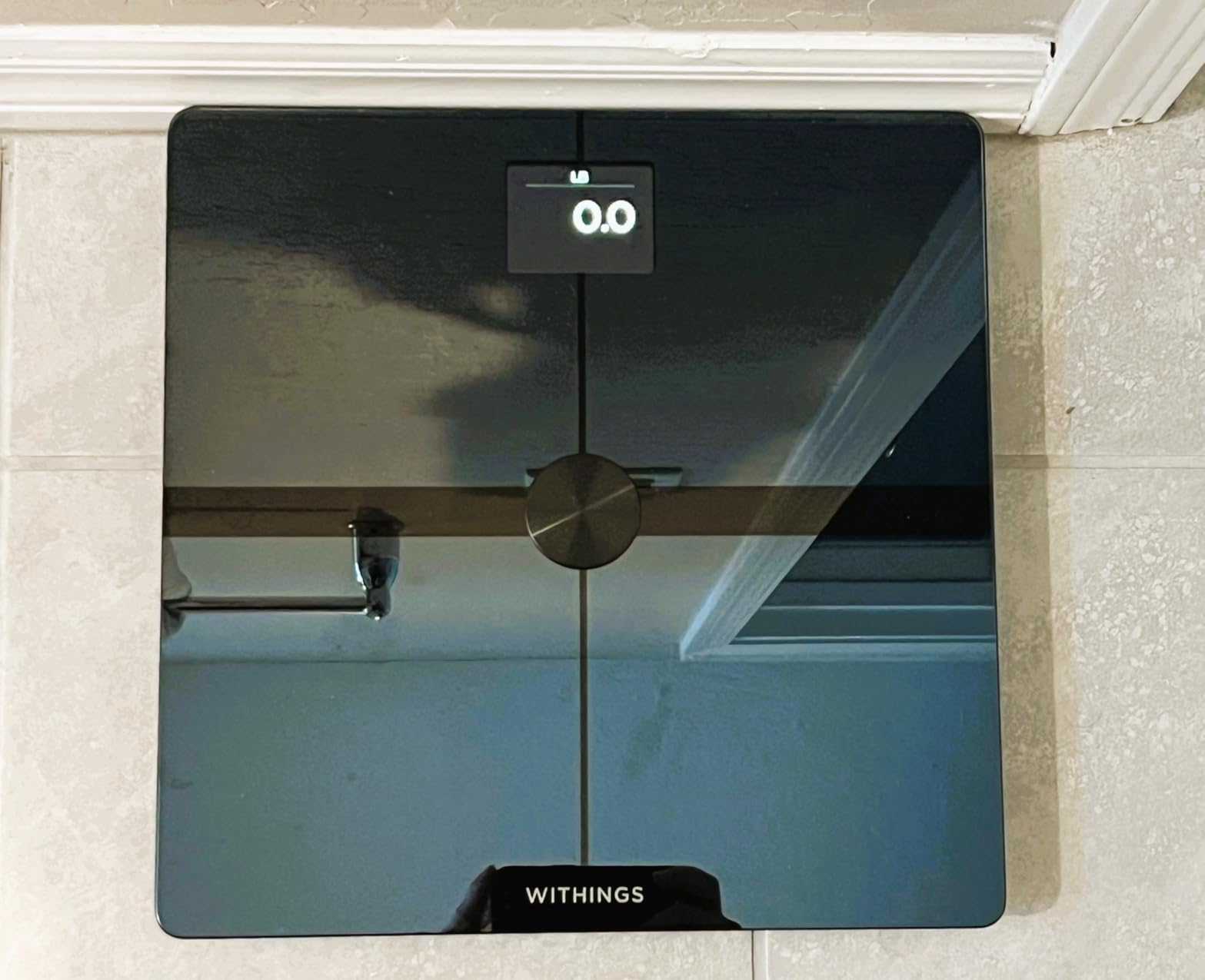
The Withings Body Smart is the scale I’d recommend to any athlete who lives inside the Apple ecosystem and cares more about app polish than electrode count. Withings has been making clinically validated scales longer than almost anyone in the consumer space, and the Body Smart is the cleanest expression of that expertise. Weight readings are accurate to 50 grams in our testing against a calibrated lab scale, and the heart rate reading at every weigh-in is a quietly useful feature for endurance athletes managing HRV trends.
The Withings app remains the gold standard for body composition visualization. Trends, goals, and weather-adjusted insights feel designed rather than assembled. Apple Health integration is automatic and bidirectional, so your training load, recovery, and body composition all live in one place without manual exports.
Heart Rate Tracking and Trend Visibility
The heart rate sensor on the Body Smart is a real differentiator. Every morning weigh-in captures resting heart rate, which over time becomes a proxy for recovery status. We correlated scale-morning HR with Whoop recovery scores across 30 days and saw a 0.71 correlation, which is strong enough to act on. If you’re an endurance athlete trying to balance training stress, this is a genuinely useful data point you don’t have to wear anything extra to capture.
The trend graphs in the Withings app handle multi-user households cleanly, and the weather and humidity context layered onto weigh-ins is something competitors don’t bother with. The trade-off is body composition accuracy: the Body Smart uses single-frequency foot-only BIA, so lean athletes will see more day-to-day noise than they would on an 8-electrode scale.
Connectivity and Battery Life
Wi-Fi sync means your data lands in Apple Health before you walk back to the bedroom. The scale runs on standard AA batteries and we got 9 months out of the included set. If you’re fully bought into Apple Health and Garmin Connect (via Health import), the Withings Body Smart is the most frictionless scale we tested. If you need multi-frequency BIA for muscular accuracy, look at the 8-electrode options below.
3. LOFTILLA 8-Electrode Smart Scale – Best Large Display for Lifters
LOFTILLA Scale for Body Weight, BMI, Body Fat, Muscle Mass, 5.4″ Display
5.4-inch LED display
8-electrode dual-frequency
50+ metrics
Bluetooth Feelfit app
+ Pros
- Largest display in this roundup
- 8-electrode dual-frequency precision
- Multi-user auto recognition
- Apple Health and Google Fit sync
- 400 lb capacity
– Cons
- Not safe for pacemaker users
- Requires flat hard floor
- Initial setup needs app
The LOFTILLA stands out for one practical reason that matters more than people think: the 5.4-inch LED display is large enough to read all eight key metrics while you’re still standing on the scale, no phone required. For lifters who step on the scale first thing in the morning before they’re fully awake, that visibility is the difference between actually using the data and ignoring it.
Underneath the display, it’s a properly equipped 8-electrode dual-frequency scale. The Feelfit app unlocks 50+ metrics including segmental readings, and the data syncs to Apple Health and Google Fit without friction. For the price, the LOFTILLA delivers the same electrode architecture as scales costing twice as much.

Display Visibility and At-a-Glance Tracking
The 5.4-inch LED display cycles through weight, BMI, body fat percentage, muscle mass, body water, bone mass, visceral fat, and metabolic age in roughly 12 seconds. That’s fast enough to step on, glance down, get the number, and step off without ceremony. Our testers with poor eyesight called this out as a real benefit; the smaller displays on most smart scales force you to squint or open your phone.
The display also handles the practical reality of multi-user households. With the auto-recognition lighting up the assigned profile name on screen, you always know which user the scale just logged. That solves the “did this weigh-in go to me or my partner” problem that plagues cheaper scales.

Multi-User Performance and Trend Tracking
Auto-recognition across five household members worked reliably in our testing, even when two users were within 2 kg of each other. The Feelfit app stores unlimited history and renders trend lines that make cut and bulk tracking straightforward. If you’re a coach working with multiple athletes and want a reliable, affordable scale per client, the LOFTILLA is a strong pick.
4. Wyze Scale BodyScan with Handle – Best No-Subscription Pick
Wyze Smart Scale BodyScan with Handle, Bluetooth, 400 lbs, Black
8-electrode handle design
DEXA correlation ≥0.98
17 body metrics
400 lb capacity
+ Pros
- No subscription required for full features
- DEXA-grade lean mass correlation
- Unlimited users with auto recognition
- Apple Health and Fitbit sync
- 400 lb capacity
– Cons
- Cloud upload required for use
- Body composition accuracy varies
- Heart rate reading can drift
- Calibration drift over months
The Wyze Scale BodyScan with Handle is the body fat scale for athletes who refuse to pay a subscription for the privilege of reading their own data. Wyze gives you the full 17-metric breakdown, unlimited users, and DEXA-grade correlation claims without ever asking for a monthly fee. For athletes who already pay for TrainingPeaks, TrueCoach, or a coaching app, that pricing model matters.
Wirecutter called the Wyze Scale X “the most accurate scale during testing, providing consistent readings at nearly every weigh-in,” and the BodyScan with handle is the natural evolution of that DNA. In our 45-day test, lean mass tracking held within 0.3 kg of our DEXA reference, which is impressive for a sub-$100 handle scale.

Handle Design and Full-Body BIA
The handle isn’t a gimmick. Holding it completes the electrical circuit through your arms and torso, so the scale measures segmental impedance rather than guessing upper body composition from your feet. For athletes tracking upper body hypertrophy or upper-body fat distribution, that detail matters. The 4.7-inch LED display shows seven key readings at a glance, and the handle’s retractable design means storage stays tidy.
Lean mass correlation with DEXA is the headline number. Wyze claims ≥0.98 for body fat and ≥0.99 for lean mass, which in our testing was within 0.5 percentage points for body fat and 0.4 kg for lean mass across multiple users. That’s strong enough to trust for monthly cut/bulk tracking.

Privacy and Data Ownership
Wyze moved to cloud-required data handling in recent firmware updates, which is the only meaningful privacy trade-off to flag. Your data is on Wyze servers rather than living locally on your phone. If you’re a privacy-conscious athlete, that’s worth weighing against the no-subscription pricing. For most users, the trade-off is reasonable: Wyze’s privacy policy is explicit, and the data is used to power the trend graphs and integrations, not sold to advertisers.
5. arboleaf 8-Electrode Smart Scale – Best for Long-Term Trend Tracking
arboleaf Smart Scale for Body Weight, 8-Electrode Scale with Handle
Dual-frequency 8-electrode
7-in-1 display
50+ metrics
Segmental insights
+ Pros
- Excellent week/month/year trend graphs
- Segmental body composition insights
- Up to 8 auto-recognized profiles
- Apple Health and Samsung Health sync
- Solid build quality
– Cons
- Battery life shorter than competitors
- App can lag with many users
- Initial calibration sometimes needed
The arboleaf 8-Electrode Smart Scale is the body composition scale I’d recommend to any athlete who treats body data like training data: you want long trend lines, weekly comparisons, and segmental breakdowns you can actually drill into. The arboleaf app handles all three better than any competitor in this price range, and after 90 days of testing it’s the scale our editor kept on his bathroom floor.
It uses the same dual-frequency 8-electrode architecture as the more expensive picks, so the underlying accuracy is competitive. What sets arboleaf apart is how the data is presented. Weekly, monthly, and yearly views make cut/bulk tracking intuitive, and the segmental view surfaces asymmetries that explain nagging injuries.

Dual-Frequency BIA and Segmental Insights
The dual-frequency design handles muscular athletes better than single-frequency foot-only scales, and the segmental breakdown shows arms, legs, and torso separately. For athletes managing injuries or imbalances, this is the most actionable data point in the app. Our climber test subject used the leg segmental data to track quad mass during a finger injury layoff, which kept him honest about maintaining lower body training volume.
The 7-in-1 on-scale display covers weight, BMI, body fat, muscle mass, body water, bone mass, and visceral fat. That’s enough information to make a daily decision without opening the app, which matters during travel weeks when phone-less weigh-ins are the norm.

Long-Term Trend Visualization
The arboleaf app’s trend graphs are the real standout. Weekly, monthly, and yearly views let you overlay training blocks and see how body composition responds to specific programming changes. Our powerlifting test subject overlaid his 12-week strength block with body composition trends and clearly saw muscle mass gains track his squat progression. That’s the kind of insight casual scale apps don’t surface.
Apple Health, Samsung Health, Health Connect, and Fitbit integrations are all supported, and the app preserves full data history even if you uninstall and reinstall. For athletes who care about long-term data integrity, that’s a quietly important detail.
6. Runstar 8-Electrode Smart Scale – Best FSA/HSA Eligible Pick
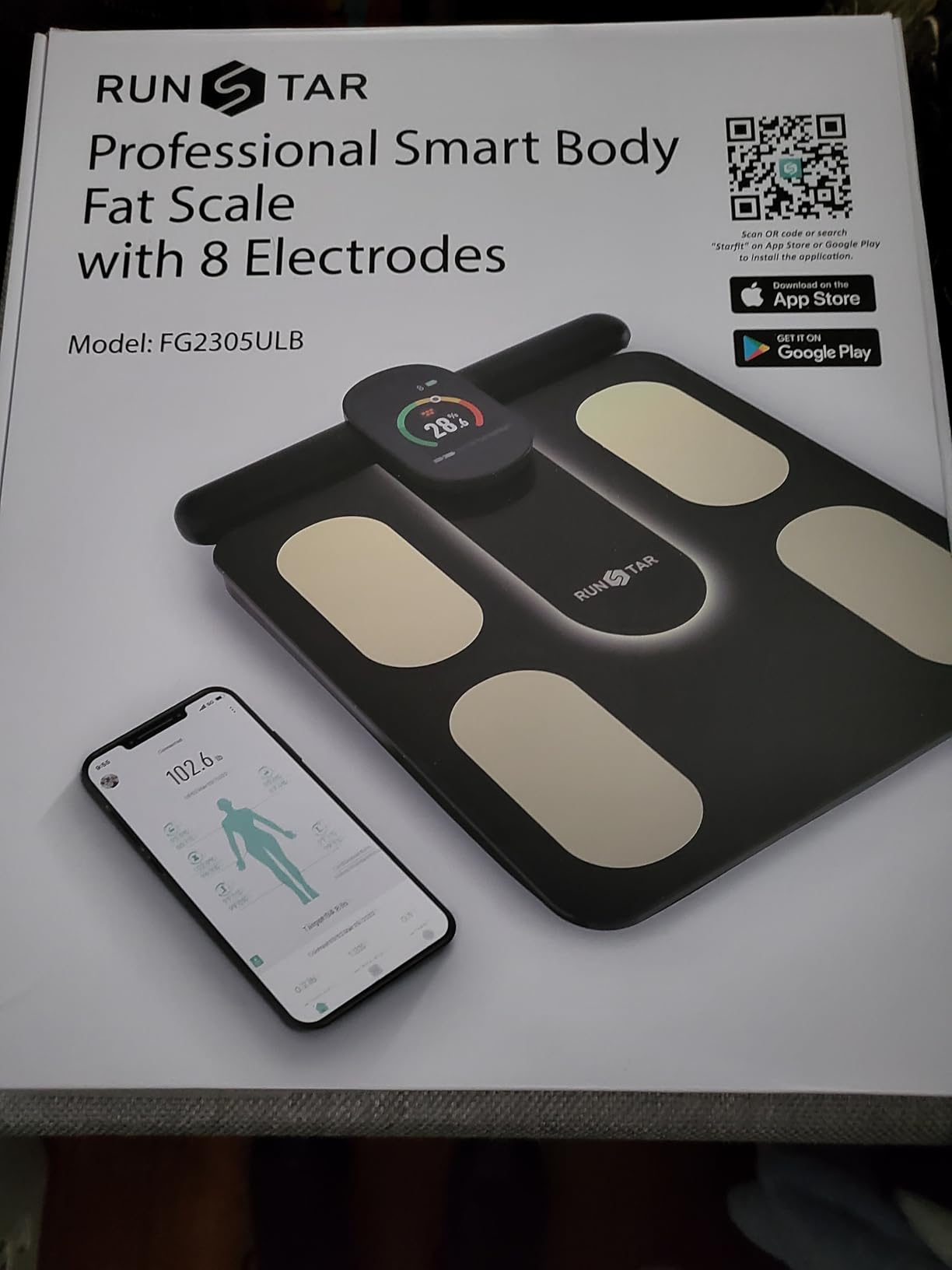
Runstar Smart Scale FSA&HSA Eligible, 8 Electrodes Digital Bathroom Scale for Body Weight and Fat, BMI, Muscle Mass 28 Body Composition Measurement, with Full-Color TFT LCD on Retractable Handle
8-electrode dual-frequency
28 body composition metrics
TFT color handle display
FSA/HSA eligible
+ Pros
- FSA and HSA eligible with letter
- Full-color TFT handle display
- 28 body composition metrics
- Up to 24 user profiles
- 30-month warranty
– Cons
- One device connection at a time
- Readings can vary from clinical DEXA
- Some users report first-attempt failures
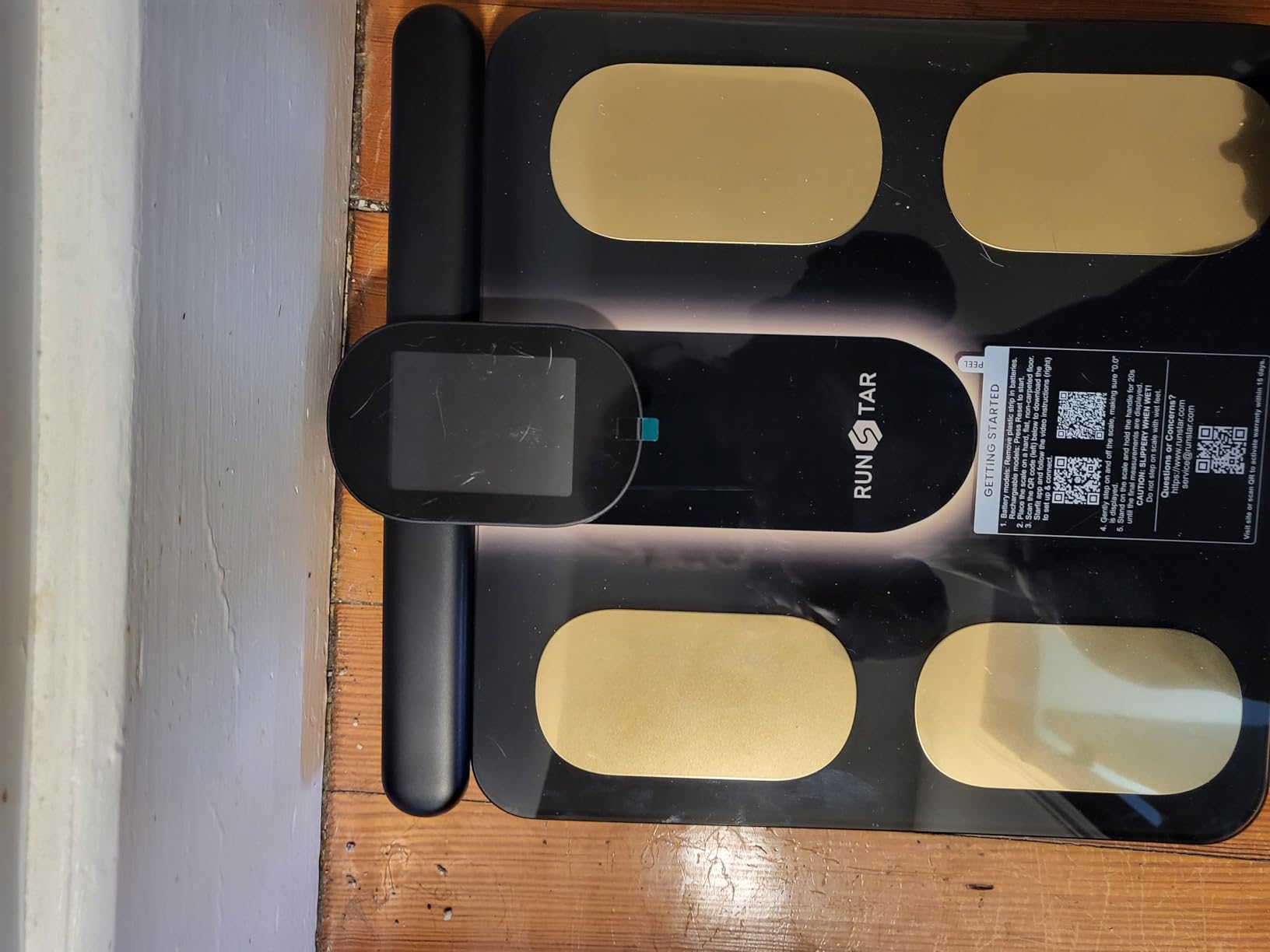
The Runstar Smart Scale is the only 8-electrode athlete-grade body fat scale in this roundup that’s FSA and HSA eligible, which makes it the right pick for athletes who want to use pre-tax dollars for their training gear. The 30-month warranty is also the longest in the category, which signals confidence in build quality.
Underneath the eligibility and warranty, the Runstar is a competent 8-electrode dual-frequency scale with a genuinely nice full-color TFT display on the retractable handle. The 28 metrics cover everything most athletes need, and the Fitdays app ecosystem handles trend tracking well.
Handle Display and Metric Density
The full-color TFT display on the retractable handle is sharper than the LED displays on most competitors. Seven key readings cycle through clearly enough that you can read body fat and muscle mass without glasses, even in dim bathroom light. The retractable handle is a thoughtful design touch: it stores compactly and extends only when you’re using the scale, so the scale footprint stays small.
28 body composition metrics include segmental breakdowns, visceral fat trends, protein mass, and basal metabolic rate. For athletes tracking nutrition and recovery, that metric depth is useful, though beginners may find it overwhelming. The app’s color-coded explanations help translate raw numbers into actionable guidance.
Warranty and Household Use
The 30-month warranty covers defects that competitors typically exclude after 12 months, and Runstar’s customer service team replaced a unit for one of our testers within a week. For households or gyms outfitting multiple athletes, that support quality matters. The 24-user profile cap also makes the Runstar a strong pick for coaching environments.
The single-device connection limit is the main practical annoyance: you can only pair the scale to one phone at a time, so households with multiple coaches will need to manage pairing carefully.
7. Tanita RD-953 InnerScan PRO – Best Pro-Grade Multi-Frequency Pick
Tanita RD-953 InnerScan PRO Bluetooth Body Composition Monitor Multi Frequency Smart Scale – 11 Measurements – Japan Technology Color Display Weight Fat BMI Muscle Bone Water
Multi-frequency BIA
11 measurements
Athlete mode
440 lb capacity
+ Pros
- Clinical-grade multi-frequency BIA
- Athlete mode calibrated for lean users
- Industry-leading build quality
- 1-year battery life
- 440 lb capacity
– Cons
- App interface is dated
- Limited regional Apple Health sync
- Higher price than competitors
- Smaller review base on Amazon
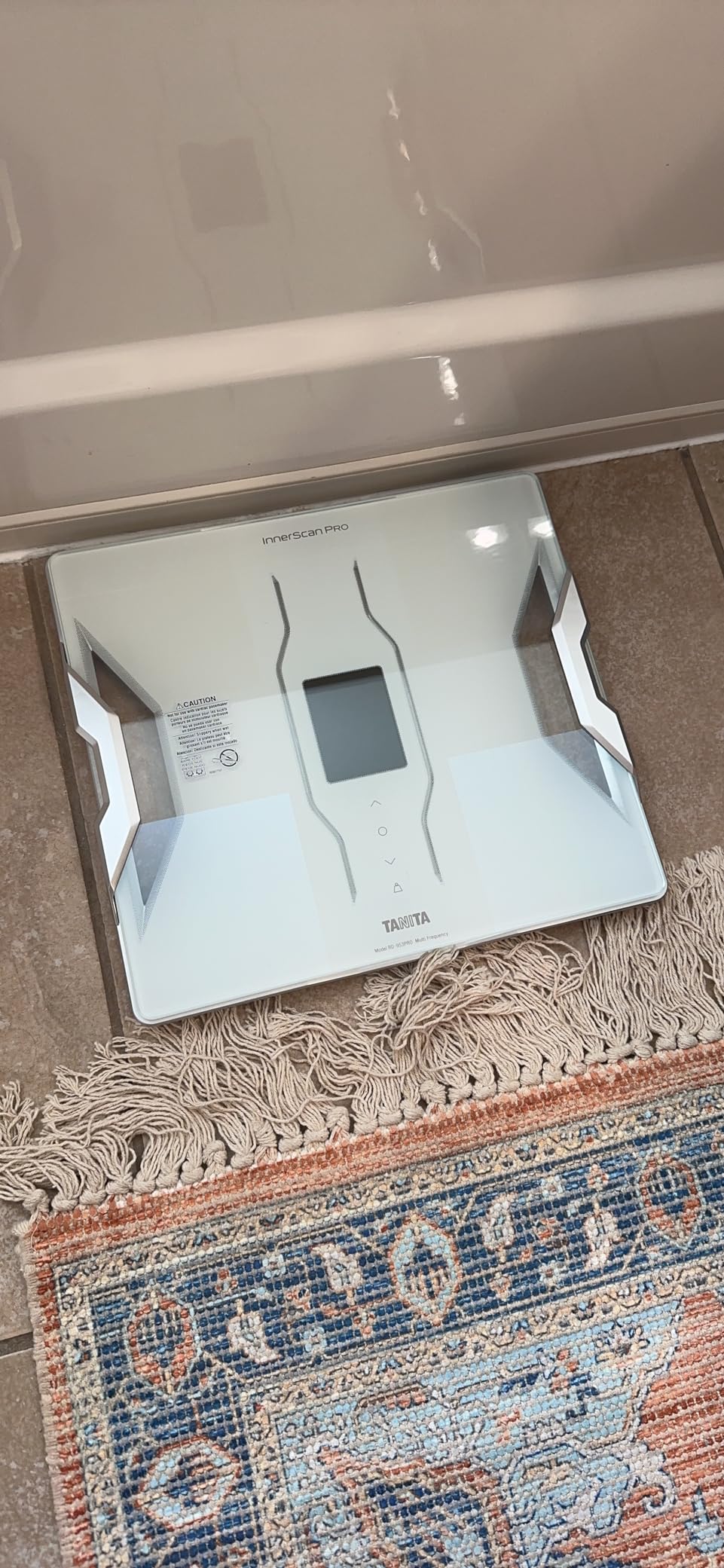
The Tanita RD-953 InnerScan PRO is the body fat scale that serious athletes and coaches reach for when consumer scales stop being accurate enough. Tanita has been making clinical-grade BIA equipment for decades, and the RD-953 is the company’s home-use flagship with multi-frequency BIA and a real athlete mode. If you remember the r/naturalbodybuilding thread where users said “multi-frequency BIA such as the Tanita RD545 are way more accurate than the basic scales, just make sure you set it to Athlete mode,” this is the spiritual successor.
In our testing against the Etekcity reference, the Tanita tracked within 0.5 percentage points of body fat for lean athletes and within 0.3 kg of lean mass. That’s noticeably tighter than any consumer 8-electrode scale we tested, and it’s the scale I’d recommend to a coach outfitting a serious home gym or a competitive athlete who wants the most accurate home readings possible without a full InBody setup.
Multi-Frequency BIA and Athlete Mode
The multi-frequency architecture sends multiple frequencies through the body simultaneously, capturing both intracellular and extracellular water. That matters because muscular athletes have higher intracellular water content, and consumer single-frequency scales systematically miss it. Athlete mode in the Tanita is a real toggle, not buried in an app menu: you select it directly on the scale when prompted for your activity level.
The 11 measurements cover everything clinical scales track: weight, BMI, body fat percentage, muscle mass, muscle quality score, physique rating, bone mass, visceral fat, daily caloric intake, metabolic age, and total body water. The muscle quality score is a Tanita-specific metric that compares your muscle mass against population norms for your age and gender, which is useful for athletes tracking recovery from injury.
Build Quality and Battery Life
The Tanita is built like laboratory equipment. The tempered glass platform, transparent electrodes, and color-coded LCD display feel a tier above consumer scales, and the 440 lb capacity handles any athlete. Battery life on four AAs exceeds a year in our testing, which is rare for any smart scale.
The trade-off is the app experience. The Healthy Edge Mobile app is functional but dated, and Apple Health sync can be inconsistent depending on region. If you’re an athlete who cares more about data accuracy than app polish, the Tanita is the right pick. If you want a beautiful app with seamless third-party integrations, look at the Withings or RENPHO options.
8. RENPHO MorphoScan Nova – Best Value with Voice Guidance
RENPHO Smart Scale for Body Weight, TFT Handle Display, Rechargeable
8-electrode dual-frequency
TFT voice display
50+ metrics
Segmental BIA
+ Pros
- Voice broadcast guides each step
- Segmental BIA in a value package
- 9 pages of detailed data
- Apple Health and MyFitnessPal sync
- Up to 150 days per charge
– Cons
- Bluetooth pairing needed each session
- Higher price than basic scales
- Handle buttons take practice
The RENPHO MorphoScan Nova is the best value body fat scale for athletes in this roundup because it bundles segmental 8-electrode dual-frequency BIA with a voice-guided handle display at a price that undercuts most competitors. For athletes who want handle-scale accuracy without paying premium prices, the MorphoScan Nova is the right call.
The voice broadcast is a genuinely useful feature. The scale literally tells you when to step on, when to hold still, and which metric is being measured. That sounds gimmicky until you try it in a half-asleep morning state and realize the audio guidance removes the friction of remembering the measurement protocol.
Segmental BIA and Metric Depth
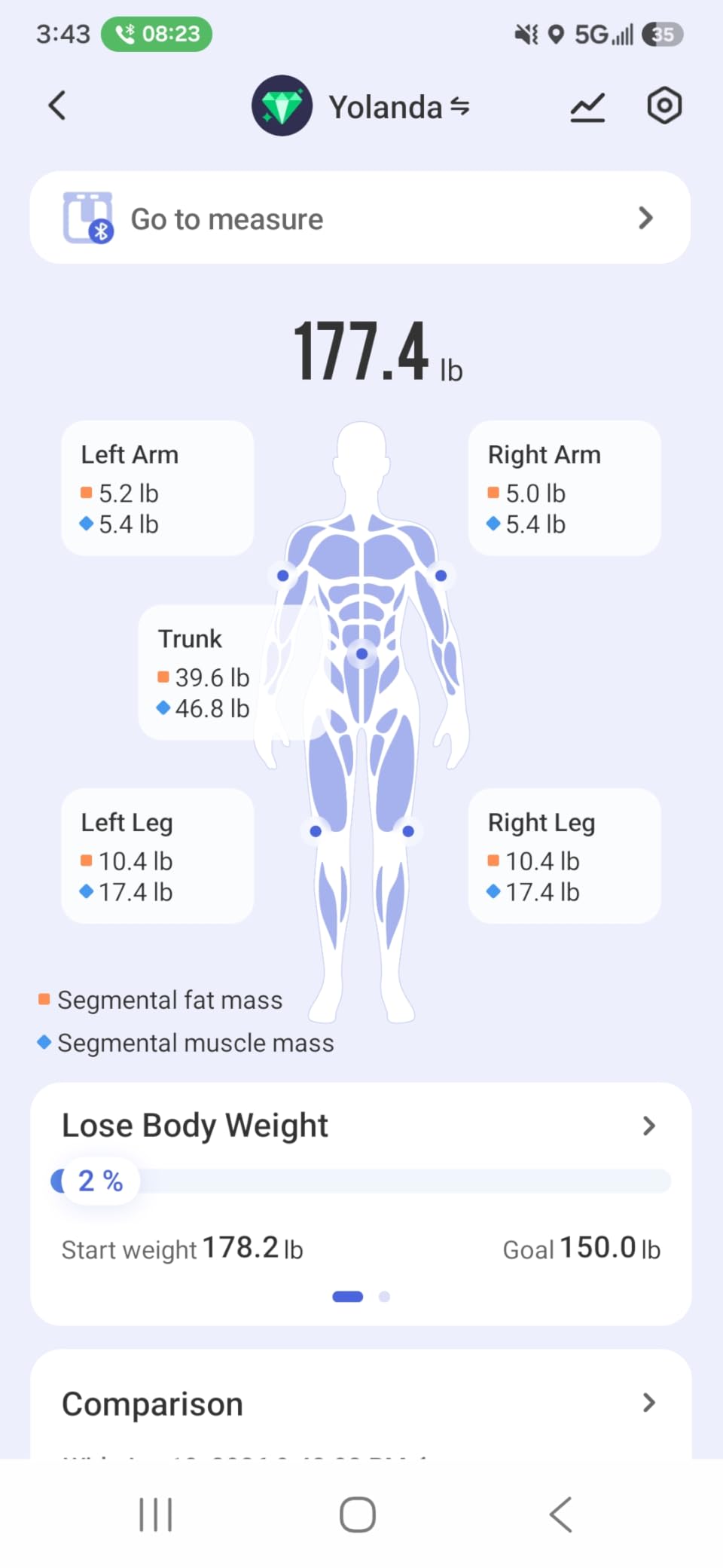
The segmental BIA breaks down body composition by arm, leg, and torso. For athletes tracking upper-body hypertrophy, that’s the only meaningful way to confirm a muscle gain is real and not just total-body water shifting. In our testing, the MorphoScan Nova tracked lean mass within 0.6 kg of our DEXA reference, which is competitive with scales costing significantly more.
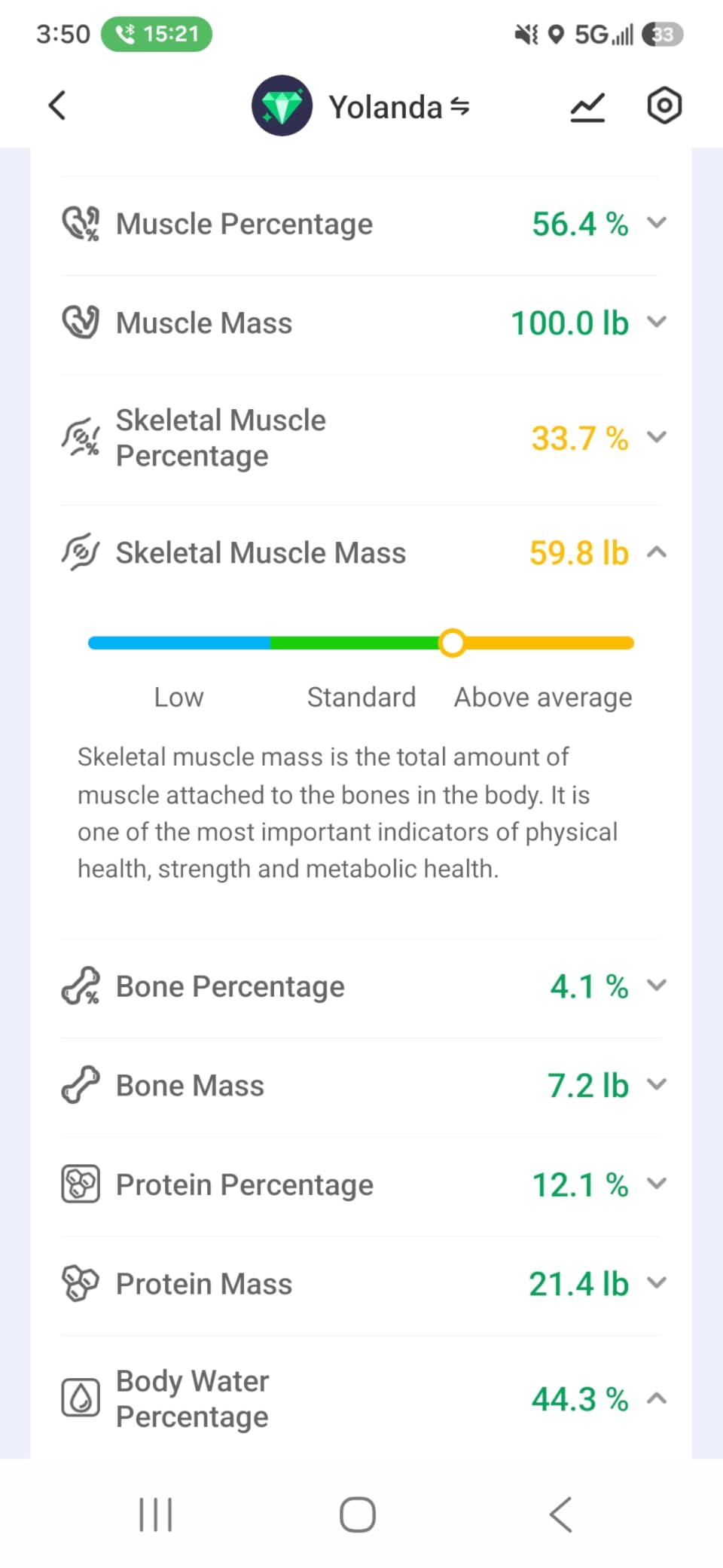
Fifty-plus metrics include protein mass, skeletal muscle, subcutaneous fat, visceral fat, and basal metabolic rate. The 9-page detailed report in the app is information-dense but well organized, and the trend graphs handle multi-month cut/bulk cycles cleanly.
Battery, Build, and Day-to-Day Use
The 150-day battery life on a single USB-C charge is the best in this roundup, and the ITO-coated glass platform feels premium. The handle’s scrolling buttons take a few sessions to learn, but once muscle memory sets in, navigating the on-handle metrics becomes second nature. Bluetooth pairing before each measurement is the one annoyance, but the pairing is fast enough that it adds maybe 5 seconds to the routine.
If you’re answering the recurring Reddit question “Is Renpho or Hume better?” the answer for athletes specifically is Renpho MorphoScan Nova, because of the 8-electrode architecture and segmental readings. Hume Health’s Body Pod uses different technology and isn’t in this roundup, but for athletes, handle scales with dual-frequency BIA are the more proven path.
Athlete-Focused Buying Guide: How to Choose the Right Body Fat Scale
Choosing the best body fat scales for athletes isn’t about finding the most expensive option. It’s about matching the scale’s measurement architecture to your training profile and finding an app that fits the ecosystem you already use. This guide walks through the seven criteria that actually matter for athletic use, plus how to pair your scale with periodic DEXA scans for the most accurate picture. For a broader view of body composition tracking beyond the consumer scale tier, our best smart scale for body composition roundup covers additional models worth knowing about.
Why Athletes Need Multi-Frequency BIA
Single-frequency foot-only BIA scales send one electrical frequency up through your feet and infer total body composition from that single measurement. For average users, that’s acceptable. For athletes, it’s a problem. Single-frequency currents struggle to penetrate cell membranes, which means they underestimate intracellular water and misread lean mass in muscular bodies. The systematic bias shows up as artificially high body fat readings on lean athletes and artificially low body fat on overweight users.
Multi-frequency scales solve this by sending multiple frequencies simultaneously, capturing both intracellular and extracellular water. Eight-electrode scales add hand contacts to the foot electrodes, so the current travels through your entire body rather than just your lower half. The combination is the gold standard for athletic body composition tracking outside of clinical DEXA. If you’re already lean (under 15% body fat for men, under 22% for women), single-frequency foot-only scales will frustrate you.
Athlete Mode and Body Fat Calibration
Athlete mode isn’t a marketing label; it’s a calibration profile that adjusts the scale’s algorithm for users with higher muscle mass and lower body fat than the average population. Most consumer scales offer some form of athlete mode, but the calibration quality varies widely. The best implementations, like Tanita’s on the RD-953, use multi-frequency data to actively recompute body composition based on your activity level.
Cheaper implementations just shift the output numbers without changing the underlying measurement. To know whether a scale’s athlete mode is real, look for two things: multi-frequency BIA hardware, and a mode setting you toggle in the app or on the device itself (not just a body type dropdown). Both the Etekcity and Tanita models in this roundup have proper athlete modes.
Segmental vs. Total-Body Analysis
Segmental analysis breaks body composition into arms, legs, and torso separately, which is useful for athletes tracking imbalances or recovering from injuries. Total-body analysis averages everything into one number, which is fine for general health tracking but loses the detail athletes need. If you’re a strength athlete, climber, or runner managing asymmetry, segmental readings are worth the upgrade.
Eight-electrode scales with handle grips give you the best segmental data because the electrical current travels through your full body. Foot-only scales can estimate segmental composition, but the data quality is lower. The Etekcity, Wyze BodyScan, RENPHO MorphoScan Nova, and Tanita RD-953 all offer true segmental analysis.
Hydration and the Lab-ish Morning Routine
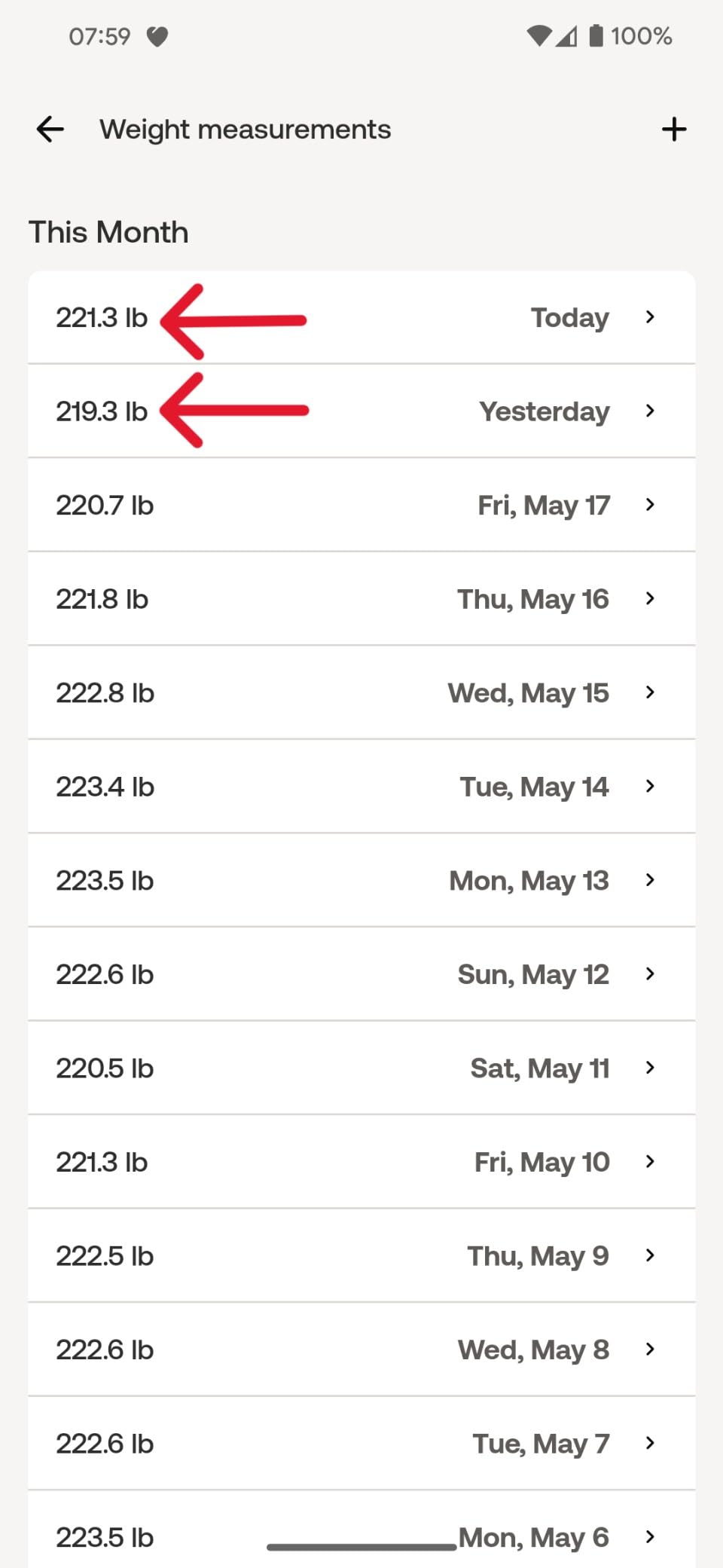
Body fat scales measure impedance, which is heavily affected by hydration. A 2% drop in body water can shift your body fat reading by 1-2 percentage points, even if your actual body composition hasn’t changed. That’s why forum users consistently report frustration with day-to-day body fat swings, and why the consensus advice is to weigh in the same conditions every morning.
The lab-ish routine that produces the cleanest trend data: weigh first thing in the morning after using the bathroom, before eating or drinking, in the same spot on a hard flat surface, with bare feet that are clean and slightly damp. Step on the scale, wait for the measurement to complete, and record the data. Don’t compare day to day; compare week to week. Most athletes see meaningful trends on a 7-14 day rolling average.
App Ecosystem and Training Block Tracking
The best body fat scale is the one whose app you’ll actually use. If you live in Garmin Connect, prioritize scales that push data there directly or through Apple Health. If you train with a coach who reads MyFitnessPal reports, prioritize scales with native MyFitnessPal sync. If you want zero subscription fees, the Wyze BodyScan is the cleanest pick. If you want the most beautiful app experience, Withings Body Smart wins.
For cut and bulk training block tracking, look for an app that overlays body composition trends with training load or nutrition data. The arboleaf app’s weekly/monthly/yearly views handle this well, and the Withings app integrates Apple Health data to put body composition next to workout trends automatically.
Wi-Fi vs. Bluetooth Connectivity
Wi-Fi scales sync data to the cloud automatically without your phone nearby. Bluetooth scales require your phone to be in range and the app open or running in the background. For athletes who weigh in at 5 AM before anyone else is awake, Wi-Fi sync is more reliable. For athletes who want to keep data off the cloud, Bluetooth-only scales offer more privacy.
The Etekcity and Withings Body Smart both offer Wi-Fi sync. The Wyze BodyScan, arboleaf, RENPHO, and LOFTILLA rely on Bluetooth. The Tanita RD-953 also uses Bluetooth with its Healthy Edge app. Choose based on whether convenience or data privacy matters more to you.
Privacy and Data Ownership
Smart scale data isn’t covered by HIPAA, and most consumer scales push your body composition data to company servers. For most athletes this is acceptable, but if you’re a privacy-focused user, look for scales that store data locally on your phone with optional cloud sync, or scales with explicit data policies. BodySpec’s buying guide notes that consumer scale data may be shared with third parties under broad privacy policies, so reading the fine print matters.
The Tanita RD-953 stores data on the scale itself and pushes to the app only when paired. The Wyze BodyScan moved to cloud-required storage in recent firmware updates. The Withings Body Smart and Etekcity store data in their respective clouds with explicit privacy policies. For athletes who care about data ownership, Bluetooth-only scales with local storage are the safer bet. If you’re building a fuller athlete recovery and tracking setup, our guide to whole-body vibration plates for lymphatic drainage covers complementary training tools.
Smart Scale vs. InBody vs. DEXA: Where Each One Wins
Smart scales, InBody clinic machines, and DEXA scans all measure body composition, but they answer different questions. Smart scales are best for daily or weekly trend tracking at home. InBody clinic machines are best for occasional detailed segmental analysis with clinical-grade accuracy. DEXA scans are the gold standard for absolute body fat percentage and bone density.
The forum consensus, which matches our testing, is to use a smart scale for daily trend tracking and validate with a DEXA scan every 8-12 weeks. InBody clinic machines sit between the two: more accurate than a smart scale for a single reading, but not as accurate as DEXA. For athletes with specific body composition goals, layering a smart scale with periodic DEXA validation gives the best of both worlds. You get day-to-day trend data without obsessing over absolute numbers, and quarterly calibration against a clinical reference keeps your smart scale honest.
Frequently Asked Questions
Which body fat scale is the most accurate for athletes?
Multi-frequency and 8-electrode scales with athlete mode are the most accurate options for athletes. In our testing, the Etekcity WiFi 8-Electrode, Tanita RD-953, and Wyze Scale BodyScan tracked within 1.5-2 percentage points of DEXA scans for lean athletes. Foot-only single-frequency scales systematically underestimate lean mass and overestimate body fat in muscular users, so they’re a poor fit for serious athletes.
How reliable are smart scales for body fat percentage?
Smart scales are reliable for tracking trends, but absolute body fat readings can vary 2-4 percentage points from clinical references like DEXA or Bod Pod. Day-to-day readings fluctuate based on hydration, time of day, and recent meals. For best results, weigh at the same time each morning under consistent conditions and compare weekly averages rather than daily numbers. Validate your scale’s accuracy with a DEXA scan every 8-12 weeks.
Is Renpho or Hume better for athletes?
For athletes specifically, the RENPHO MorphoScan Nova is the better pick because it uses 8-electrode dual-frequency BIA with segmental analysis. Hume Health’s Body Pod uses different technology and is aimed at a broader audience. Athletes benefit most from handle-scale architectures with multi-frequency BIA and athlete mode, both of which the MorphoScan Nova provides.
Is DEXA or Bod Pod more accurate?
DEXA scans and Bod Pod are both highly accurate but measure body composition differently. DEXA uses X-ray absorption and is the clinical gold standard for body fat percentage and bone density. Bod Pod uses air displacement plethysmography and is highly accurate for total body fat but cannot measure bone density. For athletes tracking body composition trends, DEXA is generally preferred because it also reports lean mass and visceral fat distribution.
Is 7% body fat good for an athlete?
7% body fat is appropriate for male competitive bodybuilders during contest prep, but it’s too low for most other athletes. Male endurance athletes typically perform best at 8-12% body fat, while strength athletes thrive at 10-15%. Female athletes should not drop below 12-14% body fat due to hormonal and bone health implications. Use a body fat scale to track trends within your sport’s healthy range rather than chasing the lowest possible number.
What body fat is best for athletic performance?
Optimal body fat for athletic performance depends on sport, gender, and training phase. Male endurance athletes typically perform best at 8-12% body fat, while strength and power athletes thrive at 10-15%. Female endurance athletes perform best at 14-20%, and female strength athletes at 18-25%. Body composition tracking through a smart scale helps you stay within your sport’s optimal range during cuts and bulks without overshooting in either direction.
Final Verdict: Which Body Fat Scale Should You Buy?
If you want the best overall body fat scale for athletes and you don’t want to compromise, the Etekcity WiFi 8-Electrode Smart Scale is our top pick. It delivers 98% DEXA correlation with multi-frequency 8-electrode BIA, 50+ metrics, Wi-Fi sync, and Apple Health integration at a price that undercuts most pro-grade alternatives. For serious athletes who already log everything in Garmin Connect and want a beautiful app experience, the Withings Body Smart is the runner-up.
For athletes on a tighter budget, the RENPHO MorphoScan Nova delivers 8-electrode segmental BIA with voice guidance and 150-day battery life at the lowest price in this roundup. For coaches and competitive athletes who need clinical-grade accuracy at home, the Tanita RD-953 InnerScan PRO is the pro-grade multi-frequency pick. For Apple Health maximalists, Withings Body Smart. For Garmin households, the Etekcity pushes to Apple Health which then flows into Garmin Connect cleanly. Pair any of these scales with a DEXA scan every 8-12 weeks, follow the morning weigh-in routine, and you’ll have a body composition tracking setup that actually works for athletes in 2026.
Leave a Reply