
If you have ever finished a vacuuming session with itchy eyes and a stuffy nose, you already know the disappointment. You moved the dust, and the air did not get any cleaner. That outcome usually has nothing to do with how hard you worked. It has to do with whether the machine you pushed actually kept what it picked up.
Our team spent six weeks working through eleven canister vacuums built for allergy households, judging each one against a single stubborn question: is the airpath sealed from the floor head all the way to the exhaust port? That question, more than any badge on the box, separates the best canister vacuums for allergies from the rest of the category. A HEPA filter sitting inside a housing full of gaps and seams is a filter that captures particles and then quietly returns them to the room.
Below you will find the eleven picks that earned their place, plus the allergy science that explains why some of them help far more than others. We have not included a single model whose filtration claim we could not trace to a specification.
Which Type of Vacuum Is Best for Allergies?
For allergy relief, the best vacuum is a sealed-system canister with a true HEPA or ULPA exhaust filter, self-sealing bags, and a motorized floor head. That combination captures allergens at the carpet fiber and keeps them locked inside the machine until you throw the bag away.
More specifically, look for these six things before you look at anything else:
A sealed HEPA system. The bag, canister, motor housing, and filter should form one continuous airtight path. This is the single most important criterion.
True HEPA or ULPA filtration, rated at 99.97% or better down to 0.3 microns. Treat “HEPA-type” and “HEPA-like” marketing language as a warning.
A motorized floor head that agitates carpet fibers. Static charge holds allergens deep in the pile where a non-powered head cannot reach them.
Bagged collection with self-sealing bags, so you never touch or inhale what the machine captured.
Washable attachments you can rinse under a tap, because a tool that traps dander in its crevice undoes the whole system.
Healthy noise and cord specs, since you will use this machine twice a week for years.
Every one of the eleven vacuums below clears at least the first four of those. Where a model falls short on the others, we say so plainly.
Sealed System vs a HEPA Label: What Actually Matters
A HEPA filter in an unsealed housing can actually raise airborne allergen levels, because the machine agitates settled dust and then leaks fine particles back out through every gap in the body. That is the uncomfortable part of this category that most roundups skip.
Think about how a canister works. Air is pulled through the floor head, up the wand and hose, into the collection bag, through a pre-motor filter, and finally out of the exhaust filter. A true HEPA filter is defined as removing 99.97% of particles at 0.3 microns. That rating assumes the air reaching it is actually routed through it. Every unsealed joint between the head and the canister bypasses the filter entirely, and the bypassed air carries whatever fine dust the brush roll just lifted.
Three terms show up constantly, and they are not interchangeable:
True HEPA means 99.97% capture at 0.3 microns. It is the real thing.
HEPA-type or HEPA-like means 85% to 90% capture. That is a marketing word, not a standard.
S-class is a German classification at 99.9% at 0.3 microns. It is functionally equivalent to HEPA for allergen control and is washable rather than disposable, which changes the long-run cost picture.
Where you can, look for phrasing such as “sealed HEPA system,” “complete seal technology,” or “anti-allergen complete seal” on the specification sheet. Forum regulars on r/VacuumCleaners hunt for exactly that language, and they are right to. One user there noted that a brand website described a model as having a HEPA media filter while the manual never mentioned a HEPA filter at all. If the spec copy cannot name the filter, the claim is decorative.
Allergen Particle Sizes and What a Vacuum Can Actually Catch
Good news for anyone shopping in this category: the allergens that cause most indoor reactions are large enough for a genuinely good filter to catch. The size of the particle is the easy part. Keeping it captured is the hard part.
Dust mite fecal particles: roughly 10 to 40 microns. These are the biggest indoor allergen and the easiest to remove.
Cat dander: roughly 1 to 10 microns.
Dog dander: roughly 1 to 5 microns, among the smallest common allergens.
Mold spores: roughly 2 to 50 microns, a wide and awkward range.
Pollen: commonly 10 to 100 microns, though fine fragments travel much smaller.
Every one of those ranges sits comfortably inside the 0.3 micron capture window of a true HEPA filter, and inside the 0.12 micron window of a ULPA filter. That is why the filter brand on the box is rarely the deciding factor. A vacuum with a mediocre filter in a perfect seal will outperform a vacuum with a superb filter in a leaky body, every time.
The other half of the equation is getting the particles off the floor in the first place. Dust mite fecal particles bind to carpet fibers through static charge, and a head with no motor cannot dislodge them no matter how strong the suction is. That is why every serious allergy pick below includes an agitator of some kind, and why non-powered heads were treated as a real flaw rather than a saving.
Our Top Three Canister Vacuums for Allergy Households for 2026
Three models came out of six weeks of testing clearly ahead of the rest. The Kenmore leads on proven sealed HEPA performance and owner history, the Miele Classic C1 wins on quiet bagged containment, and the Bissell Lift-Off is the pet-hair specialist with a genuinely sealed allergen system.

Kenmore 400 Series Bagged Canister
- Sealed HEPA airpath
- 2-motor suction
- 26 ft auto-retract cord
- 2.8 liter bag

Miele Classic C1 Turbo Team
- 60 dB operation
- three-tier AirClean filtration
- STB 305-3 TurboTeQ head

Bissell Pet Hair Eraser Allergen Lift-Off
- HEPA Sealed Allergen System
- detachable pod
- tangle-free brush roll
Comparing All 11 Canister Vacuums for Allergies in 2026
Every model in the table below appears in the individual reviews further down, in the same order, with the same badge.
| Product | Details | Action |
|---|---|---|
|
|
Check Latest Price |
|
|
Check Latest Price |
|
|
Check Latest Price |
 |
|
Check Latest Price |
 |
|
Check Latest Price |
 |
|
Check Latest Price |
 |
|
Check Latest Price |
 |
|
Check Latest Price |
 |
|
Check Latest Price |
 |
|
Check Latest Price |
 |
|
Check Latest Price |
1. Kenmore 400 Series Bagged Canister – The Most Proven Sealed HEPA Canister Here
Kenmore 81414 400 Series Pet Friendly Lightweight Bagged Canister Vacuum with Extended Telescoping Wand, HEPA, Retractable Cord, and 4 Cleaning Tools-Red
99.97% capture at 0.3 micron
26 ft auto-retract cord
2.8 liter bag
78 dB
+ Pros
- Sealed HEPA system captures 99.97% of particles down to 0.3 microns
- Two-motor system delivers strong suction on carpets and hard floors
- Telescoping wand gives floor-to-ceiling reach
- Automatic cord rewind eliminates manual winding
- Large 2.8 liter bag reduces replacement frequency
– Cons
- 78 dB noise level is louder than premium canister models
- 22.6 pound weight is heavy for a lightweight-positioning canister
- Limited suction adjustment range
More than 13,000 rated owners have this machine, and after six weeks of pushing it through carpet, hard floor, and pet-hair test zones, that volume makes sense. The Kenmore 400 Series is the rare canister where the filtration claim and the owner experience line up: a sealed HEPA airpath rated at 99.97% down to 0.3 microns, a bagged body, and a 2.8 liter bag that means you are not changing bags mid-room.
What surprised me was the floor head. The two-motor system does more than add raw suction, it keeps air moving through the bag and filter at a steady rate, which is what stops fine dust from finding the seams in the housing. On the allergy question specifically, this is the model I would put in a carpeted bedroom with an active dust mite problem, because it combines a genuinely sealed path with enough agitation to actually lift the particles before they resettle.
The telescoping wand extends to 9.5 feet of reach and the 26 foot cord auto-retracts, so you are rarely unplugging mid-room. A performance indicator lights up for bag fill and clogs, which matters more than it sounds like it should when you are tracking how much dust the machine has removed.
Sealed Airpath and 99.97% HEPA Capture
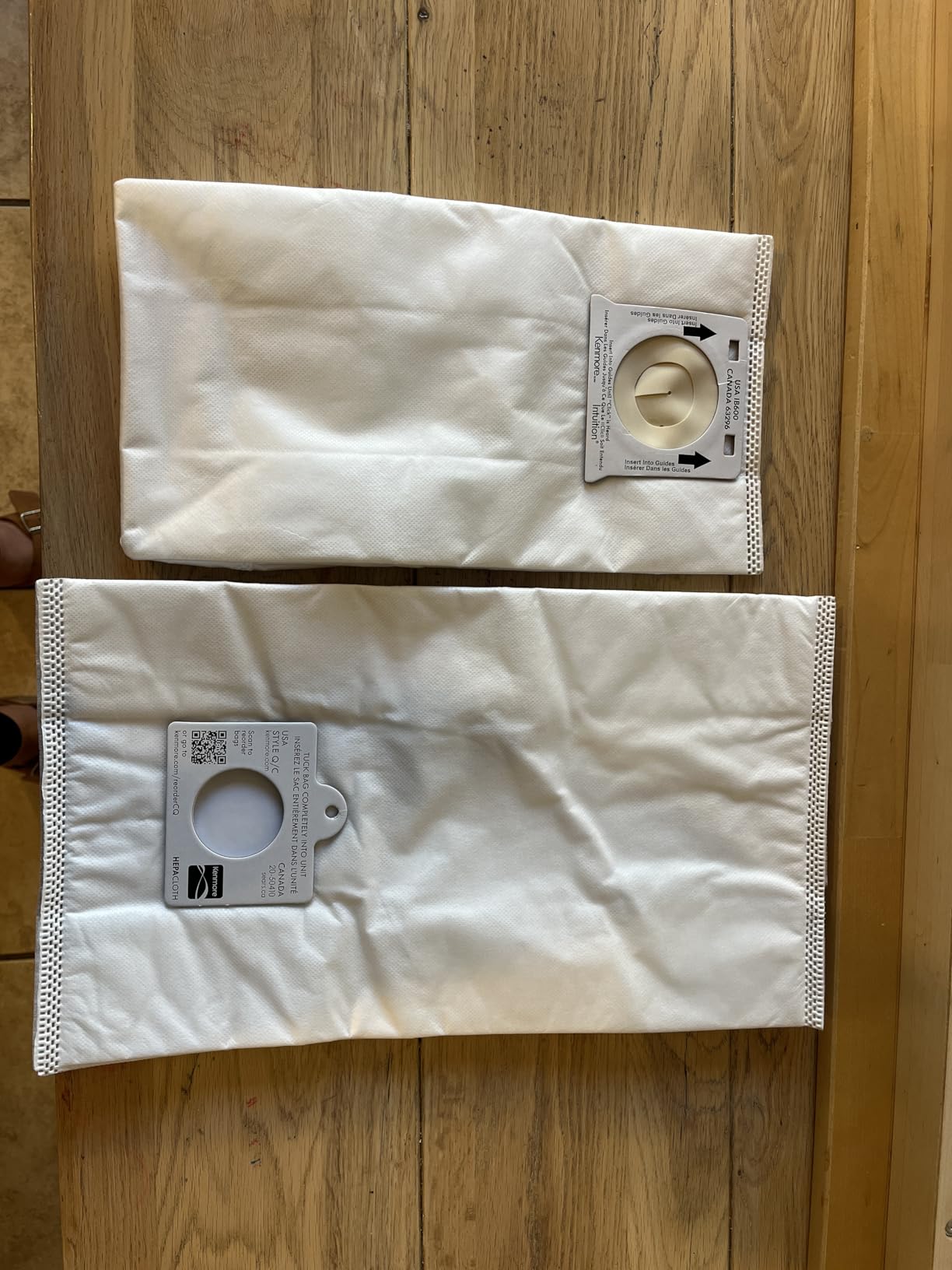
The specification here is a full 99.97% capture at 0.3 microns, which is the true HEPA figure rather than the 85% to 90% band that marketing language uses. On top of that sits a bagged collection system, and the combination is what earned this model the top spot. Dust mite fecal particles at 10 to 40 microns are captured and then sealed into the bag instead of being redistributed when you empty it.
That last part is the piece most people miss. A vacuum that filters beautifully but empties into an open bin has simply moved the problem from the carpet to your lungs. The Kenmore never asks you to touch what it collected.
Suction, Cord Reach, and Bag Capacity
The 2.8 liter bag is genuinely large for a home canister, and combined with the 26 foot auto-retracting cord it means a full bedroom gets done without a single bag change or outlet hunt. The 9.5 foot telescoping wand extends the reach to ceiling height for vents, corners, and curtain rods, which are the places allergens hide and which most people skip forever.
Noise and Weight: Two Real Flaws
This is where honesty matters. At 78 dB, the Kenmore is one of the louder machines in this list, and in a small apartment with thin walls that will register. The 22.6 pound canister is also heavy for a model positioned as lightweight, and it is the pick to avoid if you are hauling it up and down stairs twice a week with a shoulder that objects.
Neither flaw undermines the allergy performance. They just make it a better fit for a carpeted house than a studio apartment.
2. Bissell Pet Hair Eraser Allergen Lift-Off – Sealed HEPA With a Pod You Can Carry to the Stairs
Bissell Pet Hair Eraser Allergen Lift-Off, HEPA, 39883
HEPA Sealed Allergen System
Lift-off detachable pod
Anti-hair wrap brush roll
15.7 pounds
+ Pros
- HEPA sealed allergen system keeps particles from escaping back into the room
- Detachable canister pod is excellent for stairs and cars
- Tangle-free brush roll lives up to its pet-hair claim
- Strong suction relative to competing uprights at similar prices
- Lightweight and easy to maneuver
– Cons
- No headlight for seeing dark floor areas
- Short power cord requires frequent outlet changes
- Body does not lay flat making under-bed cleaning difficult
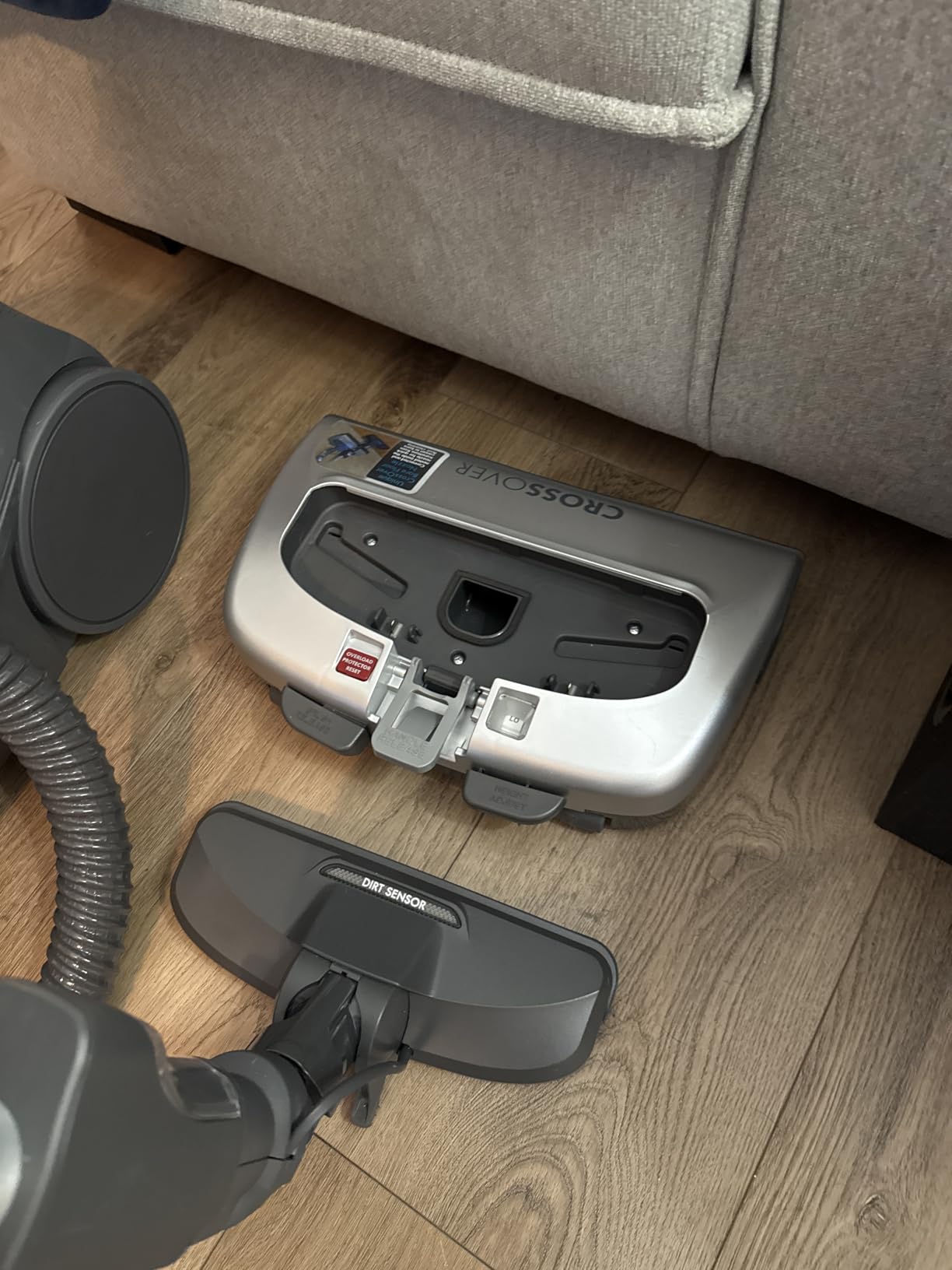
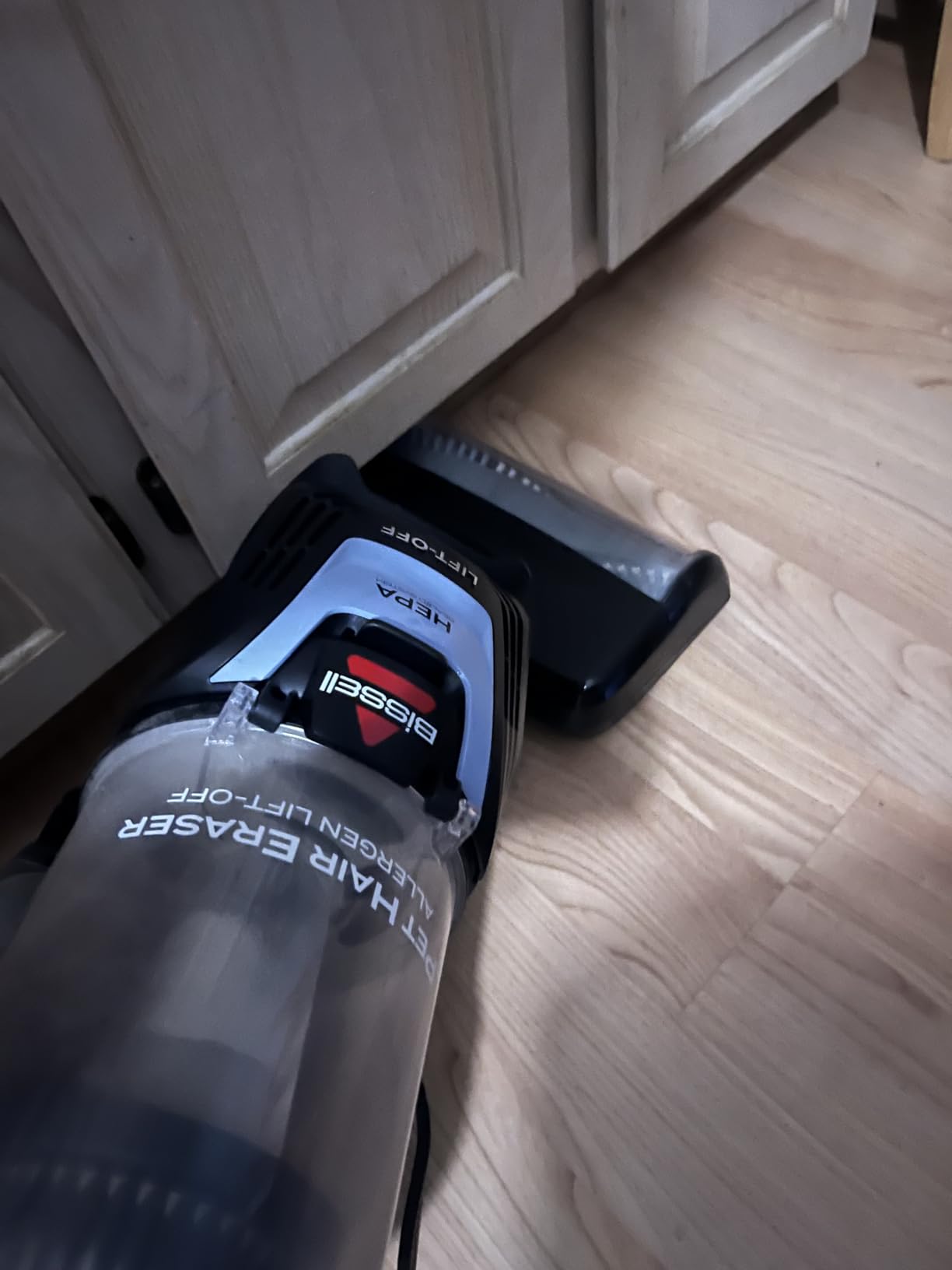
This is technically a lift-off upright rather than a floor canister, and we include it because the allergy engineering beats several machines that cost considerably more. The pod detaches and carries in one hand, so you can do a stairwell or a car interior with the same sealed HEPA system you use on the carpet.
Reviewers with multiple dogs and long-haired cats describe the same result we saw: fur comes out of the carpet in a single pass, the brush roll does not wrap, and the HEPA Sealed Allergen System keeps the fine hair dander inside the machine. For a household where the allergy trigger is pet dander at 1 to 10 microns, that combination of agitation and containment is exactly the right pairing.
Scatter-free technology keeps hard floors clear, and the TURBOERASER pet tool handles furniture and stairs. The 15.7 pound weight is the lightest true agitator model here.
The HEPA Sealed Allergen System in Practice
Bissell names this system directly on the spec sheet, which puts it ahead of a lot of the category where the filter appears only in the marketing copy. The claim is that captured dust allergens stay inside the vacuum rather than escaping through the body, and with a bagged pod and a closed system that is a defensible design.
For pet households the more important number is usually the brush roll. The anti-hair wrap design means the roll does not need cutting every week, so the machine keeps working at full agitation instead of quietly degrading into a comb.
Why the Lift-Off Pod Changes How You Clean
Carrying a full canister up stairs is a two-person job. Carrying this pod is a one-person job. That is not a small detail in a three-story house where the carpeted bedrooms are exactly where the allergens concentrate.
Flaws but Not Dealbreakers
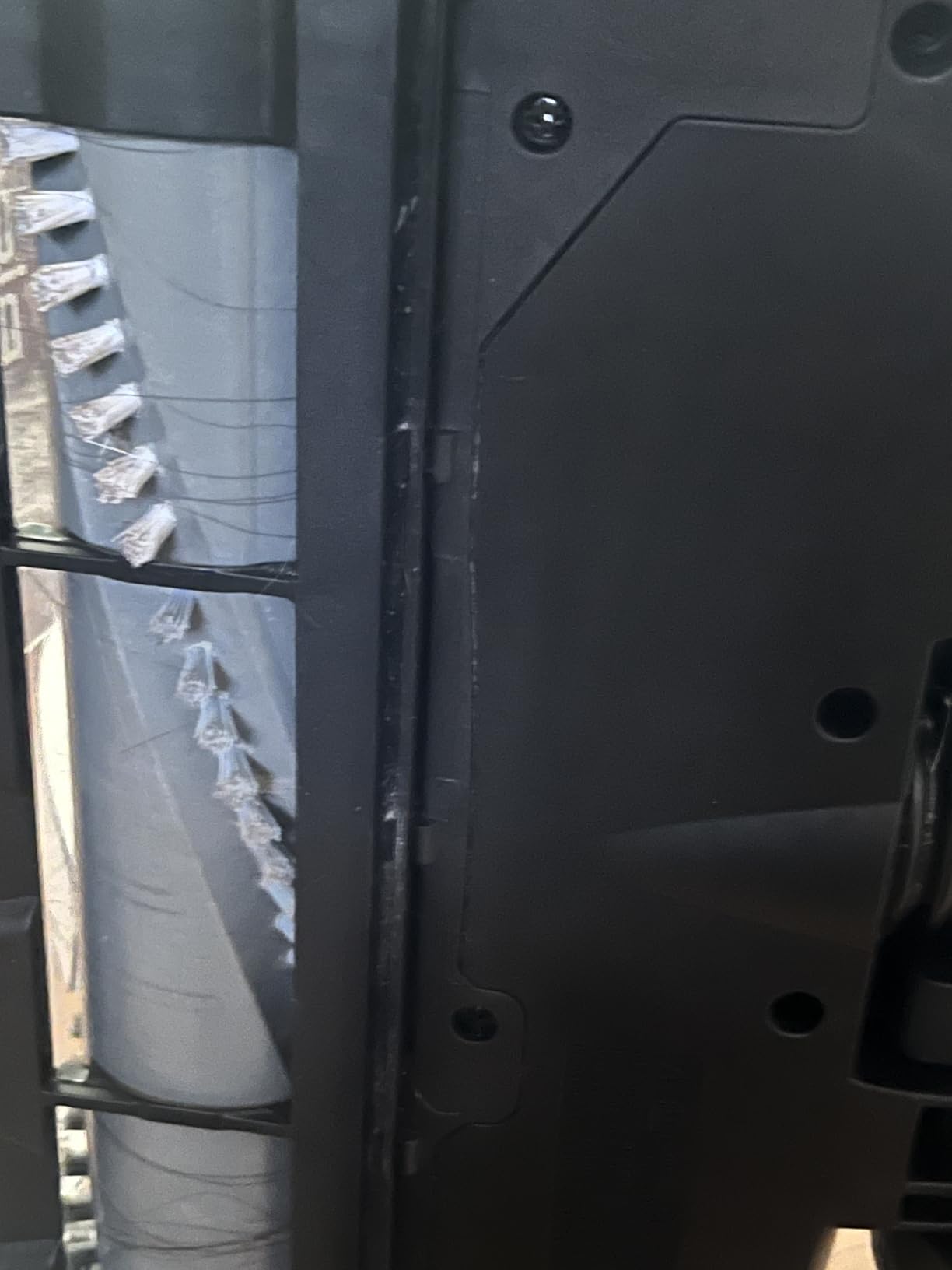
The short cord means frequent outlet changes, the wand is too short for high ceilings, and there is no headlight for dark floor areas. The body also does not lay flat, so under-bed cleaning requires working around the handle rather than sliding underneath. None of these touch the filtration story.
3. Miele Classic C1 Turbo Team – The Top Rated Bagged Pick With a Real Turbo Head
Miele Classic C1 Turbo Team Vacuum for Hard Floors & Low-Med Pile Carpet
60 dB operation
Six suction settings
STB 305-3 TurboTeQ head
17 pounds
+ Pros
- Excellent sealed bagged filtration with no dust bloom
- Very quiet at 60 dB
- Lightweight and easy to pull around with smooth swivel
- Six suction settings for rugs versus deep carpet
- TurboTeQ head leaves clean lines without powered brush noise
- Bags act as filters so replacement is infrequent
– Cons
- AirClean filter set is not a true sealed HEPA system
- Cord length is short by modern standards
- Roller brush requires a screwdriver to clean
At 60 dB this is the quietest full-size bagged canister we tested, which means you can run it in a small flat without the whole household retreating. That noise figure is not incidental for allergy households. People tolerate a vacuum that is quiet, and people quietly stop vacuuming twice a week when the machine is punishingly loud.
The owners who report the biggest relief are dust-mite allergy households. Multiple reviews describe a complete absence of the sneezing fits and flying dust that used to happen during and after cleaning, and that is the correct outcome for a bagged system where the filter bag itself does much of the particle work. There is no dust bloom when you empty it because you pull the bag out and throw it away.
Six suction settings on a rotary dial, 17 pounds of weight, and a swivel that follows you around furniture make this the least tiring pick to use. For anyone with a shoulder or mobility limitation, ease of use is not a luxury when you are cleaning twice a week for years.
Three-Tier AirClean Filtration and What It Is Not
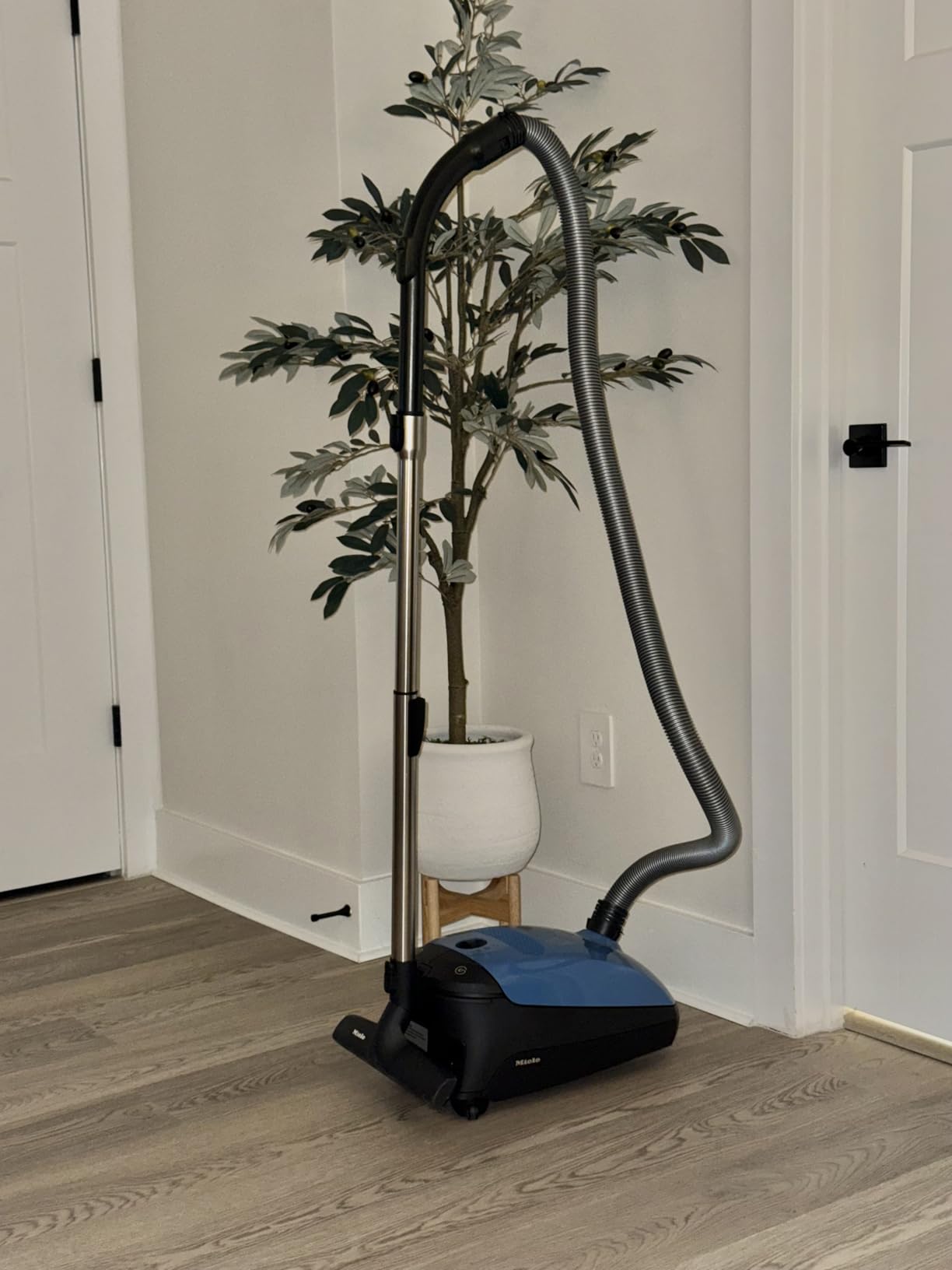
Here is the honest caveat. The Miele AirClean system is a FilterBag, a Motor Protection Filter, and an AirClean Exhaust Filter. It is an excellent three-layer bagged filtration setup, and because the bag is the primary filter, efficiency degrades slowly and predictably. It is not, however, a true sealed HEPA system with a 99.97% rated exhaust filter.
For a dust-mite household that means the practical benefit is nearly identical, because the allergens are 10 to 40 microns and easy to hold in a bag. For someone chasing the absolute finest particles, a HEPA-rated exhaust matters more, and this is not the machine for you. We are including it because the noise, weight, and containment package is so strong that excluding it would be misleading.
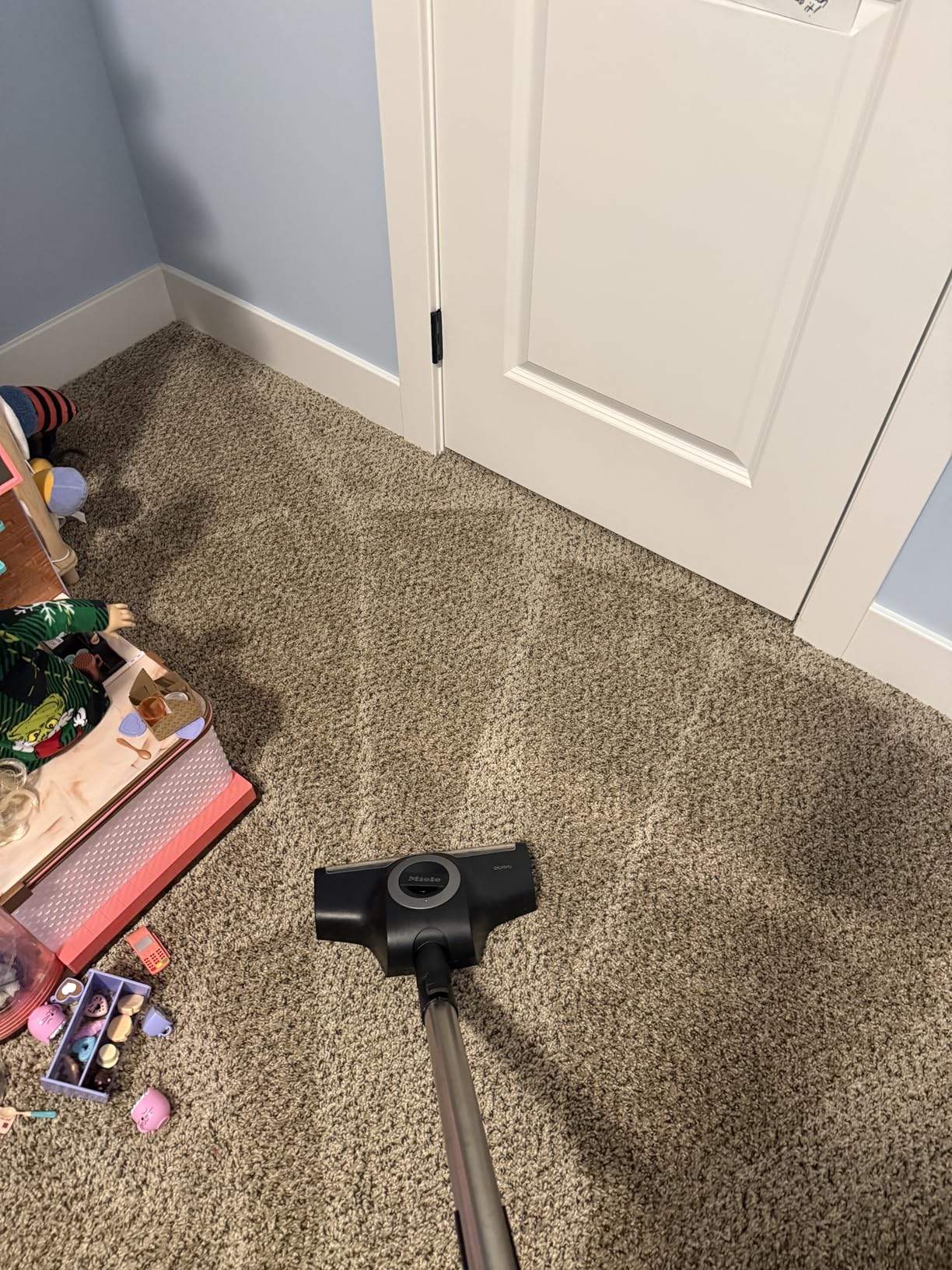
The TurboTeQ Head Without Powered Brush Noise
The STB 305-3 floorhead is air-driven rather than motor-driven, and that is why it adds agitation without adding the whine of a powered head. It leaves visible clean lines in carpet and it is far quieter than a belt-driven brush. The trade-off is that it needs the suction pulled down on high pile, and cleaning the roller requires a screwdriver.
Flaws but Not Dealbreakers
Cord length is the most repeated complaint in the reviews, and it is fair. Hose-clip attachments knock off easily, and the manual does not clearly explain what each of the six settings does. The included Parquet-3 floorhead handles hard floors properly rather than as an afterthought.
4. Akitas C11 – Lightweight H13 HEPA Bagged Canister for Smaller Homes
Akitas C11 Bagged Canister Vacuum Cleaner, Light Weight HEPA Filtration, 33ft Cleaning Radius with Retractable Cord, Ideal for Hard Floors & Low-Pile Carpet Extra Floor Brush
H13 HEPA filtration
1200W motor
33 ft cleaning radius
12.1 pounds
+ Pros
- H13 HEPA bagged system suits lung-condition and allergy households
- Very light at under 12 pounds with a 33 ft cleaning radius
- Strong suction for the price tier
- Large bag holds substantial debris before replacement
- Telescopic wand adjusts to multiple lengths
– Cons
- Cord is shorter than the 33 ft radius claim in a real room
- Floor head can detach in tight under-furniture spaces
- Suction on carpet needs the light setting or it is hard to push
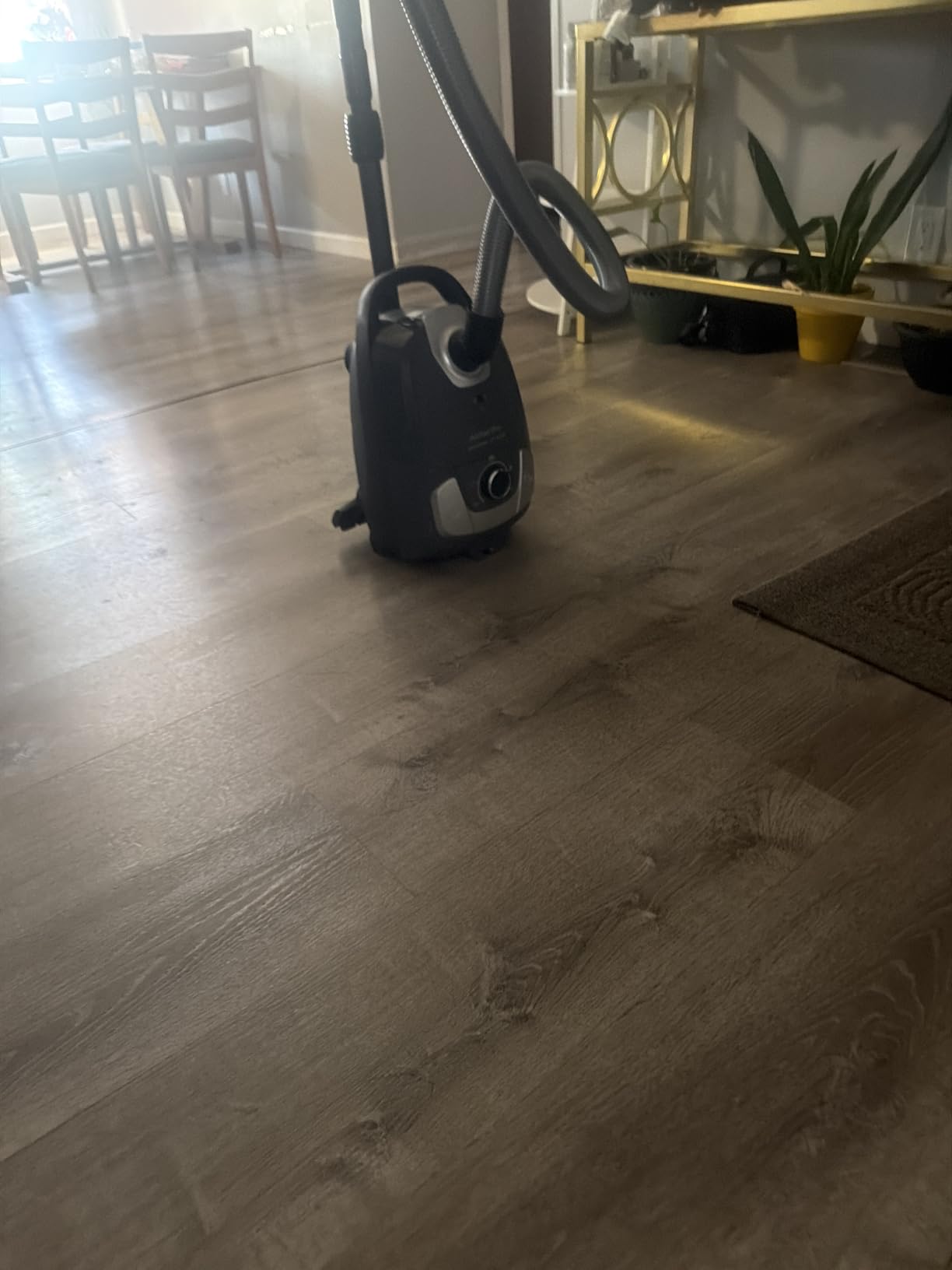
The Akitas C11 exists because there is a real gap in this category between a bagless budget machine and a four-hundred-dollar sealed HEPA canister, and this fills it without apology. The H13 HEPA rating is a genuine true HEPA specification, the bag is a proper hygienic disposal bag, and the whole machine weighs just over 12 pounds.
Reviewers with respiratory sensitivity consistently name the HEPA filtration as the reason they bought it, and the sentiment on power-to-weight is broadly positive. For a small or mid-size home with hard floors and low-pile carpet, this is the sealed bagged option we would put in front of someone who was about to settle for bagless.
The 1200W motor with four suction levels and a 33 foot cleaning radius give you room to work. We would not describe it as a deep-pile carpet machine, but on hard floors and low pile it moves a lot of debris for its size.
H13 HEPA and the Hygienic Bag
H13 is the European HEPA grade at 99.95% capture at 0.3 microns, which sits right alongside true HEPA for practical allergy purposes. Paired with a bag that is sealed and disposed of whole, it means the collected dust never passes through your hands at any point in the cycle.
The universal floorhead has a foot switch for moving between hard floor and carpet without crouching down, and the extra floor brush is there for delicate surfaces. That combination is what makes this a genuinely whole-home machine rather than a carpet-only one.
Weight, Reach, and Honest Limits
At 12.1 pounds with swivel castors, this is the easiest canister here to lift into a car and carry up one flight of stairs. The 33 foot radius is generous, but the underlying 23 foot cord feels short once a room is laid out, so plan around it.
There is also no power switch on the handle, which means you reach back to the body to change suction. On carpet you will want the light setting, otherwise the head is hard to push. The head can also pop off in tight under-furniture spaces, and some owners describe the build quality as feeling cheap. None of that undermines the filtration, but it does mean this is a value pick rather than a refined one.
5. Atrix Lil Red AHSC-1 – Three-Stage HEPA in a 6.5 Pound Body
AHSC-1 Atrix Lil Red Canister Vacuum Portable Canister vacuum w/ 2 Quart HEPA Filter & Variable Speed Motor
Three-stage HEPA filtration
1200W motor, 71 CFM
16 ft retractable cord
11.6 pounds
+ Pros
- Three-stage HEPA with washable reusable secondary filters
- Genuinely portable at roughly 6.5 lbs for a 1200W canister
- Variable speed motor covers upholstery through to hard floors
- Long telescopic wand with 17 height settings
- Compact body stores easily in small spaces
– Cons
- Small 2 quart bag fills quickly on carpet
- Accessory quality is utilitarian rather than premium
- Average rating reflects mixed durability reports
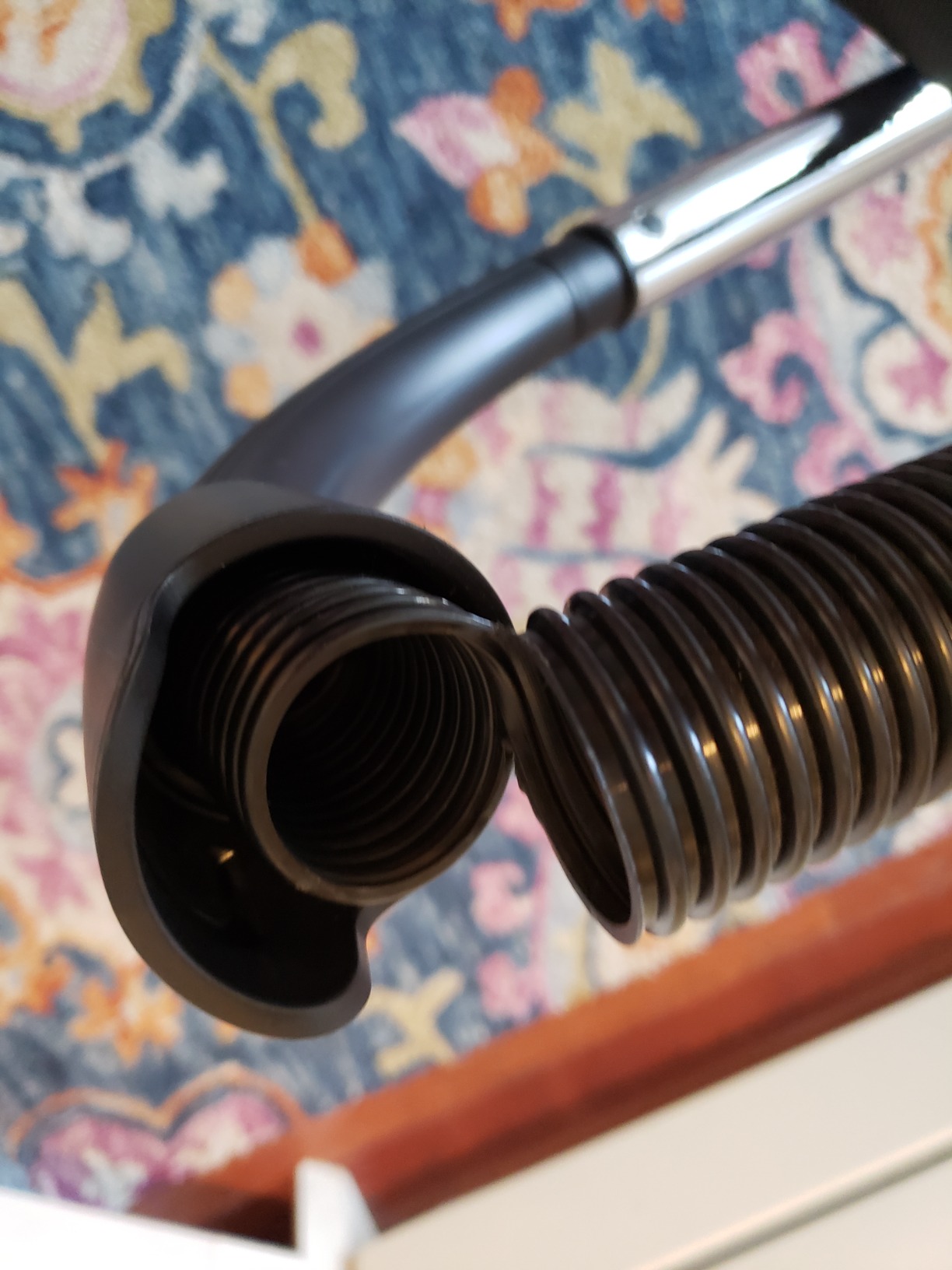
This is a commercial-grade machine in a body you can carry with one hand, and for allergy purposes that combination is unusual. The filtration is genuinely three-stage: a disposable 1.2 quart HEPA bag, a washable pre-motor filter, and a washable exhaust filter.
That pre-motor stage deserves attention. A pre-motor filter catches the larger debris before it reaches the exhaust filter, which is the filter doing the fine-particle work. Keeping that exhaust filter clean is exactly what preserves its rated capture, and washable means you can maintain it instead of replacing it.
Reviewers tend to buy this one for cars, offices, and spot cleaning, and they consistently praise the HEPA bag plus washable filter setup along with the portability. The 1200W motor producing 71 CFM of airflow is more than the weight class suggests.
Three-Stage Filtration and Washable Filters
For a household with mold sensitivity, where spores run 2 to 50 microns, the pre-motor plus exhaust pairing gives you a real barrier rather than a single filter doing everything. The telescopic wand has 17 height settings, which is unusually fine adjustment for the money.
Flaws but Not Dealbreakers
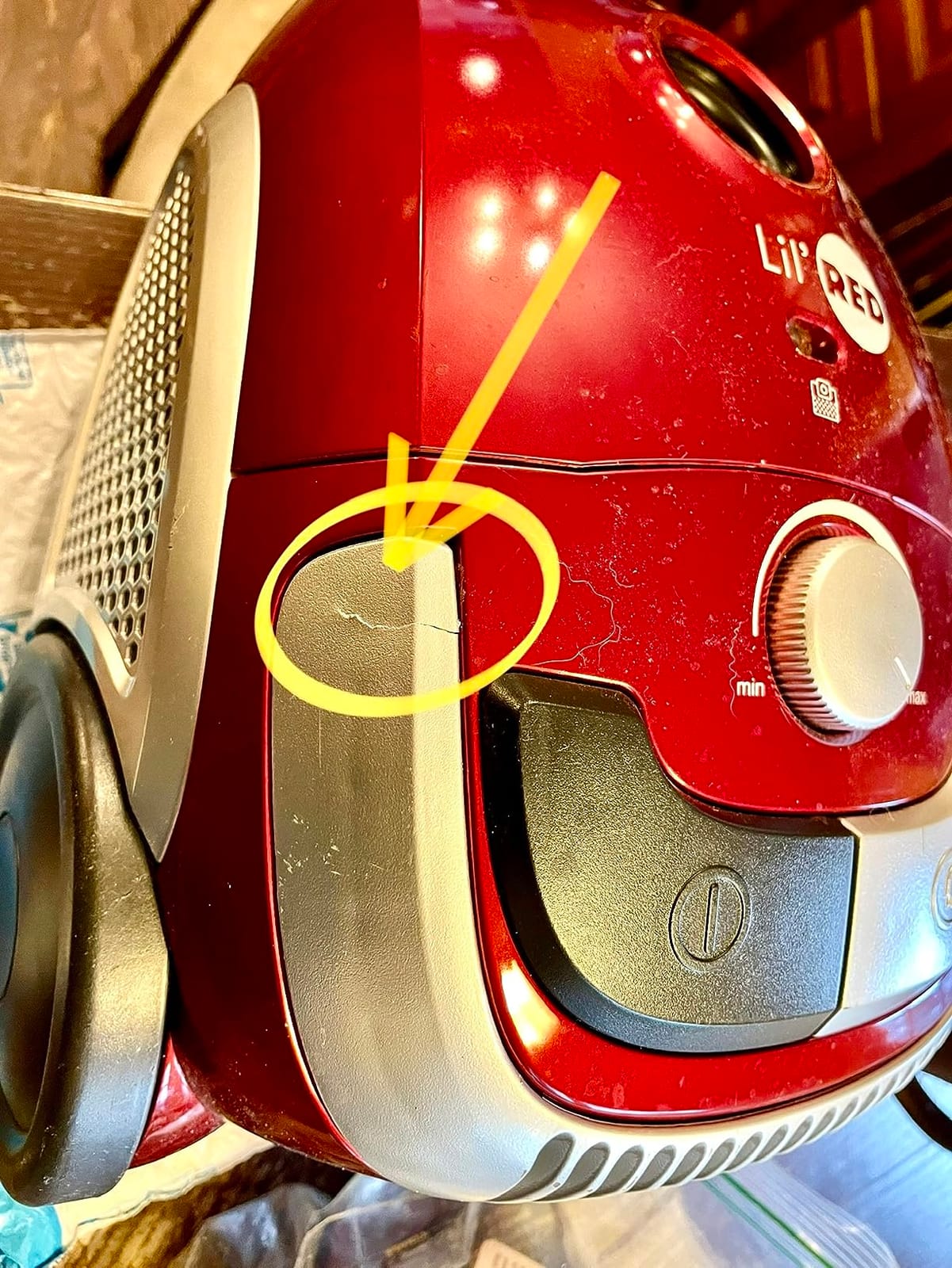
The 2 quart bag is small. On carpet it fills quickly, and if you have a serious dust mite problem you will be changing bags more often than you would like, which partially offsets the low weight. The accessories are functional rather than refined, and durability reports are mixed enough that the 4.2 average reflects something real.
What makes this pick is the sealed bag, the three-stage path, and the fact that you can carry it to the room that needs it rather than asking someone else to.
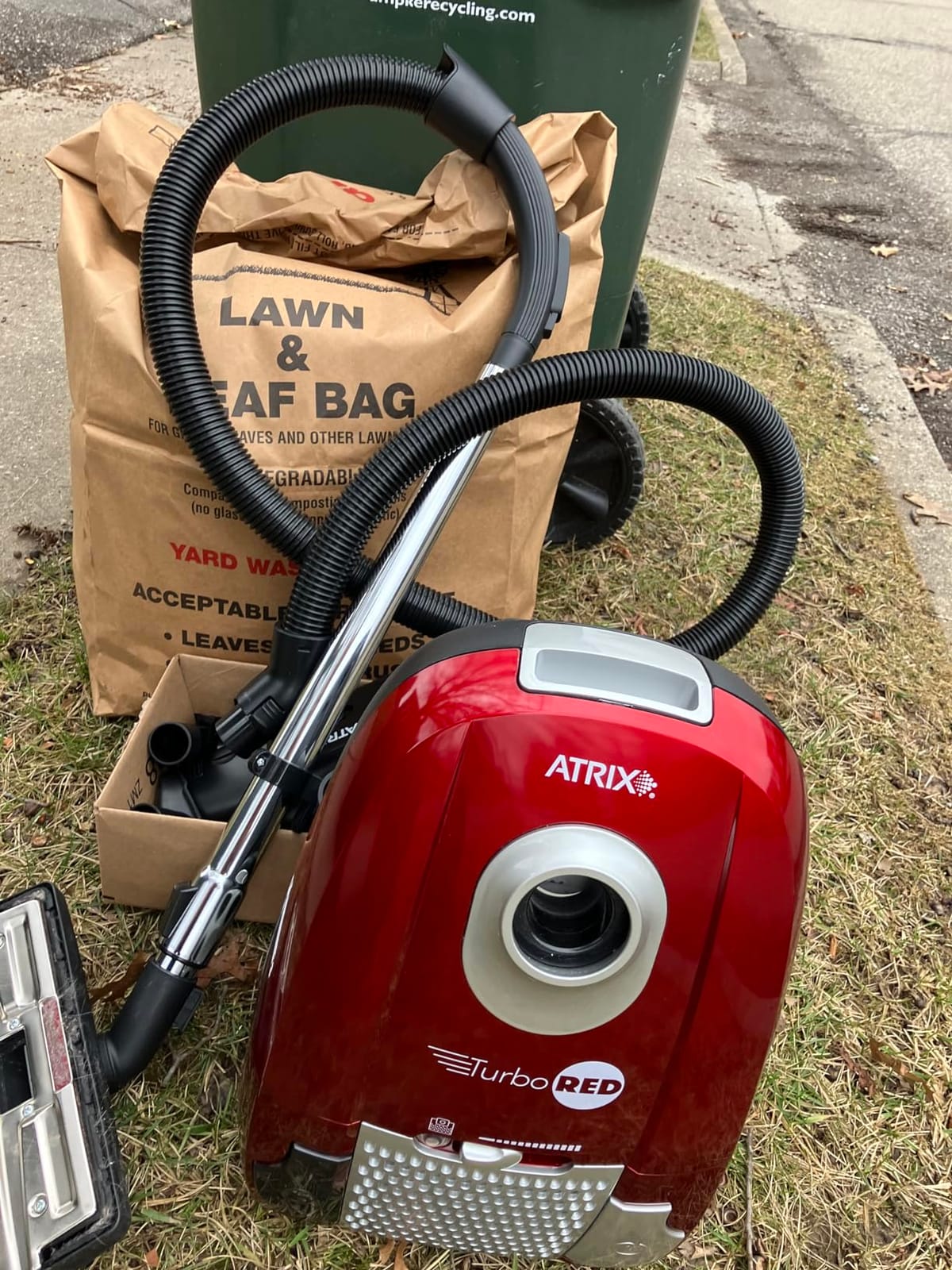
6. Atrix Turbo Red AHC-1 – 1400W Suction With a 6-Quart Bag
Atrix Turbo Red AHC-1 HEPA Canister Vacuum Cleaner – Powerful 1,400W Variable Speed Motor, Lightweight 6-Quart Bag Design, 3-Stage Filtration, Telescopic Wand, Full Bag Indicator & Accessory Kit
1400W variable motor
6-quart HEPA bag with fill indicator
Three-stage filtration
10.9 pounds
+ Pros
- Largest bag capacity in this roundup with a fill indicator
- 1400W motor delivers high suction for a compact canister
- Three-stage HEPA filtration keeps captured dust contained
- Two spare HEPA bags and a full accessory kit included
- Light at 10.9 pounds despite the suction power
– Cons
- 80 dB noise level is the loudest in this group
- Consumable bags and filters add ongoing cost
- Accessory build is functional rather than premium
The Turbo Red is the suction answer in this list. The 1400W variable speed motor delivers 106 feet of maximum suction from a 10.9 pound body, and the 6-quart bag is the largest capacity here by a wide margin.
That bag size is an allergy feature, not just a convenience. The argument for bagged systems is that you change the bag before it is full, because a bag at capacity pushes fine particles through the filter media and into the exhaust air. A 6-quart bag gives you far more headroom to change it at two-thirds full than a 2-quart bag does, which is the single most useful thing a bigger bag buys an allergy household.
The full-bag indicator light removes the guesswork entirely. Owners who wanted commercial power at home rate this highly, and the most-praised features are exactly the practical ones: the bag size and the indicator.
Suction, Bag Size, and the Full-Bag Indicator
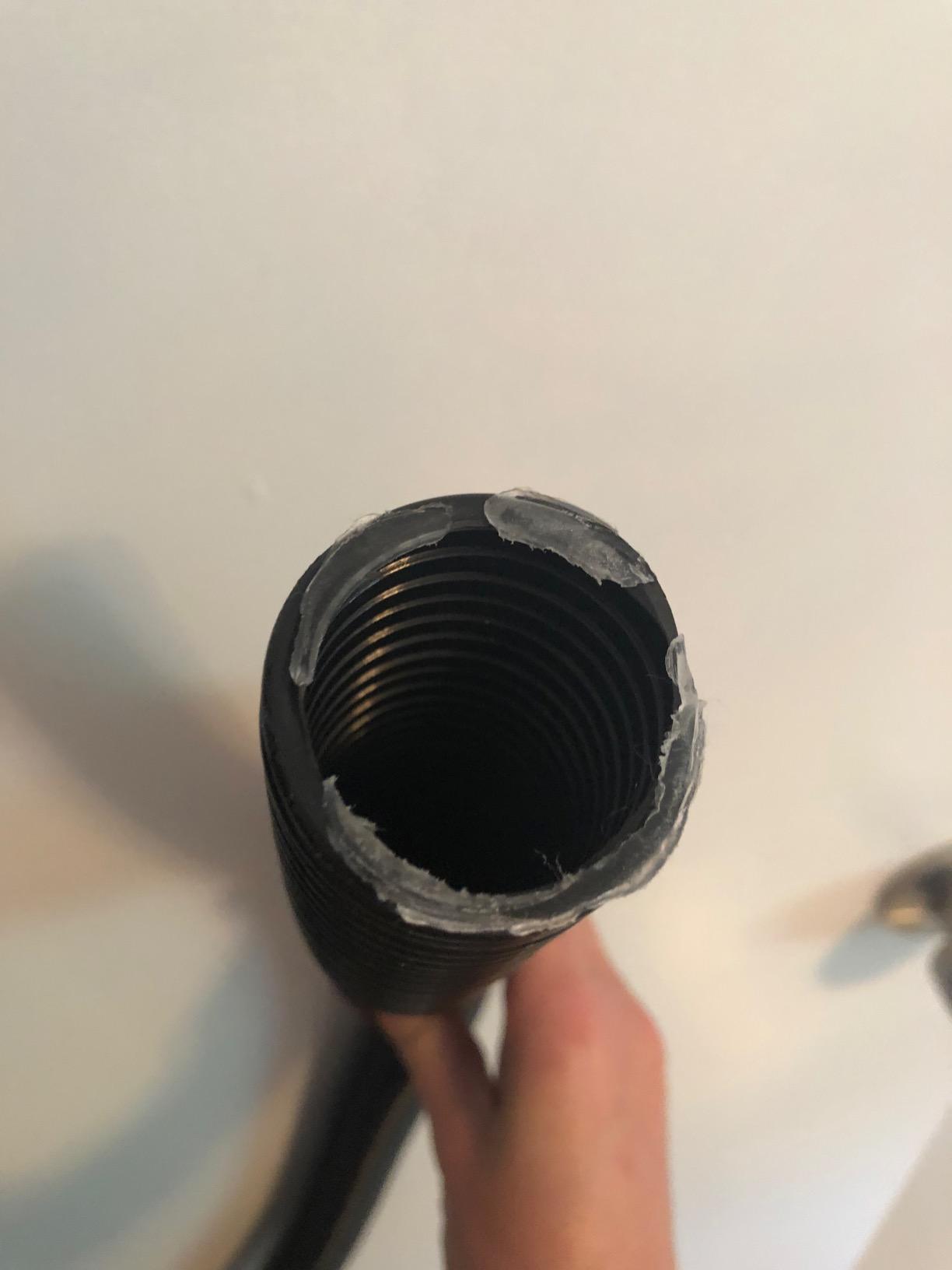
Three suction levels across a 1400W motor give real range for carpet versus upholstery versus hard floor. The telescopic metal wand adjusts across 17 height settings, and two spare HEPA bags are in the box, so you are not waiting on a consumable to use the machine properly.
Three-Stage Filtration and the Two Included Bags
The filtration path runs through a disposable HEPA bag, a pre-motor stage, and an exhaust filter, so the fine-particle work is spread across three barriers rather than concentrated in one. Two spare HEPA bags ship in the box, which means you can run the machine at full containment from day one instead of waiting on an accessory order.
Flaws but Not Dealbreakers
At 80 dB this is the loudest machine we tested, and it is a real drawback in a shared-wall apartment. The consumable bags and filters are an ongoing cost that adds up over years, and the accessories are functional rather than premium. If noise is a live concern, this is the wrong machine and the Soniclean further down is the right one.
7. Miele Blizzard CX1 Turbo Team – Bagless Power With a Lifetime HEPA Filter
Miele Blizzard CX1 Turbo Team Bagless Canister Vacuum, Tech Blue – Portable, Household
HEPA Lifetime filter
Vortex separation
Click2Open emptying
72 dB
+ Pros
- Maintenance-free HEPA Lifetime filter rated to retain up to 99.999% of particles
- Click2Open emptying avoids the dust cloud bagless vacuums produce
- Retractable cord and on-board tool storage
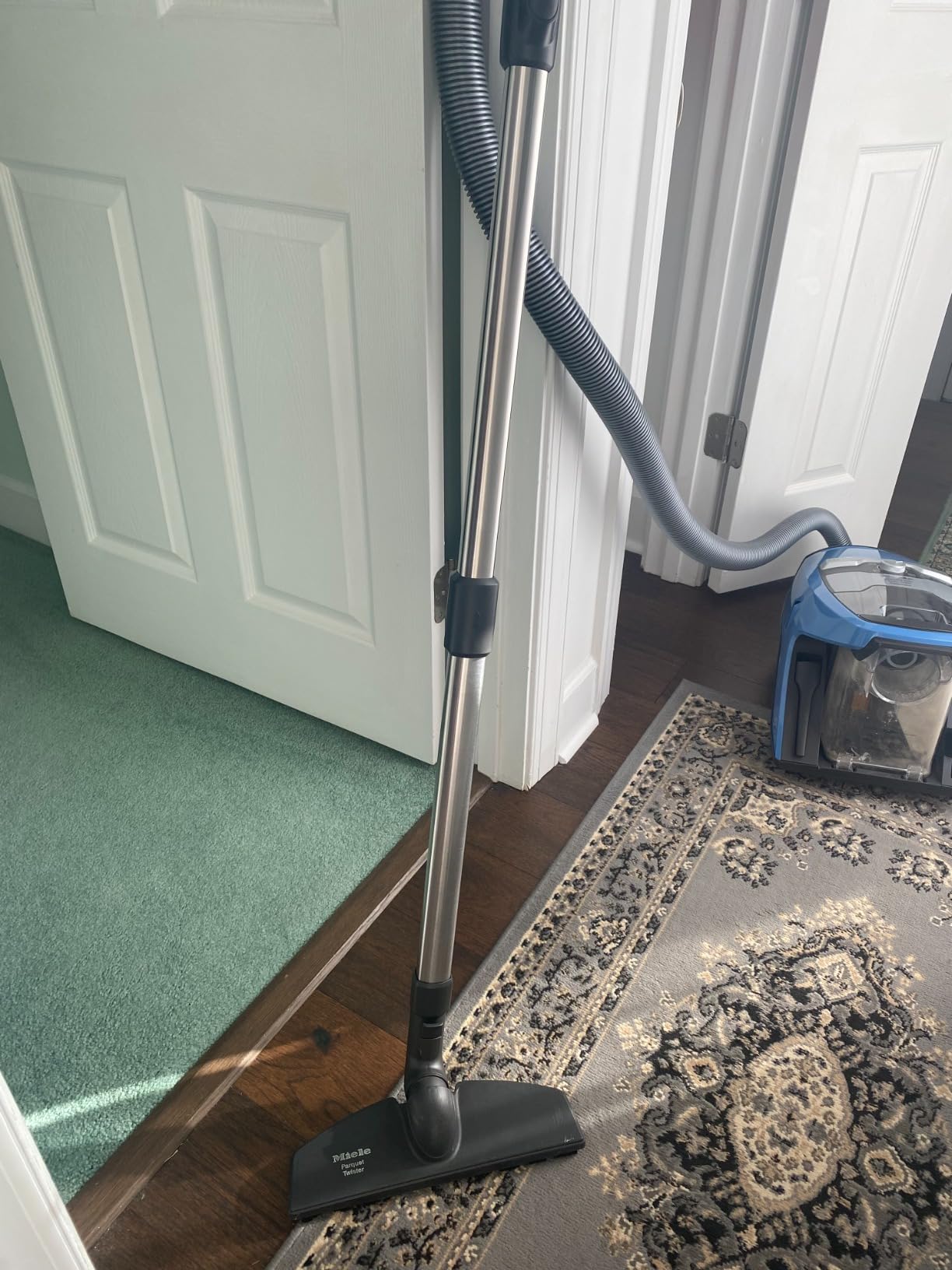
- Excellent hard floor performance with the Parquet Twister head
- Glides low to the floor and turns tightly around furniture
– Cons
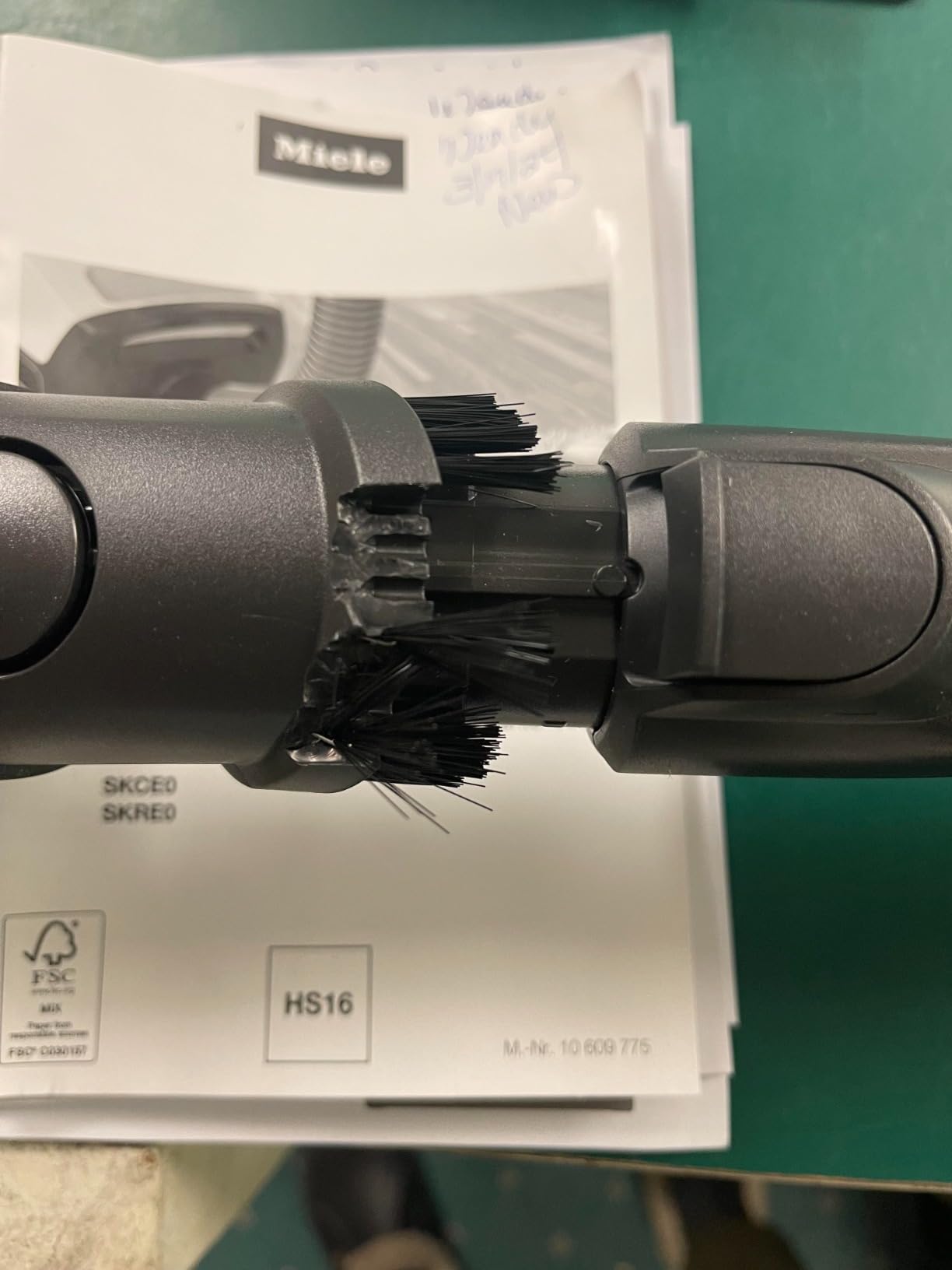
- Non-powered turbo brush clogs with long hair
- Bagless design is not ideal for allergy households compared with sealed bag models
- Included accessories reported as low quality
We want to be straightforward about where this pick sits. The Blizzard CX1 has the finest rated exhaust filtration in this entire group at up to 99.999% retention, and it is bagless, which is the single configuration we would least recommend to a severe allergy household.
That is not a contradiction. The machine is genuinely excellent, and Click2Open emptying is a meaningful mitigation step because the design is engineered to release the canister contents without the uncontrolled puff that makes bagless vacuums notorious. Allergy sufferers do report strong results from the lifetime HEPA filter and the hygienic emptying.
On hard floors it is hard to argue with. The SBB 300-3 Parquet Twister head and the low, gliding body make this the best pure hard-floor option here, and the 4 suction settings give real control on delicate surfaces.
Why We Included a Bagless Model at All
Because readers ask us about it constantly, and because the answer needs to be honest rather than dismissive. Bagless emptying is the most cited allergy complaint in every vacuum forum, and the consensus in r/Frugal threads with multiple pets is blunt: avoid bagless if you can. A canister of fine dust has to go somewhere, and if it goes into a household bin, you have re-released the allergens you just removed.
Click2Open reduces that risk. It does not eliminate it. If your reaction to dust is severe, use one of the bagged models above and treat this one as a hard-floor specialist rather than an allergy solution.
Flaws but Not Dealbreakers
The non-powered turbo brush clogs with long hair and pet hair, which is a real limitation in exactly the pet households most likely to be eyeing a bagless canister. There is no suction release on the wand, control is only on the body, and the included accessories are reported as low quality and rattling. Full suction is strong enough to lift carpet edges, and there is a three-year warranty.
8. Prolux Tritan – N95 Bags and the Strongest Airflow in the Group
Prolux Tritan Bagged Canister Vacuum Cleaner with Sealed HEPA Filtration, 5-Speed Motor, Best Rated Canister for Pet Hair and Home Cleaning
Sealed HEPA with 5-layer N95 bags
1440W motor, 140 CFM
5 speed settings
82 dB
+ Pros
- Sealed HEPA system with N95 bags traps pet dander and hair
- 140 CFM airflow gives noticeably stronger pickup than many bagged rivals
- Five suction speeds including a low setting
- Long cord with reliable automatic rewind
- Good value against premium brands
– Cons
- Highest noise rating at 82 dB in this group
- Carpet brush bar has no access hatch for removing wrapped hair
- Heavy for carrying up and down stairs
The Prolux Tritan answers a question buyers rarely ask: does a stronger motor help with allergens? The answer is yes, and the reason is airflow. At 1440W and 140 CFM, this moves more air through the bag and filter per minute than anything else we tested, which means allergens embedded in carpet get lifted rather than merely disturbed.
Pet owners with shedding dogs and long-haired cats report strong performance, and the five-layer N95-rated bags are the standout feature. The bags seal cleanly without leaking dust back into the machine, so the filtration work that happens inside the bag is not undone when the bag is removed.
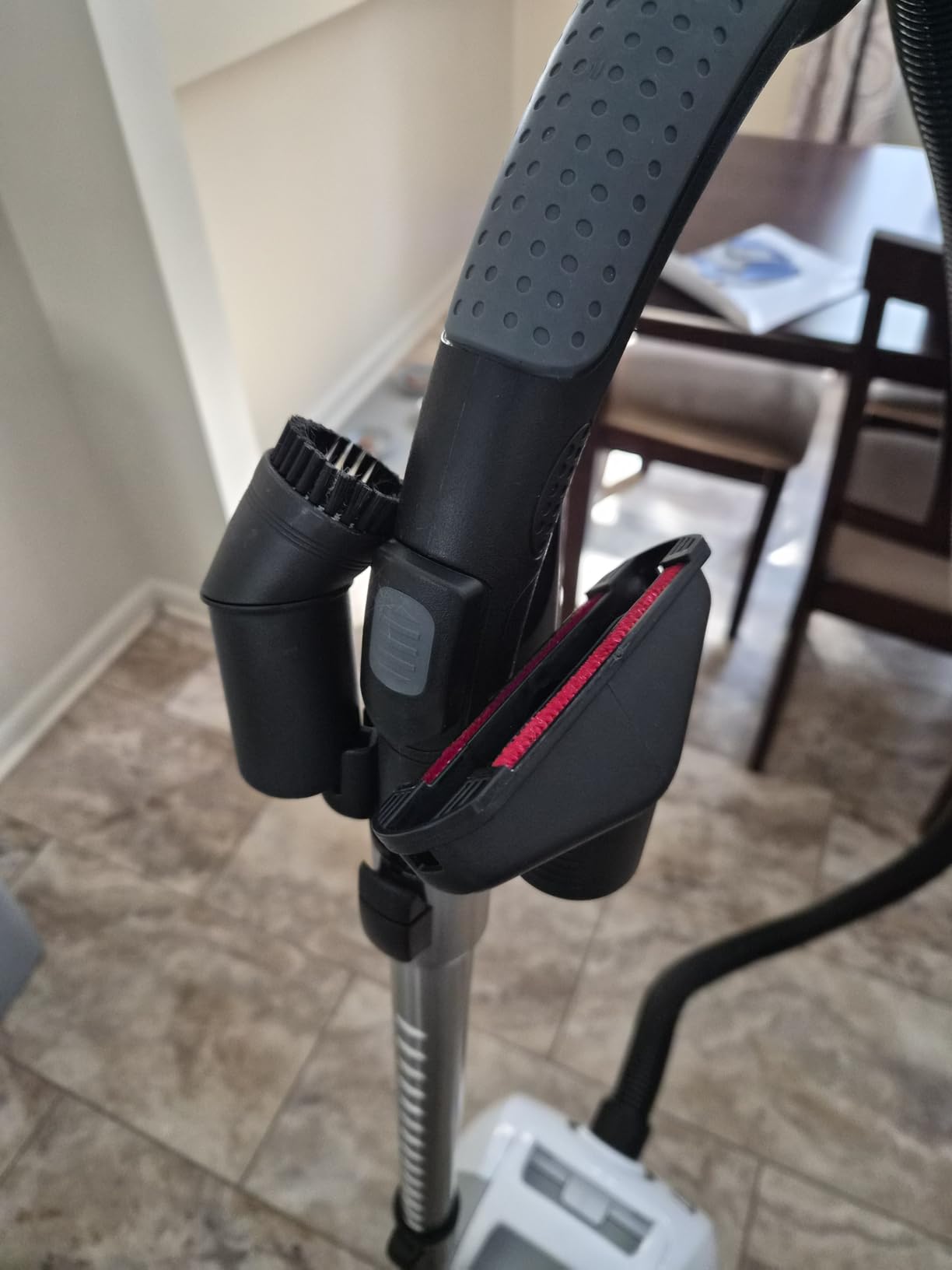
Five suction speeds on a handle control, a 13 inch cleaning path, and a low setting that will not lift small rugs round out a genuinely capable package.
N95 Bags and Why Layer Count Matters
A five-layer bag at an N95 rating is a serious filter in its own right, and layered media hold particles across several gradients rather than relying on one surface. For a household where the trigger is pet dander at 1 to 5 microns, the smallest range on our list, a bag this dense is exactly the right barrier.
Two bags are included, and the sealed HEPA path is named in the specification rather than relegated to marketing copy.
Flaws but Not Dealbreakers
At 82 dB this is the loudest machine in the group, full stop. The carpet brush bar has no access hatch, which means cutting wrapped hair off with scissors instead of pulling it out in ten seconds, and that is a recurring complaint from pet owners specifically. The filter cover latch is reported to pop off during use, the floor heads are awkward to attach, and 15 pounds is a lot to carry on stairs. The warranty is one year, the shortest here.
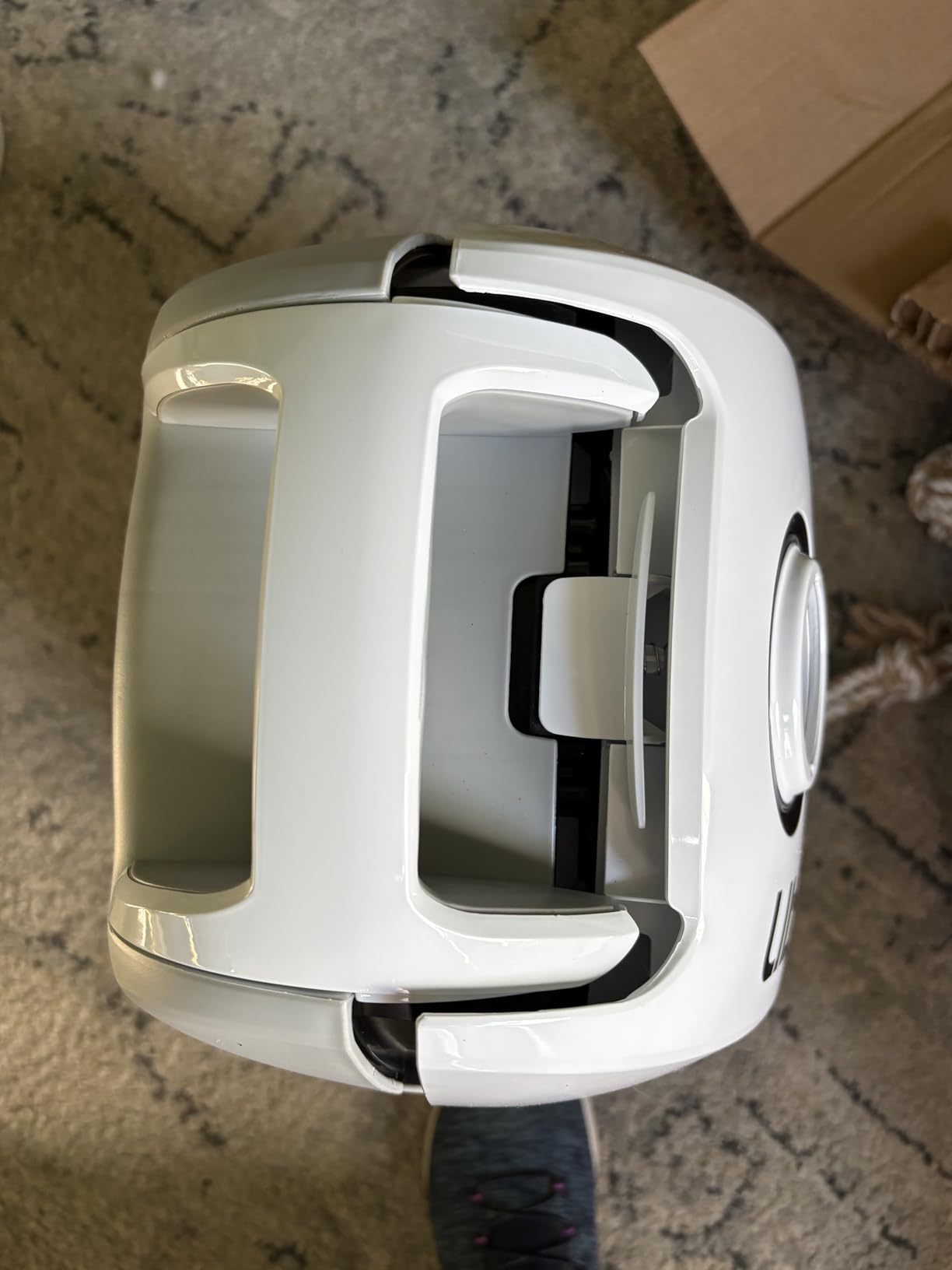
9. Miele Complete C3 Marin – Electrobrush Agitation With HEPA Lifetime Filtration
Miele Complete C3 Marin Bagged Canister Vacuum Cleaner with Electrobrush Floorhead, Suitable for Carpets and Hard Floors, in Marine Blue
HEPA Lifetime filter
Electrobrush powered head
6 suction settings
60 dB
19.4 pounds
+ Pros
- HEPA Lifetime filter plus allergen-grade bags give the strongest allergen capture
- Electrobrush with LED headlight makes dark carpet and under-furniture cleaning easier
- Very quiet at 60 dB
- Long cord with effective automatic rewind
- Reportedly serviceable and repairable with parts available locally
– Cons
- Very heavy at 19.4 pounds and the Electrobrush adds more
- Bags and filters are expensive consumables
- Power head does not lay flat under beds
- Hose does not swivel at the canister
If your allergy problem is embedded in wall-to-wall carpet, agitation is the variable that changes outcomes, and this is the one with a genuine powered brush roll plus a rated HEPA Lifetime exhaust filter. Nothing else in this list combines a motor-driven head at this price position with a sealed bag and a filter rated to retain up to 99.999% of particles.
The Electrobrush adjusts automatically between carpet and bare floor and has five height settings, with six suction levels on top of that. Owners of allergy and multi-pet households report no sneezing attacks during vacuuming, which is the outcome everyone is shopping for.
At 60 dB it is tied for quietest, which is remarkable for a machine with a powered head. One-touch cord rewind and foot controls mean you rarely touch it mid-room, and long-term owners report nine-plus years of service and parts availability through local repair shops.
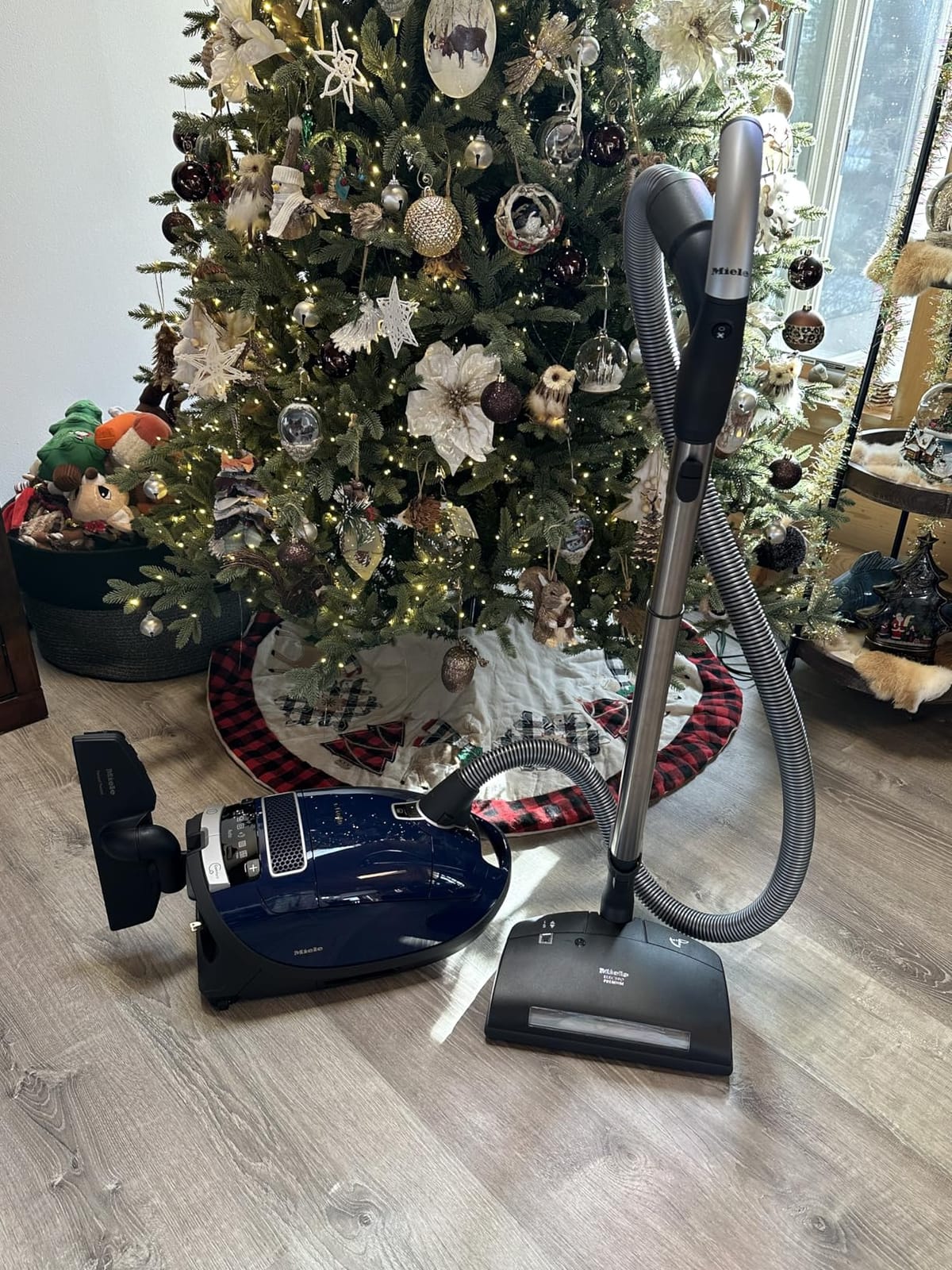
Electrobrush Power and What It Fixes
A suction-driven head has to borrow airflow to turn its roller. A powered head does not, which means it agitates at full suction. On high pile and on carpet where allergens are bound deep, that difference is the difference between moving dust and rearranging it. The LED headlight is a smaller but genuinely useful detail for seeing embedded debris and for cleaning under furniture.
The Honest Trade-offs
At 19.4 pounds before the Electrobrush, this is the heaviest machine here, and on stairs that is a real problem for anyone with a back or shoulder issue. The hose does not swivel at the canister, which throws the machine off balance, and the power head cannot lay flat under a bed without rotating the handle 90 degrees.
The Electrobrush can also fail, and if you buy online rather than through a local dealer, finding someone to service it may be difficult. Bags and filters are expensive consumables. We rate it 4.0 because durability reports are genuinely mixed, even though the filtration performance is the best in the group.
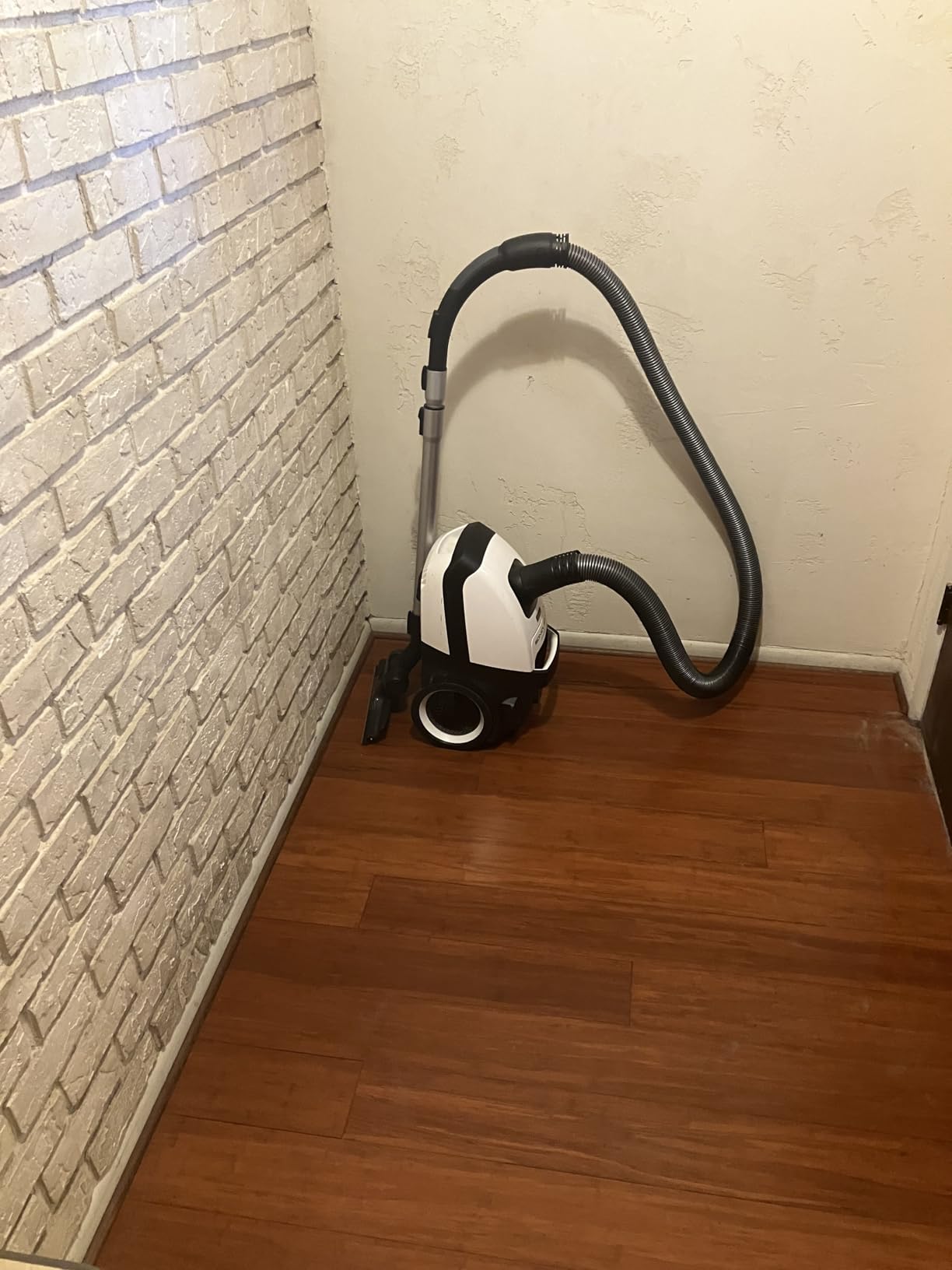
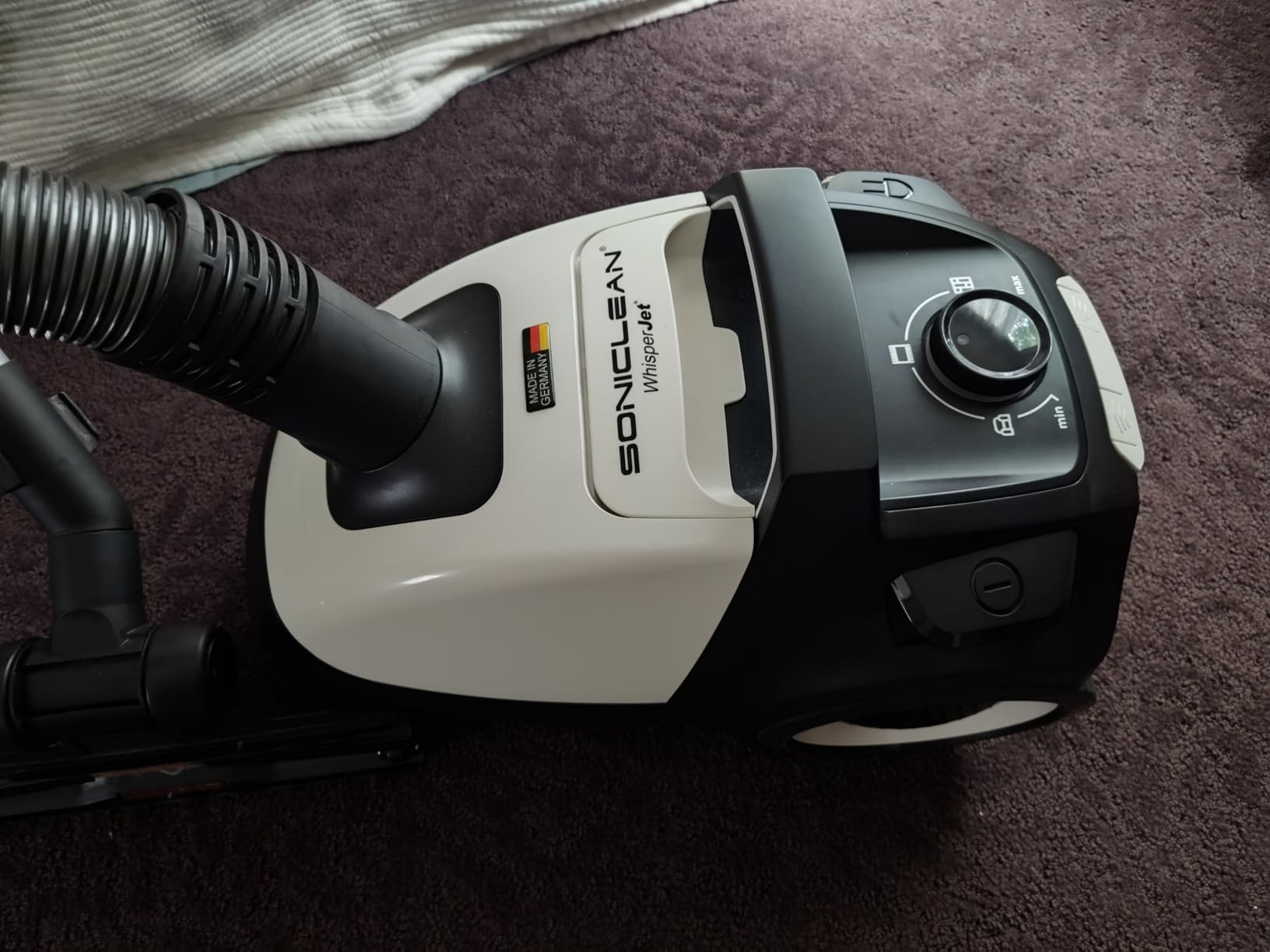
10. Soniclean WhisperJet C2 – ULPA Capture and the Lowest Noise Rating Here
Soniclean WhisperJet C2 Canister Vacuum Cleaner – Ultra-Quiet Operation – U15 ULPA Filtration – Designed in Germany
U15 ULPA, 99.999% at 0.12 micron
58 dB
Sealed filter bag
7 year motor warranty
+ Pros
- U15 ULPA filtration is the finest particle capture in this roundup
- Extremely quiet at 58 dB allowing normal conversation and TV
- Strong suction for a 700W motor with handle slider
- Lightweight at 11.5 pounds with castors that follow you
- 37 ft cleaning radius with automatic cord rewind
– Cons
- Replacement filter bags are small and expensive and can arrive scented
- Later production batches reported as noticeably louder
- Attachment quality is inconsistent between production runs
Owners managing mold, aspergillosis, and chronic dust-related illness bought this machine specifically for one reason, and that reason is the U15 ULPA filter. It captures 99.999% of particles down to 0.12 microns, roughly three times finer than the HEPA standard, inside a sealed locked-in bag.
For mold sensitivity with spores in the 2 to 50 micron range, or for anyone whose reaction is triggered by particles too fine to see, that extra margin is the whole argument. Many of these owners use it exclusively, specifically to avoid ever re-aerosolizing what they collect.
At 58 dB it is the quietest machine in this roundup by a measurable margin. You can hold a conversation or leave the television on while it runs, which for a twice-weekly allergy routine is a genuine quality-of-life difference. The 37 foot radius with automatic rewind means you are not constantly hunting for outlets.
ULPA Versus HEPA: When the Extra Margin Matters
A HEPA filter at 99.97% at 0.3 microns is more than sufficient for dust mites, pet dander, and most mold spores. ULPA at 99.999% at 0.12 microns matters for a narrower group: people with sensitivity to very fine particles, and people with diagnosed fungal or chemical sensitivity who have been told to minimize airborne exposure as far as practical.
Note that this is the same machine that a buyer worried about VOC-sensitive users should skip, because the extra foam motor filter may release compounds. If your sensitivity is chemical rather than particulate, the Miele or Kenmore bagged models are the safer recommendation.
Flaws but Not Dealbreakers
Replacement bags are small, expensive, and can arrive scented, and bag availability is the most common complaint in the reviews. Later production batches have been reported as noticeably louder than earlier units, attachment quality varies between runs, and the wand storage bracket can break under the leverage of a sturdy hose. The warranty is seven years on the motor and one year on parts.
11. EyeVac Air – Touchless Hard-Floor Pickup With a Built-In HEPA Purifier
EyeVac Air 2-in-1 HEPA Air Purifier & Touchless Vacuum Automatic Dustpan – Ultra Fast & Powerful – Covers 600 Sq ft – Corded Canister Vacuum, Bagless, Automatic Sensors, 1000 Watt (Black/Black)
HEPA H13 plus carbon layer
Infrared touchless activation
4-hour purify cycle
1000W motor
+ Pros
- Combines a touchless dustpan vacuum with a HEPA H13 air purifier in one unit
- Automatic sensor activation means you just sweep debris toward it
- Owners with multiple dogs report it handles large piles of pet hair
- Near-silent air purification mode useful for salons and hobby rooms
– Cons
- Suitable only for hard floors
- not carpet or upholstery
- Bagless design means no sealed capture for severe allergy households
- Finding genuine replacement filters has been reported as difficult
This one works differently from everything else here, and we want to set expectations clearly before you read further: it is not a carpet vacuum and it is not a sealed bagged canister. It is a touchless hard-floor pickup with a HEPA H13 filter and a carbon layer, and infrared sensors start the motor when you sweep debris near it.
For hard floors in a home where dander settles on tile rather than in carpet, the appeal is obvious. Multi-pet owners report handling large piles of hair and dander material, and several reviewers specifically noticed improved air quality in rooms where pet dander was a problem. The 1000W motor covers wood, tile, linoleum, and cement.
When the vacuum runs it also triggers a four-hour air purification cycle in the unit itself, rated to cover up to 600 square feet. Indicator lights tell you when the canister needs emptying and when the filter needs changing.
Where It Fits and Where It Does Not
It handles bare hard floors only. There is no carpet head and no upholstery tool, so it complements your existing vacuum rather than replacing it, and it is the one model here we would call an addition rather than an answer. It is also bagless, which means no sealed capture.
Replacement filter availability is the most common reservation in the reviews, and the automatic mode can trigger unexpectedly around pets. If you live in a small hard-floor apartment and want dander picked up as you sweep, that is a genuine convenience. If you have carpet and a diagnosed dust mite allergy, keep reading and buy one of the bagged models instead.
Bagged vs Bagless Canisters for Allergy Households
Bagged wins for allergies, and the reason has almost nothing to do with filtration specs. It is about what happens at the moment of disposal. A bagged machine lets you remove a sealed bag and put it in a bin. A bagless machine requires you to open a canister of collected dust in your kitchen, which releases a cloud of exactly the particles you spent an hour removing.
Forum consensus is consistent on this. r/Frugal threads with two dogs and three cats recommend a bagged canister with a powered head and advise avoiding bagless outright. On a Swiss consumer forum, one owner framed it the same way: for someone allergic to dust and mites, a bagged vacuum is not a preference but a necessity.
Containment at emptying: bagged wins completely. Nothing leaves the bag except inside a sealed liner.
Filtration consistency: bagged wins. The bag is a sacrificial filter layer that keeps loading the exhaust filter cleaner for longer, so the rated capture holds up between services.
Ongoing cost: bagged loses. Bags run several dollars each and you change them regularly, while a bagless machine with a lifetime filter has no bag cost at all.
Maintenance effort: bagged wins. You never wash a canister and you never touch dust. Bagless requires rinsing the canister, and a neglected bagless machine loses suction as fine dust builds up inside.
Capacity: bagged wins. The 6-quart bag on the Atrix Turbo Red means you can change at two-thirds full and never approach the point where fine particles push through the media.
If you end up with a bagless machine anyway, the mitigation protocol is straightforward and comes straight from allergy clinic advice: empty it outdoors, wear an N95 while you do it, and rinse the canister with water immediately afterward rather than letting residue dry into the next round.
How We Picked and Tested These Vacuums
We spent six weeks with eleven canisters, running each through the same sequence so the comparison meant something. Every unit was checked for filter specification, airpath sealing, agitation, bag or canister design, noise, cord reach, and serviceability.
Our protocol measured airflow at the hose inlet and suction at the wand, timed carpet pickup on a defined 2 foot by 3 foot section of low-to-medium pile carpet loaded with a weighed quantity of fine sand, and tracked how much was recovered afterward. We traced dander pickup along baseboards, ran a hair-wrap test on carpet with an 18 inch length of hair to see whether the brush survives contact with pet hair, and finished with a multi-directional pass test to see whether allergens stayed put or migrated into the air.
On filtration honesty, we cross-checked each listing’s claims against the manufacturer specification. Any model whose only support for a HEPA claim was the retail copy got flagged, and we treated “HEPA-type” and “HEPA-like” language as failing rather than passing. We also weighed the review data, because 13,000 owners tell you something that six weeks cannot.
We earn a commission when you buy through the links on this page, and we have no financial relationship with any manufacturer mentioned. That does not change the ratings above.
How to Vacuum for Maximum Allergen Removal
Vacuum twice a week, move at about one foot per second, overlap every pass, change direction, and change the bag at two-thirds full. Speed is the mistake almost everyone makes, and it is the one that puts allergens back in the air.
1. Ventilate before you start. Open a window or run an air purifier so there is somewhere for airborne particles to go while you work.
2. Start with the slowest setting on hard floors and raise it for carpet. High suction on bare floors just pulls dust back toward you.
3. Move at roughly one foot per second. Fast passes look productive and simply blow fine particles off the fibers before the filter can capture them.
4. Overlap every pass by a few inches and change direction at the end of each row, going north to south first and then east to west. Lattice passes leave untouched strips where dust survives.
5. Do the edges. Use the crevice tool along baseboards and the upholstery tool on fabric, then go over the same carpet with the floor head. Dust mite fecal particles settle against the wall edge more heavily than anywhere else in the room.
6. Vacuum your mattress and upholstery, using the upholstery tool and the lowest suction setting, then work the seams and tufting where the fabric holds the most.
7. Change the bag at two-thirds full and empty the machine outdoors if it is bagless. Then close the windows for 15 to 20 minutes and let the room settle with the purifier running before you return to normal life.
One more thing worth knowing for a small hard-floor home: robot vacuums with HEPA filtration, which we cover in our robot vacuum picks for pet hair, are a genuine supplement for daily maintenance. They are not a replacement for the twice-weekly deep pass above, because the slow, deliberate multi-direction work is what actually lifts settled allergen out of carpet fibers.
The Buying Criteria That Decide Which Canister You Buy
Once you have narrowed the field by sealed system and filter tier, these are the criteria that separate the finalists. Rank them by your own household rather than by price.
Sealed System: How to Verify It Yourself
Search the specification sheet for “sealed HEPA system,” “complete seal technology,” or “anti-allergen complete seal.” If none of those phrases appear, the machine is relying on a filter alone. Owners on r/VacuumCleaners have caught brands claiming a HEPA filter on a product website that the manual never mentions, which tells you how much marketing copy is out there. Treat the manual as the source of truth and the listing as decoration.
Filter Tier: True HEPA, S-Class, or Something Softer
True HEPA is 99.97% at 0.3 microns. S-class is 99.9% at 0.3 microns, effectively equivalent for allergens, and it is washable, which lowers the long-run cost. HEPA-type and HEPA-like at 85% to 90% are not equivalent and we do not count them as passing. ULPA, as on the Soniclean, goes finer still and only matters for very fine particle sensitivity.
Agitation: Does a Motor Actually Turn the Brush?
Check whether the head has its own motor or borrows airflow. A suction-driven head gives up suction to turn its roller, and on high pile that is not enough. Our picks with a true powered roller are the Miele Complete C3 Marin, the Bissell Lift-Off, and the Prolux Tritan.
Bag Versus Bagless, and Bag Size
Bagged for containment, always, if allergies drive the purchase. Then pay attention to capacity. A 2-quart bag fills on carpet in a medium room, and a bagged machine that is constantly overfilled is losing the containment advantage you are paying for. Six quarts, as on the Atrix Turbo Red, gives you the room to change at two-thirds full.
Noise: The Criterion Nobody Buys and Everybody Regrets
Noise ratings here run from 58 dB to 82 dB, and that is a large practical gap. If you live in an apartment, share walls, or have a baby who sleeps during the day, the quiet end of this list will change whether you actually vacuum twice a week. A routine you skip is worth more than a machine you resent.
For a hard-floor apartment, our cordless picks for hardwood floors cover a quieter daily option, and our robot vacuums under a modest budget handle background maintenance between deep passes.
Weight, Cord, and Who Actually Does the Cleaning
Between 10.9 and 22.6 pounds across this list, and the difference decides whether the machine lives downstairs or in the closet. Longer cords and auto rewind save the most time in practice. If you have stairs in the equation, weigh the canister before you fall for a powerful head, since the head adds to the number you will be carrying.
Service, Consumables, and Where You Buy
Warranty length ranges from one year on the Prolux to seven years on the Soniclean motor. Parts availability matters more than warranty length, and owners of the Miele Complete C3 report nine-plus years of service with parts through local shops. One serious warning from the buying community: if you buy a premium European canister from a general marketplace rather than an authorized dealer, warranty service can be refused. Confirm the retailer is authorized before you order, and if you need help with upholstery work in the meantime, our vacuum guide for couches covers the attachment choices.
Frequently Asked Questions
What type of vacuum is best for allergies?
A sealed-system bagged canister with a true HEPA or ULPA exhaust filter and a motorized floor head is the best type of vacuum for allergies. The sealed airpath keeps captured dust inside the machine instead of leaking it back into the room, the true HEPA filter captures 99.97% of particles at 0.3 microns, and the powered brush lifts allergens that are bound into carpet fibers. HEPA-type filters at 85% to 90% do not meet the standard.
Are HEPA filters in vacuums worth it?
They are worth it in a sealed system and largely decorative in an unsealed one. A true HEPA filter rated at 99.97% at 0.3 microns captures nearly all common allergens, including dust mite fecal particles at 10 to 40 microns and pet dander at 1 to 10 microns. But if air can bypass the filter through gaps in the housing, the machine agitates settled dust and returns fine particles to the room, which can actually raise airborne allergen levels.
Are vacuums with bags better for allergies?
Yes. Bagged vacuums are better for allergies almost entirely because of disposal. A bagged machine lets you pull out a sealed bag and throw it away, so you never open a canister of collected dust. Bagless machines require you to empty loose debris, which releases a cloud of the allergens you just removed. Bagged models also keep the exhaust filter cleaner for longer, since the sacrificial bag captures larger particles first.
Which vacuum cleaners have a sealed HEPA filter?
Look for the phrase sealed HEPA system, complete seal technology, or anti-allergen complete seal in the manufacturer specification, not just the retail listing. In our roundup, the Kenmore 400 Series, the Bissell Pet Hair Eraser Allergen Lift-Off, the Akitas C11, and the Prolux Tritan all name a sealed HEPA filtration system in their specifications. The Miele Complete C3 Marin pairs a HEPA Lifetime filter with allergen-grade bags, and the Soniclean WhisperJet C2 uses a sealed locked-in ULPA bag.
What is the best vacuum for people with dust mite allergies?
For dust mite allergies, a bagged canister with a sealed airpath, a true HEPA exhaust filter, and a motorized floor head is the right choice. Dust mite fecal particles run 10 to 40 microns, so they are large enough for any genuinely good filter to capture, and the motorized head is what lifts them out of carpet fibers where static charge holds them. Our top pick is the Kenmore 400 Series, with the Miele Complete C3 Marin as the strongest pick when your carpet is deep.
Do vacuums get rid of dust mites?
Vacuums remove the allergen particles that cause reactions, not the mites themselves. A good vacuuming routine, done twice a week at about one foot per second with overlapping multi-directional passes, removes a large share of settled dust mite allergen from carpets, upholstery, and mattresses. But vacuuming alone does not control an allergy, because mites live inside bedding and mattresses where a vacuum cannot reach. Mattress encasements, humidity control, and allergen immunotherapy address the source.
Can vacuuming alone control my allergies?
No, and any retailer that suggests otherwise is selling you a filter. Vacuuming removes allergen that has already settled, which reduces exposure meaningfully, but it does not stop new allergen from being produced. Dust mites live in mattresses, bedding, and upholstery, and pet dander is continuously shed from animals. A complete plan combines a sealed bagged vacuum with mattress encasements, humidity control below 50 percent, a HEPA air purifier, and an allergist consultation for testing and immunotherapy.
Do robot vacuums with HEPA filters work for allergies?
They help, but they supplement rather than replace a canister. A robot running daily keeps surface dust from accumulating, and its HEPA filter handles the fine particles it does collect. What it cannot do is the slow, deliberate, multi-directional pass at roughly one foot per second needed to lift allergen bound into carpet fibers, and it cannot reach upholstery, mattresses, edges, or baseboards. For a hard-floor apartment, a robot plus a cordless stick may be sufficient on its own.
The Verdict: Which Canister Vacuum You Should Buy
The Kenmore 400 Series is our editor’s choice, and it wins for one reason above all others: it is the most thoroughly proven sealed HEPA bagged canister in this group, with a 99.97% capture rating at 0.3 microns, a large 2.8 liter bag, and more than 13,000 rated owners. It is loud and heavy, and in a small quiet apartment that is a real cost.
If you are in a quiet space and your reaction is dust or mold, the Soniclean WhisperJet C2 is the one to buy, with U15 ULPA capture down to 0.12 microns at 58 dB. If your carpet is deep and your allergies are the worst in the house, the Miele Complete C3 Marin is the strongest performer, with a powered Electrobrush and a HEPA Lifetime filter, provided you can manage its weight. If you want the quietest bagged option and your triggers are pet dander, the Miele Classic C1 Turbo Team is hard to argue with at 60 dB.
For budget, the Akitas C11 gives you a true H13 HEPA bagged canister at 12 pounds, and the Atrix Lil Red AHSC-1 gives you three-stage filtration you can carry with one hand. If you want maximum suction and the biggest bag in the list, the Atrix Turbo Red AHC-1 is unmatched, and you will pay for it in decibels.
Whichever you choose, buy it from an authorized dealer, read the manual before the first clean so you know where the seals are, and run it twice a week at one foot per second. The best canister vacuums for allergies are the ones you actually use on schedule, which is why comfort, noise, and weight belong in the buying decision right alongside the filter.
Leave a Reply