
If you want the short version, these are the best cordless robotic pool cleaners in 2026. The WYBOT C1 is the all-round pick, with the largest owner base in this roundup at 1,000 reviews and 4-in-1 floor, wall, waterline and step coverage. The WYBOT C2 takes the top spot on raw specification, pairing 180 minutes of runtime with 10 micron and 180 micron dual filtration. The Beatbot Sora 10 delivers the longest single cycle we found, at 300 minutes covering pools up to 3,229 sq. ft.
I have spent the last few months reading specification sheets, digging through owner feedback and comparing how these machines behave in real pools rather than in a lab. What follows is the result: ten genuinely cordless units, no corded models smuggled into the list, and a clear verdict for each one based on what owners actually report after a season of use.
Cordless pool robots have one obvious appeal and one obvious weakness, and any honest roundup has to state both up front. The appeal is freedom from the cable tangle that ruins corded units every time you move them. The weakness is that the battery has to be recharged, the unit has to be docked after every run, and you still have to lift it out of the water yourself. Everything else in this list is a variation on how well a manufacturer solved those three problems.
A note on scope before we get into the picks. This list covers robotic pool cleaners only. Cordless stick vacuums, which are hand-operated rather than self-navigating, are a different product category and we do not mix them in here. If your pool is above ground rather than inground, our guide to the best pool cleaners for above ground pools is worth reading alongside this one. And if you are still sizing the project, our small pool ideas guide can help you decide whether a robot is the right category at all. For the wider robotic category including corded models, we have a separate roundup on the 10 best robotic pool cleaners.
Our Top 3 Cordless Robotic Pool Cleaners in 2026
Three machines stand apart from the rest. One has the deepest pool of real owner feedback, one has the strongest specification sheet, and one has the longest runtime we could verify.

WYBOT C1 Inground Robot
- 4-in-1 floor wall waterline step cleaning
- 160 min runtime
- Triple motor 45 degree slope climbing
- App scheduling with OTA updates
AIPER Scuba V3 AI Vision
- AI camera detects 20 plus debris types
- 180 micron plus 3 micron filtration
- 18.1 lb body
- Wireless charging dock
WYBOT C2 Dual Filter Robot
- 180 min runtime
- 2152 sq. ft. coverage
- 10 plus 180 micron filters
- Three brushless motors
Comparing All 10 Best Cordless Robotic Pool Cleaners (October 2026)
Every model below is genuinely cordless. The table covers the specifications that actually change the buying decision: how long the unit runs, how much pool it covers, whether it climbs walls, how fine the filter is, how long it takes to charge and how heavy it is when you have to lift it out.
| Product | Details | Action |
|---|---|---|
|
|
Check Latest Price |
|
|
Check Latest Price |
|
|
Check Latest Price |
 |
|
Check Latest Price |
 |
|
Check Latest Price |
 |
|
Check Latest Price |
 |
|
Check Latest Price |
 |
|
Check Latest Price |
 |
|
Check Latest Price |
 |
|
Check Latest Price |
How We Picked: What the Ratings Do Not Tell You
Star ratings are the easiest number to find and the least useful on their own. Two machines in this list sit within half a star of each other while their review counts differ by an order of magnitude, so we weighted the volume of owner feedback alongside the score itself.
The spread is worth looking at directly. The WYBOT C1 carries 1,000 reviews. The Beatbot Sora 10, which has the highest headline specification here, carries 65. That does not make the Sora 10 worse, but it does mean you are buying on a thinner evidence base, and we have flagged it in the write-up. A listing showing a 4.5 from a dozen buyers tells you much less than a 4.2 from a thousand.
We also compared manufacturer runtime claims against owner reports, and the two rarely match. Headline figures in this category are measured on a fresh, empty, shallow pool. A real inground pool with a deep end, a raised spa and a week of accumulated silt will drain the same battery considerably faster. Where owners have reported a shortfall we have said so rather than repeating the brochure number.
Finally, we treated weight as a first-class criterion rather than a footnote. The units in this roundup run from 7.5 lb to 40.8 lb. That is the difference between a pool robot you drop in with one hand and one your neighbour helps you lift, and it should factor into the decision as heavily as suction.
1. WYBOT C1 – The Most Reviewed Cordless Pool Robot in This Roundup
WYBOT C1 Cordless Robotic Pool Vacuum for Inground Pools, Professional
160 min runtime
1,618 sq. ft. max
45 degree slope climbing
+ Pros
- Four-in-one floor wall waterline and step cleaning
- Triple motor with 45 degree slope climbing
- App scheduling with OTA firmware upgrades
- Largest owner review base in the roundup
– Cons
- Pattern navigation is not true mapping
- 4 hour charge to reach full runtime
- Keep the charging port dry before each use
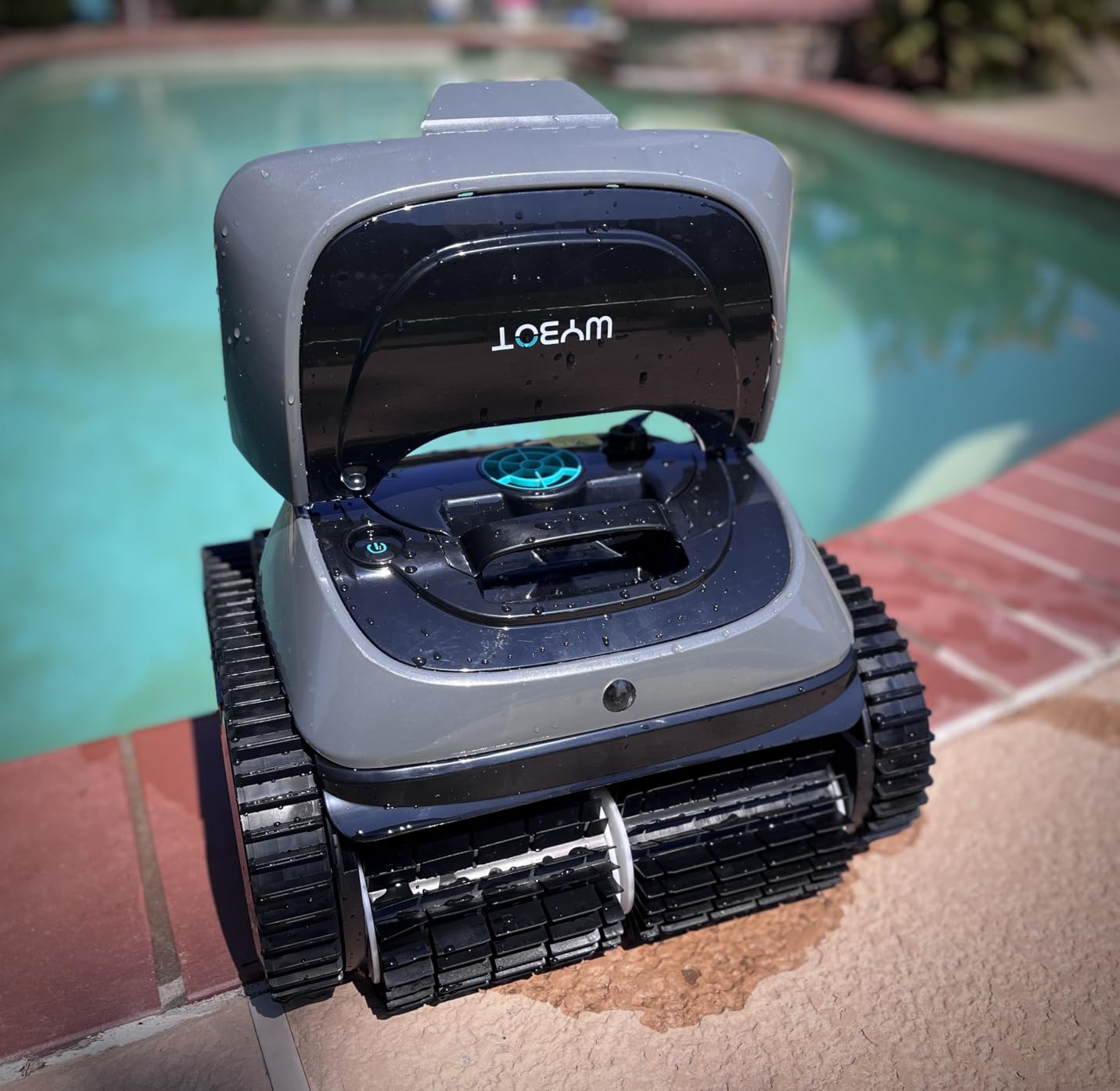
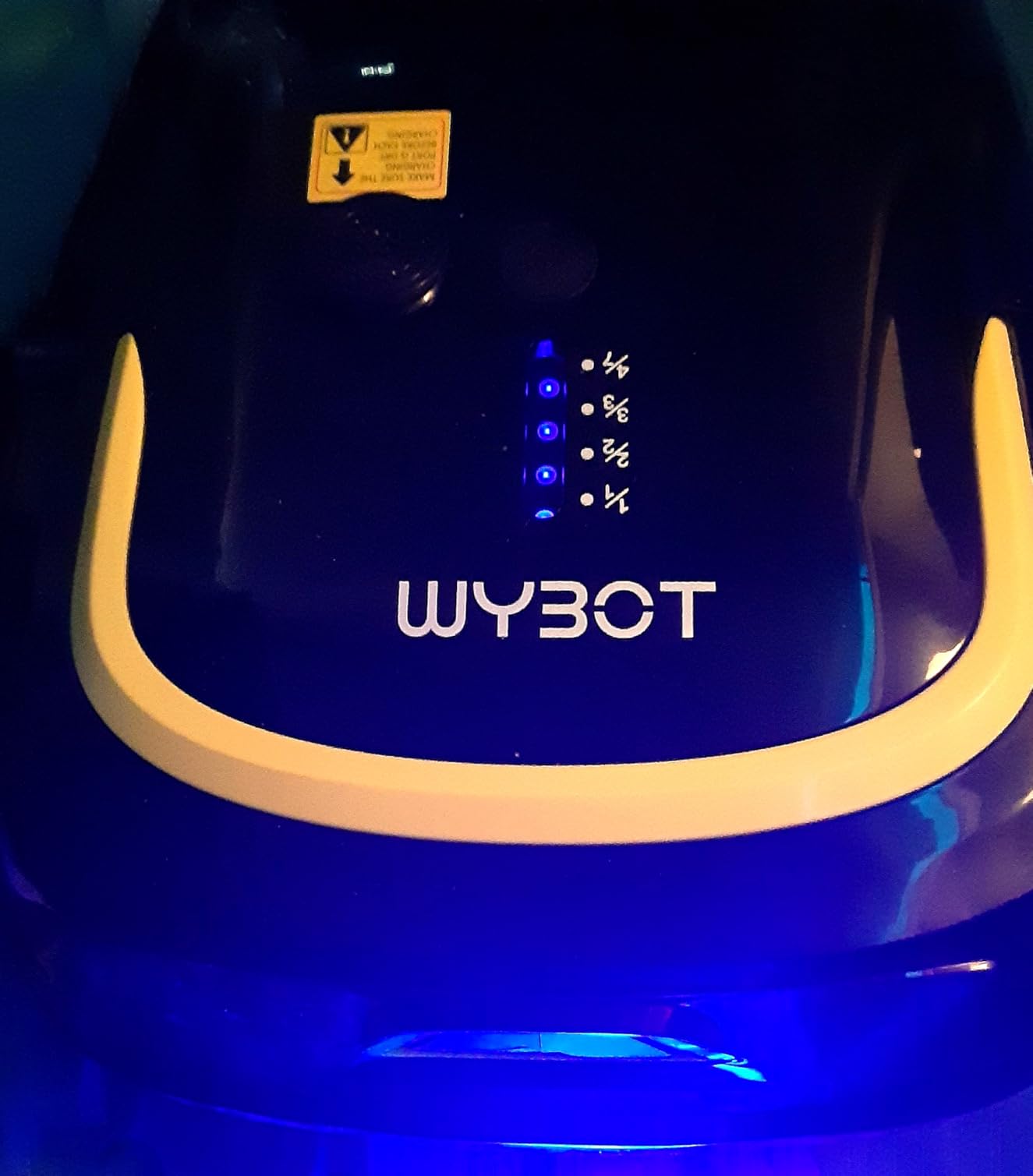
The WYBOT C1 is the one I keep coming back to, and the reason is not the specification sheet. It is that 1,000 owners have posted about it, which makes it the best-documented cordless pool robot available right now. When a problem shows up, you can see other people hitting the same wall.
On paper it is a genuinely capable machine. A triple-motor setup handles floor, walls, waterline and steps in a single 4-in-1 cycle, and it climbs slopes up to 45 degrees, which covers the transition walls found on most inground pools. Claimed runtime is 160 minutes for pools up to 1,618 sq. ft. and depths to 9.86 ft.
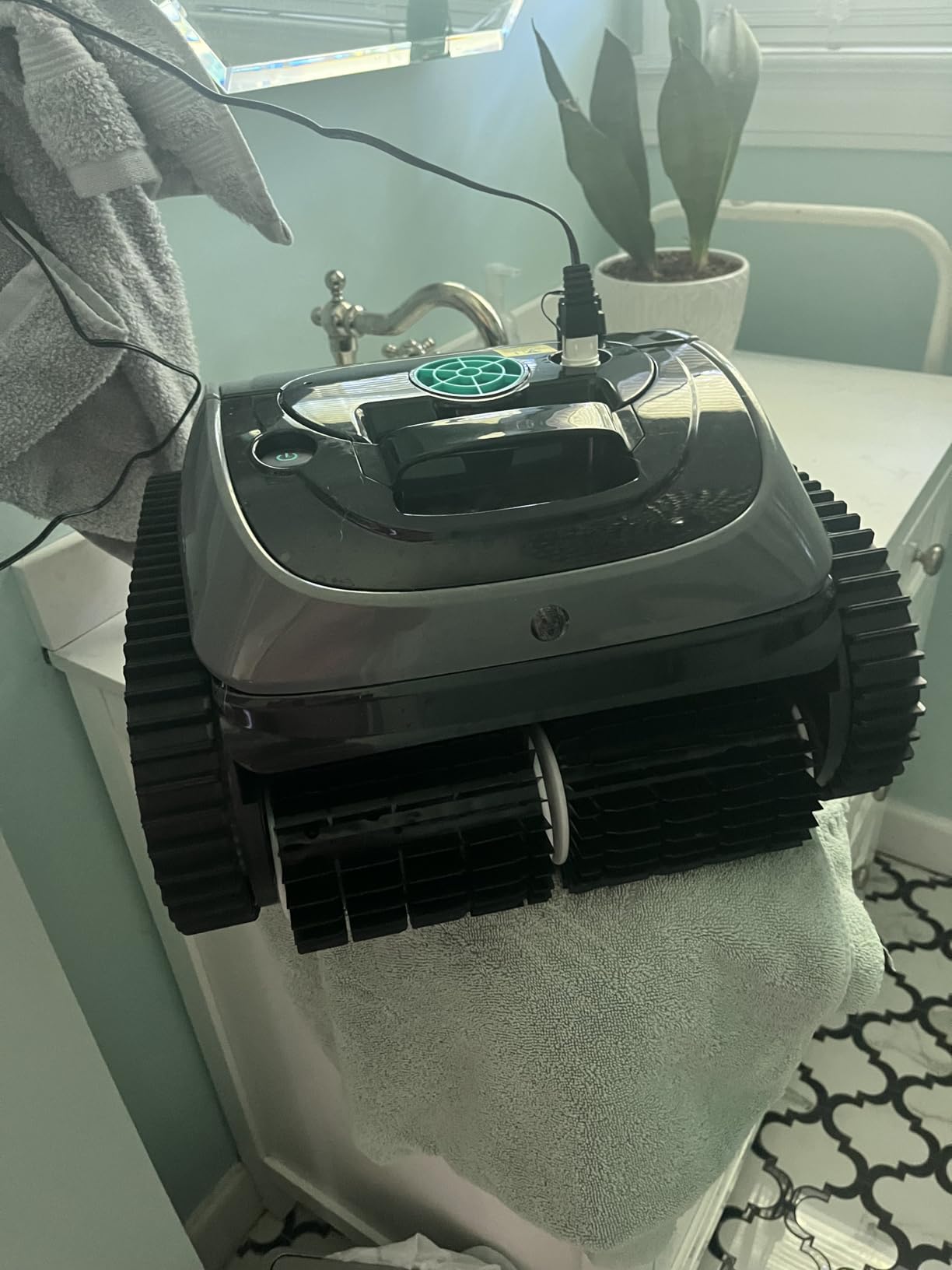
Its 4.0 average sits below the top of this roundup, and the reason is consistent across reviews: the gyroscope navigation follows an N-Path or S-Path pattern rather than mapping the pool, so a corner occasionally survives the first pass. It is a manageable weakness, since a second run is quick, but it is the honest limitation of the design.
Navigation and Cleaning Pattern in Practice
The gyroscope reads movement and the unit runs a planned path rather than bouncing off obstacles at random. In a rectangular pool this works well and coverage is even. In an L-shape or a pool with a deep-end island, the pattern has no way of knowing a zone exists that it has not visited.
Owners on Reddit who switched to a WYBOT after years with attached vacuums describe the same pattern: excellent week to week, occasionally needing a second pass after a storm. The app adds scheduling and seven customisable modes, but every mode has to be chosen before the unit goes in the water because Bluetooth does not carry underwater.
Runtime, Charging and the Reality Gap
The headline figure is 160 minutes on a four hour charge from a 99.34 watt-hour lithium-ion pack. Real-world runs land below that on a loaded pool, which is normal for the category rather than a defect specific to this model. For a mid-sized residential pool up to the 1,618 sq. ft. ceiling, one charge is generally enough to finish the job.
The charging port needs to stay dry and sealed between uses, and the battery itself weighs 440 g. That last detail is worth keeping in perspective: most of what you lift is the housing, not the battery.
Who Should Buy the C1
Buy it if you want the safest bet in the category, backed by the largest body of independent feedback. It suits an inground pool owner who wants walls and waterline handled without thinking about it, and it is a sensible first robot because the app and the four-in-one mode are simple enough to set up in a few minutes.
Skip it if you have an unusually complex pool shape where pattern navigation will keep leaving pockets, or if you want the finest filtration in this roundup. For the first, look at a camera-guided unit. For the second, look at the dual micron filters in the WYBOT C2.
2. AIPER Scuba V3 – AI Vision and a 3 Micron Filter Layer
AIPER Scuba V3 AI Vision Cordless Robotic Pool Cleaner, Grey
180 plus 3 micron filtration
18.1 lb body
Wireless dock
+ Pros
- AI camera detects over 20 debris types
- Navium builds autonomous weekly cleaning plans
- 3 micron layer over a 180 micron filter
- 18.1 lb body is manageable to lift
– Cons
- AI vision can miss zones in rectangular pools
- Waterline parking is unreliable
- No control once the unit is underwater
The Scuba V3 is the only machine in this roundup with a camera that looks at the pool and decides what to go and clean. A single front-facing AI camera is trained to identify more than 20 types of debris, and when it sees something it drives straight at it instead of following a blind pattern.
The theory is appealing. In practice, owners are split, and the split is almost entirely about the camera. Cleaning power, cordless convenience and after-sales support draw real praise, with several reviewers raising their rating after firmware updates. The recurring complaint is that vision mode sometimes circles an area rather than working through it, which in a rectangular pool can mean debris remaining along one stretch.
Filtration Is the Standout Feature
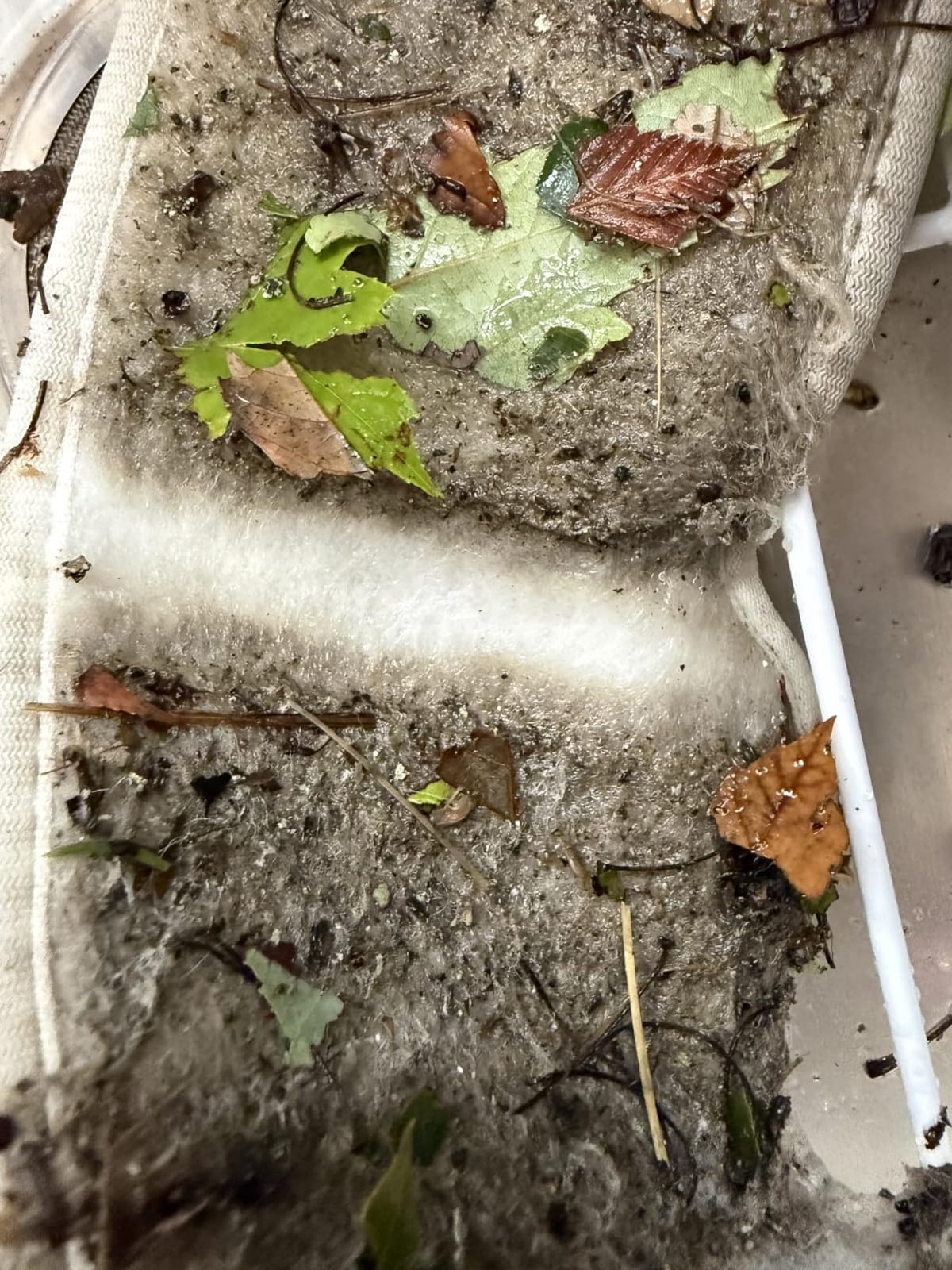
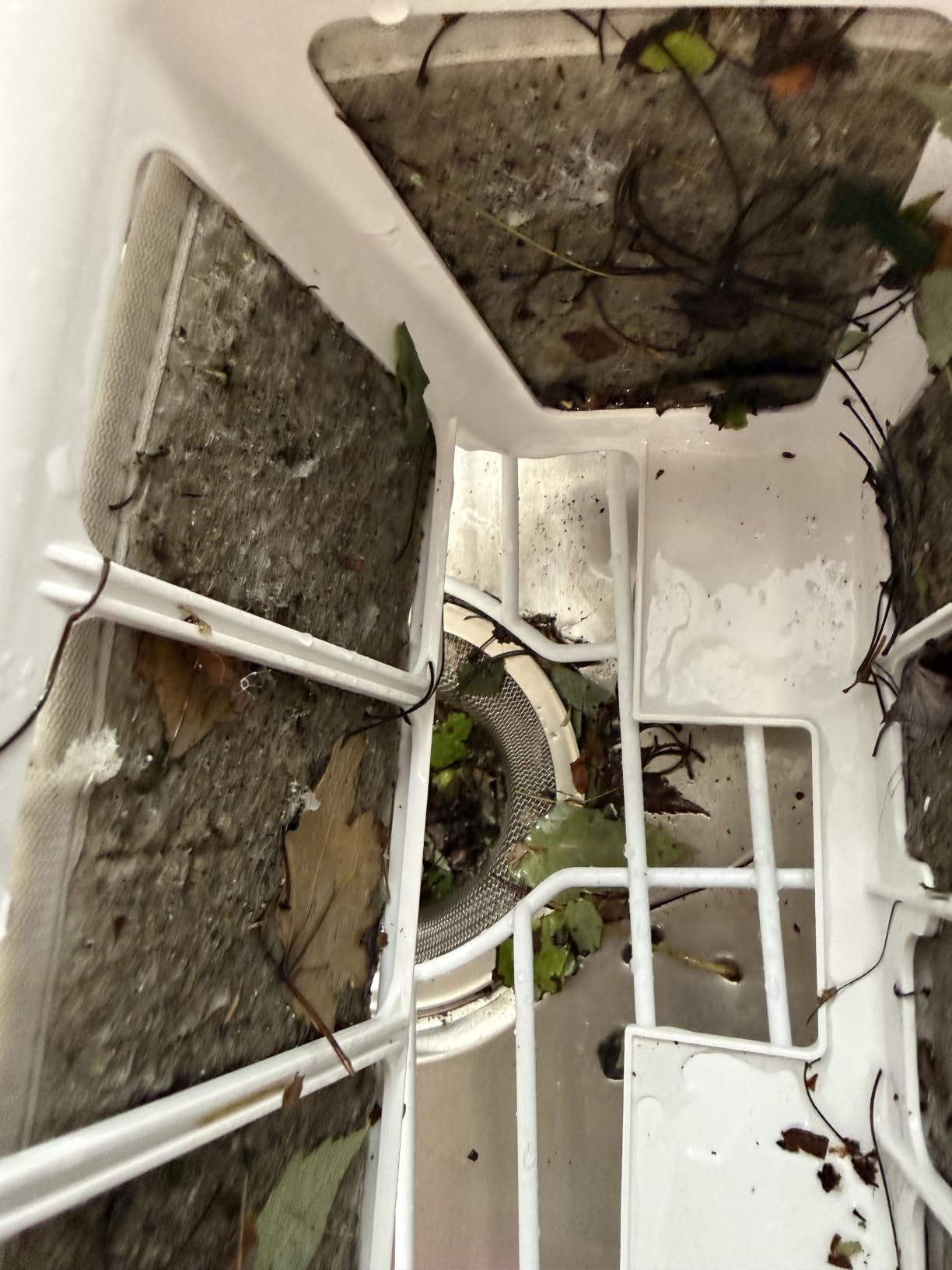
The MicroMesh system layers a 3 micron ultra-fine filter over a 180 micron primary. No other machine in this roundup goes below 10 micron, so if your pool collects fine silt rather than leaves, this is the one to shortlist. The tradeoff is that a fine layer needs rinsing more often and is a consumable item over time.
That is the honest cost of the specification. You are buying finer filtration and accepting more filter maintenance in exchange.
Dock, Charging and Retrieval
The wireless charging dock needs no installation and stores the robot neatly, which removes the faff of unscrewing a connector each time. Charging takes about four hours. The body is listed at 18.1 lb, which is not the lightest here but is manageable for most owners without help.
Waterline parking is the weak point. The unit is supposed to rise and hold position at the end of the cycle so you can lift it out, and it fails often enough that owners keep a hook in the water as a backup. There is also no way to stop or redirect the robot once it is submerged.
Who This Suits
This is the pick for a pool where fine sediment is the main problem rather than leaves, and for an owner who will genuinely use the Navium scheduling and the app notifications. If you mostly want the robot to run without thinking, the C1 or C2 is a more predictable buy.
3. WYBOT C2 – Top Rated Power and the Finest Dual Filtration
Wybot C2 Cordless Pool Vacuum for Inground Pools, Robotic Pool Cleaner
180 min runtime
2152 sq. ft.
10 plus 180 micron filters
+ Pros
- Dual filtration traps fine silt and sand
- Three brushless motors climb walls and steps
- 180 minutes covering 2152 sq. ft.
- Seven app cleaning modes
- Auto-parks at the edge on low battery
– Cons
- 24 lb body is heavy to lift out
- No charging dock in the box
- App controls sit below the fold on some phones
On paper the C2 is one of the strongest specifications here: 180 minutes of runtime, coverage up to 2,152 sq. ft., three brushless motors and a 10 micron ultra-fine filter sitting alongside the 180 micron primary. The 4.6 average from 372 reviews, with 77 percent of ratings at five stars, is the best verified rating in this roundup.
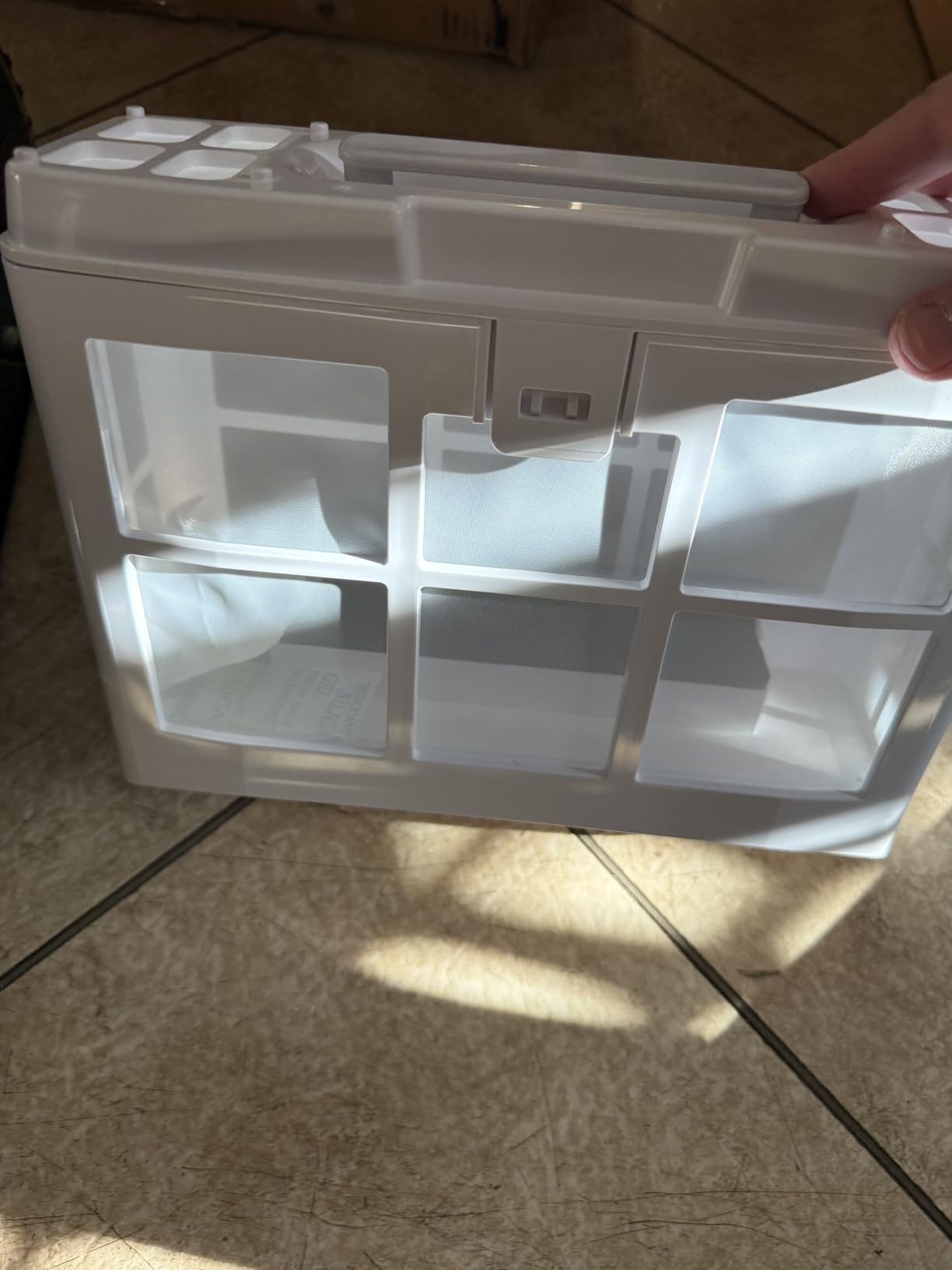
This is the cordless robotic pool cleaner I would put in most mid-sized inground pools. Its dual filtration is the combination that actually matters in practice, because it catches grit and leaves in the same basket without blinding in one pass.
Suction, Motors and Wall Behaviour
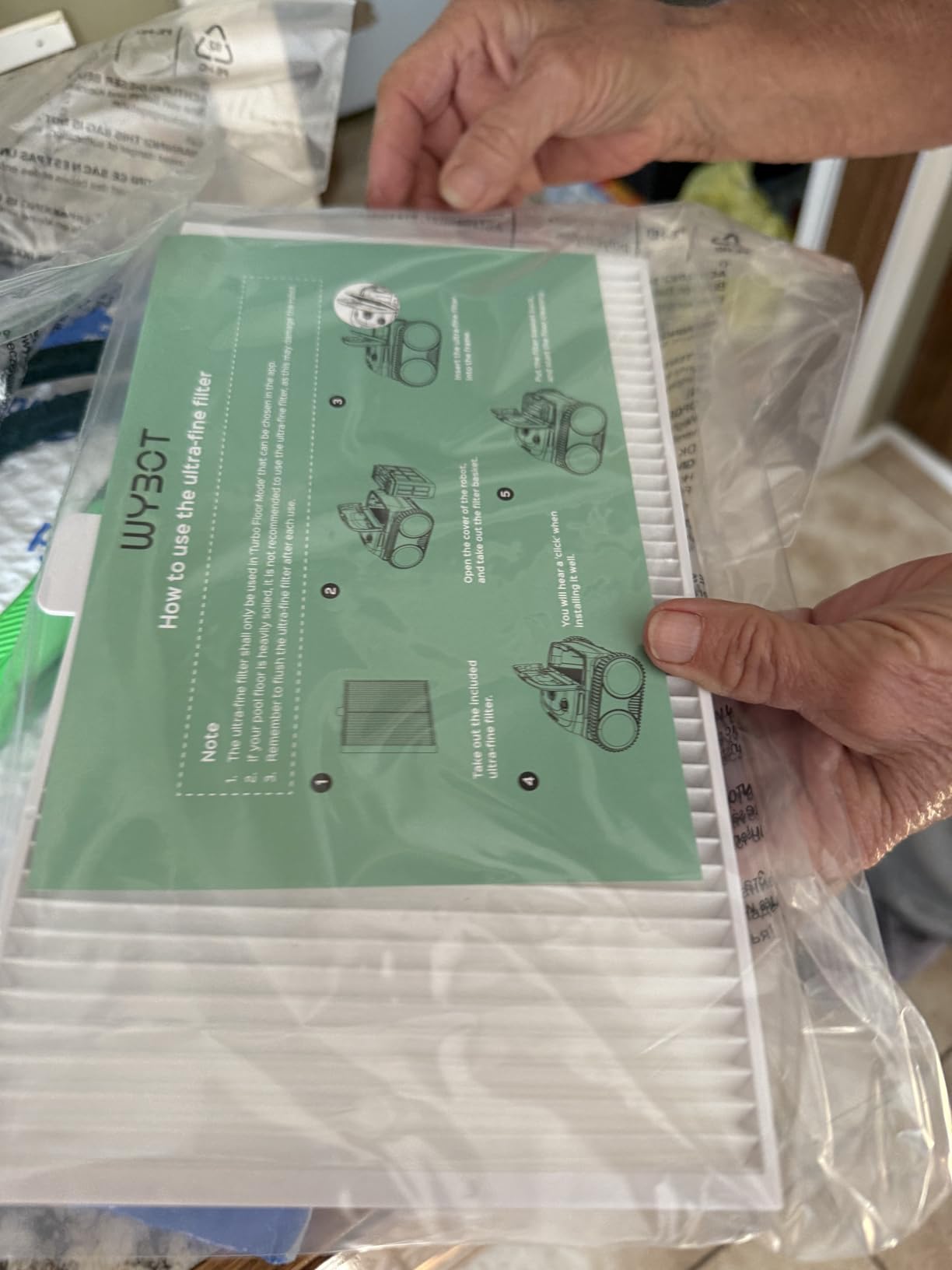
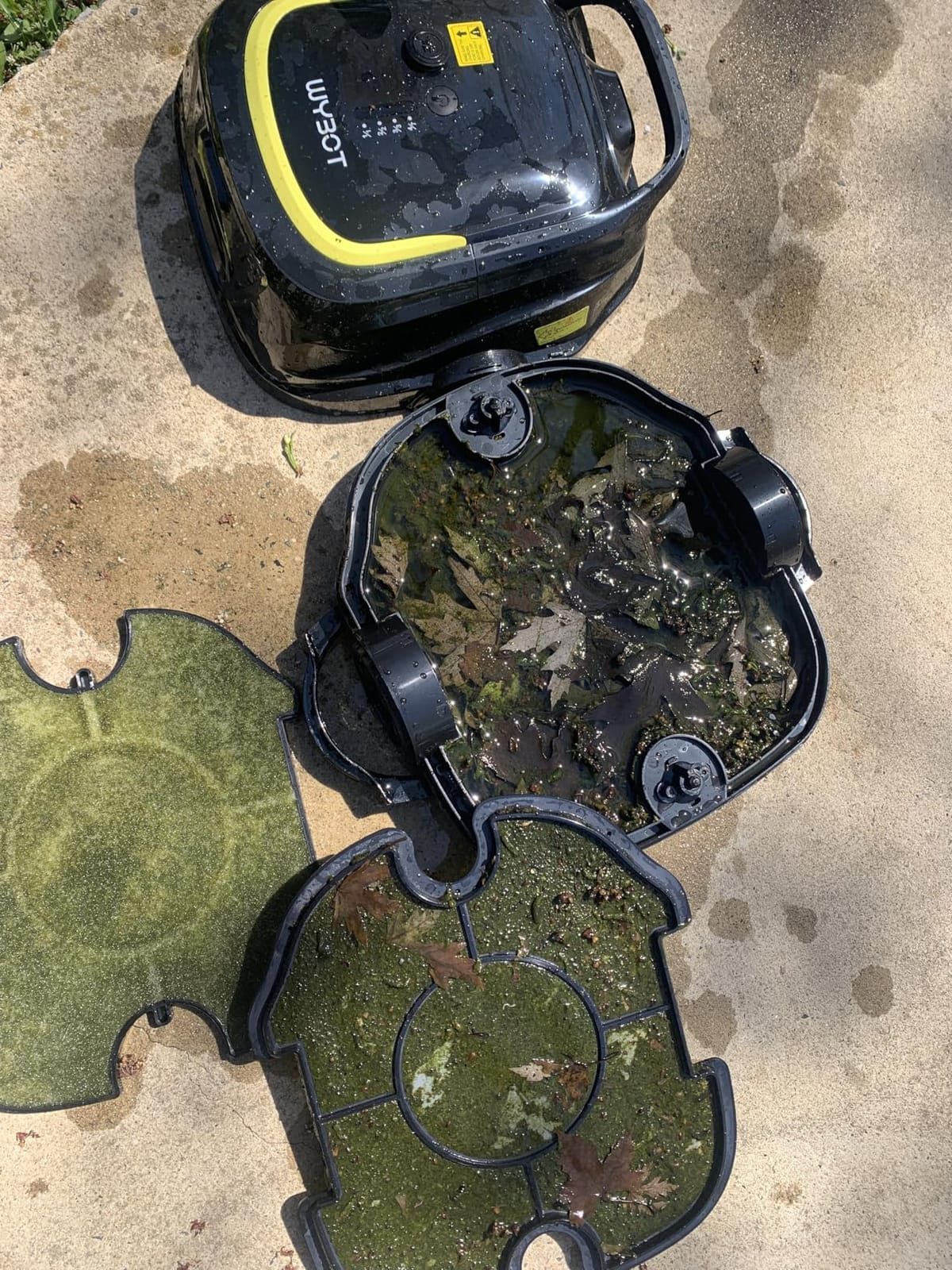
Three brushless motors give it the drive to climb walls and steps confidently rather than attempting them and giving up. Dual filtration combines a 10 micron ultra-fine layer with a 180 micron primary, and the debris canister and washable filter both rinse clean under a hose, which matters more than the micron figure if you are doing weekly maintenance.
Pattern navigation still applies, so complex shapes can need a second pass. Several international reviews note corners being missed on the first cycle, and deep ends on a big pool are exactly where that shows up.
Seven Modes and the App Reality
Seven cleaning modes cover everything from a quick floor pass to a full pool run, with scheduling from the app. Two practical notes from owners: the mode must be set before submersion because the signal does not carry underwater, and on some phone screens the controls fall below the fold, which is a software irritation rather than a fault.
On low battery the unit parks at the pool edge automatically, which is the retrieval behaviour you want from a machine this heavy.
The Weight Question
At 24 lb this is one of the heavier units in the roundup, and that is the main reason it is not the first recommendation for older owners or anyone with back issues. Combined with the missing charging dock, meaning the connector has to be unscrewed and re-secured each cycle, the C2 is a machine best suited to someone who can lift it out comfortably.
4. AIPER Seagull Pro – 7.5 lb and Surprisingly Capable
AIPER Seagull Pro Cordless Robotic Pool Cleaner with Hook, WavePath Navigation, Wall-Climbing, Quad-Motor, 150 mins Runtime for Inground Pools up to 1,600 sq.ft, ZT6002
150 min runtime
7.5 lb body
1600 sq. ft. max
+ Pros
- 7.5 lb body is easy to lift and carry
- Four-wheel drive climbs walls and scrubs the waterline
- 150 minutes from a 7800mAh battery
- Retrieval hook included
– Cons
- Buoyancy float blocks needed on tiled pools
- Suction is about half the 6800 GPH leaders
- Pattern navigation can skip a corner
The Seagull Pro solves the problem that most of this roundup ignores: getting the robot back out of the pool. We could not source owner photos for this model, so our view rests on its specification and written feedback. At 7.5 lb it is by a wide margin the easiest unit here to lift one-handed, and for older pool owners or anyone with a back issue that single specification outweighs several others on this list.
Underneath the light shell sits a four-motor WavePath navigation system with four-wheel drive. It cleans floor, walls and waterline, pulls 80 gallons per minute through a 196W motor output, and runs up to 150 minutes on a 7,800mAh battery. That is genuinely competitive with machines costing considerably more, and the 4.3 average from 340 reviews backs it up.
Wall Climbing on Tiled and Mosaic Pools
Four-wheel drive handles the transition walls and waterline on most inground pools. The one condition owners raise repeatedly is tiled or mosaic finishes, where the supplied buoyancy float blocks need to be fitted for the wall climb to hold. It is a five-minute job, but it is a step you do not want to discover on the first run.
Suction Reality on Heavy Leaf Loads
This is where the light build shows its limit. The motor output moves 80 gallons per minute, roughly half what the 6,800 GPH leaders in this roundup deliver. For routine weekly cleaning that is plenty. After a heavy leaf fall or an overwintered pool, expect more than one pass to shift a serious load.
Recharge time is three to four hours, three cleaning modes are available across floor, wall and auto, and a two-year warranty is included with a retrieval hook in the box.
Who This Suits
It is the pick for anyone whose pool is above their comfort zone to lift a 24 lb machine out of, and it pairs well with an above ground or small inground setup. It is not the choice for leaf season on a large pool, where suction volume matters more than weight.
5. AIPER Scuba SE – The Budget Cordless Robot for Flat-Bottom Pools
2026 Aiper Scuba SE Cordless Pool Vacuum Robot for Above Ground Pool
90 min runtime
1,820 GPH suction
860 sq. ft. max
+ Pros
- 1820 GPH suction picks up leaves and grit
- Self-parks at the edge with an audio alert
- Two cleaning modes by button press
- Handles above ground and flat-floored pools
– Cons
- Floor only with no wall climbing
- 90 minute runtime is the shortest here
- One year warranty
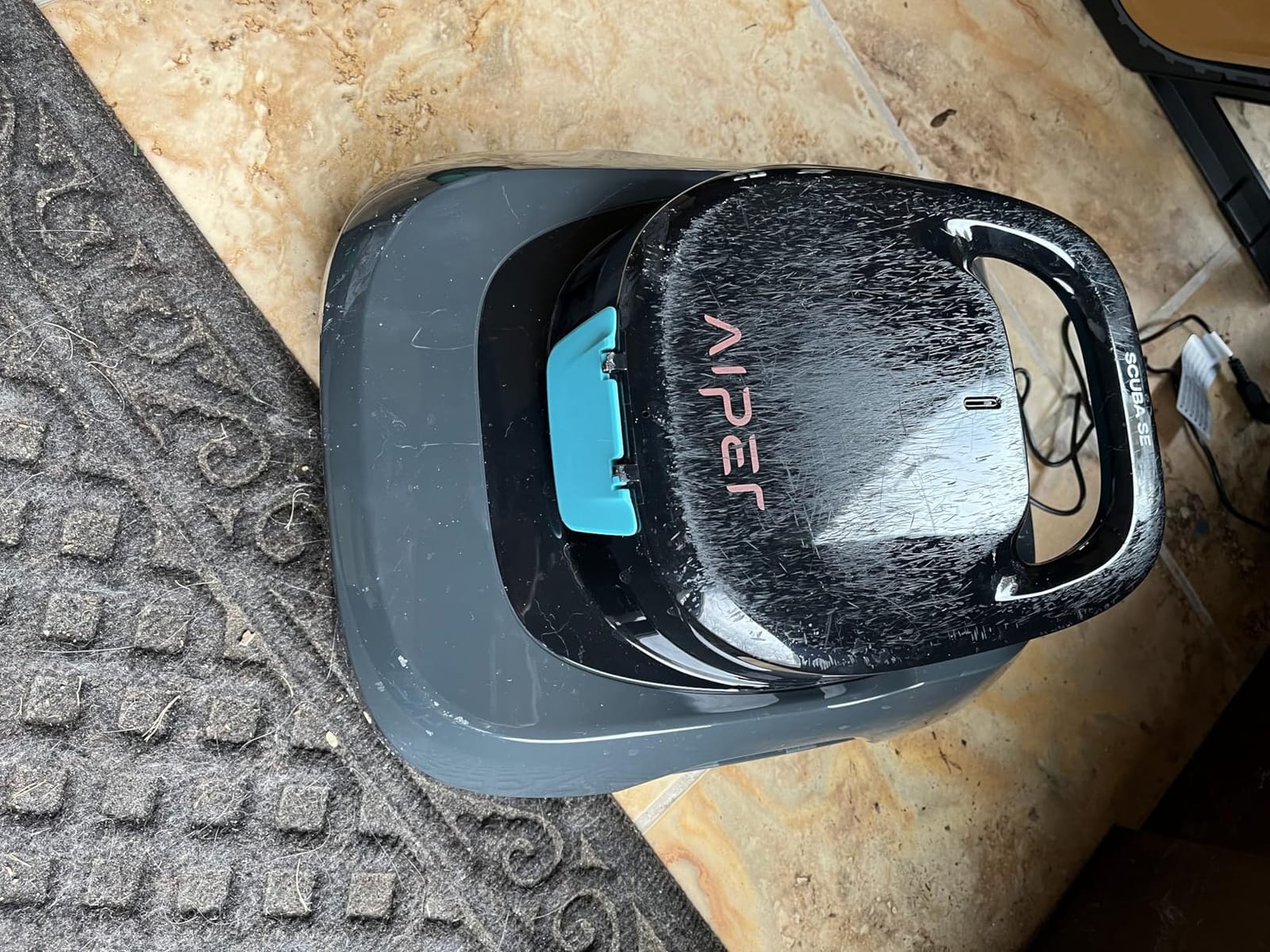
The Scuba SE is the entry point into cordless robotic cleaning, and for a small above ground pool it does the one thing it claims without pretending to do more. It is a floor-only machine, 1,820 GPH of suction, and it covers up to 860 sq. ft. in roughly 90 minutes. Our above ground pool cleaner guide covers the manual and stick options too.
Two cleaning modes are toggled with a short button press, and it self-parks at the pool edge with an audio alert when the battery runs low. That combination, simple controls plus edge parking, is what owners mention most. The 4.2 average from 240 reviews reflects a device that does its limited job without drama.
What Floor Only Actually Means for You
There is no wall climbing, no waterline scrubbing and no step handling. On an above ground pool with a flat vinyl or liner floor that is not a compromise, because there is nothing to climb. On an inground pool with tiled walls and a deep end, it is a real limitation, and no amount of suction makes up for the walls you are still going to brush by hand.
The 860 sq. ft. ceiling and 90 minute runtime cover most inflatable and framed pools with room to spare. Push past that and you are looking at a second charge mid-session.
Operation Without an App
There is no app, no smart navigation and no scheduling. You press a button and it works. For a lot of owners that is the feature rather than the gap, and it removes the frustration non-technical buyers report with app-dependent machines.
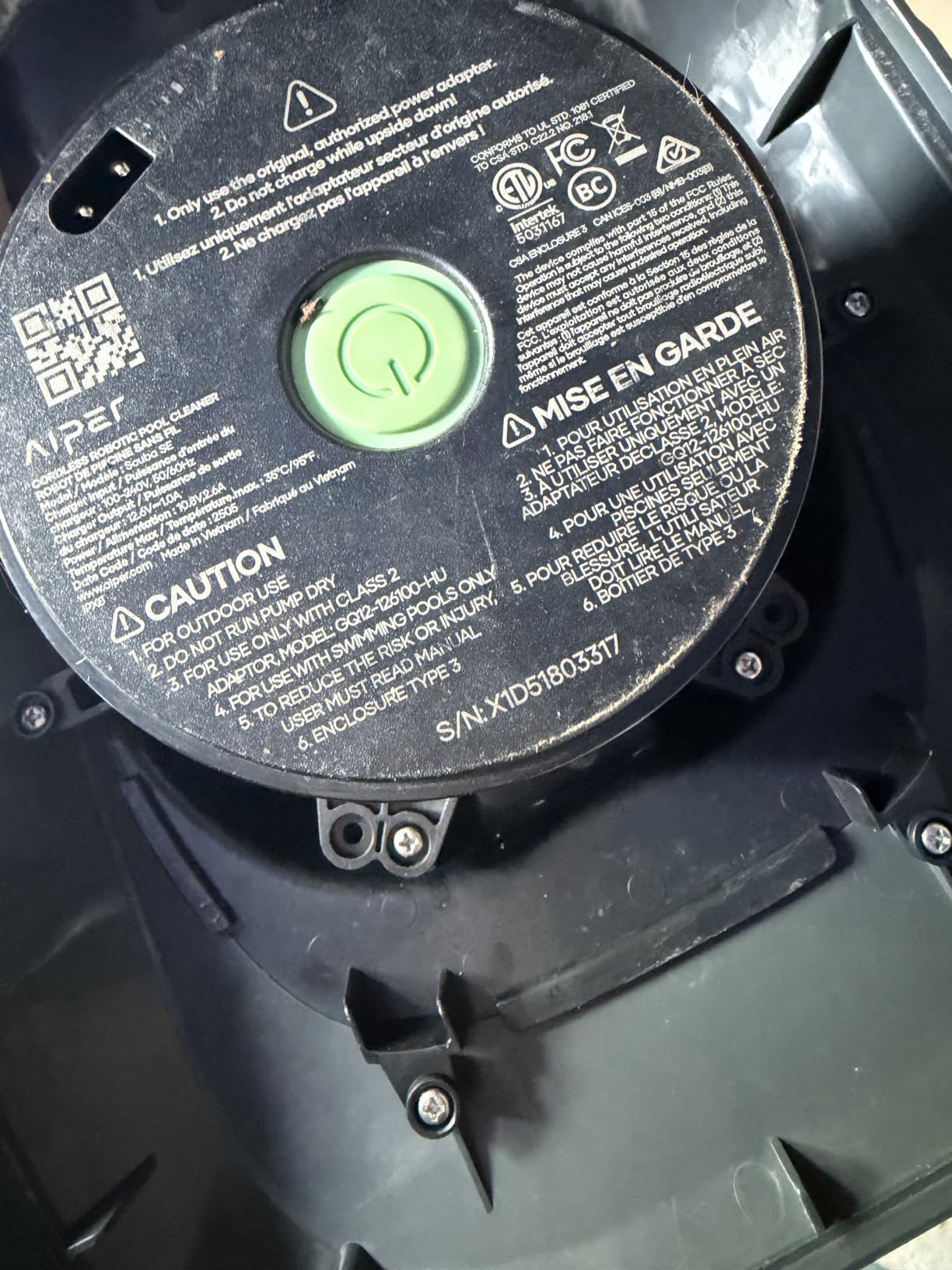
The warranty is one year, the shortest in this roundup, and the battery pack carries 34 watt-hours. Filter maintenance is straightforward but the basket is small relative to the wall-climbing units.
Who This Suits
This is the right buy for a first robotic cleaner, an above ground pool, or a second unit to run alongside a bigger machine. It is the wrong buy the moment your pool has walls worth cleaning, and we would rather say that plainly than let you discover it in week one.
6. WYBOT A1 – Strong Suction and Simple Controls for Above Ground Pools
WYBOT A1 Cordless Pool Vacuum Robot for Above Ground Pool, Greyblue
130 min runtime
1,100 sq. ft.
2,280 GPH suction
+ Pros
- 2280 GPH suction with a dual-layer filter
- Recharges fully in 2 to 2.5 hours
- Four cycles selected from the top button
- Filter basket rinses clean under a tap
– Cons
- Floor only with no wall or step climbing
- No app or smart navigation
- Not intended for slopes over 15 degrees
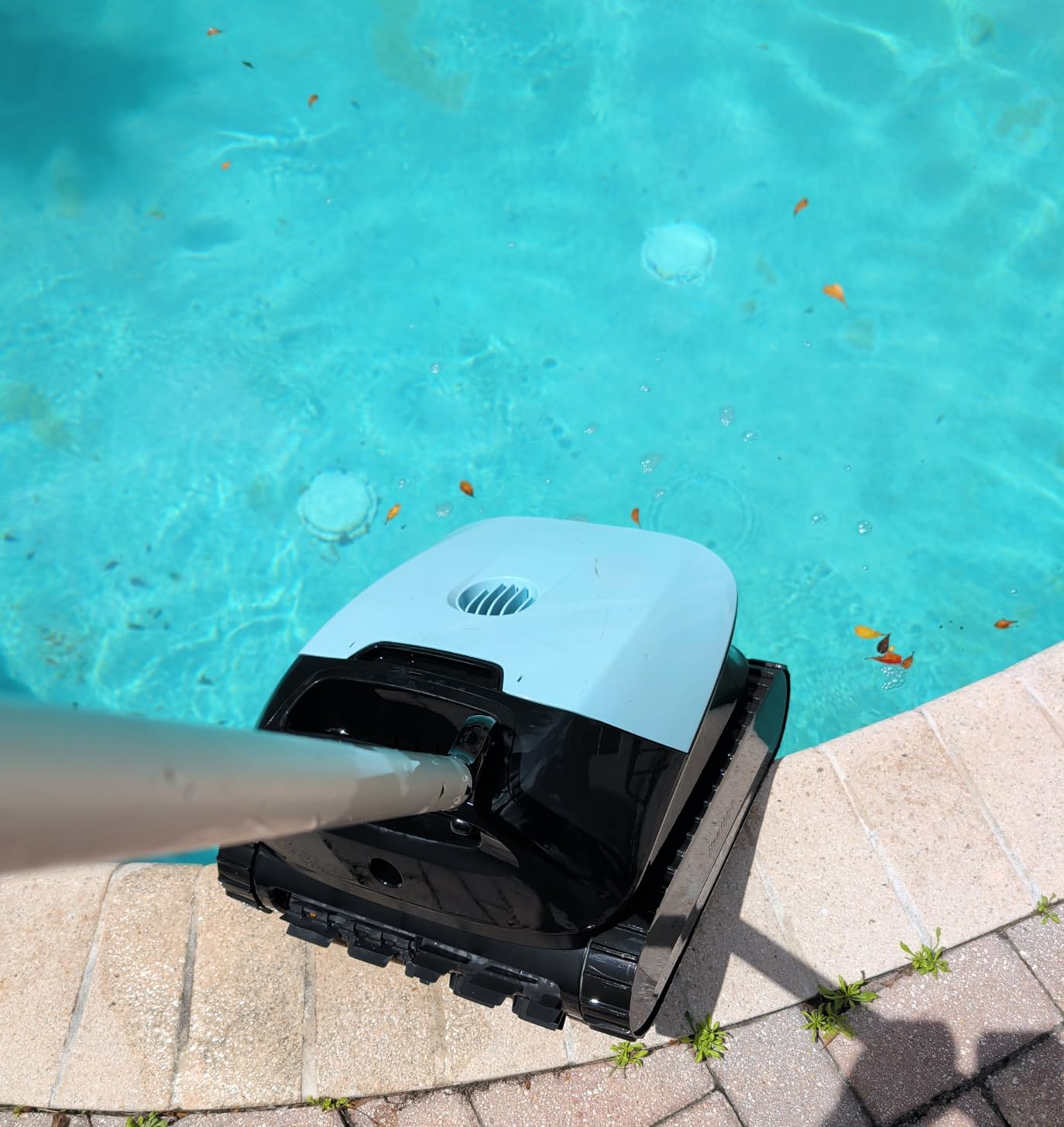
The A1 is the strongest flat-bottom machine here. It runs 2,280 GPH of suction, the highest figure of any floor-only unit in this roundup, and pairs it with a dual-layer filter combining a 180 micron precision mesh with a textured foam layer that traps the fine sand the suction alone would push around.
It cleans up to 1,100 sq. ft. for up to 130 minutes and recharges in two to two and a half hours, which is the fastest turnaround of any unit in the list. The 4.5 average from 163 reviews is well earned, and owners consistently mention quiet operation and how simple the included retrieval hook is to use.
Self-Parking and the Edge Boost
The A1 self-parks at the pool wall when the battery is low, then pauses along edges for a boost clean before continuing. On a flat-bottom pool where the debris collects against the walls, that behaviour is where a large share of the value sits.
Four cleaning cycle programs are selectable from the top button, so there is no phone, no pairing and no account. For a maintenance tool that runs once or twice a week, that simplicity is worth paying for.
Pool Geometry Limits to Check First
It is floor only, and it is not intended for pools with slopes over 15 degrees or wrinkled bottoms. It is rated for water depths under 2.5 meters. Those limits rule out most inground pools and suit above ground and flat-floored setups almost perfectly.
Two practical notes from owners. When the battery is completely flat the unit stops where it is, so keep the hook handy for the last run of the day. And the multi-layer filter takes slightly longer to reassemble after rinsing than a single-basket design.
Runtime Expectations
The headline is 130 minutes, and owners report that on a real pool the useful window is closer to two hours. That is still enough for the 1,100 sq. ft. it is rated for, and the short recharge makes a second run easy if your pool is at the top of that range.
7. BOTLIFE PC10 – Wall and Waterline Cleaning Without an App
BOTLIFE PC10 Cordless Robotic Pool Vacuum for Inground & Above Ground Pools
120 min runtime
5,000 GPH suction
1,830 sq. ft. max
+ Pros
- 5000 GPH from dual motors and two active brushes
- 4L top-load basket with 150 micron mesh
- Cleans floor walls and waterline
- S-path floor and N-path wall navigation
– Cons
- 120 minutes is short for larger pools
- No app or wireless control
- Suction trails the 6800 GPH leaders
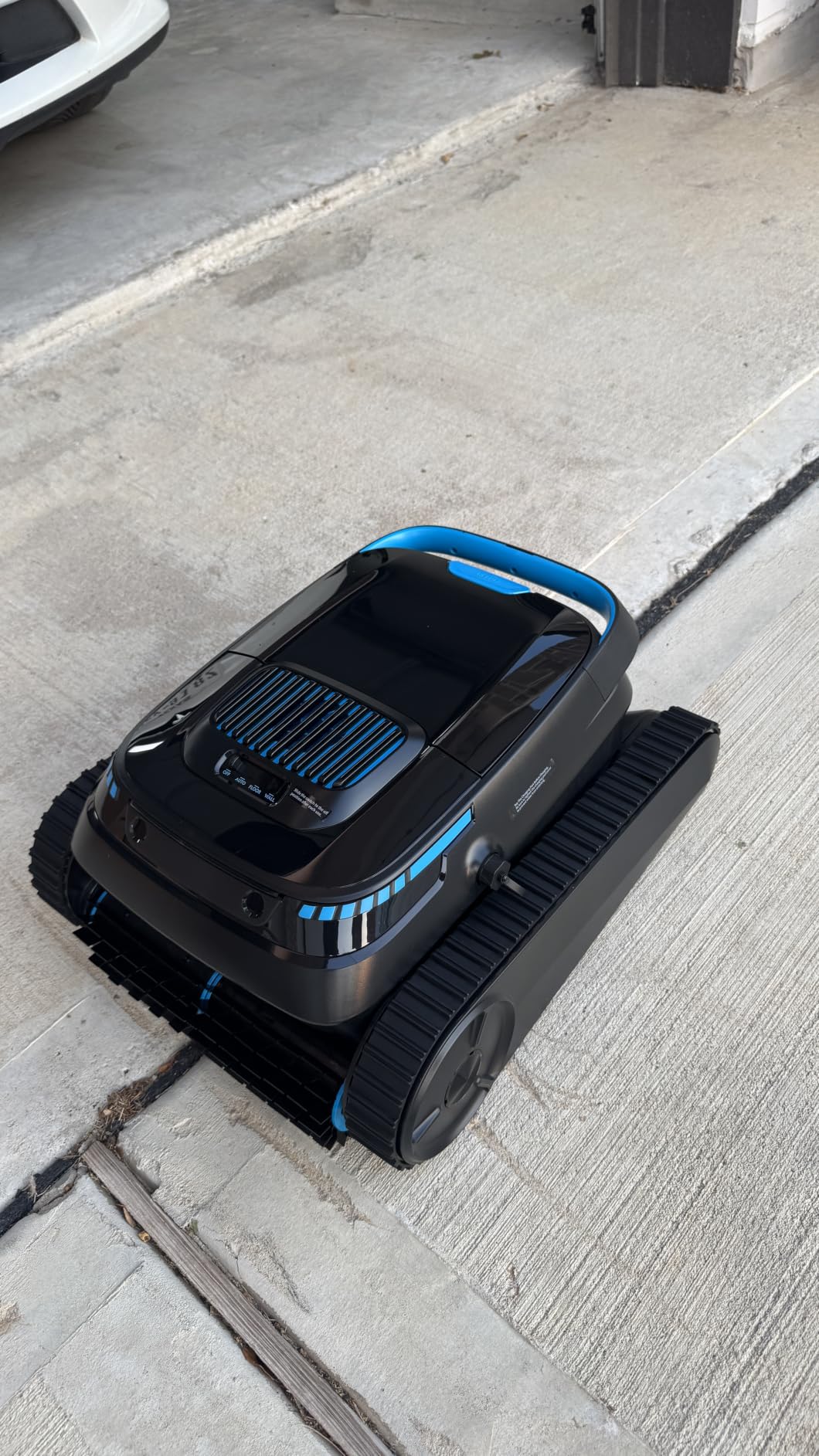
The PC10 is the odd one out in this roundup in a good way. Most machines at this level give you a floor-only cleaner or a thin battery. This one cleans floor, walls and waterline with 5,000 GPH of suction from dual drive motors, a dedicated pump and two active brushes, and it does it with no app and no phone.
Operation is entirely through buttons on the unit, with full pool, floor only and wall only modes. For owners who find app-dependent machines frustrating, that is a deliberate design choice rather than a missing feature, and the 4.5 average from 123 reviews reflects that it does what it claims.
Navigation and Traction
S-path navigation on the floor and N-path on the walls reduces random movement compared with a wandering unit, and high-grip tracks handle transitions and slopes up to 30 degrees. The 30 degree limit is below what the 45 degree climbers manage, so on a pool with a steep transition wall you may see it hesitate.
Self-parking at the pool edge and an included retrieval hook take care of the exit, and the 4L top-load basket is genuinely large for the class, which means fewer mid-cycle emptying stops in leaf season.
Where the Budget Shows
Runtime is up to 120 minutes, the shortest of the wall-climbing models in this roundup, and for a pool near the top of its 1,830 sq. ft. rating that can mean a mid-cycle recharge. The 5,000 GPH figure is also below the 6,800 GPH leaders, so heavy leaf loads take more than one pass.
The 150 micron mesh in the 4L basket is coarser than the 10 micron layer in the WYBOT C2. If fine silt is your problem rather than leaves, this is not the machine to buy.
Who This Suits
Buy it if you want wall and waterline coverage, a large filter basket and no app in your life, and your pool is not so large that 120 minutes will not finish the job. It is the most complete button-driven robot in this roundup.
8. Beatbot Sora 10 – 300 Minutes and 6,800 GPH of Suction
Beatbot Sora 10 Cordless Pool Vacuum Robot for Inground & Above Ground Pools, 6800 GPH Suction, Floor/Wall/Waterline/Shallow Area Cleaning, Waterline Parking, 300 Mins Runtime Royal Blue
300 min runtime
6800 GPH suction
3229 sq. ft. max
+ Pros
- 300 minutes and 3229 sq. ft. per charge
- Cleans shallow areas down to 12 inches
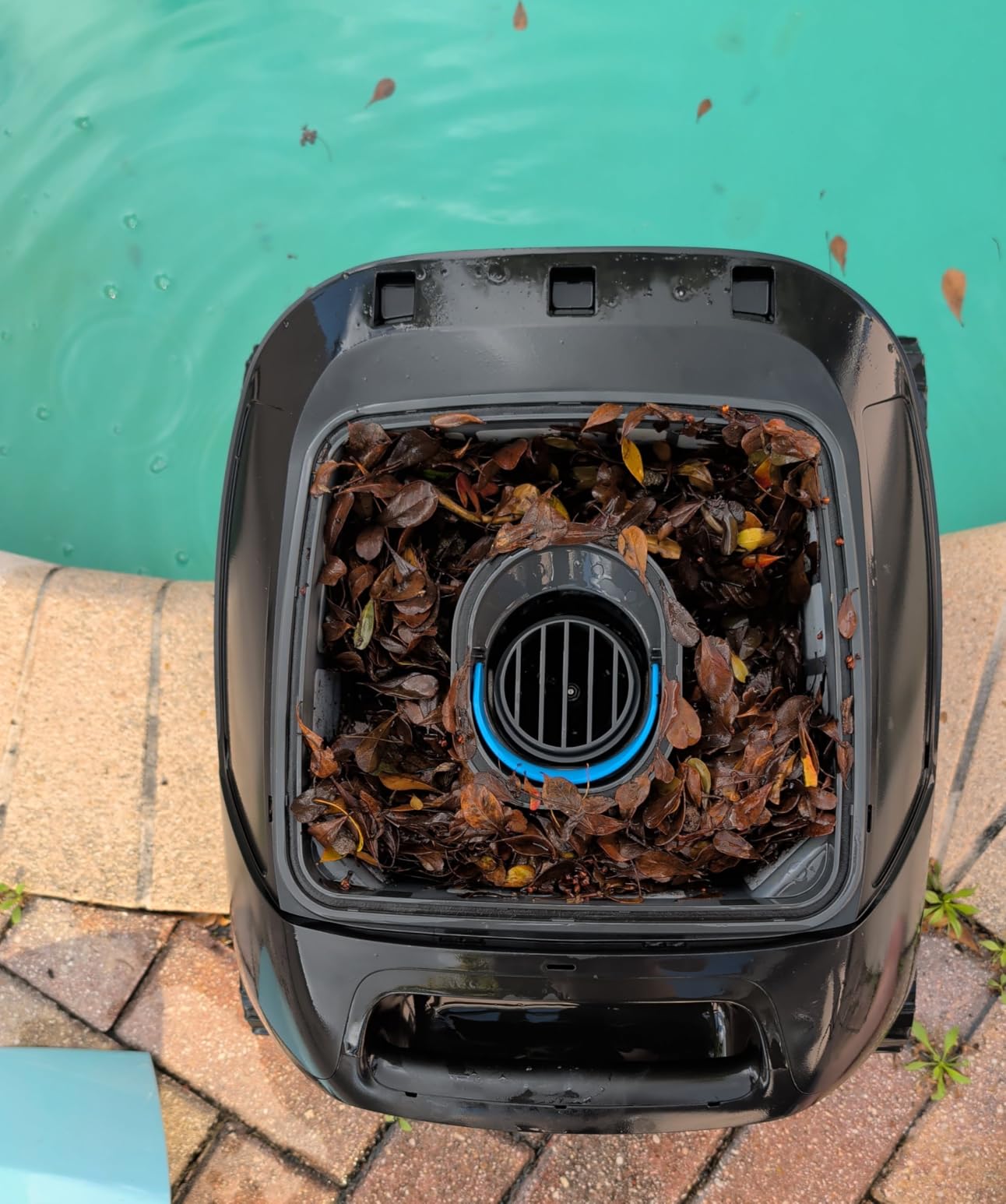
- 5L basket holds up to 650 leaves
- App with OTA updates and saltwater-safe build
– Cons
- Waterline parking is unreliable
- Shell and lid scratch and dent easily
- Recharge time is long relative to the runtime
It is the specification outlier in this roundup, and the reason the other machines can look slow. Three hundred minutes of runtime, 3,229 sq. ft. of coverage per charge and 6,800 GPH of HydroBalance suction, at a mid-range price point that sits well under the premium machines it outperforms on paper.
The 4.6 average from 65 reviews includes the highest share of five-star ratings of any wall-climbing unit here, at 78 percent. Reviewers consistently remark on how much a machine at this level handles compared to far costlier robots. The caveat is the evidence base: 65 reviews is the thinnest in this roundup, so you are buying on less owner history than the number suggests.
Four-Zone Cleaning and Shallow Water
Beyond floor, wall and waterline, the Sora 10 cleans shallow areas down to 12 inches, which covers tanning ledges and sun shelves that most robots in this roundup simply ignore. The 5L debris basket holds up to 650 leaves, which is a large number for a weekly run and means you are not emptying it mid-cycle in leaf season.
Optional 3 micron ultra-fine filtration is available, which closes the gap with the WYBOT C2 on fine debris if you need it.
Battery, App and Durability
A 7,310mAh battery rated at 157.89 watt-hours and 21.9 volts drives that long cycle. The build is fully saltwater-safe for pools under 5,000 ppm with corrosion-resistant components, and Wi-Fi plus Bluetooth app control brings OTA updates and mode selection.
Two durability notes from owners. The top lid and shell scratch and dent easily, and exposed gaskets are worth keeping an eye on. Recharge time is long in proportion to the runtime it attempts, so plan the cycle around a full charge rather than a top-up.
Retrieval Is the Weak Spot
Smart waterline parking is supposed to dwell at the wall for 10 minutes at the end of the cycle so you can lift the unit out, and it is unreliable often enough that owners report hooking the robot out from mid-pool. Corners, sun shelves and stairs can also be missed on complex pool shapes, so this rewards a simple pool.
If you run a large pool with a lot of geometry and you want one machine to do everything, the Beatbot Sora 70 is the more complete option. If you want the longest runtime per charge, this is it.
9. Polaris Freedom Plus – Retrieval Solved With a Waterproof Remote
Polaris Freedom Plus Cordless Robotic Pool Cleaner for In-Ground Pools up
Inground pools to 50 ft
LiFi remote retrieval
5 hour caddy charge
+ Pros
- LiFi remote calls the robot to the waterline
- Three retrieval options including hook and pole
- Outdoor rated charging caddy
- iAquaLink app with charge status alerts
– Cons
- Heaviest machine in the roundup at 40.8 lb
- Five hour charge is the longest here
- Remote and Wi-Fi replace phone-only app control
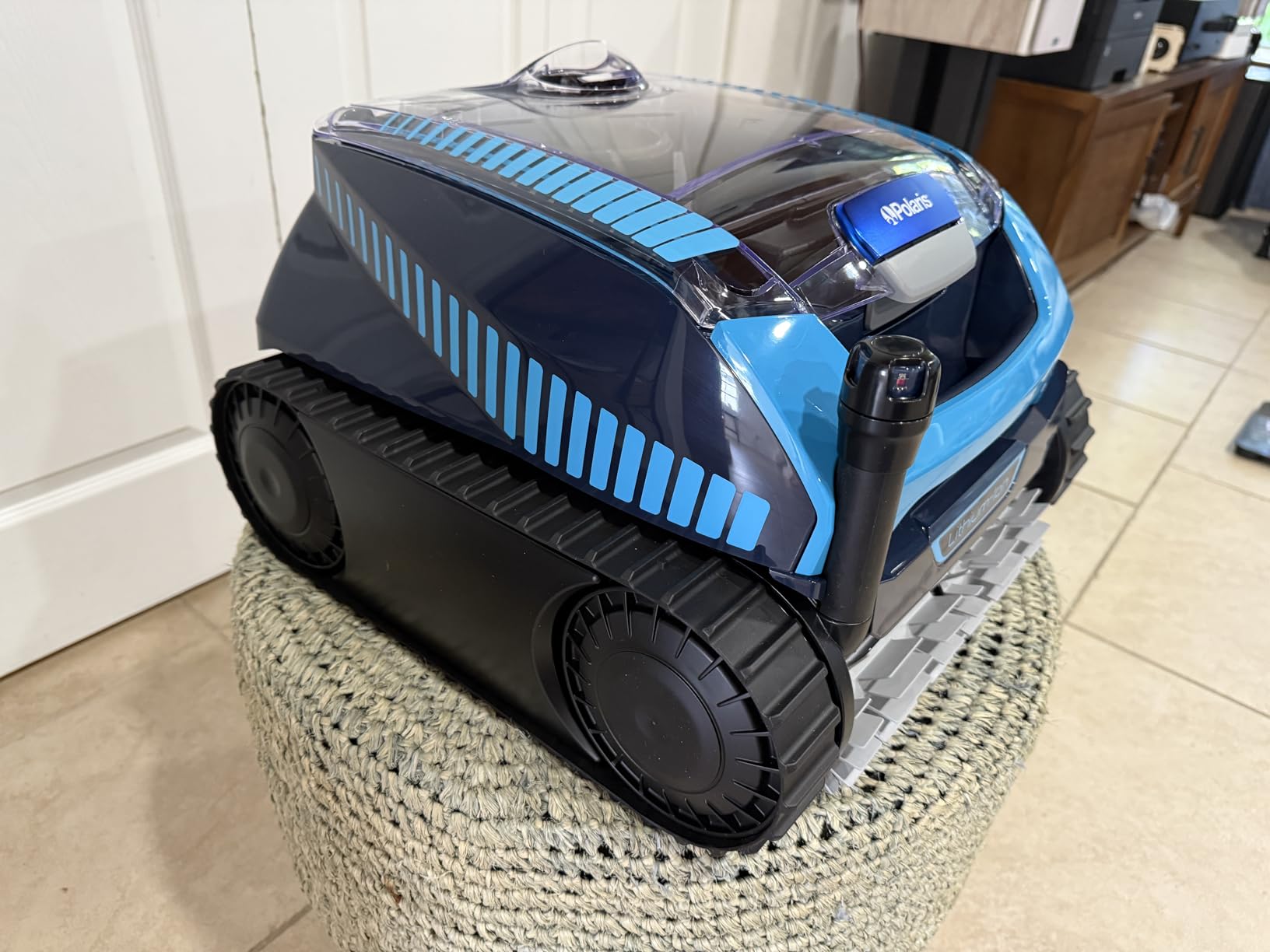
The Freedom Plus addresses the chore every cordless owner complains about: getting the robot out of the water. Its hand-held LiFi remote communicates underwater and calls the cleaner to the waterline, where a quick water release means you can lift it out by hand rather than dragging a hook across the pool.
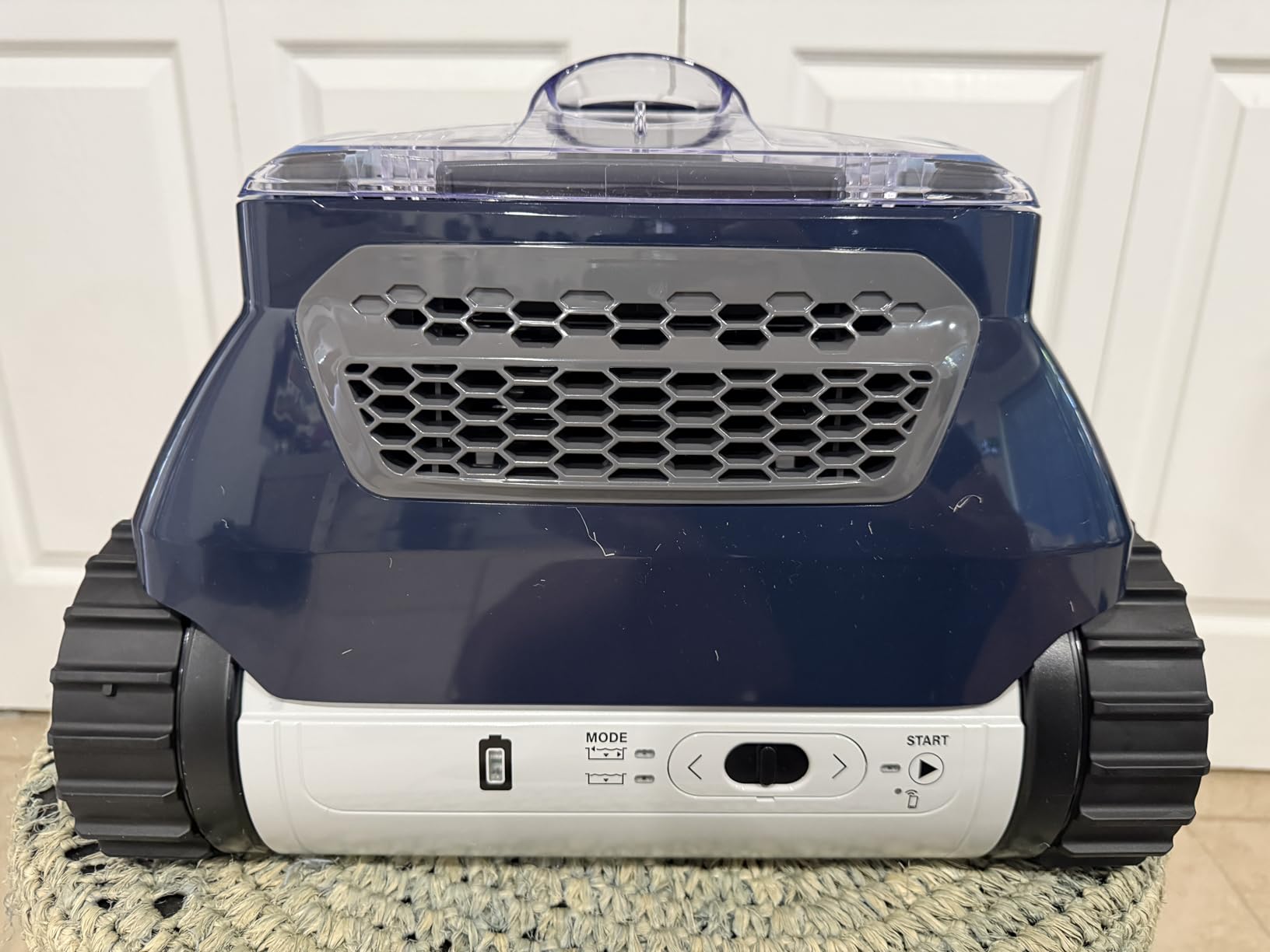
Three retrieval methods are offered, remote call-up, end-of-cycle waterline retrieval, or the included hook on a standard pole, which means you are never stuck if one system misbehaves. It is the only machine here that solves retrieval properly, and that is the most common complaint across cordless reviews.
Brand and Service Network
Polaris is a 50-plus year pool equipment manufacturer under Fluidra, with a large service network behind it. For buyers who weigh brand longevity heavily, that is a real consideration and one of the reasons Dolphin and Polaris come up so often in the corded category too.
The iAquaLink app gives charging status, cleaning mode selection and cycle-complete push notifications, and the premium outdoor-rated caddy recharges the unit in five hours or less while sitting outside.
The Weight Problem
At 40.8 lb this is the heaviest machine in the roundup by a distance, and two people may be needed to lift it. That is not a small issue: a cordless pool robot you cannot comfortably lift is a machine you will resent every week, and it partly defeats the reason cordless exists in the first place.
It is rated for in-ground pools up to 50 ft, so the coverage ceiling is not the problem. Handling is.
Who This Suits
Buy it if retrieval is your biggest frustration and you want brand backing, or if you want a robot that comes to you rather than a hook. Do not buy it if lifting heavy objects is difficult for you, or if your pool is above ground.
10. Beatbot Sora 70 – The Only Robot Here That Also Cleans the Surface
Beatbot Sora 70 AI Navigation Pool Vacuum Robot Full-Coverage Pool Cleaning
Up to 5 hours floor runtime
6,800 GPH suction
3,200 sq. ft. per charge
+ Pros
- JetPulse jets funnel surface debris into the inlet
- The only unit here with surface cleaning
- Covers shallow areas down to 8 inches
- 6L capacity with 3 year protection
– Cons
- 22.9 lb body needs two hands to lift
- 4.5 hour recharge is the second longest here
- App and docking reliability varies
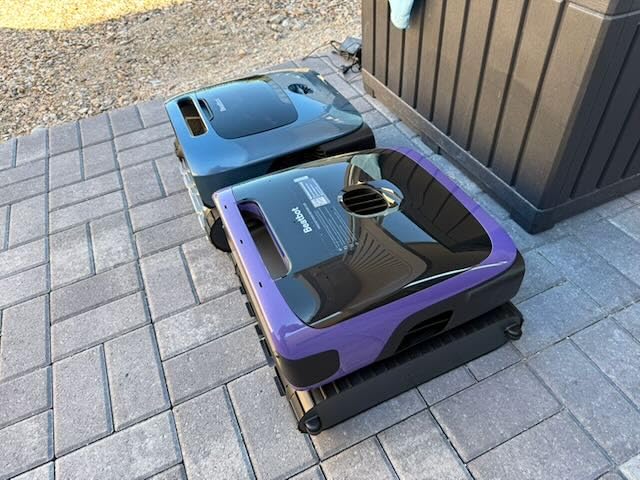
The Sora 70 does something no other machine in this roundup does: it cleans the water surface. JetPulse dual water jets create four streams that push floating leaves toward the suction inlet, which is why it appears in setups where owners already run a separate skimmer robot and want one machine to do both jobs.
Below the surface it covers waterline, floor, walls and shallow areas down to 8 inches, the deepest shallow zone of any unit here. A 10,000mAh battery delivers up to five hours of floor cleaning and up to 3,200 sq. ft. per charge, with 6,800 GPH of HydroBalance suction and a 6L capacity backed by three-year manufacturer protection.
Smart Surface Parking and Retrieval
Smart surface parking drains internal water so the unit stays afloat at the end of a cycle, and tap-to-retrieve in the app brings it to the surface for lifting. When it works, it is the second-best retrieval story in this roundup after the Polaris remote.
It is also the most polarised machine here by rating distribution: 67 percent five-star against 9 percent one-star, across 310 reviews. Supporters point to the surface cleaning, the runtime and the tap-to-retrieve surfacing. Critics focus on the 22.9 lb weight, the 4.5 hour recharge and intermittent app and docking behaviour.
Weight, Charging and the Honest Tradeoff
At 22.9 lb it is the second heaviest unit in the roundup, so lifting takes two hands. Combined with a 4.5 hour recharge, it rewards planning: set it going in the morning and leave it.
What you are paying for is coverage breadth. No other unit here touches the surface, the waterline, the walls, the floor and the shallow zone in a single pass with three years of protection behind it.
Who This Suits
This is the premium choice for a large inground pool with sun shelves, a tanning ledge and heavy surface leaf fall, and for owners who currently run two machines and would rather run one. For a small or simple pool it is capability you will not use.
Corded vs Cordless: When Cordless Is the Wrong Choice
Are cordless pool robots actually any good? Yes, with one clear caveat: they trade suction power and hands-off convenience for cable freedom, and for some pools that trade is the wrong way round.
The strongest motivation for going cordless is the cable. Cords, hoses and their tangling are the single most common complaint about corded units, and once a cord is wrapped around a ladder or snagged on a ledge, the machine is not cleaning anything. Cordless eliminates that failure mode entirely and frees you from needing a nearby outlet.
The honest downside is the one the marketing skips. A corded unit runs at mains power all cycle, so it delivers sustained suction and unlimited runtime. A cordless unit delivers a fixed number of minutes and then needs a charge, and a full charge on a loaded pool often delivers less than the headline figure. Reddit pool owners have reported measuring 90 minutes from a full charge on a 120-minute Aiper, which is a normal result for this category rather than a defect in any one machine.
Manual charging also undercuts the set-and-forget promise. Someone has to dock the robot after every run, and then lift it out of the water. The work does not disappear, it just moves from untangling a cable to fetching a 24 lb machine from the bottom of a pool.
So when is cordless the wrong choice? Three situations stand out. If you have a large inground pool where a single cycle genuinely needs more runtime than any battery offers, a corded unit will finish the job. If your pool walls and waterline are the priority and you want maximum suction on a heavy leaf load, corded again has more headroom. And if nobody in the household can lift a 20 lb-plus machine out of the water, the lightweight cordless options here are a better fit than a premium corded robot you cannot move.
One more piece of context that changes how these machines fit into your routine. Many owners do not replace their whole toolkit with a robot. One Reddit pool owner described running a Beatbot for the surface, a manual spot cleaner and a corded Dolphin Nautilus for the bottom and walls, which is a common three-tool setup. A cordless robot usually complements a skimmer or manual vacuum rather than replacing them.
How to Choose a Cordless Robotic Pool Cleaner in 2026
Once you know your pool, choosing is straightforward. Work through these criteria in order and most of the decision makes itself.
Runtime and Coverage Area
Match runtime to pool size rather than to the marketing claim. As a rough guide, a pool up to about 900 sq. ft. is comfortably handled by a 90 to 130 minute unit, a pool from 900 to 1,700 sq. ft. wants 150 minutes or more, and anything past 2,000 sq. ft. is pushing a single cycle even with the 300 minute units in this roundup. Add depth to that calculation, because a deep end drains coverage time that a shallow pool would not.
Navigation and Cleaning Path
Two approaches dominate. Pattern navigation uses a gyroscope to run a planned zigzag path, which is efficient in simple shapes and predictable week to week. Camera or AI vision guidance identifies debris and drives to it, which is smarter per object but less consistent about covering a zone. For an L-shaped pool with a deep-end island, either may need a second pass. Look for a unit that reverses on obstacles rather than stopping, because robots that halt in place are the most common answer to why a unit keeps stopping mid-cycle.
Filtration and Debris Handling
Micron ratings only matter in context. A 150 micron basket catches leaves and coarse grit. A 180 micron layer with a foam or 10 micron addition catches fine sand that would otherwise recirculate. A 3 micron layer, as on the AIPER Scuba V3, is the finest here and needs more frequent rinsing. Judge the whole system: basket volume, whether the filter is washable, and how many consumable replacements you expect over a season.
Wall Climbing and Waterline
Climbing ability is a spec, not a guarantee. Look at the stated degree limit, and read how it behaves on your finish. Tiled and mosaic pools need the buoyancy float blocks that some models include and others do not. The 45 degree climbers handle deep transition walls better than the 30 degree machines, and the floor-only units skip the question entirely.
Pool Type Compatibility
This is the most common buyer error, so check it first. The floor-only units here, the AIPER Scuba SE and the WYBOT A1, are built for above ground and flat-floored pools and explicitly not for sloped bottoms. Most of the wall-climbing models are marketed for inground pools. The Beatbot Sora 10 is one of the few in this roundup rated for both.
Retrieval Weight and Mobility
Check the listed weight before anything else, because it is the factor owners mention most. This roundup runs from 7.5 lb to 40.8 lb. If weight is a problem, the AIPER Seagull Pro solves it without giving up wall climbing. If it is not, the heavier units generally carry larger batteries and larger baskets, which is a real trade rather than a defect.
App Control Versus One Button
Scheduling and cycle notifications are genuinely useful for a vacation home or a pool you cannot reach daily. On the other hand, Bluetooth does not carry underwater, so every mode must be selected before submersion, and app-dependent machines frustrate owners who just want to press a button. The BOTLIFE PC10 and AIPER Seagull Pro run entirely on hardware controls for that reason.
How to Spot Thin or Inflated Reviews
Before you commit, look at the review count next to the star rating, not the rating alone. Our wider robotic pool cleaner roundup applies the same weighting. A 4.5 from 60 reviews and a 4.2 from 1,000 are very different confidence levels, and we have weighted them that way throughout this list. Look for a spread of star ratings rather than a wall of identical scores, and check whether the written reviews describe specific behaviour like a missed corner or a filter change. A listing where every review praises the same sentence is telling you less than the number suggests. It is also worth cross-checking the same model across retailer listings, which we have done here.
Finally, budget for the consumables. Filters, brushes and batteries are replacement items over a three to five year life, and a fine filtration layer costs more to maintain than a coarse one. That ongoing cost belongs in the decision as much as the purchase itself.
Frequently Asked Questions
Are cordless robotic pool cleaners actually any good?
Yes, with one caveat. Modern cordless units clean floor, walls and waterline on par with mid-range corded machines, and they remove cable tangling entirely. The trade-off is a fixed runtime per charge, a manual dock-and-lift step after every cycle, and slightly less sustained suction than a corded unit on mains power. For most residential pools, that trade is worth making.
Should I get a corded or cordless pool robot?
Choose cordless if cable tangling frustrates you, your pool is not large enough to need unlimited runtime, or you have no nearby outlet. Choose corded if you have a large inground pool where one cycle must finish the job, or if maximum suction on heavy leaf loads is the priority. Weight matters too: cordless units here range from 7.5 lb to 40.8 lb, while premium corded models are heavier still.
Can cordless pool cleaners climb walls and clean the waterline?
Most can, and it is a key spec to check. Look at the stated climbing limit, which ranges from 30 degrees in this roundup to 45 degrees. Tiled and mosaic finishes may need the buoyancy float blocks supplied with some models for wall grip to hold. Floor-only units such as the AIPER Scuba SE and the WYBOT A1 have no wall climbing at all, so they suit above ground and flat-bottom pools.
How long does a cordless robotic pool cleaner run, and how long do the batteries last?
Runtime per cycle in this roundup runs from 90 minutes on the AIPER Scuba SE to 300 minutes on the Beatbot Sora 10, with most units between 120 and 180 minutes. Real-world runs come in below the headline figure on loaded pools, and owners have reported measuring 90 minutes from a full charge on a 120-minute Aiper. Battery lifespan over the life of the machine is a separate question from runtime per cycle, and is not a published figure for most models.
Are cordless pool cleaners suitable for above ground pools?
Yes, and for flat-bottom above ground pools a floor-only machine is often the better choice because there are no walls to climb. The AIPER Scuba SE covers up to 860 sq. ft. and the WYBOT A1 up to 1,100 sq. ft., both floor only. Check that your pool bottom is flat and that slopes stay under the stated limit, because wrinkled liners and sloped floors are outside what these units handle.
Final Verdict: Which Cordless Robotic Pool Cleaner Should You Buy
If you want the safest all-round choice, take the WYBOT C1, backed by the largest owner feedback base in this roundup and 4-in-1 coverage. If you want the strongest machine on specification, the WYBOT C2 gives you 180 minutes, 2,152 sq. ft. and 10 micron filtration. If you want the longest single cycle, the Beatbot Sora 10 runs 300 minutes and covers 3,229 sq. ft.
For above ground or flat-bottom pools, the WYBOT A1 offers the most suction in that class. For fine silt rather than leaves, the AIPER Scuba V3 has the finest filter. For walls and waterline without an app, the BOTLIFE PC10 does the job for less than the app-driven rivals. For easy lifting, the AIPER Seagull Pro at 7.5 lb changes the weekly routine more than its specification suggests. For large pools with deep ends, the Beatbot Sora 70 is the premium pick, and for retrieval that solves itself, the Polaris Freedom Plus is unmatched.
Whichever route you take, the best cordless robotic pool cleaners in 2026 share one trait: they work best as part of a routine rather than as a replacement for every other tool. Test it on one full cleaning cycle in your own pool before you commit to a multi-year ownership, and compare the current list of the 10 best robotic pool cleaners if you want to weigh corded models side by side.
Leave a Reply