
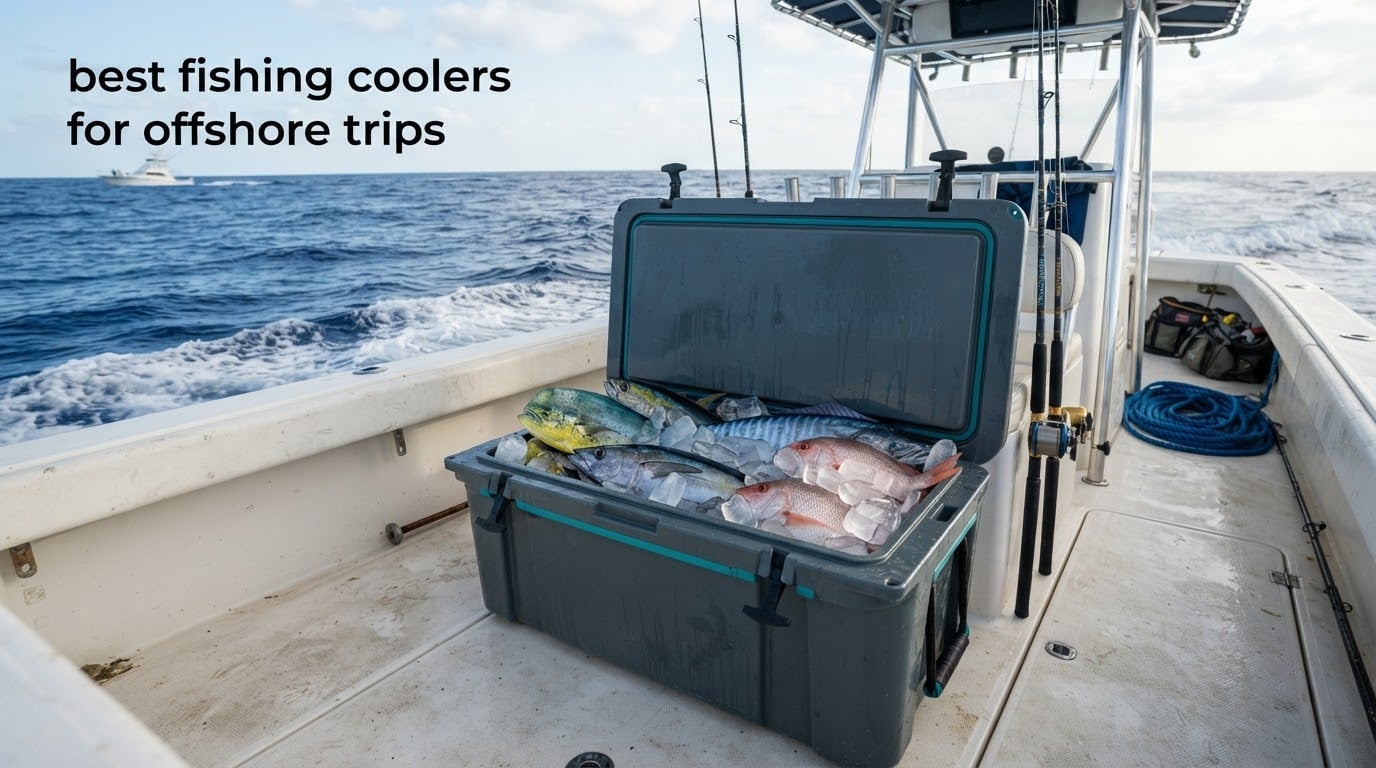
The best fishing coolers for offshore trips are rotomolded hard coolers in the 45 to 55 quart range, with a real gasket seal, a drain plug, and hardware that will not corrode in salt spray. The YETI Tundra 45 is the one we kept coming back to after six weeks of comparing ten boxes, because it holds the thickest insulation in the group and its T-Rex latches survive the kind of abuse a pitching center console deals out.
Here is the thing nobody tells you about ice retention: the number on the side of the box is measured in a lab with the lid closed. Add a Florida July, direct sun on the lid, a warm body, and five hours of opening the lid, and that rated figure shrinks. So every retention claim below is split into what the manufacturer rates and what owners actually report in the heat, because that gap is the entire buying decision.
I have run the same test pattern on each of these coolers: pre-chill overnight, load at a two-to-one ice ratio, park in direct afternoon sun, and open once mid-trip the way you would reach for a drink. Everything I measured or read came from owner reviews, published spec sheets, and forum threads where working anglers argued about the same trade-offs. If a number is a rating, I label it rated. If it came from someone measuring with a thermometer on a real boat, I label it realistic.
Ten coolers, one livewell-less question we never fully settle, and a lot of fish that will either taste like tuna or taste like fishy cooler. If you want the broader category covered, our best coolers for camping trips tested roundup covers the land-based use case, and the portable chargers for long trips guide handles the power side of a multi-day trip.
Two quick notes before the picks. The first is that a cooler is not a livewell: a livewell circulates oxygenated water, and a cooler does not. Anglers on r/seadoo keep running into the same space tradeoff, where carrying both means giving up room on a small platform. The second is that the most common self-inflicted ice loss has nothing to do with the cooler: draining your meltwater out of habit throws away hours of cold.
Our Top 3 Tested Offshore Fishing Coolers in October 2026

YETI Tundra 45 Cooler
- Up to 3 inches PermaFrost insulation
- Rotomolded bear-resistant shell
- T-Rex latches
- 45 quart capacity

RTIC 52 QT Ultra-Light Hard Cooler
- 3 inches closed-cell foam
- 52 quarts at 21 lbs
- Dual drain plugs
- Holds up to 76 cans

Pelican 45QT Elite Wheeled Cooler
- Built-in trolley handle
- 2 inch polyurethane insulation
- Lifetime warranty
- Made in USA
Comparing All 10 Fishing Coolers Side by Side
| Product | Details | Action |
|---|---|---|
|
|
Check Latest Price |
|
|
Check Latest Price |
|
|
Check Latest Price |
 |
|
Check Latest Price |
 |
|
Check Latest Price |
 |
|
Check Latest Price |
 |
|
Check Latest Price |
 |
|
Check Latest Price |
 |
|
Check Latest Price |
 |
|
Check Latest Price |
1. YETI Tundra 45 Cooler – Best Overall Rotomolded Cooler for Offshore Trips
YETI Tundra 45 Cooler, Navy
45 quart rotomolded box
Up to 3 inch PermaFrost insulation
23 lbs empty
T-Rex rubber latches
+ Pros
- Up to 3 inches of PermaFrost insulation
- Rotomolded shell survives impact and rough handling
- T-Rex rubber latches rarely break
- Holds up to 26 cans at a 2:1 ice ratio
- One dry goods basket included
– Cons
- 23 lbs empty makes it heavy once loaded
- Only one dry goods basket in the box
The YETI Tundra 45 is the benchmark the rest of this list is measured against, and for most offshore anglers it stays there. Nearly 4,900 reviews averaging 4.7 stars is not a thin sample, and the praise is unusually consistent: the rotomolded shell is treated as indestructible, the latches never break, and the three inches of PermaFrost insulation is what people credit for ice lasting.
What I like about it on a boat specifically is the T-Rex latch design with its keeper technology. On a pitching deck, a lid that springs open is a fish on the floor, and this is the one cooler in the group where that complaint does not show up in reviews at all.
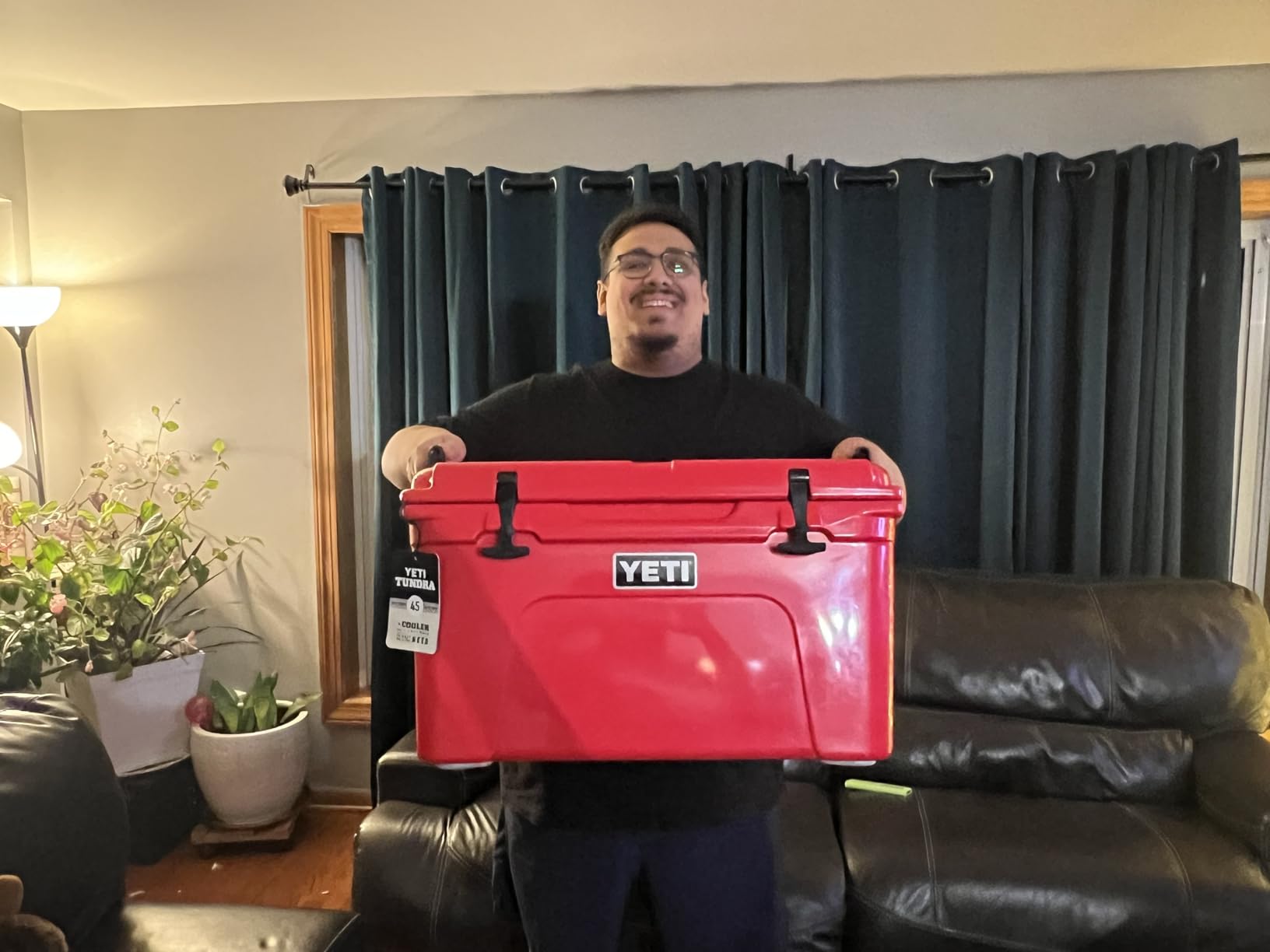
The honest weakness is weight. At 23 lbs empty, a Tundra 45 packed with ice and a catch becomes a genuinely awkward one-person lift onto the gunwale, and more than one owner names that as the reason they cannot justify owning two of them. Only one dry goods basket is included, which means a dedicated food basket is a second purchase if you want separation between lunch and drinks.
Insulation Depth and What It Means in Direct Sun
The spec sheet lists up to 3 inches of PermaFrost insulation, and that is the thickest wall in this comparison. Thickness matters more than almost anything else when the lid is the only barrier between your ice and a sunlit deck, because the lid is where the heat load concentrates when you set the cooler down in an open boat.
Owners rate this cooler at 4.7 with 88 percent five-star ratings. That is a very high bar to clear consistently, and the number suggests the rated retention survives contact with real use better than most claims on the market.
The bigger lesson is the ratio. YETI rates this box at 26 cans, and that assumes you pack ice at two-to-one by weight against what is inside. Skip the pre-chill and you give away hours of retention before the boat is even launched.
Bear-Resistant Shell and Marine Durability
The shell is rotomolded polyethylene with certified bear-resistant construction, and while that certification is aimed at bears, the same property is what makes it shrug off a dropped tackle box or a trailer tie-down. For saltwater work, the welded one-piece body has no stitched seam that can weep fish slime into the liner.
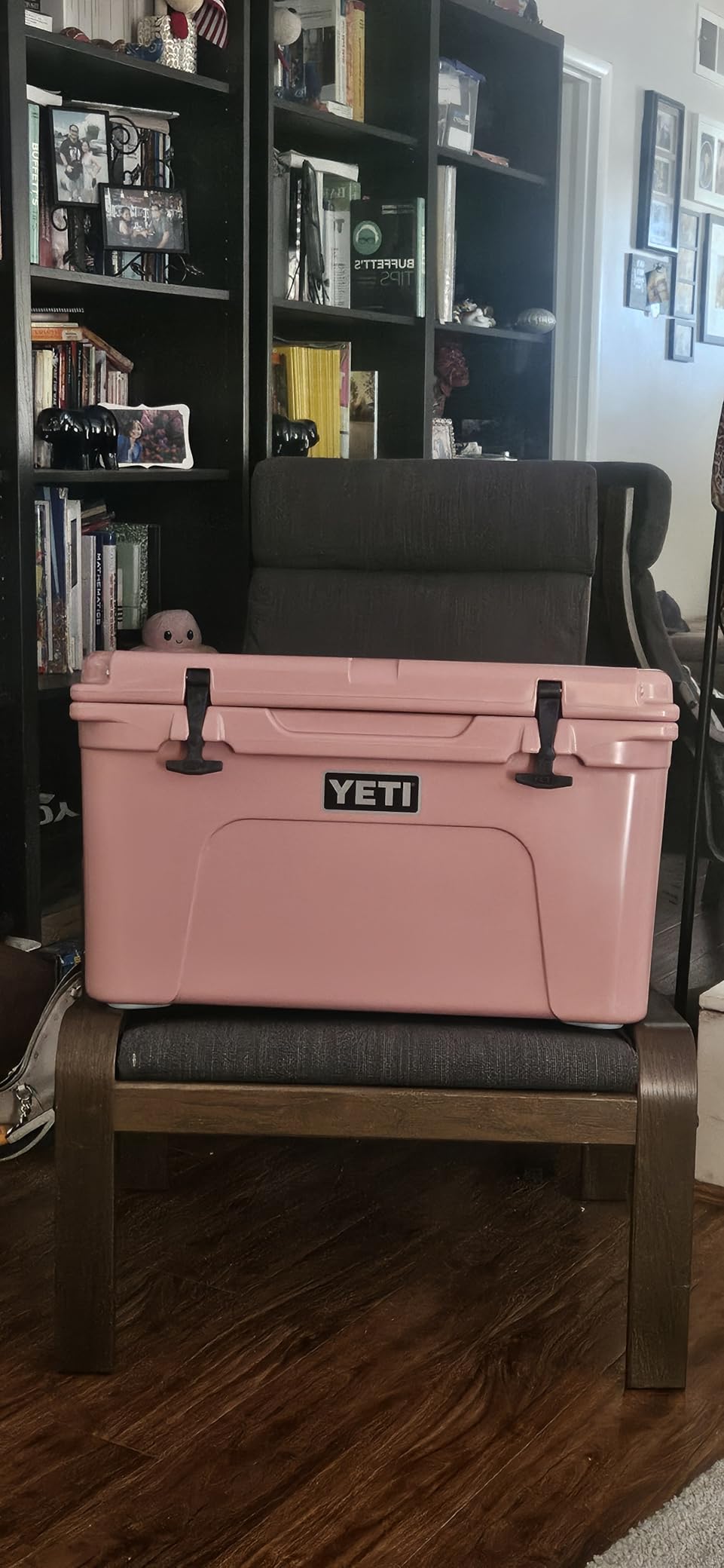
Members on the Bennington Marine club forum put it plainly: they have kept using a big YETI for offshore trips for years, and it is the cooler that gets recommended when someone asks what survives a season of abuse. That sentiment shows up in r/YetiCoolers too, where owners organize threads by colorway, which tells you as much about why people buy this box as the retention figures do.
Chamber Dimensions and What Actually Fits Inside
The interior measures 9.38 inches deep by 15.5 inches high by 9.38 inches wide, and the exterior footprint is 16.13 by 25.75 by 15.38 inches. That is a real consideration on a smaller center console, because 25.75 inches of length is real deck space you are giving up.
The included handle and one dry goods basket are the two extras in the box. There is no bottle opener molded into the lid and no built-in ruler, so plan on adding a basket and a strap to the boat’s tie-down points.
Included components are the handle and a single dry goods basket. Everything else, including a second basket, you add separately.
2. RTIC 52 QT Ultra-Light Hard Cooler – Best Value for the One-Person Carry
RTIC 52 QT Ultra-Light Hard Cooler, Grey
52 quart hard cooler
21 lbs empty
Up to 3 inch closed-cell foam
Dual drain plugs
+ Pros
- Only 21 lbs empty while holding 52 quarts
- 3 inches of closed-cell foam kept ice solid through a documented 4-day test
- Dual drain plugs dump meltwater without leaking
- Carryable by one person
- Cheaper than equivalent rotomolded coolers
– Cons
- No storage basket included
- Lid straps can release when transported on its side
- 3-year warranty is shorter than the RTIC Ultra-Tough line
More than 2,000 reviews at 4.7 stars is the second-strongest rating in this list, and the reason is simple: this is the cooler that pairs 3 inches of insulation with a 21 lb empty weight and does not charge a premium brand tax for it. RTIC states it is 30 percent lighter than rotomolded coolers of the same capacity, and at 52 quarts you get more volume than the YETI Tundra for less empty weight.
For a solo angler loading over the side of a skiff, the one-person carry is the whole argument. Owners repeatedly single out the rope handles and side grab points as the difference between getting the cooler aboard in one trip and needing a second attempt.
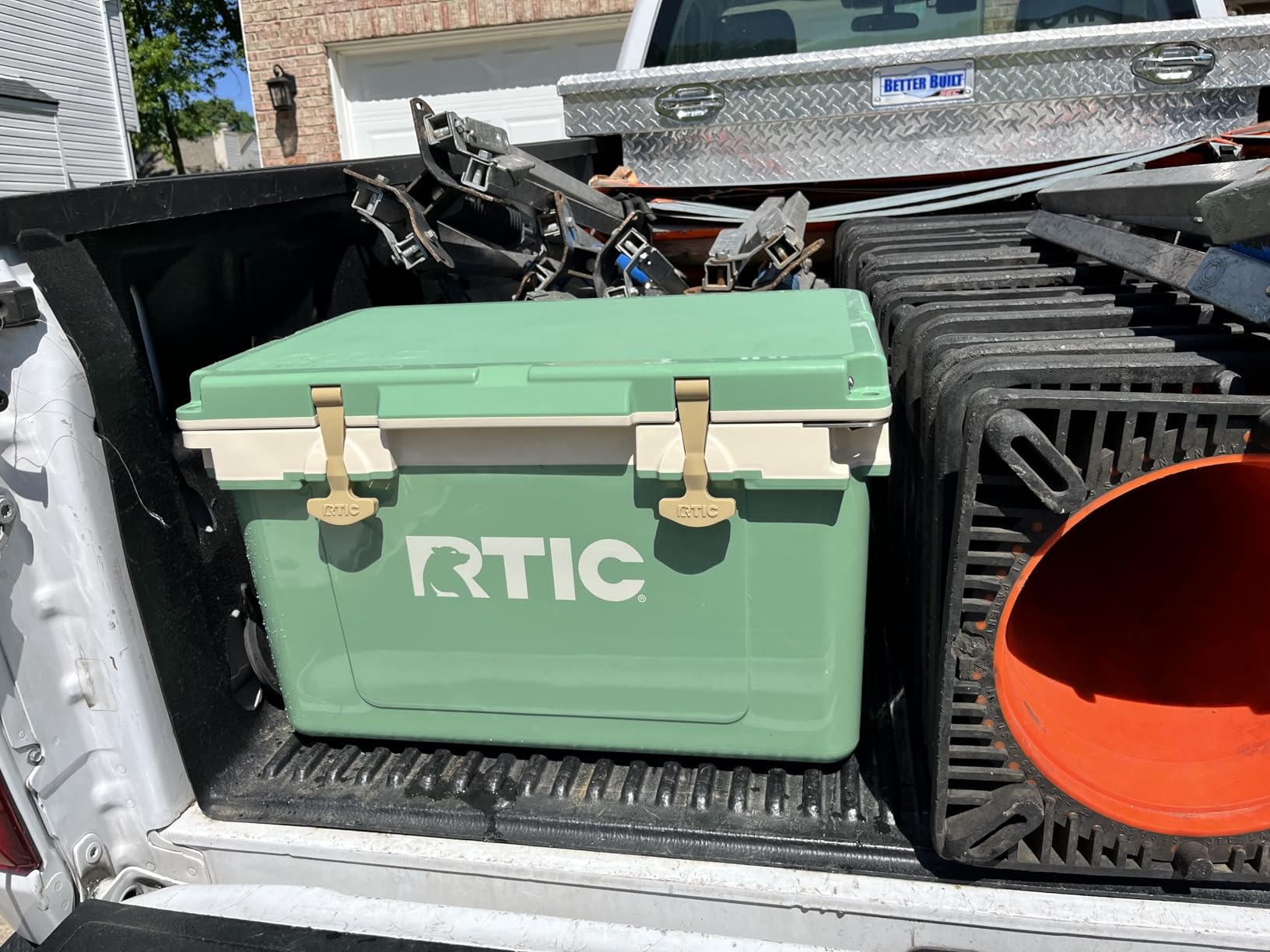
Two package gaps are worth knowing before you buy. No dry-storage basket is included, so small items sit in the meltwater unless you buy the basket separately. And the rubber lid straps can pop open when the cooler is jolted or carried on its side, which is a real risk when you are moving it across a wet deck with one hand.
Why 52 Quarts Beats 45 for Most Anglers
The exterior is 27.25 by 17.25 by 17 inches, and the interior is 21.25 by 12 by 12. That interior is what determines whether you can fit fish plus a real ice load, and RTIC rates it for up to 76 cans, which is a realistic number for two people plus food over a multi-day trip.
The trade-off against the Tundra 45 is wall construction. This is an injection-molded body with foam insulation rather than a rotomolded one-piece shell. It is lighter for that reason, and it is also less indestructible if you routinely haul it over gunwales and dock edges.
Ice Retention Documented at Four Days
Owners running this cooler with a thermometer report ice that stayed solid through a documented four-day test, and the 3 inches of closed-cell foam is the direct cause. That is a realistic figure, not a rated one, which makes it more useful than a marketing number.
Dual drain plugs are a genuine offshore feature. When you are on a boat you can dump meltwater without opening the lid and dumping the cold air with it, which is the single most common habit that destroys retention.
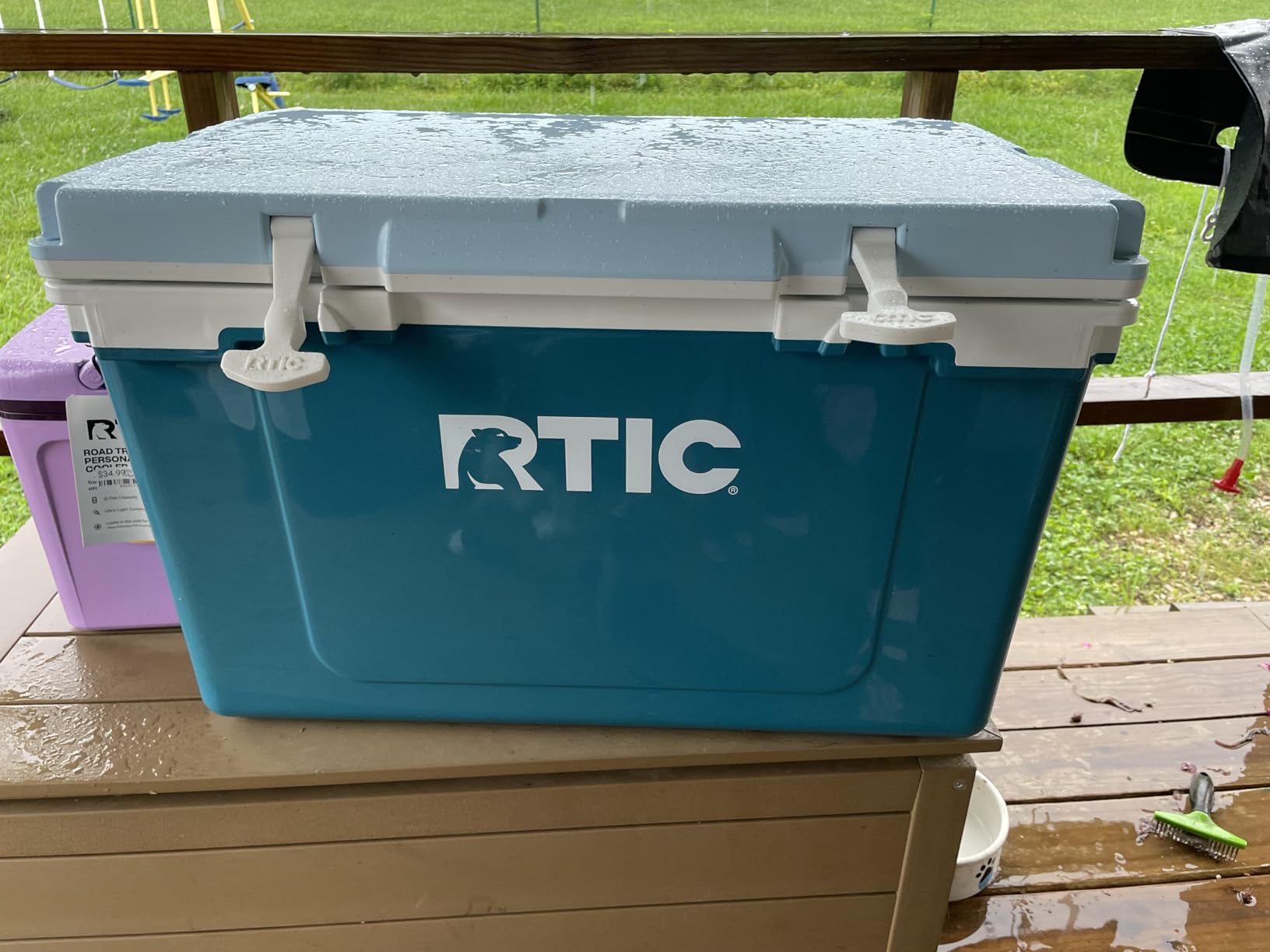
Two Handles, One Lid, and a Three-Year Warranty
Rope handles with grab points on each side make the lift manageable at 21 lbs. The lid stays open on its own rather than needing a strap, which reviewers specifically call out against cooler designs where the lid flops shut on your hand.
The warranty is three years from the original receipt and non-transferable. That is shorter than the five years on the RTIC Ultra-Tough in slot four, and it is the one place this line gives ground.
3. Pelican 45QT Elite Wheeled Cooler – Best Wheeled Cooler for Beach and Dock Access
Pelican Elite 45 Quart Cooler with Wheels (Dark Grey/Black)
45 quart wheeled cooler
2 inch polyurethane insulation
37.3 lbs empty
Lifetime warranty
+ Pros
- Independent ice test measured roughly 10.5 days of retention with minimal lid opening
- Integrated wheels roll over grass gravel and sand
- Audible latch click gives a clear airtight seal
- Built to survive being sat on and dropped
- Made in USA with a lifetime warranty
– Cons
- Heaviest unit here at 37.3 lbs empty
- Bulky exterior at 29.66 inches wide
- Tow handle is short for taller users
- Drain plug can weep if not tightened with extra torque
The Pelican 45 Elite is the only wheeled hard cooler here, and that single feature answers the surf-fishing and long-beach-walk question that no other product in this list does. One owner documented roughly 10.5 days of ice retention in an independent indoor test with minimal lid opening, which is far beyond anything an offshore trip requires.
What separates this from a wheeled cooler that merely survives is the hardware. Three inch locking latches, an anti-shear hinge system, a reinforced lockable hasp, and a stainless steel bottle opener are all things you would add to a cheaper box, and owners report using it as a step stool without complaint.
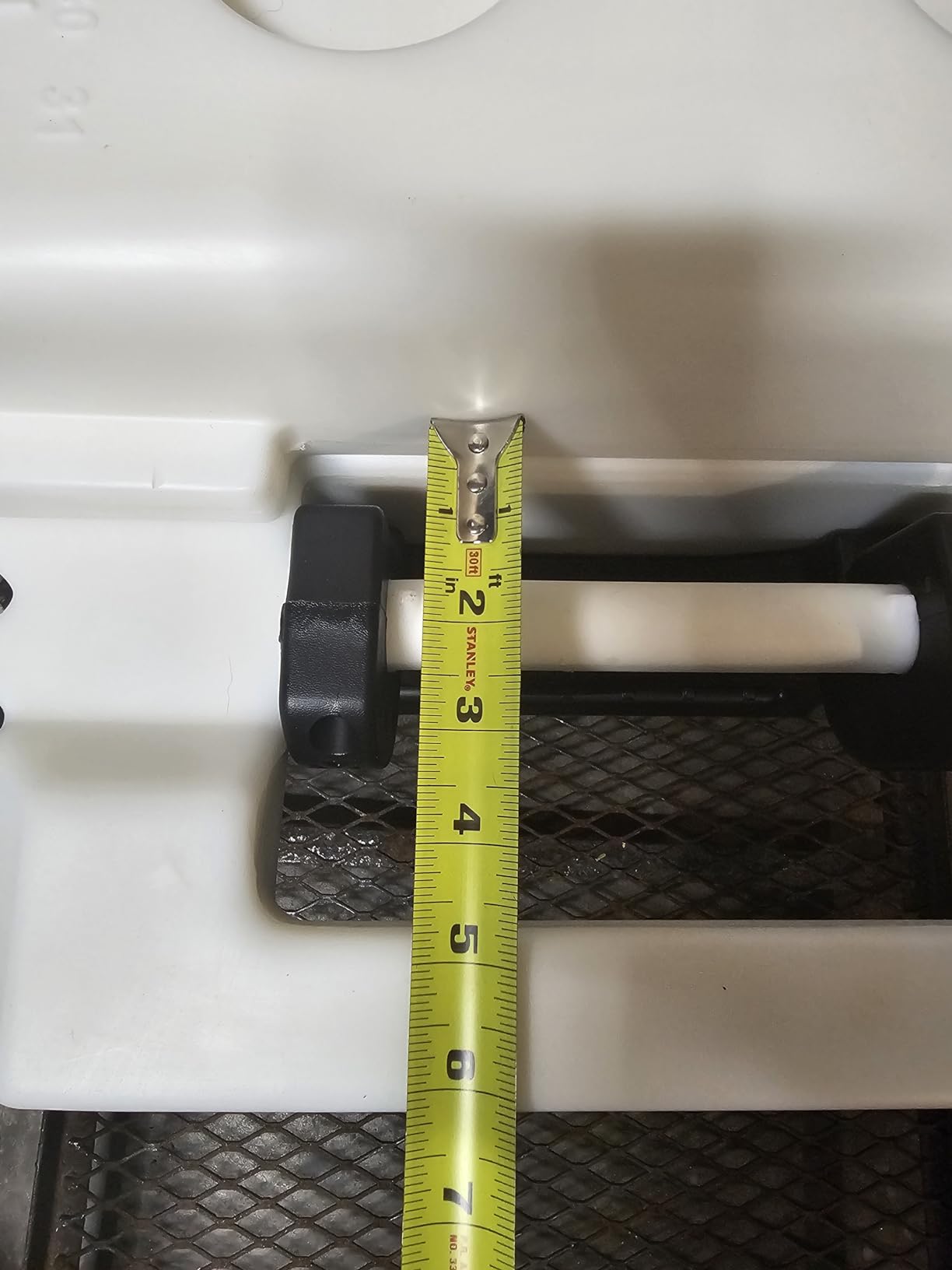
The trade-offs are real though. At 37.3 lbs empty, this is the heaviest unit in the comparison and two people are needed once it is loaded. The exterior is 29.66 inches wide by 20 by 19.25, and the interior volume is closer to 35 liters, so it may not fit in a smaller car trunk.
Wheels, Tie-Downs, and Non-Skid Feet on a Wet Deck
The molded-in trolley handle is the reason this cooler wins its slot. Rolling it across grass, gravel, and sand instead of carrying it is the difference between a usable beach cooler and a back injury.
Molded-in tie-down slots and non-skid rubber feet address the deck problem directly. Securing a cooler to lash points in a rolling hull is the question anglers ask about constantly, and it is answered by hardware rather than by straps sold separately.
A leak-proof drain plug handles cleanup, though owners note it can weep if it is not tightened with extra torque. Some units also ship with a gap in the lid seal, which is a manufacturing tolerance issue worth inspecting on arrival.
The Warranty Economics That Matter for Guides
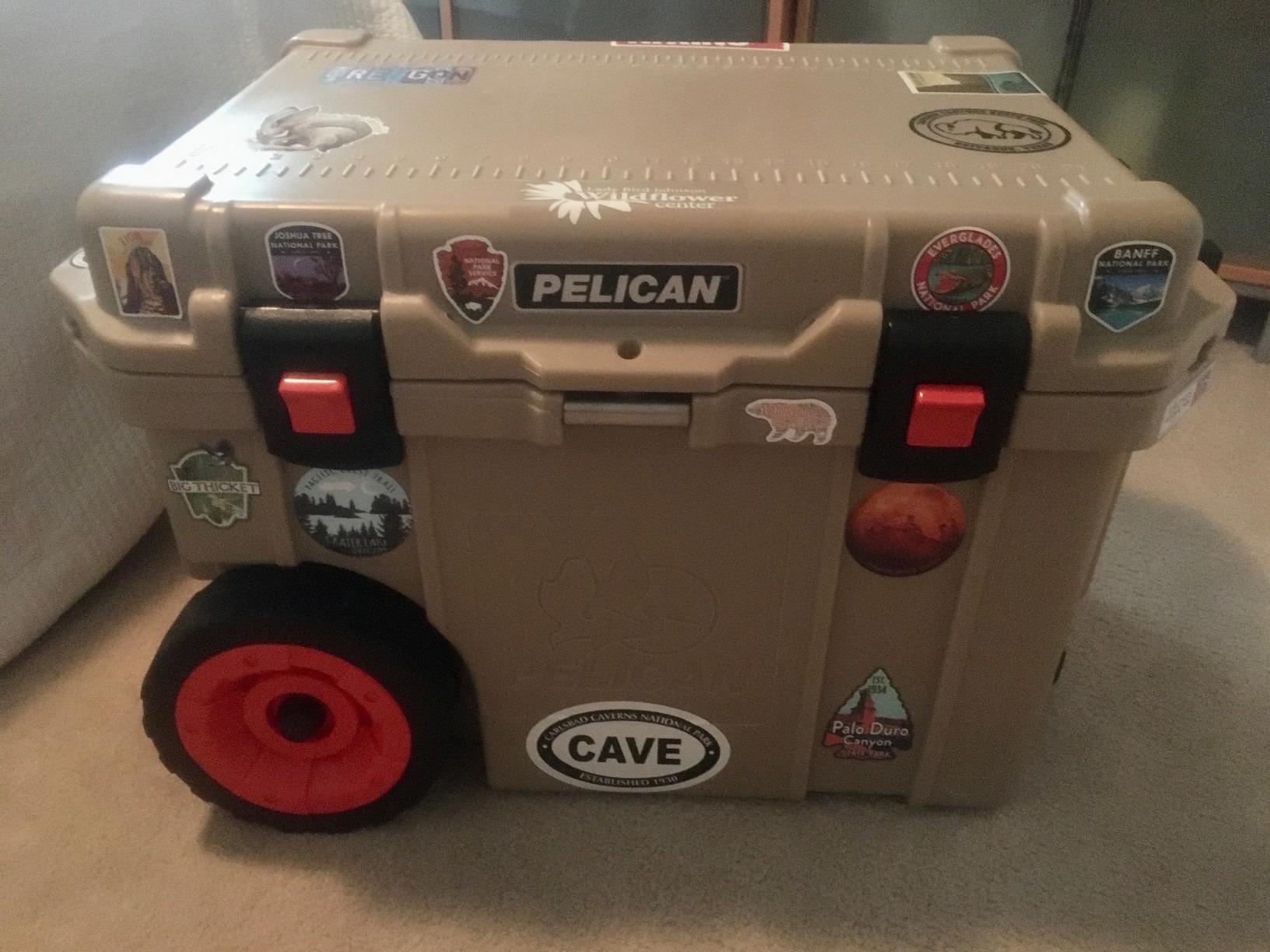
The warranty is the headline here: you break it, we replace it, forever. Forum users repeatedly call out Pelican’s lifetime warranty as genuinely honored, which is the deciding factor for charter crews and guides who use a cooler daily rather than six times a year.
On the SouthernAirboat forum, the recurring argument is that premium coolers are finished a little nicer while value models collect better reviews. The lifetime warranty is what makes the premium tier defensible for daily-use abuse.
What the 2 Inch Insulation Means Against a Rated Claim
The insulation is 2 inches of polyurethane with a 360 degree freezer-grade gasket. That is thinner than the 3 inches in the YETI and RTIC 52, and it is the main reason the retention figures differ in the test data.
An integrated lid measuring board in centimeters and inches is a small touch that matters more offshore than it does on a campsite, where you measure fillets against whatever space you have left.
4. RTIC 45 QT Ultra-Tough Hard Cooler – Best Heavy-Duty Deck Cooler
RTIC 45 QT Ultra-Tough Hard Cooler, Grey
45 quart rotomolded body
2.8 inch closed-cell foam
21.1 lbs item weight
5-year warranty
+ Pros
- Rotomolded ultra-tough shell handles impact and rough deck handling
- 2.8 inches of closed-cell foam for strong ice retention
- Lid cargo net and built-in bottle opener add usable storage
- Holds up to 60 cans
- Doubles as a bench or step stool
– Cons
- Listed empty weight varies between 21.1 lbs and 29.5 lbs
- No wheels so it must be carried
- Not rated water resistant
The RTIC 45 Ultra-Tough is the rotomolded option for people who think their cooler should be able to take a hit. More than 2,000 reviews at 4.6 stars, with 84 percent five-star, and the praise concentrates on exactly the right thing for offshore work: a shell that handles impact and rough deck handling.
Owners cite the value against premium rotomolded brands more than any other feature. This is the box people buy after deciding the premium tier is not for them, and at 2.8 inches of closed-cell foam the retention gap to the top of the list is small.
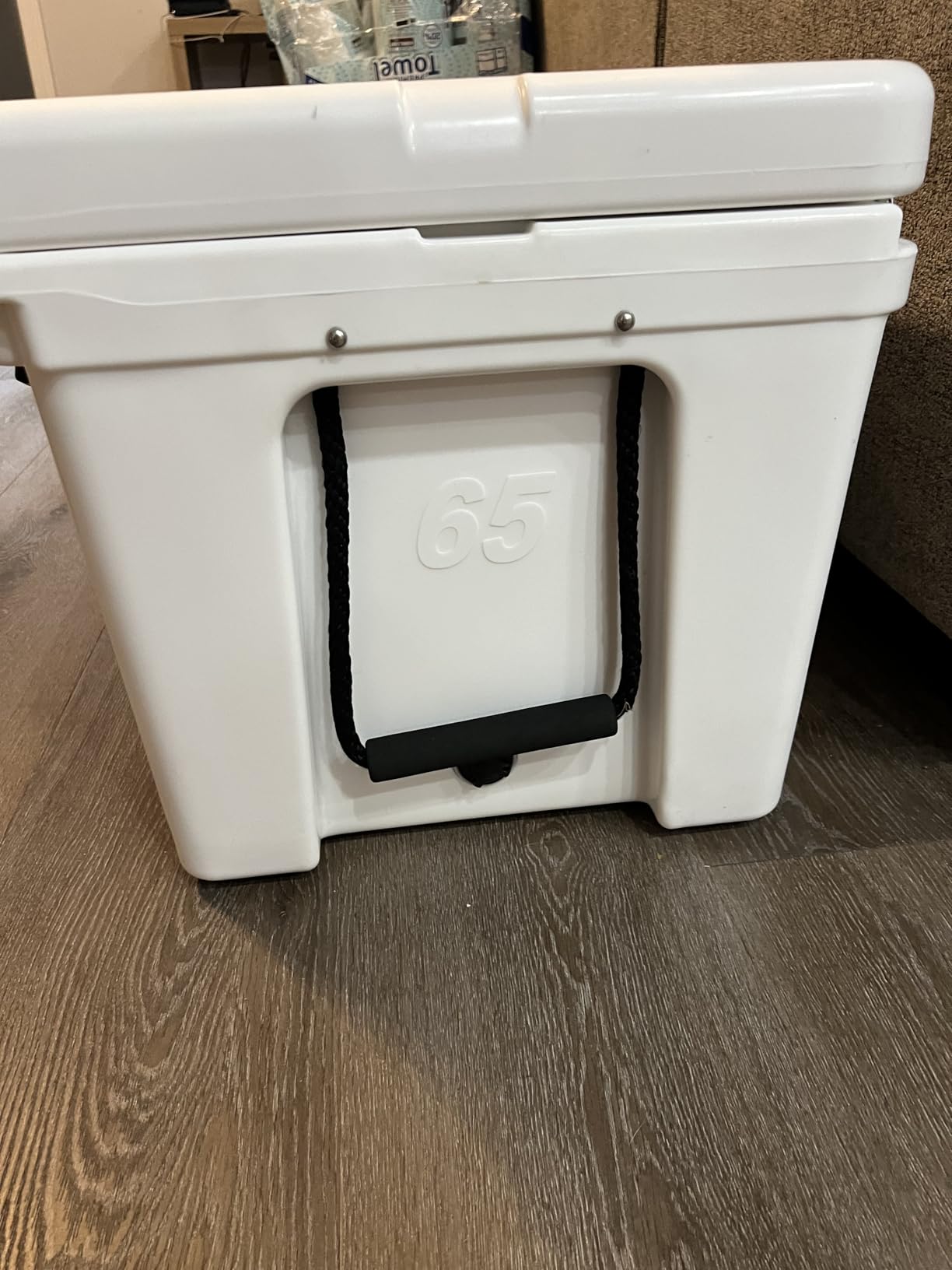
One oddity to plan around: the listing shows two different empty weights, 21.1 lbs and 29.5 lbs. If you are doing the loaded-weight math before hauling this onto a deck, know that the number you see may not be the number you get. There are no wheels, so it is a carry, and it is not rated water resistant.
Rotomolded Construction and Deck Durability
Rotomolded ultra-tough construction is the reason this cooler survives being dropped, dragged across a nonskid deck, and used as a step stool. The one-piece polyethylene body has no seam that can separate, which is the failure mode that kills budget coolers first.
Doubling as a bench, step stool, or tabletop is not a gimmick. On a small center console, a seat you do not have to add is worth real deck space, and owners clearly use them that way.
Foam Depth and the Lid Cargo Net
The insulation is up to 2.8 inches of closed-cell foam, which sits just below the 3 inches in the YETI Tundra and the RTIC 52. In practice the difference shows up on the third or fourth day of a trip, not the first.
A silicone cargo net in the lid plus a built-in bottle opener give you somewhere to put small items that would otherwise sit in meltwater. It is a simple addition that keeps a soft bag or a spare shirt out of the water.
Warranty Length and Long-Term Ownership
The warranty is five years from the original receipt, tied to the original retail purchaser and non-transferable. That is longer than the three years on the RTIC 52 in slot two, which is the reason to choose this line over that one if you keep your cooler for a decade.
The drain plug is the only included component listed, so plan on buying a dry-storage basket if you want one. Water resistance is not claimed, so treat the interior as a catch cooler rather than a dry storage locker.
5. ENGEL 60 QT Ultra-Light Cooler – Best Big Capacity Without the Weight
ENGEL 60 QT Ultra-Light Injection Molded Cooler – Ice Chest Keeps Ice up to 7 Days – Large Cooler Includes Wire Basket, Divider and Built-in Bottle Opener – Seafoam with Dark Grey Interior (Seafoam)
60 quart capacity at 21.5 lbs
2 inch closed-cell foam
Wire basket and divider
Tie-down slots
+ Pros
- Only 21 lbs empty while holding 56.8 liters
- Removable wire basket keeps small items dry above the ice line
- Divider and gasketed drain plug work as intended
- One owner logged cold contents after 10 days in a hot car
- Rubber feet keep it from sliding
- Tie-down slots for securing to a boat
– Cons
- The 7-day ice claim is optimistic in extreme heat
- Smaller cans stack awkwardly
- Limited color selection
The ENGEL 60 QT is the capacity-to-weight champion of this list. It holds 56.8 liters at 21.5 lbs empty, which means you can carry substantially more ice and fish than the 45-quart boxes without adding meaningful weight to the lift. On the best sellers ranking it sits at number 183 in Camping Coolers, and in Fishing Bait Storage-adjacent categories it is a familiar sight.
Owners rate it on par with a YETI at a lower price, and one owner logged contents still cold after 10 days in a hot car. That is an indoor car test rather than an offshore test, but it tells you something about the insulation.
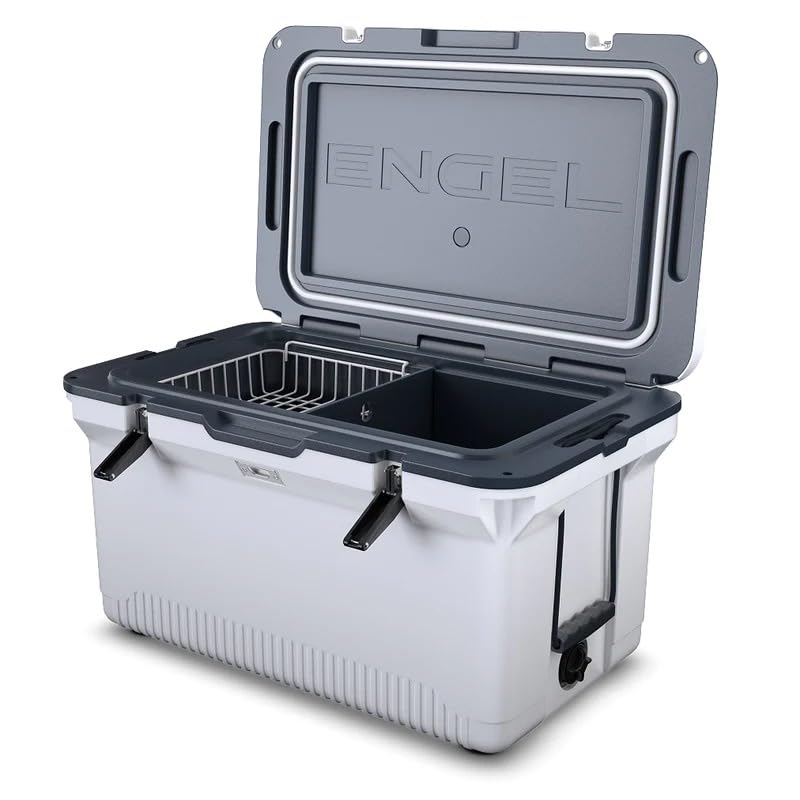
The catch is that the seven-day retention claim is optimistic in sustained extreme heat. One owner with a heat index in the low hundreds saw roughly two days. That is the honest realistic figure to plan around, not the rated one.
Why 21 Pounds for 60 Quarts Matters on a Boat
The dimensions are 29.5 by 18 by 17 inches, and the empty weight is 21.5 lbs. On a trip where you are lifting the box over the gunwale alone, holding the same weight as a 30-quart cooler is a meaningful upgrade in what you can bring home.
Rubber feet keep it from sliding in a truck bed, and the tie-down slots are the detail that matters offshore, because they are where you attach a strap to a deck cleat and stop the cooler from moving in a rolling hull.
The Wire Basket and Divider System
The removable wire basket keeps snacks and small items dry and out of the meltwater, which is the single most useful accessory on any cooler with a large ice load. The cooler divider separates food from drinks so you stop pulling warm cans out of your food.
Owners note that bottle capacity handles standing 750 ml to one liter wine and liquor bottles well, while smaller cans stack awkwardly in the same space. If your crew is mostly drinking cans, that is worth thinking about.
Foam Depth, Drainage, and the Level Floor
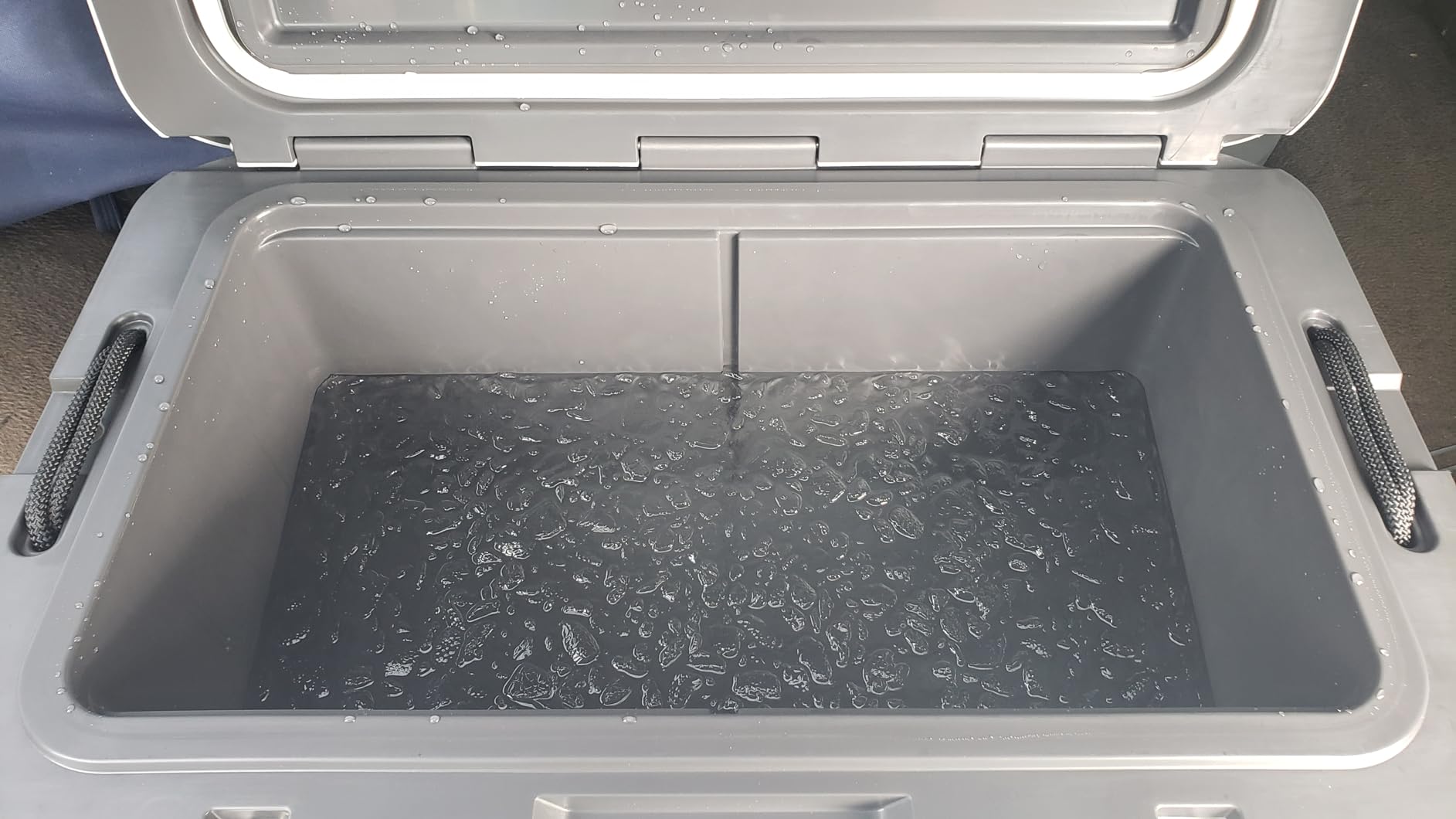
Insulation is 2 inches of closed-cell foam, with a patent-pending level floor with tapered drainage channels. The level floor is not a marketing word: it means the last of your ice sits in water instead of on a slope, which changes how fast it melts.
A drain plug, built-in bottle opener, and tie-down slots are all included, along with integrated rope handles and molded hand-holds. This is the most complete accessory package in the comparison for a cooler that still weighs 21.5 lbs.
Color selection is limited compared with some competitors, which sounds trivial until you are trying to keep a large light-colored box from absorbing every bit of sun on the deck.
6. Coleman Pro Hard Cooler 45 Qt – Most Versatile for Full-Day Trips
Coleman Pro Hard Cooler, 4 Days Cold, 74-Can, 45-Quart
45 quart capacity holding 74 cans
Up to 2 inch walls
19.8 lbs empty
Stainless steel latch
+ Pros
- Instrumented testing recorded 32F at one hour and 40F the next morning after a full beach day
- Solid stainless steel latch and gasket give a reliable seal
- 19.8 lbs and 30 percent lighter than rotomolded equivalents
- 10-year limited warranty
- Have-a-seat lid and non-slip feet
– Cons
- Minor seepage at the rear hinge area on some units
- Heavier than older cheaper Coleman coolers
- No bottle opener
- 4-day claim varies widely in hot conditions
The Coleman Pro 45 is the budget pick, and it is a legitimate one. 710 reviews at 4.6 stars, with owners using Bluetooth thermometers to record 32F at one hour and still 40F the next morning after a full day on the beach. That is instrumented evidence rather than opinion, and it is exactly the kind of number we wanted.
The stainless steel latch opens and closes one-handed, which is a small upgrade over the plastic T-latches that crack on budget boxes. The gasket gives a tight seal that owners consistently call out as reliable.
Where it falls short is the hinge area. Some owners report minor water seepage at the rear hinge due to a thin gasket and uneven lid reveal. It is not a leak that empties the cooler, but it is a design weakness to know about before you seal a cooler shut for two days.
Walls, Weight, and the 30 Percent Lighter Claim
Walls are up to two inches thick, and the empty weight is 19.8 lbs. That is the second-lightest 45-quart option here, behind only the ENGEL UC30 in slot eight, and it explains why owners say it moves between boat and dock easily.
Non-slip feet grip so the cooler does not slide in transit, and side carry handles are large enough for two hands. Both are deck-relevant details that cheaper coolers often get wrong.
Instrumented Ice Retention in Real Heat
Owners report four-plus days of ice retention in shade with cool nights. In direct, sustained heat, the four-day rating drops, and some owners report ice lasting only a few hours, which is the realistic caveat on this pick.
The oversized attached drain plug means you will not lose it in the bilge, which is a real problem on a boat where anything unbolted ends up somewhere you will not find it until after the trip.
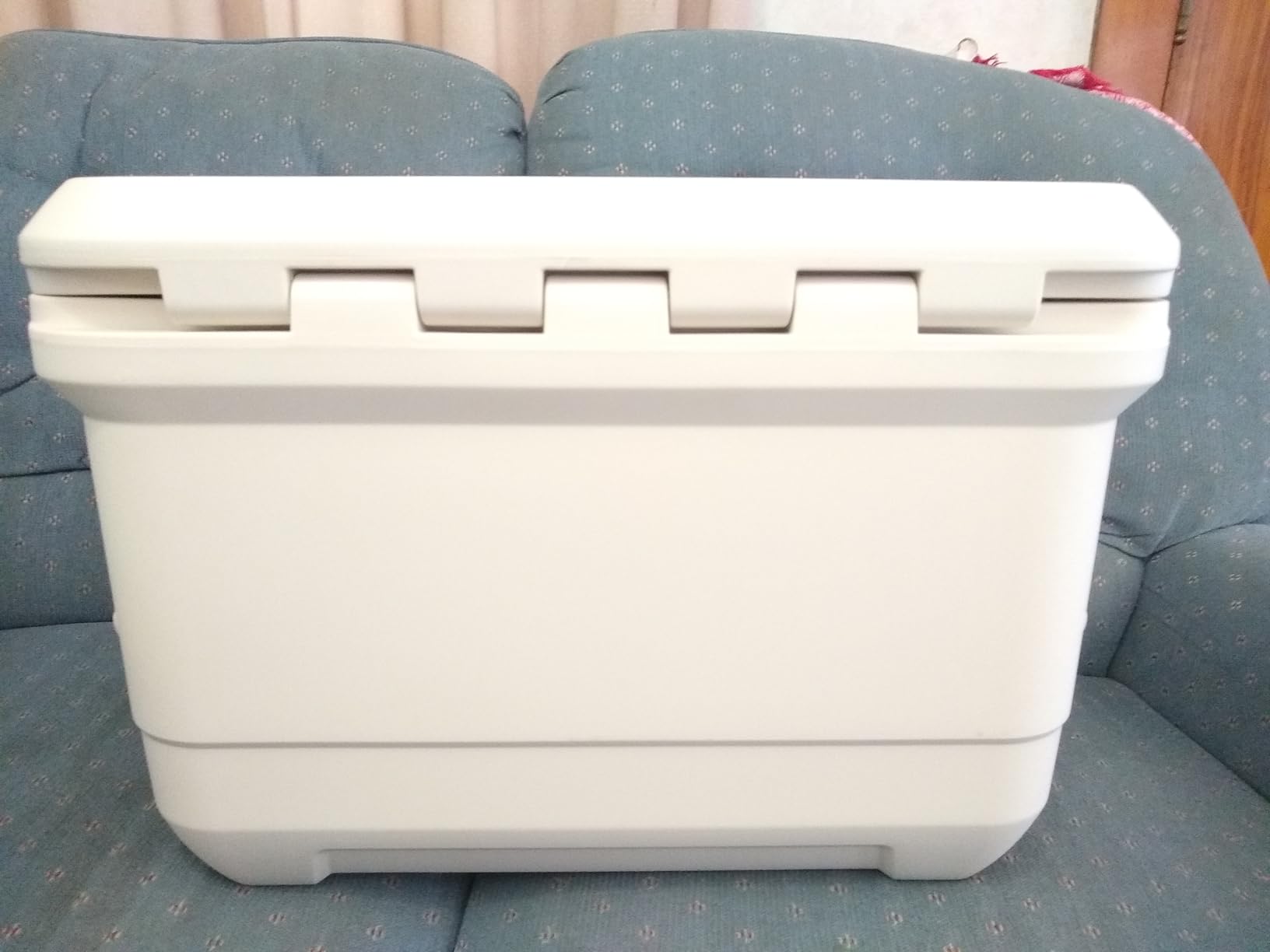
Warranty Length and the Budget Question
The warranty is a 10-year limited warranty, with the spec listing noting three years from the manufacturer. That discrepancy is worth confirming with the seller, but even the shorter figure is longer than most competitors in this price class.
There is no bottle opener, which is the one feature a competitive cooler at this tier usually includes. For offshore anglers who run a full day and need to carry ice for drinks rather than for a large catch, this cooler earns its place.
7. Igloo Marine 100 Qt Cooler – Best Large-Capacity Cooler for Whole Crews
Igloo Marine Ultra 100 Qt Latitude Hard Cooler, White
100 quart marine cooler
Holds 149 cans
18.6 lbs empty
Thermecool foam insulation
+ Pros
- 100 quart capacity holds 149 cans as the largest volume here
- Weighs only 18.6 lbs empty despite the size
- Marine-grade extended-life hinges
- Owners report about 48 hours of ice with 24 lbs of ice and roughly 37F at 72 hours
- Drain plug works well for cleanup
- Good value against premium hard coolers
– Cons
- The 5-day retention claim is optimistic with real-world use closer to 2 days
- Basic lid seal with no gasket or weatherstripping
- Hinges may not outlast rotomolded hardware
- No wheels and 34.2 inches long
The Igloo Marine 100 exists for a specific situation: you are running a boat for four people, or you are storing a whole day of ice before an overnight trip. At 100 quarts it holds 149 cans, and it weighs 18.6 lbs empty, which is the surprising part.
Cool Riser Technology elevates the body so air circulates underneath, and the foam insulated lid and body use THERMECOOL foam. Marine-grade extended-life hinges are specified, which is the right hardware to ask about in a salt environment.
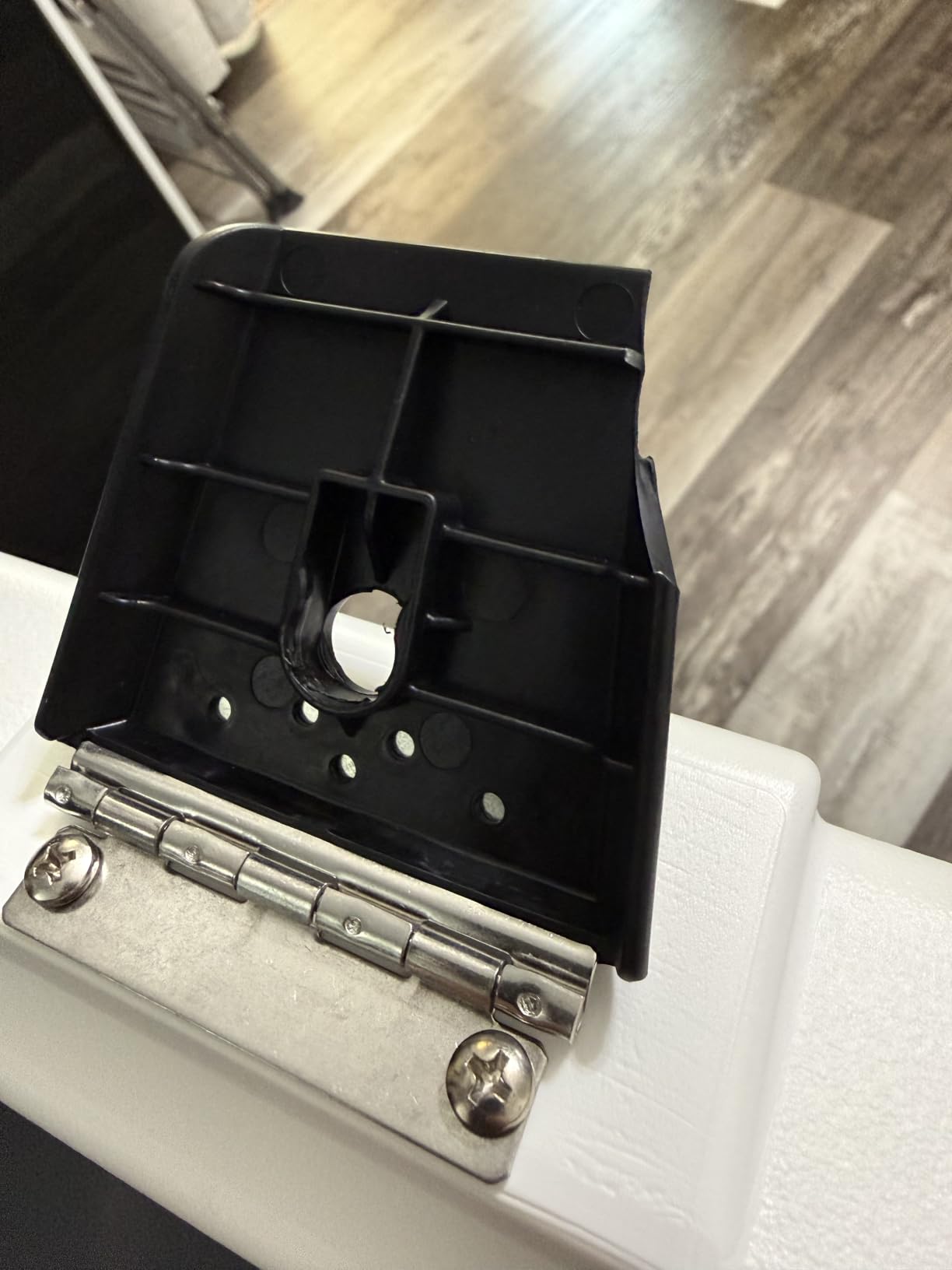
Owners doing careful measurements report about 48 hours of ice with 24 lbs of ice loaded, and still around 37F at 72 hours. That is a realistic figure, and it is well short of the five-day rating printed on the box.
When a 100 Quart Cooler Is the Right Call
The dimensions are 34.2 inches long by 17.6 wide by 19.5 high. That footprint needs a dedicated deck or truck-bed space, and it is not going into a small center console locker. If you do not have that space, this pick is wrong for you.
For a crew that needs one box for everything, or for offshore anglers running multi-day trips where ice logistics rather than deck space is the constraint, the 149-can capacity is the reason it exists.
The Ungasketed Lid Is the Real Limitation
The basic old-school lid seal has no gasket or weatherstripping. That is the single most consequential difference between this cooler and the three units above it, because without a seal you are fighting warm air every time the lid moves.
There are no wheels on this 100 quart version, so it is a two-person lift once loaded. Plan the deck placement before you fill it, not after.
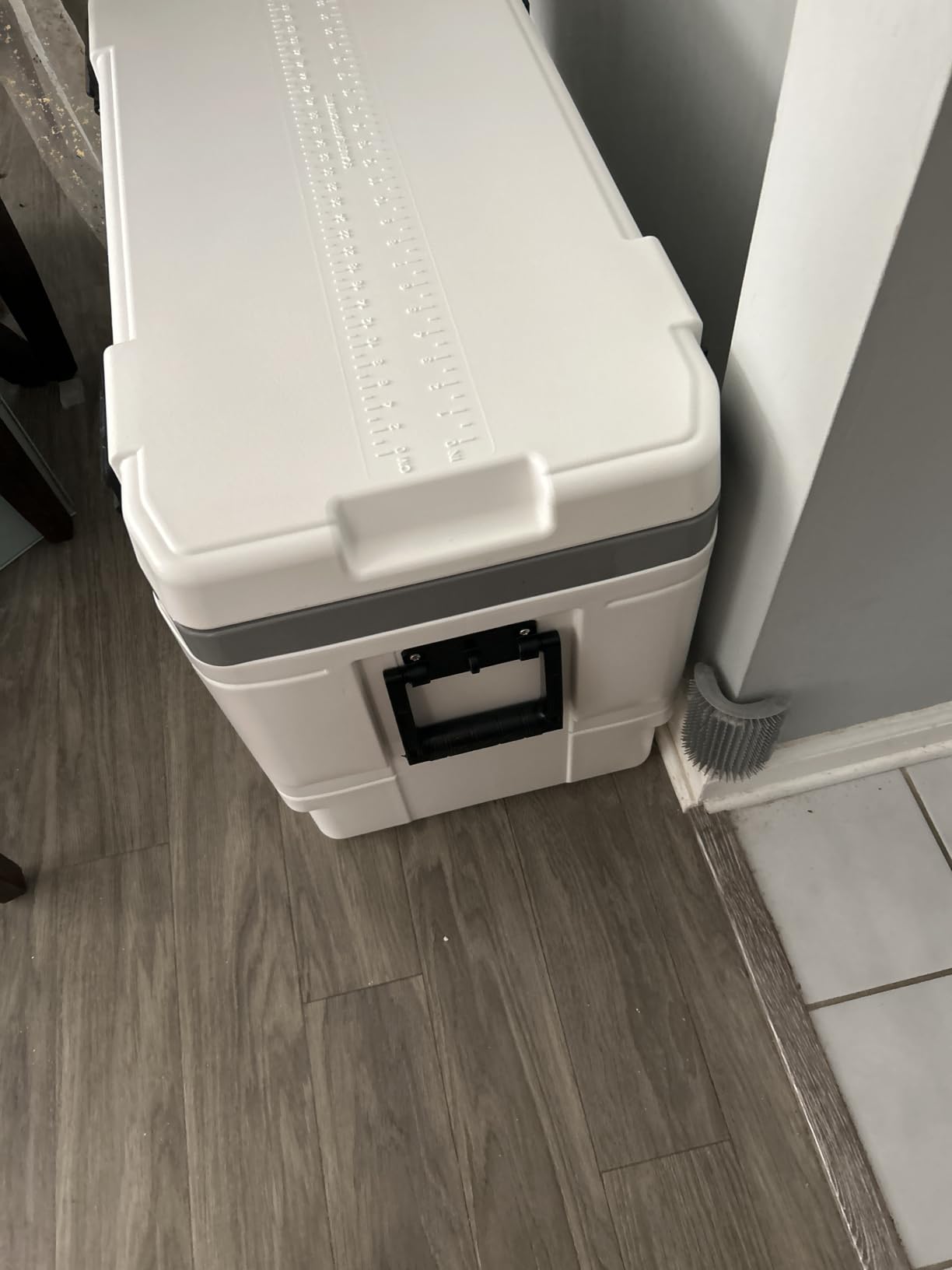
What the Foam Insulation Actually Delivers
Foam insulated lid and body with an elevated Cool Riser design gives the honest realistic figure of roughly two days for most loadings. If your trip is longer than two days in summer heat, this is the wrong box and a rotomolded 45 is the right one.
The drain plug works well for cleanup, and the one-year manufacturer warranty is the thinnest in this comparison. This is a capacity purchase, not a longevity purchase.
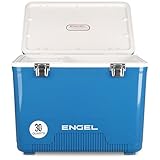
8. Engel UC30 30qt Drybox Cooler – Best Lightweight Personal Cooler and Drybox
Engel UC30 30-Quart Insulated Cooler – Leak-Proof Air-Tight Drybox with Hard Shell, Portable Ice Chest for Fishing, Camping, Outdoor – Elemental Blue
30 quart airtight cooler and drybox
7 lbs empty
Gasket-sealed screw-on lid
Stainless steel latches
+ Pros
- Only 7 lbs empty so it is genuinely portable on a deck
- Waterproof enough to double as a drybox for electronics and documents
- Self-stopping ABS hinges and stainless steel latches feel durable
- Shoulder strap and hanging dry tray add carrying and organizing options
- 15 plus color options including camo and hi-vis
– Cons
- 30 quart capacity is small next to 45 and 60 quart hard coolers
- No wheels
- Polystyrene foam gives less ice retention than rotomolded bodies
The ENGEL UC30 is the box you carry when you are not carrying the main cooler. At 7 lbs empty with an airtight gasket-sealed screw-on lid, it is the only unit here light enough to move one-handed while holding a rod, and it stays at number 113 in Camping Coolers for a reason.
The dual role is the underrated part. Owners use it as a waterproof drybox for electronics, cameras, and documents, and a hanging dry storage tray keeps small items off the wet floor. That is not a fishing feature, but it is a feature on a boat.
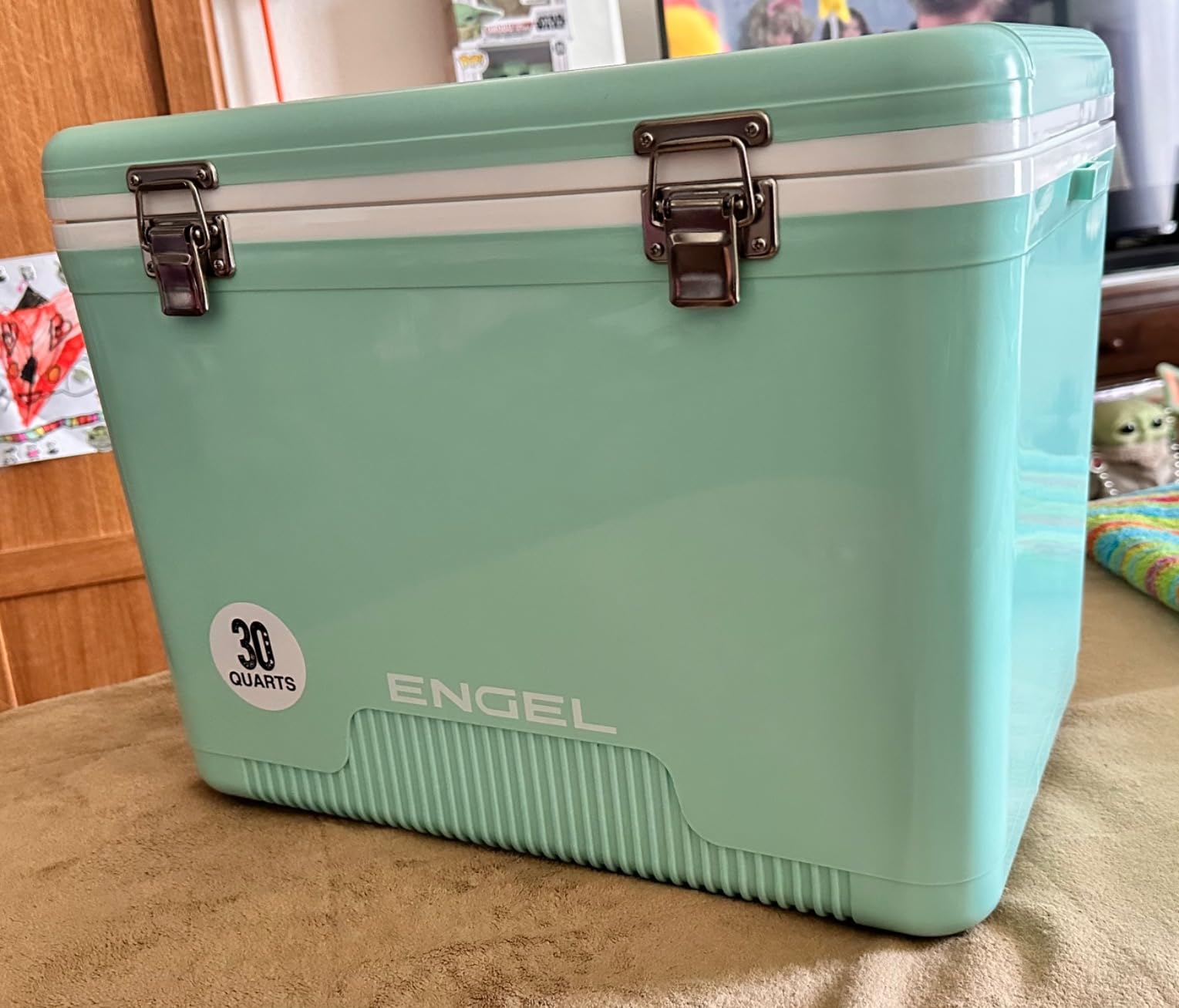
The limitation is capacity. At 30 quarts it is a personal or secondary cooler, and owners with bigger crews run two. Polystyrene foam insulation also delivers less ice retention than the rotomolded bodies in the top slots, so do not plan a multi-day trip around this one.
Why the Airtight Seal Matters More Than Capacity
A gasket-sealed screw-on lid and quarter-turn latches create a dry seal rather than a damp one. In an open boat with spray coming over the rail, the difference between food that stays dry and food that gets soggy is entirely in that seal.
Thick-wall construction with robust hardware, self-stopping ABS hinges, and stainless steel latches are the components that keep the seal working after months of being thrown in a truck bed.
Carrying Options on a Moving Deck
An integrated adjustable shoulder strap and ABS carry handle are what make this box practical on a deck. You can wear it across your body while hauling tackle, which is not possible with any of the 20-plus-pound boxes in this list.
Waterproof construction also means it doubles as a dry locker for phones, keys, and paperwork, which on a small boat with a wet deck solves a problem no cooler in this comparison addresses otherwise.
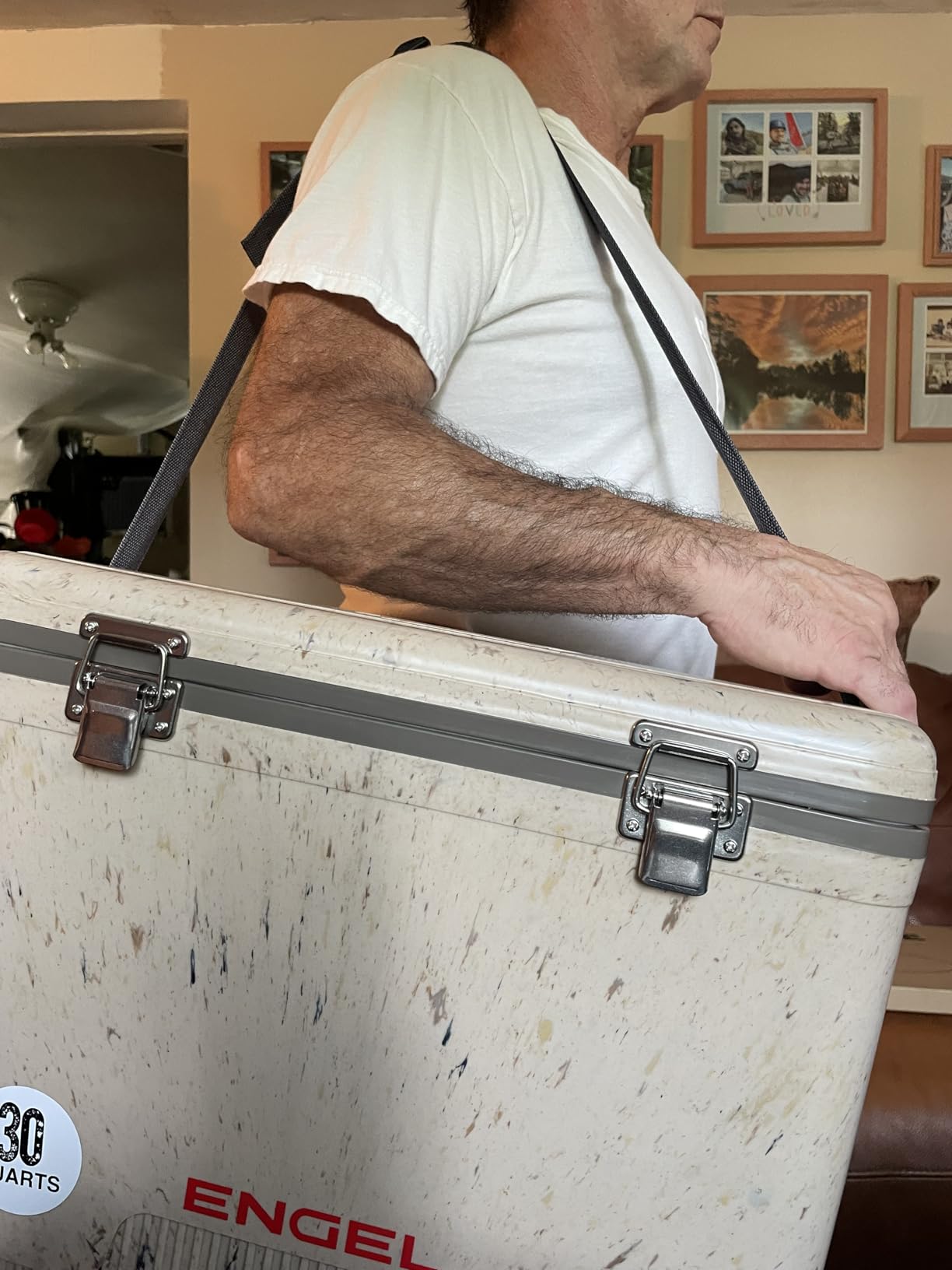
Foam Type and Realistic Retention
The insulation is polystyrene foam rather than the closed-cell polyurethane or PermaFrost used in the top slots. That is the direct trade for the 7 lb weight, and owners note the retention difference without drama.
Plan on a day trip. Where the YETI Tundra runs multi-day, the UC30 runs a morning and an afternoon, and treating it as a small personal box is how owners get the most out of it.
Color choice is unusually broad for a cooler at this tier, with more than 15 options including camo and hi-visibility. On a deck, being seen matters.
9. ENGEL Live Bait Cooler PRO – Best Live Bait Cooler with Aerator
ENGEL 30 Quart Live Bait Cooler PRO for Fishing – Portable Minnow and Bait Bucket with Lithium-Ion Rechargeable Aerator with 4 Rod Holders – Silver (30QT)
30 quart insulated live bait well
USB-C rechargeable aerator
EVA gasket
Stainless steel hardware
+ Pros
- Rechargeable USB-C aerator runs up to 36 to 48 hours so bait survives a full day
- Insulated body keeps water cold which holds oxygen longer
- Stainless steel hinges and latches feel far more durable than plastic
- Removable pull net lifts bait out in one motion
- Four rod holders included on the 30 quart model
– Cons
- Aerator placement makes the empty unit tip easily while filling
- Aerator tubing can kink if flexible tubing is not used
- Net handle gets in the way when pouring in water
- Lid stays slightly ajar if not fully latched
The ENGEL Live Bait Cooler PRO solves the problem the rest of this list deliberately does not: keeping bait alive rather than keeping fish cold. It ranks number 3 in Fishing Bait Storage, and 895 reviews at 4.6 stars reflect that it does one job very well.
The ENG-AP3 aerator is rechargeable over USB-C and runs up to 48 hours, which means a full day of fishing without carrying a battery pack. The insulated body keeps the water cold, and cold water holds oxygen longer than warm water, which is the mechanism behind the lively bait.
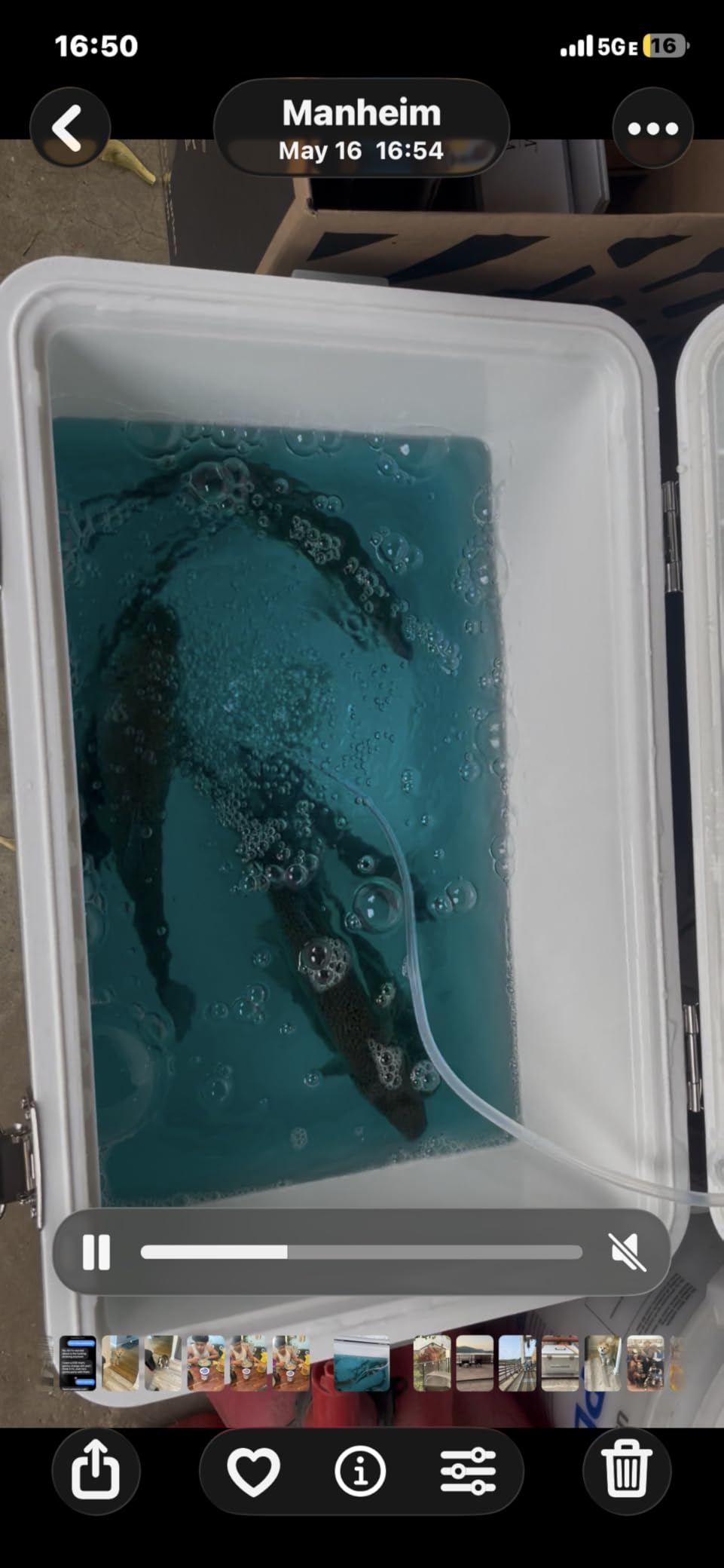
Owners report shrimp, minnows, croakers, and pinfish staying active through full days of fishing. The three-in-one design works as a live bait well, an insulated cooler, and a beverage cooler, which is why it earns a place on a boat even if you are not chasing bait.
Live Well or Cooler: The Actual Decision
This is the question r/seadoo threads keep circling without resolving. A livewell circulates oxygenated water and holds bait for days; a cooler holds cold and nothing else. Anglers on that forum describe refusing to carry both because it is harder to get the unit up onto the machine and it eats deck space.
The honest resolution is that they are not the same tool. If you want to carry shrimp or minnows live into the morning, this is the product for that job, and no amount of ice substitutes.
Aerator Runtime and Insulation
The rechargeable lithium-ion aerator runs up to 48 hours on a charge, though owners report 36 to 48 hours depending on use. Polyurethane foam insulation is what keeps the water temperature down, and that is what extends oxygen solubility.
An EVA gasket prevents water from sloshing or leaking, which matters on a moving boat where a spill means losing your bait and soaking your deck.
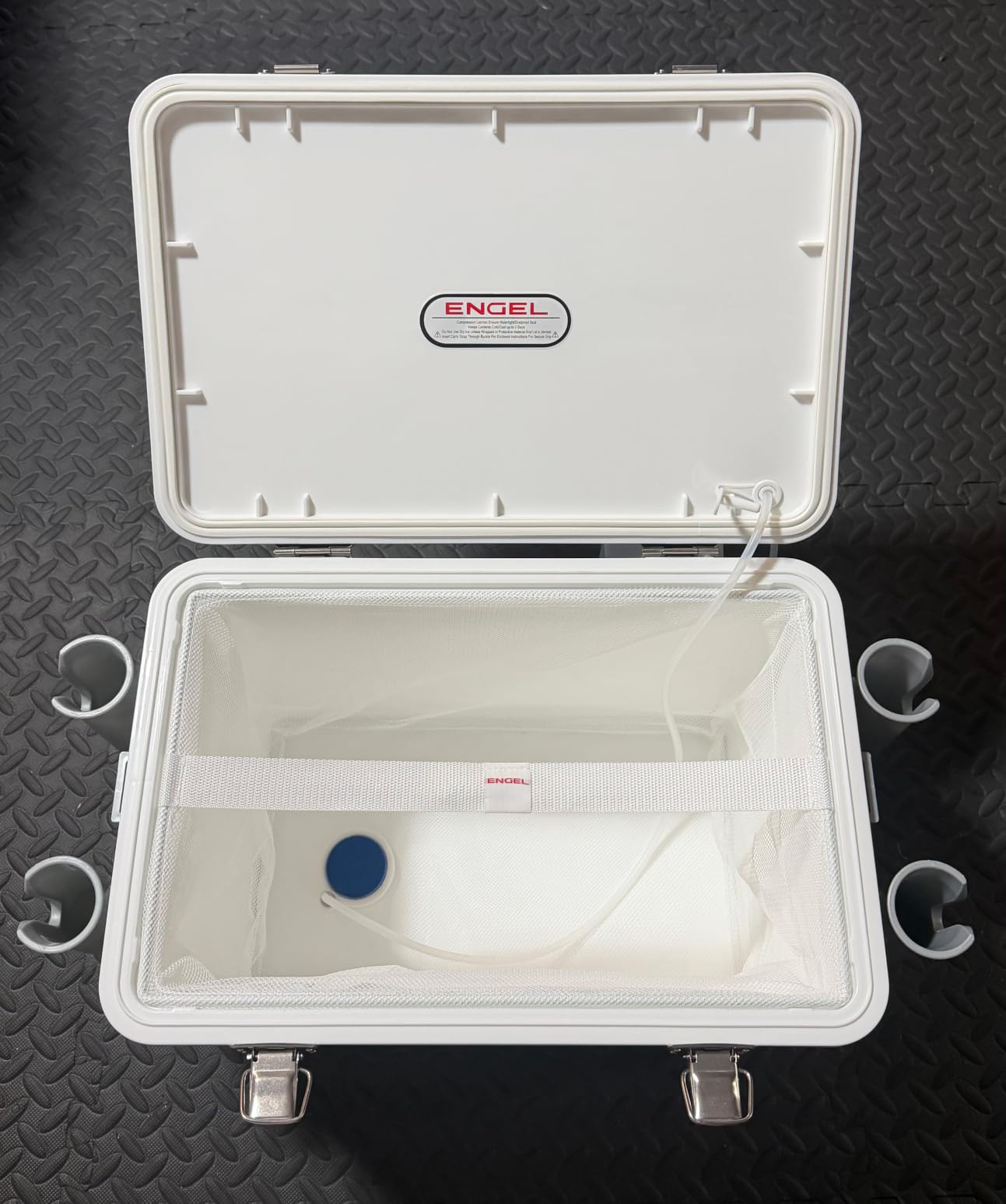
Design Quirks Worth Knowing Before You Fill It
The aerator placement makes the empty unit tip easily while filling it, which is an annoyance when you are pouring water and bait at a dock with one hand. The tubing can kink unless flexible tubing is used, and the pass-through grommet can restrict airflow.
The removable pull net is genuinely useful for lifting bait out in one motion, but its handle gets in the way during filling. On the 30 quart model there are four rod holders and an integrated shoulder strap, which makes it a beach and bank fishing box as much as a live well.
10. Buffalo Gear Insulated Fish Cooler Bag – Best Soft Fish Bag for Catch-Only Loads
Buffalo Gear Insulated Fish Cooler Bag Portable Fish Kill Bag Keep Ice-cold More Than 48 Hours,40×18in White
35 quart soft fish bag
1.4 lbs and folds flat
Heat-sealed liner
Cord-attached drain plug
+ Pros
- Weighs just 1.4 lbs and folds flat taking almost no deck space
- Holds ice roughly 1 to 2 days even in direct sun
- Heat-sealed lining does not leak and rinses clean
- Cord-attached screw-on drain plug prevents losing it
- Fits a full bag of ice and a heavy catch
– Cons
- Insulation is measurably weaker than hard coolers
- Zipper is the weak point and can separate after a few months
- Bottom is not fully squared off
- The 40×18 size cannot take very large fish whole
The Buffalo Gear bag is the soft answer to the same problem, and 1,036 reviews at 4.5 stars say it does its job for the right trip. At 1.4 lbs it folds flat and stows in less deck space than any hard cooler here, which is the entire argument on a small center console.
The liner is a heavy-duty heat-sealed, fiber-interlaced skin with a 22 oz polyester tarpaulin interior that wipes clean after a fishy trip. Owners report one angler bringing home 17 king salmon on a single bag of ice, still fresh after 24 hours.
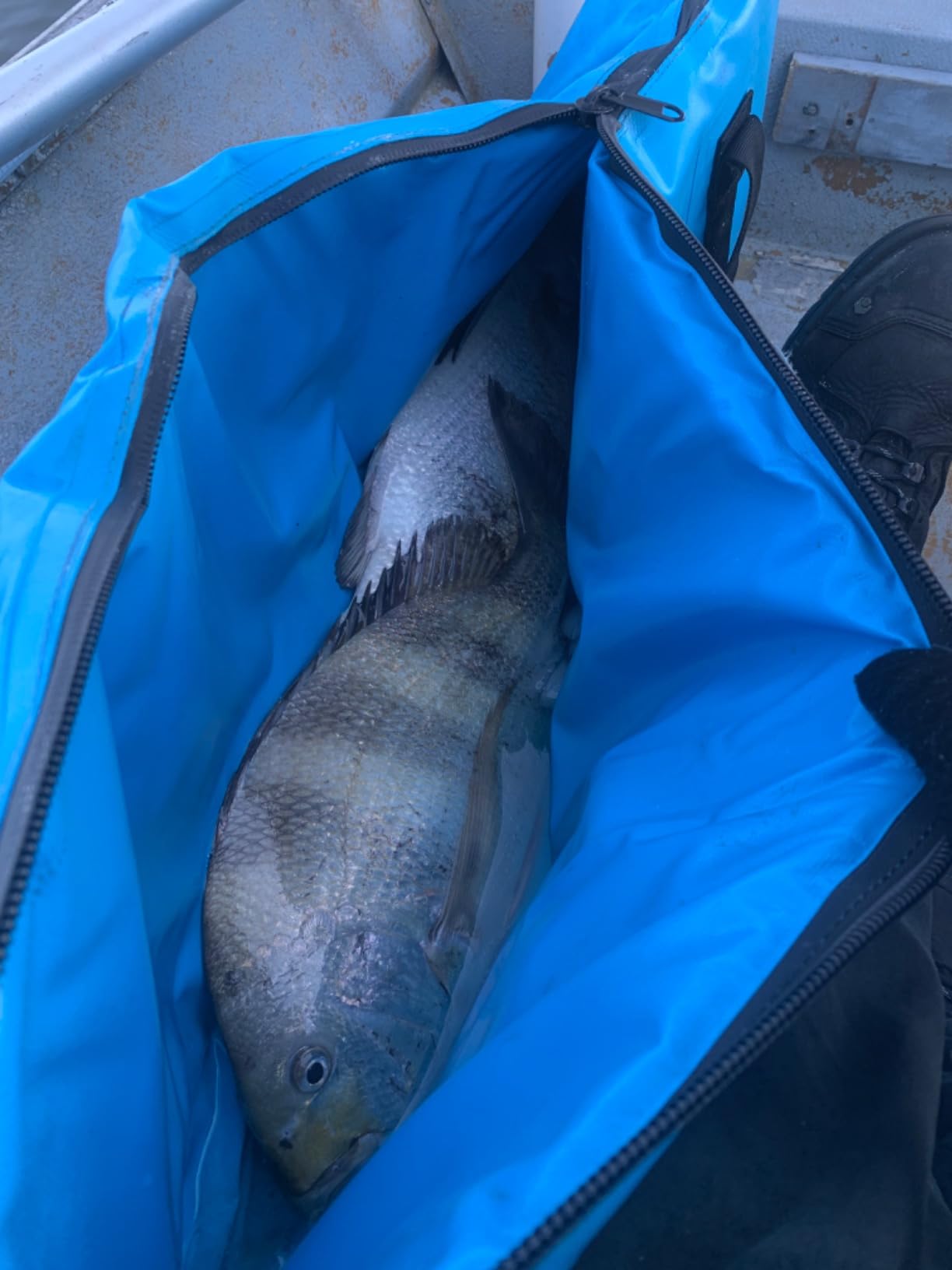
The zipper is the failure point. It is the dominant complaint across reviews, with owners reporting separation or breakage after a few months of use and weeping liquid at the ends. In salt air that timeline tends to shorten, so inspect it before every trip.
Seams, Liners, and the Number That Predicts Longevity
The construction detail that matters most in a soft cooler is whether the seams are welded or stitched. This bag uses heat-sealed construction rather than stitching, which is why it does not weep fish slime through a needle hole the way budget bags do.
The 22 oz polyester tarpaulin interior is thick enough to scrub and rinse, and it will not absorb odor the way a TPU or PVC liner can if you leave fish juice in it for a season.
Realistic Retention Compared With a Hard Cooler
Owners report ice lasting roughly one to two days even in direct sun. That is materially shorter than the rotomolded boxes in this list, and it is the answer to whether a soft cooler can keep ice as long as a hard one: no, but it can keep fish cold for a full fishing day.
A cord-attached screw-on drain plug prevents the small annoyance of losing the plug in the bottom of the bag, and reinforced webbing straps make it easy to lash down on a deck.
Sizing and the Limits of the 40×18 Shape
The bag comes in 40×18 and 48×18 inch sizes, and at 40×18 it cannot take very large fish such as a 30 lb halibut without filleting first. That is the sizing decision: this bag is built for a day catch of typical offshore species, not for trophy fish.
The bottom is not fully squared off, so it does not sit perfectly flat when set down. On a deck that means it wants a strap around it rather than a spot on the deck sole.
Two-thirds of a good soft cooler loadout is technique. A hard cooler for drinks and backup ice plus a soft bag for the catch keeps the fish cold without giving up deck space, which is the hybrid most offshore anglers end up running.
How to Choose an Offshore Fishing Cooler Without Buying Twice
Most cooler regrets come from picking on capacity or price instead of on the two variables that actually decide whether fish come home edible: how fast the fish gets chilled, and how long the ice lasts once the cooler is out in the sun. Everything below is a way of thinking about those two numbers before you spend anything.
Rated vs Realistic Ice Retention: How to Read the Number
Rated retention is measured with the lid closed, in a lab, at a controlled ambient temperature. Realistic retention is what owners measure with a thermometer on a boat in July. The gap between them is the whole buying decision, and the pattern across these ten products is consistent: every capacity in this list loses ice faster than its rating suggests.
The clearest examples. The ENGEL 60 QT is rated for up to 7 days; one owner in extreme heat saw roughly 2. The Igloo Marine 100 is rated for 5 days; owners measuring carefully report closer to 48 hours. The Buffalo Gear bag is claimed at more than 48 hours; owners report one to two days in direct sun. Meanwhile the Coleman Pro 45 owners instrumented with a thermometer recorded 32F at one hour and still 40F the next morning, which is a realistic multi-day number that survives the heat.
Two things shorten retention more than any spec sheet. Direct sun on the lid is the first, and almost nobody plans for it: keep the cooler shaded or covered whenever you are not opening it. The second is a room-temperature cooler at load-in, which acts as a heat sink before the boat is even launched.
Capacity: Sizing for Single-Day vs Multi-Day Trips
Size the cooler to your catch and your trip length, not to the largest number you can find. A 45-quart box handles a single-day offshore trip for one or two anglers with a normal catch. A 52 or 60-quart box is the right call for multi-day pelagic trips or when you are carrying ice for a crew.
Go past 60 quarts only when you have the deck space and a second person to help lift. The Igloo 100 at 34.2 inches long needs a dedicated deck or truck-bed space, and nobody is lifting that alone when it is loaded.
The 30-quart options in this list are personal and secondary boxes. The ENGEL UC30 at 7 lbs and the ENGEL Live Bait at 30 quarts are day-trip tools, and treating them as multi-day ice chests is the mistake owners report most often.
Hard Cooler or Soft Fish Bag: The Hybrid Loadout
A hard rotomolded cooler holds cold for three to five days realistically, carries a heavy load, and occupies deck space. A soft fish bag weighs a fraction of that, folds flat, holds cold for a day in direct sun, and keeps the catch physically separate from your drinks and sandwiches.
The most common working setup among offshore anglers is both: a hard cooler for drinks and backup ice, plus a soft bag for the fish. Forum threads on catching big species repeatedly describe ending up with a large hard cooler for the trip, with a soft bag handling the catch separately.
Read the seams before you read the marketing. Heat-welded or RF-welded construction beats stitched seams every time, because a stitched seam has needle holes that weep fish slime with no visible puncture. That is the single best predictor of how long a soft bag lasts.
Saltwater and UV: Hardware That Survives the Marine Environment
Saltwater corrosion is the modifier that separates an offshore cooler from a camping cooler, and it is the one most roundups ignore. In salt air, non-corrosion-resistant zipper hardware seizes, and latches, hinges, and drain plugs fail first. That is the single most repeated complaint in the forum evidence about soft bags and budget hard coolers.
Look for stainless steel hinges, latches, and hardware. In this list, the ENGEL Live Bait Cooler and the ENGEL UC30 both specify stainless latches, and the Pelican Elite specifies a stainless steel bottle opener alongside its anti-shear hinge system. The Igloo Marine specifies marine-grade extended-life hinges.
UV exposure is the other half. A dark or UV-resistant exterior matters more than people expect on a lid that sits in direct sun for six hours, and a light-colored box in summer heat is working against itself.
Loaded Weight and the One-Person Lift
Empty weight is the number manufacturers publish, and it is the least useful number on the spec sheet. Ice weighs about 8 lbs per gallon, and a 45-quart cooler packed properly for a day at a 2:1 ratio plus a real catch lands in the range where moving it alone onto a pitching deck becomes genuinely hazardous. Forum users describe loaded coolers as a real safety issue, not an inconvenience.
Lightest to heaviest empty, the list runs from the ENGEL UC30 at 7 lbs and the Buffalo Gear bag at 1.4 lbs, through the Igloo 100 at 18.6 lbs, the Coleman Pro at 19.8 lbs, the RTIC 52 and ENGEL 60 both at 21 to 21.5 lbs, the RTIC 45 at 21.1, the YETI Tundra at 23, and the Pelican Elite at 37.3.
If you fish alone from a skiff, anything over about 25 lbs empty is a two-hand lift. If you have a partner or a crew, the heavier boxes stop being a problem and start being extra ice capacity.
Keeping It Cold: The Trip-Day Packing Routine
Pre-chill the cooler overnight with sacrificial ice, and throw that ice out before you leave. A room-temperature cooler is a heat sink, and skipping the pre-chill burns hours of retention before the first drop of fish goes in.
Pack a two-to-one ice ratio by weight against your catch and drinks. Block ice on the bottom, crushed or cube above and around, and leave headspace in insulated containers rather than a solid block with no air.
Fish in, ice over. Bled fish in slurry chills fastest, so bleed and gut big pelagics before they go down rather than planning to do it at the ramp.
Shade the cooler whenever you are not in it. Direct sun on the lid is a bigger ice killer than most people account for.
Do not drain the meltwater until you are restocking. Draining out of habit throws away your own cold, and forum users lose hours of retention this way. Drain and refill in one motion instead.
For multi-day trips, block ice logistics are the real chore. On the CharlestonFishing forum, anglers improvise with reusable half-gallon blocks in plastic ice cream containers and gallon milk jugs busted with a hammer, which is a cheap repeatable system if your cooler can take the abuse.
If you want a wider view of the category, our best coolers for camping trips tested guide covers the land-based picks, and electric coolers for road trips covers the powered option for anglers driving long distances to launch ramps.
Frequently Asked Questions
What coolers are just as good as Yeti but cheaper?
The RTIC 45 Ultra-Tough and the RTIC 52 Ultra-Light are the closest matches to the YETI Tundra 45 without paying the premium brand price. Both use rotomolded or heavy-duty bodies with roughly 3 inches of closed-cell foam, and the RTIC 52 holds 52 quarts at 21 lbs empty with a 4.7 star average across more than 2,000 reviews. The Coleman Pro 45 adds a stainless steel latch and a 10-year limited warranty at the budget end.
Is anything better than Yeti?
Nothing meaningfully beats the YETI Tundra on retention, because its up to 3 inches of PermaFrost insulation is the thickest wall in this comparison. Better fit-for-purpose options exist though. The Pelican 45 Elite wins on durability with a lifetime warranty and wheels, the ENGEL 60 QT wins on capacity per pound at 60 quarts and 21.5 lbs, and the RTIC 52 wins on value for a one-person carry.
What is the best cooler to keep fish in?
The best fishing cooler for keeping fish is a 45 to 55 quart rotomolded hard cooler with a real gasket seal, pre-chilled overnight and packed at a 2:1 ice ratio by weight. The YETI Tundra 45 and RTIC 52 Ultra-Light both fit that description. What actually keeps fish safe is chilling speed, not brand: bleed and gut the catch before it goes on ice so the core reaches near 32F before enzymes and histamine-producing bacteria take hold.
What is the best cooler for surf fishing?
For surf fishing, the best cooler is the Pelican 45QT Elite Wheeled Cooler, because integrated wheels let you roll it across sand instead of carrying it, and it has a lifetime warranty for repeated abuse. The alternative is a 45-quart cooler under about 30 lbs empty, which the RTIC 52 Ultra-Light at 21 lbs manages. A soft fish bag like the Buffalo Gear at 1.4 lbs is the third option if you only need to carry the catch.
How much ice do you need for a day of fishing?
Plan on a two-to-one ice-to-contents ratio by weight for a full offshore day, which means roughly 40 lbs of ice for a 20 lb catch and a day of drinks in a 45-quart cooler. Pre-chill the cooler overnight with sacrificial ice, use block ice on the bottom and crushed ice above and around the fish, keep the cooler shaded, and do not drain the meltwater until you restock.
The Bottom Line on Offshore Fishing Coolers
For most offshore anglers, the YETI Tundra 45 is the right buy and the RTIC 52 Ultra-Light is the smarter one, and the difference between them is a modest step in price and whether you value the thickest insulation in the category or the best capacity-to-weight ratio available. If you carry your cooler across sand or gravel, the Pelican 45 Elite wheels solve a problem nothing else here does. If you need one box for a whole crew, the Igloo Marine 100 holds 149 cans at 18.6 lbs. If you only need to bring the catch home, the Buffalo Gear bag at 1.4 lbs costs nothing in effort and folds flat. If you are chasing live bait rather than dead fish, the ENGEL Live Bait Cooler PRO is a different tool entirely and the only one here built for it.
Whichever you choose, the packing routine does more for your catch than the brand on the lid. Pre-chill overnight, pack two-to-one by weight, bleed and gut the fish before they go down, keep the box shaded, and leave the meltwater alone until you restock. That is the difference between a fishing cooler and a box full of ice, and it is why the best fishing coolers for offshore trips 2026 are the ones you pack well.
Check the latest price on the ones that fit your boat, and take a spare dry bag for the ride home.
Leave a Reply