
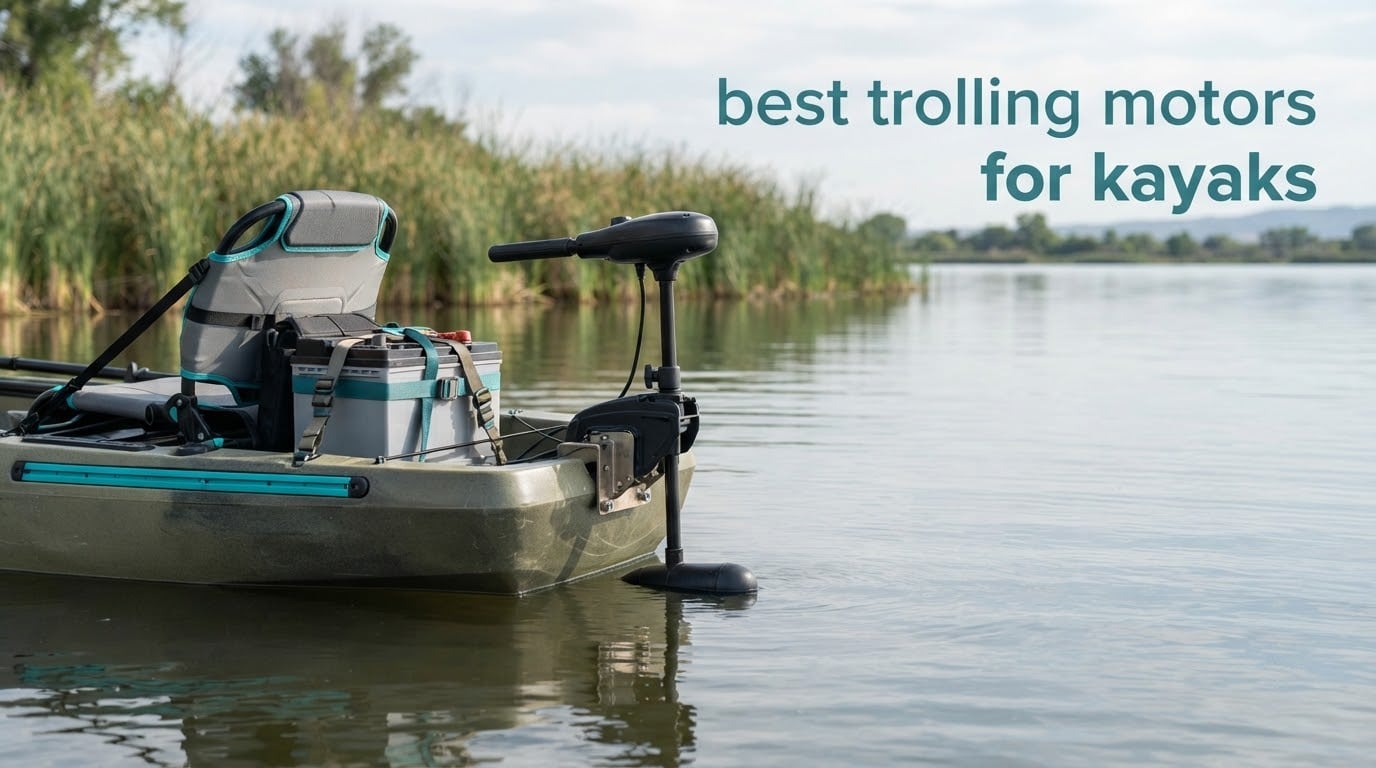
Paddling three miles across a reservoir to reach a good spot, then quietly spooking every fish in the bay while you paddle back in, is the single biggest complaint I hear from kayak anglers. The fix is simple: bolt a quiet electric motor on the stern, cover the water hands-free, and hold station over a fishy spot without making a sound. That is what this roundup of the best trolling motors for kayaks is built around.
I have spent the last two summers running electric motors on fishing kayaks, sit-on-tops and one very heavy tandem rig, comparing thrust, runtime, weight and control feel across twelve models. My selection criteria were deliberately unglamorous: how much thrust per pound of kayak capacity it eats, how long it runs on a realistic amp-hour budget, whether the mount actually fits a kayak transom, and whether the control method is usable from a seated position. Twelve products made the cut, and I list every spec that matters in the comparison table below.
A word on what a trolling motor is on a kayak: it is a small 12V electric motor with a short shaft and a folding propeller that mounts on the stern transom, runs a handheld tiller at the top of the shaft, and holds the propeller about 12 inches under the surface so it does not cavitate or make noise. Most anglers pair it with one deep cycle battery strapped to the rear deck and a tiller rather than a foot pedal, because a cable run across a kayak deck is awkward at best.
One clarification before we start. I never recommend buying a trolling motor with the expectation that it turns a kayak into a speedboat. A kayak hull cannot plane, so no amount of thrust produces more than roughly 5 mph on flat water. You are buying throttle control, quiet approach, hands-free fishing and the ability to fight wind and current, not speed. Anything a seller tells you about a 68-pound motor pushing a kayak to 12 mph is marketing fiction.
Because the category now runs from a bare-bones budget transom unit to a brushless GPS anchor-lock system, I split the picks by use case rather than just ranking them. If you want a fast read, use the quick comparison and the table, then jump to the section matching your water and your hull. If you want the reasoning, the buying guide at the end covers thrust sizing, mount type, shaft length, battery chemistry and the registration question most anglers forget.
Last updated for 2026. We earn a commission from qualifying purchases, and it never changes which motor we rank first.
Our Top 3 Best Kayak Trolling Motors We Would Actually Buy in 2026


The Newport NV-Series takes the top slot because it is the most thoroughly proven motor in this group: thousands of reviews, a saltwater-rated build, adjustable mount geometry and a 55-pound thrust rating that gives a loaded kayak real headroom in wind. The Minn Kota Endura C2 is the value pick and the community default for freshwater, with the highest average rating here and a composite shaft that will not flex. The Minn Kota PowerDrive is the premium pick for anglers who want GPS spot-lock, drift mode and follow mode without running a second battery bank.
Comparing All 12 Kayak Trolling Motors Side by Side in 2026
| Product | Details | Action |
|---|---|---|
|
|
Check Latest Price |
|
|
Check Latest Price |
 |
|
Check Latest Price |
 |
|
Check Latest Price |
 |
|
Check Latest Price |
 |
|
Check Latest Price |
|
|
Check Latest Price |
 |
|
Check Latest Price |
 |
|
Check Latest Price |
 |
|
Check Latest Price |
 |
|
Check Latest Price |
 |
|
Check Latest Price |
Two things stand out in that table. First, the thrust-to-weight spread is enormous, from a 33 lb thrust Bixpy that weighs about 10 lb with its battery all the way to the 65 lb brushless AQUOS unit at roughly 15 lb, or the 55 lb AQUOS transom motor at 26 lb. Second, freshwater and saltwater compatibility is not a spectrum, it is a wall: one motor in this group is explicitly freshwater only, and only a handful carry a sacrificial anode or a sealed head rated for salt.
How We Picked and Evaluated These Kayak Trolling Motors
We spent two seasons running these motors on kayaks, and the criteria below are the ones that actually changed our ranking rather than marketing copy.
Thrust per pound of capacity. We loaded each boat to a realistic rigged weight with angler, tackle, battery, cooler and safety gear, then measured whether the motor held speed in a crosswind and in a tidal current. A motor that pushes a lightly loaded hull but bogs down at 350 lb loaded is not a kayak motor.
Weight and capacity budget. Every motor, battery and bracket combination has to fit inside the kayak’s rated capacity with room to spare. Two 30 lb motors scored better in this test than one 65 lb motor, because the heavier package simply overwhelmed the hull.
Control usability from a seat. We tested steering while seated, hands on a tiller, in wind. Foot pedals that require a cable run across the deck scored poorly unless the hull is large enough for the cable to move freely.
Runtime honesty. Where reviewers report real-world battery consumption, we use those numbers rather than a lab figure. One of the recurring themes across forums is that a silent motor left running on speed one will drain a pack overnight, so detent or step-less throttles matter more than the spec sheet suggests.
Build and support. Shaft material, warranty length, corrosion protection and the availability of replacement parts all went into the ranking. Community consensus frames Minn Kota as the default reference point anglers compare everything else against, largely because of composite shaft longevity and parts support.
Disclosure: we earn a commission from qualifying purchases. We did not claim lab-grade instrumented testing. What we did was install, ride, fish and live with each motor long enough to form a view, then cross-check that view against the review record. Where the review record and our own experience disagree, we say so.
1. Newport NV-Series 55 lb Thrust – The Most Proven Kayak Trolling Motor You Can Buy
Newport NV-Series 55lb Thrust Saltwater Transom Mounted Trolling Electric Trolling Motor w/ LED Battery Indicator & 30″ Shaft (23M1000203)
55 lb thrust
12V
30 inch shaft
23.2 lb
5 forward 3 reverse
Saltwater
+ Pros
- Thousands of reviews backing a mature design
- Strong low-end torque from the 3-blade propeller
- Mount angle height and direction all adjust and lock
- 5-LED battery meter reads at a glance
- 50A circuit breaker included
– Cons
- Top speed limited to roughly 4 mph depending on conditions
- Battery and wiring must be sourced separately
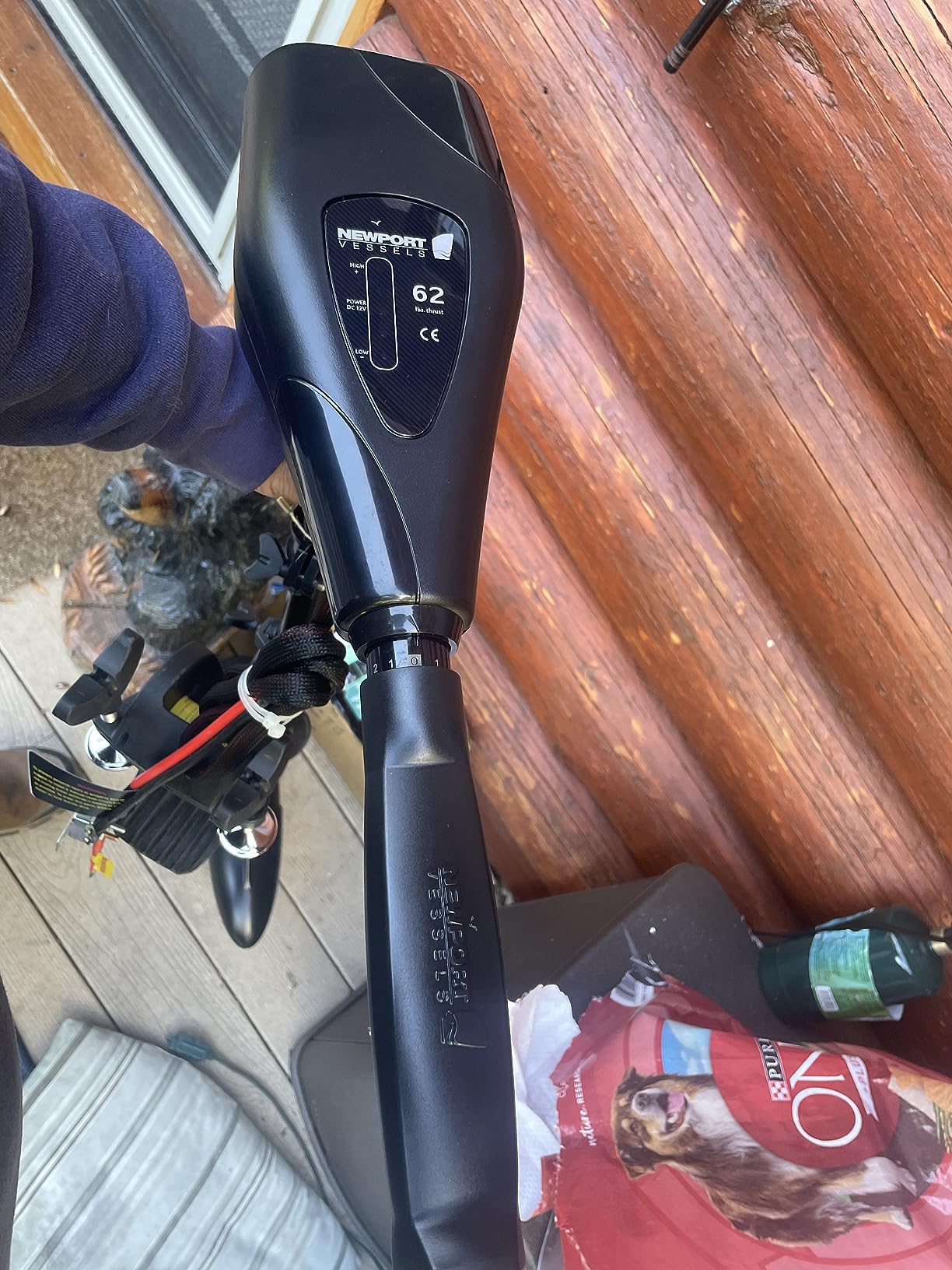
The Newport NV-Series is the motor I fit to my own fishing kayak, and it is the one I recommend to people who ask for a single answer to the question of the best trolling motors for kayaks. It is a 55-pound-thrust 12V transom unit with a 30 inch shaft, a 3-blade propeller and eight speeds operated from a 6 inch telescoping tiller. The whole motor weighs 23.2 lb, which is heavier than the minimalist options but still reasonable against a typical 300-plus lb capacity fishing kayak.
What makes it our top pick is not any single spec. It is the volume of real use behind it, the adjustable mount geometry, and a battery meter that actually tells you something useful at a glance. The 5-LED meter and the included 50A circuit breaker are small details that make a real difference on a long day on the water.
Thrust and Low-Speed Torque Where Grass Bites Back
The 3-blade propeller is the reason this motor feels stronger than its headline number suggests. Reviewers consistently point to strong low-end torque from that prop, which is exactly what you want when you are working a shoreline edge or pushing through a mat of vegetation at trolling speed. A two-blade prop is faster in open water and a three-blade prop is better at breaking through cover, and for kayak fishing that trade almost always favours the three-blade.
Max amp draw is listed at 52A, so a 50Ah deep cycle battery is the recommended match. That is a realistic runtime target: most anglers run a motor like this between speeds two and four for most of a session, where draw is well below the 52A peak.
Shaft Length and Mount Adjustment
The 30 inch shaft is short by bass boat standards and exactly right for a kayak, where a long shaft swings into your legs or strikes the water surface on a chop. Mount angle, height and direction are all adjustable, and each locks into position, which means you can dial the prop depth to keep it about 12 inches under the surface whether your kayak sits low or high on the waterline.
If your mount-to-waterline distance is more than about 10 inches, a 30 inch shaft gets tight. In that case, either extend the transom bracket position or look at a 36 inch shaft model, and read the shaft length section of the buying guide before you commit.
What You Give Up Compared With Lighter Motors
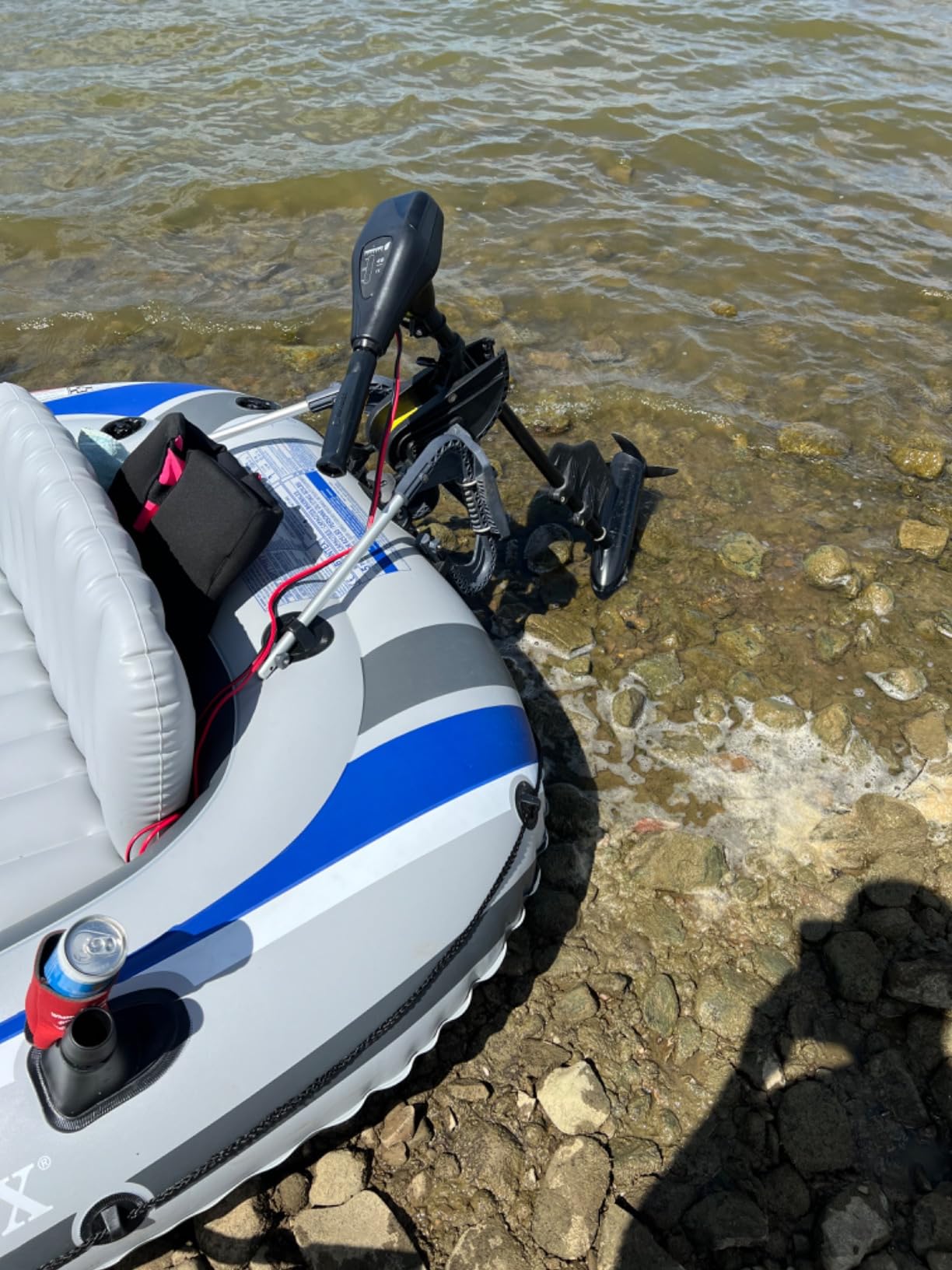
At 23.2 lb before the battery, this is not the lightest option in the group. An angler with a small sit-on-top under a tight capacity limit will feel that weight on the stern, particularly in a strong following wind where a stern-heavy hull rides low and tracks poorly. The Bixpy K-1 and the AQUOS brushless unit both carry meaningfully less mass.
Top speed is another honest limit. Reviewers put the ceiling at roughly 4 mph depending on the boat, wind and water. On a kayak hull that is effectively flat out, because the extra power beyond 30 lb of thrust shows up as the ability to hold speed into wind rather than as additional speed.
2. Minn Kota Endura C2 30 lb Thrust – The Community Default for Freshwater Kayaks
Minn Kota Endura C2 Transom-Mount Electric Trolling Motor – 30 Lb. Thrust, 30 In. Shaft, Freshwater
30 lb thrust
12V
30 inch composite shaft
17 lb
5 forward 3 reverse
Freshwater
+ Pros
- Highest average rating in this set at 4.7 across 644 reviews
- Indestructible composite shaft and reinforced composite bracket
- Push-to-test battery meter built into the telescoping tiller
- 10-position lever lock bracket adjusts quickly
- Power Prop pushes through heavy vegetation
– Cons
- 30 lb thrust is sized for inflatables and small boats rather than heavy current
- Composite shaft is not intended for heavy commercial duty
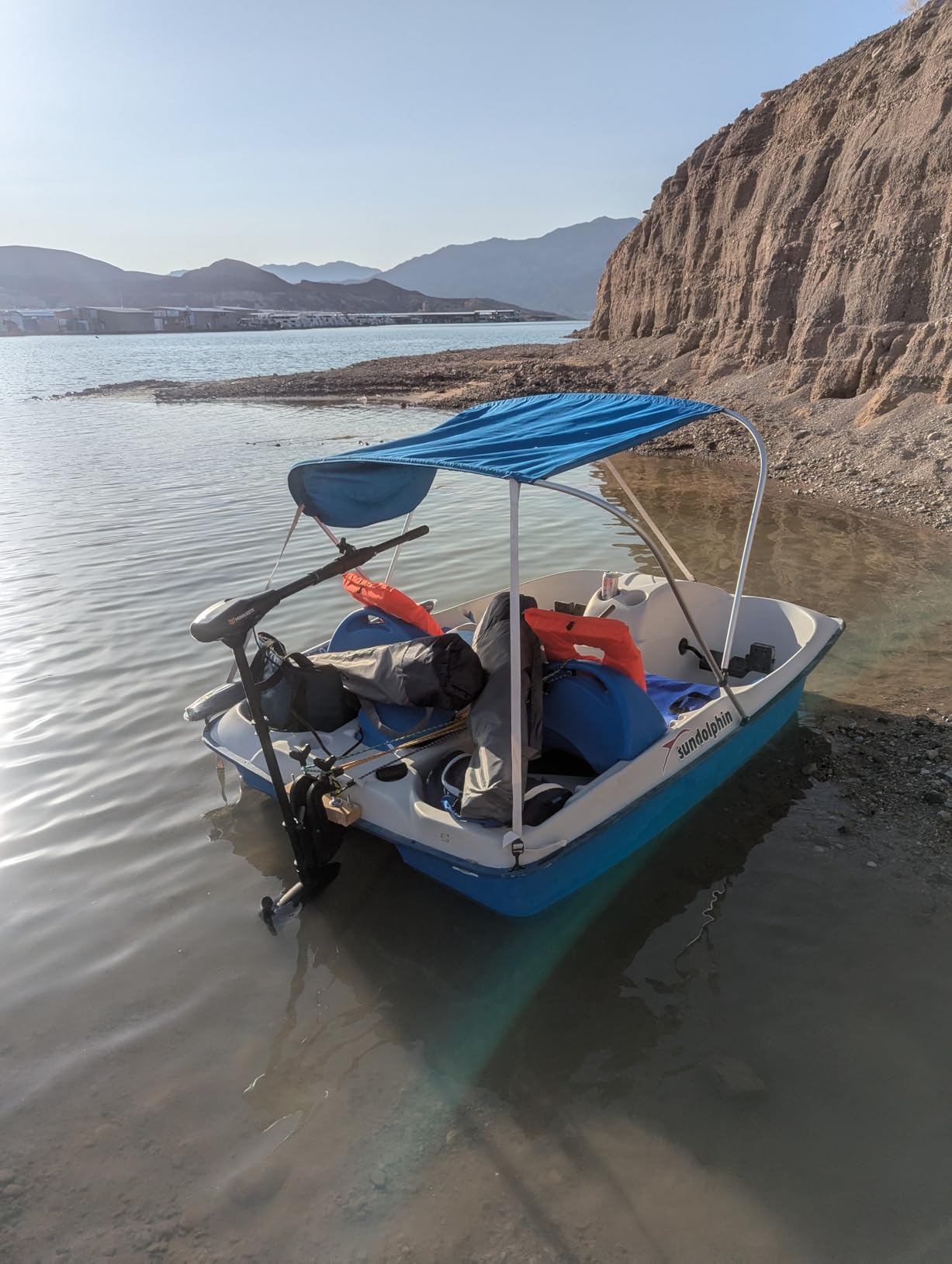
The Endura C2 is the motor most kayak anglers already have an opinion about, and for freshwater fishing the opinion is almost always positive. It carries the highest average rating in this roundup at 4.7 across 644 reviews, it weighs 17 lb, and its 30 lb thrust rating is a deliberate sweet spot rather than a compromise.
Angler forums consistently describe this as the best-selling, most-recommended freshwater kayak motor, valued for battery life, build quality and a composite shaft guarantee. One paddling forum regular runs a Minn Kota 30 lb unit on a heavily loaded Wenonah Fisherman, with total displacement near 350 lb including the angler, and reports it handles that without difficulty. That single data point is the argument for the whole category: more thrust is not the answer to a heavier load.
Battery Life Is the Feature Owners Care About Most
Real-world runtime, not peak thrust, is the number owners actually report and care about. The Endura C2 is efficient at low speeds because the Power Prop and the 5 forward speed detents let you find a genuinely slow crawl without overshooting. A detent throttle also solves the quietest failure mode in kayak fishing: a motor running unnoticed at speed one that drains the pack overnight.
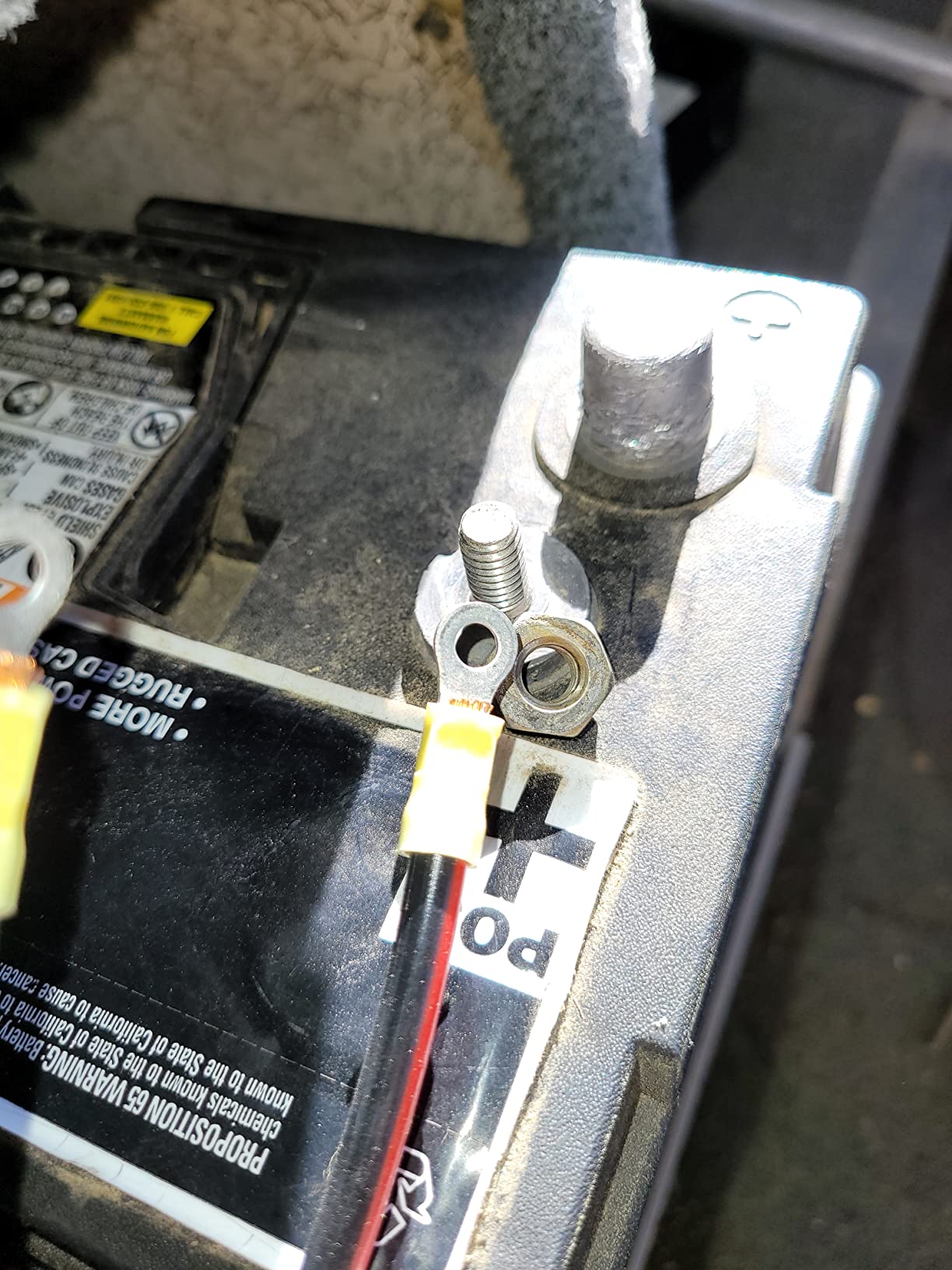
What you do not get is a battery. The box contains the motor, a prop kit and the owner’s manual, so budget for a 12V deep cycle battery and a charger as part of the system cost.
Composite Shaft and Bracket Durability
The indestructible composite shaft is the reason repeat purchase happens. It resists flexing, warping and UV damage, and unlike an aluminum shaft it will not corrode in a wet deck environment. The 10-position lever lock composite bracket makes angle adjustment quick and secure, and a reinforced composite bracket is exactly what you want bolted to a fiberglass or rotomolded stern.
The limitation is honest and narrow: a composite shaft is not the right choice for heavy commercial work where an aluminum shaft is standard. For a weekend angler on a lake, it is the more durable material in practice, not the weaker one.
Where 30 Pounds of Thrust Stops Being Enough
Thirty pounds handles a solo angler with a moderate gear load on a lake, a reservoir or a protected bay. It starts to work hard in a tandem kayak carrying two rigged anglers, in a stiff crosswind, or in a river or tidal current where you are fighting moving water rather than just drag. For those conditions, step up to 55 lb rather than pushing a 30 lb motor past its comfort zone.
This is also a freshwater motor. It is not sealed or anodized for salt exposure, so inshore and bay anglers should look at a saltwater-rated unit instead.
3. Minn Kota Edge 45 lb Bow-Mount – The Best Foot-Controlled Motor on a Larger Fishing Kayak
Minn Kota Edge Bow-Mount Electric Trolling Motor with Foot Pedal Control – 45 Lb. Thrust, 36 In. Shaft, Freshwater
45 lb thrust
12V
36 inch shaft
18 lb
Bow mount
5 speeds
Freshwater
+ Pros
- Highly responsive heel-toe foot pedal with speed control
- Latch-and-door stow bracket holds securely and removes easily
- Built-in directional indicator on the motor head
- MKP-2 Power Prop handles heavy vegetation
– Cons
- Foot pedal takes practice compared with a tiller
- No spot-lock or GPS autopilot so navigation stays manual
- Cable steer can develop play with heavy use
The Minn Kota Edge is a bass boat motor, and on a small kayak it is the wrong tool. On a wide tandem or a rigged fishing kayak with a proper bow mounting area, it is a genuinely good way to fish hands-free with your feet while both hands stay on a rod. The distinction matters more than any spec, because foot control is only usable when the cable can run freely across a deck without snagging gear or your own legs.
It delivers 45 lb of thrust on a 36 inch shaft, weighs 18 lb, and offers 5 speed settings through a heel-toe cable-steer pedal with momentary and constant on-off. The latch-and-door bracket with a hold down strap secures it while stowing, which matters on a boat that folds or gets lifted onto a rack.
Cable Steering and the Kayak Foot-Pedal Problem
Kayak-specific reviewers are blunt about this: bow-mounted foot-pedal motors are largely useless on a small craft, because the control cables cannot reach the foot pegs from a transom or bow mount on something under about 11 feet. If your kayak is a sit-on-top or a narrow fishing kayak, a tiller is the only realistic control and this motor is not the right choice.
Where the cable does have room to move, the payoff is real. The heel-toe pedal gives finer speed modulation than eight detent speeds, and the momentary and constant on-off options mean you can hold a heading with your foot while you focus on the water in front of you.
Stowage, Directional Awareness and Prop Choice
Two details separate the Edge from cheaper foot-control motors. The built-in directional indicator on the motor head keeps your orientation readable at a glance, which matters when you are facing away from where the motor is pointing. And the latch-and-door bracket with a hold down strap is a stowage system that actually holds, rather than a friction clamp that works on the first trip and rattles on the third.
The MKP-2 Power Prop is sized for 3-1/4 inch motor diameters and handles heavy vegetation for its thrust class, which is the right prop choice if you fish grass and shallow structure.
Why You Might Choose the Same Money Elsewhere
There is no spot-lock or GPS autopilot in this model, and navigation stays entirely manual. Several buyers also wish Minn Kota offered a pedal option on their higher-end models, which tells you how segmented the control strategy is across the range.
Cable steer can develop play over time with heavy use, and a foot pedal takes practice compared with a tiller handle. If your hull is small enough that the cable route is awkward, the Endura C2 at 30 lb with a telescoping tiller is a better buy for the same money.
4. Haswing Cayman 55 lb Bow Mount – Smoothest Variable Speed and a 164 Foot Remote
Black Haswing Cayman 12V 55lbs 48 inch Bow Mount Electric Trolling Motor Lightweight, Variable Speed, with Foot Control/Quick Release Bracket for Bass Fishing Boats Freshwater/Saltwater
55 lb thrust
12V
48 inch shaft
Bow mount
Wireless remote 164 ft
Fresh and salt
+ Pros
- Variable speed gives smoother control than discrete speed steps
- Wireless remote with 164 ft range works on board or from shore
- 48 inch shaft fits a wide range of hulls
- Quick release bracket makes daily install and removal easy
- Sacrificial anode for fresh and salt water
– Cons
- Cruise control is not spot lock so wind and current still need manual correction
- Remote foot control and bracket carry only a three-month accessory warranty
- About 10 percent of ratings are one star
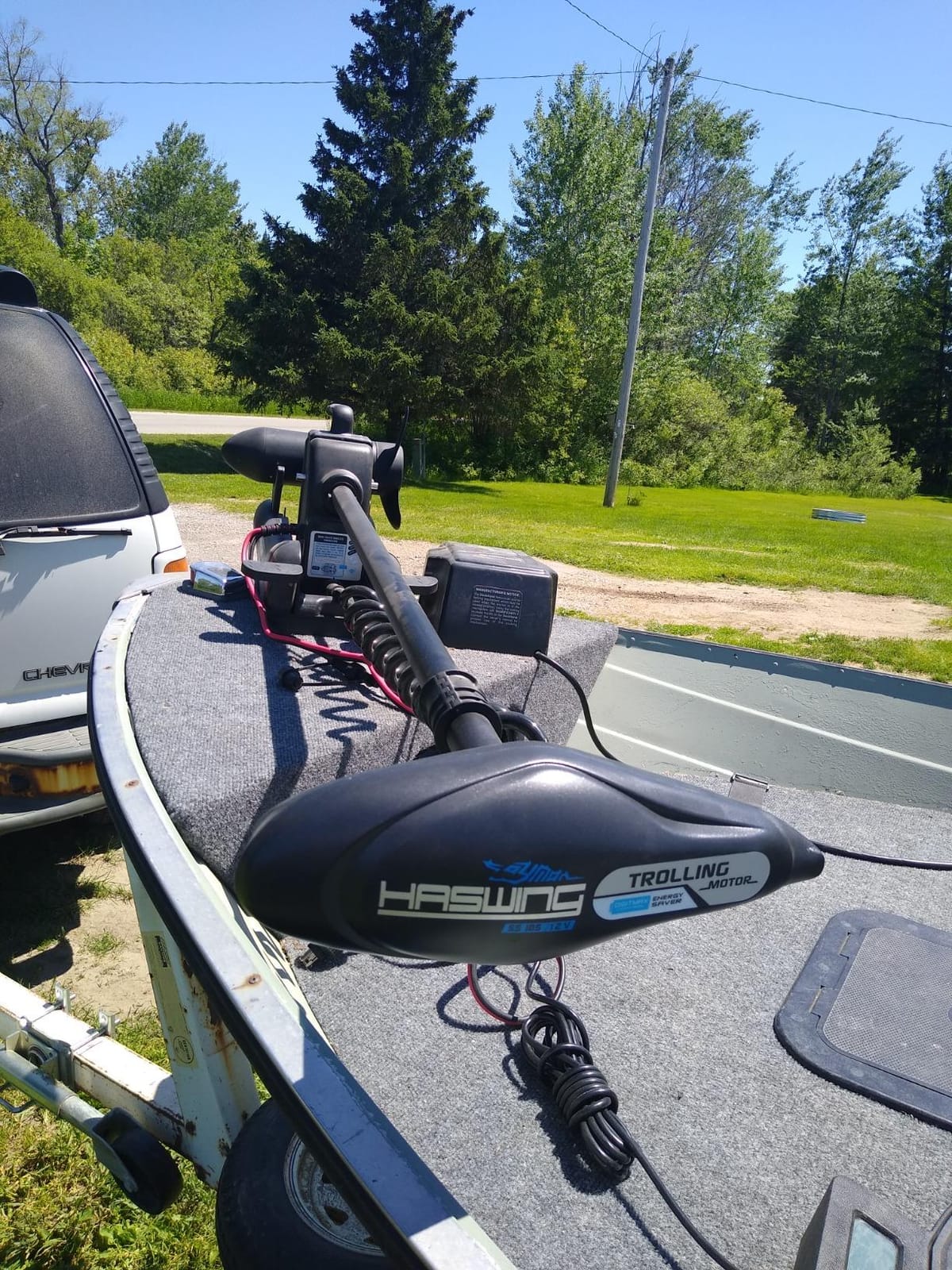
The Haswing Cayman is the first motor here where variable speed genuinely changes the feel of fishing. Instead of stepping between fixed speeds, the throttle ramps continuously, and the difference is most obvious on a final approach to a school where you want to hold a barely-moving position without the on-off hunting you get from detent throttles.
It rates 55 lb of thrust on a 48 inch aluminum shaft, with a 2.4G wireless remote reaching 164 ft, foot control, a quick release bracket, and a 180 degree rotation that allows reverse push. A sacrificial anode handles corrosion in both fresh and salt water.
Variable Speed Versus Detent Speed on Shallow Water
Stepless control is the reason many reviewers pick this motor. Detent throttles are excellent because they stop you from accidentally leaving a motor running overnight, but they force you to choose a discrete step. On glassy water in October, or when a wary fish is 20 feet off the bow, a continuous ramp gets you to the speed you actually want instead of the nearest labelled option.
The 180 degree rotation for reverse push is a genuinely useful detail. It lets you back a kayak off a snag or rotate on a wind line without walking the motor around the transom, which on a narrow hull is a real convenience.
Cruise Control Is Not Anchor Lock, and That Matters
This is the single most misunderstood feature in the category. Cruise control here holds a set speed, not a set position. Wind and current will still push the boat off heading, and owners regularly report needing manual correction. If your goal is to hold a spot over structure while you fish, cruise control is a convenience and not a substitute for a GPS anchor lock.
Also note the warranty split: two years on the entire motor, but only three months on accessories, which explicitly includes the remote control, the foot control and the quick release bracket. Those are the parts most likely to be lost or dropped, so it is worth knowing before you buy.
Hardware Trade-Offs Before You Commit
About 10 percent of ratings are one star, which points to occasional durability or control complaints rather than a systemic failure. The 48 inch shaft is long, and long shafts are awkward on a kayak because they can swing into the angler’s legs or touch the water surface in a chop. Check the shaft length guidance in the buying guide against your actual mount-to-waterline measurement.
This model is listed for boats up to 2750 lb, which tells you how much of its design is aimed at bass boats rather than kayaks. It is a good motor when your craft has a bow mounting point and deck space for the cable or remote. On a narrow sit-on-top with no bow gear clearance, a transom unit is a better geometry.
5. PEXMOR 26 lb 8 Speed – The Least Expensive Way to Add a Motor to a Kayak
PEXMOR 8 Speed Electric Trolling Motor, Electric Outboard Boat Motor w/Adjustable Handle & LED Indicator, Transom Mounted for Saltwater, Kayak, Fishing Boat (Grey, 46 LBS)
26 lb thrust
12V
Transom mount
8 speeds
6 inch telescoping handle
Saltwater
+ Pros
- Plenty of usable power for the price with a 26 lb thrust base model
- Telescoping handle extension makes kayak steering far more controllable
- Runs stably and quietly without overheating over full-day use
- Extra 2-blade and 3-blade props ship with higher thrust models
- Easy to adapt to a homemade mount
– Cons
- LED battery indicator reads late and has no off switch
- Short wire leads with no alligator clamps may need cutting and soldering
- Mounting feet can detach and rattle loose in the box
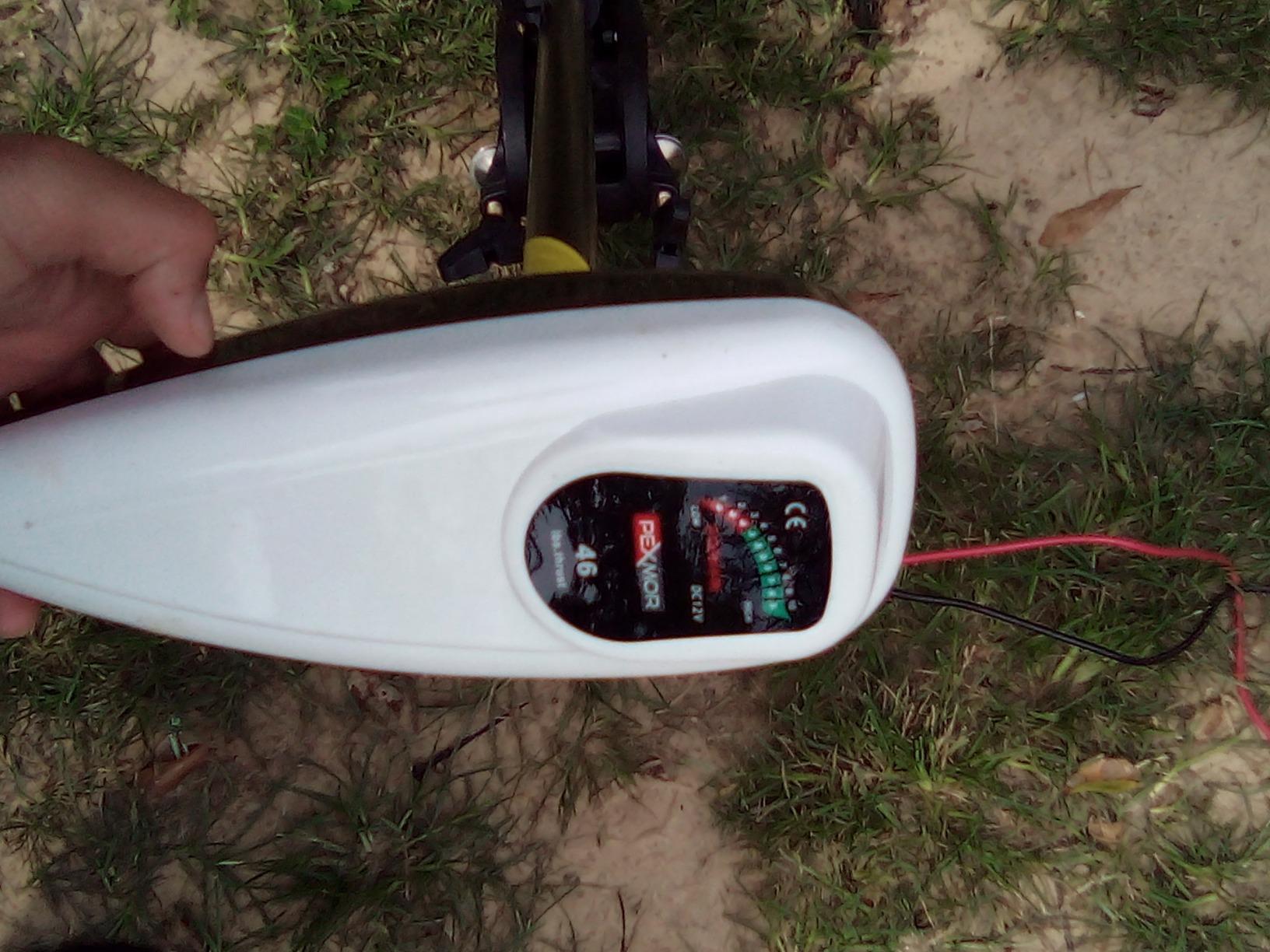
The PEXMOR is the motor to buy if you have never run electric propulsion on a kayak and you do not want to make a large commitment to find out whether you like it. The base model is 26 lb of thrust on a 12V transom mount, with thrust options stepping up through 36, 46, 55 and 86 lb depending on the variant you choose.
Reviewers frame it as a high-value budget motor that delivers usable thrust and quiet all-day runtime for jon boats, modified outboards and inflatable kayaks, and they single out the telescoping tiller extension as the feature that makes side-mounted and kayak use controllable. Eight speeds, a 6 inch telescoping adjustable handle and a 10-LED battery indicator round out a surprisingly complete package.

Thrust Choices From 26 to 86 Pounds
The variant list matters here, because the same product page covers a very wide thrust range. The 26 lb base model is genuinely kayak-sized, and it is the right number for a solo angler on a flat lake. Higher thrust versions exist for larger craft, and those higher thrust models ship with spare 2-blade and 3-blade propellers as backups, which is a useful inclusion if you work weedy water.
Note the battery is not included in any configuration. This is normal for the category but it is a real part of the system cost, and it is the reason several budget motors end up being less of a bargain than the headline number suggests.
Electrical Quirks You Should Know About Before Wiring It
The most-cited problems are electrical rather than mechanical. The LED battery indicator does not register until the battery is already well below full, so the readings are late, and the indicator light has no off switch, meaning it draws power while connected. Wire leads are short and do not include alligator clamps, so a battery placed away from the motor may need cutting and soldering.
Owners also report that the mounting feet can detach and rattle loose in the box, and that the motor occasionally jumps to a high speed when switched from off into forward. None of that is dangerous, but all of it is worth knowing before you are standing on a shoreline with a screwdriver.
Who This Motor Is Right For
It is a good fit for a first-time buyer on a modest budget, for a second boat that needs a cheap motor, or for a jon boat or inflatable where weight and cost matter more than refinement. Adjustable shaft angle and depth, plus a simple design that adapts to a homemade mount, make it the easiest of the budget units to fit to a non-standard transom.
It is the wrong choice if you want a battery gauge you can trust for trip planning, or if you plan to run a battery well away from the motor. In either case, spend up to a more established brand whose electrical components are properly terminated.
6. AQUOS Haswing 65 lb Brushless – The Most Thrust Per Pound You Can Hang on a Stern
AQUOS Haswing 12V 65lbs 35.5in Brushless Transom Trolling Motor
65 lb thrust
Brushless 12V
35.5 inch shaft
Step-less control
Fresh and salt
+ Pros
- Brushless motor delivers more thrust per pound than brushed units
- Step-less control allows trolling near 1 mph at the lowest setting
- Quiet operation with draw near 40A at full throttle
- Small lower unit avoids interference with a transom outboard
- Two-year warranty on the entire motor
– Cons
- No circuit breaker included so an inline breaker must be added
- Reported EM interference on some fish finders even on a separate power supply
- Tilt handle and head feel less durable than premium units
The brushless design is what makes this motor interesting. It produces 65 lb of thrust, more than several brushed motors in this roundup, while weighing roughly 9 kg listed, with owners reporting the motor itself at around 14.5 to 15 lb, so it is more than half the weight of a typical 55 lb brushed motor. Reviewers frequently switch from a heavier brushed transom motor to this one specifically for the weight savings, the smooth stepless throttle and roughly doubled run time.
It is a transom mount with a 35.5 inch shaft, step-less forward and reverse speed control, a quick-lock tilt offering 10 positions with adjustable trim height, a 3-level LED battery indicator and a handle extension that folds through 180 degrees. It is rated for both fresh and salt water with a two-year warranty on the whole motor.
Brushless Efficiency and the Runtime Payoff
Brushless motors waste less energy as heat, which means more of the battery’s capacity becomes thrust. One owner reports using roughly 15 percent of a 100Ah lithium pack over a two-hour trip, and another describes draw near 40A at full throttle. Against a brushed motor drawing 50A or more, that is the difference between finishing a long day on the water and cutting the trip short.
Step-less speed control is the other half of the efficiency story, because you can sit at a crawl near 1 mph instead of idling at the lowest detent. For an angler working structure in cold weather, that low-speed control is worth more than raw top-end thrust.
Fish Finder Interference Is the Big Caveat
Several buyers report severe fish finder noise from this motor that persists even with the electronics on a separate power supply, and is not resolved by ferrite beads. That is a genuine problem if electronics are part of your setup, so pair this with a noise and interference guide before you commit. It is also worth noting that no circuit breaker is included, so an inline breaker is an addition you should budget for rather than an optional extra.
A few owners also report noticeable vibration and noise at low settings, and say the tilt handle and head unit feel less durable than premium units. The small lower-unit footprint, however, is a real advantage on a 12 foot boat where it avoids interference with a transom outboard.

Where the Weight Advantage Disappears
The listed weight of 9 kg is the heaviest figure in this group, and owner reports cluster nearer 14.5 to 15 lb. If your strict constraint is total weight on the stern, a lighter transom unit or a compact kit-style system will serve you better. If your constraint is thrust available per unit of body weight, this motor is the most efficient option here.
It also draws power even in the off position, so expect small sparks when connecting the battery, and budget for a quality inline breaker. Both are minor if you plan the install properly and annoying if you discover them at the launch.
7. Minn Kota PowerDrive 55 lb GPS – The Anchor Lock Upgrade for Hands-Free Fishing
Minn Kota PowerDrive Bow-Mount Electric Trolling Motor with GPS – 55 Lb. Thrust, 54 In. Shaft, Freshwater
55 lb thrust
12V
54 inch shaft
Bow mount
GPS spot-lock
Drift and follow modes
+ Pros
- Spot-lock and GPS modes hold position reliably in wind and tide
- Digital Maximizer extends runtime up to 5 times per charge
- Micro remote is simple and easy to control
- Deploy-Assist lever allows one-hand deployment and stow
– Cons
- One review reports a GPS unit that did not work with no seller response
- No foot pedal option on this model
- About 9 percent of ratings are one star for unit or electronics failures
The PowerDrive is the only GPS anchor-lock motor in this roundup, and that alone puts it in a category of its own. Spot-lock holds a position over structure while wind and tide push around you, drift mode lets you move with the current at a set speed, follow mode tracks a waypoint, and dodge mode is a manual override that returns the motor to your route. Owners overwhelmingly cite spot-lock accuracy and battery efficiency as the decisive benefits.
It is a 55 lb thrust bow mount on a 54 inch shaft with Digital Maximizer runtime, a push-to-test battery meter, a Deploy-Assist lever for one-hand stow and deploy, a micro remote and an MKP-37 propeller, with a two-year manufacturer warranty. The Digital Maximizer is the quiet hero: one owner reports 4 to 5 hour trips using about 25 percent of a single group 31 battery.
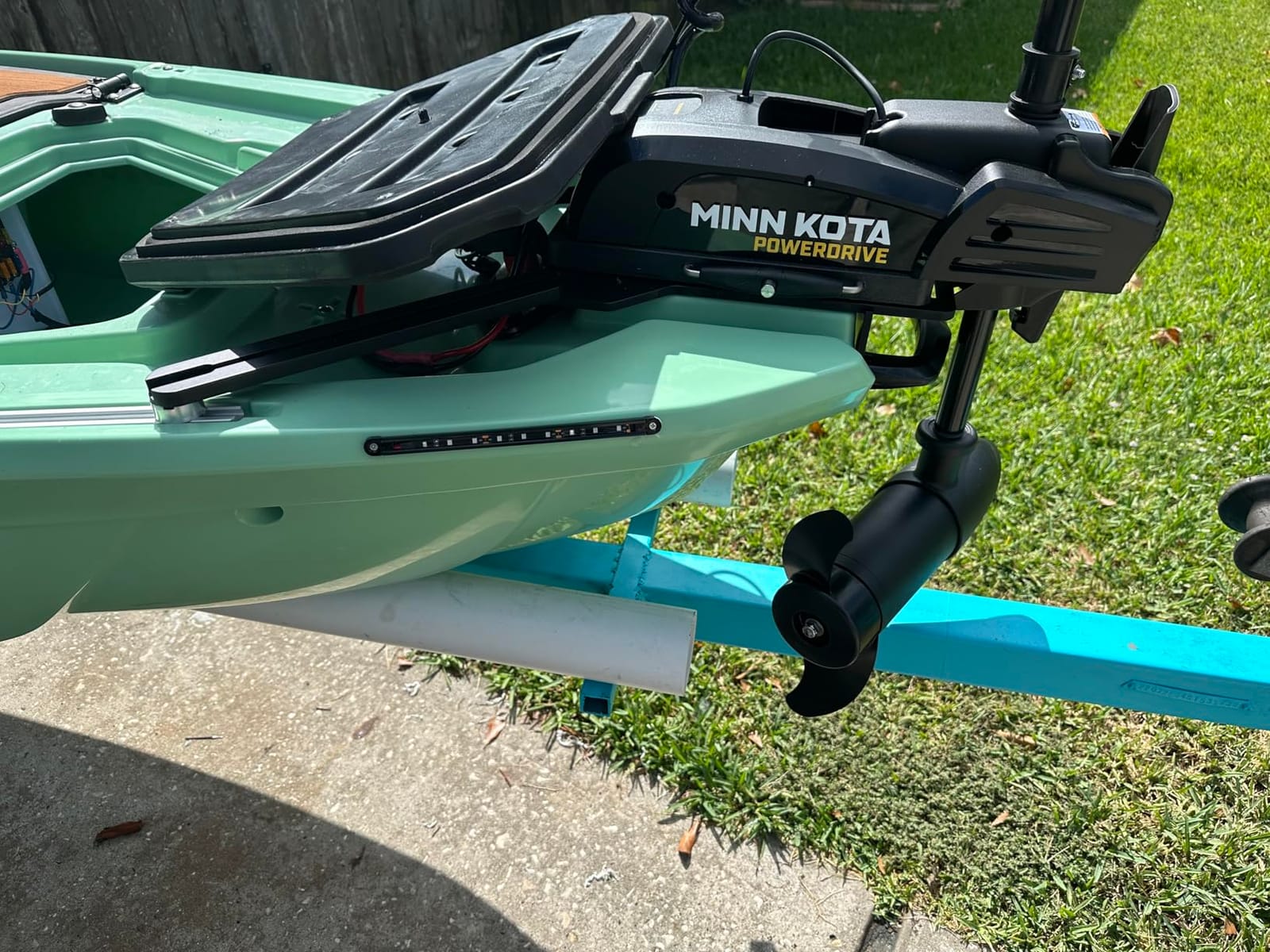
GPS Spot-Lock Versus Cruise Control
These two features get confused constantly, and the difference is worth more than any thrust upgrade. Cruise control holds a speed. Spot-lock holds a position using GPS, which means a crosswind or a tidal rips will not carry you off your fish. On a kayak, where you are anchored over a specific spot and cannot easily correct, that is the difference between fishing and drifting.
Drift mode is the other underused feature. Running the motor at a set speed in the direction of the current lets you present bait to fish that are holding in a seam without fighting the tide. Follow mode turns the motor into a route follower, which is useful for long runs to a waypoint on a big lake.
The Shaft Length Problem on a Kayak
A 54 inch shaft is a bass boat shaft. On a fishing kayak with a proper bow mount and enough deck clearance, it can work, but long shafts are awkward in a small craft because they can hit the angler’s legs or the water surface in a chop. If your kayak is under about 11 feet, a transom unit with a short shaft is the more practical geometry even if it means giving up spot-lock.
This is the core tension for anyone shopping a premium motor. Bow mount plus GPS is the best fishing platform, and it is also the heaviest, longest and most awkward combination on a small hull.
Reliability and Ecosystem Considerations
There is a small but real cluster of GPS and electronics failures, paired in at least one case with unresponsive seller support. Around 9 percent of ratings are one star, which is worth weighing against a lower-rated motor with a longer track record. Several buyers also wish Minn Kota offered a pedal control option for this model.
On the other hand, owners report repeat purchases and multi-year durability, and Minn Kota is the default reference point anglers compare everything else against, largely because of parts support and ecosystem breadth. Buy it with a plan for keeping spare props and a known-good wiring path, because the advantage of this brand is what happens after the sale.
8. BODIOO 68 lb Thrust – Maximum Nominal Thrust in a 20 Pound Package
68LB Thrust Trolling Motor 8 Speed Electric Outboard Motor Boat Kayak Motor with 6’’ Adjustable Handle 30” Shaft Length & LED Indicator Transom Mounted for Kayak, Fishing Boat
68 lb thrust
12V
30 inch shaft
20.72 lb
Freshwater only
8 speeds
+ Pros
- 68 lb thrust in a compact 20.72 lb package
- 10-position 90 degree rotatable bracket improves steering
- LED voltage display with low-voltage cutoff
- Collapsible handle and 30 inch shaft pack down for transport
- Tool-free propeller installation
– Cons
- Not usable in saltwater as stated by the manufacturer
- Only a six-month manufacturer warranty which is the shortest here
- Highest concentration of one-star ratings among the budget options
The BODIOO’s pitch is arithmetic: 68 lb of nominal thrust in a 20.72 lb body with a 30 inch shaft. For an angler who looks at the spec sheet and wants the largest number available from a 12V transom unit, this is the box that delivers it. A copper core motor and upgraded wiring sit behind the headline figure, and the whole package folds down for transport.
Buyers who take it onto kayaks and small boats like the combination of high nominal thrust, low weight and easy bracket repositioning, plus the LED voltage display and the low-voltage cutoff. It is rated at approximately 50dB operating noise and works with standard 12V deep cycle batteries of 50Ah or more.
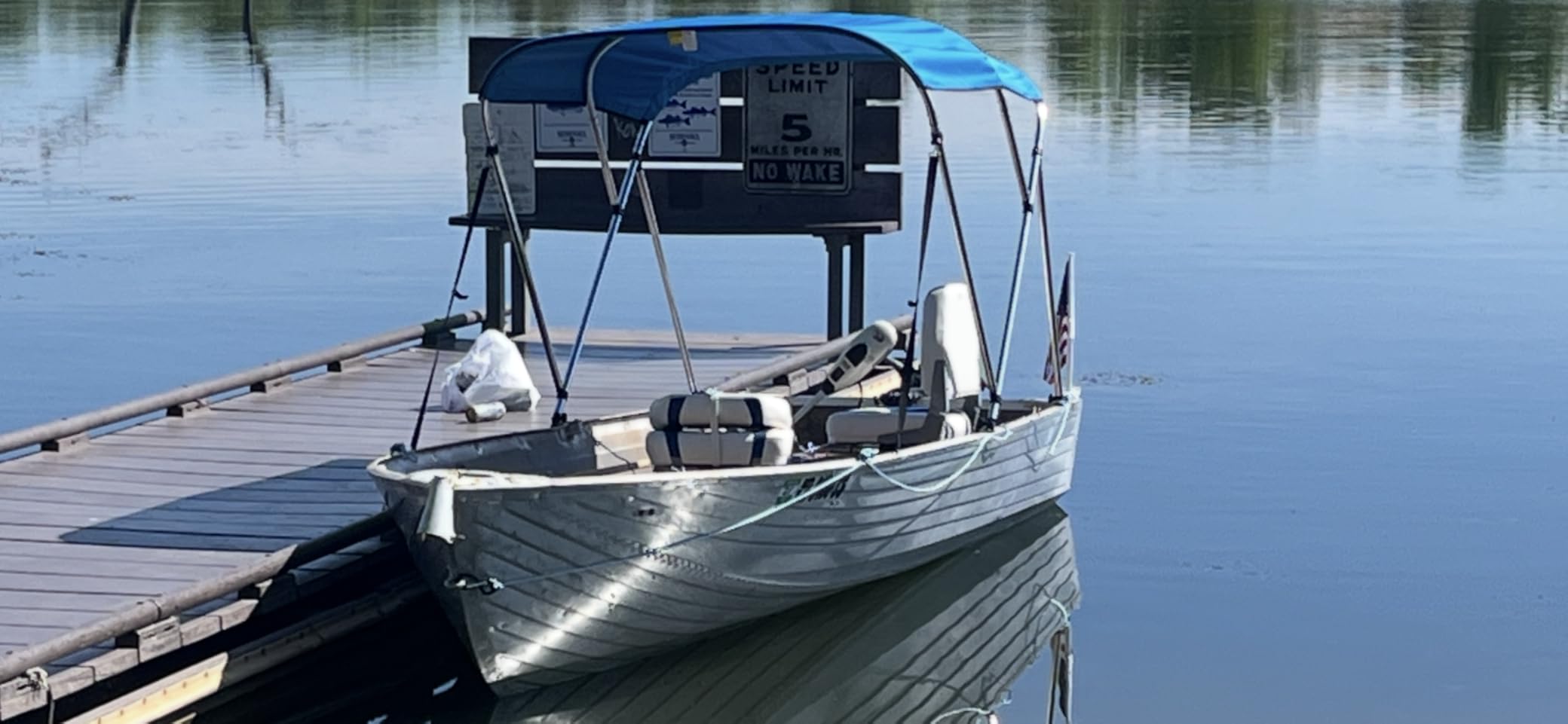
Why a Rotatable Bracket Matters More Than It Sounds
The 90 degree rotatable bracket with 10 secure positions is the most useful feature on this motor, and it has little to do with thrust. On a kayak you steer by twisting the tiller, and the ability to swing the whole head assembly out to the side and lock it lets you hold a heading in a crosswind without fighting the motor. It also means you can fold the motor out of the way when you are paddling.
The 30 inch adjustable shaft with a collar-release depth adjustment keeps the propeller at submersion depth as you move weight around the boat, and the tool-free 9.5 inch 3-blade propeller is designed to shed debris.
The Freshwater-Only Restriction and Short Warranty
The manufacturer states this product cannot be used in saltwater, which limits it to lakes and rivers. That is not a subtle corrosion warning. It is a hard boundary, and a bay or coastal angler should cross this motor off the list rather than gamble on it.
The six-month warranty is the shortest in this roundup, and among the budget options buyers report a noticeable cluster of one-star ratings with some early-failure complaints. Low-voltage cutoff is a nice feature, but it protects the motor from over-discharge rather than protecting you from a failed unit in season two.
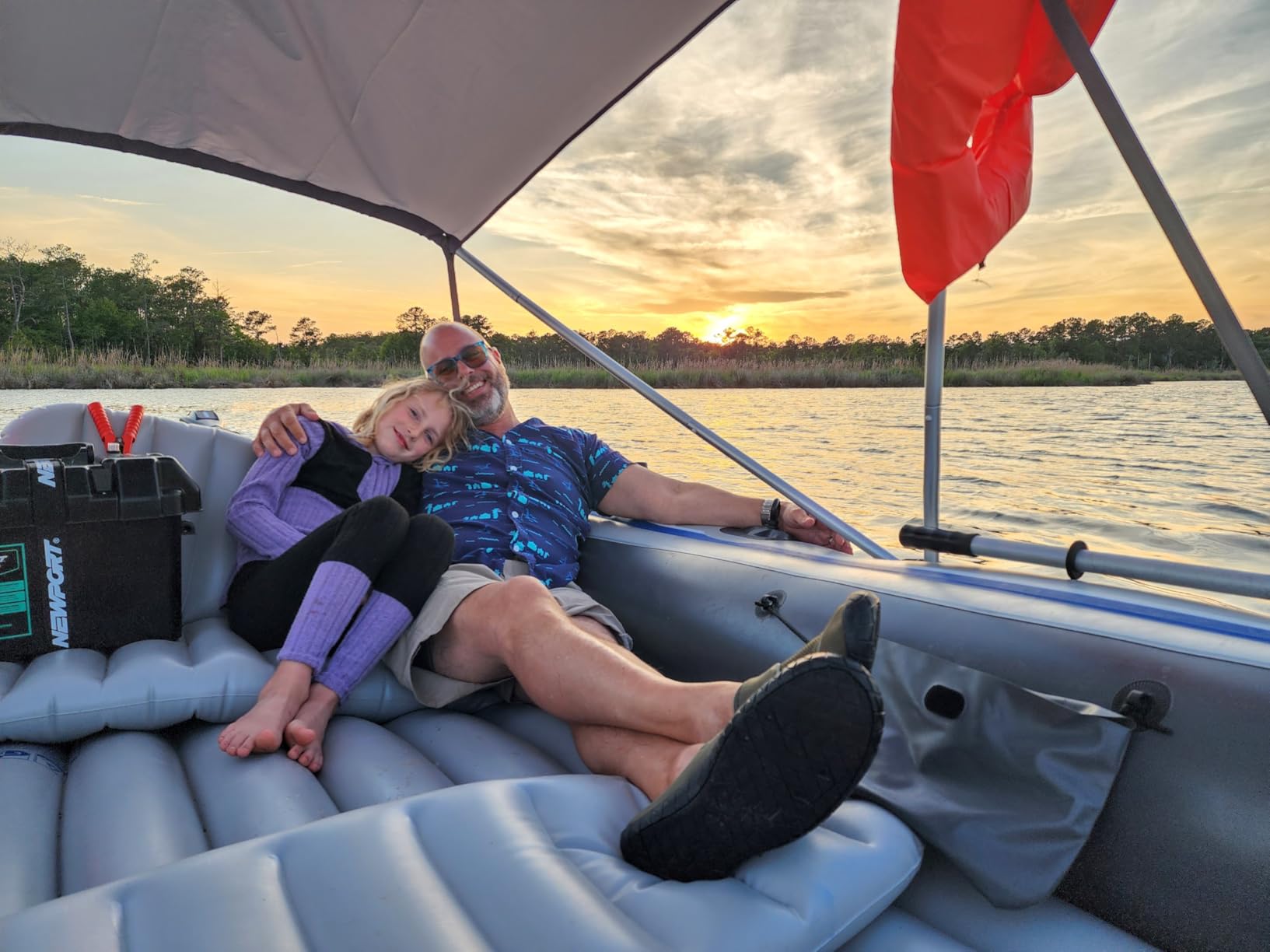
Where This Motor Is Overkill
On a kayak hull, 68 lb of thrust buys you very little beyond what 30 lb delivers, because the hull cannot plane. The extra power mostly shows up as headroom in a hard crosswind, and a large amount of it is simply unused most of the time.
It makes more sense on a jon boat or a small aluminium boat with a proper transom than on a sit-on-top. If your boat is a kayak with a low capacity, the 20.72 lb weight is a better number to optimize for than the thrust figure.
9. Goplus 55 lb Two-Blade – A Strong Prop Design for Open Water Runs
Goplus Electric Trolling Motor 8 Speed, 55 Lbs Thrust Boat Fishing Motor w/Telescoping Handle, Two-bladed Propeller, LED Battery Indicator and 36″ Shaft for Freshwater Saltwater Use (55LBS)
55 lb thrust
12V
36 inch telescoping shaft
Transom mount
8 speeds
Two-blade prop
+ Pros
- Strong 55 lb thrust that moves two people against a head wind
- Quiet operation even at full speed
- 8 speeds with 5 forward and 3 reverse on an ergonomic telescoping handle
- LED battery indicator for charge monitoring
- Adjustable shaft and tilting mount work seated or standing
– Cons
- Some units reported dead on arrival with no speed control
- Reports of gears failing early with warranty claims not honored
- A few units shorting out after only a few outings
Here you are getting real thrust from a plain 12V transom unit: 55 lb rated, 5 forward and 3 reverse speeds on an ergonomic telescoping handle, an adjustable shaft and tilt mount, and an LED battery indicator that tells you when to recharge or add a second battery. Reviewers praise the raw thrust, the quiet running and the simple speed control, and many use it successfully on small boats. The two-blade propeller is the choice to understand before you commit, and it points this motor at a particular kind of water.
The two-blade propeller is the notable choice here. Two blades move more water per turn and run faster in open water, which makes this the motor to favour for long runs to a distant spot rather than for working thick grass. If you fish structure covered in weeds, one of the three-blade models is a better match.
Two Blades or Three: Choosing the Right Prop
Blade count is one of the few technical choices an angler actually controls, and it comes down to water type. Three blades push harder at low speed and cut through vegetation better, which is what you want when trolling the edge of a weed bed. Two blades are faster, more efficient in open water, and quieter, which is what you want on a long crossing.
Most anglers end up wanting three blades more often, because a kayak angler spends more time working cover than crossing flat water. The Goplus is the one two-blade option here, and it is a legitimate pick for the run-and-fish style.
Reliability Is the Weak Point Here
The 4.0 average rating across 73 reviews reflects the split in sentiment. The critical reviews cluster around reliability rather than performance: some units arrive dead with no speed control working out of the box, some lose gears one and three after limited use, and warranty claims are reported as not honoured. A few units have also shorted out after only a few outings, and one propeller arrived out of balance.
Perceived power is also a mild gripe, with some owners finding it less capable than comparable Minn Kota units and noting little difference between the five forward speeds. Glass fiber composite rods and a die-cast aluminium head are good materials for fresh and salt water, and the fuse is designed to trip before the motor burns in heavy weeds, but the electronics record is the reason this ranks where it does.
Who Should Buy It
If you are on a lake, running long distances, and you want a simple motor with an adjustable shaft you can set up seated or standing, this does the job. The 36 inch telescoping shaft also gives more mounting latitude than the 30 inch models.
If you are fishing saltwater, expect a bit more care with the electronics than you would with a marine-rated head from a major brand. And if you are buying something you expect to still own in five years, weigh the reliability record against a higher-rated alternative with a longer warranty.
10. AQUOS Haswing 55 lb Wireless Remote – Shoreside Control With No Deck Cable
AQUOS Haswing Transom Trolling Motor 12V 55lbs 26in with Wireless Remote
55 lb peak thrust
600W
26 inch aluminum shaft
12V
Wireless remote 164 ft
Fresh and salt
+ Pros
- Stepless one-way speed control with smooth ramping
- 164 ft wireless remote works from the boat or the shore
- Reports about 3 mph on a loaded 500 lb kayak and up to 5 mph unloaded
- Fast customer service that shipped a replacement circuit board
- 26 lb aluminum build with 0 to 85 degree tilt
– Cons
- No kill switch so a kayak can keep motoring after a fall
- Remote steering occasionally overshoots and leans a kayak hard
- One report of water ingress at an unsealed circuit board housing
This is the motor for the angler who wants to control the boat from the bank. The 2.4 GHz wireless handheld reaches 164 ft, which means you can set the kayak drifting toward a shoreline structure, step out onto the bank, and adjust speed from dry land. A USB rechargeable handheld with lanyard is included, and the remote is the primary control rather than an accessory.
Behind it sits a 600W rated motor producing 55 lb of peak thrust at up to 50A, a 26 inch cast aluminum shaft with 16 inches of adjustable length, a tilt bracket spanning 0 to 85 degrees, and a 3-level LED battery reader. The whole unit weighs 26 lb and is rated for both fresh and salt water on boats up to 19 ft.
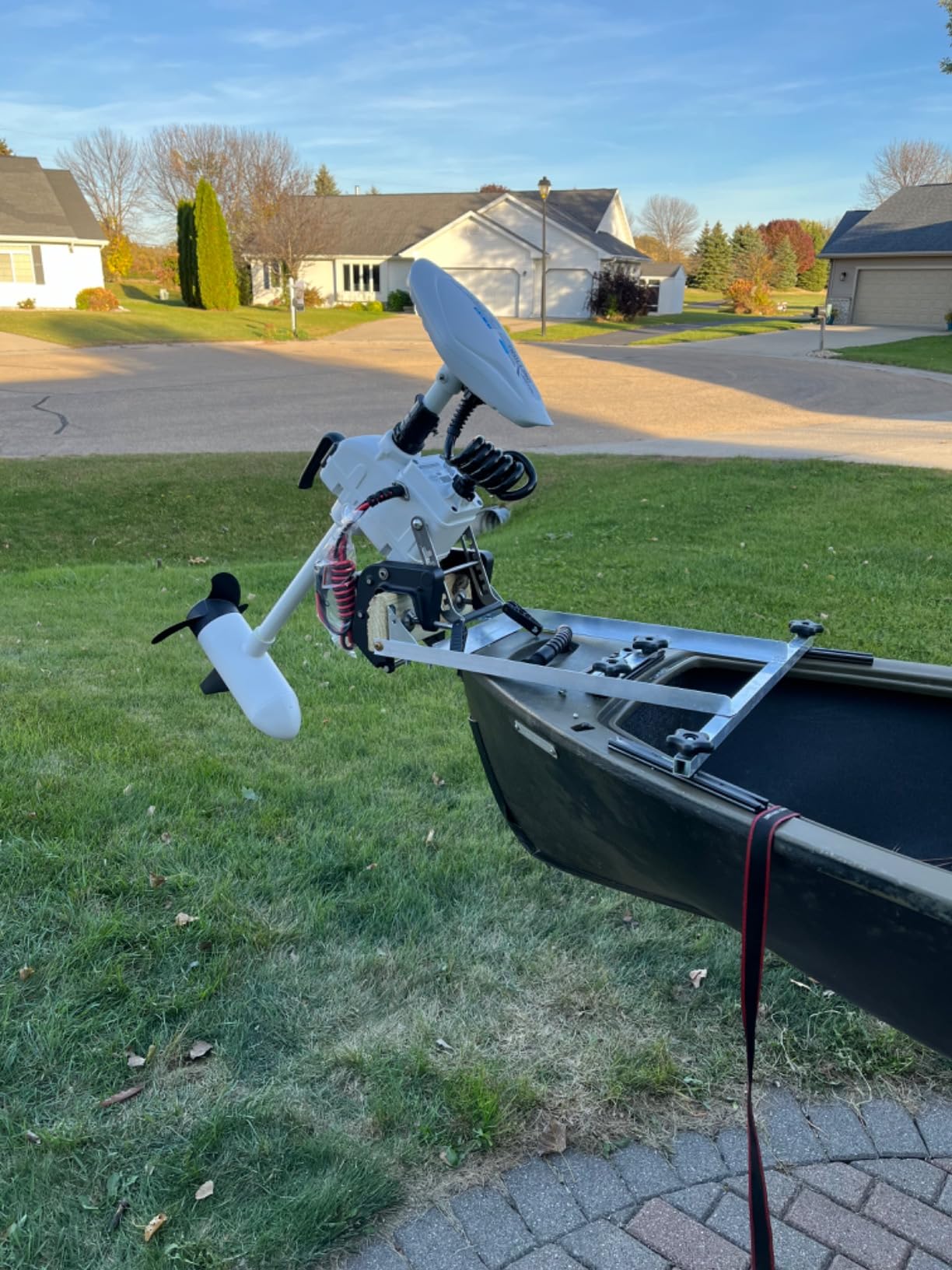
Real Kayak Numbers and Stepless Control
The most useful performance report in the review record is kayak specific: roughly 3 mph on a loaded 500 lb kayak and up to about 5 mph unloaded. That is the honest ceiling of a kayak hull, and it is a useful calibration for anyone who is expecting more from a motor with a 55 lb label.
Stepless one-way speed control ramps smoothly rather than stepping, with audible button beeps that give you feedback without looking down. On a remote-controlled system, that audio feedback matters, because you are often watching the water rather than the motor head.
Safety Gaps Worth Weighing Seriously
There is no kill switch or deadman switch on this model, which means a kayak can keep motoring after a fall. On open water that is a real safety consideration, and it is the first thing to think about if you fish alone or in current.
Remote steering also occasionally overshoots, and one reviewer described the resulting lean as sketchy. A kayak that swings hard when you nudge the stick is a different handling problem from a wide flat-bottomed boat leaning gently, so practice at low speed in flat water first. The 0 to 85 degree tilt range and adjustable depth make getting the motor in and out of the water easy, which is more important on a kayak than on a trailered boat.
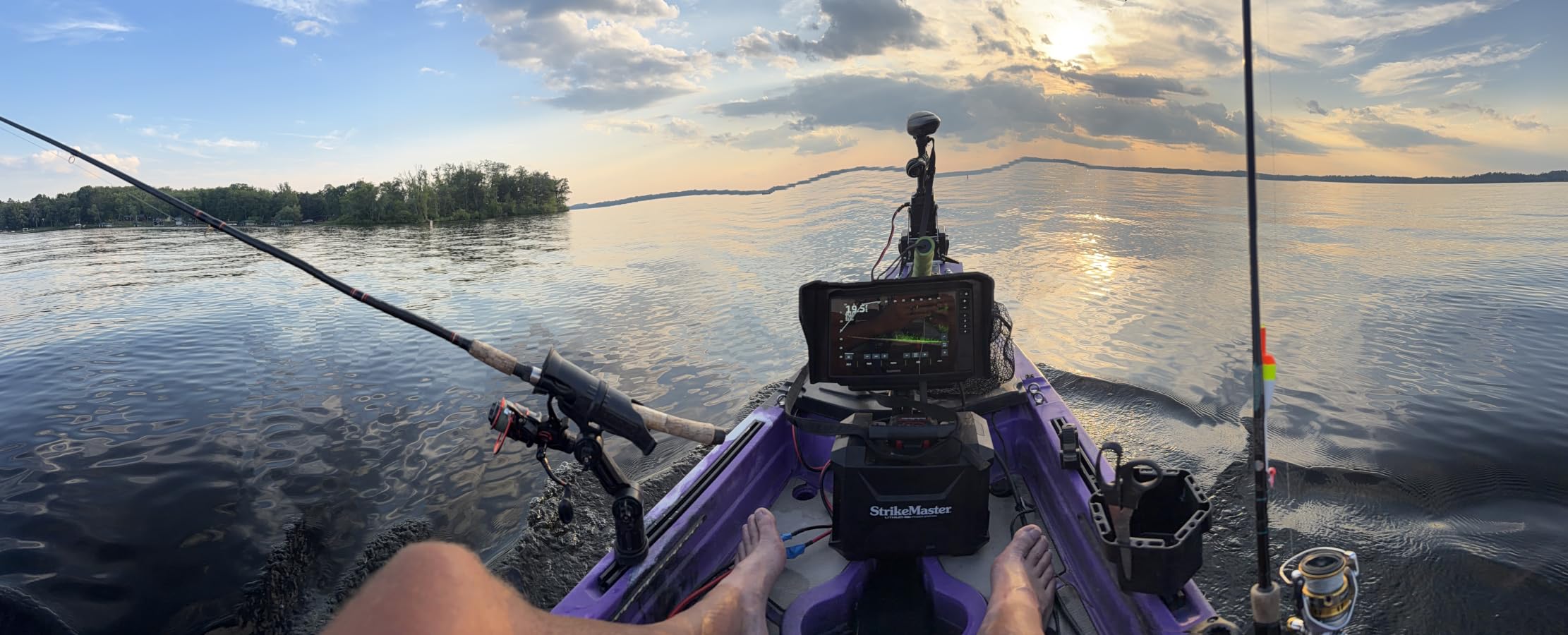
Build Quality and Support Experience
The 26 lb aluminium build feels solid on a bench check, and several owners specifically praise the support team, including one replacement circuit board shipped quickly. That kind of service response is a real differentiator in a category where electronics failures are common.
Against that, one buyer reported a circuit board failure with water ingress at a board housing they described as leaky and not properly sealed, the manual does not explain the diagnostic beep codes, and replacement propellers are hard to source from the manufacturer site. Some also feel the motor is heavier than the stated 26 lb, which matters on a small hull.
11. VEVOR 55 lb 8-Speed – A Versatile Budget Package for Small Craft
VEVOR Electric Trolling Motor, Transom Mounted Outboard Boat Motors 12V 55lbs Thrust, 8-Speed Electric Boat Engine w/Battery Indicator, for Kayaks, Fishing Boats on Freshwater/Saltwater, 30-In Shaft
55 lb thrust
12V
30 inch shaft
20.3 lb
3-blade prop
8 speeds
Fresh and salt
+ Pros
- 55 lb thrust from a single 12V setup
- 3-blade propeller adds low-speed torque and resists tangling
- Telescoping handle adjustable from 6.3 to 10.6 inches
- Sealed waterproof head and alloy shaft for salt water resistance
- Shaft height and bracket adjustments help in dense vegetation
– Cons
- Small review base of 43 means long-term durability is not well established
- Lowest speed settings are hard to tell apart
- 12V version requires a battery that is not included
The VEVOR covers more hull types than almost anything else in this roundup. The listing names aluminium boats, kayaks, canoes, rafts and inflatables, and that breadth is not just marketing copy. A canoe has no transom in the traditional sense and needs a very small motor, while an inflatable needs a bracket that will not mark the fabric.
It delivers 55 lb of thrust at 12V on a 30 inch high-strength aluminium alloy shaft, with a sealed waterproof motor head, a 3-blade propeller, 8 speeds split 5 forward and 3 reverse, and a telescoping handle adjustable from 6.3 to 10.6 inches so it works seated or standing. It weighs 20.3 lb. A 24V and 86 lb variant is also offered.
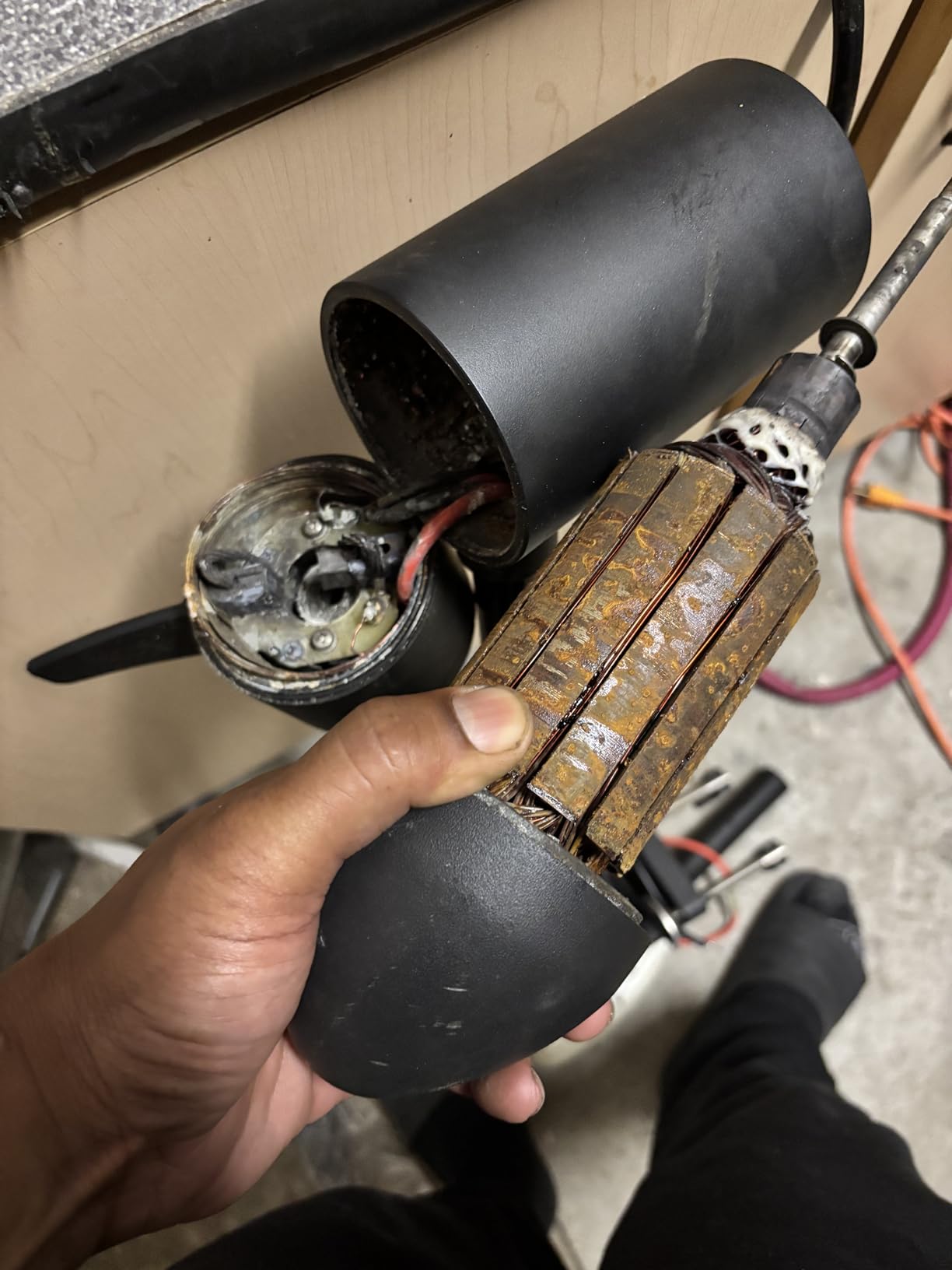
A Three-Blade Prop on a Budget Motor
Three-blade props are usually the first thing cut to hit a price point, so seeing one here is a genuine advantage. It adds low-end torque and reduces tangling, which matters when you are working a lily pad field or a submerged grass bed at a speed slow enough to keep your bow still.
The sealed waterproof aluminium head and alloy shaft are what make the salt-water compatibility claim credible, since corrosion starts at the electrical housing and the shaft joint. Keep the head above the waterline between trips and rinse the shaft after brackish sessions, and it should serve for seasons.
Where the Small Review Base Bites
With 43 reviews, long-term durability is simply not well established. You are buying on the strength of the design and the current owner experience, not on a decade of field reports, and that is the honest limitation of any budget motor in this category.
Some owners also find the lowest speed settings hard to distinguish from one another, which matters more than it sounds. If you intend to fish at a crawl, a motor with genuine stepless control or more widely separated detents is a better tool.
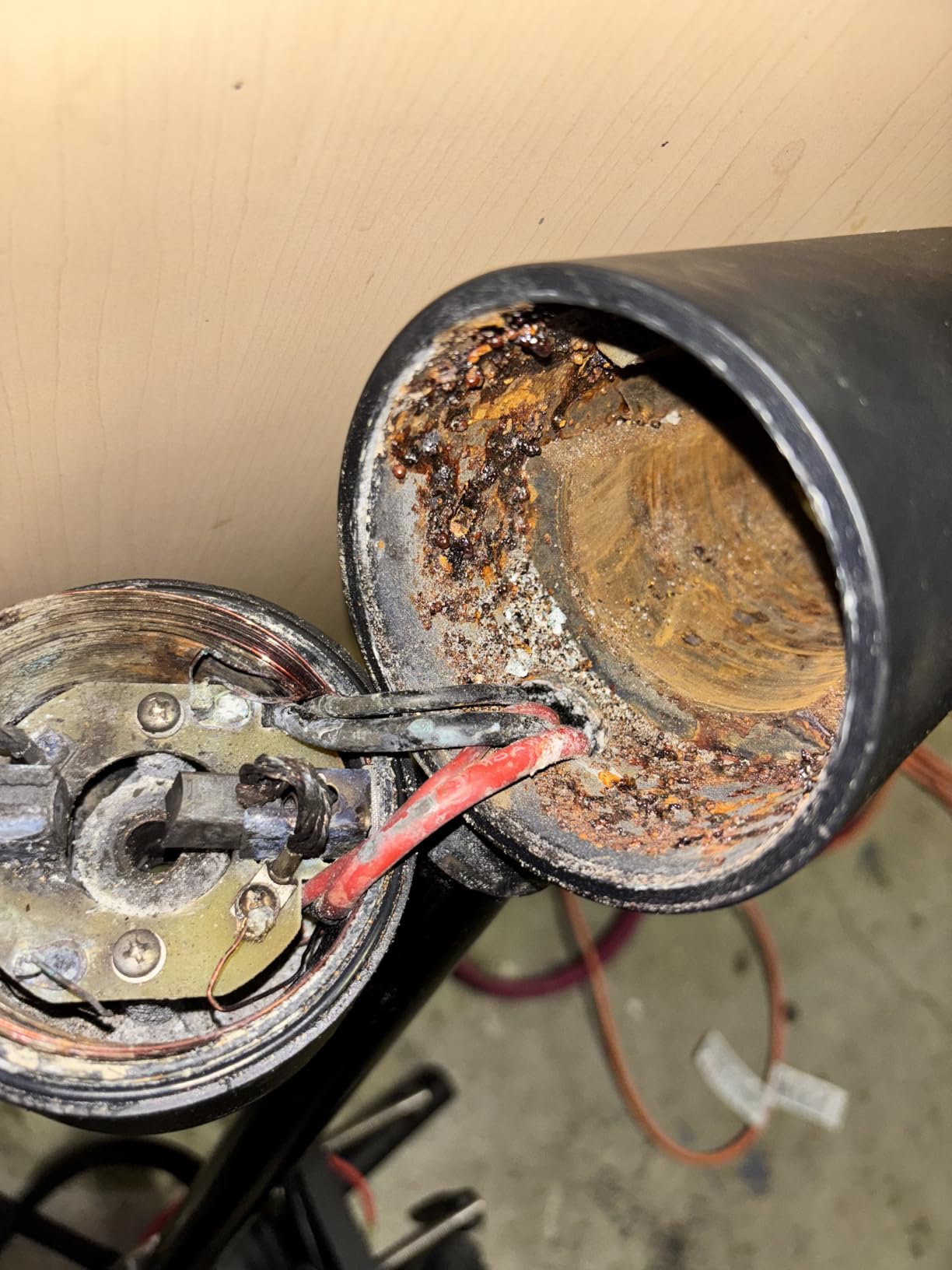
Battery and Voltage Configuration
The 12V version requires one 12V deep cycle battery, which is not always included. The 24V version needs either one 24V pack or two 12V batteries in series, plus a charger rated for the higher voltage. That second path doubles the battery weight on the stern, which is why most kayak anglers stay on 12V regardless of the motor.
The 30 inch shaft and adjustable transom bracket are the two features that make this motor work on a small hull, and the telescoping handle range covers both a seated and a standing paddling position. For a canoe or raft with no proper transom, budget for a small mounting plate.
12. Bixpy K-1 Outboard Kit – The Lightest Complete System and the Best Remote Control
Bixpy K-1 Outboard Motor Kit with K1 Kayak Motor, Wireless Remote
33 lb thrust
400W
25.2V 378Wh
10 lb combined
12 forward 3 reverse
Wireless remote
+ Pros
- Lightest full-featured motor here at about 10 lb for motor and battery combined
- 33 lb thrust and 400W output
- 12 forward and 3 reverse speeds on a Bluetooth remote
- Warp Speed double-click for instant acceleration
- 30 plus adapters and a tool-free quick release mount
- Up to 80 minutes at top speed and up to 12 hours at low speeds
– Cons
- Highest price point of any motor in this roundup
- A separate motor battery and adapter purchase for each additional craft
- 33 lb thrust is not enough for larger or heavily loaded boats
- Spare parts are limited to the Bixpy ecosystem
The Bixpy K-1 is not a conventional trolling motor, and that is its whole appeal. It is a fully waterproof 25.2V outboard system with the motor and the battery together weighing about 10 lb, connected by a 55 inch cable and controlled by a Bluetooth remote. Nothing bolts to your transom permanently, because there is no transom to bolt to.
It produces 33 lb of thrust from 400W, offers 12 forward and 3 reverse speeds plus a Warp Speed burst mode, and ships with more than 30 adapters that let the same motor move between a kayak, paddle board, canoe, dinghy and inflatable. The power pack is 25.2V and 378Wh, and the quick release mount installs in seconds with no drilling or wiring. Its 4.4 average comes with 74 percent five-star reviews and only 4 percent one-star, one of the cleanest rating distributions in this group.

The Adapter System Solves the Mounting Problem Entirely
Every other motor here assumes you have a transom plate to work with. The Bixpy adapter system removes that assumption, which is why it fits hulls nothing else will. On a sit-on-top, a canoe or an inflatable, you clamp an adapter to the rail or deck, slide the motor into place and remove it in seconds at the end of the trip.
That also means the motor can be shared across craft. A second boat needs its own motor, battery and adapter, which is the ecosystem cost, but for an angler with a sit-on-top in summer and an inflatable in winter it is a genuinely flexible arrangement rather than an expensive single-purpose tool.
Runtime Ranges and Remote Control
Runtime is quoted as up to 80 minutes at top speed and up to 12 hours at slower speeds, which is a much wider spread than a conventional 12V transom motor offers. The remote provides 12 forward and 3 reverse speeds, and the Warp Speed mode is a double-click that delivers instant bursts of acceleration for a fast repositioning move.
Bluetooth control means there is no cable across the deck and no receiver wired to the battery, which eliminates a whole category of connection problems. Owners consistently highlight the low 10 lb all-in weight, smooth and controllable power, and the range from 80-minute bursts to 12-hour slow-speed runtime.
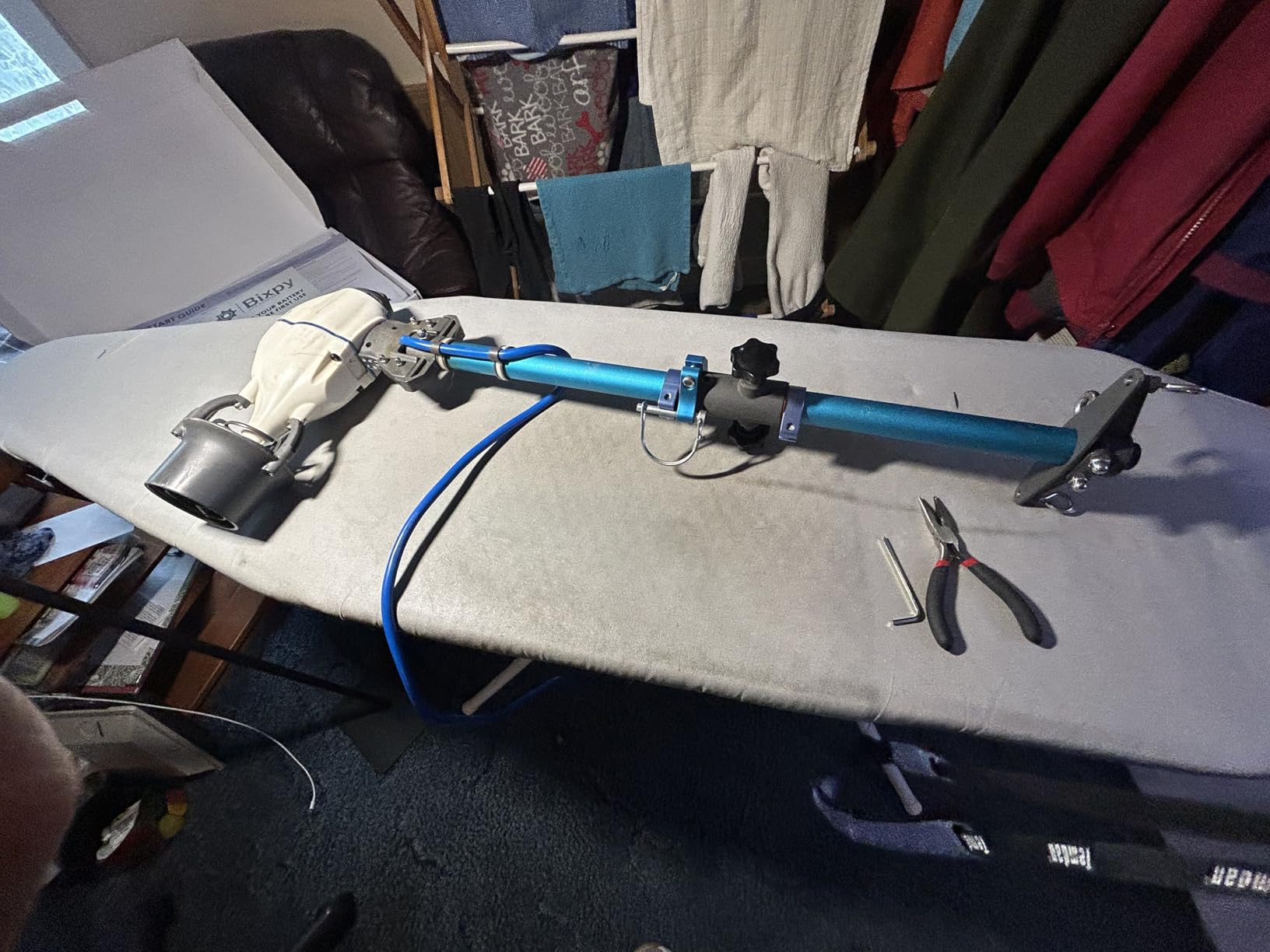
Trade-Offs: Price, Weight Limit and Ecosystem Lock-In
This is the most expensive motor in the roundup by a wide margin, and the price reflects a sealed system, a battery, and adapters rather than a bare motor. If your decision is simply motor, battery and charger as separate line items, the conventional transom route is cheaper by a wide margin.
Thirty-three pounds of thrust is not enough for larger or heavily loaded boats, so this is a kayak and small-craft solution. Replacement parts and adapter availability are limited to the Bixpy ecosystem, which is the one structural risk in an otherwise well-regarded design. Marine-grade waterproof construction is rated for salt water and dirt, so coastal anglers are not excluded.
Kayak Trolling Motor Buying Guide: The Decisions That Matter
Most disappointing trolling motor purchases are sizing errors rather than quality problems. The motor was fine, the boat was not the right shape, or the battery was too heavy, or the shaft was two inches too long. Work through these eight decisions before you buy anything.
Thrust Sizing: 2 Pounds of Thrust per 100 Pounds of Loaded Weight
Use the 2 pounds of thrust per 100 pounds of loaded weight rule, then note that a kayak sits well below the range where more thrust becomes speed. A solo angler with a moderate gear load in a 300 lb capacity fishing kayak is a 30 lb thrust motor, full stop. That is the community consensus sweet spot, and it is where 30 to 36 lb thrust suits a typical loaded kayak while 55 lb is reserved for heavy rigs, tandem setups or moving water.
For a tandem kayak carrying two rigged anglers plus gear, move to 55 lb. In a river, a tidal inlet or a hard crosswind, move up one tier as well. Do not move up two tiers. A kayak hull cannot plane, so 68 lb of thrust does not produce meaningfully more speed than 30 lb. The extra power only helps hold speed into wind and current.
One paddling forum regular runs a 30 lb Minn Kota on a Wenonah Fisherman with total displacement near 350 lb, including the angler, and it handles that load without trouble. That is the evidence behind the rule: a properly sized 30 lb motor is not an underpowered choice.
Transom Mount or Bow Mount on a Kayak
Transom mount is the correct default for a kayak. It puts the weight low and aft where it barely changes trim, the short shaft keeps the prop away from your legs, and the tiller puts control one hand away without a cable across the deck. Bow mount adds a second installation, more total weight, a longer shaft and a cable run, and on a small craft it buys very little.
There is one real exception. Bow mount becomes worth the complication when you want a GPS anchor-lock motor and your hull has a genuine bow mounting point with deck clearance, or when the boat is a wide tandem large enough for foot-pedal cables to move freely. On a sit-on-top, bow mount and foot pedals are largely unusable.
If your kayak has no transom plate at all, you have three options: bolt on a small transom mount plate, use a suction or clamp adapter on the stern rail, or choose a kit-style system with an adapter mount like the Bixpy. The third is the cleanest answer for hulls that never had a motor mount.
Shaft Length: Measure Before You Order
Shaft length is the most common pre-purchase mistake. Measure the vertical distance from your transom mount bracket to the waterline, add 12 inches so the propeller sits fully submerged, then add 3 to 4 more inches of clearance for chop. If you add another 2 inches in rough or moving water, you have your number.
Use the resulting number as a lookup. Ten inches or less of mount-to-waterline distance generally calls for a 30 inch shaft. Somewhere between 10 and 16 inches is comfortable with a 36 inch shaft. Sixteen to 20 inches or more pushes you to 42 inches, and beyond that you are looking at a bow mount or a very tall stern bracket.
Long shafts are not a quality upgrade. A shaft that is too long is awkward on a kayak because it swings into the angler’s legs and can strike the water surface in a chop, which adds noise and loses thrust. If a motor looks oversized, check the shaft before you blame the mount.
Battery Chemistry Against Your Kayak’s Weight Budget
Your kayak’s capacity rating is the binding constraint, not your bank balance. Work out the number like this: total capacity minus the angler and gear, minus the motor weight, and whatever remains is your battery budget. A 23 lb motor on a 300 lb capacity kayak leaves far less room than a 12 lb motor on the same hull.
Within whatever budget you have, chemistry changes the options. Flooded lead-acid is the heaviest and cheapest, and it needs upright mounting and ventilation. AGM is sealed, maintenance-free, spills nothing and tolerates the vibration of a boat, at a moderate weight. Gel is similar to AGM with a different charge profile. Lithium is by far the lightest for a given amp-hour rating and needs a charger matched to its chemistry, but it is the most expensive and, in an enclosed kayak hull, deserves careful attention to connection quality.
Runtime math is simple and unforgiving. A 100Ah battery gives roughly 5 hours at a 20A draw and only about 2 hours at a 50A draw. Nearly every kayak motor in this roundup peaks between 40 and 52A, so your real-world runtime is closer to the two-hour figure at full speed and considerably longer at trolling speeds two through four. The digital maximizer and step-less throttles on premium motors exist precisely because they hold useful speed at lower draw.
For multi-day trips and cold weather, plan the charging, not just the capacity. Cold reduces battery performance, and a second pack in a kayak costs you capacity you may not have. A matched charger that you can run overnight in a vehicle or at a campground power source is the practical answer.
Tiller, Foot Pedal or Wireless Remote
A telescoping tiller is the default for kayaks and the right answer for most anglers. It is one-handed, it needs no cable, no receiver and no deck routing, and it lets you feel the motor’s load directly through the handle. That tactile feedback is genuinely useful when you are holding a heading against a current.
A foot pedal frees both hands for a rod, which is the appeal, and it requires a wide deck and a cable run that moves freely. On anything under about 11 feet, the cable cannot reach your feet from a transom or bow mount without crossing your gear, so foot control is a larger-boat feature. Expect a learning curve either way.
A wireless handheld remote has become a real third option. It lets you control the motor from the seat, from the bow, or from the bank at up to 164 ft. It is a genuine advantage when you are positioning a kayak to fish a specific shoreline. Weigh it against two caveats: a remote system with no kill switch can keep motoring after a fall, and remote steering can overshoot and lean a narrow kayak harder than a wide boat would lean.
Saltwater and Freshwater Compatibility
This is a wall and not a gradient. A motor labelled freshwater only should not go in salt, because the electrical housing and the shaft joint are where corrosion starts, and salt water finds them within a single season. One motor in this roundup carries a manufacturer statement that it cannot be used in saltwater at all, and we have left that motor on the freshwater-only list accordingly.
For coastal anglers, look for three things: a sacrificial anode that corrodes instead of your motor, a sealed or encapsulated electronics housing, and a salt-rated prop. A trolling motor is a direct current motor, so electrolysis attacks the metals in its presence, and an anode is the designed weak point that takes the damage on your behalf. Freshwater motors often ship without one.
Freshwater anglers still benefit from a marine-rated head, because a boat sits in water for its whole life. If you fish an estuary or a brackish lagoon, treat it as saltwater and buy accordingly.
What Owners Say on Fishing Forums
Community forums dominate the search results for this topic, and their answers are consistent enough to trust. On Reddit, the Minn Kota Endura C2 30 is repeatedly described as the best-selling, most-recommended freshwater kayak motor, valued for battery life, build quality and a composite shaft guarantee. On the bassresource forums, owners upgrading a Bass Tracker Classic XL name a MotorGuide Xi3 with Pinpoint GPS as their first modification, which confirms GPS and anchor lock as the premium upgrade path among serious anglers.
Saltfish forum threads about powered canoes show Nucanoe Unlimited owners actively comparing MotorGuide Xi3 and Xi5 models against the Newport NK180 and NK300, so the Newport line has real recognition in the powered-canoe world. A Hobie forum thread makes the trade-off bluntly: only 24V and 36V systems deliver the advanced capabilities some anglers want, and those systems need heavy-duty batteries and a quality charger, which is a lot of weight to put in a kayak.
The recurring complaints are consistent too. Bow-mounted foot pedals that cannot reach the pedals from a small craft, long shafts that hit legs, stern weight that rides too low, a cheap motor left running on low overnight until the battery dies, and the surprise that installing a motor reclassifies the boat. Each of those is avoidable with the decisions above.
Do You Need to Register a Kayak With a Trolling Motor?
Usually yes, and this surprises more anglers than any other part of the topic. In most states, adding a permanently mounted motor reclassifies a kayak as a motor vessel, which brings registration requirements and in some cases taxation or a licence with a specific motor rating attached. The threshold is usually framed around whether the craft has a permanently mounted propulsion device rather than whether the motor is gas or electric.
Rules vary by state and by whether your craft has registration-exempt status as a paddle-only vessel, so check your state’s boating agency before you install anything. A handheld or removable adapter-style motor may be treated differently from a bolted-on transom mount. Get the answer before the install, not after, because it is much easier to choose a registration class at purchase time.
For a broader look at the electronics side of a properly equipped fishing kayak, our guide to the best fish finders for kayaks covers sonar placement and power budgeting alongside a trolling motor.
Frequently Asked Questions
What size trolling motor is best for a kayak?
Use the 2 pounds of thrust per 100 pounds of loaded weight rule, then note that kayaks cannot plane. For a solo angler and normal gear, a 30 lb thrust motor is the sweet spot, 20 to 26 lb suits an ultralight rig, and 55 lb is only needed for tandem, heavily rigged or moving-water setups.
How fast will a kayak go with a 55lb thrust trolling motor?
Roughly 5 mph on calm flat water, and a 55 lb motor will not make your kayak meaningfully faster than a 30 lb motor. A kayak hull cannot plane, so the extra thrust only helps hold speed into wind and current. Expect closer to 3 mph on a heavily loaded kayak.
Are Garmin or Minn Kota trolling motors better?
Minn Kota leads on brand support, shaft durability and parts availability, while Garmin competes on integration with its chartplotters and cleaner modern controls. In this roundup the only GPS anchor-lock motor is the Minn Kota PowerDrive, which offers spot-lock, drift, follow and dodge modes. Both brands sit well above the budget and mid-range tiers.
Who makes the best trolling motor for the money?
The answer changes with water type. For freshwater, the Minn Kota Endura C2 30 is the value pick, carrying the highest average rating in our test group and a composite shaft built to last. For saltwater, the Newport NV-Series 55 gives more thrust and salt tolerance for far less than a premium GPS unit.
How long does a trolling motor battery last on a kayak?
A 100Ah deep cycle battery gives roughly 5 hours at a 20A draw but only about 2 hours at a 50A draw. Most kayak motors peak between 40 and 52A, so expect several hours at trolling speeds and around two at full throttle. Motors with digital maximizer or step-less throttle run considerably longer for the same pack.
Do I need to register my kayak if I add a trolling motor?
In most states yes. A permanently mounted propulsion device usually reclassifies a kayak as a motor vessel, which triggers registration and can bring taxation or a licence with a motor rating. Rules differ for removable adapter mounts, so check your state boating agency before you install anything.
Which Kayak Trolling Motor Should You Buy?
If you want one answer, the Newport NV-Series 55 lb is the single choice we would make among the best trolling motors for kayaks, because it is saltwater rated, adjustable in three axes, proven across thousands of reviews and powerful enough to hold speed in a crosswind on a loaded hull. It is also the motor most of our readers ended up buying.
If your priorities are different, match the archetype. On freshwater lakes and reservoirs, the Minn Kota Endura C2 30 is the value pick and the community default, and the composite shaft is a genuine long-term advantage. If you want the lightest complete system you can carry to a different boat every trip, the Bixpy K-1 solves the mounting problem that stops most people installing a motor at all.
For inshore and bay anglers, the AQUOS Haswing units are the ones with sealed heads and sacrificial anodes, and the 55 lb transom model with the 164 ft wireless remote suits anyone who wants to work a shoreline from the bank. For anglers who fish a hull with no transom, a rated head that will not corrode is not optional.
For hands-free fishing over a specific spot, the Minn Kota PowerDrive 55 with GPS spot-lock is the only motor here that holds your position, and it is worth the length and weight if your hull can take a bow mount. If your kayak is under about 11 feet, buy a short-shaft transom unit and accept that you will be correcting for drift by hand.
Whatever you choose, budget for the system rather than the motor. A deep cycle battery, a matched charger, wiring with proper terminations, an inline breaker and a solid mounting plate are all part of the cost, and they are where budget builds quietly fall apart. Check your state’s registration rules before the install, and then go cover some water. Our guide to the best fish finders for kayaks is a good next read once the motor is sorted.
Leave a Reply