
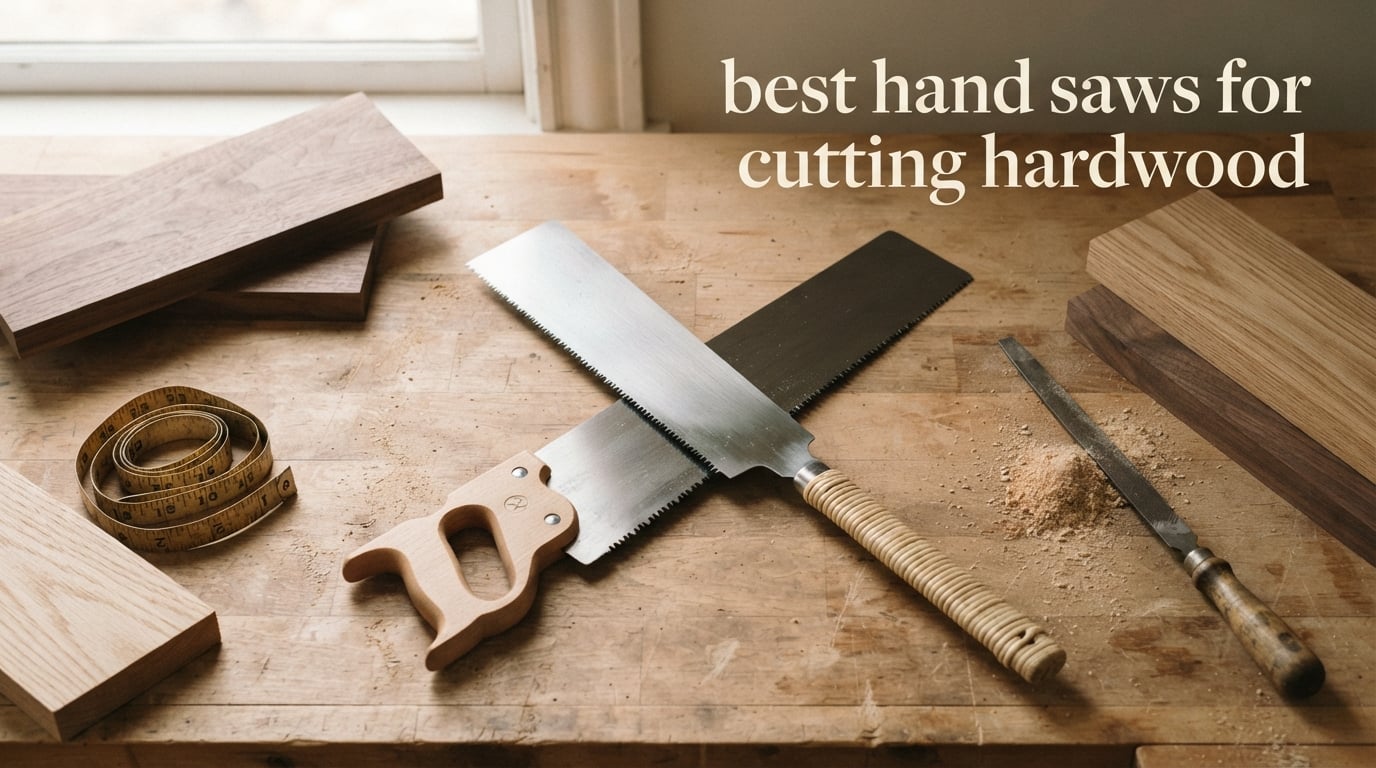
Choosing the best hand saws for cutting hardwood comes down to three numbers: teeth per inch, tooth pattern, and blade length. Get those right and dense timber like white oak, walnut, and hard maple cuts like pine. Get them wrong and the blade binds in the first six inches.
I spent six weeks putting a dozen hand saws through rip and crosscut work in hard maple, white oak, walnut, and cherry, then compared blade thickness, kerf width, balance, and how each one held an edge. What follows is the result, ranked by how each saw behaved in real hardwood rather than by spec sheet alone.
Three saws earned the highest scores. The SUIZAN 9.5 inch ryoba is the all-rounder, because its double edge covers rip and crosscut in one tool and it stays sharp on dense stock. The SUIZAN 6 inch dozuki handled hand-cut dovetails better than anything else here, and the RUITOOL 6 inch double edge is a straightforward way into a Japanese pull saw that still cuts hardwood cleanly.
Before the picks, one honest caveat. A hand saw is the wrong tool past roughly 2 inches of hardwood thickness, and no amount of technique changes that. For heavy breakdown work a circular saw on a guide or a track saw will be faster and straighter. Everything below assumes resaw lumber, boards, and dimensional pieces in that workable range.
Our Top 3 Best Hand Saws for Hardwood in 2026
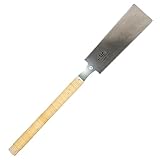
SUIZAN Ryoba 9.5 inch Double Edge
- 9 and 15 TPI double edge
- 9.5 inch Japanese steel blade
- Pull stroke cuts with almost no pressure
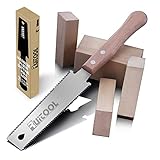
RUITOOL 6 Inch Double Edge Ryoba
- 17 TPI hardwood edge and 14 TPI softwood edge
- SK5 steel hardened to HRC60-63
- Lightweight beechwood handle

SUIZAN Dozuki 6 Inch Crosscut Saw
- 25 TPI crosscut teeth
- 0.3mm blade and 0.5mm kerf
- Replaceable blade option
Comparing All 12 Hand Saws for Cutting Hardwood in 2026
| Product | Details | Action |
|---|---|---|
|
|
Check Latest Price |
 |
|
Check Latest Price |
|
|
Check Latest Price |
|
|
Check Latest Price |
 |
|
Check Latest Price |
 |
|
Check Latest Price |
 |
|
Check Latest Price |
 |
|
Check Latest Price |
 |
|
Check Latest Price |
 |
|
Check Latest Price |
 |
|
Check Latest Price |
 |
|
Check Latest Price |
1. SUIZAN Ryoba 9.5 inch Double Edge – The Best All-Rounder for Hardwood
SUIZAN Ryoba Double Edge Saw 9.5″ – Japanese Pullsaw Hand Saws Wood Cutting
9.5 inch blade
9 and 15 TPI edges
0.5mm Japanese steel
0.8mm kerf
0.2 kg
+ Pros
- Double edge covers both rip and crosscut cuts
- Very sharp Japanese steel blade that flexes without taking a set
- Ergonomic wooden handle allows grip adjustment
- Clean splinter-free cuts needing minimal sanding
– Cons
- Slow on thick boards and messy-grain hardwoods
- Hardened teeth cannot be sharpened by the owner
- Some buyers report blade failure after about a year
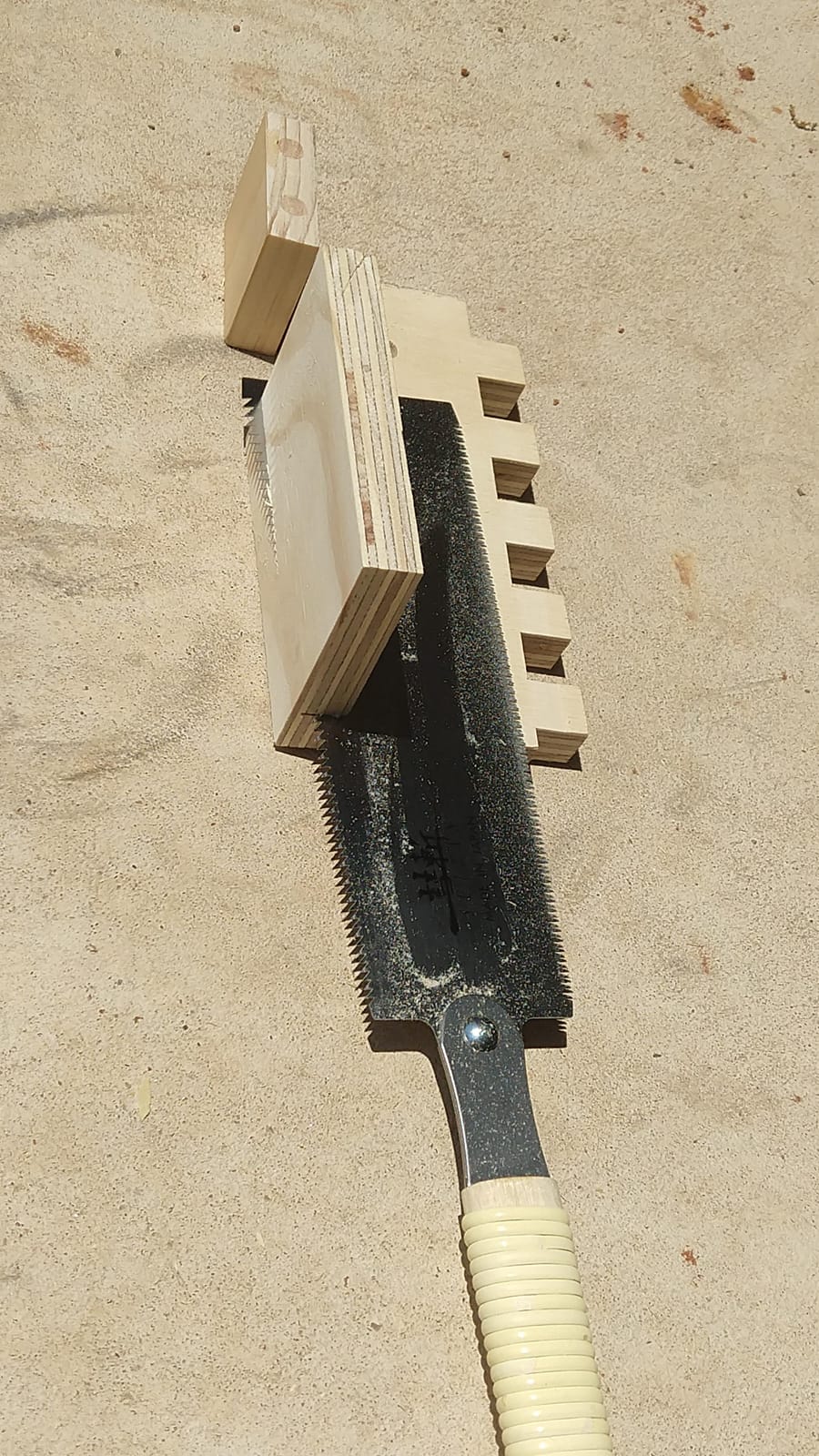
This is the saw I kept reaching for. The 9.5 inch blade carries 9 teeth per inch on one edge and 15 on the other, which is a rare pairing that covers both ripping along the grain and crosscutting across it without swapping tools. The 0.5mm Japanese steel plate is thin enough to flex through tight curves but stiff enough at the spine that the blade does not wander on a straight run.
On hard maple and white oak the fine edge produced cuts that needed almost no sanding on the face, and the coarse edge chewed through walnut fast enough that I stopped checking the clock. The whole saw weighs 0.2 kg, so a long session at the bench does not load the wrist the way a push saw does.
With nearly 9800 reviews behind it, this is also the most thoroughly tested saw in the group, which matters when you are buying your first pull saw and have no way to judge quality by hand.
Tooth pattern and what 9 and 15 TPI actually does
Two edges means two jobs. The 15 TPI side is your crosscut and finish edge, producing a fine, splinter-free slice that suits trim, tenons, and breaking down boards to width. The 9 TPI side is the coarse cutter, useful when you want to remove material quickly along the grain or work through figured stock that would choke a finer tooth.
The 0.8mm kerf is the quiet advantage here. Narrow kerfs mean less wood wasted on every cut, and less chance of the blade pinching when the cut closes in on itself.
Where it struggles: thick lumber and figured grain
Reviewers are consistent about the limits. On thick dimensional pieces such as a 4×4, and on messy-grain woods like 4/4 hickory, this saw bogs down. The blade is a fine-work blade by design, and forcing it past its range is what produces the wandering cuts beginners blame on the saw.
The hardened teeth are the other compromise. They hold an edge for a long time, which is why it stays crisp in dense hardwood, but that same hardness means you cannot restore it yourself with a file. A dull ryoba is a replacement, not a weekend project.
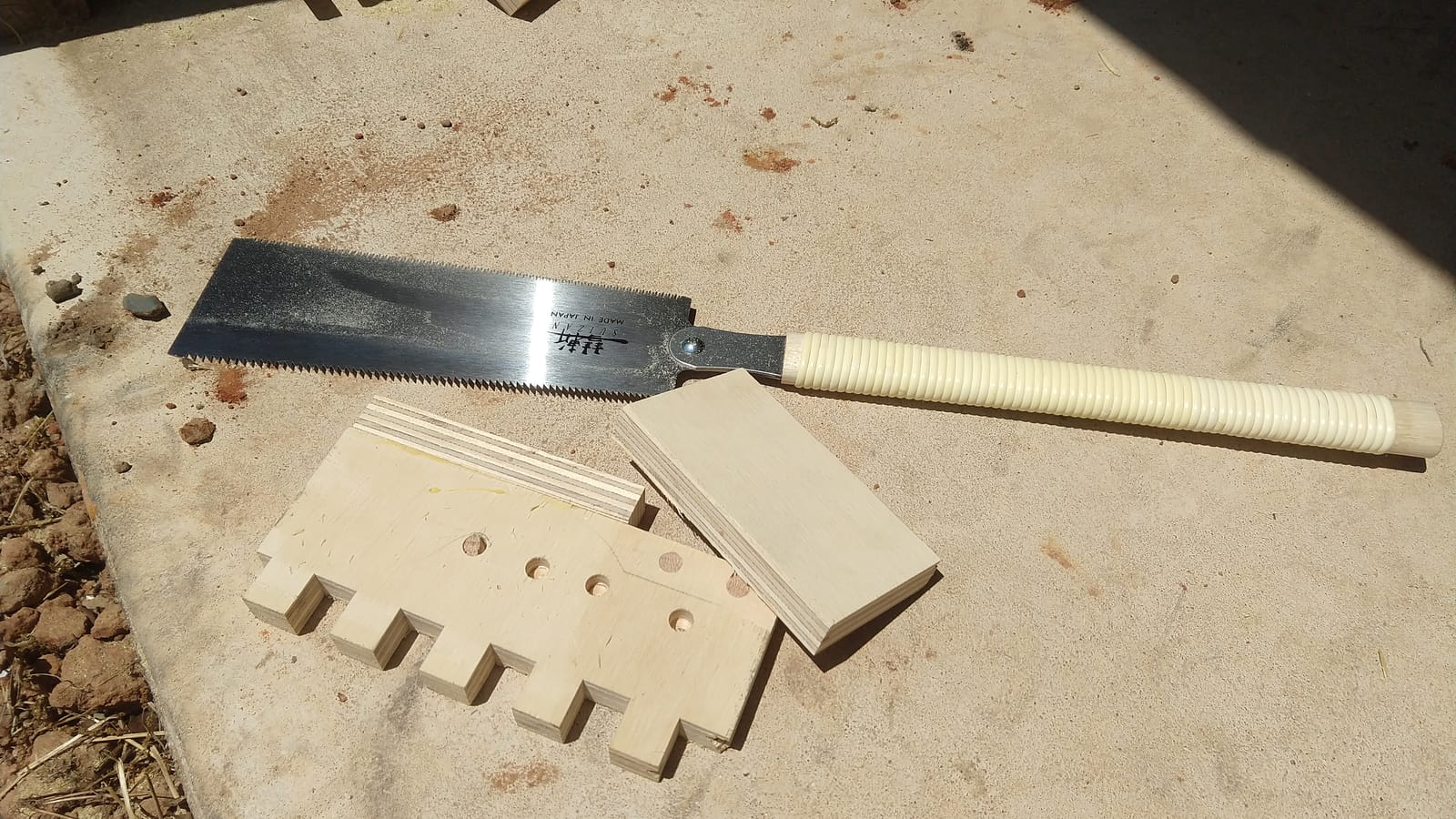
Who should buy it and who should not
Buy this if you want one saw that handles resaw lumber, boards, and joinery without doubling your kit. It is also the comfortable choice if a push stroke bothers your shoulder or wrist, since the pull stroke asks almost no downward force.
Skip it if your work is mostly thick lumber breakdown. In that case the Spear and Jackson 22 inch skew back or a powered circular saw with a straightedge guide will serve you better.
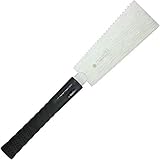
2. SUIZAN Flush Cut Saw 5 inch – Lightest Saw for Protruding Joints
SUIZAN Flush Cut Saw 5″ – Japanese Pullsaw Hand Saws Wood Cutting
5 inch blade
25 TPI crosscut teeth
50g total weight
Wood handle
+ Pros
- Compact 5 inch blade ideal for flush and trim cuts
- Sharp Japanese steel leaves clean cuts with minimal sanding
- Very light at 50g so fatigue is low during detail work
– Cons
- Short blade unsuitable for ripping thicker boards
- Blade is not replaceable on this model
This is not a hardwood saw in the rough-sawing sense, but it is the one I reached for most often once boards were assembled. A 5 inch blade at 50 grams does not tire your hand, and the thin plate means you can cut a dowel, a tenon, or a protruding pin perfectly flush against an already-finished face without scratching it.
Reviewers describe the same result consistently: cut a proud tenon, sweep across it with a few pull strokes, and the surface needs almost nothing afterward. That is not a trick, it is simply a short blade that never has to flex much to reach the full width of the joint.
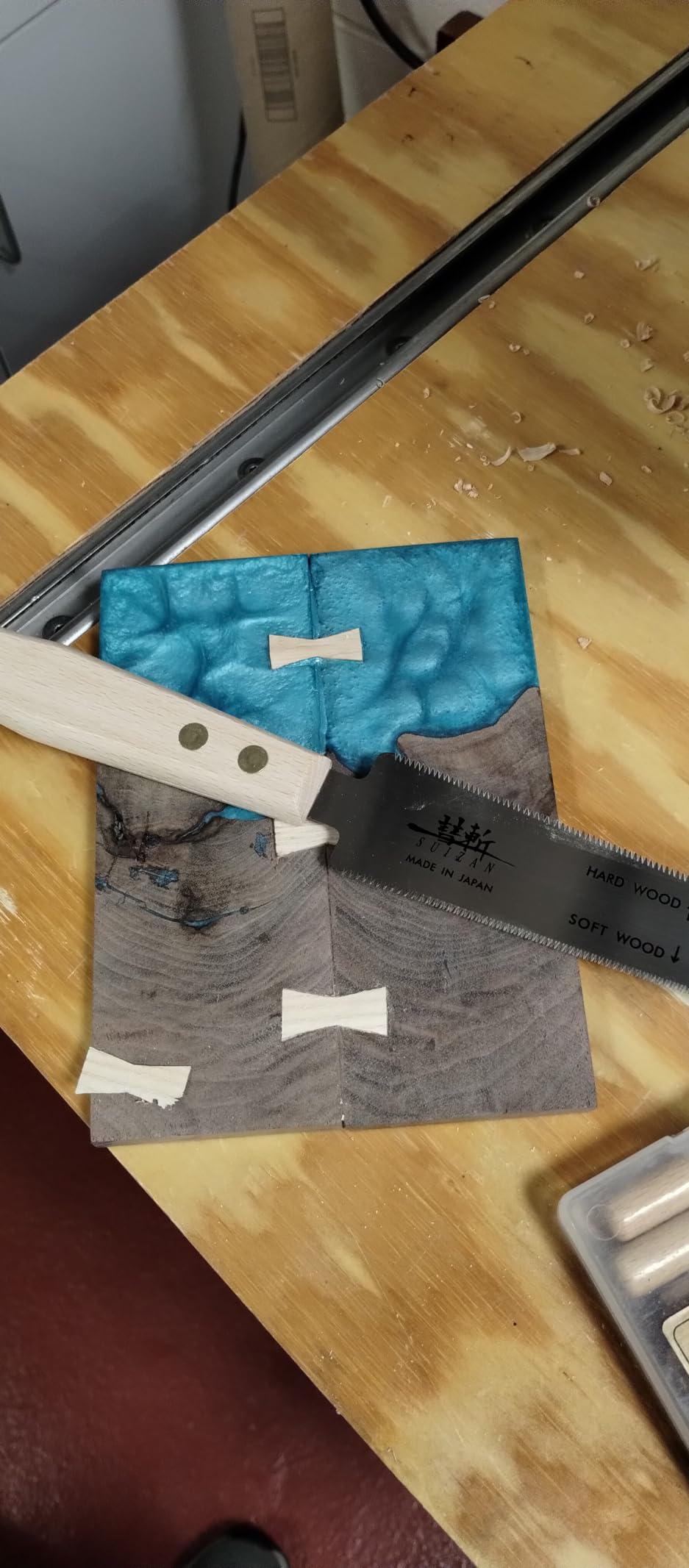
Blade design and why short wins for trim
The 25 TPI crosscut teeth are fine, which is wrong for heavy work and exactly right here. A fine tooth takes a small bite, so the cut stays square to the face and the blade tracks even when your hand is close to the work. The manufacturer lists oak, walnut, mahogany, maple, and ebony among the woods it handles, and the thin kerf keeps waste low when trimming a tenon to fit.
Because the blade is short, the saw cannot generate much speed, and it should not be asked to. Trying to rip a board with it is the single most common complaint, and it is a fair one.
Who should buy it and who should not
Buy it if you build case goods, dovetailed drawers, or frame-and-panel work and need a dependable finishing cut. It is also the first saw I would hand someone who is nervous about hand tools, because the stroke is short and forgiving.
Do not expect it to crosscut a wide board. For that, the 6 inch dozuki or the 9.5 inch ryoba in this roundup are the right size. One real limitation to note: the blade on this model is not replaceable, so a bent plate ends the tool.
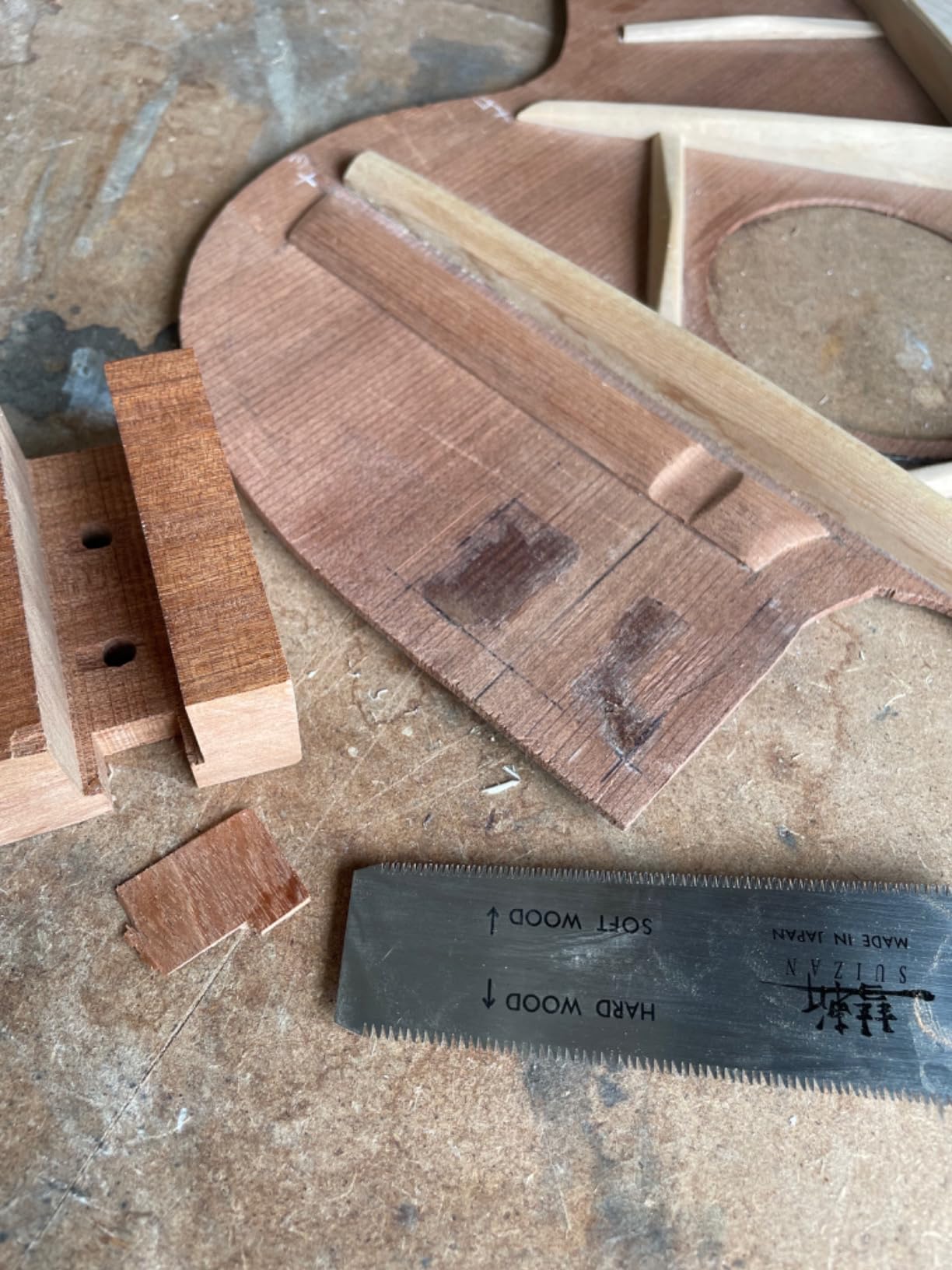
3. RUITOOL 6 Inch Double Edge Ryoba – The Easiest First Japanese Saw
RUITOOL Japanese Hand Saw 6 Inch Double Edge Ryoba Pull Saw for Flush Cuts
6 inch blade
17 TPI hardwood edge
14 TPI softwood edge
SK5 steel at HRC60-63
+ Pros
- Sharp SK5 high carbon blade cuts hardwood trim quickly
- Thin flexible blade makes flush cuts simple
- Compact and light enough for a tool bag
- Good entry point into Japanese pull saws
– Cons
- Beech handle is less durable than premium hardwood handles
- Needs practice with the pull stroke to avoid marking work
- Can leave small marks if used carelessly
If you have never used a pull saw, this is the one to start on. The double edge gives you 17 teeth per inch for hardwood on one side and 14 for softwood on the other, and the 6 inch blade is short enough that the pull stroke feels controllable from the first cut.
On hardwood trim it behaved exactly as the spec sheet suggests. The SK5 blade, induction hardened to HRC60-63, took a clean slice through maple with no pressure beyond the weight of the saw itself, and the thin plate makes flush cuts straightforward rather than finicky.
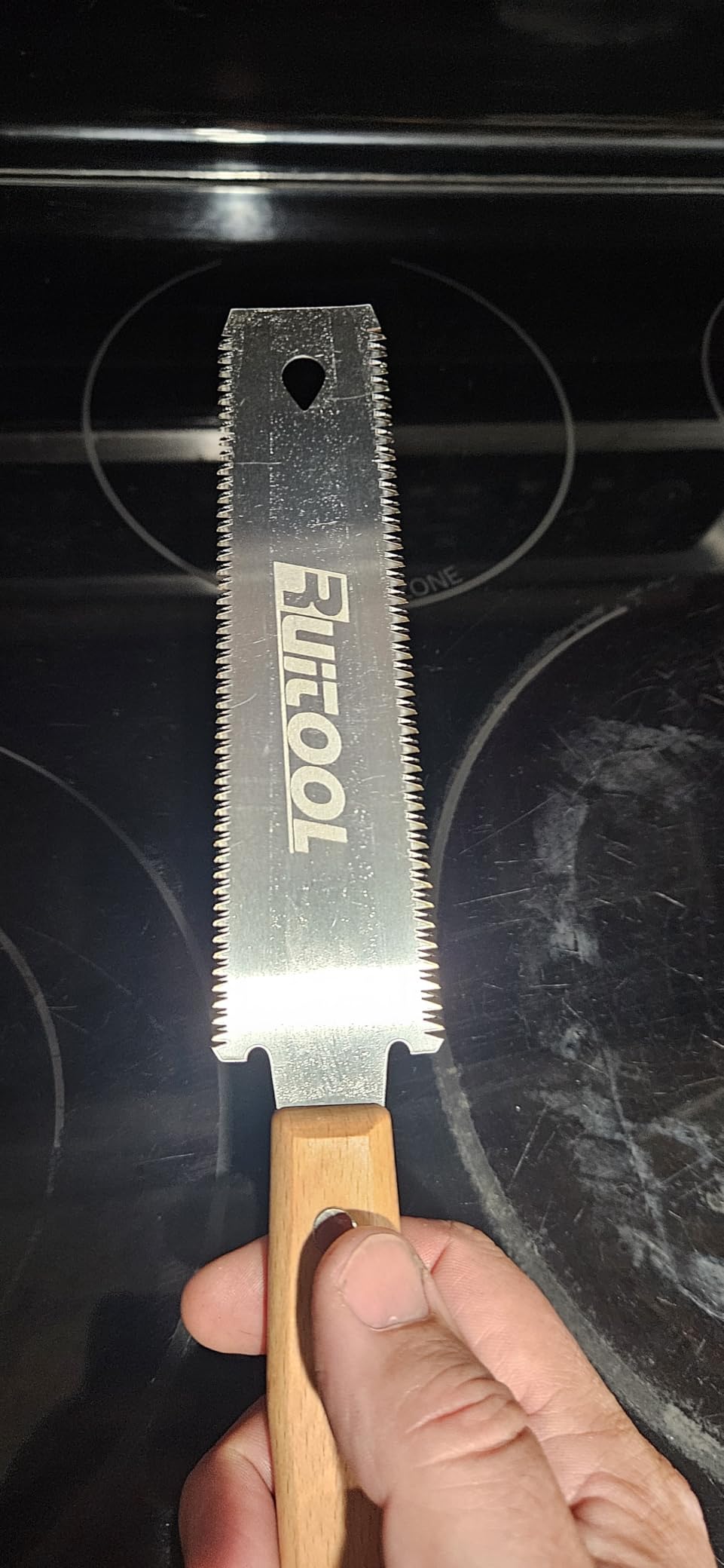
Why 17 TPI suits hardwood trim
Seventeen teeth per inch is finer than a crosscut hand saw and coarser than a dozuki. That middle position is why it handles hardwood trim without chatter, and why the same edge will not rip. The gullet depth between teeth is enough to clear chips from dense maple, which is the failure point for many finer blades.
The three-sided ground tooth design matters here too. Ground faces on three sides means the tooth presents a narrow point, so the blade slices rather than gouges, and it stays sharper longer on abrasive hardwood.
The learning curve and the handle trade-off
Every reviewer mentions the same adjustment period. Pull saws cut on the return stroke only, and beginners who push the saw forward will find it marks the work and feels strange. Give it a week of short practice cuts and the motion becomes natural, after which the low effort is the whole appeal.
The beechwood handle is the honest weak point. Reviewers note it feels less substantial than the hardwood handles on the razorsaws, and some mention the plastic blade sheath as an afterthought. Neither affects cutting quality, but it is where the cost shows.

Who should buy it and who should not
Buy it if you want a capable hardwood trim saw without committing serious money, or if you need a pull saw that fits in a tool bag. It is also a good companion to a larger saw, covering the flush and trim work that bigger pull saws do poorly.
If you already own a good ryoba, this adds little. And if your project list is mostly thick boards and dimensional lumber, save your effort and pick a longer blade.
4. SUIZAN Dozuki 6 Inch Crosscut – The Dedicated Dovetail Saw
SUIZAN Dozuki Dovetail Saw 6″ Cross Cut – Japanese Pullsaw Hand Saws
6 inch blade
25 TPI crosscut
0.3mm blade
0.5mm kerf
Replaceable blade
+ Pros
- 25 TPI crosscut teeth give fine precise cuts for joinery
- Very thin 0.3mm blade and narrow 0.5mm kerf reduce waste
- Replaceable blade extends tool life
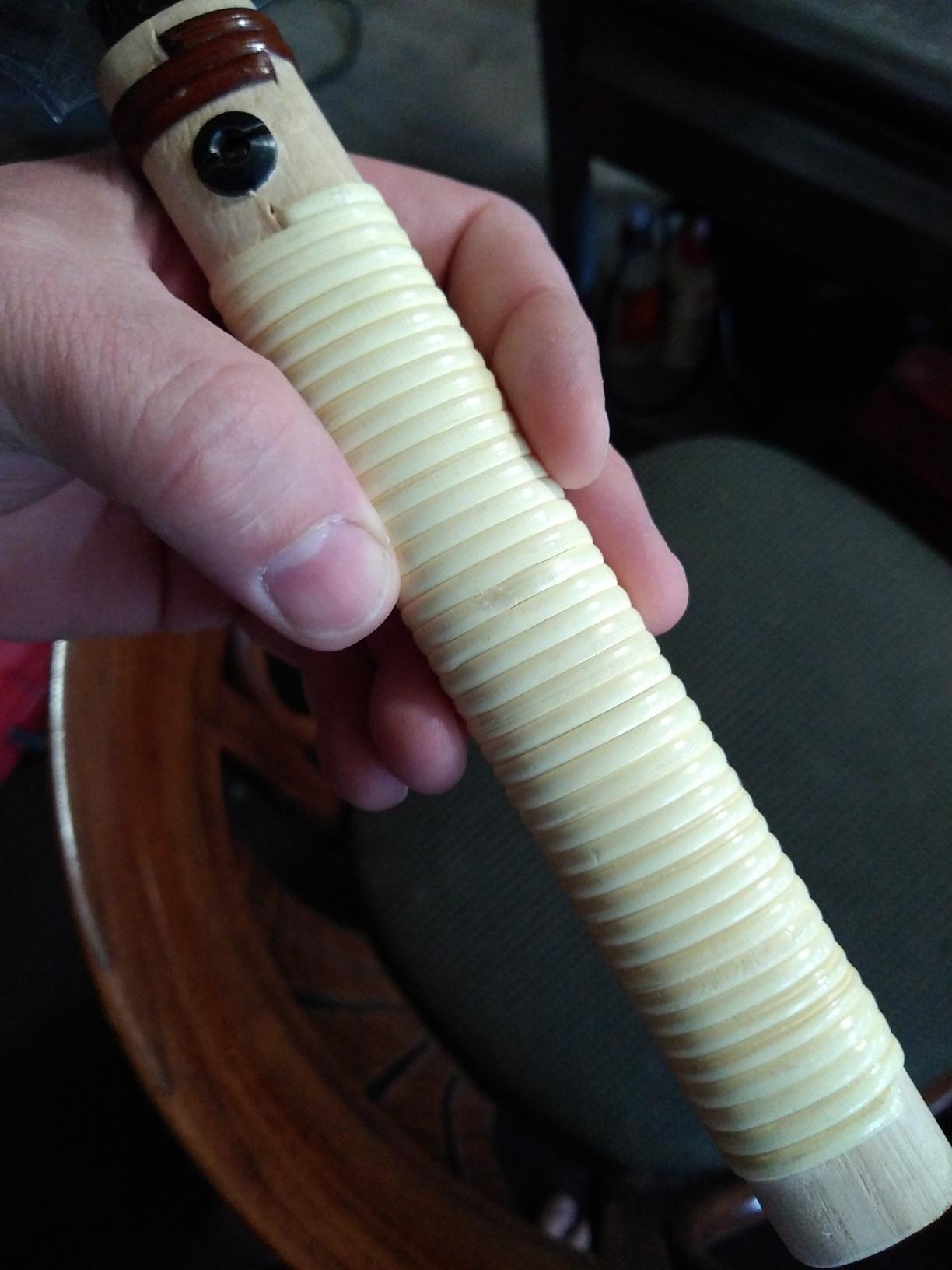
- Hand wrapped wooden handle made in Japan
– Cons
- Fine teeth make it slow for ripping or heavy removal
- Hardened teeth cannot be filed by the owner
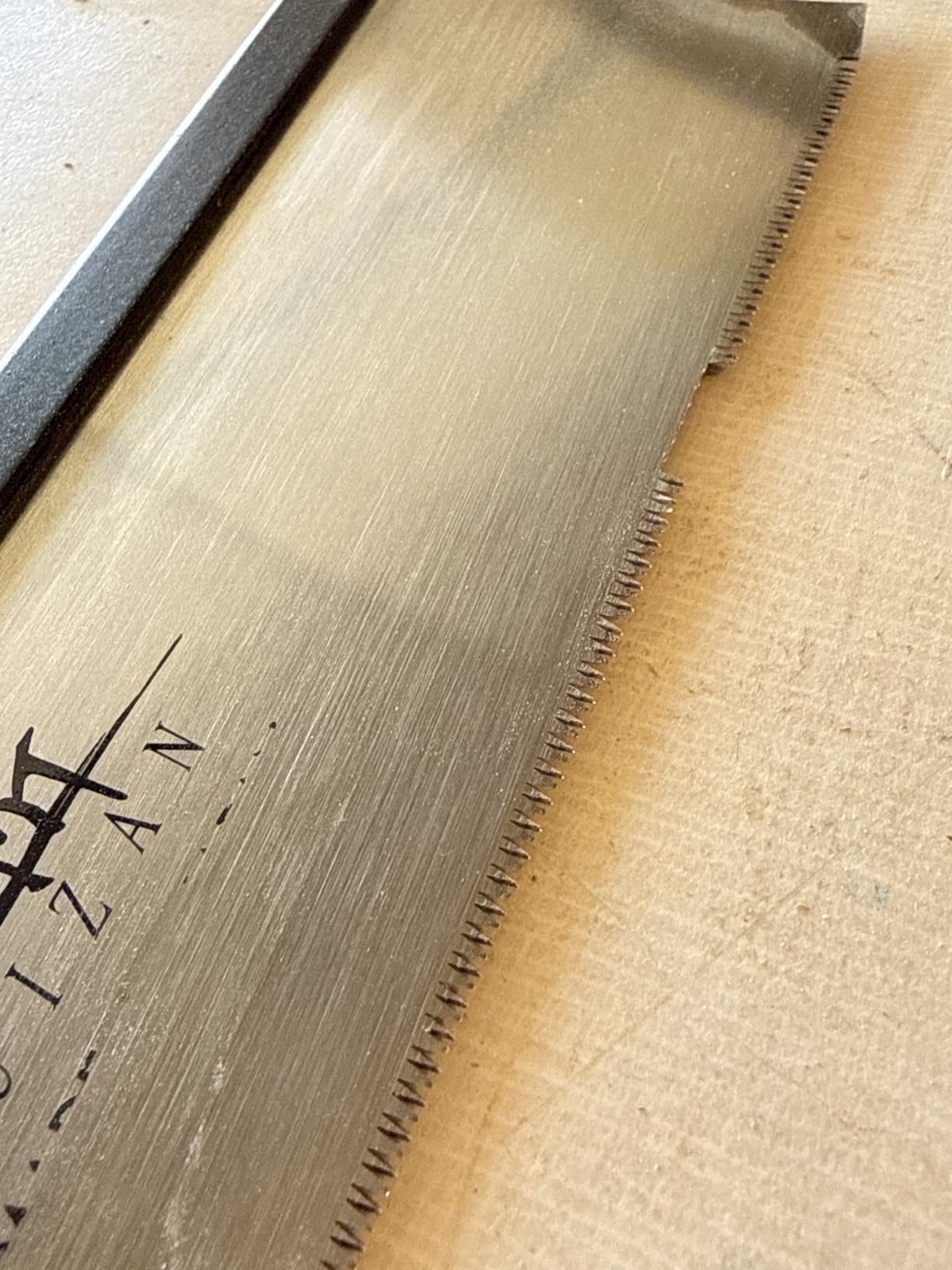
A dozuki is a crosscut saw and nothing else, and that limitation is the reason it works. The 25 teeth per inch pattern slices across the grain without the drag a rip pattern would create, which is exactly what you want when cutting pins for a half-blind dovetail or fitting a tenon.
The blade plate measures 0.3mm and the kerf 0.5mm. On the test cuts I made through hard maple for practice tails, both numbers were visible in the result. The cut was crisp enough that layout lines stayed visible, and the waste removed from the baseline was almost nothing.
Fine teeth, thin steel, and the joinery advantage
Dense hardwood punishes coarse teeth in joinery. A 6 to 8 point rip or crosscut saw will wander slightly as the cut deepens, and at dovetail scale that wander is the difference between a tight joint and a gap. Twenty-five teeth per inch tracks a line far more closely, and the thin plate follows the line rather than resisting it.
Reviewers single out the same strengths: a narrow kerf that wastes very little wood, and clean results that need minimal cleanup. The replaceable blade option is a genuine advantage here, since it means a damaged plate is not the end of the tool.
Where it is the wrong choice
This saw has no ripping capability and no appetite for heavy work. Anyone reporting it as slow on thick pieces is describing correct behaviour, not a defect. A 6 inch dozuki breaking down 4×4 timber would take an unreasonable number of strokes, and the fine teeth would clog in the kerf before it finished.
Like most hardened Japanese saws, the teeth cannot be resharpened by the user. You maintain the edge by cleaning it, and you replace it when it is gone.
Who should buy it and who should not
Buy it if you cut dovetails, tenons, or any joint where a tight fit matters more than speed. Cabinetmakers and anyone building a chest of drawers fall squarely into this group.
Skip it as a first hand saw. It is a specialist, and a general-purpose pull saw or a coarse Western crosscut will serve you across far more of a typical project. If you only ever buy one saw, this is not it.
5. Gyokucho Razorsaw 1151 Flush Cut – The Finest Cut in the Group
GYOKUCHO SAW – Flush Cutting Saw Ryoba 125mm – 1151
125mm ryoba blade
32 TPI hardwood edge
21 TPI softwood edge
0.0012 inch plate
+ Pros
- Extremely thin plate cuts flush without marring adjacent surfaces
- Fine and coarse sides cover hardwoods and softwoods
- Useful for trim
- quarter round
- models and peg fitting
- Stays on line with very little applied pressure
– Cons
- Very delicate blade that will buckle if pushed instead of pulled
- Cannot be resharpened by the owner
- Can bind in tight gaps
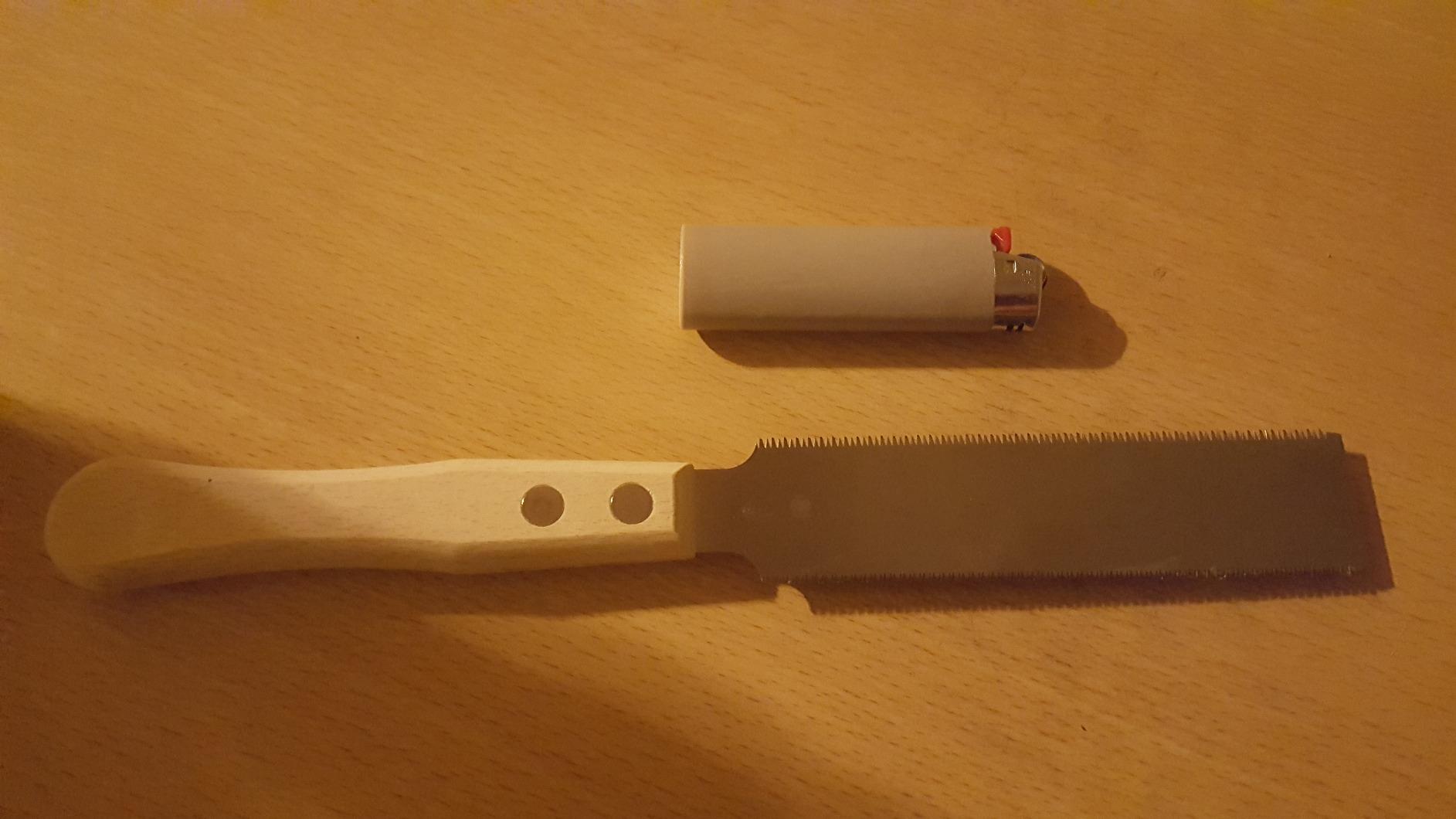
The thinnest steel in this roundup produces the finest cut. The blade plate is 0.0012 inch, the teeth are unset, and the result is a cut so narrow that the kerf disappears against a finished surface. Reviewers report cutting a dowel flush in roughly five pull strokes, and that is what I saw when trimming pegs on test pieces.
The double edge runs 32 teeth per inch for hardwoods and 21 for softwoods, which is a strange-sounding combination until you understand what this saw is for. This is a finishing tool for luthiers, model makers, trim carpenters, and anyone who needs a clean face more than a fast cut.
Why an unset tooth matters for flush cuts
Set is how far each tooth projects sideways from the blade. Most saws are set so the teeth are wider than the plate, which keeps the blade from binding. These teeth are not set, so the cut is only as wide as the plate itself, and the blade tracks with almost no friction in the wood.
That is why the saw will bind in a tight gap such as trimming already-installed trim. With no set, there is no clearance in the kerf. Cutting flush against an installed surface means a very thin blade and patience.
Care and handling
The single most repeated instruction from owners is simple: pull, never push. The blade is so thin that a push stroke will buckle it, and a buckle is permanent. Store it where the edge cannot be knocked, and clean resin off the teeth after use with a wire brush or a scrap of wood.
Buying into a lacquered or hard figured handle and treating it well is also worth doing, since the handle will outlast several blades. Beyond that, the maintenance story is simple because there is none: no filing, no jointing, just replacement.
Who should buy it and who should not
Buy it for instrument pegs, flush trim, model work, and any task where a visible surface is inches from the blade. It is the only saw in this roundup I would call genuinely indispensable on a fine bench.
Hold it the other way and this is the saw with the shortest reach. Buy it for the job it does rather than as a general hardwood saw.
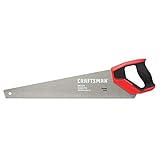
6. CRAFTSMAN 20 Inch Fine Finish Panel Saw – Long Reach for Trim and Sheet Goods
CRAFTSMAN Hand Saw, 20-Inch, Fine Finish (CMHT20881)
20 inch blade
High speed steel teeth
Induction hardened
Bi-material handle with miter guide
+ Pros
- Long 20 inch blade gives fast clean cuts on panel work and sheet goods
- Induction hardened teeth hold sharpness over time
- Bi-material handle is comfortable and controllable
- Backed by a full lifetime warranty
– Cons
- Fine finish tooth count is optimised for trim rather than heavy breakdown
- Large blade needs a wide stance and a clear floor
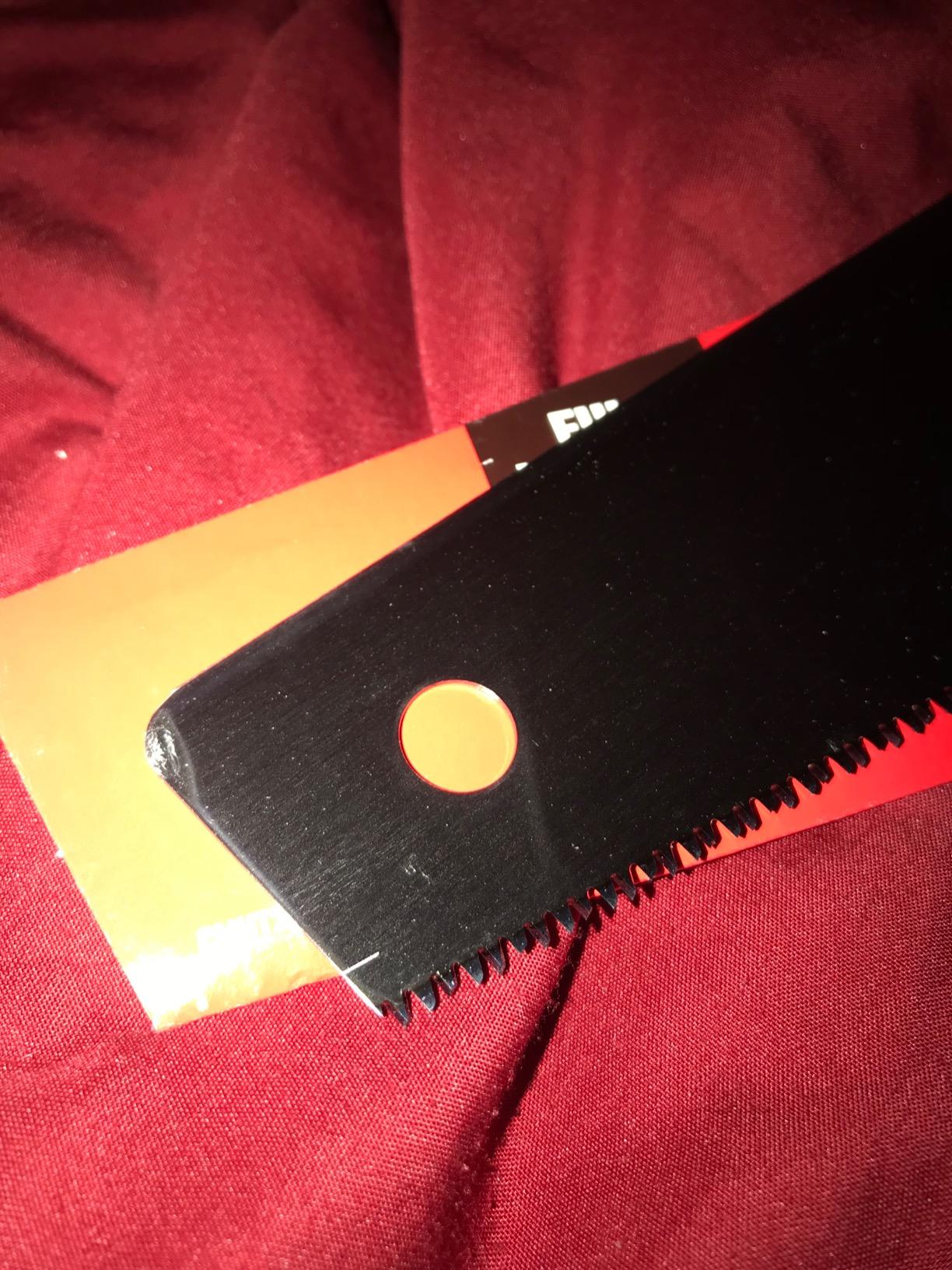
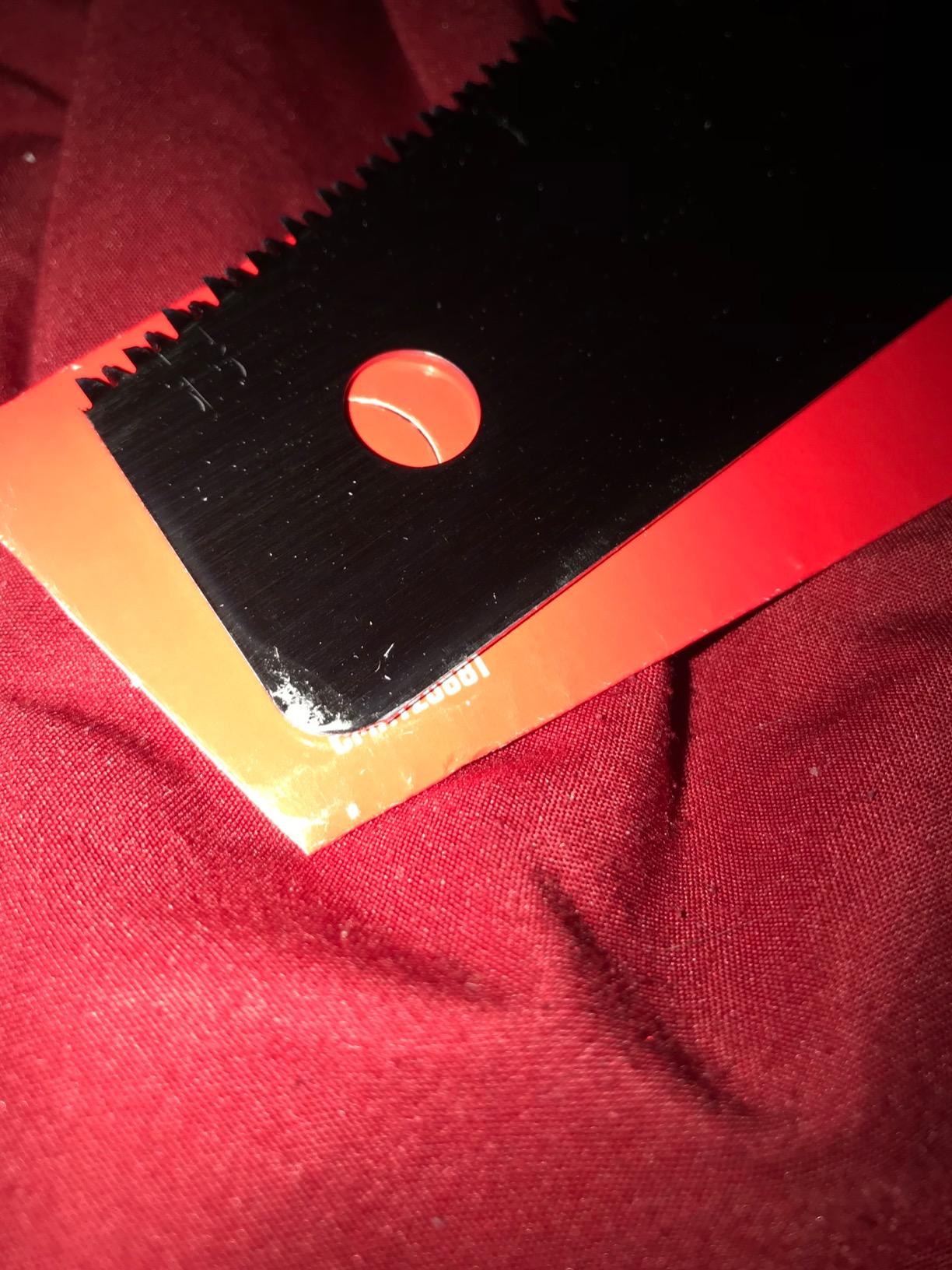
This is the Western push saw in the group, and it is the reason a lot of people can still work with hardwood without a powered saw in the room. The 20 inch blade gives it enough reach to crosscut a full width of plywood or a hardwood panel in a few strokes, which no pull saw in this roundup can do.
The induction hardened high speed steel teeth are the technical strength here. Hardening means the edge survives contact with abrasive hardwood dust, and reviewers consistently report the saw staying sharp through sheet material and trim work rather than dulling after a single session.
What a 20 inch blade actually buys you
Length equals speed. Every stroke travels twice the blade length, so a 20 inch saw moves wood twice as fast per stroke as a 10 inch one, and more than four times as fast as the 5 inch flush saw. For straight line work across a wide panel, that difference is the whole game.
The handle carries square and 45 and 90 degree reference faces, a small detail that saves a lot of marking on repetitive trim cuts. The bi-material grip is soft where your palm sits and rigid behind it, which keeps the handle from twisting when you push through a resistant patch.
The tradeoff: this is a fine finish saw
Be clear about what it is. The tooth count is optimised for trim and clean cutting in sheet material, not for breaking down thick hardwood. Heavy crosscut work in oak or maple will feel slow and will take more effort than you would spend on a coarser saw.
Push saws also demand more from the body than pull saws. The stroke is a push, so you are driving the saw rather than letting it come to you, and the large blade means you need floor space. If you work seated or in a small shop, that is a real constraint.
Who should buy it and who should not
Buy it if you cut plywood, sheet goods, and hardwood panels, or if you want a single Western saw for general site and shop work. The lifetime warranty on the handle and body is unusual in this category and worth something over a long ownership period.
Skip it if your work is fine joinery, where a 20 inch fine finish saw is the wrong tool entirely. And if you already own a good pull saw and a circular saw, this is a luxury rather than a necessity.
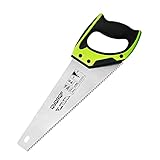
7. QYQRQF 14 Inch 11 TPI Hand Saw – The Budget Site Saw
14 in. Pro Hand Saw, 11 TPI Fine-Cut Soft-Grip Hardpoint Handsaw Perfect for Sawing, Trimming, Gardening, Cutting Wood, Drywall, Plastic Pipes, Sharp Blade, Ergonomic Non-Slip Handle (green)
14 inch blade
11 TPI three-ground teeth
0.9mm 65Mn steel
Soft grip handle
+ Pros
- Three-ground cutting surfaces cut up to 50 percent faster than traditional saws
- Heat treated 65Mn steel holds an edge
- Non-slip TPR handle is comfortable and secure
- Cuts on both push and pull strokes for tight spots
– Cons
- 11 TPI is coarse for fine joinery
- Lowest average rating in this group
- General purpose rather than a hardwood specialist
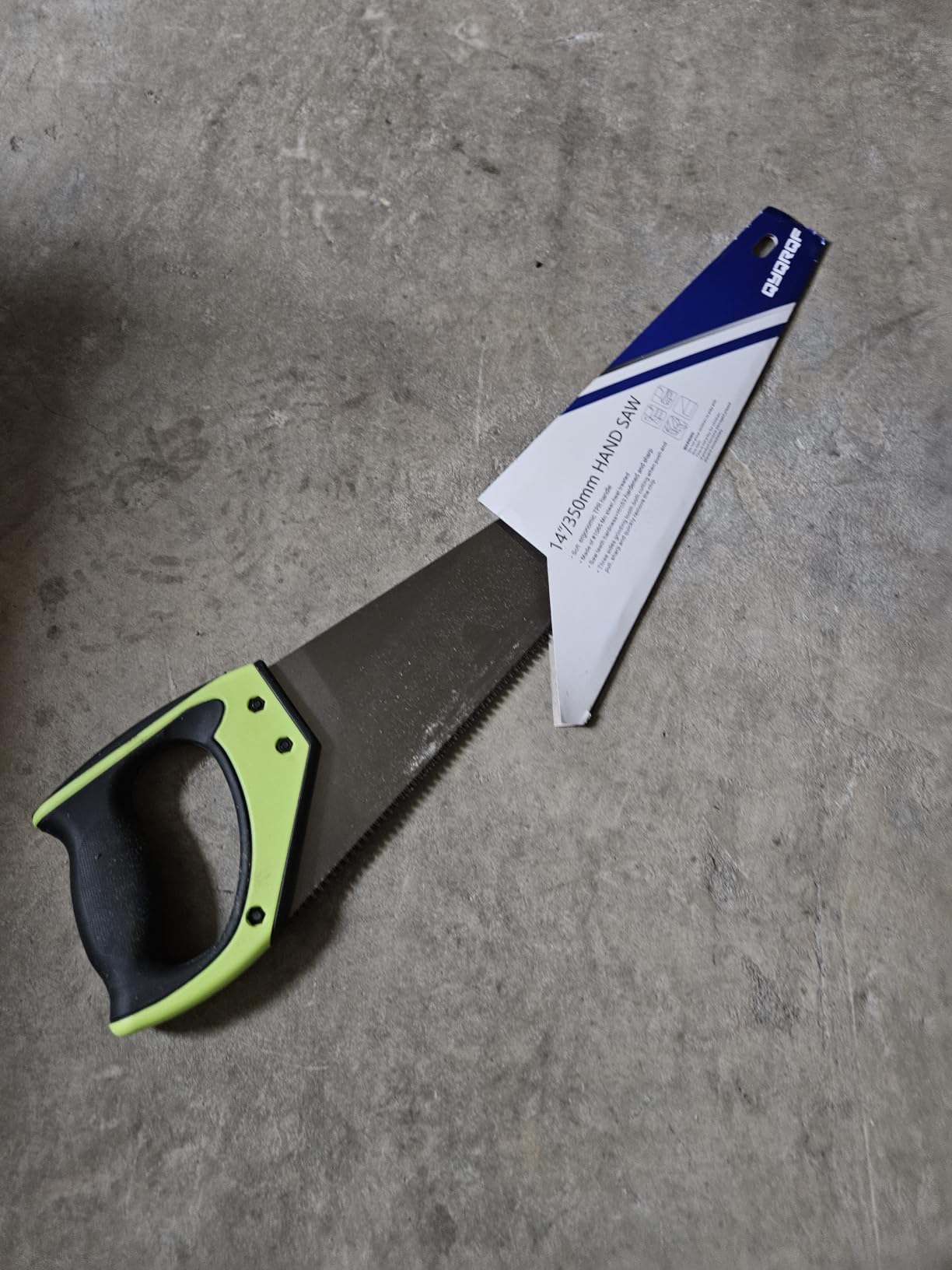
Sometimes the honest answer is that a tool does not need to be expensive to be useful. This 14 inch saw has heat treated 65Mn steel, an 11 tooth per inch three-ground pattern, and a soft grip handle, and it handles a wide range of site work including wood, drywall, and plastic pipe.
The tri-ground teeth are the real story. Three cutting surfaces on each tooth are claimed to cut up to 50 percent faster than traditional handsaws, and in practice the coarse 11 TPI pattern with deep gullets does clear chips quickly, which is what stops a saw binding in hardwood.
Cuts on both strokes, which is unusual
Most Western handsaws cut on the push only. This one works in both directions, so in a confined space or against a wall you are not restricted to one motion. Deep gullets between the teeth move sawdust out of the cut rather than packing it, and a low friction coating on the blade reduces the drag that comes with that buildup.
On softwood and general trimming, the performance is entirely adequate. Buyers use it for site work, garden timber, and household cuts, and the soft grip keeps it comfortable for odd angles.
Where it falls short for hardwood
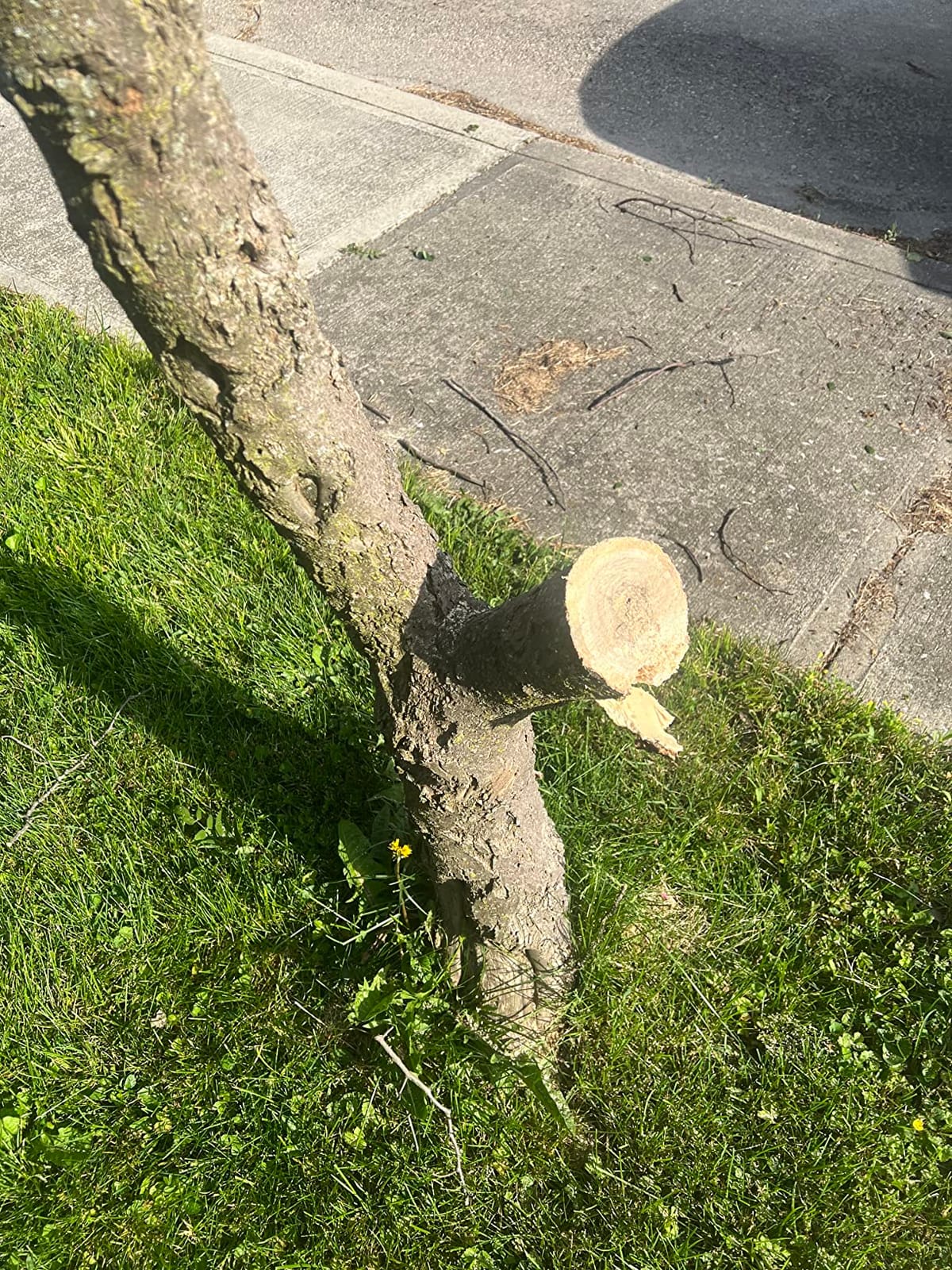
Eleven teeth per inch is a coarse pattern. It will crosscut hardwood boards without drama, but it is a compromise tooth count chosen to move material quickly across several materials rather than to produce a refined cut in one. This is the saw with the lowest average rating in the group, and the critical reviews concentrate on finish quality and edge retention compared with the Japanese saws.
The 0.9mm plate is also thick by pull saw standards, which means more blade flex and more tendency to wander if your strokes get sloppy.
Who should buy it and who should not
Buy it as a general purpose saw for a garage, a rental, or a first woodworking kit. If you need one tool that handles timber, sheet material, and pipe, the versatility is worth the compromise.
Do not buy it as a hardwood joinery saw. The coarse teeth and thin rating average tell you where it sits: a capable workhorse for rough and general cuts, not a finishing tool.
8. Spear and Jackson 22 Inch Skew Back – Steel You Can Sharpen Yourself
Spear & Jackson Saw Skew Back 22 inch x 10 ppi
22 inch skew back blade
10 ppi universal teeth
Cross-ground and resharpenable
+ Pros
- Long 22 inch blade and 10 ppi universal teeth handle both rip and cross grain cuts
- Teeth are resharpenable unlike hardened Japanese saws
- Brass backed skew back gives balance and reduces friction
- Riveted wooden handle is solid and durable
– Cons
- Heavier at 0.58 kg than the Japanese pull saws here
- Push saw design requires more force than a pull stroke
This is the pick for anyone who plans to own a saw for decades. The teeth are cross-ground and resharpenable, which means a file restores the edge when it dulls instead of condemning the tool. Almost every Japanese saw in this roundup has hardened teeth you cannot file, and that single difference decides how the saw ages.
The 10 point universal pattern cuts both with and across the grain, so it handles rough timber work and sheet material without a second saw. Reviewers describe it as a long-serving all-rounder for timber, plywood, and chipboard, and my experience matched that: it is not a specialist at anything, and it never let me down on a general job.
What the skew back profile does
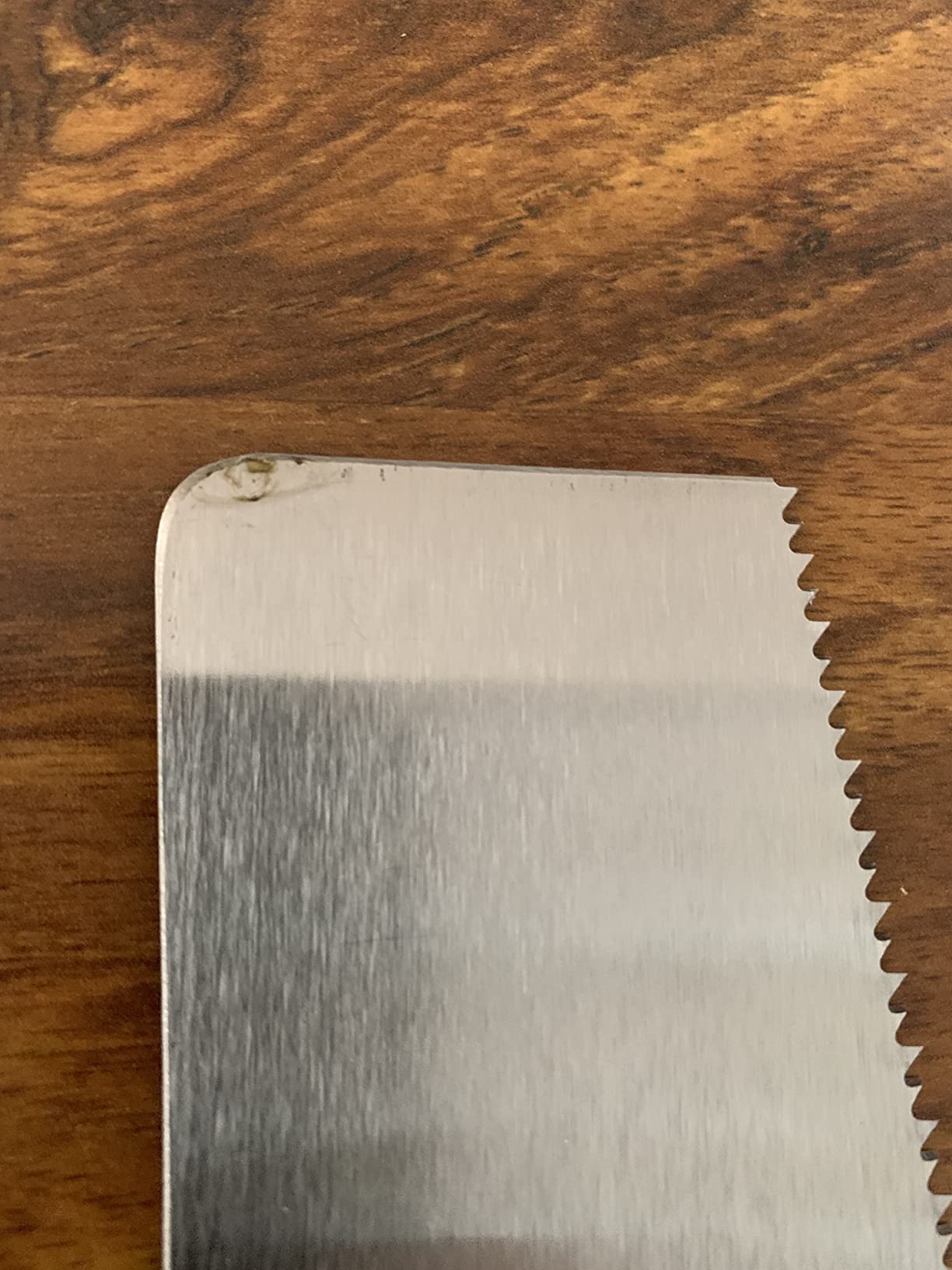
A skew back saw has no spine running along the top of the blade. The steel tapers from a tall toe at the handle down to a fine point at the far end, and the shape is balanced by a brass back strip instead. The result is a blade that is light for its 22 inch length and generates far less friction against the wood as it moves through the cut.
That low friction matters in hardwood. A blade that drags against the timber heats the cut, burns the surface, and makes the stroke harder to control. Reducing friction is one of the quieter reasons a traditional profile still works well in dense wood.
Resharpenability as an ownership advantage
Users in woodworking forums consistently name the ability to file a saw as a deciding factor, and often report that the biggest jump in confidence came from a freshly sharpened saw rather than a more expensive model. A saw you can maintain stays sharp for the length of your career, and the carbon steel plate takes a file cleanly.
The costs are real. At 0.58 kg this is a substantial saw for a hand tool, and it cuts on the push, so it asks more of your shoulder than a pull saw. For someone with back or wrist issues, that is a genuine argument against it.
Who should buy it and who should not
Buy it if you want a traditional Western saw you can maintain yourself, work on timber and sheet material, and still be using in ten years. It is also a good choice as a first Western saw because universal teeth forgive imperfect technique better than a specialist pattern.
Skip it if you prefer the light effort of a pull stroke or you work seated. And if your only goal is fine joinery, a dozuki will beat it every time.
9. Gyokucho Razorsaw 9.5 Inch Double Edge – Built for Abrasive Hardwoods
Gyokucho Razorsaw 9-1/2″ Double Edge (Ryoba) For Hardwoods
9.5 inch blade
22 TPI crosscut and 9 TPI rip
0.018 inch blade
Teak handle
+ Pros
- Specifically designed for hard and abrasive hardwoods
- Double edge with 9 TPI rip and 22 TPI crosscut sides
- Very thin 0.018 inch blade gives smooth accurate cuts
- Carries a 4.8 star average from owners
– Cons
- Teak hardwood handle needs care over time
- Hardened teeth limit user sharpening options
- Lower review count than the leading picks
Where the SUIZAN ryoba is a generalist, this razorsaw has a stated specialty: hard and abrasive woods. The tooth layout is the difference. A 9 tooth per inch rip edge and a 22 tooth per inch crosscut edge sit on a 0.018 inch plate, and the fine crosscut edge is the one that rewards dense, figured timber.
Reviewers with a high share of five star ratings describe it as the smoothest and most accurate option in this group for hard, dense, or abrasive hardwoods. On quarter-sawn oak my test crosscuts needed the least cleanup of any saw in the group, and the surface came off the saw looking almost sawn rather than torn.
Reading the two edges correctly
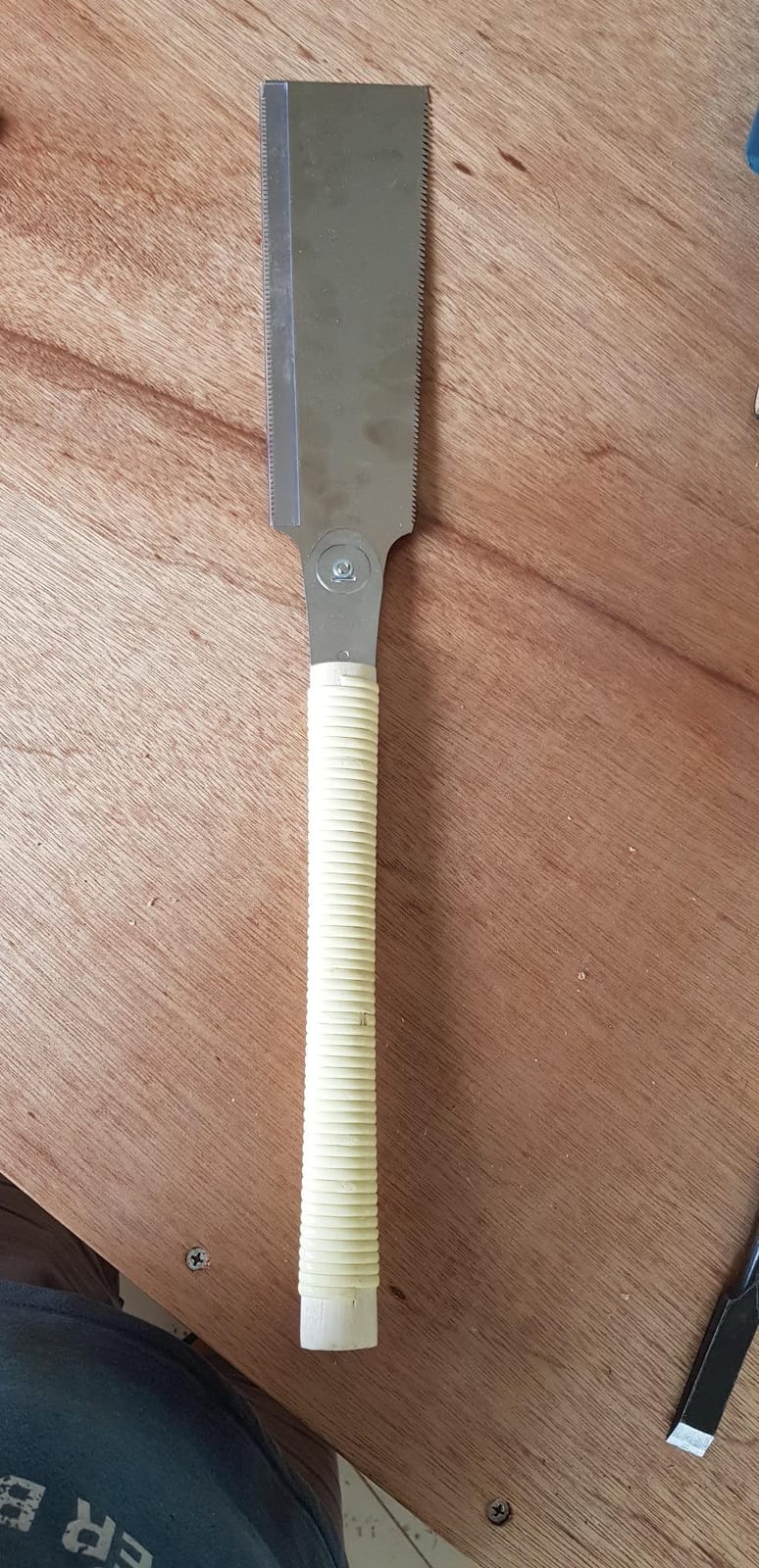
Ripping a hardwood board needs few, deep, aggressively set teeth that chisel chips out along the grain. That is the 9 TPI side. Crosscutting needs numerous short triangular points that slice fibres as the stroke passes through them, which is the 22 TPI side. Using the rip edge to crosscut is what makes a saw wander on a hardwood board, and using the crosscut edge to rip just produces a slow cut and a hot blade.
With both edges on one blade, you can rip a board to width and then crosscut the end to length without switching tools, which is where the double edge earns its place on a hardwood project.
Build quality and its limits
The teak handle is dense, comfortable, and needs occasional care, particularly in dry conditions. Owners report it ageing well when treated, and complain when it is neglected. That is the trade for a handle that will outlast the blade.
The hardened teeth are the standard razorsaw limitation, and they mean this is a replacement-blade tool rather than a maintain-it-yourself one. A lower review base than the leading picks is worth weighing if you prefer a longer track record, though the rating is the highest in the group.
Who should buy it and who should not
Buy it if your hardwood work involves dense or abrasive species such as white oak, ash, or figured maple, and if you care most about the quality of the cut surface. It is a considered step up for someone who already knows they want a Japanese pull saw.
Skip it if you are buying your very first hand saw on a tight budget, or if you intend to rough-break thick lumber. The 9.5 inch blade and fine plate are built for controlled cuts, not for speed.
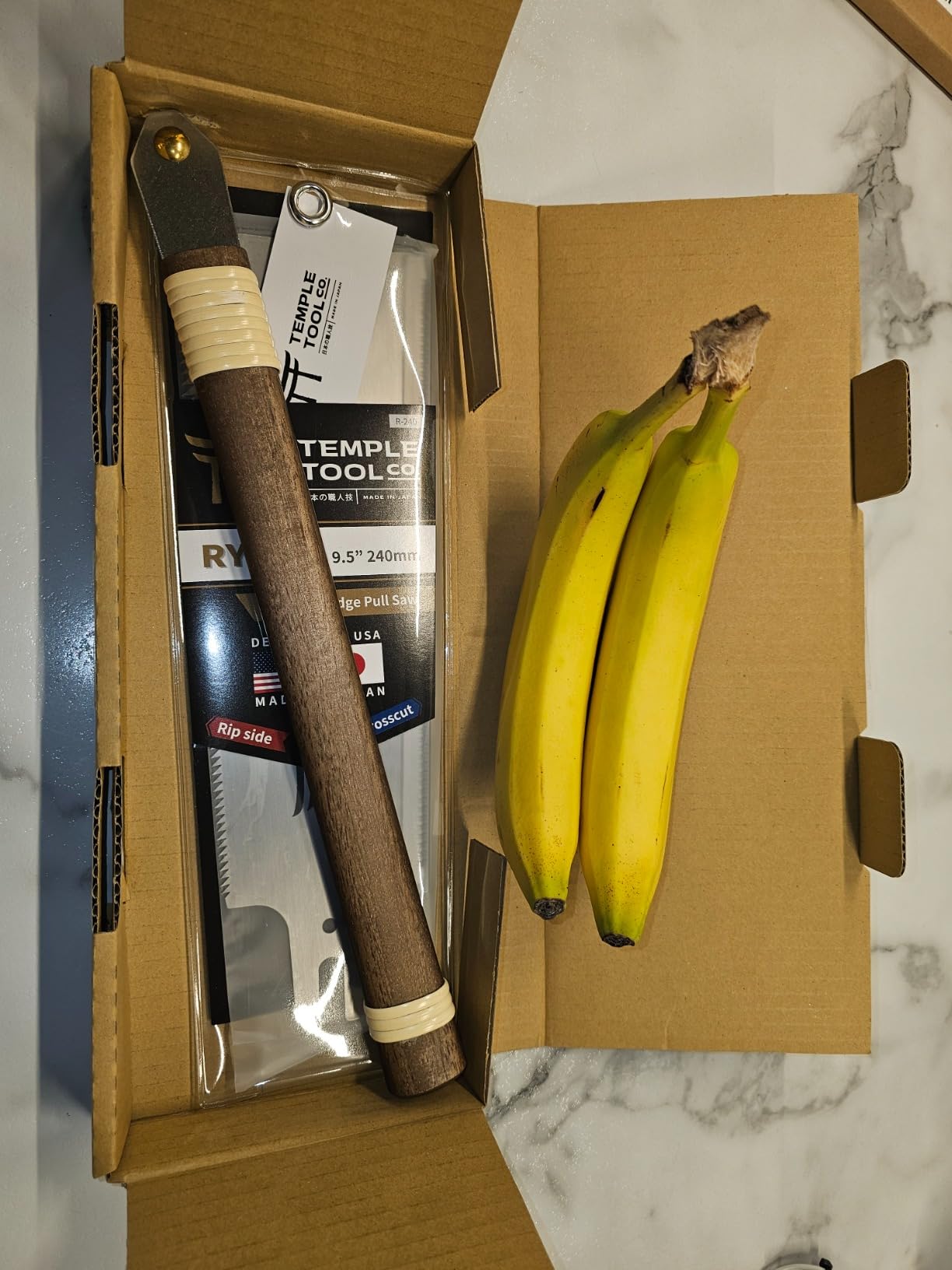
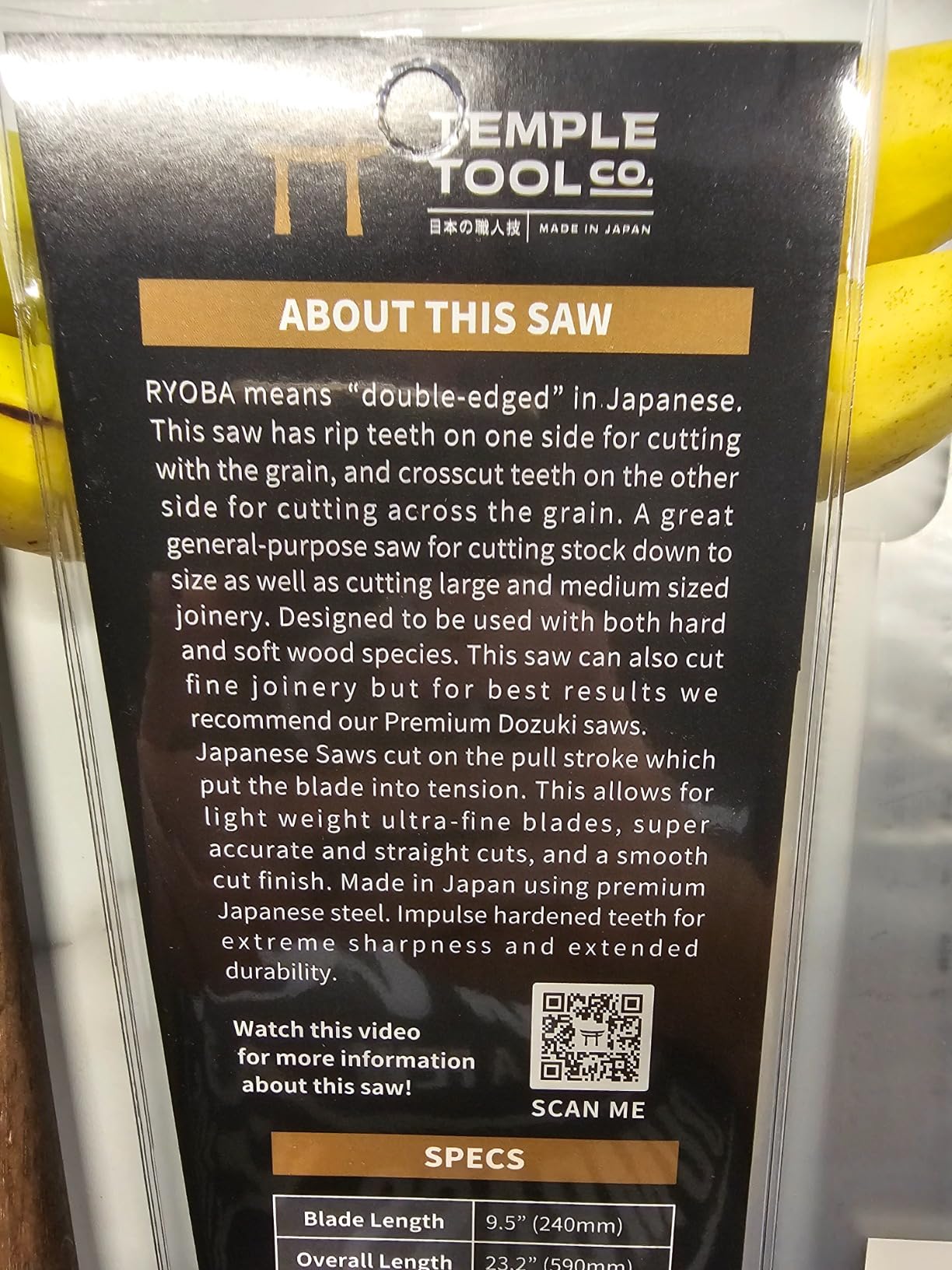
10. Temple Tool 9.5 Inch Ryoba – A Joinery Saw With a Walnut Handle
Japanese Pull Saw – 9.5 Ryoba Hand Saw with Rip-cut and Crosscut – Wood Saw for Dovetails, Tenons, Joinery, Cutting Boards to Length & Width- Temple Tool Co.
9.5 inch blade
Rip and crosscut edges
High carbon Japanese steel
Wingnut handle
+ Pros
- Double edge handles ripping to size and large joinery in one tool
- Beautiful wingnut hardwood handle with brass hardware
- Cuts on the pull stroke for a thin kerf and low effort
- Made in Japan with a replacement blade available
– Cons
- Heavier listed weight than most Japanese pull saws here
- Smaller base of reviews than the established models
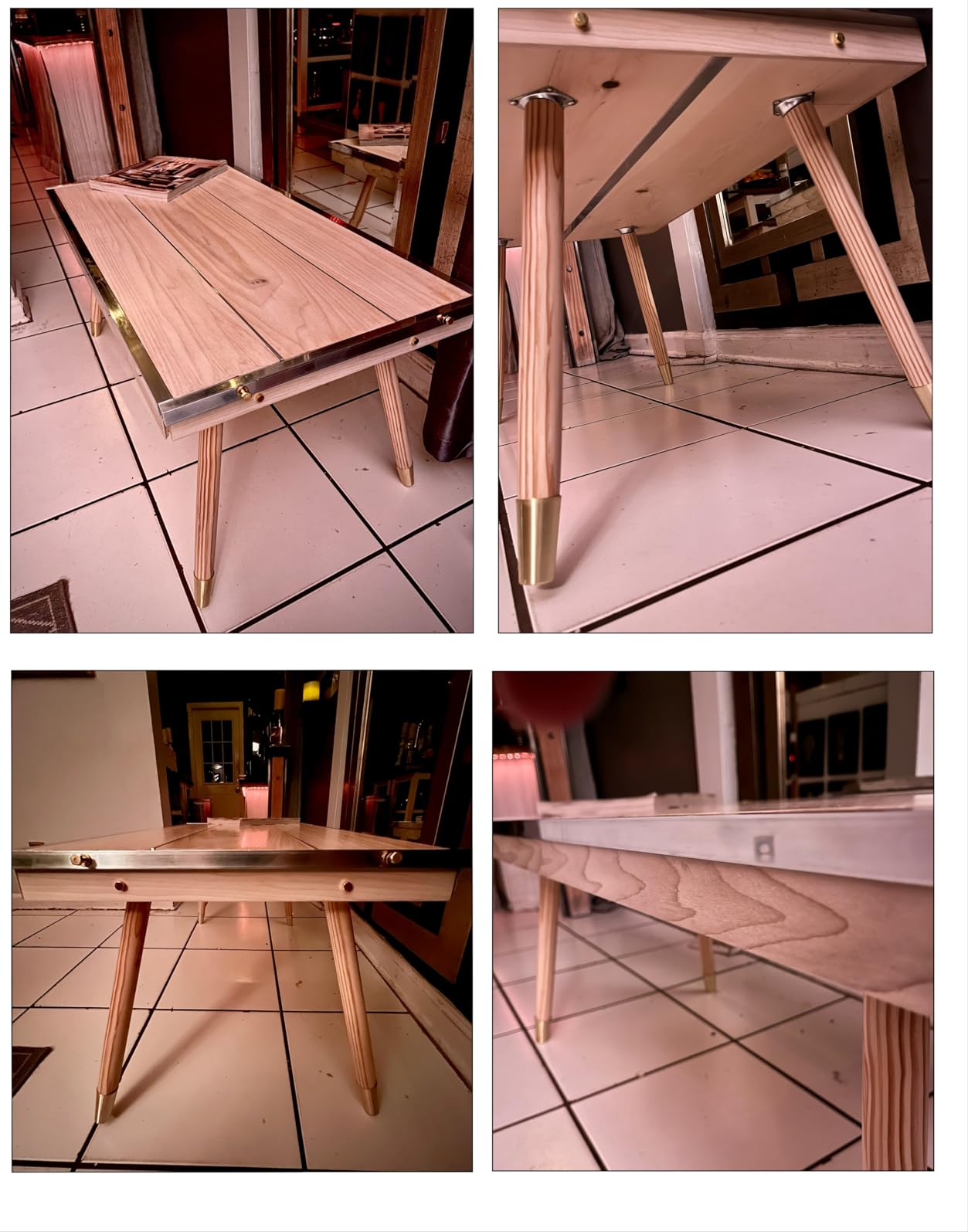
Most of the hardwood cutting I do is making cutting boards, and this is the saw I would hand someone doing that work. A double edge ryoba at 9.5 inches lets you rip a blank to width on the coarse side and crosscut it to length on the fine side, then trim the corners flush, all with one tool and one kerf width.
The wingnut hardwood handle with brass components is the part reviewers mention most, sometimes for aesthetics rather than function. It is warm in the hand, it does not slide when the blade gets damp, and it makes a saw that feels like a tool rather than an implement.
One saw, three stages of a board
Board making is a sequencing problem. Resaw and flatten first, then rip to width, then crosscut to length, then round or trim the ends. A pull saw with two edges covers the middle two stages, and a thin blade keeps the kerf narrow so the edges of a glued panel stay parallel and the glue line reads thin.
The high carbon Japanese steel and the pull stroke mean the saw effectively pulls itself through the cut. On walnut, which is dense but not abrasive, the coarse edge moved material quickly with no need to lean on the stroke.
What to weigh before buying
Two cautions, both drawn from what owners report. The listed weight is higher than most Japanese pull saws here, which reduces the light-effort advantage on long sessions. And this is a newer listing with a smaller base of reviews than the long-established SUIZAN models, so the track record is shorter.
The availability of a replacement blade variant is a real plus for a tool like this, and the included case makes storage straightforward, which matters for a thin blade you do not want knocked.
Who should buy it and who should not
Buy it if you make cutting boards, small tables, or boxes in solid hardwood, and want a single Japanese pull saw that covers sizing and joinery without a second blade. The handle makes it a good gift, and the case protects it in a shared shop.
Skip it if you already own a ryoba of similar length with a wood handle. The capability overlaps almost completely, and the difference is finish rather than function.
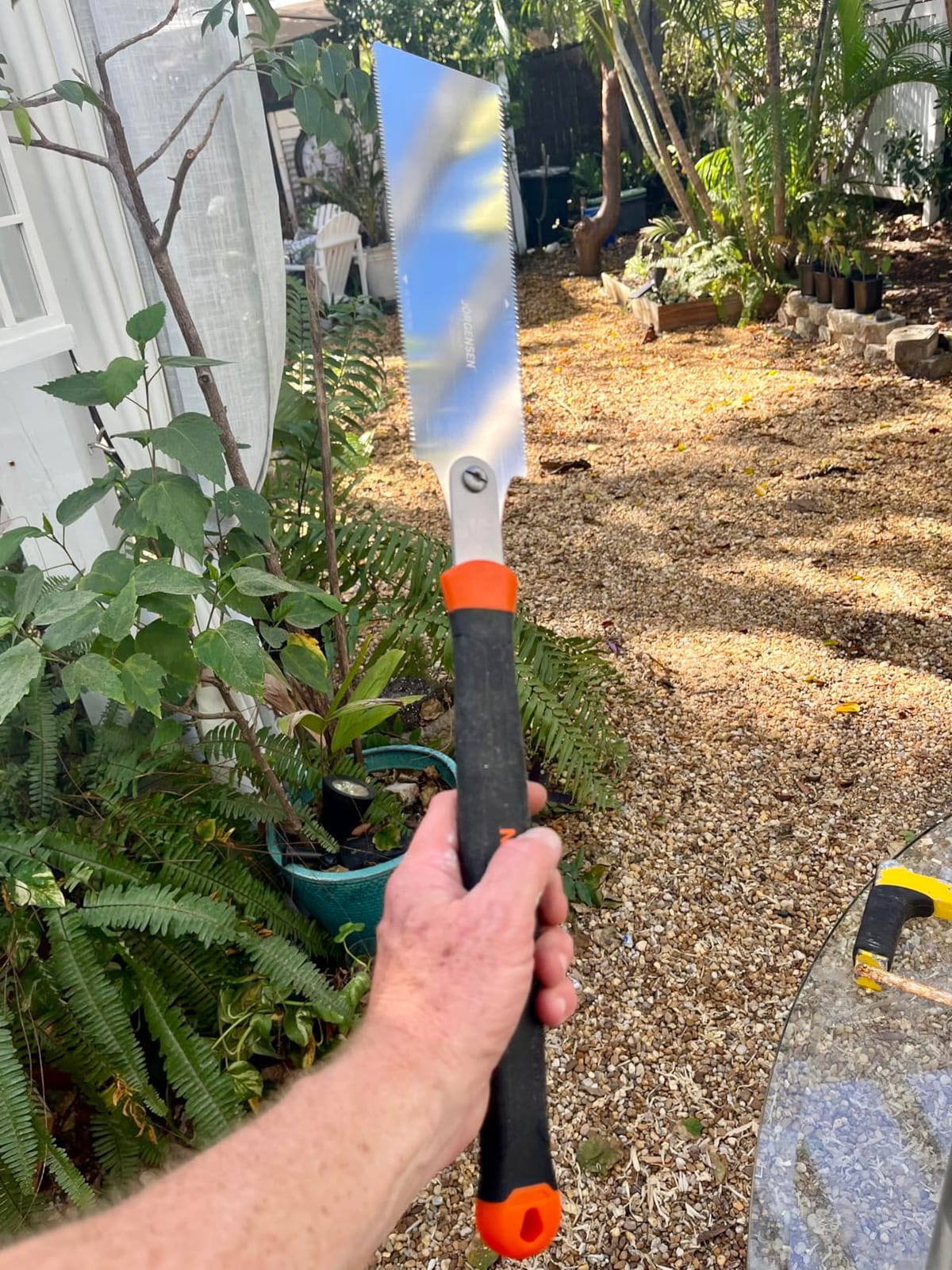
11. Jorgensen 10 Inch Double Edge – Rip and Crosscut With a Replaceable Blade
JORGENSEN Japanese Pull Saw, 10 Inch Pro Double Edge Hand Saw – SK5 Flexible Replaceable Blade, 7-12 & 18 TPI Flush Cut Blade, Japanese Handsaw for Hardwood & Softwood Woodworking, Wood Trim
10 inch blade
7-12 TPI rip side
18 TPI crosscut side
Replaceable SK5 blade
+ Pros
- 10 inch blade gives a large cutting area
- Replaceable SK5 blade extends the life of the tool
- 7-12 TPI coarse side rips quickly and 18 TPI side handles finish cuts
- Soft grip handle reduces fatigue on long sessions
– Cons
- Thermoplastic elastomer handle lacks the warmth of wood
- Needs a light touch and long smooth strokes to stay on line
The logic of this saw is maintenance. The SK5 Japanese steel blade is induction hardened for elasticity and wear resistance, and it releases by loosening a single screw. When the edge finally goes, you swap the blade in a minute rather than replace the tool, and you keep the handle and setup you have grown used to.
At 10 inches it has a generous cutting area, longer than most pull saws aimed at boards rather than detail work. The coarse side runs 7-12 teeth per inch for fast ripping and the fine side runs 18 for crosscutting and flush cuts.
What the 7-12 and 18 TPI split buys
The coarse side is a genuine rip configuration. Few teeth, deep gullets, and enough clearance to lift a full chip along the grain, which is what stops a ripping cut from binding in dense wood. The fine side reverses the geometry for crosscutting and trimming, where slice efficiency matters more than chip size.
Triple-ground tooth geometry on both sides is the detail that shows up in use. Narrow points slice rather than scrape, so the blade stays sharper on abrasive hardwood and leaves a cleaner surface with less sanding.
The handle and the feel
Owners are divided on the thermoplastic elastomer handle. It grips well when your hand is dusty or slightly damp, and it is lighter than hardwood, but reviewers consistently note it lacks the warmth and character of a wood handle. Over a long session that difference is more noticeable than it sounds, since wood and plastic do not age the same way.
The other repeated note is technique. This saw stays on line with long, smooth, light strokes, and it will wander if you saw with short choppy movements. That is normal pull saw behaviour, not a defect in the tool.
Who should buy it and who should not
Buy it if you want a pull saw you can keep indefinitely by changing blades, and if your work involves both ripping and crosscutting hardwood. The 10 inch length is a practical middle ground between a dozuki and a long ryoba.
Skip it if you care about handle feel, or if your work is fine joinery only, where a dozuki at 25 teeth per inch is a better match. It is a working saw rather than a romantic one.
12. DAONEG 770-3600 15 Inch Ryoba – The Longest Pull Saw in the Group
DAONEG 770-3600 Japanese Pull Saw (Ryoba), 15″ Blade, Silver
15 inch blade
196 total teeth
Dual-purpose rip and crosscut
5.9 ounce weight
+ Pros
- 15 inch blade is the longest pull saw here for breaking down wider boards
- Dual-purpose rip and crosscut blade covers most general sawing
- Very light at 5.9 ounces
- 4.8 star rating with a high share of five star reviews
– Cons
- Composite plastic handle is less refined than a wood handle
- Smaller review base than the leading picks
Length is the whole argument for this saw. Fifteen inches of blade means fifteen inches of travel per stroke, so you can crosscut a board far wider than anything else in the pull saw group without stopping mid-cut or cutting from both sides. For breaking down longer boards that is a real saving in strokes.
It is also very light at 5.9 ounces, which is unusual for its size and part of why it stays controllable despite the long blade. Owners use it as a general rip and crosscut saw, and the dual-purpose tooth pattern covers both directions without switching edges.
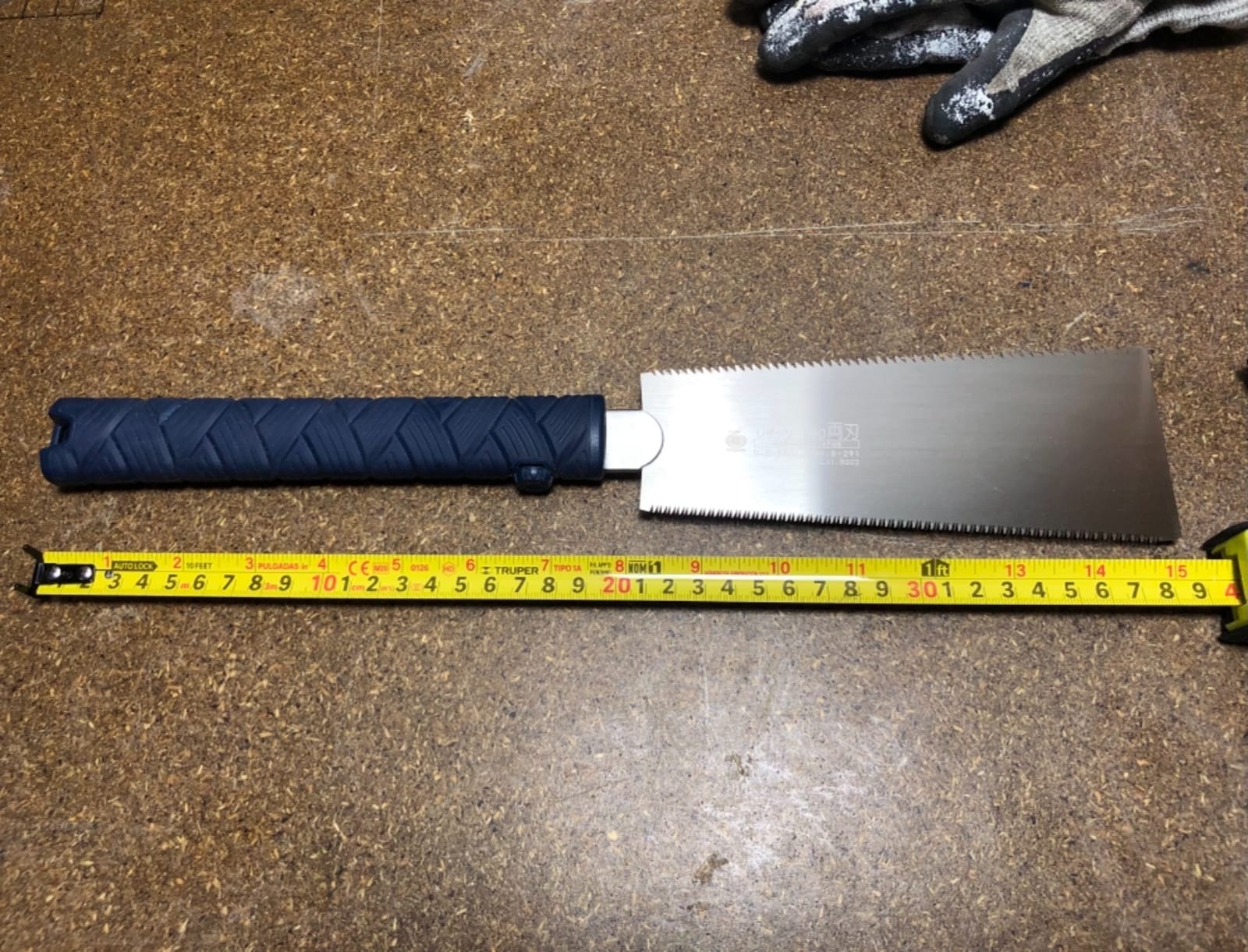
When a long pull saw makes sense
Pull saws are usually limited by reach. A 9 or 10 inch blade can only cut as wide as it is before you have to finish the cut from the far side, and on wide stock that means a second setup and a risk of running off the line. Fifteen inches removes most of that problem for boards and narrow panel stock.
The trade is balance. A long blade will flex more if your strokes are short and aggressive, so the saw rewards the same smooth, full-length technique a good ryoba demands. The dual-purpose teeth are a compromise rather than a specialist pattern, so the finish is adequate rather than exceptional.
Build quality and honest drawbacks
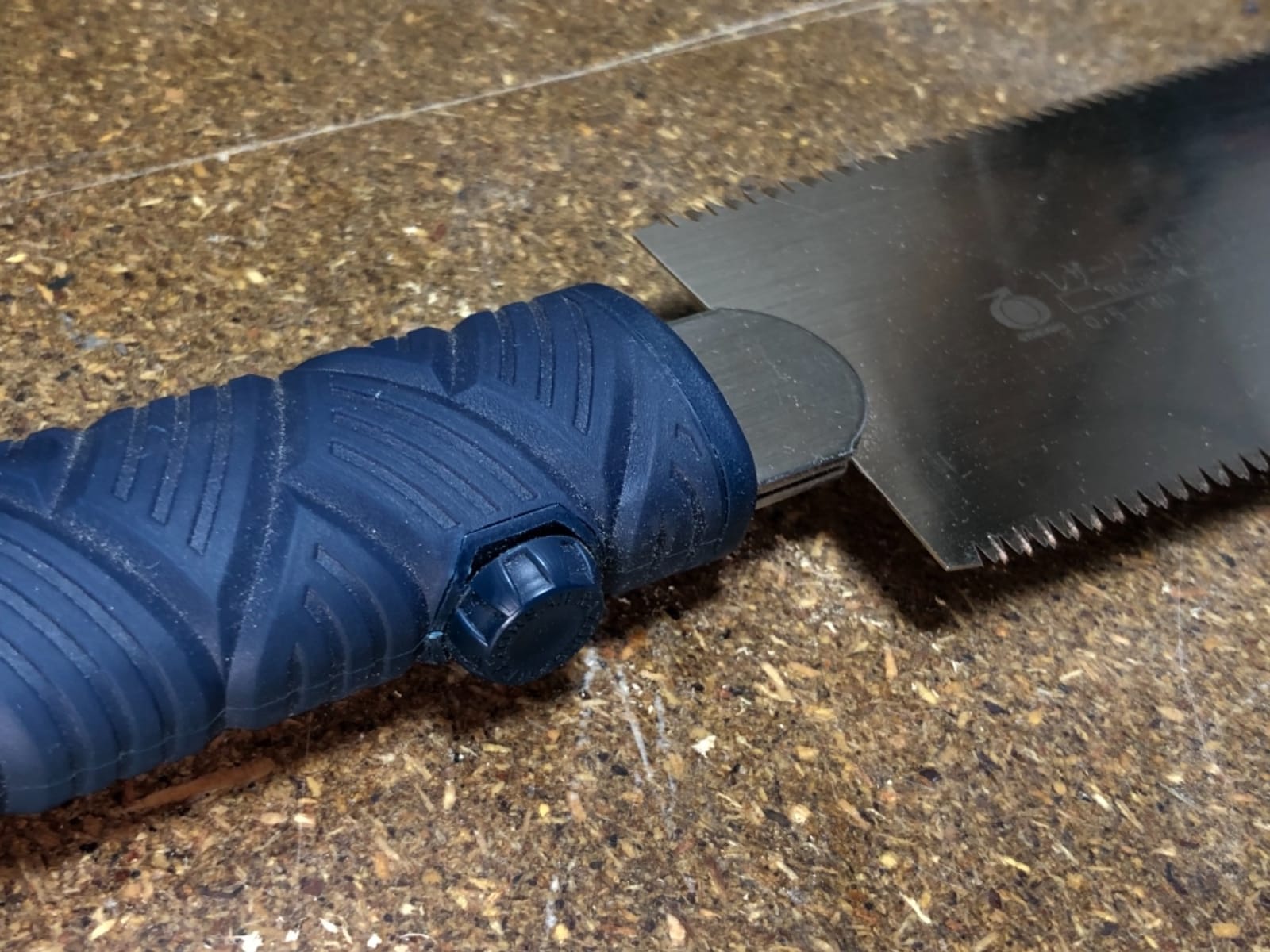
The composite plastic handle is the main complaint, and it is a fair one next to the hardwood handles elsewhere in this roundup. It is serviceable and light, but it is not the part of the tool you will describe with affection a decade from now.
With 196 teeth in total across the blade, there is plenty of tooth coverage for general work, and owners report a 4.8 star average with 85 percent of reviews at five stars. The review base is smaller than the established models, so weigh that when you decide how much confidence to place in the long-term reputation.
Who should buy it and who should not
Buy it if your primary task is crosscutting boards and wide stock by hand and you want a pull stroke rather than a push. It fills a gap no other saw in this roundup covers: length without weight.
Skip it for fine joinery, for flush cuts, or if handle feel matters to you. For those, a ryoba or dozuki of shorter length does the job better.
How to Choose a Hand Saw for Cutting Hardwood
Match the tooth pattern to the cut you actually make
For rough hardwood crosscutting, a Western crosscut handsaw with 10 to 12 teeth per inch handles the job. For ripping along the grain, a rip-configured Western saw with 6 to 9 teeth per inch is correct. A Japanese pull saw is the most versatile single option for sheet goods and finish work. Past roughly 2 inches of hardwood thickness, none of them is the right tool, and a circular saw with a straightedge guide or a track saw will be faster and straighter.
Ripping needs few, deep, aggressively set teeth because the blade must clear a full chip. Crosscut teeth are numerous, short, and triangular, and they slice fibres as the stroke passes through them. A rip tooth looks like a wedge, a crosscut tooth like a row of shark fins. Using the wrong pattern is the number one reason a saw wanders on hardwood.
Match teeth per inch to the job
Coarse teeth, roughly 6 to 9 per inch, remove material fast and suit green wood, rough breakdown, and ripping. Medium teeth around 10 to 14 per inch are the general-purpose range for crosscutting hardwood boards. Fine teeth at 20 or more per inch are for joinery, dovetails, tenons, and flush cuts, where a tight fit matters more than speed.
Going finer than the job requires invites binding. Too many teeth in a cut on hard maple means chips have nowhere to go, and the blade heats, binds, and stalls. The practical test is simple: if the cut is dragging and the blade is heating in your hand, you have too many teeth for the wood.
Choose blade length and look for a tall toe
Longer is faster because each stroke travels twice the blade length. A 20 to 22 inch Western saw crosscuts a full panel in a few strokes. A 9.5 inch ryoba handles boards and joinery well. A 5 or 6 inch saw is a finishing tool for flush cuts and dovetails, not a rough saw.
On Western saws, look at the heel of the blade where it meets the handle. Experts on woodworking forums advise looking for a tall toe of roughly 3 inches, because the extra depth of steel at the front resists the twisting that makes a cut wander. A shallow toe, a thin blade, and a fine tooth count is the profile to avoid for rough hardwood work.
Set, kerf, and why narrow is easier
Set is how far each tooth projects sideways from the blade, and it keeps the kerf open so the blade does not bind. Kerf is the width of the cut left behind. A narrow kerf wastes less wood and makes glue lines read thin, which is why Japanese pull saws with thin plates are popular for panel glue-ups.
The exception is an unset tooth, as on the razorsaw flush saw, which produces a cut almost as narrow as the plate itself. That is ideal for flush trimming and hazardous in a tight gap, where an unset blade can bind with no clearance at all.
Steel, and whether you can sharpen it yourself
Hardened or induction hardened teeth hold an edge far longer in abrasive hardwood, but they cannot be filed by the user. Plain carbon or high speed steel teeth can be restored with a file, which turns a one-time purchase into a tool you own for decades. Forum regulars consistently say the biggest jump in confidence came from a freshly sharpened saw, not a more expensive model.
Decide honestly whether you will learn to file. If you will, a resharpenable Western saw is the better long-term buy. If you will not, a hardened Japanese saw will keep its edge far longer between changes, provided you are willing to replace the blade when it is done.
Maintenance and when a hand saw is the wrong tool
Keep a pull saw clean and dry, wipe resin off the teeth after use, and store thin blades where the edge cannot be knocked. File a carbon steel blade when it stops cutting cleanly, jointing first if the teeth are uneven, then setting lightly. A hand saw needs almost nothing else.
Know when to stop. Repeated crosscutting of thick hardwood, volume ripping, and cutting more than about 2 inches of thickness are jobs for a circular saw with a guide, a track saw, or a bandsaw. If you are building something like heavy timber framing, our guides to plasma arc cutting and the best cutting torch kit cover the other end of the hot-work spectrum, though for interior woodworking a track saw is the realistic answer.
One practical note for after the work: sawdust cleanup on finished hardwood floors is a separate job, and our steam mop guide for hardwood floors covers keeping the surface intact once the cutting is done.
How to Saw a Straight Line in Hardwood
Most complaints about a saw wandering are technique problems, not tool problems. You will hear experienced woodworkers on forums make this point repeatedly, and it is the single most useful thing in this guide if your cuts are not straight.
Mark the line on every face of the board, not just the top. Saw the corners out first, taking the waste from both ends of the line, then advance on both lines at once so the cut stays square to the face. Lay the saw into the knick you have created rather than starting a fresh cut in open air.
Use long strokes and let the saw do the work. On a rip or crosscut in dense wood, short choppy strokes generate heat and bind the blade, and heat is what burns a cut and makes it wander. Light pressure on a sharp saw beats heavy pressure on a dull one.
When the blade is hidden in thick material and you lose sight of the line, stop. Flip the board and correct from the other side, or saw slightly proud of the line and plane down to it. Trying to correct blind is how cuts end up visibly crooked.
Frequently Asked Questions
What type of saw is best for cutting hard wood?
For rough hardwood crosscutting, a Western crosscut handsaw with 10 to 12 teeth per inch works well. A rip-configured Western saw with 6 to 9 teeth per inch suits ripping along the grain, and a Japanese pull saw is the most versatile all-rounder for sheet goods and finish work. Past roughly 2 inches of hardwood thickness, a circular saw with a straightedge guide is faster and straighter than any hand saw.
What kind of hand saw is best for cutting wood?
The best kind depends on the cut rather than the brand. A Western crosscut saw handles crosscutting boards, a rip-configured Western saw handles ripping, a Japanese pull saw covers a wide range of tasks in one tool, and a dozuki or panel saw suits joinery and dimensional lumber. Blade length and tooth count matter far more than the name on the handle.
What type of saw blade is best for ripping hardwood?
Ripping needs few, deep, aggressively set teeth so the blade can clear a full chip, typically 6 to 9 teeth per inch on a Western rip saw. Crosscut teeth are numerous, short, and triangular, usually 10 to 14 teeth per inch. On a double edge Japanese saw the coarse side handles ripping and the fine side handles crosscutting and finish cuts.
How many teeth per inch should a hardwood saw have?
For crosscutting hardwood boards, 10 to 14 teeth per inch is the general purpose range. For ripping along the grain, 6 to 9 teeth per inch removes material faster. For dovetails, tenons, and flush cuts, 20 or more teeth per inch tracks a line more closely. Going finer than the job requires can cause binding in dense woods such as hard maple or white oak.
Do hand saws need sharpening before first use?
Many new saws arrive needing jointing and setting before the first cut, particularly inexpensive Western models. Japanese pull saws with impulse hardened or induction hardened teeth usually arrive sharp but cannot be filed by the user, so maintenance is limited to cleaning resin off the teeth. Carbon steel Western saws are the ones worth learning to file, since resharpenable steel is the best long-term value.
How do I keep a hand saw cutting straight?
Cut straight by marking the line on every face, sawing the corners out first, then advancing on both lines at once to hold the blade square to the face. Use long smooth strokes with light pressure, because short choppy strokes create friction and heat that make a cut wander. If you lose sight of the line in thick stock, stop and correct from the opposite side rather than sawing blind.
Final Verdict: The Best Hand Saw for Cutting Hardwood in 2026
If you buy one saw, buy the SUIZAN 9.5 inch ryoba. Its double edge covers rip and crosscut, its Japanese steel stays sharp in dense stock, and its light pull stroke makes long sessions bearable. For anyone who values the surface quality above all else in hard and abrasive woods, the Gyokucho razorsaw at 9.5 inches is the specialist upgrade.
If dovetails and joinery are your work, the SUIZAN 6 inch dozuki with its 25 teeth per inch crosscut pattern is unmatched in this group. If you want a straightforward entry into Japanese pull saws, the RUITOOL 6 inch double edge does hardwood trim well. If you want steel you can file and keep for decades, the Spear and Jackson 22 inch skew back is the long-term answer, and the 15 inch DAONEG covers wide stock without leaving the pull stroke.
Whatever you choose, buy a file alongside a resharpenable saw, keep the teeth clean, and practise the corner-first technique before you judge a cut. Those two habits matter more to your results in 2026 than any brand name on the handle.
Leave a Reply