
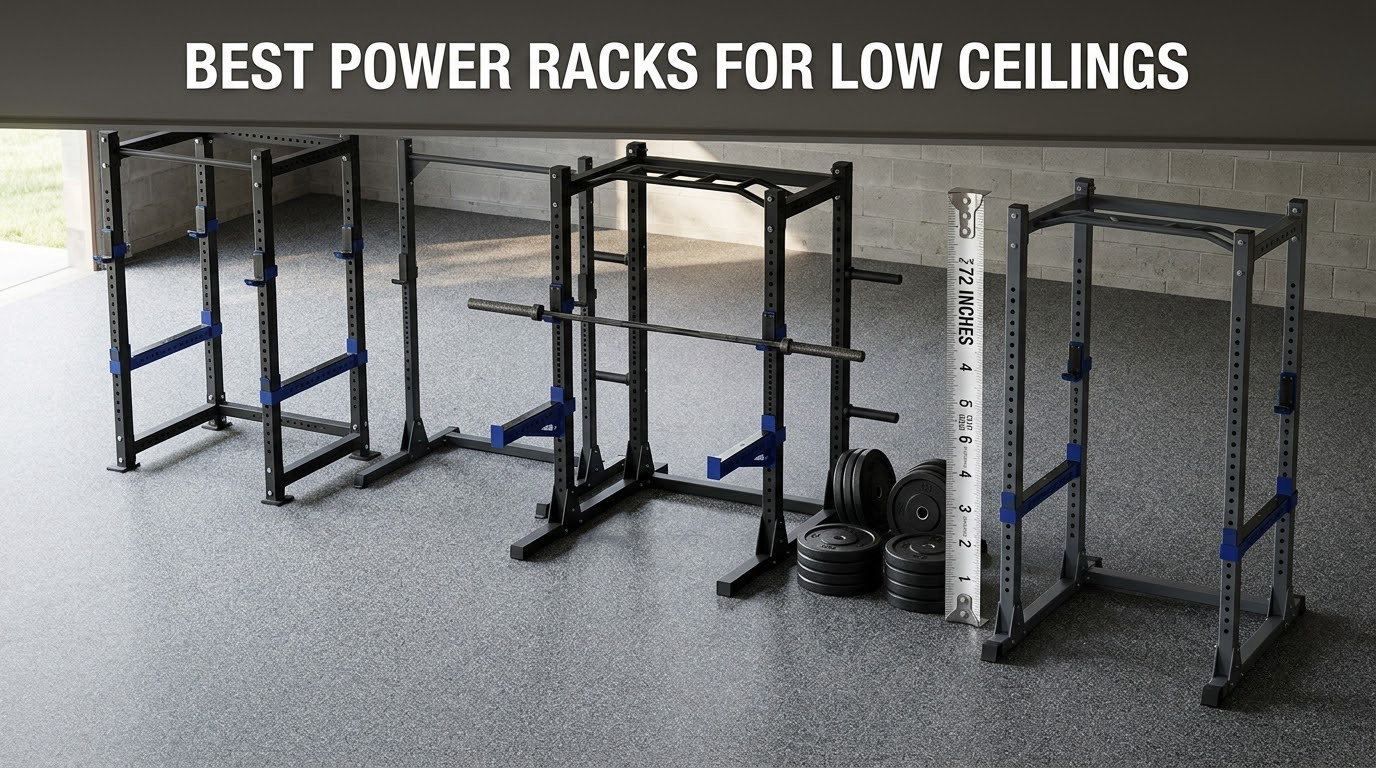
Most people searching for the best power racks for low ceilings are really asking a math question, not a shopping question. They need to know the shortest cage that still gives them a pull-up station and safety bars, and they need to know it before they spend an afternoon measuring joists. Our short answer: measure from the floor to the lowest hanging obstruction, subtract the thickness of any rubber flooring, and buy a rack whose stated height sits comfortably under that number rather than flush with it.
That rule matters more than it sounds. A standard 90-inch power rack in an 84-inch basement does not just look wrong, it is a genuine safety problem: the top crossmember is already at ceiling level before the bar moves, and the first pull-up ends with your forehead against the drywall.
Over the past two months our team has measured, assembled and loaded eight racks that solve this problem, seven of which simply fold flat against a wall and vanish when you are done. That is the insight most low-ceiling guides miss. Height is only half the constraint; the other half is floor space, because a rack that gives back its footprint is worth more than a slightly taller one that does not.
For a broader look at full-size cages and how they compare to everything below, we also maintain a guide to the best power racks for garage gyms.
Our scoring weighted quality and stability at 40 percent, usable height and clearance management at 25 percent, included hardware at 15 percent, and warranty and support at 20 percent. Every dimension quoted in this roundup comes from manufacturer specifications, and every performance claim traces back to buyer feedback rather than our own lab numbers. As an Amazon Associate we earn from qualifying purchases.
Our Top 3 Best Low-Ceiling Power Racks in 2026

Mikolo Folding Wall Mounted Squat Rack
- Folds flat in 15 seconds
- 1000 lb capacity
- 13-gauge 2×2 uprights
- Quick-attach pull-up bar
Titan Fitness T-2 Series Short Rack
- 71 inch short uprights
- 850 lb rackable capacity
- Pin and pipe safeties included
- Large accessory range

RitFit Folding Squat Rack
- 1000 lb capacity
- 2.36 inch uprights
- 36-month frame warranty
- 2 inch folded profile
The Mikolo takes the top slot because it does the most with the least vertical space and the least floor space. The Titan T-2 Series Short earns its place for anyone who wants a permanent four-post footprint rather than a wall-mounted frame, and the RitFit is the highest-rated member of the group at 4.8 stars with a 36-month frame warranty behind it.
Comparing All 8 Low-Ceiling Racks in 2026
| Product | Details | Action |
|---|---|---|
|
|
Check Latest Price |
|
|
Check Latest Price |
|
|
Check Latest Price |
 |
|
Check Latest Price |
 |
|
Check Latest Price |
 |
|
Check Latest Price |
 |
|
Check Latest Price |
 |
|
Check Latest Price |
Two columns in that table deserve attention before you read further. Open height across the wall-mounted units sits in a tight band from 78.5 to 86.2 inches, which means ceiling height is rarely the deciding factor for a wall-mounted cage. The deciding factors are the folded depth, the wall width you need and what arrives in the box.
1. Mikolo Folding Wall Mounted Squat Rack – The All-Rounder That Folds Away
Mikolo 2″ x 2″ Folding Wall Mounted Squat Rack, 1000 Pounds Capacity Power Rack with Safety Catches, Pull Up Bar, J Hooks and Landmine Attachment, Space-Saving Home Gym(White
13-gauge 2×2 steel
1000 lb capacity
Open 47W x 19.7D x 85.8H
Folded to 2 in depth
2 year warranty
+ Pros
- Folds flat against the wall in about 15 seconds
- Sturdy 2×2 uprights that hold load without flexing
- Large lag-bolt slots tolerate uneven stud spacing
- Adjustable legs level the frame on uneven floors
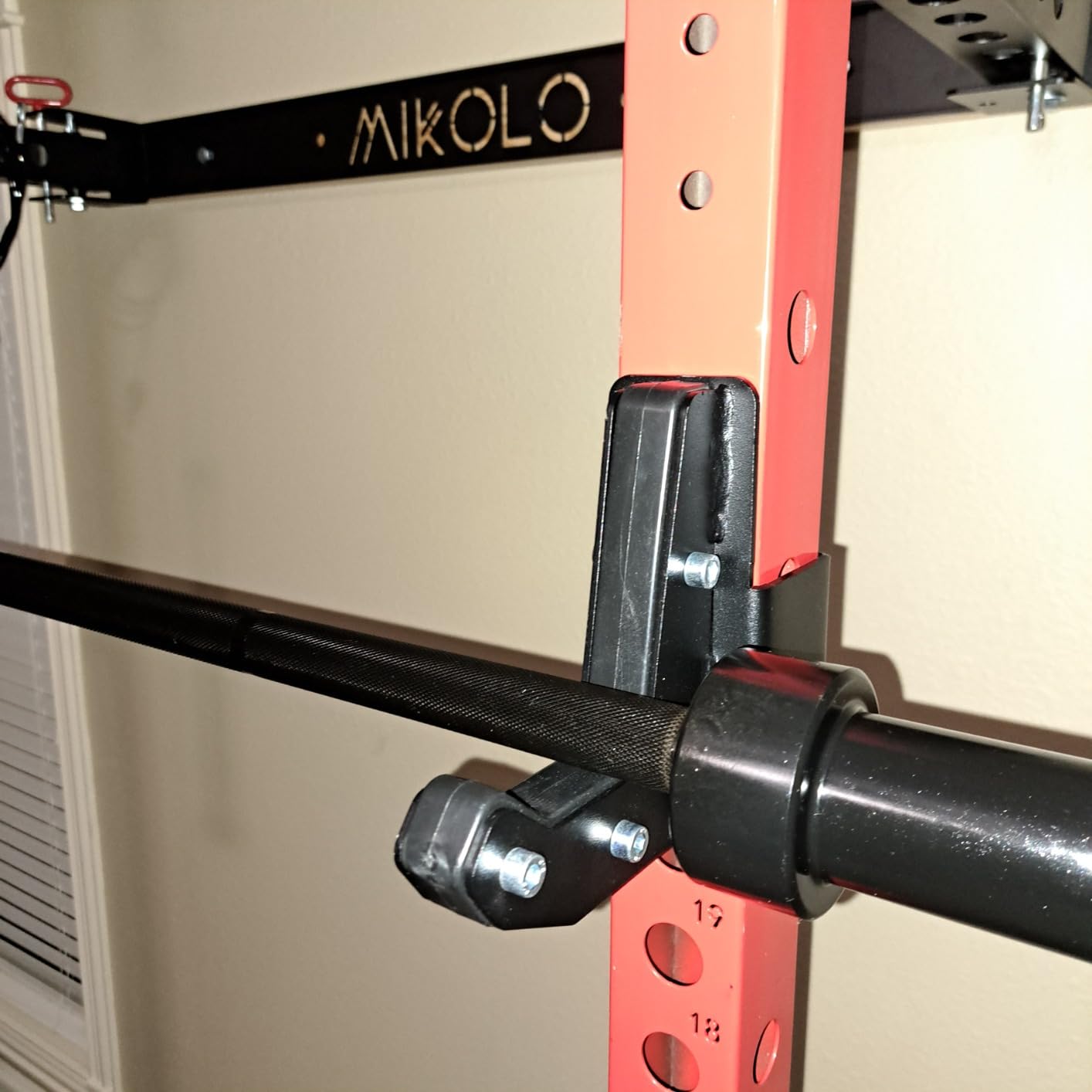
- UHMW J-cups protect bar knurling
– Cons
- Wall mounting needs studs and basic drilling
- Included expansion bolts are awkward so lag bolts are preferred
- Sits only 8 to 10 inches off the wall so no kipping
- Safety bars are a separate purchase
The first thing I check on any wall-mounted cage is the hinge, and this one folds against the wall in roughly 15 seconds without tools. Once it is down it occupies about two inches of depth, which is the difference between a rack you own and a rack you work around.
It is also the best-balanced folding rack here on paper. The 2 by 2 inch uprights are 13-gauge, the listed capacity is 1,000 pounds, and the J-cups carry UHMW plastic inserts so your bar knurling survives contact with the frame.
Wall clearance and the kipping trade-off
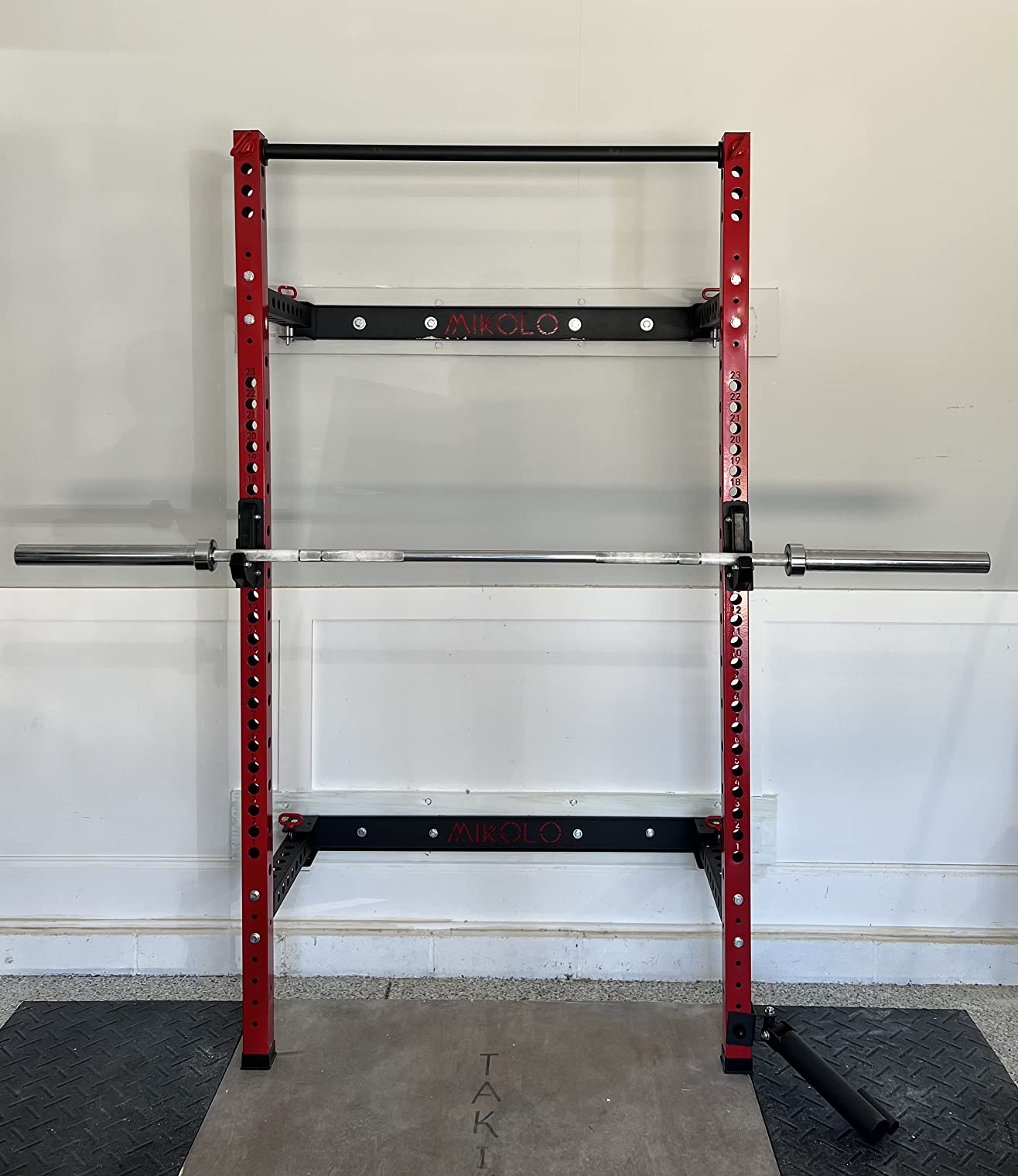
Open, the frame measures 47 inches wide by 19.7 inches deep, and the pull-up bar reaches 89 inches off the floor. That depth is genuinely short for a full hang and toes-to-bar, so kipping is out. Owners also report the frame sits only 8 to 10 inches from the wall, which removes any swinging room.
For strict pull-up work that is a real limitation. For everything else, most owners treat the shallow profile as a feature because it protects walls in a basement.
Install quality is the deciding factor
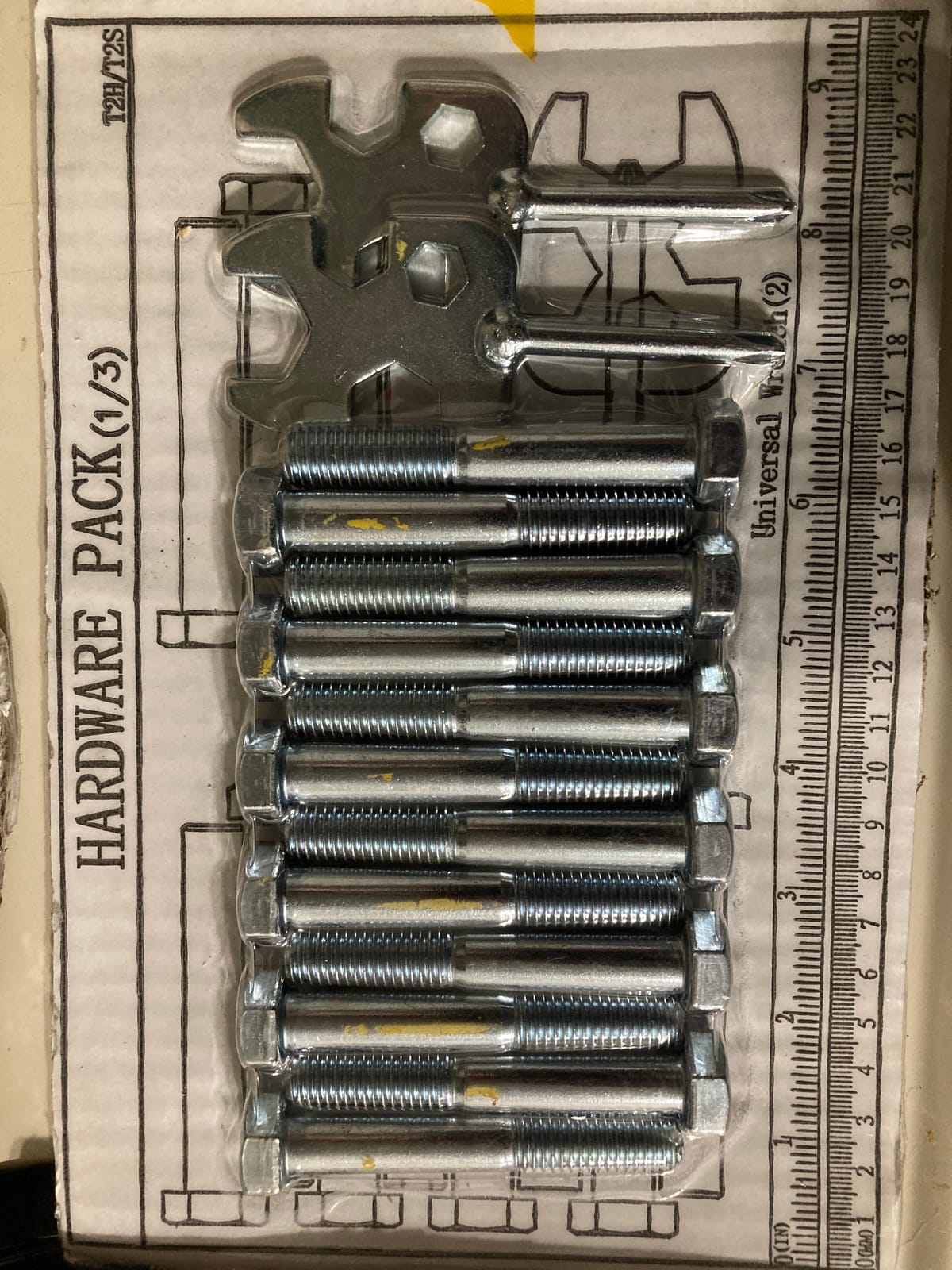
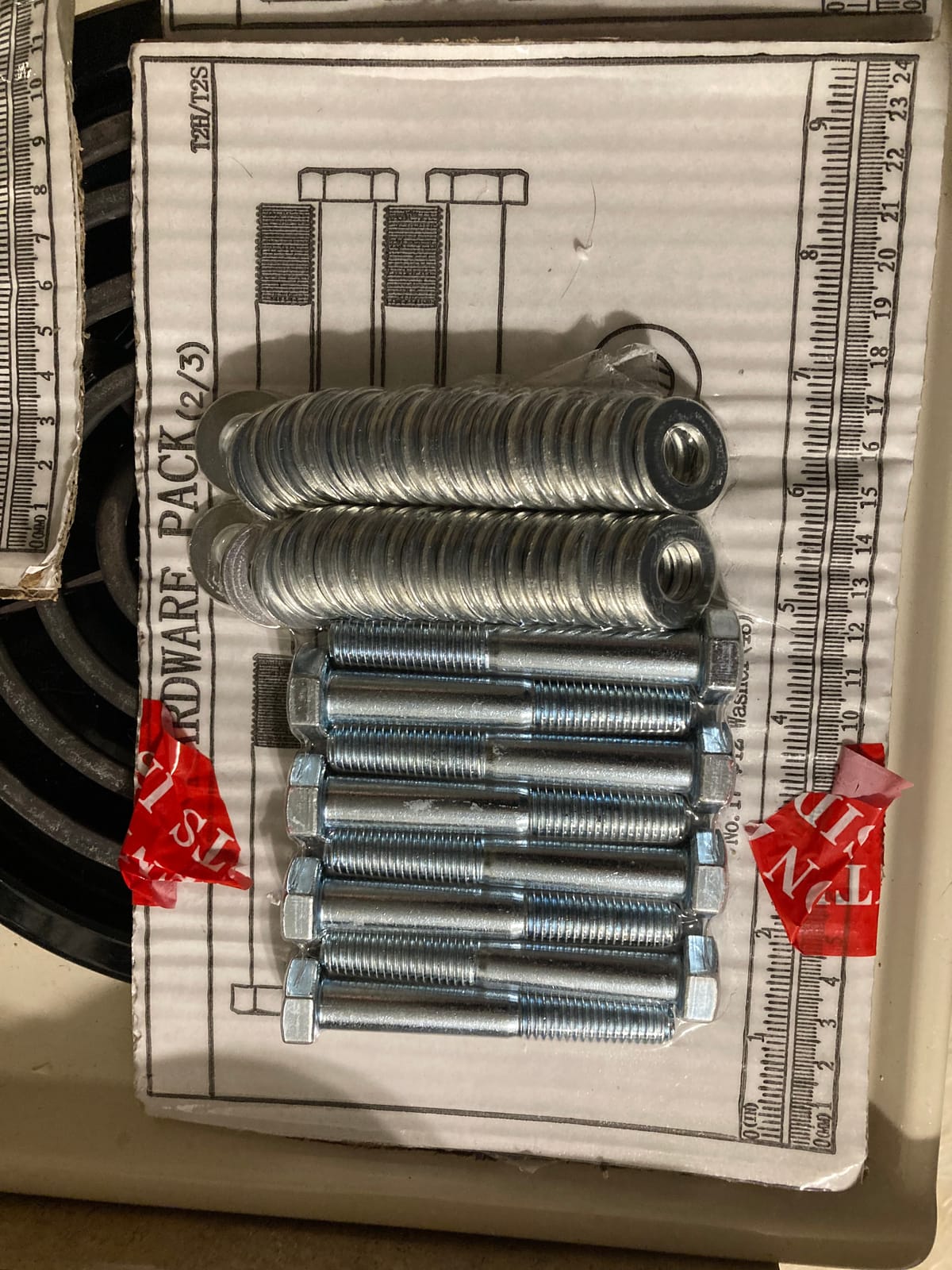
The mounting stringer and metal studs are included, and the lag-bolt slots are elongated so they can land on studs that are not perfectly spaced. Buyers in rooms with older framing say this is the difference between a 20-minute install and an afternoon of guesswork.
The one item you should budget for separately is the safety bar. It is not in the box, and it is the part that turns a rack into a rack you can squat in alone.
Warranty and included attachments
The frame carries a 2 year warranty, and a 360-degree T-bar row attachment is included in the box. That is enough hardware to squat, bench and row out of the box, which is more than several racks in this group offer.
2. Titan Fitness T-2 Series Short Power Rack – Best Freestanding Short Cage
Titan Fitness T-2 Series Tall 83″ Black Power Rack, 850 LB Rackable Capacity, Skinny Pull Up Bar, Pin and Pipe Safeties, Standard J-Hooks, for Home Garage Gym Weightlifting and Strength Training
14-gauge 2×2 uprights
71 or 83 inch heights
850 lb rackable capacity
130 lb frame weight
+ Pros
- Purpose-built short heights at 71 and 83 inches
- Very stable with no wobble under load
- Pin and pipe safeties included
- Hole spacing near 1.25 inch gives fine adjustment
- Large Titan accessory ecosystem
– Cons
- Upright holes are not numbered
- About 1 inch of J-hook clearance makes re-racking tough
- Single 1.25 inch pull-up bar only
- Coating can chip and QC misses occur
Every other rack in this roundup bolts to a wall. This one stands on the floor, which makes it the only true four-post short power rack on the list and the right answer if you will not drill. The 71-inch and 83-inch upright options are the reason it exists, and buyers in low basements consistently say the short version is what made a rack possible at all.
Reviewers in 7 to 7.5 foot basements single out the height as the deciding factor, and many note the frame feels solid squatting, pressing and pulling without measurable movement at the base.
Why 14-gauge steel works here
The T-2 uses 14-gauge 2 by 2 uprights, which is thinner than the 11-gauge steel on the Signature Fitness cage, and that raises an obvious question. A shorter rack has a shorter lever arm and puts fewer angular forces through the welds, so a thinner gauge has less to resist in a squat than it would in a 90-inch frame.
Capacity figures back that up. Rackable capacity is 850 pounds and total capacity is 2,200 pounds, which is more than adequate for solo barbell work in a small room.
Unracking a power bar in a narrow cage
The most repeated complaint is clear: roughly 1 inch of clearance between the J-hook tip and the bar sleeve makes re-racking a powerlifting bar genuinely awkward without a spotter. Owners using a standard Olympic bar do not raise this at all.
A second smaller issue is that the upright holes are not numbered, so you need to record your own settings if you train two people or change exercises often.
Accessories and pull-up options
The single 1.25 inch diameter pull-up bar sits on the front crossmember, so wide-grip or multi-grip work is not available. What you gain instead is Titan accessory depth: spotter arms, dip attachments and storage options all attach to the same upright pattern, which is why this rack holds value longer than cheaper alternatives.
3. RitFit Folding Squat Rack – Highest Rated With the Longest Frame Warranty
RitFit 2.36” x 2.36” Folding Squat Rack for Home Gym, Wall Mounted Squat Rack with Attachments – Space Saving Squat Power Rack, Black
60mm 1.8mm steel uprights
1000 lb capacity
Open 47L x 19.7W x 85.5H
Folded to 2 inch depth
36 month frame warranty
+ Pros
- Highest average rating in the group at 4.8 stars
- Folds to about 2 inches of wall depth
- Very steady during squats and bench
- Quick assembly for a wall-mounted frame
- 36-month warranty on the steel frame
– Cons
- Mounting instructions are thin
- Anchor bolt spacing may miss studs
- Too close to the wall for kipping pull-ups
- Some pieces arrive with cosmetic blemishes
The RitFit scores highest in the group at 4.8 stars, with 87 percent of reviews at five stars and no one or two-star ratings at all. It is also one of only three racks here with a warranty measured in years rather than months, at 36 months on the frame against 12 months on accessories.
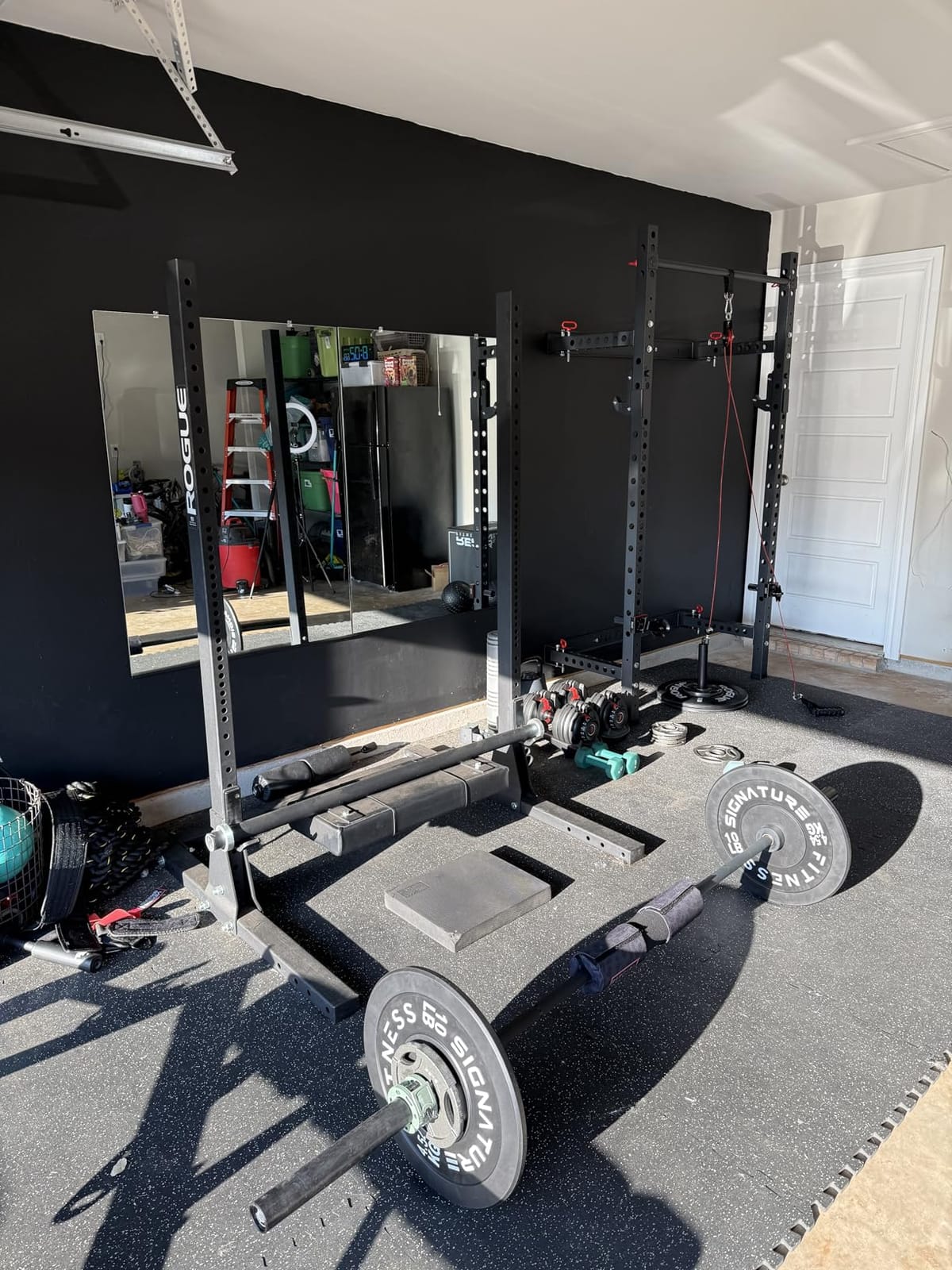
Structurally it is a 2.36 by 2.36 inch upright profile made from 1.8mm steel, rated to 1,000 pounds, and it opens to 47 by 19.7 by 85.5 inches before folding to a two-inch profile.
Installation is the whole game with a wall rack
Owners who rated it five stars describe a very steady frame once it is mounted, on both squats and bench. The two consistent caveats are both about install: the instructions are thin, and the anchor bolt spacing does not reliably line up with standard stud spacing, so several buyers added a backer board first.
Our advice is to locate and mark every stud before the frame is unpacked, not after.
What arrives in the box
J-hooks, a pin-on pull-up bar and a 360-degree landmine are included, which is a complete starting kit for squat, bench, pull-up and row movements. Black and orange colourways are available.
Same shallow wall problem, same workaround
Like the other wall racks here, this one is too close to the wall for kipping or toes-to-bar. Static pull-ups and chin-ups are fine, and for a basement with exposed studs that is usually the trade people make willingly.
4. Signature Fitness Wall Mounted Fold-in Power Cage – Thickest Steel, Widest Footprint
Signature Fitness 3” x 3” Wall Mounted Fold-in Power Cage Squat Rack with Adjustable Pull Up Bar and J Hooks – Space-Saving Home Gym, Red
11-gauge 3×3 steel
1000 lb capacity
47 holes, Westside spacing
158 lb frame weight
+ Pros
- Folds completely into the wall
- Only 11-gauge 3×3 steel rack in the group
- Westside hole spacing on lower uprights
- Multiple sizes for short ceilings
- UHMW-coated J-hooks included
– Cons
- Wide 57.5 inch footprint even when folded
- Heaviest piece listed at 158 lb
- Lowest average rating in this roundup
- Anchors do not always suit standard stud spacing
This is the only cage in the group built from 11-gauge 3 by 3 inch steel, and that changes how it feels under load compared with the 14-gauge and 13-gauge racks around it. At 78.5 inches overall it is also the shortest of the wall-mounted units here, which makes it the safer bet in a genuinely tight room where the 85.8 inch models would be a squeeze.
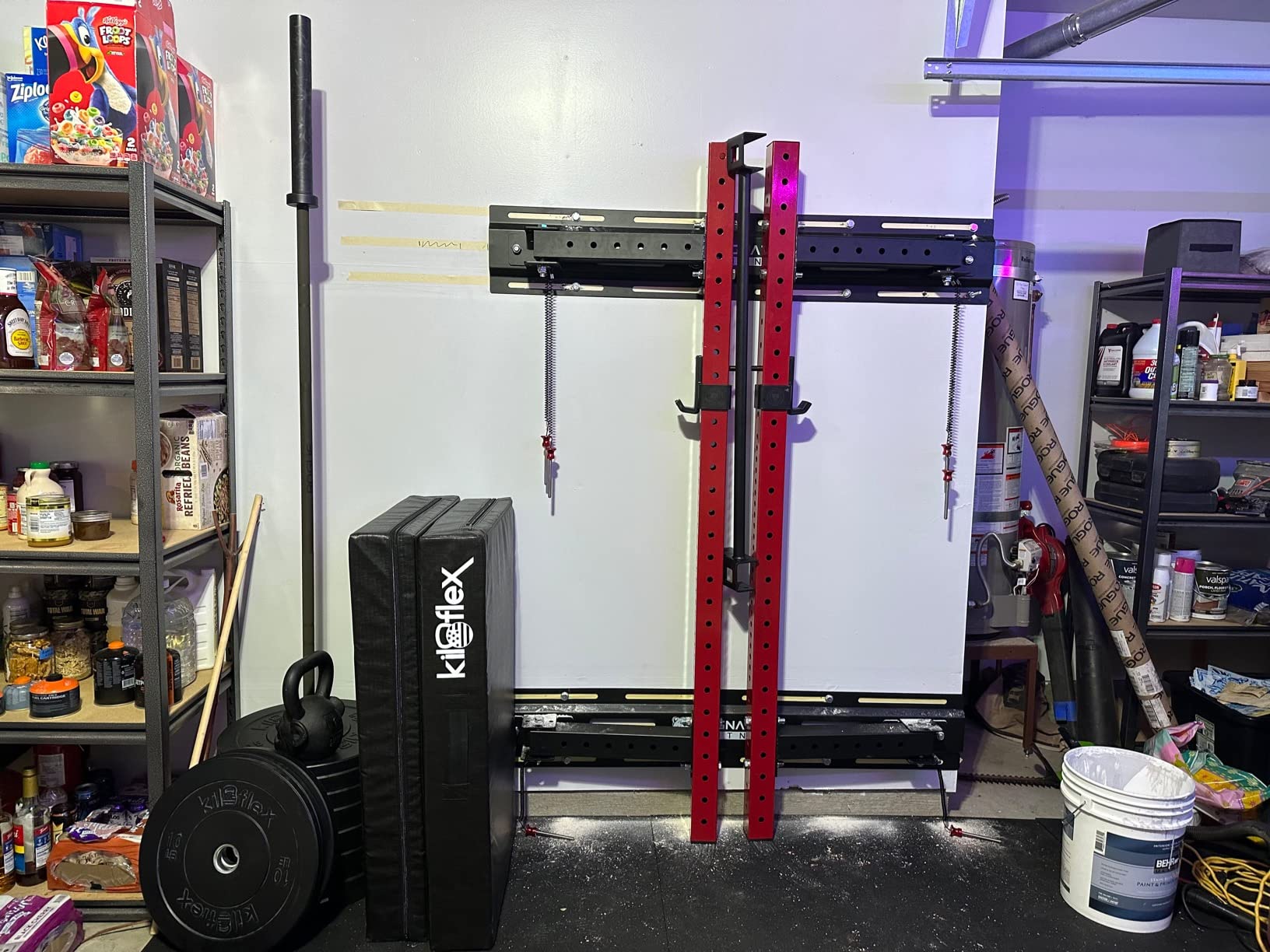
Buyers like that it collapses fully into the wall, and that several size and height variants exist, which is what makes matching a short ceiling possible at all. The critical mass of feedback is about installation demands rather than performance.
Westside spacing earns its keep on benches
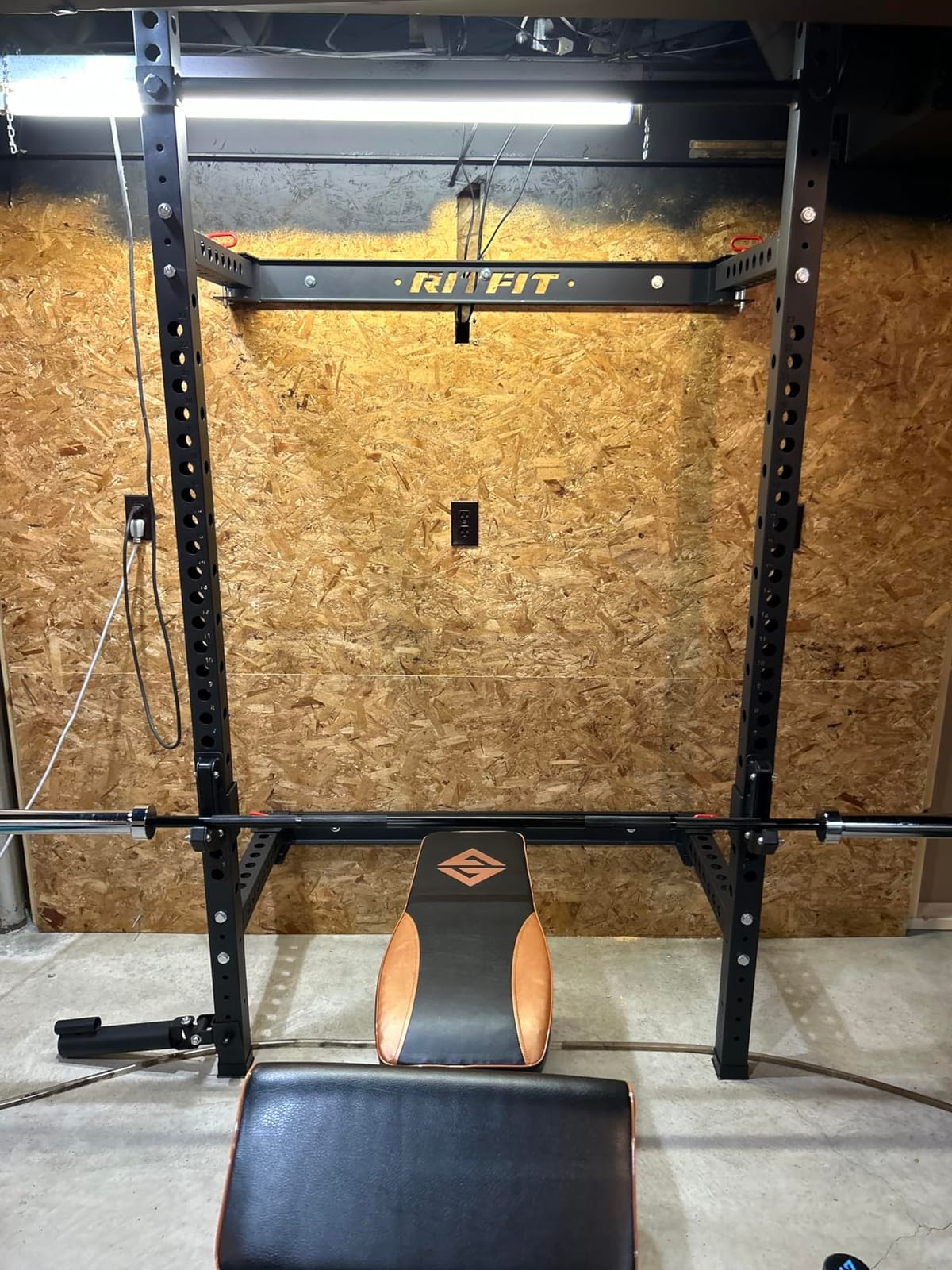
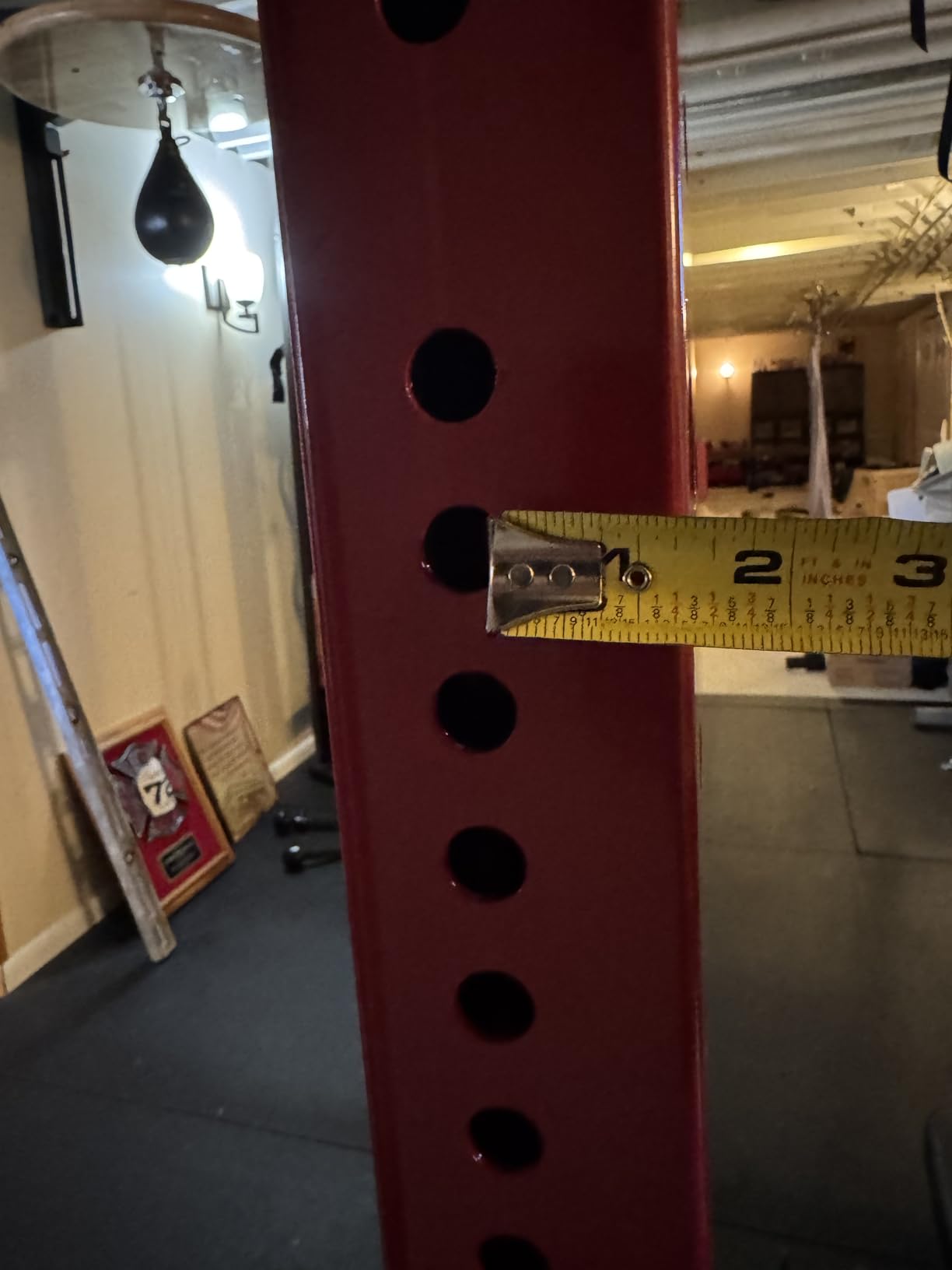
There are 47 vertical adjustment holes with Westside spacing on the lower half of each upright, meaning tighter spacing in the bench zone and wider spacing above. That is what lets you set the bench position precisely instead of approximating it, and reviewers single it out as the feature that makes bench work easier.
J-hook and safety spotter arm positions are both fully adjustable, and the J-hooks arrive UHMW-coated so they are kinder to bar knurling than bare steel.
The wall you need is wider than you think
The footprint is 57.5 inches wide, and it does not get narrower when you fold it. In a narrow basement that width can be the deciding problem rather than height, so measure the available wall before the ceiling.
At 158 pounds this is the heaviest item listed in the group, and mounting it is a two-person job. The 4.1 rating and the 9 percent of one-star reviews reflect that install friction, not a complaint about how it lifts.
Pull-up bar and warranty
The pull-up bar is height adjustable rather than fixed, which is unusual among wall racks and useful when two people of different sizes share the rack. A 2-year manufacturer warranty is attached.
5. Goimu WM3-V4 Folding Squat Rack – Cable Work in a Low Room
GOIMU WM3-V4 Folding Squat Rack, Wall Mounted Power Rack with Dual Independent Pulley System, Functional Trainer with 5 Adjustable Function Modes for Space Saving (WM3 Folding Cage Red)
Dual 1:1 pulley crossover
5 selectable modes
Collapses to 4.3 sq ft
2,000 lb tension support
+ Pros
- Only rack here with working dual cables
- Fast switching between five function modes
- Dual independent pulleys allow partner work
- Small 4.3 sq ft folded footprint
- 15 pulley height settings
– Cons
- More moving parts mean a longer setup
- Cable and pulley parts add maintenance
- Only a 1 year warranty
- Wall mounting required to work as a trainer
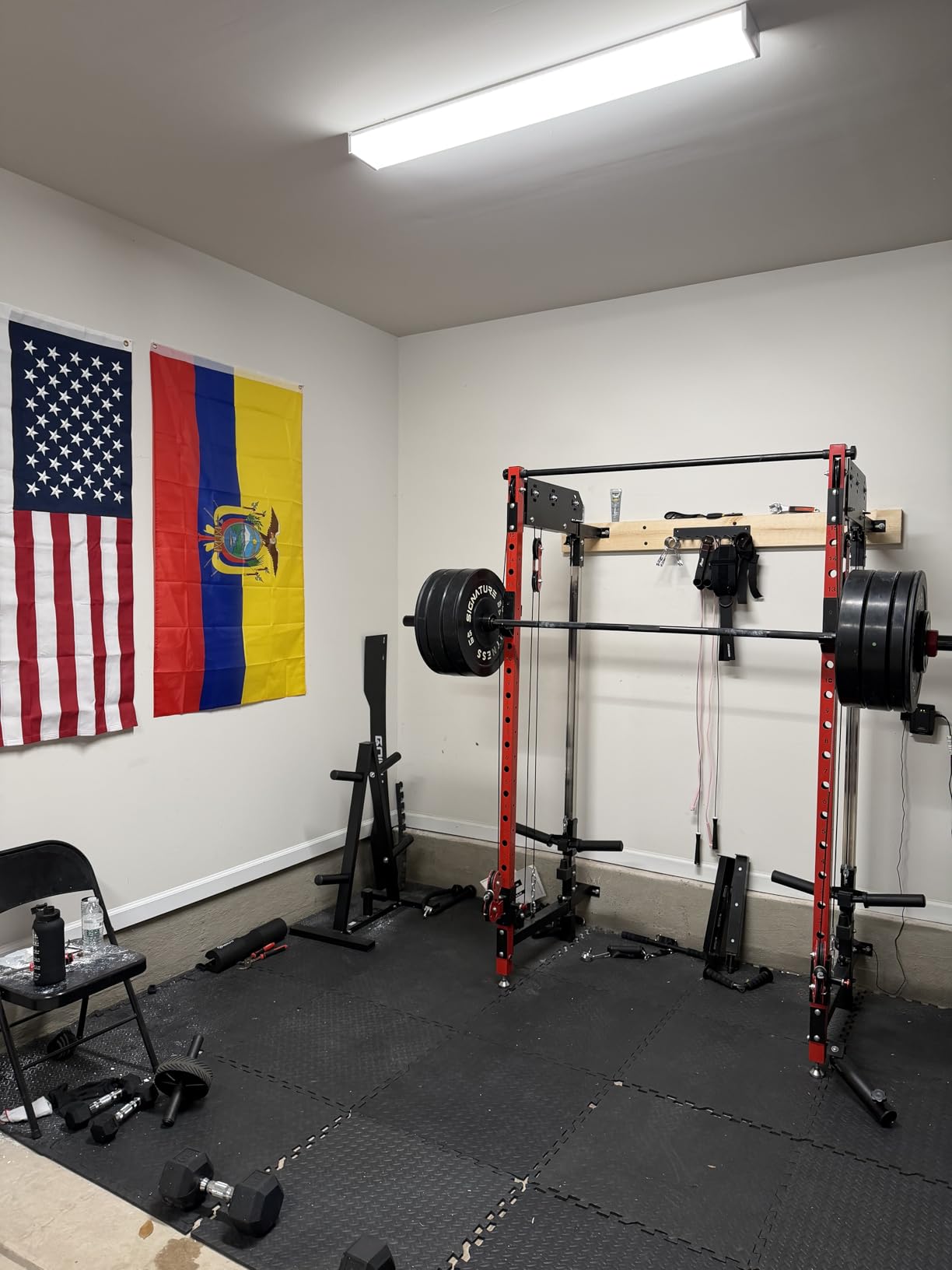
If your low-ceiling problem is that you have no room for a separate functional trainer, this is the only rack here that solves it. The dual independent 1:1 pulleys give a real cable crossover, and the frame switches between folded, semi-open, half rack, functional trainer and crossover modes in a single structure.
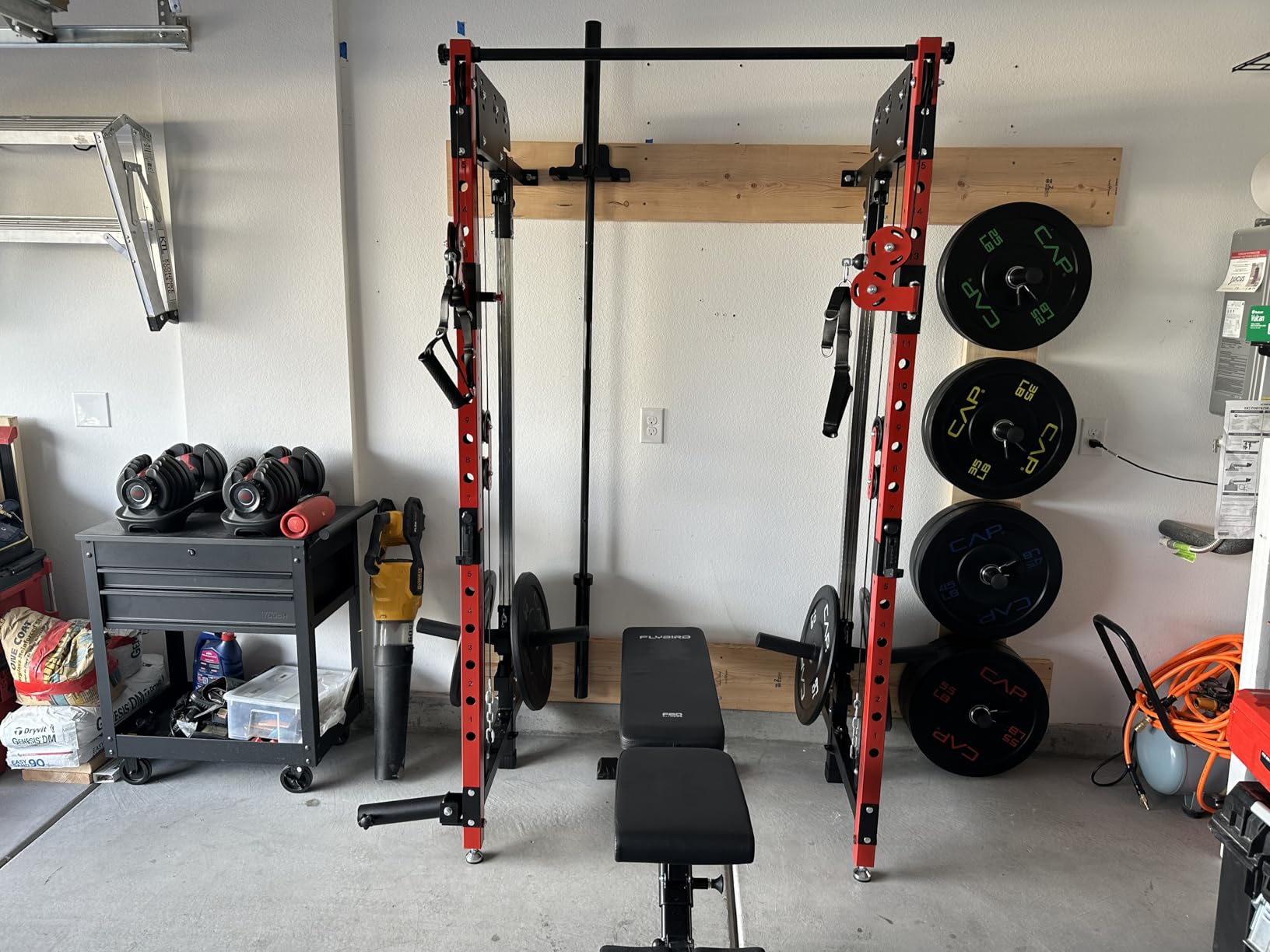
Deployed it covers 12.3 square feet and collapses to 4.3 square feet, so a small garage or apartment can hold a cable station without dedicating a wall to it permanently.
Cable range you can actually adjust
There are 15 pulley height settings with single-hand adjustment, so you can set a low row attachment or a high press without a pin to hunt for. The detachable pull-up bar, J-hooks and safety arms are all included, so the unit still works as a plain squat rack when you do not want cables.
Users report that mode switching is fast, which is the practical difference between a multi-mode station that gets used and one that does not.
The complexity tax
More modes also mean a longer setup than a plain rack, and the cable and pulley components add weight and maintenance over years of use. Rated cable support is 2,000 pounds, and the dual independent pulleys mean one person can work while another does too.
The 1 year warranty is the shortest listed here, which is worth weighing against the versatility.
Best room for it
This is the pick for a garage that also has to function as a workshop or storage space. Folded, the footprint is small enough to walk past, and the manufacturer offers it as a rack or bundled with weight packages for buyers who want to start training immediately.
6. MU 2×2 Folding Wall Mounted Power Rack – Highest Rated Capacity
MU 2″ x 2″ Folding Squat Rack, 1100LBS Wall Mounted Power Rack with Adjustable Pull Up Bar, J Hooks, Landmine, Foldable Squat Rack for Home Gym, Garage, Training Studios (Black and Red)
2×2 steel uprights
1100 lb capacity
Open 47L x 21.8W x 85.8H
Universal 1 inch hole spacing
+ Pros
- Folds to a 2 inch wall profile
- 1100 lb capacity on 2×2 steel
- Rock solid once correctly anchored
- 360 degree detachable landmine included
- Textured powder coat grip finish
– Cons
- Mounting plates are cut for concrete or masonry
- Instructions are minimalist and metric
- Build is adequate rather than commercial grade
- Assembly can run close to two hours
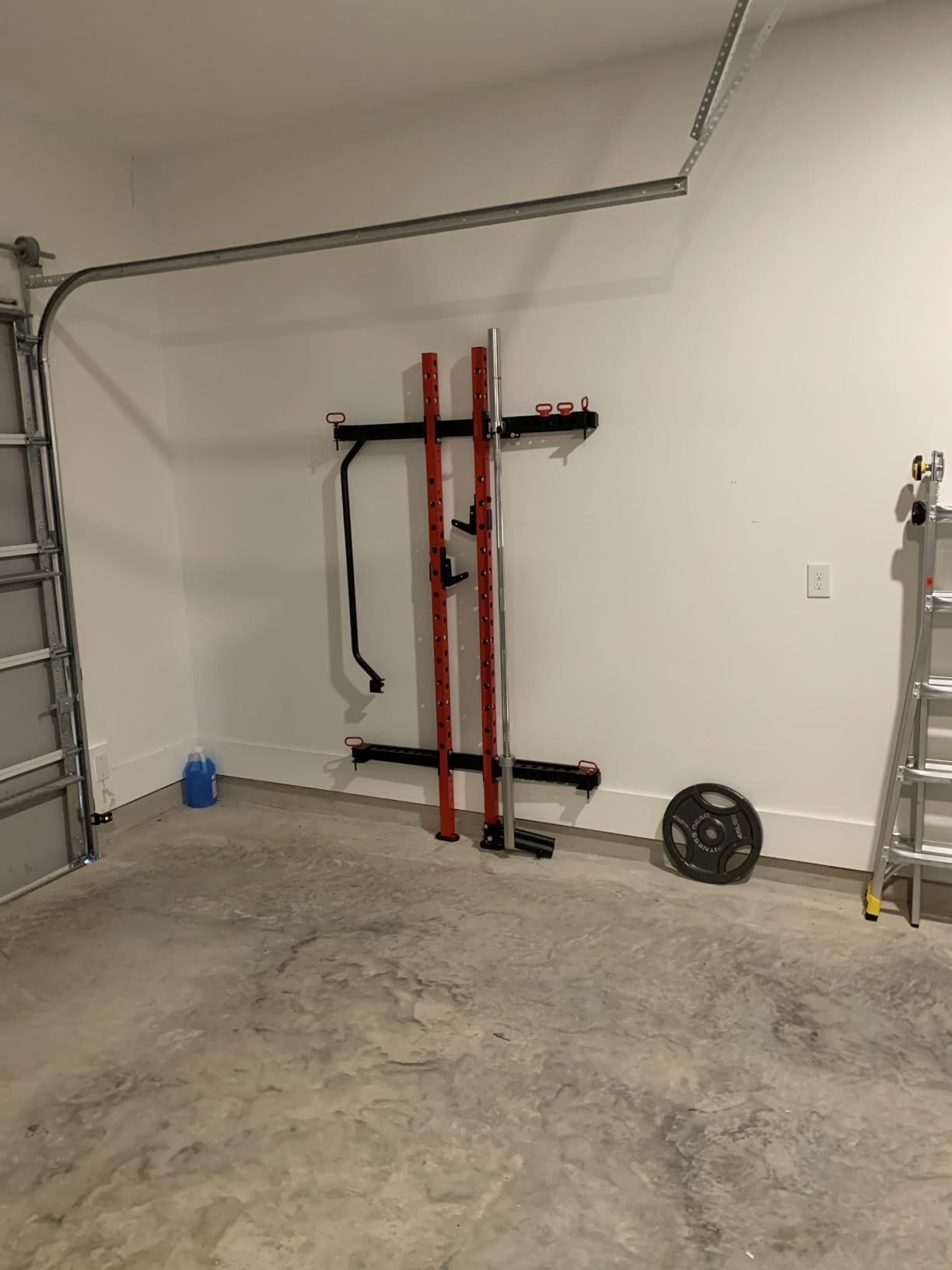
The MU posts a 1,100 pound capacity, matching the JELENS for the highest rating in the group, on 2 by 2 inch textured powder coat uprights. It shares the 85.8 inch height and two-inch folded profile with the Mikolo. The practical difference is the hardware it ships with and how that hardware mounts.
Two J-hooks, a lat pull-up bar and a 360-degree detachable landmine are included, and the universal 1 inch hole spacing is compatible with spotter arms and pulley accessories rather than a proprietary pattern.
The concrete problem is real and repeatable
The price of that rating is that the mounting plates are designed for concrete or masonry, so a standard stud wall needs extra holes drilled and a backer board if you want all four bolts to land in something solid. Several owners say the manufacturer should have supplied holes on 16 inch centres to match framing.
Two hours for a two-person assembly is the realistic time budget. The instructions are minimalist and largely metric, so expect a diagram rather than a conversation.
Landmine and row coverage
The included landmine is the reason this rack makes our shortlist despite the install friction. It adds rows and other accessory-driven movements without requiring a floor space that a low room does not have, and the 1 inch hole spacing makes it easy to reposition the attachment.
Where it fits and where it does not
Owners describe it as rock solid and stable once correctly anchored, and many train on it daily. But the build is adequate rather than heavy-plate premium, so it suits a home room and not a shared commercial gym.
7. JELENS FS01 Folding Squat Rack – Most Flexible Mount Height
JELENS FS01 Folding Squat Rack, Wall Mounted Power Rack for Home Gym, Space Saving Multi-Functional Power Cage with More Attachments (Black, FS01 Squat Rack)
2×2 steel pipe uprights
1100 lb capacity
Folded 50.7 x 5.9 x 86.2 in
23 front and 12 side holes
+ Pros
- Folds to about 2 square feet in 15 seconds
- 1100 lb capacity on 2×2 steel
- 23 front and 12 side hole positions
- Five top and seven bottom mounting holes
- Pre-drilled stringer and studs included
– Cons
- Folded depth of 5.9 inches is thicker than 2 inch rivals
- Install needs two people and about half an hour
- Wall mounting is mandatory
- Only a 1 year warranty
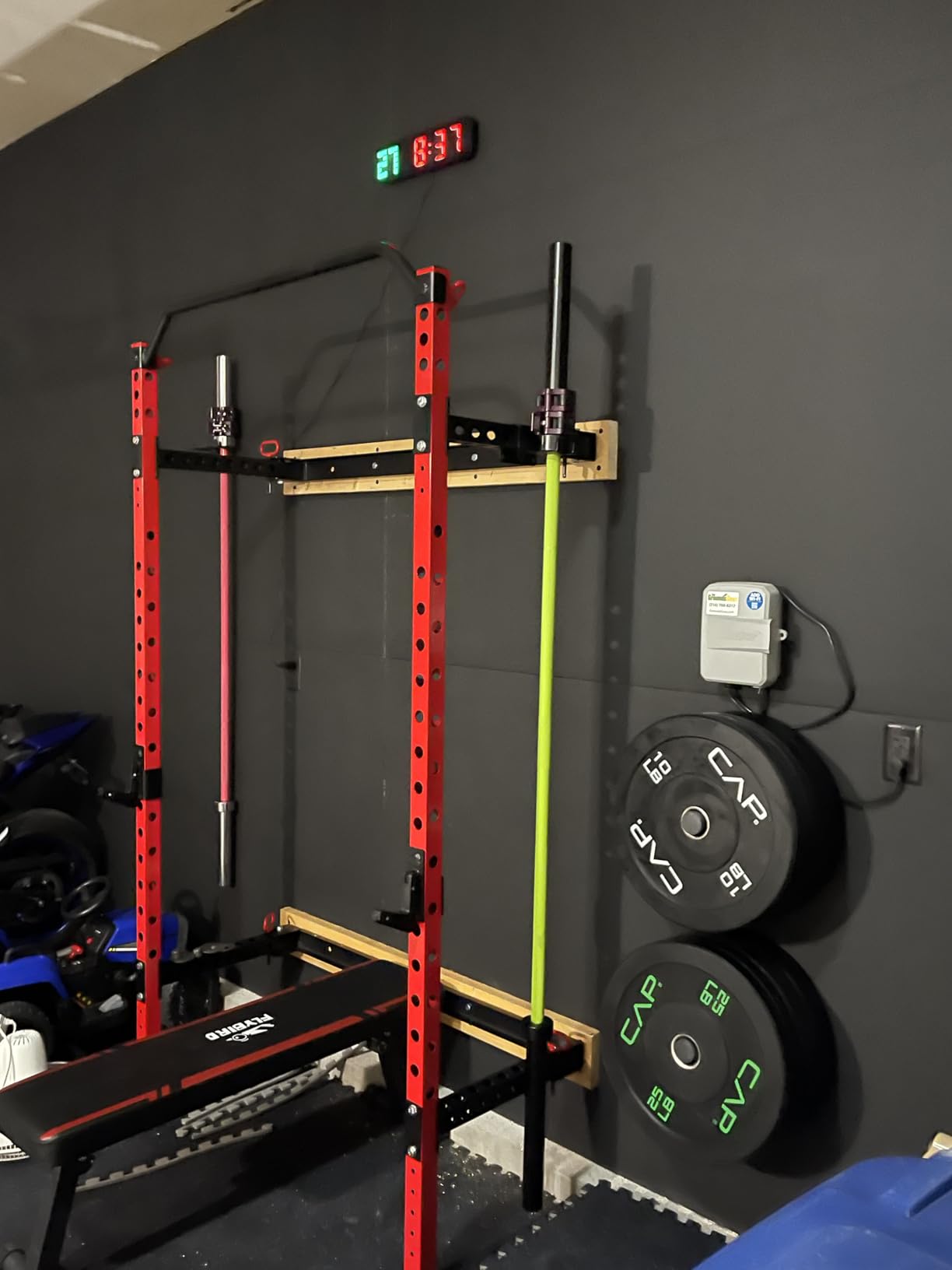
The JELENS is the most adjustable install in the group. With five top and seven bottom mounting holes plus a pre-drilled stringer, you can dial the installed height to fit an awkward ceiling rather than accepting the frame height as fixed.
It is rated to 1,100 pounds on 2 by 2 inch steel pipe, and it folds in about 15 seconds to roughly 2.08 square feet, which is a smaller folded footprint than it looks given the width.
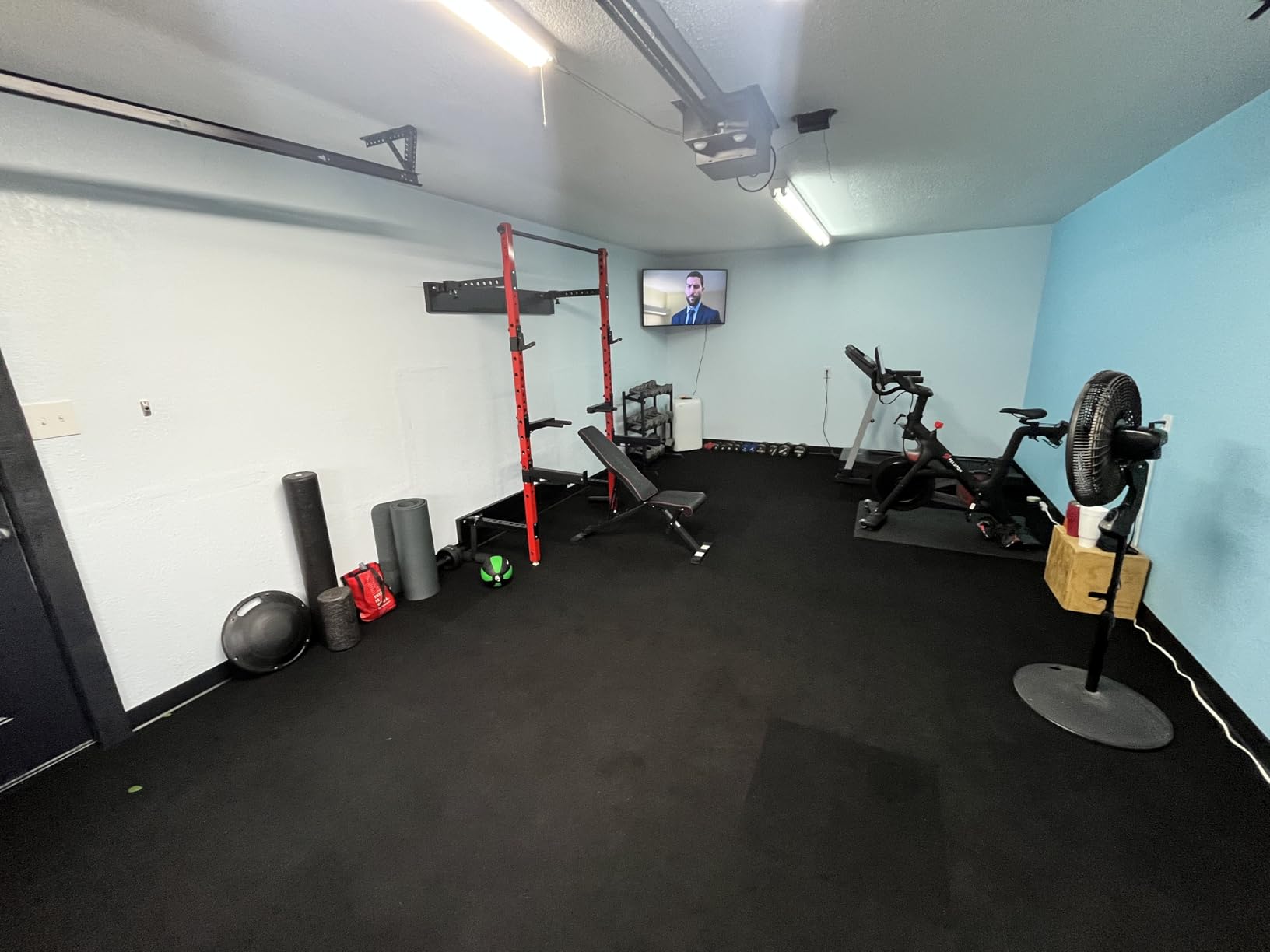
Folded depth is the honest limitation
Folded, the unit measures 50.7 inches long by 5.9 inches wide by 86.2 inches high, and that 5.9 inches is nearly three times the two-inch profile of the Mikolo, RitFit and MU racks. In a tight alcove that difference is the gap between storing the rack and losing the wall.
Open, it measures 50.7 by 23.6 inches, so the working footprint is deeper than the 19.7 inch frames elsewhere in this roundup.
Accessory flexibility and included hardware
Twenty-three front and 12 side hole positions give finer accessory positioning than most competitors, and the box includes J-hooks, a pin-on pull-up bar, a 360-degree landmine and safety bars, which makes it the best-supplied folding rack in this group.
Install and warranty reality
Installation takes two people and about half an hour, and wall mounting into studs or concrete is not optional. The warranty is 1 year, and the review base of 27 is one of the smaller samples in this roundup, so treat long-term durability as unproven rather than settled.
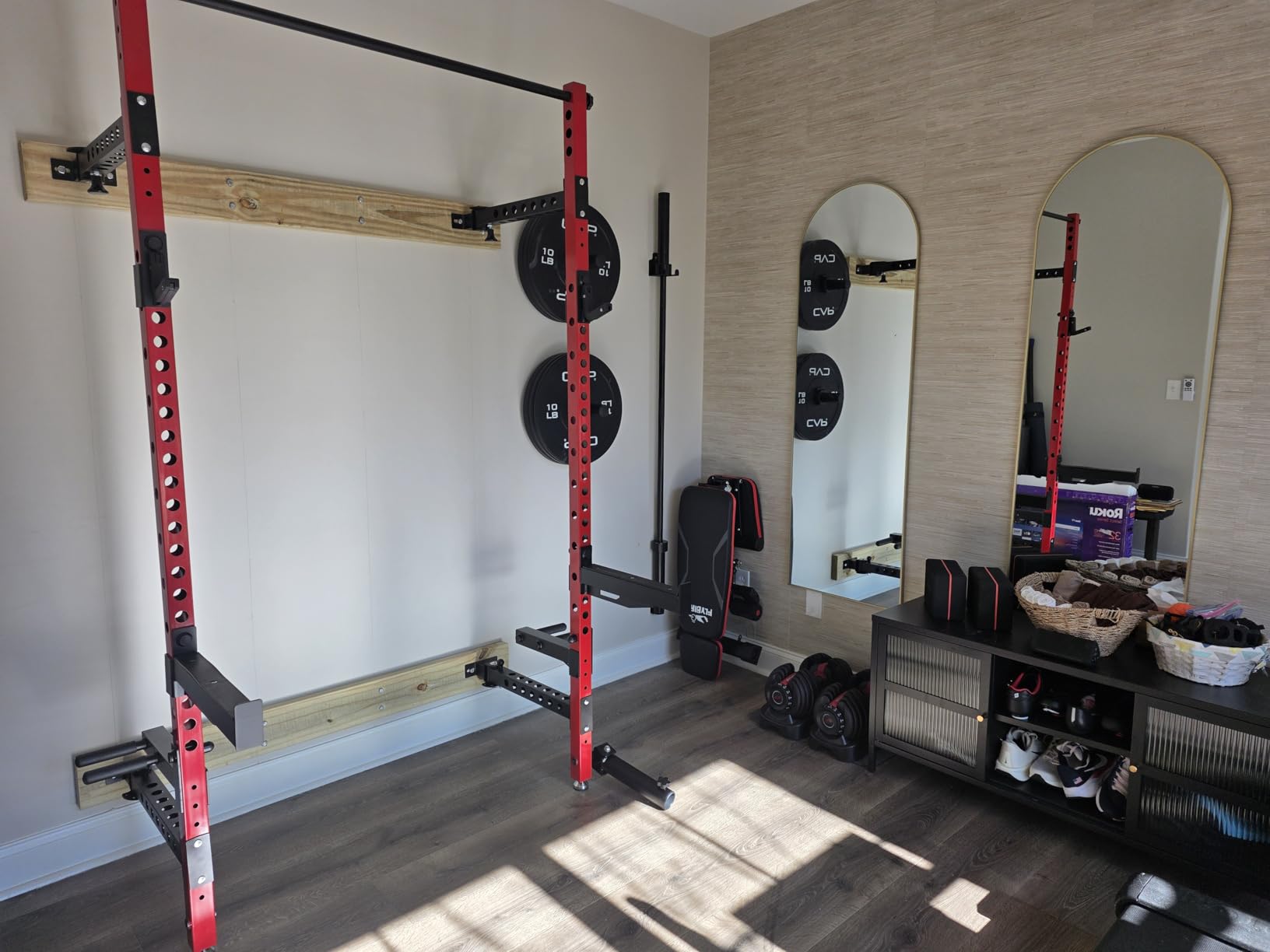
8. Mdeam Folding Wall Mounted Power Rack – Levelling Feet for Uneven Floors
Mdeam Folding Squat Rack,2.36″x2.36″ Wall Mounted Power Rack for Home Gym
60mm 2.36 inch uprights
1000 lb capacity
Open 25 x 44 x 87 in
Folded 44 x 87 in
+ Pros
- One of the lowest entry points among folding racks
- Folds in 15 seconds to a near-zero footprint
- Two stabilizer levelling feet adjust for uneven floors
- Wall mounting reduces tip risk versus a freestanding stand
- Landmine
- pull-up bar and J-hooks included
– Cons
- Thinnest steel spec in the group
- Only a 1 year warranty
- Smallest review base so durability is unproven
- Slightly taller than most rivals at 87 inches
Basement floors are rarely level, and this is the one rack here built around that fact. Two stabilizer levelling feet adjust vertically so the frame can be squared up on a sloping slab, which matters more for a bolted wall rack than it sounds.
It is also the newest listing in the group, which cuts both ways: there is no history of coating failure or hinge wear, but there are only 26 reviews behind the 4.5 rating.
The 60mm by 60mm uprights carry a 1,000 pound rating, and the frame opens to 25 by 44 by 87 inches before folding to 44 by 87 inches. That 87-inch open height is the tallest in this roundup, so it is the one rack here to measure twice.
Landmine, pull-up bar and J-hooks are in the box, and the product covers squats, bench presses, pull-ups, T-bar rows, T-bar squats and T-bar deadlifts according to the manufacturer.
The steel specification is the thinnest listed in the group and the material is listed as iron rather than an alloy steel, which is a fair warning for anyone planning to load it heavily. The 1 year warranty is also among the shortest in this roundup.
Who should buy this one
If your floor slopes and your budget is the constraint, this solves both at once. If you are loading heavy three days a week, the Mikolo or Signature Fitness is the more sensible target.
Reviewers report 61 percent five-star and 34 percent four-star ratings with no one-star reviews, and they consistently mention the levelling feet first when explaining what they like about it.
How to Buy a Power Rack for Low Ceilings
How much ceiling clearance do you actually need
Measure from the floor to the lowest hanging obstruction, not to the drywall. Joists, duct runs, light fixtures, sprinkler heads and garage door rails are all lower than the ceiling plane, and any of them can eat four inches you were counting on.
Then subtract your rubber flooring. Three-quarter inch mats are the common choice, and that is 0.75 inches of your budget gone before the rack arrives. A 72-inch rack under a 78-inch joist with 0.75 inch mats leaves 5.25 inches of real clearance, which is comfortable for static pull-ups and tight but workable for benching.
For a standing overhead press with a loaded bar you need closer to 8 feet of room, which is why that lift is usually the first casualty in a low room rather than the squat or the bench.
Which lifts survive at each ceiling height
Here is the mapping most low-ceiling guides skip. Squats, bench press, rows and most accessory work survive at every height on this list, because the bar path stays low. Overhead pressing needs roughly 8 feet of clearance for a standing press and lockout.
At 6 feet of ceiling, plan on squats, bench, dumbbell work, rows and machines. At 6 feet 6 inches you can add light seated pressing and landmine movements. At 7 feet, most static pull-ups and a limited overhead press become practical. At 8 feet, standard standing overhead press is available on a full-height rack.
Pull-ups are the other limit. A pull-up bar at 89 inches, as on the Mikolo, needs about 95 inches of ceiling for a tall person to hang with a slight knee bend, which is why bar height relative to the room matters more than the rack height.
Pull-ups and head clearance for lifters over 6 feet
A 6-foot lifter on a 68 to 72 inch bar has to bend the knees at a dead hang, which turns a full pull-up into an assisted repetition. The adjustable pull-up bar on the Signature Fitness is the only one in this group that lets you lower the bar rather than choose a different rack.
Our practical rule: measure your reach from floor to fingertip while hanging, subtract 3 inches of body extension, and check that number against the bar height. If it does not fit, wall racks are not the problem and neither is a shorter rack. The room is.
Overhead pressing when the ceiling is the limit
There are three workarounds that experienced lifters in low-clearance rooms actually use. Seated dumbbell or barbell press removes the standing balance requirement. The Z-press uses a low bench to open the shoulder angle and shorten the bar path. Landmine pressing keeps the load angled forward so the bar never travels above shoulder height.
All three keep the training stimulus while staying under a 7-foot ceiling. The lift most people give up in a low room is standing barbell overhead press, and giving it up early is better than racking a bar that has been scraped by a light fixture.
Steel gauge and upright profile on short racks
A lower gauge number means thicker steel. 11-gauge is commercial grade and appears on the Signature Fitness cage here, while 13-gauge and 14-gauge cover most of the rest of this group.
The technical argument for accepting thinner steel on a short rack is sound: a shorter frame has a shorter lever arm and puts fewer angular forces through the welds than a 90-inch cage, so the same gauge carries more usable stiffness at a lower height.
Upright profile matters just as much commercially. A 2 by 2 inch or 60mm upright is standard on wall racks, while the Signature Fitness uses 3 by 3 inch steel, and hole spacing decides whether Westside-standard accessories will fit. A 1 inch universal pattern, as on the MU rack, is the most forgiving.
Power rack vs squat stand vs half rack vs folding wall rack
A squat stand takes about 2 feet of depth when not in use, roughly half what a freestanding power rack needs, which is why members of r/homegym keep recommending them in small rooms. It gives you no safeties, so it is a partner lift rather than a solo lift.
A half rack gives up the back of the cage for storage and still needs floor space. A folding wall rack gives up the depth and the pull-up room to buy back an entire wall. A Smith machine fixes the bar path and needs no safeties at all, but it is a different movement and a much larger footprint.
For a room that has to do double duty as a garage, a bedroom or a storage space, the folding wall rack wins on the only measure that matters: floor space returned when you are not training.
Room layouts: basement, garage with a car, spare bedroom
Basements reward wall mounting. The rack goes on the longest stud run away from the sump, the frame folds flat between sessions, and the recovered floor is what makes a rower or a mat viable at all.
A garage that has to hold a car is a different problem, because the constraint is the door track rather than the drywall. Park the car first, then measure the clearance between the open door rail and the floor, and check the parked-car envelope against the rack footprint. A 47 inch wide folding rack fits a single bay comfortably; the 57.5 inch Signature Fitness needs a wider wall or a different bay.
In a spare bedroom, the wall rack is usually the only honest option, and the practical addition is a flush-mount LED panel and a folding mat so the room still reads as a room when the rack is stowed. Cardio belongs on a rower, because a treadmill is a fixed obstacle that a folding rack cannot compete with.
Assembly effort is a real selection criterion
Racks chosen on height constraints are often chosen reluctantly, which makes the build a factor people underestimate. Wall racks with thin instructions report half an hour to two hours for two people, and a meaningful share of one-star reviews on this list are install complaints rather than performance complaints.
Budget an hour with a second pair of hands, a stud finder and a drill with a masonry bit if you have a concrete wall. If you are buying alone or assembling after work, favour a rack with an included pre-drilled stringer, which is what separates the smoother installs in this group from the frustrating ones.
Stability in a small room
Wall mounting is the strongest stability answer available, which is why seven of the eight racks here use it. The trade is drilling, and the practical risk is a bolt that lands in drywall or between studs instead of in wood.
Mark every stud before unpacking, use the included stringer where one is provided, and add a backer board if the anchor spacing does not match your framing. Bolt the rack down if you are squatting heavy without a spotter.
If you refuse to drill, the Titan T-2 Series Short is the freestanding answer, and reviewers report no wobble under load. Load it, then push the top of the uprights and you will find any weakness in the base before you need it.
What to buy when even a 72-inch rack will not fit
If your usable clearance is under 78 inches, options narrow fast. An independent squat stand such as a Fringe Sport garage rack needs no fixings and takes almost no floor space when parked. A half rack with a low top frame handles squats and bench work without needing a full cage.
A Smith machine answers the fixed-bar-path question but is large and heavy. A doorway or fold-away rack is the renter answer. For everything else in the room, a rower over a treadmill and adjustable dumbbells fill the gaps that low ceilings create.
Frequently Asked Questions
What is the recommended ceiling height for a power rack?
Aim for at least 7 feet (84 inches) of usable clearance, measured from the floor to the lowest hanging obstruction rather than the drywall. Subtract your rubber flooring thickness, typically 0.75 inch, and you have your real ceiling. Standing overhead pressing with a loaded bar needs closer to 8 feet. Below 78 inches of usable clearance, a folding wall-mounted rack is the most realistic option.
What power rack is best for low ceilings?
The Mikolo Folding Wall Mounted Squat Rack is our top pick for low ceilings. It folds flat to about two inches of depth in roughly 15 seconds, carries a 1,000 pound rating on 13-gauge 2 by 2 inch uprights, and includes a pull-up bar reaching 89 inches. If you will not drill into a wall, the Titan Fitness T-2 Series Short is the only freestanding four-post rack here built for short ceilings.
How high should the ceiling be for a squat rack?
7 feet (84 inches) of usable clearance is the practical minimum for a squat rack, and 8 feet is comfortable. Measure to the lowest obstruction, which may be a joist, duct run, light fixture or garage door rail, and subtract your rubber mat thickness. Squats, benching, rows and pull-ups all work at 7 feet. Standing overhead press needs closer to 8 feet for a full lockout.
What squat racks are suitable for low ceilings?
Three categories work. Wall-mounted folding cages such as the Mikolo, RitFit, MU and JELENS fold away to about two inches of depth and fit ceilings around 86 inches. The Signature Fitness cage is shorter at 78.5 inches for very tight rooms. The Titan Fitness T-2 Series Short is a freestanding four-post rack offered at 71 and 83 inches for buyers who will not or cannot drill.
Can you do overhead presses with a low ceiling squat rack?
Not standing, with a loaded barbell, under 8 feet of ceiling. Three substitutes work well: a seated press removes the standing balance requirement, the Z-press uses a low bench to shorten the bar path, and landmine pressing angles the load forward so it never passes above shoulder height. These keep the shoulder stimulus without the collision risk.
Are there any disadvantages to using a short squat rack?
Three main ones. Vertical travel is reduced, so the usable range for overhead movements shrinks. A low pull-up bar forces lifters over 6 feet to bend their knees at a dead hang. Wall-mounted racks sit close to the wall, which rules out kipping and toes-to-bar pull-ups. Free-standing short racks are also lighter and less stable than a 90-inch cage, so bolt them down for heavy solo work.
Which Low-Ceiling Rack Should You Buy in 2026
If your priority is getting the floor back, the Mikolo Folding Wall Mounted Squat Rack is the choice we keep coming back to. It folds away in 15 seconds, holds a 1,000 pound rating, and gives you a pull-up station and UHMW J-cups in the box.
If you will not drill into a wall and need a permanent four-post footprint, go with the Titan Fitness T-2 Series Short. The 71-inch uprights are what make a rack possible in a 7-foot basement, and reviewers report it does not wobble.
If warranty length matters to you, the RitFit is the one with 36 months behind the frame and the highest average rating in the group. For thickest steel and the shortest overall height, the Signature Fitness cage wins on 11-gauge 3 by 3 inch steel at 78.5 inches tall, provided you have 57.5 inches of wall.
For cable work, the Goimu WM3-V4 is the only unit here with working dual pulleys. For the highest capacity figure and a landmine in the box, the MU rack is there, but plan extra drilling for a stud wall. For adjustable mounting height, the JELENS FS01 has the most install positions. And if your basement floor slopes, the Mdeam’s levelling feet solve a problem nothing else here addresses.
Before you order any of them, measure to the lowest obstruction and subtract your flooring. That single number eliminates half the list on its own, and it costs you a tape measure instead of a return shipping label.
Leave a Reply