
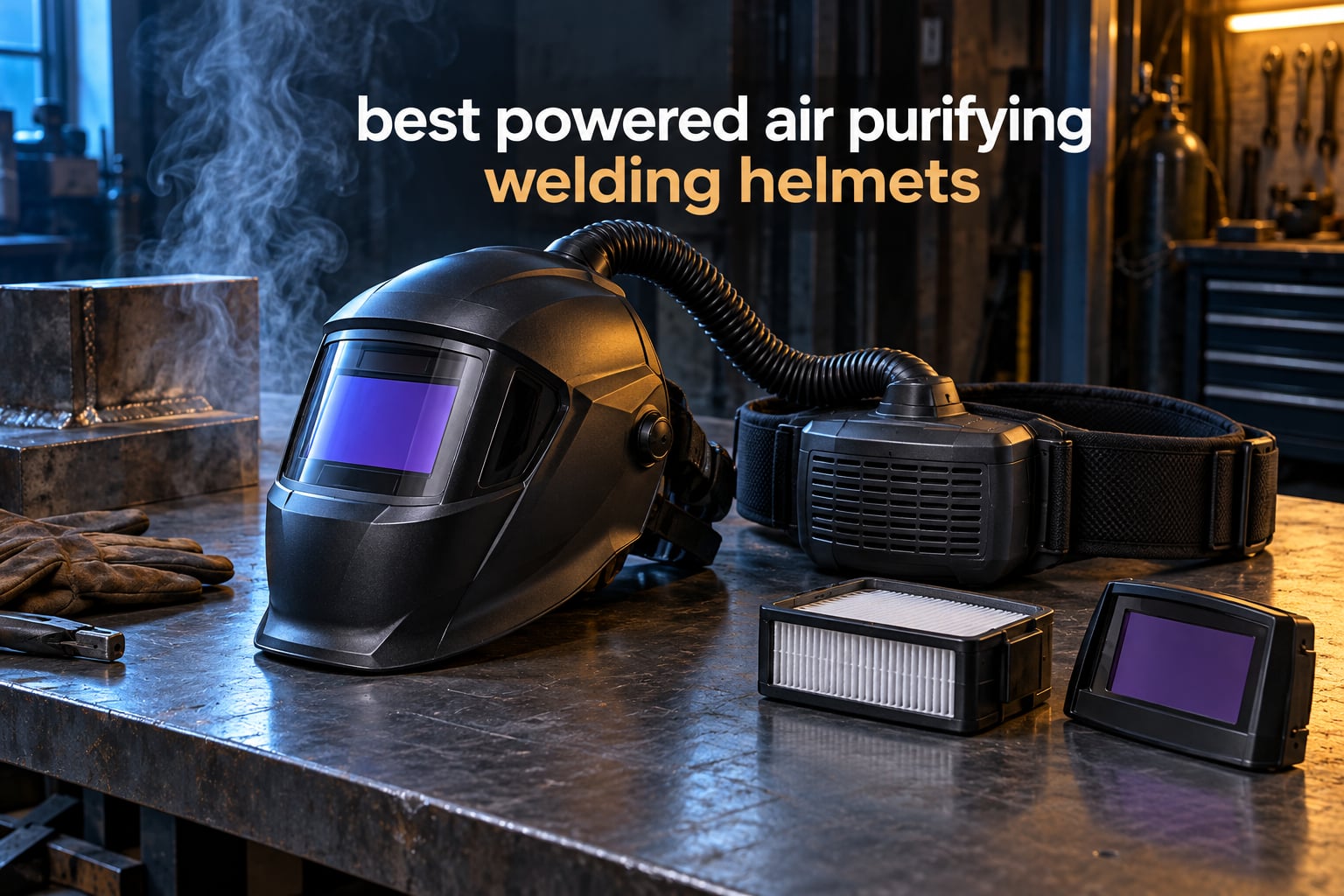
A powered air purifying welding helmet is an auto-darkening welding helmet with a battery blower that pushes continuously filtered air across the inside of the face shield, combining eye protection from arc light with filtered breathing air. That is the entire difference between a PAPR welding helmet and the standard hood most people buy, and it is the difference between breathing weld fume and not breathing it.
We spent weeks going through the specifications, filter types, blower runtimes and review histories of every powered air purifying welding helmet we could find, because the buying mistake in this category is rarely the lens. People spend months comparing switching speed and shade ranges, then discover their system ships with a particle filter instead of an HE filter, or that the battery will not survive a full shift, or that the respirator they just bought has to be worn over a hard hat they also need.
Welding fume is not a nuisance. It contains metal particulates and gases including hexavalent chromium, nickel, manganese, iron oxide and zinc from galvanized steel, and repeated exposure is a documented respiratory hazard. A cloth mask or a dust mask does nothing for it. What separates a PAPR from a half-face cartridge respirator is that the blower creates positive pressure, so airflow keeps arriving even when the wearer breathes hard, and the helmet can hinge up for inspection without taking the respirator off with it.
Before we get into the systems, it is worth being clear on what a welding helmet actually does and does not protect you from. Our guide on how auto-darkening welding helmets work covers the lens side, and it is a good companion read because a PAPR inherits every weakness of the helmet it is built around.
Our Top 3 Best Powered Air Purifying Welding Helmets (October 2026)
3M Speedglas G5-01 with Adflo
- Adflo blower included
- Variable Color filter with clear cool and warm options
- Dark shades 5 and 8-14
- App memory modes and maintenance log

Optrel Crystal 2.0 e3000x
- Shade 2.0 light state
- Autopilot shade 4 to 12
- True Color view
- External grind mode switch

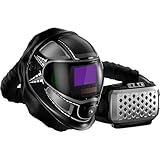
Drager X-plore 8500 PAPR Visor
- X-plore 8500 blower with HE filter
- Flip-up auto-darkening visor
- Digital ADF display and battery indicator
- Panoramic field of view with side windows
If you want one answer to the question of what is the best PAPR welding helmet, the G5-01 with the Adflo blower takes it on the strength of the largest body of independent feedback in this group. The Optrel is the comfort specialist and the Drager is the modular full-mask option, and both are legitimate choices for different reasons.
Comparing 8 PAPR Welding Helmets Side by Side in 2026
| Product | Details | Action |
|---|---|---|
|
|
Check Latest Price |
|
|
Check Latest Price |
|
|
Check Latest Price |
 |
|
Check Latest Price |
 |
|
Check Latest Price |
 |
|
Check Latest Price |
 |
|
Check Latest Price |
 |
|
Check Latest Price |
Read that table with one caution: filtration percentages in this category are manufacturer claims on a housing, not a measured APF. Only one unit in this group publishes a certified assigned protection factor, and that distinction matters more than any number in the feature list.
1. 3M Speedglas G5-01 with Adflo – The All-Round Industry Standard
3M Speedglas Heavy-Duty Welding Helmet G5-01 with G5-01VC ADF and Adflo High-Altitude PAPR Assembly, Bluetooth, Natural Color Technology, 46-1101-30iVC
Adflo PAPR blower with adjustable head suspension
Variable Color filter: clear, cool or warm
Shades 5 and 8-14
3M app memory modes and maintenance log
+ Pros
- Excellent weld puddle clarity with selectable tint options
- Airflow never fogs the visor
- Battery lasts most of a full shift
- Adjustable airflow direction
- Durable industrial build
– Cons
- Hood can slip and headgear needs readjusting
- Springy rear hose tilts the shield in long welds
- Narrower shell than the Speedglas 9100
This is the system most professional fabricators end up with, and the reason is unglamorous: the Adflo blower is simple, the filter change is simple, and the helmet has been in service long enough that a whole ecosystem of parts and headgear exists around it. Owners with industrial backgrounds consistently point to the clarity of the puddle and the fact that the airflow never fogs the visor, which is the single most common complaint about non-PAPR helmets.
The G5-01VC filter is the reason this is our top pick rather than a generic Adflo package. Variable Color Technology gives you clear, cool and warm tint options in the same filter, so you can pick a warm tint for stainless work and a clear one for layout and fit-up without swapping lenses mid-job. That flexibility is worth more over a year of daily use than any spec that only shows up on a datasheet.
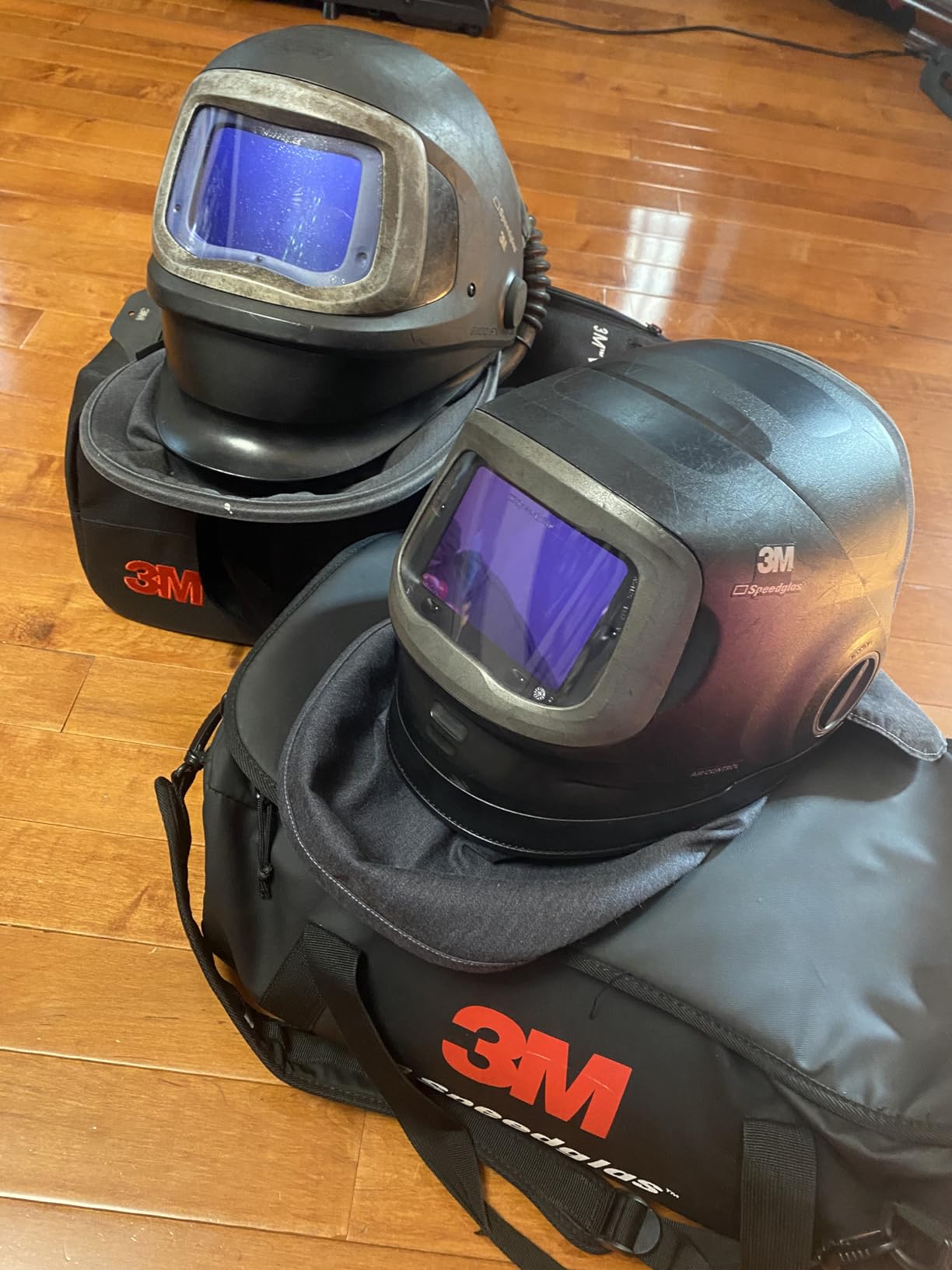
Adflo airflow and fume control over a full shift
The blower forces air across the inside of the shield continuously, which is what keeps the lens clear and keeps the fume out of your breathing zone. Owners report the visor staying fog-free and the battery lasting most of a full shift, and several mention that adjusting the airflow direction for hot or cold conditions makes a genuine difference in a hot shop.
Welders on r/Welding describe the Adflo as the one they would buy again, calling it nearly indestructible and pointing to its suitability for strapping on and crawling into tight spaces. That is the most repeated endorsement for any powered system in the forums, and it lines up with what the specification tells you: positive pressure that does not depend on the wearer inhaling through a tight seal.
Variable Color filter and the shade range that covers real shop work
Dark shade options run 5 and 8-14, which covers MIG, stick, TIG and cutting without a separate lens. The 3M CONNECTED EQUIPMENT app stores up to ten memory modes and keeps a maintenance log with hours in dark and light states, so if you weld stainless one day and aluminum the next you stop reteaching the helmet every morning.
The practical limitation of a higher shade number is TIG. Welders who do a lot of thin-gauge root passes often find shade 11 and above too dark for low-amperage work and step down a setting. The tint selection partly solves this because a lighter color option recovers usable light at a fixed shade, but it does not replace a dedicated TIG setting.
Headgear stability, the rear hose and the fit complaints
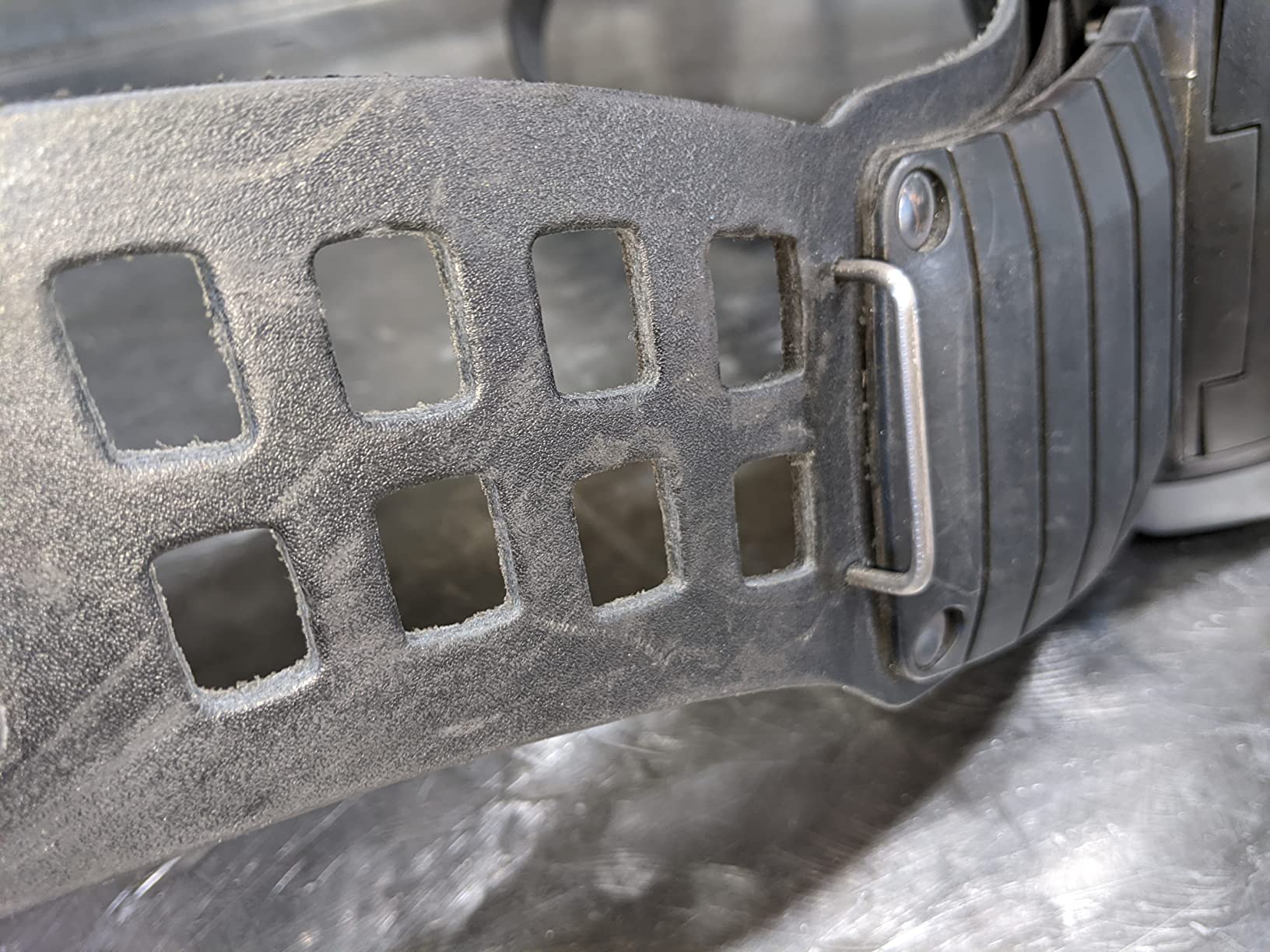
The most repeated drawbacks are physical rather than electrical. Owners report the hood slipping down the brow with one side of the headgear staying loose, and a springy air hose at the back of the headgear that tilts the shield during long welds. Both are adjustment problems, and both are resolved faster than most buyers expect with an afternoon spent on the harness.
The shell is also narrower than the Speedglas 9100 series, and slim ear muffs do not fit underneath it. If you work in a shop that requires hearing protection, test the muff clearance before you commit. Separately, some users are unimpressed with the filtration of the included filter, and a belt or backpack link for the blower may need a separate purchase.
Who should buy the G5-01 and who should not
Buy it if you weld full time, weld stainless or galvanized, work overhead or in tight spaces, or need to inspect your work with the helmet up while staying protected. Those four scenarios are where the Adflo earns its price and where the positive pressure genuinely protects you.
Skip it if you weld a few hours a month. At this tier you are paying for industrial capability you will not use, and a good auto-darkening helmet plus a half-face air-purifying respirator covers a hobbyist workload for a fraction of the outlay.
2. Optrel Crystal 2.0 e3000x – The Comfort Story in This Group
Optrel Crystal 2.0 e3000x PAPR System, 4530.051
Crystal lens with a shade 2.0 light state
Autopilot sets shade 4 to 12 automatically
True Color view of the weld pool
External grind mode switch
+ Pros
- Exceptional clarity in the light state
- Ventilation integrates cleanly with the hood
- Battery easily lasts a 12-hour day
- True Color gives a detailed pool view
– Cons
- Very small pool of customer reviews
- Some buyers rate the shade response less highly
The pitch here is not filtration, it is what the helmet does before the arc strikes. The shade 2.0 light state is bright enough to see your work, your material and your tape marks without lifting anything, and the True Color lens passes more of the visible spectrum than a standard green-tint auto-darkening filter. For a fabricator doing fit-up and layout all day, that is worth a great deal.
Autopilot is the feature that separates this from most of the field: arc brightness detection adjusts the shade between 4 and 12 without you touching a control mid-pass. The external grind mode switch sits on the outside of the shell, so you do not have to remove the helmet or reach blindly for a control with a gloved hand.
Battery runtime and the all-shift claim
Owners report the PAPR battery easily lasting a 12-hour day, which removes the spare-battery logistics that bother people about other systems. If you work long production shifts, a blower that does not need a mid-shift charge is a real advantage over units whose runtime is measured in a few hours.
The honest caveat is that the evidence here is thin. There are only a handful of customer reviews for this system, and reviewers describe it as excellent but expensive. With a small sample, we would want to see more long-term feedback before treating the comfort claim as settled.
True Color, the shade 2.0 light state and outdoor work
Sensitivity adjustment handles changing ambient light, which matters for anyone welding outdoors or in a bay open to the sun. The 2.0 light state is the practical reason many fabricators end up preferring Optrel for thin-gauge TIG work, where the difference between seeing and squinting is the difference between a clean root and a rework.
Our guide to the top Speedglas welding helmets covers the competing view of lens quality. The short version is that Optrel wins on light-state brightness and color fidelity, while Speedglas wins on the depth of the support network around the system.
Consumable pricing, which is a genuine purchase driver
Regulars on r/Welding recommend Optrel partly on this basis, noting that parts and consumables are reasonably priced compared with the alternatives. That is not a small thing: filters, batteries and lenses are the recurring costs that decide what a system actually costs you over five years, and a cheaper helmet with expensive pads can cost more than a premium one with cheap ones.
The practical move is to price the consumables before you price the helmet. If your nearest supplier does not carry the filter for your chosen system, the true cost includes waiting on a supplier, and that changes the calculation.
Who the e3000x suits
It suits TIG-heavy fabricators, anyone welding outdoors, and anyone who spends a lot of the shift with the helmet flipped up for fit-up and inspection. If you only ever weld thick structural steel in a dark bay and care mainly about toughness, this is more helmet than you need.
3. Drager X-plore 8500 PAPR Visor – Full Mask Protection With a Flip-Up Lens
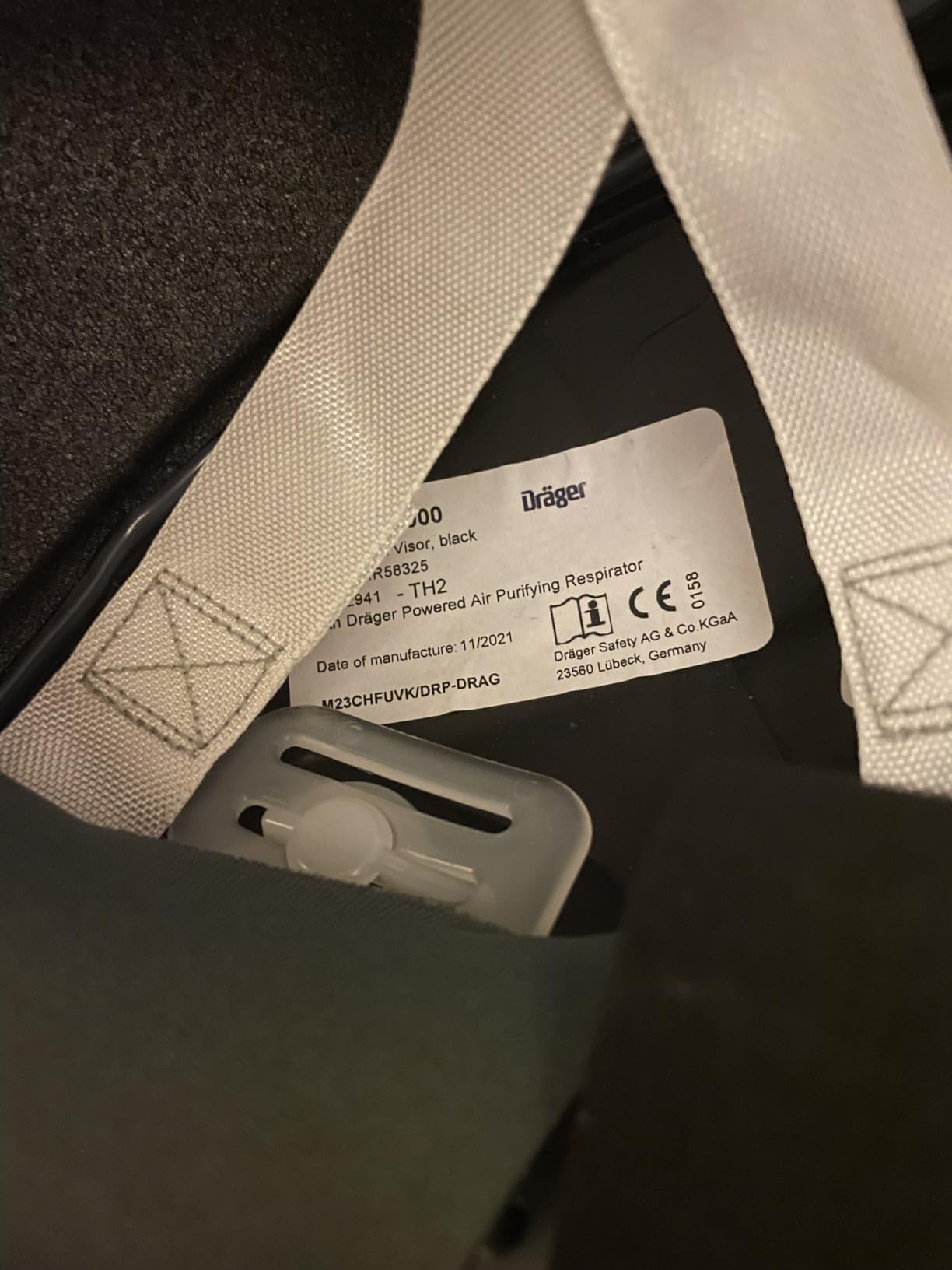
Dräger X-plore 8500 PAPR Welding Visor Premium Set – Full Face Respirator Mask with HE Filter, Auto Darkening Flip-Up Visor, Rechargeable Battery, Protection for Welding, Grinding, Industrial Safety
X-plore 8500 blower with HE filter and pre-filters
Flip-up auto-darkening visor with digital display
Solar cell and battery dual power
Arc sensors work with partial lens coverage
+ Pros
- Battery outlasts its rated runtime in real use
- Cool airflow avoids humidity and sweat
- Visor stays clear at normal breathing
- Modular design accepts different visors
- Complete set with international charger plugs
– Cons
- Shell presses on the back of the head for larger heads
- Limited harness adjustment range
- Proprietary hoses and filters are costly and hard to source
Every other system on this list is a welding helmet with a blower attached. This one is built the other way round: a full-face respirator with a welding visor hinged up off the front. That architecture gives you genuine full-face coverage, and it is the reason the panoramic field of view with side windows is possible at all.
Reviewers treat it as professional-grade modular equipment. They report that the battery outlasts its rating, that airflow is cool enough to avoid humidity and sweat, and that dimming speed is at the level of the top welding helmets rather than a compromise forced by the respirator shell.
Panoramic view, side windows and partial lens coverage
The wide field of view with side windows changes how you work on a vessel or a frame, because you can see your surroundings without turning your head into the shell. Arc sensors still provide eye safety even with partial lens coverage, so lifting the visor to look at a joint does not mean going unprotected from infrared light.
There is also a digital ADF display and a battery indicator, which removes the guesswork of checking whether the unit has charge before a long tack sequence. Dual power from a solar cell and a battery covers the case where a battery is flat at the start of a shift.
Fit on larger heads and harness adjustability
This is where the full-face design shows its cost. Several buyers report the hard shell pressing uncomfortably on the back of the head if you have a large head, and that the helmet offers limited adjustment range and takes patience to fit with multiple straps. If you are between head shapes, this is a returnable purchase or a shop-floor trial, not a blind order.
One more fit note: an enclosed hood can feel claustrophobic when the fan is off, so test it with the blower running before committing. Airflow direction is the difference between a system you forget you are wearing and one you reach for first.
Proprietary hoses and filters are the real running cost
The most common complaint is not performance, it is supply. Hoses and filters are proprietary, expensive and hard to source locally, and some buyers report filters having to be purchased separately depending on the package contents. That is a planning problem, not a defect, but it should shape your purchase order.
On the positive side, the package is close to self-contained: blower, battery, single charger, HE filter, pre-filters, leather belt, durable hose, FR hose cover and international charger plugs. Verify the contents against the box contents before you rely on that, because a missing filter turns a complete set into an incomplete one.
Who should buy the X-plore 8500
Buy it for confined-space work, shipyard and field work, and any job where a welding helmet alone is not an acceptable respiratory answer. It is also the right pick for workers who have a documented sensitivity to fume and want a face covering they can wear continuously.
4. 3M Adflo with Versaflo M-Series – Nothing Left to Buy Separately
3M Adflo PAPR and Versaflo M-Series Helmet Kit w/Speedglas Welding Shield
Blower, breathing tube, belt, filters, battery and charger included
Leather shroud against arc, sparks and spatter
Selectable shades 5 and 8-13 with a shade 3 light state
Hard headcover for impact and debris
+ Pros
- Complete kit with blower
- battery
- charger
- belt and filters
- Leather shroud shields against arc
- sparks and spatter
- Shade 3 light state suits setup work
- Hard headcover for impact protection
– Cons
- Only a single customer rating
- No independent feedback on long-term durability
- Single-review sample makes reliability hard to judge
This is the Adflo blower packaged with the Versaflo M-Series helmet, and the appeal is administrative rather than technical. The kit includes the blower unit, breathing tube, flow indicator, spark arrestor, belt, filters, filter cover, lithium ion battery and charger, which is the entire list of things people forget to order when they build a system piece by piece.
The leather shroud is a differentiator from the fabric shells on most welding helmets. It takes spatter and abrasion better than cloth, and for shop work where the helmet gets knocked against steel all day that difference shows up within months.
What the M-Series hood adds over a welding helmet
A hard headcover protects against falling objects and flying debris, which is the reason the M-Series family is common on construction and utility sites. If you are welding under a hard hat requirement, a helmet with a hard shell can serve where a soft shell cannot, though you should still confirm the arrangement your site accepts.
Selectable shades cover 5, 8-13 and a shade 3 light state. The very light 3 setting is useful for chasing layout, filling in a bit and reading a tape measure, though it offers very little protection if an arc strikes while you are in it.
Fit and the honest limits of one review
This kit carries a single customer rating, which means there is no independent feedback on durability, fit or battery longevity. We include it because the package specification is genuinely complete and the M-Series is a proven industrial platform, not because a five-star score from a single buyer proves anything.
Our advice is to treat it as a complete system rather than a helmet with an attachment, and to check with the supplier that the blower, helmet and filter are a matched set before you order.
Who should buy the Versaflo M-Series kit
Buy it if you are starting from nothing, if you work somewhere that requires a hard headcover, or if you want the Adflo airflow without researching which belt, hose, filter cover and battery to buy. It is a poor choice if you want an independently proven track record, because the feedback pool here is one review.
5. RPB Safety Z-Link with PX5 PAPR – The Only Certified APF 1000 Unit Here
RPB Safety Z-Link Respirator Helmet with PX5 PAPR – face Seal
NIOSH approved with an APF 1000 rating
HEPA filter, high capacity battery, flow meter and belt included
Multi-adjustment helmet system
Clear replaceable grinding lens
+ Pros
- NIOSH approved with an APF 1000 rating
- Complete kit with blower
- battery
- charger and flow meter
- Built in Royal Oak Michigan with domestic componentry
- Multi-adjustment helmet system
– Cons
- Only two customer ratings
- Replacement grinding lens and filters not included as spares
- Too few ratings to establish a reliability record
If you want the number that matters rather than the number on the box, this is the one. The Z-Link is NIOSH approved with an assigned protection factor of 1000, which is the highest protection rating any of the systems in this roundup publishes. In a facility where a respiratory protection program is audited, that certification is the argument you will have to make.
The kit ships with the helmet, a PAPR unit with a HEPA filter, a high capacity battery, a battery charger, a flow meter, a belt, a quick release belt support and a quick connect breathing tube. The flow meter matters more than it looks: it lets you confirm airflow at the facepiece each shift instead of assuming the blower is still doing its job.
What APF 1000 means in practice
An assigned protection factor is the ratio between the concentration of a contaminant outside the respirator and inside it. An APF of 1000 means the wearer is treated as breathing air at one thousandth of the ambient concentration, provided the unit is NIOSH approved, fitted correctly and used with a maintained filter. That is the level used for the most demanding environments, including some pharmaceutical and hazardous waste work.
For welding that is usually more protection than the exposure demands, which is precisely why it is worth paying attention to. If your employer writes a required APF into your respiratory protection program, this is the only unit here that meets the highest tier on paper.
Build quality, adjustment and the made-in-Michigan angle
The helmet is made in Royal Oak, Michigan using domestically sourced componentry, and it carries a one-year manufacturer warranty. The multi-adjustment helmet system is designed around a snug face seal, which is the point of a full-face respirator helmet: the seal is what makes the protection real, and a helmet that rocks around your face destroys it.
There is a clear replaceable grinding lens, which is a small thing that saves real time on fab shops that do a lot of grinding between welds. You can swap to it without removing anything else.
Who should buy the Z-Link
Buy it if you work under a formal respiratory protection program, if you weld in confined spaces or on contaminated structures, or if your employer specifies an APF. Choose it cautiously if you want a well-worn review history, because two ratings is not a track record.
6. ANDELI PAPR Helmet – The Widest Panoramic View in the Group
ANDELI Welding Helmet with Respirator,99.95% PAPR Filtration Efficiency Panoramic 180° Large Viewing Powered Air Purifying Respirator Auto Darkening Welding Helmet with Light
Particle capture over 99.95 percent
Airflow aimed at the face, the visor or between
Four sensors switching in 1/25000 seconds
180 degree view with a 3.86 x 2.44 inch main area
+ Pros
- Large 180 degree view with side windows for situational awareness
- Very fast 1/25000 second transition on four sensors
- Integrated LED work light for detail work
- Airflow can be aimed at face or visor
– Cons
- Weakest rating distribution in the group at 3.8
- Owners report airflow and filtration below the stated figure
- Some say the PAPR and auto-darkening modules underperform
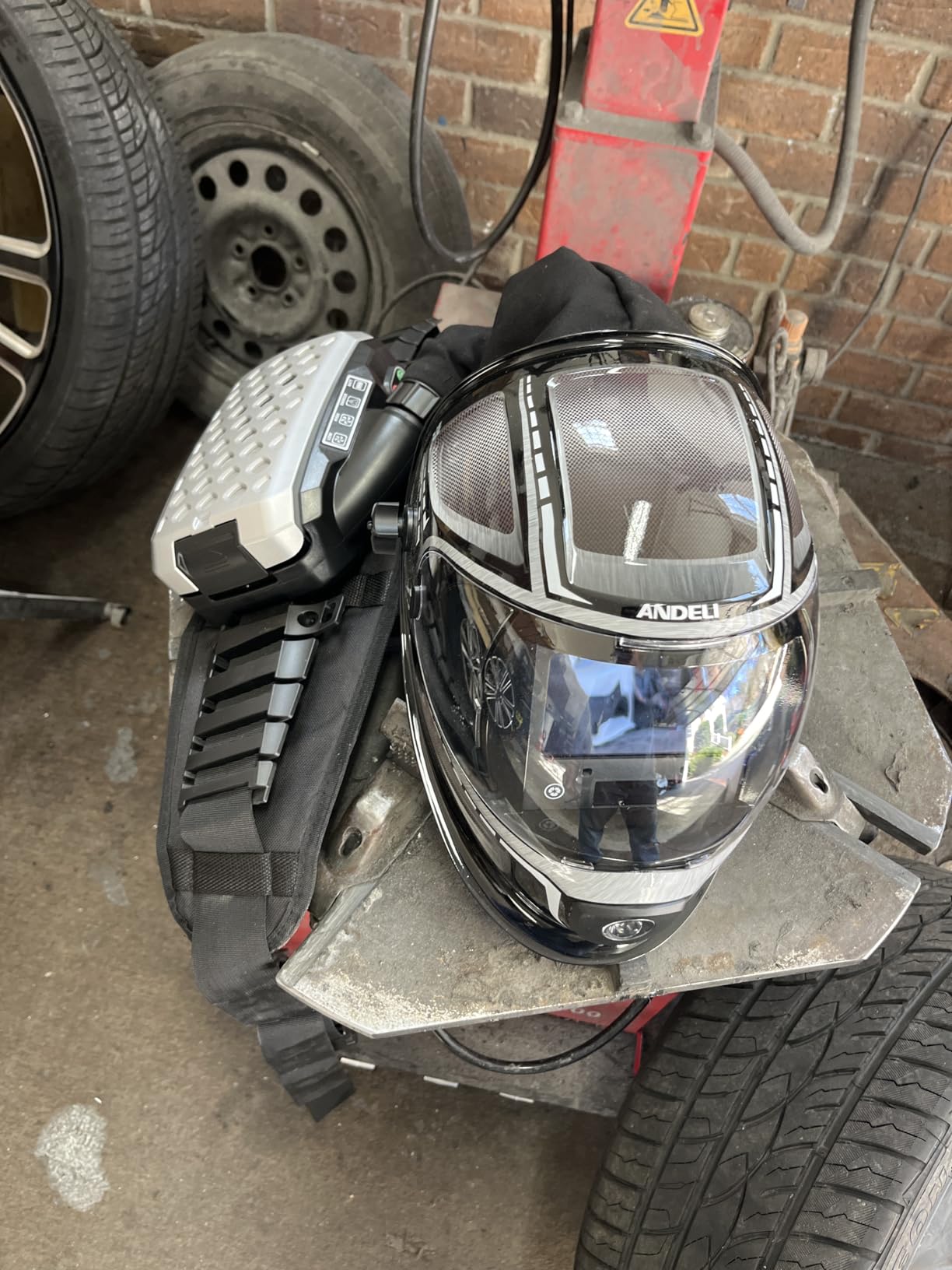
This is the most reviewed and least expensive unit we looked at, and it is the most polarizing. The 180 degree viewing design with a 3.86 x 2.44 inch main auto-darkening area plus a 3.72 x 1.76 inch DIN4 non-auto-darkening side view is genuinely the largest field of view in this group, and buyers who like it say so enthusiastically.
The airflow optimization system is also thoughtful for a budget product. Instead of blowing air straight at the lens or straight at your face, it can direct airflow to the face, to the visor or in between, which is the kind of adjustment that usually only appears on systems costing several times more.
Lens performance and the four sensors
Switching is specified at 1/25000 seconds across four sensors, which is at the fast end of what the professional helmets claim. The integrated LED work light is a real convenience for welding assistants and for anyone doing prep work in a dim bay, where a headlamp on the helmet beats a separate light clipped to a pocket.
On paper the lens half of this helmet is competitive with units costing several times as much. That is important context for what follows, because the problems reported are concentrated in the air module rather than the optics.
Filtration claims versus filtration reality
The headline is 99.95 percent particle capture. Reviewers report that airflow and filtration performance draw complaints despite that figure, and some buyers say the auto-darkening and PAPR modules underperform the advertised claim. At 3.8 average with roughly a fifth of reviews at one star, the pattern is consistent enough that we take it seriously.
This is the general warning about percentage claims in this category, and it applies to every system on this page. A filtration number tells you what the filter media can capture, not what reaches your lungs through a leaking seal or a failed blower. Only a certified APF from a NIOSH-approved system is a protection claim in the regulatory sense.
Who should buy the ANDELI
Buy it if you want maximum field of view and an integrated LED on a budget, and you are willing to accept that the respiratory half of the product is less proven than the optical half. Do not buy it if fume exposure is severe, if you work on galvanized or stainless where hexavalent chromium and zinc fume are the concern, or if you need a documented protection factor for your employer.
7. KIPPDURO True Color PAPR Helmet – The Cheapest Way Into Powered Air
True Color Auto Darkening Welding Helmet with PAPR Respirator System, Large Viewing Screen Welding Hood with Fan for MIG TIG ARC, Powered Air Purifying Respirator Mask (Black)
True color lens with a shade 4-13 auto-darkening range
Rechargeable battery rated up to 10 hours
Three reusable filter boxes and twenty cotton pads
Lightweight ABS shell with adjustable headgear
+ Pros
- Filter boxes and pads are easy to swap and last a long time
- Smooth steady airflow through the hood
- True color lens with a shade 4-13 range
- Large panoramic lens in a lightweight shell
– Cons
- Only one customer rating on record
- No long-term durability feedback
- Single review gives no basis for judging battery or filter life
At the bottom of the range, the deciding factor is almost always the consumables rather than the hardware. This one ships with three reusable dust filter boxes and twenty cotton filter pads, and the single available review specifically praises how easy the boxes are to swap and how long the filters last. That is the right thing for someone on a budget to own a supply of.
The lens is a true color unit with a shade 4-13 auto-darkening range, and the shell is lightweight ABS with adjustable headgear. Light weight matters more in a budget helmet than people expect, because a heavy hood at the budget end is usually a hood nobody wears for eight hours.
Battery runtime and the 10-hour claim
The rechargeable battery is rated up to 10 hours on a single charge, which would comfortably cover a full shift if the rating holds. Treat that as a specification rather than a result, because there is exactly one customer rating on this product and no long-term battery evidence at all.
Our general advice for any budget PAPR is to buy a second battery alongside the unit if the seller offers one. Blowing a battery at the end of a shift is a much worse outcome than a small extra outlay, and budget blowers are the ones most likely to lose a cell early.
Where budget systems usually fall short
Two things to check before you commit: whether the cotton pads are the only filtration stage, meaning they are not rated for the heavy metal particulate in weld fume, and whether a replacement filter is sold as a genuine spare rather than a generic pad. Ask the seller directly and get the answer in writing.
Nobody on r/Welding recommends a budget integrated system, and the forum consensus is that the right answer for occasional welding is a name-brand auto-darkening helmet plus a separate quality cartridge respirator. If you are welding regularly, a budget PAPR is defensible. If you are welding occasionally, it is not the cheapest path to the same protection.
Who should buy the KIPPDURO
Buy it if you are a regular hobbyist who wants powered air and wants to be able to replace filters yourself. Treat it as a light-duty shop tool, not as a system to weld galvanized or stainless with. If your exposure is heavy, save up for a system with a published NIOSH approval.
8. YESWELDER LYG-Q800D – Solar Powered Air With Honest Limits
YESWELDER Powered Air Purifying Respirator Auto Darkening Welding Helmet LYG-Q800D Welder Hood
Fume capture up to 99.97 percent at 0.3 micron filtration
Solar powered with a lithium ion battery included
3.94 x 3.23 inch screen with a DIN5 side view
1/1/1/1 optical clarity true color lens
+ Pros
- Removes the need for separate glasses and respirator
- Airflow across the whole breathing zone
- True color 1/1/1/1 optical clarity
- Large viewing screen with four sensors
– Cons
- Battery does not hold a charge for some owners
- Blower motor and belt bracket failures reported
- Filters are proprietary and not sold as spares
The idea here is the one most people want: solar powered auto-darkening operation that keeps the lens running through a shift without a separate battery charger, combined with a powered air module that covers the whole breathing zone. Buyers like the combination precisely because it removes the need for separate safety glasses and a separate respirator, which is a stack of things to manage.
On the lens side it is competitive with the premium units. A large 3.94 x 3.23 inch viewing screen, a DIN5 non-auto-darkening side view, four sensors and a 1/1/1/1 optical clarity true color lens put this well above the usual budget standard.
Solar operation and the battery complaint
Solar powering is the differentiator, and it is also the source of the most serious feedback. At least one owner measured under two hours of runtime from the included battery, and another reports a blower motor that failed within a month of use. The seller issued a refund on a failing unit, which tells you something about how common that failure is.
It is worth understanding what solar means on a PAPR. The solar cell tops up the auto-darkening lens, which is a tiny draw, and the blower is the part that actually consumes the battery. A solar lid does not rescue a blower battery that will not hold charge.
Build quality, the belt bracket and the filter supply problem
One owner snapped the plastic belt bracket during light use and found the head strap hard to adjust, and a reviewer with decades of breathing apparatus experience described the build as cheap plastic. We take that seriously because the bracket is a load-bearing part on a system whose whole value is continuous airflow.
The filter situation is the other issue. Replacement filters are proprietary and expensive to reorder, and spare batteries and filters are not sold separately by the maker, so when a filter reaches the end of its service life you are waiting on a supplier. Plan for a spare filter and a spare battery in the box from day one, because you will not be able to walk in and buy one.
Who should buy the LYG-Q800D
Buy it if you are a working hobbyist who wants one piece of equipment instead of a helmet plus glasses plus a respirator, and you have a plan for spare filters and batteries. If you weld galvanized, stainless or in a confined space, choose a system with a published NIOSH approval and APF instead.
How to Choose a PAPR Welding Helmet Without Buying the Wrong System
Most expensive mistakes in this category come from buying the wrong category of respirator, not from choosing a weaker one. Once you know which of the three types of respiratory protection you actually need, the rest of the decision narrows fast.
PAPR vs supplied air vs air-purifying cartridge: which one you actually need
There are three distinct categories, and confusing them is the single biggest source of overspending in this category.
Air-purifying cartridge respirator. A half-face or full-face mask with HE or P100 particle filters, sometimes with an organic vapor cartridge. Protection depends on the seal and on how hard you are breathing. Cheap, widely available, and a sensible answer for occasional welding.
Powered air purifying respirator (PAPR). A battery blower draws ambient air through a filter and delivers it to the facepiece under positive pressure. Protection continues when the wearer inhales hard, and the helmet or mask can be lifted for inspection without losing the face seal. The standard for full-time shop work.
Supplied air respirator. Clean air comes from a compressor or a remote source through a hose. It offers the highest protection and handles heavy fume loads and unusual atmospheres, but you are tied to a hose, which is why supplied air appears mostly in confined spaces, tanks and field crews.
Our guide to passive welding helmets covers the lens options, but the point here is that a passive hood plus a half-mask respirator is two separate pieces with two separate failure modes. A PAPR integrates them into one system with one seal and one airflow path.
NIOSH approval, assigned protection factor and why the APF number decides it
An assigned protection factor is the ratio of contaminant concentration outside the respirator to the concentration the wearer is treated as breathing. It is the most important number on the label and the one that manufacturers are least consistent about publishing. Among the systems here, the RPB Safety Z-Link is the one that states a NIOSH approval and an APF of 1000.
Three practical points follow from that. First, a filtration percentage is not an APF. Stating 99.95 or 99.97 percent particle capture describes filter media performance, not the protection level of the assembled device, and the difference matters when an employer asks for a number. Second, a respirator medical evaluation and a fit test are required steps in a formal respiratory protection program, and neither is included with any helmet on this page. Third, you cannot legally or safely use a respirator in a workplace program without the evaluation, regardless of where you bought it.
Filter classes also differ in ways that matter by material. HE filters handle particles only. P100 additionally handles oil-based aerosols, which is why coated, galvanized and oily work calls for a P100 rather than an HE. An organic vapor cartridge captures gases and vapors such as solvents and zinc fume, and it is often sold as an optional add-on and often misunderstood by buyers.
Lens specs that matter: shade range, arc sensors and optical clarity
Shade range is where most buyers over-think. Higher is not better. Shade 11 and 12 are right for heavy structural work and will be close to unusable for low-amperage TIG on thin gauge, which is the situation where the 2.0 and 3.0 light states on the Optrel and the Adflo Versaflo earn their keep.
Arc sensors matter more for TIG than for MIG, because TIG arcs are narrower and easier to miss. Four sensors is the safe number if you do a lot of TIG. Optical clarity ratings such as 1/1/1/1 describe how evenly the lens transmits light across the visible spectrum, and a higher second value matters most to anyone who grinds and polishes a lot.
Blower placement, battery runtime and the hot-shop comfort trade-off
Constant airflow is a feature and a complaint at the same time. Welders in poorly ventilated shops welcome it because fume rises into the breathing zone. Welders in an already hot shop sometimes find the cool air on the face as unpleasant as the heat, which is why adjustable airflow direction is worth paying for.
Blower placement is a configuration choice buyers do care about. Belt mounting keeps the weight low, which helps with neck fatigue on long overhead welds, while a backpack strap or backpack unit moves the load off the belt for people who are constantly reaching overhead. Our pick of a lighter auto-darkening helmet is covered in the Speedglas helmet roundup, and the same weight logic applies once the blower is added.
Ask one question about battery life: does it last a full shift, and what happens if it does not. The Optrel is reported to run a 12-hour day, the KIPPDURO is rated up to 10 hours, the 3M is reported to last most of a shift, and the YESWELDER has owners measuring under two hours on one unit. Those are the range of experiences you may have.
Total cost of ownership: filters, batteries and the medical evaluation
Why is PAPR so expensive? Because the unit is a small industrial blower, a facepiece, a certified filtration system, a battery and a set of custom molded parts, and because the certification and the spares ecosystem are what you are paying the premium for. The sticker price is not a markup on a fan. The ongoing cost is where the comparison actually gets made.
Build your own five-year figure from three inputs: the unit, a spare filter every few months depending on fume load, and a battery every few years. Then add the recurring respirator medical evaluation if your employer requires one, which is a cost nobody in the marketplace mentions. A system with cheaper filters than its rival can be genuinely cheaper over five years, and this is the reason the Optrel is recommended on r/Welding for reasonably priced consumables.
If you are weighing spend against spend, our budget welding helmet guide is the honest alternative for a hobbyist, paired with a half-face air-purifying respirator. That pairing costs a fraction of a PAPR and, for a few hours of welding a month, protects you adequately.
5 checks to run before you buy a bundle online
Marketplace listings in this category are confusing, and forum users report difficulty telling what is actually in the box. Run these five checks.
Find the NIOSH approval number on the respirator, not just on the helmet. If the listing shows no approval number, assume the protection claim is unverified.
Match the part numbers. A helmet part, a blower part and a filter part are three separate items, and a bundle can quietly pair components from different generations.
Confirm the filter class in the box. HE, P100 and organic vapor are not interchangeable, and cotton pads are not HE filters.
Check that a spare filter and a spare battery are available separately for the exact model, and note how long they take to arrive.
Confirm the warranty length in writing, and check that the blower, the battery and the facepiece are all covered rather than the helmet alone.
Frequently Asked Questions
What is the best PAPR welding helmet?
For most full-time welders the 3M Speedglas G5-01 with the Adflo blower is the best PAPR welding helmet, because it has the largest body of independent owner feedback in its class and the filter and battery are both serviceable. The Optrel Crystal 2.0 e3000x is the pick for comfort and light-state clarity, and the Drager X-plore 8500 is the pick when you need full-face coverage.
Is a PAPR welding helmet worth it?
A PAPR welding helmet is worth it if you weld full time, work on galvanized or stainless steel, weld overhead or in confined spaces, or find a half-face respirator uncomfortable over a full shift. It is not worth it if you weld a few hours a month, because a quality auto-darkening helmet plus a half-face air-purifying respirator gives you adequate protection for a fraction of the outlay.
Why is PAPR so expensive?
PAPR helmets are expensive because you are buying a small industrial blower, a sealed facepiece, certified filtration, a battery and molded custom parts, plus the certification and spare parts ecosystem behind them. The sticker price is not a markup on a fan. Compare total cost of ownership, because filter, battery and any required respirator medical evaluation recur every year.
Is shade 10 or 11 better for welding?
Neither is better as a default, it depends on the amperage and the process. Shade 11 suits heavy structural work and thick material, while shade 10 gives more usable light for medium MIG and for TIG on thin gauge. For low-amperage TIG, many welders step down further, which is why a bright light state such as the shade 2.0 on the Optrel or shade 3 on the Adflo Versaflo makes a real difference.
Do I need a respirator medical evaluation to use a PAPR welding helmet?
Yes, if you use it as part of a workplace respiratory protection program. A respirator medical evaluation and a fit test are required program steps and are separate from the helmet purchase, whichever supplier you buy from. No PAPR on this page includes the evaluation. You also need a written program, training, filter change schedules and a record of inspections if the respirator is used for occupational protection.
The Bottom Line: Which Powered Air Purifying Welding Helmet Should You Buy?
If you weld full time and want one decision made for you, the 3M Speedglas G5-01 with the Adflo is the powered air purifying welding helmet to buy. It has the strongest combination of owner feedback, serviceable parts and a filter that is simple to change, and the Variable Color filter is a genuine advantage across different materials.
If you do a lot of TIG, work outdoors, or spend hours with the helmet flipped up, choose the Optrel Crystal 2.0 e3000x for the shade 2.0 light state and the all-shift battery. If you need full-face coverage for confined spaces or contaminated structures, the Drager X-plore 8500 is the right architecture, provided the fit works on your head.
If your employer writes a required assigned protection factor into your respiratory protection program, the RPB Safety Z-Link is the only unit here with a published NIOSH approval and an APF 1000. If you are starting from nothing and want a complete matched set, the Adflo with the Versaflo M-Series covers every component in one box.
And if the budget is the binding constraint, be honest about how much you weld. The ANDELI and KIPPDURO systems give you powered air with a large viewing area, but the feedback on their filtration modules is mixed and neither publishes a certified protection factor. For a part-time hobbyist, a good auto-darkening helmet plus a half-face air-purifying respirator is the better buy, and our Speedglas welding helmet guide covers the lens side of that pairing.
Whichever one you choose, verify the NIOSH approval number, match the filter class to your material, and buy a spare filter and battery on the same order. That last habit costs almost nothing and prevents the most common disappointment in this category.
Leave a Reply