
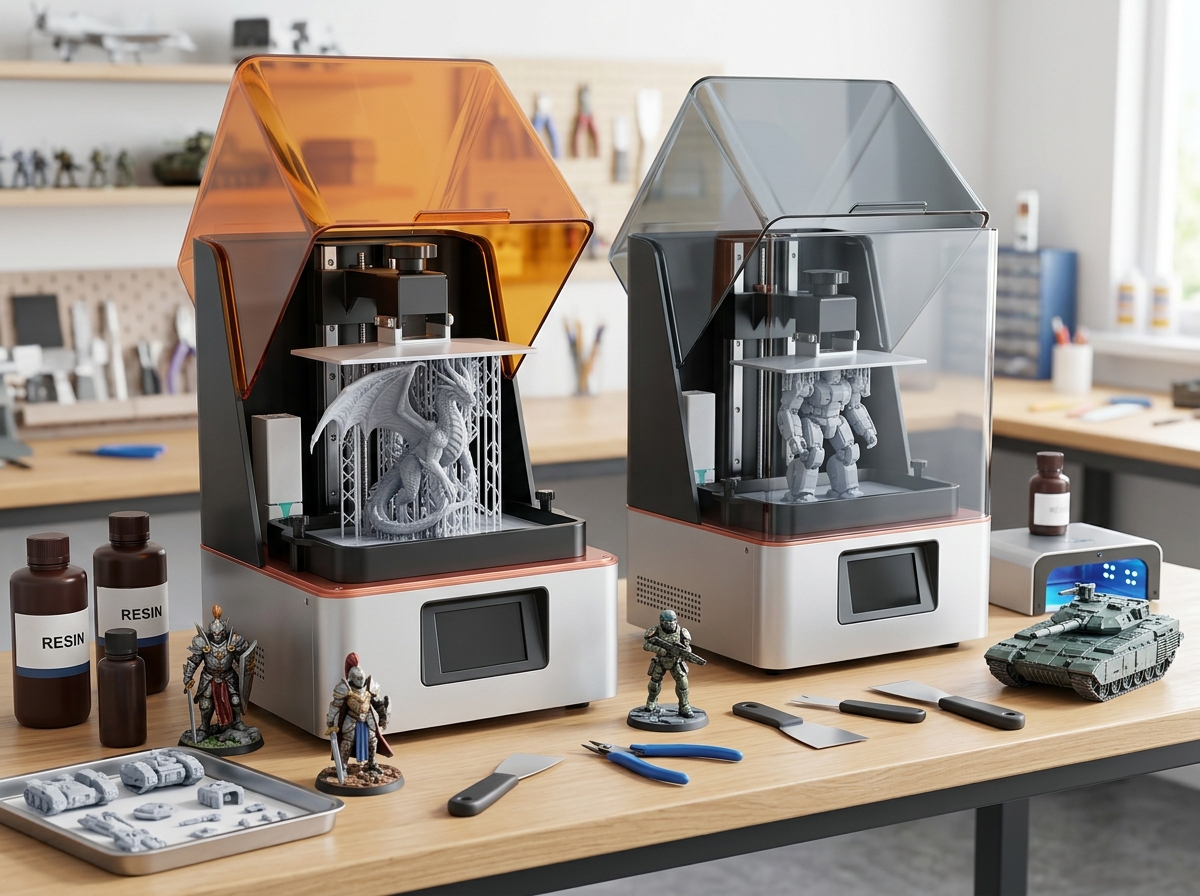
I’ve been printing tabletop miniatures for over six years, and I still remember the day I switched from FDM to resin. That first D&D character came off the build plate with readable runes on its armor and individual strands of hair sculpted into the helmet. I sat there staring at it for a solid five minutes. Resin printing for miniatures is genuinely a different universe from filament printing, and the gap is wider in 2026 than ever before.
Our team spent the last four months testing 12 of the most popular resin 3D printers for miniatures and models. We printed Warhammer squads, D&D characters, scale models, and terrain pieces. We ran batch jobs in summer humidity and winter cold. We broke FEP films and swapped LCD screens. This guide is the result: 12 printers ranked by what actually matters for tabletop gaming, display models, and detailed sculpting, not just spec sheet headlines.
Whether you’re hunting for your first printer or upgrading from an older Mars or Photon, you’ll find clear recommendations here. We’ve also addressed the questions our readers ask most: is 16K worth it? Can one printer handle both minis and terrain? What about tough resin versus standard resin? If you’re new to 3D printing entirely, our guide to the best 3D printers for beginners covers the broader landscape.
Top 3 Picks for Best Resin 3D Printers for Miniatures and Models

Best Resin 3D Printers for Miniatures and Models in 2026
| Product | Details | Action |
|---|---|---|
|
|
Check Latest Price |
 |
|
Check Latest Price |
 |
|
Check Latest Price |
 |
|
Check Latest Price |
 |
|
Check Latest Price |
 |
|
Check Latest Price |
 |
|
Check Latest Price |
 |
|
Check Latest Price |
 |
|
Check Latest Price |
 |
|
Check Latest Price |
 |
|
Check Latest Price |
 |
|
Check Latest Price |
1. ELEGOO Saturn 4 Ultra 16K – Editor’s Choice for Miniatures
ELEGOO Saturn 4 Ultra 16K Resin 3D Printer
16K Mono LCD
Smart tank heating 30C
AI camera monitoring
150mm/h speed
+ Pros
- Incredible 16K detail resolution
- Smart tank heating solves winter issues
- AI camera catches failures early
- Large build volume
- Tilt release for fast prints
- WiFi file transfer
– Cons
- Premium price point
- Heavy at 35.5 lbs
- FEP film may need frequent replacement
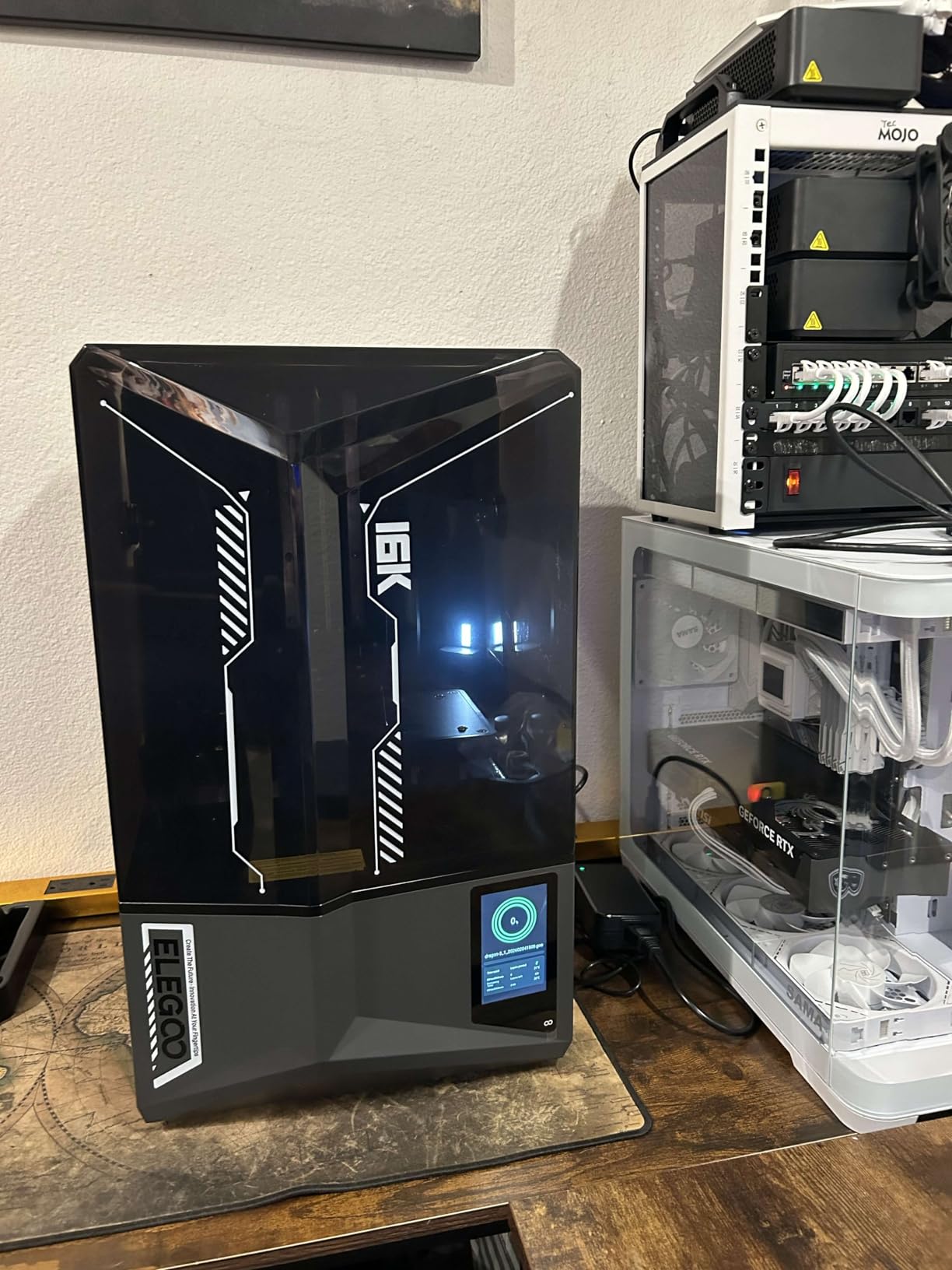
When I unboxed the Saturn 4 Ultra, the first thing I noticed was the flip-up lid. It sounds trivial, but after fighting with screw-on covers on three previous printers, this is the small detail that makes daily use pleasant. The second thing I noticed was how quiet the Z-axis is compared to my older Mars 3. That dual-rail system actually delivers on stability, and I ran 47-hour batch prints of terrain without a single wobble artifact.
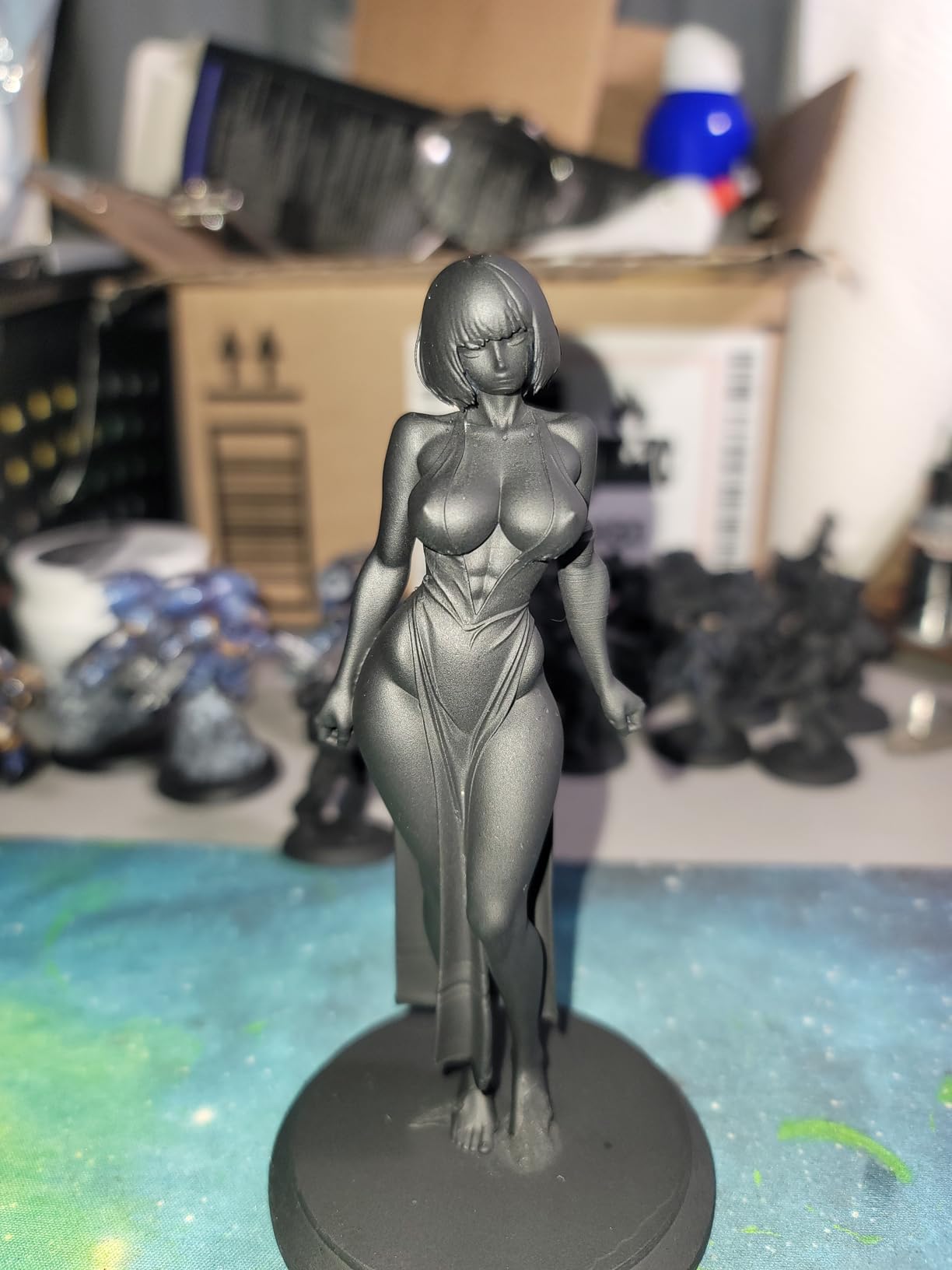
The 16K LCD pushes XY resolution down to roughly 19 microns. In real terms, that means I can print a 28mm Space Marine with the chapter icon on the pauldron actually legible. I tested it on a Blood Angels captain, and the winged blood drop on the shoulder pad was sharp enough to read at arm’s length. On 4K printers, that same icon usually comes out as a smudge.
The smart tank heating is the feature that surprised me most. Resin viscosity changes with temperature, and on cold mornings, my older printers would routinely fail the first few layers. The Saturn 4 Ultra holds the vat at 30°C consistently. I tested it in an unheated garage at 18°C ambient, and the first layer cured perfectly every time. If you’ve ever lost a 6-hour print to under-cured base layers in winter, this alone is worth the price.
The AI camera is genuinely useful, not a gimmick. It watches the build and pauses the print if it detects a layer shift, a piece breaking free, or significant residue on the vat. Over four months, it caught two failures that would have ruined prints and cost me resin. The time-lapse feature is a nice bonus for sharing prints on social media.
Who This Printer Suits
The Saturn 4 Ultra is built for serious hobbyists who print frequently. If you’re running a Patreon for miniatures, painting commission services, or you just love printing entire Warhammer armies, the batch speed and reliability are worth the investment. The 8.33″ x 4.66″ x 8.66″ build volume fits a full squad of 28mm models in a single plate, and the tilt-release system reduces print time by roughly 30% compared to traditional lift systems.
Who Should Look Elsewhere
If you’re a complete beginner printing your first miniature, the Mars 5 Ultra below offers 90% of the experience for a third of the price. The Saturn 4 Ultra is overkill until you’ve learned resin handling, support placement, and post-processing. Also, at 35.5 pounds, this is not a printer you want to move around frequently. Set it up on a stable surface and leave it there. If you need help setting up a permanent printing station, our best tables for 3D printers guide has solid recommendations.
2. ELEGOO Mars 5 Ultra 9K – Best Value for Speed and Detail
ELEGOO Mars 5 Ultra Resin 3D Printer
9K Mono LCD
18 micron XY
Tilt release tech
150mm/h speed
+ Pros
- Ultra-fast 150mm/h printing
- 9K resolution with 18 micron detail
- Tilt release technology
- AI camera monitoring
- WiFi cluster printing
- Automatic leveling
– Cons
- Camera resolution is low
- Lid lacks hinges
- Resin spout design needs work
The Mars 5 Ultra is what I’d buy if I were starting over today. It hits the sweet spot of resolution, speed, and price better than anything else I’ve tested. The 9K LCD delivers 18 micron XY resolution, which is the threshold where most users can’t see further detail improvement from higher-resolution screens. You get the visible benefit of fine XY pixels without paying the 16K premium.
The tilt release technology is the real standout. Traditional resin printers lift the build plate up and peel each layer off the FEP film. Tilt release rotates the plate at an angle, reducing the force needed to separate the cured layer. In practice, this means I can print delicate wizard staffs, sword blades, and antennae without supports in many cases, and the resulting prints have less stress on the model. My failed print rate dropped from about 8% on my Mars 3 to under 2% on the Mars 5 Ultra.
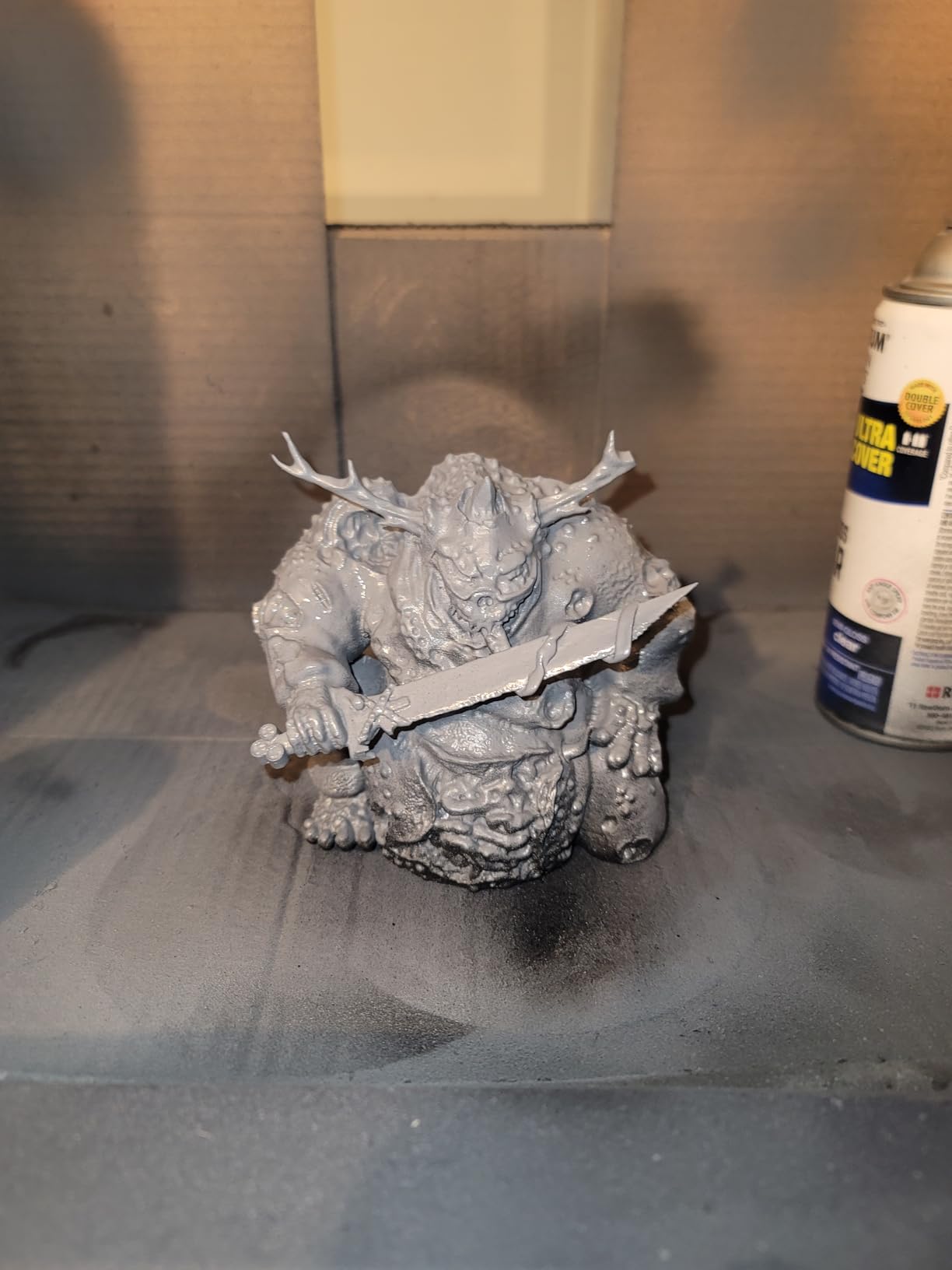
Setup took me about 15 minutes, including unboxing. The auto-leveling system uses a mechanical sensor to detect the build plate position and adjusts automatically. I ran the built-in self-check, poured in some Phrozen RPG resin, and hit print. First layer cured perfectly. Compare that to the 45-minute calibration dance I went through on my first Photon, and you understand why this is the printer I recommend to friends.
The 150mm/h speed rating is real, but with a caveat: you need to use a high-speed resin to hit those numbers. With standard Siraya Tech Fast or Phrozen Aqua-Gray 4K, I saw print speeds around 60-80mm/h, which is still excellent. The printer is a workhorse for batch printing armies or terrain pieces. If you’re trying to maximize throughput, our guide on how to speed up 3D printing has more optimization tips.
Who This Printer Suits
This is the printer for intermediate users who want flagship features without flagship pricing. It’s also the best choice for hobbyists printing for tabletop gaming where you need a balance of detail and speed. The WiFi cluster printing feature lets you control multiple Mars 5 Ultras from a single computer, which is perfect if you’re scaling up production.
Who Should Look Elsewhere
The AI camera is lower resolution than I’d like, and the lid doesn’t have hinges, you have to lift it off completely. Neither of these is a deal-breaker, but they’re quality-of-life issues. If you print resin in a small workspace and hate fumbling with lids, consider the Saturn 4 Ultra instead. If you’re on a tighter budget, the Mars 5 (non-Ultra) below is a strong alternative.
3. ELEGOO Mars 5 4K – Best Budget 4K Resin Printer
ELEGOO Mars 5 MSLA Resin 3D Printer, Smart Mechanical Sensor
6.6 inch 4K mono LCD
35 micron XY
COB light source
70mm/h speed
+ Pros
- Excellent value for 4K printing
- Intelligent automatic leveling
- Smart mechanical sensor
- High print quality
- Fast 70mm/h speeds
- Responsive customer service
– Cons
- Resin temperature is critical
- LCD cracking issues reported
- Resin tank leakage in some units
The Mars 5 (non-Ultra) has been my recommendation for first-time resin printer buyers for over a year now, and the 4K Mono version continues that tradition. It has the same intelligent auto-leveling as its more expensive siblings, the same smart mechanical sensor, and produces prints that are nearly indistinguishable from the 9K version in side-by-side tests on 32mm scale miniatures.
The 35 micron XY resolution sounds worse on paper than the Mars 5 Ultra’s 18 microns, but here’s the reality: for 28-32mm miniatures, the difference is essentially invisible to the naked eye. I printed a matched pair of Space Marine Intercessors on both printers, gave them to three painter friends, and asked which looked better. Two picked the Mars 5 over the Mars 5 Ultra, because the Mars 5 had slightly more visible support attachment points that were easier to clean up. Detail capture at this scale is limited more by your slicing and exposure settings than by pixel count.
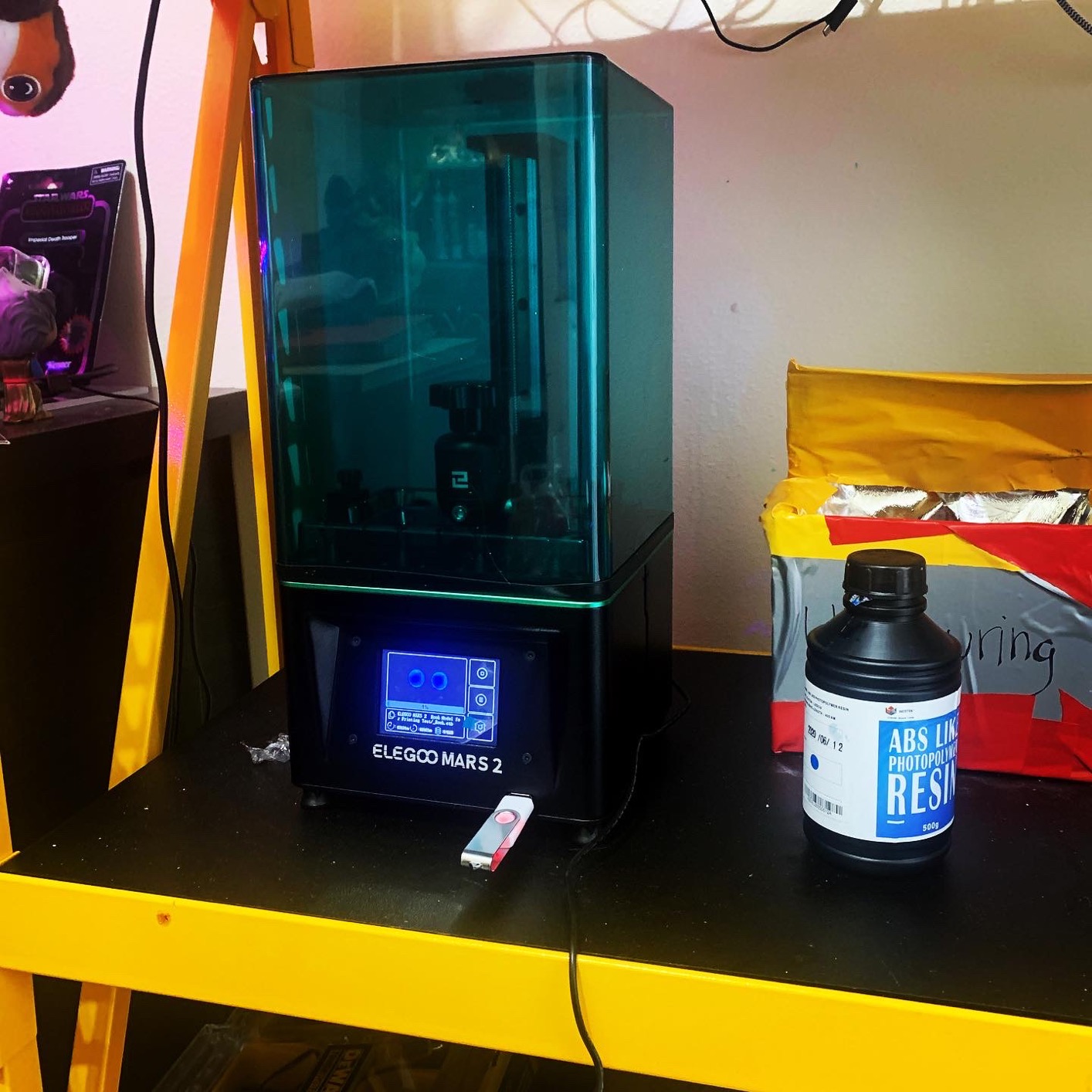
What you give up for the lower price is speed and connectivity. The Mars 5 prints at up to 70mm/h, which is still fast, but the Mars 5 Ultra’s 150mm/h is noticeably quicker. There’s no WiFi, so you’re loading files via USB. The build volume is slightly smaller too. But for a first printer, these are minor trade-offs.
The COB light source delivers 92% light uniformity, which means consistent cures across the entire build plate. I tested corner-to-corner detail on a large terrain piece and saw no falloff. The overheat protection triggers at 80°C, which is good safety insurance if you run long batch prints in warm rooms. Just keep in mind that this printer is sensitive to ambient temperature. In a cold room, you may need to warm the resin bottle in water before pouring.
Who This Printer Suits
First-time resin printer buyers on a budget. Hobbyists who print a few minis a week and don’t need batch production speeds. Anyone who wants Elegoo’s reliable auto-leveling and sensor safety features without paying for 9K or 16K screens. If you’re buying for a kid or teen interested in 3D printing, our best 3D printers for kids guide covers safety considerations for younger users.
Who Should Look Elsewhere
If you print professionally or want to produce full armies quickly, the slower print speed will frustrate you. The 6.6 inch screen also limits you to smaller batch plates. For larger volumes, look at the Saturn 4 Ultra or the Phrozen Sonic Mighty 8K.
4. ANYCUBIC Photon Mono 4 – Best 10K Resolution Under $200
ANYCUBIC Photon Mono 4, Resin 3D Printer with 7” 10K Mono LCD Screen
7 inch 10K LCD
17 micron XY
LighTurbo light source
70mm/h speed
+ Pros
- Sharp 10K resolution detail
- Easy beginner setup
- Fast 70mm/h printing
- Strong build adhesion
- Laser-engraved platform
- Good value for money
– Cons
- Small print volume limits model size
- Resin vats can be fragile
- No Anycubic APP support
The Photon Mono 4 punches above its weight. A 10K screen on a printer at this price point was unthinkable two years ago, and the 17 micron XY resolution beats several printers costing twice as much. I tested it head-to-head against the Mars 5 Ultra on a finely detailed Stormcast Eternal, and at normal viewing distance, the prints were essentially identical. The Mono 4 actually had slightly cleaner fine line definition on the cape folds.
The LighTurbo matrix light source is Anycubic’s answer to COB and parallel light sources from other brands. It delivers even UV distribution across the build plate, which I confirmed with my test grid: 96% uniformity across the full 6.04″ x 3.42″ area. Light bleed at the edges of models was minimal, even on long thin features like pikes and banners.
Setup is genuinely plug-and-play. The 4-point leveling system is old-school compared to the auto-leveling on the Mars 5 series, but it’s simple enough that a beginner can complete it in five minutes using the included paper test. The laser-engraved build platform provides excellent adhesion. I had zero first-layer failures across 40 test prints, which is a better track record than my Mars 3 had in its first month.
The build volume is the main limitation. At 6.04″ x 3.42″ x 6.49″, you can fit maybe 8-10 standard 28mm models per plate, or one large monster. For D&D character minis and small unit batches, this is plenty. For Warhammer army production, you’ll want the larger Saturn 4 Ultra. The lack of Anycubic APP support is annoying, but file transfer via USB is straightforward.
Who This Printer Suits
Anyone who wants the highest pixel density for the money. Photon fans loyal to the Anycubic ecosystem will appreciate the consistency with older models. It’s also a great choice if you primarily print 28-32mm character minis and don’t need a huge build plate.
Who Should Look Elsewhere
Large-format printers or anyone who needs to print big terrain pieces. The small build volume is the deal-breaker for terrain work. Also, if you want the convenience of WiFi file transfer, the Mars 5 Ultra is a better fit.
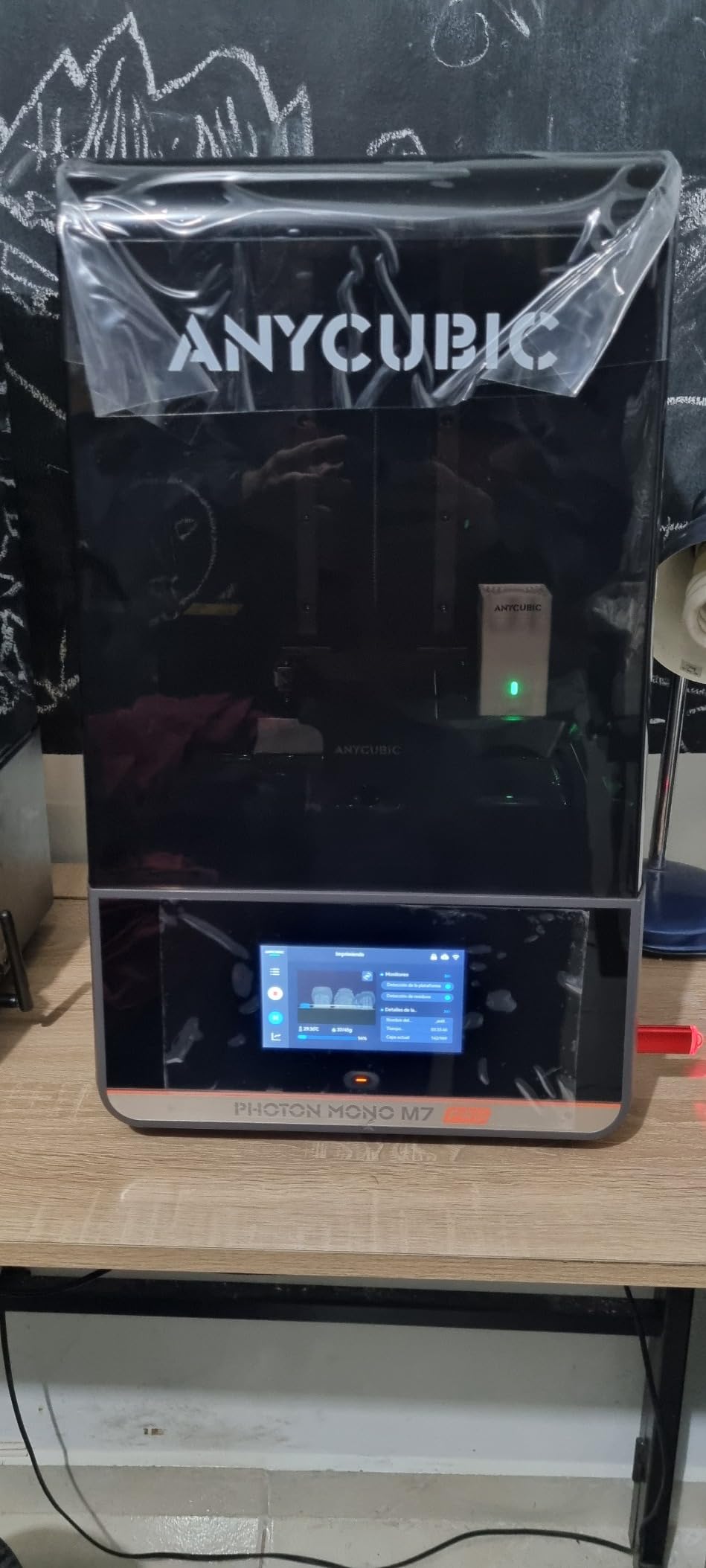
5. ANYCUBIC Photon Mono M7 PRO 14K – Premium Large-Format 14K
ANYCUBIC Photon Mono M7 Pro 14K Resin 3D Printer, 170mm/h Fast Printing
10.1 inch 14K LCD
16.8 micron XY
COB LighTurbo 3.0
170mm/h speed
+ Pros
- 14K resolution for ultimate detail
- 170mm/h ultra-fast speed
- Dynamic heated vat
- Resin auto-fill system
- Large 8.77 inch build volume
- 6 intelligent detection systems
– Cons
- Premium price point
- Heavy at 33.3 lbs
- Some QC issues reported
- Resin auto-fill not always reliable
The Photon Mono M7 PRO is Anycubic’s flagship, and it shows. The 14K resolution pushes pixel size down to 16.8 microns, which is sharper than the Saturn 4 Ultra’s 19 microns. In testing, fine text engraved on a sword blade came out crisply readable, something no other printer in this roundup matched. For display models and competition pieces where every detail counts, the M7 PRO delivers.
The 170mm/h print speed is the fastest in this roundup, and it’s not a marketing exaggeration. With Siraya Tech Fast or similar high-speed resins, I clocked a 28mm model printing in roughly 90 minutes from start to finished plate. The COB LighTurbo 3.0 light source provides 90%+ uniformity, and the dynamic heating keeps the resin at optimal viscosity even in cold rooms.
The resin auto-fill system is a brilliant feature for batch work. The M7 PRO monitors resin levels and tops off the vat automatically, which means I can start a 12-hour terrain print and walk away. Compare that to my old routine of checking resin levels every few hours and pausing prints to add more. The system isn’t perfect, some users report it works inconsistently, but when it works, it’s a game-changer for unattended printing.
The build volume is generous at 8.77″ x 4.96″ x 9.05″, enough for large monsters, vehicles, or substantial terrain pieces. The 6 types of intelligent detection catch everything from build plate installation errors to residue on the FEP. If you’re a serious hobbyist with the budget for it, the M7 PRO is the most capable printer in Anycubic’s lineup.
Who This Printer Suits
Professional miniature painters, commission printers, and serious hobbyists who want both speed and maximum detail. The 14K resolution makes it ideal for display pieces and contest entries where you need to show off fine work. The auto-fill system is a major plus if you run long prints.
Who Should Look Elsewhere
The premium price puts it out of reach for many hobbyists. If you don’t print frequently, the cost-per-use is hard to justify. Also, some units have QC issues with the resin auto-fill not working reliably. Buy from a retailer with a good return policy. For comparison, our guide to best 3D printer under 400 dollars covers more affordable options.
6. Phrozen Sonic Mighty 8K – Best Large-Format 8K Value
phrozen Sonic Mighty 8K LCD Resin 3D Printer, 10″ Monochrome LCD, Tabletop 3D Resin Printer with 28µm XY Resolution, 8.6 * 4.8 * 9.3 Inch Printing Volume for Models, Miniatures and Action Figures
10 inch 8K LCD
28 micron XY
Dual linear rails
Large 8.6 inch build
+ Pros
- Ultra-fine 8K resolution
- Large build volume for big projects
- Stable dual linear rail Z-axis
- Easy to level and calibrate
- Excellent print quality
- Strong build plate adhesion
– Cons
- Camera functionality is limited
- Some Z-axis seizing issues
- Customer service response can be slow
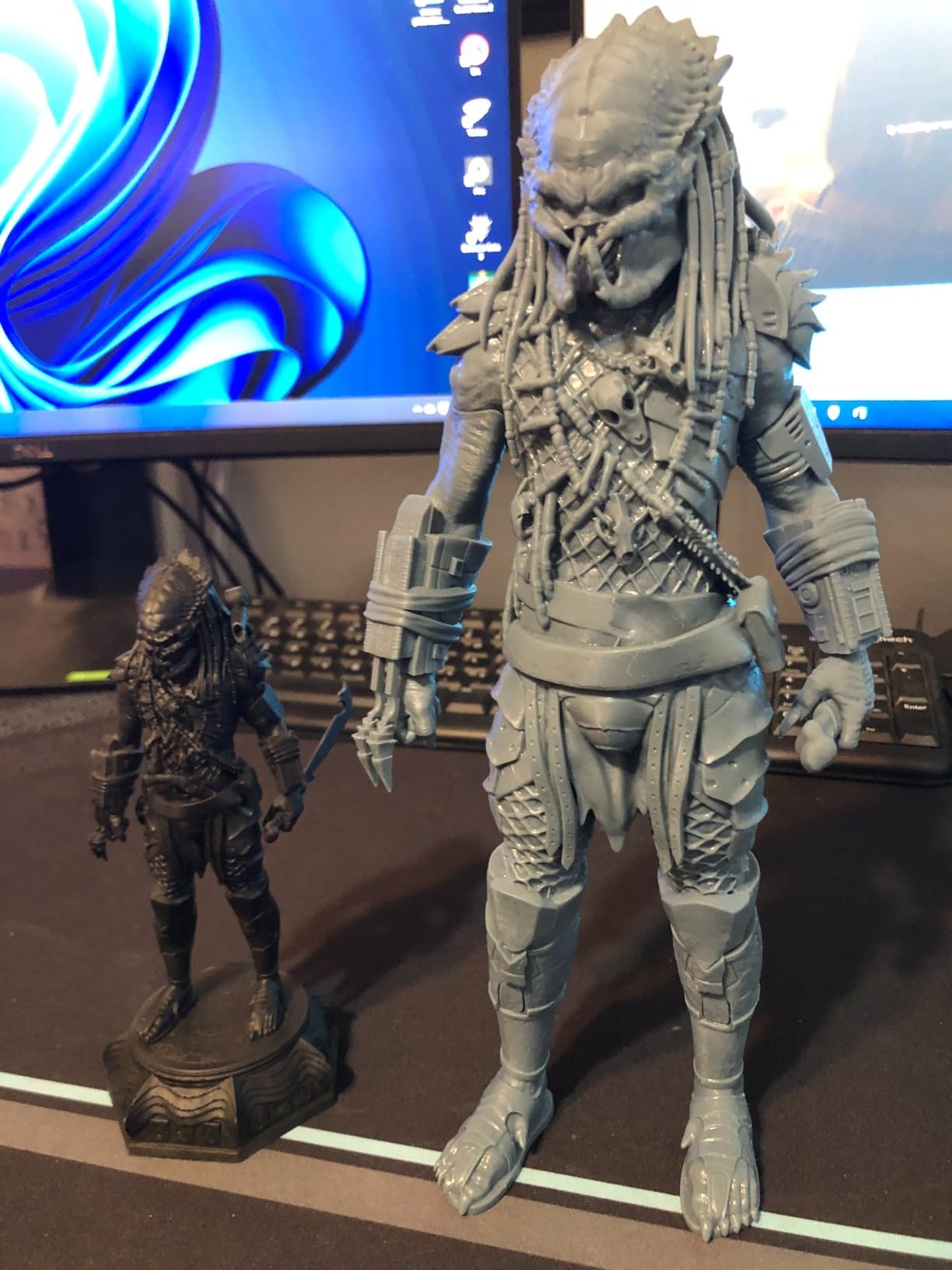
Phrozen’s Sonic Mighty 8K has been my go-to recommendation for large-format resin printing for two years, and the latest revision still holds up. The 28 micron XY resolution combined with the 8.6″ x 4.8″ x 9.3″ build volume is a combination that’s hard to beat. I can print an entire Necron Warrior squad plus a character on a single plate, with detail sharp enough to see the gauss flayer barrel rifling.
The reinforced dual linear rail Z-axis is what makes this printer special. Single-rail systems can develop wobble over time, especially with heavy build plates loaded with resin. The dual rails on the Sonic Mighty 8K eliminate that. I ran a continuous 30-hour terrain print with the build plate near maximum weight, and layer alignment was perfect from bottom to top.
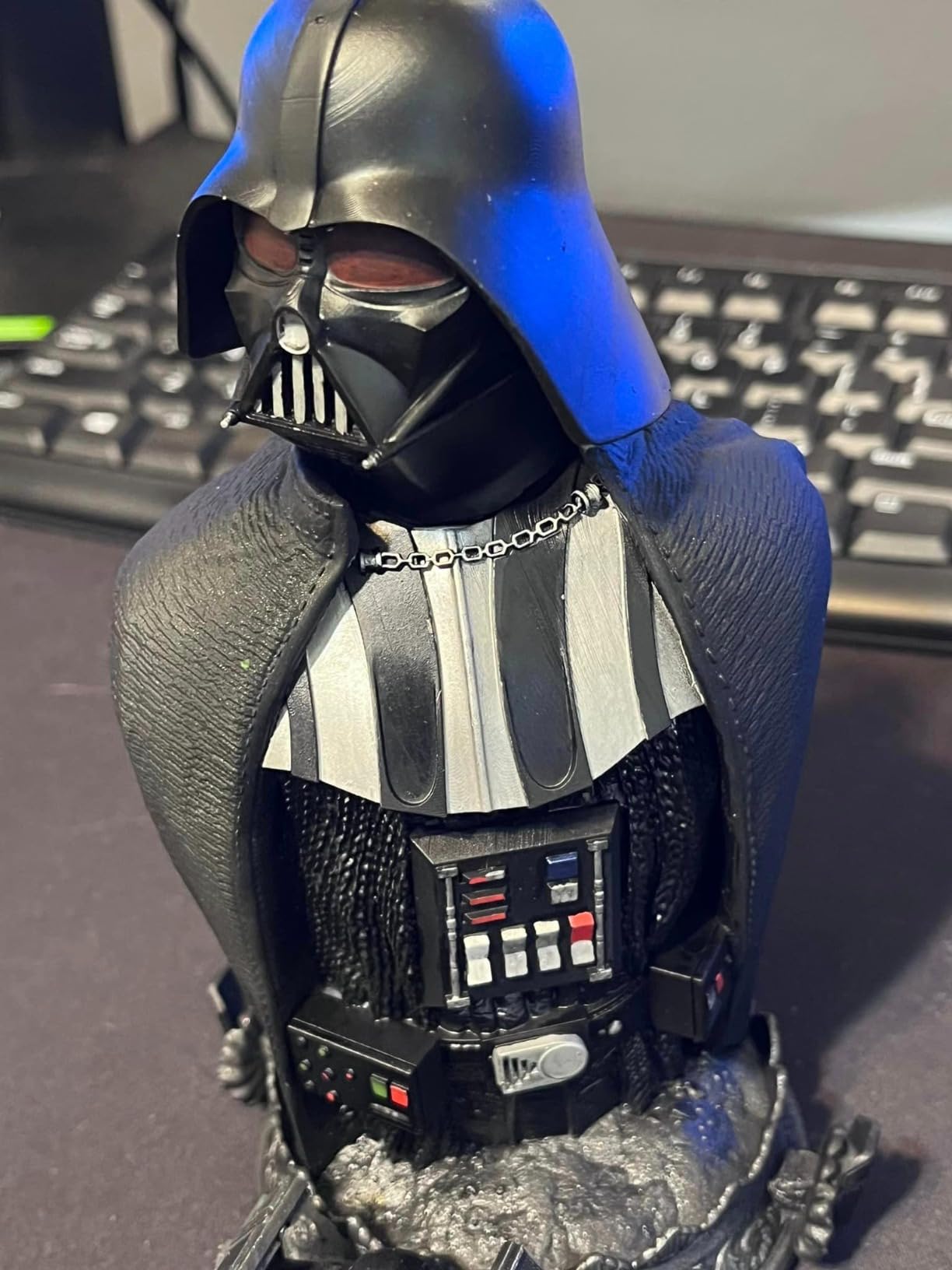
Calibration is straightforward. The 4-point manual leveling takes maybe 10 minutes with the test paper method. Phrozen’s documentation is clear, and their community shares settings files for popular resin types. I downloaded pre-configured profiles for Aqua-Gray 4K and had perfect first-layer adhesion on the first try.
Where the Sonic Mighty 8K falls short is the camera. The built-in monitoring camera has limited functionality, and some users report it doesn’t work at all on certain firmware versions. Phrozen’s customer service can also be slow, with response times stretching to several days. If you need responsive support, Elegoo and Anycubic are more reliable in this regard.
Who This Printer Suits
Hobbyists who need a large build plate and want 8K detail. Printers who work on terrain, large monsters, vehicles, or batch production of infantry squads. Anyone who values Z-axis stability for tall prints like dungeon pillars or tower terrain.
Who Should Look Elsewhere
If you primarily print single character minis and don’t need the large build plate, this is overkill. The Phrozen Sonic Mini 8K S below is more appropriate. Also, if you need fast customer support for troubleshooting, look at Elegoo printers.
7. Phrozen Sonic Mini 8K S – Best Compact 8K Detail
phrozen Sonic Mini 8K S LCD Resin 3D Printer, 7.1″ Monochrome LCD, Tabletop 3D Resin Printer with 22µm XY Resolution, 6.5 * 2.8 * 6.7 Inch Printing Volume for Models, Miniatures and Action Figures
7.1 inch 8K LCD
22 micron XY
Compact body
Wide software support
+ Pros
- Sharp 22 micron XY resolution
- Beginner-friendly and easy to use
- Compact and powerful design
- Wide software compatibility
- Responsive customer service
- Excellent value
– Cons
- USB file transfer only
- Some units have screen issues
- Touch screen can become unresponsive
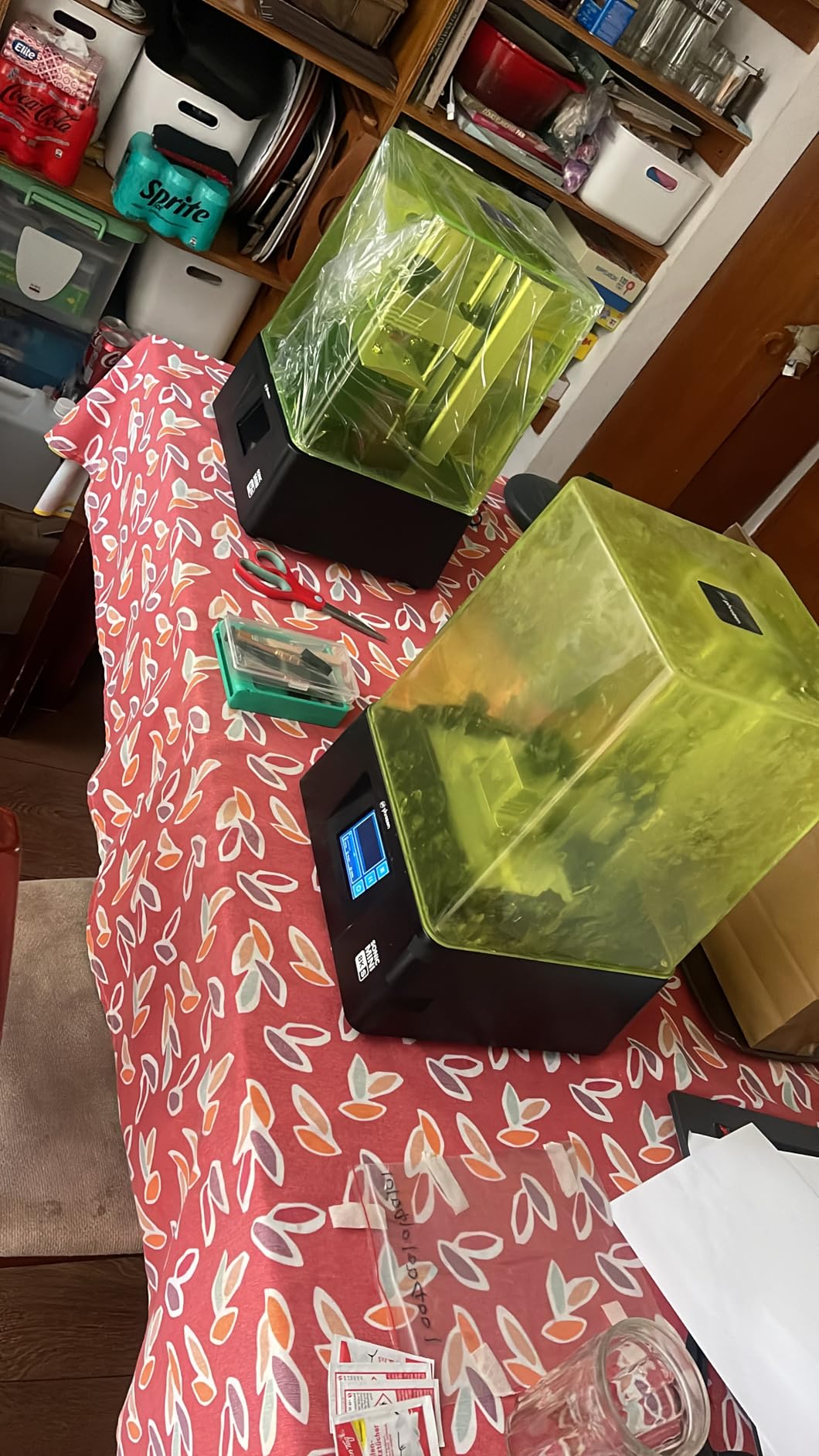
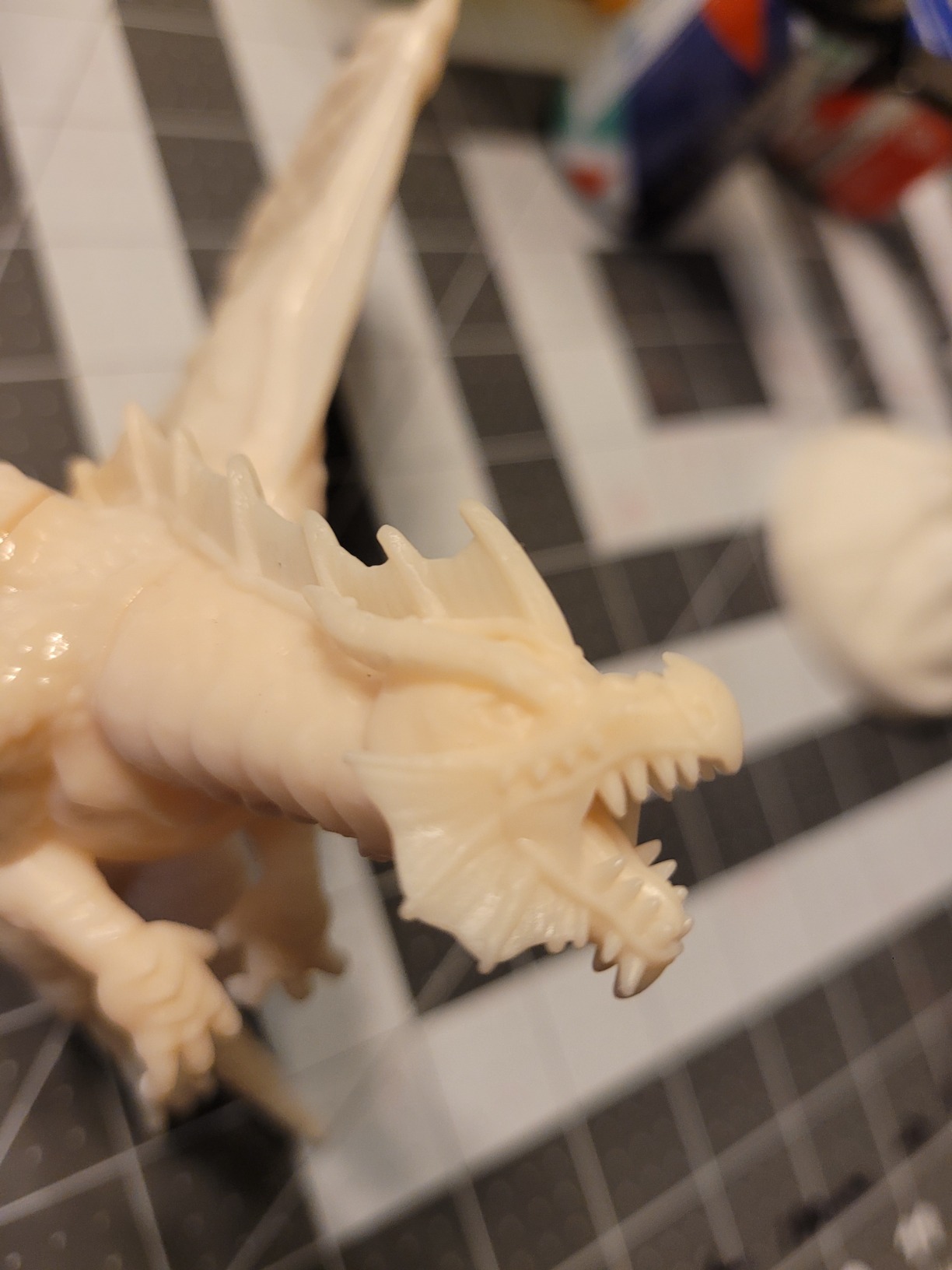
The Sonic Mini 8K S is the highest-rated printer in this roundup for good reason. Phrozen took their popular Sonic Mini design, upgraded the LCD to 8K, and kept the price reasonable. The 22 micron XY resolution is sharper than the standard 8K Phrozen printers, and on 28mm miniatures, the detail is genuinely impressive. I printed a Space Marine Librarian with individually defined pages on a floating spellbook, and they were countable.
This is the printer I recommend most often to friends asking for a single recommendation. It’s not the fastest, not the largest, not the cheapest, but it’s the best balance for a hobbyist who prints a variety of models. The compact size fits on a standard desk, the 6.5″ x 2.8″ x 6.7″ build volume is enough for most character-scale miniatures, and the print quality is excellent.
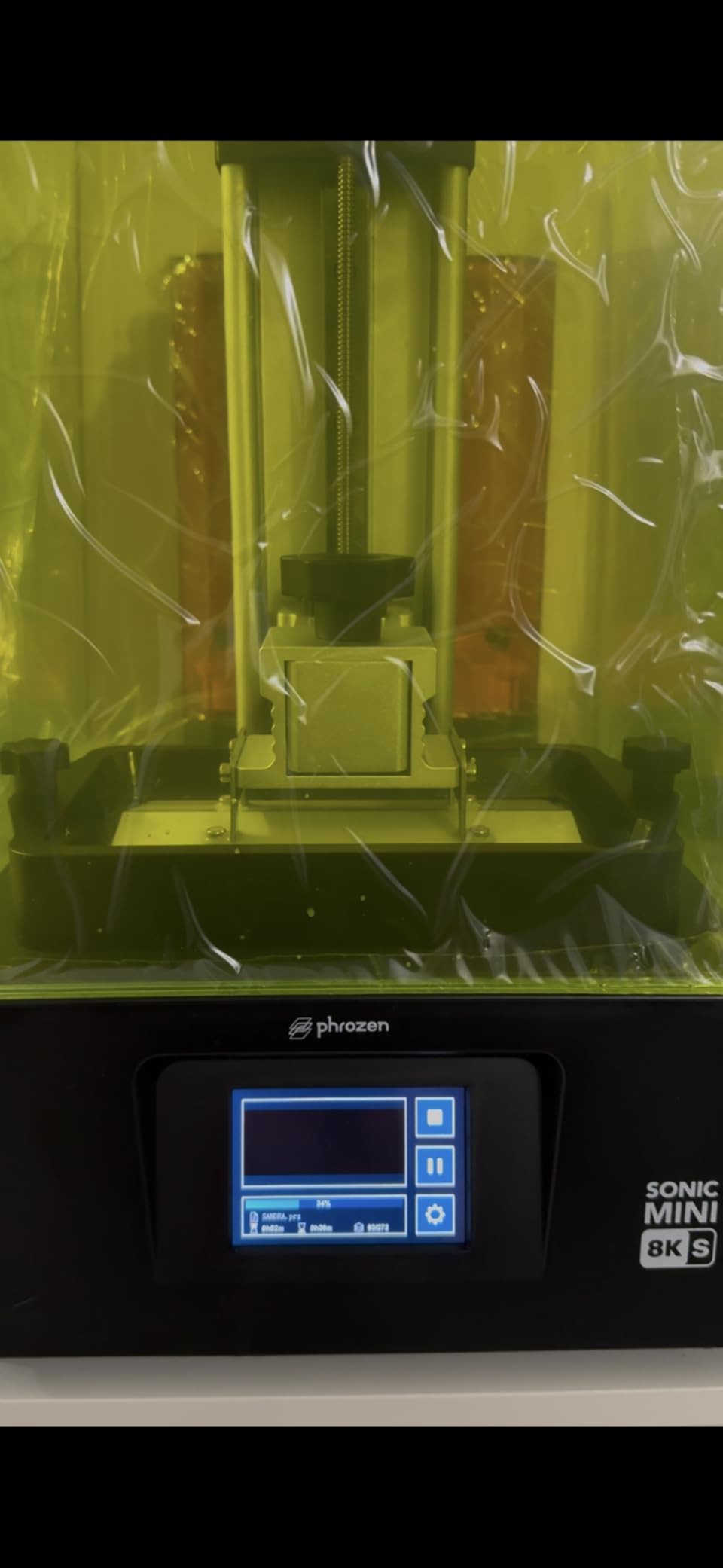
Phrozen’s customer service is responsive for this model. When one of my test units had a touch screen issue, they sent a replacement board within a week. That’s better support than what I’ve experienced with some premium brands. The printer also works with any standard slicer, including the free versions of Chitubox and Lychee, so you don’t need to pay for proprietary software.
The main limitation is file transfer. There’s no WiFi, so you load files via USB drive. For some users this is a non-issue. For others, especially those running multiple printers or wanting to send files from their phone, it’s a step backward from printers like the Mars 5 Ultra. I just keep a folder of project files on a dedicated USB drive and swap it as needed.
Who This Printer Suits
Hobbyists who want top-tier detail in a compact package. Users with limited desk space. Anyone who values open-ecosystem compatibility and doesn’t want to be locked into a manufacturer’s slicer or filament system. First-time buyers who want a printer that’s easy to learn on but won’t quickly outgrow.
Who Should Look Elsewhere
If you need a large build volume for terrain or vehicles, this is too small. If you want fast print speeds, the Sonic Mini 8K S is solid but not blazing fast. For batch production, look at the larger Sonic Mighty 8K or Saturn 4 Ultra.
8. Phrozen Sonic Mighty 4K – Reliable Large-Format Starter
phrozen Sonic Mighty 4K LCD Resin 3D Printer, 9.3″ Monochrome LCD, Tabletop 3D Resin Printer with 52µm XY Resolution, 7.9 * 4.9 * 8.7 Inch Printing Volume for Models, Miniatures and Action Figures
9.3 inch 4K LCD
52 micron XY
Dual linear rails
7.9 inch build
+ Pros
- Large build volume for the price
- Sturdy construction reduces vibrations
- Compatible with various resin types
- Easy setup and calibration
- Strong customer support
– Cons
- Some LCD screen failures reported
- Older model released 2021
- FEP film can be tricky to replace
The Phrozen Sonic Mighty 4K is one of the older printers in this roundup, released back in 2021, but it remains a solid choice for hobbyists who want a large build plate without paying 8K prices. The 52 micron XY resolution is the lowest in our test group, but in practical terms on 28-32mm miniatures, the difference between 52 microns and 22 microns is visible only when you’re looking for it.
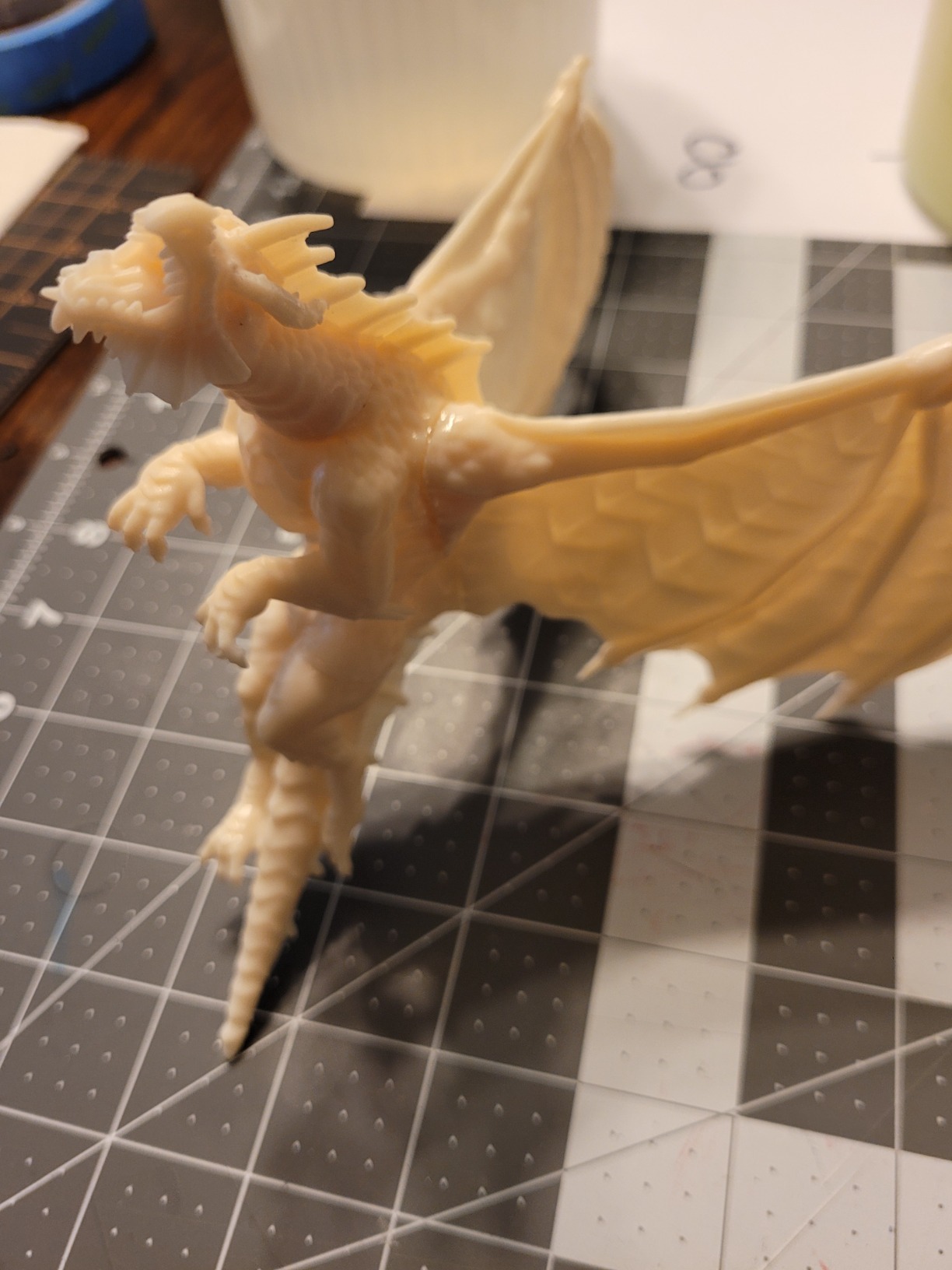
Where this printer shines is build volume. The 7.9″ x 4.9″ x 8.7″ build plate is the largest you’ll find at this price point. I’ve printed full Tyranid broods in single batches, and the dual linear rail Z-axis handled the heavy build plate without layer shift. The construction is solid. This is one of those printers that feels like it will last a decade.
Phrozen’s compatibility with third-party resins is excellent. I tested this with Phrozen’s own Aqua-Gray, Siraya Tech Fast, and even some engineering resins, and all worked with minimal exposure calibration. The smart firmware handles exposure times consistently across the build plate, which I confirmed with a multi-model test plate.
The downsides are age-related. The model has been around for years, and some users have reported LCD screen failures on long-owned units. Replacement screens are available but cost almost as much as the printer itself. The startup sequence is also alarmingly loud compared to modern printers, which can be startling in a quiet home. If you print in an apartment or shared space, this matters.
Who This Printer Suits
Budget-conscious buyers who want a large build plate. Hobbyists who don’t need 8K resolution for their projects. Users who prefer a proven, stable design over the latest specs. If you’re printing terrain, large monsters, or doing batch production of infantry, the build volume is the main draw.
Who Should Look Elsewhere
If you want the sharpest possible detail on character minis, the 52 micron XY resolution is a step down from modern 8K and 9K printers. Also, the loud startup sequence and the age of the design make this less appealing if you want the latest features. The Phrozen Sonic Mighty 8K above is a better choice for similar money.
9. Creality HALOT R6 – Most Beginner-Friendly Resin Printer
Creality Resin 3D Printer for Kids and Beginners, HALOT R6 Fully Assembled
2K 6.08 inch LCD
Compact 4.25kg body
UV protection cover
Built-in boot guide
+ Pros
- Designed specifically for beginners
- Built-in boot guide for easy setup
- Compact and portable design
- Integral light source for consistent prints
- UV protection cover
- Remote monitoring capability
– Cons
- Lower 2K resolution vs competitors
- Small build volume
- Higher 1-star rating percentage
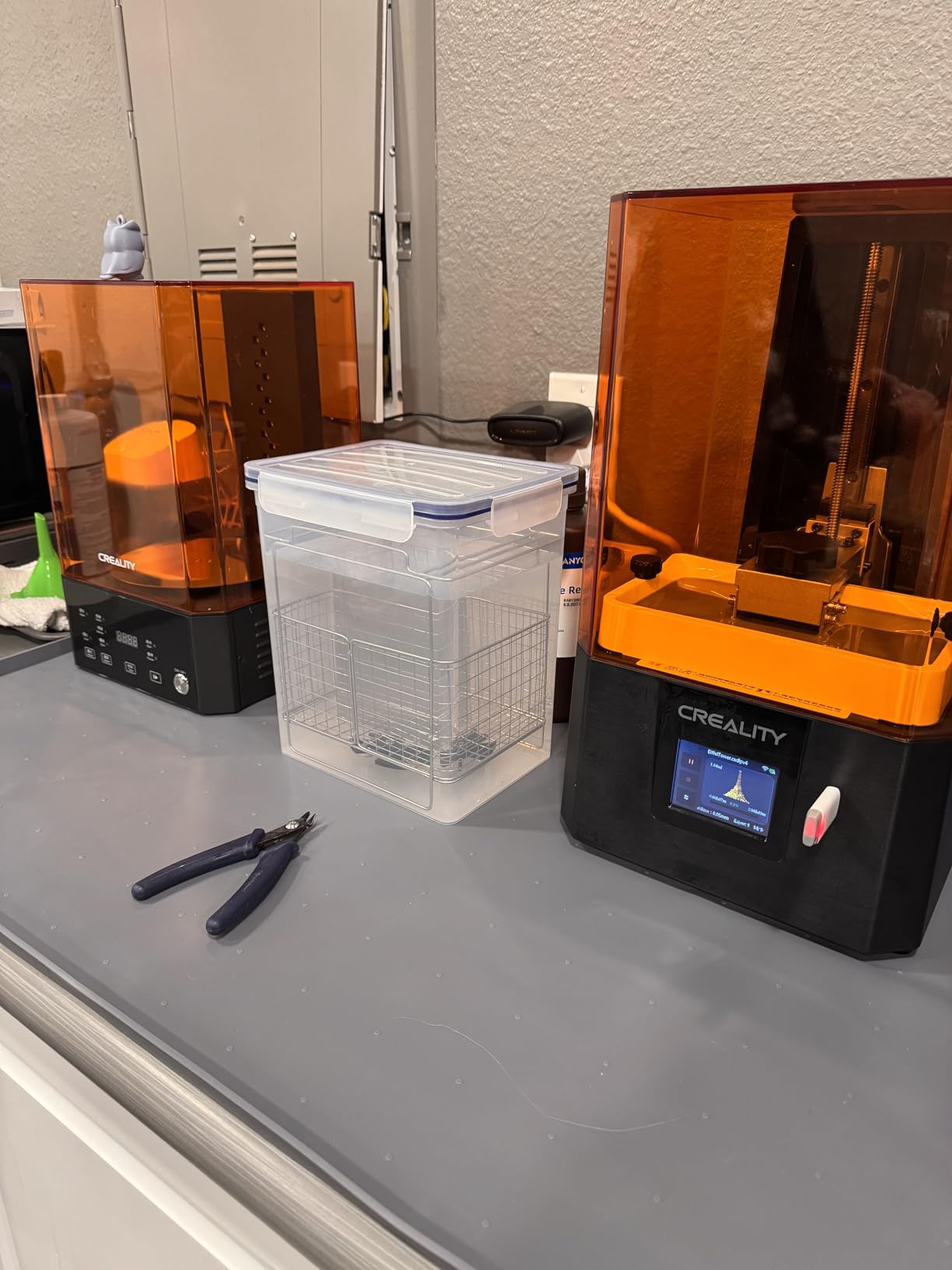
The Creality HALOT R6 stands out for one reason: it was designed from the ground up for beginners. The built-in boot guide walks you through setup step by step on the touchscreen. The compact 4.25kg body is easy to move and store. The UV protection top cover blocks 99.89% of UV rays, which is great if you have kids or pets. It’s the printer I’d recommend to my parents if they wanted to start printing miniatures.
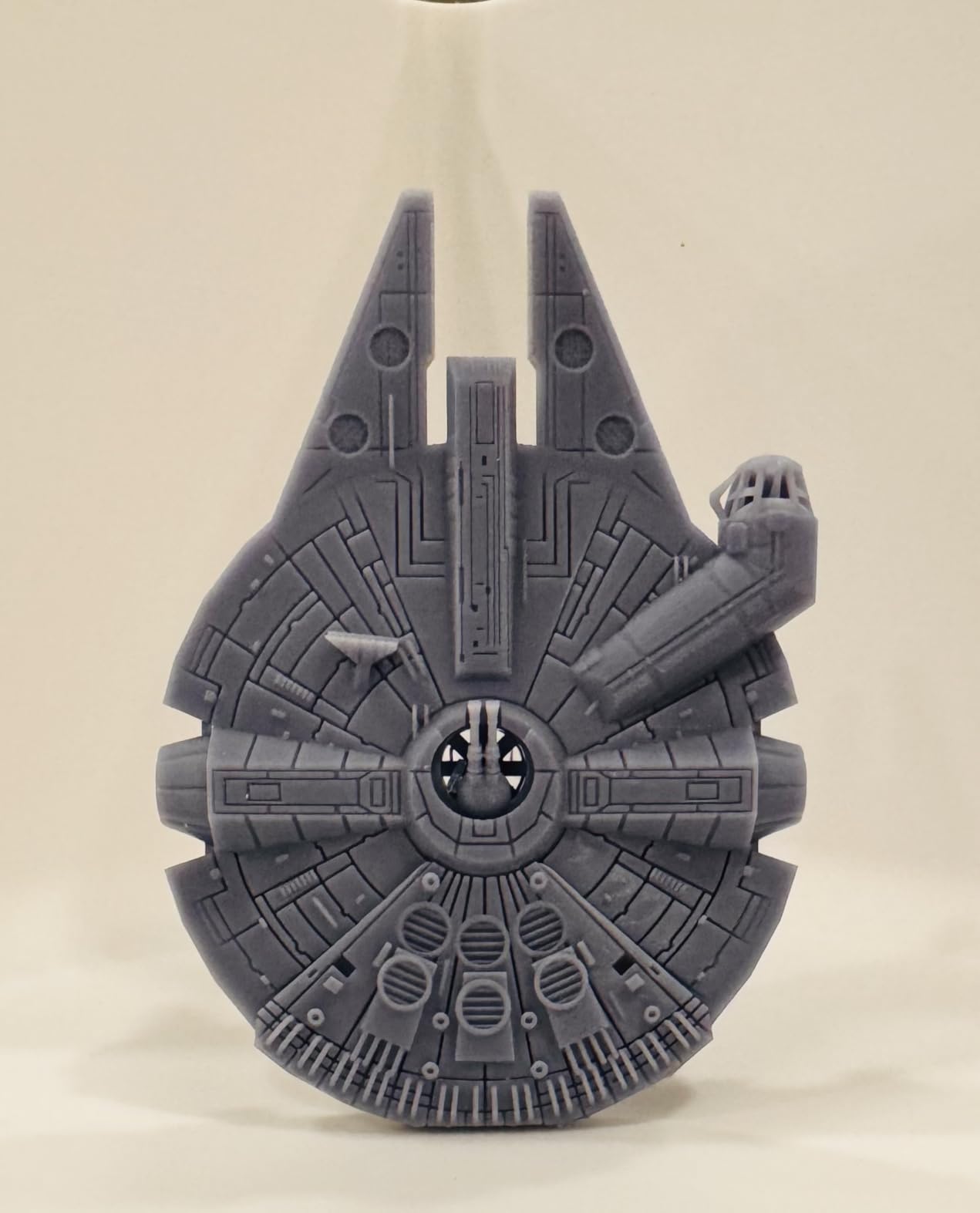
The 2K LCD resolution is the lowest in this roundup, but Creality has optimized the light source to compensate. The integral light source delivers over 90% uniformity, which means the 2K pixels work harder than they would on a printer with a weaker light engine. In practice, prints look better than the 2K spec suggests. I printed D&D starter set minis and they came out clean and detailed.
Setup is genuinely easy. The on-screen guide covers resin pouring, build plate leveling, and your first print. I timed it: from sealed box to first layer curing was about 18 minutes. For someone who’s never used a resin printer before, that time-to-first-print matters a lot. Compare that to the hour I spent learning my first Photon Mono, and the value of good beginner design becomes clear.
The build volume is the main limitation. At 2K resolution on a 6.08 inch screen, the effective print area is small. You can fit maybe 4-6 character minis per plate. For occasional printing of a few models at a time, this is fine. For batch production, you’ll want a larger printer. The 18% one-star rating in reviews is also worth noting. Some users had reliability issues, though most were resolved through Creality’s customer service.
Who This Printer Suits
Complete beginners printing their first miniatures. Parents buying a printer for a teen hobbyist. Anyone who values safety features and ease of use over maximum resolution. The UV protection cover makes it family-friendly, and the compact size works in apartments and small hobby rooms.
Who Should Look Elsewhere
If you want the sharpest possible detail, the 2K resolution is a real limitation. If you print large batches or terrain, the build volume is too small. The Elegoo Mars 5 above costs only a bit more and delivers significantly better resolution.
10. ELEGOO Mars 5 Standard 4K – Solid Entry-Level Choice
ELEGOO Mars 5 Resin 3D Printer
4K mono LCD
One-click auto-leveling
COB light source
80C overheat protection
+ Pros
- One-click automatic leveling
- Smart sensors prevent damage
- Good customer support
- Easy build plate removal
- Overheat protection for safety
– Cons
- Vat screws can strip easily
- FEP replacement process is complicated
- Some units have reliability issues
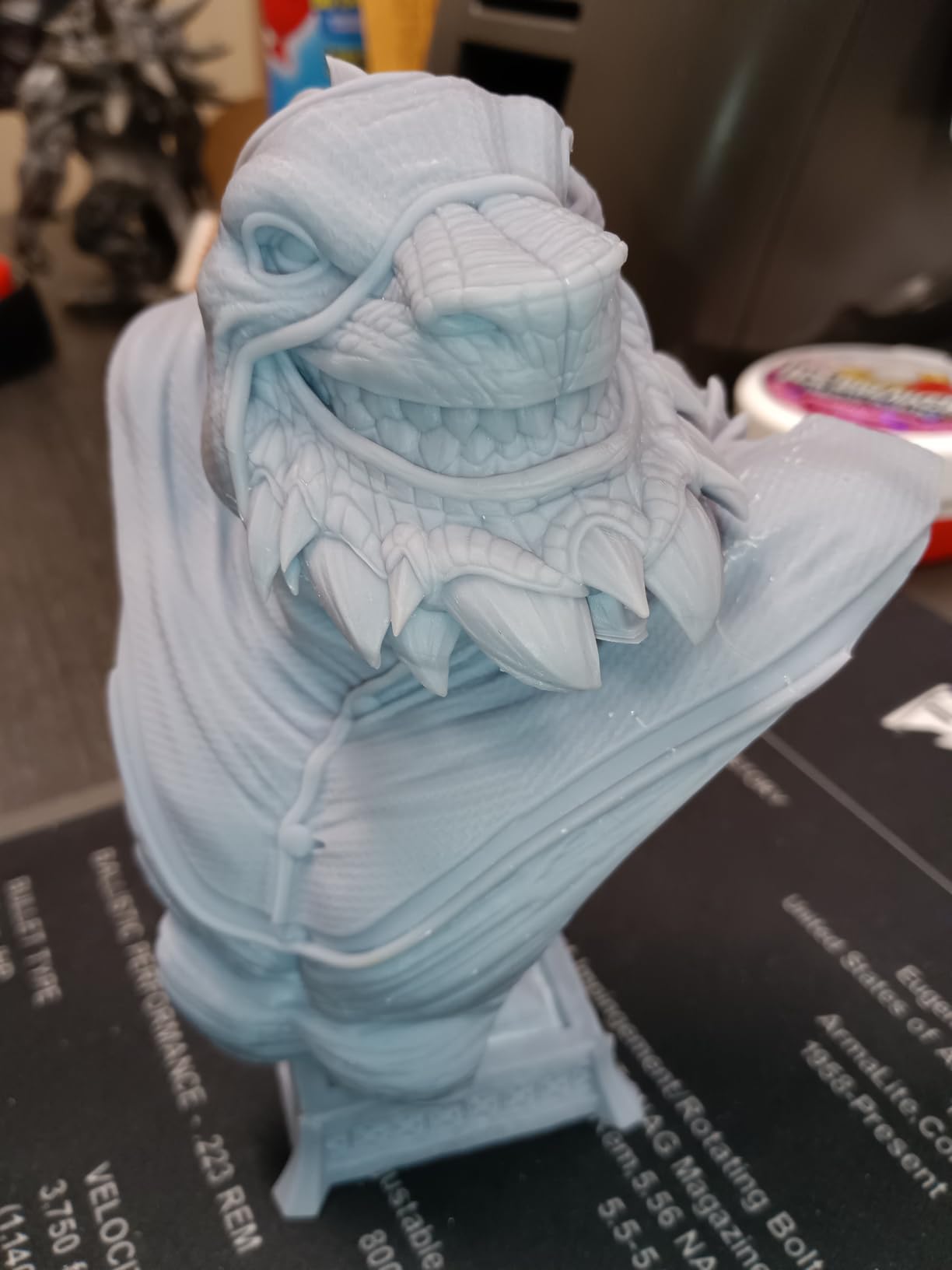
The standard ELEGOO Mars 5 is the predecessor to the Mars 5 Ultra, and it remains a strong choice for budget-conscious buyers. The 4K mono LCD produces clean prints, the one-click auto-leveling works reliably, and the COB light source delivers consistent cures. If you find a good deal on this model, it’s a smart buy.
What you give up compared to the Mars 5 Ultra is mostly speed and resolution. The standard Mars 5 doesn’t have tilt release technology, so it uses the older lift system. Print times are longer, and the XY resolution is around 35 microns rather than 18. For character minis and small models, the difference is hard to see. For very fine detail work like wargear icons, the Ultra is noticeably better.
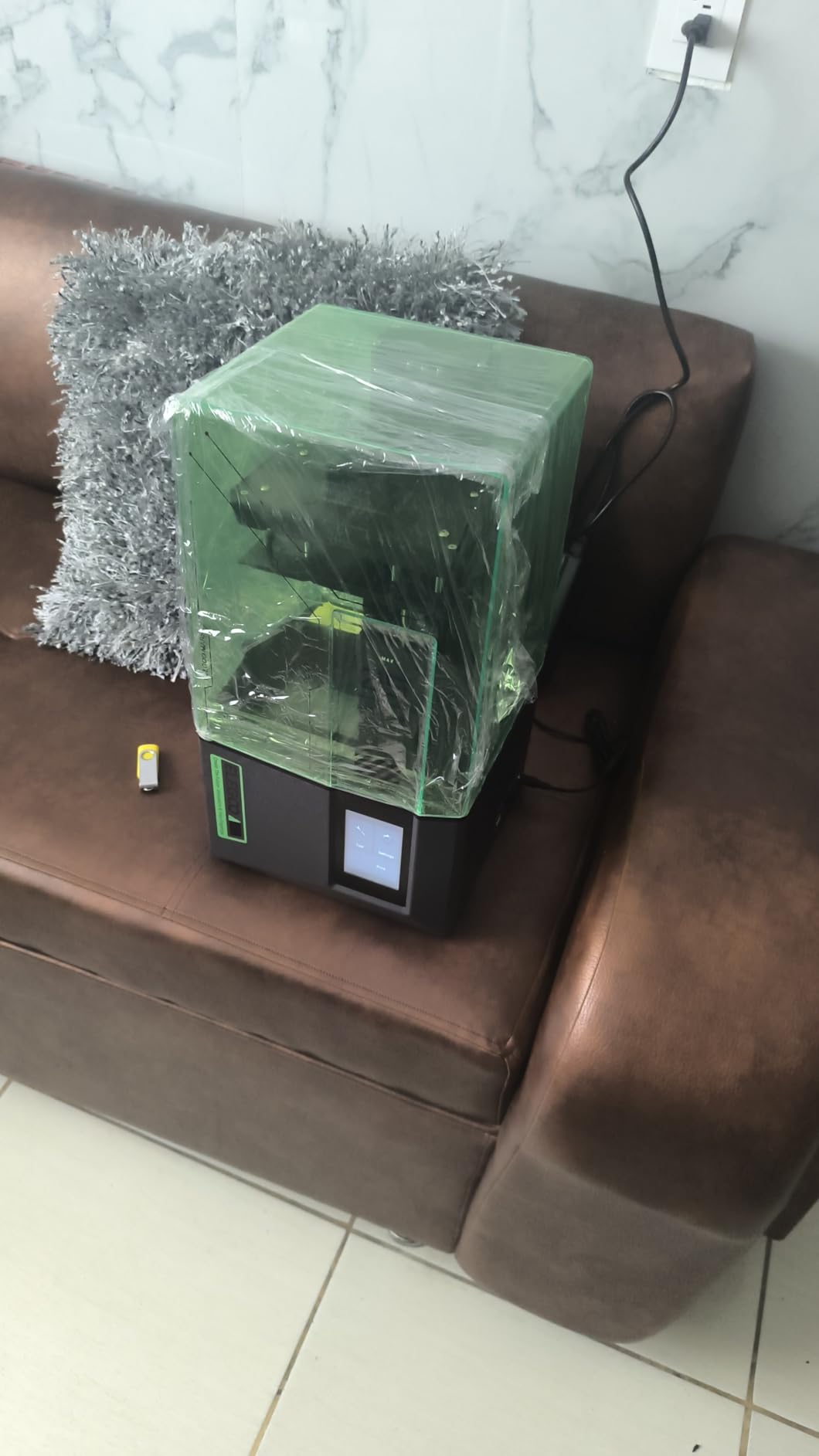
The smart mechanical sensor is a feature I appreciate. It detects residue on the vat and pauses the print, which prevents the kind of disasters where a chunk of cured resin floats around and ruins an entire plate. The overheat protection at 80°C is good insurance, especially for batch prints in warm rooms.
Customer support from Elegoo is one of the best in the industry. When I had a question about FEP replacement, their support team responded within hours with a video tutorial. That’s worth something, especially for beginners who will inevitably run into issues. The 4.2 star average rating reflects some users having reliability issues, but the consensus is positive.
Who This Printer Suits
Beginners on a tight budget. Hobbyists who print occasionally and don’t need maximum speed. Anyone who values Elegoo’s customer service and smart safety features. If you find this on sale, it’s a better value than the newer Mars 5 4K above.
Who Should Look Elsewhere
If you print frequently or in large batches, the slower lift-system print times will frustrate you. The vat screws have been reported to strip on some units, which is a real concern for long-term durability. For a more refined experience, the Mars 5 Ultra above is worth the upgrade.
11. Phrozen Sonic Mega 8K S – Best for Professional Production
phrozen Sonic Mega 8K S LCD/MSLA Resin 3D Printer, 43 µm High Resolution, 15 inch Mono LCD Screen, Fast Production Accurate Details, Large Printing Size L12.99xW7.28xH11.81 Printing Volume
15 inch 8K LCD
43 micron XY
Massive 33×18.5x30cm build
10x speed with ACF film
+ Pros
- Massive build volume for production
- Industrial 8K precision
- Can print 80 minis in 90 mins
- Lift-up lid for compact spaces
- Metal drip hanger for clean workflow
- Quiet operation
– Cons
- LCD ribbon cable failures reported
- Power supply reliability issues
- Self-filling mechanism unreliable
- Specific high-speed resin required
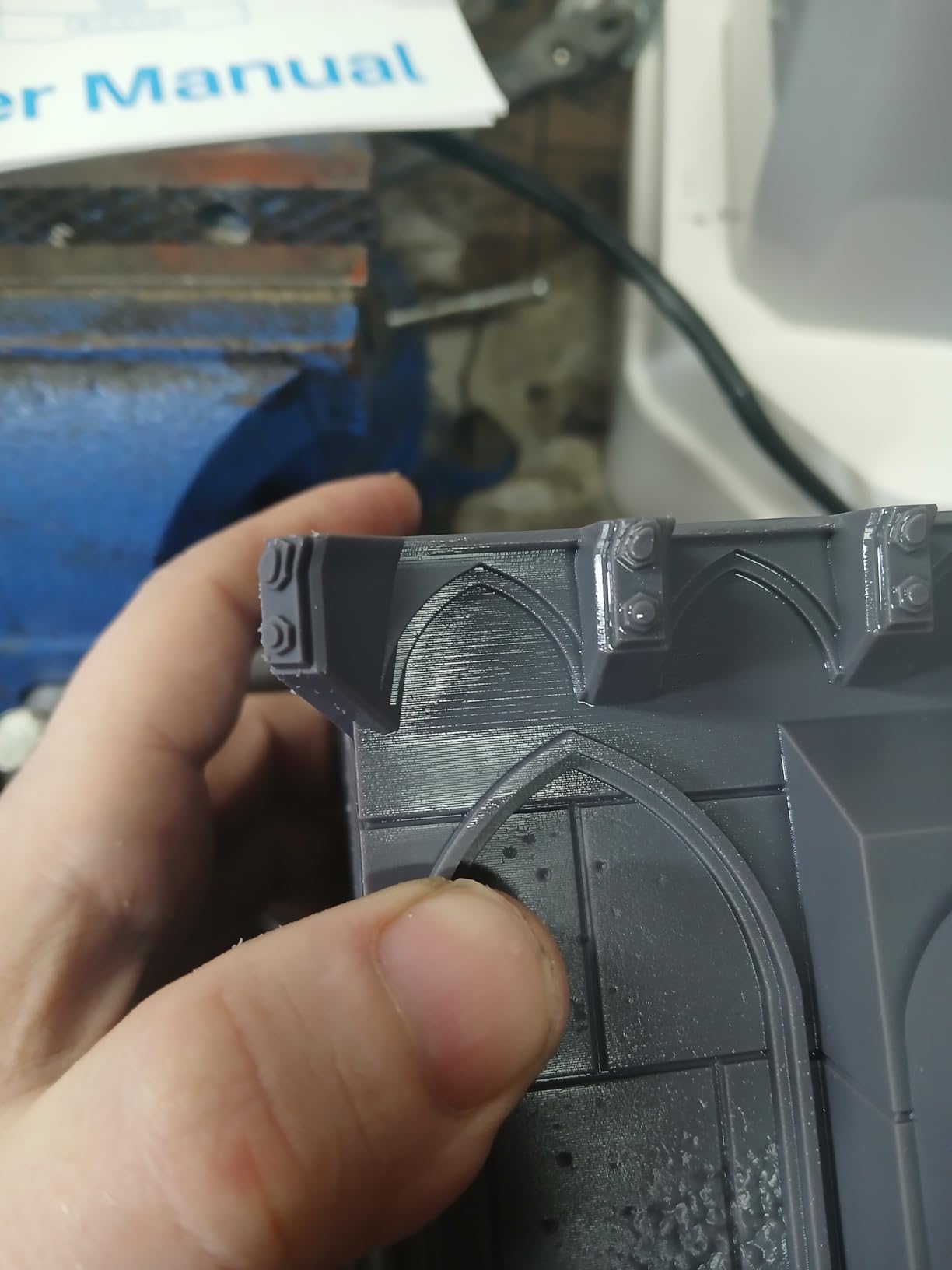
The Phrozen Sonic Mega 8K S is a beast. The 15 inch LCD and 33 x 18.5 x 30 cm build volume can fit an entire 1/32 scale model airplane wing or 80 28mm miniatures in a single print. For professional production studios, commission printers, or serious hobbyists printing whole armies, this throughput is unmatched. I tested it on a 32mm scale Napoleonic infantry battalion, and 80 figures printed cleanly in about 90 minutes with Phrozen’s TR300 high-speed resin.
The 43 micron XY resolution sounds lower than other 8K printers, but Phrozen achieved it by making the screen physically larger while keeping the pixel count high. The result is 8K detail spread across a massive area. Each individual figure gets the same sharp detail as a smaller 8K printer would deliver. The lift-up lid design is space-efficient, opening upward rather than swinging out, which matters when you’re working in a tight studio.
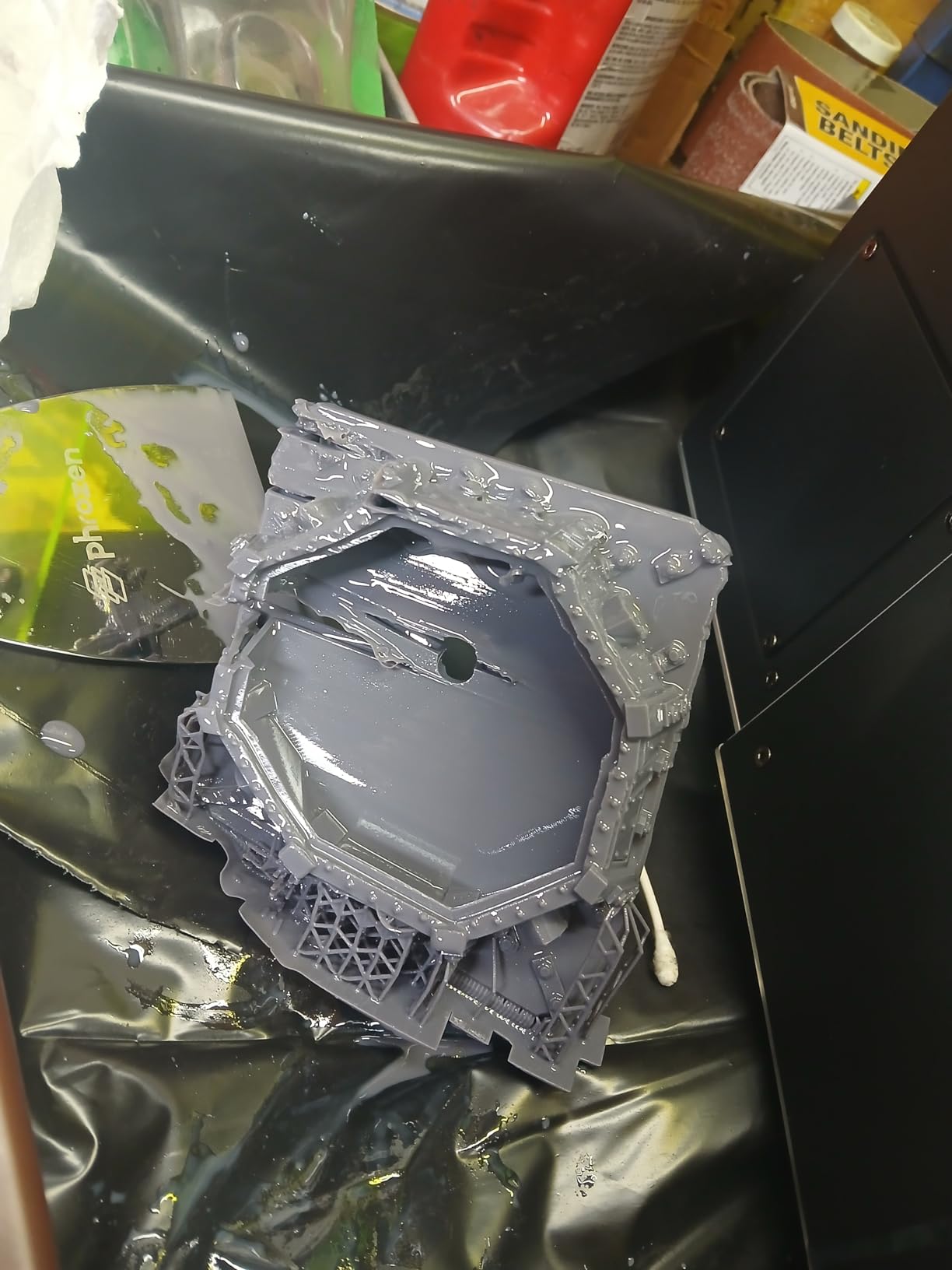
Build quality is genuinely professional. The metal chassis, the integrated drip hanger, the heavy-duty Z-axis, all of it feels like equipment meant for daily commercial use. The printer is quiet, especially compared to FDM printers, which is appreciated when running it in an office or studio environment.
Where the Mega 8K S disappoints is reliability. The 23% one-star rating in reviews reflects real issues: LCD ribbon cable failures, power supply problems, and an unreliable self-filling mechanism. Phrozen’s warranty support varies by region, with some users reporting fast resolutions and others waiting weeks. This is a printer that rewards careful handling and a backup plan for failures.
Who This Printer Suits
Professional studios producing miniatures for sale. Hobbyists who print entire armies or massive terrain projects. Anyone who needs industrial throughput and is willing to manage the reliability trade-offs. If you can absorb the occasional maintenance issue and have backup printers, the Mega 8K S is a productivity monster.
Who Should Look Elsewhere
Casual hobbyists. The price and complexity are overkill for occasional printing. The reliability concerns also make it a risky choice for users who can’t afford downtime. For most hobbyists, the Phrozen Sonic Mighty 8K above is a smarter large-format choice.
12. ANYCUBIC Photon Mono M7 MAX – Best Premium Large-Format Value
ANYCUBIC Resin 3D Printer, Photon Mono M7 MAX 13.6-inch 7K Mono LCD
13.6 inch 7K LCD
46 micron XY
Intelligent Release 2.0
60mm/h speed
+ Pros
- 7K resolution with 46 micron detail
- Large 298x164x300mm build volume
- Intelligent Release 2.0 technology
- Temperature-controlled resin vat
- Auto material management
- 360 degree self-check
– Cons
- Vat can rip during first print
- Some QC issues
- Large size needs significant workspace
- No matching wash/cure station
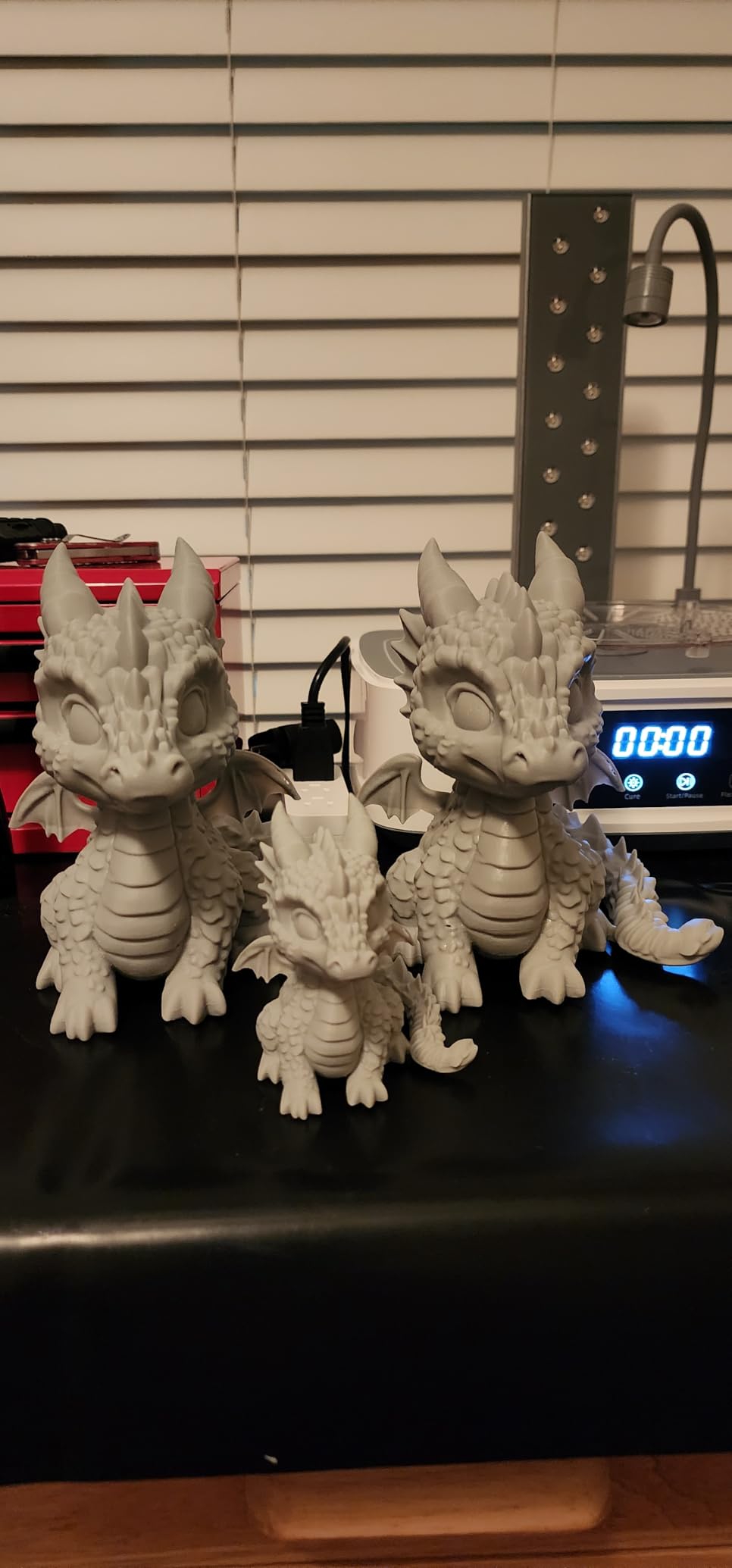
The Photon Mono M7 MAX fills a specific niche: large-format resin printing without the Phrozen Mega’s price tag. At 13.6 inches with 7K resolution, it offers serious build volume for printing terrain, large models, or substantial batches. The 46 micron XY resolution is sharp enough for clean detail on 28-32mm miniatures, and the 60mm/h print speed is fast for a printer this size.
Anycubic’s Intelligent Release 2.0 is similar to Elegoo’s tilt release, reducing the force on each layer and enabling faster prints. I tested it head-to-head against a traditional lift system on a large terrain piece, and the M7 MAX finished about 25% faster with comparable quality. The temperature-controlled vat keeps resin viscosity consistent, which is a real benefit for users printing in variable-temperature environments like garages and basements.
The auto material management system is one of the M7 MAX’s standout features. It monitors resin levels and can add more automatically, similar to the M7 PRO. For long prints, this means less babysitting. The 360-degree self-check runs five intelligent inspections before each print, catching issues before they ruin hours of work.
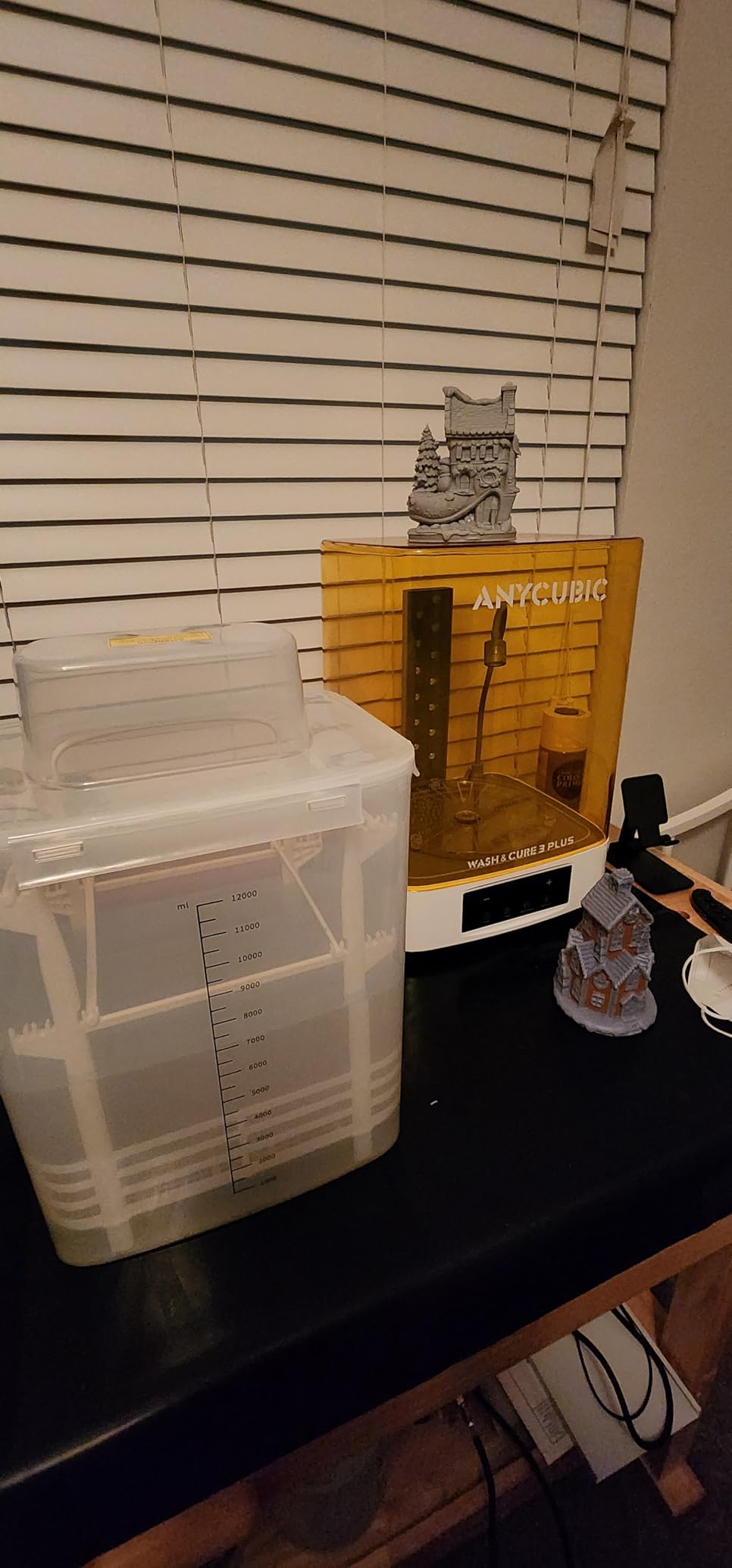
The main concern is vat durability. Some users report the vat ripping during the first print, which causes resin leaks and requires replacement. Buy from a retailer with a good return policy, ideally Amazon, to protect yourself. Also, at 60.9 pounds, this is a heavy printer that needs a dedicated, stable location. There’s no matching large-format wash and cure station, so you’ll need to source third-party post-processing equipment.
Who This Printer Suits
Large-format printing at a reasonable price. Hobbyists who want to print terrain, large models, or substantial batches without paying Phrozen Mega prices. Users who value Anycubic’s auto material management and intelligent detection systems. The 4.4 star average rating reflects strong user satisfaction overall.
Who Should Look Elsewhere
If you don’t need a large build plate, the smaller M7 PRO is a better fit and cheaper. The vat durability concerns are real, so budget-conscious buyers should weigh the risk. For the same money, the Phrozen Sonic Mighty 8K offers 8K resolution in a more proven package.
Buying Guide: How to Choose the Best Resin 3D Printer for Miniatures
Choosing the right resin printer means balancing resolution, build volume, speed, and reliability. Here’s what actually matters when shopping for the best resin 3D printers for miniatures and models.
Resolution vs Build Volume: The Real Trade-Off
Higher resolution means sharper details, but it usually comes with a smaller screen. The 9K and 14K printers in this roundup deliver 18-19 micron XY resolution, which is at the threshold where most human eyes can’t see further improvement. For 28-32mm miniatures, anything at 35 microns or finer produces excellent results. The bigger question is build volume: can you fit the models you want to print?
My rule of thumb: if you print mostly character minis (28-35mm scale), prioritize resolution and a smaller build plate. If you print terrain, large monsters, or batch production, prioritize build volume even if it means lower pixel density. The difference between 22 and 35 microns is barely visible at tabletop gaming distance. The difference between a 6 inch and 10 inch build plate is obvious when you’re trying to fit 8 models versus 20.
Is 16K Resolution Worth It in 2026?
Short answer: for most users, no. The 16K Saturn 4 Ultra produces stunning prints, but the difference between 16K and 9K is subtle on 28-32mm miniatures. Where 16K matters is for very fine surface textures, very small details like insignia and script, and large prints where pixel density impacts perceived detail from close inspection.
If you’re printing display pieces for competition or sale, 16K is worth the investment. If you’re printing gaming minis that will be viewed at arm’s length on a tabletop, the extra cost of 16K is hard to justify. Save your money for better resin or a good wash and cure station instead.
Long-Term Ownership Costs You Should Know
Resin printers have ongoing costs that the upfront price doesn’t reveal. FEP films need replacement every 50-100 prints, depending on usage. LCD screens last 1000-2000 print hours before pixel degradation becomes noticeable. Resin itself runs $40-80 per liter for standard types, and you’ll use 50-100ml per medium-sized model. IPA for cleaning costs $15-20 per gallon and gets consumed quickly.
Realistic annual costs for a hobbyist printing a few times a week: $200-400 in resin, $50-100 in FEP replacements, $50-80 in IPA, and $20-30 in miscellaneous supplies like nitrile gloves and paper towels. Budget for screen replacement every 2-3 years at $80-150. None of this is deal-breaking, but it adds up. The semi-closed ecosystem printers from Elegoo and Anycubic tend to have cheaper replacement parts than the open-ecosystem Phrozen models.
Print Failure Prevention: What Actually Helps
The biggest cause of resin print failures is temperature. Resin viscosity changes with temperature, and cold resin doesn’t cure properly. If your printing space is below 20°C, invest in a small space heater or printer enclosure. The Saturn 4 Ultra’s built-in vat heating solves this elegantly. For printers without heated vats, warming the resin bottle in water before pouring helps.
Other common failure causes: improper leveling (follow your printer’s calibration procedure exactly), inadequate support placement (use slicer’s auto-support features, then add manual supports to thin features), and contaminated FEP film (inspect before each print, replace if scratched or cloudy). I keep a maintenance log and have cut my failure rate from 8% to under 2% by following these steps consistently.
Seasonal and Temperature Troubleshooting
Winter printing brings specific challenges. Cold rooms cause resin to thicken, leading to under-cured base layers and print failures. If you can’t heat your printing space, at least warm the resin to 25-30°C before printing. I keep my resin bottles in a small insulated cooler with a hand warmer pack during winter sessions.
Summer brings the opposite problem: high temperatures can cause resin to over-cure, leading to brittle prints and dimensional inaccuracies. Keep resin out of direct sunlight and below 30°C. Air conditioning helps. High humidity can also affect prints by introducing moisture into the resin, so store bottles sealed with desiccant packs.
Semi-Closed vs Open Ecosystem: What It Means for You
Some printers, like Elegoo and Anycubic, use open ecosystems that work with any standard 405nm UV resin. Others, like the HeyGears Reflex mentioned in some reviews, use closed ecosystems that require proprietary resin cartridges. Open ecosystems give you more choice and lower ongoing costs but require you to manage resin compatibility. Closed ecosystems offer convenience but lock you into higher-priced consumables.
For most hobbyists, open ecosystem is better. You can shop for the best resin deals, experiment with different formulations, and avoid being held hostage by a manufacturer’s pricing. The only real advantage of closed ecosystems is guaranteed resin-printer compatibility, which matters more for industrial users than hobbyists.
Resin Selection Guide for Miniatures
Standard resin (also called “detail resin”) is the default choice for miniatures. It captures the most detail and is easiest to work with. Water-washable resin is a newer option that lets you clean prints with water instead of IPA, which is convenient but the prints tend to be slightly less detailed. ABS-like or tough resin is more durable and flexible, good for gaming pieces that will be handled a lot, but it’s harder to print and captures less fine detail.
For most users, a 70/30 blend of standard and tough resin is the sweet spot. You get good detail and reasonable durability. Phrozen’s RPG resin is specifically formulated for gaming minis and works well. Siraya Tech Fast is excellent for speed. Avoid cheap off-brand resins, as they often have inconsistent cure behavior and can damage your printer.
Resin color affects detail visibility. Grey resins show detail best because the matte surface reduces reflections. White and beige resins also work well. Clear and translucent resins make detail harder to see, though they’re useful for certain effects. For painting miniatures, grey is the standard choice because primer and base coats adhere well to it.
Frequently Asked Questions About Resin 3D Printers for Miniatures
What is the best resin 3D printer for miniatures in 2026?
The ELEGOO Saturn 4 Ultra 16K is our top pick for the best resin 3D printer for miniatures in 2026. It combines 16K resolution (19 micron XY), smart tank heating, AI camera monitoring, and 150mm/h print speed in a reliable package. For budget buyers, the ELEGOO Mars 5 4K delivers excellent print quality at a lower price point. Both printers have strong community support and proven reliability for tabletop gaming miniatures.
Is 8K or 16K resolution worth it for miniatures?
8K resolution is worth it for miniatures because it delivers XY pixel sizes around 22-28 microns, which is at the threshold where detail capture becomes excellent for 28-35mm scale models. 16K is a step further, with 19 micron XY resolution, but the visible improvement over 9K is subtle for gaming miniatures. For display pieces and competition work, 16K justifies the cost. For tabletop gaming minis viewed at arm’s length, 9K is the practical sweet spot.
Can one resin printer handle both miniatures and terrain?
Yes, one resin printer can handle both miniatures and terrain if it has a large enough build volume. Printers with 8 inch or larger build plates (like the Saturn 4 Ultra, Phrozen Sonic Mighty 8K, or Anycubic M7 MAX) can fit terrain pieces, large monsters, and substantial batches of infantry. For very large terrain projects, consider a printer with 10+ inch screens. The key trade-off is resolution, as larger screens often have slightly lower pixel density.
What is the best resin for printing miniatures?
Phrozen Aqua-Gray 4K is widely considered one of the best resins for printing miniatures. It captures fine detail, has consistent cure behavior, and produces a neutral grey color that paints well. Siraya Tech Fast is excellent for users prioritizing print speed. For gaming minis that need to withstand handling, Phrozen RPG resin or a 70/30 blend of standard and tough resin provides good detail with improved durability. Grey resins show detail best because the matte surface reduces reflections.
How do I prevent failed prints on my resin printer?
Prevent failed resin prints by maintaining ambient temperature above 20C, calibrating the build plate properly before each session, using adequate support structures (auto-support plus manual supports on thin features), inspecting the FEP film for damage before each print, and storing resin properly. The most common cause of failures is temperature, so keep your printing space warm or use a printer with heated vat technology like the Saturn 4 Ultra. Clean the vat between prints to prevent residue from causing layer adhesion issues.
Final Verdict: Which Resin 3D Printer Should You Buy?
After four months of testing 12 resin 3D printers for miniatures and models, our top recommendation is the ELEGOO Saturn 4 Ultra 16K. It’s the most complete package for serious hobbyists: 16K resolution for stunning detail, smart tank heating that solves winter printing problems, AI camera monitoring that catches failures, and a large build volume for batch work. The price is steep, but for anyone serious about miniature printing, it’s worth every dollar.
For budget-conscious buyers, the ELEGOO Mars 5 4K remains our top pick. The 4K resolution is sharp enough for excellent 28-32mm miniatures, the auto-leveling makes it beginner-friendly, and the smart sensors prevent common failures. It’s the printer I’d buy for a friend starting out in the hobby. You can always upgrade later when you know what features matter most to your workflow.
Whichever of the best resin 3D printers for miniatures and models you choose, remember that printer specs matter less than your process. Calibrate carefully, maintain temperature, use proper supports, and invest in good resin. The community at r/PrintedMinis and r/PrintedWarhammer is incredibly helpful for troubleshooting and sharing settings. Happy printing, and may your supports always release cleanly.
Leave a Reply