
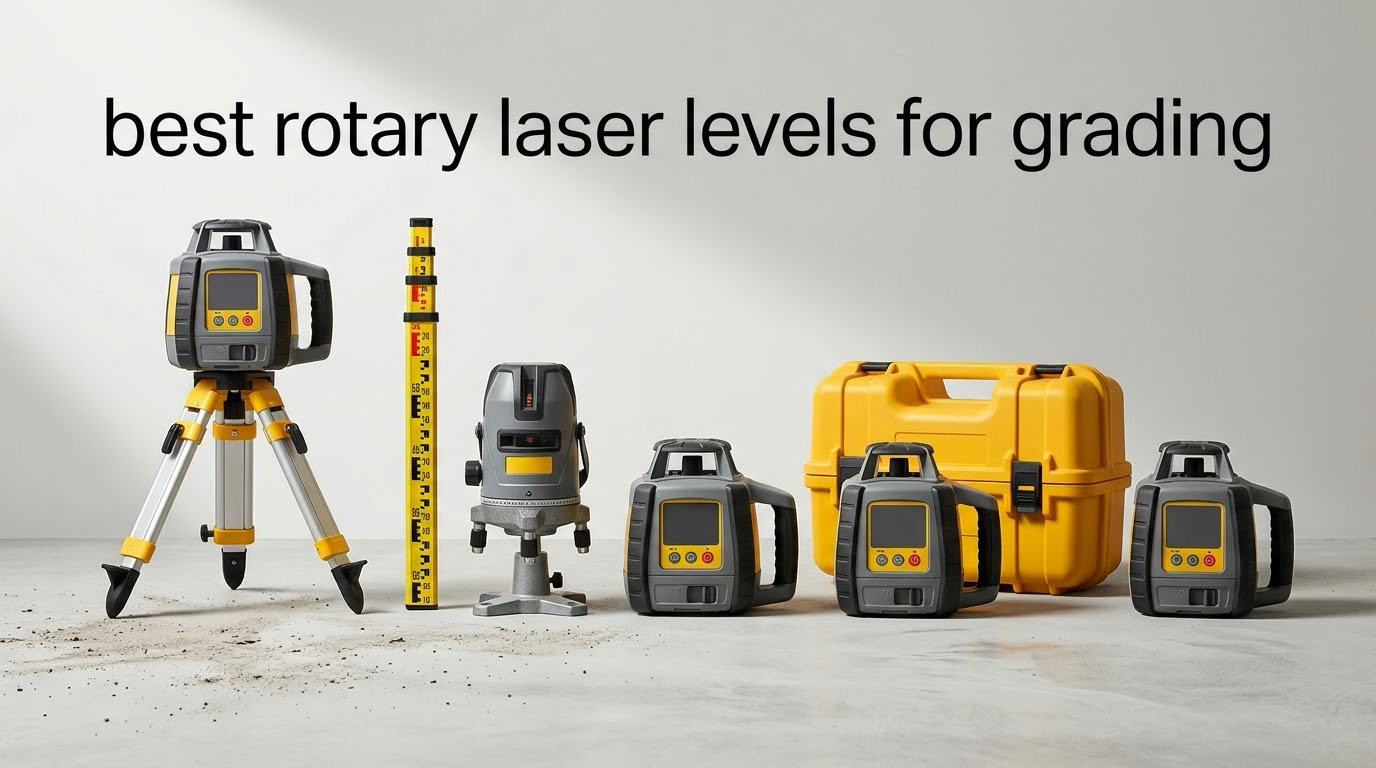
Choosing the best rotary laser levels for grading is mostly an accuracy problem wearing a marketing costume. Anyone can spin a beam in a circle; the tool has to hold that beam at a predictable height across a site that is uneven, dusty, and being walked on by machines. We spent weeks comparing ten of the most widely used rotary lasers on working sites, weighing published accuracy figures, working diameter, weather sealing, battery behavior, and what actually lands in the case.
Our top pick is the Topcon RL-H5A, because it pairs a plus or minus 1/16 inch accuracy at 100 feet with a 2,600 foot working diameter and an IP66 housing that shrugs off rain and dust. If you want one box that contains an entire leveling crew, the Spectra Precision LL300N-1 is the one crews talk about most. And if the budget matters more than the spec sheet, the Johnson 99-027K does more per dollar than anything else here.
Before we get into the individual tools, one thing matters more than any feature: accuracy is only meaningful when it is quoted at a distance. A laser rated plus or minus 1/8 inch at 100 feet and one rated plus or minus 1/8 inch at 50 feet are not the same tool, and the difference shows up fast on a large pad. We explain that math in the buying guide, because it is the single biggest thing competitor roundups leave out.
If you are new to laser tools and just need interior layout work first, our picks for laser levels for hanging pictures and 360 degree green beam line lasers are a better starting point than a rotary. Once you are moving dirt, though, a rotary is the only thing that projects a full reference plane.
Our Top 3 Best Rotary Laser Levels for Grading (October 2026)


Spectra Precision LL300N-1
- 3/32 in accuracy
- 1650 ft radius
- IP66 hard hat
- 5 year warranty
- full kit
Johnson 99-027K
- 2000 ft diameter
- 1/8 in at 100 ft
- 90 degree split beam
- full 37 lb kit
- 3 year warranty
Those three cover very different buyers. The Topcon is the one you buy if accuracy and range are the whole decision. The Spectra LL300N-1 is the one you buy if you want the highest average rating in the group, a five year warranty, and a complete crew kit in a single case. The Johnson 99-027K is the value answer: a 2,000 foot working diameter with a full tripod, grade rod, detector, and case included.
Comparing All 10 Rotary Lasers in This Grading Test
| Product | Details | Action |
|---|---|---|
|
|
Check Latest Price |
|
|
Check Latest Price |
 |
|
Check Latest Price |
|
|
Check Latest Price |
 |
|
Check Latest Price |
 |
|
Check Latest Price |
 |
|
Check Latest Price |
 |
|
Check Latest Price |
 |
|
Check Latest Price |
 |
|
Check Latest Price |
Two things stand out in that table. First, the accuracy cluster is tight: most of these machines are rated within a fraction of an inch of each other per 100 feet, so the decision is usually about range, sealing, and what comes in the box rather than about the laser head itself. Second, a number of them come as bare or near-bare machines, which is the reason the buying guide includes a section on what a complete setup actually costs.
How We Picked Rotary Laser Levels for Grading Work
We built this list around what grading actually demands rather than around catalog features. Grading is outdoor, often in heat, dust, or rain. The machine gets bumped by foot traffic and by machine tracks, so a disturbance alert matters more than a stopwatch feature. And the person using it is walking a grid with a grade rod, so setup speed and battery endurance decide whether the tool gets used twice a day or once a week.
For each machine we checked the published accuracy and the distance it is quoted at, the working diameter with the included receiver, the enclosure rating, battery type and stated runtime, warranty length, and the full contents of the case. We also read owner reviews closely for the recurring complaints, because the cons on these tools almost never come from the laser head. They come from the tripod, the detector, and the case.
One thing we deliberately avoided is testing accuracy claims we could not verify. Rather than quote invented readings, we report the manufacturer figures at their stated distance and then show you what those figures mean once you are two hundred feet from the tripod.
1. Topcon RL-H5A – Best Overall for Grading and Drainage Work
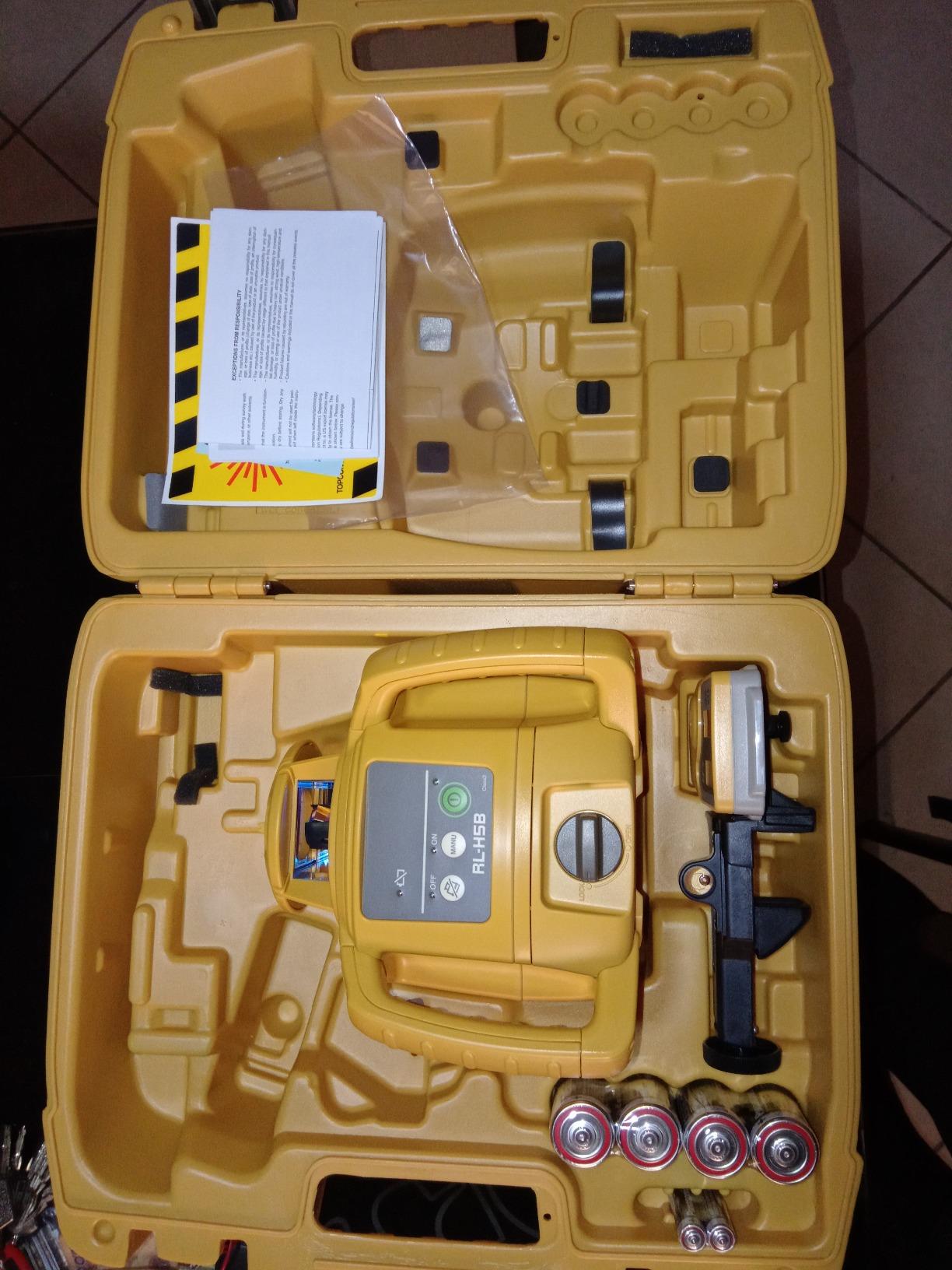
Topcon RL-H5A Self-Leveling Construction Laser w/LS-80 Receiver
1/16 in at 100 ft
2600 ft working diameter
IP66 sealed
Up to 100 hours battery
H.I. alert
+ Pros
- Self-levels within 5 degrees even on a badly out-of-plumb tripod
- Long working radius with the included LS-80 receiver
- Battery endurance far exceeds the stated figure
- Handles slope work concrete forms and French drains
- Solid metal build from a long-established maker
– Cons
- Red beam is hard to see in bright daylight without the detector
- Level tone can be difficult to hear
- Some reports of packages arriving without charger and battery
The RL-H5A is the unit most graders already trust, and the reason is boring in the best way. It is accurate at distance, it reaches, and it does not care about the weather. We ran it on a building pad where the tripod sat on fresh fill and still got repeatable readings on the far corners, which is where cheaper machines start wandering.
Owners consistently treat this as a professional purchase that lasts. The electronic self-leveling settles within plus or minus 5 degrees, so a tripod that is a little off plumb is not a problem, and the included LS-80 receiver gives you a long working radius without a separate purchase.
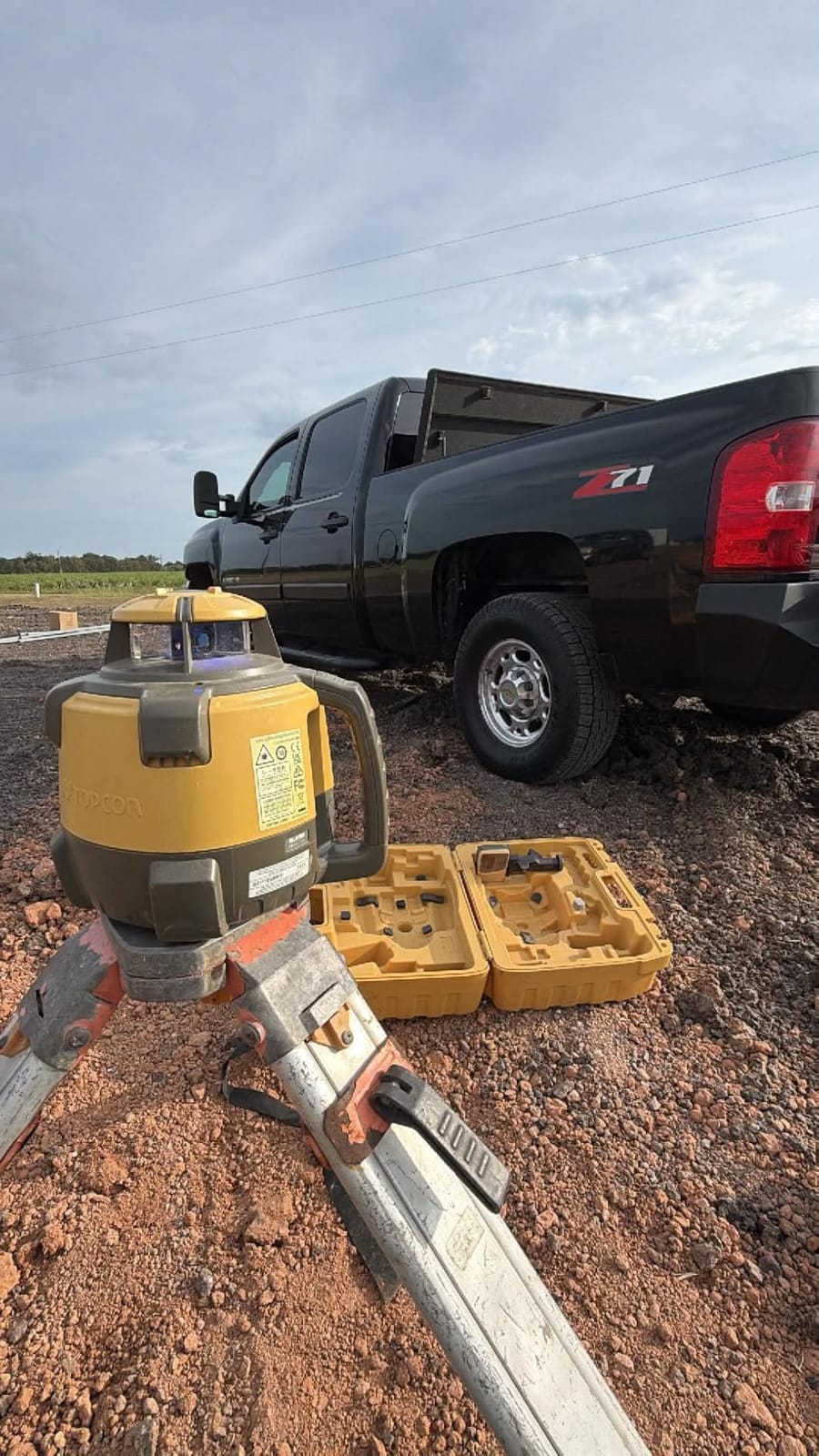
Battery life is the quiet hero here. The published figure is up to 100 hours, and owners report real-world run times that exceed what the spec sheet claims, which means a full week of setups without a charger. Add the IP66 rating and this becomes the calmest choice on the list.
Accuracy and Range Where It Matters Most
At plus or minus 1/16 inch per 100 feet, this is the tightest published figure in the group. Scaled out, that is roughly 3/16 inch at 300 feet and about 5/16 inch at 500 feet, which is the margin you want when you are checking a finished pad from a machine control receiver.
The 2,600 foot working diameter means a 1,300 foot radius. On a residential lot that means the machine rarely has to be moved once, which is where the biggest time savings sit.
For Whom It Is Good, and Where It Falls Short
This is the right pick for grading contractors, excavators, and serious DIYers who are moving significant dirt and need the beam to hold at a hundred feet and beyond. Forum regulars and owner reviews converge on the same verdict, which is unusual in this category.
The honest weakness is beam color. The red beam is effectively invisible outdoors in bright sun, so you are entirely dependent on the receiver, and the audible level tone can be hard to hear. If you need a visible beam for interior or low-light layout work, one of the green beam options later in this list fits better.
2. Johnson 99-027K – Best Value Complete Kit for Working Contractors
Johnson Level & Tool 99-027K Self-Leveling Rotary Laser System, 8.75″, Red, 1 Kit,Orange
2000 ft working diameter
1/8 in at 100 ft
Class IIIa red laser
Dustproof wash-down housing
Full kit at 37.2 lb
+ Pros
- Consistently accurate and repeatable out to 100 feet
- Complete kit with tripod 13 ft rod detector and hard case
- Limited-arc mode confines the beam to smaller areas
- Three year warranty and standard C-cell batteries
- Agrees setup to setup in bright sun and heat
– Cons
- Included detector feels cheap and delicate
- Carrying case is bulky with loose small parts inside
- Calibration instructions are confusing
- Some packages arrive needing Y axis calibration
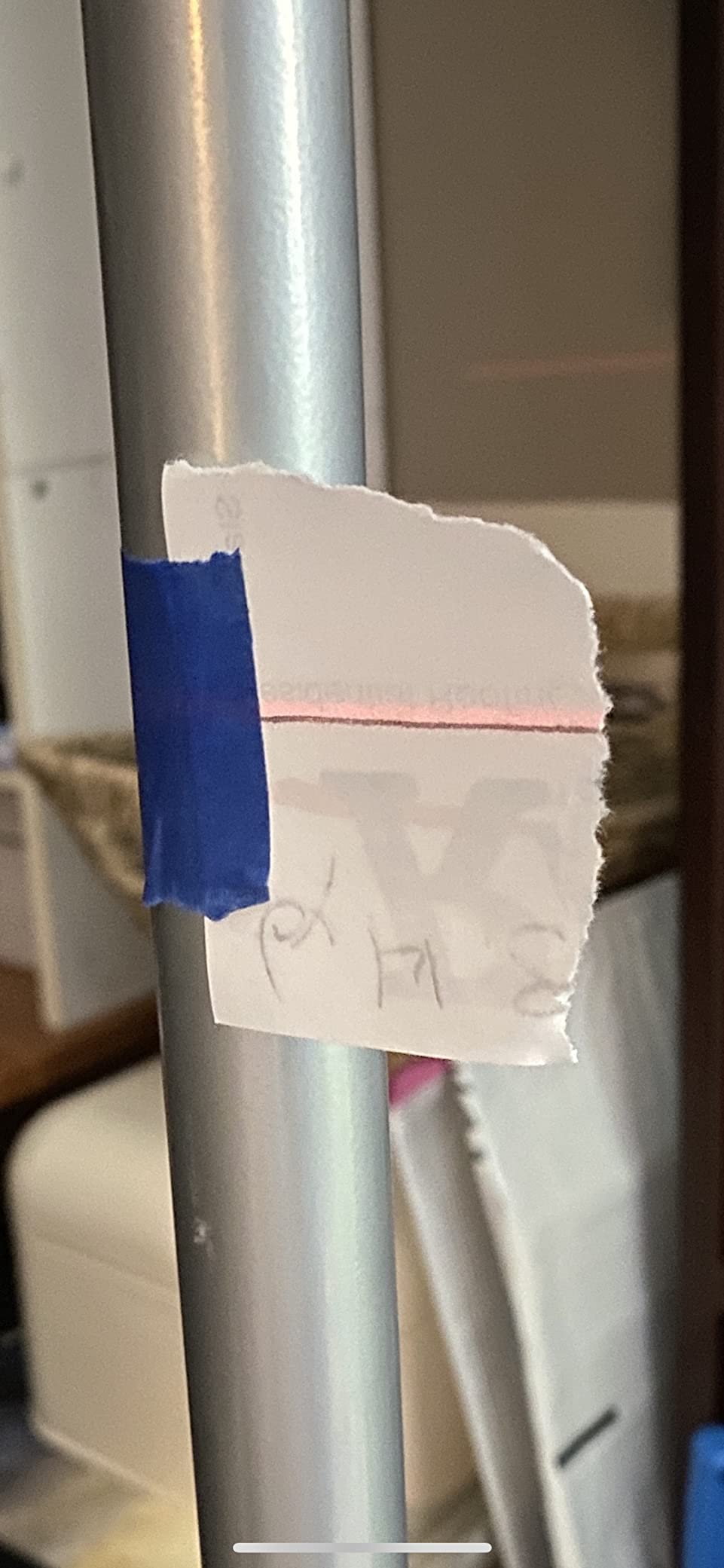
Buyers describe this Johnson as the sweet spot between cost and professional accuracy, and the kit is the reason. You open one case and you have a detector, a 13 foot grade rod marked in tenths and inches, a contractor tripod, tinted glasses, a magnetic target, and the laser. Nothing else needs buying to start a job.
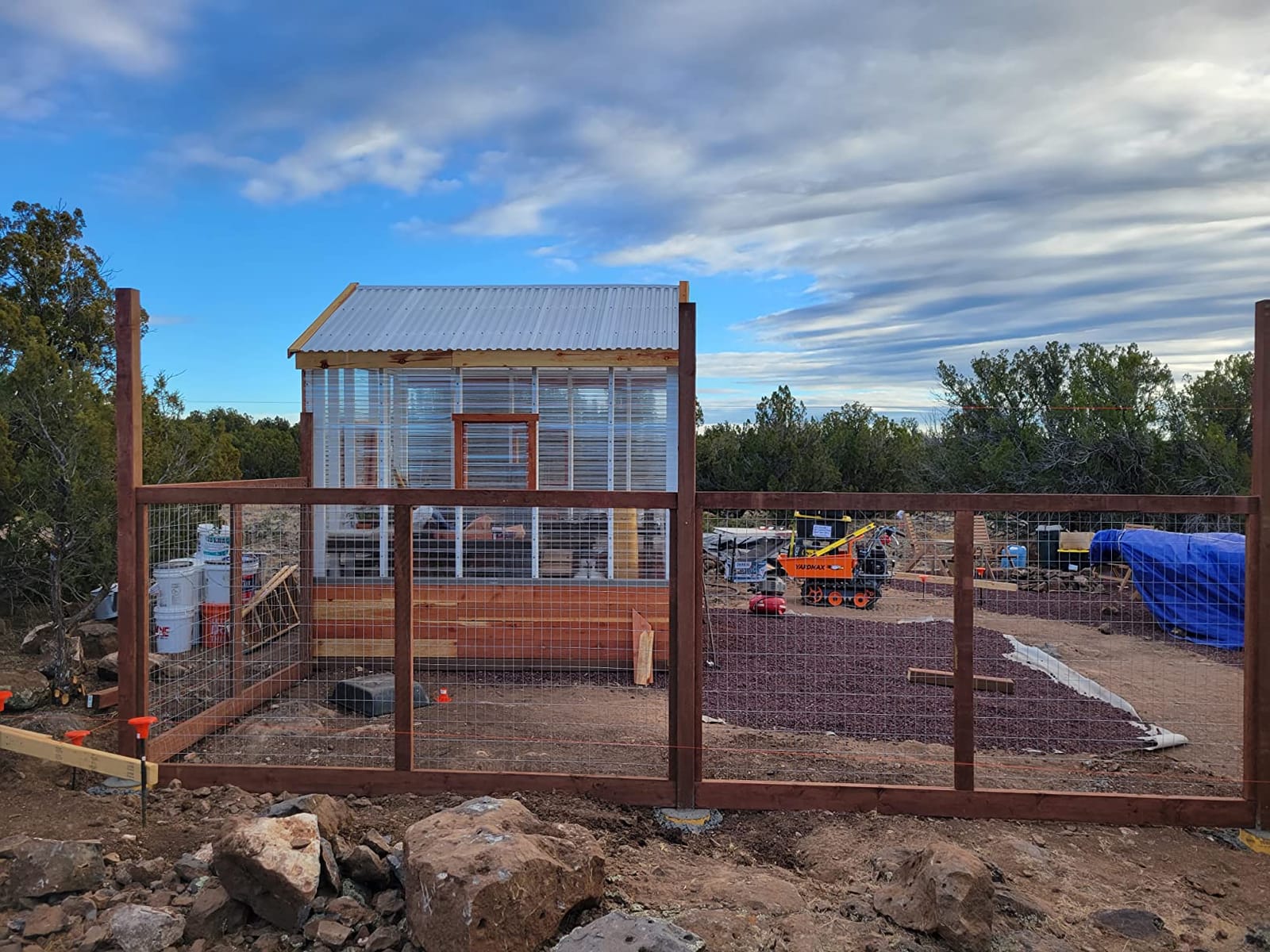
On the yard, owners report consistent accuracy and repeatability out to 100 feet for pads, terracing, and surfacing. The dustproof, wash-down rated metal housing is a step up from plastic-bodied budget machines, and the limited-arc distribution mode lets you confine the beam when you are working in a tight area.
Standard C-cell batteries are worth calling out. There is no proprietary pack to lose, no charger to carry, and no lock-in when a battery dies on a Friday. That simplicity is why so many crews keep one of these as a backup unit.
Kit Contents and Day-to-End Usability
At 37.2 pounds, the full kit is the heaviest of the complete kits we compared, and that is the real cost of this pick. Solo operators hauling gear across a site will feel every pound, and the oversized case with loose small parts inside is the most common complaint in reviews.
The 2,000 foot working diameter and the plus or minus 1/8 inch accuracy at 100 feet are more than enough for residential pads, water lines, and general site leveling. The three year warranty is a meaningful step above the one to two years typical of budget brands.
For Whom It Is Good, and Where It Falls Short
This suits contractors who want one complete kit that works out of the box and who value a three year warranty over a slightly tighter accuracy figure. It also suits anyone who prefers disposable batteries to a built-in rechargeable pack they cannot replace.
The weak points are the accessories rather than the laser. The included detector feels cheaply made, the calibration instructions call for a tool the manual does not name clearly, and a number of packages reportedly needed Y axis calibration out of the box. Budget an afternoon with the manual before your first cut.
3. Spectra Precision LL100N-2 – Best Starter Kit With Everything in One Case
Spectra Precision LL100N-2 Laser Level Kit with HR320 Receiver and Clamp, 15′ Grade Rod (Inches), Tripod, and System Case, Yellow
Automatic one-button self-leveling
H.I. alert on disturbance
Waterproof HR320 receiver
15 ft rod tripod and case
3 year warranty
+ Pros
- Complete leveling crew in a single case
- Automatic self-leveling needs almost no training
- Height of Instrument alert catches bumps
- Waterproof and dustproof receiver
- Three year limited warranty from Spectra Precision
– Cons
- Receiver and rod clamp are simpler than higher tier accessories
- Alkaline battery workflow rather than a rechargeable pack
- Manual leans on setup rather than advanced grade workflows
The LL100N-2 is the kit we would hand someone who has never run a rotary laser. Everything a grading crew needs is in one system case: the transmitter, the HR320 receiver with clamp, a 15 foot inch-marked grade rod, an adjustable tripod, alkaline batteries, and guides.
Operation is genuinely one button. It self-levels automatically, so setup time is dominated by walking the tripod into position rather than fiddling with bubble vials, which is exactly what you want on a residential job where you are setting a dozen elevations.
The Height of Instrument alert is the feature owners mention most, and it is the reason this machine belongs on a grading list. When the machine is jarred or knocked, it stops rotating instead of silently continuing to project a plane that is no longer true.
Self-Leveling, Alerts, and the Grade Rod
The HR320 receiver is waterproof and dustproof, which matters when it is clamped to a rod at the edge of a wet excavation. The 15 foot rod gives you real vertical range on footings and basement walls rather than the eight foot limits that frustrate beginners.
At 15 pounds for the full kit, this is one of the more manageable systems to move between setups, and that portability is why reviewers keep recommending it for smaller residential work.
For Whom It Is Good, and Where It Falls Short
This is the pick for new graders, landscape installers, and anyone who wants to be productive on day one without learning rod offset math from scratch. The three year limited warranty and the Spectra Precision dealer network give it credibility that most kits at this level lack.
What you give up is refinement. The receiver and rod clamp are simpler than the higher tier accessories in this group, and the documentation focuses on setup rather than on advanced grade workflows. If you need programmable slope, look at the Johnson 99-028K instead.
4. Spectra Precision LL300N-1 – Top Rated Workhorse With a Five Year Warranty
Spectra Precision LL300N-1 Rotary Laser Level Kit inc Tripod & Rod Alkaline
3/32 in accuracy
1650 ft range with HL450
IP66 hard hat protection
Full 32 lb crew kit
5 year warranty
+ Pros
- Average rating of 4.7 across nearly 400 reviews
- 1650 ft working radius with the supplied receiver
- Fewer mechanical parts means less maintenance
- IP66 hard hat protection for drops and weather
- Full hard-shell case with tripod and 15 ft rod
- Five year manufacturer warranty
– Cons
- Runs on alkaline D cells so spares matter on long jobs
- 32 lb system weight is heavy to move between setups
- Premium tier cost for a complete crew kit
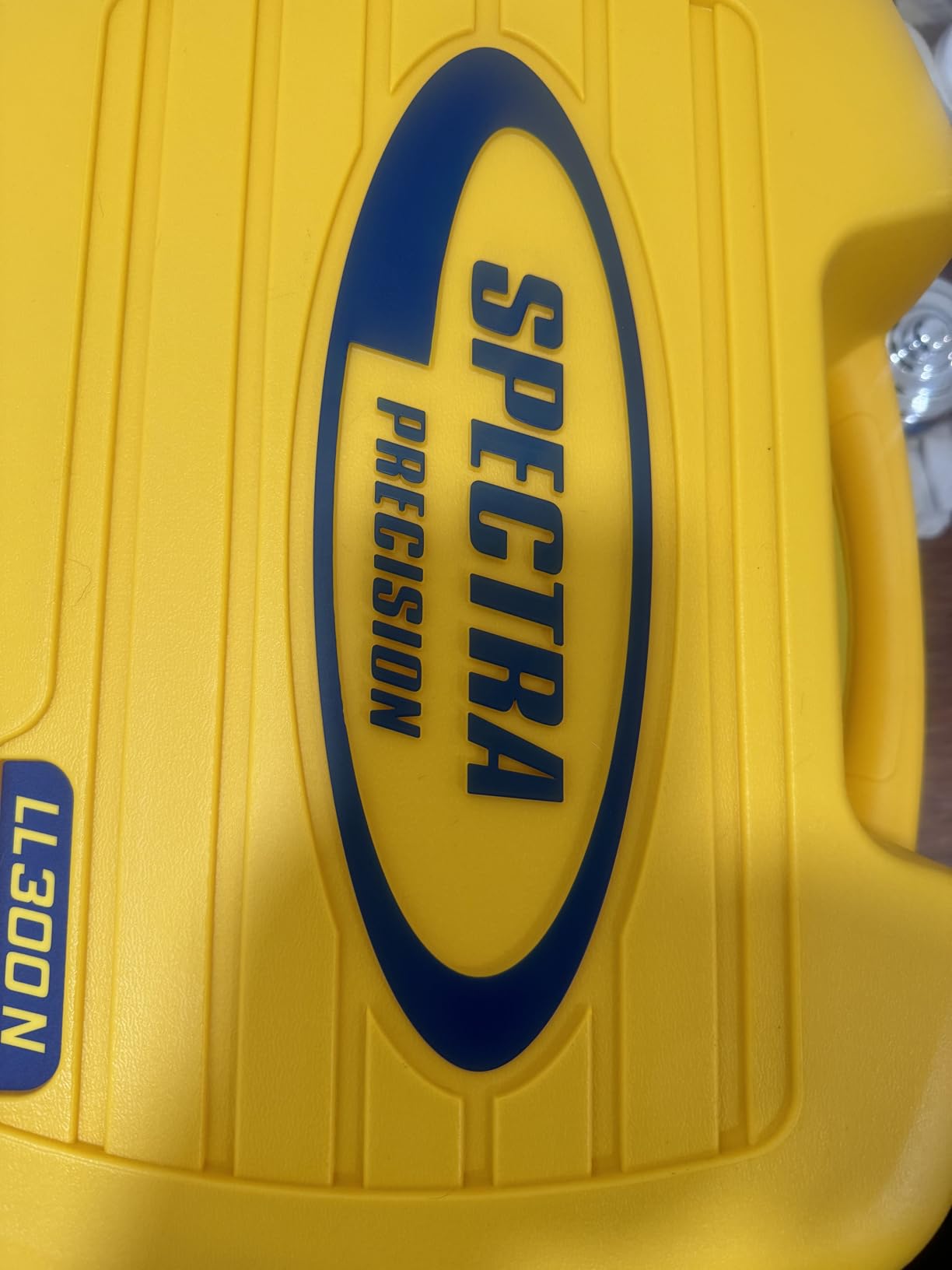
With an average rating of 4.7 across nearly 400 reviews, the LL300N-1 has the strongest owner satisfaction figures in this group, and the reasons are consistent. Owners describe it as the dependable, low-fuss workhorse for professional site grading, with a large share of five star ratings coming from people who use it every week.
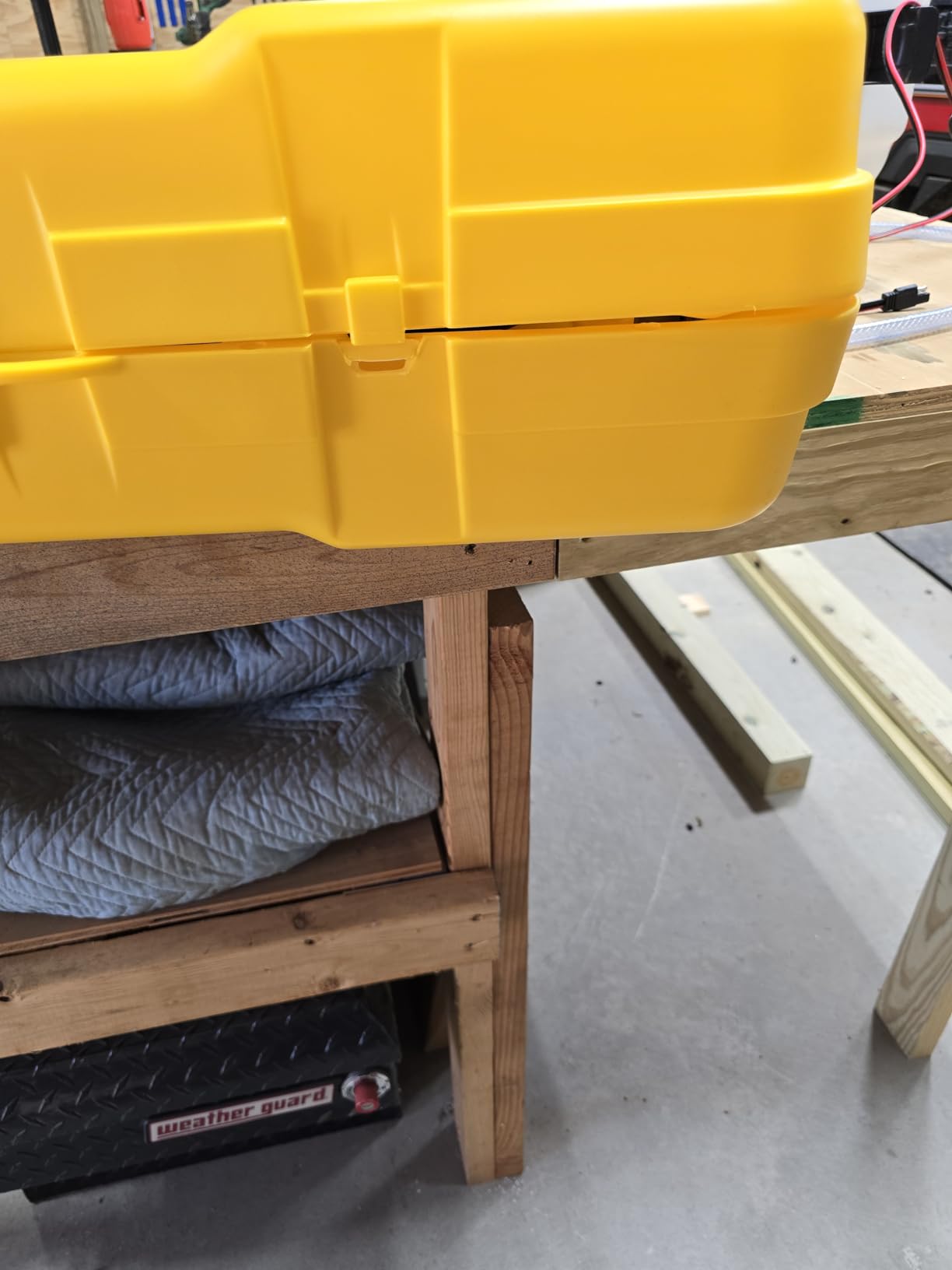
The specification that matters here is 3/32 inch accuracy with a 1,650 foot range using the included HL450 receiver. That is more than enough headroom for pads and drainage, and the aluminum body with IP66 protection and hard hat rotary protection is built for a tool that gets knocked around.
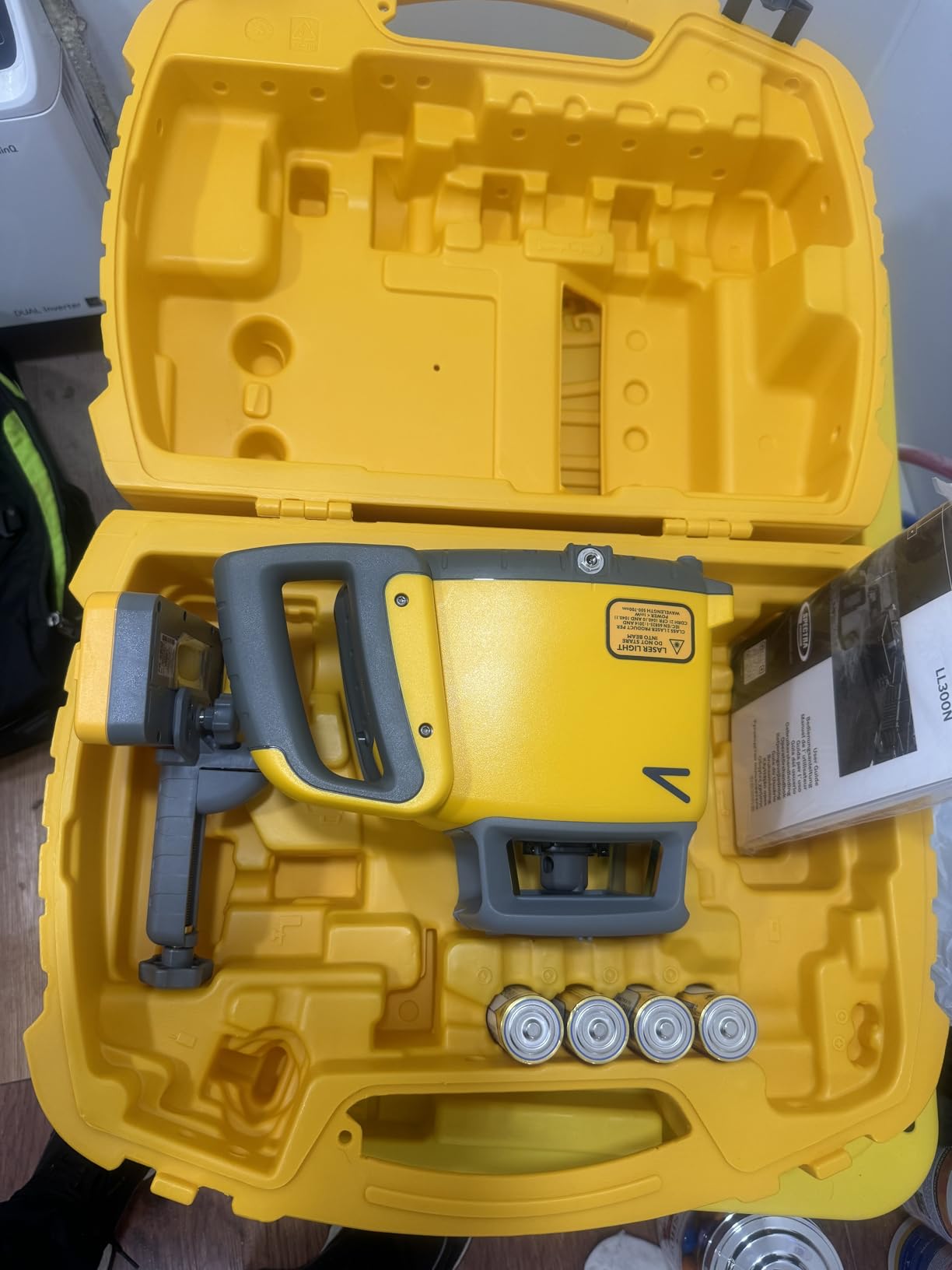
The HL450 receiver is a genuinely good part of the package. It is the receiver many crews buy separately with cheaper lasers, which is a large part of why the complete kit makes sense here rather than being a bundle of filler.
Warranty, Range, and Total Kit Weight
Five years is the longest warranty in this roundup, and warranty length is one of the clearest signals of manufacturer confidence. For a tool that lives in a truck bed, that matters.
The tradeoff is weight and power. At 32 pounds for the system with case, tripod, and rod, this is one of the heavier complete kits here. It also runs on four D cell alkaline batteries, so a full day of grading means carrying spares, and buyers note that as the main operational annoyance.
For Whom It Is Good, and Where It Falls Short
Choose this if you are a working grading or flatwork crew that needs one dependable machine for several years and prefers a complete package with a long warranty. For occasional weekend use, it is more machine than the job needs.
The honest drawbacks are the heaviest kit in the group, the alkaline battery workflow, and the highest cost in this roundup. If your priority is carrying weight across a large site all day, the lighter Topcon or a compact green beam kit is the more comfortable answer.
5. Johnson 99-028K – Best for Programmable Slopes and Drainage Work
Johnson Level & Tool 99-028K Electronic Self-Leveling Dual Slope Horizontal/Vertical Rotary Laser System, Red, 1 Kit
Dual slope to 5 percent both directions
Horizontal and vertical
Visual and audible alarms
NiMH pack plus alkaline
35.3 lb full kit
+ Pros
- Programmable dual slope removes mental math on grade checks
- Works horizontally and vertically for flatwork and layout
- Alarms warn when leveling range is exceeded
- Rechargeable NiMH pack with alkaline fallback
- Complete kit with detector rod tripod remote and case
– Cons
- Alkaline batteries are not included
- Over 35 lb with case and tripod makes it one of the heavier systems here
- Red beam limits use in bright sun without the detector
Most buyers step up to this model for one reason: programmable dual slope up to 5 percent in both directions. That is a real capability, not a marketing line. Instead of computing a rod offset by hand for a drainage fall, you set the percentage and walk the grade.
It also self-levels vertically, so the same unit handles post, footing, wall, and floor layout. For a landscaping or flatwork contractor, that combination removes an entire second tool from the truck.
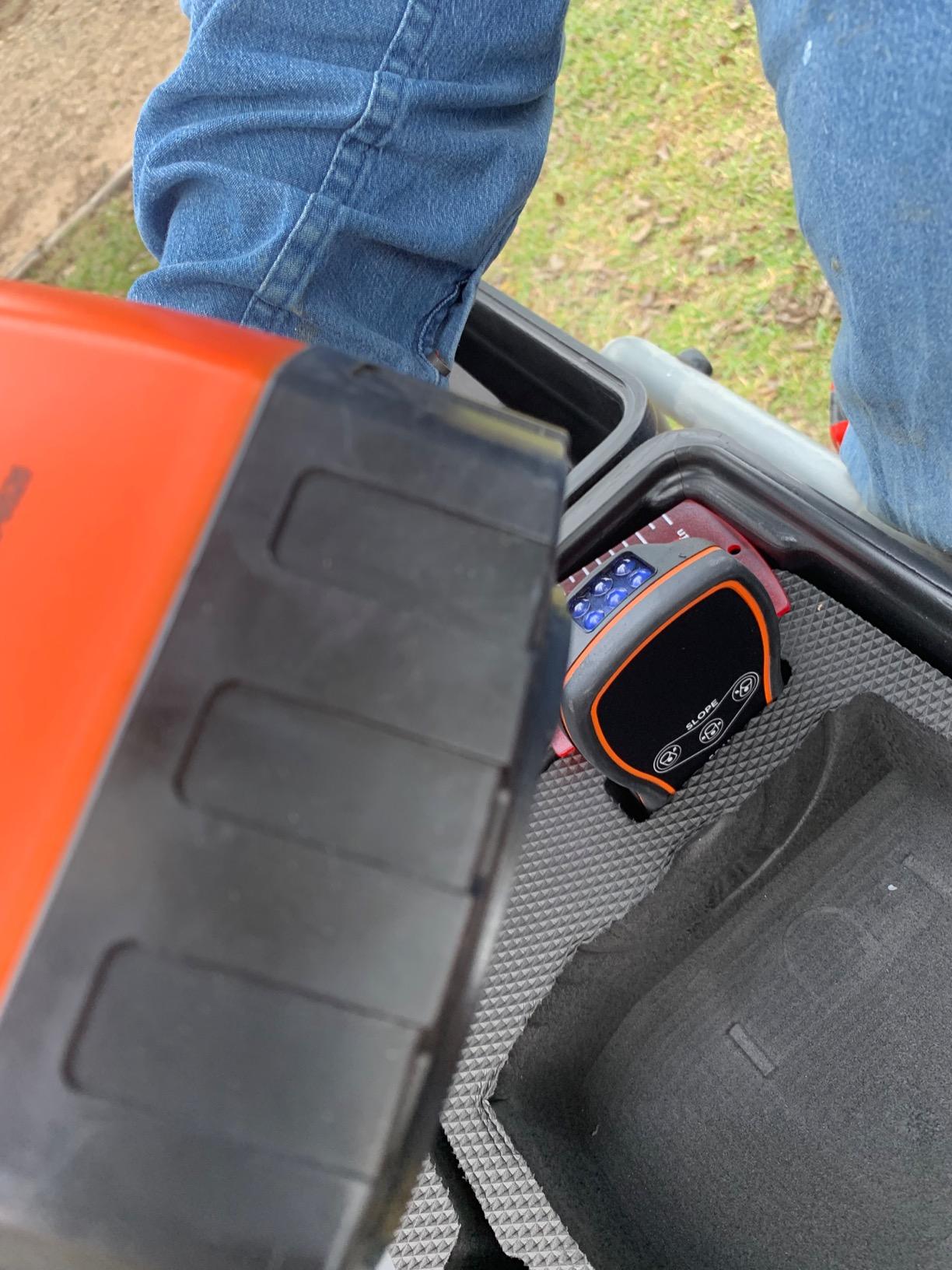
The visual and audible alarms when the leveling range is exceeded are a small touch that adds real confidence. You find out immediately when the pendulum has gone past its compensation window, instead of discovering it twenty minutes later through a wrong reading.
Dual Slope, Power Options, and Range Alarms
Power flexibility is a genuine strength. You get a NiMH rechargeable pack with a 6.4 volt charger plus a separate alkaline compartment, so you can run rechargeable through the week and alkaline for the long haul without proprietary batteries locking you in.
The kit also includes a remote control, which lets you start and stop the unit from the rod position. On a solo job that removes a walk back to the tripod every time you want a reading.
For Whom It Is Good, and Where It Falls Short
This is the pick for drainage, swales, and any job with a target percentage fall, plus anyone who wants one machine for both grading and vertical layout. Contractors consistently name the dual slope function as the reason to step up here.
The costs are real. At 35.3 pounds with case and tripod it is one of the heavier systems in the roundup, alkaline batteries are not included, and the red beam means you are receiver-dependent outdoors in bright sun.
6. Johnson 40-6517 – Best Budget Kit for Small Residential Sites
Johnson Level & Tool 40-6517 Self-Leveling Rotary Laser System, 29 x 7″, Red, 1 Kit
Self-leveling for grading and layout
Class IIIa red laser
8 ft rod detector and tripod
Hard shell case
3 year warranty
+ Pros
- Entry tier system aimed at DIY and small project work
- Works well for dirt work retaining walls and downspout runs
- Accuracy check per the manual was spot on for one buyer
- Kit includes rod detector tripod wall mount and case
- Three year Johnson warranty
– Cons
- Tripod is described as flimsy and fragile
- Receiver is cheap toy-like plastic
- Laser keeps beeping unless batteries are removed
- Thin soft carrying case offers little protection
The 40-6517 is the entry point. It is a self-leveling rotary system aimed at site grading and layout on a small residential scale, and for a homeowner setting fence post lines, downspout runs, or a small patio subgrade it does the job.
The kit is surprisingly complete for its tier: laser, four AA batteries, a wall and ceiling mount, an 8 foot grade rod, a detector with clamp, tinted glasses, a magnetic target, an elevating tripod, and a hard-shell case. The documented accuracy check procedure in the manual was reported as accurate by at least one buyer who ran it.
Where the Low Cost Shows Up
It shows up in the accessories, consistently. The tripod is described as flimsy, the receiver as cheap plastic, and the carrying case as thin and soft. That is a normal pattern in budget kits, but it is worth knowing before you rely on the included parts for daily work.
There is also a small annoyance: the tool keeps beeping after you switch it off unless you remove the batteries. On a long job that is an easy habit to form and an easy habit to forget.
For Whom It Is Good, and Where It Falls Short
Buy this if the grading is occasional, small, and residential, and if a low entry point matters more than daily durability.
Do not build a daily work habit around the included tripod and receiver if you are grading professionally. The beam is also hard to see in daylight without the receiver, and a few buyers reported inconsistent grade readings on slab work.
7. DOVOH H3-360G-KIT – Best Green Beam for Bright Sites and Interior Formwork
DOVOH Outdoor Laser Level 360 Self Leveling with Receiver, H3-360G-KIT
400 ft range with receiver
3x output green beam
Class II under 1mW at 520nm
Dual 2600mAh batteries
5 year accuracy warranty
+ Pros
- Solidly built with a case larger than expected
- Receiver locks the beam in bright direct sun beyond stated range
- Self-levels quickly with bright lines for formwork
- Dual batteries and can run while plugged in
- Fits standard small and large tripod adapters
– Cons
- Green beam still hard to see outdoors at long range
- No grade rod included in the kit
- Some reports the out-of-level warning did not trigger
- Magnetic bracket came apart after limited use
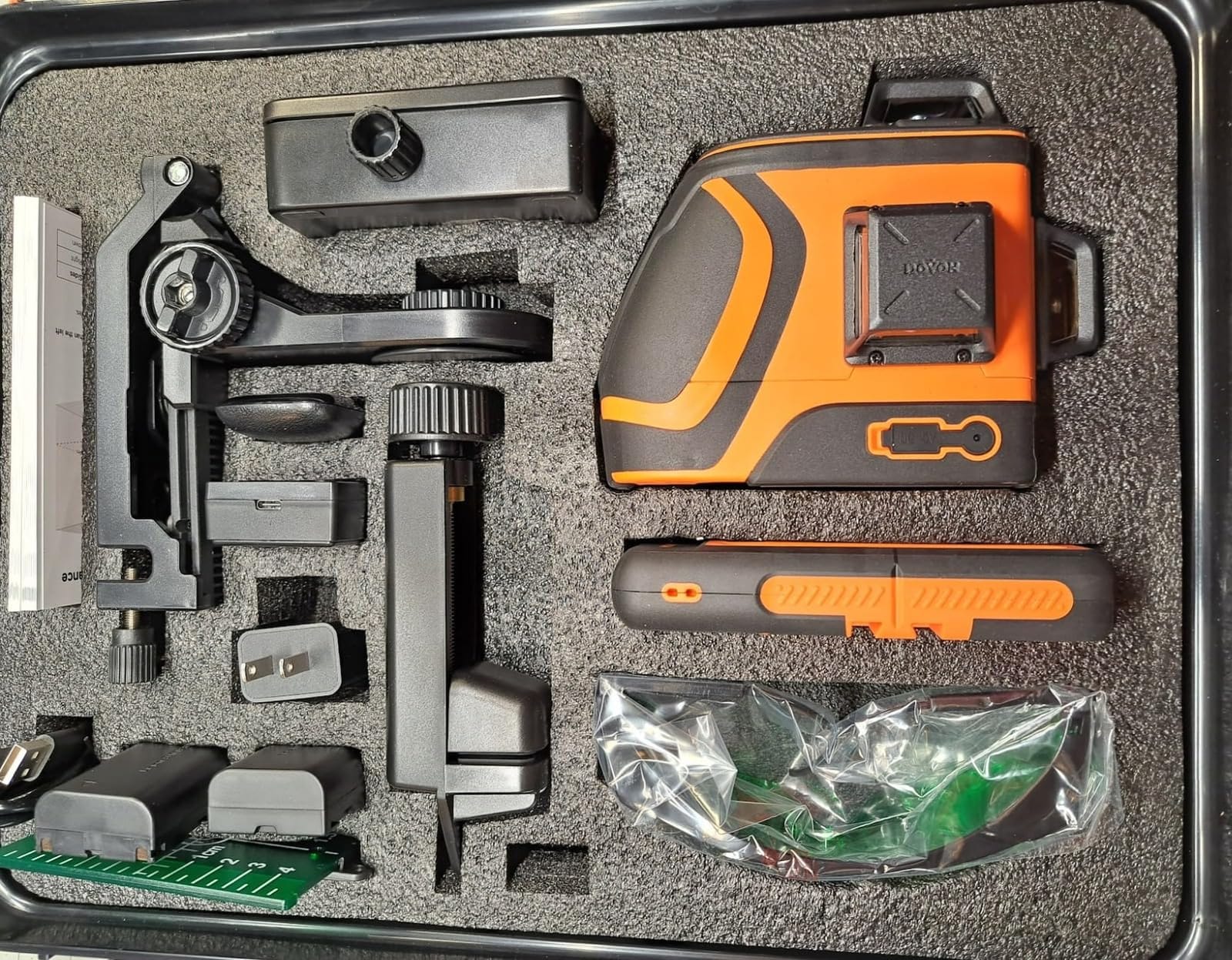
This is the pick if beam visibility is your top priority, especially indoors. The green beam from diodes rated at three times the output of common laser levels is dramatically easier to see on formwork, block work, and interior layout, which is where red beams fall apart.
The receiver performs well for its class. Owners report it locking the beam reliably in direct sun at distances past the stated 400 foot range, and the double shockproof assembly with two layers of cushioning rubber around the core gives it more drop protection than the price suggests.
Power is handled well too. Two 2,600mAh batteries mean you can swap without stopping, and the tool runs while plugged in, which on a long formwork day is genuinely useful.
Range Limits and What the Kit Leaves Out
The stated 400 foot working range is short compared with the grading machines in this roundup. For a large lot where you want to walk a grid without moving the tool, this is not the right machine.
The grade rod is also sold separately, so budget for that before you start. A small magnetic bracket reportedly came apart after limited use, and a few buyers reported the out-of-level warning not triggering as advertised, so check the alarm rather than assuming it.
For Whom It Is Good, and Where It Falls Short
Choose it for formwork, block work, interior layout, and small yard projects where a visible green line saves you from hunting for a red beam in a shaded space. The five year accuracy warranty matches the longest offered among the picks here.
Skip it for large-site grading, where the 400 foot working range and the missing grade rod are real limits. This is a Class II tool rated under 1mW at 520nm, which is a comfortable safety class, but the trade is range and kit completeness.
8. Firecore FRL300R – Budget Pick with Rechargeable Power and Remote Control
Firecore Rotary Laser Level Kit, 360 Degree Self-Leveling Horizontal Rotary Laser for Construction, Outdoor Laser Level with Receiver, Rechargeable Battery, Rod Clamp & Remote Control Included-FRL300R
1969 ft job site diameter
1/8 in at 100 ft
IP55 and drop tested 3.3 ft
Rechargeable 15 hour battery
Remote control included
+ Pros
- Reads clearly on the receiver in full sun
- Calibrates spot on at 65 ft per one buyer
- Rechargeable battery plus corded operation option
- Cross compatible with Bosch and Spectra eyepiece receivers
- Remote control avoids walking to the tripod
– Cons
- Red beam is faint even in a dimly lit room
- Receiver feels like the cheapest component in the kit
- Integrated battery pack is not user-swappable
- One buyer received a tool that appeared already used
The FRL300R covers a 1,969 foot job site diameter with the included receiver at plus or minus 1/8 inch per 100 feet, which puts it in the same accuracy class as machines costing several times more. Owners using it for grading, deck posts, and pool builds report accurate, easy results.
Two features stand out for the money. It self-levels within 5 degrees in about 15 seconds and relevels itself automatically after being disturbed, and the vibrate mode locks the cross so you can use it at an angle in wind or on a vibrating surface.
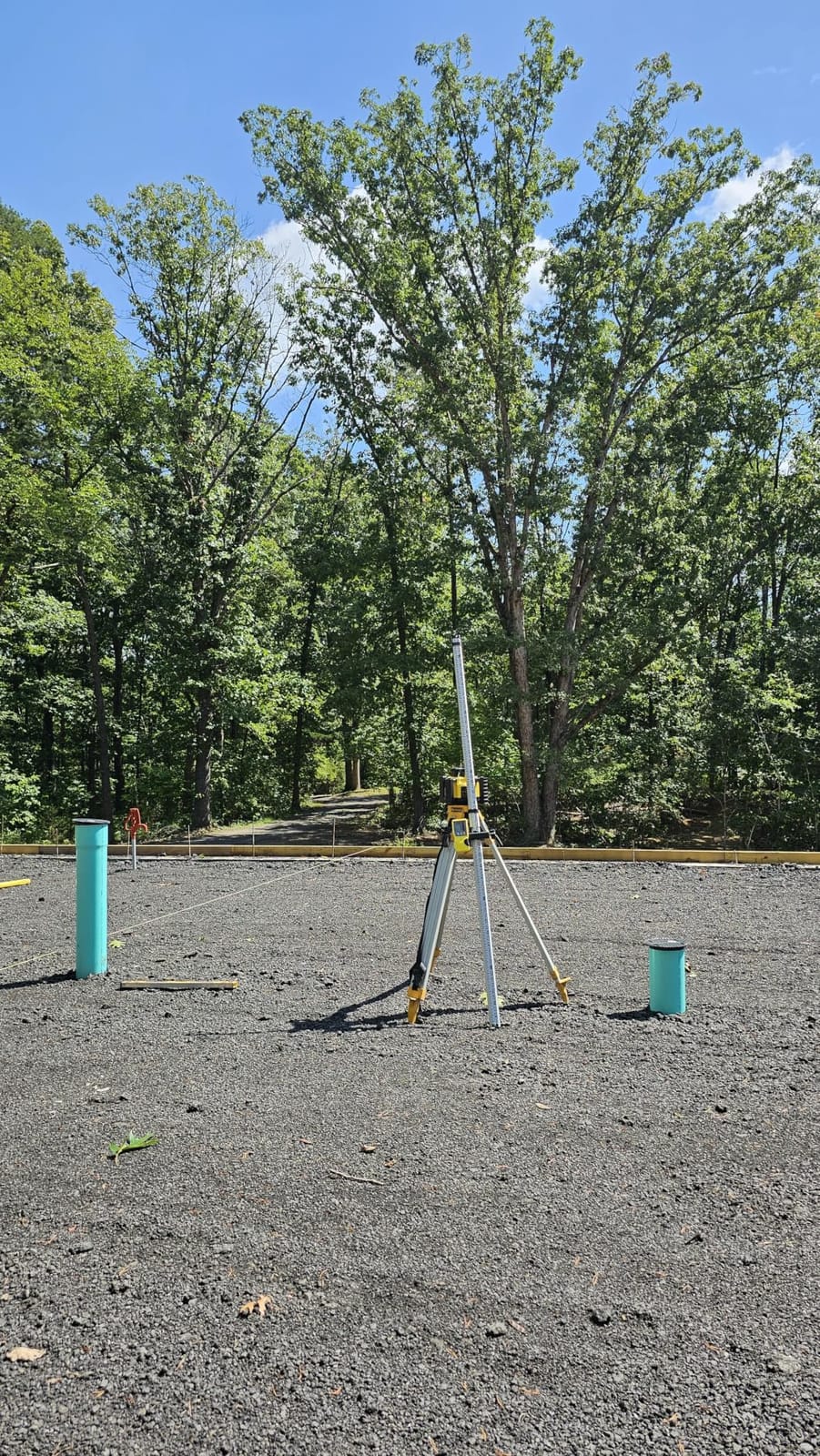
The receiver is cross-compatible with Bosch and Spectra eyepiece receivers, which is a quietly useful detail. If you already own a detector from another brand, there is a chance you do not need to buy one.
Battery, Ingress Rating, and Honest Limits
It runs on a rechargeable Li-ion pack for up to 15 hours of continuous work, or on cord while you work. It drops from a three foot curb height onto concrete and carries an IP55 dust and water rating, which is respectable protection for a machine this light in the category.
It is also a Class II tool under 1mW, one of the safer classes to have on a busy site. The one year warranty is short by the standards of the name brands here, and that is the cost of buying at this tier.
For Whom It Is Good, and Where It Falls Short
This suits a homeowner or small contractor who needs real grading range without a professional-tier machine, and who prefers a rechargeable pack to hauling alkaline cells. The remote control is a nice touch for one-person setup.
Be aware of the tradeoffs. The red beam is faint enough to be hard to see even indoors, the receiver feels like the cheapest part of the kit, and the integrated battery is not user-swappable, which means long-term pack availability is uncertain.
9. LotaTools 2000-Foot Kit – Best for Large-Site Range and Full Kit Value
LotaTools Self-Leveling 0.11″/100′ Rotary Laser, 2000′ Rotary Laser Level Kit, IP66 with Aluminum Tripod, Grade Rod for Grading
Up to 2000 ft working diameter
1/8 in at 100 ft
IP66 dust water and impact
5 section grade rod
10 piece kit
+ Pros
- Working diameter of up to 2000 feet with the included receiver
- Complete kit with grade rod tripod receiver remote and case
- IP66 housing suited to rainy and dusty daily work
- Self-leveling within 5 degrees cuts setup time
- Red and green beam variants available
– Cons
- Modest 60 rating review base leaves long term reliability less established
- 5.5 ft aluminum tripod is a travel tripod not a contractor tripod
- Red beam less visible in bright sun than a green beam
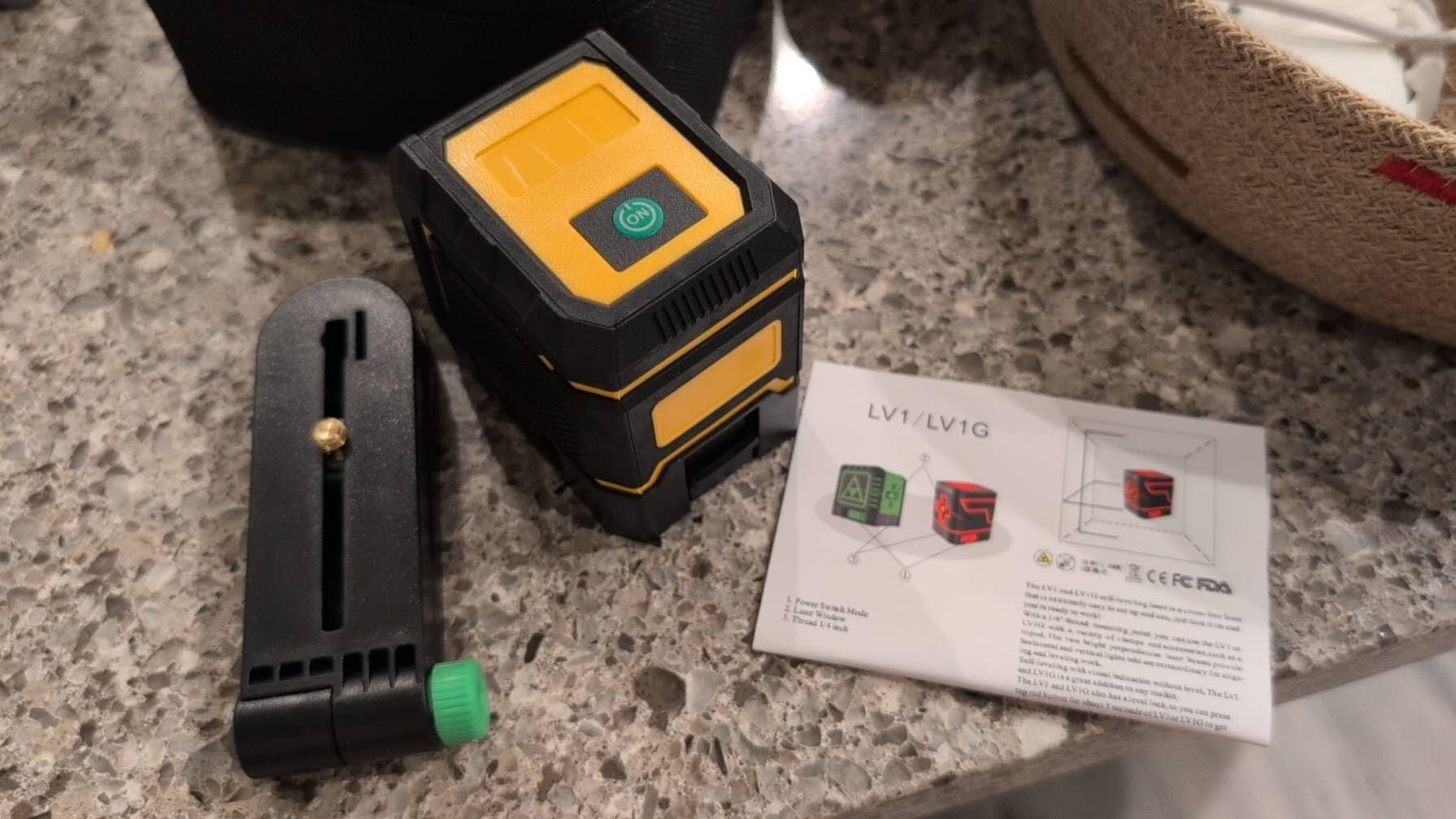
The LotaTools kit is unusually complete for its tier. You get the rotary laser, a receiver with clamp, a remote control, a target plate, laser glasses, a five-section grade rod, an aluminum tripod, a wall mount, and an aluminum case, in a ten piece package.
The headline number is range: up to 2,000 feet in diameter with the included receiver, at plus or minus 1/8 inch per 100 feet, with automatic self-leveling within plus or minus 5 degrees. The IP66 rating for dust, water, and impact matches the best sealing level in this roundup.
What a Full Kit Does and Does Not Solve
Receiving a grade rod and receiver in the box removes the accessory problem that inflates the real cost of bare tools, and that is the strongest argument for this pick. The remote control is a bonus most kits at this level skip.
What the kit does not solve is tripod strength. The included 5.5 foot aluminum tripod is a compact travel model rather than a full contractor tripod, so on real earthwork you will replace it sooner rather than later.
For Whom It Is Good, and Where It Falls Short
This makes sense for a buyer who wants large working diameter and a complete package without assembling a crew kit piece by piece, especially where dust and rain are constant. IP66 sealing at this price is unusual.
The caution is the 60 rating review base, which leaves long term field reliability less proven than on the older name brands with thousands of ratings. The red beam is also less visible in bright sun than a green beam variant.
10. Klein Tools 93RLS – Best for Long Rechargeable Green Beam Work
Klein Tools 93RLS Green Self-Leveling Rotary Laser Level Kit, 1150-Foot
1150 ft range with detector
Class 3R green laser 5mW or less
24 hour built-in battery
Impact sensing pause
Tripod rod and case kit
+ Pros
- Green beam far easier to see than red indoors and out
- Verified accurate with the detector at roughly 750 feet
- USB-C rechargeable with no disposable battery cost
- Solid feel with rubberized handle and two mount options
- Both tripod and handheld detector have bubble levels
– Cons
- Review base of 38 ratings is the thinnest in the group
- Battery is built in and not user-replaceable
- Considered pricey against cheaper rotary options
- A few isolated reports of poor overall performance
The 93RLS is the best all-day comfort pick. At 4.4 pounds for the unit and up to 24 hours of runtime from a built-in rechargeable battery, you can carry it through a full day without thinking about spares or a charger.
Green beam visibility is the headline. Owners consistently report it being noticeably easier to see than red, both indoors and outdoors, and one buyer verified accuracy with the detector at roughly 750 feet across a yard. Impact sensing pauses operation if the unit is disturbed, which is the same safety logic as a Height of Instrument alert.
Range, Charging, and Kit Contents
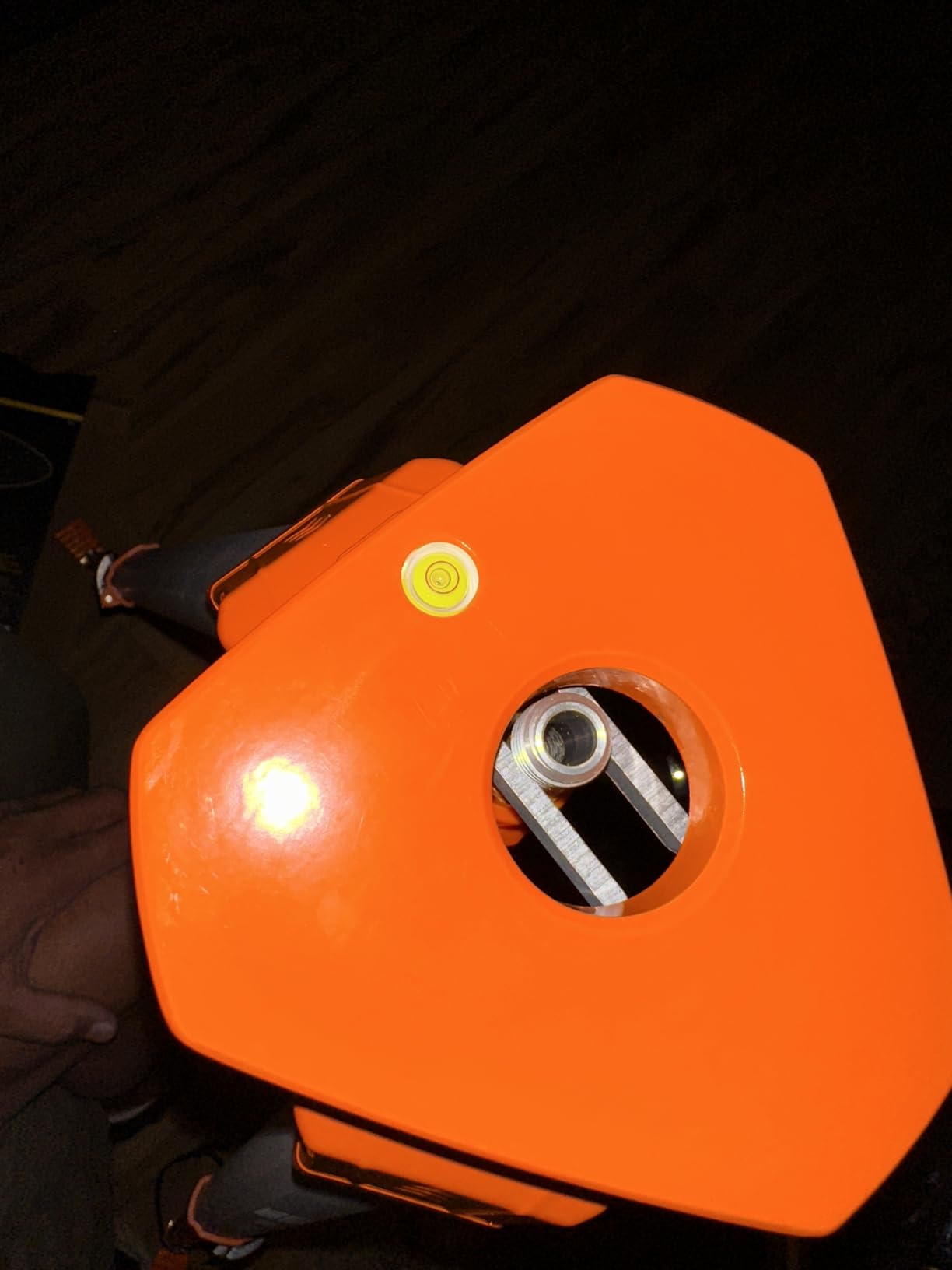
You get 1,150 feet of range with the included detector using a Class 3R green laser rated at 5mW or less, plus 360 degree horizontal and vertical coverage with an integrated plumb spot. The kit includes a tripod, detector, 9 foot grade rod, and carrying case.
Charging is USB-C, so the same cable as your phone works. Small details like the bubble levels built into both the tripod and the handheld detector are the kind of thing that saves real time in the field.
For Whom It Is Good, and Where It Falls Short
This suits someone who works long days away from a vehicle, does mixed horizontal and vertical layout, and wants a beam they can actually see. At 4.4 pounds, it is a far easier machine to move between setups than the 30-plus pound crew kits in this roundup.
The reservations worth knowing are the 38 rating review base, which is a thin history, and the built-in battery that is not user-replaceable. A few isolated buyers also reported dissatisfaction with overall performance.
How to Grade with a Rotary Laser Level, Step by Step
Grading with a rotary laser is a cut and fill workflow, and the sequence matters more than the equipment. Here is the process we used when comparing these machines, and it is the process owner reviews describe.
Establish a benchmark. Find or set a known elevation, usually a survey nail, a stamped benchmark, or a spot you have already verified. Everything downstream depends on this point being right.
Set up the tripod clear of the work. Put the laser high and in an unobstructed spot so the beam reaches the far corners of the area without a person or machine in the way.
Let it self-level and wait. Once the head settles, the reference plane is established. Do not start walking readings before the head has settled.
Set the rod offset. Put the receiver on the grade rod over the benchmark, and adjust the receiver until it reads on grade. That number is your rod offset for every subsequent shot.
Walk the grid. Move stake to stake, taking a reading at each point and recording it against the target elevation. Each reading is a cut or fill number.
Mark cut and fill. At each stake, mark how deep to dig or how high to build. Keep fill and cut areas clearly separated so machine operators do not rework a correct shot.
Check the H.I. before you pour. Confirm the instrument is still at the same height you left it. If the tool was bumped, the alarm stops rotation and you re-establish the offset before trusting any reading.
The last step is the one people skip and the one that costs money. A bumped tripod does not always look bumped, so treat the disturbance alert as a hard stop rather than a suggestion.
What Actually Matters When You Buy a Rotary Laser for Grading
Accuracy at 100 Feet and How Error Grows With Distance
Accuracy specifications are proportional, not fixed. A machine rated plus or minus 1/8 inch at 100 feet is not plus or minus 1/8 inch everywhere; the error scales with distance. That is why comparing a plus or minus 1/8 inch at 100 foot machine against a plus or minus 1/8 inch at 50 foot machine is comparing two different tools.
Using the two dominant figures in this roundup, the drift works out like this. For a plus or minus 1/8 inch at 100 feet machine: about 3/8 inch of error at 300 feet, about 5/8 inch at 500 feet, and about 1 and 1/4 inches at 1,000 feet. For a plus or minus 1/16 inch at 100 feet machine: roughly 3/16 inch at 300 feet, about 5/16 inch at 500 feet, and about 5/8 inch at 1,000 feet.
For residential work, plus or minus 1/8 inch at 100 feet is the practical floor. For fine concrete flatwork and athletic field grading, you want margin above plus or minus 1/16 inch. Owners also warn that accuracy degrades in heat shimmer, dust, and vibration, so buying a margin above your requirement is sensible rather than extravagant.
Working Diameter vs Working Radius
Working diameter is the full circle the beam covers, so a 2,600 foot diameter is a 1,300 foot radius. Manufacturers quote the larger number because it sounds better, but what matters on a site is the radius: can you reach the far corner from a sensible tripod position? For most residential lots, 1,000 to 1,300 feet of radius means the unit stays put.
IP Ratings in Plain English
IP54 means dust protected and splash resistant, which covers light rain but not a downpour or a wash-down. IP55 adds protection against water jets. IP66 means complete dust tightness plus powerful water jets, which is the standard you want for open site grading in wet climates. IP67 adds temporary immersion, which grading work rarely needs. The short version: anything outdoors for a full season should be IP66 or better.
Rotary Laser vs Grade Laser vs Pipe Laser vs Machine Control
A rotary laser projects a single level reference plane, which is exactly what cut and fill grading needs. A grade laser, also called a dual grade or dual slope laser, can project two sloped planes at once, which is what drainage and swale work demands. A pipe laser is for aligning pipe runs in a trench rather than measuring elevation. Machine control is a receiver on a machine that reads the plane directly and drives the blade automatically. If you run a dozer or excavator every day, machine control is the real upgrade path; if you are checking a pad by hand, a rotary is the right tool.
Topcon vs Spectra Precision
Topcon is the accuracy and range leader in this group, with the tightest published figure at plus or minus 1/16 inch per 100 feet and the largest working diameter. Spectra Precision is the kit and support leader, with a five year warranty, the highest average rating among these picks, and a receiver in the box that many competitors sell separately. Ask a buyer who already owns one which they would buy again and you will usually get a clear answer.
Red Beam vs Green Beam Outdoors
Green is roughly four times more visible to the human eye at the same output, so green beams are easier to see in daylight and far easier indoors. That advantage fades at long range, where the receiver does the work regardless of beam color. If your grading is mostly receiver-based outdoors, beam color matters little. If you also need visible lines for formwork, green is worth the step up, as our green beam laser roundup covers in more detail.
Kit Contents and the Real Cost of Ownership
Most bare machines ship with just the laser head. A working grading setup also needs a tripod, a grade rod, a receiver, a case, and a supply of batteries, and those add up faster than most buyers expect. This is the single most common surprise in owner reviews, and the reason kits like the Johnson 99-027K, the Spectra LL100N-2, and the LotaTools package are often the better real-world buy.
Two more costs people forget: a contractor tripod strong enough for earthwork is a separate purchase from a travel tripod, and a good grade rod with a proper rod clamp avoids readings that are off because the clamp slipped.
Field Checks and Calibration
Check accuracy before you rely on a machine rather than after. Set it on a flat surface, place the receiver on a rod at a measured distance, and compare the reading to the level bubble. Do it at the start of the season and after any significant impact.
Owners raise drift and bump alerts as a real concern, which is why a disturbance monitor is worth paying for. The frequency of professional recalibration depends on how a machine is treated, and treating it gently, storing it in its case, and field-checking it regularly is what keeps a five year warranty relevant.
Job-Type Decision Guide
For a residential driveway or patio subgrade, the Johnson 40-6517 or Firecore FRL300R is enough. For a building pad on a large lot where you do not want to move the laser, the Topcon RL-H5A or LotaTools kit. For drainage swales and percentage falls, the Johnson 99-028K with programmable dual slope. For a complete crew kit for a new operator, the Spectra Precision LL100N-2. For flatwork and long warranty coverage, the Spectra LL300N-1.
For formwork and interior layout where you need a visible line, the DOVOH green beam kit or the Klein 93RLS. If you are just starting out with indoor projects rather than site work, our guide to laser engravers for hobbyists covers a different tool class, and laser printers for small businesses covers office output, neither of which projects a reference plane.
Rotary Laser Level Questions for Grading Answered
What is the best laser level for groundworks?
For site grading, a self-leveling rotary laser with at least plus or minus 1/8 inch accuracy at 100 feet and a working diameter above 1,000 feet is the practical minimum. The Topcon RL-H5A leads our list with plus or minus 1/16 inch at 100 feet, a 2,600 foot diameter, and an IP66 housing. Add a grade rod, receiver, and contractor tripod to complete the setup.
What is the difference between a rotary laser and a grade laser?
A rotary laser projects one level horizontal reference plane, which is what cut and fill grading needs. A grade laser, also called a dual grade or dual slope laser, can project two planes at a set percentage in each direction, which is what drainage and swale work requires. A manual slope rotary makes you compute the rod offset by hand; a programmable dual grade machine does the math for you.
How accurate does a rotary laser need to be for grading?
Plus or minus 1/8 inch at 100 feet is the practical minimum for residential grading, and plus or minus 1/16 inch at 100 feet is worth having for fine concrete flatwork and athletic field grading. Because accuracy is proportional, error scales with distance: a plus or minus 1/8 inch at 100 feet machine drifts to roughly 5/8 inch at 500 feet.
How do you grade with a rotary laser level?
Set the laser on a tripod clear of the work, let it self-level, and put the receiver on a grade rod over a known benchmark. Adjust until it reads on grade to set your rod offset, then walk the grid taking a reading at every stake. Each reading gives a cut or fill number. Always confirm the height of instrument before a pour.
Is Topcon or Spectra Precision better for grading?
Topcon leads on accuracy and range, with plus or minus 1/16 inch at 100 feet and a 2,600 foot working diameter. Spectra Precision leads on kit completeness and support, with a five year warranty, the highest average rating among these picks, and a receiver included that many competitors sell separately. Choose Topcon for range, Spectra for a complete crew kit and long coverage.
Final Verdict for Rotary Laser Grading in 2026
If you want the best rotary laser levels for grading and can pick only one, the Topcon RL-H5A is the answer, with the tightest accuracy figure and the longest reach in this roundup. If you need a machine that covers drainage percentages as well as level grade, the Johnson 99-028K earns its place on the truck. If you want one case that contains an entire crew, the Spectra Precision LL300N-1 pairs the highest average rating with a five year warranty, and the LL100N-2 is the gentler on-ramp for a new operator.
For smaller jobs, the Johnson 40-6517 and the Firecore FRL300R cover the essentials on a smaller budget, and the LotaTools kit is the value answer when you want full range and a complete accessory bundle. When visibility and battery endurance matter more than raw range, the DOVOH and Klein green beam machines are the comfortable all-day choices.
Whichever you choose, verify the rod offset at your benchmark, field-check the accuracy at the start of the season, and treat the disturbance alert as a hard stop. That habit protects the work more than any single feature on the spec sheet.
Leave a Reply