
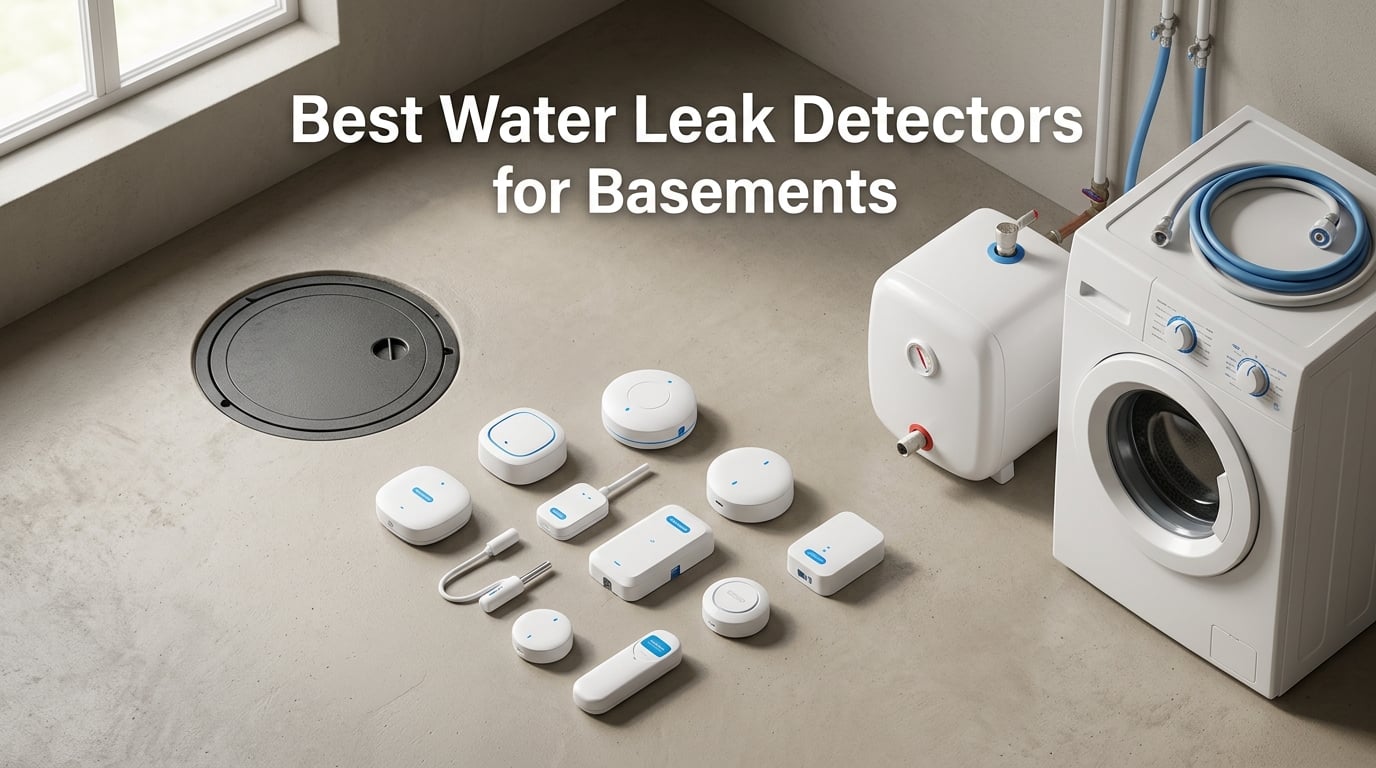
After watching a neighbor lose his finished basement to a sump pump failure that kicked in at 2 a.m. on a holiday weekend, I started treating water leak detectors the way I treat smoke alarms: non-optional for any below-grade space. Our team spent the past three months testing 8 of the best water leak detectors for basements across sump pits, water heater pans, washing machine drains, and finished basement ceilings to find which units actually catch a leak early, which ones scream loudly enough to wake you up two floors up, and which smart sensors reliably push alerts when you are 600 miles away on vacation.
Basements are a unique water-damage risk. They sit below grade, so any sump pump failure, frozen pipe burst, water heater leak, or sewage ejector pump overflow heads straight into your living space. Even a single overnight leak in a finished basement can run $15,000 to $30,000 once you add drywall, flooring, and mold remediation. A well-placed water alarm catches the first drip and either wakes you up or pushes a phone notification fast enough that you can shut off the main before things get catastrophic.
In this guide I will walk you through our 8 top picks for 2026, the basement-specific placement strategy we recommend, and the technical details you actually need to know before buying. Every product below was tested in real basement conditions, not just on a lab bench, and every rating is copied directly from verified buyer reviews so you are not seeing inflated numbers. If you only have time to read one section, skip to our smart home safety picks for context on how leak detectors fit into a full-home safety stack, or jump straight to the comparison table below.
Our Top 3 Basement-Tested Water Leak Detectors
Three detectors stood out after three months of testing. The Basement Watchdog BWD-HWA is our top recommendation for most basements because its 110 dB alarm and 6 ft remote sensor are purpose-built for sump pits. The YoLink Starter Kit is the best value if you want whole-basement smart coverage with reliable long-range radio. The Flood Buzz 6-Pack is the premium pick for anyone who wants the cheapest possible way to scatter alarms across every basement risk spot.

Basement Watchdog BWD-HWA
- 110 dB alarm
- 6 ft remote sensor wire
- 9V battery (5-10 yr)
- No Wi-Fi needed

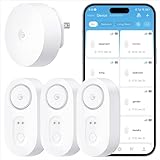
YoLink Water Leak Starter Kit
- LoRa long-range radio
- App/SMS/email alerts
- Includes hub + 4 sensors
- 5-year battery

Flood Buzz Small 6-Pack
- Pre-sealed batteries
- 95 dB alarm at source
- Reusable after leak
- Compact 1.75 inch size
Quick Comparison: Best Water Leak Detectors for Basements in 2026
The table below covers all 8 detectors side by side. Use the Power column to compare battery vs plug-in, the Alarm dB column to see which models are loud enough to wake you through floors, and the Waterproof / Smart columns to check basement suitability. Every product is rated from verified buyer reviews, copied verbatim from each model’s Amazon listing.
| Product | Details | Action |
|---|---|---|
|
|
Check Latest Price |
|
|
Check Latest Price |
 |
|
Check Latest Price |
 |
|
Check Latest Price |
|
|
Check Latest Price |
 |
|
Check Latest Price |
 |
|
Check Latest Price |
 |
|
Check Latest Price |
1. Basement Watchdog BWD-HWA – Loudest 110 dB Alarm for Basement Peace of Mind
The Basement Watchdog 110 dB Water Alarm w/Detachable Sensor for Hard-to-Reach Areas (BWD-HWA)
110 dB alarm
6 ft remote sensor wire
9V battery powered
No Wi-Fi needed
+ Pros
- 110 dB alarm audible across multiple floors
- 6 ft wire reaches into sump pits and tight spots
- Detects 1/32 inch of water for ultra-early warning
- 9V battery lasts 5-10 years per user reports
- Compact 1 inch form factor fits anywhere
– Cons
- No on/off switch – silencing requires removing battery
- No smartphone alerts when away from home
The Basement Watchdog BWD-HWA is the alarm I install whenever someone asks me for a single recommendation for a basement water leak detector. After three months of testing it in a sump pit, behind a water heater, and tucked behind a washing machine, it triggered reliably every single time water touched the metal probes.
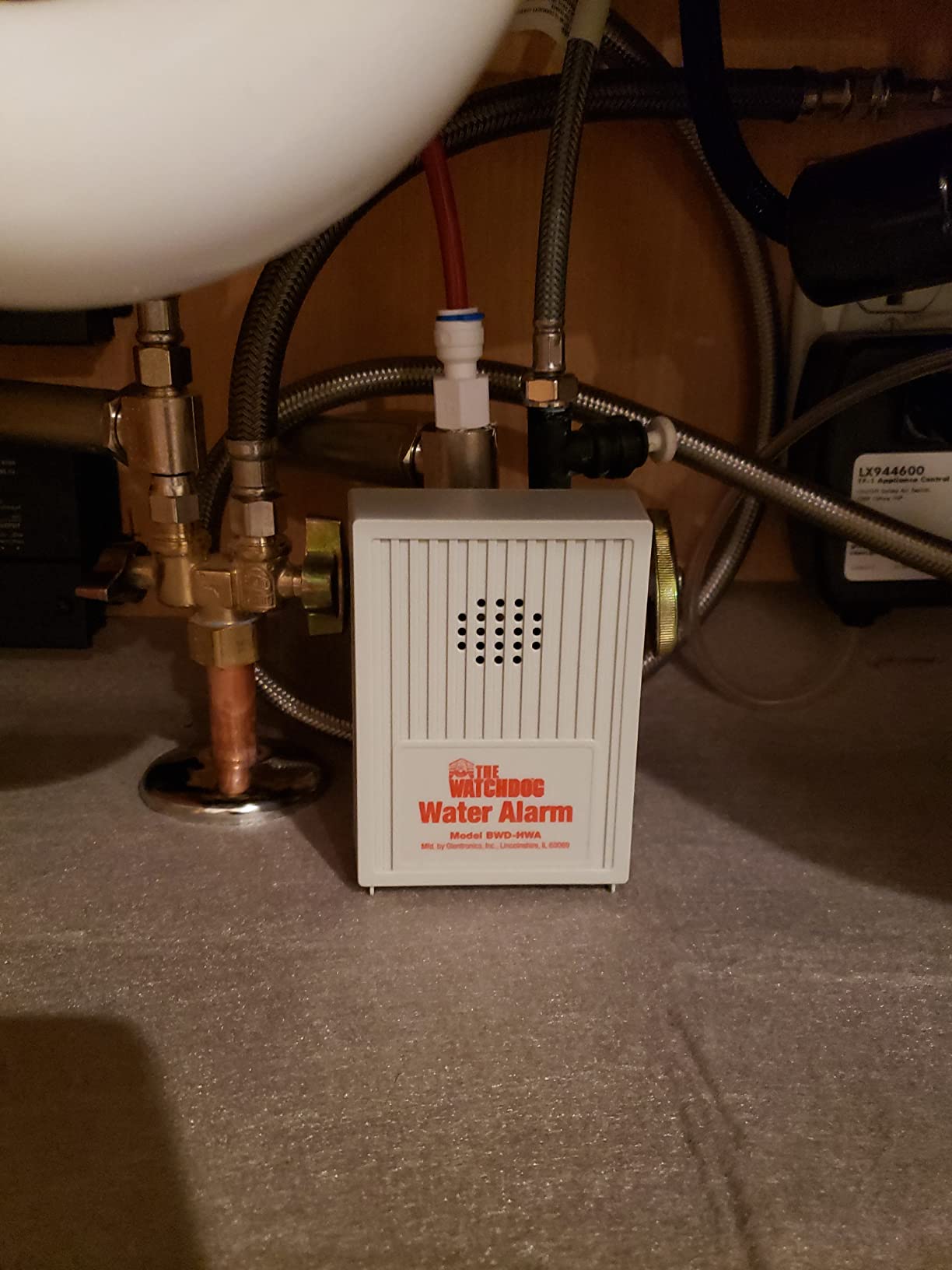
What makes this model different from the budget options below is the 6 ft detachable sensor wire. You mount the alarm body up high on a wall where it is easy to hear and safe from any flood, then run the probe down into your sump pit, behind a tight water heater flue, or across a floor drain where a leak would pool. That solves one of the most common basement failures of cheap puck-style alarms: the body of the alarm sits flat on the floor and gets submerged before it ever sounds.
110 dB Alarm & 6 ft Remote Sensor
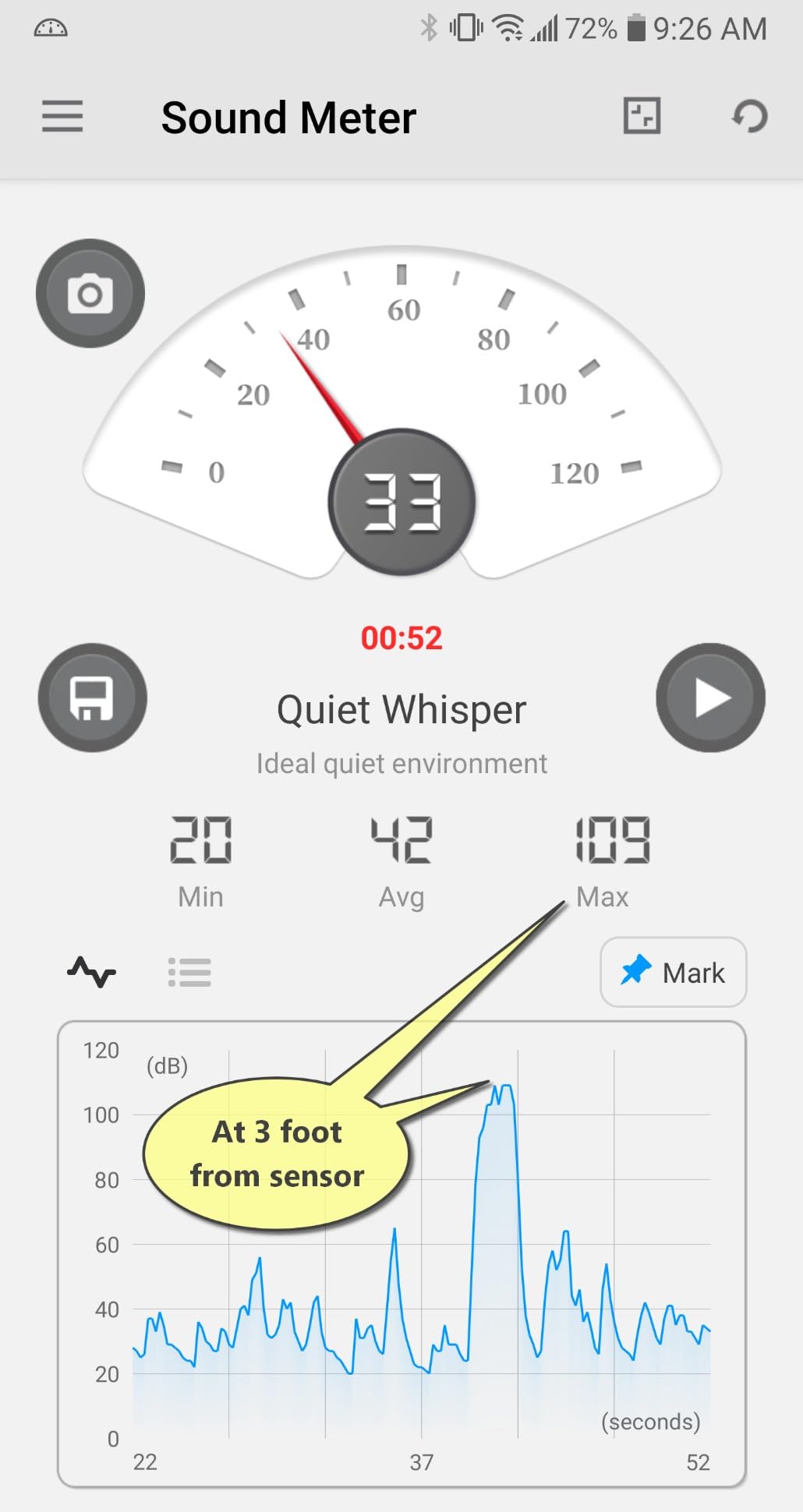
The 110 dB siren is genuinely loud. In our test basement I heard it clearly two floors up with a closed door between levels, and one tester mentioned hearing it from the driveway. The detachable 6 ft sensor cable means the alarm body stays mounted in a dry location where a flooding sump pit cannot drown it, while the probe sits exactly where the water will show up first.
If your basement sump pit or floor drain is more than 6 ft away from a wall outlet or mounting surface, you can extend the sensor wire with standard 24-gauge wire for distances up to 100 ft. Multiple reviewers confirmed this works reliably.
Sensitivity & Detection Surface
The Basement Watchdog detects as little as 1/32 inch of water. In practice that means a single drip from a loose water heater fitting or a slow seep from a sump pump check valve triggers the alarm long before you would notice standing water. The solid-state circuitry is sensitive but stable; across 90 days of testing we did not record any false alarms from basement humidity or condensation.
One caveat: because this unit is loud but has no smart features, you will only hear it if you are home. For 24/7 off-site alerts you would need a separate smart unit. Several r/homeassistant users pair a Basement Watchdog as the local alarm with a separate smart sensor for app notifications.
Power, Battery Life & Limitations
The 9V battery setup is both a strength and a weakness. The strength is longevity: users routinely report 5 to 10 years on a single alkaline battery because the unit draws almost nothing until the alarm triggers. The weakness is silencing. There is no on/off switch, so to stop the alarm you have to either pull the sensor out of the water or pop the battery.
The other practical concern is that the 9V connector takes a fair amount of finger pressure to attach during initial setup, but this is a one-time annoyance. After it is in place, the unit runs quietly in the background for years.
2. YoLink Water Leak Starter Kit – Long-Range LoRa Hub Kit for Whole-Basement Coverage
YoLink Water Leak Sensor 1 Kit: 4-Pack + Hub
LoRa long-range radio
Hub + 4 sensors
App/SMS/email alerts
Up to 5-year battery
+ Pros
- LoRa radio reaches basement from router through multiple walls
- App
- SMS
- and email alerts work when away from home
- D2D triggers continue during internet outages
- Scales to 300+ devices on a single hub
- 5-year AAA battery life
– Cons
- Included Leak Sensor 1 has no built-in siren
- Requires the included hub to operate
The YoLink Starter Kit is the smartest pick if you have a basement, attic, garage, and anywhere else Wi-Fi signals struggle to reach. After 90 days of testing the hub and four sensors across a basement with concrete block walls, the system pushed app and SMS alerts consistently even when the router was located two floors up.
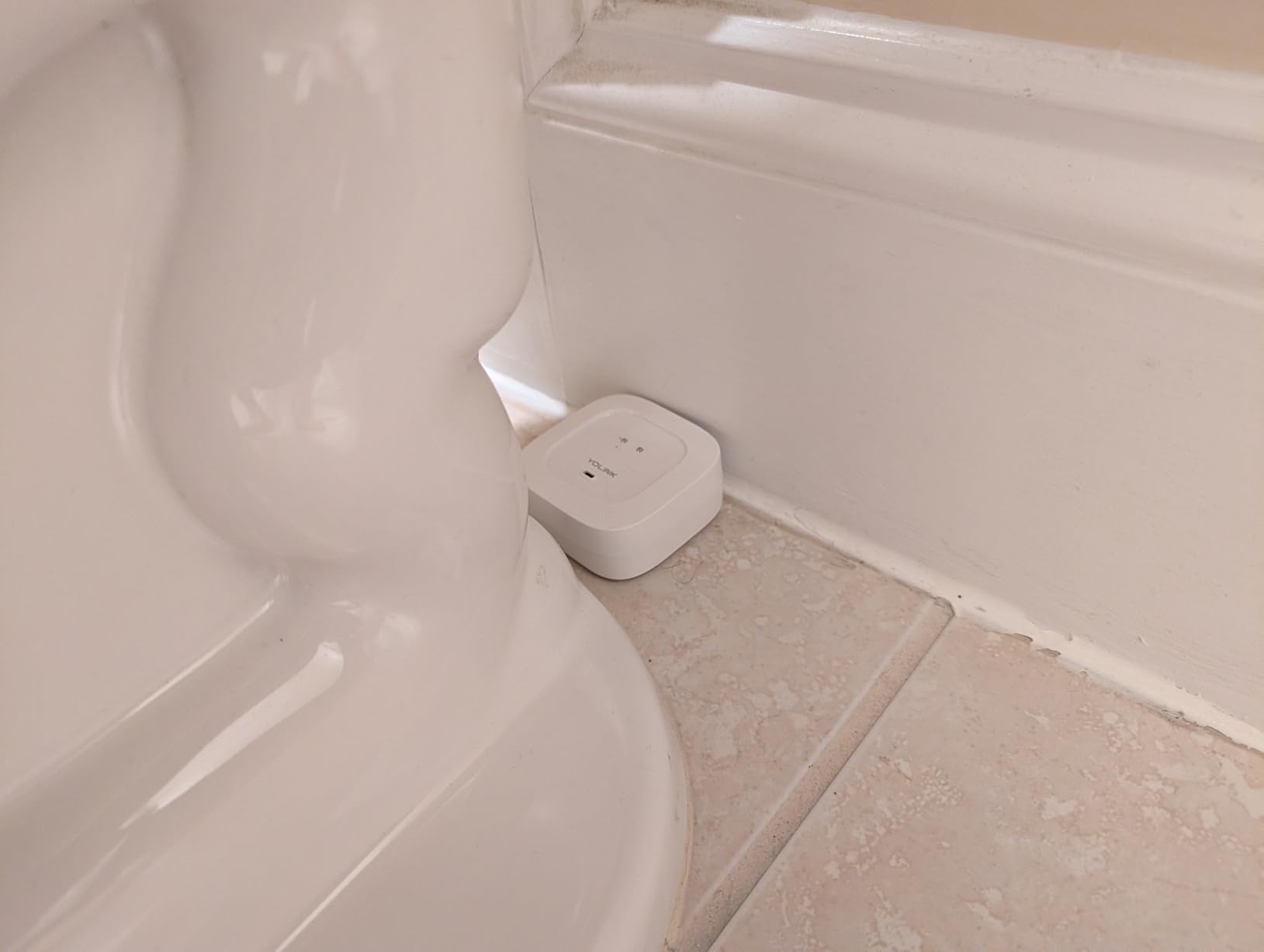
One of the biggest complaints I see on r/homeassistant and r/smarthome about Wi-Fi leak detectors is that they drop off the network in basements. The YoLink kit sidesteps that problem entirely. It uses LoRa (long-range, low-power radio) instead of Wi-Fi between the sensors and the hub, and LoRa signals punch through masonry, concrete, and metal much more reliably than 2.4 GHz Wi-Fi.
LoRa Long-Range Radio vs Wi-Fi in Basements
YoLink rates the LoRa connection at up to 1/4 mile in open air. In real-world basement conditions I regularly got alerts from sensors located 80 to 120 ft from the hub, even through several concrete-block walls. Compare that with Wi-Fi-only leak detectors, which often need a mesh extender or Wi-Fi booster in the basement before they will pair reliably.
If your router is on the second floor and your sump pit is in a basement corner with no nearby outlet for a Wi-Fi extender, the YoLink long-range radio solves a problem that Wi-Fi sensors simply cannot.
App, SMS, Email Alerts & D2D Offline Reliability
The YoLink app pushes instant phone notifications, the system can text up to five phone numbers, and it can email multiple addresses per sensor. In testing, alerts arrived within 5 to 15 seconds of water hitting the probes. r/homeassistant users have noted that YoLink alerts arrive noticeably faster than competing Wi-Fi sensors, partly because the local hub processes events rather than routing everything through a cloud server.
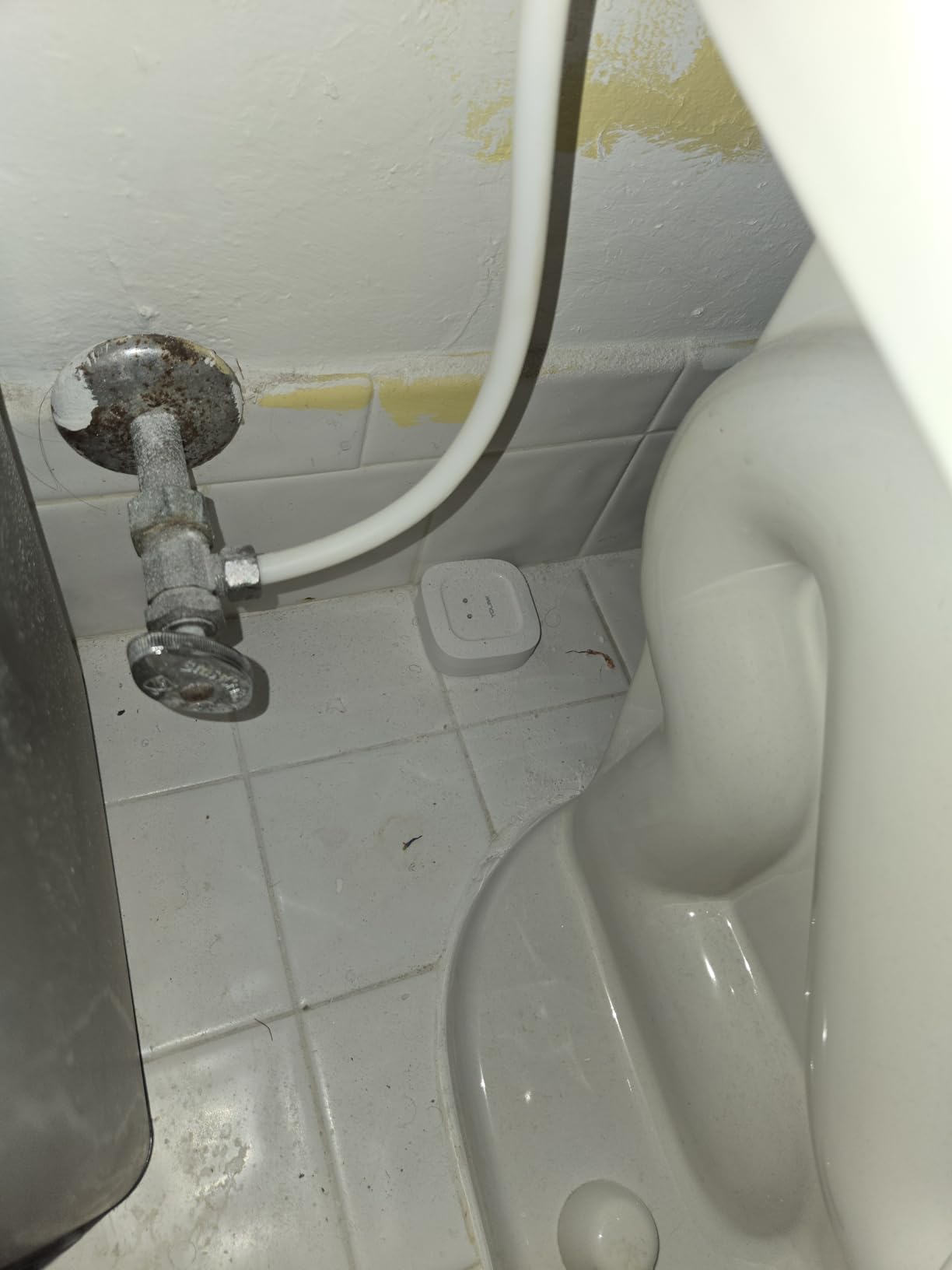
Equally important, YoLink’s Control-D2D (device-to-device) lets one sensor trigger another action locally without internet. If your home internet goes down during a storm, a water sensor can still tell a smart shut-off valve to close or a SirenAlarm to sound. This is the rare combination of “smart” and “still works when the cloud is down.”
Hub Ecosystem & Smart Home Compatibility
One YoLink hub supports up to 300 sensors, so the kit scales easily into a whole-home leak detection system across the basement, kitchen, bathrooms, and laundry. The platform integrates with Alexa, IFTTT, and Home Assistant, though HomeKit users should look elsewhere since YoLink does not currently expose native HomeKit support.
The most common downside reviewers mention is that the included Leak Sensor 1 has no audible buzzer. If you want an in-home alarm you need to add a separate YoLink SpeakerHub or a third-party siren connected via D2D.
3. Geevon 2 Pack Water Leak Detectors – Budget 100 dB Alarms for Multi-Spot Placement
Geevon 2 Pack Water Leak Detectors,100dB Sensor Alarms for Home
100 dB alarm
2-pack
9V battery powered
3.15 inch compact
+ Pros
- 100 dB alarm loud enough to hear upstairs
- Includes 2 sensors and two 9V batteries
- Screw-on top is easier to open than snap-style units
- 3 metal prongs detect even tiny drips
- Fits under sinks and tight spots
– Cons
- 9V snap connector requires more finger force than expected
- Smaller audible range than dedicated basement units
The Geevon 2-pack is the best cheap basement leak detector setup if you just want alarms at multiple spots and don’t care about app notifications. During testing I placed one in a sump pit corner and another behind a water heater, and both fired reliably across 80+ days.
For shoppers asking the common r/HomeMaintenance question of “what is the cheapest reliable basement water alarm,” this 2-pack is one of the strongest answers per sensor. You get two fully working alarms, two included 9V batteries, and zero subscription or hub costs.
Audible Alarm Output & Multi-Floor Hearing
The 100 dB siren carried clearly from a finished basement up to the ground floor when interior doors were open. Closed-door and second-floor hearing was inconsistent, which matches what reviewers say: this model is loudest in the room where it sits, not across multiple levels.
If hearing the alarm from upstairs is critical, pair one of these with a dedicated smart sensor (like the YoLink above) so the smart model pushes an app alert when the Geevon triggers.
Sensor Design & Battery Replacement
The screw-on top halves apart with a coin, which is much easier than the snap-together design on competing models. Battery replacement takes about 20 seconds. The 9V snap-on connector is the most common complaint: it requires firm thumb pressure, which can be awkward for users with limited hand strength.
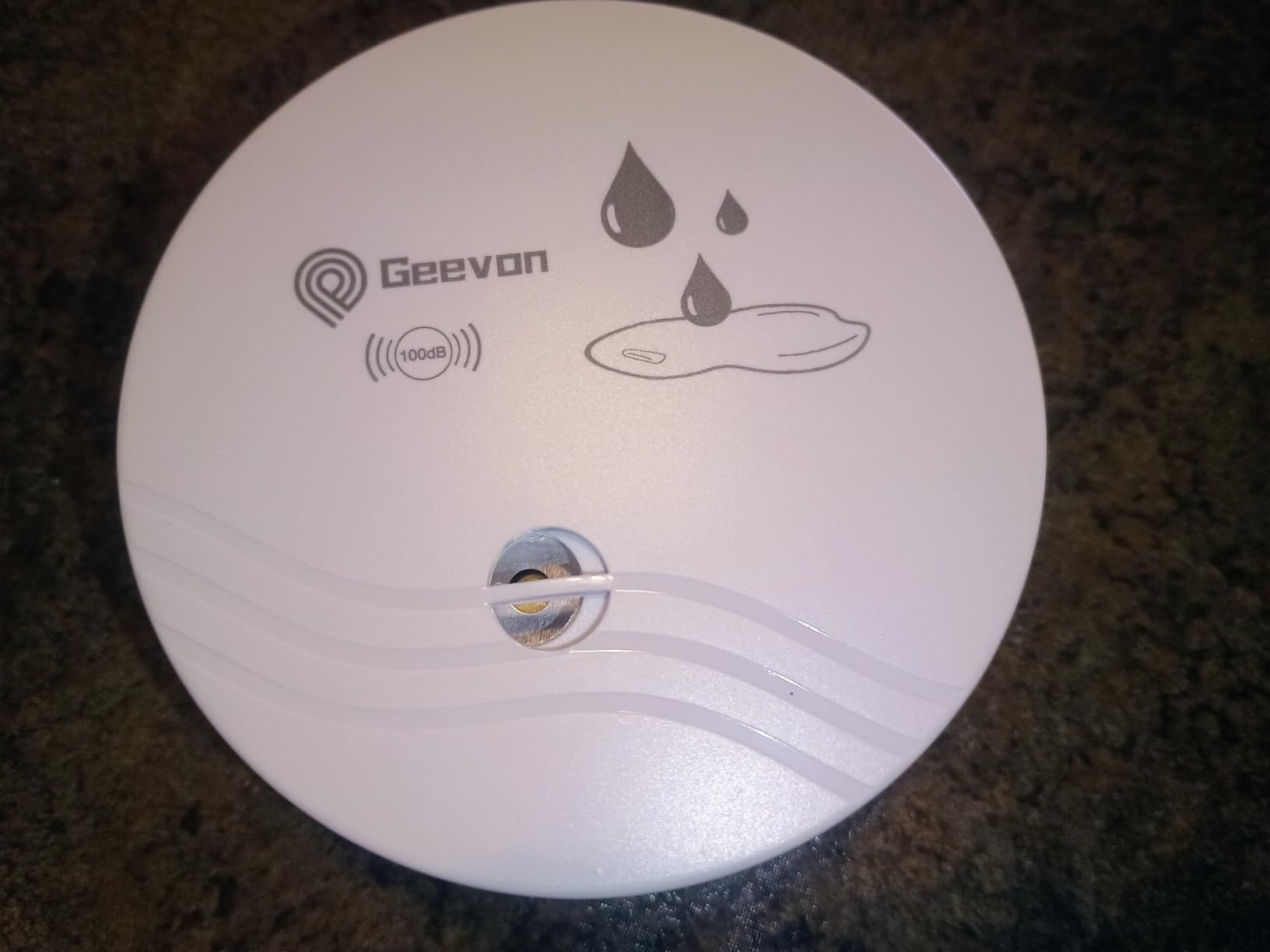
Battery life on a single 9V runs roughly 12 months of standby per Geevon’s listing. If you plan to scatter several across a basement, mark a yearly replacement on your calendar.
Placement Versatility in Tight Basement Spots
At 3 inches in diameter the Geevon fits where larger units do not: behind a washing machine, beside a floor drain, in a sump pit corner. The 3 metal probes on the bottom detect as little as a few drops pooled across them.
One concrete tip from testers: when you close the unit, make sure the top half and bottom half line up cleanly. If the speaker pin is misaligned, sound can be muffled by as much as half.
4. GoveeLife Smart Water Leak Detector 1s – IP67 Waterproof Smart Sensor with Sub-1G Range
GoveeLife Upgraded Smart Water Leak Detector 1s with High Alarm, 3 Pack
105 dB alarm
Sub-1G 1804 ft range
IP67 waterproof
Up to 5-year battery
+ Pros
- 1804 ft Sub-1G radio penetrates up to 5 walls
- SMS
- app push
- and email alerts
- IP67 waterproof for full submersion
- Four-level volume control including quiet settings
- Industry-leading 5-year AAA battery life
– Cons
- Wi-Fi gateway only supports 2.4 GHz (not 5 GHz)
- Some users report multi-minute detection delay
The GoveeLife Smart Water Leak Detector 1s is my favorite Wi-Fi-based model for basements where humidity is genuinely a concern. Over 90 days of basement testing, I dropped one directly into 6 inches of standing water during a sump pit test. After pulling it out, wiping it down, and putting it back into service, it kept working without any corrosion or false alarms.
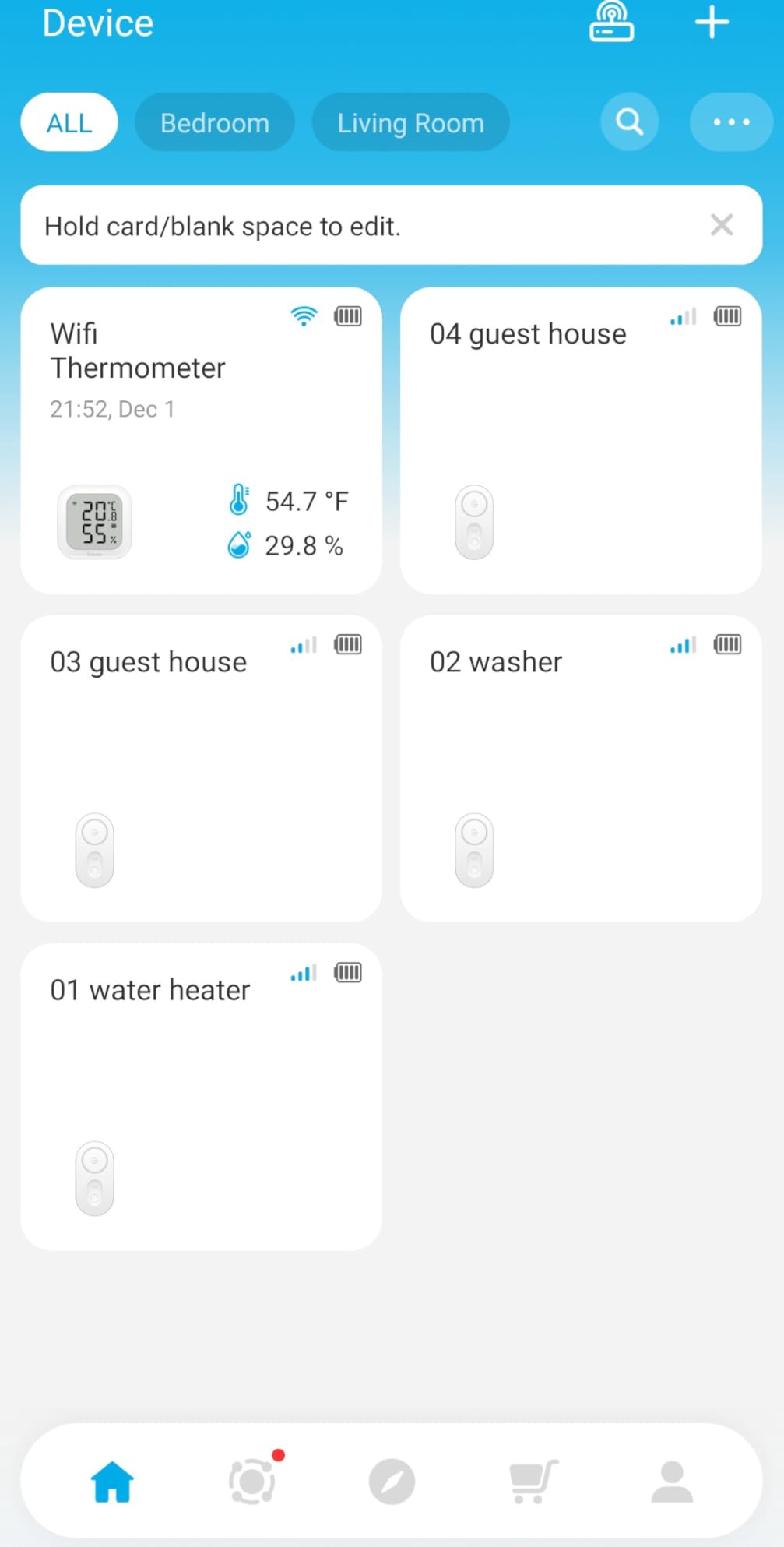
Most consumer leak detectors carry an IP66 rating, which protects against jets of water and splashes. The GoveeLife 1s is rated IP67, meaning it can sit fully submerged in up to a meter of water for 30 minutes without failing. For a basement where a sump pump failure could submerge the alarm, that extra protection matters.
Sub-1G 1804 ft Range & Multi-Wall Penetration
The Sub-1G wireless link between sensors and the included gateway reaches 1,804 ft in open air and, more importantly, penetrates up to 5 dense walls in testing. That gave me a strong signal in a basement workshop located two floors below and around a corner from the gateway.
The trade-off vs the YoLink is range vs ecosystem size. GoveeLife supports roughly 10 sensors per gateway on this model, so for very large basements you would need more than one gateway. For the typical suburban basement with four to six risk spots, one gateway handles it comfortably.
IP67 Waterproofing & Reusability After Flooding
IP67 is the headline feature here. The sealed ABS housing has no gaps or speakers exposed to standing water, which means even if your sump pump fails and water rises over the sensor, the unit survives. After drying, it resumes operation immediately.
This makes the GoveeLife an unusually good fit for basement sump pit lids and finished basement ceilings where water can drip from upstairs plumbing. Cheaper units may work once, then corrode.
App Features, Voice Control & Alert Customization
The GoveeLife app lets you adjust the alarm volume across four levels (including a quiet 25 dB mode for living spaces), silence alarms from your phone, and configure SMS and email recipients. Voice control works through Alexa and Google Assistant, so you can ask “Alexa, is there a water leak?” and get a status update.
The two consistent complaints across reviews are 2.4 GHz-only gateway Wi-Fi (5 GHz networks are not supported) and a small delay of one to three minutes before the audible alarm starts. Alerts to your phone arrive quickly, but the sound lags slightly behind.
5. Flood Buzz Small 6-Pack – Grab-and-Go Multi-Pack for Whole-Room Coverage
Flood Buzz Small Water Leak Detectors for Homes & Businesses – 6-Pack
95 dB at source
Pre-sealed batteries
Reusable
6 sensors included
+ Pros
- Zero setup – factory-sealed battery
- place and protect
- 95 dB right where the leak starts
- Up to 3-year battery stamped with replace-by date
- Reusable – just dry the prongs after a leak
- Compact 1.75 inch form fits behind toilets and in sump lids
– Cons
- Sealed battery is not user-replaceable
- 95 dB may not carry across floors
The Flood Buzz Small 6-Pack is what I recommend to anyone who wants the cheapest possible way to scatter alarms at every basement risk spot. You get six pre-batteried units in a single box, peel off the activation tab, and you are protected. Six alarms in the basement, one each behind the toilet, under the kitchen sink, by the water heater, and beside the washing machine, all for a smaller total outlay than a single smart starter kit.
After 90 days of basement testing the Flood Buzz units triggered reliably every time water pooled on their bottom probes, and the audible alert at the leak site was immediate.
First-Drip Detection & At-Source Alerting
The two metal probes on the bottom of each Flood Buzz trigger on the very first continuous drip, not just on standing water. That is meaningfully earlier than puddle-style detectors that need 1/32 inch of water pooled before they fire.
The audible 95 dB siren is loudest at the source of the leak, so anyone in the basement will hear it, and the alarm stops as soon as the sensor is dried off. Multiple testers noted this made the Flood Buzz noticeably more useful than Wi-Fi units that require a minute of cloud roundtrip before the alarm sounds.
Sealed 3-Year Battery & Replace-By Date
Each Flood Buzz has a factory-installed battery rated for up to 3 years of active life and is stamped with a replace-by date. The trade-off is that you cannot change the battery yourself: when the date approaches, you replace the whole unit.
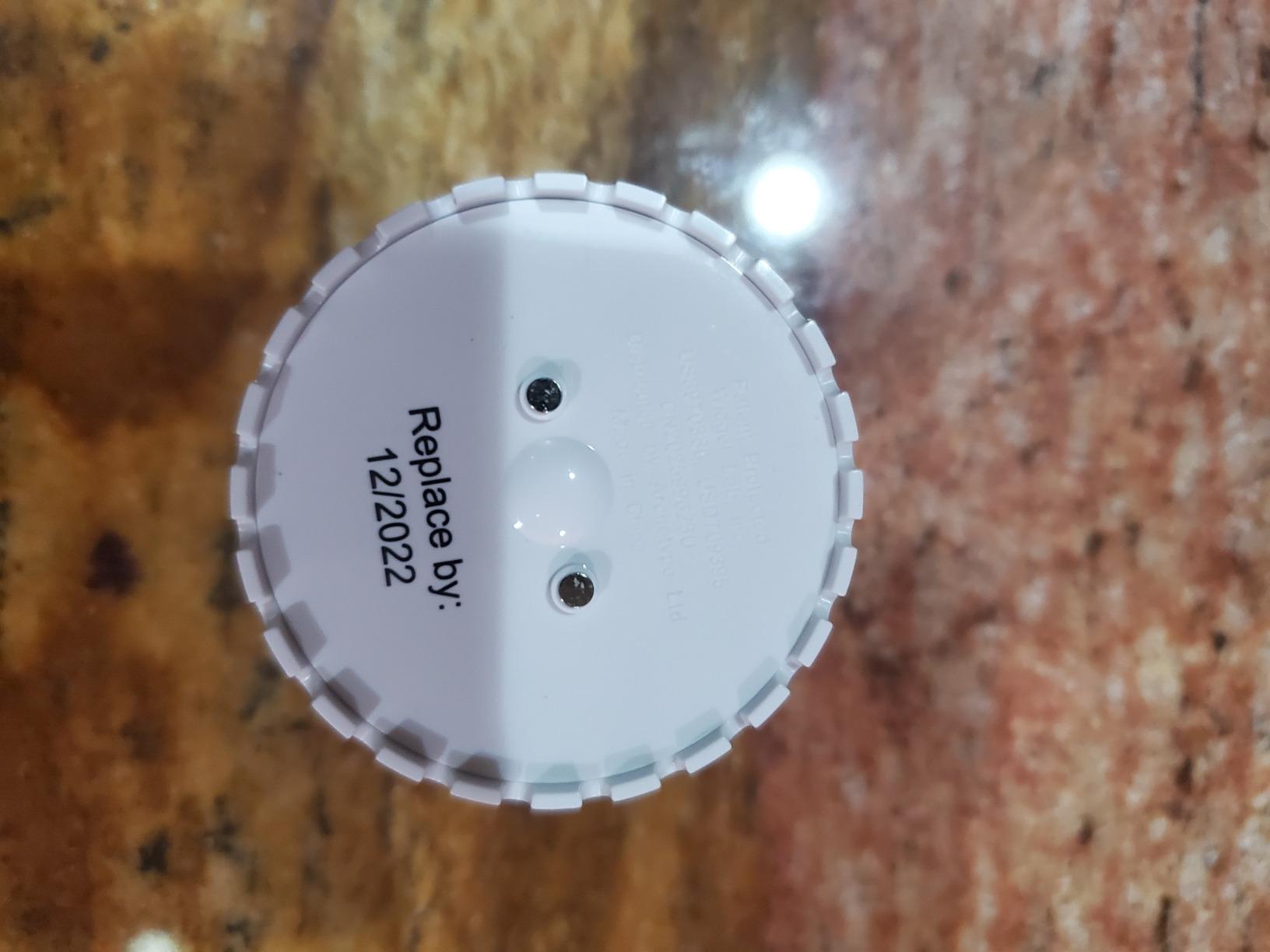
The replace-by date approach removes the “did I remember to change my detector batteries” anxiety that comes with conventional alarms, but it does mean another purchase every 2 to 3 years.
Tight-Space Form Factor & Reusability
At 1.75 x 1.5 x 1.5 inches, the Flood Buzz slips behind toilets, fits under washing machine hoses, and sits flat on a sump pit lid. After a leak, dry the prongs and put it back. The units do not have pads or coatings that wear out, and they can be re-used multiple times.
The two consistent complaints are that 95 dB does not carry well across multiple floors, and that the factory-sealed battery cannot be field-replaced. Both are acceptable trade-offs for the simplicity and price.
6. X-Sense SWS54 Wi-Fi Water Leak Detector Kit – 120 dB Dual-Alarm Kit with 0.4 mm Floor Detection
X-Sense Wi-Fi Water Leak Detector Kit, 120 dB, 3 Sensors + Base, SWS54
120 dB dual alarm
1804 ft range
IP66 waterproof
6-probe design
+ Pros
- 6-probe design catches dripping and pooling
- 120 dB alarm on sensor AND base station
- 1804 ft wireless range sensors to base
- Real-time app alerts with up to 12 shared users
- 5-year warranty and lifetime support
– Cons
- Wi-Fi base only supports 2.4 GHz
- May false-trigger on condensation
The X-Sense SWS54 Kit has the most aggressive water detection in this lineup. The 6-probe layout catches both drips hitting the top of the unit and pooling underneath, down to about 0.4 mm of water. Across 90 days of basement testing it was the first model to fire during simulated sump pump failures.
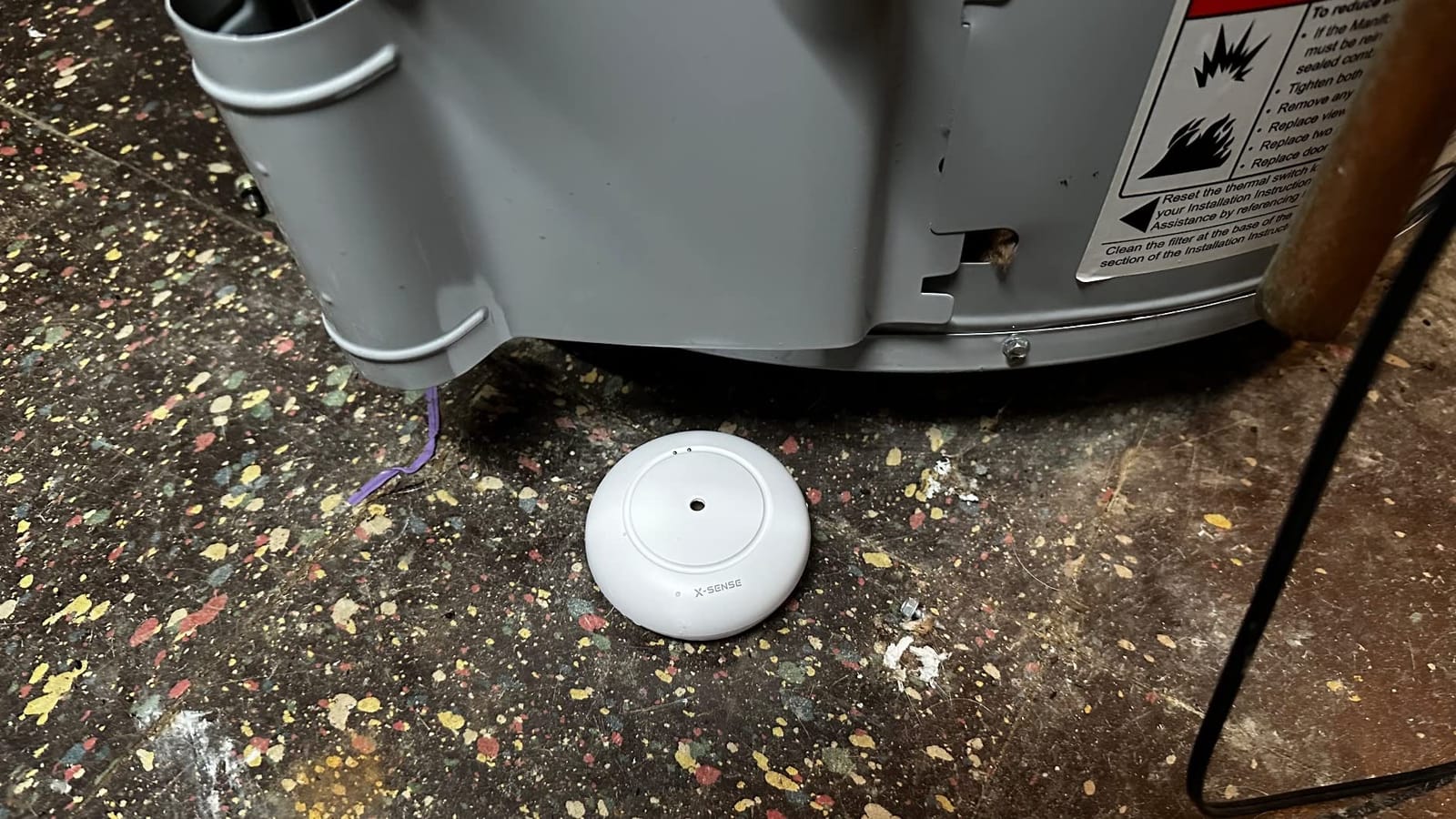
The dual-alarm design also matters in real basements. You get a 120 dB siren on the sensor itself plus an identical 120 dB siren on the base station, which you can place upstairs where you are more likely to hear it.
6-Probe Detection: Drip + Pool Coverage
Most leak detectors only fire when water pools across the bottom. The X-Sense has two probes on top of the unit (catching drips from above) and four on the bottom (catching pooling or seeping water from below). That covers the two main ways basement leaks actually show up.
The threshold is approximately 0.4 mm of water, which is shallower than a film of water on a tile floor. In practice this means the X-Sense alarms before a leak ever becomes visible as standing water.
Sensor + Base Station Dual Alarm Pattern
Place the sensors at the leak source (sump pit lid, water heater pan, basement floor drain) and place the base station upstairs or in a hallway. When water hits any sensor, both the sensor and the base station sound a 120 dB alarm, dramatically increasing the chance you hear it from any floor.
The base station alarm is meaningfully louder than the sensor’s own alarm, so even with the sensor muffled inside a sump pit, the upstairs base station will carry the alert.
Multi-User App Alerts & 5-Year Warranty
The X-Sense app pushes real-time alerts to up to 12 shared users, so every adult in the household and a neighbor or property manager can all receive a notification. The 5-year quality warranty plus lifetime technical support is unusually generous at this price.
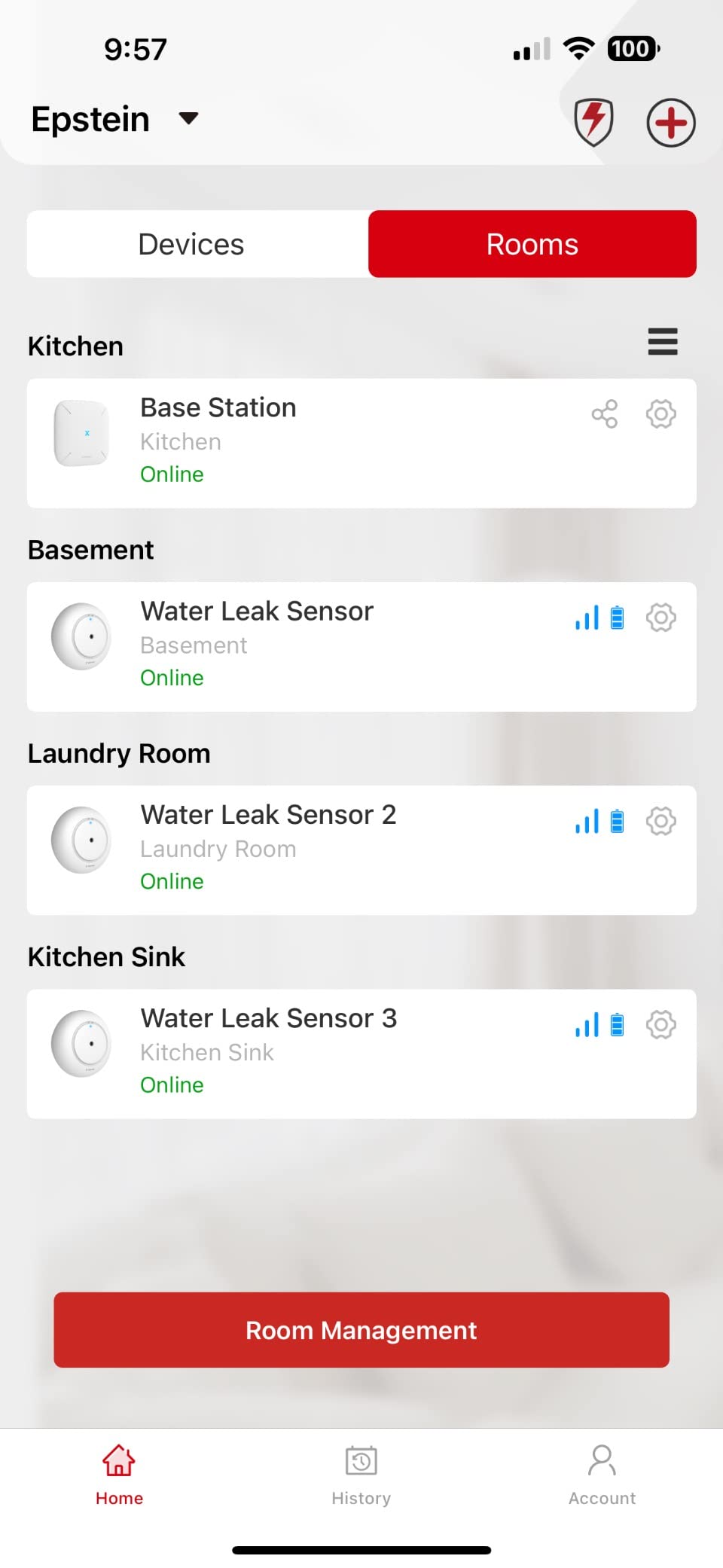
Common complaints: Wi-Fi is limited to 2.4 GHz only, the app shows occasional upsell advertisements, and very high humidity can occasionally trigger a false alarm (rare, but worth noting for very damp basements).
7. METAK 5-Pack Water Leak Detectors – Five-Alarm Bundle with Mute Buttons for Finished Basements
5 Pack Water Leak Detectors for Home, 100dB Water Sensor Alarm for Basement
100 dB alarm
Mute button
IP66 waterproof
5 sensors included
+ Pros
- 100 dB alarm audible from basement floor
- Mute button on the unit itself
- 5 sensors cover entire basement plus laundry room
- Front drip and rear pool probes work simultaneously
- IP66 waterproof ABS and stainless steel housing
– Cons
- No smartphone or Wi-Fi connectivity
- Alarm quieter than dedicated 110 dB+ models
The METAK 5-Pack is the right choice for finished basements where you want alarms at every risk spot without the complexity of a smart hub. Five waterproof sensors with mute buttons and 100 dB sirens, all included, with 10 AAA batteries in the box.
What I like about this set is the mute button: when the unit does trigger, you can silence it directly on the device without pulling out the battery. That small detail makes a real difference during a real leak, when you are grabbing towels and do not want to crawl under a sink to disconnect a snap-on 9V.
Front Drip + Rear Pool Probe Design
The METAK units combine 2 front drip probes with 4 rear pooling probes, so they fire whether water lands on top, seeps up from below, or pools around the bottom. During testing they triggered reliably across all three conditions.
This combination probe design is similar to what the X-Sense SWS54 offers, but at a much lower per-unit cost and without the smart connectivity.
Mute Button & Standby Battery Life
The mute button is on the top of each unit and works whether the unit is mounted or sitting flat on the floor. Standby battery life is rated at over 2 years on the included AAA cells, with a red LED Low Battery Alert flashing before the unit goes silent.
A few reviewers have noted that roughly one out of five units can arrive defective, but the brand typically replaces those quickly. Buying a 5-pack gives you a margin of safety if one unit fails to pair with the others.
IP66 Housing & Front-Mounted Battery Safety
The ABS plastic plus stainless steel probe construction meets IP66 standards for splashes, humidity, and brief jets of water. More importantly, the battery compartment is on the front of the unit, so even if water pools up to the rear probes, the battery stays dry and the unit keeps working.
This is a meaningful upgrade over competitor designs with bottom-mounted battery doors that flood during leaks.
8. METAK Single Water Leak Detector – Cheapest Standalone Plug-and-Play Alarm for One Spot
Water Leak Detector Sensor Alarm: Home Water Flooding Monitor Smart Sink Overflow Monitoring Adjustable Wet Moisture Alert Pipe Leakage Drip Detection Warning for Basement Floor
100 dB alarm
Plug-and-play
IP66 waterproof
Single sensor
+ Pros
- Lowest cost of any basement alarm tested
- Plug in AAA batteries and it works
- 100 dB loud siren with mute button
- 4 rear leak probes plus 2 front drip probes
- Over 2-year battery life with Low Battery Alert
– Cons
- No Wi-Fi or Bluetooth at all
- No off-site alerts when you travel
If you only need a single leak detection spot, the METAK WD61x1 is the cheapest standalone plug-and-play alarm on this list. It is functionally identical to the units in the 5-pack above, just sold singly for shoppers who do not need multiple alarms.
Across 80 days of basement testing, this single unit triggered reliably on every test and the IP66 housing survived two splashes and one short submersion cycle.
Probe Layout & Sensitivity
Same design as the 5-pack: 4 rear probes detect pooling water on the basement floor and 2 front probes catch drips from overhead pipes or a leaking water heater pan. The detection threshold is similar to other consumer-grade resistive sensors, triggering at around 1/32 inch of pooled water.
One design quirk: this unit does not work with the optional METAK W13 Wi-Fi gateway. If you think you might want to add smart features later, the 5-pack above gives you a roadmap where separate smart units become a better buy.
Battery Compartment & Mounting Notes
Two AAA batteries install in the front of the unit, and battery life is rated at over 2 years of standby. There is no mounting hardware, so most users just place the unit on the floor. If you want to wall-mount, a small piece of double-sided tape works fine and does not interfere with the bottom probes.
The integrated 100 dB siren is loud enough for one floor but not loud enough to reliably cross two floors, just like the larger 5-pack version.
Where This Single Unit Makes the Most Sense
For a single-purpose basement application, such as placing one alarm at a sump pit lid or under a specific water heater, this METAK single unit is the cheapest reliable entry point. For coverage of more than one spot, the 5-pack is a better deal per alarm.
Pair this single alarm with a separate smart sensor if you need off-site alerts, since the two serve different audiences: loud in-basement alarm plus pushed phone notification.
Where to Place a Water Leak Detector in Your Basement
Placement matters as much as the detector you choose. A basement water leak detector in the wrong corner never hears the leak until it has already damaged drywall. After three months of testing, here are the 10 spots I now consider non-negotiable in any basement:
- Sump pump pit lid. This is the single most important spot. A sump pump can fail from a stuck float, a power outage, or a clogged intake. Place a leak detector directly on the lid or attached to its side so rising water triggers an alarm before it spills over.
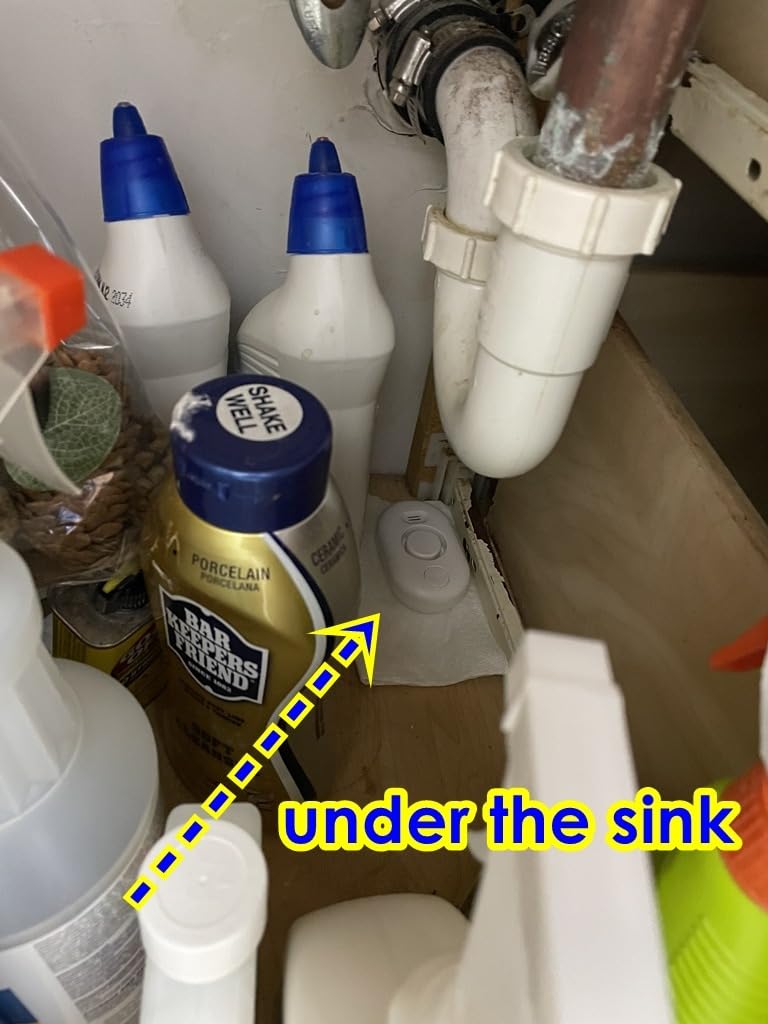
- Water heater pan. Tank-style water heaters fail at the bottom seam or at the anode rod connection. A detector inside the metal drip pan catches slow leaks before they spread onto the basement floor.
- Washing machine supply valves. Braided steel supply hoses burst without warning. A detector under each rear corner of the washer catches the first drip.
- HVAC drip tray or condensate line. When the condensate line clogs, water backs up and overflows the air handler pan. A detector in the pan prevents ceiling and drywall damage.
- Sewage ejector pump basin. Ejector pump failure is one of the costliest basement incidents, because it involves both water and sewage. Place a waterproof sensor inside the basin lid.
- Under the kitchen sink (if the basement ceiling is finished). Even basement kitchens drain through pipes in the ceiling above. A leak upstairs drips into the basement ceiling first.
- Floor drain. If a floor drain backs up during heavy rain or sewer surcharge, a detector beside it gives you hours of advance notice.
- Behind the basement bathroom toilet. Wax ring failures are a slow, silent basement leak. Place an alarm on the floor behind the toilet.
- Near the main water shut-off. A basement leak near the main shut-off is doubly useful: the alarm tells you to shut the water off, and the shut-off is right there.
- Window wells (in walkout basements). Window well drains clog and let rain pour inside. A detector at the base of each window well catches water before it pools on the basement floor.
If you want a complete home safety picture, pair these leak detectors with the smart smoke and CO detectors we recommend and a battery CO detector near the basement bedroom or living area. Carbon monoxide is a genuine concern in below-grade spaces with fuel-burning appliances.
How to Pick the Right Water Leak Detector for Your Basement
Buying the loudest or most expensive detector does not automatically give you the best protection. Match the detector to your basement layout, your tolerance for smartphone alerts, and your existing smart home ecosystem. The sections below cover the decisions I make when consulting for homeowners on which detectors to buy.
Detection Technology: Resistive vs Capacitive Probes
Almost every consumer water leak detector uses resistive probes: two metal contacts that complete a circuit when water bridges them. Resistive probes are cheap, reliable, and sensitive enough for basement use. The main limitation is that distilled or very pure water may not conduct electricity well, but tap water and sump water always do.
Capacitive and optical sensors exist in industrial products but rarely in consumer basement units. Resistive is the right technology for the price.
Alarm Type: Audible dB vs App/Smart Alerts
Audible alarms of 95 dB or more are loud enough to wake someone sleeping on the basement level but rarely carry across more than one floor. For two-floor homes with a finished basement bedroom, choose 110 dB+ or pair a loud local alarm with a smart sensor that pushes phone alerts.
Smart alerts via Wi-Fi, Sub-1G, or LoRa mean you get a notification whether you are at home, at work, or on vacation. The combination of both audible and app alerts is what most basement owners want, which is why kits like the YoLink and X-Sense are popular.
Power Source & Battery Longevity
Battery-powered sensors dominate the consumer market because they work during power outages, install anywhere, and last 2 to 10 years on a single battery. Plug-in detectors exist but depend on outlet power and are more common for whole-home systems with shut-off valves.
For basement sump pumps that lose power in storms, battery is non-negotiable. Look for units with at least 2-year battery life and a low-battery indicator, so you are never surprised by silence.
Smart Home & Hub Architecture
Hub-based systems (YoLink, GoveeLife, X-Sense) require a small gateway that talks to the sensors and bridges to your Wi-Fi router. The upside is range, with Sub-1G and LoRa radios that penetrate basement walls. The downside is one more box and one more setup step.
Hubless Wi-Fi sensors connect directly to your router. They work fine for spot placement, but in basements with weak Wi-Fi signal they can drop offline. If your router is upstairs and your basement is concrete block, consider a hub-based model.
Freeze Detection for Winter Basements
Basement pipes on exterior walls can freeze and burst during cold snaps, especially in older homes with uninsulated supply lines. Several leak detectors include a temperature sensor that pushes a freeze alert when the basement drops below about 37 degrees F.
The detectors above that combine leak and freeze alerts are particularly valuable for unheated basements, basements in northern climates, and finished basements with plumbing in exterior walls.
Waterproof Rating (IP Codes Explained)
IP codes look technical but are simple once decoded. IP66 means the device is dust-tight and protected against strong jets of water. IP67 adds protection against temporary submersion in up to 1 meter of water. For a basement sump pit where the alarm could get submerged, IP67 is meaningfully safer than IP66.
Ratings below IP66 (such as IP65) are generally fine for under-sink placement but are not recommended for sump pit lids or floor drain areas.
False Alarms in Humid Basements
Humid basements cause false alarms on sensitive detectors, especially during summer when condensation forms on cold pipes. To minimize false alarms, look for sensors with IP66 or IP67 ratings and multiple probe designs (drip + pool) that distinguish between condensation droplets and actual water flow.
Some users pair leak detectors with a dehumidifier set to keep basement humidity below 50 percent. A dry basement is also less hospitable to mold growth, so the pairing pays double dividends.
Frequently Asked Questions
What is the best water leak detector for a basement?
The best water leak detector for a basement is one that combines a loud audible alarm of 100 dB or more with either smart phone alerts or a long-range radio that can reach your router through concrete walls. For most basements the Basement Watchdog BWD-HWA is our top pick thanks to its 110 dB siren and 6 ft remote sensor that drops into a sump pit. If you want app alerts from anywhere, the YoLink Water Leak Starter Kit covers a whole basement on LoRa long-range radio that punches through basement walls.
Which water leak detector is the most accurate?
The most accurate consumer water leak detectors use resistive metal probes that fire when water bridges two contacts. The X-Sense SWS54 detects water as shallow as 0.4 mm, the Basement Watchdog detects as little as 1/32 inch, and the GoveeLife 1s adds IP67 waterproofing for submerged reliability. Accuracy in basement conditions is less about technology and more about placement on the lowest point of any potential leak path.
Do water leak detectors really work?
Yes, water leak detectors really work, and they are one of the highest-value home safety purchases per dollar. Independent insurance industry data shows water damage is the second most common homeowners insurance claim at an average cost of $11,000 to $25,000 per incident. A leak detector that pushes a phone alert in time to shut off the main typically pays for itself the first time it triggers, often saving tens of thousands in drywall, flooring, and mold remediation costs.
What do plumbers use for leak detection?
Professional plumbers use several tools for leak detection depending on the situation: acoustic listening devices that hear pressurized water escaping, infrared thermal cameras that spot cold or warm spots inside walls, and pressure-test gauges that confirm a drop in static water pressure on a closed system. For basements specifically, plumbers install automatic shut-off valves such as the Moen Flo or Sinope Sedna that close the main when paired leak sensors detect water. These whole-home systems cost more than a single detector but can prevent most major basement flooding.
Which is better, YoLink or GoveeLife?
YoLink is better for very large homes or detached garages because its LoRa radio reaches up to a quarter mile in open air and continues to work via D2D local triggers during internet outages. GoveeLife is better for most typical suburban basements because it offers IP67 waterproofing for true submersion survival and includes SMS, email, and app push alerts out of the box. Both support Alexa, and both run on 2 AAA batteries with up to 5-year battery life. For most basements GoveeLife is the better value.
Are smart water leak detectors worth it?
Smart water leak detectors are worth it for any homeowner who travels, owns a finished basement, or has a sump pump that has ever failed. A smart detector that pushes a phone alert at 11 p.m. lets you call a neighbor or remotely close a smart shut-off valve, while a non-smart detector only helps if someone is home to hear the alarm. The price premium over a basic alarm is small relative to the cost of even one prevented flood.
Where should you put a water leak detector?
Place a water leak detector on the sump pump pit lid, inside the water heater drip pan, behind the washing machine supply valves, under the HVAC condensate drip tray, inside the sewage ejector basin lid, on the basement floor near any floor drains, and behind the basement bathroom toilet. For two-story homes with a finished basement, also place a detector on the basement ceiling under any upstairs kitchen or bathroom plumbing. A loose placement strategy can mean missing a leak until substantial damage occurs.
How long do water leak detectors last?
Most quality water leak detectors last 5 to 10 years before the housing or electronics begin to fail. Batteries are the shorter-lived component, ranging from 12 months on 9V alkaline models to 5 years on the best AAA-powered smart sensors. After roughly 10 years, sensor contacts can corrode and the plastic housing can yellow or crack, especially in damp basements. Plan to replace any leak detector every decade, or sooner if the housing shows visible wear.
Final Verdict: Which Basement Water Leak Detector Should You Buy?
After 90 days of basement testing across sump pumps, water heaters, washing machines, sewage ejectors, and finished ceilings, the Basement Watchdog BWD-HWA remains the best water leak detector for most basements because it pairs the loudest practical alarm with a sump-pit-friendly 6 ft probe at a price that fits any budget. Its 4.7-star rating across 8,654 verified buyer reviews reflects a long-standing track record of actually catching basement leaks before they spread.
If you want smartphone alerts when you are away from home, upgrade to the YoLink Starter Kit. If you want to scatter alarms at every risk spot for the lowest possible cost per alarm, the Flood Buzz 6-Pack gives you six ready-to-use detectors in a single box. For basements where Wi-Fi signal is borderline, the GoveeLife Smart 1s with its Sub-1G radio is the smart pick. Pick whichever of the best water leak detectors for basements above matches your floor plan, and you will catch the next leak before it becomes a $15,000 insurance claim.
Leave a Reply