
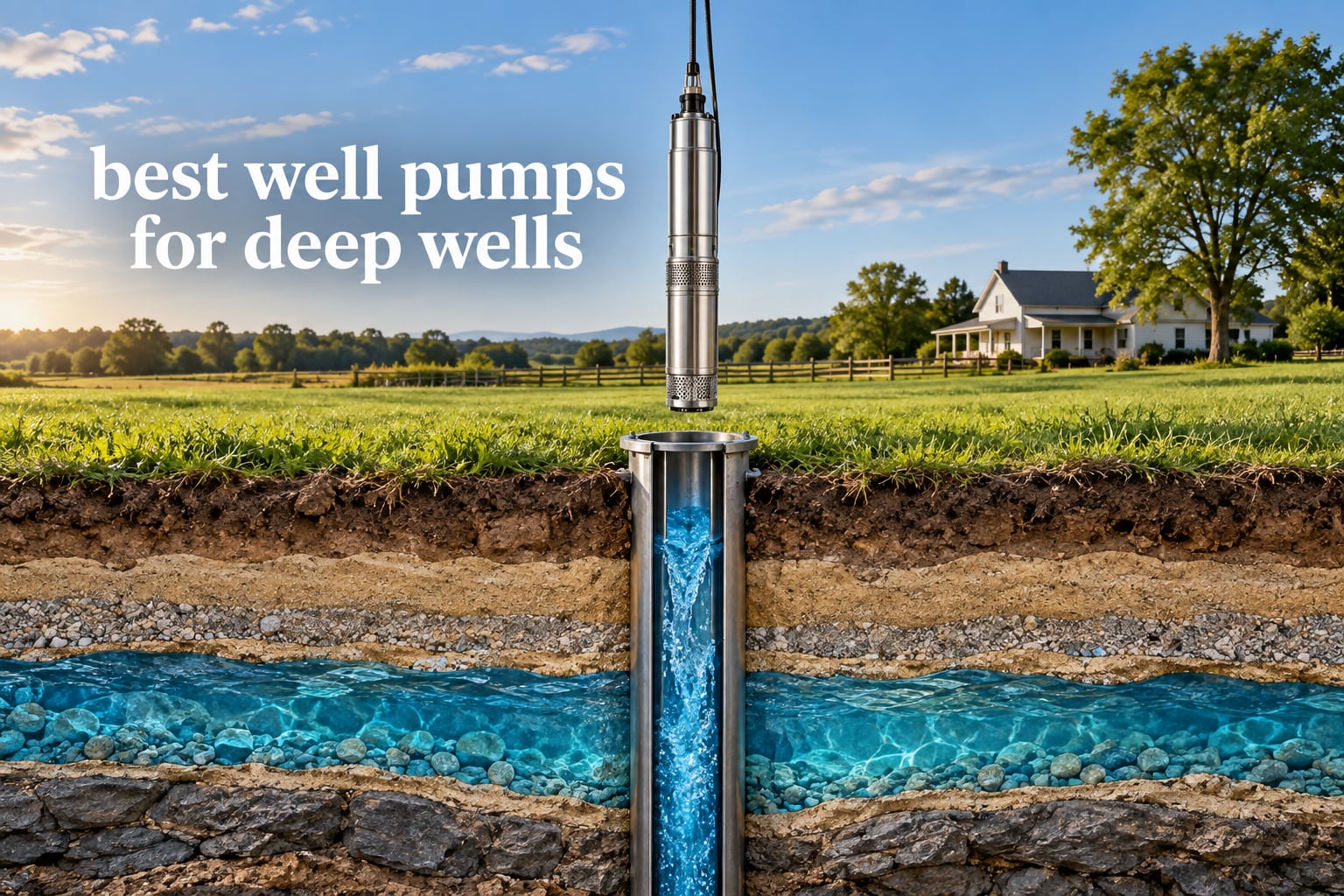
A submersible pump is the right answer for almost every deep well, and a multi-stage model is what you want below roughly 100 feet. Anything past about 25 feet rules out a surface-mounted pump, because the pump has to push water up the pipe rather than suck it. That is the short version. The long version is that the best well pumps for deep wells are all submersibles, and the differences between them come down to head, flow, voltage and how the motor is wired.
We put 12 of them side by side, read every spec sheet against real installation conditions, and mined nearly 4800 owner reviews for failure patterns. Our method was simple: every pump below gets the same five-field spec block (horsepower, GPM, max head, voltage, wiring), the same scrutiny on what breaks, and the same treatment of the extras that a spec sheet never mentions, like wire gauge and whether a check valve is in the box.
One thing we learned fast. The headline GPM number is measured at near-zero head, so a pump rated at 33 GPM may deliver a fraction of that at 150 feet. Max head, not flow, is what decides whether a pump can reach your pumping water level at all. And the same rule explains the single most common reason deep well pumps burn out: buying a pump bigger than the well can supply, so it runs the well dry and cooks the motor.
We also avoided a category of trap. A jet pump looks like a cheaper answer, and for a shallow well it is. On a deep draw it loses prime, the motor keeps running dry, and you get a burned-out pump and an expensive lesson. If your well is deeper than 25 feet, you want a submersible.
Full transparency: we may earn a commission when you buy through links on this page. That does not change the ranking or anything written below. If you want the short version of the science, the solar pumping guide covers the off-grid power side in more depth.
Our Top 3 Deep Well Pump Picks After Comparing 12 Models
Hallmark 1 HP 33 GPM 207 ft
- 33 GPM max flow
- 207 ft max head
- Built-in capacitor start
- Stainless steel body

VEVOR 1 HP 37 GPM 207 ft 115V
- 37 GPM max flow
- 207 ft max head
- Runs on 115V
- IP68 stainless frame

Red Lion 1/2 HP 12 GPM 212ft
- NSF/ANSI 372 potable certified
- 3-year warranty
- Built-in control
- 12 GPM rated flow
The Hallmark 1 HP earned the top slot on evidence, not novelty. It has the largest verified review base in the group at more than 2000 ratings, and it is the only pump here that combines a 200-plus foot head rating with a built-in capacitor start and that much owner history. The VEVOR 1 HP is tied for the highest rating in the group and the only unit near that reach that runs directly on 115V, which matters enormously for off-grid and generator setups. The Red Lion is the one to buy when you want a long-service install backed by a three-year warranty.
Comparing All 12 Submersible Deep Well Pumps Side by Side in 2026
Two things jump out of the full lineup. First, every one of these is a 4-inch-body submersible, so none of them will fit a 3-inch casing, and that single fact disqualifies most of them for older wells drilled with narrow casing. Second, the head ratings range from 150 to 427 feet for broadly similar household flow targets, which tells you the real decision is depth, not brand.
1. Hallmark 1 HP 33 GPM 207 ft – The Best Overall Deep Well Pump
Pump, Deep Well Submersible Pump, 1 Hp, 230V, 33 Gpm, 207 feet, Stainless Steel, Long Life
1 HP
33 GPM max flow
207 ft max head
230V
Built-in capacitor start
+ Pros
- Strong consistent pressure from a drilled well
- Runs quietly and draws less amperage than comparable 1 HP pumps
- Lighter and more compact than older 1 HP units
- No external control box required
- Fine-mesh intake screen limits debris ingestion
– Cons
- No check valve included so one must be added separately
- Thin stranded power leads draw installer complaints
- Some units report premature motor failure
- Only a one-year parts and labor warranty
This is the pump we keep coming back to because the numbers and the review history agree. 1 HP, 33 GPM max flow, 207 feet of max head, 230V, and a solid stainless steel body paired with a heavy duty thermoplastic discharge. At 28 pounds it is noticeably lighter than older 1 HP units, and that matters more than it sounds when you are lowering a pump down a casing with a rope and a clamp.
The built-in 1 HP capacitor start is the detail that changes an install. There is no control box to mount on the wall, no extra splice to make at the panel, and one less component that can fail independently of the pump. Reviews describe strong and steady pressure, quiet running, and lower amperage draw than comparable 1 HP units.
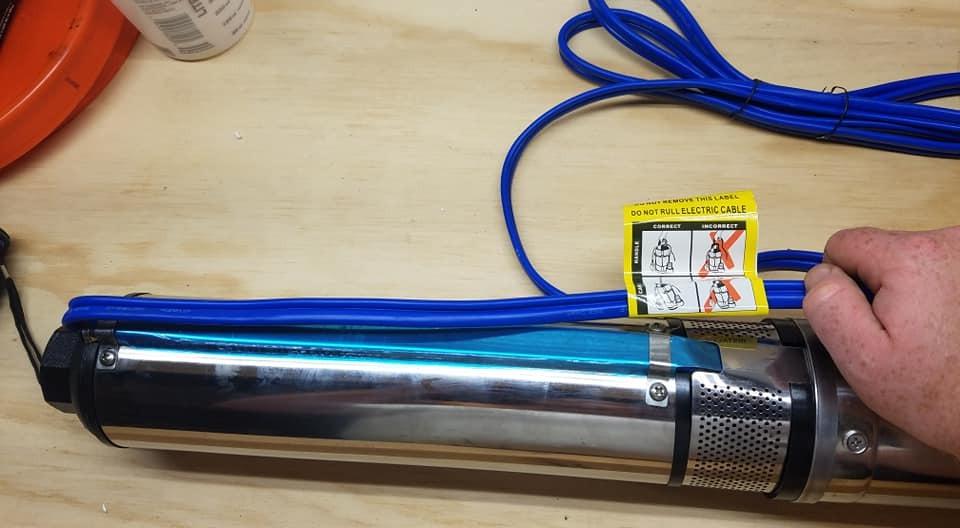
Around 2000 verified ratings give this the deepest owner history in the group, and roughly 70 percent are five star. Long-term owners report multi-year service in irrigation and pond duty. The recurring negatives are all install-related rather than pump-related, which is the good kind of problem to have.
Head and Flow Trade-Off in Real Conditions
207 feet of max head means this pump can lift water from a pumping level of roughly 180 feet once you subtract friction loss in the pipe, which is the figure that matters. At low head it moves the full 33 GPM. Deeper down, flow falls along the pump curve, and the honest number at 150 feet is materially lower than 33.
That is not a defect. It is how every multi-stage pump works, and it is why matching max head to your pumping water level is the whole sizing exercise. If your pumping level is at 90 feet, this pump has more than enough head and you get more usable flow than the headline number suggests.
Built-In Capacitor Start vs an External Control Box
The capacitor lives inside the pump, which means two conductors plus ground run down the well. A 3-wire pump needs a third conductor for motor start, and that start function lives in a wall-mounted control box. Eliminating the control box removes a failure point that installers consistently tell us causes more service calls than the pump itself.
It also simplifies splicing. You have one splice to make in the water, at the top of the pump, with the supplied kit. Fewer conductors means a smaller wire gland and less chance of a seal failure, and seal failure at that gland is what ends most pump lives.
Wire Gauge, Check Valves and the Hidden Extras
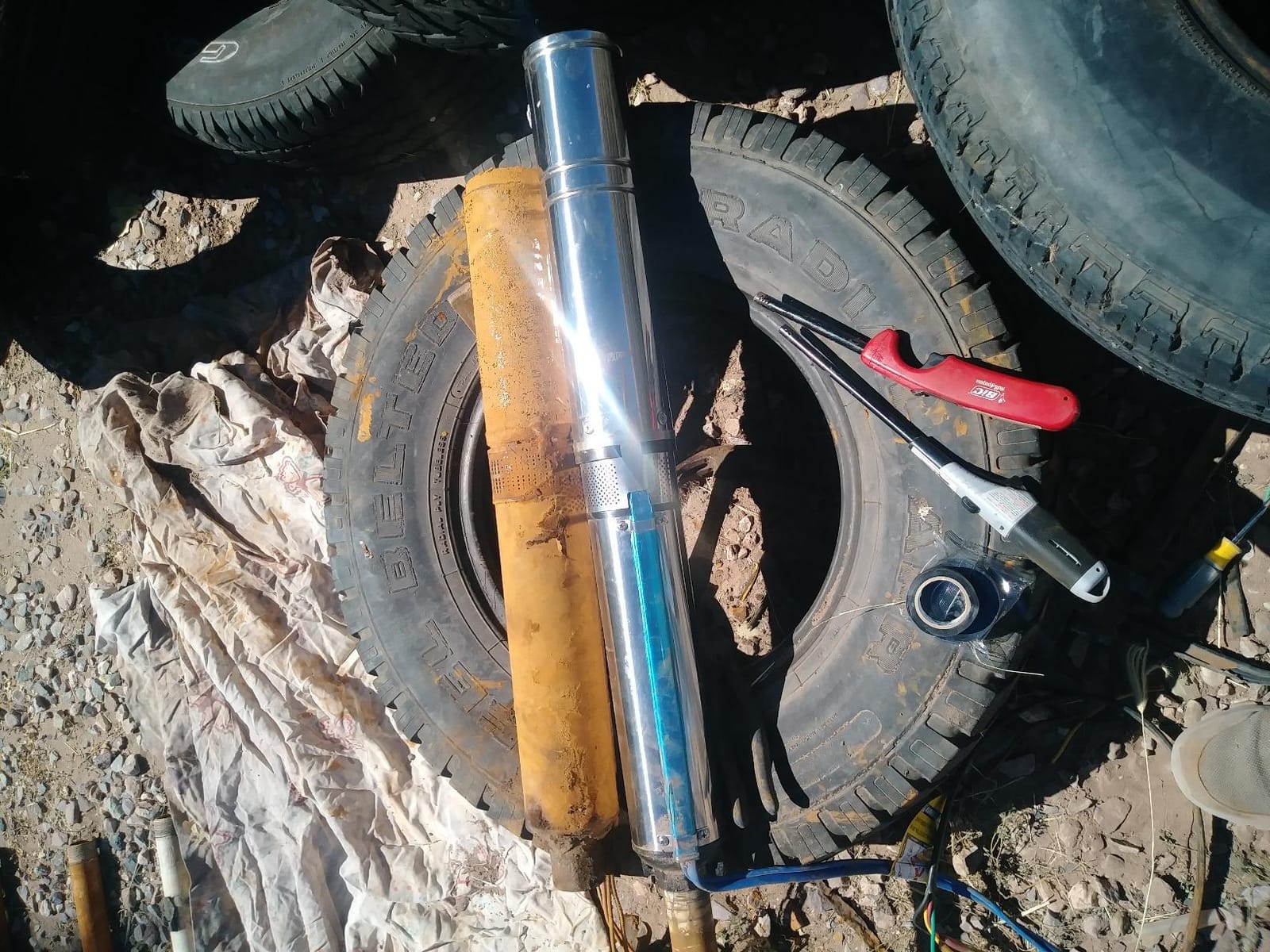
Two complaints come up often enough to plan around. The power leads are thin stranded wire, roughly 18 AWG, which is the single most common criticism across the value brands in this roundup. On any install deeper than about 100 feet we would run heavier gauge cable and use a proper well head with a cable clamp, rather than trusting the supplied lead.
There is also no check valve in the box. Without one, the column of water in the discharge pipe drains back and the pump cycles on and off, which is exactly the short-cycling pattern that destroys motors. Add a brass check valve above the pump at install time. It is a small part and it changes the service life of the pump.
Who This Pump Suits, and Who Should Skip It
This suits a household on a 4-inch casing, pumping from somewhere between 80 and 180 feet, on 230V supply, that wants a single-component install with no control box. If you only need light household demand, a 1 HP is more pump than you need, and a well that yields 2 GPM will be drained by it.
Skip it if you are on 115V only, if your casing is 3 inch, or if you want a warranty longer than a year. Buyers who report premature motor failure are a real minority here, and a one-year parts and labor warranty is the same term the other Hallmark models in this roundup carry, so it buys you very little protection on a deep install.
2. VEVOR 1 HP 37 GPM 207 ft 115V – Best Rated Pump That Runs on Household Power
VEVOR Deep Well Submersible Pump 1 HP 115V/60Hz 37 GPM Flow 207 ft Head
1 HP
37 GPM max flow
207 ft max head
115V
6-stage IP68
+ Pros
- Tied for the highest average rating in the roundup
- Strong consistent pressure from a 37 GPM flow rating
- Runs directly on standard 115V supply
- Straightforward quick installation
- Full stainless steel frame rated IP68
– Cons
- Several buyers report motor failure within days or weeks
- A 1 HP load on 115V needs a large generator to start
- The 33 ft cord is light gauge and needs extending
- 1 HP is marginal at 200 ft and deeper
The headline number here is the rating. 4.5 stars across 485 reviews with about 79 percent five star puts it at the top of the ratings in this roundup, and roughly 0.3 of a star above the average of the rest of the field. It is also the only 1 HP unit here rated at 207 feet of head that runs on 115V, which is a genuinely rare combination.
Why does 115V matter? Off-grid homes, cabins, and anyone running a portable power station or inverter wants a 230V pump only if they have a step-up transformer and a generator big enough to start a 1 HP motor. A 115V pump plugs into a normal circuit. That single spec removes an entire category of electrical planning from an off-grid install.
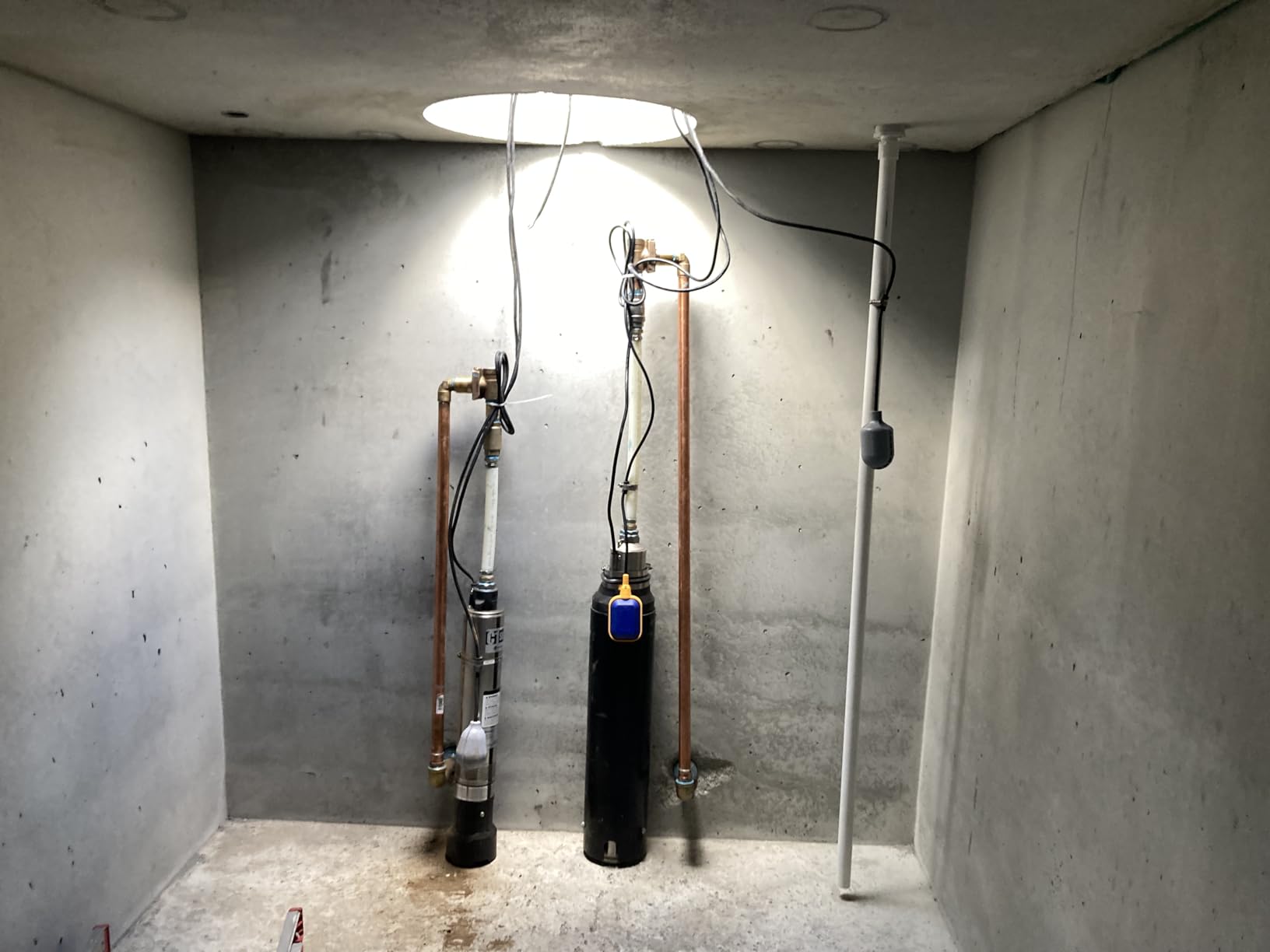
Build details are better than expected at this tier. Six-stage thermoplastic impellers, a full stainless steel frame including the outlet and connecting components, IP68 waterproof rating, a copper motor with built-in overheat protection, and a stainless steel filtration mesh at the intake. The 33 ft cord with a US plug is included, which is generous for a submersible.
What 6-Stage Means for a 207 ft Reach
Each impeller stage adds head in series, and six stages is what gets this pump to 207 feet while still moving meaningful flow. Fewer stages would mean a shorter reach or more flow at a lower lift. More stages would mean a longer, heavier, more expensive pump with higher start-up current.
The 1-1/4 inch NPT discharge is the standard in this category, which matters because fittings and check valves for that size are easy to find at any plumbing counter. A 4-inch body fits 4-inch or larger casing. If your well is a 3-inch casing, this is simply not a candidate.
Where the 115V Platform Becomes a Liability
A 1 HP motor on 115V draws roughly double the current of the same horsepower on 230V. That is the core compromise. Higher current means heavier wire, a larger breaker, and thicker cable running down a 200-foot well, and the electrical cost of the install can overtake the pump price difference.
Owners also flag that a 1 HP load needs a large generator to start. Induction motors draw several times their running current at startup, and a small portable generator will simply not crank it. If you plan to run this off-grid with a generator, budget a generator rated well above 1 HP of running load.
Failure Pattern and the Check Valve Question
A minority of buyers report motor failure within days or weeks of use. That is the defining negative of this listing and the reason it does not take our top slot despite the best rating. The 485-review base is also thin next to the 2000-plus reviews behind our number one pick, so a 4.5 average rests on a smaller sample.
There is a built-in check valve and stainless filter mesh, and the manufacturer recommends adding another check valve above the pump. Do it. A sealed internal check valve that eventually fails takes the whole pump with it, whereas an external brass check valve is a five-minute replacement.
Best Fit and Where It Falls Short
This is the right pump for a 115V-only household, an off-grid cabin, or a well around 100 to 160 feet where you want more flow than the 1 HP 230V units give you. It is also the one to pick if you want the highest-rated unit available and you are willing to accept a thinner reliability record.
Do not choose it for a 250-foot-plus well, for a 3-inch casing, or for a household that needs serious whole-house pressure on 115V. At 207 feet of rated head and 1 HP, it runs out of authority well before it runs out of pump.
3. Red Lion 1/2 HP 12 GPM 212 ft 2-Wire – The Premium Long-Service Install
Red Lion RL12G05-2W2V Submersible Well Pump, 1/2 HP, 2-Wire, 230V, 12 GPM
1/2 HP
12 GPM rated flow
212 ft shut-off
230V 2-wire
3-year warranty
+ Pros
- Built-in switch eliminates the external control box
- Waterproof splice kit included in the box
- NSF/ANSI 372 certified for potable water
- UL and CSA listed in the US and Canada
- Three-year warranty is tied for the longest here
– Cons
- Costs the most per horsepower of any pump here
- Two-wire plus ground layout means rewiring if a control box is already installed
- Plastic discharge head draws a quality complaint
- Thin cardboard packaging for a 20 pound unit
Most households do not need 33 GPM. A family of four on a well that yields 10 to 12 GPM is better served by a 1/2 HP pump, and that is exactly what this is. The 12 GPM figure is a rated flow at 30 PSI and 40 feet, which makes it a realistic number in a way that the headline max flow on the bigger units is not.
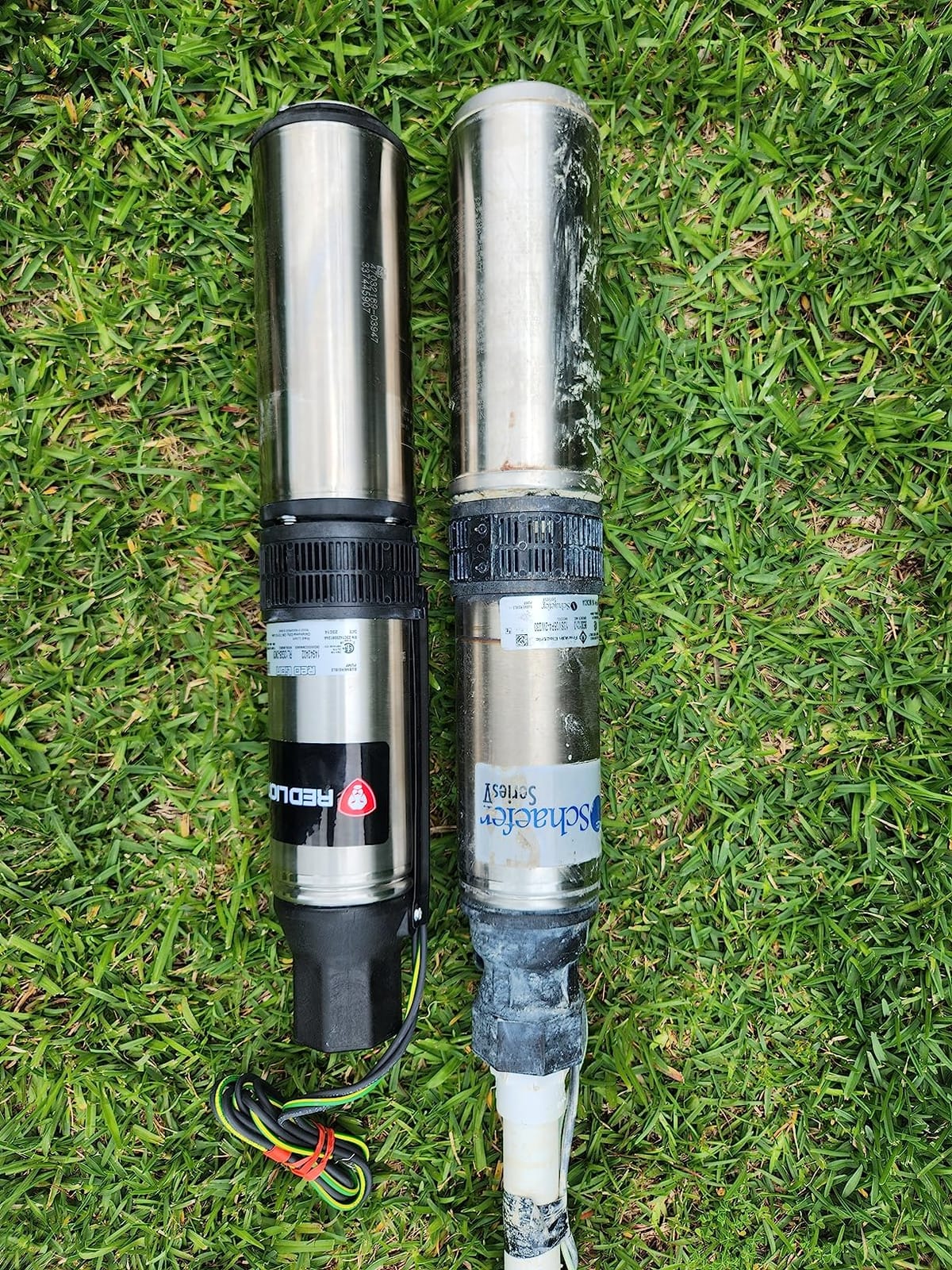
Red Lion is a Franklin Electric brand, and Franklin is the motor platform the industry treats as standard. If your current failed pump was a Red Lion or Franklin unit, this is the like-for-like replacement. 4.5 stars across 162 reviews, with owners treating it as a long-term install rather than a disposable one.
Why 212 Feet of Shut-Off from Half a Horsepower
212 feet is the shut-off head, the maximum pressure the pump can produce with zero flow. Because this is a 12 GPM unit with a wide flat pump curve, its practical working range is narrower than a 33 GPM pump. High head, low flow is the shape of this curve.
That is the correct trade for a small home with a deep well. The pump can reach down further than the bigger units and still deliver the 10 to 12 GPM a household actually consumes. Sizing a 33 GPM pump into a well that yields 8 GPM would drain it and burn the motor out, which is the failure mode well owners complain about most often.
Certifications That Actually Matter for Potable Water
This is the only pump in the roundup carrying NSF/ANSI 372 certification for potable water, alongside UL and CSA listing in the US and Canada. If you are drinking from the well, or serving a rental or a business where code compliance gets inspected, that certification is not a nice-to-have.
The 3.9-inch diameter body fits 4-inch driven casing or larger. The 1-1/4 inch FNPT discharge is standard. The built-in check valve helps prevent rapid cycling and extends motor life, and a suction screen keeps debris out of the impellers, which is the other leading cause of premature pump death in sand-bearing wells.
The 2-Wire Decision and the Warranty Advantage
The switch mechanism is built into the pump, so there is no external control box to fail. Two wires plus ground run down the well. The catch is that if you already have a 3-wire control box on the wall, a 2-wire pump will not work with it, and you are rewiring the panel.
The three-year manufacturer warranty is tied for the longest in this group, and Red Lion honours it even on marketplace purchases, which is a real advantage when the alternative is shipping a dead pump back across a border. The 48-inch lead wires and the included wire splice kit mean the two most common install parts are in the box.
Where This Belongs, and Its One Real Weakness
Buy this for a 3 to 5 person household on a well deeper than 150 feet where flow demand is modest and the water is potable. It is the pick for a cabin, a cottage, or a home that has been running a 10 GPM pump for 20 years and wants the same thing again.
The weakness is arithmetic. It costs the most per horsepower of any pump in the roundup, by a wide margin. If your well yields 25 GPM and you want irrigation as well as household supply, spending the same money on a 1 HP buys far more usable water. The premium buys you the warranty, the certification and the motor, not more flow.
4. Hallmark 2 HP 35 GPM 420 ft – Best for 300 Foot Wells and Deeper

Hallmark Industries MA0419X-12A Deep Well Submersible Pump, 2 HP, 230V, 35 Gpm, 420 feet, Stainless Steel
2 HP
35 GPM max flow
420 ft max head
230V
Stainless steel body
+ Pros
- 420 ft head capacity suited to very deep wells
- Stainless steel body and pump head for corrosion resistance
- 12-stage design within the MA0419X family handles high lift
- Over 1000 reviews from the same model platform as the 1 HP sibling
– Cons
- Listing copy is minimal compared with the other pumps here
- Only a one-year parts and labor warranty
- Only 1021 reviews
- so less owner history than the 1 HP unit
When your pumping water level is somewhere between 250 and 380 feet, the 1 HP units simply run out of head. This 2 HP is one of only two pumps here rated past 400 feet, and at 35 GPM it holds flow where the smaller pumps would be delivering a trickle. That combination of reach and flow is what a deep rural well needs.
At 40 pounds and 45 inches long it is a two-person lift, which is the practical argument for planning the install properly. Dropping 40 pounds into a casing with a friction fitting, rather than lowering it on the cable, is much safer for both the pump and the person on the wellhead.
Matching 2 HP to a 300-Plus Foot Pumping Level
Rule of thumb from our own sizing work: target roughly 20 to 30 percent more head than your pumping water level, then add friction loss. A pumping level at 300 feet means you want at least 360 feet of rated head before pipe losses, and 420 feet gives genuine headroom. That margin is what keeps the pump working inside its efficient band instead of grinding against its shut-off curve.
Flow at 300 feet will be a fraction of the 35 GPM max. Do not plan household demand around 35 GPM. Plan around what you actually need, usually 8 to 15 GPM for a home, and let the rest of the capacity cover irrigation or livestock.
230V and Why 2 HP Changes the Electrical Plan
A 2 HP motor on 230V draws a fraction of the current of the same horsepower on 115V, and 2 HP on 115V is not a realistic residential configuration. This pump needs a 230V circuit, a double-pole breaker, and heavy feeder cable sized for the full motor nameplate current plus a generous start-up allowance.
For a 300-foot install the cable is a major line item and the pump is a small share of the total. Budget for the wire, the well head, the check valve and the splice kit before you commit to a pump, because a pump bought without those is not a working system.
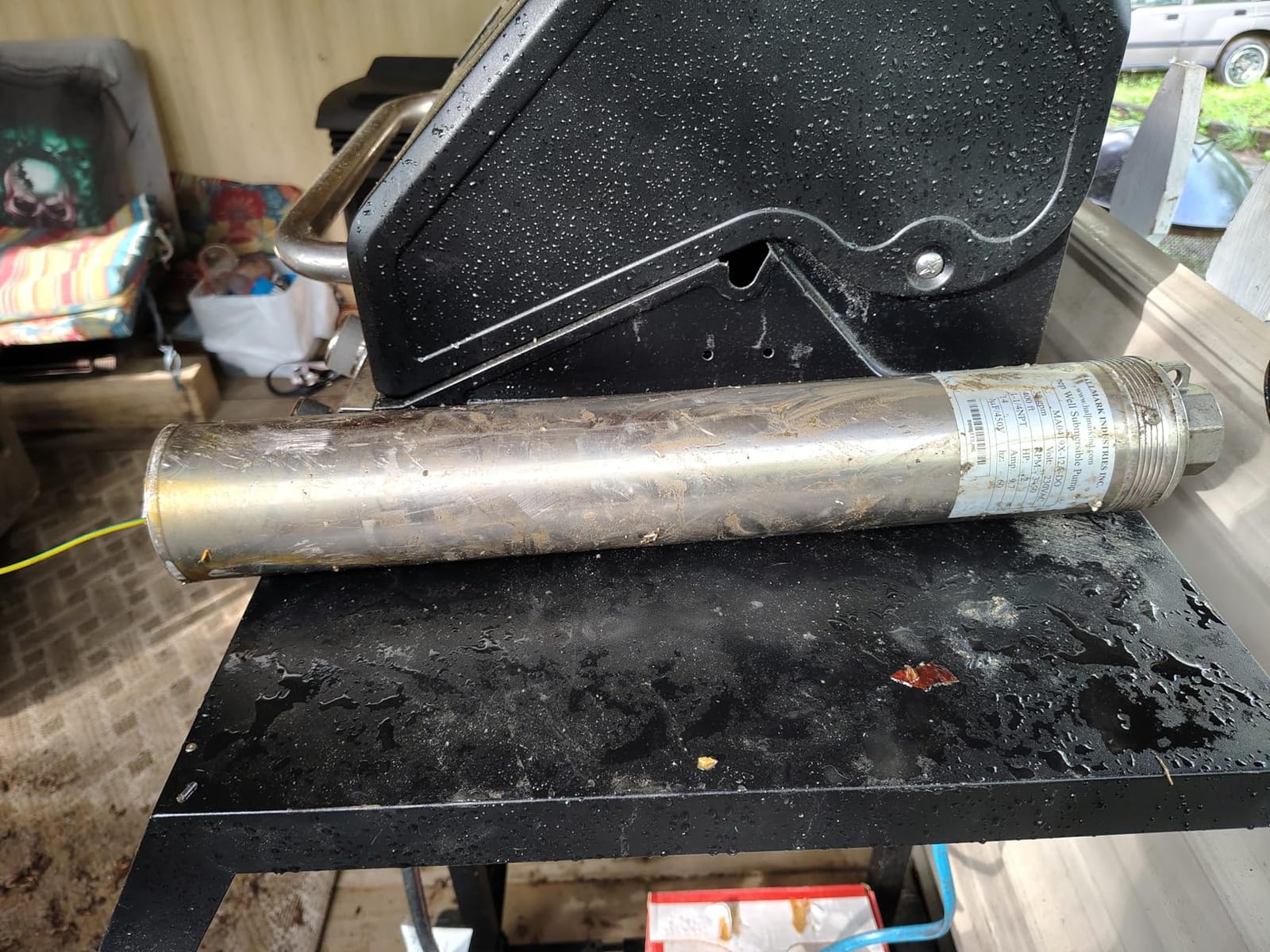
What the 4.2 Rating and 1021 Reviews Tell Us
This shares the 4.2-star profile of the closely related Hallmark MA041X platform, and it carries just over 1000 verified purchases. The shared rating distribution across the family is genuinely reassuring, since you are buying into a design that a lot of people already run.
What we cannot tell you is anything specific, because the listing carries very little descriptive text. Buyers are relying on the platform reputation and the review history rather than on documentation. Long-term owners of the family report failures traced to check valves and submerged wiring rather than the motor, which is a fixable problem at install time.
Best Fit and Honest Limitations
It belongs in a well deeper than 250 feet, on 230V, where household demand plus irrigation or livestock water exceeds what a 1 HP can deliver at that depth. It is the value pick for very deep wells, since the alternative at this reach is a commercial-grade unit costing several times as much.
It is also the heaviest pump here at 40 pounds, the warranty is one year, and a 2 HP motor on a marginal well supply will draw the well down faster than you expect. Confirm your well yield before you install a 2 HP in a deep well. If yield is under 10 GPM, a 1 HP or even a 1/2 HP will serve you better and last longer.
5. Hallmark 1/2 HP 25 GPM 150 ft – Best for 150 Foot Wells and Cisterns
Hallmark Industries MA0343X-4A Deep Well Submersible Pump, 1/2 hp, 230V, 60 Hz, 25 GPM, 150′ Head, Stainless Steel, 4″
1/2 HP
25 GPM max flow
150 ft max head
230V
Built-in start capacitor
+ Pros
- About half the weight of the pump it replaced which eases install
- Built-in starting capacitor means no external control box
- Consistent pressure over many years in hand-dug and drilled wells
- Supplied with wiring accessories and thread tape
- Pumps hold up well when a flow sleeve shroud is used
– Cons
- Factory check valve allows backflow and can crack within about a year
- Lead wires are very thin gauge and look flimsy underwater
- Some units fail after roughly a year of service
- Included splice kit is considered chintzy by several installers
This is the middle of the range and the most versatile pump in the lineup. 1/2 HP, 25 GPM, 150 feet of head, 230V, stainless steel, built-in start capacitor. A 150-foot rating covers most rural domestic wells in the country, which is why this kind of half-horsepower unit outsells everything else.
Owners report consistent pressure over many years of service in both hand-dug and drilled wells, and the pump is roughly half the weight of the unit it replaced at the same duty. At 25.8 inches long it is short enough to set well above the drawdown zone and still leave plenty of casing below.

Why Long-Term Owners Add Two Modifications
The single most common recommendation in the reviews is to add a brass check valve at install time. The factory check valve allows backflow and can crack within about a year, and a cracked check valve means reverse flow through the pump while it is off, which is hard on the impellers and the bearings.
The second is to replace the ground lead with heavier gauge wire. The lead wires are very thin gauge and look flimsy underwater, and the wire grommet can slip off and lead to early wire failure. Both are ten-minute fixes at install and both remove the two most common failure modes on this pump.
Flow Shrouding for Sand and Sediment Wells
Pumps appear to hold up well when a flow sleeve shroud is used. A shroud slows the water approaching the intake so that sand and grit settle out below the pump instead of being drawn into the impeller stack. On a deep bedrock well that produces fine sand, a shroud is the difference between a pump that runs for years and one that wears out in a season.
This connects to the wider point about deep wells. Deeper is usually cleaner, but fractured bedrock zones frequently produce sand. A pump with a fine-mesh intake screen and a shroud installed below it can handle that. A pump with an open intake will grind itself to pieces.
Cisterns, Tanks and Situations With No Well At All
The 25 GPM flow and 150-foot head make this a strong transfer pump for a cistern, a storage tank, or a pond, where there is no well casing at all. The 4-inch body needs a 4-inch bore or a sufficiently large tank, and the pump must be submerged with adequate submergence above the intake.
For anything above 150 feet, step up to the 1 HP. For a hand-dug well that is shallower and wider, this size is more than adequate and the light weight is a genuine advantage during a shallow well install.
What 434 Reviews Say About Lifespan
Long-term owners report units lasting five to six years each, with failures most often traced to the check valve or the submerged wiring rather than the motor. That is the profile you want. A motor that runs for years and then dies on a gasket is an unlucky day. A pump that dies because a plastic check valve cracked and backflow ate the bearings is a parts problem.
Some units do fail after about a year, and the warranty is one year, which is frustrating but honest. The consistent long-run reviews are what convinced us this is a durable design when installed properly.
Best Fit and Where It Falls Short
Buy this for a 4-inch casing well between 60 and 140 feet, on 230V, with moderate household demand, or for a cistern or tank transfer job. It is the most flexible unit in the roundup and the easiest to handle on site.
Do not buy it for a well deeper than 150 feet, for a 3-inch casing, or as a heavy irrigation pump. The 25 GPM max flow is a zero-head figure, and at 120 feet you will see considerably less. And replace the supplied splice kit and the ground lead at install, because the two cheapest fixes in this article prevent the most common failures.
6. VEVOR 1/2 HP 28 GPM 167 ft 230V – The Budget Pick

VEVOR Deep Well Submersible Pump, 0.5HP/370W 230V/60Hz, 28GPM 167 ft Head, with 33 ft Electric Cord, 4 inch Stainless Steel Water Pumps for Industrial, Irrigation and Home Use, IP68 Waterproof Grade
1/2 HP
28 GPM max flow
167 ft max head
230V
5-stage IP68
+ Pros
- Strong flow from a half-horsepower unit at the entry price tier
- Reliable direct replacement for failed Red Lion pumps in similar wells
- Solid stainless steel construction on a tight budget
- Runs as a drop-in with no external control box needed
– Cons
- Built-in check valve can leak and is sealed so it cannot be serviced
- No on-staff technical support and slow manufacturer response
- Power leads are very small gauge
- One reviewer reports it will not lift 10 feet of water
At 4.3 stars this holds the strongest rating of any half-horsepower unit in the group, and 28 GPM from half a horsepower is a lot of flow. The 5-stage impeller stack, stainless steel frame, IP68 rating and copper motor with overheat protection are the same feature set you would expect from a unit costing several times more.
Owners report using it as a direct replacement for failed Red Lion pumps in similar wells, which tells you the real-world duty is common enough to swap one for the other. About 75 percent of ratings are five star, on a 144-review base.
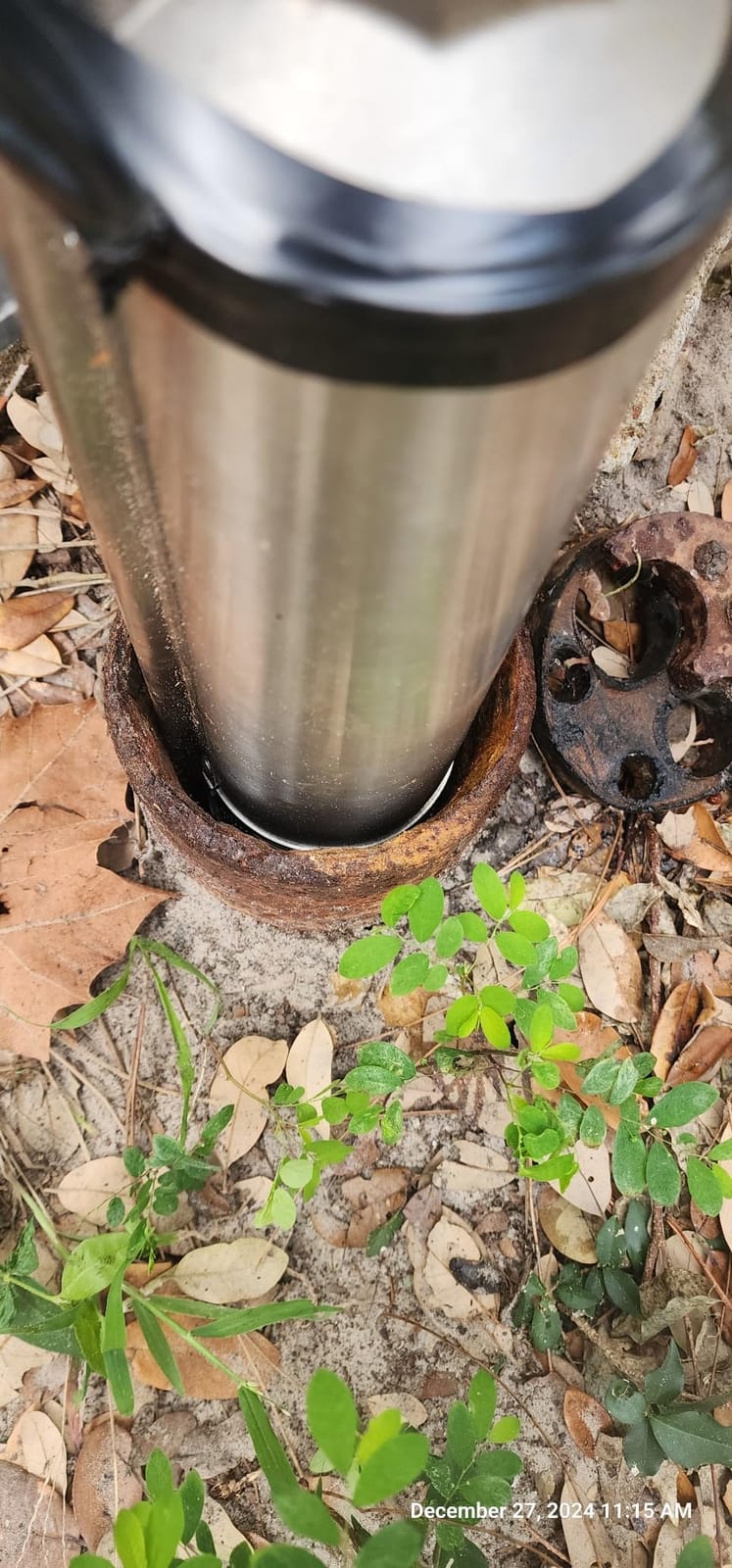
The Sealed Check Valve Is the Whole Argument
The dominant complaint, and it comes up repeatedly, is that the built-in check valve can leak and it is sealed so it cannot be serviced. Buyers are advised to install a separate brass check valve at installation, and we agree completely. With an external valve, backflow is stopped before it reaches the pump internals.
The failure mode is unforgiving. If the internal valve does fail anyway, the pump is a dead pump, because you cannot open it without destroying the seal. That is a meaningful difference from a pump with a serviceable valve, and it is the main reason this is the budget pick rather than the recommendation.
What 5 Stages Buys You at 167 Feet
167 feet of max head from 1/2 HP out-reaches the Hallmark half-HP at 150 feet, and falls well short of the 2 HP units. The advantage here is flow: 28 GPM maximum, which on a well yielding 15 to 20 GPM means you are not starving the pump and running it inefficiently.
The 4-inch diameter body fits 4-inch or larger casing and the 1-1/4 inch NPT discharge is the common size in this category, so fittings and check valves are easy to source. Rated for irrigation, home use and light commercial duty.
Support, Cords and the Install Reality
There is no on-staff technical support and manufacturer response is slow, which matters if a unit fails inside the warranty period. Power leads are very small gauge, around 18 AWG, so plan on heavier cable for anything past a shallow install. One reviewer also reports the delivered cord measured shorter than the stated 33 ft.
One review reports the pump will not lift 10 feet of water, which we would treat as an isolated failure rather than a design limit given the 167-foot rating. A single such report against 144 reviews is an anecdote, not a pattern.
Best Fit and Where It Falls Short
This is the pump for a 4-inch casing well between 60 and 140 feet with low to moderate demand, where budget matters more than warranty length or serviceability. It is also a sensible second pump to keep on the shelf as a spare.
Do not buy it as your only pump if you cannot accept a sealed unit with slow technical support. And add the external brass check valve, because on this specific pump it is not optional in our view.
7. iMeshbean 1 HP 33 GPM 305 ft with Control Box – Best With a Long Power Cord

iMeshbean® Deep Well Submersible Pump with External Control Box, 1 HP, 115V, 60 Hz, 33 GPM, 305FT Max Head,100FT Power Cord Stainless Steel, 4″,Long Life M#010 USA
1 HP
33 GPM max flow
305 ft max head
110V
100 ft power cord
+ Pros
- One of the few pumps in the roundup that ships a 100 ft power cord
- External control box gives a simple ON/OFF at the surface
- Stainless steel body and discharge head
- Built-in check valve and built-in thermal protection
- 9-stage impeller stack for a 305 ft rated lift
– Cons
- Lowest average rating here at 3.9 stars with 17 percent one-star reviews
- External control box is a component that can fail independently
- Requires a 1-1/2 inch NPT discharge rather than the common 1-1/4 inch
The 100-foot power cord is the reason to look at this pump at all. For a well in the 200 to 280 foot range, the alternative is buying heavy gauge cable, running a wellhead cable clamp, and terminating 100 feet of wire yourself. This includes it, and that is a real saving in labour on top of the material.
It also has the deepest reach of any 115V pump in the group at 305 feet, using a 9-stage impeller stack and a permanent magnet motor. The stainless steel body and discharge head are properly specified for a submerged install.
Why a 3-Wire External Control Box Is a Mixed Bag
This is a 3-wire design, so the motor start function lives in the external control box that ships in the box. The upside is a simple ON/OFF switch at the surface, which is genuinely useful when you need to shut the pump down without walking to the panel.
The downside is a component that can fail independently of the pump, sitting in a damp utility room with a 110V supply. When the control box is the failure, you have a pump that is perfectly fine and a house with no water until you replace a part. That is why we prefer 2-wire pumps for most installs.
Reading the 3.9-Star Rating Honestly
This carries the lowest rating in the roundup at 3.9 stars across 113 reviews, with 17 percent one-star ratings against 62 percent five star. That split is meaningful. It is not a design failure, it is a manufacturing consistency problem, and it points to a meaningful share of buyers hitting issues with the control box or the pump.
We included it because of the cord and the reach, not because of the ratings. If you are installing at 200 feet and need the 100-foot lead, this solves a problem no other 1 HP in the group solves. If you do not need the cord, a 2-wire pump with a better rating is a safer buy.
Discharge Sizing and the 1-1/2 Inch Difference
The 1-1/2 inch NPT discharge is larger than the 1-1/4 inch standard that dominates this category. More flow capacity at the outlet, but you need 1-1/2 inch fittings, and if you are replacing a pump with a 1-1/4 inch discharge you are changing your fittings too.
The 6.5 amp draw at 110V for 1 HP is reasonable on a standard 20-amp circuit, though a dedicated circuit is still the right call for a pump that will run for hours. Built-in thermal protection and a built-in check valve both reduce failure risk.
Best Fit and Where It Falls Short
Buy this for a 200 to 280 foot well on a 4-inch casing with 110V supply, where you want the 100-foot cord and the external switching convenience. It suits irrigation from a deep well where you are not drinking the water and do not need potable certification.
Skip it for potable household supply without asking about lead-free compliance, and skip it if you already have a 3-wire control box and want a simple swap, because a 2-wire pump is easier to integrate. The rating, at 3.9 stars, is the weakest evidence base here.
8. VEVOR 2 HP 37 GPM 427 ft 230V – Highest Head Capacity in the Lineup
VEVOR Deep Well Submersible Pump, 2HP/1500W 230V/60Hz, 37GPM Flow 427 ft Head, with 33 ft Electric Cord, 4 inch Stainless Steel Water Pumps for Industrial, Irrigation & Home Use, IP68 Waterproof Grade
2 HP
37 GPM max flow
427 ft max head
230V
12-stage IP68
+ Pros
- Highest lift figure in the roundup at 427 ft for a 2 HP unit
- 12-stage impeller stack holds 37 GPM flow at depth
- Stainless steel outlet and connecting components resist corrosion
- Runs on standard 230V giving more headroom than 115V options
– Cons
- Thinnest review base of the VEVOR models at 81 reviews
- Built-in check valve commonly reported to fail and not externally serviceable
- 9 percent one-star reviews include reports of units not lasting
427 feet is the highest head figure anywhere in this roundup, and it is paired with the joint-highest flow rating at 37 GPM. A 12-stage impeller stack gets there. If your pumping water level is past 300 feet, this is the only pump here that combines real reach with meaningful flow, and at 230V the current draw stays manageable.
The spec sheet leads the group on lift capacity, and owners cite the 12-stage design and the 230V platform as the reason to step up from the 1 HP model. At 4.4 stars with 81 reviews, about 78 percent are five star.
What a 12-Stage Stack Costs You
Twelve stages means twelve impellers stacked in series, each adding a share of the total head. The result is reach. The costs are a longer and heavier pump at 47.2 inches and 38 pounds, higher starting current, and a larger motor to heat and cool.
The 4-inch body fits 4-inch or larger casing and the 1-1/4 inch NPT discharge is standard, so fittings are easy to get. Full stainless steel frame including the outlet and connecting components carries an IP68 waterproof rating, and the copper motor has built-in overheat protection.
Why 230V Beats 115V at This Depth
At 400 feet of lift, current draw is the limiting factor, and 230V roughly halves the amperage of the same horsepower compared with 115V. Halving current means lighter feeder cable over a very long run, a smaller breaker, and lower I-squared-R losses over hundreds of feet.
That is not a minor detail. Over 400 feet of cable, halving the current quarters the resistive loss, and resistive loss in undersized cable is a large part of why deep well pumps burn out. The 230V platform is the electrically correct choice at this depth.
Honest Limits of an 81-Review Base
Eighty-one reviews is the thinnest base of the VEVOR models here, and we would not claim the 4.4-star average is as reliable as a 2000-review average. 9 percent one-star reviews include reports of units not lasting, and the built-in check valve is commonly reported to fail.
As with the other pumps in this family, the internal check valve is sealed and not externally serviceable, and manufacturer support response is slow. Install an external brass check valve. On a 2 HP pump at 427 feet, the cost of the valve is trivial next to pulling the pump.
Best Fit and Where It Falls Short
This is for a well with a pumping level between 320 and 400 feet, on 230V, where household demand plus irrigation or livestock needs more than 15 GPM at depth. It is the deepest-serving pump we found and the only one that keeps flow above 400 feet.
It is also 38 pounds of stainless steel to get down the hole, so plan the lowering method carefully. And do not use it in a low-yield well. A 2 HP pump that can draw 37 GPM will empty a slow well in minutes and destroy itself in a season.
9. Wassermann 1 HP 33 GPM 190 ft 230V – Solid 2-Wire Value

WASSERMANN 4″ Deep Well Submersible Pump with 10FT Cable, 1HP, 230V/60HZ, 33GPM, 190FT Head, Stainless Steel Submersible Well Pumps Borehole Water Pump for Home, Factories, Irrigation, Farmland
1 HP
33 GPM max flow
190 ft max head
230V
2-wire with built-in control
+ Pros
- Installs easily with clear instructions and included waterproof tape
- Lighter than the half-HP unit it replaced which eases handling
- Runs at a 60 psi off and 40 psi on pressure setting without trouble
- Sufficient output for a whole-home supply on a double-wide
– Cons
- No check valve included so a separate valve is required to stop backflow
- No wiring instructions for the 230V connection
- Internals are plastic and one owner reports shattering after about a year
- Several reports of failure inside three months
A 2-wire 1 HP with a built-in control, 33 GPM, 190 feet of head, and a stainless steel body with an SS304 pump head. The specification is competitive with the Hallmark 1 HP, and the 2-wire design keeps the control box out of the install entirely.
Owners report it runs at a 60 psi off and 40 psi on pressure setting without trouble, and one reports sufficient output for whole-home supply on a double-wide. The premium mechanical seal is a good spec to see listed for a submerged pump.
2-Wire With Built-In Control, Done Properly
The 2-wire plus ground design with a built-in control box inside the pump means no external control box, which is the same advantage the Hallmark 1 HP offers. It also means one splice in the water instead of a pump splice plus a panel splice, and fewer conductors through the wellhead seal.
Included in the box are electrical tape, waterproof tape and a use manual. The waterproof tape matters more than it sounds, because the top-of-pump splice is the most common failure point on a submersible install and the standard fix is a proper mastic-filled kit rather than tape alone.
The Plastic Internals Question
This is where the reviews split. One owner reports the plastic internals shattering after about a year, and several buyers report failure inside three months. At 3.9 stars across 89 reviews, with 61 percent five star and 14 percent one star, this shares the lowest rating in the group with the iMeshbean.
Owners who add a check valve report good service. The pattern across the roundup is consistent: pumps without an included check valve fail more often, because backflow through the impellers during off cycles does the damage over time.
The Confusing 120V Plug on a 230V Motor
One of the more common install complaints is that a 120V plug is fitted to a 230V motor, which is genuinely confusing at installation. This is a hard-wired submersible, so the plug is a termination stub rather than a usable cord, but it invites a wiring mistake that will destroy the motor immediately.
There are also no wiring instructions for the 230V connection in the box. If you are not confident with a 230V submersible splice, have an installer do it. The included 10 ft cable is also short, so any install past a shallow depth needs cable added.
Best Fit and Where It Falls Short
Buy this for a 4-inch casing well between 80 and 170 feet on 230V, where you want 2-wire simplicity and around 15 to 20 GPM of real demand. The mechanical seal and the SS304 pump head are genuine quality points.
Skip it if durability is your top priority. A 3.9-star average with several reports of three-month failures is a thinner reliability case than the Hallmark 1 HP at the same nominal specification, and there is no included check valve to protect it.
10. Wassermann 1 HP 34 GPM 196 ft 115V – Best 115V Output

WASSERMANN 4″ Deep Well Submersible Pump with 10FT Cable,1HP,115V/60HZ,34GPM,196FT Head,Stainless Steel Single-Phase Water Well Pump for Cities Farmland Irrigation and Home Use
1 HP
34 GPM max flow
196 ft max head
115V
Stainless steel filter mesh
+ Pros
- Very good pressure output and quiet running
- 115V platform outperforms the 230V version in head-to-head reports
- Actual flow measured at 20 to 25 GPM by owners
- Stainless steel filtration mesh and SS304 pump head
- Owners report replacing far costlier branded pumps with it successfully
– Cons
- Thinnest review base in the roundup at 62 reviews
- One reviewer reports visible rust within two weeks of installation
- A 196 ft rating on a 115V circuit means high current draw for a 1 HP motor
This is the one that converts sceptics. The same manufacturer builds a 230V version in this roundup, and owners of the 115V unit report it outperforming its own 230V sibling in at least one direct comparison. That is unusual, because 115V normally means higher current draw and worse performance.
4.5 stars on 62 reviews with 74 percent five star and only 3 percent one star, on the smallest sample in the group. Treat it as a strong signal rather than a proven one.
Measured Flow Beats Advertised Flow
Owners report actual flow measured at 20 to 25 GPM, which is the number that matters. The 34 GPM headline is a zero-head figure. Getting 20 to 25 GPM in real conditions from a 1 HP unit on 115V is a genuinely good result, and it is the strongest measured flow claim in these reviews.
Pressure output is described as very good, and running is quiet. Stainless steel filtration mesh at the intake and the SS304 pump head are both specified, which handles sand and sediment better than an open intake.
Why 115V Wins Here and Where It Hurts
On the upside, a 115V pump plugs into a standard household circuit with no panel work, no step-up transformer and no 230V breaker. For a cabin, a shed, or a well near an outlet, that simplicity is worth a lot.
On the downside, a 196-foot rating on a 115V circuit means high current draw for a 1 HP motor. That translates into heavier feeder cable, a larger breaker, and more resistive loss over a long run, which is the main reason we would not choose this for a well deeper than 150 feet.
The Rust Report and Vertical-Only Installation
One reviewer reports visible rust within two weeks of installation, which is a small sample but worth noting on a stainless product. More likely explanations are surface oxidation from shipping or from sitting in chlorinated test water, but it is a reason to rinse and inspect before you set the pump.
The pump is for vertical installation only and must not be run without water. Running any submersible dry destroys the mechanical seal within minutes, and this one has a premium mechanical seal to protect.
Best Fit and Where It Falls Short
Buy this for a 4-inch casing well between 70 and 150 feet with moderate demand, where your supply is 115V and you want the simplest possible electrical install. The measured 20 to 25 GPM suits most households of three or four.
Do not choose it for a well past 175 feet, where the current draw becomes the limiting factor and a 230V pump is electrically smarter. The 62-review base also means less long-term history than anything else in the roundup.
11. VERIWIS 3/4 HP 32 GPM 174 ft – Best Warranty Coverage

VERIWIS 4″ Submersible Well Pump 3/4HP 115V 32GPM 174FT Head
3/4 HP
32 GPM max flow
174 ft max head
115V
3-year warranty
+ Pros
- Three-year warranty which is longer than most in the roundup
- Stainless steel construction throughout including the filter screen
- Built-in capacitor start so no control box is required
- 33 ft UL certified power cord included
- Nylon rope and self-amalgamating tape included
– Cons
- Listing copy repeatedly describes the unit as a septic and effluent pump
- 3/4 HP output is below the 1 HP models in the same price class
- Thin review base at 85 reviews
Three quarters of a horsepower is an unusual size in this category, and it exists for a reason: it is the sweet spot between a half-HP and a full-HP for wells around 130 to 160 feet. 32 GPM max flow, 174 feet of max head, on 115V, with a built-in capacitor start and no control box required.
What sets it apart on paper is the three-year warranty, tied for the longest in the roundup, and stainless steel throughout including the valve body and the filter screen. The 33 ft UL certified cord and the included nylon rope and self-amalgamating tape are practical touches for a real install.
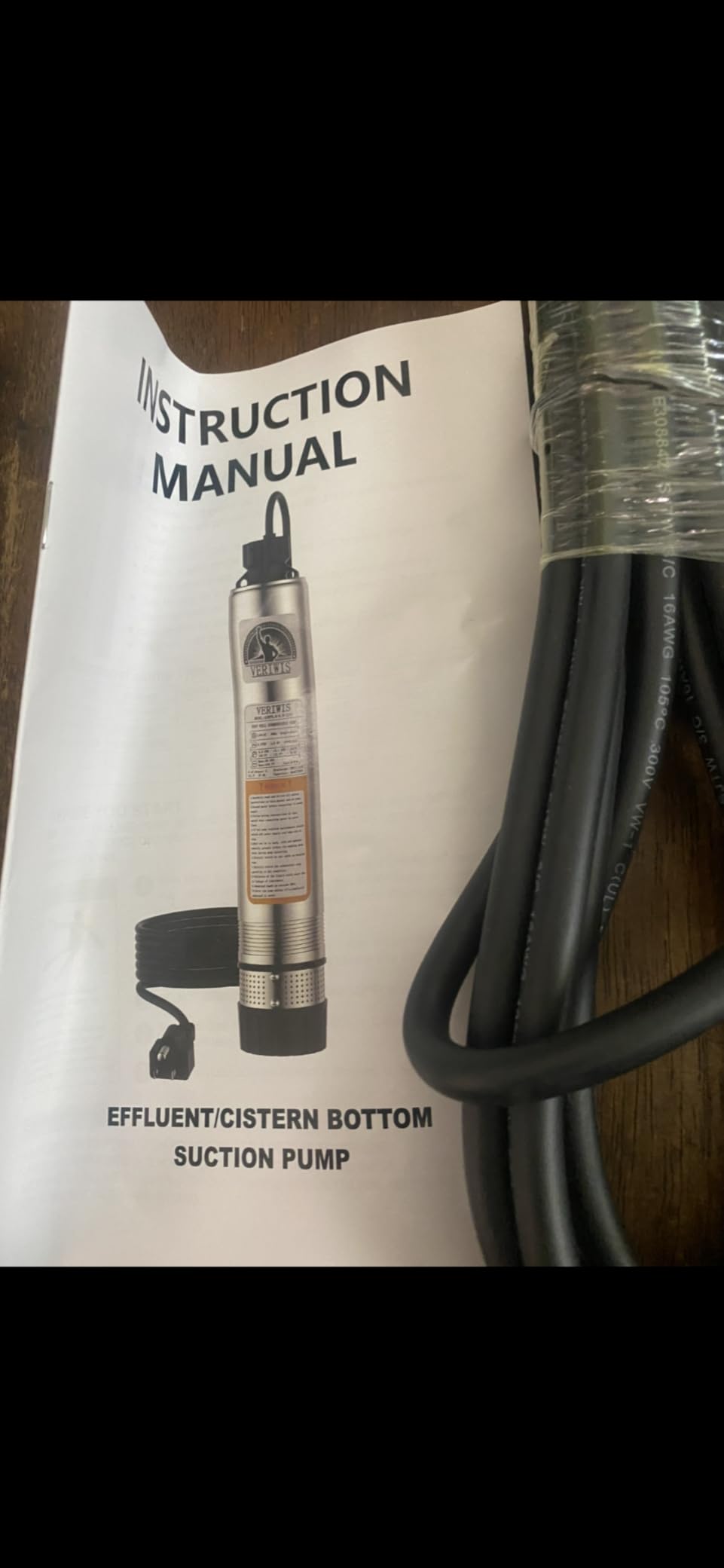
Why a Manufacturer Would List the Same Pump Two Ways
The most repeated complaint is not about the pump at all. The listing copy repeatedly describes the unit as a septic and effluent pump rather than a well pump, and some shoppers are left uncertain about whether it fits a deep well application.
Understand what that means. A septic effluent pump is a different duty with different solids handling and a lower shut-off head. A 174-foot multi-stage well pump is not the same product as an effluent pump, and the copy mixing the two is a listing quality problem, not a spec problem. The stated head of 174 feet and the 32 GPM rating are consistent with a deep well submersible.
Where 3/4 HP Fits Between the Neighbours
The 1/2 HP units in this roundup reach 150 to 167 feet, and the 1 HP units reach 190 to 207 feet. The 3/4 HP at 174 feet sits exactly between them, which makes it the right size for a well whose pumping level lands in the 130 to 160 foot range.
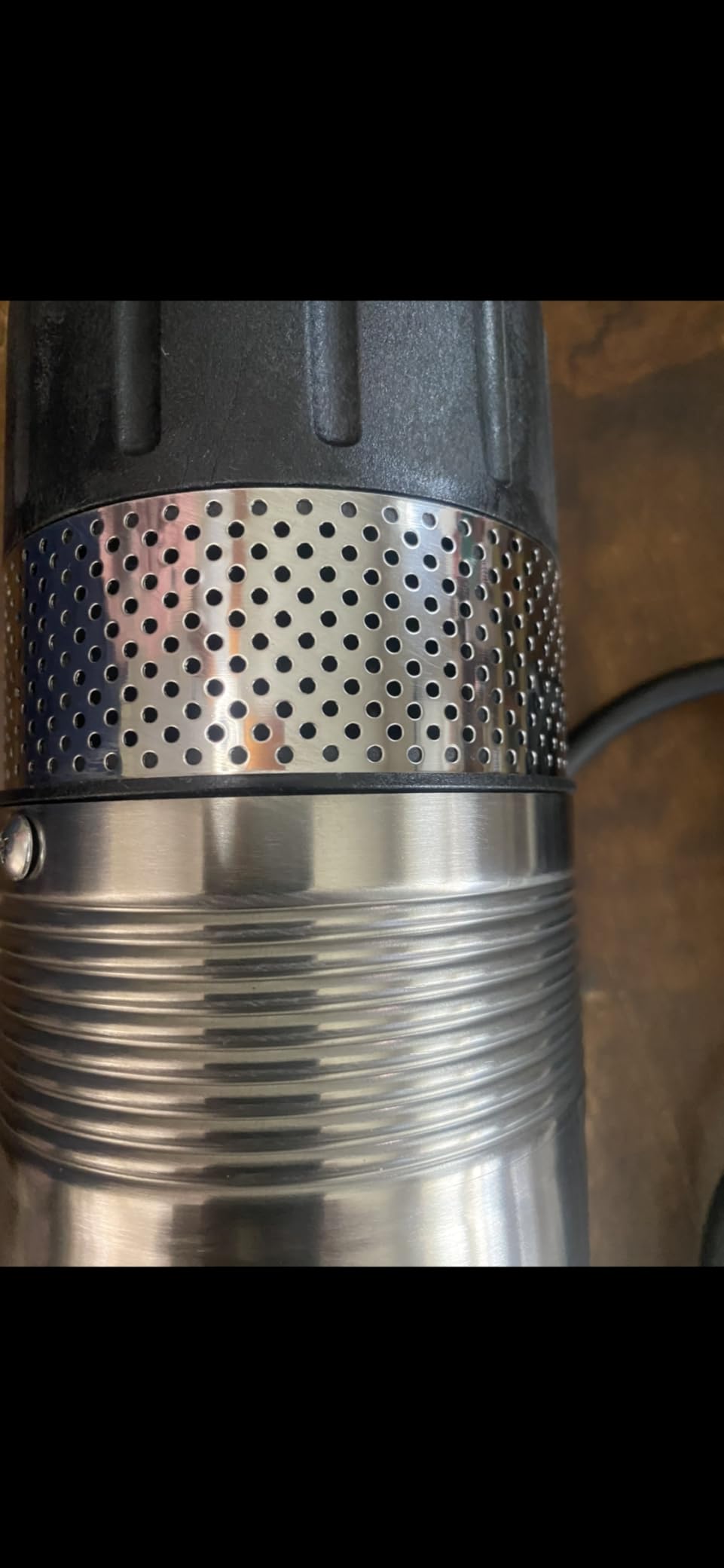
The stainless steel valve body and filter screen are meaningful in sand-bearing wells, and the built-in capacitor start removes the control box. At 3.74 inches across it still fits a standard 4-inch well, with a 1-1/4 inch FNPT outlet.
Warranty Length as a Real Signal
A three-year warranty on a pump at this level of pricing is a genuine differentiator. Most of the value brands in this roundup offer one year of parts and labour, and a three-year term signals the manufacturer expects the unit to survive a full service life in a domestic well.
That confidence is partly why we rate this above similar-priced units with one-year terms. The caveat is that the 85-review base is thin, so we are reading the manufacturer policy rather than a long owner history.
Best Fit and Where It Falls Short
Buy this for a 4-inch casing well with a pumping level around 120 to 155 feet, on 115V, where you want more than a half-HP and a three-year warranty. The stainless construction throughout is a real plus.
Do not buy it for a well past 180 feet, and be aware that the listing inconsistency is a genuine annoyance if you are shopping by application. If you need a septic effluent pump, this is not it, and if you need a deep well pump, the fit is right.
12. Goulds 10 GPM 1/2 HP 230V 2-Wire – Best Brand Reputation

Goulds 10HS05422C 4″ Submersible Water Well Pump, 10 GPM, 1/2 HP, 230 V, 2 Wire
1/2 HP
10 GPM rated flow
230V
2-wire
4 inch submersible
+ Pros
- Runs so quietly it is barely audible with minimal vibration
- Long-standing brand reputation with previous Goulds pumps lasting 20 to 32 years
- Used successfully as a secondary pump in large storage tanks
- Easy to install for a pump of this class
– Cons
- By far the most expensive pump we reviewed
- Connection head is plastic rather than stainless steel
- Conflicting country-of-origin markings with fine print indicating China
- One report of the motor seizing after about two months
Goulds is a Xylem brand with a long history in pumps, and owners of previous units in the same family report service lives of 20 to 32 years. That kind of generational record is not something you get with a value brand, and it is the entire argument for this pick.
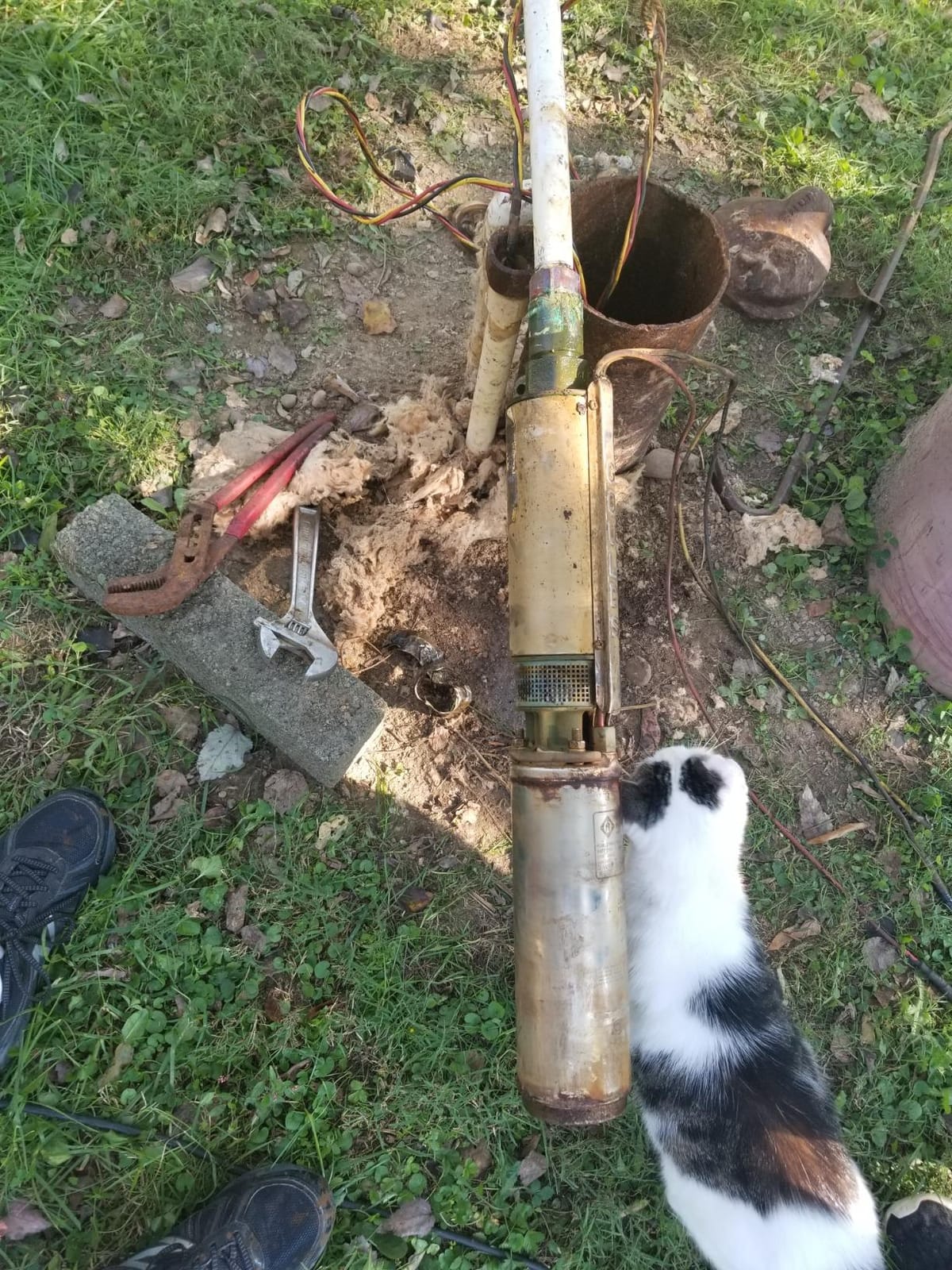
The pump itself is small: 1/2 HP, 10 GPM rated flow, 230V, 2-wire, 4-inch submersible, stainless steel, 22 pounds. The 10 GPM rating is a real working figure rather than a zero-head headline, so it is honest in a way many spec sheets are not.
Quiet Operation as a Symptom of Build Quality
Owners describe it as barely audible, with minimal vibration transmitted into the plumbing. That is not a cosmetic observation. Vibration noise in a household water system is usually a sign of a motor running outside its efficient range or a mount transmitting mechanical noise, and it shows up as a complaint long before it becomes a failure.
The pump is also used successfully as a secondary pump in large storage tanks, which is a good sign of how it behaves in a fixed installation with a stable water source. As a booster or tank-to-tank pump it is a strong performer.
The 10 GPM Rating Is Real, Not Marketing
10 GPM is low by the standards of the other pumps here, most of which headline 25 to 37 GPM. But this figure behaves like a real operating point rather than a maximum at zero head, which means the pump will do what the sheet says across a usable range.
That makes it a poor choice for a household with high demand and an excellent choice for a 10 GPM well, a cottage, a small cabin, or a livestock setup where you want quiet, continuous, reliable service and no surprises.
The Premium Has Edges You Should Know About
The connection head is plastic rather than stainless steel, which is a quality complaint from at least one buyer, and this is the most expensive pump we looked at. For a product sold on build quality, a plastic head is a fair thing to be annoyed about.
Buyers also report conflicting country-of-origin markings, with fine print indicating China, and one report of the motor seizing after about two months. The 45-review base is the smallest in the group, with a lopsided 15 percent three-star share, so treat the rating as weakly supported evidence.
Best Fit and Where It Falls Short
Buy this for a 10 GPM well on a 4-inch casing at 230V, where quiet operation, potable reliability and a multi-decade service record matter more to you than cost. It is also a good secondary or tank pump in a large storage system.
Do not buy it if you need more than about 12 GPM, and think hard if cost is the deciding factor, because a 1 HP Hallmark delivers several times the flow for far less money. You are paying for the brand record and the quiet refinement, not for capacity.
How to Size a Deep Well Pump: Depth, Head and Flow
Sizing a submersible well pump is arithmetic once you have the right four numbers, and the entire industry agrees on the method. The problem is that most spec sheets bury the information you need and the retailers selling them do not explain it. Here is the process we use, and it is the same one your driller uses.
The Three Numbers You Must Know Before You Shop
1. Pumping water level. This is not the depth of your well, it is the depth the water rises to when the pump is running, and it is usually 10 to 30 feet below the static water level. This is the number that decides everything, and a driller measures it during well development. If you do not know it, the well log or the driller is where you get it.
2. Well yield. This is how many gallons per minute the well can sustainably deliver, measured by a sustained pumping test. A well that yields 5 GPM will not support a 37 GPM pump no matter what the sheet says, and installing one will run the well dry and destroy the pump in a season. Sustained yield, not recovery rate, is the figure that matters.
3. Casing diameter. Every pump in this roundup has a 4-inch body, so every one of them requires 4-inch or larger casing. If your well has 3-inch casing, none of these are candidates and you need a narrow-casing pump instead. Check this before anything else, because it eliminates options faster than any other single fact.
4. Electrical supply. 115V or 230V, and how many amps the circuit will carry. A 2 HP pump is not a realistic 115V device, and a 1 HP pump on 115V draws roughly double the current of the same horsepower on 230V.
How to Calculate Total Dynamic Head in Five Steps
Total dynamic head, or TDH, is the total vertical distance the pump must push water, and it is the number that appears on the pump curve. Calculating it takes five steps.
Step 1: Start with the pumping water level. If the water sits at 180 feet while pumping, that is your first figure. Use the pumping level, not the static level, because the pump works against the lowered level.
Step 2: Add the discharge lift. The height the water has to rise at the surface, usually the distance from the wellhead to the pressure tank or the highest fixture you serve. For most homes that is 10 to 20 feet.
Step 3: Add friction loss in the pipe. Water moving through pipe loses pressure to friction. As a working approximation, add roughly 5 feet of head for every 100 feet of pipe run after the pump. A 200-foot discharge line adds about 10 feet.
Step 4: Add the required pressure. Most pressure tanks are set to cut in around 40 psi and cut out around 60 psi, which is 92 to 138 feet of head. Use the low figure if you have a generous tank and the high figure if demand is spiky.
Step 5: Add 20 to 30 percent headroom. This is the step installers argue about most and the one homeowners skip. Headroom covers variations in the water level between seasons, growing friction as pipes age, and the fact that a pump running near its shut-off head runs hot and inefficient. A pump with 20 to 30 percent more head than your calculation runs inside its efficient band instead of at its limit.
Worked example: pumping level 120 feet, discharge lift 15 feet, friction 10 feet, pressure 138 feet equals 283 feet of dynamic head. Add 25 percent headroom and you need a pump rated for about 355 feet. The 150-foot pumps in this roundup are not close, and the 305-foot pump is marginal. This is the calculation that stops people buying the wrong pump.
Depth-to-Pump Sizing Table: 25 ft to 400 ft
This is the table no competitor publishes, and it is the fastest way to narrow a shortlist. Read the pumping level, not the well depth, and remember the flow column assumes a well with adequate yield.
At a pumping level under 25 feet, a shallow well pump or a jet pump works, and nothing in this roundup is appropriate. Below about 50 feet of pumping level, a 1/3 to 1/2 HP submersible handles most homes with 15 to 25 GPM. At 50 to 100 feet, step up to a 1/2 HP with 150 feet of rated head, delivering 20 to 30 GPM.
From 100 to 150 feet, a 1 HP with 190 to 207 feet of head is the sweet spot for household demand, and a 1 HP on 230V gives you the current headroom a 115V unit does not. From 150 to 200 feet, you want 190 to 212 feet of head with 1 HP to 3/4 HP, and this is where the Red Lion and VERIWIS fit.
Between 200 and 300 feet, move to 1 HP rated past 275 feet, and the iMeshbean with its 100-foot cord becomes relevant because cable runs get expensive. From 300 to 400 feet, you need 2 HP with 400-plus feet of head, which is exactly the Hallmark 2 HP and the VEVOR 2 HP. Past 400 feet, you are into commercial territory, three-phase power, and a properly engineered installation.
One caution on this table: flow figures assume the well yields at least 25 GPM. In a slow well, reduce the flow target and raise the head, because a pump that cannot get water will simply run hot until it fails.
2-Wire vs 3-Wire Pumps and Control Boxes
This is the most repeated technical confusion we found, and the answer is simpler than most forum threads make it sound. A 2-wire pump has the start switch and start capacitor built into the motor inside the pump. Two conductors plus ground run down the well, and you connect it directly to your pressure switch or control.
A 3-wire pump leaves the start function outside the pump, in a wall-mounted control box. Three conductors run down the well, and the control box carries the start capacitor, the start switch and often an overload protector. That box is a component that can fail on its own, leaving a perfectly good pump with no water.
The practical consequences run deeper than the wiring. A 2-wire pump costs nothing extra to install and has one less failure point. A 3-wire pump requires a control box purchase and a panel modification. A 2-wire pump cannot be used with an existing 3-wire control box and vice versa, so if you are replacing a pump, match the wiring type of what is already there or plan to change the panel.
Our preference, stated plainly: 2-wire for most residential installs, 3-wire when you want a surface ON/OFF switch or when the pump is on 230V three-phase service. Six of the twelve pumps in this roundup are 2-wire, and those are the ones we lean toward.
Wire Gauge, Splice Kits and the Rest of the Install
Thin power leads are the most common complaint across every value brand in this roundup, and it is a legitimate installation risk on deep installs. Cable voltage drop over 200 or 300 feet of undersized wire generates heat, and heat in a submerged motor is what ends its life. For anything past 100 feet, use heavier gauge cable and a proper wellhead with a cable clamp.
The splice at the top of the pump is the other critical joint. A proper splice kit with mastic and heat-shrink is not optional on a submerged connection, because that is the joint that will eventually fail. The thin kits included with several pumps here are called out as chintzy by installers, and we would replace them.
Add an external brass check valve above the pump on every install. It stops backflow through the impellers during off cycles, which is the leading cause of premature pump death. On pumps with a sealed internal check valve, it is doubly important, because the internal one cannot be replaced.
Jet Pumps and the Loss-of-Prime Failure Mode
A jet pump sits at the surface and uses a nozzle to create suction, which works well and cheaply in shallow wells. Below about 25 feet, the suction required exceeds what a surface pump can produce. The pump loses prime, water drains back down, and the motor keeps running with no water to cool it.
That is how jet pumps burn out. They do not fail because the pump is bad, they fail because the installation depth exceeded the design envelope and nobody added a low-water cutoff switch. For a deep well, a submersible avoids the problem entirely because the pump is submerged at the water and pushes rather than sucks.
If you already own a jet pump setup and want to keep it, install a low-water cutoff switch as a safeguard. If you are buying new, do not put a jet pump on a well deeper than 25 feet.
Sand, Iron and Sediment Tolerance
Deep bedrock wells often produce fine sand, and iron-bearing water is common in some aquifers. Both destroy impellers, and the damage is cumulative rather than sudden. A pump that survives one sand-laden season may be quietly worn for the next three.
Three mitigations help. A fine stainless steel filter mesh at the intake, which several pumps in this roundup have, catches the coarsest grit. A flow shroud installed below the pump slows the incoming water so sand settles out. And matching the pump size to the actual well yield reduces drawdown velocity at the intake, which is often the real cause of the sediment being lifted in the first place.
Stainless steel bodies and stainless impellers or screens last longer in these conditions than thermoplastic internals, which is a genuine point in favour of the all-stainless builds in this group.
What a Deep Well Pump Really Costs to Install
The pump is the smallest part of a deep well pump change, and this is where most homeowners get surprised. A modest pump outlay becomes a four-figure installed job once you add the rest, which is exactly the gap we see quoted in the forums.
Beyond the pump you need a control box if it is a 3-wire unit, a proper splice kit, heavier gauge cable for a deep install, a check valve, a wellhead and cable clamp, and often a new pressure tank. On a 300-foot well the cable alone can rival the pump outlay. Get an itemised quote that separates the pump from the install, so you can see what you are actually paying for.
For a non-technical reader, a three-year-warranty pump like the Red Lion or VERIWIS is a form of insurance on the labour as much as the part.
Pump Lifespan and a Yearly Maintenance Checklist
Long-term owners in these reviews report service lives ranging from five to six years on a properly installed half-HP unit, to 20 to 32 years on a well-maintained established-brand pump. The spread is enormous, and the difference is almost always installation quality and whether the well was oversized into.
Once a year, check the pressure tank air charge with a gauge and set it to the correct PSI for your tank. Listen for changes in pump noise, which indicate a wear or sediment problem. Watch the drawdown: if the pump takes noticeably longer to recover than it used to, the well may be yielding less than it did. Look for leaks at the wellhead splice, and note that a pump running constantly or short-cycling is a problem, not a personality.
Replace the pump rather than repair it when the motor has failed once, when flow has dropped noticeably, or when the well has silted up and can no longer deliver. Motors that fail from dry running are not recoverable.
Off-Grid and Solar Deep Well Pumping
Running a deep well pump without grid power changes the electrical decision more than anything else. 115V pumps like the VEVOR 1 HP or the Wassermann 115V unit are far easier to run from a portable power station or a battery bank, because no step-up transformer is required.
Two things to plan. A 1 HP motor needs a power source that can handle the startup surge, which is several times the running current, so a power station rated well above your pump’s running wattage is the safe choice. And at depth, the resistive loss in long cable runs is real, so heavier cable reduces the power you have to store.
Off-grid communities frequently budget in the several-hundred-dollar range for a complete deep well pumping solution and weigh larger power stations with 120/240V step-up capability. For shallow transfer work on ponds and cisterns, the smaller solar pumps covered in our solar fountain pump guide handle the same idea at a much lower lift.
Frequently Asked Questions
What type of pump is best for a deep well?
A submersible pump is the correct choice for any well deeper than about 25 feet, because a surface pump cannot create enough suction below that depth. For wells past 100 feet, choose a multi-stage submersible, where stacked impellers add head in series. A jet pump only makes sense on shallower wells, and on a deep draw it loses prime and burns out its motor.
What size pump do you need for a deep well?
Size the pump from your pumping water level, not your well depth. Calculate total dynamic head by adding the pumping level, the surface discharge lift, roughly 5 feet of friction loss per 100 feet of pipe, the pressure required from your pressure tank, and then 20 to 30 percent headroom. Match that figure to a pump whose rated head exceeds it, and never exceed your well yield in GPM.
At what depth do you need a deep well pump?
A deep well submersible pump is needed below roughly 25 feet of pumping level. Above that, a shallow well or jet pump works and costs less. Below 25 feet a surface pump cannot generate enough suction, loses prime, and the motor runs dry. Most rural domestic wells fall in the 50 to 200 foot range, where a half-horsepower to one-horsepower submersible is the standard.
Who makes the best deep well pumps?
The most consistently endorsed names are Franklin Electric and its Red Lion brand, Grundfos, and Goulds, followed by Pentair Myers, DAB and Red Lion’s parent ranges. A useful piece of insider knowledge: many budget-brand housings contain Franklin Electric motors, so the motor quality is often the same even when the brand on the label differs. Buy on the installer you trust as much as on the brand.
What is the best jet pump for a deep well?
For a deep well the honest answer is that a jet pump is the wrong type, and a submersible is almost always better. Jet pumps work by suction and lose prime below about 25 feet of lift, which lets the motor run dry and destroys it. If you keep an existing jet pump setup, add a low-water cutoff switch so the motor stops before it burns out. On a new deep well, buy a submersible.
What happens if you oversize a well pump?
An oversized pump draws the well faster than it can refill, drawsdown past the pump inlet, and then runs with no water to cool the motor. That destroys the pump and can cost far more than buying the correct size would have. The rule is simple: never select a pump whose flow rating exceeds your measured well yield. Match the pump to the well, not the well to the pump.
Which Deep Well Pump Should You Buy?
If your well is between 80 and 180 feet deep on a 4-inch casing with moderate household demand, buy the Hallmark 1 HP. It is our pick among the best well pumps for deep wells: the deepest verified owner history in the group, a 207-foot head rating, and a built-in capacitor start that removes the control box from the install.
Run on 115V only, or off-grid with a power station, and go with the VEVOR 1 HP at 4.5 stars. It is the only 1 HP unit here that reaches 207 feet and still plugs into a normal household circuit. For a 300-foot well, the Hallmark 2 HP or the VEVOR 2 HP is the shortest path to real flow at depth. For a small household on a slow well, the Red Lion 1/2 HP protects the well and carries a three-year warranty.
Before you buy anything, measure the pumping water level and the well yield, then run the five-step head calculation above. Most expensive pump mistakes are arithmetic mistakes, and the arithmetic takes an afternoon. Get an itemised quote for the whole install, not just the pump, and check the current year’s prices before you commit.
Leave a Reply