
If you are shopping for the best tankless water heaters for whole house use in 2026, the decision comes down to two numbers before any brand name enters the conversation: the fuel you want to burn, and how many gallons per minute the unit can deliver at the water temperature coming out of your cold pipe on a winter morning. Almost every disappointing tankless install we have read about traces back to skipping one of those two.
Our team read the manufacturer documentation, the published flow ratings and the buyer reviews on all ten on-demand units in this roundup, then weighed them against the things plumbers actually complain about. The recurring themes in plumbing forums were consistent: local service access matters more than any badge, warranty coverage usually requires a licensed plumber on the install, and hard water kills heat exchangers faster than any brand claims.
This is a whole-house guide, not a point-of-use guide. Everything here is sized for multiple fixtures running at once, and we flag the models that quietly do not qualify. If you want the broader category explained first, our general tankless water heater guide covers the tank-versus-tankless comparison in more depth.
Our Top 3 Whole-House Tankless Picks for 2026
Comparing the Best Whole-House Tankless Water Heaters in 2026
Every model below is a genuine whole-house or multi-fixture unit. The flow rate is listed as the manufacturer rates it, and for gas models that number assumes roughly a 35 degree temperature rise, which is warmer inlet water than most people see in January.
| Product | Details | Action |
|---|---|---|
|
|
Check Latest Price |
 |
|
Check Latest Price |
 |
|
Check Latest Price |
 |
|
Check Latest Price |
 |
|
Check Latest Price |
 |
|
Check Latest Price |
 |
|
Check Latest Price |
 |
|
Check Latest Price |
 |
|
Check Latest Price |
 |
|
Check Latest Price |
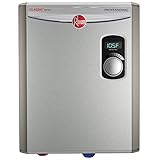
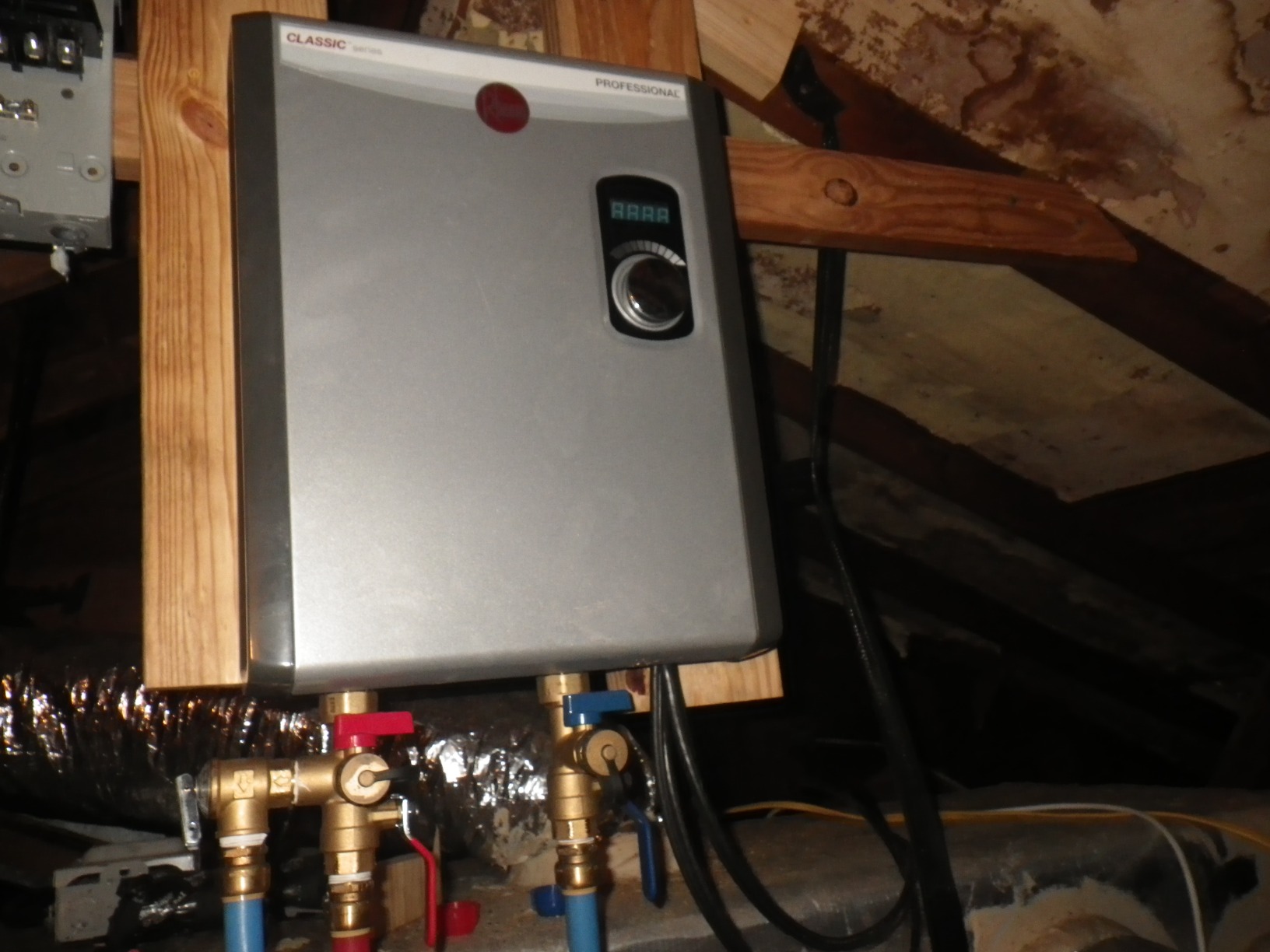
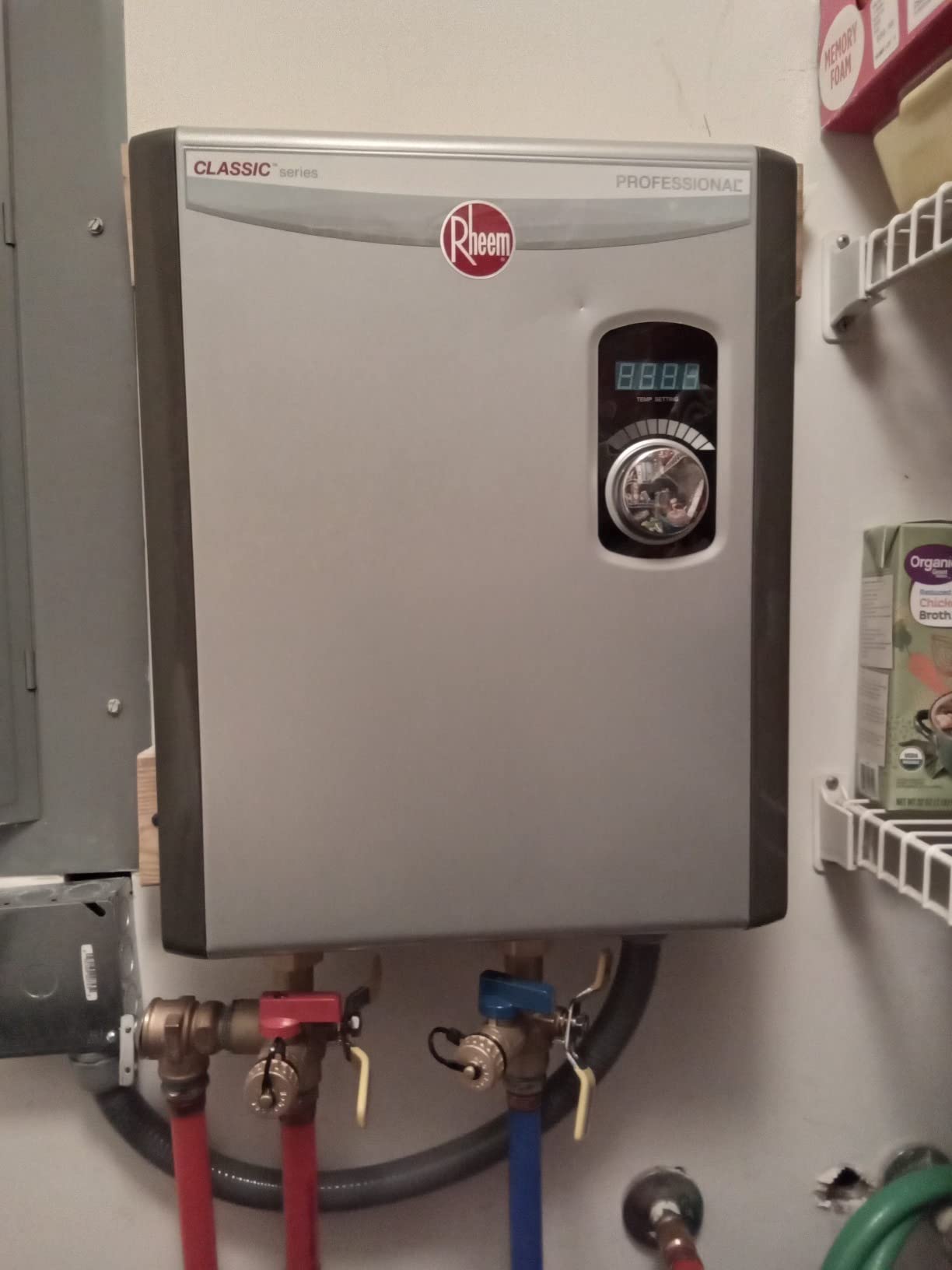
1. Rheem RTEX-18 – The Most Proven Electric Pick for Two-Bath Homes
Rheem 18kW 240V Tankless Electric Water Heater, Gray
4.4 GPM at 18 kW
240V, no venting
14.8 lb wall mount
+ Pros
- Largest review base in the category at 2185 ratings
- Self-modulating elements hold steady output
- Field-serviceable copper immersion elements
- No venting required
- Compact 14.5 inch wide footprint
– Cons
- 4.4 GPM is modest for large whole-house demand
- Needs 240V dedicated high-amperage circuit capacity
- Output falls when inlet water is cold
The Rheem RTEX-18 is the pick we keep coming back to because the evidence base is enormous. It ranks first in its retail category and carries more than twice the review count of anything else in this roundup, which means its failure modes are well documented rather than mysterious.
It produces up to 4.4 gallons per minute from an 18 kW element set and self-modulates its power to match demand. In a two-bath home with one person showering while another runs the dishwasher, that is the configuration it was engineered for.
What surprised us most is how ordinary the installation is. There is no flue, no condensate line and no combustion air to engineer, and the whole cabinet is wall-mounted at 14.8 pounds.
Flow Rate and Where It Runs Out of Road
Four point four gallons per minute covers roughly one shower at a time plus a sink or a laundry cycle. It does not comfortably cover two showers running back to back with a dishwasher on the same load, and buyers who pushed past that report a temperature drop at the far fixtures rather than a hard cutoff.
Cold inlet water makes the ceiling lower still. A fixed kW rating delivers a fixed number of gallons, so the colder the incoming water, the fewer gallons come out at temperature.
Electrical Demand Is the Real Install Decision
This model runs on 240 volts and needs genuine amperage headroom. On a home with an older 100 amp service, a panel upgrade is often the line item that decides whether this is a sensible purchase at all.
Electric bills go up in real terms compared with a gas tank, because resistance heating converts electricity to heat less efficiently than a burner does. What you recover is the standby loss of a stored tank, which never gets cold.
Field Serviceability and the Copper Element Advantage
The copper immersion elements can be replaced rather than discarding the whole cabinet. That single design choice is why so many owners report six years or more without a major failure.
Owners with six-plus years of service also point out the honest caveat: the heating elements still need periodic descaling in hard-water areas, and skipping that shortens their life noticeably.
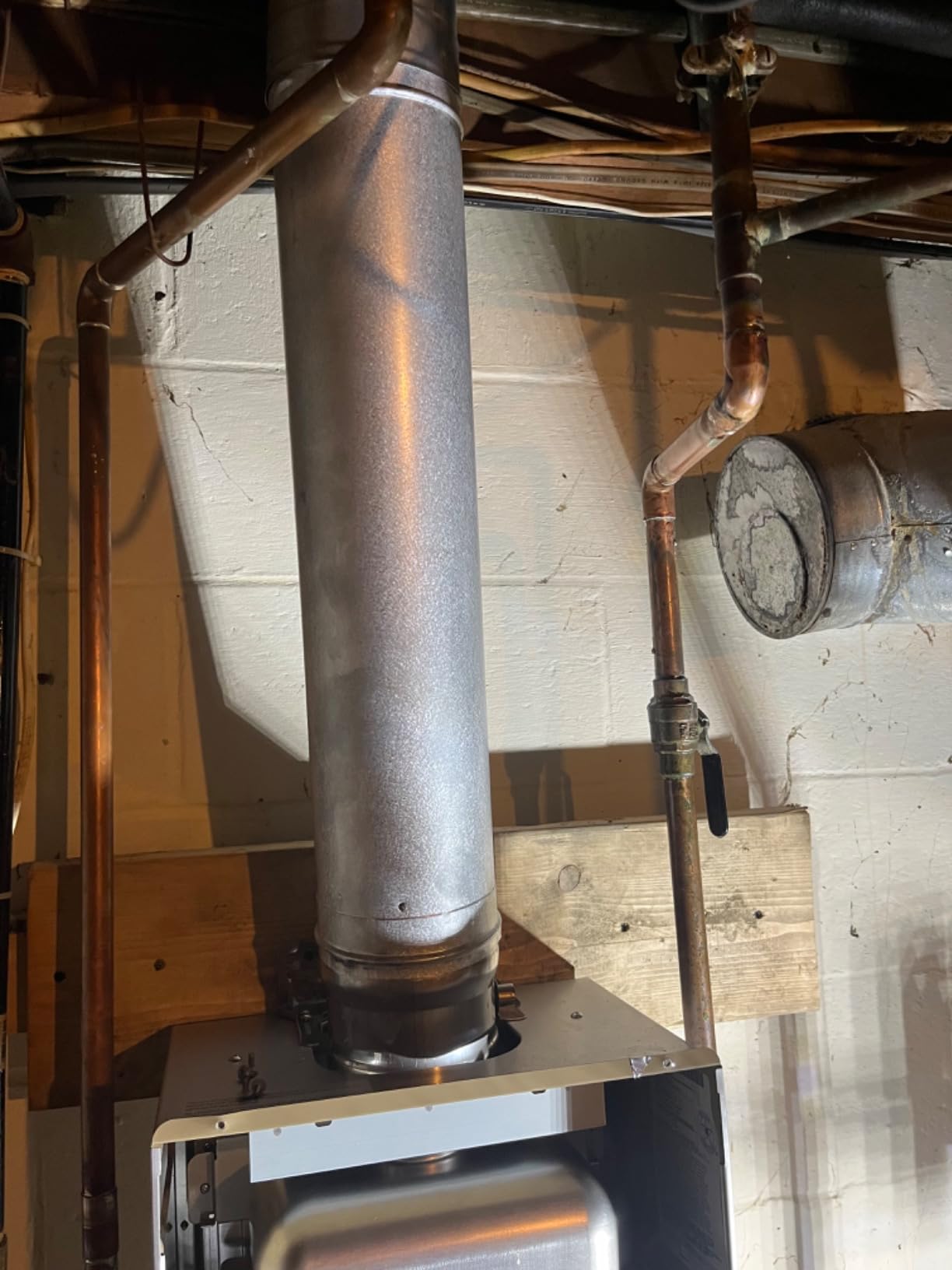
2. Rheem RTG Series 9.5 GPM – The Highest Gas Flow in the Roundup
Rheem RTG Series 9.5 GPM Natural Gas Tankless Water Heater Indoor | 199,900 BTUs High Efficiency On Demand, Continuous Hot Water | Non-Condensing
9.5 GPM at 199900 BTU
0.82 UEF non-condensing
46.5 lb wall mount
+ Pros
- Highest flow rate here at 9.5 GPM
- Handles three or four simultaneous showers
- 0.82 UEF non-condensing efficiency
- 15-year heat exchanger warranty
- Digital control in 1 degree steps
– Cons
- Professional installation required
- Indoor installation only
- Heaviest cabinet in the group at 46.5 pounds
If your household runs three or four hot water points at once, the Rheem RTG Series is the only model here that is honestly rated for it. Its 9.5 GPM figure at a 35 degree temperature rise is the highest number in this roundup, and it is achieved through 199,900 BTU of burner capacity.
It is a non-condensing design, which means the flue is simpler and cheaper than a condensing install and there is no condensate drain to plumb. The trade is efficiency: 0.82 UEF is good for a non-condensing gas heater, but it will never reach condensing territory.
The buyer reviews describe temperature control as the standout feature, with a digital LED panel adjusting in one-degree steps and holding a target set point accurately.
Heat Exchanger Warranty Length and What It Covers
The stated warranty is one year labor, five years parts and 15 years on the heat exchanger. Fifteen years is a genuinely long term for a component that is the most common failure point in this category.
As with every brand here, that coverage assumes a professional install. Owners note that the unit is supplied with mounting hardware and a manual, but the manufacturer requires the work to be done by a licensed tradesperson.
Non-Condensing Versus Condensing and Why It Matters to You
Non-condensing units vent combustion gases straight up the flue and waste the heat in that exhaust. Condensing units recover it, which is where their higher efficiency comes from, at the cost of a plastic drain line and more complex service.
If your gas line is long and the flue run is awkward, non-condensing is the pragmatic choice. If you care most about operating cost over a fifteen year horizon, a condensing model from a serviceable brand is usually worth the extra install line items.
Physical Footprint and Mounting Reality
At 13.5 inches wide, 24.2 inches high and just over 10 inches deep, it is a wall-hung box rather than a floor unit, and 46.5 pounds is manageable for two installers.
Reviewers still raise the practical objection that a unit this size needs a real wall and real planning. Stud locations and flue routing decide the install more often than the purchase does.
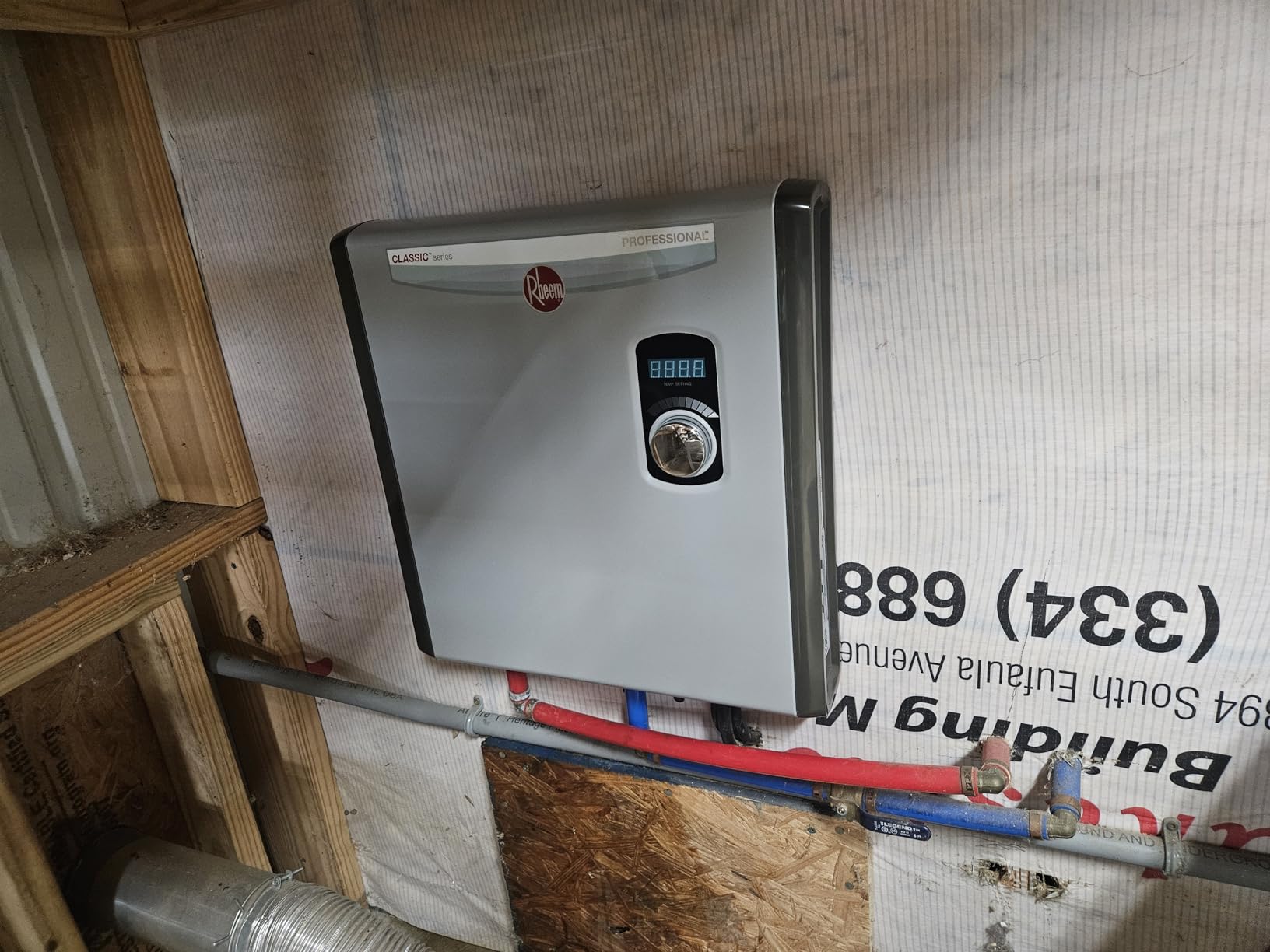
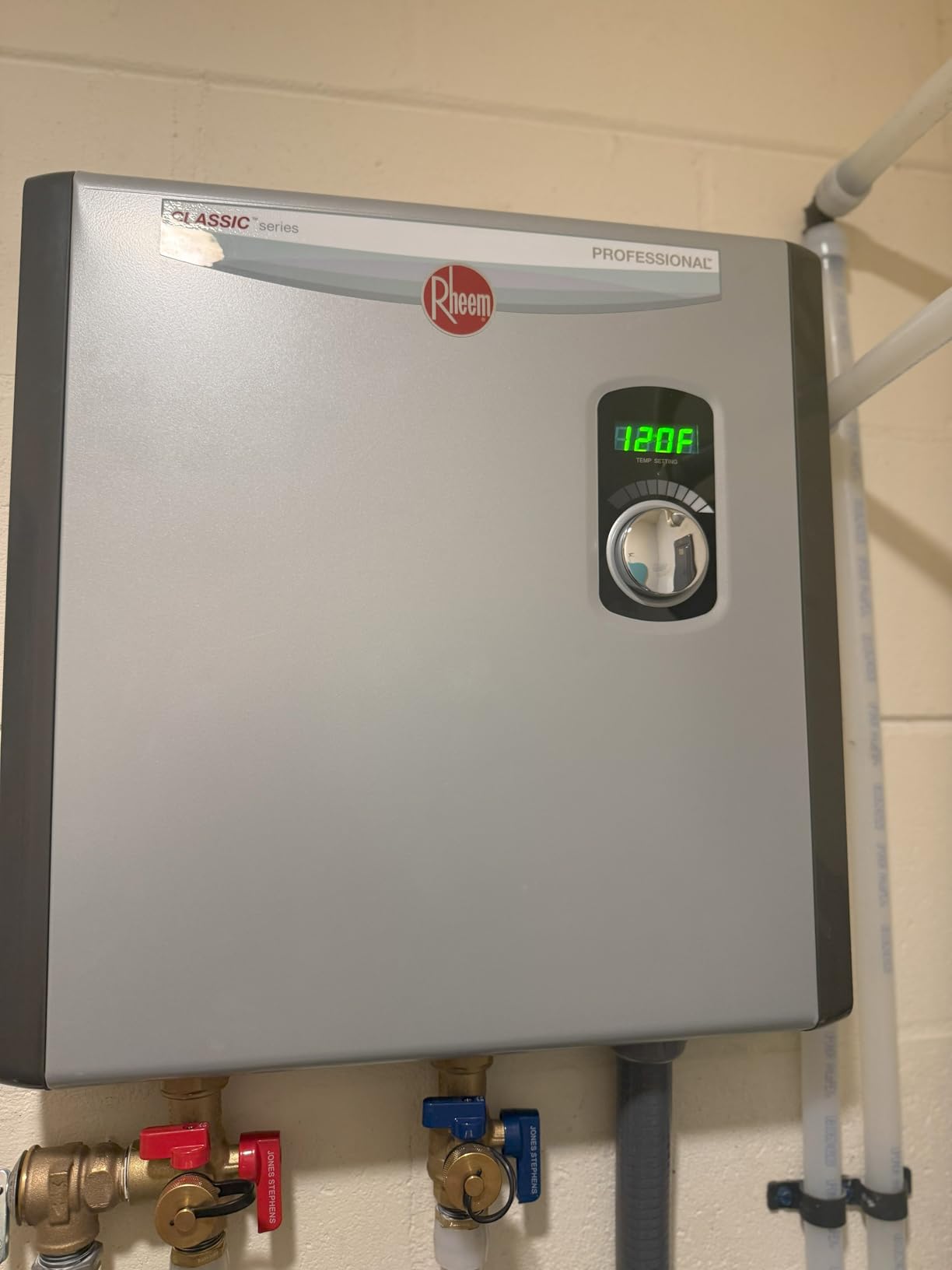
3. Rheem RTEX-24 – More Electric Headroom for Busy Households
Rheem RTEX-24 24kW 240V Electric Tankless Water Heater, Gray
5.9 GPM at 24 kW
240V, three 40A breakers
17.8 lb wall mount
+ Pros
- Handles two showers plus a laundry load
- 6-plus year reports with zero issues
- Suitcase-sized wall mount
- Easy descale and cleaning maintenance
- 74 percent of ratings are five star
– Cons
- Needs three 40A breakers and often a 200A service
- No hot water reserve during a power outage
- Output dips at fixtures far from the unit
The Rheem RTEX-24 is the electric answer when four point four gallons per minute is one fixture short. Its 24 kW element set pushes flow to 5.9 gallons per minute, and multiple owners report running two showers and a laundry load at the same time without complaint.
It also carries the strongest electric rating in this roundup, sitting above the RTEX-18 and well above the other electric models. The long-term reports are the interesting part: owners describe six years or more with no issues at all.
Physically it is about 90 percent smaller than a conventional tank heater, and at 17.63 by 18.25 by 3.5 inches it mounts flat against a utility room wall.
The Electrical Requirement That Scares Buyers
This is the model where installation cost most often runs away from the equipment cost. It requires three 40 amp double-pole breakers, three sets of number 8 AWG copper conductors and a recommended minimum 200 amp household panel.
Owners are blunt about it: on an older service, the electrical work can cost several times the price of the heater. Ask your electrician for the panel assessment before you commit to this model.
Digital Temperature Control in One-Degree Steps
Output is adjustable from 80 to 140 degrees in single-degree increments, which is finer control than most gas units in this roundup offer from a wall panel.
That precision helps with the long-run problem of distance. Buyers note that output temperature can drop a few degrees at fixtures far from the unit, and a finer set point makes compensating for that far easier.
Where the 24 kW Ceiling Shows Up
Twenty-four kilowatts is a real constraint in cold climates. When inlet water is already cold, owners in colder regions report the unit falling short for full baths, which is the same physical limit that applies to every electric model here.
Warranty terms are a five-year leak guarantee and one year parts, which is thinner than the Stiebel Eltron coverage further down this list.
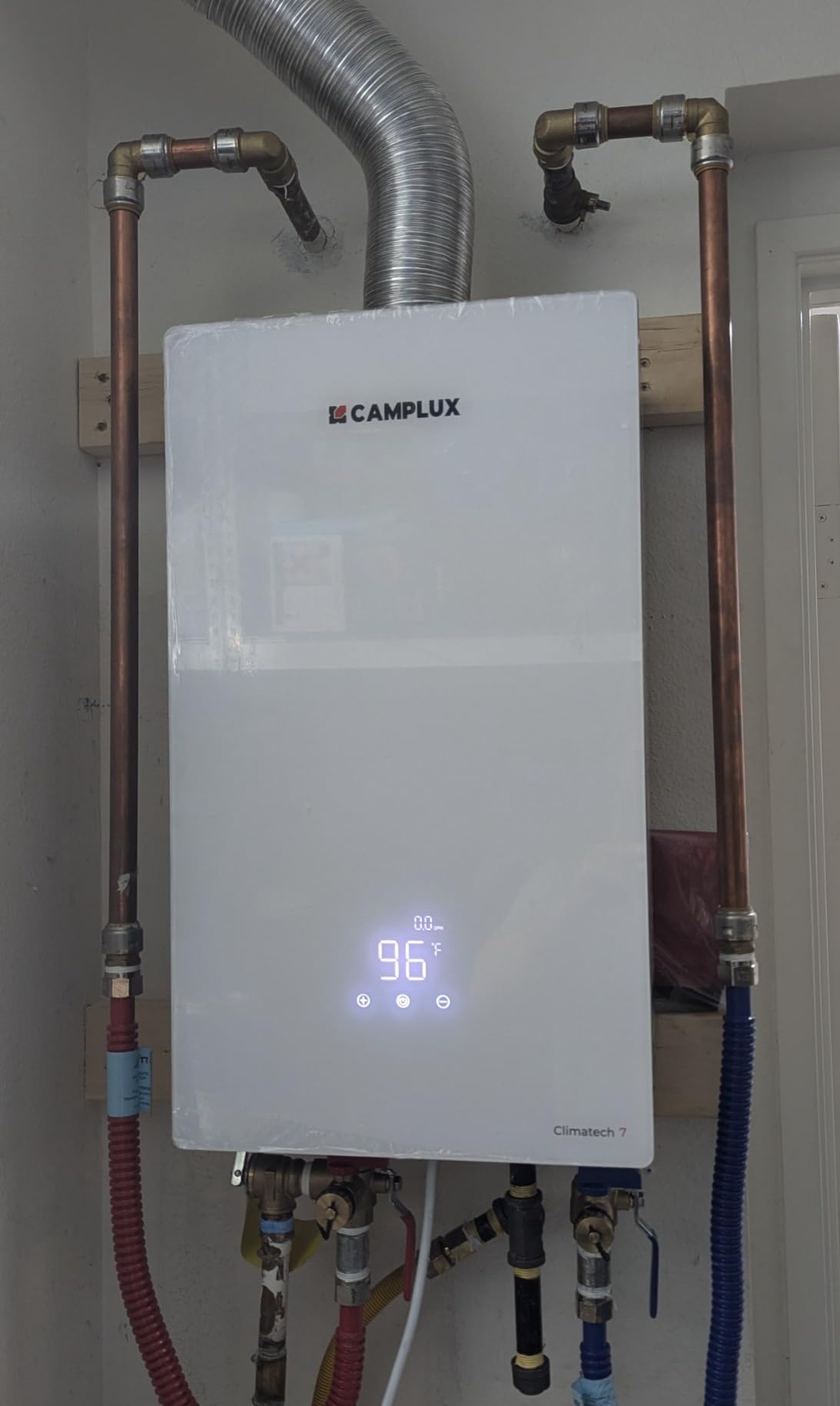
4. CAMPLUX CA686WNG – Quiet Gas Output for Three-Bath Homes
CAMPLUX Tankless Water Heater Natural Gas Indoor, Up to 7.6 GPM 199,000 BTU
Up to 7.6 GPM at 199000 BTU
45dB operation
37.5 lb wall mount
+ Pros
- 4.5 star average with 76 percent five star ratings
- Reported strong output in three-bath homes
- Very quiet at 45dB
- Compact 14.3 inch footprint
- Responsive technical support that replaced failed units
– Cons
- Needs annual descaling for longevity
- Mounting brackets do not always span two studs
- Bottom-angled pipe connections complicate hard-piping
The CAMPLUX CA686WNG publishes the lowest noise figure of any gas unit here, a stated 45 decibels, and it carries a 4.5 star average across its reviews. For a unit mounted near a bedroom wall, an ADU or a quiet street-facing mechanical room, that number is the reason to keep reading.
Its headline output is up to 7.6 gallons per minute from a 199,000 BTU input, which reviewers describe as holding steady across three bathrooms. Four flame settings let it modulate down when demand drops.
Buyers highlight responsive support as much as performance, with several accounts of failed units being replaced directly by the manufacturer.
Flame Modulation and Air-Fuel Ratio Control
Four flame settings and a smart RPM adjustment that holds a 16 to 1 air-fuel ratio are what keep combustion stable across that range. Dual undercarriage blowers are designed to prevent smoke backflow, which is a persistent problem in cheaper condensing designs.
Customers who lived with it describe the ignition as noticeably faster than standard units, so the first seconds of a shower are where you feel the engineering most.
Installation Details That Catch People Out
Three separate complaints repeat often enough to pass along. Mounting brackets may not span two studs without added blocking, all pipe connections exit the bottom at an angle which is awkward for hard-piping, and the 3 inch vent pipe differs from the 2.5 inch some older units used.
One more detail worth repeating: the fittings described as three-quarter inch NPT in the documentation are reported by installers as three-quarter inch garden thread. Planners who assume standard NPT will add a part to the shopping list.
Maintenance Discipline Required
The oxygen-free copper heat exchanger is efficient and inexpensive, but it is the component most exposed to mineral scale. Owners consistently note that annual descaling is required to keep longevity, and skipping it is the fastest route to a shortened life.
Altitude rating is 2,000 feet, which matters for anyone installing in mountain markets.
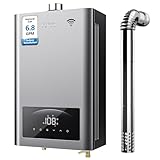
5. APUS AP-AWH-Q20NG – A Booster Pump That Holds Two Showers and a Sink
APUS Natural Gas Tankless Water Heater, 140,000 BTU, Up to 6.8 GPM, Indoor
140000 BTU gas, up to 6.8 GPM
Booster pump boosts flow
WiFi app control
+ Pros
- Booster pump holds two showers and a sink with no drop
- Very compact wall mount
- App control raises temperature before showering
- Standard gas line and a 120V outlet
- Reported to run well on propane
– Cons
- 4.0 star average with 21 percent one star ratings
- Some owners report lukewarm output
- Extra fittings needed beyond the listed specs
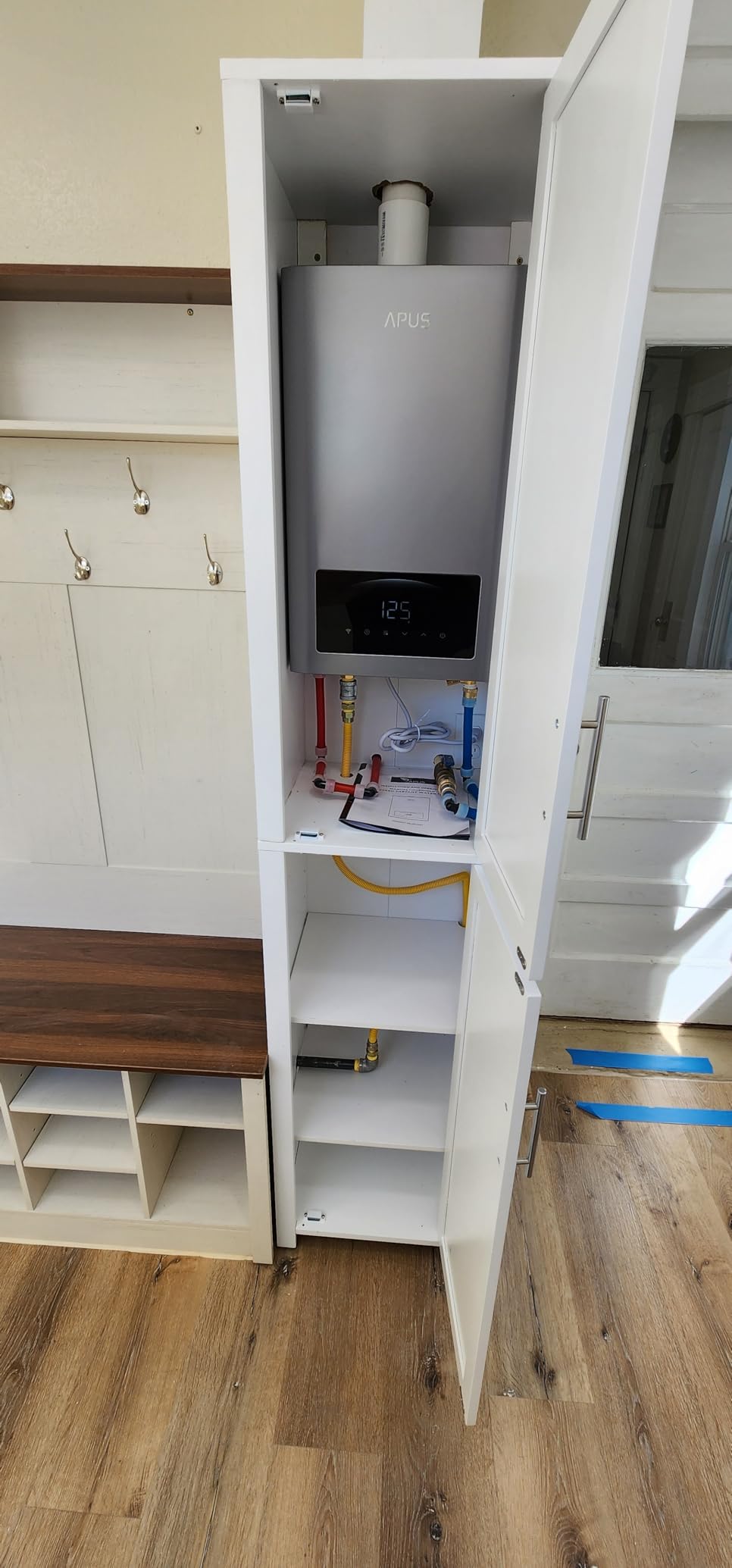
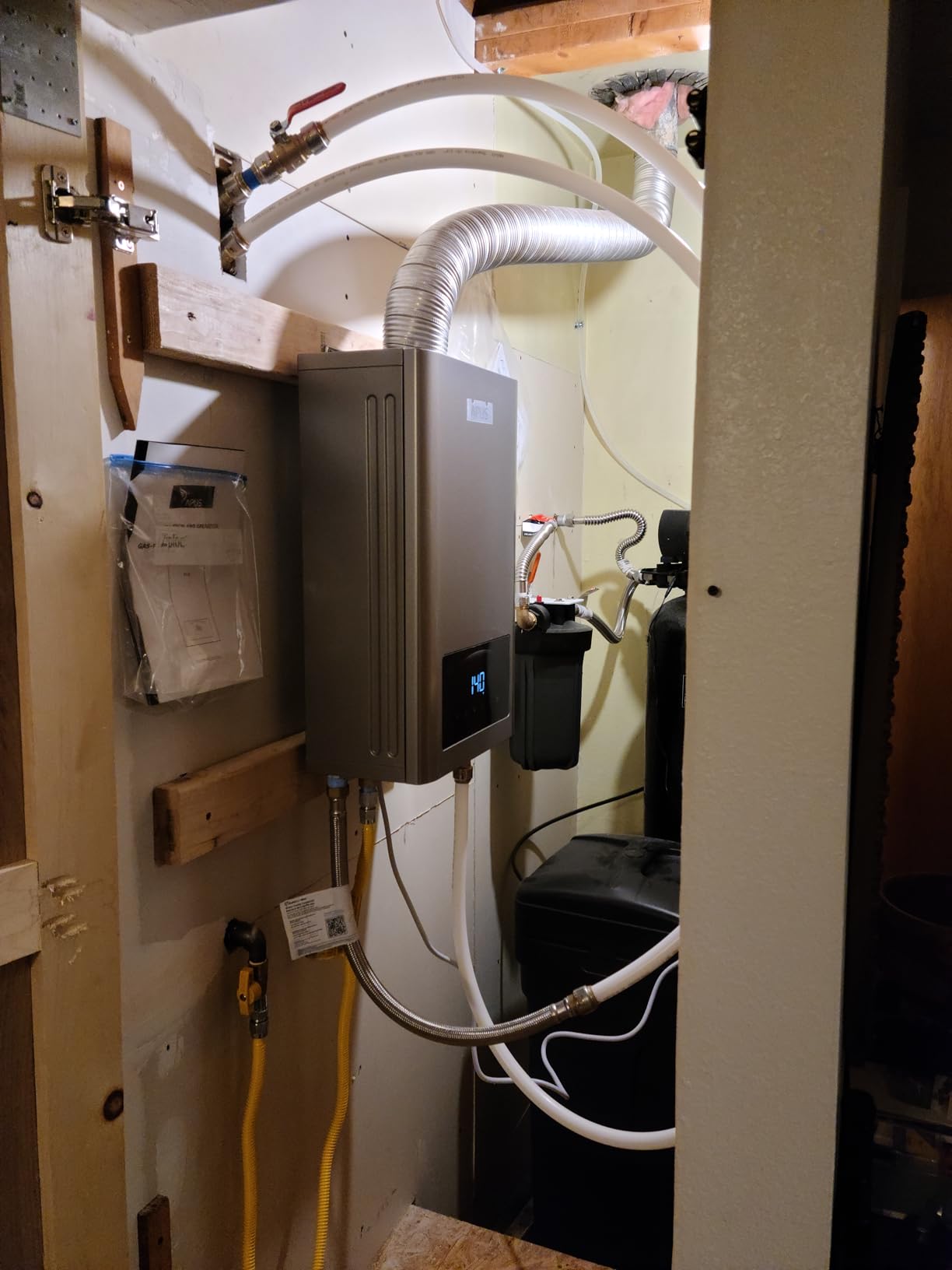
This APUS model solves a specific problem with a specific mechanism. A built-in booster pump raises flow up to 130 percent, which is how the manufacturer reaches 6.8 gallons per minute from a 140,000 BTU burner that alone would not deliver that number.
Owners who got the intended result describe exactly the scenario you care about: two showers and a kitchen sink running with no flow drop. The bottom turbo fan design is claimed to run about 30 percent quieter than a standard tankless heater.
It is also the widest opinion spread in this roundup, so read the complaints below as seriously as the praise.
What the Booster Pump Actually Changes
Low-flow activation on smaller heaters means a trickle of water at a distant sink never triggers the burner. The booster pump removes that failure mode, which is why this model holds temperature at fixtures that other 120,000 BTU class heaters struggle with.
The cost of that pump is more moving parts to fail, and a 21 percent one-star share of ratings is the highest in this group. Check that your installer is comfortable servicing it.
App Control and the Season Comfort Mode
WiFi control through the Tuya app lets you set outlet temperature remotely, and the smart season mode adjusts output to incoming water temperature automatically. For a vacation home or an ADU, being able to raise temperature remotely has real value.
Reviews also report the unit working well on propane in off-grid and cabin installations, which widens the addressable homes considerably.
Claims to Pressure-Test Before You Order
Several buyers report output that was only lukewarm despite the 140,000 BTU rating, and one installer questioned the advertised two-shower capacity on a real installation. Treat the 6.8 GPM figure as a best case rather than a guarantee.
Adapters are another gap: multiple owners had to source extra fittings and connectors that the specification list did not mention. The unit also must be fully drained if ambient temperature approaches 41 degrees or below.
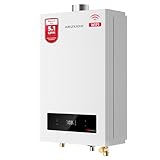
6. MIZUDO FDG-CS120AW-NG – The Best App Control in a Small Wall-Mount Package
MIZUDO 120,000 BTU Natural Gas Tankless Water Heater,Max 5.1 GPM,WiFi&APP
5.1 GPM at 120000 BTU
WiFi and app monitoring
Indoor or outdoor convertible
+ Pros
- Fast heat-up and near instant hot water
- Quiet with a bright LED display
- App gives detailed operating data
- Standard fittings made retrofit simple
- 4.4 stars across 308 ratings
– Cons
- Not rated above 2000 ft elevation
- Some error codes reported after extended use
- Gas and vent fittings not included
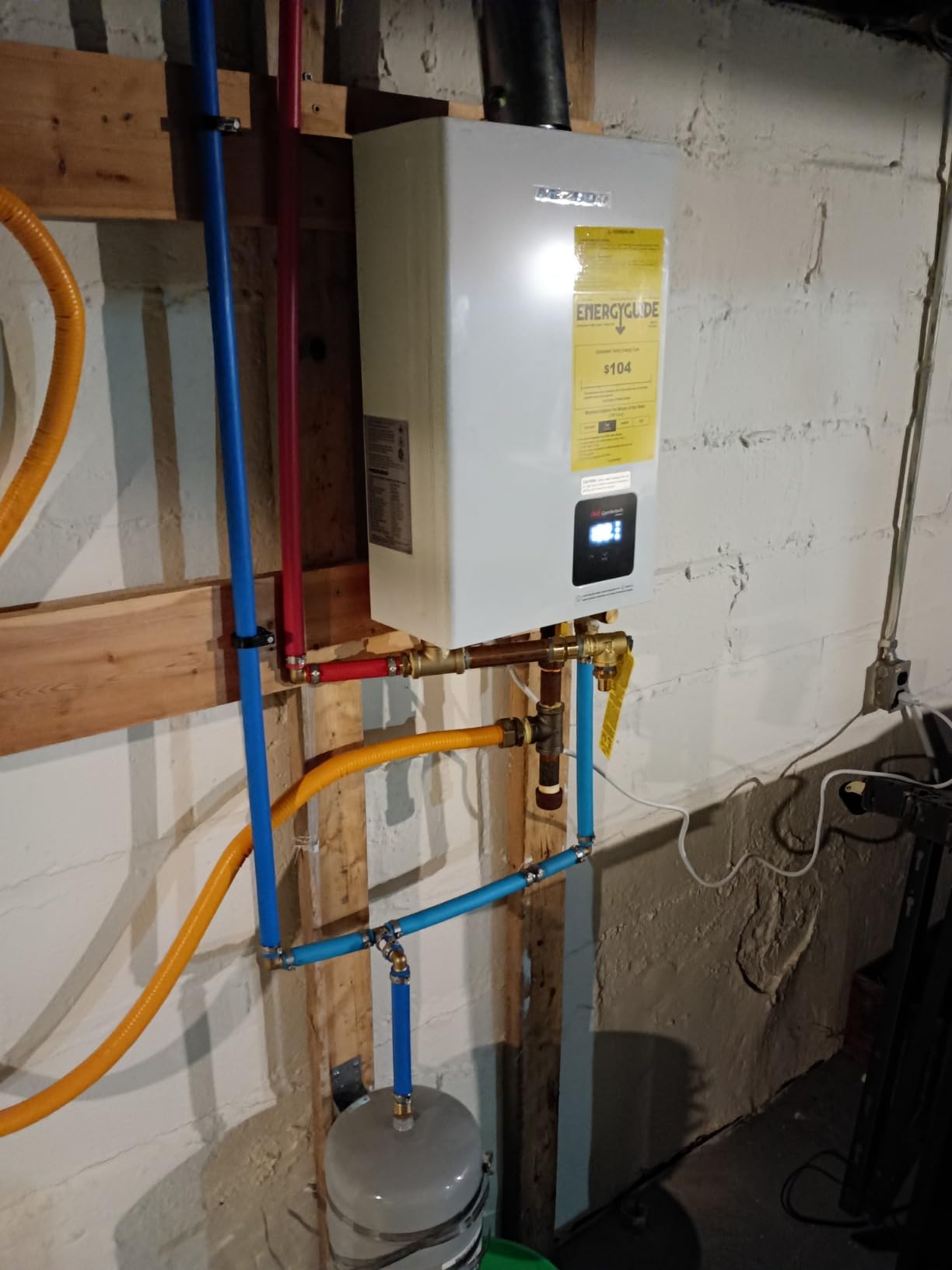
The MIZUDO stands out for the software layer. The app exposes temperature, energy monitoring and maintenance alerts, and buyers single that out as a genuine advantage over competitors with only a physical dial.
At 5.1 gallons per minute from 120,000 BTU, this is a mid-size gas unit aimed at two to four usage points rather than a heavy multi-bath whole house. Rated output is accurate and steady within a degree per minute during simultaneous fixture use.
It is also convertible to outdoor installation with the right accessory kit, which matters for homes without a suitable interior wall.
Heat Exchanger Materials and Safety Chain
The heat exchanger is phosphorous-deoxidized copper with a stainless steel combustion chamber, and it is certified with freeze, dry burn, flame failure and exhaust blockage protection. That four-stage safety chain is what earns the CSA listing.
Warranty is two years on the full heater and five years on the heat exchanger, a shorter heat exchanger term than the Rheem RTG in this roundup.
Two Limitations Worth Planning Around
Altitude rating stops at 2,000 feet, and one reviewer installed at 3,600 feet found out the hard way. If you are above that elevation, this is not your unit regardless of how good the app is.
Gas and vent fittings are also not in the box. That is normal for the category, but it means the install quote is not the last number you will see, and reviews mention error-code shutdowns after extended heavy use on a few units.
Retrofit Friendliness for Existing Gas Lines
Standard three-quarter inch water and gas fittings are what reviewers credit for simple retrofits. The wall-mount footprint is 14.56 by 22.83 inches, so it fits the same cavity space as a small tank.
Note the few-second hot water delay at each use that owners mention. It is shorter than a tank, but it is not truly instant.
7. APUS AP-AWH-Q16NG – Best Value Gas Pick at 5.43 GPM
APUS Natural Gas Tankless Water Heater, 120,000 BTU, 5.43 GPM Indoor
5.43 GPM at 120000 BTU
UEF 0.81, 19.2 lb
LED touchscreen control
+ Pros
- Lowest cost in this group
- 4.4 stars with 72 percent five star ratings
- Light 19.2 pound wall mount
- Support described as first class
- Quiet and close to plug-and-play
– Cons
- Must be vented outside rather than into a chimney
- Some units failed to detect flow on first install
- Gas fittings sold separately from the vent kit
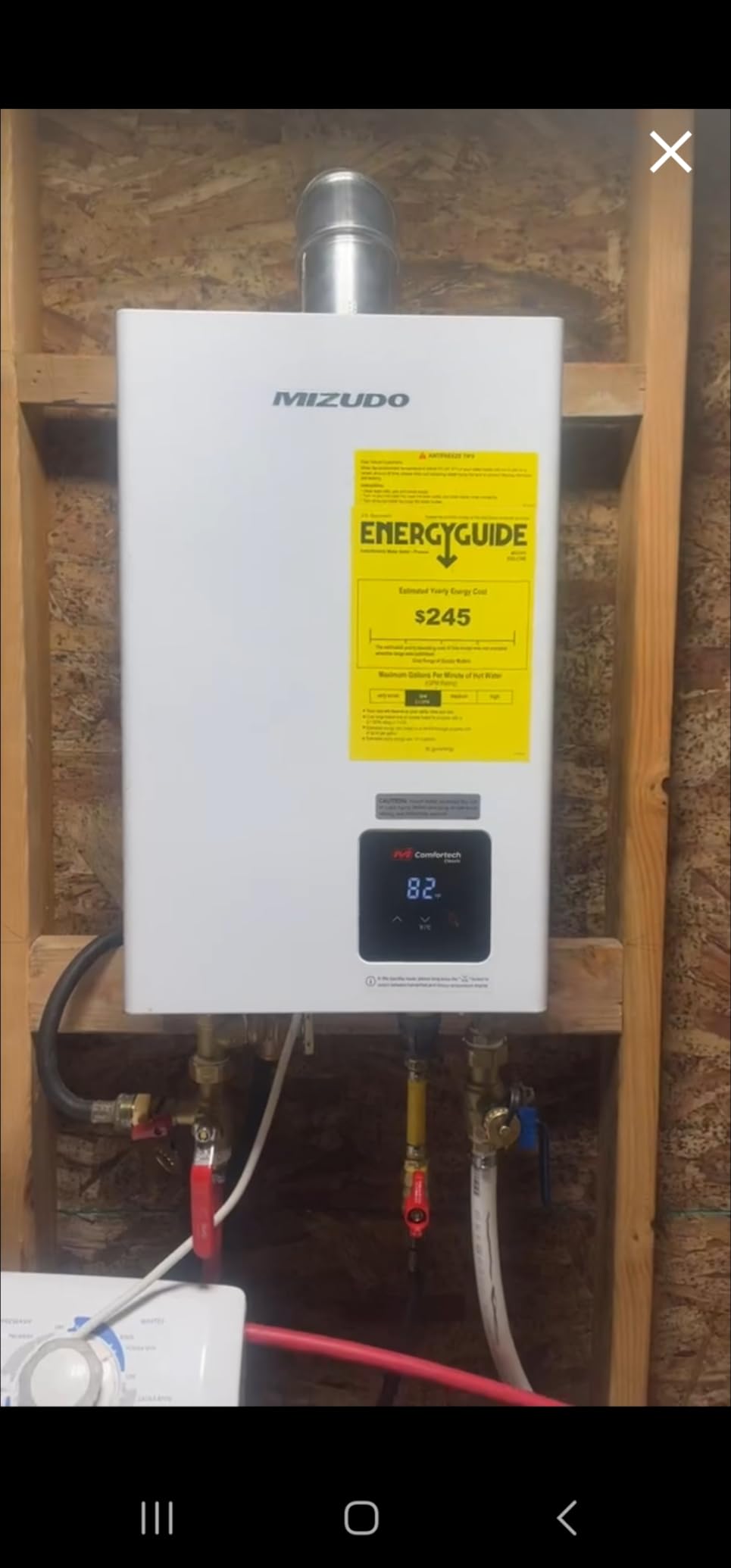
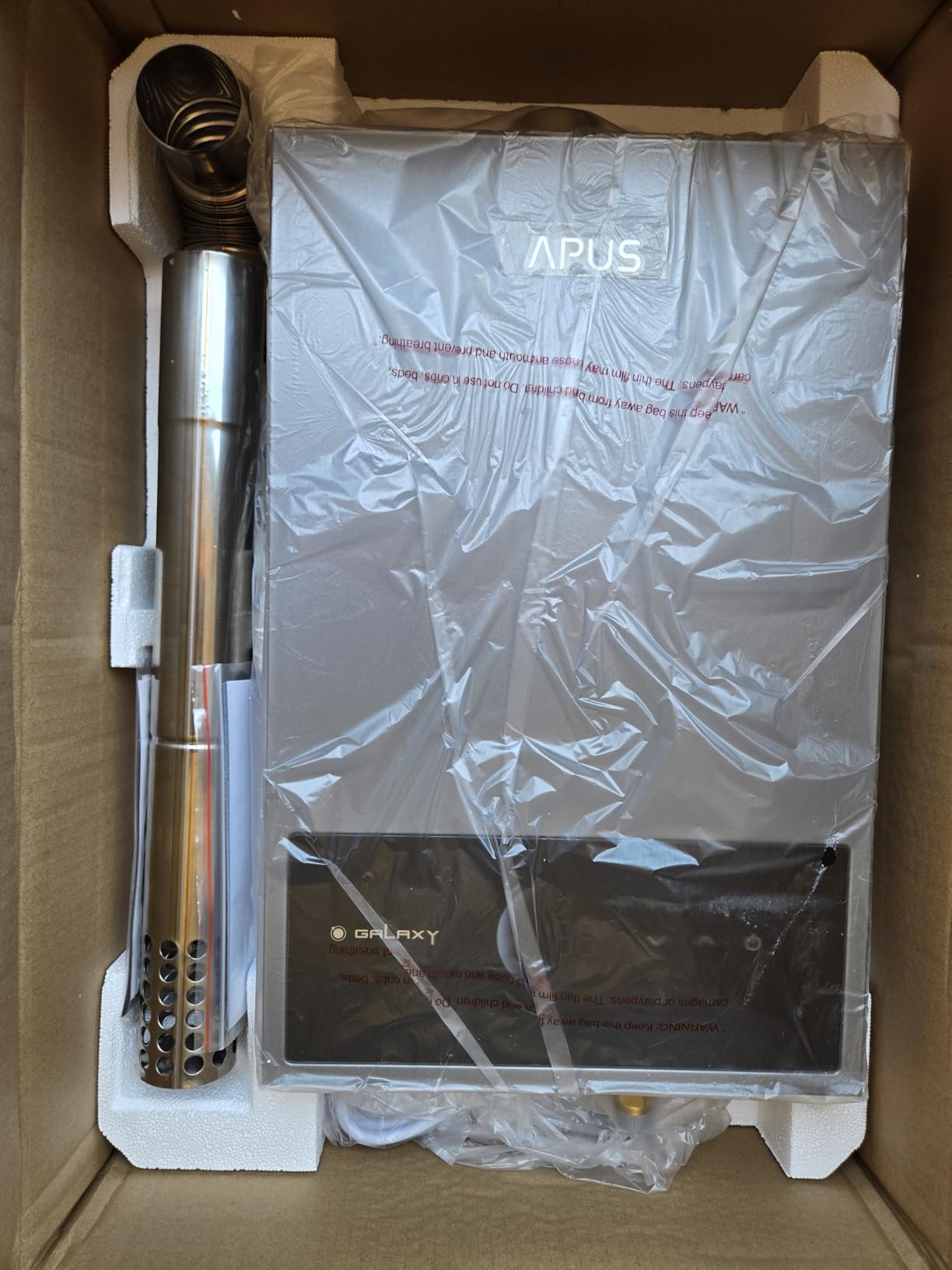
The APUS AP-AWH-Q16NG is the gas pick for households where the budget conversation is real. It is the least expensive unit in this roundup and it does not feel like a compromise on the specification sheet: 120,000 BTU, 5.43 gallons per minute, a 0.81 UEF and a 0.66 GPM low-flow activation threshold.
That threshold is worth understanding. It is the amount of flow needed to trigger the burner, and a lower number means the unit responds better at distant, low-flow fixtures.
Owners rate customer support very highly, describing prompt replacements and refunds when a unit failed rather than a runaround.
Efficiency and the Copper Heat Exchanger
Segmented combustion with an oxygen-free copper heat exchanger delivers up to 98 percent thermal efficiency and a 0.81 UEF. For a non-condensing gas design, that is a good efficiency figure and it sits close to the Rheem RTG in this list.
As with every copper exchanger here, the descaling schedule is the deciding factor for long life. Freeze protection engages near 41 degrees but a full drain is required below that.
Venting Is the One Non-Negotiable
This unit must be vented outside rather than into an existing chimney. Homes with a masonry chimney and no easy exterior wall termination will need a flue plan before this becomes a realistic option.
The box includes a vent pipe and assembly kit, but gas fittings are sold separately. Several owners also report units that would not detect flow and produce hot water on first power-up, so confirm the startup with the installer before sign-off.
Physical Design for Tight Mechanical Rooms
At 20.55 by 13.27 by 5.91 inches and 19.2 pounds, it is among the lighter gas units here and mounts on standard 120V AC controls rather than a dedicated circuit.
The LED touchscreen sets output from 95 to 149 degrees in one-degree steps, which is a wider control range than several competitors offer.
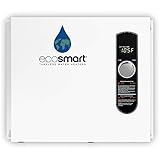
8. EcoSmart ECO 36 – The Most Electric Flow With a Lifetime Warranty
Ecosmart ECO 36 36kw 240V Electric Tankless Water Heater, White
6 GPM at 36 kW
Limited lifetime warranty
18.4 lb, made in USA
+ Pros
- Highest flow among the electric picks at 6 GPM
- Families of five report never running out
- Silent operation
- Limited lifetime warranty
- Self-modulation helps limit light flicker
– Cons
- Requires four 40A breakers and about eight panel slots
- May cause noticeable light flicker while cycling
- Must be registered within 30 days for warranty
The EcoSmart ECO 36 is the flow leader among the electric units here. Thirty-six kilowatts delivers 6 gallons per minute, and families of five report never running out of hot water.
It is also the only pick in this roundup with a limited lifetime warranty, and it is manufactured in the United States. The self-modulating element set is quoted at 99.8 percent efficiency.
Owners who sized it correctly tend to stay with it for years, which tells you how much of the satisfaction depends on matching the unit to the household.
The Panel Requirement Is the Whole Decision
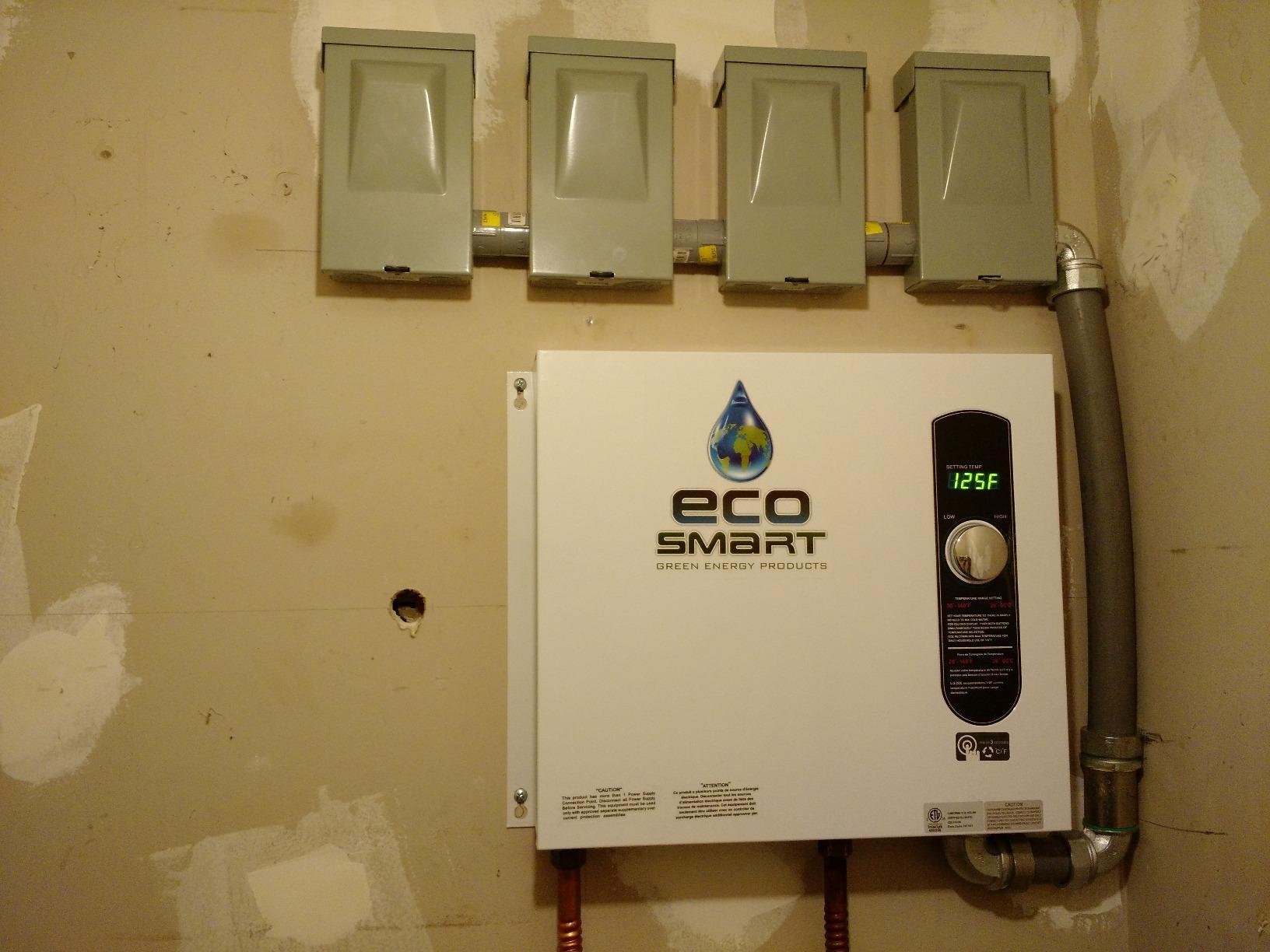
This model needs four 40 amp double-pole breakers and roughly eight open panel slots, with 150 amp service specified. In a panel that is already close to full, a service upgrade becomes a prerequisite rather than an option.
That is the reason so many reviews are about the installer rather than the heater. Anyone without headroom in the panel should look at the RTEX-18 instead, which needs substantially less electrical capacity.
Light Flicker and the Setpoint Compromise
Self-modulation is designed to reduce flicker, and some owners confirm it helps. Others still notice visible light flicker while the elements cycle, which is worth checking against any sensitive equipment in the same room.
Buyers also note that the temperature has to be set higher than a tank heater would need, to deliver the same output at fixtures far from the cabinet. Plan for a higher setpoint than you are used to.
Warranty Conditions Worth Reading Twice
The limited lifetime warranty requires registration within 30 days of purchase. Miss that window and the coverage terms you are relying on may not apply.
Sensor wiring errors and faulty controller boards show up in reviews, both of which are installation-day items to verify before the installer leaves. Annual descaling is still advised in hard-water areas.
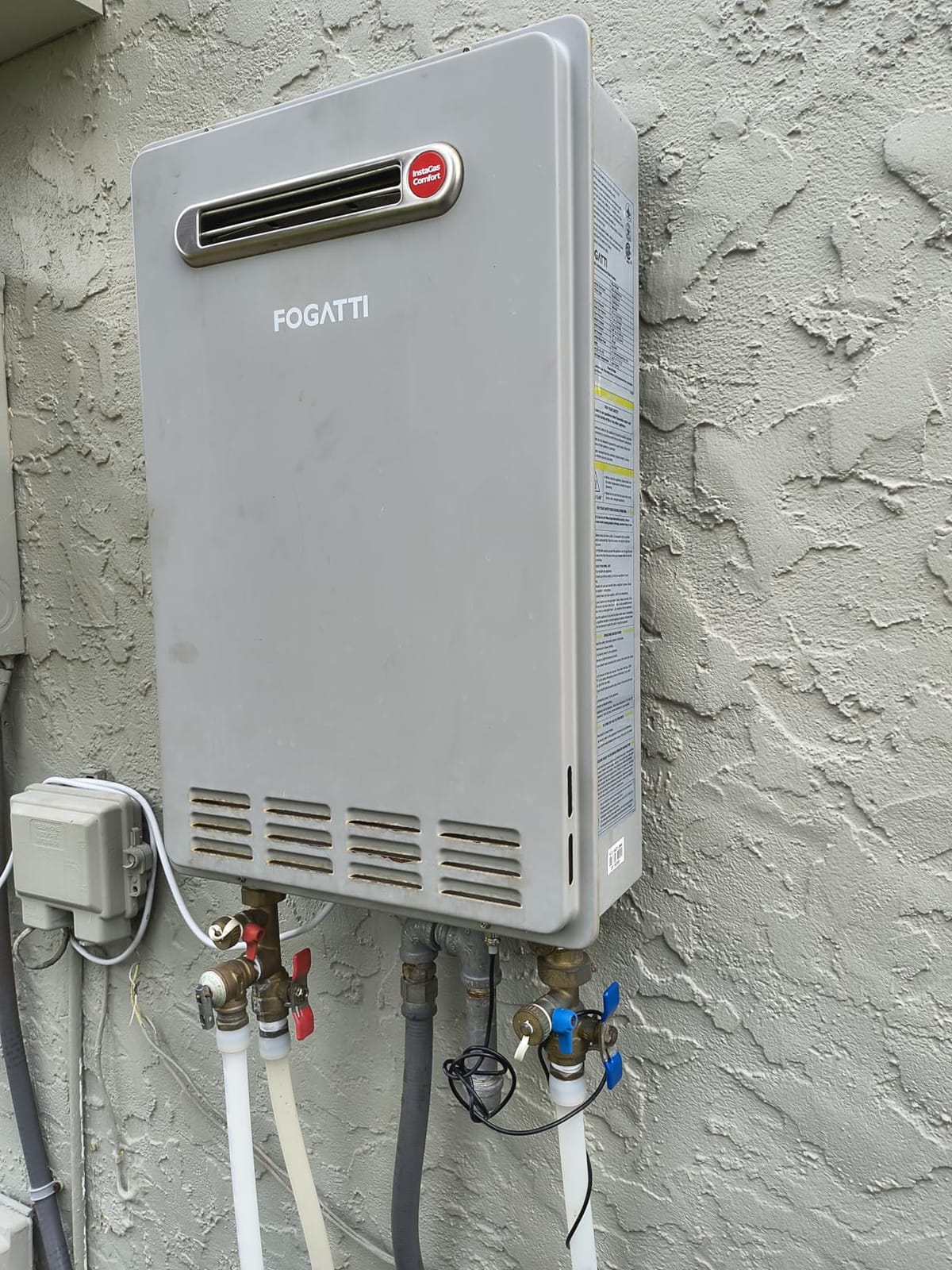
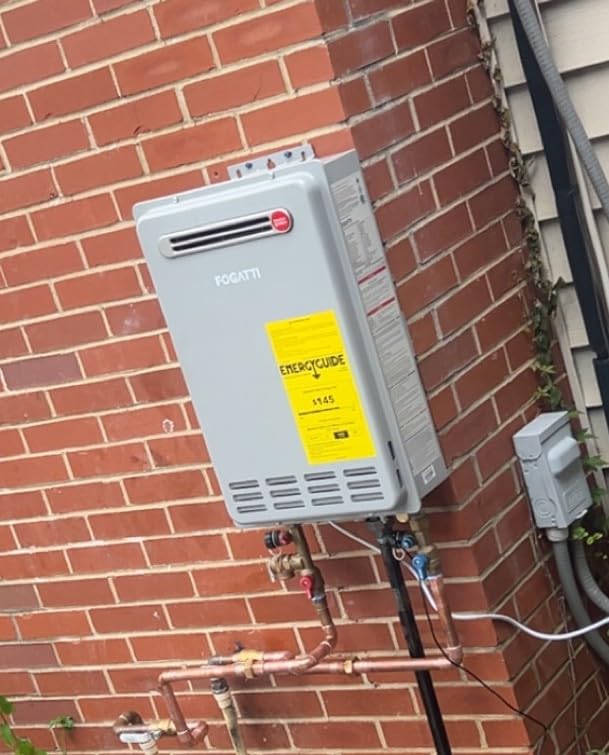
9. FOGATTI InstaGas Comfort – Built for Low Water Pressure Homes
FOGATTI Tankless Water Heater Natural Gas Indoor On Demand CSA Certified
5.1 GPM at 120000 BTU
Operates from 15 to 150 PSI
15.5 by 23.9 by 7.37 in
+ Pros
- Handles two showers at once for several owners
- Quick heat-up and steady supply
- Very low noise
- Compact and light enough for one-person install
– Cons
- 5.1 GPM can be undersized for high demand
- No vent pipe or fittings included
- Recurring E1
- E2 and E8 error codes reported
The FOGATTI InstaGas Comfort has one genuine engineering differentiator: it operates from 15 to 150 PSI inlet pressure. On an older home with marginal water pressure, that range is the reason to look at this unit first.
Buyers with typical household demand like it, reporting two showers at once, quick heat-up and very low noise. At 5.1 gallons per minute it is a compact wall-mount box that takes up far less space than a tank.
This one shares the lowest average rating in the roundup at 4.0 stars, and the reasons are specific enough to plan around.
Error Codes in Hot Climates
Seventeen percent of ratings are one star, and the drivers are consistent: recurring E1, E2 and E8 error codes, reported especially in hot climates. Buyers should expect to have at least one shutdown event and should know how their support line handles it before ordering.
Customer service responsiveness is described as inconsistent, which is a real factor for a component-heavy appliance installed inside a wall or closet.
Flow Rate Versus Simultaneous Demand
Five point one gallons per minute is enough for two to four outlet points in normal use, but it is genuinely undersized for households with high simultaneous demand. If a dishwasher, a laundry cycle and two showers can overlap, this is not the model.
There is also a low-flow temperature control quirk owners report: at very low flow rates the outlet can overshoot to scalding levels. A mixing valve is worth considering if small children use the hot taps.
What Is Not in the Box
No accessories, vent pipe or fittings are included, which is the most common installation complaint in the reviews and a predictable cost surprise at the counter.
On the positive side, the four-stage combustion system and water servo sensors hold temperature within a degree, and the unit runs from standard 120V AC. Recommended altitude is below 2,000 feet, and it should be drained below 5 degrees ambient.
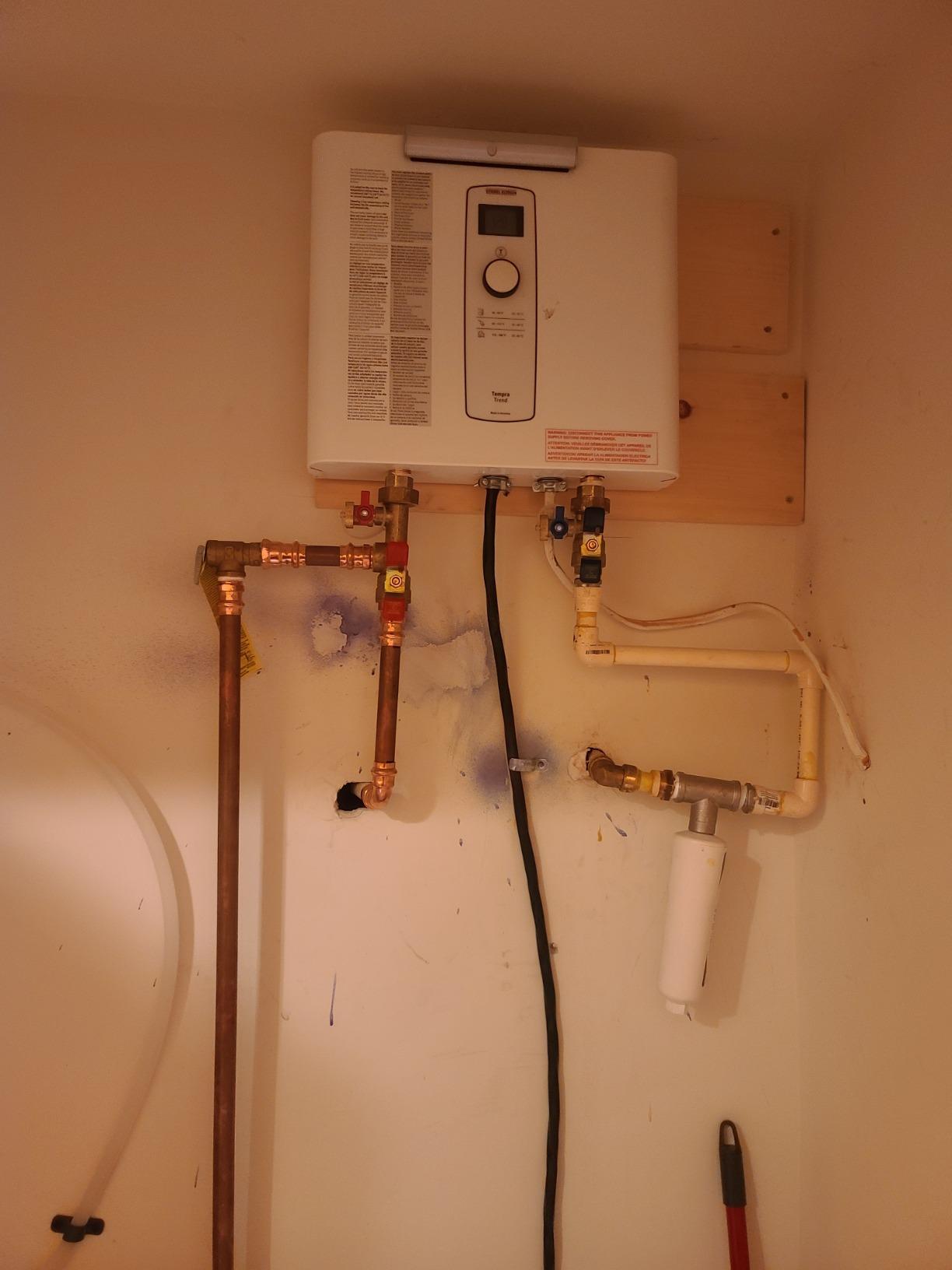
10. Stiebel Eltron Tempra 20 Trend – German Build for Smaller Homes
Stiebel Eltron Tempra 20 Trend Electric Tankless Water Heater, 19.2kW, 240V
2.01 GPM at 19.2 kW
125A minimum service
7-year leakage warranty
+ Pros
- 4.5 stars with 80 percent five star ratings
- Made in Germany with a solid copper system
- Silent operation
- No venting required
- 7-year leakage warranty is the longest here
– Cons
- Only 2.01 GPM
- the lowest flow in this roundup
- Hard wiring required with 125A minimum service
- 19.2 kW is limited for whole-house loads
The Stiebel Eltron Tempra 20 Trend is tied for the highest satisfaction score in this group at 4.5 stars, with 80 percent of ratings at five stars. It is manufactured in Germany with a solid copper heating system and it runs completely silently.
Be clear-eyed about the capacity though: 2.01 gallons per minute is the lowest flow rate in this roundup. Owners consistently describe it as best suited to one or two outlets, or as a whole-home unit for a small household in a mild climate.
It earns its place for a specific buyer: someone who values build quality, silence and a long leakage warranty more than raw flow.
Copper Construction and German Manufacturing
The solid copper heating system with electronic switch activation is the core of the design, and it is the reason a 7-year leakage warranty and 3-year parts coverage are possible here.
Output adjusts from 68 to 140 degrees, and the auto-modulating element set means the unit reduces power at low flow rather than overshooting. That is a quieter, steadier response than most competitors at this price band.
Electrical Service Requirements
Hard wiring is required and the manufacturer specifies a 125 amp minimum electrical service. That is a lighter demand than the four-breaker EcoSmart but heavier than a standard household circuit.
Because it needs no venting, installation in a closet, under a counter or in a basement mechanical area is straightforward as long as panel capacity exists.
Where This Model Is the Wrong Buy
Any household with multiple bathrooms running hot water at the same time will feel the 2.01 GPM ceiling immediately. A second shower joined by a laundry load is the classic failure scenario for this class of heater.
At 16.63 by 14.5 by about 4.6 inches it is also among the smallest cabinets here, which is a genuine advantage in a small utility room and no help with demand.
How to Size a Whole-House Tankless Water Heater in Four Steps
Square footage is a poor guide. A 2,000 square foot home with one bathroom needs far less than a 2,000 square foot home with three bathrooms, a laundry room and an outdoor hose bib. Size by fixture demand instead.
Here is the method a plumber would use, and it answers the most common sizing question we see asked about this category.
Step 1: Add Up the Fixture Demand
Every fixture has a typical flow requirement. A standard shower is usually counted at 2 gallons per minute, a bathtub or whirlpool at 4, a kitchen sink at 1.5, a bathroom sink at 0.5, and a laundry washer at 1.5 to 2.
Add them up for the fixtures that could plausibly run at the same time. For a typical two-bath home that is a shower and a sink in each bath plus a laundry cycle, which lands near 6 gallons per minute of demand.
Step 2: Establish Your Inlet Water Temperature
Manufacturer flow ratings assume roughly a 35 degree temperature rise, which means they assume inlet water around 50 to 55 degrees. In a cold climate, municipal inlet water can be near 40 degrees, and that assumption stops holding.
Measure it rather than guess. The colder your inlet water, the more capacity the same burner or element set has to work with to hit 120 degrees at the tap.
Step 3: Compute the Temperature Rise You Need
Target water at 120 to 140 degrees and subtract your actual inlet temperature. A cold-climate home may need a 70 or 80 degree rise, which is more than double the 35 degree rise behind every published GPM figure.
This is the number almost every manufacturer hides, and it is the reason a unit that looks oversized on a spec sheet underperforms in January.
Step 4: Add a Buffer for Multi-Bath Homes
For homes with two or more bathrooms, size up by two to three times your calculated simultaneous demand, or install two smaller units in parallel. Many plumbers prefer the two-unit approach because it gives redundancy and a spare part of the house if one heater goes down.
For a home that is genuinely large, two mid-size heaters can be cheaper to plumb and easier to service than one oversized cabinet.
Gas vs Electric: What It Really Costs to Run
Gas heats water more efficiently than resistance electricity, so a gas unit generally produces a lower running cost for the same volume of hot water. Electric units avoid combustion entirely, which removes venting, gas pressure and combustion air from the install entirely.
Plumbers working in the field consistently report 20 to 30 percent gas bill savings once a tankless gas unit is installed and maintained, with the caveat that the saving is only real after the higher installation cost is recovered.
The Electric Service Question Nobody Asks Early Enough
Whole-house electric tankless is an electrical project as much as a plumbing one. The EcoSmart ECO 36 needs four 40 amp breakers and 150 amp service. The Rheem RTEX-24 needs three breakers and recommends a 200 amp panel.
Ask your electrician to assess the panel before you pick a model. A panel upgrade on an older home is often a four-figure line item and it can make an otherwise good heater the wrong purchase.
Where Gas Wins and Where Electric Wins
Gas wins on raw capacity and running cost, and it is the only realistic choice for filling a whirlpool tub or keeping two full showers comfortable in a cold climate. Electric wins in a home with no gas line, in an all-electric new build, and wherever venting to an exterior wall is impossible.
Electric units also have no ignition, no flue and no combustion air to service, which is a genuine reliability advantage in a home where hot water is not mission critical during an outage.
The Alternative Plumbers Mention More Often
Several commenters on plumbing forums argue that a heat pump water heater is the smarter electric answer for a whole house, because it produces hot water at a fraction of resistance heating cost. It is not a tankless unit and it stores water, so it falls outside this roundup, but it belongs in the conversation before you spend money.
Buying Guide: Nine Things to Check Before You Order
Spec sheets are the easy part. These are the questions that decide whether the install goes smoothly, and most of them have nothing to do with the appliance.
Is There a Service Network Near You?
The most repeated piece of advice across plumbing forums is that the best tankless brand is the one sold and serviced locally, not the one with the strongest marketing. Ask your plumber which brands their suppliers carry and which technicians can actually get parts for.
A brand with unorderable parts in your region is a worse purchase than a slightly less capable model from a brand your plumber services every week.
Will the Warranty Survive a DIY Install?
Manufacturer warranties including those from the brands in this roundup generally require installation by a licensed plumber to remain valid. Homeowners who install their own unit report losing coverage, and they hear it repeatedly in forums.
Ask for the warranty terms in writing before the work starts, including the heat exchanger term measured in years and operating hours rather than marketing language.
How Does Your Water Affect the Heat Exchanger?
Hard water is a decision gate, not a footnote. Scale on a heat exchanger reduces heat transfer, forces the burner to work harder and is the leading cause of denied warranty claims. Manufacturers will look for mineral deposits when they assess a failed heat exchanger.
If your hardness runs high and you do not want a softener, ask your plumber to test the water before you order. If you are installing a softener anyway, our guide to whole-house water filter and softener combos is worth reading first.
As a general rule, flush or descale annually in moderately hard water and more often in genuinely hard water. Nobody can tell you the right interval without a hardness number, which is exactly why you should get one.
Is the Pro Build or the Retail Build the One Arriving?
This is the single least known risk in the category. Some retail-channel variants ship with thinner anodes, shorter-life thermostats and reduced insulation compared with the wholesale version of the same model.
Ask the supplier to confirm the part number and whether it is the wholesale or retail SKU before it is shipped to you.
What Happens When the Power or Gas Goes Out?
Every tankless unit in this roundup needs electricity to run its controller and, in the gas models, its igniter. Owners of the Rheem RTEX-24 note there is no hot water reserve during an outage at all, which is worth weighing if your household relies on hot water for medical reasons.
Gas models also need a dedicated vent to an exterior wall rather than a chimney in the case of the APUS AP-AWH-Q16NG. Confirm your flue path exists before the purchase order.
Should You Keep a Tank as a Backup?
For very large homes, or for anyone with a hard dependency on hot water, keeping a small conventional tank is a reasonable hedge. It is also a decision many households make purely on cost, because the incremental plumbing for a second water source is not trivial.
Install two tankless heaters in parallel instead and you get redundancy without owning a tank that will eventually fail.
Who Should Not Buy Tankless at All?
Be honest about three cases. A home with no gas line and no panel headroom has limited options and should price a heat pump water heater first. A home on very hard water with no softener and no maintenance habit will damage a heat exchanger. And a household with very low hot water use in a cold climate is usually better served by a conventional tank or a heat pump model.
None of those situations make tankless a bad technology. They make it a poor match for a specific set of constraints, and a good installer will say so before taking the job.
Check Rebates and Incentives Before the Purchase
High-efficiency gas appliances can qualify for federal tax credits and utility rebates, and ENERGY STAR certification affects eligibility in some regions. Programs change annually, so confirm current terms with your utility and your tax preparer rather than relying on a product page.
Pick the Install, Not Just the Heater
Installation typically costs more for a tankless unit than for a conventional tank replacement, and the line items that add money are predictable: gas line upsizing, a new vent or flue run, a condensate drain for condensing models, an electrical panel upgrade and a recirculation loop if you want instant hot water at the tap.
Ask for the quote as a line item breakdown rather than a single number, and get the plumbing and electrical scopes priced separately. A recirculation loop also has operating cost implications, since some pumps run continuously.
If you are pairing this work with a broader energy upgrade, our standby generator guide covers the other half of what keeps a home running when power drops.
Frequently Asked Questions
What do plumbers say about tankless water heaters?
Plumbers generally like tankless units for their durability and no tank to fail, but they are cautious about three things: sizing errors, hard water damage to heat exchangers and brands that cannot be serviced locally. The most repeated advice on plumbing forums is to choose the brand your plumber already services, and to have the installer stand behind the work. Manufacturer warranty coverage on the brands in this roundup also generally requires a licensed plumber to perform the install.
How big of a tankless water heater do I need for a 2000 square foot house?
For a typical 2,000 square foot home with two bathrooms and a laundry area, add up roughly 2 GPM per shower, 0.5 GPM per sink and 1.5 to 2 GPM for the washer, which gives you about 6 GPM of simultaneous demand. Because manufacturer ratings assume a 35 degree temperature rise, size up by two to three times that figure, or install two smaller units in parallel. Square footage matters much less than fixture count and your cold inlet water temperature.
What are two disadvantages of a tankless water heater?
The two biggest disadvantages are the higher purchase and installation cost compared with a conventional tank, and the fact that a correctly sized unit can still struggle when several fixtures demand hot water at once, particularly when inlet water is cold. A third practical issue is maintenance: hard water deposits on the heat exchanger, and a scaled exchanger is the most common reason manufacturers deny a heat exchanger warranty claim.
Which tankless water heater is better, Rinnai or Rheem?
Both are established brands with national service networks, and the difference for most households comes down to which one your plumber services and what your water hardness does to the heat exchanger. This roundup covers three Rheem models rather than a Rinnai, so we can only speak to Rheem directly. The Rheem units here range from a 4.4 GPM electric at 18 kW to a 9.5 GPM gas unit with a 15-year heat exchanger warranty.
Which is cheaper to run, gas or electric tankless water heater?
Gas is generally cheaper to run because a burner converts fuel to heat more efficiently than resistance elements convert electricity. Plumbers working in the field commonly report 20 to 30 percent gas bill savings after installation, though the saving only materialises once the higher installation cost is recovered. Electric units cost more per gallon but require no venting, no gas line and no combustion air.
What is the best tankless water heater for hard water?
There is no model that is immune to scale, so the real answer is which brand is easiest to service when scale does occur. A stainless steel or copper heat exchanger that a local technician can flush and descale is worth more than any marketing claim. Our practical advice is to test your water hardness before ordering, install a softener if the numbers are high, and plan on annual descaling. Manufacturers inspect failed heat exchangers for mineral deposits and will deny claims where scale is found.
The Verdict: Which Whole-House Tankless Water Heater Should You Buy
Our editor’s choice for 2026 is the Rheem RTEX-18. It does not have the highest flow number or the highest rating in this group, but it has by far the largest body of real-world use behind it, a field-serviceable design and an installation with no flue to engineer.
Match the pick to the household instead. If you have three or four hot water points and a gas line, the Rheem RTG Series 9.5 GPM is the only unit here honestly rated for that demand. If your electrical panel has headroom and you want more electric flow, the Rheem RTEX-24 handles two showers plus a laundry load. If panel capacity is tight, stay on the 18 kW model rather than upsizing the service.
For gas shoppers on a tighter budget, the APUS AP-AWH-Q16NG gives you 5.43 GPM at the lowest cost in this roundup with a 4.4 star average, and the CAMPLUX CA686WNG is the quietest gas option for a mechanical room near living space. The EcoSmart ECO 36 leads the electric picks on flow at 6 GPM with a limited lifetime warranty, provided you can accommodate four 40 amp breakers.
Before any of these reach your driveway, settle the three questions that decide the install: your panel or gas line capacity, your inlet water temperature in winter, and how hard your water is. Those three answers will eliminate half the list on their own, and they are free to get.
Leave a Reply