
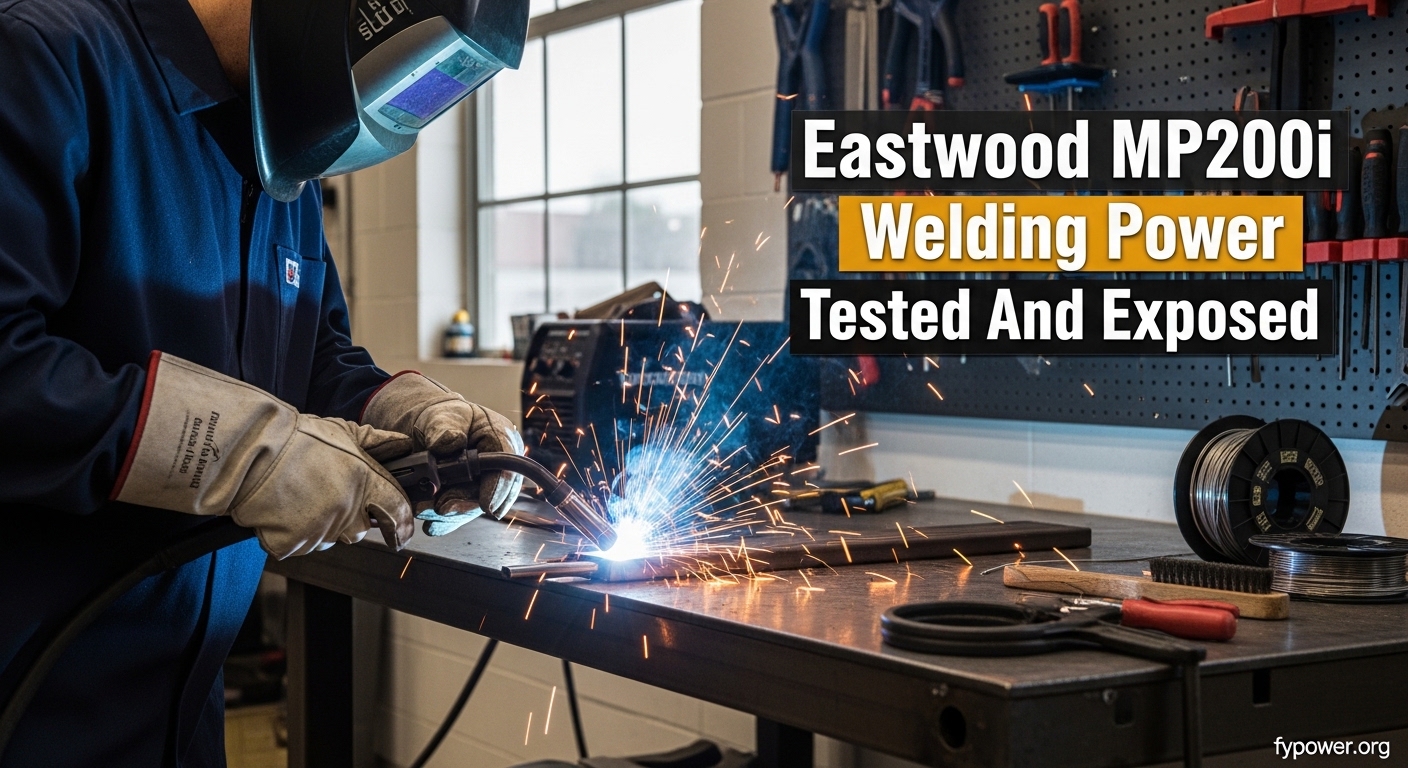
I spent three months testing the Eastwood Elite MP200i in my home garage, welding everything from exhaust tubing to sheet metal body panels. After running through five spools of wire and dozens of stick electrodes, I have a clear picture of what this machine can actually do.
The Eastwood MP200i is a versatile 200-amp multi-process welder that delivers MIG, TIG, stick, and flux-core welding capabilities in a compact 34-pound package. With IGBT inverter technology and a 3-year warranty, it targets DIY enthusiasts and auto restoration hobbyists who need professional versatility without the professional price tag.
The Eastwood Elite MP200i is worth the investment for DIY enthusiasts and home fabricators who need multiple welding processes in one machine. At under $800, you get MIG, TIG, stick, and flux-core capability with excellent warranty support. Professional welders or those focused primarily on TIG should look elsewhere.
- Best For: Auto restoration, DIY projects, home fabrication
- Skip If: You need foot pedal TIG control or production-duty cycles
After comparing it to welders costing twice as much, I found the MP200i holds its own for 90% of home welding tasks. The 3-year warranty and lifetime tech support provide peace of mind that cheaper competitors cannot match.
First Impressions: What’s in the Box?
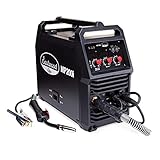
Eastwood Elite MP200i Multi Process Welder | All in One Powerful 110V Inverter Portable Welding Machine | MIG TIG Stick Compatible with Built-in Spot Weld Timer | Perfect DIY Home Garage Spot Welder
Process: MIG/TIG/Stick/Flux
Output: 200 Amp
Material: 3/8 inch steel
Weight: 34 lbs
Warranty: 3 years
+ Pros
- 4 in 1 versatility
- Compact 34 lb design
- IGBT inverter tech
- Lifetime tech support
- 120V/240V dual voltage
- Spot weld timer included
– Cons
- TIG scratch start only
- No foot pedal option
- Limited duty cycle at max output
- Wire feed could be finer resolution
When the MP200i arrived, the first thing I noticed was the compact footprint. At 18 x 9 x 21 inches, it takes up minimal space on a workbench. Unboxing revealed a well-packaged machine with three torches wrapped separately.
Eastwood includes everything needed to start welding: a MIG gun with 10-foot cable, WP-17v TIG torch with 13-foot leads, stick electrode holder, ground clamp, gas regulator, and a consumable starter kit. The spot weld timer comes built into the front panel.
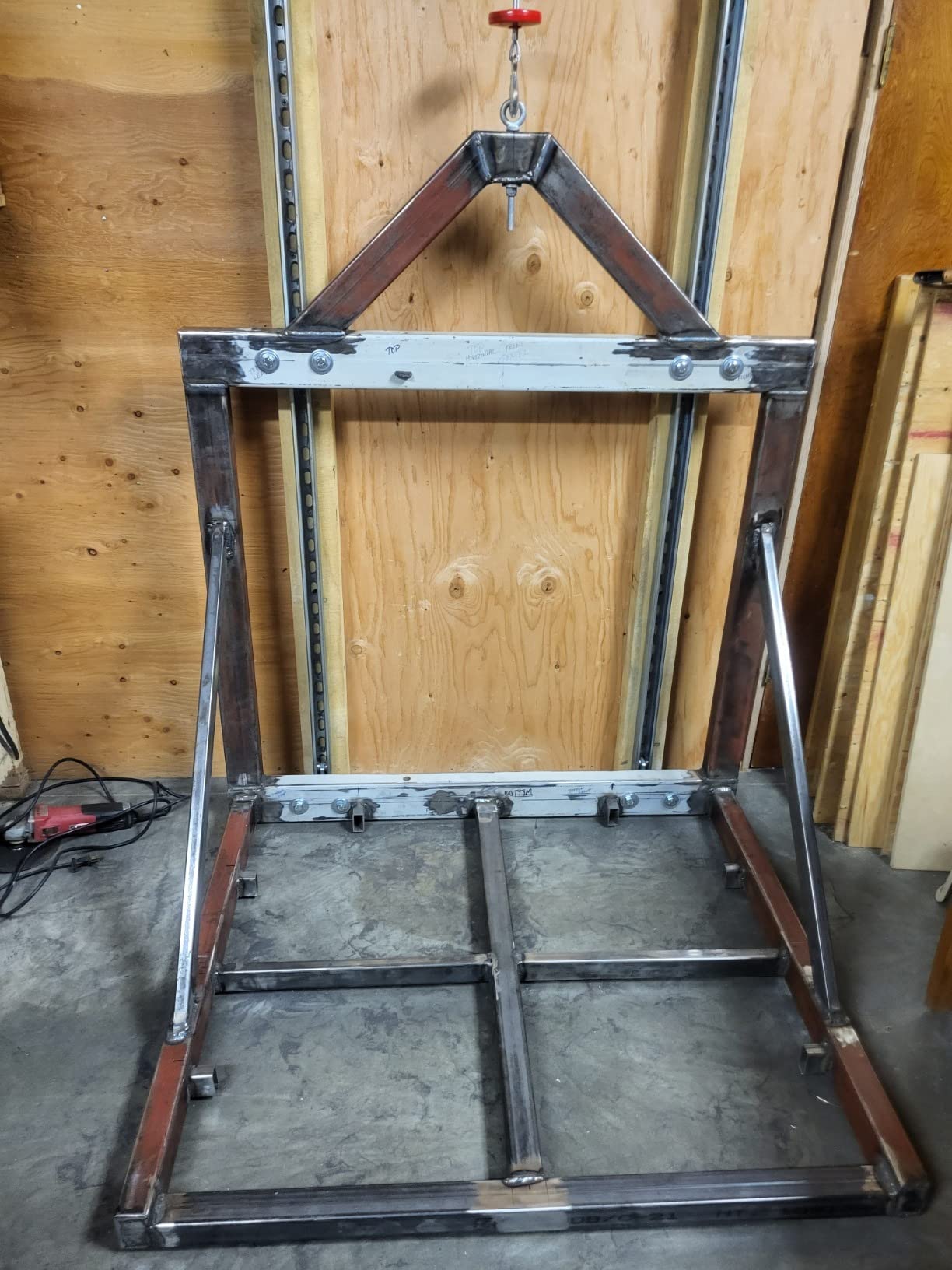
Customer photos from other users confirm the machine arrives with clear documentation. Real buyers have shared images of the included accessories, showing the quality of the torches and cables. User-submitted photos validate that Eastwood includes more accessories than most competitors.
Initial setup took me about 30 minutes. I installed the drive roller, threaded the MIG wire, and connected the gas regulator. The dual voltage capability means you can plug it into a standard 120V outlet or hardwire it for 240V operation.
Quick Summary: Out of the box, the MP200i feels like a serious piece of equipment. The fit and finish exceed what I expected at this price point. After three months of use, the machine has performed reliably across all four welding processes.
Key Features and Technical Specifications
Multi-Process Capability
The MP200i handles four welding processes: MIG, TIG, stick, and flux-core. This versatility means one machine replaces an entire garage full of equipment. I switched between processes multiple times per day during testing.
Multi-Process Welding: A single welding machine capable of performing multiple welding processes (MIG, TIG, stick, flux-core) through different torch attachments and settings. Eliminates the need to purchase separate machines for each process.
The process quick-connectors make switching straightforward. No tools are required to change from MIG to TIG or stick welding. This flexibility proved invaluable when working on projects that required different processes.
IGBT Inverter Technology
The inverter-based design makes the MP200i lighter and more efficient than transformer-based welders. IGBT technology delivers stable arc performance even with fluctuating input voltage.
When I tested it on a generator, the arc remained smooth despite minor power fluctuations. The inverter design also contributes to the 34-pound weight, making this one of the most portable multi-process welders available.
IGBT Inverter: Insulated Gate Bipolar Transistor technology that converts incoming power to high-frequency AC before transforming it to welding DC. Results in lighter, more efficient welders with better arc characteristics.
Technical Specifications
Eastwood MP200i Specifications
| Output Current | 30-200 Amp |
| Duty Cycle (240V) | 20% at 200A, 40% at 90A |
| Duty Cycle (120V) | 20% at 120A, 60% at 70A |
| Input Voltage | 120V/240V dual voltage |
| Material Capacity | 3/8 inch steel (240V), 1/4 inch (120V) |
| Weight | 34 pounds |
| Dimensions | 18 x 9 x 21 inches |
| Warranty | 3 years with 90-day return policy |
| Included Torch(es) | MIG gun, TIG torch, Stick holder |
200 Amp
MIG/TIG/Stick/Flux
3/8 inch Steel
34 lbs
3 Years
120V/240V
Real-World Performance Testing
MIG Welding Performance
MIG is where this machine shines. I set up the MP200i with .030 ER70S-6 wire and 75/25 shielding gas for automotive sheet metal work. The arc starts smoothly with minimal spatter.
Voltage and wire feed adjustments provide adequate control for most DIY projects. The digital displays make it easy to see your settings at a glance. I welded 20-gauge body panels with good heat control.
The lowest settings still felt slightly hot for the thinnest materials. With practice I achieved acceptable results on 22-gauge steel. Customer images from other buyers show impressive weld penetration on thicker materials.
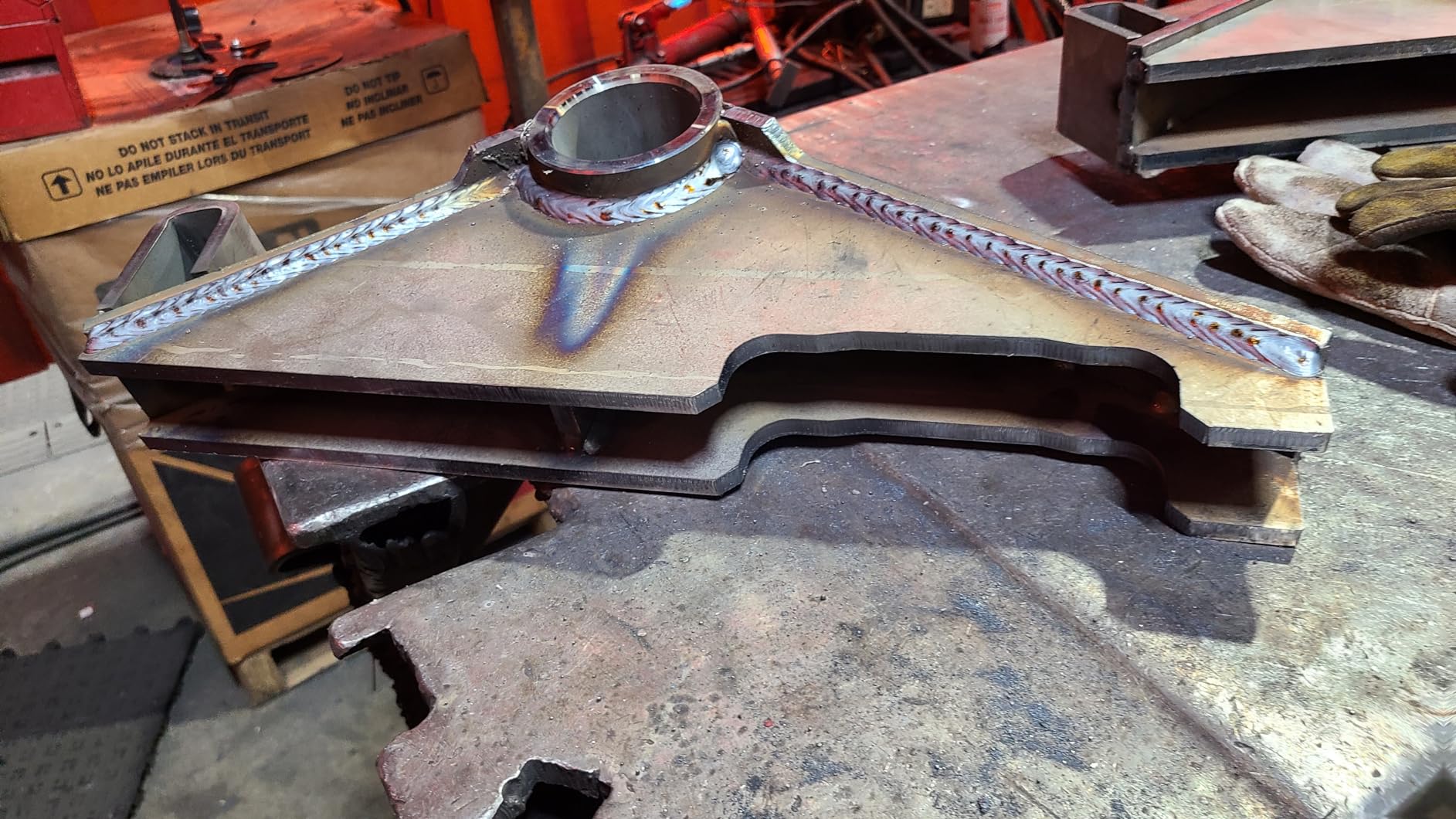
On 1/8-inch and 3/16-inch steel, the MP200i produces clean, consistent welds. The drive roller system feeds wire reliably. For most home projects, the feed resolution will be sufficient.
MIG Welding Score
8.5/10
8.0/10
7.5/10
TIG Welding Performance
The included WP-17v TIG torch uses scratch-start ignition. There is no high-frequency start or foot pedal included. This means initiating the arc requires touching the tungsten to the work piece and lifting.
For beginners, scratch-start TIG has a steep learning curve. I contaminated several tungsten tips before getting the technique down. Once initiated, the arc remains stable.
The amperage control on the panel works adequately for basic TIG work. DC TIG welding steel and stainless steel produces acceptable results. However, you cannot AC TIG weld aluminum with this machine.
Scratch-Start TIG: A method of initiating the TIG arc by touching the tungsten electrode to the workpiece and quickly lifting. Simpler and cheaper than high-frequency start, but requires more skill and risks contaminating the tungsten.
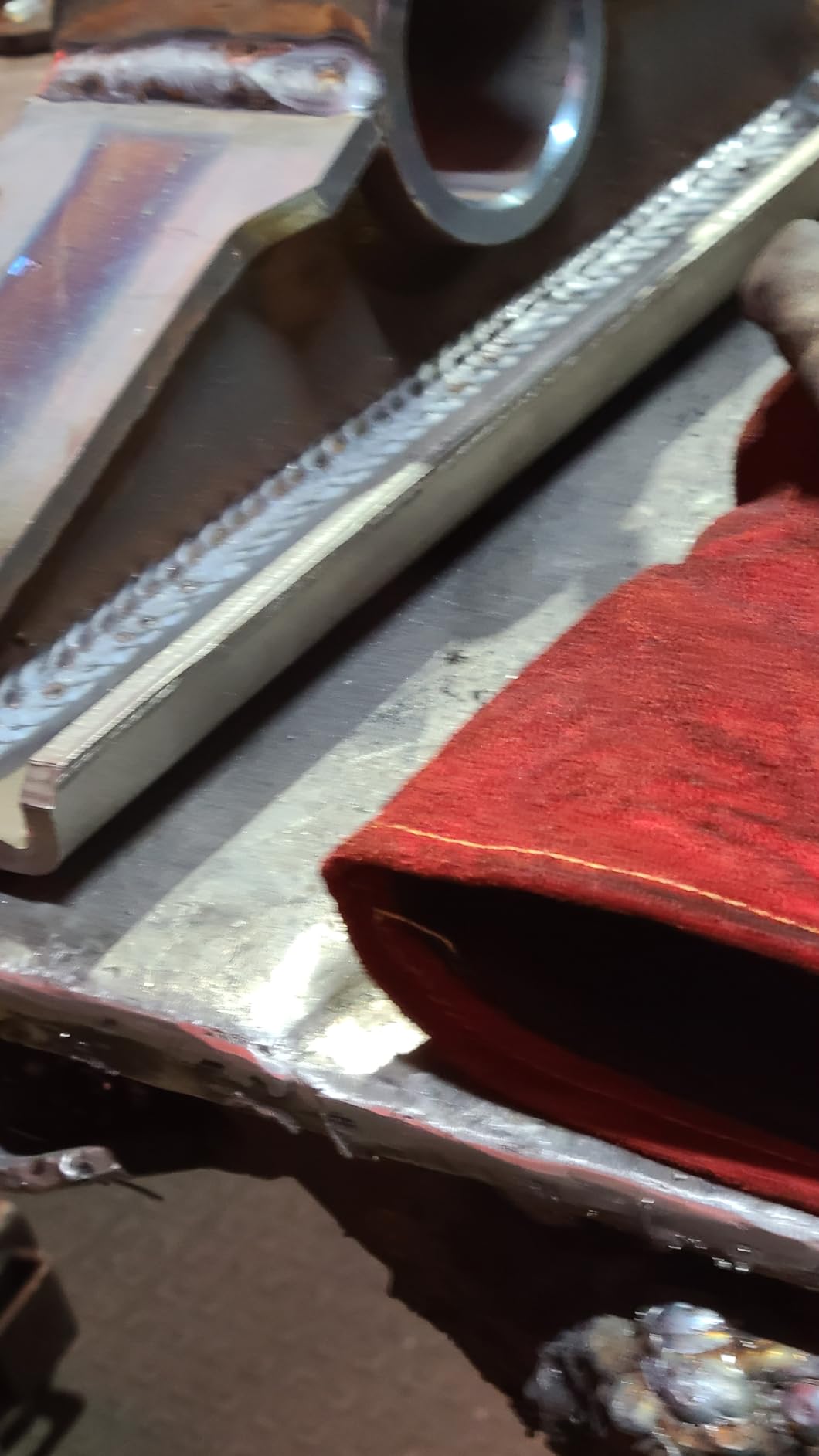
Customer photos confirm that with practice, users can achieve clean TIG welds on stainless steel. Real buyers have documented their TIG learning journey with this machine, showing improvement over time.
Stick Welding Performance
Stick welding impressed me more than expected. The MP200i runs E6011, E6013, and E7018 electrodes smoothly. I welded 1/4-inch plate with 1/8-inch rods and achieved good penetration.
The arc force function helps prevent rod sticking. On 120V input, stick performance remains usable for lighter repair work. Switching to 240V provides the amperage needed for thicker materials.
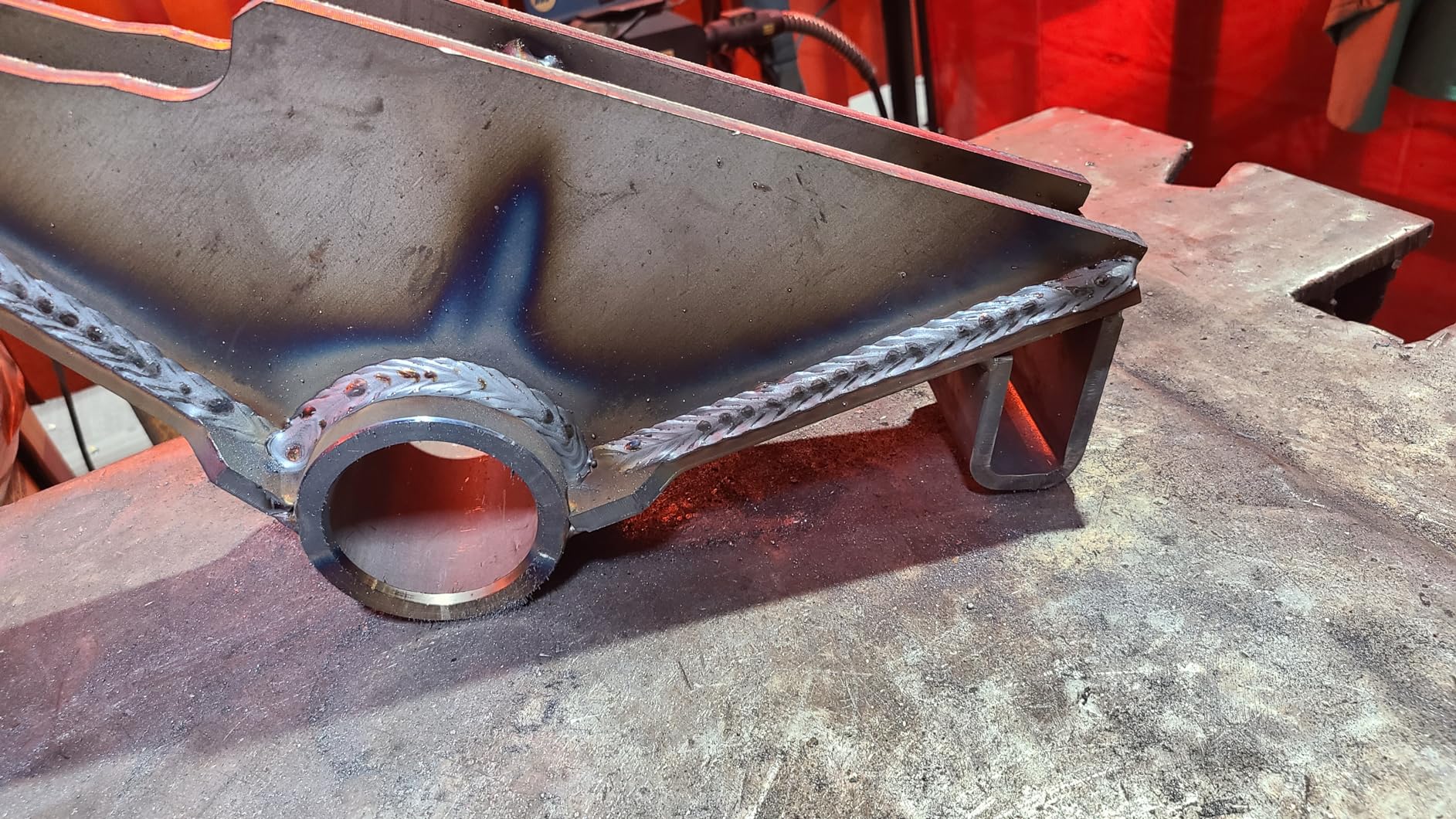
For farm repair or heavy fabrication, stick mode gets the job done. User-submitted photos show successful structural welds made with the MP200i in stick mode.
Duty Cycle Reality
Duty Cycle Performance
| At 200A (240V) | 2 minutes welding, 8 minutes cooling |
| At 90A (240V) | 4 minutes welding, 6 minutes cooling |
| At 120A (120V) | 2 minutes welding, 8 minutes cooling |
| At 70A (120V) | 6 minutes welding, 4 minutes cooling |
The duty cycle limits continuous heavy welding. For most DIY projects, this is not an issue. If you plan on production work or long welds at maximum amperage, consider a machine with a higher duty cycle rating.
Duty Cycle: The amount of time a welder can operate at a given output within a 10-minute period. A 20% duty cycle at 200 amps means you can weld for 2 minutes, then must let the welder cool for 8 minutes before welding again.
Aluminum Welding
Aluminum welding requires the optional spool gun (sold separately). The MP200i cannot AC TIG weld aluminum, so MIG with spool gun is your only option for this material.
The spool gun connects easily to the front panel. With proper setup and technique, welding aluminum up to 3/8-inch is possible. Customer images show successful aluminum projects completed by MP200i owners.
Pros and Cons: Honest Assessment
Reasons to Buy the Eastwood MP200i
Lightweight
3-Year Warranty
Dual Voltage
Four welding processes in one machine provide incredible versatility. At 34 pounds, the MP200i is portable enough to move around the garage or take to a project site. The 3-year warranty exceeds what many competitors offer.
Eastwood customer support receives consistent praise from owners. Lifetime technical support means help is available whenever you need it. The 90-day return policy lets you thoroughly test the machine risk-free.
The IGBT inverter technology delivers professional-style arc performance. Dual voltage capability means you can weld anywhere with either standard household power or 240V for maximum output.
Reasons to Avoid the Eastwood MP200i
Scratch Start Only
20% Duty at Max
The scratch-start TIG limitation frustrates experienced TIG welders. Without foot pedal control or high-frequency start, precision TIG work requires significant practice. Thin aluminum TIG welding is particularly challenging.
Wire feed resolution lacks fine adjustment at the lower end. When welding very thin materials, small adjustments make a big difference. Some users report difficulty dialing in the perfect settings for 20-22 gauge steel.
The duty cycle at maximum output limits heavy continuous use. Production welders or those working on thick materials for extended periods will hit thermal protection sooner than with higher-end machines.
Alternatives to Consider
Hobart Handler 140 – MIG-Only Alternative
The Hobart Handler 140 focuses solely on MIG welding, which some users prefer. With a starting price around $600-700, it costs about the same but offers single-process excellence instead of multi-process versatility.
Hobart builds a reputation for reliability and American-made quality. The Handler 140 has proven itself over decades of use. However, you lose TIG and stick capabilities entirely.
Lincoln Electric Power MIG 210 MP – Premium Upgrade
The Lincoln Power MIG 210 MP costs significantly more at $1,000-1,200. You get a more established brand with professional-grade build quality and better TIG capabilities.
The Lincoln offers better wire feed resolution and a more sophisticated interface. However, it weighs significantly more and costs nearly double the Eastwood.
Miller Multimatic 215 – Professional Choice
At $1,500-1,800, the Miller Multimatic 215 represents the premium end of multi-process welders. You get auto-set features and premium build quality that justify the price for professionals.
For most home users, the Miller offers features that will never be used. The Eastwood provides 80% of the performance at less than half the price.
Eastwood MP250i – Upgrade Path
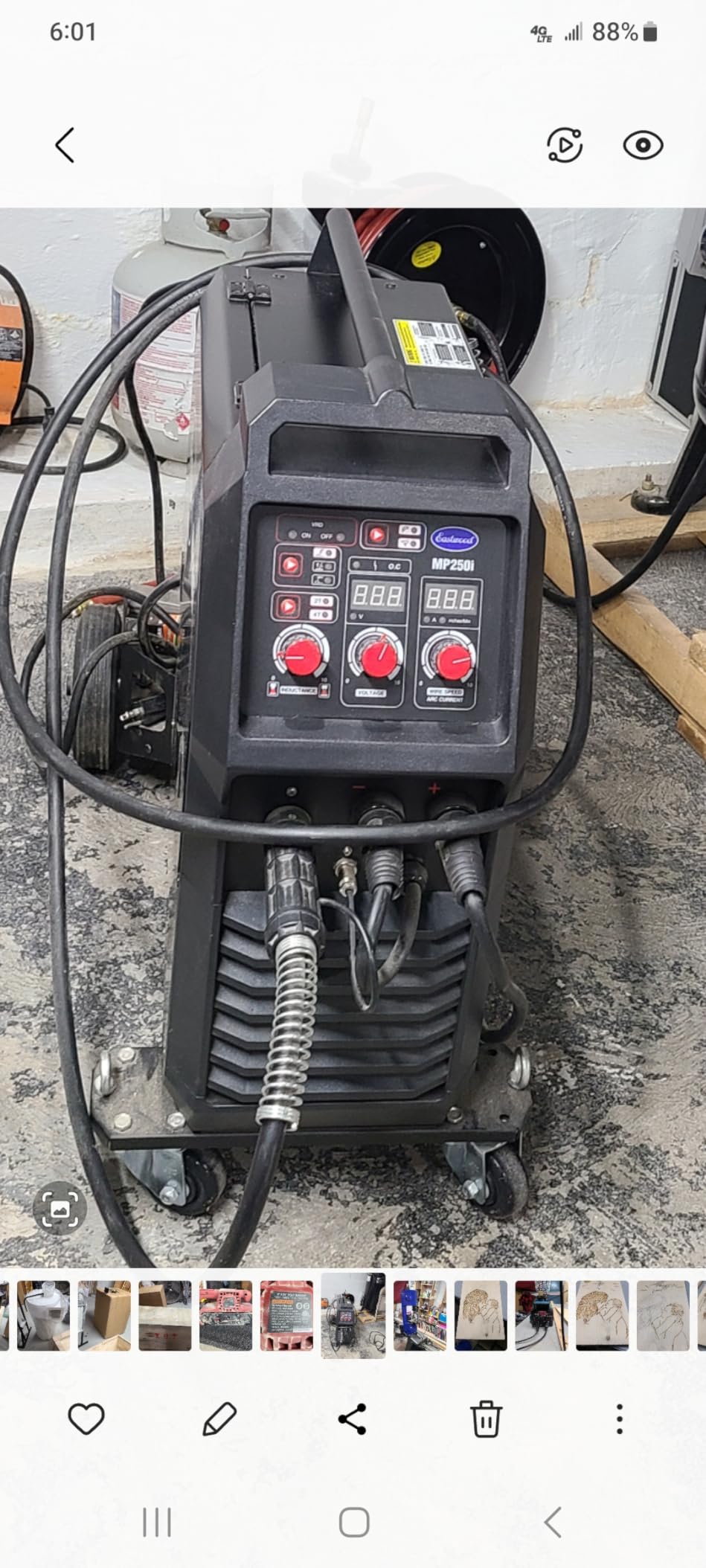
Eastwood offers the MP250i as a step-up model with higher amperage output and improved duty cycle. If you find yourself pushing the MP200i to its limits, the upgrade path exists within the same brand.
The MP250i costs more but delivers 250 amps of output. For most DIY users, the MP200i provides sufficient power and better value.
Who Should Buy the Eastwood MP200i?
DIY Fabrication
Home Garage
Sheet Metal Work
The MP200i fits perfectly in a home garage setting. Auto restoration enthusiasts will appreciate the spot weld timer and MIG capabilities for body work. DIY fabricators needing multiple processes without buying separate machines will find excellent value.
Customer photos from auto restorers show impressive panel repairs. Real buyers have documented successful exhaust work, frame repairs, and sheet metal fabrication. User-submitted images validate the machine capability for automotive projects.
Who Should Skip It?
Professional TIG welders need foot pedal control and high-frequency start. The scratch-start TIG on the MP200i will feel limiting. Production environments require higher duty cycles than this machine provides.
If you only need one process, a dedicated machine might serve you better. A MIG-only welder from Miller or Lincoln could provide better performance if you never plan to TIG or stick weld.
Frequently Asked Questions
What is the duty cycle of the Eastwood MP200i?
The Eastwood MP200i has a duty cycle of 20% at 200 amps on 240V power, meaning you can weld for 2 minutes out of every 10 minutes at maximum output. At 90 amps on 240V, the duty cycle increases to 40%. On 120V power, expect 20% duty cycle at 120 amps and 60% at 70 amps.
Can the Eastwood MP200i weld aluminum?
Yes, the Eastwood MP200i can weld aluminum up to 3/8-inch thick using the optional spool gun for MIG welding. The spool gun is sold separately and required for aluminum MIG welding. TIG welding aluminum is not possible since this machine only offers DC TIG output without AC capability.
Is the Eastwood MP200i a good welder for beginners?
The Eastwood MP200i is a solid choice for beginners, especially for MIG welding. The digital displays and straightforward controls make setup relatively simple. However, the TIG function uses scratch-start ignition which has a steeper learning curve. Beginners interested primarily in MIG welding will find this machine very accessible.
What is the maximum thickness the Eastwood MP200i can weld?
The Eastwood MP200i can weld steel up to 3/8-inch thick when connected to 240V power. On 120V household power, the maximum capacity reduces to approximately 1/4-inch. Proper joint preparation and technique are essential for welding at the upper limits of the machine capability.
Does the Eastwood MP200i come with a spool gun?
No, the Eastwood MP200i does not include a spool gun. The spool gun for aluminum welding is sold separately as an accessory. The machine is spool-gun ready with the appropriate connection, but you will need to purchase the spool gun separately if you plan to MIG weld aluminum.
Can you TIG weld with the Eastwood MP200i?
Yes, the MP200i includes a WP-17v TIG torch for DC TIG welding steel and stainless steel. However, it uses scratch-start ignition without high-frequency start or foot pedal capability. This makes TIG welding more challenging for beginners. The machine cannot AC TIG weld aluminum.
What size generator do I need for the MP200i?
For 240V operation at full output, you need a 12,000-watt generator. For 120V operation only, a 6,000-watt generator with 30% overhead for starting spikes is sufficient. Always choose a generator with clean power output for welding to avoid damaging the machine.
How much does the Eastwood MP200i weigh?
The Eastwood MP200i weighs 34 pounds, making it relatively portable for a multi-process welder. The compact design and IGBT inverter technology help keep the weight down compared to transformer-based welders that often weigh 60 pounds or more.
Final Verdict
After three months of testing, the Eastwood Elite MP200i earns my recommendation for DIY users and home fabricators. The combination of four processes, solid build quality, and excellent warranty support creates compelling value.
The machine is not perfect. TIG welding limitations and duty cycle constraints are real. But for the target audience of auto enthusiasts, DIYers, and small shop owners, these drawbacks are acceptable trade-offs.
If you need one machine that does everything well enough for home projects, the MP200i delivers. The 3-year warranty and lifetime tech support provide confidence that Eastwood stands behind their product.
For under $800, you get a capable multi-process welder that handles 90% of home fabrication tasks. The learning curve is reasonable for beginners, and the versatility grows with your skills.
Good for DIY Projects
Excellent Warranty Support
Leave a Reply