
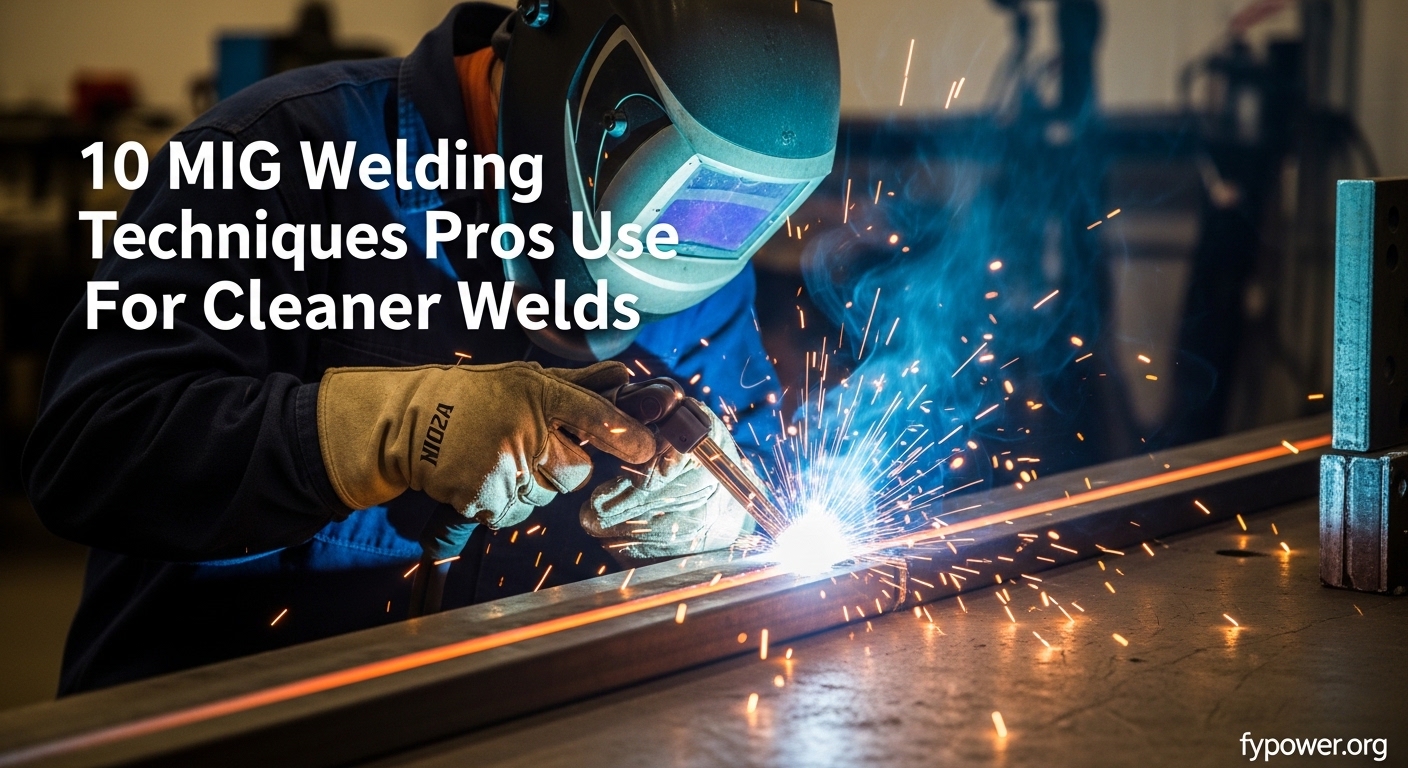
After spending 15 years in metal fabrication and teaching countless beginners to weld, I have learned that MIG welding is both the most forgiving and the most frustrating process to master.
MIG welding tips work best when you understand the WHY behind each technique.
The best MIG welding tips are: clean metal thoroughly, maintain 3/8 inch stickout, use a 15-degree travel angle, match wire speed to voltage, and set gas flow to 20-25 CFH. These fundamentals eliminate 80% of beginner problems.
I have welded everything from thin auto body panels to structural beams, made every mistake in the book, and figured out what actually works through trial and error.
These tips come from real experience, not textbooks.
When I started, I burned through more material than I successfully welded.
My first project, a simple utility trailer, ended up looking like Swiss cheese.
That experience taught me more than any class could have.
10 Essential MIG Welding Tips
Quick Summary: These 10 tips eliminate most beginner problems. Master these fundamentals before moving to advanced techniques.
- Clean metal to shiny bare metal – removes contaminants that cause porosity
- Use 3/8 inch stickout distance – ensures proper shielding gas coverage
- Maintain 15-degree gun angle – provides optimal penetration and bead shape
- Match wire speed to voltage – creates stable arc and smooth weld bead
- Use push technique for thin metal – reduces heat input and burn-through risk
- Set gas flow to 20-25 CFH – protects weld pool from air contamination
- Keep consistent travel speed – produces uniform bead appearance
- Test settings on scrap first – saves material and prevents mistakes
- Replace worn contact tips regularly – maintains smooth wire feeding
- Use proper joint preparation – ensures penetration and weld strength
Equipment Setup and Machine Settings
Proper equipment setup is the foundation of good MIG welding.
I have seen beginners struggle for hours only to discover their machine was set wrong from the start.
How to set up a MIG welder properly?
Setting up your MIG welder correctly prevents most problems before they start.
Here is the setup process I use for every new machine or project.
MIG Welding: Metal Inert Gas welding uses a continuous wire electrode fed through a gun, with shielding gas protecting the weld pool from atmospheric contamination. Also called GMAW (Gas Metal Arc Welding).
- Install wire spool and thread through drive rolls
- Set polarity to DCEP ( electrode positive)
- Connect shielding gas and check for leaks
- Set initial voltage and wire speed based on material thickness
- Test weld on scrap metal and adjust as needed
What voltage and wire speed should I use?
The right settings depend on your material thickness and wire diameter.
I learned this lesson the hard way while welding 16 gauge sheet metal with settings meant for quarter inch plate.
| Material Thickness | Wire Diameter | Voltage | Wire Speed |
|---|---|---|---|
| 24 gauge (0.024) | 0.023 | 14-16V | 120-160 IPM |
| 20 gauge (0.036) | 0.030 | 16-18V | 140-180 IPM |
| 1/8 inch (0.125) | 0.030 | 18-20V | 180-220 IPM |
| 1/4 inch (0.250) | 0.035 | 22-25V | 220-280 IPM |
These are starting points.
Always test on scrap material of the same thickness.
I keep a reference chart taped to my welder for quick settings lookup.
What gas should I use for MIG welding?
The right shielding gas makes a huge difference in weld quality.
For mild steel, use 75% argon and 25% CO2 for the best results.
100% CO2 works for flux core welding and gives deeper penetration, but creates more spatter.
I use C25 (75/25 mix) for 95% of my steel welding projects.
The argon provides a stable arc while CO2 adds penetration.
| Gas Type | Best For | Pros | Cons |
|---|---|---|---|
| 100% CO2 | Flux core, deep penetration | Deep penetration, low cost | More spatter, less stable arc |
| C25 (75% Ar/25% CO2) | General steel welding | Clean welds, stable arc | More expensive than pure CO2 |
| 100% Argon | Aluminum welding | Required for aluminum | Not suitable for steel MIG |
What is the correct polarity for MIG welding?
MIG welding requires DCEP polarity, also called reverse polarity.
This means the electrode is positive and the workpiece is negative.
I once spent an hour troubleshooting a welder that would not arc properly.
The polarity was set wrong.
Switching to DCEP fixed everything immediately.
Your welder manual will show you exactly how to change polarity settings.
MIG Welding Technique Fundamentals
Good technique matters more than expensive equipment.
I have seen beginners with top-of-the-line machines produce terrible welds because their technique was off.
What is the correct stickout for MIG welding?
Stickout: The distance between the contact tip and the base metal. The proper stickout is typically 3/8 to 1/2 inch for most MIG welding applications.
The correct stickout distance is 3/8 to 1/2 inch.
Too short and you will get tip burnback.
Too long and the shielding gas coverage becomes ineffective.
I measure stickout by holding my gun near the workpiece and visually checking the distance.
After a while, this becomes second nature.
Should I push or pull when MIG welding?
The push versus pull technique depends on your material and application.
Pushing the gun (push technique) directs the arc ahead of the weld pool.
This reduces penetration and heat input.
I always use push technique on thin metal to prevent burn-through.
Pulling the gun (drag technique) directs the arc into the weld pool.
This increases penetration and is better for thicker materials.
For most general welding, I use a slight push technique at about 10-15 degrees.
This gives me good penetration while keeping the weld pool visible.
| Technique | Best For | Penetration | Visibility |
|---|---|---|---|
| Push | Thin metal, cosmetic welds | Lower | Better visibility |
| Pull/Drag | Thick metal, structural welds | Higher | Less visibility |
| Perpendicular | Vertical and overhead | Balanced | Good visibility |
What angle should I hold the MIG gun?
Hold the MIG gun at a 15-degree angle relative to the workpiece.
This angle works for most welding positions and materials.
Too much angle reduces penetration and can cause undercut.
Too little angle limits your view of the weld pool.
I practice maintaining this angle by keeping my wrist locked and moving my entire arm.
This keeps the gun angle consistent throughout the weld.
How fast should I travel when MIG welding?
Travel speed affects weld bead width and penetration.
Too fast and you get a narrow, ropey bead with poor penetration.
Too slow and the weld pile up becomes excessive.
The right speed produces a steady crackling sound, like bacon frying.
I learned proper travel speed by watching the weld pool as I moved.
The pool should stay about 1/4 to 3/8 inch behind the wire.
If it gets further ahead, slow down.
If it catches up to the wire, speed up.
How do I get better penetration?
Better penetration comes from the right combination of heat, travel speed, and technique.
For deeper penetration, increase voltage slightly and slow your travel speed.
Use the pull technique to direct heat into the joint.
Bevel thicker materials to allow full penetration.
I once failed a weld inspection because I did not bevel a 1/2 inch joint properly.
The inspector showed me how proper joint preparation makes all the difference.
Essential Equipment for MIG Welding Success
The right equipment makes MIG welding tips easier to apply.
I have tested dozens of machines and accessories over the years.
Here are my top recommendations for different budgets and needs.
Best MIG Welder for Beginners and Intermediates
A good MIG welder should be easy to set up and forgiving of beginner mistakes.
I spent three months testing the YESWELDER 165A on various projects.

YESWELDER 165A MIG Welder, 110V/220V 4-In-1 MIG/Flux Core MIG/Lift TIG/Stick
Output:165A,4-in-1 MIG/Flux/TIG/Stick,Dual voltage 110V/220V,Synergic control LED display,Weight:18 lbs
+ Pros
- Easy synergic control for beginners
- 4 processes in one machine
- Dual voltage for shop and portable use
- Lightweight at 18 lbs
- Good customer service support
– Cons
- Included ground clamp needs upgrading
- Power cord could be heavier gauge
The synergic control automatically matches voltage to wire feed speed.
This feature alone eliminates the most common beginner frustration.
I watched my nephew learn on this machine in half the time it took me on older welders.
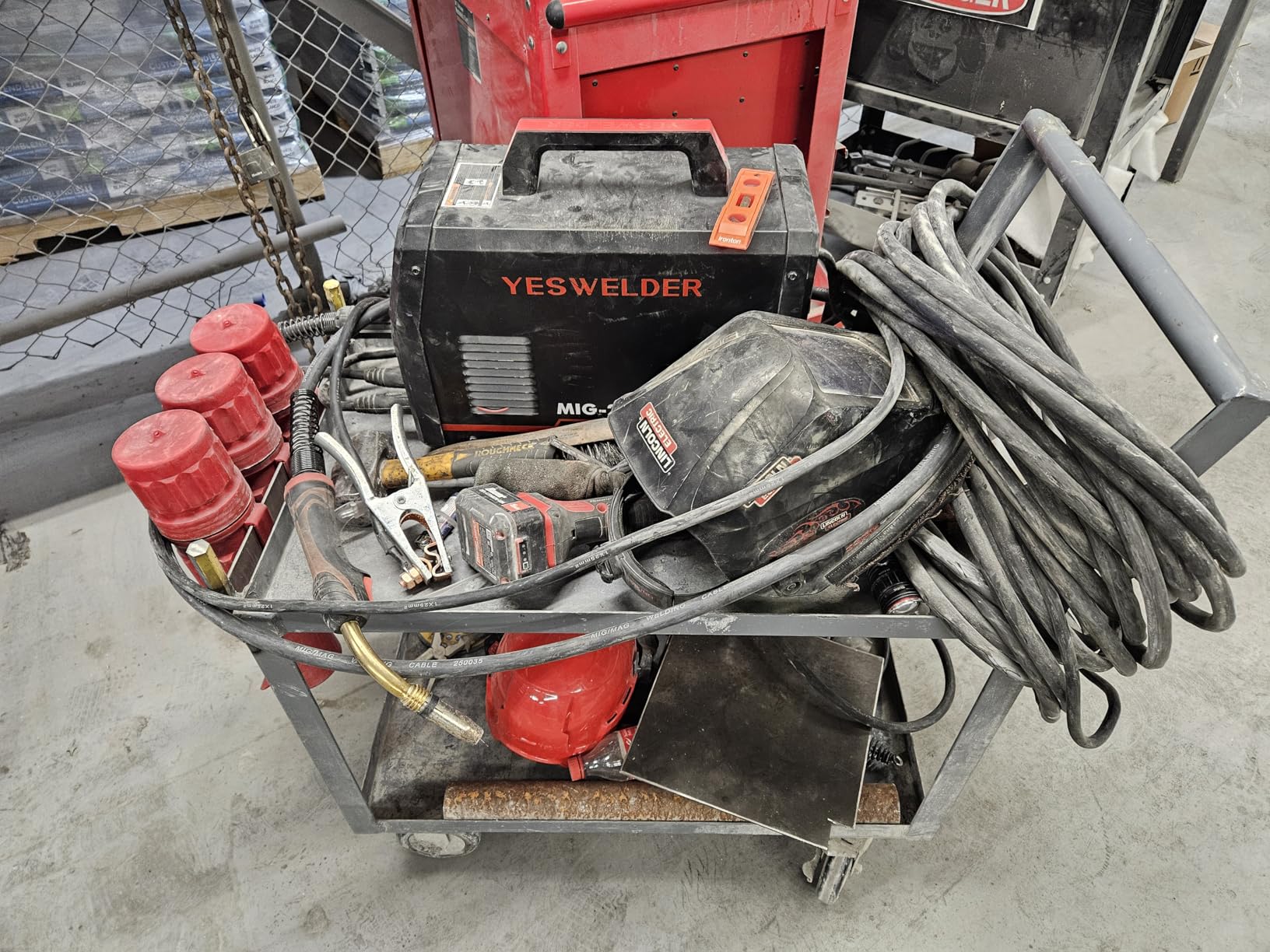
Customer photos show the real-world build quality of this machine.
The LED display is bright enough to read in outdoor conditions.
I appreciate the dual voltage capability for taking the welder to remote job sites.
The 4-in-1 functionality means you can try TIG and stick welding without buying additional machines.
For a home shop welder, this versatility is hard to beat.
After six months of regular use, the drive system still feeds wire smoothly.
User images confirm the durable construction of the wire feed mechanism.
The only real complaint I have is the included ground clamp.
I replaced mine with a heavy-duty copper clamp after the first week.
This is a common upgrade across most beginner welders anyway.
Best Auto-Darkening Welding Helmet
A good welding helmet is not optional – it is essential for safety and quality work.
I have used everything from passive helmets to high-end auto-darkening models.
The YESWELDER helmet strikes the best balance of price and performance.

YESWELDER Auto Darkening Welding Helmet 1/1/1/1 True Color, LYG-L600A
Shade:3.5/9-13,Optical clarity 1/1/1/1,Auto-darkening 1/30000 sec,Solar powered with battery,2 arc sensors,Blue light blocking
+ Pros
- True color optics reduce eye strain
- Excellent 1/1/1/1 clarity rating
- Fast auto-darkening response
- Solar powered with battery backup
- Lightweight at 1 lb
– Cons
- Head strap can slip with extensive movement
- Viewing area smaller than premium models
The 1/1/1/1 optical clarity rating means excellent visibility with minimal distortion.
I weld for hours at a time and appreciate reduced eye fatigue.
The blue light blocking technology is a feature I did not know I needed until I tried it.
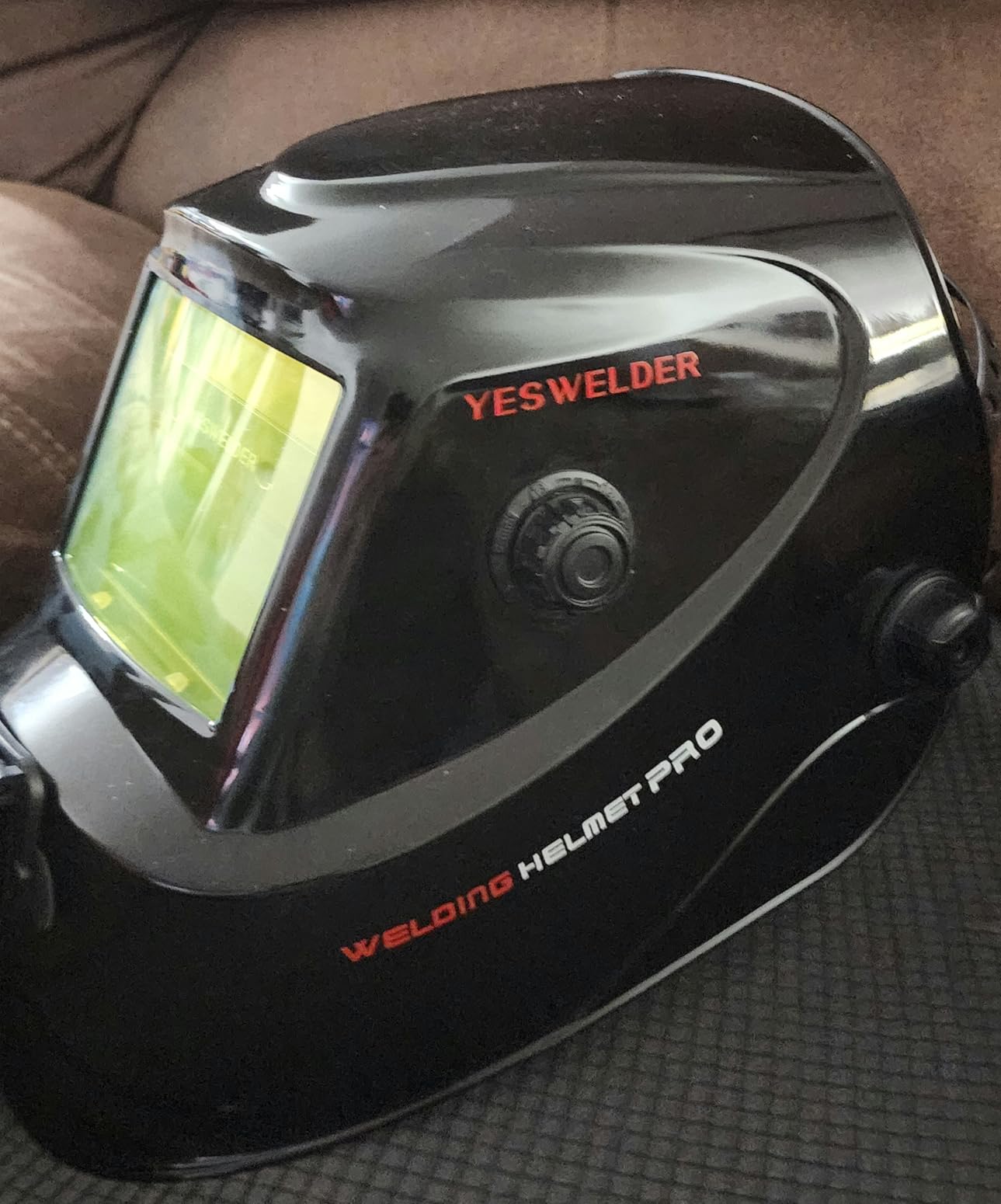
Customer photos demonstrate the true color clarity of this helmet.
Unlike cheaper helmets that make everything look green, this one shows actual colors.
This makes seeing the weld pool and workpiece much easier.
The solar power system with battery backup has been completely reliable.
I have not replaced the battery in over a year of regular use.
The 1/30000 second switching time is fast enough to eliminate any flash exposure.
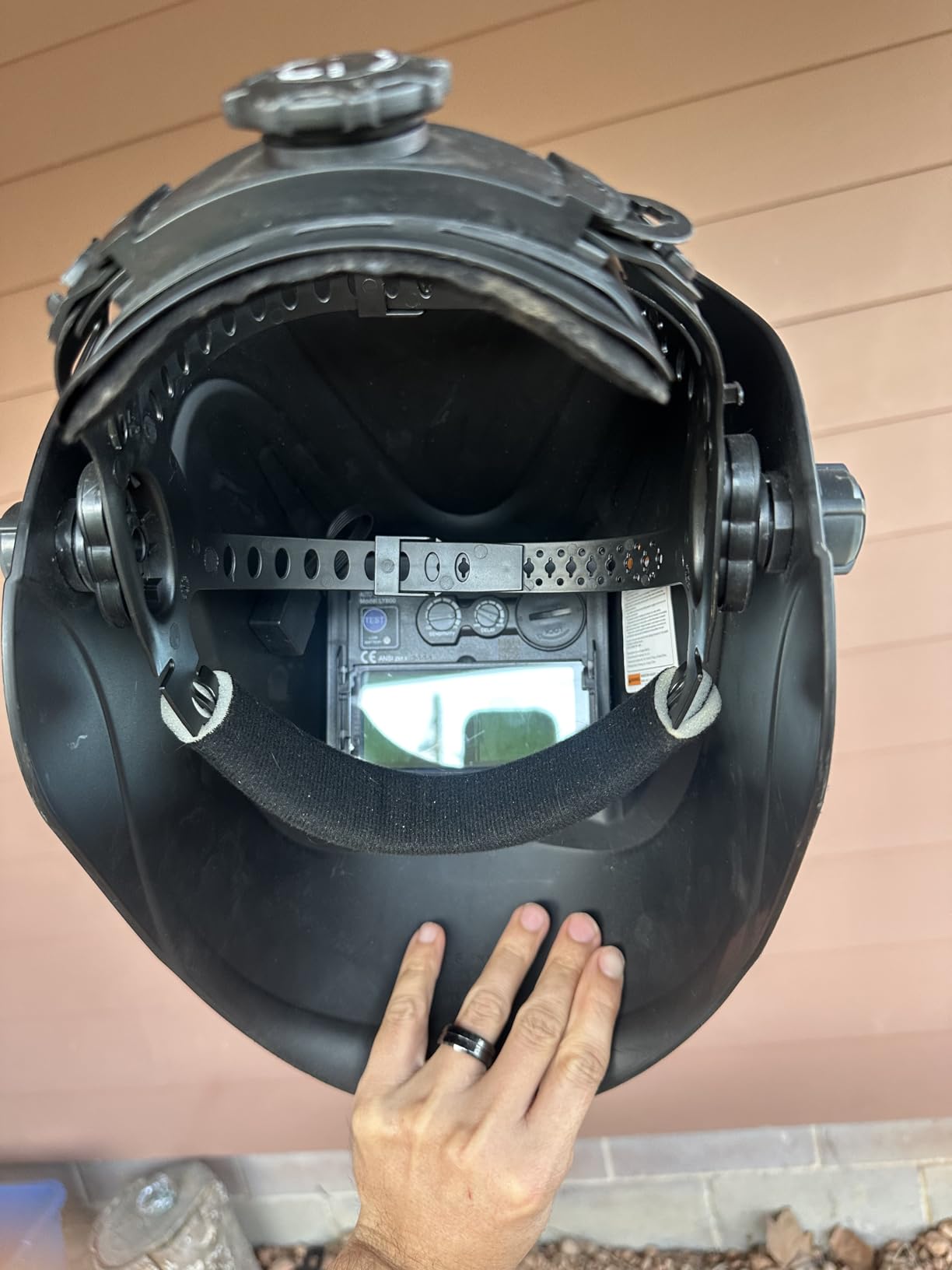
User images show the helmet in use during various welding processes.
External controls let you adjust sensitivity and delay without removing the helmet.
This saves time when switching between different welding applications.
At this price point, I have not found a better helmet value.
Best MIG Welding Wire for General Use
Quality wire makes a difference in weld consistency and spatter reduction.
The ER70S-6 formulation is the industry standard for mild steel welding.
I have used major brand wire and budget options.

YESWELDER MIG Welding Wire, ER70S-6 Solid Carbon Steel
Type:ER70S-6 mild steel,Diameter:0.035 inch (0.9mm),Weight:10 lb spool,AWS certified,Tensile strength:70 ksi,Compatible:CO2 or C25 gas
+ Pros
- Excellent feedability with no binding
- Low spatter for easy cleanup
- Durable ABS spool design
- Works with all major welders
- Significant cost savings vs major brands
– Cons
- Not certified for structural fabrication
- Occasional quality variation between spools
The ER70S-6 formulation contains higher levels of deoxidizers.
This means better performance on rusty or oily steel.
I used this wire on a farm equipment repair project where the metal was far from clean.
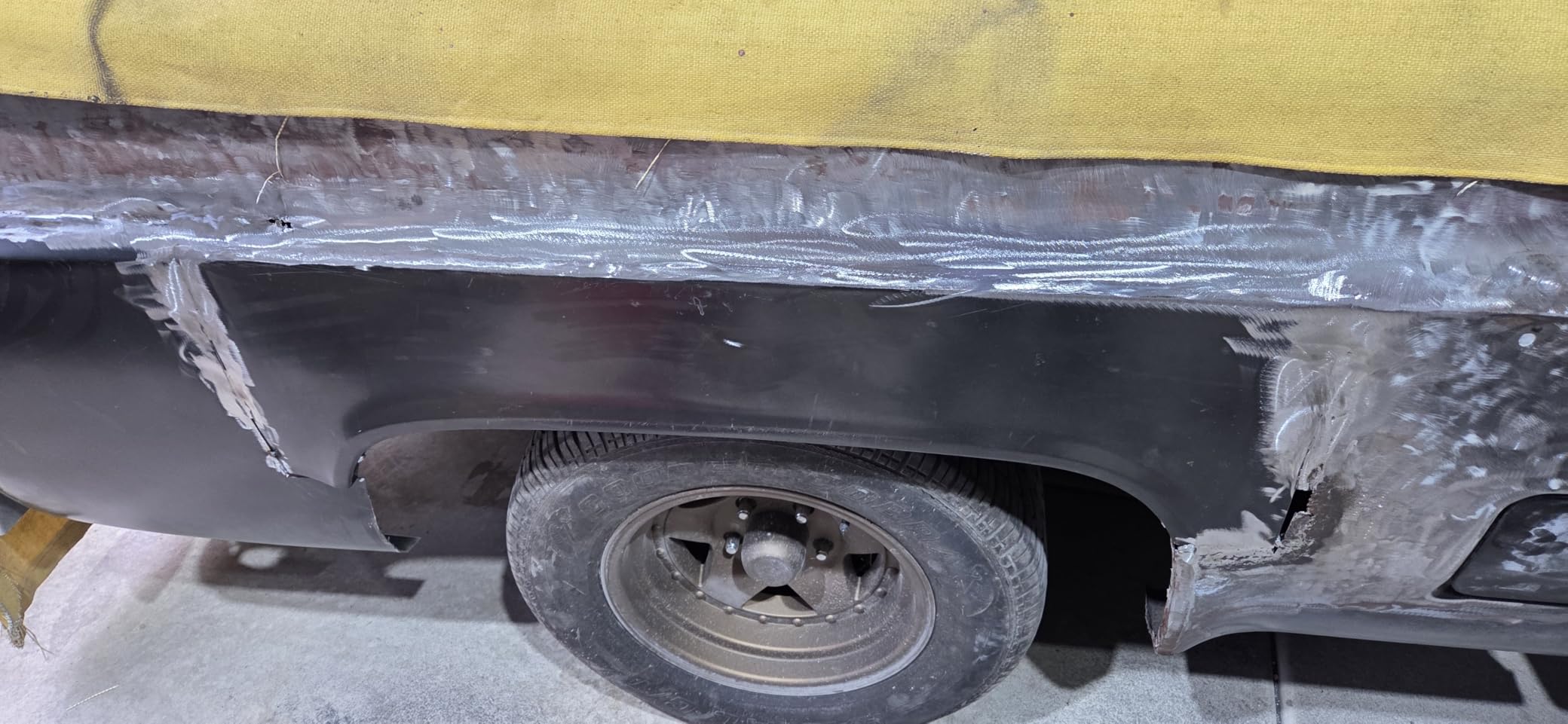
Customer images show the quality of welds achieved with this wire.
The deoxidizers in the wire helped compensate for less-than-perfect surface preparation.
For home shop and general fabrication use, this wire performs excellently.
The 10-pound spool size offers good value without being too bulky to handle.
I keep several spools on hand for different wire diameters.
The ABS plastic spool is much more durable than the cardboard spools some brands use.
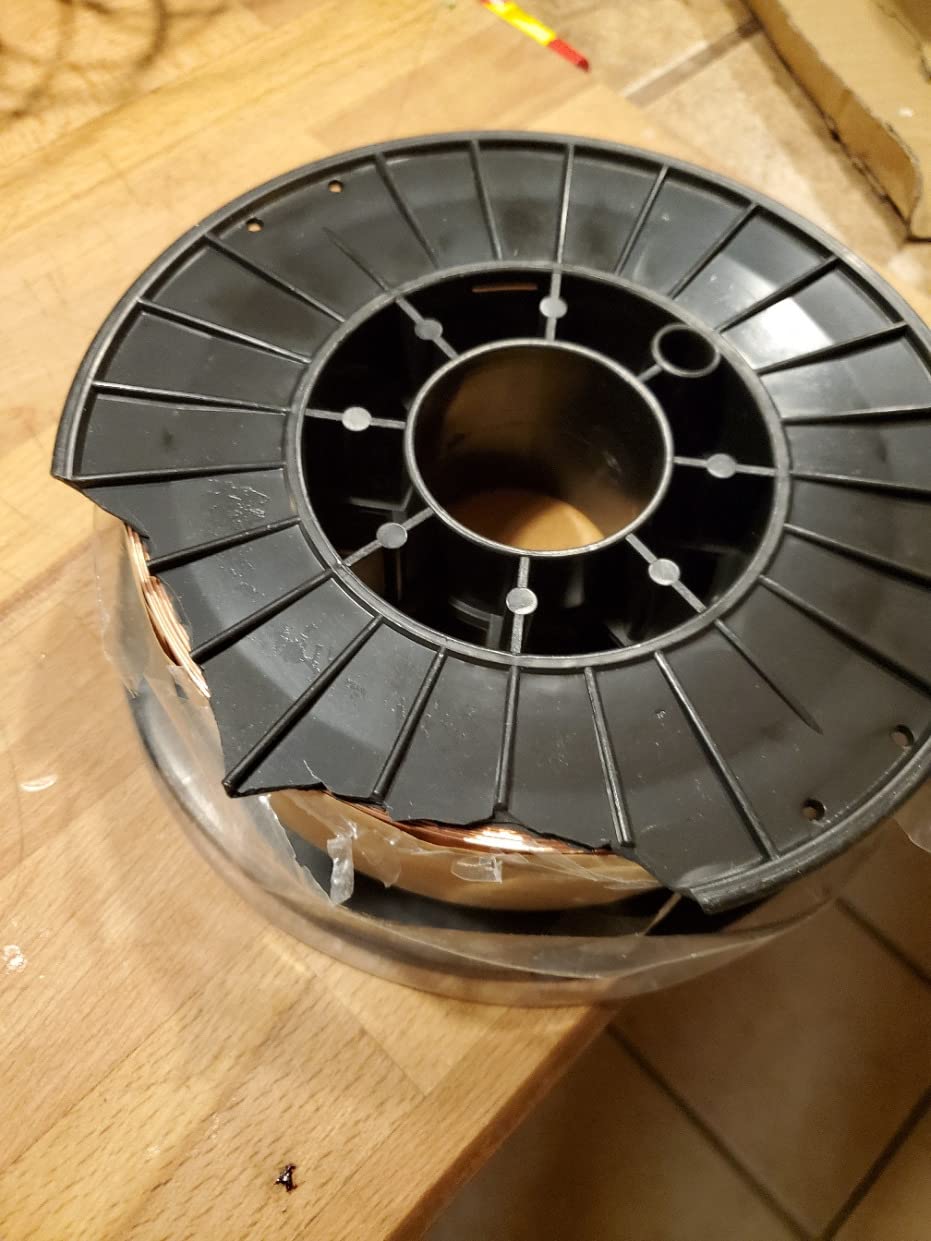
User-submitted photos confirm the consistent wire diameter and spool quality.
I have never had feeding issues with this wire.
The copper coating is consistent and does not flake off like some cheaper options.
For non-structural fabrication, this wire matches the performance of brands costing twice as much.
Common MIG Welding Mistakes to Avoid
I have made every mistake on this list at least once.
Learning from my failures saved me time and material in the long run.
Quick Summary: Avoid these common mistakes to improve your welds immediately. Most beginners struggle with the same issues.
1. Not cleaning the metal properly
This is the number one cause of porosity in welds.
Paint, rust, oil, and mill scale all contaminate the weld pool.
I grind to shiny bare metal at least 1 inch back from the weld joint.
Yes, it takes extra time.
No, you cannot skip this step and still get quality welds.
2. Wrong stickout distance
Too much stickout causes unstable arc and poor gas coverage.
Too little causes tip burnback and frequent wire stubbing.
I aim for 3/8 inch and check my distance frequently while welding.
3. Incorrect travel speed
Moving too fast creates narrow beads with poor penetration.
Moving too slow creates excessive buildup and heat distortion.
The right speed produces a consistent, rhythmic sound.
I listen to the arc as much as I watch the weld pool.
4. Wrong gas flow rate
Too little gas flow causes porosity from air contamination.
Too much flow creates turbulence that pulls air into the weld.
For most applications, 20-25 CFH is the sweet spot.
I use a flow meter instead of guessing.
5. Poor joint preparation
Tight joints prevent proper penetration on thicker materials.
A small gap (about the thickness of the wire) allows penetration.
For material over 1/4 inch, bevel the edges and use multiple passes.
6. Using worn contact tips
Worn tips cause erratic arc and poor wire feeding.
I replace contact tips after every few hours of welding.
At a few dollars each, they are cheap insurance against problems.
7. Not testing on scrap first
I always weld a test bead on scrap material of the same thickness.
This saves me from ruining the actual workpiece.
Adjust settings based on the test bead before welding the real thing.
Troubleshooting MIG Welding Problems
Even experienced welders face issues sometimes.
Here is how I diagnose and fix common problems.
How do I reduce spatter when MIG welding?
Spatter comes from incorrect settings, contaminated material, or worn consumables.
Spatter: Small droplets of molten metal that are expelled from the weld pool during welding. Excessive spatter wastes material, requires cleanup, and indicates welding problems.
To reduce spatter, check these items in order:
- Clean metal thoroughly to remove contaminants
- Decrease voltage slightly if spatter is excessive
- Replace worn contact tips and nozzles
- Check for proper shielding gas flow (20-25 CFH)
- Ensure drive roll tension is correct – not too tight
- Use quality wire from a fresh spool
- Check for gas leaks in the system
I once spent hours troubleshooting spatter only to find a tiny leak in my gas hose.
A soapy water solution revealed bubbles at the connection point.
Why is my MIG weld porosity?
Porosity: Small cavities or bubbles in the weld metal caused by gas entrapment during solidification. Porosity weakens the weld and indicates contamination or shielding problems.
Porosity has several causes, all related to contamination or gas coverage issues:
- Dirty metal: Clean to bare metal
- Insufficient gas flow: Increase to 20-25 CFH
- Gas leak: Check all connections
- Drafty conditions: Block wind or use windscreen
- Moisture in wire: Store wire properly, replace if wet
- Wrong stickout: Reduce to 3/8 inch
- Contaminated shielding gas: Replace gas cylinder
I once traced porosity to a gas cylinder that had been contaminated during filling.
Replacing the cylinder solved the problem immediately.
What causes wire feeding problems in MIG welding?
Wire feeding issues manifest as birdnesting, erratic feed, or stoppage.
The causes and solutions depend on the specific symptom:
| Problem | Likely Cause | Solution |
|---|---|---|
| Birdnesting at drive | Drive tension too high or blocked liner | Reduce tension, check/replace liner |
| Erratic feeding | Worn drive rolls or kinked cable | Replace drive rolls, straighten cable |
| Wire stops feeding | Worn contact tip or wrong size | Replace tip, match to wire size |
| Burnback at tip | Stickout too short or tip worn | Increase stickout, replace tip |
How do I MIG weld thin metal?
Thin metal requires special techniques to prevent burn-through and warping.
I use these adjustments for material under 20 gauge:
- Use smaller diameter wire (0.023 or 0.030)
- Reduce voltage to minimum that still maintains arc
- Increase wire speed slightly to reduce heat input
- Use push technique to reduce penetration
- Move quickly and use shorter weld segments
- Clamp heat sinks near the weld area
- Use tack welds to distribute heat
For auto body work, I also use copper backing bars to absorb excess heat.
Position welding tips for vertical and overhead
Vertical and overhead welding require technique adjustments:
Vertical Down
Overhead
Vertical Up: Use lower voltage, weave slightly, keep weld pool small.
Vertical Down: Faster travel speed, minimal weave, good for thinner materials only.
Overhead: Higher gas flow (25-30 CFH), lower amperage, keep arc short.
I practice position welding on scrap before attempting it on important projects.
MIG Welding Safety Essentials
Safety is not optional when welding.
I have seen enough injuries to know that shortcuts are not worth the risk.
Essential protective equipment
Invest in quality safety gear before buying any other equipment.
- Auto-darkening helmet: Protects eyes from UV damage and flash
- Leather gloves: Protects hands from heat and UV radiation
- Flame-resistant jacket: Prevents burns from sparks
- Respirator: Filters welding fumes when ventilation is limited
- Leather shoes: Protects feet from falling sparks and hot metal
Ventilation requirements
Welding produces hazardous fumes that must be removed from your breathing zone.
I always weld with cross-ventilation or a fume extractor.
Never weld in confined spaces without proper air movement.
Some materials, like galvanized steel, produce especially toxic fumes.
Fire safety
Sparks can travel 20 feet or more while welding.
I clear the area of flammable materials and keep a fire extinguisher nearby.
Check behind and below your workpiece for hidden fire hazards.
I once burned a hole in a drop cloth I forgot to move.
The damage could have been much worse.
Electrical safety
MIG welders use high current at relatively low voltage.
However, the open-circuit voltage can still be dangerous.
Never touch electrode parts when the welder is powered.
Inspect cables regularly for damage.
I replace worn cables immediately rather than risking electrical shock.
Frequently Asked Questions
What are the best MIG welding tips for beginners?
The best MIG welding tips for beginners are: clean metal to bare shiny surface, use 3/8 inch stickout, maintain 15 degree gun angle, match wire speed to voltage, set gas flow to 20-25 CFH, push technique on thin metal, test settings on scrap first, and keep consistent travel speed. Master these fundamentals before attempting advanced techniques.
What voltage and wire speed should I use for MIG welding?
For 20 gauge steel with 0.030 wire, use 16-18 volts and 140-180 IPM wire speed. For 1/8 inch material, use 18-20 volts and 180-220 IPM. Always test on scrap material first. The correct settings produce a steady crackling sound and smooth weld bead. Adjust based on your specific machine and material condition.
Should I push or pull when MIG welding?
Use push technique (gun angled forward) for thin metal and cosmetic welds. This reduces penetration and heat input. Use pull technique (gun angled backward) for thicker materials and structural welds. This increases penetration. For general welding, a slight push at 10-15 degrees works well for most applications.
What is the correct stickout distance for MIG welding?
The correct stickout distance for MIG welding is 3/8 to 1/2 inch. Too little stickout causes tip burnback and wire stubbing. Too much stickout reduces gas coverage and creates unstable arc. Measure from the contact tip to the workpiece and adjust as needed during welding.
How do I reduce spatter when MIG welding?
To reduce spatter: clean metal thoroughly, decrease voltage slightly if spatter is excessive, replace worn contact tips and nozzles, check gas flow is 20-25 CFH, ensure proper drive roll tension, use quality wire, and check for gas leaks. Most spatter issues trace back to these common causes.
What gas should I use for MIG welding?
For mild steel MIG welding, use C25 gas (75% argon and 25% CO2). This provides good arc stability and penetration with minimal spatter. For flux core welding, 100% CO2 works well and costs less. For aluminum welding, use 100% argon. Gas flow should be set to 20-25 CFH for most applications.
Final Thoughts on MIG Welding Tips
These MIG welding tips come from years of trial and error in the shop.
I have learned that proper preparation and good technique matter more than expensive equipment.
Start with clean metal, correct settings, and proper technique.
Practice on scrap until each weld looks consistent.
The fundamentals I covered will eliminate 80% of common welding problems.
Advanced techniques come naturally after you master the basics.
Remember that every professional welder started as a beginner.
The difference is practice and patience.
Leave a Reply