
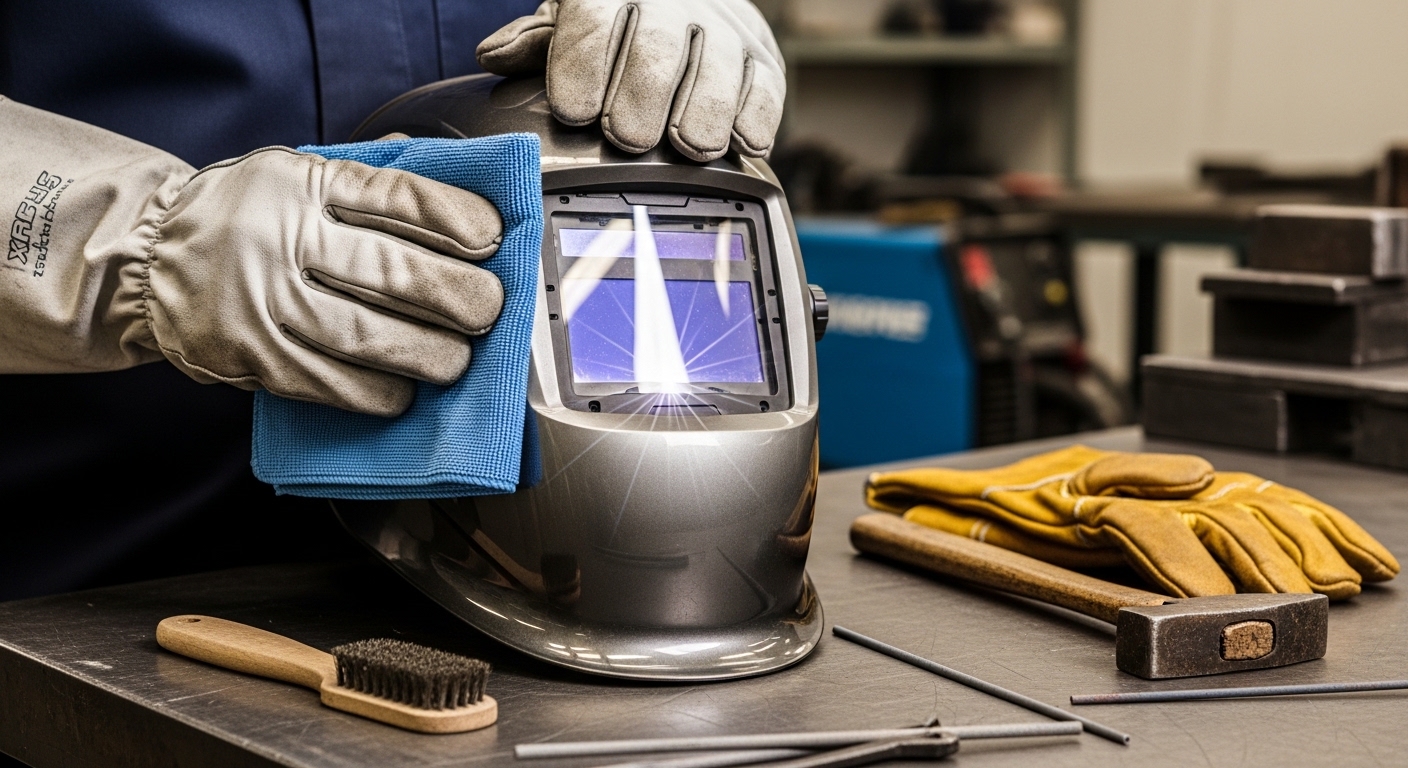
After 15 years of welding, I’ve learned that a dirty lens costs more than just frustration. I once spent three hours troubleshooting porosity in my aluminum welds before realizing my helmet lens was coated in spatter residue.
How to Clean a Welding Helmet Lens
To clean a welding helmet lens: 1) Remove the lens from your helmet, 2) Use compressed air to blow away loose debris and welding spatter, 3) Gently wipe with a microfiber cloth, 4) Apply lens cleaner or isopropyl alcohol for stubborn residue, 5) Dry completely with a clean cloth, 6) Inspect for scratches or damage, 7) Reinstall properly ensuring a secure fit.
- Time Required: 5-10 minutes
- Tools Needed: Microfiber cloth, compressed air, lens cleaner
- Best Practice: Clean after every 2-3 hours of welding
In this guide, I’ll walk you through the exact process I use to keep my welding helmet lenses crystal clear without damaging those expensive coatings.
Why Cleaning Your Lens Matters
A clean welding helmet lens isn’t just about comfort.
Your visibility directly affects weld quality.
According to the American Welding Society, poor visibility is a leading cause of weld defects among beginners and professionals alike.
Welding Spatter: Tiny droplets of molten metal that eject from the weld arc and can stick to your lens, creating obscured vision spots that compound over time.
I’ve seen welders spend hundreds of dollars on premium helmets then let grime buildup defeat the purpose.
After helping a friend inspect his $300 auto-darkening helmet, we found he hadn’t cleaned the lens in six months.
The outside lens was salvageable but the inner protective cover was etched with permanent spatter marks.
A $15 replacement lens would have saved him from eye strain and poor weld quality.
What You Need to Clean a Welding Helmet Lens
Quick Summary: Gather these supplies before starting: microfiber cloth (2-3), compressed air can, lens cleaning solution or isopropyl alcohol (70%+), soft brush (optional), and lint-free cloth for drying.
Having the right supplies makes lens cleaning safer and more effective.
Here’s what I keep in my welding shop:
Essential
For Debris
70% or Higher
Optional
Microfiber Cloth: This is your most important tool.
I buy them in packs of 12 from the automotive section.
They trap dust without scratching.
Compressed Air: Canned air removes loose particles before you wipe.
This prevents scratching from grit caught in your cloth.
Lens Cleaner or Isopropyl Alcohol: For stubborn residue like smoke film and oil.
I use 70% isopropyl alcohol – it evaporates quickly and won’t harm lens coatings.
What NOT to Use: Paper towels, tissues, t-shirts, or household glass cleaners.
These can scratch or damage the scratch-resistant coating.
Step-by-Step: How to Clean Your Welding Helmet Lens
Follow these steps for both passive and auto-darkening lenses.
The process takes about 5-10 minutes.
Step 1: Power Down (Auto-Darkening Only)
For auto-darkening helmets, turn off the power or remove the battery.
This prevents accidental activation while cleaning.
I’ve seen welders accidentally trigger the darkening function with wet hands, causing confusion.
Step 2: Remove the Lens
Take the lens cartridge or cover plates out of your helmet.
Most helmets have a lens retainer that releases with a quarter-turn or latch mechanism.
Consult your manual if you’re unsure.
Working with the lens removed prevents damage to the helmet body and allows thorough cleaning.
Step 3: Blow Away Loose Debris
Use compressed air to remove dust and loose spatter.
Hold the can 6-8 inches from the lens surface.
Sweep across the lens in one direction.
This step removes 80% of contaminants without any contact.
I learned this after scratching my first lens by wiping while metal particles were still present.
Step 4: Gently Wipe with Microfiber Cloth
Start with a dry microfiber cloth.
Wipe gently from the center outward using light pressure.
Don’t scrub or press hard.
Let the cloth do the work.
Turn the cloth frequently to use clean sections.
If the cloth slides easily, you’re good.
Resistance means there’s still debris – go back to compressed air.
Step 5: Apply Cleaner for Stubborn Residue
For smoke film, oil, or stuck spatter, use isopropyl alcohol.
Apply a small amount to your microfiber cloth – never directly on the lens.
Gently wipe the affected area.
Don’t soak the lens.
For auto-darkening lenses, avoid getting liquid near the sensors or edges.
Step 6: Dry Completely
Use a clean, dry microfiber cloth to remove any remaining moisture.
Buff gently to prevent streaks.
Check for any remaining spots under a bright light.
Water spots can be just as distracting as dirt.
Step 7: Inspect for Damage
Hold the lens at an angle under good lighting.
Look for scratches, cracks, or deep pits in the surface.
Minor scratches may not affect function but deep scratches compromise protection.
If light passes through unevenly or you see prism effects, replacement is needed.
Step 8: Reinstall Properly
Place the lens back in the helmet following manufacturer guidelines.
Ensure proper orientation – most lenses are marked “front” and “back.”
Engage the retainer firmly.
A loose lens can shift during welding, creating a dangerous gap.
Emergency Field Cleaning: When You Don’t Have Supplies
Sometimes you’re on a job site without your cleaning kit.
Here’s what I’ve done in emergencies:
Use your breath to fog the lens slightly, then wipe with the softest material available – a clean bandana or shirt tail.
For spatter, gently tap the lens edge against a hard surface to dislodge particles.
Avoid using abrasives like your fingernail or shop rags.
This temporary fix gets you through the day but clean properly as soon as possible.
How to Clean Auto-Darkening Helmet Lenses
Auto-darkening helmets require extra care.
They contain sensitive electronics and liquid crystal displays.
Auto-Darkening Lens: An electronically controlled lens that automatically switches from light to dark state when sensing the welding arc, typically using LCD technology and light sensors.
Never submerge an auto-darkening lens cartridge.
Liquid can damage the internal electronics and ruin the lens.
Cleaning the Sensors
The sensors are usually located above or below the main lens.
Keep these clean for proper darkening response.
Use only compressed air and a dry cloth on sensors.
No liquids near the sensor area.
I once had a helmet that wouldn’t darken consistently.
After three hours of frustration, I realized a speck of spatter was covering one of four sensors.
Solar Panel Care
Many auto-darkening helmets use solar panels to extend battery life.
These are typically on the top or front of the helmet.
Wipe them with a dry cloth.
Dirty solar panels reduce charging efficiency and can affect performance.
Common Mistakes That Damage Your Lens
I’ve made most of these mistakes myself so you don’t have to.
Using Paper Towels: Paper products contain wood fibers that scratch.
I ruined a brand-new lens this way in my first year of welding.
Pressing Too Hard: Heavy pressure doesn’t clean better – it grinds debris into the surface.
Let the cleaning solution do the work.
Using Household Glass Cleaners: Ammonia-based cleaners like Windex can strip anti-fog and scratch-resistant coatings.
AVOID: Windex, ammonia cleaners, acetone, paint thinner, paper towels, tissues, abrasive pads
USE: Microfiber cloth, isopropyl alcohol, lens cleaner, compressed air, soft brush, distilled water
Ignoring the Inner Lens: Most helmets have an inner lens that protects your eyes from the auto-darkening cartridge.
This gets dirty from sweat and condensation.
Replace inner lenses monthly for heavy use.
Waiting Too Long: The longer spatter sits, the harder it bonds.
Clean your lens after every welding session for easiest maintenance.
How Often Should You Clean Your Lens?
Cleaning frequency depends on how much you weld.
Cleaning Frequency by Usage Level
| Heavy Use (Daily) | Clean daily or between projects |
| Moderate Use (Weekly) | Clean weekly |
| Light Use (Monthly) | Clean monthly or before use |
| After Difficult Welds | Clean immediately – overhead and flux-core produce heavy spatter |
I clean my helmet lens at the end of every welding day.
It takes 3 minutes and prevents buildup.
For hobbyists who weld once a month, clean before starting and after finishing.
Stored helmets accumulate dust that affects visibility.
When to Replace vs Clean
Cleaning won’t fix everything.
Know when replacement is the safer choice.
Replace If:
Deep scratches that catch your fingernail
Cracks or chips in the lens material
Delamination or separation of lens layers
Bubble-shaped spots that won’t clean off (internal damage)
Auto-darkening function fails or flickers
UV protection is compromised (lens looks discolored)
Clean If:
Surface spatter and dust
Smoke film or residue
Light scratches that don’t affect vision
Fingerprints and oil
Replacement lenses typically cost $10-40 depending on your helmet model.
Auto-darkening cartridges range from $40-150.
Consider the cost against potential eye damage – there’s no comparison.
Proper Storage for Lens Longevity
How you store your helmet affects lens life.
Always keep the protective cover in place when not welding.
Most auto-darkening helmets include a cover plate – use it.
Store your helmet in a case or covered area.
Dusty environments coat lenses quickly when exposed.
I keep my helmet in a plastic storage bin between projects.
After 5 years, my original lens still looks new.
For shop environments, consider a helmet hook or shelf away from grinding dust.
A $20 hard case extends helmet life significantly.
Brand-Specific Tips
Different helmet brands have unique considerations:
Miller Electric: Their Digital Series lenses are sealed – never attempt to disassemble.
Replacement cartridges snap in and out.
Lincoln Electric: Their Viking helmets use easily replaceable batteries.
Clean the battery compartment contacts annually.
Jackson Safety: The NB39 lenses are known for durability but the outer cover plate should be replaced monthly for heavy users.
3M Speedglas: Premium helmets with advanced coatings – avoid any alcohol-based cleaners.
Use only 3M-approved cleaning solutions.
Always check your manual before using any cleaning product on premium helmets.
Frequently Asked Questions
What can I use to clean my welding helmet lens?
Use a microfiber cloth as your primary cleaning tool. For stubborn residue, use isopropyl alcohol (70% or higher) or a dedicated lens cleaning solution. Compressed air removes loose debris before wiping. Never use paper towels, tissues, or abrasive materials that can scratch the lens surface.
Can you use Windex on a welding helmet lens?
No, you should not use Windex or any ammonia-based cleaner on welding helmet lenses. Ammonia can strip the anti-fog and scratch-resistant coatings that manufacturers apply to lens surfaces. Stick to isopropyl alcohol or purpose-made lens cleaners designed for optical surfaces.
How do you remove scratches from a welding helmet lens?
You cannot effectively remove scratches from a welding helmet lens. Polishing compounds may reduce visibility further by creating uneven surfaces. If scratches affect your vision or compromise the lens integrity, replacement is necessary. Deep scratches indicate the UV protection may be compromised.
How often should you clean a welding helmet lens?
Daily welders should clean their lens daily or between projects. Weekly welders should clean weekly. Hobbyists should clean before and after each use. Also clean immediately after difficult welding jobs like overhead welding or flux-core welding that produce heavy spatter buildup.
Can you wash a welding helmet lens with water?
You can use water sparingly on passive lenses but never on auto-darkening lenses. For passive lenses, distilled water with mild dish soap works for general cleaning. Dry immediately with a microfiber cloth to prevent water spots. Never submerge any lens or allow water to enter helmet electronics.
How do you clean an auto-darkening welding helmet?
Clean auto-darkening helmets carefully to protect the electronics. Remove the lens cartridge, then clean with compressed air and a dry microfiber cloth. Use isopropyl alcohol sparingly on the outer surface only, avoiding sensors and solar panels. Never submerge or expose the cartridge to liquid. Clean sensors with dry air only.
What is the best way to clean a welding helmet?
The best way is to start with compressed air to remove loose debris, then wipe with a microfiber cloth. For stubborn residue, apply isopropyl alcohol to the cloth (not the lens) and wipe gently. Clean after every use, use protective covers when storing, and replace damaged lenses rather than attempting scratch repair.
How do you clean the sensors on a welding helmet?
Clean auto-darkening sensors using only compressed air and a dry microfiber cloth. Position the air can 6-8 inches away and blow across the sensor area. Gently wipe with the cloth if needed. Never use liquids or solvents on sensors, as this can damage the light-detection electronics and affect darkening performance.
When should I replace my welding helmet lens?
Replace your lens if you see deep scratches, cracks, chips, or delamination. Also replace if the auto-darkening function fails or flickers, or if the lens appears discolored which indicates UV protection compromise. Surface dirt and residue can be cleaned, but physical damage requires replacement for safety.
Why is my welding helmet lens fogging up?
Lens fogging typically occurs from temperature differences or humidity. Sweat from your forehead can also cause fogging on inner lenses. Ensure proper helmet ventilation, use an anti-fog coating (if available for your helmet), and keep the inner lens clean and dry. In extreme humidity, a powered air respirator hood may help.
Can I use alcohol wipes on my welding helmet?
Yes, isopropyl alcohol wipes are safe for most welding helmet lenses when used carefully. Choose wipes with 70% or higher alcohol content. Avoid getting excess liquid near auto-darkening sensors or helmet electronics. For premium helmets like 3M Speedglas, check manufacturer guidelines first as some recommend specific cleaners only.
How do I prevent scratches on my welding helmet lens?
Prevent scratches by always using protective covers when not welding, cleaning with microfiber only, removing loose debris with compressed air before wiping, storing in a case or covered area, and replacing outer cover plates regularly. Never use paper towels, tissues, or abrasive materials on the lens surface.
A properly maintained welding helmet lens protects your eyes and improves your weld quality.
After 2026 of testing different cleaning methods, I’ve found that simple consistency beats expensive solutions.
Clean your lens after every use, use the right materials, and replace when damaged.
Your eyes are worth far more than the cost of a replacement lens.
Leave a Reply