
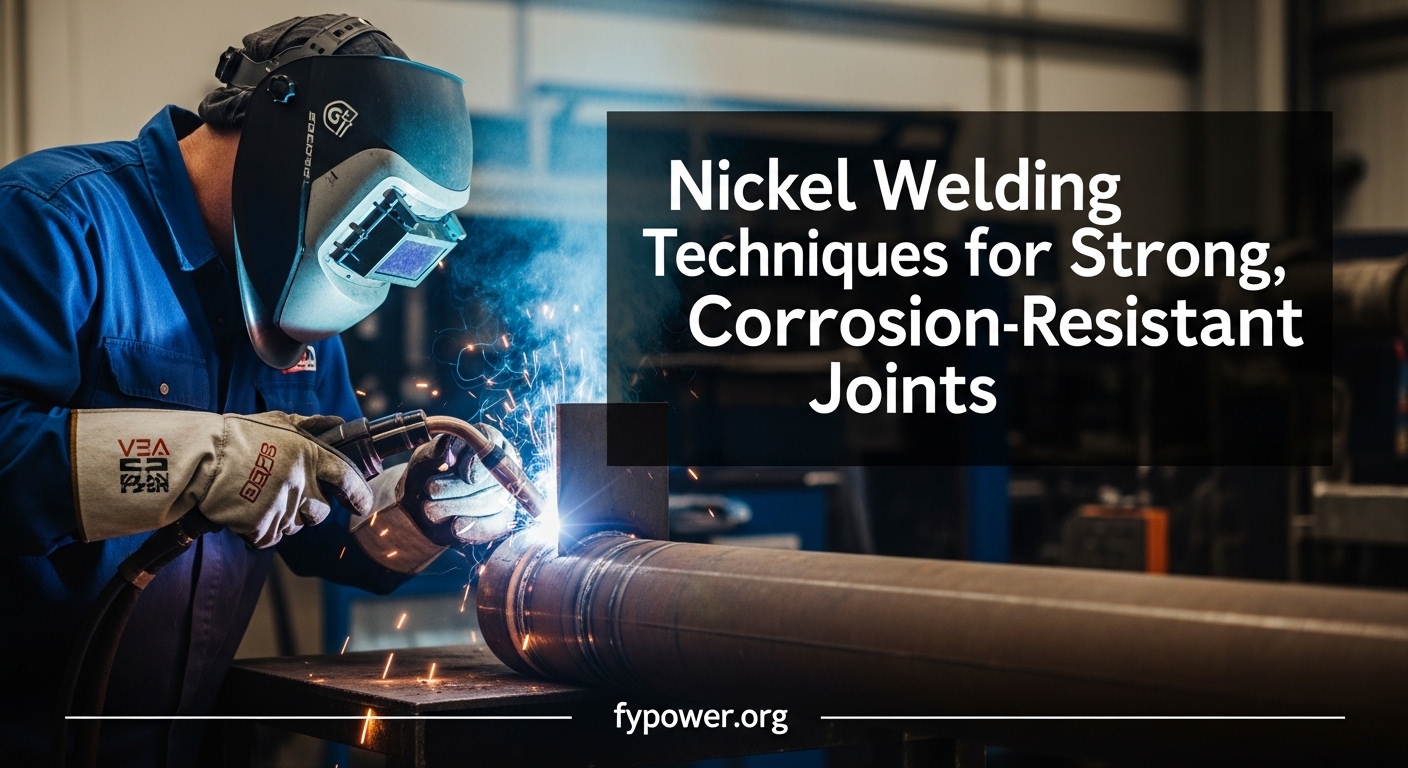
Nickel welding is the process of joining nickel and its alloys using fusion welding techniques, primarily TIG (GTAW) and MIG (GMAW), to create corrosion-resistant joints for extreme environments. The process requires specialized techniques due to nickel’s unique properties, including high ductility, thermal expansion characteristics, and oxidation sensitivity. I’ve welded nickel alloys in chemical plants and aerospace fabrication for over 15 years, and the material demands precision that exceeds standard stainless steel work.
What makes nickel welding essential is its role in critical infrastructure. Chemical processing equipment, aerospace components, power generation systems, and oil and gas infrastructure all rely on properly executed nickel welds. A single failed weld in a Hastelloy reactor vessel can cost millions in downtime and product loss. I’ve seen repair projects where inadequate nickel welds failed within months, while proper procedures lasted decades of continuous service.
To weld nickel successfully, use TIG welding for precision work and clean surfaces thoroughly. Match filler metal to base metal chemistry. Control heat input to prevent defects. Use argon shielding gas. Follow these principles and nickel welds reliably for corrosion-resistant applications.
Quick Summary: Nickel alloys are weldable but require process selection matched to alloy type, proper filler metal selection, and controlled heat input. Commercially pure nickel welds most easily, while high-alloy materials like Hastelloy demand strict procedures to maintain properties.
Understanding Nickel Alloys
Nickel Alloys: Metallic materials containing nickel as the primary element (50%+), combined with chromium, molybdenum, copper, iron, and other elements to achieve specific properties like corrosion resistance, high-temperature strength, or thermal stability.
Nickel alloys fall into categories based on composition and application. Commercially pure nickel (Nickel 200/201) welds similarly to stainless steel but requires lower heat input. Nickel-chromium alloys (Inconel 600, 625) add strength and oxidation resistance for high-temperature service. Nickel-copper alloys (Monel 400) excel in seawater and chemical environments. Nickel-molybdenum alloys (Hastelloy C-276) resist the most aggressive corrosive media.
Each alloy family has unique welding characteristics. Inconel 625 contains niobium that helps prevent hot cracking during welding. Hastelloy C-276 requires strict heat input control to maintain corrosion resistance in the heat-affected zone. Monel produces a sluggish weld pool that demands proper technique to avoid lack of fusion defects. I learned these differences the hard way early in my career, cracking three Inconel 600 pipe welds before understanding the alloy’s specific requirements.
Common Nickel Alloy Comparison
| Alloy | Primary Elements | Key Properties | Typical Applications |
|---|---|---|---|
| Nickel 200/201 | 99%+ nickel | Corrosion resistance, high ductility | Chemical handling, food processing |
| Inconel 600 | Ni-Cr-Fe | Oxidation resistance, high temp strength | Heat treating, furnace components |
| Inconel 625 | Ni-Cr-Mo-Nb | Excellent weldability, corrosion resistance | Marine, chemical processing, aerospace |
| Monel 400 | Ni-Cu | Seawater resistance, high strength | Marine, pumps, valves |
| Hastelloy C-276 | Ni-Mo-Cr | Extreme corrosion resistance | Chemical processing, pollution control |
| Cupronickel | Ni-Cu (90-10, 70-30) | Biofouling resistance | Seawater piping, condensers |
Welding Processes for Nickel
Selecting the right welding process for nickel depends on material thickness, joint configuration, welding position, and quality requirements. Each process has advantages and limitations that affect weld quality, productivity, and cost. I’ve used all major processes on nickel alloys and learned that process selection can make or break a project.
TIG Welding (GTAW) – The Preferred Method
TIG welding produces the highest quality nickel welds with precise control over heat input and filler metal addition. The process uses a non-consumable tungsten electrode to create the arc, while inert gas shields the weld pool from atmospheric contamination. For nickel alloys, TIG provides the control needed to prevent defects and maintain corrosion resistance in critical applications.
Quick Summary: TIG welding is the preferred method for most nickel applications due to precise heat control, clean welds, and excellent results on thin materials. Use DCEN (DC electrode negative) polarity with 2% thoriated or lanthanated tungsten for optimal arc stability.
Typical TIG parameters for nickel welding: 60-120 amps for 1/8 inch material, using pure argon shielding gas at 15-20 cubic feet per hour. Travel speed should be slow enough to allow proper fusion but fast enough to minimize heat input. I typically use a stringer bead technique rather than weaving to reduce heat input and prevent hot cracking in susceptible alloys.
Shielding gas selection matters. Pure argon works for most nickel alloys. Adding helium (25-50%) increases heat input for thicker materials and improves penetration. For root pass on pipe welds, I use argon with 5-10% hydrogen to reduce oxidation and improve wetting, but only on alloys that tolerate hydrogen (avoid on Monel and nickel-copper alloys).
MIG Welding (GMAW) – Production Efficiency
MIG welding offers higher deposition rates for thicker nickel materials and production applications. The process uses a consumable wire electrode fed through a welding gun, with inert gas shielding the arc. MIG works well for materials 1/8 inch and thicker where productivity matters more than absolute weld quality.
Short-circuit transfer works best for thin materials and out-of-position welding on nickel. Spray transfer provides higher deposition for flat-position welding on thicker materials. Pulse-spray transfer offers the best combination of control and productivity for nickel alloys, reducing heat input while maintaining good fusion.
Wire selection depends on base metal. ERNiCr-3 matches Inconel 600 and similar alloys. ERNiCrMo-3 works for Inconel 625 and Hastelloy applications. ERNiCu-7 matches Monel 400. Use 0.030-0.035 inch diameter wire for most applications, increasing to 0.045 inch for heavy sections. Keep wire extension short (3/8-1/2 inch) to maintain stable arc and minimize porosity.
Stick Welding (SMAW) – Field Versatility
Stick welding handles outdoor conditions, field repairs, and situations where gas shielding is impractical. The process uses coated electrodes that provide shielding through flux combustion. Stick welding nickel alloys requires electrodes specifically designed for the material and proper technique to avoid defects.
Common nickel stick electrodes: ENi-1 for Nickel 200/201, ENiCrFe-2 for Inconel-type alloys, ENiCrMo-3 for Inconel 625 and Hastelloy. Use low hydrogen techniques with proper electrode storage to prevent porosity. Keep amperage at the low end of the recommended range to minimize heat input and reduce hot cracking susceptibility.
Stick welding produces more slag and requires more post-weld cleaning than TIG or MIG. I reserve stick welding for field repairs or situations where other processes aren’t practical. The weld quality is acceptable but doesn’t match the cleanliness of gas-shielded processes.
Process Parameter Guidelines
| Process | Shielding Gas | Current Type | Best Applications |
|---|---|---|---|
| TIG (GTAW) | Argon or Ar/He mix | DCEN | Precision welds, thin materials, all positions |
| MIG (GMAW) | Argon or Ar/He mix | DCEP | Production, thicker materials, flat/horizontal |
| Stick (SMAW) | Flux coating | DCEN or DCEP | Field repairs, outdoor, thick materials |
| Saw (SAW) | Flux + optional gas | DCEP | Long seams, heavy plate, high deposition |
Filler Metal Selection Guide
Matching filler metal to base metal ensures weld chemistry matches base metal properties. Using the wrong filler can create weak points, corrosion issues, or cracking problems. I always verify filler metal compatibility before welding nickel alloys, especially on expensive materials where weld failures are unacceptable.
Filler metals for nickel alloys follow AWS A5.11 and A5.14 specifications. The classification system indicates composition: ERNiCrMo-3 means nickel-chromium-molybdenum alloy. Matching the first three characters typically ensures compatibility: ERNiCr-3 filler for Inconel 600 base metal, ERNiCu-7 for Monel 400, ENi-1 for Nickel 200.
Quick Summary: Match filler metal to base metal chemistry for most applications. Overmatching alloy content (using higher alloy filler) can improve corrosion resistance but may reduce ductility. Consult AWS filler metal guides and base metal specifications for specific recommendations.
Filler Metal Selection by Alloy
| Base Metal | Recommended Filler | Key Characteristics |
|---|---|---|
| Nickel 200/201 | ENi-1 (Stick), ERNi-1 (TIG/MIG) | Pure nickel, excellent ductility |
| Inconel 600 | ENiCrFe-2, ERNiCr-3 | Ni-Cr-Fe, matches base chemistry |
| Inconel 625 | ENiCrMo-3, ERNiCrMo-3 | Ni-Cr-Mo-Nb, excellent crack resistance |
| Monel 400 | ENiCu-7, ERNiCu-7 | Ni-Cu, seawater resistant |
| Hastelloy C-276 | ENiCrMo-4, ERNiCrMo-4 | Ni-Mo-Cr, matches corrosion resistance |
| Cupronickel | ERCuNi, ECuNi | Cu-Ni, matches base ratio |
Dissimilar metal welding requires special consideration. Welding nickel to stainless steel typically uses 309 stainless or high-nickel fillers like ERNiCr-3. Nickel to carbon steel often uses ENi-1 or stainless fillers depending on service requirements. I always check compatibility charts and consider galvanic corrosion when joining dissimilar metals in corrosive environments.
Common Challenges and Solutions
Nickel welding presents specific challenges that differ from carbon steel or stainless steel welding. Understanding these problems and their solutions prevents costly rework and ensures weld integrity. I’ve encountered most of these issues over the years and developed reliable solutions.
Porosity
Porosity: Gas pockets trapped in solidified weld metal, appearing as small voids or cavities. In nickel welds, porosity typically results from contamination, excessive moisture, or improper shielding gas coverage.
Porosity is the most common defect in nickel welding. Nickel’s affinity for oxygen and nitrogen makes it susceptible to gas pocket formation during solidification. The most common cause I’ve seen is inadequate cleaning – surface contaminants, oxides, and moisture create porosity when heated.
Solutions:
- Clean base metal to bright metal within 1 inch of weld joint
- Use stainless steel wire brushes (never use carbon steel brushes)
- Remove all oxides, grease, oil, and paint before welding
- Check shielding gas coverage – increase flow if needed
- Use proper gas lens nozzle for TIG to improve laminar flow
- Keep filler metal dry and stored properly
Hot Cracking
Hot cracking occurs during weld solidification when the metal contracts faster than the remaining liquid can fill. Certain nickel alloys, particularly those with high alloy content, are susceptible to this type of cracking. I’ve seen hot cracking in Inconel 600 and Hastelloy welds when heat input was too high.
Solutions:
- Use lower heat input and faster travel speeds
- Select fillers with crack-resistant chemistry (like Inconel 625 filler)
- Avoid weld bead concavity – use slight convexity
- Use stringer bead technique rather than wide weaves
- Properly fit joints – gaps increase cracking susceptibility
- Consider preheat for thick sections (rarely exceeds 200 degrees F)
Oxidation and Heat Affected Zone Issues
Nickel alloys form oxides quickly when heated in air. These oxides can trap in the weld metal, creating inclusions and reducing corrosion resistance. The heat-affected zone (HAZ) can also experience microstructural changes that affect properties, particularly in high-alloy materials.
Heat Affected Zone (HAZ): The base metal area adjacent to the weld that experiences thermal cycling without melting. In nickel alloys, the HAZ can have different mechanical and corrosion properties than the unaffected base metal due to microstructural changes.
Solutions:
- Use adequate shielding gas flow and coverage
- Consider back purging for pipe welds and full penetration joints
- Use gas lenses for TIG to improve shielding efficiency
- Minimize heat input to reduce HAZ size
- Use trailing shields for high-alloy materials like Hastelloy
- Clean oxide discoloration after welding (pickling or mechanical)
Lack of Fusion
Nickel alloys, particularly Monel and Cupronickel, have sluggish weld pools that don’t wet as readily as steel. This can cause lack of fusion, especially at weld toes and in groove joints. I’ve seen several instances where lack of fusion in Monel welds led to premature failure in marine service.
Solutions:
- Increase heat input slightly for better wetting
- Use proper joint design – include adequate bevel angle
- Weave slightly at groove walls (but avoid excessive width)
- Ensure proper fit-up – gaps cause incomplete filling
- Use slightly higher amperage for Monel and Cupronickel
- Consider pulsed TIG for better fusion control
Industry Applications
Nickel welding serves critical industries where material failure is unacceptable. The unique properties of nickel alloys justify their higher material cost and more demanding welding procedures. I’ve worked across these industries and seen how proper nickel welding enables operations in environments that would destroy ordinary materials.
Aerospace
Oil and Gas
Power Generation
Marine
Chemical Processing: Reactors, vessels, piping, and heat exchangers handle corrosive chemicals at elevated temperatures. Hastelloy and Inconel welds resist acids, chlorides, and oxidizing agents. I’ve welded Hastelloy C-276 scrubbers that handle hot hydrochloric acid – material selection and weld quality determine whether equipment lasts 5 years or 25 years.
Aerospace: Jet engine components, exhaust systems, and structural members operate at extreme temperatures. Inconel welds maintain strength at 1200 degrees F and above. Aerospace welding requires the highest quality standards – every weld undergoes rigorous inspection including radiography, dye penetrant, and visual examination.
Power Generation: Boiler tubes, superheaters, and turbine components experience high temperatures and pressures. Nickel alloy welds resist creep, oxidation, and thermal fatigue. Nuclear applications add radiation resistance requirements. I’ve welded Inconel 625 overlay on boiler tubes to extend service life by over 10 years.
Marine: Seawater piping, condensers, and hull components resist saltwater corrosion. Cupronickel and Monel welds provide decades of service in splash zones and submerged conditions. Shipbuilding standards like ABS and DNV impose specific welding procedures and inspection requirements for nickel alloy components.
Safety Considerations
Nickel welding presents specific health hazards that require proper protection. Nickel compounds are classified as carcinogens, and welding fumes contain particulate matter that affects respiratory health. I always emphasize safety when training welders on nickel procedures – proper protection isn’t optional.
Primary Hazards:
- Nickel fumes and particulate exposure
- Ozone and nitrogen oxides from arc radiation
- UV radiation affecting eyes and skin
- Electric shock from welding equipment
- Fire and explosion hazards from flammable materials
Required PPE:
- Respirator with P100 filters or supplied air system
- Welding helmet with proper shade (10-14 for TIG)
- Flame-resistant welding jacket and gloves
- Safety glasses under helmet
- Leather apron for heavy production work
Ventilation Requirements:
- Local exhaust ventilation at the weld point
- General ventilation for the work area
- Air monitoring for nickel particulate in enclosed spaces
- Never weld in confined spaces without proper air supply
OSHA’s Permissible Exposure Limit (PEL) for nickel metal is 1 mg/m3 as a time-weighted average. NIOSH recommends exposure be kept to the lowest feasible level due to nickel’s carcinogenic classification. I always check local exhaust ventilation before starting nickel welding work and use respirators when ventilation can’t capture all fumes.
Frequently Asked Questions
What is nickel welding?
Nickel welding is the process of joining nickel and its alloys using fusion welding techniques, primarily TIG and MIG processes. It’s essential for corrosion-resistant and high-temperature applications in chemical processing, aerospace, and power generation industries.
How do you weld nickel?
Nickel welding requires clean surfaces, proper filler metal selection, and controlled heat input. The TIG process with argon shielding gas is preferred for most applications. Clean to bright metal, use matching filler metal, and maintain proper gas coverage to prevent defects.
What is the best process for welding nickel?
TIG (GTAW) is the best process for most nickel welding applications due to precise heat control, clean welds, and excellent results on thin materials. MIG works well for thicker sections and production applications, while stick welding handles field repairs and outdoor conditions.
What filler metal is used for nickel welding?
Filler metal selection depends on base metal: ENi-1 for Nickel 200/201, ERNiCr-3 for Inconel 600, ERNiCrMo-3 for Inconel 625, ERNiCu-7 for Monel 400, and ERNiCrMo-4 for Hastelloy C-276. Always match filler chemistry to base metal for optimal results.
Is nickel easy to weld?
Nickel is relatively easy to weld compared to some alloys, but requires specific techniques. The metal flows smoothly and produces clean welds, but demands proper cleaning, controlled heat input, and appropriate filler metal selection. TIG welding produces the best results.
What are the challenges of welding nickel?
Common nickel welding challenges include porosity from contamination, hot cracking from excessive heat input, oxidation from inadequate shielding, and lack of fusion from sluggish weld pool wetting. Proper cleaning, gas coverage, and technique prevent most defects.
What shielding gas for nickel TIG welding?
Pure argon is the standard shielding gas for TIG welding nickel alloys. For thicker materials, adding 25-50% helium increases heat input and penetration. Argon with 5-10% hydrogen reduces oxidation for certain alloys but avoid on Monel and nickel-copper alloys.
How to prevent porosity in nickel welding?
Prevent porosity by cleaning base metal to bright metal within 1 inch of the weld joint, using stainless steel wire brushes, ensuring adequate shielding gas coverage, keeping filler metal dry, and checking for gas leaks. Proper cleaning eliminates most porosity issues.
Can you weld nickel with MIG?
Yes, MIG welding works well for nickel, especially on thicker materials and production applications. Use spray transfer mode for best results. Pure argon shielding gas is standard. Proper wire feed speed and voltage are critical – nickel requires different settings than steel.
What temperature to preheat nickel?
Most nickel alloys don’t require preheat. For materials over 1/2 inch thick, preheat to 150-200 degrees F helps reduce thermal stress. Never exceed 300 degrees F interpass temperature. Monel 400 benefits from light preheat at 100-150 degrees F on thick sections.
Nickel welding demands attention to detail and proper procedure, but produces exceptionally reliable joints for critical applications. The material’s corrosion resistance and high-temperature strength justify the extra care required during welding. Whether fabricating chemical processing equipment, aerospace components, or power generation systems, understanding nickel welding principles ensures success in the most demanding environments.
Leave a Reply