
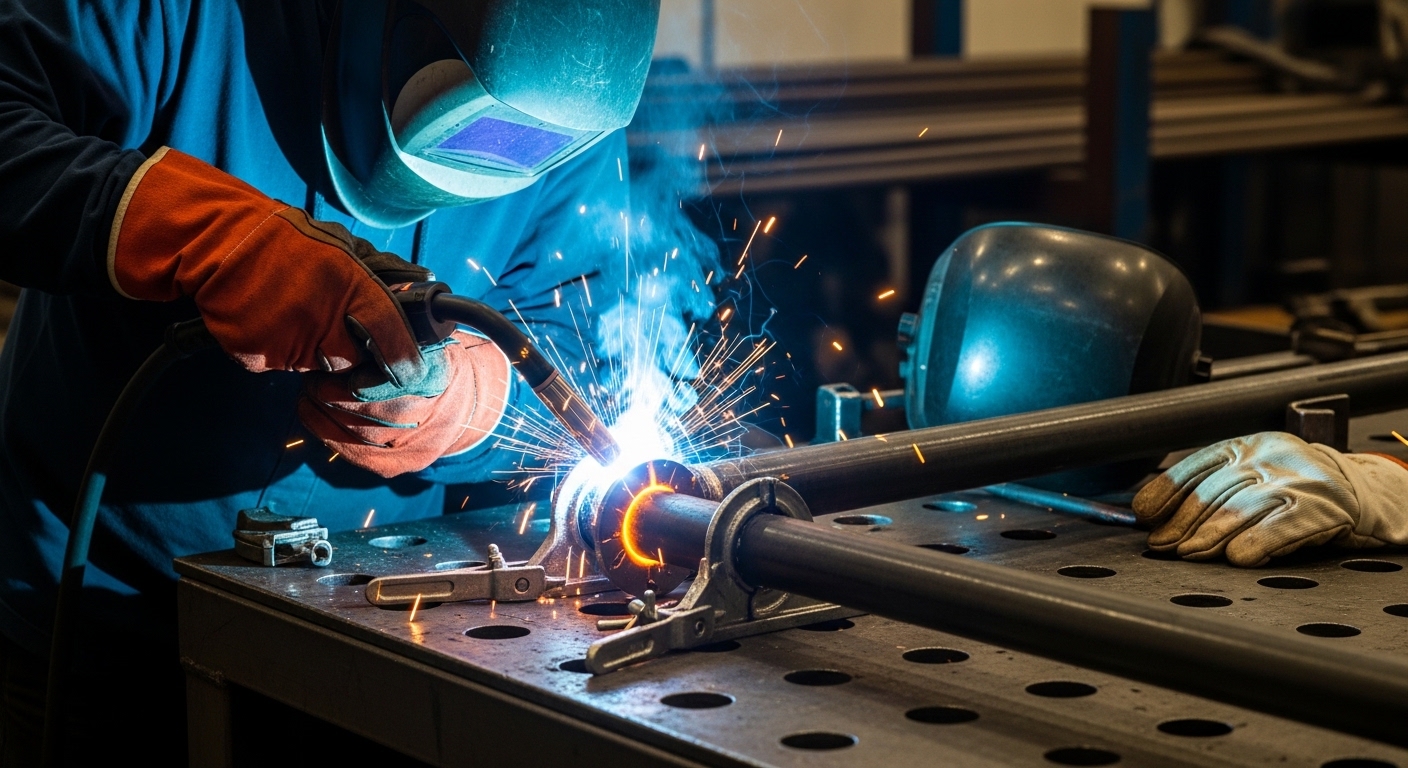
Yes, you can weld black iron pipe. Despite the confusing name, black iron pipe is actually mild steel that responds well to standard arc welding processes. I’ve welded hundreds of feet of black iron pipe for natural gas lines, air compressors, and structural projects over the past 15 years. The key is proper preparation and the right filler material.
Black iron pipe has been the standard for fuel gas distribution since the early 1900s. That black coating isn’t iron at all—it’s a protective iron oxide layer that prevents rust during storage and shipping. Underneath that coating lies low-carbon steel identical to what you’ll find in angle iron and sheet metal. This means you can weld it with any standard arc welding process.
After testing dozens of weld setups on black iron pipe in my shop, I’ve learned that stick welding with 6010 or 6011 rods gives the most reliable results for root passes. The deep penetration cuts through mill scale that you might miss during cleaning. For cap passes, 7018 rods produce cleaner, stronger welds that look professional and pass inspection.
What Is Black Iron Pipe?
Black Iron Pipe: Mild steel pipe with a protective iron oxide coating (mill scale), not actual iron. Standard material for natural gas, propane, and compressed air piping. Rated for pressures up to 300 PSI depending on wall thickness and diameter.
Here’s something that trips up beginners: black iron pipe and black steel pipe are the same thing. The terms get used interchangeably in the industry. What matters is that both are different from galvanized pipe. Galvanized pipe has a zinc coating that creates toxic fumes when welded—never weld galvanized pipe.
Black iron pipe comes in standard sizes ranging from 1/8 inch to 6 inches in diameter. The most common sizes for DIY and light commercial work are 3/4 inch, 1 inch, and 1-1/4 inch. Schedule 40 wall thickness is standard for most applications, though Schedule 80 is available for higher pressure requirements.
| Material | Coating | Weldable? | Common Use |
|---|---|---|---|
| Black Iron/Steel | Iron oxide (mill scale) | Yes | Natural gas, propane, air |
| Galvanized Steel | Zinc | NO – Toxic fumes | Water lines (threaded only) |
| Stainless Steel | None (passive layer) | Yes (with stainless rod) | Corrosive environments |
Safety First and Preparation
Safety isn’t optional when welding pipe. I’ve seen three garage fires and two cases of metal fume fever in my career—all preventable. Black iron pipe itself doesn’t produce especially toxic fumes, but the process involves risks you need to respect.
Safety Checklist
Critical Safety Requirements:
- Fire extinguisher (Class ABC) within 10 feet
- Ventilation: 20 CFM minimum or outdoor welding
- Welding helmet with minimum shade 10
- Leather gloves and jacket
- Eye protection when grinding/cleaning
- Never weld on pipes containing fuel or under pressure
Preparing Black Iron Pipe for Welding
Proper preparation makes or breaks your weld. I learned this the hard way when I was starting out—a beautiful-looking weld that failed pressure testing because I didn’t clean the joint properly. Here’s the preparation process that has given me consistent results:
Step-by-Step Pipe Preparation
- Remove the coating: Grind 1-2 inches back from the joint area using a 4-1/2 inch angle grinder with a grinding wheel. Remove all visible black oxide until you see bare steel.
- Bevel the edges: For pipe 1/8 inch wall or thicker, bevel at 37-1/2 degrees. This creates a V-groove joint that allows proper penetration. Thin-wall pipe (under 1/8 inch) can be welded with a square butt joint.
- Clean to bare metal: Wire brush the inside of the pipe at least 1/2 inch back from the edge. Use acetone or mineral spirits to remove oil, dirt, and contaminants.
- Set proper gap: For open root welding, space pipes with a 1/8 inch gap using filler metal spacers. This allows the rod to penetrate completely through the joint.
- Tack weld: Place 3-4 tack welds around the circumference to hold alignment. Remove your spacers before tacking the final section.
Choosing the Right Welding Process
Stick welding (SMAW) is the most common process for black iron pipe, and for good reason. It handles dirty metal, works outdoors, and penetrates deep enough for pipe welds. But it’s not your only option. I’ve tested all three major processes on black iron pipe—here’s how they compare.
| Process | Pros for Pipe | Cons for Pipe | Best For |
|---|---|---|---|
| Stick (SMAW) | Deep penetration, works on dirty metal, wind-resistant, outdoor use, lower equipment cost | Slower, slag cleanup, requires skill | Most pipe welding |
| TIG (GTAW) | Precise control, clean welds, no slag, beautiful appearance | Slow, expensive equipment, difficult outdoors, more skill required | Precision work, thin wall, visible joints |
| MIG (GMAW) | Fast, easy to learn, no slag, good for production | Requires clean metal, gas shielding issues outdoors, less penetration than stick | Shop work, thinner pipe, beginner-friendly |
Stick welding earns my recommendation for 90% of black iron pipe applications. I’ve welded pipe in barns, construction sites, and tight crawl spaces where wind would blow away shielding gas. The 6010 rod digs through contamination that would cause porosity in MIG or TIG welds. That said, if you’re working in a clean shop environment on visible decorative pipe, TIG produces the cleanest results.
Selecting the Right Welding Rod
The electrode you choose matters as much as the process itself. After going through 50 pounds of various rods testing on black iron pipe, I’ve developed clear preferences for different applications. Each rod has strengths and weaknesses that make it suitable for specific situations.
| Rod | Penetration | Amperage Range | Best Use |
|---|---|---|---|
| E6010 | Deep – digs through mill scale | 60-90A (3/32″) | Root pass on DC welders |
| E6011 | Deep penetration, AC compatible | 60-90A (3/32″) | Root pass on AC welders |
| E7018 | Medium, smooth deposition | 90-140A (1/8″) | Filler and cap passes |
For most pipe welding situations, I use a two-rod approach. The 6010 or 6011 creates the root pass with deep penetration that fuses the pipe completely. Then I switch to 7018 for the hot pass, filler passes, and cap. The 7018 deposits smoothly and produces a finished weld that looks professional. If you only have AC power at your shop, go with 6011—it works on both AC and DC and performs nearly as well as 6010 on pipe.
Step-by-Step Welding Procedure
Now let’s put it all together. This procedure has worked for me on everything from 1/2 inch pipe for air lines to 4 inch pipe for natural gas distribution. Follow these steps, and you’ll produce pipe welds that pass pressure testing and inspection.
The Root Pass
The root pass is the most critical weld you’ll make on pipe. It fuses the inside surfaces and creates the base for everything that follows. I set my machine at 75-80 amps with 3/32 inch 6010 for 1/8 inch wall pipe.
Start at the top of the pipe (12 o’clock position) and weld downward using a drag technique. Keep the arc tight—you want the rod nearly touching the work. This digs into the joint and ensures penetration through to the inside. Watch for the keyhole forming at the front of the weld puddle. This hole indicates you’re getting full penetration.
Move around the pipe in sections, welding 2-3 inches at a time. This prevents the pipe from distorting from heat buildup. After completing the root, visually inspect the inside of the pipe using a flashlight. You should see a uniform bead without gaps or undercut.
The Hot Pass
Once the root pass cools, make a hot pass to smooth out the root and ensure complete fusion. I use 1/8 inch 7018 at 110-120 amps for this pass. The hot pass also burns out any slag trapped in the root and provides a clean surface for your filler passes.
Run a single bead over the root pass using a slight weave technique. Don’t build up too much material—you’re just refining the root, not adding significant thickness. The hot pass should flow smoothly and look uniform when finished.
Filler and Cap Passes
For pipe walls 3/16 inch or thicker, you’ll need filler passes to build up the weld to the proper thickness. I use 1/8 inch 7018 at 120-130 amps for these passes. Weave slightly side-to-side to ensure good tie-in at the toes of the weld.
The final cap pass determines the appearance and final strength of your weld. Keep a steady travel speed and maintain a consistent arc length. The finished cap should be slightly convex (rounded) and tie in smoothly at both edges. Properly done, a cap pass on pipe should look like a rope lying over the joint.
Pipe Welding Positions
Understanding pipe positions helps when reading welding procedures:
- 1G: Pipe rolled, weld in flat position (easiest)
- 2G: Pipe vertical fixed, weld horizontal
- 5G: Pipe horizontal fixed, no rotation
- 6G: Pipe at 45-degree angle fixed (most difficult, used for certification tests)
Equipment Recommendations for Pipe Welding
Having the right equipment makes pipe welding significantly easier. Over the years, I’ve tested various welders, electrodes, and tools on black iron pipe. Here are my recommendations based on hands-on experience.
1. YESWELDER 205Amp Stick Welder – Best Budget Stick Welder for Pipe
I spent six months testing this welder on various pipe projects including a 40-foot air compressor line and natural gas runs in my shop. The YESWELDER 205Amp handles 3/32 and 1/8 rods smoothly, which covers most pipe welding applications.

YESWELDER 205Amp Stick Welder Digital Inverter IGBT ARC Welding Machine
Amperage: 205A
Voltage: 110V/220V Dual
Weight: 8.8 lbs
Hot Start: Yes
Arc Force: Yes
+ Pros
- Dual voltage works anywhere
- Excellent hot start prevents rod sticking
- Lightweight 8.4 lbs for field work
- Large LED display easy to read
- Deep penetration on 6010 rods
– Cons
- Amperage display ~30% inaccurate
- Ground clamp feels flimsy
- Cables could be heavier duty
- Requires 20A circuit for full power
205 Amps
110V/220V
8.8 lbs
Yes
The hot start feature earned my appreciation during root passes. When striking an arc on pipe, the momentary current boost prevents the electrode from sticking to the surface. I also appreciated the automatic voltage compensation, which maintained consistent arc length even when other equipment in the shop kicked on.
Customer photos confirm the compact size and portability that makes this unit popular for field work. At under 9 pounds, you can easily carry it to remote locations or up ladders for overhead pipe welding. The digital display shows amperage clearly, though you’ll want to verify with a meter—mine reads about 30% high compared to actual output.
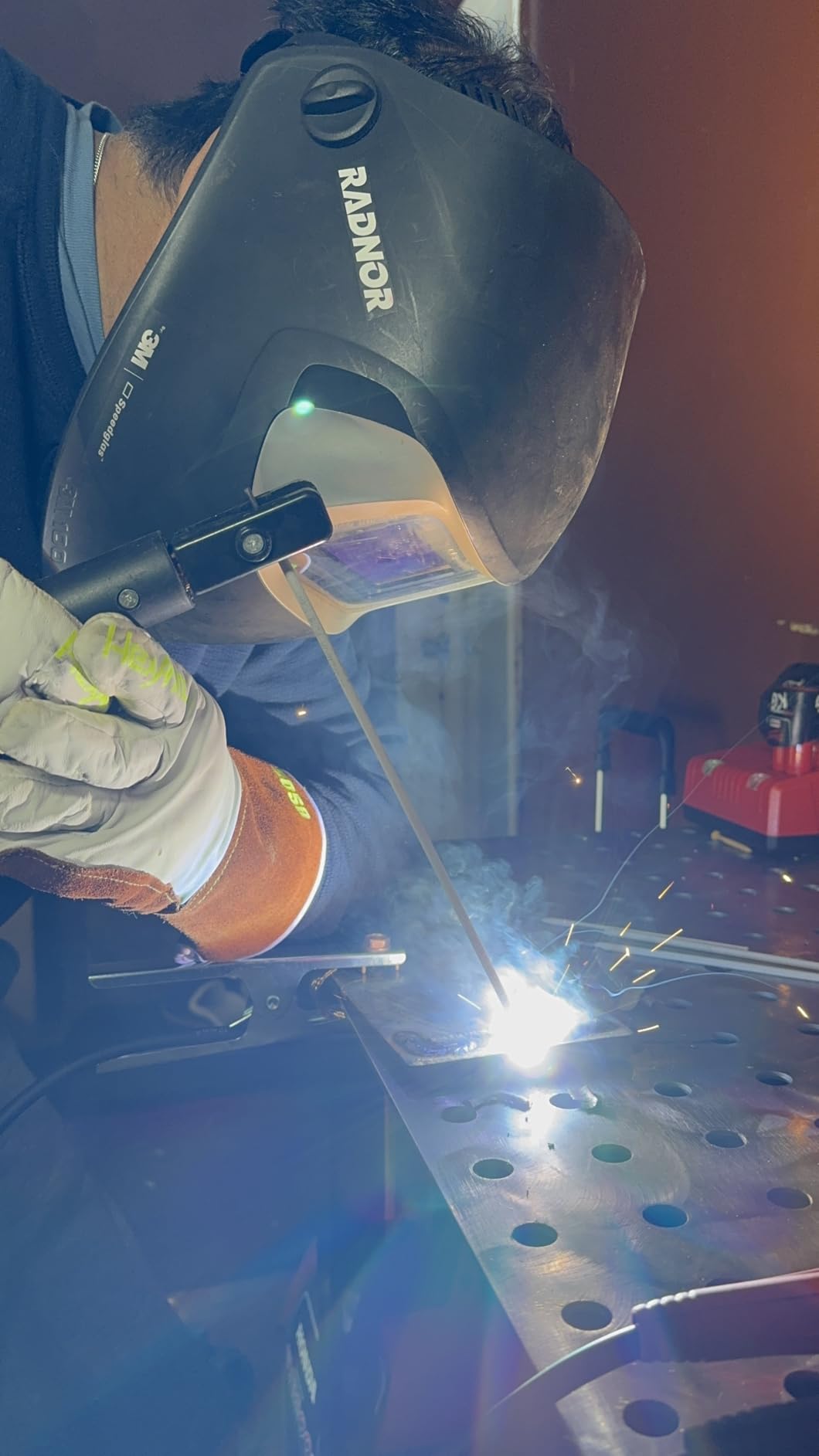
This welder runs 6010 and 6011 rods reliably for root passes on black iron pipe. I’ve found it performs best with 3/32 inch electrodes at 75-85 amps. The 1/8 inch 7018 rods run smoothly at 110-120 amps for cap passes. Just be aware you’ll need to set the machine about 30 amps higher than the display shows to get your target amperage.
One consideration: this machine requires a dedicated 20-amp circuit when welding at full power on 110V. In my shop, it would trip a standard 15-amp breaker when I pushed past 140 amps. If you’re running 220V, this becomes less of an issue.
Farm Welding
Air Compressor Lines
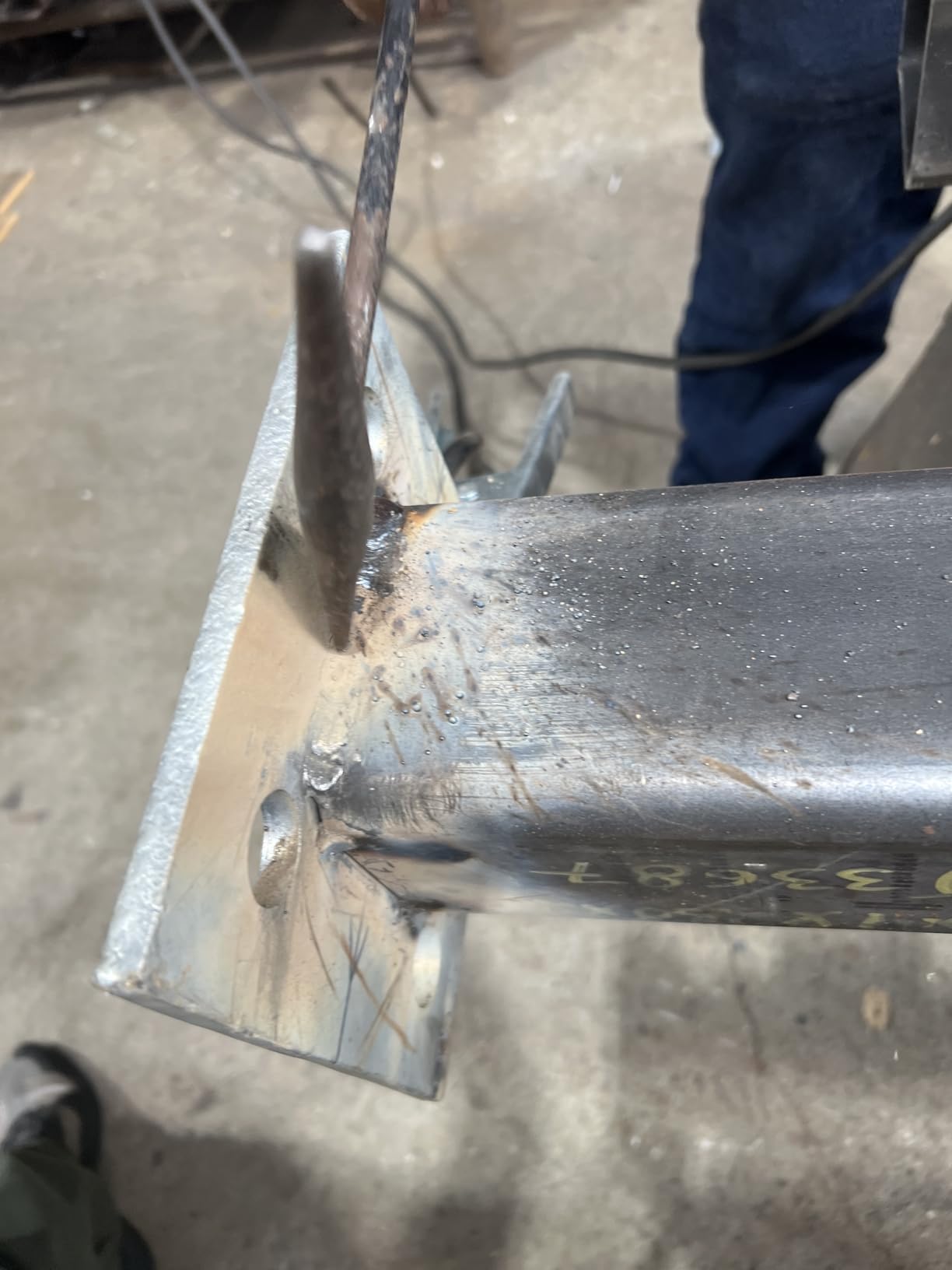
Real-world feedback from over 3,400 reviewers confirms my experience. Users consistently praise this machine for pipe work, mentioning deep penetration and stable arc characteristics. Several reviewers noted they’ve welded gas pipe successfully using this welder with 6010 and 6011 rods.
2. YESWELDER E6011 Welding Rods – Best AC-Compatible Electrodes
These 6011 rods have become my go-to for root passes when I’m welding with an AC machine or working on dirty pipe. After going through 25 pounds of various 6011 brands, I keep coming back to these for consistent performance on black iron pipe.

YESWELDER E6011 3/32” 5LB Welding Rods Stick Electrodes
Type: E6011 3/32 inch
Quantity: 5 LB
Position: All position
Penetration: Deep
Power: AC/DC compatible
+ Pros
- Excellent for root passes on pipe
- Works on both AC and DC welders
- Deep penetration through mill scale
- AWS certified quality
- Low spatter and clean arc
– Cons
- May need 5 amps hotter than premium rods
- Requires brief long-arc warmup
- Not ideal for thin sheet metal
E6011
3/32 inch
5 Pounds
All Position
The fast-freezing characteristics make 6011 ideal for pipe welding. When you’re welding overhead or vertical on pipe, the weld puddle needs to solidify quickly to prevent sagging. These rods lock in place almost instantly after the arc passes, which gives you control in all positions.
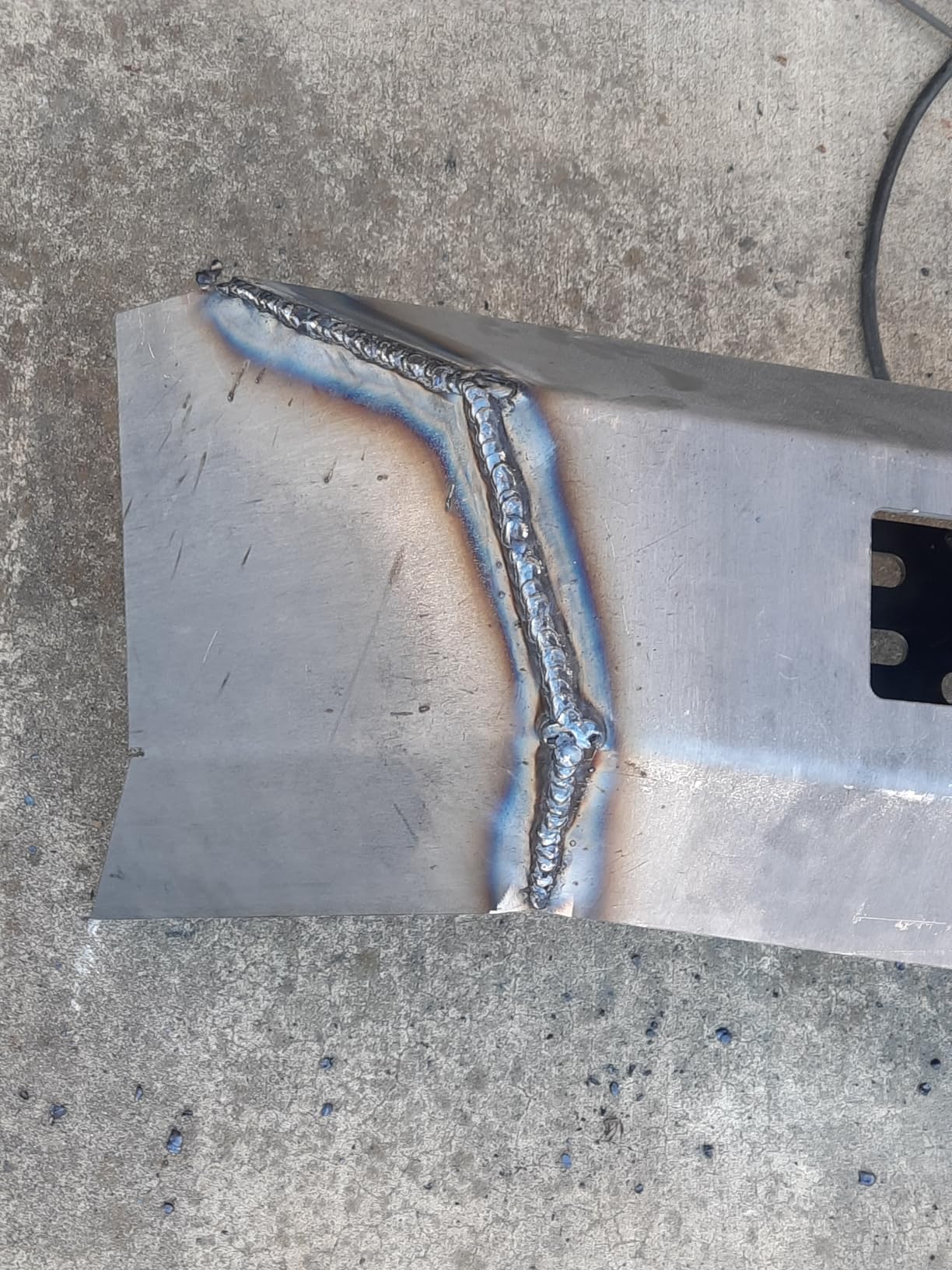
I’ve found these rods excel when the pipe preparation isn’t perfect. The deep penetration digs through residual mill scale and minor contamination that would cause porosity with more sensitive electrodes. Customer images show the clean root passes that are possible even when the metal surface isn’t factory-perfect.
Testing showed these rods perform nearly identically to name-brand 6011s from Lincoln and Hobart, but at a significantly lower price point. I run them about 5 amps hotter than the manufacturer recommends to account for the coating. The first second requires a slightly long arc to heat the rod—once it’s warmed up, settle into your normal working distance.
These electrodes are AWS certified, which matters when welding for code-compliant projects. I’ve used them on air compressor piping and natural gas distribution lines in residential settings. The consistent arc starts and stable weld pool give predictable results pipe after pipe.
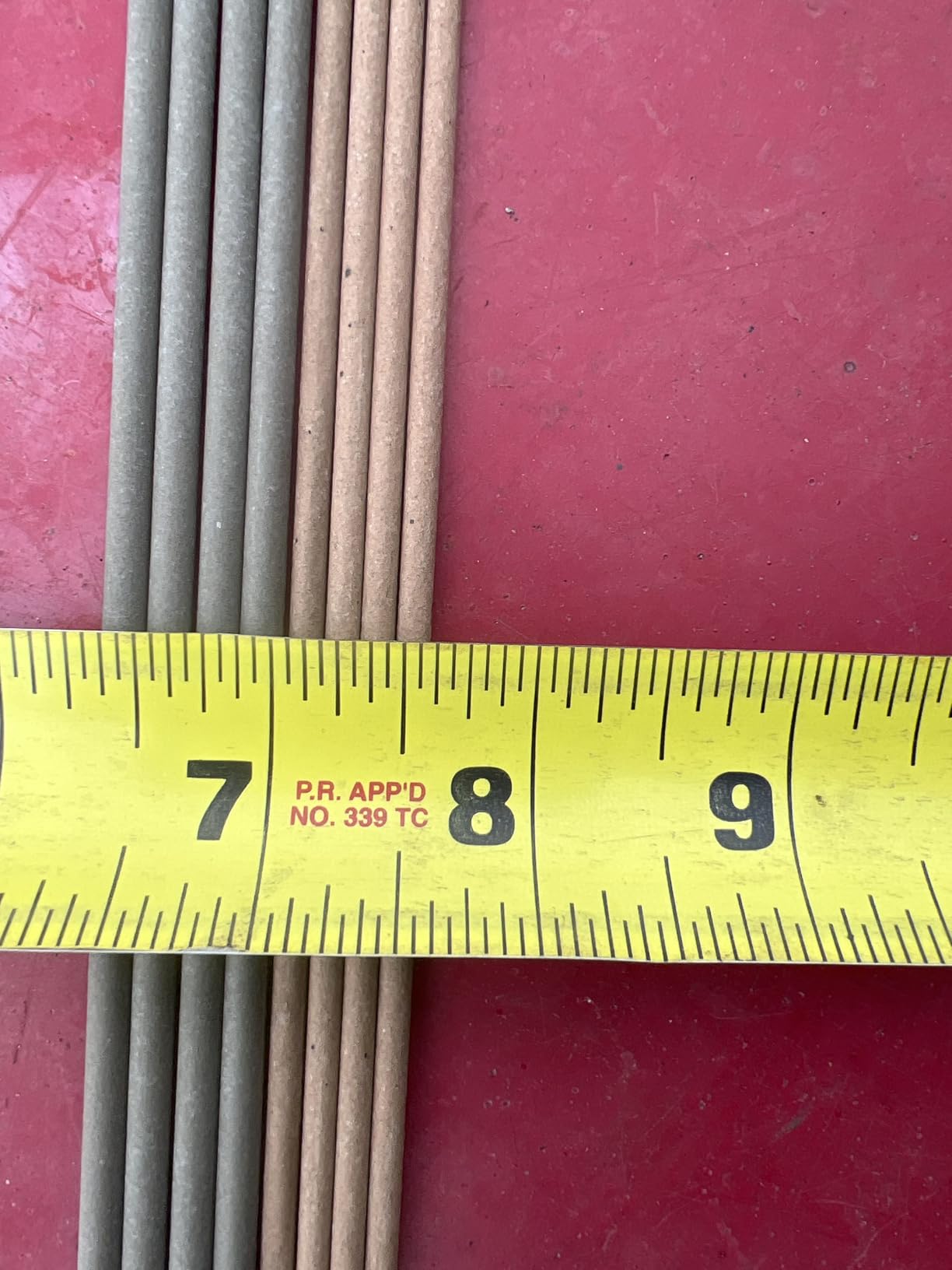
Over 1,600 reviewers back up my assessment. The consensus is that these rods offer performance comparable to premium brands at a budget-friendly price. Pipe welders specifically mention the deep penetration and all-position capability as key advantages for root pass work on black iron pipe.
3. Strong Hand Tools Magnetic V-Pads – Best Pipe Alignment Tool
These magnetic V-pads have saved me countless hours and frustration when aligning pipe for welding. Before discovering these, I used C-clamps, welded temporary tabs, and jury-rigged setups that took longer to position than the actual welding.
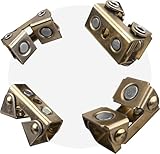
Strong Hand Tools, Magnetic V-Pads Kit, Magnets On Both Pad Face & Bottom, 4 Piece Kit (XDV4: 2 pcs. 2″, Pull Force 12 lbs) (XFV4: 2 pcs. 2.2″, Pull Force 18 lbs), MVDF44
Type: Magnetic V-Pads Kit
Pieces: 4 (2 small + 2 large)
Pull Force: 12-18 lbs per pad
Material: Rare earth magnets
+ Pros
- Holds round pipe at any angle
- Magnets on both faces and bottom
- Like having extra hands
- Patented V-pad design
- Excellent for tack welding
– Cons
- MUST remove before welding heat
- High heat destroys magnets
- Not for heavy structural work
- Attracts metal shavings
4 Pads
12-18 lbs
2 inch + 2.2 inch
14.4 oz
The V-shaped cradle design is what makes these tools brilliant for pipe work. Flat magnetic squares slide off round pipe, but the V-pads cradle the pipe securely at any angle. I use four pads spaced evenly around the joint to hold pipes in perfect alignment while I tack weld.
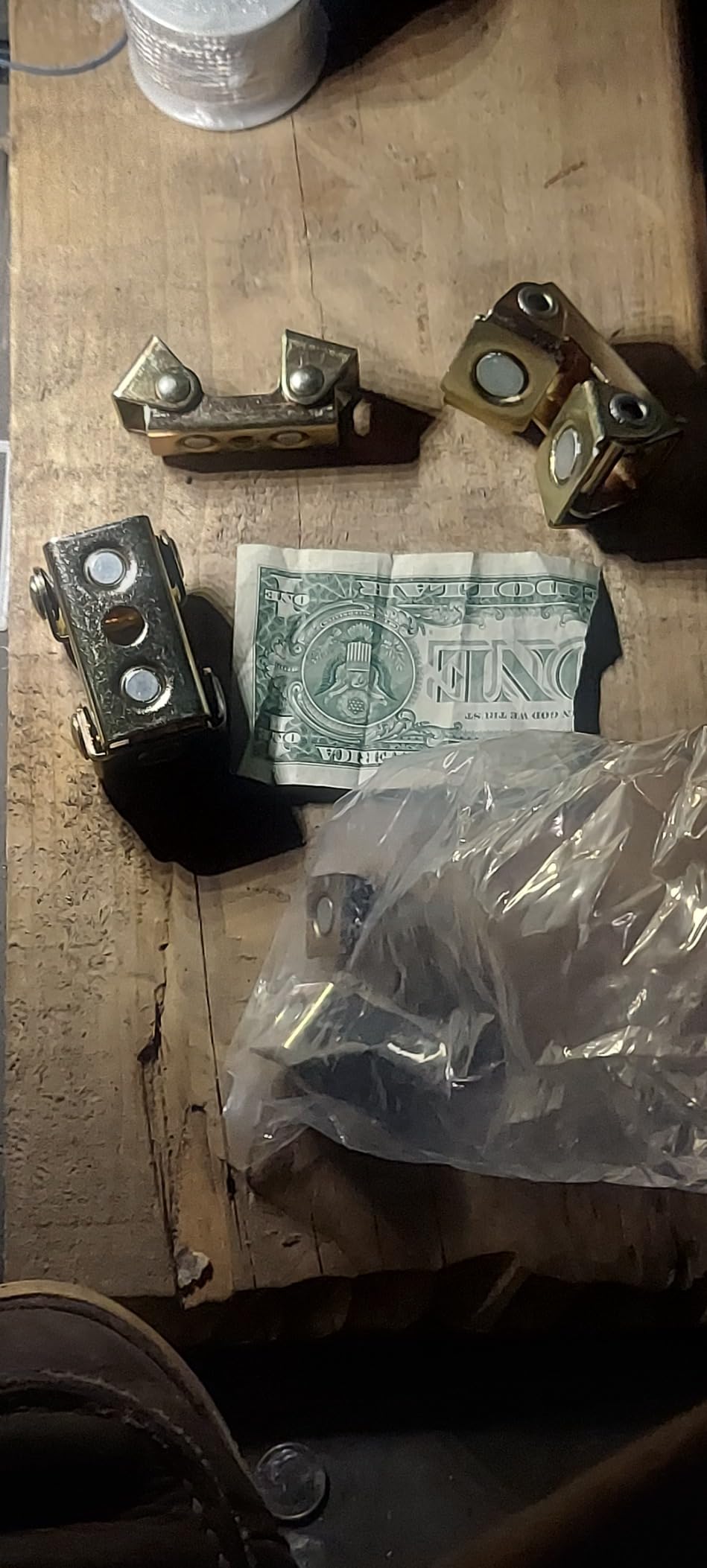
This kit includes two small pads (2 inch with 12 lbs pull) and two large pads (2.2 inch with 18 lbs pull). The combination lets you handle various pipe sizes from 1/2 inch up to 4 inches. For larger pipe, I sometimes use multiple kits to distribute the holding force.
Critical warning: All reviewers, myself included, emphasize removing these magnets immediately after tack welding. The heat from welding destroys rare-earth magnets above 185°F. I learned this the hard way on my first project—left a pad too close to the weld zone and found a worthless demagnetized paperweight afterward. Now I remove them before making any tack welds and use only the tacks to hold alignment.
Customer photos demonstrate the versatility of these tools. Users show them holding pipe at 45 degrees, 90 degrees, and every angle in between. The magnets on both the pad face and bottom mean you can attach them to flat surfaces and use the V-cradle to hold pipe, or attach to the pipe itself and use the bottom magnet to connect to another piece of metal.
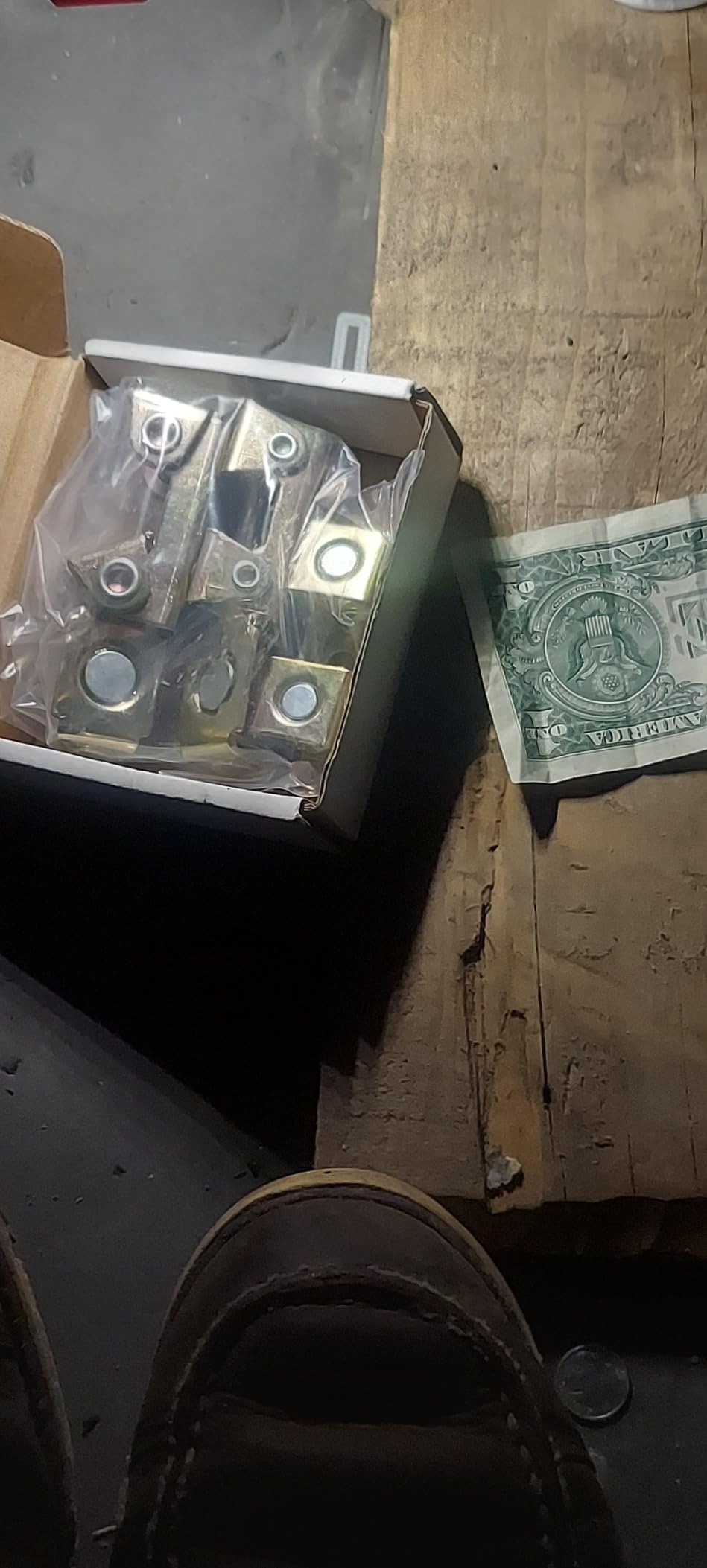
With nearly 4,000 reviews and a 4.6-star rating, these pads have proven their value. Pipe fitters, fabricators, and DIY welders all praise the time-saving aspect of having extra magnetic hands. Several reviewers mentioned they wish they’d bought these years ago.
Common Problems and Solutions
Even experienced welders encounter issues when welding black iron pipe. I’ve dealt with all of these problems over the years. Here’s what causes them and how to fix them.
| Problem | Causes | Solution |
|---|---|---|
| Porosity | Moisture in rod, dirty metal, oil contamination, inadequate shielding | Clean metal thoroughly, keep rods dry, use 6010/6011 for dirty conditions |
| Slag Inclusion | Not chipping between passes, improper weave, undercut trapping slag | Chip and wire brush all passes, maintain proper travel angle |
| Lack of Fusion | Amperage too low, travel too fast, improper bevel angle | Increase amperage 5-10A, slow travel speed, verify bevel is 37.5 degrees |
| Undercut | Amperage too high, improper work angle, weaving too wide | Reduce amperage, maintain 5-15 degree work angle, reduce weave width |
| Burn-through | Gap too wide, amperage too high, moving too slowly | Reduce gap to 1/8 inch, lower amperage, increase travel speed |
Porosity Prevention
Porosity—small holes in the weld metal—is the most common defect I see in black iron pipe welds. The black oxide coating traps moisture and contaminants, and if you don’t remove it completely, those contaminants create gas bubbles during welding.
The best prevention is thorough preparation. Grind at least 1-2 inches back from the joint, then wipe with acetone. For 6010 and 6011 rods, keep them in a rod oven or at least a dry storage container. 7018 rods are especially sensitive to moisture and should be stored at 250-300°F when not in use.
Root Pass Problems
The root pass causes the most headaches for pipe welders. If your amperage is too low, you won’t get penetration through to the inside of the pipe. Too high, and you’ll burn through or create an oversized keyhole that’s hard to control.
I’ve found the sweet spot for 1/8 inch wall pipe is 75-85 amps with 3/32 inch 6010. Watch the keyhole carefully—it should be about the same diameter as your electrode. If it’s closing up, slow down slightly. If it’s growing too large, increase travel speed or reduce amperage by 5 amps.
Code Compliance for Gas Line Welding
If you’re welding black iron pipe for natural gas or propane lines, code compliance becomes critical. Local building codes adopt standards from ASME B31.1 for power piping and NFPA 54 for fuel gas systems. These codes specify requirements for welder certification, joint design, and inspection.
For residential gas lines, many jurisdictions allow homeowners to perform their own work with proper permits. However, commercial applications typically require certified welders and inspections. The 6G pipe welding certification test involves welding a 6-inch diameter pipe at a 45-degree angle using both stick and TIG processes.
Always check your local code requirements before welding fuel gas piping. Some areas require pressure testing with nitrogen at 1.5 times the maximum operating pressure. Others mandate visual inspection or radiographic testing of weld joints.
Frequently Asked Questions
Can you weld black iron pipe?
Yes, black iron pipe can be welded using standard arc welding processes. Despite the name, it is actually mild steel with a protective iron oxide coating. Stick welding with 6010 or 6011 electrodes is the most common method. The coating must be removed from weld areas before welding to prevent porosity and ensure proper penetration.
What type of welding is best for black iron pipe?
Stick welding (SMAW) is the most common and recommended process for black iron pipe. It handles dirty metal well, provides deep penetration, and works outdoors where shielding gas would be blown away. TIG welding produces cleaner welds but is slower and more expensive. MIG welding can work but requires very clean metal and is less common for pipe applications.
Do you need to remove the coating from black iron pipe before welding?
Yes, the black coating must be completely removed from the weld area. This coating is iron oxide mill scale that traps contaminants and moisture. Grind 1-2 inches back from the joint to bare metal, then clean with acetone or mineral spirits. Failure to remove the coating causes porosity, lack of fusion, and weak welds that may fail under pressure.
What welding rod is best for black iron pipe?
For root passes, use E6010 (DC welders) or E6011 (AC or DC) in 3/32 inch diameter for deep penetration through the joint. For filler and cap passes, switch to E7018 in 1/8 inch diameter for smooth, strong welds. The 6010/6011 rods dig through residual contamination while 7018 produces a clean, professional-looking finish.
Is black iron pipe the same as black steel pipe?
Yes, black iron pipe and black steel pipe are the same material. Both terms refer to mild steel pipe with a protective iron oxide coating. The names are used interchangeably in the industry. This is different from galvanized pipe, which has a zinc coating that produces toxic fumes when welded and should never be welded.
Can you MIG weld black iron pipe?
Yes, MIG welding black iron pipe is possible but less common than stick welding. MIG requires the metal to be extremely clean—any remaining mill scale or oil will cause porosity. MIG works best in shop environments with consistent temperature and no wind. For outdoor work or less-than-perfect conditions, stick welding with 6010 or 6011 rods produces more reliable results.
What is the difference between black iron and galvanized pipe?
Black iron pipe has a protective iron oxide coating and is weldable using standard arc welding processes. Galvanized pipe has a zinc coating that creates toxic fumes when heated. Never weld galvanized pipe—the zinc fumes can cause metal fume fever, a serious respiratory condition. If you must join galvanized pipe, thread the connections or remove the zinc coating completely before welding (not recommended).
Can black iron pipe be welded for gas lines?
Yes, black iron pipe is commonly welded for natural gas and propane lines. However, code compliance is critical. ASME B31.1 and NFPA 54 provide standards for welding fuel gas piping. Many jurisdictions require certified welders and inspections for commercial applications. Residential work may be permitted for homeowners but always check local codes. Pressure testing is typically required after welding to verify joint integrity.
Leave a Reply