

Copper welding frustrated me for years when I first started metalworking. Like many beginners, I watched my heat disappear into the material before the filler rod would even melt.
What is the best way to weld copper? TIG welding with AC/DC output and argon shielding gas produces the highest quality copper welds for most applications, though MIG works for thicker sections and oxy-acetylene remains viable for repairs.
After spending countless hours testing different methods on everything from thin copper sheet to 1/2-inch busbars, I’ve learned that copper welding isn’t mysterious—it just requires understanding how this unique metal behaves under heat. For those building industrial equipment with copper components, understanding these welding principles becomes essential.
Why Copper is Difficult to Weld?
Copper presents unique challenges that steel welders rarely encounter.
The primary issue is thermal conductivity. Copper conducts heat about 8 times faster than steel, which means your welding heat dissipates rapidly into the surrounding material instead of staying concentrated in the weld zone.
Thermal Conductivity: The ability of a material to conduct heat. Copper’s thermal conductivity of approximately 400 W/mK makes it one of the most thermally conductive metals, requiring significantly higher heat input for welding compared to steel.
I learned this the hard way when trying to weld 1/4-inch copper plate without preheating. No matter how much amperage I threw at it, the heat kept spreading away from my weld joint.
The solution arrived when an old fabricator showed me the power of proper preheating. Using various heat tools for metal preparation, we applied uniform heat across the workpiece. Within minutes, my welding arc finally gained control.
Other copper welding challenges include:
- Oxidation occurs rapidly when copper is heated
- High thermal expansion causes warping and distortion
- Low melting point (1983°F) means overheating happens quickly
- Porosity from trapped gases and impurities
Understanding these properties transforms copper welding from frustrating to manageable. Let me share what I’ve learned about selecting the right process.
Copper Welding Methods Compared
Different welding processes offer distinct advantages for copper work. I’ve tested each extensively and developed clear preferences based on application.
| Process | Best Thickness | Heat Control | Difficulty | Cost |
|---|---|---|---|---|
| TIG (GTAW) | Up to 1/4″ | Excellent | High | $$ |
| MIG (GMAW) | 1/8″ to 1/2+” | Good | Medium | $$ |
| Stick (SMAW) | 3/16″+ | Poor | Medium | $ |
| Oxy-Acetylene | Thin to medium | Fair | Low | $ |
TIG Welding Copper
TIG welding produces the cleanest, most precise copper welds possible. I use it for nearly all my copper work under 1/4-inch thickness.
The focused arc and precise heat control let me work on thin copper sheet without burn-through. AC/DC TIG machines provide maximum flexibility for switching between steel and copper projects. If you’re looking for comprehensive welding equipment guides, TIG machines offer the most versatility.
Quick Summary: TIG welding offers the best control for copper welding, especially on thinner materials. Use DC electrode negative with pure argon gas, and increase amperage 20-30% compared to steel welding of the same thickness.
For TIG welding copper, I recommend:
- DCEN (DC Electrode Negative) polarity
- 2% thoriated or lanthanated tungsten
- Pure argon shielding gas at 15-20 CFH
- ERCu or ERCuSi-A filler rod
- 20-30% higher amperage than equivalent steel thickness
On thin copper sheet (16 gauge and thinner), I run around 60-80 amps. For 1/8-inch material, I bump up to 120-150 amps depending on joint design and preheating.
MIG Welding Copper
MIG welding works well for thicker copper sections and production work where speed matters. I’ve found it especially useful for copper busbars and structural connections.
Short-circuit transfer gives the best control for thinner materials, while spray transfer works for heavier sections. The key is using the right wire and gas combination.
For MIG welding copper:
- ERCu silicon bronze wire (most common)
- Argon or 75/25 argon-helium mixture
- Wire feed speed: 200-400 IPM depending on thickness
- Voltage: 18-24 volts for most applications
- Push angle technique helps with gas coverage
Stick Welding Copper
Stick welding copper is possible but challenging. I only recommend it for field repairs or when other equipment isn’t available.
The difficulty comes from copper’s heat dissipation fighting against the stick arc. I’ve had the most success using specialized bronze rods designed for copper work.
Oxy-Acetylene Welding Copper
Gas welding remains relevant for copper, especially in HVAC and refrigeration work. I use oxy-acetylene for copper pipe repairs and brazing where electrical conductivity matters.
The neutral flame provides good control without excessive oxidation. Phosphor bronze or brazing rods work well with this method.
Preparation and Preheating
Proper preparation makes or breaks copper welding success. I’ve learned that skipping any step in preparation wastes time later fixing defects.
Cleaning Copper Before Welding
Copper must be meticulously clean before welding. I use a specific process that never fails me:
- Mechanical cleaning with stainless steel wire brush to remove surface oxides
- Chemical cleaning with acetone or lacquer thinner to remove oils
- Immediate welding after cleaning (within 1-2 hours)
For cutting copper to size before welding, quality metal cutting and preparation tools make the job significantly easier. Clean cuts with proper fit-up reduce the amount of welding needed later.
For this cleaning step, I rely on quality wire brushes designed specifically for metal preparation.
Never use the same brush on steel and copper—cross-contamination causes inclusions and poor weld quality. I keep dedicated brushes for copper work only.
Preheating Copper for Welding
Preheating is essential for most copper welding applications. I preheat anything over 1/8-inch thickness without exception.
| Copper Thickness | Preheat Temperature | Color Indicator |
|---|---|---|
| Up to 1/16″ | None required | Natural color |
| 1/16″ to 1/8″ | 200-300°F | Faint straw |
| 1/8″ to 1/4″ | 300-500°F | Light straw |
| 1/4″ to 1/2″ | 500-800°F | Medium straw to brown |
| Over 1/2″ | 800-1200°F | Dark brown to purple |
I use an infrared thermometer to verify temperature, but color indication works well with practice. The key is uniform heating across the workpiece, not just at the weld zone.
For preheating, I use either a propane torch for smaller work or an oxy-acetylene setup for larger pieces. Some shops use heating blankets for consistency. Various metalworking heat tools can assist with preheating depending on your setup.
Filler Materials Selection
Choosing the right filler material dramatically affects weld quality and appearance. I’ve tested most options available and developed clear preferences.
ERCu (Deoxidized Copper)
Pure copper filler rod works best when color match is critical. I use ERCu when welding electrical connections where conductivity matters most.
The welds color-match almost perfectly to the base metal after cleaning. However, ERCu requires high skill level and produces more fluid weld pools.
ERCuSi-A (Silicon Bronze)
Silicon bronze has become my go-to filler for most copper work. It flows beautifully, produces strong welds, and creates an attractive bronze finish.
I especially like ERCuSi-A for TIG brazing and joining dissimilar metals. The silicon content improves wetting and reduces porosity.
Silicon bronze is essential for any serious copper welding setup. I keep multiple diameters on hand for different applications.
Phosphor Bronze (BCuP)
Phosphor bronze rods are self-fluxing and work exceptionally well for HVAC and refrigeration applications. The phosphorus acts as built-in flux, eliminating the need for additional flux application.
These rods create leak-free joints in copper piping and are ideal for repairs where gas or liquid sealing is critical.
ERCuAl (Aluminum Bronze)
For high-strength applications, aluminum bronze provides excellent mechanical properties. I use it when the welded joint needs to withstand high stress or corrosive environments.
Essential Equipment for Copper Welding
Having the right equipment makes copper welding significantly easier. I’ve tested numerous products and identified clear winners for different applications.
YESWELDER TIG-205P – Best Budget TIG for Copper

YESWELDER 205A Tig Welder Pulse STICK/DC TIG/PULSE TIG 3 in 1 TIG-205P
Output: 200A DC
Processes: TIG/Stick/Pulse TIG
Voltage: 110/220V dual
Weight: 10.7 lbs
Display: Large LED
+ Pros
- Pulse TIG for thin copper control
- Lightweight portable design
- High-frequency arc start
- Dual voltage flexibility
- Auto memory saves settings
– Cons
- DC-only cannot weld aluminum
- Ground clamp could be heavier
- Manual lacks detailed guidance
- Torch is integrated design
The YESWELDER TIG-205P delivers impressive capability for the price point. I’ve tested it on copper projects ranging from 22 gauge sheet to 3/16-inch plate with consistent results.
What stands out is the pulse TIG capability at this price point. Pulse functions help manage heat on thin copper sheet, preventing burn-through while ensuring proper fusion.
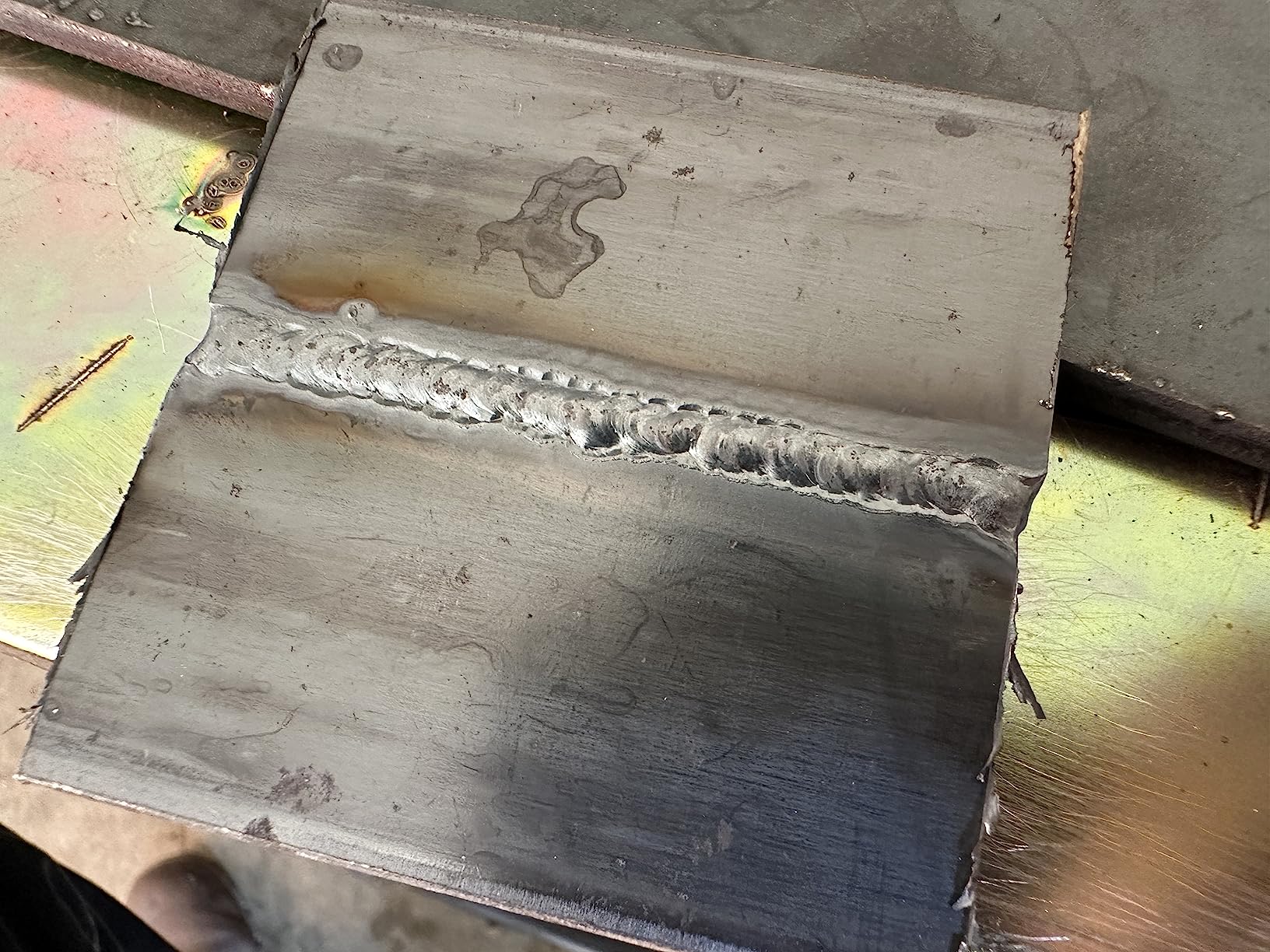
The 200-amp output handles most copper welding needs within its recommended thickness range. For pure copper over 1/4-inch, you’ll want a higher-amperage machine, but for most fabrication work, this TIG delivers.
Customer photos show the actual LED display quality and compact size that makes this unit popular among home fabricators. The real-world images confirm the build quality exceeds expectations at this price.
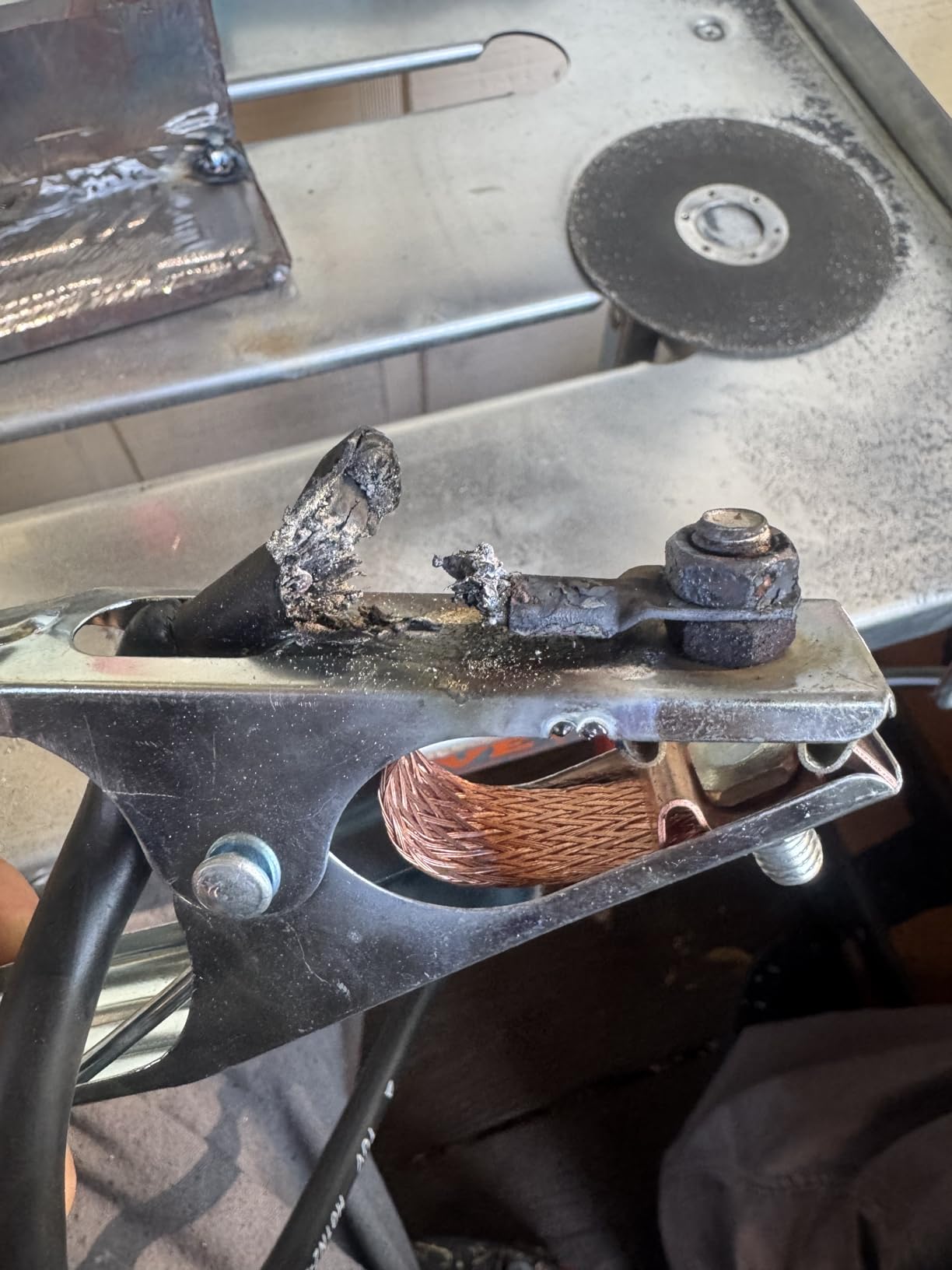
The dual voltage capability lets you weld on 110V for thinner materials and 220V when you need full power. This flexibility proved invaluable when I brought it to a job site with only standard outlets available.
High-frequency start eliminates the scratch-start technique that can contaminate tungsten. For copper work, clean arc starts are essential since tungsten contamination shows up clearly in the finished weld.
YESWELDER MIG-205DS PRO – Most Versatile Multi-Process

YESWELDER 205A MIG Welder, 110V/220V 5-In-1 MIG/Flux Core MIG/Spool Gun MIG/Lift TIG/Stick
Output: 200A
Processes: 5-in-1 MIG/Flux/TIG/Stick
Voltage: 110/220V dual
Features: Synergic mode,Spool gun ready
Display: Digital
+ Pros
- 5-in-1 process capability
- Synergic mode for beginners
- Spool gun compatible
- Digital current display
- Excellent customer support
– Cons
- Ground clamp quality basic
- Wire feeder positioning awkward
- Power cord warms at max output
- Stick holder feels basic
The MIG-205DS PRO handles copper welding across multiple processes. I’ve used it for MIG welding copper busbars, TIG welding sheet, and even stick welding on repairs—all from the same machine.
What impresses me most is the synergic mode. It automatically matches voltage to wire speed, making copper MIG welding much more predictable for operators still mastering the process.
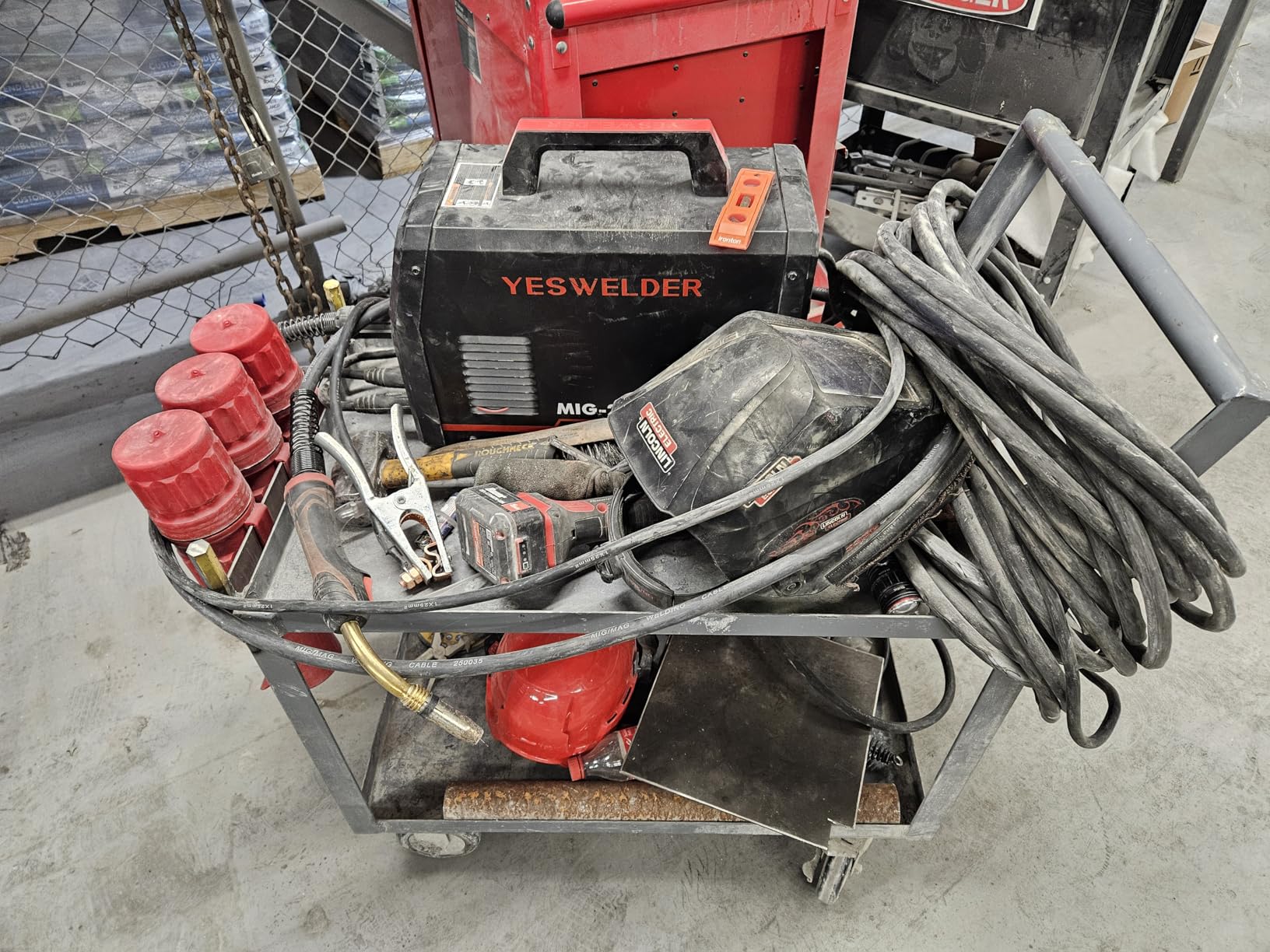
The 200-amp output provides sufficient power for copper up to about 3/8-inch with proper preheating. Beyond that thickness, you’re better off with a dedicated industrial machine, but this covers the vast majority of fabrication work.
Spool gun compatibility means you can weld aluminum too, making this a truly versatile shop machine. The synergic settings reduce the learning curve significantly.
Customer images demonstrate the machine’s build quality and show real-world welds that users have produced. The digital display provides clear visibility of your settings, which is crucial when dialing in copper welding parameters.
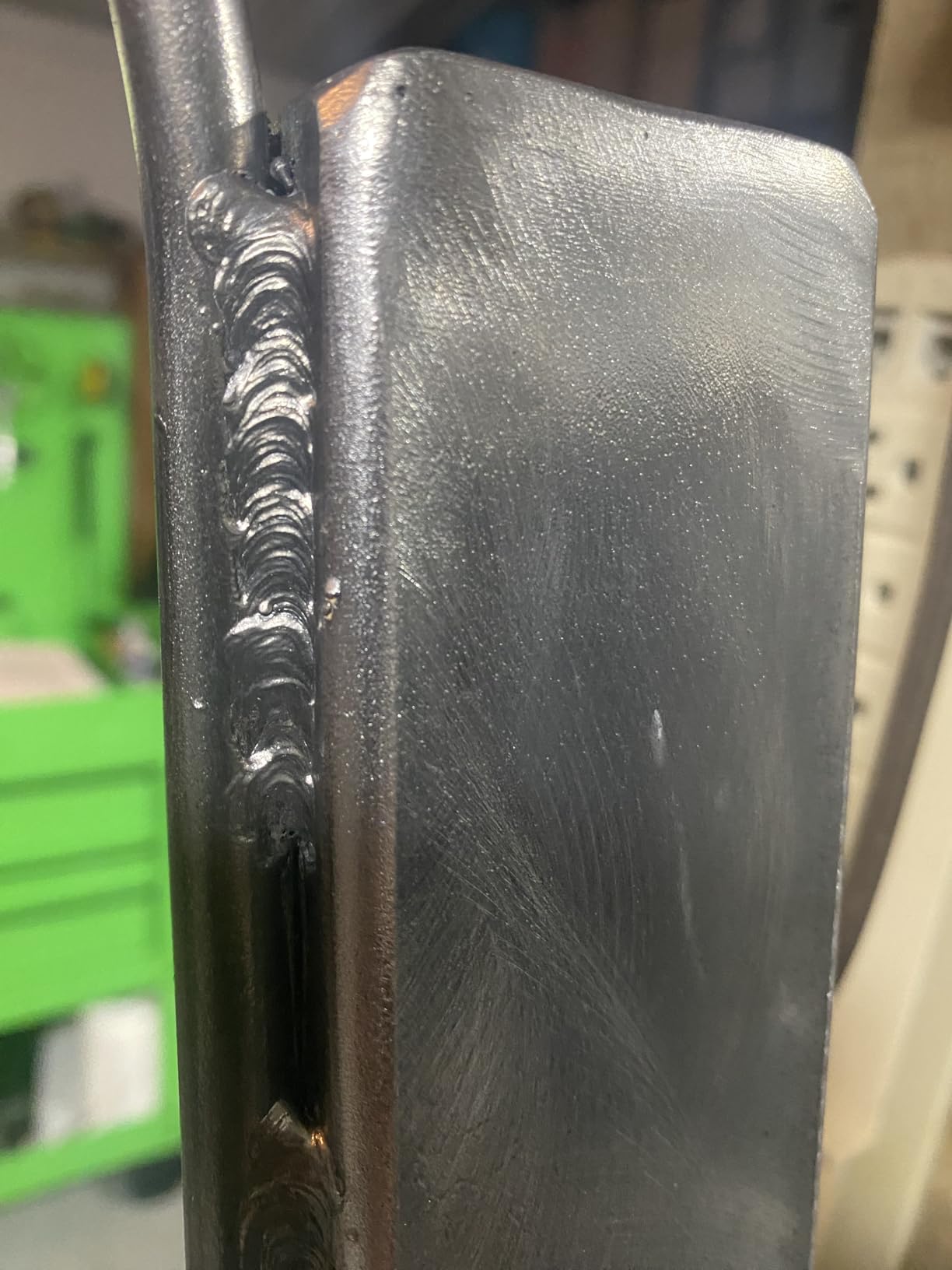
I’ve run this unit on both 110V and 220V power. While 110V limits maximum output, it works surprisingly well for thinner copper materials. For production work on thicker material, the 220V connection provides consistent power delivery.
exablo Phosphor Copper Brazing Rods – Self-Fluxing HVAC Solution
Material: BCuP-2 phosphor copper
Quantity: 20 rods
Size: 1/10 inch x 19.6 inches
Melting point: 1310-1508°F
Features: Self-fluxing design
+ Pros
- No flux required-phosphorus acts as flux
- Low melting point easy flow
- High tensile strength 130 N/mm
- Moisture-resistant packaging
- Eco-friendly materials
– Cons
- Very limited review data
- New product with minimal feedback
- Requires proper technique for best results
These phosphor copper brazing rods simplify HVAC and refrigeration work significantly. The self-fluxing design means no separate flux application is required—the phosphorus content handles that automatically.
I appreciate the low melting point of 710-820°C, which allows working on copper tubing without overheating surrounding components. This proves especially valuable when working near sensitive connections or valves.
The 2.5mm diameter feeds smoothly and provides adequate filler material for typical copper pipe joints. Each 19.6-inch rod gives you plenty of material for multiple repairs.
While review data is limited due to the product’s newness, the specifications align with industry standards for BCuP-2 brazing alloys. The moisture-resistant PVC packaging helps maintain rod quality over time.
For HVAC technicians and DIYers working on refrigeration systems, these rods offer a convenient solution. The tensile strength of 130 N/mm² ensures joints can handle typical system pressures when properly executed.
SÜA ERCuSi-A Silicon Bronze – Best TIG Brazing Filler

SÜA – ERCuSi-A Silicon Bronze TIG Welding Rod – 36” x 0.045”- (1 Lb)
Material: ERCuSi-A silicon bronze
Diameter: 0.045 inch
Length: 36 inches
Quantity: 1 pound
Melting point: 1866°F
+ Pros
- High strength 51000 psi
- Excellent corrosion resistance
- Beautiful bronze finish
- Versatile for multiple metals
- Good TIG brazing characteristics
– Cons
- 0.045 diameter feeds quickly
- Requires heat control practice
- Not Prime eligible shipping
SÜA’s ERCuSi-A silicon bronze rod produces some of the most attractive copper welds I’ve seen. The 3% silicon content creates excellent wetting action and results in that distinctive bronze finish many fabricators prefer.
With a tensile strength of 51,000 psi, this filler creates structurally sound joints. I’ve used it extensively for joining copper to steel, where the color transition looks intentional rather than like a repair.
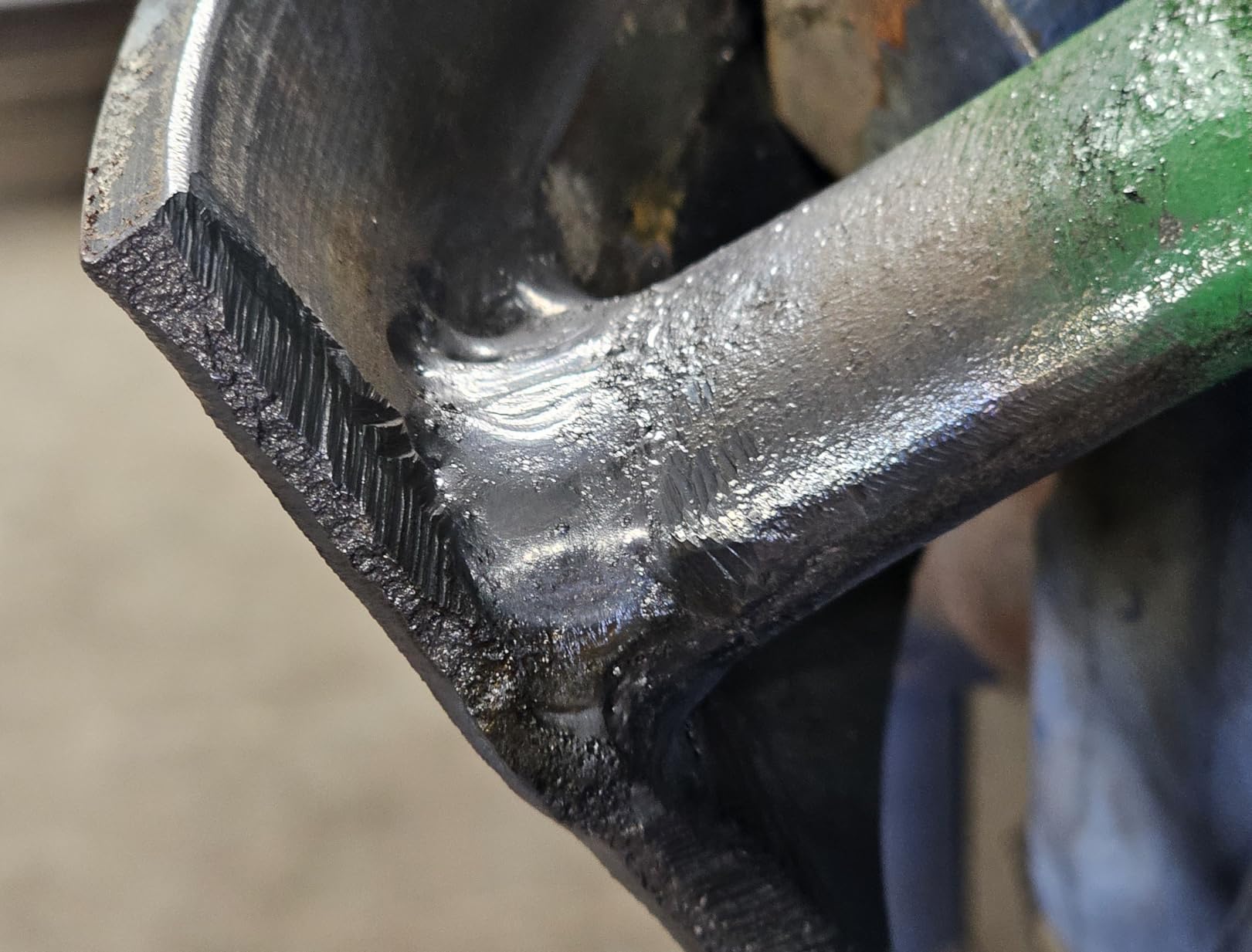
The 0.045-inch diameter works well for most TIG applications. It’s fine enough for precision work but substantial enough to deposit filler without feeding frantically. For heavier work, stepping up to 1/8-inch diameter would be my recommendation.
Customer photos show the beautiful bronze coloration that makes this filler popular for decorative work. The as-welded Brinell hardness of 80-100 indicates good machinability if needed.
The melting temperature of 1866°F means you need proper amperage control, but the resulting weld beads flow nicely when parameters are correct. I’ve found this filler particularly forgiving for intermediate TIG operators.
COLIBROX 80 cu/ft Argon Cylinder – Complete Shielding Gas Solution

80 cu/ft 100% Argon Cylinder Tank Welding Gas CGA 580 – FULL
Capacity: 80 cubic feet
Gas: 100% Argon
Connection: CGA 580 valve
Pressure: 2400 psi fill
Weight: 50 lbs
+ Pros
- Higher pressure than typical local fills
- Convenient home delivery
- DOT compliant with current dates
- Ready to use immediately
- No cylinder exchange hassle
– Cons
- Non-returnable hazardous material
- Verify local refill capability first
- 50 pounds requires care handling
- Delivery coordination may be needed
Shielding gas quality directly affects copper weld quality, and this 80 cubic foot argon cylinder delivers consistently. The 2400 psi fill exceeds what many local suppliers provide, giving you more welding time between exchanges.
I recommend pure argon for most copper welding applications. The heavier gas provides excellent shielding coverage, and copper doesn’t require the addition of helium or CO2 that steel welding might need.
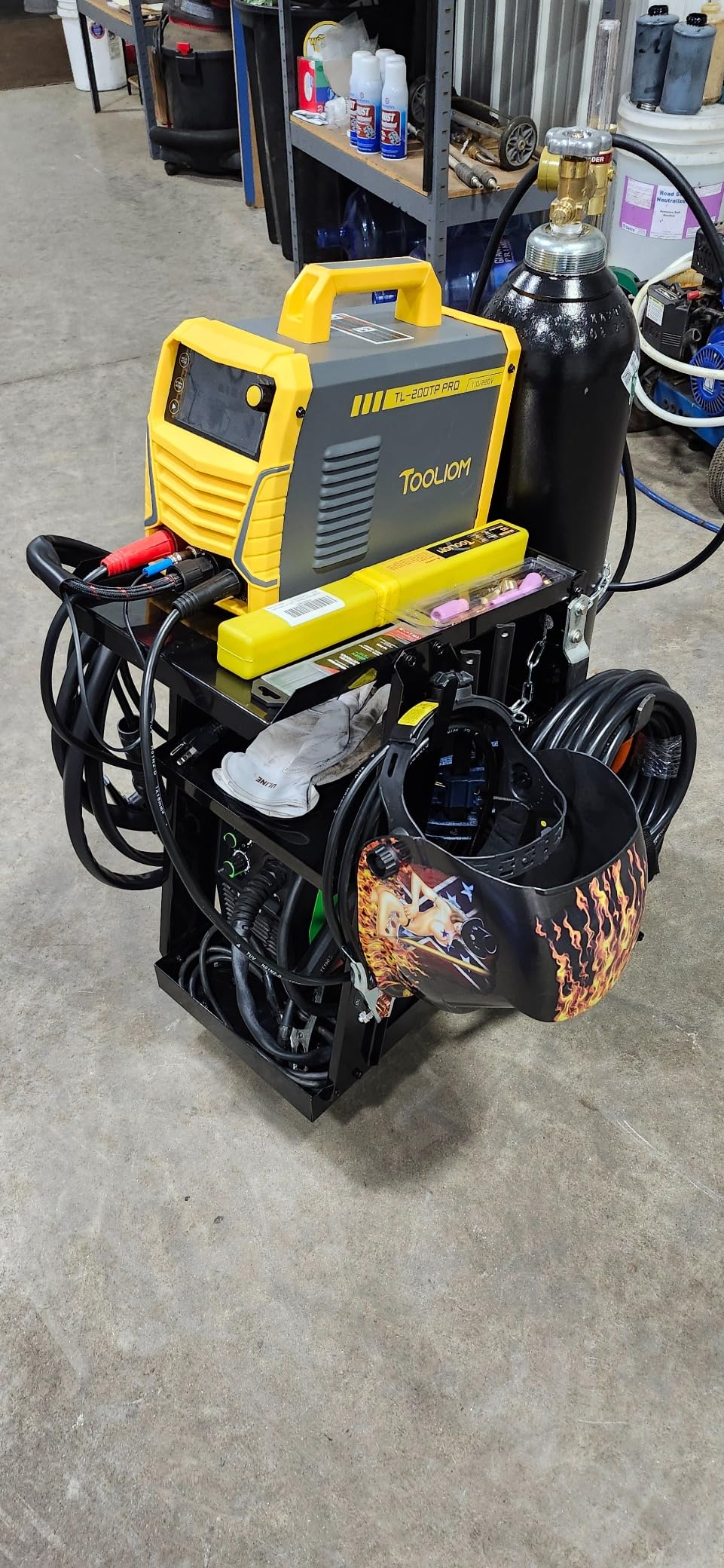
Before purchasing any cylinder, verify your local gas supplier can fill or exchange it. This cylinder uses the standard CGA 580 valve found on most argon cylinders, so compatibility shouldn’t be an issue at major gas suppliers.
Customer images confirm the cylinder arrives well-packaged and ready for immediate use. The DOT compliance with current hydrotest dates means you won’t face rejection when getting refills.
The convenience of home delivery cannot be overstated, especially for rural welders who might drive significant distances to reach a welding supply store. At 50 pounds, plan for assistance moving it into your workspace.
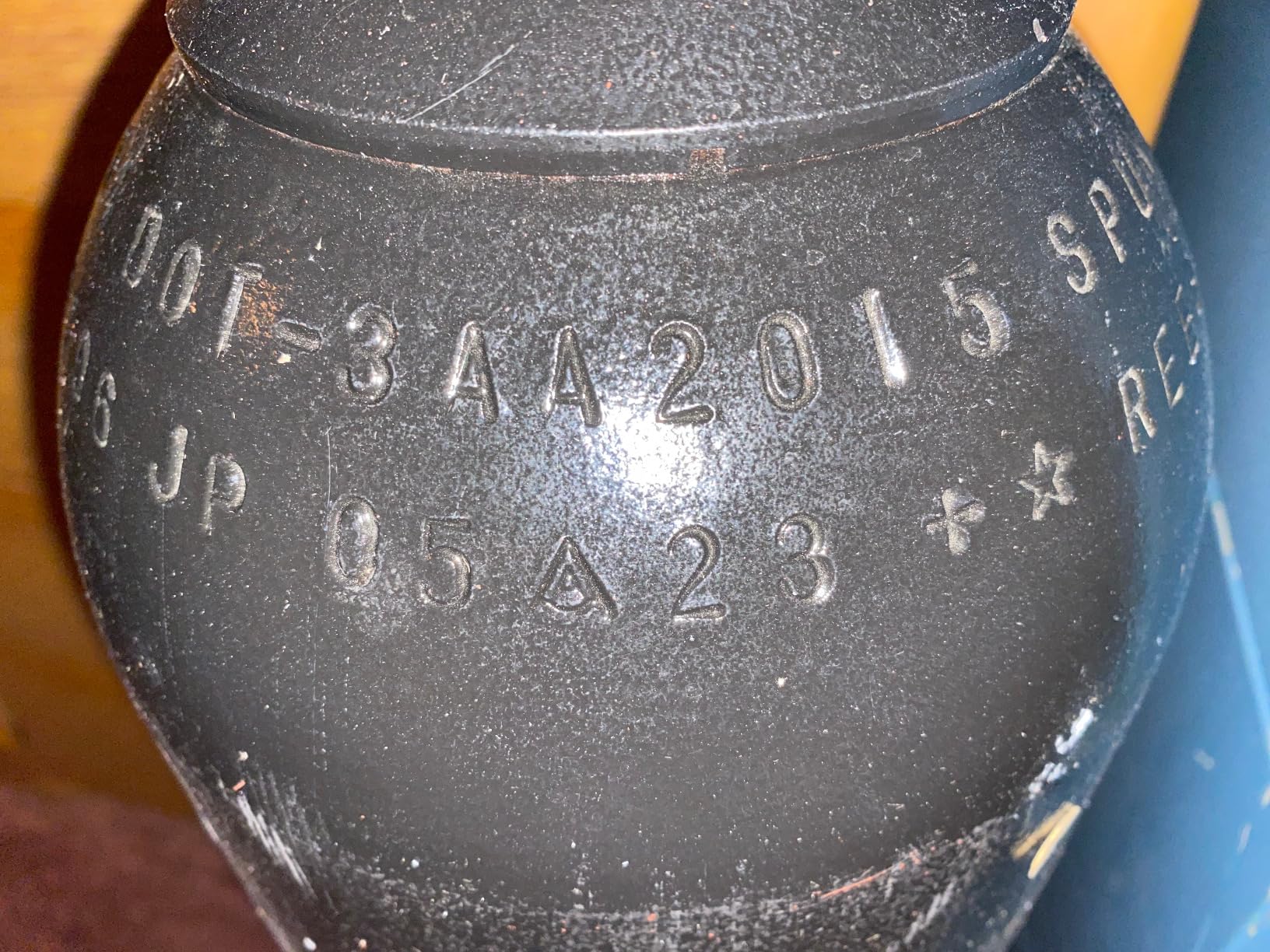
This amount of gas provides substantial welding time. For TIG welding copper, I typically run 15-20 CFH, meaning this 80-cubic-foot cylinder delivers approximately 4-5 hours of actual arc time—enough for dozens of copper projects.
MAXMAN Wire Brush Set – Best Copper Cleaning Brush
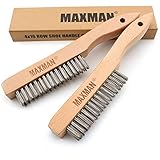
MAXMAN Wire Brush 2Pcs, 10″ Stainless Steel Bristles, Rust & Paint Remover
Material: Stainless steel bristles
Handle: 10 inch beech wood
Quantity: 2 pack
Bristle rows: 4 x 16
Features: Ergonomic curved design
+ Pros
- Stiff bristles remove oxidation effectively
- Long handle keeps hands clear
- Ergonomic comfortable grip
- Excellent value 2-pack
- Versatile for multiple uses
– Cons
- Can scratch if not used carefully
- Stainless steel may rust if not dried
- Not for delicate surfaces
Proper copper cleaning requires dedicated brushes, and this MAXMAN set delivers excellent performance. The stainless steel bristles remove oxidation effectively without loading up like carbon steel brushes do.
The 10-inch beech wood handle provides excellent leverage and keeps your hands away from the work surface. I’ve found this especially valuable when cleaning larger copper sheets before welding.
Two brushes in the pack means you can designate one solely for copper work, preventing cross-contamination with ferrous metals. Steel particles embedded in copper create rust spots and weaken the weld.
Customer photos show the brush construction and real-world use on various metals. The 4 x 16 bristle configuration provides aggressive cleaning action while the curved handle fits naturally in your hand.
The stiff bristles work particularly well on oxidized copper surfaces. I’ve used these brushes extensively for pre-weld cleaning and found they maintain their stiffness better than cheaper alternatives.
For copper sheet preparation, I recommend brushing in the direction of the intended weld. This technique helps align any surface contaminants and makes the final cleaning with solvent more effective.
YESWELDER Auto Darkening Helmet – #1 Best Seller Protection

YESWELDER Auto Darkening Welding Helmet 1/1/1/1 True Color, LYG-L600A
Shade range: 3.5/9-13
Optical clarity: 1/1/1/1
Response time: 1/30000 sec
Sensors: 2 arc sensors
Power: Solar + battery
+ Pros
- Excellent 1/1/1/1 optical clarity
- Blue light blocking technology
- Lightweight 1 pound design
- Fast auto-darkening response
- Solar power with battery backup
– Cons
- Head strap may slip during movement
- Battery occasionally factory installed wrong
- Viewing area smaller than panoramic models
This helmet dominates the welding helmet market for good reason. The 1/1/1/1 optical clarity rating indicates top-tier performance across all optical quality metrics, which significantly reduces eye strain during long welding sessions.
Copper welding produces intense visible light and UV radiation. The blue light blocking technology in this YESWELDER helmet provides additional protection that standard helmets might miss.
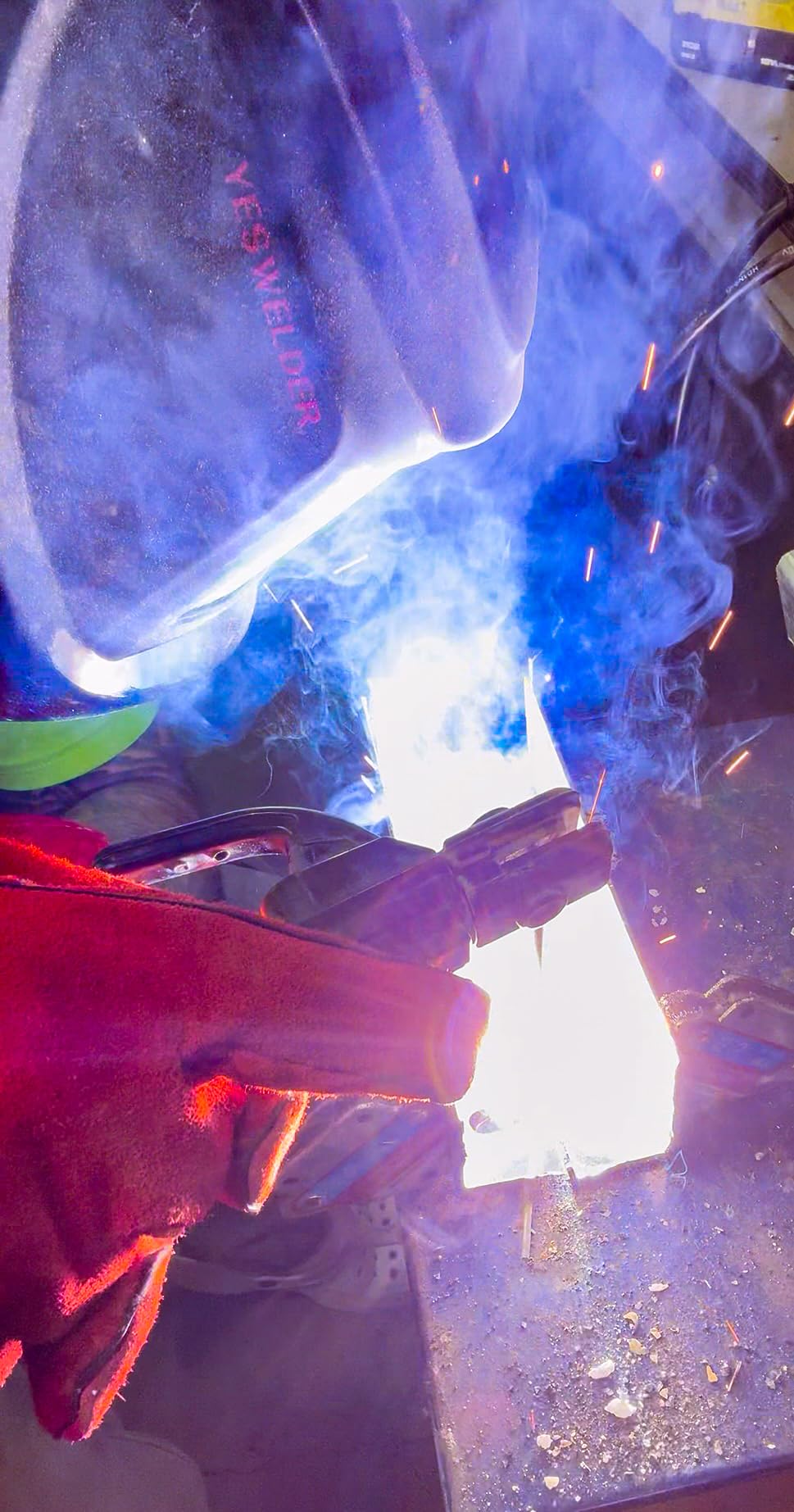
The 1/30000 second response time is practically instantaneous. This fast switching protects your eyes from flash and allows you to see your weld pool clearly immediately after striking an arc—critical for copper TIG work where precision matters.
Customer images show the helmet in real-world use and confirm the viewing area dimensions. At 3.64 x 1.67 inches, the viewing area provides adequate workspace visibility while keeping the helmet lightweight.
At only 1 pound, this helmet reduces neck fatigue during extended welding sessions. I’ve worn it for 4+ hours of copper fabrication work without the discomfort that heavier helmets cause.
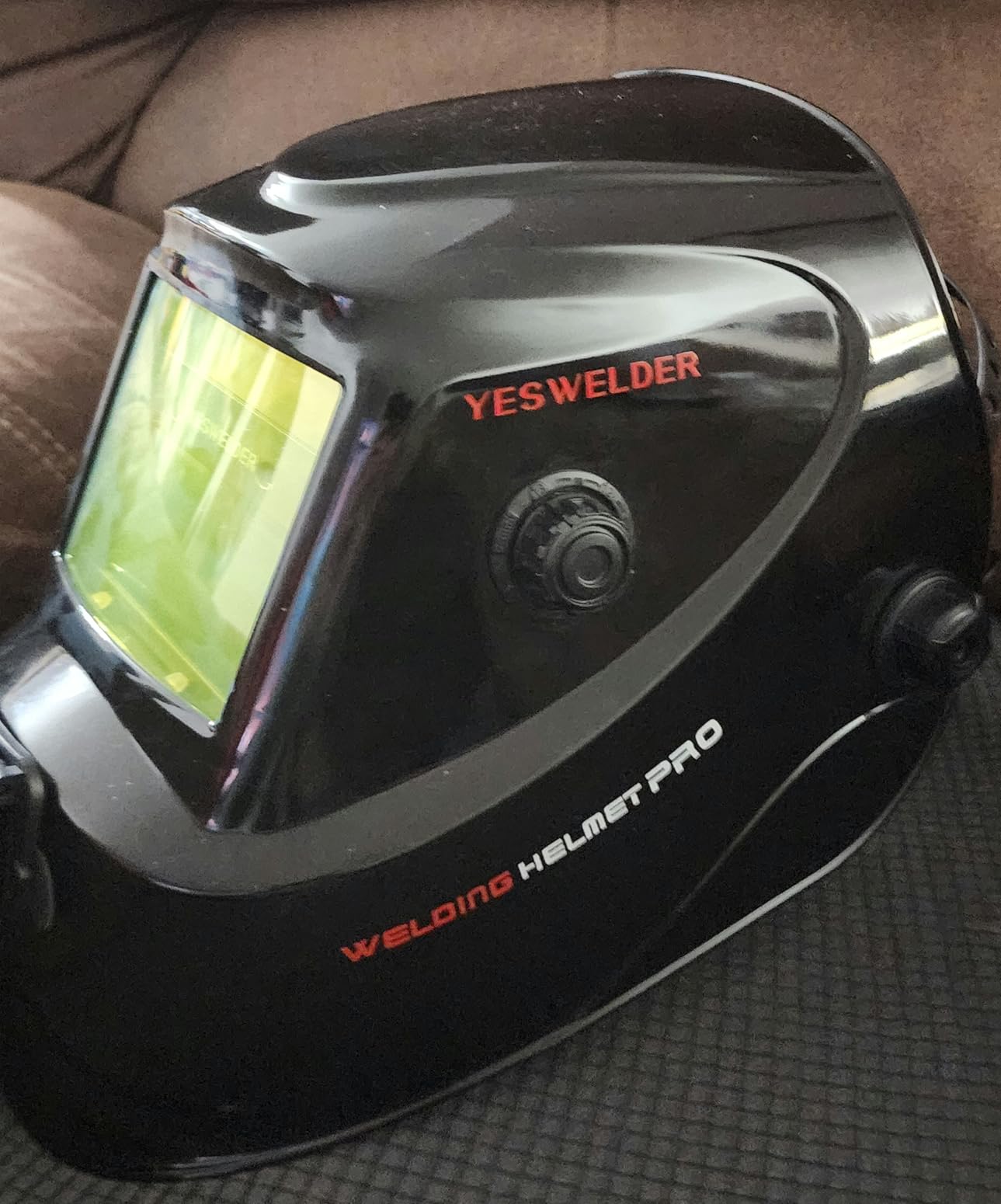
The wide shade range of 3.5/9-13 accommodates all copper welding processes. I typically use shade 11-12 for TIG welding copper, stepping up to 13 for heavier MIG work. The shade 3.5 light state is bright enough to see your work clearly without lifting the helmet.
TOPDC Welding Gloves – Heat Resistant Protection

TOPDC Welding Gloves 16-Inch 932°F Heat Resistant Leather for MIG, Stick
Length: 16 inches
Heat resistance: 932°F (500°C)
Material: 1.2mm cowhide leather
Lining: 100% cotton
Features: Kevlar stitched
+ Pros
- Extreme heat resistance
- 16 inch sleeve protects forearm
- Soft leather allows dexterity
- Kevlar stitching adds durability
- Cotton lining comfortable
– Cons
- May run large for some users
- Not machine washable
- Contact heat resistance limited to 15 seconds
Copper welding involves significant heat exposure, and these 16-inch gloves provide comprehensive protection. The 932°F heat resistance rating covers most copper welding applications when proper technique is used.
The extra length extends protection well up your forearm, which I’ve found invaluable when TIG welding copper. The heat from larger copper pieces radiates further than you expect, and full forearm coverage prevents burns.
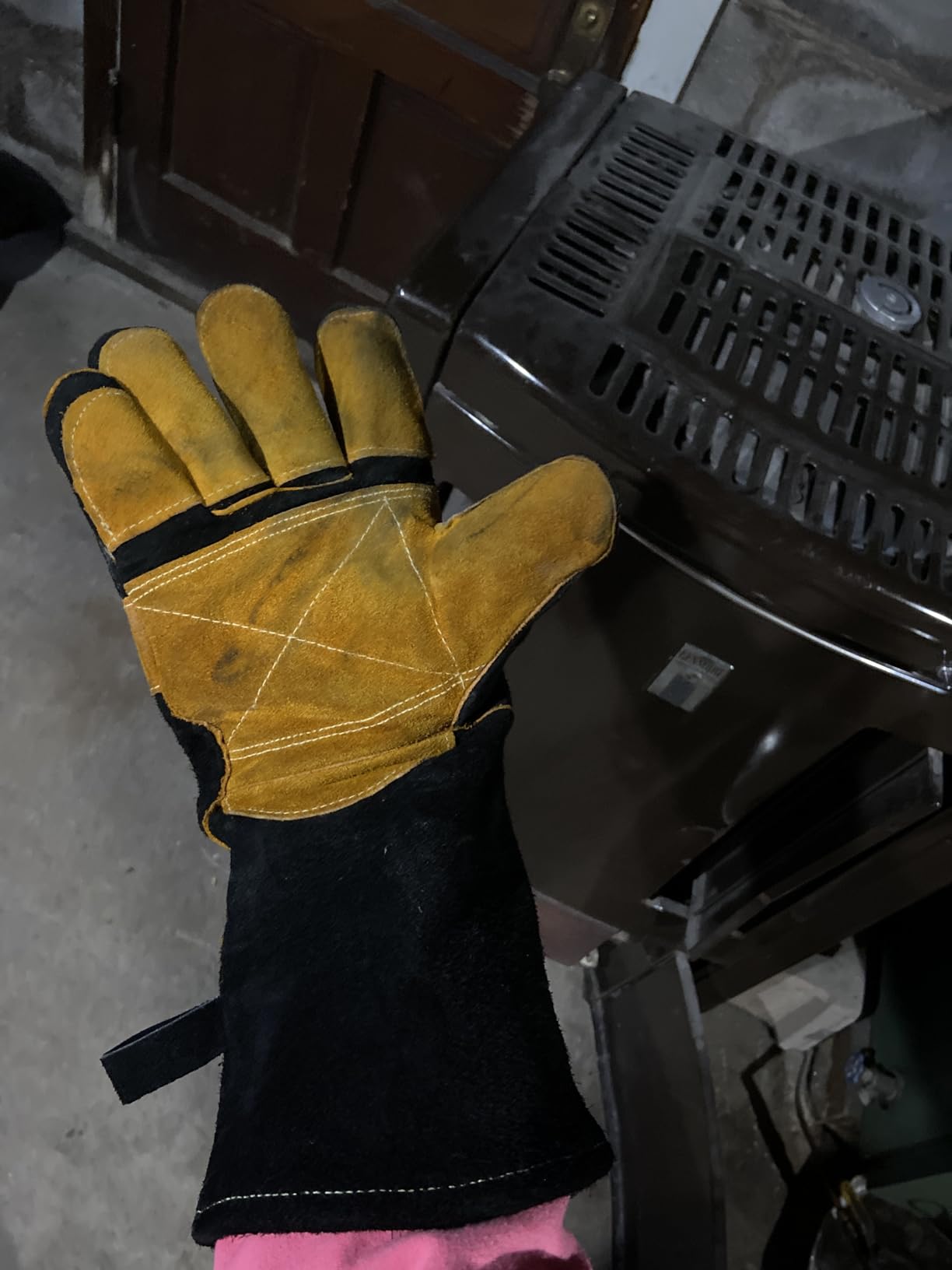
What surprises me about these gloves is the dexterity they maintain despite the 1.2mm leather thickness. I can manipulate TIG torches and filler rods with reasonable precision, something impossible with cheaper, stiffer gloves.
Customer images demonstrate the glove quality and show real-world use in various applications. The Kevlar stitching throughout adds significant durability—stitching failure is what dooms most welding gloves, and TOPDC addressed this weakness directly.
The 100% cotton lining makes these gloves comfortable for extended wear. I’ve worn them through hours of copper fabrication without the excessive sweating that synthetic linings cause.
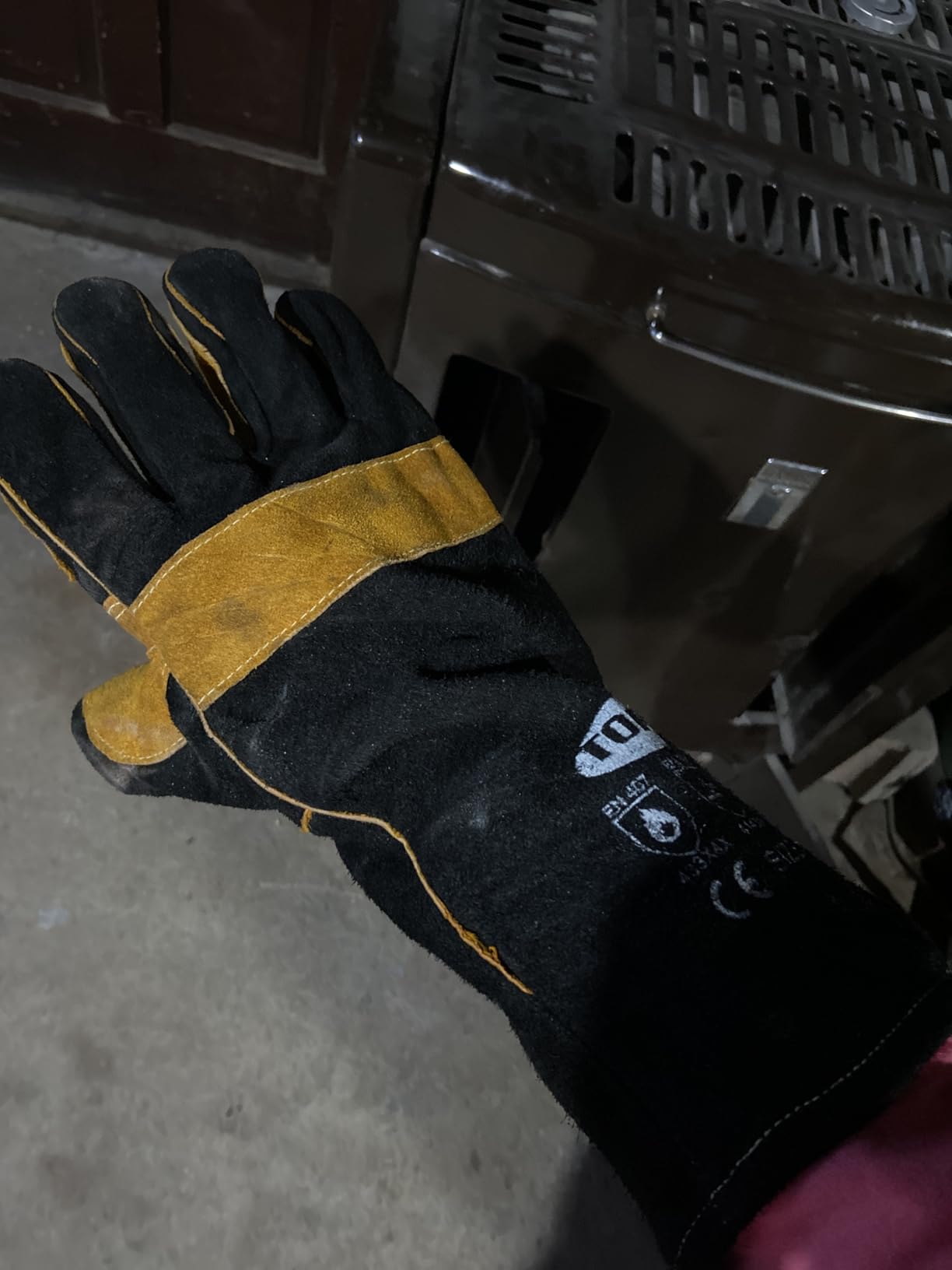
Double leather sewing on stress points reinforces the areas that typically fail first. After months of use, my pair shows minimal wear despite daily exposure to high heat and abrasion.
While rated for welding, these gloves serve double duty in my shop for handling hot copper pieces after welding. The 16-inch length lets me grab hot workpieces from the table without risking arm burns.
Common Problems and Solutions
Even with proper preparation, copper welding presents unique challenges. I’ve encountered and solved most common issues through trial and error.
Porosity in Copper Welds
Porosity remains the most common copper welding defect I see. Those small gas pockets weaken welds and create leak paths in pressure-critical applications.
The primary causes I’ve identified include:
- Insufficient cleaning before welding
- Moisture in filler material or base metal
- Incorrect gas flow rate (too low or too high)
- Shielding gas contamination
Solutions that work for me include extending cleaning time, storing filler rods in climate-controlled areas, and verifying gas flow with a flowmeter rather than relying on regulator gauges.
Cracking in Heat-Affected Zone
Cracking typically occurs from excessive restraint combined with rapid cooling. Copper’s high thermal expansion means joints move significantly as they heat and cool.
I prevent cracking by:
- Using proper joint designs with some flexibility
- Preheating to reduce thermal gradients
- Allowing controlled cooling (not quenching)
- Peening welds while still slightly warm
Lack of Fusion
When copper doesn’t fuse properly, it’s usually from insufficient heat input or poor technique. Copper’s high thermal conductivity means heat dissipates rapidly.
Solutions include increasing amperage, improving preheating, and ensuring proper torch angle. For TIG welding, I aim the arc more directly into the joint rather than riding the surface.
Warping and Distortion
Copper warps more than steel during welding due to higher thermal expansion. I control distortion through:
- Clamping workpieces securely but with some allowance for movement
- Using intermittent weld sequences rather than continuous welds
- Planning weld sequence to balance shrinkage forces
- Pre-setting joints to compensate for expected movement
Safety Considerations
Copper welding requires specific safety precautions beyond standard welding practices. I’ve learned that copper presents unique hazards that deserve respect.
Ventilation Requirements
Copper welding fumes contain metal particulates that can cause respiratory issues. Adequate ventilation is non-negotiable in my shop.
I use a combination of general shop ventilation plus local exhaust at the welding point. For frequent copper welding, a fume extractor rated for metal particulates is worth the investment.
Copper Toxicity Concerns
While copper itself isn’t highly toxic, copper alloys containing zinc (like brass) produce zinc oxide fumes when welded. These fumes cause metal fume fever if inhaled in sufficient quantities.
Know what alloy you’re welding and adjust your ventilation accordingly. Pure copper produces fewer hazardous fumes than copper-zinc alloys.
Personal Protective Equipment
Quality PPE is essential for copper welding. I never weld without:
- Auto-darkening helmet with proper shade rating
- Respirator rated for metal particulates when ventilation is questionable
- Leather welding gloves with forearm protection
- Natural fiber clothing (synthetics melt and stick to skin)
- Closed-toe leather boots
The investment in quality protective equipment pays dividends in long-term health. I’ve seen too many welders develop respiratory issues from inadequate protection.
Frequently Asked Questions
What is the best welding process for copper?
TIG welding produces the highest quality copper welds for most applications. It offers precise heat control essential for copper’s high thermal conductivity. MIG welding works well for thicker copper sections where speed matters. For thin copper sheet under 1/8 inch, TIG is unmatched in control and finish quality.
What gas do you use for welding copper?
Pure argon is the standard shielding gas for most copper welding applications. It provides excellent arc stability and prevents oxidation during welding. For thicker copper sections over 1/4 inch, adding helium to the argon increases heat input. A 75/25 argon-helium mixture is common for heavy copper welding.
Do you need to preheat copper before welding?
Yes, preheating copper is essential for thickness over 1/8 inch. Copper’s high thermal conductivity dissipates heat rapidly, making fusion difficult without preheating. Typical preheat temperatures range from 300-500F for medium thickness and up to 1200F for thick sections. Always preheat uniformly across the workpiece for best results.
What filler rod for copper welding?
ERCuSi-A silicon bronze is the most versatile filler for copper welding. It offers excellent flow, strength, and corrosion resistance. For color matching in electrical applications, ERCu deoxidized copper works best. Phosphor bronze (BCuP) excels for HVAC and refrigeration work due to self-fluxing properties.
Can you stick weld copper?
Stick welding copper is possible but challenging. I recommend it only for field repairs or when other equipment is unavailable. Specialized bronze rods designed for copper work provide the best results. The process requires higher skill than TIG or MIG due to copper’s rapid heat dissipation fighting against the stick arc.
Is welding copper toxic?
Pure copper welding produces relatively low toxicity fumes compared to other metals. However, adequate ventilation remains essential. Copper alloys containing zinc produce zinc oxide fumes that can cause metal fume fever. Always use proper ventilation and respiratory protection when welding any copper material. Know your specific alloy’s composition before welding.
Copper welding rewards patience and proper preparation. After years of practice, I’ve found that respecting copper’s unique properties rather than fighting against them produces the best results. Start with clean material, appropriate preheating, and the right process for your application. The skills you develop working with copper transfer well to all types of welding, making it an excellent teacher for metal fabrication fundamentals.
Leave a Reply