
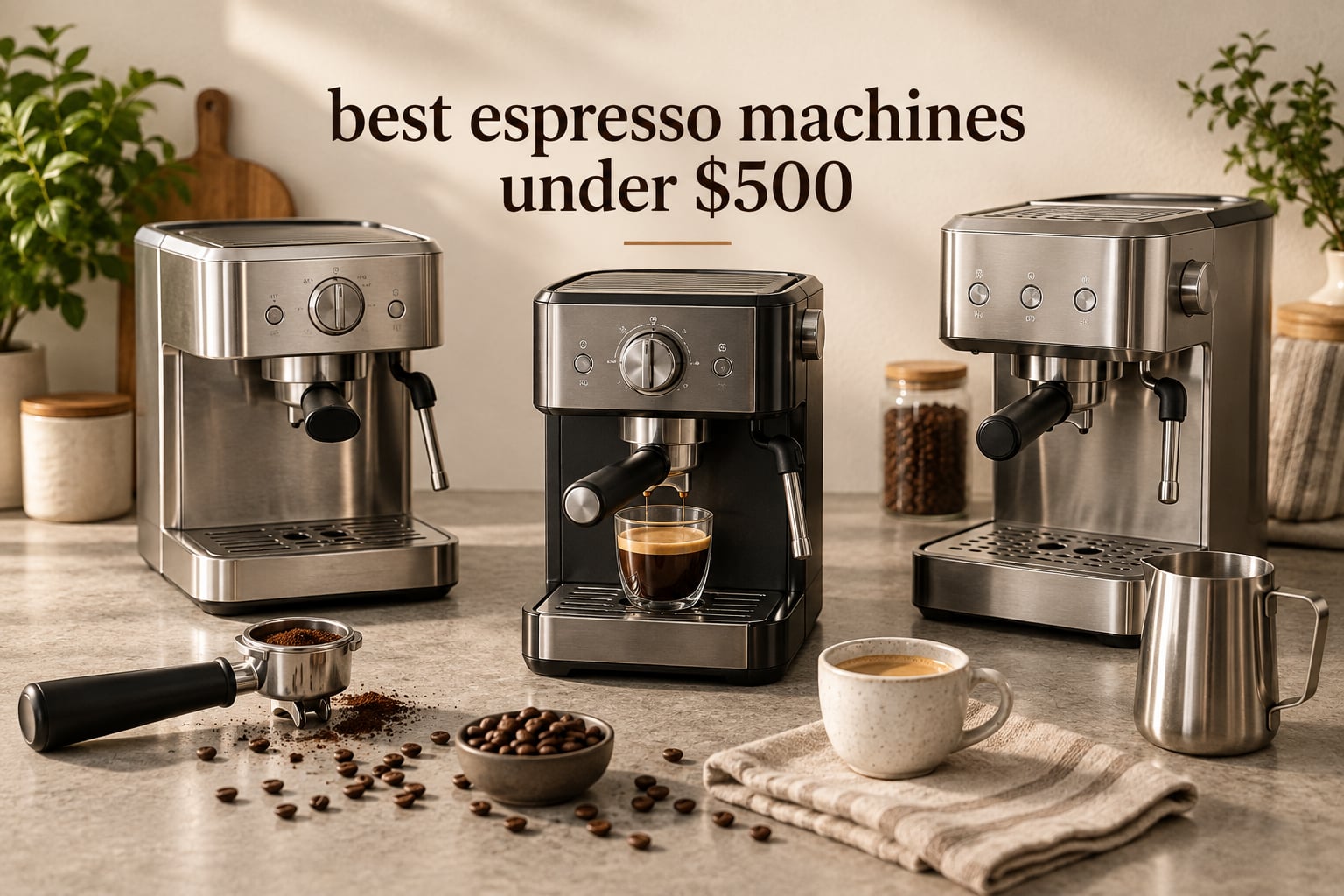
The best espresso machines under 500 do not all do the same job, and that is the first thing to sort out before you read a single spec sheet. Some pull real 9-bar shots from a 54mm portafilter and make you learn to tamp. Some press a button and hand you a drink. Some brew capsules and never touch a grinder at all. Our team pulled ten of the highest-reviewed machines in this price band, read the technical sheets line by line, and sorted through thousands of owner reviews to find out which workflow each one actually rewards.
One warning before the list, because it is the mistake we see most often: a 500-dollar machine budget is a machine budget, not a full setup budget. Unless the machine has an integrated burr grinder, you need to add a real burr grinder on top of that budget. A premium machine fed by a cheap blade grinder produces a worse shot than a modest machine paired with a proper burr grinder. We say this plainly because the r/espresso community flags it constantly, and the budget math changes which machine is right for you.
We also tested our assumptions against what owners actually report. Ratings and review counts below come straight from the current customer data, so you can see how much real-world history sits behind each pick. For wider context on machine categories, our guide to the best semi-automatic espresso machines and the best espresso machines for beginners cover the craft side in more detail.
Our Top 3 Espresso Picks on a 500-Dollar Machine Budget (October 2026)

Breville Barista Express
- Integrated burr grinder
- PID temperature control
- Low pressure pre-infusion
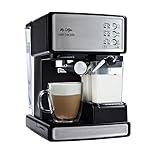

These three cover very different mornings. The Barista Express is the one we hand to someone who wants to actually learn, because it grinds, doses and PID-controls everything in one body. The Mr. Coffee Cafe Barista is the one we hand to someone who wants a latte without reading a manual. The CASABREWS CM5418 is the one we hand to someone on the tightest budget who still wants a real steam wand and a pressure gauge to watch.
Comparing Ten Espresso Machines Side by Side Before You Buy
| Product | Details | Action |
|---|---|---|
|
|
Check Latest Price |
|
|
Check Latest Price |
 |
|
Check Latest Price |
|
|
Check Latest Price |
 |
|
Check Latest Price |
 |
|
Check Latest Price |
 |
|
Check Latest Price |
 |
|
Check Latest Price |
 |
|
Check Latest Price |
 |
|
Check Latest Price |
Two things stand out when you look across all ten rows. Only three of these machines have a built-in grinder, which is why the Barista Express and the Ninja Luxe Cafe Premier end up needing the least extra gear. And the pressure numbers on the box cover an enormous range, from a 15 bar pump on the Mr. Coffee to a 20 bar pump on both CASABREWS models, which tells you almost nothing about shot quality on its own.
1. Breville Barista Express – The All-in-One With a Grinder Built In
Breville BES870XL Barista Express Espresso Machine, Brushed Stainless Steel
Integrated conical burr grinder
PID temperature control
22.1 lb, 1600 watts
54mm portafilter
+ Pros
- Built-in burr grinder with grind size and amount dials
- PID regulation for consistent temperature
- Low pressure pre-infusion
- Powerful wand for hand-textured microfoam
- Grinds straight into the portafilter cradle
– Cons
- Large and heavy at 22.1 pounds
- Manual workflow needs practice to dial in
- Manual workflow has a real learning curve
This is the machine we keep coming back to because it removes the single biggest variable in budget espresso: grind quality. A precision conical burr grinder sits in the top of the body with a dial for grind size and a second dial for how much coffee it dispenses, and the ground coffee lands directly in the portafilter sitting in the grinding cradle. Nothing else in this list does that, and it changes the whole buying calculation because your 500 dollars covers a complete working setup.
The extraction side is serious too. PID digital temperature regulation holds the brew water at a consistent temperature rather than swinging as the boiler heats and cools, and low pressure pre-infusion wets the puck gradually before pressure ramps up, which helps channeling show up less often. Owners with 27870 reviews and a 4.4 average keep pointing at the same two things: the grinder and the PID control.

Grinder, PID Control and Pre-Infusion Working Together
Pre-infusion is the quiet feature here. Instead of slamming 9 bar of water into a dry puck, the machine wets it first at low pressure, and the water finds its own path more evenly. On a single-boiler budget machine, that alone can be the difference between a balanced shot and one that channels down one side of the basket.
The grinder dials give you coarse-to-fine control, but the grind amount dial is the one people underuse. Dosing by weight rather than by eye is the fastest way to make shots repeatable, and a razor dose trimming tool is included in the box to shave the puck flat after tamping.
Steam Wand Performance and Microfoam Control
The steam wand is a manual style wand on a powerful boiler, which means you control texture directly instead of pressing a button. That is a real advantage over auto frothers if you want to learn latte art, and it is a real disadvantage if you want zero effort. Steam power at 1600 watts is enough to texture milk properly without it sitting and cooking.

What the Barista Express Is Like to Live With
The honest drawback is physical. At 22.1 pounds and 13.8 by 12.5 by 15.9 inches, it owns a real chunk of counter, and the front-loading portafilter means you need clearance to work. If your kitchen has a narrow counter run or a dedicated coffee shelf is out of the question, this is the wrong machine.
Who Should Skip the Barista Express
Skip it if you want zero learning curve, or if you plan to make one drink a day and will not adjust grind. Also skip it if you want manual milk texture control, since the wand is manual. If your priority is the shortest possible path to a cappuccino, the Mr. Coffee two spots down handles that better.
2. Mr. Coffee Cafe Barista – Button-Press Espresso With an Automatic Frother
Mr. Coffee Espresso and Cappuccino Machine Stainless Steel Programmable Coffee Maker with Automatic Milk Frother 15-Bar Pump Ideal for Home Baristas
15 bar pump
Automatic milk frother
One-touch panel
10.4 lb, 1040 watts
+ Pros
- Frother makes cappuccino in one step
- One-touch single and double shot buttons
- Compact 8.86 by 11.22 by 12.6 inch body
- Removable water tank
- Works with pre-ground coffee
– Cons
- Frother output can stop without warning
- Some owners report roughly a year of daily durability
- First units may need a cleaning cycle before proper brew temperature
The Cafe Barista is the answer to a specific question: can a beginner make a decent latte on day one with no instructions? The answer is genuinely yes. Press the single or double shot button, press the froth button, and the built-in wand dispenses and froths in one step. Across 14121 reviews at 4.3 stars, the most common praise is exactly that one-button workflow.
It also accepts pre-ground coffee, which removes the grinder question entirely for anyone who does not want to buy beans in whole form. The 15 bar pump delivers a consistent dark shot with visible crema once grind and dose are dialed in, and the programmable brew settings let you set a time if you want coffee ready before you are downstairs.
What the 15 Bar Pump Claim Actually Means
This machine lists 15 bar, and so do several other budget models. That number describes the maximum the pump can reach momentarily, not the pressure the puck feels for the whole shot. Real extraction happens around 9 bar. A vibratory pump rated at 15 or 20 bar cannot hold that peak, so treat the headline figure as a marketing label rather than a quality ranking.
None of the machines in this roundup can brew and steam at the same time, which is normal for single-boiler designs. The practical effect is that a milk drink takes a little longer: you steam, then you purge, then you pull the shot.
The One-Touch Control Panel in Daily Use
Buttons labeled for single and double shot filter options mean you pick the basket, drop it in, and press. There is no volumetric display, no PID readout, and nothing to calibrate. For someone who wants a repeatable drink rather than a hobby, that simplicity is the feature.
Frother Longevity Is the Real Trade-Off
The most common complaint is not taste, it is durability. Multiple long-term owners report the automatic frother failing at around the one-year mark, which lines up exactly with the warranty window. If you plan to run two or three milk drinks every morning for years, treat the frother as a consumable you may replace.
Who Should Buy It and Who Should Not
Buy it if you drink milk-based drinks most days, want the shortest possible learning curve, and do not care about dialing in. Pass if you want to taste the difference between a great shot and an okay one, because the pressurized, one-button path will not show you that difference. Our guide to the best super-automatic espresso machines covers the other end of the effort spectrum.
3. De’Longhi Stilosa – Compact Stainless Steel for Small Kitchens
De’Longhi Stilosa Compact Manual Espresso Machine, Manual Milk Frother
Stainless steel boiler
15 bar pump
Manual steam wand
9.5 lb, 8.07 by 13.5 by 11.22 inch
+ Pros
- Compact footprint for tight counters
- Manual wand gives direct texture control
- Stainless steel boiler rated for years
- Two-level cup warmer fits different cup sizes
– Cons
- Real learning curve to pull repeatable shots
- No built-in grinder so a burr grinder is needed
- Milk pitcher is not included
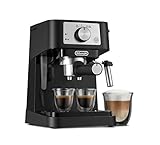
The Stilosa ranks first in Amazon’s manual espresso machines category, and 13833 reviews at a 4.2 average confirm that it delivers on a simple promise: a genuinely manual espresso machine in a body small enough for a small kitchen. At 9.5 pounds and 8.07 inches deep, it is the narrowest traditional machine here.
The stainless steel boiler is the part that matters for longevity. Metal boilers are easier to service and hold up better over years than the plastic and aluminum hybrid elements found in the cheapest machines, and De’Longhi backs it with a one year manufacturer warranty. The two-level cup warmer on top takes different cup heights, which is a small thing that shows up every morning.

Manual Wand Versus Button Frothers
The Stilosa has a manual milk frother steam wand, and that choice is the whole personality of the machine. You control the texture by hand, which means you can work toward microfoam and latte art if you want to, but you also have to learn it. The wand runs hot and it takes practice to avoid scalding milk.
If milk drinks are occasional, this costs you time. If they are the point of owning an espresso machine, the manual wand is where the craft lives.
Puck Preparation on a Fully Manual Workflow
There is no pre-infusion, no PID and no volumetric dosing here. You grind, you distribute, you tamp, you pull the lever, and you watch the shot. A stainless steel portafilter with single and double filters is included, and the results depend almost entirely on the grind you feed it.
This is why the Stilosa pairs well with a dedicated burr grinder. Buyers who show up with a blade grinder from a drawer under the sink get thin shots, and buyers who spend 150 dollars on a conical burr grinder get shots worth talking about.

Who Should Buy It and Who Should Not
Buy it if counter space is the binding constraint, you want a metal boiler you can keep for years, and you enjoy the manual process. Pass if you want automation or a fast workflow, because nothing about this machine is automatic except the brew button. A tamping tool also helps more here than on any other machine in the list, and our roundup of the best espresso tampers for baristas covers the options.
4. CASABREWS CM5418 – Pressure Gauge Budget Machine With a Real Steam Wand
CASABREWS CM5418 Compact Espresso Machine with Milk Frothing Steam Wand
20 bar pump with pressure gauge
1350 W boiler
34 oz tank
8.6 lb, 51mm baskets
+ Pros
- Visible pressure gauge helps you dial in extraction
- Steam wand produces microfoam good for latte art
- Compact 5.47 inch wide body
- Fast heat-up and simple button controls
- Many owners report over a year of daily use
– Cons
- Included plastic tamper and portafilter feel low quality
- Wand runs very hot and can flatten milk texture
- Cool-down cycle required between frothing and brewing
The CM5418 tops Amazon’s semi-automatic espresso category with 8020 reviews at 4.3 stars, and the reason is simple: it pairs a visible pressure gauge with a proper angled steam wand without moving up a tier. That gauge is a learning tool. Watching the needle sit in a stable band while a shot runs tells you more than any spec sheet.
Owners consistently report that espresso quality is excellent for the price once grind is dialed in. The 20 bar Italian pump and 1350 W boiler do real work, the 34 oz tank is detachable for filling at the sink, and the single and double cup 51mm baskets cover both sizes.

Why the Pressure Gauge Changes How You Dial In
When a shot runs, you want pressure to rise quickly and then settle into a steady range. If it climbs and never stabilizes, your grind is too fine. If it barely moves, your grind is too coarse. The gauge makes that feedback loop visible instead of guesswork, and it is the feature that most separates this machine from the entry-level tier.
The Overheat Protection Cool-Down Cycle
This is the constraint owners complain about most. The machine cannot brew espresso immediately after frothing without triggering over-heating protection, so you have to wait. In practice that means steaming your milk first, letting the machine recover, and then pulling the shot.
Plan your workflow around it and it is a minor annoyance. Ignore it and you will be waiting on a machine that refuses to heat. The 5.47 inch width also makes this one of the most counter-friendly options in the roundup.

Accessories You Will Replace Soon
The included plastic tamper and lightweight portafilter are the weak point. Reviewers report replacing both early on, and the box does not include a milk pitcher worth using. Budget a few dollars for a proper 51mm tamper and a stainless pitcher before your first attempt.
Who Should Buy It and Who Should Not
Buy it if this is the most you want to spend on a machine and you still want a real wand, a pressure gauge and a footprint that fits. Pass if you plan to make several milk drinks back to back without waiting, or if you are not willing to buy a separate burr grinder. It is a bargain only when paired with fresh beans and a real grind.
5. CASABREWS 3700 Essential – The Cheapest Way Into Manual Espresso
CASABREWS 3700 Essential Stainless Steel Espresso Machine with Steam Wand
20 bar semi-automatic
1350 W heating
43.9 oz tank
8.1 lb body
+ Pros
- Credible extraction at an entry-level price
- Large 43.9 oz tank means fewer refills
- Compact design fits small kitchens
- Removable drip tray and detachable tank simplify cleaning
– Cons
- No pressure gauge so extraction cannot be monitored
- Basic plastic tamper in the box
- First-use cleaning cycle and rubber plug removal required
The 3700 Essential sits at the bottom of the price range and ranks second in the same Amazon category as the CM5418, with 3689 reviews at 4.2 stars. It is the honest answer to the cheapest-but-best question: you get a real 20 bar semi-automatic machine, a steam wand for microfoam and a 43.9 oz tank, with fewer of the diagnostic extras.
That 43.9 oz tank is the sleeper feature. It is roughly a third larger than most machines in this roundup, so you can brew several drinks before refilling, and both the tank and the drip tray lift out for cleaning, which is where most budget machines usually cut corners.

What You Give Up Compared With the CM5418
The main loss is the pressure gauge. Without it you cannot see what is happening during a shot, so you are adjusting purely by taste and by how fast the espresso comes out. That is a slower feedback loop and it is the single biggest reason the CM5418 is the better buy when the difference is small.
The second loss is the accessories. The plastic tamper is basic, and you will want to replace it.
Setup Step Most Buyers Miss
This model requires a first-use cleaning cycle, and you need to remove the rubber plug from inside the water tank before you brew. Owners who skip that step report weak or odd-tasting first cups. It takes five minutes and it is in the instructions, so just do it first.

Who Should Buy It and Who Should Not
Buy it if the machine budget is genuinely tight and you want a manual workflow rather than capsules. Pass if you can stretch a little further, because the CM5418 gives you the gauge for a modest step up. And pass if you have never pulled a shot before and want a machine that will not require practice.
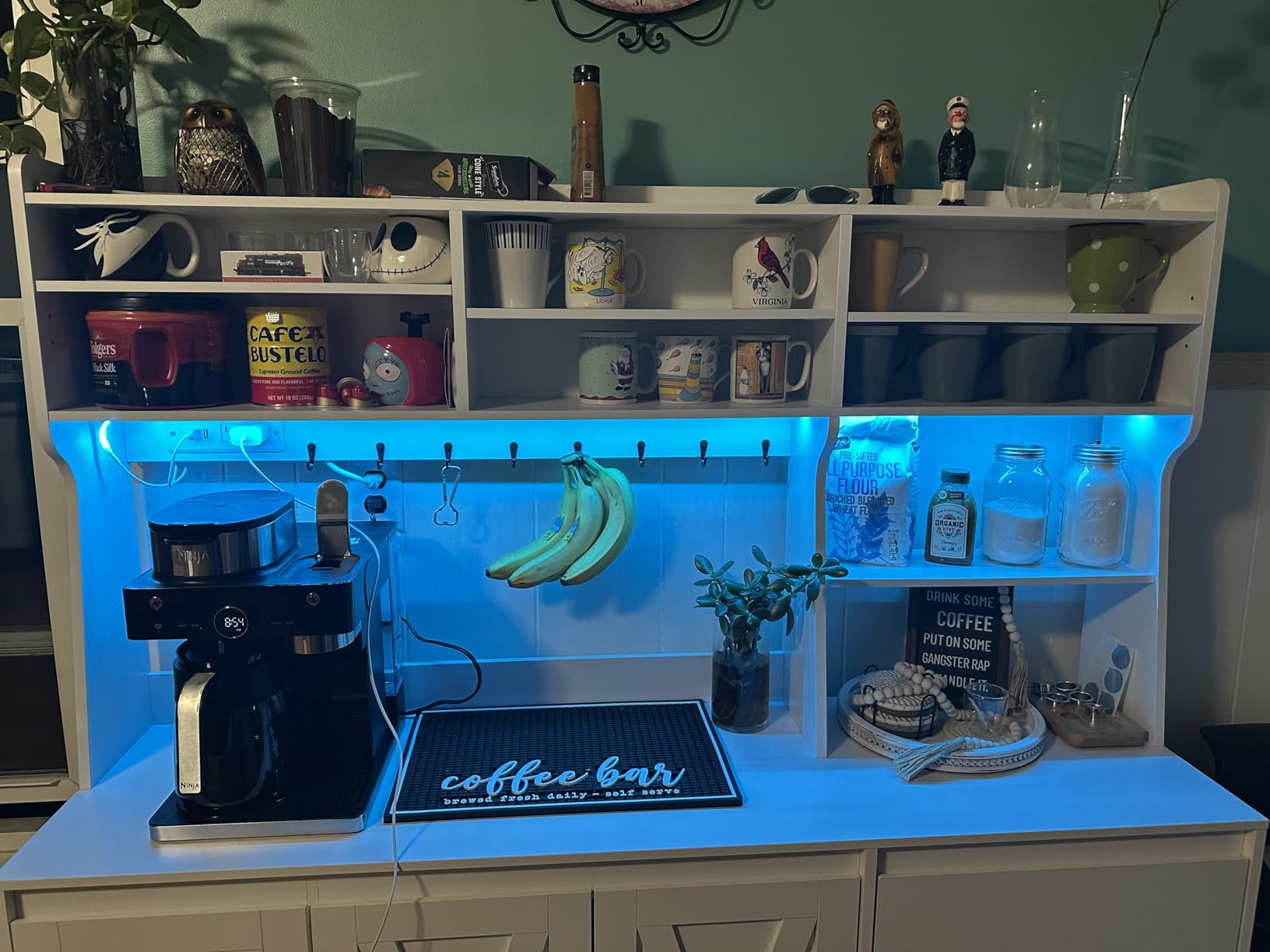
6. Ninja CFN601 – Capsules and Grounds in One Flexible Machine
Ninja Espresso & Coffee Maker, Nespresso Capsule Compatible, Black, CFN601
19 bar Barista Plus system
Nespresso Original capsules
9 ground coffee sizes
13.6 lb, 1550 watts
+ Pros
- Brews both Nespresso capsules and ground coffee
- 19 bar system gives well-formed crema
- Fold-away frother makes milk drinks without another appliance
- Brew sizes from single cup to 12 cup carafe
- Refillable pods work for cheaper per-cup brewing
– Cons
- Capsule espresso is thinner than ground espresso
- Only one shot at a time and milk needs pre-heating
- Ground coffee side has been reported to leak at the base
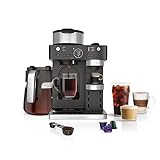
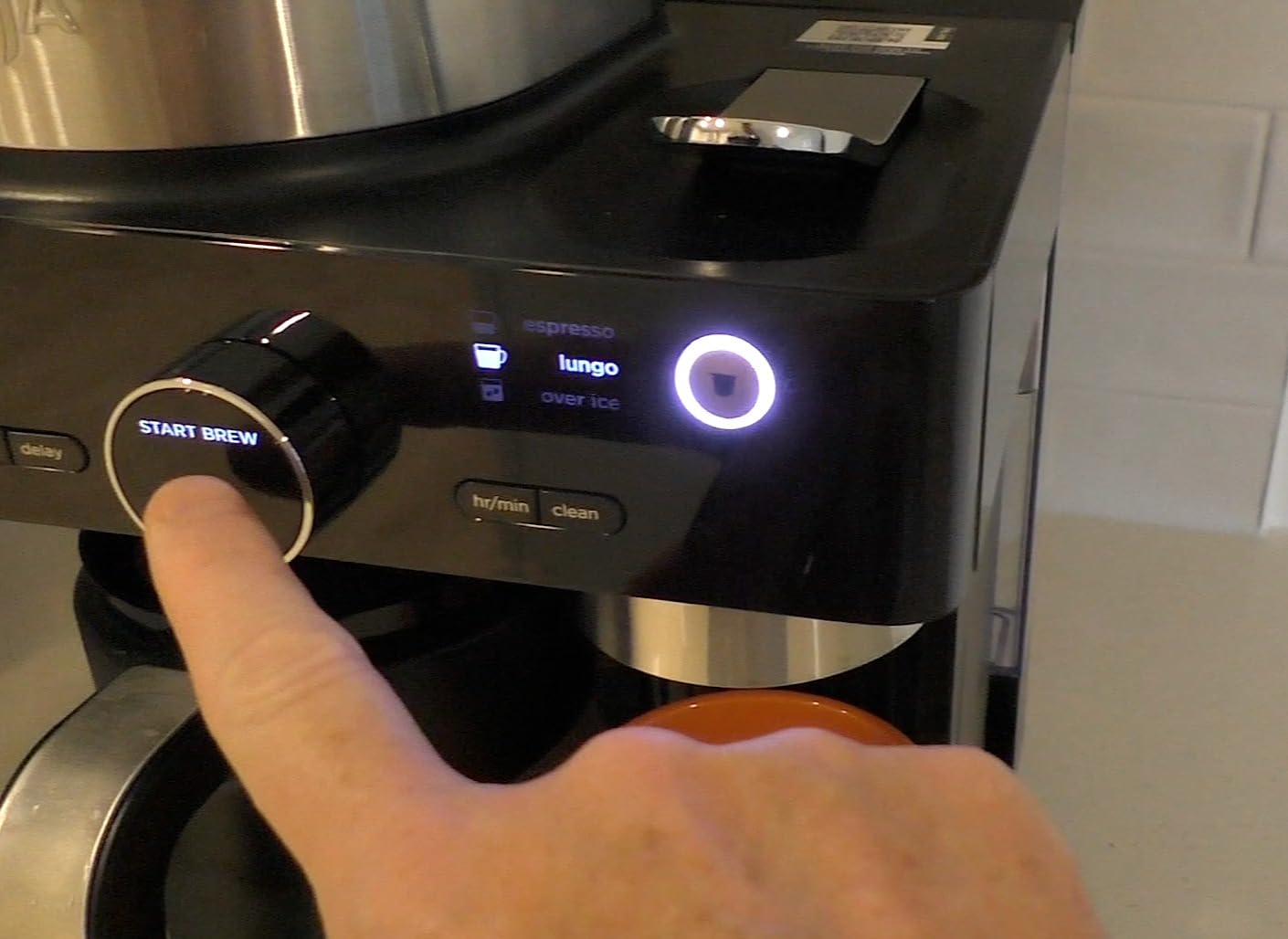
The Ninja CFN601 is the only machine in this roundup that refuses to pick a side. It takes Nespresso Original capsules, it takes ground coffee, and it does both in the same body with a fold-away milk frother tucked into the front. That flexibility is why it is worth considering even though it is not the strongest shot maker here.
The 19 bar Barista Plus pressure system produces espresso with a well-formed crema, and the ground coffee side brews in nine sizes from a single cup all the way to a 12-cup carafe. Several owners report three or more years of daily use, which is longer than many machines at this level.
Why Capsule Espresso Tastes Thinner Here
Capsules are pre-ground and pre-portioned, and a pre-ground coffee has already lost aroma and fines to the air. Reviewers are blunt about the result: espresso from the capsule side is weaker and thinner than a dedicated ground espresso machine. If you want to taste what a good shot actually is, this is not the machine that shows you.
The upside is zero effort. No grinding, no tamping, no dialing in, and the used capsule bin holds up to 20 capsules so cleanup is a quick lift.
The Ground Coffee Side in Daily Use
Ground coffee brewing makes this a legitimate two-in-one: espresso for a small shot, drip coffee for the carafe, and an automatic frother for cappuccino, latte or flat white. The warming plate and adjustable cup tray handle the rest. The main practical limit is one shot at a time, and milk is best pre-heated for the frother.
Who Should Buy It and Who Should Not
Buy it if your household drinks both espresso and large-format drip coffee, or if you want the option of refillable pods to cut per-cup cost. Pass if your priority is learning espresso, because the ground coffee path here uses a paper filter approach rather than a real pressurized portafilter. It is a versatile household coffee machine that happens to make espresso, rather than an espresso machine first.
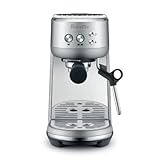
7. Breville Bambino – 3-Second Heat-Up and Hands-Free Milk
Breville BES450BSS Bambino Espresso Machine, Brushed Stainless Steel
ThermoJet ready in 3 seconds
PID temperature regulation
54mm portafilter
10.9 lb body
+ Pros
- Heats to temperature in about 3 seconds for back-to-back shots
- Compact 6.3 inch width fits small counters
- Automatic steam wand makes microfoam without technique
- PID control for consistent extraction
- Fully equipped box with baskets jug portafilter and tamper
– Cons
- No integrated grinder so beans must be ground separately
- Lowest average rating in this set with 16 percent of ratings at one star
- Tamping and dose control take practice
The Bambino is the machine that made fast home espresso normal. The ThermoJet heating system reaches extraction temperature in about three seconds, so you can pull one shot, steam milk, and pull another without waiting out a warmup cycle. At 10.9 pounds and only 6.3 inches wide, it is also one of the easiest machines here to hide away when it is not in use.
Extraction quality comes from PID digital temperature regulation and low pressure pre-infusion, and the 54mm portafilter is sized for 19 gram doses, which is the modern sweet spot for a single shot. The automatic steam wand handles milk on its own with adjustable temperature and texture.

ThermoJet Versus Traditional Warmup
Most single-boiler machines need five to ten minutes before the first shot, which means you either plan your morning around the machine or you accept a cooler first cup. A thermoblock-style system like ThermoJet heats a small volume of water on demand rather than warming a full boiler, and that is the entire reason this machine feels fast.
The trade-off is capacity. Heating on demand suits one drink at a time. If you are making four lattes for a family in a row, any machine in this roundup will be slower.
The Automatic Steam Wand in Practice
You set a texture level and the machine does the rest. Owners credit this with producing genuinely silky microfoam without manual technique, which is exactly what a first-time buyer wants. It is the milk side that separates the Bambino from a bare-bones manual machine at the same level.

Why the Rating Sits Lower
At a 4.0 average across 2635 reviews, this is the lowest-rated machine in the set, with 16 percent of ratings at one star. The critical reviews are not about build quality. They are about the learning curve and the missing grinder, both of which are real costs that show up in the first week.
Several buyers also note that the Bambino Plus is better value for the step up, which is worth weighing. If the machine budget stretches to 500 dollars, the auto purge on that version is a genuine workflow improvement.
Who Should Buy It and Who Should Not
Buy it if you want a compact, fast machine with PID control and hands-free milk and you already own or will buy a burr grinder. Pass if you are starting from nothing and the 500 dollars has to cover the grinder too, and pass if your kitchen counter is genuinely tiny. Our best manual espresso makers for travel roundup covers the opposite end of the size spectrum.
8. Ninja Luxe Cafe Premier – Guided Dosing With a 25-Setting Grinder
Ninja Luxe Café Premier 3-in-1 Espresso Machine, Drip Coffee, & Cold Brew
3-in-1 espresso drip and cold brew
25 setting burr grinder
Weight-based dosing
4.4 lb, 1650 watts
+ Pros
- Barista Assist guides grinding dosing tamping and temperature
- 25 setting burr grinder removes the need for separate gear
- Dual froth system with four presets plus manual mode
- Replaces an espresso machine a drip machine and a cold brew setup
- Dishwasher-safe parts
– Cons
- Lists above the budget cap in this price tier
- Large countertop footprint
- Grinder and froth cleaning adds to upkeep
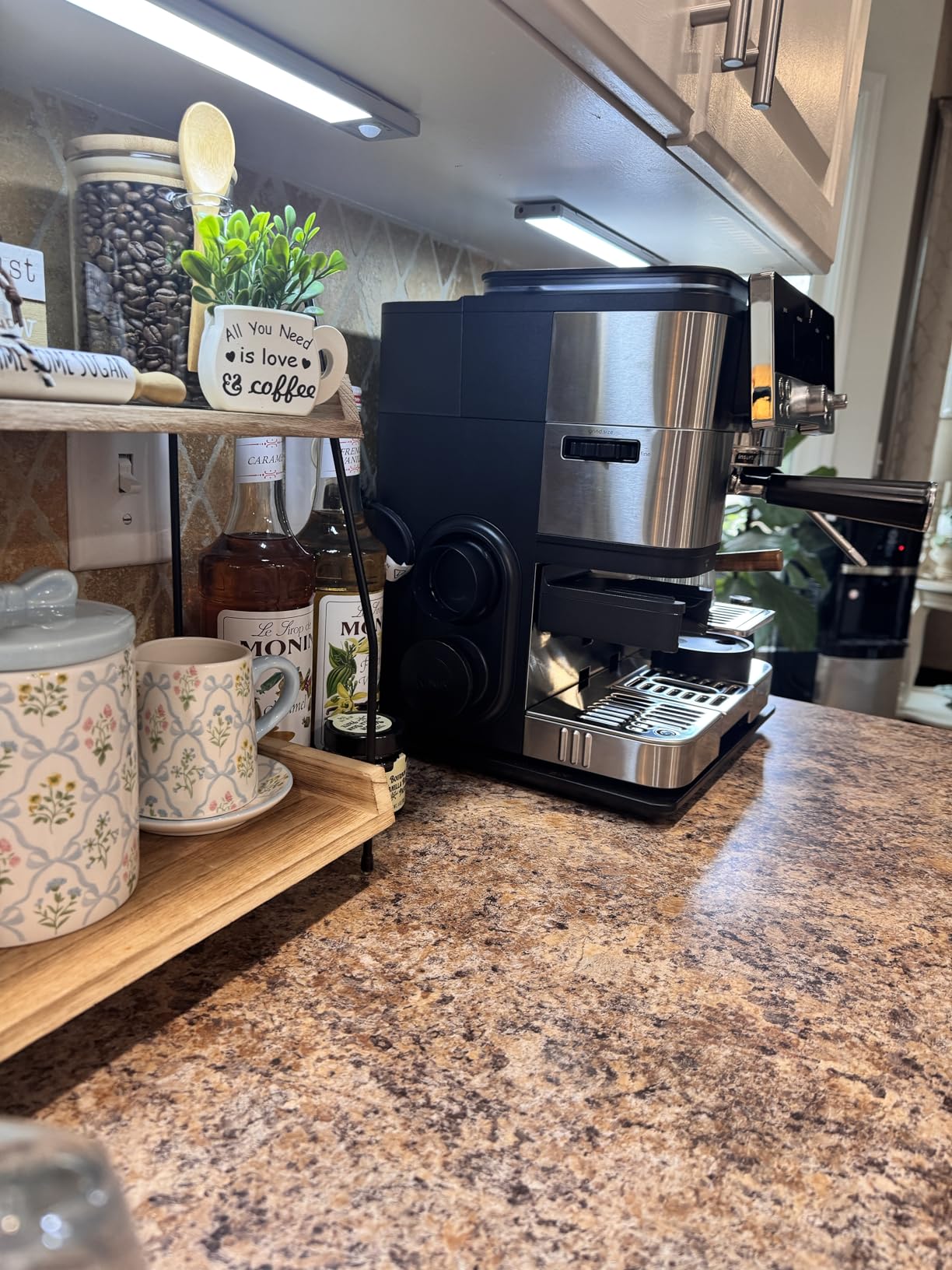
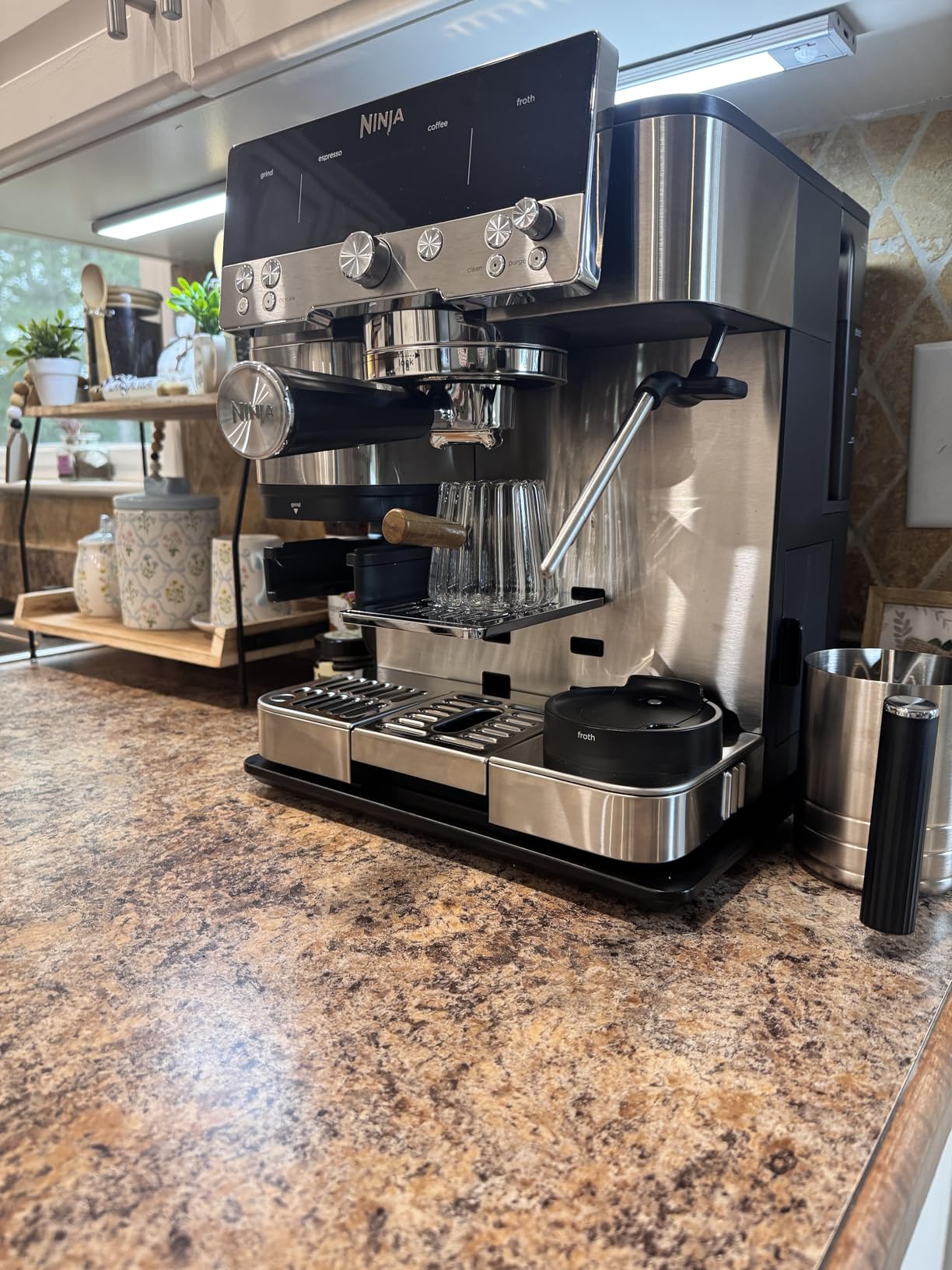
One honest note first: the Luxe Cafe Premier sits above the 500-dollar machine cap, so it is not a choice that fits a strict budget. It earns its place here because it is the machine the search results themselves point to as the best all-in-one with a grinder, and because it teaches you the most while asking for the least.
Barista Assist Technology uses weight-based dosing, assisted tamping and real-time temperature and pressure adjustment, so the machine makes the grind, dose and tamp decisions with you. A built-in conical burr grinder with 25 settings means the whole loop from bean to cup happens inside one body. Owners credit that guided workflow for making good shots easy.
What Guided Dosing Actually Does
Instead of measuring a dose by eye, the scale under the cup tells the grinder when to stop. That removes the single largest source of variation in espresso, so the same beans give you roughly the same shot twice in a row. For a beginner, that is worth more than any heating upgrade, because it converts a frustrating variable into a repeatable one.
The cold-pressed espresso mode brews at a lower temperature and pressure for a milder cup, and the drip and cold brew side covers 6 to 18 oz in seven sizes.
A Dual Froth System for Every Skill Level
The froth setup combines a spinning whisk with an automatic steamer, offering four presets plus a manual mode. That means someone who wants zero effort gets a hands-free microfoam, and someone practicing latte art can still take over. It is the most flexible milk system in the roundup.
Cleaning is the trade-off. The grinder and froth system both need maintenance, and the accessory storage built into the body is what keeps the parts together rather than scattered.
Who Should Buy It and Who Should Not
Buy it if your total coffee budget covers the machine and you want espresso, drip and cold brew from one appliance with no separate grinder purchase. Pass if you are held to a hard cap, if you want the hands-on craft that comes with tamping and dialing in yourself, or if counter space is tight, since the footprint is larger than most single-purpose machines here.
9. Breville Bambino Plus – Auto Purge Makes Milk Drinks Repeatable
Breville BES500BSS Bambino Plus Espresso Machine, Brushed Stainless Steel
ThermoJet ready in 3 seconds
Auto purge after steaming
54mm portafilter
11 lb body
+ Pros
- Auto purge after steaming returns to correct brew temperature
- 3 second heat-up allows back to back drinks
- Automatic steam wand with adjustable texture
- 7.7 inch wide body fits tight counters
- Two year warranty is longer than most in this range
– Cons
- No built-in grinder so a burr grinder is required
- Manual portafilter workflow needs practice
- Wand can overheat milk if the adjustment is unfamiliar
The Bambino Plus is the machine the r/espresso community names most often as a default pick around the 500-dollar mark, and the reason is one specific feature. The auto purge system flushes the group head after you steam, so your next shot extracts at the right temperature instead of pulling water through a still-hot boiler.
Everything else follows the base Bambino’s playbook. ThermoJet heats in three seconds, PID holds temperature, and the automatic steam wand makes microfoam hands-free with adjustable temperature and texture. The 7.7 inch wide body is narrow enough for a tight run of counter.

Why Auto Purge Matters for Latte Drinks
On a single-boiler machine, brewing and steaming share one boiler. Steam it to 140 degrees, then pull a shot immediately, and the water is still hot enough to pull a sour, thin extraction. Purging burns some of that stored heat so the brew temperature recovers, which is why milk drinks on this machine come out more consistently than on machines without it.
Reviewers center almost all of their feedback on this point, and the same reviews keep comparing it unfavorably to the Barista Express on the missing grinder.
The 54mm Portafilter and 19 Gram Dose
The 54mm portafilter holds a 19 gram dose, which is the standard for a double shot at this level. It is smaller and lighter than a commercial 58mm basket, and that is worth knowing if you ever want to move up later. For now, 19 grams gives you plenty of adjustment room in either direction.
Warranty Length as a Durability Signal
A two year limited warranty is longer than most competitors in this price band, and it matters on a machine with replaceable parts like a steam wand and a group gasket. Longer coverage usually signals a manufacturer that expects the machine to last, and it reduces the risk on your first purchase.

Who Should Buy It and Who Should Not
Buy it if you drink two or more milk drinks a day, you want them to taste the same each time, and your counter is narrow. Pass if you want to save budget for a grinder, because that combination pushes the real cost past 500 dollars. Also pass if you want to learn manual milk texturing, since this wand is automatic.
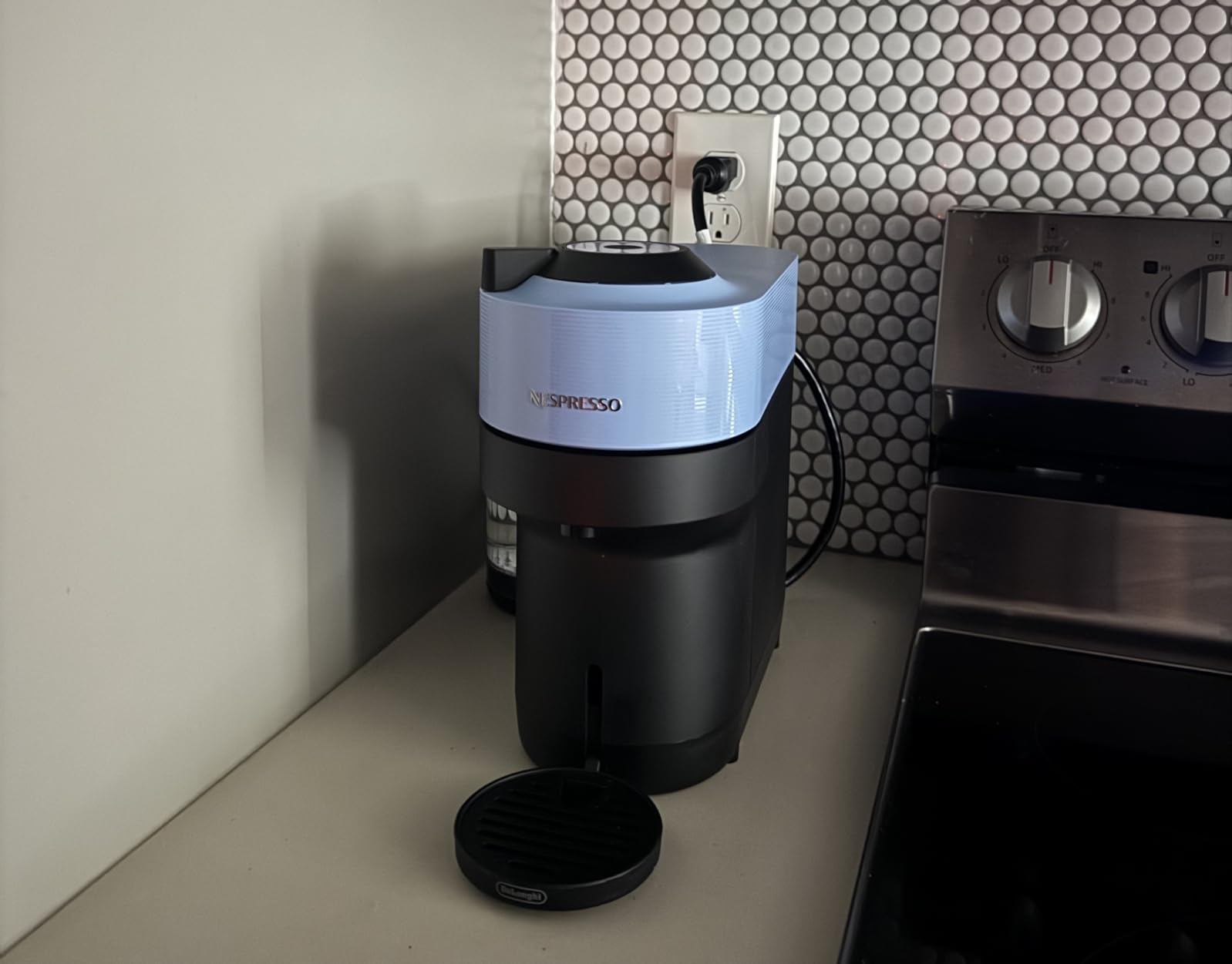
10. Nespresso Vertuo Pop+ – One-Touch Capsule Espresso in a Small Box
Nespresso Vertuo Pop+ Coffee and Espresso Machine by De’Longhi, Black
One-touch brewing
30 second heat-up
Five cup sizes
7.9 lb, 25.4 oz tank
+ Pros
- No grinding tamping or milk technique required
- Compact 8.6 by 10.4 inch body suits tight spaces
- 30 second heat-up is quick for a single drink
- Consistent velvety crema layer from Vertuo capsules
- Side-mounted tank makes refilling easy
– Cons
- Capsule only with no ground coffee option
- No milk frother so lattes need another appliance
- Higher cost per cup than ground coffee machines
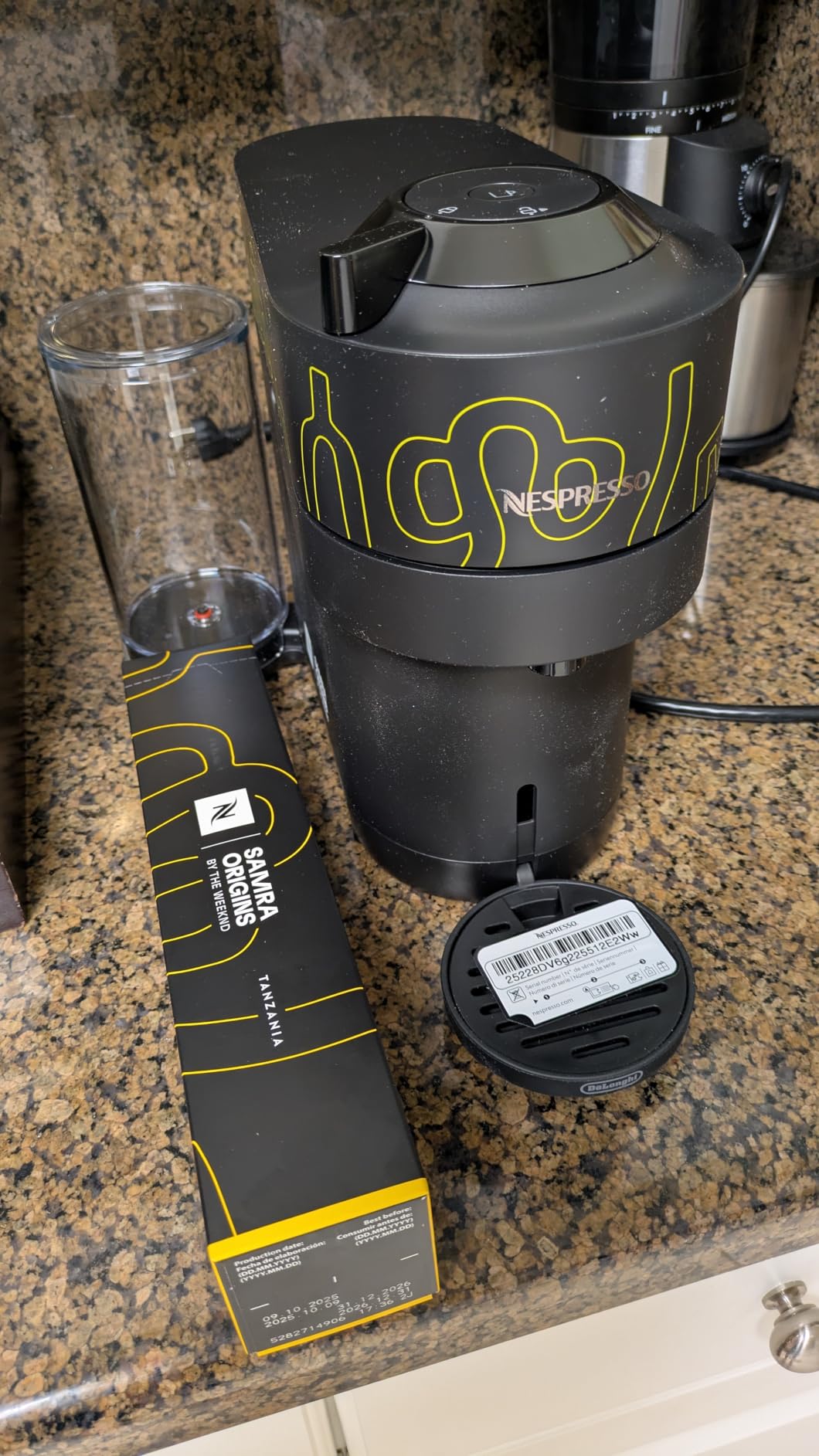
The Vertuo Pop+ is the reason capsules get dismissed and then bought anyway. It heats in 30 seconds, brews with one touch, and delivers five sizes: 5, 8 and 12 oz coffees plus single and double espressos, hot or over ice. With 1635 reviews at a 4.2 average, the feedback is consistent about speed, size and consistency.
There is no learning curve at all. No grind, no tamp, no temperature adjustment, no technique. The Vertuo capsule system brews a consistent, velvety crema layer every time, and the side-mounted 25 oz tank lifts out for refilling at the sink.
The Capsule System and Its Per-Cup Cost
Vertuo capsules brew by barcode, and the machine is locked to that system. Vertuo capsules are not compatible with Nespresso Original machines, and there is no ground coffee path, so you are committed to the format you buy into.
The ongoing cost per cup is higher than with a ground coffee machine, and that compounds over a year of daily use. What you buy is time: a consistent drink in about a minute with no cleanup beyond emptying the used capsule bin.
No Frother and What That Means for Lattes
There is no milk frother built in, so cappuccino and latte require a separate appliance such as a handheld wand or a small frother. That is an extra purchase and an extra step. If espresso straight or over ice is what you drink, this is not a problem. If latte is your daily order, budget for the extra tool.
Who Should Buy It and Who Should Not
Buy it if you live alone or as a couple, drink one or two drinks a day, value speed above customization, and have very little counter space. Pass if you want to explore roasting, dosing or latte art, or if you drink several coffees a day and the per-cup cost adds up. Our roundup of the best espresso machines for beginners covers machines that grow with your skills instead.
How to Choose an Espresso Machine at This Budget Level
Every machine above can produce a good drink, but they split along clear lines. The decisions below are the ones that actually change your daily experience, and they matter more than any single spec number.
1. Budget for the Grinder Separately
This is the number one mistake in this price band, and it is the one that most affects taste. A blade grinder chops beans into dust and boulders at the same time, and that unevenness causes channeling no matter how good your machine is. A conical burr grinder with adjustable settings is the minimum for espresso, and budget 150 to 200 dollars for one.
Two ways around it: buy a machine with an integrated grinder, or spend less on the machine and put the difference into the grinder. The Barista Express and the Ninja Luxe Cafe Premier already include one. If you pick anything else, assume the setup total lands well above 500 dollars.
2. Match the Machine Type to Your Patience
Semi-automatic machines ask you to grind, tamp and pull. Manual machines add lever control. Super-automatic and guided machines weigh, dose and tamp for you. Capsule machines do not touch coffee at all. Be honest about how much process you actually want, because a semi-automatic you resent is a worse purchase than a capsule machine you enjoy.
3. Decide Between 54mm and 58mm Portafilters
The 54mm portafilter on the Breville machines is sized for 19 gram doses, which is modern and efficient. The commercial 58mm basket found on enthusiast machines holds more coffee and gives you more room to work with, and it is the standard that most accessories are made for. At this budget you will find mostly 54mm and 51mm baskets. Neither is wrong; just know which one you have before you buy a tamper or a basket.
4. Choose a Steam Wand You Can Actually Use
Automatic frothers, like the ones on the Bambino, the Bambino Plus, the Mr. Coffee and the Ninja CFN601, take the technique out of milk texturing. Manual wands, like the ones on the Stilosa and the CASABREWS models, let you chase microfoam but require practice. If you are latte-art curious, a manual wand is the only route. If you want reliability at 7am, automatic wins.
5. Understand Single Boiler and Thermoblock Limits
Most machines here use a single boiler or a thermoblock heating system. Neither can brew and steam at the same time, so you will always sequence your drinks. A thermoblock heats water on demand in seconds, which is faster for one drink at a time. A traditional single boiler with a metal boiler, like the one in the Stilosa, takes longer to warm but tends to age better.
This also explains the cool-down cycles on the CASABREWS models. They are a symptom of one boiler doing two jobs, not a defect.
6. Ignore the Bar Pressure Number on the Box
Machines in this roundup advertise 15, 19 and 20 bar pumps. Espresso extracts at around 9 bar, and vibratory pumps cannot sustain their peak rating. Higher numbers do not mean better coffee. Judge extraction on taste, on crema, and on whether the shot runs in 25 to 30 seconds.
7. Check the Real Ongoing Costs
Capsule machines have a per-cup cost that compounds. Bean machines have bean costs plus descaling supplies, filters and the occasional gasket or steam needle replacement after a few years. None of the machines here are maintenance-free, and a one year warranty, which several carry, is worth factoring into a cheap machine where frother parts fail early.
Frequently Asked Questions
What is the best home espresso machine for a budget of $500?
The Breville Barista Express is the strongest overall pick at this budget because it includes a built-in burr grinder, PID temperature control and pre-infusion, so your 500 dollars covers a working setup rather than a machine waiting on a grinder. If you want zero learning curve instead, the Mr. Coffee Cafe Barista makes cappuccino with one button press.
Do I need a separate grinder for an espresso machine?
Yes, unless the machine has an integrated burr grinder. Only the Breville Barista Express and the Ninja Luxe Cafe Premier in this roundup include one. A blade grinder produces uneven particles and channeling, so budget roughly 150 to 200 dollars for a conical burr grinder and treat the 500 dollars as a machine budget, not a full setup budget.
What is the cheapest but best espresso machine under $500?
The CASABREWS 3700 Essential is the lowest-cost machine here and still delivers a 20 bar semi-automatic workflow, a steam wand for microfoam and a large 43.9 oz tank. If you can stretch a little further, the CASABREWS CM5418 adds a pressure gauge that makes dialing in far easier.
Are 19 bar and 20 bar espresso machines better than 9 bar?
No. Espresso extracts at roughly 9 bar, and the vibratory pumps in budget machines cannot sustain their headline peak. Higher bar numbers on 15, 19 and 20 bar machines describe a momentary maximum, not the pressure your coffee puck feels. Judge a machine on taste and crema instead.
What is the best espresso machine with a grinder under $500?
The Breville Barista Express is the one that fits the cap, with an integrated precision conical burr grinder, adjustable grind size and amount dials, and grounds that drop straight into the portafilter cradle. The Ninja Luxe Cafe Premier adds a 25-setting grinder and weight-based dosing, but it lists above the 500-dollar machine cap.
Which Espresso Machine Fits the Way You Actually Drink Coffee
If you want the best espresso machines under 500 that work as a complete setup on the budget you set, the Breville Barista Express is the pick. It is the only machine here where a 500-dollar spend gets you grinding, brewing and steaming with no second purchase, and its 27870 reviews at 4.4 stars make it the most proven option in the group.
If your mornings need speed rather than craft, pick by workflow. Daily latte drinkers who want no technique should take the Mr. Coffee Cafe Barista. Those who want repeatable milk drinks and already own a grinder should take the Breville Bambino Plus for its auto purge. Capsule-only drinkers with tiny counters should take the Nespresso Vertuo Pop+.
If budget is the real constraint, the CASABREWS CM5418 gives you a pressure gauge and a steam wand at a fraction of the price, and the 3700 Essential goes lower if you accept the same workflow without the gauge. The Ninja CFN601 suits households that drink both espresso and a full carafe, and the Ninja Luxe Cafe Premier is worth stretching for if your total coffee budget can cover it.
Whichever one you choose, buy a conical burr grinder alongside it unless the machine already has one, and skip the 15, 19 and 20 bar marketing. That single step, a real burr grinder, is the difference between an expensive machine that underperforms and a modest one that tastes excellent. Check current pricing on each machine below, and buy the grinder on the same day you order it.
Leave a Reply