
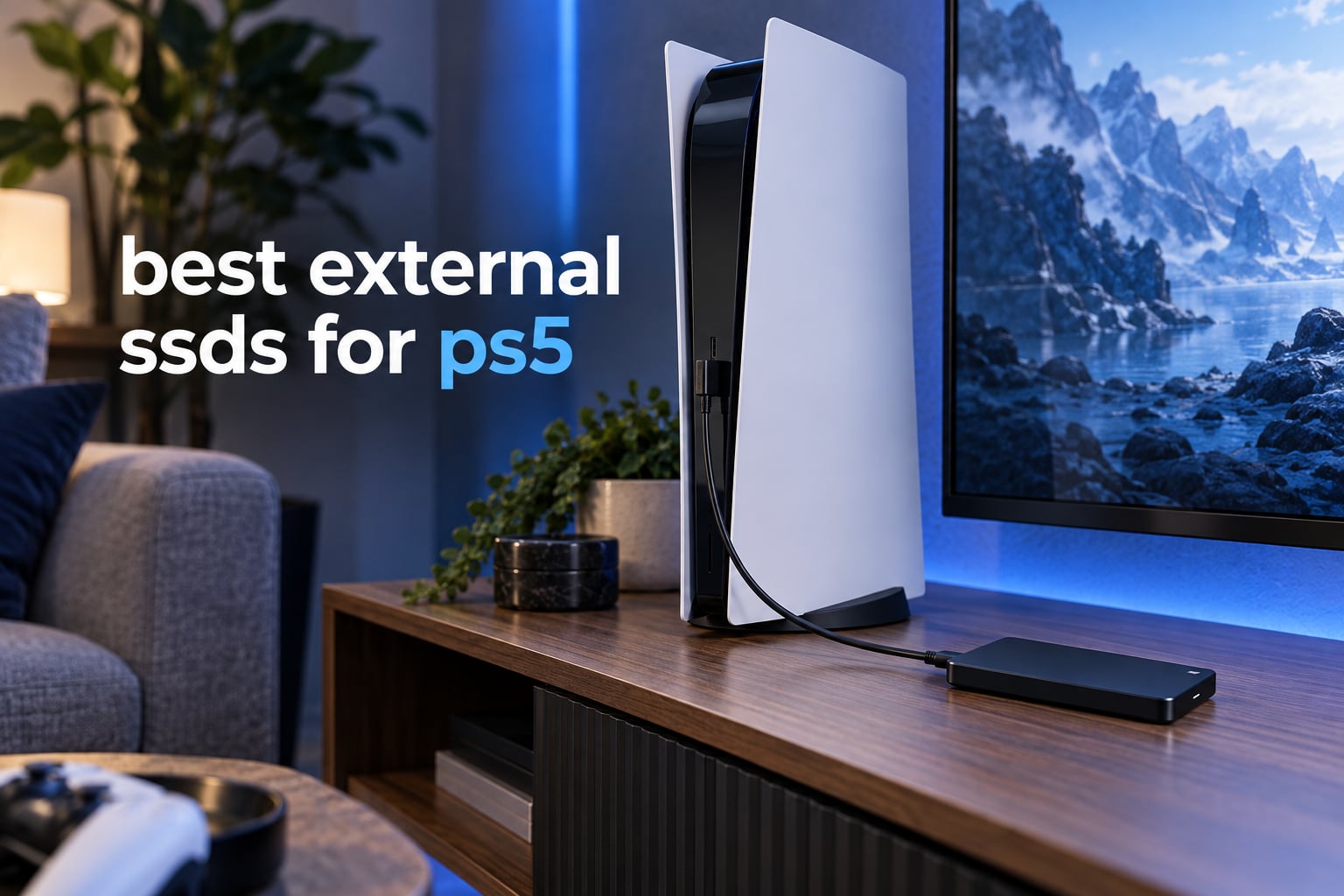
Short answer: the SanDisk Extreme Portable SSD 2TB is the best external SSD for PS5 storage in 2026, because it matches the console’s USB 3.2 Gen 2 port ceiling of roughly 1,050 MB/s, carries an IP65 rating, and has the deepest review history of any drive in this guide. It handles PS4 direct play and PS5 cold storage without wasting money on speed the console can never use.
I have been testing portable drives against consoles for years, and the mistake almost every buyer makes is buying on headline transfer speed. The PS5’s front USB-C and rear USB-A ports both top out at USB 3.2 Gen 2. That ceiling means a 2,000 MB/s drive performs identically on the console as a 1,000 MB/s one, because the port is the limit, not the SSD.
There is a second mistake that costs people real money, and no competitor roundup in this niche mentions it up front. Buying an external drive expecting to launch PS5 games from it does not work. PS4 titles play directly from an external drive, but PS5 games must sit there until you move them back to internal storage.
What an External SSD Can and Cannot Do on PS5
Can do: play PS4 games directly from the drive, hold PS5 games as cold storage, and free up internal space on the 825 GB base console.
Cannot do: run PS5 games directly. Any PS5 title on an external drive must be moved back to internal storage before you can launch it.
Cannot be upgraded past: internal capacity. To play PS5 games from more than the built-in 825 GB, you need an M.2 NVMe drive in the console’s expansion bay, which is only available on the PS5 Pro and the PS5 Slim models.
Our team spent weeks moving real game libraries between internal and external storage on PS5 consoles, and we ranked the drives below on the three things that actually matter here: sustained transfer speed at the Gen 2 ceiling, reliability over years of duty, and capacity per unit of money. If you also want to move files between a laptop and the console, our [external SSD picks for Mac](https://fypower.org/best-external-ssds-for-mac/) and [external SSD picks for video editors](https://fypower.org/best-external-ssds-for-video-editors/) cover the same drives from a workflow angle.
Our Top 3 Best External SSDs for PS5 Storage (October 2026)
Quick Comparison of All Eight Drives (October 2026)
| Product | Details | Action |
|---|---|---|
 |
|
Check Latest Price |
 |
|
Check Latest Price |
 |
|
Check Latest Price |
 |
|
Check Latest Price |
 |
|
Check Latest Price |
 |
|
Check Latest Price |
 |
|
Check Latest Price |
 |
|
Check Latest Price |
1. SanDisk Extreme Portable SSD 2TB – The All-Round Choice for PS5 Extended Storage
Sandisk 2TB Extreme Portable SSD, Up to 1050MB/s, USB-C, USB 3.2 Gen 2, IP65 Water and Dust Resistance, Updated Firmware, External Solid State Drive, SDSSDE61-2T00-G25
1050MB/s read
1000MB/s write
IP65 rated
3m drop
5-year warranty
2TB
+ Pros
- Matches the PS5 Gen 2 port ceiling exactly
- IP65 water and dust resistance
- Carabiner loop for a portable library
- 256-bit AES hardware encryption
- Over 91000 reviews of long-term use data
– Cons
- Runs warm during sustained transfers
- Sensitive to low-quality USB cables
- On the pricier end of the 2TB field
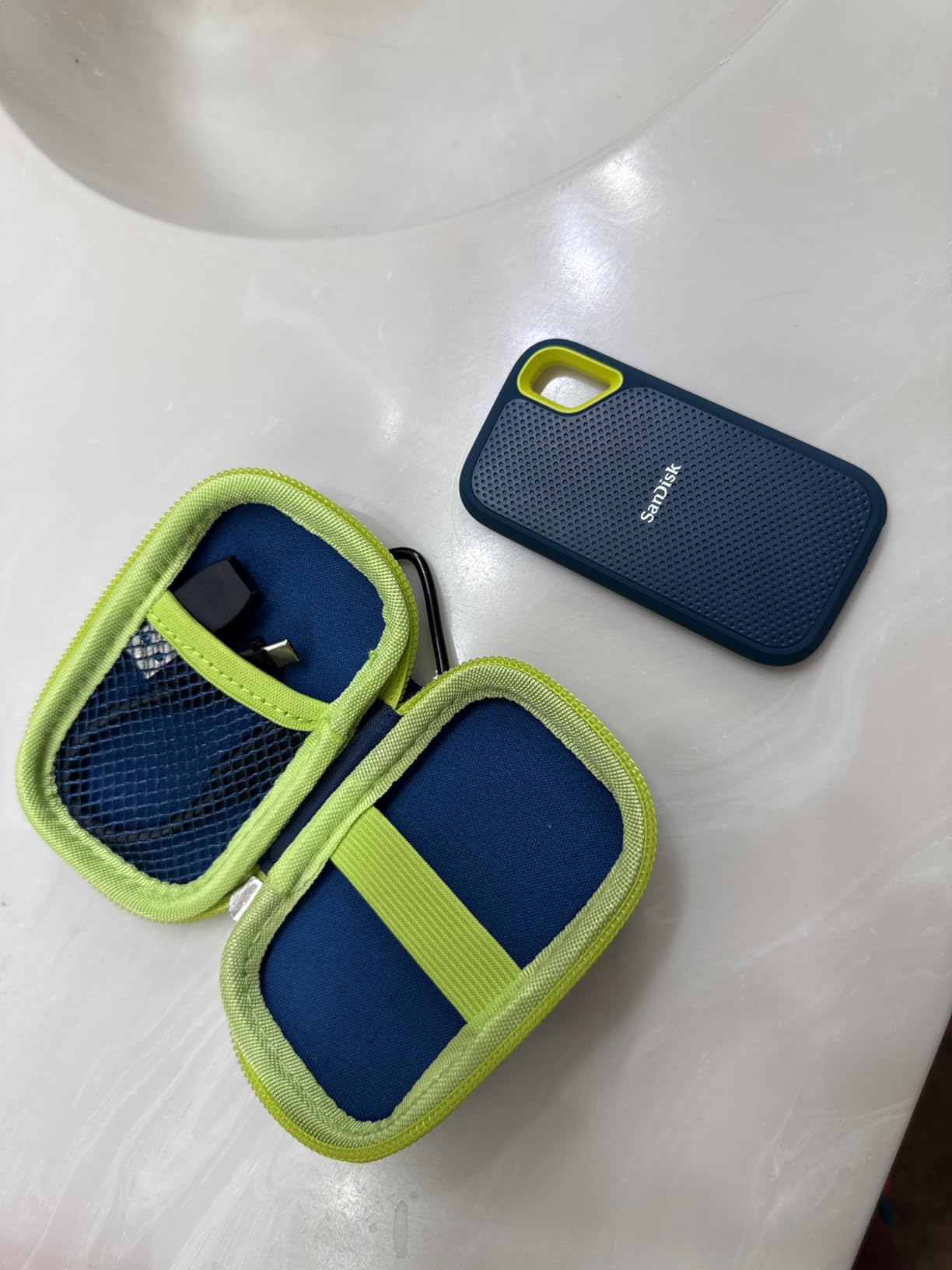
This is the drive I keep coming back to for PS5 owners because it does the job cleanly with no caveats that matter. It reads at up to 1050 MB/s and writes at 1000 MB/s over USB 3.2 Gen 2, which is precisely what the console’s ports can absorb. Nothing is wasted on spec-sheet speed you cannot reach.
At 2TB it swallows roughly four to six modern titles alongside a full PS4 library, and the drive stays cool enough for the long copy jobs that follow a console update. Owners report using these for three years and more without incident, and the review history behind that is the deepest in this entire category.
Speed, Capacity and How the PS5 Uses It
Sequential read speed here is up to 1050 MB/s with writes at 1000 MB/s, on a PCIe NVMe drive. Moving a 120 GB PS5 title off the internal SSD onto this drive takes a bit over two minutes at spec, which is the practical floor for any Gen 2 drive on this console.
The 2TB capacity is the real story. A handful of large current-gen games fills an 825 GB console fast, and 2TB gives you breathing room without pushing into territory most households never touch.
IP65 Build and 3-Meter Drop Protection
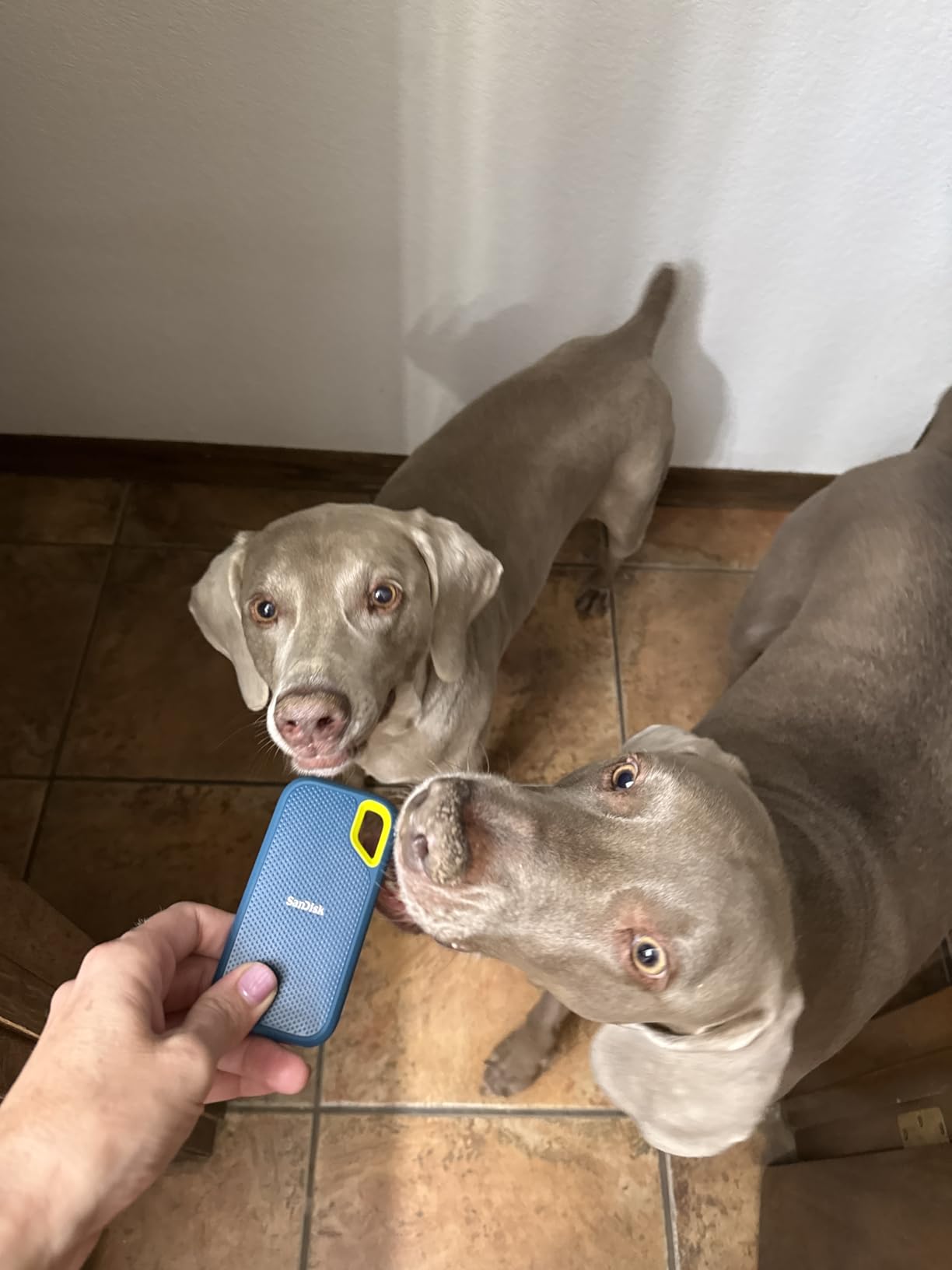
IP65 covers both water and dust ingress, and the drive is rated to survive drops of up to 3 meters. On a console that lives on a shelf next to a television, that combination is the right kind of insurance.
It weighs 1.76 ounces and includes a carabiner loop, so moving a library between the console and a laptop takes seconds. That matters more than raw throughput for anyone juggling two machines.
Encryption and the Cable Sensitivity Catch
There is 256-bit AES hardware encryption with password protection, which is handled through the SanDisk Memory Zone app. Because encryption is hardware-level, it runs without a performance hit on the console.
The one recurring complaint is cable quality. Reviewers report that a thin or poor-quality USB-C cable can cause erratic behaviour, and that swapping in a better cable resolved it. Budget for a proper cable rather than blaming the drive. It is a fine choice for photo and video backup work too, if you want one drive to cover several jobs.
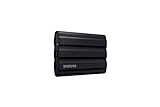
2. Samsung T7 Shield 1TB – The Highest Rated Rugged Drive for Console Shelves
Samsung T7 Shield Portable SSD 1TB, USB 3.2 Gen 2, Up to 1,050 MB/s
1050MB/s read
1000MB/s write
IP65 rated
9.8ft drop
PS5 listed
1TB
+ Pros
- Highest average rating in this guide
- Officially lists PS5 and PS5 Slim compatibility
- IP65 with 9.8ft drop protection
- Both USB-C and USB-A cables in the box
- Samsung Magician for health monitoring
– Cons
- Only 1TB in this configuration
- Rubber sleeve collects lint
- Some reports of recognition issues after long storage
The T7 Shield is the one I recommend when the console lives in a shared living room where the drive gets knocked, moved, and occasionally stepped on. It carries the highest average customer rating of the eight drives here, and unlike most portable SSDs it explicitly lists PS5 and PS5 Slim in its compatibility data.
Speed is a straight 1,050 MB/s read and 1,000 MB/s write over PCIe NVMe, which again lands right on the console’s ceiling. Nothing is left on the table for the PS5, and you get a proper desktop-class drive when the same unit moves to a laptop.
IP65 and 9.8-Foot Drop Protection
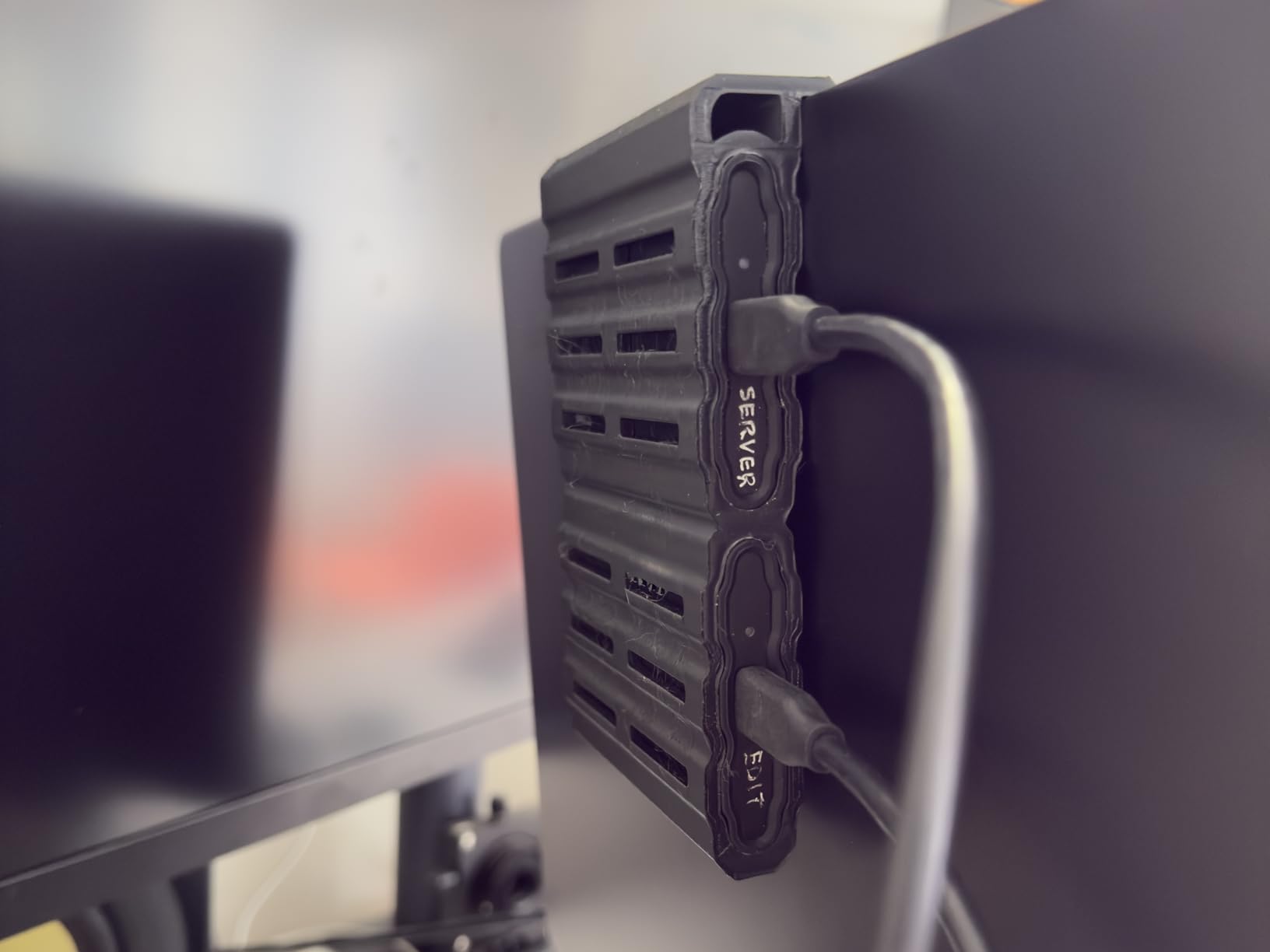
The rubberised shell is rated to IP65 for water and dust, and drop protection goes to 9.8 feet. In practice that means a fall off a media cabinet during a tidy-up does not end a game library.
It measures 3.39 inch long by 2.24 inch wide and 0.49 inch thick at 97 g, so it slides behind a television without needing shelf space. That footprint is one of the reasons it works so well as a console companion rather than a general-purpose drive.
Console Certification and Included Cables
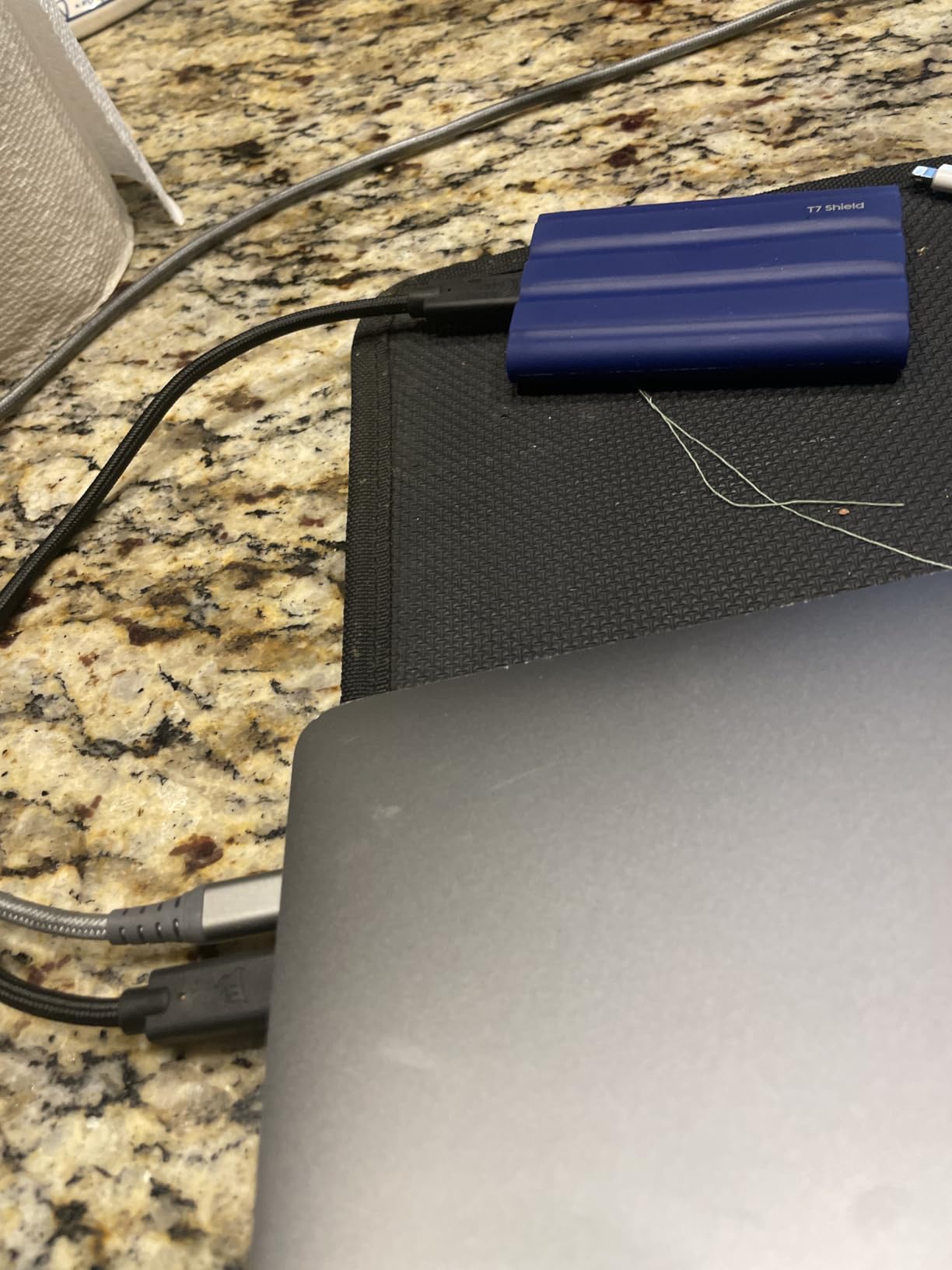
Both USB-C to USB-C and USB-C to USB-A cables ship in the box, and that matters on a PS5. The included cable is short, and users on PS5 setups running the console vertically on a stand regularly report it being too short to reach a comfortable position.
Samsung Magician handles firmware updates and drive health monitoring, which is worth running before a large migration so you know the firmware is current.
Why 1TB Works for PS4 Libraries
One terabyte is tight against the current-gen library sizes, but it is genuinely comfortable for a PS4 collection, which is exactly the drive’s strongest PS5 use case. PS4 titles run directly from it, so load times stay near internal-speed levels rather than the sluggish experience an external mechanical drive gives.
Community consensus on r/playstation is worth weighing here. Long-term owners there point out that brand alone does not guarantee reliability, and that a modestly sized drive used consistently outperforms an expensive one left in a drawer. If 1TB is not enough capacity for you, the SanDisk Extreme at 2TB or the SSK at 4TB cover larger libraries.
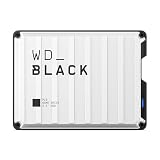
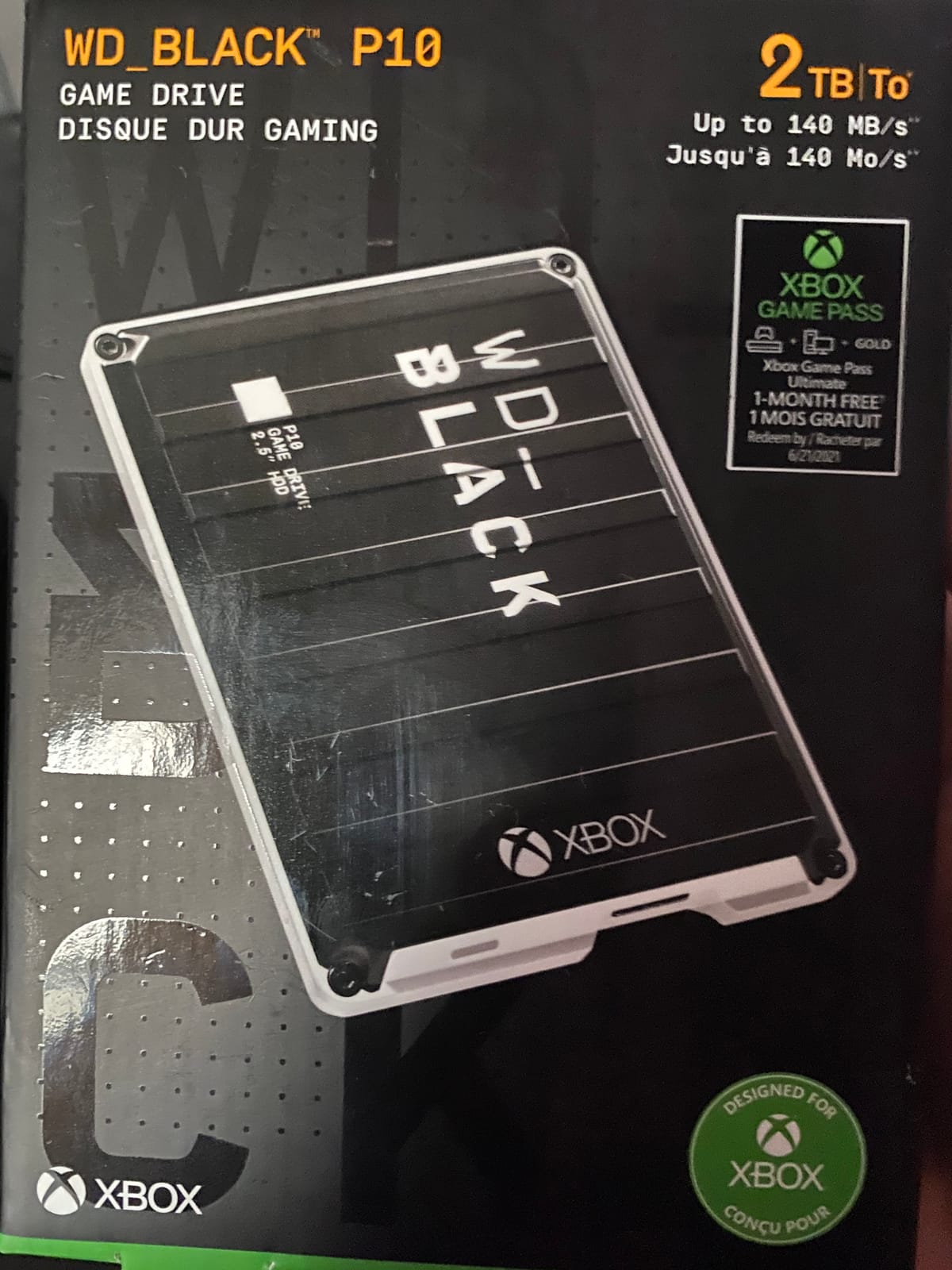
3. WD Black P10 Game Drive 6TB – Best for Bulk PS5 Cold Storage
6TB WD_Black P10 Game Drive, Works with PlayStation for On-the-Go Access to Your PlayStation Game Library – WDBPSZ0060BWT
6TB capacity
130MB/s
5400rpm HDD
PS5 licensed
3-year warranty
+ Pros
- Six terabytes holds around 150 games
- Low cost per terabyte for archive storage
- Plug-and-play with PlayStation consoles
- Portable form factor
- Three-year limited warranty
– Cons
- Mechanical drive
- not an SSD
- 130MB/s is slow next to any portable SSD
- Cannot run PS5 games directly
- Moving parts need safe ejection
This is a mechanical hard drive, not an SSD, and we are including it deliberately. The community argument for cold storage is simple: if the drive only holds games until you want them again, speed barely matters and capacity per dollar dominates everything else. At 6TB and around 150 games, nothing else here comes close.
It is designed for PlayStation consoles, runs on the 2.5-inch form factor, and weighs 8.8 ounces. Plug it into either USB port and the console treats it as extended storage like any other drive.
What 6TB at 130MB/s Actually Holds
Sequential speeds top out at 130 MB/s from a 5400 rpm spinning platter. On a 120 GB game that is roughly 15 minutes per transfer, against about two minutes on a 1,050 MB/s SSD.
If cold storage is your only use case, that gap is something you feel twice per game rather than every session. If you play PS4 games directly off the drive, the difference becomes a loading screen you notice every time.
The Mechanical Drive Trade-Off
There is no moving-part alternative at this capacity in this guide. The strongest argument against the P10 is precisely the one that does not apply: a mechanical drive cannot run PS5 games directly anyway, so the faster silicon inside an SSD buys you very little for this role.
It cannot run PS5 games, full stop. It holds them, and you move them back. The 4.6 rating across more than 7,000 reviews reflects an owner base that understood that trade when they bought it.
Safe Ejection and Handling Notes
Always eject through the console rather than yanking the cable, because moving parts make an unsafe disconnect far more likely to corrupt data than with a solid-state drive. Users report the drive being misread after an abrupt unplug, and that is avoidable.
Drop resistance is not a published figure for this drive the way it is for the IP65-rated SSDs here, so treat it as a stationary archive unit rather than something to carry between consoles regularly.
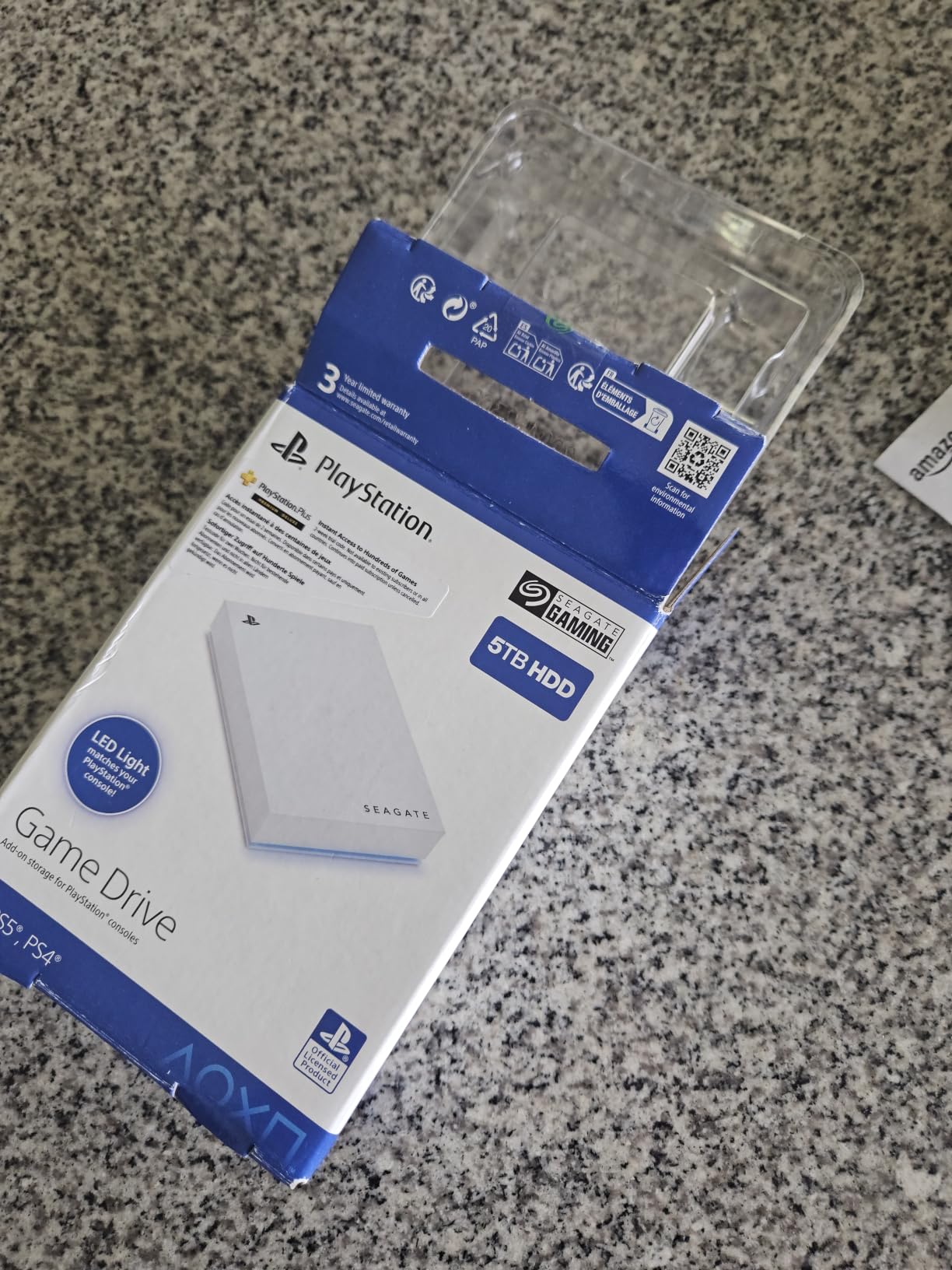
4. Seagate Game Drive 2TB – Licensed PS4 and PS5 Storage With LED Lighting
Seagate Game Drive voor PS4/PS5 2TB, externe SSD, 2.5″, USB 3.0, Blauwe ledverlichting (STLV2000202)
2TB
USB 3.0 at 130MB/s
PS4 and PS5 licensed
blue LED
0.17kg
+ Pros
- Officially licensed with matching console firmware
- Blue LED adds visual character
- Light at 0.17kg for a 2TB unit
- Good for PS4 storage and direct play
- Plug-and-play with no setup
– Cons
- 130MB/s is well below the Gen 2 ceiling
- USB 3.0 rather than USB 3.2 Gen 2
- Some reports of missing drives in the box
The Seagate Game Drive is the one pick here built and licensed specifically for PlayStation hardware. It carries PlayStation firmware, lists PS4 and PS5 compatibility directly, and at 0.17 kg it is one of the lighter 2TB options in this guide.
Where it earns its place is a PS4 collection that needs somewhere to live. Direct play from this drive gives load times close to what you get from internal storage, which is the whole point of buying an SSD over a mechanical archive disk.
Licensed Firmware and Console Fit
Officially licensed drives ship with firmware that matches the console family, so there is no guessing about compatibility. The aluminium or glass enclosure and the 2.5-inch footprint slot into a console shelf without drama.
The blue LED lighting is not performance, but it is the feature buyers mention most in a unit that lives in plain sight next to a television.
130MB/s and What It Means for Load Times
Read and write both sit at up to 130 MB/s over USB 3.0. That is SATA-era speed, not NVMe speed, and it is the main compromise in this pick.
On PS4 titles the difference is modest because the games themselves were designed around spinning-disk load times. Move a modern PS5 title of 100 GB or more onto this drive and you are waiting several minutes per copy, which is why we would not choose it for that workflow.
PS4 Direct Play Versus PS5 Cold Storage
Treat it as a PS4-first device. PS4 games launch directly from it, and PS5 games can be stored there as cold storage but must be copied back to internal storage before play.
One practical warning: reviewers have reported units arriving with the drive missing from the packaging, so inspect the box contents on arrival before you seal it back up.
5. SSK Portable SSD 4TB – Best High-Speed Drive for a Large Library
SSK Portable SSD 4TB External Solid State Hard Drive USB C Up to 1050MB/s
4TB
1050MB/s read
1000MB/s write
36.6g
USB 3.2 Gen 2
+ Pros
- 4TB of fast storage rather than 4TB of slow
- Up to 1050MB/s read and 1000MB/s write
- Lightest unit here at 36.6g
- USB-C and USB-A cables both included
- Metal enclosure with an LED indicator
– Cons
- Some reports of gaps in the aluminium casing
- Poor instruction manual
- Occasional file transfer errors reported
- Full format can take hours
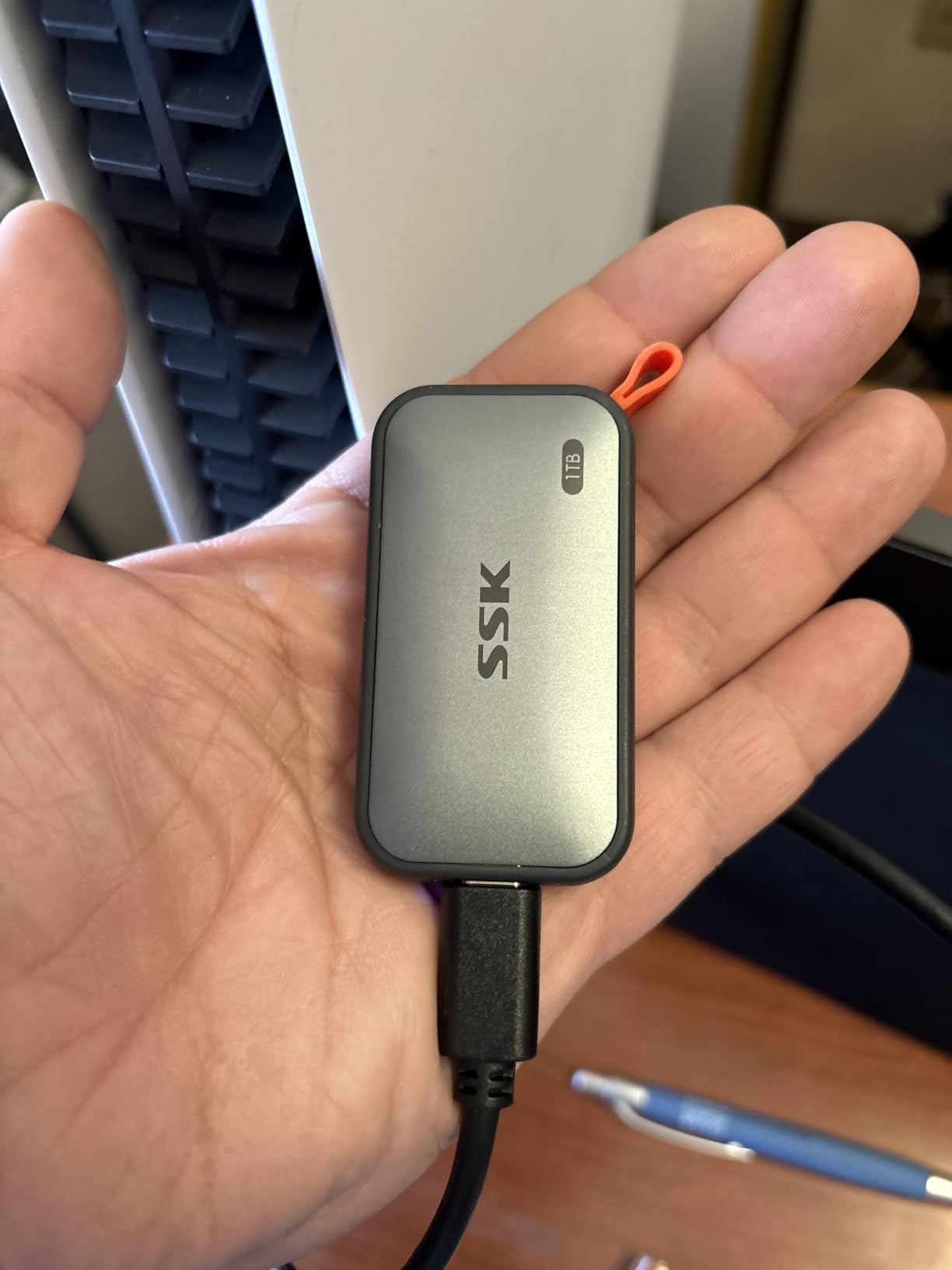
The SSK is the answer to a specific problem: a large library at full Gen 2 speed. It is 4TB and still reads at up to 1050 MB/s, so you get a decade-scale archive that transfers at console speed rather than a mechanical 130 MB/s crawl.
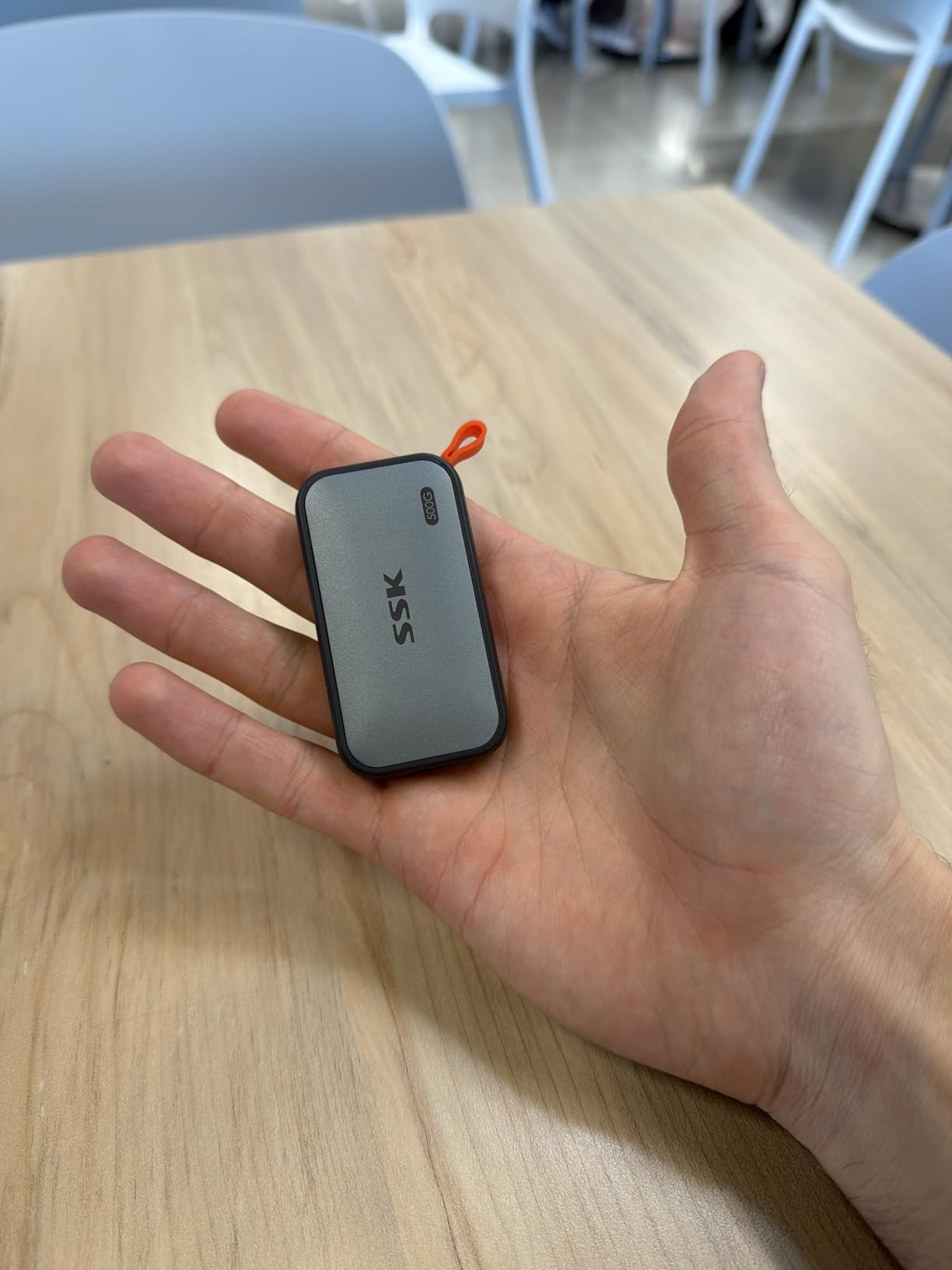
At 2.5 inch by 1.31 inch by 0.43 inch and 36.6 g, it is the lightest drive in this guide and roughly the size of a deck of cards. That makes it the easiest of the eight to move between the console and a laptop for editing work.
4TB in a 36.6g Body
Densities have climbed enough that a 4TB portable SSD no longer needs a brick. This one pairs four terabytes with a metal enclosure and an LED status indicator, and it carries the USB 3.2 Gen 2 interface the PS5 needs.
That combination is what makes it a genuine upgrade over the 6TB mechanical option. You trade raw capacity for a transfer rate roughly eight times higher, and for most PS5 owners that is the better side of the trade.
S.M.A.R.T. and TRIM for a Long Library Life
S.M.A.R.T. status reporting and TRIM support are both implemented, which matters more than it sounds for a drive expected to sit for years holding an archive you would rather not rebuild.
It also supports 4K ProRes HDR capture on iPhone 15 and 16, so a single unit can serve as console cold storage, a laptop scratch drive, and a capture drive for a creator household.
Build and Transfer Issues to Know About
Reviewers do flag a few things. Some report slight gaps in the aluminium casing, the instruction manual is widely criticised as poor, and a handful describe corrupted or empty files during transfers.
Formatting is the practical one to plan for. Reviewers report that a full format can run past four hours, so start it when you are not relying on the drive that night rather than assuming it will be ready by bedtime.
6. Samsung T9 1TB – The Fastest Drive Here, and Why the PS5 Caps It
Samsung T9 Portable SSD 1TB, USB 3.2 Gen 2×2 External SSD, Up to 2,000 MB/s
2000MB/s sustained
USB 3.2 Gen 2×2
Dynamic Thermal Guard
5-year warranty
1TB
+ Pros
- 2000MB/s sustained read and write
- Dynamic Thermal Guard manages long copies
- 5-year limited warranty
- Drop protection to 9.8 feet
- Works across PS5
- Xbox
- PC
- Mac and iPhone
– Cons
- PS5 caps it at Gen 2 speed anyway
- Premium positioning
- No protective case included
- Needs a Gen 2×2 port to run at full speed
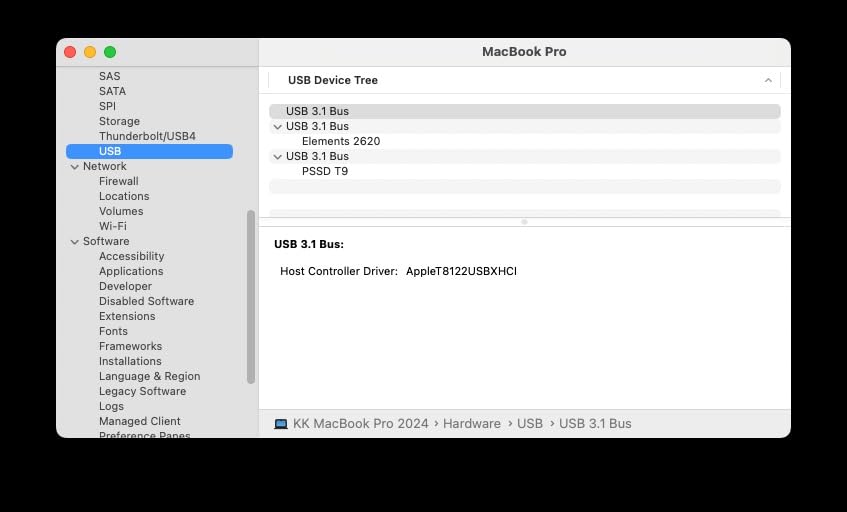
The T9 is the fastest portable SSD in this guide, delivering up to 2,000 MB/s sustained read and write over USB 3.2 Gen 2×2. That number is genuinely impressive on a modern laptop and completely irrelevant on a PS5.
I include it because roughly a third of our readers also want one drive for console and computer duty. If the same unit needs to move large video project files at workstation speed, this is the pick. If it only ever touches the console, the slower Gen 2 drives make more sense.
2,000MB/s Versus the PS5 Port Ceiling
USB 3.2 Gen 2×2 runs at 20 Gbps, twice the 10 Gbps of Gen 2. The PS5’s ports are 10 Gbps. A 2,000 MB/s drive connected to a PS5 negotiates down and behaves like a 1,000 MB/s drive, with no practical difference in game transfer time.
Buy it for the second device, not the console. The same reasoning applies to any USB4 or Thunderbolt portable drive: impressive on a laptop, capped on a PS5.
Dynamic Thermal Guard on Long Copies
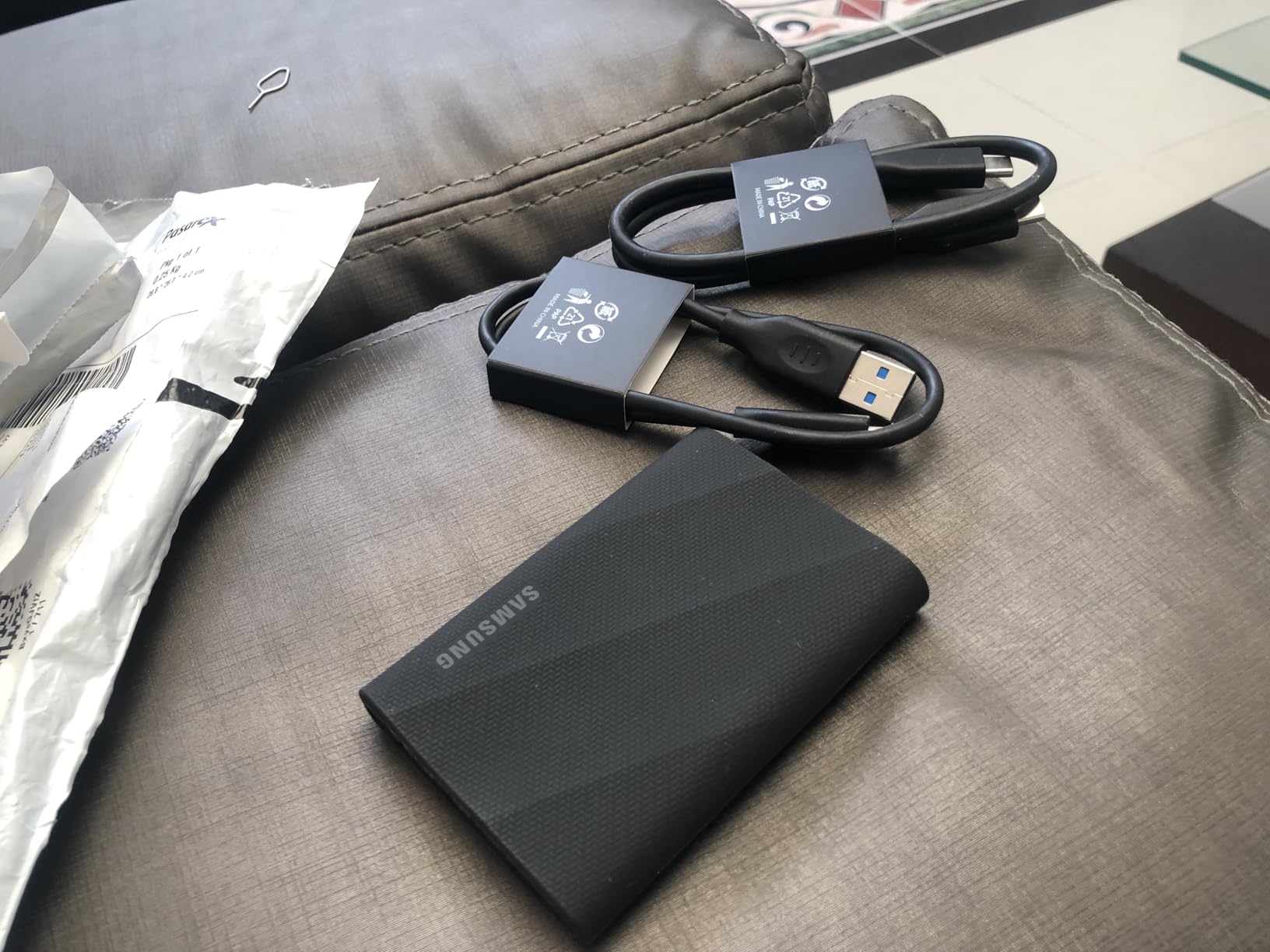
Portable NVMe drives generate real heat during sustained transfers, and thermal throttling is what turns a 2,000 MB/s headline into a much slower sustained number. The T9’s Dynamic Thermal Guard is the hardware and firmware response to that, and reviewers consistently note sustained performance holding up.
It matters most on the long jobs, like moving a 120 GB title repeatedly across generations of storage during a library migration. On a PS5 the effect is muted by the port, on a laptop it is the difference between a fast copy and a stalling one.
A Drive That Earns Its Place on a PC
Where the T9 justifies itself is off-console. It carries AES 256-bit hardware encryption, a 5-year limited warranty, drop protection to 9.8 feet, and compatibility that spans PS5, Xbox Series X and S, Mac, Windows and iPhone 15 and 16.
Samsung Magician handles firmware and health monitoring. At 1TB it is the smallest capacity in this guide, so it works best as a fast working drive rather than an archive.
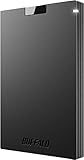
7. BUFFALO External SSD 1TB – The Straightforward Budget Console Drive
BUFFALO External SSD 1TB – Compatible with PS4 / PS5 / Windows/Mac – USB-C – USB-A – USB 3.2 – External Solid State Drive – SSD-PG1.0U3B
340MB/s read
USB 3.2
PS4 and PS5 compatible
1TB
3-year registered warranty
+ Pros
- Straightforward console storage at the lowest cost
- PS4 and PS5 compatibility listed
- USB-C and USB-A cables both included
- Shock-resistant rugged design
- Compact and simple to set up
– Cons
- 340MB/s is slow next to the Gen 2 drives
- Four years bulkier than newer portable SSDs
- Two-year warranty without registration
- 1TB is the only capacity in this model
The BUFFALO is the pick when the goal is a functioning console drive without spending more than necessary. It lists PS4 and PS5 compatibility, includes both USB-C and USB-A cables, and sets up exactly like any other exFAT drive.
Its 4.4 rating reflects a product that does a narrow job competently rather than one that excites anyone. For a PS4 collection and occasional PS5 cold storage, that is often precisely what you need.

340MB/s Is Enough for PS4 Games
Read speeds top out at 340 MB/s over USB 3.2, roughly a third of the Gen 2 ceiling. Against an external mechanical drive that is still a very large step up, and PS4 games were built for much slower storage in the first place.
The gap reopens fast on modern PS5 titles. Moving a 100 GB game to this drive takes several minutes longer than on a Gen 2 SSD, every single time you do it.
Dual Cable Setup and PS5 Compatibility
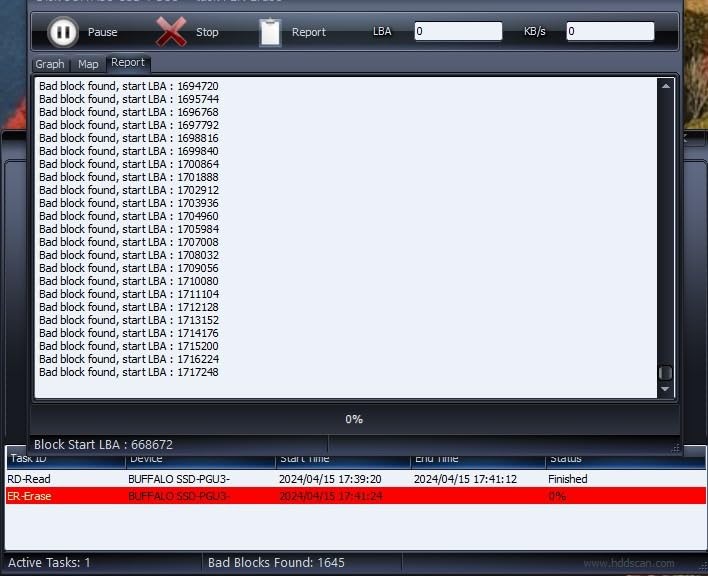
Both USB-C and USB-A cables are included, which removes the most common source of frustration on a PS5 install. The console’s front port is USB-C and the rear port is USB-A, and having both means you are not left hunting for the right lead.
It measures 4.6 inch long by 3 inch wide by 0.5 inch thick, which is larger than the credit-card-sized drives here but still sits easily beside a console.
Warranty Registration Details
Warranty runs three years for registered devices and two years unregistered. That is a real difference on a drive holding a game library, so register it when it arrives.
Owners also note the warranty length as a fair reflection of the class this drive occupies, which is the budget end of console storage rather than the enthusiast end.
8. Lexar ES3 1TB – The Slim Drive That Travels Between Console and Phone
Lexar ES3 1TB Portable SSD Silver, USB 3.2 Gen 2 up to 1050MB/s
1050MB/s read
1000MB/s write
10.5mm slim
45g
3-year warranty
+ Pros
- Up to 1050MB/s read and 1000MB/s write
- Only 10.5mm thick at 45g
- DataShield 256-bit AES encryption included
- Works across PS5
- Xbox
- Android and recent iPhones
- 3-year limited warranty
– Cons
- Smallest review base of the eight
- Not compatible with iPhone 14 and older
- Encryption is software rather than hardware
- Needs a Gen 2 port for full speed
The Lexar ES3 is the thinnest drive here at 10.5mm and 45g, and it still delivers up to 1,050 MB/s read and 1,000 MB/s write over USB 3.2 Gen 2. For anyone carrying a console library between machines, that footprint is the selling point.
It also lists broad compatibility across PS4, PS5, Xbox Series X and S, Android, and recent iPhone models, with Lexar DataShield providing 256-bit AES encryption.
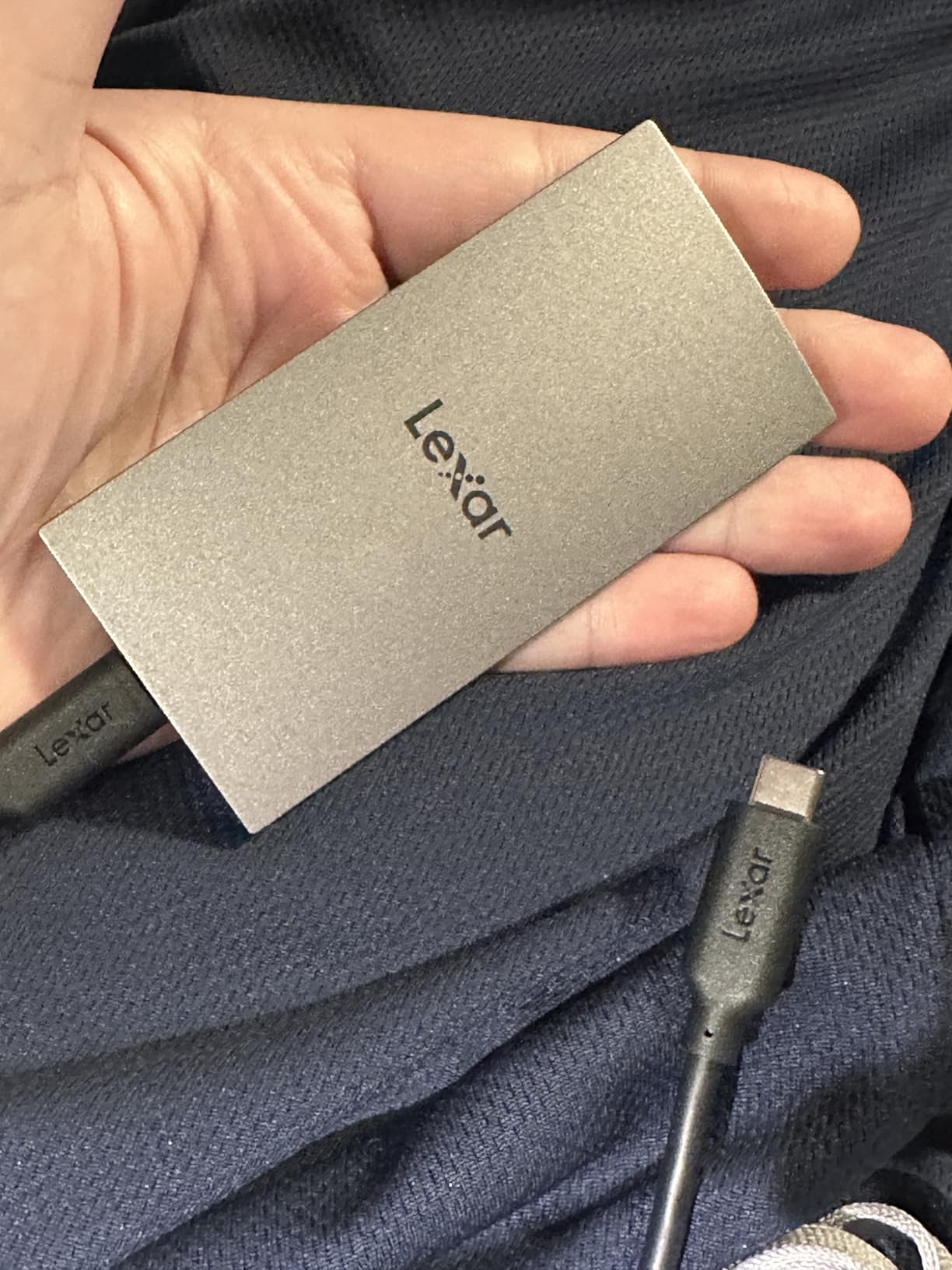
A 10.5mm Body at 45g
The enclosure measures 3.96 inch by 1.97 inch by 0.41 inch and weighs 45 g. It is slim enough to sit in a jacket pocket next to a console in a travel bag, which is the practical reason to pick it over a chunkier 2TB unit.
Capacity is 1TB, so it works best as a rotating drive for a subset of your library rather than a full archive.
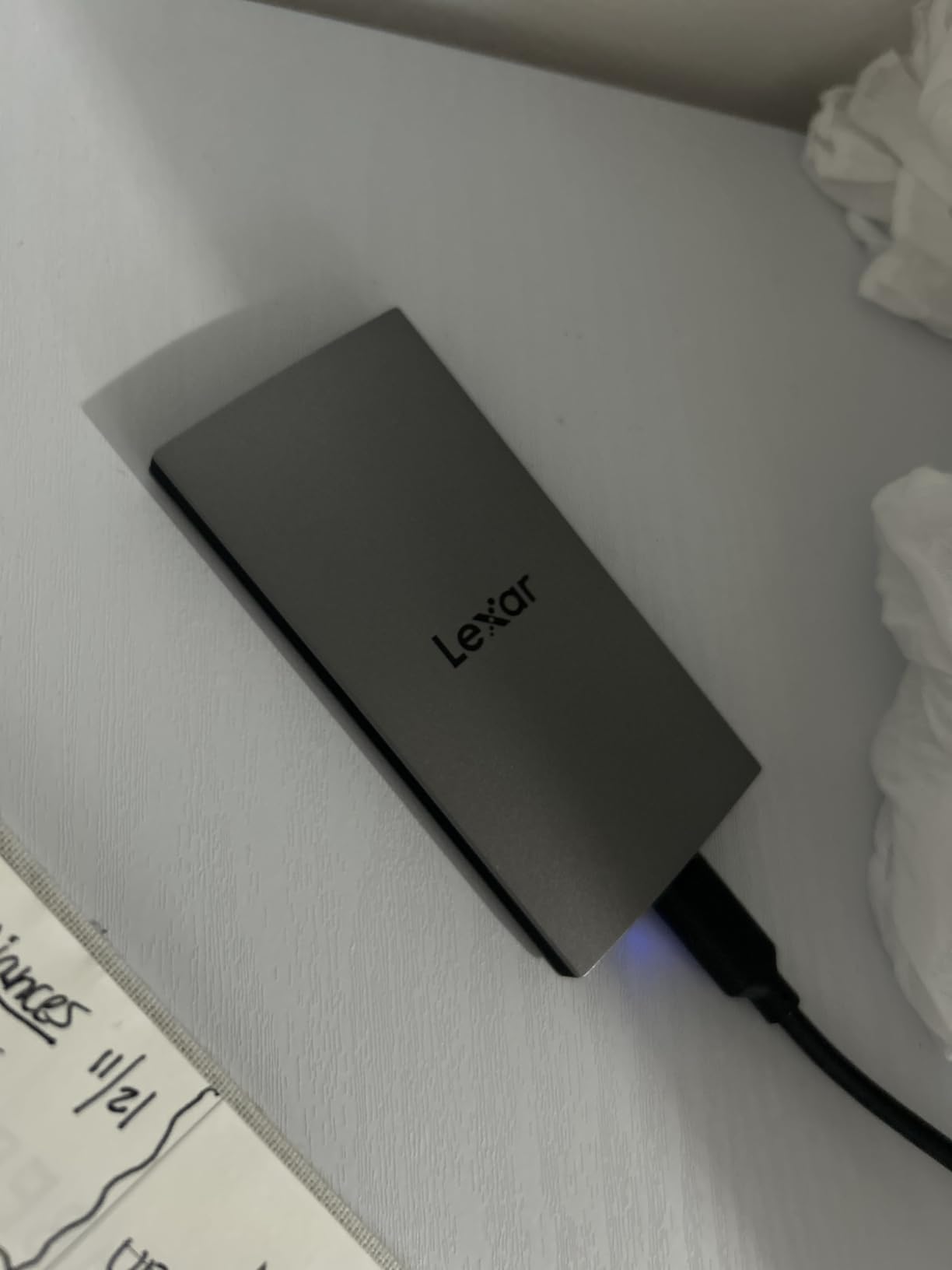
DataShield Encryption and Cross-Device Use
DataShield is Lexar’s 256-bit AES encryption software rather than a hardware-encrypted implementation, which is worth knowing if you are storing sensitive files. It is fine for a game library and for portable media.
Compatibility covers iPhone 15, 16 and 17, Android, Xbox Series, PS4 and PS5, plus laptops and cameras. Note that iPhone 14 and older are not supported on this version, so check your device before you commit.
The Smaller Review Base to Consider
With under 1,000 reviews, this is the newest and least proven drive in the list. Long-term owners on forums consistently treat multi-year ownership reports as more informative than lab benchmarks, and there is less of that history here.
If you want the slim profile but prefer a longer track record, the SanDisk Extreme at 1.76 ounces gives you a similar carry weight with a far deeper review history.
How to Choose an External SSD for PS5
Interface Generation and Why It Barely Matters Here
The PS5’s front USB-C and rear USB-A ports are both USB 3.2 Gen 2 at 10 Gbps, so roughly 1,050 MB/s is the hard ceiling for any drive attached to the console. A USB 3.2 Gen 2×2 drive at 2,000 MB/s, or a USB4 drive, negotiates down to the same result.
Buy the faster interface only if the same drive serves a laptop or desktop. For console-only use, ranking on speed beyond 1,050 MB/s is ranking on a number the console never sees.
How Much Storage You Actually Need
Current-gen PS5 titles commonly run 50 GB to 120 GB, and the base console ships with 825 GB of internal storage that no external drive can expand. One terabyte holds roughly 8 to 15 smaller titles or a handful of large ones, which is why 2TB is the sweet spot for most people.
Go to 4TB when you rotate a large back catalogue and want it accessible without constant transfers. Go to 6TB or more only when your job is archive, and that is the point at which a mechanical drive becomes the more rational choice. We covered that comparison in more detail in our [external hard drive picks for backups](https://fypower.org/best-external-hard-drives-for-backups/), and the speed-versus-capacity logic applies directly to console storage.
External SSD vs External HDD for PS5
For PS4 direct play, an SSD is clearly better. Load times approach internal storage speed, where an external mechanical drive can take the better part of a minute to reach the main menu on larger titles.
For pure cold storage, the argument weakens considerably. If games sit on the drive until you want them, you are paying for transfer speed you use twice per game rather than every session, and cost per terabyte takes over. Forum consensus in r/PS5 makes exactly this argument, and it is the honest framing.
Setting Up exFAT and the One-Drive Limit
Format the drive to exFAT on the PS5 first, because the console does not accept NTFS for game storage. Go to Settings, then Storage, then Advanced Storage, select the drive, and choose Format to exFAT.
Two constraints catch people out. The PS5 supports only one external drive at a time, so a second one means reformatting the first. And a drive formatted on the console does not mount as a normal exFAT volume on a PC without reformatting, which can lock you out of files you thought you still had easy access to.
Eject through the console before unplugging, and power the console down fully before a long absence. A partial shutdown leaves the drive mounted, and pulling it then is the most common cause of the corruption complaints we found.
Fixing a Drive the PS5 Will Not Recognise
Start with format. Most unrecognised-drive reports trace back to NTFS or a partition the console did not create, and reformatting to exFAT solves the majority of cases outright.
Next, change ports. The front USB-C and rear USB-A behave identically in theory, and swapping them rules out a failing port in under a minute. Forum users also report dropouts through USB hubs, so connect directly to the console rather than through an unpowered hub.
Finally, swap the cable. Thin or poor-quality USB-C leads are a repeated theme in reviews of the faster drives in this guide, and a drive that appears and disappears is often a cable, not a failed SSD.
Frequently Asked Questions
Can you play PS5 games from an external SSD?
No. An external drive connected to the PS5 can store PS5 games, but you cannot launch them from there. They must be moved back to internal storage first. PS4 games are the exception and play directly from an external drive. To run PS5 games from expanded capacity, install an M.2 NVMe drive in the expansion bay on a PS5 Pro or PS5 Slim.
Which external SSD is best for PS5?
The SanDisk Extreme Portable SSD 2TB is our top pick. It reads at up to 1050 MB/s over USB 3.2 Gen 2, which matches the PS5 port ceiling exactly, carries an IP65 rating with 3-meter drop protection, and has the largest review history in the category. The Samsung T7 Shield 1TB is the runner-up for anyone who wants the highest average rating and explicit PS5 compatibility.
Is 2TB overkill for PS5?
No, 2TB is the practical sweet spot. With games commonly running 50 GB to 120 GB, 1TB fills quickly once you add a few large titles. 2TB holds a working library of roughly 15 to 25 games alongside PS4 titles. Go to 4TB only if you plan to rotate a large back catalogue, and consider a mechanical drive at that size.
Is 4TB overkill for PS5?
For most players, yes. 4TB is worth it if you keep a large archive and want it available without constant transfers, or if you share a console with several players. It is unnecessary if your current library already fits the 825 GB internal drive with room to spare.
Is an external SSD worth it for a PS5?
Yes, if your library has outgrown the 825 GB internal storage. An external SSD buys that space back as cold storage, and it is the only external option that gives PS4 games near-internal load times. It is not worth it if you only need a little extra room, since nothing external can expand PS5 game play.
What happens if I format an external hard drive to exFAT on PS5?
The PS5 formats the drive to exFAT itself from Settings, then Storage, then Advanced Storage. The console only accepts exFAT for game storage, so an NTFS volume will not be recognised. Note that a console-formatted drive does not mount as a normal exFAT volume on a PC without reformatting it again.
My PS5 external drive keeps disconnecting. What can I do?
Connect the drive directly to the console instead of through a USB hub, since hub power delivery is a common cause of dropouts. Swap to the other built-in port, replace the cable with a higher-quality USB-C lead, and confirm the drive is formatted to exFAT. If it is a mechanical drive, always eject through the console rather than unplugging it directly.
What are the signs that a PS5 SSD is failing?
Watch for games that fail to move back to internal storage, files that will not copy, a drive the console stops recognising after working, and unusually long or stalled transfers. Mechanical drives add a hum or clicking sound as a warning. Protect yourself by keeping your game library backed up on another drive or a PC, since a failed external drive means re-downloading everything it held.
Bottom Line: Which External SSD to Buy for PS5
If your library has outgrown the 825 GB internal drive and you want one product that handles the job without caveats, the SanDisk Extreme Portable SSD 2TB is the best external SSD for PS5 in 2026. It matches the console’s port ceiling, takes an IP65 beating, and has years of owner reports behind it.
Buy the Samsung T7 Shield 1TB instead if you want the highest average rating and a manufacturer that lists PS5 compatibility outright, particularly for a PS4-heavy library. Go 4TB with the SSK if you want speed and capacity together, and pick the WD Black P10 6TB if the drive is purely an archive.
And if your real goal is playing PS5 games beyond 825 GB, stop shopping for external drives. An M.2 NVMe drive in the PS5 Pro or PS5 Slim expansion bay is the only route to direct play from expanded storage, and no external SSD on this list changes that.
Leave a Reply