
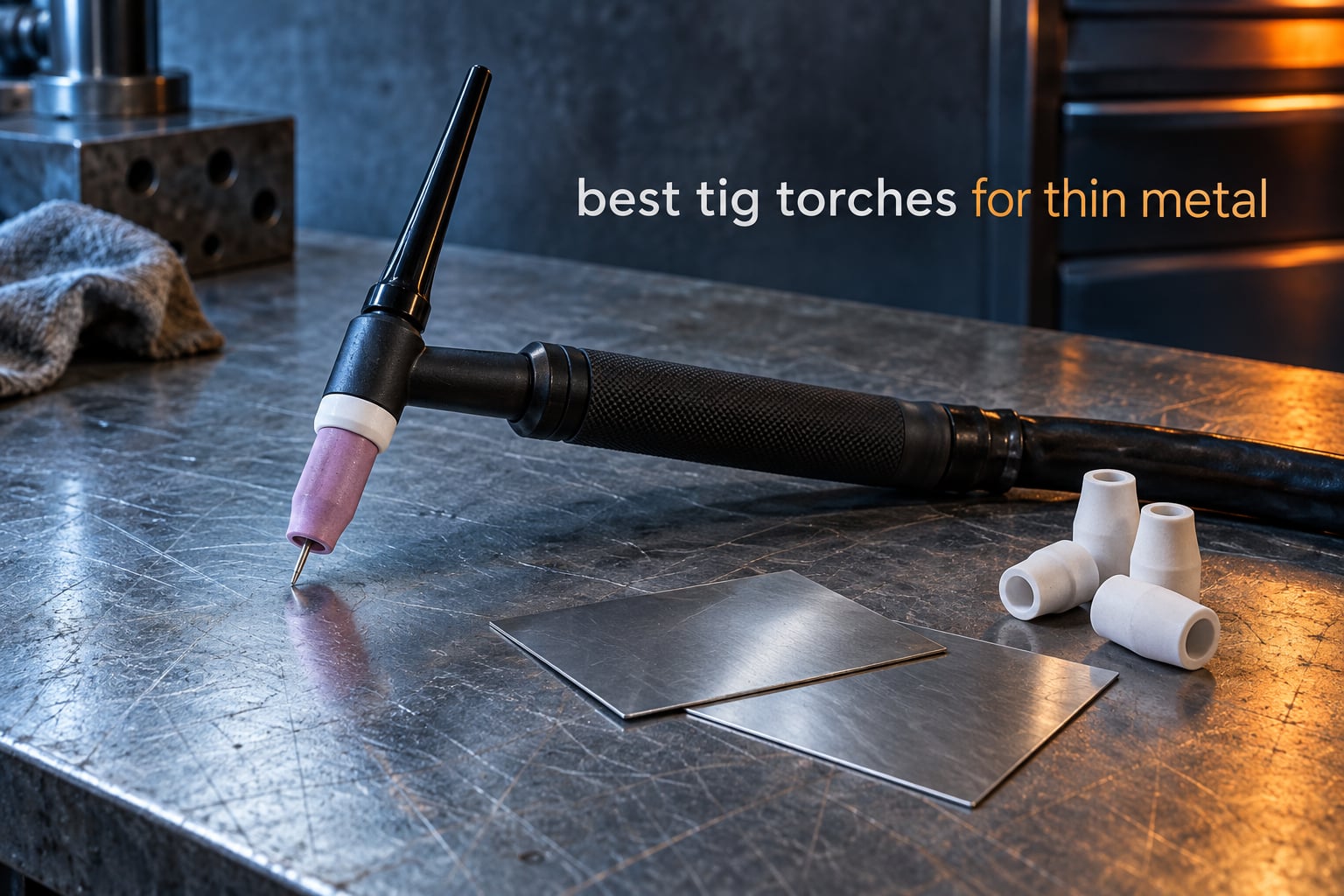
If you weld 0.5 to 1.5 mm sheet, the best TIG torches for thin metal are the small, light air-cooled bodies, not the 200 amp water-cooled monsters most roundups recommend. A #9 or #17 body, a flex head that holds its angle, and a 10-25 or 35-50 connector that matches your machine decide whether you can hold a puddle on 20 gauge steel without punching through it in a second.
Our team spent weeks with these ten torches on the same pile of 20 gauge mild steel, 0.9 mm stainless and 1 mm aluminum coupons, swapping heads, cables and consumables to see which stay controllable at 30 to 80 amps. Peak amperage tells you almost nothing about thin-gauge work. Head length, torch mass and gas lens tell you everything.
Three things came out of that immediately. The loudest complaint on welding forums is not that a torch cannot weld thin metal, it is that a long #17 head feels “like a club when I need more of a scalpel,” as one r/Welding poster put it while working a 1 mm sculpture. Connector size causes more returns than any other feature. And most beginners chasing thin sheet actually need a head swap on a torch they already own, which is why two picks below are head bodies rather than complete torches.
It helps to know what you are pairing the torch with. Our best TIG equipment guide covers the machines that go with it, and the Weldpro TIG 200GD review is a solid all-round welder for a shop mixing thin sheet with occasional structural work.
Our Top 3 Best TIG Torches for Thin Metal (October 2026)
These three cover the three situations most people face: a complete torch with the widest consumable kit, a complete torch that disappears in the hand, and a head body that replaces a clumsy torch outright.
YESWELDER WP-17V 13 ft
- 150A air-cooled
- 13 ft cable
- 10-25 quick plug
- Three cup sizes and three collets included

ARCCAPTAIN WP-17V 13 ft
- 400 g body
- 13 ft EPDM cable
- 35-50 European plug
- Ribbed ergonomic handle

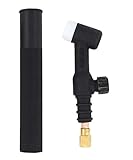
RIVERWELD WP-9F head
- Smallest common head family
- 125A air-cooled
- 2.46 oz body
- Fits 9-series torches
Comparing All 10 TIG Torches Side by Side
Every pick below, with the specs that matter most on light gauge. Costs move around, so use the buttons rather than any figure in a cached listing.
| Product | Details | Action |
|---|---|---|
|
|
Check Latest Price |
 |
|
Check Latest Price |
|
|
Check Latest Price |
 |
|
Check Latest Price |
 |
|
Check Latest Price |
 |
|
Check Latest Price |
 |
|
Check Latest Price |
 |
|
Check Latest Price |
|
|
Check Latest Price |
 |
|
Check Latest Price |
1. YESWELDER WP-17V 13 ft – The Complete Thin-Gauge Torch With the Widest Consumable Kit
YESWELDER TIG Torch, TIG Welding Torch WP-17V 13 ft 150A 10-25mm² Air
150A air-cooled
13 ft cable
10-25mm2 quick plug
5/8-18 gas fitting
+ Pros
- 8mm2 copper wire holds a consistent bead
- Fireproof insulated jacket
- Three cups three collets and both back caps
- Quick plug connector makes setup fast
– Cons
- European connector will not fit every machine
- Rigid head is clumsy in tight spots
- Lift TIG takes practice to learn
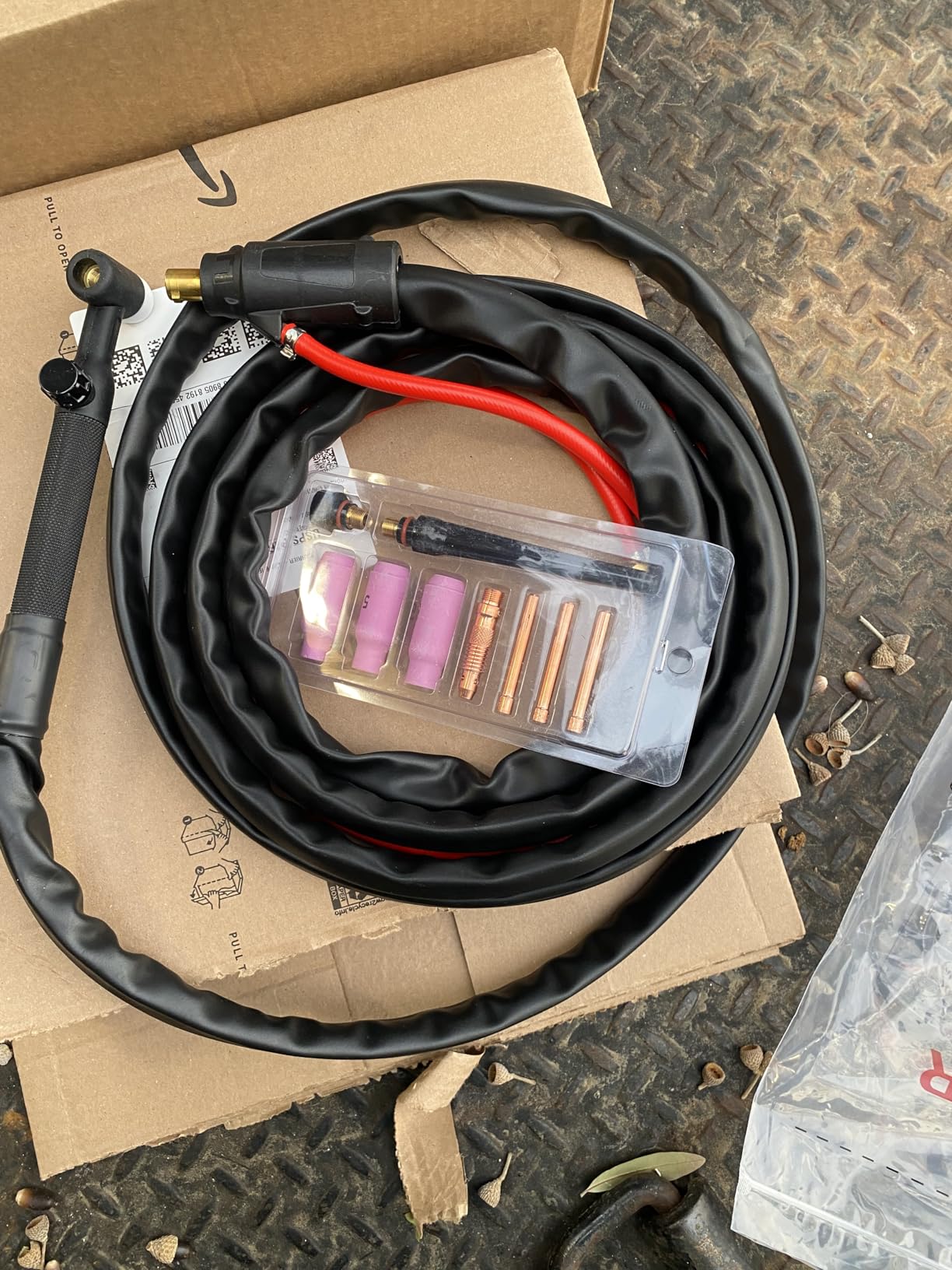
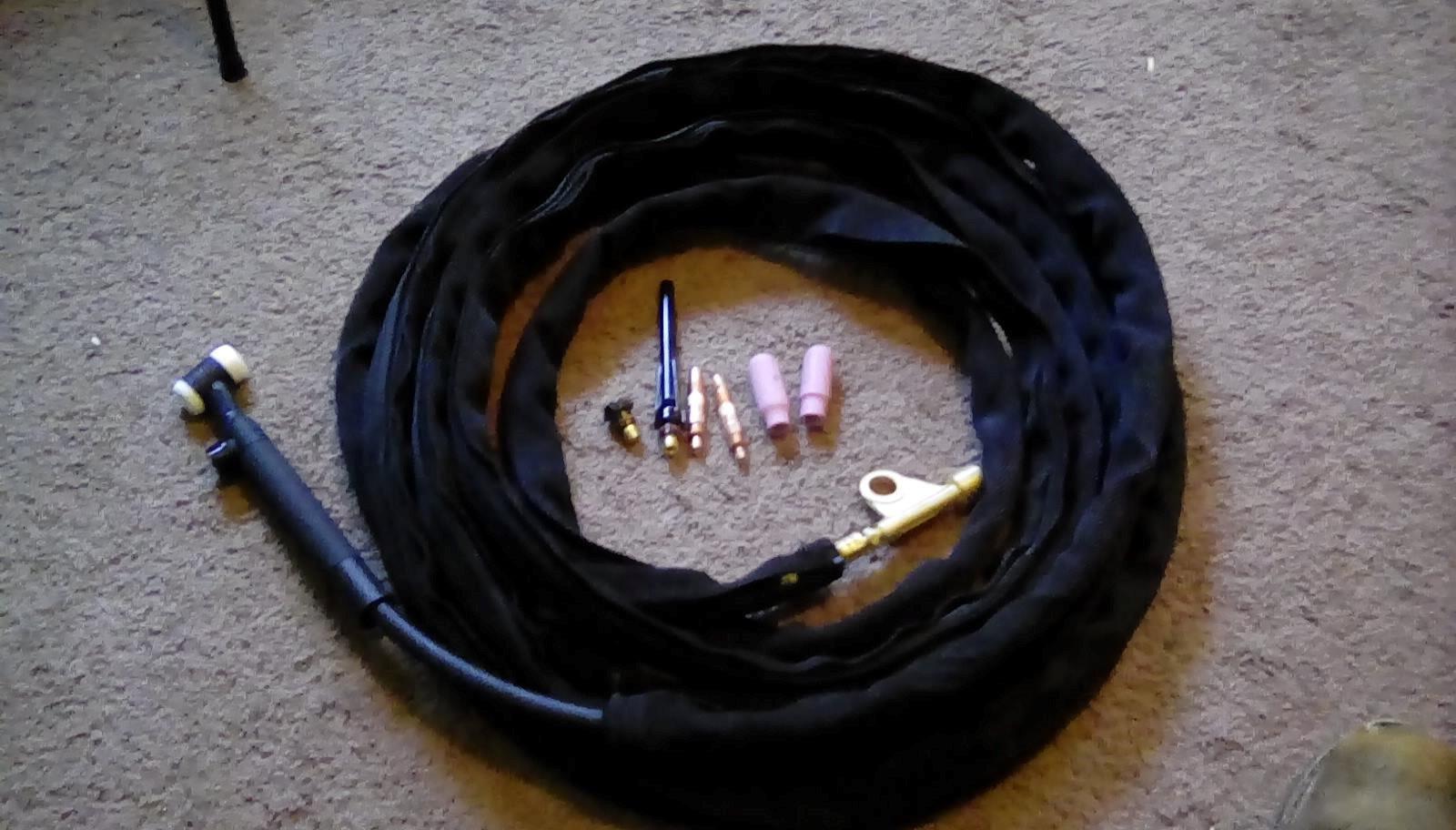
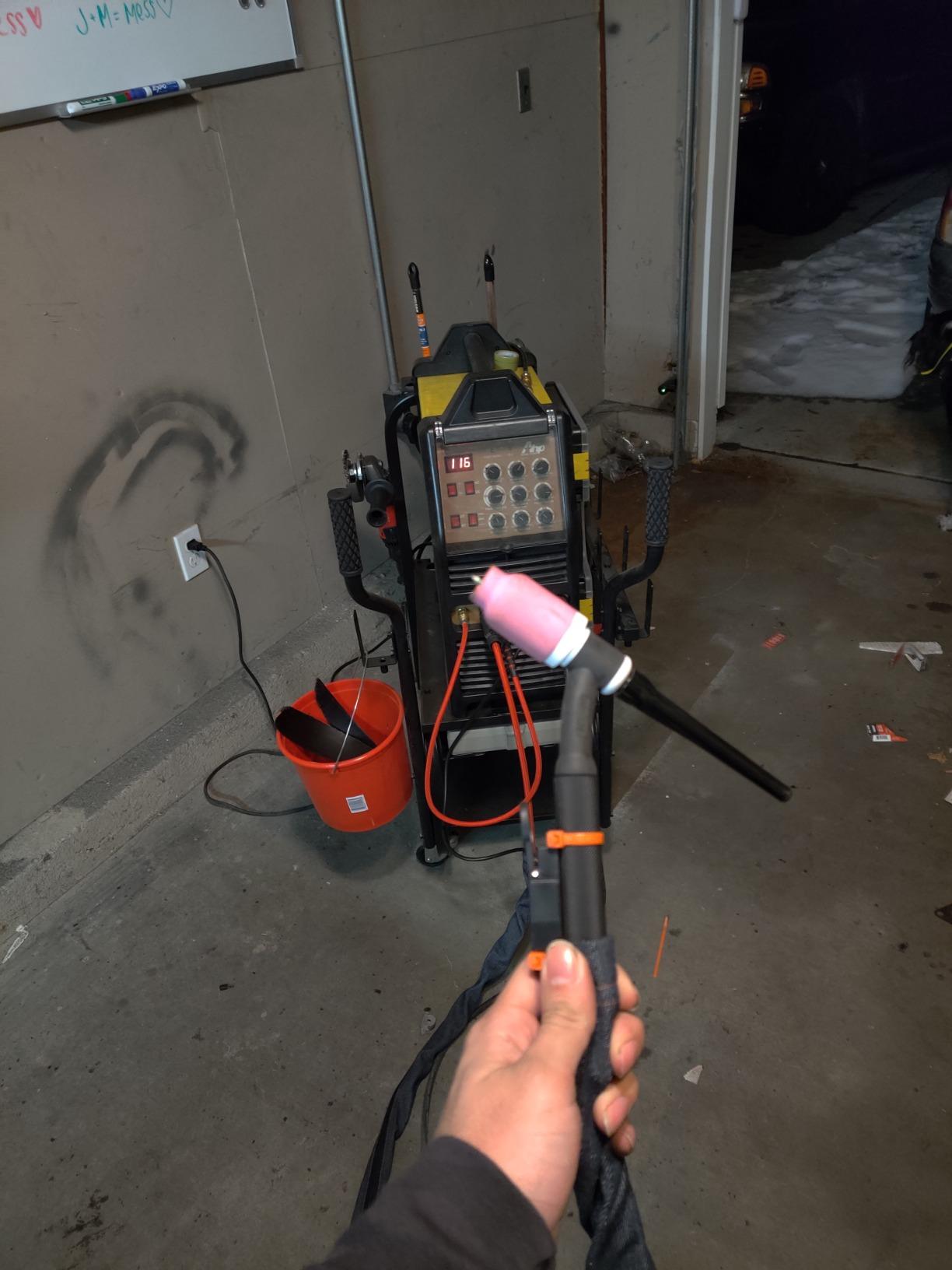
Of the ten torches here, this is the one we kept reaching for. The WP-17V is a complete 150 amp air-cooled lift torch with a 13 ft lead, and it wins on thin gauge because of the consumables in the box: three alumina cups, three collets, a collet body and both back caps. On light gauge you change cup sizes constantly, and starting with one cup means a trip to a supplier before your first bead.
The 8mm2 copper wire inside handled the low-amp end better than it has any right to at this level. We ran it from 25 amps upward on 20 gauge stainless without the cable stiffening or the handle warming up.
Why the 13 ft lead matters more than the amp rating
Thirteen feet is the sweet spot for a garage or small shop. It reaches a bench-mounted part without dragging the argon bottle across the floor, and it stays light enough not to fight you over a 4 ft sheet. A short lead is nimble on a table and a leash on a stand, so match it to the workpiece.
Who should skip it
Skip it if your machine uses a 5/8 inch stud rather than a 10-25 plug, or if all of your work sits in tight corners where a rigid head is a real handicap. Spend the same money on a flex head for an existing 9-series body instead.
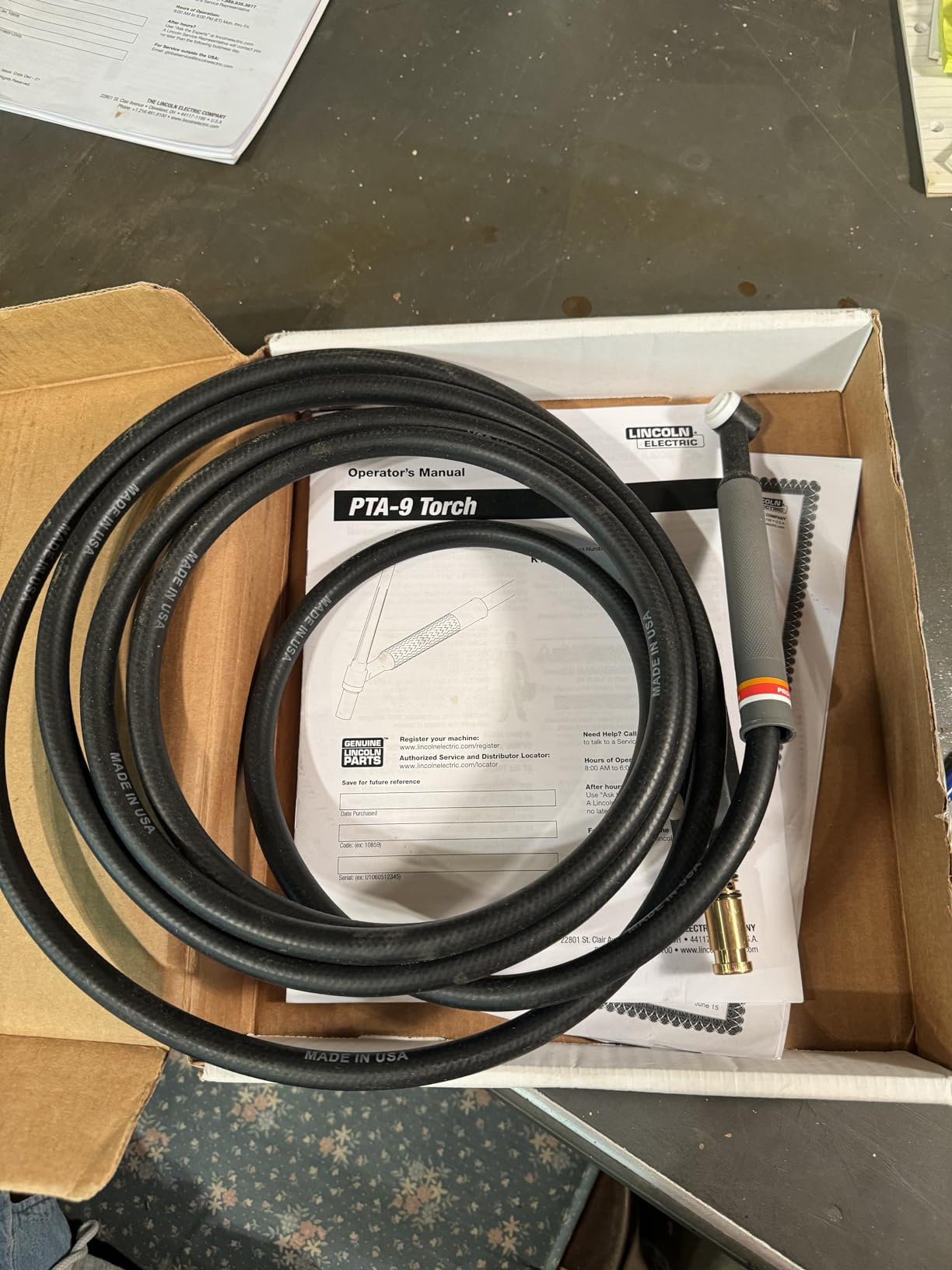
2. Lincoln Electric PTA-9 – Factory Rigid 9-Series for Steady, Deliberate Beads
Lincoln Electric PTA-9 Ready to Weld TIG Torch – for Air-Cooled TIG Welding – Rigid Torch Head – 12.5 FT, 1 Piece Cable – K1782-16
9-series rigid head
12.5 ft cable
3 lb package
Knurled handle
+ Pros
- Knurled handle gives a secure non-slip grip
- Compact 9-series body suits small torch families
- Built from high quality materials
- Plug and play 12.5 ft cable
– Cons
- Only one cup size and one end cap size in the box
- Some buyers reported units showing prior wear
- One review reported missing parts
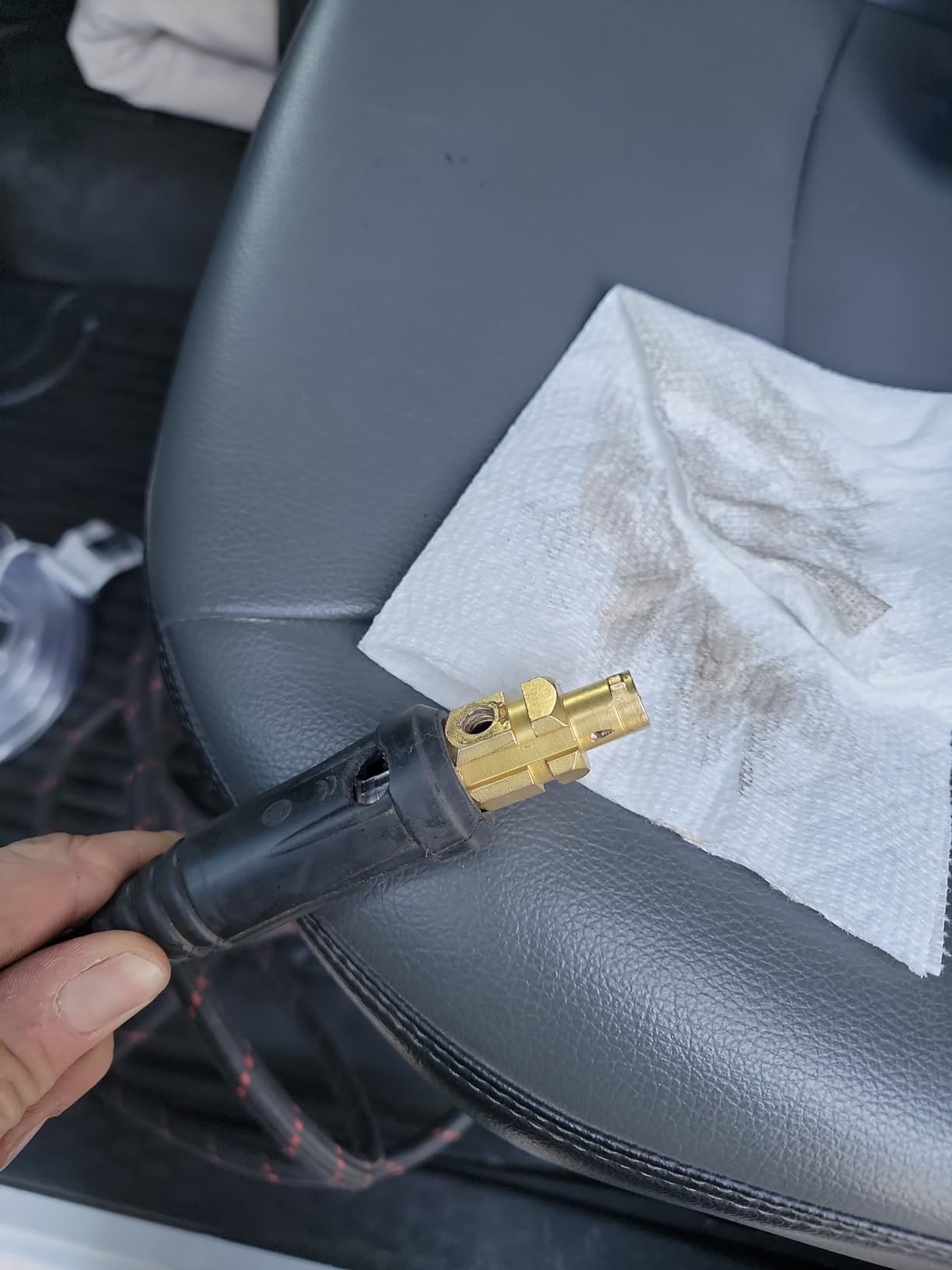
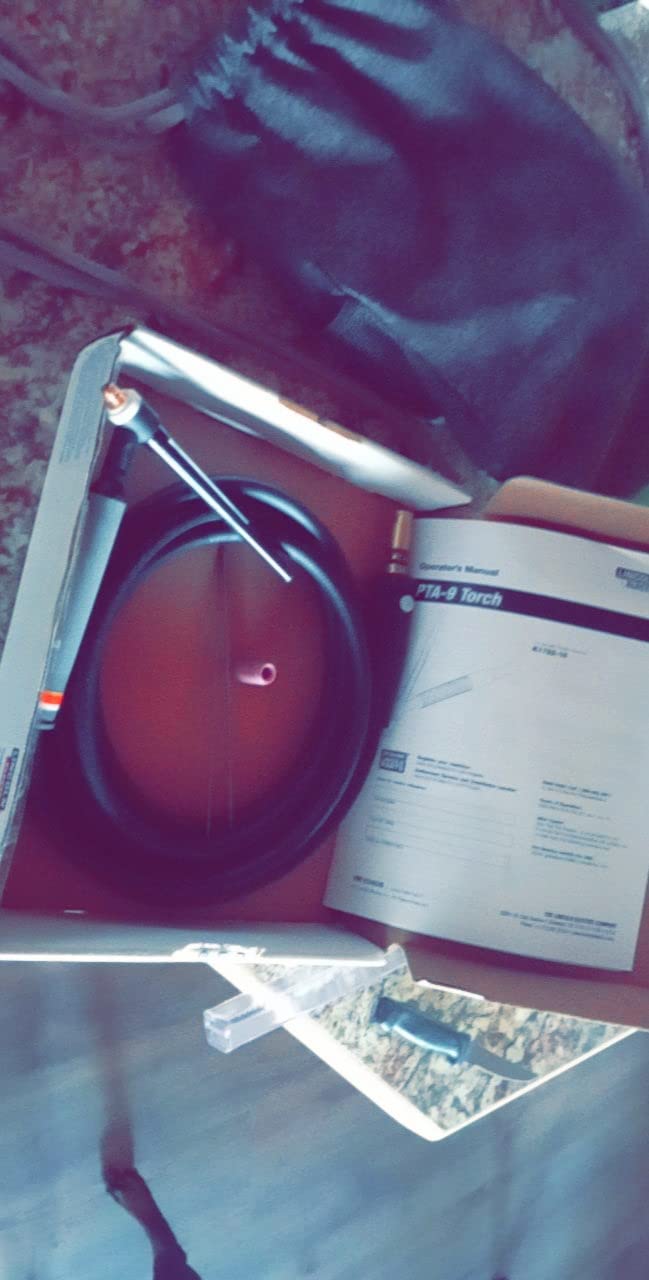
The Lincoln PTA-9 is the pick for people who want a torch that does not move. A rigid head transfers hand input straight to the electrode with no give, so with a steady hand the bead quality is hard to beat. The knurled aluminum handle mattered most to us, since grip security counts when you are holding a puddle on a 1 mm edge for several seconds.
Lincoln builds these to the LE31MP and similar machine platforms, and the fit and finish are a step above what the budget torches in this group manage. The 12.5 ft cable means nothing else has to be ordered before the first arc.
Why the 9-series body suits thin gauge
The 9 body is the smallest of the common air-cooled families. A smaller body supports a smaller cup, and a small cup concentrates the arc and narrows the puddle. On thin material that is the whole game. A #17 with a small cup is workable, but its head geometry is still built around a larger pool.
Rigid head versus flex head on thin sheet
A rigid head is more accurate in one respect: the tip stays where you put it. The tradeoff is access. On a lap joint or a rolled edge, your hand sits between the torch and the joint, so the torch must work around your own grip. Most fabricators end up owning one of each. The box contents are the weak spot here, with a single cup size and a single end cap, which means ordering more before you can switch cup sizes.
3. ARCCAPTAIN WP-17V 13 ft – The Lightest Complete Torch in the Group
ARCCAPTAIN TIG Welding Gun, WP-17V Argon TIG Torch with 13 FT Red Air Hose
400 g torch body
13 ft air hose
35-50 European plug
0.5-2.4mm electrode
+ Pros
- 400 g ribbed handle reduces fatigue
- 13 ft lead avoids moving the argon bottle
- One-piece EPDM cable with nylon over-braid
- 8mm2 high purity multi-strand copper
- Well sealed connections
– Cons
- 35-50 connector limits which machines it fits
- Rigid head is less adaptable to awkward angles
- Some durability reports at sustained high amperage
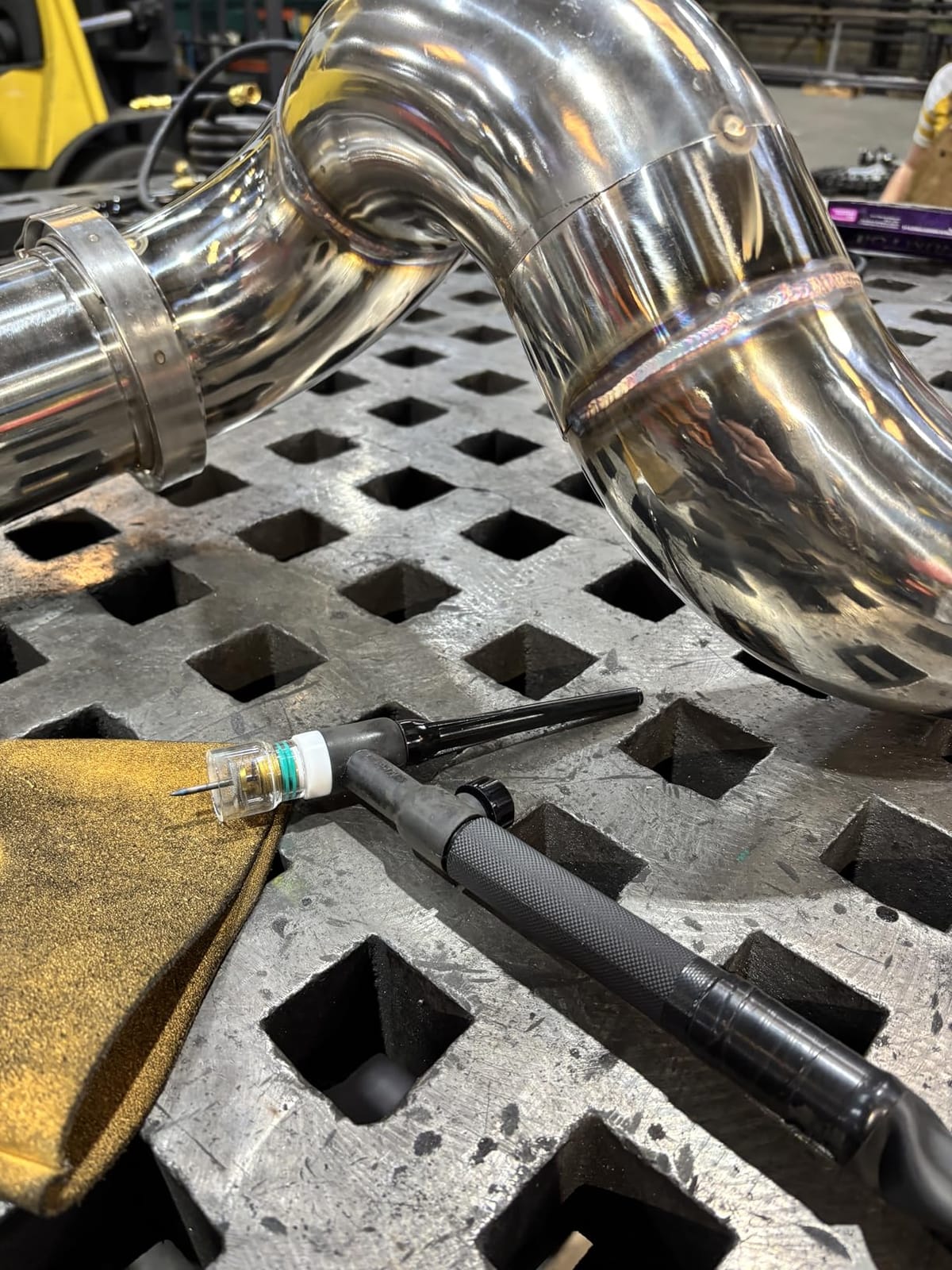
At 400 g, this is the lightest-feeling complete torch on the list, and on a two-hour session welding 1 mm aluminum that difference is not cosmetic. Fatigue shows in your hands first and in your bead second. The ribbed handle is shaped so it stays put without squeezing.
The cable is a one-piece EPDM rubber power cable with nylon over-braid, which stays flexible when the shop is cold and does not stiffen in a way that drags the torch toward the joint.
Gas hose length as a working advantage
Thirteen feet of air hose lets the argon bottle live in a corner instead of beside the workpiece. On a 6 ft sheet across sawhorses, that is the difference between welding both ends and walking the bottle around. The 8mm2 high purity copper inside keeps resistance and handle heat low.
Who should skip it
Skip it if your machine is a domestic-brand unit with a 5/8 inch connector, or if your work is all in tight corners where a rigid head will fight you. Owners do report occasional heat complaints at the very top of the range, which matters if you plan to run near 150 amps regularly.
4. TOOLIOM 150A Lift Torch – Short 4 m Lead for Bench Work
TOOLIOM 150A Lift TIG Torch Air-Cooled Welding Gun with 4 m Cable
150A rated
4 m cable
35-50 connection
1.17 kg total weight
+ Pros
- Short 4 m lead keeps the torch light over small sheet
- 150A air-cooled body suits light gauge
- Three collets three cups and both back caps included
- Compact body handles small work without dragging
– Cons
- Short lead limits reach on larger jobs
- 35-50 connector is not universal across brands
- Less owner feedback than the higher rated entries
This is the torch for the small bench. A 4 m lead keeps the assembly light and lets the torch hang almost straight down from the machine, which on a table-top part feels far more precise than a long lead that wants to pull the nozzle off your line.
The starter package is unusually complete for the tier: three collets, one collet body, three alumina ceramic cups, and both a long and a short back cap.
Why short leads win on small work
Every extra foot of cable is mass hanging off your wrist. On a 2 ft piece that mass fights your hand positioning and shows up as a drifting puddle. On a 10 ft assembly it stops mattering. At 1.17 kg for the whole torch and lead, this is one of the lightest complete packages here, and it suits intermittent shop duty rather than long production runs at full rating.
Who should skip it
Skip it if you weld large panels or work at a distance from the machine, since the 4 m lead becomes a limitation fast. Anyone running near 150 amps continuously should choose a heavier torch body.
5. Bestarc WP-17FV – Flex Head With a Built-In Gas Valve
Bestarc TIG Welding Torch, 13FT WP-17FV Argon Air Cooled Lift TIG Torch
150A air-cooled
Flex head with gas valve
13 ft cable plus 3.2 ft gas hose
+ Pros
- Flexible head adjusts through a range of angles
- In-line gas valve gives fine shielding control
- Nylon braid cable with multi-stranded copper
- Ribbed handle reduces fatigue
– Cons
- Newer listing with a smaller base of owner feedback
- Connector must be matched to your machine first
- No setup documentation in the package
The flex head is the reason this torch exists for our purposes. On a folded sheet edge or inside a small box, angling the head without turning your wrist changes the geometry of the job entirely. Many thin-gauge welders describe a flex head as doing the positioning so the torch does not have to fight you.
The in-line gas valve is the underrated feature. You can shut shielding gas off between welds, which saves argon over a long session, and feather flow down when welding right up to a finished edge where too much flow blows the puddle wide.
Flex head control and puddle visibility
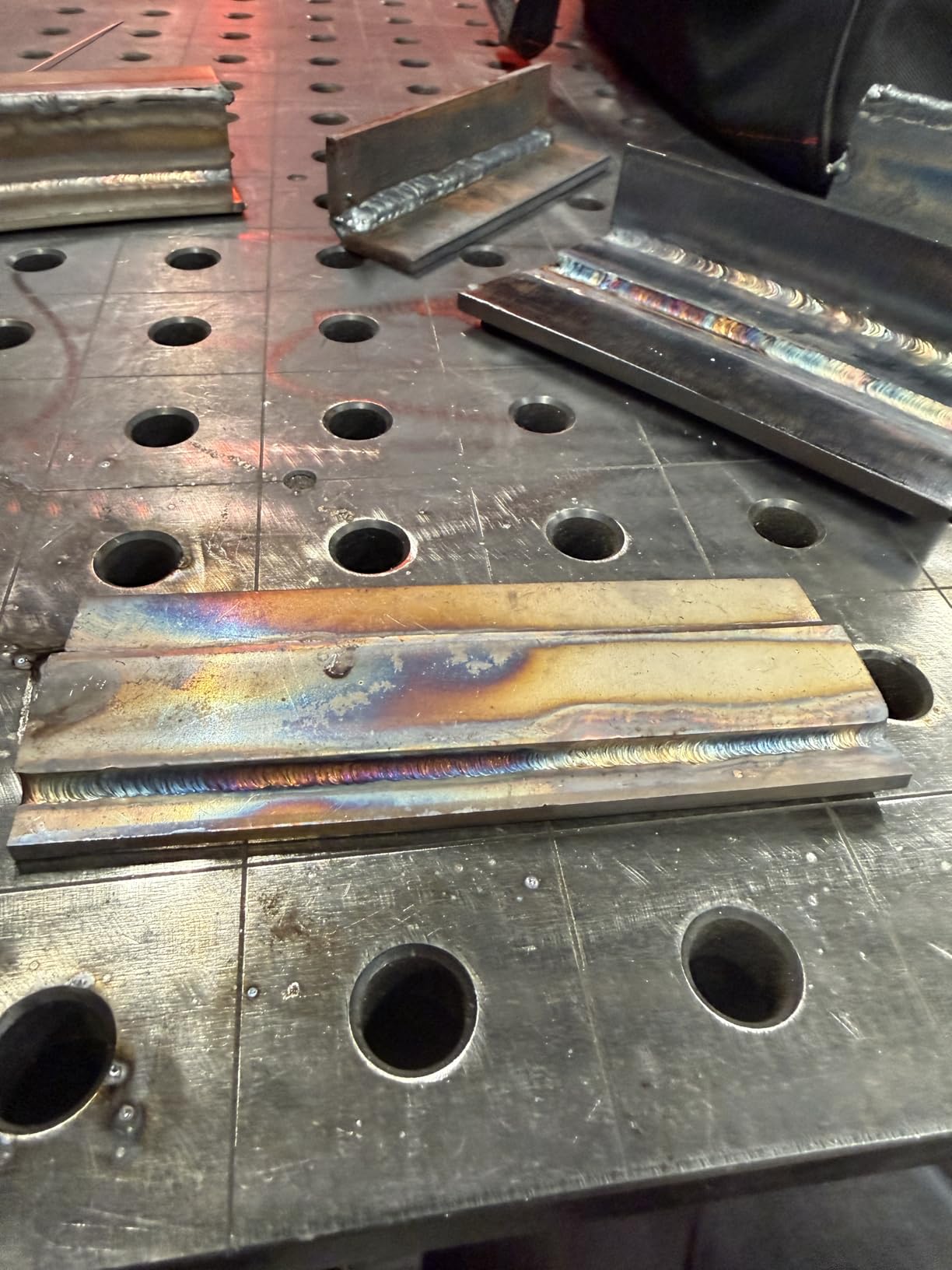
On thin sheet a flex head is not only about access, it is about seeing. A long rigid torch puts your knuckles in the sightline to the joint, and once the puddle is hidden you start guessing. Angling the head down and slightly to the side restores a clear view of the leading edge of the pool, and that single change does more for burn-through rates than most technique adjustments.
Who should skip it
Skip it if you need a large volume of established owner feedback, since this is a newer listing with a thinner review base. The 10-25mm2 quick plug suits the Bestarc MIG145, MIG165 and ARC200 among others, so resolve the connector fit before ordering.
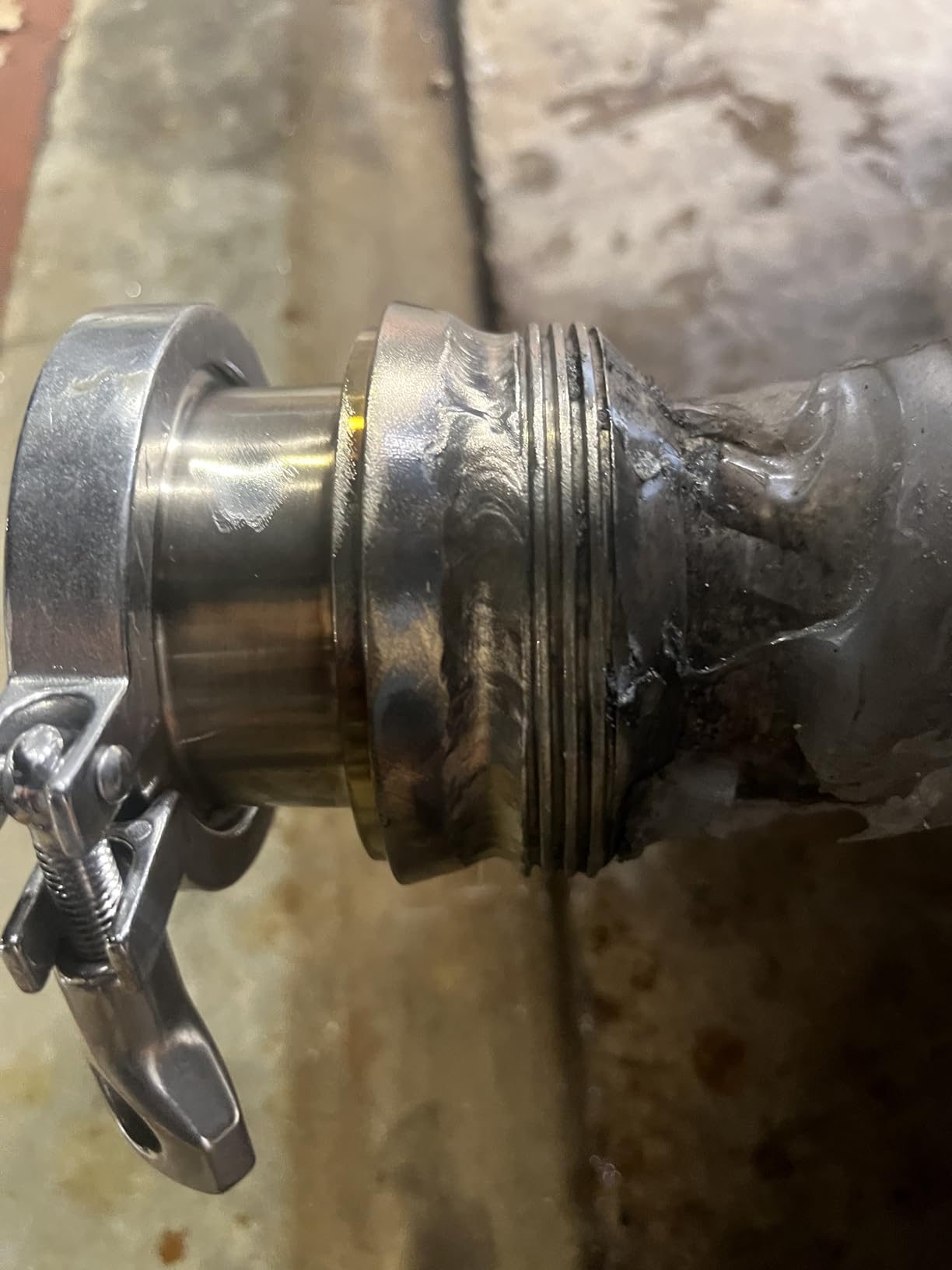
6. YESWELDER WP-17FV – Flex and Valve Head Using Standard Consumables
YESWELDER Tig Welding Torch WP-17FV Gas-Valve Head Flexible Head Air-Cooled
Flex and valve head
Complete air-cooled torch
Standard TIG consumables
3/8-24 gas port
+ Pros
- Flex head holds a set position for steady thin sheet
- In-line gas valve saves shielding gas between welds
- Uses standard TIG consumables so parts are easy to find
- Air-cooled design for long service life
– Cons
- Some owners report the flex neck drifts out of position
- Occasional gas leaks at the thumb valve or electrode thread
- Requires the 105Z57 adapter on 1/2 inch stud machines
Sentiment on this torch splits, and the split is entirely about how soft the flex neck is. A group of shop users rates it as good as the premium torches they own. Another group says the neck is so soft the head wanders, and if that is your experience, no technique change will fix it.
What is not in dispute is practicality. It uses standard TIG consumables, so collets, cups and back caps are easy to source at any supplier, the air-cooled design has no coolant loop to maintain, and it arrives as a complete torch rather than a head body.
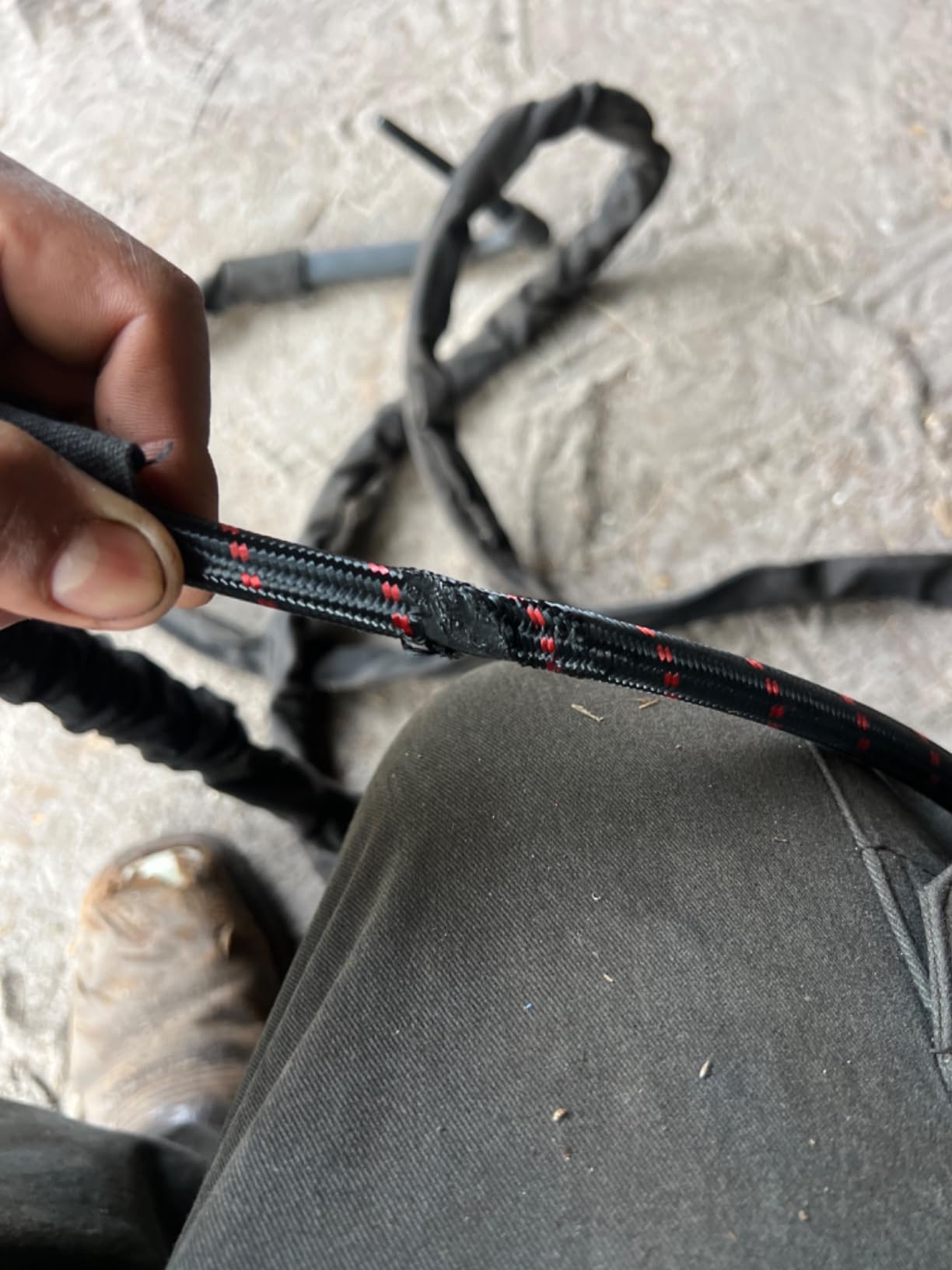
How stiff is stiff enough on a flex neck
For thin gauge a neck that holds position is worth more than a floppy one. If it drifts, the electrode angle changes mid-bead and the puddle shifts with it, which on 0.8 mm sheet is the difference between a flat bead and a crater. Set the head, let go for a moment, and check whether it moved before striking an arc.
Who should skip it
Skip it if you need absolute positional rigidity, or if you are sensitive to even occasional gas leaks and would rather reseal the fittings yourself. The power and gas connection is 3/8-24 RH, and machines with a standard 1/2 inch stud need the 105Z57 adapter, which is the most common reason a torch gets returned in this category. Leak-test with soapy water first.
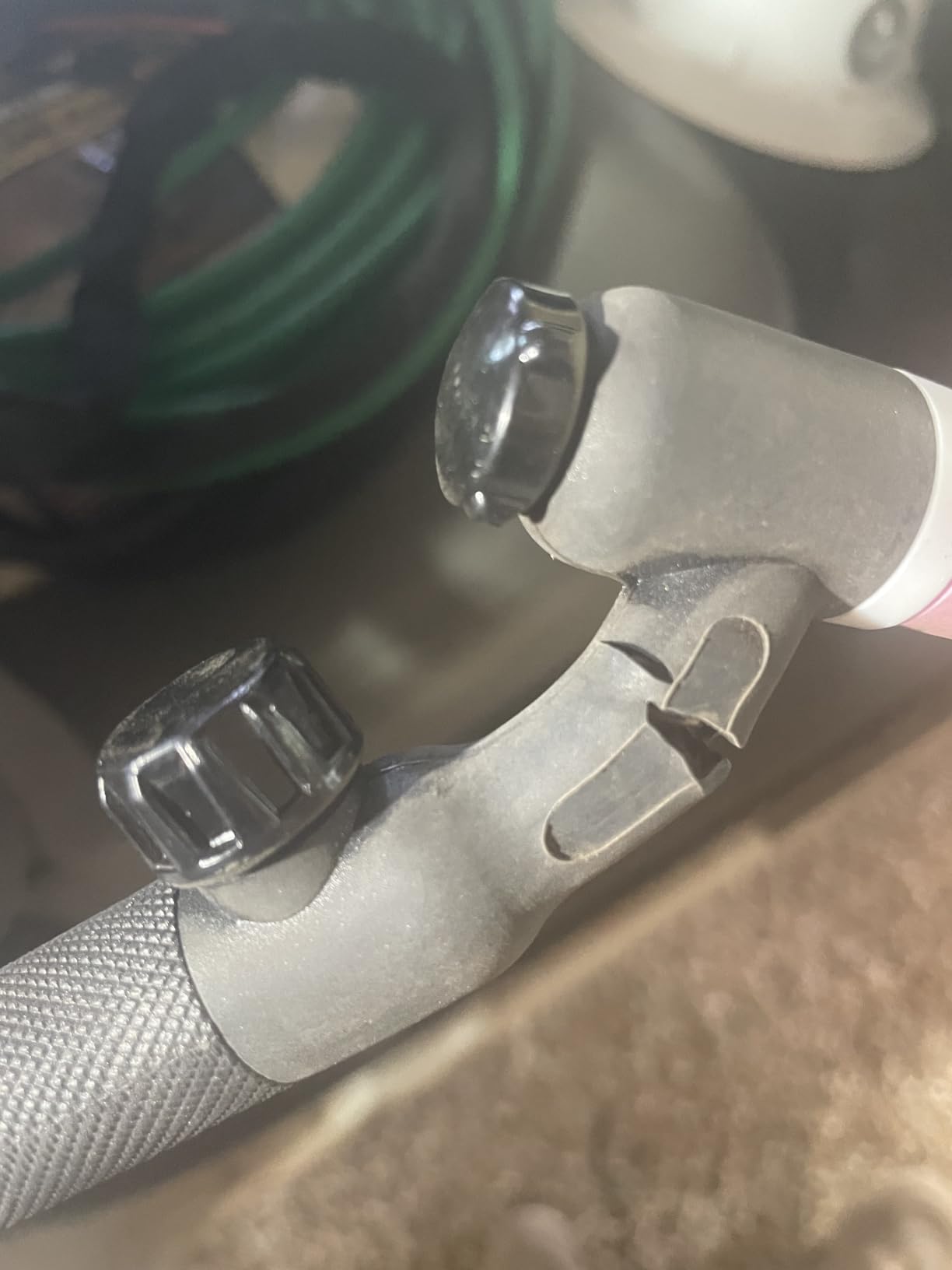
7. CK Worldwide CK17 Super-Flex – 5 Ounces and a Super-Flex Cable
CK17 Air Cooled TIG Torch Kit, 150A, 12.5′, 1-Pc Super-Flex, CK17-12-RSF RG
150A AC HF or DCSP at 100 percent
5 oz torch body
8-1/8 in head
12.5 ft Super-Flex
+ Pros
- 5 oz torch body steadies the arc and cuts wrist fatigue
- Super-Flex silicone hose with nylon over-braid
- 12.5 ft lead keeps positioning easy on small work
- 150A on AC or DC at 100 percent duty
- Short head keeps your hand clear of the joint
– Cons
- A few heat complaints at the top of the amp range
- Consumables and adapters may need separate sourcing
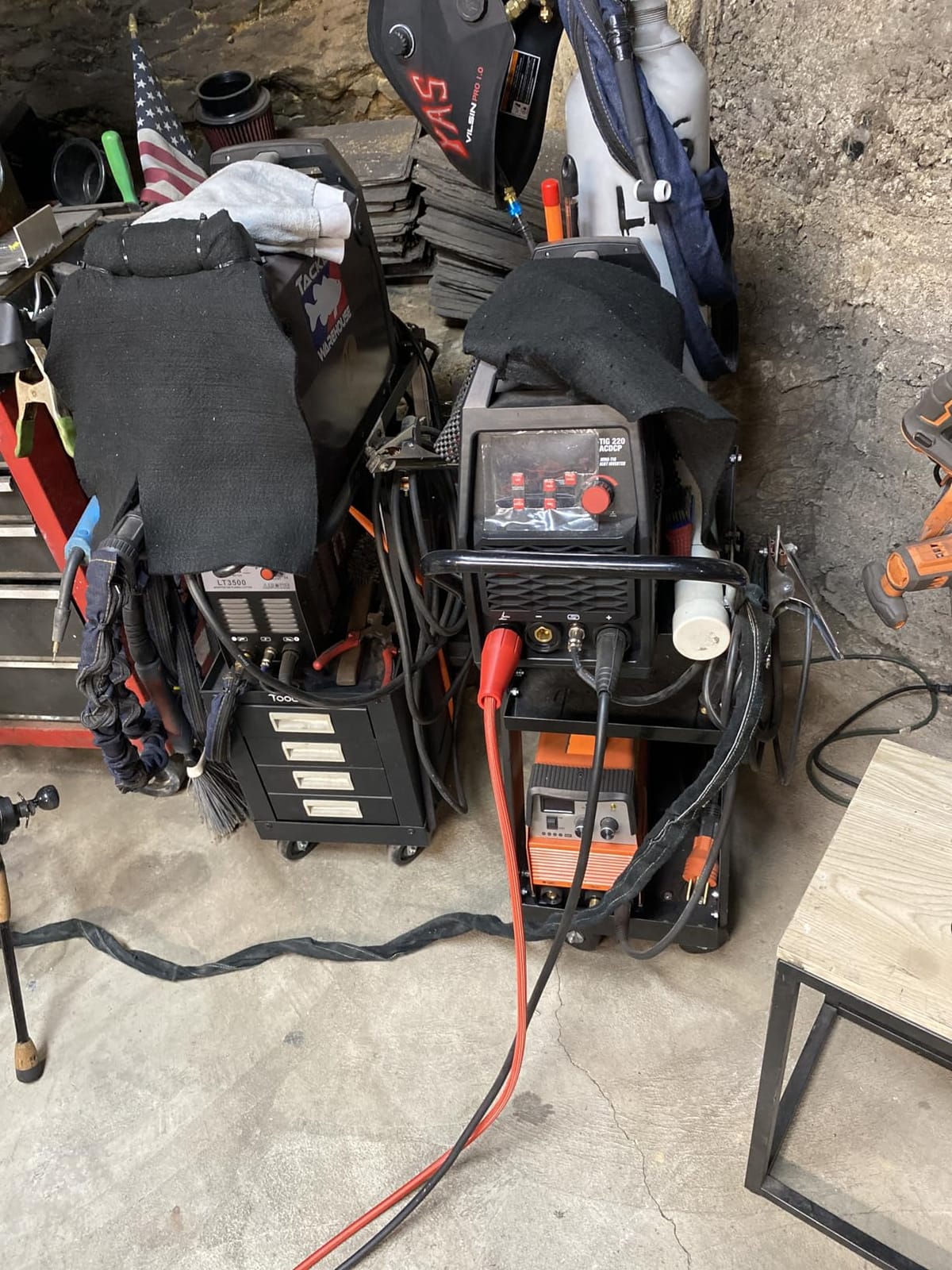
The CK17 is the one we recommend to people who weld all day. At 5 oz the torch is a fraction of the weight of the mid-size bodies, and with the Super-Flex silicone and nylon over-braid cable it stays pliable in a cold shop, which is no small thing in a garage in winter.
The rating is 150 amps AC high frequency or DC straight polarity at 100 percent duty cycle, and the 8-1/8 in head is short enough to keep your hand clear of the joint. Owners consistently rate the build quality well above the price bracket suggests.
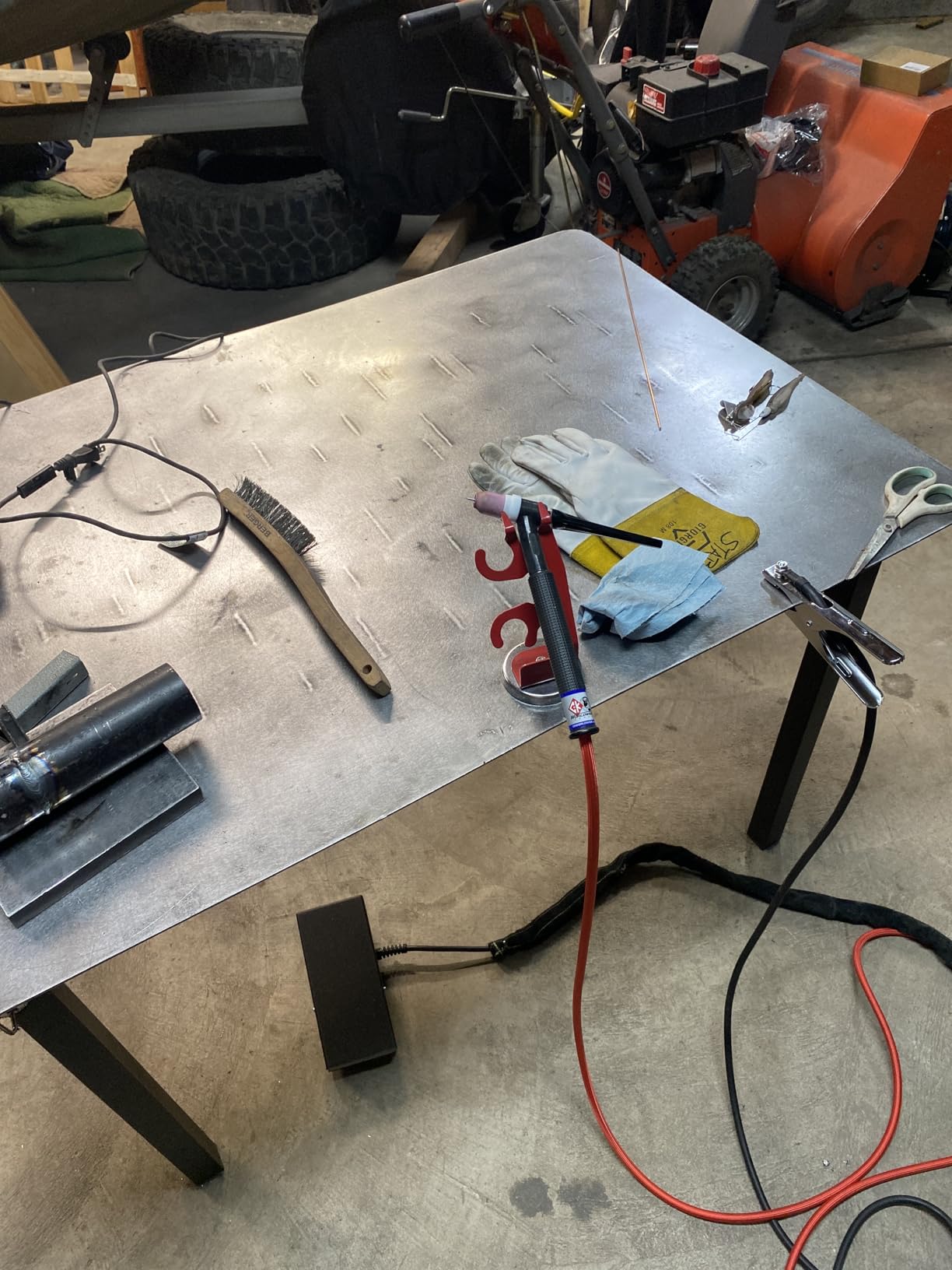
What 100 percent duty cycle means for thin work
Duty cycle tells you how long you can hold the rated amperage before the torch must cool. At 100 percent you are not throttling back to keep the handle cool, and on thin gauge that matters because you restart constantly. A torch that overheats between welds puts your heat control on a timer you did not choose. The silicone hose also stays flexible at temperatures that stiffen ordinary rubber. The kit is torch-focused, so if you do not already keep a supply of collets and cups you will be ordering those separately.
Who should skip it
Skip it if you need a full consumable starter kit in the box, since this is a torch kit rather than a package and you will order collets and cups separately. A few owners report heat complaints at the very top of the rating, and you should check the connector against your machine before ordering.
8. WeldingCity WP-17FV 25 ft – The Complete 12-Piece Package
WeldingCity 150-amp WP-17FV (Flexible Head with Gas Valve) 25-ft Power Cable Hose Air-cooled TIG Welding Torch Complete Package with Adapter 105Z57
150A air-cooled
25 ft EPDM power cable hose
105Z57 adapter included
12-piece kit
+ Pros
- Flex head holds position and returns to a home position
- Complete package with cable adapter collets cups and back caps
- 105Z57 brass adapter covers most mainstream welders
- Silicone rubber insulated body for long service
– Cons
- Requires assembly before the first use
- One reviewer reported a minor residual gas leak
- 25 ft lead adds weight and bulk
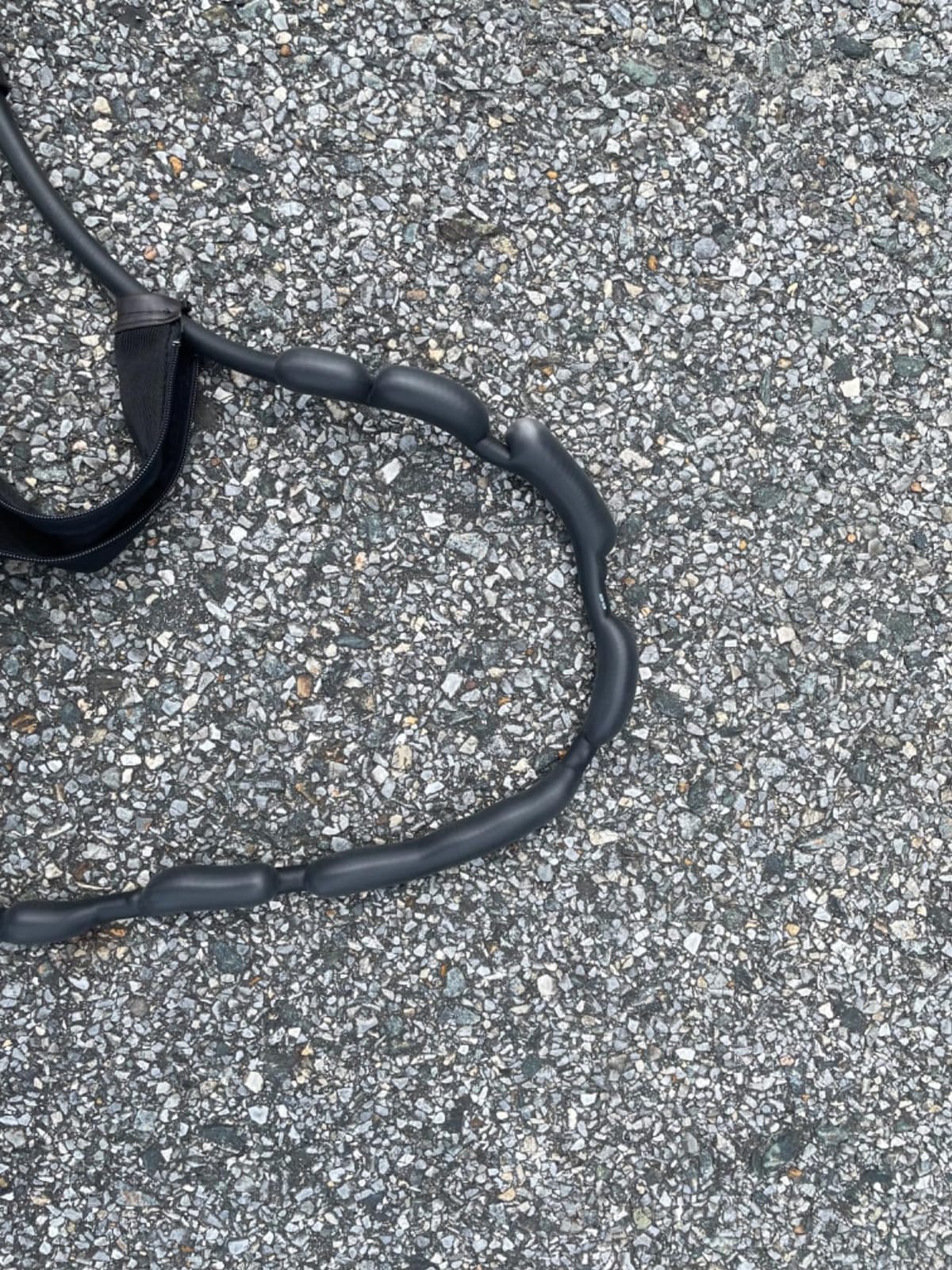
This is the package to buy if you want to open the box once and start welding. You get the 25 ft one-piece EPDM power cable hose, the 105Z57 brass adapter, 1/16 in and 3/32 in collets, collet bodies, ceramic cups and back caps. Nothing else to order, nothing else to guess at.
The flex head is described by owners as holding its position and returning to a home position, which matters on thin sheet because the electrode angle you set stays the angle you weld. Several owners compare the quality favorably to much more expensive Lincoln and ESAB torches.
What the 105Z57 adapter solves
Most domestic TIG welders use a 5/8 inch stud on the machine and a 1/2 inch stud on the torch lead, or some variation. The brass adapter bridges the mismatch, and having it in the box is the difference between welding tonight and waiting days for a part. On a 6 ft panel or a vehicle repair, 25 ft is the difference between welding the whole thing and moving the machine. On a small bench it is dead weight.
Who should skip it
Skip it if you work exclusively on small parts, where the long lead is an annoyance rather than an asset, or if you want something you can use immediately. It needs a few minutes of assembly before the first arc, so plan for that.
9. RIVERWELD WP-9F – The Smallest Common Head for Razor-Thin Work
RIVERWELD WP-9F SR-9F TIG Welding Torch Head Body Flexible Head
125A air-cooled
2.46 oz head body
9 x 1.18 x 0.79 in
Flexible head style
+ Pros
- Smallest common head family at 125A
- Light weight steadies the arc on very thin sheet
- Flex head does the positioning instead of your wrist
- Owners compare quality to costlier CK torches
- Low cost makes a sensible spare on hand
– Cons
- Head body only so collets and end caps are separate
- Soft flex neck can feel insubstantial
- 125A ceiling leaves little headroom for thicker stock
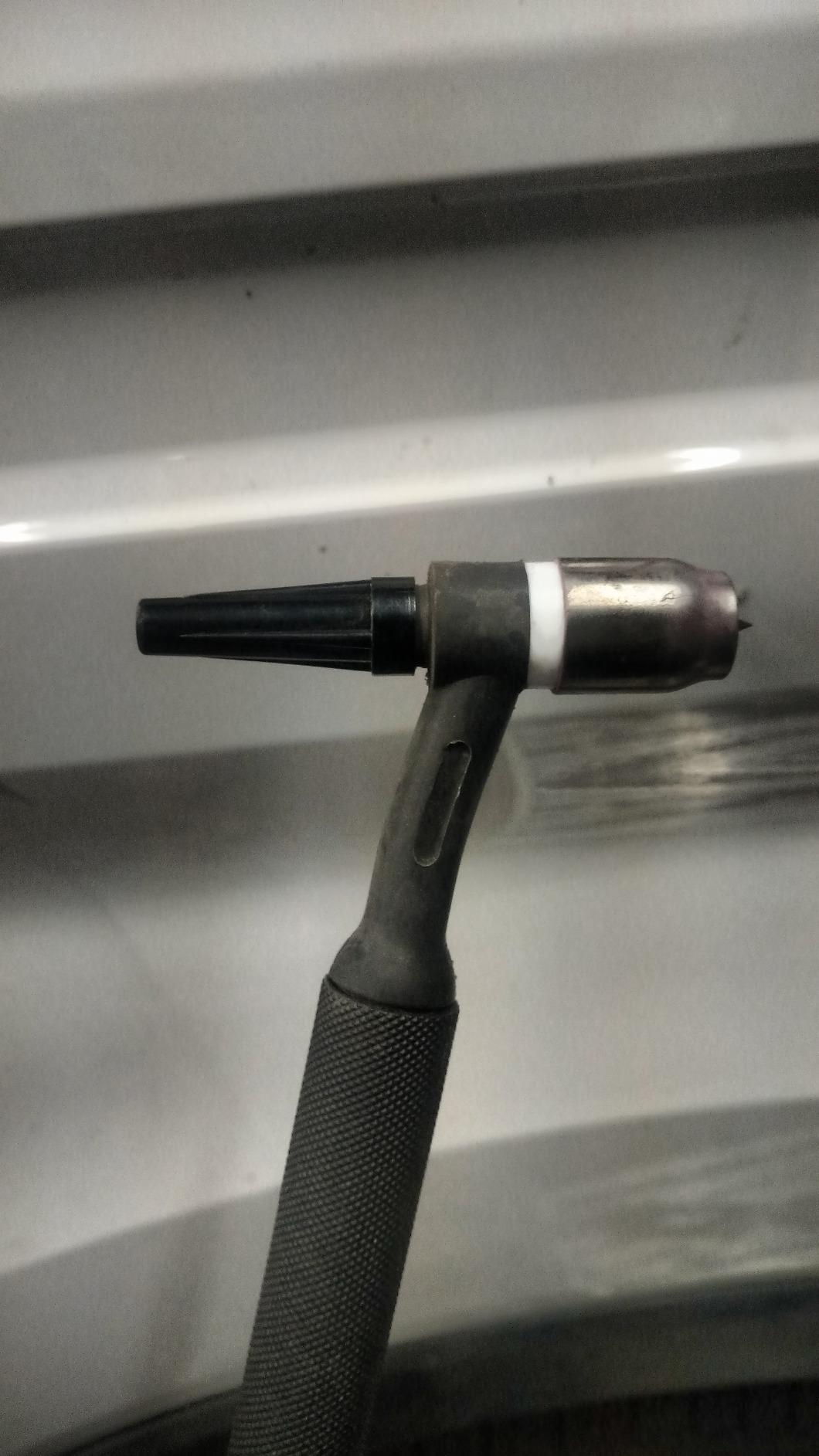
This is the answer to the complaint that started this comparison. If a #17 torch feels like a club on 1 mm work, the fix is a 9-series head, and the WP-9F is the lightest in the group at 2.46 oz. On very thin material, that weight is the difference between a torch you aim and a torch you wrestle.
Owners use it on 20 gauge stainless, on 1/4 in angle and on aluminum, and describe build quality as comparable to CK torches costing several times more.
Why 9-series wins on the thinnest material
A smaller body supports a smaller cup, and a small cup concentrates the arc. Narrow arc means narrow puddle, narrow puddle means the heat stays where you put it, and on material under 1 mm that is the whole difference between a weld and a hole. You can get a similar arc on a 17 with a small cup, but you are fighting the head geometry to get there.
Who should skip it
Be clear that this is a head body, not a torch: a cable, handle assembly, collets and end caps are all separate, and parts compatibility is specific to 9-series bodies. Stay under the 125A rating, which is the ceiling this head was designed around, and consider keeping a spare.
10. MOTOKU WP-17FV Head Body – Convert an Existing Torch to Flex and Valve
TIG Welding Torch Head Body 17FV Flex/Valve Air-Cool 150A WP-17FV
150A flex and valve head
Head body only
Fits 17 18 and 26 series
5.5 oz
+ Pros
- Flex head bends to reach tight spots and hold thin edges
- Lightweight non-slip handle for long sessions
- In-line gas valve controls shielding gas on delicate welds
- Drop-in conversion of an existing torch
- Works with 3/32 inch gas lens setups
– Cons
- Head body only so cable handle and consumables are separate
- Adapter and machine compatibility must be confirmed
- Some quality inconsistency between units reported
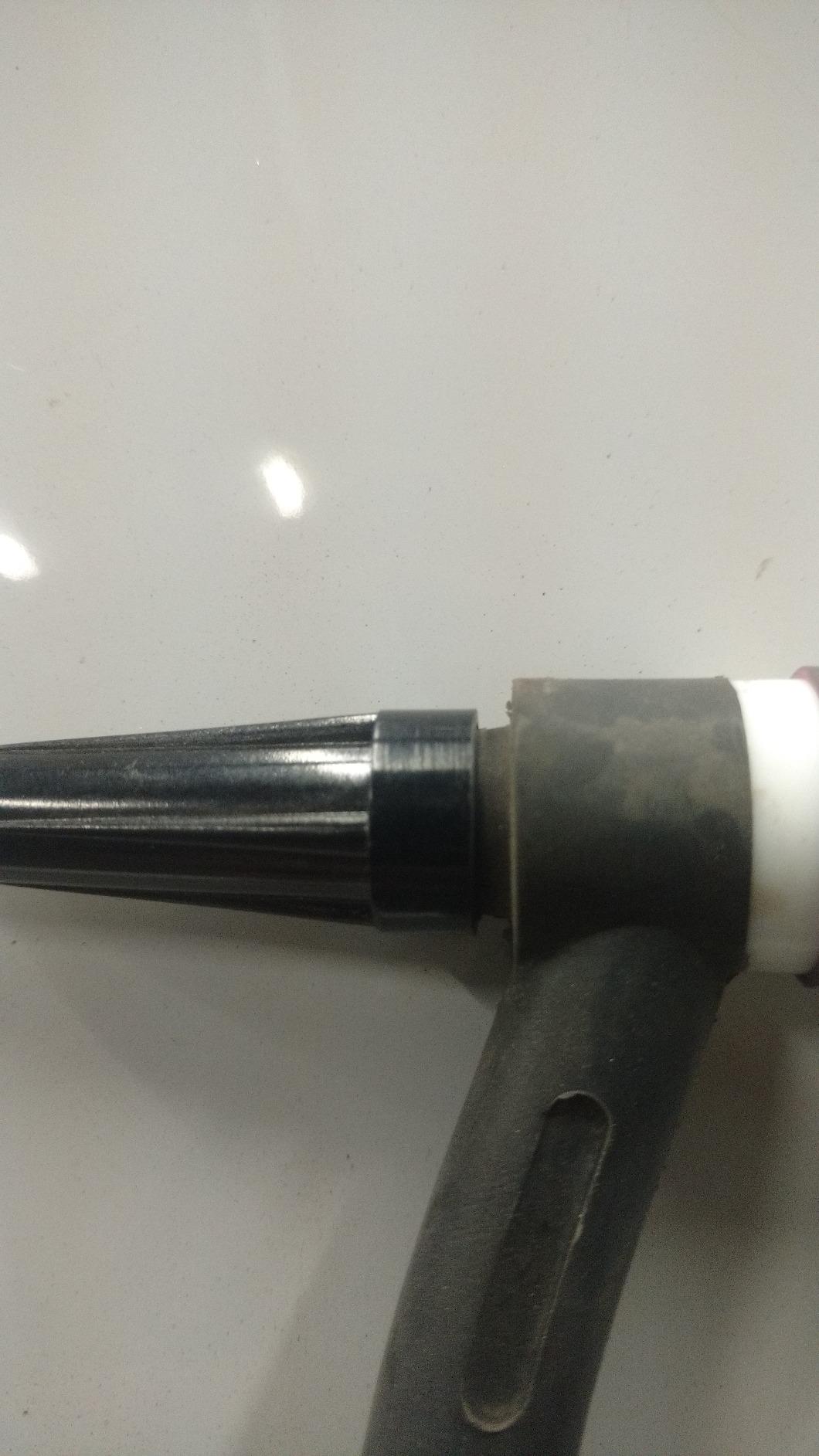
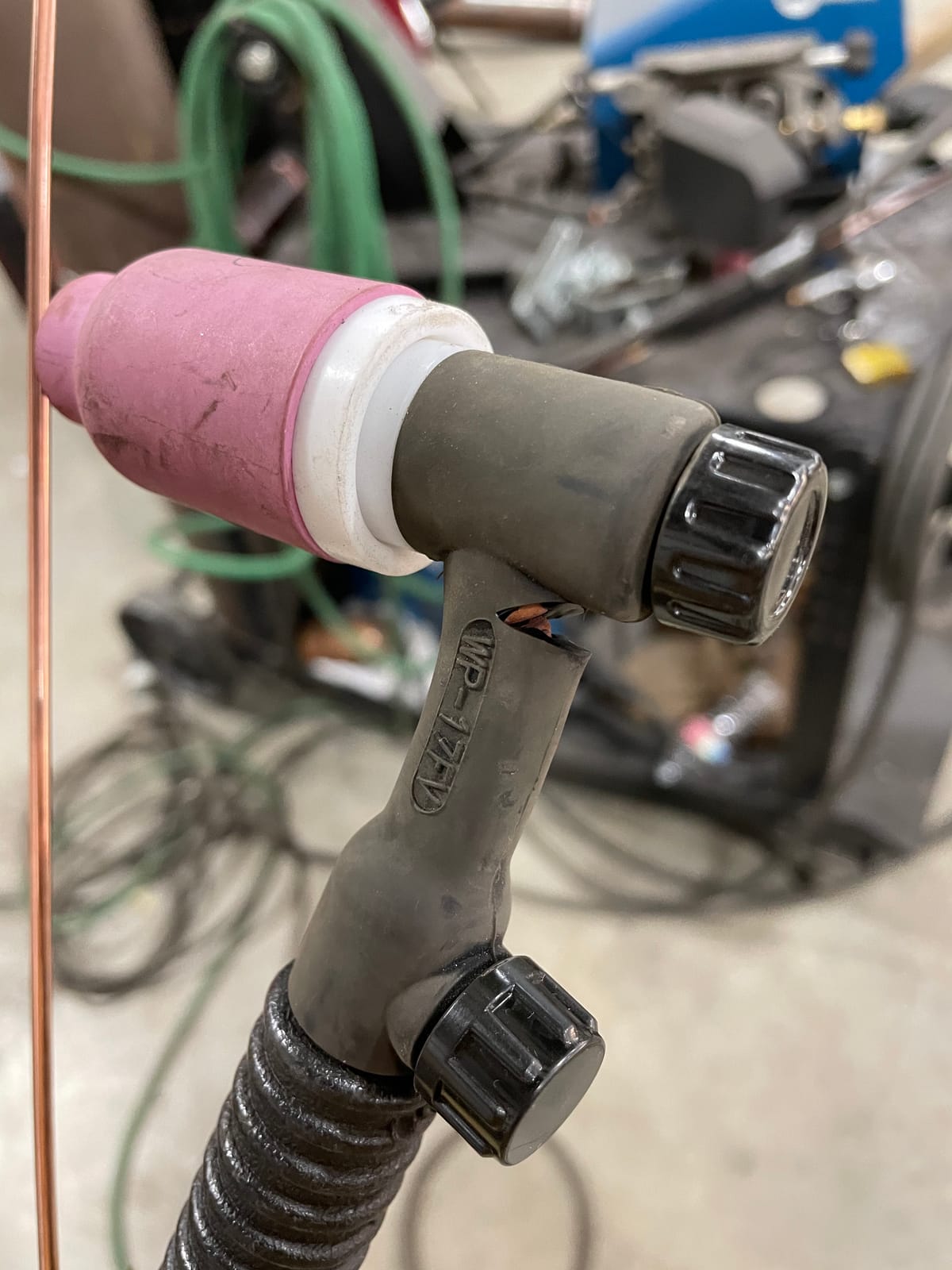
If you already own a working 17, 18 or 26 series torch, this head body is usually the cheapest real upgrade available. You replace the rigid head with a flex and valve head and immediately gain angle adjustment and on-torch gas control, the two features thin-gauge work depends on most.
It fits 3/32 inch gas lens setups across the 17, 18 and 26 series, so it slots into bodies you may already have parts for.
Why a head swap beats buying a new torch
Most torch complaints are head complaints: a long rigid head blocking your view, a head that will not hold an angle, no gas control. None of those are fixed by a different complete torch in the same family, because you would put the same kind of head on the cable. Swapping the head changes the geometry of the work directly and keeps the cable, connector and consumables you own.
Who should skip it
Skip it if you do not already own a compatible torch body, since the parts cost will exceed buying a complete torch. A minority of reviewers report quality-control inconsistency between units, so inspect on arrival. A cable, handle assembly and consumables are all required separately.
How to TIG Thin Metal Without Burning Through
The torch is only half of it. On 0.5 to 1.5 mm material the outcome is decided by technique, and the torch just makes the technique possible. Here is the sequence that works.
1. Clean the joint and use the smallest cup that works
Grind or degrease the joint right before welding. A small cup, 5/64 in or smaller, concentrates the arc and gives you a narrow puddle. Too large a cup spreads heat wider than the sheet can tolerate.
2. Grind the tungsten to a taper and point it correctly
Use 2 percent thoriated, grey, or 2 percent lanthanated, gold. Both hold their point best at low amperage and are the standard answer for mild steel on thin gauge. Grind lengthwise on a spinning wheel toward the electrode, then break the point with a light touch.
3. Set gas flow and start with a short stick-out
Run enough argon to cover the cup without blasting the puddle, and start with 1/16 in of tungsten stick-out. A short stick-out narrows the arc and gives a smaller, more controllable pool at low amps.
4. Start the arc off the edge and bring it in
Strike just off the joint and add filler at the leading edge of the puddle. Starting on the joint puts the full arc on the thinnest metal, the most common cause of blow-through.
5. Keep the puddle small and use a foot pedal
You want a puddle you could cover with a dime. Pedal control lets you taper heat as the pool grows, and on thin material that taper keeps the bead flat instead of sagging into a crater.
6. Backstep on the leading edge
Fill in behind the arc instead of pushing the puddle forward. Each pool is laid onto solid metal rather than molten metal, which keeps the heat where it belongs and is the most useful habit for sheet work.
7. Sink heat with copper where you cannot slow down
For spot welds, tabs or any position where you cannot control heat as you go, place a copper bar behind the joint. It pulls heat away from the sheet at the exact moment you are trying to limit it.
8. Use pulse TIG if your machine offers it
Pulsing alternates a high peak amperage for penetration with a low base that lets the puddle cool and solidify. On thin sheet it is close to automatic burn-through prevention, and on machines without pulse, tapping the pedal in the same rhythm works reasonably well.
Material choice changes the rules. Our guide to welding techniques for different metals covers why aluminum and stainless behave differently from mild steel under the same torch, and metal composition explains what is happening at the grain level. If you want the puddle control drills that go with this sequence, our TIG welding tips and techniques guide breaks the same process down step by step.
TIG Torch Sizes Chart: What #9, #17 and #26 Actually Mean
The number on a TIG torch is a body size, and it sets the head diameter, the cup sizes it accepts and roughly the amperage it was designed around. This chart maps the common bodies to the work they suit, which answers the torch sizes question better than any single product page.
9 series (WP-9F, PTA-9): 125 amp class, rigid or flex short head, air-cooled. Very thin sheet, jewelry, sculpture, small tube.
17 series (WP-17V, WP-17FV): 150 amp class, rigid, flex, valve or flex-and-valve head, air-cooled. General thin to medium gauge work, most hobby and shop jobs.
18 series: 150 to 200 amp class, valve-equipped mid-size head, air-cooled. The same gauge range as a 17 with a larger cup option.
26 series (TL26 class): 200 amp class, premium flex and valve head, air-cooled. All-day shop work where heat matters more than weight.
20 series: 250 amp class, full-size production head, water-cooled. Production thin-gauge runs where an air-cooled head would overheat.
To answer the 17 versus 26 question directly: a 17 is a lighter, smaller-bodied torch rated around 150 amps, while a 26 is a larger, heavier, better-cooled body rated around 200 amps. On thin metal the 17 is generally the more comfortable tool, and a 26 earns its size only when you push amps all day or run hotter, larger cups.
Buying Guide: The Specs That Matter on Light Gauge
Air-cooled versus water-cooled for thin metal
Water-cooled torches win decisively at high amperage and on aluminum production work, where users regularly describe the difference as night and day. On thin gauge at 30 to 80 amps they offer almost nothing while adding a coolant loop you must fill, service and winterize. Garage and hobby fabricators overwhelmingly run air-cooled torches to avoid maintaining a coolant system, and for the work in this article that is the correct call. The exception is a shop doing long production runs on light gauge where repeated restarts would overheat an air-cooled head.
Head length, mass and puddle visibility
This is the factor thin-gauge welders care about most and roundups mention least. A long torch puts your hand between your eyes and the joint, so you stop seeing the puddle and start guessing. If your work is on small parts or the far side of a folded edge, favour a 9-series body or a short flex head. On flat, open sheet, a standard 17 body is fine and gives a bigger cup range.
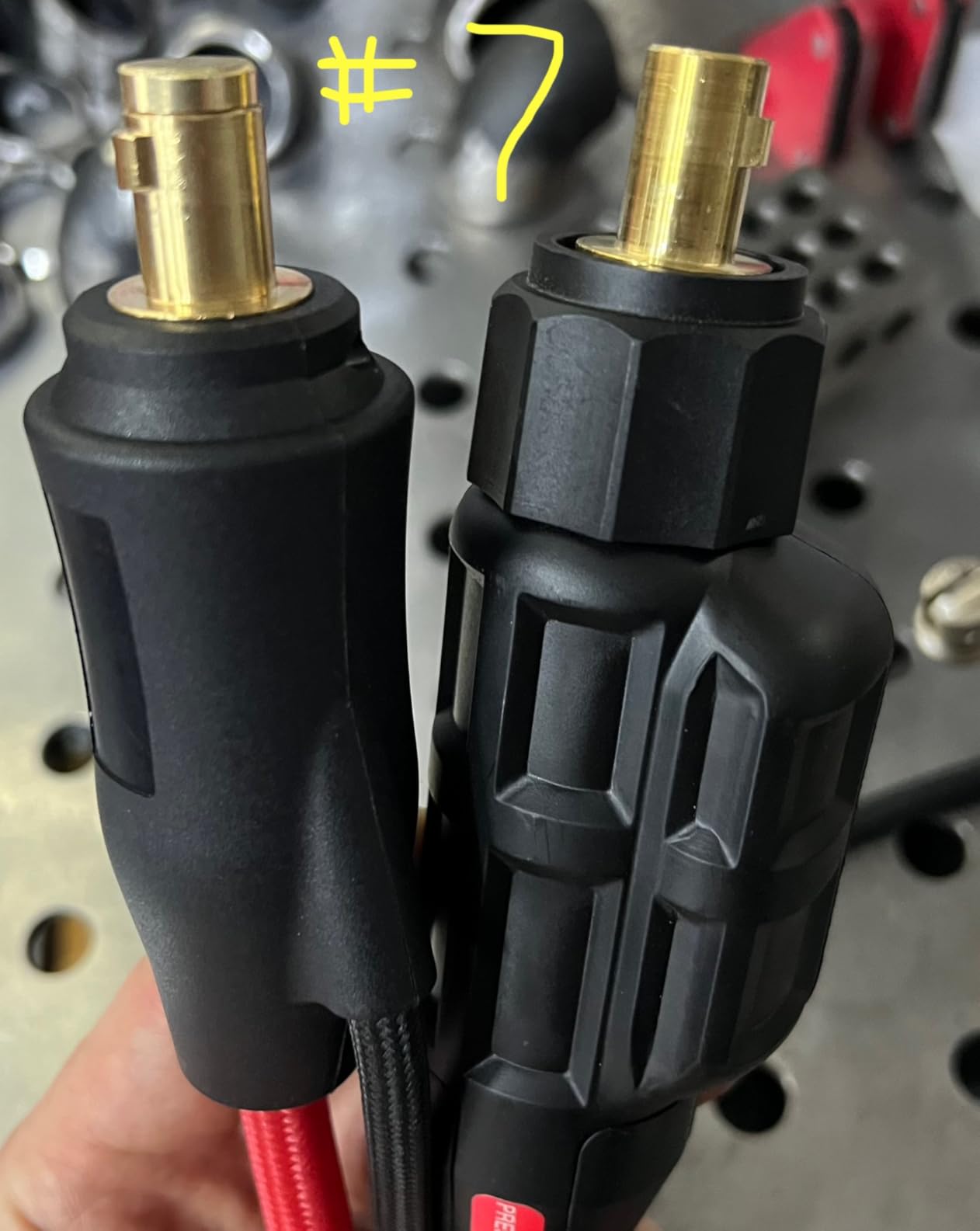
Connector type: the most common return reason
There are three interfaces to meet: 10-25mm2 and 35-50 European plugs, and 5/8 inch or 1/2 inch domestic studs. Plug types will not seat on a domestic stud, and vice versa. Identify your machine’s connector before choosing a torch, because the small brass adapter that fixes a mismatch is far cheaper than a return.
Gas lens versus standard nozzle
A standard alumina cup gives a wider, softer arc. A gas lens concentrates the gas around the tungsten and produces a noticeably narrower, more controllable arc, which is what thin sheet needs. If your priority is puddle control rather than raw penetration, this single consumable change does more than any torch upgrade.
Tungsten choice for light gauge
For thin metal use 2 percent thoriated or 2 percent lanthanated. Both start an arc more easily than pure tungsten and hold a point better at low amperage, and the colour question people ask about is really about alloy type rather than performance. Pure tungsten, the green one, suits aluminium on AC because it does not throw off as much electron loading, but it is not what you want on thin mild steel.
Cable length and balance
Under 4 m keeps the torch light and precise for bench work. 12.5 to 13 ft is the general-purpose sweet spot for a small shop. Beyond 20 ft is for large panels and vehicle work, and it comes with mass that changes how the torch tracks. Pick for the size of your workpiece, not the size of your shop.
Consumable cost per hour
Thin-gauge work runs consumables hot because you change cup sizes, collets and back caps constantly. A torch that ships with three cup sizes and both back caps saves real money in the first month, the least obvious advantage in this category. Buy consumables in bulk, keep two cup sizes on the bench, and check the collet whenever the arc goes strange.
Frequently Asked Questions
How to TIG thin metal?
Clean the joint, use the smallest cup that works, grind a 2 percent thoriated or lanthanated tungsten to a fine point with about 1/16 inch stick-out, and start the arc just off the joint. Keep the puddle small, backstep by filling in behind the arc rather than pushing forward, and use foot pedal control to taper heat as the puddle grows. Copper heat sinking and pulse TIG both reduce burn-through under 1 mm.
What size TIG torch do I need for thin metal?
A 9 series or 17 series air-cooled body is the right choice for light gauge. A 9 body is the smallest common family at a 125 amp class and suits very thin sheet and jewelry-scale work, while a 17 body rated around 150 amps covers thin to medium gauge and supports a wider range of cup sizes. Skip larger water-cooled bodies unless you are running production work.
What’s the difference between 17 and 26 TIG torches?
A 17 series torch is a lighter, smaller-bodied air-cooled design rated around 150 amps, while a 26 series such as the CK TL26 is a larger, better-cooled body rated around 200 amps with a bigger cup range. On thin metal the 17 is usually the more comfortable, lighter tool, and the 26 earns its size when you run higher amperage all day or need larger cups.
What are the pros and cons of a water-cooled TIG torch compared to an air-cooled TIG torch?
Water-cooled torches run much cooler at high amperage, extend duty cycle and are the standard choice for production and aluminum work at high amps. Air-cooled torches are lighter, simpler and need no coolant system to fill, service or winterize. On thin gauge at 30 to 80 amps, water cooling offers little benefit and adds a coolant loop that can leak or fail.
Who makes the best TIG torches?
CK Worldwide is the long-standing premium air-cooled reference, with the Trimline and Super-Flex lines treated as a community default for build quality. Lincoln Electric and Miller build rigid-head torches with excellent control. Weldcraft, WeldTube, YESWELDER, bestarc, WeldingCity and MOTOKU cover the value and head-body upgrade tiers, where compatibility and consumable availability matter more than brand name.
What tungsten is better, blue or purple?
For thin metal, both 2 percent thoriated and 2 percent lanthanated outperform pure tungsten because they start more easily and hold their point at low amperage. Thoriated is the most forgiving choice for thin mild steel and stainless. Pure tungsten, the green one, is worth using on aluminum with AC because its lower electron loading gives better cleaning, and electrode color matters less than the alloy.
What is the rule of 33 in TIG welding?
The rule of 33 refers to filler rod diameter, since 0.033 inch is 3/32 inch, offering a rough guide to matching filler diameter to material thickness. It is a starting point rather than a rule, because joint fit-up and heat input change the answer as often as thickness does.
Do TIG torches need maintenance?
Yes, and on air-cooled torches the maintenance is light. Check the O-rings and gas connection for leaks periodically, because a small leak at the thumb valve or the threaded electrode connection causes erratic shielding and a wandering arc. Keep collets and cups clear of spatter, inspect the back cap, and leak-test a flex-head torch with soapy water. Water-cooled torches need coolant flushes and line checks as well.
Which TIG Torch Should You Buy?
If you want one complete torch that covers thin gauge without guesswork, take the YESWELDER WP-17V 13 ft. It has the largest review base in the group, an honest 150 amp rating, and three cup sizes with three collets in the box, which is what actually saves money when welding sheet.
If you weld all day and hand fatigue is the problem, go with the CK Worldwide CK17. The 5 oz body and Super-Flex cable make long sessions bearable, and it runs at 100 percent duty cycle so you are not backing off amperage to keep the handle cool. The ARCCAPTAIN WP-17V at 400 g is the lighter alternative with a full consumable kit.
If your real complaint is that your torch is too long and clumsy, do not buy a new torch. Get the RIVERWELD WP-9F head for the smallest body on very thin material, or the MOTOKU WP-17FV head for flex and valve control on the torch you already own. The Lincoln PTA-9 is the pick if you prefer a rigid head and want factory accuracy with a warranty behind it.
Two habits will do more for your thin-gauge welds than any torch on this list. Check your machine’s connector type before you buy, and change to a gas lens the first time you work under 1 mm. Whatever torch you choose, verify the fit and the consumables, and build technique from our TIG equipment guide.
Leave a Reply