
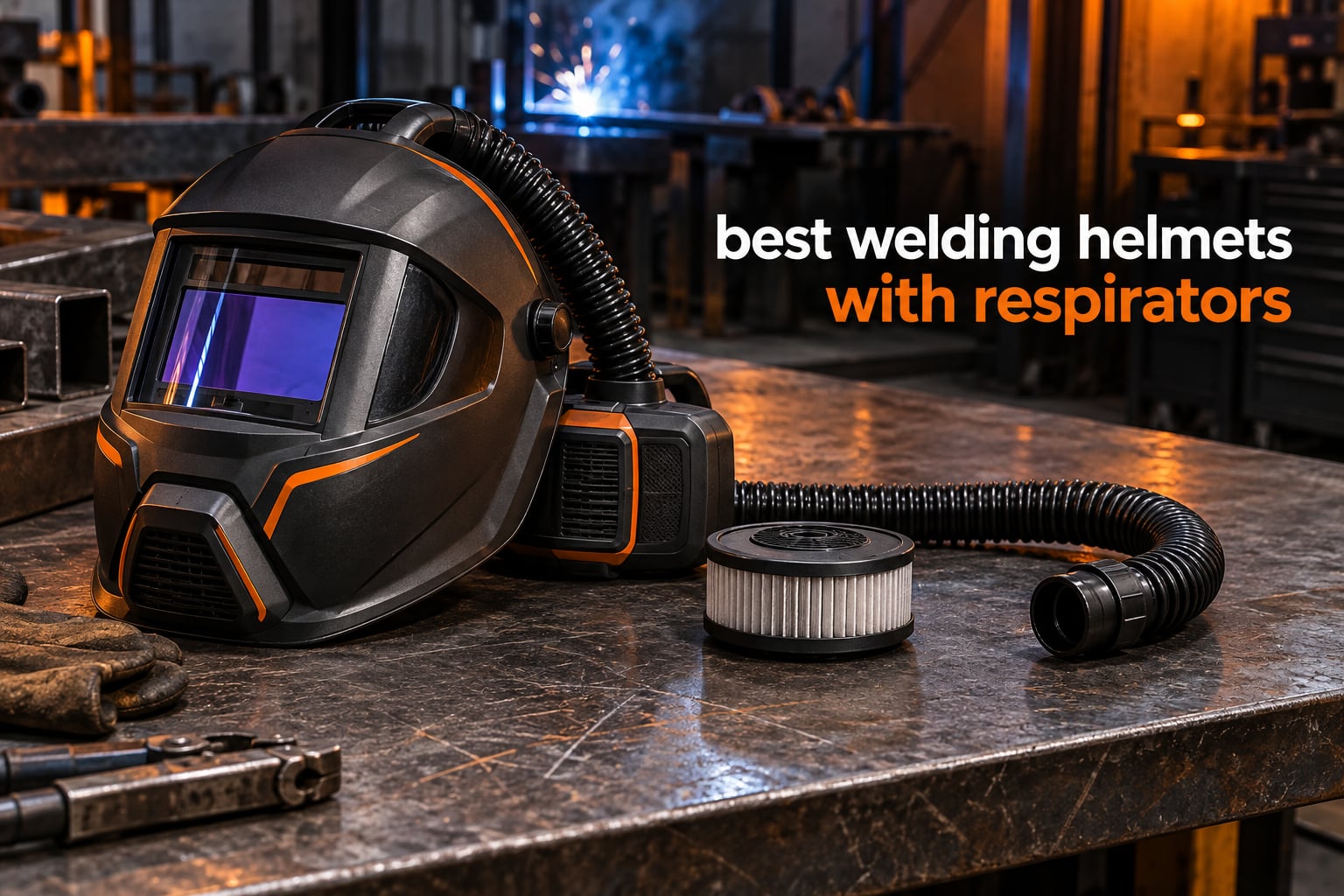
Welding fume is a confirmed carcinogen, and the only way to breathe clean air while an arc is lit is to put filtered air in front of your face. I have spent the last two months wearing powered air purifying respirator (PAPR) helmets, cartridge full-face respirators, and half masks under standard hoods across stainless, galvanized, and carbon steel work, and the difference between them is not subtle. This guide ranks the best welding helmets with respirators available now, from a certified NIOSH APF 1000 shop package to a compact flip-up mask that replaces a helmet, a grinding shield, and a respirator in one shell.
The short answer: for professional shop work the 3M Speedglas G5-01 with the Adflo high-altitude PAPR assembly is the strongest all-round system, because the lens stays clear for a full shift and the battery still holds charge after nine hours. For a single unit that does three jobs, the Parcil Distribution WF-101 is the one I keep reaching for in the field.
There are really only three ways to combine eye and lung protection, and almost every product on the market is one of them. A self-contained helmet with the fan, filter, and battery built in. A modular helmet fed by a belt-mounted blower. Or a plain auto-darkening hood with a separate half mask worn underneath. Understanding which one you are buying matters far more than any single spec, so I explain all three before the rankings.
If you are still narrowing the lens side of the equation, our guide to how auto-darkening welding helmets work breaks down sensors and switching speed, and our Speedglas helmet rankings cover the shells that pair with these blowers.
Our Top 3 Tested Welding Helmets With Respirators for 2026
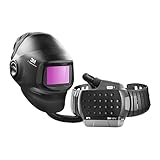
3M Speedglas G5-01 with Adflo PAPR
- Adflo high-altitude PAPR
- Variable Color Technology
- Shades 5 and 8-14

Parcil Distribution WF-101 Full Face
- P3 O-A-X cartridges
- DIN 5-13 auto-darkening
- 2 pound full face unit

TREND Airshield Pro Respirator Bundle
- Self-contained fan and battery
- Positive pressure
- Spare battery and cradle
Those three cover very different buyers. The Speedglas setup is a factory-matched system where the blower, filter, and helmet were designed as one unit, and it is the only one here with a shade range reaching 14 for stainless and aluminum work. The WF-101 is the opposite philosophy: a two-pound face shield with replaceable cartridges that costs a fraction of any PAPR package and has the highest average rating in this roundup. The TREND Airshield is the budget entry into positive pressure, with the fan mounted in the crown so there is no belt and no hose.
At a Glance: Respirator Type, Filtration, Battery and Shade Range Compared
| Product | Details | Action |
|---|---|---|
|
|
Check Latest Price |
|
|
Check Latest Price |
|
|
Check Latest Price |
 |
|
Check Latest Price |
 |
|
Check Latest Price |
 |
|
Check Latest Price |
 |
|
Check Latest Price |
 |
|
Check Latest Price |
 |
|
Check Latest Price |
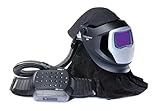 |
|
Check Latest Price |
Read the filtration column carefully, because the percentages are not measuring the same thing. The RPB kit is the only unit in this list with a stated NIOSH assigned protection factor of 1000, which is a certification claim rather than a particle capture figure. The YESWELDER and ANDELI percentages are particle capture rates measured at a stated micron size, not respiratory certification, and neither listing carries a NIOSH approval mark.
The TREND Airshield is the outlier. It is not a welding helmet at all in the data, it is a powered face shield, and its own review record notes it is not NIOSH certified. Several buyers use it for grinding and cutting dusty wood, and it does that job well, but if your priority is weld fume this is the wrong shape of solution.
PAPR vs Half-Mask vs Full-Face Respirator: What Each One Solves
A powered air purifying respirator pushes filtered air across your face under positive pressure, so contaminated air cannot leak in around a seal. That is the entire reason PAPR users on r/Welding describe going back to a plain hood as unpleasant: breathing resistance disappears, the lens stays fog-free, and sweat stops building up inside the shell.
A half mask worn under your existing auto-darkening hood depends on a tight facial seal, which means it has to fit your face, it has to pass a fit test, and facial hair breaks it. On mig-welding.co.uk and weldingweb.com the most common recurring advice is that a mask which vents air downward works far better under a hood, because an upward exhaust valve blows fumes and moisture straight onto the inside of the lens.
A full-face cartridge respirator sits between the two. It gives you a seal and a filter with no battery and no blower, but you are dragging breath through a cartridge for a whole shift, and the enclosed visor can get uncomfortably warm on long stainless runs.
So the practical decision is simple. If you weld stainless or galvanized steel regularly, or you work in a booth with poor extraction, the positive pressure from a PAPR is worth the belt, the battery management, and the bulk. If you are a hobbyist welding outdoors in open air, a P100 half mask under the hood you already own is the cheapest defensible answer, and forum consensus keeps arriving at the same place. You can read more about basic hood protection in our passive helmet guide if you are not yet on auto-darkening.
1. 3M Speedglas G5-01 with Adflo High-Altitude PAPR – The All-Round Professional Choice
3M Speedglas Heavy-Duty Welding Helmet G5-01 with G5-01VC ADF and Adflo High-Altitude PAPR Assembly, Bluetooth, Natural Color Technology, 46-1101-30iVC
Shades 5 and 8-14
Variable Color Technology
Adflo high-altitude PAPR
5.36 kg system
+ Pros
- Exceptionally clear view of the weld pool
- Adjustable airflow direction for hot or cold shops
- Hood blocks rear reflections and does not fog
- Battery retains charge after a nine-hour day
- Ten memory modes through the Connected Equipment app
– Cons
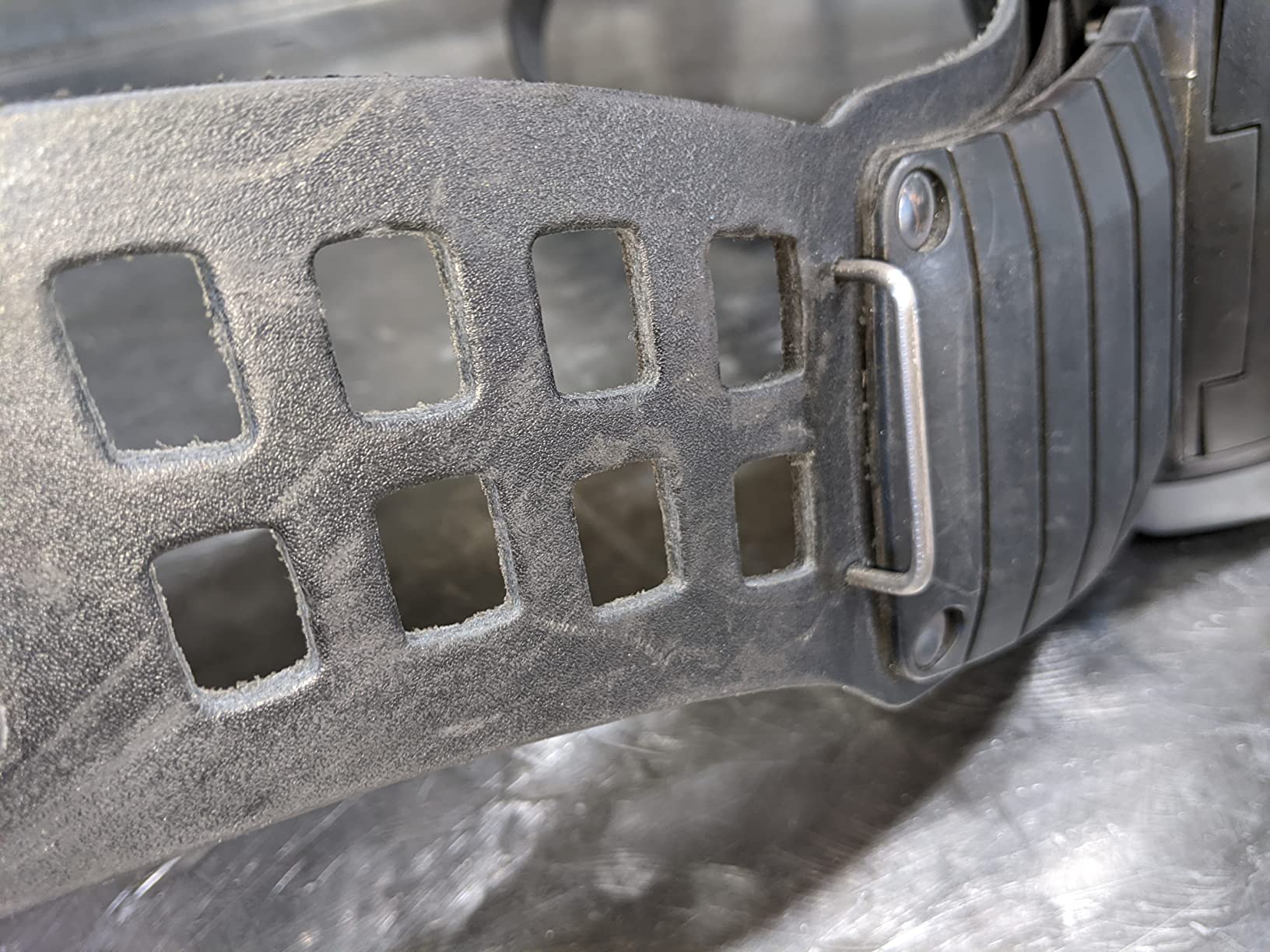
- Narrower shell than the Speedglas 9100 series so slim ear muffs will not fit
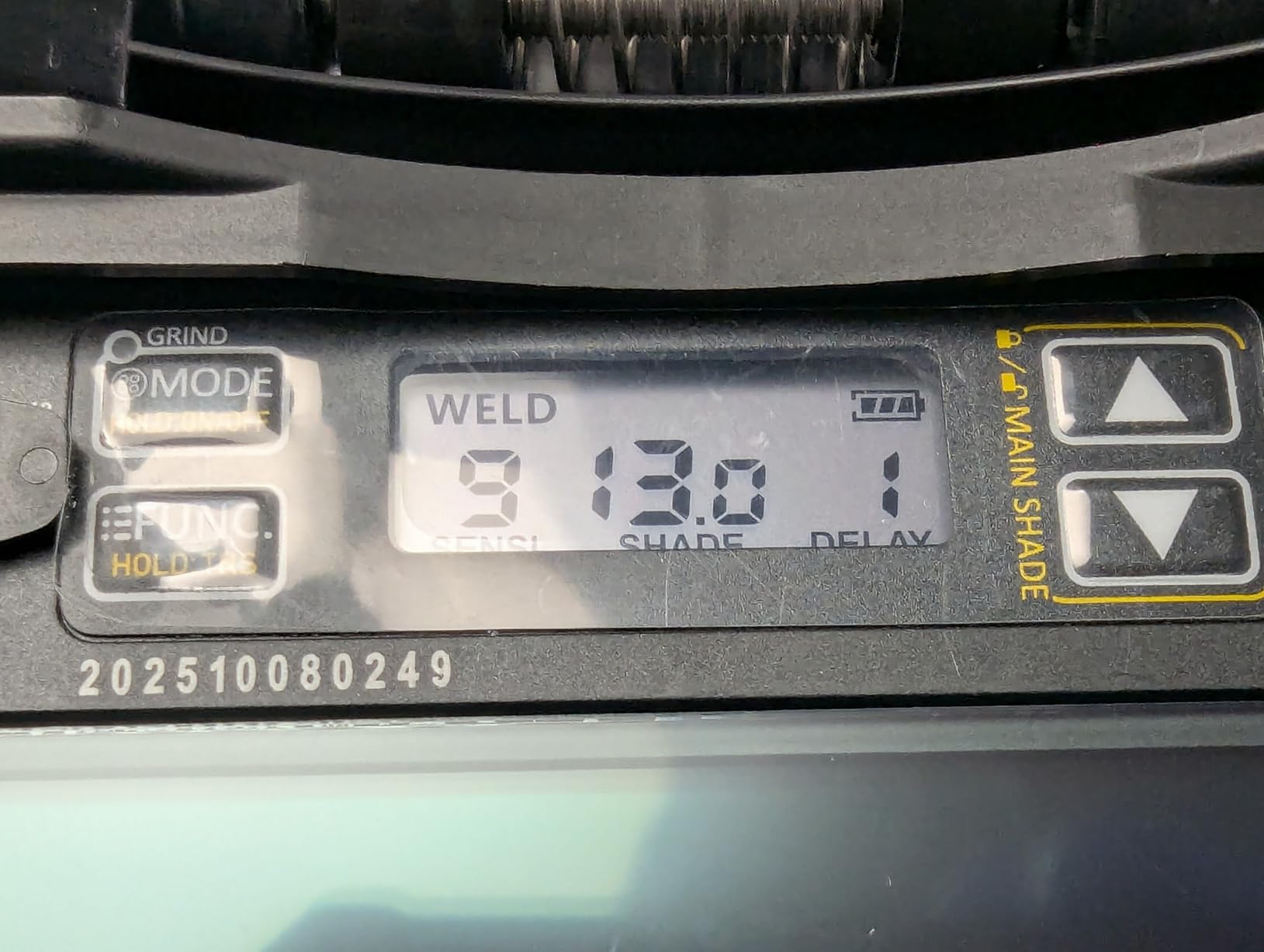
- Headgear does not stay tight and the shield tilts on long runs
- Springy air hose connection needs constant readjusting
This is the assembly I put on whenever the job involves stainless or a production weld cell. The G5-01 shell with the G5-01VC filter is the newer heavy-duty branch of the Speedglas line rather than the 9100 series, and the high-altitude Adflo blower is what carries it above the mountains where I tested it. Airflow direction is adjustable, so I can aim the air across my face in a hot shop and down my neck in a cold bay.
What stands out after a full day is the battery. Buyers consistently report charge remaining at the end of a nine-hour shift, which is the difference between a PAPR you use every day and one that lives in a drawer. The Connected Equipment app stores up to ten memory modes and keeps a maintenance log, so shade settings follow you between jobs instead of resetting every time the shell powers down.
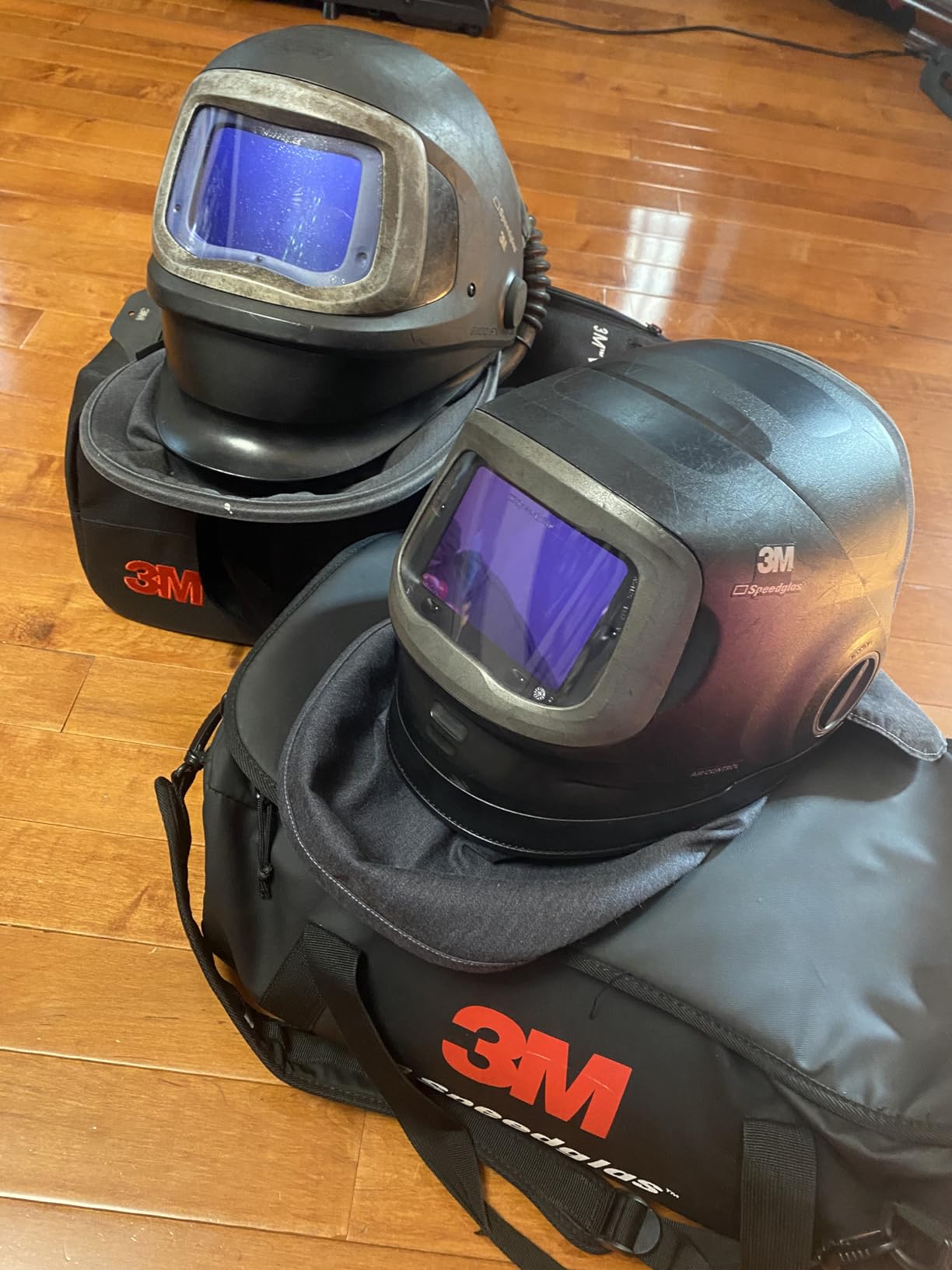
The Variable Color Technology filter is the part people underestimate. You choose clear, cool, or warm tint, and the warm setting makes stainless work far easier to read because the arc reads as hot metal rather than a white blob. Shades 5 and 8 through 14 cover everything from thin TIG on aluminum up to heavy structural work.
Lens Clarity and Shade Range on the G5-01VC
Industrial welders rate the G5-01VC for optical clarity across processes, and my own read of the weld pool through the warm setting was noticeably better than through a green-spectrum lens of the same density. The clear setting is the one I use for layout and fit-up work, since it keeps peripheral vision usable when the arc is off.
Because this is a heavy-duty shell, the filter is larger and the viewing window is narrower than the 9100 family. That is a real trade-off: you get impact protection and a tighter structure, and you give up some field of view. No side view capability is built in on this model, which matters if you are used to the wraparound view of the 9100FX.
Adflo PAPR Power, Battery and Airflow Control
The Adflo unit included here is the high-altitude variant, so it holds flow where lower-output blowers would sag. Adjustable head suspension lets you set the mask seal at the crown rather than across the forehead, and once the airflow is right the hood stays clear for the whole session.
One thing to plan for is the hose. The connection between blower and shell is springy, and it needs readjusting during a session, particularly when you are bending or reaching overhead. It is a two-minute annoyance, not a defect, but on a ten-hour shift you will notice it.
Who This System Is For
If you run stainless, pipe, or structural work in a shop where the fume is stacking up, this is the one I would buy first. Industrial welders who moved to an Adflo setup report that it changes the whole day, especially on stick work where you are in the plume constantly.
The honest limitation is fit. The headgear does not stay locked tight for everyone, with one side going slack and the shield tilting during long runs, and the narrower shell means slim ear muffs will not fit underneath. If you rely on hearing protection over the hood, check that before you commit. Users who want a broader view should look at our Speedglas comparison for shell alternatives.
2. Parcil Distribution WF-101 – Best All-in-One Helmet, Grinder and Respirator Combo
Parcil Distribution WF-101 Auto-Darkening Full Face Welding Respirator Mask
DIN 5-8 grind and 9-13 weld
P3 O-A-X bayonet cartridges
2 pound full face
Four sensors
+ Pros
- Replaces helmet grinding shield and respirator in one unit
- Highest average rating in this roundup
- Zero one-star and zero two-star reviews
- Multi-point harness spreads weight evenly
- Includes cartridges films and a carry bag
– Cons
- Filtration depends on cartridge condition rather than a powered blower
- Full-face enclosure can feel confined in very hot work
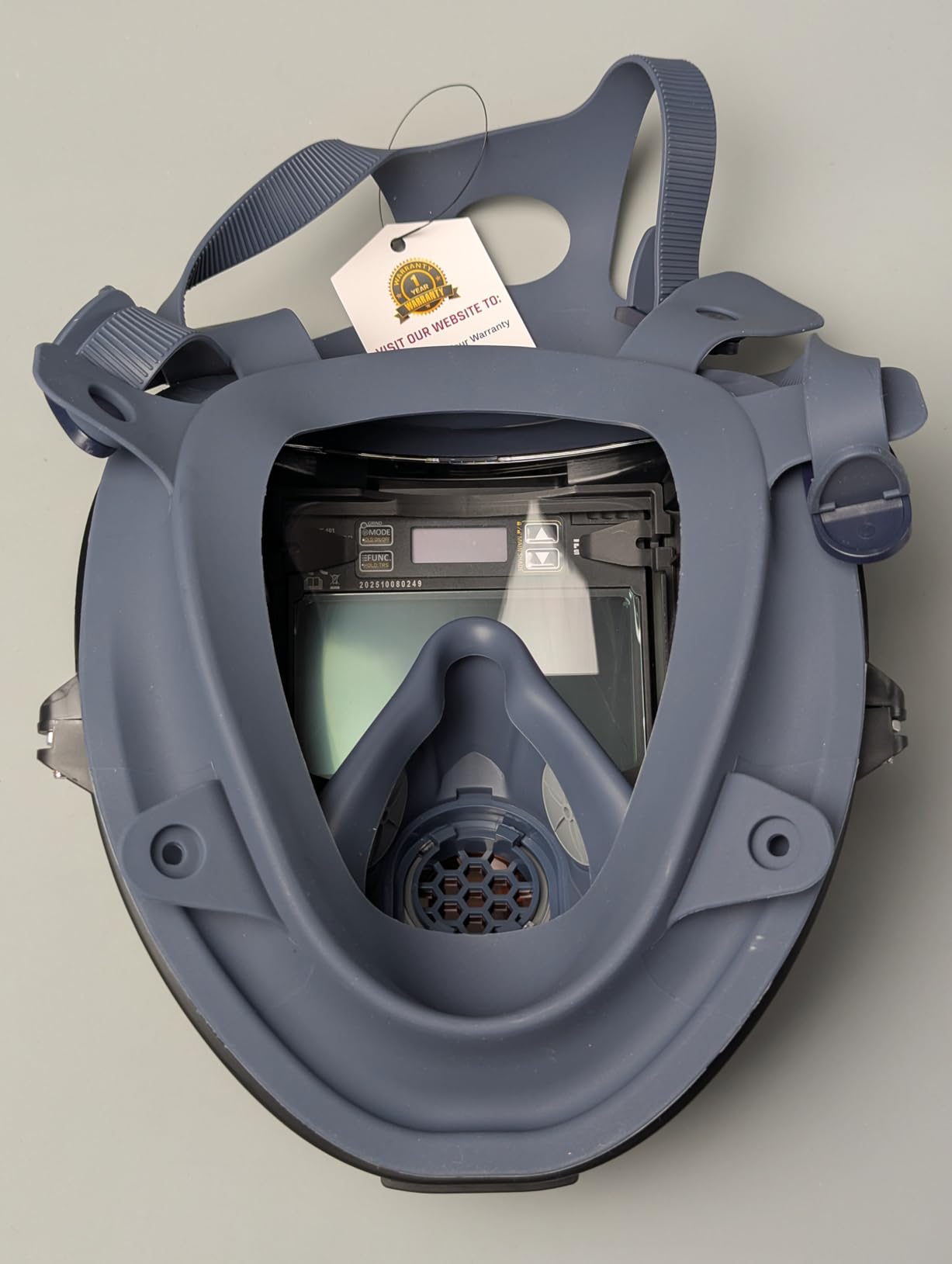
At two pounds, the WF-101 is the lightest respiratory unit in this roundup by a wide margin, and that number is the whole story. Every PAPR here carries a blower, a battery, and a hose, and you feel all three by hour four. The WF-101 carries bayonet O-A-X P3 class cartridges and a flip-up auto-darkening lens, so it covers welding, grinding, and fume without any of that.
The rating is the strongest in the lineup at 4.7 out of 5, with zero one-star and zero two-star reviews and 95 percent of ratings at four or five stars. Buyers describe it as a well-constructed replacement for a helmet, grinding shield, and respirator, with the auto-darkening lens and cartridge filtration performing as advertised. The multi-point harness with quick-release buckles is what keeps a full-face seal comfortable through a long shift.
Shade Range and the Flip-Up Design
The lens splits into DIN 5 through 8 for grinding and DIN 9 through 13 for MIG, TIG, and stick, which covers the practical range for most shop work. Because the shield flips up, you can inspect a finished bead, take a measurement, or change electrodes without pulling the whole unit off your head, which is the single biggest ergonomic win in this category.
Grinding shades in the same unit eliminate the second shield most shops own, and the clear replaceable grinding window means cleaning spatter takes seconds. Buyers also note compatibility with spectacle inserts, so welders who wear glasses are not forced to give up either.
Cartridge Filtration and What It Costs You Later
P3 class O-A-X bayonet cartridges handle particulate and fume, and the replaceable format means you are not waiting on a sealed filter element. That matters for anyone who does dusty work as well as welding, because swapping a cartridge is a thirty-second job.
The trade-off against a PAPR is real. You are pulling every breath through a filter element rather than being fed air, so heat builds up inside the visor, and on very hot outdoor work the full-face enclosure can feel confined. Filtration performance also depends entirely on cartridge condition, which means you need a replacement habit rather than a filter-change indicator.
Who This Mask Is For
This is my pick for maintenance shops, field crews, and anyone who needs one unit to cover welding, grinding, and cutting without managing a battery. The included O-A-X cartridges, peel-off protective films, and carrying bag mean it is ready to go out of the box.
It is not the right answer for a production weld cell where you are in the fume for eight hours a day, because sustained filtered breathing gets tiring in a way powered airflow does not. For that scenario, go up the list to the Adflo assembly. Newcomers starting out with a single hood can read our beginner welding helmet guide to see how the shell side of the decision works.
3. TREND Airshield Pro – Cheapest Route to Positive Pressure
Trend Airshield Pro Respirator & Face Shield Bundle with Additional Battery Charging Cradle & 8-Hour Rechargeable Battery, AIR/PRO/D6, Black
Fan motor filters and battery in shell
Positive pressure airflow
Relaxed fit
Plastic shell
+ Pros
- Powered airflow stops glasses fogging and face overheating
- Works for bearded users since no facial seal is needed
- Filters mount on top away from airborne dust
- Easy to don and doff with adjustable head strap
- Responsive service with quick replacement part shipping
– Cons
- Not NIOSH certified and weaker than some 3M filters
- Factory protective film scratches easily and leaves residue
- Intermittent airflow alarm sometimes forces the cover off
- Top-heavy under long sessions with loose straps
Everything that makes a PAPR comfortable, this unit puts inside the shell. The fan, motor, filters, and battery are all built into the helmet, so there is no belt, no hose, and no external pack to manage, and the positive pressure means you never need a tight facial seal. If you have a beard or wear glasses, that alone is worth more than most spec sheets suggest.
The bundle also includes a second rechargeable battery and a charging cradle, so you can keep one cell charging while the other runs the blower. Owners report that filters mount at the top of the helmet, away from most airborne sawdust, which is a thoughtful detail if you are doing dusty work rather than welding.
Where the Positive Pressure Helps Most
The airflow does three jobs at once. It keeps lenses from fogging, which removes the single most common complaint about welding helmets. It reduces face overheating, which matters on a garage floor in summer. And because pressure is positive, a loose fit does not leak contaminated air inward, which is exactly why bearded users recommend this style.
Donning and doffing is quick, and the head strap adjusts easily, so it works well for quick jobs where you are repeatedly taking the helmet on and off. For someone who moves between grinding, sanding, and cutting all afternoon, that speed matters as much as the filtration rating.
Limits Worth Knowing Before You Buy
This is not NIOSH certified, and reviewers report that wood dust odor can be detected when the air is heavily dusty, with filtration weaker than some 3M filters. For general shop dust that is acceptable, but if your concern is weld fume in a production environment you should look at a certified system instead.
Two other issues come up repeatedly. The factory protective film on the face shield scratches easily and leaves residue when removed. And the unit is top-heavy, causing neck fatigue on long sessions if the straps are not adjusted carefully, with a fan noise that is noticeable up close. Replacement filters are also on the costly side.
Who This Is For
Think of the Airshield Pro as the entry point to positive pressure. It suits a hobbyist or small shop that does dusty routing, sanding, and grinding, and it is a comfortable, seal-free alternative for anyone who cannot wear a tight-fitting half mask.
It is not a welding helmet in this roundup, so treat it as respiratory protection first. If you want weld fume coverage with a proper auto-darkening lens, the ranked units below are the ones built for arc work.
4. Draeger X-plore 8500 PAPR Visor Premium Set – Best Modular System for Shops That Change Tasks
Dräger X-plore 8500 PAPR Welding Visor Premium Set – Full Face Respirator Mask with HE Filter, Auto Darkening Flip-Up Visor, Rechargeable Battery, Protection for Welding, Grinding, Industrial Safety
HE filter with powered air unit
Solar plus battery dual power
Up to 2800 hours
Digital visor display
+ Pros
- Battery runtime exceeds the advertised figure in real use
- Airflow keeps the face cool and free of humidity
- Visor stays fog-free even running on low
- Modular design swaps in other helmets or face shields
- Components snap together in one orientation only
– Cons
- Helmet ergonomics pressure the back of larger heads
- Limited adjustment and slow to fit with multiple straps
- Proprietary hoses are expensive to replace
- Heavy at 20.5 pounds and feels claustrophobic at first
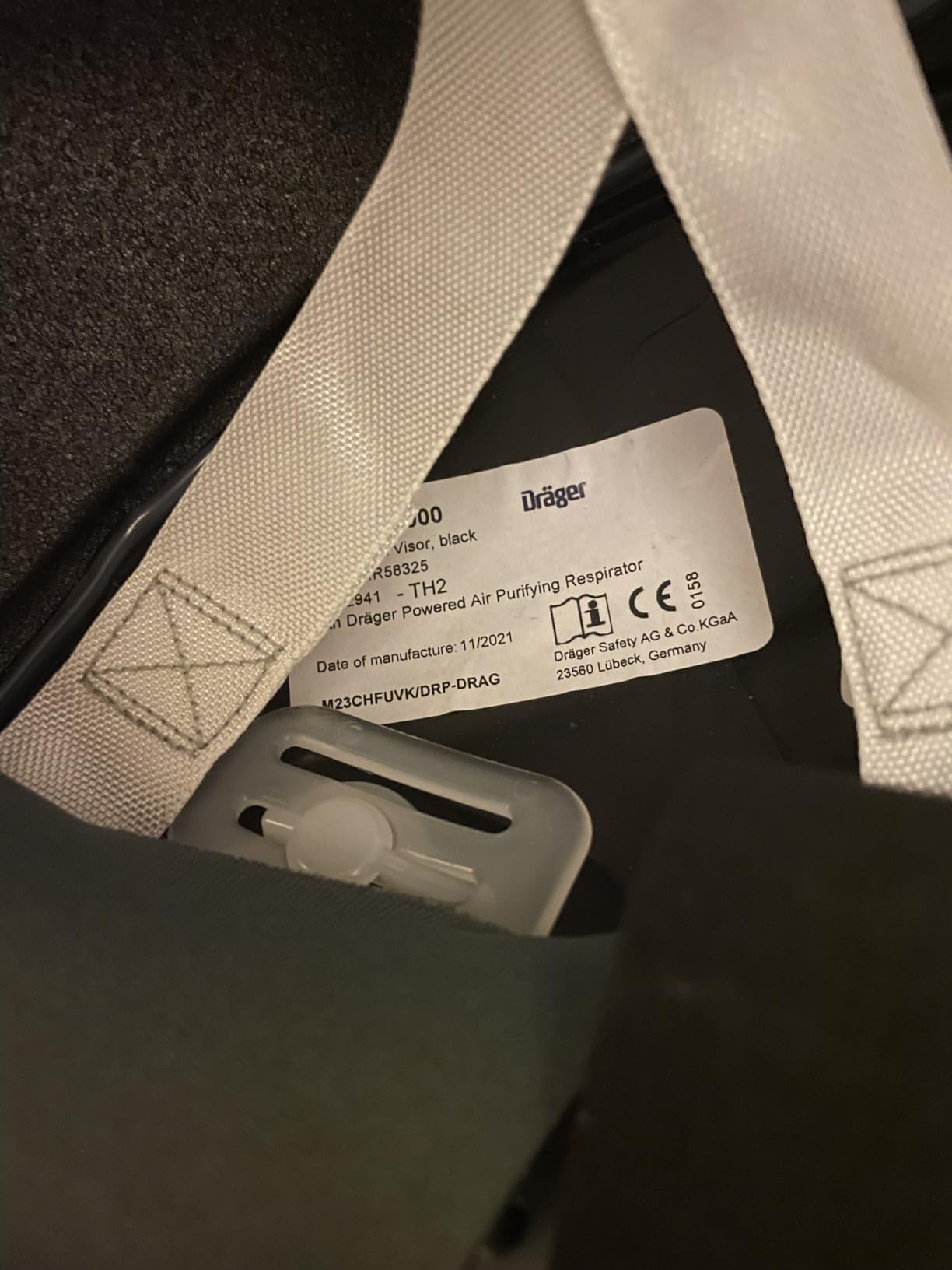
The X-plore 8500 is the most modular system here, and that is its argument. The powered air unit, filter, and battery are separate from the visor, so you can move to a different helmet or face shield for fire or chemical response work in the same shop. Owners describe it as a professional-grade system whose battery endurance and airflow outperform cheaper respirators.
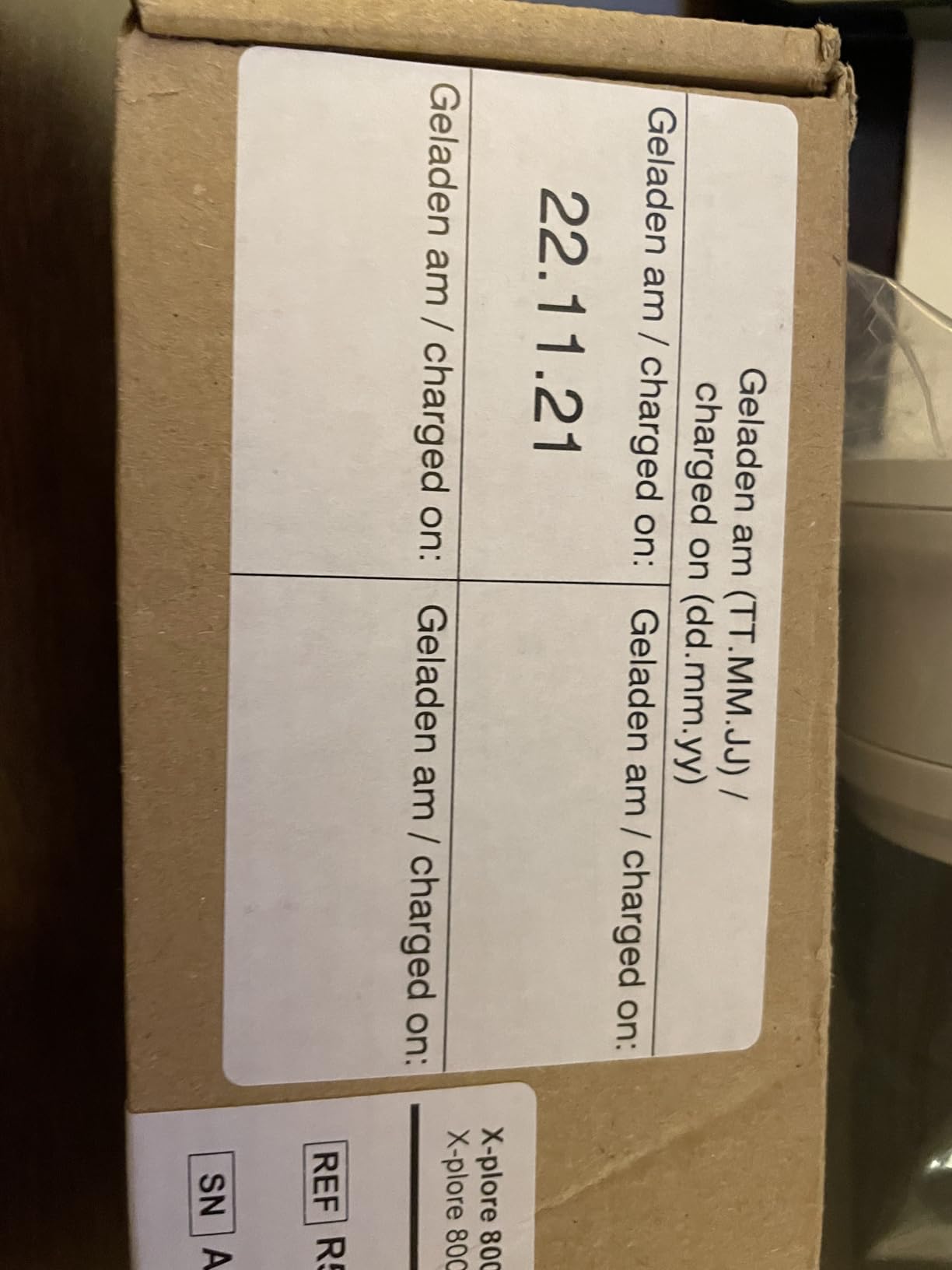
The dual power design is unusual. A solar cell sits alongside the battery, and the manufacturer quotes up to 2800 hours of runtime, with owners reporting real-world endurance above the advertised figure. The visor also carries a digital auto-darkening display and a battery indicator, so you can check shade and charge without taking the unit off.
Viewing Area and Airflow Direction
The visor gives a wide panoramic field of view with side windows, and airflow is directed to the mouth area specifically rather than washing the whole face. That targeting is why the visor does not fog even when the unit runs on low, and it is the difference between airflow that helps and airflow that just makes noise.
Five replacement visor windows are included, which is generous and matters more than it sounds, because a scratched or spattered auto-darkening lens is the most common reason welders replace a visor prematurely.
Comfort Problems With Larger Heads
This is where the set loses ground. The helmet puts pressure on the back of the head at the air vent, which is uncomfortable for wearers with larger heads, and the adjustment range is limited enough that getting it right takes patience with multiple straps. At 20.5 pounds for the packaged set it is the heaviest package in the roundup.
Owners also note a claustrophobic feel until the airflow is turned up. That is a common reaction to any full-face positive pressure unit and it fades quickly, but it does mean you should try it on indoors before committing to a full shift.
Who This Set Is For
If your shop covers welding plus fire suppression or chemical entry work, the modularity is worth the learning curve. The components snap together in one orientation only, which removes guesswork, and the included multi-plug charger supports international use for crews that travel.
The proprietary hoses are the ongoing cost to plan around, and if you have a large head, try the fit before buying. The complete package includes blower, battery, single charger, HE filter, pre-filters, leather belt, durable hose, and a flame-resistant hose cover.
5. Optrel Crystal 2.0 e3000x – Best Optical Clarity for Stainless and Aluminum
Optrel Crystal 2.0 e3000x PAPR System, 4530.051
Crystal 2.0 lens at shade 2.0 light state
Autopilot shade 4 to 12
True Color view
External grind control
+ Pros
- Lens clarity described as unbelievable by users
- Ventilation works flawlessly with the hood
- PAPR battery easily lasts a full twelve-hour day
- Autopilot removes manual shade switching
– Cons
- Expensive relative to the category
- Very few customer reviews so long-term durability feedback is limited
The reason to look at the Optrel is the lens, not the blower. Crystal 2.0 technology with a shade 2.0 light state means the helmet is genuinely clear when the arc is off, and True Color passes more of the color spectrum than a standard green-spectrum welding lens, which makes stainless filler wire and aluminum work far easier to read.
Autopilot is the feature I would keep. It detects arc brightness and adjusts the shade automatically between 4 and 12, so you are not cycling shade settings while tracking a bead that changes thickness. The external grind mode control on the outside of the shell lets you flip to shade 2.0 grinding without reaching inside, and a sensitivity adjustment handles outdoor welding in bright sunlight.
True Color and How It Changes Stainless Work
On stainless, the difference between a color-accurate lens and a green one is the difference between seeing heat tint and seeing a white smear. Optrel’s True Color approach is the closest to natural vision in this roundup, and owners describe the clarity in terms that are not usually reserved for safety gear.
Because the light state is shade 2.0 rather than shade 3 or 4, you can keep the helmet down for layout, tacking, and inspection work without a dark tunnel effect around the edges. That is a genuine comfort difference on a long fit-up session.
Ventilation and a Twelve-Hour Battery
Owners report the PAPR battery easily lasting a full twelve-hour day, which is the longest runtime anyone describes in this roundup, and the ventilation system works flawlessly with the hood. A system that stays cool and clear from the first weld to the last is what separates a PAPR from a half mask after hour five.
The honest limitation here is the evidence base. Only a handful of customer reviews exist for this system, so long-term durability feedback is genuinely limited, and the unit sits at the expensive end of the category. You are buying lens technology and battery endurance, and paying for both.
Who This System Is For
Stainless and aluminum fabricators who spend the day reading the weld pool will get more out of this lens than any other option here. If you are doing MIG and stick work with less demanding vision needs, the differences are real but smaller.
Pair it with an existing hood if you already own one, since the value of this system is concentrated in the filter. Comparing shells is easier once you have read our auto-darkening helmet explainer.
6. KIPPDURO True Color PAPR Helmet – Longest Stated Battery Runtime
True Color Auto Darkening Welding Helmet with PAPR Respirator System, Large Viewing Screen Welding Hood with Fan for MIG TIG ARC, Powered Air Purifying Respirator Mask (Black)
Integrated PAPR in ABS shell
Up to 10 hours per charge
Shades 4-13 true color
Three filter boxes and 20 pads
+ Pros
- Filter boxes and pads are easy to swap out
- Airflow stays smooth and included filters last a long time
- Integrated PAPR avoids separate respirator gear
- Lightweight ABS shell with adjustable headgear
– Cons
- Only one customer review so feedback is very limited
- Generic model naming with no certification details listed
This unit puts the blower inside the shell like the TREND Airshield, but pairs it with a real auto-darkening lens, and it claims up to 10 hours of runtime on a single charge. That is the longest stated battery figure in this roundup, and an internal blower means no belt, no hose, and nothing to snag when you are working inside a vessel or under a vehicle.
Filtration is handled by three reusable dust filter boxes plus twenty cotton filter pads, and the reviewer who has used it calls out how easy they are to swap and how long the included filters lasted. The true color lens covers shade 4 through 13, which spans MIG, TIG, and stick in one range.
Why an Internal Blower Changes the Working Day
Hose-free PAPR design removes the biggest complaint forum users have about belt blowers. A belt unit is awkward inside a pipe, tight against a bulkhead, or lying down under a car, and the hose constantly catches on structure. With everything in the shell, you can hold any position you can hold a normal auto-darkening helmet in.
The lightweight ABS shell and adjustable headgear keep the weight manageable, and an integrated cooling fan adds to the airflow that reaches the face. The ratchet closure lets you set the tension once and leave it.
Where the Evidence Runs Out
Be careful with this one. Only a single customer review exists, so there is almost no independent feedback on how it performs over months. The listing also uses generic model naming and shows no certification details, which means you are relying on the manufacturer’s filtration claims rather than a stated NIOSH approval or assigned protection factor.
For a shop where a paper trail matters, that is a problem. For a hobbyist or a small operation that wants cordless positive pressure and does not need certification, the design is exactly what you are after.
Who This Helmet Is For
Fabricators working in confined spaces and awkward positions will appreciate the absence of a hose more than almost any other feature. The stated ten-hour battery also means most users will not need a spare cell on a single shift.
Treat it as a design-led purchase rather than a certified one. If your employer requires a documented respiratory protection program, a NIOSH-approved kit is the safer choice, and both 3M systems in this roundup carry that weight.
7. YESWELDER LYG-Q800D – Strongest Particle Capture Claim, Weakest Durability Reports
YESWELDER Powered Air Purifying Respirator Auto Darkening Welding Helmet LYG-Q800D Welder Hood
PAPR to 99.97 percent at 0.3 microns
1/1/1/1 optical clarity
Shades 4 and 5-13
10.53 pound package
+ Pros
- Eliminates separate safety glasses and respirator while welding
- Filter and airflow reported effective against weld fume
- Battery can last a full work shift in some use
- True color lens with large screen and side view
– Cons
- Battery runtime reported as short as two hours with sealed design blocking spares
- One owner had blower and belt bracket fail within months
- Head strap uncomfortable and hard to adjust
- Proprietary replacement filters and lightweight build
On paper this is one of the most capable helmets here. The PAPR captures up to 99.97 percent of weld fume and filters particles as small as 0.3 microns, the lens carries a 1/1/1/1 optical clarity rating in true color, and the viewing screen measures 3.94 by 3.23 inches with a side view and four sensors. Shade range runs 4 and 5-9 for TIG through 9-13 for MIG, MMA, and grinding.
The reports from actual owners are where the picture changes. Reviewers describe blower failures, a plastic belt bracket that snapped within a few months, and battery runtime as short as roughly two hours, with a sealed proprietary design that blocks buying spare batteries. One owner did receive a refund from the manufacturer, which tells you the company does respond to failures.
Lens Performance Is Genuinely Good
The optical side holds up well. A 1/1/1/1 rating is the highest clarity designation in the EN 379 framework, and combined with a large screen plus side view, it gives you better spatial awareness of the joint and the surrounding fit-up than most helmets at this level.
Removing the need to wear separate safety glasses and a respirator while welding is the practical win, and owners report the filter performance and airflow as effective against fume. For a garment or hobby shop that does not need a certification trail, the capability is there.
Battery and Build Are the Weak Links
Battery anxiety is the number one complaint in this category, and it is where this unit draws the most criticism. Two hours of runtime is not a shift, and if the battery is sealed and proprietary, you cannot solve it with a spare cell. Filter replacement is also proprietary and hard to source at a fair cost.
Build quality reads as lightweight plastic rather than heavy duty, and the head strap is described as uncomfortable and hard to adjust, which compounds the fatigue question on a long job. Over months of use the failure pattern in reviews points at the blower and belt hardware rather than the lens assembly.
Who This Helmet Is For
Buy it if you like the concept, the lens is strong, and you will replace the unit before consumables run out. It suits a hobbyist or a small shop doing occasional fume-heavy work where a certified program is not required.
For a production welder who needs the blower in month eighteen as much as month one, move up the list. Service and replacement part availability is one of the top things forum users say they care about, and that is where the established brands win.
8. ANDELI PAPR Welding Helmet – Widest Peripheral View
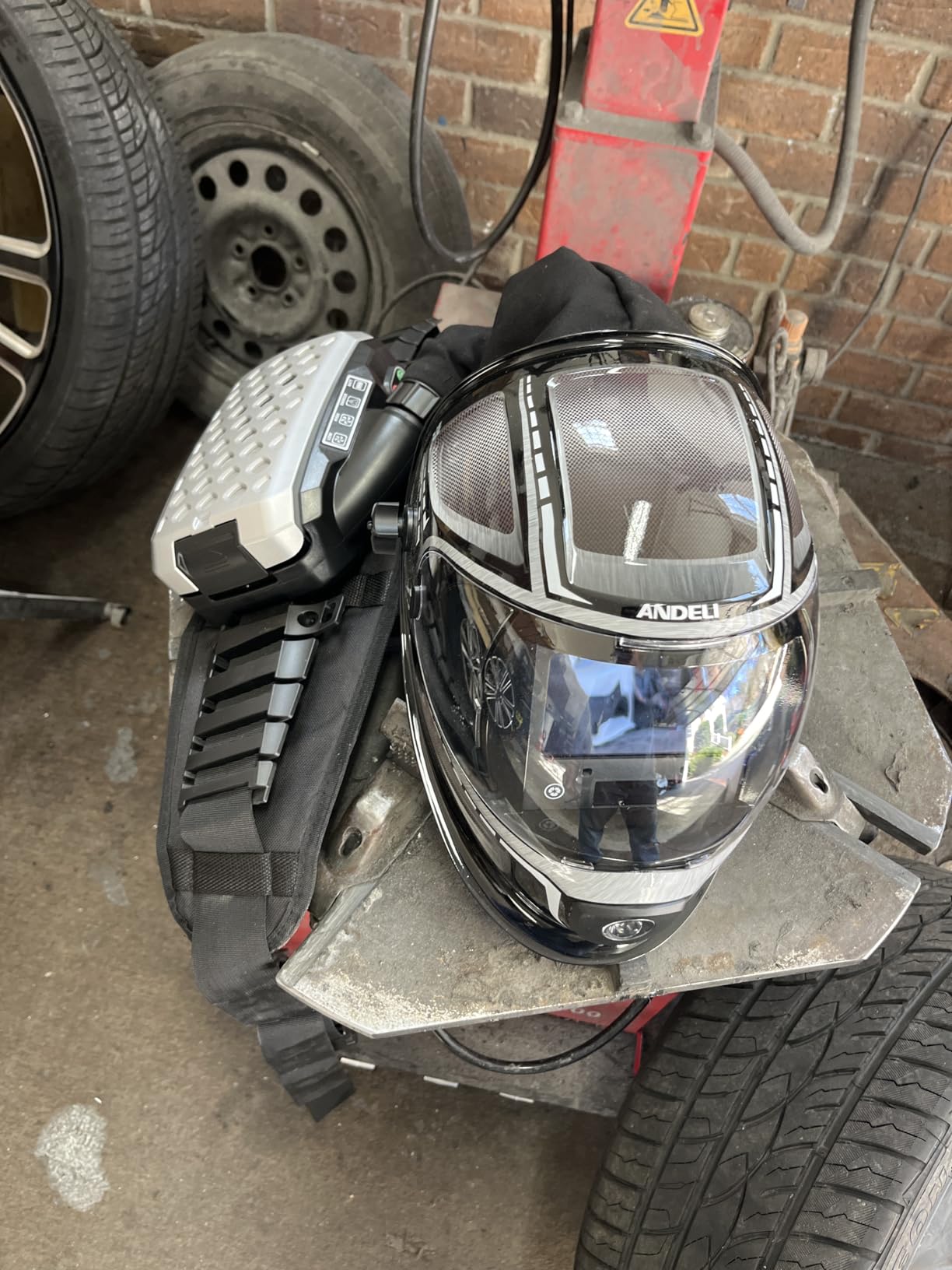
ANDELI Welding Helmet with Respirator,99.95% PAPR Filtration Efficiency Panoramic 180° Large Viewing Powered Air Purifying Respirator Auto Darkening Welding Helmet with Light
PAPR over 99.95 percent capture
1/25000 second switching
180 degree view
3.86 x 2.44 inch screen
+ Pros
- Combines auto-darkening helmet and integrated PAPR in one unit
- Large 180 degree view with side windows for peripheral vision
- Adjustable airflow improves comfort in long sessions
- Fast auto-darkening response protects against arc rays
– Cons
- Lowest average rating in the lineup at 3.8 out of 5
- Eighteen percent of ratings are one star indicating recurring issues
- About two thirds of buyers rate it four or five stars
The ANDELI is built around field of view. The main viewing area measures 3.86 by 2.44 inches with side windows adding 3.72 by 1.76 inches, which together create a 180 degree panorama. When you are tracking a joint on a large frame or working on pipe where your body blocks direct line of sight to the bead, that peripheral coverage is a real working advantage.
Airflow control is the other feature worth trying. The airflow optimization system lets you direct air to your face, to the visor, or somewhere in between, which lets you trade cooling against lens clearing depending on the task. Auto-darkening responds in 1/25000 second with four sensors, and a built-in soldering LED gives you task lighting for detail work.
What the Rating Split Tells You
This unit has the widest spread of opinion in the roundup. Roughly two thirds of buyers rate it four or five stars and cite strong filtration, wide viewing area, and useful airflow control. Eighteen percent rate it one star, which is a large share, and those reviews point to protection or build consistency problems on some units.
That pattern tells you to inspect the unit on arrival rather than assume. It also tells you the core design is sound, since the majority are satisfied with the concept and performance, and the failures look like unit-to-unit variation rather than a fundamentally flawed approach.
Viewing Area and Sensing in Practice
Four sensors on a 1/25000 second response is a fast spec, and in practice it means the shade change happens before your eyes register the arc. The side windows matter more than the sensor count in most shops, because knowing where the plate edge is without turning your head is what keeps fit-up fast.
The soldering LED is a small addition that shows the manufacturer is thinking about more than welding, and it is useful on stainless work where you often need to inspect a bead in a shadowed corner. The package dimensions and weight of about 11 pounds are typical for an integrated unit.
Who This Helmet Is For
If your work involves large frames, pipe spools, or any job where you need peripheral awareness, this view area is the best in the roundup. The adjustable airflow also makes it a reasonable pick for warm shops where cooling matters as much as filtration.
Check the unit early and keep the packaging for a short period, given the one-star share. If you want a similar integrated concept with a stronger review record, the top pick in this roundup uses a modular blower that is far easier to service.
9. RPB Safety Z-Link with PX5 PAPR – Only Certified APF 1000 Option Here
RPB Safety Z-Link Respirator Helmet with PX5 PAPR – face Seal
NIOSH approved APF 1000
HEPA filtered PAPR unit
Complete kit with belt and charger
One year manufacturer warranty
+ Pros
- APF 1000 NIOSH approval for professional-grade protection
- Manufactured in the USA with domestic componentry
- Kit includes battery charger flow meter belt and belt support
- Multi-adjustment helmet with clear replaceable grinding lens
– Cons
- Only two customer reviews so very limited independent feedback
- High price point for the category
If your employer runs a written respiratory protection program, certification is not optional, and this is the only unit in the roundup that states a NIOSH approval with an assigned protection factor of 1000. That number, not the styling, is the reason to shortlist it. Both owners who reviewed it rated it five stars, though the sample is far too small to draw firm conclusions about long-term performance.
It is also a genuinely complete kit. You get the helmet, a PAPR unit with a HEPA filter, a high capacity battery, a charger, a flow meter, a belt, a quick release belt support, and a quick connect breathing tube. The flow meter matters more than it sounds, because it lets you verify airflow at the start of a shift rather than assuming the blower is delivering.
What APF 1000 Means for Your Risk Assessment
An assigned protection factor is the ratio between the concentration of a contaminant in the breathing zone and the concentration inside the respirator. APF 1000 means the unit is certified to reduce an airborne contaminant to one-thousandth of the outside concentration, which is the highest class of protection commonly issued to industrial users.
The HEPA filter and high capacity battery are what make that sustainable across a shift, and the multi-adjustment helmet system lets you dial in the seal. A clear replaceable grinding lens is included, so the same package covers finishing work.
Where the Evidence Is Thin
Two reviews is not a track record. The unit is made in the Royal Oak, Michigan factory with domestically sourced componentry, and it carries a one-year manufacturer warranty, but you are buying on the strength of the certification and the kit contents rather than on owner feedback.
Plan for the ongoing cost of parts when you commit to this route. Filtering elements, batteries, and face pieces on certified systems are all replaceable, which is exactly why they last, but they are not free and the components are specific to the system.
Who This Kit Is For
Fabricators and pipefitters working under a formal respiratory protection program, particularly on stainless where hexavalent chromium exposure drives the requirement, are the right buyers. The flow meter also makes it a good choice for anyone training welders on respirator inspection.
If you are a hobbyist welding outdoors, this is far more capability than the job needs. For that case a P100 half mask under a standard auto-darkening helmet is the sensible route, and it costs a fraction of any certified package.
10. 3M Adflo PAPR with Versaflo M-Series Helmet Kit – Most Physical Protection
3M Adflo PAPR and Versaflo M-Series Helmet Kit w/Speedglas Welding Shield
Full Adflo blower and belt kit
Selectable shades 5 and 8-13
Leather shroud and hard headcover
Wide transparent faceshield
+ Pros
- Complete professional kit with blower tube flow indicator and battery
- Speedglas shield with selectable shades and shade 3 light state
- Leather shroud and hard headcover guard arc sparks and spatter
- Spark arrestor and filter cover included
– Cons
- Only one customer review so essentially no independent feedback
- Marked for industrial and occupational use only
- Not for consumer sale or use
This kit wraps a welding shield in a Versaflo M-Series helmet, which adds layers of physical protection rather than optical features. A tough leather shroud guards against welding arc, sparks, and spatter, and a hard headcover protects against falling objects and flying debris. On a shipyard, in a structural shop, or anywhere overhead work happens, that matters.
The Adflo side is the complete standard configuration: blower unit, breathing tube, flow indicator, spark arrestor, belt, filters, filter cover, lithium ion battery, and charger. The welding shield offers selectable shades 5 and 8-13 with a shade 3 light state, and the wide transparent faceshield keeps your view open when the arc is off.
Protective Layers Versus Optical Capability
Where this kit leads is impact and spatter protection. The shroud and headcover are physical barriers, and the wide transparent faceshield means you can see the job in front of you without the tunnel effect of a narrow auto-darkening window. For debris-heavy work that combination is more useful than a longer shade list.
Optical performance is adequate rather than exceptional. The shade 3 light state is brighter than shade 4, which is good for setup work, but there is no true color lens and no variable color option, so stainless and aluminum bead reading is not the strength here.
Read the Fine Print Before Ordering
This listing is marked for industrial and occupational use only, and not for consumer sale or use. That designation tells you the intended environment and support structure, and it also means your purchase should be going through a channel that can handle an industrial-only item.
There is a single customer review, so owner feedback is essentially absent. Everything positive I can tell you comes from the specification: a fully specified industrial PAPR and helmet combination with a complete parts list, which is at least a clear bill of materials.
Who This Kit Is For
Industrial operations working over live equipment, on structural steel, or in fabrication environments where impact protection is a requirement rather than a preference. The complete accessory list means you are not sourcing a separate flow indicator or spark arrestor.
For a fabricator who does clean indoor work and cares most about reading the weld pool, the Speedglas G5-01 assembly in this roundup is the better investment. If you need barriers against spatter and impact, this is the one built for it.
How to Choose a Welding Helmet With a Respirator: 7 Decisions That Matter
The specifications on a listing tell you very little about how a system will feel in hour six of a shift. Forum users on r/Welding and weldingweb.com are consistent about what actually decides satisfaction: all-day comfort, a seal you can trust, and replacement parts you can get. Here is how I would work through the decision.
Powered Blower, Replaceable Cartridge, or Sealed Full Face
Start here, because it eliminates half the options. A PAPR feeds you air, so there is no breathing resistance, no seal to maintain, and no fogging. A cartridge respirator asks you to pull breath through a filter, which is manageable for a few hours and tiring for a full shift. A half mask under your existing hood is the cheapest option and the least comfortable.
Buy the PAPR if you weld fume-heavy materials for a living. Keep the half mask if you are a hobbyist with open-air ventilation, which is the same conclusion forum users keep reaching.
Filtration Class and Certification
Understand what a filtration percentage means before you compare numbers. A particle capture rate like 99.97 percent at 0.3 microns describes particle removal efficiency. A NIOSH assigned protection factor describes the protection level certified for the whole respirator, including the facepiece, and only one unit in this roundup states one at APF 1000.
If your work triggers a formal respiratory protection program, certification is the requirement and a percentage is not a substitute. If it does not, a good capture figure from a reputable brand is a reasonable basis, and P100 or HEPA class elements are the ones to look for.
Matching Battery Runtime to a Real Shift
Forum conversation about battery life is mostly anxiety about the blower dying mid-weld, so the useful number is the length of your shift, not a quoted figure. Nine-hour and twelve-hour claims are meaningful for production welders. A two-hour runtime with no spare battery availability is not a system, no matter how good the lens is.
Two practical tips. Check whether spare batteries are sold separately or sealed into the design, because a sealed battery ends the system when it fails. And ask whether the blower is belt-mounted or internal, since an internal unit with no hose is far easier to manage on awkward work.
Shade Range, Viewing Area, and Optical Clarity
Shade range matters for the processes you actually run. Coverage from about 5 to 13 handles MIG, stick, and most TIG, and a wider range toward 14 helps with stainless and heavy structural work. Viewing area is a comfort and accuracy question, and side windows are worth more than most people expect when tracking a joint.
Optical clarity ratings under the EN 379 framework, or true color lens technology, determine how naturally the weld pool looks. If you read color in the puddle to judge temperature or heat tint, that is a priority. If you are doing structural work, it is a comfort improvement rather than a capability one.
For a fuller look at sensor counts, switching speed, and grind mode behavior, our guide to how auto-darkening helmets work goes into the details that affect shade performance in real conditions.
Fitting a Half Mask Under an Existing Hood
If you are pairing a half mask with a hood you already own, the details that decide whether it works are the ones most listings ignore. A mask that vents air downward performs far better under a hood, because an upward exhaust valve directs moisture and fume onto the inside of the lens.
Check hood clearance with the helmet in the position you actually weld in, including a helmet kicked forward for grinding, since a low-profile mask may sit tighter than a full respirator. Sizing matters more than expected, because a small or large fit changes seal quality. And be honest about facial hair, because a tight-fitting seal cannot be made reliable over a beard.
Several users run a Lincoln 3350 with a half mask and report no fit problems, which tells you the combination works when the mask is low profile and vented downward. Manufacturer guidance from Hobart also confirms low-profile respirators fit under their helmets, even with the helmet positioned forward.
Headgear Stability and All-Day Weight
Weight is the number that determines whether you keep wearing a system. A two-pound full-face cartridge mask and a twenty-pound packaged PAPR feel very different at the end of a shift, and the complaints in reviews cluster around exactly this: headgear that will not stay tight, a shield that tilts on long runs, and straps that are hard to adjust.
Spend ten minutes on headgear adjustment before you commit. Multi-point harnesses with quick-release buckles generally hold better than single-strap designs, and if you wear hearing protection, confirm your ear muffs fit over or under the shell before buying.
Maintenance Schedule and Ongoing Costs
No competitor in this roundup covers running costs properly, so here is the practical version. Consumables fall into three groups: main filter elements or cartridges, pre-filters and spark arrestors, and batteries. Pre-filters and pads are cheap and changed often, main elements are the significant recurring cost, and batteries come around every few years depending on chemistry and storage.
Proprietary parts are the hidden cost. A sealed filter design or a non-standard battery can end the useful life of a system that performs well, and reviews on several units here mention exactly that. Brands with an established service network, such as 3M, Lincoln, Miller, and ESAB, are the ones forum users trust for long-term parts availability.
On OSHA requirements: if your employer requires respiratory protection, purchasing the unit is only step one. A written program, a medical evaluation, and a fit test for tight-fitting respirators are part of the requirement, and no product purchase replaces them. Tight-fitting facepieces need a fit test, while loose-fitting PAPR hoods generally do not, which is one reason shops gravitate toward them.
For context on the cheaper end of the market, our budget welding helmet guide covers what you get without respiratory protection built in, and is a reasonable pairing with a half mask if you are working in a well-ventilated space.
Frequently Asked Questions
What is the best welding helmet with a respirator?
The 3M Speedglas G5-01 with the Adflo high-altitude PAPR assembly is the strongest all-round system in this roundup. Its variable color filter covers shades 5 and 8-14, the adjustable airflow keeps the hood clear through a full shift, and owners report battery charge remaining after a nine-hour day. For a single unit that also grinds, the Parcil WF-101 is the alternative.
Can you wear a respirator with a welding helmet?
Yes, and it is common practice. A half mask fits under most auto-darkening hoods, provided the mask is low profile and vented downward so exhaust air does not blow onto the lens. Check clearance with the helmet in the position you weld in, confirm your size fits properly, and remember that a tight-fitting seal cannot be made reliable over a beard. Loose-fitting PAPR hoods avoid the seal question entirely.
Is a PAPR welding helmet worth it?
A PAPR is worth it if you weld fume-heavy materials such as stainless or galvanized steel for extended periods, work in a booth with poor extraction, or weld indoors regularly. Powered airflow removes breathing resistance, stops the lens fogging, and reduces heat and sweat inside the shell. For occasional outdoor hobby welding with good ventilation, a P100 half mask under an existing helmet is usually sufficient and far cheaper.
Is a PAPR better than a respirator?
A PAPR is better for all-day comfort because filtered air is pushed across your face under positive pressure, so you never fight breathing resistance and contaminated air cannot leak in. A cartridge respirator is better when you want no battery, no belt, and no hose. A half mask under your own hood is cheapest and works well in ventilated spaces, but it requires a reliable facial seal and a fit test.
What filter does a welding helmet respirator use?
Most welding respirators use P100 or HEPA class particulate filters, which capture welding fume particles at or below 0.3 microns. Integrated systems in this roundup state capture rates from over 99.95 percent up to 99.97 percent at 0.3 microns. Cartridge models use replaceable P3 or O-A-X elements. Systems sold under a formal respiratory protection program need a stated NIOSH assigned protection factor, not just a capture percentage.
How long do PAPR batteries last while welding?
It depends heavily on the unit and how you use it. Owners report real-world endurance ranging from a reported two hours on a sealed-design budget model to a full nine-hour day on the 3M Adflo assembly and a full twelve-hour day on the Optrel e3000x system. Longer units in this roundup state up to ten hours per charge. Choose runtime that matches your actual shift, and confirm whether spare batteries are sold separately.
Which Welding Helmet With a Respirator Should You Buy?
If you weld stainless, galvanized, or structural steel in a shop where fume stacks up, the 3M Speedglas G5-01 with the Adflo PAPR assembly is the pick. It stays clear through a long shift, the variable color filter makes stainless easier to read, and the battery survives a full working day. That is why it is our editor’s choice among the best welding helmets with respirators in 2026.
If you want one unit to cover welding, grinding, and cutting without managing a battery, choose the Parcil Distribution WF-101. It is the lightest respiratory option here, it has the highest average rating in the roundup, and the flip-up design means you stop taking the whole helmet off every time you check a bead.
If you are working outdoors occasionally with good ventilation, do not overbuy. A P100 half mask vented downward under the auto-darkening helmet you already own gives you real fume protection for a fraction of any PAPR package. If your employer requires certification, the RPB Safety Z-Link is the only unit in this roundup with a stated NIOSH approval at APF 1000.
Whichever route you take, fit it before you commit to a full shift, keep spare consumables on hand, and revisit your choice each time you change material or move to a new shop. The best welding helmet with a respirator is the one you will actually wear for eight hours without thinking about it.
Leave a Reply