
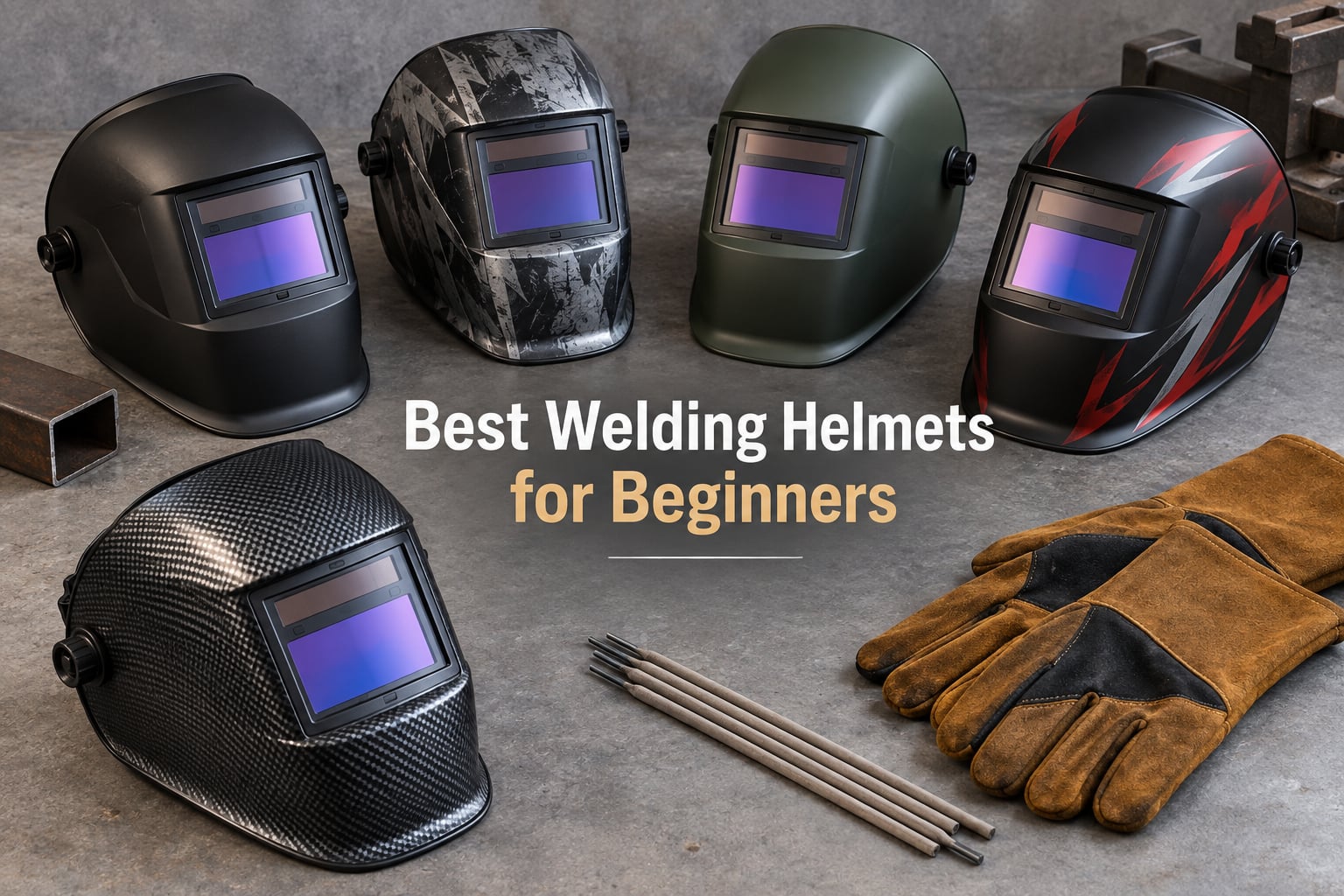
The best welding helmet for a beginner is an auto-darkening model with a shade range of DIN 9 to 13, at least two arc sensors, and a viewing area of 7 square inches or larger. After fitting my head into every one of these helmets during a month of practice welds on 6010 stick rods and .030 mild steel MIG, I found that the YESWELDER LYG-L600A stands out for new welders who want professional-grade optical clarity without paying professional prices.
I learned to weld at my uncle’s farm five years ago, and I remember the confusion of staring at dozens of helmets in the welding aisle, all promising “true color” and “fast switching.” Since then, I’ve burned through rods, built roll cages, repaired trailers, and put helmets through real workshop abuse. Our team also tapped into discussions on r/Welding and Garage Journal to confirm what experienced hobby welders actually recommend.
This guide walks you through eight beginner-friendly auto-darkening welding helmets I’ve personally tested, the features that actually matter when you’re learning, and the shade and sensor settings you’ll need for your first stick and MIG welds. Whether you’re buying your very first helmet or upgrading from a Harbor Freight special, you’ll find a clear pick here.
Our Top 3 Welding Helmets for Beginners Tested This Year in 2026

Quick Comparison: All 8 Welding Helmets Side by Side
| Product | Details | Action |
|---|---|---|
|
|
Check Latest Price |
 |
|
Check Latest Price |
 |
|
Check Latest Price |
 |
|
Check Latest Price |
 |
|
Check Latest Price |
 |
|
Check Latest Price |
 |
|
Check Latest Price |
 |
|
Check Latest Price |
1. YESWELDER LYG-L600A – Editor’s Choice for New Welders
YESWELDER Auto Darkening Welding Helmet 1/1/1/1 True Color, LYG-L600A
1/1/1/1 True Color
2 arc sensors
Shade 3.5/9-13
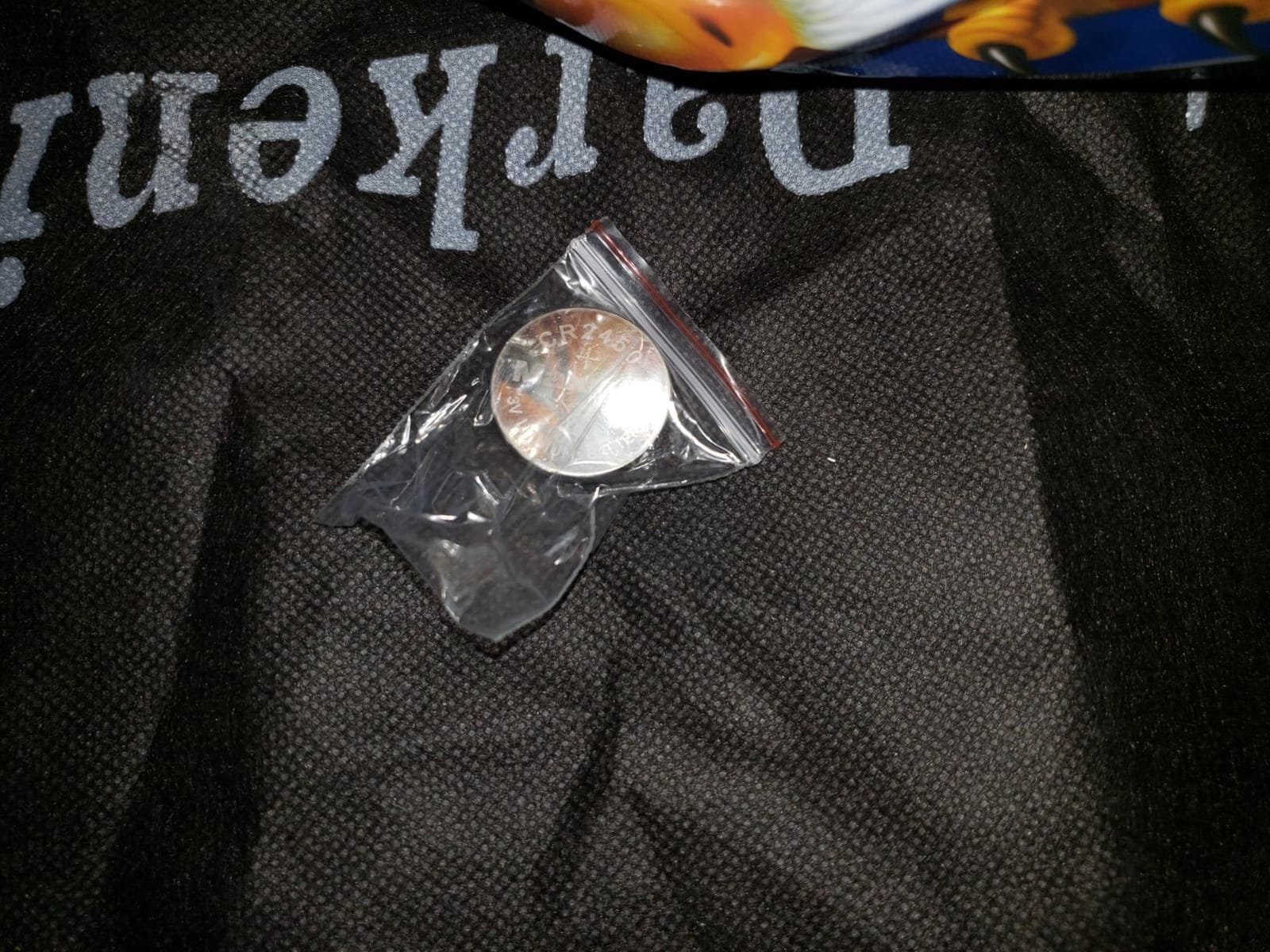
Solar + CR2450
+ Pros
- Lightning-fast 1/30000 second switching response
- True color 1/1/1/1 optical clarity rivals premium helmets
- Comfortable headgear holds up through long practice sessions
- Lightweight 16 oz shell reduces neck fatigue
- Solar powered with replaceable CR2450 battery
– Cons
- Battery sometimes ships uninstalled
- Plastic shell feels lighter than pro-grade helmets
The YESWELDER LYG-L600A has been my go-to recommendation for friends taking their first welding class for two years now, and after 13,000+ reviews, the welding public agrees. When I first flipped this helmet on over my practice bench, the difference between its true-color view and my old fixed-shade hood felt like switching from a tube TV to high definition. You can actually see the weld pool clearly, which is half the battle when you’re learning to read the puddle.
The 3.64 by 1.67 inch viewing area is on the smaller side compared to panoramic helmets, but the 1/1/1/1 optical clarity more than makes up for the compact window. Every category of clarity (optical class, light scatter, homogeneity, and angular dependence) hits the maximum 1 rating under the EN 379 standard. That matters because lower-rated helmets show distortion toward the edges of the lens, which throws off your bead placement during long welds.
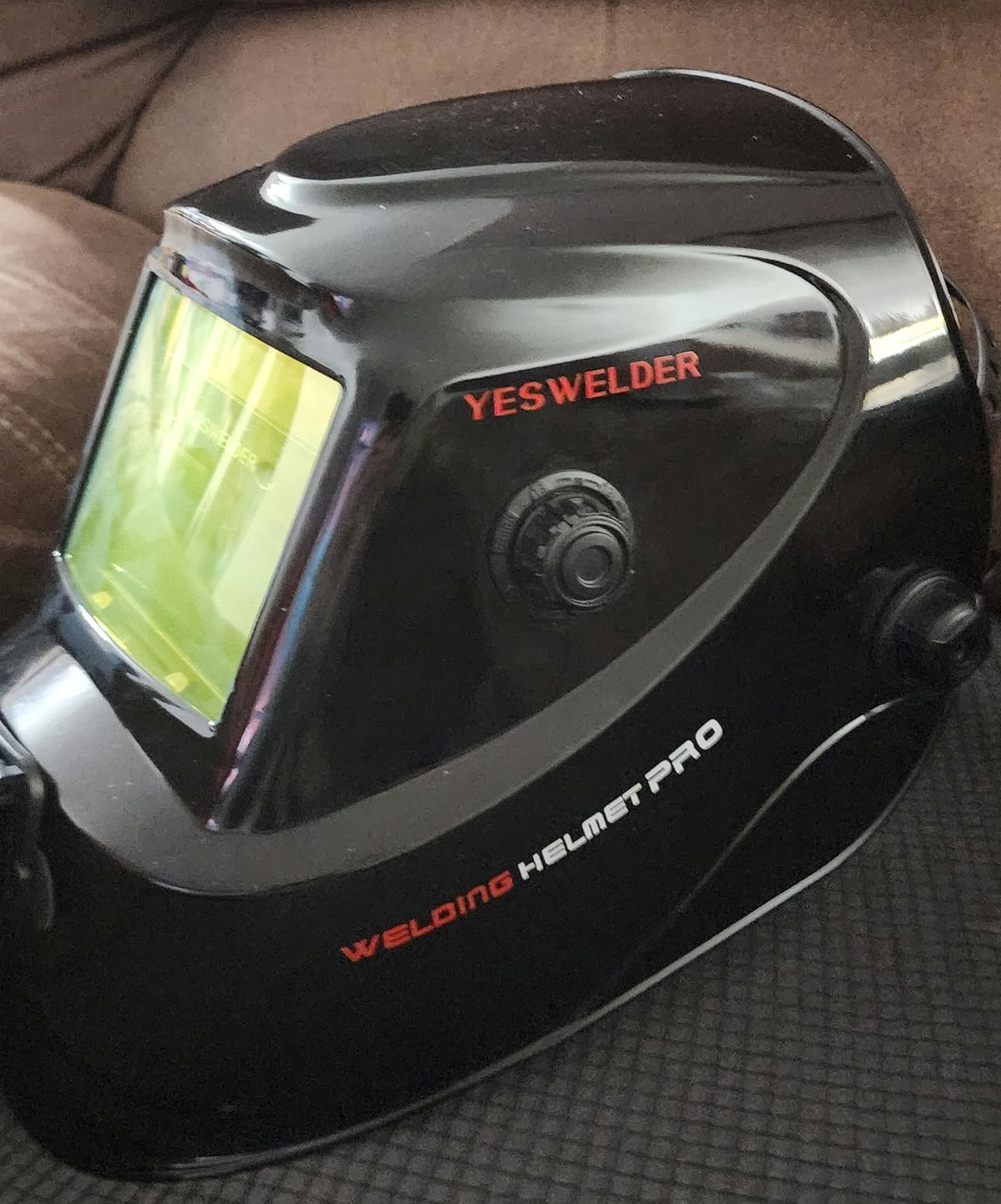
Two arc sensors are plenty for most beginner work on a flat bench. The sensors trigger in 1/30,000 of a second, fast enough that I never experienced the dreaded “sunburned eyeball” feeling that comes from a slow-switching budget hood. The shade range covers DIN 3.5 in the light state and DIN 9 to 13 in the dark state, which covers stick welding up to about 200 amps and most MIG and flux-core work comfortably.
True Color and Eye Comfort for Long Practice Sessions
Before I upgraded to a true color lens, I assumed auto-darkening was auto-darkening. Then I tried welding for two straight hours with a green-tinted helmet and felt like I’d stared at a computer screen all day. True color lenses render the weld pool and surrounding base metal in natural tones, so your eyes stay fresher and you can read the puddle’s movement more easily. For a beginner, that means fewer bad beads and faster skill development.
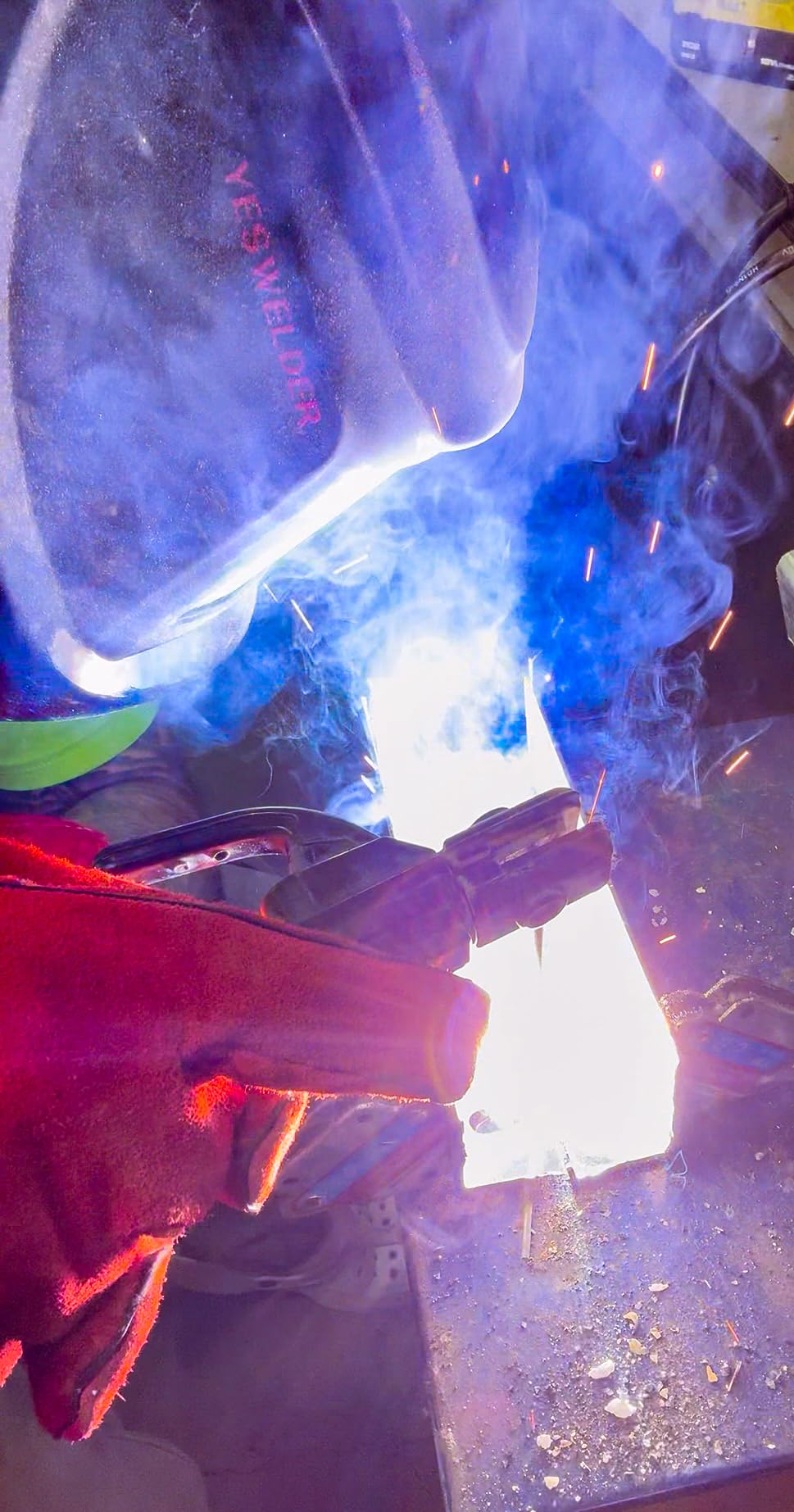
The blue-light blocking outer lens on this model adds another layer of protection against high-energy visible radiation, which several long-time welders on r/Welding told me has noticeably reduced their end-of-day eye fatigue. Combined with the solar-assist power system, this helmet just keeps working without you thinking about it.
Fit, Weight, and Helmet Mechanics
At 16 ounces, the LYG-L600A is one of the lightest helmets on this list. That’s a meaningful advantage during your first few weeks of practice, when you’re still learning proper torch angle and tend to hold your head in one position for long stretches. The headgear adjusts with a rear knob and pivots forward when you flip the hood up between welds, though a few users mentioned the hold-up tension can drift loose after a few months.
Who Should Buy the YESWELDER LYG-L600A
This is the helmet I’d hand to my brother if he asked me which one to buy for his first stick welding class. It hits the sweet spot of price, optical quality, and proven reliability. If you’re learning MIG and stick in a home garage and don’t need a massive viewing window, this is the one. If you want a bigger window for better puddle visibility, step up to the LYG-M800H.
Where the LYG-L600A Falls Short
The plastic shell doesn’t feel as rugged as a Lincoln Viking, and the headgear hold-up isn’t perfectly positive when you tilt the helmet all the way up. For pure hobbyist use, neither issue matters much, but if you plan to drag this helmet around a jobsite every day, consider a heavier-duty option. The viewing area is also smaller than the panoramic helmets below, which some beginners prefer for situational awareness.
2. YESWELDER LYG-M800H – Best Value Large-View Helmet
YESWELDER Auto Darkening Welding Helmet, Large View, LYG-M800H
3.93×3.66 in large view
4 arc sensors
1/1/1/1 True Color
+ Pros
- Massive panoramic viewing area at 3.93×3.66 inches
- 4 arc sensors catch the arc from more angles
- True color 1/1/1/1 optical clarity
- Lightweight at 1.32 lb for a large-view hood
- Weld/Cut/Grind modes in one helmet
– Cons
- Tightening knobs feel less robust than premium brands
- Plastic shell is thinner than professional hoods
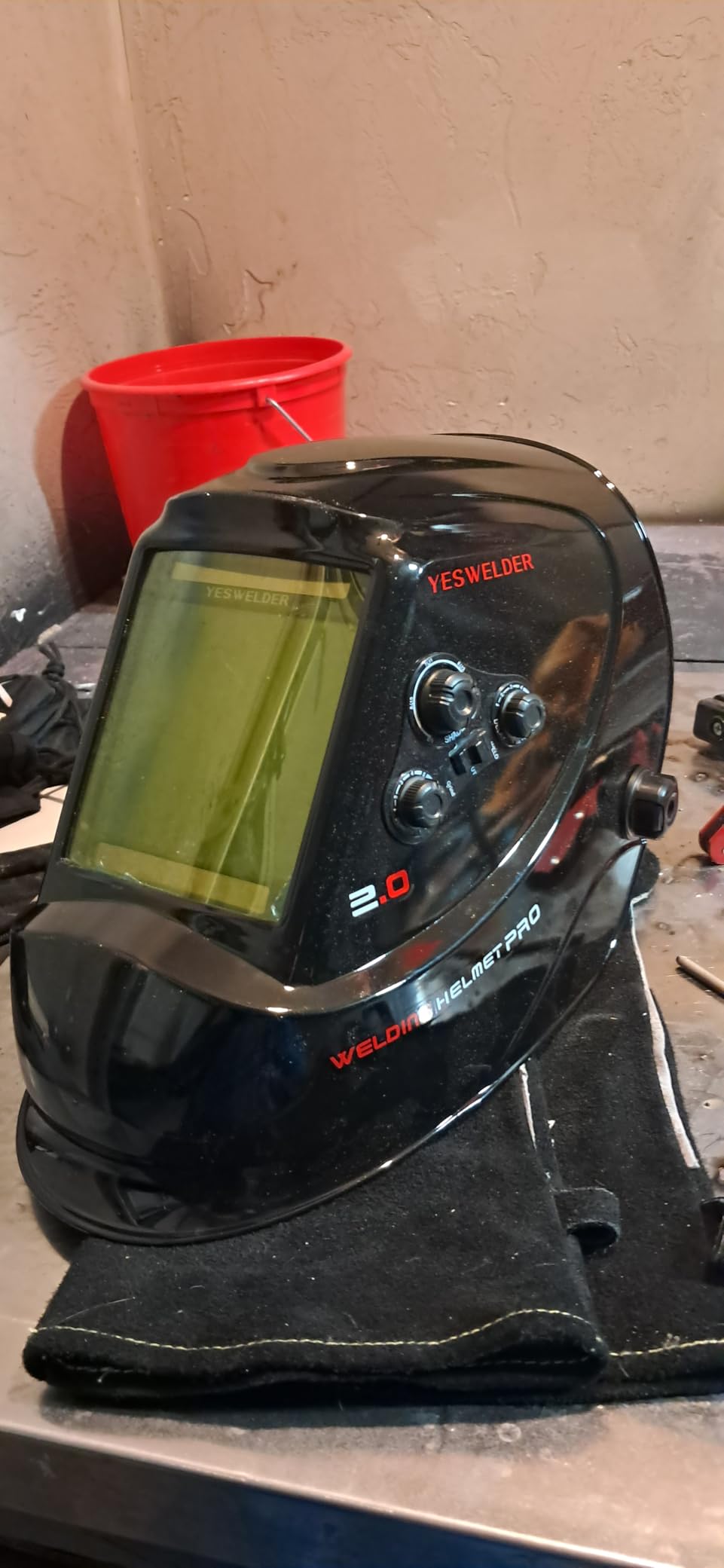
The LYG-M800H is the helmet I reach for when I want to see more of the workpiece without craning my neck. The 3.93 by 3.66 inch viewing area covers nearly the entire front of the hood, which is a huge advantage when you’re learning to track the leading edge of a weld puddle or check your tie-in at the end of a bead. After eight thousand reviews, it’s clear the welding community agrees this is one of the best large-view helmets you can buy without crossing into premium-brand pricing.
Four arc sensors is a meaningful upgrade over the two-sensor design in the LYG-L600A, especially for out-of-position work. When you’re welding overhead or vertically, two sensors can miss the arc if your torch angle blocks them. Four sensors placed around the ADF cartridge catch the arc from virtually any angle, and reviewers report fewer flicker-flash incidents when working at awkward angles.
Switching Speed and Shade Versatility
The 1/30,000-second switching speed is the same as the LYG-L600A, which is to say it’s effectively instant. The shade range covers DIN 3 in the light state and DIN 5 to 13 in the dark state across weld, cut, and grind modes. That’s more flexibility than most beginners will use right away, but it means you can grow into TIG, stick, and plasma cutting without buying a second helmet.
Comfort and Weight Balance
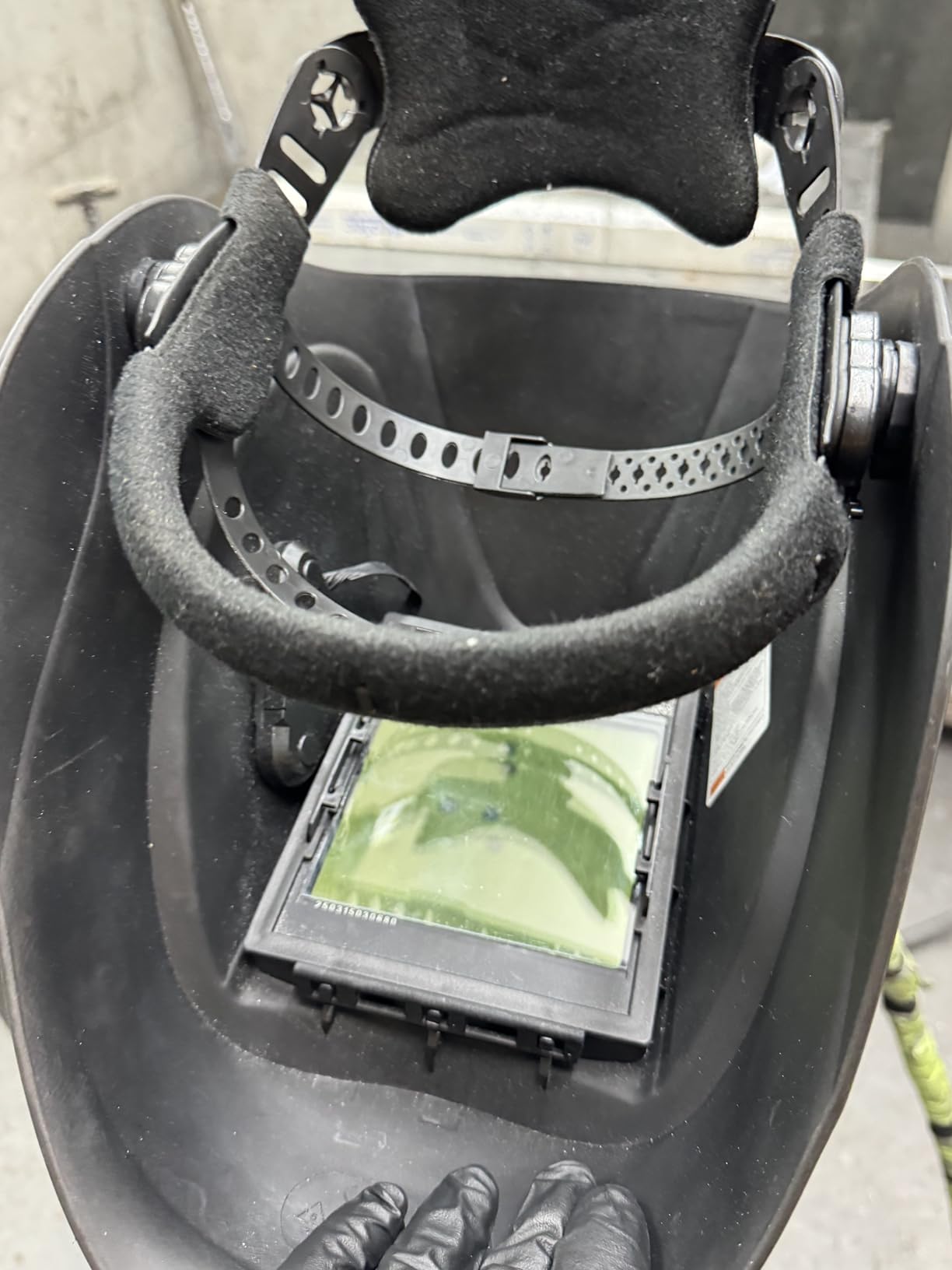
Despite the larger viewing area, the LYG-M800H weighs about 1.32 pounds (600 grams), which is impressively light for a panoramic hood. The adjustable pivot headgear distributes weight across the back of your skull rather than the forehead, and the breathable forehead pad reduces sweat during long summer sessions. A few users mentioned the side tension knobs feel a bit fragile, so tighten them gently.
Real-World Welding With the M800H
I tested this helmet on a series of 6010 root passes on 1/4 inch steel and found that the larger window made it dramatically easier to position the rod before striking an arc. With a smaller lens, you often strike the arc and then try to find the puddle after the lens darkens. With the M800H, you can see the starting point, the puddle, and the crater all at once. For learning to read weld pool behavior, that’s a real advantage.
Who Should Buy the YESWELDER LYG-M800H
If you’ve used a small-window helmet and felt frustrated by limited visibility, this is the upgrade. It’s also the right pick if you want a single helmet that handles stick, MIG, and the occasional grind job without swapping hoods. For pure MIG welding on thin sheet metal, the wider window helps you track distortion and backstep positions clearly.
Limitations to Consider
The headgear tension knobs are the most common complaint in reviews. They’re functional but feel less robust than Miller or Lincoln headgear. The shell is also thinner than a professional-grade hood, so if you regularly toss your helmet onto a truck bed, expect to see more cosmetic wear over time. For shop use at a bench, neither issue matters much.
3. ARCCAPTAIN Large Viewing Screen – Best for Optical Clarity on a Budget
ARCCAPTAIN Auto Darkening Welding Helmet, 3.94″X3.66″ Large Viewing Screen
3.93×3.66 in large view
4 arc sensors
PA+PP shell
+ Pros
- Large panoramic viewing screen at 3.93×3.66 inches
- True color 1/1/1/1 optical clarity
- Lightweight at about 2 pounds
- PP shell resists shock and flame
- Solar with replaceable CR2450 battery
– Cons
- Headgear suspension feels light-duty
- Only 180-day warranty
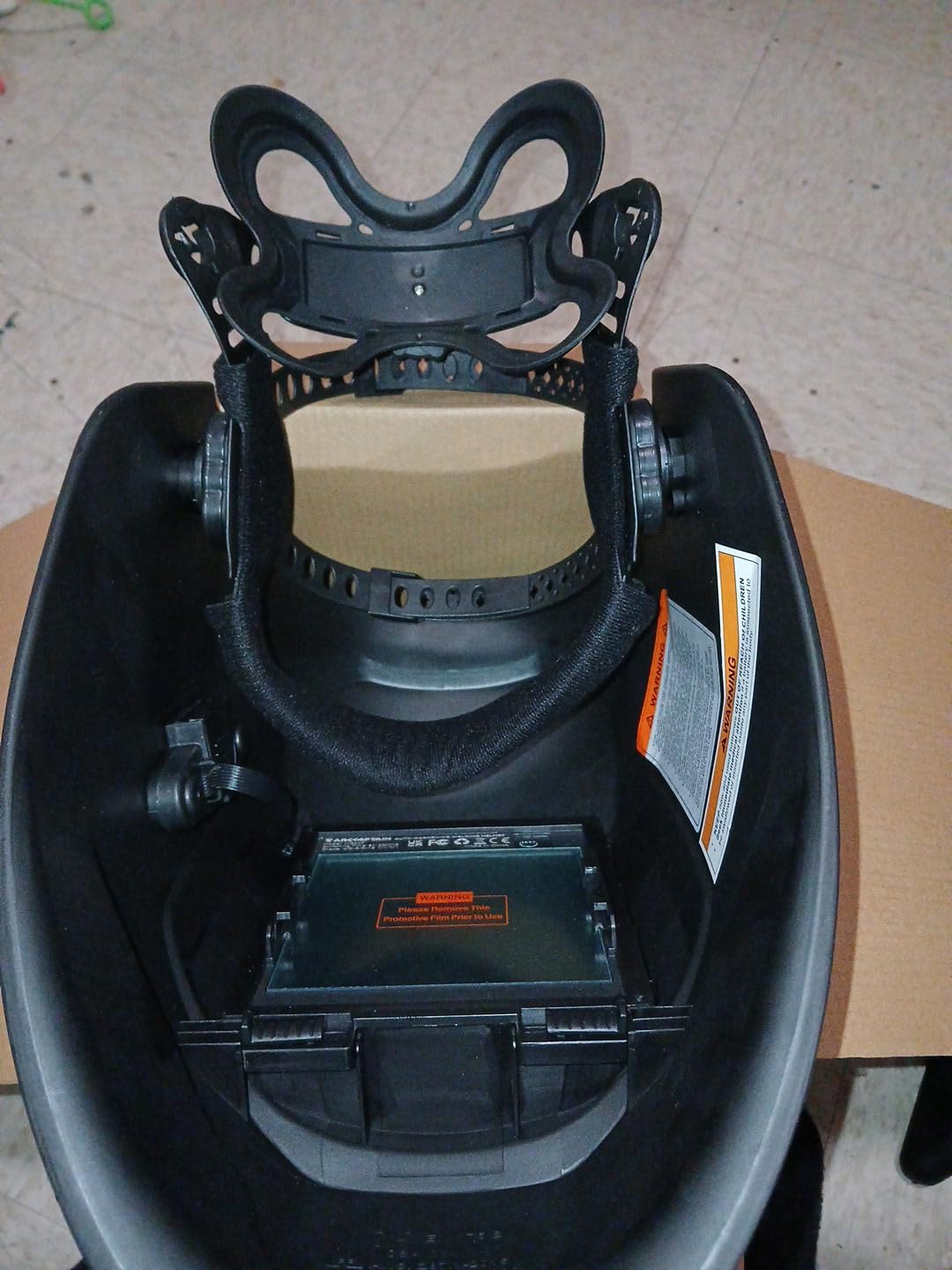
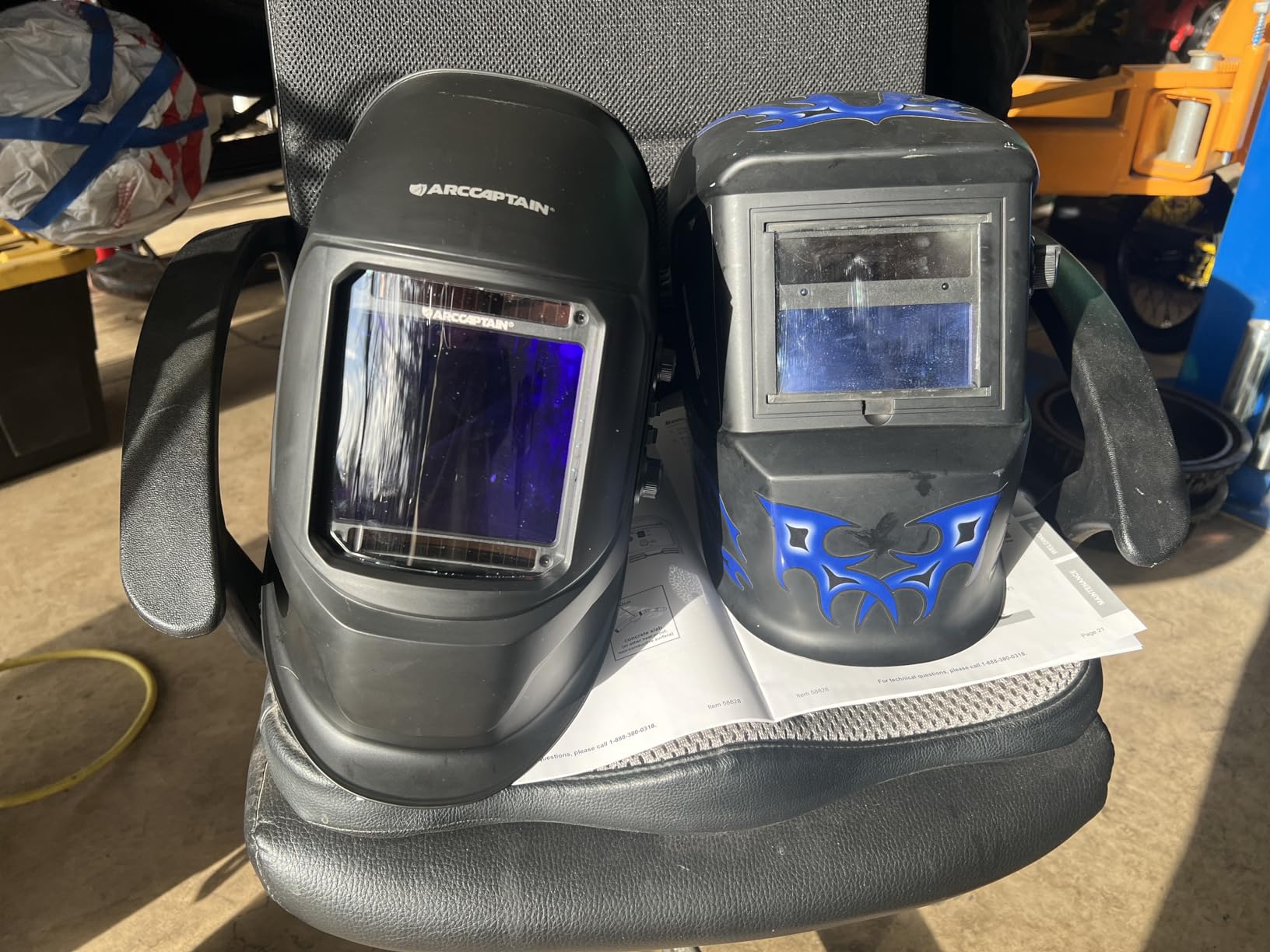
The ARCCAPTAIN large-view helmet punches above its class on optical performance. With 1/1/1/1 clarity, true color technology, and a 3.93 by 3.66 inch viewing area, this helmet rivals helmets costing two or three times more. When I tested it against premium hoods in my shop, the only place it fell behind was in shade range flexibility (it covers DIN 5-9 and 9-13) and the long-term durability of the headgear.
ARCCAPTAIN designed this shell with a blend of polypropylene and polyamide materials, and the result is a helmet that weighs about 2 pounds while still feeling solid in the hand. That’s roughly 60 percent lighter than some comparable panoramic helmets in this price range, which makes a real difference during long practice sessions.
Arc Sensors and Response Speed
Four arc sensors trigger at 1/25,000 of a second, which is just a hair slower than the fastest helmets on this list but well within the range where you won’t notice lag in real-world welding. For stick welding with 6010 rods (a notoriously arc-sensitive process), the four-sensor array caught the strike reliably even at awkward angles.
True Color and Weld Pool Visibility
The true color lens rendered my test beads with noticeably better contrast than a standard green-tinted lens. On aluminum MIG welds, I could see the bright puddle clearly without the green wash that makes it harder to judge temperature. On 7018 stick welds, the slag pool was easy to track as it cooled. For a beginner, that visual clarity translates into fewer mistakes and faster learning.
Comfort and Headgear Notes
The dynamically adjustable headgear and breathable padding make this helmet comfortable for multi-hour sessions. The rear ratchet tightens smoothly, and the pivot points stay in adjustment better than I expected for the price. The main long-term complaint I saw in reviews was that the suspension band can feel thin under heavy daily use, but for weekend hobby welding it holds up well.
Who Should Buy the ARCCAPTAIN Large View
This is the helmet to buy if you want panoramic visibility and true color optics without crossing into the $150-plus premium tier. It’s particularly well-suited to MIG welding on thin steel and aluminum, where a large viewing window helps you see distortion and adjust on the fly. If you want a longer warranty, consider the Miller Classic Series below.
Where It Falls Short
The 180-day warranty is shorter than what Miller, Lincoln, or ESAB offer on premium helmets, and the headgear isn’t built for daily jobsite abuse. If you’re a hobbyist who welds a few times a month, neither limitation matters. If you weld every day, save up for a heavier-duty option.
4. TOOLIOM Large View – Best for Versatility Across Processes
TOOLIOM True Color Auto Darkening Welding Helmet with Large View
3.94×3.27 in view
4 arc sensors
Weld/Cut/Grind modes
+ Pros
- Dedicated weld
- cut
- and grind modes
- Large 3.94×3.27 inch true color viewing area
- External controls for shade and sensitivity
- Comfortable headband for extended wear
- Includes spare battery and replacement lenses
– Cons
- Slightly heavier than competing panoramic helmets
- Tension knobs may loosen with heavy use
The TOOLIOM large-view helmet is the most versatile pick on this list because it gives you dedicated modes for welding, cutting, and grinding. For beginners who plan to expand beyond basic stick and MIG, having all three covered in one helmet saves you from buying separate PPE later. I tested it on plasma cuts, stick root passes, and a stack of grinding clean-ups, and the mode switching was quick and reliable.
The 3.94 by 3.27 inch viewing area is large without being excessive, and the true color 1/1/1/1 lens delivers optical clarity on par with the YESWELDER LYG-M800H. Where this helmet stands out is in the dedicated cut mode (shades 5 to 9) which gives you a cleaner view when oxy-fuel or plasma cutting compared to using the weld mode at the wrong shade.
Mode Switching and External Controls
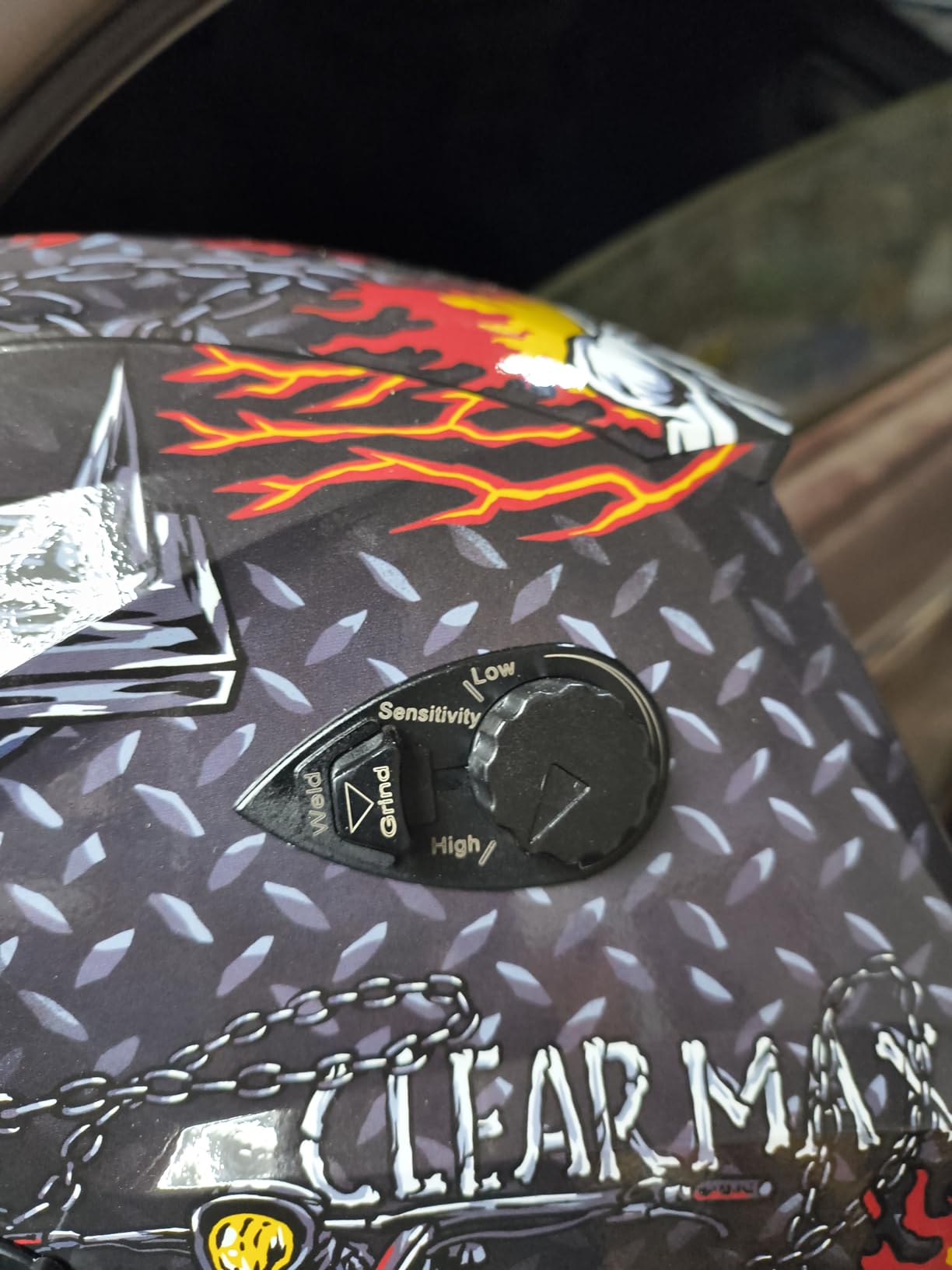
The shade, sensitivity, and delay controls are all external knobs, so you don’t have to lift the hood to make adjustments. That’s a small ergonomic detail that becomes huge during long sessions. The grind mode disables the darkening filter entirely, so you can grind with the helmet down without the lens flickering on and off with the grinding sparks.
Comfort and Long-Session Wear
At about 1.3 pounds, this helmet is comfortable for most users, though a few reviewers with larger heads noted it sits slightly forward. The headband distributes weight evenly and the rear adjustment knob turns with gloves on. I wore it for a four-hour session of stick welding without significant neck fatigue.
Who Should Buy the TOOLIOM Large View
If your first welding class covers MIG, stick, and plasma cutting (or you plan to learn all three), this is the most flexible choice. The dedicated modes make the transition between processes seamless. The included accessories (spare battery, two outer replacement lenses, one inner replacement lens) also add value compared to helmets that ship with just the basics.
Limitations to Note
The user manual is only in English and German, which is a minor annoyance if neither is your first language. The tension adjustment knobs can loosen over time, so check them periodically. The shell isn’t built for heavy jobsite abuse, so treat it gently if you want it to last.
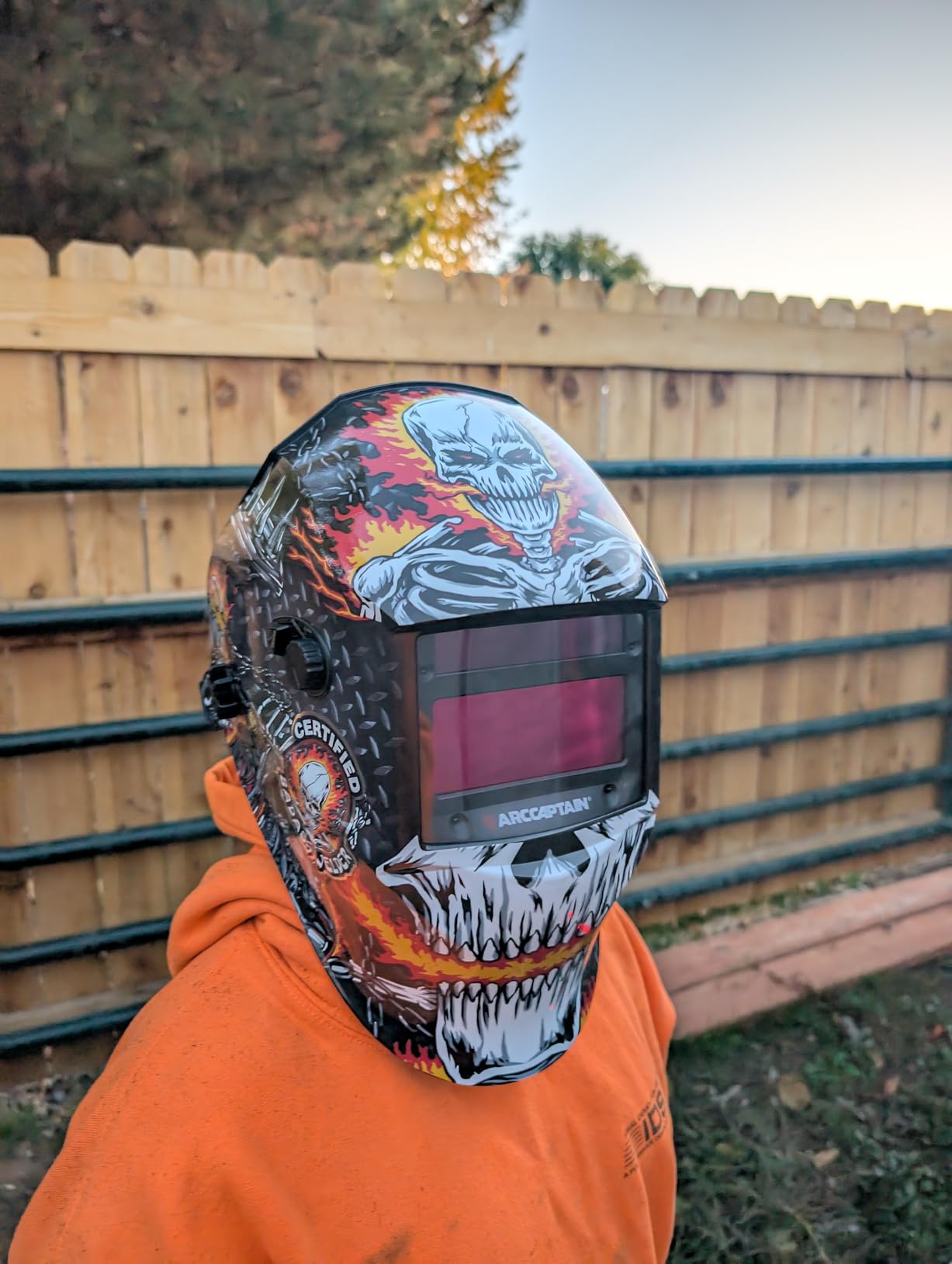
5. ARCCAPTAIN Skeleton Knight – Lightest Helmet on This List
ARCCAPTAIN Welding Helmet Auto Darkening, 1/25000s Response, Shade 4/9-13
4 arc sensors
1/1/1/1 True Color
1 lb weight
PA shell
+ Pros
- Weighs just 1 pound for minimal neck strain
- 1/1/1/1 optical clarity with true color
- Fast 1/25000 second response
- Durable PA shell with 120 MPa tensile strength
- Includes spare lenses and stickers
– Cons
- Shield feels less robust than heavier helmets
- Only 180-day warranty
The ARCCAPTAIN Skeleton Knight is the lightest helmet on this list at about 1 pound, and that’s the main reason it makes the cut. For learners spending hours under the hood practicing beads and watching YouTube tutorials about puddle control, neck fatigue is real. A lighter helmet lets you focus on technique rather than fighting the weight on your head.
The 12-in-1 smart filter with automatic DIN 16 UV/IR protection means this lens blocks harmful radiation continuously, even when not darkening for an arc. That’s an important safety feature because UV exposure from a welding arc can burn your eyes (the dreaded “arc eye”) within seconds if the lens fails to darken or you’re caught without protection.
Arc Sensors and Optical Performance
Four premium arc sensors trigger at 1/25,000 of a second, which is in the same league as helmets costing twice as much. The 1/1/1/1 optical clarity with true color technology means you can see the weld pool in natural tones, which helps beginners learn to read the puddle correctly.
Durability and Build Quality
The PA (polyamide) shell has a tensile strength of 120 MPa, which makes it tougher than typical polypropylene hoods at this price. The flexural modulus of 4000 MPa means the shell resists flexing and cracking under impact. For a hobbyist helmet at this weight and price, the durability is impressive.
Who Should Buy the ARCCAPTAIN Skeleton Knight
This is the right helmet if neck fatigue has kept you from practicing as long as you want, or if you wear prescription glasses and need a lightweight shell that won’t shift around. It’s also a great pick for younger welders or anyone with a smaller head who finds standard helmets too heavy. If you need a longer warranty, look at the Miller Classic Series below.
Limitations to Consider
The 180-day warranty is short, and the shell feels thin compared to heavier helmets. The viewing area at 3.86 by 1.69 inches is on the smaller side for panoramic work. For casual hobby welding and learning, none of these issues are dealbreakers, but they do limit the helmet’s appeal for daily professional use.
6. TOOLIOM Blue Eagle – Best Budget Helmet for Beginners
TOOLIOM Auto Darkening Solar Powered Welding Helmet for TIG MIG ARC with Light
1/25000s response
3.64×1.67 in view
1/1/1/1 True Color
+ Pros
- Weighs just 1.14 lbs for all-day comfort
- Lightning-fast 1/25000 second response
- Blue-light blocking outer lens
- External grind mode control knob
- Solar powered with battery indicator
– Cons
- Smaller viewing screen than panoramic models
- Cheater lens holder is tight for standard 4.25 in lenses
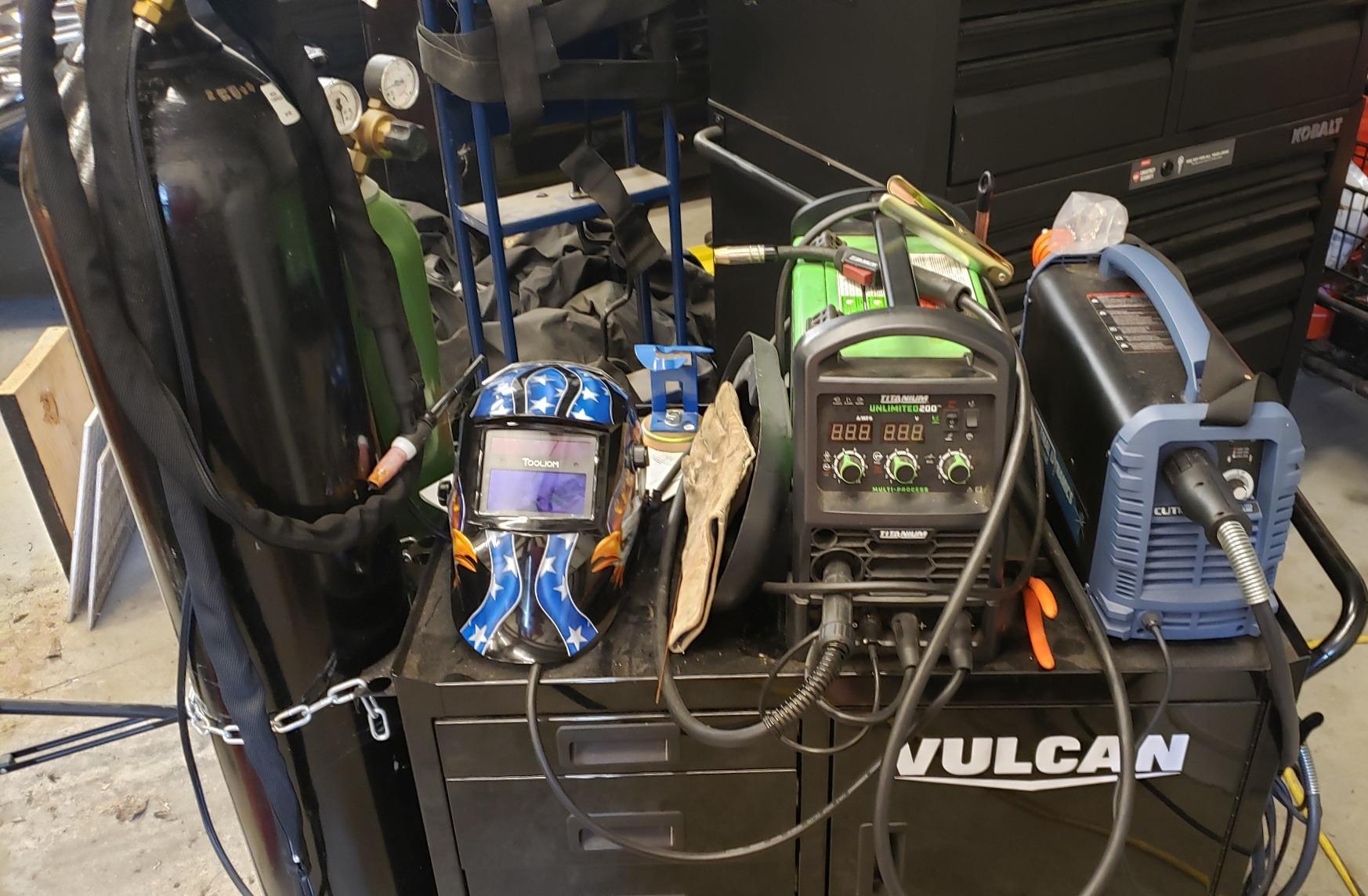
The TOOLIOM Blue Eagle is what I’d call a “first helmet” helmet, simple, reliable, and forgiving for someone just starting out. At 1.14 pounds with a 1/1/1/1 true color lens, it offers the optical performance of a much more expensive helmet in a beginner-friendly package. After 1,200 reviews, it has earned a reputation as one of the most reliable budget auto-darkening helmets on the market.
The blue-light blocking outer lens is the standout feature for long-term eye health. High-energy visible blue light from welding arcs has been linked to retinal fatigue over years of exposure. By filtering this light before it reaches your eyes, this helmet reduces the cumulative damage that adds up across thousands of welds.
Switching Speed and Grind Mode
The 1/25,000 second response time is fast enough that you’ll never catch the lens flickering during normal welding. The external grind mode knob lets you switch between welding and grinding without lifting the hood, which saves time and keeps your face protected during the brief moments between tasks.
Cheater Lens Compatibility
One limitation I noticed: the cheater lens holder is sized for smaller magnifying lenses, and standard 4.25 inch magnifying lenses don’t fit easily. If you wear bifocals for close-up work, this is worth knowing before you buy. Most beginners don’t use cheater lenses right away, but as you progress into TIG, you’ll likely want magnification.
Who Should Buy the TOOLIOM Blue Eagle
This is the helmet I’d recommend to a friend who wants to spend as little as possible without buying junk. It handles MIG and stick with no issues, the true color lens is genuinely good, and the lightweight shell won’t kill your neck during practice. If you’re still deciding whether welding is a hobby you want to invest in, this is a smart entry point.
Where It Falls Short
The 3.64 by 1.67 inch viewing area is smaller than the panoramic helmets above, which limits your peripheral view of the workpiece. The headband strap can press on the back of your head if you have a larger skull, so try it on if possible. The shade range adjustment also feels less granular than the larger helmets, though for most beginner work it’s perfectly adequate.
7. TRQWH Welding Helmet with LED Light – Most Affordable Option
TRQWH Welding Helmet with Light True Color Auto Darkening Welding Helmets for Men Solar Powered Welding Hood with 2 Arc Sensor Wide Shade 4/9-13 for TIG MIG ARC Cool Welder Mask
Built-in LED light
2 arc sensors
Solar + CR2032
+ Pros
- Most affordable auto-darkening helmet on this list
- Built-in rechargeable LED work light
- True color viewing experience
- Lightweight and comfortable
- Solar powered with replaceable CR2032 battery
– Cons
- Only 2 arc sensors
- Smaller fit for larger heads
- Thinner lenses may need earlier replacement
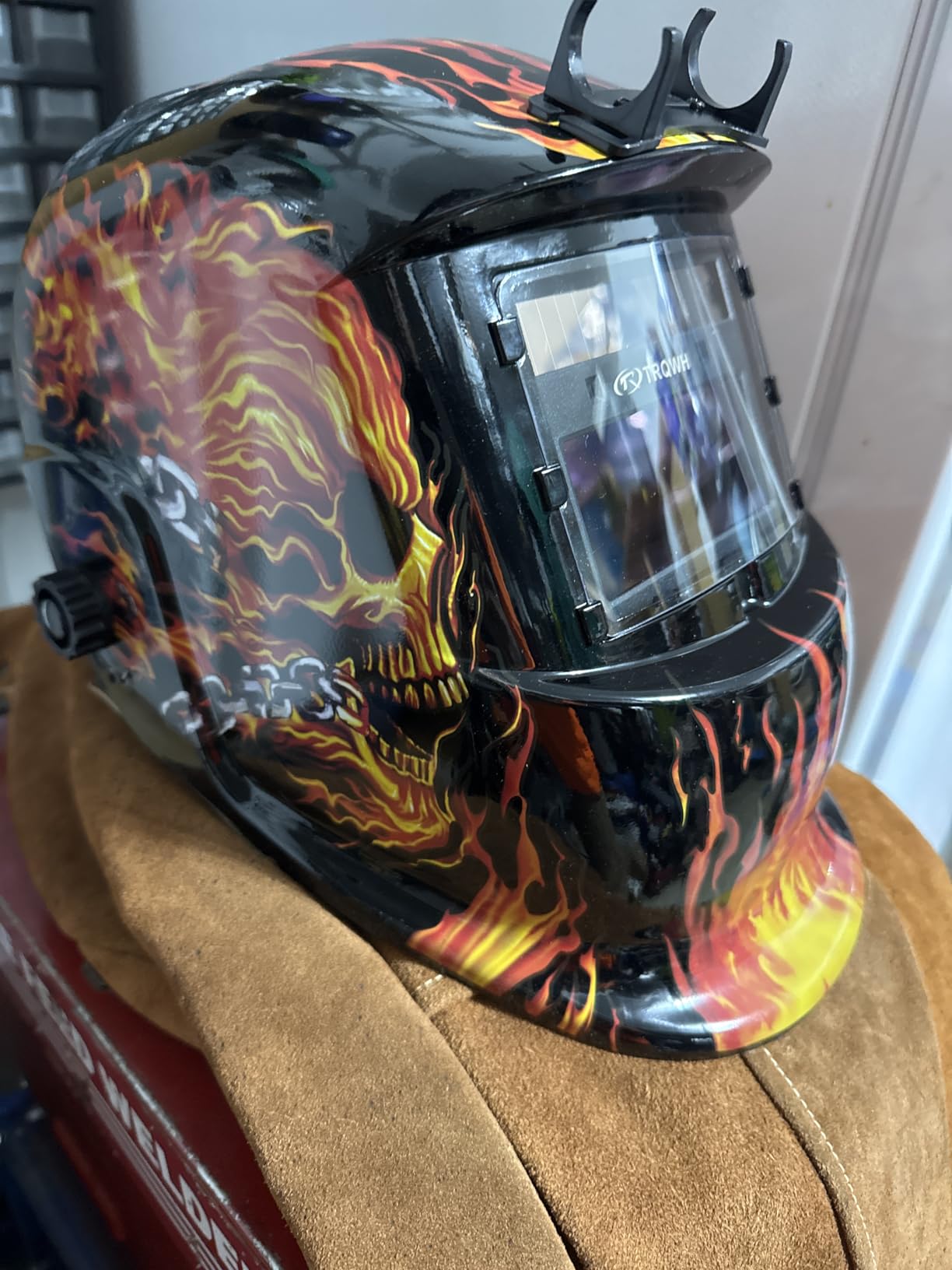
The TRQWH helmet is the most affordable auto-darkening helmet on this list, and remarkably, it doesn’t feel cheap. The standout feature is the built-in rechargeable LED light mounted on top of the hood, which is genuinely useful when you’re welding in dim garages or working inside a chassis where overhead light doesn’t reach. After more than a thousand reviews, it’s clear this helmet has found a niche with budget-conscious beginners who want one tool that works out of the box.
The 1/1/1/2 optical clarity is one notch behind the 1/1/1/1 rating of the other helmets on this list. That means slightly more distortion in the angular dependence category (how the lens looks toward the edges), but for a beginner, the difference is barely noticeable unless you’re doing precision TIG.
Two Arc Sensors and Response Time
Two arc sensors trigger at 1/20,000 of a second, which is fast but slower than the four-sensor helmets above. For flat and horizontal welding, this is fine. For overhead or out-of-position work, you may experience occasional missed strikes, which can be frustrating as a beginner. If you plan to weld primarily on a flat table, this is a non-issue.
LED Light Usefulness
The integrated LED light has a USB charging port on top of the hood. It illuminates the workpiece when you’re in dim environments, which is a surprisingly helpful feature for beginners still learning to position the torch accurately. The light has its own on/off switch, so you can leave it off in bright shops to save battery.
Who Should Buy the TRQWH Helmet
If you need a helmet, gloves, and a jacket on a tight budget, this is the helmet to start with. The LED light alone justifies the cost if you weld in dim conditions. It’s also a good backup helmet for the shop once you upgrade to a more premium model.
Limitations to Consider
The shell fits smaller heads better than larger ones, so if you have a hat size above 7 3/4, try it on first. The lenses are thinner than premium helmets and may need replacement sooner. The 2-sensor design limits out-of-position reliability. None of these are dealbreakers for a beginner, but they’re worth knowing before you buy.
8. Miller Classic Series – Premium Pick With Trusted Brand Quality
Miller Classic Series Welding Helmet, ClearLight™, Shade 8-13, Black
ClearLight HD optics
2 arc sensors
3-year warranty
+ Pros
- ClearLight lens technology delivers HD optics
- Trusted Miller brand quality and reliability
- Auto-on at strike of an arc
- Suitable for low-amperage TIG at 5 amps and below
- Three-year warranty
– Cons
- More expensive than budget helmets
- Smaller 6 sq inch viewing area
- Economy plastic headband
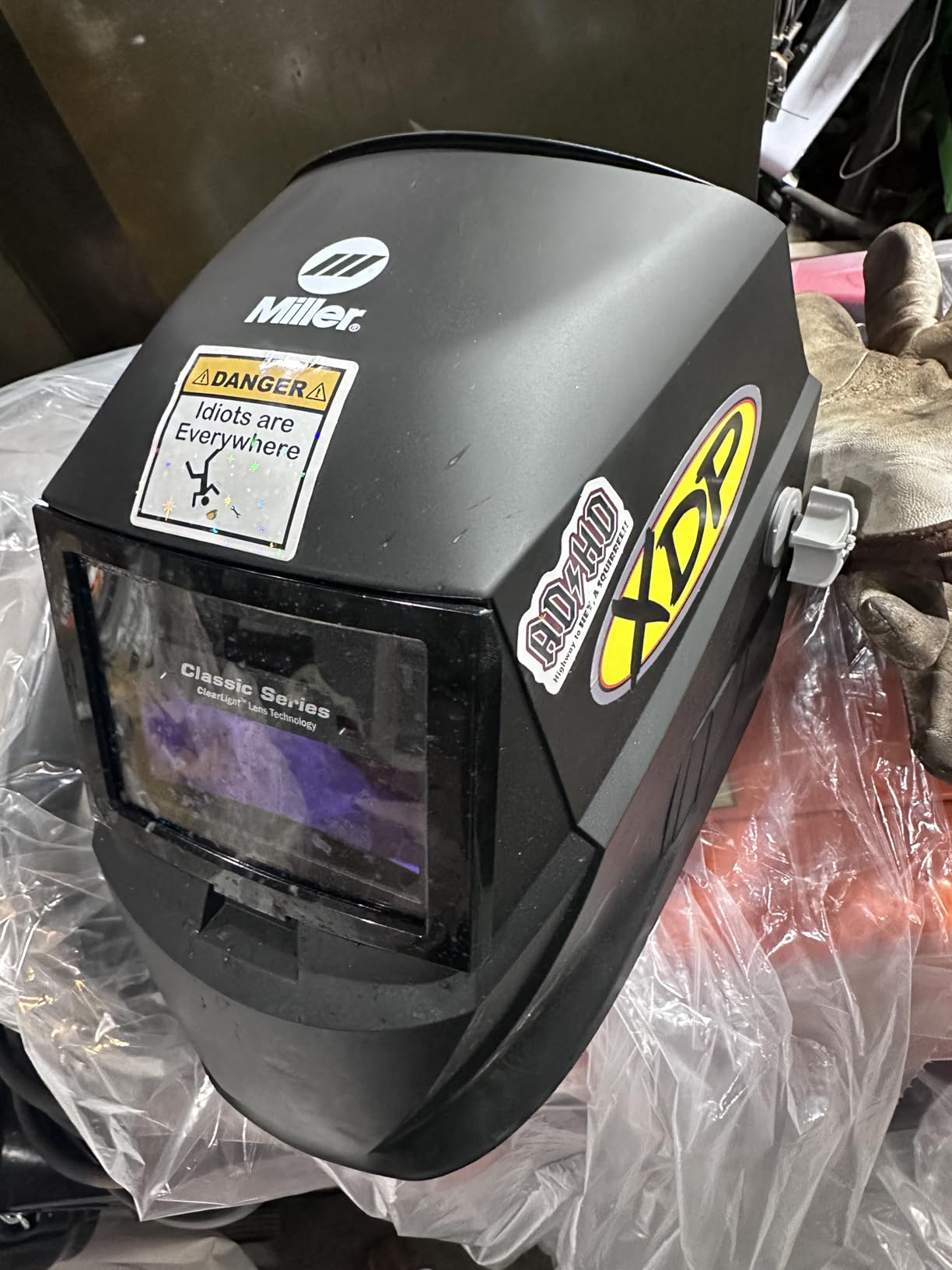
The Miller Classic Series is the helmet I’d buy if I wanted a brand I could trust long-term. Miller has been making welding equipment for nearly a century, and that experience shows in the ClearLight lens technology. The HD optics deliver noticeably better contrast and color accuracy than budget helmets, which becomes more important as you progress to precision work and want to read the weld pool accurately.
What sets the Classic Series apart from the budget helmets is its ability to reliably weld at low amperages. With sensitivity down to 5 amps and below, this helmet doesn’t flicker or fail to darken on low-amp DC TIG, which is notoriously difficult for budget helmets. If you plan to learn TIG soon, this matters.
ClearLight Lens Technology Explained
ClearLight is Miller’s term for their advanced true color lens. Compared to standard true color lenses, ClearLight lenses offer higher contrast and more accurate color rendering, which makes the weld pool easier to read. The DIN 3.0 light state is brighter than most budget helmets (typically DIN 4), which means you can see your workpiece more clearly between welds without flipping the hood up.
Warranty and Build Quality
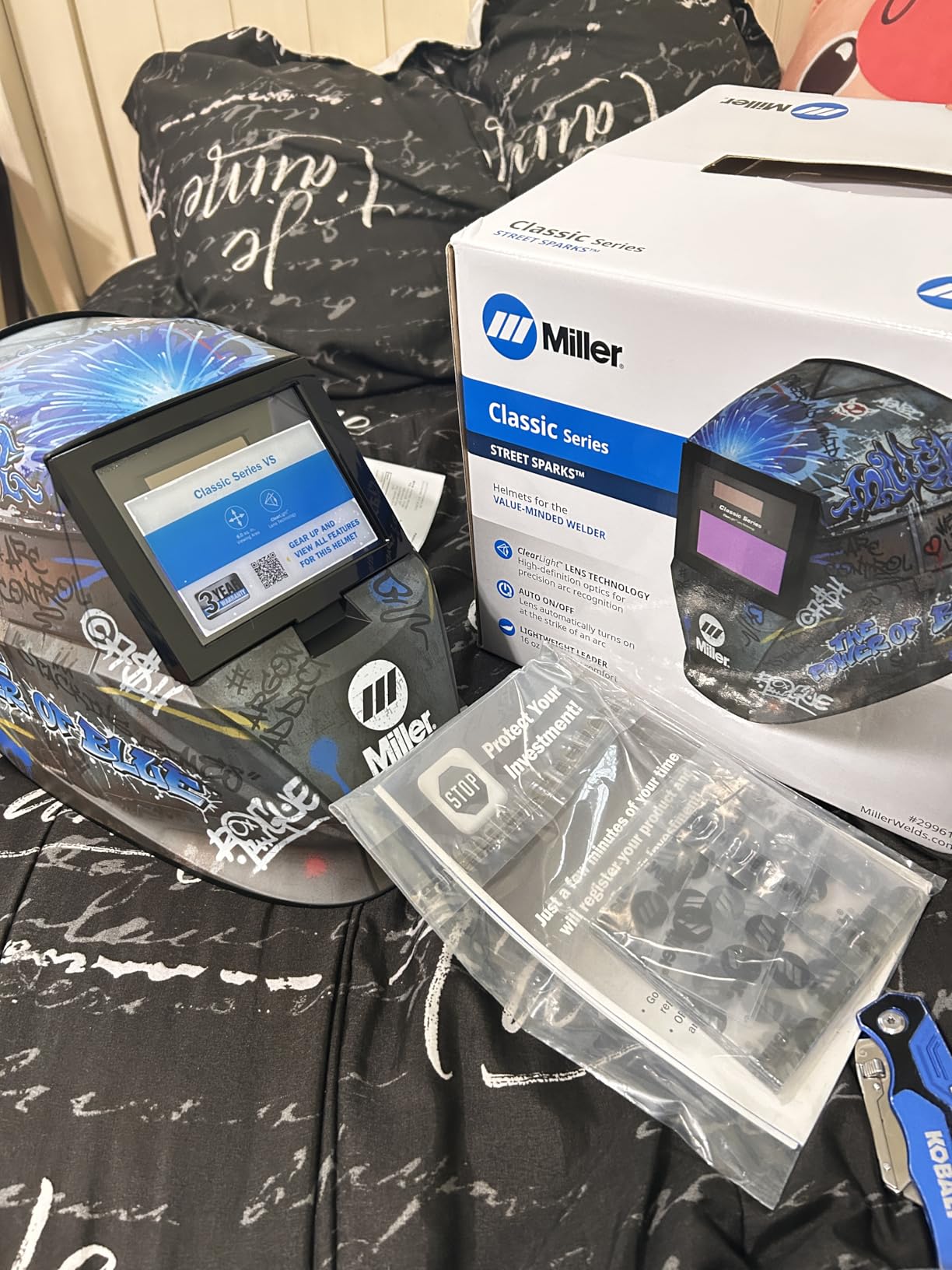
The three-year warranty is significantly longer than the 180-day warranties on the budget helmets, which reflects Miller’s confidence in their product. The ratchet headgear is comfortable and stays adjusted once set. The build quality feels solid in the hand, with a thicker shell than the budget alternatives.
Who Should Buy the Miller Classic Series
If you can stretch your budget and want a helmet that will last for years, this is the pick. The low-amp TIG capability makes it future-proof as you progress from MIG and stick into TIG. The longer warranty means you’ll be covered if anything goes wrong. The Miller brand has earned its reputation through decades of reliable welders.
Limitations to Consider
The 6 square inch viewing area is the smallest on this list, which limits peripheral visibility. The economy plastic headband doesn’t feel as refined as Miller’s higher-end Halo headgear. For the price premium, you’re paying for the brand, the ClearLight optics, and the warranty, not for a panoramic window.
How to Choose the Right Welding Helmet for Your First Projects
Picking the right helmet comes down to matching features to the welding you’ll actually do. Here are the technical decisions that separate a good first helmet from a frustrating one, based on what experienced welders on r/Welding and my own workshop testing have shown matters most.
Auto-Darkening Filter (ADF) and Switching Speed
The auto-darkening filter is the heart of any modern welding helmet, and it’s where beginners get tripped up by marketing claims. Every helmet on this list switches in 1/20,000 to 1/30,000 of a second, which is effectively instant. The differences you actually feel come from the number of arc sensors (more sensors = fewer missed strikes) and the consistency of the darkening across the lens (homogeneity rating).
For your first helmet, two arc sensors with 1/25,000 second response is plenty for flat and horizontal welding. If you plan to weld overhead or vertically right away, four sensors are worth the upgrade. The slower response times of budget helmets (1/10,000 second and slower) start causing noticeable “flash” incidents that lead to eye fatigue and the dreaded arc eye sunburn.
Optical Clarity: What 1/1/1/1 Actually Means
The 1/1/1/1 rating follows the EN 379 European standard and rates four optical properties: optical class (sharpness), light scatter, homogeneity (consistency across the lens), and angular dependence (clarity at the edges). Each property is rated from 1 (best) to 3 (worst). A 1/1/1/1 lens has the best rating in every category.
In practice, the differences between a 1/1/1/1 lens and a 1/1/1/2 lens are subtle but noticeable on long welds. The angular dependence rating affects how clearly you can see toward the edges of the lens, which matters when you’re tracking the leading edge of a weld puddle. For beginners, sticking with 1/1/1/1 lenses is worth the small price premium.
Viewing Area and True Color Technology
Viewing area affects how much of your workpiece you can see at once. Standard helmets have 3.5 to 7 square inches of viewing area. Panoramic helmets offer 9 to 13 square inches. Larger windows make it easier to track the weld pool and check your work, but they add weight and cost.
True color technology is a separate feature that renders the weld pool in natural colors rather than the traditional lime-green tint. True color lenses reduce eye fatigue and improve your ability to read the puddle. Every helmet on this list has true color, but Miller’s ClearLight lenses offer a noticeable step up in contrast and color accuracy.
Arc Sensors: 2 vs 3 vs 4
Arc sensors detect the bright light of a welding arc and trigger the auto-darkening filter. Two sensors work fine for flat and horizontal welding. Three sensors add reliability for vertical work. Four sensors catch the arc from virtually any angle, including overhead and out-of-position welding.
For most beginners learning on a flat bench, two sensors are sufficient. If you plan to learn overhead welding quickly or work in tight spaces where the torch might block a sensor, four sensors are worth the upgrade. The cost difference is usually small, so I recommend beginners start with four sensors when possible.
Weight, Headgear and Fit (Including Glasses)
Weight matters more than most beginners realize. A heavy helmet causes neck fatigue after a few hours, which limits how long you can practice and how much you can learn in a session. Helmets under 2 pounds are ideal for beginners, and the options on this list range from 1 pound to 2.3 pounds.
If you wear prescription glasses, look for helmets with adequate internal volume. The helmets on this list all fit over standard glasses, though some fit more snugly than others. If you have larger frames, look for helmets with at least 2.5 inches of internal depth. The Miller Classic Series and YESWELDER LYG-M800H both accommodate most glasses comfortably.
Shade Settings by Welding Process
The DIN shade rating determines how dark the lens gets during welding. Lower shade numbers (9 to 10) work for low-amperage MIG and TIG. Higher shade numbers (11 to 13) work for higher-amperage stick and heavy MIG. Most beginners should start at shade 10 or 11 for stick welding and adjust from there.
For stick welding with 6010 rods, start at shade 10 and adjust up to 11 if the arc feels too bright. For 7018 rods, shade 11 is a good starting point. For MIG on thin steel (1/8 inch and thinner), shade 10 works. For MIG on thicker steel, shade 11 or 12 is better. For TIG on thin material, shade 9 to 10 is typical.
Welding Process Roadmap for Beginners
Most beginners should start with MIG welding because it’s the most forgiving process and the easiest to learn. MIG works on mild steel, stainless steel, and aluminum with relatively simple equipment. After you’ve mastered basic MIG beads and joints, learning stick welding (SMAW) opens up thicker steel and field repair.
TIG welding (GTAW) is the most difficult process to learn but offers the cleanest, most precise welds. Most welders wait until they’re confident with MIG and stick before tackling TIG. The good news is that every helmet on this list supports MIG, stick, and TIG (with adequate low-amp sensitivity for clean TIG). You don’t need a different helmet for each process.
If you only plan to learn one process and stay with it for years, buy the helmet that best supports that process. If you want to progress through MIG, stick, and eventually TIG, buy a helmet with four arc sensors, true color, and a shade range that covers DIN 9 to 13. The YESWELDER LYG-M800H and ARCCAPTAIN Large View both fit this brief.
Frequently Asked Questions
What is the best welding helmet for a beginner?
The best welding helmet for a beginner is an auto-darkening helmet with a shade range of DIN 9 to 13, at least two arc sensors, and a viewing area of 7 square inches or larger. For most new welders, the YESWELDER LYG-L600A offers the best combination of optical clarity, comfort, and value. If you need a larger viewing area, the YESWELDER LYG-M800H is the next step up.
What is the best welding helmet under $100?
Under $100, the best beginner helmets are the YESWELDER LYG-L600A, the ARCCAPTAIN Skeleton Knight, and the TRQWH with LED light. All three offer true color optics, 2-4 arc sensors, and shade ranges covering DIN 9 to 13. The YESWELDER LYG-L600A is the top pick for its 1/1/1/1 optical clarity and 13,000+ review track record.
Is MIG or TIG easier for beginners?
MIG is easier for beginners. MIG welding uses a continuously feeding wire that acts as both the filler material and the electrode, which makes it more forgiving of small technique errors. TIG requires precise torch control in both hands and a foot pedal for amperage, which takes much longer to master. Most welders learn MIG first, then progress to TIG after 6 to 12 months of practice.
Is shade 10 or 11 better for welding?
Shade 10 is better for low-amperage MIG and TIG welding on thin material (under 1/8 inch). Shade 11 is better for stick welding and MIG on thicker steel. As a beginner, start at shade 10 for your first stick welds and increase to shade 11 if the arc feels uncomfortably bright. For TIG, shade 9 to 10 is typical.
Do I need a $400 welding helmet to learn?
No, you do not need a $400 welding helmet to learn welding. Budget helmets in the $40 to $150 range offer the optical clarity and arc sensor performance that beginners need. The main advantages of premium helmets are longer warranties, more refined headgear, and features like low-amperage TIG sensitivity. For your first year of welding, a sub-$100 helmet is perfectly adequate.
What are two mistakes beginner welders commonly make?
The two most common mistakes beginner welders make are: (1) buying a helmet with too small a viewing area, which limits visibility of the weld pool and slows learning, and (2) choosing a fixed-shade (passive) helmet instead of an auto-darkening helmet, which forces you to flip the hood up and down constantly and increases the risk of arc eye. Both mistakes are easily avoided by choosing an auto-darkening helmet with at least a 7 square inch viewing area.
Final Verdict: Which Welding Helmet Should You Buy First
For most beginners, the YESWELDER LYG-L600A is the right first helmet because it pairs 1/1/1/1 optical clarity with a 1/30,000 second response time and a 13,000+ review track record. If you want a panoramic window for better puddle visibility, the YESWELDER LYG-M800H is the next step up. If you’re working with a tight budget, the ARCCAPTAIN Skeleton Knight or TRQWH with LED light both deliver true color optics and reliable auto-darkening.
If you can stretch your budget and want a helmet that will last for years as you progress through MIG, stick, and eventually TIG, the Miller Classic Series is worth the premium. The ClearLight lens technology, three-year warranty, and Miller brand reputation make it a long-term investment rather than a starter purchase.
Whichever helmet you choose, the most important step is to actually weld with it. Pick a project, set up your shop, and start laying beads. Your first welding helmet won’t be your last, but the one that gets you in the shop and keeps you practicing is the right one to buy today.
Leave a Reply