
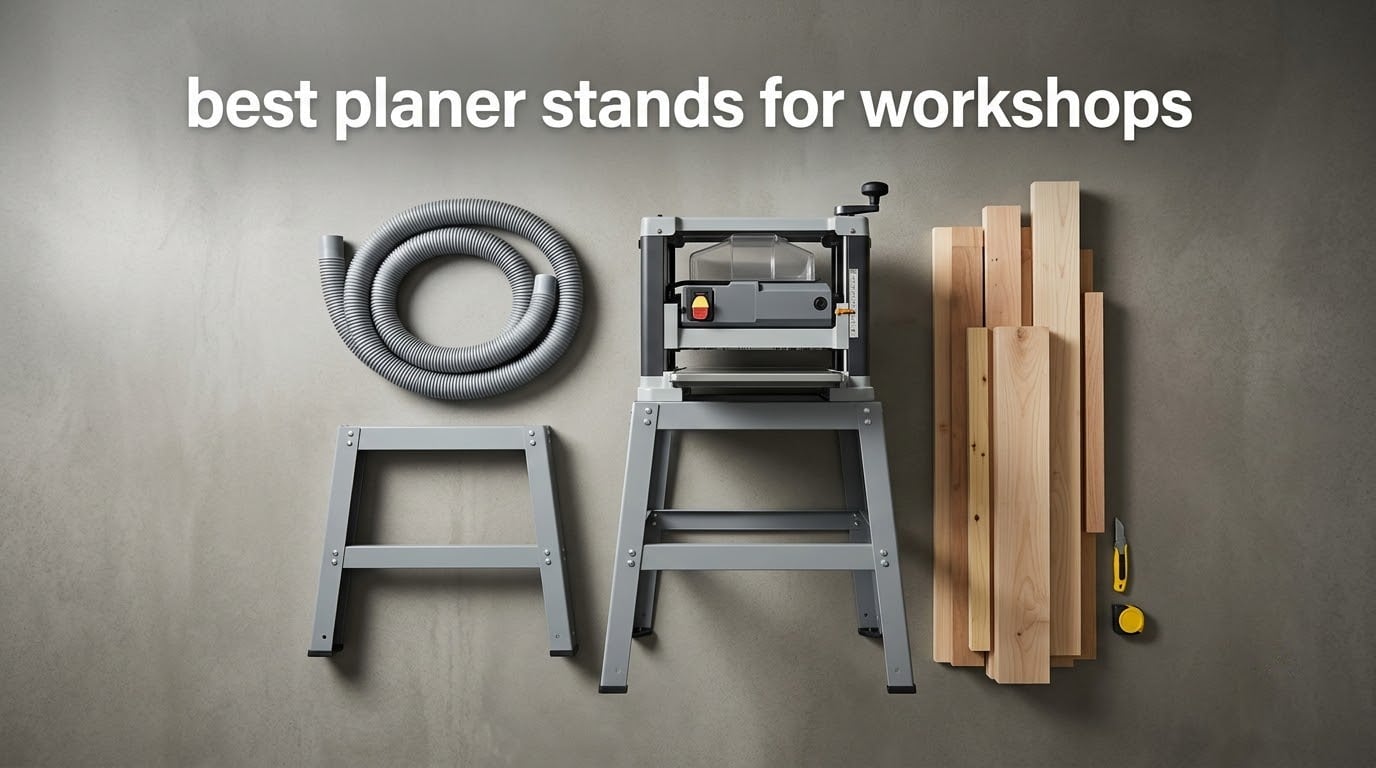
A planer stand is a wheeled or fixed-height platform that holds a benchtop thickness planer at a comfortable working height, with a stable top, casters for moving the machine, and often a lower shelf for planer accessories. Picking the best planer stands for workshops comes down to three numbers: how much load the frame is rated for, how high the top sits, and how wide the top is relative to your planer. Get those right and the machine lives off the floor, rolls to wherever you are working, and stops tipping. Get them wrong and you are bolting a planer to something too small, too short, or too shallow.
I spent weeks putting stands side by side in a one-car garage shop, loading them with benchtop planers, shoving them sideways with a board on the cutterhead, and watching what happened to the casters. The failure modes are consistent and worth knowing before you buy: a top narrower than the planer, a load rating with no headroom over the machine’s own weight, and casters that do not lock under load. Those three findings shaped every pick below.
Before we get into the stands themselves, it helps to be clear on the machine side of the equation. Our guide to the best planers for smooth lumber finishing covers the planers that most of these stands are sized for, and our shop vacuum picks for workshops matter because a planer on a stand still needs hose reach to whatever collector you own.
One note on how I tested: I checked the load rating printed on the frame against the weight of a real planer, not just the marketing number. I pushed each loaded stand laterally with an 8-foot board to see whether it wandered. And I counted how many casters actually lock, because a stand that rolls while you feed stock is a hand injury waiting to happen. Everything in this roundup reflects those checks, and where a spec is missing from the manufacturer’s listing, I say so rather than guessing.
Our Top 3 Planer Stands for a Working Shop (October 2026)
Three stands came out of the testing with clear strengths. The DEWALT DW7350 is the one I kept reaching for, the POWERTEC UT1002 is the sensible non-mobile option, and the WEN MSA658T solves long-stock support better than anything else here.

DEWALT DW7350 Mobile Planer Stand
- Integrated mobile base
- MDF top and lower shelf
- 56 lb stand
- Highest rated in the roundup
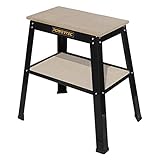
POWERTEC UT1002 Tool Stand
- 500 lb load rating
- 32 inch working height
- Expandable MDF split top
- 18 x 27 inch shelf

WEN MSA658T Rolling Stand
- Rollers expand to 54.3 inch
- All-metal top needs no drilling
- Retractable swivel caster
- No moisture absorption
Comparing All 10 Planer Stands Side by Side
This table is the fast version of the whole roundup. Most of the stands listed here carry a numeric load rating well above the weight of a benchtop planer, but they differ sharply on height range, top material and whether they roll at all. Three of them are fixed-leg stands with no casters, which is a real feature in a fixed shop and a real limitation in a one-car garage.
| Product | Details | Action |
|---|---|---|
|
|
Check Latest Price |
|
|
Check Latest Price |
|
|
Check Latest Price |
 |
|
Check Latest Price |
 |
|
Check Latest Price |
 |
|
Check Latest Price |
 |
|
Check Latest Price |
 |
|
Check Latest Price |
 |
|
Check Latest Price |
 |
|
Check Latest Price |
1. DEWALT DW7350 Planer Stand – The Integrated Mobile Base That Sets the Standard
DEWALT Planer Stand with Integrated Mobile Base, 24” x 22” x 30” (DW7350)
Mobile base with MDF top and shelf
24 x 22 x 30 inch envelope
56 pounds stand weight
Black and yellow brushed finish
+ Pros
- Highest rated stand here at 4.8 stars across more than 4700 reviews
- Stays stable under heavy planer loads
- Integrated mobile base makes planer and stand easy to move
- Top seller in Mobile Power Tool Bases at number 3
– Cons
- Design revolves around detaching the planer rather than moving the loaded stand
- Fixed working height with no adjustment
The DW7350 is the reference point for this whole category. It ships as a complete system: a stand, an MDF top, a lower shelf, the hardware and a mobile base that the planer bolts to. That last part is the design idea worth understanding, because it changes how you move the machine.
Rather than expecting you to drag a heavy planer sitting on top of a cart, the planer separates from the stand and rides on the base. On a benchtop thickness planer that means lifting the machine off the top, dropping it onto the mobile base, and rolling it wherever it needs to go. Once you internalise that, moving a heavy planer stops being a two-person job and becomes a ten-second job.
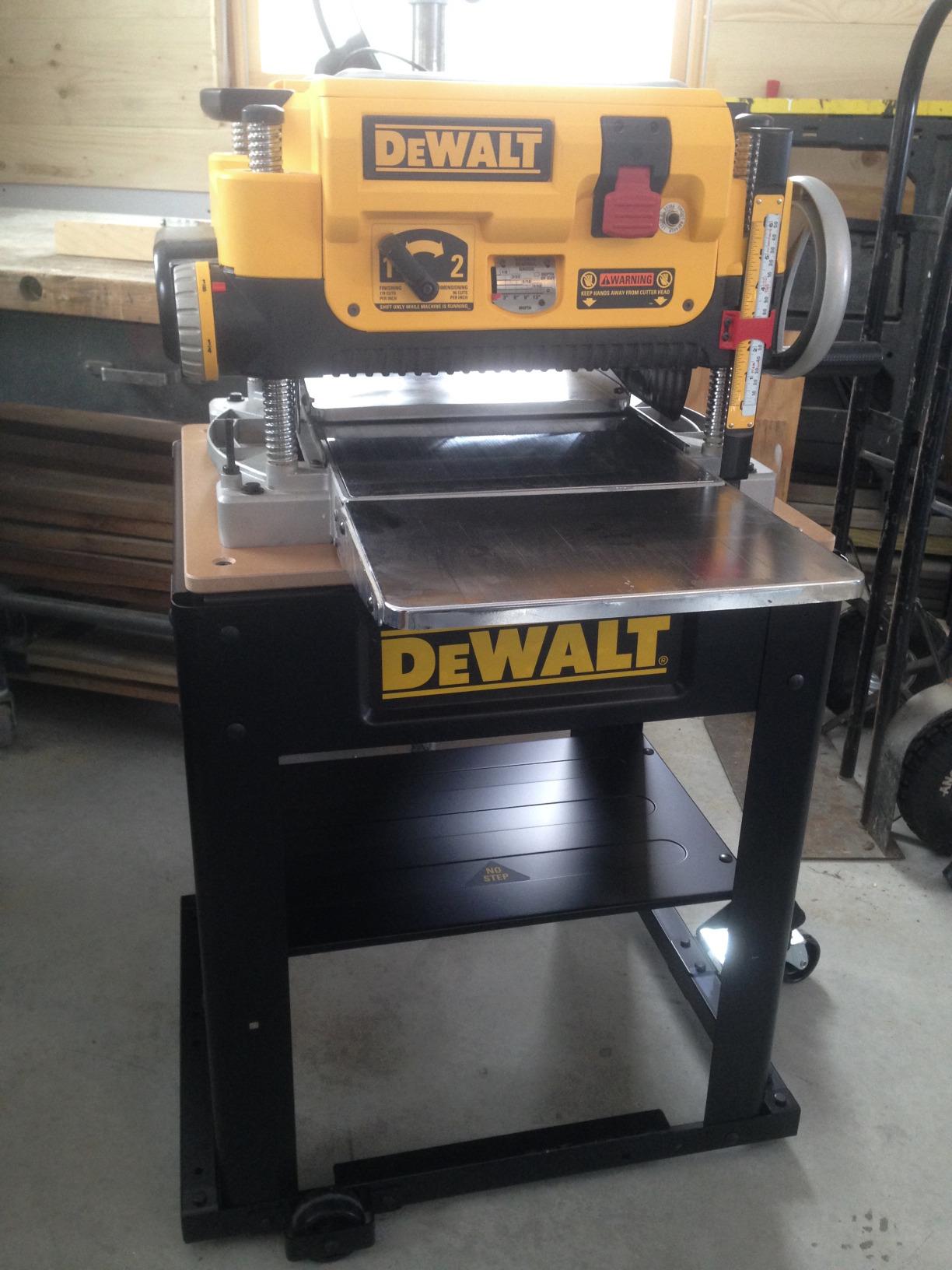
Stability is the other story. Reviewers consistently describe it as rock solid under a heavy planer, and the frame did not flex or wander when I pushed against a loaded top from the side. The lower shelf gives you somewhere to put blades, a push block, and the dust hose when the machine is parked against a wall.
Forum owners on r/woodworking and lumberjocks specifically single out the maneuverability, and several mention that the planer tucks flat against a wall when parked. In a one-car garage that is the difference between having a working lumber prep station and having a planer you trip over every time you walk to the table saw.
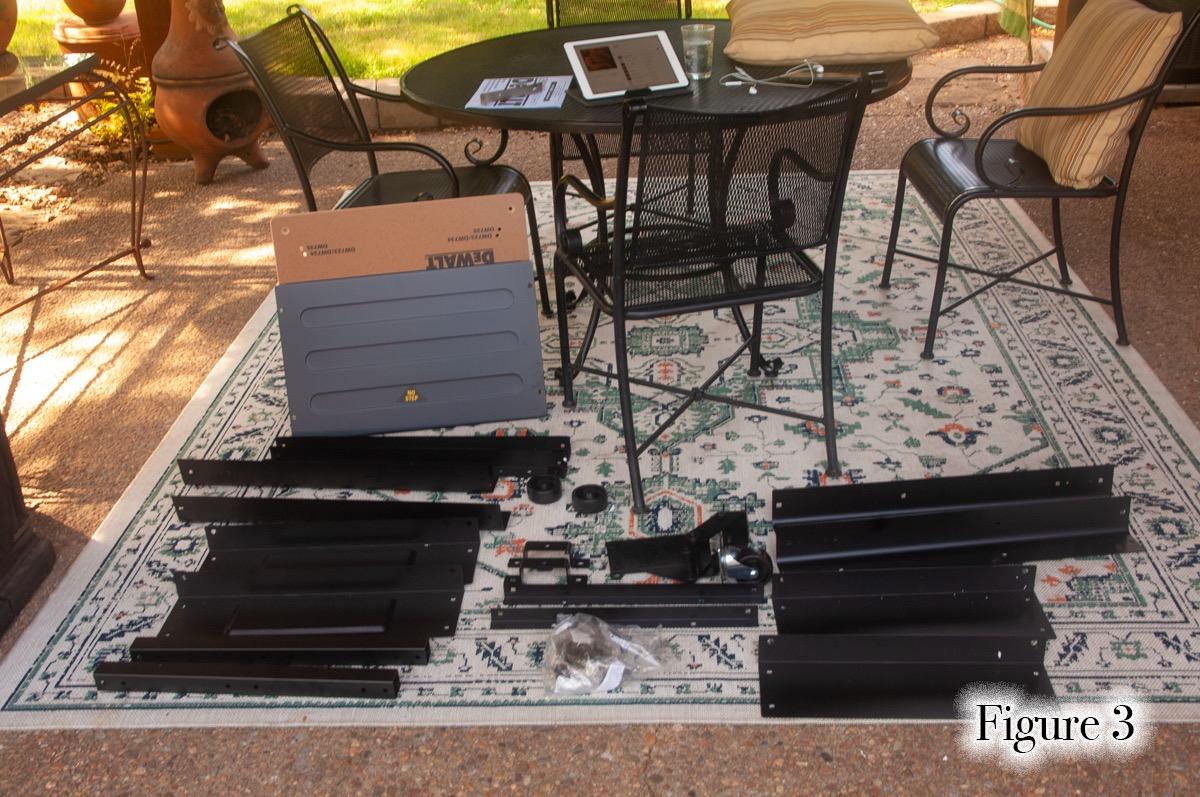
Why the Separate Mobile Base Beats a Loaded Cart
A rolling stand with a heavy planer bolted to it is a very tall object with its mass up high. Push that sideways with a board in your hands and the whole assembly wants to walk. The DW7350 sidesteps the problem by separating the mass. The planer sits low on its own base when you move it, and the stand stays put as a fixture when you are planing.
You can roll it in, position it, and park it out of the way. It also means the planer is not permanently bolted to the shop. If you are working away from home or sharing a rented shop, the machine leaves with you and the stand does not.
Load Capacity and Frame Rigidity
The listing describes the stand as durable and stable under heavy loads, which matches what owners report about mounting a full-size portable thickness planer on it. There is no numeric load rating printed in the specification block for this stand, which is worth noting honestly, but the practical evidence from owners running heavy planers is consistent.
The MDF top is the part to watch over time. MDF is stable and flat out of the box, and it takes threaded inserts well, but it will mark and it can be damaged by oil or water. Treat it like a surface you intend to keep for years rather than a throwaway.
Working Height and the Planer Top
The stand is 30 inches tall and 24.5 inches across the top, and there is no height adjustment. If your shop is set up around a 34-inch bench, a 30-inch stand means you are feeding boards slightly below bench height, which is workable but not ideal for long stock.
If you want the planer top flush with your bench, the usual fix is a bench top built to the same 30-inch line, or an outfeed roller stand set low enough to bridge the gap. Many owners do exactly that.
Who It Suits and Who It Does Not
This is the stand for a garage or small shop where the planer needs to be both a working machine and a stored machine. It suits owners who plan to move the planer frequently and who want the storage shelf that comes with it.
It is the wrong choice if you want a narrow footprint for a very tight shop, or if you need a planer top to match a tall bench height exactly. It is also not an entry-level route into a planer stand, and the fixed height is a limitation no amount of added hardware fixes.
2. POWERTEC UT1002 – The Best Non-Mobile Stand for a Fixed Bench Setup
POWERTEC Tool Stand, MDF Split Top Expands to 20″x25″, 32″ Work Height Power Tool Stand for Drill Press, Belt Sander, Bench Grinder, Band Saw, Scroll saw, and Planer (UT1002)
500 lb load capacity
32 inch working height
Expandable 14 x 25 to 20 x 25 inch top
23 pounds
+ Pros
- 500 lb load rating on a powder-coated steel base
- 32 inch working height suits standing use
- Expandable MDF split top widens for larger tools
- 18 x 27 inch lower storage shelf
- Entry-level fixed stand for a permanent install
– Cons
- MDF and particle board top and shelf bow under significant weight
- Only one adjustable leveling foot so uneven floors are not corrected
- Not designed to accept casters and adding them voids the warranty
The UT1002 is the anti-DW7350. It has no wheels, no mobile base and no height adjustment, and in a shop where the planer lives in one spot forever, none of that matters. What matters is that it holds half a ton, stands at a true 32-inch working height and it is a far more modest outlay than the mobile options.
I put a compact benchtop planer on this stand and had no problem with lateral movement at all. The leg base is wide and the rubber feet grip a concrete floor properly. If you have ever fought a cast-iron planer that wanted to walk across the shop while you planed, a fixed-leg stand is the simplest fix there is.
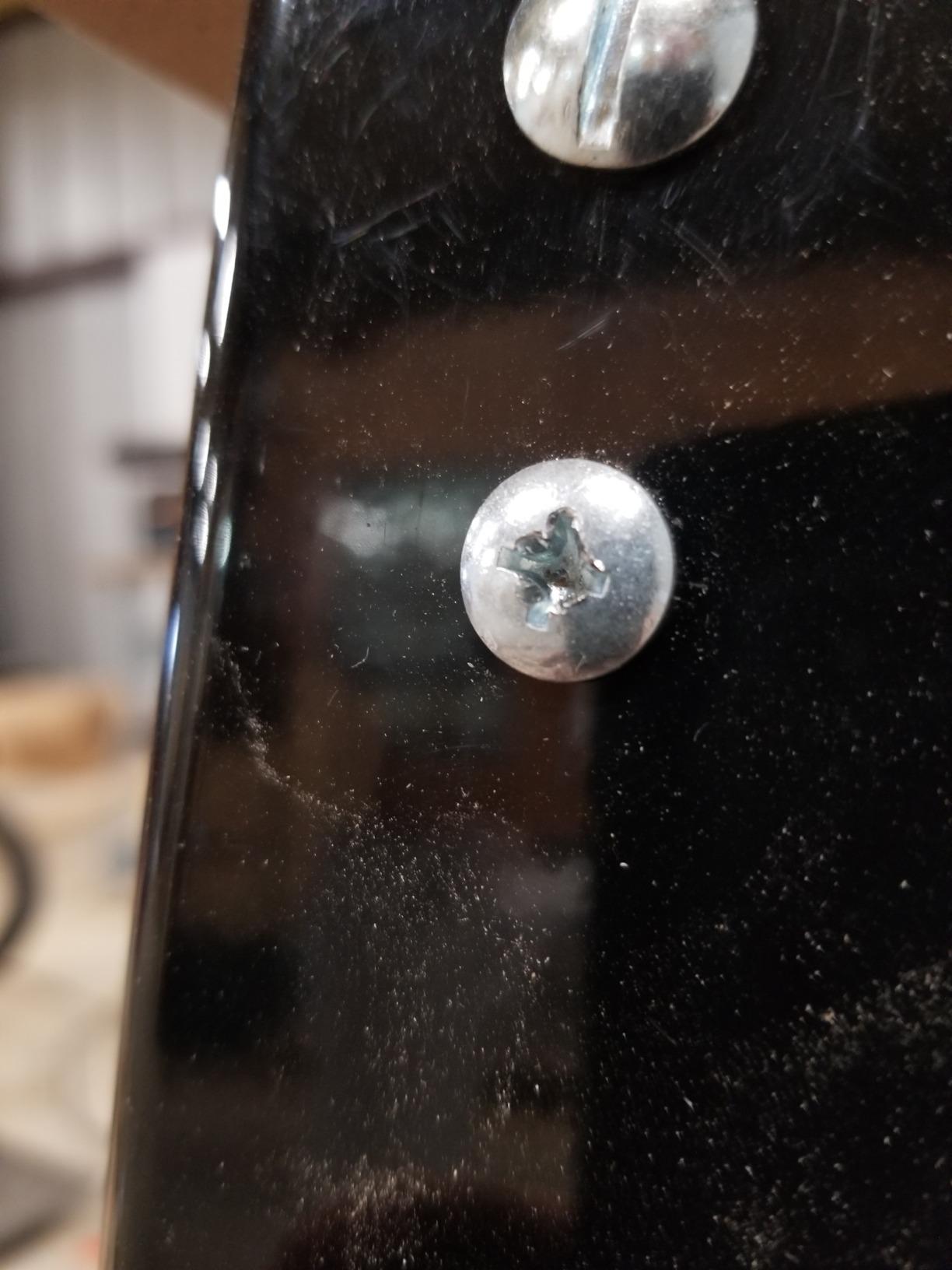
Reviewers treat it as a light-to-medium duty stand that suits DIY benchtop tools, and the recurring advice is to seal the MDF top and reinforce the shelf with plywood. That is a ten-minute job with a bottle of polyurethane and a sheet of 3/4-inch ply, and it addresses the only complaint that appears consistently.
One more thing to know before you buy: the manufacturer states the UT1002 is not designed to be used with casters. Owners who bolt wheels on anyway do it at their own risk and outside the warranty. If mobility is a requirement, look at the rolling stands further down this list instead.
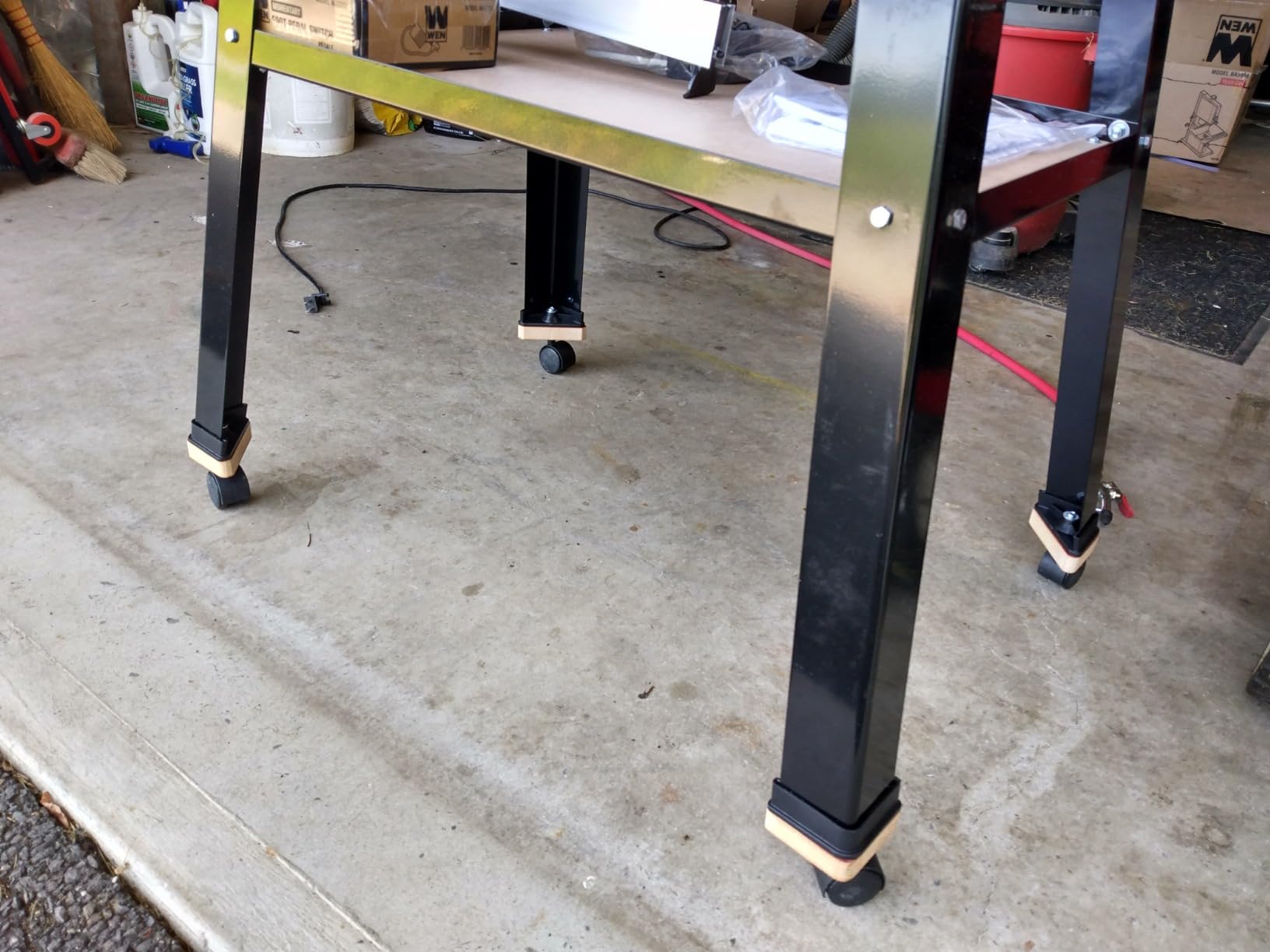
Load Capacity and What 500 Pounds Really Means
A 500-pound rating on a compact benchtop stand is generous headroom. A portable thickness planer in this class is nowhere near half a ton, so you are looking at several times the machine’s weight in structural margin, which is what you want for a top that also absorbs the downward push of feeding a hard maple board.
The weak point is not the frame, it is the sheet material. Reviewers report the top and shelf bowing under significant weight, which is exactly why sealing the top and reinforcing the shelf has become standard practice in owner write-ups.
Why 32 Inches Beats 30 or 24 for Planing Comfort
Working height is the number most people ignore and planers most care about. Feeding an 8-foot board through a planer at 32 inches means the stock runs at roughly hip height, which is a comfortable place to push and pull for most adults over short reaches.
The Shop Fox D2275 at 24 inches is genuinely lower, and the Makita stand is lower still. Those are fine for a seated or short operator. For a standing workflow with long stock, 32 inches is a much better place to be, and it is the number that made this stand my default for fixed shops.
The Expandable Split Top and Multi-Tool Use
The MDF top is a split design with a ruled surface that expands from 14 x 25 inches to 20 x 25 inches. That is the single most useful feature on this stand, because it lets you open the top up for a wider machine and close it down for a narrow one like a belt sander or scroll saw.
It is also a genuinely multi-tool stand. The manufacturer lists drill presses, belt sanders, bench grinders, band saws, scroll saws and compact planers as intended applications, and the 18 x 27 inch shelf below takes the accessories that would otherwise clutter your bench.
Who It Suits and Who It Does Not
Buy this if your planer has a permanent home in the shop, if you want a working height near 32 inches, and if you would rather not think about casters at all. It is the most straightforward answer for a fixed installation and the least interesting one for a flexible shop.
Skip it if you need to move the machine, if your floor is noticeably uneven and you need more than one leveling point, or if you intend to add wheels and expect warranty coverage afterwards.
3. WEN MSA658T – The Best Stand for Long Boards and Long Roller Span
WEN Multi-Purpose Rolling Planer and Miter Saw Tool Stand with Extension Rollers (MSA658T)
Rollers expand up to 54.3 inch
All-metal top
No drilling needed to mount
22.7 x 22.7 x 29.3 inch
+ Pros
- Metal top needs no drilling and will not absorb moisture like MDF
- Adjustable rollers extend to 54.3 inches for long workpiece support
- Retractable swivel caster switches between mobile and stationary quickly
- Designed to fit any WEN benchtop planer or miter saw
– Cons
- Wide roller span means a relatively large floor footprint
- Bundled for WEN machines so bolt-pattern fit varies by brand
Every stand on this list has a job. The WEN MSA658T’s job is long stock. The adjustable rollers extend out to 54.3 inches, which gives you a supported span for a full-length board that most compact stands simply cannot offer, and a planer that sags in the middle is a planer that produces uneven thickness.
The stand itself is roughly cube-shaped at 22.7 x 22.7 x 29.3 inches, so the footprint is reasonable until you pull the rollers out. Plan the shop layout with the rollers extended, not stowed, because that is the position you will be in 90 percent of the time you are actually planing.
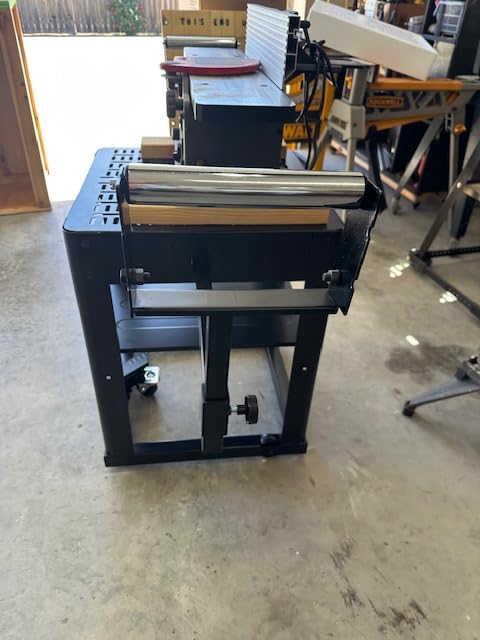
Owners value the all-metal work surface and the roller extension, and about 70 percent of reviews are five-star. The most common praise is for how quickly the retractable caster switches the stand between mobile and fixed use, which is the feature that makes a single stand work as both a planer station and a miter saw station.
That dual-tool design is genuinely useful. Rather than owning two carts taking up floor space, you mount a planer and a miter saw and swap. The manufacturer states it is compatible with the majority of saws and planers on the market and specifically designed to support any WEN benchtop planer or miter saw.
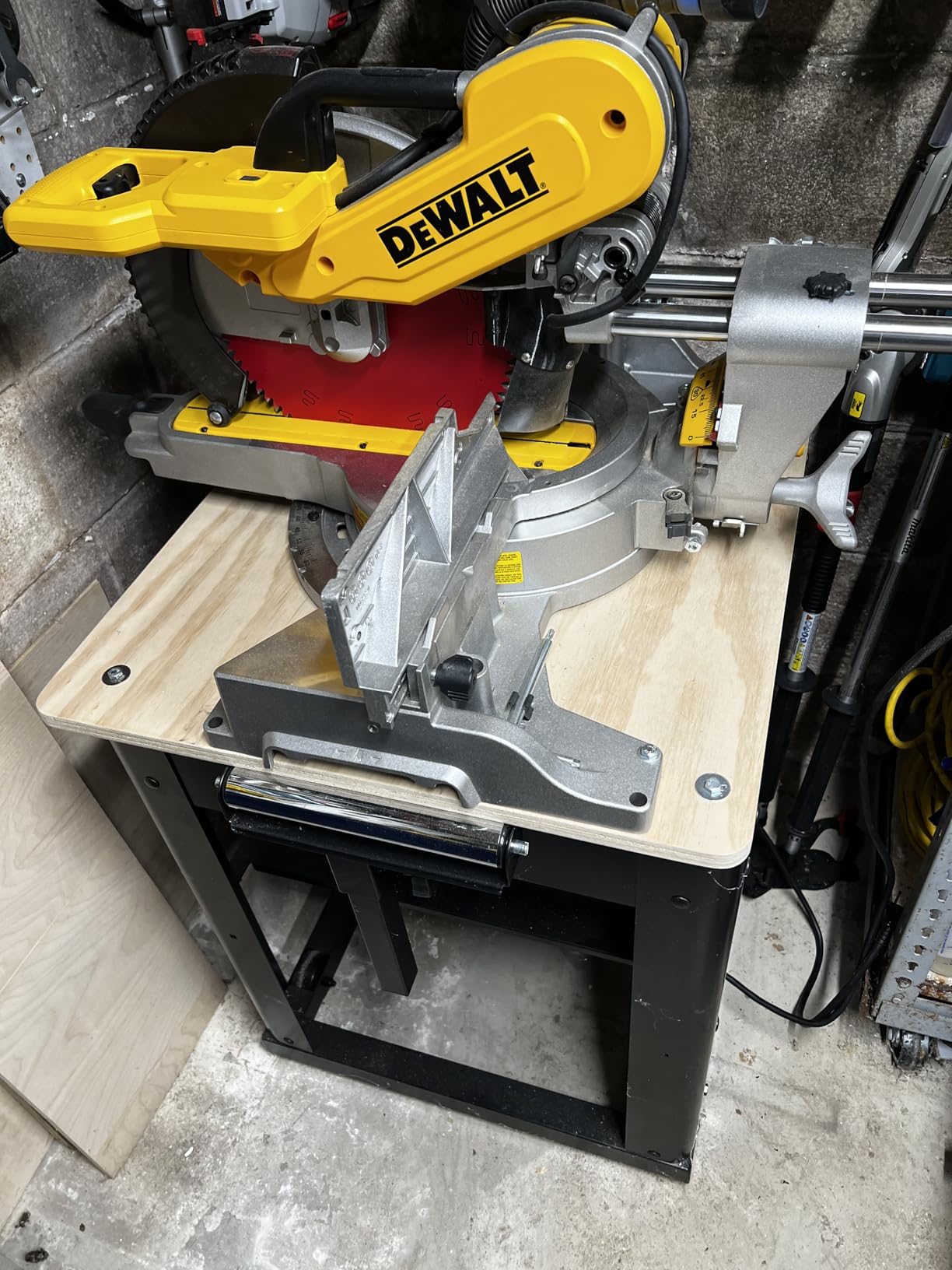
Metal Top Versus MDF: What Changes in Daily Use
The metal top is the quiet hero here. It requires no drilling to mount a tool, it will not absorb moisture, and it will not chip or delaminate the way a particle-board top can after a few seasons of glue and finish overspray. On a metal top you can mark out your own hole pattern with a tape measure and a center punch and be done.
The trade-off is that you lose the flat, dead reference surface that a thick MDF top gives you for squaring stock. For most people feeding boards through a planer that is not a meaningful loss, since the planer’s own tables provide the reference that matters.
Roller Span and Board Support
The adjustable rollers are the reason to choose this stand over a smaller mobile base. Supported stock stays flat, and flat stock means the cutterhead takes an even pass instead of working harder on the thin spots. On an 8-foot board, a 54.3-inch span dramatically reduces the amount of unsupported stock the planer is holding up.
Keep in mind that extension rollers add nothing to the stand’s structural capacity. They support the workpiece, not the machine. The machine still has to sit fully on the top with its mounting bolts loaded.
The Retractable Swivel Caster Mechanic
One swivel caster retracts up into the frame so you can drop the stand into a fixed position, and the other wheels stop it moving. Owners report the switch between mobile and stationary takes a few seconds, which is fast enough that you will actually use it rather than leave the planer in the middle of the floor.
Check the caster lock before every planing session, especially with a heavy planer loaded. A stand that creeps sideways while you are feeding a long board will feed that board into the wrong place.
Who It Suits and Who It Does Not
This is the stand for someone who regularly handles full-length boards and wants one rolling base to serve both the planer and the miter saw. It suits a shop with a clear line for infeed and outfeed support.
It is a poor fit for a very small shop where a 54-inch roller span simply has nowhere to go, and it is not the natural choice if your planer is a heavier machine than the roller-topped stands are designed around. If you own non-WEN machines, confirm the bolt pattern before you commit, since fit for other brands can vary.
4. Shop Fox D2275 – The Heaviest Load Rating in a Compact Fixed Stand
Shop Fox D2275 Tool Stand
1000 lb load capacity
24 inch working height
Alloy steel, iron and rubberwood
18.3 pounds
+ Pros
- 1000 lb load capacity
- the highest numeric rating in this roundup
- Generously sized top area
- Non-slip rubber feet dampen vibration during planing
- Backed by a one-year warranty
– Cons
- 24 inch working height is lower than most rolling planer stands
- Fixed legs mean no built-in mobility
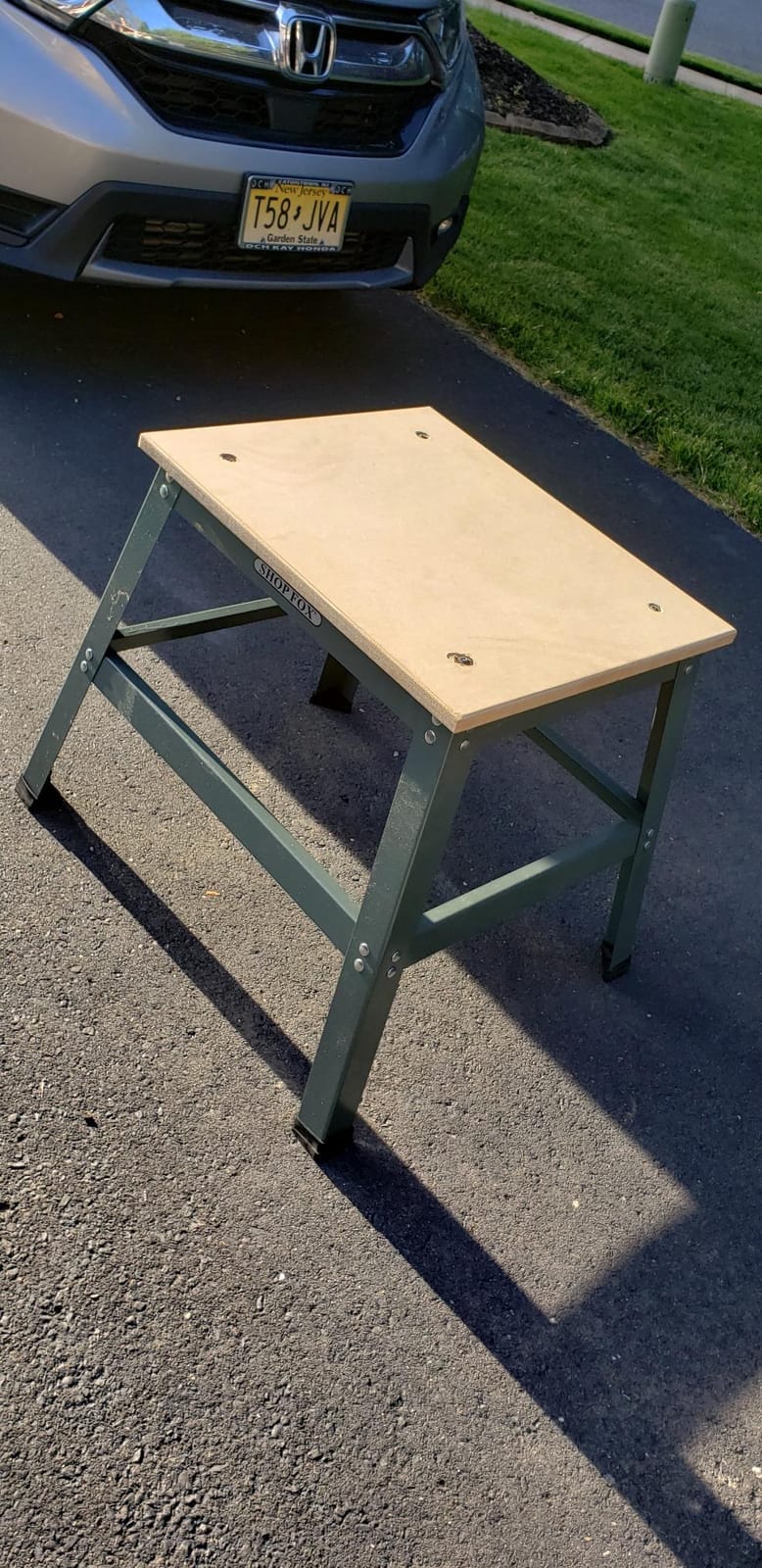
A 1000-pound rating on a stand that weighs under 20 pounds tells you this is overbuilt rather than accurately measured. Shop Fox built for the heaviest stationary machines a serious hobbyist owns, and the excess margin asks nothing of you in return.
In use it behaved like a piece of shop infrastructure. I loaded it hard and pushed laterally from the side and it did not move an inch. The non-slip rubber feet do real work damping vibration, which matters because a planer generates a lot of it and a sliding top makes thickness readings less repeatable.
About 72 percent of reviews are five-star, and the complaints are almost entirely about one thing: the 24-inch height. That is a genuinely low working height for a planer, and it is the whole trade-off of this stand. You are trading ergonomics for a load rating that no portable benchtop planer will ever approach.
That is not a pointless trade. If you are pairing a planer with a jointer or a disc sander and want a permanent low station that feeds material between machines at a common height, 24 inches is exactly the height you want.
Load Capacity and the Jointer Case
This is the stand to shortlist if your shop contains a jointer, a spindle sander or a disc sander as well as a planer. Those machines routinely weigh more than any benchtop planer, and this is one of the few stands in the roundup rated to hold them without apology.
The alloy steel and iron construction is what earns the number. Buyers treat the D2275 as a dependable no-frills fixed stand, and that framing is accurate: there is nothing clever about it, which is why it still feels solid after years.
Working Height and Ergonomic Limits at 24 Inches
Plan for bent knees or a lowered stance when feeding stock at 24 inches. It works, and many operators with a permanent low station prefer it, but if you are standing and feeding 8-foot boards for an hour, 30 to 32 inches is materially more comfortable.
If height is your priority, the POWERTEC UT1002 at 32 inches is the direct counterpoint in this roundup, and it is a less expensive alternative that still carries a 500-pound rating well beyond what a portable planer needs.
Top Area and Multi-Tool Positioning
The listing describes a generously sized top area, which on a fixed stand is more useful than it sounds. Fixed stands do not have to be footprint-constrained because you can place them wherever the workflow demands, so the top is sized to give you room around the machine for supports and outfeed.
One thing to plan: fixed legs mean fixed location. If you ever want to move this to another part of the shop you are lifting it rather than rolling it, which at this weight is a two-person job.
Who It Suits and Who It Does Not
Buy the D2275 if you run a low permanent machine station, if you want a load rating with genuinely enormous headroom, or if you want a simple fixed home for a compact planer without spending much. It also suits a shop that already has heavy stationary machines and one stand that can cover them all.
Pass on it if you are a tall operator, if floor space is tight and the machine needs to move, or if you are chasing a mobile workflow. It is infrastructure, not mobility.
5. VEVOR Thickness Planer Stand – Height Adjustment on a Rolling Metal-Top Stand
VEVOR Thickness Planer Stand, 100 lbs heavy loads, Three-Gear Height Adjustable Thickness Planer Table,with 4 Stable Casters & Storage Space, for most planers, saws, bench-top machines, power tools
100 lb load rating
Three heights: 30.5, 33.5 and 35.4 inch
Metal top with pre-drilled holes
51 pounds
+ Pros
- Three-gear height adjustment at 30.5
- 33.5 and 35.4 inch
- Metal top with pre-drilled holes accepts a planer without extra drilling
- Four swivel casters plus foot-action locks
- Owners report it holding a DeWalt DW735 with no deflection
– Cons
- 100 lb load rating is low next to the 500 and 700 lb stands here
- No lower shelf is included and owners cut their own
- Assembly manual has inaccurate steps and hardware bags arrive unsorted
The VEVOR stand combines two things you rarely get on one rolling stand: three selectable working heights and a metal top with pre-drilled holes. The legs lock into positions that put the top at 30.5, 33.5 or 35.4 inches, so you can match the planer to your body and to your bench instead of living with one fixed number.
It also has a metal top with pre-drilled holes, so if your planer matches a common pattern you bolt straight on with no drilling. The top boards material up to 27.7 inches long by 24 inches wide, which covers most benchtop planers and miter saws.
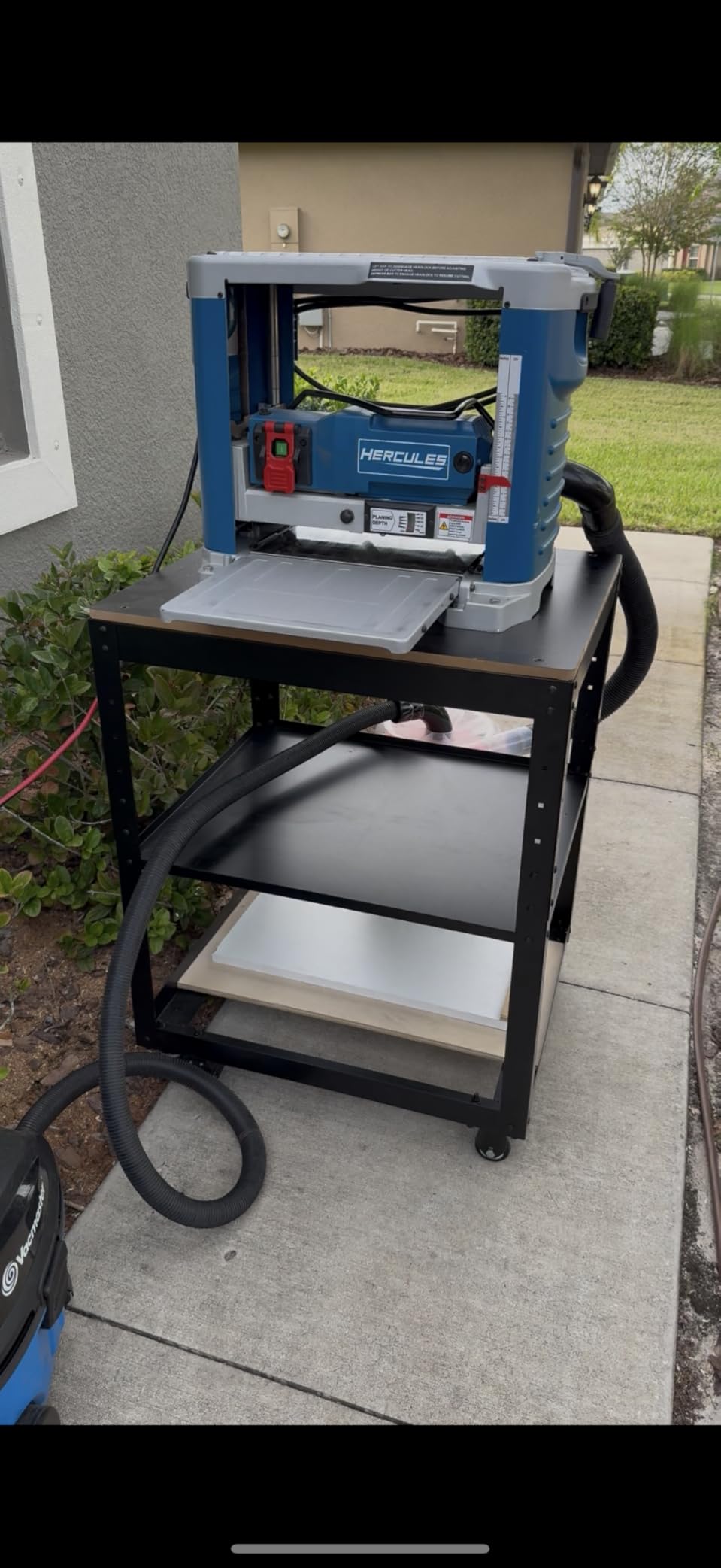
Owners rate it sturdier than its specification sheet suggests, and they specifically call out the casters, which roll easily and lock firmly. Reviewers also report it holding heavy planers such as the DeWalt DW735 with no deflection of the top, which is the real-world test that matters.
The 100-pound rating is the number to think hardest about. It is the lowest numeric rating among the rolling stands here, and a heavy portable thickness planer can run close to that figure on its own. My rule is simple: pick a stand rated well above your planer’s weight, and if your machine is near the ceiling of its range, this is not the stand for it.
Three-Gear Height Adjustment in Practice
Three fixed positions are not infinitely adjustable, but they cover the useful range for a benchtop planer. 30.5 inches suits a lower workflow, 33.5 lines up with a typical bench, and 35.4 inches is a standing feed height that most operators will find comfortable for long stock.
Because the adjustment is a leg position rather than a screw jack, it is fast and it does not sag over time. The trade-off is that you cannot fine-tune between positions, so measure your target height before you choose which gear to live on.
Load Rating and Planer Weight Headroom
This is the weakest spec on the stand and the one I would not ignore. A stand rated at 100 pounds under a planer of similar weight has essentially no margin for the dynamic load of feeding hard material, and it also has to carry the outfeed support and any accessory you bolt to the top.
If your planer is a compact unit and you are not planning to upgrade to a heavier machine, the rating is workable. If you might move up to a wider machine later, a 500-pound stand gives you plenty of headroom and removes the question entirely.
Assembly and Hardware Quality Control
The most common gripes are about documentation rather than structure: assembly instructions with inaccurate and illogical steps, and hardware bags that arrive unsorted. Budget an extra thirty minutes with a phone video open on the bench next to you.
There is no lower shelf included, and owners routinely cut and fit their own. If you want storage, budget for a sheet of plywood and an hour of work, and mount the shelf to the frame rather than to the top so you do not add thickness above the mounting plane.
Who It Suits and Who It Does Not
This stand makes sense for a compact planer, for a shop that wants three height options on wheels, and for anyone who prefers a metal top with pre-drilled holes over a blank MDF surface.
It is the wrong choice for heavy planers, for buyers who want assembly to be painless out of the box, and for anyone who needs a storage shelf included rather than fabricated. Check your ceiling clearance and your bench height before committing to the 35.4-inch setting.
6. VIGO POWER Universal Tool Stand – The Blank MDF Top You Drill Yourself
VIGO POWER Universal Tool Stand with Wheels, 700 lbs, Drill Press Miter Saw
700 lb load capacity
26 x 14 inch MDF top
30 inch fixed working height
Powder-coated steel frame
+ Pros
- 700 lb capacity on a compact 30 inch footprint
- 26 x 14 inch MDF top is a blank canvas for any bolt pattern
- Enlarged slot holes solve the misaligned-hole problem competitors have
- Powder-coated steel frame resists rust and wobble
- Included hex wrench and visual manual
– Cons
- 14 inch deep top is too shallow for many planers including the DeWalt
- Storage shelf boards are not included and must be cut separately
- Locking casters buckle under load for some owners
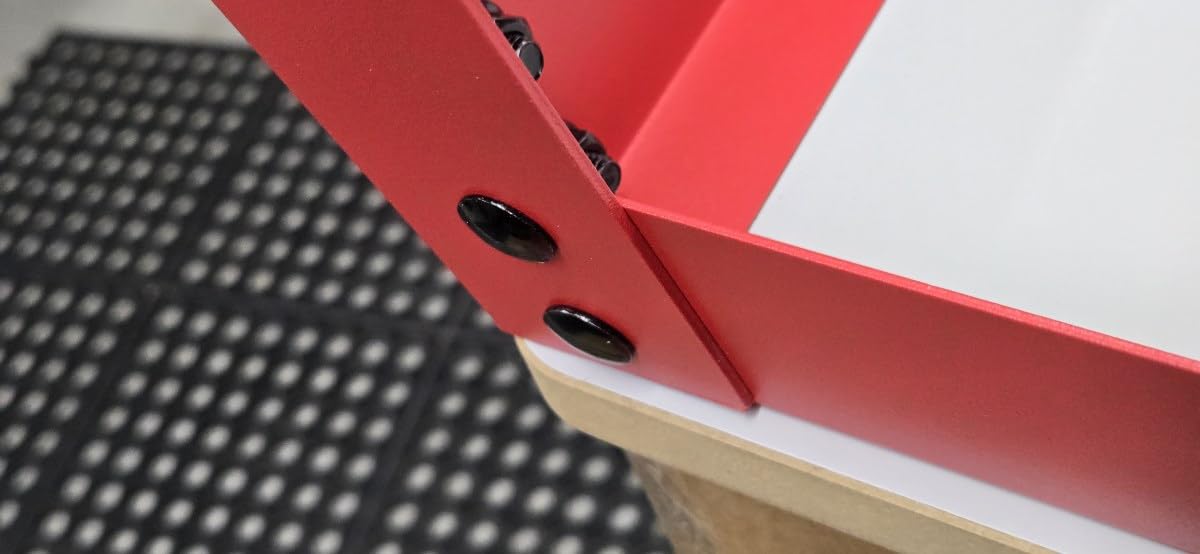
This is the stand for anyone who has been burned by a mismatched bolt pattern. The 26 x 14 inch MDF top arrives blank, and the frame uses enlarged slot holes so that once you drill a pattern for your machine the bolts slide into place instead of fighting you.
That approach solves the single most common complaint in this category. Forum threads are full of people who bought a brand stand, found their planer’s feet did not line up with the pre-drilled pattern, and had to drill new holes in the top themselves. With this stand, that drilling step is the plan rather than the workaround.
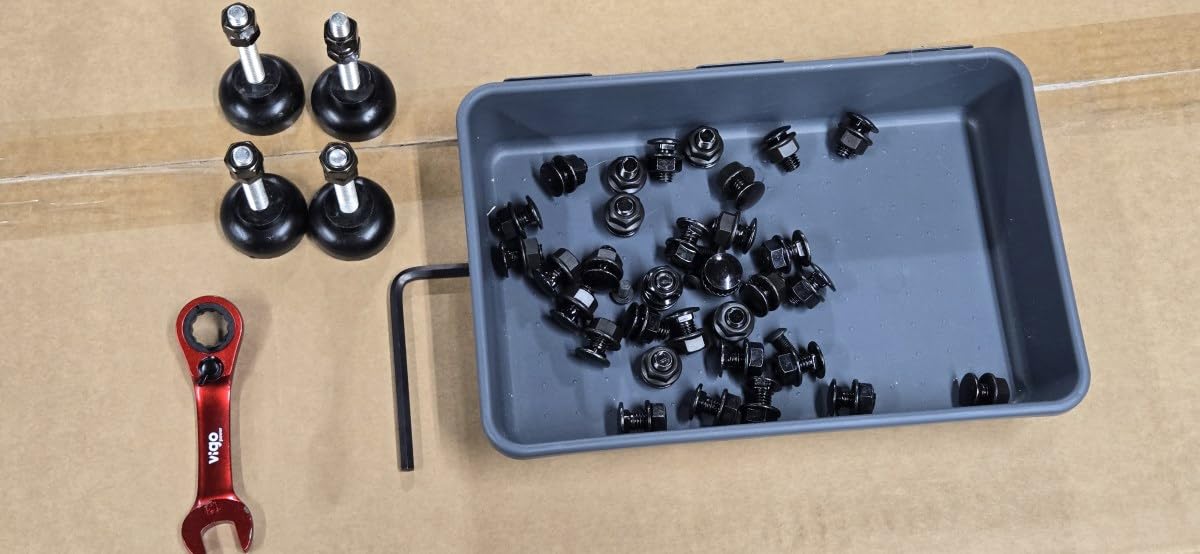
The 700-pound capacity is the second highest rating here, and the powder-coated steel frame is genuinely heavy duty. Owners use it successfully for benchtop drill presses, lathes and small planers, and reviewers like the finish and the customization freedom.
But look at the width before you fall in love with the concept. At 14 inches deep, the top is too shallow for many planers, and the low-rated reviews specifically target that narrow depth. A planer that overhangs its stand is a tipping risk you should not accept no matter how good the frame is.
Universal Mounting Versus Pre-Drilled Holes
Pre-drilled holes save you ten minutes of measuring and drilling and give you a factory-guaranteed fit for the machine the stand was designed around. A blank top costs you that convenience and buys you universal compatibility with any machine you will ever own.
The enlarged slot holes are the detail that makes this stand work. Drilling a precise four-bolt pattern in MDF by hand can leave you a fraction of an inch off, and normal bolt holes will not forgive it. Slots let you position the machine approximately and then slide it into exact alignment.
Capacity, Footprint and the Shallow-Top Problem
Seven hundred pounds of capacity in a 26 x 14 x 30 inch footprint is a good ratio, but the depth is the limiting dimension. Compact benchtop tools such as drill presses, small lathes and scroll saws fit comfortably. A full-size portable thickness planer generally does not.
Measure your planer’s footprint at the base, not the overall width, and compare it to 14 inches of depth. If your machine overhangs by more than an inch on either side, keep looking. This stand is a strong option for a compact planer and a poor one for a 12.5-inch or 13-inch machine.
Casters, Folding Wheels and What Owners Report
The rubber casters glide smoothly on a level shop floor and the frame resists rust, but the reviews are not all positive. Some owners report locking casters that buckle under load with a mounted saw, and a folding wheel mechanism that can jam into the leveling feet and leave the frame wobbly.
Test the caster brakes with a heavy machine bolted on before you rely on them, and check that the folded wheel position does not contact the leveling feet. A small amount of shimming or a different wheel position solves it if the geometry is off on your floor.
Who It Suits and Who It Does Not
Choose this stand if your machine has no matching commercial stand, if you plan to change machines, or if you want a high-capacity rolling base for compact tools where the top depth is sufficient.
Skip it for a full-size portable thickness planer on a narrow top, for anyone who wants storage included, or for a shop that needs a wider work surface. The concept is right; the depth is the constraint.
7. SGOLAN Planer Stand – The Widest Top With Four Height Positions
Planer Stand,500 lbs Load Capacity Planer Table with Wheels, Height Adjustable Power Tool Stand, for Most Planers, Saws, Bench-top Machines, Power Tools
500 lb load capacity
35 x 25 inch top
Four pre-drilled height positions
22.9 pounds
+ Pros
- Widest top in the roundup at 35 inches wide with 25 inches of depth
- Four pre-drilled leg positions give genuine height adjustment
- Coated stainless steel frame resists corrosion
- Rated well above what a benchtop planer needs
– Cons
- Only one caster has a locking mechanism
- Small 62-review base means less long-term feedback than established models
Top size is the feature that separates this stand. At 35 inches wide by 25 inches deep, it is the widest top in the roundup, and that is exactly the dimension that determines whether a full-size benchtop planer sits fully supported or overhangs on one side.
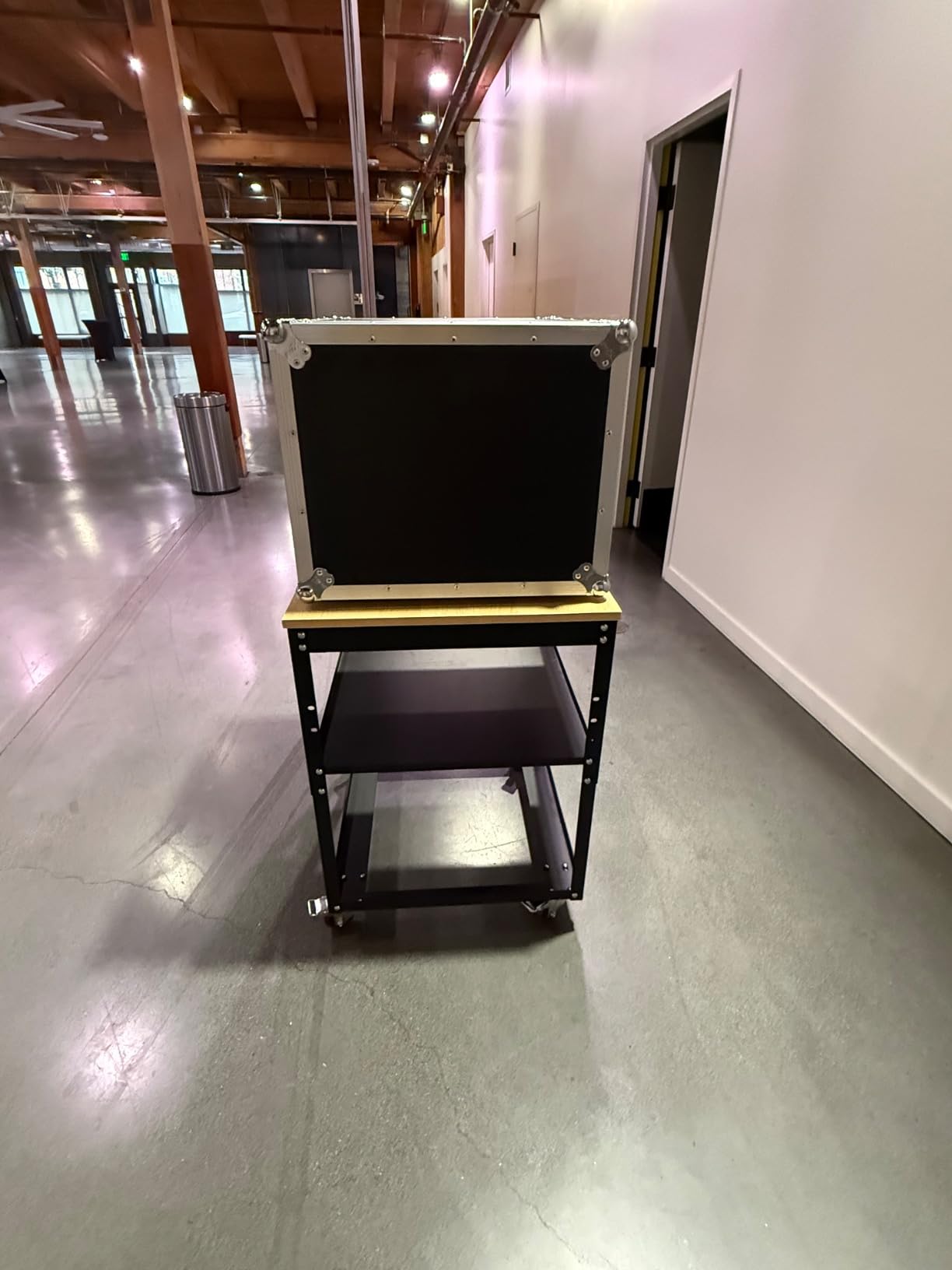
It also has a double-layer design with 28 x 35 x 25 inch usable space, so the frame is not just a plate on legs. You can stage accessories, push blocks and offcuts on the lower level while the planer works up top.
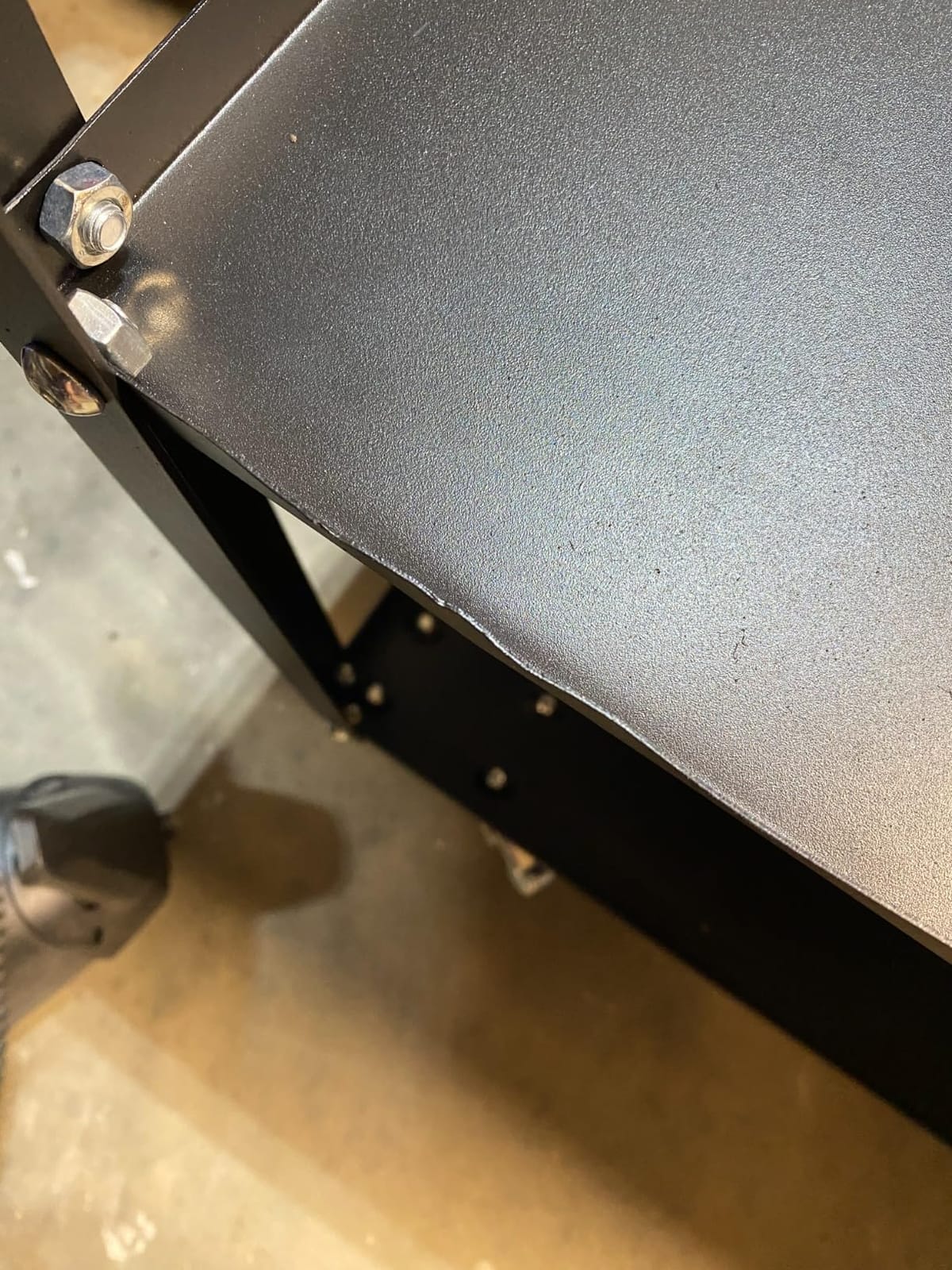
Buyers praise the wide top and the four-height leg system, and about 76 percent of reviews are five stars with no one-star ratings in the set. Its 4.6 average is the highest in the roundup, though the review base is small enough that I would weight it more lightly than the DEWALT or POWERTEC numbers.
The frame is coated stainless steel rated to 500 pounds, which is comfortable headroom for any portable thickness planer. Corrosion resistance is not exciting news in a dry shop, but it matters in a garage where the floor is bare slab and humidity is seasonal.
Top Width and Full-Size Planer Fit
When you are sizing a stand, top depth matters most because planers are deep front to back to accommodate the cutterhead and the depth adjustment. Twenty-five inches of depth is enough to support a full-size benchtop machine with its mounting bolts well inside the edges, and that is a genuine advantage over the narrower stands in this list.
The extra width also gives you somewhere to put a support roller or a sacrificial surface for glue squeeze-out and finish, which is otherwise a problem on any planer station.
Four Height Positions on Pre-Drilled Leg Holes
Rather than a gear mechanism, the adjustment works by moving the legs to different pre-drilled holes in the frame. That is simple, robust and impossible to strip, and it is a better way to build a height range than a screw jack on a budget stand.
Because it is discrete positions rather than continuous adjustment, measure the heights on the assembled frame before you set up your infeed and outfeed supports. Infeed and outfeed table height has to match the planer top, and a stand that moves between positions means the supports move with it.
The Single-Locking-Caster Caveat
This is the one real concern. The stand has wheels for movement, but only one of them has a locking mechanism, which means the cart can drift while you feed stock. For a lightweight machine that is manageable. For a heavy planer pushing against hard material, drift is not acceptable.
If you buy this stand, plan a fix before the first planing session. A wheel chock on the shop floor, a strap across the frame, or a small clamp at the front caster are all cheap solutions to a single-wheel lock.
Who It Suits and Who It Does Not
This is the stand for a shop with a full-size benchtop planer that needs a wide, fully supporting top, plus a four-position height range and a double-layer frame for storage. It suits owners who can solve the caster lock themselves.
It is not the choice for a shop that values a long track record of ownership reports, or for anyone unwilling to add a chock or clamp. With a small review base and one locking wheel, I would pair it with a fixed or fully-locking alternative and compare before committing.
8. POWERTEC UT1012 – The Flip-Top Stand for One Footprint and Two Machines
POWERTEC Flip Top Tool Stand with Caster Wheels – Mobile Workbench with 300lb Capacity, for Benchtop Power Tools, Heavy Duty (UT1012), Alloy Steel
300 lb load capacity
30.5 inch height
25 x 20.6 inch flip top
Alloy steel, 48.4 pounds
+ Pros
- Flip-top design mounts two benchtop tools on one footprint
- Red handle rotates and locks the top with an audible click
- Alloy steel frame reported sturdy with a DEWALT DW735 and sander side by side
- Foot-pedal retractable caster plus two fixed wheels lock the stand
– Cons
- Assembly is difficult and several buyers need two people and two to three hours
- Square carriage bolt holes are hard to align and may need a spreader clamp
- Foot lever for the retractable wheel is extremely tight out of the box
The flip-top is a genuinely different idea, and in a small shop it is the only stand here that carries two machines at once. Instead of moving a planer, you rotate the tabletop. Two machines stay mounted, one facing up and one facing down, and a red handle rotates the top 180 degrees with an audible click when it locks into position.
In practice that means a scroll saw and a spindle sander, or a planer and a belt sander, sharing a single footprint. That is the answer to a one-car garage where a second cart is simply not an option.
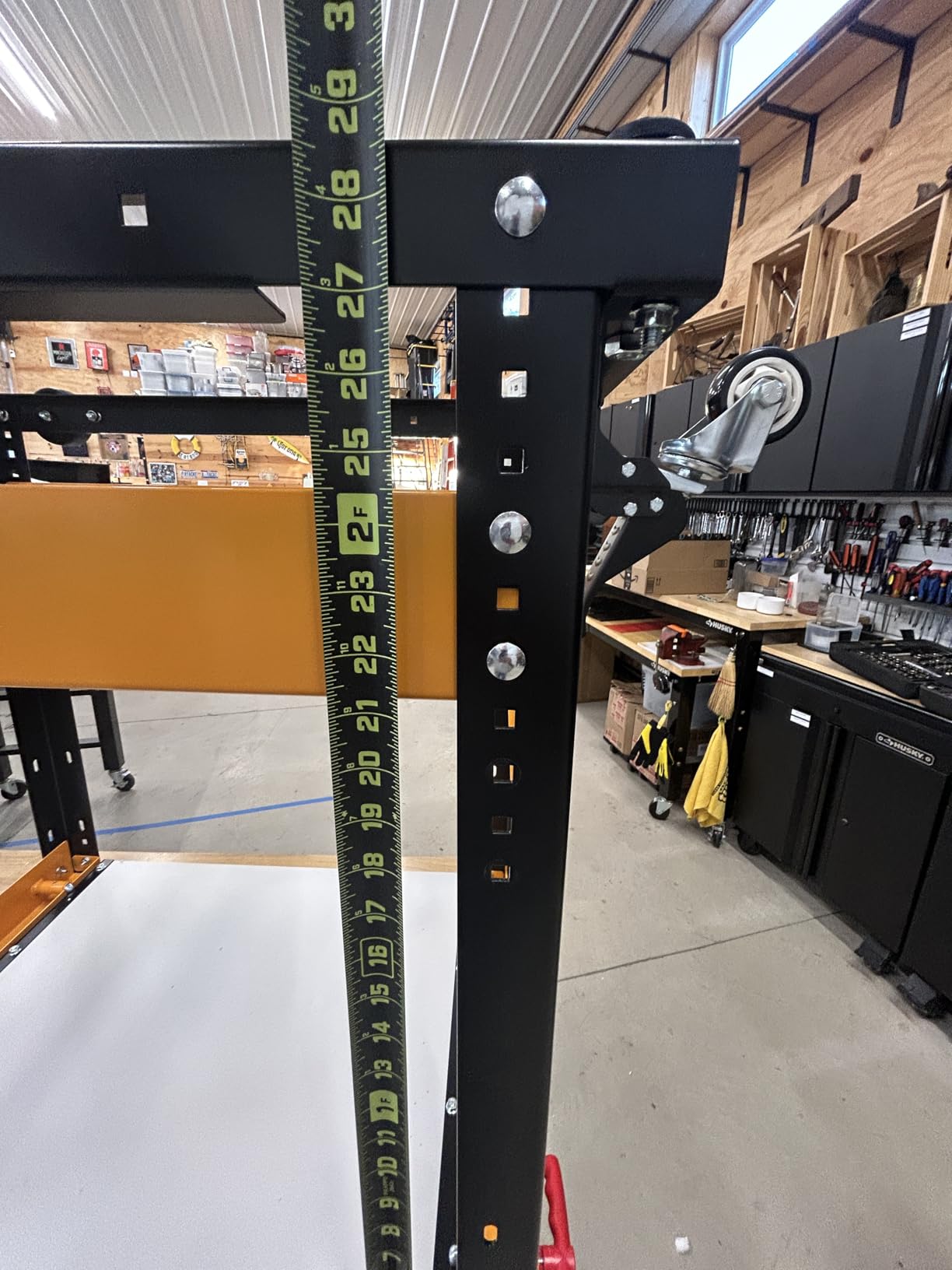
Owners describe it as very well built and genuinely space-saving, and the alloy steel frame is reported sturdy enough to hold a DEWALT DW735 and a sander mounted at the same time. Build quality is the consistent theme in the reviews.
Assembly is the problem. The near-unanimous complaint is friction rather than quality: tight bolt alignment at the carriage holes and a stiff wheel lever out of the box. Budget two to three hours, have a second person available, and keep a spreader clamp within reach.
The Flip Mechanism and How It Locks
The red handle is a cam-style lock that rotates the tabletop and holds it with an audible click. The click matters more than it sounds, because it tells you the top is fully engaged before you start feeding stock. A mechanism that does not positively lock is a mechanism you will stop trusting.
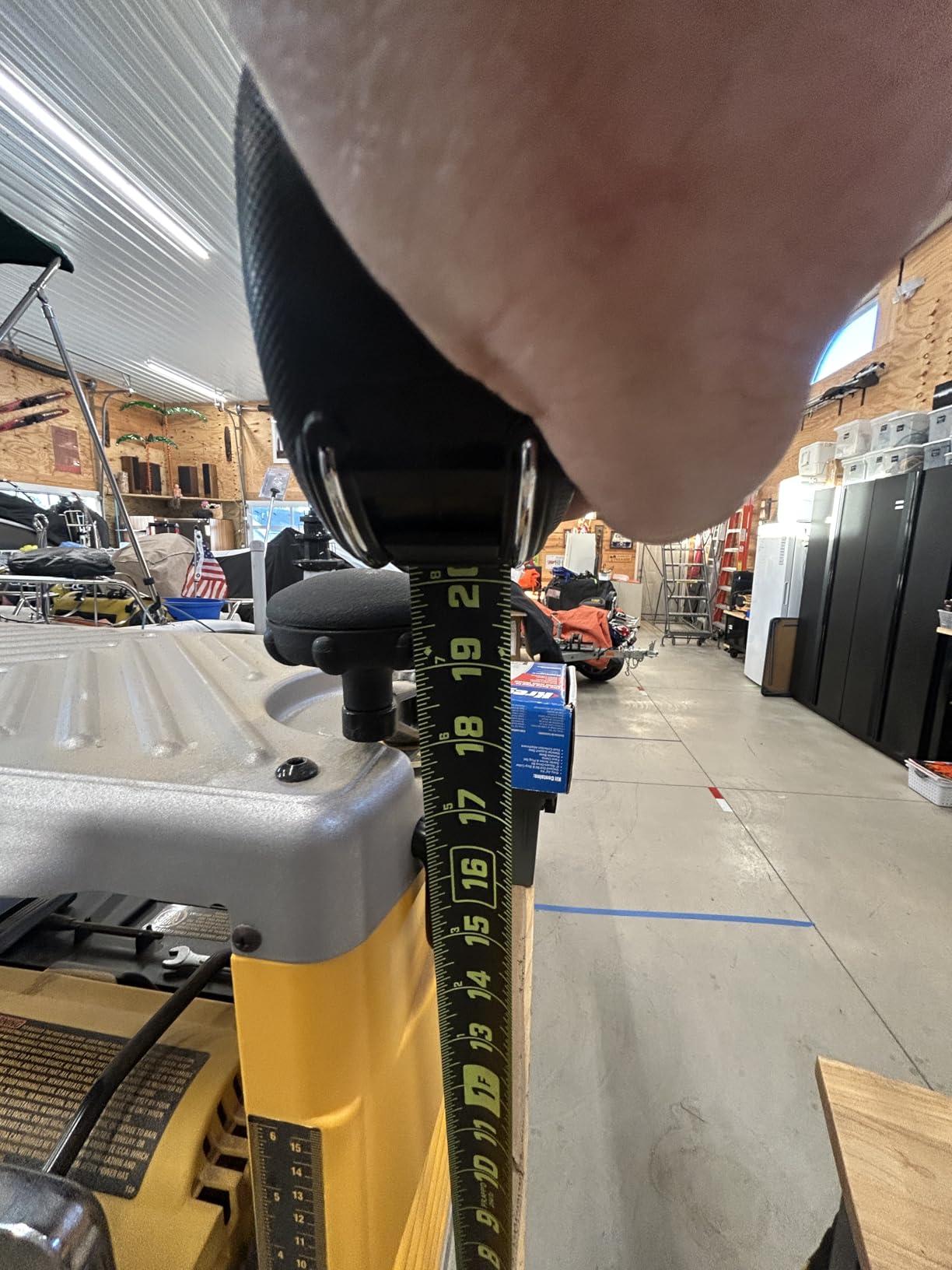
One constraint to plan around: the stand fits machines up to 23-3/16 inches tall, so check your planer’s height including any accessories before committing. A tall machine with an overhead guard or a stacked setup can exceed that.
Capacity, Top Size and What Mounts Where
Three hundred pounds on an alloy steel frame is ample for a single planer and leaves room for a second tool mounted underneath. The top is 25 x 20.6 inches at a 30.5-inch working height, which fits a full-size benchtop planer with room to spare on the depth.
Be aware the top is MDF rather than solid or composite wood. That means it is flat and stable and takes threaded inserts fine, but it is also the surface that will mark first, and it needs sealing if finish or glue gets on it.
Mobility: Two Fixed Wheels Plus a Foot-Pedal Swivel Caster
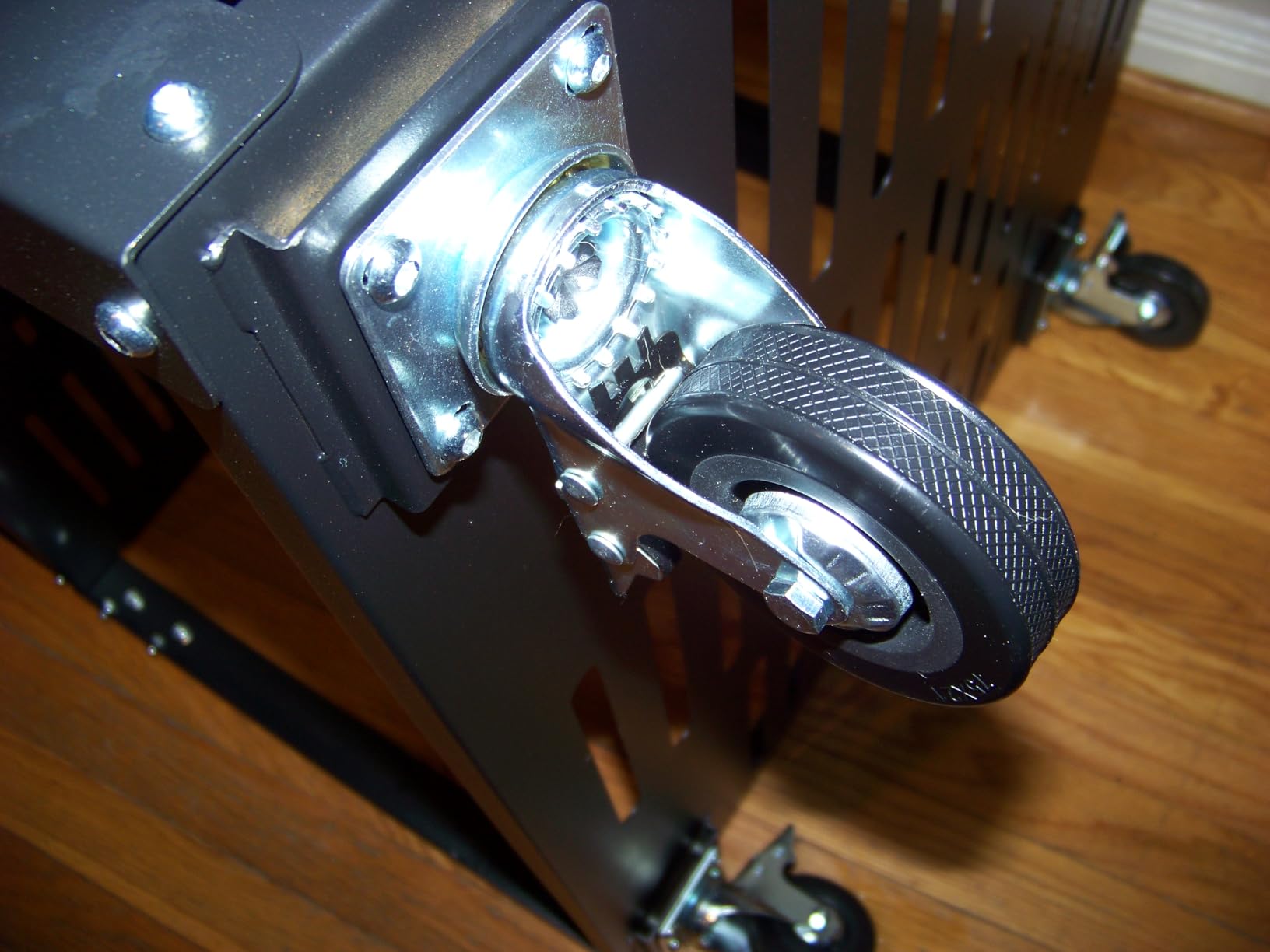
Two fixed casters plus a foot-activated swivel caster with a foot-pedal lock give you a stable three-point base and one-handed movement. Owners like the concept, though several report the foot lever is extremely tight out of the box and needs working in before it operates smoothly.
Also note the small plastic front wheel limits tilt range and is expected by some owners to be the first part to need replacing. That is a fair expectation for a 48-pound stand carrying a heavy planer, and a heavier replacement wheel is a straightforward upgrade.
Who It Suits and Who It Does Not
Buy the UT1012 if floor space is the binding constraint and you want to own two machines on one stand. It suits a garage shop that also runs a sander, and it is a good fit for anyone who values a satisfying locking mechanism over having a free hand to move the top.
Pass on it if assembly time is a dealbreaker, if you own only one machine and have room for a second cart, or if your planer is taller than 23-3/16 inches. It is the most mechanically interesting stand here and also the most demanding to assemble.
9. Makita 193902-8 Planer Stand Set – OEM Fit for Makita Planers
Makita 193902-8 Planer Stand Set, Teal
Bolts to Makita mounting pattern
Cast iron base
About 19.5 x 13 inch top, 22 inch high
Sturdy machined construction
+ Pros
- Properly machined construction with bolt holes that often line up on the first try
- Bolts directly to the Makita 1902 and 2012NB mounting pattern
- Simple low-weight design that is easy to modify
- Coordinated with the Makita teal tool line
– Cons
- Listed dimensions refer to the shipping container not the assembled stand
- Only about 22 inches high once assembled which is too low for most users
- Assembly is counter-intuitive with poor or missing instructions
This is a narrow recommendation and a useful one. If you own a Makita 1902 or 2012NB, this stand bolts to the factory mounting pattern, and owners report the machined bolt holes often line up on the first try. That is more than can be said for most universal stands.
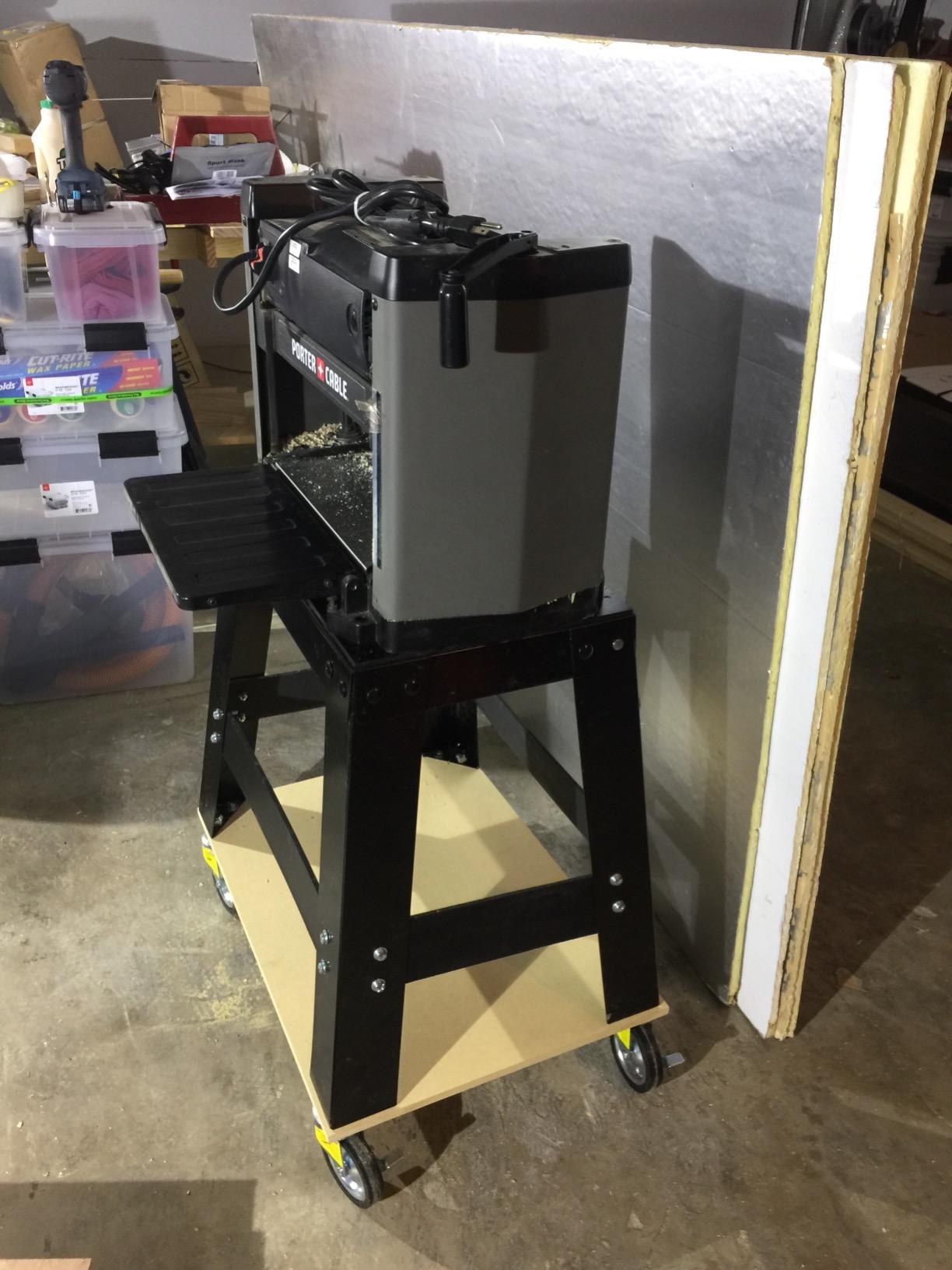
What you get is a simple, low-weight stand with a cast iron base that is easy to modify. That last point matters more than it sounds: owners routinely add their own MDF platform and casters to raise it, which is exactly the fix the design needs.
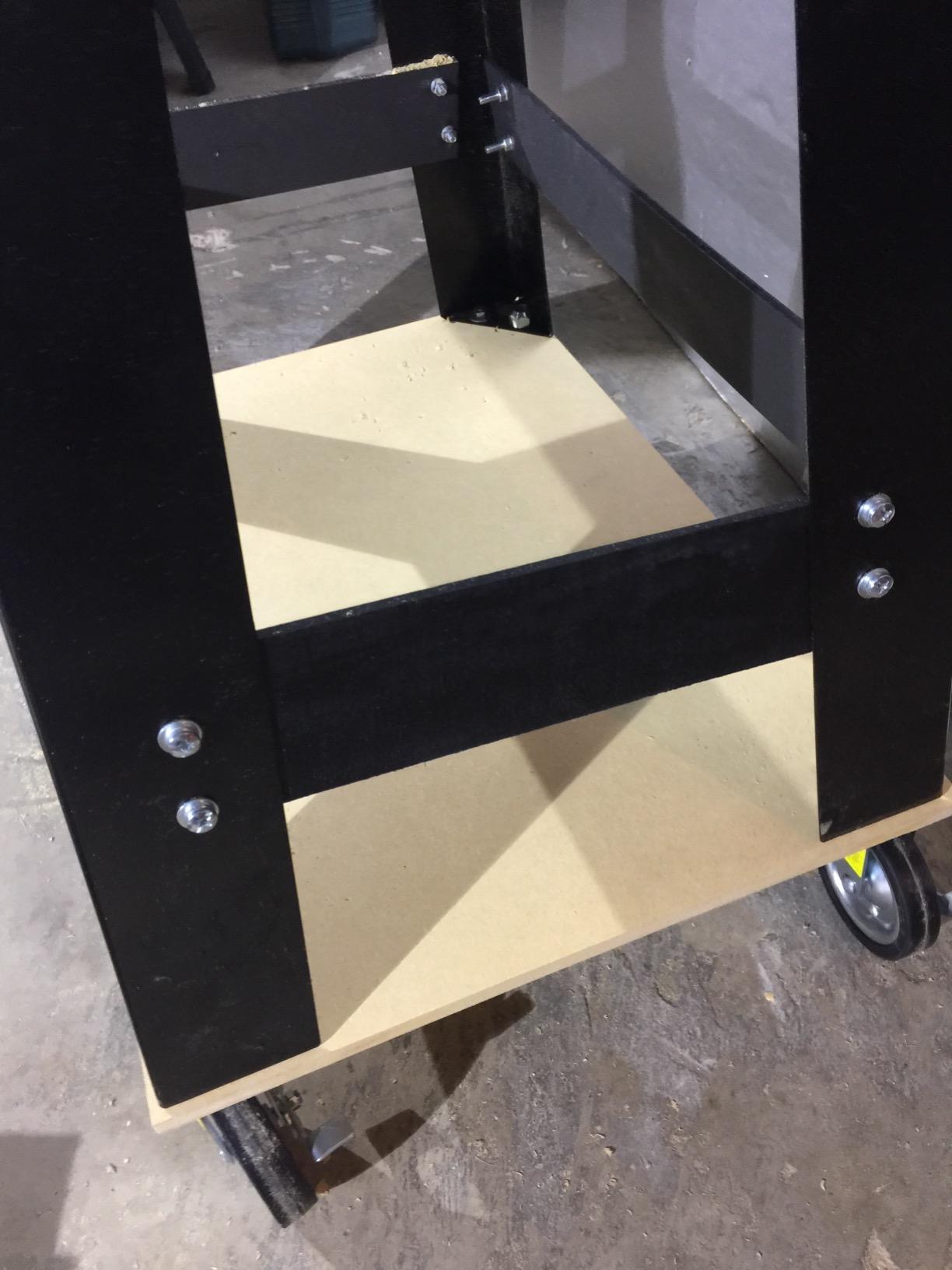
Reviews split sharply, and the split is informative. Some owners find the fit to Makita planers excellent and the machining superior to a competing budget stand, while several one-star reviews focus on hole misalignment and the very low 22-inch working height.
There is a documentation problem worth naming here. The listed product dimensions refer to the shipping container rather than the assembled stand, so buyers have to measure it themselves. Customer-measured assembled size is about 19.5 inches wide by 13 inches deep at the top and 22 inches high. Measure before you plan the layout.
OEM Mounting Fit and What It Solves
The factory bolt pattern is the entire value proposition. If your planer is a Makita, the planer bolts straight down with no drilling, no adapters and no guessing. For an owner who has already drilled their own holes in an MDF top, that is a different experience entirely.
The machining quality is genuinely good by reviewers who own one. It is a cast and machined part rather than a folded steel frame with a powder coat, and that is why some owners rate it above a competing budget stand of similar type.
The 22-Inch Height Problem
Twenty-two inches is low. It is roughly waist height on a seated operator and well below a standing feed height. Several one-star reviews are about this and nothing else, and they are not wrong: no amount of build quality makes a 22-inch planer top comfortable to feed 8-foot boards.
The standard owner fix is to bolt an MDF platform on top to raise the working surface, which several buyers do. If you are comfortable with that modification, the stand is fine. If you want turnkey height, this is not it.
Assembly, Instructions and the Rubber Feet
Assembly is described as counter-intuitive with poor or missing instructions, and several owners had to drill out bolt holes to get it together. Give yourself an hour with a printed diagram rather than the box leaflet.
A smaller annoyance reported by owners: the rubber feet are reported to fall off when the stand is lifted. That is a trivial fix with a dab of adhesive, but it is the kind of detail that separates a machined part from a finished product.
Who It Suits and Who It Does Not
Buy it if you own a Makita 1902 or 2012NB, if you want OEM fit without drilling, and if you are comfortable raising the working height with your own platform. It also suits anyone who prefers a simple design they can modify.
Pass on it if you own any other brand of planer, if you need turnkey height above 22 inches, or if you dislike assembly without clear instructions. For everyone else in this roundup, one of the universal stands is the better starting point.
10. Eastrexon Planer Stand – The Widest Height Range and Three-Tier Storage
Eastrexon Planer Stand, 27.6″ x 24″ Tabletop, 31″- 44.7″ Height Adjustable, 550 LBS Capacity Planer Table with 4 Stable Casters & Storage Space, for Most Planers, Saws, Bench-top machines, Power Tools
31 to 44.7 inch height range
550 lb load capacity
27.6 x 24 inch top
3-tier storage, 4 lockable swivel casters
+ Pros
- Widest height range here
- from 31 to 44.7 inches
- fitting short and tall users
- Three-tier storage adds two usable shelves below the main top
- All four casters are lockable 360 degree swivel wheels
- Large 27.6 x 24 inch worktop suits full-size benchtop planers
– Cons
- Casters are described as inexpensive and not heavy duty against the 550 pound claim
- Shelves bend easily and a bottom shelf dented from leaning on it
- Corner pieces sometimes arrive with holes that do not line up
Height range is what this stand offers that nothing else here does. Thirteen point seven inches of adjustment, from 31 to 44.7 inches, means one stand can serve a short operator and a tall operator, or bridge a low bench and a high work surface in the same shop.
The most storage of any stand here. The 27.6 x 24 inch main top is joined by a three-tier shelf structure underneath, so blades, a push block, a sharpening system and spare cutterheads all have homes without a separate cart.
It is also the newest and least-reviewed entry here, with 20 reviews. That is worth being honest about. When a review base is this thin, individual experiences tell you more than the average, and the individual experiences here are mixed.
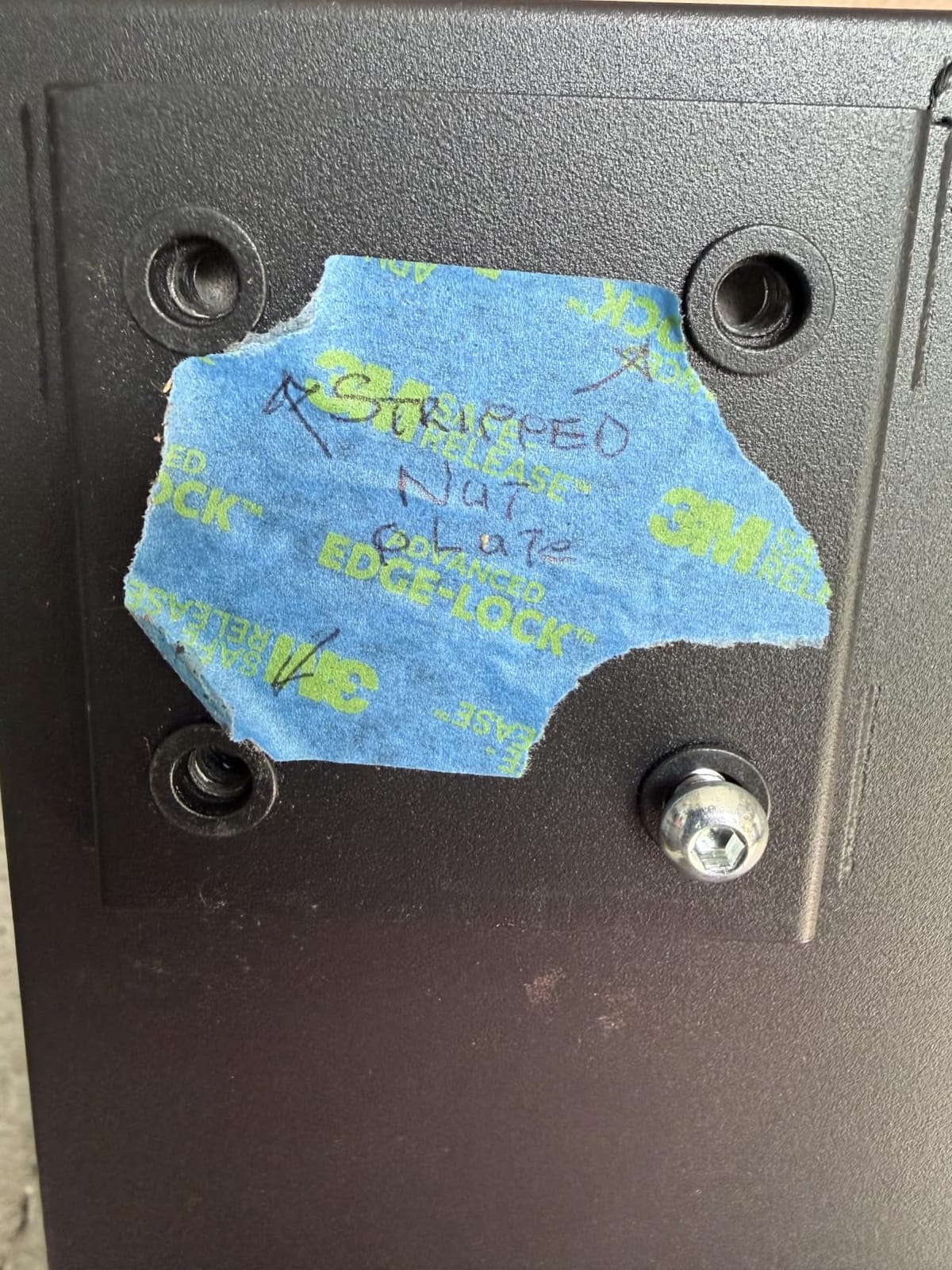
What owners like is the adjustable height and the three shelves. What comes up repeatedly is quality control: stripped or misaligned threaded holes, no spare hardware in the bag, and lightweight casters that undercut the advertised capacity.
Height Range and Why 44.7 Inches Matters
Most stands give you one height or two or three. A 13.7-inch range is a different category, and it opens up a workflow most stands cannot: feeding long boards at a height that matches your bench, then dropping to 31 inches for a seated operation or a lower machine.
Check your ceiling clearance before choosing the tall setting. A 44.7-inch top with a full-size planer on it is a tall assembly, and in a low-ceilinged basement shop that top position may be unusable.
Load Rating Versus Caster and Shelf Quality
The 550-pound capacity comes from a carbon steel frame, and the frame itself is the strong part. The casters are the weak link. Owners describe them as inexpensive and not heavy duty against a 550-pound claim, which is the sort of mismatch that shows up as a cart that does not roll smoothly under a loaded planer.
The shelves are the other weak point. Owners report they bend easily, with a bottom shelf dented simply from leaning on it. Do not plan to store heavy stock on the lower tiers. Keep them for accessories and light parts, which is what they are good for.
Quality Control and Assembly Reality
Specific issues reported include a stand arriving with three of four threaded caster bolt holes pre-stripped, corner pieces arriving with holes that do not line up, and packaging that allows shelves to arrive dented. None of these are fatal, but each is a repair or a re-drill before the stand is usable.
Inspect the whole stand on arrival, photograph the corners and the caster mounts before assembly, and check every threaded hole with a bolt before you rely on it. The hardware bag contains exactly the required count with no spares, so a stripped hole means a trip to the hardware store.
Who It Suits and Who It Does Not
Choose this stand if height adjustment across a wide range is your priority, if you want substantial storage under the top, or if you want all four casters to be lockable 360-degree swivel wheels. It suits shops where two people of different heights share a workstation.
Pass on it if you need a long ownership history, if you want heavy-duty casters, or if you are not willing to inspect the stand on arrival. The height range and storage are real advantages, and the finish quality is the trade-off you accept for them.
How to Choose a Planer Stand: 7 Criteria That Decide the Fit
Most disappointing planer stands are not badly made. They are simply the wrong shape for the machine and the room. Here is how I narrow the field, in the order that matters most.
1. Match the Load Rating to Planer Weight With Real Headroom
A stand rated at exactly the planer’s weight is a stand with no margin. Planing generates a downward push that varies with the material, and the stand also carries outfeed supports and any accessory you bolt down. Rate the stand at 1.5 to 2 times the machine’s weight and the stand effectively disappears from the calculation.
So a 100-pound-rated stand suits a compact planer and a serious question mark for a heavy one. A 500-pound stand covers essentially any portable thickness planer with room to spare. The 700 and 1000-pound ratings cover the case where the same stand also carries a jointer or a sander.
2. Working Height and Feeding Long Boards
How high should a planer stand be? Aim for 30 to 34 inches, which puts the planer top near hip height so you can push and pull 8-foot boards without shrugging your shoulders. Below 26 inches you will be bent over the work, and above 36 inches many operators find the infeed table awkward to reach across. A stand that offers height adjustment is worth more than a taller fixed stand, because it lets different operators set the machine for themselves.
Remember that your infeed and outfeed tables have to land at the same height as the planer top. If the stand height changes, the roller supports change with it. Plan the whole lumber prep line, not just the stand.
3. Caster Type and Whether It Locks Under Load
Three caster styles matter. Swivel casters give the tightest turning radius and are best in tight shops. Retractable casters let a stand drop into a fixed position with a foot pedal, which is the most convenient option when the stand lives in one spot. Fixed casters are simple and stable but force you to steer rather than push.
More important than the style is whether the casters lock. Count them. A stand with one locking wheel out of four will drift while you feed stock, and a stand with no locks at all is a floor hazard. On a loaded stand, always set the brakes before you put a board into the cutterhead. It is the single most important habit with a mobile planer station.
4. Top Material, Top Size and Mounting Hole Patterns
Top material is a genuine trade-off. MDF is flat, stable, easy to drill and cheap, and it is the right choice for most shops. Seal it before you use it. Metal tops will not absorb moisture, do not need drilling if the pattern matches, and last longer, but they lack a flat reference surface and they can ring under a planer.
Top size decides whether your machine is fully supported. Depth matters most, because planers are deep front to back. A 25-inch depth covers a full-size benchtop planer; a 14-inch depth does not, and a planer overhanging its stand is a tipping risk. This is where many otherwise fine stands disqualify themselves for a specific machine.
On mounting, you have three options. Pre-drilled holes give an instant guaranteed fit for one machine. A blank MDF top with enlarged slot holes gives universal fit at the cost of a drilling session. Plan for the third option too: if a pattern does not match, adding new holes in MDF is straightforward as long as you use a drill guide and a sacrificial backing board.
5. Storage Below the Top
Storage is where a stand earns its floor space back. Blades, a spare cutterhead, a push block, sharpening accessories and the dust hose all need somewhere, and a stand with a lower shelf keeps them off your bench. Three tiers is generous; a single shelf is adequate.
Note which stands include shelving and which do not. Several rolling stands in this roundup come with no shelf at all, and owners cut and fit their own. If storage is on your must-have list, confirm it is in the box rather than assuming it is. Where you free up bench space next to it, our bench vise picks for workshops are worth a look for clamping and assembly work.
6. Multi-Tool Use in a One-Car Garage
If you own a planer, a miter saw and a sander, the floor space question is not about one stand. It is about how many stands you are willing to live with. Three options solve this differently.
The simplest is a single wide stand with a large top that handles whichever machine is in use that day. The most flexible is a flip-top stand that rotates to bring a second machine into position. The simplest is a rolling stand with long extension rollers that a miter saw can also sit on. Multi-tool use is also the strongest argument for buying oversized, because owners who overbuilt their own stands report being able to upgrade machines later without rebuilding.
7. Dust Collection Reach and Shop Footprint Math
A planer on a stand still needs its dust port connected, and hose reach constrains where the stand can live. Measure the distance from your collector port to the furthest point you would want the planer and add a foot of slack, because a hose that must be stretched taut at full extension chokes airflow and defeats the collector.
Then do the footprint math honestly. Add the top dimensions to the outfeed support length, and compare that to the floor you can actually spare. A stand that is perfect on paper and leaves no room for infeed and outfeed supports is not a working lumber prep station. If your shop is tight, a flip-top design or a rolling stand with retractable rollers can save more floor space than any other single feature.
Safety Notes Before You Start Planing
Lock every caster before the first pass, every time. Keep the planer fully supported on the top with all mounting bolts engaged, and never plan on a stand that is not rated for the machine. Route the power cord so it cannot catch a caster, keep the dust hose clear of foot traffic, and wear eye protection whenever the cutterhead is exposed. A planer throws chips hard enough to matter, and a mobile base adds one more way for the machine to move when you do not want it to.
Frequently Asked Questions
How high should a planer stand be?
Aim for a 30 to 34 inch working height, which puts the planer top near hip height so you can push and pull long boards without shrugging your shoulders. Below 26 inches you bend over the work; above 36 inches the infeed table gets awkward to reach. A stand with height adjustment is worth more than a taller fixed stand, and your infeed and outfeed supports must be set to match the planer top height.
What load capacity does a planer stand need?
Choose a stand rated at 1.5 to 2 times your planer’s weight. A 500 lb stand covers essentially any portable thickness planer with plenty of margin, because planing creates downward push that varies with the material and the stand also carries outfeed supports. A 100 lb rating suits a compact planer but leaves no margin for a heavy machine.
Is the Dewalt planer stand worth it?
For most garage and small shops, yes. The DW7350 is the highest rated stand in our roundup, holds heavy planers without flexing, and separates the planer onto its own mobile base so you move the machine rather than a fully loaded cart. The compromises are a fixed working height and a design built around detaching the planer for transport rather than rolling it while loaded.
What is the best planer stand for a small workshop?
In a small workshop, footprint beats everything else. A flip-top stand that rotates to bring a second machine into position gives you two tools on one footprint, and a rolling stand with retractable casters also drops into a fixed position when you are planing. If you have plenty of room, the DEWALT DW7350 with its separate mobile base is the most capable overall choice.
Do planer stands come with casters?
Some do and some do not, and the difference matters in a one-car garage. Rolling stands use swivel casters, retractable swivel casters that lift into the frame, or fixed casters. Check how many of them actually lock, because a stand with one locking wheel out of four will drift while you feed stock. Fixed-leg stands such as the POWERTEC UT1002 and the Shop Fox D2275 are explicitly not designed to accept casters.
Should I buy a planer stand or build a workbench?
Build a bench if the planer has one permanent home, you want a large surface for other tasks, and you have the time to make it solid. Buy a stand if you need mobility, want the machine stored off the floor, or want a smaller floor footprint. Building from a table saw base is a popular project, and what a store stand adds is pre-drilled mounting holes, a matched mobile base, tested casters and a warranty.
Can one planer stand hold both a planer and a miter saw?
Yes, and it is one of the strongest reasons to size up. A wide stand with a large top can take whichever machine is in use, a flip-top stand can mount both at once and rotate between them, and a rolling stand with long extension rollers can carry a miter saw as well as a planer. Just confirm the top is deep enough for both machines and that the mounting hole pattern suits each one.
Will a stand fit a different brand of planer than it was designed for?
Often, but not always, and this is the most common purchase mistake. Pre-drilled stands are guaranteed only for the machine they were built around. A blank MDF top with enlarged slot holes lets you drill your own pattern for any machine, which is the most flexible approach. If the pattern does not match and the top is MDF, drilling new holes is straightforward with a drill guide and a sacrificial backing board underneath.
Which Planer Stand Should You Buy?
If you want one stand that handles a full-size planer in a garage or small shop and moves between working and storage positions, the DEWALT DW7350 is the pick. Its separate mobile base takes the weight off the frame, the rating is the highest in this roundup, and the lower shelf gives your accessories a home.
If your planer lives in one spot and you would rather not think about casters, the POWERTEC UT1002 gives you a 32 inch working height and a 500-pound rating at a very modest outlay. Seal the top, reinforce the shelf, and it will run for years.
If you handle full-length boards every day, the WEN MSA658T is the one, because the 54.3 inch roller span keeps long stock flat. For a permanent low station next to a jointer, the Shop Fox D2275 has more load capacity than you will ever need. For a tight one-car garage where a second cart is impossible, the POWERTEC UT1012 flip-top carries two machines on one footprint. And if you own a Makita 1902 or 2012NB, the OEM stand bolts straight on with no drilling.
Whichever way you go, measure your planer’s base depth against the stand’s top, check that the working height lines up with your infeed and outfeed supports, and set every caster brake before you feed a board. That last habit matters more than any spec on the list. This roundup of the best planer stands for workshops is updated for 2026, and we test new arrivals as they appear.
Leave a Reply