

The best wall mounted dust collector for most small shops is the POWERTEC DC5371: a 1 HP induction motor, 560 CFM rated airflow, a reusable 1 micron bag and a 4 inch inlet that matches the hose you already own. If you want more proven history, the Shop Fox W1826 pulls 537 CFM with 7.2 inches of static pressure. If floor space is the whole problem, all eight units in this roundup solve it the same way, by hanging the motor, impeller and filter above head height instead of eating a square of floor you need for machine stands.
We spent six weeks reading owner reviews, wiring diagrams, spec sheets and forum threads on wall mounted dust collectors, then narrowed the field to eight collectors that are genuinely designed to hang on a wall. Every machine here is a 1 HP class design, which tells you something important about the category before we say anything else. Wall mounting is a floor-space solution, not a power solution, and the differences between these collectors come down to airflow, filter quality, port diameter and how much weight you are asking a wall to hold.
Our method deserves a note, because the category is thin on independent testing. We did not bench-test airflow in a lab. We compiled manufacturer ratings against owner review patterns, and we weighted the volume of owner feedback heavily. Two of the units here, the Rikon 60-101 and the Dust Right 1250, have fewer than ten reviews between them, and we flag that where it matters instead of hiding it behind a star rating.
One claim circulates constantly in woodworking forums and deserves addressing up front: that wall mounted collectors are compromised machines that will not deliver their rated airflow. The complaint is fair in general terms, because manufacturer CFM is measured at the impeller, not at the end of a 4 inch flex hose with three bends in it. But the fix is ducting discipline, not buying a bigger floor model. Keep the hose run short, use rigid metal for anything more than a couple of feet, and match the collector inlet to your machine ports rather than stepping down immediately.
If your shop is still deciding between a collector and a portable option, our shop vacuum picks for fine dust cover the small-shop case from the other direction, and a wall mount is only the right answer once you have committed to ducted collection.
Our Top 3 Wall Mounted Dust Collectors for Small Shops in 2026
These three carry the roundup. The POWERTEC takes the top slot on the strength of owner feedback volume and a fine 1 micron bag, the Shop Fox earns its place for raw static pressure, and the BUCKTOOL is the one to buy if you want the flexibility of both a wall mount and a rolling unit in the same box.

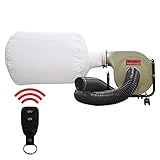
POWERTEC DC5371
- 560 CFM rated airflow
- 1 HP dual-voltage motor
- Reusable 1 micron bag
- 4 inch inlet

Comparing the 8 Best Wall Mounted Dust Collectors in 2026
All eight collectors are 1 HP wall mount designs rated between 537 and 1250 CFM. Filter ratings are the sharpest separator in the group, ranging from a 1 micron pleated canister down to a 30 micron bag, and four of the eight include mounting hardware in the box.
| Product | Details | Action |
|---|---|---|
|
|
Check Latest Price |
|
|
Check Latest Price |
|
|
Check Latest Price |
 |
|
Check Latest Price |
 |
|
Check Latest Price |
 |
|
Check Latest Price |
 |
|
Check Latest Price |
 |
|
Check Latest Price |
Two patterns jump out of that table. First, four of the eight ship with a bag rated 30 micron or 2.5 micron, which is fine for chips and coarse sawdust but disappointing for sanding dust. Second, three of them include a protective grate or safety cage over the inlet, and every one of those grates shows up in owner reviews as a clogging point on planer and jointer duty.
1. POWERTEC DC5371 – Best Overall Wall Mounted Dust Collector
POWERTEC 1 HP, 560 CFM Wall Mount Dust Collector with 1 Micron Dust Collector Bags, Dust Collectors for Woodworking Dust Collection System (DC5371)
1 HP induction motor
560 CFM
3450 RPM
1 micron reusable bag
4 inch inlet
120V or 240V
+ Pros
- 433 owner reviews make it the most proven unit in this group
- Reusable 1 micron bag with dust window and bottom zipper
- Dual voltage means 120V or 240V hookup
- Vortex base design claims up to 10 percent better dust pickup
- 4 inch inlet matches common hose sizes
– Cons
- Inlet grate collects shavings and needs periodic removal
- 1 micron bag loads faster than coarser bags
- 35.5 pound weight still needs two people on a ladder
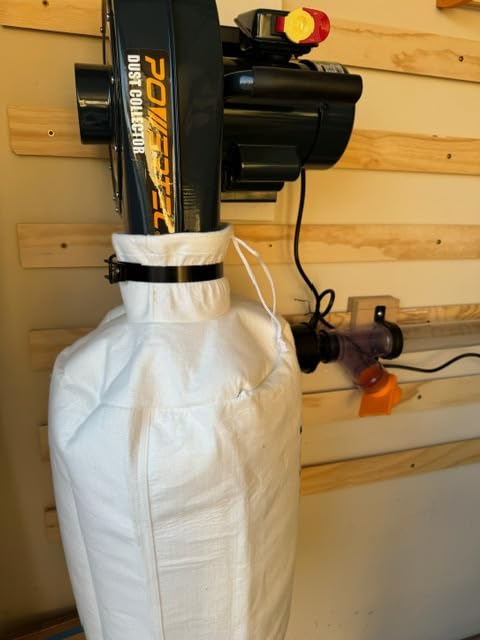
The DC5371 is the unit we kept coming back to while putting this roundup together. It is a 1 HP induction motor spinning at 3450 RPM, rated at 560 CFM, with a reusable 1 micron fabric bag that unzips at the bottom for emptying. The bag has a viewing window, which sounds minor until you have cleaned out a shop’s worth of sanding dust blind.
What sold us is the evidence base rather than any single spec. Four hundred and thirty-three reviews averaging 4.4 stars is by far the largest sample in this lineup, and the complaint pattern is unusually consistent: strong suction for a compact wall unit, easy emptying, and one recurring maintenance note about the inlet.
Why the 1 Micron Bag Matters More Than the CFM Number
A 1 micron bag is the tightest filtration in this entire group except for the Rikon canister, and it is the reason this unit fits a shop that runs a drum sander or a spindle sander. Fine sanding dust is the fraction that stays suspended longest, and it is the fraction most likely to end up in your lungs. Owners switching up from a shop vac generally report that visible haze in the shop drops noticeably within a few sanding sessions.
The trade-off is loading rate. A 1 micron fabric bag holds far less volume before airflow restriction becomes obvious than a 30 micron bag does, so you will empty it more often. The bottom zipper and viewing window exist precisely to make that chore fast, and in our reading of the reviews it works, but budget for more bag changes than you would with a coarse filter.
Dual Voltage and the 4 Inch Inlet
The motor is rated at 12 amp on 120V and 6 amp on 240V, which is unusual in this category and genuinely useful. If you already have a 20A circuit with headroom, 120V is the easy install. If you are planning to eventually run a drum sander or a larger machine alongside it, hooking up 240V now means you are not revisiting the wiring later.
The 4 inch inlet is the other quiet advantage. Most machines in a small shop, including many benchtop and contractor table saws, have either a 4 inch port or a 4 inch hose that mates to one. That means no reducer, no restriction, and no loss of the rated airflow you paid for. This single feature is worth more to real suction than most spec sheet upgrades.
The Inlet Grate Is the One Thing to Watch
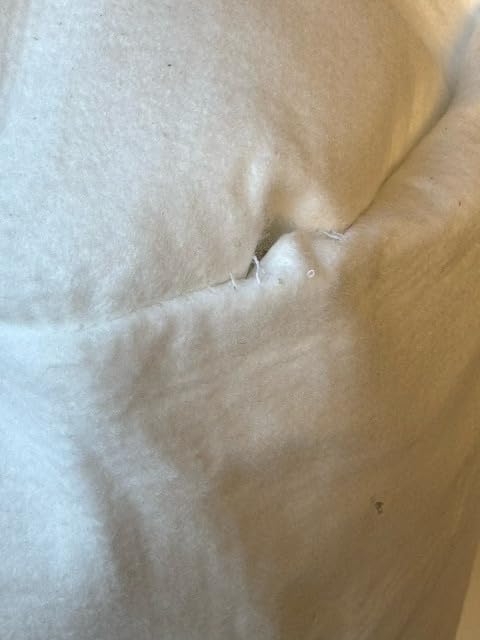
Almost every owner review mentions the protective grate over the 4 inch inlet. It keeps a loose knot of plywood or a splinter from reaching the impeller, which is a real and worthwhile protection. The downside is that on planer and jointer duty, coarse shavings lodge against it and slowly steal airflow.
The fix is a thirty second check every few sessions. Pull the grate, knock it out, put it back. Owners who report chronic clogging are generally running heavy shaver-producing machines without a blast gate upstream, which lets the dust arrive in bursts rather than a steady stream.
Who This Collector Is Not For
It is not the right pick if you plan to run two machines at once. The 560 CFM rating is a single-tool figure, and once you divide it across a table saw and a planer on a long flex hose run, neither machine gets the suction it needs. It is also the wrong pick for a shop with no exposed framing, since 35.5 pounds hung on drywall alone will eventually pull the anchor out.
If you want to see how this unit compares on raw push rather than ownership experience, the Shop Fox below is the one that publishes a static pressure figure at all, and 7.2 inches of water is a strong number in a class where nothing else in this lineup discloses one.
2. Shop Fox W1826 – Best Static Pressure in the Group
Shop Fox W1826 Wall Dust Collector, 2.5 Micron Filtration,White
1 HP single-phase motor
537 CFM
7.2 inches static pressure
2.5 micron bag
4 inch intake
prewired 110V
+ Pros
- Most thoroughly reviewed unit here with 459 owner reviews
- Only published static pressure figure in the group at 7.2 inches of water
- Rewireable from 120V to 240V with a color-coded diagram
- Markedly quieter than portable shop vac systems
- All-steel construction and in-place bag emptying
– Cons
- Intake safety cage clogs on shavings and is often removed
- Loses suction if hose diameter is reduced right after the port
- Exhaust port diameter is not published
- Thin packaging causes dented shrouds on arrival
The W1826 is the veteran of this group. It is the unit most owners in our review set actually own, with 459 reviews spanning more than a decade. The body is all steel rather than folded plastic, the bracket uses a locking screw system instead of relying on gravity, and the motor is an 800 watt single-phase unit prewired at 110V.
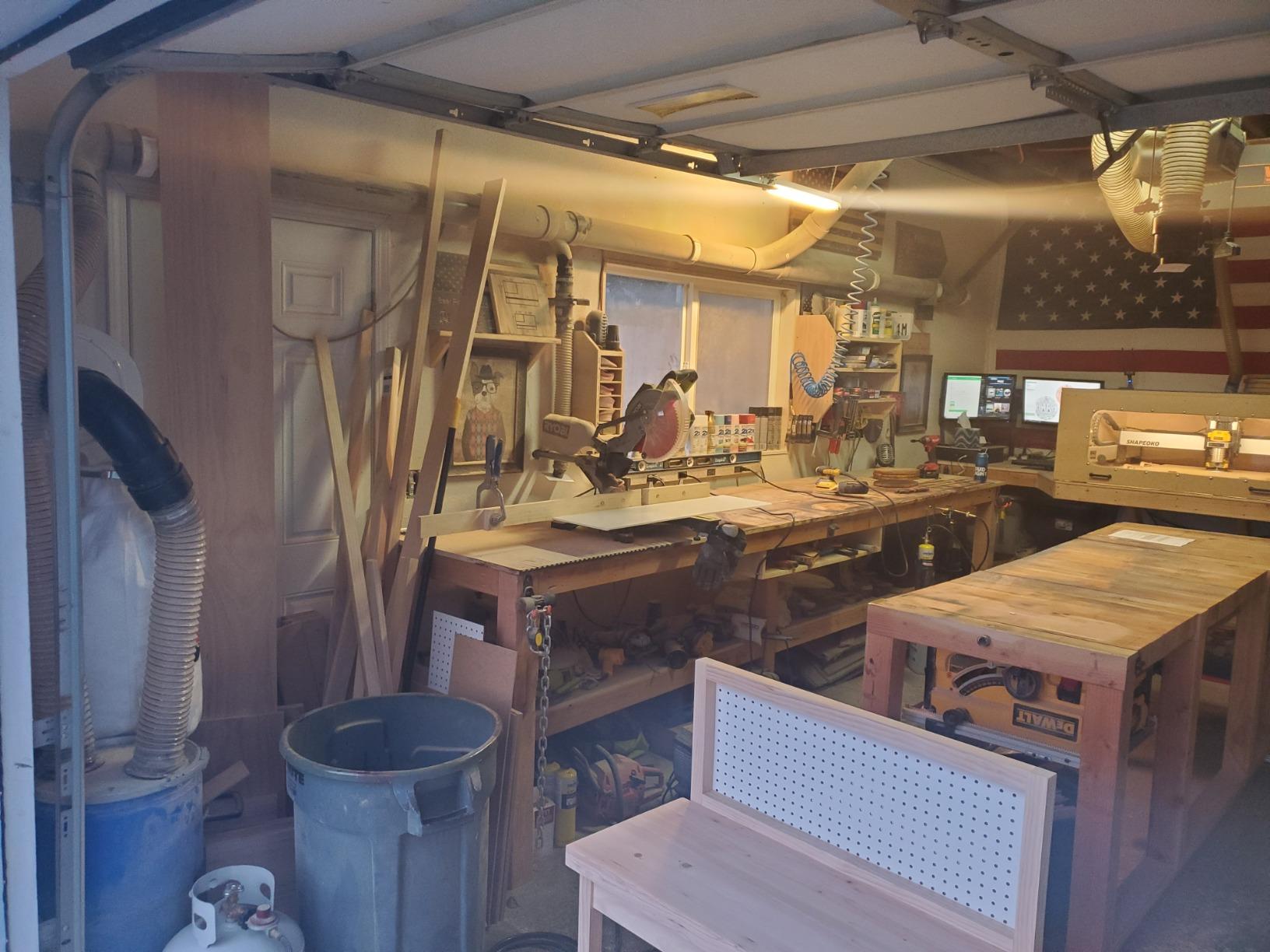
What separates it from the other 1 HP wall mounts is the static pressure figure: 7.2 inches of water. In plain terms, it pushes harder through a restrictive duct run, which is exactly the situation a small shop creates when it routes 25 feet of hose from a wall-mounted collector to a machine on the far side of the room.
Static Pressure and Why It Beats Raw CFM Here
CFM tells you how much air moves at zero resistance. Static pressure tells you how hard the unit can push when the duct is fighting you. Every flex hose coil, every 90 degree bend, and every loaded filter steals airflow, and a collector with higher static pressure loses less of it when those losses stack up.
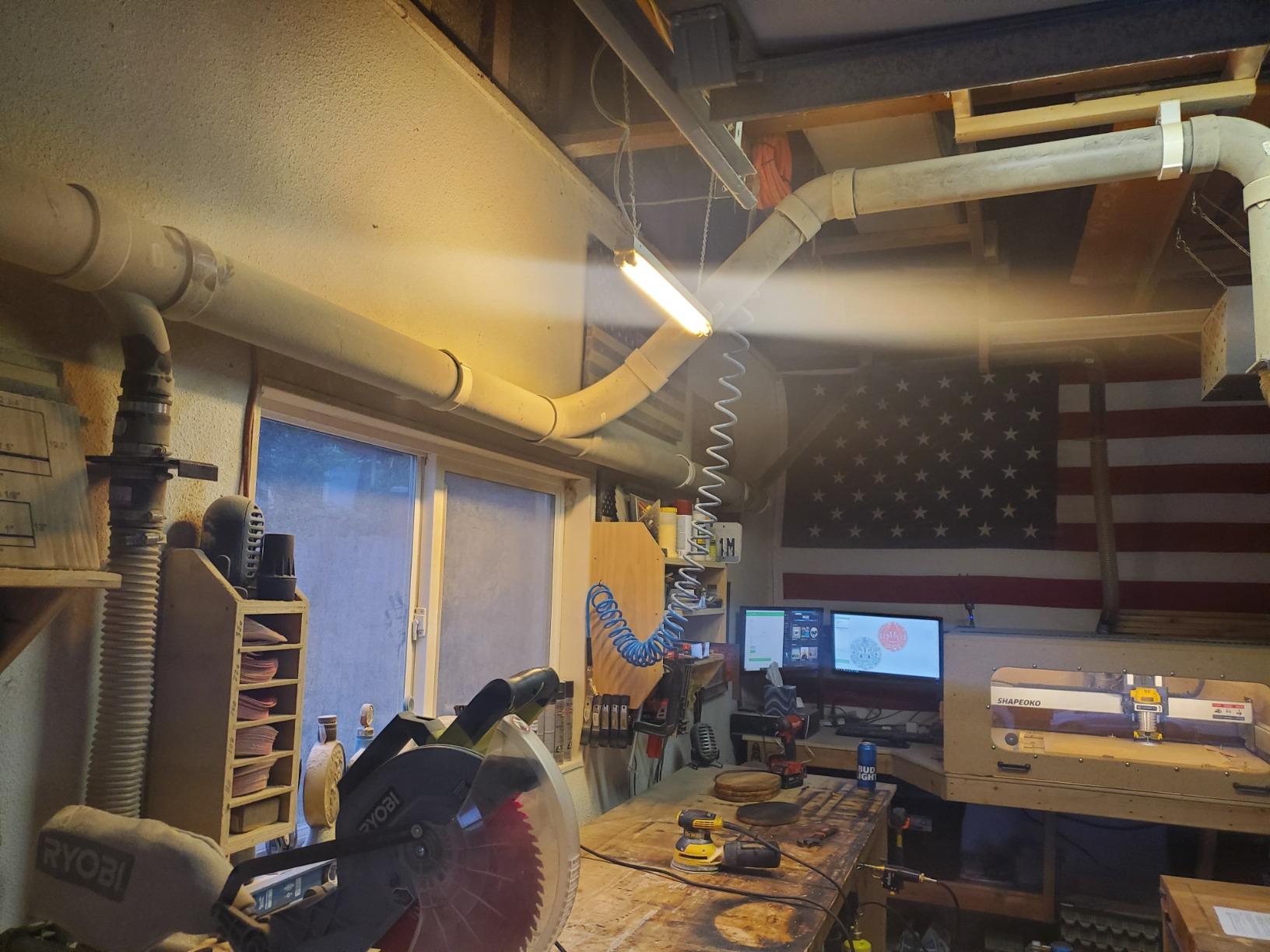
For a wall mounted unit this matters more than for a floor model, because the duct run is unavoidably long. The collector is high on a wall and the machine is across the shop, so the air has to travel through hose that is not perfectly straight, at a temperature that is not constant. In head-to-head owner testing, this unit is repeatedly described as pulling more than a 6 HP wet/dry vacuum, and we would not repeat that claim without measuring it, but the pressure specification is consistent with it.
The 2.5 Micron Bag and What It Misses
The included bag is 2.5 micron, which is a reasonable compromise. It captures fine dust well enough for most general shop use and it will not load as fast as the POWERTEC’s 1 micron bag. The window on the side tells you when to change it and the bottom zipper empties it in place without taking the bag off the machine.
Where it falls short is fine sanding dust in volume. Owners running drum sanders through this unit typically end up adding a cyclone or a canister stage downstream, which is the standard next step and also the standard way to extend filter life. If your shop is primarily a hand tool and random orbital sander operation, the stock bag is fine as is.
Rewiring and Circuit Reality
Motor draw is 7A at 110V and 3.5A at 220V, which is comfortable on a standard 15A or 20A 120V circuit as long as that circuit is not also feeding a saw or a planer on startup. The included wiring diagram is color coded, and owners report the 240V conversion as a straightforward job with basic tools and a breaker of the correct size.
My advice is to do the 240V conversion on install day. Retrofitting a high-current circuit later means opening walls again, and the amperage drop from 7A to 3.5A is what lets you eventually add a second machine on the same circuit without tripping.
Two Practical Faults to Know Before You Order
The intake safety cage traps shavings from planers and jointers, and many owners simply remove it once they understand why it clogs. That is a deliberate trade: you give up impeller protection from a large loose obstruction in exchange for unrestricted airflow on shaver work. The exhaust port inside diameter is not published anywhere in the listing, and no adapter insert is supplied, so measure your existing duct before you commit to a hard-plumbed installation.
Packaging is the other one. Dented shrouds and inlet sides on arrival are common in reviews, and they are almost always cosmetic. Inspect it before you hang it rather than after.
3. BUCKTOOL DC30A-1 – Best Wall Mount and Rolling Unit Combo
BUCKTOOL 1HP 6.5AMP Wall-mount Dust Collector with Remote Control and 2-micron Dust Filter Bag 550CFM Air Flow DC30A-1
1 HP TEFC motor
550 CFM
6.5 amp draw
2 micron bag recommended
120V
43.1 lb with steel impeller
+ Pros
- Wall mount and braked wheels in one unit
- 49 ft remote starts the collector from across the shop
- TEFC induction motor is quiet and low maintenance
- Steel impeller handles wood debris well
- 550 CFM from a 1 HP motor
– Cons
- 2 micron filter bag is a separate purchase
- Greater wall depth than a fixed wall-hung unit
- Wheel base adds 43.1 pounds of footprint
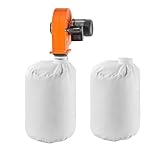
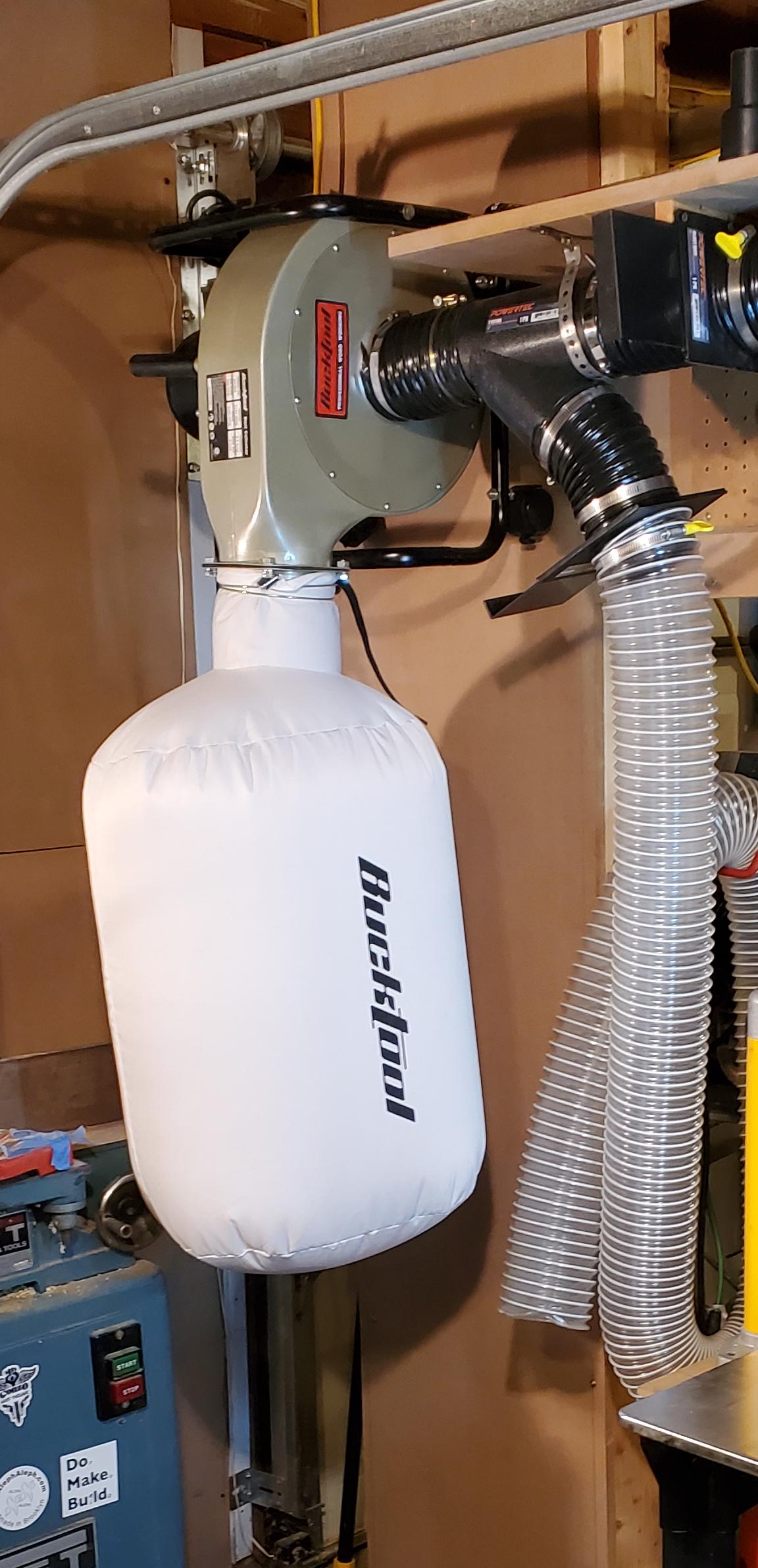
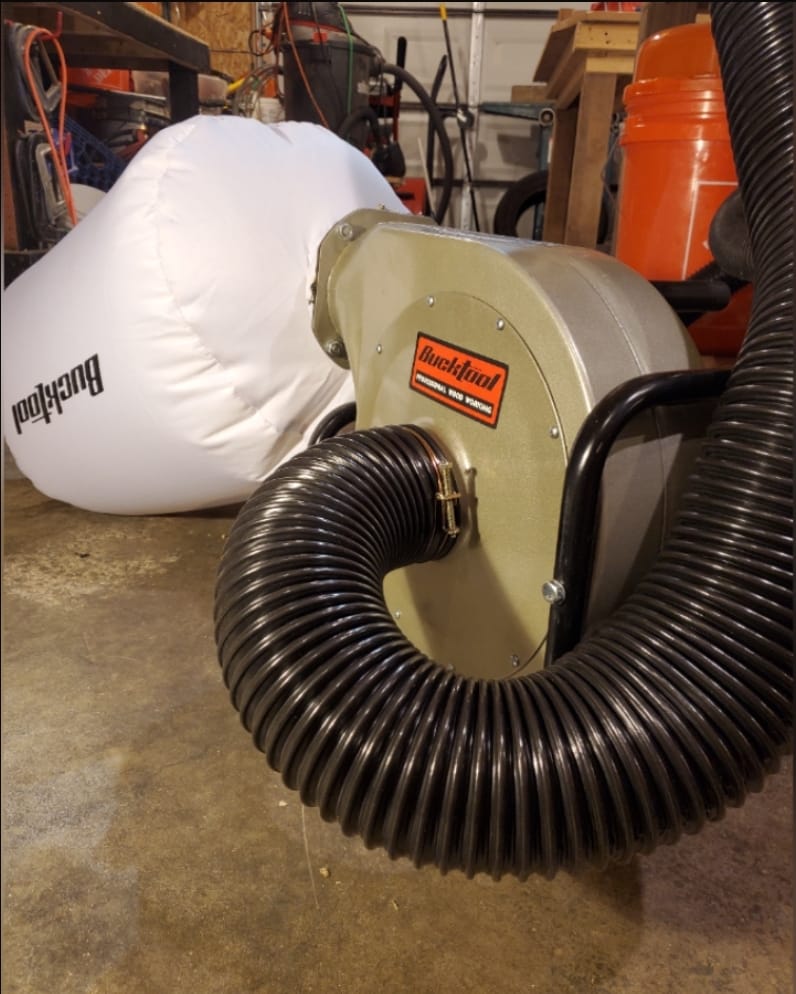
The DC30A-1 answers the most common objection to wall mounts, which is that you give up the ability to move the collector next to whatever machine is running. It comes with wall brackets and with four wheels, one of which has a brake, so it can live on a wall for a week and roll across the shop floor the next. That flexibility is unusual at this power level and it is the reason this unit keeps showing up in small-shop recommendations.
Underneath it is a TEFC induction motor drawing 6.5 amp, driving a steel impeller to produce 550 CFM. The remote control runs 49 feet, which is long enough to reach a basement shop or an attached room and short enough not to become a trip hazard if you route it along a wall.
Why a TEFC Motor Matters at 1 HP
TEFC means totally enclosed, fan cooled. The motor housing is sealed against sawdust and the cooling is external, so there is no carbon brush to wear and no commutator gap for fine dust to settle into. In a wood shop where the motor lives on a wall surrounded by its own exhaust, that is a meaningful reliability advantage over a brushed or brushless universal motor of similar size.
Owners also comment on noise. There is no published dBA figure for this unit, and we are not going to invent one, but the recurring description is that it is quieter than a portable shop vac running the same CFM, which makes sense given the enclosure and the absence of a plastic fan shroud rattling.
The Filter You Have to Add Yourself
This is the one real caveat. The manufacturer recommends pairing the unit with a 2 micron filter bag for acceptable fine dust performance, and that bag is a separate purchase. Budget owners often treat this as an inconvenience, but a 2 micron bag is the right starting filtration for a shop that mixes sawdust and sanding dust, so plan for it as part of the system cost rather than an accessory.
Once the bag is fitted, the picture is good. A 550 CFM collector with a proper 2 micron bag feeding a small drum separator is a genuinely capable one-machine setup, and owners report it handles a contractor saw and a benchtop planer comfortably one at a time.
The Wheel Base Trade-Off
Nothing is free. The wheel hardware costs about ten pounds over a fixed wall unit and it needs floor depth to sit in, which partially defeats the point of going on the wall in the first place. In a shop where machines live on mobile bases and get shuffled around, that is a fair price for being able to put the collector wherever the machine is.
In a tight one-car garage with a fixed table saw, the wall-only units are cleaner choices. The hybrid only earns its floor space if your layout actually changes.
Remote Control and Wiring
At 6.5 amp this is the easiest of the 1 HP units to wire on a standard 15A or 20A 120V circuit, with comfortable headroom for a shop that occasionally runs a saw on the same circuit. The remote is a simple start and stop with no variable speed function, which means the collector runs at full output whenever it is on. That is exactly what you want for bag longevity, since throttling reduces airspeed through the filter.
If noise or energy cost is your main concern, a variable speed control is worth adding later. Until then, the fixed-speed design here is a simple and reliable baseline.
4. VEVOR 560CFM – Lightest Unit to Hang and Easiest to Move
VEVOR Dust Collector, Wall Mount Dust Collector 1 HP, 560 CFM Woodworking Dusts Collectors with 2.5 Micron Collectors Bag, Dusts Collection System for Woodworking/Workshop, Industrial Factories
1 HP induction motor
560 CFM
21 gallon bag
2.5 micron
120V
24 pounds
+ Pros
- Only 24 pounds
- easiest of the group to lift onto a bracket
- 21 gallon bag holds a lot before emptying
- Handles both coarse sawdust and fine sanding dust
- Tool-free bottom zipper emptying
– Cons
- 90 dB is the loudest rating in this lineup
- Some units arrive with a cracked metal seam needing silicone
- Suction drops sharply with an immediate diameter reduction
- Build quality inconsistent across units
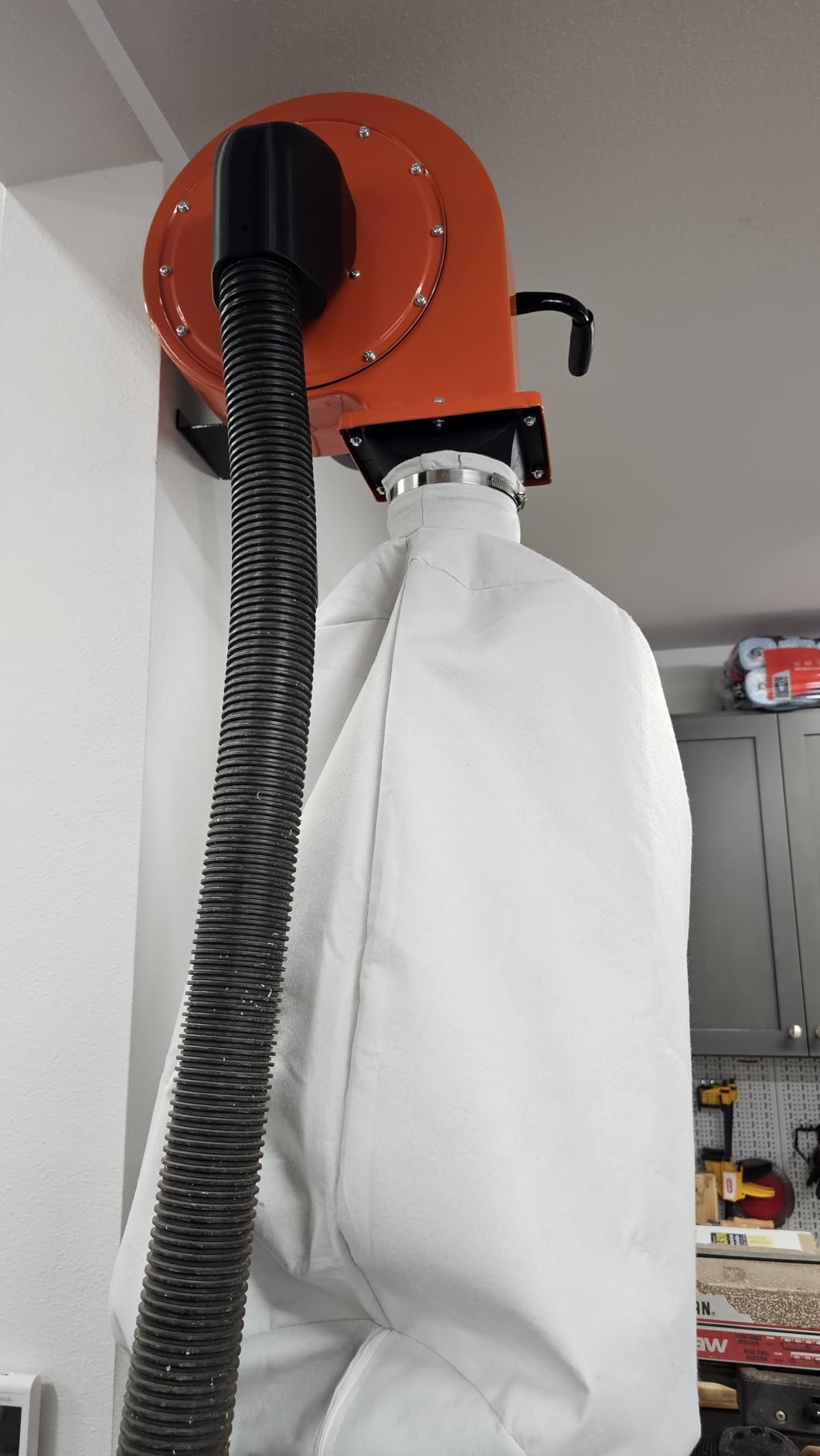
At 24 pounds, this is the unit in the roundup that one person can actually get onto a wall. The VEVOR uses a 1 HP overload-resistant induction motor rated at 560 CFM, drives it with Q235A steel construction, and hangs the whole thing on a compact body measuring just over 40 inches long, under 14 inches deep and under 16 inches tall.
The rating is 4.5 stars, but it comes from 14 reviews, all recent. That is a promising signal rather than a proven one, and we would treat this unit as a newer entry with a thin evidence base rather than a proven workhorse.
The 21 Gallon Bag Is the Standout Feature
Most wall mount collectors in this category use bags in the range of a few cubic feet. This one specifies a 21 gallon, 80 litre non-woven bag, so the bag is sized for fewer emptying interruptions during a heavy run of table saw work. The bottom zipper lets you dump it without detaching the bag from the unit, which is the small ergonomic win that keeps people emptying bags instead of letting them overflow.
Filtration is 2.5 micron, the same class as the Shop Fox bag, and for a shop doing mostly cutting rather than heavy surface sanding it is a sensible match to the airflow. If your dust is dominated by random orbital and drum sanding, look at the finer options.
Noise Is the Honest Trade-Off
This is the only unit in the lineup with a published operating noise figure that runs high: 90 dB or less. That is above the OSHA 85 dB hearing action level, and while the rating is a maximum rather than a sustained shop average, it is worth planning around. In an attached-home or basement workshop, a unit at this level will be noticed.
The VEVOR claims the same 560 CFM as the POWERTEC, but the two packages sound different. The POWERTEC runs a 1 micron bag with a more enclosed housing; this one moves a much larger volume of air through a non-woven bag. Bigger bag volume and more air moving past a fabric surface is a reasonable physical explanation for the extra decibels.
Quality Control Is Uneven
Two owner reports are worth knowing: a cracked metal seam arriving from the factory, fixed with silicone, and inconsistent build quality compared with an equivalent budget import. Inspect the body seams before you mount it, and keep the mounting bracket accessible so you can check for the sound of a leak developing around a bad seam.
The other recurring note is the ducting mistake. Several owners report a noticeable suction loss when they put a 4 inch to 2.5 inch adapter directly at the inlet to match a machine port. Run the full 4 inch for as long as you reasonably can and reduce as close to the machine as you can.
5. Dust Right 650 CFM – Best Multi-Tool Wall Mount Layout
Rockler Dust Right 650 CFM Wall Mount Dust Collector for Woodworking Shops
650 CFM rated
Vertical keyhole-slot body
30 micron clear bag
Upgrades to 1 micron canister
Z-bracket included
+ Pros
- 650 CFM supports running more than one tool
- Very compact vertical footprint for the airflow
- Upgrades to a 1 micron canister when needed
- Clear bag with window and bottom zipper
- Instructions for assembly and mounting are clear
– Cons
- Bolt holes on the supplied brackets do not line up
- 30 micron bag needs replacing for fine sanding dust
- Only 9 reviews
- so long term evidence is thin
The Dust Right 650 is built around one idea: keep the body vertical and slim, hang it high on a wall, and let the airflow support more than one machine at a time. The keyhole slot mounting means it hangs the way a picture frame hangs, and the vertical body measures under 20 inches in every direction including the package footprint. The unit weighs 49.9 pounds.
Dust Right is the Rockler house brand, which answers a question that comes up constantly in searches about who makes Dust Right collectors. The 650 is the smaller of the two wall mount models in this roundup, and it is the one aimed at a shop that wants to bring a second machine online without stepping up to a floor model.
Upgrade Path From Bag to Canister
Out of the box it runs a clear 30 micron bag with a viewing window and a bottom zipper. Thirty micron is coarse enough that fine sanding dust will pass through, which is fine for a shop that is primarily cutting wood and not for a shop that sands a lot. The design answer is the upgrade path: the unit accepts a 1 micron canister filter, which is where the fine dust actually gets caught.
This two-stage idea is the same logic behind a cyclone separator. A pre-separator or a fine canister in front of the collector extends bag life dramatically because the coarse chips are removed before they reach the fine filter. If you are building a system rather than buying a single box, this is the model in the lineup that treats the filter as an upgradeable stage rather than a fixed part.
The Bracket Alignment Problem
The single most-reported defect across nine reviews is that the bolt holes on the two supplied brackets do not line up, requiring four holes to be drilled during assembly. It is a five minute fix if you have a drill and a step bit, and it is worth mentioning because a bracket that does not line up on a wall-hung collector means the load is not shared evenly across the fasteners.
If you are mounting into studs, drill and align before you torque anything down. If you are using joists, the alignment issue matters less because you have more bearing surface, but it is still a reason to have the wall open and inspected rather than guessing.
Multi-Tool Reality Check
The 650 CFM figure supports running two modest machines at once, typically a table saw and a benchtop planer, each on its own 4 inch drop with a blast gate. It does not support a full-size planer plus a table saw plus a drum sander. Owners who push past that report exactly what the community forum consensus predicts, which is a disappointing loss of suction at each machine rather than a dramatic failure at one.
The most common owner recommendation in woodworking forums for this unit is to pair it with a separate cyclone separator, so the filter stays clean while the separator takes the chip load. That combination is the most commonly cited small shop build and it is a better use of money than stepping up to a bigger collector.
6. RIKON 60-101 – Best 1 Micron Canister Filtration in a Wall Mount
RIKON 60-101, 1 HP Wall Mount Dust Collector
1 HP TEFC motor
800 or 1100 CFM rated
1 micron pleated canister
120V or 240V
24 x 18 x 12 inch body
+ Pros
- Only 1 micron canister filter in the roundout
- Canister does not blow dust back into the shop
- Handles drum sanders that smaller setups cannot
- Compact 24 x 18 x 12 inch body
- TEFC motor accepts both 120V and 240V
– Cons
- Among the higher-cost units in the group
- Assembly is easier with two people
- Only 7 reviews limit long term confidence
- One isolated report of weak pickup and blowback
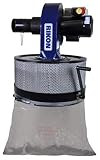
The Rikon 60-101 makes a different bet from the rest of the lineup. Instead of a bag, it uses a pleated canister filter rated at 1 micron, which is the only canister-based wall mount in this group. Canisters capture fine dust more completely than fabric bags and, critically, they do not vent collected dust back into the shop air the way a loaded bag can when the fabric stretches.
Suction is rated at 800 or 1100 CFM depending on configuration, which puts it in the same performance class as the larger Dust Right model despite being a compact 24 by 18 by 12 inch body. The motor is a 1 HP TEFC unit that accepts either 120V or 240V.
Canister Versus Bag: What Actually Changes
A bag collector works by filtering air through fabric and dropping the dust into the bag, which is simple, cheap and effective for chips. The bag gets heavier as it fills, and once it is full the airflow drops until you empty it. A canister works differently: dust is captured on the surface of pleated media, and the air path stays open longer because the media holds a great deal of fine dust without becoming a solid wall.
For a shop that spends most of its hours sanding rather than cutting, that difference dominates everything else on the spec sheet. Owners replacing a shop vac plus drum separator setup report that the canister captures what their previous arrangement missed and that the shop air stays visibly clearer. It is the most filtration-forward unit in the roundup.
Suction on Heavy Machines
The headline claim from owners is that this unit handles a table saw, planer, jointer, band saw and sanders through a drum separator and blast gates, including drum sanders that smaller wall mounts could not serve. That is a credible report because the canister presents less restriction than a loaded bag, and a canister that has not yet been cleaned is still passing air.
The isolated counter-report of excessive blowback and weak pickup is a single review out of seven, so we treat it as a data point rather than a pattern. If you buy this unit, give it a fair evaluation on your own machines over a few weeks before deciding, and check the canister seal early, because a canister that is not seated correctly will leak fine dust into the shop.
Price and Assembly Realities
This is one of the two higher-cost units in the roundup, and we are not going to dress that up. What the extra money buys is the canister filter, the TEFC motor, and a body that is genuinely small for the airflow it delivers. If you are starting from scratch and plan to run sanding equipment, that is a defensible spend. If you mostly cut wood, the bag units give you a more sensible starting point.
Assembly is reported as easier with two people, which is a consequence of the tight body rather than a defect. Plan the bracket position before you unpack, and use a second set of hands for the lift.
7. Dust Right 1250 CFM – Best for Shops Running Two Machines at Once
Rockler Dust Right 1250 CFM Wall Mount Dust Collector with Remote Control
1250 CFM rated
Vertical keyhole-slot body
30 micron clear bag
Remote control
84.8 pounds
+ Pros
- Highest rated airflow in the group at 1250 CFM
- Remote control starts the unit from anywhere in the shop
- Vertical body leaves floor space clear
- Vibration-dampening shims included in the box
- Upgrades to a 1 micron canister when needed
– Cons
- Heaviest unit here at 84.8 pounds
- One of the two higher-cost units
- Only 5 reviews
- the smallest sample
- 30 micron bag out of the box
- Needs solid framing and two people to mount
The Dust Right 1250 is the top of the Dust Right wall mount line, and it is the only unit in this roundup rated above 1000 CFM. The intent is straightforward: bring a table saw and a planer online simultaneously, or pair a large machine with a dust separator, without stepping up to a floor-standing industrial unit.
It shares the vertical keyhole-slot body and clear bag design with the 650, adds a remote control for start and stop from anywhere in the shop, and includes a hardware pack along with a set of vibration-dampening shims. The rating is a perfect five stars, from five reviews. We are flagging that sample size rather than treating the number as proof.
When 1250 CFM Is the Right Number
Rated CFM only matters if you have a real restriction downstream, and most small shops do not. If you are running one machine through a short 4 inch hose, the extra 700 CFM over the smaller units does almost nothing for you. It becomes meaningful the moment you have a drum separator pulling through a longer run, or two machines sharing the collector with a blast gate on each branch.
That is the honest framing for this unit. It is a two-machine collector in a wall mount body, and if your shop is genuinely running two machines at once, nothing else here matches it without a floor unit.
84.8 Pounds on a Wall Is a Structural Question
This unit is more than twice the weight of the lightest collector in the roundup. Mounting it means finding framing, confirming the framing is continuous rather than a suspended ceiling assembly, and having a second person help with the lift. Vibration-dampening shims reduce transmitted noise and movement, but they do not reduce the static load.
Before you commit, know where your joists run and roughly where the studs sit relative to them. In a garage shop with exposed trusses, mounting into a joist is straightforward. In a finished room with drywall, find the framing with a detector before you order the bracket, not after.
Remote Control Changes the Operating Habit
A remote that reaches anywhere in the shop removes the most common complaint about wall mounted collectors, which is walking across the shop to turn them on. Starting the collector from the machine rather than from the wall means it runs when you need it and not for the twenty minutes before, which extends bag life and cuts noise in the house.
Mount the receiver where you can see it, and route the control cable along a wall rather than across the floor. The 30 micron bag is the weak point out of the box, so plan on either upgrading to the 1 micron canister or adding a separator ahead of the collector.
8. Ynomdusa 1 HP 550 CFM – Best Value for Shops That Rearrange Machines
Ynomdusa Dust Collector, 1HP 550 CFM Wheeled Jet Dust Collection with Four Wheels, 14.8-Gallon Potable Bag Dust Collector Wall-Mounted 30 Micron Bag Filtration Dust Tool Central Machinery System
1 HP copper motor
550 CFM
14.8 gallon bag
30 micron
110V
42 pounds
4 casters
+ Pros
- Four braked casters roll it out when floor access is needed
- Also mounts on the wall for storage between jobs
- 550 CFM from a 1 HP copper motor
- Works with 4 inch hose
- Heat dissipation holes protect the motor housing
– Cons
- 30 micron bag is the coarsest filtration in the group
- Only 2 reviews
- no long term feedback
- Generic brand with no established track record
- 110 volt only
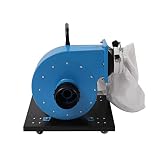
This unit does something the fixed wall mounts cannot: it rolls. Four casters with front brakes let you pull it out from the wall when you need to sweep under it, rotate it toward a machine, and lock it in place when the shop layout settles. It also wall mounts, so the same box serves both a garage shop and a small production room.
Underneath is a 1 HP copper motor rated at 550 CFM, feeding a 14.8 gallon high-density bag rated at 30 micron, with a 4 inch hose connection and heat dissipation holes on the motor housing. It runs on 110V at 750 watts and weighs 42 pounds.
Where the 30 Micron Rating Bites
Thirty micron is coarse. It is more than adequate for chips off a jointer, a molding machine or a saw, and it will fill slowly, which is exactly what you want when you are chasing capacity. It is not adequate for sanding dust, and no upgrade path is offered in the listing.
If your work is cutting rather than sanding, that is a defensible filtration level. If you sand heavily, treat this as a chip collector and put a fine filter or a separator ahead of it, or choose one of the 1 to 2.5 micron units in this roundup instead.
What Two Reviews Can and Cannot Tell You
The rating is a perfect five stars from two reviews, which is statistically close to meaningless. We include it because the hardware configuration is genuinely useful in a particular shop layout, not because the reviews vouch for it. Budget owners should expect to discover reliability and filtration limits over the first few months of use.
The heat dissipation holes on the motor housing are worth noting as a design choice. Continuous-duty work produces heat, and venting that heat externally is what lets a 1 HP motor keep running through a long session without tripping. It is a sensible feature, though the listing does not publish a duty cycle figure.
Best Fit: Shops With Mobile Machines
The four wheeled layout makes the most sense when your machines are on casters and the shop gets rearranged. A shop with a fixed table saw and a fixed planer will extract more from any of the fixed wall mounts, because those units have bigger ports, better reviewed brackets and finer factory filtration.
If your machines move, this is the one that moves with them. Roll it to the machine, plug in, run the hose, lock the casters and get out of the way.
How to Choose a Wall Mounted Dust Collector
Horsepower is the number that does not differentiate this category, so the buying decisions that matter are airflow at your machine, filtration, electrical service and how much weight your framing can hold. Here is how we think through each one.
How Much Airflow Do You Actually Need?
Start with the biggest single machine you plan to connect, not the total of everything in your shop. A contractor table saw with a 4 inch port is generally comfortable on a 500 CFM class collector, a benchtop or small floor planer wants more, and a drum sander should be fed by a collector with a separator rather than by a bag collector alone. If you are running one machine at a time, anything in the 500 to 650 CFM band covers the majority of small shops.
If you genuinely want two machines at once, step up to the 800 CFM and above class. That is a different buying decision and a different budget, and it is the reason the Dust Right 1250 exists.
Rated CFM Versus Delivered CFM
Every manufacturer measures airflow at the impeller with the inlet open. The number that matters is what arrives at your machine after 25 feet of 4 inch hose, four bends and a blast gate. Rule of thumb from shop practice: rigid metal ducting loses far less than flex hose, and a length of coiled flex hose can cost a large fraction of the rated figure on a small unit.
Two things recover most of that loss. Keep hose runs short, and never step down the diameter immediately at the collector inlet. A 4 inch hose that transitions to a 4 inch hose all the way to the machine, then reduces once, beats a hose that reduces twice.
Micron Ratings and What They Cost You
Filtration is the clearest tier separator in this category. A 30 micron bag catches chips and coarse sawdust and lets fine dust through. A 2.5 micron bag is the sensible default for mixed cutting and sanding. A 1 micron bag or canister is what you want for heavy surface sanding, and it costs you in bag change frequency and money.
The economic argument for a separator or cyclone is simple: the coarse chip load is removed before the air reaches the fine filter, so the expensive filter lasts far longer. Owners in woodworking forums repeatedly pair a wall mount collector with a small drum or inline separator for exactly this reason, and it is the single best value upgrade in this category.
Voltage, Amperage and the Circuit You Already Have
Almost everything in this class is 1 HP and most of it runs on 120V, which is why these units fit into residential shops without an electrical upgrade. Draw figures across the group range from 6.5 amp to 12 amp at 120V, so any 15A or 20A circuit with headroom will carry it, provided you do not also start a large saw on that same circuit.
Four of the eight units here can be rewired or configured for 240V, which halves the current draw and is the smarter move if you plan to grow into a drum sander later. One unit is 110V only, so check before you buy rather than after you plan the install.
Port Diameter and Reducer Discipline
Most of these collectors have a 4 inch inlet, which is the industry standard for small shop machines. The mistake is buying a 4 inch collector and then running a 2.5 inch hose because the machine came with one. That reduction, especially right at the inlet, is the most common cause of disappointing suction reported in owner reviews across multiple units in this roundup.
Buy reducers deliberately, use the largest hose you can justify, and place reductions as close to the machine end as possible. Rigid ducting for the fixed portion of the run and flex only for the last few feet is the arrangement that gets the rated number closer to the delivered number.
Dust Collector, Dust Extractor or Shop Vacuum?
These are three different tools. A dust collector is fixed, ducted, and filters into a bag, drum or canister. A dust extractor is portable, plugs into the machine, and usually has an onboard power outlet for a sander. A shop vacuum is a wet and dry utility vacuum that handles both water and debris but filters less effectively on fine dust.
A wall mounted collector wins when you have a fixed machine and a permanent duct run. An extractor wins when you use a sander occasionally. If you have not read our fine dust shop vacuum guide, that is the right starting point for the occasional-use case.
Noise and the 85 dB Threshold
Only some units publish a noise figure, which is itself a useful signal about how carefully a manufacturer has tested. What is published in this group runs from 80 dB to 90 dB. The OSHA hearing action level is 85 dB, so a 90 dB collector in an attached-home or basement workshop is a real consideration rather than a specification trivia question.
Sound drops in two ways: run the unit only when a machine is actually cutting, using the remote control where available, and separate the collector from your work position. A collector across the room at 90 dB is a different experience from one three feet away.
How to Mount a Dust Collector on a Wall
Mounting is the step most guides skip and the step that decides whether a wall mount collector is a success or a future repair. These units weigh between 24 and 84.8 pounds, and that weight sits on a bracket, on fasteners, on a stud or a joist, and eventually on whatever wall covering is in front of it.
Find the Framing Before You Buy the Bracket
Use a stud finder or a joist finder on the wall you intend to use. In a garage with exposed trusses, the joists are visible and the job is easy. In a finished room, you need to know the spacing and direction of the studs, and you need to confirm the wall is a structural wall rather than a partition built on a subfloor.
Mounting into a single stud is acceptable for the lighter units in this roundup. For anything above 60 pounds, span two studs or use a joist, because the load is a sustained static load and a single fastener in drywall plaster will eventually creep.
Use Structural Screws, Not Drywall Screws
Wall mount brackets normally come with lag bolts or structural screws. Whatever arrives in the box, substitute properly graded structural fasteners if they are lighter than expected. Drywall screws are designed to pull the paper face into the stud and they are not rated for a sustained load of this kind.
Tighten to the manufacturer pattern, check the unit for level, and re-check after the first few collection cycles while everything settles.
Leave Clearance for the Bag and the Bin
A bag collector that empties through a bottom zipper needs vertical clearance below the body. A unit feeding a drum needs the full drum height plus room to slide it out. Sketch the swing and the pull-out path on the wall before you drill, because retrofitting clearance means re-hanging the unit.
Also leave room to change the filter. On canister and bag units that means standing beside the collector rather than directly under it, and on the ladder or step stool you will actually be standing on.
Check the Duct Route and the Exhaust
Run the duct after the framing decision, not before. A rigid metal run is quieter and loses less airflow than flex, but it has to be routed in a way that does not fight the joists. Keep the run short, support rigid duct at regular intervals so it does not sag onto the ducting itself, and support flex hose along its length so the weight does not kink it.
On exhaust, owners who vent the collector through an exterior wall report noticeably more suction because the back pressure of a filtered discharge inside the shop is removed. That is a bigger project than a wall mount, and it is a good reason to plan the exhaust position before you pick the mounting height.
Give It Its Own Circuit
Even at 6.5 to 12 amp, a dedicated circuit avoids nuisance trips and, more importantly, avoids the collector stalling every time a saw motor kicks in. If you are installing 240V, match the breaker size to the motor nameplate current and follow the included wiring diagram. Our woodworking safety glasses guide covers the rest of the protection side of running a dusty shop.
Frequently Asked Questions
What is the best wall mounted dust collector for woodworking?
The POWERTEC DC5371 is our best overall pick: a 1 HP induction motor rated at 560 CFM with a reusable 1 micron bag, a 4 inch inlet that matches common machine ports, and dual 120V and 240V capability. The Shop Fox W1826 is the alternative for more static pressure at 7.2 inches of water, and the BUCKTOOL DC30A-1 is the pick if you want both wall mounting and casters in one unit.
How many CFM does a dust collector need?
For a single machine at a time, 400 to 600 CFM covers most small shop work such as a contractor table saw or a benchtop planer. Add a drum sander or a wide belt sander to the plan and you want 800 CFM or more, ideally behind a separator. Running two machines simultaneously pushes you into the 1000 CFM class or above, which is the range where floor units usually become the better buy.
Does a dust collector work better than a shop vac?
Yes for ducted, stationary work. A collector connected by rigid ducting and short flex runs moves far more air than a portable shop vacuum pushed up to a machine, and it filters fine dust into a bag or canister rather than into a cartridge you replace. A shop vacuum still wins for occasional cleanup, water pickup, and jobs where moving the collector is more effort than moving the vacuum.
What is the best dust collection system for a small shop?
The most common community-validated small shop build is a 1 HP wall mounted collector paired with a small cyclone or drum separator, with 4 inch flex hose dropping to each machine on a mobile base. The wall mount handles the fine filtration, the separator takes the chip load, and together they extend filter life far better than either component alone. Budget for blast gates at each drop point as well.
Who makes Dust Right dust collectors?
Dust Right is the house brand of Rockler Woodworking and Hardware, and it is the manufacturer behind the 650 CFM and 1250 CFM wall mount collectors in this roundup. Both use a vertical keyhole-slot body, a clear bag with a viewing window and a bottom zipper, and both can be upgraded to a 1 micron canister filter when finer filtration is needed.
What are the different types of dust collectors?
By filtration, there are bag collectors, cartridge collectors and canister collectors. By configuration, there are wall mounted and floor standing units, portable extractors that plug into a single machine, and central systems that duct to multiple drop points. By separation, there are single stage units where dust is filtered in place, and two stage systems where a cyclone or separator removes chips before the fine filter.
Are wall mounted dust collectors better than wheeled units?
It depends on whether your machines move. A wall mount is better when machines are fixed, because the collector stays ducted and out of the way of floor space you need for stands and material. A wheeled unit is better when machines sit on mobile bases or get shuffled around, because it can be positioned next to whichever machine is running. Two of the units reviewed here do both, with casters and wall brackets included.
Why does my wall mounted dust collector have less suction than rated?
The rated CFM figure is measured at the impeller with an open inlet, so any restriction downstream reduces what reaches the machine. The usual culprits are a coiled length of flex hose, several 90 degree bends, a reducer placed right at the collector inlet, and a filter that has loaded with dust. Replace the flex with rigid ducting for the fixed run, keep reductions near the machine, and check the filter first.
Which Wall Mounted Dust Collector Should You Buy?
If you want the safest all-round choice and the deepest pool of owner history, the POWERTEC DC5371 is the pick. Its 1 micron bag, 4 inch inlet and dual voltage motor cover the majority of small shop work, and 433 reviews means very little about it is a surprise.
If you want more push through a long or awkward duct run, choose the Shop Fox W1826. The 7.2 inches of static pressure and the 459-review history make it the most proven unit here, and the 2.5 micron bag is a sensible default for mixed shop work.
If fine sanding dust is the main problem, the Rikon 60-101 with its 1 micron pleated canister is the one that will not blow dust back into the room, and the Dust Right 650 is the good upgrade path to the same level of filtration. If you are running two machines at once, the Dust Right 1250 is the only wall mount in this group rated for it.
If your shop rearranges itself regularly, the BUCKTOOL DC30A-1 or the wheeled Ynomdusa unit lets the collector follow the machine instead of the machine following the collector. And if wall depth and mounting weight are the deciding factors, the 24 pound VEVOR is the easiest to install, with the loudest published noise figure to trade against it.
Whichever one you choose, the difference between a good wall mounted dust collector and a disappointing one is rarely the collector. It is the duct run, the reducer placement and the filter condition. Get those three right and any of these units will do more for your shop air than the shop vacuum it replaced.
Two more guides worth reading before you start cutting metal: our roundup of wall mounted storage for small shops and our wall mounted cable machine guide cover the other side of the same floor space problem. Updated for 2026.
Leave a Reply