
A glued-up walnut panel, a batch of cabinet doors, a figured maple dining table top: the sanding is what separates a rough-but-solid piece of furniture from one that looks professionally finished. And on every one of those jobs, the best drum sanders for furniture makers earn their floor space by doing in minutes what takes a full day of hand sanding.
I have spent a lot of time around small furniture shops, and the pattern is consistent. The machine that changes a shop’s output is almost never the planer or the CNC router. It is the drum sander, because panels are the bottleneck. You can glue up a 30-inch tabletop faster than you can hand sand it flat, so a shop without a drum sander simply does fewer panels.
That is what this roundup covers. We compared seven drum sanders, read the manuals against the spec sheets, and pulled apart hundreds of owner reviews to see which machines hold up when you feed them a glue line, a figured board, or a stack of doors. Every machine below runs on 115V power, which matters more than it sounds like it should in a shop that already has a table saw on a 20A circuit.
Before the picks, one thing worth saying plainly: a drum sander is not a planer and it is not a wide belt sander. It calibrates thickness, flattens glue-ups, and puts a remarkably consistent finish surface on stock. If you need inches of material removed per pass, that is planer or wide belt territory. Everything below is about surface quality and flatness.
If you want the short version first, here is our verdict: the JET 10-Inch Benchtop JWDS-1020 is the pick if your shop is tight, and the JET 16-Inch JWDS-1632 with SandSmart is the one most furniture makers end up with. We explain why below, and we flag the two machines that will not suit everybody.
Our Top 3 Drum Sanders: a Rigid Benchtop Pick, a 115V Workhorse and a High-Capacity Stand Model
Three machines earned a badge for this list. The benchtop JET wins on build rigidity in a small footprint, the 16-inch SandSmart model wins on value and ecosystem, and the 22-inch open stand wins on capacity per pound of machine.

JET 10-Inch Benchtop JWDS-1020
- Die-cast aluminum and steel body
- Toolless abrasive take-up fasteners
- 20 inches of capacity in two passes

JET 16-Inch JWDS-1632 SandSmart
- SandSmart auto-feed control
- 16 inch one pass or 32 inch in two
- 4 inch dust port and steel stand included

JET 22-Inch JWDS-2244 Open Stand
- SandSmart feed control
- Tool-free parallelism dial with stop
- Patented integrated dust channel to a 4 inch port
A note on the badge order. The oscillating JWDS-1632OSC carries the highest average owner rating in the group at 4.7 stars, but it is also the newest model with the thinnest review history, so we ranked it on capability rather than putting it first. If you work figured maple or cherry, the oscillating drum is still the machine I would buy.
Comparing All 7 Drum Sanders Side by Side in 2026
Every machine in this list runs on 115V single-phase power, ships with an 80-grit abrasive strip pre-installed, and collects through a 4-inch dust port. The differences that matter are drum width, motor size, stand format, and feed control.
| Product | Details | Action |
|---|---|---|
|
|
Check Latest Price |
|
|
Check Latest Price |
|
|
Check Latest Price |
 |
|
Check Latest Price |
 |
|
Check Latest Price |
 |
|
Check Latest Price |
 |
|
Check Latest Price |
1. JET 10-Inch Benchtop Drum Sander – Rigid and Compact for Tight Shops
JET 10-Inch Benchtop Drum Sander, 1 HP, 115V 1Ph (Model JWDS-1020)
1 HP 115V,8 amps
5 inch drum,1720 rpm
Open-ended,20 inch two-pass capacity
73 lb benchtop footprint
+ Pros
- Die-cast aluminum and steel body resists flex
- Extruded aluminum drum dissipates heat
- Sands very short and very thin stock including veneer
- Quiet next to a comparable thickness planer
- Open-ended design gives two-pass capacity up to 20 inches
– Cons
- About 73 lb so it needs two people to lift onto a bench
- Belt tracking takes patience to hold straight
- Abrasive clamps loosen during long runs and need re-tensioning
Of the seven machines here, this is the one I recommend to a furniture maker working out of a garage or a converted spare room. The die-cast aluminum and steel body is the reason. Drum sanders live or die on rigidity, because any flex in the frame shows up immediately as uneven pressure across the drum, and uneven pressure shows up later as chatter in the finish.
The dimension figures tell the story better than the horsepower does. At 26.85 inches long by 17.9 inches wide and 17.87 inches high, it fits on a bench or a flip-top cart. At 73 pounds it is heavy, and I would not plan on moving it alone, but that is a one-time problem.
Why the open-ended drum matters on small parts
The open-ended design means the drum face is not boxed in, so you can sand a 10-inch board in one pass and flip it end-for-end for a 20-inch pass. On furniture work that matters more than it sounds. Drawer sides, door rails, small shelves and cut-off parts from a glue-up all land in that width range, and those are the pieces you can actually feed through a benchtop machine without gymnastics.
Owners also report that it handles stock far shorter than a typical door and even veneer-thin pieces. That is a real advantage over a planer, which needs infeed/outfeed support and a long board to keep it stable.
Abrasive handling is the learning curve
The toolless abrasive take-up fasteners are genuinely nice, but the recurring owner complaint is that the clamps loosen during a run. Plan on re-tensioning every few passes on aggressive work, and start lighter than you think you need.
Only one 80-grit belt is included, so budget for extra strips immediately. Several owners report that the fine 80-grit paper tears more easily on early passes, and a good number of them settled on 120 grit as a first grit for furniture panels.
What you give up
You give up capacity and motor headroom. The 1 HP motor with an 8 amp draw has less reserve for figured hardwood than the 1-3/4 HP machines below, and a handful of owners report a runout drum shaft or a misaligned conveyor out of the box. For straight panels and glued stock in a small shop, that is an acceptable trade. For constant hard maple work, go bigger.
2. JET 16-Inch Drum Sander with SandSmart – the Default Small-Shop Workhorse
JET 16″ Drum Sander w/Stand, SandSmart Auto Feed Control (JWDS-1632)
1-1/2 HP 115V,14 amps
16 inch pass or 32 in two
39.75 by 20 by 50 inches,156 lb
+ Pros
- SandSmart auto-feed holds the fastest safe feed rate
- Toolless parallelism dial plus dual self-aligning belt trackers
- Dust hood rated to collect up to 97 percent with a cyclone collector
- Complete steel stand included
- Assembles in under an hour with hand tools
– Cons
- Real learning curve that burns paper and work on aggressive first passes
- Abrasive changes are awkward and need a drum-lock block or a third hand
- Snipe at the open outfeed end cannot be fully adjusted out
This is the machine most furniture makers end up with, and owners describe it consistently as a shop workhorse that saves hours over hand and belt sanding. It handles solid wood, veneer and panels up to 16 inches in one pass, or 32 inches in two.
At 39.75 inches long, 20 inches wide and 50 inches high with the stand, it is still a compact footprint for what it does. Owners who run it next to a comparable thickness planer report it as the quieter of the two.
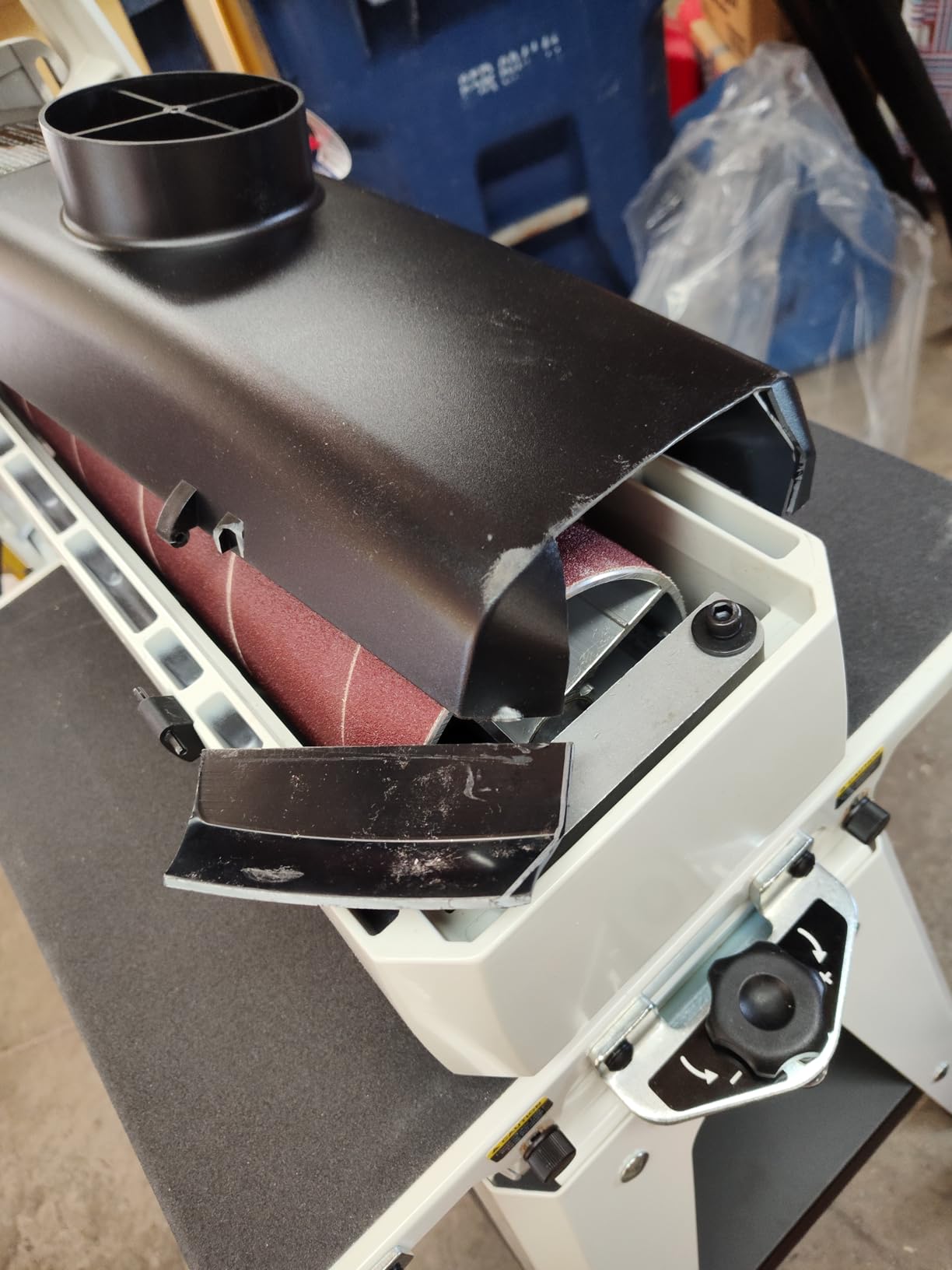
SandSmart is the feature that actually changes your workflow
SandSmart continuously monitors drum motor load and automatically regulates conveyor speed, infinitely variable up to 10 FPM. Practically, that means you set a depth and let the machine find the feed rate instead of cranking a dial and babysitting it.
That automatic behaviour is why the machine gets described as forgiving on glue lines and end grain. Owners consistently single out the feed control, the simple abrasive change, and strong dust extraction as the three things they would not give up.
Parallelism adjustment and belt tracking
The toolless parallelism dial sits on the outside of the conveyor bed, so you can flatten the bed without tools and without moving the drum carriage. Dual self-aligning belt trackers keep the conveyor centred.
The honest caveat: even with auto-aligning trackers, several long-term owners report that abrasive tracking and tension need re-checking on longer sessions. It is maintenance, not a defect, but plan for it in your workflow.
Dust collection and the learning curve
The engineered dust hood channels chips straight to a 4-inch port and is rated to collect up to 97 percent of sanding dust with a JET cyclone collector. That number is worth matching against your collector’s rated CFM before you buy, because a sander without extraction will coat your shop.
The dominant criticism here is operational rather than mechanical. Owners describe a genuine learning curve that burns paper and scorches work if you take too deep a pass, and awkward abrasive clamping at the motor end. Against that, JET carries a 5-year warranty on the machine, dropping to 2 years for commercial use.
3. JET 22-Inch Drum Sander Open Stand – High Capacity Without the Weight
JET 22-Inch Drum Sander with Open Stand, 1-3/4 HP, 1Ph 115V (Model JWDS-2244)
1-3/4 HP 115V,15 amps
22 inch sanding width
42 by 24 by 52 inches,177 lb
5 year warranty
+ Pros
- Highest owner satisfaction among the higher-capacity open-stand models
- SandSmart modulates conveyor speed to prevent drum overload
- Tool-free parallelism dial with a stop to return the bed to flat
- Redesigned conveyor pulls work through instead of pushing it
- Open stand lets long stock pass through
– Cons
- Only 49 reviews so long-term owner history is thin
- 177 lb needs two people to move or mount
- Requires calibration and infeed/outfeed adjustment before the first reliable pass
This 22-inch open-stand model carries the strongest owner satisfaction among the high-capacity machines in this roundup, averaging 4.4 stars. Reported strengths cluster around three things: the SandSmart feed logic, the tool-free parallelism adjustment, and the integrated dust channel.
At 42 inches long, 24 inches wide and 52 inches high with the stand, it is a real step up in capacity from the 16-inch, but at 177 pounds it is only 21 pounds heavier. That ratio is the reason this machine makes our top three.
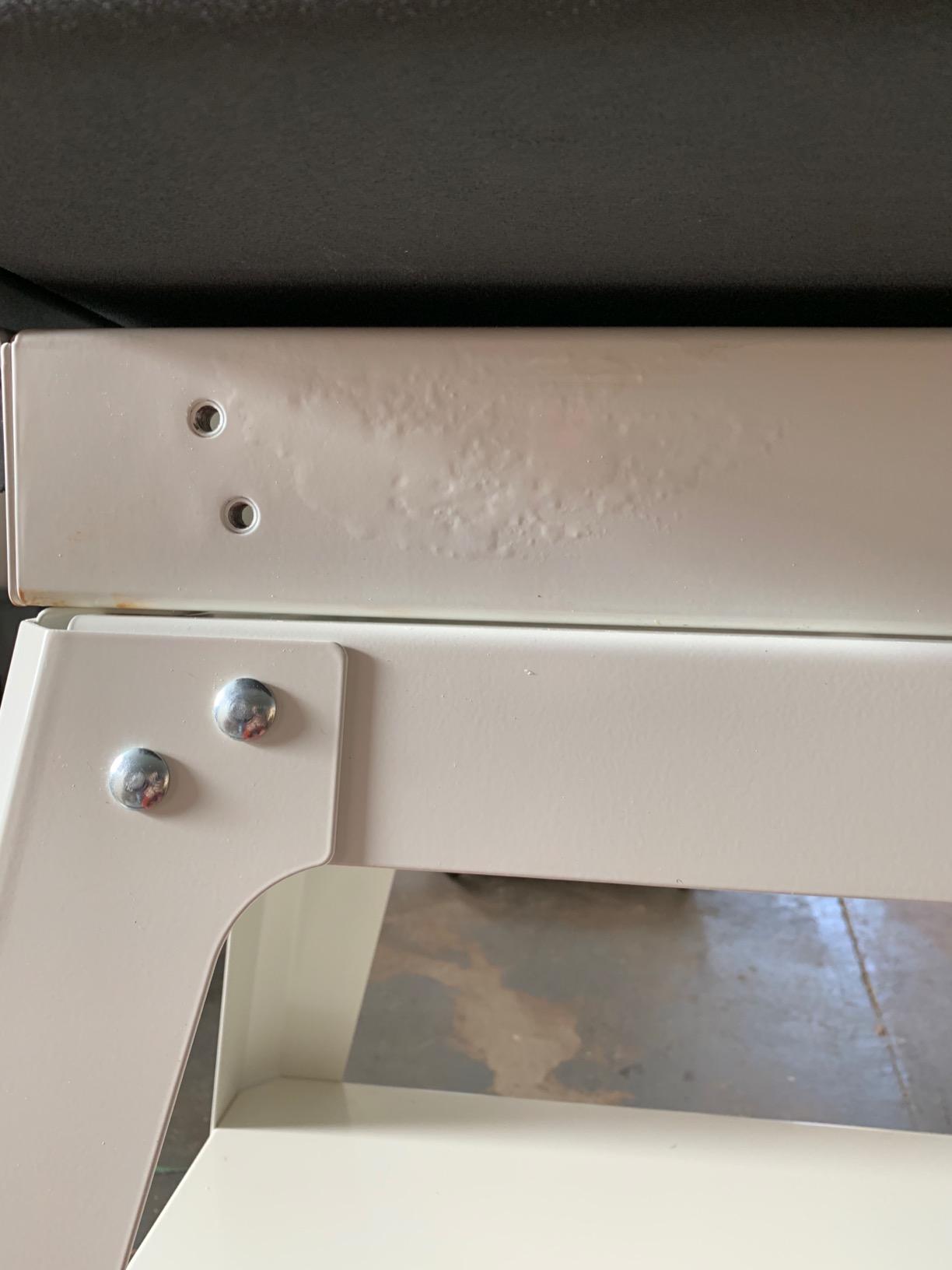
22 inches of width covers real furniture parts
A 22-inch drum is wide enough for most dining table tops without a pass down the middle, and for the full width of a standard door stile plus rail joint. For a shop building drawer boxes and doors in batches, that single-pass width is the difference between one feed and two.
The open stand format is worth noting for a different reason: long stock can pass through without a closed cabinet getting in the way. For slab work and long glue-ups, that layout matters.
Why the redesigned conveyor matters
This model pulls the workpiece through the sander instead of pushing it. Owners praise the pull design because a pushing conveyor has more opportunity to vary the pressure it applies to the work as the board moves across the drum.
The precision-machined, dynamically-balanced drum is built to dissipate heat, and heat is the quiet enemy of finish quality. A drum that runs hot scorches the surface it is supposed to be smoothing, and you find out at the clear coat stage.
Where owners report friction
The physical issues dominate. At 177 pounds it needs two people to move, and it wants a careful calibration pass plus infeed and outfeed adjustment before you trust the first feed. Abrasive changes still involve spring clamps that owners describe as awkward at the motor end.
The bigger caveat is the review pool itself. With 49 reviews, this is a newer model and fewer owners have logged long-term durability history than on the 16-inch or 10-inch machines. Judge it on capability and buy it with the knowledge that you are an early owner.
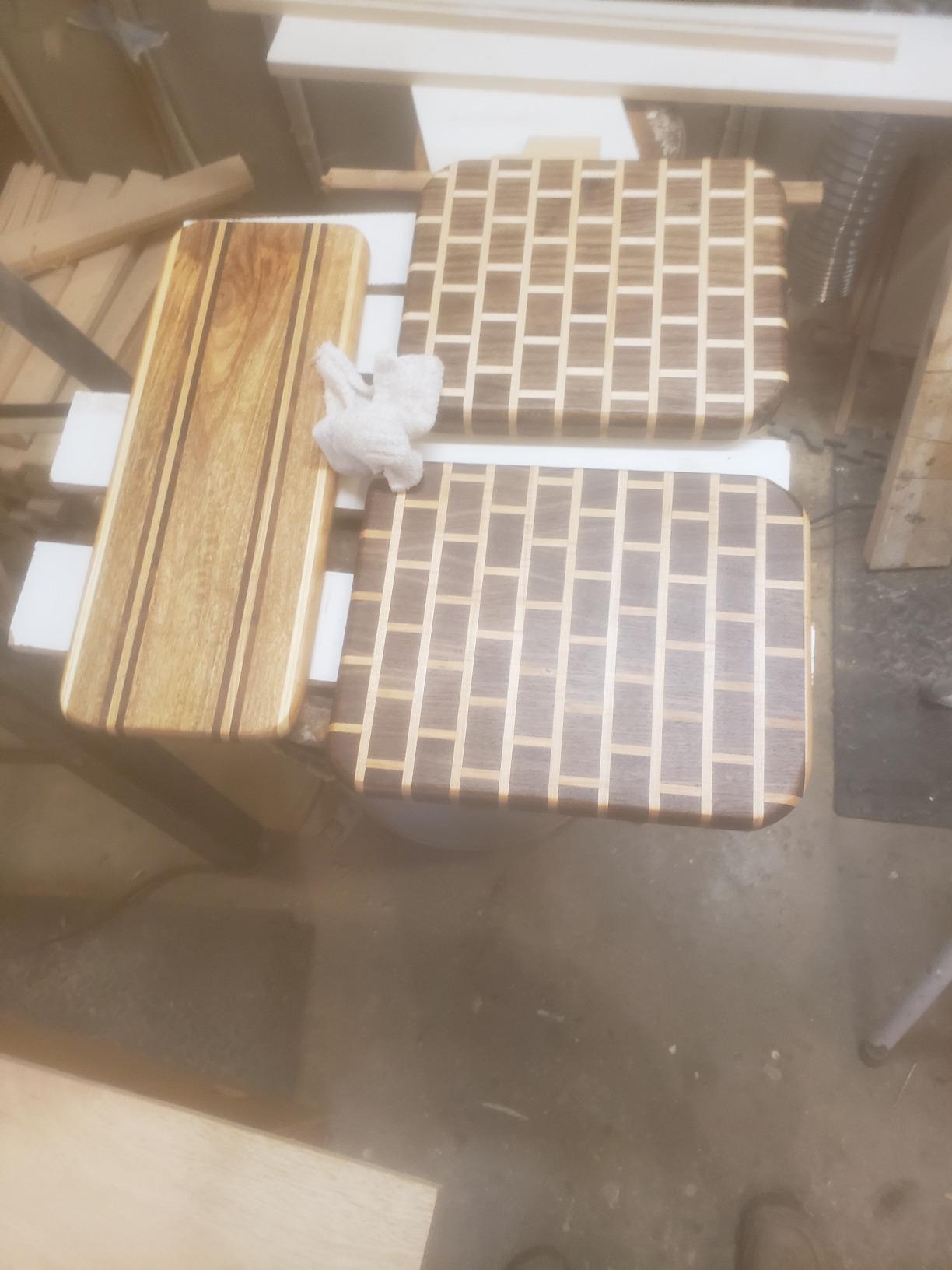
4. JET 16-Inch Oscillating Drum Sander – the Smoothest Finish on Figured Wood
JET 16-Inch Oscillating Drum Sander, 1-1/2 HP, 115V 1Ph (Model JWDS-1632OSC)
1-1/2 HP 115V,14 amps
3/4 inch oscillating stroke
42.75 by 20.25 by 49.13 inches,227 lb
+ Pros
- Highest average owner rating in the group at 4.7 stars
- Three-quarter inch stroke leaves a low-spot surface on glued panels
- Ceramic belt trackers cut manual belt adjustments
- SandSmart plus infinitely variable feed up to 10 FPM
- Separate feed and drum motors for independent control
– Cons
- Heaviest machine here at about 227 lb and needs two or three people to move it
- Hard plastic drum dust cover lid rattles loudly with no cushion seal
- Bed extensions are effectively required for real work
This is the machine to buy if figured maple, cherry or curly grain is part of your work. Owners rate it highest in the group, and the reason is mechanical: the drum travels side to side through a 3/4-inch oscillating stroke while it turns, so the abrasive does not sit in one place and grind a repeating line into the surface.
Several owners report that it replaced their thickness planer for panel work entirely. That is the strongest endorsement a drum sander can get from a furniture maker.
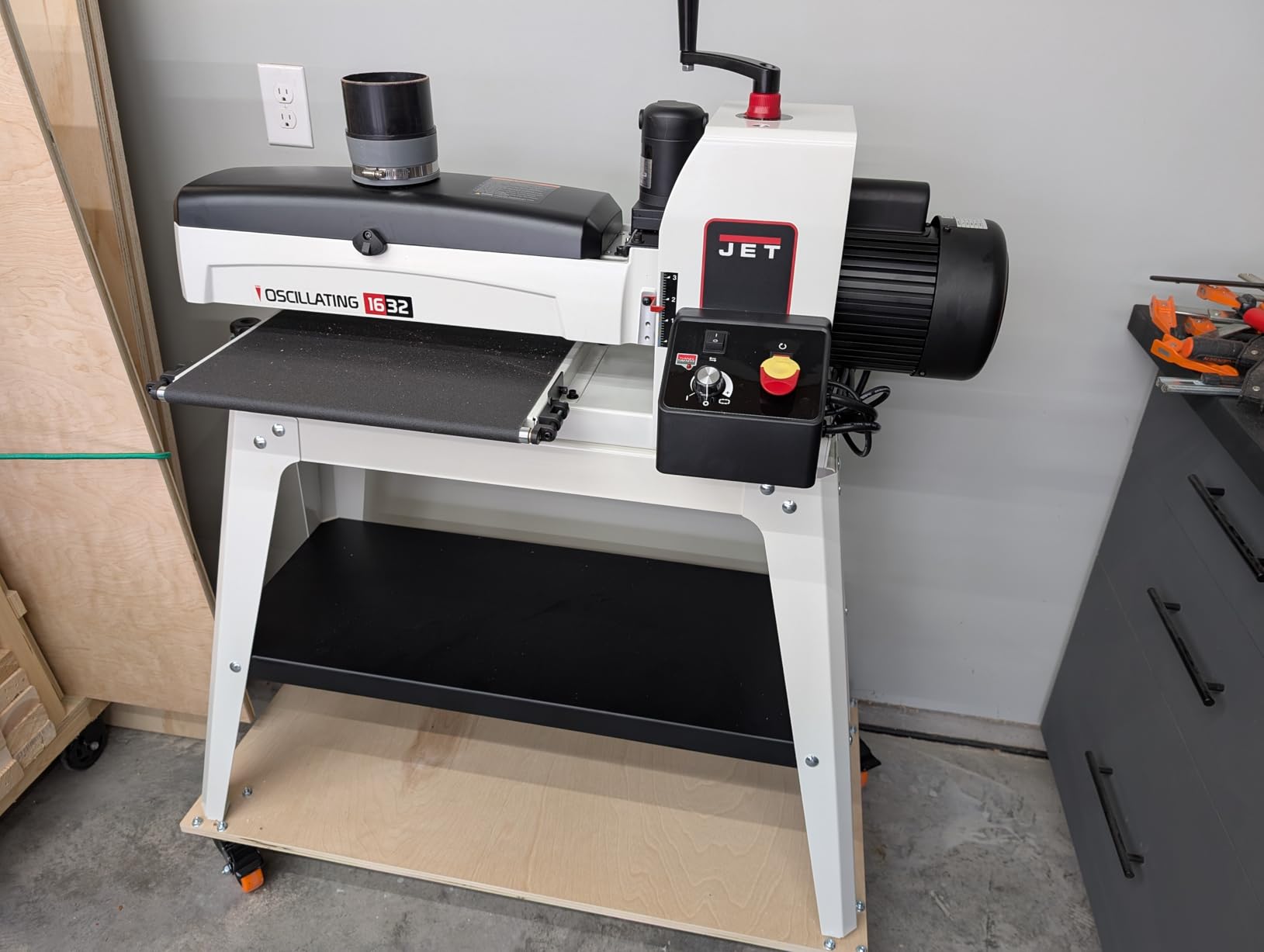
Oscillating versus fixed: what actually changes
A fixed drum presses a narrow contact patch against the bed and the work. On a flat, glued, jointed panel that is fine. On figured wood and end grain, the contact patch digs into the soft earlywood and produces a ripple that no amount of hand sanding fully removes.
The oscillating stroke spreads that contact over a moving band, which is why the surface comes out smoother and more uniform. It is the same reason a wide belt sander is kinder to figured stock than a drum sander without oscillation, and the same reason a planer tears it out entirely.
Separate motors and feed control
This machine runs separate feed and drum motors, giving you independent control of feed rate against drum speed. SandSmart still watches drum load and modulates the conveyor automatically, and infinitely variable speed takes the conveyor up to 10 FPM.
Ceramic belt trackers are a small detail with a real effect: they reduce how often you need to reach in and re-track the conveyor. On long production runs that adds up to saved time you would otherwise spend kneeling next to the machine.
The trade-offs are physical
At 227 pounds this is the heaviest machine in the roundup, and owners uniformly say moving it takes two or three people or a serious dolly. The dust cover lid is hard plastic with no cushion seal, so it rattles loudly during operation. And owners are blunt that the optional bed extensions should really be treated as required.
The initial abrasive spacing takes practice. Strips need to be set evenly across the drum face, and if they drift or overlap you will find out immediately. With only 19 reviews, treat the glowing scores as promising rather than proven.
5. Powermatic 22-Inch Drum Sander – Extension Tables and a Closed Stand
Powermatic 22-Inch Drum Sander, 1-3/4 HP, 115V 1Ph (Model PM2244)
1-3/4 HP 115V,14 amps
22 inch drum,1720 rpm
42.25 by 37.75 by 49.5 inches,328 lb
+ Pros
- Extension tables give 37.5 inches of workpiece support out of the box
- Feed Logic monitors drum load and slows the conveyor to avoid motor shutdown
- Closed stand stores abrasives and keeps the machine tidy
- Integrated casters make the 328 pound unit easier to move
- Parallelism dial holds accurate to thousandths on an 18 inch door
– Cons
- Lowest average rating in the group at 3.6 stars with 21 percent one-star reviews
- Several owners report the conveyor stalling on large workpieces and leaving drum burns
- 328 lb is heavy enough that owners build a plywood dolly
This Powermatic is the outlier in the roundup, both in rating and in what it brings to a door and drawer shop. Reviews split sharply. Owners who receive a well-aligned unit praise it enthusiastically; owners who receive a problem unit describe it in terms you should read before buying.
What it does offer that most open-stand machines do not is support. The included infeed and outfeed extension tables provide 37.5 inches of workpiece support out of the box, and the closed stand stores abrasives so they stay dry and organised. Integrated casters are a genuine kindness on a 328-pound machine.
Why door makers care about this one
Sanding an 18-inch cabinet door flat and consistent is the single most common furniture task that trips people up on a drum sander. Too little infeed support and the door rocks; too much depth on the first pass and you get a witness mark running the length of the panel.
Owners with well-behaved units report that the dial parallelism adjustment held accurate to within thousandths on an 18-inch door after five passes. The Feed Logic system monitors the drum motor and regulates conveyor speed to avoid a shutdown mid-panel, which is exactly the failure mode that ruins a door.
Read the complaints before you buy
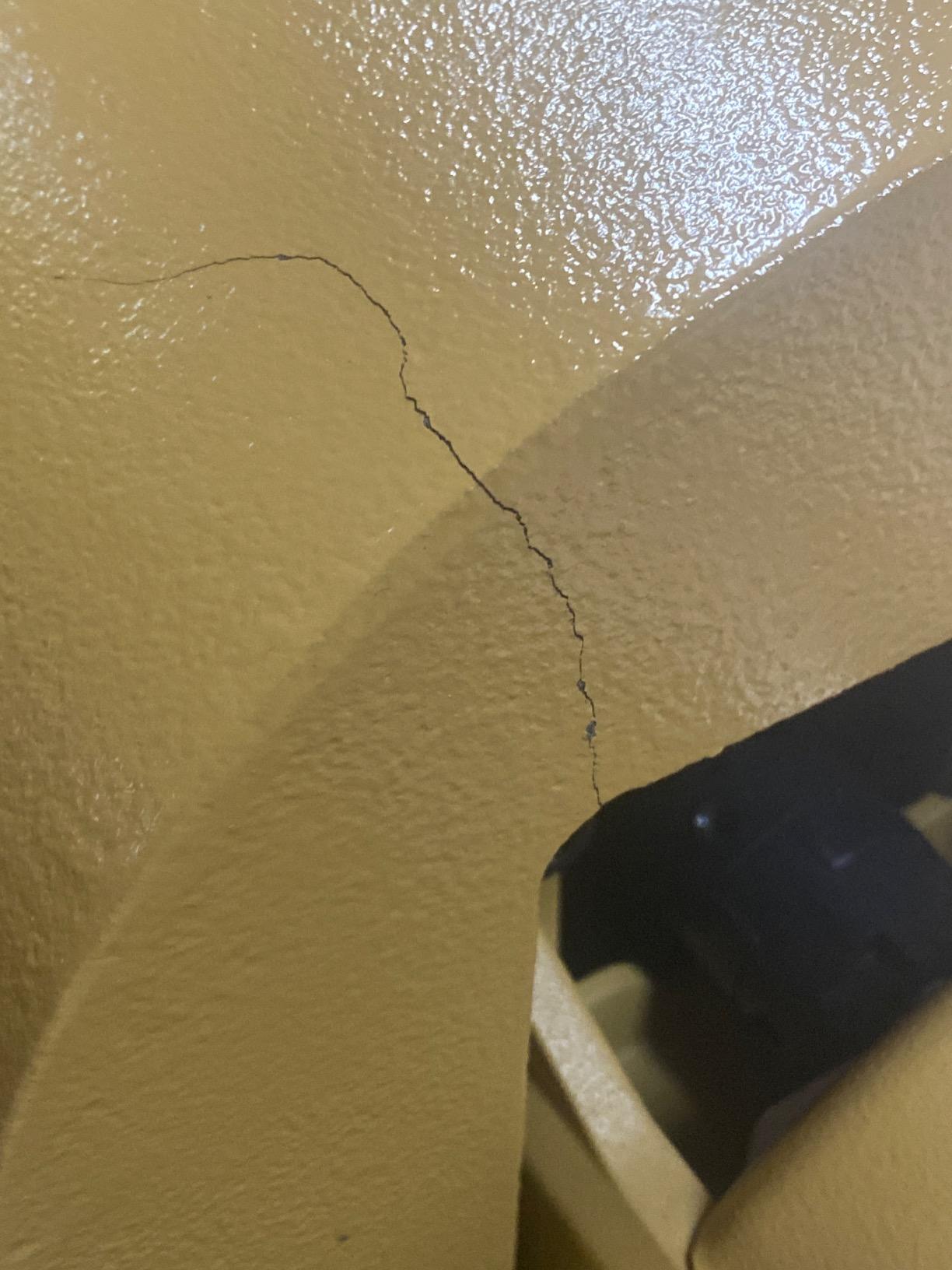
This machine carries the lowest average rating in the group at 3.6 stars, with 21 percent of reviews at one star. That is not noise. Owners report the conveyor stalling on large workpieces, which leaves drum indentations and burns across the panel, and several report shipping and quality control problems including cracked castings and a bent caster base.
After-sales parts and service response is also criticised by several owners, and multiple buyers report slower material removal than they expected. My read across the reviews is that this machine performs well when it performs, and that QC is inconsistent enough that you should buy it from a seller who will take it back easily.
Weight and layout reality
At 328 pounds and 37.75 inches wide with the tables installed, this is the largest footprint in the roundup by some distance. Several owners built a plywood dolly just to move it. Plan the shop layout before you order, because this one does not tuck against a wall easily.
6. JET 18-Inch Drum Sander Open Stand – the Middle-Size Cabinet Door Machine
JET 18-Inch Drum Sander with Open Stand, 1-3/4 HP, 115V 1Ph (Model JWDS-1836)
1-3/4 HP 115V,15 amps
18 inch drum,1725 rpm
50 by 20 by 39.75 inches,164 lb
5 year warranty
+ Pros
- 1-3/4 HP motor has real reserve for figured hardwood
- SandSmart auto-feed prevents drum overload
- Tool-free parallelism dial with a stop to return the bed to flat
- Stand has a 20 by 37 inch footprint with storage shelf and caster holes
- Dust hood channel directs debris to a 4 inch port
– Cons
- Owner rating of 3.8 stars with 14 percent one-star reviews
- Abrasive tracking and tension need frequent re-checking on longer runs
- Setup and calibration before the first reliable pass
The 18-inch model sits between the 16-inch and 22-inch, and it is the one I would look at first if your work is cabinet doors rather than panels. An 18-inch drum covers a standard door width in a single pass, which is the number that matters when you are building a run of twenty doors.
It also carries a 1-3/4 HP motor, the same as the larger machines, at 164 pounds. That is 13 pounds lighter than the 22-inch open stand while giving up only four inches of width, and the motor spec is where the extra capacity lives.
Feed control and parallelism are the strengths
Owners who get this machine tuned in praise the SandSmart feed control, the tool-free parallelism dial and the balanced drum’s heat handling. The parallelism dial includes a stop that quickly returns the conveyor bed to a flat position, which is a small feature that saves real time when you are re-zeroing between grits.
The dust hood has an integrated channel mirroring the drum shape and directs debris to a 4-inch port. Infinitely variable feed speed up to 10 FPM lets you slow down for figured stock without changing machines.
What drags the rating down
At 3.8 stars with 28 reviews, the owner rating sits toward the bottom of this roundup, with 14 percent one-star reviews. Abrasive tracking and tension needing frequent re-checking is the most common complaint, followed by the weight of the unit and the initial setup calibration.
With only 28 reviews, individual experiences move this average a long way. If you buy it, budget a full afternoon for setup and calibration before you sand anything you care about, and plan to check the paper tension between runs.
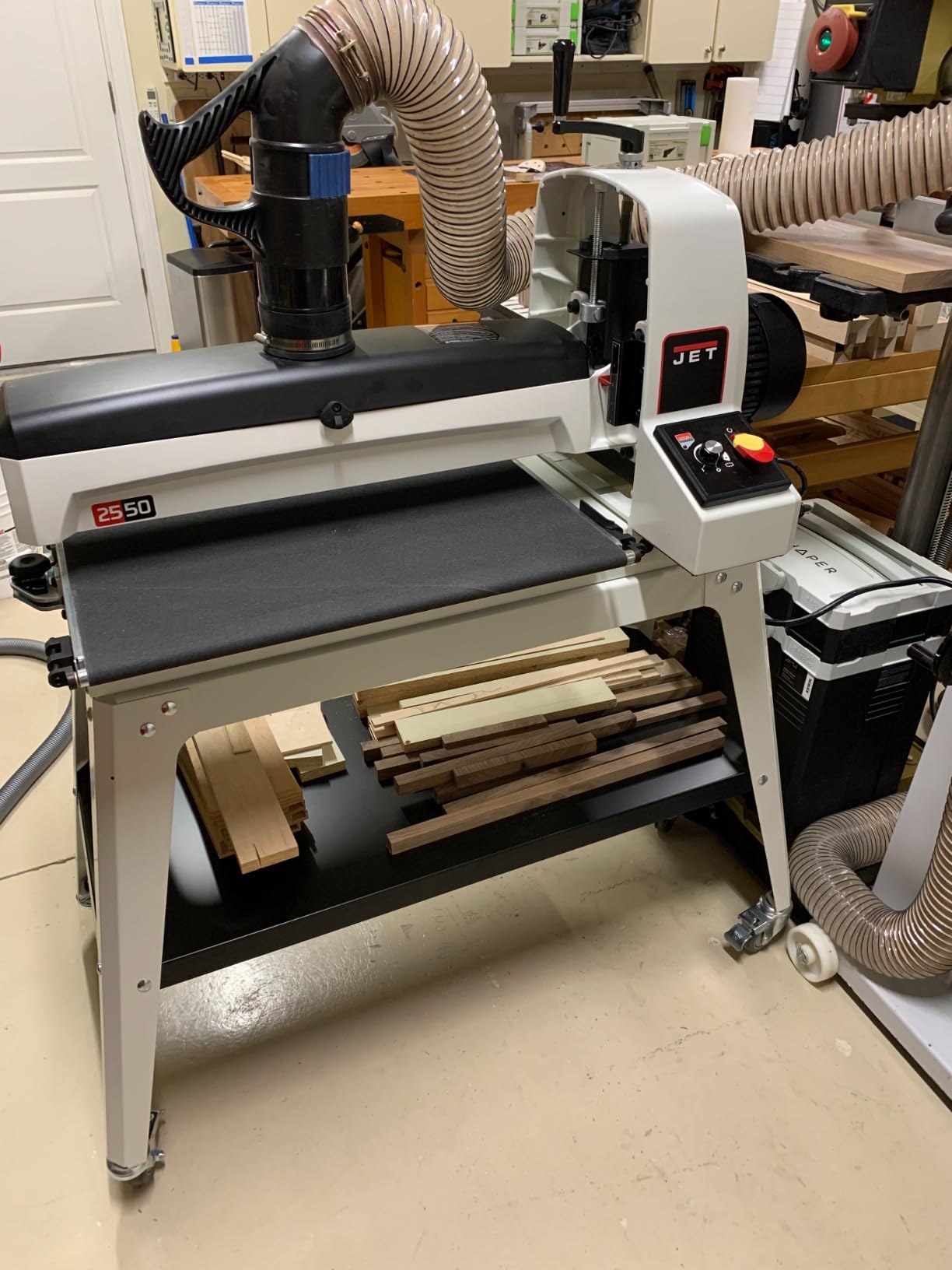
7. JET 25-Inch Drum Sander – the Widest Single-Pass Capacity Here
JET 25-Inch Drum Sander, Open Stand, 1-3/4 HP, 115V 1Ph (JWDS-2550)
1-3/4 HP 115V,15 amps
25 inch sanding width
45 by 24 by 52 inches,234 lb
+ Pros
- Widest single-pass capacity in this group so full-length panels go through in one feed
- SandSmart slows the conveyor on wide stock instead of bogging
- Relative depth scale on the handwheel resets depth per project
- Sealed permanently-lubricated ball bearings extend drum bearing life
- Owners report accurate adjustment out of the box with smooth castings
– Cons
- Stocky at 234 lb so moving it needs a dolly or several helpers
- Thin plastic dust hood is difficult to load abrasive clips at the drum end
- Abrasive can migrate to one side and tear if drum alignment drifts
At 25 inches, this is the widest single-pass capacity in the group, and for a shop that builds dining tables and wide panels, that is the headline number. Full-length panels and doors go through in one feed instead of two.
Owners who commit to this machine sand it enthusiastically. They cite the capacity for full-width panels, the accurate depth setting from the handwheel scale, and the dust collection. Some report processing thousands of linear feet of stock without the drum bogging.
The depth scale is a genuine workflow feature
The relative depth scale on the handwheel lets you reset and measure cut depth for every project. On a panel that needs four passes, that means you set a consistent increment rather than judging by eye and risking a witness mark you cannot sand out.
The precision-machined, dynamically-balanced extruded aluminum drum is built to dissipate heat, and sealed, permanently-lubricated ball bearings are meant to extend drum bearing life. On a machine this heavy and this wide, bearing longevity is the difference between a tool that lasts and one that does not.
Weak points are practical, not mechanical
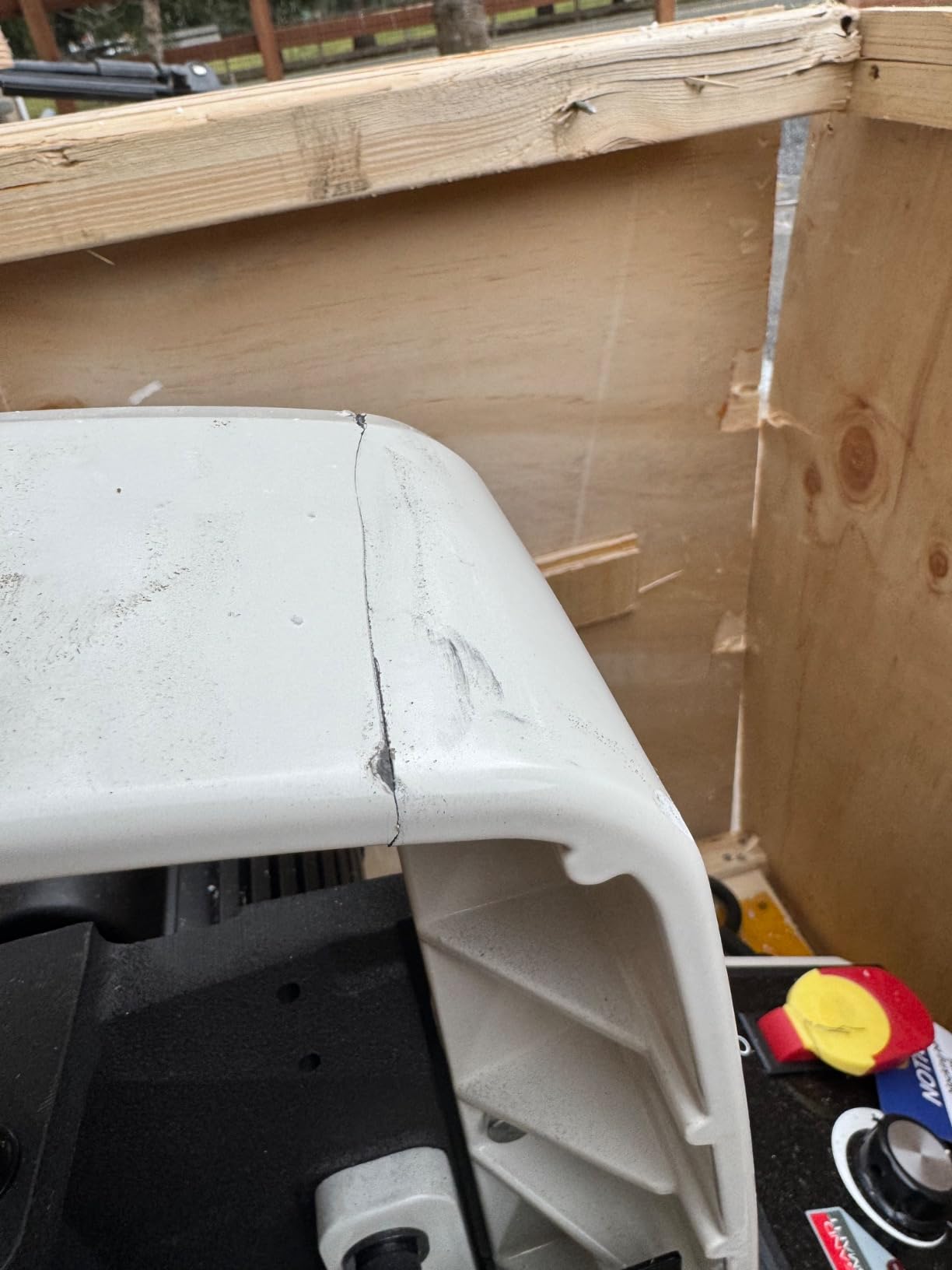
At 234 pounds it needs a dolly or several helpers. The dust hood is thin plastic, and loading the abrasive clip at the end of the drum is awkward, particularly on a machine you cannot easily rotate.
The most serious recurring complaint is abrasive migrating to one side and tearing after several passes if drum alignment drifts. One long-term owner ended up with an unusable unit over exactly that problem. Buy extra strips, and check alignment before you start a long run.
One more practical note that several buyers mention: many upgrade to 120 grit because the supplied 80-grit abrasive scratches more than they want on furniture panels. That is a reasonable first purchase with the machine.
How to Choose a Drum Sander for Furniture Work: 8 Criteria That Matter
Every machine above does the same core job. The differences come down to width, drive configuration, support, and how much your shop can actually accommodate. These are the eight questions worth answering before you spend anything.
Open-ended or oscillating drum: what the choice changes
Choose an open-ended fixed drum for glued panels, doors, drawer components and calibrated stock, which is the majority of furniture work. Choose an oscillating drum when figured maple, cherry, curly grain or end grain is a regular part of your work, because the stroke is what removes the ripple a fixed drum leaves.
Owners describe oscillating machines as worth the step up specifically for finish work. The same owners are equally clear that a drum sander of any type is not a substitute for a planer when you need heavy removal.
How wide a drum sander you actually need
Measure your widest common workpiece and pick the drum that covers it in one pass, or accept two passes. Standard cabinet doors and most drawer parts fit a 16-inch drum. A 22-inch drum covers a wider door stile plus rail joint. A 25-inch drum covers most dining table tops without a seam down the middle.
Do not overbuy. A wider machine is heavier, needs more floor space, and on many open-stand models the stand footprint grows faster than the drum does.
Feed control: why SandSmart and Feed Logic matter
Automatic feed control monitors drum motor load and modulates conveyor speed so the cut stays inside the motor’s capability. In practice that means far fewer burned boards and far less babysitting of a throttle between passes.
For furniture work this is not a luxury feature. It is the difference between a smooth, even surface and a batch of panels with a burn mark at the exit end.
Dust collection: the 4-inch port and airflow
All seven machines collect through a 4-inch port, and the JET hoods are designed to direct the bulk of chips straight into it. Match the port to a collector with adequate rated CFM for the machine, and check the requirement in the manual before you commit.
Small shops routinely underestimate this. A sander without extraction puts dust into the finish, into your bearings, and into your lungs, and no amount of shop vacuuming fixes it after the fact.
Power and circuit requirements
Every machine in this roundup runs on 115V single-phase power, which is a genuine advantage in a shop that already has a table saw and a planer competing for circuits.
Pay attention to the required circuit. The 16-inch SandSmart model is rated at 14 amps and calls for a 20 amp circuit, while the 10-inch benchtop draws 8 amps and the 22-inch models sit around 14 to 15 amps. A dedicated circuit avoids nuisance breaker trips mid-panel.
Footprint, weight and moving the machine
Heaviest machines in this category run in the several-hundred-pound range and are genuinely awkward to move. Plan your shop layout around the machine before you buy it, including the room you need at the infeed and outfeed ends for long stock.
If a machine ships with a closed stand and integrated casters, you are getting mobility for free. If it ships with an open stand and pre-drilled caster holes, budget for a dolly or casters.
Abrasive grit progression for furniture finishing
The progression for a furniture panel that ends under a clear coat is 80, then 120, then 150, then 220. Change grit on the machine only after the previous pass has fully removed the scratch pattern, because a drum sander concentrates load in one place.
Start conservatively. Owners across this roundup describe learning curves that burn paper and scorch work when the first pass is too aggressive. Several of them simply run 120 grit as their first grit for furniture stock.
Snipe and chatter marks: how to diagnose and fix them
Snipe is the small ridge at the ends of a board caused by uneven hold-down pressure. Chatter is a repeating ripple caused by a drum that is out of round, an abrasive splice running past the work, or a misaligned bed. Diagnose in this order:
- Check that the conveyor bed is parallel using the tool-free parallelism dial, and use the return stop to confirm a flat setting.
- Inspect the drum for runout or a damaged bearing, which shows as a repeating pattern at the same point on every board.
- Check whether an abrasive splice is landing on the work at a fixed point along the board length.
- Confirm the abrasive strip is square and evenly tensioned across the drum face, because a drifting strip sands one side harder.
- Reduce depth on the first pass and lighten the feed rate, since both snipe and chatter worsen dramatically under a heavy cut.
If lines persist at the open outfeed end of an open-ended machine, that is a geometry feature of the design rather than a setup error. The oscillating drum is the fix if that mark shows under your finish.
If your sanding stopped short of panels and flat stock entirely, our picks for smaller machines are worth a look: the best sanders for furniture roundup covers the orbital and spindle options, and the random orbital sander comparison covers final-surface work on curved and detailed parts. For the other end of the finishing chain, our drywall sander guide is worth reading if you occasionally finish a shop wall or a garage build-out alongside the bench work.
Frequently Asked Questions
Who makes the best drum sander for woodworking?
JET builds the widest range of drum sanders that stay within ordinary 115V single-phase power, and its SandSmart automatic feed control is the feature most owners cite first. For oscillating drums that treat figured maple and cherry without leaving ripple marks, JET’s JWDS-1632OSC is the standout in its class. Powermatic is the alternative worth considering when you need extension tables and a closed stand included.
Which brand of sander is considered the best?
For drum sanders specifically, JET is the most consistently rated brand in this roundup, with owner satisfaction across benchtop, open-stand and oscillating models and a 5-year machine warranty that drops to 2 years for commercial use. Brand choice matters less than matching the drum width and feed control to the work you actually do.
Which drum sander is better, JET or Powermatic?
JET wins on owner satisfaction, feed control refinement and warranty length. Powermatic’s PM2244 wins on included support, with infeed and outfeed extension tables giving 37.5 inches of workpiece support out of the box, but it carries a lower average rating and heavier 328-pound weight. Choose Powermatic if door and drawer support matters most; choose JET for consistency.
Are drum sanders worth the money?
Yes, if you regularly sand glued panels, doors, drawer parts or thin stock. Owners report turning a full day of hand sanding into minutes of machine time, and several have retired their thickness planer for panel work entirely. They are not worth it if you mostly need heavy material removal, because a drum sander is a finishing machine, not a planer.
How wide a drum sander do I need?
Pick the drum width that covers your widest common workpiece in one pass, or plan for two. A 16-inch drum covers standard cabinet doors and drawer parts. A 22-inch drum covers wider stile and rail joints. A 25-inch drum handles most dining table tops in a single feed. Do not overbuy, since wider machines weigh more and take more floor space.
Final Verdict: Which Drum Sander Belongs in Your Shop in 2026
If your shop is tight and you mostly sand panels, doors and thin parts, the JET 10-Inch Benchtop JWDS-1020 is the one to buy. The die-cast body gives you a rigid machine in a benchtop footprint, and it will handle stock far shorter and thinner than a planer ever could.
If you want the machine most furniture makers actually end up with, go with the JET 16-Inch JWDS-1632 with SandSmart. It runs on ordinary 115V power, holds 16 inches in one pass or 32 in two, and the automatic feed control does most of the thinking for you once you are past the learning curve.
If width is your bottleneck, the JET 22-Inch JWDS-2244 gives you 22 inches of single-pass capacity at only 21 pounds more than the 16-inch. And if figured wood is your material, the JET 16-Inch Oscillating JWDS-1632OSC produces the smoothest surface in this group, at the cost of being the heaviest machine here.
Whichever you choose, give it a full setup afternoon before you sand anything you care about, and check your collector’s airflow before the first board goes through. Our picks for the best drum sanders for furniture makers all reward that patience quickly.
Leave a Reply