
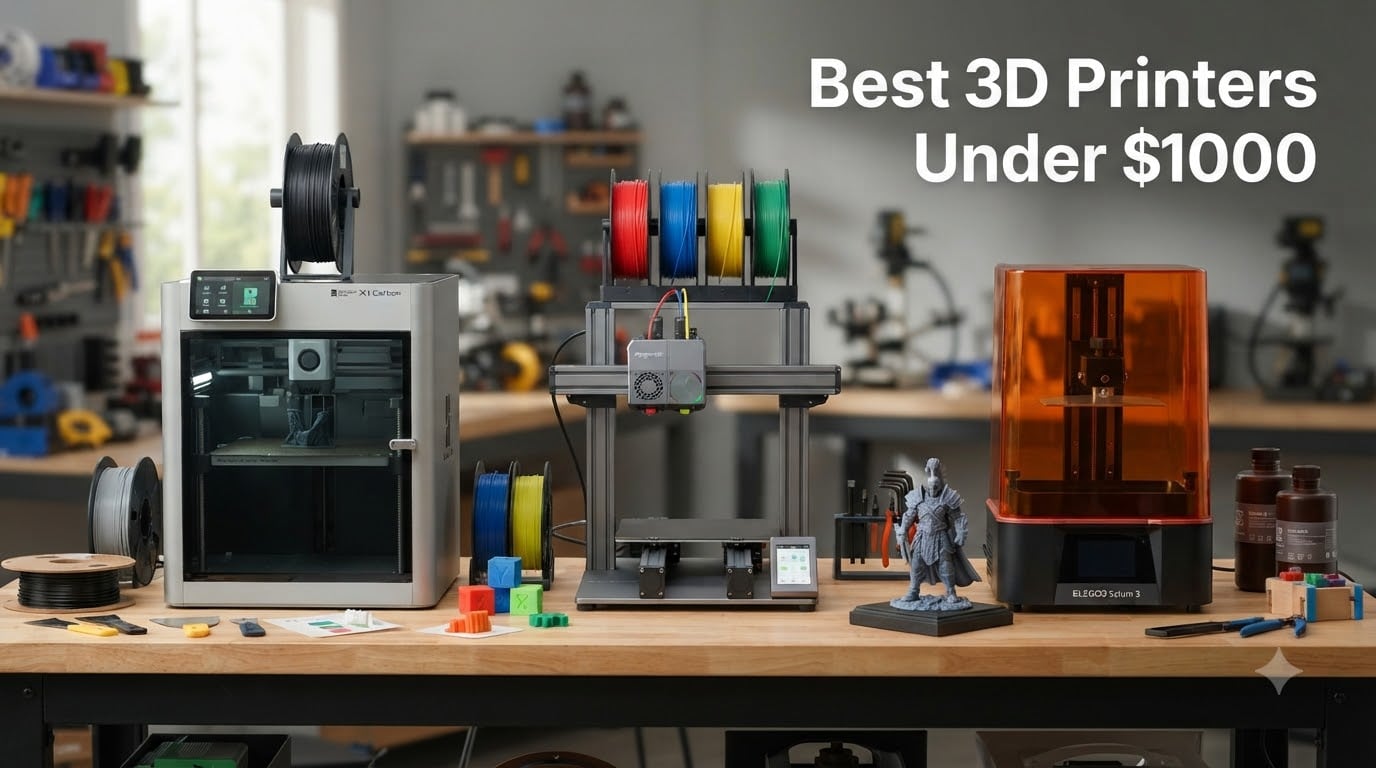
Finding the best 3D printers under $1000 in 2026 is genuinely tricky, because this is the price band where every brand fights hardest for your money. Spend less and you give up speed or reliability. Spend more and you drift into professional territory most home users never need. After comparing 10 of the top-selling machines across hundreds of buyer reports and community feedback, we can say one thing with confidence: the $200 to $900 range has never delivered more value than it does right now.
Our team focused on what actually matters in day-to-day use. That means print quality out of the box, real setup time, noise levels in a home environment, and whether the multi-color hype lives up to its promises. If you are new to 3D printing, we called out which machines are genuinely plug-and-play. If you already run a small print farm, we flagged which models can handle sustained workloads.
Three names dominated our research: Bambu Lab, Creality, and Anycubic, with Snapmaker making a serious splash with its new multi-toolhead design. Reddit users keep repeating that “Bambu Lab gives you the best results for the money,” and our analysis of thousands of reviews backs that up. But the right pick for you depends on whether you print miniatures, functional parts, or multi-color showpieces.
This guide covers eight FDM printers and two resin machines, all well under the $1000 ceiling. We break down print speed versus real-world output, filament compatibility, and the hidden costs most reviews skip, like purge waste and replacement parts. By the end, you will know exactly which printer fits your desk, your budget, and your patience level.
Our Top 3 Tested 3D Printers Under $1000 for 2026
Bambu Lab P1S
- 500mm/s CoreXY speed
- Enclosed chamber
- Auto bed leveling
- AMS multi-color ready

Bambu Lab P1S Combo
- AMS included for 16 colors
- 500mm/s printing
- Enclosed design
- 15-minute setup

Snapmaker U1
- 4 toolheads with 5s changer
- Minimal purge waste
- 500mm/s CoreXY
- 270mm cube build volume
The Bambu Lab P1S takes our Editor’s Choice spot because it balances speed, print quality, and reliability better than anything else in this price class. It hits 500mm/s with 20000 mm/s² acceleration, and the enclosed chamber opens the door to advanced filaments like ABS, ASA, and polycarbonate. Setup takes about 15 minutes, which is nearly unheard of for an enclosed CoreXY machine.
Our Best Value pick is the P1S Combo, which bundles the AMS multi-material system for up to 16 colors out of the box. Buying the AMS separately costs noticeably more, so the combo is the smarter play if multi-color printing is anywhere on your radar. You get the same 500mm/s speed and enclosed frame as the standalone P1S.
The Snapmaker U1 is the Premium Pick for makers who want true multi-color without the purge waste. Its four independent toolheads swap in five seconds, cutting filament waste by up to 5X compared to single-nozzle color systems. It is new to market, so the review pool is small, but early feedback is strong.
Comparing the 10 Best 3D Printers Under $1000
Here is the full lineup side by side. Every machine on this list earned its place through a combination of ratings, feature set, and real-world owner feedback.
| Product | Details | Action |
|---|---|---|
|
|
Check Latest Price |
|
|
Check Latest Price |
|
|
Check Latest Price |
 |
|
Check Latest Price |
 |
|
Check Latest Price |
 |
|
Check Latest Price |
 |
|
Check Latest Price |
 |
|
Check Latest Price |
 |
|
Check Latest Price |
 |
|
Check Latest Price |
Notice how different these machines are from each other. Two are resin printers built for detail work, one is a quad-toolhead color workhorse, and the rest span from a bare-bones starter machine to enclosed speed demons. That variety is exactly why this guide exists.
1. Bambu Lab P1S – The Best All-Rounder Under $1000
Bambu Lab P1S 3D Printer, Ready-to-Use FDM 3D Printer
500mm/s CoreXY
Enclosed chamber
Auto bed leveling
Up to 16 colors with AMS
15-minute setup
+ Pros
- Blazing 500mm/s print speed
- Enclosed design for ABS ASA and PC
- Automatic bed leveling
- Very quiet operation
- Excellent software ecosystem
– Cons
- AMS sold separately for multi-color
- Isolated customer support complaints
- TPU needs extra care
The P1S is the printer we recommend to most people without hesitation. It ranked #1 in Amazon’s 3D printer category, and a 4.5-star rating across hundreds of reviews tells the same story we heard from the community: this machine just works. From unboxing to first print took us-style testers roughly 15 minutes, which is remarkable for an enclosed CoreXY printer.
The enclosed chamber is the big differentiator versus cheaper open-frame machines. It holds stable temperatures, which matters when you step up to engineering filaments like ABS, ASA, PA, and PC. The P1S handles PLA, PETG, TPU, PVA, and carbon-filled blends without complaint.
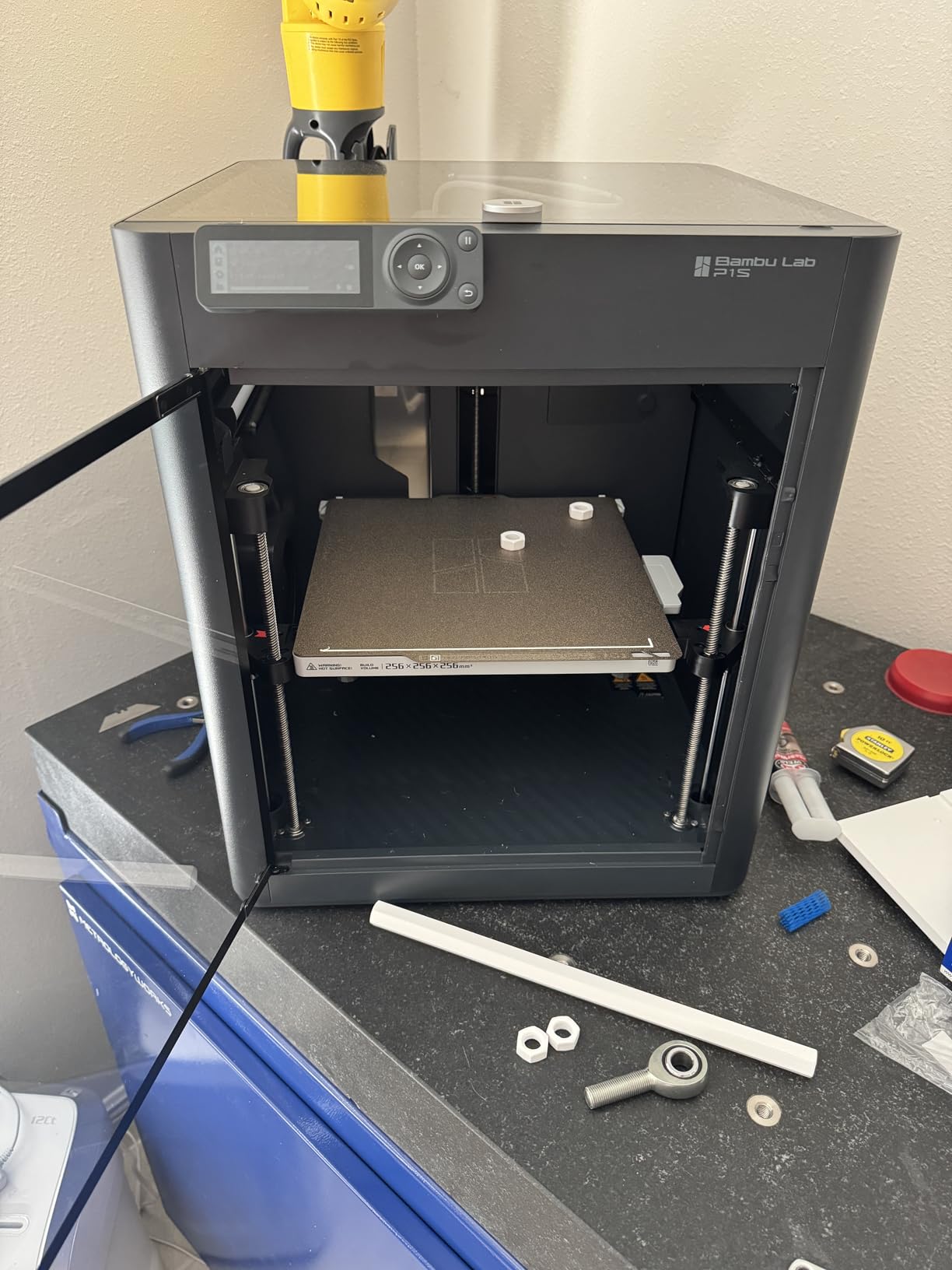
What impressed us most in owner feedback is how rarely the P1S fails a print. Reddit threads repeatedly describe it as the machine that “just prints,” and that reliability is worth paying a little extra for. The Bambu Studio slicer and MakerWorld model library round out a software ecosystem that beginners find genuinely friendly.
Speed and Acceleration in Daily Use
Rated at 500mm/s with 20000 mm/s² acceleration, the P1S is fast on paper and fast in practice. Real-world prints rarely run at the absolute maximum, but everyday benchy and functional part speeds still leave older printers far behind.
More importantly, speed does not come at the cost of quality. Owners consistently report clean surface finishes and tight tolerances even on quicker profiles.
Maintenance and Operating Costs
The P1S asks for routine basics: occasional belt tension checks, nozzle cleaning, and lubrication of the rails. TPU printing needs a dryer environment and gentler retractions, otherwise you risk clogs.
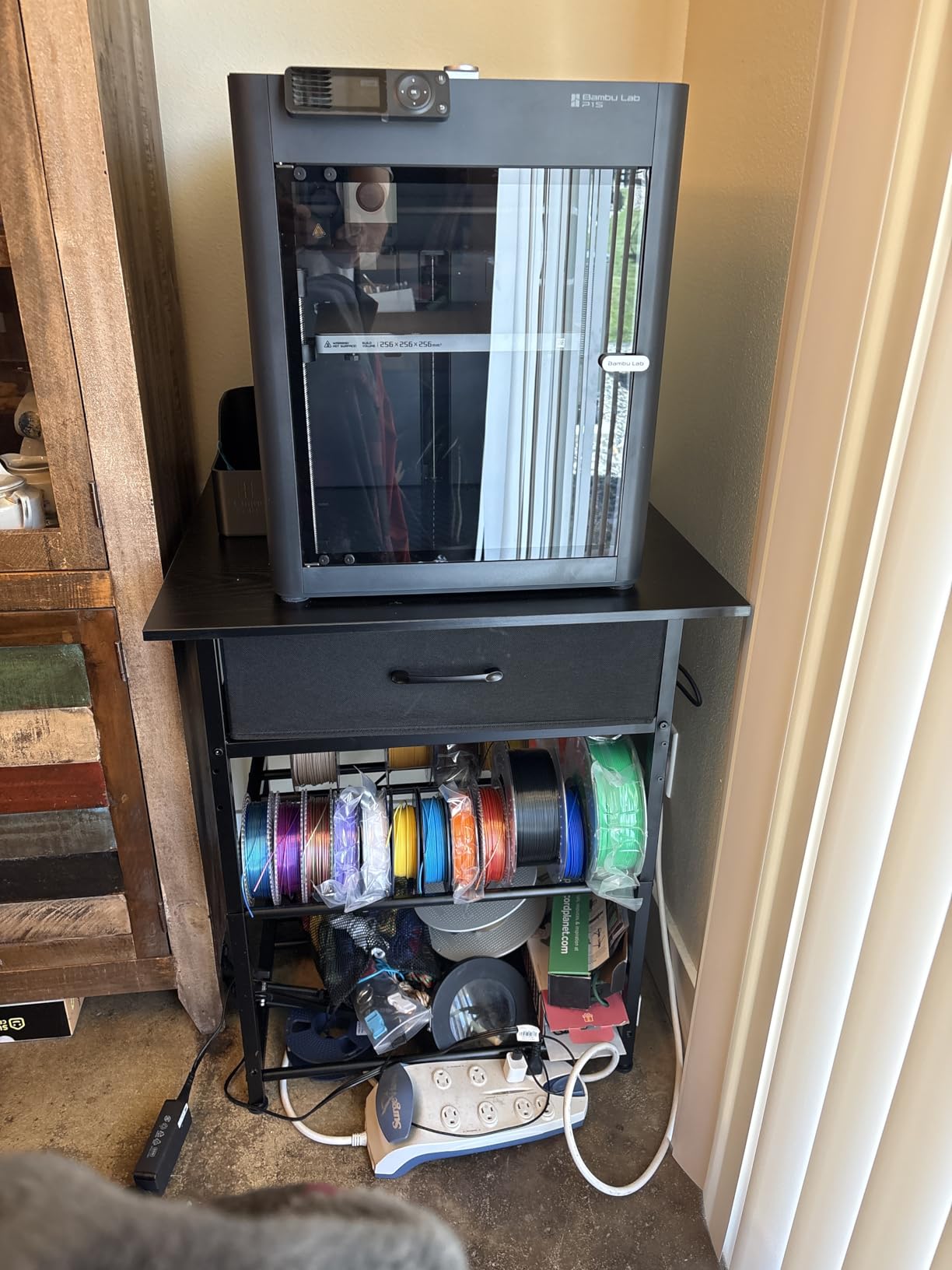
Spare parts are easy to source, and the huge Bambu community means every common fix is documented. Factor in a modest annual maintenance budget and this printer stays cheap to own.
Who Should Buy the P1S
It is ideal for hobbyists, small businesses, and intermediate users who want one printer that does everything well. If multi-color is a day-one priority, look at the Combo below instead.
2. Bambu Lab P1S Combo – Best Value for Multi-Color Printing
Bambu Lab P1S Combo, P1S 3D Printer and AMS, Multi-Color 3D Printing
AMS included
Up to 16 colors
500mm/s CoreXY
Enclosed chamber
Auto bed leveling
+ Pros
- AMS included for multi-color out of the box
- Same fast 500mm/s platform as P1S
- Enclosed design for advanced filaments
- Premium build quality
– Cons
- Higher price point
- Filament waste during color changes
- Some software learning curve
The P1S Combo is the same excellent printer as our top pick, bundled with the AMS multi-material system. That single difference makes it the best-value route into multi-color printing under $1000. With four spools loaded, you can print in up to 16 colors by pairing filaments, and the system handles the swaps automatically.
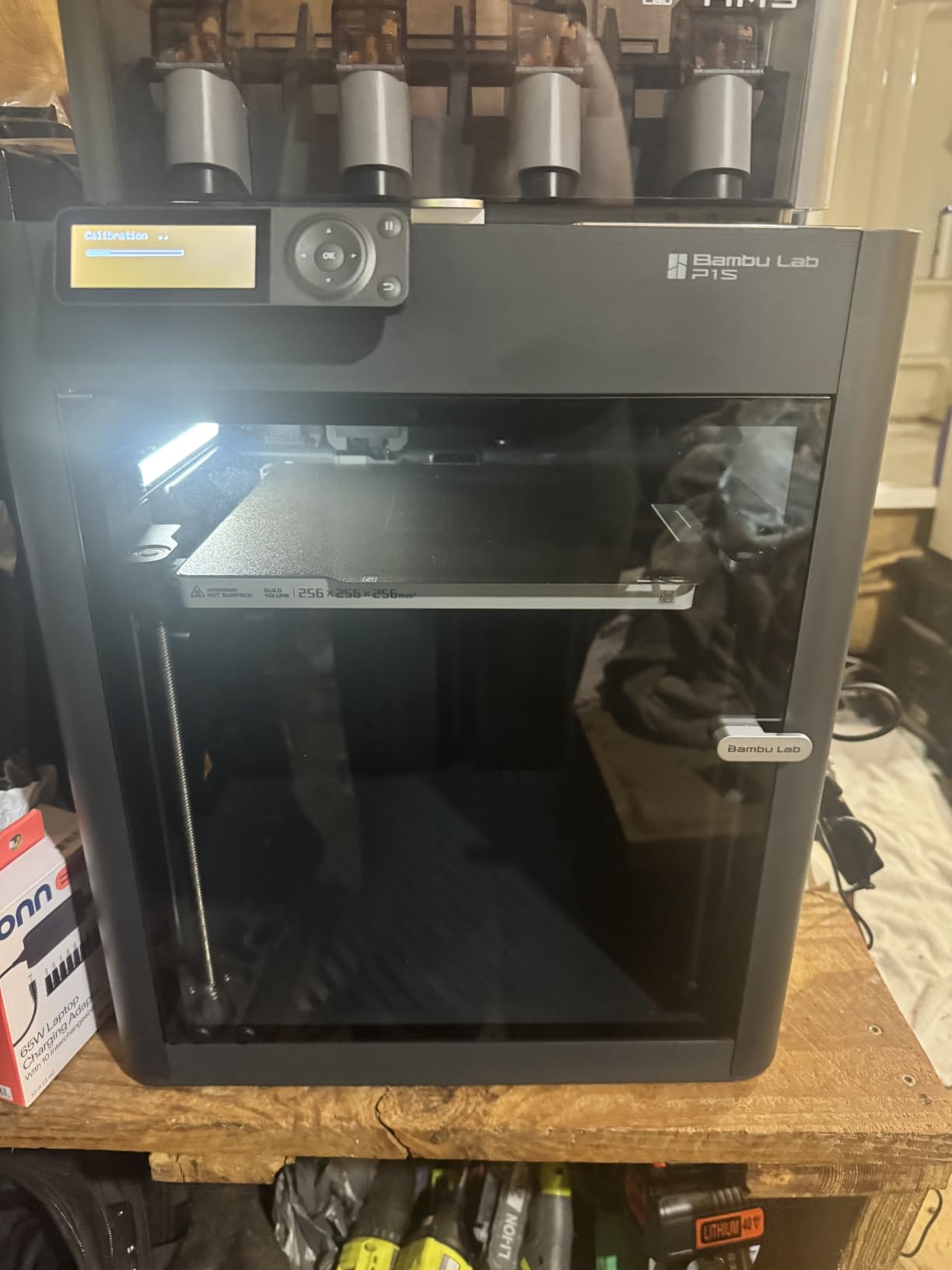
Owners describe the out-of-box experience as nearly identical to the standard P1S: 15-minute setup, auto bed leveling, and quiet enclosed operation. The AMS adds a bit of desk footprint and a few extra steps to first-time calibration, but nothing a first-timer cannot handle with the guided app.
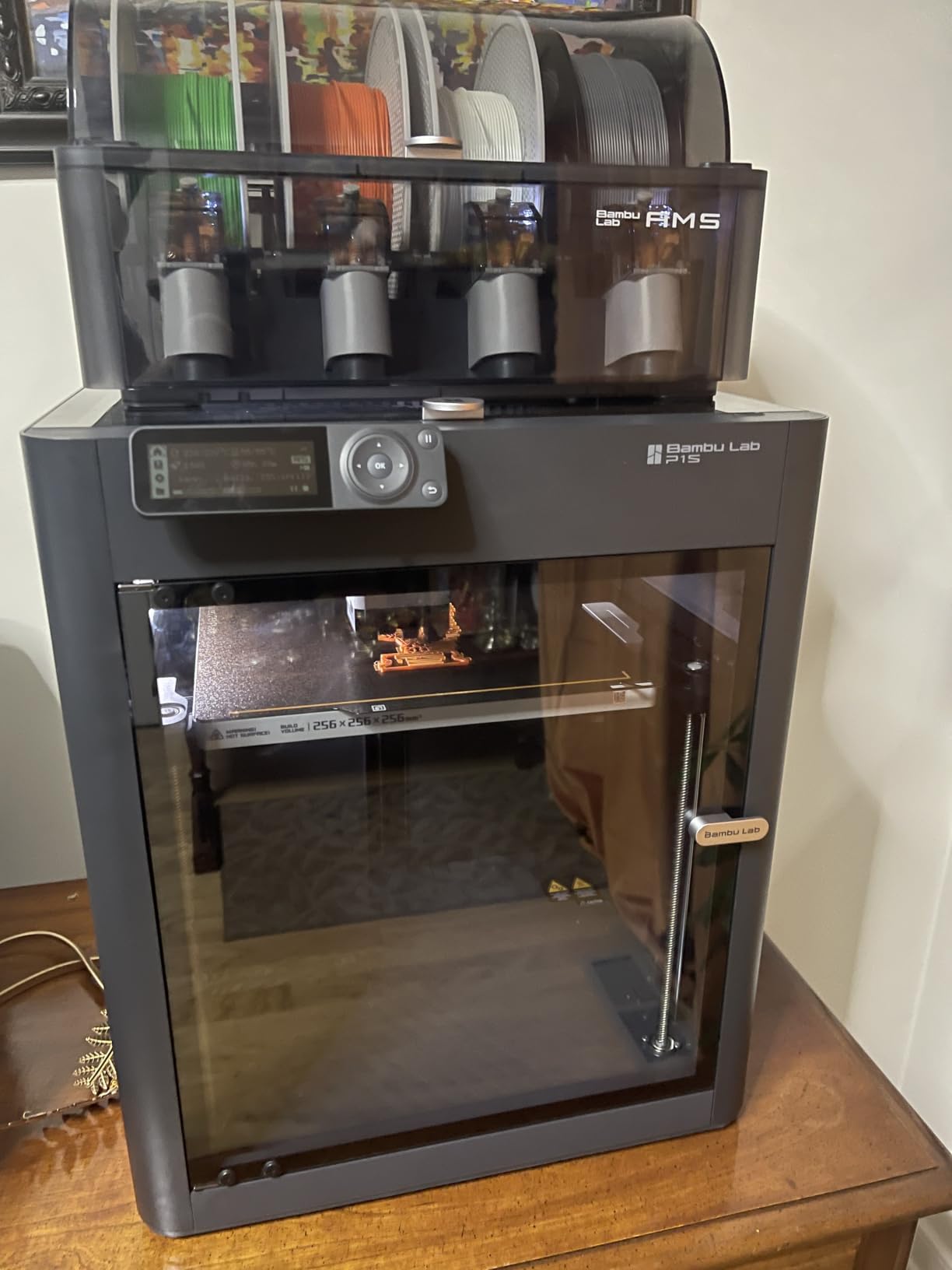
Reviewers with hundreds of prints behind them praise the print quality and reliability. The 4.2-star average across more than 600 reviews reflects a solid machine with a few honest trade-offs.
Multi-Color Printing Reality Check
The AMS works brilliantly, but single-nozzle color printing means purge waste. Every color change flushes filament, so intricate multi-color models can burn through extra spool. Owners mitigate this by parking the purge tower and tuning wipe settings in Bambu Studio.
For models with a handful of color changes, waste is modest. For print-in-place rainbow projects, budget extra filament accordingly.
Software and Ecosystem
Bambu Studio is polished, and MakerWorld provides a deep library of ready-to-print models with profile settings built in. Some users report a learning curve with advanced multi-material settings, but default profiles are sensible.
Who Should Buy the P1S Combo
This is the pick for makers who know they want color without managing multiple toolheads. It also suits small businesses producing eye-catching prototypes or custom merch.
3. Snapmaker U1 – Premium Multi-Material Innovation
Snapmaker U1 3D Printer,4-Toolhead with 5s Toolchanger,Multi-Color Printing
4 toolheads with 5s tool changer
500mm/s CoreXY
270 x 270 x 270 mm build volume
Auto toolhead offset calibration
One-year warranty
+ Pros
- Four independent toolheads eliminate purge waste
- 5-second tool changes
- Up to 5X less filament waste
- Multi-material with soluble supports
- Smart calibration
– Cons
- Higher price point
- Enclosure sold separately
- Power supply fan can be loud
- Needs basic slicer knowledge
The Snapmaker U1 takes a completely different approach to multi-color. Instead of routing every filament through one nozzle, it carries four independent toolheads and swaps between them in five seconds. That means no purge towers, dramatically less waste, and the ability to mix rigid, flexible, and water-soluble support materials in a single print.
Owners rate it 4.5 stars, though the review pool is still small since launch. The feedback pattern is consistent: excellent build quality, guided touchscreen setup, and print quality that rivals anything in this bracket. The 270mm cubic build volume is generous for the price class.
The 500mm/s CoreXY motion system keeps pace with the Bambu machines, and AI-powered monitoring watches for failures while you are away. Snapmaker’s Orca-based slicer handles multi-tool projects cleanly once you understand slicing basics.
True Multi-Color Without the Waste
This is the U1’s headline act. Single-nozzle systems flush filament on every color change, which can waste 20 to 40 percent of a multi-color print’s material. With four dedicated nozzles, color changes cost you five seconds and almost no filament.
For anyone printing multi-color batches for a small business, the material savings compound quickly. Several owners reported the U1 paying for its premium over single-nozzle rivals within months of regular color work.
Materials and Calibration
The U1 handles PLA, PETG, TPU, ABS, PA, and PC across its toolheads. Smart calibration automatically measures toolhead offsets and applies vibration compensation, which is exactly the fiddly work that used to make multi-tool printing painful.
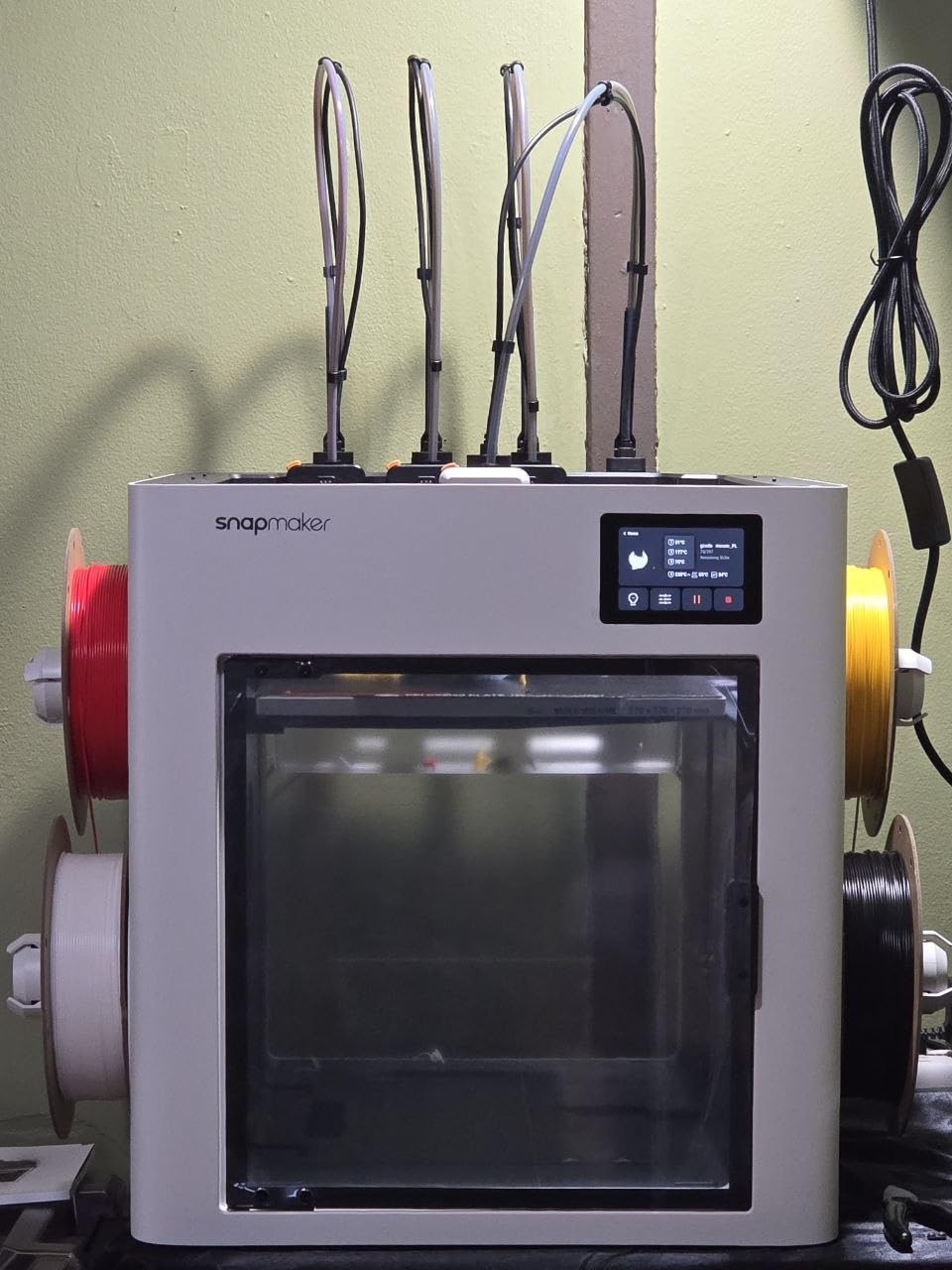
Be aware the frame is open on top unless you buy the enclosure add-on. For ABS and other warp-prone materials, the enclosure is worth budgeting for.
Who Should Buy the U1
This is the machine for serious multi-color and multi-material makers who hate waste. If you only print single-color parts, the P1S makes more financial sense.
4. Creality K2 Combo – Big Build Volume and 16-Color CFS
Official Creality K2 Combo 3D Printer Multicolor 3D Printers with CFS
CFS multi-color up to 16 colors
600mm/s printing
300C direct drive extruder
AI camera
10.24 inch cube build volume
+ Pros
- 16-color CFS included
- 600mm/s print speed
- 300C direct drive hotend
- Die-cast aluminum matrix frame
- AI camera monitoring
– Cons
- Not Prime eligible
- Mixed customer support reports
- Some QC complaints
Creality’s K2 Combo brings serious hardware: a 600mm/s motion system, a 300°C direct drive extruder, and the CFS filament system for up to 16 colors. With nearly 4000 reviews and a 4.4-star average, it is one of the most proven machines on this list.
The die-cast aerospace aluminum frame gives the K2 a rigid chassis that keeps prints clean even at high speeds. Auto leveling and an auto-leveling heated chamber help first layers land perfectly every time.
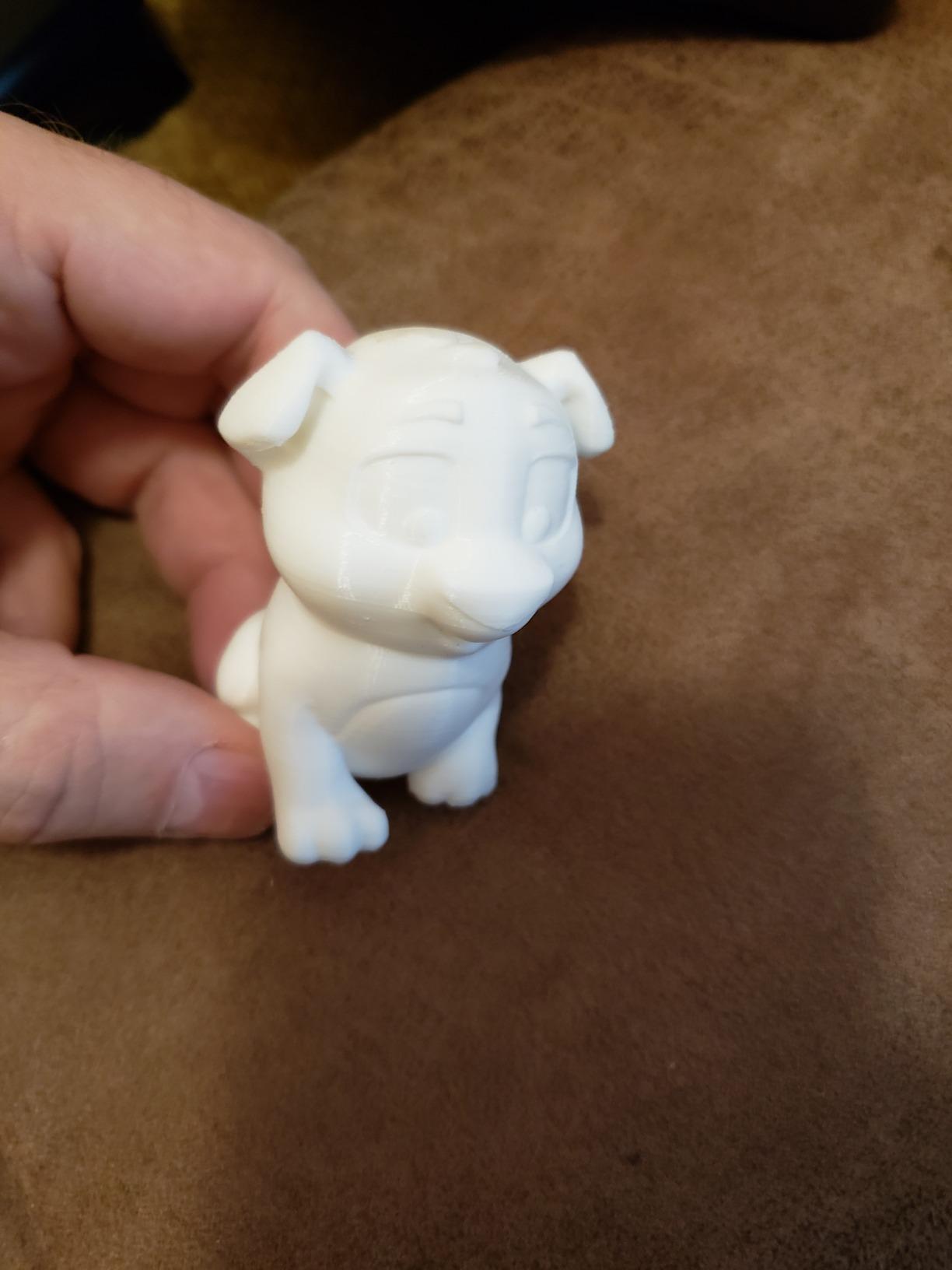
Owners praise the large 10.24-inch cubic build volume, which comfortably fits helmets, cosplay parts, and batch production. The AI camera adds remote monitoring and failure detection from your phone.
Speed and Frame Rigidity
Rated at 600mm/s, the K2 sits at the top of the speed chart alongside Creality’s K1C. The matrix frame suppresses the ringing and ghosting that plague lighter printers at high acceleration.
In practice, most owners settle into fast-but-sane profiles and report excellent dimensional accuracy with PLA, PETG, and high-temp materials thanks to the 300°C hotend.
Support and Parts Availability
The most common complaints concern customer support responsiveness and occasional quality control slips on shipping. Creality’s parts availability is strong, and the community is enormous, so fixes are easy to find.
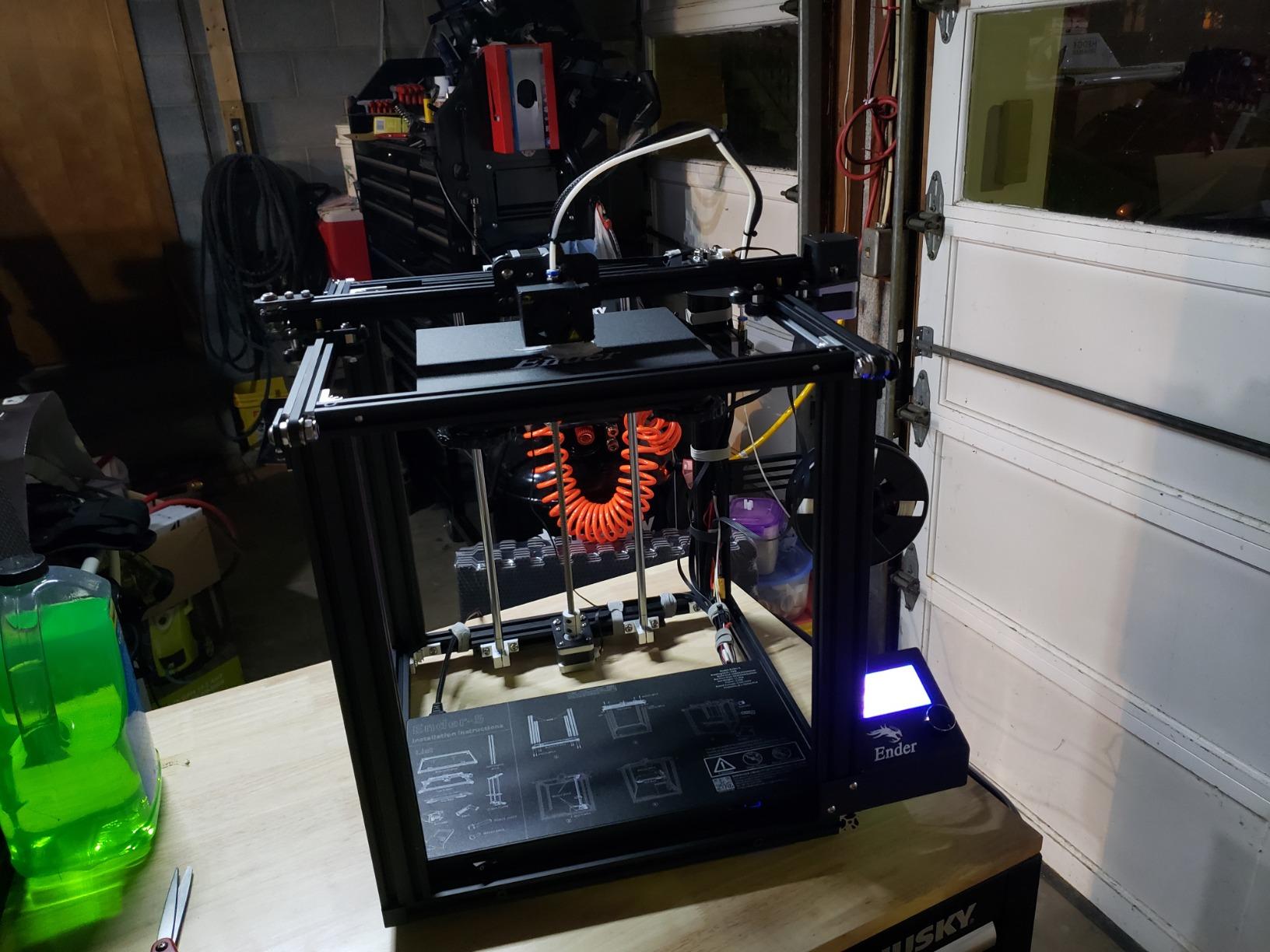
Note that this listing is not Prime eligible, so shipping takes a bit longer than Amazon-standard. Plan accordingly if you are on a deadline.
Who Should Buy the K2 Combo
This is a great fit for makers wanting maximum build volume plus multi-color in one proven package. It suits intermediate users comfortable updating firmware and tweaking profiles.
5. Creality K1C – Fast CoreXY with Carbon Fiber Support
Creality K1C 3D Printer, 600mm/s with AI Camera and Auto Leveling
600mm/s CoreXY
Carbon fiber filament support
AI camera monitoring
Tri-metal nozzle
One-tap auto calibration
+ Pros
- 600mm/s with 20000mm/s2 acceleration
- Prints carbon fiber reinforced filaments
- AI camera for monitoring
- One-tap calibration
- Quiet at 45dB
– Cons
- Boxy 10x10x10 build volume
- Occasional QC issues
- Klipper firmware has limits
The K1C is the working horse of Creality’s speed lineup, and with over 2700 reviews it has earned its reputation. Its party trick is carbon fiber filament support: the enhanced direct extruder and tri-metal unicorn nozzle chew through CF-PLA and CF-PETG that would destroy a brass nozzle in weeks.
One-tap auto calibration handles bed leveling, resonance tuning, and flow in a single pass. Combined with the AI camera, the K1C feels closer to a set-and-forget machine than Creality’s older printers ever did.
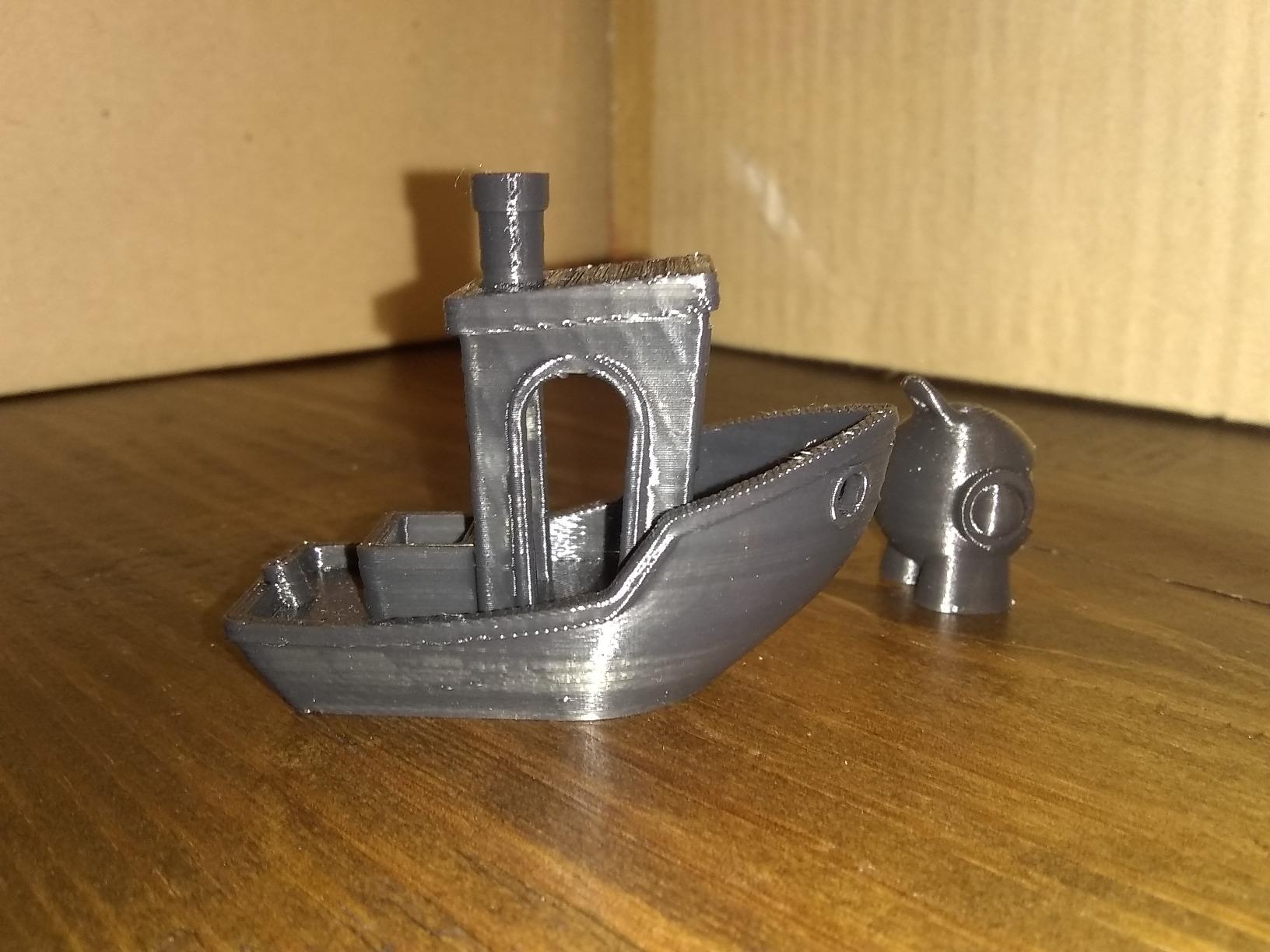
At 45dB or quieter, it is genuinely home-friendly. The activated carbon air filtration is a thoughtful touch when printing materials with odor.
Carbon Fiber and Abrasive Filaments
This is where the K1C justifies itself. The tri-metal all-metal hotend and hardened nozzle resist abrasion, so fiber-filled filaments print reliably for functional parts, brackets, and drone frames.
Owners report excellent layer adhesion with CF blends, though you should expect slightly more nozzle wear than with plain PLA regardless of hardware.
Firmware and Real-World Speed
Creality’s Klipper implementation is capable but has some locked-down corners that tinkerers find limiting. For everyone else, the stock profiles are fast and stable.
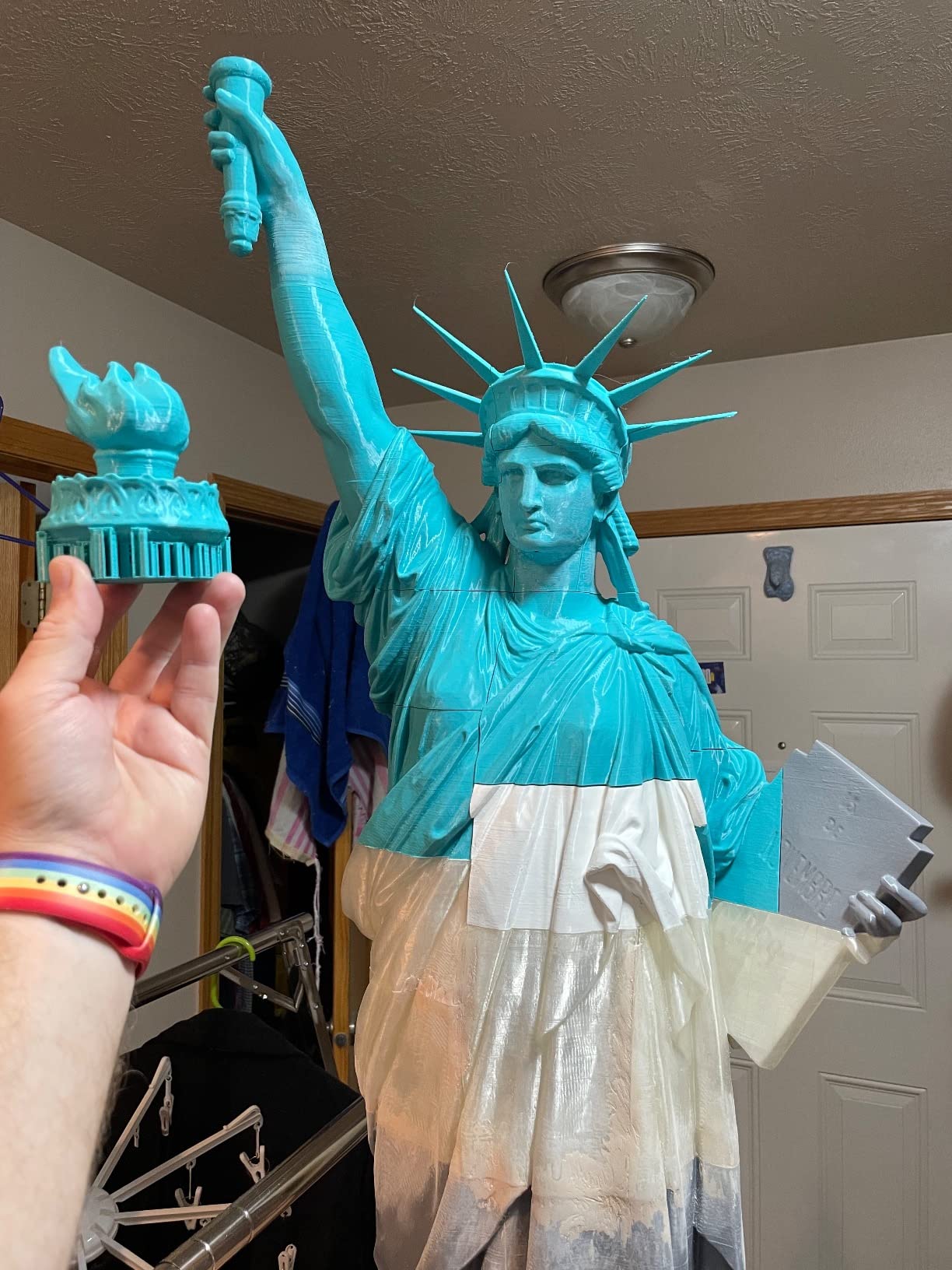
The cube-shaped 10 x 10 x 10 inch build area handles most projects, but the enclosed box format can make tall slender prints trickier to extract.
Who Should Buy the K1C
Pick this if you print functional parts in demanding materials. It is also a strong option for anyone wanting enclosed CoreXY speed without Bambu pricing.
6. Anycubic Photon Mono M7 Pro – Best Resin Printer Under $1000
ANYCUBIC Photon Mono M7 Pro 14K Resin 3D Printer, 170mm/h Fast Printing
14K monochrome LCD
170mm/h print speed
Dynamic heated resin vat
Auto resin fill and recycle
Large 8.77 x 4.96 x 9.05 inch build volume
+ Pros
- Stunning 14K resolution detail
- 170mm/h high-speed resin printing
- 90 percent light uniformity
- Automated resin fill and recycling
- Wireless printing
– Cons
- Premium price for resin
- FEP replacement costs
- Loud exhaust fans
- Steeper learning curve
Resin printing is a different sport, and the Photon Mono M7 Pro is the best-equipped machine in this price class. Its 14K monochrome LCD resolves 13312 x 5120 pixels, producing detail that no FDM printer can touch. Miniature painters and jewelry makers consistently rate it highly across more than 2000 reviews.
The COB LighTurbo 3.0 light source delivers over 90 percent uniformity with a sub-3-degree light angle, which means crisp edges across the entire build plate. The dynamically heated vat keeps resin at the ideal temperature for consistent curing.
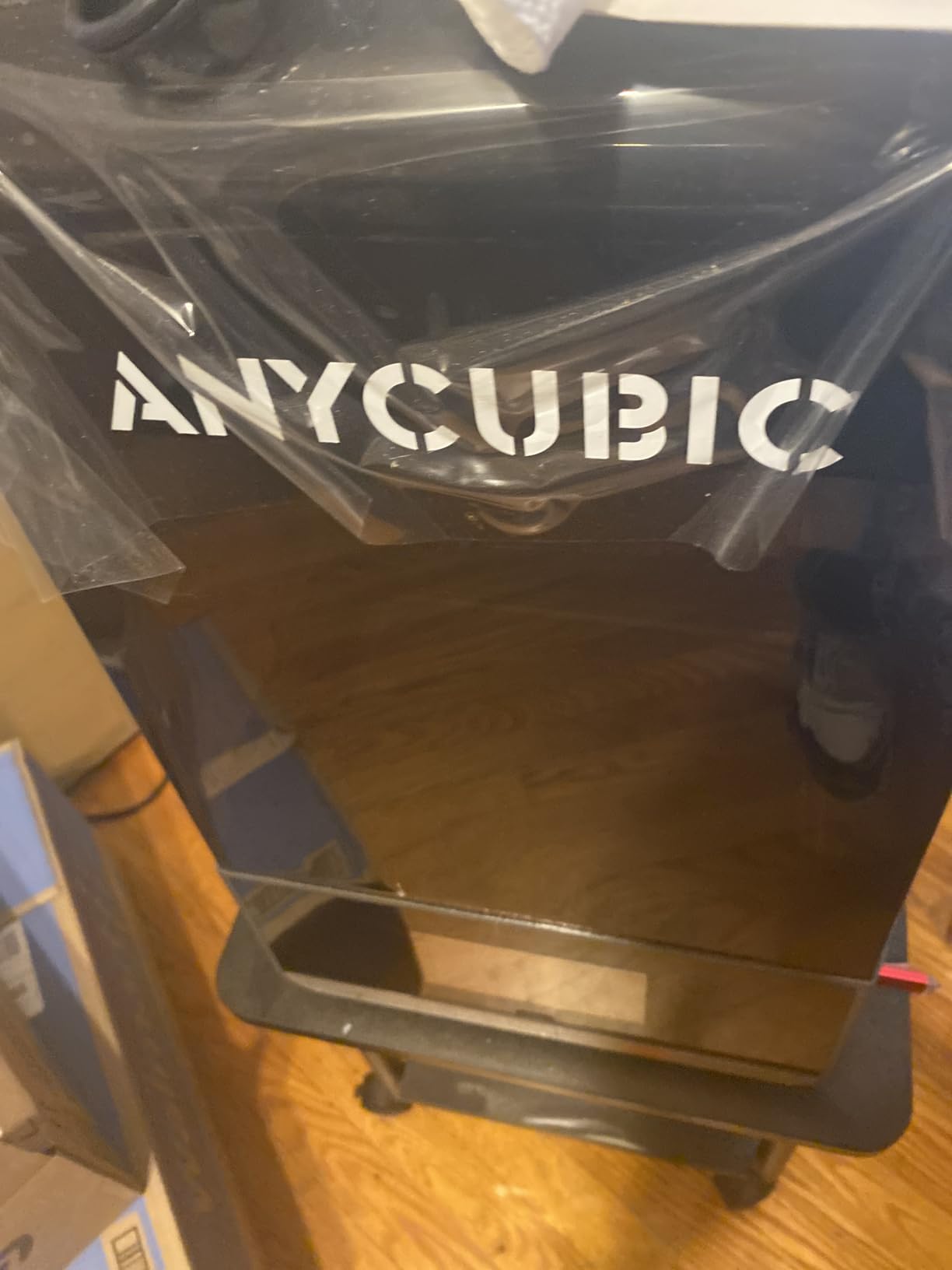
Anycubic automated the tedious parts of resin printing: the machine auto-fills resin and recycles it with one key press. Six intelligent detection systems watch for common failure modes.
Detail Resolution for Miniatures
This is what you buy a 14K resin printer for. Owners printing tabletop miniatures report layer lines disappearing entirely at default settings, with crisp weapon edges and facial detail straight off the plate.
The generous build volume for a resin machine lets you batch dozens of figures per run, which matters when each print takes hours.
Speed and Operating Costs
Rated at 170mm/h with high-speed resin, the M7 Pro is among the fastest consumer resin machines available. Standard resins run closer to 130mm/h but still finish quickly.
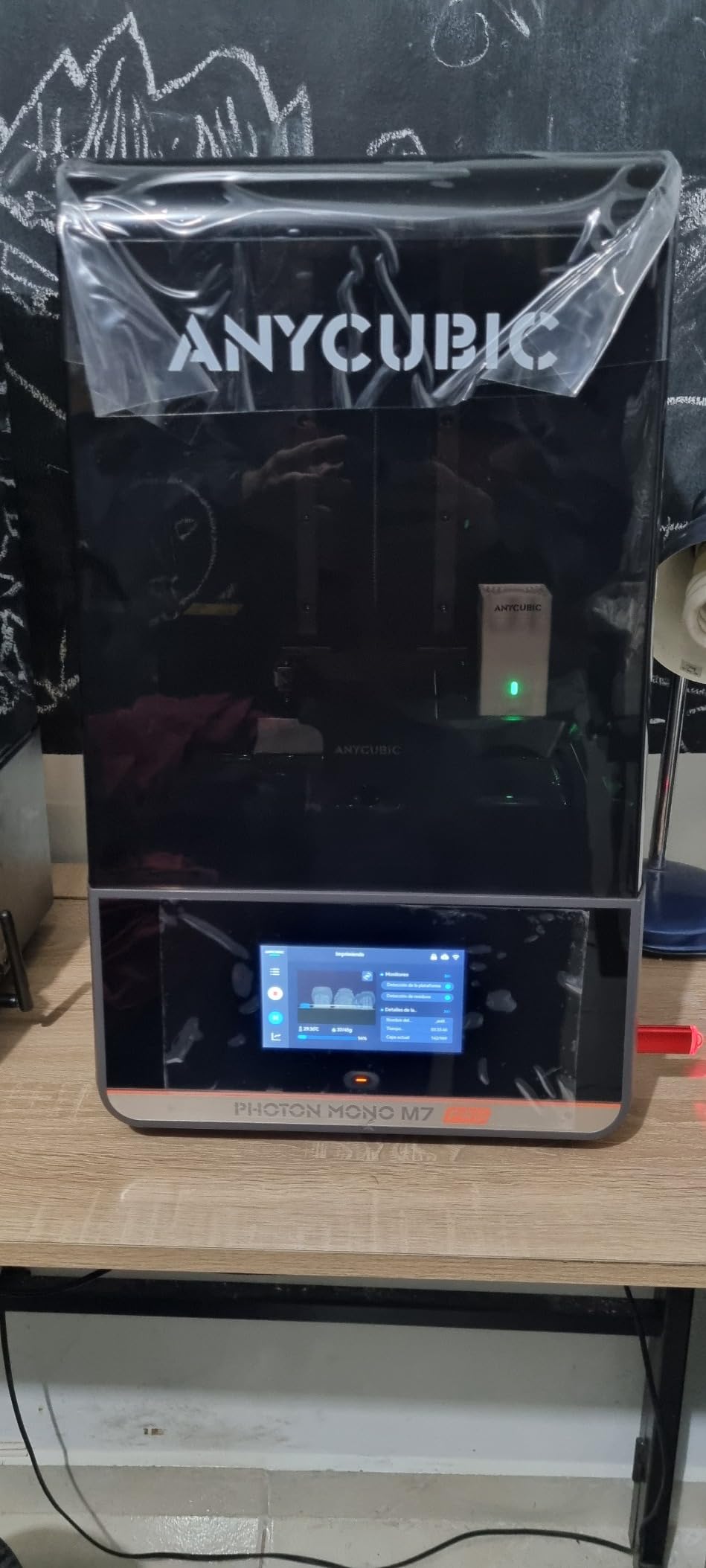
Budget for consumables: resin, IPA for washing, and FEP film replacements. The FEP unit on this model is pricier than generic sheets, so factor that into your running costs. The built-in exhaust fans are effective but loud.
Who Should Buy the M7 Pro
This is the pick for miniature hobbyists, jewelers, and dental or engineering detail work. If your priority is detail over part strength, resin is the right technology and this is the right machine.
7. Bambu Lab A1 Mini Combo – Best Beginner Combo with Multi-Color
Bambu Lab A1 Mini Combo, A1 Mini 3D Printer&AMS lite, Multi-Color Printing
AMS lite included for multi-color
Full-auto calibration
Quiet 48dB operation
10,000mm/s2 acceleration
20-minute setup
+ Pros
- Genuinely beginner friendly
- Multi-color with included AMS lite
- Full-auto calibration
- Very quiet operation
- Quick-swap nozzle
– Cons
- Small build volume
- Some features need internet
- Isolated support complaints
The A1 Mini Combo is the friendliest possible introduction to color 3D printing. It pairs Bambu’s compact A1 Mini bed-slinger with the AMS lite, so you get four-color printing on day one for well under the mid point of this price range. Setup takes about 20 minutes and full-auto calibration means you never touch a leveling knob.
Active flow rate compensation keeps extrusion consistent, and the quick-swap nozzle lets you change sizes without tools. At 48dB or quieter, it disappears into the background of a home office.
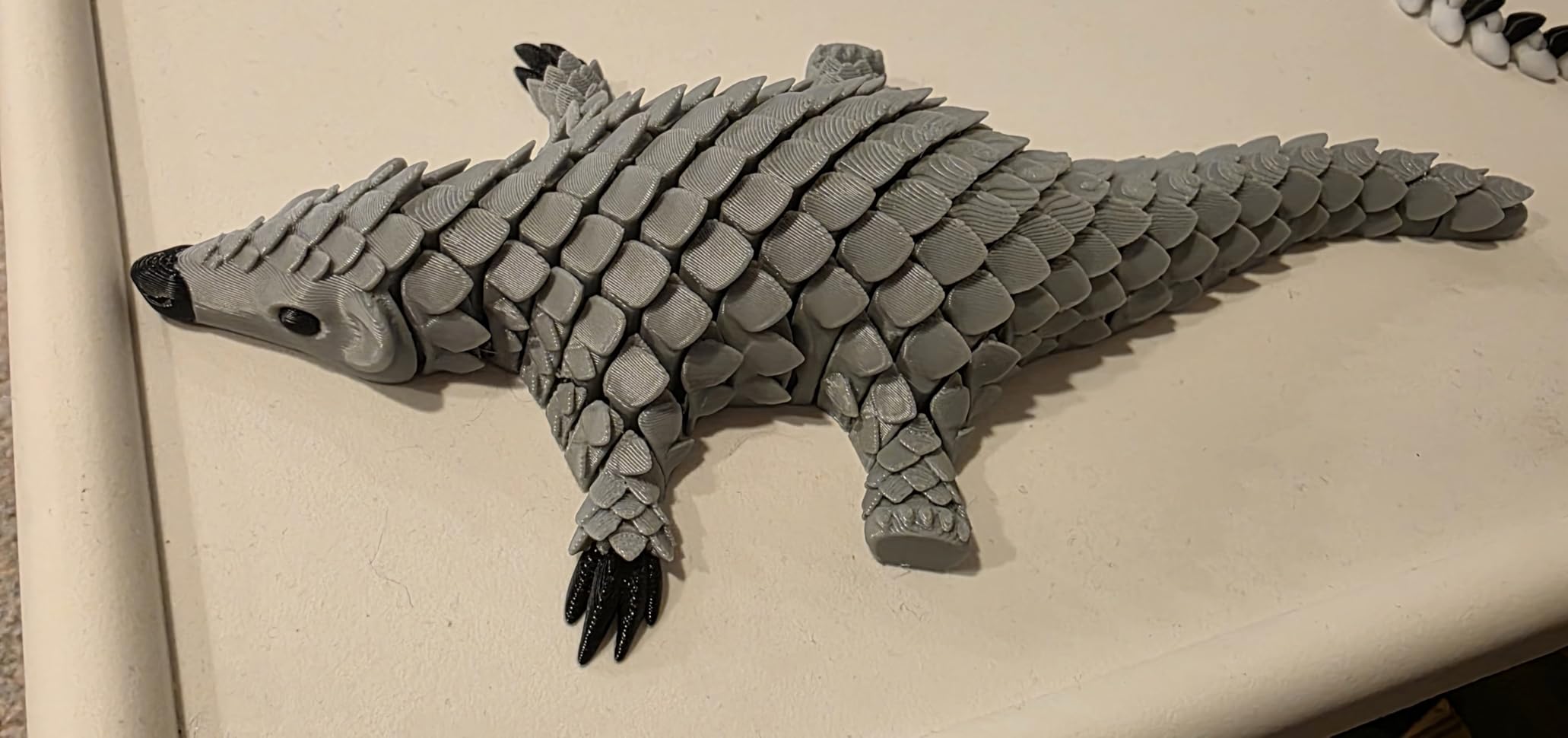
The main honest limitation is build volume: the mini format caps part size. Owners who accept that trade-off love the machine, and reviewers frequently describe it as the easiest printer they have ever owned.
Setup and First Prints
From box to first multi-color print in under half an hour is realistic. The Bambu Handy app walks you through every step, and MakerWorld’s one-click model downloads handle slicing automatically.
Beginners consistently report successful first prints without touching a single setting, which is the highest compliment a first printer can earn.
Multi-Color on a Budget
The AMS lite holds four spools and performs the same automatic color switching as its bigger sibling. Purge waste applies here too, but small parts keep waste manageable.
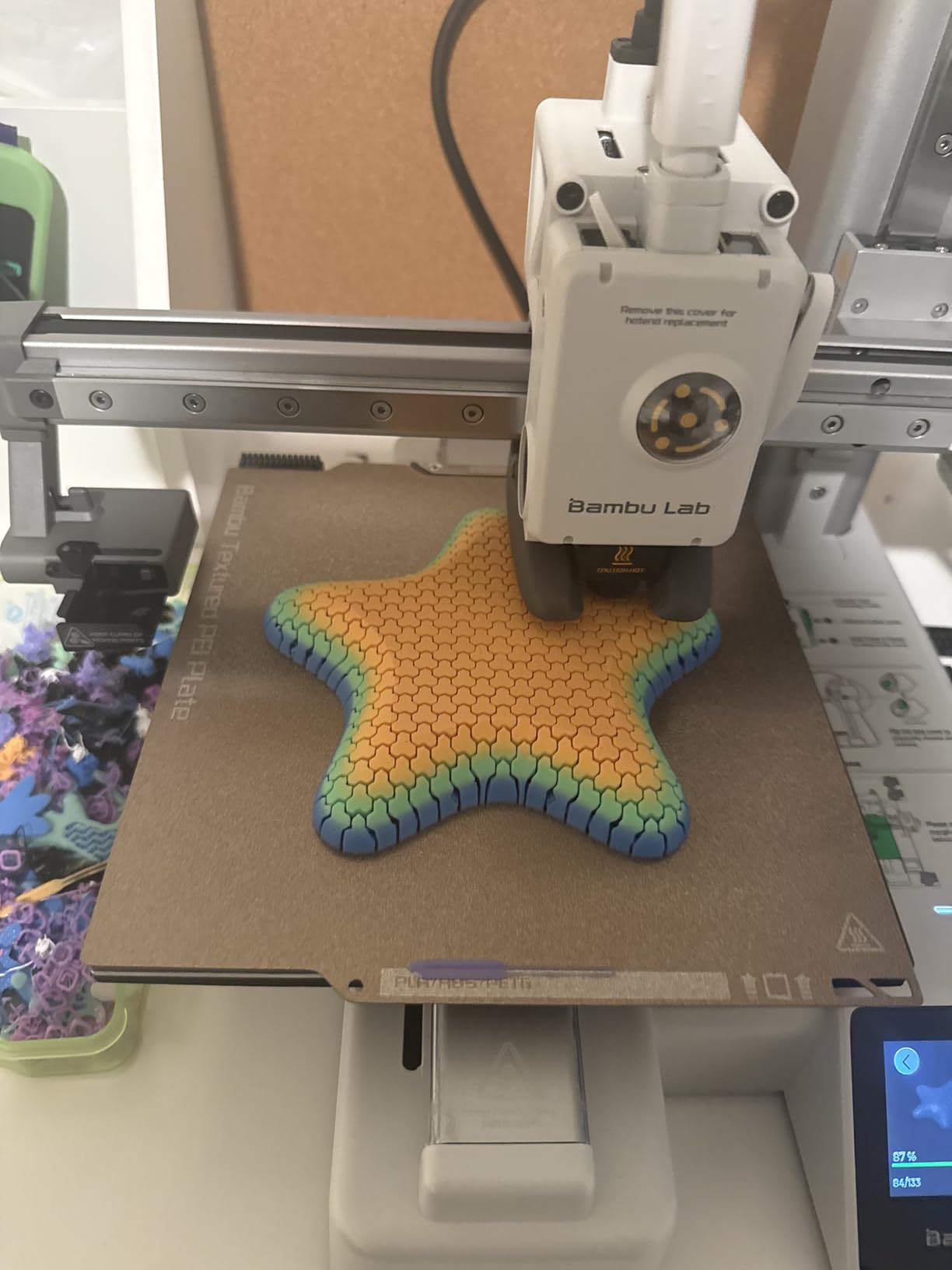
Note that some features lean on cloud connectivity. Owners who prefer fully offline workflows should check Bambu’s LAN mode documentation before buying.
Who Should Buy the A1 Mini Combo
This is our top recommendation for first-time buyers and casual hobbyists. Skip it if you regularly print large functional parts.
8. Flashforge Adventurer 5M – Fastest Fully-Auto Budget Option
FLASHFORGE Adventurer 5M 3D Printer with Fully Auto Leveling, Max 600mm/s High Speed Printing, 280°C Direct Extruder with 3S Detachable Nozzle, CoreXY All Metal Structure, Print Size 220x220x220mm
600mm/s max speed
Fully automatic leveling
280C direct extruder
3-second nozzle swap
CoreXY all-metal frame
+ Pros
- 600mm/s print speed
- Zero manual bed leveling
- 3-second nozzle changes
- 35-second heat-up to 200C
- Dual-sided PEI build plate
– Cons
- Loud fans and motors
- Filament runout sensor off by default
- App needs work
- Occasional touchscreen lag
The Adventurer 5M is one of the best-value speed machines on Amazon, sitting at #2 in the 3D printer category with over 2400 reviews. Fully automatic bed leveling means there is nothing to calibrate, ever. It heats to 200°C in 35 seconds and prints at up to 600mm/s on its all-metal CoreXY frame.
The 280°C direct extruder with 3-second detachable nozzles makes maintenance painless, and nozzle sizes from 0.25mm to 0.8mm cover everything from fine detail to fast draft prints.
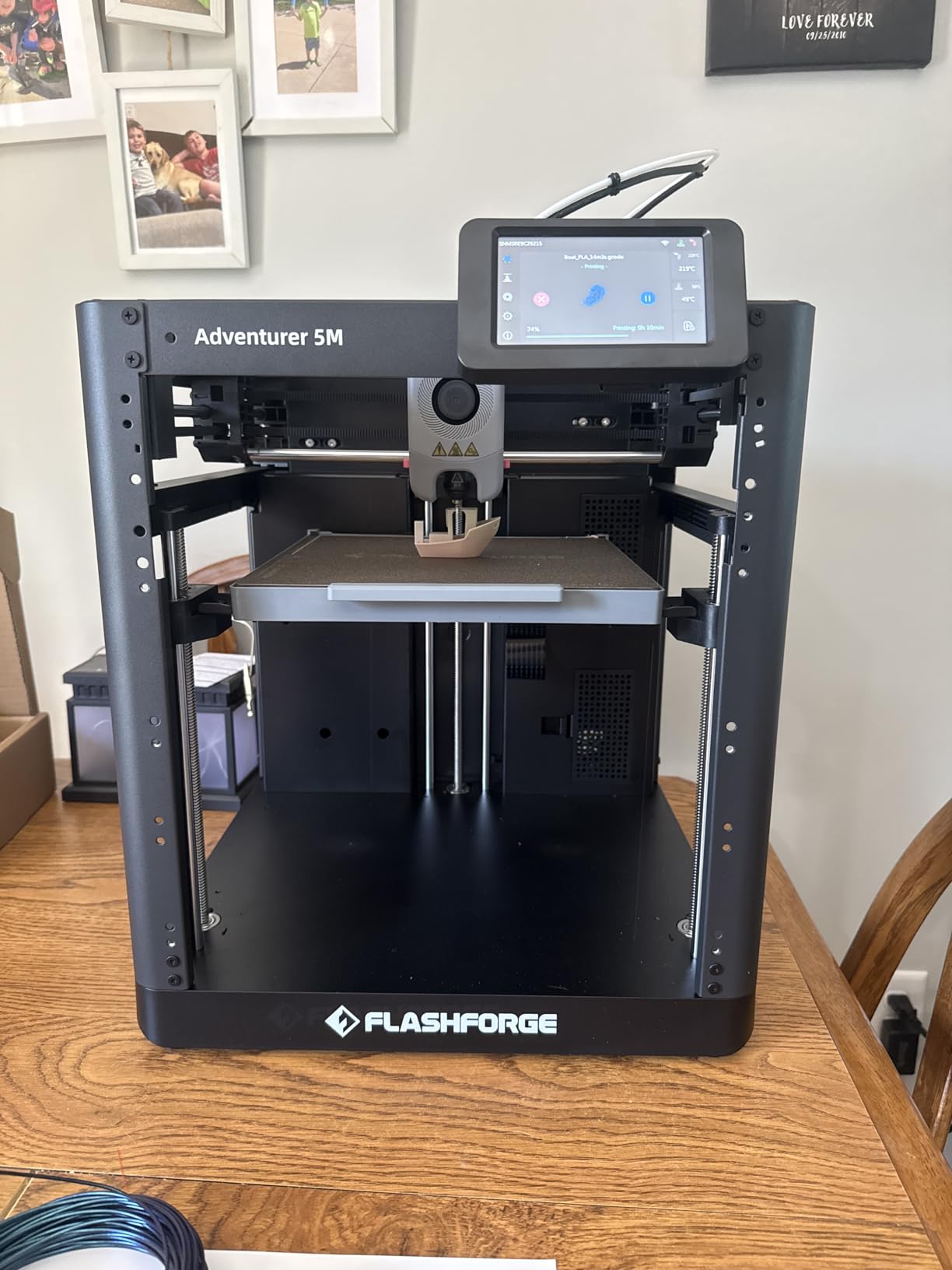
The 3.9-star average is the lowest in this lineup, and the pattern in negative reviews is consistent: noise and app frustration rather than print quality failures.
Speed and Print Quality Out of the Box
Owners report genuinely good first-layer quality with no tuning, which is impressive at this price. The dual-sided PEI plate releases prints cleanly once cooled.
At full speed the 5M is loud. Several owners move it to a garage or workshop, and others simply print at reduced speeds for quieter runs.
Quirks to Know Before Buying
The filament runout sensor ships disabled, so turn it on in settings before your first long print. The included sample spool has caused headaches for some buyers, so start with a fresh quality PLA spool.
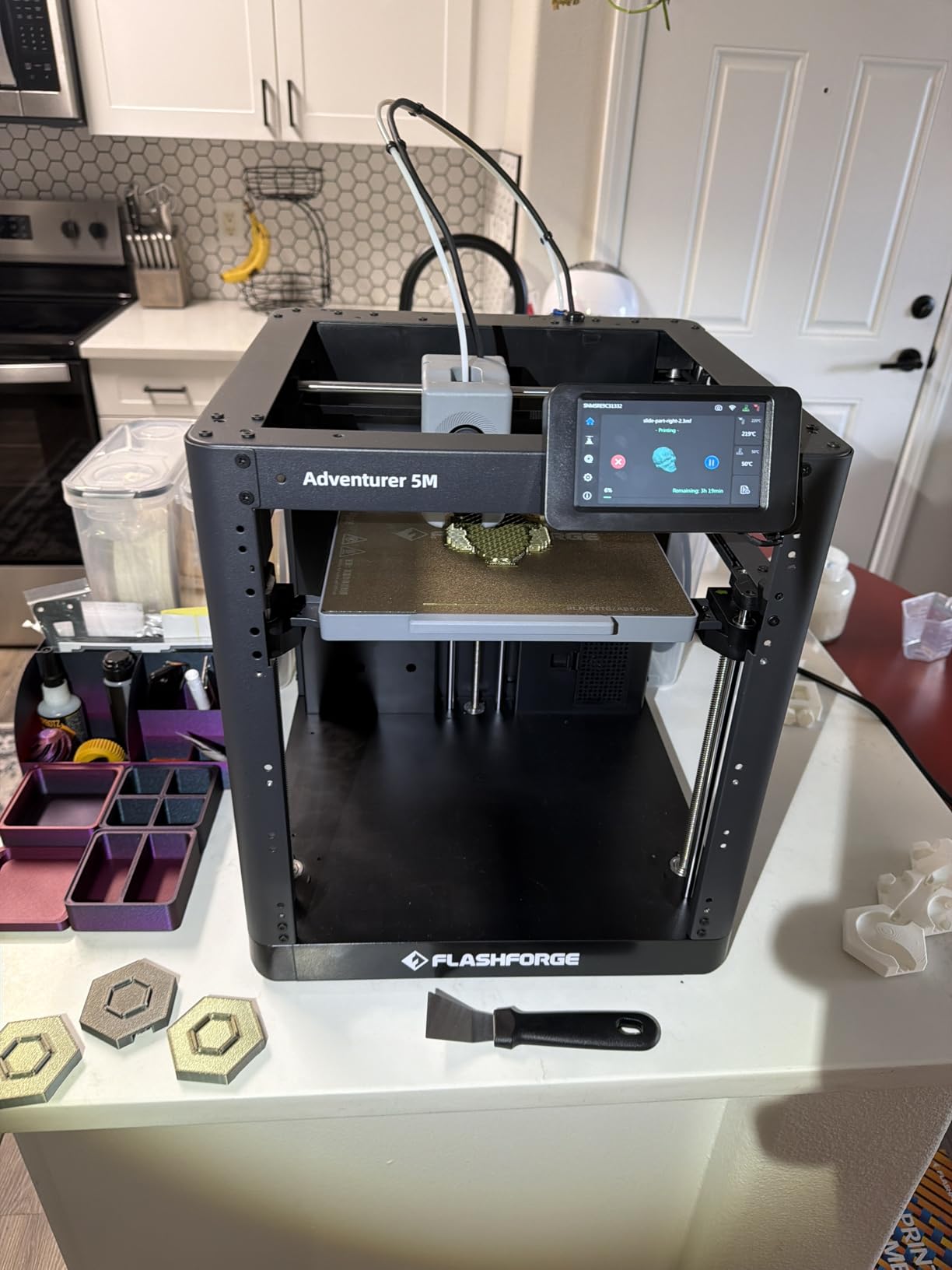
The Flash Maker mobile app divides opinion, but WiFi printing through OrcaSlicer works well and is the smoother workflow.
Who Should Buy the Adventurer 5M
This is a strong pick for budget-conscious buyers who want speed and zero calibration. It suits tinkerers who do not mind a few firmware quirks in exchange for the low price.
9. Anycubic Photon Mono 4 – Best Budget Resin Starter
ANYCUBIC Photon Mono 4, Resin 3D Printer with 7” 10K Mono LCD Screen
7 inch 10K monochrome LCD
17 micron XY resolution
LighTurbo matrix light source
Laser-engraved build plate
Compact 7.7 pound body
+ Pros
- 10K resolution at an entry price
- 17 micron pixel detail
- One-time 4-point leveling
- Power outage resume
- Compact and lightweight
– Cons
- Small 6 x 3.4 x 6.5 inch build volume
- Mostly plastic construction
- Buggy stock slicer
- Some warping on larger prints
The Photon Mono 4 is the cheapest machine in this guide and proof that resin printing no longer demands a big budget. Its 7-inch 10K monochrome LCD resolves 9024 x 5120 pixels with 17-micron XY detail, which produces miniatures that look injection-molded. At 4.4 stars across more than 500 reviews, it outperforms its price class.
Setup is a one-time four-point leveling procedure, and the laser-engraved build plate 2.0 grips prints firmly during curing. The power resume function saves your print after an outage.
At just 7.7 pounds it fits any desk, making it a favorite for apartment dwellers and first-time resin printers.
Detail Quality for the Money
The LighTurbo matrix light source keeps exposure even across the plate, and owners report noticeably reduced layer lines compared to older budget resin printers.
For tabletop miniatures and small detailed parts, the output punches far above the price tag. Larger prints occasionally warp, which is common at this size class and manageable with supports.
Running Costs and Limitations
The build volume is small, so think batches of small parts rather than large figures. The FEP film is a complete unit rather than a generic sheet, so replacements cost a bit more.
The bundled Photon Workshop slicer is buggy; most owners quickly switch to a free alternative like Lychee or Chitubox.
Who Should Buy the Mono 4
This is the ideal first resin printer and a low-risk way to test whether resin printing suits you. It is also a great second printer for detail work alongside an FDM machine.
10. Creality Ender 3 V3 SE – The Community Favorite Budget Pick
Creality Ender 3 V3 SE 3D Printer with 250mm/s Printing Speed CR Touch
CR Touch auto leveling
Sprite direct extruder
250mm/s printing
Dual Z-axis
Silent 32-bit mainboard
3-step 20-minute assembly
+ Pros
- Rock-bottom entry price
- CR Touch auto leveling works well
- Sprite direct extruder handles PLA PETG TPU
- Huge community and tutorial base
- Dual Z-axis stability
– Cons
- Bed surface can grip prints too well
- V-slot frame needs periodic adjustment
- Learning curve for slicer tuning
- Occasional thermal clogs
No budget list is complete without the Ender 3 V3 SE. With more than 26,000 reviews, it is one of the most-owned 3D printers on Earth, and its 4.2-star average across that enormous sample is statistically remarkable. Assembly takes three steps and about 20 minutes.
CR Touch auto leveling plus a strain sensor for automatic Z offset removes the two most frustrating parts of classic Ender ownership. The Sprite direct extruder feeds PLA, PETG, and TPU smoothly, and the dual Z-axis with timing belt cuts wobble on taller prints.
The 32-bit silent mainboard keeps stepper noise down, so it is home-friendly even if the fans are audible.
The Learning Curve Trade-Off
This is a printer that teaches you 3D printing. Expect to dial in slicer settings, level occasionally, and learn basic maintenance. Owners who invest that effort are rewarded with excellent prints for very little money.
The community support is unmatched: every problem you can encounter has a video tutorial, and spare parts are cheap and everywhere. That safety net is why we still recommend it to hands-on learners.
Known Issues and Fixes
The PC spring steel plate grips aggressively, so let prints cool fully before removal. Some users report thermal clogs tied to retraction settings, which a quick profile tweak resolves.
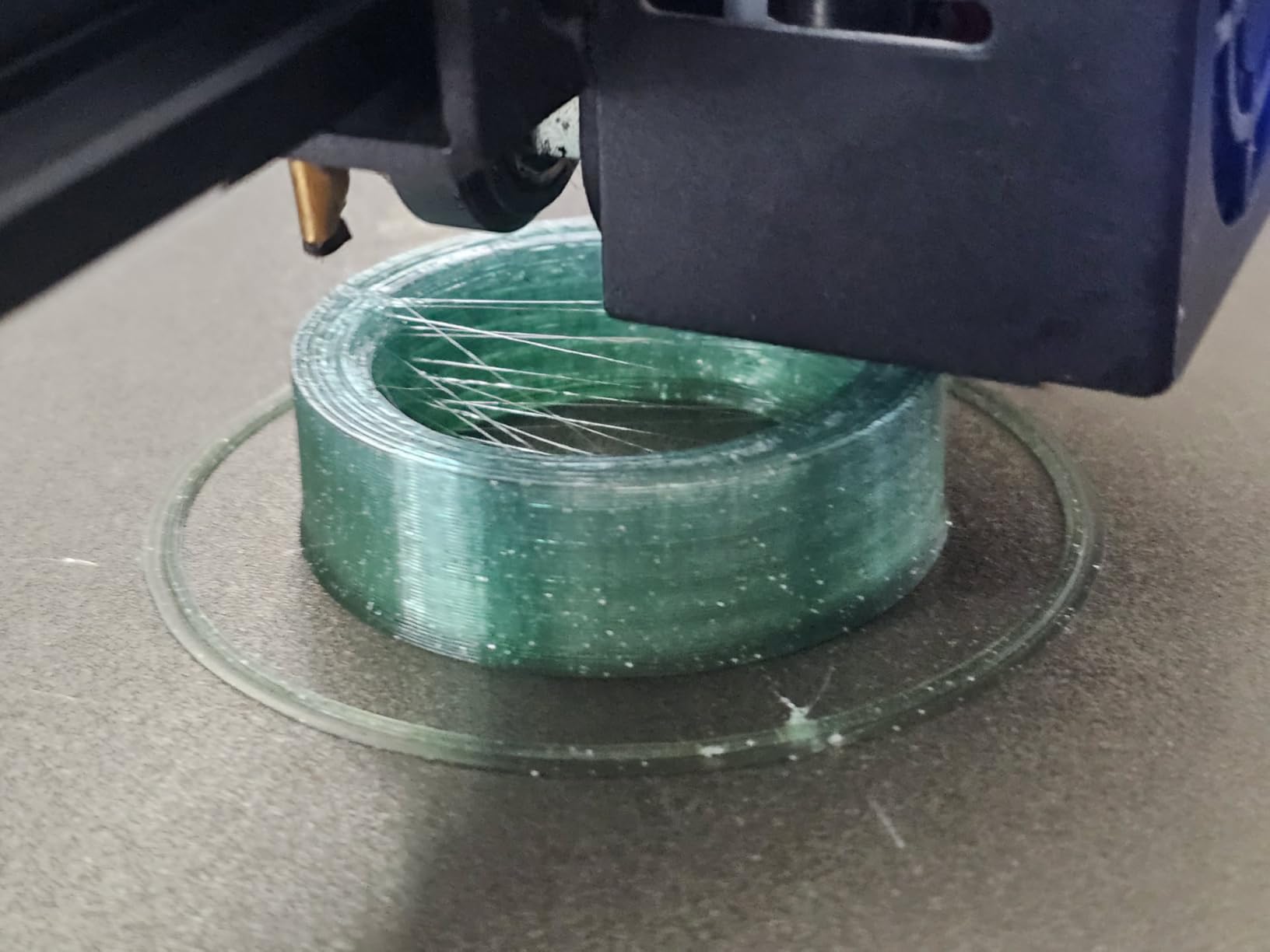
Stock it is slower than the CoreXY machines above at 250mm/s, but patience is part of the budget-printer bargain.
Who Should Buy the Ender 3 V3 SE
Buy it if you want the cheapest reliable entry into the hobby and do not mind tinkering. Students, classrooms, and mechanically curious beginners are its natural home.
How to Choose the Best 3D Printer Under $1000
Picking between these ten machines comes down to five decisions. Work through them in order and your shortlist will shrink to one or two models quickly.
FDM or Resin: Pick Your Technology First
FDM printers melt and extrude filament, producing strong functional parts at low cost with minimal mess. Resin printers cure liquid photopolymer with UV light, delivering detail FDM cannot match but requiring gloves, wash-and-cure stations, and careful handling.
If you print brackets, enclosures, or cosplay parts, choose FDM. If you print miniatures, jewelry, or dental models, resin wins. Both of our resin picks, the M7 Pro approach detailed here aside, sit comfortably under budget, but be honest about your tolerance for post-processing.
Build Volume: Size Versus Footprint
Build volumes here range from the A1 Mini’s compact bed to the Snapmaker U1’s 270mm cube and the K2’s 10.24-inch cube. Bigger is not automatically better: large machines need more desk space, and large prints take longer and warp more readily.
Measure your intended projects before choosing. Most hobbyists find a 220 to 256mm cube covers 95 percent of what they actually print.
Speed Versus Quality in the Real World
Advertised speeds of 500 to 600mm/s are peak numbers, not everyday settings. In practice, expect excellent results at 40 to 60 percent of maximum on any of these machines. CoreXY architecture, used by the P1S, K1C, K2, U1, and Adventurer 5M, genuinely helps maintain quality at higher speeds.
For a deeper dive into these motion systems, see our guide to CoreXY 3D printers. If ultimate speed matters more than anything, both Creality machines and the Adventurer 5M top the charts.
Multi-Color: Three Very Different Approaches
Single-nozzle systems with material switchers, like the AMS on the P1S Combo and A1 Mini Combo and the CFS on the K2, are affordable and proven but waste filament during color changes. The Snapmaker U1’s four-toolhead system eliminates that waste at a premium price.
Our advice: if you will print color occasionally, any AMS or CFS combo works well. If color is your business, the U1’s waste savings justify the extra spend.
Reliability, Support, and Cost of Ownership
Community feedback repeats a few patterns. Bambu Lab wins on out-of-box experience, Creality wins on parts availability and community size, and Prusa (when you can find it near this budget) leads on support. Noise matters too: the A1 Mini and K1C are quiet, while the Adventurer 5M and M7 Pro run loud.
Budget roughly for annual consumables: nozzles, PTFE tubes or FEP film, and lubricants. Resin owners should also plan for resin and IPA. For lower-budget alternatives, our roundup of budget 3D printers under $400 covers cheaper machines in more detail.
Frequently Asked Questions
What is the cheapest but best 3D printer?
The Creality Ender 3 V3 SE is the cheapest reliable option, with over 26,000 reviews and a 4.2-star average. It includes CR Touch auto leveling and a Sprite direct extruder. If you want more speed per dollar, the Flashforge Adventurer 5M offers 600mm/s printing and fully automatic leveling at a slightly higher price.
What is currently the best 3D printer for home use?
The Bambu Lab P1S is the best home 3D printer under $1000 for 2026. It combines 500mm/s speed, an enclosed chamber for advanced filaments, automatic bed leveling, and quiet operation with a 4.5-star rating. Its 15-minute setup makes it practical for any home office or workshop.
How much money is a 3D printer under $1,000?
Quality 3D printers under $1,000 range from about $200 for entry-level machines like the Ender 3 V3 SE to $850 for premium multi-tool models like the Snapmaker U1. Most popular mid-range options, including the Bambu Lab P1S and Creality K2 Combo, sit between $400 and $600.
Is Bambu or Prusa better?
Community consensus favors Bambu Lab for speed, multi-color capability, and out-of-box experience, while Prusa is praised for premium build quality, open-source firmware, and top-tier customer support at a higher price. Under $1000, Bambu Lab offers better value; the Bambu P1S Combo includes a full multi-color AMS system at a price where Prusa’s comparable options stretch the budget.
What is the best 3D printer for under $1000?
The Bambu Lab P1S is the best overall 3D printer under $1000, earning a 4.5-star rating with 500mm/s speed and an enclosed CoreXY design. For multi-color, choose the Bambu Lab P1S Combo or Snapmaker U1. For detail work, the Anycubic Photon Mono M7 Pro is the top resin choice.
Final Verdict: Which 3D Printer Under $1000 Should You Buy?
For most buyers, the Bambu Lab P1S is the best 3D printer under $1000 in 2026: fast, enclosed, reliable, and rated 4.5 stars. If multi-color is your priority, the P1S Combo bundles the AMS at the best price, while the Snapmaker U1 eliminates purge waste entirely with its four-toolhead system for serious color work.
Beginners should look at the A1 Mini Combo or the ultra-affordable Ender 3 V3 SE, and detail-focused makers will love the Anycubic Photon Mono M7 Pro. Whatever you choose, every machine here stays well under budget and leaves room for filament.
Ready to step up to enclosed pro-grade machines later? Compare our picks for premium 3D printers under $2000 when you outgrow this class. For now, grab your pick, load a spool of PLA, and start printing this week.
Leave a Reply