
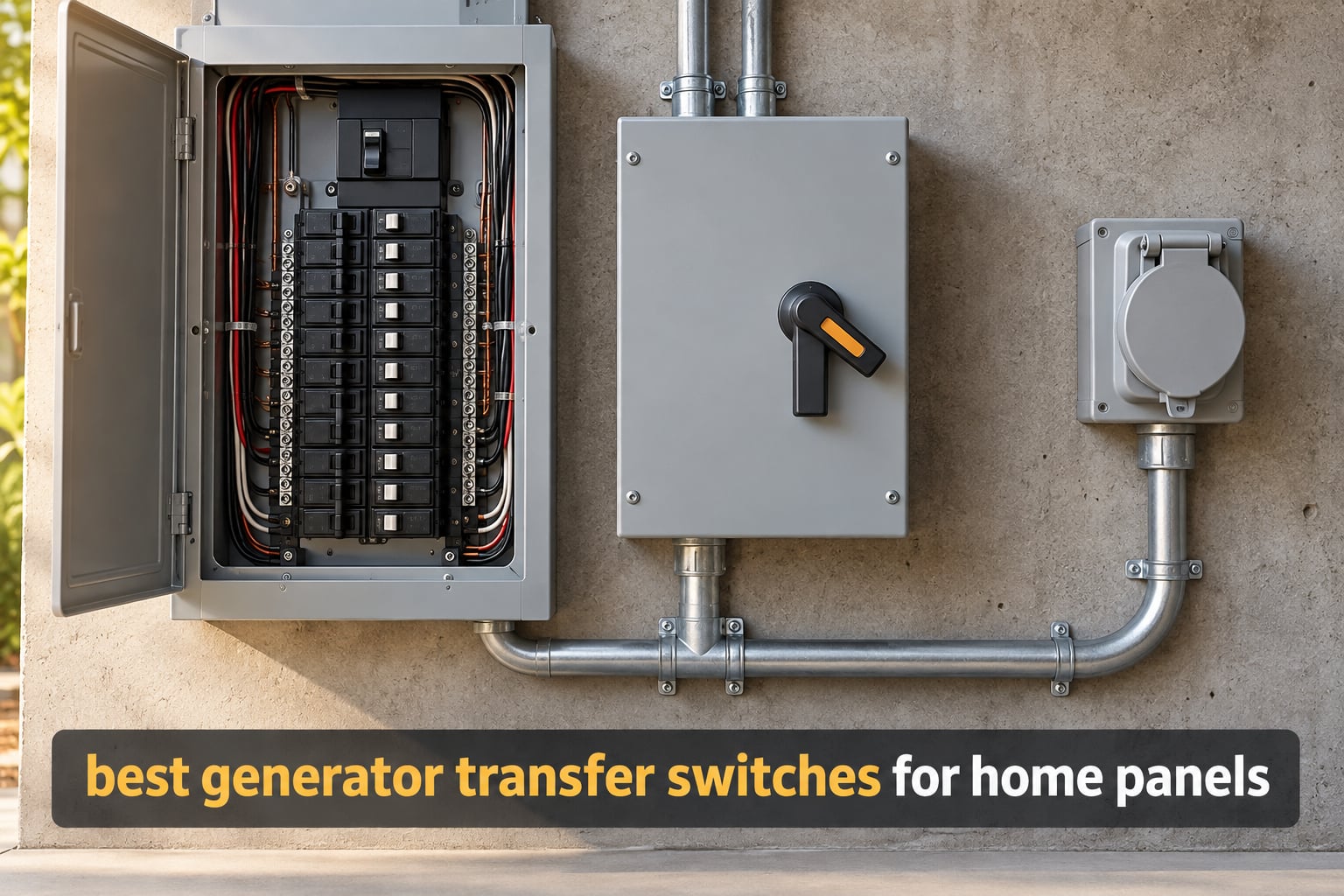
If you have ever cranked a portable generator in the driveway during an outage and wondered how to get it into the house safely, this guide is written for you. The best generator transfer switches are the only legal and safe way to connect a generator to a home panel, and picking the wrong one leaves you with either an overloaded machine or a code violation that your insurer will not overlook.
I have spent the last several months reading spec sheets, wiring diagrams and owner reports on the current crop of manual and automatic transfer switches, and I put ten of them through the same filter: amperage against a real generator, circuit count against a real load list, certification marks, neutral handling, enclosure rating and how much electrical competence the install actually demands. The results surprised me more than once. Two of the cheapest boxes on the list have no UL or ETL listing at all, and one of the most expensive kits is rated for 120V only, which rules it out for a well pump.
Backfeeding is the reason none of this is optional. If generator output reaches the utility lines, line crews working on a downstream outage can be electrocuted, and the fault can travel back to your main panel. A transfer switch physically interlocks two power sources so they can never connect at the same time, and that mechanical barrier is the entire point. Electrical code requires it for any generator wired into a building, and that is a rule, not a suggestion.
One more thing worth sorting out early is which kind of generator you own. Conventional open-frame sets with a grounded output neutral behave differently from the inverter-style machines and battery power stations that are now common, and that single detail changes which switches you can safely use. Our inverter generator versus traditional generator breakdown covers the difference in detail, and it is worth reading before you buy anything.
Below, I break down all ten switches individually, then give you the sizing math, the certification checks and the installation realities that most roundups skip. Every amperage, circuit count and rating in this article comes straight from the manufacturer data, and I flag every unit where certification is missing or the documentation is thin.
Our Top 3 Best Generator Transfer Switches (October 2026)
The three below cover the three most common situations: a general essential-circuit setup, a house that needs flexible 240V and 120V switching, and a renter or minimal system that only has to keep one appliance alive. If you are still torn after reading, the first one is the safest default.

Reliance 31406CWK
- 30 amp 6-circuit manual switch
- Dual mechanical wattmeters per leg
- cULus listed
- Kits includes inlet box and cord
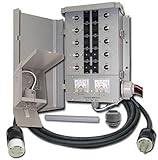
Connecticut Electric EmerGen
- 30 amp 10-circuit manual kit
- Four 2-pole 240V circuits with tie bars
- NEMA 3R weatherproof enclosure
- ETL listed
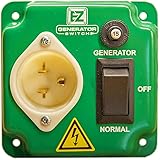
EZ Generator Switch
- 20 amp single-load 120V switch
- Handles bonded or floating neutral
- UL CSA and ETL listed
- Made in the USA
All 10 Generator Transfer Switches Compared Side by Side
This table is the short version. Every model listed here is a manual or automatic device that mechanically prevents the utility and generator sources from ever joining, and the features column is pulled from the manufacturer specifications rather than marketing copy.
| Product | Details | Action |
|---|---|---|
|
|
Check Latest Price |
|
|
Check Latest Price |
|
|
Check Latest Price |
 |
|
Check Latest Price |
 |
|
Check Latest Price |
 |
|
Check Latest Price |
 |
|
Check Latest Price |
 |
|
Check Latest Price |
 |
|
Check Latest Price |
 |
|
Check Latest Price |
A note on reading the table: the JINDOUZI, phabcf and LNEUIE devices are not branch-circuit transfer switches in the same sense as the kits. They are higher-capacity changeover and double-throw safety switches that sit closer to main-panel service equipment, and they handle the whole home or a sub-panel feed rather than a curated list of essential circuits.
1. Reliance Controls 31406CWK – The Pre-Wired Essential-Circuit Workhorse
Reliance Controls Corporation 31406CWK 30 Amp 6-circuit Pro/Tran Transfer Switch Kit for Generators (7500 Watts).,Gray
30A
6 circuits
7500W max
cULus listed
5-year warranty
+ Pros
- Pre-wired so panel connections take under an hour for a moderate DIYer
- Dual mechanical wattmeters show load on each split phase
- Load-side design blocks back-feeding the utility grid
- Kit bundles the switch inlet box cord and wire connectors
- cULus listed with a 5-year limited warranty
– Cons
- Push-on wire terminations can arrive not fully seated and need re-torquing
- Does not include 10/3 building wire for the outdoor inlet run
- Watt meter wiring instructions are confusing
The 31406CWK is the unit I keep coming back to, and after reading 1711 owner reviews it is not a close call. It is a 30 amp, 6-way manual transfer switch rated for portable generators up to 7500 watts, and it arrives with the power inlet box, a 10 foot cord and wire connectors already in the carton. That bundle matters more than any single spec, because the outdoor run is where most DIY projects stall.
Owners consistently describe the panel side as quick work. Because the internals are pre-wired, a moderate DIYer can finish the connections in roughly an hour, which is far better than a cold start with a bare enclosure and a bag of terminals. The enclosure is alloy steel, the operation mode is ON-OFF-ON, and the panel-mount design puts the switches right next to your breakers.
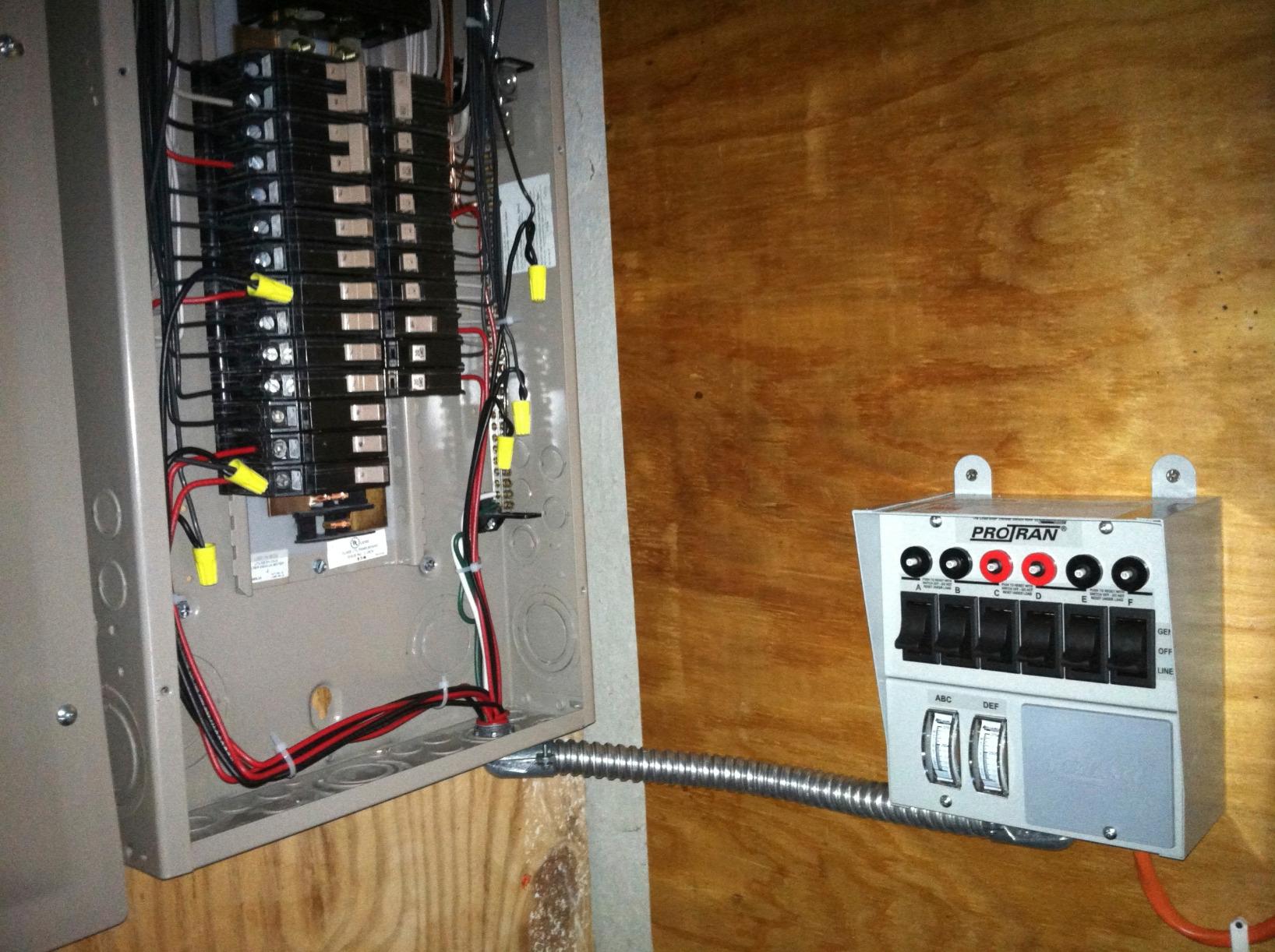
The Dual Watt Meters Are the Feature That Saves Your Generator
Most competing 30A kits give you no visibility into what the generator is actually carrying. This one has two mechanical wattmeters, one per split phase, so you can see the load on each leg as you turn circuits on. That is the difference between guessing and knowing, and it is the single biggest reason I rank this kit first.
Overloading a small portable generator is the most common way people damage one. Watching the meters lets you throttle back before the machine complains, and it also tells you which circuits to move to the other leg when you hit an imbalance.
Circuit Count and What Six Circuits Really Buys You
Six ways is the limitation to plan around. It is plenty for a refrigerator, a freezer, lighting, a furnace or boiler and a sump pump, but a well pump plus HVAC plus a home office starts to crowd it out. If you know you need more than six loads, look at the ten-circuit options further down this list rather than stretching this one.
The operating voltage is listed at 250 volts of alternating current, the current rating is 30 A, and the contacts are alloy steel with a normally closed contact type, which is what keeps the load side isolated whenever the switch is in the OFF position.
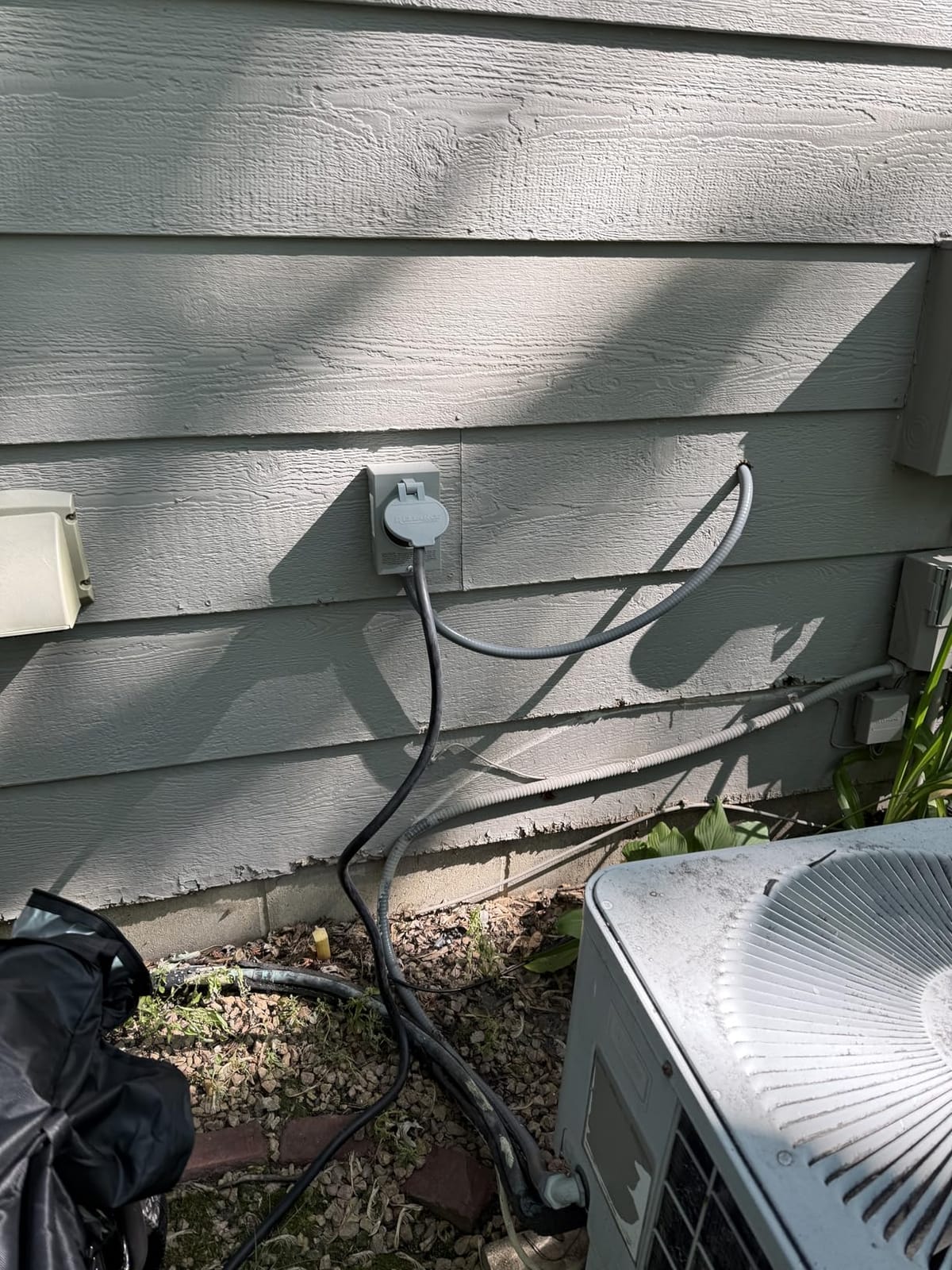
Where the Installation Actually Snags
Two recurring issues come up in reviews. First, some units arrive with push-on fast-on wire terminations that are not fully seated, so a torque check on each lug during install is worth the five minutes. Second, the kit does not include 10/3 building wire, so you are still sourcing conductors to run from the panel to the outdoor inlet box.
The watt meter wiring instructions are also described as confusing by a minority of owners. Nothing structural is wrong with the unit, but budget extra time for that section. The cULus specification listing and the 5-year limited warranty are the two things that make this my default recommendation: certification is what your inspector and your insurer will actually care about.
2. Connecticut Electric EmerGen 30A – Ten Circuits and Switchable 240V
Connecticut Electric EmerGen Transfer Switch Kit – 30 Amp, 10-Circuit, 10-Foot Cord, 7500 Watts, for Generator
30A
10 circuits
7500W
240V
NEMA 3R
ETL listed
+ Pros
- Ten circuits gives more usable loads than a 6-circuit kit at the same 30A rating
- Four 2-pole 240V circuits convert to eight more 120V circuits by removing tie bars
- NEMA 3R rainproof rating allows indoor or outdoor mounting
- Double-throw rocker switches mechanically prevent back-feeding
- Compatible with all major residential load centers
– Cons
- Bulky 11.5 x 20.5 x 14.5 inch body takes real wall space next to the panel
- You still have to run your own 10/3 conductors to the outdoor inlet
- Rocker switches need firm pressure to seat fully
This is the kit I recommend when a home has a well pump, a gas range or a three-ton air conditioner on the list. It holds the same 30 amp, 7500 watt ceiling as the Reliance unit but gives you ten circuit positions instead of six, and the four 2-pole positions are the reason. Pull the tie bars and each 240V circuit splits into two 120V circuits, so the box can flex between demand shapes as your household changes.
It is a substantial physical object, measuring 11.5 by 20.5 by 14.5 inches, so plan the wall space before the electrician arrives. The upside is that the NEMA 3R rainproof rating means you are not forced to choose between a garage interior mount and a weatherproof exterior mount.
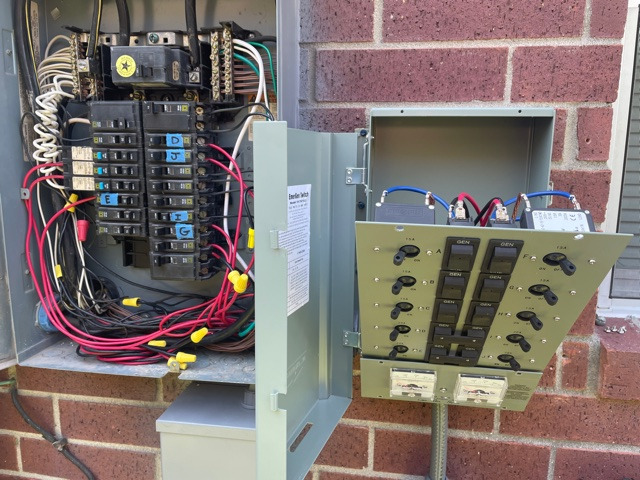
Why the Removable Tie Bars Matter More Than the Circuit Count
Ten circuits sounds like a marketing number until you realize how much of a real household is 120V. A well pump is 240V. Most lighting and receptacles are 120V. Being able to convert four 240V positions into eight 120V positions on a rainy afternoon, without new breakers or new wiring, is genuinely useful flexibility that the simpler kits in this group do not offer.
Switching to a higher-voltage-first plan later is a breaker swap, not a new enclosure. That flexibility is why this is the pick for anyone whose load list is not settled yet.
Certification, Compatibility and the Rocker Feel
The unit is ETL listed to UL standards and rated at 240 volts, 30 A, with alloy steel contacts and a normally closed contact type. Manufacturer compatibility is listed against Challenger, Cutler Hammer, GE, Homeline, Siemens, Square D and Westinghouse, which covers essentially every residential load center you are likely to own.
The one consistent complaint is that the double-throw rocker switches need firm pressure to seat fully. Functionally this is a feature, because a rocker that has physically thrown cannot accidentally back-feed, but it does not feel premium. Expect a professional install recommendation for anyone who is not already confident with panel work, and remember that the 10/3 conductors to the inlet are still on your supply list.
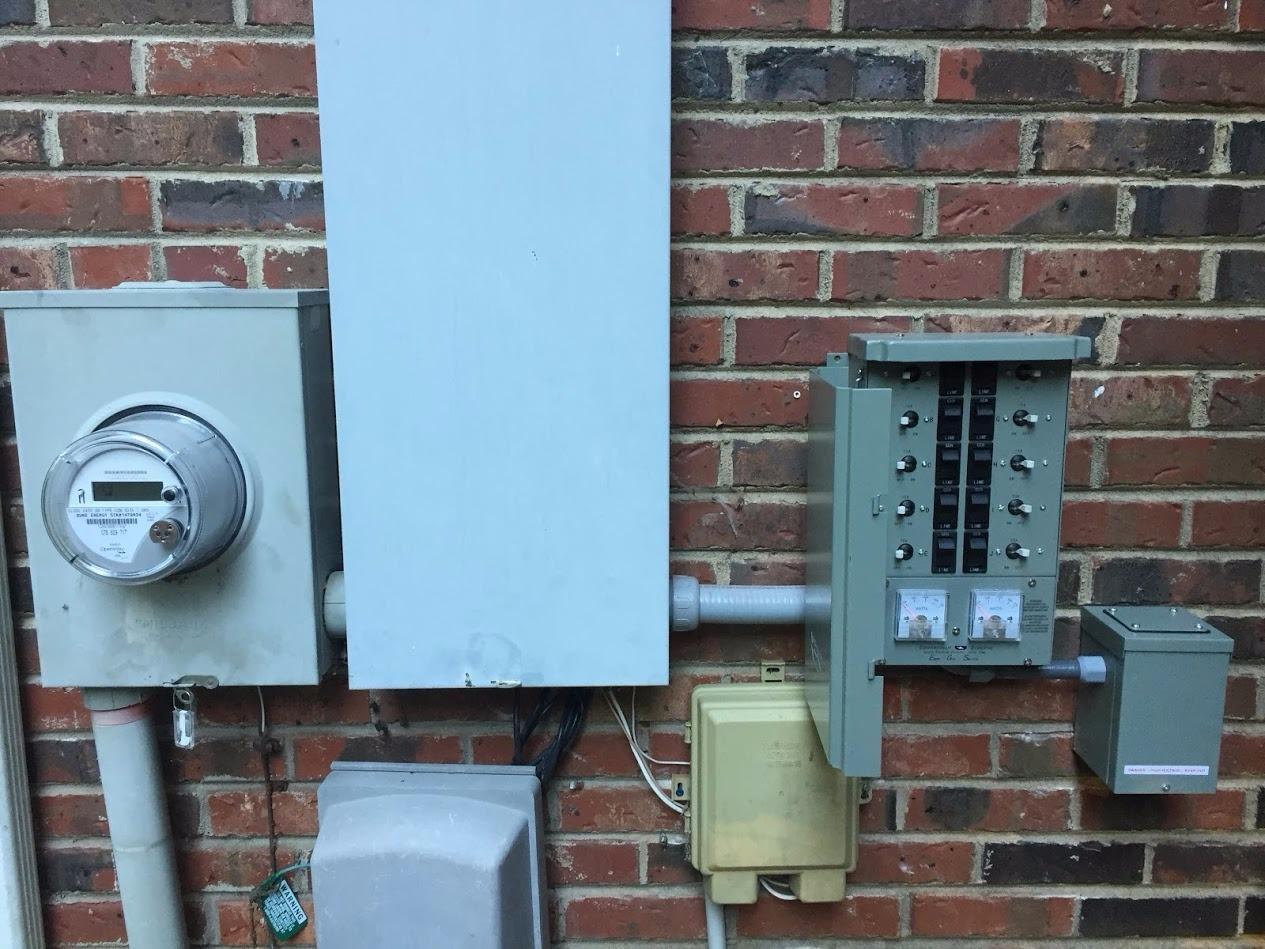
3. EZ Generator Switch – The Single-Load Answer for Furnaces and Fridges
EZ GENERATOR SWITCH – The Original, Patented, UL/CSA Approved Manual Transfer Switch – Made in the USA
20A
120V
1800W
UL CSA ETL
4x4x4 inch steel
+ Pros
- Transfers one hardwired 120V load such as a gas furnace boiler fridge or sump pump
- Handles both bonded and floating neutral generators with a quick internal rewire
- Stranded copper construction and UL CSA and ETL listing for code compliance
- Compact 4x4x4 metal box with offset nipple and wire nuts included
- Handles up to 1800 watts on a single circuit
– Cons
- Switches only one 20A circuit so you need one per load
- Lead pigtails run roughly 24-25 inches which is short on some appliance runs
- Requires a separate metal handy box for the splices
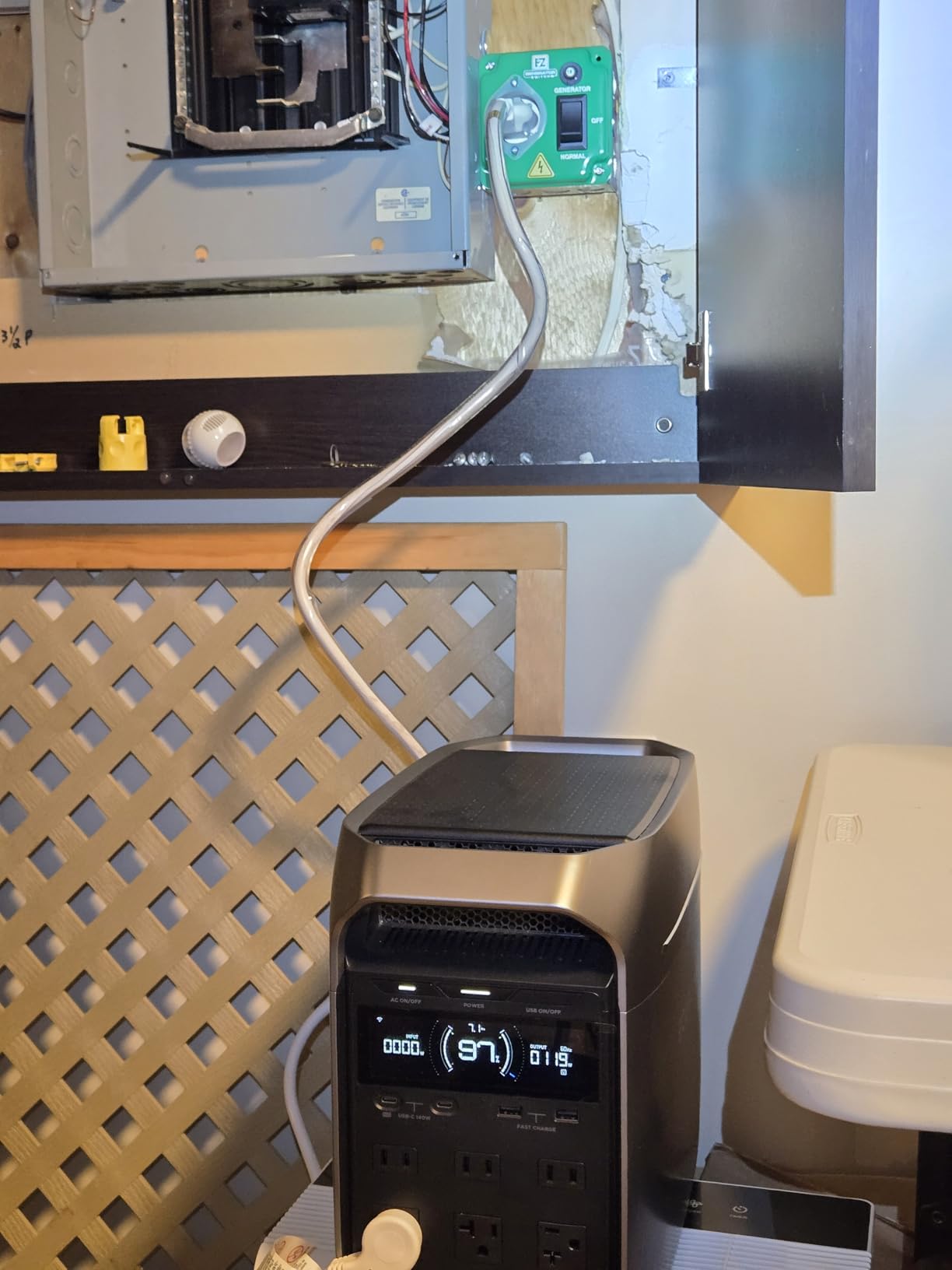
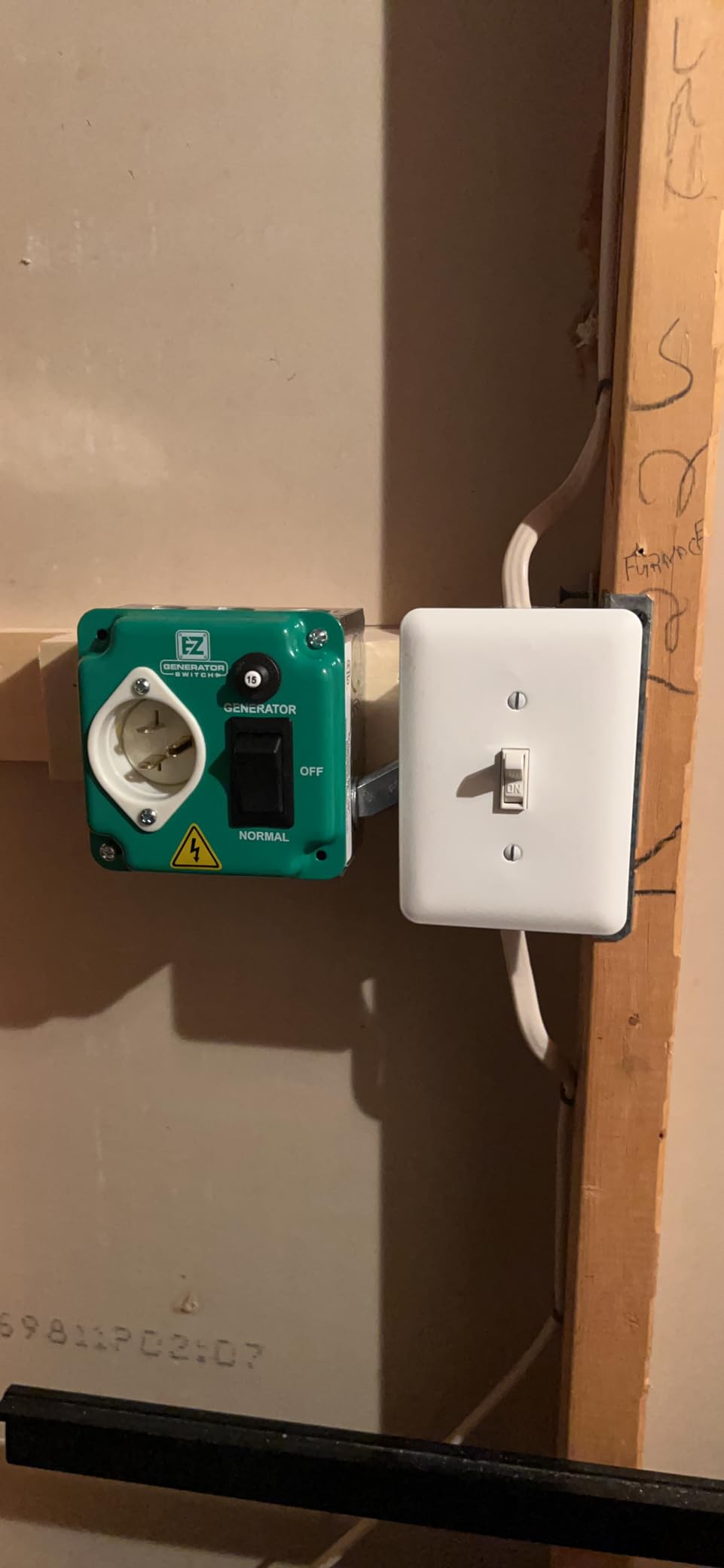
Sometimes the honest answer is that you do not need a transfer switch at all, you need one very small one. This patented manual device moves a single hardwired 120V load between utility and generator, and it carries the highest average rating of anything on this list at 4.8 across 950 reviews. It is the model I point people toward when the goal is simply to keep a gas furnace running through a multi-day outage so the heat stays on.
It is a 20 amp, 2-way, 120 volt device rated to 1800 watts, housed in a 4 by 4 by 4 inch steel box that weighs 16 ounces. It is made and assembled in the USA, and the manufacturer is explicit that it is UL, CSA and ETL approved and compliant.
Bonded and Floating Neutral Handling Is the Real Feature
Here is the detail that separates this from every other single-purpose device I looked at. It works with both bonded and floating neutral generators, and switching between the two is a quick internal rewire rather than a different box. If you own an inverter generator or a battery power station with a floating output, that flexibility is not a nice-to-have; it is the difference between the device working and the device being useless to you.
It also does not require you to touch any existing breaker. You interrupt the circuit feeding the appliance, run it through the switch, and the appliance sees either utility or generator power, never both. For a homeowner who is not looking to rewire a sub-panel, that simplicity is worth more than circuit count.
Plan Around the Short Pigtails and the Extra Box
Two practical constraints show up repeatedly in owner reports. The lead pigtails run roughly 24 to 25 inches, which can be short on a furnace or appliance located some distance from a suitable mounting point. And the switch box has no room for wire nuts, so you will need a metal handy box nearby to make the splices properly.
The instructions are written for electricians rather than first-time DIYers, and one unit was reported arriving with line and load reversed at the factory, which is exactly the kind of defect a ten-minute continuity check catches. If you are comfortable verifying your work with a tester, this is a fifteen to thirty minute install for a single appliance. If you are not, this is a very cheap electrician call.
4. JINDOUZI 125A 3P – High-Capacity Changeover Without the Branch Circuits
125 Amp 3P Dual Power Automatic Transfer Switch, 120/240V Generator Changeover Switch, with Metal Electrical Box for Outdoor and Indoor
125A
3 pole
120/240V
galvanized steel
lockable
+ Pros
- 125A capacity with a metal enclosure included
- Galvanized steel housing with polyester powder coating handles wet climates
- Lockable with status indicator lights for at-a-glance source confirmation
- Pre-drilled knockout sizes remove the need for extra drilling
- Handles both automatic changeover and manual lever operation
– Cons
- No UL or ETL listing mentioned with CE marking only
- Wiring instructions are thin and some buyers improvised the leg and neutral connections
- Several units arrived disassembled or missing mounting hardware
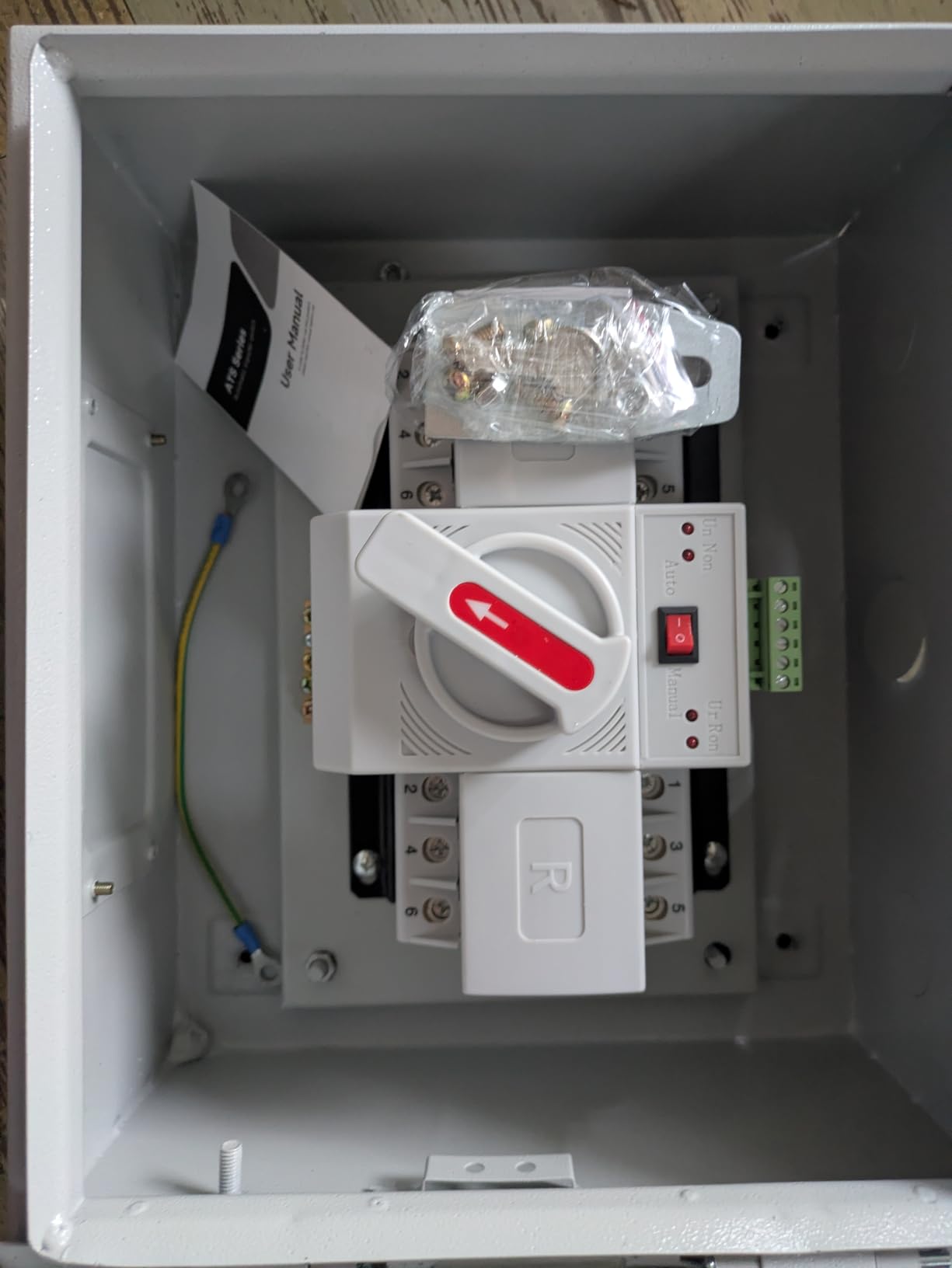
The JINDOUZI SDY01 is a 125 amp, 3-pole dual power automatic transfer switch for 120/240V service, and it is the first device in this group that operates at the scale of a main panel rather than a list of essential circuits. Owners who wired it themselves on 125A service report that it switches correctly, and the physical build is genuinely heavy: a galvanized steel housing with a polyester powder coat, a keyhole lock at the bottom for tamper resistance, and status indicator lights that let you confirm the live source without opening the door.
I am including it, but with a clear caveat. At 4.1 across 63 reviews it is one of the two lowest-rated products here, and the reason is documentation and certification rather than function. There is no UL or ETL listing mentioned, only CE marking, and that is a real problem for a device intended to sit in the path of your home’s service.
What a 3-Pole Device Does That a Branch Kit Cannot
A 30 amp, 6-circuit kit gives you a curated list of loads. A 125 amp, 3-pole changeover device interrupts all three conductors at once, which means it can hand a much larger share of the home over to the generator. For a shop, a garage with multiple tools, or a house where the goal is broader coverage than a sump pump and a fridge, that is a fundamentally different job.
The model designation, the phase type listing and the three-pole construction all point to a whole-home changeover function. The number of circuits is listed as one, so do not read this as a multi-circuit load center; it is a source selector.
Why the Missing Certification Is the Dealbreaker
Insurers and most local electrical authorities want a listed device. UL, cULus and ETL marks are not decorative, they are the reason an inspector accepts the installation and the reason a claim does not get challenged later. A CE marking on a steel box in a North American residential service is not a substitute.
The other recurring complaints match what you would expect from a generic enclosure: thin wiring instructions that left some buyers improvising the neutral and leg connections, an enclosure that reviewers describe as cheap with real doubt about the weatherproof claim, and boxes arriving disassembled or without mounting hardware. If you want this class of capacity, a listed alternative on this list is the safer route.
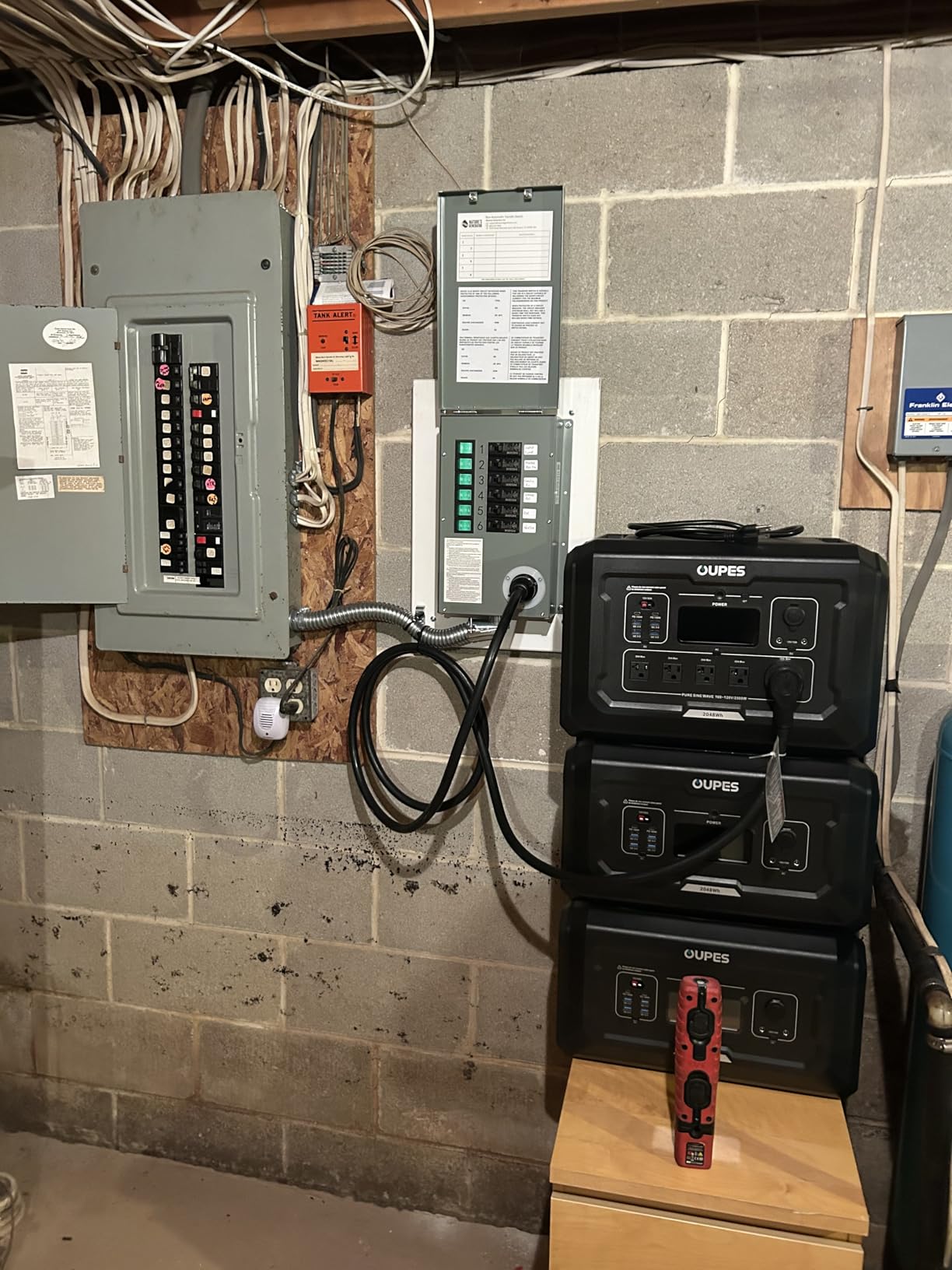
5. Nature’s Generator 30A 6-Circuit – Built for Battery Power Stations Too
Nature’s Generator 30 Amp Manual Transfer Switch 6-Circuit 120V, UL Listed Non-Automatic Power Transfer Kit, Pre-Wired Indoor for Portable Generator
30A
120V
6 circuits
3600W
IP67
UL listed
+ Pros
- Pre-wired design and illuminated rocker switches make it close to plug-and-play
- UL listed and works with gasoline and battery power stations without adapters
- Standard 15A breakers can be swapped to match the load you need
- Stainless steel contact construction in a compact steel box
- Illuminated rockers show generator power status at a glance
– Cons
- 120V only so there are no 240V circuits for well pumps dryers or HVAC
- Indoor rated so a separate weatherproof inlet enclosure is needed
- No per-leg watt metering so load balancing is guesswork
This 30 amp kit is the one I would pair with a portable power station rather than a gasoline generator. It is compatible with gasoline, diesel, propane, portable power station and small renewable sources, and that universality is unusual at this capacity. The kit includes an L5-30P power inlet, a 30 amp cord, conduit and cable clamps, so the pieces that normally send you back to the hardware store are in the box.
It is UL listed, uses stainless steel contacts with a normally open contact type, and the illumination on the rocker switches is a small touch that turns out to matter when you are standing in a dark garage flipping circuits on.
The 120V-Only Limitation Is Not a Bug, It Is the Design
Wattage is listed at 3600 watts and operating voltage at 120 volts, with no 240V positions at all. That rules it out for a well pump, an electric dryer, a 240V range or any HVAC with a 240V feed. For a home whose essential loads are refrigeration, lighting, internet and a furnace control circuit, that limitation costs you nothing.
The six-position panel uses standard breakers, so you can swap 15A and 20A units to match the loads you actually want on generator power. The enclosure is 13 by 9 by 4 inches and carries an IP67 rating, and the stated temperature range is 32 C to 45 C.
Plan for Two Extra Purchases Before You Start
First, the unit is indoor rated, so an outdoor inlet needs a separate weatherproof enclosure on top of what is included. Second, there is no per-leg watt metering, which means balancing two split phases is guesswork until something trips. If your load list is 120V-heavy and modest, neither issue is a problem.
One more real-world detail from owners: older AFCI breakers in the main panel can trip when you switch to generator power, forcing replacements. The device is compatible with AFCI and GFCI breakers, so the fix is straightforward, it just is not free.
6. Connecticut Electric Series 2 50A – For Well Pumps, HVAC and Bigger Loads
Connecticut Electric Series 2 Backup Power Manual Transfer Switch Kit, 50 Amp, 10 Circuits, with 25′ Cord & Outdoor Rated 50A Inlet (Transfer Switch Kit – 25 ft Cord)
50A
10 circuits
12500W
240V switching
ETL certified
+ Pros
- 50 amp capacity covers loads that 30A kits cannot handle
- Bundles the CS6375 50A outdoor inlet box and a 25 ft cord
- ETL certified and recognized by electricians as a legitimate unit
- Ten circuits with 240V switching for demanding appliances
- Works on any panel size and pairs well with solar and battery systems
– Cons
- You still need wire conduit and fittings to run from the panel to the inlet
- Requires knockout access in the main panel and solid electrical competence
- Some buyers expected to be able to use it straight out of the box
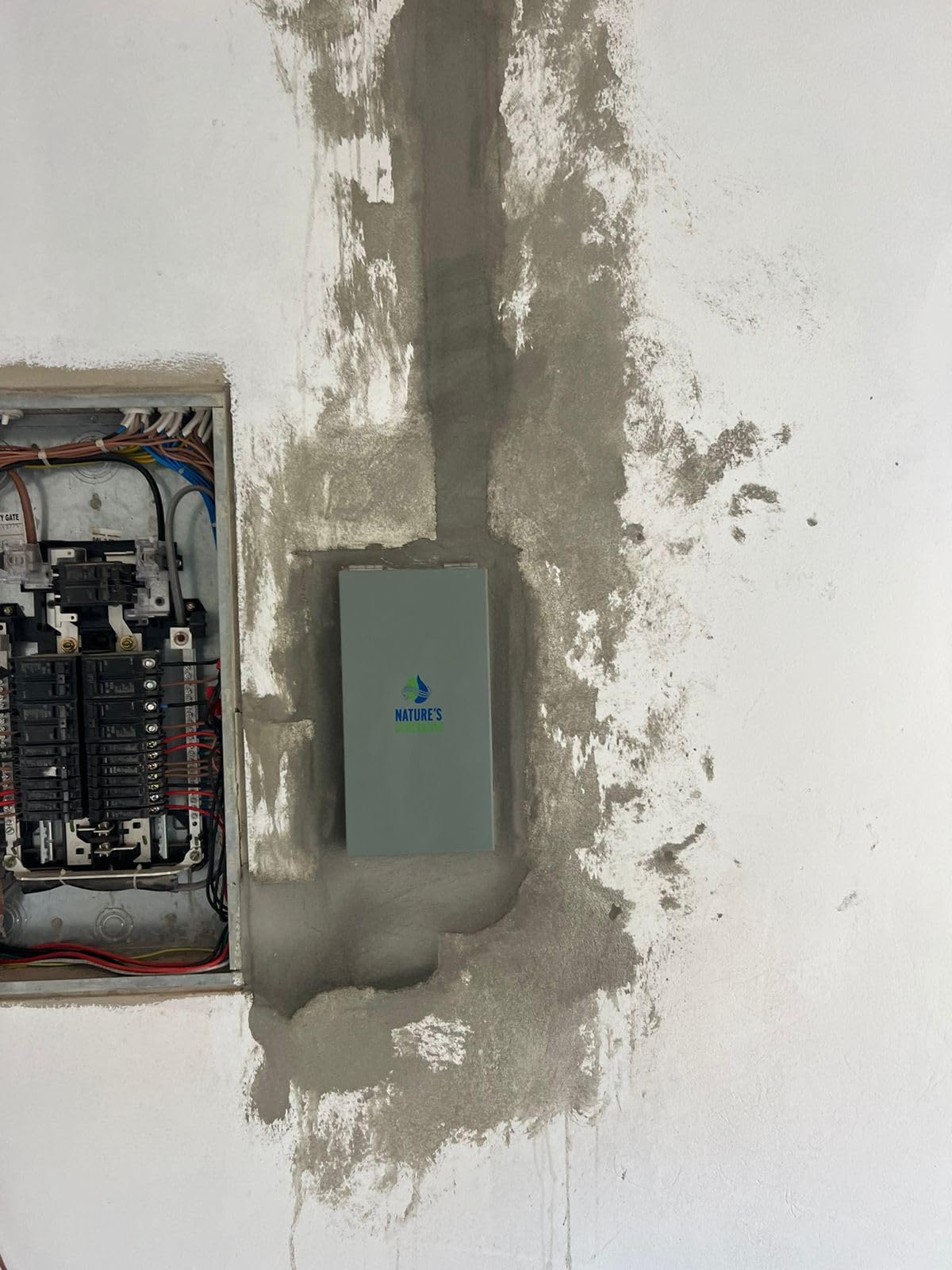
The jump from 30 amps to 50 amps is the single most consequential upgrade in this whole list, and this is the kit that makes it. It distributes 12500 watts across 10 circuits, and unlike the 30A boxes it includes real 240V switching for well pumps, HVAC equipment and other high-demand appliances. Electricians who have installed it rate the build quality highly and treat it as the best of the code-compliant options for whole-home loads like a three-ton air conditioner.
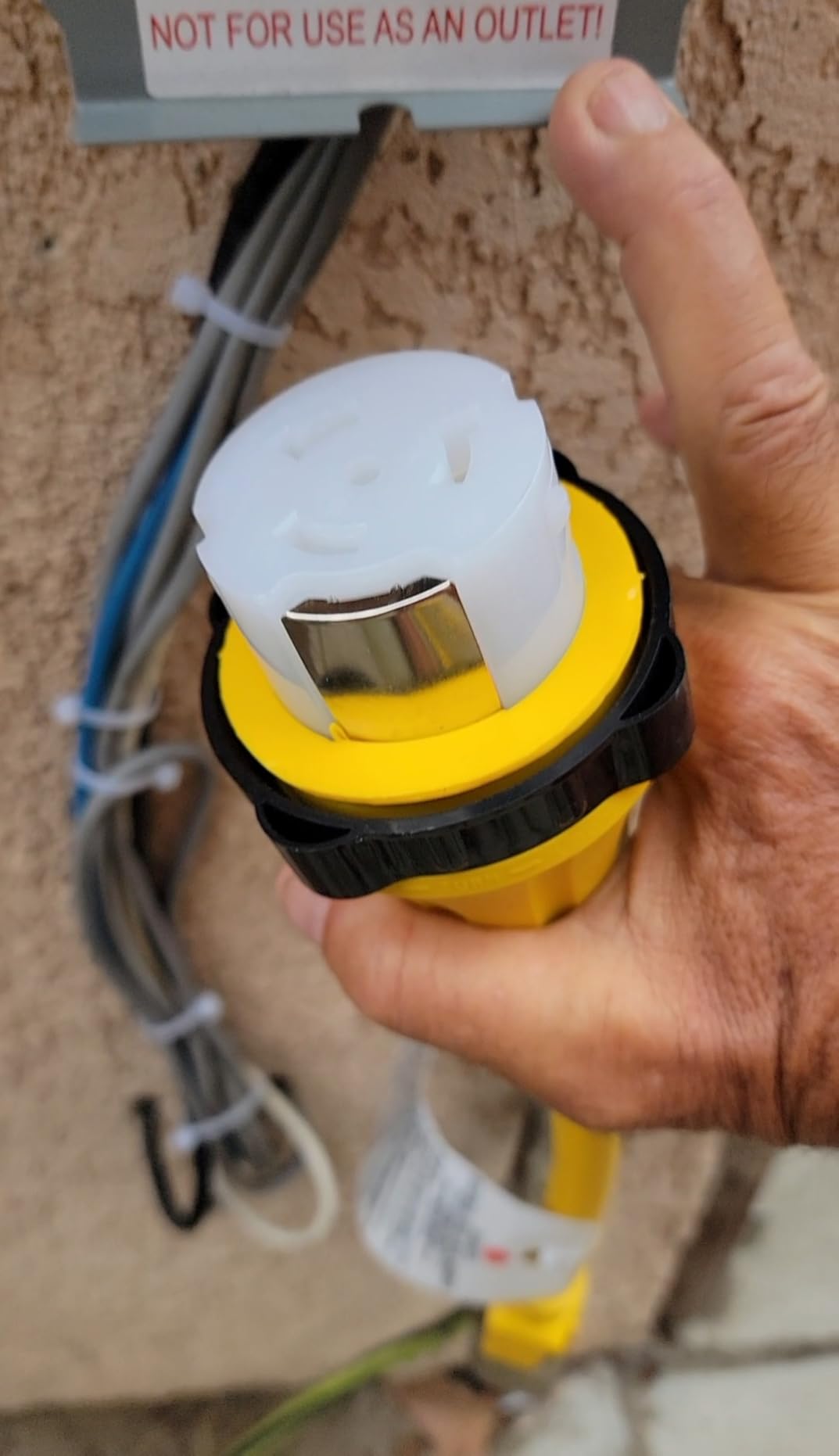
It is model EGS1012KG2, ETL certified to UL standards, and the included components list is the reason it holds up: circuit breaker, a 25 foot cord and a CS6375 50A inlet box. That bundled inlet is a large part of why the outdoor run is largely covered out of the carton.
Why 50 Amps Changes What You Can Run
A 30 amp switch caps your generator around 7500 watts. A 50 amp switch takes you to 12500 watts, and that is the difference between a refrigerator and a refrigerator plus a well pump plus the compressor on a central air unit. If your essential load list contains any 240V motor loads, this is the tier you are shopping in.
The 50A rating and 12500 watt distribution figure are manufacturer specifications, and they pair with the CS6375 inlet configuration. If you are running a generator with a 50A output, this is the matching class of equipment.
The Install Is Bigger Than the Box
This is not a fifteen minute job. You still need wire, conduit and fittings to run from the panel to the inlet, and the install requires knockout access in the main panel plus solid electrical competence. Several buyers report purchasing it expecting to use it straight out of the box, which is a good reminder that a transfer switch is only one component of a system.
The payoff is that once it is in, you have a listed, ETL-certified device with real 240V capability and enough circuit positions to stop making hard choices about which loads make the cut during an outage. For a whole-home essential panel, that is the single best value in this group.
7. Nature’s Generator 50A 12-Circuit – The Highest Circuit Count Available
Nature’s Generator 50 Amp Manual Transfer Switch 12-Circuit 120/240V, UL Listed Non-Automatic Power Transfer Kit with CS6375 Inlet, Pre-Wired Indoor for Portable Generator
50A
12 circuits
12000W
120/240V
IP67
UL listed
+ Pros
- Twelve circuits is the highest capacity here and reconfigures as 120V or 240V
- Uses common standard breakers that can be swapped to the amperage you need
- UL listed steel enclosure rated 50A at 120/240V
- Pre-wired and pre-punched design makes installation quick
- LED toggles make circuit status visible from across the room
– Cons
- No per-leg amperage metering so you must add your own meters to balance load
- The included 50A inlet box is tight for terminating stiff 6/3 conductors
- Older AFCI breakers in the main panel may trip when switching over
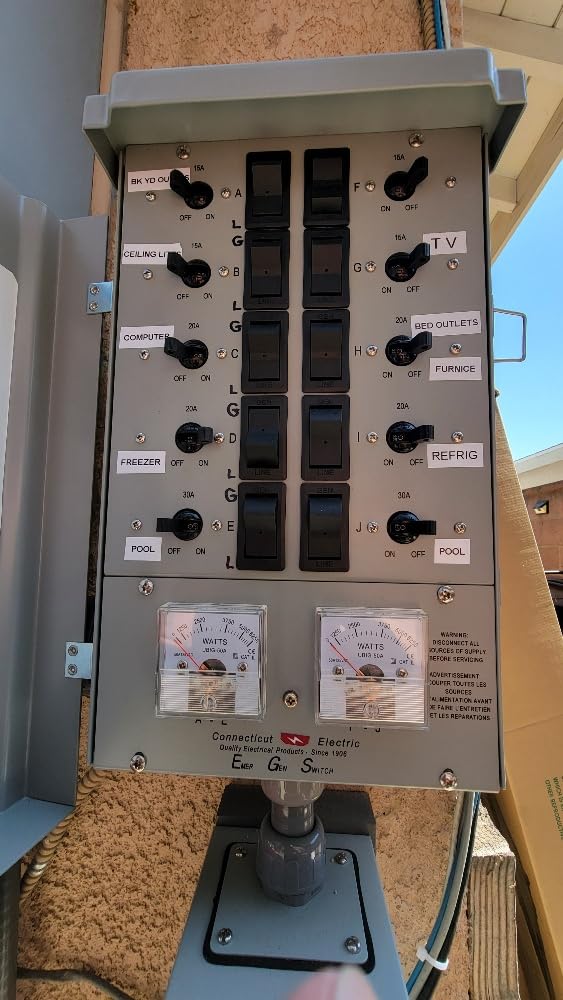
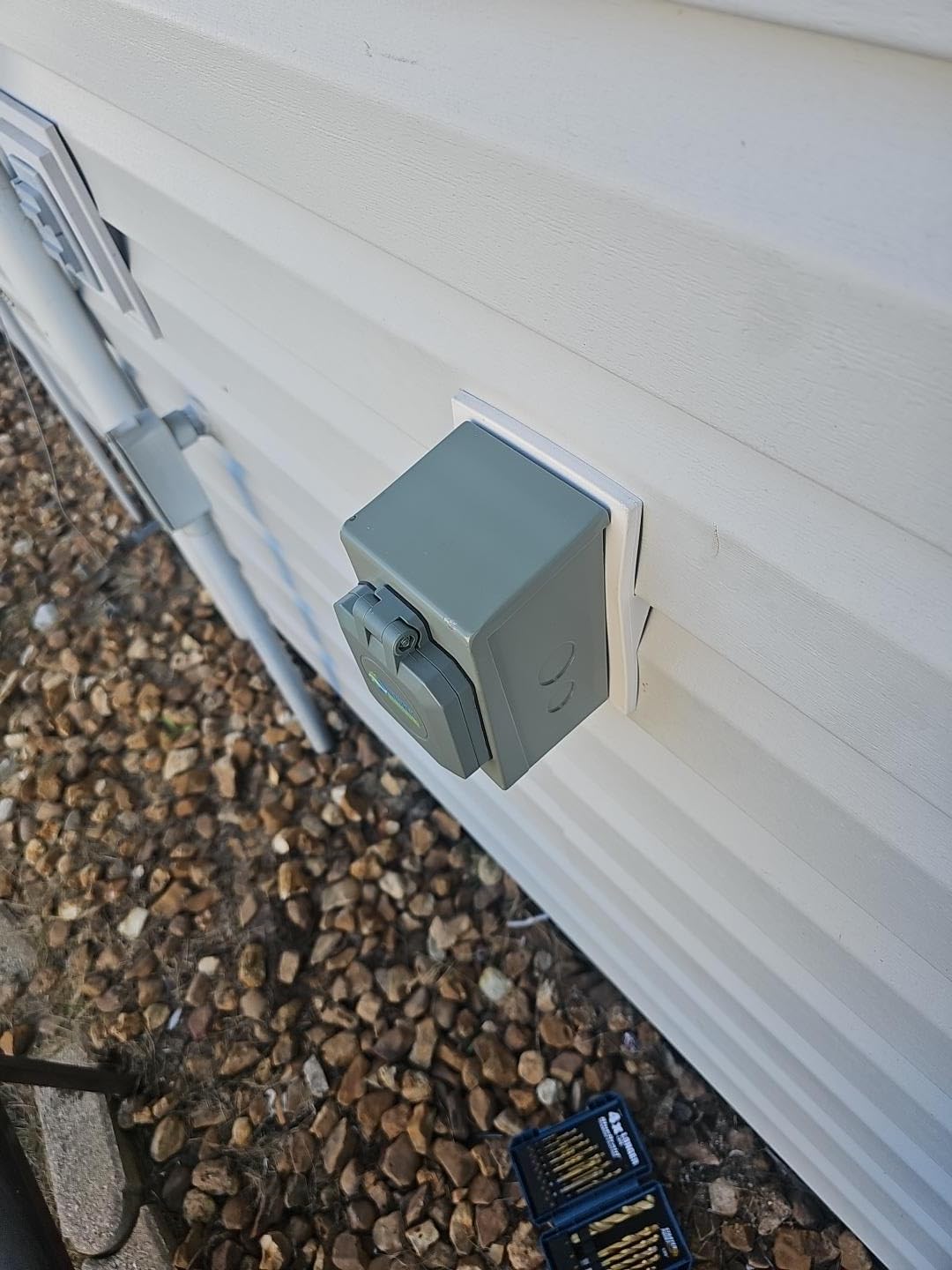
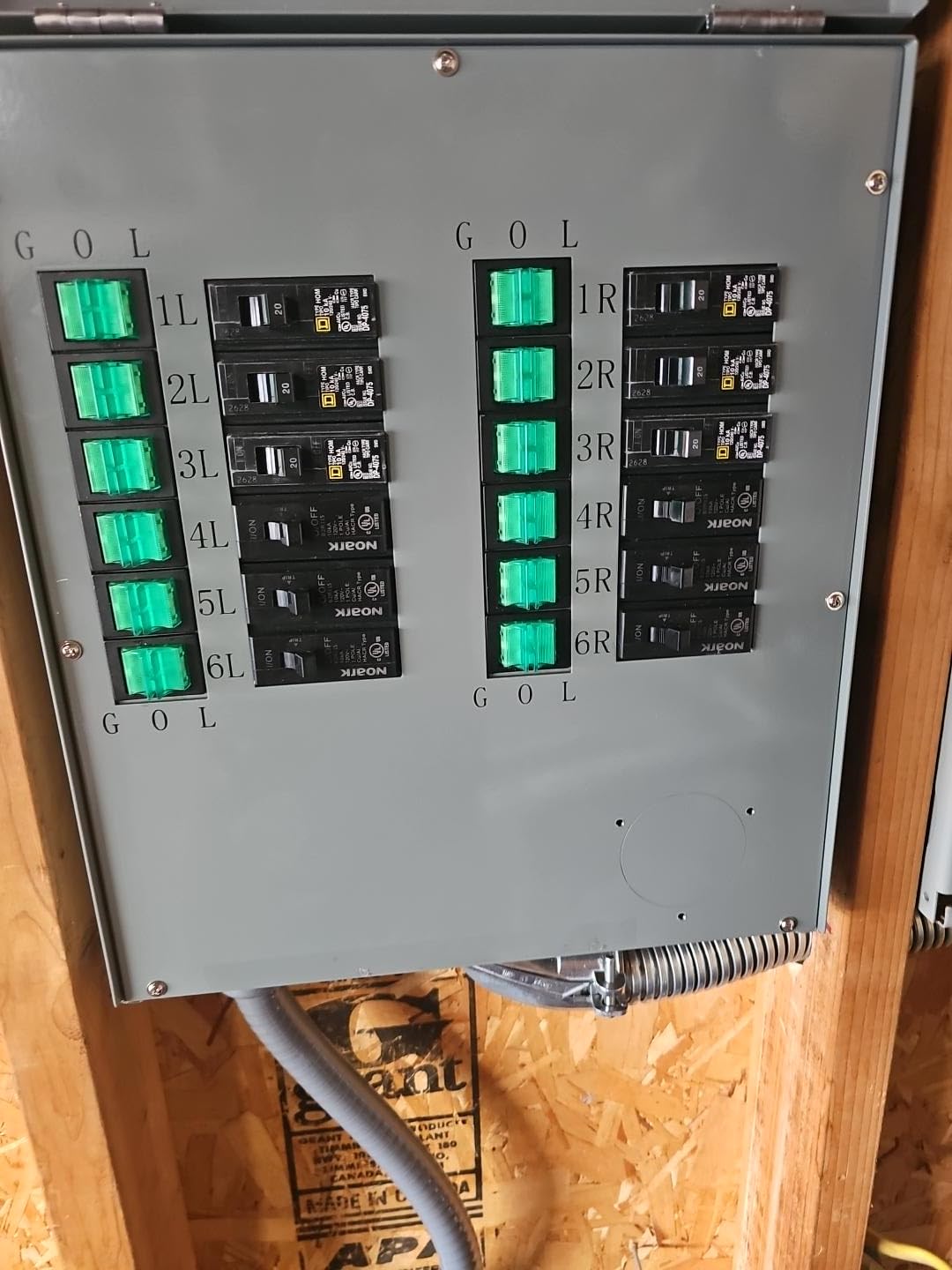
Twelve circuits is the highest count of any product in this roundup, and that is the headline reason to look at this model. At 50 amps and 12000 watts across 120/240V, it gives you a lot of positions to work with, and the configuration is genuinely flexible: the manufacturer states it can be set up as twelve 120V circuits or six 240V circuits through interchangeable breakers.
Like its smaller sibling, it is UL listed, built in a stainless steel contact design with an IP67 rating, and sized at 13 by 9 by 4 inches. The pre-wired, pre-punched design keeps installation quick, and the LED toggles are visible from across a room, which is a genuinely useful property when you are working in the dark.
When Twelve Circuits Changes the Planning Exercise
With six or ten positions, load selection becomes an argument with yourself about what to leave off. With twelve, you can put the well pump, the HVAC, the sump pump, the refrigerator circuit, the freezer circuit, the lighting, the internet, the office and a handful of outlets on generator power at the same time and still have room to grow. For a family that has been rationing circuits during outages for years, that headroom is the point.
Compatibility is broad: gasoline, diesel, propane, battery and renewable sources are all listed. The included components cover the CS6375 50A inlet box, a 50A power cord, conduit and cable clamps, so the same extra purchases noted for other kits are reduced here.
Two Real Limitations to Plan Around
There is no per-leg amperage metering, so you must add your own meters if you want to know what each split phase is carrying. That is a modest add-on compared with replacing a generator, but it is not in the box. The temperature range is also listed at 10 C to 45 C, slightly wider at the cold end than the 30A version.
The tighter complaint is physical: the included 50A inlet box is difficult to terminate stiff 6/3 conductors in, and liquid-tight conduit plus wet-location conductors for an outdoor inlet remain extra purchases. Legacy AFCI breakers in the main panel can also trip on switchover, forcing replacements. None of these are dealbreakers, but all of them belong on the install day list.
8. phabcf 100A 3P – Automatic and Manual in One Enclosure
100A 3P Automatic/Manual Generator Transfer Switch for Home
100A
3 pole
24000W
IP67
lockable with keys
+ Pros
- Automatic and manual transfer in one unit for unattended operation with a controller
- 100 amp capacity at 24000 watts covers a shop or a good share of a home
- Status indicator lights show which source is live at a glance
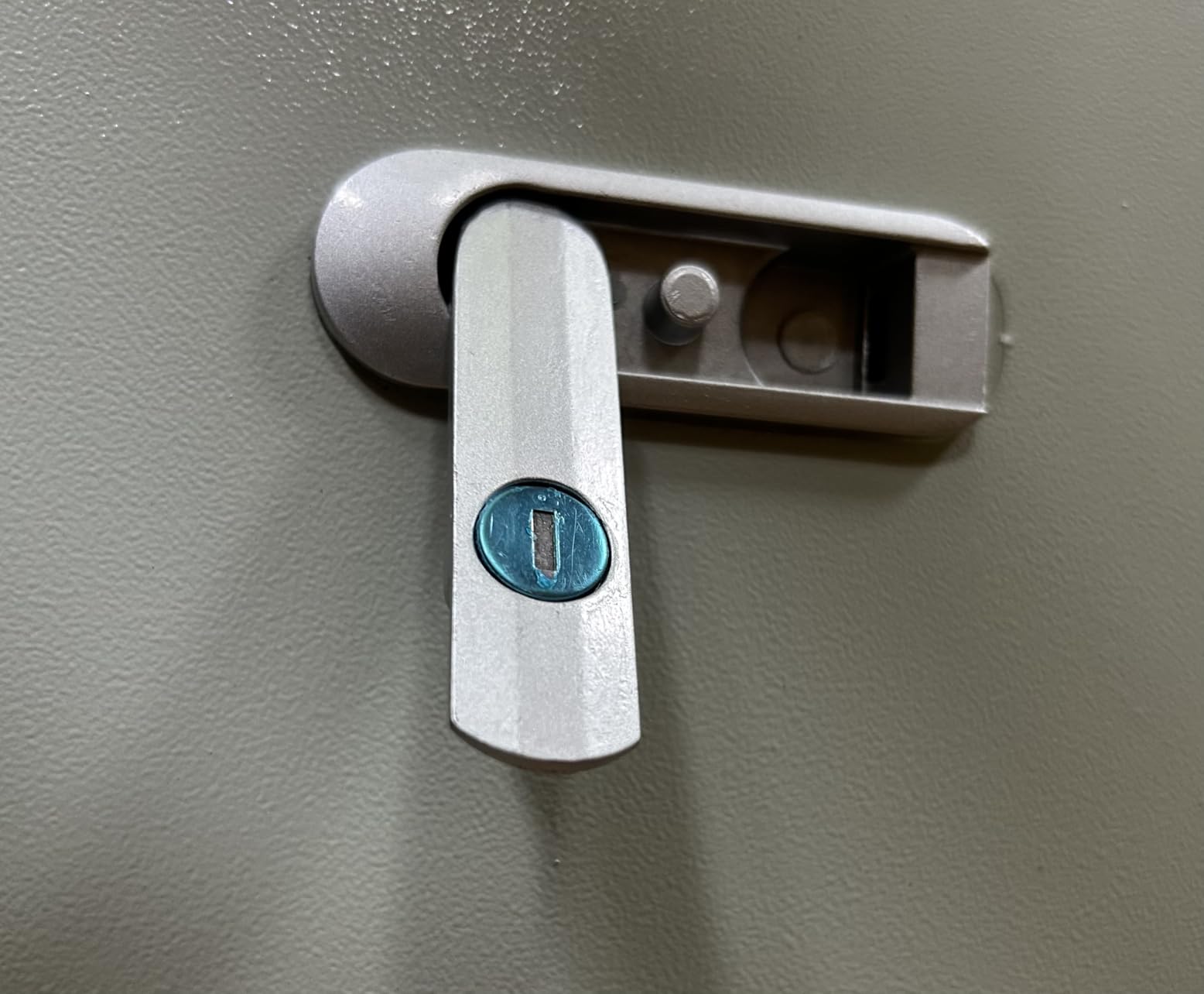
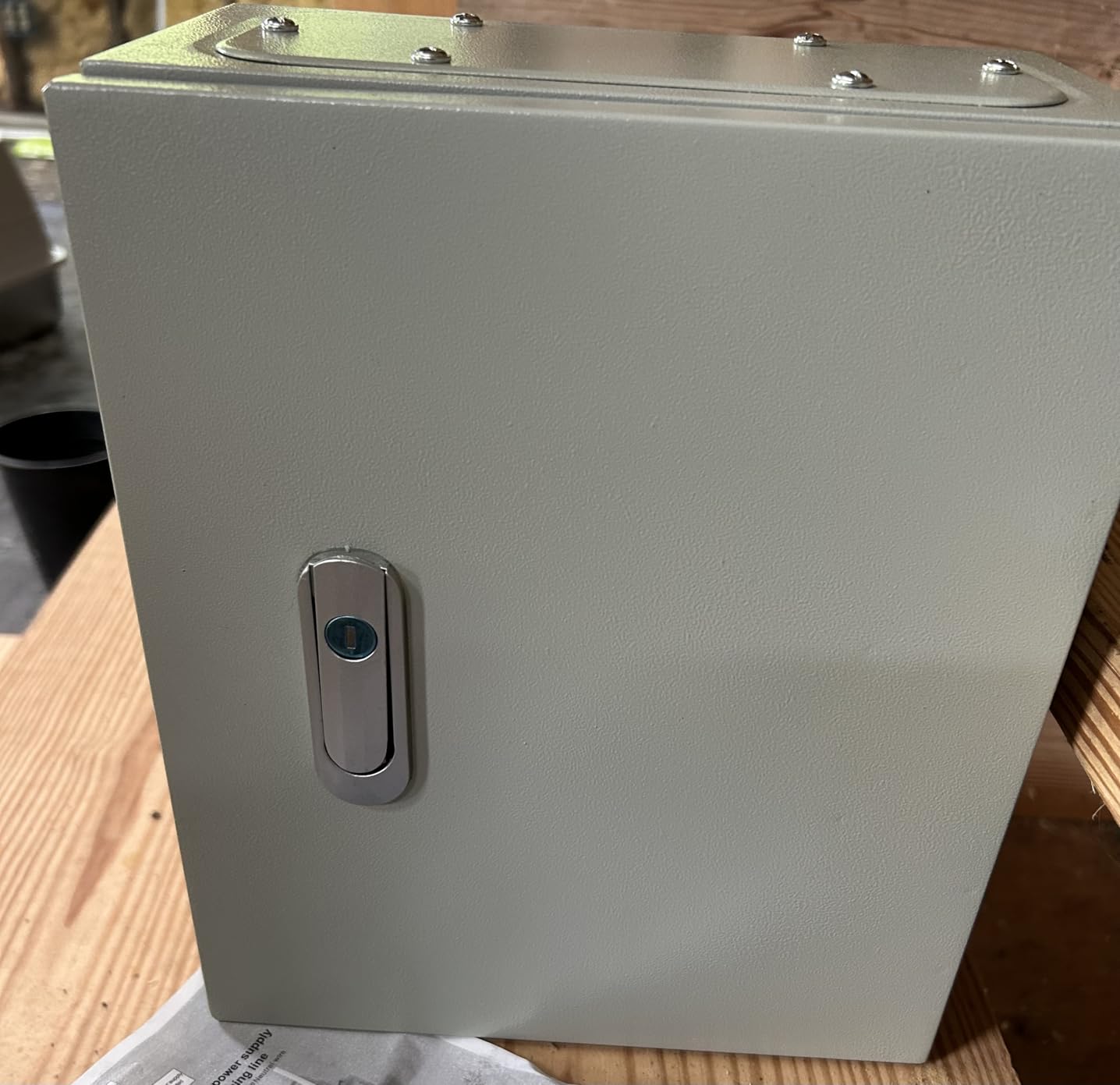
- Lockable handle with keys adds a safety layer around kids
- Heavy duty lugs and pre-drilled holes make the wiring straightforward
– Cons
- CE marking only with no UL or ETL listing
- One buyer reported a failure to break before make which damaged a generator
- Instructions are too brief for a service-entrance class device
The phabcf 3P100A is one of only two devices here that offers genuine automatic changeover alongside manual control, and at 100 amps and 24000 watts it sits squarely in home-scale capacity rather than portable-generator scale. The control method is listed as push button and remote, the enclosure is metal with an IP67 rating, and it measures 10 by 11 by 6.5 inches for wall mounting.
Installers like the flexibility, the status indicator lights and the lockable handle with supplied keys. The gold contact material and heavy duty lugs are also points in its favor on paper.
Automatic Transfer Is Genuinely Useful, With a Caveat
Automatic source detection with manual override and a one-touch reset means the switch can run unattended alongside a generator controller, which is the whole point of an automatic transfer switch. Wiring diagrams, an installation guide and lifetime technical support are included, and compatible vehicles are listed as RV, boat and truck applications.
The important detail is the secondary side. It is listed at 120 volts, so a 12V battery source has to go through an inverter before this switch can use it. If your backup power is a portable power station rather than a generator with its own 120/240V output, plan for that inverter stage.
The Rating Reflects a Real Safety Report
At 4.0 across 37 reviews, this is the lowest-rated product in the group, and the reviews explain why. One buyer reported that the unit failed to break before make and damaged a generator, which is precisely the failure mode a transfer switch exists to prevent. There is also no UL or ETL listing, only CE marking.
Other complaints include an unusual enclosure handle that one buyer could not operate at all, and instructions that reviewers describe as too brief for a service-entrance class device. I would not put an unlisted device with a reported break-before-make failure in the path of a home service. If automatic control is your priority, the listed manual kits on this list with a controller-compatible generator are the safer route.
9. VEVOR 30A 10-Circuit – The Prewired Most Versatile
VEVOR Manual Transfer Switch, 30-Amp 10-Circuit, Prewired Generator Transfer Switch Kit with NEMA L14-30P Power Inlet Box, Double-Throw Switch, NEMA 3R, Mechanical Watt Meter, for 7500W Generators
30A
10 circuits
7500W
240V
NEMA 3R
19.6 lb
+ Pros
- Best price per circuit among the 10-circuit kits
- Comes pre-wired with clearly labelled wiring which shortens install time
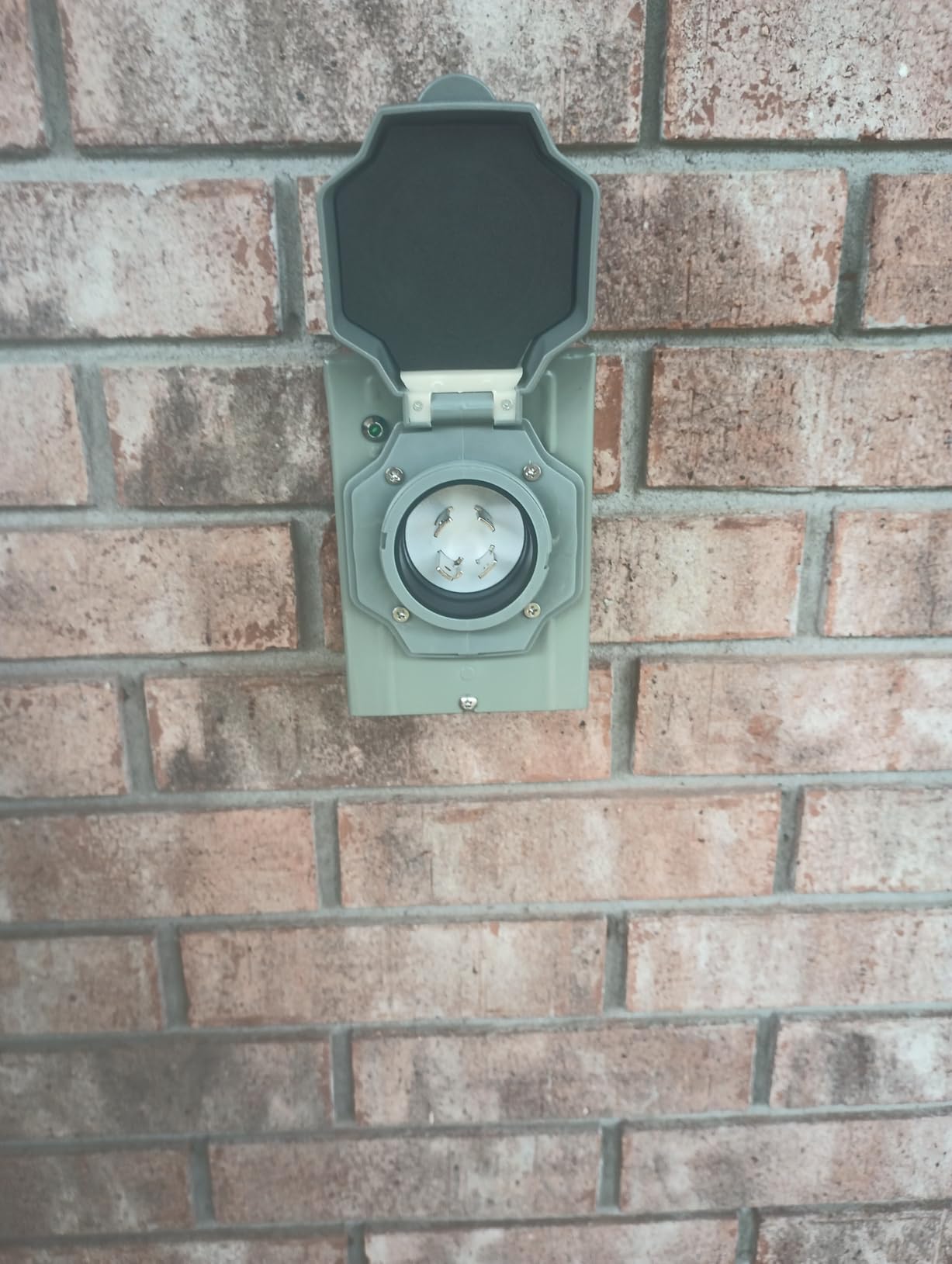
- Includes the NEMA L14-30P power input box with a protective lid
- Mechanical watt meter tracks generator load to help avoid overload
- NEMA 3R enclosure and double-throw switch rated for outdoor conditions
– Cons
- UL or ETL listing is not stated unlike the Reliance and Connecticut Electric kits
- Mechanical watt meter readings are approximate
- Heaviest unit in the group at 19.6 pounds making it a two-person lift
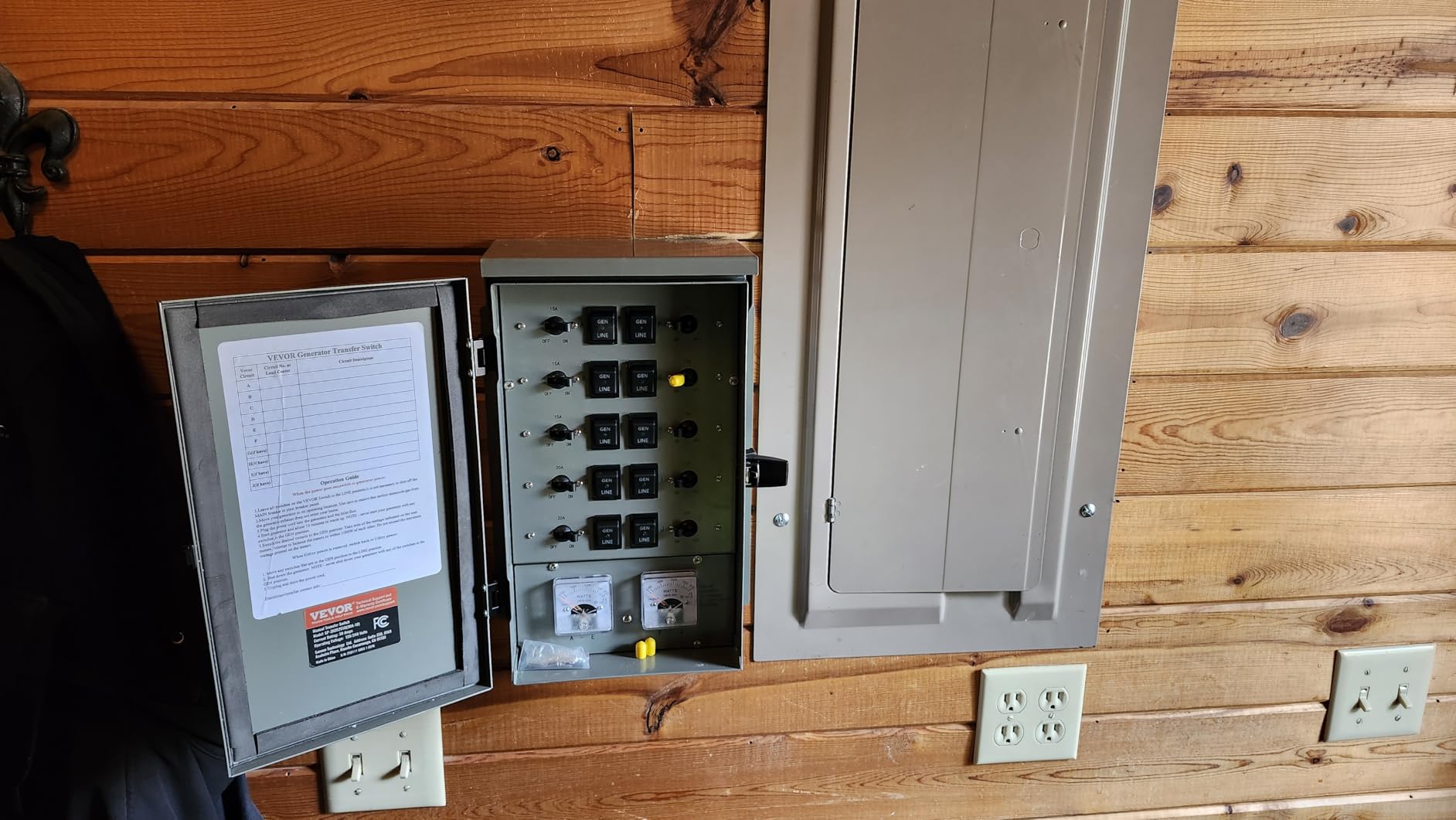
The VEVOR 30A 10-Circuit kit is the value entry in this group, and the thing that makes it interesting is the pre-wiring. Reviewers consistently single out clearly labelled internal wiring, which shortens install time compared with kits that ship as a bare enclosure and a bag of terminals. The same box includes a NEMA L14-30P power input box with a protective lid and a built-in mechanical watt meter.
Specs are 30 amps, 240 volts, 7500 watts, in a steel case rated for both indoor and outdoor use with a NEMA 3R weatherproof enclosure and a double-throw switch. There is also a broader variant family covering 30A 6-circuit, 30A 10-circuit and 50A 10-circuit, so the same platform scales if your needs grow.
Pre-Wiring Is Where the Time Savings Actually Come From
Every kit on this list claims some level of pre-wiring, but reviewers distinguish between pre-wired and clearly pre-wired. When the conductors are labelled and already terminated to their positions, the panel side of the job compresses dramatically. That is a real saving in labor hours, and on a switch that still requires you to run your own conductors from the panel to the inlet box, it is a meaningful fraction of the total work.
The mechanical watt meter also earns its place. It is not precise, but seeing load rise as you flip circuits on is enough to keep a 7500 watt generator out of trouble, and it is a feature most kits in this price tier omit entirely.
Two Reasons It Is Not My Default Recommendation
First, a UL or ETL listing is not stated, unlike the Reliance and Connecticut Electric kits. For a device in your home’s electrical path, an unstated certification is a real gap, and I would not hand this to a code-conscious buyer without checking the enclosure label yourself.
Second, at 19.6 pounds this is the heaviest unit in the group and needs a two-person lift, particularly if you are mounting it on an exterior wall. The watt meter is also mechanical, so readings are approximate rather than precise. If those trade-offs work for you and your local inspector accepts the certification on the label, it remains a capable 10-circuit kit.
10. LNEUIE 200A – Main-Panel Capacity With Purely Mechanical Contacts
200A Manual Generator Transfer Switch,Double Throw Safety Switch,48000W
200A
48000W
double throw
NEMA 3R
all aluminium
+ Pros
- 200A and 48000W capacity suits main-panel level loads
- Simple mechanical rotary double-throw design with no electronics to fail
- All-aluminium connections resist corrosion and long-term wear
- 1.5mm galvanized steel housing with protective coating is NEMA 3R rated
- Ample interior space for wire bending up to 3 AWG
– Cons
- A double-throw safety switch rather than a branch-circuit transfer switch
- No UL or ETL listing stated
- Aluminium rather than copper terminations
The LNEUIE 200A is the highest-capacity device in this roundup by a wide margin, rated at 200 amps and 48000 watts. That puts it in a different category from the sub-panel kits: this is a double-throw safety switch for main-panel level loads, not a curated branch-circuit transfer switch, and it will not function as a like-for-like replacement for a six or ten circuit kit.
What it does have is simplicity. The rotary double-throw mechanism is entirely mechanical with clear ON/OFF/ON indication and no electronic components to fail, and every connection is aluminium, which resists corrosion and long-term wear. The enclosure is 1.5mm galvanized steel with a protective coating, NEMA 3R rated, and sized at 9.1 by 3.9 by 13.7 inches.
Why No Electronics Is a Feature at This Scale
At main-panel capacity, the things that fail most often are controllers, sensors and displays. A purely mechanical device removes that entire failure surface, and reviewers emphasise the clear position indication and the dedicated grounding position inside the enclosure. The lock hole to prevent accidental activation or tampering is a sensible addition for something installed next to a home’s main service.
Interior space is generous enough for flexible wire bending up to 3 AWG, which matters more than it sounds when you are landing heavy conductors. Operating voltage is listed at 120 volts of alternating current with a 2-way circuit type and screw terminals.
Know What You Are Buying Before You Order
No UL or ETL listing is stated, and the manufacturer strongly recommends professional installation. The terminations are aluminium rather than copper, which some electricians prefer to avoid on service conductors. Verified compatibility is limited to screw terminals and generator outputs up to 48000 watts.
My honest read is that this belongs on the list for capacity planning rather than as a general recommendation. If you genuinely need 200 amp changeover, this is a capable mechanical device, but the missing certification and the professional-installation requirement mean I would want a listed alternative quoted alongside it before committing.
How to Size and Choose a Transfer Switch for Your Home Panel
Sizing is arithmetic, certification is non-negotiable, and everything else is preference. Work through these in order and the product decision makes itself. Most of the mistakes I see in this category come from buying the switch before writing down the load list, or from ignoring the neutral configuration of the generator that is already in the garage.
Match the Switch Amps to Your Generator Output
Start with the generator, not the panel. Divide running watts by 240 to get the amperage, then choose a switch at or above that number. A 7500 watt portable generator needs roughly 31 amps at 240V, so a 30A class device is the match, and 12500 watts needs about 52 amps, which lands in the 50A tier.
For a 10,000 watt generator, 10000 divided by 240 comes to about 41.7 amps, which means a 30 amp switch is undersized and a 50 amp switch is the correct minimum. For a 24,000 watt class machine you are looking at 100 amps, and for 48,000 watts you need 200 amps. The higher-capacity devices in this roundup map to those tiers directly.
Never oversize dramatically. A 200A switch on a 30A generator does not make the generator stronger, it just means the protection is doing nothing useful when a fault occurs.
Count Circuits Instead of Guessing at Capacity
Write down every load you want on generator power and assign each one a breaker. A refrigerator, a freezer, a furnace or boiler, a sump pump, lighting, the internet modem and router, and a handful of outlets is a realistic seven or eight for most homes. That is where a ten-circuit kit earns its cost and a six-circuit kit starts forcing you to leave the well pump off.
Remember that a 240V circuit occupies a full position. A 30 amp kit with four 2-pole positions and six single positions can only run four large appliances at once, no matter how many breakers you fit. The tie bar removals on the Connecticut Electric kit are what turn that math in your favor.
Add a ten percent margin on both amperage and circuit count. Loads change, and a switch with a spare position costs far less than a second switch later.
Manual or Automatic: Which One Fits Your Routine
A manual transfer switch requires you to walk to the panel, start the generator, and throw the switch yourself. That is genuinely fine for most households and it is why eight of the ten products here are manual. There are fewer electronics to fail, fewer things to commission, and a much shorter install.
An automatic transfer switch detects the loss of utility power and transfers on its own, usually in a few seconds, which is what you want for medical equipment, for a freezer full of food, or for a house where nobody is available to throw a switch during a storm. The cost is complexity: automatic units frequently need a compatible generator controller, and the automatic units in this group carry lower ratings and weaker certification than the manual kits.
Open-frame engine-driven sets like the one we covered in our Hobart Champion 145 review are the classic case where automatic control is worth considering, because that class of machine is already built for unattended running.
Bonded vs Floating Neutral Generators
This is the compatibility question that catches the most people, and it is worth reading carefully before you buy anything. A bonded neutral generator has the neutral and ground bonded at the source, which is the older and more common arrangement in conventional open-frame sets. A floating neutral generator separates them, and inverter generators and many battery power stations are built this way.
Connecting the wrong configuration is what creates parallel path risk between the generator frame and the service ground. Most mid-range kits in this roundup handle only one of the two arrangements, so confirm what your generator does before you commit. The EZ Generator Switch is the one product here that explicitly handles both bonded and floating neutral configurations with a quick internal rewire, which is why it works with nearly any backup source.
UL, ETL and NEMA Ratings That Actually Matter
Certification is not a formality. Look for UL, cULus or ETL listing, and confirm the cULus 1008 listing if you want a switch specifically listed as a transfer switch. That marking is what satisfies an inspector and what protects you when an insurer asks questions after a claim. Four products in this roundup state a certification you can verify: Reliance is cULus, both Connecticut Electric kits are ETL listed, and both Nature’s Generator kits are UL listed. The EZ Generator Switch is UL, CSA and ETL approved.
Four products in this roundup do not state one: JINDOUZI, phabcf, VEVOR and LNEUIE list no UL or ETL mark, and the JINDOUZI and phabcf units show CE marking only. That does not automatically make them unusable, but it does mean you should verify the label on the enclosure yourself and confirm with your local authority before an electrician starts cutting wire.
For outdoor mounting, the enclosure rating is what keeps water out. NEMA 3R is the common residential outdoor standard and appears on the Connecticut Electric, VEVOR and LNEUIE units. IP67 is the ingress protection equivalent and is listed on both Nature’s Generator kits. The Nature’s Generator 30A and the Reliance 31406CWK list no meaningful outdoor ingress rating, so treat them as indoor installs unless you add a weatherproof enclosure.
Transfer Switch vs Interlock Kit
An interlock kit is a mechanical device fitted to the main breaker that physically prevents the main breaker from being turned on while the generator breaker is energized. It is simpler, generally less expensive, and code-compliant in many areas. What it does not do is give you circuit-level control.
That is the decisive difference. With an interlock, the generator feeds the entire panel, so it tries to power everything, including the electric range and the water heater, and overloads unless you walk the house turning off large loads before you start it. A transfer switch hands you a curated list and lets you choose. If you have ever run a generator during an outage, you already know how annoying that shuffle is.
Use an interlock when you have a large generator, no need for selective circuits, and a tight budget. Use a transfer switch when you want control, when your generator is small relative to your panel, or when the essential loads include anything you do not want to think about during a storm.
Permits, Inspection and What Installation Really Involves
Almost every jurisdiction requires a permit for a transfer switch installation, and many require an inspection. Rules vary by municipality rather than by state alone, so call your local electrical inspection office before the electrician arrives rather than after. Unpermitted work is the fastest way to create a problem during a future home sale or insurance claim.
On labor, owner reports cluster around a wide range for a professional install, with panel complexity, the distance from the panel to the outdoor inlet and permit fees driving most of the variation. A simple single-load device like the EZ Generator Switch is a much shorter job than a 50 amp, ten-circuit kit that needs knockout access in a full main panel.
For a DIY install, be honest about two things. You will need 10/3 or 6/3 conductors, liquid-tight conduit, connectors and an outdoor-rated inlet enclosure regardless of which kit you buy, because none of the branch kits include building wire. And you need to be able to verify line and load continuity and torque every termination, which is exactly where a miswired or loosely seated connection shows up. If you are unsure about the panel side, pay for the electrician on the panel work and save the money on a pre-wired kit.
Frequently Asked Questions
Which generator transfer switch is the best?
For most homes, the Reliance Controls 31406CWK is the best all-around choice. It is a cULus listed 30 amp, 6-circuit manual transfer switch for portable generators up to 7500 watts, it includes the power inlet box, a 10 foot cord and wire connectors, and its dual mechanical wattmeters let you watch load on each split phase. Choose the Connecticut Electric EmerGen instead if you need ten circuits with switchable 240V positions, and choose the EZ Generator Switch if you only need to keep one 120V load such as a furnace or refrigerator running.
What size transfer switch do I need for a 10,000 watt generator?
Divide the running watts by 240 to get amperage. A 10,000 watt generator draws about 41.7 amps at 240V, so a 30 amp switch is undersized and a 50 amp switch is the correct minimum. In this roundup that means a 50 amp, 10-circuit kit with 240V switching, such as the Connecticut Electric Series 2, or a 50 amp 12-circuit kit such as the Nature’s Generator 50A.
Can I install my own generator transfer switch?
You can, if local code allows it and you hold whatever permit your municipality requires, but a permit and inspection are typically mandatory. A single-load device like the EZ Generator Switch is a realistic first project, often fifteen to thirty minutes of wiring. A 30 amp kit is a longer job that still requires you to run 10/3 conductors to an outdoor inlet box. A 50 amp or higher-capacity device requires knockout access in the main panel and is best left to a licensed electrician.
What is backfeeding and why is it dangerous?
Backfeeding happens when generator output flows onto utility lines, typically because a generator is connected directly to the home panel without a transfer mechanism. Line crews working on a downstream outage can be electrocuted by that energy, and the fault can also damage the generator. A transfer switch physically interlocks the two sources so they can never connect at the same time, which is why code requires one for any generator wired into a building.
What are the common problems with transfer switches?
The recurring problems are: push-on or screw terminations that are not fully seated and need re-torquing, missing 240V bridging tie bars, missing building wire and conduit for the outdoor inlet run, legacy AFCI breakers in the main panel that trip on switchover, and enclosures that are bulky or difficult to wire. Unlisted products with no UL or ETL marking and thin documentation are the biggest risk of all, because failures on this equipment can damage a generator or create a backfeed hazard.
Which Transfer Switch Should You Buy?
If you want one safe, certified, well-supported default for a home panel, the Reliance Controls 31406CWK is the pick. It is cULus listed, it bundles the inlet and cord, it is pre-wired for a faster install, and its dual wattmeters are the best load visibility in this group. If you need more circuits or real 240V flexibility on a 30 amp budget, the Connecticut Electric EmerGen handles that with its ten positions and removable tie bars.
If the whole point is a furnace, a fridge or a sump pump and nothing else, the EZ Generator Switch is the highest-rated device here and the only one that handles both bonded and floating neutral generators. For 240V heavy loads like a well pump or a three-ton air conditioner, step up to the Connecticut Electric Series 2 50A. For the largest portable generator loads and maximum headroom on essential circuits, the Nature’s Generator 50A 12-circuit kit gives you the most positions in the roundup.
What I would not do is put an unlisted device into your home’s electrical path to save money, regardless of the wattage number on the label. Check for the UL, cULus or ETL mark, write your load list before you order, and confirm your generator’s neutral configuration. Get that right and the best generator transfer switches for home panels become a straightforward purchase rather than a second project. Check current pricing on the models above, pull the permit, and then test the whole system once a month so the first time you use it is not the first time you flip the switch.
Leave a Reply