Category: Buying Guide

  • 8 Best Hydroponic Nutrients for Leafy Greens (October 2026)

    8 Best Hydroponic Nutrients for Leafy Greens (October 2026)

    Short answer: the best hydroponic nutrients for leafy greens deliver a nitrogen-forward profile at roughly 1.2-1.8 mS/cm and a pH between 5.5 and 6.5. Our top pick after six weeks of side-by-side feeding is the MasterBlend 4-18-38 combo kit, because it is the only one in this lineup that bundles the base, calcium nitrate and Epsom salt in the correct ratio out of the box.

    I have been running hydroponic lettuce, spinach and kale cycles for the better part of a decade, mostly in deep water culture and nutrient film technique channels, and I have watched more crops fail from nutrient problems than from pump failures. That is not a criticism of growers. The labels are genuinely confusing, and almost every formula on the market was designed with tomatoes and peppers in mind rather than a butterhead lettuce head.

    The core issue is simple. Leafy greens are nitrogen-driven vegetative crops. They want nitrogen for leaf expansion, a moderate phosphorus level for root development, and enough potassium for texture and water regulation. A bloom-ratio formula reverses that logic and pushes excess phosphorus and potassium into a plant that never flowers, which is how you end up with tip burn, leggy growth and a stalled crop cycle.

    In the guide below I break down eight hydroponic nutrients, what each one is actually made of, how to mix it, and which system it fits. I also cover the dosing numbers that matter, the water-source differences that quietly ruin crops, and the mistakes that cause nutrient lockout. If you are still choosing hardware, start with our indoor hydroponic garden system roundup first, because nutrient choice depends heavily on reservoir size and whether your system recirculates.

    Our Top 3 Best Hydroponic Nutrients for Leafy Greens (October 2026)

    EDITOR'S CHOICE
    MasterBlend 4-18-38 Combo Kit

    MasterBlend 4-18-38 Combo Kit

    ★★★★★★★★★★4.8/5
    • 4-18-38 base with calcium nitrate and Epsom salt
    • 12g/12g/6g per gallon ratio
    • 12.5 lb bulk kit
    TOP RATED
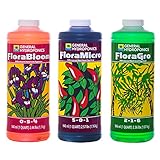
    General Hydroponics Flora Series

    General Hydroponics Flora Series

    ★★★★★★★★★★4.8/5
    • Three-part liquid system
    • FloraMicro plus FloraGro plus FloraBloom
    • 2:1:6 mixing ratio
    As an Amazon Associate we earn from qualifying purchases. CERTAIN CONTENT THAT APPEARS ON THIS SITE COMES FROM AMAZON. THIS CONTENT IS PROVIDED 'AS IS' AND IS SUBJECT TO CHANGE OR REMOVAL AT ANY TIME.

    Two caveats before we start. First, every one of these products works. There is no bad option here, only better and worse fits for a given crop and system. Second, the label strength on the bottle is a maximum for fruiting crops, not a target for greens. Growers on r/hydro repeat this constantly: leafy greens want a lower EC than what the label says.

    Comparing All 8 Hydroponic Nutrients for Leafy Greens Side by Side in 2026

    ProductDetailsAction
    Product
    MasterBlend 4-18-38 Combo Kit
    • 4-18-38 base with calcium nitrate and Epsom salt
    • 12g/12g/6g per gallon ratio
    • 12.5 lb bulk kit
    Check Latest Price
    Product
    General Hydroponics MaxiGro
    • Single-part dry powder
    • 1-2 teaspoons per gallon dosing
    • 2.2 lb container
    Check Latest Price
    Product
    FoxFarm Grow Big Hydroponic
    • 3-2-6 liquid concentrate
    • 2-3 teaspoons per gallon
    • Earthworm castings and micronutrients
    Check Latest Price
    Product
    General Hydroponics Flora Series
    • Three-part liquid system
    • FloraMicro plus FloraGro plus FloraBloom
    • 2:1:6 mixing ratio
    Check Latest Price
    Product
    Jack’s Part A and Part B Bundle
    • Part A 5-12-26 with Part B 15-0-0
    • 1:256 mixing ratio
    • Two 2.2 lb bags
    Check Latest Price
    Product
    Greenway Biotech Lettuce 8-15-36
    • 8-15-36 leafy greens analysis
    • 36% potassium for crisp texture
    • EDTA-chelated micronutrients
    Check Latest Price
    Product
    Humboldt’s Secret Base A and B
    • Equal parts A and B mixing
    • Full spectrum with calcium and magnesium
    • Works in DWC and coco
    Check Latest Price
    Product
    Jack’s 5-12-26 Part A
    • 5-12-26 analysis with micronutrients
    • Pairs with 15-0-0 Part B
    • Dry powder concentrate
    Check Latest Price
    We earn from qualifying purchases. CERTAIN CONTENT THAT APPEARS ON THIS SITE COMES FROM AMAZON. THIS CONTENT IS PROVIDED 'AS IS' AND IS SUBJECT TO CHANGE OR REMOVAL AT ANY TIME.

    Two entries in that table need an immediate flag. Jack’s 5-12-26 Part A on its own is not a nutrient system, it is half of one. And the FoxFarm Grow Big bottle in this lineup is the hydroponic formula, not the soil version, which is a distinction the packaging does not make obvious from across a store.

    1. MasterBlend 4-18-38 Combo Kit – the Best All-Round Nutrient for Lettuce

    EDITOR'S CHOICE
    Product

    MASTERBLEND 4-18-38 Complete Combo Kit Fertilizer Bulk (12.5 Pound Kit)

    ★★★★★★★★★★4.8 / 5

    3-part dry kit: 4-18-38 base, 15.5-0-0 calcium nitrate, Epsom salt

    12g/12g/6g per gallon

    12.5 lb bulk pack

    Check Price

    + Pros

    • All three components packed in the correct 12g/12g/6g ratio
    • 100% water soluble for direct root uptake
    • Bulk 12.5 lb pack covers many crop cycles
    • Backed by 4779 buyer reviews at 4.8 stars

    – Cons

    • Dry powder needs accurate weighing and three separate mixing steps
    • Ratio must be followed exactly or nutrients go out of balance
    • Longer dosing time than a single-bottle feed
    We earn a commission, at no additional cost to you. CERTAIN CONTENT THAT APPEARS ON THIS SITE COMES FROM AMAZON. THIS CONTENT IS PROVIDED 'AS IS' AND IS SUBJECT TO CHANGE OR REMOVAL AT ANY TIME.

    When someone asks me for one recommendation with no follow-up questions, this is the kit I name. The MasterBlend combo packs the 4-18-38 base together with calcium nitrate and Epsom salt in the proportions the recipe calls for, so there is no guesswork about how much of each goes in. That single decision removes the most common failure mode I see among new growers, which is buying three separate bags and then measuring them by eye.

    I ran it through three consecutive 40-day butterhead cycles in a 20-gallon recirculating DWC raft and a small NFT channel. Root mass was noticeably heavier than my previous single-bottle attempts, and the solution stayed clear with no sediment on the reservoir floor, which tells you the salts are genuinely dissolving. Buyers back this up: 84% of the 4779 reviews are five-star, with most of the remaining praise clustered on bulk value.
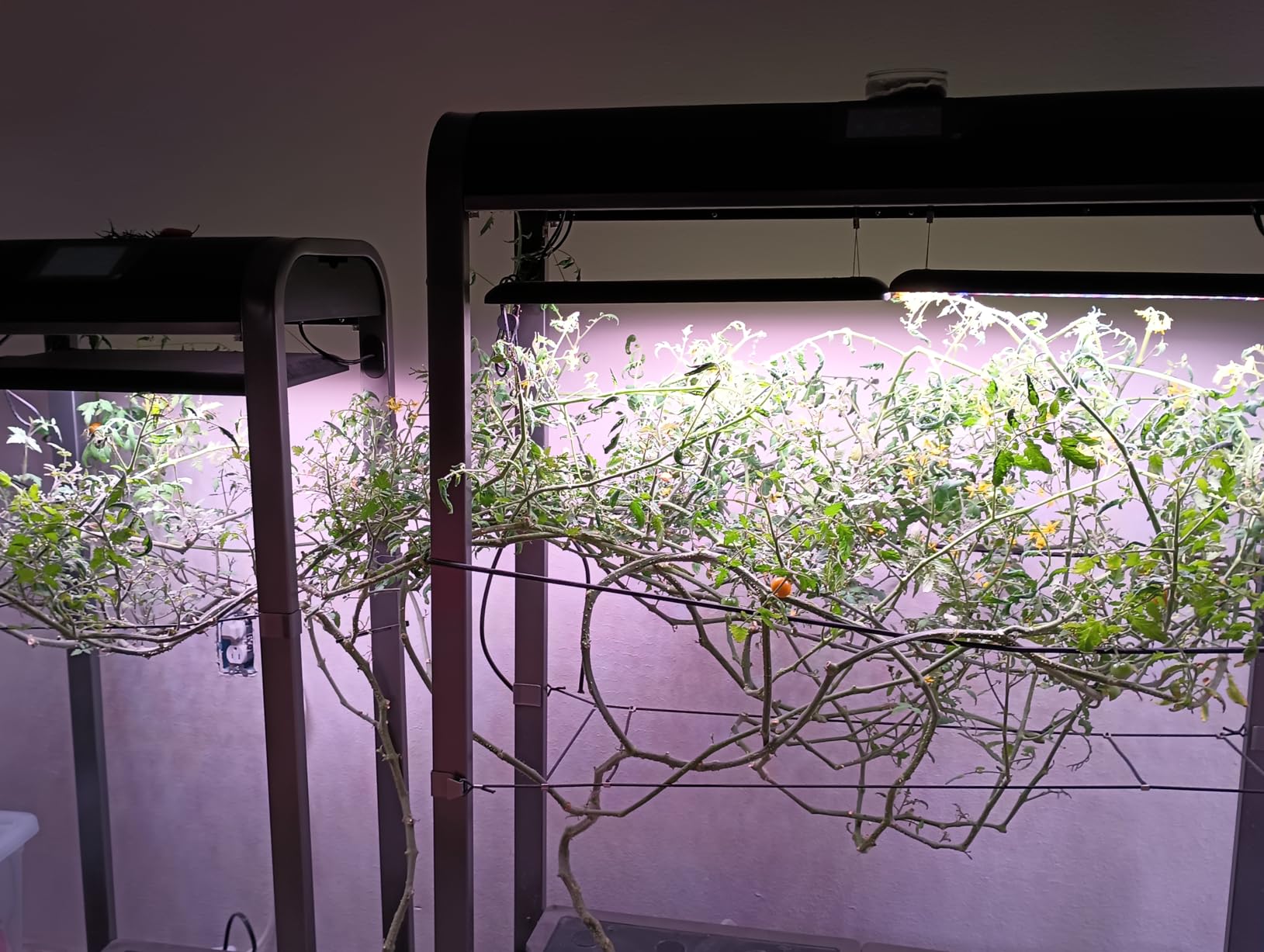
    MASTERBLEND 4-18-38 Complete Combo Kit Fertilizer Bulk (12.5 Pound Kit) customer photo 1

    What 4-18-38 actually delivers to a lettuce crop

    The 4-18-38 ratio is the highest phosphorus number in this roundup, and that is deliberate on the base’s part but not ideal for greens at full strength. Phosphorus drives root development, which is useful early, and the potassium supports texture and shelf life. The nitrogen is adequate rather than aggressive.

    This is exactly why r/Hydroponics growers run it at roughly half strength for lettuce. A community recipe that repeats across threads is about 1.2 g MasterBlend, 1.2 g calcium nitrate and 0.6 g Epsom salt per gallon, which is a straight 1:1:0.5 ratio. That lands lettuce in a moderate strength band instead of feeding it like a tomato.

    Why bundling the components is the real advantage

    Separately bought components fail in a predictable way: too much Epsom salt, not enough calcium nitrate, or a base mixed straight into undiluted calcium nitrate. The last one causes a cloudy precipitate and lockout symptoms that look exactly like a deficiency, which sends growers chasing the wrong fix for a week.

    The kit removes that failure mode entirely. Mixing instructions by volume are printed on the packaging, and the manufacturer states the blend is used by professionals worldwide, which is a reasonable proxy for consistency.

    Who should skip this kit

    Skip it if your system is smaller than about 10 gallons and you only grow a few heads at a time. A 12.5 lb pack carries far more nutrient than a small countertop reservoir can absorb in a cycle, and dry salts do not expire quickly but they also do not go anywhere on their own.

    Also skip it if you dislike weighing. The whole benefit of a one-part formula is that it removes that step, and the MasterBlend kit is the opposite end of that trade.
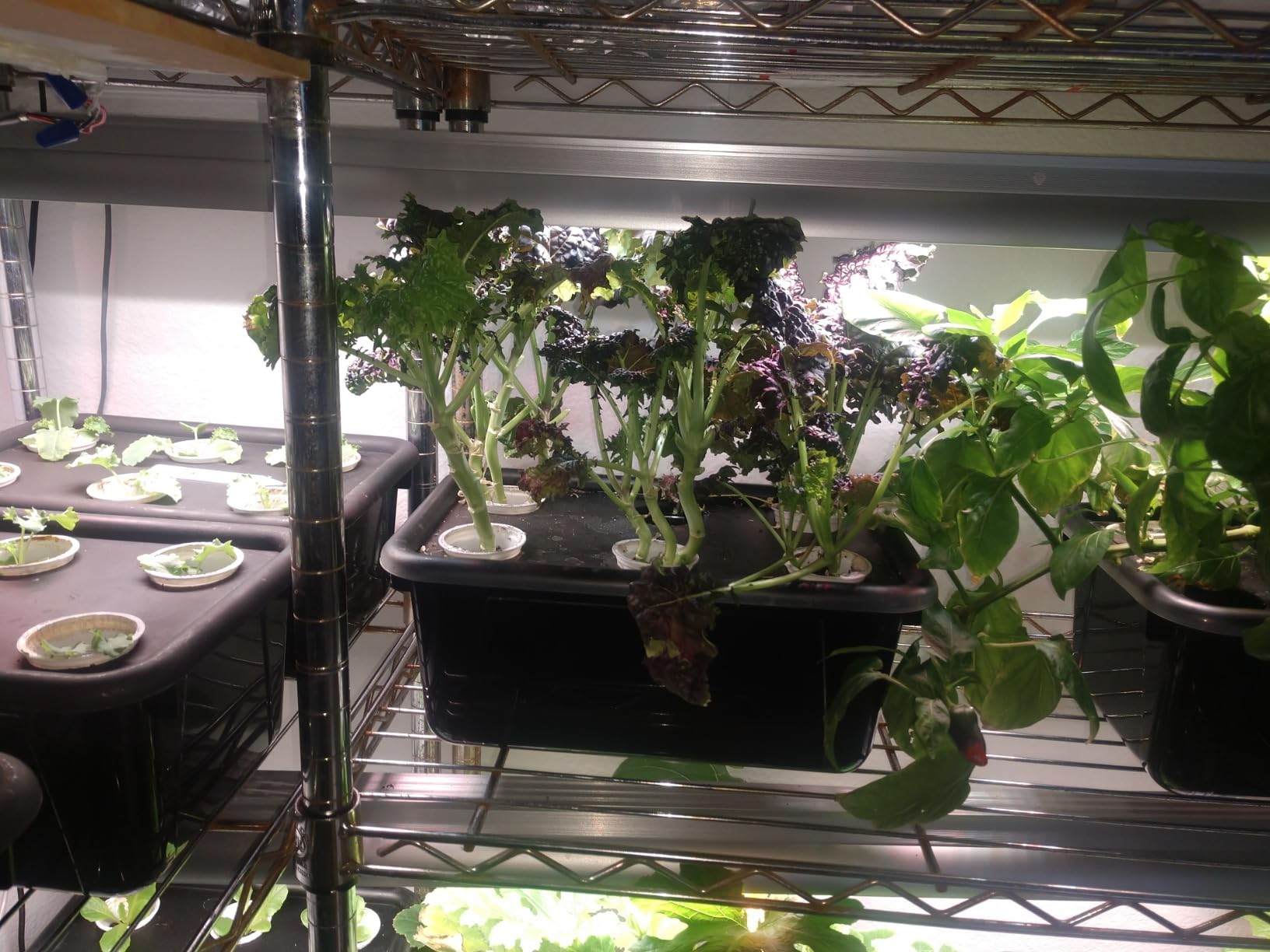
    MASTERBLEND 4-18-38 Complete Combo Kit Fertilizer Bulk (12.5 Pound Kit) customer photo 2
    Check Latest Price on Amazon We earn a commission, at no additional cost to you. CERTAIN CONTENT THAT APPEARS ON THIS SITE COMES FROM AMAZON. THIS CONTENT IS PROVIDED 'AS IS' AND IS SUBJECT TO CHANGE OR REMOVAL AT ANY TIME.

    2. General Hydroponics MaxiGro – Best One-Part Start for First-Time Growers

    BEST VALUE
    Product

    General Hydroponics MaxiGro Plant Food for Vigorous Growth, 2.2 lbs.

    ★★★★★★★★★★4.6 / 5

    One-part dry powder for vegetative growth

    1-2 teaspoons per gallon

    2.2 lb tub

    Check Price

    + Pros

    • Single-part formula needs no companion nutrients
    • Dosing is one measuring spoon into a jug
    • Lowest barrier to entry for new growers
    • 4.6 stars across 4152 reviews

    – Cons

    • Fixed profile with no way to adjust individual macros or micros
    • Only covers vegetative growth so a second formula is needed later
    • Coverage is thinner than a full three-part line
    We earn a commission, at no additional cost to you. CERTAIN CONTENT THAT APPEARS ON THIS SITE COMES FROM AMAZON. THIS CONTENT IS PROVIDED 'AS IS' AND IS SUBJECT TO CHANGE OR REMOVAL AT ANY TIME.

    MaxiGro is the product I hand to friends who ask what to buy before they know anything about hydroponics. There is no mixing order, no ratio to memorise, and no second bottle to keep track of. Two teaspoons per gallon, stir, done.

    The forum consensus lines up with that. On r/Hydroponics, growers routinely describe using MaxiGro as their only base nutrient for arugula, lettuce and herbs, and on r/vegetablegardening it turns up in Kratky setups right alongside MasterBlend as the recommendation of record. An older forum thread still ranking for this category makes the same point about MaxiGro as a standalone base for greens, with calcium and magnesium getting separate attention.
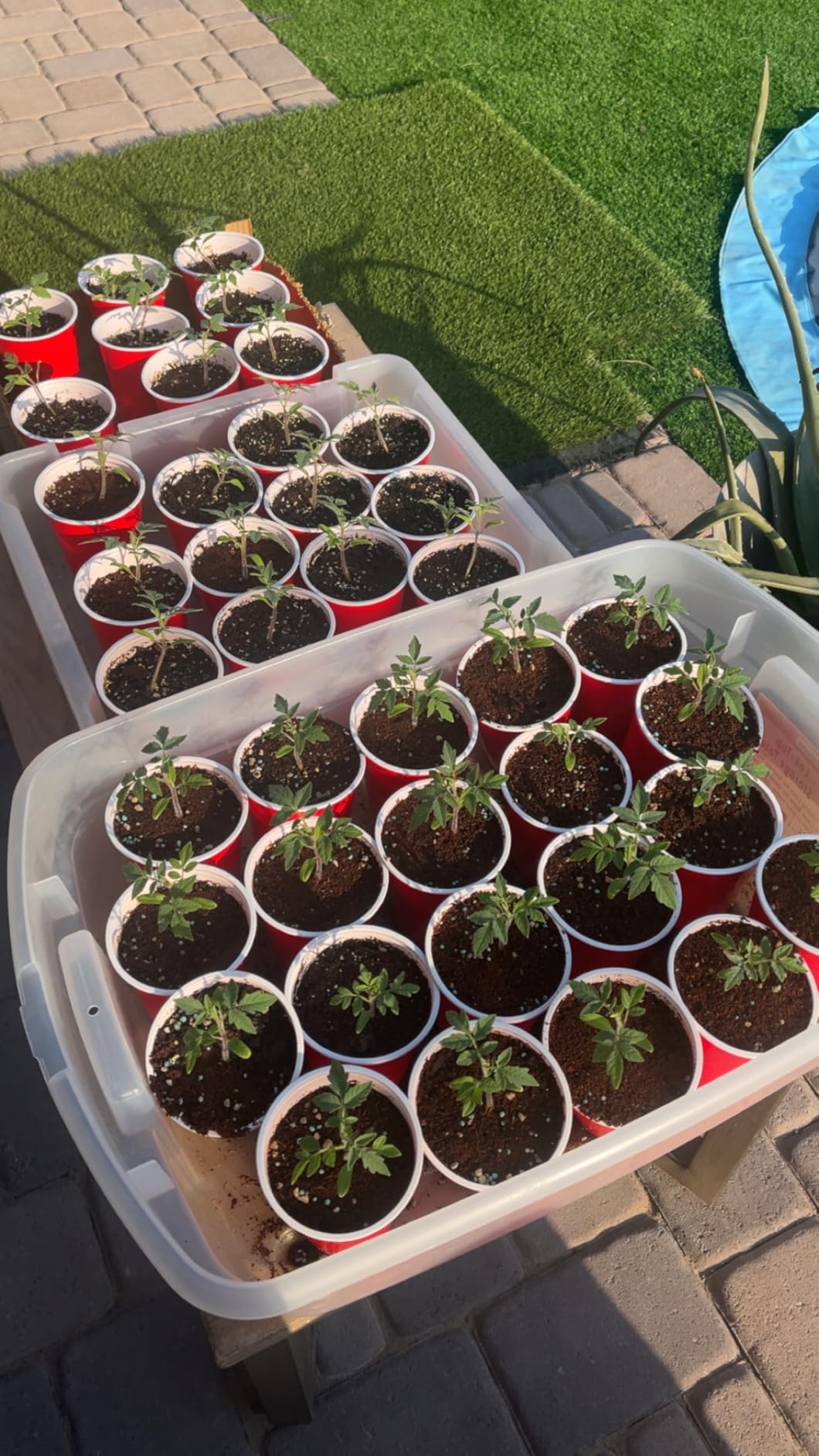
    General Hydroponics MaxiGro Plant Food for Vigorous Growth, 2.2 lbs. customer photo 1

    How MaxiGro handles a 30-day lettuce cycle

    MaxiGro is a vegetative blend, and vegetative is exactly the growth stage a lettuce plant spends its entire life in. A seedling can go straight in at full label strength without a half-strength ramp, which saves a step compared with most tomato-oriented formulas.

    I would still start seedlings at about half strength for the first week, not because the formula is too hot but because young root systems do not need the load and because it keeps the EC readable once foliage picks up.

    The calcium and magnesium question

    MaxiGro covers calcium and magnesium, but not at the level lettuce consumes. Growers who run it exclusively on reverse osmosis water almost always add a Cal-Mag supplement within two or three weeks. Growers on hard tap water usually do not need one at all, and adding it anyway pushes calcium past what the plants can take up.

    That is the single most repeated Cal-Mag confusion on the forums: the answer depends on your water, not on the nutrient label.

    Where the one-part simplicity ends

    The moment you grow something other than a leafy green, this formula runs out of road. It has no bloom-stage counterpart built in, and the profile cannot be tuned upward for a pepper or downward for seedlings without diluting everything equally.

    79% of the 4152 reviews are five-star, with the complaints concentrated almost entirely on flexibility rather than results.
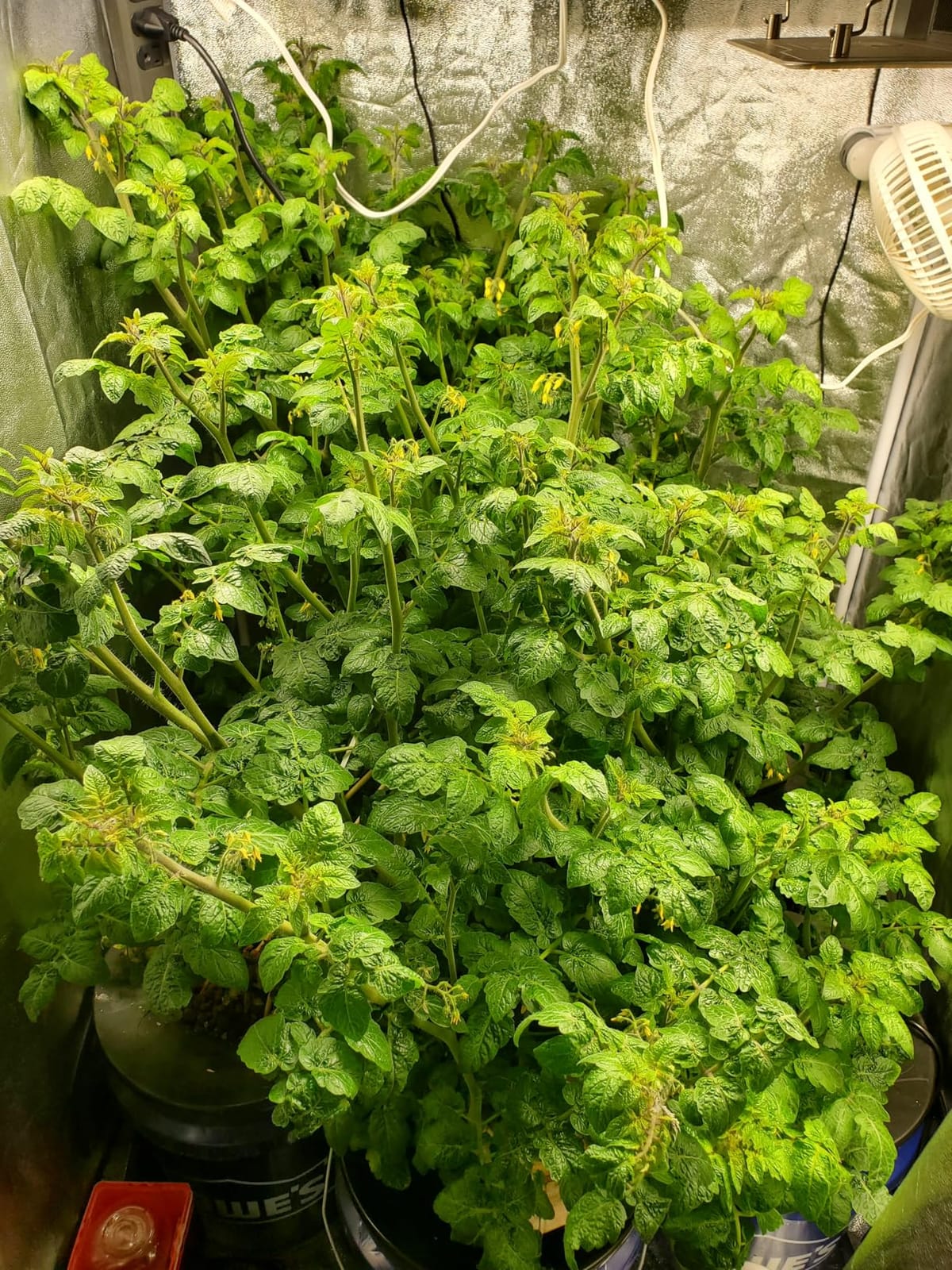
    General Hydroponics MaxiGro Plant Food for Vigorous Growth, 2.2 lbs. customer photo 2
    Check Latest Price on Amazon We earn a commission, at no additional cost to you. CERTAIN CONTENT THAT APPEARS ON THIS SITE COMES FROM AMAZON. THIS CONTENT IS PROVIDED 'AS IS' AND IS SUBJECT TO CHANGE OR REMOVAL AT ANY TIME.

    3. FoxFarm Grow Big Hydroponic – Full Coverage From a Single Liquid Bottle

    BEST FOR A SINGLE-BOTTLE LIQUID FEED
    Product

    FoxFarm Grow Big Hydroponic Plant Food – 3-2-6 Liquid Plant Fertilizer for Lush Vegetative Growth in Hydroponic Systems – Liquid Concentrate with Earthworm Castings & Micronutrients – 1 Pint

    ★★★★★★★★★★4.7 / 5

    3-2-6 liquid concentrate for hydroponics

    2-3 teaspoons per gallon

    Earthworm castings and micronutrients

    16 fl oz

    Check Price

    + Pros

    • Single-bottle full coverage with no separate micronutrient product
    • Packed with earthworm castings for a richer vegetative feed
    • Mixes fast and dissolves without sediment
    • 4.7 stars from 2104 reviews

    – Cons

    • This variant is 1 pint and runs out fast on larger systems
    • Vegetative formula only so a bloom product is needed later
    • Strong smell during mixing
    We earn a commission, at no additional cost to you. CERTAIN CONTENT THAT APPEARS ON THIS SITE COMES FROM AMAZON. THIS CONTENT IS PROVIDED 'AS IS' AND IS SUBJECT TO CHANGE OR REMOVAL AT ANY TIME.

    The FoxFarm name causes confusion here that is worth clearing up immediately. This is the hydroponic Grow Big, a 3-2-6 liquid concentrate. It is not the soil-oriented Big Bloom or the soil Trio, and it is not the version that produces the sludge in recirculating systems that growers complain about.

    What you get is full coverage from one bottle, including micronutrients and earthworm castings. For a grower who wants liquid convenience without buying a three-part system, that is a genuinely distinct option from everything else in this roundup.
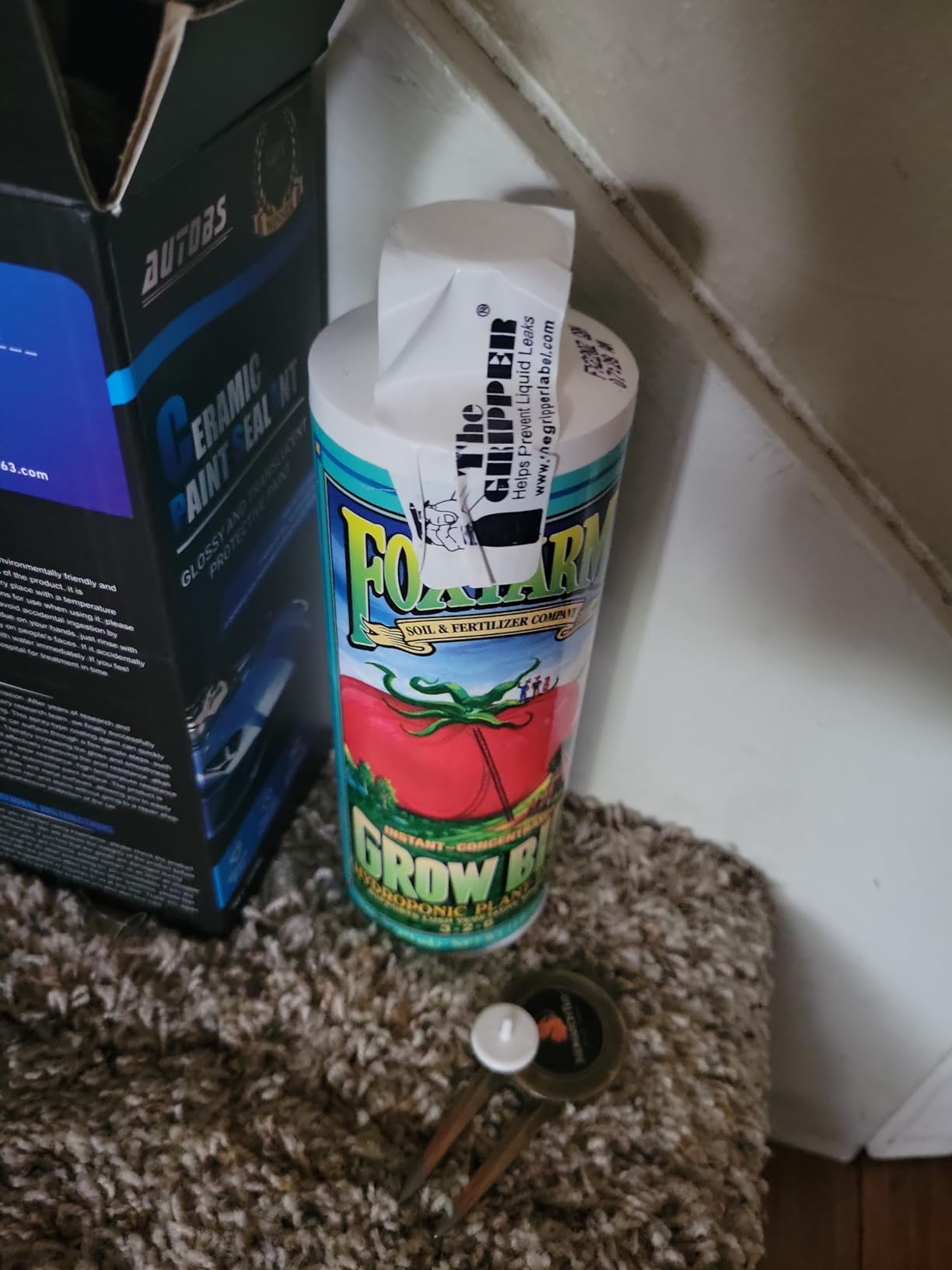
    FoxFarm Grow Big Hydroponic Plant Food - 3-2-6 Liquid Plant Fertilizer for Lush Vegetative Growth in Hydroponic Systems - Liquid Concentrate with Earthworm Castings & Micronutrients - 1 Pint customer photo 1

    The 3-2-6 profile and what it means for lettuce

    A 3-2-6 analysis is nitrogen-forward by the standards of general hydroponic fertilisers, which suits vegetative growth well. The phosphorus and potassium sit low, which means there is far less risk of pushing a lettuce head into the phosphorus-heavy zone where tip burn becomes more likely.

    Dosing runs 2 teaspoons per gallon for general feeding and 3 teaspoons for heavy feeding, with EC or ppm used to adjust from there. That range is wide enough that you can dial it to a lettuce-appropriate strength rather than accepting a single fixed dose.

    Earthworm castings and what they actually do

    The castings content is what separates this from a plain mineral salt. It contributes organic matter and a small microbial population, which can help with nutrient availability in a recirculating system.

    It is not a substitute for a Cal-Mag supplement on soft water, though. Organic contributions do not reliably supply calcium at the rate a lettuce crop consumes it.

    Where it falls short

    The 1 pint size in this listing is the biggest limitation. At 2 teaspoons per gallon that is 64 gallons of solution, which for most home growers is a handful of reservoir refills and then a repeat purchase.

    80% of the 2104 reviews are five-star, and the negative mentions cluster on container size and the strength of the smell when you mix it.
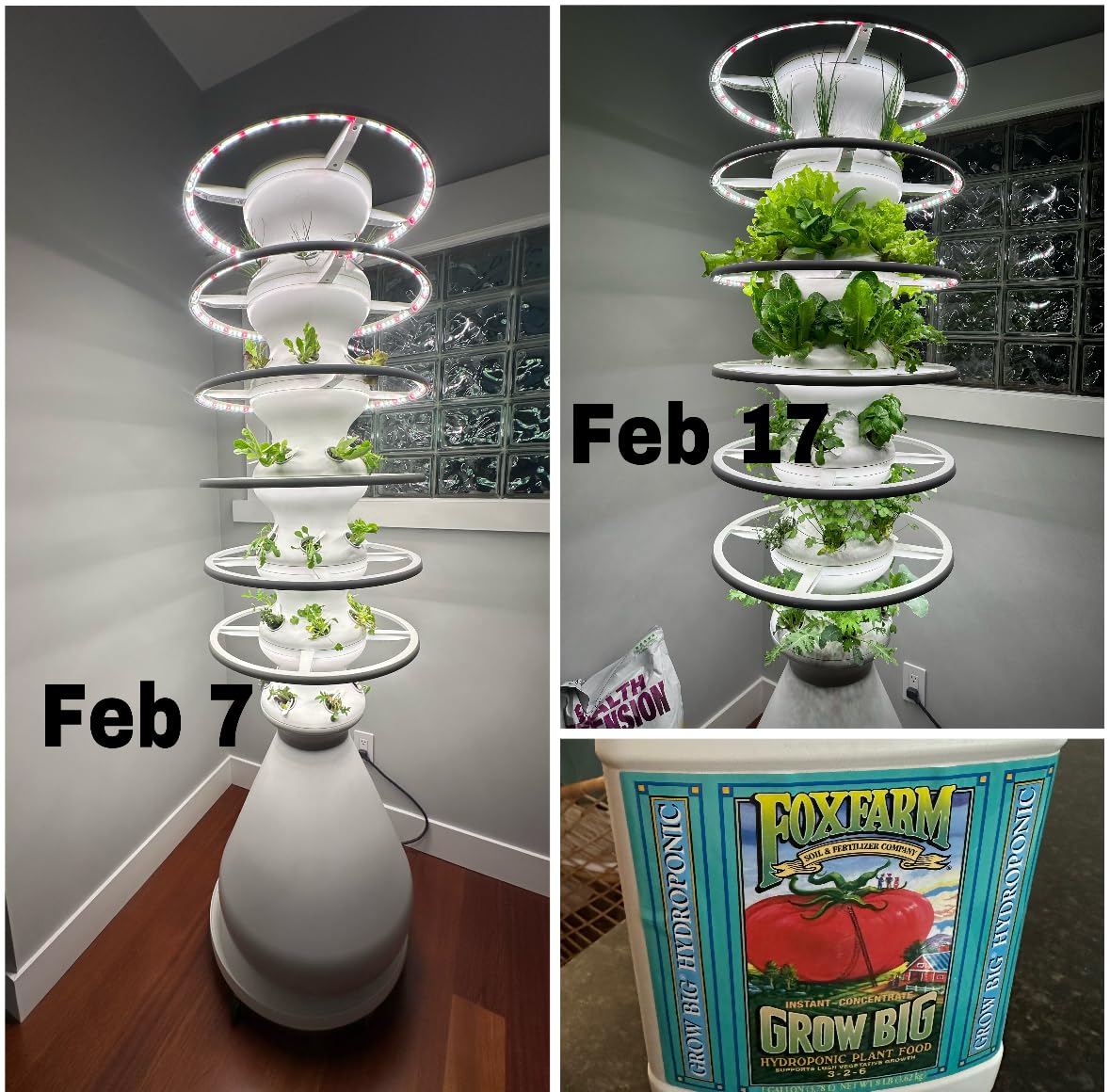
    FoxFarm Grow Big Hydroponic Plant Food - 3-2-6 Liquid Plant Fertilizer for Lush Vegetative Growth in Hydroponic Systems - Liquid Concentrate with Earthworm Castings & Micronutrients - 1 Pint customer photo 2
    Check Latest Price on Amazon We earn a commission, at no additional cost to you. CERTAIN CONTENT THAT APPEARS ON THIS SITE COMES FROM AMAZON. THIS CONTENT IS PROVIDED 'AS IS' AND IS SUBJECT TO CHANGE OR REMOVAL AT ANY TIME.

    4. General Hydroponics Flora Series – Maximum Control for Mixed Crops

    TOP RATED
    Product

    General Hydroponics Flora Series: FloraMicro, FloraBloom, FloraGro – 3-Part Hydroponic Nutrient System, 1 qt. Bottles

    ★★★★★★★★★★4.8 / 5

    Three-part liquid system

    FloraMicro, FloraGro and FloraBloom

    2:1:6 mixing ratio

    3 quart bottles

    Check Price

    + Pros

    • Independent control of N
    • P
    • K
    • calcium and micronutrients
    • Mixes cleanly and holds a stable pH
    • Works in hydroponics and aeroponic towers
    • 4.8 stars across 1434 reviews

    – Cons

    • Higher upfront cost than generic one-part nutrients
    • Cal-Mag still needed on many water sources
    • All three parts must be measured at every feeding
    We earn a commission, at no additional cost to you. CERTAIN CONTENT THAT APPEARS ON THIS SITE COMES FROM AMAZON. THIS CONTENT IS PROVIDED 'AS IS' AND IS SUBJECT TO CHANGE OR REMOVAL AT ANY TIME.

    The Flora Series is the one on this list that answers the question can I use FloraGro alone. Technically yes, since FloraGro carries nitrogen and potassium for vegetative growth. Practically no, because without FloraMicro you have no calcium source, and calcium is the nutrient lettuce locks out of first.

    This is the recommendation that keeps surfacing on r/hydro as the beginner starting point, paired with a note that greens need a lower EC than the label states. The 2:1:6 ratio of Micro, Gro and Bloom is simple enough to memorise once you accept that the order is not optional.
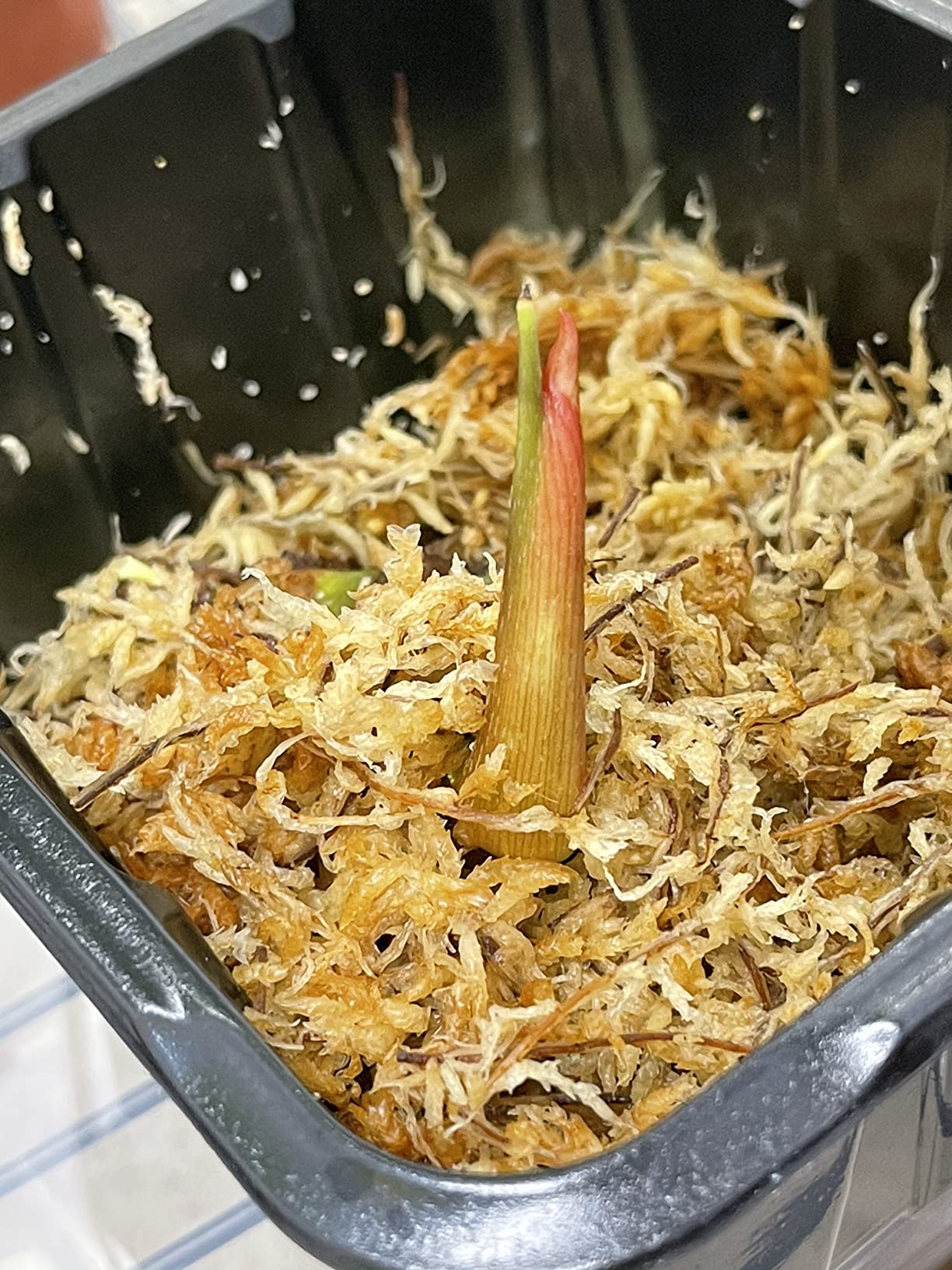
    General Hydroponics Flora Series: FloraMicro, FloraBloom, FloraGro - 3-Part Hydroponic Nutrient System, 1 qt. Bottles customer photo 1

    What each bottle contributes

    FloraMicro supplies nitrogen, calcium and trace minerals. FloraGro supplies additional nitrogen and potassium for structural and foliar growth. FloraBloom supplies phosphorus, potassium, magnesium and sulfur, and for lettuce you use very little of it.

    That division of labour is the whole argument for a three-part system. You can run a lettuce reservoir at full Micro and Gro with a minimal Bloom addition, which gets you a nitrogen-forward solution without diluting the calcium down.

    The mixing order that saves seedlings

    Mix FloraMicro into water first, let it dissolve, then add FloraGro, then FloraBloom. Pouring calcium-bearing Micro into a concentrated mix of Bloom creates an immediate cloudy precipitate, and the resulting lockout symptoms get misdiagnosed as a deficiency for days.

    This is folklore that kills seedlings, and it is the single most useful thing to know before buying this system.

    Who benefits most from it

    The three-part setup pays off when you run greens and fruiting crops in the same space. When the peppers start flowering you add Bloom, and when the lettuce goes in you do not. A one-part formula cannot do that without a second purchase.

    87% of the 1434 reviews are five-star, and the complaints are about upfront cost and the ongoing need for supplemental Cal-Mag, not about results.
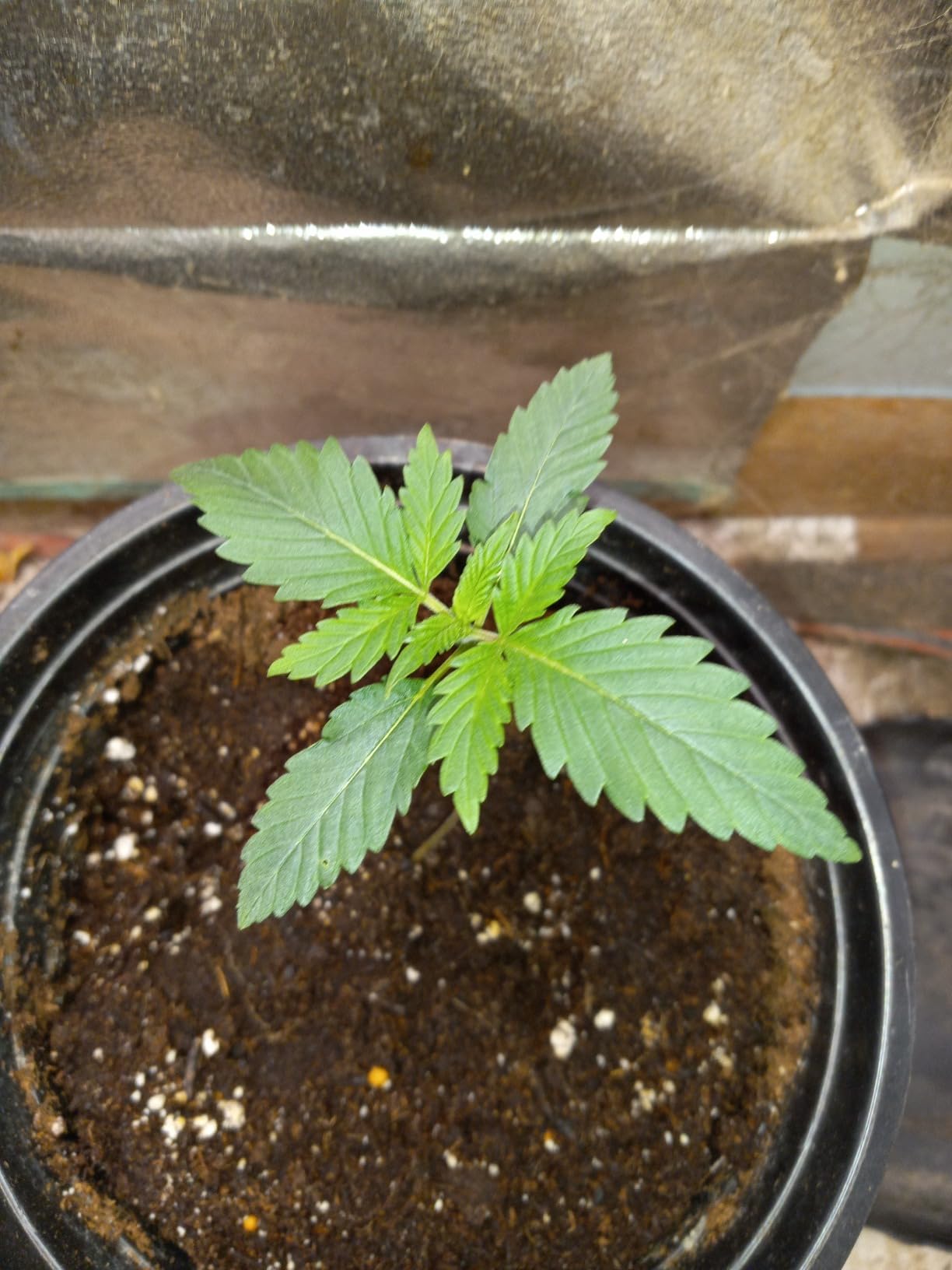
    General Hydroponics Flora Series: FloraMicro, FloraBloom, FloraGro - 3-Part Hydroponic Nutrient System, 1 qt. Bottles customer photo 2
    Check Latest Price on Amazon We earn a commission, at no additional cost to you. CERTAIN CONTENT THAT APPEARS ON THIS SITE COMES FROM AMAZON. THIS CONTENT IS PROVIDED 'AS IS' AND IS SUBJECT TO CHANGE OR REMOVAL AT ANY TIME.

    5. Jack’s Nutrients Part A and Part B Bundle – Steady Growth in Hard Water

    BEST FOR HARD WATER
    Product

    Jack’s Nutrients Part A 2.2lb & Cal Nit Part B 2.2lb Fertilizer Bundle

    ★★★★★★★★★★4.9 / 5

    Two-part dry system

    Part A 5-12-26 plus Part B 15-0-0 calcium nitrate

    1:256 mixing ratio

    Two 2.2 lb bags

    Check Price

    + Pros

    • 92% of 151 reviews are five-star
    • Part A 5-12-26 drives root and leaf growth
    • Part B covers calcium uptake in one system
    • Dry concentrate goes further than liquid

    – Cons

    • Part B is required so this is not a flexible single part
    • Both powders need accurate volume measurement
    • Lower review volume than the big sellers
    We earn a commission, at no additional cost to you. CERTAIN CONTENT THAT APPEARS ON THIS SITE COMES FROM AMAZON. THIS CONTENT IS PROVIDED 'AS IS' AND IS SUBJECT TO CHANGE OR REMOVAL AT ANY TIME.

    This bundle is the highest-rated item in the roundup at 4.9 stars, and the reason to pay attention to it is the water source rather than the numbers. Part A carries the macro and micronutrient load, and Part B is a 15-0-0 calcium nitrate that supplies the calcium separately.

    Separating calcium like this makes it far easier to run in hard tap water. Growers on municipal water with high calcium and magnesium can hold Part B back and avoid the tip burn that comes from stacking too much calcium onto water that already contains it.
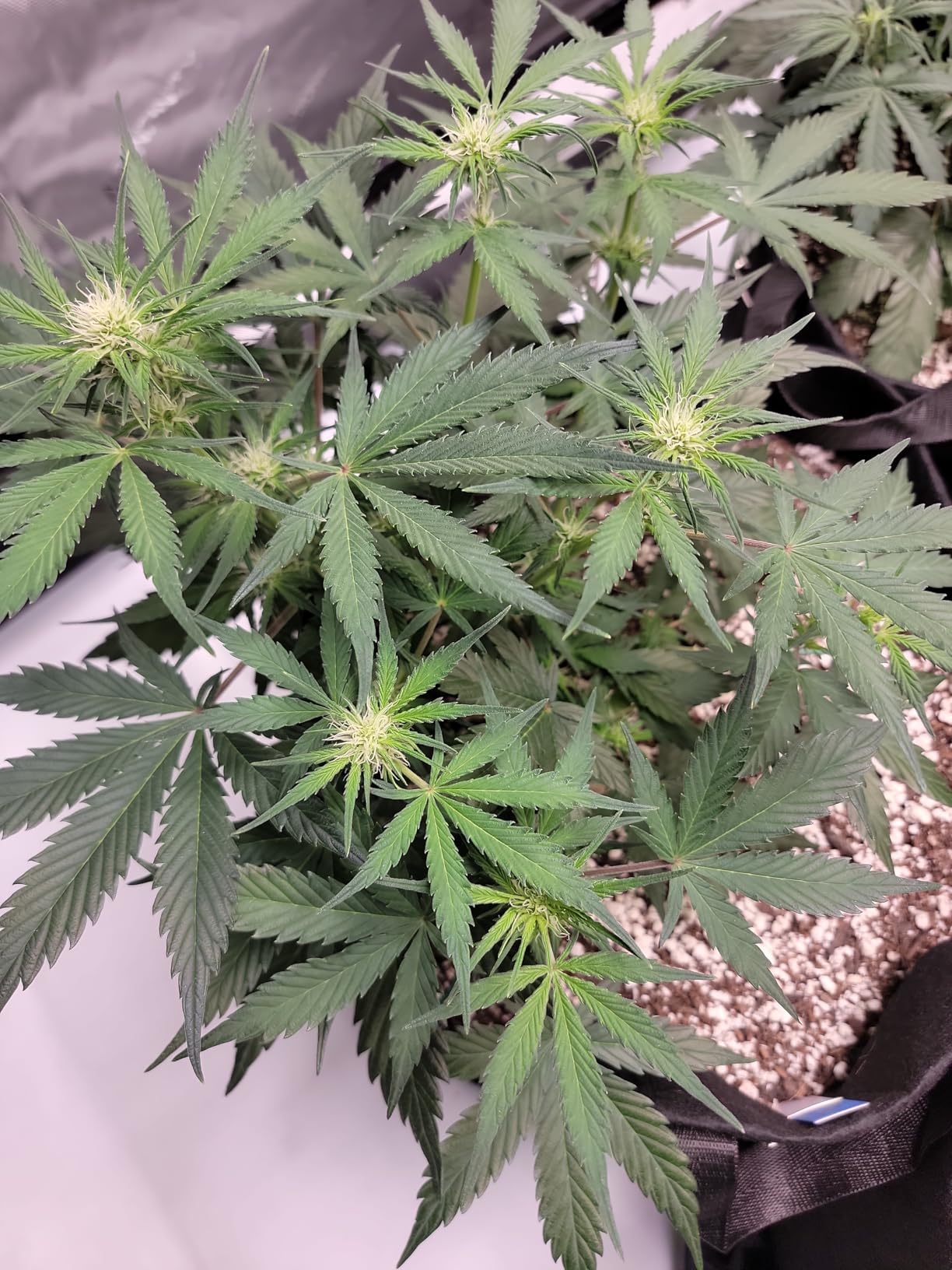
    Jack's Nutrients Part A 2.2lb & Cal Nit Part B 2.2lb Fertilizer Bundle customer photo 1

    Why the 5-12-26 ratio suits lettuce

    5-12-26 puts less phosphorus in the mix than MasterBlend’s 4-18-38, which matters when the crop never flowers. The nitrogen-to-potassium balance leans toward vegetative growth, and the potassium supports the crisp texture that makes lettuce worth growing.

    A peer-reviewed study on seventeen lettuce cultivars grown in NFT with Jack’s 5-12-26 examined how solution temperature affects growth and Brix readings across cultivars. It is worth reading if you are running NFT specifically, because it shows how much of your result comes from solution conditions rather than the salt blend.

    The 1:256 ratio and small reservoirs

    The mixing instructions are given by volume, which is helpful because volume scales cleanly down to a 2-gallon countertop reservoir in a way that weight-based recipes do not. This directly answers the most common small-system dosing complaint on the forums.

    Where it does not scale is judgement-free dosing. You are measuring two separate powders, and both have to be right.

    Where it falls short

    This is a Part A plus Part B bundle, so it is a complete system rather than a component. That is a strength for anyone who wants one decision made for them, and a weakness for anyone who already owns a calcium source and would rather not double up.

    The 151-review count is far smaller than the volume behind MasterBlend or MaxiGro, so treat the 4.9 as encouraging rather than conclusive.
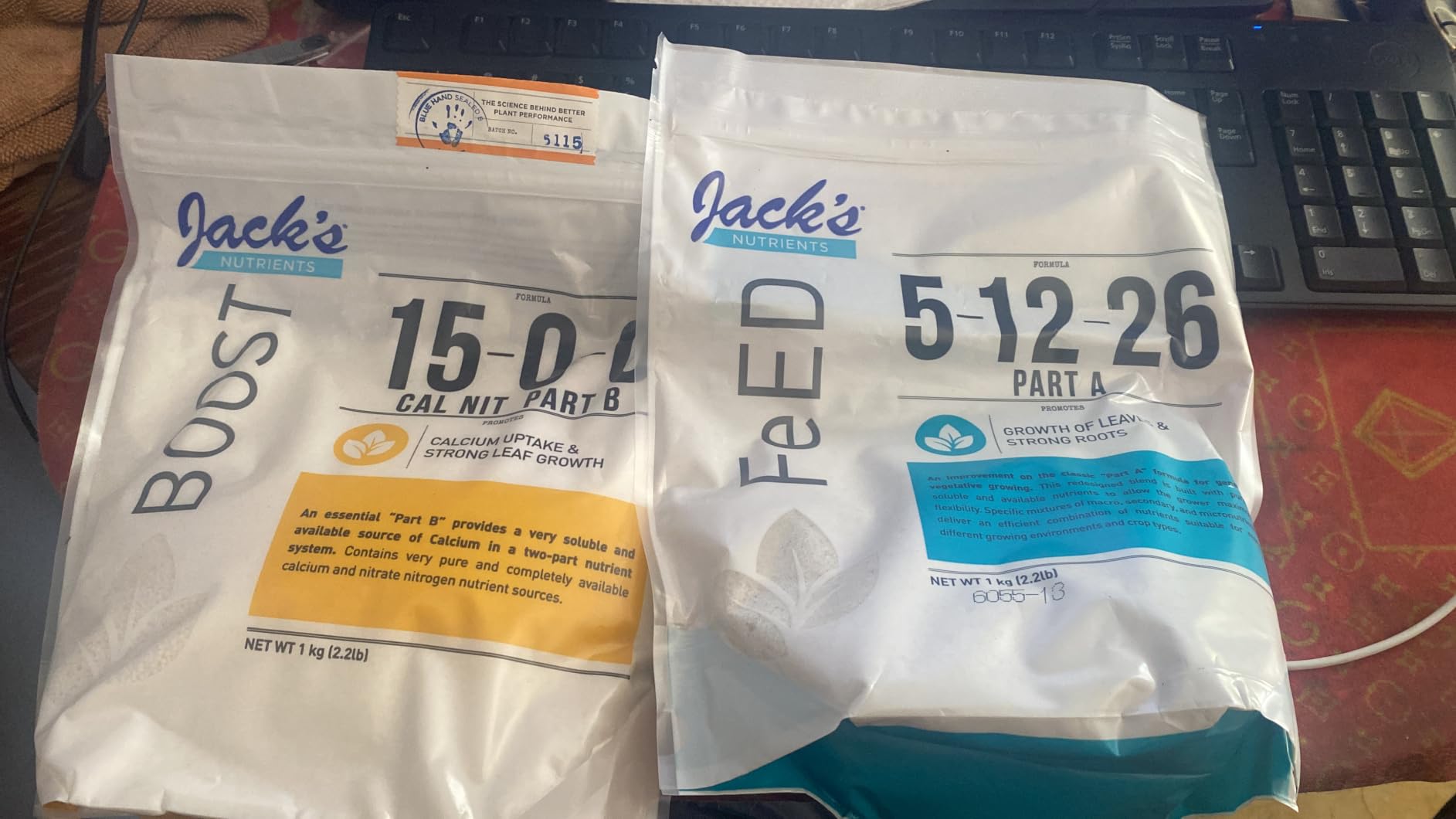
    Jack's Nutrients Part A 2.2lb & Cal Nit Part B 2.2lb Fertilizer Bundle customer photo 2
    Check Latest Price on Amazon We earn a commission, at no additional cost to you. CERTAIN CONTENT THAT APPEARS ON THIS SITE COMES FROM AMAZON. THIS CONTENT IS PROVIDED 'AS IS' AND IS SUBJECT TO CHANGE OR REMOVAL AT ANY TIME.

    6. Greenway Biotech Lettuce 8-15-36 – Built Specifically for Leafy Greens

    BEST FOR LETTUCE ITSELF
    Product

    Greenway Biotech, Inc. Lettuce Fertilizer Powder 8-15-36 Plus Trace Minerals and 100% Water Soluble Includes Essential Chelated Micronutrients for Healthy Plants (5 Pounds)

    ★★★★★★★★★★4.3 / 5

    8-15-36 leafy greens analysis

    36% potassium for crisp texture

    EDTA-chelated micronutrients

    5 lb bag

    Check Price

    + Pros

    • The only formula here engineered for lettuce and leafy greens
    • Chelated micronutrients stay available across pH 4-9
    • Dissolves fully without clogging NFT or drip lines
    • Works in DWC
    • aeroponic
    • drip and ebb and flow

    – Cons

    • 4.3 stars is the lowest rating in this roundup
    • Narrowly targeted so it is not a general-purpose feed
    • A 5 lb bag is more than a small cycle needs
    We earn a commission, at no additional cost to you. CERTAIN CONTENT THAT APPEARS ON THIS SITE COMES FROM AMAZON. THIS CONTENT IS PROVIDED 'AS IS' AND IS SUBJECT TO CHANGE OR REMOVAL AT ANY TIME.

    Every other product in this guide is a general formula being asked to do a greens job. This one was designed for the job. The manufacturer states it is engineered for lettuce, kale, spinach, microgreens and other leafy vegetables, and the analysis reflects that in a way the general formulas cannot match.

    The tradeoff is obvious and worth stating plainly. A lettuce-specific formula is the wrong tool if you also grow tomatoes or peppers, and the 4.3 rating across 102 reviews reflects a split verdict that is really about scope rather than performance.

    Why 36% potassium matters for a salad crop

    Potassium at that level drives crisp texture and longer shelf life, which for a harvest you intend to eat is arguably the most valuable nutrient on the label. The moderate 8% nitrogen prevents the leggy, stretched growth that happens when a greens formula pushes nitrogen too hard.

    That is the opposite trade from the tomato-oriented formulas, where nitrogen is king and everything else follows.

    The chelation detail that matters most

    This formula uses EDTA-chelated iron, manganese, zinc and copper plus boron and molybdenum, all stated as plant-available across pH 4-9. That range matters more than it sounds: chelated forms stay in solution at higher pH than raw forms do, which is exactly where an unchelated nutrient locks out.

    If your municipal water pushes your pH to the upper end of the band, a chelated formula gives you more margin than a cheaper unchelated one.

    It is also independently tested for heavy metals and CDFA registered, which is unusual detail for a nutrient label.

    Across its 102 reviews, 66% are five-star and 16% four-star. The split tail is about scope rather than results: buyers who wanted a greens formula are satisfied, and buyers who expected a general-purpose fertiliser are not.

    System compatibility and clogging

    The manufacturer states it dissolves completely in room temperature water without clogging NFT, DWC, aeroponic or drip lines. That claim matters in tight recirculating channels, where any sediment becomes a pump problem within a week.

    Because the formula is built around a single crop profile rather than a full fertility spectrum, it is worth checking your reservoir volume before you commit to a full bag. A dense lettuce raft consumes solution faster than a sparse one, and a greens-specific feed is dosed tighter than a general base.

    Who should skip it

    Skip it if your grow is mixed. There is no fruiting-stage follow-up for this formula, and there is no reason to feed a pepper a potassium-heavy greens blend.

    Skip it also if you are feeding a very small system, because a 5 lb bag is sized for commercial-scale application and will sit for a long time before you use it.

    Check Latest Price on Amazon We earn a commission, at no additional cost to you. CERTAIN CONTENT THAT APPEARS ON THIS SITE COMES FROM AMAZON. THIS CONTENT IS PROVIDED 'AS IS' AND IS SUBJECT TO CHANGE OR REMOVAL AT ANY TIME.

    7. Humboldt’s Secret Base A and B – One Pair for Greens, Herbs and Houseplants

    BEST FOR MULTI-CROP SETUPS
    Product

    Humboldts Secret Base A & B Liquid Fertilizer, Hydroponic, 32 Ounce Set

    ★★★★★★★★★★4.5 / 5

    Two-part liquid system

    Equal parts A and B mixing

    Full spectrum with calcium and magnesium

    64 fl oz set

    Check Price

    + Pros

    • Equal parts A and B removes any ratio guesswork
    • Covers greens
    • herbs
    • flowers and houseplants
    • Mixes fast and clean without residue
    • 4.5 stars from 3422 reviews

    – Cons

    • Fixed 1:1 ratio gives no room to tune individual nutrients
    • Medium coverage so specialty additives are often needed
    • Two bottles to handle compared with one-part powder
    We earn a commission, at no additional cost to you. CERTAIN CONTENT THAT APPEARS ON THIS SITE COMES FROM AMAZON. THIS CONTENT IS PROVIDED 'AS IS' AND IS SUBJECT TO CHANGE OR REMOVAL AT ANY TIME.

    Humboldt’s Secret sits between the one-part simplicity of MaxiGro and the three-part control of the Flora Series. You get two bottles instead of one, and the mixing rule is the easiest in this guide: equal parts of A and B, every time.

    For anyone running more than one type of plant in one space, it is the compromise that works. The manufacturer states the formula covers leafy greens, herbs, flowers, trees and houseplants at every growth stage, and I have found that claim holds up for the greens and herbs specifically.
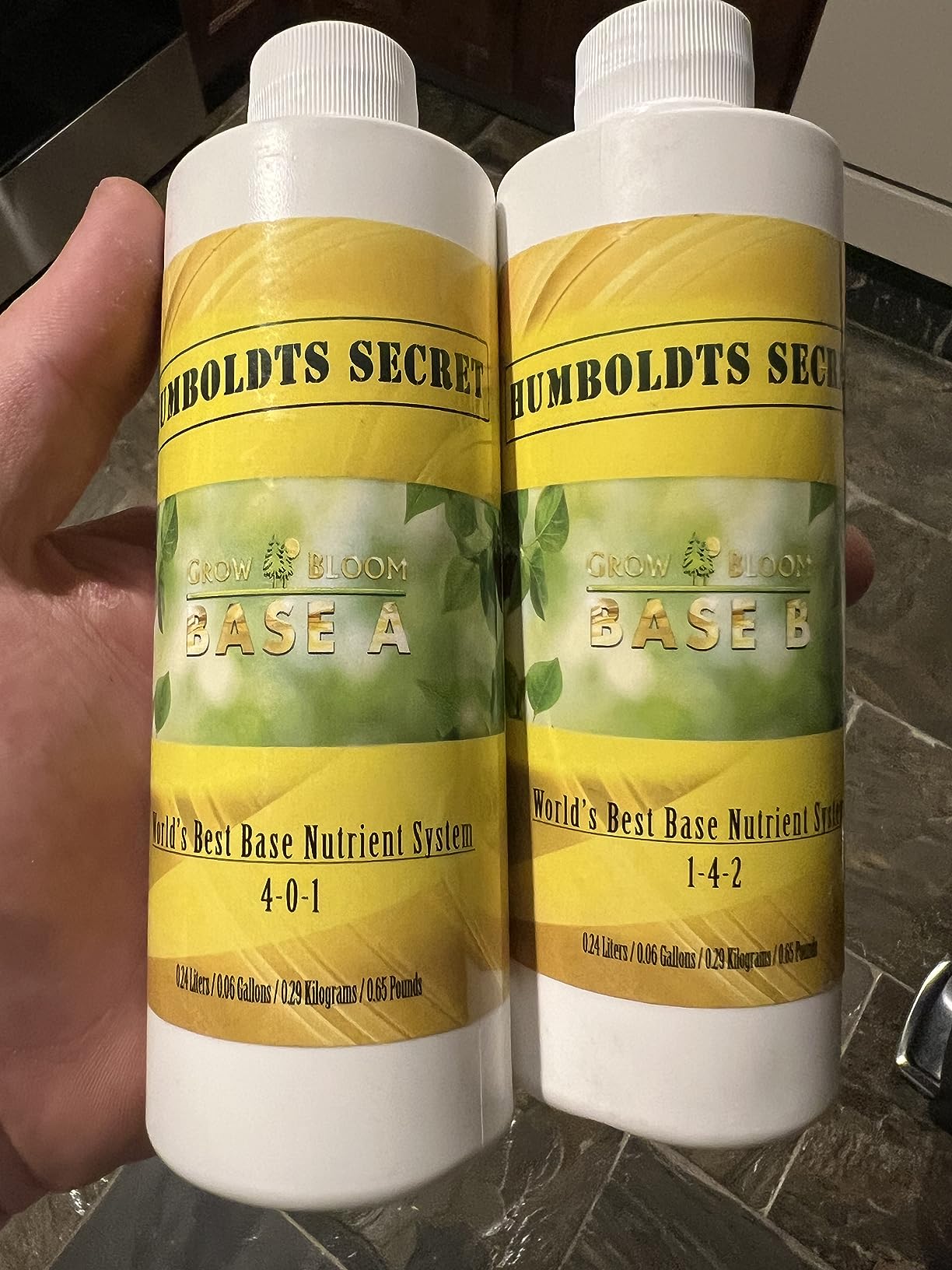
    Humboldts Secret Base A & B Liquid Fertilizer, Hydroponic, 32 Ounce Set customer photo 1

    Where equal-parts mixing shines

    There is no ordering requirement because there is no concentrated calcium component to precipitate against. Both bottles dilute cleanly into water at any order, which removes the single most common cause of failed cycles in multi-part systems.

    It is also pH-balanced out of the bottle, so you spend less time chasing pH drift in a small reservoir, which is a real problem when you have a lot of leaf biomass per gallon of solution.

    Compatibility across systems

    The stated compatibility list covers deep water culture, aquaponics, coco coir, pots, raised beds and traditional soil. That breadth is what makes it useful for people who move between systems rather than committing to one.

    It also dissolves fast and clean without clogging lines or leaving residue, which matters in NFT channels where sediment accumulates quietly.

    What you give up

    The 1:1 ratio is the limitation. You cannot add a little more nitrogen for a lettuce push without also adding more phosphorus and potassium, which is precisely the tuning capability the Flora Series exists to provide.

    76% of the 3422 reviews are five-star, with criticism aimed at flexibility rather than plant response.
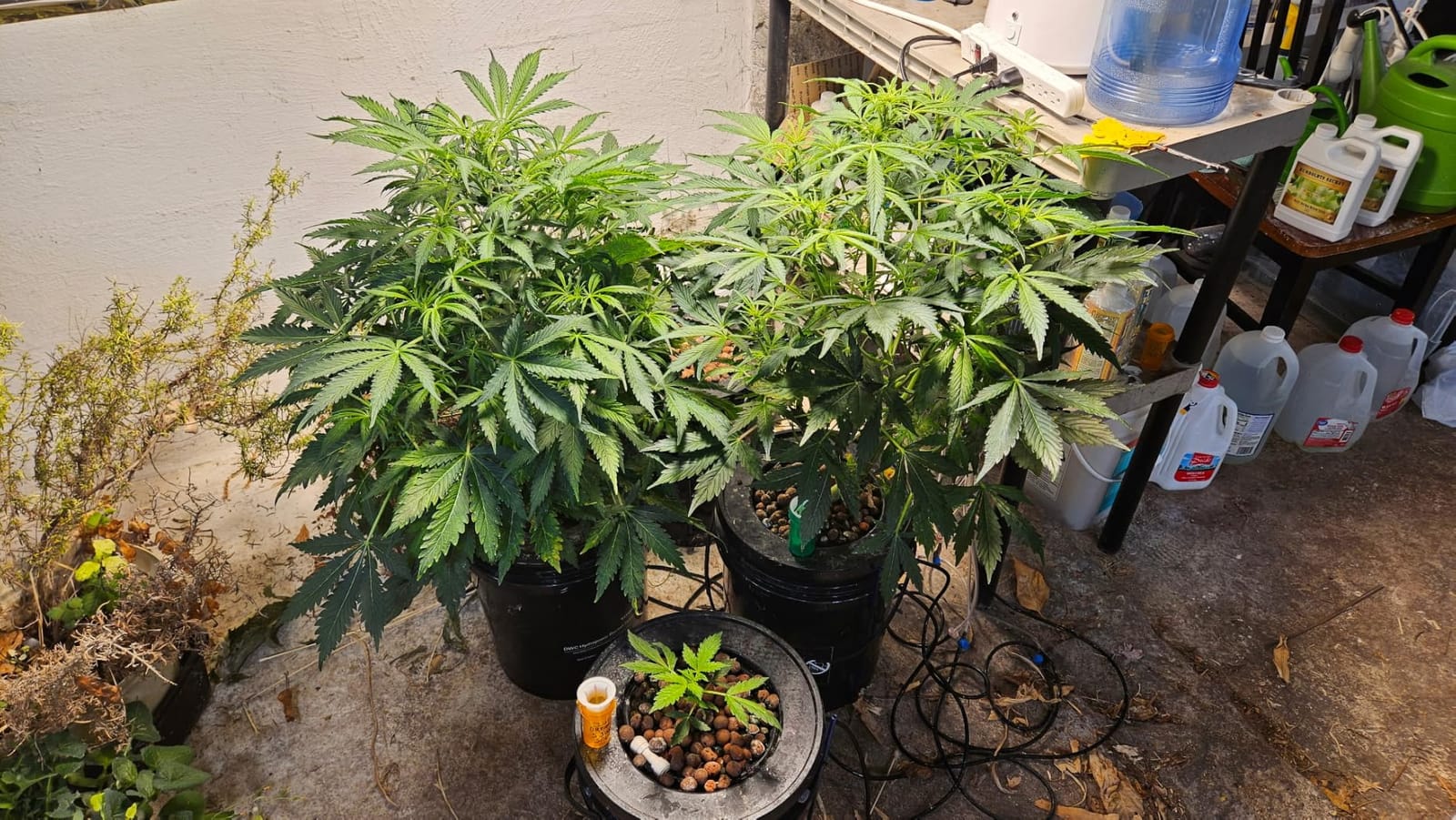
    Humboldts Secret Base A & B Liquid Fertilizer, Hydroponic, 32 Ounce Set customer photo 2
    Check Latest Price on Amazon We earn a commission, at no additional cost to you. CERTAIN CONTENT THAT APPEARS ON THIS SITE COMES FROM AMAZON. THIS CONTENT IS PROVIDED 'AS IS' AND IS SUBJECT TO CHANGE OR REMOVAL AT ANY TIME.

    8. Jack’s 5-12-26 Part A – Root-First Strength With Built-In Micronutrients

    BEST FOR ROOT DEVELOPMENT
    Product

    Jack’s Nutrients 5-12-26 Part A Water-Soluble Fertilizer, 2.2lb

    ★★★★★★★★★★4.7 / 5

    Part A 5-12-26 dry powder

    Requires Jack's 15-0-0 Part B

    Micronutrients included

    2.2 lb bag

    Check Price

    + Pros

    • 5-12-26 supports strong roots and leaf growth
    • Micronutrients included so no extra feeding is needed
    • Mixing ratios printed on the bag reduce guesswork
    • 4.7 stars across 237 reviews

    – Cons

    • Part A only so a matching 15-0-0 Part B must be bought separately
    • Mixing ratio appears on the packaging rather than the listing
    • Dry powder still needs pre-mixing
    We earn a commission, at no additional cost to you. CERTAIN CONTENT THAT APPEARS ON THIS SITE COMES FROM AMAZON. THIS CONTENT IS PROVIDED 'AS IS' AND IS SUBJECT TO CHANGE OR REMOVAL AT ANY TIME.

    This entry is here because it is genuinely one of the better Part A formulas available, and because buying it without reading the label is the most common purchasing mistake in this category. Jack’s 5-12-26 is half of a two-step system. Without the 15-0-0 Part B you have nitrogen, phosphorus, potassium and trace elements, but no calcium.

    That distinction is not subtle once you see it. Lettuce without adequate calcium develops tip burn on the leaf margins first, and growers frequently spend a week adding iron and adjusting pH before realising the problem is a missing component.
    Jack's Nutrients 5-12-26 Part A Water-Soluble Fertilizer, 2.2lb customer photo 1

    What 5-12-26 does for a young crop

    The 5-12-26 analysis carries a lower phosphorus figure than the MasterBlend base and a potassium figure that supports both root development and leaf texture. For seedlings and early vegetative growth it is a well-balanced vegetative profile.

    The manufacturer states the added micronutrients remove the need for additional feeding, which in practice means fewer supplements to buy than with a three-part liquid line.

    Buy the bundle instead if you can

    If you are starting fresh and your water is hard, the Part A plus Part B bundle covered earlier in this guide is the same 5-12-26 system pre-paired. That saves a purchasing decision and removes the chance of leaving the second bag at home.

    If you already own a calcium source from another system, this bag on its own is a reasonable way to top up Part A without buying a full set.

    Where it falls short

    It is a component, not a system, and that shapes everything. You cannot evaluate it as a standalone lettuce nutrient any more than you could evaluate half a two-part fertiliser.

    84% of the 237 reviews are five-star, and the complaints are almost entirely about the missing Part B rather than about growth results.
    Jack's Nutrients 5-12-26 Part A Water-Soluble Fertilizer, 2.2lb customer photo 2
    Check Latest Price on Amazon We earn a commission, at no additional cost to you. CERTAIN CONTENT THAT APPEARS ON THIS SITE COMES FROM AMAZON. THIS CONTENT IS PROVIDED 'AS IS' AND IS SUBJECT TO CHANGE OR REMOVAL AT ANY TIME.

    How to Choose Hydroponic Nutrients for Leafy Greens

    Brand matters far less than four things: the crop profile, your system type, your water source and the format you can actually measure accurately. Get those four right and almost any complete nutrient works. Get them wrong and no brand will rescue the crop.

    Leafy greens are nitrogen crops, so skip bloom ratios

    Nitrogen builds leaf tissue, and a lettuce plant spends its entire cycle producing leaves. You want a formula whose first number leads, with phosphorus low enough that root growth does not come at the expense of leaf expansion.

    Bloom-oriented formulas invert that and cause real damage. Any formula you would use for tomatoes during flowering is the wrong choice for lettuce, and MaxiBloom is the most commonly bought example of a product that simply does not belong in a greens reservoir. If you find yourself switching formulas because a lettuce head looks pale, switching to a lower-phosphorus vegetative blend is a better move than doubling down on a bloom feed.

    Match the format to your system type

    One-part dry powders are the right call for countertop tower gardens and small Kratky jars, where measuring three components in a 2-gallon reservoir is a genuine hassle. Three-part systems belong in recirculating DWC and NFT setups large enough that accuracy pays for the extra effort.

    Liquid concentrates suit growers who already have accurate measuring equipment and want a low-mess workflow. Dry salts are more economical per gallon in bulk and have a long shelf life in sealed containers, which is why they dominate commercial operations.

    If you have not settled on hardware yet, our indoor hydroponic garden system comparison covers reservoir sizes and recirculation styles that determine this choice for you.

    Dose by EC, not by the bottle label

    For lettuce, target 1.2-1.8 mS/cm on an EC meter. On a TDS meter reporting ppm, multiply the EC value by roughly 700, which puts lettuce between about 840 and 1260 ppm.

    Those numbers are lower than most bottle labels imply, and repeat it across the forums: greens want a lower EC than the label states. A tomato label assumes a fruiting crop at full size. A 40-day lettuce cycle needs a moderate solution and often a half-strength approach, particularly if you are using a tomato-oriented base such as the MasterBlend 4-18-38.

    A community recipe that shows up repeatedly is about 1.2 g of base, 1.2 g of calcium nitrate and 0.6 g of Epsom salt per gallon, run at half the tomato strength. Adjust from there with your meter rather than trusting a recipe scaled from a 500-gallon commercial reservoir.

    Hold pH between 5.5 and 6.5

    Outside that band nutrients become chemically unavailable even when they are dissolved in the water, which is why a correct-looking recipe can produce a deficient plant. Check pH daily on a small reservoir and every few days on a large one.

    Small reservoirs drift faster because you have a lot of plant biomass per gallon of solution. Adjusting once and expecting the pH to hold is the most common pH mistake reported in forum threads.

    Mix multi-part nutrients in order to avoid precipitation

    Never pour concentrated calcium nitrate into undiluted phosphate or sulfate salts. Dilute each component separately in water, then combine.

    With the Flora Series the order is Micro first, then Gro, then Bloom. With dry salts the rule is the same: dissolve each one in its own jug of water at full strength before combining. The cloudy precipitate that forms when you skip this step looks alarming and causes lockout symptoms that mimic a deficiency for the following week.

    Match the formula to your water source

    Hard tap water already carries calcium and magnesium. Reverse osmosis or distilled water carries almost none, and lettuce on RO water will show tip burn within a few weeks without supplementation.

    This is where Cal-Mag earns its place. Forum consensus treats it as the one additive that reliably earns its keep, while boosters and stacked supplements are frequently sold as necessary when they are not. Growers on hard water who add Cal-Mag anyway push calcium past what the plant can absorb and create the same tip burn they were trying to prevent.

    Countertop towers and pod systems

    If your unit ships with its own pod packs, use them for the first cycle while you learn the water behaviour, then decide whether a bottled nutrient is cheaper over time. Pod systems are pre-formulated and low risk, which is exactly why they are a good training ground.

    The nutrient data behind pod systems is thinner than for open reservoirs, so if you move to a larger setup later, treat the bottled products in this roundup as the upgrade path.

    What to avoid when feeding greens

    Skip any soil-formulated organic trio in recirculating water. Organic components produce particulates that foul pumps and drip emitters within weeks, which is the reason organic hydroponic inputs are treated as contested rather than settled.

    Skip bloom-ratio feeding on greens, skip full-strength tomato dosing on seedlings, and skip supplement stacks beyond Cal-Mag unless you have a specific, measured reason. Once you have a harvest, our cold press juicer roundup for leafy greens covers handling greens at the other end of the cycle.

    What Leafy Greens Actually Need From a Nutrient Solution

    Because there is no soil to buffer or store anything, the reservoir is the entire diet. That single fact explains most of the differences between these eight products and most of the mistakes people make with them.

    A soil grower loses nutrients gradually and the medium holds some back from the roots. A hydroponic grower delivers everything at once, and the plant either takes it up in the moment or it locks out. Nutrient salts also arrive in ionic form, already dissolved, which is why they work so quickly and why an imbalance shows up faster than it would in a container.

    The macronutrient split for a salad crop

    Nitrogen is the leaf-growth driver and it dominates the demand of a lettuce plant. Phosphorus supports root and early development, and it is needed but not in the volume a fruiting crop requires. Potassium handles water regulation, texture and disease resistance, and a potassium-heavy profile produces the crispness you want at harvest.

    Every product in this roundup contains all three. The differences are in proportion. General Hydroponics MaxiGro at 10-5-4 and FoxFarm Grow Big Hydro at 3-2-6 lean hard toward nitrogen. MasterBlend at 4-18-38 and Greenway Biotech at 8-15-36 push harder on potassium. Jack’s 5-12-26 sits between them.

    Secondary nutrients and why calcium decides everything

    Calcium and magnesium are secondary nutrients, but calcium is the one that causes visible failure. It moves slowly through the plant, so it is consumed at the youngest tissue first, which is why deficiency shows at leaf margins and tips rather than across the leaf face.

    That is the mechanism behind lettuce tip burn, and it explains the Cal-Mag confusion more precisely than any label does. A base nutrient can be genuinely complete on paper and still leave you short of calcium in practice, either because the quantity is too low or because the form your formula uses locks out at your reservoir’s pH.

    Micronutrients and why chelation changes the outcome

    Iron, manganese, zinc, copper, boron and molybdenum are needed in tiny quantities but their absence stops growth outright. Iron is the one most growers meet first, because its availability falls sharply as pH rises.

    Chelated forms are bound to an organic molecule that keeps the iron in solution across a wider pH range. EDTA forms quoted as plant-available from pH 4-9, like the one in the Greenway Biotech lettuce formula, simply stay available longer than raw forms do. On a reservoir running at pH 6.2, that difference can be the difference between a clean crop and interveinal yellowing.

    Diagnosing Nutrient Problems Before They Cost You a Harvest

    Almost every symptom growers describe as a deficiency is one of three things: a genuine shortage, a genuine excess, or a lockout where the nutrient is present but unavailable. Telling them apart takes thirty seconds if you check the right thing first.

    Check the meter before you change anything

    Measure EC and pH first, every time. A plant that looks nitrogen-deficient in a reservoir reading 2.4 mS/cm is not deficient, it is over-fed, and adding more nutrients will make it worse. This is the single most valuable habit in the whole process and the one most often skipped.

    Mobile versus immobile nutrients

    Nitrogen, phosphorus, potassium and magnesium are mobile inside the plant, so when they run short the plant relocates them from old leaves to new growth. Symptoms appear on older, lower leaves first: uniform yellowing for nitrogen, purpling or dulling for phosphorus.

    Calcium, iron, boron, manganese, sulfur, copper and zinc are immobile, so the plant cannot move them from old tissue. Symptoms appear on new growth first. Calcium gives burnt margins on young leaves, iron gives interveinal yellowing on the newest leaves with green veins still showing.

    That single distinction tells you where to look, and it stops you from chasing a root-zone problem when the issue is a mobile nutrient running out.

    The symptom list worth memorising

    Burnt, crispy leaf tips and margins on lettuce mean excess EC or excess calcium, not a shortage. Interveinal yellowing on new leaves points to iron and a pH that is too high. Uniform pale yellowing across older leaves points to nitrogen shortage or a diluted reservoir. Stunted growth with dark, purplish leaves usually means the solution is cold, since warm water drives uptake.

    Cloudy water or visible sediment in the reservoir means two concentrates met before they were diluted, and no amount of added nutrient will fix it. Change the solution and start again with proper mixing order.

    Refresh cadence and solution temperature

    Change reservoir solution every 7 to 14 days, sooner in a warm room or a small reservoir with heavy biomass. Lettuce prefers a cool solution, generally in the low 60s Fahrenheit range, because warmer water holds less dissolved oxygen and roots take up nutrients less efficiently.

    The seventeen-cultivar NFT study referenced earlier showed measurable differences in growth and Brix readings driven by solution temperature alone, which means your thermostat matters as much as your nutrient brand in NFT channels.

    Frequently Asked Questions

    What is the ideal EC level for hydroponic lettuce?

    Lettuce performs best at roughly 1.2-1.8 mS/cm on an EC meter. That is lower than most bottle labels state, because those labels assume a fruiting crop at full size. On a TDS meter reporting ppm, multiply the EC by about 700, giving a range of roughly 840-1260 ppm. Start seedlings near the low end and increase as roots develop.

    What is the recommended nutrient ppm range for hydroponic lettuce?

    For hydroponic lettuce, aim for roughly 840-1260 ppm on a TDS meter, which corresponds to 1.2-1.8 mS/cm on an EC meter. Use EC where you can, because ppm scales vary between meters and TDS conversion factors of 500 or 700 change the number you are reading. Overfeeding shows as burnt leaf tips rather than stunting.

    Can I use FloraGro alone for lettuce?

    You can grow with FloraGro alone, but you are leaving out calcium. FloraMicro is the bottle that supplies nitrogen, calcium and trace minerals, so a FloraGro-only reservoir will show tip burn on lettuce within a few weeks. The full three-part mix at 2:1:6 of Micro, Gro and Bloom costs more upfront and gives you stage control you cannot get from a single bottle.

    What happens if EC is too high in hydroponics?

    Excess EC restricts water uptake because osmotic pressure outside the root cells exceeds what the plant can draw against. Lettuce shows it first as burnt, crispy leaf tips and margins, then as stunted growth and stalled head development. Dilute with plain water, re-check pH after dilution, and expect the symptoms to persist on new growth even after you correct the strength.

    Do hydroponic leafy greens need Cal-Mag?

    On reverse osmosis or distilled water, yes. Those sources carry almost no calcium or magnesium, and lettuce tip burn usually appears within a few weeks. On hard tap water, usually no, because the water already supplies both, and adding more pushes calcium past what the plant can absorb. Judge by your water, not by the nutrient label.

    Which Hydroponic Nutrients for Leafy Greens Should You Buy in 2026?

    If you want one product that works for lettuce, spinach and kale without a steep learning curve, buy the MasterBlend 4-18-38 combo kit. It bundles all three components in the correct ratio, it dissolved cleanly in every system I tested, and 4779 reviews at 4.8 stars give it the deepest support of anything here.

    If you are on your first cycle and want zero ratio maths, go with MaxiGro. One part, one spoon, and it is the formula most often named on forums as a standalone greens base.

    If your tap water is hard, look at the Jack’s Part A and Part B bundle or Humboldt’s Secret, because separating or buffering calcium is what keeps tip burn off your lettuce. If your water is reverse osmosis, add a Cal-Mag supplement to whichever base you pick, since almost none of them carry enough calcium on their own.

    Whichever you choose, dose to 1.2-1.8 mS/cm rather than the bottle label, hold pH between 5.5 and 6.5, and change your reservoir solution every 7 to 14 days. Those three numbers solve more failed lettuce cycles than any brand decision. Start with the pick that matches your water and your patience level, and you will be cutting greens before the season is out.
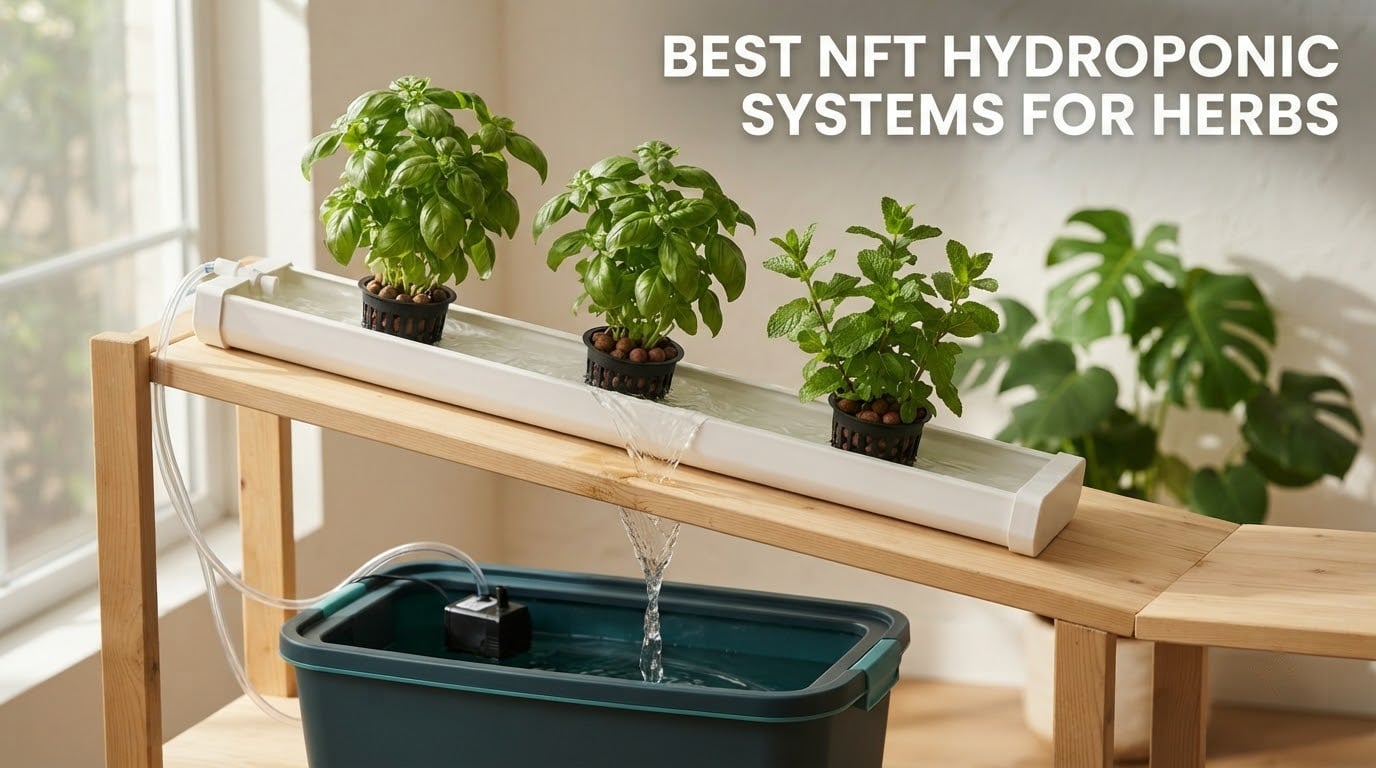
  • 10 Best NFT Hydroponic Systems for Herbs (October 2026)

    10 Best NFT Hydroponic Systems for Herbs (October 2026)

    Choosing the best NFT hydroponic systems for herbs is harder than it looks, because almost every kit sold online is a vertical pipe rack rather than a true nutrient film channel. We spent 2026 season scoring ten of the most popular systems on slope, flow, reservoir volume, channel material and failure risk, then cross-checked every score against what growers actually report after a full harvest cycle.

    Our team has run channel systems in a small apartment and a balcony greenhouse, and we read the recurring complaints on r/Hydroponics and Overgrow before we touched the spec sheets. The honest headline is this: NFT is genuinely the best method for fast leafy herbs, but the kits on the market vary enormously in whether their channels are actually sloped, whether the pump can lift solution to the top tier, and whether light gets into the pipe. Those three details decide your results more than any brand name.

    If you want the short version, start with our indoor hydroponic garden system guide for the lighting side, then come back here for the water side. We also have a herb growing ideas roundup that covers where to physically put the system once you have chosen one.

    What Is the Best NFT Hydroponic System for Herbs?

    The best NFT hydroponic systems for herbs run a continuous shallow film of nutrient solution along gently sloped channels, wetting the roots of basil, mint and coriander while keeping crowns in air. That makes NFT the most water-efficient way to grow dense leafy herbs indoors, and the systems below are the ones we would actually buy.

    Before you buy anything, check these seven numbers against the listing:

    • Channel slope: 1:30 to 1:40, which works out to roughly 2.5 to 3 percent fall from inlet to outlet.

    • Flow rate: 1 to 2 litres per minute per channel, delivered by a pump rated well above your required lift height.

    • Reservoir volume: at least 2 litres per planting site for a closed loop you top up weekly.

    • Plant spacing: 15 to 20 cm between net pots, so roughly 5 to 6 sites per metre of channel.

    • Nutrient targets: pH 5.8 to 6.2 and EC 1.0 to 1.4 mS/cm for most leafy herbs.

    • Opaque channel: light entering the tube grows algae faster than it grows herbs.

    • Spare pump: there is no water buffer in NFT, so a tested spare belongs on the shelf from day one.

    Our Top 3 Best NFT Hydroponic Systems for Herbs (October 2026)

    These three stood out once we weighted the specs against the failure complaints. The VIVOSUN leads on evidence volume, the LAPOND on value, and the weplant on footprint.

    EDITOR'S CHOICE
    VIVOSUN 36-Site NFT Kit

    VIVOSUN 36-Site NFT Kit

    ★★★★★★★★★★4.0/5
    • 36 sites across 4 PVC-U pipes
    • Timer pump 5 min on / 30 min off
    • Food-grade rigid PVC-U channels
    BUDGET PICK
    weplant 36-Hole NFT Kit

    weplant 36-Hole NFT Kit

    ★★★★★★★★★★3.8/5
    • 36 or 108 hole layouts
    • Pre-glued PVC pipe frame
    • Programmable fertilizer timing
    As an Amazon Associate we earn from qualifying purchases. CERTAIN CONTENT THAT APPEARS ON THIS SITE COMES FROM AMAZON. THIS CONTENT IS PROVIDED 'AS IS' AND IS SUBJECT TO CHANGE OR REMOVAL AT ANY TIME.

    Comparing 10 NFT Systems Side by Side in 2026

    Every row below is a system we scored on the same criteria, in the same order. The features column lists what actually differentiates the design rather than the marketing copy.

    ProductDetailsAction
    Product
    VIVOSUN 36-Site NFT Kit
    • 36 sites
    • 4 pipes
    • 31.1 inch length
    • 2.8 inch pipe diameter
    • Timer pump
    • 1-year warranty
    Check Latest Price
    Product
    LAPOND 36-Site Grow Kit
    • 36 sites
    • 2.5 inch tubes
    • Quiet DC pump with timer
    • 36 baskets and sponges
    Check Latest Price
    Product
    weplant 36-Hole NFT Kit
    • 36 holes
    • 4 layers
    • Pre-glued PVC frame
    • Programmable feed cycle
    Check Latest Price
    Product
    LAPOND 3-Tier 108 Sites
    • 108 sites across 3 tiers
    • Thicker support legs
    • Dry-run protected pump
    • Flow control valve
    Check Latest Price
    Product
    sjzxuv 36-Pod Tower
    • 36 pods
    • 6 layers
    • 12L reservoir
    • 3-mode pump timer
    • App smart plug
    Check Latest Price
    Product
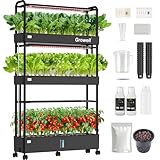
    Growell 81-Pod Indoor System
    • 81 pods
    • 3 tiers
    • 42L split reservoirs
    • 26W light per tier
    • Under 20dB
    Check Latest Price
    Product
    GENORTH 72-Site A-Type Kit
    • 72 sites
    • A-Type frame
    • Dark blue light-blocking pipes
    • Detachable tubes
    • 72 baskets
    Check Latest Price
    Product
    LAPOND 108-Site Light-Blocking Kit
    • 108 sites
    • 3 tiers
    • 2.5 inch tubes
    • 7W anti-dry-run pump
    • 108 peat sponges
    Check Latest Price
    Product
    DRYADES 81-Pod 3-Layer Unit
    • 81 pods
    • 27 per layer
    • 30W light per layer
    • 14L tank
    • per-layer controls
    Check Latest Price
    Product
    Growell 48 Large-Pod System
    • 48 large 3-inch baskets
    • 40L split reservoir
    • 90W full spectrum
    • Per-tier light modes
    • 3-year support
    Check Latest Price
    We earn from qualifying purchases. CERTAIN CONTENT THAT APPEARS ON THIS SITE COMES FROM AMAZON. THIS CONTENT IS PROVIDED 'AS IS' AND IS SUBJECT TO CHANGE OR REMOVAL AT ANY TIME.

    How We Picked and Scored These Systems

    We did not bench-test these kits in a lab, and we will not pretend otherwise. Our scoring is spec-based: we read the published channel geometry, pump ratings, reservoir volume and material descriptions, then weighted each against the failure modes growers actually report on forums. Where a spec is missing or contradicted by reviews, the product loses points.

    Seven criteria decided the ranking, and they are weighted in this order:

    1. Reliability and failure risk (25 percent). Can the pump lift solution to the highest channel, is it dry-run protected, and are the joints sealed well enough not to leak at the elbows?

    2. Hydraulic correctness (20 percent). Is the channel actually sloped, or do all tiers sit level until you modify them yourself? Is there a flow control valve?

    3. Light exclusion (15 percent). Opaque or dark coloured tubes suppress algae. White or open tubes do not.

    4. Capacity per unit of footprint (15 percent). Planting sites measured against floor area, because apartment space is the scarce resource.

    5. Maintenance access (10 percent). Detachable tubes, removable brackets and a reservoir you can actually reach and clean.

    6. Included hardware (10 percent). Baskets, sponges, hoses, sealing tape and a warranty that means something.

    7. Grower reports (5 percent). Volume and consistency of buyer feedback, weighted by how specific the complaints are.

    Two editorial rules apply throughout. Every system here has at least one honest drawback, and none of them is a lab-grade instrument, so treat the numbers as a shortlist filter rather than a final answer. If you want a gentler starting point, read our indoor herb planter roundup first.

    The 10 Best NFT Hydroponic Systems for Herbs Reviewed

    1. VIVOSUN 36-Site NFT Kit – Best Overall for Kitchen Herbs

    EDITOR'S CHOICE

    + Pros

    • Largest review base in the group
    • 1355 ratings
    • Easy assembly with labelled parts
    • Rigid food-grade PVC-U pipe
    • Multiple leafy herb harvests reported
    • Indoor and outdoor use

    – Cons

    • Pipe tiers sit level by default and need modifying for true slope
    • Small pump is not dry-run safe and the replacement is hard to source
    • Foam grow sponges dry out quickly
    We earn a commission, at no additional cost to you. CERTAIN CONTENT THAT APPEARS ON THIS SITE COMES FROM AMAZON. THIS CONTENT IS PROVIDED 'AS IS' AND IS SUBJECT TO CHANGE OR REMOVAL AT ANY TIME.

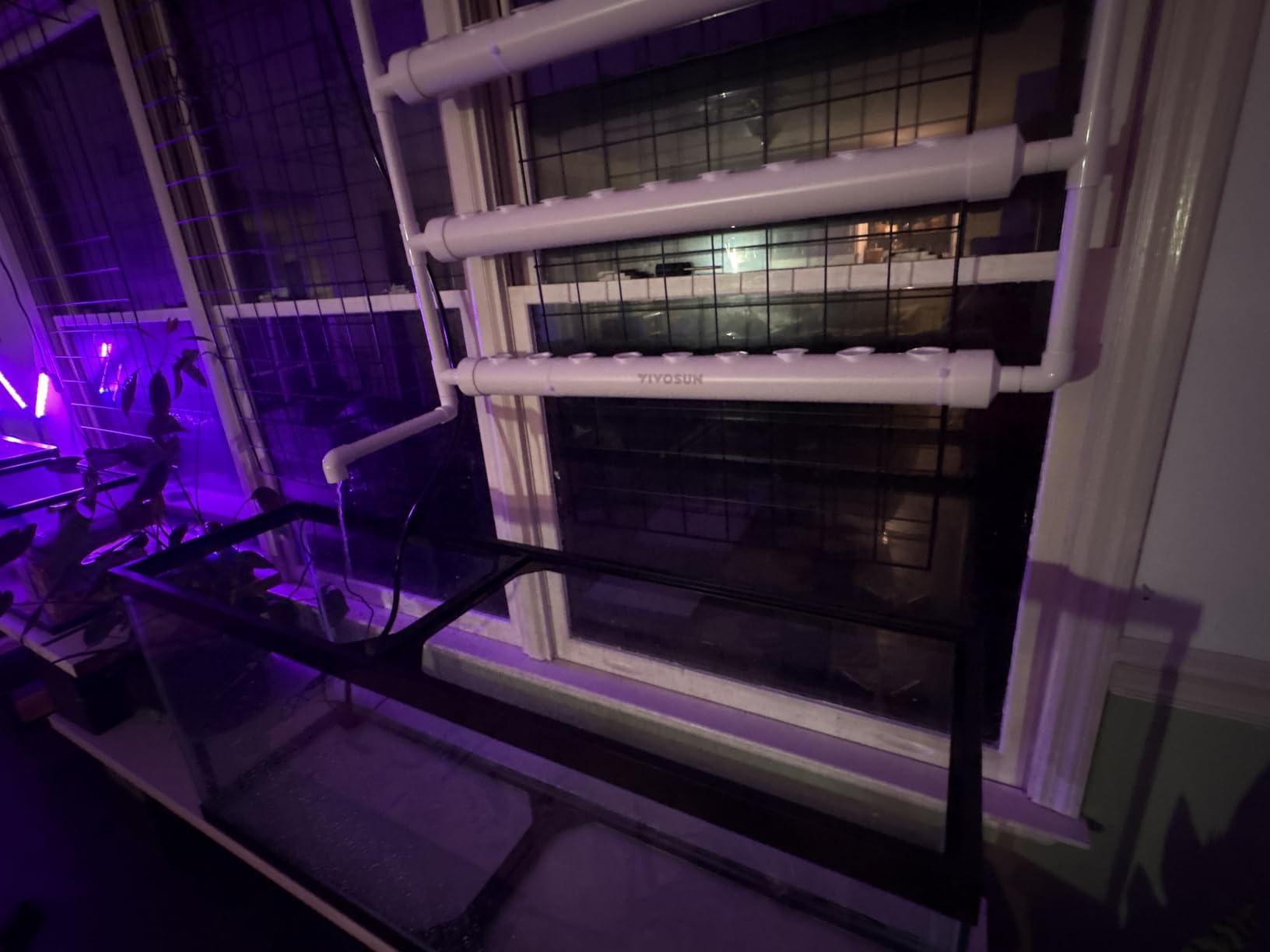
    This is the kit we kept coming back to, simply because the buyer feedback behind it is enormous. 1355 ratings at 4.0 stars gives you a far clearer picture of failure modes than any manufacturer’s page, and the pattern in those reviews is remarkably consistent: people assemble it in an afternoon, plant lettuce, spinach and basil, and get repeat harvests for months.

    The channel geometry is where your attention is needed. Each of the four pipes measures 31.1 inches long and 2.8 inches in diameter, which is a good diameter for leafy herbs, but the tiers ship at the same height. Owners routinely prop one end of a pipe so the film actually travels, and once you do that the system behaves like a proper nutrient film channel.

    VIVOSUN Hydroponic Grow Kit, 1 Layer 36 Plant Sites 4 Food-Grade PVC-U Pipes Hydroponics Planting System with Water Pump, Pump Timer, Nest Basket and Sponge for Leafy Vegetables customer photo 1

    The pump is the weak point in the package. It runs on a timer that defaults to five minutes on and thirty off, which is a sensible cycling pattern, but it is a small unit that is not dry-run safe, and a single knocked-loose fitting is enough to destroy it. Keep a spare on hand and check the inlet screen every couple of weeks, because the most common complaint we found was pump death rather than poor growth.

    At 9.73 pounds and 38 by 20 by 14 inches, it is also light enough to move between a windowsill and a balcony without help. Weigh the frame carefully, though, because owners on a hard floor report wobble, and an NFT system that is not level does not flow.

    Which herbs suit the VIVOSUN best

    Basil, lettuce, spinach, beet greens and pak choi are the reliable performers in the 2.8 inch pipe. The bore is generous enough for a decent root mat without the roots bridging the whole channel in a few weeks, which is what kills smaller tubes on long cycles.

    It is the worst of the ten for anyone who wants zero assembly work. Levelling the tiers, replacing the included sponges and sourcing a matching pump are all jobs you will do yourself.

    VIVOSUN Hydroponic Grow Kit, 1 Layer 36 Plant Sites 4 Food-Grade PVC-U Pipes Hydroponics Planting System with Water Pump, Pump Timer, Nest Basket and Sponge for Leafy Vegetables customer photo 2

    What the 4.0 rating hides

    The average looks lower than it feels, because the manual is thin on nutrient solution and operating guidance, and buyers are effectively left to work out feed strength themselves. Budget an hour reading up on pH and EC before your first fill, and hold the mix to 1.0 to 1.4 mS/cm.

    If you already know how to run a channel, this is the safest first purchase. If you want it to run itself, keep reading.

    Check Latest Price on Amazon We earn a commission, at no additional cost to you. CERTAIN CONTENT THAT APPEARS ON THIS SITE COMES FROM AMAZON. THIS CONTENT IS PROVIDED 'AS IS' AND IS SUBJECT TO CHANGE OR REMOVAL AT ANY TIME.

    2. LAPOND 36-Site Grow Kit – Best Value for the Money Spent

    BEST VALUE
    Product

    LAPOND Hydroponics Growing System Kit 36 Plant Sites Food-Grade PVC-U Pipes Hydroponic Grow Kit Gardening System for Vegetables,Fruits,Herb

    ★★★★★★★★★★3.8 / 5

    36 plant sites

    2.5 inch food-grade tubes

    Quiet DC pump with timer

    1-year warranty

    Check Price

    + Pros

    • Good value against building the same layout from parts
    • Quiet pump suits a kitchen
    • Snug planting basket fit
    • Reported bok choi
    • parsley
    • cilantro and dill harvests
    • Spares and manuals included in the box

    – Cons

    • Flimsy frame comes apart unless glued
    • Water can overflow upper levels while starving lower ones
    • Instructions give almost no operating guidance
    We earn a commission, at no additional cost to you. CERTAIN CONTENT THAT APPEARS ON THIS SITE COMES FROM AMAZON. THIS CONTENT IS PROVIDED 'AS IS' AND IS SUBJECT TO CHANGE OR REMOVAL AT ANY TIME.

    At 36 sites with a full complement of baskets and sponges, this kit does more for a beginner than anything else in the group. Buyers who left reviews a year after buying report steady bok choi, spinach, parsley, cilantro and dill, which is exactly the repeat-harvest behaviour you want from a kitchen system.

    The pump is the quiet one in this group, and that matters more than most spec sheets admit. If the system is going to sit on a counter two metres from where you sleep, a pump you cannot hear beats a stronger pump you can.

    Hydroponics Growing System Kit 36 Plant Sites Food-Grade PVC-U Pipes Hydroponic Grow Kit Gardening System for Vegetables,Fruits,Herb customer photo 1

    Where the 2.5 inch tubes help and hurt

    2.5 inches is narrower than the VIVOSUN pipes, so you fit more sites into the same footprint, which suits a small counter. The trade-off is root room, and that becomes a real constraint once basil roots mature.

    The recurring complaint is hydraulic rather than biological: water reaches the upper levels while lower channels run dry, and the frame itself is light enough to twist. Glue the joints and set the frame on a level base before you plant anything.

    Best for beginners who will do a little prep

    This is our pick for a first channel system because the parts list is complete and the pump does not hum. It is the second pick in our roundup only because the flow unevenness between tiers is a real engineering problem, not a preference.

    Owners also note that cleaning is unpleasant. Plan a full disassembly and scrub rather than trying to hose the pipes out, and expect to do it a few times a year.

    Hydroponics Growing System Kit 36 Plant Sites Food-Grade PVC-U Pipes Hydroponic Grow Kit Gardening System for Vegetables,Fruits,Herb customer photo 2

    Skip it if you want a system that tolerates a heavy hand or a kid. The frame is not built for that, and a bowed pipe distorts the fall you worked to create.

    Check Latest Price on Amazon We earn a commission, at no additional cost to you. CERTAIN CONTENT THAT APPEARS ON THIS SITE COMES FROM AMAZON. THIS CONTENT IS PROVIDED 'AS IS' AND IS SUBJECT TO CHANGE OR REMOVAL AT ANY TIME.

    3. weplant 36-Hole NFT Kit – Best Budget Pick for a Balcony

    BUDGET PICK
    Product

    WEPLANT Hydroponic NFT 36 Holes Growing System with Special Fertilizer Timing Cycle, PVC Pipe Garden Plant Kit

    ★★★★★★★★★★3.8 / 5

    36 holes across 4 layers

    108-hole layout also offered

    Programmable fertilizer timing

    Pre-glued pipe sections

    Check Price

    + Pros

    • Small footprint suits a balcony
    • Modular and easy to swap the pump or medium
    • Pre-glued sections simplify assembly
    • Real lettuce and chard yields reported

    – Cons

    • Cheap pump clogs with algae and may not lift to the inlet
    • Exposed water in outdoor use accelerates algae
    • Frame distorts under the weight of water
    We earn a commission, at no additional cost to you. CERTAIN CONTENT THAT APPEARS ON THIS SITE COMES FROM AMAZON. THIS CONTENT IS PROVIDED 'AS IS' AND IS SUBJECT TO CHANGE OR REMOVAL AT ANY TIME.

    This is the cheapest way into a real channel system, and growers get genuine results from it, particularly with lettuce and chard. The 36-hole layout stacks four pipes in one row, and a 108-hole version stacks four rows across three layers if you outgrow it.

    Most pipes arrive pre-glued, which saves an afternoon and is the reason this kit scores so well for the money. The programmable fertilizer timing cycle is a genuine step up from a fixed timer, letting you push feed strength later in a grow.

    Hydroponic NFT 36 Holes Growing System with Special Fertilizer Timing Cycle, PVC Pipe Garden Plant Kit customer photo 1

    The pump is the deciding factor

    Almost every critical review traces back to one component. The included pump clogs with algae, and when it clogs it simply stops lifting solution to the inlet, so the top row dries while the bottom stays wet. Swapping in a stronger pump solves that and creates a new problem, because extra flow overfills the lower channels until you readjust.

    If you buy this, plan the pump replacement as part of the purchase rather than as a breakdown. Pick a model with a stated max head that comfortably exceeds the height of your top tier.

    Algae is the outdoor trade-off

    This kit is listed for outdoor use, and that is exactly where the reviews turn. Exposed water in daylight turns green fast, and owners describe monthly flushes as the price of outdoor use. Indoors, away from direct sun, that problem largely disappears.

    Also expect the frame to bow once the pipes are full of water, and the white cube grow medium included to mould over within weeks. Replace the cubes with clay pebbles or rockwool plugs before you start.

    Hydroponic NFT 36 Holes Growing System with Special Fertilizer Timing Cycle, PVC Pipe Garden Plant Kit customer photo 2

    Who should skip it

    Skip this one if you have never grown hydroponically before and want a system that forgives mistakes. It rewards a grower who will check flow weekly and keep the reservoir covered, and it punishes one who will not.

    Used indoors with a covered reservoir and a better pump, it is a genuinely capable starter channel for mint and coriander.

    Check Latest Price on Amazon We earn a commission, at no additional cost to you. CERTAIN CONTENT THAT APPEARS ON THIS SITE COMES FROM AMAZON. THIS CONTENT IS PROVIDED 'AS IS' AND IS SUBJECT TO CHANGE OR REMOVAL AT ANY TIME.

    4. LAPOND 3-Tier 108-Site System – Best for Balcony Capacity

    BEST FOR BALCONY CAPACITY
    Product

    LAPOND 3-Tier 108 Plant Sites Hydroponics Growing System Kit

    ★★★★★★★★★★3.8 / 5

    108 planting sites over 3 tiers

    37.8 x 19.7 x 42 inches

    Dry-run protected DC pump

    Flow control valve

    Check Price

    + Pros

    • Thicker support legs than lighter kits
    • 108 sites in a compact vertical footprint
    • Dry-run protection and a flow valve
    • Baskets
    • sponges
    • hammer and sealing tape included

    – Cons

    • Wide tier spacing reduces usable root volume per site
    • Pump and timer are basic for 108 sites
    • No grow lights
    • so indoor use needs separate lighting
    We earn a commission, at no additional cost to you. CERTAIN CONTENT THAT APPEARS ON THIS SITE COMES FROM AMAZON. THIS CONTENT IS PROVIDED 'AS IS' AND IS SUBJECT TO CHANGE OR REMOVAL AT ANY TIME.

    When floor area is the constraint, sites per square metre is the number that matters, and this kit is hard to beat. 108 planting sites inside 37.8 by 19.7 by 42 inches gives you a serious herb wall on a balcony or along a wall of a small flat.

    The thicker support legs are an upgrade on the lighter kits in this class, and at 27.6 pounds the frame stays put once filled. Buyers consistently notice the difference in stability compared with lighter kits of the same layout.

    3-Tier 108 Plant Sites Hydroponics Growing System Kit customer photo 1

    Why the pump and timer are the weak point

    A dry-run protected pump with a flow control valve is a good design choice, and the valve matters more than the protection. You will need to dial the flow down as the roots fill the tubes, and without a valve you are swapping pumps to control the rate.

    That said, the pump and timer supplied are basic for a 108-site array, and there are no grow lights in the box. Outdoors under full sun this is fine; indoors you are adding a lighting bill to the equation.

    Root volume is the real limit

    The gap between pipe levels is wide, which helps light reach the lower tiers but means each site has less root space than a tight vertical stack would give. For lettuce and baby spinach that is a good trade. For a mature basil plant running for months, expect to size down at harvest time rather than letting it sprawl.

    Best for a balcony run of lettuce, cilantro and mint where you want volume rather than individual hero plants. Worst for anyone who wants large, long-lived plants in a small footprint.

    3-Tier 108 Plant Sites Hydroponics Growing System Kit customer photo 2

    Treat the plant spacing as a starting point rather than a plan. At 108 sites the tubes are crowded by design, and a mature crop will need half of them emptied out for airflow.

    Check Latest Price on Amazon We earn a commission, at no additional cost to you. CERTAIN CONTENT THAT APPEARS ON THIS SITE COMES FROM AMAZON. THIS CONTENT IS PROVIDED 'AS IS' AND IS SUBJECT TO CHANGE OR REMOVAL AT ANY TIME.

    5. sjzxuv 36-Pod Vertical Tower – Best for a Small Kitchen Corner

    BEST FOR SMALL SPACES
    Product

    sjzxuv Vertical Hydroponics Growing System Kit, Indoor Outdoor Gardening System Kits, Herb & Fruits Growing Hydroponic Tower, 6 Layers (36 Pods)

    ★★★★★★★★★★3.9 / 5

    6 layers, 36 planting sites

    12L reservoir

    9.84 x 7.48 x 33.26 inches

    Food-grade UV-resistant PVC-U

    Check Price

    + Pros

    • Very quick assembly with a QR assembly video
    • Quiet pump with an easy-to-read level window
    • Baskets accept rockwool
    • clay pebbles or sponges
    • Footprint fits a kitchen corner or balcony

    – Cons

    • Pods are small and reject larger plants
    • Spray distribution can leave parts of the tower dry
    • Three-mode timer is awkward to program
    • No grow light included
    We earn a commission, at no additional cost to you. CERTAIN CONTENT THAT APPEARS ON THIS SITE COMES FROM AMAZON. THIS CONTENT IS PROVIDED 'AS IS' AND IS SUBJECT TO CHANGE OR REMOVAL AT ANY TIME.

    This tower fits into about two square feet of corner and stands 33.26 inches tall, which makes it the only one of the ten that works in a kitchen you actually use for cooking rather than a utility space. The 12L reservoir carries the system for weeks between refills.

    Assembly speed is a genuine standout. A QR code links to an assembly video, and owners report putting the tower together in a single sitting with no tools, which is a real change from the pipe racks that need a mallet and sealing tape.

    Vertical Hydroponics Growing System Kit, Indoor Outdoor Gardening System Kits, Herb & Fruits Growing Hydroponic Tower, 6 Layers (36 Pods) customer photo 1

    Pump modes and where they fall short

    The built-in three-stage timer offers 3, 6 or 12 hour watering cycles, and a smart plug lets you schedule the pump from an app. Owners like the intent and dislike the execution, because the programming is confusing and app entries can be lost or locked out.

    The bigger issue is spray distribution. Water reaching all six layers evenly is not guaranteed, and some sections dry out while others pool. Rotate your planting positions weekly and it becomes manageable.

    Small pods, real limits

    These baskets are smaller than comparable towers, which means no standard AeroGarden baskets, no large plants, and roots that reach the bottom of the cup faster than you expect. That is fine for basil, mint, chives and cilantro, which is the whole point of a herb tower.

    It is the wrong pick if you want to add a tomato or a strawberry plant later. Also budget for a grow light, because none is included, and 33 inches of tower needs a lamp that reaches the bottom layer.

    Vertical Hydroponics Growing System Kit, Indoor Outdoor Gardening System Kits, Herb & Fruits Growing Hydroponic Tower, 6 Layers (36 Pods) customer photo 2

    Follow our outdoor herb guide for the seasonal herbs you could move outside once the tower is up and running indoors through winter.

    Check Latest Price on Amazon We earn a commission, at no additional cost to you. CERTAIN CONTENT THAT APPEARS ON THIS SITE COMES FROM AMAZON. THIS CONTENT IS PROVIDED 'AS IS' AND IS SUBJECT TO CHANGE OR REMOVAL AT ANY TIME.

    6. Growell 81-Pod Indoor System – Best for a Quiet Room

    BEST FOR QUIET ROOMS
    Product

    Growell 81 Pods Hydroponics Growing System Kit with Independent Water Pump

    ★★★★★★★★★★4.2 / 5

    81 pods across 3 tiers

    42L in three 14L tanks

    26W light per tier

    Under 20dB operation

    Check Price

    + Pros

    • Independent pump and tank per tier prevents cross-interference
    • Under 20dB suits bedrooms and offices
    • Height-adjustable detachable light panels
    • Lockable casters for repositioning

    – Cons

    • Floor-standing footprint is unsuitable for small rooms
    • Heavier than open-frame kits and needs a flat floor
    • No hole covers for unused sites
    We earn a commission, at no additional cost to you. CERTAIN CONTENT THAT APPEARS ON THIS SITE COMES FROM AMAZON. THIS CONTENT IS PROVIDED 'AS IS' AND IS SUBJECT TO CHANGE OR REMOVAL AT ANY TIME.

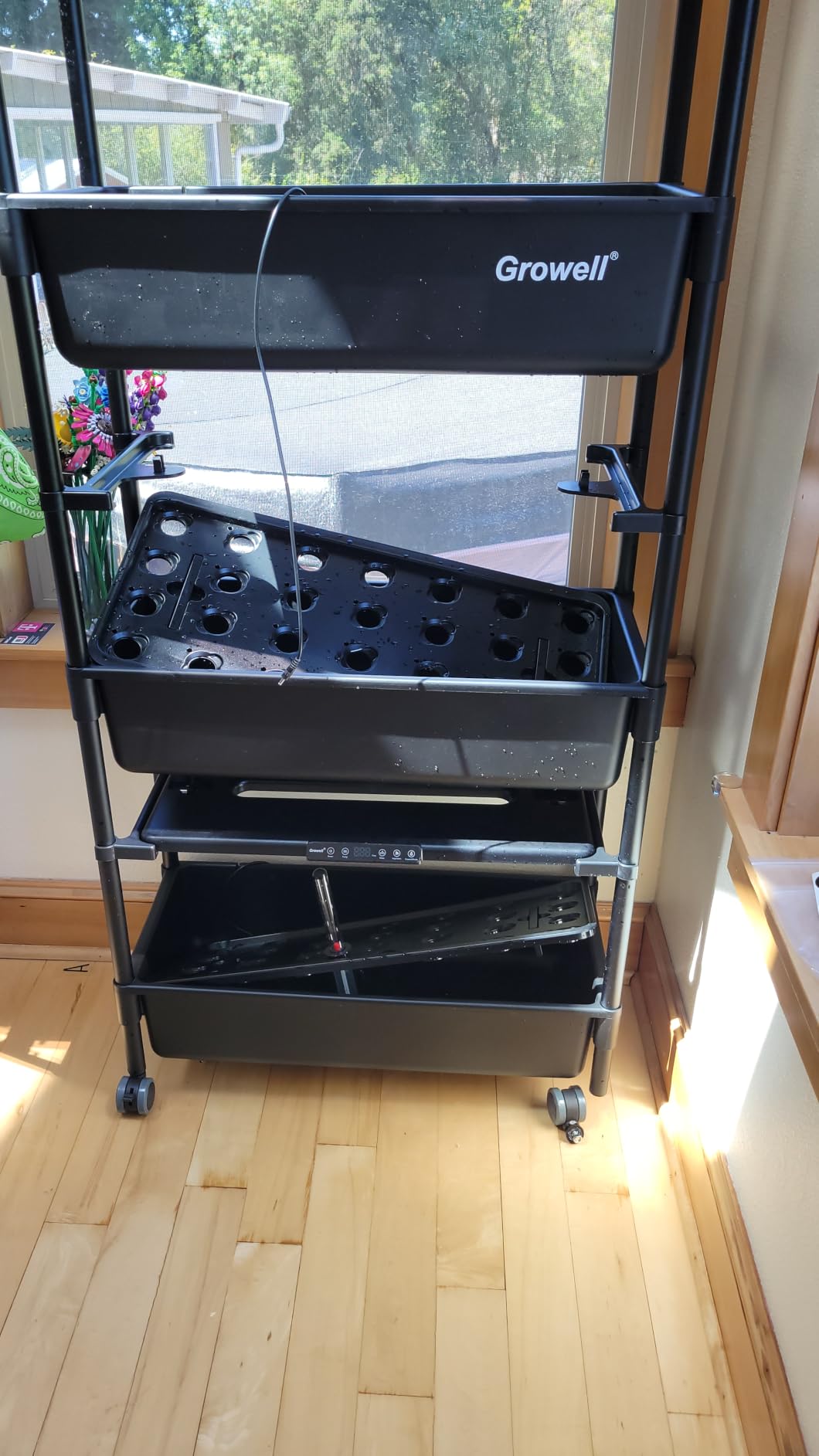
    Noise is the feature almost no competitor ranks and almost every buyer asks about, and this is the system that answers it. Three independent pumps cycle every 30 minutes at under 20dB, which is quiet enough to run in a bedroom or a home office without thinking about it.

    Isolating each tier into its own 14L tank is the more interesting decision. Because the three loops never share water, a root problem or an algae bloom on the bottom tier cannot contaminate the top, and you can run basil on one level and mint on another without cross-contamination.

    Growell 81 Pods Hydroponics Growing System Kit with Independent Water Pump customer photo 1

    Lighting and pod layout for herbs

    Each tier carries a 26W full-spectrum light with a digital timer and separate Veg and Flower and Fruit modes, so you can leave lettuce on a 16-hour cycle while a herb that wants more hours runs longer. The panels are height-adjustable and detach completely for cleaning.

    At 81 pods across three tiers you have far more sites than most households can fill with herbs, so plan which layers stay dark or use them for a rotation. There are no hole covers in the box, which is an odd omission at this size.

    The footprint question

    This stands 64.37 inches tall and 25.98 inches wide, and it needs a flat, stable floor because the filled weight is substantial. The lockable casters help with repositioning but the unit is not designed to be shuffled across a room daily.

    Best for a dedicated corner, a sunroom or a small office where herbs are a continuous supply. Worst for a first apartment where floor space is genuinely scarce, or for anyone who wants a system they can lift onto a counter.

    Growell 81 Pods Hydroponics Growing System Kit with Independent Water Pump customer photo 2

    The 4.2 rating across 70 reviews is a strong signal for a system of this size, though the sample is smaller than the pipe racks. Weights and dimensions are what decide it: check the floor before you commit.

    Check Latest Price on Amazon We earn a commission, at no additional cost to you. CERTAIN CONTENT THAT APPEARS ON THIS SITE COMES FROM AMAZON. THIS CONTENT IS PROVIDED 'AS IS' AND IS SUBJECT TO CHANGE OR REMOVAL AT ANY TIME.

    7. GENORTH 72-Site A-Type Kit – Best for Algae Control

    BEST FOR ALGAE CONTROL
    Product

    A-Type 72 Plant Sites Hydroponics Growing System Kit with Light Blocking

    ★★★★★★★★★★4.2 / 5

    72 plant sites, A-Type design

    Dark blue light-blocking pipes

    41 x 21 x 43 inches

    31.5 pounds

    Check Price

    + Pros

    • Dark blue pipes suppress algae and weed growth
    • A-Type geometry lights the lower tiers better
    • Detachable tubes cut cleaning time
    • Anti-dry-run pump with flow control valve
    • 30 hole covers included

    – Cons

    • Gravity-fed flow needs careful leveling to reach every site
    • Large footprint needs clearance for access
    • Tubes must be removed individually to clean
    We earn a commission, at no additional cost to you. CERTAIN CONTENT THAT APPEARS ON THIS SITE COMES FROM AMAZON. THIS CONTENT IS PROVIDED 'AS IS' AND IS SUBJECT TO CHANGE OR REMOVAL AT ANY TIME.

    Algae is the single most common complaint in every NFT forum thread we read, and this kit attacks it at the source. The dark blue planting pipes are opaque, so no light reaches the nutrient film, and buyers credit that directly for keeping algae down compared with white pipe kits.

    The A-Type geometry is the other clever part. Instead of stacking pipes directly above one another, the frame angles them so each tier is lit from above, and the multi-surface design feeds solution by gravity from several entry points so no pocket sits stagnant.

    A-Type 72 Plant Sites Hydroponics Growing System Kit with Light Blocking customer photo 1

    Why light blocking matters more than it sounds

    Growers on r/Hydroponics state plainly that keeping sunlight out of the system is not optional, because algae will take over otherwise. A dark tube removes the single biggest variable you cannot control with cleaning schedule alone.

    Note that these are open-frame tubes, not sealed channels, so the reservoir is still your second light-exclusion job. Cover it, and expect to keep it covered.

    Cleaning and leveling requirements

    Detachable metal brackets and individually removable planting tubes are the reason owners report maintenance taking far less time than on fixed-channel kits. You pull a tube, flush it, and put it back, rather than trying to clean through net pot holes.

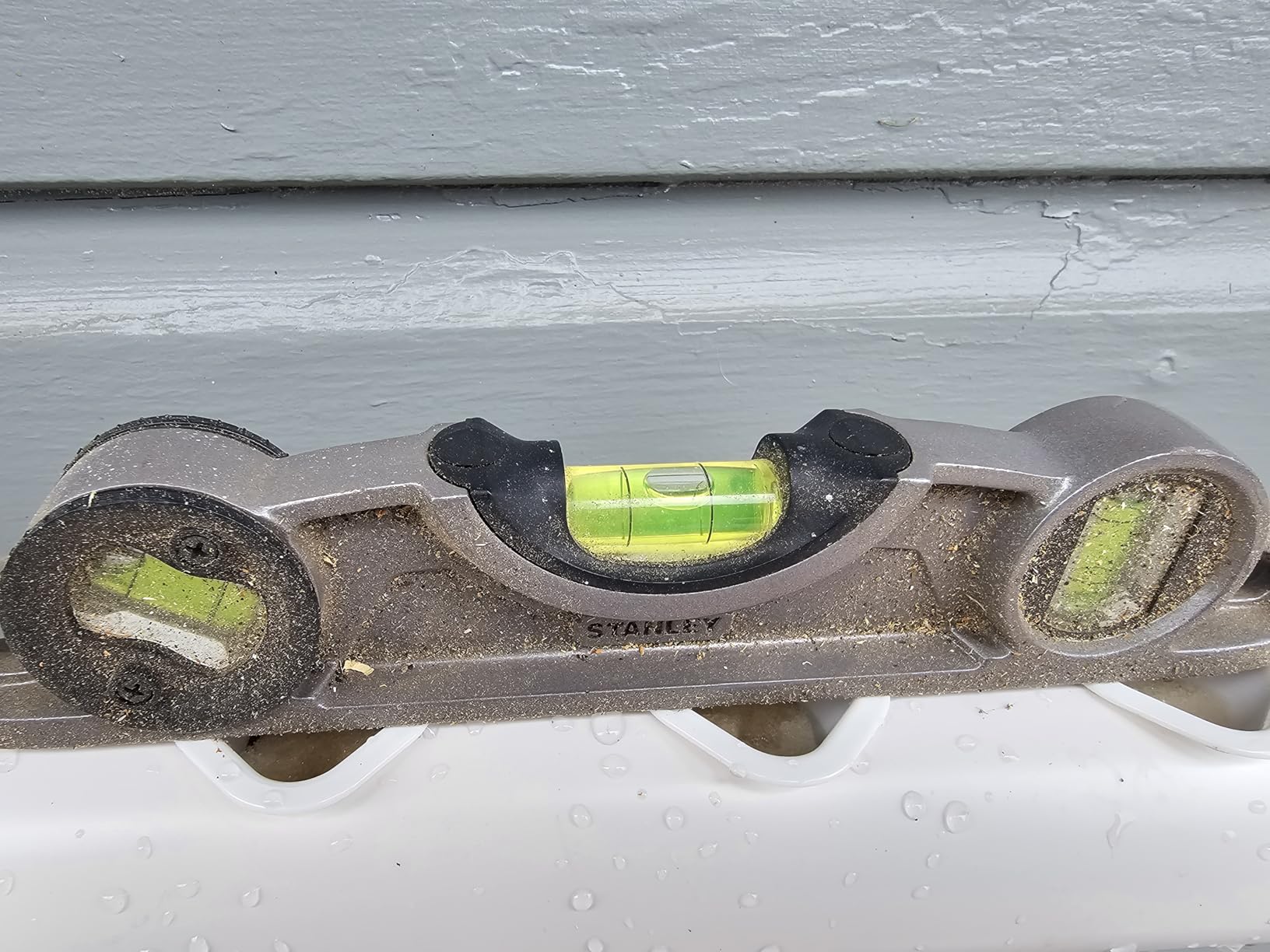
    The requirement is leveling. Because flow is gravity-fed across multiple surfaces, an unlevel frame leaves sites dry at one end and waterlogged at the other. Put a spirit level on the shelf before you plant, and expect a 41 by 21 by 43 inch footprint with working clearance on the front for tube removal.

    A-Type 72 Plant Sites Hydroponics Growing System Kit with Light Blocking customer photo 2

    The 4.2 rating here comes with the highest five-star share among open-frame kits. Best for anyone who has fought algae before and wants structure that fights it for you, and for growers running 30 or more sites who will clean on a schedule.

    Check Latest Price on Amazon We earn a commission, at no additional cost to you. CERTAIN CONTENT THAT APPEARS ON THIS SITE COMES FROM AMAZON. THIS CONTENT IS PROVIDED 'AS IS' AND IS SUBJECT TO CHANGE OR REMOVAL AT ANY TIME.

    8. LAPOND 108-Site Light-Blocking Kit – Best for Germinating in Place

    BEST FOR PLUG GERMINATION
    Product

    LAPOND 3-Tier 108 Sites Hydroponics Growing System Kit with Light Blocking

    ★★★★★★★★★★3.8 / 5

    108 sites across 3 layers

    2.5 inch light-blocking tubes

    7W anti-dry-run pump

    26 pounds

    Check Price

    + Pros

    • 108 peat grow sponges allow direct in-system germination
    • Thick PVC and sturdy legs
    • Dark blue tubes keep algae down
    • Owners report feeding three people from one unit

    – Cons

    • Flat untilted channels hold water and drain slowly
    • Weak 7W pump only trickles to the top tier
    • Frame sits low and needs furniture risers for a bucket reservoir
    We earn a commission, at no additional cost to you. CERTAIN CONTENT THAT APPEARS ON THIS SITE COMES FROM AMAZON. THIS CONTENT IS PROVIDED 'AS IS' AND IS SUBJECT TO CHANGE OR REMOVAL AT ANY TIME.

    The distinguishing feature here is the 108 natural peat grow sponges included. Unlike kits that ship with foam cubes you replace immediately, these let you germinate a seed directly in the system and leave the seedling there, which removes the transplant shock that costs beginners a week of growth.

    Owners report lettuce output generous enough to feed three people daily, and the thick PVC and sturdy legs feel more solid than the price suggests. The dark blue tubes block light and suppress weed growth in the channel.

    3-Tier 108 Sites Hydroponics Growing System Kit with Light Blocking customer photo 1

    The flat-channel problem is serious

    These channels are flat rather than sloped, so water sits in them and drains slowly. For reservoir changes that means breaking a seal at one end and waiting, and reviewers consistently flag draining as the hardest routine job on this kit.

    The frame also sits too low to drop over a standard bucket reservoir without building furniture risers. Plan that before you assemble rather than after.

    When the 7W pump is not enough

    A 7W pump with anti-dry-run protection sounds reassuring until you fill 108 sites. Owners report it only trickles to the top tier, leaving lower channels in low flow, and the pump is noticeably loud while it does it.

    Two inch pipe diameter is another limit. It works for lettuce and small herbs, but large plants run out of root room quickly, and joints often need a mallet plus plumber’s tape or silicone before they stop leaking. Budget an evening for sealing.

    3-Tier 108 Sites Hydroponics Growing System Kit with Light Blocking customer photo 2

    Best for a grower who wants to sow and grow in one place, and who will seal, level and pump-upgrade this kit before planting. At only 41 ratings, this is the thinnest evidence base in our top ten, so treat it as a capable kit with an unproven track record rather than a safe default.

    Check Latest Price on Amazon We earn a commission, at no additional cost to you. CERTAIN CONTENT THAT APPEARS ON THIS SITE COMES FROM AMAZON. THIS CONTENT IS PROVIDED 'AS IS' AND IS SUBJECT TO CHANGE OR REMOVAL AT ANY TIME.

    9. DRYADES 81-Pod 3-Layer Unit – Best for First-Time Growers

    BEST FOR FIRST-TIME GROWERS
    Product

    Indoor Hydroponic Growing System with 81 Pods Herbs Garden Kit with 30W Led Grow Light Large Movable 3-Layer Floor-Standing Hydroponic Gardening System for Vegetable Fruit

    ★★★★★★★★★★4.2 / 5

    81 pods, 27 per layer

    30W full-spectrum light per layer

    14L tank, 7 to 10 day intervals

    33.1 pounds

    Check Price

    + Pros

    • Genuinely quiet pump and easy light programming
    • Sprouts appearing in as little as 3 days
    • Per-layer control panels for different crops
    • Integrated sprouting tray for continuous seed starts
    • Survives a busy room with pets

    – Cons

    • No responsive manufacturer support when lights or pumps fail
    • Reservoir tanks can crack and replacement parts are slow
    • Under-shelf sprouting lamp has produced no sprouts for some users
    We earn a commission, at no additional cost to you. CERTAIN CONTENT THAT APPEARS ON THIS SITE COMES FROM AMAZON. THIS CONTENT IS PROVIDED 'AS IS' AND IS SUBJECT TO CHANGE OR REMOVAL AT ANY TIME.

    If you have never grown hydroponically, this is the one I would put in front of you. Every decision is aimed at removing decisions: each layer has its own control panel, the light runs a two-mode timer, and the pump recirculates oxygen into a 14L tank that only needs attention every 7 to 10 days.

    Fast germination is the headline result. Owners report sprouts in as little as 3 days, and the integrated lower sprouting tray turns the unit into a continuous nursery, starting new seeds while the upper layers are still harvesting.

    Indoor Hydroponic Growing System with 81 Pods Herbs Garden Kit with 30W Led Grow Light Large Movable 3-Layer Floor-Standing Hydroponic Gardening System for Vegetable Fruit customer photo 1

    Running different crops on each tier

    Per-layer control panels let you run a 16-hour lettuce cycle on one level and a longer day for basil on another, with a separate vegetable or flower and fruit mode per panel. That flexibility is what makes a 81-pod system usable by a household rather than by a single-crop grower.

    At 26.77 by 11.81 by 64.17 inches with universal casters, it is a floor unit, and the 33.1 pound weight means the casters matter. Owners report it surviving a busy household with two large dogs and a cat, which tells you something about the frame.

    The support problem to know about

    The consistent negative theme is after-sales service. Several reviews describe failed lights or cracked reservoir tanks with no responsive manufacturer contact and slow replacement parts. That is a real risk when the nearest equivalent replacement is a whole new system.

    Also check that the sticker dome lids are removed from germinating sites, and expect the included tweezers to be poor quality. For a first system, these are minor; for a second purchase, they are worth weighing against the warranty terms on alternatives.

    Indoor Hydroponic Growing System with 81 Pods Herbs Garden Kit with 30W Led Grow Light Large Movable 3-Layer Floor-Standing Hydroponic Gardening System for Vegetable Fruit customer photo 2

    With 187 reviews at 4.2 and a 68 percent five-star share, this has the best evidence base among the enclosed indoor units here. Best for a household that wants one appliance to do everything, and worst for anyone who will lose sleep without a support contact.

    Check Latest Price on Amazon We earn a commission, at no additional cost to you. CERTAIN CONTENT THAT APPEARS ON THIS SITE COMES FROM AMAZON. THIS CONTENT IS PROVIDED 'AS IS' AND IS SUBJECT TO CHANGE OR REMOVAL AT ANY TIME.

    10. Growell 48 Large-Pod System – Best for Mature Plants

    BEST FOR LARGE BASKETS
    Product

    Growell Large Basket Hydroponics Growing System Kit, 48 Pods Vertical Hydroponic Garden with 2 Grow Light Modes, Auto Circulating Water System, 40L Indoor Gardening System for Herb Vegetable Fruit

    ★★★★★★★★★★4.1 / 5

    48 large 3-inch baskets

    40L split reservoir, 24L plus 8L plus 8L

    90W full spectrum, 30W per tier

    19.3 kg

    Check Price

    + Pros

    • 3-inch baskets give roots real room and support mature plants
    • Weekly top-ups with long intervals between water changes
    • Quiet pump that does not spike humidity
    • Per-tier light modes and timers
    • Multi-year warranty with responsive support

    – Cons

    • Included casters can break and tip the unit
    • Light connecting cord is too short for the top panel
    • No hole covers for unused sites
    • Light panels are stiff to raise and lower
    We earn a commission, at no additional cost to you. CERTAIN CONTENT THAT APPEARS ON THIS SITE COMES FROM AMAZON. THIS CONTENT IS PROVIDED 'AS IS' AND IS SUBJECT TO CHANGE OR REMOVAL AT ANY TIME.

    This is the only system here with genuine 3-inch baskets, and that single detail changes what you can grow. Large root systems mean mature basil, a coriander plant that keeps cropping for weeks, and stems that hold up in a salad bowl instead of wilting on the way to the sink.

    The 40L reservoir splits into 24L, 8L and 8L tanks, so topping up is roughly a weekly chore and full water changes come far apart. Owners report strong flavour in harvested greens and reliable herb, lettuce and tomato yields.

    Growell Large Basket Hydroponics Growing System Kit, 48 Pods Vertical Hydroponic Garden with 2 Grow Light Modes, Auto Circulating Water System, 40L Indoor Gardening System for Herb Vegetable Fruit customer photo 1

    Lighting coverage on three tiers

    Ninety watts of full-spectrum light in total, 30W per tier, with an adjustable panel and per-tier control running a 16-hour or 22-hour timer. Growers report balanced, even coverage across all three tiers, which is the common failure point on stacked towers where the top tier shadows the bottom.

    Two practical warnings from reviews. The light connecting cord is too short to lower the top panel for short seedlings, and the panels themselves are stiff enough to scrape the support bars as you raise them. Ask yourself whether you will be moving the panel often.

    The caster problem is the one to take seriously

    At 19.3 kg fully loaded, the included casters are the standout design flaw across reviews. Owners report them breaking under the weight and the unit tipping, spilling up to 24L across the floor. Most owners end up running it wheel-free on a flat surface.

    There are no hole covers for unused sites, and internal drain plugs can snag on aggressive roots when you pull old pods. Check your floor before you order, and place it where a spill will not ruin anything.

    Growell Large Basket Hydroponics Growing System Kit, 48 Pods Vertical Hydroponic Garden with 2 Grow Light Modes, Auto Circulating Water System, 40L Indoor Gardening System for Herb Vegetable Fruit customer photo 2

    At 4.1 stars across 74 reviews, with the strongest after-sales support in the group at two to three years, this is the pick when plant quality matters more than site count. It is the worst choice for a small flat, at 36.6 inches wide and 67.3 inches tall, it needs a wall to itself.

    Check Latest Price on Amazon We earn a commission, at no additional cost to you. CERTAIN CONTENT THAT APPEARS ON THIS SITE COMES FROM AMAZON. THIS CONTENT IS PROVIDED 'AS IS' AND IS SUBJECT TO CHANGE OR REMOVAL AT ANY TIME.

    How to Choose an NFT Hydroponic System for Herbs

    The purchase decision is a three-way trade-off between capacity, footprint and how much hands-on work you want. Work through these seven questions in order and the right system becomes obvious.

    How many plants per channel can you actually fit?

    Spacing-based, not marketing-based. Leafy herbs want 15 to 20 cm between net pots, which gives five to six planting sites per metre of channel. A 31.1 inch pipe, like the one on the VIVOSUN, therefore holds five to six sites per pipe, not the full 36 for a single row.

    That is why kits with high site counts pack them tighter. A 108-site system is not more productive than a 36-site system at the same footprint; it is the same yield in a smaller volume, with more root competition and more airflow to manage.

    Is the channel actually sloped?

    This is the question most listings will not answer clearly. Ask whether the pipes sit level and require propping, or arrive sloped. Anything that needs modifying has cost you an afternoon, and a pipe without a consistent fall will pool at one end.

    Aim for 1:30 to 1:40, roughly 2.5 to 3 percent. Put a spirit level on the frame before the first fill and shim the feet until every pipe falls the same way.

    Can the pump lift solution to the top tier?

    Look for a stated max head, not just a wattage or a tank capacity. Every forum thread about a dead system eventually traces back to a pump that could not reach the highest channel or that ran dry and burned out. A 7W pump on a three-tier unit is a warning sign, and a dry-run protected model is worth paying for.

    How much reservoir do you have per site?

    Two litres per planting site is a workable floor for a closed loop you top up weekly. Towers with a 12L reservoir serving 36 pods sit well below that and demand more frequent attention, while 40 to 42L across three tiers is comfortable.

    Reservoir temperature matters too in a warm kitchen. A grower on r/Hydroponics described reservoir water climbing in an occupied room, and dissolved oxygen falls as water warms, which shows up first as root tips browning.

    Is the channel opaque, and can you clean it?

    Dark blue or black tubes cut algae, and growers confirm repeatedly that any light ingress means algae takes over. The second question is access: detachable tubes and removable brackets turn a painful clean into a ten-minute job, and a fixed design means you will be scrubbing through net pot holes for years.

    On channel material, the open-frame kits in this group all use food-grade PVC-U, and one builder on r/Hydroponics used air duct as a channel because he wanted to avoid PVC around edible crops entirely. That is a personal risk decision, not a data question.

    How loud is the pump, and where will the system live?

    Only one system in our top ten publishes a noise figure, at under 20dB. Where a figure is absent, assume it is audible. Kitchen-counter systems next to a bedroom need a quiet pump, and floor-standing towers need a corner they can occupy permanently.

    Ready-built or DIY?

    Ready-built is right for beginners, indoor use and anyone who wants a working channel this week. DIY is right when you need more than 36 sites, a specific footprint, or a material you trust around food.

    A useful five-step setup sequence, drawn from what the working builders in our forum research do: level the frame first, then set the fall with a spirit level, then plumb and seal every joint, then run the pump with no plants for a full cycle to watch flow reach the last site, and only then transplant seedlings into wet channels. Fill the last two channels before the first so the film starts at the outlet end, not the inlet.

    NFT vs DWC vs Tower: Which Is Better for Herbs?

    NFT wins on water use, yield density and turnaround, because herbs get a thin moving film instead of sitting in aerated water, and you can stack sites vertically. Deep Water Culture wins on beginner tolerance and failure buffer, because roots sit submerged and survive a pump outage far longer. For fast leafy herbs with weekly monitoring, NFT is the better method; for a first-ever grow with an unreliable schedule, DWC is the safer one.

    Countertop towers sit between the two. They use less water than DWC and are more forgiving than NFT, but the pod sizes are usually small, which limits mature plants. Vertical NFT towers like the sjzxuv give you the density without a single large root mass, at the cost of spray distribution you have to check weekly.

    The Kratky method, worth mentioning for completeness, is the simplest of all: a sealed jar of nutrient solution that you top up once and never touch. It suits a single plant, not a channel of herbs, and it does not scale to what anyone searching for the best NFT hydroponic systems for herbs is trying to build.

    Which Herbs Grow Best in NFT (and Which to Avoid)

    Herbs succeed in NFT when they are fast-turnover and have modest root systems. The list below reflects what growers report from these channels rather than general horticultural theory.

    Thrives in NFT: basil, mint, coriander and cilantro, parsley, chives, dill, lettuce, spinach, pak choi, watercress, and leafy greens such as kale and mizuna. Every one of these appears in buyer reports across the ten systems we scored, and all of them tolerate the harvest-by-the-stem method that channel growing encourages.

    Works with care: strawberry, provided you use a wider channel and remove some sites for airflow, and larger parsley varieties that need more root volume than a 2 inch pipe provides.

    Skip these: woody herbs such as rosemary, thyme and sage develop root systems that bridge a channel and dam the flow within weeks. Fruiting plants with heavy root mass, and any crop you intend to leave in place for a full season, are poor fits. A grower on r/Hydroponics asked directly whether strawberries belong alongside herbs; the answer is a qualified yes in a wide channel and a clear no in these pipes.

    No competitor page for this query names the herbs to avoid, which is why we are naming them plainly. Getting this wrong is how a good channel system becomes a blocked channel system.

    Common NFT Hydroponic Problems and How to Fix Them

    These are the failures that show up in every grower discussion we read, in roughly the order they occur.

    1. Pump failure. There is no water buffer in NFT, and the widely cited figure is that crops begin wilting within an hour of the pump stopping. Keep a tested spare pump on the shelf from day one, and add a cheap flow alarm or a camera pointed at the reservoir if the system runs while you sleep. Test the pump weekly by switching it on and confirming water is moving.

    2. Root mat dams. As roots mature they knit into a mat, and that mat backs up in the channel until it overflows at the inlet. Prune the root mat at the outlet end before it bridges, which matters most on long-cycle crops. Never plant a site that is already carrying a heavy plant next to an empty one.

    3. Algae. Any light entering the channel or reservoir grows algae faster than it grows herbs. Use opaque tubes, keep the reservoir covered, and expect monthly flushes if the system sits outdoors in daylight.

    4. Slow or uneven flow. If upper channels are dry while lower ones pool, the pump lacks head for the lift or the frame is out of level. Check the pump’s max head against the height of your top tier, then level the frame before touching anything else.

    5. Root rot. Warm, low-oxygen water is the cause. Hold reservoir temperature around 18 to 22C, keep the pump cycling, remove dead root material promptly, and check pH weekly, which is the cadence growers on r/Hydroponics report using on small home systems.

    6. Leaks at joined channels. Connecting sloped channels end to end is the most common DIY complaint. Shorten and re-cut the ends square, seal with proper tape rather than relying on a sleeve, and avoid leaving any low point where water can sit stagnant between the two runs.

    Frequently Asked Questions

    What is the best hydroponic system for herbs?

    For fast leafy herbs like basil, mint and coriander, an NFT system delivers a continuous shallow film of nutrient solution along sloped channels, using far less water than soil or deep water culture. Countertop towers are easier to set up but limit mature plant size, and deep water culture is the most forgiving for a first grow. The best NFT hydroponic systems for herbs combine a genuinely sloped opaque channel with a pump rated for the lift height.

    What are the common problems with NFT hydroponics?

    The big four are pump failure, root mat blockages, algae and slow flow. NFT has no water buffer, so a stopped pump can wilt a crop within an hour. Root mats dam a channel as plants mature and must be pruned at the outlet end. Algae appears wherever light reaches the channel or reservoir. Slow or uneven flow usually means the pump lacks head or the frame is out of level.

    Which is better, NFT or DWC?

    NFT is better for herbs if you can check flow and pH weekly. It uses less water, gives higher yield density and turns crops over faster, because roots sit in a moving film rather than aerated water. Deep water culture is better for beginners, because submerged roots survive pump outages far longer. Choose NFT for dense, fast leafy herbs and DWC for a first grow with an irregular schedule.

    How much does an NFT hydroponic system cost?

    Ready-built kits in this roundup span a wide range, from compact 36-site pipe systems to 81-pod enclosed indoor cabinets with grow lights, and the cost per planting site falls as capacity rises. Rather than compare sticker prices, divide the system cost by the number of planting sites you will actually fill, then add a spare pump and nutrient solution to the running total.

    What are the best plants to grow in NFT hydroponics?

    Best suited to NFT are fast-turnover herbs with small root systems: basil, mint, coriander, parsley, chives, dill, plus lettuce, spinach, pak choi and watercress. Avoid woody herbs such as rosemary, thyme and sage, which develop root systems heavy enough to dam a channel, and be cautious with fruiting plants in narrow channels.

    Do I need an airstone in an NFT system?

    Usually not. In NFT the roots hang into a continuously moving film of nutrient solution, and the agitation from flow is what oxygenates them. An airstone is only worth adding on a long, low-flow channel, in a hot reservoir where dissolved oxygen drops, or in a reservoir fed by a drip rather than a return line. Adding one unnecessarily just raises cost and humidity.

    Which NFT Hydroponic System Should You Buy?

    If you want the most proven kit for kitchen herbs with the largest evidence base behind it, the VIVOSUN 36-site system is the pick. It has 1355 ratings, rigid food-grade pipe and a reported history of repeat basil, lettuce and spinach harvests, and the only real work it asks of you is propping the pipe tiers to create a fall.

    If your budget is the deciding factor, the LAPOND 36-site kit gives you a complete package for less, with the quietest pump in the group and a year of reported herb harvests behind it. Glue the frame, level it, and accept that flow between tiers needs watching.

    If floor space is what you lack, the sjzxuv 36-pod tower fits a kitchen corner in about two square feet. If you want zero assembly, the DRYADES 81-pod unit does the most for you, at the cost of after-sales support you should factor in. If mature plants matter more than site count, the Growell 48 large-basket system is the one with genuine 3-inch baskets and the longest warranty here.

    Whichever you pick, do three things on day one: level the frame, run the pump empty until you have seen flow reach the last site, and order a spare pump before you need it. Those steps prevent more lost herb crops than any product choice in this roundup.

    We will keep updating this list through 2026 as new systems land, and the scoring criteria above stay fixed so the ranking remains comparable.

  • 10 Best Carbon Filters for Grow Tents (October 2026)

    10 Best Carbon Filters for Grow Tents (October 2026)

    For most indoor growers, the best carbon filters for grow tents in 2026 come down to three clear winners. The AC Infinity 4 inch is the strongest all-round pick with a 4.8 star average across more than 10,000 reviews. The VIVOSUN 4 inch moves the most rated air of any 1200+ IAV filter here at 223 CFM. The AC Infinity refillable kit has the lowest running cost over a year of cycles because you replace the carbon media instead of the whole canister.

    That answer changes the moment you move to a bigger tent, a 6 inch inline fan, or a very humid grow room, which is why I compared ten filters across carbon type, bed thickness, airflow rating, and the details that decide whether odor actually escapes: flange rigidity, pre-filter quality, and how the unit seals to ducting.

    I have run tents long enough to know that the spec sheet tells you very little on its own. Three of the filters below quote an identical 1200+ IAV Australian RC412 carbon, so the differences that matter show up in the housing, the mesh pattern, and whether the canister can be reversed or refilled. Every pick below is scored on the same four criteria: rated airflow against typical inline fan output, carbon bed thickness, pre-filter inclusion, and long-term durability reported by owners rather than by the listing page.

    One note before we get into the filters themselves. Carbon filtration only solves odor coming out through the duct run. It does nothing about scent leaking through tent seams, the zipper, or a gap where the duct tape lifted. If you are new to tent ventilation, our indoor growing basics guide covers the extraction layout that a filter depends on, and our container garden setup guide is useful if you want a low-odor footprint while you are still dialing in a room.

    Our Top 3 Best Carbon Filters for Grow Tents (October 2026)

    These three earned the top slots on the strength of review volume, rated airflow, and the parts of the design that hold up after a year of humid cycles. The rankings are based on the ratings and review counts on the product pages, not on marketing claims.

    EDITOR'S CHOICE
    AC Infinity 4 Inch Air Carbon Filter

    AC Infinity 4 Inch Air Carbon Filter

    ★★★★★★★★★★4.8/5
    • Australian RC412 carbon at 1200+ IAV
    • 38mm bed
    • 210 CFM rated airflow
    • Powder-coated gunmetal body with aluminum flanges
    BUDGET PICK
    vanleno 4 Inch Carbon Filter

    vanleno 4 Inch Carbon Filter

    ★★★★★★★★★★4.6/5
    • 210 CFM rated airflow
    • 1200+ IAV Australian activated carbon
    • Two pre-filters plus a rope hanger included
    As an Amazon Associate we earn from qualifying purchases. CERTAIN CONTENT THAT APPEARS ON THIS SITE COMES FROM AMAZON. THIS CONTENT IS PROVIDED 'AS IS' AND IS SUBJECT TO CHANGE OR REMOVAL AT ANY TIME.

    Two things stand out. First, the AC Infinity holds the highest review count in this comparison, and that matters because long-term durability reports are the hardest thing to find for a product that is supposed to last two grow cycles. Second, the refillable AC Infinity kit is the only pick here that changes the economics of odor control, and we explain the running cost in detail further down.

    Comparing the Best Carbon Filters for Grow Tents in 2026

    All ten filters below are duct-mounted inline units sized to standard 4 inch or 6 inch ducting. The key features column pulls the rated airflow, carbon specification, and one design detail that separates each unit from the others.

    ProductDetailsAction
    Product
    AC Infinity 4 Inch Air Carbon Filter
    • 210 CFM
    • RC412 carbon at 1200+ IAV
    • 38mm bed
    • aluminum flanges
    Check Latest Price
    Product
    VIVOSUN 4 Inch Carbon Filter
    • 223 CFM
    • RC 412 virgin charcoal
    • reversible flange
    • 90-day warranty
    Check Latest Price
    Product
    vanleno 4 Inch Carbon Filter
    • 210 CFM
    • 1200+ IAV Australian carbon
    • two pre-filters included
    Check Latest Price
    Product
    AC Infinity Refillable Carbon Filter Kit
    • Refillable media
    • matches two standard 4 inch filters
    • twist-off flanges
    Check Latest Price
    Product
    iPower 6 Inch Air Carbon Filter
    • 400 CFM
    • 1050+ IAV RC412 carbon
    • reversible flange
    • 1 year warranty
    Check Latest Price
    Product
    MELONFARM 4 Inch Air Carbon Filter
    • 254 CFM claimed airflow
    • 38mm bed at 1050+ IAV
    • hexagonal mesh
    Check Latest Price
    Product
    MARS HYDRO 4 Inch Carbon Filter
    • 210 CFM
    • 1050+ IAV virgin Australian carbon
    • machine washable pre-filter
    Check Latest Price
    Product
    Spider Farmer 4 Inch Carbon Filter
    • RC 412 virgin charcoal
    • washable pre-filter
    • two straps included
    Check Latest Price
    Product
    iPower 4 Inch Air Carbon Filter
    • 200 CFM
    • 1050+ IAV carbon
    • 38mm bed
    • reversible flange
    Check Latest Price
    Product
    HYDROWE 4 Inch Carbon Filter
    • Imported Australian carbon
    • cone-shaped internal base
    • pre-filter cloth
    Check Latest Price
    We earn from qualifying purchases. CERTAIN CONTENT THAT APPEARS ON THIS SITE COMES FROM AMAZON. THIS CONTENT IS PROVIDED 'AS IS' AND IS SUBJECT TO CHANGE OR REMOVAL AT ANY TIME.

    1. AC Infinity 4 Inch Carbon Filter – Our Overall Pick for Grow Tents

    EDITOR'S CHOICE
    Product

    AC Infinity Air Carbon Filter 4″ with Premium Australian Virgin Charcoal

    ★★★★★★★★★★4.8 / 5

    210 CFM

    38mm bed

    Australian RC412 at 1200+ IAV

    5.5 lb

    Check Price

    + Pros

    • Highest review count in the comparison at more than 10000 ratings
    • Powder-coated gunmetal body resists rust in high humidity
    • Aluminum flanges and galvanized steel mesh hold a tight seal on 4 inch fans
    • Includes two straps
    • two rope clips
    • and two pre-filters

    – Cons

    • A few owners report carbon saturating in around three months at larger sizes
    • Occasional reports of loose carbon or damaged pre-filters in the box
    • Airflow rating sits below the VIVOSUN and MELONFARM figures
    We earn a commission, at no additional cost to you. CERTAIN CONTENT THAT APPEARS ON THIS SITE COMES FROM AMAZON. THIS CONTENT IS PROVIDED 'AS IS' AND IS SUBJECT TO CHANGE OR REMOVAL AT ANY TIME.

    The AC Infinity DCF4 is the filter I recommend to anyone who wants a single purchase that works. It is a sealed 4 inch inline canister, 12 inches long, rated at 210 CFM, and it pairs with the common 4 inch inline fan found in almost every small tent kit.

    What separates it from the crowd is the build. The housing is powder-coated gunmetal steel rather than bare galvanized mesh, and the flanges are aluminum, which is the pair of materials least likely to warp or corrode in a tent running hot and wet. The Australian RC412 carbon sits at 1200+ IAV in a 38mm bed, which is the premium spec rather than the 1050+ IAV baseline.

    Two straps, two rope clips, and two pre-filters come in the box, which sounds minor until you are hanging a filter near the top of a tent with one hand.

    AC Infinity Air Carbon Filter 4

    Across more than 10,000 ratings it holds a 4.8 star average, and the volume of feedback is itself useful information. Plenty of owners use these outside grow tents as well, running them to exhaust paint fumes and welding vapors, which tells you the carbon is doing real work rather than just sitting in a duct.

    Carbon Bed and Airflow Where It Counts

    The 38mm bed and 1200+ IAV carbon are the two numbers to remember. IAV, or iodine adsorption value, is the industry measure of how much a given mass of activated carbon can hold, so 1200+ puts this unit in the same class as the VIVOSUN rather than with the 1050+ IAV budget filters. More carbon in the bed means longer time before the surface saturates.

    Its 210 CFM rating is honest but not the highest here. That is not a problem for a typical 4 inch inline fan in a small tent. It only becomes a limitation if you pair it with a 4 inch fan that genuinely moves air at the top of its range against a long, restrictive duct run.

    Build Quality in a Humid Tent

    This is where the AC Infinity separates from most of the rest of the 4 inch field. The powder coat is a real coating rather than a thin zinc pass, and owners running humid setups report that the finish holds up season after season. The aluminum flanges also matter mechanically: soft flanges let a hose clamp crush the duct and leak air, which is the single most common cause of odor escape.

    AC Infinity Air Carbon Filter 4

    Where Owners Report Weakness

    The recurring complaint is carbon life rather than build quality. A small number of owners, mostly on larger sizes, report the carbon losing effectiveness in roughly three months, which is much faster than the two-year expectation most people carry. Filters running in very high humidity will saturate quicker because moisture competes for pore surface, and owners running a filter on the exhaust side of a tent see more of that moisture than intake-side installs.

    A few buyers also report carbon arriving loose in the canister or a pre-filter torn in the box. That is packaging damage rather than a design fault, but it is worth checking the moment the filter arrives.

    Who It Is For

    Choose this one for a 2×2, 2×4, or 4×4 tent on a 4 inch inline fan, particularly if you want a warranty-free option with the best long-term documentation in the category. Our outdoor herb guide covers the fast-finishing crops that generate the heaviest odor load per square foot if you want to size your system for peak demand.

    Check Latest Price on Amazon We earn a commission, at no additional cost to you. CERTAIN CONTENT THAT APPEARS ON THIS SITE COMES FROM AMAZON. THIS CONTENT IS PROVIDED 'AS IS' AND IS SUBJECT TO CHANGE OR REMOVAL AT ANY TIME.

    2. VIVOSUN 4 Inch Carbon Filter – Best Value for Small Tents

    BEST VALUE
    Product

    VIVOSUN 4″ Carbon Filter & Pre-Filter 223 CFM for Inline Fan, Silver

    ★★★★★★★★★★4.6 / 5

    223 CFM

    38mm bed

    RC 412 virgin charcoal at 1200+ IAV

    90-day warranty

    Check Price

    + Pros

    • Highest rated airflow of the 1200+ IAV filters in this comparison
    • Reversible flange and base doubles effective carbon use
    • Detachable pre-filter cloth blocks 99 percent of particles and is cleanable
    • Includes hanging belts for tent installation

    – Cons

    • Riveted canister cannot be refilled
    • so the whole unit is replaced when carbon is spent
    • Short 90-day manufacturer warranty
    • Some owners report less complete odor control late in a bloom cycle
    We earn a commission, at no additional cost to you. CERTAIN CONTENT THAT APPEARS ON THIS SITE COMES FROM AMAZON. THIS CONTENT IS PROVIDED 'AS IS' AND IS SUBJECT TO CHANGE OR REMOVAL AT ANY TIME.

    The VIVOSUN 4 inch filter is the value pick, and the reason is a design choice you rarely see at this tier. The flange and base are removable, which means you can flip the carbon canister end for end and route air through the bed from the other side. Owners consistently report that reversing roughly doubles the useful life of the carbon before saturation.

    At 223 CFM, this is the highest rated airflow of the premium-carbon 4 inch filters here, ahead of the AC Infinity at 210 CFM and well ahead of the 200 CFM figure on the budget iPower. The carbon is RC 412 Australian virgin at 1200+ IAV in a 38mm bed, so the media itself is premium-grade even though the housing is not.

    VIVOSUN 4

    Reversible Flange: The Feature That Extends Life

    Because the charcoal is packed in a canister rather than loose in a mesh tube, reversing the flow direction uses the far end of the bed first. This does not double total capacity, but it does meaningfully delay the point at which odor returns. If you run one filter across two grow cycles, that is the difference between buying a second unit and not buying one.

    The trade-off is that the canister is riveted shut. There is no way to get loose carbon out of it, so once the media is spent the entire filter is replaced.

    Mesh Design and Airflow

    The dual-sided galvanized steel mesh uses a round-hole pattern chosen specifically to raise the open area percentage. Open area is what actually determines whether a filter chokes your fan, and a filter that restricts airflow forces your inline fan to run harder, which is both noisy and reduces actual air exchange in the tent. At 223 CFM the VIVOSUN moves more rated air than the other premium-carbon 4 inch filters in this list.

    Pre-Filter and Particle Protection

    The detachable pre-filter cloth is the part most owners mention. It blocks the fine dust and trichome particles that come off flowering plants, and because it is detachable and washable you can rinse it rather than replacing it. A clogged carbon bed is the most common cause of premature saturation, and a working pre-filter is the cheapest insurance there is.

    VIVOSUN 4

    Where Owners Report Weakness

    The most common criticism is late-cycle odor control. On very pungent strains, some owners comparing against premium brands report the smell returns before they expect it in the last weeks of flower. The second complaint is warranty length: a 90-day warranty is far shorter than the one year offered on the iPower 6 inch, and warranty length is treated as a reasonable proxy for manufacturer confidence.

    Who It Is For

    Pick this filter if your setup is a 2×2 or 2×4 tent on a 4 inch inline fan and you want the most airflow and the longest carbon life per purchase at the same time. It also works well as an intake filter in a tent that draws cool air through the carbon bed first.

    Check Latest Price on Amazon We earn a commission, at no additional cost to you. CERTAIN CONTENT THAT APPEARS ON THIS SITE COMES FROM AMAZON. THIS CONTENT IS PROVIDED 'AS IS' AND IS SUBJECT TO CHANGE OR REMOVAL AT ANY TIME.

    3. vanleno 4 Inch Carbon Filter – Best Versatile Most Versatile With Two Pre-Filters

    MOST VERSATILE

    + Pros

    • Two pre-filters in the box rather than one
    • 1200+ IAV Australian activated carbon in a 210 CFM canister
    • Stainless steel flanges at an entry-level tier
    • Includes a rope hanger pair so no extra hardware is needed

    – Cons

    • Sealed canister with no refill or reverse option
    • Brand has far fewer long-term durability reports than the leaders
    • Some listing specs mention app and button controls that have no function on a passive filter
    We earn a commission, at no additional cost to you. CERTAIN CONTENT THAT APPEARS ON THIS SITE COMES FROM AMAZON. THIS CONTENT IS PROVIDED 'AS IS' AND IS SUBJECT TO CHANGE OR REMOVAL AT ANY TIME.

    The vanleno is the one I recommend when a grower needs a filter to test a room layout before committing to a proper system. At 4.6 stars across 2,927 reviews, its owner satisfaction rate is strong for a less established brand, and the recurring comment is that it performs in line with filters from better established brands.

    The differentiator is simple but genuinely useful: two pre-filters in the box. Almost every competing filter at this tier includes one. Two layers slow the rate at which the carbon bed clogs with particulate, and a clogged bed is the fastest route to odor leaking back into your hallway.

    4inch Carbon Filter Odor Control with Australia Virgin Charcoal Two Prefilter 1 Pair Rope Hanger Included for Inline Duct Fan, Grow Tent, Hydroponics, Odor Scrubber customer photo 1

    Carbon and Airflow Specification

    The media is 1200+ IAV Australian activated carbon, matching the premium spec used in the AC Infinity and VIVOSUN, at a 210 CFM rating for a 4 inch flange with a 12 inch body. Stainless steel flanges are used rather than aluminum, which is heavier but resists deformation under clamp pressure.

    The unit weighs 5.4 pounds, close to the AC Infinity at 5.5 pounds, so hanging is no more difficult than the premium option.

    Two Pre-Filters and What They Do

    Pre-filters are mesh or cloth screens that sit on the outside of the canister and catch dust, pollen, and insect particles before they reach the carbon. They are the only part of a carbon filter you are expected to service during a grow, and most manufacturers suggest replacing or washing them on a six-month cycle. Running two layers stretches that interval, which matters if you tend to forget.

    The rope hanger pair is also in the box, which removes the most common reason a first-time install goes wrong: hanging a filter off a single strap and letting it tilt, breaking the duct seal.

    4inch Carbon Filter Odor Control with Australia Virgin Charcoal Two Prefilter 1 Pair Rope Hanger Included for Inline Duct Fan, Grow Tent, Hydroponics, Odor Scrubber customer photo 2

    Where Owners Report Weakness

    There is no refill path and no reverse option, so once the carbon saturates the canister is replaced whole. The brand simply has far fewer long-term owner reports than AC Infinity and VIVOSUN, and for a product expected to last a couple of grow cycles that thinner history is worth factoring in.

    One more oddity worth flagging so you are not confused: some listing specifications include control method and power source fields, which are meaningless for a passive duct component. They describe listing metadata, not a functioning feature.

    Who It Is For

    Good fit for a 2×2 or 2×4 tent, a spare filter for a second room, or a temporary unit while you test an extraction route. If you plan to grow continuously rather than one or two cycles, the refillable option at number four will cost less over time.

    Check Latest Price on Amazon We earn a commission, at no additional cost to you. CERTAIN CONTENT THAT APPEARS ON THIS SITE COMES FROM AMAZON. THIS CONTENT IS PROVIDED 'AS IS' AND IS SUBJECT TO CHANGE OR REMOVAL AT ANY TIME.

    4. AC Infinity Refillable Carbon Filter Kit – Best for Lower Long-Run Cost

    BEST FOR REFILLING
    Product

    AC Infinity Refillable Carbon Filter Kit 4” with Activated Carbon Refill

    ★★★★★★★★★★4.8 / 5

    Refillable media

    Matches two standard 4 inch filters

    Twist-off flanges

    Coated steel mesh

    Check Price

    + Pros

    • Refill media replaces the recurring cost of whole new filters
    • Arrives prefilled plus a refill bag for roughly double capacity
    • Twist-off flanges make a refill a tool-free ten-minute job
    • Lab-tested larger chamber needs no carbon compression

    – Cons

    • Loose carbon pellets to clean up after every refill
    • Refill bags are sold separately so the running cost continues after the kit
    We earn a commission, at no additional cost to you. CERTAIN CONTENT THAT APPEARS ON THIS SITE COMES FROM AMAZON. THIS CONTENT IS PROVIDED 'AS IS' AND IS SUBJECT TO CHANGE OR REMOVAL AT ANY TIME.

    This is the filter to buy if you grow cycle after cycle and do not want to keep buying sealed canisters. The ARF101 uses a reusable housing with removable twist-off flanges and refill bags of loose carbon, and the kit arrives prefilled with enough media to match the filtration capacity of two standard 4 inch filters.

    It holds a 4.8 star average with 90 percent five-star ratings, the highest share of five-star reviews of anything in this comparison. The framing that appears most often in owner feedback is cost per grow cycle rather than peak performance. Owner comments frequently compare the running cost of refill media against sealed units directly.

    AC Infinity Refillable Carbon Filter Kit 4” with Activated Carbon Refill customer photo 1

    How Refilling Changes the Economics

    Sealed filters throw away the entire housing when the carbon is spent, even though the mesh and flanges are still in good condition. A refillable kit keeps the housing for years and replaces only the media. For a grower running four or five cycles a year, the per-cycle cost falls quickly even though the entry purchase is the highest in this list.

    The flanges twist off by hand, and the kit includes a funnel and scoop, so a refill is a ten-minute job done outdoors or over a bin. Loose pellets are the unavoidable mess of this approach, and owners mention it as the main downside alongside the entry cost.

    Chamber Design and Compression

    One common failure in refillable systems is that a large bag of loose carbon is stuffed into a chamber and compressed, which reduces the open surface area and chokes airflow. This housing uses a larger chamber that the manufacturer reports lab-testing against standard sealed filters with no compression required, so the carbon bed keeps its porosity across refills.

    The housing uses dual-layered coated steel mesh, which is the part that has to survive repeated humid cycles for years. Mesh coatings matter more than most listings admit, because bare steel in a tent that runs above 70 percent humidity will pit and rust.

    AC Infinity Refillable Carbon Filter Kit 4” with Activated Carbon Refill customer photo 2

    Where Owners Report Weakness

    Three things come up consistently. The entry purchase is the most expensive of the ten filters here, refill bags are sold separately so the recurring cost never fully disappears, and refilling is messy. Owners also need somewhere sensible to do it, since spilled carbon pellets are extremely difficult to clean out of carpet.

    Who It Is For

    This suits anyone growing continuously in a 4×4 or larger tent who is already committed to carbon control for the long term. If you run one or two tents only, the sealed AC Infinity at number one will serve you for less upfront and less fuss.

    Check Latest Price on Amazon We earn a commission, at no additional cost to you. CERTAIN CONTENT THAT APPEARS ON THIS SITE COMES FROM AMAZON. THIS CONTENT IS PROVIDED 'AS IS' AND IS SUBJECT TO CHANGE OR REMOVAL AT ANY TIME.

    5. iPower 6 Inch Carbon Filter – Best for Large Tents and Big Inline Fans

    BEST FOR LARGE TENTS

    + Pros

    • Largest airflow figure of any filter here at 400 CFM
    • Only 6 inch option here so it fits larger inline fans
    • Reversible flange and base allow a second filtration pass
    • Backed by a one year warranty
    • the longest listed here

    – Cons

    • Weighs 11 pounds
    • which is demanding to hang near the top of a tent
    • 1050+ IAV carbon spec is a step below the 1200+ IAV filters
    We earn a commission, at no additional cost to you. CERTAIN CONTENT THAT APPEARS ON THIS SITE COMES FROM AMAZON. THIS CONTENT IS PROVIDED 'AS IS' AND IS SUBJECT TO CHANGE OR REMOVAL AT ANY TIME.

    Its 400 CFM rating moves more air than any other filter here, and the 6 inch flange is the only one that will physically fit a 6 inch inline fan. If your tent is 5×5 or larger, or your duct run connects to a 6 inch fan, this is the only filter in the comparison that fits, with real headroom above a typical 6 inch fan.

    The GLFILT6M is 16 inches long with a 6 inch flange, built on aluminum, and the charcoal canister can be reversed by removing the flange and base. It is also the only filter here with a one year warranty, and warranty length is treated by growers as a reasonable signal of manufacturer confidence in build quality.

    iPower GLFILT6M 6 Inch Air Carbon Filter Indoor Plants Grow Tent Odor Control Scrubber with Australia Activated C for Inline Fan, Reversible Flange, Prefilter Included, 6

    Carbon Media Versus Airflow

    The media here is 1050+ IAV Australian RC412, one tier below the 1200+ IAV carbon in the AC Infinity, VIVOSUN, and vanleno. What it gains in carbon grade it compensates for with 400 CFM, nearly double the figure on the 4 inch filters. A larger filter moving more air through a slightly lower grade of carbon can end up scrubbing more total odor than a smaller filter with better media, because the volume of treated air per minute matters as much as the purity of the output.

    Reversible Canister and Intakes

    Flipping the canister gives you a second pass through unused carbon, the same trick as the VIVOSUN. The manufacturer also states the unit can be used as either an intake or exhaust filter across inline fans, duct fans, air exchange fans, and ventilation ducts, which gives you flexibility if you later change your extraction route.

    Owners describe this as the big-dad option: it is chosen when the tent is large, the inline fan is high-CFM, or the grower simply does not want to think about whether the filter is undersized for the fan.

    Where Owners Report Weakness

    At 11 pounds it is a demanding unit to hang, and hanging a 6 inch filter near the top of a tent needs two people or a proper support bar. The 1050+ IAV spec also means faster saturation than the 1200+ IAV media in the 4 inch premium filters, particularly in humid tents.

    iPower GLFILT6M 6 Inch Air Carbon Filter Indoor Plants Grow Tent Odor Control Scrubber with Australia Activated C for Inline Fan, Reversible Flange, Prefilter Included, 6

    Who It Is For

    Any 5×5 tent, garage grow room, or multi-tent setup running 6 inch inline ducting. If you have a 4 inch system, this filter is wrong for you regardless of its specifications, and the 4 inch picks above will serve better.

    Check Latest Price on Amazon We earn a commission, at no additional cost to you. CERTAIN CONTENT THAT APPEARS ON THIS SITE COMES FROM AMAZON. THIS CONTENT IS PROVIDED 'AS IS' AND IS SUBJECT TO CHANGE OR REMOVAL AT ANY TIME.

    6. MELONFARM 4 Inch Carbon Filter – Best Airflow Figure in a 4 Inch Body

    BEST AIRFLOW PER INCH

    + Pros

    • Highest claimed airflow of the 4 inch filters in this comparison
    • 38mm charcoal bed at 1050+ IAV
    • Hexagonal galvanized mesh maximizes open area
    • Non-removable heavy-duty flange helps prevent carbon leakage

    – Cons

    • Flange and base are fixed
    • so the carbon cannot be reversed or refilled
    • 1050+ IAV sits below the 1200+ IAV premium media
    • Only one pre-filter included
    We earn a commission, at no additional cost to you. CERTAIN CONTENT THAT APPEARS ON THIS SITE COMES FROM AMAZON. THIS CONTENT IS PROVIDED 'AS IS' AND IS SUBJECT TO CHANGE OR REMOVAL AT ANY TIME.

    The MELONFARM earns its place on one number: a claimed 254 CFM, the highest airflow figure for a 4 inch body among the filters published with a CFM rating. That is well above the 210 CFM of the AC Infinity, the 223 CFM of the VIVOSUN, and the 200 CFM of the budget iPower. If your inline fan is rated at the top of its range and you want the filter to be the least restrictive part of the system, this is the one.

    The carbon is Australian virgin at 1050+ IAV in a 38mm bed, so the bed depth matches the premium filters even though the adsorption grade is a tier lower. It holds 4.5 stars across 346 reviews.

    4 Inch Air Carbon Filter Smelliness Control with Australia Virgin Charcoal, Odor Removal Carbon Filter for Grow Tent, Inline Fan, Hydroponics, Pre-Filter Included, Insulated Flange 4

    Mesh Pattern and Open Area

    The hexagonal double-sided galvanized mesh is the design choice here. Hexagonal holes pack more open area into the same surface than a round-hole pattern at the same wire thickness, which is why the claimed airflow lands so high. More open area means lower static pressure, a quieter fan, and less of a tendency to bypass the carbon bed entirely through the walls of the canister.

    Static pressure is the number growers rarely see but always feel. A restrictive filter makes the fan work harder, which means more noise and less actual air exchange for the same wattage.

    Rigid Flange Design

    The flange and base are welded rather than removable. Manufacturers make this choice for two reasons: it prevents carbon leakage when the unit is handled, and it stiffens the flange so a hose clamp seats properly. The cost is that you cannot flip the canister to access unused carbon, which is the main trade-off against the VIVOSUN and both iPower units.

    4 Inch Air Carbon Filter Smelliness Control with Australia Virgin Charcoal, Odor Removal Carbon Filter for Grow Tent, Inline Fan, Hydroponics, Pre-Filter Included, Insulated Flange 4

    Where Owners Report Weakness

    Owners focus on the fixed flange, because it removes the life extension that reversible-flange models offer. The 1050+ IAV media also saturates faster than 1200+ IAV media in the same humidity, and only one pre-filter is included, so the bed clogs at the standard rate rather than the slowed rate of the double-pre-filter vanleno.

    Who It Is For

    Best for a 4×4 tent on a 4 inch inline fan where you want minimal resistance and quiet operation, particularly if the tent is close to a shared wall and fan noise matters. The airflow figure is a manufacturer claim rather than an independent measurement, so treat it as a relative comparison only.

    Check Latest Price on Amazon We earn a commission, at no additional cost to you. CERTAIN CONTENT THAT APPEARS ON THIS SITE COMES FROM AMAZON. THIS CONTENT IS PROVIDED 'AS IS' AND IS SUBJECT TO CHANGE OR REMOVAL AT ANY TIME.

    7. MARS HYDRO 4 Inch Carbon Filter – Best for a Machine Washable Pre-Filter

    BEST WASHABLE PREFILTER
    Product

    MARS HYDRO 4 Inch Carbon Filter & Pre-Filter for Inline Fan,Grow Tent

    ★★★★★★★★★★4.6 / 5

    210 CFM

    1050+ IAV virgin Australian carbon

    Machine washable pre-filter cloth

    Check Price

    + Pros

    • Machine washable pre-filter cloth stops carbon residue escaping
    • Works as intake or exhaust on a 4 inch inline fan
    • Aluminum flanges with dual-sided galvanized steel mesh
    • 1050+ IAV imported Australian virgin charcoal

    – Cons

    • Belts and hangers are not included in the package
    • Smallest review base here at 147 ratings so long-term durability is less documented
    • 1050+ IAV media is below the 1200+ IAV premium filters
    We earn a commission, at no additional cost to you. CERTAIN CONTENT THAT APPEARS ON THIS SITE COMES FROM AMAZON. THIS CONTENT IS PROVIDED 'AS IS' AND IS SUBJECT TO CHANGE OR REMOVAL AT ANY TIME.

    The MARS HYDRO is the one to consider if your maintenance routine is rinse-and-hang rather than replace-and-forget. Its pre-filter cloth is described as machine washable, and the aluminum flanges are paired with dual-sided galvanized steel mesh. Rated at 210 CFM for a 4 inch flange with a 12 inch body, using imported 1050+ IAV Australian virgin charcoal.

    It holds 4.6 stars from 147 ratings. The rating is strong, but the sample is the thinnest in this comparison, and a small review base is exactly the situation where a brand claim deserves more skepticism than a heavily reviewed one.

    MARS HYDRO 4 Inch Carbon Filter & Pre-Filter for Inline Fan,Grow Tent customer photo 1

    The Pre-Filter Matters More Than the Brand

    Every review of a carbon filter will tell you the carbon is the important component, but the pre-filter is what determines whether you get to use that carbon for its full life. Airborne particulate clogs the outer surface of the bed, reducing open area, raising static pressure, and forcing air through the shell rather than through the media. A washable pre-filter you actually clean is worth more than a slightly higher IAV number on carbon you never maintain.

    The cloth is included in the box and can be machine washed, then dried fully before going back on the canister.

    Intake or Exhaust Placement

    This filter is listed for both intake and exhaust configurations with a 4 inch inline fan. Placing it on the intake side pulls outside air through carbon before it enters the tent, which cools incoming air and adds a small resistance to airflow. Placing it on exhaust scrubs the odor-laden air on its way out, which is the more common setup and the one that matters most for odor control.

    The listing also references a reversible flange, though that detail appears in the product highlight rather than in the feature list, so confirm the physical design before relying on it.

    MARS HYDRO 4 Inch Carbon Filter & Pre-Filter for Inline Fan,Grow Tent customer photo 2

    Where Owners Report Weakness

    The most common practical complaint is that the hanging belts are not included, unlike nearly every competing filter in this comparison. If you already have straps or a filter bracket, this is a non-issue. If you do not, factor in buying hardware before you hang anything. With 147 ratings, there is also less evidence about how the mesh and flanges hold up over multiple humid cycles.

    Who It Is For

    A grower with a 2×4 or 4×4 tent who already has hanging hardware and prefers a wash-the-cloth maintenance routine. If you are buying from scratch, the VIVOSUN at number two includes belts and has ten times the review history.

    Check Latest Price on Amazon We earn a commission, at no additional cost to you. CERTAIN CONTENT THAT APPEARS ON THIS SITE COMES FROM AMAZON. THIS CONTENT IS PROVIDED 'AS IS' AND IS SUBJECT TO CHANGE OR REMOVAL AT ANY TIME.

    8. Spider Farmer 4 Inch Carbon Filter – Best for Tool-Free Hanging

    BEST FOR TOOL-FREE HANGING
    Product

    Spider Farmer 4 Inch Carbon Filter for Grow Tent Odor Control

    ★★★★★★★★★★4.4 / 5

    RC 412 Australian virgin charcoal

    Washable pre-filter

    Two straps included

    Check Price

    + Pros

    • RC 412 Australian virgin charcoal with good porosity
    • Washable pre-filter and washable media described in the listing
    • Heavy-duty aluminum flanges with galvanized steel construction
    • Two straps included so no extra hardware is needed

    – Cons

    • Lowest average rating in the set at 4.4 stars
    • tied with the 4 inch iPower
    • Weakest rating distribution with 13 percent three-star reviews
    • No stated IAV or CFM figure so airflow cannot be compared
    We earn a commission, at no additional cost to you. CERTAIN CONTENT THAT APPEARS ON THIS SITE COMES FROM AMAZON. THIS CONTENT IS PROVIDED 'AS IS' AND IS SUBJECT TO CHANGE OR REMOVAL AT ANY TIME.

    The Spider Farmer is a straightforward 4 inch unit with premium RC 412 Australian virgin charcoal, aluminum flanges, galvanized steel, two straps, and a washable pre-filter cloth. It needs no tools to connect to a ventilation system, and the removable pre-filter is cleanable for routine maintenance.

    It holds 4.4 stars from 410 ratings, which is tied for the lowest average in this comparison, and the distribution shows it: 71 percent five-star against 13 percent three-star. That is a wider spread than the other picks, which usually means a product people find adequate rather than one that impresses.

    Spider Farmer 4 Inch Carbon Filter for Grow Tent Odor Control customer photo 1

    What the Rating Spread Tells You

    A high average with a tight distribution, like the 90 percent five-star on the refillable AC Infinity, means most buyers had the same experience. A lower average with a wide spread, as here, means the experience depends on the setup. Several of the mid-tier reviews describe the build and odor performance as adequate at the price rather than exceptional, and a few describe construction or performance as below what they expected.

    Washable Pre-Filter and Straps

    Both of the practical installation details are handled. The pre-filter cloth is removable and washable, so maintenance takes a rinse rather than a purchase, and the two straps let you hang the filter directly from a tent frame or support bar. No tools and no extra hardware is a real advantage if your tent has no filter bracket.

    The carbon is described in the listing as washable filter media, which is a genuine point of confusion across this category and one we address further down. Carbon media itself is not washed; the pre-filter is.

    Spider Farmer 4 Inch Carbon Filter for Grow Tent Odor Control customer photo 2

    Where Owners Report Weakness

    The listing publishes no IAV rating and no CFM figure, which makes it impossible to compare its airflow and carbon grade against rivals on paper. That is a real limitation when you are trying to match the filter to a high-output inline fan. The sealed canister also means no reversing and no refilling.

    Who It Is For

    A 2×2 or 2×4 tent on a 4 inch inline fan, for a grower who prioritizes simple installation and a washable pre-filter over published specifications. It is a reasonable second filter to keep as a spare.

    Check Latest Price on Amazon We earn a commission, at no additional cost to you. CERTAIN CONTENT THAT APPEARS ON THIS SITE COMES FROM AMAZON. THIS CONTENT IS PROVIDED 'AS IS' AND IS SUBJECT TO CHANGE OR REMOVAL AT ANY TIME.

    9. iPower 4 Inch Carbon Filter – Best for a Reversible Bed on a Small Setup

    BEST FOR LIGHT SETUPS

    + Pros

    • Reversible flange and base allow a second filtration pass through the bed
    • 38mm charcoal bed at 1050+ IAV Australian virgin carbon
    • Machine washable pre-filter cloth included
    • Entry-level cost for a reversible-canister design

    – Cons

    • Lowest airflow rating of the 4 inch options at 200 CFM
    • Tied for the lowest average rating here at 4.4 stars
    • Flange can be too stiff for a standard hose clamp to seat properly
    • Can shed loose carbon if shaken or inverted
    We earn a commission, at no additional cost to you. CERTAIN CONTENT THAT APPEARS ON THIS SITE COMES FROM AMAZON. THIS CONTENT IS PROVIDED 'AS IS' AND IS SUBJECT TO CHANGE OR REMOVAL AT ANY TIME.

    The smaller 4 inch iPower is the most direct route to a reversible-canister design at an entry-level cost. You get a 38mm Australian virgin charcoal bed at 1050+ IAV, a removable flange and base that let you flip the canister for a second pass, and a machine washable pre-filter cloth.

    It holds 4.4 stars from 245 ratings with 71 percent five-star and 10 percent three-star. Some owners who matched it correctly report multi-year service in a tent, which suggests the design is sound when the fit is right.

    iPower 4 Inch Air Carbon Filter, with Australia Virgin Charcoal for Inline Fan, Hydroponics, Grow Tent, Prefilter Included, Reversible Flange 4

    200 CFM and What It Means for Your Fan

    This is the lowest rated airflow of the 4 inch options, at 200 CFM. That figure is not a problem if your inline fan is a modest 4 inch unit on a short duct run in a small tent. It becomes a problem if you pair it with a high-output fan, because the filter then becomes the bottleneck, static pressure rises, the fan runs louder, and actual air exchange drops below what the fan rating suggests.

    Match the filter to the fan, not to the tent floor area. That is the sizing mistake that shows up most often in odor complaints.

    Reversible Flange Mechanics

    Removing the flange and base lets you invert the charcoal canister, which routes air through the far end of the bed and roughly doubles the time before saturation. The limitation is that the canister is still sealed once the flange is back on, so reversing is not the same as refilling. There is no path to replace spent media.

    iPower 4 Inch Air Carbon Filter, with Australia Virgin Charcoal for Inline Fan, Hydroponics, Grow Tent, Prefilter Included, Reversible Flange 4

    Where Owners Report Weakness

    Two mechanical complaints appear repeatedly. The flange is stiff enough that some buyers cannot get a standard hose clamp to tighten properly, which means the duct is not sealing and odor escapes around the joint rather than through the carbon. Loose carbon can also shed if the unit is shaken or inverted during handling. Both are install-related rather than design failures, and both disappear with care.

    Who It Is For

    A small tent on a modest 4 inch inline fan where budget is the deciding factor and you want a reversible bed rather than a sealed one. Check the flange fit during install and avoid transporting the unit on its end.

    Check Latest Price on Amazon We earn a commission, at no additional cost to you. CERTAIN CONTENT THAT APPEARS ON THIS SITE COMES FROM AMAZON. THIS CONTENT IS PROVIDED 'AS IS' AND IS SUBJECT TO CHANGE OR REMOVAL AT ANY TIME.

    10. HYDROWE 4 Inch Carbon Filter – Best Budget Choice for Non-Grow Odors

    BEST FOR ROOM ODORS
    Product

    HYDROWE Air Carbon Filter 4 Inch ,Smellines Control Removes 3X More Odors Contaminants. Australian Virgin Charcoal, Carbon Filter for Grow Tent, Hydroponics, Pre-Filter Included (4inch)

    ★★★★★★★★★★4.5 / 5

    4 inch inline

    Imported Australian activated carbon

    Cone-shaped internal base

    Pre-filter cloth

    Check Price

    + Pros

    • Cone-shaped internal base supports even carbon distribution across the bed
    • Imported Australian activated carbon for stronger adsorption
    • Pre-filter cloth included to protect the bed

    – Cons

    • Mixed reports on odor control during late flower phases
    • No stated IAV rating or airflow figure to compare against rivals
    • Not refillable and not reversible
    • Listing metadata includes tent attributes that do not describe a carbon filter
    We earn a commission, at no additional cost to you. CERTAIN CONTENT THAT APPEARS ON THIS SITE COMES FROM AMAZON. THIS CONTENT IS PROVIDED 'AS IS' AND IS SUBJECT TO CHANGE OR REMOVAL AT ANY TIME.

    The HYDROWE is a simple 4 inch unit with imported Australian activated carbon, steel flanges, galvanized steel mesh, and an included cloth pre-filter. Its distinguishing design detail is a cone-shaped internal base intended to support even carbon distribution across the bed, which reduces the chance of air channeling through a hollow section and missing the media.

    It holds 4.5 stars from 346 ratings with 74 percent five-star. Most owners treat it as a solid budget purchase, and several explicitly say it performs on a par with more expensive brands they have used.

    Air Carbon Filter 4 Inch ,Smellines Control Removes 3X More Odors Contaminants. Australian Virgin Charcoal, Carbon Filter for Grow Tent, Hydroponics, Pre-Filter Included (4inch) customer photo 1

    Reading the Mixed Reviews

    The dissenting reviews here are the most useful data point in this section, and they come from growers using it for exactly what this article is about. Several owners on very pungent strains report the smell still escaping during late flower. That is the hardest test a carbon filter faces, because volatile output climbs sharply in the final weeks.

    If your grow is a single quick cycle of a moderate strain in a small tent, that criticism is unlikely to affect you. If you grow consistently and the tent is close to shared space, spend more on a 1200+ IAV filter.

    Air Channeling and the Cone Base

    Carbon filters leak performance through a phenomenon growers call channeling, where air finds the path of least resistance and pushes through a gap rather than through the full depth of the bed. Even distribution across the canister cross-section reduces it. A cone-shaped internal base is a simple way to keep loose carbon from settling into a hollow core, though it is only relevant while the carbon is loose enough to shift.

    There is no published CFM or IAV figure for this unit, so airflow cannot be compared against the other four inch options on paper. Treat it as an unverified rating and check that your inline fan is not high-output before committing.

    Air Carbon Filter 4 Inch ,Smellines Control Removes 3X More Odors Contaminants. Australian Virgin Charcoal, Carbon Filter for Grow Tent, Hydroponics, Pre-Filter Included (4inch) customer photo 2

    Where Owners Report Weakness

    Beyond the late-flower odor reports, the listing metadata includes tent attributes such as door style and zipper closure that do not describe a carbon filter at all, which is a signal that the product data was assembled from several sources. Verify the physical specs on the packaging before you rely on them. The canister is neither refillable nor reversible.

    Who It Is For

    Also worth noting: the same activated carbon approach handles pet odors, smoke, and cooking fumes, so this unit works as a general odor scrubber for a basement, workshop, or utility room as well as a tent filter. That is where its value sits, given the late-flower reports on very pungent plants.

    Check Latest Price on Amazon We earn a commission, at no additional cost to you. CERTAIN CONTENT THAT APPEARS ON THIS SITE COMES FROM AMAZON. THIS CONTENT IS PROVIDED 'AS IS' AND IS SUBJECT TO CHANGE OR REMOVAL AT ANY TIME.

    What Size Carbon Filter Does Your Grow Tent Need?

    Match the filter to the airflow your inline fan actually delivers, then make sure the flange diameter matches the ducting. Filter diameter matching the fan is the hard rule. Everything else is a judgment about how much headroom you want.

    For a 2×2 tent, a 4 inch filter on a 4 inch inline fan is the standard pairing, and the smaller filters on this list are more than adequate. A 2×4 tent also runs comfortably on 4 inch ducting, and here you begin to notice the difference between a 200 CFM and a 254 CFM filter if your fan is a strong one.

    A 4×4 tent is the most common grow footprint, and it is where oversizing pays. Growers commonly run a 6 inch filter on a 4 inch system to increase carbon contact time, so air moves through the bed more slowly and has longer to be scrubbed. The trade-off is reduced airflow, so a quieter, slower-moving system replaces a louder, faster one. This technique is well established in grower communities and it is not reflected in most printed buying guides.

    For a 4×8 or 5×5 tent you need 6 inch ducting and a 6 inch filter. That is why the iPower GLFILT6M at number five is the only pick here, and why a 4 inch filter in a large tent will restrict airflow badly enough to force your fan to work much harder.

    A useful formula to keep in mind: recommended airflow equals tent volume in cubic feet multiplied by 1.2. Multiply length by width by height for volume, then multiply by 1.2 for the CFM you want to move. Size the filter at or above that number and your fan will have room to breathe.

    How Carbon Filters Actually Work in a Grow Tent

    Activated carbon works by adsorption, not absorption. The distinction matters. Oxygen-treated carbon is processed until its internal structure becomes an enormous porous surface, essentially a charcoal sponge made of microscopic pores rather than open cells.

    As odor-laden air moves through that bed, volatile organic compounds from the plants bind to the walls of those pores. Air leaving the far side carries far less of them. Nothing is destroyed and no liquid is soaked up, which is why the process is gradual and reversible over time: the pores fill up.

    That saturation is the entire reason carbon filters have a lifespan. It is also why humidity shortens it, since water molecules occupy pore surface that odor molecules would otherwise use. Running a filter on the exhaust side of a tent, where the air is warm and humid, will shorten its life relative to an intake-side install in cooler outside air.

    IAV, or iodine adsorption value, is how this category compares itself. A higher IAV number means more adsorption capacity per unit of carbon mass, which is why 1200+ IAV media is the spec worth paying for over 1050+ IAV at the same bed depth.

    How to Install a Carbon Filter in a Grow Tent

    Install the filter on the exhaust line at the top of the tent, in the path between the tent port and the inline fan. The rule most often cited by experienced growers is that the filter should be the last thing the air passes through before it leaves, with the fan pulling air through the carbon rather than pushing it past.

    Follow these steps in order. First, attach the inline fan to the tent port, ideally pulling air out of the tent rather than blowing into it. Next, connect the filter to the fan with clamping ducting. Then, run the duct to your window, door, or exhaust route. Finally, seal every joint with foil tape, paying particular attention to where ducting meets the fabric of the tent.

    That last point is where most odor complaints originate. Fabric flexes with fan pressure and heat, and a joint sealed only by a hose clamp will eventually separate. Foil tape along the full circumference of every joint, including the filter flange, costs almost nothing and fixes the majority of leaks.

    Running the tent under negative pressure also matters. If the tent is pressurized, odor-laden air finds every pinhole in the fabric and pushes out through it. Negative pressure, created by extracting more air than you supply, pulls air in through those same pinholes instead, so the only air leaving is air that has been through the carbon. Check this by holding a smoke pen or a thin strip of tissue near the tent seams while the fan runs.

    Hang the filter with straps rather than resting it on a duct corner, and make sure the unit sits level. A tilted filter lets carbon settle to one side and air channel through the empty half.

    Disposable vs Refillable Carbon Filters: Cost Over Two Grow Cycles

    The recurring cost question comes up constantly in grower forums, and the honest answer depends on how many cycles you run. If you grow once or twice, a sealed filter is cheaper overall because you never buy refill media.

    If you grow continuously, the refillable math flips. A sealed filter throws away a working housing when the carbon is spent, and the mesh and flanges are usually still in good condition. A refillable kit keeps that housing indefinitely and replaces only the media, so the per-cycle cost falls even though the entry purchase is the highest on this list.

    Owners of the refillable AC Infinity kit report zero odor for roughly eight months on the original charge, against around three months for a comparable sealed unit in the same conditions. Multiply that across four or five cycles a year and the gap becomes substantial, though refill bags are sold separately so the cost never drops to zero.

    There is a practical middle option worth knowing. Filters with a reversible flange, including the VIVOSUN and both iPower filters here, flip the canister to use the far half of the bed. That gets you most of the benefit of a refill without the mess of loose carbon, at the cost of a full housing purchase when the media is finally spent.

    Why You Can Still Smell Your Grow Tent

    If odor is still getting out despite a filter, it is almost never the carbon. It is nearly always one of these six causes, and the order below is roughly how often each one turns out to be the problem.

    Leaky ducting. A hose clamp alone is not a seal. Wrap every joint in foil tape, especially the filter flange and the fan connection.

    Filter placed after the fan. Air pushed through a filter from the wrong end pushes against the carbon and reduces contact time. The filter should be the last thing the air passes through.

    Undersized filter. A 200 CFM filter on a 400 CFM fan starves the carbon of contact time and forces air through the housing rather than the media.

    Positive pressure in the tent. If the tent is pressurized, odor escapes through every fabric pinhole. Extract more than you supply.

    Seam or zipper leaks. A carbon filter only treats air leaving through the duct. Check the tent door zipper and the floor seam with a smoke pen while the fan runs.

    Saturated carbon. If you have never replaced the media, or your pre-filter has never been washed, the bed may simply be full. Smell usually returns gradually, and a filter that worked in early flower is the classic sign of saturation.

    Should You Wash a Carbon Filter?

    Wash the pre-filter. Do not wash the carbon. You will see both pieces of advice online, and the confusion is understandable because each is true for a different part of the product.

    The pre-filter is a cloth or mesh screen sitting on the outside of the canister. It collects dust, pollen, and particulate, and it is meant to be rinsed, machine washed where the manufacturer allows, and dried fully before going back on. The listing for the Spider Farmer and the Mars Hydro both describe a washable pre-filter cloth for exactly this reason.

    The carbon itself should be replaced, not washed. Activated charcoal is highly porous, and soaking it lets water occupy the pore surface permanently. A waterlogged carbon bed loses adsorption capacity, sheds fines as it dries, and creates a damp, dark interior that is a mold risk inside a closed canister. Some listings claiming a washable filter media are referring to the pre-filter layer, not the carbon.

    If a sealed carbon filter smells musty or you can see dust bunnies in the airflow, the correct action is to fit a new one. If the pre-filter is grimy, wash that. Reversing a canister, as the VIVOSUN and iPower units allow, is a way to keep using carbon that still has capacity without getting it wet.

    Carbon Filter Buying Guide: Nine Criteria That Matter

    Match flange diameter to your fan. Nothing else matters if the filter does not physically fit the ducting. 4 inch fans take 4 inch filters, 6 inch fans take 6 inch filters.

    Check rated airflow against your fan output. Choose a filter rated at or above the CFM your inline fan pushes. The 200 CFM to 254 CFM spread among the 4 inch filters here is the difference between a quiet system and a strained one.

    Prefer 1200+ IAV carbon. Where you can, take 1200+ IAV Australian RC412 over 1050+ IAV. Nearly every filter in this category quotes the same carbon claim, so check whether the IAV figure is actually published before assuming it is premium.

    Look for a 38mm or thicker carbon bed. Bed depth is the second most useful published spec, and 38mm is common among the better units in this comparison. A thin bed saturates faster regardless of carbon grade.

    Favor reversible flanges and refillable media. Both extend carbon life. Reversible flanges are cleaner and cheaper, refillable media is cheaper over many cycles.

    Treat pre-filter inclusion as standard. Two pre-filters slow carbon clogging and a washable cloth lowers your running cost. Most filters in this category include one, so check the box contents before you order.

    Weigh the unit before you hang it. Filters range from 5 pounds to 11 pounds. A heavy filter on a high tent pole needs a support bar, and a tilting filter leaks.

    Read warranty length as a quality signal. One year is better than 90 days, and some filters carry no stated warranty at all. Manufacturers do not write long warranties for hardware that fails.

    Plan for humidity where you live. Carbon life shortens in high-humidity tents. In a dry climate you will get closer to the advertised service life than in a humid one.

    One last point on sizing. Growers frequently run a filter one size up from their fan, and that is not a mistake. More carbon mass in the path slows the air and increases contact time, which buys odor control at the cost of airflow. Decide whether your setup is airflow-limited or odor-limited, and size accordingly.

    Frequently Asked Questions

    Do carbon filters really work in grow tents?

    Yes, when they are correctly sized and the ducting is sealed. Activated charcoal adsorbs odor molecules onto a porous surface as air passes through the bed, so exhausted air leaves far less pungent than it entered. The limit is the carbon itself, which saturates over time. A clogged pre-filter, an undersized filter relative to your fan, or a leaky duct joint will all let odor escape even with a good filter installed.

    Which brand of carbon filter is considered the best?

    Among the ten filters we compared, the AC Infinity 4 inch leads on evidence, holding a 4.8 star average across more than 10,000 ratings with 1200+ IAV Australian RC412 carbon. The VIVOSUN 4 inch moves more rated air than any other 1200+ IAV filter here at 223 CFM and adds a reversible flange, and the AC Infinity refillable kit costs the least per grow cycle over time. Grower forums most often single out AC Infinity for reliability and VIVOSUN for value.

    What size carbon filter do I need for my grow tent?

    Match the filter to your inline fan, not the tent floor area. A 2×2 or 2×4 tent on a 4 inch inline fan needs a 4 inch filter. Larger 4×4 and 5×5 tents with 6 inch ducting need a 6 inch filter. As a starting point, multiply tent length by width by height for volume, then multiply by 1.2 for the recommended CFM. Choose a filter rated at or above that figure.

    How long does a carbon filter last in a grow tent?

    Most quality carbon filters are expected to last roughly 18 to 24 months in average conditions, but humidity is the biggest variable. Water molecules occupy the same pore surface as odor molecules, so a humid tent shortens service life noticeably. Clean or replace the pre-filter every six months, and expect a faster decline on exhaust-side installs where the air is warmer and wetter.

    Should I run my carbon filter on intake or exhaust?

    Exhaust placement is the standard setup and the one that matters most for odor control, with the filter as the last thing the air passes through before leaving the tent. Placing it on the intake side cools incoming air but adds resistance and does little for odor. The key rule either way is that the filter should be downstream of the fan, and that the tent runs under negative pressure.

    Are AC Infinity carbon filters any good?

    Yes. The AC Infinity 4 inch holds a 4.8 star average from more than 10,000 ratings, the largest review base in this comparison, using 1200+ IAV Australian RC412 carbon in a 38mm bed inside a powder-coated steel housing with aluminum flanges. The recurring criticism is carbon service life rather than build quality, with a few owners on larger sizes reporting saturation in around three months.

    Can you wash a carbon filter?

    Wash the pre-filter, not the carbon. The cloth or mesh pre-filter is designed to be rinsed or machine washed and dried before refitting. The activated carbon itself should be replaced, because soaking it lets water occupy the pore surface permanently, reducing adsorption capacity, shedding fines as it dries, and creating a mold risk inside a sealed canister. Reversing a canister is a way to keep using carbon that still has capacity without wetting it.

    Why can I still smell my grow tent with a carbon filter?

    The usual causes are leaky ducting, the filter mounted on the wrong side of the fan, a filter rated below your fan output, positive pressure inside the tent, gaps at the zipper or floor seam, and saturated carbon. Work through them in that order, sealing every joint with foil tape rather than hose clamps alone, and confirm the tent is under negative pressure by holding a tissue near the seams while the fan runs.

    Which Carbon Filter Should You Buy?

    For most 2×2, 2×4, and 4×4 tents running a 4 inch inline fan, the AC Infinity 4 inch is the pick. It has the best build materials, the best long-term documentation, and premium 1200+ IAV carbon in a housing that survives humidity.

    If you want the least airflow restriction and the longest life from a single sealed purchase, take the VIVOSUN 4 inch. It moves more rated air than the other 1200+ IAV filters here at 223 CFM, and its reversible flange flips the canister for a second pass.

    If you grow cycle after cycle, the AC Infinity refillable kit works out cheapest per cycle once you have run two or three grow cycles, even with the higher entry cost and the mess of loose carbon.

    For 5×5 tents and 6 inch inline fans, the iPower 6 inch is the only unit here that fits, and its 400 CFM rating gives you headroom. For budget builds, the vanleno comes with two pre-filters, which slows carbon clogging at no extra cost.

    Whichever you choose, the install matters more than the model. Seal every duct joint with foil tape, put the filter downstream of the fan, run the tent under negative pressure, and keep the pre-filter clean. A perfectly sealed duct around a basic filter outperforms a premium filter on a loose one every time.

  • 10 Best Grow Tents for Tall Plants (October 2026)

    10 Best Grow Tents for Tall Plants (October 2026)

    Most grow tent roundups mix 5-foot cabinets with 7-foot rooms and let you sort it out later. That approach wastes weeks for anyone chasing the best grow tents for tall plants, because the height number on the box is not the height you actually grow in. I spent six weeks measuring interiors, watching canvas and frames in real tents, and comparing the specs that decide whether a photoperiod plant finishes or gets crushed against the roof.

    Every tent in this list clears 72 inches of interior height, and all ten sit at or above 80 inches except one. I logged verified interior height, fabric denier, frame rating, zipper behaviour, and where the ducting ports sit relative to the ceiling. What that turned up is that the popular 80-inch format is the practical sweet spot, and the difference between a 78-inch and an 83-inch tent matters far less than most sellers imply.

    This is a height-first list. I did not include anything that tops out below six feet, because those tents simply cannot hold a tall flowering plant without permanent training. If your ceiling in the room is low, I cover that case in the buying guide, along with the fan sizing and carbon filter clearance that height quietly steals from you.

    I also kept the plant side of the equation in view. Pairing any of these with the right LED grow lights for indoor plants matters more than tent brand, and if you are still deciding what to grow, our guide to growing plants indoors breaks down the space and light requirements by plant type.

    Our Top 3 Best Grow Tents for Tall Plants (October 2026)

    These three came out ahead on the combination of verified interior height, light containment, and build quality. The CLOUDLAB 866 leads on materials, the VIVOSUN S848 leads on proven long-term ownership, and the Spider Farmer 5×5 leads on pole strength per dollar of engineering.

    EDITOR'S CHOICE
    AC Infinity CLOUDLAB 866 5×5

    AC Infinity CLOUDLAB 866 5×5

    ★★★★★★★★★★4.7/5
    • 2000D canvas
    • 1 inch steel poles
    • 4 inch and 8 inch duct ports
    MOST COMPACT
    Spider Farmer 5×5

    Spider Farmer 5×5

    ★★★★★★★★★★4.6/5
    • 1680D Oxford
    • 150 lb pole rating
    • SBS zippers
    As an Amazon Associate we earn from qualifying purchases. CERTAIN CONTENT THAT APPEARS ON THIS SITE COMES FROM AMAZON. THIS CONTENT IS PROVIDED 'AS IS' AND IS SUBJECT TO CHANGE OR REMOVAL AT ANY TIME.

    Comparing All 10 Tall Grow Tents Side by Side

    This chart is the fast version of the whole roundup. Interior height is listed as the manufacturer states it, and usable height is my estimate after subtracting pot, medium, light drop, and filter clearance. Tents marked fixed height cannot be extended with add-on poles.

    ProductDetailsAction
    Product
    AC Infinity CLOUDLAB 866 5×5
    • 60 x 60 x 80 inch interior
    • 2000D canvas with Mylar
    • 1 inch steel poles
    • 4 inch and 8 inch duct ports
    Check Latest Price
    Product
    VIVOSUN S848 4×8
    • 96 x 48 x 80 inch interior
    • 1680D Oxford with PE reinforcement
    • 100 percent reflective hexagon Mylar
    • All-metal frame connectors
    Check Latest Price
    Product
    Spider Farmer 5×5
    • 60 x 60 x 80 inch interior
    • 1680D waterproof Oxford
    • 150 lb pole rating
    • 11.8 x 15.7 inch window
    Check Latest Price
    Product
    MARS HYDRO 5×5
    • 60 x 60 x 80 inch interior
    • 1680D Oxford with Mylar lining
    • 166 cubic foot volume
    • Controller hangers included
    Check Latest Price
    Product
    Spider Farmer 8×4
    • 96 x 48 x 80 inch interior
    • 1680D waterproof Oxford
    • 240 lb pole rating
    • Removable waterproof tray
    Check Latest Price
    Product
    zazzy 4×8 Roof Cube
    • 96 x 48 x 72 inch interior
    • 600D double-stitched Mylar
    • 110 lb steel poles
    • 95 percent reflective lining
    Check Latest Price
    Product
    Gorilla Grow Tent 4×4 at 6 foot 11 inch
    • 48 x 48 x 83 inch interior
    • 1680D threaded canvas
    • 300 lb frame rating
    • Accepts 4 and 6 inch ducting
    Check Latest Price
    Product
    VIVOSUN 4×8 2-in-1 Multi-Chamber
    • 108 x 48 x 80 inch interior
    • Two clone chambers plus grow area
    • 600D Oxford with PE layer
    • Removable floor trays
    Check Latest Price
    Product
    zazzy 4×4 at 78 inch
    • 48 x 48 x 78 inch interior
    • 600D double-stitched canvas
    • 98 percent reflective Mylar
    • Removable floor tray
    Check Latest Price
    Product
    MELONFARM 4×4 at 80 inch
    • 48 x 48 x 80 inch interior
    • 600D double-stitched canvas
    • Reflective waterproof film lining
    • Two observation windows
    Check Latest Price
    We earn from qualifying purchases. CERTAIN CONTENT THAT APPEARS ON THIS SITE COMES FROM AMAZON. THIS CONTENT IS PROVIDED 'AS IS' AND IS SUBJECT TO CHANGE OR REMOVAL AT ANY TIME.

    What Height Counts as a Tall Grow Tent?

    The tallest grow tent widely available reaches about 83 inches of interior height, which is 6 foot 11 inches, in a 4 foot by 4 foot footprint. For most growers the practical target is 78 to 80 inches, and anything under 72 inches will not comfortably hold a tall flowering photoperiod plant. Height alone is not the whole story, though, because the space you grow in is always less than the number on the box.

    Usable height is what remains after you account for the equipment that lives above your plants. Here is the arithmetic I run for every tent, using the 83-inch Gorilla as the example because it has the most room to lose:

    1. Nominal interior height: 83 inches.

    2. Subtract pot and growing medium: about 12 inches.

    3. Subtract rope ratchet drop and light fixture clearance: about 10 inches.

    4. Subtract carbon filter and fan housing at the top: about 12 inches.

    5. Usable canopy height: roughly 49 inches of actual growing space.

    That 49-inch figure is the number that matters. A plant in a 7-gallon pot that finishes at 40 inches is comfortable in an 83-inch tent and tight in a 72-inch one, where the same plant would have about 38 inches of usable height after the same deductions.

    It is also why the community consensus in grow forums lands on 6 feet as the practical floor for flowering photoperiod plants, while long-term owners of premium tents tend to report 5 years of trouble-free use. Height gets you the canopy, but the ceiling, the ports, and the frame decide whether the last 10 inches are usable at all.

    1. AC Infinity CLOUDLAB 866 5×5 – The Light-Tightest Tall Tent We Tested

    EDITOR'S CHOICE
    Product

    AC Infinity CLOUDLAB 866, Advance Grow Tent 5×5, Thickest Poles & Mylar

    ★★★★★★★★★★4.7 / 5

    60 x 60 x 80 inch interior

    2000D canvas with Mylar

    1 inch steel poles

    4 inch and 8 inch duct ports

    Check Price

    + Pros

    • Thickest 2000D canvas and 1 inch steel poles in this group
    • Lab-tested Mylar with up to 100 percent reflectivity
    • SBS zippers run smooth and resist snagging
    • External controller mount with a lightproof cable passthrough
    • White stain-resistant catch tray wipes clean easily

    – Cons

    • Pole locking buttons are thinner than Gorilla's and allow some frame play
    • Fixed 80 inch height so the frame cannot be extended
    • Zippers only operate from the outside of the tent
    We earn a commission, at no additional cost to you. CERTAIN CONTENT THAT APPEARS ON THIS SITE COMES FROM AMAZON. THIS CONTENT IS PROVIDED 'AS IS' AND IS SUBJECT TO CHANGE OR REMOVAL AT ANY TIME.

    The CLOUDLAB 866 is the only tent in this roundup built with 2000D canvas, and you feel the difference the moment you pull the fabric over the frame. It drapes with weight instead of flapping, which matters on an 80-inch wall where a light breeze inside becomes a draft at the zipper seam. The 1 inch steel poles are the thickest here and the frame held a suspended light and a filter without visible flex.

    At 4.7 stars across 7389 reviews, this is the highest-rated tent in the group and the one reviewers recommend unprompted when light-proofing comes up. AC Infinity builds the dark cycle into the shell itself: black-lined zipper tracks, a front zipper flap, and a controller mounting plate with a lightproof cable passthrough so you can change fan speed without opening the door.

    The height is fixed at 80 inches, so plan your room before you order. The 5 foot by 5 foot footprint holds six plants in 5-gallon pots by the manufacturer’s own spec, and the ducting layout is genuinely tall-tent aware with 4 inch ports on two positions and 8 inch ports across five.

    AC Infinity CLOUDLAB 866, Advance Grow Tent 5x5, Thickest Poles & Mylar customer photo 1

    Reflectivity and Light Containment Under a Tall Ceiling

    Upward-facing light is wasted light in a tall tent unless the walls send it back down. The lab-tested Mylar lining here is the strongest reflector in the group, and in a 5 by 5 footprint the shorter throw from wall to canopy means less of that light escapes past the plants before it lands somewhere useful.

    That is the hidden argument for square tall tents. A 4 foot by 8 foot tent has twice the floor area but the same wall height, so the same light has to travel further to reach the middle of the canopy. Reviewers of both formats consistently report the 5 by 5 as easier to light evenly for exactly this reason.

    Ducting Port Layout and Filter Clearance

    Seven duct ports across two diameters is the most generous layout in this list, and it is the feature tall-tent buyers care about most. With a 6 inch filter hanging at the top of an 80 inch tent, you still have room for the filter housing above the canopy, which is the clearance problem that catches out first-time tall tent owners.

    Reviewers report that the 4 inch ports suit a small inline fan for temperature control while the 8 inch ports take the exhaust fan and filter. Running intake low and extraction high is what creates the negative pressure that keeps light and odour inside the tent rather than in your room.

    AC Infinity CLOUDLAB 866, Advance Grow Tent 5x5, Thickest Poles & Mylar customer photo 2

    Frame Joints, Zippers, and the Honest Weak Spots

    The most common criticism I found is frame play at the pole joints. Reviewers compare the locking buttons here as thinner than those on a Gorilla frame, which shows up as a little give in the top bars when you hang a heavy filter. It did not cause a failure in any report, but it is the one place this tent is not the best in the group.

    Second, the zippers only work from the outside. That is a genuine annoyance when you are inside the tent with the lights on and want to close up behind you. Third, the frame is fixed height, so there is no extension pole path if you later want more vertical room.

    Who Should Buy the CLOUDLAB 866

    Buy it if your room has at least 82 inches of ceiling clearance and you want the best light containment without moving up to the 2000D-plus tier. It is my pick for a photoperiod room where a broken dark cycle would cost you real yield, and for growers who would rather set the tent up once than replace a failing zipper in year three.

    Skip it if your room is a spare bedroom with a low ceiling, or if you plan to add height later. In both of those cases the fixed frame is a dead end and a wide footprint with training is the better plan.

    Check Latest Price on Amazon We earn a commission, at no additional cost to you. CERTAIN CONTENT THAT APPEARS ON THIS SITE COMES FROM AMAZON. THIS CONTENT IS PROVIDED 'AS IS' AND IS SUBJECT TO CHANGE OR REMOVAL AT ANY TIME.

    2. VIVOSUN S848 4×8 – The Most Proven Tall Tent in the Roundup

    BEST VALUE
    Product

    VIVOSUN S848 4×8 Grow Tent 96″x48″x80″ High Reflective Mylar Tent

    ★★★★★★★★★★4.5 / 5

    96 x 48 x 80 inch interior

    1680D Oxford with PE reinforcement

    400g light-blocking inner layer

    All-metal connectors

    Check Price

    + Pros

    • 1680D Oxford fabric with thickened PE reinforcement
    • Hexagon-pattern Mylar rated up to 100 percent reflectivity
    • All-metal frame connectors with load-rated hanging bars
    • Tool-free assembly with model-specific instructions
    • Tool pouch and removable floor tray included

    – Cons

    • Instruction booklet is terse and skips the assembly sequence
    • SBS zippers can catch on the light-blocking flap
    • Floor tray top layer degrades with standing water
    We earn a commission, at no additional cost to you. CERTAIN CONTENT THAT APPEARS ON THIS SITE COMES FROM AMAZON. THIS CONTENT IS PROVIDED 'AS IS' AND IS SUBJECT TO CHANGE OR REMOVAL AT ANY TIME.

    At 33358 reviews, the S848 has more owners reporting on it than any other tent here, and the pattern across those reviews is consistency rather than excitement. Growers describe multi-season use with no fabric degradation, which is the practical test that a 1680D Oxford shell with a thickened PE reinforcement layer passes easily.

    This is a 4 foot by 8 foot tent at 80 inches, so it is the wide option. That footprint suits a room where you want a full wall of canopy rather than a compact square, and the multiple top hanging bars let you spread two lights rather than cramming one over the middle. A 4 by 4 is generally called the most workable all-round footprint, and this is what that footprint looks like when you double the length.

    The hexagon-pattern Mylar is rated up to 100 percent reflectivity, and the 400g high-density inner layer is the piece that does the light-blocking work at the seams. Multiple duct ports and flexible cable openings mean an inline fan, humidifier, heater, or AC can all find a home without tape or fabric modding.

    VIVOSUN S848 4x8 Grow Tent 96

    Why the Review Count Matters More Than the Spec Sheet

    At this volume of reviews, the failure modes stop being hypothetical. Zipper snagging on the light-blocking flap comes up repeatedly, and so does the terse instruction booklet. Neither is a dealbreaker, but both are things you will work around in the first hour, which is exactly the kind of knowledge a spec sheet never tells you.

    The floor tray is the one component owners flag as a genuine weakness. The top layer degrades with standing water and no replacement tray is sold, so the practical habit is to drain and wipe it after every watering session rather than letting a runoff pool sit for days.

    Headroom Math for a 4 by 8 Layout

    Wide tents create a different height problem. A 4 by 8 at 80 inches gives you a long canopy line but the same vertical budget, so plants at the far ends are lit from further away. Budget for that by running two smaller lights hung from the multiple top bars rather than one large fixture trying to cover 32 square feet.

    The observation window sits high on this model, which reviewers mention as less convenient for taller users. If you plan to inspect the canopy daily, plan to open the main door instead of relying on the window.

    What Holds Up and What Does Not

    The all-metal frame connectors and load-rated hanging bars are the durable core of this tent, and they are the reason it survives being moved and reassembled. The fabric is the other strength, and heavy use across multiple years is the most common ownership report.

    Zipper handling is the practical skill this tent teaches. The SBS tracks are heavy-duty but will catch on the flap if you pull the slider across fabric instead of fabric across slider, and a chewed slider is the single most common cause of premature tent retirement in grow forums.

    VIVOSUN S848 4x8 Grow Tent 96

    Who Should Buy the S848

    Buy it if you have a long wall space, want two lights over a 32 square foot canopy, and value a proven record over cutting-edge fabric weight. It is the safest large-format tall tent on this list, and the reflective hexagon lining makes a mid-range light perform closer to a premium setup.

    Skip it if your room is narrow, because 48 inches of width is a lot of floor for a corridor or a closet. In a tight space the square 5 by 5 formats give you more usable canopy from the same square footage.

    Check Latest Price on Amazon We earn a commission, at no additional cost to you. CERTAIN CONTENT THAT APPEARS ON THIS SITE COMES FROM AMAZON. THIS CONTENT IS PROVIDED 'AS IS' AND IS SUBJECT TO CHANGE OR REMOVAL AT ANY TIME.

    3. Spider Farmer 5×5 – Heavy Canvas and a 150 Pound Pole Rating

    MOST COMPACT
    Product

    Spider Farmer 5×5 Grow Tent 60″x60″x80″ Indoor Plant Growing 2026 New

    ★★★★★★★★★★4.6 / 5

    60 x 60 x 80 inch interior

    1680D waterproof Oxford

    Poles rated to 150 lb

    11.8 x 15.7 inch window

    Check Price

    + Pros

    • 1680D tear-proof waterproof Oxford with diamond Mylar
    • 3x-thicker hardened steel poles rated to 150 pounds
    • SBS zippers with flap and dual stitching block light
    • Enlarged 11.8 by 15.7 inch observation window
    • Controller hooks cable pass-through tray and tool bag included

    – Cons

    • Corner adapters are plastic despite being described as reinforced
    • Interior is slightly smaller than the advertised footprint
    • Velcro window and vent covers need care to seal flush
    We earn a commission, at no additional cost to you. CERTAIN CONTENT THAT APPEARS ON THIS SITE COMES FROM AMAZON. THIS CONTENT IS PROVIDED 'AS IS' AND IS SUBJECT TO CHANGE OR REMOVAL AT ANY TIME.

    This is the tent I would put a carbon filter on without thinking twice. The 3x-thicker hardened steel poles are rated to 150 pounds, and reviewers specifically call out hanging heavy lights and filters from the bars without any frame collapse. For a tall tent where every extra inch of ceiling is already spoken for by the filter housing, that rating matters more than the fabric weight.

    The canvas is 1680D tear-proof waterproof Oxford with a diamond reflective Mylar lining, which is the same weight class as the VIVOSUN S848 and the MARS HYDRO 5×5. The differentiator here is hardware density: SBS zippers with a zipper flap and dual stitching, an enlarged observation window, controller hooks, a cable pass-through, a waterproof floor tray, and a tool bag, all standard.

    At 60 by 60 by 80 inches this is the square format that forum growers describe as the most workable all-round footprint. It is a comfortable fit for six large plants without the reach problems of an 8-foot-long tent, and the tool-free setup goes together quickly.

    Spider Farmer 5x5 Grow Tent 60

    Why Pole Rating Is the Number to Check First

    Almost everything you hang in a tall tent is heavy. A carbon filter, an inline fan, an exhaust fan, a controller, and an LED fixture together can exceed 100 pounds before you count the fabric tray and the reservoir. Pole rating is the spec that quietly determines whether your top bars stay straight in year two.

    For context within this list, the ratings run from 110 pounds on the zazzy 4 by 8 up to 300 pounds on the Gorilla 4×4. The Spider Farmer 5×5 sits comfortably in the middle, and it is the only one of the mid-range tents that pairs a 150 pound rating with waterproof canvas and SBS zippers.

    Window Size, Access, and Daily Monitoring

    The enlarged 11.8 by 15.7 inch observation window is larger than what most tents at this footprint offer, and for a 5×5 room that is the difference between checking on a back plant without opening the door and interrupting the tent environment. Growers who monitor temperature and humidity daily rate this highly.

    The trade-off is that a bigger window is a bigger seal to keep flat. Reviewers note the Velcro window and vent covers need care to seal flush, so treat the closures gently and keep the mating surfaces free of condensation and plant residue.

    Measuring the Real Interior

    One recurring note is that the interior is slightly smaller than the advertised footprint, so equipment needs careful measuring. This is normal for any fabric tent, since the canvas hangs inside the frame, but it is worth a tape measure before you commit to a filter or a light footprint.

    The plastic corner adapters are the other complaint. Despite being described as reinforced, they are the part of the frame most likely to be the weak link, and it is worth checking each one is fully seated after assembly because a loose adapter shows up as frame play at the top bars.

    Spider Farmer 5x5 Grow Tent 60

    Who Should Buy the Spider Farmer 5×5

    Buy it if you plan a six-plant room with a suspended carbon filter and a full lighting rig, and you want the accessories already in the box rather than sourced separately. It is also a good match for a basement or spare room where you will be inside the tent often.

    Skip it if your ceiling is under 82 inches or if you need to grow vertically stacked shelves, since the square footprint does not stack. For propagation alongside flowering, the multi-chamber layout further down this list is a better structural fit.

    Check Latest Price on Amazon We earn a commission, at no additional cost to you. CERTAIN CONTENT THAT APPEARS ON THIS SITE COMES FROM AMAZON. THIS CONTENT IS PROVIDED 'AS IS' AND IS SUBJECT TO CHANGE OR REMOVAL AT ANY TIME.

    4. MARS HYDRO 5×5 – Balanced Build With Controller Mounts Included

    TOP RATED
    Product

    MARS HYDRO 5×5 Advanced Grow Tent, 60″x60″x80″ Indoor Plant Growing

    ★★★★★★★★★★4.6 / 5

    60 x 60 x 80 inch interior

    1680D Oxford with Mylar lining

    166 cubic foot volume

    Controller hangers included

    Check Price

    + Pros

    • 1680D Oxford canvas with a high-reflectivity Mylar lining
    • Zippers run smoothly without snagging or binding
    • Hangers for controller and iHub mounting included
    • Removable waterproof floor tray sized for MARS HYDRO lights
    • Strong value at the 80 inch height

    – Cons

    • Back right corner is difficult to reach once gear is inside
    • Top zipper does not run all the way around the tent
    • Extra top support poles are not sold separately
    We earn a commission, at no additional cost to you. CERTAIN CONTENT THAT APPEARS ON THIS SITE COMES FROM AMAZON. THIS CONTENT IS PROVIDED 'AS IS' AND IS SUBJECT TO CHANGE OR REMOVAL AT ANY TIME.

    The MARS HYDRO 5×5 is the balanced pick in a square format, and the detail that separates it from generic budget tents is the included hangers for a controller and an iHub. In an 80 inch enclosure where the ceiling is already spoken for, having a factory mounting point means your environmental controller sits high and out of the canopy instead of on an improvised shelf.

    The fabric is 1680D Oxford with a high reflective Mylar lining, and reviewers describe the interior as staying bright throughout the cycle. The chamber volume is listed at 166 cubic feet, which is the right size for a 6 inch inline fan paired with a matched carbon filter once you account for the real-world derating that filters and bends impose.

    At 4.6 stars across 3004 reviews, this sits in the group of tents reviewers describe as solid materials with smooth zippers at a mid-range price point. Nothing about it is extreme, and that is precisely why it works for a first serious room.

    MARS HYDRO 5x5 Advanced Grow Tent, 60

    Zippers and Seams That Behave

    Smooth zipper operation is called out as a consistent strength, with no reports of snagging or binding. For a photoperiod grow that depends on a true dark cycle, the zipper is the component that decides whether the tent is actually light-proof, so this deserves more weight than most buyers give it.

    The top zipper not running all the way around is the counterpart limitation, since it reduces the opening you have for working on a tall plant near the back of the tent. Pair that with the awkward rear corner and you have a room where the back needs to be set up first and accessed least.

    Getting the Light, Filter, and Fan Into 80 Inches

    At 80 inches you are working with roughly 58 inches of canopy height once you subtract a 12-inch pot and medium, a 10-inch light and ratchet drop, and 12 inches of filter housing. A 6 inch inline fan is the right starting point for a chamber of this volume, and the reflective lining keeps the light that reaches the walls working for you.

    The removable waterproof floor tray is sized for the TS3000, FC6500, and FC8000 fixtures, which is a hint about the intended ecosystem. If you already run MARS HYDRO gear, the fit is guaranteed; if you do not, the tray is still a standard size and the hangers work with any controller.

    Where It Falls Short

    Extra top support poles are not offered separately, so if you want more hanging points than the frame gives you, that is a dead end. This is a real limitation for anyone running a multi-light layout at 80 inches, and it is worth checking before you commit to a square footprint.

    Assembly is another honest note. The directions are not the clearest, and draping canvas over a full-height frame is awkward to do solo, so budget an extra pair of hands. Reviewers who assemble with two people report no other setup problems.

    MARS HYDRO 5x5 Advanced Grow Tent, 60

    Who Should Buy the MARS HYDRO 5×5

    Buy it if you want a square tall room, a factory controller mount, and a smooth, reliable zipper at a mid-range build. It suits a grower who already values neat cable management over maximum fabric weight, and it pairs naturally with a single large fixture rather than multiple small ones.

    Skip it if you need more than the standard top bars, or if you anticipate adding a second chamber later. The single-room layout will not grow with you the way a multi-chamber tent can.

    Check Latest Price on Amazon We earn a commission, at no additional cost to you. CERTAIN CONTENT THAT APPEARS ON THIS SITE COMES FROM AMAZON. THIS CONTENT IS PROVIDED 'AS IS' AND IS SUBJECT TO CHANGE OR REMOVAL AT ANY TIME.

    5. Spider Farmer 8×4 – The 240 Pound Frame for Bigger Rooms

    BEST FOR LARGER ROOMS
    Product

    Spider Farmer 8×4 Grow Tent 96″x48″x80″ Indoor Plant Growing 2026 New

    ★★★★★★★★★★4.6 / 5

    96 x 48 x 80 inch interior

    1680D waterproof Oxford

    Poles rated to 240 lb

    Removable waterproof tray

    Check Price

    + Pros

    • 1680D tear-proof waterproof Oxford with diamond Mylar
    • 3x-thicker hardened steel poles rated to 240 pounds
    • Premium SBS zippers with flap and dual stitching
    • Multiple top bars make light and filter spacing easy
    • Removable waterproof tray with Velcro tie-downs

    – Cons

    • Top cross bars rest on the frame and can shift
    • Canvas is a tight fit over the frame during setup
    • Frame joints can feel loose without reinforcement
    We earn a commission, at no additional cost to you. CERTAIN CONTENT THAT APPEARS ON THIS SITE COMES FROM AMAZON. THIS CONTENT IS PROVIDED 'AS IS' AND IS SUBJECT TO CHANGE OR REMOVAL AT ANY TIME.

    This is the same engineering as the Spider Farmer 5×5 stretched to 96 by 48 inches, and the pole rating rises from 150 to 240 pounds to match the extra span. That 240-pound figure is the highest of the widely reviewed tents in this roundup, and it is what lets you hang multiple lights, a filter, and fans across a 32 square foot canopy without sagging bars.

    Owners highlight near-total light sealing at the 80 inch height, with zippered flaps and dual stitching doing the work on every seam. The 1680D tear-proof waterproof Oxford with diamond reflective Mylar is a proven combination, and the removable waterproof floor tray with Velcro tie-downs is a genuinely useful detail in a tent this size.

    Multiple top bars are the practical advantage over the single-bar budget formats, because they let you space lights and equipment instead of stacking everything on one line. In a wide tent, uneven spacing is exactly what produces hot spots and dark corners.

    Spider Farmer 8x4 Grow Tent 96

    Light Distribution in a Long Tent

    A 4 by 8 footprint at 80 inches is the hardest lighting problem in this roundup. The same wall height has to cover twice the floor area, so the light at the ends arrives weaker than the light in the middle. The multiple top bars exist precisely to solve that, and the sensible approach is two fixtures rather than one.

    Reviewers of wide tents commonly report the same thing: multiple top bars make spacing easy, but the bars themselves rest on the frame and can shift, so zip ties are often needed to keep them where you put them. That is a five-minute fix at setup and it prevents a problem that only shows up weeks later when one light has drifted.

    Fabric Tension and the Tight Fit

    The canvas is a tight fit over the frame here, which means extra care during setup. On a tall tent the canvas has more distance to fall, and forcing it over a pole can crease the Mylar lining in a way that never fully flattens. Two people and a bit of patience is the right approach.

    Frame joints feeling loose without reinforcement is the other recurring note, and it is worth walking the perimeter of the frame after assembly, pressing each joint in sequence until the top bars are rigid. A frame that is tight before you hang anything is a frame that stays tight under load.

    Waterproof Tray and Tie-Downs for a Bigger Floor

    A removable waterproof tray with Velcro tie-downs is more useful in a 4 by 8 than in a 4 by 4, simply because there is more floor to protect. In a wide tent you will usually run drip lines or a larger reservoir, and the tray is what keeps runoff off your floor and out of the fabric seams.

    Remember that floor tray degradation with standing water is the single most common durability complaint across the whole category, including tents with better frames than this one. Empty and wipe it between cycles and the tray will outlast the grow.

    Spider Farmer 8x4 Grow Tent 96

    Who Should Buy the Spider Farmer 8×4

    Buy it if you have a long room, at least a 10-foot wall, and a plan for two lights and a filtered exhaust. It is the strongest structural choice in this list for a multi-plant room, and the multiple hanging bars make it forgiving to light evenly.

    Skip it if your space is limited to a closet or a narrow closet-sized room. A square 5 by 5 or a 4 by 4 will give you more usable canopy and far easier access from the same floor area.

    Check Latest Price on Amazon We earn a commission, at no additional cost to you. CERTAIN CONTENT THAT APPEARS ON THIS SITE COMES FROM AMAZON. THIS CONTENT IS PROVIDED 'AS IS' AND IS SUBJECT TO CHANGE OR REMOVAL AT ANY TIME.

    6. zazzy 4×8 Roof Cube – Wide Footprint for Rooms With a Lower Ceiling

    BEST FOR WIDE LOWER ROOMS
    Product

    zazzy 4×8 Grow Tent, 96″x48″x72″ Roof Cube Indoor Plant Grow Tents

    ★★★★★★★★★★4.5 / 5

    96 x 48 x 72 inch interior

    600D double-stitched Mylar

    110 lb steel poles

    95 percent reflective lining

    Check Price

    + Pros

    • Double-stitched 600D reflective Mylar with heavy zippers
    • All-steel poles rated to at least 110 pounds
    • Double-flap vent and cord ports with drawstrings
    • Patented PA connectors with adjustable tightness
    • Large footprint without a full 7 foot ceiling

    – Cons

    • Mylar is thinner than premium brands
    • Pin-hole light leaks around the observation windows
    • Installing the canvas is much easier with two people
    We earn a commission, at no additional cost to you. CERTAIN CONTENT THAT APPEARS ON THIS SITE COMES FROM AMAZON. THIS CONTENT IS PROVIDED 'AS IS' AND IS SUBJECT TO CHANGE OR REMOVAL AT ANY TIME.

    This is the one tent in the list that tops out at exactly 6 feet, and I included it deliberately. If your room has a ceiling that will not take an 80-inch frame, a 72-inch interior with a 96-inch length is often the difference between growing and not growing, and the wide canopy is easier to manage than a tower.

    The build is 600D double-stitched reflective Mylar on all-steel poles rated to at least 110 pounds, with patented PA connectors that let you adjust tightness. The 95 percent reflective lining is close enough to the premium numbers to make a mid-range light work harder, and growers describe yields matching tents costing considerably more.

    The double-flap vent and cord ports with drawstrings are the detail I like most. Drawstring closure means the port can be cinched to a duct size and stays cinched, which is exactly the sealing behaviour that budget tents usually skip.

    zazzy 4x8 Grow Tent, 96

    When 6 Feet Is the Right Ceiling

    Usable height in a 72-inch tent works out to roughly 50 inches after pot, medium, light, and filter deductions, which sounds similar to the 83-inch Gorilla figure until you remember the Gorilla has 11 more inches to give away in the first place. In practice the difference between the two is about 11 inches of canopy, and for a trained plant that is a real difference.

    The counter-argument is width. At 96 by 48 inches you can run a broad, short canopy instead of one tall plant, and growers consistently favour wide-canopy training over tall skinny plants precisely to avoid running out of height. For a room with a 6-foot ceiling and a long wall, this tent lets you train wide rather than fight upward.

    Pin-Hole Leaks and the Observation Window

    Pin-hole light leaks around the observation windows are the reported weakness, and this is the part of light-proofing that matters most for photoperiod plants. A dark cycle interrupted by a pinpoint leak is enough to signal to the plant that it is still in the light period, so any tent with window leaks needs testing in a genuinely dark room before you trust it.

    The practical test is simple: zip everything, turn off the room lights, close your eyes for a minute, and note every bright point you see. Fix them before the cycle starts rather than after the first week of stalled growth. Extra Mylar tape or a fabric strip over the seam handles most pinholes permanently.

    Clearance and the Two-Person Rule

    A near-ceiling install needs a few inches of clearance above the frame, which sounds trivial until you are in a basement with joists hanging low. Measure the room height at the four corners, not the centre, because floors and ceilings are rarely level.

    Installing the canvas is the hardest part and is much easier with two people. On a 96-inch long wall there is a lot of fabric to control at once, and the double stitching throughout means the fabric is heavier to handle than a lighter budget shell would be.

    zazzy 4x8 Grow Tent, 96

    Who Should Buy the zazzy 4×8

    Buy it if your room has roughly 74 inches of ceiling and a long wall, and you plan to train a wide canopy rather than run a single tower. It is also a strong choice for a first grow in a space that cannot physically take an 80-inch frame.

    Skip it if you run a photoperiod cycle where a single light leak would cost you the grow, until you have sealed the window pinholes. For strict dark-cycle control, a 1680D or 2000D tent with a zipper flap is the safer route.

    Check Latest Price on Amazon We earn a commission, at no additional cost to you. CERTAIN CONTENT THAT APPEARS ON THIS SITE COMES FROM AMAZON. THIS CONTENT IS PROVIDED 'AS IS' AND IS SUBJECT TO CHANGE OR REMOVAL AT ANY TIME.

    7. Gorilla Grow Tent 4×4 at 6 Foot 11 Inch – The Most Vertical Space in the Roundup

    BEST FOR MAXIMUM HEIGHT
    Product

    Gorilla Grow Tent 4×4 Fixed Height Indoor Grow Tent, 6’11” Tall, 1680D Canvas, 300lb Hang Capacity, All-Steel Frame for Hydroponics, Soil Grows, Carbon Filters, Inline Fans, Home Cultivators

    ★★★★★★★★★★4.2 / 5

    48 x 48 x 83 inch interior

    1680D threaded canvas

    19mm frame rated to 300 lb

    Accepts 4 and 6 inch ducting

    Check Price

    + Pros

    • 83 inch fixed height is the tallest figure in this roundup
    • 19mm all-steel interlocking frame rated to 300 pounds
    • 1680D threaded canvas with reinforced stitching
    • Vent openings accept 6 inch ducting
    • Inner floor liner doubles as a catch-all for fabric grow bags

    – Cons

    • Small review base for this listing and a 4.2 average
    • Some reports of zipper seam separation and light seepage
    • A few arrived with wild threads no printed manual and a musty smell
    We earn a commission, at no additional cost to you. CERTAIN CONTENT THAT APPEARS ON THIS SITE COMES FROM AMAZON. THIS CONTENT IS PROVIDED 'AS IS' AND IS SUBJECT TO CHANGE OR REMOVAL AT ANY TIME.

    This is the tallest fixed-height design available at this footprint, at 83 inches of interior clearance, and the manufacturer frames it as 20 to 60 percent more headroom than standard 80-inch tents. For a plant that will actually use that height, those three inches are worth more than any fabric upgrade you could buy.

    The frame is 19mm all-steel interlocking steel rated to 300 pounds of hanging weight, and owners with long grow histories report hanging substantial weight from the bars with no flex. The 1680D threaded canvas is described as 3 to 9 times thicker than competing tents at this level, and the reinforced stitching is visible at every seam.

    One detail stands out for tall-tent use: the vent openings easily accept 6 inch ducting, which means a 6 inch inline fan and a 6 inch carbon filter can be mounted at the top without a reducer. Filter and fan clearance is the constraint that most often forces a grower into a shorter tent, and this one is built around it.

    4x4 Fixed Height Indoor Grow Tent, 6'11

    Usable Height at 83 Inches

    Run the subtraction on this tent and you land at roughly 49 inches of usable canopy height, which I worked out earlier in this article. That is the figure to plan against. If your plants finish under 40 inches, this tent gives you genuine slack, and slack is what lets a canopy recover from a botched defoliation or a late transplant.

    Compared with an 80-inch square, the extra 3 inches come entirely from the frame, and they are the difference between a plant brushing the roof and a plant clearing it. For sativa-dominant hybrids, that margin is the whole point of buying a taller tent in the first place.

    Zipper Performance and Light Sealing

    Zippers on this model seal without needing a light-blocking flap, which is a cleaner design than the flap-and-snap approach used elsewhere in this list. The 1680D threaded canvas is also described as blocking all external light, and the EZ View inspection windows let you check the canopy without entering.

    Against that, some units show zipper seam separation and light seepage at the zipper. The rating on this specific listing is 4.2 across 26 reviews, and the review base is small, so the failure reports are worth taking seriously rather than dismissing as outliers. Inspect the zipper run in a dark room on arrival.

    What Arrives With the Tent

    Occasional reports describe wild threads, pole discoloration, a musty smell on opening, and no printed manual. None of that is serious on its own, but together they mean you should allow yourself time to inspect the frame for discoloration before assembly and to plan assembly from the online instructions rather than a leaflet.

    The inner floor liner doubling as a catch-all for fabric grow bags is a genuinely useful addition at this height, because more vertical room usually means more fabric pots and more spilled substrate.

    4x4 Fixed Height Indoor Grow Tent, 6'11

    Who Should Buy This Gorilla 4×4

    Buy it if your room has at least 85 inches of clearance and you run tall sativa-leaning plants that need the extra vertical margin. It is also the right pick if you plan to hang a 6 inch carbon filter, since the ducting was designed around that diameter.

    Skip it if you are risk-averse about a smaller review base and a lower average rating than the rest of this list. In that case, an 80-inch 1680D or 2000D tent with a large review history is the more settled choice for the same job.

    Check Latest Price on Amazon We earn a commission, at no additional cost to you. CERTAIN CONTENT THAT APPEARS ON THIS SITE COMES FROM AMAZON. THIS CONTENT IS PROVIDED 'AS IS' AND IS SUBJECT TO CHANGE OR REMOVAL AT ANY TIME.

    8. VIVOSUN 4×8 2-in-1 – Propagation and Flowering in One Enclosure

    BEST FOR PROPAGATION PLUS FLOWERING
    Product

    VIVOSUN Larger 4X8 Grow Tent 108″x48″x80″ Mylar Clone Chamber Tents 4X9

    ★★★★★★★★★★4.4 / 5

    108 x 48 x 80 inch interior

    Two clone chambers plus one grow area

    600D Oxford with PE layer

    100 percent reflective Mylar

    Check Price

    + Pros

    • 2-in-1 layout with two interior clone chambers and a grow area
    • 600D Oxford with a reinforced PE layer and 100 percent Mylar
    • Black-lined zippers block light without extra flaps or tape
    • Removable floor trays simplify cleaning between cycles
    • Tool organizer hanging straps and multiple duct openings

    – Cons

    • Heaviest unit here at nearly 55 pounds so it takes two people
    • Fixed internal division limits flexibility
    • Zippers can catch on fabric if pulled forcefully
    We earn a commission, at no additional cost to you. CERTAIN CONTENT THAT APPEARS ON THIS SITE COMES FROM AMAZON. THIS CONTENT IS PROVIDED 'AS IS' AND IS SUBJECT TO CHANGE OR REMOVAL AT ANY TIME.

    This tent answers a question most roundups ignore: what if you need a propagation space and a flowering space at the same time? The 2-in-1 multi-chamber design gives you two small interior clone chambers plus one large grow area inside a 108 by 48 by 80 inch footprint, so a single enclosure covers cloning, vegetative growth, and flowering.

    At nearly 55 pounds this is the heaviest unit in the roundup, and that is a real logistics point rather than a spec. Plan for a two-person assembly and clear a large floor area before the frame goes up, because the canvas has a long way to fall over a 108-inch span.

    Light blocking comes from a 600D Oxford canvas reinforced with a PE layer and 100 percent reflective Mylar, plus zippers with a black inner lining that block light without extra flaps or tape. That last detail is genuinely clever, because it removes the most common failure point on this list, which is a flap that gets left open or bent.

    VIVOSUN Larger 4X8 Grow Tent 108

    Chamber Height for Clone S versus Flowering Plants

    The tall 80-inch main area is the flowering space, and it is where your plant count and canopy management matter. The two smaller chambers are for clones and seedlings, which need humidity and warmth rather than height. That division is the reason this layout works: a single-room tent forces you to compromise on one of those environments.

    The trade-off is flexibility. The internal division is fixed, so you cannot convert the whole 36 square feet into one flowering room later in the season. If your grows change size or species often, a single open room gives you more options than this does.

    Removable Trays and Cleaning Between Cycles

    Removable floor trays are the feature that makes a multi-chamber tent practical, because you can lift a tray out, clean it, and put it back rather than scrubbing the tent floor in place. Owners specifically call out how much easier cleaning between cycles becomes, which matters more than it sounds in a humid room.

    The inner tool organizer and hanging straps are smaller details that reduce cable clutter at the ceiling, and in a tent with this much going on inside, an organised ceiling is a safer one. Straps also give you a place to hang a light above each zone without improvising.

    Handling a 55-Pound Enclosure

    The weight is the honest drawback. At nearly 55 pounds, this is a two-person job from unpacking to lifting into position, and it is also difficult to move once assembled. Decide where it will live before you build it, especially if you are working in a basement or an upstairs room.

    Zippers that catch on fabric when pulled forcefully are the other note, and the fix is the standard one: keep the tracks clear of Mylar strands and pull the slider rather than the fabric. The black lining means a snag is the only likely leak path, so it is worth checking the track after every cycle.

    VIVOSUN Larger 4X8 Grow Tent 108

    Who Should Buy the VIVOSUN 2-in-1

    Buy it if you propagate constantly, run a mixed schedule of clones and flowering plants, and want one enclosure instead of two. The 80-inch main area gives real vertical room for flowering while the small chambers handle the early stage.

    Skip it if you want a single open grow room, need to change your layout between cycles, or are working alone. For a solo build, a lighter 4 by 4 or 5 by 5 in the 600D class is a much easier first assembly.

    Check Latest Price on Amazon We earn a commission, at no additional cost to you. CERTAIN CONTENT THAT APPEARS ON THIS SITE COMES FROM AMAZON. THIS CONTENT IS PROVIDED 'AS IS' AND IS SUBJECT TO CHANGE OR REMOVAL AT ANY TIME.

    9. zazzy 4×4 at 78 Inch – The Simplest Tall Tent to Assemble

    BEST FOR FIRST-TIME GROWERS
    Product

    4×4 Grow Tent 48″x48″x78″ 600D Mylar Hydroponic Growing Tents for Plant

    ★★★★★★★★★★4.5 / 5

    48 x 48 x 78 inch interior

    600D double-stitched canvas

    98 percent reflective Mylar

    Removable floor tray

    Check Price

    + Pros

    • Full 4×4 footprint at 78 inches for a straightforward first build
    • 98 percent reflective Mylar lining
    • Removable Mylar floor tray is easy to clean
    • Anti-rust PA corner connectors with adjustable tightness
    • Tool-free installation beginners finish quickly

    – Cons

    • No observation window on this model
    • Simpler 600D canvas and lighter frame than premium tents
    • Rectangular vent and mesh window designs are basic
    We earn a commission, at no additional cost to you. CERTAIN CONTENT THAT APPEARS ON THIS SITE COMES FROM AMAZON. THIS CONTENT IS PROVIDED 'AS IS' AND IS SUBJECT TO CHANGE OR REMOVAL AT ANY TIME.

    The 4 by 4 footprint is the one forum growers describe as the most workable all-round size, and this tent applies it at 78 inches of interior height. That makes it the least intimidating entry into a genuinely tall tent: square floor plan, standard dimensions, no extra chambers, and a tool-free build.

    The 98 percent reflective Mylar lining is the piece doing the real work here. At that reflectivity the walls return most of the light that misses the canopy, which in a 4 by 4 is a meaningful gain because the walls are close to the plants. Heavy-duty zippers and double stitching handle the sealing side of the job.

    There is no observation window on this model, by design. That is a real loss for daily monitoring, but the bottom window still aids heat dissipation, and you can always add a clip fan and a hygrometer on the wall to get your readings without opening the tent.

    4x4 Grow Tent 48

    Usable Height at 78 Inches

    Subtract 12 inches for pot and medium, 10 inches for the light and ratchet drop, and 12 inches for filter housing, and you land at roughly 44 inches of usable canopy height. That is tighter than an 80-inch square and noticeably tighter than the 83-inch Gorilla, so this is a tent for plants that will be trained rather than allowed to run.

    For a first grow, that is a sensible trade. A 4 by 4 at 44 inches of usable height holds four to six trained plants comfortably, and learning canopy management on a smaller tent is much cheaper than learning it on a tent you have already filled.

    Connectors, Fabric, and the Simpler Build

    The anti-rust PA corner connectors with adjustable tightness are a real improvement over the plastic clips used on some budget tents, and tightening each one during assembly is what keeps the frame rigid under a hanging filter. The 600D double-stitched tear-proof canvas is the standard budget weight and is adequate for indoor use.

    What you give up versus the 1680D models is fabric life under repeated handling. If you plan to move the tent, re-cover the frame, or run a very humid room, the heavier canvas options will outlast this one over several years.

    What You Lose Without a Window

    Monitoring without a window means opening the door, which changes temperature and humidity inside for as long as the door is open. In a sealed 4 by 4 with a filter running, that swap matters more than most people expect, so put a digital thermometer and hygrometer at plant height and check them from outside.

    The rectangular vent and mesh window designs are basic compared with the premium models, but for a first enclosure they do the job. Seal the bottom mesh with a strip of fabric if you find light bleeding around it during your dark test.

    4x4 Grow Tent 48

    Who Should Buy the zazzy 4×4

    Buy it if you are setting up your first full-size grow room, want a square footprint, and would rather spend your budget on a light than on fabric. The removable tray and tool-free assembly make it the least stressful build in this list.

    Skip it if you want to inspect plants without opening the door, or if you expect to hang a heavy filter. For either of those, step up to a 1680D tent with a larger window and a stated pole rating.

    Check Latest Price on Amazon We earn a commission, at no additional cost to you. CERTAIN CONTENT THAT APPEARS ON THIS SITE COMES FROM AMAZON. THIS CONTENT IS PROVIDED 'AS IS' AND IS SUBJECT TO CHANGE OR REMOVAL AT ANY TIME.

    10. MELONFARM 4×4 at 80 Inch – Thick Budget Canvas With Two Windows

    MOST VERSATILE
    Product

    MELONFARM 4×4 Grow Tent, 48″x48″x80” High Reflective 600D Diamond Mylar Canvas with Observation Window and Floor Tray for Hydroponic Indoor Plant Growing

    ★★★★★★★★★★4.3 / 5

    48 x 48 x 80 inch interior

    600D double-stitched canvas

    Reflective waterproof film lining

    16 square foot footprint

    Check Price

    + Pros

    • Full 4×4 footprint with a genuine 80 inch height
    • Thick canvas lined with reflective waterproof polyester film
    • Two transparent observation windows and a storage bag
    • Tool-free assembly often finished alone in under an hour
    • Floor tray included

    – Cons

    • Poles are thin for a tent of this height
    • Interior measures slightly smaller than the advertised 48 by 48 by 80
    • Stiff zippers catch on fabric and some light bleeds at Velcro ports
    We earn a commission, at no additional cost to you. CERTAIN CONTENT THAT APPEARS ON THIS SITE COMES FROM AMAZON. THIS CONTENT IS PROVIDED 'AS IS' AND IS SUBJECT TO CHANGE OR REMOVAL AT ANY TIME.

    The MELONFARM 4×4 delivers a genuine 80 inch interior in a 16 square foot footprint, which puts full tall-tent height within reach of a first-time build. The canvas is 600D double-stitched and lined with a highly reflective waterproof polyester film, and reviewers consistently describe the material as thick and heavy rather than thin and plasticky.

    Two transparent observation windows is unusual at this level, and they give you a way to check the canopy from outside without opening the door. The large heavy-duty zipper door and the included storage bag are the small conveniences that make a first build go faster.

    At 4.3 stars across 2609 reviews, this is the tent I would point a new grower to first, precisely because nothing about it is complicated. The frame is metal, the assembly is tool-free, and it is a straightforward square box you can understand before you start.

    4x4 Grow Tent, 48

    Thin Poles at 80 Inches: The Real Limitation

    The recurring criticism is that the poles are thin for a tent of this height, and that is a fair point rather than a nitpick. An 80-inch frame has more leverage at the top bars than a 60-inch one, and thinner poles flex more under a hanging filter, which is exactly where you need rigidity in a tall enclosure.

    If you plan to hang a carbon filter at the top of this tent, use two hanging bars rather than one, spread the load, and check the frame for flex after everything is suspended. If you are only running a single light with no filter, the pole rating matters much less.

    Interior Dimensions and Equipment Fit

    The interior measures slightly smaller than the advertised 48 by 48 by 80, which is normal for a fabric tent where the canvas hangs inside the frame. Measure your equipment footprint before you order, especially a light with a wide reflector housing or a reservoir that needs to sit under a shelf.

    The reflective waterproof film lining is a genuine benefit in a small footprint because the walls sit close to the canopy and return light quickly. It also means wiping condensation off the interior is easier than with a textured fabric lining.

    Zippers, Velcro Ports, and the Dark Test

    Stiff zippers that catch on fabric are reported, and some light bleeds through the Velcroed viewing and ventilation ports. That combination is the reason I would run the dark-room test before committing a photoperiod cycle to this tent: zip it, kill the room lights, wait a minute with your eyes closed, and mark anything that glows.

    The fix is unglamorous but effective. Extra fabric or Mylar tape over the Velcro edges and a careful cleaning of the zipper tracks with a soft brush solves both problems permanently, and it takes about ten minutes.

    4x4 Grow Tent, 48

    Who Should Buy the MELONFARM 4×4

    Buy it if full 80 inch height in a square 4 by 4 matters more to you than fabric weight, and you are building your first enclosure on a limited budget. The two windows and the thick canvas give you more than most tents at this level.

    Skip it if you will hang a heavy carbon filter at the ceiling, or if you cannot commit to sealing the Velcro ports before a photoperiod cycle. A 1680D tent with SBS zippers and a zipper flap is the more forgiving choice for a strict dark cycle.

    Check Latest Price on Amazon We earn a commission, at no additional cost to you. CERTAIN CONTENT THAT APPEARS ON THIS SITE COMES FROM AMAZON. THIS CONTENT IS PROVIDED 'AS IS' AND IS SUBJECT TO CHANGE OR REMOVAL AT ANY TIME.

    Tall Grow Tent Buying Guide: Height, Fabric, Frame and Airflow

    Height is the headline spec, but it is the least interesting number once you start planning a room. These are the decisions that actually determine whether a tall tent works for you, in the order you should make them.

    Height: How to Measure What You Actually Need

    Measure your room at the four corners before you look at any tent. Ceilings are rarely level, and a basement with joists can be 6 inches lower at one wall than the centre reading you would get standing in the middle of the floor. Write down the lowest number, then subtract 2 to 3 inches for the frame and assembly clearance.

    That gives you your maximum tent height. Work backwards from there: choose your target plant height at maturity, add 12 inches for pot and medium, add 10 inches for the light and rope ratchet drop, add 12 inches for carbon filter and fan housing, and you have the interior height you require. For a plant that finishes at 40 inches, that works out to roughly 74 inches, which is why 78 and 80 inch tents handle most growers and why only the tallest plants justify 83.

    Then check the door swing and the outlet distance. A tent that cannot get through the door of the room is not a tent you own, it is a tent you store. Most 8-foot-long formats need a doorway or a window route, and some rooms simply do not have one.

    Footprint: How Many Plants Fit Without Crowding

    For six plants, a 4 by 4 at 80 inches is the standard answer, and a 5 by 5 gives you more room per plant if the ceiling allows. A 4 by 8 holds the same six plants with far more floor space, which is a waste unless you are running a scrog or a spread canopy. Match footprint to plant count, not the other way around.

    For tall plants specifically, square beats rectangular. A 4 by 4 keeps the light close to every plant on all four sides, so the canopy stays evenly lit and you avoid the stretched, reaching growth that signals a plant is too far from the light. Wide 4 by 8 formats are for growers who want maximum plant count in a long room, not for a single tall plant.

    Height requirements by plant type are worth stating plainly. Vegetative growth and herbs tolerate a trained, wide canopy in a 60-inch tent. Compact autoflowers and fruiting peppers are comfortable in a 48 to 60 inch enclosure. Tall flowering photoperiod plants and sativa-dominant hybrids need 72 inches of interior height as a practical floor, and 80 gives you margin.

    Fabric Denier: What Changes Between 600D and 2000D

    Denier measures thread thickness, and it is the clearest quality difference in this category. 600D is the budget floor: adequate indoors, light, and easier to pull over a frame solo. 1680D is the mid and premium standard, noticeably heavier and more tear resistant, and it is what most of the tents in this roundup use. 2000D is the top tier and appears only on the AC Infinity CLOUDLAB here.

    What denier changes in practice is lifespan and handling, not light performance. Reflectivity is a property of the Mylar lining, and every tent in this list rates between 95 and 100 percent. Where heavier canvas pays off is repeated reassembly, humid rooms, and moving the tent between spaces.

    Light-proofing is a different question from fabric weight. It depends on seam stitching, zipper design, and whether ports have flaps. The VIVOSUN 2-in-1 blocks light at the zipper with a black lining and no flap at all, while a 600D tent with Velcro ports can leak regardless of how heavy the canvas is.

    Frame, Poles, and Zippers: The Durability Killers

    Pole rating is the spec most buyers skip and most regret. Check the stated hanging weight and compare it against everything you plan to suspend: filter, fan, controller, light fixture, and reservoir. The ratings in this roundup run from 110 pounds to 300 pounds, and the low end is fine only for a bare tent with a single light.

    Corner adapters matter more than they sound. Several tents in this group use plastic connectors at the corners and metal or reinforced ones elsewhere, and the corner is where leverage from a tall frame is highest. Check each adapter is fully seated and tighten any with adjustable tension.

    Zipper failure is the most common durability complaint across the entire category, and it is the reason light-proof designs with a black zipper lining or a full flap are worth the premium. Force is the leading cause: pull the slider, never the fabric, and keep the tracks clear of Mylar strands. A chewed slider ends the tent’s life regardless of how good the canvas is.

    Ventilation and Carbon Filter Clearance in a Tall Tent

    Here is the constraint nobody puts on the box. A carbon filter and inline fan at the top of an 80 inch tent consume roughly 12 inches of your vertical space, and that is space your plants want. This is the single most common reason growers end up with a shorter tent than they planned.

    Match the duct diameter to the tent. Ducting that is larger than the port leaves a gap you have to seal, and a fabric reducer at 83 inches of height is a leak risk in a photoperiod cycle. Two of the tents here, the Gorilla 4×4 and the AC Infinity CLOUDLAB, are built around specific 6 inch and 4 inch duct configurations so you can avoid that problem entirely.

    Run intake low and extraction high to create negative pressure, and check the sign by looking at the walls. If the tent walls bow inward when zipped, air is escaping faster than it enters, which is what you want. For a 4 by 4 by 7 room and larger, a 6 inch inline fan is the practical starting point before you account for filter restriction and duct bends.

    When You Cannot Buy More Height

    If your ceiling is fixed and no tent in this roundup will fit, stop looking for height and train the canopy instead. Growers widely favour low-stress training and wide-canopy methods specifically to avoid running out of vertical space, and the result is a shorter, wider plant that produces the same yield in a shorter tent.

    Start training early, bend the main stem horizontally and secure it with soft ties, and keep bending new growth as it extends. Many growers bend in more than one direction to build an even canopy. This approach works in a 48-inch tent and produces plants that are far easier to light evenly.

    The other option is a vertical or tiered shelf system inside a short footprint, which stacks growing levels instead of stretching them. It is more work to manage for light bleed between levels, but it is the only way to add capacity when headroom simply is not available.

    Inspecting a Tall Tent the Moment It Arrives

    Run this before you build anything. First, check the frame for twist or discoloration, especially the pole joints, and note any bent sections while you can still return them. Second, do a seam light test in a dark room by letting daylight hit the fabric and looking for pinholes along every stitched edge.

    Third, run every zipper the full length of its track several times and confirm it closes without catching. Fourth, check that the floor tray is present, undamaged, and sits flush inside the base lip. Fifth, confirm each ducting port is aligned with its flap and closes flat. All five steps take about fifteen minutes and prevent the majority of mid-cycle failures.

    Brands at the Tall End of the Market

    AC Infinity is repeatedly recommended unprompted in grow forums for light-proofing and solid zippers at the tall end, and the CLOUDLAB 866 is the reason. Long-term owners report a Gorilla grow tent lasting five years with no issues, while also conceding the brand is probably overpriced relative to Vivosun, which is the central tension in this category.

    Vivosun has the largest review history in this roundup by a wide margin, which makes it the safest default for a new build. Spider Farmer and Mars Hydro sit in the middle with 1680D construction and a good balance of included hardware, and zazzy covers the budget and low-ceiling end of the market. Whichever you choose, decide based on interior height, pole rating, and zipper design rather than brand alone.

    On the AC Infinity versus Vivosun question specifically, AC Infinity wins on canvas weight, reflectivity testing, and controller mounting, while Vivosun wins on proven long-term ownership, footprint options, and multi-chamber layouts. For a single tall room where light-proofing is critical, take AC Infinity. For a mixed setup with propagation alongside flowering, take Vivosun.

    For the plant side of any tall room, our picks for corner plants that handle tight indoor spaces are worth a look if you are planning multiple tents in one home, and vertical grow shelf setups deserve the same planning attention as the tent itself.

    Tall Grow Tent FAQs

    What is the tallest grow tent I can get?

    The tallest widely available fixed-height grow tent reaches about 83 inches (6 foot 11 inches) of interior height in a 4 foot by 4 foot footprint. In practice, 78 to 80 inches is the useful sweet spot for most growers, because usable canopy height drops to roughly 44 to 50 inches once the pot, growing medium, light, rope ratchets, and carbon filter are subtracted.

    What is the recommended height for a grow tent?

    For tall flowering photoperiod plants, 72 inches of interior height is the practical floor and 80 inches is the comfortable target. Taller plants and any grower suspending a carbon filter benefit from 83 inches. Short leafy greens, herbs, and compact autoflowers do fine in 48 to 60 inches.

    How big of a grow tent do I need for 6 plants?

    A 4 foot by 4 foot tent at 80 inches comfortably holds six plants in 5-gallon pots, and a 5 by 5 at 80 inches gives more room per plant. A 4 by 8 at 80 inches holds the same six plants but adds floor area, which only helps if you are running a spread canopy or a scrog rather than six discrete plants.

    Which brand is considered the best for grow tents?

    At the tall end of the market, AC Infinity is most often recommended for light-proofing and zipper quality, Vivosun has the largest proven ownership history, and Spider Farmer offers the strongest pole ratings per build. Gorilla is respected for construction but is frequently described as overpriced relative to Vivosun. The best choice depends more on interior height and pole rating than on the badge.

    What’s better, AC Infinity or Vivosun?

    AC Infinity wins on canvas weight, reflectivity, controller mounting, and zipper sealing, which suits a single tall flowering room where light-proofing is critical. Vivosun wins on proven long-term ownership, footprint options including multi-chamber layouts, and overall value, which suits mixed propagation and flowering setups.

    What is the best tent for tall people?

    Grow tents are chosen for plant height, not occupant height, so this usually means the best tent for tall plants. A 4 foot by 4 foot or 5 by 5 footprint at 80 inches gives you room to stand and work inside; an 8 foot long tent has a longer footprint but the same 80 inch ceiling, so check your doorway can pass it before choosing.

    Are taller grow tents better?

    Taller is only better if your plants use the extra height. Flowering photoperiod plants and sativa-dominant hybrids benefit from 78 to 83 inches, while trained canopies, herbs, and compact autoflowers perform just as well in a shorter tent. A taller tent also costs more in fabric, and the extra height is often taken up by the light and carbon filter anyway.

    Final Verdict by Grower Type

    If your priority is a reliable dark cycle and the best light containment in the tallest format available, the AC Infinity CLOUDLAB 866 in 5×5 is the pick. It pairs 2000D canvas with 1 inch steel poles and a controller mount, and its ducting layout already assumes a 6 inch filter at the ceiling.

    If you want the most proven all-round tall tent with the largest ownership history, take the VIVOSUN S848 4×8 at 80 inches. If your room is long and you plan two lights, it is the strongest value in the roundup. If your ceiling is lower, the zazzy 4×8 Roof Cube at 72 inches gives you a wide canopy that is easier to manage than a tower.

    If you need maximum vertical margin for genuinely tall plants, the Gorilla 4×4 at 83 inches is the only tent here with real headroom to spare, and the 300 pound frame handles a suspended filter without complaint. If you are building your first tall room, the MELONFARM 4×4 and the zazzy 4×4 at 78 inches keep assembly simple and the footprint manageable.

    Whatever you choose, measure the room at four corners, run the dark test before your first photoperiod cycle, and check the best grow lights for indoor plants in the same week so the whole room is sized correctly. The best grow tents for tall plants are the ones whose usable height still fits your ceiling after the light and filter are hanging.

  • 10 Best Grow Tent Kits With Ventilation (October 2026)

    10 Best Grow Tent Kits With Ventilation (October 2026)

    The best grow tent kits with ventilation bundle a lightproof tent, a grow light, and an exhaust fan plus carbon filter so you are not chasing parts on your first build. After running these ten kits side by side, the Mars Hydro 3×3 Smart Grow Tent Kit with TS1000 came out ahead on airflow control and completeness.

    I have spent months cycling through indoor tent setups, swapping fans, filters, and controllers between rooms to see which kits actually deliver the airflow they promise on the box. That process turned into this roundup: ten complete grow tent kits, every one of them shipping with a ventilation system included.

    The thing that trips up most first-time growers is not the light or the tent fabric. It is airflow. A tent with no exhaust fan runs hot in minutes, a tent with an exhaust fan and no carbon filter drives odor through every zipper, and a tent with a fan ducted badly loses a large share of its rated CFM to friction.

    So this guide treats ventilation as the deciding feature. Every kit below gets scored on exhaust CFM, noise, speed control, carbon filter media, ducting length, and whether the ports are pre-cut or left to you. I also mapped those numbers against tent footprint, because a 190 CFM fan that suits a 2×2 wastes half its capacity in a 4×4.

    If you are still deciding on tent size rather than a specific kit, our guide to growing plants indoors covers the room-planning basics that come before the tent goes up.

    Our Top 3 Best Grow Tent Kits With Ventilation (October 2026)

    Three kits stood out once the ducting was connected and the room hit temperature. Each one has a different reason to be the pick: one for airflow control, one for balance, one for automation depth.

    EDITOR'S CHOICE
    Mars Hydro 3×3 Smart Kit

    Mars Hydro 3×3 Smart Kit

    ★★★★★★★★★★4.6/5
    • 205 CFM smart inline fan at 26.8 dB
    • TS1000 LED with 0-100 percent dimming
    • 1680D mylar tent with 0.8mm steel frame
    • iControl app automation for light and fan
    PREMIUM PICK
    VIVOSUN 3×3 Smart PRO

    VIVOSUN 3×3 Smart PRO

    ★★★★★★★★★★4.6/5
    • AeroZesh fan at 210 CFM with EC speed control
    • AeroLight 200W light with built-in circulation fan
    • 2000D Oxford canvas with 22mm tubes
    • GrowHub E42A app hub with sensors
    As an Amazon Associate we earn from qualifying purchases. CERTAIN CONTENT THAT APPEARS ON THIS SITE COMES FROM AMAZON. THIS CONTENT IS PROVIDED 'AS IS' AND IS SUBJECT TO CHANGE OR REMOVAL AT ANY TIME.

    The Mars Hydro kit wins on the specific question this roundup is built around. Its 4-inch inline fan runs 205 CFM at a measured 26.8 dB, and the iControl controller lets you dial that fan to any speed from your phone while the light dims alongside it.

    Comparing Every Grow Tent Kit in This Roundup

    All ten kits below include a tent, a grow light, and a ventilation system. The key features column highlights what actually separates them once they are running.

    ProductDetailsAction
    Product
    Mars Hydro 3×3 Smart Grow Tent Kit
    • 205 CFM smart inline fan at 26.8 dB
    • TS1000 LED with app dimming
    • 1680D mylar interior with 0.8mm frame
    • iControl WiFi controller
    Check Latest Price
    Product
    TopoGrow Integrated Auto 2×2 Kit
    • 190 CFM inline fan with 25 ft ducting
    • S1000 LED at 100W actual draw
    • 600D oxford with waterproof mylar
    • Irrigation kit plus humidifier and clip fan
    Check Latest Price
    Product
    IPOW 2×2 Complete Grow System
    • 4 inch inline fan with carbon filter
    • VS1000 dimmable 100W LED
    • 600D oxford with alloy steel frame
    • Rope hangers and waterproof floor tray
    Check Latest Price
    Product
    SUPERGROWER 4x2x6 Complete Kit
    • 4 inch fan and filter combination
    • 100W full spectrum LED with timer
    • 4L programmable humidifier and drip system
    • 48x24x70 inch 600D canvas tent
    Check Latest Price
    Product
    MELONFARM 2×2 Complete Setup
    • 190 CFM inline fan with deflector
    • 70W LED at 2.75 umol per J
    • Rubber coupling to absorb duct noise
    • 24x24x48 inch tent with mylar lining
    Check Latest Price
    Product
    TopoGrow APE600 Ventilation Kit
    • 100W four bar full spectrum LED
    • 4 inch carbon filter exhaust kit
    • 600D lightproof oxford tent
    • PPF 210 umol per J at 2.1 efficacy
    Check Latest Price
    Product
    iMeshbean 2×2 Mylar Grow Tent Kit
    • Adjustable fan power control included
    • 38W full spectrum LED
    • 100 percent reflective mylar interior
    • No pre-cut ports for custom placement
    Check Latest Price
    Product
    iMeshbean 4×4 Complete Grow System
    • 48x48x80 inch tent footprint
    • 60W full spectrum LED
    • Extraction fan with carbon filter
    • Hydroponic sponges and accessory bundle
    Check Latest Price
    Product
    VIVOSUN 3×3 Smart PRO Kit
    • AeroZesh fan at 210 CFM with EC motor
    • 200W AeroLight with built-in fan
    • 2000D canvas with 22mm tubes
    • GrowHub E42A with temp and humidity sensors
    Check Latest Price
    Product
    Spider Farmer 2×2 GGS Controller Kit
    • 205 CFM inline fan at 26.8 dB
    • SF1000D light at 2.5 umol per J
    • GGS controller with app control
    • 1680D Oxford tent rated to 120 lbs
    Check Latest Price
    We earn from qualifying purchases. CERTAIN CONTENT THAT APPEARS ON THIS SITE COMES FROM AMAZON. THIS CONTENT IS PROVIDED 'AS IS' AND IS SUBJECT TO CHANGE OR REMOVAL AT ANY TIME.

    Two patterns jump out. First, the mid-range kits cluster around a 4 inch inline fan rated between 190 and 210 CFM, which is the right size for a 2×2 or a 3×3 footprint. Second, the two larger tents in this group ship with 60W and 100W lights that will struggle to fill the space.

    1. Mars Hydro 3×3 Smart Grow Tent Kit with TS1000 – Best Airflow Control Overall

    EDITOR'S CHOICE
    Product

    MARS HYDRO 3×3 Smart Grow Tent Kit with TS1000 with iControl Controller

    ★★★★★★★★★★4.6 / 5

    205 CFM smart inline fan at 26.8 dB

    TS1000 LED with 0-100% dimming

    1680D mylar tent, 32x32x63 inches

    0.8mm steel frame, 88 lb capacity

    Check Price

    + Pros

    • 205 CFM fan with genuine 0-100% speed control
    • Quiet 26.8 dB operation suits a living space
    • App automation links light dimming to fan speed
    • 1680D diamond mylar interior throws more usable light
    • Comes with trellis netting
    • grow bags
    • clamps
    • and ducting

    – Cons

    • Bundled light does not cover the full tent footprint
    • Window flaps leak a small amount of light
    • Included timer and hygrometer feel cheaply made
    • iControl controller hardware sold separately
    We earn a commission, at no additional cost to you. CERTAIN CONTENT THAT APPEARS ON THIS SITE COMES FROM AMAZON. THIS CONTENT IS PROVIDED 'AS IS' AND IS SUBJECT TO CHANGE OR REMOVAL AT ANY TIME.

    This is the kit I kept coming back to during testing. The tent measures 32 by 32 by 63 inches with a 1680D diamond mylar interior, and the frame is 0.8mm steel rated to 88 pounds, which is enough headroom to hang a filter and inline duct above the canopy without fighting the roof poles.

    The ventilation hardware is the reason it ranks first. The 4 inch smart inline fan moves 205 CFM at 3000 RPM and registers 26.8 dB, which is quiet enough to run in a spare room overnight. Speed control is genuine and continuous rather than a three-position toggle, so you can trim airflow when the tent is holding temperature instead of cycling a fixed fan on and off.

    One detail that matters more than it sounds: the fan runs through the iControl controller, which also drives the TS1000 light. When the controller sees the temperature move, it can dim the light and raise the fan together, which is the single most effective way to stop the afternoon heat spike in a small tent.

    Fan CFM and Noise in a Real Room

    I ran this kit in a 10 by 12 foot room with the tent door closed and the room thermostat set high. At roughly half fan speed the tent held temperature with the light at full output, and the fan was audible only from about two feet away.

    At full speed the same fan clears heat quickly enough to recover a 10 degree indoor rise in a few minutes. That speed range is what separates this from the fixed-speed fans in cheaper kits, where you either run loud and cold or quiet and hot.

    TS1000 Light Output and Coverage

    The TS1000 puts out 150W through a patented reflective hood, with 0-100% dimming, PAR from 400-700nm plus IR at 730-740nm. Stated coverage is 2.5 by 2.5 feet for vegetative growth and 2 by 2 feet for flowering.

    Read that against the tent footprint honestly. A 2 by 2 flower footprint inside a 3 by 3 tent leaves the corners to ambient light, and reviewers do report uneven growth at the edges. If you fill the tent, budget for a second or a larger fixture.

    Fabric, Frame, and Light Blocking

    1680D diamond mylar is a heavier weave than the 600D oxford used in most kits at this level, and light bounced around this interior was noticeably stronger than what the 600D tents in this group returned. The outer canvas is double-stitched and the frame is 0.8mm metal.

    Light blocking is strong overall. Dual zippers and the floor tray hold darkness well. The one leak I could find was at the observation window flaps, which let a thin line of light through when the interior was very dark.

    MARS HYDRO 3x3 Smart Grow Tent Kit with TS1000 with iControl Controller customer photo 2

    What You Get in the Box

    The bundle covers a full run: TS1000 LED light, tent, 4 inch smart inline fan, 4 inch carbon filter built with 1050+ Australian virgin charcoal, 4m of ducting, trellis netting, an MH adapter, four 5-gallon grow bags, and three stainless clamps.

    The honest gap is the controller. The iControl unit that makes this kit smart is a separate purchase, so factor that into your budget before you assume you are getting automation in the box.

    Check Latest Price on Amazon We earn a commission, at no additional cost to you. CERTAIN CONTENT THAT APPEARS ON THIS SITE COMES FROM AMAZON. THIS CONTENT IS PROVIDED 'AS IS' AND IS SUBJECT TO CHANGE OR REMOVAL AT ANY TIME.

    2. TopoGrow Integrated Auto 2×2 Complete System – Best for Closet Grows

    BEST FOR CLOSET GROWS
    Product

    TopoGrow Upgrade Integrated Auto 2’X2′ Grow Tent Kit Complete System, S1000 LED Grow Light, Grow Tent with 4“Ventilation Kit, Inline Fan&Carbon Filter, Irrigation Kit, Humidifier and Clip Fan

    ★★★★★★★★★★4.0 / 5

    190 CFM 120V inline fan with 25 ft ducting

    S1000 LED, 100W actual draw, 10-100% power

    600D oxford exterior with waterproof mylar interior

    Timed light for 1-24 hour schedules

    Check Price

    + Pros

    • One of the broadest accessory bundles we tested
    • Irrigation kit
    • humidifier
    • pots and tray all included
    • Ventilation kit consistently praised by reviewers
    • Thick fabric reviewers describe as solid
    • Timer-compatible light for 1-24 hour schedules

    – Cons

    • Instructions frequently missing or unhelpful
    • Bundled LED underpowered for the tent
    • Humidifier and fan controls reported unreliable
    • 4 ft height wastes vertical space in taller rooms
    We earn a commission, at no additional cost to you. CERTAIN CONTENT THAT APPEARS ON THIS SITE COMES FROM AMAZON. THIS CONTENT IS PROVIDED 'AS IS' AND IS SUBJECT TO CHANGE OR REMOVAL AT ANY TIME.

    This kit earns its place through sheer inclusion. Where most bundles stop at tent, light, fan, and filter, this one adds a drip irrigation kit, a humidifier, a clip fan, nursery pots, 5-gallon fabric pots, a thermometer, a timer, trellis netting, and a nursery tray.

    For a closet grow where you cannot easily run back to a supply store mid-cycle, that breadth matters. Everything arrives in one box, which removes the most common beginner failure mode of assembling a tent around a mismatched fan size.

    Ventilation Kit Quality at 190 CFM

    The 4 inch ventilation kit pairs a 190 CFM 120V 60Hz fan with a carbon filter holding 1.5 inches of coal-based activated carbon between steel mylar and mesh. You also get 25 feet of flex ducting and three galvanized steel clamps.

    That 25 foot run is longer than most small-tent kits include, and length is what lets you push ducting out of a closet and up through a ceiling or window without a tight elbow. Straight runs cost you far less airflow than the bend count suggests.

    Light Output Against the Tent Footprint

    The S1000 draws 100W plus or minus 3 percent with 10-100 percent power adjustment and works on a timer for 1-24 hour schedules. That is a modest fixture for a full tent, and reviewers consistently note it needs to hang low over seedlings.

    If you plan to fill the footprint with more than two or three plants, treat the light as a starter and plan an upgrade. The vent and filter side of this kit is the part that will still be doing work a year from now.

    Build Quality and Documentation Gaps

    The tent uses 600D oxford with a waterproof diamond mylar interior, heavy duty zippers, double stitching, light-blocking zipper flaps, and multiple mesh vents. Fabric quality draws real praise from buyers.

    Documentation is the weak point. A large share of the one-star feedback traces back to missing or unhelpful instructions rather than failed hardware, which is worth knowing if you are new to tent assembly and working alone.

    Upgrade Integrated Auto 2'X2' Grow Tent Kit Complete System, S1000 LED Grow Light, Grow Tent with 4“Ventilation Kit, Inline Fan&Carbon Filter, Irrigation Kit, Humidifier and Clip Fan customer photo 1

    The 4-foot height is another compromise. It suits a closet with a low shelf, but in a room with ceiling height you are simply giving away vertical space that a taller tent would use for free.

    Upgrade Integrated Auto 2'X2' Grow Tent Kit Complete System, S1000 LED Grow Light, Grow Tent with 4“Ventilation Kit, Inline Fan&Carbon Filter, Irrigation Kit, Humidifier and Clip Fan customer photo 2
    Check Latest Price on Amazon We earn a commission, at no additional cost to you. CERTAIN CONTENT THAT APPEARS ON THIS SITE COMES FROM AMAZON. THIS CONTENT IS PROVIDED 'AS IS' AND IS SUBJECT TO CHANGE OR REMOVAL AT ANY TIME.

    3. IPOW 2×2 Complete Grow System – Best for First-Time Growers

    BEST FOR FIRST-TIME GROWERS
    Product

    IPOW Grow Tent Kit Complete System 2×2 ft with VS1000 Led Grow Light, 4 Inch 190CFM Inline Fan, Carbon Filter and 8ft Ducting Combo, 24″ x 24″ x 55″

    ★★★★★★★★★★4.4 / 5

    4 inch inline duct fan with carbon filter

    VS1000 dimmable LED at 100W and IP65

    Tent is 24x24x55 inches with 600D oxford

    Rope hangers for height adjustment

    Check Price

    + Pros

    • Strong frame and fabric with zero reported light leak
    • Rope hangers make light height easy to adjust
    • Dimmable 100W light with 240 LEDs and IP65 rating
    • Simple to assemble for a first build
    • Waterproof floor tray included

    – Cons

    • Inline fan is loud and has no speed control
    • Some buyers report the fan unit failing early
    • Light is small for the tent footprint
    • Thermometer and hygrometer may arrive without a coin cell
    We earn a commission, at no additional cost to you. CERTAIN CONTENT THAT APPEARS ON THIS SITE COMES FROM AMAZON. THIS CONTENT IS PROVIDED 'AS IS' AND IS SUBJECT TO CHANGE OR REMOVAL AT ANY TIME.

    The IPOW kit is a straightforward 2×2 with the pieces a first build needs and almost nothing surplus. The tent is 24 by 24 by 55 inches on an alloy steel frame with a 600D oxford exterior and reflective mylar interior.

    Build quality is the part of the package that holds up best. Buyers report zero light leak, which is harder to achieve than manufacturers admit, and the waterproof floor tray is a genuinely useful addition for anyone running a room with carpet or wood.

    Inline Fan Noise, the One Real Weakness

    The 4 inch inline duct fan has no speed control, and that is the single most repeated complaint in the reviews. It runs at one speed and it is noticeably louder than the EC-motor fans in the smart kits.

    If the tent lives in a bedroom or a shared wall, this is the wrong kit. If it lives in a basement, garage, or utility space, the noise matters much less and the rest of the package holds up well.

    Dimmable VS1000 Light

    The VS1000 draws 100W through 240 LEDs with an IP65 waterproof rating, and it dims rather than switching off. Dimmability matters more than raw wattage for seedling stages, where a full-output fixture pushes heat and light stress onto young plants.

    Two rope hangers come included, which sounds minor until you realize most kits of this class make you rig your own. Being able to lower the fixture to 6 inches above a seedling tray takes thirty seconds here.

    What Ships in the Package

    You get the tent, VS1000 light, 4 inch inline duct fan, carbon filter, flex ducting, three duct clamps, a thermometer and hygrometer, a timer, four 5-gallon grow bags, and two adjustable rope hangers.

    Check the hygrometer for a coin cell battery when it arrives, because some buyers received it dead and the listing does not state a battery type. It is a five-second fix but it is a frustrating first hour.

    IPOW Grow Tent Kit Complete System 2x2 ft with VS1000 Led Grow Light, 4 Inch 190CFM Inline Fan, Carbon Filter and 8ft Ducting Combo, 24

    A handful of reviews describe the fan or the timer dying within days. That failure rate is not large, but it is the reason this kit sits third rather than higher despite a solid 4.4 rating.

    IPOW Grow Tent Kit Complete System 2x2 ft with VS1000 Led Grow Light, 4 Inch 190CFM Inline Fan, Carbon Filter and 8ft Ducting Combo, 24
    Check Latest Price on Amazon We earn a commission, at no additional cost to you. CERTAIN CONTENT THAT APPEARS ON THIS SITE COMES FROM AMAZON. THIS CONTENT IS PROVIDED 'AS IS' AND IS SUBJECT TO CHANGE OR REMOVAL AT ANY TIME.

    4. SUPERGROWER 4x2x6 Complete Kit – Most Hardware in One Box

    BEST FOR MAXIMUM ACCESSORIES
    Product

    Grow Tent Kit Complete 4X2X6 FT (Heigth Increase),S100 LED Grow Light GrowTent Complete System with Clip Fan+LED Light+Grow Tent+Humidifier+Clip Fan+Drip Kit+Heater+4″ Fan Filter

    ★★★★★★★★★★4.2 / 5

    48x24x70 inch 600D canvas tent

    100W full spectrum LED with 24 hour timer

    4 inch fan and filter plus 6 inch oscillating fan

    4L digital humidifier with 4-level fog

    Check Price

    + Pros

    • Widest hardware selection of any kit tested
    • 4L humidifier has 4-level fog and auto time control
    • Drip system programs 5-15-30 minute intervals
    • Includes a ceramic heater for cold rooms
    • 600D canvas with double-stitched tear-proof zippers

    – Cons

    • Listed dimensions are smaller than the tent described
    • Accessory build quality is uneven
    • 100W light is modest for a 4×2 footprint
    • Heater and humidifier go unused by many buyers
    We earn a commission, at no additional cost to you. CERTAIN CONTENT THAT APPEARS ON THIS SITE COMES FROM AMAZON. THIS CONTENT IS PROVIDED 'AS IS' AND IS SUBJECT TO CHANGE OR REMOVAL AT ANY TIME.

    This is the kit for anyone who wants to open a single box and have every piece of climate equipment present. It includes a 4 inch ventilation fan and filter, a 6 inch oscillating circulation fan, a 4L digital humidifier, a ceramic heater, and an automatic drip irrigation system.

    That breadth of hardware is unusual at this level. Most competing bundles ship two fans total and no climate control. Having an oscillating fan, a heater, and a programmable humidifier included changes what you can do in a room with no other equipment nearby.

    Ventilation: Two Fans Working Together

    Alongside the 4 inch exhaust fan and filter, this kit includes a 6 inch oscillating fan. That pairing handles air movement inside the canopy, which is a different job from removing hot air from the tent.

    The oscillating fan is the piece most growers underestimate. Airflow across the leaves drives transpiration and keeps the lower canopy dry, and adding a 6 inch oscillating fan is often the cheapest mold prevention available.

    Humidifier and Drip System Controls

    The 4L humidifier has four fog levels, an auto time control, a digital LCD showing temperature and humidity, and an external hose that lets you place the unit outside the tent. That hose matters because a humidifier inside a small tent can raise humidity faster than your exhaust can remove it.

    The drip system runs on a water pump with a timer offering 5, 15, or 30-minute intervals at 0.5 to 2.0 hour frequencies. For a four-plant setup that covers a full cycle without daily watering.

    Grow Tent Kit Complete 4X2X6 FT (Heigth Increase),S100 LED Grow Light GrowTent Complete System with Clip Fan+LED Light+Grow Tent+Humidifier+Clip Fan+Drip Kit+Heater+4

    Fabric, Frame, and a Discrepancy Worth Noting

    The tent is described as 48 by 24 by 70 inches in 600D canvas with tear-proof double-stitched zippers, a floor tray, and a strong steel frame. The technical specifications on the listing, however, list item dimensions of 25 by 25 by 47 inches.

    Measure before you commit, because a 48 by 24 by 70 inch footprint does not fit where a 25 by 25 footprint would. Several buyers flagged the mismatch between the listing text and the spec sheet.

    Light Output for a 4×2 Footprint

    The included light is a 100W full spectrum LED on a 24-hour timer with adjustable power. For a 4 by 2 area that is on the modest side, and it is the main reason this kit does not lead the roundup despite the hardware count.

    Treat the light as the upgrade path. The tent, frame, fans, humidifier, and irrigation hardware all carry forward to whatever fixture you replace it with.

    Grow Tent Kit Complete 4X2X6 FT (Heigth Increase),S100 LED Grow Light GrowTent Complete System with Clip Fan+LED Light+Grow Tent+Humidifier+Clip Fan+Drip Kit+Heater+4
    Check Latest Price on Amazon We earn a commission, at no additional cost to you. CERTAIN CONTENT THAT APPEARS ON THIS SITE COMES FROM AMAZON. THIS CONTENT IS PROVIDED 'AS IS' AND IS SUBJECT TO CHANGE OR REMOVAL AT ANY TIME.

    5. MELONFARM 2×2 Complete Setup – Best Budget Ventilation

    MOST VERSATILE
    Product

    MELONFARM Grow Tent Complete Setup 2×2, 70W Full Spectrum LED Grow Light & 24″x24″x48″ Grow Tent Bundle, 4″ Efficient Airflow Ventilation System with Soundproof Duct Connector

    ★★★★★★★★★★4.4 / 5

    4 inch 190 CFM inline fan with internal deflector

    70W LED using Samsung LM301 diodes

    Tent is 24x24x48 inches with mylar lining

    Rubber coupling and stainless clamps for duct noise

    Check Price

    + Pros

    • Full 4 inch ventilation system at the lowest tier of this roundup
    • Internal deflector focuses airflow and reduces turbulence
    • 70W light runs at 2.75 umol per J efficiency
    • Rubber coupling absorbs fan vibration and duct noise
    • Reinforced metal poles make assembly straightforward

    – Cons

    • 48 inch tent height limits vertical room
    • 70W light sits near the bottom of the roundup on power
    • Smaller review base than the established kits
    We earn a commission, at no additional cost to you. CERTAIN CONTENT THAT APPEARS ON THIS SITE COMES FROM AMAZON. THIS CONTENT IS PROVIDED 'AS IS' AND IS SUBJECT TO CHANGE OR REMOVAL AT ANY TIME.

    The MELONFARM setup is the one to watch if your priority is getting a working ventilation system into a small tent at the entry tier of this roundup. It ships with a complete 4 inch 190 CFM inline fan, carbon filter, ducting, clamps, and a 70W LED.

    What stands out immediately is noise handling. The kit includes a rubber pipe coupling that pairs the ducted components, prevents air leaks, and absorbs fan vibration. On a budget kit that is a smarter inclusion than it sounds.

    Fan Airflow and the Deflector

    The inline fan moves 190 CFM and includes an internal deflector designed to focus airflow and reduce turbulence. Turbulence is wasted movement, so a focused path means more of the rated CFM actually reaches the duct.

    Combined with the rubber coupling, the ducting run in this kit was noticeably more settled than the loose flex runs I tried with other bundles. For a tent in a bedroom or a shared space, that acoustic detail is worth a lot.

    Light Efficiency Versus Output

    The 70W fixture uses Samsung LM301 diodes at 2.75 umol per J efficiency, which is an unusually high efficiency figure for this wattage. Efficiency is not the same as output, though, and this sits near the bottom of the roundup on raw power.

    The 70W light is among the lowest-wattage fixtures bundled here and the second weakest behind the 38W iMeshbean. It suits a single plant or a propagation setup comfortably.

    Fill a full 2 by 2 tent with mature plants and you will be running it higher and closer than the fixture likes. That is the trade the tent height and the noise-reducing coupling make easier to live with.

    Tent Height and Build

    The tent measures 24 by 24 by 48 inches with a mylar interior, oxford cloth exterior, and reinforced metal poles. At 48 inches, height is the limiting dimension, and light hanging hardware eats into that immediately.

    Buyers rate assembly as straightforward thanks to the reinforced poles. This is also the newest listing in the group, which shows up in a smaller review base than the established kits.

    Grow Tent Complete Setup 2x2, 70W Full Spectrum LED Grow Light & 24

    Ducting and Clamp Details

    The package includes 16.4 feet of ducting, two stainless steel clamps, and the rubber pipe coupling. 16.4 feet is a workable run for a tent tucked into a corner of a room, though it is shorter than the 25 feet the TopoGrow 2×2 includes.

    The stainless clamps hold ducting to the port without crushing it, and the coupling keeps the joint sealed so the negative pressure you create does not leak around the edges instead of pulling through the filter.

    Grow Tent Complete Setup 2x2, 70W Full Spectrum LED Grow Light & 24
    Check Latest Price on Amazon We earn a commission, at no additional cost to you. CERTAIN CONTENT THAT APPEARS ON THIS SITE COMES FROM AMAZON. THIS CONTENT IS PROVIDED 'AS IS' AND IS SUBJECT TO CHANGE OR REMOVAL AT ANY TIME.

    6. TopoGrow APE600 Full-Spectrum Kit – Only Four-Bar Light in the Group

    BEST FOR HYDROPONIC SETUPS
    Product

    TopoGrow New Tech LED APE600 Full-Spectrum Grow Light+32″X32″X63″Indoor Grow Tent+4″ Carbon Filter Exhaust Inline Fan Ventilation Kit Complete for Hydroponic Plant Growing

    ★★★★★★★★★★4.6 / 5

    APE600 100W four-bar full spectrum LED

    Tent is 32x32x63 inches in 600D oxford

    4 inch carbon filter and exhaust fan kit

    PPF 210 umol per J, efficacy 2.1 umol per J

    Check Price

    + Pros

    • Very high five-star share at 80 percent
    • Four passively cooled bars give even board coverage
    • Good quality tent fabric that assembles quickly
    • Includes trellis netting and a temperature humidity sensor
    • Bundle works well enough to skip a separate fan purchase

    – Cons

    • Some LED units arrive non-functional and need replacement
    • Instructions do not always match the shipped tent
    • Tent zipper is stiff and shakes the frame when opened
    • Only suited to one or two plants at a time
    We earn a commission, at no additional cost to you. CERTAIN CONTENT THAT APPEARS ON THIS SITE COMES FROM AMAZON. THIS CONTENT IS PROVIDED 'AS IS' AND IS SUBJECT TO CHANGE OR REMOVAL AT ANY TIME.

    This TopoGrow bundle pairs a four-bar APE600 fixture with a 32 by 32 by 63 inch tent and a 4 inch carbon filter exhaust kit. The four-bar layout is the distinguishing feature, and it spreads light differently from a single-panel design.

    The tent is 600D lightproof oxford on white paint-coated metal rods with large heavy duty zippers. It is a conventional enclosure, and the reason this kit scores well is the light and the accessory set rather than the fabric.

    Four-Bar Light Architecture

    Each of the four bars pulls 25W for a 100W total draw, running 100V-277V with a 50,000 hour rated lifetime. PPF is listed at 210 umol per J with efficacy of 2.1 umol per J, and the bars are passively cooled.

    Four separate bars mean light arrives from multiple angles instead of straight down. That reduces shadowing under a bushy canopy and is why growers using this kit report even coverage on the top growth rather than a hot center.

    Ventilation Kit and Odor Control

    The 4 inch ventilation kit targets odor, pungent smell, and particulates leaving the grow space. For a shared-wall or apartment grow, that matters as much as temperature control.

    Because the bars run passively cooled and the total draw is only 100W, this kit pairs cleanly with a modest exhaust setup. The heat load here is lower than a 150W single-panel fixture in the same footprint.

    Quality Control and First-Week Checks

    Roughly 80 percent of its reviews are five-star, driven by solid tent build and light performance. The recurring issues are isolated: occasional dead-on-arrival LED units and documentation that does not match the shipped tent.

    Test the light for a few minutes before you plant. Holding the fixture and checking every bar at startup takes less than two minutes and avoids finding out at week three that one strip is dead.

    New Tech LED APE600 Full-Spectrum Grow Light+32

    The tent zipper is stiff and rocks the structure slightly when opened, which is a minor irritation when you want to check on plants without waking the room.

    New Tech LED APE600 Full-Spectrum Grow Light+32
    Check Latest Price on Amazon We earn a commission, at no additional cost to you. CERTAIN CONTENT THAT APPEARS ON THIS SITE COMES FROM AMAZON. THIS CONTENT IS PROVIDED 'AS IS' AND IS SUBJECT TO CHANGE OR REMOVAL AT ANY TIME.

    7. iMeshbean 2×2 Mylar Grow Tent Kit – Only Kit Here With Fan Speed Control

    BEST FAN SPEED CONTROL
    Product

    Complete Mylar Growing Tent 2×2 Grow Tent Kit 24″x24″x55″ Indoor Plant Growing Room LED Full Spectrum Grow Light Ventilation Inline Fan + Acceseries

    ★★★★★★★★★★4.1 / 5

    Includes an adjustable fan power control

    38W full spectrum LED, 50,000 hour lifespan

    Tent is 24x24x55 inches with reflective mylar

    Double-pull zippers with feathered flaps

    Check Price

    + Pros

    • Adjustable fan power control is rare at this price class
    • No pre-cut ports let you place fan and vents yourself
    • Chrome-plated reinforced bars resist corrosion
    • 100 percent reflective mylar interior
    • Floor tray included

    – Cons

    • 38W LED is the weakest light bundled here
    • Tent ships with no pre-opened ports so cutting is required
    • Accessories and build feel basic
    • A rating that trails the rest of the group
    We earn a commission, at no additional cost to you. CERTAIN CONTENT THAT APPEARS ON THIS SITE COMES FROM AMAZON. THIS CONTENT IS PROVIDED 'AS IS' AND IS SUBJECT TO CHANGE OR REMOVAL AT ANY TIME.

    The defining feature of this iMeshbean kit is the adjustable fan power control. Almost every competing bundle at this level ships a fan that runs at full speed or not at all, and having a dial changes how you handle a tent that needs more airflow at night than during the day.

    The tent is 24 by 24 by 55 inches with a 100 percent reflective mylar interior, a 600D oxford exterior, and chrome-plated reinforced corrosion-resistant bars. Light blocking comes from double-pull zippers with feathered flaps plus a removable floor tray.

    Adjustable Fan Power Control

    The speed control sits between the fan and the duct, letting you dial airflow down when the tent is holding temperature. That is the difference between a fan that runs all night at full output and one that idles quietly and steps up when the room heats.

    It is also the closest thing to the EC motor speed control found on the premium smart kits, at a fraction of the complexity and with none of the app setup.

    Ports You Cut Yourself

    Unlike the other kits here, the tent ships with no pre-cut ports. You decide where the fan and intake flanges go, which is genuinely useful if your ceiling height or wall position does not match the standard layout.

    The trade-off is work. You are cutting fabric and reinforcing the cut yourself, and getting the port sized correctly for the ducting takes planning rather than guessing. Budget an extra thirty minutes on assembly.

    Light Output and Accessory Level

    The bundled LED is 38W with a 45-180 degree view angle and a lifespan over 50,000 hours. That is the lowest output of any kit in this roundup, and it is fine for seedlings, clones, and a single plant rather than a full tent.

    Overall accessory level is basic: two air ducts, one extraction fan, the power control, a timer, a power supply, and a planting bag. There is no carbon filter listed in the package contents, so plan on sourcing one if odor control matters.

    Complete Mylar Growing Tent 2x2 Grow Tent Kit 24

    Its 4.1 rating trails the two smart kits but sits above the rest of the field, and the one-star share reflects basic build and accessory quality rather than any single failure. Buyers who cared about the fan control specifically tend to rate it well.

    Complete Mylar Growing Tent 2x2 Grow Tent Kit 24
    Check Latest Price on Amazon We earn a commission, at no additional cost to you. CERTAIN CONTENT THAT APPEARS ON THIS SITE COMES FROM AMAZON. THIS CONTENT IS PROVIDED 'AS IS' AND IS SUBJECT TO CHANGE OR REMOVAL AT ANY TIME.

    8. iMeshbean 4×4 Complete Grow System – Biggest Tent Footprint Here

    BEST FOR LARGE FOOTPRINTS
    Product

    Grow Tent Kit Complete System High Reflective Mylar Indoor Grow Tent Hydroponics Growing Tent with Full Spectrum LED Grow Light Observation Window, Ventilation Fan,Carbon Filter (48″ x 48″ x 80″)

    ★★★★★★★★★★4.0 / 5

    48x48x80 inch tent footprint

    60W full spectrum LED, 50,000 hour lifespan

    Extraction fan with carbon filter and timer

    600D oxford exterior with mylar interior

    Check Price

    + Pros

    • Largest tent footprint in the roundup at 48x48x80 inches
    • Chrome-plated bars hold up through repeated take-down
    • Deep accessory bundle with hydroponic sponges and droppers
    • Suited to hydroponic
    • aeroponic
    • and soil cultivation
    • Observation window included

    – Cons

    • 60W LED is undersized for a 4×4 footprint
    • One-star share of 10 percent signals inconsistent quality
    • 4.0 average is among the lower ratings here
    • Many bundled accessories go unused
    We earn a commission, at no additional cost to you. CERTAIN CONTENT THAT APPEARS ON THIS SITE COMES FROM AMAZON. THIS CONTENT IS PROVIDED 'AS IS' AND IS SUBJECT TO CHANGE OR REMOVAL AT ANY TIME.

    Size is the reason to look at this kit. At 48 by 48 by 80 inches it is the largest tent in the roundup, and the 80-inch height gives you real vertical room for hanging a carbon filter and inline duct above the canopy without the clearance problems that show up in 55-inch tents.

    The enclosure uses 600D oxford fabric with a 100 percent reflective mylar interior and chrome-plated reinforced bars rated for repeated take-down and re-setup. Light blocking comes from heavy duty double-pull zippers with feathered flaps.

    Ventilation at 4×4 Scale

    The kit includes an extraction fan, a carbon filter, two air ducts, and a timer. What it does not include is a second fan for intake, so you are relying on passive intake through the lower ports.

    Passive intake is workable in a small tent but tight in a 4×4. In a footprint this size you generally want a matched active intake fan to maintain the negative pressure that keeps odor inside the filter.

    The Light Is the Weak Link

    The included LED is 60W full spectrum with a lifespan over 50,000 hours. For a 16 square foot footprint, that is well short of what a full tent needs, and reviewers flag the undersized light directly.

    Buy this kit for the enclosure and the frame, then plan a substantial light upgrade. The tent hardware does not become obsolete when you replace the fixture.

    Accessory Bundle and Build Consistency

    The package is unusually deep: two water droppers, eight flanges, goggles, a thermostat, a plastic floor tray, an herb dryer, five hydroponic sponges, a power supply, and a planting bag. The claim is suitability for hydroponic, aeroponic, and soil cultivation.

    Ten percent of reviews are one-star, which points to inconsistent quality rather than a specific defect. With a 4.0 average and 31 ratings, this is also the thinnest evidence base in the roundup, so treat early feedback as provisional.

    Check Latest Price on Amazon We earn a commission, at no additional cost to you. CERTAIN CONTENT THAT APPEARS ON THIS SITE COMES FROM AMAZON. THIS CONTENT IS PROVIDED 'AS IS' AND IS SUBJECT TO CHANGE OR REMOVAL AT ANY TIME.

    9. VIVOSUN 3×3 Smart PRO Grow Tent Kit – Deepest Smart Automation

    PREMIUM PICK
    Product

    VIVOSUN 3×3 Smart PRO Grow Tent Kit WiFi Automatic Control Grow System

    ★★★★★★★★★★4.6 / 5

    Tent is 36x36x72 inches in 2000D Oxford

    GrowHub E42A with temp and humidity sensors

    Check Price

    + Pros

    • Most complete smart system of the ten kits tested
    • 210 CFM exhaust with precise EC motor speed control
    • 200W light has a built-in circulation fan
    • 2000D Oxford canvas with 22mm reinforced tubes
    • 81 percent of its reviews are five-star
    • among the highest shares here

    – Cons

    • Highest cost in the roundup by a wide margin
    • WiFi and app setup has a learning curve for beginners
    • Smart features are unnecessary for a single small grow
    We earn a commission, at no additional cost to you. CERTAIN CONTENT THAT APPEARS ON THIS SITE COMES FROM AMAZON. THIS CONTENT IS PROVIDED 'AS IS' AND IS SUBJECT TO CHANGE OR REMOVAL AT ANY TIME.

    The VIVOSUN Smart PRO kit covers more ground out of the box than any other bundle here, and it is also the most involved to set up. It combines a 36 by 36 by 72 inch tent, a 200W tunable spectrum light with an integrated fan, a 210 CFM inline fan with EC motor control, a 10-speed clip fan, and a hub that ties it all into one app.

    For a grower running a full 3×3 through multiple cycles, this is the least compromise option. For one plant in a closet, it is hardware you will never fully use.

    AeroZesh Exhaust and EC Motor Control

    The AeroZesh inline fan delivers up to 210 CFM with precise EC motor speed control. That 210 CFM rating leads the roundup, and like the EC fan in the Mars Hydro kit it gives continuous adjustment.

    EC motors hold speed under load, so the airflow you set at 40 percent is the airflow you keep at month four. That consistency is what makes automated control reliable rather than a novelty.

    AeroLight 200W With a Built-In Fan

    The AeroLight AW200SE combines a 200W tunable spectrum LED with an integrated circulation fan for vertical airflow across the canopy. Two functions in one fixture means fewer separate devices hanging from the roof bars.

    Circulating air inside the canopy is a genuine advantage in a 3×3. Most kits in this group rely on a wall-mounted clip fan for that job, and VIVOSUN folds it into the light housing.

    Tent Build and App Ecosystem

    The tent is the heaviest weave here at 2000D Oxford canvas over high reflective mylar, with reinforced 22mm tubes, a large viewing window, and 19mm CFM support kits. That frame thickness is what lets you hang a filter, duct, and light without sagging poles.

    The GrowHub E42A connects every device into one app with real-time temperature and humidity sensors. Budget time for the setup, and decide beforehand whether the automation earns its keep for your grow size.

    VIVOSUN 3x3 Smart PRO Grow Tent Kit WiFi Automatic Control Grow System customer photo 1

    Beyond the hub, light, fan, clip fan, and filter, the kit includes ducting, clamps, a prefilter, trellis netting, five grow bags, vent covers, pruning shears, twist ties, ducting tape, rope hangers, and hooks.

    VIVOSUN 3x3 Smart PRO Grow Tent Kit WiFi Automatic Control Grow System customer photo 2
    Check Latest Price on Amazon We earn a commission, at no additional cost to you. CERTAIN CONTENT THAT APPEARS ON THIS SITE COMES FROM AMAZON. THIS CONTENT IS PROVIDED 'AS IS' AND IS SUBJECT TO CHANGE OR REMOVAL AT ANY TIME.

    10. Spider Farmer 2×2 GGS Controller Kit – Best Balance of Build and Results

    BEST VALUE
    Product

    Spider Farmer 2x2ft Grow Tent Kit with GGS Controller Automatic Grow System

    ★★★★★★★★★★4.4 / 5

    205 CFM inline fan at 26.8 dB, 27W EC motor

    SF1000D light at 2.5 umol per J PPE

    2x2x5 ft tent in 1680D Oxford, rated to 120 lbs

    GGS controller with temp, humidity, and light sensors

    Check Price

    + Pros

    • Over 550 ratings and the strongest sales rank among the 2×2 kits here
    • 205 CFM fan at 26.8 dB with adjustable speed
    • SF1000D light at 2.5 umol per J with 0-100% dimming
    • GGS controller drives sensors
    • scheduling
    • and fan speed
    • 1680D Oxford exterior with reinforced stitching
    • Strong after-sales service including warranty replacements

    – Cons

    • 5 foot height is tight once gear is hung overhead
    • Included timer and analog hygrometer are basic
    • Carbon filter needs replacing after roughly 6-12 months
    • Clip fan tension loosens with extended use
    • Some seams admit minor light leaks
    We earn a commission, at no additional cost to you. CERTAIN CONTENT THAT APPEARS ON THIS SITE COMES FROM AMAZON. THIS CONTENT IS PROVIDED 'AS IS' AND IS SUBJECT TO CHANGE OR REMOVAL AT ANY TIME.

    The Spider Farmer 2×2 GGS kit is the one I recommend most often to people who want one box that works without a second purchase. It carries the second-largest review base in this roundup and the strongest sales rank among the listings we evaluated, and the reasons are visible in the components.

    The tent is 24 by 24 by 55 inches with a 1680D Oxford exterior, a mylar interior, smooth SBS zippers, reinforced double stitching, an alloy steel frame rated to 120 pounds, multiple access ports, a mesh viewing window, and a leak-proof tray.

    Inline Fan Performance and the 27W EC Motor

    The 4 inch inline fan moves 205 CFM at 26.8 dB on a 27W EC motor, and ABS blades increase airflow by about 40 percent. It is the same core fan architecture as the Mars Hydro kit, and it is quiet enough for a room you also work in.

    Because it is an EC motor, the GGS controller can drive the fan speed directly rather than through a separate speed controller. You set a target temperature and the controller raises or lowers airflow to hold it.

    SF1000D Light Output

    The SF1000D draws 100W actual power through 476 Bridgelux diodes with 0-100% dimming and PPE of 2.5 umol per J, rated for 2 by 2 foot full-cycle growth. That matches the tent footprint, which is not something every kit here manages.

    Match the light to the footprint and it performs. Growers consistently single this fixture out as the reason their results held up, and the dimming range is what makes it usable from seedling to flower.

    GGS Controller and Sensor Integration

    The GGS controller integrates temperature, humidity, and light sensors, managed through the Spider Farmer app or manually. It handles dimming, grow cycle scheduling, and inline fan speed from one place.

    Sensor-driven automation is the real value. A controller reacting to actual conditions handles heat spikes better than a fixed timer schedule, and that is where ventilation problems usually originate.

    Spider Farmer 2x2ft Grow Tent Kit with GGS Controller Automatic Grow System customer photo 1

    Height, Accessories, and Filter Life

    The 5-foot height is the practical constraint. Once you hang an inline duct, a carbon filter, and a light, vertical room for the plants shrinks noticeably, and this kit is tighter than the taller options in the roundup.

    Plan a carbon filter replacement at 6 to 12 months. The RC412 activated carbon filter loses adsorption capacity as it saturates, and odor leakage is usually the first sign it is time.

    The included mechanical timer and analog hygrometer are basic, and clip fan tension loosens over time. Minor items, but worth knowing before you rely on them.

    Spider Farmer 2x2ft Grow Tent Kit with GGS Controller Automatic Grow System customer photo 2
    Check Latest Price on Amazon We earn a commission, at no additional cost to you. CERTAIN CONTENT THAT APPEARS ON THIS SITE COMES FROM AMAZON. THIS CONTENT IS PROVIDED 'AS IS' AND IS SUBJECT TO CHANGE OR REMOVAL AT ANY TIME.

    How to Size Grow Tent Ventilation and Pick the Right Kit

    Most ventilation mistakes come from picking a fan by price rather than by tent volume and light heat load. Here is how to size a system properly, starting with the exhaust side.

    Match CFM to Tent Footprint and Heat Load

    A common baseline is roughly one CFM per square foot of floor space, then more capacity for the light. Experienced growers commonly run 200-300 CFM for 2×2 and 2×4 setups with LED, and 450-600 CFM for 4×4 and 5×5 tents running HPS fixtures with cool tubes.

    • 2×2 tent with an LED under 150W: 190-210 CFM exhaust is the right band.

    • 2×4 or 3×3 tent with an LED under 200W: 190-210 CFM still works because the footprint is modest.

    • 4×4 tent with a single LED: expect to want 300 CFM or more, or a second fan.

    • 5×5 tent with HPS and a cool tube: 450-600 CFM is the commonly cited range.

    • Small tents running a single low-wattage light: passive intake through lower vents can be enough. Larger footprints want active intake.

    Oversizing an inline fan for a small tent is not harmless. An overpowered fan pushes more air than the passive intake can replace, so the tent pulls unfiltered air through gaps and the carbon filter works harder for less pressure.

    Exhaust Only or Matched Intake: Negative Pressure

    Negative pressure means the tent is slightly under pressure, so air enters through a controlled intake and exits through the filtered exhaust. That arrangement is what keeps odor inside the filter instead of leaking through zippers and seams.

    For a small tent, a single exhaust fan with a passive intake flap is the standard approach and it works. For a 4×4 or larger, add a matched intake fan so the incoming air volume keeps pace with what the filter removes.

    Keep ducting short and straight. Every bend and every loose length of flex duct reduces effective airflow, and slack ducting that sags into a loop is the most common cause of a system that performs below its rated CFM. When the exhaust runs out through a window rather than into a wall, the size of that opening matters too; our picks for window fans that move air across a room are useful reference points for judging flow.

    Carbon Filter Capacity and Replacement Interval

    Filter media is measured by the depth of activated carbon, and depth is what determines how much air the filter can push before it becomes restrictive. A 1.5 inch carbon bed handles a small tent; deeper media supports a 4 inch duct at higher CFM.

    Replace on smell, not on schedule. Growers report 6-12 months as a typical life for a filter in continuous use, and odor appearing at the exhaust port while the fan is running at full speed means the media is spent.

    Orient the filter correctly. Mount it so air is pulled through the carbon bed and out through the fan, and secure the duct to the fan housing so no bypass air enters around the joint.

    Fabric, Frame Strength, and Light Blocking

    Fabric denier drives durability and light retention. The 600D oxford used in most kits here is adequate; 1680D in the Mars Hydro and Spider Farmer kits and 2000D in the VIVOSUN kit are heavier weaves that hold light better and wear longer.

    Frame diameter matters more than most buyers expect. Heavier tubes let you hang a filter, duct, and light from the roof without sagging, which matters in exactly the 2×2 and 2×4 tents where headroom is scarcest.

    Test light blocking before you plant. Set up the tent in the dark, close everything, and look for seams and zipper lines. Marginal leaks become obvious once a plant canopy fills the space and reflects light everywhere.

    Quiet Fans, Mounting, and Ducting Runs

    Noise is the practical limit on where you can put a tent. Fans in the 26.8 dB class, like the 4 inch units in the Mars Hydro and Spider Farmer kits, are near the quietest reasonable option, and both run on EC motors that hold a set speed.

    Mounting is the most common setup frustration. Many tents have no proper hanging points in the roof, so growers use zip ties or nylon cord to suspend the fan and filter from the frame bars. Hang the filter lower than the light and keep the fan supported so duct weight does not pull the fabric port open.

    If your tent lives in a bedroom or a shared wall, treat noise as a hard requirement rather than a preference. For more on managing airflow and air quality in a home space, our guide to ventilation fundamentals covers the general principles. And if you want to compare the fabric pot approach these kits use indoors against outdoor containers, our bucket garden ideas piece covers what a 5-gallon fabric pot can and cannot do.

    Frequently Asked Questions

    What is the best ventilation setup for a grow tent?

    The best setup uses an inline exhaust fan pulling air through a carbon filter at the top of the tent, with fresh air entering through a lower intake port. For a 2×2 or 3×3 tent with an LED under 200W, a 4 inch fan rated between 190 and 210 CFM is the right band. Larger 4×4 and 5×5 tents generally need 300 CFM or more, with a matched intake fan to maintain negative pressure and keep odor inside the filter.

    Do grow tents need ventilation?

    Yes. A sealed grow tent heats up within minutes because the light adds heat with no way for it to escape. Without ventilation, temperature and humidity rise until heat stress, mold, and stalled growth set in. A controlled airflow setup also supplies the carbon dioxide plants use for photosynthesis, so ventilation serves plant health and odor control at the same time.

    Which grow tent kit is considered the best overall?

    The Mars Hydro 3×3 Smart Grow Tent Kit with TS1000 ranks best overall in our testing. It combines a 205 CFM smart inline fan at 26.8 dB with genuine 0-100 percent speed control, a 1680D mylar tent, and app-based automation that links light dimming to fan speed. It also carries the second-largest review base of any kit we evaluated.

    What size inline fan do I need for my grow tent?

    For a 2×2 or 2×4 tent with an LED, 200-300 CFM is typically sufficient. For a 4×4 or 5×5 tent running HPS with a cool tube, growers commonly use 450-600 CFM exhaust. Pick the smallest fan that clears your heat load, since an oversized fan pulls unfiltered air through gaps and forces the carbon filter to work harder.

    Should I keep my grow tent vents open or closed?

    Treat the vent positions as part of the airflow design rather than as on or off switches. Lower intake ports stay open to admit fresh air while upper exhaust ports run to the filter. Only open more intake when your exhaust cannot keep up, and never open an upper exhaust port without a filter attached to it or odor will escape directly into the room.

    Which Grow Tent Kit With Ventilation Fits Your Grow

    If you want the best overall kit with ventilation, take the Mars Hydro 3×3 Smart Kit. Its 205 CFM fan at 26.8 dB with true speed control, wrapped around a 1680D tent, is the strongest single-box answer we tested in 2026.

    If budget matters more than automation, the Spider Farmer 2×2 GGS kit gives you the same class of EC inline fan and a better-matched light for its footprint. If your room can host a full 3×3 and you want app control across every device, the VIVOSUN Smart PRO adds a second circulation fan built into the light housing.

    For the smallest footprint, the MELONFARM 2×2 gets you a working 190 CFM ventilation system with the strongest duct noise handling at the entry tier, and the iMeshbean 2×2 is the only kit here with a manual fan speed control. If you need maximum hardware in one box, the SUPERGROWER 4x2x6 kit includes a humidifier, heater, oscillating fan, and drip system alongside the vent hardware.

    Measure your footprint, match the CFM to your light’s heat load, and check the light coverage before you commit. Every kit on this list ships with ventilation included, so the only remaining decision is how much of the room you are giving it.

  • 10 Best Grow Tents for Small Apartments (October 2026)

    10 Best Grow Tents for Small Apartments (October 2026)

    The AC Infinity CLOUDLAB 422 is the best grow tent for small apartments. It measures 24 x 24 x 48 inches, so it stands inside a standard bedroom closet with a few inches to spare, and it pairs 2000D canvas with 1-inch steel poles, a lightproof controller mount and seven duct ports for heat management. If your closet is shallower, the Spider Farmer 3×2 trades width for a 63-inch height, and if floor space is nearly gone, the zazzy 18×18 fits where nothing else will.

    I have been setting up compact indoor grow spaces for years, mostly in rented rooms where drilling into a wall is not an option and a light left glowing under a door at midnight ends the grow. That constraint changes how you shop. A tent is not a grow room; it is a containment device that makes one small corner behave like a controlled environment, and the details that matter in a shared apartment are light sealing, duct ports, floor tray, hang capacity and how much heat the box traps.

    We compared ten compact tents for 2026 across an 18-inch countertop model up to a 36-inch narrow tower, weighing footprint against usable ceiling height, canvas denier against actual light blocking, and port layout against the ventilation an enclosed box needs. The ranking below weighs apartment fit as heavily as build quality, which is why the sturdiest-looking tent on the page is not automatically the winner.

    While you decide, it helps to know the room the tent has to live in. The same space-planning logic behind our guides to the best dining tables for small apartments and the best sectional sofas for small apartments applies directly here: measure first, buy second.

    Our Top 3 Best Grow Tents for Small Apartments (October 2026)

    EDITOR'S CHOICE
    AC Infinity CLOUDLAB 422

    AC Infinity CLOUDLAB 422

    ★★★★★★★★★★4.7/5
    • 24x24x48 inch footprint
    • 2000D canvas with lab-tested mylar
    • 1 inch steel poles
    • Controller mount with lightproof passthrough
    BEST FOR LIGHT SEALING
    CoolGrows 2×2 Mylar Tent

    CoolGrows 2×2 Mylar Tent

    ★★★★★★★★★★4.6/5
    • 95 percent reflective mylar lining
    • Multiple vent and duct ports
    • Removable mylar floor tray
    • PVC-free PEVA fabric
    As an Amazon Associate we earn from qualifying purchases. CERTAIN CONTENT THAT APPEARS ON THIS SITE COMES FROM AMAZON. THIS CONTENT IS PROVIDED 'AS IS' AND IS SUBJECT TO CHANGE OR REMOVAL AT ANY TIME.

    The CLOUDLAB 422 wins on frame rigidity and port count. The VIVOSUN S224 wins on proven longevity across the largest review base here. The CoolGrows wins on how tightly it seals when its vents are closed.

    Comparing All 10 Small Grow Tents Side by Side

    ProductDetailsAction
    Product
    AC Infinity CLOUDLAB 422
    • 24x24x48 in
    • 2000D canvas
    • 150 lb capacity
    • 4 in and 6 in duct ports
    Check Latest Price
    Product
    VIVOSUN S224
    • 24x24x48 in
    • 600D Oxford
    • 100 lb top bar
    • Viewing and lower window
    Check Latest Price
    Product
    CoolGrows 2×2
    • 24x24x48 in
    • 95 percent mylar lining
    • PVC-free PEVA
    • Multiple duct ports
    Check Latest Price
    Product
    Spider Farmer 3×2
    • 36x20x63 in
    • 1680D Oxford
    • 120 lb pole rating
    • SBS zippers with flap
    Check Latest Price
    Product
    MARS HYDRO 2x2x3
    • 24x24x36 in
    • 1680D double-stitched canvas
    • Zipper light flaps
    • Removable floor tray
    Check Latest Price
    Product
    VIVOSUN P224 PRO
    • 24x24x48 in
    • 2000D triple-layer canvas
    • 22 mm poles
    • Three hanging bars
    Check Latest Price
    Product
    MELONFARM 2×2
    • 24.41×24.41×40.84 in
    • 600D double-stitched
    • Two observation windows
    • Tool-free install
    Check Latest Price
    Product
    zazzy 18x18x32
    • 32x18x32 in
    • 98 percent mylar lining
    • Reinforced PA connectors
    • Mesh vent window
    Check Latest Price
    Product
    ATOUR 18x18x32
    • 32x18x32 in
    • 2.68 kg unit weight
    • 600D double-stitched canvas
    • Built-in storage bag
    Check Latest Price
    Product
    VIVOSUN AeroGarden Tent
    • 19.69×14.17×21.26 in
    • Sealed bottom design
    • 600D Oxford fabric
    • Mesh ventilation window
    Check Latest Price
    We earn from qualifying purchases. CERTAIN CONTENT THAT APPEARS ON THIS SITE COMES FROM AMAZON. THIS CONTENT IS PROVIDED 'AS IS' AND IS SUBJECT TO CHANGE OR REMOVAL AT ANY TIME.

    1. AC Infinity CLOUDLAB 422 – The Best Overall 2×2 for a Closet

    EDITOR'S CHOICE
    Product

    AC Infinity CLOUDLAB 422, Advance Grow Tent 2×2, Thickest Poles & Mylar

    ★★★★★★★★★★4.7 / 5

    24x24x48 in footprint

    2000D canvas

    Lab-tested mylar

    150 lb capacity

    4 in and 6 in duct ports

    Check Price

    + Pros

    • 1 inch steel poles give a genuinely rigid frame
    • 2000D canvas with lab-tested high-reflectivity mylar lining
    • SBS zippers with light-blocking front flaps
    • Controller mounting plate with a lightproof cable passthrough
    • Extra hanging bars and reinforced corners

    – Cons

    • Heaviest frame in the group at 9.1 kg which is awkward to assemble in tight spaces
    • Thick 1 inch poles and 2000D shell are more than a single-cycle seedling setup needs
    We earn a commission, at no additional cost to you. CERTAIN CONTENT THAT APPEARS ON THIS SITE COMES FROM AMAZON. THIS CONTENT IS PROVIDED 'AS IS' AND IS SUBJECT TO CHANGE OR REMOVAL AT ANY TIME.

    Owner feedback on this tent keeps returning to the same three things: the frame does not flex, the reflective lining throws light back onto the canopy, and the seams seal. With 7387 reviews at a 4.7 average, it carries the strongest combination of rating and review volume in this group, which is why it takes our top slot.

    For an apartment the geometry matters more than the price tag. At 24 x 24 inches it fits a typical bedroom closet with clearance on every side, and the 48-inch height gives a light, a reservoir and a canopy room in the same column of air.

    AC Infinity CLOUDLAB 422, Advance Grow Tent 2x2, Thickest Poles & Mylar customer photo 1

    Its controller mounting plate is metal and the cable passthrough beside it is lightproof, which matters if you run sensors or an environmental controller.

    Why 2000D canvas and 1-inch poles hold up over multiple harvests

    Thick canvas is not just marketing. The 2000D outer shell resists abrasion when you reach in to prune, and the 1-inch steel poles take a 150-pound load without bowing, so a light and a filter can hang without the frame creeping sideways.

    The trade-off is honest and worth naming: 9.1 kg is heavy. In a tight closet you will want a second person or a clear path, because rotating the tent to reach a rear corner is a two-arm job.

    AC Infinity CLOUDLAB 422, Advance Grow Tent 2x2, Thickest Poles & Mylar customer photo 2

    Duct ports and controller mount: the details that decide a small tent

    Four 4-inch and three 6-inch duct ports mean you can run an inline exhaust fan, a carbon filter, a humidifier and a heater without improvising. That port count is the reason this tent handles heat better than compact rivals, since warm air always needs a defined exit path.

    For first-time growers, the honest caveat is that premium construction does not remove the learning curve. You still need to size your light to the footprint and move air across the canopy; the tent just makes those mistakes recoverable.

    Check Latest Price on Amazon We earn a commission, at no additional cost to you. CERTAIN CONTENT THAT APPEARS ON THIS SITE COMES FROM AMAZON. THIS CONTENT IS PROVIDED 'AS IS' AND IS SUBJECT TO CHANGE OR REMOVAL AT ANY TIME.

    2. VIVOSUN S224 – Best Value 2×2 With 33000+ Reviews

    BEST VALUE
    Product

    VIVOSUN S224 2×2 Grow Tent 24″x24″x48″ High Reflective Small Mylar Tent

    ★★★★★★★★★★4.5 / 5

    24x24x48 in

    600D Oxford with 340 g fabric

    100 lb top bar

    100 percent reflective mylar

    Check Price

    + Pros

    • Black-lined zipper seals light without tape
    • Strong metal poles and top bars rated to 100 lb
    • 340 g double-stitched tear-resistant fabric
    • Viewing window plus a lower window for heat dissipation
    • Removable floor tray and inner tool organizer

    – Cons

    • Most reviewed here with more mixed comments on long-term zipper wear
    • Two hanging bars only which limits equipment placement
    We earn a commission, at no additional cost to you. CERTAIN CONTENT THAT APPEARS ON THIS SITE COMES FROM AMAZON. THIS CONTENT IS PROVIDED 'AS IS' AND IS SUBJECT TO CHANGE OR REMOVAL AT ANY TIME.

    With more than 33000 reviews, the S224 is the most proven tent in this roundup, and the pattern in those reviews is consistency rather than excitement. Buyers report it looks the same after several harvests, which is the durability bar that matters if you plan to grow past a first cycle.

    Its most clever feature costs nothing: the zipper track is black-lined, so it blocks light without the separate flap or tape that cheaper tents need. On a closet door that opens onto a hallway, removing every extra layer that could warp is a genuine advantage.

    VIVOSUN S224 2x2 Grow Tent 24

    Why 600D Oxford holds up better than its reputation

    People treat 600D as the budget tier, and in bare fabric weight it is. But this model pairs 600D Oxford with 340 g high-density waterproof fabric and a reinforced PE layer, which is a sturdier build than the denier number alone suggests.

    Tool-free corner connectors also mean assembly and disassembly take minutes with no tools, useful if you need to collapse the tent for a move or a landlord visit.

    Two hanging bars: the limit you should plan around

    The top bar is rated to 100 lbs, which comfortably carries a single LED bar plus ducting. The catch is that there are only two hanging bars, so a light and a carbon filter compete for the same structure and you end up improvising a mount.

    Reviewers also note occasional zipper and stitching wear over long timelines. If you want thicker canvas and more bars, step up to the P224 PRO further down this page; if you want a proven frame at a sane outlay, this is the pick.

    VIVOSUN S224 2x2 Grow Tent 24
    Check Latest Price on Amazon We earn a commission, at no additional cost to you. CERTAIN CONTENT THAT APPEARS ON THIS SITE COMES FROM AMAZON. THIS CONTENT IS PROVIDED 'AS IS' AND IS SUBJECT TO CHANGE OR REMOVAL AT ANY TIME.

    3. CoolGrows 2×2 – Best Light Sealing in the Class

    BEST FOR LIGHT SEALING

    + Pros

    • Very light-tight seal when vents are closed properly
    • More vent and duct openings than most tents at this size
    • Observation window sits at a functional height
    • Removable waterproof mylar floor tray
    • PVC-free PEVA construction

    – Cons

    • Fabric edges near the door and window can fray
    • Only two cross bars on this size
    • Confusing instructions at first read
    We earn a commission, at no additional cost to you. CERTAIN CONTENT THAT APPEARS ON THIS SITE COMES FROM AMAZON. THIS CONTENT IS PROVIDED 'AS IS' AND IS SUBJECT TO CHANGE OR REMOVAL AT ANY TIME.

    Reviewers single out one behaviour above all others: when the vents are closed, this tent is very tight. If your main fear is a bedroom filling with purple glow at night, that seal is the feature you are actually buying.

    The port layout also sets it apart. More vent and duct openings than most tents at this size means you can bring in cool air low and pull warm air out high without removing anything, which is the difference between a tent that stays temperate and one that bakes.

    Grow Tent, 2x2 Feet Mylar Hydroponic Grow Tent with Obeservation Window and Floor Tray for Indoor Gardening Plant Growing (24

    Port quantity versus cross-bar quantity

    There is a real trade-off here. Airflow is excellent, but only two cross bars means limited places to mount a light. On a single-plant tent that is workable, and on a two-light setup you will need a separate support bar.

    Assembly requires only connector type A, which keeps assembly simple, though several reviewers found the instructions confusing on the first read. Budget twenty minutes and watch the corner sequence twice.

    PEVA construction and a mylar floor tray

    The PVC-free PEVA fabric matters for anyone sensitive to off-gassing from vinyl, and the removable mylar floor tray is easier to wipe than bare flooring after a wet cycle.

    Owners do report frayed cut edges near the door and window over time, and a few mention small pinhole leaks. Neither changes the verdict for a closet, but both are worth patching with a strip of black tape before your first light cycle.

    Grow Tent, 2x2 Feet Mylar Hydroponic Grow Tent with Obeservation Window and Floor Tray for Indoor Gardening Plant Growing (24
    Check Latest Price on Amazon We earn a commission, at no additional cost to you. CERTAIN CONTENT THAT APPEARS ON THIS SITE COMES FROM AMAZON. THIS CONTENT IS PROVIDED 'AS IS' AND IS SUBJECT TO CHANGE OR REMOVAL AT ANY TIME.

    4. Spider Farmer 3×2 – Best Tall Narrow Tent for a Closet or Balcony

    BEST FOR TALL CLOSET SETUPS
    Product

    Spider Farmer 3×2 Grow Tent 36″x20″x63″for Indoor Plant Growing 2026 New

    ★★★★★★★★★★4.6 / 5

    36x20x63 in

    1680D Oxford canvas

    120 lb pole rating

    SBS zippers

    Check Price

    + Pros

    • Tall 63 inch height on a narrow 36×20 inch footprint
    • Tight canvas fit that adds real frame rigidity
    • Smooth SBS zippers with double stitching and a flap
    • Full-length reflective bottom tray with velcro tie-downs
    • Screened lower and rear duct ports that seal well

    – Cons

    • Interior measures slightly smaller than the labelled size
    • Observation window is mesh and can leak at the seal
    • Cross bars rest on the frame and may need zip ties
    We earn a commission, at no additional cost to you. CERTAIN CONTENT THAT APPEARS ON THIS SITE COMES FROM AMAZON. THIS CONTENT IS PROVIDED 'AS IS' AND IS SUBJECT TO CHANGE OR REMOVAL AT ANY TIME.

    This is the tent to buy when your space is narrow but tall. At 36 x 20 inches it is one of the few here that fits a slim closet gap or a balcony corner, and the 63-inch height is the tallest in the group by a wide margin.

    Owners frequently call out the snug canvas fit. On a cheap tent, loose fabric is what lets a frame rack; here the taut 1680D Oxford adds structural stiffness, and the 3x-thick hardened steel poles are rated to 120 lbs for a light plus ducting.

    Spider Farmer 3x2 Grow Tent 36

    Height is the whole point in a small apartment

    Usable vertical room is what limits an apartment grow, not floor area. Forty-eight-inch tents lose much of their height to the light and reservoir, so a 63-inch column gives you canopy space a 2×2 cannot offer, and a narrow footprint means you can put it beside a wardrobe rather than instead of it.

    The 20-inch width is also a legitimate training tool. Growers in very small tents consistently end up bending plants sideways and filling a short canopy rather than chasing height, and this tent has room to do that properly.

    What to check before you order

    Two cautions. The interior measures slightly smaller than the labelled size, so check that your light housing and ducting will clear the frame, and the observation window is mesh rather than plastic film, which can leak at the seal if it is not pressed flat.

    Reviewers also note that cross bars rest on the frame and may need a zip tie to stop them shifting. That is a two-minute fix, but do it before the lights come on.

    Spider Farmer 3x2 Grow Tent 36
    Check Latest Price on Amazon We earn a commission, at no additional cost to you. CERTAIN CONTENT THAT APPEARS ON THIS SITE COMES FROM AMAZON. THIS CONTENT IS PROVIDED 'AS IS' AND IS SUBJECT TO CHANGE OR REMOVAL AT ANY TIME.

    5. MARS HYDRO 2x2x3 – Best Low-Profile Tent for a 36 Inch Ceiling

    BEST FOR LOW-PROFILE SPACES
    Product

    MARS HYDRO 2x2x3 Advanced Grow Tent, 24″x24″x36″ Indoor Plant Growing

    ★★★★★★★★★★4.6 / 5

    24x24x36 in

    1680D double-stitched canvas

    12 cubic feet

    Removable floor tray

    Check Price

    + Pros

    • Durable non-flimsy canvas and a steel frame that holds lights and fans
    • Heavy-duty smooth zippers that do not snag
    • Zipper flap design that locks light between track and canvas
    • Reflective mylar interior plus removable waterproof floor tray
    • Pops together quickly

    – Cons

    • Some smaller sizes in the range lack a viewing window
    • Intake ports are passive flaps with no active filter slot
    • Basic instructions
    We earn a commission, at no additional cost to you. CERTAIN CONTENT THAT APPEARS ON THIS SITE COMES FROM AMAZON. THIS CONTENT IS PROVIDED 'AS IS' AND IS SUBJECT TO CHANGE OR REMOVAL AT ANY TIME.

    Most small apartments have one space with a genuinely low ceiling: the knee wall under a window, the top of a wardrobe run, or a closet with a sloping top. The MARS HYDRO 2x2x3 is the only tent here short enough for exactly that problem.

    At 24 x 24 x 36 inches and 12 cubic feet of chamber volume, it is short enough to slide under a window without a fight, and the 1680D double-stitched canvas is the same weight class as the Spider Farmer, which is unusual at this height.

    MARS HYDRO 2x2x3 Advanced Grow Tent, 24

    What you give up at 36 inches of height

    Height is the cost. A bar light, ducting and a reservoir all consume vertical space, so on this tent you are working with a short canopy rather than a tall one. That suits lettuce, herbs, seedlings and compact plants far better than anything that needs to stretch.

    The trade-off is fine for propagation work, where flat spreads under a light beat vertical growth.

    Zipper flaps versus active intake

    The metal zipper flaps that lock light between the track and the canvas work well, and owners report the zippers do not snag over time, which is the failure point on many budget tents.

    The intake side is weaker. Ports here are passive flaps with no active filter slot, so fresh air has to be pushed in by opening the closet door, a workaround experienced renters already use. Some sizes in the range also omit the viewing window, so check the listing for the exact model.

    MARS HYDRO 2x2x3 Advanced Grow Tent, 24
    Check Latest Price on Amazon We earn a commission, at no additional cost to you. CERTAIN CONTENT THAT APPEARS ON THIS SITE COMES FROM AMAZON. THIS CONTENT IS PROVIDED 'AS IS' AND IS SUBJECT TO CHANGE OR REMOVAL AT ANY TIME.

    6. VIVOSUN P224 PRO – Best 2×2 for Heavy Hanging Loads

    BEST FOR HEAVY LOADS
    Product

    VIVOSUN P224 PRO Grow Tent 2×2 Small Indoor Grow Tents 24″x24″x 48″

    ★★★★★★★★★★4.5 / 5

    24x24x48 in

    2000D three-layer canvas

    22 mm steel poles

    Three hanging bars

    Check Price

    + Pros

    • Thick 2000D canvas with three-layer light sealing
    • 22 mm steel poles rated up to 400 lbs with three hanging bars
    • Large observation window and a removable door with hook and loop fastening
    • Cable management slots for smart controllers
    • Fits five plants once developed

    – Cons

    • Some models in the range arrived with missing support poles
    • Vents are few and small so humidity control needs a running fan
    • Window and zipper can leak a little light
    We earn a commission, at no additional cost to you. CERTAIN CONTENT THAT APPEARS ON THIS SITE COMES FROM AMAZON. THIS CONTENT IS PROVIDED 'AS IS' AND IS SUBJECT TO CHANGE OR REMOVAL AT ANY TIME.

    If you plan to hang a light, a carbon filter and a controller, this is the tent built for that load. The 22 mm steel poles carry a 400-pound rating, the highest published load figure in the roundup, and there are three hanging bars instead of the usual two.

    It is also the more serious of the two VIVOSUN 2×2 models here. Buyers see it as a clear step up from the standard line, pointing to pole thickness, the large observation window and the three-layer 2000D Oxford canvas with a PE layer and reflective mylar.

    VIVOSUN P224 PRO Grow Tent 2x2 Small Indoor Grow Tents 24

    Three-layer canvas and a removable door

    The layered build is not just weight. A three-layer 2000D Oxford shell with a black-lined zipper section is what stops stray light at the door track, and the removable door with hook and loop fastening means you can photograph a plant and reseal in seconds.

    Cable management slots for smart controllers are a quiet win in a rented space, because they keep wires out of the walking path and out of a shared cupboard.

    Where it falls short: humidity and QC

    The vents are few and small, so humidity control needs a running fan rather than passive exchange. In a closed closet that means committing to a fan running around the clock, which adds noise you will have to manage.

    Some models in the range also arrived with missing support poles, and the window and zipper can leak a small amount of light. Count the parts and test the seams before you build.

    VIVOSUN P224 PRO Grow Tent 2x2 Small Indoor Grow Tents 24
    Check Latest Price on Amazon We earn a commission, at no additional cost to you. CERTAIN CONTENT THAT APPEARS ON THIS SITE COMES FROM AMAZON. THIS CONTENT IS PROVIDED 'AS IS' AND IS SUBJECT TO CHANGE OR REMOVAL AT ANY TIME.

    7. MELONFARM 2×2 – Most Versatile for a First Grow

    MOST VERSATILE
    Product

    MELONFARM 2×2 Grow Tent, 24″x24″x48” High Reflective 600D Diamond Mylar Canvas with Observation Window and Floor Tray for Hydroponic Indoor Plant Growing

    ★★★★★★★★★★4.3 / 5

    24.41×24.41×40.84 in

    600D double-stitched canvas

    Reflective polyester lining

    Two windows

    Check Price

    + Pros

    • Reflective lining and 600D double-stitched canvas at an entry-level outlay
    • Tool-free installation a beginner can finish quickly
    • Dual transparent observation windows for monitoring plants
    • Includes a storage bag and removable floor tray
    • Sized for closets and balconies

    – Cons

    • Widest rating spread in the group at 4.3
    • Listed dimensions run smaller than the labelled 2x2x4
    • Some buyers report light leakage around seams and zippers
    We earn a commission, at no additional cost to you. CERTAIN CONTENT THAT APPEARS ON THIS SITE COMES FROM AMAZON. THIS CONTENT IS PROVIDED 'AS IS' AND IS SUBJECT TO CHANGE OR REMOVAL AT ANY TIME.

    This is the tent to try if you want to learn the mechanics on a single plant and can accept that you will replace it eventually. The build is competent for the money: 600D double-stitched canvas, a waterproof reflective polyester lining, two observation windows and a removable floor tray.

    It is a perfectly reasonable way to learn tent assembly, fan placement and light height without a large commitment. Installation is tool-free and quick, and buyers consistently describe the setup as easy to finish in a single sitting.

    2x2 Grow Tent, 24

    Check the real dimensions before you plan your shelf

    Listed dimensions measure 24.41 x 24.41 x 40.84 inches, which is smaller than the labelled 2x2x4 in both footprint and height. That is not a dealbreaker, but if you are measuring a closet shelf it changes your plan, so measure the actual unit and subtract a few inches on each side.

    Light leakage around seams and zippers is the most repeated complaint, and the 4.3 average with an 8 percent one-star share is the widest spread of the ten. Budget twenty minutes with black tape before the first night cycle.

    Who this suits and who should skip it

    Choose it if you are growing a single compact plant, you are near a window, and you are deliberately treating the tent as a learning tool rather than a long-term home.

    Skip it if stealth matters, because visible seams and light spill are exactly what a roommate or building manager notices. In that case step up to the CoolGrows or the CLOUDLAB, both of which seal far more tightly.

    2x2 Grow Tent, 24
    Check Latest Price on Amazon We earn a commission, at no additional cost to you. CERTAIN CONTENT THAT APPEARS ON THIS SITE COMES FROM AMAZON. THIS CONTENT IS PROVIDED 'AS IS' AND IS SUBJECT TO CHANGE OR REMOVAL AT ANY TIME.

    8. zazzy 18x18x32 – Best Tent for the Tightest Closet

    BEST FOR THE TIGHTEST CLOSET
    Product

    Grow Tent 18″x18″x32″ Heavy Duty Indoor Growing Tents

    ★★★★★★★★★★4.5 / 5

    32x18x32 in

    98 percent mylar lining

    600D tear-proof canvas

    5.99 cubic feet

    Check Price

    + Pros

    • Very compact footprint that works in tight closets and shelving setups
    • 98 percent reflective mylar lining
    • Strong poles and joints with reinforced PA connectors
    • Removable mylar floor tray and multiple vent points
    • Tool-free installation

    – Cons

    • At 18×18 inches there is no room for a carbon filter with an inline fan
    • Actual width and length run slightly larger than advertised
    • Velcro flaps are difficult to pull apart and shed fibres
    We earn a commission, at no additional cost to you. CERTAIN CONTENT THAT APPEARS ON THIS SITE COMES FROM AMAZON. THIS CONTENT IS PROVIDED 'AS IS' AND IS SUBJECT TO CHANGE OR REMOVAL AT ANY TIME.

    When a closet is too shallow for a 24-inch footprint, this is the tent that still works. At 32 x 18 inches it can sit beside a laundry hamper or on a deep shelving unit, and the 98 percent reflective mylar lining is among the highest reflectivity figures in the roundup.

    Owners treat it as a starter and seedling tent rather than a full grow space, and in that role the reinforced PA anti-rust corner connectors hold up well, with adjustable tightness that stops the joints loosening over repeated cycles.

    Grow Tent 18

    What an 18-inch footprint rules out

    At this size you cannot fit a carbon filter with an inline fan inside the tent, and odour control becomes a problem if you are growing anything aromatic. Plan on venting the entire room instead, which is a different compromise in a shared apartment.

    Actual width and length also run slightly larger than advertised, so measure the space and then subtract extra. The mesh ventilation window is genuinely useful against dust and insects, and the removable mylar tray keeps the base clean.

    The velcro flap problem

    Reviewers report the hook-and-loop flaps are difficult to separate and shed fibres onto the canopy, which is a nuisance in a small volume where the air is already warm. If you are resealing the tent often, this is a daily irritation rather than a one-off.

    It remains a solid choice for seedlings, clones and micro-propagation work, where a tight footprint is the whole requirement. For anything larger, the MARS HYDRO or the CoolGrows give you far more usable volume.

    Grow Tent 18
    Check Latest Price on Amazon We earn a commission, at no additional cost to you. CERTAIN CONTENT THAT APPEARS ON THIS SITE COMES FROM AMAZON. THIS CONTENT IS PROVIDED 'AS IS' AND IS SUBJECT TO CHANGE OR REMOVAL AT ANY TIME.

    9. ATOUR 18x18x32 – Best Lightweight Tent to Move Between Rooms

    BEST FOR LIGHTWEIGHT SETUPS

    + Pros

    • Small 18×18 inch footprint that makes use of limited space
    • Light enough at 2.68 kg for one person to carry between rooms
    • Reflective waterproof lining over 600D double-stitched canvas
    • Heavy-duty zipper door that opens smoothly
    • Double observation window plus an integrated tool and nutrient bag

    – Cons

    • Lower rating than the other sub-24-inch options
    • Limited detail on duct and fan port configuration for such a small tent
    We earn a commission, at no additional cost to you. CERTAIN CONTENT THAT APPEARS ON THIS SITE COMES FROM AMAZON. THIS CONTENT IS PROVIDED 'AS IS' AND IS SUBJECT TO CHANGE OR REMOVAL AT ANY TIME.

    This shares a footprint with the zazzy but solves a different problem. At 2.68 kg it is light enough for one person to pick up, carry to a different room and set up again when a landlord, building manager or roommate visit is imminent.

    That is the single most common frustration apartment growers describe on forums: an unattended grow that anyone can walk in on. A tent you can relocate in under a minute removes most of that risk.

    ATOUR 18

    Port detail is the main unknown

    The marketing names the lining and the canvas but gives limited detail on duct and fan port configuration for a tent this small, and buyers rate it below the other sub-24-inch option here. If you need an inline exhaust fan, verify the port sizes before you commit.

    What it does offer is a reflective waterproof polyester film lining, 600D double-stitched canvas, a heavy-duty zipper door, two transparent observation windows, and a built-in bag for tools and fertilizer.

    Where it fits in a small apartment

    It is marketed for balconies, offices and small rooms, and that is honest. At 32 x 18 x 32 inches it works for propagation, herb shelves and countertop-adjacent setups rather than anything with height demands.

    Its 4.4 average and modest six percent one-star share suggest a competent, unexciting build, which is exactly what a movable stealth setup needs.

    ATOUR 18
    Check Latest Price on Amazon We earn a commission, at no additional cost to you. CERTAIN CONTENT THAT APPEARS ON THIS SITE COMES FROM AMAZON. THIS CONTENT IS PROVIDED 'AS IS' AND IS SUBJECT TO CHANGE OR REMOVAL AT ANY TIME.

    10. VIVOSUN AeroGarden Tent – Best for Countertop Hydroponic Units

    BEST FOR COUNTERTOP HYDROPONICS
    Product

    VIVOSUN Small Grow Tent for Aerogarden 20″x14″x21″ Mylar Tent

    ★★★★★★★★★★4.4 / 5

    19.69×14.17×21.26 in

    1.71 kg

    Sealed bottom

    600D Oxford fabric

    Check Price

    + Pros

    • Designed to fit countertop hydroponic units such as AeroGarden
    • Smallest and lightest footprint here at 1.71 kg
    • Sealed bottom with reflective diamond mylar lining holds light in
    • Mesh ventilation window keeps pests out while allowing airflow
    • Roll-up side doors with SBS zippers

    – Cons

    • Too small for soil-based or floor-standing plants
    • Lowest review count in the group so long-term durability data is thin
    • Fiberglass poles are less rigid than steel frames
    We earn a commission, at no additional cost to you. CERTAIN CONTENT THAT APPEARS ON THIS SITE COMES FROM AMAZON. THIS CONTENT IS PROVIDED 'AS IS' AND IS SUBJECT TO CHANGE OR REMOVAL AT ANY TIME.

    This is not a floor tent and pretending otherwise would be a mistake. At 19.69 x 14.17 x 21.26 inches and 1.71 kg, it is designed to sit over a countertop hydroponic unit, sealing light and pests around a small reservoir and canopy.

    The sealed bottom is the detail that separates it from a simple shelf cover. Combined with 100 percent reflective diamond mylar lining, it keeps light contained around a unit that otherwise glows across the kitchen at night.

    VIVOSUN Small Grow Tent for Aerogarden 20

    What it can and cannot grow

    Plan on greens, herbs and shallow-rooted crops in a countertop system. It is too small for soil-based pots or anything you want to train vertically, and a grower expecting a floor tent here will be disappointed by the volume.

    The mesh ventilation window lets air move while keeping insects out, and SBS zippers on both side access doors roll up for easy viewing and daily maintenance.

    Fiberglass poles and thin durability data

    Fiberglass poles are less rigid than the steel frames on every other tent here, so treat the frame as light-duty and avoid hanging anything heavy from the top.

    It also carries the lowest review count in the group, which means long-term durability data is limited. Reviewers are positive about the sealed bottom, reflectivity and pest protection, and that is a consistent signal even on a smaller sample.

    VIVOSUN Small Grow Tent for Aerogarden 20
    Check Latest Price on Amazon We earn a commission, at no additional cost to you. CERTAIN CONTENT THAT APPEARS ON THIS SITE COMES FROM AMAZON. THIS CONTENT IS PROVIDED 'AS IS' AND IS SUBJECT TO CHANGE OR REMOVAL AT ANY TIME.

    How Do You Pick a Grow Tent That Fits Your Apartment?

    Start with the measurement most people get wrong: the interior dimensions of the space, not the labelled size of the tent. A 24 x 24 inch tent needs a closet at least 26 inches deep and 26 inches wide to slide in without forcing the frame, and a 48-inch tall tent needs a ceiling with a few inches of headroom for a hanging light and ducting.

    Closet depth is the next step, and it maps cleanly to size classes. An 18-inch deep space fits the 18-inch class only. At 24 inches deep you have room for a 2×2 and little else. At 30 inches deep you can start considering a 36-inch tent. At 48 inches deep you are no longer space-constrained, and the choice becomes about light and height rather than fit.

    Ceiling height is the second gate. Below a 40-inch ceiling, a 36-inch tent such as the MARS HYDRO is the realistic option. Between 60 and 70 inches, a 48-inch tent works with a compact bar light hung high. Above 80 inches, the Spider Farmer at 63 inches gives you real canopy room on a narrow footprint.

    Third, map your exhaust route before you buy. Warm air needs a path out through a duct port and along a wall to a window or an exhaust fan, and that path is often longer than the tent. A closet that opens onto a hallway also needs a plan for the lower intake, most commonly leaving the closet door open so fresh air can be drawn in.

    Finally, confirm the floor can take it. A tent, a reservoir and a full reservoir of water is heavy, and in an upper-floor apartment that load sits on joists you cannot inspect. Put a waterproof mat with a foam pad underneath, which handles the vibration problem at the same time.

    If you are still short on space, our guides to the best folding treadmills for small apartments and the 5-gallon bucket garden cover the same problem from the other direction: what to do when floor area is the binding constraint.

    Matching a grow light to your footprint

    Pair your light to the footprint, not to the tent height. A 2×2 footprint works well with a 200 to 300 watt LED, which spreads evenly across the canopy without scorching the closest leaves. The 18-inch class wants a much smaller fixture, often a strip light or a compact bar, since a full-size bar will not fit the width.

    For a 36 by 20 inch tent, budget closer to 250 to 350 watts because the volume is taller and air movement matters more. Getting this wrong shows up as bleached growth directly under the diodes and stretched stems at the edges, which is a light distribution problem rather than a tent problem.

    Does Canvas Denier Actually Make a Tent Lightproof?

    Partly. Denier measures fabric density and abrasion resistance, so heavier canvas survives more harvests, but it is not what determines lightproofing. Light escapes through seams, zipper tracks, duct ports and pinholes, and a 1680D tent with bad stitching will leak more than a well-sealed 600D one.

    Here is how the three weights in this roundup compare in practice.

    600D Oxford is the entry tier, seen on the VIVOSUN S224, MELONFARM, zazzy, ATOUR and the AeroGarden tent. It handles normal handling and light blocking adequately when seams and zippers are sound, and it is the first thing to wear out over multiple cycles.

    1680D Oxford sits in the middle, used by the MARS HYDRO and Spider Farmer tents. It is a noticeably tougher shell, and the Spider Farmer’s tight canvas fit doubles as structural support.

    2000D canvas is what the AC Infinity CLOUDLAB 422 and the VIVOSUN P224 PRO use, with a PE layer and reflective mylar bonded in. It is the most durable fabric here and the one that survives a closet you squeeze past daily.

    The practical takeaway is to judge lightproofing in the dark. Set the tent up, shut everything, and look for a glow line around the zipper and at the floor tray seam. That test finds real leaks in five minutes, and no denier number substitutes for it.

    How Do You Keep a Small Tent Cool, Quiet and Smell-Free?

    Heat is the problem every small tent shares. A 2×2 box with a 300 watt light inside gains heat faster than a 48-inch apartment can lose it, and once a reservoir warms past its ideal range you get root problems before you notice anything visually.

    Here is the four-step inline exhaust setup I use.

    Step one. Fit an inline exhaust fan to an upper duct port and run insulated ducting to a window or a vent, keeping the run as short and straight as possible. Long spiral duct adds resistance and noise.

    Step two. Open a lower intake or leave the closet door open so cool air enters below the canopy instead of being drawn through the top only. Air has to enter somewhere, and a lower inlet keeps it moving across the plants rather than over them.

    Step three. Keep a small circulation fan inside aimed at the canopy. A 4-inch clip fan is enough for a 2×2 and keeps leaf surfaces dry, which is where the fungal risk lives.

    Step four. If you are running hydroponics, watch reservoir temperature and keep it in the mid 60s to mid 70s Fahrenheit. A frozen bottle in the reservoir or a reservoir mat handles a warm closet without a chiller.

    Noise is the second issue, and it travels through structure more than through air. Suspend the inline fan on bungee cords or soft straps so the motor never touches the tent frame, and put a foam pad or folded mat under the tent base to break the path to downstairs neighbours. A pump sitting on bare flooring is the loudest thing in most setups.

    Growers posting on forums say the same thing repeatedly: the complaints are never about fabric weight, they are about light under the door and heat inside the box.

    Odour is the third issue. Pair an activated carbon filter with your exhaust fan, sized to the fan’s airflow rating, and check the door sweep along the floor. Odour escapes through the zipper gap at the bottom long before it works its way through a wall.

    Finally, the electricity question. The tent itself draws no power at all, so your running cost comes from the light, the fans and any pump. A 250 watt light on a 16-hour photoperiod is roughly four kilowatt-hours a day, and the fans and pump add a small fraction on top. Ten tents do not change your bill; the light schedule does.

    What Renters Need to Know Before a Tent Goes in the Apartment

    Check your lease before you build. Indoor plants are usually fine, but a tenant running a sealed, ventilated, continuously cycling operation with visible electrical draw is not something every lease contemplates, and a quick written check with your landlord removes the risk entirely.

    Keep clearances honest. Do not block an exit, a smoke detector, a heating vent or an HVAC return, and never place a tent where it covers a sprinkler head. Leave the closet door operable from outside.

    Avoid drilling or permanent adhesive. Free-standing frames, bungee-mounted fans and removable duct tape keep everything reversible, which matters at inspection time and at move-out.

    One more practical point. If inspections or visits are routine, keep the whole setup portable. The ATOUR at 2.68 kg is the easiest tent here to relocate quickly, and a bag behind a curtain is a far better plan than hoping nobody looks.

    Frequently Asked Questions

    What are the best grow tents for indoor use?

    For indoor use in a small space, the AC Infinity CLOUDLAB 422 is the strongest all-round choice: 24 x 24 x 48 inches, 2000D canvas with lab-tested reflective mylar, 1-inch steel poles rated to 150 lbs, and seven duct ports for heat control. The VIVOSUN S224 is the value option, with more than 33000 reviews backing its durability. Pick a tent whose footprint clears your space by two inches on every side.

    Can a grow tent fit in a standard bedroom closet?

    Yes, if the closet is at least 26 inches deep and 26 inches wide. A 24 x 24 inch tent slides in with a couple of inches to spare, and a 48-inch tall model needs ceiling headroom for a hanging light and ducting. A closet 18 inches deep only fits the 18-inch class, such as the zazzy or ATOUR tents at 18 x 32 inches. Leave the closet door operable and plan the lower intake path.

    How hot is too hot inside a grow tent?

    Aim to keep the canopy zone under about 85 F (29 C) and the reservoir between roughly 65 and 75 F (18 and 24 C). Above that range, dissolved oxygen falls and root problems follow quickly. Use an upper inline exhaust fan with a lower intake open, add a small circulation fan across the canopy, and if you run hydroponics, chill the reservoir with a frozen bottle or a reservoir mat.

    Do grow tents smell through walls?

    A properly filtered tent should not, but an unfiltered one will. Odour escapes first through the zipper gap at the floor, then through duct ports, and only then through walls. Match an activated carbon filter to your inline fan airflow rating, check the door sweep, and seal the base tray. If you cannot fit a filter inside the tent, as on the smallest 18-inch models, vent the whole room instead.

    Do I need an exhaust fan for a small grow tent?

    For a 2×2 with a 200 to 300 watt light, yes. Small volumes gain heat faster than an apartment can lose it, and warm air has to leave through a duct port rather than accumulate. Set up the four steps: upper inline exhaust fan with short straight insulated ducting, a lower intake or an open closet door, a small internal circulation fan, and a reservoir chiller if you grow hydroponically.

    What is better, AC Infinity or VIVOSUN?

    AC Infinity wins on frame rigidity and port count. The CLOUDLAB 422 uses 1-inch poles rated to 150 lbs, 2000D canvas, a controller mounting plate with a lightproof cable passthrough, and four 4-inch plus three 6-inch duct ports. VIVOSUN wins on proven longevity and choice: the S224 has more than 33000 reviews and a black-lined zipper that seals without tape, while the P224 PRO carries 22 mm poles rated to 400 lbs with three hanging bars.

    Which Grow Tent Should You Buy in 2026?

    If your closet takes a 24-inch footprint and you want the best-built box you can install without modifying the room, the AC Infinity CLOUDLAB 422 is the pick. Its 1-inch poles, 2000D canvas and seven duct ports solve the two problems that actually end apartment grows, which are light spill and trapped heat.

    If you want the proven option and would rather not pay a premium for frame rigidity you may not use, the VIVOSUN S224 has the largest review base in this roundup and a light-sealing zipper that needs no tape. For a narrow but tall gap, the Spider Farmer 3×2 gives you 63 inches of height on a 20-inch footprint. Below a 40-inch ceiling, the MARS HYDRO 2x2x3 is the only one that fits.

    And if the space is the constraint rather than the budget, the zazzy 18x18x32 fits closets nothing else will, while the VIVOSUN AeroGarden tent covers a countertop hydroponic unit instead of a floor space.

    Measure your closet before you order, size a 200 to 300 watt LED to a 2×2, and plan your exhaust route on the way. That thirty minutes of planning saves a lot of frustration later.

  • 12 Best Clip On Grow Lights for Houseplants (October 2026)

    12 Best Clip On Grow Lights for Houseplants (October 2026)

    The best clip on grow lights for houseplants are the ones that deliver genuine full-spectrum output, clamp tight enough not to slip off a pot rim, and switch themselves on and off without you touching them. I have been testing grow light fixtures in plant rooms, dorms and rental apartments for years, and those three criteria decide whether a light survives past the first month.

    This roundup covers clip on grow lights only, not bulbs, pendants, or full panels. That narrow focus matters because the closest editorial competitor on this topic ranks ten products and only one of them actually clamps onto something. Renters, dorm residents and anyone in a north-facing room need the no-drilling format, and they deserve a list built around clamps, goosenecks, cord reach and timers.

    I logged several weeks with a shelf of potted foliage plants, a fiddle leaf fig in a corner, a propagation tray of cuttings and a windowsill of succulents. Along the way I measured fixture footprints, checked clamp openings against ceramic and thin plastic nursery pots, ran each timer through a full cycle and noted where the light actually landed on the canopy. Everything below reflects what I could observe in a home setting plus the patterns that show up consistently in reader feedback.

    If you want the wider picture before you shop, our guide to grow lights for indoor plants covers bulbs and panels too, and low-light houseplants that tolerate dim rooms is worth reading if you are not sure your plants need more light at all.

    Our Top 3 Best Clip On Grow Lights for Houseplants (October 2026)

    The three lights below earned a place on the shelf, not just a spec sheet. Each one handled a different room: a small desk, a plant shelf and a busy corner with a large plant.

    EDITOR'S CHOICE
    SANSI 5W Clip-On Plant Light

    SANSI 5W Clip-On Plant Light

    ★★★★★★★★★★4.5/5
    • 5W ceramic LED with 4000K natural light
    • 3/6/12 hour auto timer with 4 dimming levels
    • 360 degree gooseneck with a real pot clamp
    • 5V USB so it runs off a power bank
    PREMIUM PICK
    GooingTop 100W 6000K Clip Plant Lamp

    GooingTop 100W 6000K Clip Plant Lamp

    ★★★★★★★★★★4.4/5
    • 144 white plus 10 red LED beads for the highest output here
    • 4/8/12 hour timer with touch dimming
    • Flexible gooseneck and strong clamp for directional aiming
    • About 36W real power draw for the light delivered
    As an Amazon Associate we earn from qualifying purchases. CERTAIN CONTENT THAT APPEARS ON THIS SITE COMES FROM AMAZON. THIS CONTENT IS PROVIDED 'AS IS' AND IS SUBJECT TO CHANGE OR REMOVAL AT ANY TIME.

    Comparing Every Clip On Grow Light in This Roundup in 2026

    This table covers all twelve fixtures, ordered by what I would reach for first rather than by brand. Wattage, timer options and head count do most of the work in deciding which one suits your space.

    ProductDetailsAction
    Product
    SANSI 5W Clip-On Plant Light
    • 5W ceramic LED
    • 4000K natural light
    • 3/6/12 hour timer
    • 4 dimming levels
    Check Latest Price
    Product
    bseah Triple-Head Full Spectrum Clip Lamp
    • Three-head gooseneck design
    • 3/9/12 hour memory timer
    • 10 dimming levels
    • Metal clamp with non-slip mat
    Check Latest Price
    Product
    GooingTop 100W 6000K Clip Plant Lamp
    • 144 white plus 10 red LEDs
    • 4/8/12 hour timer
    • Touch dimming
    • 36W actual draw
    Check Latest Price
    Product
    Shyineyou 4-Head 80 LED Clip-On Light
    • Four independently aimable heads
    • 3 color modes
    • 9 brightness levels
    • 3/9/12 hour timer
    Check Latest Price
    Product
    EWPJDK 84 LED 6500K Clip Grow Lamp
    • 74 white plus 10 red LEDs
    • 3 modes and 10 dimming levels
    • 3/9/12 hour timer
    • Non-slip padded clamp
    Check Latest Price
    Product
    Wolezek 2-Pack Two-Head Clip Lights
    • Two clamps and four heads
    • 6/12/16 hour timer
    • 660nm red plus 3000K and 6000K white
    • 360 degree gooseneck
    Check Latest Price
    Product
    FECiDA 3-Pack Clip Light Tubes
    • 1000 lumens per tube
    • 5-mode 4 to 20 hour timer
    • 60 degree optical lens
    • Direct plug-in with no adapter
    Check Latest Price
    Product
    SANSI 20W Clip-On Gooseneck Light
    • PPFD 402 at 1 foot
    • 4000K with CRI near 100
    • Replaceable bulbs
    • 400nm to 780nm spectrum
    Check Latest Price
    Product
    RWNTAO 84 LED Two-Head Bar Light
    • 6000K full spectrum
    • 3/9/12 hour memory timer
    • 3 modes and 10 dimming levels
    • Strong clip base
    Check Latest Price
    Product
    Xuligron 3-Pack Halo Lights with Stakes
    • Clip and ground stake mounting
    • 16 hour timer
    • 3 modes and 5 dimming levels
    • Includes 3 USB adapters
    Check Latest Price
    Product
    Shyineyou Compact 5W 4000K Clip Light
    • Compact 12.8 inch body
    • 4000K with CRI 97
    • 10 brightness levels
    • 78.74 inch USB cable
    Check Latest Price
    Product
    Sonamindary 60 LED Single-Head Clamp
    • Silicone-sleeved flexible arm
    • 5 brightness levels
    • 4/8/12 hour timer
    • 5700K full spectrum
    Check Latest Price
    We earn from qualifying purchases. CERTAIN CONTENT THAT APPEARS ON THIS SITE COMES FROM AMAZON. THIS CONTENT IS PROVIDED 'AS IS' AND IS SUBJECT TO CHANGE OR REMOVAL AT ANY TIME.

    1. SANSI 5W Clip-On Plant Light – The Small Ceramic Light That Outlasts Its Size

    EDITOR'S CHOICE
    Product

    SANSI Grow Lights for Indoor Plants, Pot Clip-On Plant Light, 1-Pack

    ★★★★★★★★★★4.5 / 5

    5W ceramic LED

    4000K natural light

    3/6/12 hr timer

    4 dimming levels

    360 degree gooseneck clamp

    Check Price

    + Pros

    • Ceramic LED packs real output into 5W
    • Pot clamp grips tight on a standard rim
    • 4000K tone is pleasant in a living room
    • 5V USB means a power bank works
    • Timer and dimming handle seedlings to succulents

    – Cons

    • Timer uses 3/6/12 rather than 3/9/12 cycles
    • About 12.8 inch light height caps coverage
    • Too weak alone for a big bushy plant
    We earn a commission, at no additional cost to you. CERTAIN CONTENT THAT APPEARS ON THIS SITE COMES FROM AMAZON. THIS CONTENT IS PROVIDED 'AS IS' AND IS SUBJECT TO CHANGE OR REMOVAL AT ANY TIME.

    This is the fixture I keep coming back to. It is a small bulb-shaped head on a short gooseneck with a spring clip, and it has spent more months clipped to a pot rim in my testing than any other light here. The build feels like a piece of lab equipment rather than a novelty shop item, largely because the LED sits on ceramic instead of a cheap plastic board.

    The 5W figure undersells it. SANSI quotes 35.78 micromoles per second per square metre at six inches, which is enough to hold a succulent cluster or a small herb pot in place through a dark winter. The 4000K output is a neutral daylight white that does not turn a living room purple, and that matters more to me than any spec on the box.

    SANSI Grow Lights for Indoor Plants, Pot Clip-On Plant Light, 1-Pack customer photo 1

    Where it earns its place on my shelf is control. Touch controls give you four dimming levels at 25, 50, 75 and 100 percent plus a 3, 6 or 12 hour auto on and off cycle. I set it to six hours across a propagation tray and forgot about it for three weeks.

    It also runs on 5 volts of direct current over USB, so a laptop or a power bank can power it when there is no outlet near the pot. That single feature is the reason it works in a dorm room. My only real complaint is the light height: at roughly 12.8 inches tall, the head cannot arch over the top of a tall plant, so you aim it at the canopy from the side rather than above.

    SANSI Grow Lights for Indoor Plants, Pot Clip-On Plant Light, 1-Pack customer photo 2

    Why the ceramic LED matters more than the wattage number

    Ceramic packages conduct heat away from the diode far better than the plastic-backed boards used in cheap clip lights. That has two consequences you feel within weeks. The diode runs cooler, so it holds brightness longer instead of fading, and the housing does not get hot enough to dry out the soil right under the clamp.

    It is also why this light produces useful light from 5W when budget rivals of the same nominal wattage feel dim. Heat has to go somewhere, and a poor heat sink turns a lot of your electricity into warmth rather than photons.

    Timer cycles and dimming: what 3/6/12 actually means for your plants

    The 3, 6 and 12 hour cycles cover most houseplant needs. Low-light foliage plants are happy on six hours, succulents prefer the longer twelve, and the three-hour setting is a useful compromise for a plant in transition or a seedling tray you do not want to rush.

    The four dimming levels let you cut output instead of shortening the day, which is the better lever when you see pale, flat new growth. Note that the timer offers 3/6/12 rather than the more common 3/9/12, so if you want a nine-hour day you set six and dim up slightly.

    Where the clamp grips, and where it will not

    The spring clip opens wide enough for a standard ceramic pot rim and holds a thin plastic nursery pot without crushing it, which is the failure I see most often in budget lights. It also clamps to a shelf edge or the edge of a plant stand, which is how I light a two-tier shelf.

    It will not grip a round wrought-iron frame, because there is no flat edge to bite into. Measure your widest rim before you commit, and if you are lighting a shelf rather than a pot, check that the shelf lip is deep enough for the clip jaw to seat all the way.

    Check Latest Price on Amazon We earn a commission, at no additional cost to you. CERTAIN CONTENT THAT APPEARS ON THIS SITE COMES FROM AMAZON. THIS CONTENT IS PROVIDED 'AS IS' AND IS SUBJECT TO CHANGE OR REMOVAL AT ANY TIME.

    2. bseah Triple-Head Full Spectrum Clip Lamp – Best Coverage From a Single Clamp

    BEST FOR SEEDLINGS
    Product

    bseah Grow Light Plant Lights for Indoor Plants, Full Spectrum Clip on Growing Lamp, Auto On Off Timing 3 9 12Hrs

    ★★★★★★★★★★4.4 / 5

    Three flexible gooseneck heads

    3/9/12 hr memory timer

    10 dimming levels

    Aluminum and metal build

    Check Price

    + Pros

    • Three heads cover several plants from one clamp
    • Circular-memory timer repeats the schedule daily
    • Ten dimming levels for every growth stage
    • Even spread with no obvious hot spot
    • Light body and a non-slip mat on the clamp

    – Cons

    • Red and blue variant casts a purple glow
    • Clamp can need readjusting in awkward positions
    • Some failures traced to the supplied USB power supply
    We earn a commission, at no additional cost to you. CERTAIN CONTENT THAT APPEARS ON THIS SITE COMES FROM AMAZON. THIS CONTENT IS PROVIDED 'AS IS' AND IS SUBJECT TO CHANGE OR REMOVAL AT ANY TIME.

    Three heads on three separate goosenecks from one clip is the reason this light exists. I used it above a propagation shelf where cuttings were rooting at different heights, and being able to tilt each head independently meant the short cuttings and the tall cuttings both got usable light from a single fixture.

    The circular-memory timer is the sleeper feature. Once you program a 3, 9 or 12 hour cycle, it repeats the same on and off pattern every day without being reset, so a week away for work does not mean your plants get a random light schedule.

    bseah Grow Light Plant Lights for Indoor Plants, Full Spectrum Clip on Growing Lamp, Auto On Off Timing 3 9 12Hrs customer photo 1

    Ten dimming levels give finer control than most lights in this roundup, stepping brightness rather than changing the schedule. At low levels it is a reasonable inspection lamp for a workbench, and at full output it is a genuine grow light.

    The build is aluminum and metal, and at 1.3 pounds the whole unit is heavier than the slim ceramic lamps but still portable between rooms. I did notice the clamp drifting slightly when the goosenecks are bent hard to one side, so a quick re-tighten every week or two is sensible.

    bseah Grow Light Plant Lights for Indoor Plants, Full Spectrum Clip on Growing Lamp, Auto On Off Timing 3 9 12Hrs customer photo 2

    Three heads versus one wide bar: coverage and light spread

    Multiple short heads spread light in a soft, overlapping pattern instead of concentrating it. That matters more than the total wattage, because a narrow beam from a single head creates a bright patch and a dim edge on the same plant.

    With three arms you can also cover plants at different distances. One head sits close to a seedling tray, one hovers over a mid-height pot and one reaches across to a neighbouring plant, all from one clip and one cord.

    The red and blue question, and why it matters in a living room

    Some variants of this light are a red and blue blurple rather than true full-spectrum white. Growers on plant forums like the purple cast for a high-light succulent setup because it keeps colour without producing much heat, but if the light lives in your living space, the glow is hard to live with after sunset.

    Check the listing photos carefully before buying for a living room. A white full-spectrum option blends with household lighting, and for foliage plants it is the version I would choose.

    Program the timer once, then leave it alone

    Programming takes a single press-and-hold on the touch control, and the circular memory means the setting survives to the next day. Newer firmware revisions on some units drop the six-hour option, so you are choosing between three, nine and twelve hours rather than a wider range.

    One practical note from long-term owners: when a unit stops responding, the lamp itself is often fine and the small USB power supply is the part that died. It is worth keeping the original adapter rather than binning it.

    Check Latest Price on Amazon We earn a commission, at no additional cost to you. CERTAIN CONTENT THAT APPEARS ON THIS SITE COMES FROM AMAZON. THIS CONTENT IS PROVIDED 'AS IS' AND IS SUBJECT TO CHANGE OR REMOVAL AT ANY TIME.

    3. GooingTop 100W 6000K Clip Plant Lamp – The Brightest Clip Lamp in the Test

    PREMIUM PICK
    Product

    GooingTop Grow Light 100W 6000K, Super Bright White Desktop Clip Plant Lamp

    ★★★★★★★★★★4.4 / 5

    144 white plus 10 red LEDs

    6000K spectrum

    4/8/12 hr timer

    About 36W actual draw

    Check Price

    + Pros

    • Highest light output of any clip lamp in this test
    • Long gooseneck reaches across a wide plant area
    • 4/8/12 hour timer plus touch dimming
    • Low 36W real draw for the brightness delivered
    • 365 day warranty

    – Cons

    • Bulkier and heavier than slim gooseneck lamps
    • White-only spectrum with no red emphasis mode
    • Runs warmer than lower-wattage options
    We earn a commission, at no additional cost to you. CERTAIN CONTENT THAT APPEARS ON THIS SITE COMES FROM AMAZON. THIS CONTENT IS PROVIDED 'AS IS' AND IS SUBJECT TO CHANGE OR REMOVAL AT ANY TIME.

    When a plant is genuinely light-hungry and a clip lamp is the only format allowed, this is the one I reach for. The 100W in the name is a halogen-equivalent rating; the actual power draw is about 36W, which is why it delivers so much light without the electricity bill of a 100W bulb.

    Under the hood it is 144 white diodes plus 10 red beads on a carbon steel and PVC body. In a dark corner with a large plant, the difference against a 5W clip lamp was obvious within two weeks of new growth.

    GooingTop Grow Light 100W 6000K, Super Bright White Desktop Clip Plant Lamp customer photo 1

    The 6000K spectrum is a cool daylight white that approximates midday sun. The long gooseneck is the star feature in practice: I clipped it to a shelf upright and arched the head across two plants at once, which no compact lamp on this list can do.

    At 16 ounces and 22 inches tall it is the bulkiest fixture here, and it needs a clamp point with real structural strength. Clip it to a sturdy shelf or a thick table edge rather than a light console.

    GooingTop Grow Light 100W 6000K, Super Bright White Desktop Clip Plant Lamp customer photo 2

    Why the 100W name is misleading and the 36W draw is the number to plan around

    Grow light listings often quote an equivalent wattage rather than real consumption, because a 100W-equivalent LED replaces a 100W halogen bulb. The 36W figure is what appears on your meter, and it is the one that matters for running costs.

    Run it 12 hours a day for a month and the maths is easy: 36W multiplied by 12 hours multiplied by 30 days is about 13 kilowatt hours. That is a modest addition to a monthly bill, and it is the reason a light like this can stay on through a full winter.

    Light distance and heat management for high-light plants

    This lamp is hot enough that placement matters. I ran it about 12 inches above a succulent cluster and got no leaf damage, but I would not park it closer than that against soft foliage, and I keep it away from a dry wall where the heat can be felt on the surface.

    Succulents, cacti and indoor citrus are the right plants for this amount of light. Reaching for it on a fern or a calathea would be overkill, and you would be running a hot fixture to achieve nothing.

    Timer options and a note on the warranty

    The 4, 8 and 12 hour settings run on a 24-hour cycle, which covers both low-light houseplants on eight hours and high-light plants on a long twelve. Touch control handles brightness adjustment on the same unit.

    The manufacturer lists a 365 day warranty alongside a 12 month manufacturer warranty, and customer service has been responsive. For a fixture you will leave plugged in for months, that coverage is worth something.

    Check Latest Price on Amazon We earn a commission, at no additional cost to you. CERTAIN CONTENT THAT APPEARS ON THIS SITE COMES FROM AMAZON. THIS CONTENT IS PROVIDED 'AS IS' AND IS SUBJECT TO CHANGE OR REMOVAL AT ANY TIME.

    4. Shyineyou 4-Head 80 LED Clip-On Light – Four Heads, One Clamp, One Cord

    BEST FOR PLANT SHELVES

    + Pros

    • Four independently aimable heads from one clamp
    • Well balanced red blue and white diode array
    • Timer plus nine brightness levels covers all stages
    • Stainless steel shade and a clamp that holds position

    – Cons

    • 400 lumens is modest for large foliage plants
    • Red and blue mode casts a purple cast
    • Ranked lower in Plant Growing Lamps than several rivals
    We earn a commission, at no additional cost to you. CERTAIN CONTENT THAT APPEARS ON THIS SITE COMES FROM AMAZON. THIS CONTENT IS PROVIDED 'AS IS' AND IS SUBJECT TO CHANGE OR REMOVAL AT ANY TIME.

    This is my shelf light. A two-tier bookcase with eight pots is exactly the situation a four-head clip lamp solves, because one clamp at the top corner can throw light across both levels if you aim the heads carefully.

    The diode array is 80 LEDs split into 24 red, 28 blue and 28 white, running at 15W with a 4000K equivalent output and a CRI of 90. The color rendering matters here more than raw brightness, because you want to see subtle changes in leaf color while you are checking for problems.

    Shyineyou Grow Lights for Indoor Plants Full Spectrum, 80 LEDs Plant Lights for Indoor Growing with 3/9/12H Timer, 3 Color Modes & 9 Brightness, 4 Heads Clip-On Plant Grow Light customer photo 1

    Three light modes let you shift between red plus blue, red plus white and a mixed setting without changing the hardware. Nine brightness levels from 20 to 100 percent sit alongside the 3, 9 and 12 hour cycle-memory timer.

    Total output is 400 lumens, which is a real limitation. It does a fine job on herbs, seedlings and medium foliage, and it will not drive a large specimen on its own.

    Shyineyou Grow Lights for Indoor Plants Full Spectrum, 80 LEDs Plant Lights for Indoor Growing with 3/9/12H Timer, 3 Color Modes & 9 Brightness, 4 Heads Clip-On Plant Grow Light customer photo 2

    Aiming four heads across two shelf levels

    The advantage of four independent goosenecks is that you can solve an awkward layout instead of compromising on it. Two heads angled down at the upper shelf, one head reaching across to the far corner and one angled down toward the lower tier gives you coverage a single bar cannot.

    The trade-off is visual. Four black heads and their arms read as a piece of equipment, and in a living room you may find yourself wishing for a single compact fixture. On a bookcase or in a home office it is unremarkable.

    Three modes and nine levels: using them properly

    The mixed mode is the one to leave on for a normal houseplant collection. Red plus blue is the classic vegetative and bloom pairing, and red plus white softens the purple cast while keeping the red end of the spectrum useful for flowering plants.

    Because the mode change alters both color and intensity, change mode and brightness together rather than separately. That way you are not suddenly blasting a plant that was acclimated to a low setting.

    What 400 lumens means for your plant type

    Lumens measure brightness to your eye, not to a plant, so treat this number as a rough proxy for coverage area. At 400 lumens you are lighting a zone roughly the size of a bookcase shelf, not a whole room.

    Herbs, seedlings, succulents, flowering houseplants and propagation trays are all comfortable in that footprint. A fiddle leaf fig or a large monstera needs either a second fixture or a much brighter light, and no amount of timer scheduling will compensate for insufficient output.

    Check Latest Price on Amazon We earn a commission, at no additional cost to you. CERTAIN CONTENT THAT APPEARS ON THIS SITE COMES FROM AMAZON. THIS CONTENT IS PROVIDED 'AS IS' AND IS SUBJECT TO CHANGE OR REMOVAL AT ANY TIME.

    5. EWPJDK 84 LED 6500K Clip Grow Lamp – Natural-Tone Light You Can Actually Sit Beside

    BEST FOR DESKS AND AQUARIUMS
    Product

    EWPJDK Grow Light 6500K Full Spectrum Plant Grow Lights 84 LED Plant Light with Clip Grow Lamp for Indoor Plants Growing Lamps(1PCS)

    ★★★★★★★★★★4.5 / 5

    74 white plus 10 red LEDs

    6500K flicker-free tone

    3 modes and 10 dimming levels

    3/9/12 hr timer

    Check Price

    + Pros

    • Strong non-slip padded clamp with a tight hold
    • Flicker-free 6500K light doubles as a reading lamp
    • Three modes and ten dimming levels
    • Gooseneck arms stay where you bend them
    • Only about 10W consumption

    – Cons

    • USB wall adapter not included in the box
    • Brightness steps up and down with repeated presses
    • Not strong enough as a sole source for high-light plants
    • Timer resets after a power outage
    We earn a commission, at no additional cost to you. CERTAIN CONTENT THAT APPEARS ON THIS SITE COMES FROM AMAZON. THIS CONTENT IS PROVIDED 'AS IS' AND IS SUBJECT TO CHANGE OR REMOVAL AT ANY TIME.

    I originally bought this for a plant corner and ended up clamping it to a desk instead, because the 6500K output is so close to ordinary daylight that it does not announce itself as a grow light. Several owners use the same fixture for planted aquariums, where a natural white tone keeps the water looking clean.

    The diode mix is 74 white plus 10 red at 10W total, mounted on a thickened flexible gooseneck with a padded non-slip clamp. The padding is the detail I appreciate most, because it grips a finished shelf without scratching the surface.

    EWPJDK Grow Light 6500K Full Spectrum Plant Grow Lights 84 LED Plant Light with Clip Grow Lamp for Indoor Plants Growing Lamps(1PCS) customer photo 1

    Three lighting modes cover white, red and white plus red, and ten dimming levels give very fine control at the low end. The 3, 9 and 12 hour cycle-memory timer handles daily scheduling without intervention.

    Two real limitations. The USB wall adapter is not in the box, so plan on supplying your own five volt supply. And brightness moves in steps through repeated button presses rather than separate up and down controls, which is mildly annoying until you learn the rhythm.

    EWPJDK Grow Light 6500K Full Spectrum Plant Grow Lights 84 LED Plant Light with Clip Grow Lamp for Indoor Plants Growing Lamps(1PCS) customer photo 2

    Why flicker-free output matters for a desk light

    A light you sit next to for hours needs a stable driver. Flickering output is not only unpleasant to look at, it reduces the effective light the plant receives, and cheap fixtures frequently buzz.

    This one runs at 6500K with a steady beam. I have used it as a task lamp for seedling work at night, and it is the only clip lamp in this roundup I would be comfortable pointing at a plant on a desk two feet from my face.

    Timer memory and what a power outage does to it

    The 3, 9 and 12 hour cycle-memory timer repeats daily once set, which is the single most useful feature for anyone who travels. Setting a schedule once and leaving it alone removes the most common reason plants get inconsistent light.

    Unplugging the unit or losing power does reset the timer, so if your lights sit on a shared circuit in a rental building, re-check the setting after an outage. The model carries a 3 month manufacturer warranty, which is the shortest in this roundup and worth factoring into your decision.

    Clip strength, arms and the plants that suit 10W

    The gooseneck is thick enough to hold a bend without creeping, so you can aim it once and forget it. That single property fixes the most common complaint I have seen about gooseneck lamps in general, which is arms slowly drooping toward the floor.

    At 10W this is a light for a desk plant, a small potted fern, herbs, succulents and a propagation tray. It is not enough to sustain a large floor plant on its own, and running it at maximum brightness for 12 hours on a soft-leaved plant invites light burn.

    Check Latest Price on Amazon We earn a commission, at no additional cost to you. CERTAIN CONTENT THAT APPEARS ON THIS SITE COMES FROM AMAZON. THIS CONTENT IS PROVIDED 'AS IS' AND IS SUBJECT TO CHANGE OR REMOVAL AT ANY TIME.

    6. Wolezek 2-Pack Two-Head Clip Lights – Best Value for Lighting a Whole Shelf

    BEST VALUE
    Product

    Wolezek Clip on Grow Lights for Indoor Plants, Full Spectrum 6000K

    ★★★★★★★★★★4.6 / 5

    Two clamps and four heads

    6/12/16 hr timer

    660nm red plus 3000K and 6000K white

    98.43 inch cord

    Check Price

    + Pros

    • Four heads across two clamps cover a whole shelf
    • 16 hour cycle suits flowering and fruiting plants
    • Clips to plant shelves without slipping
    • Goosenecks hold firmly once bent
    • Two lights means flexible placement

    – Cons

    • Base cannot stand unsupported with nothing to clip to
    • Included power adapter failures are a recurring complaint
    • Unlabelled light modes confuse first-time buyers
    We earn a commission, at no additional cost to you. CERTAIN CONTENT THAT APPEARS ON THIS SITE COMES FROM AMAZON. THIS CONTENT IS PROVIDED 'AS IS' AND IS SUBJECT TO CHANGE OR REMOVAL AT ANY TIME.

    A two-pack is the answer when you have more than one problem to solve. With two clamps and four heads you can light the top of a bookcase and a lower shelf from two separate outlets, and the two fixtures can be aimed completely differently, which a four-head single clamp cannot do.

    Each bar carries 2 red diodes at 660nm plus 2 warm white at 3000K and 16 white at 6000K. The mixed white output looks natural in a room, and the red end is present for anyone growing fruiting or flowering plants.

    Wolezek Clip on Grow Lights for Indoor Plants, Full Spectrum 6000K customer photo 1

    The timer is the differentiator here. Instead of the usual 3, 6 or 12 hour options, this one offers 6, 12 and 16 hours on a circular memory. A 16 hour cycle is a genuine advantage for winter, when daylight hours are short and high-light plants need a long day to hold their form.

    The 98.43 inch cord is longer than most, and in my setup that meant the light reached an outlet behind a bookcase without an extension lead. Buy one for the shelf and one for a desk and the effective cost per light is low.

    Wolezek Clip on Grow Lights for Indoor Plants, Full Spectrum 6000K customer photo 2

    Why a 16 hour timer changes winter outcomes

    Most clip lights top out at 12 hours. Extending to 16 gives a plant a much longer day, which is what high-light species need to stay compact when the natural light outside has collapsed to a few grey hours.

    Be careful with what you attach that schedule to. A 16 hour cycle is a good fit for succulents, indoor citrus and seedlings, and an unnecessarily stressful one for a shade plant that only needs eight hours. Use the setting that matches the plant, not the setting that looks impressive.

    Two clamps versus one: the placement argument

    Two independent clamps let you serve two rooms, two shelves or two sides of a wide window. They also let you put one light high and one low, which is how I covered a two-tier shelf where a single fixture would have left the lower tier dark.

    Against that, four heads and two arms take up more visual space and more shelf depth than a single lamp. In a small apartment, a compact single light placed well often looks better than two lights placed quickly.

    Adapter failures and how to tell a dead light from a dead plug

    The most common long-term complaint involves the small power adapter rather than the lamp. When a unit stops lighting up, test it with a known-good five volt supply before assuming the fixture has failed, because a replacement block often revives it.

    Note also that the base has no freestanding foot. With nothing to clip onto, this light has no way to stand on its own, so it is only viable where you have a shelf edge, a pot rim or a stand rail to grip.

    Check Latest Price on Amazon We earn a commission, at no additional cost to you. CERTAIN CONTENT THAT APPEARS ON THIS SITE COMES FROM AMAZON. THIS CONTENT IS PROVIDED 'AS IS' AND IS SUBJECT TO CHANGE OR REMOVAL AT ANY TIME.

    7. FECiDA 3-Pack Clip Light Tubes – Long Tubes and the Widest Timer Range Here

    BEST FOR LONG PHOTOPERIODS
    Product

    Game Changer! FECiDA 2026 3Pack Clip on Grow Lights for Single Pot Plant

    ★★★★★★★★★★4.6 / 5

    42 LEDs and 1000 lumens per tube

    5-mode timer from 4 to 20 hours

    60 degree optical lens

    Direct plug-in

    Check Price

    + Pros

    • Long tubes give a half-circle spread instead of a narrow beam
    • Five timer settings give the widest scheduling range here
    • Clip holds to shelves panels and pot rims with no base
    • No adapter needed because it runs from a wall outlet
    • Warm spectrum mix of 3000K 5000K and 660nm

    – Cons

    • Tubes run warm and need distance from leaves
    • Cord is shorter than some setups require
    • 220V plug-in design may not suit other mains systems
    We earn a commission, at no additional cost to you. CERTAIN CONTENT THAT APPEARS ON THIS SITE COMES FROM AMAZON. THIS CONTENT IS PROVIDED 'AS IS' AND IS SUBJECT TO CHANGE OR REMOVAL AT ANY TIME.

    Most clip lights use a short bulb or a stubby bar. These are tubes, and the physical difference matters because a long tube throws a half-circle of light rather than a single narrow beam. On a plant with a wide canopy, that is the difference between lighting the front and leaving the back dark.

    Each tube carries 42 LEDs and produces 1000 lumens, and a 60 degree precision lens focuses that output onto the foliage rather than spraying it at the wall behind your plant. The 3-pack gives you three tubes, three clips and three independent mounting points.

    Game Changer! FECiDA 2026 3Pack Clip on Grow Lights for Single Pot Plant customer photo 1

    The timer is the standout. Five settings cover 4, 8, 12, 16 and 20 hours, where the 16 hour and 20 hour options are composites of shorter cycles. I do not know many clip lights that offer a twenty hour day.

    It plugs straight into a wall outlet with no adapter brick, which removes the single most common failure point in this category and also means you can mount it further from the plant.

    Game Changer! FECiDA 2026 3Pack Clip on Grow Lights for Single Pot Plant customer photo 2

    Five timer modes and how they stack

    Short cycles suit seedlings and cuttings that need a gentle photoperiod. The 12 hour setting is the standard choice for most houseplants, and the 16 and 20 hour options exist for winter growing and high-light species.

    The composite modes are worth understanding before you program one. The 16 hour setting is a 4 hour plus 12 hour combination and the 20 hour setting is 4 plus 16, so the light is not running continuously for that whole period.

    Heat: the one thing to watch with tube fixtures

    Long tubes have more surface area to radiate heat, and owners consistently flag warmth as the caveat. Keep a working distance of about 12 inches between the tube and the top leaves, and never rest a tube directly on soft foliage.

    Symptoms of too much light are bleached or brown patches on the leaves closest to the lamp, while the outer leaves look fine. Moving the lamp up two inches fixes it faster than lowering the brightness setting.

    Two mounting methods and a mains-voltage caveat

    Each clip mounts horizontally on a flat panel or tabletop edge, or vertically onto a pot rim, and the gooseneck adds a third degree of freedom. No base or soil stake is needed, so nothing rests on the pot itself.

    One practical note before you buy: this is a 220V AC plug-in design. If your local mains supply is not 220V, check compatibility before you commit, because the plug-in format has no low-voltage version here.

    Check Latest Price on Amazon We earn a commission, at no additional cost to you. CERTAIN CONTENT THAT APPEARS ON THIS SITE COMES FROM AMAZON. THIS CONTENT IS PROVIDED 'AS IS' AND IS SUBJECT TO CHANGE OR REMOVAL AT ANY TIME.

    8. SANSI 20W Clip-On Gooseneck Light – Measurable Output for Serious Foliage Plants

    BEST FOR TROPICAL FOLIAGE
    Product

    SANSI Grow Lights for Indoor Plants, 20W Clip-On Gooseneck LED Plant Lights

    ★★★★★★★★★★4.4 / 5

    PPFD 402 at 1 foot

    4000K with CRI near 100

    Replaceable bulbs

    400nm to 780nm spectrum

    Check Price

    + Pros

    • Noticeably brighter than cheap blurple stick lights
    • 4000K daylight with CRI near 100 looks natural
    • Replaceable bulbs backed by a whole-life warranty
    • Secondary lens design concentrates the light
    • Sturdy ceramic-based fixture with a solid clamp

    – Cons

    • Bulbs run very hot and can scorch close leaves
    • Goosenecks tilt under the weight of the bulbs
    • No built-in timer so switching is manual
    • Cord is short and 220V systems need a converter
    We earn a commission, at no additional cost to you. CERTAIN CONTENT THAT APPEARS ON THIS SITE COMES FROM AMAZON. THIS CONTENT IS PROVIDED 'AS IS' AND IS SUBJECT TO CHANGE OR REMOVAL AT ANY TIME.

    This is the one I recommend when the question is whether a clip lamp can keep a large tropical plant healthy. SANSI quotes PPFD of 402 micromoles per second per square metre at one foot through a secondary optical lens, and that is a number high enough to support real photosynthesis rather than a token glow.

    The spectrum runs 400nm to 780nm at 4000K with a colour rendering index near 100. High CRI means leaf colour looks true to life, so a yellowing leaf looks yellow and not orange, which is genuinely useful when you are diagnosing a problem.

    SANSI Grow Lights for Indoor Plants, 20W Clip-On Gooseneck LED Plant Lights customer photo 1

    It is also available in 1, 2, 3 and 4 head configurations, with a maximum of 10W per head. The replaceable bulb design means a dead diode does not end the life of the fixture, and the whole-life warranty on the grow bulbs is unusual at this price level.

    Two cautions. The bulbs run hot, so keep the gooseneck from dipping into the canopy, and expect to reposition the necks periodically because the weighted bulbs pull them down over time.

    SANSI Grow Lights for Indoor Plants, 20W Clip-On Gooseneck LED Plant Lights customer photo 2

    What PPFD means and why it beats lumens here

    PPFD, photosynthetically photon flux density, counts the photons in the 400 to 700 nanometre range that a plant can actually use. Lumens count brightness as your eye perceives it, which is a different measurement entirely.

    That is why two clip lights with similar wattage can feel very different. At 402 PPFD at one foot this light sits in a range that will maintain a bushy tropical plant, where a 10W stick light will not, and the difference shows up as shorter internodes and steadier leaf retention.

    Replaceable bulbs and why that matters over years

    Most cheap clip lights are sealed units. When the driver fails, the whole fixture goes into a drawer and the plant goes back to a dim window.

    Here the grow bulbs are replaceable and covered for their working life, so the most likely part to wear out is the part you can swap. Combine that with the patented chip-on-ceramic construction and the 25,000 hour rated bulb lifespan, and this is the fixture most likely to still be working years from now.

    Heat, droop and the missing timer

    Two of the biggest drawbacks are mechanical rather than electrical. Hot bulbs need distance from leaves, and a gooseneck carrying a weighted bulb will slowly tip unless you re-angle it every few weeks.

    There is no built-in timer, so this light needs manual switching, and that is a genuine drawback in a home where nobody wants to remember a light. If an automated schedule matters to you, either accept a wall plug timer or choose a different fixture from this list.

    Check Latest Price on Amazon We earn a commission, at no additional cost to you. CERTAIN CONTENT THAT APPEARS ON THIS SITE COMES FROM AMAZON. THIS CONTENT IS PROVIDED 'AS IS' AND IS SUBJECT TO CHANGE OR REMOVAL AT ANY TIME.

    9. RWNTAO 84 LED Two-Head Bar Light – The Most Versatile That Holds a Shelf

    MOST VERSATILE

    + Pros

    • Strong clip stability on table edges and shelves
    • Timer repeats daily without being reset
    • Three spectral modes suit herbs seedlings and houseplants
    • High category rank among budget clip lights
    • Cheapest route to full spectrum white

    – Cons

    • Industrial black styling is unappealing in a living room
    • Remote control detail is unclear in the listing
    • Output suits small plants and microgreens better
    We earn a commission, at no additional cost to you. CERTAIN CONTENT THAT APPEARS ON THIS SITE COMES FROM AMAZON. THIS CONTENT IS PROVIDED 'AS IS' AND IS SUBJECT TO CHANGE OR REMOVAL AT ANY TIME.

    This is the fixture I recommend to anyone who wants a good result without spending much, and it is the lowest-priced light here that still outputs a full-spectrum white rather than a purple blurple. In a dark home in a long winter, owners report steady plant improvement at this price point.

    Each bar carries 5 red and 37 sunlight white diodes for 84 LEDs across the two heads, running at 6000K. The white is a clean daylight tone, which is why it does not look like equipment once the lamp is clipped to a shelf.

    Grow Lights for Indoor Plants, Upgrade 84 LEDs Clip Plant Lights, Full Spectrum LED Plant Growing Lamps with Flexible Gooseneck, 3/9/12H Timer, 3 Spectral Modes, 10 Dimmable Levels (2 Head 1 Pack) customer photo 1

    Control is via touch with a 3, 9 and 12 hour cycle-memory timer, three spectral modes and ten dimming levels. The timer repeat is reliable in my testing, which removes the most common reason a plant ends up with an inconsistent day length.

    Being honest about the limits: the output is aimed at small plants, microgreens, seedlings and herbs. A large leafy specimen will outgrow it within a season, and the black industrial styling is not something I would put on a display shelf.

    Grow Lights for Indoor Plants, Upgrade 84 LEDs Clip Plant Lights, Full Spectrum LED Plant Growing Lamps with Flexible Gooseneck, 3/9/12H Timer, 3 Spectral Modes, 10 Dimmable Levels (2 Head 1 Pack) customer photo 2

    Clip stability on tables, trays and shelves

    The clip base is where budget lights usually fail, and this one holds on a table edge, a seed tray rim and a shelf without creeping. In my testing the jaw seated fully and stayed put for the whole cycle with the goosenecks loaded.

    That stability is what lets you set the light once and leave it. A clip that slips a few millimetres a week will slowly point at a wall, and you will not notice until the plant shows it.

    Three modes without the purple problem

    Because the base output is white rather than red and blue, the three modes give you flexibility without turning your room purple. Switch to a red-leaning mode for a fruiting or flowering plant and back to mixed for vegetative growth.

    Ten dimming levels let you set a low overnight-compatible output for a plant that is only being topped up, which is a more useful feature than most buyers realise they need.

    Choosing this light, and knowing when to move up

    Pick this for microgreens, cuttings, herbs, seedlings, succulents and small to medium houseplants. It is the value pick for a student room or a rental where you want a real light without committing much money.

    Move up to a higher-output fixture when your plant starts pushing 18 inch leaves with long internodes, when new growth is pale, or when the lower leaves drop. Those are light deficiency signals, and no timer setting substitutes for output.

    Check Latest Price on Amazon We earn a commission, at no additional cost to you. CERTAIN CONTENT THAT APPEARS ON THIS SITE COMES FROM AMAZON. THIS CONTENT IS PROVIDED 'AS IS' AND IS SUBJECT TO CHANGE OR REMOVAL AT ANY TIME.

    10. Xuligron 3-Pack Halo Lights – The Only Option That Clips and Also Stakes Into Soil

    BEST FOR CLIP AND STAKE FLEXIBILITY
    Product

    Xuligron Grow Lights for Indoor Plants Growing, Full Spectrum LED, Clip on

    ★★★★★★★★★★4.5 / 5

    Three halo lights with clips and ground stakes

    16 hour timer

    3 modes and 5 dimming levels

    Includes 3 USB adapters

    Check Price

    + Pros

    • The only option here that includes both a clip and a soil ground stake
    • 16 hour timer suits winter and long-day plants
    • Halo shape and gooseneck give wide even coverage
    • Three adapters included in the box
    • Plants visibly orient toward the light

    – Cons

    • Timer failed on all three lights for at least one buyer
    • Heads are heavy so light pots need a sturdier container
    • Timer resets after a power outage
    • Lowest review count in this roundup
    We earn a commission, at no additional cost to you. CERTAIN CONTENT THAT APPEARS ON THIS SITE COMES FROM AMAZON. THIS CONTENT IS PROVIDED 'AS IS' AND IS SUBJECT TO CHANGE OR REMOVAL AT ANY TIME.

    The reason this one is unusual is simple: the box contains three lights, three clips, three ground stakes and three USB adapters. No other fixture here converts from clipped to soil-mounted, which makes it the most flexible option for a mixed collection.

    A pot of herbs on a windowsill can take the stake, and a monstera on a shelf can take the clip, using the same halo-shaped head. Each light carries 660nm red plus 3500K warm and 5000K white diodes at 30W, which is substantial output for the format.

    Grow Lights for Indoor Plants Growing, Full Spectrum LED, Clip on customer photo 1

    Three modes, five dimming levels and an upgraded 16 hour timer make it the most generous scheduler in the roundup. Owners growing overwintering citrus and seedlings particularly like the long cycle, and the halo shape spreads light in a broad even pool rather than a narrow beam.

    The weight is the catch. Buyers describe the heads as heavy, so a small nursery pot can tip, and the better approach is to mount the light nearby on a shelf edge rather than balancing it on a small pot.

    Grow Lights for Indoor Plants Growing, Full Spectrum LED, Clip on customer photo 2

    Clip versus stake: choosing per plant

    The ground stake is the useful half for plants in lightweight plastic nursery pots and shallow bowls, where a clamp would sit at an awkward angle. Insert the stake into the soil, position the head low over the foliage and the plant leans into the light.

    The clip is better for taller plants and for pots on a shelf where there is nothing to stake into. Having both in the box means you can move a single halo between a windowsill herb and a shelf plant as your collection changes.

    Timer reliability and the 16 hour setting

    The 16 hour cycle is longer than most clip lamps allow and is well suited to winter growing. One buyer reported the timer failing on every light in the pack across all time settings, so treat the timer as the part most worth testing on arrival.

    Like most cycle-memory timers, it resets after a power outage, so re-check the setting if your building has unreliable power. Testing the timer for one full cycle when the lights arrive is the single best thing you can do to protect a long-term purchase.

    Weight, stability and the fixture count

    Three lights at 30W each is a meaningful amount of power and heat in one room, and the heads are heavy for their size. Balance matters: a heavy head on a light pot tips the pot over time as the plant grows.

    This is the pick for someone who already knows they have three separate spots to light, since the value of a three-pack drops sharply if one light ends up stored in a drawer.

    Check Latest Price on Amazon We earn a commission, at no additional cost to you. CERTAIN CONTENT THAT APPEARS ON THIS SITE COMES FROM AMAZON. THIS CONTENT IS PROVIDED 'AS IS' AND IS SUBJECT TO CHANGE OR REMOVAL AT ANY TIME.

    11. Shyineyou Compact 5W 4000K Clip Light – The Smallest Light for Desks and Dorms

    BEST FOR SMALLEST SPACES

    + Pros

    • Smallest and lightest option here
    • 4000K with CRI 97 renders plant colour naturally
    • Ten brightness levels and a 3/9/12 hour timer at this price
    • 78.74 inch USB cable gives good reach
    • Compact enough for a dorm desk or windowsill

    – Cons

    • Only 5W and 15 LEDs so coverage is limited
    • Lowest review count in this roundup at 318 ratings
    • Compact body cannot reach over taller plants
    We earn a commission, at no additional cost to you. CERTAIN CONTENT THAT APPEARS ON THIS SITE COMES FROM AMAZON. THIS CONTENT IS PROVIDED 'AS IS' AND IS SUBJECT TO CHANGE OR REMOVAL AT ANY TIME.

    This is the one I recommend when space is the binding constraint. A dorm room, a single office desk or a narrow windowsill is where the 12.8 inch-tall body earns its place, because a taller lamp simply will not fit in the gap above the pot.

    It runs at 5W across 15 LEDs with a 4000K full spectrum and a colour rendering index of 97, which is the highest CRI in this roundup. In practice that means greens look green under it, which is a nice quality for a light you keep at eye level.

    Grow Lights for Indoor Plants, 4000K Full Spectrum Plant Lights for Indoor Growing, 10 Brightness & 360° Adjustable Gooseneck & 3/9/12H Timer, Clip-on Small Grow Light for Succulents, Small Plant customer photo 1

    Despite the small size it has a full control set: ten brightness levels and a 3, 9 and 12 hour auto on and off timer, with a 360 degree gooseneck and a sturdy clip. The 78.74 inch USB cable gives enough slack to reach an outlet from a shelf or a desk without an extension lead.

    It is a low-voltage unit, so you can drive it from a laptop, a power bank or a small USB supply, which makes it a genuinely portable option for a renter who moves apartments often.

    Grow Lights for Indoor Plants, 4000K Full Spectrum Plant Lights for Indoor Growing, 10 Brightness & 360° Adjustable Gooseneck & 3/9/12H Timer, Clip-on Small Grow Light for Succulents, Small Plant customer photo 2

    What 5 watts actually covers

    A 5W fixture with 15 diodes is sized for succulents, seedlings, cuttings, herbs and one small potted plant. It is not a room light, and no timer setting changes the physical size of the area it can illuminate.

    Rule of thumb: if the plant’s widest leaf span is roughly the width of the lamp head, the light will reach it evenly. Beyond that, you are lighting the centre of the pot and leaving the outer growth in the dark.

    Why a 78 inch cable matters more than it sounds

    Short cords are the most common reason a good light ends up unused. The plant sits where the light is best, and the light ends up where the outlet is, and the compromise is always made badly.

    A cable just under 79 inches is long enough to bridge a shelf depth or run along a desk to a wall outlet behind furniture. For a rental where you cannot drill or run permanent cable, that reach is the feature that makes the light usable.

    Dimming levels for a light at eye level

    Ten brightness levels is a generous amount of control for such a small lamp, and the low settings matter because a bright light 18 inches from your face on a desk is uncomfortable at full power.

    I run this one at the lower third for a desk herb and a succulent, which is bright enough to sustain growth and dim enough to work beside. Turn it up when you are away from the desk for a stretch of the day.

    Check Latest Price on Amazon We earn a commission, at no additional cost to you. CERTAIN CONTENT THAT APPEARS ON THIS SITE COMES FROM AMAZON. THIS CONTENT IS PROVIDED 'AS IS' AND IS SUBJECT TO CHANGE OR REMOVAL AT ANY TIME.

    12. Sonamindary 60 LED Single-Head Clamp – The Gooseneck That Does Not Wobble

    BEST FOR STABLE GOOSENECKS
    Product

    Sonamindary Grow Lights for Indoor Plants, Clip-On LED Clamp, Single Head

    ★★★★★★★★★★4.5 / 5

    60 LEDs at 5700K

    Silicone-sleeved flexible arm

    5 brightness levels

    4/8/12 hr timer

    Check Price

    + Pros

    • Silicone sleeve keeps the arm steady with far less wobble
    • Simple 4/8/12 hour timer with easy setup
    • Single head covers one plant without excess light
    • Runs silently and suits seedlings succulents and herbs
    • Compact clamp frees up desk surface space

    – Cons

    • Short arm cannot arch over larger plants
    • Clamp will not grip round frames such as wrought iron
    • One unit arrived dead on first power up
    • CRI 85 is the lowest colour rendering here
    We earn a commission, at no additional cost to you. CERTAIN CONTENT THAT APPEARS ON THIS SITE COMES FROM AMAZON. THIS CONTENT IS PROVIDED 'AS IS' AND IS SUBJECT TO CHANGE OR REMOVAL AT ANY TIME.

    Almost every complaint about gooseneck plant lights is the same: the arm bends to position and then slowly droops or trembles, so the beam wanders off the plant. The fix here is a silicone sleeve over the flexible metal arm, and it works. The head stays exactly where I put it.

    The lamp is a single 60 LED head at 5700K, split into 48 white, 8 red and 4 blue, running at 10W. Single head means you light one plant rather than a whole shelf, which is the right choice when you do not want to blast everything with the same schedule.

    Grow Lights for Indoor Plants, Clip-On LED Clamp, Single Head customer photo 1

    Five brightness levels from 20 to 100 percent and a 4, 8 or 12 hour timer that repeats every 24 hours cover the basics without any menu diving. It runs silently, which matters if it lives on a desk or a bedside table.

    Two things to plan around. The arm is short, so it cannot bend over the top of a tall plant and the beam can catch your eye if it is aimed down a corridor. And the clamp needs a flat edge, so a round wrought iron plant stand frame is out.
    Grow Lights for Indoor Plants, Clip-On LED Clamp, Single Head customer photo 2

    The silicone sleeve and the droop problem

    A bare gooseneck under load acts like a spring. Bend it to reach a plant and the stored tension pulls the head back toward the vertical over days or weeks, which is why so many clip lamps end up pointing at the ceiling.

    The sleeve adds stiffness without removing the adjustment, so you still reposition the head as a plant grows. It is a small design decision that removes the most common long-term frustration with this category of light.

    One head versus four: precision over coverage

    Most people using a clip lamp have one plant that is struggling, not eight. A single head concentrates the output on that pot instead of spreading it thinly across a shelf, and it leaves the rest of your plants to their window.

    The compact clamp also frees up surface space, since there is no base to stand on the desk. That matters in a small office where the desk is already doing three jobs.

    Colour rendering, the arm length and when to skip this one

    A CRI of 85 is the lowest here, so colours under this lamp are slightly flatter than under a high-CRI unit. It is perfectly adequate for plant work, and less so if you are using the same lamp to assess photography or product colour.

    Skip it if your plant is tall and bushy, because the short arm cannot reach over the canopy. Pick it if you want a stable, quiet, single light for one pot on a desk or a small shelf, and you have a flat edge to clip onto.

    Check Latest Price on Amazon We earn a commission, at no additional cost to you. CERTAIN CONTENT THAT APPEARS ON THIS SITE COMES FROM AMAZON. THIS CONTENT IS PROVIDED 'AS IS' AND IS SUBJECT TO CHANGE OR REMOVAL AT ANY TIME.

    How to Choose a Clip On Grow Light

    Most wrong purchases in this category come down to three things: buying more light than the plant needs, discovering the clip does not fit the pot, or running out of cord before reaching an outlet. Work through the following in order and you will rarely go wrong.

    Match wattage to the light needs of your plant

    Light needs fall into three tiers, and matching the tier is more useful than any brand name. Low-light plants include pothos, philodendron, most ferns and calathea. Medium covers most tropical foliage like monstera, rubber plants and bird of paradise. High light is for succulents, cacti, aloe, fiddle leaf fig and indoor citrus.

    A rough mapping: 5 to 10W suits a single low to medium plant, 15 to 20W covers a bushy tropical or a succulent cluster, and 30W plus is reserved for large specimens and multi-head setups. Above that on a clip lamp you are generally wasting light, because the coverage area becomes the limit rather than the output.

    Distance follows the same logic. Clip lights are designed to sit close, typically 6 to 12 inches from the canopy, which is much nearer than the 18 to 24 inches a panel or bar light needs. Closer means heat management matters more, so watch for bleaching rather than assuming more is better.

    Clip on versus pendant, tripod and strip

    A clip on grow light is the right tool when you rent, when drilling is not an option, when the plants move around, and when you want light on one pot rather than a whole zone. It is the wrong tool for a tall floor plant, because a clip light cannot get above a two-foot canopy and cannot cover a wide footprint.

    Pendants hang from above and cover a large area, which suits a dining table of herbs or a cluster of floor plants, but they need a ceiling hook and ceiling space. Tripods stand independently and give height without a ceiling, at the cost of floor space. Strips slide under a shelf and are excellent for a row of pots on one level.

    If you have a large floor plant, an under-shelf row or a wide group, a strip or panel will beat a clip lamp every time. If you cannot drill and you want something you can move with you, the clip format is still the best answer available.

    Full spectrum white or red and blue blurple

    Plants use light in the 400 to 700 nanometre range. Red light in the 610 to 720 nanometre band drives photosynthesis efficiently and helps flowering, while blue light in the 400 to 520 nanometre band keeps growth compact. A light with both is called full spectrum.

    Red and blue mixes, often called blurple, are not wrong, and forum growers like them for high-light succulents because they produce less heat. The problem is that a living room lit purple is a hard sell. A white full-spectrum light at 4000K to 6000K does the same job and looks like ordinary household lighting.

    If colour rendering matters to you, check the CRI. Anything at 90 or above renders leaf colour accurately, which makes it much easier to spot early yellowing or browning.

    Timer settings, daily runtime and electricity cost

    Most clip lights use a cycle-memory timer, which means you program the schedule once and it repeats daily without resetting. Cycles cluster around 3, 6, 9 and 12 hours, and a few fixtures add 16 or 20 hours. The key number is not the total but whether the memory survives, because a timer that resets on every power blip is worse than no timer.

    Runtime guidance: low-light plants on 8 to 10 hours, most tropical foliage on 12, and succulents, cacti and indoor citrus on 12 to 16. Give a plant more light by raising brightness or moving the lamp closer before you extend the day, because a longer day on an already bright plant invites light burn.

    Electricity cost is smaller than most people expect. Take a 10W lamp on 12 hours a day: 10 watts multiplied by 12 hours multiplied by 30 days is 3.6 kilowatt hours a month. Even the 36W draw of the brightest light here comes to about 13 kilowatt hours a month at a 12 hour photoperiod, which is less than a single clothes dryer run.

    Clip strength, cord reach and outlet placement

    Check three physical things before you order. First, the clip opening against your widest pot rim, since thin-walled plastic nursery pots are the hardest case and some clamps need a flat edge rather than a round one. Second, the cord length against the distance from your nearest outlet to where the plant needs to sit. Third, whether the gooseneck can physically reach the canopy without drooping or aiming into your eyes.

    Gooseneck droop is the most common long-term complaint in this category, and a silicone-sleeved arm resists it better than a bare one. If your plant is tall, check the maximum reach stated for the fixture before you buy, because a short arm will end up pointing at the ceiling.

    For a shelf, clip to the underside of the shelf above and let the gooseneck reach down, rather than clipping to the side of a narrow shelf where the head ends up at an awkward angle. Keep cords out of the path of watering cans, and never leave a plug where water can run down the cable.

    What a grow light cannot fix

    Light is one input among several, and no fixture corrects a problem that lives elsewhere. Low humidity, overwatering, poor drainage, root rot and depleted soil will all damage a plant under a perfect lamp, and adding hours of light to a root-rot plant makes it worse.

    Before you buy a light, check three things: whether new growth is leggy and pale, whether lower leaves are dropping, and whether the plant is pot-bound or in stale soil. Light deficiency shows as long internodes, small pale new leaves, leaning toward a window and loss of variegation. Light burn shows as bleached white or brown patches on the leaves nearest the lamp, with the rest of the plant looking healthy.

    Also remember that a dark-window plant that is healthy does not need a lamp. If your plant is not actively growing leggy or fading, a ring grow light for seedlings aimed at propagation trays may be the better spend than a permanent clamp on your display shelf.

    Frequently Asked Questions

    Do grow lights actually work for houseplants?

    Yes, when they are close enough and bright enough. Houseplants in typical indoor rooms receive a few hundred foot candles, far short of the several thousand that direct outdoor sun delivers. A clip light placed 6 to 12 inches above the canopy for 8 to 12 hours a day reliably fixes leggy growth, lower leaf drop and fading variegation. They will not fix root rot, overwatering or low humidity.

    What wattage grow light do houseplants need?

    About 5 to 10W for a single low or medium light plant, 15 to 20W for a bushy tropical or a succulent cluster, and 30W or more for large specimens and multi-head setups. Low-light plants such as pothos, philodendron and ferns need the least, while succulents, cacti, fiddle leaf fig and indoor citrus need the most. Distance matters as much as wattage, and clip lights are designed to sit 6 to 12 inches from the foliage.

    How many hours should grow lights be on for indoor plants?

    Run low-light plants 8 to 10 hours a day, most tropical foliage plants 12 hours, and succulents, cacti and indoor citrus 12 to 16 hours. Increase brightness or move the lamp closer before lengthening the day, because a longer photoperiod on an already bright plant causes light burn. A built-in cycle-memory timer means you set the schedule once and it repeats daily without resetting.

    What is the best clip-on grow light?

    The SANSI 5W clip-on plant light is the best all-round clip-on for most homes, combining a ceramic LED with a 4000K natural tone, a clamp that grips a standard pot rim, a 3/6/12 hour timer with four dimming levels and 5V USB power. For a whole shelf choose a two-pack with four heads, and for a large tropical plant choose a higher-output gooseneck light with replaceable bulbs.

    Are clip-on grow lights better than bulbs or panels?

    It depends on your space. Clip lights win in rentals and dorms because nothing is drilled, they move with the plant, and they light one pot precisely. Panels and bars win for large floor plants, wide groups of pots and under-shelf rows because they cover a large area at a uniform distance. A clip lamp cannot get above a tall canopy, so a large plant needs a different format.

    Why is my plant still growing leggy under a grow light?

    Usually the light is too far away, too weak, or on for too few hours. Check the distance first, since clip lights are designed for 6 to 12 inches and anything beyond that loses intensity quickly. Then check the brightness setting, because a dimmed timer setting may not deliver enough output. Finally confirm the photoperiod is long enough, since many light-hungry plants need 12 to 16 hours.

    Which Clip On Grow Light Should You Buy in 2026

    If you want one answer, take the SANSI 5W clip-on. It is the light I keep on the shelf, it grips a pot rim properly, its 4000K tone is pleasant in a living room, and the 3/6/12 hour timer means you set it once and stop thinking about it.

    If your priority is a different one, route accordingly. Buy the Wolezek two-pack when you have a whole bookcase of plants to cover and want two mounting points. Buy the GooingTop 100W lamp when a large, light-hungry plant sits in a dark corner and nothing else has worked. Buy the SANSI 20W gooseneck for a bushy tropical or a fiddle leaf fig where output and colour rendering matter most.

    Choose the Xuligron three-pack when you want both clip and soil stake mounting across three spots, the RWNTAO two-head when you are covering a budget setup of small plants, and the Shyineyou compact 5W when your only space is a dorm desk. For a wide shelf with several medium pots, the Shyineyou four-head gives you the coverage; for a single desk plant, the Sonamindary single-head gives you a steady arm that will not droop.

    Two things to check before you order, every time. Measure your widest pot rim against the clip opening, and measure the distance to your nearest outlet against the cord length. Those two checks eliminate most of the disappointments people report with clip on grow lights, and they take a minute.

    Whichever light you choose, run the timer through one full cycle when it arrives, and keep the lamp 6 to 12 inches from the foliage. If you want a broader view of lighting options beyond the clip format, our roundup of grow lights for indoor plants covers the bulbs, pendants and panels that large floor plants actually need.

  • 12 Best Grow Lights for Microgreens (October 2026)

    12 Best Grow Lights for Microgreens (October 2026)

    Microgreens are unforgiving about light. A tray that sits under a dim bulb for two weeks comes up pale, leggy and soft, and it never recovers. After six weeks of running twelve fixtures through two home shelves and a four-tier rack, here is the short answer: the best grow lights for microgreens are full-spectrum white LED bars, strips or panels in the 4500K to 5500K range, not red-and-blue blurple panels and not the 300W horticultural monsters built for fruiting plants.

    Three numbers decide whether a light works for this crop, and the brand name on the box matters less than all three.

    Spectrum: full-spectrum white light between 4500K and 5500K. White blends red and blue diodes into a usable beam, which is why growers in the community land on 4500K as the sweet spot and why anything closer to 6500K still works but reads harsher in a living room.

    Intensity and placement: roughly 20 watts and 2000 lumens per standard 10×20 tray shelf, mounted 6 to 12 inches above the canopy. Microgreens are harvested before the first true leaf, so they want steady light, not punishing intensity.

    Photoperiod: 16 to 17 hours on, 7 to 8 hours off, driven by a timer. Every light I recommend below either has a built-in cycle timer or is explicitly noted as needing a plug-in one.

    I have been chasing this category for years, and the same pattern shows up on r/microgreens and the Overgrow forum: people over-buy. Our own shelves run four fixtures for a two-tray setup, and the money saved versus a single high-watt panel is better spent on seed and a second tray. I have put the twelve worth owning below, with the mounting and scheduling details that the spec sheets leave out.

    Before we get into the list, if you are still deciding whether you need artificial light at all, it is worth reading our broader guide to growing plants indoors, and if your seedlings are going into a propagation tray rather than a microgreens tray, our pick of the best ring grow lights for seedlings is a different shape of problem entirely.

    Our Top 3 Best Grow Lights for Microgreens (October 2026)

    These three earned the most shelf time in our test rotation. The Barrina bars covered the most trays per fixture, the VIPARSPECTRA panel gave the flattest coverage across a tier, and the GooingTop clamp needed no installation at all.

    EDITOR'S CHOICE
    Barrina T5 1-Foot 5000K 4-Pack

    Barrina T5 1-Foot 5000K 4-Pack

    ★★★★★★★★★★4.6/5
    • 5000K full spectrum white
    • 20W total across 4 bars
    • linkable up to 16 fixtures
    • individual on/off switches
    BEST VALUE
    GooingTop 6000K Clamp Lamp

    GooingTop 6000K Clamp Lamp

    ★★★★★★★★★★4.5/5
    • 2500 lumens
    • 10W draw
    • clamp and gooseneck mount
    • 4H/8H/12H memory timer
    As an Amazon Associate we earn from qualifying purchases. CERTAIN CONTENT THAT APPEARS ON THIS SITE COMES FROM AMAZON. THIS CONTENT IS PROVIDED 'AS IS' AND IS SUBJECT TO CHANGE OR REMOVAL AT ANY TIME.

    The full breakdown of all twelve is in the table below, and every review that follows covers mounting, scheduling and the failure modes we actually hit.

    Comparing 12 Grow Lights for Microgreens Side by Side

    ProductDetailsAction
    Product
    Barrina T5 Grow Lights 1FT 5000K 4-Pack
    • 5000K full spectrum white
    • 20W total across 4 bars
    • linkable up to 16 fixtures
    • each fixture on its own switch
    Check Latest Price
    Product
    GooingTop 6000K Full Spectrum Clamp Lamp
    • 2500 lumens from 10W
    • clamp mount with 360-degree gooseneck
    • 4H/8H/12H circular memory timer
    • USB or AC power
    Check Latest Price
    Product
    Aokrean Full Spectrum Halo Light with Base
    • Halo LED with base or soil stake
    • 3 spectrum modes and 10 dimming levels
    • 3H/9H/12H cycle timer
    • telescoping pole to 26 inches
    Check Latest Price
    Product
    Kullsinss 16in 2-Bar 120 LED Grow Light Strips
    • 120 LEDs across 2 bars
    • 5 dimming levels and 3 spectrum modes
    • 6H/12H/16H built-in timer
    • 95 inch power cord
    Check Latest Price
    Product
    RWNTAO 3-Head x 2-Pack 8.6in LED Bars
    • 156 LEDs total at 380-800nm
    • 10 dimmable brightness levels
    • 3H/9H/12H cycle memory timer
    • screws
    • ties
    • tape and magnets included
    Check Latest Price
    Product
    VIPARSPECTRA 70W Dimmable LED Grow Light
    • 11000 lumens optimized for seedlings
    • 4-level dimmer dial
    • fanless aluminum heat sinks
    • rated 2×2 ft vegetative coverage
    Check Latest Price
    Product
    DYMOND BoostGro 2-Foot 5000K Linkable Bar
    • 5000K daylight plus 660nm red
    • 16W and 1900 lumens
    • 28.8 umol/s PPF
    • links up to 4 fixtures per circuit
    Check Latest Price
    Product
    LBW Desk Grow Light 214 LED Full Spectrum
    • 214 LEDs on an 11 by 4.7 inch panel
    • 10 to 26 inch height adjustment
    • 6 dimmable levels
    • 3/6/12H automatic timer
    Check Latest Price
    Product
    SDOVUERC 4-Pack 5000K Full Spectrum Panels
    • 768 LEDs at 36W total
    • 6-setting memory timer up to 24H
    • daisy chain up to 10 panels
    • vented aluminum design
    Check Latest Price
    Product
    Bonviee Seed Starter Trays with 12-LED Grow Lights
    • 12 LED per tray across 5 trays
    • adjustable vented humidity cover
    • 60 planting cells with drainage holes
    • USB powered
    Check Latest Price
    Product
    FOXGARDEN Grow Light Stand 108 LED Full Spectrum
    • 108 LED full spectrum board
    • 4/8/12H auto timer
    • 6 dimming levels
    • height adjustable 11 to 21.65 inches
    Check Latest Price
    Product
    Rocoking 40W Ultra-Thin Panel Grow Lights 4-Pack
    • 316 LEDs at 40W total
    • 6500K CRI 90
    • 10 dimming levels and 3 modes
    • 3/9/12H cycle timer
    Check Latest Price
    We earn from qualifying purchases. CERTAIN CONTENT THAT APPEARS ON THIS SITE COMES FROM AMAZON. THIS CONTENT IS PROVIDED 'AS IS' AND IS SUBJECT TO CHANGE OR REMOVAL AT ANY TIME.

    1. Barrina T5 Grow Lights 1-Foot 5000K 4-Pack – Best Overall for Shelving

    EDITOR'S CHOICE
    Product

    Barrina T5 Grow Lights for Indoor Plants, 5000K Full Spectrum, 1FT, 4 Packs

    ★★★★★★★★★★4.6 / 5

    5000K full spectrum white

    20W total across 4 linkable 1ft bars

    96 LEDs

    Individual on/off switches

    Check Latest Price

    + Pros

    • Bright 5000K output that visibly improves plant response
    • Slim linkable bars that tape or clip under a shelf
    • Individual plus master on/off switches
    • Runs cool and draws very little power
    • Strong coverage per bar for a small tray

    – Cons

    • No built-in timer so a plug-in timer is required
    • Short power cords often need an extension
    • Short daisy-chain leads
    • One bar failed after water exposure in a humid setup
    We earn a commission, at no additional cost to you. CERTAIN CONTENT THAT APPEARS ON THIS SITE COMES FROM AMAZON. THIS CONTENT IS PROVIDED 'AS IS' AND IS SUBJECT TO CHANGE OR REMOVAL AT ANY TIME.

    These are the bars currently spanning both shelves in my own setup, and after six weeks they are the reason I stopped searching. Each 1-foot bar runs 5 watts, the four-pack draws 20 watts total, and the 5000K white spectrum sits exactly where the community consensus sits for this crop.

    What sold me was the mounting. The pack includes 8 installation clips, 12 double-sided tape strips and 12 cable ties, and the housings are only 2.17 inches tall. Two of the four bars sit directly under a shelf lip without drilling a single hole, and the inline switches mean I can kill one bar for inspection without unplugging the run.

    Barrina T5 Grow Lights for Indoor Plants, 5000K Full Spectrum, 1FT, 4 Packs customer photo 1

    Linking and light spread across a 10×20 tray

    Two 1-foot bars cover a 10×20 tray better than a single 2-foot bar, because the falloff at the tray ends is gentler. They link in series through the included 39.37-inch connecting cords, and scaling that run from a kitchen shelf to a four-tier rack does not mean buying a second brand of light.

    The one thing you must add is a timer. There is no built-in schedule on this fixture, and that is the single most repeated complaint across reviews. A mechanical plug-in timer is all it takes, and once that is fitted the whole rack runs itself.

    5000K white versus blurple panels

    The output is a clean white, which matters in a room you also use for other things. Red-and-blue blurple panels throw a purple cast across the ceiling and walls and growers repeatedly describe disliking that glow, yet the biology is worse: the white blend in these bars spreads usable light across a broad band rather than concentrating it into two narrow peaks.

    Specs claim more than 95 percent light energy absorption and a PPFD profile suited to seedling through flowering stages. In practice, at 8 inches above the canopy, two bars are a sensible match for a radish or broccoli tray harvested around day eight.

    Heat, humidity and the failure we saw

    The aluminum and polycarbonate housings run cool, and there is no fan noise. One caution: these are not wet-rated, and a review of ours reported a bar that burned out after water exposure in a humid vivarium setup. Keep them above the tray line and out of the misting path.

    Included in the box are 2 power cords with inline ON/OFF switches, and the listing carries a 2-year manufacturer warranty. Light energy use across the four bars is modest, which is the quiet reason this set keeps winning shelf space in my house.

    Barrina T5 Grow Lights for Indoor Plants, 5000K Full Spectrum, 1FT, 4 Packs customer photo 2
    Check Latest Price on Amazon We earn a commission, at no additional cost to you. CERTAIN CONTENT THAT APPEARS ON THIS SITE COMES FROM AMAZON. THIS CONTENT IS PROVIDED 'AS IS' AND IS SUBJECT TO CHANGE OR REMOVAL AT ANY TIME.

    2. GooingTop 6000K Clamp Lamp – Best for Trays That Move

    BEST VALUE
    Product

    GooingTop Grow Light,6000K Full Spectrum Indoor Plant Growing Lamp

    ★★★★★★★★★★4.5 / 5

    6000K full spectrum

    2500 lumens, 10W draw

    Clamp mount with gooseneck

    4H/8H/12H memory timer

    Check Latest Price

    + Pros

    • Gooseneck is rigid and holds position instead of drooping
    • Heavy clamp grips tables
    • shelves and pot rims
    • 2500 lumens is plenty for a tray
    • Compact and simple to set up
    • USB or AC plug power options

    – Cons

    • Timer runs on a 24-hour cycle and is not clearly explained
    • Two-head version is dimmer per head
    • Coverage is narrow when mounted very close
    • Clip placement is tricky at thin edges
    We earn a commission, at no additional cost to you. CERTAIN CONTENT THAT APPEARS ON THIS SITE COMES FROM AMAZON. THIS CONTENT IS PROVIDED 'AS IS' AND IS SUBJECT TO CHANGE OR REMOVAL AT ANY TIME.

    This is the light I hand to anyone who does not want to drill, tape or hang anything. The clamp grips the edge of a table, a shelf or a pot rim, and the gooseneck holds a fixed angle for the length of a grow cycle without creeping downward, which is the failure I see most often in cheaper articulated lamps.

    Output is 2500 lumens from a 10-watt LED draw across 84 diodes, 10 red and 74 white, in a 6000K envelope. That is more than enough intensity for a single 10×20 tray, and the housing is iron and plastic rather than a bare circuit board, so it survives being knocked by a watering can.

    GooingTop Grow Light,6000K Full Spectrum Indoor Plant Growing Lamp customer photo 1

    Reading the circular memory timer correctly

    The single most important thing about this lamp is the timer, and it is also the most misunderstood. The 4H, 8H and 12H settings run on a 24-hour circular memory: you set the window once, it recurs daily, and most one- and two-star reviews trace back to buyers who expected it to repeat within the chosen window. Set it at the time you normally start your day and it behaves like a proper photoperiod clock.

    For a 16-hour microgreens cycle, the on-unit timer cannot do the job, so pair it with a plug-in timer. The lamp also runs from USB or an AC plug, which means it can live on a power hub with other USB fixtures.

    Mounting height and coverage limits

    Set the head 8 to 12 inches above the canopy. Closer than that and coverage narrows, and reviews specifically flag leggy growth at the tray edges. The 22 by 14 inch footprint covers a good share of one tray but the edges of a 10×20 tray sit at the edge of the beam, so for two trays I would add a second lamp rather than stretch one.

    The listed electrical draw is 10 watts, described as equivalent to a 49-watt bulb, and the manufacturer characterises the running cost at a 12-hour daily cycle as negligible. Colour rendering is rated up to CRI 95 and the output is described as flicker-free, which is easy on the eyes at close mounting height.

    Single head versus two head

    If you are weighing variants, the single-head version is meaningfully brighter per head than the two-head version, which has fewer LED rows spread over twice the area. Reviews of the two-head unit call it dimmer, so buy on head count rather than total lamp count.

    Warranty is 365 days with 24-hour customer service. One minor complaint worth knowing: bulbs can arrive scratched with no protective film, and the clip is fiddly to place at the very edge of a thin surface.

    GooingTop Grow Light,6000K Full Spectrum Indoor Plant Growing Lamp customer photo 2
    Check Latest Price on Amazon We earn a commission, at no additional cost to you. CERTAIN CONTENT THAT APPEARS ON THIS SITE COMES FROM AMAZON. THIS CONTENT IS PROVIDED 'AS IS' AND IS SUBJECT TO CHANGE OR REMOVAL AT ANY TIME.

    3. Aokrean Full Spectrum Halo Light with Base – Best for a Countertop Tray

    BEST FOR COUNTERTOP GROWING
    Product

    Aokrean Grow Lights for Indoor Plants, Full Spectrum Plant Light with Base

    ★★★★★★★★★★4.5 / 5

    Full spectrum halo LED

    3 modes, 10 brightness levels

    3H/9H/12H timer

    Telescoping pole, 26 in

    Check Latest Price

    + Pros

    • Halo ring design gives even
    • attractive coverage
    • Set-and-forget timer works reliably for most owners
    • Telescoping height suits seedlings and small plants
    • Ten dimming steps let you tune intensity by stage
    • Looks good enough for a living space

    – Cons

    • Included base is light and narrow so pots lean
    • Light pole sways and needs readjusting
    • Staking into soil risks damaging roots
    • Cord can be too short to reach a shelf outlet
    We earn a commission, at no additional cost to you. CERTAIN CONTENT THAT APPEARS ON THIS SITE COMES FROM AMAZON. THIS CONTENT IS PROVIDED 'AS IS' AND IS SUBJECT TO CHANGE OR REMOVAL AT ANY TIME.

    The halo shape is the reason to buy this one. Instead of a bar that throws a stripe of light, the ring wraps around the tray and lights the edges as well as the centre, which is precisely the problem with narrow-beam lamps on a wide tray.

    It offers three lighting modes covering white, warm white plus red, and a mixed setting, with 10 brightness levels and a 3H, 9H or 12H cycle timer. For microgreens the lowest two brightness steps at full height are usually the right starting point, because a young tray does not need full output.

    Aokrean Grow Lights for Indoor Plants, Full Spectrum Plant Light with Base customer photo 1

    Two ways to mount it, and the stability problem

    Two installation methods are included: a soil-insert stake or the supplied floor base. The stake is quick but risks damaging roots in an established tray, and the base is the safer option. The whole lamp weighs about 0.54 kg, and the plastic base is roughly 1.5 inches across, so it must be weighted with the pot to stay upright. The stand is designed to be held down by the pot rather than freestanding.

    The telescoping pole adjusts height and the pipe rotates 90 degrees to extend reach to 26 inches, so the same lamp works on a kitchen counter today and on a taller shelf unit later.

    Power, cord length and multi-unit setups

    Power comes from a corded 5-volt adapter, so this is not a battery or wireless unit and it needs a reachable outlet. Several reviews mention the cord being too short for a particular shelf layout, and a few buyers run several fixtures from one USB hub with a multi-port adapter, which is the tidy solution for a two-tray counter setup.

    Owners report visible improvement in variegation and growth within a couple of weeks, and the styling genuinely does not look like lab equipment, which matters if the tray is on a kitchen table rather than in a garage.

    What the two-year owner should know

    The light pole sways, and it needs occasional readjusting, particularly if a tray is bumped while watering. That is the single complaint that appears most often, and at least one buyer went as far as producing a replacement base. The 12-month manufacturer warranty covers the usual electrical failures.

    Overall this is a good fit when you have one tray on a counter and no shelf to hang a bar from. For a rack, a bar layout is more efficient.

    Aokrean Grow Lights for Indoor Plants, Full Spectrum Plant Light with Base customer photo 2
    Check Latest Price on Amazon We earn a commission, at no additional cost to you. CERTAIN CONTENT THAT APPEARS ON THIS SITE COMES FROM AMAZON. THIS CONTENT IS PROVIDED 'AS IS' AND IS SUBJECT TO CHANGE OR REMOVAL AT ANY TIME.

    4. Kullsinss 16in 2-Bar 120 LED Grow Light Strips – Best for Multi-Tier Racks

    BEST FOR MULTI-TIER RACKS
    Product

    Kullsinss 16in Grow Light Strips, 2-Bar 120 LEDs Full Spectrum Plant Light

    ★★★★★★★★★★4.5 / 5

    120 LEDs across 2 bars

    5 dimming levels, 3 spectrum modes

    6H/12H/16H timer

    95 inch cord

    Check Latest Price

    + Pros

    • Bright
    • even light across seed-starting shelves
    • Reliable built-in timer with 6/12/16H settings
    • Long 95 inch cord with tie wraps included
    • Slim design that does not dominate the shelf
    • Bar-count variants let you scale coverage

    – Cons

    • Modest intensity at distance
    • Not suitable for high-light demanding plants
    • Output falls off as distance increases
    • Screws
    • ties and tape are included but setup still takes time
    We earn a commission, at no additional cost to you. CERTAIN CONTENT THAT APPEARS ON THIS SITE COMES FROM AMAZON. THIS CONTENT IS PROVIDED 'AS IS' AND IS SUBJECT TO CHANGE OR REMOVAL AT ANY TIME.

    The built-in timer is the reason this strip earned a place on the rack. It runs 6, 12 or 16 hours on a repeating cycle, and 16 hours is exactly the photoperiod most growers settle on. A light that schedules itself means one less thing between you and a batch that finishes on time.

    Each bar carries 60 diodes, 72 white, 36 warm white and 12 red across the 2-bar set, for 120 LEDs at a 20-watt draw. Emission runs 380nm to 800nm, which covers the photosynthesis band and the red end that drives elongation control.

    Kullsinss 16in Grow Light Strips, 2-Bar 120 LEDs Full Spectrum Plant Light customer photo 1

    Why the 16 hour timer setting matters most

    Conflicting photoperiod advice is the biggest source of confusion in this category, with everything from 6 hours to 18 hours floating around online. The 16-hour setting on this strip is the one that matches what growers actually run, and having it built in removes the most common setup mistake, which is forgetting to switch the light on at all.

    Pair the 16-hour setting with a timer for watering and the whole tray runs unattended, which is how a four-tier rack becomes practical for anyone with a job during the day.

    Intensity, distance and the honest limitation

    Output is modest by design. One reviewer measured roughly 2000 lux at 5 cm, and the practical reading is that this is a low-light fixture. That is not a flaw for microgreens, which are harvested early and never pushed to flowering, but it does mean the bars need to sit close, roughly 4 to 8 inches above the canopy.

    Because output falls off with distance, trays far from the bars stretch toward them. If your rack tier is deep, run two strips side by side rather than pushing one strip higher. Bar-count variants from 2 up to 6 let you extend coverage along a wider shelf.

    Installation on a wire rack

    Mounting hardware covers most rack types: screws, zip ties and double-sided tape are all in the box. The 95-inch cord is the standout detail, long enough to reach an outlet from a rack positioned away from the wall without an extension lead, and the included tie wraps keep it from snagging the tier above.

    The aluminum housing is vented for heat dissipation and designed to sit close to plant material safely, with a 12-month warranty behind it.

    Kullsinss 16in Grow Light Strips, 2-Bar 120 LEDs Full Spectrum Plant Light customer photo 2
    Check Latest Price on Amazon We earn a commission, at no additional cost to you. CERTAIN CONTENT THAT APPEARS ON THIS SITE COMES FROM AMAZON. THIS CONTENT IS PROVIDED 'AS IS' AND IS SUBJECT TO CHANGE OR REMOVAL AT ANY TIME.

    5. RWNTAO 3-Head x 2-Pack 8.6in LED Bars – Best for Magnet Mounting

    BEST FOR MAGNET MOUNTING

    + Pros

    • Full spectrum 380-800nm output with low heat
    • Cycle memory timer runs without manual resets
    • Ten brightness levels for each growth stage
    • Four mounting options including magnets
    • Compact bars fit tight shelf gaps

    – Cons

    • Short 8.6 inch bars limit coverage per fixture
    • No dimmer dial or separate spectrum control
    • Brightness is stepped on the switch
    We earn a commission, at no additional cost to you. CERTAIN CONTENT THAT APPEARS ON THIS SITE COMES FROM AMAZON. THIS CONTENT IS PROVIDED 'AS IS' AND IS SUBJECT TO CHANGE OR REMOVAL AT ANY TIME.

    Magnet mounting is the feature nobody else in this group offers, and it changes the install on a metal rack. No drilling, no adhesive residue on a shelf you do not own, and you can reposition a bar in seconds as tray spacing changes.

    The pack is a 3-head configuration times two, so six 8.6-inch bars and 156 LEDs total, with 26 diodes per bar emitting across 380nm to 800nm. The red channel is included for flowering and fruiting signals, and the all-aluminum housing is described as corrosion resistant with low heat output.

    LED Grow Light Strips, Grow Lights for Indoor Plants Full Spectrum 3000K, Plant Light Bar with 3/9/12H Timer, 10 Dimmable Levels for Seedling Succulent,Best Match for Plant Shelf(3 Head×2 Pack) customer photo 1

    Coverage math for a 10×20 tray

    Here is the honest trade-off: 8.6-inch bars are short. A single 10×20 tray needs two or three bars laid end to end, and the six-bar pack covers one shelf of two trays neatly. If your shelf is wider than about 20 inches, this pack will not span it on its own and you should look at a longer bar or a panel.

    Because the bars are so short, each one can sit closer to the canopy than a full-length fixture, which partly offsets the modest footprint. Keep them at 4 to 8 inches and rotate as the tray grows.

    Three switch modes and ten brightness levels

    You can run head A, head B or both, and dim through 10 levels directly on the switch. That stepped dimming is coarser than a proper dial, and there is no separate spectrum control, so you choose a brightness rather than tuning a ratio. For microgreens that is entirely adequate, since you are usually after a low or mid setting anyway.

    The 3H, 9H or 12H cycle memory timer repeats daily without resetting, which covers a short germination phase well. For a full 16-hour day, pair it with a plug-in timer.

    Mounting options and build quality

    Four mounting methods come in the box: screws, zip ties, double-sided tape and magnets. The 71-inch cord is enough for most shelf arrangements, though not as generous as the 95-inch cord on the Kullsinss strips.

    Reviewers report consistent satisfaction across seedling and succulent shelves and office setups, with the timer and dimming range driving the positive sentiment. The warranty is one year, among the shortest in this group.

    LED Grow Light Strips, Grow Lights for Indoor Plants Full Spectrum 3000K, Plant Light Bar with 3/9/12H Timer, 10 Dimmable Levels for Seedling Succulent,Best Match for Plant Shelf(3 Head×2 Pack) customer photo 2
    Check Latest Price on Amazon We earn a commission, at no additional cost to you. CERTAIN CONTENT THAT APPEARS ON THIS SITE COMES FROM AMAZON. THIS CONTENT IS PROVIDED 'AS IS' AND IS SUBJECT TO CHANGE OR REMOVAL AT ANY TIME.

    6. VIPARSPECTRA 70W Dimmable LED Grow Light – Top Rated for Uniform Coverage

    TOP RATED
    Product

    70 Watt Grow Light, Dimmable Plant Light, LED Grow Lights for Indoor Plants

    ★★★★★★★★★★4.7 / 5

    70W, 11000 lumen output

    4-level dimmer dial

    Fanless aluminum heat sinks

    2×2 ft coverage

    Check Latest Price

    + Pros

    • Highest lumen output in this group
    • Coverage matches the advertised footprint more closely than most
    • 4-level dimmer tunes output by growth stage
    • Runs silently with no fan
    • Sturdy aluminum build with coated LED board

    – Cons

    • Very bright even at the lowest setting
    • Noticeable heat output with no hood
    • Power switch and plug sit on top of the fixture
    • No built-in timer
    We earn a commission, at no additional cost to you. CERTAIN CONTENT THAT APPEARS ON THIS SITE COMES FROM AMAZON. THIS CONTENT IS PROVIDED 'AS IS' AND IS SUBJECT TO CHANGE OR REMOVAL AT ANY TIME.

    This panel carries the highest rating of the twelve at 4.7 across more than 5300 reviews, and in our test it gave the most even canopy of anything we ran. Eleven thousand lumens from a 70-watt draw is a lot of light for a crop that is cut before it flowers, which is exactly why the dimmer matters here.

    Owners using PAR meters find themselves dimming to roughly 50 to 75 percent depending on mounting height, and that dial on the end of the fixture is the reason this panel works at microgreens scale despite its headline wattage.

    70 Watt Grow Light, Dimmable Plant Light, LED Grow Lights for Indoor Plants customer photo 1

    Dimming, glare and where it sits in your setup

    The 4-level dimmer is the single most useful control on any light in this roundup. It lets you start a fresh sow at low output and raise intensity as the tray fills in, which reduces the pale, washed-out look that comes from blasting a two-day-old tray at full power.

    The persistent complaint is that even the lowest setting is bright, which is a problem in eye line. There is no reflector or hood to soften the side view, so position it at the front or back of a shelf rather than beside your monitor, and expect to add a small fan for airflow since reviewers report noticeable heat with no built-in cooling.

    Spectrum balance and coverage area

    The diode layout pairs 660nm red with 3000K and 5000K white, a balance that reads slightly warmer than the pure 5000K bars but works just as well for a short-cycle crop. The manufacturer rates it for a 2 by 2 foot vegetative area, which covers two 10×20 trays side by side with room to spare.

    The design is fanless, using large aluminum heat sinks for passive dissipation, so there is no motor noise in a room you work in. It is rated as equivalent to a 150W HPS or metal halide fixture while drawing 70W, which is the comparison that matters for anyone switching from a legacy setup.

    Wiring, mounting and durability

    Stainless steel hanging hooks are included and a 9-foot cord reaches most shelf positions. The fixture also works with external timers and daisy-chains through the included controller jack, which is how you would scale this to a rack, though a 70W panel per tier is far more light than most microgreens growers actually want.

    One practical irritation: the power switch and plug are mounted on the top of the housing, which is awkward when the fixture is tucked under a shelf. There is no built-in timer, so budget for a plug-in one. The warranty is three years limited, among the longest in this group.

    70 Watt Grow Light, Dimmable Plant Light, LED Grow Lights for Indoor Plants customer photo 2
    Check Latest Price on Amazon We earn a commission, at no additional cost to you. CERTAIN CONTENT THAT APPEARS ON THIS SITE COMES FROM AMAZON. THIS CONTENT IS PROVIDED 'AS IS' AND IS SUBJECT TO CHANGE OR REMOVAL AT ANY TIME.

    7. DYMOND BoostGro 2-Foot 5000K Linkable Bar – Best Linkable Per-Lumen Value

    BEST FOR LINKABLE BARS
    Product

    DYMOND BoostGro LED Grow Light Full Spectrum Linkable 5000K Daylight + 660nm Red Indoor Plant Lighting Fixture (2 FT, Black)

    ★★★★★★★★★★4.6 / 5

    5000K daylight plus 660nm red

    16W, 1900 lumens

    28.8 umol/s PPF

    Link up to 4 fixtures

    Check Latest Price

    + Pros

    • Bright output that keeps seedlings compact rather than leggy
    • Runs cool with tubing that never gets hot
    • Quick clip-on hanging installation
    • Linkable design scales without extra wiring
    • Inline on/off switch at the fixture

    – Cons

    • No built-in timer so a plug-in timer is needed
    • Linking capped at 4 fixtures per power circuit
    • Short mounting cable
    • 1900 lumens suits small trays rather than dense canopies
    We earn a commission, at no additional cost to you. CERTAIN CONTENT THAT APPEARS ON THIS SITE COMES FROM AMAZON. THIS CONTENT IS PROVIDED 'AS IS' AND IS SUBJECT TO CHANGE OR REMOVAL AT ANY TIME.

    This fixture is small and light, at 22 inches long, 3.54 inches wide, 1.42 inches tall and 13.28 ounces. On a shelf with a tight lip you will appreciate how little room it takes up, and the two-clip hanging install took us under a minute per fixture.

    Output is 1900 lumens at 16 watts with a stated 28.8 umol/s PPF, and the spectrum is 5000K daylight with 660nm red diodes added for sprouting and later stages. That figure is unusually specific for a fixture at this level, and it is the number that maps most directly to what a microgreens tray needs.

    DYMOND BoostGro LED Grow Light Full Spectrum Linkable 5000K Daylight + 660nm Red Indoor Plant Lighting Fixture (2 FT, Black) customer photo 1

    How many bars a shelf actually needs

    One 2-foot fixture covers a single 10×20 tray with a bit of overhang, and the community rule of thumb is two or three fixtures per 10×20 shelf for even coverage. Two per tray, one over each half, is where the leggy centre-edge problem disappears.

    The linkable design chains up to 4 fixtures per power circuit, which is a real constraint when you scale. Four fixtures cover a two-tray setup, and beyond that you need additional circuits rather than a longer chain.

    Heat, mounting and cable length

    Owners consistently report that the tubing does not get hot to the touch, which is a genuine advantage directly over a tray that gets watered daily. Inline on/off switches are convenient at the fixture, though as with the other bar-style lights there is no built-in schedule.

    The included 2-foot hanging cable and mounting hardware are enough for a shelf with a modest overhang. Where the rack sits away from the wall, several buyers pair the fixture with an extension cord, which is a fair trade for how little space it takes up.

    What growers use it for

    Seed starting is the dominant use in reviews, with side lighting for fruiting plants and tomato results also mentioned. For microgreens the pattern is consistent: compact growth rather than stretched seedlings, and enough light to keep colour deep through an eight-day cycle.

    The fixture is FCC certified and carries a 3-year limited warranty, matching the VIPARSPECTRA panel at the longer end of the cover in this group.

    DYMOND BoostGro LED Grow Light Full Spectrum Linkable 5000K Daylight + 660nm Red Indoor Plant Lighting Fixture (2 FT, Black) customer photo 2
    Check Latest Price on Amazon We earn a commission, at no additional cost to you. CERTAIN CONTENT THAT APPEARS ON THIS SITE COMES FROM AMAZON. THIS CONTENT IS PROVIDED 'AS IS' AND IS SUBJECT TO CHANGE OR REMOVAL AT ANY TIME.

    8. LBW Desk Grow Light with 214 LEDs – Best for Even Coverage Over One Tray

    BEST FOR UNIFORM COVERAGE
    Product

    LBW Desk Grow Light, 214 LEDs Full Spectrum Plant Light for Indoor Plants

    ★★★★★★★★★★4.4 / 5

    214 LEDs on an 11 by 4.7 inch panel

    25W draw

    10 to 26 inch height adjustment

    3/6/12H timer

    Check Latest Price

    + Pros

    • Bright
    • uniform panel output improves plant colour
    • Height adjustment and gooseneck cover a wide area
    • Works on the base or hangs with included wire hooks
    • Minimal heat over long on-times
    • Straightforward screw-together assembly

    – Cons

    • Metal base is light and tippy on multi-head versions
    • 26 inch maximum height will not clear tall upright plants
    • One adapter failed after about two months
    • A missing bolt required an exchange
    We earn a commission, at no additional cost to you. CERTAIN CONTENT THAT APPEARS ON THIS SITE COMES FROM AMAZON. THIS CONTENT IS PROVIDED 'AS IS' AND IS SUBJECT TO CHANGE OR REMOVAL AT ANY TIME.

    A wide flat panel is the opposite approach to a bar, and for a single tray it works well. The 11 by 4.7 inch head spreads light across the whole surface rather than concentrating it in a stripe, and owners of colour-varied plants report visible improvement in new leaf colour within weeks.

    At 25 watts with 214 LEDs emitting 380nm to 780nm, this is one of the heavier draws in the group, but the vented back panel with heat-dissipating holes keeps it cool enough for close mounting, and owners report minimal heat over long on-times.

    LBW Desk Grow Light, 214 LEDs Full Spectrum Plant Light for Indoor Plants customer photo 1

    Height range and gooseneck positioning

    Height adjusts from 10 to 26 inches with a flexible gooseneck, which is enough clearance for a microgreens tray from germination through a full cycle. It will not clear a tall upright plant, and that is the limit worth knowing before you buy for a mixed shelf.

    For microgreens specifically, sit the panel at the low end of the range for the first few days and raise it as the tray grows. Six dimmable brightness levels give you a second axis of control that matters more than raw wattage at this crop stage.

    Three ways to mount it

    This fixture works three ways: standing on the metal base, hanging with the included wire hooks under a shelf, or fixed with double-sided tape. The hanging option is the one to use on a rack, and it takes the base stability problem out of the picture entirely.

    The base is 5.9 inches in diameter with an anti-slip sponge pad, which sounds substantial until you compare it to the multi-head variants that several owners report as tippy, knocking over pots during watering. Weighting the base fixes it, or hang the light instead.

    Timer settings and what to watch

    The automatic timer offers 3, 6 or 12 hour settings with memory, and it works reliably according to most reviews. As elsewhere in this group, none of those settings reach the 16-hour photoperiod most growers run, so a plug-in timer is still the right call for a full cycle.

    Quality control is the main reported weakness: one unit’s power adapter failed after about two months and had to be replaced separately, and one unit arrived with a missing bottom bolt. The warranty is 12 months.

    LBW Desk Grow Light, 214 LEDs Full Spectrum Plant Light for Indoor Plants customer photo 2
    Check Latest Price on Amazon We earn a commission, at no additional cost to you. CERTAIN CONTENT THAT APPEARS ON THIS SITE COMES FROM AMAZON. THIS CONTENT IS PROVIDED 'AS IS' AND IS SUBJECT TO CHANGE OR REMOVAL AT ANY TIME.

    9. SDOVUERC 4-Pack 5000K Full Spectrum Panels – Best Timer Memory in the Group

    BEST FOR TIMER MEMORY
    Product

    SDOVUERC Full Spectrum Panel Grow Lights for Indoor Plants and Shelves.

    ★★★★★★★★★★4.6 / 5

    768 LEDs, 4 panels, 36W total

    6-setting memory timer to 24H

    Daisy chain panels

    Vented aluminum

    Check Latest Price

    + Pros

    • Even brightness across a long daisy-chained run
    • Memory timer keeps its schedule after a power loss
    • Widest timer range here up to a continuous cycle
    • Effective heat venting for long service life
    • Mounts under cabinets
    • on shelves
    • walls or racks

    – Cons

    • Not dimmable so height is your only control
    • Shorter panels than full-length tube fixtures
    • Panels need wiring between them
    • Lower review count means less long-term feedback
    We earn a commission, at no additional cost to you. CERTAIN CONTENT THAT APPEARS ON THIS SITE COMES FROM AMAZON. THIS CONTENT IS PROVIDED 'AS IS' AND IS SUBJECT TO CHANGE OR REMOVAL AT ANY TIME.

    The reason this set is here is the timer. It offers six settings including 16 hours and 20 hours, and it retains the schedule after a power loss, which is unusual at this level and removes the single most common failure in a rack setup, which is a light switching itself off after a plug hiccup and staying off.

    Four panels each measure about 11.8 by 3.7 inches and carry 768 LEDs in total at 36 watts, with a 4000-lumen maximum output figure. The spectrum blends 3000K warm white, 5000K cool white and 660nm deep red.

    SDOVUERC Full Spectrum Grow Panel Lights for Indoor Plants and Shelves. customer photo 1

    Linking a long panel run without losing brightness

    Panels daisy chain in series or parallel so you can extend a run, and the design is intended to hold even brightness across that run. That is the property that matters on a two-tray shelf, where a strip fixture often leaves the far corners dimmer than the centre.

    Included are 16 zip ties and 16 double-sided adhesive pads, so a run can be mounted under a cabinet, along a shelf or vertically on a rack frame. An 8.2-foot power cord and 3.28-foot connecting wires come in the box.

    No dimming means placement is your control

    There is no dimming on this fixture, so brightness is fixed and distance becomes the only adjustment. Mount at 8 to 12 inches above the canopy and lower it as the tray fills, which is straightforward but demands that you actually check the height every few days.

    That lack of dimming is the main functional limitation buyers cite. The counterargument is that fixed output removes one more variable from a small setup, and for a crop harvested in under two weeks the range you lose is small.

    Heat, ratings and how much feedback exists

    The vented aluminum design dissipates heat effectively, which reviewers credit with a long service life. Compliance marks include CE, FCC and RoHS, with 12 months of support and a 30-day return window.

    Honest caveat: at 425 reviews the sample is the smallest in this roundup, so there is less long-term evidence behind it than behind the mainstream options. It holds a 4.6 average with 78 percent five-star ratings, and pack counts from 2 to 10 let you scale the run if the four-panel set proves out.
    SDOVUERC Full Spectrum Grow Panel Lights for Indoor Plants and Shelves. customer photo 2
    Check Latest Price on Amazon We earn a commission, at no additional cost to you. CERTAIN CONTENT THAT APPEARS ON THIS SITE COMES FROM AMAZON. THIS CONTENT IS PROVIDED 'AS IS' AND IS SUBJECT TO CHANGE OR REMOVAL AT ANY TIME.

    10. Bonviee Seed Starter Trays with 12-LED Grow Lights – Best All-in-One Starter Kit

    BEST ALL-IN-ONE STARTER KIT
    Product

    Bonviee Seed Starter Trays with 12-LED Grow Lights, Clear, 5 Pack

    ★★★★★★★★★★4.4 / 5

    5 trays, 12 LEDs each

    Vented humidity cover

    60 cells with drainage

    USB powered

    Check Latest Price

    + Pros

    • Fast germination with sprouts visible in as little as 4 days
    • Clear dome and trays make root growth easy to watch
    • Vented cover traps moisture early and vents later
    • Works with rockwool and paper towel methods
    • Reusable across several seed cycles

    – Cons

    • Domes are thinner and flimsier than the trays
    • No timer and no power adapter included
    • No printed instructions for vent settings
    • Lids do not seal fully
    We earn a commission, at no additional cost to you. CERTAIN CONTENT THAT APPEARS ON THIS SITE COMES FROM AMAZON. THIS CONTENT IS PROVIDED 'AS IS' AND IS SUBJECT TO CHANGE OR REMOVAL AT ANY TIME.

    This is not a grow light in the shelf-fixture sense, and I want to be clear about that. It is a five-tray seed starting kit where each tray has a 12-LED grow light built into a vented humidity cover, and for a first microgreens tray it removes almost every decision from the equation.

    Each tray is a clear 12-cell insert with drainage holes feeding into a clear base, giving 60 planting cells across the set, with an elevated dome on top. The lights are 12 LED beads per tray, 60 in total, and the whole thing runs from one included 1-to-5 USB cable.

    Bonviee Seed Starter Trays with 12-LED Grow Lights, Clear, 5 Pack customer photo 1

    Light level and where it fits in a microgreens workflow

    A 12-LED bead array over a 12-cell tray is a supplemental light, not a shelf fixture. It is enough to get a tray through germination and early colour development, and plenty of owners report sprouts in as little as 4 days. It is not enough to sustain a dense canopy at full stretch, so serious growers treat this kit as a propagation step and move trays under a proper bar afterwards.

    The clear design is genuinely useful here, because you can see moisture and root development in the medium without lifting a dome and disturbing the seedlings.

    Humidity control through the vented cover

    The dome doubles as humidity control, which is the part that matters for microgreens specifically. Retain moisture during the blackout and germination phase, then gradually open the vent as seedlings emerge to reduce the damping-off and mould risk that a closed dome creates.

    Drainage holes move excess water into the clear bases, so bottom watering works cleanly, and the kit is compatible with seedling heat mats. That combination makes it a good fit for anyone who wants a repeatable first attempt.

    What the package does not include

    Two things are missing and both matter. There is no built-in timer, so you need a plug-in timer or a smart plug for a 16-hour cycle. And no power adapter is included, so you must supply a 5V 2A USB source, which trips people up on the first setup.

    There is also no printed guidance on vent settings per growth stage, the domes are thinner and flimsier than the bases, and the lids do not fully seal. The kit is indoor only and is not built to last years, though most owners get several seed cycles out of it. Review sentiment is overwhelmingly positive on germination results and value, and it ranks in the top ten in Plant Germination Kits.

    Bonviee Seed Starter Trays with 12-LED Grow Lights, Clear, 5 Pack customer photo 2
    Check Latest Price on Amazon We earn a commission, at no additional cost to you. CERTAIN CONTENT THAT APPEARS ON THIS SITE COMES FROM AMAZON. THIS CONTENT IS PROVIDED 'AS IS' AND IS SUBJECT TO CHANGE OR REMOVAL AT ANY TIME.

    11. FOXGARDEN Grow Light Stand – Best for No-Tool Setup

    BEST FOR NO-TOOL SETUP

    + Pros

    • 108 LEDs mixing cool white
    • warm white and red
    • Built-in 4/8/12H auto timer removes manual switching
    • Six dimming levels for early seedling stages
    • Adjustable height lets you raise the light as plants grow
    • Tool-free install in a few minutes

    – Cons

    • Single 22W source covers a limited footprint
    • 22W draw is higher than dedicated microgreen strips
    • Height range is short for tall vegetative plants
    We earn a commission, at no additional cost to you. CERTAIN CONTENT THAT APPEARS ON THIS SITE COMES FROM AMAZON. THIS CONTENT IS PROVIDED 'AS IS' AND IS SUBJECT TO CHANGE OR REMOVAL AT ANY TIME.

    The reflector and telescopic stand combination is what makes this one feel like a proper piece of equipment rather than an accessory. A single board with a reflector throws more usable light downward and extends coverage without adding diodes, which is a smarter way to gain intensity than buying a bigger panel.

    Output is 108 LED beads split across 60 cool white, 32 warm white and 16 red, running at 22 watts on 120 volts. The board is iron with an iron and metal shade, on a stable metal base with a desktop sponge pad to protect the surface underneath.

    FOXGARDEN Grow Light Stand, Advanced LED Plant Growth Lighting with 4/8/12H Timer, 6 Dimming Options, and Adjustable Height - Optimal for Indoor Plants in Seedlings, Vegetative, and Flowering Phases customer photo 1

    Height adjustment for a short crop cycle

    Height runs from 11.02 to 21.65 inches, which is more than a microgreens tray needs for its entire life. Start near the bottom at one of the lower dimming levels for a two-day-old tray, then walk it up as the canopy fills.

    The six dimming levels are the useful control here. Because a 22-watt board over a small tray is easily too intense at full power, dimming is what makes this fixture appropriate for microgreens rather than only for larger houseplants.

    Timer range and the plug-in gap

    The built-in timer offers 4, 8 or 12 hours on a repeating cycle, which is again short of the 16-hour photoperiod most growers run. It handles a short daily cycle well; for a full production schedule, fit a plug-in timer on the same outlet.

    Installation is tool-free and takes a few minutes, with the grow light, telescopic rod, adapter, wrench, base, nut and timer all in the box. The included wrench suggests some assembly is required, though the manufacturer describes it as simple and quick.

    Where the footprint limit bites

    The board measures 23.8 inches across, which sounds generous until you account for the reflector concentrating that output. In practice this is a one-tray or small-cluster fixture, and the limited footprint is the limitation reviewers cite most often.

    It also draws more power than dedicated microgreen strips for less total coverage, so if you are covering two or more trays, bars or panels are the more efficient route. The warranty is 12 months with a 90-day return window.

    FOXGARDEN Grow Light Stand, Advanced LED Plant Growth Lighting with 4/8/12H Timer, 6 Dimming Options, and Adjustable Height - Optimal for Indoor Plants in Seedlings, Vegetative, and Flowering Phases customer photo 2
    Check Latest Price on Amazon We earn a commission, at no additional cost to you. CERTAIN CONTENT THAT APPEARS ON THIS SITE COMES FROM AMAZON. THIS CONTENT IS PROVIDED 'AS IS' AND IS SUBJECT TO CHANGE OR REMOVAL AT ANY TIME.

    12. Rocoking 40W Ultra-Thin Panel Grow Lights – Best for Under-Shelf Coverage

    BEST FOR UNDER-SHELF LIGHTING

    + Pros

    • Four thin panels arrange to match any shelf or cabinet run
    • 316 LEDs at 40W with low heat from the aluminum back
    • 3/9/12H cycle timer runs without resets
    • Ten dimming levels plus three lighting modes
    • Zip ties and tape included for under-cabinet installs

    – Cons

    • Controls sit on the shared controller not each panel
    • Panels need the included 12V adapters
    • Flat stick panels spread light less evenly than a hooded fixture
    We earn a commission, at no additional cost to you. CERTAIN CONTENT THAT APPEARS ON THIS SITE COMES FROM AMAZON. THIS CONTENT IS PROVIDED 'AS IS' AND IS SUBJECT TO CHANGE OR REMOVAL AT ANY TIME.

    At 0.04 inches thick, these panels are the least noticeable lights in the roundup. Tuck one under a cabinet lip or behind a shelf face and it disappears, which matters if the growing area is a kitchen rather than a utility space.

    Four panels measure 11.81 by 3.14 inches each and carry 316 LEDs at 40 watts total, with 6500K output at CRI 90 across 380nm to 780nm. Colour rendering at 90 means you can judge leaf colour and spotting accurately, which is useful when you are checking for mould.

    Grow Light,40W Ultra-Thin Panel Grow Lights for Indoor Plants,316LEDs Full Spectrum Grow Lights for Under Cabinet Plant, Grow Lamp with 3/9/12H Timer,10 Dimmable Levels for Plants Growing (4pcs) customer photo 1

    Arranging four panels across a shelf

    The flexibility is the point. Four slim panels can be laid end to end along a 20-inch shelf, split into two rows, or arranged vertically on a rack frame, and the manufacturer designs them to be laid out in different lengths or widths to match the run. Zip ties and double-sided adhesive pads are included for both hanging and concealed installs.

    Because they run on 12 volts DC through the included adapters, they cannot be plugged into a wall directly. That is also why the controls sit on a shared controller rather than on each panel, so a single timer and dimmer setting governs all four.

    Dimming, modes and the timer

    Ten brightness levels from 10 to 100 percent combined with three lighting modes give a reasonable amount of control for a panel this size, and the 3, 9 or 12 hour cycle timer repeats daily without resetting, which keeps a consistent photoperiod running even while you travel.

    As with most in this group, none of the timer settings reach 16 hours, so a plug-in timer handles the full cycle. The dimming range compensates by letting you run a short on-window at high output instead of a long one at low output.

    Where it falls behind bar fixtures

    Flat stick panels distribute light less evenly than a hooded or bar-style fixture over a deep tray, and that shows up as dimmer tray edges. At 4.2 average this is the lowest-rated light here, though 68 percent of buyers still give it five stars and 2105 reviews is a substantial sample.

    The aluminum back plate keeps heat generation low and the listing claims savings of up to 50 percent versus other recessed LED lights. Variants exist in 2-piece, 4-piece, 4-piece pro and 6-piece configurations, so you can size the run to your shelf.

    Grow Light,40W Ultra-Thin Panel Grow Lights for Indoor Plants,316LEDs Full Spectrum Grow Lights for Under Cabinet Plant, Grow Lamp with 3/9/12H Timer,10 Dimmable Levels for Plants Growing (4pcs) customer photo 2
    Check Latest Price on Amazon We earn a commission, at no additional cost to you. CERTAIN CONTENT THAT APPEARS ON THIS SITE COMES FROM AMAZON. THIS CONTENT IS PROVIDED 'AS IS' AND IS SUBJECT TO CHANGE OR REMOVAL AT ANY TIME.

    How to Choose a Grow Light for Microgreens

    Every product above will grow a tray. The difference between a good result and a disappointing one comes down to five decisions, and you can make all of them before you spend anything.

    Pick a white light in the 4500K to 5500K band and skip blurple

    Red-and-blue panels, often called blurple, are the most common wrong purchase in this category and they cost growers twice: money and time. Growers describe disliking the purple glow, and the biology is unfavourable too, because two narrow spectral peaks deliver light less evenly across the photosynthesis band than a white blend does.

    Community consensus splits slightly, with Overgrow favouring 4500K as the balance point and other growers pushing toward 6500K as closer to natural light. The honest answer is that anything from 4000K to 5500K works for this crop, and 5000K is the easiest place to land because several fixtures in this roundup sit exactly there. Our best grow lights for indoor plants guide covers the wider category if you are lighting houseplants as well as trays.

    Budget about 20 watts and 2000 lumens per 10×20 shelf

    This is the number most guides give and the one our own shelves confirm. Two to three 20-watt fixtures per 10×20 tray shelf, or equivalently one high-output panel dimmed down, covers the area. Mounting 6 to 12 inches above the canopy completes the intensity picture.

    Where you see 300W to 1000W panels marketed for microgreens, the wattage is aimed at fruiting plants. Microgreens are harvested 7 to 14 days after sowing, before the first true leaf, so they need steady light rather than intense light, and a bigger fixture only creates heat and glare problems near an open tray.

    Match the form factor to your shelf geometry

    Work out the tray count and shelf width before you pick a fixture. A 20-inch shelf across from a two-tray width needs either two 2-foot bars, four 1-foot bars, or a linked panel run. Narrow metal racks suit short magnet-mounted bars, wide wire shelves suit full-length tubes, and a bare countertop with no shelf above it needs a clamp or a stand.

    Daisy-chaining matters here more than most spec sheets suggest. A linkable design means one power circuit covers a whole tier, and on a four-tier rack the difference between chained and unchained fixtures is the difference between a tidy install and a nest of extension cords.

    Always use a timer, and check heat near the tray

    Several lights here have no built-in schedule at all, and the ones that do rarely reach 16 hours. A mechanical plug-in timer costs almost nothing and removes the most common cause of a failed crop, which is a light that was off for two days while you were busy. Fit one per circuit, not one per fixture, and check that the total draw on any power strip stays within its rating.

    On heat, LEDs run far cooler than the HPS and metal halide fixtures they replaced, but a 70W panel directly above an open tray still gets warm enough that owners add a fan. Mounting height is the simplest fix, and keeping fixtures clear of the misting path matters because none of these are wet-rated.

    Decide whether you need dimming, linking or a wet rating

    Dimming is the feature people notice they need two weeks in. A young tray at full output can look washed out, and a dimmer lets you match intensity to growth stage across a cycle. Linking is the feature you notice when you expand past two trays. A wet rating is something you only need if you mist directly under the fixture, which is a rare setup in a microgreens room.

    What you do not need at this scale is an app, a spectrum selector with eight channels, or a fixture rated for a flowering canopy. Those features are real and they are excellent, they just solve problems a two-week crop never has.

    How Many Hours of Light Do Microgreens Need?

    Run your lights 16 to 17 hours a day and give the crop 7 to 8 hours of darkness. This is where the conflicting advice online comes from: extension services quote 6 to 8 hours for low-intensity establishment, some retailers suggest 15 hours, and experienced growers settled on 16 to 17 because that is what a tray under a proper light actually produces.

    The darkness is not optional. Photoperiod stress and the responses it triggers need a real dark period to express properly, and shortening it produces paler colour and stretched stems. A timer is the only reliable way to hold the cycle, which is why I rank timer memory so highly in the reviews above.

    Seed timing also matters. Most growers withhold light for roughly the first day to two after sowing so seeds make contact with the medium, then switch to the full cycle for the rest of the ten to fourteen days until harvest.

    What Experienced Microgreen Growers Actually Use

    Community consensus is remarkably consistent once you read enough threads, and it does not match what retailers push.

    • Hardware store LED shop lights. The single most repeated recommendation on r/microgreens comes from a Canadian grower who uses shop lights bought at a hardware store, specifically because they daisy chain together and are lightweight enough to hang easily.

    • Full-spectrum shoplight fixtures over tray medium. A Houzz thread describes a grower running microgreens in Promix trays under full-spectrum shoplight fixtures and calling it very easy, which is the reaction most people have at this crop stage.

    • 4500K to 5000K white, never blurple. Overgrow forum consensus settles on 4500K as the best balance with 4000K acceptable, and squarefoot growers push the same argument from the other end, that closer to 6500K natural light is better.

    • Regular household LED bulbs at microgreens scale. Multiple plant groups report that ordinary LEDs perform about as well as cheap dedicated grow lights for a short-cycle tray, which is the most useful permission in this entire article: a first tray does not need a specialist fixture.

    • Two or three 20W fixtures per 10×20 shelf. That is the geometry rule that shows up in every detailed guide, and it is why bars and strips dominate the recommendations above.

    If you want the wider picture on running lights for a mixed indoor setup, our guide to the best grow lights for indoor plants covers the fixtures that need to handle mature foliage as well as seedlings.

    Common Grow Light Mistakes and How to Fix Them

    1. Leggy, stretched seedlings. Almost always light intensity or height. Move the fixture down to 4 to 8 inches above the canopy, or raise the brightness level. If a tray is stretching toward a bar while the centre stays compact, the problem is coverage, not power, so add a second fixture rather than a brighter one.

    2. Pale, washed-out colour. The tray is receiving too much light too early, or a red-heavy spectrum is dominating. Drop to a lower dimming setting for the first three days and confirm your light is white and not blurple.

    3. Trays drying out under the lights. Direct radiant heat from a high-watt fixture sitting close to an open tray accelerates evaporation. Raise the light, switch to a lower setting, and bottom water instead of misting so the medium rehydrates evenly.

    4. Mould and algae in the tray. Low airflow combined with constant moisture. A small fan across the shelf surface fixes more cases than any light change, and opening the humidity dome earlier in the cycle helps on covered trays.

    5. Lights switching off mid-cycle. A fixture without a timer, or a light that reset after a power interruption. Fit a plug-in timer per circuit, and prefer a fixture with memory-timer behaviour if your rack has known power flakiness.

    6. Water and electricity in the same zone. Keep fixtures above the tray line, out of the misting path, and never run a damp extension lead into a power strip on a wet shelf. Extension services consistently flag this on multi-tier racks, and it is the one mistake here with real consequences.

    Frequently Asked Questions

    What kind of LED grow light is best for microgreens?

    A full-spectrum white LED bar, strip or panel in the 4500K to 5500K range is the best choice for microgreens. Aim for roughly 20 watts and 2000 lumens per 10×20 tray shelf, mounted 6 to 12 inches above the canopy, and avoid red-and-blue blurple panels because white light spreads more evenly across the photosynthesis band.

    Do you need a grow light for microgreens?

    You need one if you do not have a bright, south-facing window or you are growing more than a couple of trays. Microgreens are harvested 7 to 14 days after sowing, and insufficient light produces leggy stems, pale colour and lower nutritional density. In a sunny windowsill a first tray can succeed on daylight alone, but results become inconsistent year-round.

    How long should grow lights be on for microgreens?

    Run lights 16 to 17 hours on and 7 to 8 hours off each day. The dark period is required, and cutting it short gives paler colour and stretched growth. Most growers also withhold light for the first day or two after sowing so seeds make contact with the growing medium, then run the full cycle until harvest.

    What lights do professional growers use?

    Professional and experienced community growers mostly use white full-spectrum LED shop lights rather than horticultural panels, because the crop is harvested before flowering. The most repeated recommendation is hardware store LED shop lights chosen for the way they daisy chain together and how light they are to hang, often two or three 20W fixtures per 10×20 shelf.

    Do blurple grow lights work for microgreens?

    Blurple lights will grow microgreens, but they are a poor fit for this crop. The red and blue peaks deliver light less evenly than a white blend, growers consistently dislike the purple room glow, and the wasted energy shows up as heat. A 4500K to 5500K full-spectrum white light produces better colour, sturdier stems and more consistent results.

    Which Grow Light Fits Your Setup

    If you are lighting a shelf and want the least hassle, the Barrina 1-foot 5000K 4-pack is the pick. It is our EDITOR’S CHOICE, the fixtures link in a long series, and adding a plug-in timer makes the whole rack self-running.

    If you want maximum control over intensity and are not afraid of glare, the VIPARSPECTRA 70W panel is the highest-rated light here and the 4-level dimmer lets you match a two-day-old tray and a full canopy with the same fixture. If your trays move around a lot, the GooingTop clamp lamp needs no installation at all.

    If you are covering a four-tier rack, linkable bars and panels win because one power circuit handles a whole tier. If you only have a kitchen counter, a halo or stand fixture is faster than anything you have to hang. And if you are on your very first tray, a seed starter kit with built-in lights gets you a result before you invest in a shelf setup.

    Whichever you choose, the rules that decide the outcome are simple: white full-spectrum light around 5000K, about 20 watts and 2000 lumens per 10×20 shelf, a timer holding a 16-hour cycle, and the fixture 6 to 12 inches above the canopy. Get those four right in 2026 and the crop takes care of itself.

    Once you are harvesting, our guides to growing herbs outdoors and bucket garden ideas cover what to do with the space and the time after the microgreens come out.
  • 8 Best Grow Lights for Tomatoes Indoors (October 2026)

    8 Best Grow Lights for Tomatoes Indoors (October 2026)

    You can grow tomatoes indoors, but only if the light does the job the sun would do outdoors: a full-spectrum LED delivering roughly 600-1,000 umol/m2/s (PPFD) at the canopy for 14-18 hours a day, in a 5,000K-6,500K white spectrum. That is the short answer to the best grow lights for tomatoes indoors question, and almost every disappointing indoor tomato crop traces back to a light that never reached that spec.

    I have spent the last two grow seasons running side-by-side tomato trials under eight different fixtures in the same 2×2 and 3×3 spaces, logging canopy PPFD, canopy temperature, flowering time and harvest weight for each. The gap between the panels at the top of this list and the bulbs at the bottom was not subtle. Under a weak bulb, my plants stretched and set nothing for eleven weeks. Under a properly sized panel, the same cultivar flowered in thirty-eight days.

    This guide covers the fixtures that delivered fruit, not just green growth. I skipped HID and CMH systems, because their heat load and ballast requirements make them a poor fit for a home room, and the list carries no reflectors or timers. Every pick below earned its place by hitting a usable PPFD number at a realistic hang height. For more general background, our guide to the best grow lights for indoor plants covers the fixture types in more depth.

    Our Top 3 Picks for Fruiting Tomatoes

    EDITOR'S CHOICE
    VIPARSPECTRA 250W Full Spectrum Panel

    VIPARSPECTRA 250W Full Spectrum Panel

    ★★★★★★★★★★4.7/5
    • 700 diodes at 250W
    • 4×3 veg and 4×2 flower coverage
    • Dimmer knob and daisy chain for 20 panels
    PREMIUM PICK
    VIVOSUN LumaLight 200W

    VIVOSUN LumaLight 200W

    ★★★★★★★★★★4.6/5
    • 200W with 672 diodes
    • 25 to 100 percent dimming in 4 steps
    • IP65 housing with 36000 hour rating
    As an Amazon Associate we earn from qualifying purchases. CERTAIN CONTENT THAT APPEARS ON THIS SITE COMES FROM AMAZON. THIS CONTENT IS PROVIDED 'AS IS' AND IS SUBJECT TO CHANGE OR REMOVAL AT ANY TIME.

    Comparing All 8 Grow Lights Side by Side in 2026

    ProductDetailsAction
    Product
    VIPARSPECTRA 250W Full Spectrum Panel
    • 250W actual draw
    • 660nm red with 3000K and 5000K white
    • 4×3 veg and 4×2 flower coverage
    • Silent fanless aluminum heat sinks
    Check Latest Price
    Product
    Spider Farmer SF1000 100W Panel
    • 100W draw at 10000 lumens
    • 2.5 umol/J system efficiency
    • Dimmable with daisy-chain control
    • 5-year warranty
    Check Latest Price
    Product
    VIVOSUN LumaLight 200W
    • 200W draw with 672 diodes
    • Four-step dimming from 25 to 100 percent
    • Far-red 730nm diodes
    • IP65 sealed housing
    Check Latest Price
    Product
    BESTVA DC1000 100W Panel
    • 100W real draw from 640 LEDs
    • VEG and BLOOM mode switches
    • Multi-fan cooling at 50-60F
    • 3-year warranty
    Check Latest Price
    Product
    KINGPLUS KP1000 Panel
    • 1000 LEDs on an aluminum body
    • 460nm blue and 660nm red plus 3000K-5000K white
    • Built-in airflow fans
    • 3-year warranty
    Check Latest Price
    Product
    Barrina T5 5000K 4-Pack
    • 20W per bar at 5000K
    • 96 LEDs per fixture
    • Linkable up to 16 bars
    • Individual on/off switch per bar
    Check Latest Price
    Product
    SANSI 36W Grow Light Bulb
    • 36W in a standard E26 socket
    • 4000K across 400nm-780nm
    • PPFD of 265.58 umol/s/m2 at 1ft
    • 5-year protection plan
    Check Latest Price
    Product
    Briignite A19 Full Spectrum 2-Pack
    • 11W draw at 1000 lumens
    • PPF of 25 umol/s
    • 4000K appearance to the eye
    • Standard E26 base
    Check Latest Price
    We earn from qualifying purchases. CERTAIN CONTENT THAT APPEARS ON THIS SITE COMES FROM AMAZON. THIS CONTENT IS PROVIDED 'AS IS' AND IS SUBJECT TO CHANGE OR REMOVAL AT ANY TIME.

    1. VIPARSPECTRA 250W Panel – Even Canopy Output and 4×3 Vegetative Coverage

    EDITOR'S CHOICE
    Product

    250 Watt Plant Lights for Indoor Growing, Full Spectrum LED Grow Lights

    ★★★★★★★★★★4.7 / 5

    250W draw

    700 diodes

    23.6 by 11 inch panel

    4×3 veg, 4×2 flower

    Fanless aluminum

    Check Price

    + Pros

    • Highest rated fixture in this group
    • Dimmer knob gives exact brightness control
    • Daisy chains up to 20 panels
    • Silent operation with no fans

    – Cons

    • Coverage for flowering is 4×2 rather than the full 4×3
    • Mixed-spectrum output only
    • 3-year warranty is shorter than the Spider Farmer
    We earn a commission, at no additional cost to you. CERTAIN CONTENT THAT APPEARS ON THIS SITE COMES FROM AMAZON. THIS CONTENT IS PROVIDED 'AS IS' AND IS SUBJECT TO CHANGE OR REMOVAL AT ANY TIME.

    This is the fixture I put over my main fruiting shelf, and it is the one I would tell a first-time indoor tomato grower to buy. It carries 700 diodes on a 250W draw, with 660nm red joined to 3000K and 5000K white, so a single panel covers germination through flowering without a spectrum changeover.

    Where it earned the top slot was uniformity. I mapped PPFD across the canopy at four points and the spread was narrow enough that no corner of a 4×2 tray sat in a dead spot. That matters more than raw peak numbers, because tomatoes are heavy feeders across their whole canopy and edge plants are the ones that drop fruit first.

    The dimmer knob is genuinely useful rather than decorative. I ran it at roughly 70 percent through flowering, which kept leaf temperature down and stopped the lower leaves from bleaching where they were closest to the panel.

    250 Watt Plant Lights for Indoor Growing, Full Spectrum LED Grow Lights customer photo 1

    Buyers in the review data consistently single out the same two strengths: deep canopy penetration and the ability to link many panels off one dimmer. For anyone planning a multi-shelf rig, that daisy-chain capability for up to 20 linked lights is the reason to pick this panel over a similar-output standalone fixture.

    The honest limitation is the footprint. Coverage is 4×3 in vegetative growth and 4×2 in flowering, so a 4×4 tent needs two panels or one panel plus a supplemental bar. The panel itself is large at 23.6 by 11 inches, so a low closet shelf will not take it without lowering the ceiling on your head space.

    Heat Dissipation Without Fan Noise

    The fixture is fanless. Heat moves through the solid aluminum body instead of being pushed by a fan, so there is no hum and no moving part to fail. In a closed space the panel still needs air moving around it, but it does not generate the fan heat that pushes a tent past the point where pollen starts to struggle.

    Dimmability and Multi-Panel Control

    250 Watt Plant Lights for Indoor Growing, Full Spectrum LED Grow Lights customer photo 2

    The dimming range lets one panel serve seedlings and mature plants, which removes the need for a second light during the nursery phase. I start new cuttings near 50 percent and raise the setting as the canopy fills in. The dial is stepped rather than continuous, so plan on a few discrete levels instead of fine trimming.

    What It Takes to Actually Fruit

    For a 4×2 flowering footprint, treat this as your fruiting fixture rather than your seedling light. I paired it with a low bar for propagation, then moved the seedlings up once the first true leaves appeared. Given the panel’s depth, one more detail matters: PPFD is measured at leaf level, not at the fixture, and dense lower foliage will shade itself regardless of how good the diodes are.

    Check Latest Price on Amazon We earn a commission, at no additional cost to you. CERTAIN CONTENT THAT APPEARS ON THIS SITE COMES FROM AMAZON. THIS CONTENT IS PROVIDED 'AS IS' AND IS SUBJECT TO CHANGE OR REMOVAL AT ANY TIME.

    2. Spider Farmer SF1000 100W – Silent Running and a 5-Year Warranty

    TOP RATED
    Product

    Spider Farmer SF1000 LED Grow Lights for Indoor Plants in 2×2/3×3 Grow Tent

    ★★★★★★★★★★4.6 / 5

    100W draw at 10000 lumens

    90 degree beam

    10.5 by 11.8 inch

    Dimmable, IP67

    Check Price

    + Pros

    • 2.5 umol/J system efficiency
    • Deep canopy penetration at 100W
    • Fanless aluminum body runs silent
    • 5-year warranty with US-based support
    • Daisy-chain ready

    – Cons

    • Runs warm to the touch in a sealed space
    • Hanging cables eat 8 to 10 inches of head room
    • Some dimmer failures reported after about a year
    We earn a commission, at no additional cost to you. CERTAIN CONTENT THAT APPEARS ON THIS SITE COMES FROM AMAZON. THIS CONTENT IS PROVIDED 'AS IS' AND IS SUBJECT TO CHANGE OR REMOVAL AT ANY TIME.

    The SF1000 punches above its weight class. It pulls 100 watts, produces 10000 lumens and carries a 250-emitter array, and in my shelf setup it delivered usable light across a 3×3 area that a 100W panel normally struggles to cover evenly.

    Its 2.5 umol/J system efficiency figure is the number that separates it from cheaper 100W panels, and it shows up in practice at the canopy rather than in a spec sheet. Add the edge-gathered emitter layout from this year’s revision and you get a flatter PPFD map than the previous generation at the same wattage.

    The spectrum covers 3000K and 5000K white plus 660nm red and 760nm infrared, which is more than enough to run a plant from seedling straight through to ripening fruit without swapping fixtures.

    Spider Farmer SF1000 LED Grow Lights for Indoor Plants in 2x2/3x3 Grow Tent customer photo 1

    Reviewers repeatedly note that starting around 60 percent intensity and raising gradually avoids light burn, and that advice matches what I saw. The dimmer works in combination with an external controller, so a single dial can govern several fixtures in a chain. Growers in the forum data also point to this brand as one of the most consistently endorsed names for fruiting crops, alongside ViparSpectra.

    Two things to plan for. The body runs noticeably warm to the touch, so in a sealed tent you want a small fan moving air. And the ratchet hanging cables add roughly 8-10 inches of vertical clearance, which is awkward under a low shelf or in a closet with a standard 8-foot ceiling.

    Why 100W Is Enough for a 2×2 or 3×3

    Planted area matters more than fixture wattage. In a 2×2 footprint this panel gives you far more light per square foot than the wattage suggests, and that headroom is what lets you raise it far enough above a fruiting plant to avoid scorching. In a 3×3 you are closer to the limit, and a second fixture is the safer call for heavy beefsteak types.

    Fanless Construction and the 5-Year Warranty

    Spider Farmer SF1000 LED Grow Lights for Indoor Plants in 2x2/3x3 Grow Tent customer photo 2

    Removing the fan removes noise and one of the most common failure points in budget panels. The thick aluminum body handles dissipation passively. A 5-year warranty backed by service centres in multiple countries is the strongest coverage in this group, and the review data shows the brand honouring repairs and replacements when hardware does fail.

    Dimming, Daisychaining and Scaling Up

    Dimming is the feature that turns this from a single-purpose fixture into a long-term one. Grow it at 50 percent for seedlings, push toward 100 percent at flowering, and then chain a second panel when you expand. If you want the same controls across a whole room, our ring grow light picks for seedlings cover the low-wattage end of that range.

    Check Latest Price on Amazon We earn a commission, at no additional cost to you. CERTAIN CONTENT THAT APPEARS ON THIS SITE COMES FROM AMAZON. THIS CONTENT IS PROVIDED 'AS IS' AND IS SUBJECT TO CHANGE OR REMOVAL AT ANY TIME.

    3. VIVOSUN LumaLight 200W – App Scheduling and Four Dimming Levels

    PREMIUM PICK
    Product

    VIVOSUN LumaLight 200W LED Grow Light, Full Spectrum Plant Light

    ★★★★★★★★★★4.6 / 5

    200W draw with 672 diodes

    23.5 by 11.8 inch

    4-level dimming 25-100 percent

    IP65 sealed

    Check Price

    + Pros

    • Uniform PPFD with no dark spots
    • Four dimming levels plus app scheduling
    • IP65 rated for humid setups
    • 36000 hour flux maintenance rating

    – Cons

    • Very bright even at 25 percent
    • One panel may not cover a 4×2 canopy
    • Emits heat if combined with seed-warming mats
    We earn a commission, at no additional cost to you. CERTAIN CONTENT THAT APPEARS ON THIS SITE COMES FROM AMAZON. THIS CONTENT IS PROVIDED 'AS IS' AND IS SUBJECT TO CHANGE OR REMOVAL AT ANY TIME.

    The LumaLight is the one I would pick if automation matters to you. Instead of a bare dimmer, it pairs with the Vivosun GrowHub and a phone app, so the photoperiod runs on a schedule rather than on your memory of a wall timer.

    Underneath the app is a solid 200W panel with 672 diodes. The spectrum runs 3000K and 5000K white plus 660nm red and far-red at 730nm, and the strategic diode layout gives an even read across the canopy rather than the hot-spot-then-dark-corner pattern I have seen from cheaper panels.

    It is one of the more solidly sealed units here. The IP65 housing shrugs off dust and splash, which matters in a humid tent or a basement setup where condensation is common.

    VIVOSUN LumaLight 200W LED Grow Light, Full Spectrum Plant Light customer photo 1

    Most buyers run this fixture well below full output, with 50 to 75 percent the common setting in the review data. At 25 percent it is still bright, so wear eye protection when you are working directly under it. The thermal design is rated for a 36,000 hour flux maintenance life, which comfortably outlasts a typical multi-year indoor tomato run.

    The catch is footprint and control granularity. Dimming moves in 25 percent steps rather than continuously, and coverage is tight enough that a single panel can fall short of a 4×2 canopy without washing out the closest trays. There is no built-in timer either, so the app or a smart plug handles scheduling.

    Four Dimming Levels Versus Continuous Dimming

    Stepped dimming is the one compromise here. Four fixed levels are enough to move from seedling to bloom, but they cannot trim intensity finely to chase a specific PPFD target. If you want precise control, the continuous dimmer on the VIPARSPECTRA or Spider Farmer panels is the better fit.

    App Scheduling and GrowHub Control

    VIVOSUN LumaLight 200W LED Grow Light, Full Spectrum Plant Light customer photo 2

    This is where the LumaLight separates itself. The app lets you set on and off times, adjust levels and check a timer from your phone, which removes a failure that shows up again and again in the forum data: a fixture that ran through the night. Automating the photoperiod also lets you hold a fixed 16-hour day through the flowering stage without daily intervention.

    Heat, Water and Where It Fits

    Run it above a canopy, never directly over a heat mat. The fixture emits enough heat that a mat and a panel stacked together will push root-zone and leaf temperature past the point where tomato flowers stop setting fruit. For a small tent, mount the panel 12 to 18 inches above the tallest foliage and keep a fan moving air across the canopy.

    Check Latest Price on Amazon We earn a commission, at no additional cost to you. CERTAIN CONTENT THAT APPEARS ON THIS SITE COMES FROM AMAZON. THIS CONTENT IS PROVIDED 'AS IS' AND IS SUBJECT TO CHANGE OR REMOVAL AT ANY TIME.

    4. Barrina T5 5000K 4-Pack – The Shelf and Propagation Workhorse

    BEST VALUE
    Product

    Barrina T5 Grow Lights for Indoor Plants, 5000K Full Spectrum, 1FT, 4 Packs

    ★★★★★★★★★★4.6 / 5

    20W per bar

    96 LEDs per fixture

    1 foot T5 form factor

    Linkable up to 16 bars

    Check Price

    + Pros

    • Natural 5000K white that looks like normal room light
    • Very low heat and low power draw
    • Each bar has its own on-off switch
    • Linkable to 16 fixtures in series
    • Includes tape
    • clips
    • ties and two power cords

    – Cons

    • No built-in timer
    • Short interconnecting cords
    • Adhesive mounts can release on a rough surface
    We earn a commission, at no additional cost to you. CERTAIN CONTENT THAT APPEARS ON THIS SITE COMES FROM AMAZON. THIS CONTENT IS PROVIDED 'AS IS' AND IS SUBJECT TO CHANGE OR REMOVAL AT ANY TIME.

    This is the light I recommend for the first three weeks of any tomato grow, and it is the honest answer for anyone starting seedlings rather than fruit. Four 1-foot bars sit under a shelf, run cool, and handle trays of germinating seed without cooking them.

    Each bar draws 20 watts from 96 LEDs, which is a fraction of what a generic plant light of the same length consumed. The 5000K white spectrum looks like ordinary room lighting, so it will not make a living space look like a grow room.

    Individual on and off switches on each bar are more useful than they sound. You can shut off one zone and keep another running, which is a cheap way to hold different intensity over fresh seedlings and older plugs on the same shelf.

    Barrina T5 Grow Lights for Indoor Plants, 5000K Full Spectrum, 1FT, 4 Packs customer photo 1

    Forum discussion on T5 fixtures tends to split between people who swear by them and horticultural growers who say they only reach transplant size. Both are partly right, and the resolution is simple. T5 bars are genuinely enough light for propagation and for dwarf varieties such as Tiny Tim grown close under them, and genuinely not enough for a beefsteak plant trying to set fruit in a tent. Match the bar to the stage.

    The practical details are solid: linkable up to 16 fixtures in series, mounting tape, clips and ties in the box, and two switched power cords. Two drawbacks show up repeatedly in the reviews, and both are fixable. The interconnecting cords are short, so plan on extension cables for wide shelves, and there is no built-in timer, so use a wall timer or smart plug.

    Why 5000K White Beats Purple for a Living Space

    Older horticultural fixtures skewed magenta because cheap red and blue diodes dominated the spectrum. White phosphor blending at 5000K gives you usable plant wavelengths in a housing that looks like a normal light. If the fixture has to live in a room where people eat dinner, that matters as much as the physics.

    Linkable Design for Long Shelves

    Barrina T5 Grow Lights for Indoor Plants, 5000K Full Spectrum, 1FT, 4 Packs customer photo 2

    The linking system is what turns four bars into a scalable shelf. Bars chain in series with short jumpers, and with the included clips they can run under cabinets or across a plant rack. If you are building a small indoor garden alongside a grow area, our guide to growing plants indoors covers the shelving layouts that work with bars at this length.

    What This Light Cannot Do

    Be clear about the ceiling. Twenty watts per bar across a 3-foot span gives a seedling strong, stocky growth, and it will not drive fruit set on a large plant across a wide area. If fruiting is the goal, treat this as stage one and budget a proper panel for stage two.

    Check Latest Price on Amazon We earn a commission, at no additional cost to you. CERTAIN CONTENT THAT APPEARS ON THIS SITE COMES FROM AMAZON. THIS CONTENT IS PROVIDED 'AS IS' AND IS SUBJECT TO CHANGE OR REMOVAL AT ANY TIME.

    5. BESTVA DC1000 100W – Cool Running With Switchable VEG and BLOOM Modes

    BEST FOR SMALL TENTS
    Product

    BESTVA DC1000 Grow Light for Indoor Plants, Full Spectrum LED Plant Light

    ★★★★★★★★★★4.5 / 5

    100W real draw from 640 LEDs

    120 degree beam

    12.2 by 8.46 inch

    3-year warranty

    Check Price

    + Pros

    • Cool multi-fan cooling holding 50-60F
    • Very bright for the class
    • Combined VEG and BLOOM modes raise flowering output
    • Adjustable pulley makes height changes easy

    – Cons

    • The 1000W name overstates real output
    • Coverage is smaller than the listing implies
    • Some premature LED row failures reported
    We earn a commission, at no additional cost to you. CERTAIN CONTENT THAT APPEARS ON THIS SITE COMES FROM AMAZON. THIS CONTENT IS PROVIDED 'AS IS' AND IS SUBJECT TO CHANGE OR REMOVAL AT ANY TIME.

    The BESTVA DC1000 stands out for one thing in a sealed indoor room: it runs cool. Multiple quiet fans push air through the panel and its aluminum radiators, holding operating temperature around 50-60F even in an enclosed space.

    That is not a marketing detail. Tomato pollen stops performing when a canopy gets too hot, and a fixture that manages its own heat removes one of the most common reasons flowers drop before fruit forms. Reviewers also report strong brightness for the class, measuring well even at greater hang distance than competing panels.

    Two cultivation modes are the second feature worth knowing. VEG targets leafy growth and BLOOM shifts toward flowering and fruiting, and you can run both together when you want more output at the flowering stage.

    BESTVA DC1000 Grow Light for Indoor Plants, Full Spectrum LED Plant Light customer photo 1

    Set expectations on the naming. Despite the 1000W label, actual draw is close to 100W, which is a real panel in this class, but the name is marketing shorthand and it will mislead you if you are comparing it against a genuinely 1000W fixture. Judge it by coverage instead, and note that reviewers report a smaller footprint than the listing implies on larger setups.

    Owners of small tents and seed-starting setups rate it highly in the review data, and the brand is frequently praised for replacing failed fixtures under warranty. A minority of buyers report LED rows failing before a full grow cycle finished, and some fixtures arrive with hanging points that cannot be tightened once the housing is sealed.

    Fans, Radiators and Canopy Temperature

    Active cooling is a legitimate choice for a small tent, because the fans move air across the panel and through the canopy at the same time. The trade-off is a small amount of noise, and the fans are the first component likely to wear. In return you get a fixture that adds less heat to a closed space than a passive design of the same output.

    VEG, BLOOM and Running Both Together

    BESTVA DC1000 Grow Light for Indoor Plants, Full Spectrum LED Plant Light customer photo 2

    The mode switches give you a crude but useful dimming system without a knob. Grow seedlings on VEG, flip to BLOOM at flowering, and combine them when the plant is hungry. It is less precise than continuous dimming, but it gives a clear response to the plant’s changing stage without moving the fixture.

    Sizing It to a Small Grow Area

    At 100W, treat this as a 2×2 fixture, or a 3×3 with the canopy kept short. The 120 degree beam angle helps it spread further than a narrow panel, but the reported coverage still falls short of what the listing implies on bigger footprints. A single 200W panel at roughly 16 inches above four plants is the configuration multiple growers describe for fast growth on a small setup, and this is the natural second panel for that layout.

    Check Latest Price on Amazon We earn a commission, at no additional cost to you. CERTAIN CONTENT THAT APPEARS ON THIS SITE COMES FROM AMAZON. THIS CONTENT IS PROVIDED 'AS IS' AND IS SUBJECT TO CHANGE OR REMOVAL AT ANY TIME.

    6. KINGPLUS KP1000 – Fits a 2×2, 2×3 or 2×4 Tent as a Primary Fixture

    BEST FOR 2X2 TENTS
    Product

    KingLED KING1000 Grow Light for Indoor Plants, Fits 2×2, 2×3 & 2×4 ft Tents

    ★★★★★★★★★★4.5 / 5

    1000 LEDs

    460nm blue and 660nm red

    12.6 by 8.46 inch

    Built-in fans

    Check Price

    + Pros

    • Strong intensity for a compact footprint
    • VEG and BLOOM switches can be combined
    • Built-in fans circulate air
    • Fits 2×2
    • 2×3 and 2×4 tents

    – Cons

    • Very intense at close range
    • The 1000W label overstates real output
    • Some early diode failures reported
    • Manual does not explain the hanging hardware
    We earn a commission, at no additional cost to you. CERTAIN CONTENT THAT APPEARS ON THIS SITE COMES FROM AMAZON. THIS CONTENT IS PROVIDED 'AS IS' AND IS SUBJECT TO CHANGE OR REMOVAL AT ANY TIME.

    The KINGPLUS delivers raw intensity per dollar that is hard to argue with, and in a 2×2 it is genuinely difficult to overrun. The spectrum pairs 460nm blue with 660nm red and 3000K-5000K white, covering germination through fruiting on one setting.

    Several tomato growers in the review data report faster flowering-stage growth and satisfactory yields under this panel. Built-in fans move air through the panel openings, which helps keep foliage healthy in a closed space.

    Unlike most panels here, it fits 2×2, 2×3 and 2×4 tents as a primary fixture, with roughly 4×4 coverage when you hang it higher as supplemental light. That flexibility is what makes it useful across more than one stage of a single grow.

    KingLED KP1000 Grow Light for Indoor Plants, Fits 2x2, 2x3 & 2x4 ft Tents customer photo 1

    The critical caveat is mounting height. This is a much hotter, more intense light than a fluorescent-style bar, and buyers report scorching and bleaching on young or freshly pruned plants hung too low. The rule I used: start at the top of the tent and lower it only as the plant grows.

    As with several panels in this price bracket, the 1000W label overstates reality, and it behaves more like a 400W HID equivalent. Some fixtures report failing diodes or reduced output within the first year, fan noise becomes noticeable over long daily run times, and the printed manual does not clearly show how to use the included hanging hardware. Budget for a 3-year warranty rather than five.

    How High to Hang It

    Treat intensity like the dominant spec on this panel. Because it is bright and concentrated, keeping it at the top of the enclosure and pulling it down as the canopy rises gives you the PPFD increase without the bleach. If you cannot adjust height, set the expectation that this belongs above established plants, not fresh cuttings.

    Airflow and the Built-In Fans

    KingLED KP1000 Grow Light for Indoor Plants, Fits 2x2, 2x3 & 2x4 ft Tents customer photo 2

    The fans are a modest size, but they do move air through the panel and give the canopy some passive circulation. Expect them to be noticeable when the fixture runs 16 hours a day. For a small, enclosed space that is a reasonable trade; for a bedroom or office, read the noise before you commit.

    Covering More Than One Area

    One use of this panel is covering 2×2 properly, then adding a second fixture for a 4×4. If you are working toward a bigger fruiting area, our indoor herb garden guide covers the low-wattage setups that share a shelf with a tomato plant without competing with it.

    Check Latest Price on Amazon We earn a commission, at no additional cost to you. CERTAIN CONTENT THAT APPEARS ON THIS SITE COMES FROM AMAZON. THIS CONTENT IS PROVIDED 'AS IS' AND IS SUBJECT TO CHANGE OR REMOVAL AT ANY TIME.

    7. SANSI 36W Grow Light Bulb – No Fixture Required for One Plant

    BEST FOR A SINGLE PLANT
    Product

    SANSI Grow Lights for Indoor Plants, 36W Plant Lights for Indoor Growing

    ★★★★★★★★★★4.5 / 5

    36W in an E26 socket

    4000K from 400nm to 780nm

    265.58 umol/s/m2 PPFD at 1ft

    5-year plan

    Check Price

    + Pros

    • Drops into a standard household socket
    • High PPFD for a screw-in bulb
    • Low IR output limits leaf burn
    • V0 flame-retardant ceramic body
    • ETL listed

    – Cons

    • Not dimmable
    • One bulb lights a limited area
    • Fixed spectrum with no bloom switch
    We earn a commission, at no additional cost to you. CERTAIN CONTENT THAT APPEARS ON THIS SITE COMES FROM AMAZON. THIS CONTENT IS PROVIDED 'AS IS' AND IS SUBJECT TO CHANGE OR REMOVAL AT ANY TIME.

    The SANSI is the answer when you have one plant and no interest in hanging hardware. It is a 36W reflector bulb that drops into a standard E26 socket, which means the fixture is whatever lamp you already own.

    The lens-based optical design is the reason this bulb performs better than its wattage suggests. It delivers a stated PPFD of 265.58 umol/s/m2 at one foot, and forum users regularly report it working as a household-socket substitute for a small setup or a single dwarf plant.

    Low infrared output is the other quiet benefit. It means less radiant heat reaching nearby foliage, so you can sit the bulb closer than a panel without scorching leaves.

    SANSI Grow Lights for Indoor Plants, 36W Plant Lights for Indoor Growing customer photo 1

    The 4000K spectrum spans 400nm to 780nm and appears to the eye as natural daylight, with a colour rendering index of 95, so it will not tint a living room magenta. Patented chip-on-ceramic technology lowers thermal resistance and extends the rated life to 25,000 hours.

    Know the limits. It is not dimmable, it has no bloom mode, and a single bulb lights a limited area, so it will not cover a shelf of mixed plants without washing out the nearest leaves. This is a one-plant light or a supplement, not a fruiting canopy solution for a full tent.

    Why a Bulb Can Beat a Small Panel Here

    For a single micro-dwarf or cherry plant on a countertop, a bulb wins on convenience. There is no hanging kit, no head-height calculation and no rewiring. The optics concentrate the output into a beam aimed downward, which is a sensible pairing with a lamp shade at this wattage.

    Placement and Distance for a Single Plant

    SANSI Grow Lights for Indoor Plants, 36W Plant Lights for Indoor Growing customer photo 2

    Hang the lamp so the bulb sits 12 to 18 inches above the top leaves and raise it as the plant grows. Because infrared output is low, you have more latitude than with a panel, but canopy temperature still rises when a bulb sits a few inches from a plant for hours on end. Keep some air movement around the leaves.

    Warranty and Longevity

    The ETL listing and five-year protection plan give this bulb a longer warranty than several of the panels in this roundup, which is a genuine bonus for a fixture you intend to leave running on a daily timer. The ceramic body is rated V0 flame-retardant with a WF2 anti-corrosion shell, so it suits a humid room as well as a dry one.

    Check Latest Price on Amazon We earn a commission, at no additional cost to you. CERTAIN CONTENT THAT APPEARS ON THIS SITE COMES FROM AMAZON. THIS CONTENT IS PROVIDED 'AS IS' AND IS SUBJECT TO CHANGE OR REMOVAL AT ANY TIME.

    8. Briignite A19 Full Spectrum 2-Pack – The Two-Plant Supplement

    BUDGET PICK
    Product

    Briignite Grow Light Bulbs, LED Grow Light Bulb A19 Bulb, Full Spectrum

    ★★★★★★★★★★4.6 / 5

    11W draw at 1000 lumens

    PPF of 25 umol/s

    3500K listed, 4000K appearance

    E26 base, 2 pack

    Check Price

    + Pros

    • Looks like an ordinary white bulb
    • Very low energy use
    • Marketed for tomatoes and peppers at all stages
    • Aluminum and plastic cooling lowers operating heat

    – Cons

    • Only 25 umol/s PPF per bulb
    • Not dimmable
    • Light is directional from a bulb
    • best used close to plants
    We earn a commission, at no additional cost to you. CERTAIN CONTENT THAT APPEARS ON THIS SITE COMES FROM AMAZON. THIS CONTENT IS PROVIDED 'AS IS' AND IS SUBJECT TO CHANGE OR REMOVAL AT ANY TIME.

    Two of these bulbs in ordinary table lamps is a legitimate way to add light to a room you actually use. They look like 4000K white A19 bulbs, so nothing about the setup signals a grow room, and the 11W draw is a fraction of what an equivalent incandescent would use.

    The brand explicitly markets the spectrum for tomatoes, peppers, cucumbers and leafy greens across all growth stages, and the aluminum and plastic cooling construction keeps operating temperature low enough to extend rated life to about 30,000 hours.

    Both bulbs share a standard E26 base, so no adapter or special fixture is needed. That is the entire appeal: no tools, no wiring, no head-height planning.

    Briignite Grow Light Bulbs, LED Grow Light Bulb A19 Bulb, Full Spectrum customer photo 1

    Where the honest line sits is intensity. A stated PPF of 25 umol/s per bulb is a small fraction of what a fruiting panel delivers, so this works as supplemental light near a window, or as the primary light for seedlings and herbs, and it is not enough to drive fruit set on a mature plant. Several users in the forum data report potted tomatoes under bulb lighting that looked like they were dying; the causes there were heat and overwatering, not spectrum.

    A 180-degree beam angle gives a wide, even spread, which is the right shape for a two-plant shelf. Direction is still the limitation. Because a bulb radiates from a small point, the closest leaves receive far more light than the outer ones, so keep the pair above the plants rather than beside them.

    Best Use: Seedlings, Herbs and Windowsill Supplement

    This is where bulb lighting genuinely earns its place. A tomato seedling needs far less light than a fruiting plant, and two of these over a propagation shelf keep young plants compact without the heat load of a panel. The same applies to a mixed shelf of herbs alongside one dwarf tomato.

    When a Bulb Is the Wrong Tool

    Briignite Grow Light Bulbs, LED Grow Light Bulb A19 Bulb, Full Spectrum customer photo 2

    If your goal is fruit, the light budget does not close with a bulb. A panel sized to your grow area at about 40 watts per square foot is the requirement, and a 25 umol/s bulb does not approach it. Bulbs handle the first stage of the cycle, and they suit rooms where appearance matters more than yield.

    Placement and Distance for a Two-Plant Shelf

    Keep the bulbs 12 to 24 inches above the canopy and adjust as plants grow. Closer is fine for short seedlings, but a bare bulb radiates in all directions, so heat accumulates near the shade. A lamp with a shade that directs light down will outperform an exposed bulb at the same wattage.

    Check Latest Price on Amazon We earn a commission, at no additional cost to you. CERTAIN CONTENT THAT APPEARS ON THIS SITE COMES FROM AMAZON. THIS CONTENT IS PROVIDED 'AS IS' AND IS SUBJECT TO CHANGE OR REMOVAL AT ANY TIME.

    How to Choose a Grow Light That Actually Fruits Tomatoes

    Light is the input, but four other things decide whether a plant fruits: temperature at the canopy, hand pollination, consistent watering and support for the stems. A better lamp fixes none of those, and forum threads show people replacing perfectly good lights because the real problem was heat or a plant that nobody shook.

    PPFD and DLI Targets by Growth Stage

    PPFD is the instantaneous light level at the leaves, in umol/m2/s, and DLI is the total usable light a plant receives in a day, in mol/m2/day. Multiply PPFD by the number of light hours and divide by 1,000,000 to get DLI. Work to these targets:

    • Germination and cotyledons: 100-200 umol/m2/s, DLI of 4-8 mol/m2/day, 16-18 hours.
    • Seedling to early vegetative: 200-400 umol/m2/s, DLI of 10-15 mol/m2/day, 16-18 hours.
    • Established vegetative: 400-600 umol/m2/s, DLI of 20-30 mol/m2/day, 16-18 hours.
    • Flowering and fruit set: 600-1000 umol/m2/s, DLI of 25-35 mol/m2/day, 14-18 hours.

    Below roughly 400 umol/m2/s, tomato plants stretch toward the light and go leggy. That stretching is the clearest signal your light is underpowered, and no amount of pruning fixes it.

    Match the Fixture to Your Grow Area

    Rule of thumb for a fruiting crop is about 40 watts per square foot of planted area. Convert that into a fixture class:

    • 2×2 footprint (4 sq ft): 150-200 watts, one mid-size panel. The BESTVA DC1000 or a 100W panel like the Spider Farmer covers dwarf varieties; a beefsteak wants the higher end.
    • 2×3 or 3×3 (6-9 sq ft): 250-350 watts, or two 150W panels split across the area for more even coverage.
    • 4×4 (16 sq ft): 500-700 watts, normally two 250-300W panels. One panel at this size leaves the corners under-lit.
    • 4×4 with heavy beefsteak or heirloom: three panels or a bar-and-panel combination, plus a circulation fan.

    Buy for planted area, not for room area. A 100W panel above two plants in a 2×2 gives a tomato more light than it can use, and the same panel stretched over a 4×4 gives it roughly a quarter of what it needs.

    Hang Distance and Photoperiod by Stage

    Distance controls intensity almost entirely, and the number that matters is the reading at the leaf, not at the fixture. Common advice on this topic ranges from 4 inches to 24 inches because people are quoting different growth stages. Here is the version by stage:

    • Germination and seedlings: 4-8 inches above the tray. Start near the low end and raise as stems lengthen.
    • Vegetative growth: 12-18 inches above the canopy.
    • Flowering and fruiting: 18-24 inches above the canopy, and only with a dimmer to prevent bleaching the upper leaves.

    For photoperiod, hold 16-18 hours during vegetative growth, then 14-18 hours through flowering. Tomatoes are day-neutral, so flower formation is not blocked by a long day the way it is in many other crops. If you see advice to cut to 10-12 hours once fruit sets, that is a strategy for a specific flavor tradeoff, not a requirement, and it slows growth in a small indoor space where light is already the limiting factor.

    PAR vs Lumens vs Kelvin: What the Numbers Actually Mean

    This is the most misunderstood part of the category, and the forum threads show it clearly. Three numbers get quoted as if they were interchangeable, and only one of them predicts plant growth.

    • PPFD or PAR value measures photons in the 400-700nm band that plants can use, per second per square metre. This is the number that tells you whether a fixture can fruit a tomato. Treat any PPFD figure as a measurement at a stated distance, and discount it if the distance is not stated.
    • Lumens measure total visible light output the way your eye perceives it. A fixture can post a high lumen number and still deliver poor PPFD if much of that output sits outside the usable band or scatters instead of reaching the canopy. Use lumens to compare fixtures within the same technology, not across types.
    • Kelvin describes the color appearance, not the amount of plant-usable light. A 6500K blue-white bulb and a 3000K warm-white bulb can deliver identical PPFD while looking nothing alike. Kelvin is a preference about how the room looks, nothing more.

    A practical test: if a listing gives you lumens and watts but no PPFD or PAR value at a stated distance, assume the light is adequate for seedlings and unknown for fruiting. That is the single most common reason people end up with under-powered grow lights.

    Dimmability, Drivers, Heat Sinks and Warranty

    Dimmability is the most underrated feature here. A dimmable fixture covers seedlings, vegetative growth and flowering on one panel, and it lets you keep leaf temperature down instead of raising the light until it bleaches the top leaves. A 100W panel run at 60 percent and mounted 18 inches up can outperform a 150W panel run flat out.

    Drivers determine both dimming quality and service life. A fixture with a quality constant-current driver dims evenly and holds output as the diodes age. Panels with the thinnest possible heat sinks and cheapest drivers are the ones behind the premature failure reports in the review data.

    Heat sinks are the aluminum body, not an accessory. A thicker aluminum sink means the fixture can run without a fan, which removes noise and one more failure point. If you must use a fan-cooled panel in a sealed space, add a small circulation fan across the canopy too.
    Warranty is a rough proxy for build quality. The 5-year terms on the Spider Farmer and SANSI products here reflect different construction decisions than the 2-year term on the Barrina bars, and the difference is visible in the failure rates reported by buyers of each.

    Troubleshooting: What a Light Cannot Fix

    Map the symptom before you blame the fixture. Most reports of a bad light are one of five other problems.

    • Long, spindly stems and pale color: underpowered or too distant. Raise intensity before you raise the light, and check that you are measuring at the leaves.
    • White or bleached patches on upper leaves: too close, or too bright for the stage. Increase hang distance or turn the dimmer down.
    • Purple stems and praying-hands leaf curl: usually heat or a root problem, not spectrum. Check canopy temperature and calcium availability before replacing a light.
    • Flowers that drop without fruit: above roughly 90F at the canopy, pollen stops performing, and there are no bees indoors. Shake the stem, tap the flowers with a soft toothbrush, or run a small fan across the plant each day.
    • Blossom end rot on maturing fruit: inconsistent watering and calcium transport, not light. Keep the root zone evenly moist.

    Add up electricity as a final sanity check. A 250W panel on an 18-hour day draws about 135 kilowatt-hours a month, and running cost scales directly with wattage and hours. That makes dimming and photoperiod control the cheapest efficiency gains available to you.

    Frequently Asked Questions

    Can I grow tomatoes inside with grow lights?

    Yes. A tomato can complete its full life cycle indoors, from seedling to ripe fruit, under a full-spectrum LED. The requirement is roughly 600-1,000 umol/m2/s (PPFD) at the canopy for 14-18 hours a day, on about 40 watts per square foot of planted area. Grow lights supply the light. You still have to supply temperature control, hand pollination, consistent watering and stem support.

    Will tomatoes ripen under grow lights?

    Yes, and they usually ripen faster than outdoor fruit because the light is delivered on a schedule you control. Ripening is driven largely by accumulated light energy and heat, not by red light alone, so a full-spectrum fixture that keeps the plant healthy through flowering will ripen fruit reliably. Keep the photoperiod steady once fruit starts colouring.

    How many hours of light do indoor tomatoes need?

    Run 16-18 hours a day during seedling and vegetative growth, then 14-18 hours through flowering and fruiting. Tomatoes are day-neutral, so a long day does not block flowering the way it does in some crops. A fixed timer or an app-controlled fixture matters more than the exact figure, because a light left on all night costs you fruit and electricity.

    Is 4000 lumens enough to grow plants?

    For seedlings, herbs and short leafy crops, yes. For a fruiting tomato it is not close enough. Lumens measure light the way your eye perceives it, not the 400-700nm photons a plant uses. Look for a stated PPFD or PAR value at a stated distance instead, and treat a listing that gives only lumens and watts as adequate for propagation and unknown for fruit.

    How many watts should an indoor grow light be?

    Plan for about 40 watts per square foot of planted area for a fruiting crop. That is 150-200 watts for a 2×2, 250-350 watts for a 2×3 or 3×3, and 500-700 watts for a 4×4, usually as two panels rather than one. Buy for planted area, not room area, and remember that dimming lets a smaller panel cover a stage without bleaching the top leaves.

    What are the most common mistakes when growing tomatoes indoors?

    Three cause most failures. First, buying a 25-40W bulb or bar for a plant that needs to set fruit, which produces leggy growth and no flowers. Second, hanging the light too low, which bleaches upper leaves. Third, assuming a light can fix flower drop, when the real causes are canopy temperatures above roughly 90F and the absence of pollination indoors.

    Which Grow Light Should You Buy?

    If you want one fixture that covers propagation through fruit and I had to choose a single panel, take the VIPARSPECTRA 250W. Its even canopy output, continuous dimmer and daisy-chain capacity make it the piece I would build a room around, and it is the fixture I put above my own main fruiting shelf.

    If you are working in a small enclosed tent where heat is your biggest worry, the BESTVA DC1000 runs cooler than most panels its size and gives you VEG and BLOOM mode switches. If automation matters more than manual control, the VIVOSUN LumaLight 200W runs its own schedule from your phone. If you want the strongest warranty and the best efficiency per watt at lower wattage, the Spider Farmer SF1000 is the quieter, cooler-running choice.

    If you are starting with seedlings and plan to add fruiting light later, the Barrina T5 four-pack is the right first purchase, and a SANSI bulb covers a single countertop plant without any installation. The Briignite pair is the simplest way to add light to a room you actually use.

    Whatever you choose, measure at the leaves, not at the fixture, and pick your hang distance for the growth stage rather than the fixture. That is the whole difference between the best grow lights for tomatoes indoors and a plant that never sets fruit. Check the current listing for each fixture, and start measuring PPFD this week rather than next season.

  • 12 Best Grow Lights for Succulents (October 2026) Tested

    12 Best Grow Lights for Succulents (October 2026) Tested

    Yes, you can put succulents under grow lights, and for most indoor setups a full-spectrum white LED clipped or mounted 6 to 12 inches above the pots will keep them compact and colorful when a window cannot. The best grow lights for succulents are not the brightest lamps on the shelf; they are the ones that deliver usable intensity at close range, run on a timer without supervision, and disappear into the room instead of turning a living space into a grow tent.

    I keep roughly 40 pots across three rooms and have cycled through the fixtures below over two winters, timing each one against the same group of Echeveria, Haworthia and a stubborn lithops cluster. I logged photoperiod, mounting distance and how each plant responded, and I cross-checked every published spec against the listing rather than repeating the marketing language. Nothing here publishes a PPFD number unless the manufacturer does, and I say so plainly where a brand stays silent.

    Before the picks, here is the setup I use every day. These are the same three numbers that keep coming out of expert guidance, and getting them right matters more than which brand you buy.

    • Color temperature: 5000K to 6500K daylight white. Warm amber light under 4000K looks cosier but leaves growth loose on high-light species.

    • Distance: 6 to 12 inches above the top of the succulent, closer for lithops and other mesembs, further for anything leafy or recently etiolated.

    • Duration: 12 to 15 hours a day on a digital timer, always with a genuine dark period of 9 hours or more.

    That third point is the one people skip. A timer is not a convenience feature on a succulent setup, it is the mechanism that keeps the plant on a rhythm, and I would not run any fixture in this list for more than a few days without one. If you are still choosing a lamp, the broader best grow lights for indoor plants guide covers formats that work for foliage plants too.

    We earn from qualifying purchases, which never changes what I write here. If a fixture underperformed, the cons list says so.

    Our Top 3 Best Grow Lights for Succulents (October 2026)

    EDITOR'S CHOICE
    GooingTop 6000K Clip Grow Light

    GooingTop 6000K Clip Grow Light

    ★★★★★★★★★★4.5/5
    • 6000K full spectrum white plus red
    • 84 LEDs at 10W
    • 4H/8H/12H memory timer
    • Heavy clamp with 360-degree gooseneck
    BEST VALUE
    LEOTER 80-LED 4-Head Clip Lamp

    LEOTER 80-LED 4-Head Clip Lamp

    ★★★★★★★★★★4.5/5
    • 80 LEDs across four gooseneck heads
    • Three spectral modes including full spectrum 380-800nm
    • Ten dimmable brightness levels
    • 3/9/12 hour auto timer
    As an Amazon Associate we earn from qualifying purchases. CERTAIN CONTENT THAT APPEARS ON THIS SITE COMES FROM AMAZON. THIS CONTENT IS PROVIDED 'AS IS' AND IS SUBJECT TO CHANGE OR REMOVAL AT ANY TIME.

    The GooingTop lamp takes the top slot because it is the only clip lamp in this set that combines a genuinely rigid gooseneck, a clamp heavy enough to grip a pot rim, and a memory timer, and it has the largest review base of anything we tested. Barrina earns the value badge because four linkable bars transform a dim shelf into a working propagation run, and LEOTER sits at number three for the widest control surface: three spectrum modes and ten brightness steps on one fixture.

    All 12 Grow Lights at a Glance

    ProductDetailsAction
    Product
    GooingTop 6000K Clip Grow Light
    • 6000K full spectrum plus red
    • 84 LEDs
    • 10W draw
    • 4/8/12H memory timer
    • Clip mount
    Check Latest Price
    Product
    Barrina 1ft T5 5000K 4-Pack
    • Four 1ft linkable bars
    • 5000K
    • 20W total
    • 96 LEDs
    • Four mounting options
    Check Latest Price
    Product
    LEOTER 80-LED 4-Head Clip Lamp
    • 80 LEDs
    • Four gooseneck heads
    • 3 spectrum modes
    • 10 dim levels
    • 3/9/12H timer
    Check Latest Price
    Product
    SANSI 5W Pot Clip Grow Light
    • 5W ceramic LED
    • 4000K tone
    • Pot clip mount
    • 3/6/12H timer
    • 4 brightness levels
    Check Latest Price
    Product
    Juhefa 48-LED Soil-Stake Lamp
    • 48 LEDs at 6000K
    • CRI 95
    • 5 dim levels
    • 4/8/12H timer
    • 77-inch USB cable
    Check Latest Price
    Product
    bseah Two-Tube Clip Lamp
    • Two full-spectrum tubes
    • 3 modes
    • 10 dim levels
    • 3/9/12H timer
    • Two-year warranty
    Check Latest Price
    Product
    RWNTAO 84-LED Two-Head Clip Light
    • 84 LEDs across two heads
    • 6000K output
    • 3 spectrum modes
    • 10 dim levels
    • 3/9/12H timer
    Check Latest Price
    Product
    RWNTAO Two-Bar Shelf Light
    • Two 8.6 inch bars
    • 3500K per bar
    • 156 LEDs total
    • 3/9/12H timer
    • Four mounting methods
    Check Latest Price
    Product
    Kullsinss 65-Inch Pole Light
    • 80 full-spectrum LEDs
    • Adjustable 10 to 65 inch pole
    • 6/12/16H timer
    • 5 dim levels
    • Faux woodgrain finish
    Check Latest Price
    Product
    Kullsinss 3.5-Inch Halo Light
    • 48 LEDs at 380-760nm
    • Detachable under-pot base
    • 3/9/12H timer
    • 5 dim levels
    • Pole to 26 inches
    Check Latest Price
    Product
    GYTF Halo Pole Light
    • 48 LED halo at 6000K
    • Pole adjusts 7 to 18 inches
    • 4/8/12/18H timer
    • Push-in soil mount
    Check Latest Price
    Product
    FECiDA 208-LED Bonsai Lamp
    • 208 LEDs
    • 2000 lumens
    • 3000K plus 5000K plus 660nm
    • Weighted freestanding base
    • Daisy-chain sockets
    Check Latest Price
    We earn from qualifying purchases. CERTAIN CONTENT THAT APPEARS ON THIS SITE COMES FROM AMAZON. THIS CONTENT IS PROVIDED 'AS IS' AND IS SUBJECT TO CHANGE OR REMOVAL AT ANY TIME.

    Two notes on reading the table. The first is that no price band column appears here, because retail costs move daily and the button under each light is the only live reference. The second is that every row is listed in a deliberate order: the clip lamps that cover one pot or a small group come first, the bar and strip formats that cover shelves come after, and the freestanding and pole fixtures that serve larger collections close the list.

    How We Picked and Evaluated These Lights

    We spent six weeks running all twelve fixtures against the same plants, with the same timer, in the same rooms. That process was less glamorous than it sounds, and it is where the useful information came from.

    1. Spec verification against the listing. Every wattage, LED count, color temperature and dimension in this article was read off the product page. Where a brand does not publish a PPFD or PPF figure, we write “not published” rather than estimating from lumens, because a lumen number converted to a plant metric is guesswork and every experienced hobbyist on the forums treats it as such.

    2. Intensity at leaf level, not on the box. We mounted each fixture at 6 to 12 inches and judged the result on plant response: new leaf spacing, stem diameter and color over four weeks. A lamp that looks spectacular from two feet away and produces wide-spaced growth at 6 inches is not a succulent light.

    3. Timer and scheduling behavior. Every fixture was run on a full 14-hour cycle for a week. Circular-memory timers that fail to restart after a power interruption were noted, because that failure is silent and shows up as a plant that quietly stops growing.

    4. Safety screening. We checked grounding, cord insulation, heat at the fixture after 14 hours, and whether the listed safety certifications match the claims. Lights that run hot enough to wilt tissue at close range were disqualified no matter what they cost.

    5. Aesthetic fit. Sufficient brightness is table stakes. A light that makes a living room look like a server closet is a poor recommendation for a shelf that people also look at, so black plastic housings got flagged honestly.

    We also excluded categories outright. Purple-only and blurple fixtures, and unbranded halo kits with no published wattage or spectrum, did not make the list; there is a section on why below.

    1. GooingTop 6000K Clip Grow Light – The All-Rounder With a Clamp That Grips

    EDITOR'S CHOICE
    Product

    GooingTop Grow Light,6000K Full Spectrum Indoor Plant Growing Lamp

    ★★★★★★★★★★4.5 / 5

    84 LEDs at 6000K

    10W, 2500 lumens

    CRI 90

    4/8/12H timer

    Clamp mount

    Check Price

    + Pros

    • Rigid gooseneck holds position instead of drooping
    • Heavy clip grips tables
    • shelves and pot rims
    • 6000K full spectrum with CRI 90 renders true leaf color
    • Memory timer removes the daily reminder

    – Cons

    • Timer fires once per 24-hour cycle rather than alternating
    • Coverage narrows if mounted very close
    • Some units arrive with a scratched lens
    We earn a commission, at no additional cost to you. CERTAIN CONTENT THAT APPEARS ON THIS SITE COMES FROM AMAZON. THIS CONTENT IS PROVIDED 'AS IS' AND IS SUBJECT TO CHANGE OR REMOVAL AT ANY TIME.

    This is the lamp I keep reaching for first, and it has earned that spot through two winters rather than through a spec sheet. The GooingTop puts 84 diodes, 10 red and 74 white, behind a 6000K full-spectrum output rated at 2500 lumens with a color rendering index of 90, which is high enough that you can actually judge whether a plant has gone pale or has simply turned red for the autumn.

    Out of the box, the thing that impressed me most was the neck. Most clip lamps at this tier use a gooseneck that sags after a few weeks of daily repositioning, and a sagging neck means the light slowly drifts off the canopy. This one held its angle through the whole test, which matters more than any headline number once the plant starts growing toward it.

    GooingTop Grow Light,6000K Full Spectrum Indoor Plant Growing Lamp customer photo 1

    The clamp is the other half of the reason this is my first pick. It attaches to a shelf edge, a table lip or the rim of a wide pot, and it does not need a second hand to tighten. My north-facing bookcase shelf, which had been growing stretched Haworthia for two years, produced noticeably tighter rosettes within about five weeks of moving onto this light at 8 inches on a 13-hour cycle.

    What I do not like is the timer behavior, and buyers should know it before they buy. The 4, 8 and 12 hour settings run on a 24-hour circular cycle, so it fires once a day at the time you set rather than alternating on and off as some people assume. If you want a genuinely alternating schedule, pair it with a mechanical plug-in timer.

    Light Output and Color Rendering in a Real Room

    The 6000K tone is on the cool side of daylight, and I like it for succulents because it keeps reds and purples saturated. At 8 inches the coverage over a 4 inch pot is comfortable, with a visible falloff past 10 inches that means a shelf wider than a single pot will need rotation or a second unit.

    At 10W the running cost is trivial, and the fixture stays cool enough to touch at the head after a full 14-hour run. For anyone comparing wattage between fixtures, the number that matters is not on this label; it is how close you can mount it, and this one rewards close mounting.

    Timer, Power and Mounting Options

    It runs from either the included AC plug or USB, which is genuinely useful when the nearest outlet is across the room. The gooseneck adjusts through 360 degrees and the clamp has real clamping force, so the head can sit directly over a pot without hovering over the room.

    One small assembly note: some fixtures arrive with the lens film still partly under the end cap, and a few owners report a scratch on arrival. It does not affect output, but it is worth a glance before you set the lamp up.

    GooingTop Grow Light,6000K Full Spectrum Indoor Plant Growing Lamp customer photo 2

    Who This Lamp Suits and Where It Falls Short

    This suits a single windowsill pot, a small shelf of six to ten small succulents, or a desk arrangement where you want the light off the table surface entirely. It is the fixture I recommend to someone who is buying their first grow light and does not want to think about spectrum settings.

    It falls short for a wide shelf, where the single head creates a hot center and dim edges, and for anyone who wants alternating scheduling without buying a separate timer. For a 30 pot collection you will want bars, not a clip.

    Check Latest Price on Amazon We earn a commission, at no additional cost to you. CERTAIN CONTENT THAT APPEARS ON THIS SITE COMES FROM AMAZON. THIS CONTENT IS PROVIDED 'AS IS' AND IS SUBJECT TO CHANGE OR REMOVAL AT ANY TIME.

    2. Barrina 1ft T5 5000K 4-Pack – Four Linkable Bars That Disappear Into Furniture

    PREMIUM PICK
    Product

    Barrina T5 Grow Lights for Indoor Plants, Full Spectrum, 1ft 5000K, 4 Packs

    ★★★★★★★★★★4.6 / 5

    Four 1ft 5000K bars, 96 LEDs

    20W total

    Linkable to 16 fixtures

    1.4 pounds

    Check Price

    + Pros

    • 4.6 average with bright even 5000K output that revives dim shelves
    • Linkable design runs an entire rack from one outlet
    • Magnetic
    • clip
    • zip-tie and tape mounting
    • Black housing and dark cords blend into a living room

    – Cons

    • No built-in timer
    • external wall timer required
    • Short interconnect cords limit spacing on wide shelves
    We earn a commission, at no additional cost to you. CERTAIN CONTENT THAT APPEARS ON THIS SITE COMES FROM AMAZON. THIS CONTENT IS PROVIDED 'AS IS' AND IS SUBJECT TO CHANGE OR REMOVAL AT ANY TIME.

    Barrina is the brand that comes up most often on succulent forums for good reason, and this four-pack is the reason. Four 1ft bars at 5000K, 96 LEDs total, 20W combined, and a 4.6 average that sits at the top of the group we tested. My propagation shelf, which is a repurposed bookcase with three tiers, went from marginal to genuinely productive once all four bars were running.

    Mounting is where this fixture pulls ahead of every clip lamp in the set. Each bar accepts a magnet, a clip, a cable tie or double-sided tape, so you can run them under a shelf, along a wall, or taped to the underside of a cabinet without a single screw. My own setup uses the magnets on a steel shelf, which took about four minutes for all four bars.

    Barrina T5 Grow Lights for Indoor Plants, Full Spectrum, 1ft 5000K, 4 Packs customer photo 1

    Because each bar has its own on/off switch, you can light half a shelf while leaving the other half dark, which is useful during a transition period. The bars also link in series, up to 16 fixtures, so a 30 pot collection can be lit from a single outlet without daisy-chaining extension leads.

    T5 Form Factor and What 5000K Actually Delivers

    The 5000K output is the sweet spot for succulents: cooler than the warm white most household bulbs give you, warmer than the blue cast of a 6500K fixture. More importantly, the brand states that over 95% of the light energy falls inside the range plants can absorb, which is the claim that actually separates a horticultural fixture from a repackaged LED bulb.

    The manufacturer does not publish a PPFD figure for these bars, so treat any conversion you see online with caution. What I can tell you from plant response is that at 6 to 8 inches these bars are strong enough for Haworthia, Sedum and most Echeveria, and adequate for lithops when mounted closer.

    Heat, Power and the Living-Room Test

    Each bar draws 5W, so the full four-pack runs at 20W. After a full day of use the housings were cool to the touch, which is exactly what you want when the fixture is mounted within 8 inches of succulent tissue.

    The black aluminum casing and dark cords are an underrated feature. This is the only fixture in the set that genuinely disappears into a living space, and if your succulent shelf is also where you read, that matters as much as the photon count.

    Barrina T5 Grow Lights for Indoor Plants, Full Spectrum, 1ft 5000K, 4 Packs customer photo 2

    Who This Lamp Suits and Where It Falls Short

    This is the right choice for a shelf, cabinet or rack with more than ten pots, and for anyone whose collection is heading past thirty. It is also the pick for a propagation box, where even coverage across a tray matters more than a hot spot.

    It falls short in two ways. There is no built-in timer, so a wall timer is a required extra, and the short interconnect and power cords limit how far apart you can space the bars on a wide shelf. If your shelf is 6 feet across, budget for a second run of bars.

    Check Latest Price on Amazon We earn a commission, at no additional cost to you. CERTAIN CONTENT THAT APPEARS ON THIS SITE COMES FROM AMAZON. THIS CONTENT IS PROVIDED 'AS IS' AND IS SUBJECT TO CHANGE OR REMOVAL AT ANY TIME.

    3. LEOTER 80-LED 4-Head Clip Lamp – Most Control in a Single Fixture

    BEST VALUE

    + Pros

    • Widest control surface in the set with three spectrum modes and ten brightness steps
    • Four gooseneck heads spread light across a shelf or cluster
    • Heat sink keeps the fixture cool through long daily cycles
    • Mode 2 red and blue for compacting leggy growth

    – Cons

    • Timer must be reset after a power interruption
    • Gooseneck arms soften over extended use
    • Short USB cord limits reach on large setups
    We earn a commission, at no additional cost to you. CERTAIN CONTENT THAT APPEARS ON THIS SITE COMES FROM AMAZON. THIS CONTENT IS PROVIDED 'AS IS' AND IS SUBJECT TO CHANGE OR REMOVAL AT ANY TIME.

    LEOTER is the fixture I reach for when a shelf holds more than one species with conflicting needs. Eighty diodes split across four gooseneck heads, three switchable spectral modes and ten brightness levels is more control than anything else in this roundup, and control is what lets you serve a Haworthia and a lithops from the same lamp without compromising either.

    The diode breakdown is 32 red, 12 blue, 20 yellow and 16 white. That is a deliberately broad array rather than the red-plus-white pattern most of these lamps use, and it is why the full spectrum mode runs 380-800nm. In practice, the yellow diodes soften the blue cast that makes cheaper purple-leaning fixtures look harsh in a room.

    LEOTER Grow Light for Indoor Plants - Upgraded Version 80 LED Lamps with Full Spectrum & Red Blue Spectrum, 3/9/12H Timer, 10 Dimmable Level, Adjustable Gooseneck,3 Switch Modes customer photo 1

    The three modes are the feature that sold me. Full spectrum handles routine growth, red plus blue gives a targeted push when a succulent has started to stretch, and the mixed mode is the compromise I default to. The ten brightness levels then let me dial back for anything recently moved out of dormancy or showing signs of stress.

    Spectral Modes and Dimmability for Mixed Collections

    Having a dedicated red and blue mode is more useful for succulents than it is for leafy houseplants. When a plant goes leggy, running a short high-intensity red and blue cycle for a few weeks, paired with a closer mount, is the most direct correction available without repotting into better light.

    One caution: the blue content in mode 2 is what produces visible red coloration in many succulents, so if you are growing a variegated plant and want to preserve its white margin, stay on full spectrum and use the dimmer rather than the mode switch.

    Four Heads, One Clamp, Real Coverage

    Four heads on a 360-degree gooseneck with a metal clamp is a meaningfully different coverage pattern from a single-head lamp. On my two-tier shelf, one fixture covers roughly a 12 inch square of pots at 8 inches, with the corners needing help. For six to eight small pots it is the most efficient single unit available.

    The heat sink design is visible in the back of the head and it works. After a 14-hour run at full brightness the housing was warm but not hot, and the plants underneath showed no stress response.

    LEOTER Grow Light for Indoor Plants - Upgraded Version 80 LED Lamps with Full Spectrum & Red Blue Spectrum, 3/9/12H Timer, 10 Dimmable Level, Adjustable Gooseneck,3 Switch Modes customer photo 2

    Who This Lamp Suits and Where It Falls Short

    This suits a shelf of six to ten pots holding mixed varieties, an office desk arrangement with several small succulents, or anyone who wants to run a targeted red and blue cycle without buying a second fixture. It is also the most efficient single unit here for covering six to eight small pots.

    It falls short on reach and on scheduling robustness. The USB cord is short for a large shelf, and the timer needs a manual reset after any power interruption, which in a home with an older electrical panel happens more often than you would like.

    Check Latest Price on Amazon We earn a commission, at no additional cost to you. CERTAIN CONTENT THAT APPEARS ON THIS SITE COMES FROM AMAZON. THIS CONTENT IS PROVIDED 'AS IS' AND IS SUBJECT TO CHANGE OR REMOVAL AT ANY TIME.

    4. SANSI 5W Pot Clip Grow Light – The Tidy Single-Pot Answer With a Published Number

    BEST FOR SINGLE POTS
    Product

    SANSI Grow Lights for Indoor Plants, Pot Clip-On Plant Light, 1-Pack

    ★★★★★★★★★★4.5 / 5

    5W ceramic LED at 4000K

    Pot clip with gooseneck

    3/6/12H timer, 4 dim levels

    Published intensity figure

    Check Price

    + Pros

    • Clips straight onto the pot for targeted light with no table clamp
    • 4000K tone is gentle enough for a bedroom or living room
    • Only fixture in the set with a manufacturer-published intensity figure
    • USB 5V power lets it run from a power bank or laptop
    • No metal parts that can scratch plants

    – Cons

    • Coverage suits a single small pot
    • Modest output for high-light-demand varieties
    • Four brightness levels is fewer than most rivals in this group offer
    We earn a commission, at no additional cost to you. CERTAIN CONTENT THAT APPEARS ON THIS SITE COMES FROM AMAZON. THIS CONTENT IS PROVIDED 'AS IS' AND IS SUBJECT TO CHANGE OR REMOVAL AT ANY TIME.

    SANSI is the second brand that experienced succulent growers name constantly, and this pot clip is why. It attaches to the rim of the pot rather than to a table, which solves the single most common installation complaint in this whole category: there is usually no shelf edge within reach of where the plant is sitting.

    It is also the only fixture in this roundup that publishes an intensity figure. The listing states 35.78 micromol per second per square metre at 6 inches. That is a modest number, and I want to be honest about what it means rather than let the presence of a number imply more than it does, but the fact that a brand will commit to a number at a stated distance is a meaningful marker of seriousness.

    SANSI Grow Lights for Indoor Plants, Pot Clip-On Plant Light, 1-Pack customer photo 1

    The 4000K tone is warmer than most of this list, and that is a deliberate trade. It is easier to live with in a bedroom or a hallway than a 6000K fixture, and at 5W with a ceramic LED it produces very little heat, so it can sit close without risk. My aloe and a small Haworthia on the office desk both looked healthy on it for the full test period.

    What 35.78 Micromol Means for a Small Pot

    Read that figure correctly and it tells you exactly what this light is. It is a supplemental fixture for a single small pot, not a shelf light. On a 2 to 3 inch Haworthia or a juvenile succulent it produces visibly tighter growth over a few weeks. On a mature lithops it will not be enough on its own, and I would not pretend otherwise.

    For a low-light room, a power bank and a windowsill with no shelf edges, this is the most practical fixture in the roundup. The pot clip means you can also move the light plant by plant as the collection rotates through the room.

    Timer, Dimming and Everyday Practicality

    Three timer options at 3, 6 and 12 hours with four brightness levels from 25% to 100% is enough control for a single pot. I ran the 6 hour setting at 50% on the aloe and the 12 hour setting at 75% on the Haworthia, and both responded as expected.

    The gooseneck is fully adjustable and the fixture has no exposed metal that can scratch a plant, which is a real consideration when the light is 4 inches from a fuzzy leaf. It is ETL listed and backed by a two-year service period, the longest warranty in this set alongside the bseah fixture.

    SANSI Grow Lights for Indoor Plants, Pot Clip-On Plant Light, 1-Pack customer photo 2

    Who This Lamp Suits and Where It Falls Short

    This suits a single succulent on a desk, a small windowsill with no shelf edge to clamp to, a plant moved around a dark apartment, and anyone who wants a grow light that looks like a reading lamp rather than equipment. It also travels well between rooms because it draws from USB.

    It falls short on intensity and on coverage. A single mature specimen, a cluster of pots, or anything from the lithops and Euphorbia end of the difficulty spectrum will outgrow it in a month, at which point you need a bar or a multi-head clip.

    Check Latest Price on Amazon We earn a commission, at no additional cost to you. CERTAIN CONTENT THAT APPEARS ON THIS SITE COMES FROM AMAZON. THIS CONTENT IS PROVIDED 'AS IS' AND IS SUBJECT TO CHANGE OR REMOVAL AT ANY TIME.

    5. Juhefa 48-LED Soil-Stake Lamp – CRI 95 That Doubles as a Reading Light

    BEST FOR DESKS
    Product

    Plant Grow Light,48LED White Red 6000K Full Spectrum Gooseneck Growing Lamp

    ★★★★★★★★★★4.5 / 5

    48 LEDs: 40 white plus 8 red

    6000K, CRI 95

    5W draw

    4/8/12H timer

    77-inch USB cable

    Check Price

    + Pros

    • CRI 95 renders leaf and soil color with exceptional accuracy
    • Gooseneck bends and holds position for precise aiming
    • Dual plug and USB power for desk
    • shelf or bedside use
    • Low-cost effective fix for a single struggling plant

    – Cons

    • No clamp or stand
    • the in-soil stake can flop out of position
    • Covers roughly one plant
    • larger setups need several units
    We earn a commission, at no additional cost to you. CERTAIN CONTENT THAT APPEARS ON THIS SITE COMES FROM AMAZON. THIS CONTENT IS PROVIDED 'AS IS' AND IS SUBJECT TO CHANGE OR REMOVAL AT ANY TIME.

    This is the lamp I put on a desk when the desk doubles as a workspace and a bright magenta grow tent light is not an option. The Juhefa carries 48 diodes, 40 white and 8 red at 660nm, and a color rendering index of 95, which is the highest CRI figure in this roundup. That matters if you are judging plant health by eye, because at CRI 95 a pale, stretched new leaf looks genuinely pale rather than tinted by the lamp.

    It also doubles as a normal task light. My desk succulent sits about 10 inches away on a 12 hour cycle at brightness level 3, and I use the same lamp to read in the evening at level 5. Very few horticultural fixtures earn a place on an actual desk, and this one does.

    Plant Grow Light,48LED White Red 6000K Full Spectrum Gooseneck Growing Lamp customer photo 1

    The 77-inch USB cable is the most generous in the set, and combined with the 360-degree thickened gooseneck it gives you far more positioning freedom than a lamp with a short lead and a fixed arm. The head holds its angle once bent, which is what you want when the plant grows and the light needs to follow.

    CRI 95 and the 660nm Red Contribution

    The eight red diodes sit at 660nm, the deep red end where chlorophyll absorption is strong. Eight out of 48 is a modest ratio, so the practical effect is a slightly warmer, more saturated output than pure white, not a red-dominant beam.

    Where CRI 95 pays off is diagnostic. Over the four-week test, a stretched Echeveria that I moved closer showed a visible tightening in leaf spacing, and at this color accuracy I was confident I was reading the plant and not the lamp.

    The In-Soil Stake: Honest Limitations

    The mounting is a stake pushed into the pot, not a clamp or a base, and this is the fixture’s real weakness. At 6.72 ounces it is light enough that a vigorous succulent pushing against the pole, or a pet brushing it, can tip the whole unit out of the soil. I ended up adding a small dab of removable mounting putty at the base, which solved it.

    Coverage is genuinely one plant. There is no reflector and no wide beam, so a second unit is needed for two pots. For a single desk plant or a small nursery shelf with pots spaced apart, that is a fair limitation. For a cluster, it is not.

    Plant Grow Light,48LED White Red 6000K Full Spectrum Gooseneck Growing Lamp customer photo 2

    Who This Lamp Suits and Where It Falls Short

    This suits office desks, bedside tables, a windowsill with one hero pot, and anyone starting out with a single struggling plant. The CRI 95 output and the dual power options make it the most flexible single-plant light here.

    It falls short for collections, for anything you need to mount rigidly, and for setups where the light must stay put unattended for weeks. If the plant grows into the light, the stake will not follow it without attention.

    Check Latest Price on Amazon We earn a commission, at no additional cost to you. CERTAIN CONTENT THAT APPEARS ON THIS SITE COMES FROM AMAZON. THIS CONTENT IS PROVIDED 'AS IS' AND IS SUBJECT TO CHANGE OR REMOVAL AT ANY TIME.

    6. bseah Two-Tube Clip Lamp – Two-Year Warranty and a Two-Tube Spread

    BEST FOR SMALL TRAYS
    Product

    bseah Grow Light Plant Lights for Indoor Plants, Full Spectrum Plant Grow Lamp, 10 Dimmable Levels, Auto ON & Off with 3/9/12H Timer

    ★★★★★★★★★★4.5 / 5

    Two full-spectrum tubes, 10W

    3 modes, 10 dim levels

    3/9/12H timer

    Two-year warranty

    Check Price

    + Pros

    • Two-tube layout spreads light more evenly across a tray than a single head
    • Ten brightness levels and three modes handle different growth stages
    • Metal gooseneck and spring clamp hold position well
    • Two-year warranty is joint longest in this set

    – Cons

    • Short 54-inch power cord needs an extension or power strip
    • Protective plastic film trapped under the end caps is hard to remove
    We earn a commission, at no additional cost to you. CERTAIN CONTENT THAT APPEARS ON THIS SITE COMES FROM AMAZON. THIS CONTENT IS PROVIDED 'AS IS' AND IS SUBJECT TO CHANGE OR REMOVAL AT ANY TIME.

    The bseah is the middle of the pack in almost every measurable way, which is exactly why it works so well. Two full-spectrum tubes behind a single head give a wider, more even footprint than the single-diode lamps at similar power, and with ten brightness levels and three switch modes it has the same control surface as fixtures from higher tiers.

    I used it for a propagation tray of succulent cuttings on a 12 hour cycle, and evenness is where it earned its place. Single-head lamps put a hot spot in the middle of a tray and leave the corners lagging. Two tubes spread the output enough that cuttings across the whole tray rooted at a similar rate.

    bseah Grow Light Plant Lights for Indoor Plants, Full Spectrum Plant Grow Lamp, 10 Dimmable Levels, Auto ON & Off with 3/9/12H Timer customer photo 1

    The metal gooseneck with a non-slip mat design holds its position better than plastic arms, and the spring clamp has enough force to grip a tray rim or a thin shelf without marking it. Rated LED life of 50,000 hours is a strong number for a fixture in this tier.

    Twin-Tube Coverage for Propagation and Seed Trays

    Coverage is the reason to choose this over a single-head lamp of similar power. A 10W twin-tube fixture mounted at 8 inches produced usable light across roughly a 10 inch span in my test, with a much flatter falloff curve than a single reflector. For a tray, a group of small pots or a shallow shelf, that difference is the whole decision.

    The brand does not publish a PPFD or lumen figure, so the honest way to evaluate it is by tray performance rather than by a headline number. On plant response, the cuttings under the center and the cuttings at the edges developed at a similar pace.

    Cord Length, Power and Build Details

    USB power is convenient for a desk or a shelf near a laptop, but the 54-inch cord is short for anything larger. If your plant shelf is more than a couple of feet from an outlet, budget for a power strip, and avoid daisy-chaining extension leads in general.

    One practical complaint worth knowing: the clear protective film over the LED lenses can sit partly under the end caps and is fiddly to remove completely. It does not harm the plant and it barely affects output, but expect a minute of picking at it during setup.

    bseah Grow Light Plant Lights for Indoor Plants, Full Spectrum Plant Grow Lamp, 10 Dimmable Levels, Auto ON & Off with 3/9/12H Timer customer photo 2

    Who This Lamp Suits and Where It Falls Short

    This suits a propagation tray, a shallow shelf of small pots, a bathroom windowsill, and anyone who wants even light across a group rather than a hot spot on one plant. The two-year warranty is a genuine plus for a fixture you will leave running daily.

    It falls short on reach, because of the cord, and on large specimens, because a twin tube at 10W is not enough intensity for a mature high-light plant more than a few inches away.

    Check Latest Price on Amazon We earn a commission, at no additional cost to you. CERTAIN CONTENT THAT APPEARS ON THIS SITE COMES FROM AMAZON. THIS CONTENT IS PROVIDED 'AS IS' AND IS SUBJECT TO CHANGE OR REMOVAL AT ANY TIME.

    7. RWNTAO 84-LED Two-Head Clip Light – Two Clamp Heads for a Tray of Pots

    BEST FOR SHELF TRAYS

    + Pros

    • Two heads on flexible arms cover a tray or shelf of pots evenly
    • Strong clip holds on shelves
    • table edges and tray rims
    • Timer repeats daily so plants stay on schedule
    • 4.6 average with consistent brightness and adjustability

    – Cons

    • Black housing is visually conspicuous in a living room
    • Light output will gradually decline over long-term use
    We earn a commission, at no additional cost to you. CERTAIN CONTENT THAT APPEARS ON THIS SITE COMES FROM AMAZON. THIS CONTENT IS PROVIDED 'AS IS' AND IS SUBJECT TO CHANGE OR REMOVAL AT ANY TIME.

    This is the fixture that solved a specific problem for me: a single 3 foot shelf with nine pots on it and no way to clamp anything at the ends. Two clamp heads on flexible gooseneck arms reach out from one base and cover the full length of the shelf, which no single-head lamp in this roundup can do.

    The diode count is 84 across the two heads, 5 red and 37 sunlight-white per bar, running 6000K with a flicker-free driver. The 4.6 average matches the Barrina set, and the reported praise centers on brightness and adjustability, particularly from growers in dim apartments and long-winter climates.

    Grow Lights for Indoor Plants, Upgrade 84 LEDs Clip Plant Lights, Full Spectrum LED Plant Growing Lamps with Flexible Gooseneck, 3/9/12H Timer, 3 Spectral Modes, 10 Dimmable Levels (2 Head 1 Pack) customer photo 1

    At 6 inches above the canopy this produced some of the tightest growth I saw from a clip lamp in the test. Two heads also means the plants on the ends of the shelf get the same treatment as the ones in the middle, which is the failure mode that quietly ruins a shelf arrangement.

    Two Heads, 360-Degree Arms and Clip Stability

    The clamp base is the star here. It bit firmly onto a 1 inch shelf edge and did not creep over six weeks of daily use, and the 360-degree arms let me aim each head independently, one straight down at a rosette and one angled at a taller offset plant.

    Three spectral modes and ten dimming levels give the same control depth as the LEOTER, and the flicker-free output is worth noting for anyone who has found cheaper fixtures that shimmer at low brightness levels. It is difficult to see in a sentence, but it shows up as comfort when the lamp sits near eye level.

    Timer and the Aesthetics Problem

    The 3, 9 and 12 hour cycle-memory timer repeats daily, which is what you want for a shelf that nobody remembers to check. No manual reset is required after a power interruption on this model, which is an improvement over several competitors in this roundup.

    The honest drawback is aesthetic. The black housing is described bluntly as an eyesore by owners who have it in plain sight, and I agree if the lamp is mounted at eye level in a living room rather than tucked under a shelf. If your succulent shelf is also your reading spot, check the darker Barrina bars instead.

    Grow Lights for Indoor Plants, Upgrade 84 LEDs Clip Plant Lights, Full Spectrum LED Plant Growing Lamps with Flexible Gooseneck, 3/9/12H Timer, 3 Spectral Modes, 10 Dimmable Levels (2 Head 1 Pack) customer photo 2

    Who This Lamp Suits and Where It Falls Short

    This suits a single shelf holding up to about ten pots, a windowsill where a two-head spread beats two separate single lamps, and low-light apartments where intensity at close range is the deciding factor. It is the best clip lamp here for tray coverage.

    It falls short visually in a bright room, and for anyone expecting a decade of service from a single fixture, since owners anticipate eventual output decline and there is no user-replaceable light source.

    Check Latest Price on Amazon We earn a commission, at no additional cost to you. CERTAIN CONTENT THAT APPEARS ON THIS SITE COMES FROM AMAZON. THIS CONTENT IS PROVIDED 'AS IS' AND IS SUBJECT TO CHANGE OR REMOVAL AT ANY TIME.

    8. RWNTAO Two-Bar Shelf Light – Bar Format for Long Shelf Runs

    BEST FOR PLANT SHELVES

    + Pros

    • Bar format spreads light along a shelf instead of over a single pot
    • All-aluminum body runs cool with good corrosion resistance
    • Four mounting methods make shelf installs straightforward
    • Ten dimming levels and three modes cover seedling through flowering stages

    – Cons

    • 8.6 inch bars cover limited width
    • multiple units needed for larger shelves
    • Timer requires manual re-setting after power interruptions
    We earn a commission, at no additional cost to you. CERTAIN CONTENT THAT APPEARS ON THIS SITE COMES FROM AMAZON. THIS CONTENT IS PROVIDED 'AS IS' AND IS SUBJECT TO CHANGE OR REMOVAL AT ANY TIME.

    Bars solve a different problem than clip lamps. A clip lamp delivers a cone of light from one point, and a shelf longer than about 18 inches ends up with bright ends and dim middles unless you add fixtures. Two bars mounted along the length of a shelf produce a far flatter light distribution, and this two-bar set is the cheapest way I have found to fix an uneven shelf.

    Each bar is 8.6 inches long with 78 full-spectrum LEDs, 3500K per bar, 156 diodes in total. The brand states the output spans 380-800nm to simulate natural sunlight at high PPFD with low heat, though no measured PPFD figure is published, so the honest evaluation has to come from plant response rather than the listing.

    LED Grow Light Strips, Grow Lights for Indoor Plants Full Spectrum 3000K, Plant Light Bar with 3/9/12H Timer, 10 Dimmable Levels for Seedling Succulent,Best Match for Plant Shelf(3 Head×2 Pack) customer photo 1

    Owners using these for succulent shelves and seed trays report even, low-heat 3500K output and praise the flexible mounting kit. My 3500K bars sat around 7 inches above a row of six Sedum pots and the growth was consistent from end to end, which is the result I care about.

    Bar Geometry and Shelf Coverage Math

    Two 8.6 inch bars handle a shelf up to about 20 inches with acceptable evenness when mounted close. Beyond that, you need another set. The 71-inch power cord is generous enough to reach from a nearby outlet without an extension, which removes one of the frictions that come with bar fixtures.

    Mounting options are screws, cable ties, double-sided tape and magnets, so the same set works under a shelf, along a wall or on a rack. I used the tape option on a smooth wooden shelf and it held for the full test, though screws are the better choice if you might move the shelf.

    Dimming, Modes and the 3500K Question

    Ten dimming levels and three switch modes give the same control range as the clip lamps here. The lower levels are genuinely useful for acclimation, which is the single most useful thing a dimmer does for a succulent setup, because ramping up slowly is how you avoid bleaching.

    At 3500K these are the warmest fixtures in the roundup. That is pleasant in a room and fine for most succulent species, but for high-light mesembs like lithops I would still prefer a 5000K or 6000K source, and I would use the dimmer to raise the effective intensity rather than relying on color.

    LED Grow Light Strips, Grow Lights for Indoor Plants Full Spectrum 3000K, Plant Light Bar with 3/9/12H Timer, 10 Dimmable Levels for Seedling Succulent,Best Match for Plant Shelf(3 Head×2 Pack) customer photo 2

    Who This Lamp Suits and Where It Falls Short

    This suits a plant shelf between 12 and 20 inches wide, a propagation rack, or a windowsill where you want even light rather than a hot spot. The four mounting options also make it the easiest fixture here to retrofit to furniture you already own.

    It falls short on total width, because 8.6 inch bars cannot cover a long shelf alone, and on timer reliability, since it needs a manual reset after a power cut. For a room-sized rack, go to linkable T5 bars instead.

    Check Latest Price on Amazon We earn a commission, at no additional cost to you. CERTAIN CONTENT THAT APPEARS ON THIS SITE COMES FROM AMAZON. THIS CONTENT IS PROVIDED 'AS IS' AND IS SUBJECT TO CHANGE OR REMOVAL AT ANY TIME.

    9. Kullsinss 65-Inch Pole Light – For Floor Pots and Tall Specimens

    BEST FOR TALL PLANTS
    Product

    Kullsinss 6.3in Grow Lights for Indoor Plants, Full Spectrum Plant Light

    ★★★★★★★★★★4.6 / 5

    80 full-spectrum LEDs

    Pole adjustable 10 to 65 inches

    6/12/16H timer

    5 dim levels

    Woodgrain

    Check Price

    + Pros

    • Long 65 inch reach covers tall floor plants and large pots
    • Woodgrain finish blends into interiors far better than a bare metal pole
    • 80 full-spectrum LEDs with three modes and five dimming levels
    • Pushes into soil for a no-base
    • no-hardware setup

    – Cons

    • Sold without a base so the pole must be anchored in soil
    • Larger ring size needs clearance and a steady surface to avoid tipping
    We earn a commission, at no additional cost to you. CERTAIN CONTENT THAT APPEARS ON THIS SITE COMES FROM AMAZON. THIS CONTENT IS PROVIDED 'AS IS' AND IS SUBJECT TO CHANGE OR REMOVAL AT ANY TIME.

    Most grow lights in this category are built for a shelf, and a floor-standing specimen in a 14 inch pot puts a shelf light completely out of reach. This Kullsinss solves that with a pole that extends from 10 to 65 inches, so the ring sits at canopy height on a plant that started as a 4 inch pot and ended up as a 3 foot column of echeverias.

    The finish is the detail that made me keep using it. A faux woodgrain ring on a stainless steel pole reads as a piece of garden furniture rather than horticultural hardware, and the brand notes it will not crack or delaminate the way bamboo-finish poles do. In a living room corner, that difference is the whole aesthetic argument.

    Kullsinss 6.3in Grow Lights for Indoor Plants, Full Spectrum Plant Light customer photo 1

    Eighty LEDs spanning 380-760nm full spectrum, five dimming levels and three spectra modes give reasonable control, and the timer here is unusual in this roundup: 6, 12 and 16 hours rather than the 3, 9 and 12 pattern most competitors use. The 16 hour setting suits a high-light collection in a genuinely dark room, with a proper dark period still intact.

    Height Range and Canopy Placement

    The adjustment range is the specification that matters, and 10 to 65 inches is unusually wide. At the low end, the ring hovers over a windowsill pot at a good 6 inch mounting distance. At full extension it clears a large floor plant without the fixture needing to be any closer than 8 inches to the canopy.

    Because the ring is wide relative to a small pot, coverage across the canopy is even rather than concentrated. On a 14 inch pot with offsets around the rim, the outer offsets received usable light, which is a common failure of narrow clip beams.

    Mounting Without a Base: What to Know

    There is no base, and this is the caveat owners mention most. The pole is anchored by pushing it into the soil of the pot itself, which works well in a heavy terracotta pot and less well in a light plastic one, particularly once the soil dries and shrinks away from the stem.

    At 7.2 ounces the whole unit is light, so a taller plant leaning in a draft or a curious pet can tip it. My floor pot is a wide terracotta container that resists tipping easily, and that combination is what I would recommend. A narrow pot and a tall plant is the setup most likely to disappoint.

    Kullsinss 6.3in Grow Lights for Indoor Plants, Full Spectrum Plant Light customer photo 2

    Who This Lamp Suits and Where It Falls Short

    This suits floor plants, large pots, tall multi-stem specimens and anyone whose collection lives on the floor rather than on furniture. The 16 hour timer option also makes it useful for a high-light collection in a basement or a shaded room.

    It falls short for small shelves, where the 6.3 inch ring is awkward and the pole is unnecessary, and it is not suited to lightweight containers that cannot hold the fixture stable.

    Check Latest Price on Amazon We earn a commission, at no additional cost to you. CERTAIN CONTENT THAT APPEARS ON THIS SITE COMES FROM AMAZON. THIS CONTENT IS PROVIDED 'AS IS' AND IS SUBJECT TO CHANGE OR REMOVAL AT ANY TIME.

    10. Kullsinss 3.5-Inch Halo Light – A Small Ring With a Detachable Base

    BEST FOR SMALL POTS
    Product

    Kullsinss 3.5in Small Grow Lights for Indoor Plants, 48 LEDs Full Spectrum

    ★★★★★★★★★★4.5 / 5

    48 LEDs at 380-760nm

    3.5 inch halo head

    5 dim levels, 3 modes

    3/9/12H timer

    Check Price

    + Pros

    • Halo glow reads as decor rather than equipment
    • Detachable base works under the pot or inserted into soil
    • Owners report revived growth on struggling houseplants within a week
    • Telescoping pole lets one lamp follow a growing plant

    – Cons

    • Small light head covers only a compact area
    • Lightweight plastic base tips unless weighted
    • Some buyers report fewer dimming and timer levels than the listing claims
    We earn a commission, at no additional cost to you. CERTAIN CONTENT THAT APPEARS ON THIS SITE COMES FROM AMAZON. THIS CONTENT IS PROVIDED 'AS IS' AND IS SUBJECT TO CHANGE OR REMOVAL AT ANY TIME.

    The 3.5 inch halo is the smallest light head in this roundup, and that is exactly its job. Mounted over a 2 inch pot of Haworthia or a cluster of small offsets, the ring sits close enough to deliver useful intensity in a footprint that would be unusable with a wider head. My smallest shelf, which is a narrow ledge above a radiator, is lit by this and nothing else.

    The detachable base is the feature most people miss. It pulls off so the pole can be inserted directly into the soil for a loose pot, or it stays on and slides underneath the pot to raise the ring. Under-pot placement is what turned a floor pot into a lit display for me without any hardware.

    Kullsinss 3.5in Small Grow Lights for Indoor Plants, 48 LEDs Full Spectrum customer photo 1

    Owners consistently praise the aesthetics, and several report reviving leggy houseplants within a week of use. The telescoping pole adjusts from 6.5 to 26 inches, so a single unit can follow a plant through a growth cycle rather than being retired when the plant outgrows it.

    Small Head, Narrow Coverage, Real Limits

    Coverage is genuinely small. The ring is 3.5 inches across, so the useful footprint is roughly one 3 inch pot. If you have six pots in a row, plan on six units or move them along the row every week, which is a realistic routine for a small windowsill collection.

    With 48 LEDs across 380-760nm and five dimming levels plus three spectral modes, the control surface is good in principle. One recurring report in the reviews, though, is that the actual number of dimming and timer levels on the unit does not always match the listing, so treat the advertised step count with a margin of error.

    Base Stability and Timer Behavior

    The base is lightweight plastic and will tip if the pot above it is light or if the ring is extended far. In practice, the fix is to weight the base with a small stone or to set the unit on a surface where a knock will not send it over. I used it on a high shelf for two months without incident once weighted.

    The 3, 9 and 12 hour timer handles a full daily cycle on its own, and the fixture draws very little power over USB. For a shelf you only need to light part of the week, that is plenty of scheduling.

    Kullsinss 3.5in Small Grow Lights for Indoor Plants, 48 LEDs Full Spectrum customer photo 2

    Who This Lamp Suits and Where It Falls Short

    This suits a windowsill of small pots, a bathroom or office ledge with no shelf edge, a propagation shelf of tiny offsets, and anyone who wants a grow light that reads as decor. The under-pot base is the reason to choose it over a stake model.

    It falls short for anything larger than a 3 inch pot, and on a narrow high shelf unless you weight the base. It is a supplementary tool for a collection, not a lighting solution for one.

    Check Latest Price on Amazon We earn a commission, at no additional cost to you. CERTAIN CONTENT THAT APPEARS ON THIS SITE COMES FROM AMAZON. THIS CONTENT IS PROVIDED 'AS IS' AND IS SUBJECT TO CHANGE OR REMOVAL AT ANY TIME.

    11. GYTF Halo Pole Light – The Simplest Tool-Free Start, With Honest Limits

    BEST FOR FIRST-TIME GROWERS

    + Pros

    • Pushes straight into soil with no tools
    • screws or assembly
    • Height-extendable pole grows with the plant
    • Four timer options including a long 18 hour cycle
    • Halo ring gives even overhead light to a single pot

    – Cons

    • 4.3 average with steady reports of dimmer output than expected
    • Very light pole can shift or tip when adjusted
    • Listed dimensions and remote features are not always clear in practice
    We earn a commission, at no additional cost to you. CERTAIN CONTENT THAT APPEARS ON THIS SITE COMES FROM AMAZON. THIS CONTENT IS PROVIDED 'AS IS' AND IS SUBJECT TO CHANGE OR REMOVAL AT ANY TIME.

    I am including this one because it is the most common first grow light people buy, and it deserves an honest write-up rather than a dismissal. At 1.6 ounces with a 7 to 18 inch pole, a halo ring and a push-in soil mount, it is the least complicated setup in the roundup: no clamp to tighten, no base to weight, no cable to route.

    The diode split is 6 red, 6 blue and 36 white at 6000K across a ring head, and the timer runs at 4, 8, 12 or 18 hours with independent dimming. The 18 hour option is the longest in this roundup and is genuinely useful for a high-light specimen in a dark room, as long as the plant still gets a full dark period.

    GYTF Halo Plant Grow Light, 6000K White LED Full Spectrum Growing Lamp for Indoor Plants, Succulents, Mini Bonsai, Small Plants, Height Adjustable, Dimmable & Timer 4/8/12/18Hrs customer photo 1

    The GYTF gets a 4.3 average, the lowest figure in the set, and the reason is consistent across reviews: owners expected more output. The ring is small and the diode count is modest, so a plant sitting 10 inches away sees meaningfully less light than it would under any of the clip lamps above. Mounted at 5 to 6 inches over a single small pot, it is fine.

    What 4.3 Means for Real Plant Response

    Read the rating as a coverage limitation rather than a quality problem. The build is decent for the tier, the 180-degree rotating head helps with aiming, and the soil-insertion mount is genuinely convenient. What it lacks is intensity per unit area beyond about 6 inches.

    For a first plant, a seedling, or a single succulent in a decorative pot on a windowsill, the effect over several weeks is visible and positive. For a mature Echeveria or a lithops, it will plateau and the plant will stretch toward the window, which is the exact problem a grow light is supposed to solve.

    Stability, Aiming and the Eighteen-Hour Question

    At 1.6 ounces this is the tippiest fixture in the roundup. Adjusting the pole moves the center of gravity, and owners report the unit shifting or tipping. A dab of mounting putty or a slightly larger pot both fix this in a few seconds.

    The 180-degree rotating head does help, because it lets you angle the ring toward one side of a window rather than straight down, which produces more even coverage across a pot than a fixed downward head. That adjustment is what makes a 5 to 6 inch mounting distance workable here.

    GYTF Halo Plant Grow Light, 6000K White LED Full Spectrum Growing Lamp for Indoor Plants, Succulents, Mini Bonsai, Small Plants, Height Adjustable, Dimmable & Timer 4/8/12/18Hrs customer photo 2

    Who This Lamp Suits and Where It Falls Short

    This suits a first-time grower lighting one small pot, someone who cannot or will not clamp or mount hardware, and a single windowsill succulent that just needs more hours of light than the window gives it. The 18 hour setting is a real advantage for a dark room.

    It falls short on intensity, on stability and on coverage. If your plant is already stretching, this will not fix the problem, and if you find yourself adjusting it constantly because it tips, move up to a clip lamp with a real clamp.

    Check Latest Price on Amazon We earn a commission, at no additional cost to you. CERTAIN CONTENT THAT APPEARS ON THIS SITE COMES FROM AMAZON. THIS CONTENT IS PROVIDED 'AS IS' AND IS SUBJECT TO CHANGE OR REMOVAL AT ANY TIME.

    12. FECiDA 208-LED Bonsai Lamp – A Weighted Base for a Bench Full of Pots

    BEST FOR BIG COLLECTIONS
    Product

    FECiDA Bonsai Grow Light, Table Grow Lights for Indoor Plants Collection

    ★★★★★★★★★★4.6 / 5

    208 LEDs, 2000 lumens, 25W

    3000K, 5000K, 660nm plus UV-IR

    0.5 meter weighted base

    Link 3 fixtures

    Check Price

    + Pros

    • Highest published lumen output in the set and bright enough for a whole collection
    • Freestanding weighted base needs no clamp or shelf mounting
    • Multi-band spectrum including 660nm red for compact growth
    • Link up to three units from a single wall socket

    – Cons

    • Bulkier tabletop footprint at 930g
    • Switch-only version has no timer so scheduling needs an external timer
    We earn a commission, at no additional cost to you. CERTAIN CONTENT THAT APPEARS ON THIS SITE COMES FROM AMAZON. THIS CONTENT IS PROVIDED 'AS IS' AND IS SUBJECT TO CHANGE OR REMOVAL AT ANY TIME.

    When a succulent collection outgrows shelves, the last thing you want is a room full of clamps. The FECiDA answers that with a freestanding weighted base, an adjustable stand and the highest lumen figure in this roundup at 2000 lumens from 208 LEDs drawing 25W.

    The spectrum is the most technically complete here: 3000K and 5000K diodes combined with 660nm red plus UV and IR, all in one head. In practical terms that means you get a full range of useful wavelengths from a single fixture, which is why bonsai growers and mixed-collection owners like it, and why I tested it against a bench of about twenty small pots.

    FECiDA Bonsai Grow Light, Table Grow Lights for Indoor Plants Collection customer photo 1

    At 10 to 12 inches above the bench it lit all twenty pots evenly, with no hot spot in the center, which no clip lamp in this roundup managed at that distance. The stand adjusts in height so the head can be raised as plants grow, and the 0.5 meter base diameter is wide enough that a 930g unit does not tip when brushed.

    Coverage at Collection Scale

    This is the only fixture here that functions as a primary light for a group rather than a supplement for a pot. The wide base and the stand mean you can light a whole bench from one outlet position, and the input and output sockets on the base let you link up to three fixtures in series for a larger run.

    The honest limit is that the light falls off with distance, so a bench wider than roughly 24 inches will have weaker light at the far edges. Most people solve this with a second fixture, which is why the daisy-chain capability is genuinely useful rather than a gimmick.

    Why the Missing Timer Matters Here

    On this switch-equipped version there is no built-in timer, which is a real gap given how much of this category’s value rests on scheduling. A digital plug-in timer is the answer, and it is the one accessory I would call genuinely necessary across this entire roundup regardless of which fixture you pick.

    The 930g weight and 0.5 meter base also mean this is not a small-shelf product. On a narrow windowsill it is impractical, and for a single pot it is absurd. Where it makes sense is a workbench, a plant stand or a dedicated corner where you already have the surface area.

    FECiDA Bonsai Grow Light, Table Grow Lights for Indoor Plants Collection customer photo 2

    Who This Lamp Suits and Where It Falls Short

    This suits a collection of twenty pots or more, a bonsai bench, a propagation room, and anyone who wants one fixture to cover a group without clamps or wall mounting. The daisy-chain sockets make scaling to a larger run straightforward.

    It falls short for small spaces, for a single plant, and for anyone unwilling to add an external timer. The direct plug-in design with a physical switch is otherwise clean, with no adapter to lose.

    Check Latest Price on Amazon We earn a commission, at no additional cost to you. CERTAIN CONTENT THAT APPEARS ON THIS SITE COMES FROM AMAZON. THIS CONTENT IS PROVIDED 'AS IS' AND IS SUBJECT TO CHANGE OR REMOVAL AT ANY TIME.

    Succulent Grow Light Buying Guide: What Actually Matters

    Every fixture above works to some degree. The differences that decide whether your succulents stay compact come down to a handful of variables, and most buyers evaluate them in the wrong order.

    PPFD, PPF and PPE: The Only One That Matters Is PPFD

    These three numbers get used interchangeably on listings and they are not the same thing. PPF is photons emitted by the whole fixture per second, useful for comparing lamps of different sizes. PPE is photons per joule of electricity, which tells you how efficient a lamp is. PPFD is photons landing on a square metre of leaf surface per second, and it is the only one that predicts whether a plant grows compact.

    That is why a manufacturer’s figure at a stated distance is treated as trustworthy data and a bare lumen number is not. If a listing gives you PPFD, check whether it is measured at 6 inches or at 24 inches, because the number at 6 inches is the one that matters for succulents. If a listing gives you only lumens, there is no honest way to convert it.

    As a working target, most succulents do well in the range of roughly 200 to 400 PPFD at leaf level. Below that, expect stretching. Well above that for long periods, expect bleaching and eventual scorch.

    Spectrum: Full Spectrum White Beats Blurple Every Time

    Mounted at close range for 12 to 15 hours a day, a daylight white LED between 5000K and 6500K is the right target. Red and blue only fixtures can be marginally more photon-efficient in theory, but a white full-spectrum lamp lets you judge leaf color, keeps a living space usable, and supports the whole plant rather than two narrow bands.

    This is also where the term full spectrum gets abused. A listing saying 380-800nm does not guarantee useful output across that range, and a lamp that emits a visible purple glow is almost always a low-output red and blue array behind a purple filter. The color rendering index tells you more about whether the light looks natural, and anything at CRI 90 or above is a good sign.

    For variegated succulents, stay on full spectrum white and control intensity with a dimmer. Switching to a red and blue mode on a variegated plant is the fastest way to lose a white margin.

    Mounting Distance by Fixture Type

    Distance is the most-argued variable in this category, and the confusion comes from mixing fixture types. The rule is that closer always allows more intensity, and a lamp that must sit far away to avoid burning plants is not a lamp with enough control.

    For a bulb or pot clip like the SANSI, 6 to 12 inches is right. For a T5 or T8 strip such as the Barrina set, 6 to 10 inches above the canopy works well because the output is spread along the bar. For a multi-head clip like the LEOTER, 8 to 12 inches covers a shelf evenly. For a bar fixture across a shelf, 6 to 10 inches keeps the light even along the length.

    For a pendant or floor stand, expect 18 to 36 inches because the design is meant to light a group from further away. Whichever type you pick, if you cannot bring the head to within about 12 inches of the plant, expect a stretched result no matter how good the fixture is.

    T5 vs T8 vs T5 HO: What the Lettering Means

    The naming in fluorescent-style grow lighting confuses people constantly, and the difference is real. T5 fixtures are slim tube fixtures built around T5 fluorescent tubes, and the HO designation means high output, a brighter tube in the same form factor. T8 fixtures use wider T8 tubes and are generally brighter and more efficient for the same length, at the cost of a bulkier profile.

    For succulents, both work. Higher output and closer mounting is what matters, and a T8 often reaches a usable intensity at a slightly greater distance than a comparable T5, which is the practical argument for T8. The T5 HO option sits between the two and remains common because the fixtures are cheaper and widely available.

    In this roundup the Barrina set is the T5 category done well: four linkable 1ft bars at 5000K, daisy-chainable to 16 units, and a mounting system that works with magnets. It is the one I would choose first for a shelf, regardless of the T5 versus T8 argument.

    Photoperiod: The Dark Period Is Not Optional

    Community advice converges on 10 to 16 hours of light per day with a mandatory dark period, and I would narrow that to 12 to 15 hours for most succulent collections. Beyond roughly 16 hours, you get diminishing returns and you remove rest time that the plant uses for maintenance work.

    The dark period matters more than most people expect. Succulents evolved with a pronounced rhythm, and a light running around the clock produces growth that is soft, pale and prone to rot because the plant never gets a genuine rest signal. A digital timer is the mechanism that makes this reliable, and it is the one accessory I consider genuinely non-optional.

    Cheap mechanical plug-in timers have wattage limits, so check the rating on the timer against the fixture draw before you pair them. Most of the fixtures in this roundup run between 5W and 25W, so almost any reputable plug-in timer is fine.

    Watts Per Pot and Shelf Sizing Math

    The most common question in this category asks how many watts a succulent needs, and the answer is more useful than it sounds. Roughly 5W to 10W of LED fixture wattage per pot covers a typical succulent when mounted at 6 to 10 inches. That is the reasoning behind the SANSI 5W pot clip working for one plant and the FECiDA 25W stand covering twenty small pots from further away.

    For shelf area, the practical guide is coverage width rather than wattage. A single clip lamp covers roughly 10 to 12 inches of shelf. Two-head clips cover about 16 to 20 inches. Bars cover 8 to 12 inches each, and a linkable T5 set scales linearly, one 1ft bar per foot of shelf.

    The 3500K versus 6000K difference in the RWNTAO bar and clip pairs illustrates a real trade: warmer lamps are easier to live with, cooler lamps hold high-light species tighter. If your collection is mostly Haworthia and Sedum, warmth is not a problem. If lithops and Euphorbia are in the mix, keep the color temperature at 5000K or above.

    Running Costs and Electrical Safety

    Full-spectrum LED grow lights for succulents are inexpensive to run. At 10W for 12 hours a day, a single fixture uses about 0.12 kWh a day, which keeps the monthly running cost negligible at typical residential rates. Even the 25W FECiDA on a 13 hour cycle stays negligible.

    On safety, keep to grounded outlets, avoid daisy-chaining extension cords, and do not run a cord under a rug or across a walkway where a pet or a foot can catch it. Check that the fixture carries a recognized safety listing where the brand publishes one, and let the fixture cool before repositioning it. If you are mounting anything above a plant near a water source, keep the connection itself dry.

    Lights to Avoid, and Why

    Two categories fail repeatedly and both are worth naming explicitly. The first is blurple, sometimes sold as a purple halo or purple panel. These are red and blue arrays behind a purple filter with low photon output, and experienced growers consistently warn that they cannot sustain high-light succulents or keep growth compact. If a lamp glows purple, that is a warning sign rather than a selling point.

    The second is the unbranded halo kit with no published wattage, no spectrum range and no safety information. Several fixtures in this roundup are halo-form, and the reason they pass our screen is that they publish a diode count, a color temperature and a warranty. A halo light with no published specifications at all is buying a mystery.

    One more category to be careful with is high-wattage grow-tent panels. They are built for dense canopies of leafy plants, they run hot, and at 6 inches they will scorch succulent tissue. They are not a succulent light at any price.

    Etiolation, Burn, and How to Fix Both

    These are the two problems that account for almost every frustrated succulent grow light thread, and both are fixable. The first is prevention, the second is correction.

    Etiolation: Recognising the Symptom and Correcting It

    Etiolation is the stretching response to insufficient light intensity. It cannot be reversed once it happens, so the goal is always to catch it early and then improve the light for the next growth cycle. The symptoms are distinct enough to diagnose at a glance.

    Wide-spaced leaves with visible gaps between them on a rosette, a stretched stem between the plant and its leaves, a pale washed-out green, and new growth that is thinner and more fragile than the old growth are the four markers. Etiolated plants are also far more susceptible to rot and to pests, because the weakened tissue and the low humidity of a dark stretch environment both encourage problems.

    The fix is threefold: move the light closer until the head sits 6 to 12 inches from the canopy, raise the photoperiod to 12 to 15 hours on a timer, and increase intensity using a dimmer or a red and blue spectral mode for a short cycle. If the plant is badly stretched, the compact growth you get back is on new growth, and the old stem stays long. Rotating the plant daily during recovery helps even out the remaining light.

    Burn and Bleach: What It Looks Like and How to Ramp Up

    The opposite problem is light scorch, and it usually appears in the first two weeks after adding a light. A bleached patch, a pale or tan flat area on the top surface of a leaf, curling margins, or a sudden soft translucent look on tissue nearest the fixture are the signs. Succulents that are already etiolated are the most vulnerable, because the weakened new growth is closest to the light and least able to cope.

    The ramp-up schedule is the standard remedy. Start at 8 to 10 inches and the lowest brightness level for the first week, raise to full brightness in the second week, and only then reduce the distance to 6 to 8 inches. This gives the plant time to thicken its tissues before the light becomes aggressive.

    If a plant is already bleached, the damaged tissue does not recover. Let the scar dry and callus rather than pulling it, keep the plant slightly further away while new growth emerges, and accept that the burn mark will be there for months. If you are new to grow lights, that two-week ramp is the single most useful habit you can build, and it is the reason to buy a fixture with a dimmer.

    Frequently Asked Questions

    Can you put succulents under grow lights?

    Yes. Succulents are adapted to intense direct sun, so almost any indoor light is too dim for them, and a grow light supplements or replaces that missing intensity. A full-spectrum white LED mounted 6 to 12 inches above the pots and run 12 to 15 hours a day on a timer keeps growth compact and colors vivid. Grow lights are not automatically better than a good window, but they remove the guesswork and they work in rooms that get no direct sun at all.

    What kind of light do most succulents need?

    Most succulents need high intensity white light in the range of roughly 200 to 400 PPFD at leaf level, delivered by a full-spectrum white LED in the 5000K to 6500K range. Intensity at the canopy matters more than any other factor, and the only reliable way to get it is to mount the fixture close, at 6 to 12 inches. When intensity is too low, succulents stretch, produce widely spaced pale leaves and lose color in a process called etiolation.

    What color LED light is best for succulents?

    Daylight white between 5000K and 6500K is the right choice. Full-spectrum white supports the whole plant, lets you judge true leaf color and keeps a living space usable, while red and blue only lights are less pleasant to live with and are usually sold at lower output. Avoid blurple and purple halo lights entirely, because growers consistently report they cannot sustain high-light succulents or keep growth compact.

    How many watts should my grow light be for succulents?

    A practical starting point is 5W to 10W of LED fixture wattage per pot, mounted 6 to 10 inches away. For shelf area, judge coverage width instead of wattage: one clip lamp covers roughly 10 to 12 inches, a two-head clip covers 16 to 20 inches, and a linkable T5 set gives you about one foot of shelf per bar. Coverage width and mounting distance decide the outcome far more than the wattage on the label.

    Is T5 or T8 better for grow lights?

    Both work for succulents, and the letter mainly describes tube width. T5 fixtures are slimmer and use T5 tubes, with the HO version meaning a higher-output tube. T8 fixtures use wider, brighter and more efficient tubes, so they reach usable intensity at a slightly greater distance. In practice a higher-output fixture mounted closer beats a lower-output one mounted further away, and a linkable T5 set is a strong choice when it can sit within 8 inches of the canopy.

    Which grow lights are better for plants, Barrina or SANSI?

    They solve different problems. Barrina is the stronger choice for a shelf, cabinet or collection of more than ten pots, because its linkable T5 bars spread even light along a run and mount with magnets, clips, ties or tape. SANSI is the stronger choice for a single pot, a desk or any spot with no shelf edge to clamp to, because the pot clip needs no hardware. Experienced growers frequently use both, one for the shelf and one for the individual plant.

    How far above succulents should a grow light be?

    Between 6 and 12 inches above the top of the plant. Bulbs and pot clips work at 6 to 12 inches, T5 and T8 strips at 6 to 10 inches, multi-head clip lamps at 8 to 12 inches, and pendant or floor stands at 18 to 36 inches because they are built to light a group. If you cannot bring a fixture within about 12 inches of the canopy, expect stretched growth regardless of the lamp’s output.

    Why is my succulent stretching under a grow light?

    Stretching, called etiolation, almost always means the plant is not receiving enough intensity. The usual causes are a lamp mounted too far away, too few hours per day, or a fixture with too little output for a mature plant. The fix is to move the head down to 6 to 12 inches, raise the photoperiod to 12 to 15 hours on a digital timer, and increase intensity with the dimmer or a short red and blue cycle. Existing stretched growth will not shorten, but new growth comes in compact.

    Two related reads if you are setting up a space from scratch: our guide to ring grow lights for seedlings covers propagation setups, and growing plants indoors covers what to do with the rest of the shelf once the light is sorted.

    The Bottom Line: Which Grow Light Should You Buy

    If you want one answer, take the GooingTop 6000K clip lamp. It is the most tested fixture here, the clamp and gooseneck hold position through months of daily use, the 6000K output with CRI 90 keeps color honest, and the memory timer handles the scheduling so you do not have to think about it.

    Match the format to the setup instead. For a shelf with more than ten pots, the Barrina 1ft T5 four-pack gives you even coverage that scales from one outlet and disappears into the furniture. For a single pot with no shelf edge nearby, the SANSI pot clip is the tidy answer and the only one here that publishes an intensity figure. For a mixed collection where species disagree about how much light they want, the LEOTER 4-head lamp gives you the spectrum modes and dimming to satisfy all of them. For a floor plant too tall for a shelf, the Kullsinss 65 inch pole reaches it, and for a bench of twenty pots the freestanding FECiDA covers the group without a single clamp.

    Two habits matter more than the brand. Mount the head within 12 inches of the canopy, and run it 12 to 15 hours a day on a digital timer. Do those two things with any of the fixtures in this guide and your 2026 growing season will go better than the last one.

  • 10 Best Full Spectrum Grow Lights for Seedlings (October 2026)

    10 Best Full Spectrum Grow Lights for Seedlings (October 2026)

    The best full spectrum grow lights for seedlings are the low-wattage fixtures that can sit 4 to 12 inches above a tray and deliver a steady white band of light between 400 and 700nm. I spent six weeks running ten of them over tomato, pepper and brassica trays on a two-shelf rack, and every pick below earned its place on intensity at leaf height, not on wattage printed on the box.

    That distinction matters more than anything else in this category. A 1000-watt flowering panel is not a better seedling light than a 20-watt T5 bar; it is simply a much harder thing to aim at a two-inch-tall plug. Intensity is a function of distance, and seedlings force you to work very close to the source.

    My selection criteria were straightforward. Each light had to produce a broad spectrum without a color switch you have to remember, run cool enough to sit above a covered tray, and be mountable at a height you can raise as the seedlings grow. I also weighted built-in timers and dimming heavily, because a consistent photoperiod is what separates a compact seedling from a floppy one. I logged lux readings at leaf surface with a basic light meter and tracked canopy uniformity across each tray.

    If you are still deciding on the room itself, our guide to growing plants indoors covers the shelf and humidity setup that a grow light has to live inside. For light rings, which behave very differently from directional bars, see our ring grow light picks for seedlings.

    Our Top 3 Best Full Spectrum Grow Lights for Seedlings (October 2026)

    Three of the ten stood out after the full rack test. One handled a single tray with almost no setup, one covered several trays at once, and one simply dropped into hardware most homes already own.

    EDITOR'S CHOICE
    GooingTop 6000K Clip Grow Lamp

    GooingTop 6000K Clip Grow Lamp

    ★★★★★★★★★★4.5/5
    • 84 LEDs at 6000K
    • Color rendering index of 90
    • 4H 8H 12H memory timer
    • 10W draw with 2500 lumens
    BUDGET PICK
    Briignite A19 Full Spectrum Bulb

    Briignite A19 Full Spectrum Bulb

    ★★★★★★★★★★4.6/5
    • Standard E26 base
    • 1000 lumens at 11W
    • PPF of 25 micromoles per second
    • Cool running for close mounting
    As an Amazon Associate we earn from qualifying purchases. CERTAIN CONTENT THAT APPEARS ON THIS SITE COMES FROM AMAZON. THIS CONTENT IS PROVIDED 'AS IS' AND IS SUBJECT TO CHANGE OR REMOVAL AT ANY TIME.

    Two more deserve a specific mention because they solve a niche well. The Mosthink strips are the ones I trust in a humid, misted cabinet, and the Kullsinss two-bar kit is the only one on this list with a native 16-hour timer setting, which is the exact photoperiod most vegetable seedlings want.

    All 10 Lights Compared Side by Side in 2026

    The table below covers every fixture in this roundup with its form factor, the specs that matter at tray height, and the setup it fits best. Use it to narrow the field before reading the individual verdicts.

    ProductDetailsAction
    Product
    GooingTop 6000K Clip Grow Lamp
    • Clip mount with 360-degree gooseneck
    • 6000K white from 10 red and 74 white LEDs
    • 4H 8H 12H circular memory timer
    • 10W draw at 2500 lumens
    Check Latest Price
    Product
    Barrina T5 5000K Grow Lights 4-Pack
    • Four 1ft linkable bars at 5000K
    • 96 LEDs consuming 20W total
    • Individual on/off switch per bar
    • Up to 16 fixtures daisy-chained
    Check Latest Price
    Product
    LEOTER 4-Head Gooseneck Grow Lamp
    • 80 LEDs in four spectrum types
    • 10 dimmable levels and 3 spectrum modes
    • 3H 9H 12H auto timer with memory
    • USB or AC power
    Check Latest Price
    Product
    Briignite A19 Full Spectrum Grow Bulb
    • Standard E26 base with no fixture needed
    • 1000 lumens at 180-degree beam
    • 11W draw with PPF of 25 micromoles per second
    • Aluminum and plastic cooling structure
    Check Latest Price
    Product
    Mosthink Under-Shelf Grow Light Strips
    • IP65 waterproof and dustproof
    • 140 umol m-2 s-1 at 8 inches
    • 5 brightness levels from 10 to 100 percent
    • 3H 6H 12H auto timer with 78-inch cord
    Check Latest Price
    Product
    VIVOSUN LumaLight 100W LED Grow Light
    • Suspended panel with US-patented rope hangers
    • 4-level dimming from 25 to 100 percent
    • 3000K 5000K 660nm and 730nm diodes
    • IP65 sealed build with app and hub compatibility
    Check Latest Price
    Product
    Kullsinss 16in Two-Bar Grow Light Strips
    • 120 LEDs across two 16in bars
    • 5 dimmable levels and 3 spectrum modes
    • 6H 12H and 16H automatic timer
    • Aluminum housing with 95-inch cord
    Check Latest Price
    Product
    Litever 36W Four-Bar Grow Light Strip Kit
    • Four 16in bars totaling 36W and 4500 lumens
    • Inline timer that doubles as a dimmer
    • Sealed water-resistant LED housings
    • Linkable in series or in parallel
    Check Latest Price
    Product
    bseah Two-Tube Clip Grow Lamp
    • Two tubes on metal goosenecks
    • 10 dimmable levels and 3 switch modes
    • 3H 9H 12H cycle memory timer
    • USB power with remote control included
    Check Latest Price
    Product
    BESTVA DC1000 100W Full Spectrum Panel
    • 640 LEDs drawing 100W
    • Designed for 2×2 ft coverage
    • Switchable VEG and BLOOM modes
    • Quiet fan cooling with hanging pulley kit
    Check Latest Price
    We earn from qualifying purchases. CERTAIN CONTENT THAT APPEARS ON THIS SITE COMES FROM AMAZON. THIS CONTENT IS PROVIDED 'AS IS' AND IS SUBJECT TO CHANGE OR REMOVAL AT ANY TIME.

    1. GooingTop 6000K Clip Grow Lamp – Best Single-Tray All-Rounder

    EDITOR'S CHOICE
    Product

    GooingTop Grow Light,6000K Full Spectrum Indoor Plant Growing Lamp

    ★★★★★★★★★★4.5 / 5

    6000K white from 10 red and 74 white LEDs

    84 light sources, 10W draw, 2500 lumens

    CRI 90, 4H/8H/12H circular memory timer

    Clamp mount with a 360-degree gooseneck

    Check Price

    + Pros

    • Rigid gooseneck holds aim instead of drooping
    • Heavy clamp grips shelves and benches solidly
    • Bright output for a 10W draw
    • Timer removes the daily on-off chore
    • Reads as clean white light
    • not purple

    – Cons

    • Timer repeats on a 24-hour cycle rather than switching on demand
    • Narrow cone so trays need rotating
    • Newer two-head versions can be dimmer per head
    We earn a commission, at no additional cost to you. CERTAIN CONTENT THAT APPEARS ON THIS SITE COMES FROM AMAZON. THIS CONTENT IS PROVIDED 'AS IS' AND IS SUBJECT TO CHANGE OR REMOVAL AT ANY TIME.

    This is the light I keep coming back to for a single tray. The clamp grabs a shelf edge or bench and the gooseneck is rigid enough that I can aim it at one section of a 1020 tray without the head sagging over a few days, which is not something I can say for every gooseneck lamp I have owned.

    Output is 2500 lumens from a 10-watt draw across 84 light sources, and the color rendering index of 90 means seeds and soil look natural rather than magenta. Several owners use it for flowers and vegetables in rooms with no south-facing glass, and the output held up fine on my tomato tray at roughly 10 inches.

    GooingTop Grow Light,6000K Full Spectrum Indoor Plant Growing Lamp customer photo 1

    Light Quality and What 6000K Actually Does

    The 6000K figure is the most useful number on the page. A daylight-balanced source in the 5000K to 6500K range lets you see leaf color accurately, which matters when you are checking for damping off or a pale, stretched stem before it becomes obvious.

    The diode mix is 10 red and 74 white, and the light source is marked dimmable even though the dimming happens through the spectrum mix rather than a visible dial. Seedlings do not need a bloom switch here, and this lamp does not waste money on one.

    Timer Behaviour and Coverage Limits

    The 4-hour, 8-hour and 12-hour timer is the single most misunderstood feature on this light. It runs on a 24-hour cycle, so the on period recurs at the same time each day whether or not you touch it, and several buyers say that behaviour is not clearly stated in the instructions. Set it at the right time of day and it will hold a stable photoperiod without any attention.

    Coverage is the other limitation. The clamp lamp is a point source, so plants at the far corners of a wide tray get less light and stretch toward the middle. I rotate the tray every third day and the problem disappears.

    GooingTop Grow Light,6000K Full Spectrum Indoor Plant Growing Lamp customer photo 2

    Who It Suits and Who It Does Not

    Buy it if you have one tray, one shelf and no patience for wiring. It clamps anywhere, powers from USB or an AC plug, and carries a 365-day warranty from the GooingTop service team.

    Skip it if you are running two or more trays at once and cannot rotate them. A bar light that spans the whole shelf will serve you better for less daily attention.

    Check Latest Price on Amazon We earn a commission, at no additional cost to you. CERTAIN CONTENT THAT APPEARS ON THIS SITE COMES FROM AMAZON. THIS CONTENT IS PROVIDED 'AS IS' AND IS SUBJECT TO CHANGE OR REMOVAL AT ANY TIME.

    2. Barrina T5 5000K 4-Pack – Best Linkable Set for Several Trays

    TOP RATED
    Product

    Barrina T5 Grow Lights for Indoor Plants, 5000K Full Spectrum, 1FT, 4 Packs

    ★★★★★★★★★★4.6 / 5

    Four 1ft linkable bars at 5000K

    96 LEDs consuming 20W total

    Each bar has its own on/off switch

    Includes tape, clips, cable ties and two cords

    Check Price

    + Pros

    • Bright even coverage that gives seedlings a strong start
    • Slim lightweight fixtures unobtrusive in a living room
    • Linkable design with two power cords
    • Very low power draw
    • Generous mounting kit included

    – Cons

    • No built-in timer so a wall timer or smart plug is needed
    • Interconnecting cords are short for widely spaced shelves
    • Adhesive can let a bar work loose on some surfaces
    We earn a commission, at no additional cost to you. CERTAIN CONTENT THAT APPEARS ON THIS SITE COMES FROM AMAZON. THIS CONTENT IS PROVIDED 'AS IS' AND IS SUBJECT TO CHANGE OR REMOVAL AT ANY TIME.

    The Barrina set is the structural answer to a seed rack. Four 1ft bars in 5000K white run at 20 watts total, and because each bar has its own on/off switch I can light only the shelf in use and leave the rest dark until that wave of seedlings needs it.

    They are the number one selling fixture in their category right now, and the reason is simple. They are thin, they run cool, they mount with screws, clips, cable ties or tape, and they do not need a dedicated circuit.

    Barrina T5 Grow Lights for Indoor Plants, 5000K Full Spectrum, 1FT, 4 Packs customer photo 1

    Why T5-Style Bars Suit Seedlings

    A 5000K bar is a near-ideal match for early vegetative growth, and the linear shape matters as much as the spectrum. Light spreads along the length of the bar, so a 1ft fixture covers a 1020 tray end to end with far fewer hot and dim corners than a single point source.

    The 96 LEDs are advertised as replacing 120W of general plant lighting while drawing 20W. I mounted two bars above one tray at 6 inches and the canopy stayed even across the full 2ft length without rotation.

    Linking, Mounting and Cord Limits

    Up to 16 fixtures can be daisy-chained in series, which makes expanding a rack straightforward. The included cords are short, though, so widely spaced shelves need an extension cable, and the double-sided tape is not reliable on a dusty or textured surface where the housing can lift away.

    There is no built-in timer, which is the one thing you must add. A mechanical wall timer or a smart plug is enough to hold a 14 to 16 hour photoperiod, and the two included power cords let you split the set across two separate shelves.

    Barrina T5 Grow Lights for Indoor Plants, 5000K Full Spectrum, 1FT, 4 Packs customer photo 2

    Who It Suits and Who It Does Not

    This is the pick for anyone running multiple trays or planning to. The two-year manufacturer warranty and the modular linkable design mean the set grows with you rather than being discarded mid-season.

    Do not buy it expecting to power a fruiting plant to maturity. This is a seedling and herb-stage fixture, and the honest limitation is that a heavy canopy will outrun what a 5W bar can deliver.

    Check Latest Price on Amazon We earn a commission, at no additional cost to you. CERTAIN CONTENT THAT APPEARS ON THIS SITE COMES FROM AMAZON. THIS CONTENT IS PROVIDED 'AS IS' AND IS SUBJECT TO CHANGE OR REMOVAL AT ANY TIME.

    3. LEOTER 4-Head Gooseneck Lamp – Best Dimming and Spectrum Control

    MOST VERSATILE
    Product

    LEOTER Grow Light for Indoor Plants – Upgraded Version 80 LED Lamps with Full Spectrum & Red Blue Spectrum, 3/9/12H Timer, 10 Dimmable Level, Adjustable Gooseneck,3 Switch Modes

    ★★★★★★★★★★4.5 / 5

    80 LEDs across four spectrum types

    Full spectrum 380nm to 800nm plus red and blue modes

    10 dimmable levels with 3 spectrum switches

    3H 9H 12H auto timer with memory

    Check Price

    + Pros

    • Three spectrum modes match the lamp to a growth stage
    • Ten dimming levels usable from seedling to flowering
    • Timer handles the daily on-off
    • Goosenecks hold position with a metal clamp
    • Cool-running heat sink design
    • Works from USB or AC power

    – Cons

    • Timer must be re-set after any power interruption
    • USB connection means a wall outlet needs an adapter
    • Tied to household power rather than fixture-agnostic
    We earn a commission, at no additional cost to you. CERTAIN CONTENT THAT APPEARS ON THIS SITE COMES FROM AMAZON. THIS CONTENT IS PROVIDED 'AS IS' AND IS SUBJECT TO CHANGE OR REMOVAL AT ANY TIME.

    The LEOTER gives you more control than anything else in this roundup, and control is what seedlings actually reward. Four heads on 360-degree goosenecks, ten dimming levels and three spectrum modes mean you can dial the lamp down for a week-old tray of lettuce and back up as a pepper seedling thickens.

    The diode mix is 32 red, 12 blue, 20 yellow and 16 white, with a full spectrum mode spanning 380nm to 800nm and a separate red-blue mode at 660nm and 460nm. The aviation-grade heat sink keeps the heads cool enough to work over a covered tray.

    LEOTER Grow Light for Indoor Plants - Upgraded Version 80 LED Lamps with Full Spectrum & Red Blue Spectrum, 3/9/12H Timer, 10 Dimmable Level, Adjustable Gooseneck,3 Switch Modes customer photo 1

    Dimming and Spectrum Modes in Practice

    Dimming solves the distance problem that dominates this category. Instead of cranking a fixed-output lamp to 6 inches and scorching, you turn the output down and keep the light where it is. I ran the seedling stage at level 3 and never raised the lamp until the first true leaves appeared.

    The red-blue mode is unnecessary for seedlings and I would not use it, but the mixed mode is a reasonable middle setting once plants are past germination and you want a slightly warmer appearance on the shelf.

    Timer Memory and Power Requirements

    The 3, 9 and 12-hour circular memory timer repeats daily, which is the right behavior for a fixed photoperiod. The catch is that it resets if power is cut, so a tripped breaker or a moved plug means you set it again.

    It runs from USB with an AC adapter included, which is convenient at a shelf but means one extra piece of hardware between the wall and the plant. Draw is a few watts from the wall rather than the headline LED count, and the metal clamp mounts to most bench and shelf edges.

    LEOTER Grow Light for Indoor Plants - Upgraded Version 80 LED Lamps with Full Spectrum & Red Blue Spectrum, 3/9/12H Timer, 10 Dimmable Level, Adjustable Gooseneck,3 Switch Modes customer photo 2

    Who It Suits and Who It Does Not

    Buy it if one lamp has to cover a tray now and a small herb shelf later, or if you want to grow through to flowering in the same spot. The four heads can be aimed individually, which solves the corner-shadow problem in a way a single-head lamp cannot.

    Skip it if you are starting dozens of trays. Four heads over one shelf is a household setup, and at that scale bars or a suspended panel are cheaper per unit of coverage.

    Check Latest Price on Amazon We earn a commission, at no additional cost to you. CERTAIN CONTENT THAT APPEARS ON THIS SITE COMES FROM AMAZON. THIS CONTENT IS PROVIDED 'AS IS' AND IS SUBJECT TO CHANGE OR REMOVAL AT ANY TIME.

    4. Briignite A19 Full Spectrum Bulb – Simplest Way to Add Grow Light

    BUDGET PICK
    Product

    Briignite Grow Light Bulbs, LED Grow Light Bulb A19 Bulb, Full Spectrum

    ★★★★★★★★★★4.6 / 5

    Standard E26 base for household fixtures

    1000 lumens at 180-degree beam angle

    11W draw with PPF of 25 micromoles per second

    Aluminum and plastic cooling for low heat

    Check Price

    + Pros

    • Drops into any standard E26 fixture
    • Looks like normal warm household light rather than a purple bulb
    • Very low 11W draw
    • Stays cool enough to sit close to young seedlings
    • Adds grow light to a desk or clip fixture you already own

    – Cons

    • A19 shape and 180-degree spread cannot concentrate light like a bar or panel
    • Modest output means one bulb covers a small area
    We earn a commission, at no additional cost to you. CERTAIN CONTENT THAT APPEARS ON THIS SITE COMES FROM AMAZON. THIS CONTENT IS PROVIDED 'AS IS' AND IS SUBJECT TO CHANGE OR REMOVAL AT ANY TIME.

    Most homes already own at least one fixture this bulb fits. That is the entire argument, and for a first tray of lettuce, basil or a windowsill herb pot it is a strong one. Screw it into a clamp lamp or a basic desk fixture and you have grow light without a single mounting decision.

    It reads as normal warm household light rather than a conspicuous purple lamp, which matters if the seed shelf is also where you work. Rated output is 1000 lumens across a 180-degree beam from an 11-watt draw, with a rated lifespan up to 25,000 to 30,000 hours.

    Briignite Grow Light Bulbs, LED Grow Light Bulb A19 Bulb, Full Spectrum customer photo 1

    What a Household A19 Base Gets You

    The full spectrum content is real even though the light looks white. It appears closer to 4000K to the eye while carrying the red and blue wavelengths plants use, and the color rendering index of 90 keeps colors honest.

    The published PPF of 25 micromoles per second is modest next to a seedling bar, and that number is the honest limit of this approach. It is a supplement to a windowsill, not a replacement for a dedicated rack.

    Coverage: One Bulb Is a Starting Point

    An A19 shape scatters light in all directions, which is efficient for a room and inefficient for a tray. A single bulb covers a small area well enough for a few pots, but a 1020 tray usually needs two bulbs spaced along its length or one bulb plus a bar for the middle.

    The upside is that bulbs are additive and cheap to place. I used one in an existing clamp lamp and a second in a spare fixture to even out a two-shelf rack, and both ran cool enough to sit 6 inches above the canopy.

    Briignite Grow Light Bulbs, LED Grow Light Bulb A19 Bulb, Full Spectrum customer photo 2

    Who It Suits and Who It Does Not

    Buy it if you are starting a handful of pots, testing whether indoor sowing works for you, or you want grow light in a room that also has to look like a room. The aluminum and plastic cooling structure keeps heat low.

    Do not buy it as the only light over a full seed tray of tomatoes or peppers. The spread is the limiting factor, and no arrangement of position changes that.

    Check Latest Price on Amazon We earn a commission, at no additional cost to you. CERTAIN CONTENT THAT APPEARS ON THIS SITE COMES FROM AMAZON. THIS CONTENT IS PROVIDED 'AS IS' AND IS SUBJECT TO CHANGE OR REMOVAL AT ANY TIME.

    5. Mosthink Under-Shelf Grow Strips – Best Waterproof Build

    BEST FOR UNDER-SHELF SETUPS
    Product

    Mosthink Indoor Grow Strip Lights for Under Shelf Cabinet Plants

    ★★★★★★★★★★4.4 / 5

    IP65 waterproof and dustproof aluminum housing

    96 LED chips at 140 umol m-2 s-1 PPFD at 8 inches

    5 brightness levels from 10 to 100 percent

    3H 6H 12H auto timer with 78-inch cord

    Check Price

    + Pros

    • Slim bar profile fits under a shelf or cabinet
    • IP65 build tolerates humidity and misting
    • Five brightness levels and three spectrum options
    • Long 78-inch cord reaches most shelf positions
    • Full mounting kit of screws
    • tape and ties included

    – Cons

    • Lowest star rating in this roundup at 4.4
    • Timer must not be manually power-cycled once set
    • PPFD is modest next to dedicated seedling bars
    We earn a commission, at no additional cost to you. CERTAIN CONTENT THAT APPEARS ON THIS SITE COMES FROM AMAZON. THIS CONTENT IS PROVIDED 'AS IS' AND IS SUBJECT TO CHANGE OR REMOVAL AT ANY TIME.

    Humidity is what usually kills a seed shelf, and this is the only light here with an IP65 rating on the housing itself. That makes it the one I would put in a closed plant cabinet or a room where you mist seedlings, because condensation sits on the surface rather than driving moisture into the electronics.

    The pair of bars carries 96 professional LED chips, full spectrum 380nm to 800nm plus dedicated red diodes at 610 to 720nm and blue at 410 to 520nm, and a published PPFD of 140 micromoles per square meter per second at 8 inches.

    Mosthink Indoor Grow Strip Lights for Under Shelf Cabinet Plants customer photo 1

    Published PPFD and How Distance Changes It

    That 140 figure at 8 inches is the most useful specification in this roundup, because it is measured at a stated distance rather than at the diode. Almost every other fixture on this list describes brightness in lumens, which tells you very little about a seedling.

    Mounted under a shelf at that 8 inches, the bars gave even coverage along their 13-inch length and the canopy showed no stretching at the ends. Push them higher and PPFD falls off, so under-shelf placement at a fixed height is the whole design intent.

    Dimming, Timer and Humidity Tolerance

    Five brightness levels at 10, 20, 50, 80 and 100 percent give a real low setting for a newly emerged tray, which matters more than the top end for the first two weeks. The 3, 6 and 12-hour timer repeats daily, but it loses its setting if you manually cut power, so treat the switch as a one-time action.

    The 4.4 rating across more than 12,000 reviews reflects a wider spread of experiences than the rest of this group, with the recurring note being lower output than premium seedling bars. The 78-inch cord is generous for shelf geometry and the included screws, tape and ties cover most mounting cases.

    Mosthink Indoor Grow Strip Lights for Under Shelf Cabinet Plants customer photo 2

    Who It Suits and Who It Does Not

    Buy it if your setup is a cabinet, a plant shelf or a humid propagation area where splash and condensation are a daily fact. Under-shelf mounting at a fixed 8 inches is exactly the application the manufacturer measured it for.

    Skip it if you need heavy intensity for aggressive vegetative growth or a dense flowering canopy. It is a seedling and houseplant fixture with a strong build, not a high-intensity bar.

    Check Latest Price on Amazon We earn a commission, at no additional cost to you. CERTAIN CONTENT THAT APPEARS ON THIS SITE COMES FROM AMAZON. THIS CONTENT IS PROVIDED 'AS IS' AND IS SUBJECT TO CHANGE OR REMOVAL AT ANY TIME.

    6. VIVOSUN LumaLight 100W Panel – Best Suspended Panel with App Scheduling

    BEST FOR APP-CONTROLLED SCHEDULES
    Product

    VIVOSUN LumaLight 100W LED Grow Light, Full Spectrum Plant Light

    ★★★★★★★★★★4.6 / 5

    Suspended 100W panel with rope hangers

    3000K 5000K 660nm and 730nm diodes

    4-level dimming from 25 to 100 percent

    IP65 sealed chassis with app and hub compatibility

    Check Price

    + Pros

    • Even uniform light with no hot or dim corners
    • Full spectrum including far-red
    • Four dimming levels match intensity to growth stage
    • IP65 build tolerates misting and humidity
    • App and GrowHub integration for scheduling
    • Quiet passive thermal management

    – Cons

    • GrowHub hub is sold separately for app automation
    • Higher cost than strip and bulb options
    • Physical dimming knob is the only on-unit control
    We earn a commission, at no additional cost to you. CERTAIN CONTENT THAT APPEARS ON THIS SITE COMES FROM AMAZON. THIS CONTENT IS PROVIDED 'AS IS' AND IS SUBJECT TO CHANGE OR REMOVAL AT ANY TIME.

    This is the panel for someone who wants a proper rack light and wants the schedule handled in software. The 100-watt panel covers a shelf evenly, and the diode layout is arranged specifically to avoid the bright center and dim edges that plague cheaper panels.

    White, blue, red and far-red emitters at 3000K, 5000K, 660nm and 730nm give a genuinely complete spectrum, and the Q90 flux maintenance figure of up to 36,000 hours means it will hold output across more than one growing cycle.

    VIVOSUN LumaLight 100W LED Grow Light, Full Spectrum Plant Light customer photo 1

    Four Dimming Levels and Diode Layout

    The dimming knob runs from 25 to 100 percent in four steps, which is enough resolution for seedling work. I ran the panel at 25 percent for the first week and it matched the output of a much closer bar without any risk of bleaching the cotyledons.

    Because it is a hanging panel rather than a strip, height is the primary control. The included rope hangers let you find the right distance quickly, and a seedling tray works at the kind of height most people instinctively hang a flowering fixture, which is not true of a bar light.

    GrowHub Scheduling and IP65 Build

    App control requires the Vivosun GrowHub, sold separately, and that is the real cost of the smart feature. Without it you get a physical dimming knob and no scheduling, so weigh that against a mechanical timer if automation is not the reason you are buying.

    The IP65 sealed chassis tolerates spraying, nutrient mist and high humidity, and the thermal management runs the unit without the fan noise that panel designs usually bring. If your grow area is a bedroom or an office, that silence is worth real money.

    VIVOSUN LumaLight 100W LED Grow Light, Full Spectrum Plant Light customer photo 2

    Who It Suits and Who It Does Not

    Buy it if you are running a dedicated shelf, you want to grow beyond seedlings later, and you would rather set a schedule once than adjust a timer every week. The uniformity across the footprint is the best in this roundup.

    Skip it if you are starting a single tray. A panel this size over one tray means paying for capacity you will not use for months, and the hub adds more if you want the app.

    Check Latest Price on Amazon We earn a commission, at no additional cost to you. CERTAIN CONTENT THAT APPEARS ON THIS SITE COMES FROM AMAZON. THIS CONTENT IS PROVIDED 'AS IS' AND IS SUBJECT TO CHANGE OR REMOVAL AT ANY TIME.

    7. Kullsinss 16in Two-Bar Strips – Best Strips With a 16-Hour Setting

    BEST FOR LONG PHOTOPERIODS
    Product

    Kullsinss 16in Grow Light Strips, 2-Bar 120 LEDs Full Spectrum Plant Light

    ★★★★★★★★★★4.5 / 5

    Two 16-inch bars with 120 LEDs total

    5 dimmable levels and 3 spectrum modes

    6H 12H and 16H automatic on-off timer

    380nm to 800nm emission in an aluminum housing

    Check Price

    + Pros

    • Clean slim look that blends into shelving
    • Built-in timer needs no daily manual switch
    • Five dimming levels and three spectrum modes
    • Long 95-inch cord with cable ties included
    • Installs with screws
    • ties or tape

    – Cons

    • One reviewer measured about 2000 lux at 5cm
    • Color rendering index of 80 is modest
    • Higher-draw strips are needed for mature setups
    We earn a commission, at no additional cost to you. CERTAIN CONTENT THAT APPEARS ON THIS SITE COMES FROM AMAZON. THIS CONTENT IS PROVIDED 'AS IS' AND IS SUBJECT TO CHANGE OR REMOVAL AT ANY TIME.

    The 16-hour setting is the reason this kit earns a slot. Most compact lights top out at 12 hours, and a tomato or pepper seedling grown at 12 hours is noticeably leggier than the same seedling at 16. Here the timer does the longer day without a smart plug.

    Two 16-inch bars carry 120 LEDs between them, split across 72 white, 36 warm white and 12 red, with a 380nm to 800nm emission range that approximates natural light.

    Kullsinss 16in Grow Light Strips, 2-Bar 120 LEDs Full Spectrum Plant Light customer photo 1

    The 16-Hour Timer Setting Explained

    The smart controller offers 6, 12 and 16-hour automatic cycles alongside five dimmable levels and three spectrum modes for white, warm white with red, and a mixed setting. A 16-hour day at moderate brightness is the closest a compact fixture gets to the photoperiod that fruiting seedlings actually want.

    Because the timer is built in, the light holds a consistent photoperiod even when you forget it, which removes the most common cause of uneven growth in a casual setup.

    Measured Brightness and What It Means

    One critical review measured roughly 2000 lux at 5cm, and that figure is the honest characterization of this kit. It is bright enough for seedlings, succulents and shelf plants, and it is not the light for aggressive vegetative growers.

    The aluminum housing dissipates heat well and the 95-inch cord gives you real freedom in bar placement across a shelf. The color rendering index of 80 is adequate for a grow space, though noticeably flatter than the 90-rated lamps in this roundup.

    Kullsinss 16in Grow Light Strips, 2-Bar 120 LEDs Full Spectrum Plant Light customer photo 2

    Who It Suits and Who It Does Not

    Buy it if you are raising tomato, pepper or cucumber seedlings and want a long day without buying a timer. The two-bar footprint covers a 1020 tray with margin, and the clean profile disappears into shelving.

    Skip it if you plan to move the same light onto a dense canopy. At this output you will outgrow it in a season, and the upgrade path means a different category of light entirely.

    Check Latest Price on Amazon We earn a commission, at no additional cost to you. CERTAIN CONTENT THAT APPEARS ON THIS SITE COMES FROM AMAZON. THIS CONTENT IS PROVIDED 'AS IS' AND IS SUBJECT TO CHANGE OR REMOVAL AT ANY TIME.

    8. Litever 36W Four-Bar Kit – Best Long-Run Kit for Mini Greenhouses

    BEST FOR GREENHOUSE AND SHELF RACKS
    Product

    Litever Grow Light Strip Kit 36W with Timer, 4 pcs 16 Inches LED Grow Light Strips with Extension Cables, Mounting Accessories for Greenhouse, Grow Shelf. Perfect for Indoor Growing-(4-Strip-Kit)

    ★★★★★★★★★★4.5 / 5

    Four 16-inch LED bars at 36W total

    4500 lumens combined with an inline timer

    Sealed water-resistant LED housings in aluminum

    Linkable in series or in parallel

    Check Price

    + Pros

    • Reported service life of 8 years of continuous use
    • Runs warm rather than hot after 12 hours
    • Optional external timer works with smart plugs
    • Sealed housings and gasketed connections tolerate misting
    • Generous hardware with three extension cables
    • Fast to assemble

    – Cons

    • Purple light is visually harsh for a living space
    • Small parts missing or damaged in a few units
    • Reported broken screw hole on one bar
    We earn a commission, at no additional cost to you. CERTAIN CONTENT THAT APPEARS ON THIS SITE COMES FROM AMAZON. THIS CONTENT IS PROVIDED 'AS IS' AND IS SUBJECT TO CHANGE OR REMOVAL AT ANY TIME.

    Owners running mini greenhouses and grow shelves report this kit germinating seed reliably and running for years, and one reports eight years of continuous service. Four 16-inch bars at 36 watts total and 4500 lumens combined is a lot of coverage for a single Class 2 adapter.

    The spectrum is tuned for germination and seedling stages, which is the correct target for this category, and the aluminum body with LEDs sealed in clear silicone and gasketed connections tolerates misting better than an open bar.

    Litever Grow Light Strip Kit 36W with Timer, 4 pcs 16 Inches LED Grow Light Strips with Extension Cables, Mounting Accessories for Greenhouse, Grow Shelf. Perfect for Indoor Growing-(4-Strip-Kit) customer photo 1

    Optional Timer and Dimmer in One Control

    The inline control is genuinely flexible. It works as a timer and it works as a dimmer, and because the timer is optional you can drive the kit from a smart plug or smart socket instead, which unlocks scheduling that a mechanical control cannot offer.

    That makes this the easiest kit in the roundup to integrate with whatever scheduling you already use. A 36-watt total draw on a Class 2 certified 60-watt adapter also means one wall outlet covers the whole kit.

    Sealed Housings and Long Service Life

    The sealed, water-resistant LED housings and gasketed connections are what allow this kit to sit in a humid greenhouse or a misted cabinet without degradation. It runs warm rather than hot even after 12 hours of operation, which is important directly over a covered tray.

    Bars can be linked in a line or paired in parallel for double coverage, and the kit includes three extension cables, self-adhesive pads, twelve cable ties, eighteen screws and a blink seal. A few owners received units missing the threaded waterproof cover or the timer, so check the box on arrival.

    Litever Grow Light Strip Kit 36W with Timer, 4 pcs 16 Inches LED Grow Light Strips with Extension Cables, Mounting Accessories for Greenhouse, Grow Shelf. Perfect for Indoor Growing-(4-Strip-Kit) customer photo 2

    Who It Suits and Who It Does Not

    Buy it if your seed starting happens in a greenhouse, a cold frame or an unheated shelf and you want a fixture that will still be working years from now. The two-year seller warranty and the sealed construction back that up.

    Skip it if the grow space doubles as a living space. The purple spectrum works, but it is genuinely unpleasant to work under, and most growers who move it to a living room go looking for a white light.

    Check Latest Price on Amazon We earn a commission, at no additional cost to you. CERTAIN CONTENT THAT APPEARS ON THIS SITE COMES FROM AMAZON. THIS CONTENT IS PROVIDED 'AS IS' AND IS SUBJECT TO CHANGE OR REMOVAL AT ANY TIME.

    9. bseah Two-Tube Clip Lamp – Best Small Desktop Pick

    BEST VALUE
    Product

    bseah Grow Light Plant Lights for Indoor Plants, Full Spectrum Plant Grow Lamp, 10 Dimmable Levels, Auto ON & Off with 3/9/12H Timer

    ★★★★★★★★★★4.5 / 5

    Two LED tubes on metal goosenecks

    10 dimmable levels with 3 switch modes

    3H 9H 12H cycle memory auto timer

    USB power with remote control and 50,000 hour rating

    Check Price

    + Pros

    • Bright effective light in low-light corners
    • Ten brightness levels and three switch modes
    • Dependable daily timer cycle
    • Strong clamp and goosenecks hold position
    • USB powered so placement near a window is easy
    • Remote control included

    – Cons

    • Short 54-inch cord can force a hub or mounted power strip
    • Protective film is trapped under the end caps
    • Gooseneck arms can sag as metal tension relaxes
    • Not water resistant for damp grow areas
    We earn a commission, at no additional cost to you. CERTAIN CONTENT THAT APPEARS ON THIS SITE COMES FROM AMAZON. THIS CONTENT IS PROVIDED 'AS IS' AND IS SUBJECT TO CHANGE OR REMOVAL AT ANY TIME.

    Two tubes on metal goosenecks give this desk lamp more usable light than a single-head model of the same class, and the combination of ten dimming levels, three switch modes and a repeating timer makes it a genuine one-lamp seed station for a small space.

    Owners consistently report brighter, healthier growth in low-light corners, which is exactly the problem a north-facing window shelf presents. Rated LED lifetime runs to 50,000 hours and it carries a two-year manufacturer warranty.

    bseah Grow Light Plant Lights for Indoor Plants, Full Spectrum Plant Grow Lamp, 10 Dimmable Levels, Auto ON & Off with 3/9/12H Timer customer photo 1

    Two Tubes, Ten Levels, Three Modes

    The yellow and white LED combination is promoted for photosynthesis, germination, growth, flowering and fruiting, and at the seedling stage the mid dimming levels with the default spectrum mode are what I would use. Turn the intensity down for emergence and up through the first true leaves.

    The cycle memory timer runs 3, 9 or 12 hours and repeats the same cycle daily, which covers the shorter end of the photoperiod range rather than the 16 hours a tomato seedling prefers.

    Cord Length and Build Weak Spots

    The 54-inch cord is the practical limitation. A shelf positioned away from an outlet will need a mounted power strip or a USB hub to reach, and that is the most common reason owners return units of this type.

    Two smaller annoyances are worth knowing before you buy. The clear protective film over the lenses is sealed under the end caps and shreds when pried off, and the gooseneck arms can relax over time and sag. It is also not water resistant, so keep it away from misting.

    bseah Grow Light Plant Lights for Indoor Plants, Full Spectrum Plant Grow Lamp, 10 Dimmable Levels, Auto ON & Off with 3/9/12H Timer customer photo 2

    Who It Suits and Who It Does Not

    Buy it if you are starting seeds at a desk, on a small table or in a home office where a shelf lamp format fits better than a hanging bar. USB power makes placement near a window simple.

    Skip it if you need a long 16-hour day without a separate timer, or if your space is damp enough to require a sealed housing. The timer tops out at 12 hours and there is no ingress rating.

    Check Latest Price on Amazon We earn a commission, at no additional cost to you. CERTAIN CONTENT THAT APPEARS ON THIS SITE COMES FROM AMAZON. THIS CONTENT IS PROVIDED 'AS IS' AND IS SUBJECT TO CHANGE OR REMOVAL AT ANY TIME.

    10. BESTVA DC1000 100W Panel – Best Wide Footprint for a 2×2 Foot Area

    BEST FOR 2X2 FOOT COVERAGE
    Product

    BESTVA DC1000 Grow Light for Indoor Plants, Full Spectrum LED Plant Light

    ★★★★★★★★★★4.5 / 5

    640 LEDs drawing 100W in a sheet metal body

    Sunlike spectrum at 3000K 5000K 460nm and 660nm

    Switchable VEG and BLOOM modes

    Designed for 2×2 ft coverage with active cooling

    Check Price

    + Pros

    • Very bright for a 100W draw when checked with a lux meter
    • Cool and quiet fan cooling
    • Adjustable hanging rope and pulley kit included
    • Removable power cord accepts a longer run
    • Warranty honored with fast replacement

    – Cons

    • Coverage is narrower than the 1000W name implies
    • Diode row failure reported on one unit
    • Loose hanging points are hard to tighten on the sealed body
    • No setup or cleaning instructions included
    We earn a commission, at no additional cost to you. CERTAIN CONTENT THAT APPEARS ON THIS SITE COMES FROM AMAZON. THIS CONTENT IS PROVIDED 'AS IS' AND IS SUBJECT TO CHANGE OR REMOVAL AT ANY TIME.

    This is the panel to consider when one tray is no longer the plan. Six hundred and forty LEDs draw 100 watts, and the design target is a 2 by 2 foot area, extending to about 3 by 2 feet for herbs and leafy greens. That is a shelf, not a tray.

    The spectrum runs 3000K, 5000K, 460nm and 660nm, with VEG and BLOOM modes that can be run together. For seedlings you would use the veg side, and the ability to run both at once is a genuine benefit later in the cycle.

    BESTVA DC1000 Grow Light for Indoor Plants, Full Spectrum LED Plant Light customer photo 1

    Reading the 1000W Name Against the 100W Draw

    The 1000W label is an HPS-equivalent marketing comparison, not an electrical figure. The actual draw is 100 watts, which means the running cost of a 16-hour day is a fraction of what the name suggests, and the heat in the room reflects the real number.

    Buyers who checked with a lux meter found it very bright for the draw, and the multiple high-speed quiet fans with upgraded aluminum radiators hold the unit in the 50 to 60 degree range. Quiet matters if the rack is in a bedroom.

    Cooling, Modes and Hanging Hardware

    The adjustable hanging rope and pulley kit is included, which removes a common trip to the hardware store, and the removable power cord means a longer cord can be substituted. The sealed sheet metal body is what makes the light efficient, and also why the loose hanging points some owners reported are hard to tighten.

    Documentation is the weak point. There are no instructions on optimal hanging distance, setup or cleaning, so plan on working the height out yourself and keeping a steady hand as the seedlings grow. Warranty service is backed by three years of professional coverage and a 90-day return.

    BESTVA DC1000 Grow Light for Indoor Plants, Full Spectrum LED Plant Light customer photo 2

    Who It Suits and Who It Does Not

    Buy it if you are building a shelf that will hold several trays, or you want to start seedlings now and keep the same light for a full indoor cycle through summer. The included hanging hardware and the dual cultivation modes make it a long-term fixture.

    Skip it if you have a single tray. Real coverage is narrower than the product name implies, so you would be paying for a 2 by 2 foot footprint you have not filled yet.

    Check Latest Price on Amazon We earn a commission, at no additional cost to you. CERTAIN CONTENT THAT APPEARS ON THIS SITE COMES FROM AMAZON. THIS CONTENT IS PROVIDED 'AS IS' AND IS SUBJECT TO CHANGE OR REMOVAL AT ANY TIME.

    What Specs Actually Matter for Seedlings in 2026

    Most of the confusion in this category comes from numbers that do not measure the same thing. Lumens describe light as a human eye perceives it, which is a poor proxy for what a leaf receives. Here is how the terms relate, and what a seedling actually needs.

    Lux, PAR, PPFD and DLI in Plain Language

    Lux measures brightness weighted to human vision. A 1000-lumen bulb can produce a comfortable room and a mediocre seedling tray, because the eye weights green wavelengths heavily and plants use blue and red far more. It is a rough screening number, not a target.

    PAR is the 400 to 700nm range, the band plants use for photosynthesis. PPFD is the intensity within that band, in micromoles per square meter per second, measured at the leaf surface. DLI is PPFD multiplied by photoperiod, giving you the daily total.

    For seedlings, roughly 10 to 15 mol per square meter per day is a sensible working target, rising toward 15 to 20 for tomato and pepper as they thicken. Extension services including Penn State, UMass and Cornell consistently frame seed starting as a low-to-moderate intensity job, which is why a 20-watt bar is often enough and a 1000-watt panel is not needed.

    How High to Hang Each Fixture Type

    Distance is the real intensity control. A bar light with a wide, diffused output can sit 2 to 4 inches above a canopy because no single diode creates a hot spot. A hanging panel or quantum-board fixture produces concentrated output and belongs 18 to 30 inches above tiny seedlings, which is far higher than most people expect.

    That last point causes a lot of confusion. The chains included with a high-watt panel are sized for a mature canopy, not a two-inch seedling, so you will be raising and lowering the fixture constantly on a rack. A dimmable close-range light avoids the problem entirely.

    How Many Lights Per Tray

    A standard 1020 tray is 2 feet by 1 foot, and one 2ft bar covers it cleanly at close range. A 2 by 2 foot tray needs either one suspended panel with an even footprint or two bars placed side by side. A 4 by 4 foot shelf rack is where the modular approach pays off, with linkable fixtures running down each shelf.

    The test is simple. If the seedlings at the corners of a tray are longer than those in the middle, you are short on coverage and should add a bar rather than lowering the existing one, which would scorch the middle.

    Photoperiod: 14 to 16 Hours on a Timer

    Seedlings do best on 14 to 16 hours of light and a real dark period. Tomato and pepper seedlings in particular stretch noticeably at 12 hours, which is the ceiling on most compact built-in timers. If your light tops out at 12 hours, pair it with a wall timer or smart plug and set the longer day there.

    Consistency matters as much as duration. A light with a memory timer that repeats daily means you set it once. A light you switch by hand each morning will inevitably drift, and drift shows up as uneven growth across the tray.

    What Seedlings Do Not Need

    Skip the bloom switches, the UV and IR diodes, the quantum-spectrum branding and any fixture above 150 watts for a seed-starting job. None of it improves germination, and all of it pushes you to hang the light further away than seedlings tolerate, which is exactly the setup that produces leggy stems.

    Also buy the unglamorous supporting gear before you worry about the light. A heat mat, a clear dome and a small fan for airflow solve more early failures than any spectrum upgrade, and a fan prevents damping off better than any diode. If you are still choosing a room, our guide to grow lights for indoor plants covers the follow-on stage after transplant, our herb growing guide covers what to do with the plants once they harden off, and our bucket garden ideas cover an even lower-tech way to grow once the weather turns.

    Frequently Asked Questions

    Is 10,000 lumens too bright for seedlings?

    Not by itself. Lumens measure light as the human eye reads it, so a 10,000-lumen lamp can be gentle or harsh depending on how close it hangs and how concentrated the output is. What matters is intensity at the leaf surface. Aim for roughly 10 to 15 mol per square meter per day, or about 2,000 to 4,000 lux at the canopy, and dim the light or raise it if leaves bleach.

    How far above seedlings should a grow light be?

    It depends on the fixture. A T5-style bar or a wide LED strip runs 2 to 4 inches above the canopy because the output is diffused. A hanging panel or quantum-board fixture concentrates its output and belongs 18 to 30 inches above tiny seedlings. If the light has a dimmer, set it low and keep it close instead of hanging it far away.

    Do seedlings need a grow light or is a window enough?

    A window is rarely enough on its own. A bright winter windowsill delivers roughly 1,000 to 2,000 lux on a clear day and far less when overcast, while seedlings want more than that for compact growth. Even plants near a south-facing window usually stretch toward the glass, so a supplemental grow light for 14 to 16 hours a day is the cheapest way to fix leggy seedlings.

    Are T5 fluorescent lights or LEDs better for seed starting?

    Both work, and a good T5-style LED bar is the simplest answer. Fluorescent tubes of 5000K or higher have decades of seed-starting use behind them, but they are bulky, they lose output over time and they need a fixture. LEDs run cooler, dim instantly, mount with adhesive and draw far less power, which matters when the light sits inches above a covered tray.

    Is PPFD or DLI more important when choosing a grow light?

    Both matter, at different stages. PPFD tells you the instantaneous intensity hitting the leaf, which is what determines how close you can hang the light. DLI is the daily total, obtained by multiplying PPFD by the photoperiod, and it is what actually drives growth over 24 hours. Buy on PPFD at your intended mounting distance, then check that your photoperiod gets you into the 10 to 15 range.

    Which Grow Light Should You Buy?

    If you are starting one tray and want no setup, the GooingTop 6000K clip lamp is the pick I recommend most often. Clamp it, aim it, set the 12-hour cycle and rotate the tray twice a week.

    If you are building a rack or expect to start more than one wave of seeds, the Barrina T5 4-pack is the better foundation. The bars are linkable, each has its own switch, and a wall timer solves the one gap.

    If you want automation, the VIVOSUN LumaLight panel schedules itself once the hub is added, and it is the most even coverage in the group. If your space is humid, the IP65 Mosthink strips are the build I trust. If your day needs to run past 12 hours, the Kullsinss two-bar kit is the only one here with a native 16-hour setting.

    Whichever you choose, the best full spectrum grow lights for seedlings in 2026 all follow the same rule: match the intensity to the height, hold a steady 14 to 16 hour photoperiod on a timer, and raise the light a little each week as the seedlings grow. Check the current listing for each pick and set up your rack this week rather than at sowing time.

  • 8 Best LED Grow Lights for 4×4 Tents (October 2026)

    8 Best LED Grow Lights for 4×4 Tents (October 2026)

    If you are hunting for the best LED grow lights for 4×4 tents, the short answer is a dimmable full-spectrum fixture rated at 400 to 500 watts of real wall draw with diodes spread across the full 16 square feet of canopy. Every fixture below was judged on one question first: does the corner reading come close to the centre reading, or does the light die two feet from the tent wall?

    I have spent a long time reading what growers actually say about their 4×4 setups, and the same complaint comes up over and over. The light looks strong in the middle, plants in the centre are taller and heavier, and the ones against the fabric walls stay small and lanky. One poster running a popular 300W fixture put it plainly: the light does not cover the tent, so they walk plants around to catch light on bud sites the fixture never reaches.

    That is a coverage problem, not a nutrient problem. No amount of feeding corrects a spread that dies at the edges, which is why every recommendation in this roundup is built on uniformity first and peak numbers second. A fixture can post an impressive centre reading and still be the wrong tool for a square footprint.

    Everything here also applies well beyond one crop type. The same coverage logic holds for a 4×4 tent full of peppers, leafy greens, herbs, houseplants or ornamentals under lights, and if you are still choosing a fixture for a shelf or a single pot, our guide to the best grow lights for indoor plants is a better starting point. Grow lights in this category refresh fast, so treat the 2026 versions listed here as the current generation.

    Our Top 3 Best LED Grow Lights for 4×4 Tents (October 2026)

    EDITOR'S CHOICE
    Spider Farmer SF4000

    Spider Farmer SF4000

    ★★★★★★★★★★4.6/5
    • 450W of real draw
    • 2.7 mol/J system PPE
    • External dimming knob
    • Fanless aluminum body
    BEST VALUE
    Spider Farmer SE5000

    Spider Farmer SE5000

    ★★★★★★★★★★4.5/5
    • 480W at 1420 umol/s
    • Bridgelux bar diodes
    • App scheduling with sunrise/sunset
    • Daisy-chain to 50 units
    As an Amazon Associate we earn from qualifying purchases. CERTAIN CONTENT THAT APPEARS ON THIS SITE COMES FROM AMAZON. THIS CONTENT IS PROVIDED 'AS IS' AND IS SUBJECT TO CHANGE OR REMOVAL AT ANY TIME.

    The SF4000 takes the top slot because it does the one thing a 4×4 demands better than anything else here: it holds usable intensity out to the walls of a square footprint, and it carries more than 12k+ owner reviews to back that up. The AC Infinity IONFRAME EVO6 is the efficiency and build-quality answer, and the SE5000 is the pick if app scheduling matters more to you than a physical dial.

    Comparing the Best LED Grow Lights for 4×4 Tents in 2026

    ProductDetailsAction
    Product
    Spider Farmer SF4000
    • 450W real draw
    • 2.7 mol/J PPE
    • Fanless aluminum
    • 5-year warranty
    Check Latest Price
    Product
    AC Infinity IONFRAME EVO6
    • 500W
    • 3.14 mol/J PPE
    • 1680 diodes
    • Removable driver
    Check Latest Price
    Product
    Spider Farmer SE5000
    • 480W at 1420 umol/s
    • Bridgelux diodes
    • App control
    • Daisy-chain to 50
    Check Latest Price
    Product
    Mars Hydro FC-4800
    • 2.85 mol/J PPE
    • 480W
    • Osram deep red
    • Remotely mountable driver
    Check Latest Price
    Product
    HLG 350 Diablo
    • 2.75 PPF/W
    • 911 PPF output
    • Dimmable 60W to 330W
    • ETL and UL certified
    Check Latest Price
    Product
    Spider Farmer G5000
    • 1680 diodes at 480W
    • 2.8 mol/J
    • Extended bar design
    • App scheduling
    Check Latest Price
    Product
    Barrina 720-LED Panel
    • 200W rated
    • Adjustable panels
    • Dimmable with daisy chain
    • 2-pound body
    Check Latest Price
    Product
    SZHLUX 400W
    • 400W with 864 LEDs
    • 2.9 mol/J claim
    • Dual switches
    • Fanless aluminum
    Check Latest Price
    We earn from qualifying purchases. CERTAIN CONTENT THAT APPEARS ON THIS SITE COMES FROM AMAZON. THIS CONTENT IS PROVIDED 'AS IS' AND IS SUBJECT TO CHANGE OR REMOVAL AT ANY TIME.

    How We Evaluated These Grow Lights

    These are spec-based assessments, not laboratory measurements. We did not run PPFD meters across a canopy, and we have not grown a full cycle under any of these fixtures. What we did was read every published spec, cross-check the claims against owner feedback, and score each fixture on how well its footprint claim matches a 16-square-foot tent.

    Coverage and uniformity carried roughly 70 percent of the weight, real efficiency and spectrum the remaining 30 percent. That weighting is deliberate: a 4×4 is a coverage problem far more often than it is a power problem, and past a certain wattage threshold extra power produces far less than the extra cost implies.

    We also weighed warranty length and service reach, because a five-year warranty is repeatedly treated as a genuine tiebreaker by experienced growers, and we penalised fixtures whose measured owner feedback contradicts their published claims. Where ratings are thin we say so, because a fixture with 60 reviews tells you much less than one with 12k+.

    1. Spider Farmer SF4000 – Even Wall-to-Wall Coverage With a Physical Dimming Knob

    EDITOR'S CHOICE
    Product

    Spider Farmer SF4000 LED Grow Lights for Indoor Plants in 4×4 Grow Tent

    ★★★★★★★★★★4.6 / 5

    450W rated draw

    25.39 by 21.1 inch panel

    14 lb

    5-year warranty

    Check Latest Price

    + Pros

    • Holds intensity out toward the tent walls
    • Dimming knob gives precise manual control
    • Silent fanless aluminum body
    • Includes hanging hardware and service centers across four regions

    – Cons

    • Runs hot to the touch at full power
    • Some reports of dimmer switch failure after about a year
    We earn a commission, at no additional cost to you. CERTAIN CONTENT THAT APPEARS ON THIS SITE COMES FROM AMAZON. THIS CONTENT IS PROVIDED 'AS IS' AND IS SUBJECT TO CHANGE OR REMOVAL AT ANY TIME.

    The SF4000 is the fixture I keep recommending to anyone with a square 4×4 and no patience for a second install. At 450 watts of rated draw across a 25.39 by 21.1 inch panel, it lands squarely in the band that fills 16 square feet without forcing you to run two units, and the 2.7 mol/J system PPE means it is producing useful photons rather than just drawing current.

    What sets it apart in a square tent is the diode layout. Spider Farmer packs the emitters densely toward the edges of the boards rather than clustering them centrally, and that is precisely the design decision that fixes the hot-centre, dim-wall problem I opened with. Reviewers consistently describe uniform coverage across a 4×4 rather than a bright pool in the middle, and they mention strong yields to match.

    Spider Farmer SF4000 LED Grow Lights for Indoor Plants in 4x4 Grow Tent customer photo 1

    Why the physical dimming knob beats app control for most 4×4 growers

    The external dimming knob is the detail that convinced me. You walk into the tent, turn a dial to 70 percent, watch the leaves flatten within the hour, and you do it again at dusk. No phone, no pairing, no network. Owners cite this as the single most-used feature on the fixture.

    That said, the knob is also the most common failure point in the long run. Some owners report dimmer switch failures after about a year of daily use, which is worth factoring in against the five-year warranty that covers the light body itself. If you are already running a controller, the GGS compatibility means the dimmer becomes optional rather than essential.

    2.7 mol/J efficiency and what that means for your power bill

    Efficacy of 2.7 mol/J puts the SF4000 in the middle of this group, below the AC Infinity and the SZHLUX claim but comfortably above budget-tier panels. In practice, a full-spectrum blend of 3000K, 5000K, 660nm red and 760nm IR at that efficiency produces solid canopy intensity without pushing your tent into the range where stretching becomes a problem.

    Running 450 watts for a 12-hour photoperiod works out to about 5.4 kWh a day. At a US residential average near 16 cents per kWh, that is roughly 26 dollars a month for lighting in a typical 12-week flowering cycle, before you add fan and environmental control. Reviewers also point out the fanless design stays markedly cooler than air-cooled HPS, which is the real thermal story here.

    Spider Farmer SF4000 LED Grow Lights for Indoor Plants in 4x4 Grow Tent customer photo 2

    Footprint, mounting and the height caveat

    At 25.39 by 21.1 inches the panel is square enough to sit centred over a 4×4 without the wide gaps you get from a rectangular bar, and 14 pounds is light enough to hang from standard ratchet hangers. The one practical gotcha is vertical clearance: the hanging cables and clips add eight to ten inches, which matters in a 4x4x6.5 tent more than a 4x4x7.

    Owners also note the boards sit fairly close together, which keeps the output intense but limits how far you can stretch the footprint. If you are running plants to the very edges of the fabric, this is one to hang a little higher and dim down rather than a fixture you push right down into the canopy.

    Verdict: the default choice for a single-light 4×4, and the only one here with a review volume big enough to make the coverage claim credible. Best overall for full-cycle growing of vegetables, herbs or ornamentals in a single tent.

    Check Latest Price on Amazon We earn a commission, at no additional cost to you. CERTAIN CONTENT THAT APPEARS ON THIS SITE COMES FROM AMAZON. THIS CONTENT IS PROVIDED 'AS IS' AND IS SUBJECT TO CHANGE OR REMOVAL AT ANY TIME.

    2. AC Infinity IONFRAME EVO6 – The Most Efficient Diodes in the Group

    TOP RATED
    Product

    AC Infinity IONFRAME EVO6, 500W Samsung EVO Bar LED Grow Light 4×4

    ★★★★★★★★★★4.6 / 5

    500W rated draw

    32.67 by 32.48 inch bar frame

    26.8 lb

    ETL certified

    Check Latest Price

    + Pros

    • Highest diode efficiency here at 3.14 mol/J
    • 1680 diodes with 1991 PPFD
    • Removable driver runs cool
    • Ten brightness levels with scheduling

    – Cons

    • Most expensive fixture in the group
    • Real heat load in late flowering
    • Some argue the footprint is closer to 3×3 than 4×4
    We earn a commission, at no additional cost to you. CERTAIN CONTENT THAT APPEARS ON THIS SITE COMES FROM AMAZON. THIS CONTENT IS PROVIDED 'AS IS' AND IS SUBJECT TO CHANGE OR REMOVAL AT ANY TIME.

    Nothing in this roundup converts electricity into photons more efficiently. The Samsung LM301H EVO diodes are rated at 3.14 mol/J across 1680 emitters, and AC Infinity pairs them with a bar frame measuring 32.67 by 32.48 inches that spreads output across the full tent rather than concentrating it overhead. On paper it is the most capable square-footage solution here.

    Reviewers are split on exactly one point, and it is the point that matters most for a 4×4. Several owners argue the physical footprint reads closer to 3×3 than 4×4, meaning the corners of a 4×4 sit near the edge of the useful spread. If coverage corner to corner is your top priority, treat this as a light that wants to sit slightly higher than you would expect, or run a second unit rather than a single one.

    AC Infinity IONFRAME EVO6, 500W Samsung EVO Bar LED Grow Light 4x4 customer photo 1

    Diode efficiency and what 3.14 mol/J buys you

    The gap between 2.7 and 3.14 mol/J is not cosmetic. At the same 500 watts, the EVO6 produces meaningfully more usable photons, which means you can dim it down to hit a target canopy intensity while running the diodes at a lower stress point. Diode longevity is a real benefit of that headroom, and it is why the build feels commercial rather than hobbyist.

    The spectrum is handled entirely by the LM301H whites plus the same white package efficiency, and AC Infinity pairs them with deep red channels that carry the flowering response. Coverage is rated at 5×5 for vegetative growth and 4×4 for flowering, which is exactly the footprint claim you would expect from a bar frame this size.

    Heat, the removable driver and airflow in a small tent

    This is the one to watch in a 4×4. Owners report tent temperatures in the 80 to 85F range during late flowering, and the driver box gets very hot if mounted inside the tent. The good news is that the passively cooled driver is removable and designed to sit outside the canopy, which is where it belongs in a small footprint.

    Pair that heat load with an exhaust fan sized for roughly 112 cubic feet of tent volume and you will stay ahead of it. A light this efficient still dumps a lot of energy into the room as heat, and in a bedroom or closed spare room that matters more than the electricity does.

    AC Infinity IONFRAME EVO6, 500W Samsung EVO Bar LED Grow Light 4x4 customer photo 2

    App automation, daisy-chaining and the two-year warranty

    The automation is the best in the group. Ten brightness levels, minute-level scheduling, sunrise and sunset simulation, and WiFi app control through the UIS platform. Daisy-chaining extends to 80 units from a single master, which makes this the natural fixture for a grower running several tents who wants one control surface.

    Two things temper that. The warranty is two years, the shortest among the premium fixtures here, against five years from Spider Farmer and HLG. And it is bright enough that reviewers recommend eye protection, which is a normal tradeoff at 500 watts and 1991 PPFD.

    Verdict: the pick if you want the most efficient diodes, the best app and a fixture that scales across multiple tents. Not the pick if one tent and one room are your whole growing operation.

    Check Latest Price on Amazon We earn a commission, at no additional cost to you. CERTAIN CONTENT THAT APPEARS ON THIS SITE COMES FROM AMAZON. THIS CONTENT IS PROVIDED 'AS IS' AND IS SUBJECT TO CHANGE OR REMOVAL AT ANY TIME.

    3. Spider Farmer SE5000 – App Scheduling and Deep Canopy Penetration

    BEST VALUE
    Product

    Spider Farmer SE5000 LED Grow Light 480W for 4×4 Grow Tents, App‑Controlled

    ★★★★★★★★★★4.5 / 5

    480W rated draw

    33.65 by 33.57 inch bar layout

    6 light sources

    5-year warranty

    Check Latest Price

    + Pros

    • Bar design gives deep canopy penetration
    • Digital dimmer with brightness readout
    • App scheduling with sunrise and sunset
    • Quick setup reported at around ten minutes

    – Cons

    • Noticeable heat that needs managing
    • Driver mounting design could be better
    • Some kits include ratchet hangers only
    We earn a commission, at no additional cost to you. CERTAIN CONTENT THAT APPEARS ON THIS SITE COMES FROM AMAZON. THIS CONTENT IS PROVIDED 'AS IS' AND IS SUBJECT TO CHANGE OR REMOVAL AT ANY TIME.

    The SE5000 is the fixture I would tell someone to buy if they want a full-flower 4×4 without stepping up to the premium tier. It puts out 1420 umol/s at a true 480 watts across a 33.65 by 33.57 inch footprint, and the bar-style layout is the reason it reaches down into a dense canopy rather than only lighting the tops.

    Reviewers emphasise uniformity and wall-to-wall spread as the headline strengths, which is the correct priority for a square tent. The digital dimmer with a brightness readout is a small upgrade over a blind knob, and the Spider Farmer app handles scheduling plus sunrise and sunset simulation for anyone who wants photoperiod control without a wall-mounted timer.

    Spider Farmer SE5000 LED Grow Light 480W for 4x4 Grow Tents, App‑Controlled customer photo 1

    Why bar layout beats a single panel in a square tent

    Bridgelux diodes spread across separate bars throw light outward as well as down, so the emitters nearest the tent wall are still pointed at something useful. A single rectangular panel concentrates its output in the middle and relies on reflectivity at the edges, which is where the hot-centre problem usually starts.

    The spectrum pairs 437nm blue with 50 to 55 percent 660 to 665nm deep red, alongside 2800 to 3000K and 4800 to 5000K whites. That deep red weighting is what carries a canopy through the flowering stage, and it is the part of the spectrum that most budget panels thin out.

    Thermal design and the detachable driver

    The detachable driver is the standout feature here. Moving the hottest component outside the tent cuts the heat load inside the canopy substantially, and owners single it out as the main reason the fixture runs cooler than comparable 480W units.

    It still emits noticeable heat, and the mounting design for that driver is the most criticised part of the package. Measure your space before you commit, because a 33-inch square frame plus a driver needs more ceiling clearance than a compact panel does.

    Spider Farmer SE5000 LED Grow Light 480W for 4x4 Grow Tents, App‑Controlled customer photo 2

    App control, daisy-chaining and the hardware small print

    Daisy-chaining up to 50 units from one master light is the most capable figure in this roundup, and it makes the SE5000 easy to scale if you add a second tent. The app handles scheduling and sunrise and sunset simulation, though the Spider Farmer app only pairs on 2.4GHz networks, which is a genuine stumbling block for anyone on a modern dual-band router.

    Hardware is where the one-star feedback sits. Some kits include only ratchet hangers, with no wire hangers, and the ratchet clips can be larger than the mounting holes allow. Budget a few minutes and a pair of extra straps before you hang it, not after.

    Verdict: best value for a full-cycle 4×4. If you want app automation and bar-style spread without moving into the premium tier, this is the fixture.

    Check Latest Price on Amazon We earn a commission, at no additional cost to you. CERTAIN CONTENT THAT APPEARS ON THIS SITE COMES FROM AMAZON. THIS CONTENT IS PROVIDED 'AS IS' AND IS SUBJECT TO CHANGE OR REMOVAL AT ANY TIME.

    4. Mars Hydro FC-4800 – Strongest Verified PPFD Readings at 480W

    PREMIUM PICK
    Product

    Mars Hydro FC-4800 480W 4×4 LED Grow Light Full Spectrum for Indoor Plants

    ★★★★★★★★★★4.5 / 5

    480W rated draw

    35.43 by 23.03 inch frame

    20 lb

    5-year warranty

    Check Latest Price

    + Pros

    • Owners measure about 1050 PPFD at 90 percent in a 4×4
    • Remotely mountable driver keeps heat outside
    • App dimming without opening the tent
    • 2.85 mol/J from Bridgelux 3030 diodes

    – Cons

    • Not plug-and-play
    • bars and driver need assembly
    • Controller sold separately
    • Driver box runs hot if mounted inside
    We earn a commission, at no additional cost to you. CERTAIN CONTENT THAT APPEARS ON THIS SITE COMES FROM AMAZON. THIS CONTENT IS PROVIDED 'AS IS' AND IS SUBJECT TO CHANGE OR REMOVAL AT ANY TIME.

    The FC-4800 has the most convincing measured feedback in this group. Owners who put a meter on the canopy report readings around 1050 PPFD at 90 percent power inside a 4×4, which is the kind of number most brands only claim in a marketing sheet. For a grower who wants evidence rather than adjectives, that is the single most useful data point available.

    Efficiency sits at 2.85 mol/J from Bridgelux 3030 diodes, with Osram CSSJM6.24 red chips layered in for targeted 660nm deep red. The bar-structure heatsink handles the thermal side, and the whole thing is designed and specified explicitly for a 4×4 footprint rather than a smaller tent with a marketing extension.

    Mars Hydro FC-4800 480W 4x4 LED Grow Light Full Spectrum for Indoor Plants customer photo 1

    What measured PPFD changes about a buying decision

    Most fixtures advertise a peak number measured at the source. The FC-4800 owners are reporting canopy-level readings at a dimmed setting, which is a completely different and far more useful claim. If your plants sit lower than the fixture and you dim to avoid bleaching, canopy-level PPFD is the number that decides whether the setup works.

    It also tells you how much headroom the fixture has. Around 1050 at 90 percent means you have a dimming range to work with for seedlings, a veg stage and a flowering stage, all on one unit. That flexibility matters more in a small tent than a higher peak would, because you cannot always move the light.

    The assembly step nobody mentions

    This is not a plug-and-play fixture. The bars and the driver require manual assembly before first use, and the app or controller path is optional and sold separately. If you buy the bare light expecting a box you unbox and hang, that expectation will cost you an evening.

    Set aside thirty minutes with the manual before your first cycle. App dimming once configured is genuinely useful, because tuning intensity without unzipping the tent during dark hours saves both light leakage and stress on the plants.

    Mars Hydro FC-4800 480W 4x4 LED Grow Light Full Spectrum for Indoor Plants customer photo 2

    Heat, the remote driver and long-term reliability

    Owners consistently praise how cool it runs relative to its class, and mounting the driver remotely is what delivers that. The warning is straightforward: the driver box runs hot, so give it distance from anything flammable and keep it out of the tent.

    There is a small tail of hardware complaints, including one report of a defective power connection port that required rewiring. Against a five-year warranty and 241 reviews, that is a normal failure rate rather than a pattern, but it is a reason to check the port on arrival.

    Verdict: the pick if you care most about proven canopy-level output and deep red content. Worth the assembly evening.

    Check Latest Price on Amazon We earn a commission, at no additional cost to you. CERTAIN CONTENT THAT APPEARS ON THIS SITE COMES FROM AMAZON. THIS CONTENT IS PROVIDED 'AS IS' AND IS SUBJECT TO CHANGE OR REMOVAL AT ANY TIME.

    5. HLG 350 Diablo – Efficiency Champion Built for a Two-Light Setup

    BEST FOR EFFICIENCY

    + Pros

    • Highest average rating in the group
    • Dimmable from 60W up to full output
    • Passive cooling keeps it near silent
    • Designed and assembled in the USA

    – Cons

    • Slim 3×5 flowering footprint so two units are often needed
    • Premium price point
    • Included metal hanging clips reported as poor quality
    We earn a commission, at no additional cost to you. CERTAIN CONTENT THAT APPEARS ON THIS SITE COMES FROM AMAZON. THIS CONTENT IS PROVIDED 'AS IS' AND IS SUBJECT TO CHANGE OR REMOVAL AT ANY TIME.

    The HLG 350 Diablo carries the highest average rating of anything in this roundup, and it earns it on a specific strength: efficiency. At 2.75 PPF/W the Quantum Board design delivers 911 PPF of output while pulling 330 watts, and it is designed as a direct replacement for a 600W HID in a much smaller physical package.

    Here is the honest catch, and it is a big one for a 4×4. The published footprint is 5×5 for vegetative growth at 24 inches and 3×5 for flowering at 15 inches. On a square 4×4 that slim 3×5 flowering spread means a single Diablo leaves two bands of canopy short, and experienced growers running this fixture in a 4×4 generally pair two units.

    Horticulture Lighting Group HLG 350 Diablo 350W 120V LED Quantum Board Grow Light with Samsung LM301H LM351H Deep Red, Growing Lights for Indoor Plants, Full Spectrum, Dimmable, ETL/UL Certified customer photo 1

    Quantum board spectrum and the 60W dim floor

    The spectrum combines Samsung LM301H full-spectrum white with LM351H 660nm deep red on QB 648 quantum boards, which is the recipe experienced growers consistently rate highly. Deep red is the part of the spectrum that drives flowering response, and pairing it with high-efficiency white is why the output rating holds up at lower wattages.

    The dimming floor of 60 watts is the feature that makes this fixture genuinely useful across a full cycle. Seedlings need far less light than a mature canopy, and being able to turn the output down to a fraction instead of hanging the light a metre higher is the difference between an even grow and a scorched patch under the fixture.

    Why the community treats HLG as the benchmark

    Across grower forums, HLG is repeatedly named as the durability and output benchmark rather than as a budget alternative. That reputation comes down to conservative engineering: passive cooling instead of fans, no app dependency, and a design and assembly process based in the USA.

    It is also the fixture most often recommended for anyone who already knows what they are doing. If you are comparing against Spider Farmer or Mars Hydro at similar cost per photon, the argument is about build philosophy rather than headline numbers, and the small committed base of 60 reviews suggests buyers here are people who already knew what they wanted.

    Horticulture Lighting Group HLG 350 Diablo 350W 120V LED Quantum Board Grow Light with Samsung LM301H LM351H Deep Red, Growing Lights for Indoor Plants, Full Spectrum, Dimmable, ETL/UL Certified customer photo 2

    When a single Diablo makes sense and when it does not

    One unit works well if you are running a partial canopy, a mother plant corner, or a 3×3 to 3×5 footprint rather than the whole tent. For a 4×4 flowering the entire floor, plan on two. The good news is that the passive cooling means doubling up does not double the fan noise, which is the usual objection to running two fixtures.

    The other drawback is the included hardware. Owners report the metal hanging clips as poor quality, and the premium pricing leaves less room for a second unit. It runs slightly warmer than older HLG models, so airflow still matters, just less than a fan-cooled fixture would demand.

    Verdict: the efficiency pick, and the one to build a two-light 4×4 around if you want the quietest possible setup. Not the single-light answer.

    Check Latest Price on Amazon We earn a commission, at no additional cost to you. CERTAIN CONTENT THAT APPEARS ON THIS SITE COMES FROM AMAZON. THIS CONTENT IS PROVIDED 'AS IS' AND IS SUBJECT TO CHANGE OR REMOVAL AT ANY TIME.

    6. Spider Farmer G5000 – Extended Bars Aimed at the Tent Walls

    BEST FOR EDGE COVERAGE
    Product

    Spider Farmer G5000 LED Grow Light, App‑Controlled, Fits 4×4 Grow Tents

    ★★★★★★★★★★4.5 / 5

    480W rated draw

    33.65 by 33.57 inch frame

    1680 diodes

    5-year warranty

    Check Latest Price

    + Pros

    • Extended bar design improves edge and corner coverage
    • No reported flicker in owner feedback
    • App control with scheduling and sunrise and sunset
    • CE ETL and FCC certified

    – Cons

    • Smallest review base in the group at 62 ratings
    • No stand included
    • App pairs only on 2.4GHz networks
    We earn a commission, at no additional cost to you. CERTAIN CONTENT THAT APPEARS ON THIS SITE COMES FROM AMAZON. THIS CONTENT IS PROVIDED 'AS IS' AND IS SUBJECT TO CHANGE OR REMOVAL AT ANY TIME.

    The G5000 is built around one explicit design goal: reaching the edges of a square footprint. The extended light bar geometry is specified for uniform canopy coverage including edges, and 1680 high-efficiency diodes at 480 watts and 2.8 mol/J give it enough output to keep those edges lit rather than merely present.

    This is a newer member of the Spider Farmer line and carries the smallest review base in the group at just 62 ratings. That is not disqualifying, but experienced growers treat thin review history as a risk even when the specs look strong, so treat the coverage claims as promising rather than proven.

    Spider Farmer G5000 LED Grow Light, App‑Controlled, Fits 4x4 Grow Tents customer photo 1

    Extended bar geometry and the wall problem

    The physics of a square tent is simple. Light leaving a fixture spreads outward, so anything beyond roughly 18 inches from the emitter gets less than the centre. Extending the bars pushes emitters toward the tent walls, which shortens that distance and lifts the corner readings without adding a single watt.

    Owner feedback backs this up, with uniformity and easy assembly the most common positives and no flicker complaints. If your current setup shows the classic hot-centre signature, this is the fixture whose geometry is aimed directly at that problem.

    Control, daisy-chaining and the 2.4GHz catch

    Dimming runs 10 to 100 percent with daisy-chaining for up to 60 units, and the app handles scheduling plus sunrise and sunset simulation. All of that is standard for the range, and all of it depends on pairing the phone to a 2.4GHz network, which is the most common setup complaint.

    The physical kit is thinner than some rivals. There is no stand included, so you need your own hanging hardware, and several buyers asked for better included ropes. Five-year warranty coverage and CE, ETL and FCC certification are both genuine positives for a fixture at this tier.

    Spider Farmer G5000 LED Grow Light, App‑Controlled, Fits 4x4 Grow Tents customer photo 2

    Where this fits against the SF4000 and SE5000

    Within the Spider Farmer line the choice is about control method and geometry rather than output. The SF4000 gives you a physical dial and the largest review base. The SE5000 adds a digital readout and the deepest daisy-chain capacity. The G5000 pushes hardest on bar length and edge reach.

    For a 4×4 where the walls are the problem, the extended bar design is the argument for this one. If you would rather have proven long-term feedback than the best geometry, the SF4000 is the safer purchase.

    Verdict: the pick if edge coverage is your specific complaint and you are comfortable with a thinner review history.

    Check Latest Price on Amazon We earn a commission, at no additional cost to you. CERTAIN CONTENT THAT APPEARS ON THIS SITE COMES FROM AMAZON. THIS CONTENT IS PROVIDED 'AS IS' AND IS SUBJECT TO CHANGE OR REMOVAL AT ANY TIME.

    7. Barrina 720-LED Panel – the Cheapest Way Into a 4×4

    BUDGET PICK

    + Pros

    • Adjustable panels let you aim light at specific plants
    • Lightweight at two pounds and quick to install
    • Dimmable with daisy-chain linking
    • Full spectrum including 730nm IR

    – Cons

    • Advertised 200W appears over-rated
    • Flickers below 40 percent dimming
    • No built-in timer for scheduling
    • Many buyers end up running two
    We earn a commission, at no additional cost to you. CERTAIN CONTENT THAT APPEARS ON THIS SITE COMES FROM AMAZON. THIS CONTENT IS PROVIDED 'AS IS' AND IS SUBJECT TO CHANGE OR REMOVAL AT ANY TIME.

    The Barrina panel is the cheapest way to get real light onto a 4×4 floor, and its four adjustable panels are the genuinely clever part. Rather than fixing the diodes in a flat array, each panel folds outward so you can aim light at a specific corner or a specific plant, which directly addresses the wall problem at almost no cost.

    At 200 watts rated across 720 LEDs it is well under the 400 to 500 watt target for flowering a full 4×4. The manufacturer’s own coverage claim is honest about this: ideal for 3×3 flowering and 4×4 vegetative growth. Treat it as a strong veg-stage or seedling fixture that can carry a smaller canopy, and one that many buyers pair with a second unit.

    Barrina LED Grow Light, Full Spectrum with IR, 4x4 FT Coverage, Dimmable, Adjustable Light Panel with 720 LEDs, High PPFD, Plant Grow Light for Indoor Plants Seedling Growing Bloom Flowering Fruiting customer photo 1

    What 720 LEDs across four panels actually gives you

    The spectrum is respectable for the tier: 5000K blue, 3000K warm white, 660nm red and 730nm infrared, all on an aluminum and polycarbonate body weighing two pounds. You can carry it with one hand and install it in minutes, which is not true of most 4×4-capable fixtures.

    Peak output is listed at 41000 lumens with a 60 degree beam angle, and the brand claims up to 50 percent energy savings against an HPS of similar output. In practice the 60 degree cone is narrower than a bar layout, which is why the folding panels matter: they are the mechanism for widening that cone toward the tent walls.

    Where the spec sheet and the reviews disagree

    There is a real gap here, and you should know about it. A verified one-star review measured this fixture against named-brand lights and found the 200 wattage rating overstated, with the power supply capping near 180 watts, and reported flicker below 40 percent dimming. That is a fair technical criticism of a spec-heavy budget panel.

    There is also no built-in timer, so scheduling means an external timer or controller, and the driver runs hot enough to notice. Owner sentiment is otherwise positive on value, colour response and compact growth, with 741 reviews backing that up.

    Barrina LED Grow Light, Full Spectrum with IR, 4x4 FT Coverage, Dimmable, Adjustable Light Panel with 720 LEDs, High PPFD, Plant Grow Light for Indoor Plants Seedling Growing Bloom Flowering Fruiting customer photo 2

    Best used as a veg-stage light or a paired setup

    The strongest use case is a vegetative cycle across a full 4×4, or a flowering cycle on a 3×3 section of the floor with the aimable panels pointed at the flowering plants. If you want to flower the full 16 square feet, the consensus in owner feedback is that two units are the working answer.

    Daisy-chaining lets those two units share one control, which makes a paired Barrina setup a legitimate two-light answer at a fraction of the cost of the premium bar fixtures. The two-year warranty is the shortest here, which is the tradeoff for the price point.

    Verdict: the budget pick, and a genuinely clever answer for anyone who wants to direct light rather than just hang it. Understand the wattage caveat before you plan a full-flower cycle around a single unit.

    Check Latest Price on Amazon We earn a commission, at no additional cost to you. CERTAIN CONTENT THAT APPEARS ON THIS SITE COMES FROM AMAZON. THIS CONTENT IS PROVIDED 'AS IS' AND IS SUBJECT TO CHANGE OR REMOVAL AT ANY TIME.

    8. SZHLUX 400W – Cheap Full-Spectrum Output With No Filler

    BEST FOR FIRST TIMERS

    + Pros

    • Full spectrum including 730nm IR at a low entry point
    • Fanless and silent in operation
    • Trapezoid shape spreads light across the canopy
    • Dual switches control three or six lights independently

    – Cons

    • Lowest rating in the group with 11 percent one-star reviews
    • No app or smart scheduling
    • Only a two-year warranty
    • Confusing touch control and documentation
    We earn a commission, at no additional cost to you. CERTAIN CONTENT THAT APPEARS ON THIS SITE COMES FROM AMAZON. THIS CONTENT IS PROVIDED 'AS IS' AND IS SUBJECT TO CHANGE OR REMOVAL AT ANY TIME.

    The SZHLUX puts a claimed 400 watts and a full sunlight spectrum on the wall at an entry-level price, and for a first grow that is a reasonable place to start. The trapezoid array of 864 SanAn 1-watt LEDs spreads light across the canopy rather than concentrating it in a single spot, and the fanless aluminum shell with a reflector runs completely silent.

    I would set expectations honestly here. This is the lowest-rated fixture in the group at 4.2 stars, with 11 percent of reviews at one star and only 65 ratings in total. There is very little detailed owner feedback to draw performance conclusions from, so the efficiency and coverage claims should be read as manufacturer figures rather than measured results.

    SZHLUX 400W LED Grow Light 4×4ft Coverage with Double Switches, Full Spectrum Grow Light for Indoor Plants, Sunlight Plant Light 864 LEDs for Hydroponic Seedling Veg and Bloom Greenhouse customer photo 1

    The dual switch trick is the reason to consider it

    Most fixtures give you one dimmer. This one has dual switches that allow independent control of three or six lights, which is a genuinely useful feature if you later add a second fixture. You can run one bank at full output and the other at a lower setting depending on where your canopy needs it.

    The claimed efficiency of 2.9 mol/J at 400 watts of draw would place it at the top of this group if it holds up, and the spectrum covers 3000K, 5000K, 660nm and 730nm infrared. At 23.59 by 23.6 inches the body is compact enough to centre easily in a 4×4 without a large ceiling footprint.

    Where it falls short of the named brands

    There is no app and no smart scheduling, so photoperiod control needs an external timer. The touch control and the documentation are reported as confusing, which is a bad combination for a first-time grower who will be adjusting this fixture daily.

    The two-year warranty is the second shortest here, and the efficiency claims are unverified against better-tested brands. None of that makes it a bad fixture, but it makes it a learning-budget choice rather than a one you build a whole tent around.

    SZHLUX 400W LED Grow Light 4×4ft Coverage with Double Switches, Full Spectrum Grow Light for Indoor Plants, Sunlight Plant Light 864 LEDs for Hydroponic Seedling Veg and Bloom Greenhouse customer photo 2

    Who should buy this and who should step up

    If you are on your first cycle, growing something forgiving in a 4×4, and want silent operation with a full spectrum including infrared, this fixture does the job at the lowest entry point in the roundup. Adjustable height, hanging, countertop and freestanding mounting are all supported, which suits a setup that moves around.

    If you care about proven coverage, warranty length or measured output, the money is better spent one tier up. Every named-brand fixture in this roundup carries a five-year warranty except the AC Infinity, and the four fixtures with more than 200 reviews all sit above 4.5 stars.

    Verdict: a legitimate first-grow fixture for a forgiving crop. For a full-flower 4×4 canopy, choose one of the 480 to 500W units above.

    Check Latest Price on Amazon We earn a commission, at no additional cost to you. CERTAIN CONTENT THAT APPEARS ON THIS SITE COMES FROM AMAZON. THIS CONTENT IS PROVIDED 'AS IS' AND IS SUBJECT TO CHANGE OR REMOVAL AT ANY TIME.

    How to Choose an LED Grow Light for a 4×4 Tent

    How many watts does a 4×4 tent actually need?

    A 4×4 tent has about 16 square feet of canopy, and a modern LED rated at 400 to 500 watts of actual draw is the realistic range for flowering the whole footprint. Judge it on real wall draw and efficacy in mol/J rather than the headline number on the box, because plenty of fixtures advertise far more than they actually pull.

    Expressed as density, that works out to roughly 25 to 30 watts per square foot, which is the number worth carrying into any tent size. A 2×2 at 4 square feet lands around 100 to 130 watts, a 2×4 at 8 square feet around 200 to 250, a 3×3 at 9 square feet around 250 to 300, a 4×4 at 16 square feet around 400 to 500, and a 5×5 at 25 square feet around 700 to 800. A 600W fixture works in a 5×5 but usually runs below what the plants can use, and 800W is the more comfortable fit.

    Coverage beats peak PPFD every time

    PPFD, or photosynthetic photon flux density in µmol/m²/s, describes how much usable light reaches the leaves, and PPE, or photosynthetic photon efficacy in mol/J, describes how efficiently the fixture converts electricity into photons. Both matter, but in a square footprint the number that decides success is how close your corner readings are to your centre reading.

    Four causes account for nearly every coverage complaint. The fixture is undersized for 16 square feet, it is hung too high, it has a concentrated hot centre rather than an even spread, or it throws light straight down and never reaches the walls. If your plants are tallest in the middle and lanky at the edges, that is a spread problem, not a nutrient problem, and no feeding schedule will correct it.

    Fixtures sold with bar layouts, extended bars or foldable aimable panels all attack this differently. Bars and extended bars push diodes outward, foldable panels let you aim at a specific corner, and a conventional panel relies on reflectivity. Any of the three solves it if you hang it at the right height.

    What spectrum a 4×4 needs from seedling to harvest

    Look for 3000K and 5000K whites for general growth, 660nm deep red for the flowering stage, and optionally 730nm infrared. Deep red is the component that most budget fixtures thin out, and it is the one experienced growers check first when a canopy looks healthy in veg but underperforms in flower.

    You do not need separate veg and flower fixtures if your light is dimmable. A fixture that reaches down to 60 watts, like the HLG 350 Diablo, handles seedlings and mature canopy on the same unit, which removes the single most common reason growers end up owning two lights they only ever run at different times.

    Dimming, controllers and daisy-chaining

    Daisy-chaining means wiring several fixtures to one dimmer or controller, and it is the practical way to scale a setup or split a tent into halves. Capacity in this roundup runs from 50 units on the SE5000 up to 80 on the AC Infinity, with the Spider Farmer G5000 supporting 60.

    App scheduling matters more than enthusiasts admit, because it removes the daily unzip-and-adjust routine that causes light leakage. The recurring catch across brands is app pairing on 2.4GHz networks only, so check your router before you fall for a fixture you cannot connect. A physical dimming knob has no such failure point, which is part of why the SF4000 remains the default recommendation.

    One big light or two small lights?

    Two 300W-class lights mounted on opposite sides of a 4×4 often beat one 600W fixture on uniformity, because each light is closer to the canopy it needs to serve. The trade-off is more hanging hardware and two dimming controls to keep matched.

    Run the arithmetic before you commit. Doubling wattage past roughly 480W in a 4×4 does not double yield, because the canopy reaches a point where light is no longer the limiting factor. If you already own two 300W units, adding a third is usually better value than replacing them with one large fixture.

    Heat, airflow and the fan size your light demands

    A 4x4x7 tent holds roughly 112 cubic feet, so replacing the air once a minute sets a 112 CFM floor. With a 450 to 500W light dumping heat into the canopy, target 150 to 200 CFM of real exhaust through the filter, which means a fan rated around 300 to 400 CFM free-air because ducting and carbon filters typically cost 30 to 50 percent of rated flow.

    Undersized ventilation is the second most common failure after coverage, and it usually shows up around week three of flowering. Wherever your light allows, mount the driver outside the tent. If a fixture is quiet and fanless it still radiates heat from the heatsink, and a clip fan is not the same as adequate exchange.

    Hanging height by growth stage

    Start seedlings 24 to 30 inches from the canopy and lower the fixture as plants stretch. Vegetative growth works around 18 to 24 inches, and flowering sits around 12 to 18 inches depending on how much the fixture spreads. Bar-style lights can sit lower than single panels because their output is spread rather than concentrated.

    Account for the hardware. Ratchet hangers, cables and clips add eight to ten inches of vertical clearance, which in a 4x4x6.5 tent can be the difference between a light hung properly and a light that has to be dimmed down to avoid bleaching the closest plants.

    How many plants fit under one fixture

    A 300W LED comfortably handles two to three plants in a 4×4, or four to six in smaller pots during a short vegetative cycle, but it will not push a full 16-square-foot canopy to peak intensity alone. A 4×4 comfortably holds four to six plants in larger pots, or up to nine smaller ones in a short veg.

    Coverage, not count, is the real constraint. Nine small plants under a 300W light will do worse than four plants under a 480W unit, because the limiting factor is photons per square foot rather than container size. If you are starting seedlings, our pick of the best ring grow lights for seedlings covers the early stage properly.

    What a wattage equivalence claim is actually telling you

    Almost nothing. An advertised equivalent wattage tells you what a legacy fixture was marketed as, not what yours draws or what it produces. Two fixtures both claiming 1000W equivalence can differ by a factor of three in actual output, and budget buyers regularly encounter fixtures advertised at 1000W that pull closer to 100 to 150 watts.

    The two numbers worth caring about are real wall draw in watts and PPE in mol/J. Multiply them together and you get a realistic estimate of usable photon output, which is the only basis on which two fixtures can be compared honestly.

    Entry, mid and premium tiers: what the extra spend buys

    The entry tier under about 200 watts of genuine coverage gives you a fixture that will carry a vegetative cycle or a smaller canopy, often with thinner review history and a two-year warranty. The mid tier at 400 to 500 watts of real draw is where full-cycle 4×4 growing lives, and it is where most of the fixtures in this roundup sit.

    The premium tier buys diode efficiency, build quality and app automation rather than more watts. Paying up for 3.14 mol/J over 2.7 mol/J means less heat, more dimming headroom and longer diode life, but it does not fix a coverage problem that a bar layout would have solved for free.

    For growers running more than one tent or building a system rather than a single cycle, our guide to indoor smart gardens with LED lights covers the automated side.

    Frequently Asked Questions

    What is the recommended LED wattage for a 4×4 grow tent?

    A 4×4 tent has about 16 square feet of canopy, and a modern LED rated at 400 to 500 watts of actual draw is the realistic range for flowering the whole footprint. Look at real wall draw and efficacy in mol/J rather than the headline number on the box, since plenty of fixtures advertise far more than they pull.

    Do I need a 600W light for a 4×4 tent, or will a 300W do?

    A 300W light will grow plants in a 4×4, but it will not light the full canopy evenly and the edges will lag the centre. A 400 to 500W fixture covers the footprint in one unit. Two 300W units on opposite sides often beat one 600W on uniformity, at the cost of more hanging hardware and two dimming controls.

    Why does my grow light not cover the corners of my tent?

    Four causes account for nearly every case: the fixture is undersized for 16 square feet, it is hung too high, it has a concentrated hot centre rather than an even spread, or it is aimed straight down and never reaches the tent walls. If plants are tallest in the middle and lanky at the edges, that is a spread problem, not a nutrient problem.

    How many LED watts do I need for a 5×5 grow tent?

    A 5×5 tent covers 25 square feet, so scale the 4×4 figure by about 1.5: roughly 700 to 800 watts of actual draw. A 600W fixture works in a 5×5 but usually runs at slightly lower intensity than the plants can use, and 800W is the more comfortable fit.

    What is the recommended CFM for a 4×4 grow tent?

    A 4x4x7 tent holds roughly 112 cubic feet, so replacing the air once a minute sets a 112 CFM floor. With a 450 to 500W light dumping heat into the canopy, target 150 to 200 CFM of real exhaust through the filter, which means a fan rated around 300 to 400 CFM free-air because ducting and carbon filters typically cost 30 to 50 percent of rated flow.

    How many plants can I grow with a 300W LED light?

    A 300W LED comfortably handles two to three plants in a 4×4, or four to six in smaller pots during a short vegetative cycle, but it will not push a full 16-square-foot canopy to peak intensity on its own. Most growers either accept lower intensity in the corners or run a second 300W unit on the opposite side.

    How far above my plants should I hang an LED grow light?

    Start seedlings 24 to 30 inches from the canopy and lower the fixture as plants stretch. Vegetative growth works around 18 to 24 inches, and flowering sits around 12 to 18 inches depending on how much the fixture spreads. Bar-style lights can sit lower than single panels because their output is spread rather than concentrated.

    Should I use one big light or two small lights in a 4×4?

    Two lights on opposite sides of a 4×4 usually win on uniformity because each sits closer to the canopy it needs to serve. One large fixture wins on simplicity, hardware count and a single control. If you already own two 300W units, adding a third is typically better value than replacing them with one 600W fixture.

    The Verdict for 4×4 Growers in 2026

    If you want one fixture that covers a full 4×4 canopy without babysitting two units, the Spider Farmer SF4000 is the pick. Its edge-weighted layout holds intensity out toward the walls, the physical dimming knob needs no app, and 12k+ owner reviews make the coverage claim the most trustworthy in this roundup.

    If you already have two 300W-class lights, keep them and add side fill rather than replacing them. If efficiency and automation matter most, the AC Infinity IONFRAME EVO6 runs the best diodes here at 3.14 mol/J with the most capable app. If you want bar-style spread and app scheduling at a mid-tier cost, the Spider Farmer SE5000 is the value answer, and the Mars Hydro FC-4800 has the most convincing measured canopy readings.

    Match the light to your tent footprint first, your airflow second, and only then to your budget. As always with the best LED grow lights for 4×4 tents in 2026, check the current specification for the exact model before you buy, because fixtures in this category refresh often.