
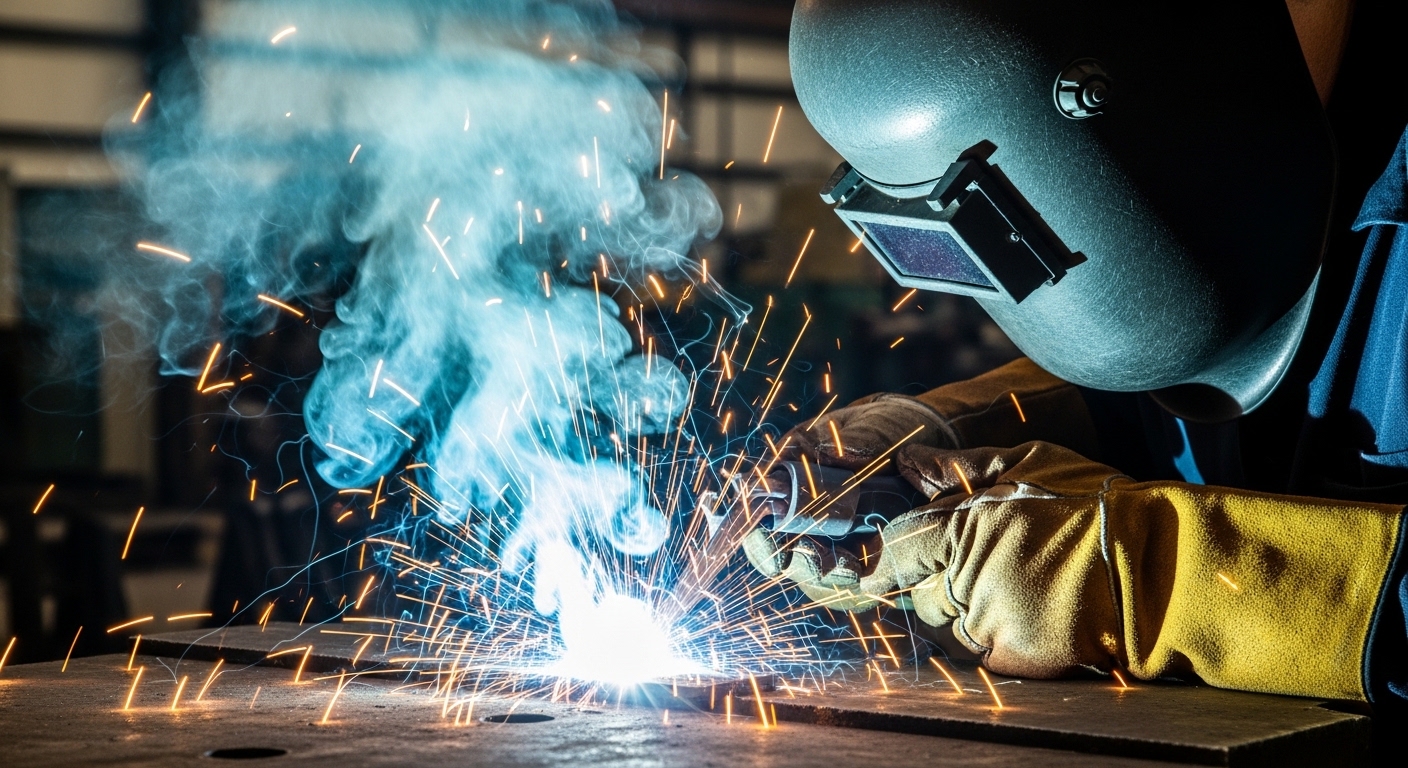
Flux is a chemical compound used in welding to protect the weld pool from atmospheric contamination, clean metal surfaces, and stabilize the welding arc. It creates a protective gas shield and forms a slag layer over the cooling weld to prevent oxidation and ensure quality.
When I first started welding, I did not understand why my stick electrodes kept sputtering and creating weak welds. After 15 failed attempts on a simple butt joint, a mentor explained that the flux coating was doing all the heavy lifting. That day changed my understanding of welding forever.
Flux serves three essential functions: shielding the weld from air, cleaning the metal surface, and stabilizing the electrical arc. Without flux, atmospheric gases would contaminate your weld and cause porosity, weak joints, and failed inspections.
In this guide, I will break down exactly what flux is, how it works, which type you need for specific jobs, and when to choose flux over shielding gas.
What Does Flux Do in Welding?
Flux performs four critical functions during the welding process. Understanding these helps you appreciate why flux exists and what problems it solves.
Quick Summary: Flux shields the weld from oxygen and nitrogen, removes surface contaminants, stabilizes the arc for consistent welding, and protects the cooling weld with slag. Without flux, most welding processes would produce weak, porous welds.
Weld Pool: The molten metal created during welding that fuses together to form the joint. This pool must be protected from atmospheric contamination during the entire welding process.
1. Atmospheric Shielding
The air around us contains oxygen and nitrogen. When molten metal encounters these gases, it reacts rapidly and creates defects. Flux vaporizes during welding to create a protective gas cloud that displaces air from the weld zone.
2. Surface Cleaning
Flux contains deoxidizers and chemical cleaners that react with rust, mill scale, and surface contaminants. I have welded rusty farm equipment that should have been cleaned first. The flux burned through light rust and created a sound weld anyway.
3. Arc Stabilization
Flux contains ionizing compounds that help establish and maintain a stable electrical arc. This results in smoother bead appearance, better control, and reduced spatter. Unstable arcs cause frustration and poor welds.
4. Slag Formation
As flux melts, it creates slag that floats on top of the weld pool. This layer protects the cooling metal from oxidation and slows the cooling rate. The slag chips away afterward to reveal a clean weld.
How Does Flux Work in Welding?
Understanding the flux process helps you diagnose welding problems and choose the right materials. Here is what happens during a typical flux welding operation:
Step 1: Arc Initiation
When you strike an arc, the intense heat immediately begins vaporizing the flux coating. This creates the initial gas shield that protects the arc and weld pool from atmospheric contamination.
Step 2: Chemical Reaction
The flux melts and reacts with surface contaminants. Deoxidizers combine with oxygen to form harmless compounds. Other elements bind with sulfur and phosphorus that would otherwise weaken the weld.
Step 3: Gas Generation
Continued heat produces more shielding gas from the flux. This gas cloud expands and completely surrounds the arc and molten pool, creating a protected environment for welding.
Step 4: Slag Formation
Molten flux creates slag that floats to the surface of the weld pool. This protective blanket prevents oxygen from reaching the cooling metal and controls the cooling rate for better metallurgical properties.
Step 5: Slag Removal
After welding, the slag hardens into a glassy coating. You chip or brush this away to inspect the weld. The slag reveals information about your welding technique and any potential problems.
Slag: The hardened byproduct of flux that forms on top of the weld. It protects the cooling metal and must be removed after welding. Slag color and texture can indicate weld quality.
Types of Welding Flux: Complete Comparison
Flux comes in several varieties, each designed for specific applications and materials. Choosing the wrong flux leads to poor weld quality and frustration.
| Flux Type | Composition | Best For | Slag Characteristics |
|---|---|---|---|
| Rutile Flux | High titanium dioxide content | General purpose, smooth beads | Easy to remove, glassy appearance |
| Basic Flux | Calcium carbonate, calcium fluoride, magnesium oxide | High-strength steels, critical welds | Difficult removal, tough coating |
| Cellulosic Flux | High cellulose (organic) content | Root passes, deep penetration | Light, fibrous slag |
| Acid Flux | Silica, manganese oxide, iron oxide | Low-carbon steel, sheet metal | Easy removal, smooth surface |
| Neutral Flux | Balanced composition without strong deoxidizers | Multiple-pass welds, alloy steels | Moderate removal difficulty |
Acid vs Basic Flux
This is the most common classification system. Acid flux produces smoother welds with easier slag removal but offers lower mechanical properties. Basic flux creates superior strength and toughness but requires more skill and effort to use.
I use acid flux for general fabrication and projects where appearance matters. For structural welds or pressure vessels, I always choose basic flux despite the extra work involved.
Flux Applications by Welding Process
Different welding processes use flux in unique ways. Understanding these differences helps you select the right equipment and materials for your projects.
Shielded Metal Arc Welding (SMAW – Stick Welding)
Stick electrodes have a solid metal core surrounded by a flux coating. When you strike an arc, the flux coating performs all the functions described above. This is the most common form of flux welding and works excellently outdoors.
After welding farm equipment in 15 mph winds, I proved that stick welding with flux works where gas-shielded processes fail. The flux coating provides complete protection regardless of wind or drafts.
Flux-Cored Arc Welding (FCAW)
Flux-cored wire contains flux inside a hollow metal tube. This process offers higher deposition rates than stick welding while maintaining the outdoor capability.
There are two types of FCAW wire:
Self-Shielded (FCAW-S): No external gas needed. The flux core provides all shielding. Excellent for outdoor work, remote locations, and windy conditions.
Dual-Shield (FCAW-G): Uses both internal flux and external shielding gas. Provides excellent weld quality with high deposition rates. Popular in heavy fabrication and shipbuilding.
Submerged Arc Welding (SAW)
This process uses a granular flux poured over the welding area. The arc burns beneath a blanket of flux, completely hidden from view. SAW produces extremely high-quality welds with deep penetration and minimal spatter.
I have seen SAW systems lay down continuous welds for hours without interruption. The flux recovery systems recycle used flux, making this process efficient for long production runs.
Flux vs Shielding Gas: Which Should You Use?
The choice between flux and shielding gas depends on your specific application. Both options have distinct advantages and limitations.
| Factor | Flux | Shielding Gas |
|---|---|---|
| Outdoor Use | Excellent – wind resistant | Poor – drafts disrupt shield |
| Weld Appearance | Rougher, requires slag removal | Clean, no slag to chip |
| Portability | High – no heavy gas cylinders | Lower – requires cylinders |
| Fume Generation | Higher – more smoke and fumes | Lower – cleaner burning |
| Equipment Cost | Lower – simpler setup | Higher – regulators, hoses needed |
| Cleanup Required | Yes – slag must be removed | Minimal – usually just wire brush |
When to Choose Flux
Choose flux when welding outdoors where wind would blow away shielding gas. I have repaired fences and farm equipment in open fields using flux-cored wire exclusively. Gas-shielded processes would have been impossible in those conditions.
Flux also excels for portable work where carrying gas cylinders is impractical. Maintenance weldors, field repair, and remote site work all benefit from flux-based processes.
When to Choose Shielding Gas
For clean shop work on thin materials, shielding gas produces superior results with less cleanup. MIG welding with gas creates beautiful, smooth welds that require minimal finishing.
Production environments benefit from the cleaner operation of gas-shielded processes. Less smoke means better visibility and improved working conditions.
Choosing and Using the Right Flux
Selecting the correct flux for your application ensures good weld quality and prevents frustration. Consider these factors when choosing flux materials.
Base Material
Match the flux to your base metal. Mild steel requires different flux than stainless steel or cast iron. Using the wrong flux leads to poor wetting, lack of fusion, or cracking.
Welding Position
Some fluxes work better in specific positions. Fast-freeze flux suits overhead and vertical welding. Slower-freezing flux works well for flat and horizontal positions where you can deposit more metal.
Joint Design
Deep-penetrating fluxes suit groove welds. Fast-freezing formulas work better for fillet welds and sheet metal applications.
Storage and Handling
Flux absorbs moisture from the air, which causes hydrogen cracking in the weld. Store flux in a dry environment and use sealed containers. I learned this lesson the hard way when a batch of improperly stored electrodes caused cracking in structural welds.
For critical welds, many weldors dry their electrodes in an oven before use. This removes absorbed moisture and ensures consistent weld quality.
Flux shelf life varies by type and storage conditions. Check manufacturer recommendations and use older stock first. Expired flux produces excessive fumes and unreliable weld quality.
Common Flux-Related Problems and Solutions
Understanding common flux problems helps you diagnose and fix issues quickly. Here are the most frequent issues I encounter and their solutions.
| Problem | Likely Cause | Solution |
|---|---|---|
| Porosity | Moisture in flux, contaminated base metal | Dry flux/electrodes, clean base metal |
| Slag Inclusion | Incomplete slag removal between passes | Clean thoroughly, adjust technique |
| Excessive Spatter | Wrong flux type, improper amperage | Adjust settings, try different flux |
| Poor Arc Stability | Damp electrodes, wrong polarity | Use dry electrodes, check polarity |
| Difficult Slag Removal | Basic flux, improper heat input | Increase amperage slightly, allow proper cooling |
| Cracking | Hydrogen from moisture, wrong flux for steel | Dry flux, match flux to base metal |
Slag inclusions occur when slag gets trapped between weld passes. This creates weak points that can fail under stress. Always clean thoroughly between passes, especially in the root pass area.
Porosity appears as small holes in the weld. Moisture in flux is a common cause. Keep your electrodes in a dry place and consider using a rod oven for critical work.
Safety and Environmental Considerations
Working with flux requires attention to safety and environmental impact. Flux fumes contain hazardous substances that require proper ventilation and protection.
Fume Hazards
Welding flux releases metal fumes and gases during the welding process. These fumes contain manganese, chromium, nickel, and other metals that can cause serious health problems with prolonged exposure.
I always use respiratory protection when welding in confined spaces. Even with good ventilation, flux-cored processes generate significant smoke that you should not breathe.
Manganism: A neurological condition caused by excessive manganese exposure from welding fumes. Symptoms include tremors, slowed movement, and mood changes. Proper ventilation and respiratory protection prevent this condition.
Ventilation Requirements
Provide adequate ventilation when using flux. Natural ventilation works for occasional outdoor welding. Indoor or confined space welding requires mechanical ventilation or fume extraction systems.
Personal Protective Equipment
Wear a welding helmet with proper shade number for your process. Flux welding can be brighter than gas-shielded processes due to arc characteristics. Use flame-resistant clothing and leather gloves.
For prolonged flux welding sessions, I recommend a powered air respirator. These systems provide clean air while cooling your face and reducing fogging.
Environmental Impact
Welding slag is classified as non-hazardous waste in most cases when from mild steel welding. However, slag from stainless steel or other alloy welding may contain heavy metals and require special disposal.
Check local regulations for proper disposal methods. Many recycling centers accept steel slag, and some flux manufacturers offer recycling programs.
Submerged arc welding flux can often be recycled. The used flux is sifted to remove slag and metal particles, then mixed with fresh flux for reuse. This reduces waste and saves money.
Can You Weld Without Flux?
Yes, some welding processes do not require flux. TIG and MIG welding use shielding gas instead of flux to protect the weld pool. These processes produce clean welds without slag but require sheltered conditions.
However, stick welding and flux-cored processes rely entirely on flux. You cannot perform these processes without flux because it provides the only shield for the weld pool.
For outdoor work or field repairs, flux remains essential. I have seen projects fail when weldors tried to use gas-shielded processes in windy conditions. The flux-based process saved the day.
Frequently Asked Questions
What is flux in welding?
Flux is a chemical compound used to protect the weld pool from atmospheric contamination, clean metal surfaces, and stabilize the welding arc. It creates a protective gas shield and forms a slag layer over the cooling weld.
What does flux do in welding?
Flux shields the weld from oxygen and nitrogen, removes surface contaminants like rust and mill scale, stabilizes the electrical arc for consistent welding, and forms protective slag over the cooling weld to prevent oxidation.
Why is flux used in welding?
Flux is used because atmospheric gases would contaminate and weaken welds without protection. Flux enables welding in windy or outdoor conditions where shielding gas would be impractical and improves weld quality through chemical cleaning action.
How does flux work in welding?
Flux vaporizes during welding to create shielding gas, melts and reacts with surface contaminants to clean the metal, forms slag that protects the cooling weld, and contains compounds that stabilize the electrical arc for consistent welding performance.
What are the types of welding flux?
The main types include rutile flux for general purpose work, basic flux for high-strength welds, cellulosic flux for deep penetration, acid flux for thin materials, and neutral flux for multiple-pass welds on alloy steels.
Is flux better than gas for welding?
Neither is universally better. Flux excels for outdoor welding and offers portability without gas cylinders. Shielding gas provides cleaner welds with less spatter and no slag removal. Choose based on your specific application and working conditions.
Can you weld without flux?
Yes, TIG and MIG welding use shielding gas instead of flux. However, stick welding and flux-cored processes require flux because it provides the only shield for the weld pool. These flux-based processes work better in windy or outdoor conditions.
Is welding flux toxic?
Welding flux fumes can contain hazardous substances including manganese, chromium, and nickel metals. Prolonged exposure without proper ventilation and respiratory protection can cause serious health problems. Always provide adequate ventilation and use appropriate PPE.
Conclusion
Flux remains an essential component of many welding processes. It provides atmospheric protection, surface cleaning, arc stabilization, and slag protection in a single material. Understanding flux helps you select the right materials and produce quality welds.
Whether you choose flux or shielding gas depends on your specific application. For outdoor work and field repairs, flux-based processes offer unmatched versatility. For clean shop work on thin materials, gas-shielded processes provide superior results.
The key is understanding your options and matching them to your needs. With the right flux and proper technique, you can produce strong, clean welds in virtually any conditions.
Leave a Reply